Article

Two-Dimensional Carbon Networks with a Negative Poisson’s Ratio

1
School of Physics and Electronic Engineering, Jiangsu University, Zhenjiang 212013, China
2
Jiangsu Engineering Research Center on Quantum Perception and Intelligent Detection of Agricultural Information, Zhenjiang 212013, China
3
State Key Laboratory of Advanced Design and Manufacturing for Vehicle Body, College of Mechanical and Vehicle Engineering, Hunan University, Changsha 410082, China
*
Authors to whom correspondence should be addressed.
Crystals 2023, 13(3), 442; https://doi.org/10.3390/cryst13030442
Submission received: 25 November 2022 / Revised: 2 February 2023 / Accepted: 1 March 2023 / Published: 3 March 2023
(This article belongs to the Special Issue Graphene Mechanics Volume III)

Abstract

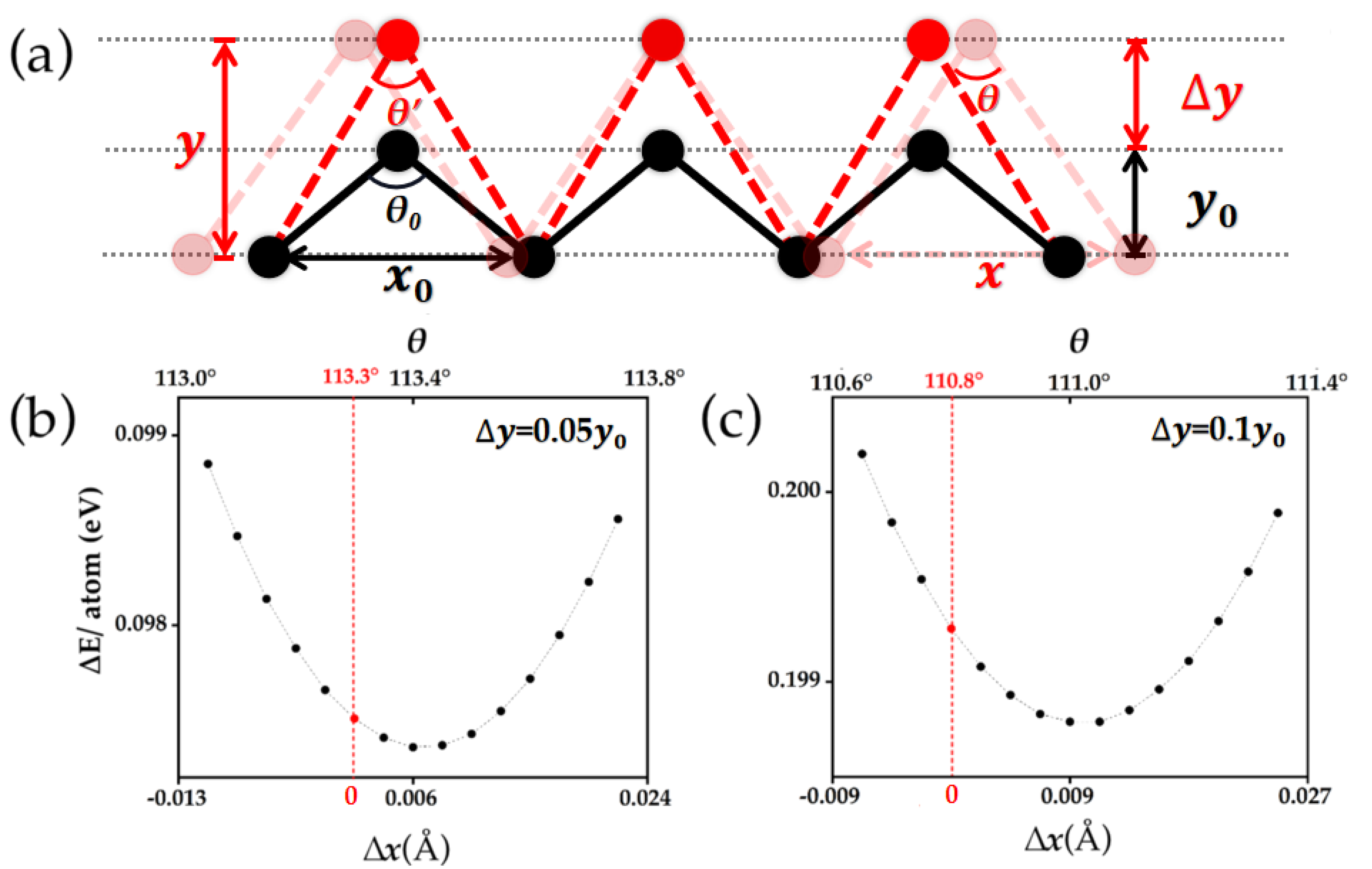
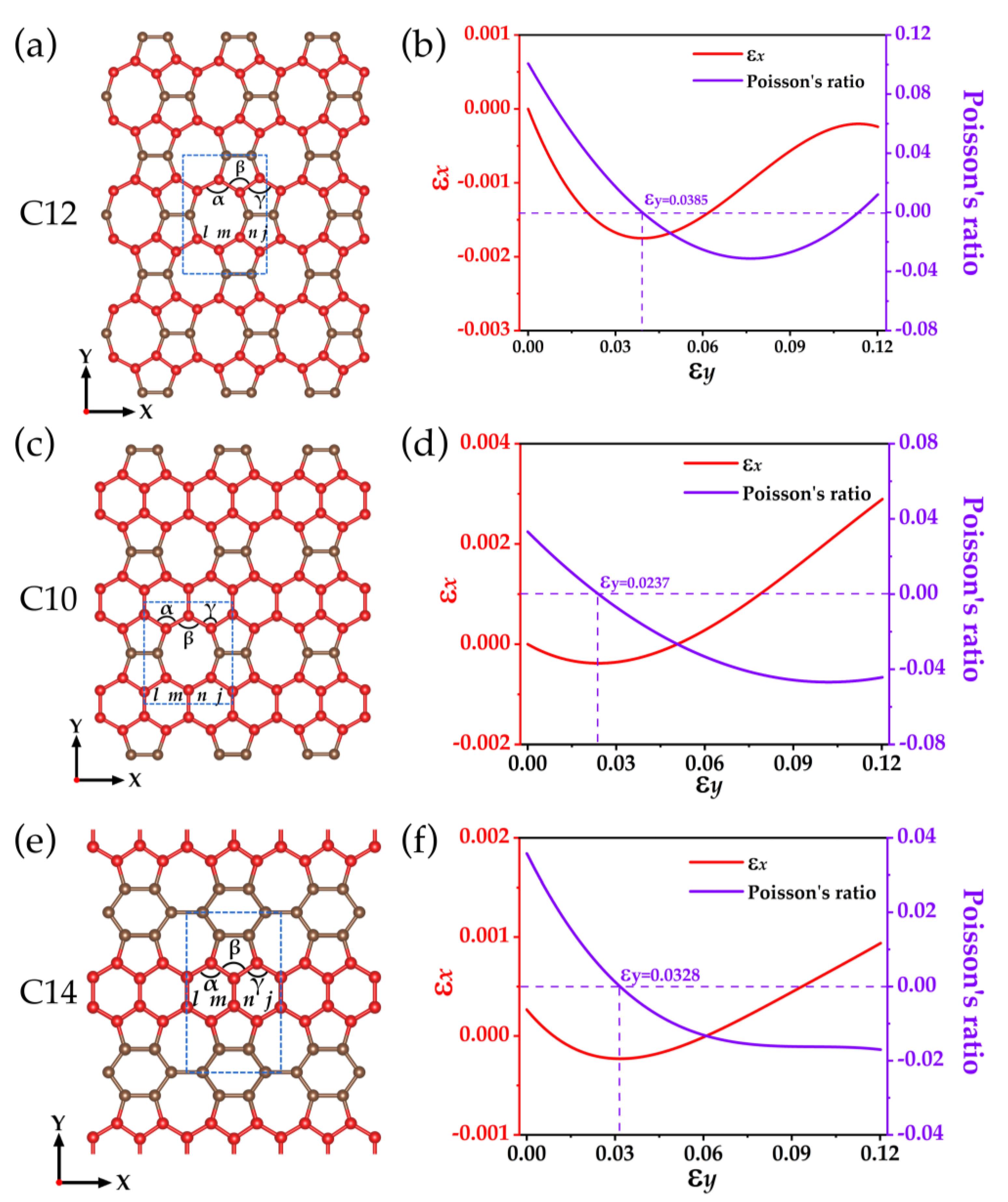
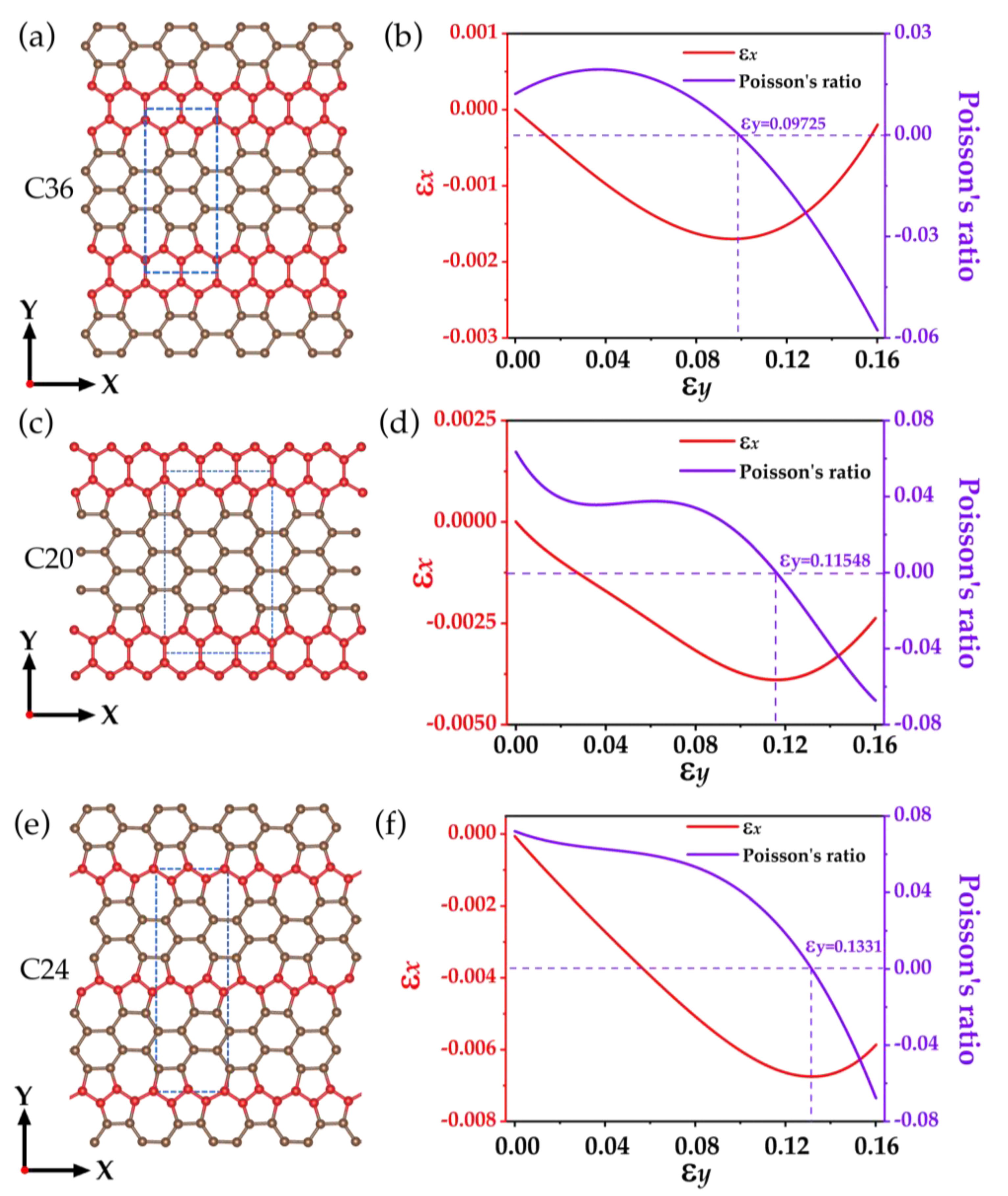
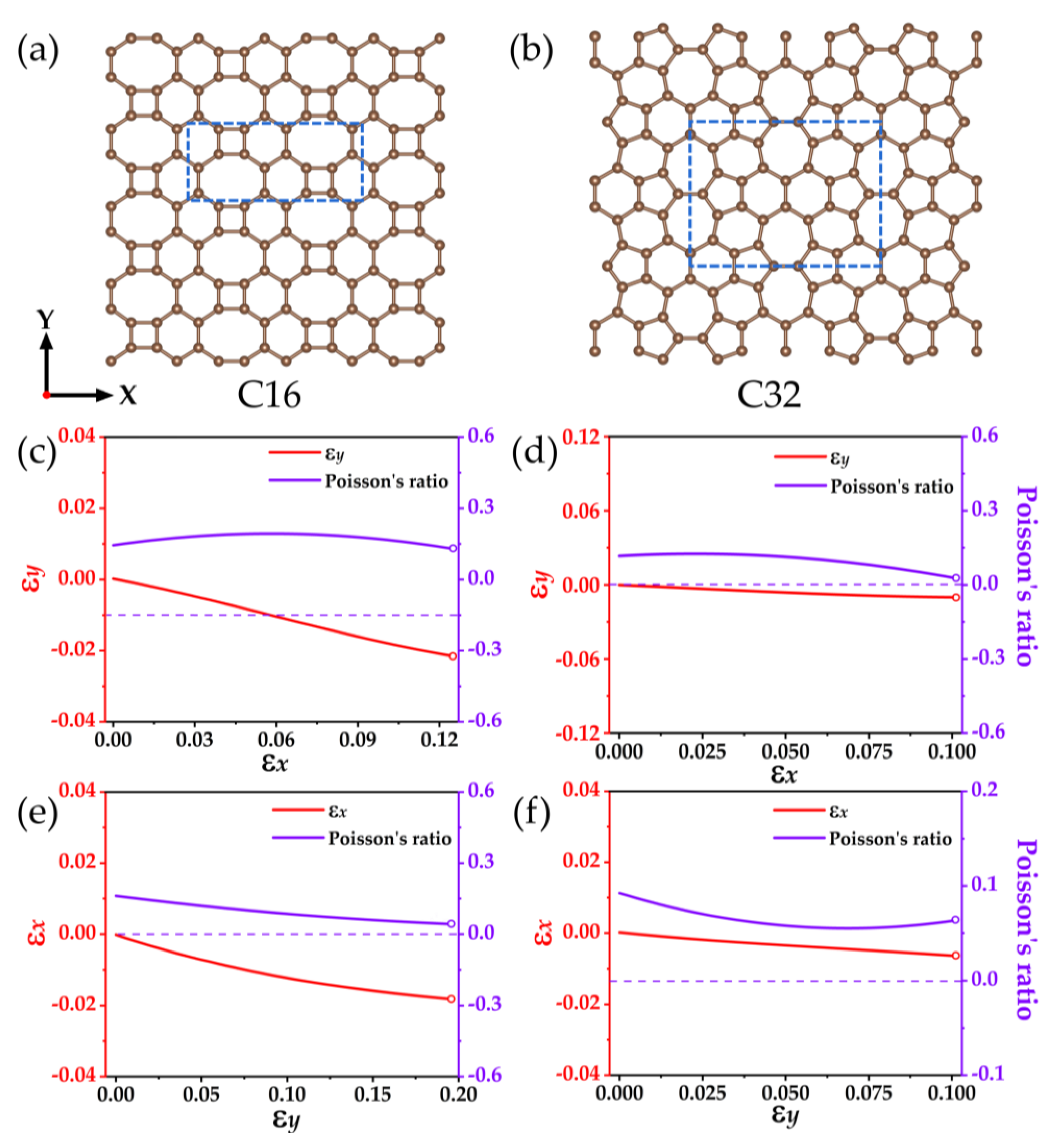
Low-dimensional materials with a negative Poisson’s ratio (NPR) have attracted lots of attention for their potential applications in aerospace, defense, etc. Although graphene and monolayer h-BN have been reported to have NPR behavior under external strains, the mechanism is not clear, and the critical strains of the occurrence of a NPR are relatively larger. Here, we propose that the origination of the NPR phenomena in the 2D honeycomb structures can be explained by the variation of the zigzag chains under strains. Our calculations clarify that a NPR occurs along the armchair-chain direction rather than the zigzag-chain direction in these materials. Furthermore, a series of two-dimensional carbon networks including zigzag chains have demonstrated that there is NPR phenomena in them. In some of the networks, a NPR can be found under a small external strain. Our study not only deepens the understanding of the origin of NPR in honeycomb systems but also offers guidance to design auxetic nanostructures.
Keywords: honeycomb lattice; carbon allotropes; negative Poisson’s ratio; mechanical properties; two-dimensional material honeycomb lattice; carbon allotropes; negative Poisson’s ratio; mechanical properties; two-dimensional material