
Article

Comparison and Determination of Optimal Machine Learning Model for Predicting Generation of Coal Fly Ash


1
School of Resources and Safety Engineering, Central South University, Changsha 410083, China
2
State Key Laboratory of Coal Resources and Safe Mining, China University of Mining and Technology, Xuzhou 221116, China
*
Author to whom correspondence should be addressed.
Crystals 2022, 12(4), 556; https://doi.org/10.3390/cryst12040556
Submission received: 11 March 2022 / Revised: 10 April 2022 / Accepted: 12 April 2022 / Published: 15 April 2022

Abstract

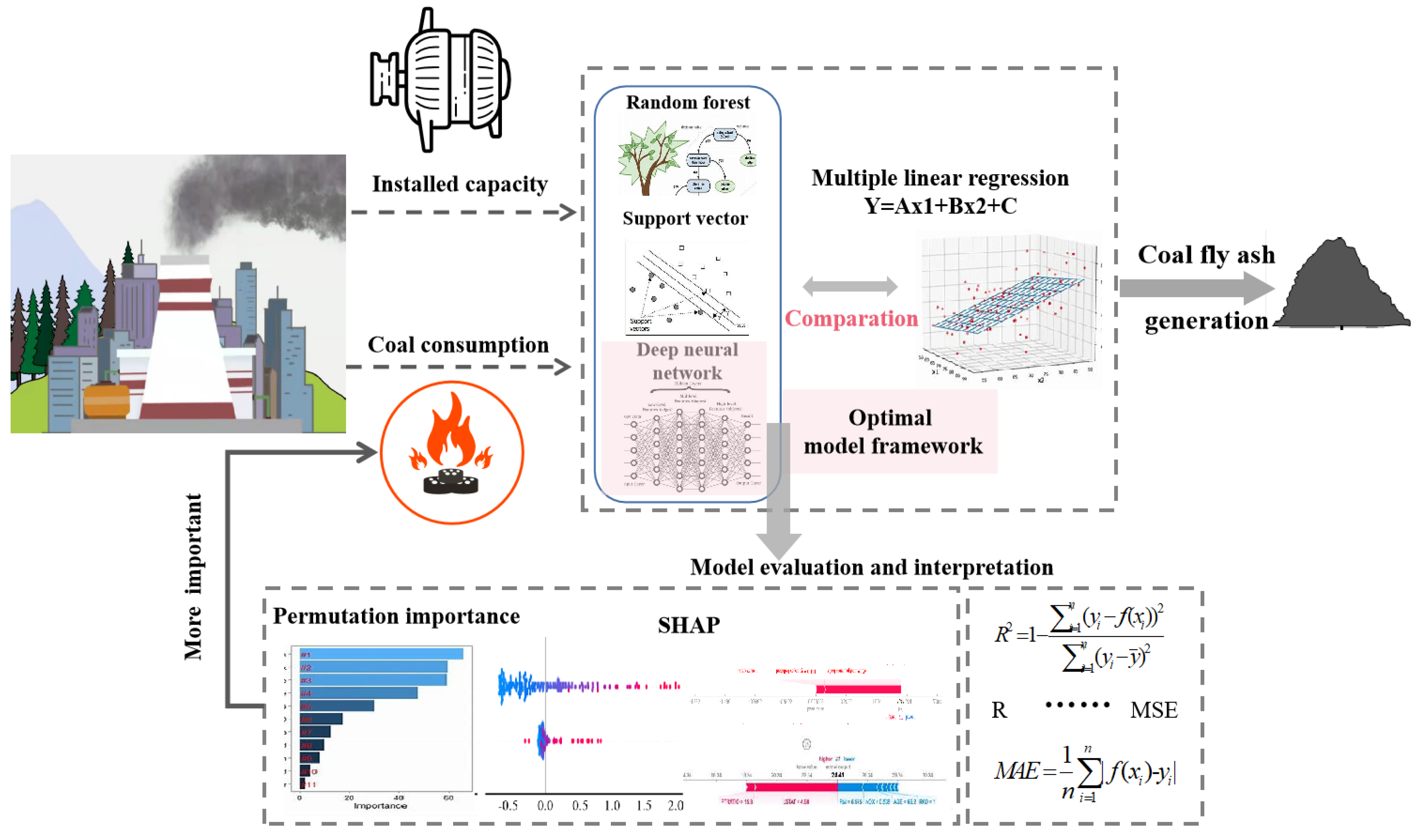
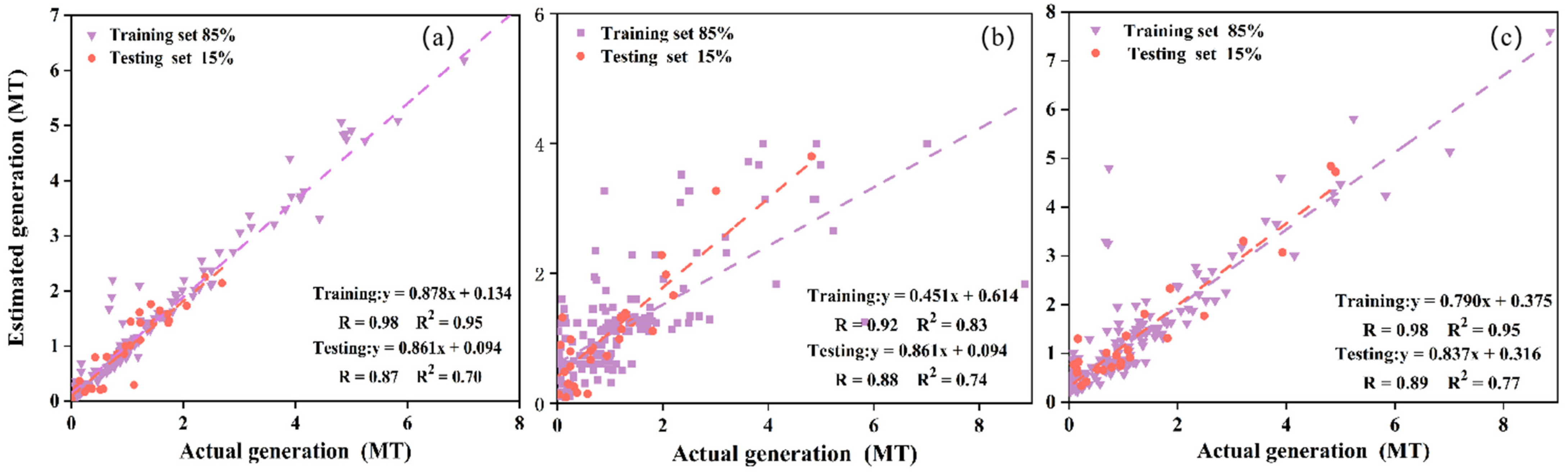
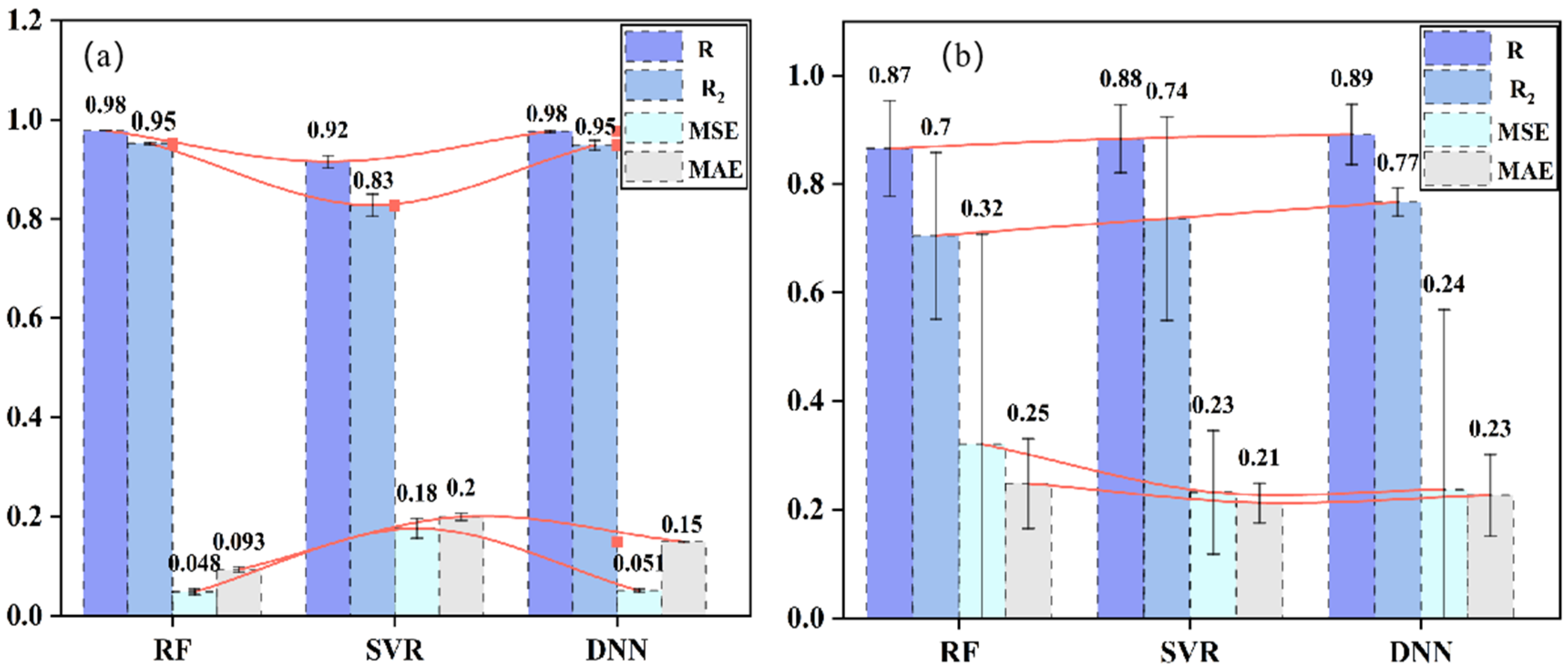
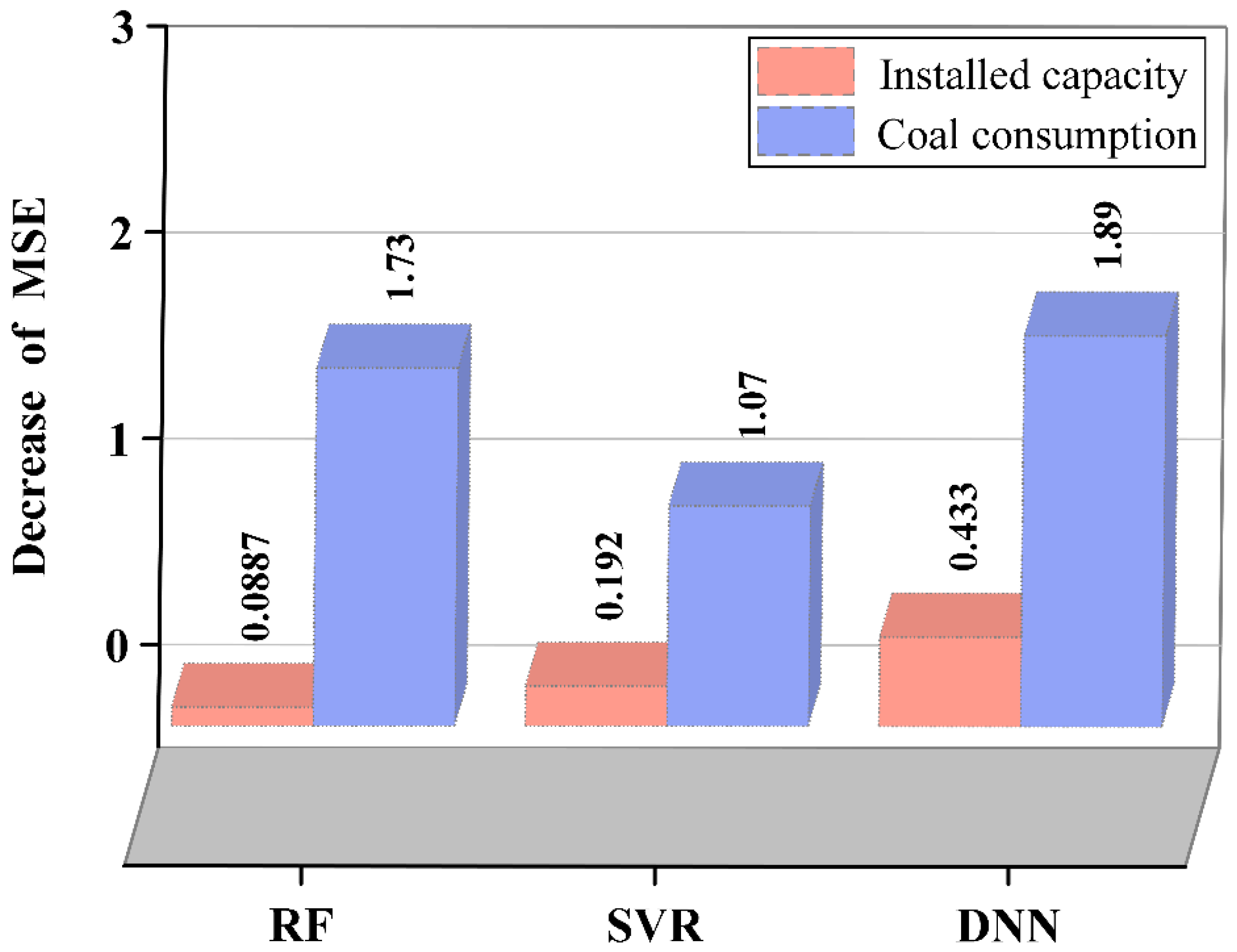
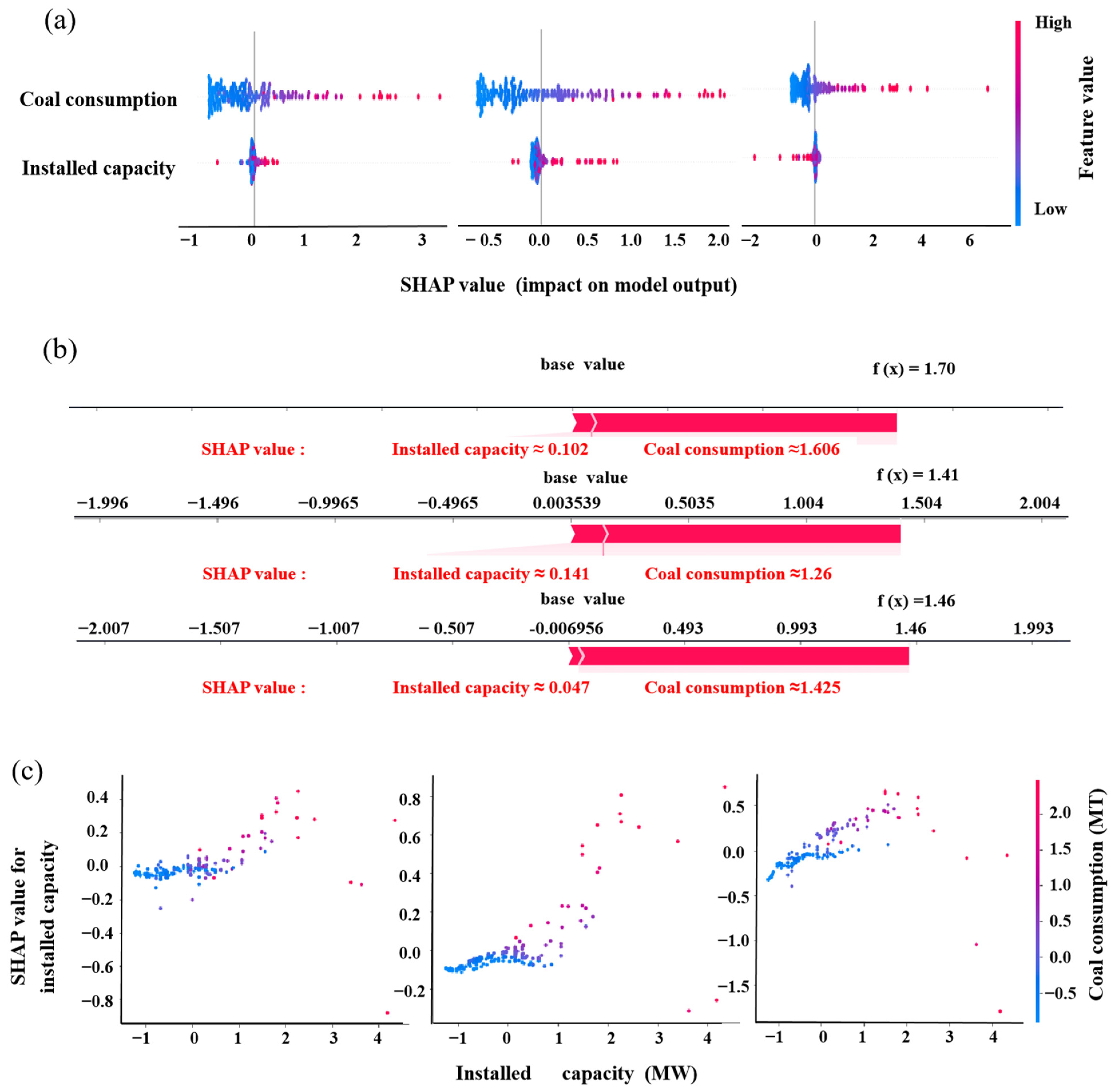
The rapid development of industry keeps increasing the demand for energy. Coal, as the main energy source, has a huge level of consumption, resulting in the continuous generation of its combustion byproduct coal fly ash (CFA). The accumulated CFA will occupy a large amount of land, but also cause serious environmental pollution and personal injury, which makes the resource utilization of CFA gradually to be attached importance. However, given the variability of the amount of CFA generation, predicting it in advance is the basis to ensure effective disposal and rational utilization. In this study, CFA generation was taken as the target variable, three machine learning (ML) algorithms were used to construct the model, and four evaluation indices were used to evaluate its performance. The results showed that the DNN model with the R = 0.89, R2 = 0.77 on the testing set performed better than the traditional multiple linear regression equation and other ML algorithms, and the feasibility of DNN as the optimal model framework was demonstrated. Applying this model framework to the engineering field enables managers to identify the next step of the disposal method in advance, so as to rationally allocate ways of recycling and utilization to maximize the use and sales benefits of CFA while minimizing its disposal costs. In addition, sensitivity analysis further explains ML’s internal decisions and verifies that coal consumption is more important than installed capacity, which provides a certain reference for ensuring the rational utilization of CFA.
Keywords: CFA; generation; machine learning; multiple linear regression; sensitivity analysis; utilization CFA; generation; machine learning; multiple linear regression; sensitivity analysis; utilization