
Flow Field and Inclusions Movement in the Cold Hearth for the Ti-0.3Mo-0.8Ni Alloy


Abstract
1. Introduction
2. Mathematical Model
2.1. Assumptions
- (1)
- All inclusions were treated as spheres.
- (2)
- The density and size of the inclusions were assumed to be constant.
- (3)
- The agglomeration, cracking, chemical reaction, and growth of the inclusions in the cold hearth were not considered.
- (4)
- Marangoni flow was neglected.
- (5)
- The density of the melt is a constant of 4.5 g/cm3.
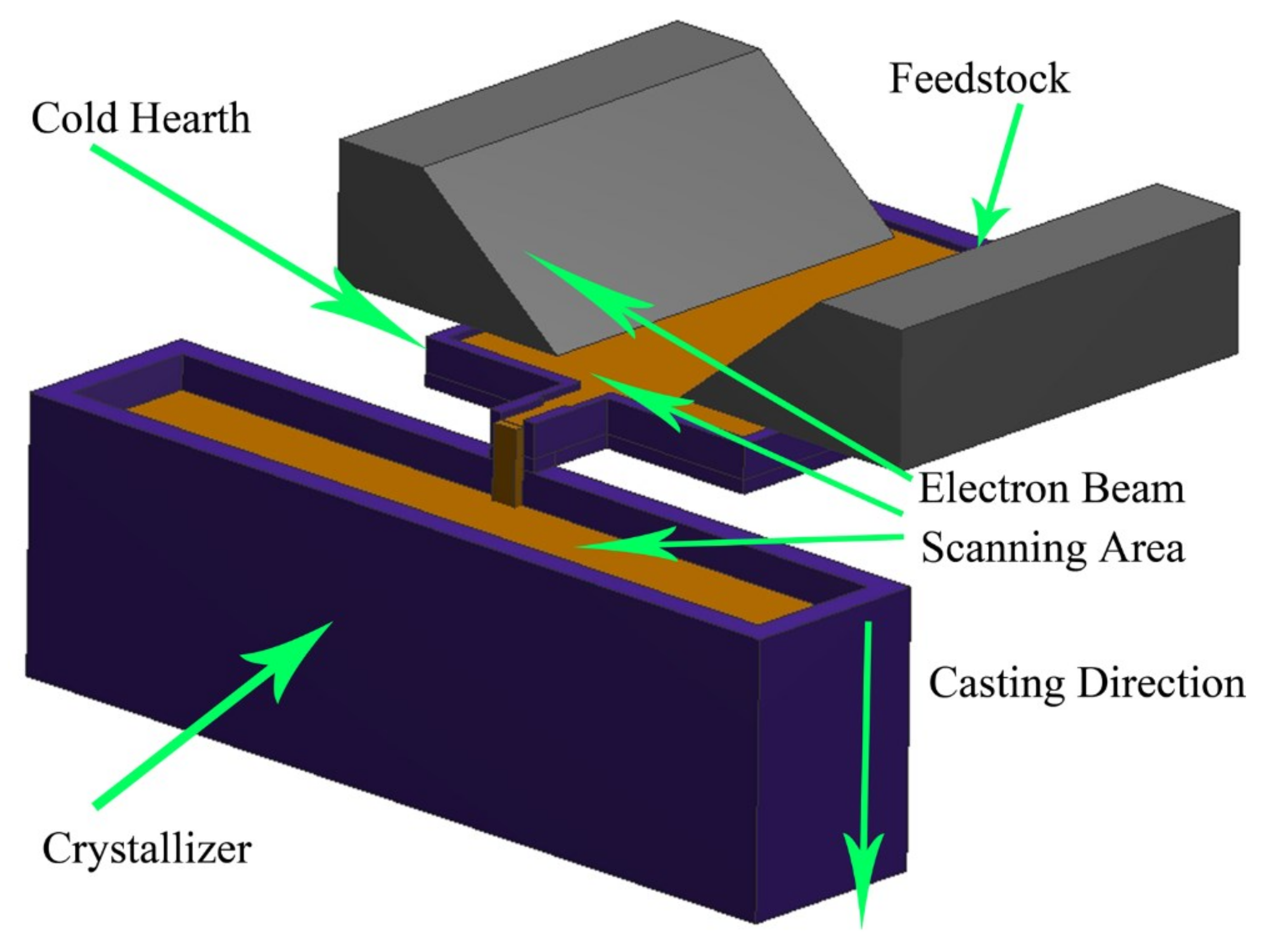
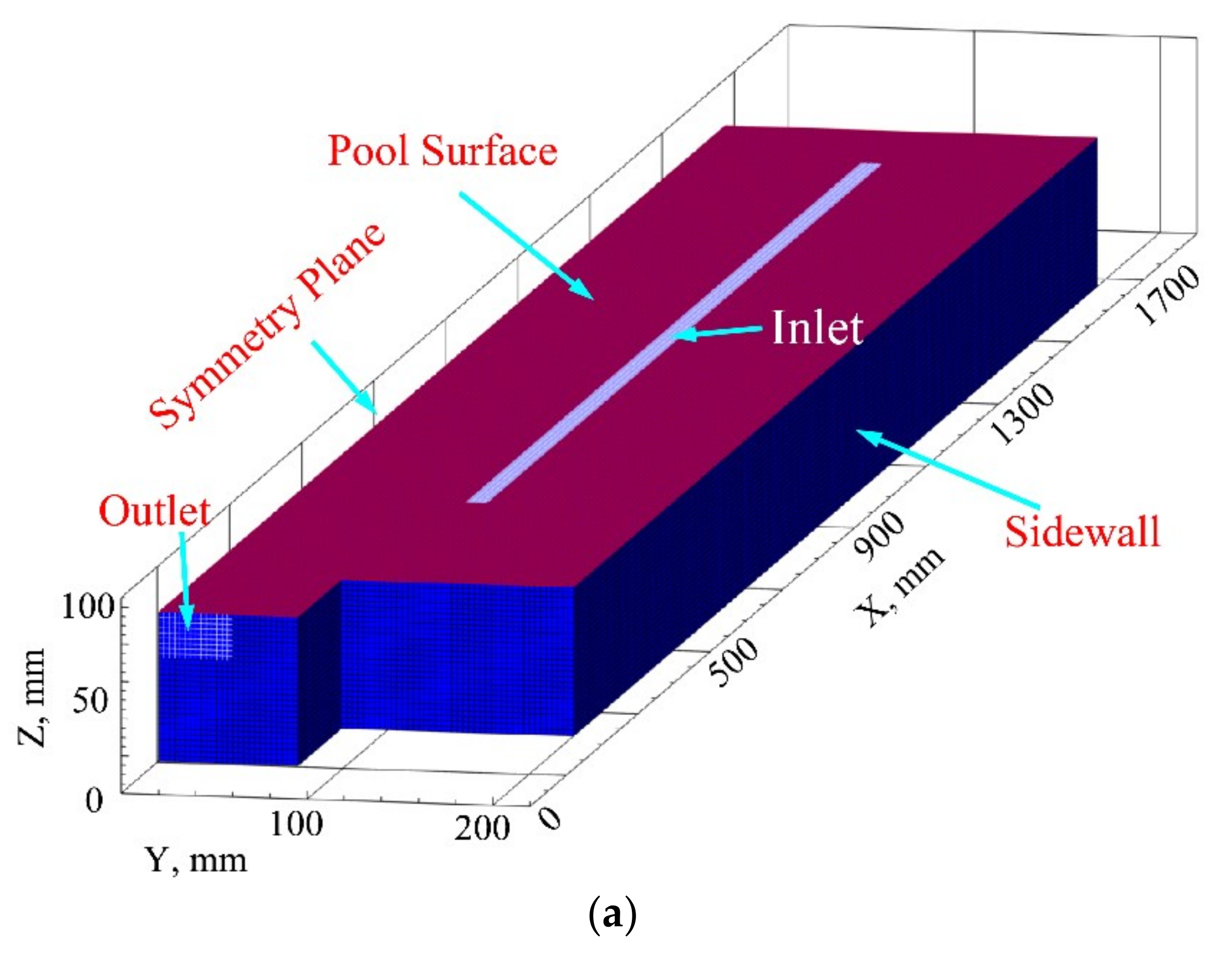
2.2. Boundary Conditions and Computational Domain
2.3. Governing Equations
2.3.1. Mass Conservation
2.3.2. Momentum Conservation
2.3.3. Energy Equations
2.3.4. Equations of Motion for Inclusions
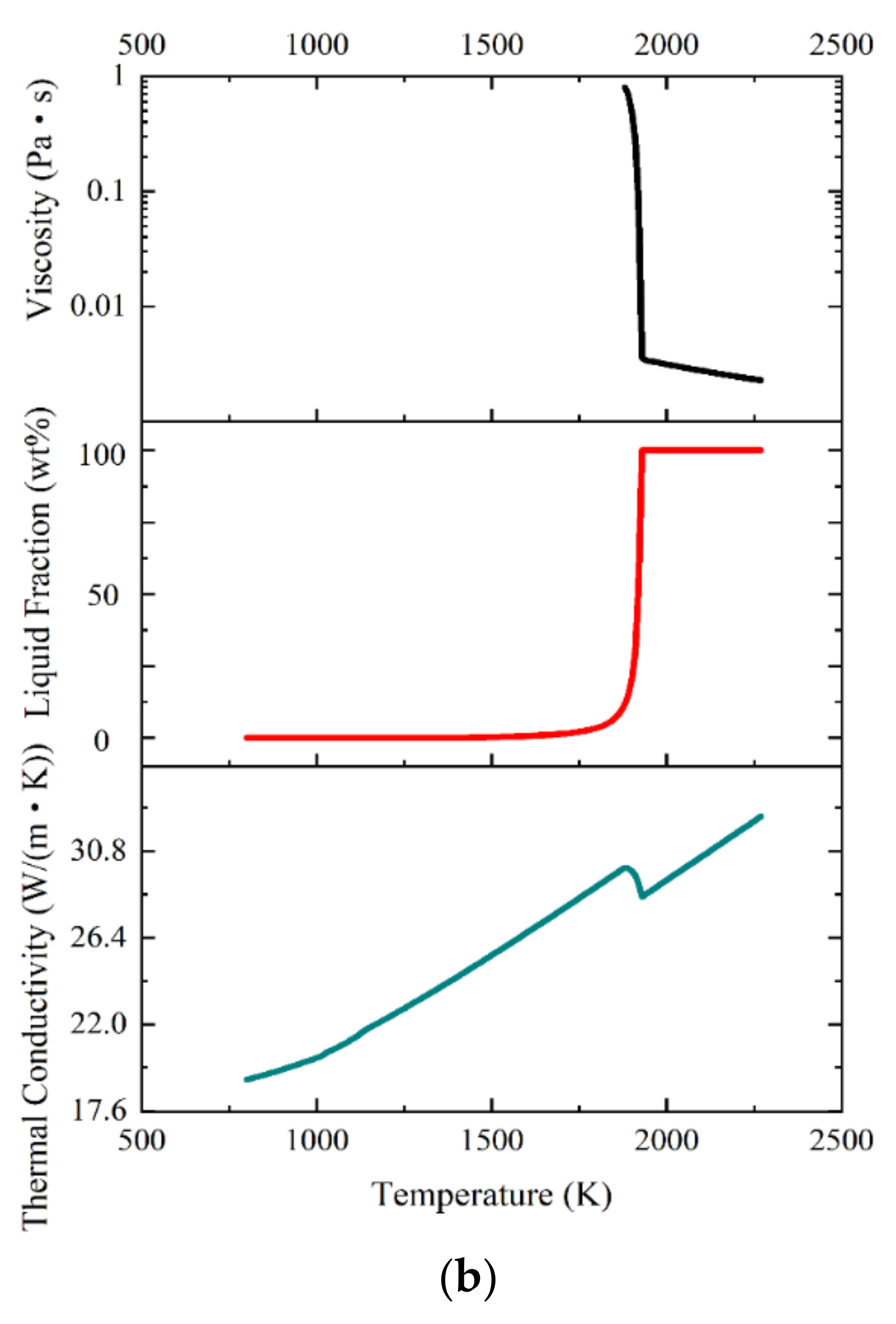
2.4. Physical Properties
3. Results and Discussion
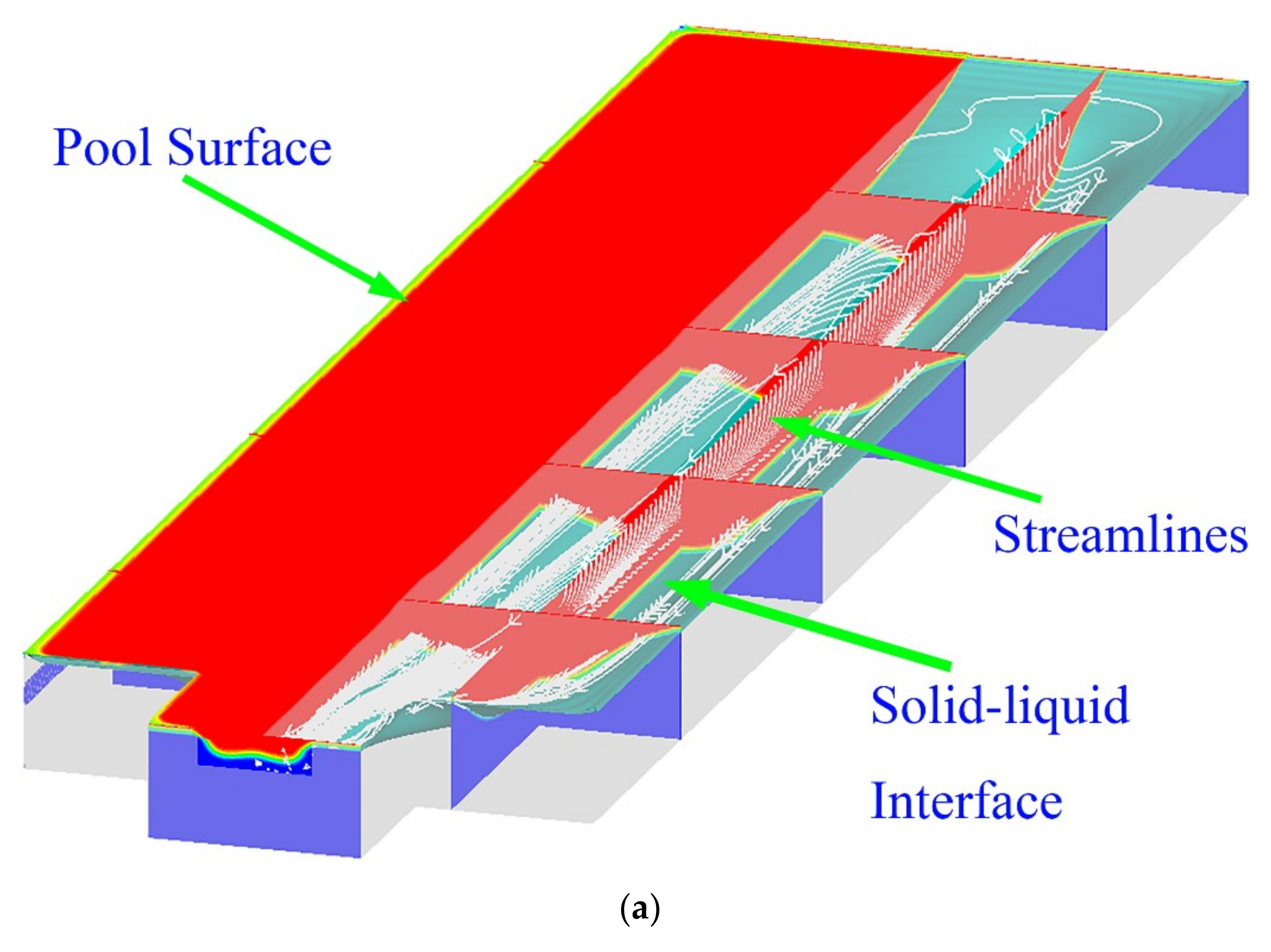
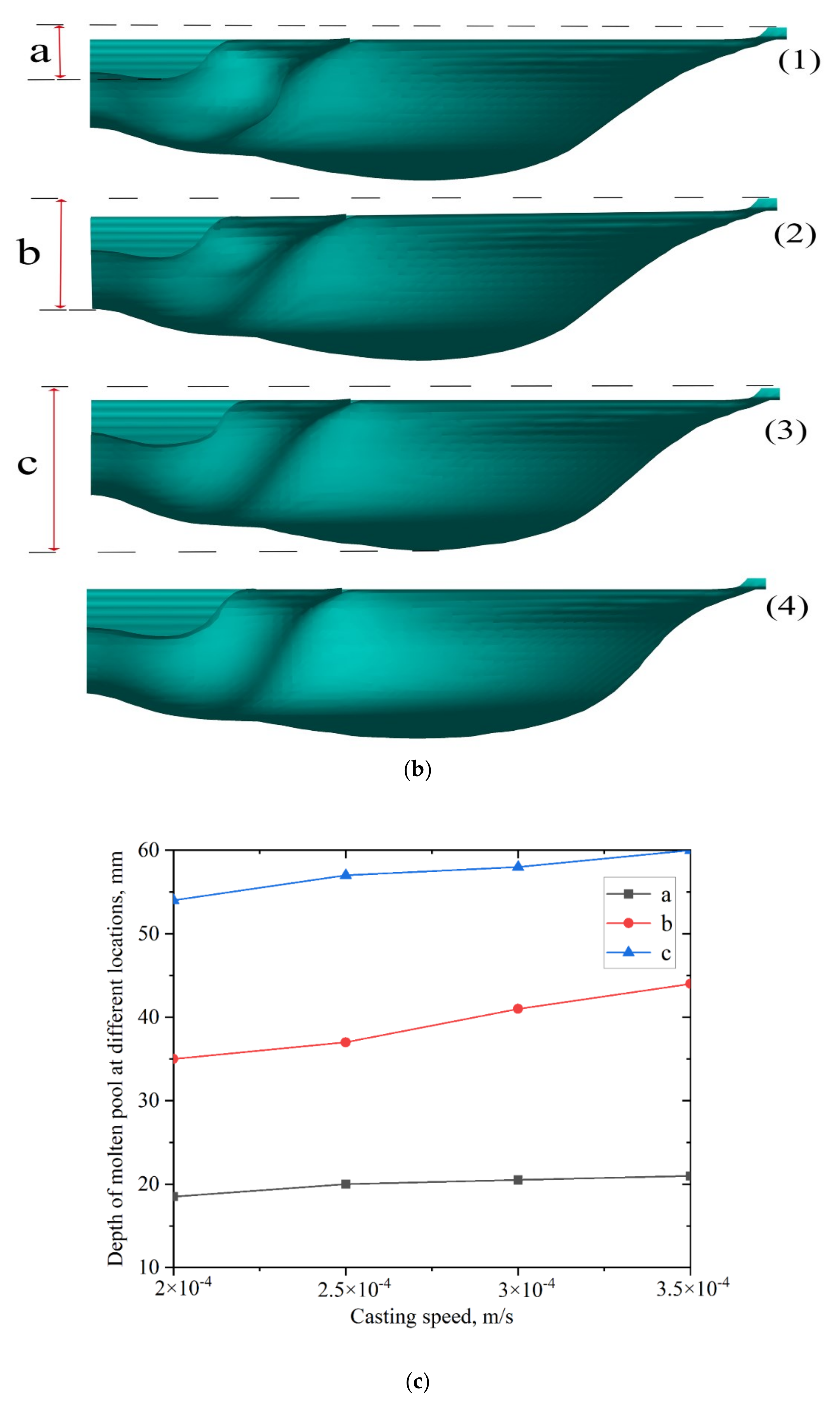
3.1. Effect of Casting Velocities on the Solid–Liquid Interface
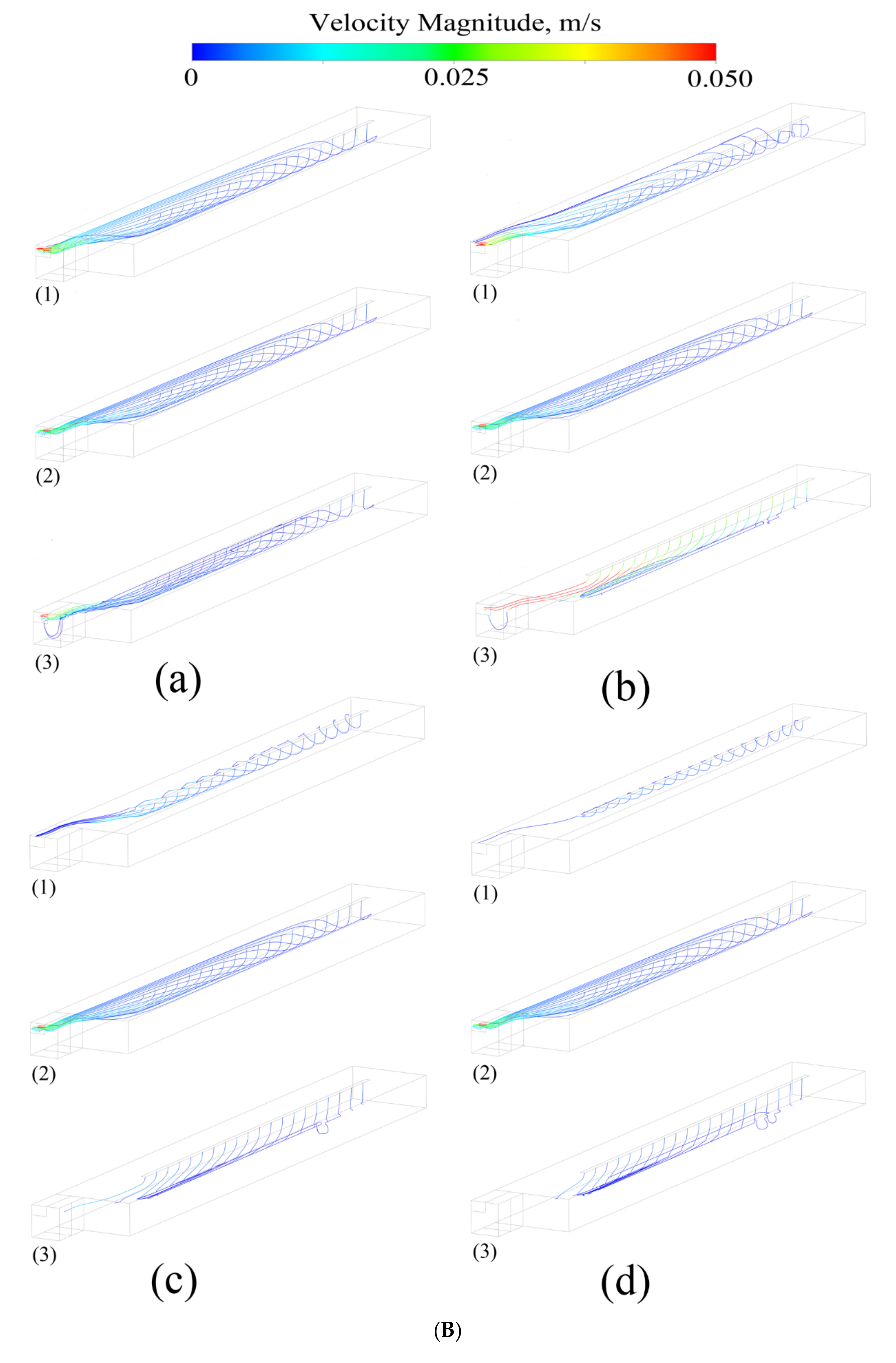
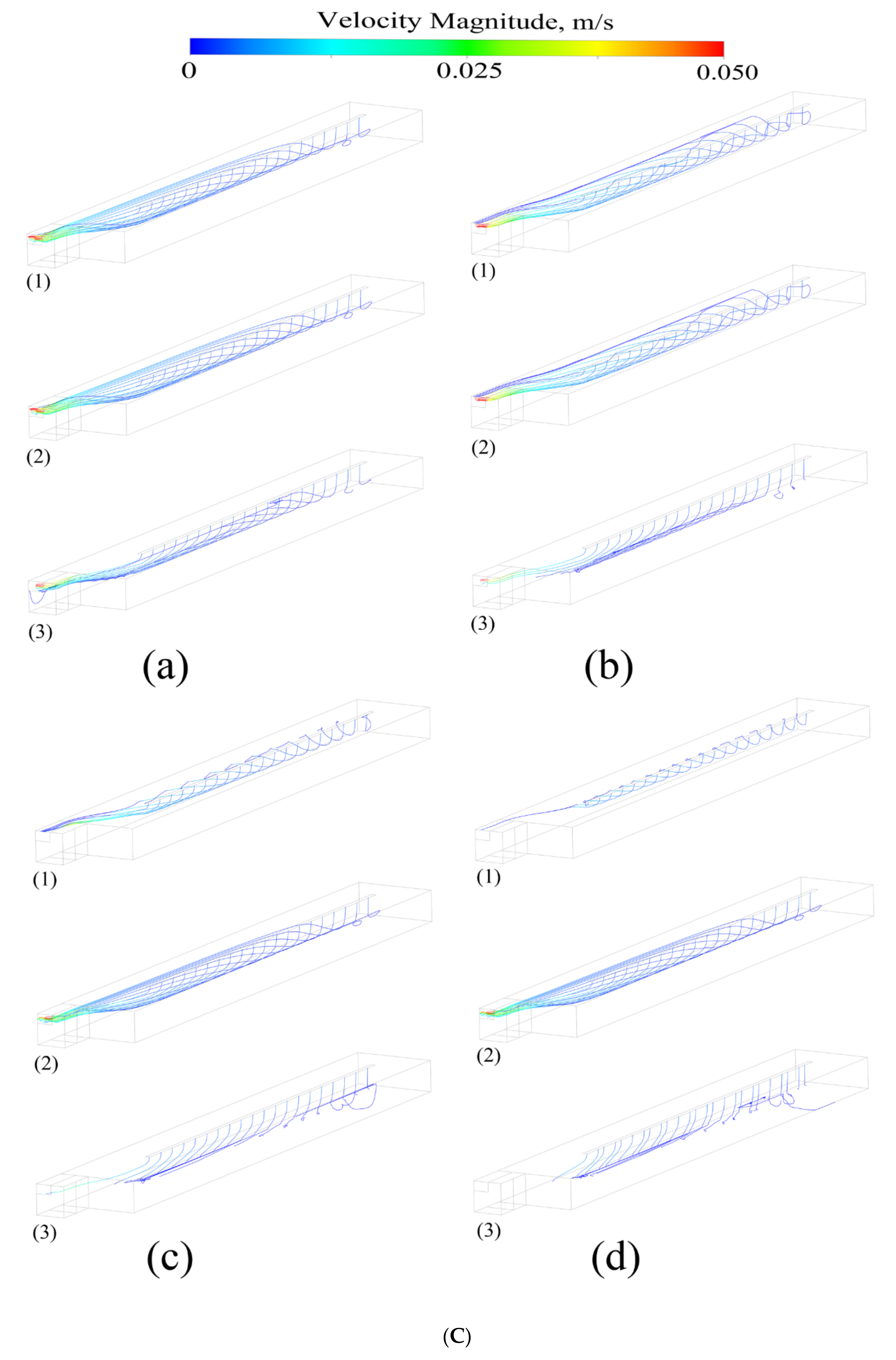
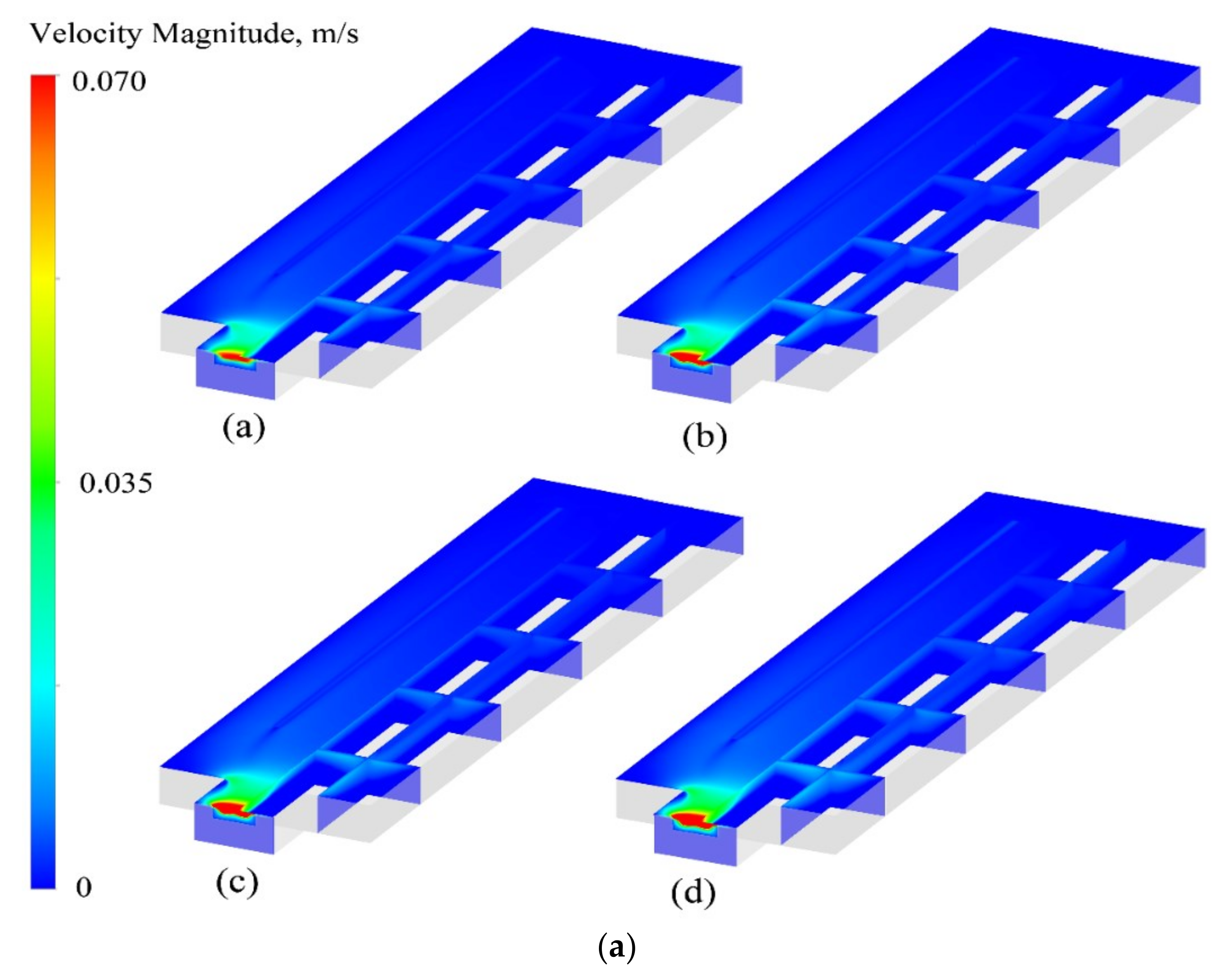
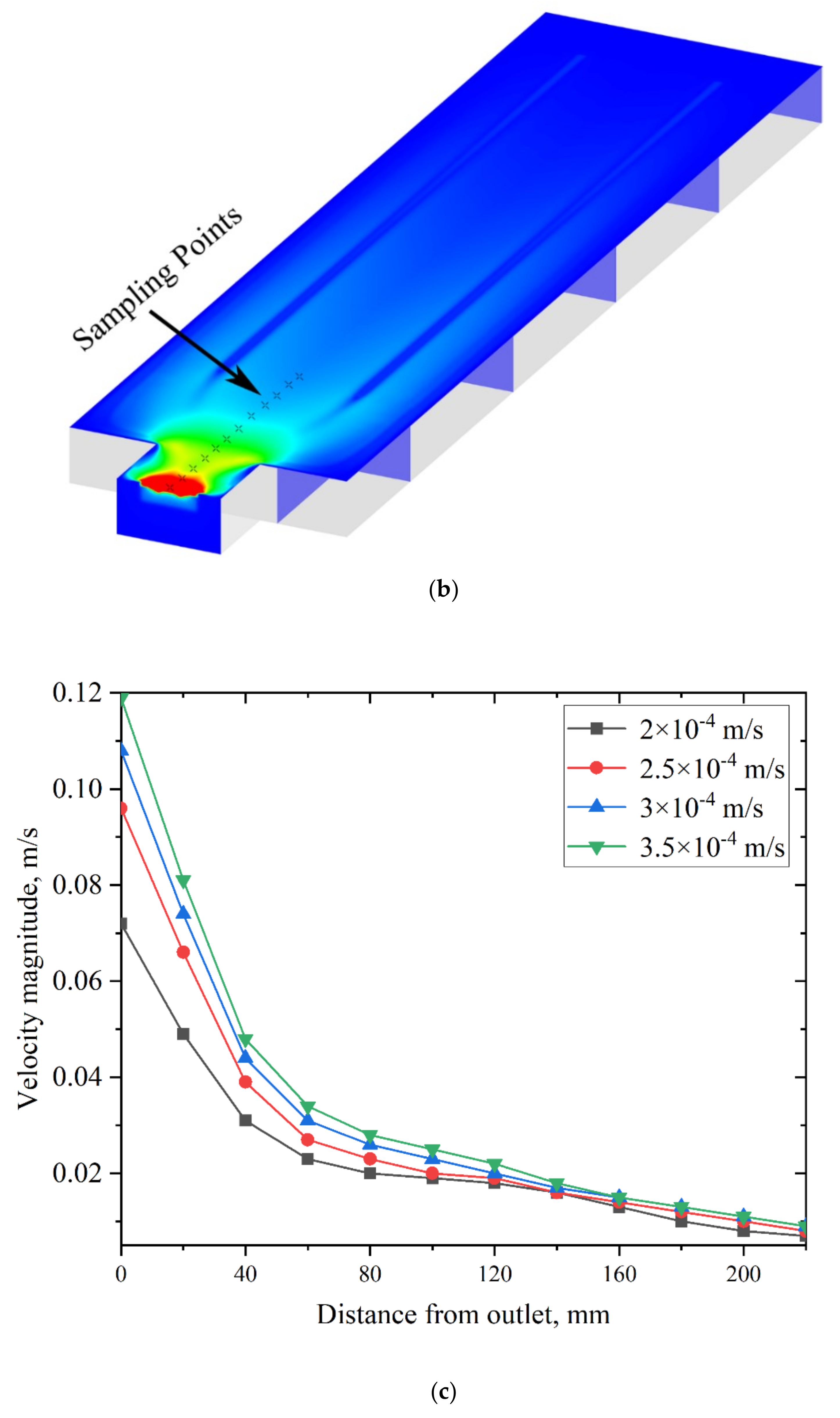
3.2. Effect of Casting Velocities on the Flow Field
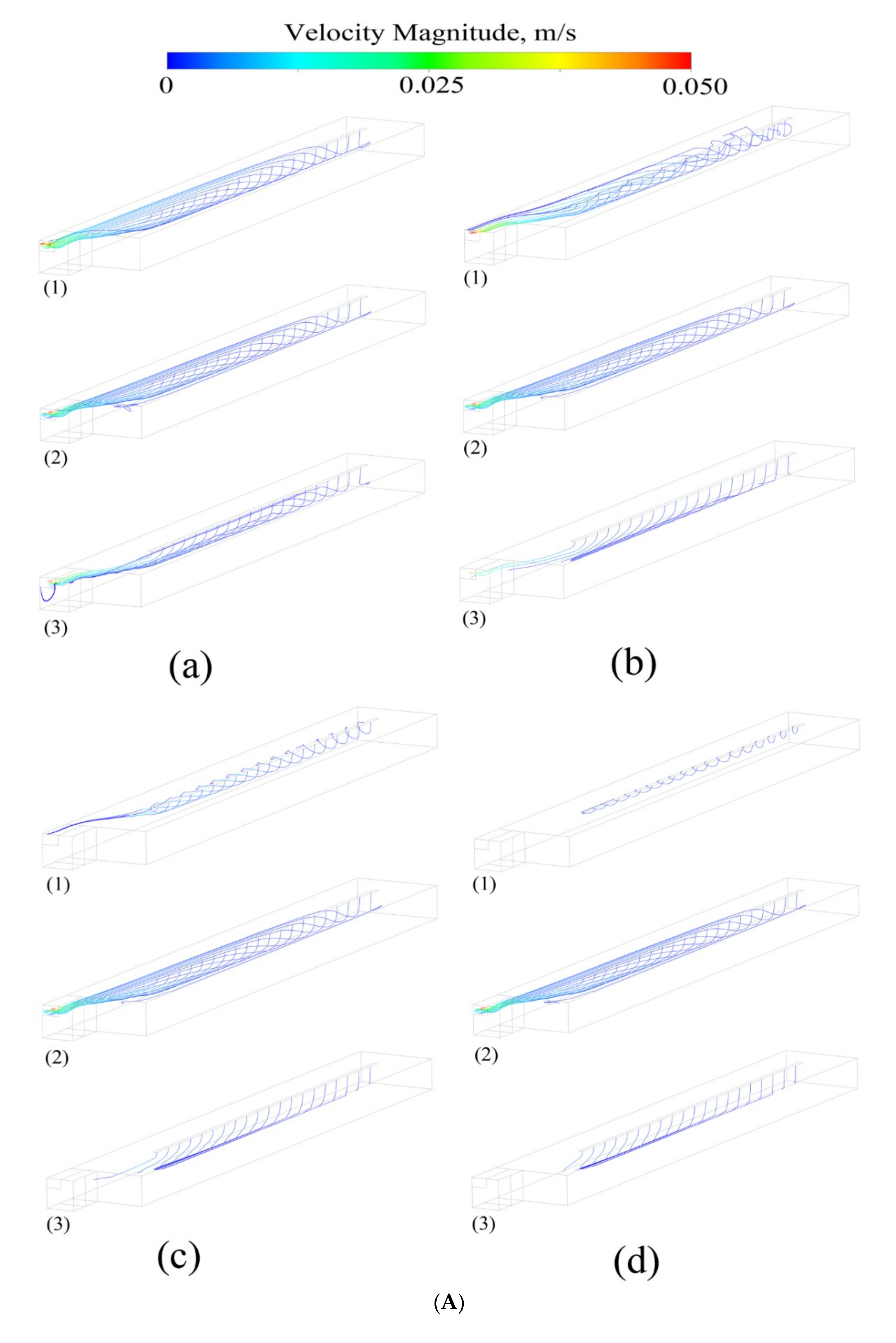
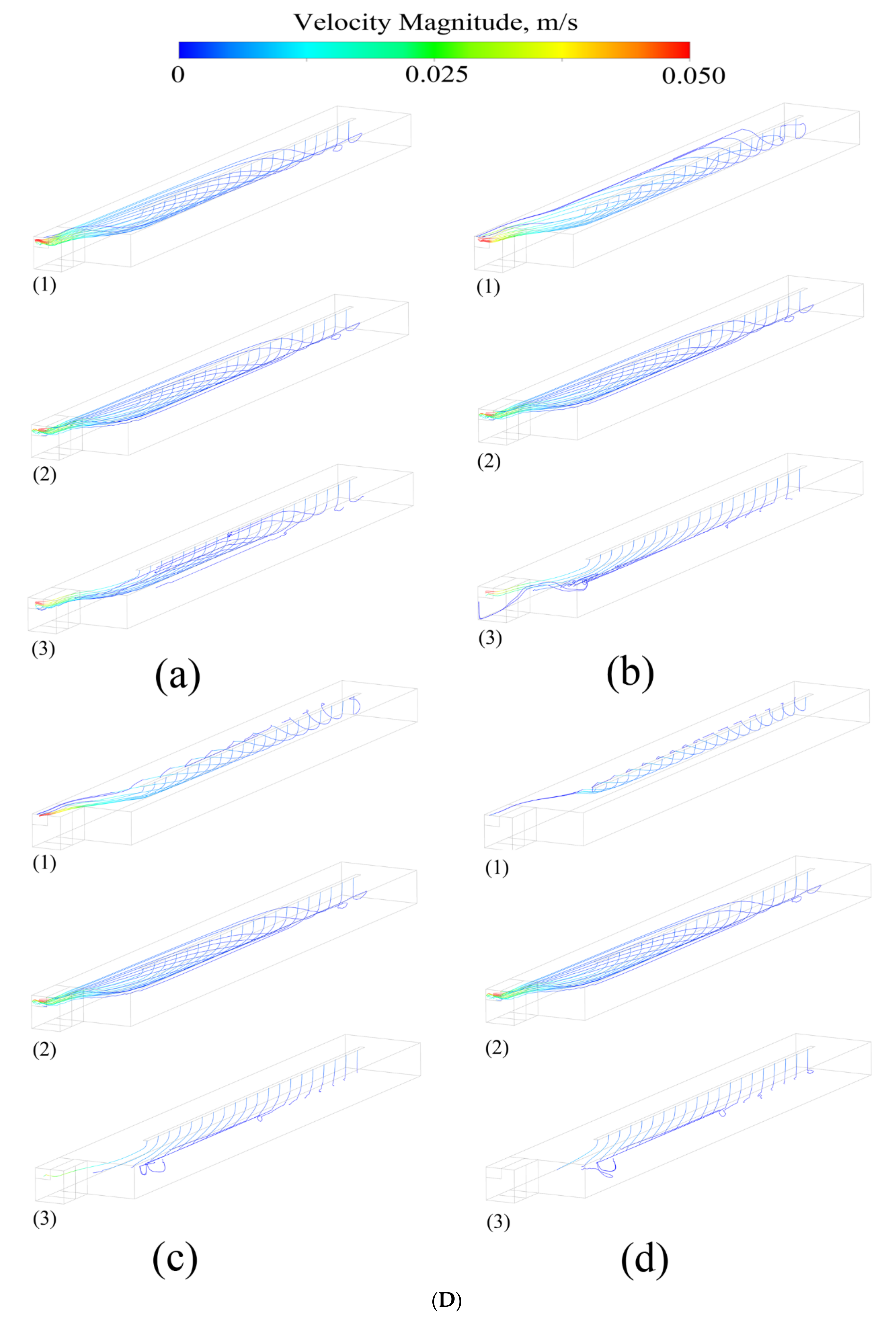
3.3. Influence of Different Casting Velocities and Inclusion Specifications on the Trajectory of Inclusions
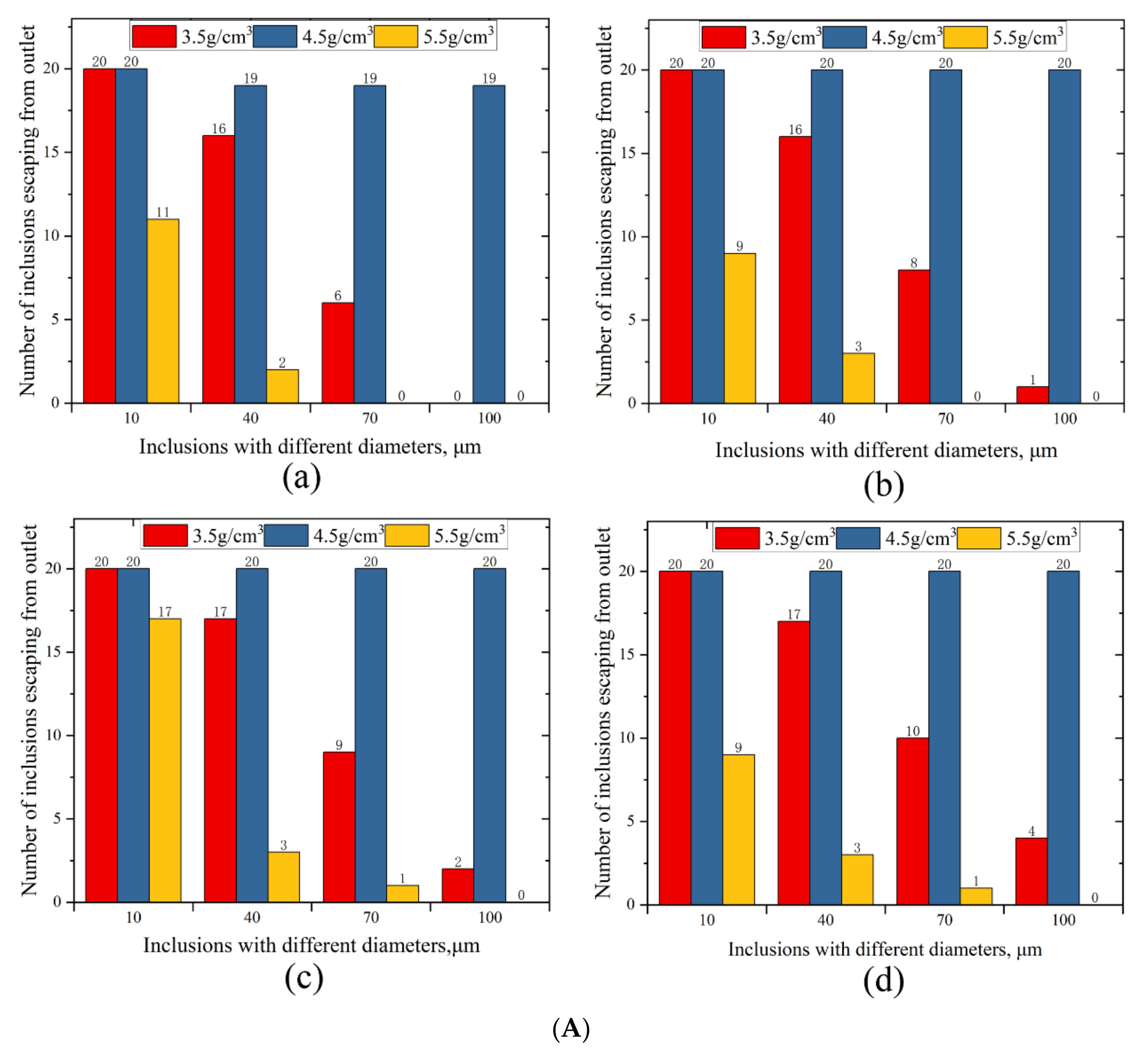
3.4. The Escape Trend of Inclusions under Different Influencing Factors
4. Conclusions
Author Contributions
Funding
Data Availability Statement
Conflicts of Interest
References
- Lutjering, G.; Williams, J.C. Titanium; Springer: New York, NY, USA, 2003. [Google Scholar]
- Shuster, R.E. Modeling of Aluminum Evaporation during Electron Beam Cold Hearth Melting of Titanium Alloy Ingots; University of British Columbia: Vancouver, BC, Cannada, 2017. [Google Scholar]
- Harker, H.R. Experience with large scale electron beam cold hearth melting (EBCHM). Vacuum 1990, 41, 2154–2156. [Google Scholar] [CrossRef] [Scilit]
- Santis, M.D.; Ferretti, A. Thermo-fluid-dynamics modeling of the solidification process and behaviour of nonmetallic inclusions in the continuous casting slabs. ISIJ Intern. 1996, 36, 673–680. [Google Scholar] [CrossRef] [Scilit]
- Li, H.; Wen, J.; Zhang, J.M.; Wang, X.H.; Yasushi, S.; Mitsutaka, H. Simulation on cluster-agglomeration of inclusions in molten steel with DLA model. J. Univ. Sci. Technol. Beijing 2006, 28, 343–347. [Google Scholar]
- Yu, S.; Long, M.J.; Zhang, M.Y.; Chen, D.F.; Xu, P.; Duan, H.M.; Yang, J. Effect of mold corner structures on the fluid flow, heat transfer and inclusion motion in slab continuous casting molds. J. Manuf. Process. 2021, 68, 1784–1802. [Google Scholar] [CrossRef] [Scilit]
- Lei, S.W.; Zhang, J.M.; Zhao, X.K.; Dong, Q.P. Study of molten steel flow and inclusions motion behavior in the solidification processes for high speed continuous casting slab by numerical simulation. Trans. Indian Inst. Met. 2016, 69, 1193–1207. [Google Scholar] [CrossRef] [Scilit]
- Liu, Z.Q.; Sun, Z.B.; Li, B.K. Modeling of quasi-four-phase flow in continuous casting mold using hybrid Eulerian and Lagrangian approach. Metall. Mater. Trans. B Process Metall. Mater. Process. Sci. 2017, 48, 1248–1267. [Google Scholar] [CrossRef] [Scilit]
- Liu, Z.Q.; Li, B.K.; Jiang, M.F.; Tsukihashi, F. Euler-Euler-Lagrangian modeling for two-phase flow and particle transport in continuous casting mold. ISIJ Int. 2014, 54, 1314–1323. [Google Scholar] [CrossRef] [Scilit]
- Yuan, X.L. Editorial Board of China Aeronautical Materials Manual; Standards Press of China: Beijing, China, 2002. [Google Scholar]
- Li, Z.C. Research, Production and Application of Ti-0.3Mo-0.8Ni Alloy Abroad. Rare Met. Mater. Eng. 1984, 5, 75–81. [Google Scholar]
- Zhu, Z.Z.; Li, X.M.; Zhou, R.F.; Huang, H.G.; Xiong, W.T.; Li, Z.L. Numerical simulation of molybdenum and nickel distribution in large-scale slab ingots of Ti-0.3 wt.% Mo-0.8 wt.% Ni alloys during electron beam cold hearth melting. JOM 2022, 74, 3811–3820. [Google Scholar] [CrossRef] [Scilit]
- Truong, V.D.; Hyun, Y.T.; Won, J.W.; Lee, W.J.; Yoon, J.H. Numerical Simulation of the Effects of Scanning Strategies on the Aluminum Evaporation of Titanium Alloy in the Electron Beam Cold Hearth Melting Process. Materials 2022, 15, 820. [Google Scholar] [CrossRef] [Scilit]
- Bellot, J.P.; Ablitzer, D.; Hess, E. Aluminum volatilization and inclusion removal in the electron beam cold hearth melting of Ti alloys. Metall. Mater. Trans. B 2000, 31, 845–854. [Google Scholar] [CrossRef] [Scilit]
- Kroll-Rabotin, J.S.; Gisselbrecht, M.; Ott, B.; May, R.; Fröhlich, J.; Bellot, J.P. Multiscale simulation of non-metallic inclusion aggregation in a fully resolved bubble swarm in liquid steel. Metals 2020, 10, 517. [Google Scholar] [CrossRef] [Scilit]
- Li, J.; Wu, M.H.; Ludwig, A. Simulation of macrosegregation in a 2.45-ton steel ingot using a three-phase mixed columnar-equiaxed model. Int. J. Heat Mass Transf. 2014, 72, 668–679. [Google Scholar] [CrossRef] [Scilit]
- Chen, H.B.; Long, M.J.; Chen, D.F.; Liu, T.; Duan, H.M. Numerical study on the characteristics of solute distribution and the formation of centerline segregation in continuous casting slab. Int. J. Heat Mass Transf. 2018, 126, 843–853. [Google Scholar] [CrossRef] [Scilit]
- Bennon, W.D.; Incropera, F.P. A continuum model for momentum, heat and species transport in binary solid-liquidphase change systems. Int. J. Heat Mass Transf. 1987, 30, 2161–2170. [Google Scholar] [CrossRef] [Scilit]
- Brent, A.D.; Voller, V.R.; Reid, K.J. Enthalpy-porosity technique for modeling convection-diffusion phase change: Application to the melting of a pure metal. Numer. Heat Transf. 1988, 13, 297–318. [Google Scholar]
- Hirt, C.W.; Nichols, B.D.; Hotchkiss, R.S. Volume of fluid (VOF) method for the dynamics of free boundaries. J. Comput. Phys. 1981, 39, 201–225. [Google Scholar] [CrossRef] [Scilit]
- Launder, B.E.; Spalding, D.B. The numerical computation of turbulent flows. Comput. Methods Appl. Mech. Eng. 1974, 3, 269–289. [Google Scholar] [CrossRef] [Scilit]
- Voller, V.R.; Prakash, C. A fixed-grid numerical modeling methodology for convection-diffusion mushy region phase change problems. Int. J. Heat Mass Transf. 1987, 30, 1709–1720. [Google Scholar] [CrossRef] [Scilit]
- Thomas, B.G.; Yuan, Q.; Sivaramakrishnan, S.; Shi, T.B.; Vanka, S.P.; Assar, M.B. Comparison of four methods to evaluate fluid velocities in a continuous Slab casting mold. ISIJ Int. 2001, 41, 1262–1271. [Google Scholar] [CrossRef] [Scilit]
- Waheed, M.A.; Nzebuka, G.C. Investigation of macrosegregation for different dendritic arm spacing, casting temperature, and thermal boundary conditions in a direct-chill casting. Appl. Phys. A 2020, 126, 725. [Google Scholar] [CrossRef] [Scilit]
- Zhao, X.K.; Reilly, C.; Yao, L.; Maijer, D.M.; Cockcroft, S.L.; Zhu, J. A three-dimensional steady state thermal fluid model of jumbo ingot casting during electron beam re-melting of Ti-6Al-4V. Appl. Math. Model. 2014, 38, 3607–3623. [Google Scholar] [CrossRef] [Scilit]
- Nzebuka, G.C.; Ufodike, C.O.; Egole, C.P. Influence of various aspects of low-Reynolds number turbulence models on predicting flow characteristics and transport variables in a horizontal direct-chill casting. Int. J. Heat Mass Transf. 2021, 179. [Google Scholar] [CrossRef] [Scilit]
- Zhao, J.J. Numerical simulation of inclusion movement in the continuous casting slab mold. In Proceedings of the International Symposium On Clean Steel, Beijing, China, 17 September 2008. [Google Scholar]
- Li, A.; Ahmadi, G. Dispersion and deposition of spherical particles from point sources in a turbulent channel flow. Aerosol Sci. Technol. 1992, 16, 209–226. [Google Scholar] [CrossRef] [Scilit]


Publisher’s Note: MDPI stays neutral with regard to jurisdictional claims in published maps and institutional affiliations. |
© 2022 by the authors. Licensee MDPI, Basel, Switzerland. This article is an open access article distributed under the terms and conditions of the Creative Commons Attribution (CC BY) license (https://creativecommons.org/licenses/by/4.0/).
Share and Cite
Zhu, Z.; Zhou, R.; Li, X.; Xiong, W.; Li, Z. Flow Field and Inclusions Movement in the Cold Hearth for the Ti-0.3Mo-0.8Ni Alloy. Crystals 2022, 12, 1471. https://doi.org/10.3390/cryst12101471
Zhu Z, Zhou R, Li X, Xiong W, Li Z. Flow Field and Inclusions Movement in the Cold Hearth for the Ti-0.3Mo-0.8Ni Alloy. Crystals. 2022; 12(10):1471. https://doi.org/10.3390/cryst12101471
Chicago/Turabian StyleZhu, Zhenze, Rongfeng Zhou, Xiangming Li, Wentao Xiong, and Zulai Li. 2022. "Flow Field and Inclusions Movement in the Cold Hearth for the Ti-0.3Mo-0.8Ni Alloy" Crystals 12, no. 10: 1471. https://doi.org/10.3390/cryst12101471
APA StyleZhu, Z., Zhou, R., Li, X., Xiong, W., & Li, Z. (2022). Flow Field and Inclusions Movement in the Cold Hearth for the Ti-0.3Mo-0.8Ni Alloy. Crystals, 12(10), 1471. https://doi.org/10.3390/cryst12101471