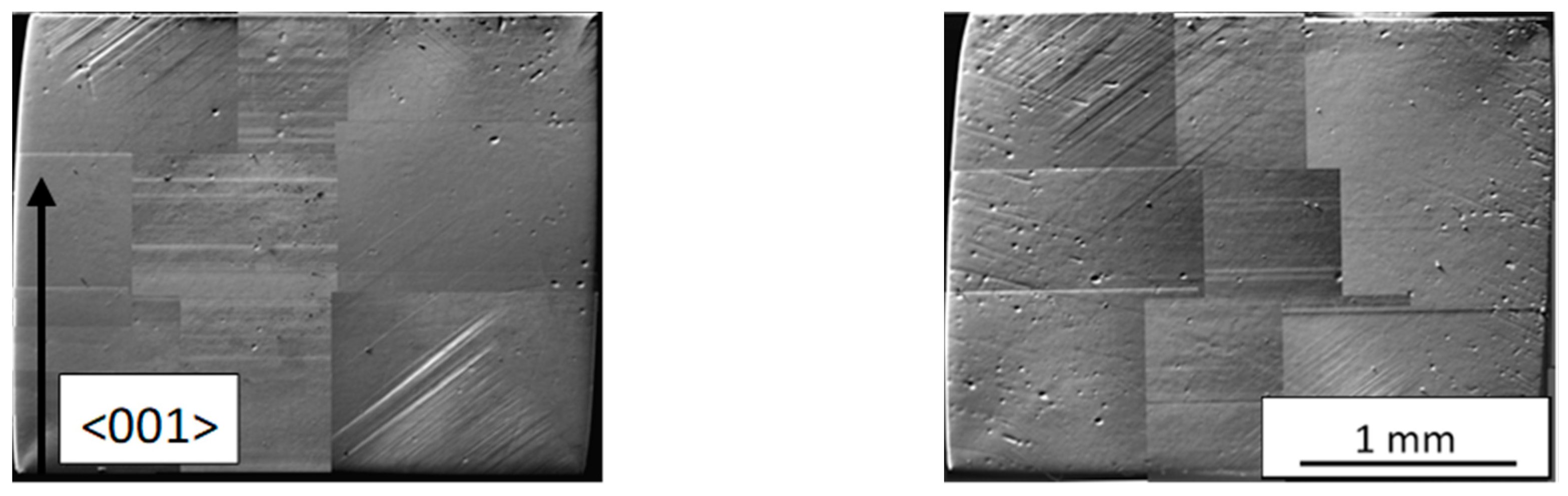
Crystallographic and Geometric Factors in the Shear Development in <001> FCC Single Crystals: Molecular Dynamics Simulation and Experimental Study

 ,
,  , and
, and Abstract
Share and Cite
Lychagin, D.V.; Dmitriev, A.I.; Nikonov, A.Y.; Alfyorova, E.A. Crystallographic and Geometric Factors in the Shear Development in <001> FCC Single Crystals: Molecular Dynamics Simulation and Experimental Study. Crystals 2020, 10, 666. https://doi.org/10.3390/cryst10080666
Lychagin DV, Dmitriev AI, Nikonov AY, Alfyorova EA. Crystallographic and Geometric Factors in the Shear Development in <001> FCC Single Crystals: Molecular Dynamics Simulation and Experimental Study. Crystals. 2020; 10(8):666. https://doi.org/10.3390/cryst10080666
Chicago/Turabian StyleLychagin, Dmitry V., Andrey I. Dmitriev, Anton Yu. Nikonov, and Ekaterina A. Alfyorova. 2020. "Crystallographic and Geometric Factors in the Shear Development in <001> FCC Single Crystals: Molecular Dynamics Simulation and Experimental Study" Crystals 10, no. 8: 666. https://doi.org/10.3390/cryst10080666
APA StyleLychagin, D. V., Dmitriev, A. I., Nikonov, A. Y., & Alfyorova, E. A. (2020). Crystallographic and Geometric Factors in the Shear Development in <001> FCC Single Crystals: Molecular Dynamics Simulation and Experimental Study. Crystals, 10(8), 666. https://doi.org/10.3390/cryst10080666