Article

Sodium Acetate-Modulated Fe(III)/O3 Homogeneous Catalytic Ozonation for Sulfamethoxazole Removal: Performance, Oxidation Pathways, and Toxicity Assessment

1
Anhui Provincial Ecological Environment Monitoring Center, Hefei 230071, China
2
College of Ecology and the Environment, Nanjing Forestry University, Nanjing 210037, China
*
Author to whom correspondence should be addressed.
Catalysts 2026, 16(9), 769; https://doi.org/10.3390/catal16090769
Submission received: 14 July 2026 / Revised: 19 August 2026 / Accepted: 24 August 2026 / Published: 26 August 2026
(This article belongs to the Section Environmental Catalysis)

Abstract

Sulfamethoxazole (SMX), a persistent sulfonamide antibiotic widespread in aquatic environments, resists conventional water treatment degradation. This work developed a NaOAc/Fe3+/O3 homogeneous ozonation system for SMX abatement. Four comparative reaction groups confirmed significant synergism between trace Fe3+ and sodium acetate. Under optimized near-neutral conditions, 96.19% SMX was removed within 30 min with kobs = 0.107 min−1, outperforming sole O3, O3/NaOAc and O3/Fe3+ by 11.0%, 31.0% and 21.9% respectively. Single-factor tests revealed excess Fe3+ or acetate suppressed catalytic activity, while alkaline conditions accelerated degradation yet aggravated iron precipitation. Radical quenching and p-CBA probing indicated that acetate coordination did not increase bulk ·OH exposure, while the stronger TEMP-derived TEMPO response after acetate addition was consistent with enhanced 1O2-associated oxidation, suggesting that acetate altered the relative contributions of ozone-derived oxidation pathways. Post acetate background deduction, the ternary system achieved higher TOC/COD elimination. Twelve SMX intermediates were identified via LC-MS, with three ring-opening degradation pathways proposed. QSAR toxicity evaluation indicated that most intermediates possessed lower bioconcentration and developmental risks than raw SMX. Overall, the results indicate that weak acetate ligands can alter iron-mediated ozone oxidation pathways, providing a low-dose and economical strategy for antibiotic wastewater treatment.

1. Introduction

Sulfamethoxazole (SMX) is widely detected in aquatic environments because of its extensive use and incomplete removal by conventional wastewater treatment processes [1,2,3]. Its persistence poses ecological risks and may promote the spread of antibiotic resistance genes [4]. As adsorption and membrane separation mainly transfer rather than degrade SMX, advanced oxidation processes (AOPs) are needed for its effective removal [5].
Catalytic ozonation is a promising AOP because of its strong oxidation capacity and operational simplicity [6]. Homogeneous Fe3+/O3 ozonation allows effective contact between dissolved iron species and ozone, but its application under neutral conditions is limited by Fe3+ hydrolysis and precipitation, which reduce the availability of catalytically active iron species [7,8]. Fe(III) was therefore selected as the initial iron species because Fe(II) would be rapidly oxidized by ozone, introducing an additional transient redox process at the beginning of ozonation. This choice allowed the effects of acetate coordination on Fe(III) speciation and ozone activation under near-neutral conditions to be examined directly. In this context, existing studies have verified that organic carboxylate ligands can coordinate with Fe3+ to stabilize dissolved iron and accelerate Fe2+/Fe3+ redox circulation. Typical multi-dentate ligands such as citric acid and oxalic acid possess strong complexing ability, but high dosing costs limit their large-scale application, and excessive carboxylate will compete with target micropollutants for reactive oxygen species (ROS), reducing pollutant degradation efficiency [9,10,11]. Sodium acetate (NaOAc) is a cheap, easily available weak monodentate carboxylate with a simple molecular structure, yet current research rarely systematically explores whether trace acetate can regulate Fe3+ aqueous speciation, reconstruct ozone decomposition paths and enhance the degradation efficiency of refractory antibiotics represented by SMX [12,13].
Current research on ligand-modulated iron-based catalytic ozonation mostly centers on improving the yield of free hydroxyl radicals (·OH). However, recent studies have shown that ·OH is readily scavenged by background components in actual water, whereas singlet oxygen (1O2)-dominated non-radical pathways exhibit substrate-selective oxidation [14]. Up to now, few studies have focused on weak acetate ligands regulating Fe3+ to shift ozone activation from radical pathways to non-radical oxidation channels [15]. Most related works only record pollutant removal data, lacking systematic combined verification via radical quenching, p-CBA quantitative probe and EPR capture experiments to distinguish the relative contributions of radical and non-radical species. Meanwhile [16], the existing literature rarely tracks the whole transformation process of SMX under acetate-assisted Fe3+/O3 oxidation, including mineralization degree, spectral structural changes, complete identification of intermediate products and corresponding ecotoxicity evolution rules, resulting in incomplete theoretical understanding of the coordination regulation mechanism between weak carboxylate and ferric ions.
Against the above research gaps, this work constructed a NaOAc/Fe3+/O3 system for SMX degradation and compared it with O3, NaOAc/O3 and Fe3+/O3 systems. The effects of Fe3+ dosage, NaOAc concentration, initial pH and ozone flow rate were evaluated. Combined with an ·OH quenching test, p-CBA exposure quantitative analysis [17,18] and EPR 1O2 capture characterization, this study evaluates how acetate–Fe3+ coordination altered ozone-derived oxidation pathways, with particular attention to the involvement of ·OH and 1O2-associated responses. TOC, COD, UV–vis and 3D-EEM are used to track SMX mineralization and structural damage, LC-MS is adopted to capture all oxidation intermediates and deduce three core ring-opening degradation routes, and T.E.S.T. 5.1 is applied to evaluate the bioconcentration and developmental toxicity of transformation products. This study aims to elaborate the unique regulatory function of weak acetate ligands on iron-mediated ozone activation, provide systematic experimental data and theoretical support for low-dose homogeneous catalytic ozonation technology, and offer new technical references for advanced treatment of antibiotic-contaminated actual water bodies.

2. Results and Discussion

2.1. Synergistic Degradation Performance of Different Ozonation Systems

Four independent reaction groups, including sole O3, O3/NaOAc, O3/Fe3+ and NaOAc/Fe3+/O3, were set under unified baseline experimental conditions to intuitively verify whether acetate and trace ferric ions possessed synergistic catalytic effects on SMX ozonation degradation. After 30 min of continuous ozone aeration, the sole ozone system removed 92.69% of SMX, and the corresponding pseudo-first-order apparent kinetic constant kobs reached 0.086 min−1, which indicated that ozone molecules could directly attack the electron-rich functional groups on the SMX skeleton and achieve partial pollutant elimination relying on electrophilic oxidation. When 10 mg/L sodium acetate was solely added into the ozone system without ferric ions, the final SMX removal rate slightly dropped to 91.57% and kobs decreased to 0.081 min−1, which demonstrated acetate anions alone could not activate ozone to generate additional active oxidizing substances. On the contrary, acetate would compete with SMX for limited dissolved ozone in the liquid phase, slightly weakening the direct oxidation capacity of ozone molecules and leading to a minor decline in degradation efficiency. The single Fe3+/O3 group with 0.2 mg/L ferric ion dosing only achieved 92.98% SMX removal with kobs of 0.088 min−1, which was almost consistent with the degradation performance of sole ozone treatment. Under a neutral aqueous environment, free ferric ions without ligand protection would rapidly undergo hydrolysis and polymerization to form insoluble iron hydroxide precipitates, drastically reducing the concentration of dissolved iron species that could participate in ozone activation, so trace ferric ions alone could hardly bring obvious promotion to SMX degradation. The degradation efficiency curves and kinetic fitting results are shown in Figure 1. The apparent rate constants were obtained by ordinary least-squares fitting of ln(C0/Ct) against reaction time using seven sampling points, with the intercept allowed to vary. The slope was reported as kobs. The individual pseudo-first-order fitting results were as follows. For the O3 system, kobs was 0.086 min−1, R2 was 0.953, the slope standard error was 0.00856 min−1, and the 95% confidence interval ranged from 0.064 to 0.108 min−1. For the O3/NaOAc system, the corresponding values were 0.081 min−1, 0.959, 0.00745 min−1, and 0.062–0.099 min−1, respectively. For the O3/Fe3+ system, the corresponding values were 0.088 min−1, 0.952, 0.00883 min−1, and 0.065–0.110 min−1, respectively. For the NaOAc/Fe3+/O3 system, the corresponding values were 0.107 min−1, 0.9681, 0.00866 min−1, and 0.084–0.129 min−1, respectively.
In sharp contrast, when 0.2 mg/L Fe3+ and 10 mg/L NaOAc were added simultaneously into the ozone reaction system, the final SMX removal rate rose significantly to 96.19%, and the apparent kinetic constant increased to 0.107 min−1, which was remarkably higher than the three control groups. This distinct performance gap fully confirmed the strong synergistic catalytic interaction between acetate and trace ferric ions. The internal cause of synergism lay in the coordination reaction between acetate and Fe3+ in neutral solution. Acetate–Fe3+ coordination may alter Fe(III) speciation and mitigate its hydrolysis and precipitation under near-neutral conditions, thereby improving the availability of catalytically active iron species. Meanwhile, the coordination interaction reconstructed the electronic microenvironment around iron active sites, changed the decomposition pathway of dissolved ozone molecules, and induced more selective active oxygen species to participate in the oxidative breakdown of the SMX molecular structure, thereby significantly accelerating the whole degradation process of target pollutants. It can be concluded that the enhancement effect of the ternary system cannot be simply regarded as the superposition of a single acetate or single ferric ion, but that it originated from the unique coordination regulation effect between the two components.

2.2. Effects of Key Operational Parameters

2.2.1. Ferric Ion Dosage

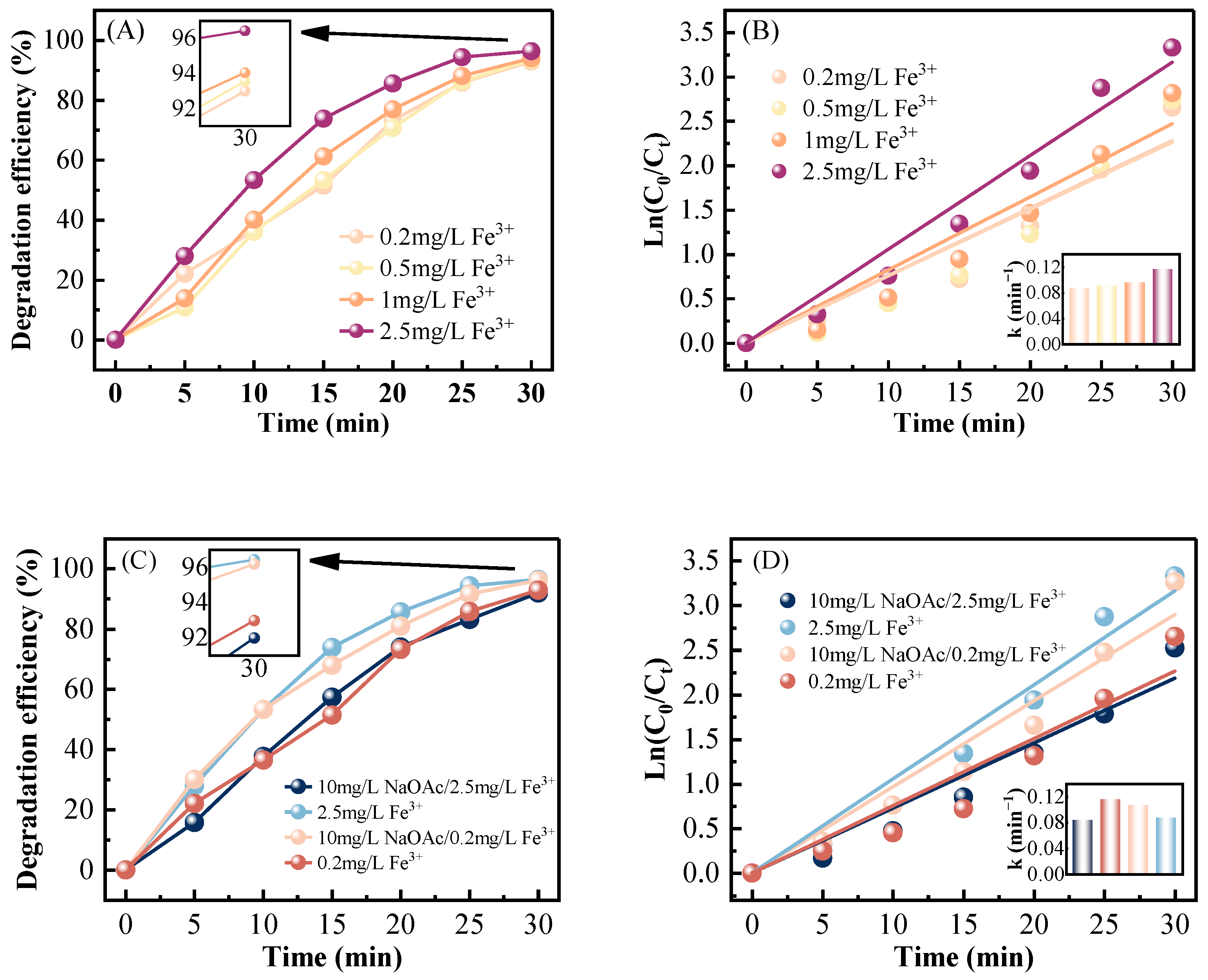
A series of gradient experiments with Fe3+ concentrations of 0.2, 0.5, 1.0 and 2.5 mg/L were carried out to explore the influence of ferric ion dosage on SMX degradation efficiency, and the comparison was divided into two series without and with 10 mg/L sodium acetate. In the reaction system without acetate, SMX degradation efficiency showed a slow upward trend with the continuous increase in ferric ion concentration. When Fe3+ dosing was raised from 0.2 mg/L to 2.5 mg/L, kobs increased from 0.088 min−1 to 0.116 min−1, and the 30 min removal rate rose from 92.98% to 96.43%. This phenomenon indicated that more dissolved iron species existed in the solution under high ferric concentration, which could activate more ozone molecules and strengthen the overall oxidation capacity of the system. Nevertheless, excessively high ferric ion dosing deviated from the trace iron background concentration of actual natural water bodies, and excessive dissolved iron would remain in the effluent after treatment, bringing potential metal residue risks and increasing subsequent water purification pressure, so high Fe3+ concentration was not suitable for practical engineering application scenarios. The degradation curves and kinetic fitting results for different Fe3+ dosages are shown in Figure 2.
When the system contained a fixed 10 mg/L sodium acetate, the promotion effect of ferric ion presented obvious concentration dependence and matched proportion limitation. Under the low Fe3+ dosage of 0.2 mg/L, acetate coordination may have improved the availability of trace iron species, and the ternary system achieved optimal degradation performance with removal rate up to 96.19%. However, when ferric ion concentration was increased to 2.5 mg/L, the degradation efficiency instead declined sharply to 91.99%, and the apparent kinetic constant was also significantly lower than that of the low-iron group. The underlying reason was that excess ferric ions would occupy most acetate ligands in the solution, resulting in insufficient coordination protection for each iron ion, and a large amount of uncomplexed free Fe3+ still underwent hydrolysis precipitation. In addition, redundant iron species would compete with SMX and acetate for ozone and active oxygen species generated by ozone decomposition, consuming a large amount of oxidants and weakening the overall degradation efficiency of target pollutants. This result proved that there existed an optimal matching ratio between acetate and ferric ions, and only trace Fe3+ could be efficiently regulated by acetate ligands to exert synergistic catalytic effects.

2.2.2. Sodium Acetate Dosage

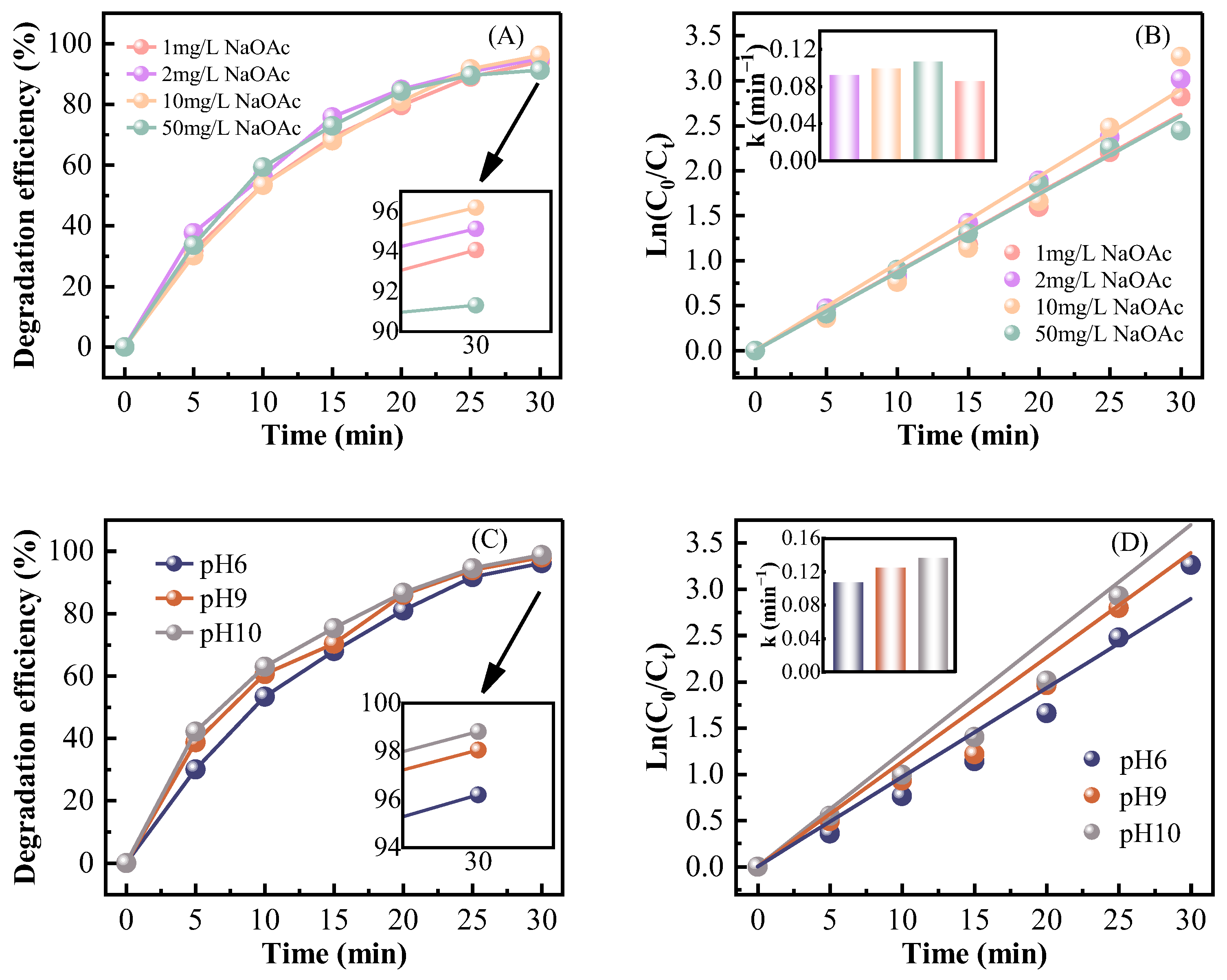
Taking the optimal trace Fe3+ concentration of 0.2 mg/L as a fixed condition, sodium acetate gradients of 1, 2, 10 and 50 mg/L were set to analyze the influence of acetate dosage on synergistic ozonation performance. The variation law of SMX degradation efficiency showed an obvious volcanic curve with the increase in acetate concentration. Low acetate dosing of 1 mg/L and 2 mg/L could slightly improve the degradation rate of the Fe3+/O3 binary system, but the coordination amount of acetate was insufficient to stabilize all trace iron species, so the promotion amplitude was limited. When sodium acetate concentration reached 10 mg/L, the coordination balance between acetate and Fe3+ reached the optimal state, and the system obtained the maximum removal rate and kinetic constant, which was the optimal acetate dosage in this experiment. Once acetate dosing further increased to 50 mg/L, the degradation efficiency dropped to 91.31%, lower than the Fe3+/O3 binary group without acetate. Excessive acetate anions would act as free radical scavengers in the liquid phase, competing with SMX for ·OH and other active oxygen species produced by ozone activation, consuming a large number of oxidants and inhibiting the oxidative degradation of target pollutants. Meanwhile, excessive acetate would change the water-phase microenvironment around ozone bubbles, interfere with gas–liquid mass transfer efficiency of ozone and reduce the effective utilization rate of ozone molecules, ultimately weakening the whole system’s degradation capacity toward SMX. The effects of sodium acetate dosage on SMX degradation are shown in Figure 3.

2.2.3. Initial Solution pH

The natural pH value of the mixed solution containing SMX, Fe3+ and 10 mg/L NaOAc was approximately 6, which was defined as the near-neutral experimental group. Two alkaline groups with pH adjusted to 9 and 10 were additionally set to explore the influence of aqueous pH on the ternary catalytic system. Acidic conditions were not examined because Fe(III) hydrolysis is strongly suppressed at low pH, where Fe3+ predominantly exists as stable aquated species with limited formation of hydroxo complexes that are considered more catalytically relevant in this system [19]. In contrast, this study focused on acetate-assisted stabilization of reactive iron species under near-neutral conditions, where both Fe(III) speciation and ozone reactivity are sensitive to pH. Alkaline conditions were selected to further evaluate how increasing OH concentration simultaneously promotes ozone decomposition and drives Fe(III) hydrolysis toward less soluble and less catalytically accessible forms [20], thereby altering the balance between iron-mediated and radical-driven pathways.
The hydrolysis of Fe(III) governs its speciation in aqueous solution, shifting from free Fe3+ to mononuclear hydroxo complexes and eventually to polymeric species and Fe(OH)3 precipitates:
Fe3+ + H2O ⇌ FeOH2+ + H+
FeOH2+ + H2O ⇌ Fe(OH)2+ + H+
2Fe3+ + 2H2O ⇌ Fe2(OH)24+ + 2H+
Fe3+ + 3H2O ⇌ Fe(OH)3(s) + 3H+
This pH-dependent speciation is critical because only soluble Fe(III) hydroxo species can effectively participate in catalytic ozone activation, whereas precipitation at high pH reduces the concentration of active dissolved iron and thus suppresses iron-mediated reaction pathways.
Experimental data showed that the increase in pH value could accelerate the self-decomposition chain reaction of ozone molecules in water, generate more initial free radicals and raise the apparent reaction rate of SMX. When pH was adjusted to 9, kobs increased to 0.125 min−1 with a 98.05% removal rate; at pH 10, kobs further rose to 0.136 min−1 and the removal efficiency reached 98.81%. These results indicate that increasing the initial pH from approximately 6 to 10 accelerated SMX degradation, with pH 10 providing the highest kinetic performance among the tested conditions. However, the increase in final removal efficiency was relatively limited. Alkaline conditions may also promote Fe(III) hydrolysis and precipitation and require additional pH adjustment in practical applications. Since these operational factors were not quantitatively evaluated, the present study does not establish an optimal operating pH.

2.3. Identification and Analysis of Reactive Oxygen Species

2.3.1. Hydroxyl Radical Quenching and p-CBA Probe Experiment

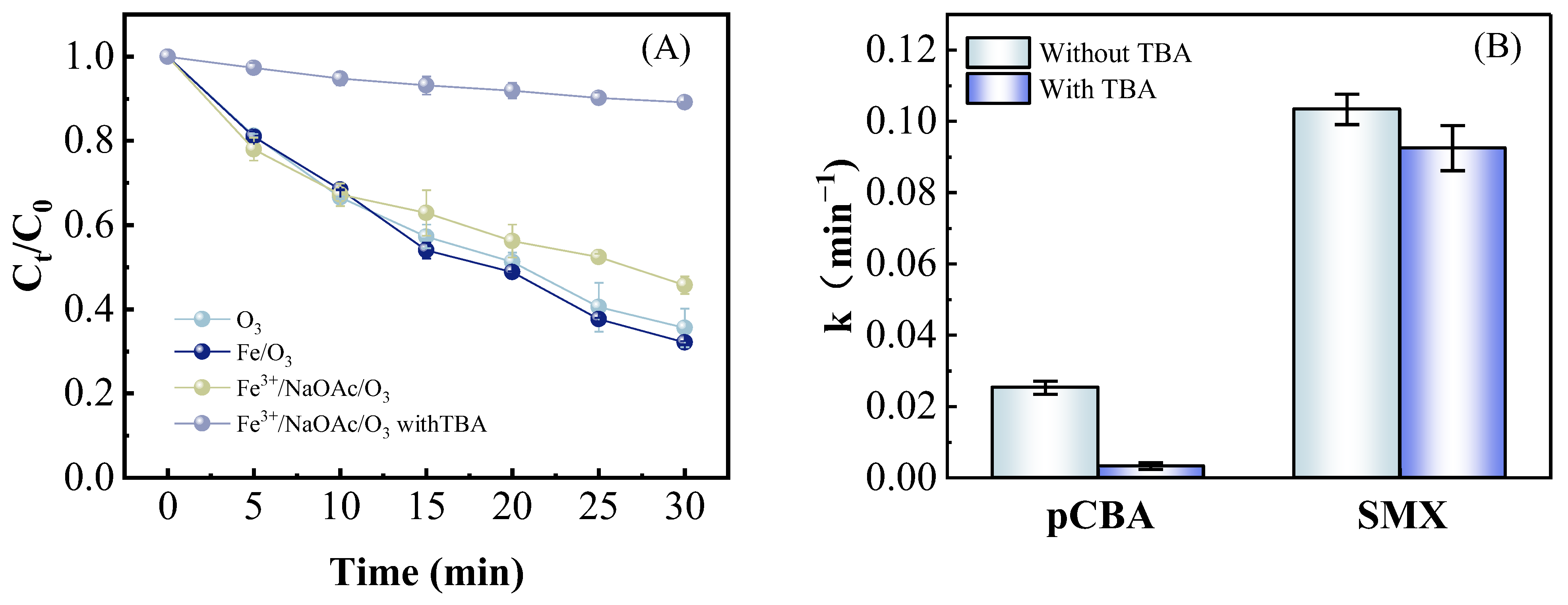
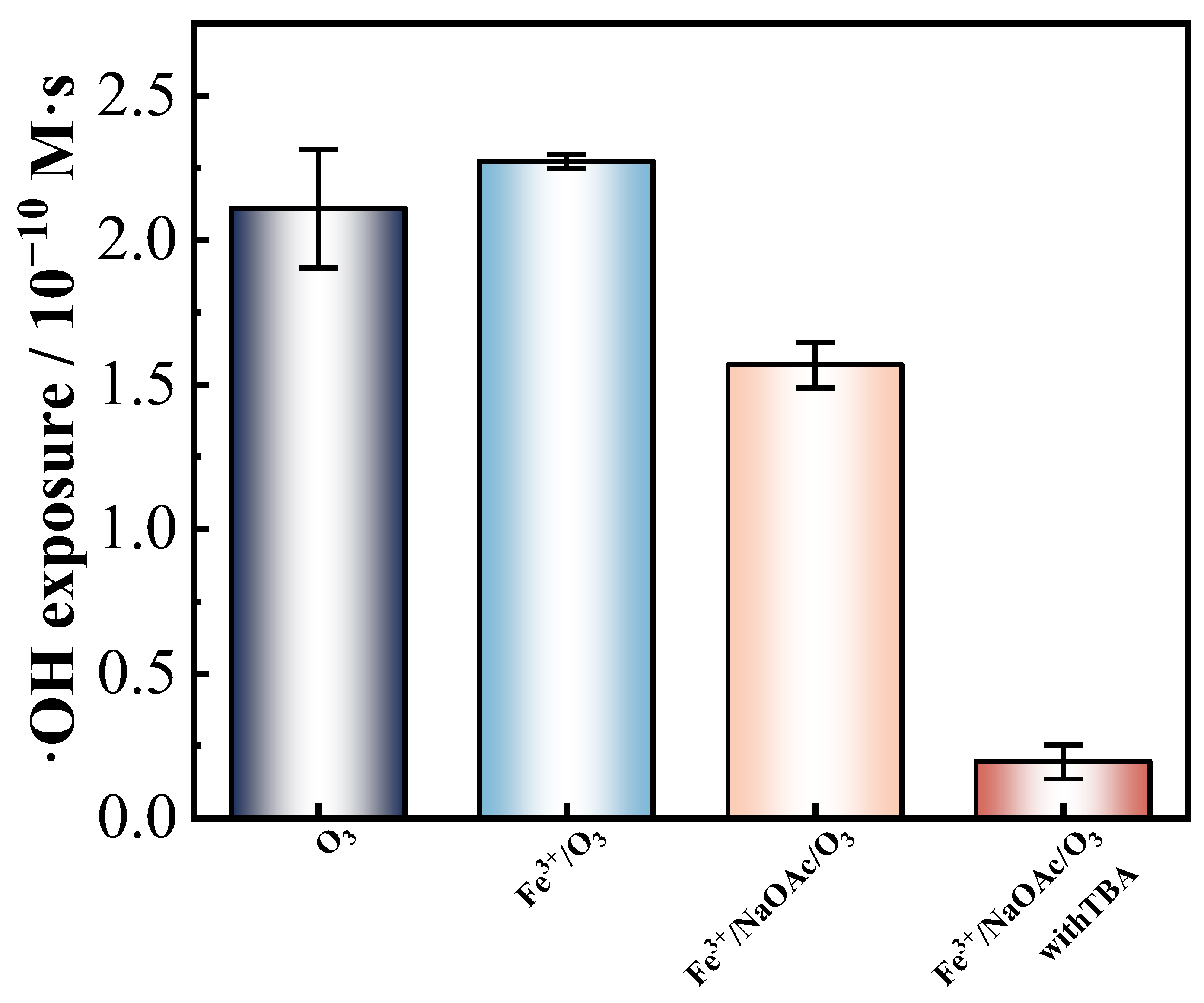
Tert-butanol (TBA) with a high specific reaction rate with ·OH was selected as a free hydroxyl radical quencher [21], and p-chlorobenzoic acid (p-CBA) was adopted as a quantitative probe to calculate cumulative ·OH exposure in different reaction systems, so as to judge whether the synergistic enhancement of the ternary system originated from the increase in free hydroxyl radicals. The reaction rate constant between p-CBA and ozone molecules was extremely low, while p-CBA reacted rapidly with ·OH [22], so the attenuation degree of p-CBA in liquid phase could accurately reflect the total exposure amount of liquid free hydroxyl radicals generated by ozone activation [23]. Without TBA addition, the attenuation rate of p-CBA followed the sequence Fe3+/O3 > sole O3 > NaOAc/Fe3+/O3, which meant the free ·OH yield of the binary iron ozone system was the highest, and acetate addition instead reduced the cumulative exposure of liquid hydroxyl radicals. After excessive TBA was added into each group to trap almost all free ·OH, the attenuation of p-CBA in all systems was almost completely suppressed, which further verified that p-CBA attenuation was dominated by hydroxyl radical oxidation. The p-CBA decay profiles and TBA inhibition results are shown in Figure 4.
However, under the same TBA quenching condition, the ternary NaOAc/Fe3+/O3 system still maintained a high SMX degradation rate, and its apparent kinetic constant was significantly higher than the Fe3+/O3 group with the quencher. This result indicates that the enhanced SMX degradation in the ternary system cannot be attributed solely to an increase in bulk ·OH exposure. If the promotion effect of acetate relied on stimulating ozone to produce more free ·OH, the SMX degradation rate of the ternary system would drop sharply after TBA addition, which was inconsistent with the actual test data. These results suggest that acetate altered the ozone-derived oxidation pathways rather than simply increasing bulk ·OH formation, but do not establish that a non-radical pathway was dominant. The calculated ·OH exposure values are compared in Figure 5.

2.3.2. EPR Singlet Oxygen Capture Characterization

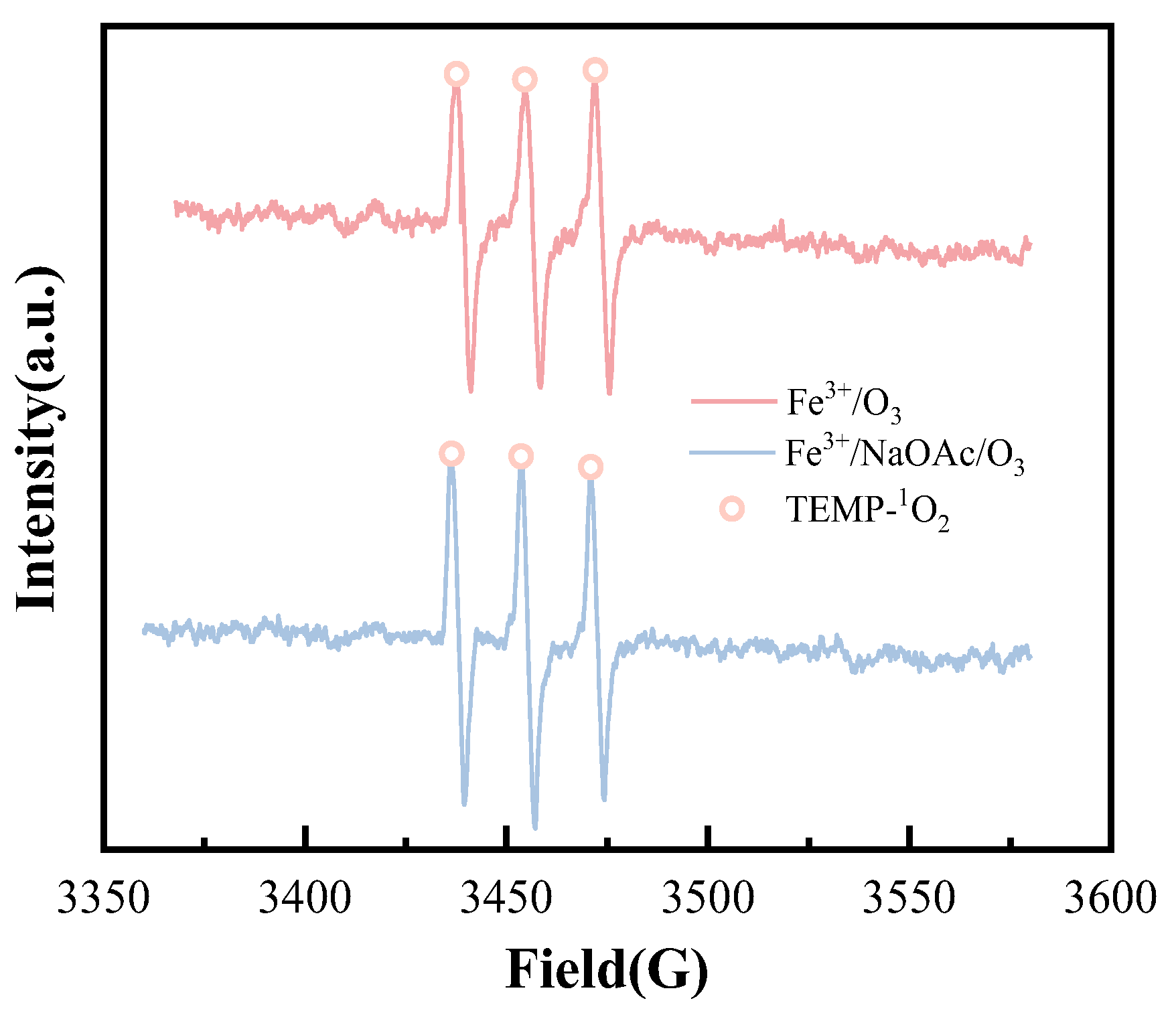
Electron paramagnetic resonance spectroscopy with TEMP as a spin trapping agent was used to detect singlet oxygen (1O2), a typical non-radical active oxygen species. TEMP would combine with 1O2 to generate stable TEMPO adducts with characteristic 1:1:1 triplet EPR signal peaks, and the peak intensity could semi-quantitatively reflect the relative yield of singlet oxygen in different reaction systems [24]. Characteristic triplet signals were observed for both the Fe3+/O3 and NaOAc/Fe3+/O3 systems within 3440–3480 G, supporting the involvement of 1O2 in iron-mediated ozonation. Under identical acquisition conditions, the NaOAc/Fe3+/O3 system displayed a stronger TEMPO response than the Fe3+/O3 system. This difference was interpreted semi-quantitatively as an enhancement of the 1O2-associated EPR response after acetate addition, rather than as a direct measurement of 1O2 concentration or yield [25]. Combined with the p-CBA probe data showing that free ·OH exposure decreased after acetate addition, the EPR response suggests that acetate coordination altered the distribution of ozone-derived reactive species and increased the relative contribution of a non-radical oxidation pathway involving 1O2 without increasing bulk ·OH formation. Because 1O2 can selectively react with electron-rich sites, this pathway may facilitate the oxidation of the aniline and isoxazole moieties in SMX and thereby contribute to the enhanced degradation observed in the ternary system. Accordingly, direct ozonation, ·OH oxidation, and 1O2-mediated oxidation are considered coexisting pathways, with acetate modifying their relative contributions. The corresponding TEMP–EPR spectra are shown in Figure 6.

2.4. SMX Mineralization, Spectral Evolution and Degradation Pathways

2.4.1. TOC and COD Mineralization Performance

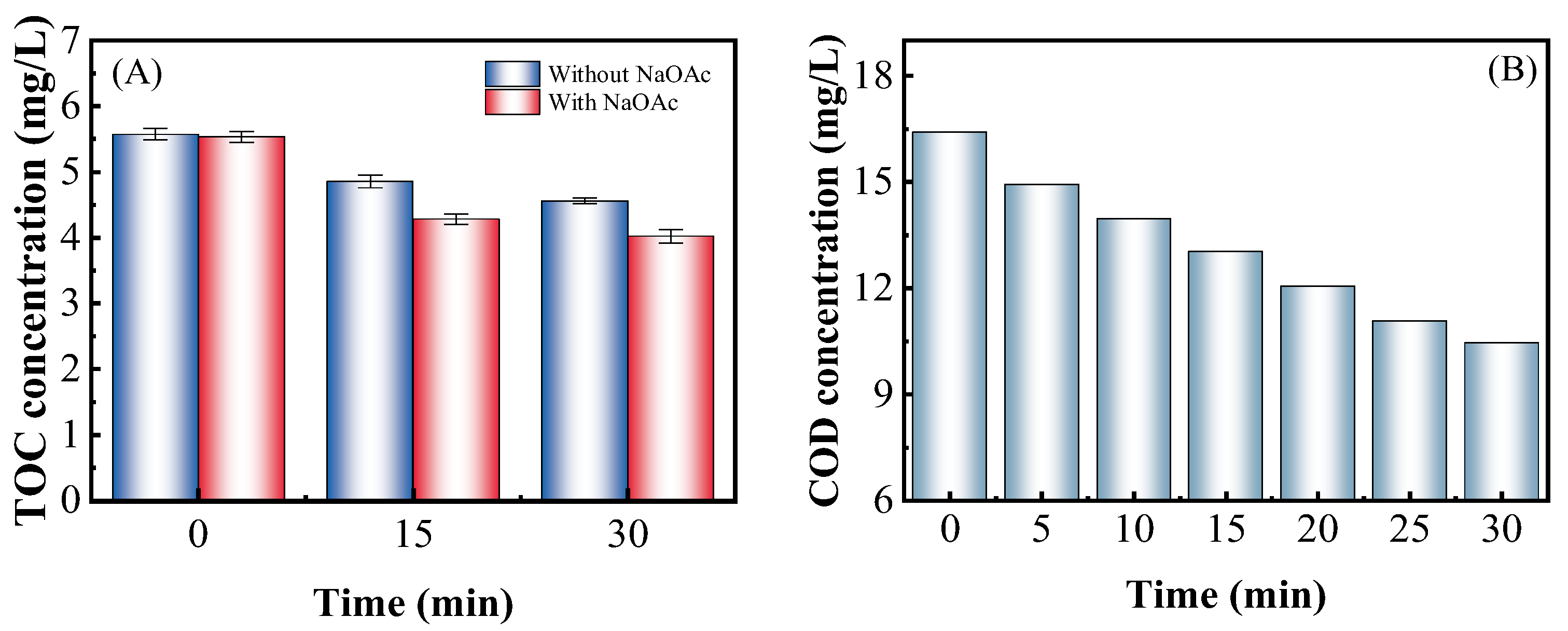
In view of sodium acetate itself containing organic carbon which would interfere with the measurement of SMX mineralization degree, blank control groups only containing corresponding concentrations of acetate without SMX were set. The mean TOC contribution of sodium acetate was 3.127 mg/L. The TOC and COD values of the acetate-containing samples were corrected using the corresponding blank values according to Xcorr,t = Xsample,t − Xblank, where X represents TOC or COD. Four replicate injections were performed for TOC analysis, and the error bars represent the standard deviations of these measurements. After 30 min reaction, the residual TOC of the Fe3+/O3 binary system was obviously higher than that of the NaOAc/Fe3+/O3 ternary group, and the COD removal capacity of the ternary system was also significantly improved. This result illustrated that acetate coordination not only accelerated the removal of SMX parent molecules, but also promoted the continuous oxidative mineralization of intermediate products generated in the early stage of oxidation. The single iron ozone system could only partially break the SMX skeleton to form a large number of stable intermediate substances that are difficult to degraded further, while the composite active oxygen system in the ternary group could continuously attack the intermediate fragments, convert them into small molecular organic acids, and partially mineralize them into carbon dioxide and water, thereby achieving deeper mineralization of the target pollutant. Nevertheless, the TOC curve tended to be flat in the late reaction stage of both systems, which indicated that a small amount of ultra-stable small molecular oxidation residues existed in the liquid phase and could not be completely mineralized within a 30 min reaction time. The TOC and COD variations are displayed in Figure 7.

2.4.2. UV–vis and 3D-EEM Spectral Variation

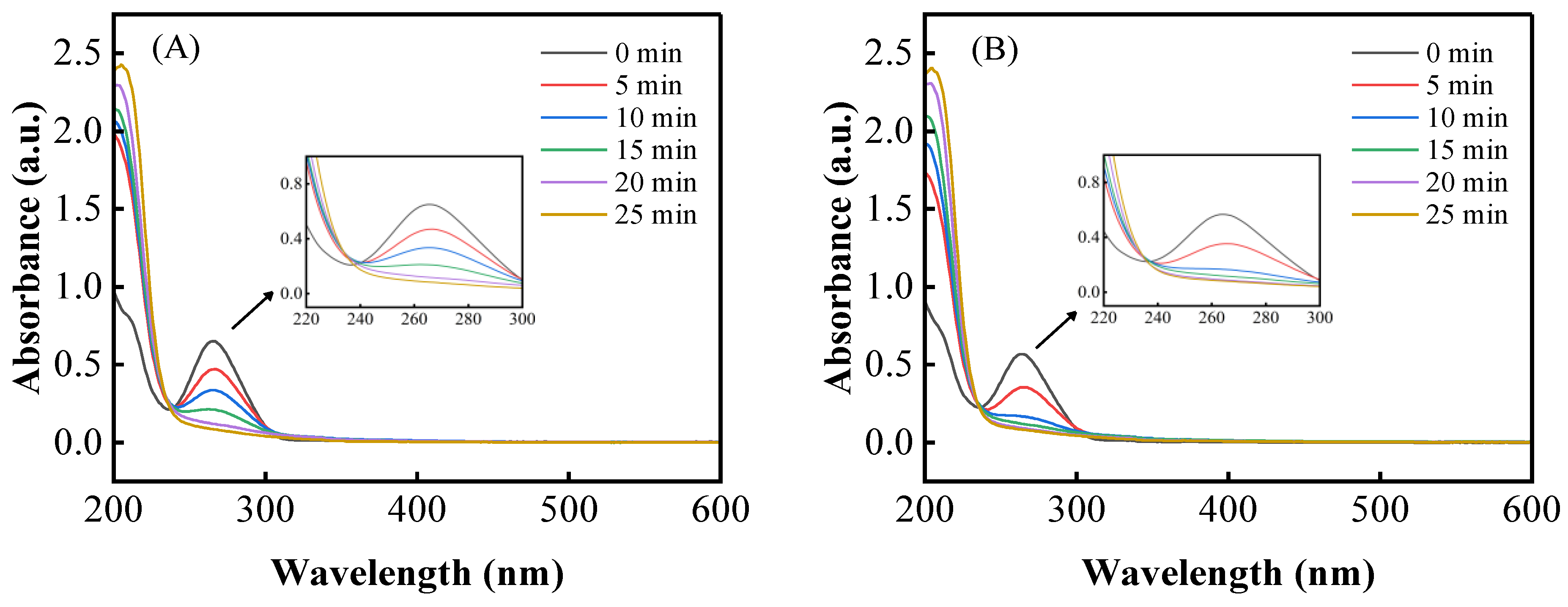
The characteristic absorption peak of SMX at 263 nm in the UV–vis spectrum corresponded to the conjugated system composed of a benzene ring, isoxazole heterocycle and sulfonamide group in its molecular structure, and the attenuation degree of the absorption peak could directly reflect the damage degree of the SMX chromogenic skeleton. In the Fe3+/O3 binary system, the absorbance at 263 nm decreased rapidly within the first 10 min of the reaction, and the attenuation rate slowed down obviously after 15 min, which meant most SMX parent molecules were degraded in the early stage, but a certain amount of conjugated intermediate products accumulated in the solution. Compared with the binary group, the absorption peak of the ternary system declined faster in the whole reaction process, and the final residual absorbance was lower, which proved that acetate-assisted catalytic oxidation could more thoroughly destroy the conjugated structure of SMX and its intermediates. In addition, the maximum absorption wavelength of the spectrum had a slight red shift after acetate addition, which verified that new intermediate products with different conjugated structures were generated during the accelerated oxidation process. The UV–vis spectral changes are shown in Figure 8.
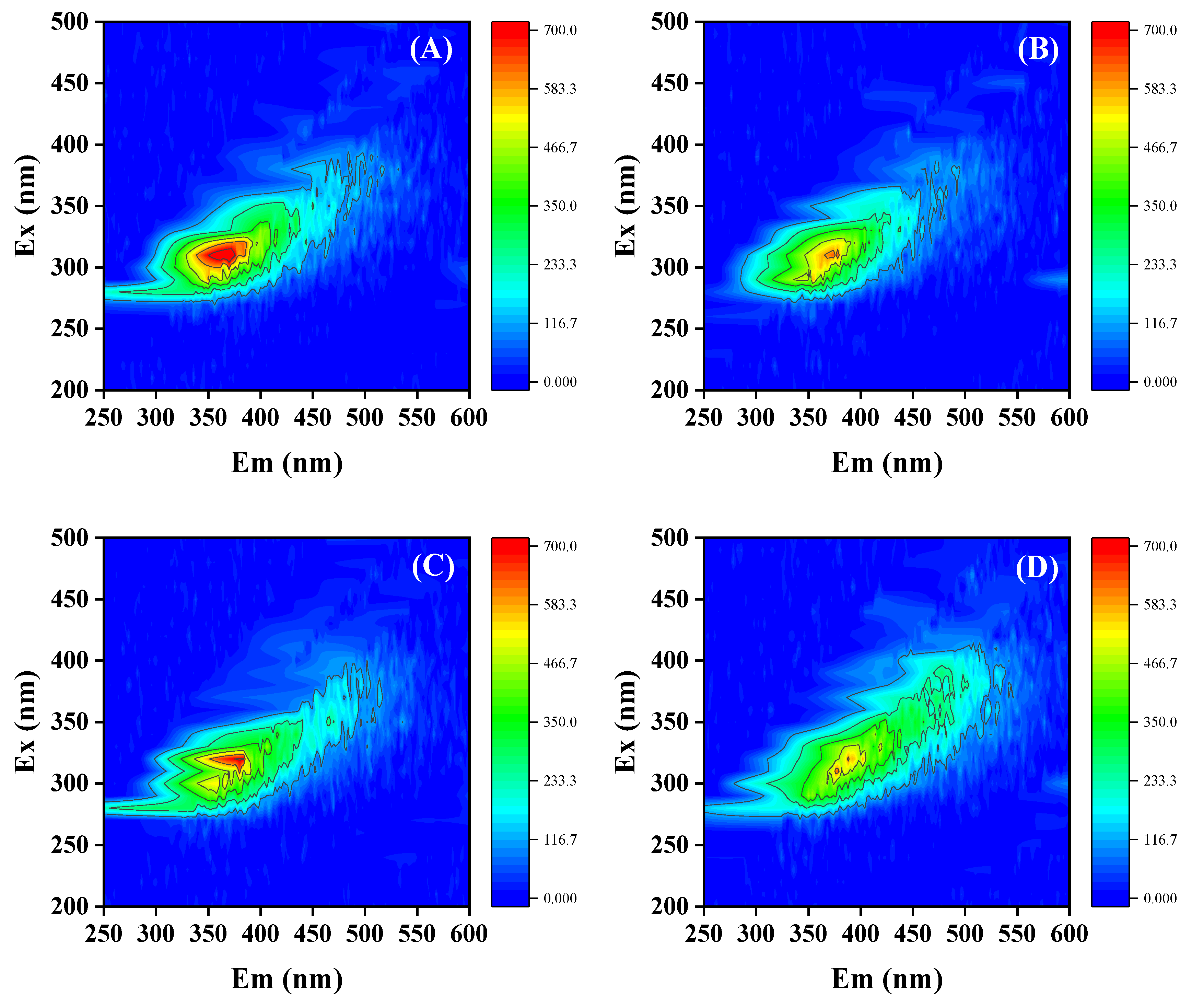
Three-dimensional fluorescence spectroscopy (3D-EEM) was used to track the generation and transformation of fluorescent aromatic intermediates [26]. The fluorescence signal of SMX and its early oxidation products were mainly concentrated in the range of excitation wavelength 290–330 nm and emission wavelength 330–420 nm. At the reaction time of 15 min, both systems presented obvious strong fluorescence peaks, which indicated that a large number of fluorescent intermediates accumulated after the SMX ring-opening reaction. However, the fluorescence intensity of the ternary system was significantly lower than the binary group at the same time point, and the fluorescence peak almost faded at 30 min, while the Fe3+/O3 group still retained an obvious fluorescence response. This difference showed that the non-radical oxidation path induced by acetate coordination could continuously degrade fluorescent intermediate fragments and reduce the accumulation of refractory aromatic substances in the liquid phase. The 3D-EEM spectra are presented in Figure 9.

2.4.3. LC-MS Identification of Degradation Pathways

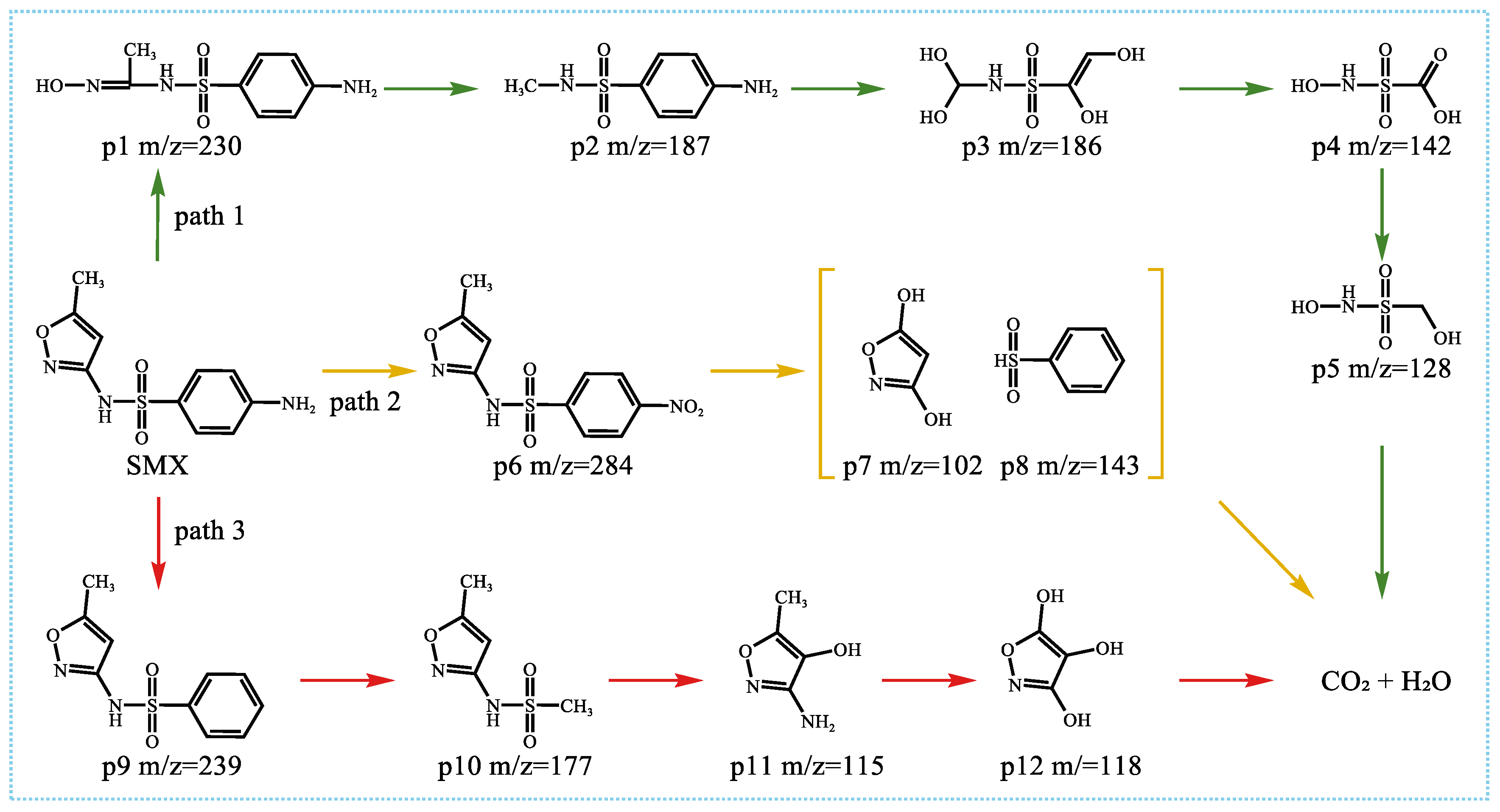
Liquid chromatography–mass spectrometry was adopted to tentatively identify transformation products in the ternary system after 30 min of reaction [27], and twelve intermediate substances with mass-to-charge ratio ranging from 102 to 284 were tentatively identified. Combined with molecular structural characteristics of SMX and the existing relevant literature references, three core degradation pathways were summarized. In pathway 1, ROS attacked the isoxazole ring of SMX and induced ring-opening, resulting in the formation of P1 (m/z 230), followed by P2 (m/z 187). Further cleavage of the benzene ring produced P3 (m/z 186), which was subsequently oxidized to P4 (m/z 142) and P5 (m/z 128) [28]. In pathway 2, oxidation of the amino group on the benzene ring generated the nitro product P6 (m/z 284). Subsequent cleavage of the S–N bond divided P6 into two fragments: the hydroxylated isoxazole derivative P7 (m/z 102) and the aromatic sulfur-containing product P8 (m/z 143). In pathway 3, deamination of the benzene ring produced P9 (m/z 239) [29]. Cleavage of the C–S bond then generated P10 (m/z 177). Further hydroxylation of the isoxazole ring and removal of the sulfonamide group produced P11 (m/z 115), which was subsequently oxidized to P12 (m/z 118) [30]. With continued oxidation, these low-molecular-weight products could be further converted into CO2 and H2O. The three pathways existed simultaneously in the ternary system, and the synergistic effect of multiple active oxygen species accelerated the thorough transformation of SMX from macromolecular refractory pollutants to easily degradable small fragments. The proposed SMX degradation pathways are illustrated in Figure 10.

2.5. Toxicity Assessment of Degradation Intermediates

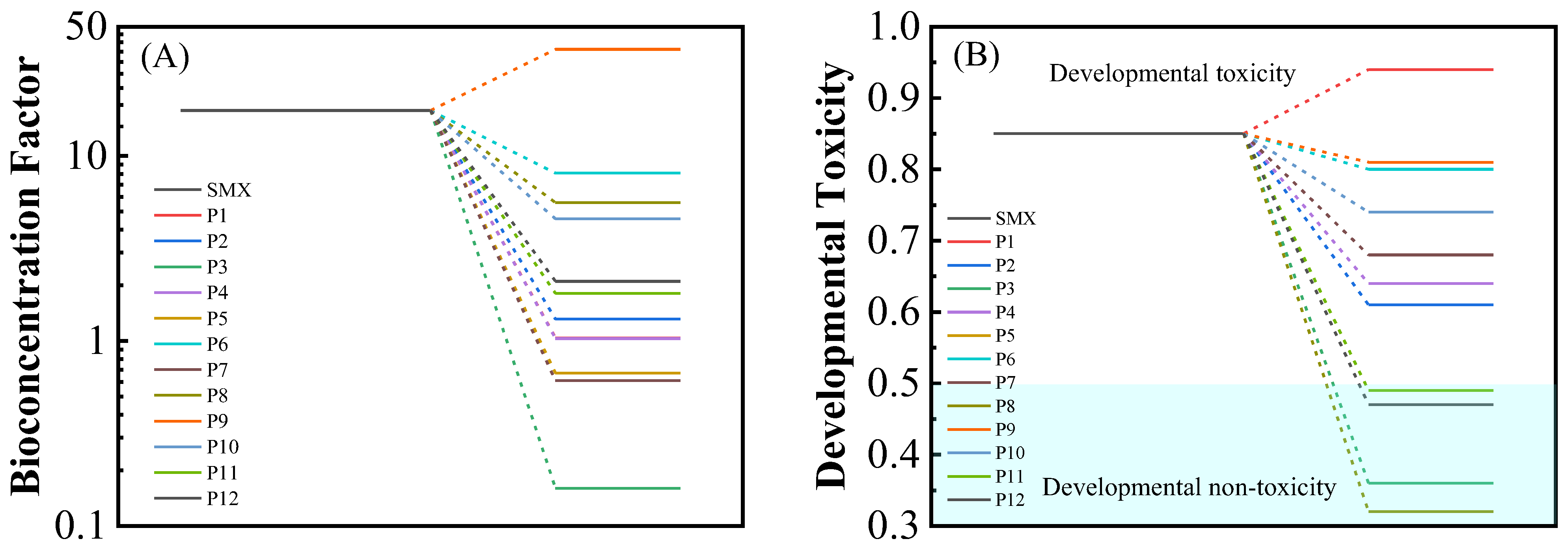
The potential hazards of the parent SMX and its twelve tentatively identified transformation products were predicted using the consensus QSAR method in T.E.S.T. 5.1. The bioconcentration factor (BCF), defined as the dimensionless ratio of the steady-state chemical concentration in fish to that in water, was used to assess bioconcentration potential. Developmental toxicity, a unitless binary endpoint indicating potential interference with normal development in humans or animals, was used to assess developmental hazards. These complementary endpoints were selected to compare changes in the predicted risk profiles of SMX and its transformation products. The prediction results showed that most intermediate products had lower BCF values than raw SMX. Only P9 exhibited a slightly higher predicted BCF, possibly because it retained the aromatic sulfonamide structure after deamination. According to the proposed degradation pathway, P9 may be further transformed into P10, P11, and P12, which showed lower predicted BCF values. In terms of developmental toxicity, most intermediates had weaker toxic effects than SMX.
Only intermediate P1, generated at the initial heterocycle ring-opening stage, showed slightly higher developmental toxicity, possibly because it retained the parent sulfonamide framework. However, P1 would be degraded into low-toxic fragments in the follow-up oxidation process without persistent risk. With the progress of the whole reaction, high-risk initial intermediates were continuously transformed into low-toxic micromolecular substances; the comprehensive bioconcentration and developmental toxicity of the aqueous solution decreased significantly, which meant the NaOAc/Fe3+/O3 system could not only remove SMX pollutants efficiently, but also effectively reduce the potential ecological hazards of wastewater. The predicted toxicity results are shown in Figure 11.

2.6. Comprehensive Catalytic Mechanism of NaOAc/Fe3+/O3 System

Integrating all degradation kinetics, the single-factor control test, reactive-species identification, spectral characterization, intermediate detection and toxicity evaluation results, the complete synergistic catalytic mechanism of the ternary ozonation system could be systematically summarized. As weak monodentate ligands, acetate anions combined with trace ferric ions in near-neutral aqueous solution to form soluble iron-acetate coordination complexes, which effectively inhibited Fe3+ hydrolysis and flocculation precipitation and maintained abundant dissolved catalytic iron active sites in liquid phase. The coordination interaction between acetate and Fe3+ may modify the electronic environment of iron species and alter ozone-derived oxidation pathways, thereby enhancing the relative contribution of an 1O2-associated pathway without increasing bulk ·OH formation. The oxidative degradation of SMX in the ternary system relied on the synergistic effect of three coexisting oxidation channels: direct electrophilic oxidation of ozone molecules, selective oxidation mediated by singlet oxygen, and auxiliary oxidation of a small amount of free hydroxyl radicals. The composite active oxygen system simultaneously destroyed the stable conjugated heterocyclic and benzene skeleton of SMX, promoted continuous ring-opening transformation of intermediate products and realized partial mineralization of organic pollutants, and most high-risk intermediates were converted into low-toxic small molecular fragments during the reaction process, ultimately reducing the overall biotoxicity and bioconcentration risk of antibiotic-polluted aqueous solution.

3. Materials and Methods

3.1. Experimental Chemicals

Sulfamethoxazole, p-chlorobenzoic acid and TEMP spin capture reagent were purchased from Aladdin Biochemical Co., Ltd. (Shanghai, China). Ferric chloride hexahydrate, sodium acetate trihydrate, tert-butanol, indigo disulfonate and chromatographic grade methanol and acetonitrile were supplied by Macklin Biochemical Co., Ltd. (Shanghai China). and Sinopharm Chemical Reagent Co., Ltd. (Shanghai China). All stock solutions were prepared with deionized water, and dilute phosphoric acid and sodium hydroxide solution were used to adjust the pH value of reaction solutions during experiments.

3.2. Reaction Setup

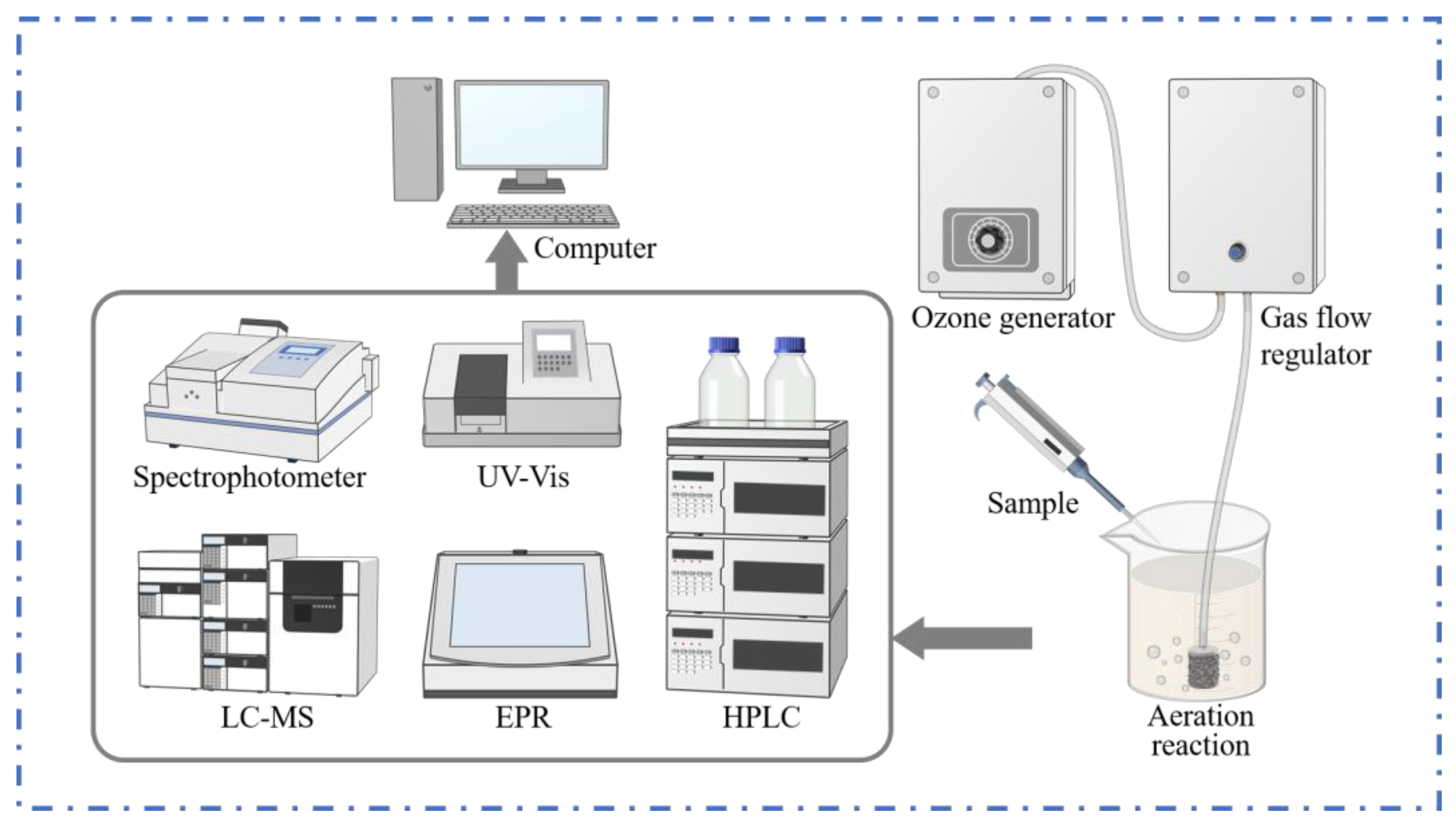
The whole ozonation experimental device was composed of an ozone generator, gas sampling pump, glass rotameter and 500 mL glass batch reactor equipped with bottom aeration stone to ensure full gas–liquid contact between ozone and aqueous solution. The ozone mass flow rate was 2000 mg O3 h−1, and ozone-containing gas with an inlet ozone concentration of 22.22 mg O3 L−1 was introduced into the reactor at a gas flow rate of 1.5 L min−1. Water samples were extracted at fixed reaction intervals of 0, 5, 10, 15, 20, 25 and 30 min, and all samples were filtered through 0.45 μm PTFE filter membranes before subsequent detection. The baseline reaction conditions were fixed as initial SMX concentration of 10 mg/L and gas flow rate of 1.5 L/min, with total reaction time controlled at 30 min. The configuration of the experimental setup is shown in Figure 12.

3.3. Analytical Characterization Methods

High-performance liquid chromatography equipped with an ultraviolet detector was adopted to quantify the residual concentration of SMX and p-chlorobenzoic acid. The mobile phase proportion for SMX detection was methanol:water:phosphoric acid = 6.5:3.5:0.01 with detection wavelength set at 263 nm, while p-CBA detection adopted an acetonitrile–water mixed mobile phase adjusted to pH 2 with detection wavelength of 243 nm. Standard calibration curves of both substances exhibited correlation coefficients higher than 0.9996, fully meeting quantitative detection requirements. Indigo spectrophotometry at 610 nm was applied to test dissolved ozone concentration in the liquid phase, and the corresponding calibration curve demonstrated excellent linearity with a correlation coefficient of 0.9992. Tert-butanol was selected as the specific quencher of free hydroxyl radicals to carry out radical inhibition experiments, and p-CBA attenuation data were utilized to calculate the cumulative exposure amount of hydroxyl radicals in different reaction systems. Electron paramagnetic resonance spectroscopy with TEMP as the singlet oxygen capture reagent was implemented to identify non-radical active species [31,32], with scanning range set between 3440 G and 3480 G. UV–vis full-wavelength scanning and three-dimensional fluorescence spectrum detection were conducted to track the damage of SMX conjugated chromophore structures and the generation of fluorescent intermediates; Rayleigh and Raman scattering signals were eliminated via MATLAB R2025b data processing before spectrum analysis. A total organic carbon analyzer and rapid COD detector were used to evaluate mineralization capacity; blank groups without SMX were set to deduct the organic carbon background brought about by sodium acetate itself. Liquid chromatography–mass spectrometry (LC–MS, Shimadzu LCMS-2020) was used to identify degradation intermediates. Separation was performed on a Waters SunFire C18 column (100mm × 4.6 mm i.d., 3.5 μm particle size) at 40 °C with a flow rate of 1.0 mL min−1 using 0.03% trifluoroacetic acid in water (A) and acetonitrile (B) as the mobile phases. The gradient elution was 5–95% B in 3 min, held for 7 min, and then returned to the initial condition. Mass spectra were acquired using the LabSolutions method “B 95–10 min-P.lcm” in positive electrospray ionization full-scan mode (ESI+, MS1). Total ion current (TIC) data were recorded at intervals of 0.35 s over an m/z range of 100–1900 at a scan speed of 15,000 u s−1. The instrument was operated at unit mass resolution with a 0.1 m/z acquisition step and the resolution parameter set to R = 2. The Q-array RF voltage was set to 60 V. The mass axis was calibrated using the tuning file “20260227.lct”, and the mass error was approximately ±0.1 Da. Because the LCMS-2020 is a single-quadrupole instrument and only MS1 full-scan data were acquired, no MS/MS or collision-induced dissociation (CID) was performed; therefore, collision energy was not applicable. The intermediates were tentatively identified according to the measured m/z values in combination with the previous literature reports, and the corresponding retention times, measured m/z values and molecular formulas are listed in Table S1. T.E.S.T. 5.1 quantitative structure–activity relationship software was used to calculate the bioconcentration factor and developmental toxicity of parent SMX and transformation products.

4. Conclusions

This study constructed a sodium acetate/Fe3+/O3 homogeneous catalytic ozonation system for sulfamethoxazole degradation; trace ferric ions and moderate acetate exhibited prominent synergistic catalytic effects, achieving 96.19% SMX removal under near-neutral optimized experimental conditions. Multiple reactive-species identification experiments confirmed that the system’s enhanced oxidation capacity originated from acetate-Fe3+ coordination promoting singlet oxygen non-radical generation rather than increasing free hydroxyl radical exposure. Combined spectrum and LC-MS tests proved that the system could thoroughly break the SMX molecular skeleton and drive the continuous conversion of intermediates, and QSAR toxicity prediction verified that most degradation products possessed lower ecological risks than parent pollutants. This work provides a simple, low-dose and environmentally friendly homogeneous ozonation strategy for advanced treatment of antibiotic wastewater, and subsequent research can carry out in situ iron speciation characterization, quantitative contribution differentiation of various oxidation pathways and complex actual water matrix experiments to further enrich the theoretical system and engineering application data of this technology.

Supplementary Materials

The following supporting information can be downloaded at: https://www.mdpi.com/article/10.3390/catal16090769/s1, Figure S1: LC-MS Spectra; Table S1: SMX degradation intermediates detected by LC-MS.

Author Contributions

Conceptualization, H.G. and J.L.; methodology, F.Y.; software, F.Y.; validation, J.L.; formal analysis, F.Y.; investigation, F.Y.; resources, J.L.; data curation, J.L.; writing—original draft preparation, J.L. and F.Y.; writing—review and editing, H.G. and J.L.; supervision, H.G.; project administration, H.G. All authors have read and agreed to the published version of the manuscript.

Funding

This research received no external funding.

Data Availability Statement

The original contributions presented in this study are included in the article/Supplementary Material. Further inquiries can be directed to the corresponding author.

Acknowledgments

We would like to express thanks for the financial support from Anhui Jiuwu Tianhong Environmental Protection Technology Co., Ltd.

Conflicts of Interest

The authors declare no conflicts of interest.

References

  1. Mulchandani, R.; Wang, Y.; Gilbert, M.; Van Boeckel, T.P. Global trends in antimicrobial use in food-producing animals: 2020 to 2030. PLoS Glob. Public Health 2023, 3, e0001305. [Google Scholar] [CrossRef] [Scilit] [PubMed]
  2. Samrot, A.V.; Wilson, S.; Sanjay Preeth, R.S.; Prakash, P.; Sathiyasree, M.; Saigeetha, S.; Shobana, N.; Pachiyappan, S.; Rajesh, V.V. Sources of Antibiotic Contamination in Wastewater and Approaches to Their Removal—An Overview. Sustainability 2023, 15, 12639. [Google Scholar] [CrossRef] [Scilit]
  3. Prasannamedha, G.; Kumar, P.S. A review on contamination and removal of sulfamethoxazole from aqueous solution using cleaner techniques: Present and future perspective. J. Clean. Prod. 2020, 250, 119553. [Google Scholar] [CrossRef] [Scilit]
  4. Larsson, D.G.J.; Flach, C.-F. Antibiotic resistance in the environment. Nat. Rev. Microbiol. 2022, 20, 257–269. [Google Scholar] [CrossRef] [Scilit]
  5. Cuerda-Correa, E.M.; Alexandre-Franco, M.F.; Fernández-González, C. Advanced Oxidation Processes for the Removal of Antibiotics from Water. An Overview. Water 2020, 12, 102. [Google Scholar] [CrossRef] [Scilit]
  6. Gahrouei, A.E.; Vakili, S.; Zandifar, A.; Pourebrahimi, S. From wastewater to clean water: Recent advances on the removal of metronidazole, ciprofloxacin, and sulfamethoxazole antibiotics from water through adsorption and advanced oxidation processes (AOPs). Environ. Res. 2024, 252, 119029. [Google Scholar] [CrossRef] [Scilit] [PubMed]
  7. Heidari, Z.; Pelalak, R.; Eshaghi Malekshah, R.; Pishnamazi, M.; Rezakazemi, M.; Aminabhavi, T.M.; Shirazian, S. A new insight into catalytic ozonation of sulfasalazine antibiotic by plasma-treated limonite nanostructures: Experimental, modeling and mechanism. Chem. Eng. J. 2022, 428, 131230. [Google Scholar] [CrossRef] [Scilit]
  8. Zhang, Y.; Zhou, M. A critical review of the application of chelating agents to enable Fenton and Fenton-like reactions at high pH values. J. Hazard. Mater. 2019, 362, 436–450. [Google Scholar] [CrossRef] [Scilit]
  9. Wang, J.; Huang, D.; Chen, F.; Chen, J.; Jiang, H.; Zhu, Y.; Chen, C.; Zhao, J. Rapid Redox Cycling of Fe(II)/Fe(III) in Microdroplets During Iron-Citric Acid Photochemistry. Environ. Sci. Technol. 2023, 57, 4434–4442. [Google Scholar] [CrossRef] [Scilit]
  10. Seibert, D.; Diel, T.; Welter, J.B.; de Souza, A.L.; Módenes, A.N.; Espinoza-Quiñones, F.R.; Borba, F.H. Performance of photo-Fenton process mediated by Fe (III)-carboxylate complexes applied to degradation of landfill leachate. J. Environ. Chem. Eng. 2017, 5, 4462–4470. [Google Scholar] [CrossRef] [Scilit]
  11. Aliste, M.; León-Morán, L.O.; Martínez-Escudero, C.M.; Garrido, I.; Contreras, F.; Hellín, P.; Flores, P.; Fenoll, J. Solar photo-Fenton with Fe3+-EDDS and Fe3+-NTA at neutral pH for removal of ibuprofen, diclofenac and their main transformation products in wastewater. Catal. Today 2025, 446, 115139. [Google Scholar] [CrossRef] [Scilit]
  12. Zhou, H.; Zhang, R.; Chen, Y.; Huang, J.; Tang, Z.; Xia, D. In Situ ligand-modulated Mn(II/III) into ozone activation for selective contaminant degradation: The key role of complexed Mn species. Appl. Catal. B Environ. Energy 2025, 378, 125562. [Google Scholar] [CrossRef] [Scilit]
  13. Zhang, J.; Shan, C.; Zhang, W.; Pan, B. In Situ ligand-modulated activation of inert Ce(III/IV) into ozonation catalyst for efficient water treatment. Proc. Natl. Acad. Sci. USA 2023, 120, e2305255120. [Google Scholar] [CrossRef] [Scilit]
  14. Fischbacher, A.; von Sonntag, J.; von Sonntag, C.; Schmidt, T.C. The OH radical yield in the H2O2 + O3 (peroxone) reaction. Environ. Sci. Technol. 2013, 47, 9959–9964. [Google Scholar] [CrossRef] [Scilit]
  15. Wang, J.; Xie, Y.; Yu, G.; Yin, L.; Xiao, J.; Wang, Y.; Lv, W.; Sun, Z.; Kim, J.H.; Cao, H. Manipulating Selectivity of Hydroxyl Radical Generation by Single-Atom Catalysts in Catalytic Ozonation: Surface or Solution. Environ. Sci. Technol. 2022, 56, 17753–17762. [Google Scholar] [CrossRef] [Scilit]
  16. Zhang, L.; Wu, J.; Zhang, J.; Guo, J. Catalytic ozonation of sulfamethoxazole using loaded CuOx/MgO-SiO2 silica aerogel catalyst: Performance, mechanisms and toxicity. Environ. Res. 2025, 272, 121155. [Google Scholar] [CrossRef] [Scilit]
  17. Zou, J.; Liu, Y.; Han, Q.; Tian, Y.; Shen, F.; Kang, L.; Feng, L.; Ma, J.; Zhang, L.; Du, Z. Importance of Chain Length in Propagation Reaction on OH Formation during Ozonation of Wastewater Effluent. Environ. Sci. Technol. 2023, 57, 18811–18824. [Google Scholar] [CrossRef] [Scilit]
  18. Rath, S.A.; von Gunten, U. Achieving realistic ozonation conditions with synthetic water matrices comprising low-molecular-weight scavenger compounds. Water Res. 2024, 261, 121917. [Google Scholar] [CrossRef] [Scilit]
  19. Furcas, F.E.; Mundra, S.; Lothenbach, B.; Angst, U.M. Speciation Controls the Kinetics of Iron Hydroxide Precipitation and Transformation at Alkaline pH. Environ. Sci. Technol. 2024, 58, 19851–19860. [Google Scholar] [CrossRef] [Scilit]
  20. Lim, S.; Shi, J.L.; von Gunten, U.; McCurry, D.L. Ozonation of organic compounds in water and wastewater: A critical review. Water Res. 2022, 213, 118053. [Google Scholar] [CrossRef] [Scilit]
  21. Chatfield, E.; Abbassi, B. Evaluation of Electrocatalytic Ozonation Process for Hydroxyl Radical Production. Processes 2025, 13, 784. [Google Scholar] [CrossRef] [Scilit]
  22. John, A.; Carra, I.; Jefferson, B.; Jodkowska, M.; Brookes, A.; Jarvis, P. Are microbubbles magic or just small? A direct comparison of hydroxyl radical generation between microbubble and conventional bubble ozonation under typical operational conditions. Chem. Eng. J. 2022, 435, 134854. [Google Scholar] [CrossRef] [Scilit]
  23. Zhang, H.; Quan, H.; Song, S.; Sun, L.; Lu, H. Comprehensive assessment of toxicity and environmental risk associated with sulfamethoxazole biodegradation in sulfur-mediated biological wastewater treatment. Water Res. 2023, 246, 120753. [Google Scholar] [CrossRef] [Scilit]
  24. Wang, L.; Fu, Y.; Li, Q.; Wang, Z. EPR Evidence for Mechanistic Diversity of Cu(II)/Peroxygen Oxidation Systems by Tracing the Origin of DMPO Spin Adducts. Environ. Sci. Technol. 2022, 56, 8796–8806. [Google Scholar] [CrossRef] [Scilit]
  25. Wang, J.; Wang, S. Reactive species in advanced oxidation processes: Formation, identification and reaction mechanism. Chem. Eng. J. 2020, 401, 126158. [Google Scholar] [CrossRef] [Scilit]
  26. Chen, W.; Westerhoff, P.; Leenheer, J.A.; Booksh, K. Fluorescence excitation-emission matrix regional integration to quantify spectra for dissolved organic matter. Environ. Sci. Technol. 2003, 37, 5701–5710. [Google Scholar] [CrossRef] [Scilit]
  27. Loffler, P.; Schymanski, E.L.; Henschel, H.; Lai, F.Y. In Silico Frontiers Shaping the Next Generation of Transformation Product Prediction and Toxicological Assessment. Environ. Sci. Technol. 2025, 59, 19095–19106. [Google Scholar] [CrossRef] [Scilit]
  28. Naraginti, S.; Yu, Y.-Y.; Fang, Z.; Yong, Y.-C. Novel tetrahedral Ag3PO4@N-rGO for photocatalytic detoxification of sulfamethoxazole: Process optimization, transformation pathways and biotoxicity assessment. Chem. Eng. J. 2019, 375, 122035. [Google Scholar] [CrossRef] [Scilit]
  29. Li, T.; Ge, L.; Peng, X.; Wang, W.; Zhang, W. Enhanced degradation of sulfamethoxazole by a novel Fenton-like system with significantly reduced consumption of H2O2 activated by g-C3N4/MgO composite. Water Res. 2021, 190, 116777. [Google Scholar] [CrossRef] [Scilit]
  30. Song, Y.; Huang, L.; Zhang, X.; Zhang, H.; Wang, L.; Zhang, H.; Liu, Y. Synergistic effect of persulfate and g-C3N4 under simulated solar light irradiation: Implication for the degradation of sulfamethoxazole. J. Hazard. Mater. 2020, 393, 122379. [Google Scholar] [CrossRef] [Scilit]
  31. Zhao, Y.; Sun, M.; Wang, X.; Wang, C.; Lu, D.; Ma, W.; Kube, S.A.; Ma, J.; Elimelech, M. Janus electrocatalytic flow-through membrane enables highly selective singlet oxygen production. Nat. Commun. 2020, 11, 6228. [Google Scholar] [CrossRef] [Scilit]
  32. Xu, L.; Qi, L.; Han, Y.; Lu, W.; Han, J.; Qiao, W.; Mei, X.; Pan, Y.; Song, K.; Ling, C.; et al. Improvement of Fe2+/peroxymonosulfate oxidation of organic pollutants by promoting Fe2+ regeneration with visible light driven g-C3N4 photocatalysis. Chem. Eng. J. 2022, 430, 132828. [Google Scholar] [CrossRef] [Scilit]
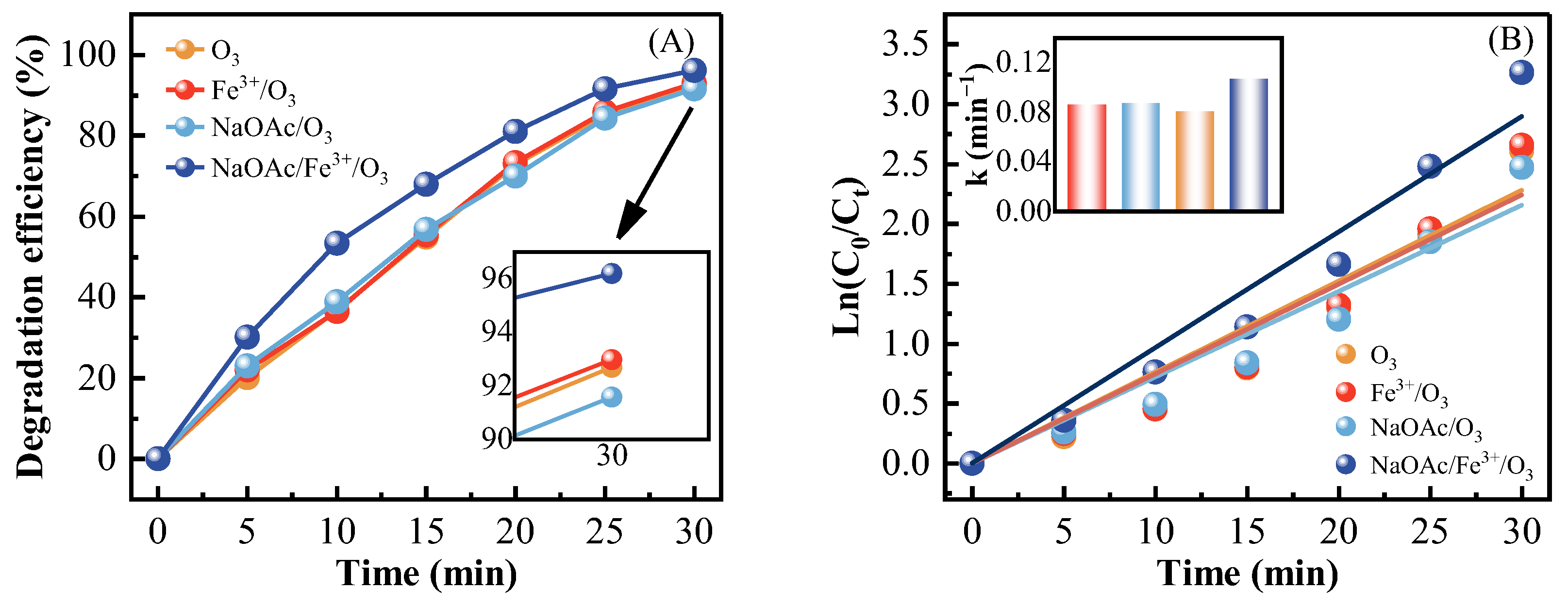
Figure 1. Effect of different reaction systems on the degradation of SMX: (A) Degradation efficiency curves (inset: enlarged view at 30 min); (B) kinetic fitting curves (inset: corresponding kobs values).
Catalysts 16 00769 g001
Figure 2. Effect of Fe3+ dosage on SMX degradation in the O3 system: (A) Degradation efficiency curves (inset: enlarged view at 30 min); (B) kinetic fitting curves (inset: corresponding kobs values). Effect of Fe3+ concentration on SMX degradation in the presence of sodium acetate: (C) Degradation efficiency curves (inset: enlarged view at 30 min); (D) kinetic fitting curves (inset: corresponding kobs values).
Catalysts 16 00769 g002
Figure 3. Effect of sodium acetate dosage on SMX degradation in the Fe3+/O3 system: (A): Degradation efficiency curves (inset: enlarged view at 30 min); (B): kinetic fitting curves (inset: corresponding kobs values). Effect of initial pH on SMX degradation: (C): Degradation efficiency curves (inset: enlarged view at 30 min); (D): kinetic fitting curves (inset: corresponding kobs values).
Catalysts 16 00769 g003
Figure 4. Radical quenching experiment: (A) Decay profiles of p-CBA probe in different systems; (B) effect of TBA on the apparent reaction rate constants of p-CBA and SMX.
Catalysts 16 00769 g004
Figure 5. Comparison of ·OH exposure in different ozonation systems.
Catalysts 16 00769 g005
Figure 6. EPR spectra for 1O2 detection using TEMP in different ozonation systems.
Catalysts 16 00769 g006
Figure 7. Water quality objectives: (A) TOC; (B) COD.
Catalysts 16 00769 g007
Figure 8. UV–vis spectra (A) without NaOAc; (B) with NaOAc.
Catalysts 16 00769 g008
Figure 9. 3DEEMF spectra: (A) 15 min without NaOAc; (B) 15 min with NaOAc; (C) 30 min without NaOAc; and (D) 30 min with NaOAc.
Catalysts 16 00769 g009
Figure 10. Proposed degradation pathways of SMX. Green, yellow, and red arrows denote pathways 1, 2, and 3, respectively; yellow brackets enclose P7 and P8, the cleavage products of P6.
Catalysts 16 00769 g010
Figure 11. Toxicity assessment: (A) Bioconcentration factor; (B) developmental toxicity. The solid lines indicate the predicted values for SMX and its transformation products.
Catalysts 16 00769 g011
Figure 12. Schematic diagram of the experimental setup. Arrows indicate sample transfer to the analytical instruments and data transmission to the computer.
Catalysts 16 00769 g012
Disclaimer/Publisher’s Note: The statements, opinions and data contained in all publications are solely those of the individual author(s) and contributor(s) and not of MDPI and/or the editor(s). MDPI and/or the editor(s) disclaim responsibility for any injury to people or property resulting from any ideas, methods, instructions or products referred to in the content.