Article

Combustion Kinetics of Building Timber Organic Solid Waste

1
School of Art and Design, Guangxi Polytechnic of Construction, Nanning 530007, China
2
Guangxi Institute of Building Research & Design, Nanning 530007, China
3
Engineering Technology Innovation Center for Quality Assessment, Ministry of Housing and Urban-Rural Development (MOHURD), Nanning 530007, China
4
School of Architecture and Urban Planning, Beijing University of Civil Engineering and Architecture, No.1, Zhanlanguan Road, Xicheng District, Beijing 100044, China
5
Merchant Marine College, Shanghai Maritime University, Shanghai 201306, China
*
Author to whom correspondence should be addressed.
Catalysts 2026, 16(8), 688; https://doi.org/10.3390/catal16080688
Submission received: 19 December 2025 / Revised: 19 July 2026 / Accepted: 22 July 2026 / Published: 29 July 2026

Abstract

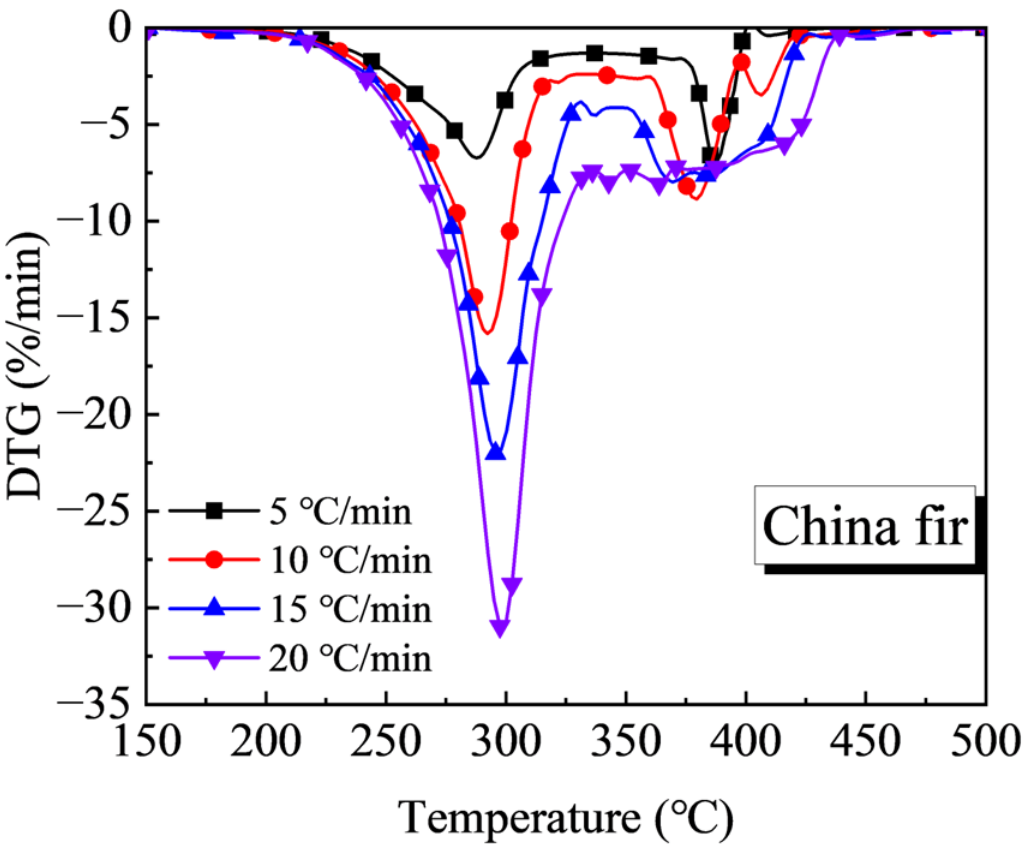
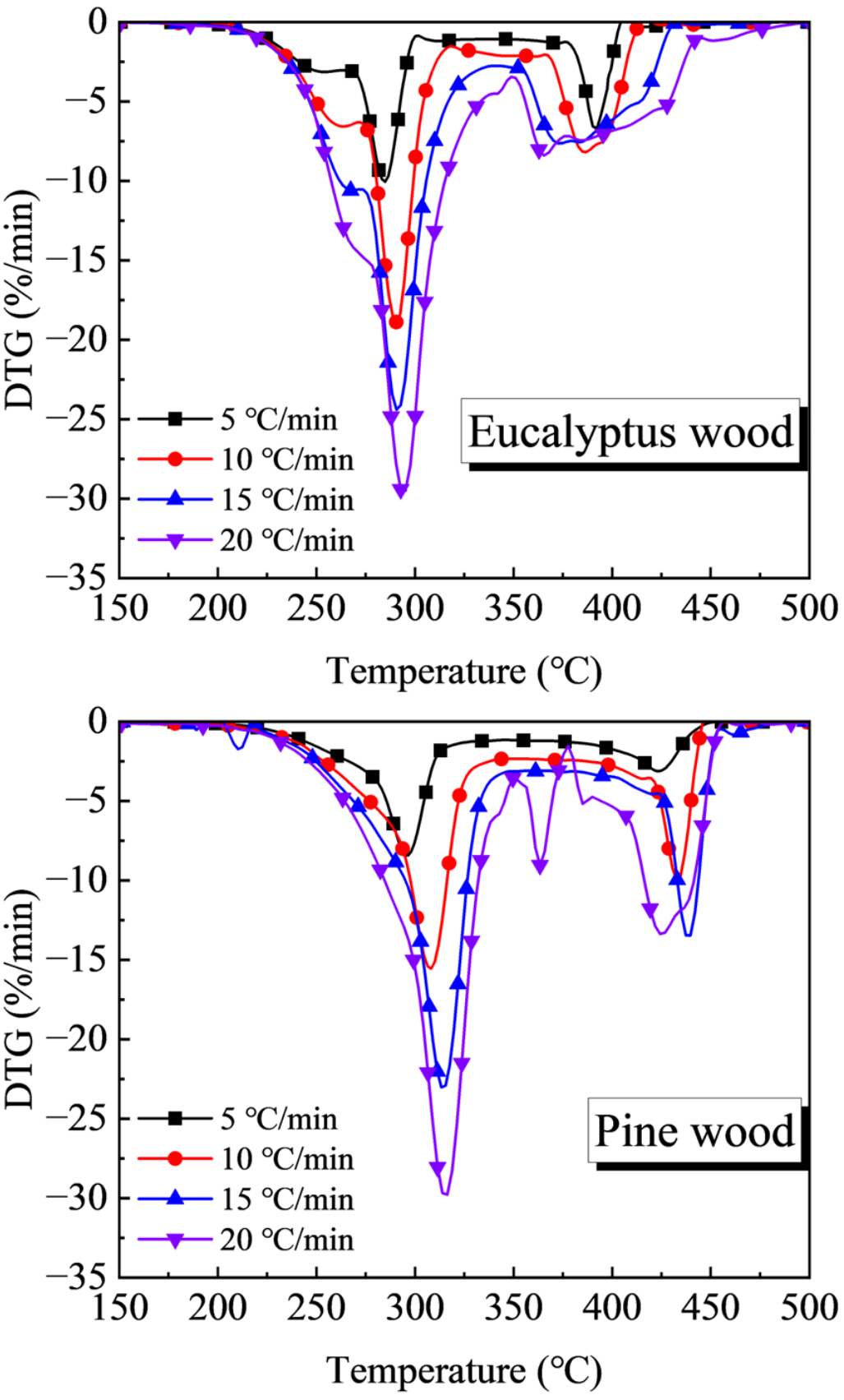
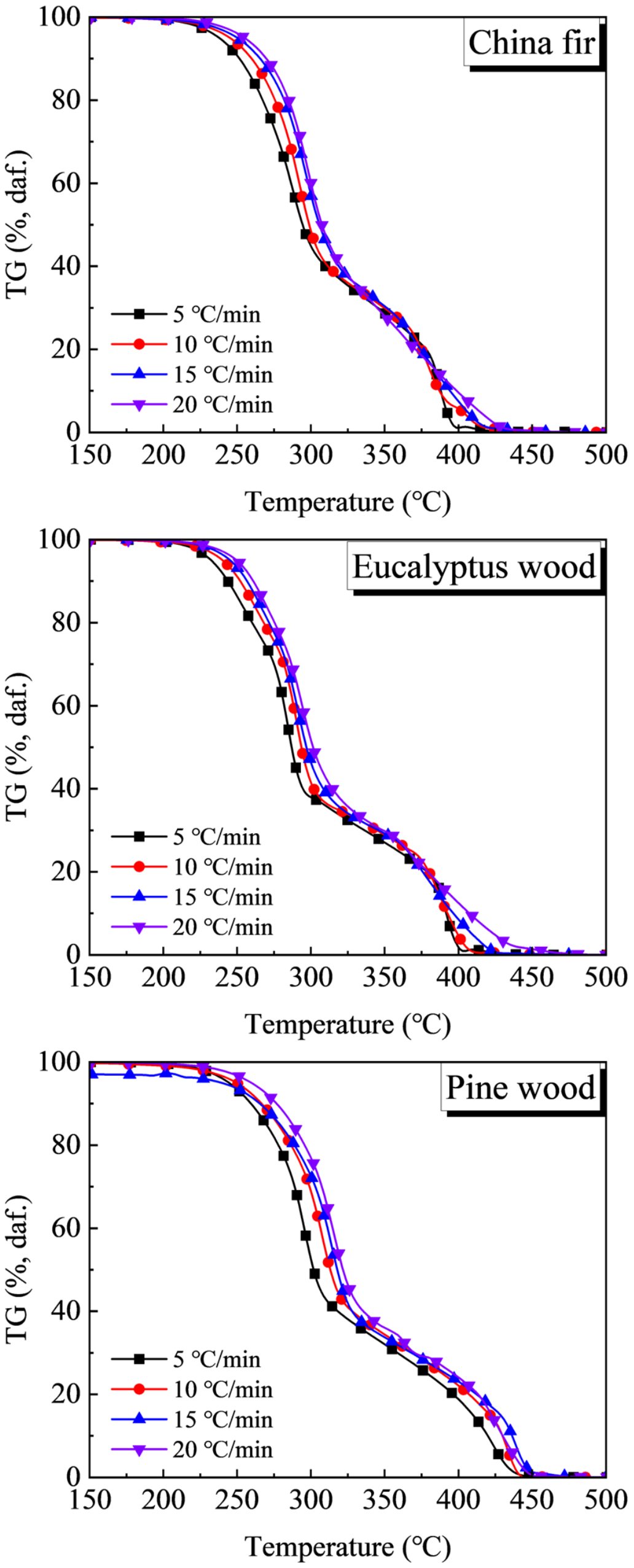
This work focuses on the combustion characteristics and kinetics of three building timber organic solid wastes (BTOSW)—China fir, Eucalyptus wood, and Pine wood—aiming to provide theoretical and data support for the thermal conversion and energy utilization of construction-derived woody biomass. Thermogravimetric analysis (TGA) reveals that all three materials exhibit two-stage combustion behavior: volatile combustion at low temperatures (<320 °C) and char combustion at high temperatures (320–500 °C). Increasing the heating rate shifts the decomposition peaks to higher temperature zones, reflecting the combined effects of thermal lag and shortened reaction time. Kinetic analysis shows that the correlation coefficients (R2) calculated by different models are all greater than 0.97, with the first-order chemical reaction model (O1) demonstrating the highest goodness-of-fit for Pine wood (R2 = 1.000) and Eucalyptus wood (R2 = 0.995), indicating that homogeneous chemical reactions dominate the combustion process. The initial combustion temperatures of China fir, Eucalyptus wood, and Pine wood are 256 °C, 262 °C, and 270.9 °C, respectively, with flammability indices of 1.08, 1.46, and 1.15 and comprehensive combustion characteristic indices of 2.71 × 10⁻², 1.26 × 10⁻², and 1.75 × 10⁻² °C−2min−1, respectively. This work provides important theoretical support for both the energy utilization of timber-framed buildings waste and the fire protection design and flame retardancy of timber-framed buildings, contributing to the development of scientific fire prevention measures and the preservation of this architectural heritage.
Keywords: building timber organic solid waste; combustion; TGA; Coats–Redfern building timber organic solid waste; combustion; TGA; Coats–Redfern