Review

Synthetic Dyes in Textile Wastewater: Classification, Environmental Risks, and Microbiological and Enzymatic Remediation Strategies

by
Nina Rezende Fontana
1,2,3,
Ygor Velloso Tavares
1,2,3,4,
Anna Carolina Bruno Ferreira
1,2,3,5,
Cristina Giatti Marques de Souza
6,
Rita de Cássia Garcia Simão
7,
Rosane Marina Peralta
6,
Carlos Adam Conte-Junior
1,2,3,4,8,9,10 and
Alex Graça Contato
1,2,3,4,11,*
1
Analytical and Molecular Laboratorial Center (CLAn), Institute of Chemistry (IQ), Federal University of Rio de Janeiro (UFRJ), Cidade Universitária, Rio de Janeiro 21715-000, RJ, Brazil
2
Center for Food Analysis (NAL), Technological Development Support Laboratory (LADETEC), Federal University of Rio de Janeiro (UFRJ), Cidade Universitária, Rio de Janeiro 21941-598, RJ, Brazil
3
Laboratory of Advanced Analysis in Biochemistry and Molecular Biology (LAABBM), Department of Biochemistry, Federal University of Rio de Janeiro (UFRJ), Cidade Universitária, Rio de Janeiro 21941-909, RJ, Brazil
4
Graduate Program in Biochemistry (PPGBq), Institute of Chemistry (IQ), Federal University of Rio de Janeiro (UFRJ), Cidade Universitária, Rio de Janeiro 21941-909, RJ, Brazil
5
Federal Institute of Education, Science and Technology of Rio de Janeiro (IFRJ), Realengo, Rio de Janeiro 21710-240, RJ, Brazil
6
Department of Biochemistry, Maringá State University (UEM), Maringá 87020-900, PR, Brazil
7
Center for Medical and Pharmaceutical Sciences, Western Paraná State University (UNIOESTE), Cascavel 85819-110, PR, Brazil
8
Graduate Program in Food Science (PPGCAL), Institute of Chemistry (IQ), Federal University of Rio de Janeiro (UFRJ), Cidade Universitária, Rio de Janeiro 21941-909, RJ, Brazil
9
Graduate Program in Veterinary Hygiene (PPGHV), Faculty of Veterinary Medicine, Fluminense Federal University (UFF), Niterói 24220-000, RJ, Brazil
10
Graduate Program in Chemistry (PGQu), Institute of Chemistry (IQ), Federal University of Rio de Janeiro (UFRJ), Cidade Universitária, Rio de Janeiro 21941-909, RJ, Brazil
11
Department of Agricultural, Livestock and Environmental Biotechnology, Faculty of Agricultural and Veterinary Sciences (FCAV), Sao Paulo State University (UNESP), Jaboticabal 14884-900, SP, Brazil
*
Author to whom correspondence should be addressed.
Catalysts 2026, 16(8), 685; https://doi.org/10.3390/catal16080685
Submission received: 23 June 2026 / Revised: 23 July 2026 / Accepted: 26 July 2026 / Published: 28 July 2026
(This article belongs to the Special Issue Biocatalysis and Biosynthesis: Opportunities and Challenges)

Abstract

The textile industry is one of the largest consumers of synthetic dyes and a significant source of industrial wastewater contamination. More than 7 × 10⁵ tons of synthetic dyes are produced annually worldwide, and it is estimated that 10–15% of these dyes are released into industrial effluents during manufacturing and textile processing, contributing significantly to aquatic contamination. Due to their complex aromatic structures, many synthetic dyes exhibit high chemical stability and resistance to conventional wastewater treatment processes, leading to persistent environmental pollution. This review discusses the main classes of synthetic dyes used in the textile industry, focusing on their chemical classification, environmental impacts, and associated ecological risks. Dye categories are analyzed both according to their application to textile fibers and their molecular structure, highlighting how these characteristics influence their persistence and toxicity in aquatic environments. Unlike previous reviews that primarily emphasize individual treatment technologies, this work provides an integrated perspective linking dye chemistry, environmental behavior, and the mechanisms, advantages, and limitations of physical, chemical, and biological remediation strategies. The environmental impacts of dye-contaminated effluents include reduced light penetration in water bodies, disruption of aquatic ecosystems, and potential toxic and mutagenic effects on living organisms. In addition, the review examines current remediation strategies for dye removal from textile wastewater, including physical, chemical, and biological treatment methods. Particular attention is given to biological degradation, as well as hybrid systems that combine multiple technologies to improve treatment efficiency. Finally, the advantages, limitations, and future perspectives of these remediation strategies are discussed, emphasizing the need for sustainable and efficient approaches to mitigate the environmental impacts of textile dye pollution.

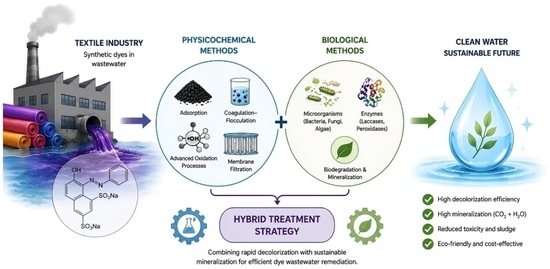
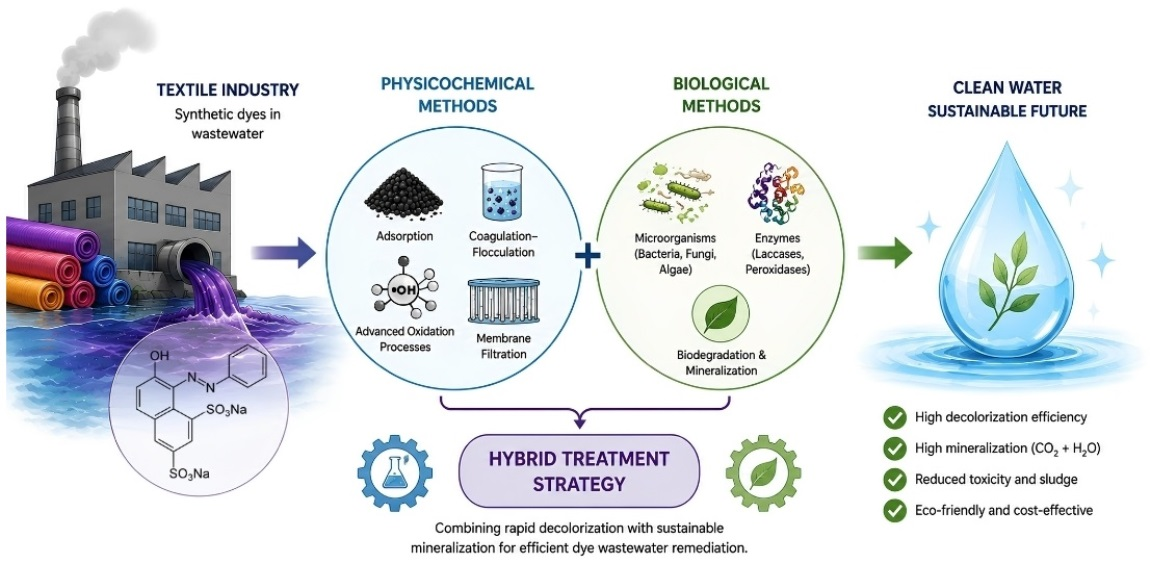
Graphical Abstract

1. Introduction

Historically, human society has been profoundly shaped using textile dyes [1,2]. Beyond their decorative purposes, dyes possess significant sociocultural relevance, conveying social status, religious importance, and regional identity. In the mid-19th century, William Perkin serendipitously discovered mauveine, the first commercially available synthetic dye. This breakthrough transformed the dyestuff industry and revolutionized chromatographic studies, expanded artists’ access to novel colors and consistencies, and refined production methodologies for synthetic chemical substances [3].
The textile industry is one of the largest manufacturing sectors, generating around 1 trillion dollars and contributing about 7% of the total world exports and 27% of global export income [4,5,6].
The environmental concern associated with textile effluents is closely related to the large volumes of wastewater generated and to the intrinsic chemical characteristics of synthetic dyes. Most commercial dyes are designed to exhibit high color fastness and resistance to light, oxidation, washing, and microbial degradation, properties achieved through complex aromatic structures containing azo (-N=N-), anthraquinone, triphenylmethane, phthalocyanine, or heterocyclic chromophores. In addition, the presence of sulfonate groups, halogen substituents, and other functional moieties enhances their water solubility and chemical stability, making these compounds highly persistent and difficult to remove by conventional wastewater treatment processes [4,7].
As a consequence of the extensive use of synthetic dyes in textile manufacturing, substantial volumes of wastewater are generated during dyeing and finishing processes. Approximately 150 L of water is required to process 1 kg of cotton [8], generating between 50 and 500 m3 of dye-containing effluents per ton of textile product [1,9,10]. Globally, approximately 700,000 tons of synthetic dyes are produced annually, comprising roughly 10,000 types of dyes [6]. World production of textile dyes around 140,000 tons/year are released as wastewater into the environment [1]. These substances are marked by low biodegradability and high chemical stability. Such pollutants impart persistent coloration to receiving water bodies, hindering sunlight penetration, and directly compromising the photosynthetic activity of aquatic organisms [9]. The presence of synthetic dyes in industrial effluents represents a significant and persistent global environmental risk, necessitating the development of adequate treatment strategies [11,12].
Although numerous review articles have addressed textile wastewater treatment and individual dye removal technologies, most of them focus on specific remediation approaches, such as adsorption, advanced oxidation processes, photocatalysis, membrane filtration, or biological degradation, without providing a comprehensive analysis that connects dye chemistry, environmental behavior, and treatment performance. Moreover, recent advances in integrated and combined remediation systems have expanded the range of available technologies, creating the need for an updated and critical synthesis of their mechanisms, advantages, limitations, and practical applicability [5,13]. Therefore, a comprehensive review integrating these complementary aspects is timely and necessary to support the development of more efficient and sustainable strategies for textile wastewater remediation.
Accordingly, this review provides a comprehensive and updated overview of synthetic dyes used in the textile industry by integrating their classification according to application and chemical structure, their environmental fate and associated ecological risks, and the current technologies available for wastewater treatment. Emphasis is placed on critically comparing physical, chemical, biological, and combined remediation strategies, discussing their mechanisms, advantages, limitations, and recent technological advances. By bringing these aspects together in a single framework, this review seeks to identify current challenges and future directions for the development of more sustainable and efficient dye remediation processes.

2. Natural and Synthetic Dyes

Throughout history, natural dyes have been extensively utilized, with records of their application in textiles, foodstuffs, medicine, cosmetics and several other important materials required for human life dating back to ancient civilizations. Natural colorants have a diversity of origins that are extracted from sources such as plants, insects, animals and minerals, and are regarded as biodegradable, renewable, and sustainable [1,2,14]. Furthermore, their production requires minimal chemical substrates, resulting in reduced pollution [1]. From a health perspective, they are mostly hypoallergenic and non-toxic, ensuring safety for use, particularly in products involving direct dermal contact, like textiles [1,14]. However, it is observed by Affat [15] that certain natural dyes may have detectable mutagenic effects.
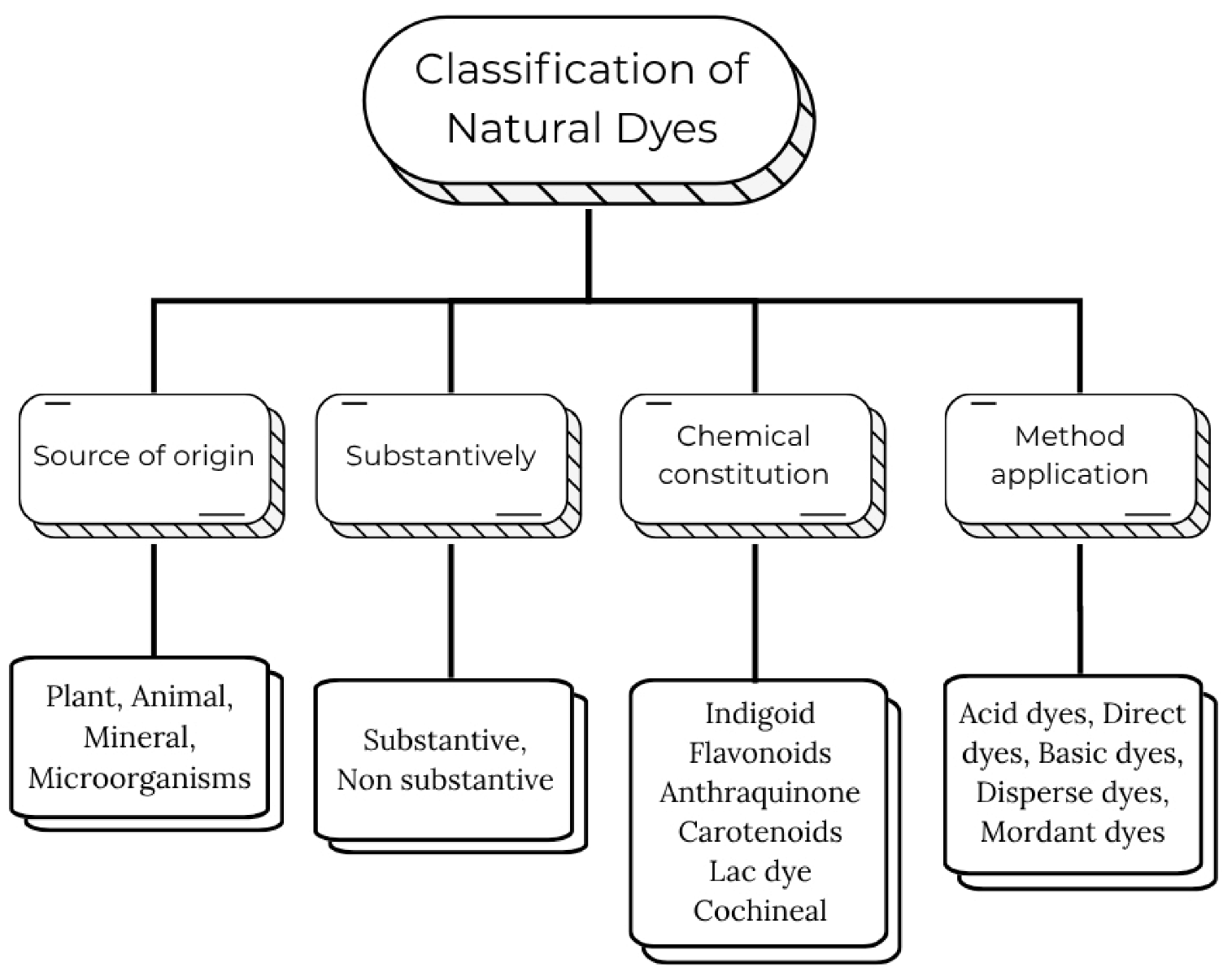
Meanwhile, colorants can be subdivided into dyes (mostly organic) and pigments (organic and inorganic) [14]. From an industrial application perspective, natural dyes can have numerous classifications (Figure 1); one of these is based on substantive dyes that can dye fibrous materials without the addition of mordants; and non-substantive dyes can be bound to a material with low or no affinity by the addition of a mordant. Mostly, natural dyes are non-substantive [2]. However, Repon et al. [16] observed that through the application of mordant in the process, which can include metal salts, oil mordants, or bio-mordants, the affinity, substantivity, and fastness of natural dyes with textile materials can be enhanced. To avoid the harmful effects, the use of bio-mordants and natural dyes derived from plants, algae, bacteria, and fungi has attracted increasing attention as a sustainable alternative to conventional synthetic dyes [15,16].
Conversely, although synthetic dyes are derived from petrochemical sources and their manufacturing process is highly polluting, they remain more prevalent in the textile industry [1,15,17]. This dominance is due to their superior durability and higher color intensity compared to natural dyes, which tend to fade more readily upon washing or exposure to light [1,14] (Table 1). Despite their environmental appeal, natural dyes present significant drawbacks, such as low color intensity and inferior lightfastness, which limit their large-scale industrial adoption and increase process costs [14,15]. Today, with the advancement of synthetic dye industries, only 1% of dye consumption is of natural dyes [14]. On the other hand, synthetic dyes currently dominate the textile sector due to their high reproducibility, vivid colors, and cost-effectiveness [14,16,17,18].

3. Classification of Synthetic Dyes

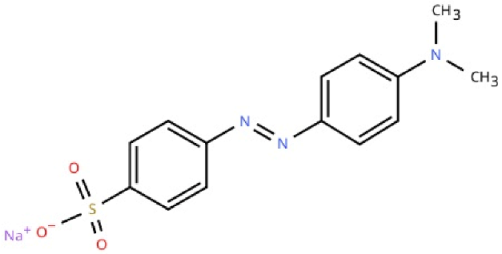
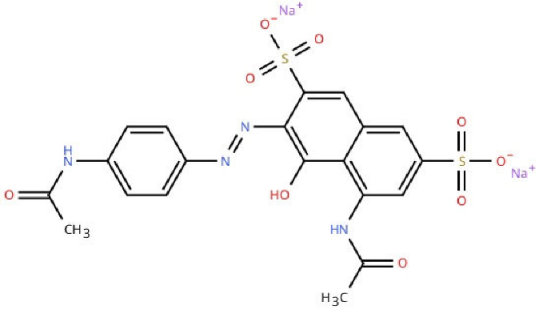
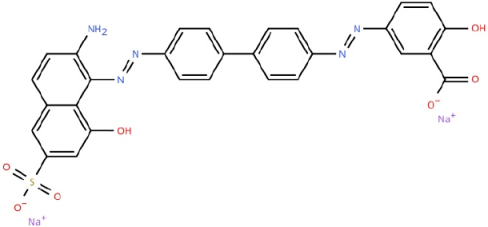
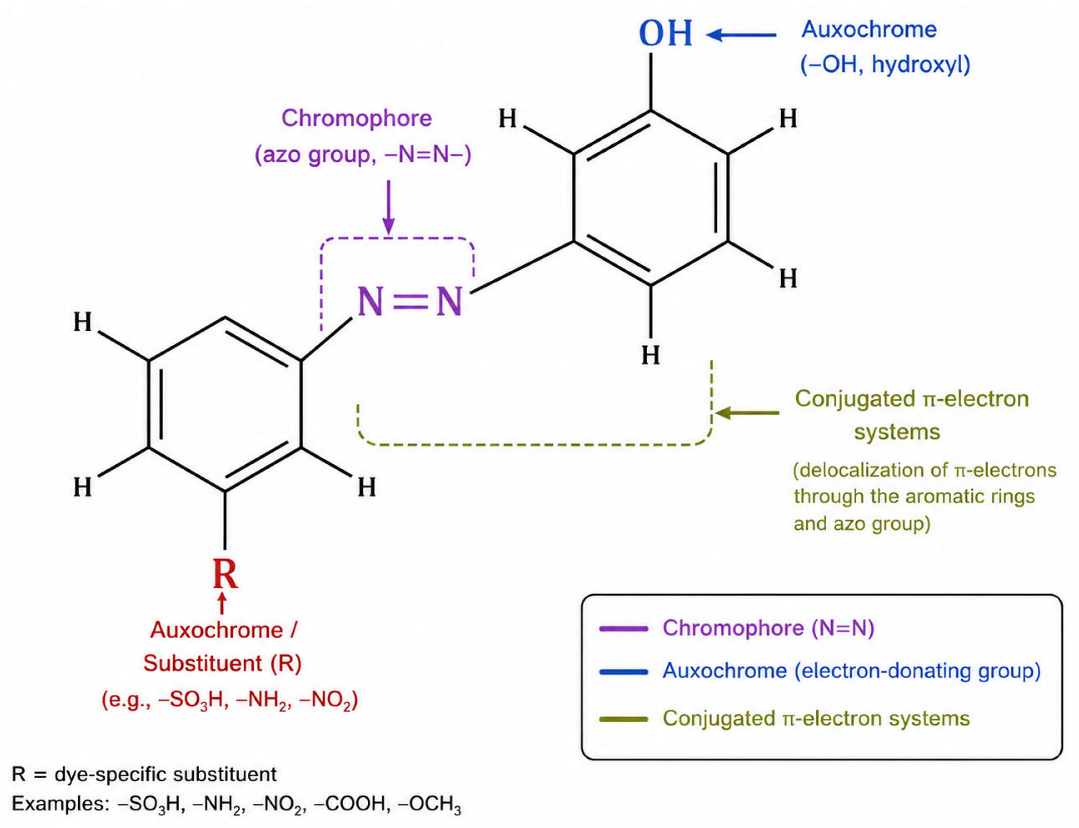
Dyes are chromophoric substances featuring conjugated π systems (Figure 2). These systems facilitate the selective absorption of specific light wavelengths, a process driven by electronic transitions within the conjugated system when the dye is exposed to energy, typically in the form of light or heat. This mechanism ultimately determines the range of visible colors produced. Chemical classification can be divided into two primary categories: application-based (method of attachment to the fabric) and chromophore-based (chemical structure) [1,4]. In Table 2, it is possible to see examples of dyes and their different classifications.

3.1. Classification by Application-Based

Synthetic dyes used in the textile industry are frequently classified according to their application behavior and chemical interaction with textile fibers, resulting in categories such as acid, basic, direct, disperse, and reactive dyes. This classification reflects differences in ionic charge, solubility, and affinity for functional groups present in the fibers, rather than differences in molecular backbones [1].

3.1.1. Acid Dyes

Acid dyes are characterized as anionic substances containing groups such as sulfates and sodium ions, which provide high hydrophilicity [4,6]. They are primarily used on protein fibers such as wool, silk, and nylon [1,6,22]. These dyes exhibit vibrant colors and high lightfastness, and their fixation occurs in an acidic aqueous medium, predominantly through ionic interactions, hydrogen bonding, and van der Waals forces between the negatively charged dye molecules and the positively charged functional groups on the fiber [1,4,6,22].

3.1.2. Reactive Dyes

Of the 10,000 synthetic dyes used annually by the textile industry for fabric coloration, 50% are reactive dyes [22]. Reactive dyes are distinguished from other classes as they are the only ones capable of forming covalent bonds with fiber molecules, and their reactive groups react with the hydroxyl groups of cellulose, as well as with silk, cotton, wool, and regenerated cellulosic derivatives [1,4,6,22]. Their adherence to fabric contributes to superior wash fastness and lightfastness; additionally, they offer ease of application, low cost, and a vast range of colors [1,6,22]. Their chemical structure comprises five primary components: a fiber-reactive group (e.g., monochlorotriazine, dichlorotriazine), a solubilizing group (SO3, Na+), a leaving group, a linking group (NH, CO e SO2) to connect the chromophore, and the chromophore itself as the fifth component. Their application, especially on cotton, requires the addition of inorganic salts such as sodium sulfate (Na2SO4) and sodium chloride (NaCl) to increase solubility and accelerate the dye reaction rate [4,6].

3.1.3. Disperse Dyes

Disperse dyes are non-ionic, hydrophobic substances. Due to their low solubility, they are ideal for insoluble synthetic fibers, such as polyester, nylon, acrylic and acetate rayon [1,23]. During the dyeing process, they are utilized as aqueous dispersion with stabilizing agents such as cresol, phenol, and benzoic acid [6]. They are applied using high-temperature dyeing methods to soften the synthetic fibers: as the structure opens, the dye molecules disperse into the fibers and become physically entrapped; when the dyebath cools, the structure contracts again [4]. These dyes have a small molecular size and high mobility, and are classified as low, medium, or high energy based on their molecular mass (higher mass corresponds to higher energy), which is related to their polarity, dyeing rate, and sublimation [4,6]. They exhibit good lightfastness and wash fastness but low rub fastness [1]. They are used in large quantities, which consequently leads to high water consumption. Dyes that fail to fix generate significant volumes of wastewater [6].

3.1.4. Basic Dyes

Basic dyes are cationic dyes with a strong affinity for acrylic fibers and modified polyesters [4,24]. They are water-soluble and release colored cations upon solubilization: the dye cations are attracted to the anionic sites on the fibers [6]. Despite being light-resistant and highly soluble, they exhibit low wash fastness. While primarily used for synthetic fibers like polyester and acrylic, they are also applied in dyeing paper, wood, and leather [1,24]. It has been further stated that basic dyes are distinguished by their high luminosity and ease of use, providing vibrant and durable colors across several textile types [6].

3.1.5. Direct Dyes

Direct dyes are anionic dyes added directly to an alkaline or neutral bath, without the need for a mordant, making the process simple and cost-effective [1,6,25]. In this process, the fabric is placed in an aqueous solution containing the dye salt, and the solution is heated to a boil to achieve coloration. Direct dyes are water-soluble and possess high exhaustion values, high substantivity, and good color reproducibility [6]. This class contrasts with disperse dyes, which are formulated for synthetic fibers, as they are specifically developed for natural fibers, showing a greater affinity for cellulosic fibers such as cotton, rayon, and wool [1,6,25].

3.2. Classification by Structural and Reactive of Dyes

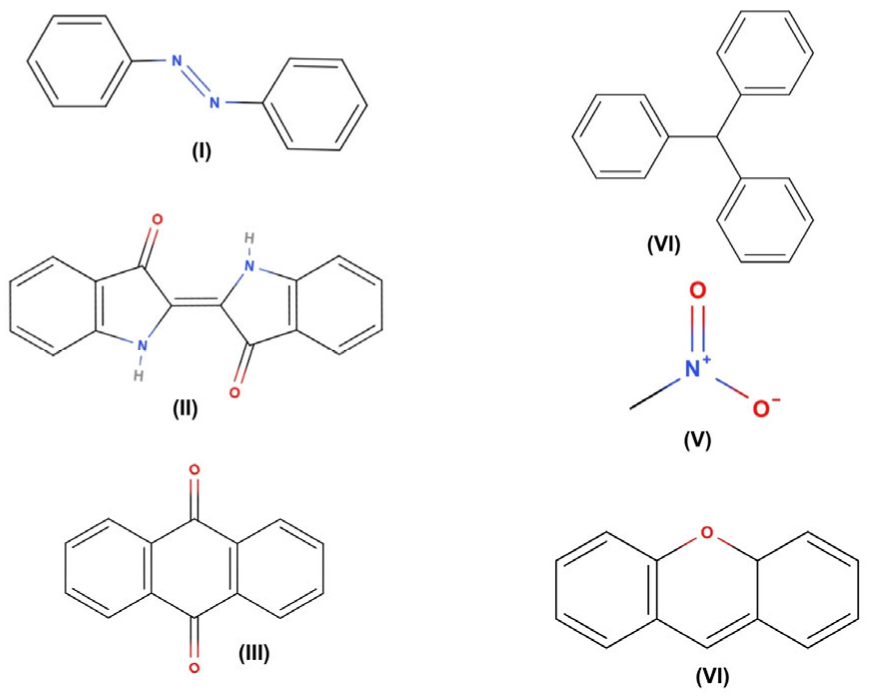
Dyes are primarily classified by two constituents: the chromophore and the auxochrome [5,26,27]. The chromophore is the part of the dye molecule responsible for light absorption and the manifestation of color, encompassing functional groups [1,6,26]. Meanwhile, auxochromes do not produce color on their own but intensify the produced color and alter the chromophore’s light-absorption capacity, including groups such as -SO3H, -NH2, -OH and -COOH, which increase the color’s affinity for the fiber and enhance water solubility (Figure 2) [1,5,6,26,27]. In the textile industry, dyes commonly contain anthraquinone, indigoid, and azo aromatic structures, but there are numerous other classifications, like phenylmethane, nitro, and xanthene. In addition to their classification, the chemical structure of chromophores strongly influences the environmental persistence of dyes and their susceptibility to photolytic, oxidative, and biological degradation. Highly conjugated aromatic systems generally exhibit greater chemical stability, making complete mineralization more difficult. Consequently, understanding chromophore chemistry is essential for selecting appropriate remediation strategies, including advanced oxidation processes, photocatalysis, enzymatic degradation, and biological treatment [19,27].

3.2.1. Azo

Azo dyes are the most prevalent class of synthetic dyes, characterized by aromatic compounds containing one or more azo bonds (–N=N–) in their structure. They are highly recalcitrant, persistent, toxic, and exhibit a strong xenobiotic and non-biodegradable nature [8,28]. Within this category, azo dyes are classified by the number of azo linkages present, resulting in monoazo, disazo, trisazo, and polyazo dyes [29]. Estimates suggest that tanneries use approximately 140 tons of chemicals and dyes, over 50% of which are azo dyes [28]. According to Abul et al. [30], about 90% of azo dyes are discharged into the environment without adequate treatment.
The azo bond (–N=N–) plays a central role in the environmental behavior of these dyes. Under anaerobic conditions, microbial azoreductases can cleave the azo linkage, resulting in decolorization; however, this process frequently produces aromatic amines that are more toxic and persistent than the parent compounds. Therefore, complete degradation generally requires sequential anaerobic–aerobic treatment or oxidative processes capable of mineralizing these intermediates. Moreover, the presence of multiple azo bonds and electron-withdrawing substituents further increases molecular stability and resistance to oxidative degradation [29].
In the synthesis of the dye, according to Olakojo et al. [31], the production of azo compounds occurs via a diazonium salt intermediate through an electrophilic aromatic substitution reaction with coupling components. This intermediate is widely used in pharmaceuticals, food colorants, textiles, and titrimetric indicators. Their production is highly explosive; thus, isolation of the intermediate is discouraged. Preparation must be conducted at low temperatures, as diazonium salts derived from primary aliphatic amines are non-isolable and degrade into their corresponding alcohols even at low temperatures [31].

3.2.2. Anthraquinone

Despite being a natural pigment, anthraquinone dyes are usually synthesized and constitute the second largest class of synthetic dyes [32], accounting for 15% of the dyes used in the textile industry due to their ease of application and wide range of colors and shades [20,30].
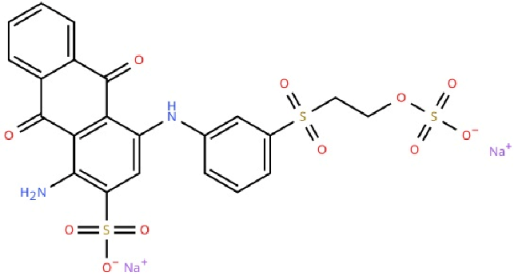
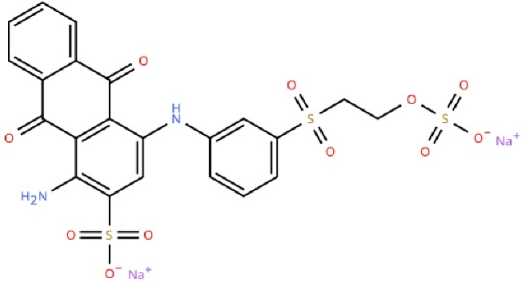
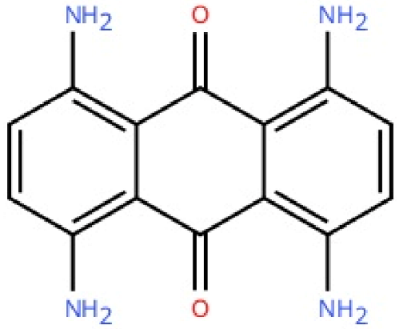
The chromophore’s composition is characterized by three benzene rings with two (2) oxygens bonded to the central ring via double bonds (Figure 3) [33]. In the context of reactive dyes, anthraquinone is the most popular group after azo dyes [20]. However, they are recalcitrant and difficult to degrade, producing toxic organic effluents that result in severe pollution upon disposal [20,30].
The high resistance of anthraquinone dyes is mainly attributed to their highly conjugated aromatic ring system, which provides remarkable photochemical and oxidative stability. This structural characteristic limits microbial degradation and reduces the efficiency of conventional biological treatments. Consequently, advanced oxidation processes, photocatalytic systems, and ligninolytic enzymes have attracted considerable attention for degrading anthraquinone dyes through the generation of highly reactive oxidizing species capable of disrupting the aromatic structure [34].

3.2.3. Indigoids

Indigoid dyes, derivate of indigo and with a blue color, hold a prominent position in human history; they are one of the oldest natural dyes known to humanity [21,35]. Indigo was obtained in China and South Korea from Polygonum tinctorium; in Africa, the East Indies, and South America, it was obtained from Indigofera Isatis tinctoria; and the ancient English obtained it from Isatis tinctoria [35]. Although indigo has natural origins, modern synthetic production has largely replaced natural methods, and it began to be synthesized from petrochemical derivatives following advances in organic synthesis and market demands [21].
The primary chemical characteristic of indigo is its ability to undergo a redox reaction involving electron transfer, facilitated by its specific chemical structure and intramolecular organization [21]. Synthetic indigo is highly resistant to light and high temperatures [19]. This remarkable stability is associated with its conjugated molecular structure and strong intermolecular hydrogen bonding, which reduces its susceptibility to photolytic degradation. Although oxidoreductase enzymes such as laccases and peroxidases can catalyze the oxidation of indigoid dyes, complete degradation generally requires oxidative catalytic systems capable of breaking the stable aromatic framework [36]. There are several synthetic routes to the chemical synthesis of indigo, but mainly it is synthesized from fossil fuel by-products, such as aniline or other aromatic derivatives [35]. However, synthetic indigoid derivatives, such as indigo carmine, are considered highly toxic, with a safe dose for human consumption being 500 mg/kg [6,37]. Upon skin contact, they can cause irritation and permanent eye damage. Furthermore, they are considered carcinogenic and potentially fatal, exhibiting toxic effects across developmental, reproductive, acute, and neurological stages [6].

4. Environmental and Ecotoxicological Impacts of Synthetic Dyes

The environmental impacts associated with synthetic dyes extend far beyond the visible coloration of water bodies. Depending on their chemical structure, concentration, environmental conditions, and degradation pathways, synthetic dyes and their transformation products may affect aquatic ecosystems through multiple mechanisms, including reduced light penetration, chronic toxicity, bioaccumulation, endocrine disruption, and the formation of hazardous metabolites. Therefore, assessing their environmental risk requires consideration of the parent compounds and of their degradation products and interactions with co-occurring contaminants [7].

4.1. Physical Impacts and Environmental Persistence

The coloration of water bodies, even at low dye concentrations, is a physical phenomenon of considerable impact [11]. In leather production, concentrations ranging from 10 to 200 mg/L produce intensely colored effluents [28]. Persistent color and high concentrations of residual dyes in discharged wastewater, where residual content can range from 3 to 50 mg/L and remains colored and toxic even at 0.5 mg/L, represent a visible form of pollution, and chemical treatment for these is often economically unfeasible [10,28]. The intense coloration of wastewater inhibits light penetration in aquatic ecosystems and possesses considerable toxicity, increasing chemical and biochemical oxygen demands (COD and BOD, respectively), which impairs aquatic photosynthesis and inhibits plant growth [10,19].

4.2. Toxicity to Aquatic Organisms

From a toxicological perspective, both the parent dye compounds and their degradation by-products, with an emphasis on azo dyes, are frequently toxic, mutagenic, and potentially carcinogenic, teratogenic, and genotoxic to both aquatic life and humans [1,6,26]. Ramamurthy et al. [26] demonstrated that synthetic dyes present acute and chronic toxicity to a wide range of aquatic organisms, including invertebrates, fish, and amphibians. For instance, the azo dye Disperse Yellow 7, at concentrations as low as 0.022 mg/L, caused genotoxic effects and visual impairment in frog larvae. Congo Red, an azo acid dye, demonstrated developmental toxicity at concentrations near 0.10 g/L [26]. Other effects include the inhibition of the aquatic green biome, affecting photosynthetic rates and biochemical parameters such as growth, pigment content, proteins, minerals, and other nutrients [6]. In fish, metabolized textile dye effluents form harmful intermediates, resulting in histopathological changes including gill and liver damage, impaired osmoregulation, and behavioral anomalies [6,26]. Mortality rates in species such as tilapia were directly correlated with effluent concentration [26].
Although numerous ecotoxicological studies have demonstrated the harmful effects of textile dyes on aquatic organisms, direct comparisons among studies remain challenging due to substantial methodological variability. Differences in test species, exposure duration, dye identity, concentration ranges, water chemistry, and evaluated biological endpoints often lead to inconsistent toxicity thresholds. Consequently, toxicity data should be interpreted cautiously, particularly when extrapolating laboratory findings to natural aquatic ecosystems, where exposure occurs as complex mixtures rather than individual compounds [26,38,39].

4.3. Ecosystem-Level Effects

Beyond individual toxicity, synthetic dyes and their degradation products pose long-term risks through bioaccumulation and trophic transfer. Persistent dyes can accumulate in aquatic organisms, leading to increased concentrations along the food chain and contributing to biodiversity decline in polluted ecosystems [6]. According to Tanaya et al. [6], dyes consumed by fish are metabolized into harmful intermediates that impact both the fish and their predators. When fish with retained dyes are consumed, they can cause hypertension, cramps, fever, and other symptoms in humans. Furthermore, toxic compounds reach groundwater, accumulating in plants grown in that soil, posing a risk to consumers such as herbivores and humans [6]. An investigation of water bodies in Belgium to identify the level and accumulation of toxic dyes in the endangered Anguilla anguilla found dye contamination in 77% of sampled organs [19]. Between 25 and 58% of the samples contained malachite green (MG), crystal violet (CV), and the triarylmethane brilliant green (BG). Among the three, MG was the most studied, considered a multi-organ toxin affecting the immune and reproductive systems, with genotoxic and carcinogenic properties, thereby threatening this and other critically endangered species [19].

4.4. Mutagenic and Carcinogenic Potential

A particularly alarming aspect of synthetic dyes is their potential to form mutagens and carcinogens in the environment. In zebrafish and other aquatic species, chronic exposure to Basic Red 51 (a monoazo dye) has been associated with deliberate metabolic slowing, which can potentially impair crucial processes such as growth, reproduction, developmental transitions, and locomotor activities. Meanwhile, Basic Violet 14 (Crystal Violet) caused genotoxic stress and significant liver pathology, including fibrosis and necrosis [26]. Ramamurthy et al. [26] notes that despite the wealth of information obtained from in vitro studies and investigations involving lower vertebrates, there is a critical need for additional research using in vivo models.
Carcinogenic risk is not limited to aquatic organisms. Epidemiological studies link environmental exposure or occupational contact with certain textile dyes to severe impacts on human health [22,26]. Azo dyes have a considerable impact on industrial workers who encounter them, potentially leading to diseases such as bladder cancer and hepatic carcinoma [26]. Furthermore, many azo dyes are a cause for concern because they can decompose (via reductive cleavage of the azo bond) into carcinogenic aromatic amines by human skin microorganisms, such as Staphylococcus, Dermacoccus, Kocuria, Micrococcus, Kytococcus, and Corynebacterium [6,26,40].

4.5. Emerging Environmental Concerns

Although wastewater treatment substantially reduces dye concentrations, complete mineralization is rarely achieved. Consequently, aromatic amines and other transformation products generated during biological treatment, chlorination, ozonation, or advanced oxidation processes may persist in treated water and, under certain conditions, reach drinking water sources. Because several of these metabolites exhibit greater toxicity than their parent dyes, their occurrence has become an emerging concern for water quality monitoring and public health. Moreover, current analytical protocols often focus on parent dye molecules while neglecting transformation products, potentially underestimating environmental risks [7,41].
Beyond acute toxicity, increasing evidence suggests that certain classes of synthetic dyes and their degradation products may interfere with endocrine regulation in aquatic organisms. Experimental studies have reported alterations in reproductive development, hormone signaling, embryonic development, and reproductive success following chronic exposure to specific azo and triphenylmethane dyes. Although the endocrine-disrupting mechanisms remain insufficiently understood, these findings indicate that conventional toxicity endpoints may underestimate the long-term ecological consequences of dye contamination [42,43,44].
An additional emerging concern is the simultaneous occurrence of textile dyes and microplastics in aquatic environments. Synthetic textile fibers constitute one of the major sources of secondary microplastics, which can adsorb dyes and other organic contaminants on their surfaces, altering pollutant transport, bioavailability, and persistence. The interaction between dyes and microplastics may enhance contaminant accumulation in aquatic organisms and facilitate trophic transfer throughout food webs. Despite growing attention to this issue, the combined ecotoxicological effects of textile dyes and microplastics remain poorly understood and deserve further investigation [45,46,47].

5. Remediation Methods

To halt this increase in pollution and toxicity to the environment by synthetic dyes, there is a need for a waste treatment strategy with the goal of removing/reducing precedence pollutants at their source. Due to the environmental and health risks associated with dye effluents, treatment methods, such as physicochemical and biological, are employed.

5.1. Physicochemical Methods

Several physicochemical technologies have been proposed for dye mitigation, with an emphasis on azo dyes [28]. These techniques have been widely applied in the treatment of synthetic dye effluents in the textile industry due to their relatively rapid operation and broad applicability across several dye classes. Among these, adsorption, coagulation–flocculation, and advanced oxidation processes (AOPs) are the most reported in the literature. However, each method presents specific challenges that limit its isolated applicability in achieving complete and sustainable remediation.

5.1.1. Adsorption

Adsorption, primarily utilizing activated carbon, is considered one of the most efficient methods for treating textile effluents due to its superior removal performance based on high affinity, target compound adsorption capacity, and adsorbent regeneration potential [1,5]. It is a physicochemical process in which dye molecules are transferred from the aqueous phase to the surface of a solid (typically porous). Removal is governed by surface interactions that can be categorized as physisorption or chemisorption, depending on how the component is deposited on the adsorbent surface. Mechanistically, adsorption is associated with intermolecular forces/interactions including van der Waals forces, hydrophobic interactions, electrostatic interactions, and hydrogen bonding. It is further related to porous structures that facilitate the efficient absorption of dye molecules from wastewater, allowing the fluid to percolate and be adsorbed more rapidly [1]. Adsorption is found to be a more efficient, eco-friendly, and cost-effective method for the removal of pollutants from wastewater due to its flexibility in design and ease of operation. In recent years, different adsorbents such as activated carbon, industrial waste, metals/metal oxides nanomaterials and many more were successfully used to remove the pollutants from wastewater [33].
Recent advances in adsorption technologies have shifted from conventionally activated carbon toward engineered porous materials with improved adsorption capacity, selectivity, and regeneration potential [48]. Biochar produced from agricultural residues has attracted considerable attention because of its low production cost, high surface area after activation, and abundance of oxygen-containing functional groups capable of interacting with dye molecules through π–π interactions, hydrogen bonding, and electrostatic attraction [49]. Similarly, metal–organic frameworks (MOFs), characterized by their exceptionally high porosity and tunable pore chemistry, have demonstrated remarkable adsorption capacities for both cationic and anionic dyes, although their large-scale application remains limited by synthesis costs and long-term structural stability [50].
As an example of a study, Sibhat et al. [51] conducted a study involving Ethiopian kaolin and modified kaolins used for the adsorption of methylene blue (MB). Kaolin is a type of naturally occurring clay primarily composed of mineral kaolinite [51]. Around the world, modification of kaolin clay using the acid activation chemical treatment method has been studied for the enhancement of the catalytic and surface properties of amorphized dyes [52]. Sibhat’s [51] study achieved removal efficiency of 99.81% of methylene blue in acid-leached water, at pH 9. Higher pH increases the interaction between the dyes (cationic) and the adsorbent, acquiring negative surface charges, where the dependence on interactions between adsorbate and adsorbent involving –OH groups, π-π stacking interactions, and electrostatic forces are highlighIted, enhancing overall adsorption capacity through “chemical interactions rather than mere physical adsorption” under the studied conditions [51].
However, subsequent cycles showed a gradual decline in removal efficiency due to factors such as saturation of adsorption sites, contamination of the adsorbent surface, and potential structural alterations over time [51]. Other studies point to constraints regarding adsorbent type and post-treatment: desorption processes are necessary to recover the dye, and some cases require high temperatures to improve efficiency, leading to relatively high operational costs, especially when regeneration for reuse is required [5,19].
Although adsorption is highly efficient for color removal, it merely transfers contaminants from the aqueous phase to a solid matrix rather than promoting their degradation. Consequently, adsorbent regeneration and safe disposal remain critical challenges, particularly when hazardous aromatic amines or other toxic transformation products are retained on the adsorbent surface [48].

5.1.2. Coagulation–Flocculation

Coagulation–flocculation is a physicochemical method in which coagulants, such as cationic organic polymers, polyaluminum chloride, ferrous sulfate, aluminum sulfate, ferric chloride, and lime, interact with dye-containing effluent. Coagulation involves the agglomeration of colloidal and minute suspended particles and emulsions that trap solids. Flocculation involves the clustering of these particles into flocs large enough to settle. This occurs through electrostatic interaction between positively and negatively charged dissolved dye particles and polymers [1]. Quantitatively, Ardila-Leal et al. [19] reported 93.2% removal for Acid Black 210, while Tanaya et al. [6] described Congo Red dye removal of up to 84.37% using aluminum sulfate coagulants.
Despite its effectiveness for disperse dyes, the method has limited capacity for direct and acid dyes [5]. This difference in efficiency is a predictable limitation since, although direct and acid dyes are anionic and favor electrostatic interaction, coagulation–flocculation primarily involves the interaction of cationic compounds with suspended material. While disperse dyes are insoluble, these two (2) classes of dyes remain solubilized in water, which hinders the agglomeration process. This would explain the poor performance and significant sludge generation observed by [5]. Other disadvantages noted by Islam [1] and Tanaya et al. [6] include difficult process control, the potential for non-ionic cleaning agents to persist in the treated water, affecting precipitation rates and floc size, and the environmental impacts and costs associated with the disposal of large volumes of dye-laden sludge.

5.2. Advanced Oxidation Processes (AOP)

Advanced oxidation processes (AOPs) are oxidation-based treatments using a series of complex physical and chemical processes. These processes generate highly reactive species, such as hydroxyl radicals (•OH), under specific temperature, pressure, and UV light conditions to decompose dye molecules [53]. Their strong oxidizing capacity can convert organic pollutants into inorganic compounds, such as carbon dioxide and water [1,53].
Unlike conventional physicochemical treatments that mainly transfer pollutants between phases, AOPs can degrade dye molecules through the generation of highly reactive oxygen species, promoting partial or complete mineralization. The efficiency of each process depends on the chemical structure of the dye, catalyst characteristics, radical generation rate, and wastewater composition, making catalyst design a central factor for process optimization [1,53].

5.2.1. Ozonization

Islam et al. [1] explains that ozonization uses ozone (O3) as an oxidizing agent that can disrupt chromophore structures by breaking double bonds in dye molecules. This double bond is precisely the conjugated π system of the dyes, present in azo, anthraquinone, and indigoid compounds (Figure 3). It interacts with dye particles either explicitly or implicitly; the latter involves radical reactions that form •OH, a radical even more powerful than •O and non-selective [1]. This method is easily applied industrially, produces no sludge, and allows for the potential reuse of treated industrial water [1,19,53].
However, ozonization is expensive, highly sensitive to parameter variations (pH, temperature, salts), and may produce carcinogenic and mutagenic secondary substances. It also carries high energy consumption costs and exhibits low efficiency regarding COD, often failing to achieve complete mineralization [1,19,53].
Recent studies have explored catalytic ozonation systems employing transition metal oxides, activated carbon, and heterogeneous catalysts to enhance hydroxyl radical generation while reducing ozone consumption [54,55,56]. These catalytic systems improve mineralization efficiency and decrease the formation of toxic oxidation by-products compared with conventional ozonation.

5.2.2. Fenton Reagent

Fenton oxidation employs hydrogen peroxide (H2O2) and ferrous ions (Fe2+) to generate hydroxyl radicals (•OH), which are highly reactive species capable of degrading organic pollutants in textile effluents, with the constant reaction rate of hydroxyl radicals with organic compounds, and can reach values as high as 109 L·mol−1·s−1 [1,53].
Fe2+ + H2O2 → Fe3+ + •OH + OH
Once generated, hydroxyl radicals react rapidly with dye molecules, leading to efficient decolorization and, in some cases, near-complete color removal. However, conventional Fenton oxidation produces significant amounts of iron sludge [57]. In addition, the process is highly sensitive to pH variations [53,57], with an optimal pH range between 3 and 4 [58]. In contrast, real industrial textile wastewater typically exhibits a pH between 7 and 8 [53]. Therefore, pH adjustment prior to Fenton treatment, together with the high consumption of chemical reagents, increases operational costs [53,58].
To overcome these limitations, heterogeneous Fenton catalysts based on iron oxides, biochar-supported iron nanoparticles, metal–organic frameworks, and magnetic composites have recently been investigated [59,60,61,62]. These materials facilitate catalyst recovery, reduce iron leaching, broaden the operational pH range, and improve catalyst stability, making them promising alternatives for industrial wastewater treatment.

5.2.3. Photocatalysis

Photocatalysis converts light energy into chemical energy [38]. It relies on the generation of reactive species using semiconductor materials such as TiO2 and ZnO and O2 as an oxidizing agent to form holes and free radicals, like •OH [1,57]. It is important to note that bandgap energy is related to the electron jump from the valence band to the conduction band, enabling electrical conductivity. This process is efficient, cost-effective, and environmentally friendly, capable of decolorizing and mineralizing dyes [57].
However, Liu et al. [53] observed that the large bandgap energy of TiO2 (3.2 eV), low utilization of visible light, and high electron-hole recombination efficiency are clearly very disadvantages of the process.
Current research has increasingly focused on visible-light-responsive photocatalysts capable of utilizing solar irradiation instead of artificial UV sources. Strategies including elemental doping, semiconductor heterojunctions, plasmonic nanoparticles, carbon-based materials (graphene and graphitic carbon nitride), and metal–organic frameworks have significantly improved visible-light absorption while reducing electron-hole recombination. Solar-driven photocatalytic systems therefore represent one of the most promising directions for sustainable textile wastewater remediation because they combine renewable energy utilization with efficient degradation of recalcitrant dyes [63,64].

5.2.4. Emerging Catalytic Materials

Recent advances in catalysis have led to the development of highly efficient catalytic materials for textile dye degradation. Carbon-based catalysts, biochar-supported nanocomposites, metal–organic frameworks (MOFs), covalent organic frameworks (COFs), single-atom catalysts, and semiconductor heterojunctions have demonstrated improved catalytic activity owing to their high surface area, enhanced charge separation, tunable active sites, and increased radical generation [59,60,61,62]. Although most studies remain at laboratory scale, these materials represent an important research direction toward more energy-efficient and sustainable wastewater treatment technologies.

5.3. Membrane and Electrochemical Technologies

5.3.1. Membrane Filtration

Membrane-based separation technologies have become increasingly important for the treatment and reuse of textile wastewater because they effectively remove dyes, and suspended solids, salts, and dissolved organic compounds without the addition of chemical reagents. Depending on pore size and operating pressure, membrane processes are classified as microfiltration (MF), ultrafiltration (UF), nanofiltration (NF), and reverse osmosis (RO) [65]. Among these, nanofiltration and reverse osmosis are the most widely employed for dye removal due to their high rejection efficiency for dissolved organic molecules and colored compounds [66,67].
Ultrafiltration is primarily applied as a pretreatment step to remove suspended solids, colloids, and macromolecules, thereby reducing membrane fouling in downstream processes [68]. Nanofiltration presents high rejection efficiencies for reactive, direct, and acid dyes while operating at lower pressures than reverse osmosis, making it an attractive alternative for industrial applications [66]. Reverse osmosis provides the highest removal efficiencies, frequently exceeding 95–99% for dyes and dissolved salts, allowing treated water to be reused in textile production. However, the process requires high operating pressures and significant energy consumption [67].
Despite their excellent separation performance, membrane technologies do not destroy dye molecules but rather concentrate pollutants into a retentate stream that requires further treatment. Membrane fouling caused by suspended solids, organic matter, biofilms, and inorganic scaling remains the principal operational challenge, leading to flux decline, increased energy demand, and higher maintenance costs. Consequently, membrane systems are frequently integrated with biological treatment or advanced oxidation processes to improve overall treatment efficiency while reducing fouling and concentrate disposal problems [65,66,67,68].

5.3.2. Electrochemical Technologies

Electrochemical technologies have emerged as promising alternatives for textile wastewater treatment because they promote pollutant degradation without requiring large quantities of chemical reagents. These processes include electrocoagulation, electrooxidation, and electro-Fenton oxidation, each operating through distinct electrochemical mechanisms capable of removing or mineralizing synthetic dyes [69].
Electrocoagulation employs sacrificial aluminum or iron electrodes that release metal ions into solution under an applied electric current. These ions form hydroxide flocs capable of destabilizing colloidal particles and adsorbing dissolved dye molecules, resulting in efficient color removal and reduced chemical consumption compared with conventional coagulation. Nevertheless, electrode passivation, sludge generation, and electricity consumption remain important operational limitations [70].
Electrooxidation degrades dyes directly at the anode surface or indirectly through the electrogeneration of highly reactive oxidizing species, particularly hydroxyl radicals (•OH). Advanced anode materials such as boron-doped diamond (BDD), mixed metal oxides (MMOs), and dimensionally stable anodes (DSAs) have demonstrated high mineralization efficiencies for recalcitrant textile dyes because of their excellent electrochemical stability and high oxygen evolution overpotential. However, high capital costs and electrical energy requirements still limit large-scale implementation [71].
Electro-Fenton technology combines electrochemical hydrogen peroxide generation with the classical Fenton reaction, continuously producing hydroxyl radicals capable of oxidizing highly stable aromatic structures. Compared with conventional Fenton oxidation, electro-Fenton technology reduces reagent consumption, improves radical generation efficiency, and minimizes sludge production. Recent studies have also investigated heterogeneous electro-Fenton catalysts based on iron oxides, carbonaceous materials, and metal–organic frameworks, aiming to improve catalyst stability and expand the operational pH range [72].
Although electrochemical technologies exhibit excellent decolorization and mineralization performance, their industrial application still depends on improvements in electrode durability, energy efficiency, reactor configuration, and process economics [69,70,71,72]. Hybrid systems integrating electrochemical oxidation with biological treatment or membrane filtration have recently attracted considerable attention because they combine high oxidation efficiency with lower operational costs and improved overall wastewater treatment performance [73].

6. Biological Treatment Methods

Biological methods include the utilization of microorganisms such as their enzymes and can serve as a suite of biotechnological strategies for the treatment of textile pollutants [27,74]. They are a promising alternative option to conventional treatments, with low costs, high efficiency and, in particular, by not using chemical substances during the process, generating less sludge [12,19,75].
Bioremediation offers a range of mechanisms for treating textile effluent, which include bioaccumulation, biosorption, enzymatic degradation, and mineralization. Bioaccumulation occurs via intracellular accumulation, without chemical alteration, which depends on the dye’s affinity for functional groups on the cell membrane. Biosorption removes the dyes present in the medium in a passive way in the biomass by several interactions: electrostatic, chemical, chelation, complexation, and micro-precipitation. Enzymatic degradation of dye molecules occurs through extracellular and intracellular microorganisms’ enzymes [7,40]. Meanwhile, mineralization involves the complete degradation of the compound into simpler inorganic substances, typically following biotransformation by microorganisms [7].

6.1. Enzymes

Biotransformation enzymes play a crucial role in biodegradation by microorganisms [76], such as bacteria, algae and fungi. The microorganisms secrete important extracellular and intracellular enzymes, which can decolorize wastewater and mineralize organic pollutants, transforming it into CO2 and H2O [1,6].
Intracellular enzymes catalyze the recalcitrant complex bonds via reduction (azoreductase, flavin reductase, NADH-DCIP reductase, among others) or oxidation processes (lignin peroxidases, laccases, tyrosinase, aryl alcohol oxidase) [1,40]. Oxidizing enzymes can degrade dye complexes, whereas reducing enzymes can break dye complexes [6].
The catalytic efficiency of dye-degrading enzymes is commonly described using Michaelis–Menten kinetics, in which parameters such as Km and Vmax provide important information regarding substrate affinity and catalytic turnover. These parameters vary considerably according to dye structure, enzyme source, and reaction conditions [77]. Azo dyes generally exhibit higher degradation rates by azoreductases, whereas anthraquinone dyes are preferentially oxidized by ligninolytic enzymes owing to their aromatic conjugated structures [34,78]. Consequently, substrate specificity represents one of the principal factors determining enzymatic treatment efficiency.
Laccases (EC 1.10.3.2) are multicopper oxidases capable of oxidizing phenolic and non-phenolic aromatic compounds through single-electron transfer reactions while reducing molecular oxygen to water. Their broad substrate spectrum makes them among the most extensively investigated enzymes for textile dye degradation. Nevertheless, the oxidation of high-redox-potential dyes frequently requires low-molecular-weight redox mediators, such as ABTS (2,2′-azino-bis(3-ethylbenzothiazoline-6-sulfonic acid)) or HBT (1-hydroxybenzotriazole), to improve electron transfer and expand substrate range [79].
Lignin peroxidase (LiP) catalyzes the oxidation of highly recalcitrant aromatic compounds through hydrogen peroxide-dependent reactions. Owing to its exceptionally high redox potential, LiP efficiently attacks condensed aromatic structures found in anthraquinone and triphenylmethane dyes, promoting aromatic ring cleavage and facilitating subsequent biodegradation. However, enzyme instability in the presence of excess hydrogen peroxide remains one of its principal operational limitations [79].
Azoreductases catalyze the reductive cleavage of azo bonds using NADH or NADPH as electron donors, resulting in rapid dye decolorization. Although this reaction efficiently disrupts chromophoric structures, it frequently generates aromatic amines that require additional aerobic degradation. Consequently, sequential anaerobic–aerobic bioreactors have been widely investigated to assess whether they can achieve complete mineralization of azo dyes [78].
One of the principal challenges limiting industrial application of free enzymes is their low operational stability and poor reusability. Enzyme immobilization on solid supports, including alginate, silica, activated carbon, biochar, magnetic nanoparticles, and metal–organic frameworks, has emerged as an effective strategy to improve thermal stability, pH tolerance, catalyst recovery, and operational lifetime. Immobilized laccases and peroxidases frequently exhibit enhanced resistance to denaturation and permit repeated reaction cycles, thereby reducing overall treatment costs [77,80].
The efficiency of enzymatic dye degradation also depends on reactor configuration. Batch reactors are widely employed for laboratory investigations owing to their operational simplicity, whereas continuous-flow reactors are more suitable for industrial wastewater treatment. Packed-bed reactors containing immobilized enzymes have received increasing attention because they provide prolonged catalyst retention, lower enzyme loss, and improved process scalability. Membrane bioreactors and fluidized-bed systems have also demonstrated promising performance by minimizing mass-transfer limitations and improving contact between enzyme and substrate [81,82].
Recent advances in protein engineering have significantly expanded the application of dye-degrading enzymes. Directed evolution, rational protein design, and computational enzyme engineering have been successfully employed to improve catalytic activity, thermostability, pH tolerance, substrate specificity, and resistance to inhibitors. These strategies have generated laccase and peroxidase variants with superior performance under industrial operating conditions, representing an important step toward large-scale enzymatic wastewater treatment [79].
Despite their excellent catalytic performance, enzymatic systems still face important limitations for industrial application. Free enzymes are susceptible to inhibition by heavy metals, surfactants, salts, and auxiliary chemicals commonly present in real textile wastewaters. Furthermore, fluctuations in pH and temperature frequently reduce catalytic activity and operational stability. Another important limitation is the relatively high cost associated with enzyme production, purification, and replacement. Consequently, enzyme immobilization on natural or synthetic supports has emerged as one of the most promising strategies to improve enzyme stability, facilitate catalyst recovery and reuse, extend operational lifetime, and reduce overall treatment costs [79].

6.2. Bacteria

Bacterial degradation of synthetic dyes is the most extensively studied biological method due to the metabolic versatility and adaptability of bacteria to diverse environmental conditions. Numerous bacterial genera, including Pseudomonas, Bacillus, Acinetobacter, and Aeromonas, have demonstrated the ability to degrade azo and anthraquinone dyes under aerobic, anaerobic, or facultative conditions [5,6]. Bacterial treatment in wastewater is particularly advantageous because bacteria are easily cultivated and multiply faster than many other organisms. Notably, bacterial metabolism can mineralize dyes: under aerobic conditions, dyes are decomposed into CO2 and water (in addition to biomass), whereas under anaerobic conditions, they are converted into methane, CO2, and biomass [6]. However, several factors affect efficiency, including pH, temperature, dye concentration, and nutrient availability. Most dye-degrading bacteria perform optimally under neutral to slightly alkaline conditions (pH 6–10). Under aerobic conditions, the reductive cleavage of azo bonds is generally inhibited because oxygen competes with azo compounds as the preferred terminal electron acceptor. Conversely, under anaerobic conditions, azo dye degradation generally occurs via NADH and FADH azoreductase enzymes, both of which require an organic carbon/energy source [5].
The biodegradation of azo dyes is initiated by azoreductases, flavin-dependent oxidoreductases that catalyze the reductive cleavage of azo bonds (–N=N–) using NADH or NADPH as electron donors. This reaction disrupts the chromophoric system, resulting in rapid decolorization and the formation of aromatic amines. Although decolorization represents an important first step, these intermediates are frequently more toxic and persistent than the parent dye molecules. Therefore, complete detoxification requires subsequent oxidation of aromatic amines through aerobic microbial metabolism [78].
For this reason, sequential anaerobic–aerobic treatment systems have become one of the most widely investigated biological strategies for textile wastewater remediation. Under anaerobic conditions, azo bonds are efficiently reduced by azoreductases, leading to rapid color removal. The partially degraded effluent is subsequently subjected to aerobic treatment, during which aromatic amines are mineralized through oxygen-dependent metabolic pathways involving monooxygenases, dioxygenases, and other oxidative enzymes. This sequential configuration generally achieves higher mineralization rates than either anaerobic or aerobic treatment alone [78].
However, bacteria also produce several dye-degrading enzymes, such as lignin peroxidase, laccase, tyrosinase, flavin reductase, and NADH-DCIP reductase, which can degrade dyes. Jamal et al. [20] cited high-efficiency examples: Enterobacter cloacae ATCC13047 degraded 90% of RB19 dye in 24 h, and Bacillus cereus DC11 degraded 95% of Acid Blue 25 in only 6 h. Aarthi [28] isolated a new strain of Aeromonas hydrophila from tannery effluent that achieved 94% degradation of complex azo dyes within 60 h, producing non-toxic metabolites. The combination of multiple species into consortia enhances degradation, as complementary strains can degrade a wider range of organic pollutants more efficiently than individual strains [6]. Recent advances in metabolomics, transcriptomics, and whole-genome sequencing have significantly improved the elucidation of bacterial metabolic pathways involved in dye degradation. These approaches have identified intermediate metabolites, key catabolic enzymes, and regulatory genes responsible for aromatic ring cleavage and complete mineralization. Such information has facilitated the reconstruction of degradation pathways and improved understanding of the relationship between bacterial metabolism and detoxification efficiency [7]. Despite this, limitations remain: many bacteria are viable but non-culturable under unfavorable conditions, and more research is needed on methods of limiting unintended bacterial growth at contaminated sites [6,20].
Although bacterial systems have demonstrated high dye-removal efficiencies under controlled laboratory conditions, their performance frequently decreases when treating real textile wastewater because of fluctuations in dye composition, salinity, pH, heavy metals, surfactants, and auxiliary chemicals. These factors may inhibit microbial metabolism and reduce the activity of key enzymes involved in dye degradation, highlighting the need for robust microbial consortia and pilot-scale validation.
Despite the promising results obtained under laboratory conditions, the translation of bacterial dye degradation to pilot and industrial scales remains challenging. Real textile wastewaters contain highly variable dye compositions, elevated salinity, heavy metals, surfactants, and fluctuating pH values, all of which may inhibit bacterial metabolism. Furthermore, maintaining stable microbial communities, ensuring sufficient nutrient availability, and preventing biomass washout in continuous-flow systems remain important engineering challenges. Consequently, additional pilot-scale studies are required to evaluate process stability, long-term performance, and economic feasibility under realistic operating conditions.

6.3. Algae

Due to their large effective surface area and reactivity, algal biomass exhibits high biosorption activity and electrostatic attraction for textile wastewater [1]. Algal cell walls contain heteropolysaccharides, lipids, and proteins with several active sites (functional groups) such as carboxyl, amino, hydroxyl, and phosphate groups. This leads to a significant affinity between dyes and the cell wall through mechanisms like surface precipitation, chelation, ion exchange, and bioaccumulation [1,75]. Beyond biosorption, several microalgae are capable of actively participating in dye biodegradation through intracellular metabolic processes. Enzymes such as laccases, azoreductases, peroxidases, and cytochrome P450 monooxygenases have been reported in different algal species and contribute to the oxidation or reduction of chromophoric structures [79]. Moreover, photosynthetic oxygen production by microalgae enhances aerobic degradation processes and can stimulate the activity of dye-degrading bacteria in mixed microbial systems [83].
The efficiency of algal treatment depends on multiple operational parameters, including dye concentration, pH, light intensity, photoperiod, nutrient availability, hydraulic retention time, and species-specific physiological characteristics. Cationic dyes are generally removed more efficiently than anionic dyes because electrostatic interactions with negatively charged algal cell walls favor adsorption. However, highly recalcitrant dyes often require extended contact times or integration with complementary treatment technologies [84].
Studies have shown significant removal rates: Chlorella vulgaris completely decolorized Reactive Black 5 and Direct Blue 71 at 200 mg/L under acidic conditions (pH 5) and reached 100% removal of Disperse Red 1 (300 mg/L) at pH 8 [5]. Haematococcus sp. achieved 98% decolorization of Congo Red (10 ppm) in a short interval. Despite these promising laboratory-scale results, complete mineralization is not always achieved. In many cases, color removal results primarily from biosorption rather than chemical degradation, making the fate of the adsorbed dye an important environmental concern. Consequently, the contaminated biomass frequently requires additional treatment before disposal or valorization. However, biosorption treatment does not always degrade the dye; it may only retain it in the adsorption matrix [19]. Recent studies have increasingly investigated algal–bacterial consortia for textile wastewater treatment. In these systems, algae continuously supply oxygen through photosynthesis, supporting aerobic bacterial metabolism, while bacteria release carbon dioxide and nutrients that stimulate algal growth. This mutualistic interaction improves dye mineralization, reduces external aeration requirements, and enhances the stability of biological treatment systems compared with monocultures [85,86,87]. This requires subsequent treatment before the contaminated biomass can be safely discarded to avoid bioaccumulation and trophic transfer.

6.4. Fungi

Although bacterial processes are often faster, fungi excel at decolorizing a wide range of dyes, including compounds considered non-biodegradable by bacteria alone. Fungal degradation typically occurs under slightly acidic conditions, ideally within a pH range of 5–7 [5]. Fungi are particularly relevant for dye remediation because fungal systems can operate through both biosorption and enzymatic transformation, involving oxidoreductases such as laccases [12,19,88].
Several types of fungi can degrade different effluents, with a notable emphasis on white-rot fungi [20]. Jamal et al. [20] states that these fungi produce enzymes capable of binding to several resistant chemical substances, including complex toxins like textile dyes. Furthermore, white-rot fungi do not require pre-conditioning with contaminants, as these enzymes are extracellular. This suite of fungal enzymes, including lignin peroxidase (LiP), laccase, and manganese peroxidase (MnP), represents only a fraction of the metabolic tool’s fungi produced for survival [20].
Regarding experimental results, Araújo et al. [12] reported 94.4% biodecolorization of Reactive Blue 268 within 48 h, driven by intense laccase activity. Laccases are multicopper oxidase enzymes that oxidize a wide range of substrates while reducing molecular oxygen to water [79]. Contato et al. [88] focused on laccase production by Pleurotus pulmonarius CCB-20 via solid-state fermentation using orange waste, demonstrating dye decolorization with crude laccase. From a process design perspective, this approach, centered on optimizing fungal enzymes using low-cost substrates, renders the treatment method economically viable [88]. Ortolan [80] also pursued the optimization of fungal laccase production, given the enzyme’s vast applicability in several biotechnological fields with minimal environmental impact. They utilized response surface methodology to increase laccase production by Trametes hirsuta GMA-01, cultivated in a medium supplemented with orange waste, starch, wheat bran, yeast extract, and salts [45]. Meanwhile, Cheute et al. [11] reviewed Pycnoporus spp. as pollutant biotransformers, compiling decolorization results across several dyes and conditions. They reported laccase-mediated decolorization for Reactive Black 5 (93.2%), Remazol Brilliant Blue R (96%), Crystal Violet (90%), Basic Fuchsin (83.4%), and Congo Red (88.2%) [11].
According to Contato and Conte-Junior [89], fungi could also be explored for more eco-friendly textile production. For instance, fungal lytic polysaccharide monooxygenases (LPMOs) can weaken cellulose fibers in a controlled manner, enabling more sustainable biopolishing. This process improves fabric softness and appearance while reducing water and chemical consumption [89]. However, enzymatic treatments via this approach present significant limitations, such as low stability under adverse environmental conditions, loss of activity over time, challenges in recovery and reuse, and high costs for large-scale production [74].

7. Comparison of Methods

7.1. Decolorization Efficiency

Synthetic dye remediation technologies differ considerably in terms of decolorization efficiency, mineralization capacity, treatment time, operational cost, energy demand, secondary waste generation, and industrial applicability. Therefore, selecting an appropriate treatment strategy requires balancing technical performance, economic feasibility, and environmental sustainability. Table 3 summarizes the principal characteristics of the major treatment technologies discussed in this review.
For instance, activated carbon adsorption is highly efficient at stripping dye color (often >90% removal) by binding dyes onto a solid surface. However, this approach merely transfers the pollutant to another phase without breaking its molecular structure [51]. In contrast, biological treatments (microbial or enzymatic) can not only decolorize but degrade dyes into smaller, less harmful compounds or even mineralize them into CO2 and water. Bioremediation using bacteria or fungi has been shown to completely decompose certain azo dyes under ambient conditions, eliminating both the color and its source of toxicity [5]. For example, laccase enzymes from white-rot fungi frequently achieve >90% decolorization of several recalcitrant dyes within a few hours in laboratory tests [11]. On the other hand, some advanced oxidation processes (AOPs) can also nearly completely destroy dyes without causing secondary pollution [53]. Nonetheless, physicochemical efficiency may drop in real wastewater scenarios due to interference from other substances. Meanwhile, biological systems act slowly and have low efficiency at high concentrations of pollutants [5]. In summary, physicochemical methods often deliver rapid color removal, whereas biological methods excel in complete pollutant degradation.

7.2. Operational Costs and Energy Use

The operational expenditures for dye wastewater treatment differ markedly between physicochemical and biological approaches. Physicochemical treatments typically involve intensive inputs: costly chemicals (e.g., metal coagulants, oxidants) and high energy consumption (for UV irradiation, ozone generation, high-pressure membranes, etc.). These requirements make conventional physical/chemical methods expensive and energy intensive [30]. For example, adsorption with activated carbon, while effective, is noted as an expensive process for dye removal due to the cost of the adsorbent and the necessity for regeneration or disposal [5]. Likewise, advanced oxidation processes like the Fenton reagent incur ongoing chemical costs and produce sludge that must be handled, increasing the overall treatment cost [19,53].
Among physicochemical technologies, reverse osmosis, ozonation, electrochemical oxidation, and photocatalysis generally present the highest energy requirements, whereas adsorption and coagulation require lower electrical energy but consume significant quantities of adsorbents or chemical reagents. Biological systems exhibit the lowest energy consumption because they normally operate under ambient temperature and pressure, although longer hydraulic retention times may increase reactor size and capital investment.
In contrast, biological methods rely on microorganisms or enzymes to perform the remediation, often under ambient temperature and pressure, resulting in significantly lower energy usage. No expensive reagents are needed beyond nutrient supplements, and energy demands are mainly for pumping or aeration, which are relatively modest. As a result, biological dye degradation is frequently cited as cost-effective and inherently less energy intensive [6]. For instance, enzyme-based treatments allow dye removal under mild conditions, avoiding the need for external oxidants or extreme pH, thereby cutting energy costs [30].
Another economic consideration is scale: biological processes can be simple and low-cost at lab and pilot scales. However, a noted drawback is that pure biological systems are slower and may require larger reactors or land area for treatment [5], which can increase capital costs for full-scale implementation. This trade-off means that while daily operating costs (energy, chemicals) are lower for bioprocesses, the investment in reactor volume can be higher. In summary, physicochemical methods incur higher ongoing costs due to intensive energy and chemical use, whereas biological treatments minimize these expenditures, offering a cheaper and greener operation [30]. The economic advantage of bioremediation is a key driver for its development as an alternative for dye-laden wastewater [6].

7.3. Environmental Sustainability

From an environmental sustainability perspective, biological treatments are widely regarded as the eco-friendlier option. Physicochemical treatments often generate substantial secondary pollution. For example, chemical coagulation/flocculation produces large volumes of sludge loaded with dyes and added reagents, which then require safe disposal or further treatment [1,6]. Incomplete chemical oxidation can produce harmful intermediate by-products that still pose toxicity concerns if not fully oxidized [53]. Additionally, the carbon footprint of physical/chemical processes is significant: high electricity demand for processes like ozonation or UV advanced oxidation leads to greater indirect CO2 emissions. Tanaya et al. [6] note that conventional physicochemical dye degradation has many drawbacks, such as a higher amount of energy, a higher quantity of chemicals, and the production of large amounts of sludge and by-products, rendering these methods less sustainable. By contrast, biological methods harness natural biodegradation pathways that typically yield minimal hazardous waste. Microbial or enzymatic breakdown of dyes ideally results in benign end-products (CO2, water, and biomass), avoiding the accumulation of toxic residuals [6]. A recent study on bacterial degradation of tannery azo dyes highlighted this advantage, reporting zero sludge disposal requirements when using an isolated dye-degrading bacterium [28]. Moreover, biological treatments are often termed “green” or “eco-friendly” because they use living organisms to neutralize pollutants without adding harmful chemicals [6]. However, one consideration for sustainability is ensuring that the metabolic breakdown truly detoxifies the dye. Researchers stress the importance of evaluating the toxicity of biodegradation products to confirm that treated effluents are safe [5].
Environmental sustainability depends not only on removal efficiency but also on resource consumption and waste generation. Adsorption, membrane filtration, and coagulation concentrate contaminants into secondary solid or liquid waste streams requiring additional treatment. Conversely, advanced oxidation processes aim to mineralize pollutants but frequently consume considerable electrical energy or chemical oxidants. Biological processes generally exhibit the smallest environmental footprint because they operate under mild conditions and generate minimal hazardous residues, although their efficiency may decrease under highly variable industrial wastewater conditions.
Nevertheless, the superior environmental performance of biological treatments should not be interpreted as universal applicability. Their efficiency strongly depends on wastewater composition, operational stability, and microbial or enzymatic activity, making process optimization essential before large-scale industrial implementation.

7.4. Technology Readiness and Industrial Applicability

Although numerous technologies have demonstrated excellent dye removal efficiencies under laboratory conditions, their levels of technological maturity differ considerably. Adsorption, coagulation–flocculation, membrane filtration, and conventional advanced oxidation processes are already well established at an industrial scale and present high technology readiness levels (TRLs), with commercial implementation in textile wastewater treatment plants [76,90,91,92,93,94,95,104,105]. In contrast, electrochemical processes are currently transitioning from pilot-scale demonstrations to industrial applications, although their widespread adoption remains limited by electrode costs and electricity demand [96,106,107].
Most biological technologies remain at lower TRLs despite their promising environmental performance. Bacterial treatment systems have reached pilot-scale validation in several studies and are increasingly incorporated into biological wastewater treatment units [108,109,110]. However, fungal degradation, enzymatic treatments, and algal-based remediation are still predominantly investigated under laboratory conditions [12,80,88]. In particular, immobilized enzyme reactors and ligninolytic fungal systems have shown remarkable decolorization efficiencies under controlled conditions but lack long-term pilot- and industrial-scale validation [80].
One of the principal barriers to technology transfer is the complexity of real textile wastewaters, which exhibit fluctuating dye compositions, salinity, pH, surfactants, heavy metals, and auxiliary chemicals. These factors frequently reduce treatment efficiency compared with laboratory experiments using synthetic wastewater. Consequently, future research should prioritize continuous-flow pilot reactors, long-term operational stability, techno-economic analysis, and life-cycle assessment to facilitate industrial implementation of emerging biological technologies.
Beyond technology readiness, economic feasibility is a key determinant of industrial implementation. Conventional physicochemical technologies, such as coagulation–flocculation and adsorption, generally present relatively low capital expenditure (CAPEX) because of their technological maturity and commercially available equipment. However, adsorption often incurs high operational expenditure (OPEX) owing to adsorbent replacement or regeneration, whereas coagulation requires sludge handling and disposal. Advanced oxidation processes, including ozonation, Fenton oxidation, photocatalysis, and electrochemical treatments, are typically associated with higher energy consumption and reagent costs, increasing OPEX despite their excellent removal efficiency. Conversely, biological systems usually operate under ambient temperature and pressure, resulting in lower energy requirements and reduced operating costs. Nevertheless, their longer treatment times and larger reactor volumes may increase CAPEX. Consequently, future technology selection should rely on pollutant removal efficiency and on integrated techno-economic assessments considering CAPEX, OPEX, energy demand, maintenance requirements, and long-term operational stability [114,115].

8. Integration and Hybrid Strategies

Given the limitations of individual methods, recent research has turned to integrated treatment strategies that combine physicochemical and biological processes. The goal of hybrid systems is to exploit the rapid action of physicochemical steps alongside the ultimate polishing and mineralization capabilities of biological stages. In an integrated treatment, one or more technologies are performed sequentially on the same effluent. By employing such hybrid processes, extremely high color removal efficiencies can be attained, even for complex dye mixtures, with fewer operational difficulties than single-process approaches [5].
To improve the efficiency of the Fenton reaction, the introduction of light and electricity, known as photo-Fenton, significantly enhances dye degradation [53]. Ardila-Leal et al. [19] reported 56.2–98.1% removal for Reactive Orange 4, while Liu et al. [53] reported decolorization rates above 90% and up to 100% with this strategy.
Among the numerous hybrid configurations investigated, advanced oxidation processes coupled with biological treatment represent the most extensively studied approach. In these systems, physicochemical pretreatment partially oxidizes complex aromatic structures, increasing dye biodegradability and reducing toxicity prior to biological treatment. Similarly, membrane filtration combined with biological reactors enables high-quality water recovery while minimizing membrane fouling through prior biodegradation of dissolved organic matter. Electrochemical–biological systems have also demonstrated promising performance by simultaneously promoting rapid decolorization and subsequent microbial mineralization of residual intermediates [76,116,117].
Empirical studies confirm these benefits: for example, an ozonation step (pH 7, moderate ozone dose) followed by biological treatment achieved 98.7% decolorization of Acid Orange 7 dye in wastewater. Likewise, a combined advanced oxidation–biodegradation process eliminated 52–78% of several colors while removing 83% of the COD [5], one of the bigger problems of these methods individually. These values are significantly higher than what either process could accomplish alone, demonstrating how one method enhances the effectiveness of the other.
Despite their excellent laboratory performance, relatively few hybrid technologies have reached pilot or full industrial scale. Process integration frequently increases operational complexity because each treatment stage requires independent optimization of pH, hydraulic retention time, oxidant dosage, aeration rate, nutrient supplementation, and reactor operation. Furthermore, maintaining stable performance under highly variable textile wastewater compositions remains a major engineering challenge. The economic viability of hybrid systems also depends on minimizing energy consumption, simplifying reactor configurations, and reducing maintenance requirements.
Another important aspect that has recently gained attention is the environmental assessment of integrated treatment systems using life-cycle assessment (LCA). Unlike conventional performance indicators based solely on decolorization or COD removal, LCA evaluates the overall environmental impacts associated with electricity consumption, chemical production, greenhouse gas emissions, sludge generation, and infrastructure requirements throughout the treatment process. Several recent studies have shown that although some advanced oxidation processes exhibit excellent removal efficiencies, their overall environmental burden may exceed that of optimized biological or hybrid systems because of higher energy and reagent consumption. Consequently, LCA has become an increasingly valuable tool for selecting sustainable wastewater treatment strategies beyond conventional removal efficiencies [118].
In summary, combining physicochemical and biological methods emerges as a highly effective route for synthetic dye removal, leveraging the strengths of each approach. Such hybrid systems achieve superior decolorization (often >90–99% color loss) and substantial overall pollutant degradation, pointing toward a future of more reliable and complete dye wastewater treatment [5]. With continued development, integrated treatments could bridge the gap between the speed of chemical processes and the sustainability of biological ones, offering a practical solution for the textile industry’s pollution challenges.
Hybrid systems utilizing algae in conjunction with bacteria have also been explored. In these setups, algae provide oxygen through photosynthesis for aerobic bacteria, while the bacteria, in turn, provide carbon dioxide and nutrients for algal growth, creating a symbiotic treatment process [5]. These integrated approaches can potentially overcome the limitations of single-agent systems and achieve more comprehensive and rapid dye removal.

9. Conclusions

Synthetic dyes used in the textile industry represent a major environmental concern due to their high stability, complex chemical structures, and resistance to conventional wastewater treatment processes. Their release into aquatic environments can cause significant ecological impacts, including reduced light penetration, toxicity to aquatic organisms, and potential risks to human health. Understanding the classification of dyes according to their chemical structure and application is essential for selecting appropriate treatment strategies, as these characteristics directly influence their persistence and degradability. Furthermore, the comparative analysis presented in this review demonstrates that the physicochemical characteristics of each dye class largely determine the efficiency of the available remediation technologies, highlighting the importance of selecting treatment strategies according to dye chemistry rather than adopting a universal treatment approach.
The comparative assessment performed in this review indicates that adsorption, membrane filtration, and coagulation–flocculation are particularly effective for rapid color removal from highly concentrated textile effluents but generally fail to achieve complete pollutant mineralization. In contrast, advanced oxidation processes, including ozonation, the Fenton reaction, photocatalysis, and electrochemical oxidation, exhibit superior mineralization potential for highly recalcitrant aromatic dyes, although their implementation is frequently limited by high energy consumption, reagent demand, and operational costs. Biological treatments have demonstrated promise for azo and anthraquinone dyes because microbial metabolism and ligninolytic enzymes can disrupt chromophoric structures and promote progressive mineralization under environmentally compatible conditions. As highlighted in Section 7, hybrid treatment systems currently provide the most balanced strategy by combining the rapid decolorization of physicochemical processes with the detoxification and mineralization capacity of biological systems.
Despite the considerable progress achieved over the last decade, important knowledge gaps remain. Most enzymatic and fungal biodegradation studies are still restricted to laboratory-scale experiments, while pilot- and full-scale demonstrations remain scarce. Likewise, the technology readiness of biological treatment systems remains considerably lower than that of conventional physicochemical technologies, emphasizing the need for pilot-scale validation before large-scale industrial implementation. Furthermore, future studies should incorporate comprehensive techno-economic analyses, including CAPEX, OPEX, energy consumption, and maintenance requirements, to support the industrial implementation of emerging dye-remediation technologies. There is currently no standardized framework for evaluating the toxicity of biodegradation intermediates, making comparisons among different treatment technologies difficult and limiting the environmental validation of proposed remediation strategies. Future research should therefore prioritize the development of immobilized enzyme bioreactors based on laccase-, peroxidase-, and azoreductase-producing microorganisms, the optimization of integrated physicochemical–biological treatment systems, long-term pilot-scale validation under real textile wastewater conditions, and comprehensive life-cycle assessment (LCA) and techno-economic analyses to identify the most sustainable technologies for industrial implementation. Collectively, these advances will facilitate the transition from laboratory-scale research to robust, economically viable, and environmentally sustainable treatment systems for textile dye-contaminated wastewater.

Author Contributions

Conceptualization, N.R.F. and A.G.C.; methodology, N.R.F., Y.V.T. and A.C.B.F.; software, N.R.F., Y.V.T. and A.C.B.F.; validation, N.R.F. and A.G.C.; formal analysis, N.R.F., Y.V.T. and A.C.B.F.; investigation, N.R.F., Y.V.T. and A.C.B.F.; resources, R.M.P., C.A.C.-J. and A.G.C.; data curation, N.R.F. and A.G.C.; writing—original draft preparation, N.R.F.; writing—review and editing, A.G.C.; visualization, N.R.F., C.G.M.d.S. and R.d.C.G.S.; supervision, C.A.C.-J. and A.G.C.; project administration, A.G.C.; funding acquisition, R.M.P., C.A.C.-J. and A.G.C. All authors have read and agreed to the published version of the manuscript.

Funding

The authors gratefully acknowledge the financial support provided by the Fundação Carlos Chagas Filho de Amparo à Pesquisa do Estado do Rio de Janeiro, Brazil—grant numbers [E-22/203.889/2025], [E-26/210.537/2025], [E-26/202.101/2025], [E-26/203.745/2024], and [E26/200.891/2021]; the National Council for Scientific and Technological Development (CNPq)—grant number [313119/2020-1] and [402692/2025-0]; and the Coordenação de Aperfeiçoamento de Pessoal de Nível Superior (CAPES) Brazil—Finance Code 001.

Data Availability Statement

This narrative review is based on a comprehensive analysis of previously published studies and does not involve original data collection. No new data were created or analyzed in this study. Data sharing is not applicable to this article.

Conflicts of Interest

The authors declare that they have no known competing financial interests or personal relationships that could have appeared to influence the work reported in this paper.

References

  1. Islam, T.; Repon, M.R.; Islam, T.; Sarwar, Z.; Rahman, M.M. Impact of textile dyes on health and ecosystem: A review of structure, causes, and potential solutions. Environ. Sci. Pollut. Res. 2023, 30, 9207–9242. [Google Scholar] [CrossRef] [Scilit] [PubMed]
  2. Periyasamy, A.P. Recent advances in the remediation of textile-dye-containing wastewater: Prioritizing human health and sustainable wastewater treatment. Sustainability 2024, 16, 495. [Google Scholar] [CrossRef] [Scilit]
  3. Bissember, A.C. The Quinine odyssey: A barometer of the state of organic synthesis over centuries. Chem. A Eur. J. 2024, 30, e202403021. [Google Scholar] [CrossRef] [Scilit] [PubMed]
  4. Millbern, Z.; Trettin, A.; Wu, R.; Demmler, M.; Vinueza, N.R. Synthetic dyes: A mass spectrometry approach and applications. Mass Spectrom. Rev. 2024, 43, 327–344. [Google Scholar] [CrossRef] [Scilit] [PubMed]
  5. Srivastava, A.; Rani, R.M.; Patle, D.S.; Kumar, S. Emerging bioremediation technologies for the treatment of textile wastewater containing synthetic dyes: A comprehensive review. J. Chem. Technol. Biotechnol. 2022, 97, 26–41. [Google Scholar] [CrossRef] [Scilit]
  6. Tanaya, K.; Kumari, A.; Singh, A.K.; Singh, D. Bioremediation: An economical approach for treatment of textile dye effluents. Water Air Soil Pollut. 2024, 235, 516. [Google Scholar] [CrossRef] [Scilit]
  7. Ferreira, A.C.B.; Tavares, Y.V.; Fontana, N.R.; Machado Pasin, T.; Conte-Junior, C.A.; Contato, A.G. Bioremediation of synthetic dyes by white-rot fungi: Enzymatic mechanisms, biosorption, and environmental applications. Molecules 2026, 31, 1085. [Google Scholar] [CrossRef] [Scilit] [PubMed]
  8. Khan, A.; Nayarisseri, A.; Singh, S.K. Characterization and optimization of azo dyes degrading microbes isolated from textile effluent. Sci. Rep. 2025, 15, 11241. [Google Scholar] [CrossRef] [Scilit] [PubMed]
  9. Marques, B.S.; Frantz, T.S.; Sant’Anna Cadaval Junior, T.R.; de Almeida Pinto, L.A.; Dotto, G.L. Adsorption of a textile dye onto piaçava fibers: Kinetic, equilibrium, thermodynamics, and application in simulated effluents. Environ. Sci. Pollut. Res. 2019, 26, 28584–28592. [Google Scholar] [CrossRef] [Scilit] [PubMed]
  10. Vitkovskaya, R.F.; Petrov, S.V.; Shagrov, S.D.; Anokhin, A.I. Knitted catalyst for decomposition of anthraquinone and acid dyes in wastewater. Fibre Chem. 2024, 56, 158–161. [Google Scholar] [CrossRef] [Scilit]
  11. Cheute, V.M.S.; Uber, T.M.; dos Santos, L.F.O.; Backes, E.; Dantas, M.P.; Contato, A.G.; Castoldi, R.; Souza, C.G.M.; Corrêa, R.C.G.; Bracht, A.; et al. Biotransformation of pollutants by Pycnoporus spp. in submerged and solid-state fermentation: Mechanisms, achievements, and perspectives. Biomass 2024, 4, 313–328. [Google Scholar] [CrossRef] [Scilit]
  12. Araújo, C.A.V.; Contato, A.G.; Aranha, G.M.; Maciel, G.M.; Haminiuk, C.W.I.; Inácio, F.D.; Rodrigues, J.H.S.; Peralta, R.M.; de Souza, C.G.M. Biodiscoloration, detoxification and biosorption of Reactive Blue 268 by Trametes sp. M3: A strategy for the treatment of textile effluents. Water Air Soil Pollut. 2020, 231, 349. [Google Scholar] [CrossRef] [Scilit]
  13. Agha, H.M.; Jawad, A.H.; Viscusi, G.; Kazem, H.A. Environmental challenges and emerging strategies for sustainable removal of synthetic dyes from wastewater: A mini review. J. Chem. Technol. Biotechnol. 2026, 101, 1461–1477. [Google Scholar] [CrossRef] [Scilit]
  14. Yadav, S.; Tiwari, K.S.; Gupta, C.; Tiwari, M.K.; Khan, A.; Sonkar, S.P. A brief review on natural dyes, pigments: Recent advances and future perspectives. Results Chem. 2023, 5, 100733. [Google Scholar] [CrossRef] [Scilit]
  15. Affat, S.S. Classifications, advantages, disadvantages, toxicity effects of natural and synthetic dyes: A review. Univ. Thi-Qar J. Sci. 2021, 8, 130–135. [Google Scholar]
  16. Repon, M.R.; Dev, B.; Rahman, M.A.; Jurkonienė, S.; Haji, A.; Alim, M.A.; Kumpikaitė, E. Textile dyeing using natural mordants and dyes: A review. Environ. Chem. Lett. 2024, 22, 1473–1520. [Google Scholar] [CrossRef] [Scilit]
  17. Pizzicato, B.; Pacifico, S.; Cayuela, D.; Mijas, G.; Riba-Moliner, M. Advancements in sustainable natural dyes for textile applications: A review. Molecules 2023, 28, 5954. [Google Scholar] [CrossRef] [Scilit] [PubMed]
  18. Ali, A.N. A comprehensive study of natural and synthetic dyes: Their properties, methods of preparation, and uses. Shifaa 2024, 2024, 1–17. [Google Scholar] [CrossRef] [Scilit]
  19. Ardila-Leal, L.D.; Poutou-Piñales, R.A.; Pedroza-Rodríguez, A.M.; Quevedo-Hidalgo, B.E. A brief history of colour, the environmental impact of synthetic dyes and removal by using laccases. Molecules 2021, 26, 3813. [Google Scholar] [CrossRef] [Scilit] [PubMed]
  20. Jamal, M.; Awadasseid, A.; Su, X. Exploring potential bacterial populations for enhanced anthraquinone dyes biodegradation: A critical review. Biotechnol. Lett. 2022, 44, 1011–1025. [Google Scholar] [CrossRef] [Scilit] [PubMed]
  21. Choi, K.Y. A review of recent progress in the synthesis of bio-indigoids and their biologically assisted end-use applications. Dye. Pigment. 2020, 181, 108570. [Google Scholar] [CrossRef] [Scilit]
  22. Fobiri, G.K. Synthetic dye application in textiles: A review on the efficacies and toxicities involved. Text. Leather Rev. 2022, 5, 180–198. [Google Scholar] [CrossRef] [Scilit]
  23. Dihom, H.R.; Al-Shaibani, M.M.; Mohamed, R.M.S.R.; Al-Gheethi, A.A.; Sharma, A.; Khamidun, M.H.B. Photocatalytic degradation of disperse azo dyes in textile wastewater using green zinc oxide nanoparticles synthesized in plant extract: A critical review. J. Water Process Eng. 2022, 47, 102705. [Google Scholar] [CrossRef] [Scilit]
  24. Sharma, A.K.; Gupta, A.; Dhiman, A.; Garg, M.; Mishra, R.; Agrawal, G. Fe3O4 embedded κ-carrageenan/sodium alginate hydrogels for the removal of basic dyes. Colloids Surf. A Physicochem. Eng. Asp. 2022, 654, 130155. [Google Scholar] [CrossRef] [Scilit]
  25. Elzahar, M.M.; Bassyouni, M. Removal of direct dyes from wastewater using chitosan and polyacrylamide blends. Sci. Rep. 2023, 13, 15750. [Google Scholar] [CrossRef] [Scilit] [PubMed]
  26. Ramamurthy, K.; Priya, P.S.; Murugan, R.; Arockiaraj, J. Hues of risk: Investigating genotoxicity and environmental impacts of azo textile dyes. Environ. Sci. Pollut. Res. 2024, 31, 33190–33211. [Google Scholar] [CrossRef] [Scilit] [PubMed]
  27. Patel, A.R.; Patel, G.; Srivastava, A.; Banerjee, S. A review on traditional and modern methods for the synthesis of aromatic azo compounds. Curr. Org. Chem. 2023, 27, 1611–1628. [Google Scholar] [CrossRef] [Scilit]
  28. Aarthi, P.; Hajara, M.F.; Hemalatha, S.; Begum, I.F. Experimental design for assessing the degradation of tannery azo dyes and real-time effluent. 3 Biotech. 2025, 15, 105. [Google Scholar] [CrossRef] [Scilit] [PubMed]
  29. Akdogan, N.; Alp, M.; Atilgan, A.; Disli, A.; Erdogdu, Y.; Yildiz, A. An AZO dye with nitril anchoring to dye-sensitized solar cell performance: A theoretical and experimental investigation. Mater. Lett. 2023, 351, 135075. [Google Scholar] [CrossRef] [Scilit]
  30. Abul, N.; Yildiz Arslan, S.; Unver, Y.; Ozdemir, H. Decolorization of azo and anthraquinone dyes using recombinant horseradish peroxidase A2A isoenzyme produced by Komagataella phaffii. Appl. Biochem. Biotechnol. 2025, 197, 4547–4564. [Google Scholar] [CrossRef] [Scilit] [PubMed]
  31. Olakojo, O.O.; Beitz, E.; Girreser, U.; Adegoke, A.O.; Idowu, S.O. Spectroscopic investigation of azo-hydrazo tautomerization in naphthalene-based azo dyes using 1D and 2D NMR. J. Chem. Sci. 2025, 137, 83. [Google Scholar] [CrossRef] [Scilit]
  32. Patel, H.; Routoula, E.; Patwardhan, S.V. Decontamination of anthraquinone dyes polluted water using bioinspired silica as a sustainable sorbent. Silicon 2022, 14, 1235–1245. [Google Scholar] [CrossRef] [Scilit]
  33. Mustapha, S.; Tijani, J.O.; Ndamitso, M.M.; Abdulkareem, S.A.; Shuaib, D.T.; Mohammed, A.K.; Sumaila, A.J.S.R. The role of kaolin and kaolin/ZnO nanoadsorbents in adsorption studies for tannery wastewater treatment. Sci. Rep. 2020, 10, 13068. [Google Scholar] [CrossRef] [Scilit] [PubMed]
  34. Mohanty, S.S.; Kumar, A. Microbial decolorization of anthraquinone dyes: Batch and continuous treatment systems-a mini-review. Front. Environ. Eng. 2025, 4, 1553712. [Google Scholar] [CrossRef] [Scilit]
  35. Jin, Z.; Hu, K.; Yang, F.; Nawaz, M.; Wei, H.; Jiang, Y.; Xiao, Y.; Li, J.; Hu, J.; Gao, M.T. Integrated process for the production of indigo and indirubin in an anaerobic environment at laboratory and pilot level. J. Clean. Prod. 2022, 364, 132610. [Google Scholar] [CrossRef] [Scilit]
  36. Rajendran, S.; Kalairaj, A.; Senthilvelan, T.J.B.C. A comprehensive review on enzymatic decolorization of various azo dyes using laccase for the abatement of industrial pollution. Biomass Convers. Biorefinery 2025, 15, 13079–13101. [Google Scholar] [CrossRef] [Scilit]
  37. Pagnacco, M.C.; Maksimović, J.P.; Nikolić, N.T.; Bajuk Bogdanović, D.V.; Kragović, M.M.; Stojmenović, M.D.; Blagojević, S.N.; Senćanski, J.V. Indigo carmine in a food dye: Spectroscopic characterization and determining its micro-concentration through the clock reaction. Molecules 2022, 27, 4853. [Google Scholar] [CrossRef] [Scilit] [PubMed]
  38. Sigamani, S.; Chinnasamy, R.; Sathiyamoorthy, T.; Narayanasamy, M.; Nagarajan, S.; Ramamurthy, D.; Natarajan, H. Eco-friendly biodegradation of synthetic dyes using algae and its toxicological assessment on Clarias gariepinus. Biomass Convers. Biorefinery 2024, 14, 19835–19848. [Google Scholar] [CrossRef] [Scilit]
  39. Andrés, E.R.; Ignacio, M.B.K.; Maribel, M.T. Aromatic amines in the environment: Ecotoxicological effects in vertebrates and invertebrates: A review. Chem. Ecol. 2025, 41, 1115–1149. [Google Scholar] [CrossRef] [Scilit]
  40. Ansari, A.; Hussain, K.; Aman, A.; Naveed, T.; Haider, M.S. Treatment of synthetic textile sewage containing anthraquinone and azo based disperse dyes using bacterial consortium. Int. J. Environ. Sci. Technol. 2025, 22, 15577–15591. [Google Scholar] [CrossRef] [Scilit]
  41. Singh, G.B.; Vinayak, A.; Mudgal, G.; Kesari, K.K. Azo dye bioremediation: An interdisciplinary path to sustainable fashion. Environ. Technol. Innov. 2024, 36, 103832. [Google Scholar] [CrossRef] [Scilit]
  42. Paramasivam, A.; Murugan, R.; Jeraud, M.; Dakkumadugula, A.; Periyasamy, R.; Arjunan, S. Additives in processed foods as a potential source of endocrine-disrupting chemicals: A review. J. Xenobiotics 2024, 14, 1697–1710. [Google Scholar] [CrossRef] [Scilit] [PubMed]
  43. Kolya, H.; Kang, C.W. Toxicity of metal oxides, dyes, and dissolved organic matter in water: Implications for the environment and human health. Toxics 2024, 12, 111. [Google Scholar] [CrossRef] [Scilit] [PubMed]
  44. Chen, X.F.; Lin, Z.C.; Qi, Z.; Cai, Z.; Chen, Z.F. Effects of pollutant toxicity on the eyes of aquatic life monitored by visual dysfunction in zebrafish: A review. Environ. Chem. Lett. 2023, 21, 1177–1201. [Google Scholar] [CrossRef] [Scilit]
  45. Duan, Y.; Sun, S.Y.; Zhao, J.; Yuan, H. Microplastics affect the removal of dye in textile wastewater: Adsorption capacity and its effect on coagulation behavior. Sep. Purif. Technol. 2025, 359, 130505. [Google Scholar] [CrossRef] [Scilit]
  46. Huang, X.; Zhai, G.; Peng, K.; Xiong, Y. Co-occurrence of microplastics and hydrophobic organic contaminants in aquatic environments: Synergistic or antagonistic toxicity? Int. J. Environ. Res. 2025, 19, 250. [Google Scholar] [CrossRef] [Scilit]
  47. Contato, A.G.; Conte-Junior, C.A. Biodegradation of microplastics by filamentous fungi: A novel approach for polymer remediation. Microplastics 2026, 5, 109. [Google Scholar] [CrossRef] [Scilit]
  48. Oladoye, P.O.; Kadhom, M.; Khan, I.; Aziz, K.H.H.; Alli, Y.A. Advancements in adsorption and photodegradation technologies for Rhodamine B dye wastewater treatment: Fundamentals, applications, and future directions. Green Chem. Eng. 2024, 5, 440–460. [Google Scholar] [CrossRef] [Scilit]
  49. Srivastav, A.L.; Rani, L.; Sharda, P.; Patel, A.; Patel, N.; Chaudhary, V.K. Sustainable biochar adsorbents for dye removal from water: Present state of art and future directions. Adsorption 2024, 30, 1791–1804. [Google Scholar] [CrossRef] [Scilit]
  50. Saini, P.; Chakinala, N.; Surolia, P.K.; Chakinala, A.G. Ultrasound-assisted enhanced adsorption of textile dyes with metal organic frameworks. Sep. Purif. Technol. 2025, 354, 128730. [Google Scholar] [CrossRef] [Scilit]
  51. Sibhat, W.T.; Ayele, H.S.; Atlabachew, M.; Mohammed, K.S.; Aragaw, B.A.; Abebaw, B.; Ayele, D.T. Effect of Ethiopian kaolin treatment on the performance of adsorptive removal of methylene blue dye. Results Chem. 2025, 13, 102027. [Google Scholar] [CrossRef] [Scilit]
  52. Chai, J.B.; Au, P.I.; Mubarak, N.M.; Khalid, M.; Ng, W.P.Q.; Jagadish, P.; Walvekar, R.; Abdullah, E.C. Adsorption of heavy metal from industrial wastewater onto low-cost Malaysian kaolin clay–based adsorbent. Environ. Sci. Pollut. Res. 2020, 27, 13949–13962. [Google Scholar] [CrossRef] [Scilit] [PubMed]
  53. Liu, L.; Chen, Z.; Zhang, J.; Shan, D.; Wu, Y.; Bai, L.; Wang, B. Treatment of industrial dye wastewater and pharmaceutical residue wastewater by advanced oxidation processes and its combination with nanocatalysts: A review. J. Water Process Eng. 2021, 42, 102122. [Google Scholar] [CrossRef] [Scilit]
  54. Li, X.; Fu, L.; Chen, F.; Zhao, S.; Zhu, J.; Yin, C. Application of heterogeneous catalytic ozonation in wastewater treatment: An overview. Catalysts 2023, 13, 342. [Google Scholar] [CrossRef] [Scilit]
  55. Wang, B.; Zhang, H.; Wang, F.; Xiong, X.; Tian, K.; Sun, Y.; Yu, T. Application of heterogeneous catalytic ozonation for refractory organics in wastewater. Catalysts 2019, 9, 241. [Google Scholar] [CrossRef] [Scilit]
  56. Yang, Z.; Yang, H.; Liu, Y.; Hu, C.; Jing, H.; Li, H. Heterogeneous catalytic ozonation for water treatment: Preparation and application of catalyst. Ozone Sci. Eng. 2023, 45, 147–173. [Google Scholar] [CrossRef] [Scilit]
  57. Jerez, S.; Ventura, M.; Molina, R.; Martínez, F.; Pariente, M.I.; Melero, J.A. Application of a Fenton process for the pretreatment of an iron-containing oily sludge: A sustainable management for refinery wastes. J. Environ. Manag. 2022, 304, 114244. [Google Scholar] [CrossRef] [Scilit] [PubMed]
  58. Lyngsie, G.; Krumina, L.; Tunlid, A.; Persson, P. Generation of hydroxyl radicals from reactions between a dimethoxyhydroquinone and iron oxide nanoparticles. Sci. Rep. 2018, 8, 10834. [Google Scholar] [CrossRef] [Scilit] [PubMed]
  59. Sun, W.; Wang, S.; Yu, Z.; Cao, X. Characteristics and application of iron-based materials in heterogeneous Fenton oxidation for wastewater treatment: A review. Environ. Sci. Water Res. Technol. 2023, 9, 1266–1289. [Google Scholar] [CrossRef] [Scilit]
  60. Shen, Y.; Xiao, Y.; Zhang, H.; Fan, H.; Li, Y.; Yan, Z.; Zhang, W.H. Synthesis of magnetic biochar-supported Fe-Cu bimetallic catalyst from pulp and paper mill wastes for the Fenton-like removal of rhodamine B dye. Chem. Eng. J. 2023, 477, 146823. [Google Scholar] [CrossRef] [Scilit]
  61. Sağlam, S.; Türk, F.N.; Arslanoğlu, H. Use and applications of metal-organic frameworks (MOF) in dye adsorption. J. Environ. Chem. Eng. 2023, 11, 110568. [Google Scholar] [CrossRef] [Scilit]
  62. Cheng, Y.; Li, A.; Shi, W.; Zhao, L. Magnetic chitosan-functionalized waste carton biochar composites for efficient adsorption of anionic and cationic dyes. Chem. Eng. J. 2024, 481, 148535. [Google Scholar] [CrossRef] [Scilit]
  63. Rani, M.; Yadav, J.; Shanker, U.; Wang, C. Recent updates on remediation approaches of environmentally occurring pollutants using visible light-active nano-photocatalysts. Environ. Sci. Pollut. Res. 2024, 31, 22258–22283. [Google Scholar] [CrossRef] [Scilit] [PubMed]
  64. Patel, G.; Patel, A.R.; Banerjee, S. Sustainability of visible light-driven organic transformations-A review. Curr. Org. Chem. 2023, 27, 166–189. [Google Scholar] [CrossRef] [Scilit]
  65. Moradihamedani, P.J.P.B. Recent advances in dye removal from wastewater by membrane technology: A review. Polym. Bull. 2022, 79, 2603–2631. [Google Scholar] [CrossRef] [Scilit]
  66. Ge, R.; Huo, T.; Nie, M.X.; Lu, J.; Hou, H.; Zhan, X. In-situ confined preparation of COF@ GO nanofiltration membranes for high-efficiency dye removal. Sep. Purif. Technol. 2025, 355, 129637. [Google Scholar] [CrossRef] [Scilit]
  67. Ghosh, A.; Kumar, M. Microwave-accelerated CuFe2O4@ N-doped carbon catalyst for organics degradation from reverse osmosis reject of textile effluent. Sep. Purif. Technol. 2025, 370, 133256. [Google Scholar] [CrossRef] [Scilit]
  68. Dhara, S.; Sontakke, A.D.; Samanta, N.S.; Uppaluri, R.V.S.; Purkait, M.K. Biowaste-alkaline lignin and GO integrated polysulfone ultrafiltration membrane fabrication for Pb2+ and Eosin Y dye removal. Sep. Purif. Technol. 2024, 341, 126894. [Google Scholar] [CrossRef] [Scilit]
  69. Martínez-Sánchez, C.; Robles, I.; Godínez, L.A. Review of recent developments in electrochemical advanced oxidation processes: Application to remove dyes, pharmaceuticals, and pesticides. Int. J. Environ. Sci. Technol. 2022, 19, 12611–12678. [Google Scholar] [CrossRef] [Scilit]
  70. Zafar, A.M.; Naeem, A.; Minhas, M.A.; Hasan, M.J.; Rafique, S.; Ikhlaq, A. Removal of reactive dyes from textile industrial effluent using electrocoagulation in different parametric conditions of aluminum electrodes. Total Environ. Adv. 2024, 9, 200087. [Google Scholar] [CrossRef] [Scilit]
  71. Pinto, C.; Fernandes, A.; Lopes, A.; Nunes, M.J.; Baía, A.; Ciríaco, L.; Pacheco, M.J. Reuse of textile dyeing wastewater treated by electrooxidation. Water 2022, 14, 1084. [Google Scholar] [CrossRef] [Scilit]
  72. García-Espinoza, J.D.; Treviño-Reséndez, J.; Robles, I.; Acosta-Santoyo, G.; Godínez, L.A. A review of electro-Fenton and ultrasound processes: Towards a novel integrated technology for wastewater treatment. Environ. Sci. Pollut. Res. 2025, 32, 10530–10552. [Google Scholar] [CrossRef] [Scilit] [PubMed]
  73. Bashir, Y.; Raj, R.; Ghangrekar, M.M.; Nema, A.K.; Das, S. Critical assessment of advanced oxidation processes and bio-electrochemical integrated systems for removing emerging contaminants from wastewater. RSC Sustain. 2023, 1, 1912–1931. [Google Scholar] [CrossRef] [Scilit]
  74. Contato, A.G.; Conte-Junior, C.A. O uso de enzimas imobilizadas nos processos de biorremediação. In Biorremediação Enzimática; Peralta, R.M., Bracht, A., Filho, S., Uber, J.R., Eds.; Pimenta Cultural: São Paulo, Brazil, 2026. [Google Scholar]
  75. El-Naggar, N.E.A.; Hamouda, R.A.; Saddiq, A.A.; Alkinani, M.H. Simultaneous bioremediation of cationic copper ions and anionic methyl orange azo dye by brown marine alga Fucus vesiculosus. Sci. Rep. 2021, 11, 3555. [Google Scholar] [CrossRef] [Scilit] [PubMed]
  76. Kusumlata, A.B.; Kumar, A.; Gautam, S. Sustainable solutions: Reviewing the future of textile dye contaminant removal with emerging biological treatments. Limnol. Rev. 2024, 24, 126–149. [Google Scholar] [CrossRef] [Scilit]
  77. Backes, E.; Alnoch, R.C.; Contato, A.G.; Castoldi, R.; de Souza, C.G.M.; Kato, C.G.; Peralta, R.A.; Moreira, R.F.P.M.; Polizeli, M.L.T.M.; Bracht, A.; et al. Properties and kinetic behavior of free and immobilized laccase from Oudemansiella canarii: Emphasis on the effects of NaCl and Na2SO4 on catalytic activities. Int. J. Biol. Macromol. 2024, 281, 136565. [Google Scholar] [CrossRef] [Scilit] [PubMed]
  78. Aragaw, T.A. Potential and prospects of reductases in azo dye degradation: A review. Microbe 2024, 4, 100162. [Google Scholar] [CrossRef] [Scilit]
  79. Contato, A.G.; Pasin, T.M.; Polizeli, M.D.L.T.D.M. Microbial Enzymes for Biomass Conversion. Annu. Rev. Microbiol. 2025, 79, 663–683. [Google Scholar] [CrossRef] [Scilit] [PubMed]
  80. Ortolan, G.G.; Contato, A.G.; Aranha, G.M.; Salgado, J.C.S.; Alnoch, R.C.; Polizeli, M.L.T.M. Enhancing laccase production by Trametes hirsuta GMA-01 using response surface methodology and orange waste: A novel breakthrough in sugarcane bagasse saccharification and synthetic dye decolorization. Reactions 2024, 5, 635–650. [Google Scholar] [CrossRef] [Scilit]
  81. Contato, A.G.; Vici, A.C.; Pinheiro, V.E.; de Oliveira, T.B.; Ortolan, G.G.; Freitas, E.N.; Buckeridge, M.S.; Polizeli, M.L.T.M. Thermothelomyces thermophilus cultivated with residues from the fruit pulp industry: Enzyme immobilization on ionic supports of a crude cocktail with enhanced production of lichenase. Folia Microbiol. 2025, 70, 619–629. [Google Scholar] [CrossRef] [Scilit] [PubMed]
  82. Contato, A.G.; Vici, A.C.; Pinheiro, V.E.; Oliveira, T.B.; Freitas, E.N.; Aranha, G.M.; Valvassora-Junior, A.L.A.; Vargas-Rechia, C.G.; Buckeridge, M.S.; Polizeli, M.L.T.M. Comparison of Trichoderma longibrachiatum xyloglucanase production using tamarind (Tamarindus indica) and jatoba (Hymenaea courbaril) seeds: Factorial design and immobilization on ionic supports. Fermentation 2022, 8, 510. [Google Scholar] [CrossRef] [Scilit]
  83. Ma, S.; Wang, J.; Huang, Y.; Zhu, X.; Xia, A.; Zhu, X.; Liao, Q. Synergistic stress of supersaturated light and high dissolved oxygen induces microalgal photodamage and bleaching: Environmental factor implications for algal-based carbon sequestration. J. Environ. Manag. 2025, 395, 127901. [Google Scholar] [CrossRef] [Scilit] [PubMed]
  84. Oruganti, R.K.; Katam, K.; Show, P.L.; Gadhamshetty, V.; Upadhyayula, V.K.K.; Bhattacharyya, D. A comprehensive review on the use of algal-bacterial systems for wastewater treatment with emphasis on nutrient and micropollutant removal. Bioengineered 2022, 13, 10412–10453. [Google Scholar] [CrossRef] [Scilit] [PubMed]
  85. Raza, N.; Rizwan, M.; Mujtaba, G. Bioremediation of real textile wastewater with a microalgal-bacterial consortium: An eco-friendly strategy. Biomass Convers. Biorefinery 2024, 14, 7359–7371. [Google Scholar] [CrossRef] [Scilit]
  86. Li, S.N.; Zhang, C.; Li, F.; Ren, N.Q.; Ho, S.H. Recent advances of algae-bacteria consortia in aquatic remediation. Crit. Rev. Environ. Sci. Technol. 2023, 53, 315–339. [Google Scholar] [CrossRef] [Scilit]
  87. Gururani, P.; Bhatnagar, P.; Kumar, V.; Vlaskin, M.S.; Grigorenko, A.V. Algal consortiums: A novel and integrated approach for wastewater treatment. Water 2022, 14, 3784. [Google Scholar] [CrossRef] [Scilit]
  88. Contato, A.G.; Inácio, F.D.; Brugnari, T.; de Araújo, C.A.V.; Maciel, G.M.; Haminiuk, C.W.I.; Peralta, R.M.; de Souza, C.G.M. Solid-state fermentation with orange waste: Optimization of laccase production from Pleurotus pulmonarius CCB-20 and decolorization of synthetic dyes. Acta Sci. Biol. Sci. 2020, 42, 1–9. [Google Scholar] [CrossRef] [Scilit]
  89. Contato, A.G.; Conte-Junior, C.A. Fungal lytic polysaccharide monooxygenases (LPMOs): Functional adaptation and biotechnological perspectives. Eng 2025, 6, 177. [Google Scholar] [CrossRef] [Scilit]
  90. Dhila, H.; Bhapkar, A.; Bhame, S. Metal oxide/biochar hybrid nanocomposites for adsorption and photWocatalytic degradation of textile dye effluents: A review. Desalin. Water Treat. 2025, 321, 101004. [Google Scholar] [CrossRef] [Scilit]
  91. Sutar, S.; Patil, P.; Jadhav, J. Recent advances in biochar technology for textile dyes wastewater remediation: A review. Environ. Res. 2022, 209, 112841. [Google Scholar] [CrossRef] [Scilit] [PubMed]
  92. Sharma, M.; Mishra, N.; Bansal, S.; Siddiqui, A.M.; Khanuja, M. Efficient adsorption and photocatalytic degradation of textile dye from metal ion-substituted ferrite for environmental remediation. Int. J. Environ. Sci. Technol. 2024, 21, 6075–6092. [Google Scholar] [CrossRef] [Scilit]
  93. Zaharia, C.; Musteret, C.P.; Afrasinei, M.A. The use of coagulation–flocculation for industrial colored wastewater treatment—(I) the application of hybrid materials. Appl. Sci. 2024, 14, 2184. [Google Scholar] [CrossRef] [Scilit]
  94. Rahmoun, H.B.; Boumediene, M.; Ghenim, A.N.; Da Silva, E.F.; Labrincha, J. Coupling coagulation–flocculation–sedimentation with adsorption on biosorbent (corncob) for the removal of textile dyes from aqueous solutions. Environments 2025, 12, 201. [Google Scholar] [CrossRef] [Scilit]
  95. Aragaw, T.A.; Bogale, F.M. Role of coagulation/flocculation as a pretreatment option to reduce colloidal/bio-colloidal fouling in tertiary filtration of textile wastewater: A review and future outlooks. Front. Environ. Sci. 2023, 11, 1142227. [Google Scholar] [CrossRef] [Scilit]
  96. Oladoye, P.O.; Ajiboye, T.O.; Wanyonyi, W.C.; Omotola, E.O.; Oladipo, M.E. Ozonation, electrochemical, and biological methods for the remediation of malachite green dye wastewaters: A mini review. Sustain. Chem. Environ. 2023, 3, 100033. [Google Scholar] [CrossRef] [Scilit]
  97. Tanveer, R.; Yasar, A.; Ikhlaq, A.; Nissar, H.; Nizami, A.S. Comparison of ozonation, Fenton, and photo-Fenton processes for the treatment of textile dye-bath effluents integrated with electrocoagulation. J. Water Process Eng. 2022, 46, 102547. [Google Scholar] [CrossRef] [Scilit]
  98. Aksu, M.; Tanattı, P.N.; Erden, B.; Sınmaz, G.K.; Sezer, M. Process optimization for the decolorization of commercial textile dyes via ozonation: Box-Behnken design and economic evaluation. Chem. Afr. 2026, 9, 189. [Google Scholar] [CrossRef] [Scilit]
  99. Mohapatra, T.; Ghosh, P. Photo-Fenton remediation of textile wastewater in fluidized-bed reactor using modified laterite: Hydrodynamic study and effect of operating parameters. Chem. Eng. J. 2023, 473, 145324. [Google Scholar] [CrossRef] [Scilit]
  100. Çalık, Ç.; Çifçi, D.İ. Comparison of kinetics and costs of Fenton and photo-Fenton processes used for the treatment of a textile industry wastewater. J. Environ. Manag. 2022, 304, 114234. [Google Scholar] [CrossRef] [Scilit] [PubMed]
  101. Khan, S.; Noor, T.; Iqbal, N.; Yaqoob, L. Photocatalytic dye degradation from textile wastewater: A review. ACS Omega 2024, 9, 21751–21767. [Google Scholar] [CrossRef] [Scilit] [PubMed]
  102. Bopape, D.A.; Ntsendwana, B.; Mabasa, F.D. Photocatalysis as a pre-discharge treatment to improve the effect of textile dyes on human health: A critical review. Heliyon 2024, 10, e39316. [Google Scholar] [CrossRef] [Scilit] [PubMed]
  103. Anisuzzaman, S.M.; Joseph, C.G.; Pang, C.K.; Affandi, N.A.; Maruja, S.N.; Vijayan, V. Current trends in the utilization of photolysis and photocatalysis treatment processes for the remediation of dye wastewater: A short review. ChemEngineering 2022, 6, 58. [Google Scholar] [CrossRef] [Scilit]
  104. Solaiman, J.M.; Rajamohan, N.; Yusuf, M.; Kamyab, H. Nanocomposite ceramic membranes as novel tools for remediation of textile dye waste water–A review of current applications, machine learning based modeling and future perspectives. J. Environ. Chem. Eng. 2024, 12, 112353. [Google Scholar] [CrossRef] [Scilit]
  105. Meštrović, I.R.; Škoc, M.S.; Dragun, D.D.; Glagolić, P.; Meštrović, E. Sustainable solutions for producing advanced biopolymer Membranes—From net-zero technology to zero waste. Polymers 2025, 17, 1432. [Google Scholar] [CrossRef] [Scilit] [PubMed]
  106. Paquini, L.D.; Marconsini, L.T.; Profeti, L.P.R.; Campos, O.S.; Profeti, D.; Ribeiro, J. An overview of electrochemical advanced oxidation processes applied for the removal of azo-dyes. Braz. J. Chem. Eng. 2023, 40, 623–653. [Google Scholar] [CrossRef] [Scilit]
  107. Gümüş, D. Electrochemical treatment of a real textile wastewater using cheap electrodes and improvement in COD removal. Water Air Soil Pollut. 2023, 234, 301. [Google Scholar] [CrossRef] [Scilit]
  108. Bera, S.P.; Shah, M.P.; Godhaniya, M. Microbial remediation of textile dye acid orange by a novel bacterial consortium SPB92. Front. Environ. Sci. 2022, 10, 930616. [Google Scholar] [CrossRef] [Scilit]
  109. Das, S.; Cherwoo, L.; Singh, R. Decoding dye degradation: Microbial remediation of textile industry effluents. Biotechnol. Notes 2023, 4, 64–76. [Google Scholar] [CrossRef] [Scilit] [PubMed]
  110. Moyo, S.; Makhanya, B.P.; Zwane, P.E. Use of bacterial isolates in the treatment of textile dye wastewater: A review. Heliyon 2022, 8, e09632. [Google Scholar] [CrossRef] [Scilit] [PubMed]
  111. Khandelwal, A.; Swaminathan, J.; Mangal, A.; Ghoroi, C.; Lens, P.N. Comparing efficacy of anodic and cathodic chambers in a low-cost algae-assisted microbial fuel cell for textile wastewater remediation. Process Saf. Environ. Prot. 2024, 187, 1259–1268. [Google Scholar] [CrossRef] [Scilit]
  112. Waqas, M.R.; Nadeem, S.M.; Khan, M.Y.; Ahmad, Z.; Ali, L.; Asghar, H.N.; Khalid, A. Phycoremediation of textile effluents with enhanced efficacy of biodiesel production by algae and potential use of remediated effluent for improving growth of wheat. Environ. Sci. Pollut. Res. 2022, 29, 46118–46126. [Google Scholar] [CrossRef] [Scilit] [PubMed]
  113. El-Sheekh, M.M.; El Shafay, S.M.; El-Shanshoury, A.E.R.R.; Hamouda, R.; Gharieb, D.Y.; Abou-El-Souod, G.W. Impact of immobilized algae and its consortium in biodegradation of the textile dyes. Int. J. Phytoremediat. 2023, 25, 687–696. [Google Scholar] [CrossRef] [Scilit] [PubMed]
  114. Yang, X.; López-Grimau, V.; Vilaseca, M.; Crespi, M. Treatment of textile wastewater by CAS, MBR, and MBBR: A comparative study from technical, economic, and environmental perspectives. Water 2020, 12, 1306. [Google Scholar] [CrossRef] [Scilit]
  115. Yang, X.; López-Grimau, V. Reduction of cost and environmental impact in the treatment of textile wastewater using a combined mbbr-mbr system. Membranes 2021, 11, 892. [Google Scholar] [CrossRef] [Scilit] [PubMed]
  116. Ledakowicz, S.; Paździor, K. Recent achievements in dyes removal focused on advanced oxidation processes integrated with biological methods. Molecules 2021, 26, 870. [Google Scholar] [CrossRef] [Scilit] [PubMed]
  117. Lucas, M.S.; Dias, A.A.; Sampaio, A.; Amaral, C.; Peres, J.A. Degradation of a textile reactive Azo dye by a combined chemical–biological process: Fenton’s reagent-yeast. Water Res. 2007, 41, 1103–1109. [Google Scholar] [CrossRef] [Scilit] [PubMed]
  118. Salazar-Sogamoso, L.M.; Gomez-Garcia, M.A.; Dobrosz-Gomez, I. Comparative life cycle assessment of sequential chemical and electrochemical processes for the treatment of industrial textile wastewater. J. Solid State Electrochem. 2025, 29, 3379–3399. [Google Scholar] [CrossRef] [Scilit]
Figure 1. Classification of natural dyes.
Catalysts 16 00685 g001
Figure 2. Description of the essential elements constituting a dye.
Catalysts 16 00685 g002
Figure 3. (I) Azo, (II) anthraquinone, (III) indigoid, (IV) nitro, (V) triphenylmethane, (VI) xanthene.
Catalysts 16 00685 g003
Table 1. Advantages and disadvantages of natural and synthetic dyes.
AdvantagesDisadvantagesReferences
Natural dyesMinimal impact on environment, renewable, biodegradable, health-promoting (plant based), without chemical reactions, no disposal problemsHigh cost, difficulty standardizing and reproducing, degree fixation, availability of materials can vary season to season, can also be harmful depending on origin of dye and the type of mordant[1,15,16]
Synthetic dyesProduce vibrant colors, ease of production, industrial scalability, vast spectrum of colors offerCarcinogenic, toxic by-products, contaminate water sources, harm aquatic ecosystems, health risks to humans, bioaccumulation[1,15,18]
Table 2. Examples of synthetic dyes.
Dye’s ExampleMethod of ApplicationChemical ConstitutionStructureIndustry UsesReferences
Congo RedAcid dyesAzoCatalysts 16 00685 i001Wool, silk, nylon
(polyamide)
Polyurethane, fibers
[1,6,15,19]
Methyl OrangeAzoCatalysts 16 00685 i002
Acid blue 80AnthraquinoneCatalysts 16 00685 i003
Acid Red 73Double azoCatalysts 16 00685 i004
Acid violet 7Single azoCatalysts 16 00685 i005
Direct orangeDirect dyesDouble azoCatalysts 16 00685 i006Cotton, wool, flax,
silk, leather in
(alkaline or neutral bath)
[1,6,15]
Direct violetDouble azoCatalysts 16 00685 i007
Direct redDouble azoCatalysts 16 00685 i008
Direct blueDouble azoCatalysts 16 00685 i009
Direct brown 31Multi-azoCatalysts 16 00685 i010
Direct blackTrisazoCatalysts 16 00685 i011
Reactive redReactive dyesDouble azoCatalysts 16 00685 i012Cellulosic, fibers wool,
polyamide
[1,6,15,19,20]
Reactive blueAnthraquinoneCatalysts 16 00685 i013
Reactive yellowSingle azoCatalysts 16 00685 i014
Reactive
black B
Double azoCatalysts 16 00685 i015
Remazol Brilliant Blue RAnthraquinoneCatalysts 16 00685 i016
Remazol orangeSingle azoCatalysts 16 00685 i017
Remazol redSingle azoCatalysts 16 00685 i018
Disperse blueDisperse dyesAnthraquinoneCatalysts 16 00685 i019Polyamide, fibers
polyesters, nylon
polyacrylonitriles
[1,15]
Disperse red 1Single azoCatalysts 16 00685 i020
Disperse orange ISingle azoCatalysts 16 00685 i021
Disperse yellow 3Single azoCatalysts 16 00685 i022
Crystal violet (Basic Violet 3)Basic dyesTriphenylmethaneCatalysts 16 00685 i023Polyester, wool, silk
mod-acrylic nylon
Aniline yellowAzoCatalysts 16 00685 i024
Brilliant greenTriphenylmethaneCatalysts 16 00685 i025
Indigo CarminIndigoidCatalysts 16 00685 i026Jeans[6,15,16,21]
Table 3. Comparative performance of the principal technologies employed for textile dye remediation.
TechnologyMineralizationTypical Treatment TimeEnergy DemandCAPEXOPEXSecondary WasteScalabilityMain LimitationTRL/Industrial MaturityReferences
AdsorptionLowMinutes-hoursLowModerateHighHigh (spent adsorbent)HighTransfers pollutants without degradationIndustrial[90,91,92]
Coagulation–FlocculationLowMinutesLow-ModerateLowModerateVery High (sludge)HighLarge sludge productionIndustrial[93,94,95]
OzonationModerate-HighMinutesHighVery HighHighLowModerateHigh ozone demandIndustrial[96,97,98]
FentonHighMinutes-hoursModerateHighHighHigh (iron sludge)ModerateAcidic pH requiredIndustrial[57,99,100]
PhotocatalysisHighHoursModerate-HighModerateHighLowModerateCatalyst recovery; electron-hole recombinationIndustrial-Pilot[101,102,103]
Membrane filtrationNoneContinuousHighHighModerateConcentrated retentateHighMembrane foulingPilot[76,104,105]
Electrochemical methodsHighMinutes-hoursHighHighHighLow–moderateModerateElectricity consumptionPilot[96,106,107]
BacteriaHighHoursLowModerateLowVery lowModerateLong treatment timePilot[108,109,110]
AlgaeModerateDaysLowModerateLowBiomass handlingModerateBiomass harvestingLaboratory-Pilot[111,112,113]
FungiHighDaysLowHighModerateVery lowModerateEnvironmental sensitivityLaboratory[12,80,88]
EnzymesHighHoursLowModerateLowMinimalLow–moderateEnzyme stability and costLaboratory[12,80,88]
Disclaimer/Publisher’s Note: The statements, opinions and data contained in all publications are solely those of the individual author(s) and contributor(s) and not of MDPI and/or the editor(s). MDPI and/or the editor(s) disclaim responsibility for any injury to people or property resulting from any ideas, methods, instructions or products referred to in the content.