First-Principles Insights into I Doping Effects on the Electronic Structure, Optical Properties, and CO2 Photoreduction Performance of Bi4O5Br2

Abstract
1. Introduction
2. Results and Discussion
2.1. Formation Energy and Geometric Structure
2.2. Electronic Structure
2.2.1. Band Structure
2.2.2. Density of States
2.2.3. Differential Charge Density
2.3. Optical Properties
2.3.1. Absorption Spectra
2.3.2. Dielectric Function
2.4. CO2 Reduction Mechanism
3. Computational Details
4. Conclusions
- (1)
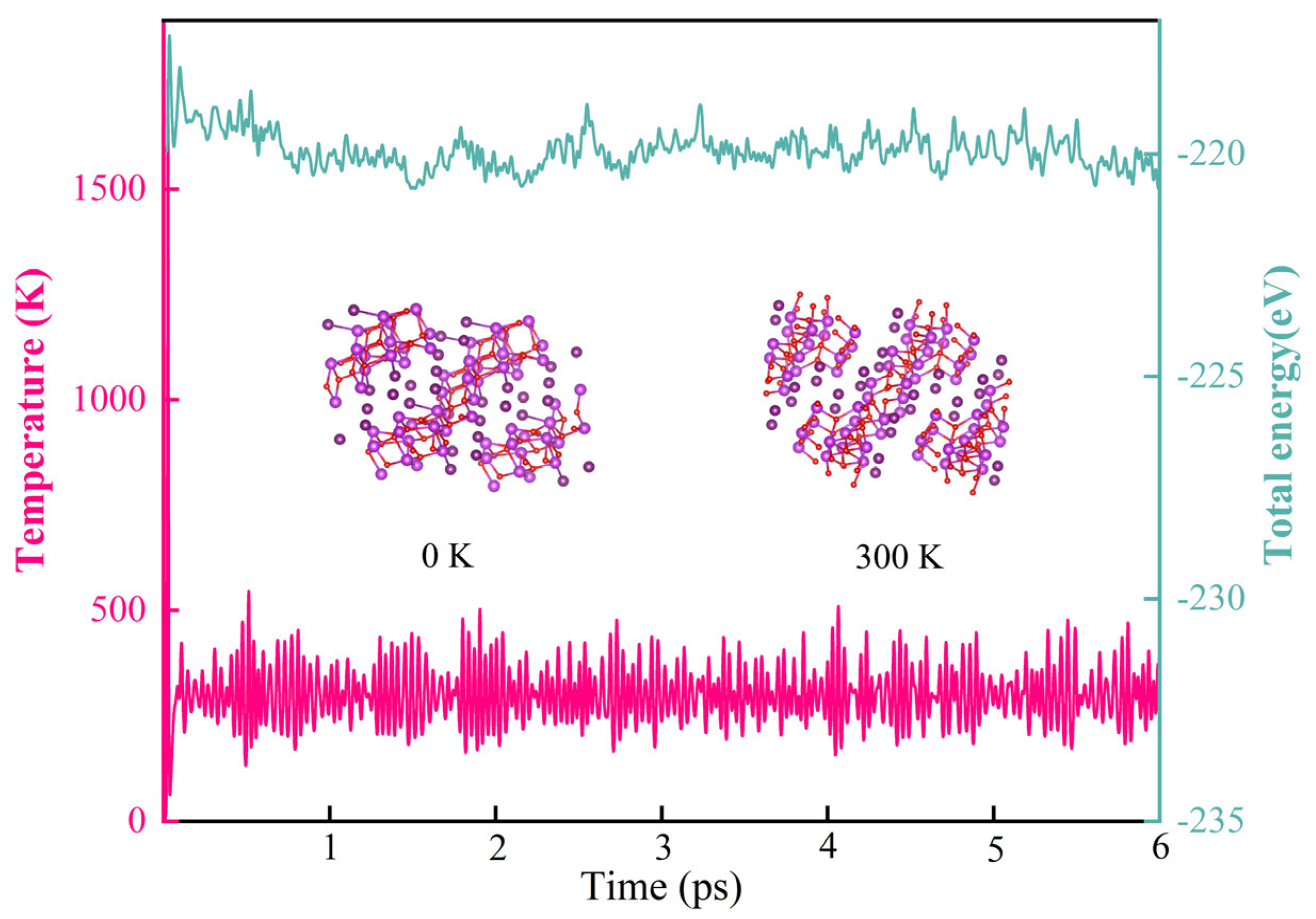
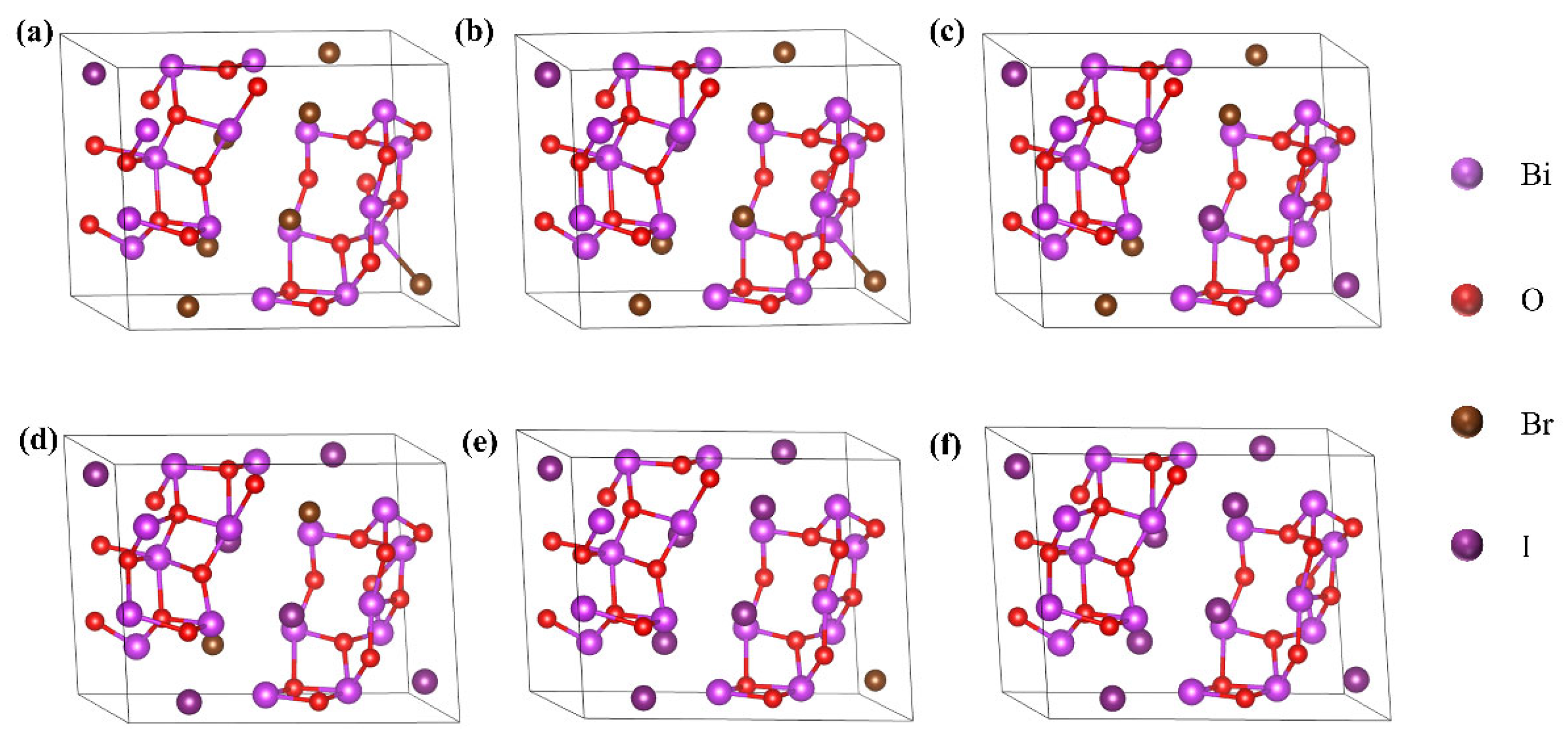
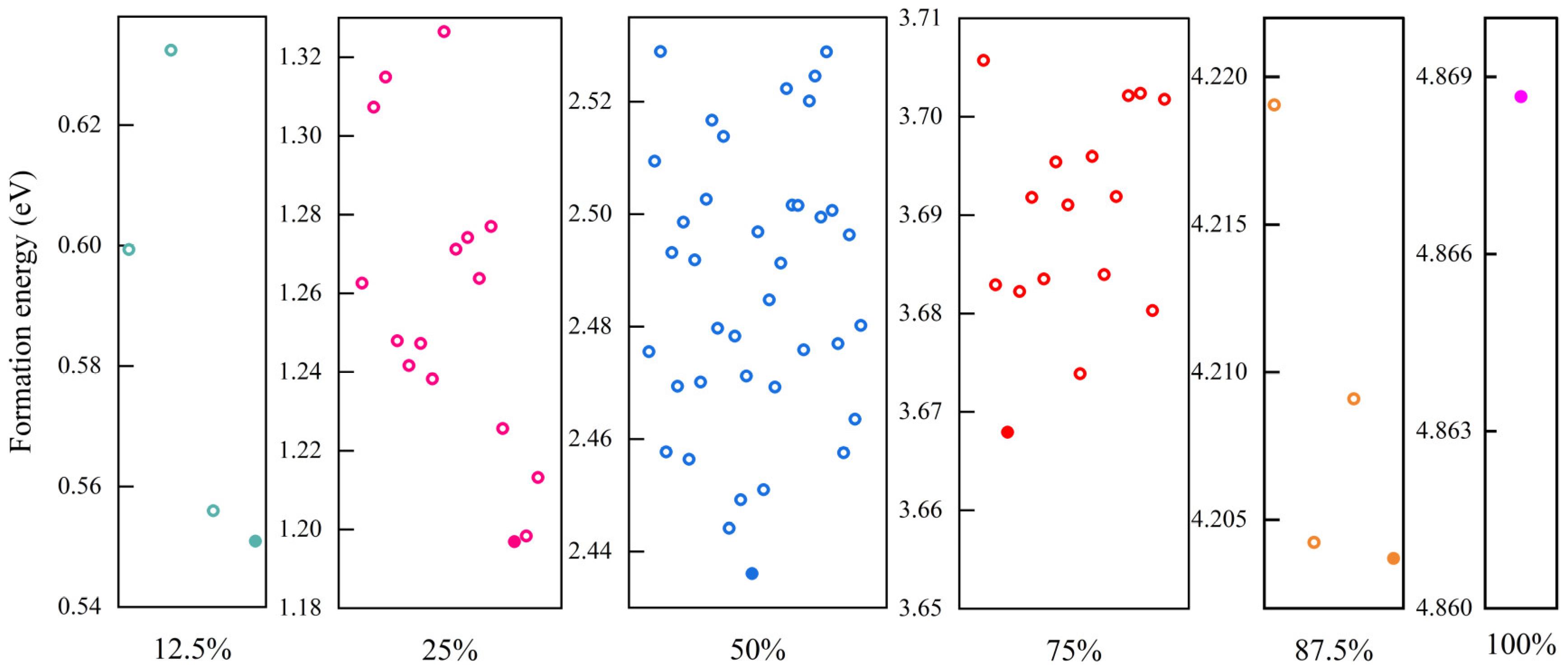
- The I− substituted systems exhibit good thermodynamic and kinetic stability. The formation energy increases with doping concentration (from 0.558 eV to 4.87 eV), while AIMD simulations show that all substituted systems remain structurally intact at 300 K, with no bond breaking or structural collapse. I substitution leads to an overall expansion of lattice parameters, especially along the c-axis (from 14.80 Å to 15.16 Å), due to the larger ionic radius of I− compared to Br−. The system maintains a single-phase solid solution structure.
- (2)
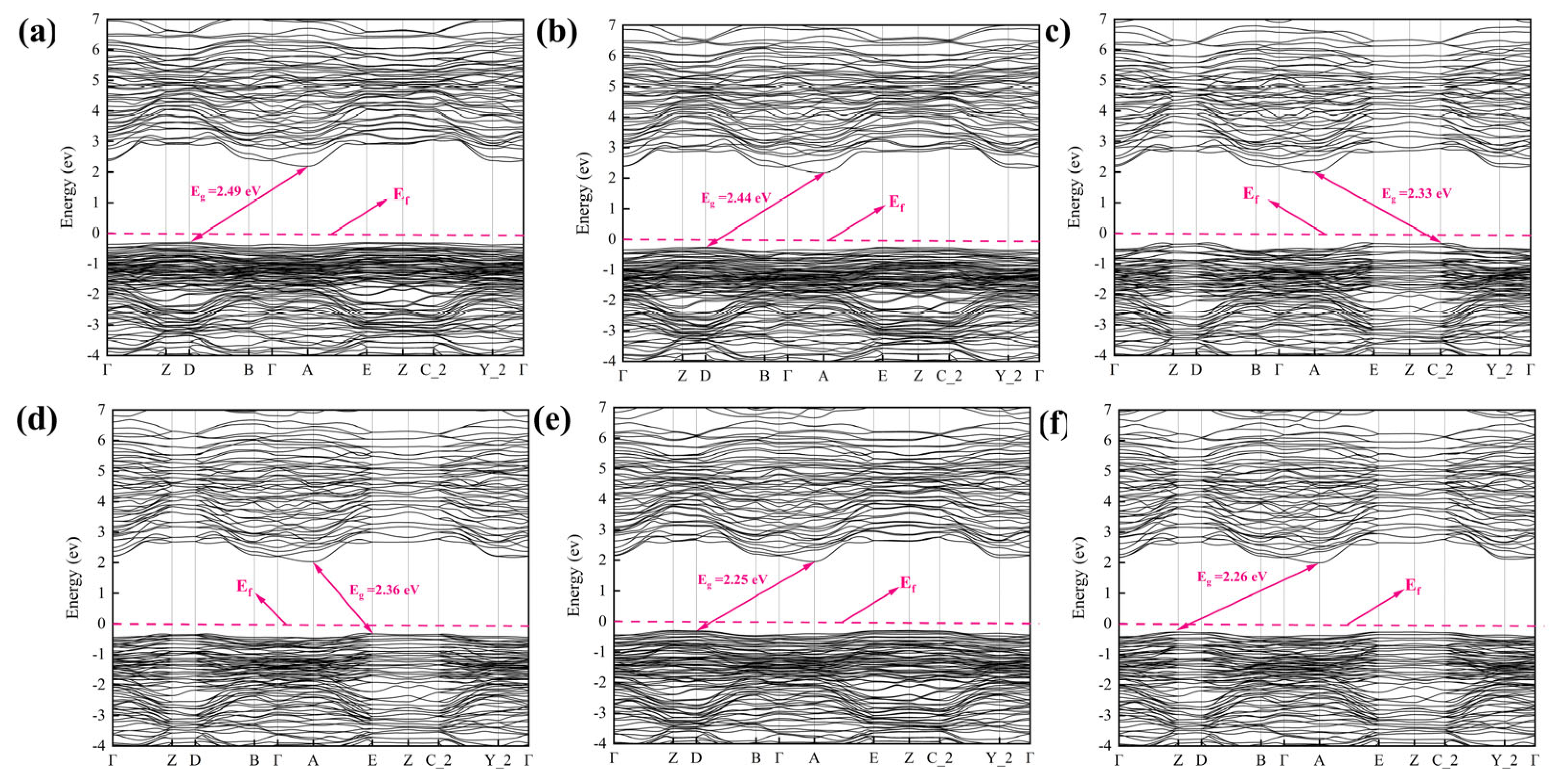
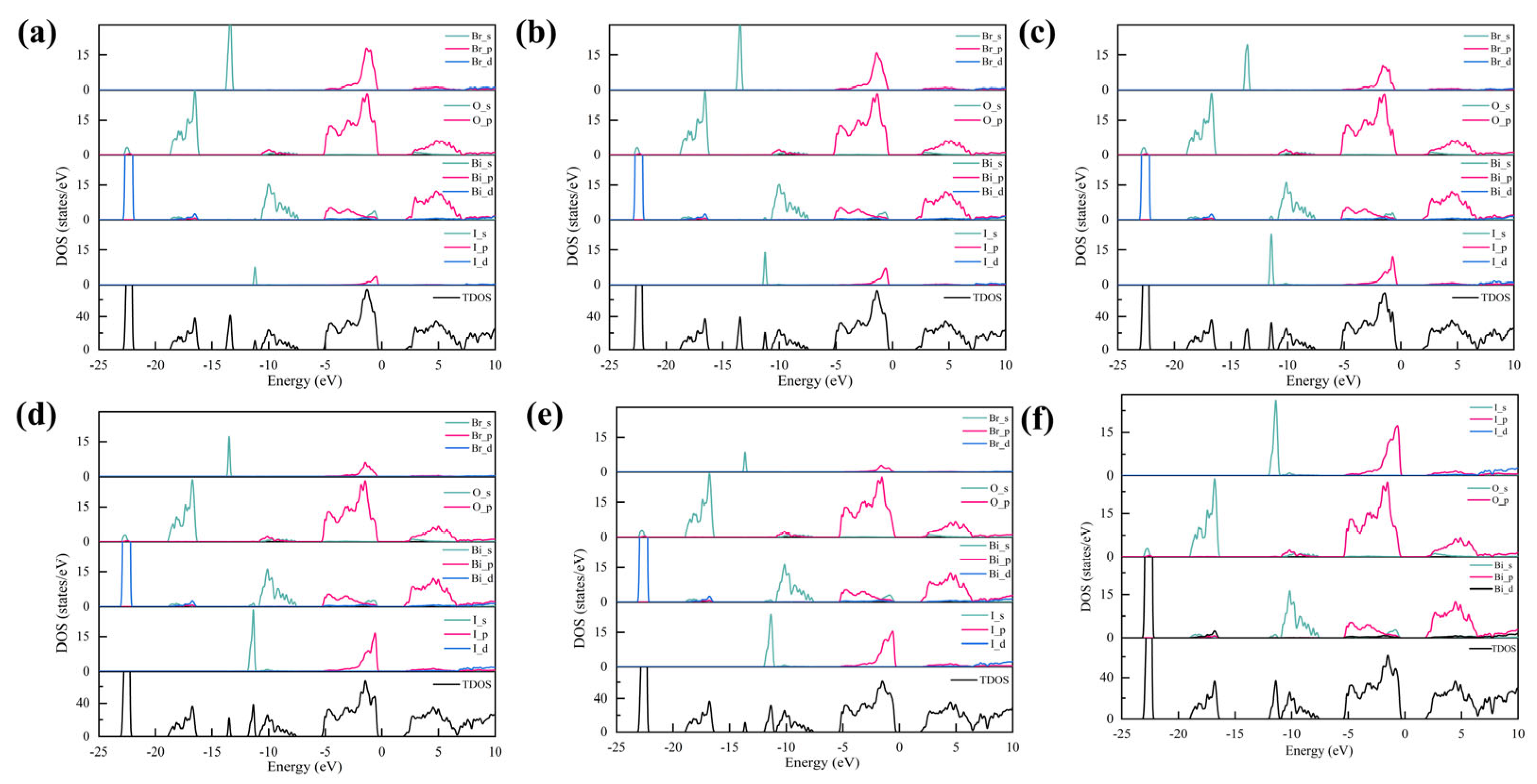
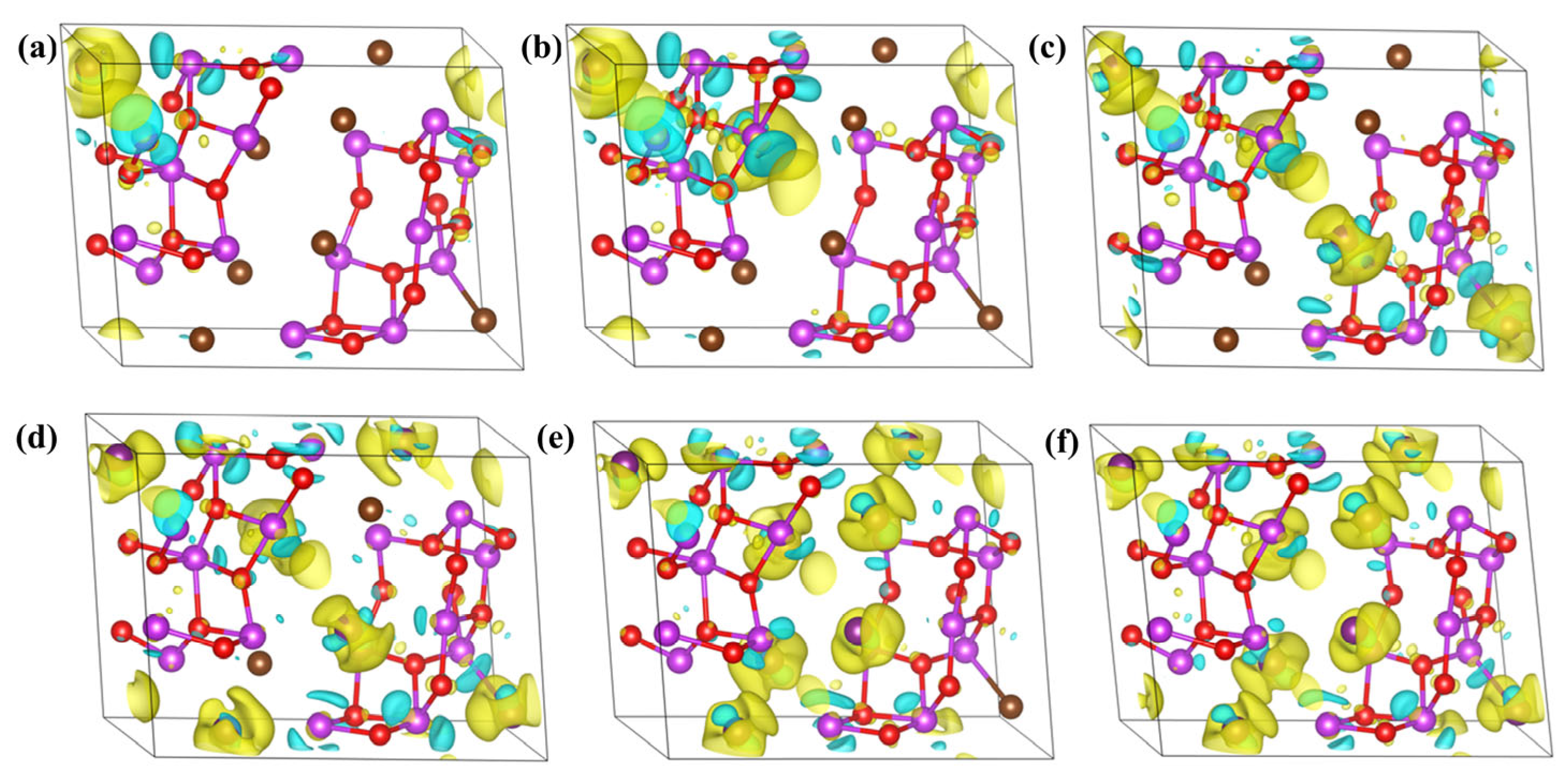
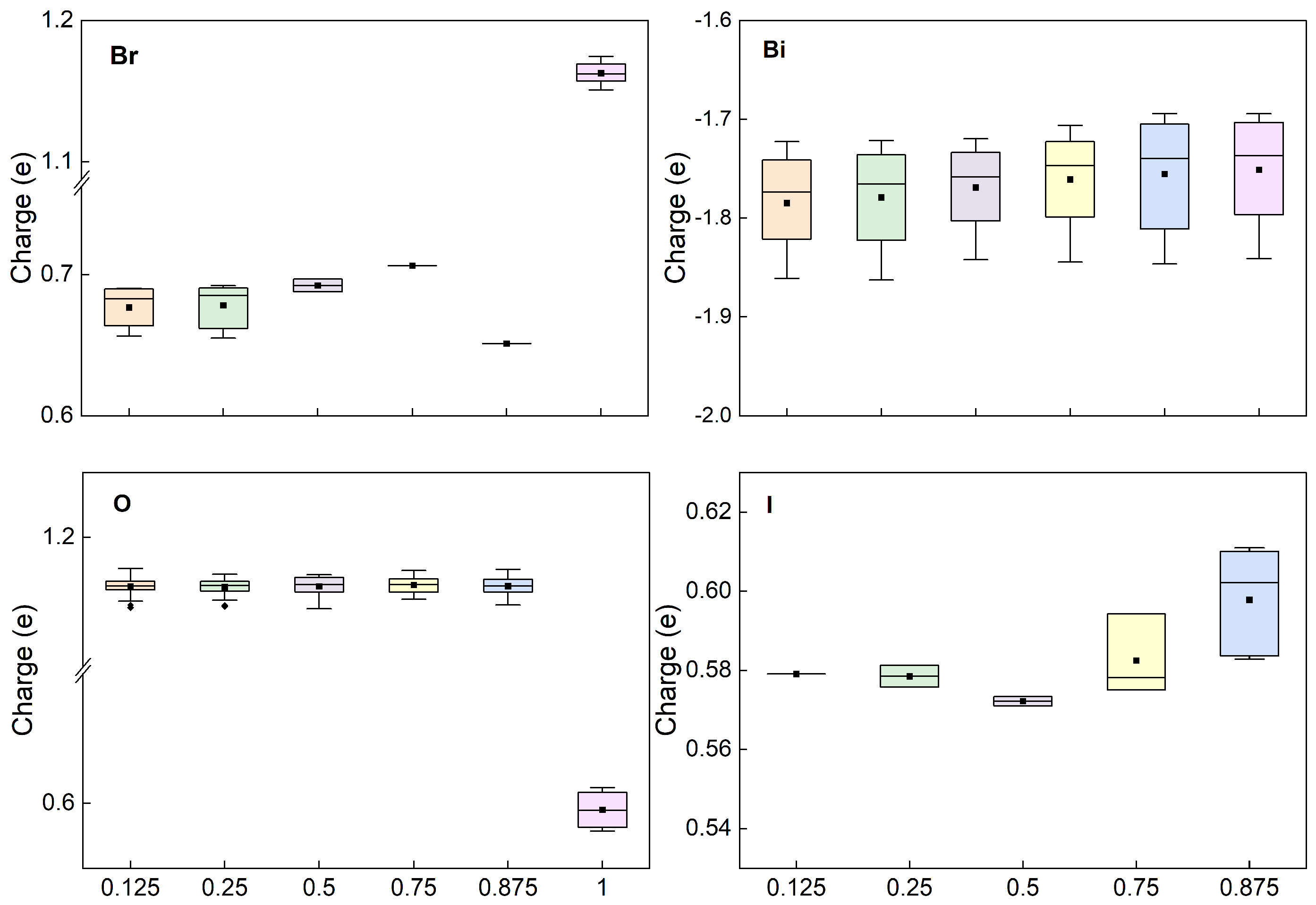
- After I substitution, Bi4O5Br2 remains an indirect band gap semiconductor, with the band gap decreasing from 2.56 eV in the pristine system to 2.25 eV at 87.5% substitution. Density of states analysis shows that I 5p orbitals progressively replace Br 4p orbitals as the main contributors to the upper valence band, thereby tuning the valence band maximum and reducing the band gap. Differential charge density results indicate electron transfer from Bi atoms to I atoms, forming electron-rich regions centered on I and enhancing local polarization, which is beneficial for photogenerated carrier separation.
- (3)
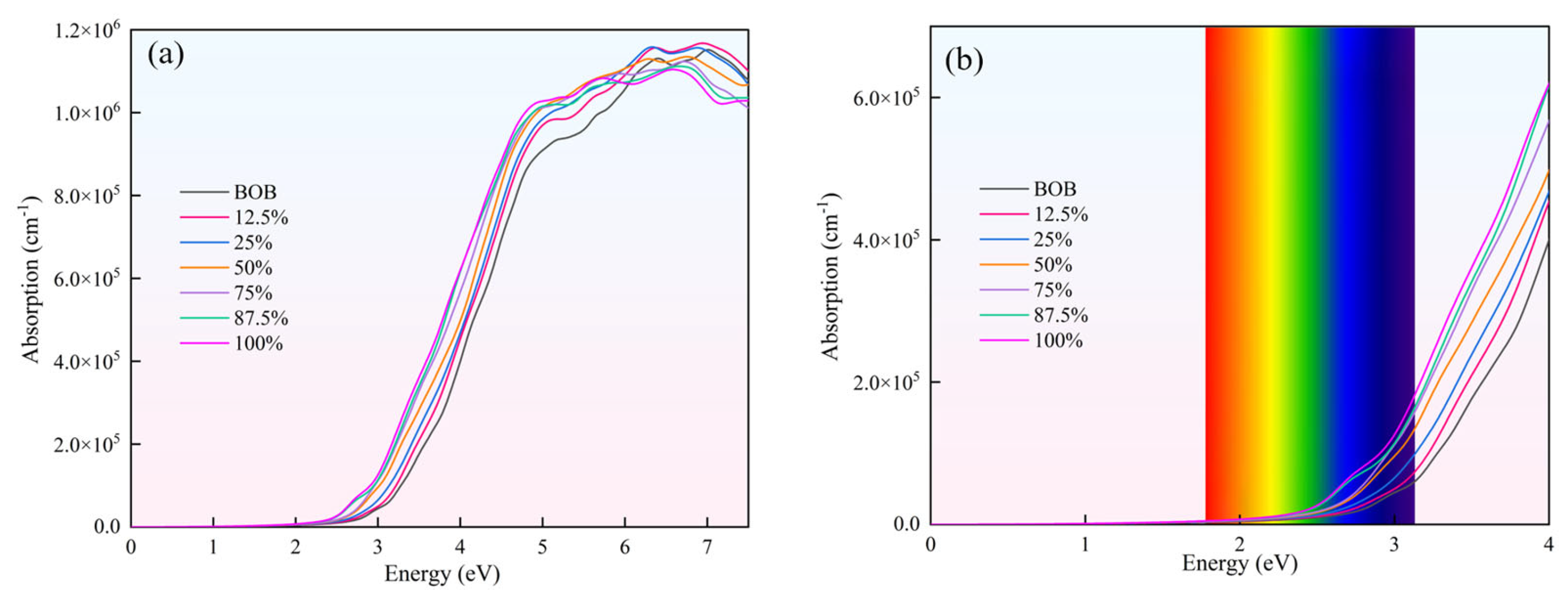
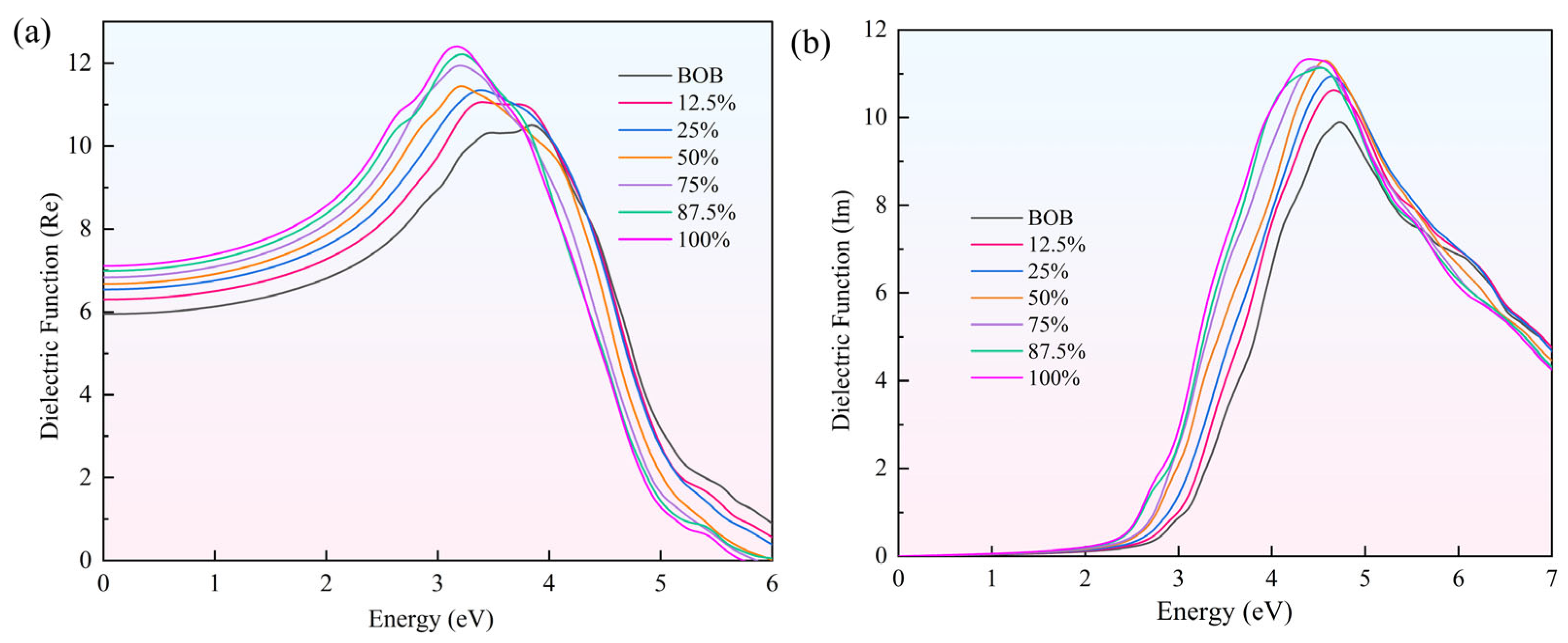
- Optical property calculations indicate a pronounced red shift in the absorption edge after I substitution, along with a significant enhancement of absorption intensity in the visible region (1.5–3 eV). New absorption peaks appear in the low-energy region due to I 5p impurity states. Both the real and imaginary parts of the dielectric function exhibit red shifts and increased peak intensities in the low-energy region. The static dielectric constant also increases, indicating improved polarization response and light absorption capability.
- (4)
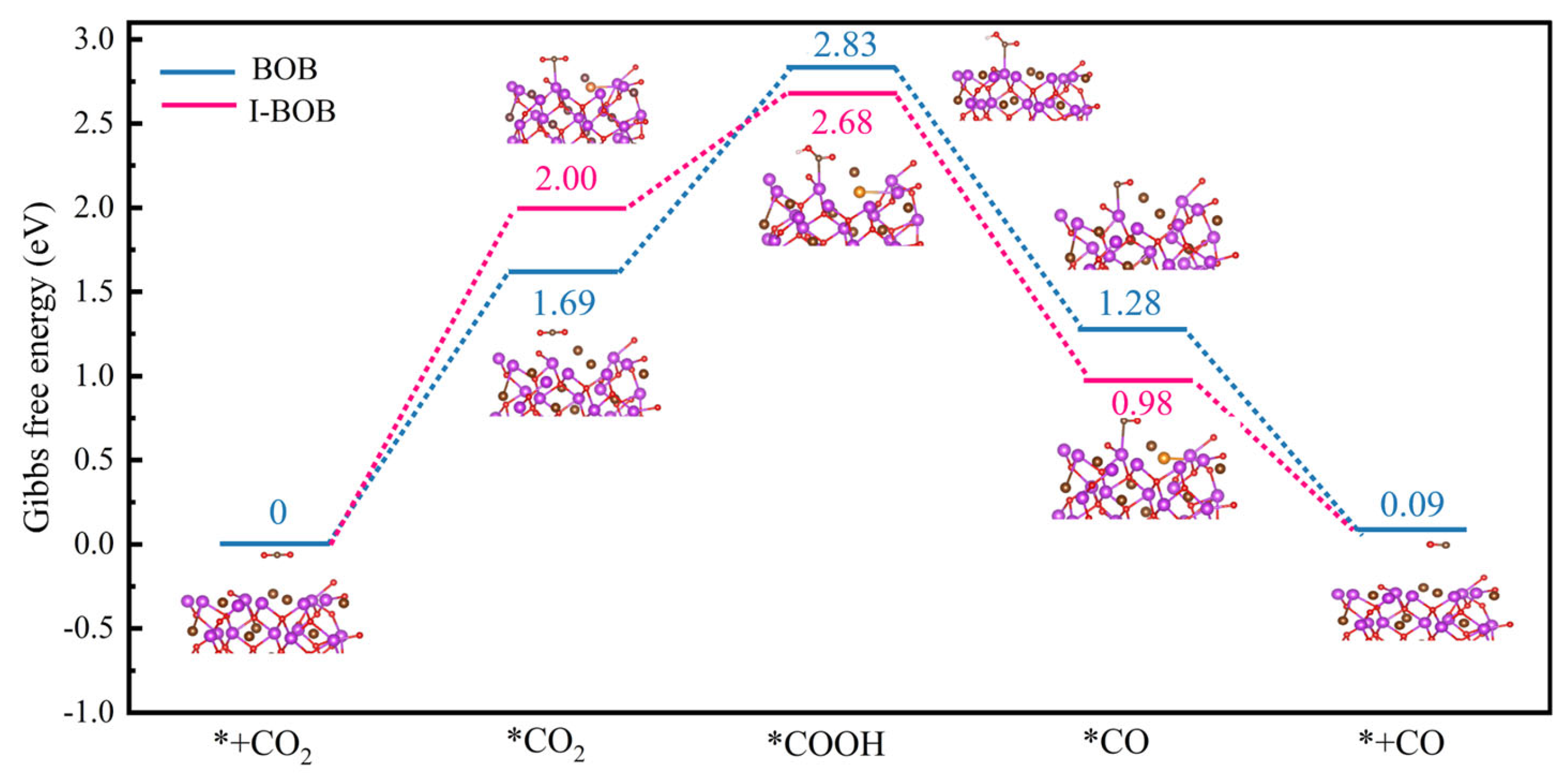
- Gibbs free energy analysis shows that I substitution effectively reduces the Gibbs free energy of the rate-determining step (*COOH formation) in CO2 reduction, from 2.83 eV to 2.68 eV. The free energy of the *CO intermediate is also reduced from 1.28 eV to 0.98 eV. By introducing I 5p impurity states, I substitution regulates the surface electronic structure and enhances the stabilization of key intermediates (*COOH and *CO), thereby optimizing the reaction pathway and promoting CO formation and desorption.
Supplementary Materials
Author Contributions
Funding
Data Availability Statement
Conflicts of Interest
References
- Wang, L.; Yang, T.; Feng, B.; Xu, X.; Shen, Y.; Li, Z.; Arramel; Jiang, J. Constructing dual electron transfer channels to accelerate CO2 photoreduction guided by machine learning and first-principles calculation. Chin. J. Catal. 2023, 54, 265–277. [Google Scholar] [CrossRef]
- Lim, S.Y.; Law, C.S.; Liu, L.; Markovic, M.; Hedrich, C.; Blick, R.H.; Abell, A.D.; Zierold, R.; Santos, A. Electrochemical Engineering of Nanoporous Materials for Photocatalysis: Fundamentals, Advances, and Perspectives. Catalysts 2019, 9, 998. [Google Scholar] [CrossRef]
- Swedha, M.; Balasurya, S.; Syed, A.; Das, A.; Sudheer Khan, S. Continuous photocatalysis via Z-scheme based nanocatalyst system for environmental remediation of pharmaceutically active compound: Modification, reaction site, defect engineering and challenges on the nanocatalyst. J. Mol. Liq. 2022, 353, 118745. [Google Scholar] [CrossRef]
- Wang, S.; Wang, L.; Huang, W. Bismuth-based photocatalysts for solar energy conversion. J. Mater. Chem. A 2020, 8, 24307–24352. [Google Scholar] [CrossRef]
- Khiar, H.; Barka, N.; Puga, A. Metal phosphates for the design of advanced heterogeneous photocatalysts. Coord. Chem. Rev. 2024, 510, 215814. [Google Scholar] [CrossRef]
- Li, T.; Li, Y.; Guo, C.; Hu, Y. Dual-defect semiconductor photocatalysts for solar-to-chemical conversion: Advances and challenges. Chem. Commun. 2024, 60, 2320–2348. [Google Scholar] [CrossRef]
- Wang, M.; Iocozzia, J.; Sun, L.; Lin, C.; Lin, Z. Correction: Inorganic-modified semiconductor TiO2 nanotube arrays for photocatalysis. Energy Environ. Sci. 2017, 10, 2041. [Google Scholar] [CrossRef]
- Saini, B.; K, H.; Laishram, D.; Krishnapriya, R.; Singhal, R.; Sharma, R.K. Role of ZnO in ZnO Nanoflake/Ti3C2 MXene Composites in Photocatalytic and Electrocatalytic Hydrogen Evolution. ACS Appl. Nano Mater. 2022, 5, 9319–9333. [Google Scholar] [CrossRef]
- Kalia, R.; Pirzada, B.M.; Kunchala, R.K.; Naidu, B.S. Noble metal free efficient photocatalytic hydrogen generation by TaON/CdS semiconductor nanocomposites under natural sunlight. Int. J. Hydrogen Energy 2023, 48, 16246–16258. [Google Scholar] [CrossRef]
- Ma, M.; Zhao, S.; Li, C.; Tang, M.; Sun, T.; Zheng, Z. Transient receptor potential channel 6 knockdown prevents high glucose-induced Muller cell pyroptosis. Exp. Eye Res. 2023, 227, 109381. [Google Scholar] [CrossRef] [PubMed]
- Zhang, L.; Sun, X.; Chen, R.; Wang, J. Recent advances in bismuth oxyhalides BiOX (X = Cl, Br and I) based photocatalyst: Synthesis, properties, applications and looking beyond. Renew. Sustain. Energy Rev. 2026, 226, 116249. [Google Scholar] [CrossRef]
- Zhang, R.; Guan, S.; Meng, Z.; Zhang, D.; Lu, J. Ginsenoside Rb1 alleviates 3-MCPD-induced renal cell pyroptosis by activating mitophagy. Food Chem. Toxicol. 2024, 186, 114522. [Google Scholar] [CrossRef] [PubMed]
- Deshmukh, S.A.; Suresh, S.; Bhuse, D.V.; Raut, S.U.; Reddy, M.V.B.; Ravichandran, S. Review on Strategies for the Design and Synthesis of Flower-Like Bi2WO6 and BiOX (X = F, Cl, Br, I) Composites for Photocatalytic Environmental Remediation. ChemistrySelect 2024, 9, e202401038. [Google Scholar] [CrossRef]
- Zhu, G.; Hojamberdiev, M.; Zhang, W.; Taj Ud Din, S.; Kim, Y.L.; Lee, J.; Yang, W. Enhanced photocatalytic activity of Fe-doped Bi4O5Br2 nanosheets decorated with Au nanoparticles for pollutants removal. Appl. Surf. Sci. 2020, 526, 146760. [Google Scholar] [CrossRef]
- Jin, X.; Lv, C.; Zhou, X.; Xie, H.; Sun, S.; Liu, Y.; Meng, Q.; Chen, G. A bismuth rich hollow Bi4O5Br2 photocatalyst enables dramatic CO2 reduction activity. Nano Energy 2019, 64, 103955. [Google Scholar] [CrossRef]
- Huang, B.; Liu, Y.; Zhang, Y.; Zhang, F.; Yang, Y.; Li, J. Effect of Vacancy Defects on the Electronic Structure and Optical Properties of Bi4O5Br2: First-Principles Calculations. Coatings 2024, 14, 1361. [Google Scholar] [CrossRef]
- Tian, H.; Song, Y.; Zhang, R.; Wang, Q.; Ning, Y.; Liu, B. Lattice distortion and electronic structure dual engineering of Bi4O5Br2 nanosheets for enhanced photocatalytic activity. Chem. Eng. J. 2025, 508, 161000. [Google Scholar] [CrossRef]
- Liu, Y.; Zhu, Z.; Liu, Y.; Wu, J.; Ling, Y.; Xiang, Z.; Qin, S.; Ye, Y.; Bai, M. First principles insight on enhanced photocatalytic performance of sulfur-doped bismuth oxide iodate. Mater. Sci. Semicond. Process. 2023, 165, 107672. [Google Scholar] [CrossRef]
- Liu, G.; Shi, H.; Dong, N.; Cao, X.; Gao, X.; Xue, S.; Zhang, F. First-Principles Exploration of the Electronic Structure and Optical Properties of S-Doped Bi4O5Br2. Catalysts 2025, 15, 228. [Google Scholar] [CrossRef]
- Liu, G.; Huang, X.; Liu, S.; Yan, X.; Dong, N.; Shi, H.; Zhang, F.; Xue, S. Synergistic Effect of Fe Doping and Oxygen Vacancies on the Optical Properties and CO2 Reduction Mechanism of Bi4O5Br2. Magnetochemistry 2026, 12, 26. [Google Scholar] [CrossRef]
- Shi, H.; Wang, W.; Zhang, L.; Tang, Z.; Fan, J. Enhancement of photocatalytic disinfection performance of the Bi4O5Br2 with the modification of silver quantum dots. J. Environ. Chem. Eng. 2021, 9, 105867. [Google Scholar] [CrossRef]
- Di, J.; Xia, J.; Ji, M.; Yin, S.; Li, H.; Xu, H.; Zhang, Q.; Li, H. Controllable synthesis of Bi4O5Br2 ultrathin nanosheets for photocatalytic removal of ciprofloxacin and mechanism insight. J. Mater. Chem. A 2015, 3, 15108–15118. [Google Scholar] [CrossRef]
- Zhang, W.; Zhu, G.; Yang, W.; Sun, Q.; Wu, Q.; Tian, Y.; Zhang, Z.; Zhang, S.; Cheng, S.; Zhang, C.; et al. Fe-doped Bi4O5Br2visible light photocatalyst: A first principles investigation. J. Theor. Comput. Chem. 2018, 17, 1850031. [Google Scholar] [CrossRef]
- Li, R.; Liu, J.; Zhang, X.; Wang, Y.; Wang, Y.; Zhang, C.; Zhang, X.; Fan, C. Iodide-modified Bi4O5Br2 photocatalyst with tunable conduction band position for efficient visible-light decontamination of pollutants. Chem. Eng. J. 2018, 339, 42–50. [Google Scholar] [CrossRef]
- Xue, S.; Wang, J.; Wu, Q.; Zhang, L.; Dai, R.; Tian, B.; Wang, W.; Zhang, W.; Zhang, F. The electronic and optical properties of Ni-doped Bi4O5I2: First-principles calculations. Results Phys. 2020, 19, 103596. [Google Scholar] [CrossRef]
- Lv, Z.L.; Lv, S.J.; Wang, X.F.; Cui, H.-L. Electronic, Mechanical, and Infrared Properties of BiOX (X = Cl, Br, I) Monolayers. Phys. Status Solidi (B) 2023, 261, 2300415. [Google Scholar] [CrossRef]
- Wang, Z.; Chu, Z.; Dong, C.; Wang, Z.; Yao, S.; Gao, H.; Liu, Z.; Liu, Y.; Yang, B.; Zhang, H. Ultrathin BiOX (X = Cl, Br, I) Nanosheets with Exposed {001} Facets for Photocatalysis. ACS Appl. Nano Mater. 2020, 3, 1981–1991. [Google Scholar] [CrossRef]
- Zhang, Y.; Yu, J.; Qi, S.; Zhang, R.; Liu, X.; Zhang, K. Understanding the photocatalytic mechanisms of the BiOBr/BiOCl heterostructures: First-principles study. Phys. B Condens. Matter 2023, 651, 414582. [Google Scholar] [CrossRef]
- Zhou, G.; Tian, Z.; Sun, H.; Zhang, J.; Zhao, H.; Li, P.; Sun, H. Understanding the photocatalytic mechanisms of the BiOI/Bi2MoO6 and BiOCl/Bi2MoO6 heterostructures: First-principles study. J. Phys. Chem. Solids 2020, 146, 109577. [Google Scholar] [CrossRef]
- Xiao, X.; Lu, M.; Nan, J.; Zuo, X.; Zhang, W.; Liu, S.; Wang, S. Rapid microwave synthesis of I-doped Bi4O5Br2 with significantly enhanced visible-light photocatalysis for degradation of multiple parabens. Appl. Catal. B Environ. 2017, 218, 398–408. [Google Scholar] [CrossRef]
- Li, A.; Xie, Q.; Liao, S.; Wang, Y. Improvement of Halogen Photocatalytic Performance on BiOX/Bi2WO6 (X = Cl, Br, I) Heterostructure: A First-Principles Theoretical Study. JOM 2024, 76, 6823–6832. [Google Scholar] [CrossRef]
- Guo, Y.Y.; Zhang, W.B.; Yang, Y.N.; Wang, C. The photocatalytic efficiency enhancement of Bi4O5Br2 by Li-intercalation for NO removal. J. Phys. Chem. Solids 2021, 159, 110256. [Google Scholar] [CrossRef]
- Zhang, J.; Liu, Y.; Xin, S.; Lin, S.; Zhang, X.; Wang, J.; Guo, X.; Zhang, H.; Kumar, A.; Ramachandran, K.; et al. First-principles study of the effect of Bi content on the photocatalytic performance of bismuth bromide oxide-based catalysts. Phys. Chem. Chem. Phys. 2025, 27, 3612–3621. [Google Scholar] [CrossRef] [PubMed]
- Zeng, J.; Jiang, Z.; Lv, K.; Ahmad, S.A.; Chen, X.; Zhang, W.; Xie, J.; Zhu, T. Experimental and calculation investigations of the photocatalytic selective and performance for CO2 reduction by cobalt-doped Bi4O5Br2 nanosheets. Ceram. Int. 2025, 51, 1801–1812. [Google Scholar] [CrossRef]
- Chang, F.; Li, J.; Bai, W.; Lei, Y.; Liu, D.G.; Kong, Y. N-doped carbon quantum dots-Bi4O5Br2 composites: A case of van der Waals heterojunctions for efficient photocatalytic removal of NO under visible light irradiation. J. Environ. Manag. 2025, 387, 125876. [Google Scholar] [CrossRef]
- Ochi, M.; Kuroki, K. First-principles study of defect formation energies in LaOXS2 (X = Sb, Bi). Phys. Rev. B 2022, 105, 094110. [Google Scholar] [CrossRef]
- Pan, Q.; Wang, J.; Chen, H.; Yin, P.; Cheng, Q.; Xiao, Z.; Zhao, Y.-Z.; Liu, H.-B. Piezo-photocatalysis of Sr-doped Bi4O5Br2/Bi2MoO6 composite nanofibers to simultaneously remove inorganic and organic contaminants. J. Water Process Eng. 2023, 56, 104330. [Google Scholar] [CrossRef]
- Jin, Y.; Li, F.; Li, T.; Xing, X.; Fan, W.; Zhang, L.; Hu, C. Enhanced internal electric field in S-doped BiOBr for intercalation, adsorption and degradation of ciprofloxacin by photoinitiation. Appl. Catal. B Environ. 2022, 302, 120824. [Google Scholar] [CrossRef]
- Liu, G.; Dai, R.; Shi, H.; Dong, N.; Zhang, B.; Li, S.; Wang, W.; Liu, Y.; Shao, T.; Zhang, M.; et al. Using Er/Cd-Codoped Bi4O5Br2 Microspheres to Enhance Antibiotic Degradation under Visible Illumination: A Combined Experimental and DFT Investigation. J. Phys. Chem. B 2024, 128, 9373–9384. [Google Scholar] [CrossRef] [PubMed]
- Vavilapalli, D.S.; Melvin, A.A.; Bellarmine, F.; Mannam, R.; Velaga, S.; Poswal, H.K.; Dixit, A.; Rao, M.S.R.; Singh, S. Growth of sillenite Bi12FeO20 single crystals: Structural, thermal, optical, photocatalytic features and first principle calculations. Sci. Rep. 2020, 10, 22052. [Google Scholar] [CrossRef] [PubMed]
- Ren, X.; Gao, M.; Zhang, Y.; Zhang, Z.; Cao, X.; Wang, B.; Wang, X. Photocatalytic reduction of CO2 on BiOX: Effect of halogen element type and surface oxygen vacancy mediated mechanism. Appl. Catal. B Environ. 2020, 274, 110963. [Google Scholar] [CrossRef]
- Zhao, H.; Bi, R.; Ju, M.; Wang, H.; Chen, R.; Zhu, X.; Liao, Q. Mn Single-Atom Photocatalyst Enables Efficient Photocatalytic Reduction of CO2. J. Phys. Chem. Lett. 2025, 16, 9370–9380. [Google Scholar] [CrossRef] [PubMed]
- Xia, J.; Ge, Y.; Di, J.; Xu, L.; Yin, S.; Chen, Z.; Liu, P.; Li, H. Ionic liquid-assisted strategy for bismuth-rich bismuth oxybromides nanosheets with superior visible light-driven photocatalytic removal of bisphenol-A. J. Colloid Interf. Sci. 2016, 473, 112–119. [Google Scholar] [CrossRef]
- Bai, Y.; Chen, T.; Wang, P.; Wang, L.; Ye, L. Bismuth-rich Bi4O5X2 (X = Br, and I) nanosheets with dominant {1 0 1} facets exposure for photocatalytic H2 evolution. Chem. Eng. J. 2016, 304, 454–460. [Google Scholar] [CrossRef]
- Xiao, X.; Tu, S.; Lu, M.; Zhong, H.; Zheng, C.; Zuo, X.; Nan, J. Discussion on the reaction mechanism of the photocatalytic degradation of organic contaminants from a viewpoint of semiconductor photo-induced electrocatalysis. Appl. Catal. B-Environ. Energy 2016, 198, 124–132. [Google Scholar] [CrossRef]
- Zhang, W.B.; Xiao, X.; Wu, Q.F.; Fan, Q.; Chen, S.; Yang, W.-X.; Zhang, F.-C. Facile synthesis of novel Mn-doped Bi4O5Br2 for enhanced photocatalytic NO removal activity. J. Alloys Compd. 2020, 826, 154204. [Google Scholar] [CrossRef]
- Zhang, W.; Chen, S.; He, M.; Zhu, G.; Yang, W.; Tian, W.; Zhang, Z.; Zhang, S.; Zhang, F.; Wu, Q. Enhanced photocatalytic properties of Bi4O5Br2 by Mn doping: A first principles study. Mater. Res. Express. 2018, 5, 075512. [Google Scholar] [CrossRef]



| Structure | a (Å) | b (Å) | c (Å) | α (°) | β (°) | γ (°) |
|---|---|---|---|---|---|---|
| Bi4O5Br2 | 11.10 | 5.74 | 14.80 | 90.00 | 98.38 | 90.00 |
| 12.5% I-Bi4O5Br2 | 11.17 | 5.75 | 14.79 | 89.97 | 98.34 | 89.91 |
| 25% I-Bi4O5Br2 | 11.15 | 5.76 | 14.87 | 89.84 | 98.42 | 89.91 |
| 50% I-Bi4O5Br2 | 11.20 | 5.78 | 14.95 | 90.00 | 98.53 | 90.00 |
| 75% I-Bi4O5Br2 | 11.37 | 5.80 | 14.99 | 90.00 | 98.95 | 90.00 |
| 87.5% I-Bi4O5Br2 | 11.42 | 5.81 | 15.18 | 89.93 | 100.05 | 89.94 |
| 100% I-Bi4O5Br2 | 11.44 | 5.82 | 15.16 | 90.00 | 99.80 | 90.00 |
Disclaimer/Publisher’s Note: The statements, opinions and data contained in all publications are solely those of the individual author(s) and contributor(s) and not of MDPI and/or the editor(s). MDPI and/or the editor(s) disclaim responsibility for any injury to people or property resulting from any ideas, methods, instructions or products referred to in the content. |
© 2026 by the authors. Licensee MDPI, Basel, Switzerland. This article is an open access article distributed under the terms and conditions of the Creative Commons Attribution (CC BY) license.
Share and Cite
Guo, J.; Liu, S.; Wang, C.; Wang, H.; Liu, G. First-Principles Insights into I Doping Effects on the Electronic Structure, Optical Properties, and CO2 Photoreduction Performance of Bi4O5Br2. Catalysts 2026, 16, 622. https://doi.org/10.3390/catal16070622
Guo J, Liu S, Wang C, Wang H, Liu G. First-Principles Insights into I Doping Effects on the Electronic Structure, Optical Properties, and CO2 Photoreduction Performance of Bi4O5Br2. Catalysts. 2026; 16(7):622. https://doi.org/10.3390/catal16070622
Chicago/Turabian StyleGuo, Juan, Shuaishuai Liu, Chenxi Wang, Haocheng Wang, and Gaihui Liu. 2026. "First-Principles Insights into I Doping Effects on the Electronic Structure, Optical Properties, and CO2 Photoreduction Performance of Bi4O5Br2" Catalysts 16, no. 7: 622. https://doi.org/10.3390/catal16070622
APA StyleGuo, J., Liu, S., Wang, C., Wang, H., & Liu, G. (2026). First-Principles Insights into I Doping Effects on the Electronic Structure, Optical Properties, and CO2 Photoreduction Performance of Bi4O5Br2. Catalysts, 16(7), 622. https://doi.org/10.3390/catal16070622