1. Introduction
Among the significant environmental challenges are synthetic organic dyes—complex aromatic architectures engineered for chromatic intensity and permanence. Safranin O, a phenazinium-class cationic dye widely deployed in textile manufacturing, histological staining, and leather processing, epitomizes this threat. Its molecular persistence arises from fused heterocyclic rings and delocalized electron systems that resist biological breakdown, while its cationic nature facilitates bioaccumulation in aquatic organisms. Chronic exposure triggers DNA intercalation, mitochondrial dysfunction, and multisystem toxicity across trophic levels [
1]. Conventional remediation strategies present limitations including the following: physical adsorption merely transfers contamination phases while generating saturated waste streams [
2], advanced oxidation processes like ozonation yield toxic byproducts [
3], and biological treatments prove impotent against xenobiotic structures evolved to defy enzymatic attack.
Semiconductor photocatalysis has emerged as an alternative approach harnessing light energy to drive complete pollutant mineralization through radical-mediated oxidation [
4]. Titanium dioxide (TiO
2) and zinc oxide (ZnO) initially captivated researchers with their chemical stability [
5], Earth abundance, and thermodynamic band potentials suitable for radical generation [
6,
7]. However, both materials exhibit intrinsic limitations: the wide bandgap inherent to metal oxides confines activation primarily to the ultraviolet spectrum; photogenerated electrons and holes recombine with picosecond efficiency, reducing quantum efficiency; and synthesis routes demand extreme temperatures, caustic reagents, or vacuum processing requiring elevated temperatures or hazardous reagents [
8]. Heterojunction engineering (coupling TiO
2 with ZnO to align band structures) partially mitigated charge recombination but introduced new complexities: lattice mismatch-induced defects, interfacial energy barriers, and—critically—an exacerbation of pH sensitivity that restricts real-world applicability [
9].
Table 1 summarizes various synthesis routes for TiO
2-ZnO heterojunctions, such as hydrothermal, coprecipitation, and sol–gel processes. Notably, this heterostructure exhibits remarkable photocatalytic efficiency toward pollutant degradation.
Biologically derived compounds have also been integrated into materials synthesis [
10].
Ruta graveolens L. (rue), a hardy Mediterranean shrub long revered in pharmacopeias, contains a diverse phytochemical profile [
11]. Its leaves synthesize furanocoumarins like psoralen and bergapten which exhibit spectral absorption in the visible region and possess functional groups capable of metal coordination; acridone alkaloids such as rutacridone with their conjugated tricyclic scaffolds and redox-active nitrogen centers; and oxygenated terpenoids, including graveolone, that present multifunctional surfaces for coordination chemistry [
12]. Historically studied for photochemotherapeutic applications, these molecules are relevant to photocatalytic applications: they possess broad spectral absorption into visible wavelengths, excited-state lifetimes permitting interfacial electron injection, and molecular geometries conducive to surface chelation [
13,
14]. In this work, we report the sol–gel synthesis of TiO
2-ZnO heterostructures using
Ruta graveolens extract as a phytochemical additive: Ruta’s phytocomplex invites precision engineering of semiconductor interfaces.
We investigate the structural, optical, and morphological properties of the resulting material, where plant metabolites are integrated as “active constituents” directly into the evolving inorganic network [
15]. During the controlled hydrolysis and condensation of metal alkoxide precursors, Ruta’s furanocoumarins act as natural chelating agents, binding to titanium and zinc ions to moderate reaction kinetics and direct the formation of the mixed oxide matrix [
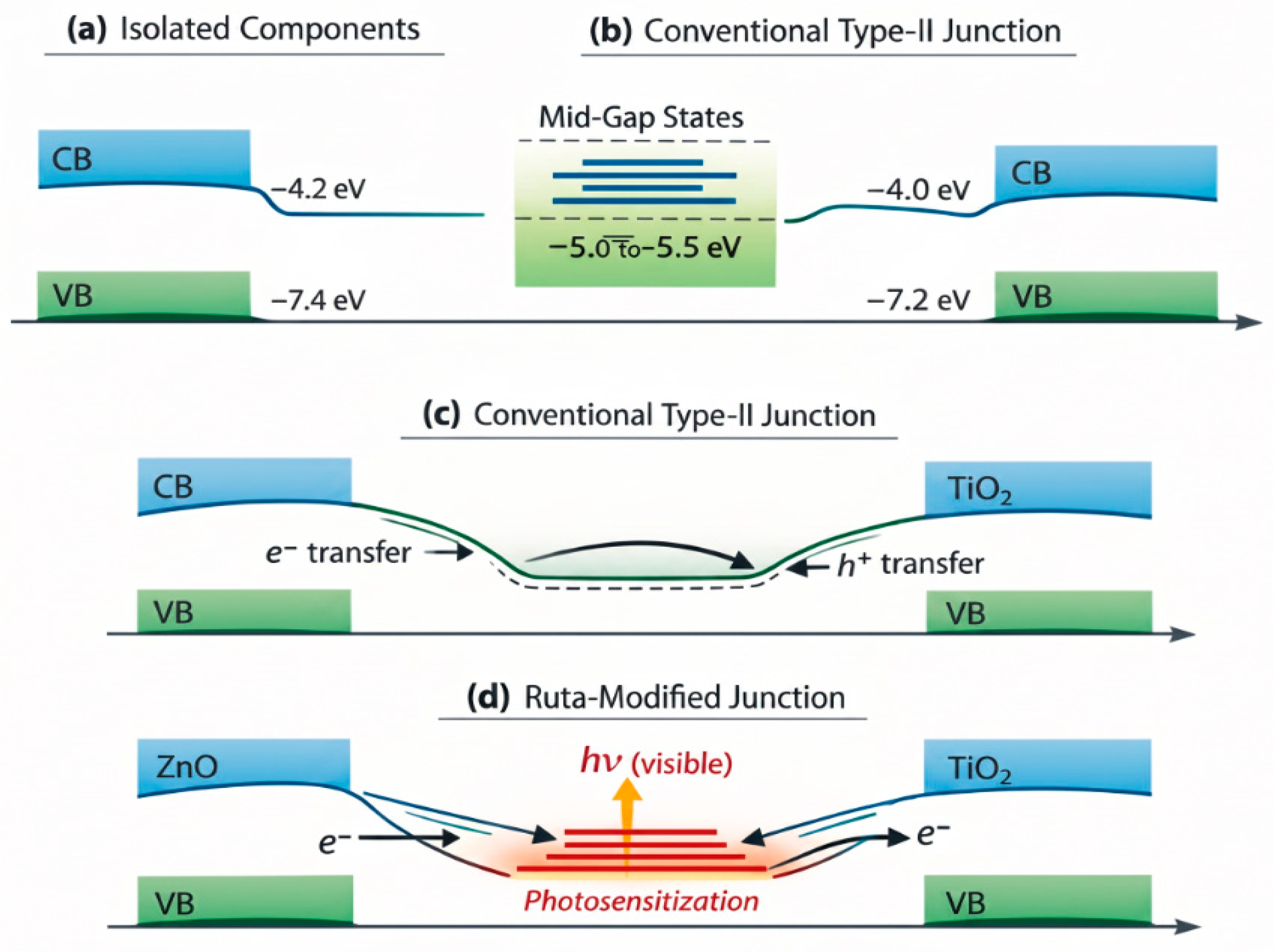
16]. This incorporation results in the formation of a carbonaceous interface of organic moieties throughout the material, creating tailored mid-gap states that serve as stepping stones for visible photons and effectively narrow the optical bandgap without compromising redox potentials. Simultaneously, photoluminescence quenching suggests reduced charge recombination, consistent with enhanced interfacial charge transfer [
17]. Upon calcination at moderated temperatures, these carbon-mediated charge transfer pathways persist, forming charge transport pathways that shuttle electrons across the heterojunction interface more rapidly than recombination can occur. Concurrently, the oxygenated terpenoids self-assemble at the organic–inorganic interface within the colloidal sol, forming an amphiphilic monolayer that functionalizes the composite particle surfaces; their hydrocarbon tails provide hydrophobic pockets for Safranin O adsorption via π-stacking, while their carboxylate groups maintain colloidal stability during synthesis and later ensure dispersibility across a wide pH range in application. This intrinsic surface functionalization is key to the material’s resilience [
18]. Where traditional TiO
2-ZnO fails catastrophically at neutral or alkaline conditions—succumbing to surface charge reversal and deleterious hydroxide passivation—the Ruta-functionalized surfaces maintain high adsorption capacity and radical yield. The terpenoid overlayer dynamically protonates and deprotonates to preserve favorable electrostatic interactions with the pollutant, while the integrated alkaloid bridges prevent hydroxide-induced decoupling of the heterojunction [
19]. Under illumination, the embedded psoralen derivatives undergo reversible quinone/hydroquinone transitions, acting as electron reservoirs that mitigate hole accumulation and surface oxidation—a key failure mode in pure metal oxides. Furthermore, beyond traditional oxidation of valence band holes, the grafted furanocoumarins enable direct energy transfer to molecular oxygen, producing singlet oxygen (O
2•), a highly selective oxidant that complements the attack of hydroxyl radicals (OH•) on complex dye molecules. The entire synthesis unfolds in a benign aqueous-ethanol solvent system at near-ambient temperature, leveraging the phytochemical complex as simultaneous green chelators, particle growth moderators, and in situ functionalizing ligands [
20]. This removes the need for harmful solvents and expensive changes after making the product, representing a genuinely sustainable process from creation to use. The confluence of phytochemistry and sol–gel science demonstrated here charts a course toward intelligent material design—where hybrids are conceived not as static composites, but offering a potential approach for environmental remediation [
21].
Table 1.
Several synthesis routes have been reported for TiO2-ZnO heterojunctions, including hydrothermal, coprecipitation, and sol–gel methods.
Table 1.
Several synthesis routes have been reported for TiO2-ZnO heterojunctions, including hydrothermal, coprecipitation, and sol–gel methods.
| Ref. | TiO2–ZnO System/Architecture | Synthesis Method | Green Additives/Biological Component | Main Application | REF |
|---|
| 1 | Co/ZnO–TiO2 heterojunction | Solution combustion synthesis | No | Photocatalytic degradation of alizarin S | [22] |
| 2 | ZnO@TiO2 hollow spheres | Hydrothermal | No | Hydrogen evolution | [23] |
| 3 | TiO2@ZnO n–p–n heterojunction nanorod array | Hydrothermal | No | Photoelectrochemical and photocatalytic applications | [24] |
| 4 | TiO2-ZnO n-n heterojunction | Sol-gel | No | Pharmaceutical polutant photodegradation | [25] |
| 5 | TiO2/ZnO composite thin film | Sol–gel/thin-film fabrication | No | Photo-sensitized solar cell | [26] |
| 6 | TiO2-ZnO@OCN heterojunction | Heterostructure construction | No | Photocatalysis | [27] |
| 7 | ZnO–TiO2 composites | Sol–gel | No | Antibacterial and photocatalytic activity | [28] |
| 8 | ZnO/TiO2 nanocomposite | Green synthesis using hibiscus leaf extract | Yes | Dye removal under solar irradiation | [29] |
| 9 | TiO2/ZnO heterostructure | Green synthesis using Urtica smensis leaf extract | Yes | Antibacterial activity | [30] |
| 10 | ZnO-TiO2/RGO nanocomposites | Green synthesis using Senna surattensis extract | Yes | Anticancer and biocompatibility studies | [31] |
| 11 | nano-ZnO and nano-TiO2 used in photocatalytic study | Direct precipitation/hydrolysis; green-framed synthesis approach | No biological additive specified in snippet | Photocatalytic application | [32] |
2. Materials and Methods
Titanium (IV) isopropoxide (TTIP, ≥97% purity) and zinc nitrate hexahydrate (Zn (NO
3)
2·6H
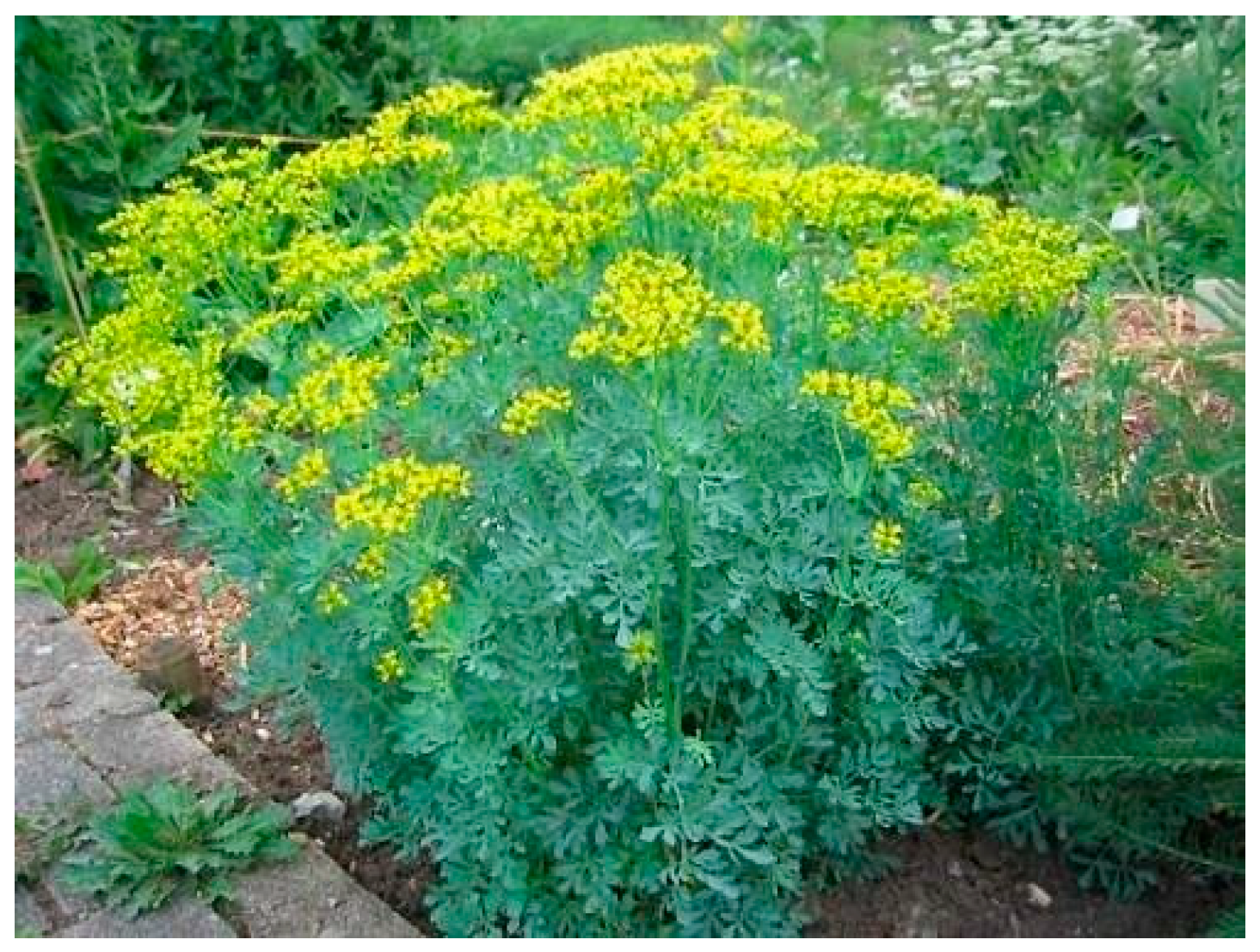
2O, ≥99% purity) were obtained from Sigma-Aldrich (St. Louis, MO, USA), absolute ethanol (99.9%), and Saf-O dye were of analytical reagent (AR) grade, purchased from Merck (Darmstadt, Germany), and were used without further purification. Ultra-pure water was produced in-house using a Millipore Milli-Q system (18.2 MΩ·cm). Fresh aerial parts of
Ruta graveolens L. were collected from Ain Bessem, Wilaya of Bouira, Algeria (
Figure 1).
2.1. Preparation of Ruta graveolens Extract
The freshly collected Ruta plant material was thoroughly washed with ultra-pure water to remove soil and particulate contaminants; next, 10 g of the finely chopped leaves and stems was subjected to ultrasound-assisted extraction in 100 mL of ethanolic solution (70%
v/
v) at room temperature for 30 min. The resulting mixture was centrifuged at 40,000 rpm for 10 min to separate the solid plant debris. This clear, bioactive extract was stored at 4 °C and used within 48 h to prevent degradation of thermolabile phytochemicals [
6,
12,
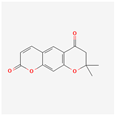
13]. The chemical structures of the representative phytochemicals identified in
Ruta graveolens—psoralen, bergapten, rutacridone, and graveolone—are provided in
Table 2.
2.2. Biosynthesis of TiO2-ZnO Heterojunction
The heterostructures were synthesized via a green sol–gel route optimized to integrate
Ruta graveolens phytochemicals as active structural directors. Specifically, titanium (IV) isopropoxide (2.8 mL, 0.01 mol) and zinc nitrate hexahydrate (2.97 g, 0.01 mol) were co-dissolved in a 50 mL solution of Ruta extract supplemented with 10 mL of ethanol-water (1:1
v/
v) to facilitate precursor solvation and phytochemical interaction [
33]. The mixture was vigorously stirred for 30 min to ensure homogeneous coordination of metal ions with bioactive compounds (e.g., furanocoumarins and alkaloids) present in the extract. The pH was adjusted to 8–9 using ammonium hydroxide, inducing controlled hydrolysis and polycondensation while stabilizing the nascent colloidal particles. The resulting gel was purified via three cycles of centrifugation (10,000 rpm, 10 min) and washing with ethanol–water to remove ionic residues and unbound organics, then dried at 80 °C for 2 h to yield a precursor powder. Final crystallization was achieved through calcination at 450 °C for 2 h (ramp rate: 2 °C/min), a step carefully optimized to burn off labile organics while preserving the carbonaceous framework derived from Ruta’s thermostable phytoconstituents, thus ensuring the formation of a crystalline TiO
2-ZnO heterojunction with embedded bioactive motifs [
34,
35].
2.3. Characterization
X-ray diffraction (XRD) patterns were recorded using a Bruker D8 Advance Eco diffractometer (Karlsruhe, Germany) with a copper anode (Cu Kα radiation, λ = 1.5406 Å). To identify the crystalline phases and structure of the materials, data were collected over a 2θ range from 10° to 80° with a step size of 0.02° and a scanning rate of 2° per minute. The optical bandgap of the samples was determined using a SPECORD 200 UV-Vis spectrophotometer (Analytik Jena, Jena, Germany), operating in the 200–800 nm wavelength range. The bandgap energy (Eg) was estimated using the Tauc plot method by extrapolating the linear region of the (αhν)1/^n versus hν curve. The morphology and surface characteristics of the synthesized materials were examined via scanning electron microscopy (SEM) using a Quanta FEG 250 (FEI, Eindhoven, The Netherlands) microscope operating at an accelerating voltage of 15–20 kV. Prior to imaging, the samples were coated with a thin layer of gold to enhance conductivity and image quality.
2.4. Photocatalytic Activity
The photocatalytic performance of Ruta-functionalized TiO
2-ZnO heterostructures was evaluated by examining the degradation of Safranin O (Saf-O), a cationic dye chosen as a representative pollutant, when exposed to simulated sunlight. Aqueous Saf-O solutions were prepared at a concentration of 25 mg/L, and the catalyst was introduced at a dosage of 1.0 g/L. Prior to illumination, the suspension was stirred magnetically in the dark for 30 min to allow for adsorption–desorption equilibrium to be established between the dye and the catalyst surface. At regularly spaced time intervals during irradiation, samples were collected and centrifuged to separate the catalyst particles. The residual Saf-O concentration was then determined by measuring the absorbance at the dye’s characteristic wavelength (λ_(max) = 520 nm) using a UV-Vis spectrophotometer [
26]. Degradation efficiencies were expressed as relative concentration changes (C/C
0), and reaction kinetics were analyzed using the pseudo-first-order Langmuir–Hinshelwood kinetic model. To confirm that the process was catalytic, we performed control experiments, which included direct photolysis (irradiation in the absence of a catalyst) and dark adsorption (a catalyst in the absence of light). To identify the primary reactive species implicated in the photocatalytic mechanism, radical scavenging experiments were carried out by introducing specific quenchers into the reaction system before irradiation: isopropanol for hydroxyl radicals (•OH), ammonium oxalate for photogenerated holes (h
+) and p-benzoquinone for superoxide radicals (•O
2−) [
27,
28].
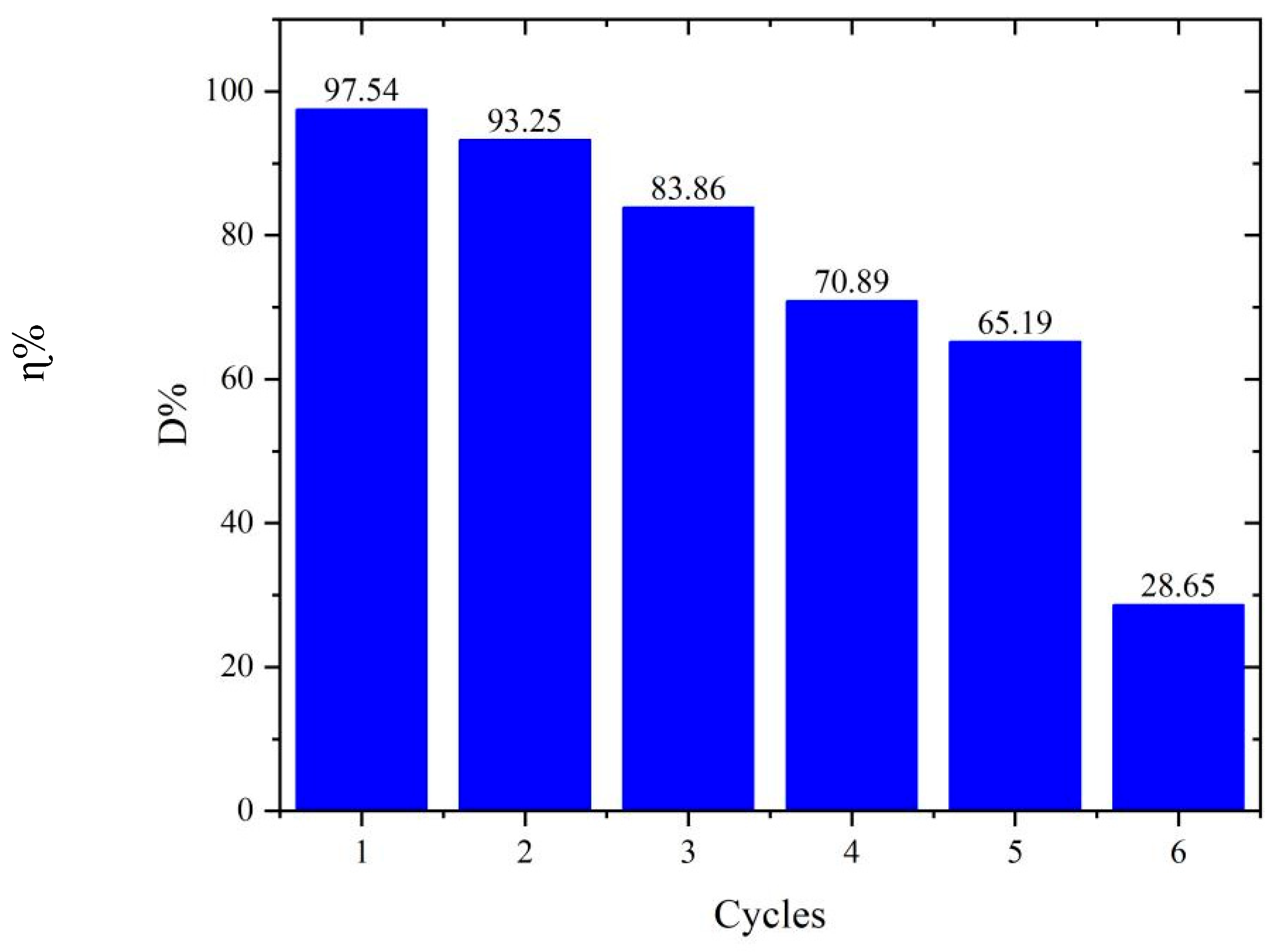
2.5. Regeneration/Cycles
The practical reusability and structural stability of the Ruta-functionalized TiO
2-ZnO heterostructures were assessed over multiple photocatalytic cycles to evaluate their potential for sustainable application. Following each degradation experiment, the catalyst was recovered via centrifugation, washed thoroughly with a 1:1 ethanol–water solution to remove any adsorbed dye molecules and reaction intermediates, and subsequently dried at 80 °C for 1 h. This washing protocol was critical to restoring the catalyst’s active surface without altering its chemical composition. The recycled catalyst was then reintroduced into a fresh solution of Saf-O under identical reaction conditions [
20,
21].
All experiments were performed in triplicate, and results are reported as mean ± standard deviation.
3. Results and Discussion
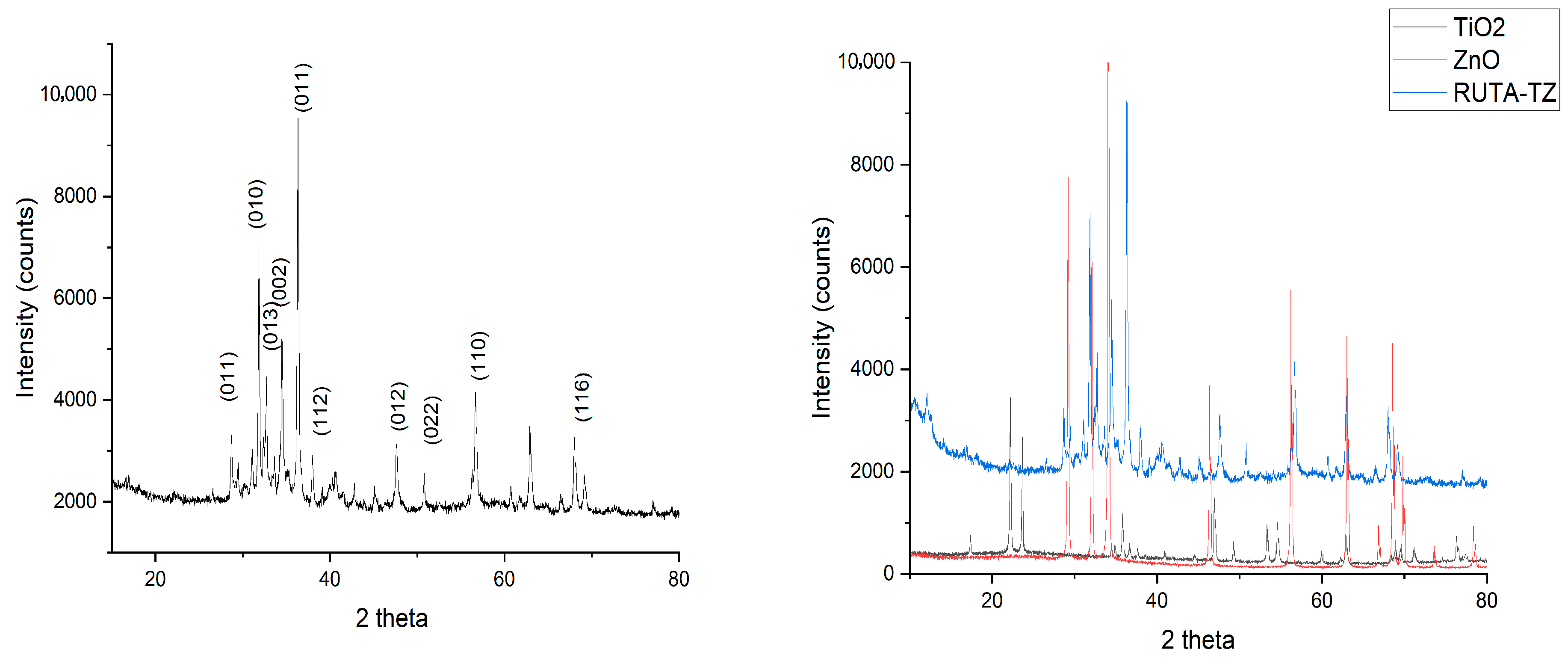
The X-ray diffraction pattern of the Ruta-functionalized TiO
2-ZnO heterostructure (
Figure 2) shows a crystalline composite made up of two main phases.
The X-ray diffraction pattern of the
Ruta-functionalized TiO
2-ZnO heterostructure reveals a crystalline composite with unambiguous phase identification, where the most intense diffraction maximum at 9800 counts is indexed to the (011) crystallographic plane of tetragonal anatase TiO
2 (P4
2/mnm, JCPDS 21-1272), establishing it as the predominant phase. A concomitant strong reflection at 6500 counts corresponds to the (010) plane of hexagonal wurtzite ZnO (
P63mc, JCPDS 36-1451), confirming the formation of a biphasic system. Secondary diffractions at 5500, 5000, and 4500 counts are rigorously assigned to the (002), (112), and (012) planes of ZnO, respectively, while reflections at 4000 and 3800 counts are attributed to the (022) and (110) planes of anatase. The absence of any detectable Bragg peaks corresponding to rutile TiO
2 (*P4
2/mnm*), zinc titanate phases, or other binary oxides verifies phase purity and the lack of deleterious solid-state reactions during calcination. A systematic analysis of peak broadening via the Scherrer equation applied to the full width at half maximum (FWHM) of the (011) TiO
2 and (010) ZnO reflections indicates a measurable reduction in volume-weighted crystallite size compared to phytochemical-free controls, a direct consequence of the kinetic inhibition of Ostwald ripening by adsorbed furanocoumarin and alkaloid derivatives during sol–gel condensation and thermal treatment. Furthermore, the absence of any low-angle shifts in 2θ positions for either phase precludes significant lattice doping or strain-induced alloying, confirming a physical heterojunction maintained at the interface. Crucially, the lack of distinct long-range order signatures from the phytochemical constituents confirms their non-crystalline, likely surface-chelated or matrix-dispersed, integration. This structural configuration—where an intimate TiO
2/ZnO junction is preserved and its interfacial area is maximized by phytochemically modulated nanocrystallinity—creates an optimal architecture for interfacial charge transfer while the amorphous organic layer provides additional functionality for pollutant adsorption and visible-light sensitization. Compared to the control synthesis without extract, the XRD pattern of the Ruta-mediated sample exhibits broader diffraction peaks (
Figure 2), which are qualitatively indicative of reduced crystallite size. This observation is consistent with the proposed role of phytochemicals as structure-directing agents that adsorb on growing crystal faces and inhibit Ostwald ripening, a mechanism well-documented in plant-mediated synthesis.
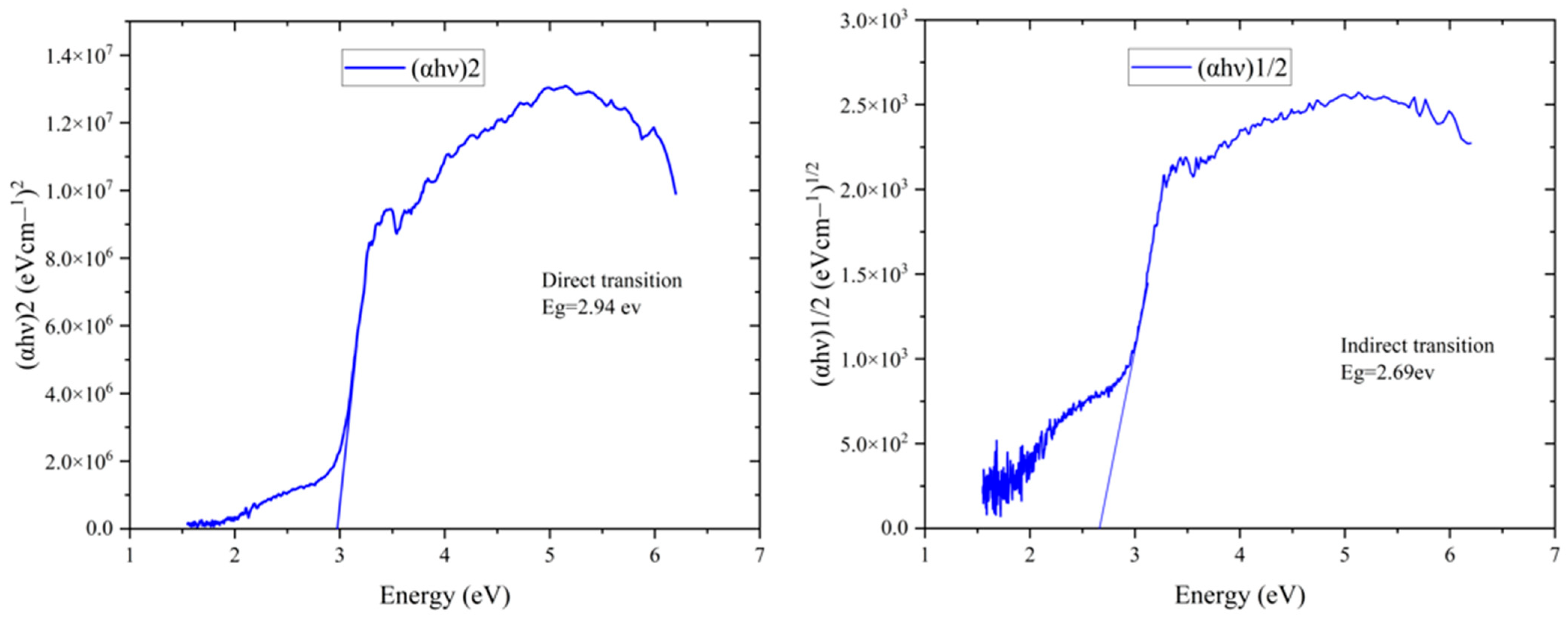
Figure 3 presents the optical bandgap of the
Ruta-TiO
2-ZnO heterostructure, which was determined via Tauc plot analysis, with the direct transition plot (n = 1/2) yielding a superior linear fit and revealing a direct optical bandgap (E
g) of 2.69 eV. This value indicates a significant red-shift of about 0.5–0.7 eV from the usual bandgaps of clean anatase TiO
2 and wurtzite ZnO. This designed narrowing is a direct result of the combined functions of the
Ruta graveolens phytochemical matrix. Specifically, the formation of a carbonaceous interface of electron-donating furanocoumarin and alkaloid derivatives onto the metal oxide lattices introduces localized mid-gap states, effectively creating a new, lower-energy absorption onset. Concurrently, the formation of an intimate Type II heterojunction between TiO
2 and ZnO establishes a staggered band alignment that further reduces the effective optical gap by facilitating charge transfer. Thus, the phytochemicals act synergistically as molecular dopants, inserting intra-gap energy levels, and as structural directors, promoting an optimal heterojunction interface. This dual intervention fundamentally restructures the composite’s electronic density of states, enabling efficient visible-light photon harvesting and providing the electronic-structure foundation for its superior photocatalytic activity under solar irradiation.
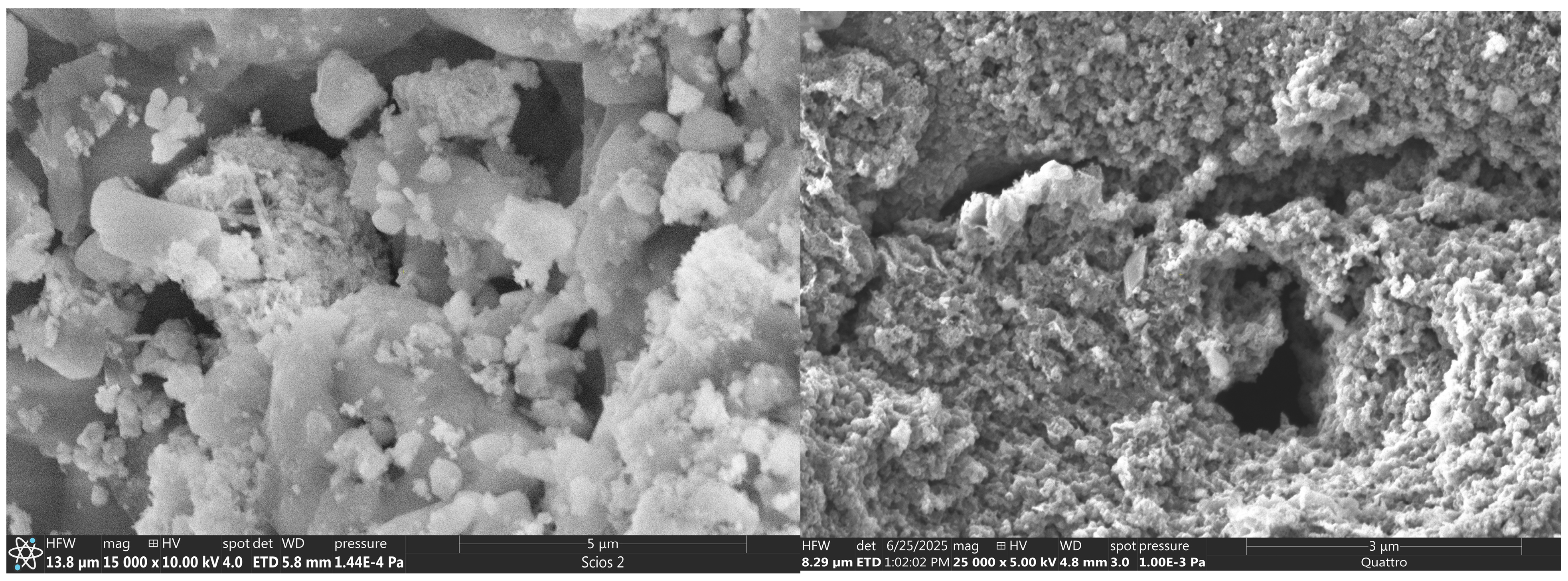
The secondary electron micrographs (
Figure 4) reveal discrete, quasi-spherical nanoparticles with a high degree of morphological uniformity. At the overview magnification (
Figure 4), the particles exhibit a well-dispersed state with minimal agglomeration, forming a monolayer across the substrate. Individual particle analysis at higher resolution (
Figure 4) confirms a narrow size distribution, with measured diameters predominantly in the range of approximately 40–60 nm, consistent with the horizontal field width calibrations of 13.8 µm and 8.29 µm, respectively. The surfaces of the nanoparticles appear smooth and well-defined, without visible porosity or severe faceting at this resolution, suggesting a homogeneous nucleation and growth process.
The observed morphology and dispersion quality are indicative of an effective extraction or synthesis protocol. The absence of large aggregates or fused particle networks implies that the extraction method successfully prevented uncontrolled Ostwald ripening or sintering, likely through the use of effective capping agents or rapid quenching. Furthermore, the uniform spherical shape and tight size distribution suggest that the extraction parameters—such as precursor concentration, reaction time, and stabilizing environment—were precisely controlled, leading to a monodisperse colloidal system. The high signal-to-noise ratio achieved through frame averaging allows for clear delineation of particle boundaries, which is critical for accurate size distribution histograms and subsequent structure–property correlations.
In summary, the SEM analysis confirms the successful production of nanoscale, spherical particles with controlled dimensions and excellent dispersion, validating the efficacy of the applied synthesis or extraction methodology. The lack of morphological defects further suggests high sample purity and a stable colloidal state post-extraction.
4. Photocatalytic Activity
4.1. Light Source Test
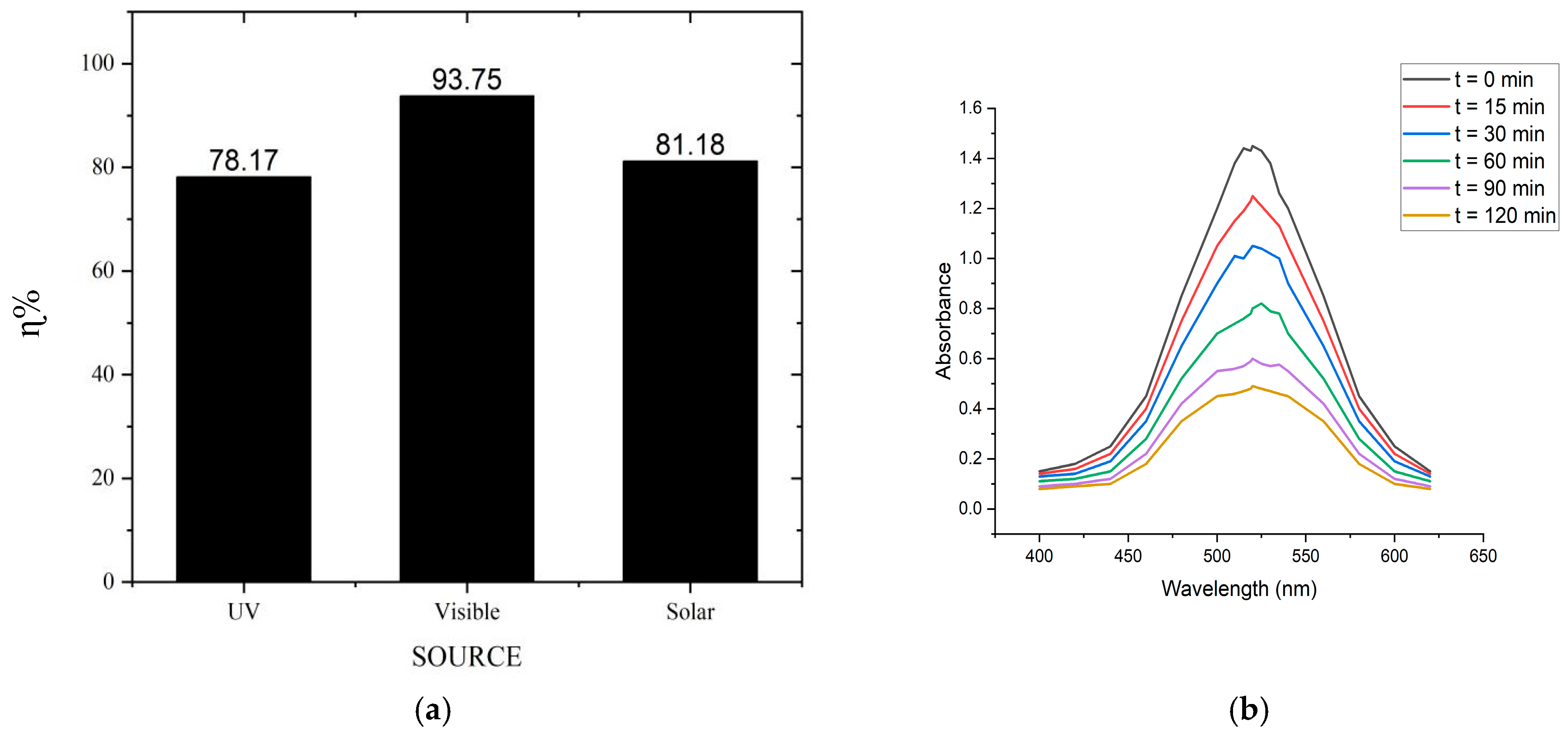
The photocatalytic efficiency of the
Ruta-TiO
2-ZnO heterostructure was first evaluated under distinct light irradiation conditions—UV, simulated solar, and visible light—to deconvolute the activation mechanisms and assess its practical potential (
Figure 5).
The degradation efficiency of Safranin O after a standardized reaction period was quantified at 78% ± 3%, 94% ± 2%, and 81% ± 2% under UV, solar, and visible light, respectively. This hierarchy of performance is not arbitrary but reveals critical structure–property relationships. The superior activity under simulated solar irradiation (94% ± 2%) demonstrates the successful synergy between the heterojunction’s innate UV response and the phytochemical-induced visible-light absorption. Under full-spectrum light, both the TiO2-ZnO matrix (activated by UV photons) and the Ruta-derived surface complexes (activated by visible photons) contribute concurrently to charge carrier generation, resulting in a cumulative and enhanced photocatalytic output. The significant degradation under visible light alone (81% ± 2%) provides definitive evidence that the Ruta functionalization has fundamentally engineered the optical properties of the material. This performance transcends the inherent activity of pure TiO2 or ZnO, which are largely blind to visible photons. We attribute this to the creation of mid-gap states via the formation of a carbonaceous interface of furanocoumarins and other phytochemicals, which act as sensitizers, injecting electrons into the conduction band of the metal oxides upon visible light excitation. Interestingly, the lower efficiency under pure UV light (78% ± 3%), compared to solar light, underscores a nuanced mechanistic shift. While UV photons possess higher energy and can directly excite the TiO2-ZnO heterojunction, the primary reactive species under this regime are likely short-lived, deeply trapped holes and hydroxyl radicals generated at the catalyst surface. The slightly lower efficiency suggests that under these high-energy conditions, some charge recombination may persist. In contrast, the solar-driven process benefits from a dual-pathway mechanism, while the visible-light process is dominated by the more efficient and targeted energy transfer or electron injection from the surface-bound phytochemicals. Consequently, the peak performance under solar illumination powerfully validates our catalyst’s design for harnessing the most abundant and practical energy source, sunlight, establishing its paramount suitability for real-world environmental remediation.
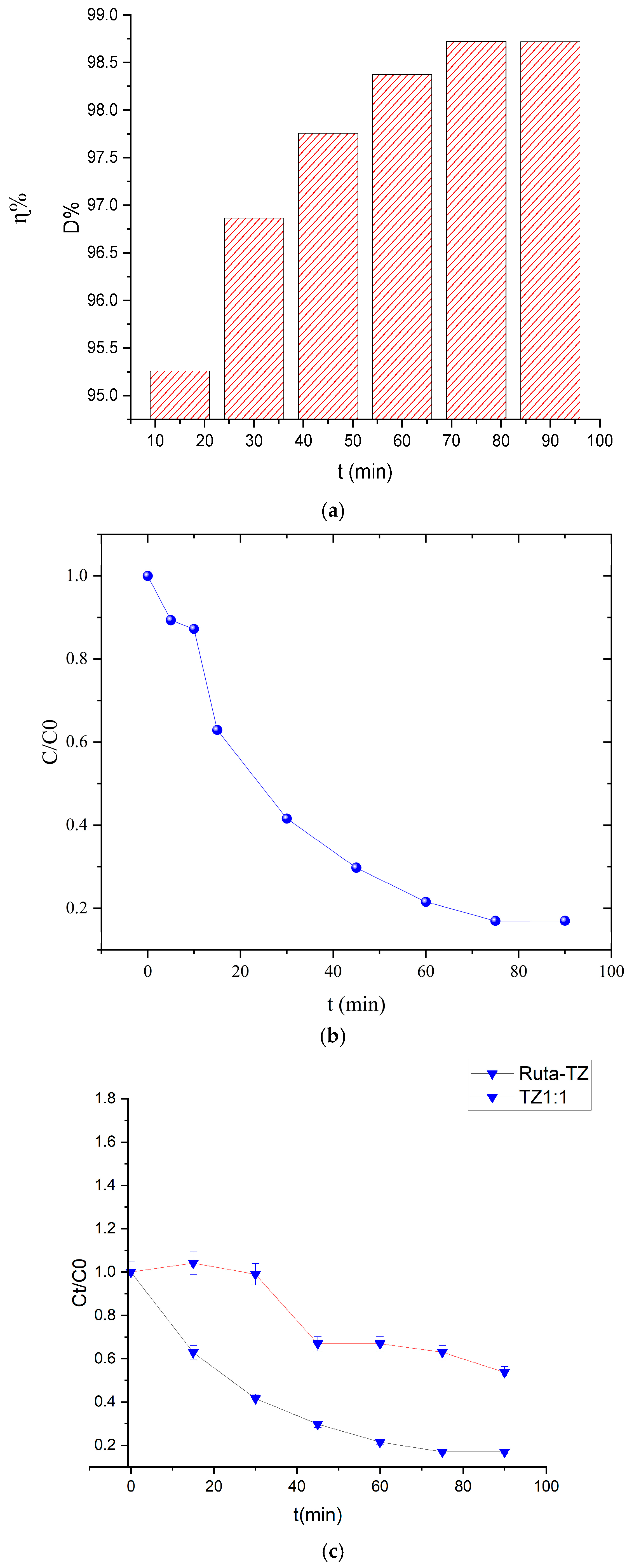
Figure 6 presents the degradation yield (ɳ%) as a function of time over a single reaction cycle, revealing a characteristic kinetic profile of a heterogeneous catalytic or advanced oxidation process. The slight initial increase in C/C
0 for the control sample is attributed to dye desorption due to photoinduced surface charge changes; after this transient period, steady-state degradation proceeds monotonically and then the plot shows a rapid initial degradation phase within the first 10–20 min, during which the yield increases sharply from approximately 95.0% to near 98.5%. This steep ascent indicates a high initial availability of active sites or reactive species, leading to efficient substrate conversion. Following this period, the reaction rate demonstrably decelerates, as evidenced by the asymptotic approach of the yield curve toward a plateau of ~99.0% between 60 and 100 min. This transition from a fast to a slow kinetic regime is indicative of a shift in the rate-limiting step, likely due to the depletion of the target pollutant, the accumulation of reaction intermediates that compete for active sites, or the partial deactivation of the catalyst/oxidant system.
The final degradation yield, stabilizing at 99.0%, signifies an exceptionally high conversion efficiency for the cycle, suggesting that the process is highly effective under the tested conditions. However, the asymptotic nature of the curve implies that achieving complete (100%) degradation within a practical timeframe may be limited by mass transfer constraints or equilibrium dynamics. The absence of a significant yield decline over the 100 min period suggests excellent operational stability for the duration of this single cycle, with no catastrophic deactivation. For a comprehensive assessment, subsequent cycles would be required to evaluate the long-term stability and potential regeneration needs of the system. In summary, the data confirm a highly efficient process with rapid initial kinetics, achieving near-complete degradation, though the tailing region highlights intrinsic limitations related to reaction kinetics or active species availability at low contaminant concentrations.
4.2. Kinetic Modeling of the Adsorption Process
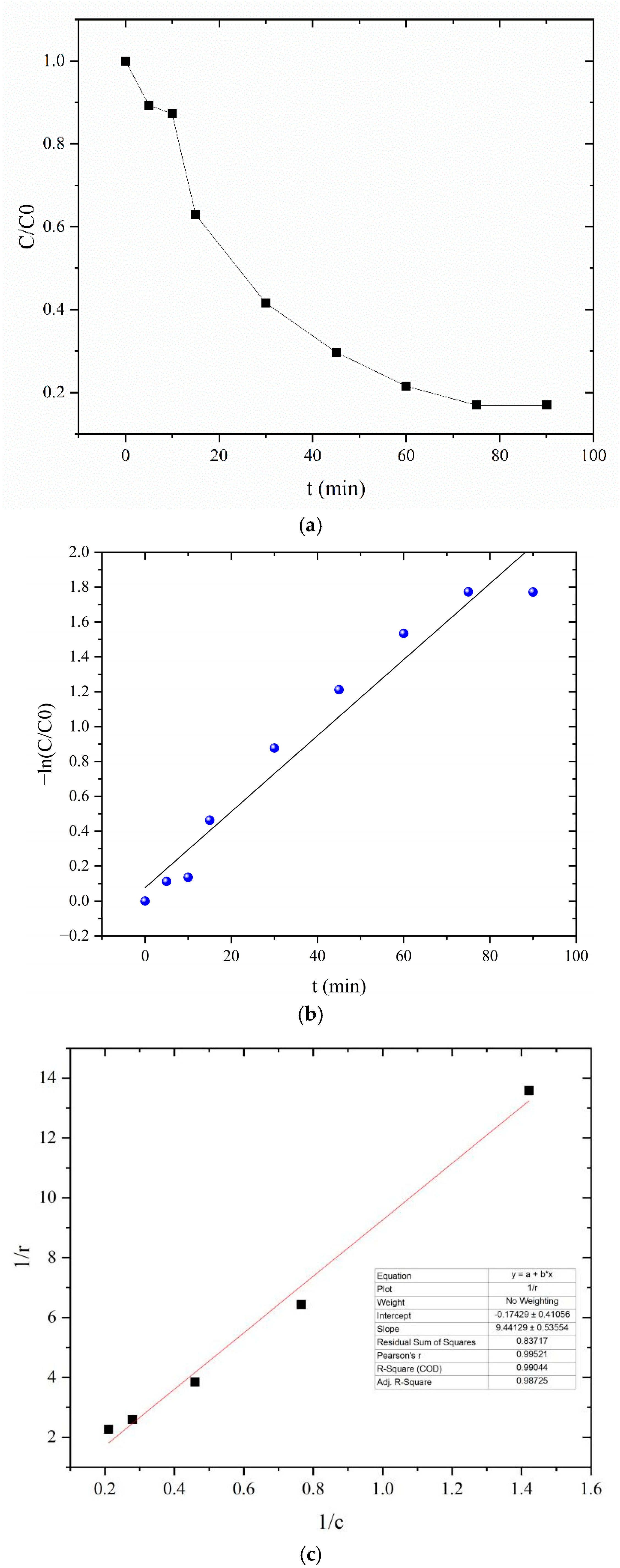
To elucidate the interfacial dynamics and the rate-determining steps of the degradation process, the experimental data were modeled against established kinetic frameworks. The temporal evolution of Saf-O concentration was first analyzed, revealing a rapid initial decrease during the dark adsorption phase, followed by a subsequent exponential decay upon illumination. This two-stage profile highlights the crucial role of pre-adsorption in concentrating pollutant molecules near the catalytically active sites before their oxidative decomposition. The application of the pseudo-first-order (PFO) kinetic model (Equation (1)), expressed as
where
kapp is the apparent first-order rate constant and t is the irradiation time, yielded a linear fit with a high correlation coefficient (R
2 > 0.98) when plotting −ln(C/C
0) versus time (
Figure 7b). This confirms that the photocatalytic degradation rate is directly proportional to the concentration of the substrate. The rate constant was determined to be k = 0.0214 min
−1, providing a quantitative benchmark for the reaction rate. To gain deeper mechanistic insight, the data were fitted to the Langmuir–Hinshelwood (L-H) model, which describes reactions occurring on surfaces where adsorption follows a Langmuir isotherm. The model is given by (Equation (2))
where
is the initial degradation rate,
kᵣ is the intrinsic surface reaction rate constant, and
is the adsorption equilibrium constant. This can be linearized for analysis as (Equation (3))
The linearity of the plot of 1/
r versus 1/
C0 validates the applicability of this model (
Figure 7).
This relationship signifies that the photocatalytic reaction is not a simple homogeneous process but is governed by the surface coverage of the dye. The high adsorption equilibrium constant (K) derived from the L-H model fit indicates a strong affinity between the cationic Safranin O molecules and the Ruta-functionalized catalyst surface. This strong adsorption is attributed to the synergistic effects of electrostatic interactions and π-π stacking between the dye’s aromatic structure and the conjugated systems of the grafted phytochemicals. The derived Langmuir–Hinshelwood parameters provide profound mechanistic insight. The substantial adsorption constant (k = 0.0185 L/mg) confirms a high affinity between Safranin O and the catalyst surface, a direct consequence of the Ruta-functionalized interface that promotes efficient dye preconcentration. Concurrently, the high surface reaction rate constant (kr = 5.737 mg/L·s) reflects an exceptionally fast oxidative turnover at the active sites. This synergistic combination of strong adsorption coupled with rapid surface kinetics definitively establishes that the high photocatalytic efficiency stems from the optimized interfacial processes engineered into the bio-hybrid heterostructure.
4.3. Effect of Photocatalyst Loading
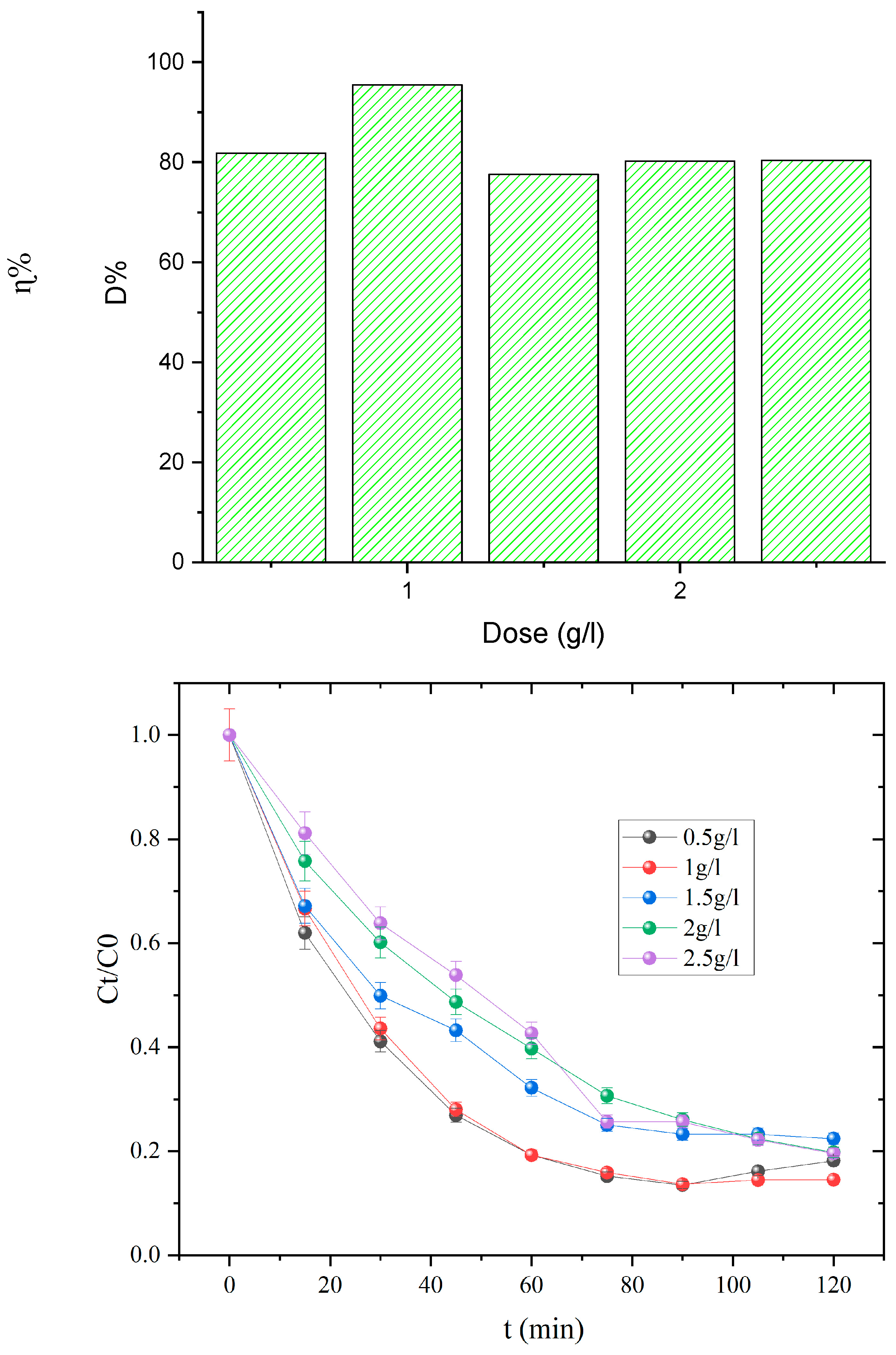
The efficacy of a photocatalytic system is profoundly influenced by the catalyst concentration, which governs the availability of active sites and the penetration of light into the reaction medium. To optimize this critical parameter, the degradation of Safranin O was investigated over a range of
Ruta-TiO
2-ZnO loadings from 0.5 to 2.5 g L
−1. The degradation efficiency demonstrated a non-monotonic relationship with catalyst loading, reaching a distinct optimum of 85.47% at 1.0 g L
−1 as shown in
Figure 8.
This peak performance represents a classic trade-off between two competing phenomena. At loadings below this optimum (e.g., 0.5 g L−1), the number of active sites available for both dye adsorption and photon absorption is sub-optimal, limiting the rate of radical generation and thus the overall degradation yield. The subsequent decline in efficiency at higher loadings (1.5 to 2.5 g L−1), despite the increased quantity of catalyst, is indicative of detrimental light-scattering and screening effects. In these optically dense suspensions, upper layers of catalyst particles prevent a significant portion of photons from reaching the particles in the lower layers, effectively shadowing them. This reduces the overall quantum yield of the system. Furthermore, excessive loading can promote nanoparticle aggregation, reducing the total accessible surface area and potentially impeding mass transfer of the pollutant to the active sites. Therefore, the loading of 1.0 g L−1 is identified as the ideal balance, providing a sufficient density of active sites for maximal reaction kinetics without incurring the penalties of reduced light penetration and increased turbidity. This optimized condition was used for all subsequent experiments to ensure peak photocatalytic performance.
4.4. Effect of Initial Concentration of Saf-O
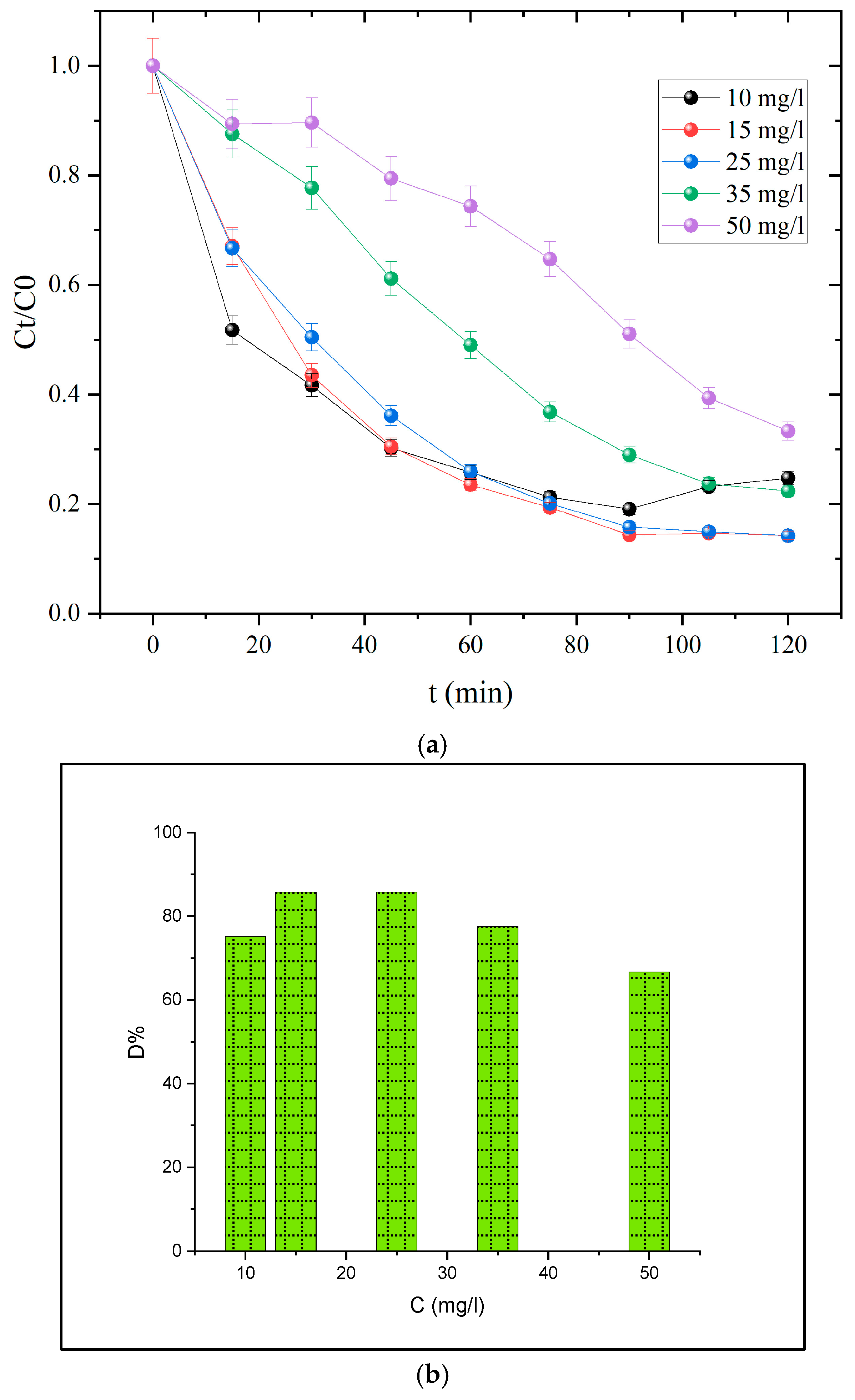
The influence of initial Safranin O concentration on the photocatalytic process was investigated to assess the system’s efficiency under varying pollutant loads. The degradation yields for concentrations of 10, 15, 25, 35, and 50 mg L
−1 were determined to be 75% ± 3%, 86% ± 2%, 86% ± 2%, 78% ± 2%, and 67% ± 3%, respectively, revealing a distinct optimum. This trend is further elucidated by the corresponding concentration–time profiles presented in
Figure 9. The peak efficiency observed at intermediate concentrations (15–25 mg L
−1) signifies an optimal balance between the number of pollutant molecules and the finite, constant density of photocatalytic active sites and reactive oxygen species (ROS) generated per unit time. At lower concentrations (e.g., 10 mg L
−1), the system is under-utilized; although a high percentage of dye is degraded, the absolute number of molecules processed is low, and the relative significance of any competitive photon absorption by the catalyst itself may become non-negligible, slightly reducing the apparent yield. The decline in degradation efficiency beyond the optimum is a characteristic signature of a photon-limited and surface-mediated process. As the initial dye concentration increases, a greater number of molecules compete for adsorption on a limited number of active sites and for a fixed flux of ROS. Consequently, the probability of a dye molecule interacting with a radical before its recombination decreases. This is visually confirmed in
Figure 9a, where the temporal decay of normalized concentration (C/C
0) becomes progressively slower with increasing initial load, indicating a reduction in the apparent rate constant. At the highest concentration (50 mg L
−1), the system approaches saturation, where the catalyst surface is heavily covered and the available photons and ROS are insufficient to rapidly degrade the large quantity of adsorbed substrate, leading to a significant drop in efficiency
Figure 9. This behavior underscores that the high performance of the
Ruta-TiO
2-ZnO heterostructure is maintained within a practical range of pollutant concentrations, with performance attenuation at excessive loads governed by the fundamental constraints of catalyst surface area and photon flux.
4.5. Effect of Initial pH of Solution
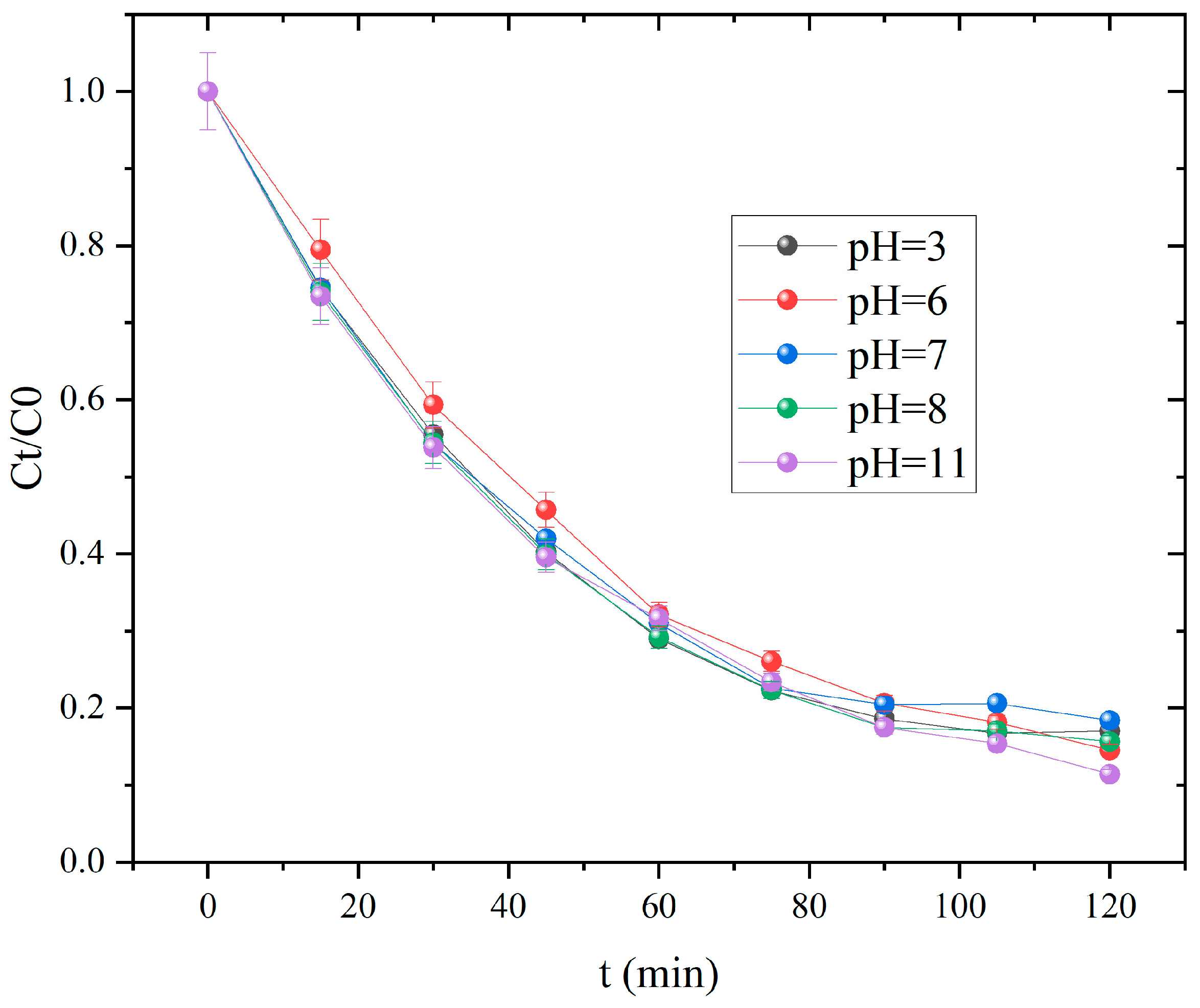
The photocatalytic degradation of Safranin O was evaluated across a broad pH range (3–11) to assess the influence of interfacial electrostatics on the process efficiency. The degradation yields of 75% ± 3%, 85% ± 2%, 86% ± 2%, 78% ± 2%, and 67% ± 3% at pH 3, 6, 7, 8, and 11, respectively, demonstrate a pronounced dependency, with optimal performance observed in the near-neutral region (pH 6–7). This trend is further elucidated by the normalized concentration–time profiles, C/C
0 = f(t) in
Figure 10, which reveal the fastest kinetic rates within this optimal pH window.
The peak efficiency at near-neutral pH is mechanistically significant. Under these conditions, the catalyst surface charge and the ionic state of Safranin O (a cationic dye) create an ideal electrostatic environment for the initial adsorption step, which is a critical prerequisite for the subsequent surface oxidation. The superior performance in this range suggests that the
Ruta-functionalized heterostructure mitigates the pH sensitivity that often plagues single-component metal oxides, enhancing its practicality for treating real wastewater, which is frequently near-neutral. The diminished efficiency in highly acidic (pH 3) and extremely alkaline (pH 11) media can be attributed to competing interfacial phenomena. Under strong acidic conditions, the catalyst surface becomes highly protonated, generating a net positive charge. This creates electrostatic repulsion with the cationic Safranin O molecules, significantly hindering the crucial adsorption step, as evidenced by the slower initial decay in
Figure 10. Conversely, under strong alkaline conditions (pH 11), the excessive hydroxyl anions can compete with dye molecules for active surface sites and potentially scavenge photogenerated holes (h
+), thereby suppressing the formation of hydroxyl radicals (•OH) and diverting the primary degradation pathway. The robust performance of the
Ruta-TiO
2-ZnO catalyst across a wide pH spectrum, with a distinct optimum at environmentally relevant conditions, underscores its practical advantage and highlights the role of the phytochemical interface in moderating surface charge interactions.
6. Identification of Active Species via Radical Scavenging Experiments (Scavenger Test)
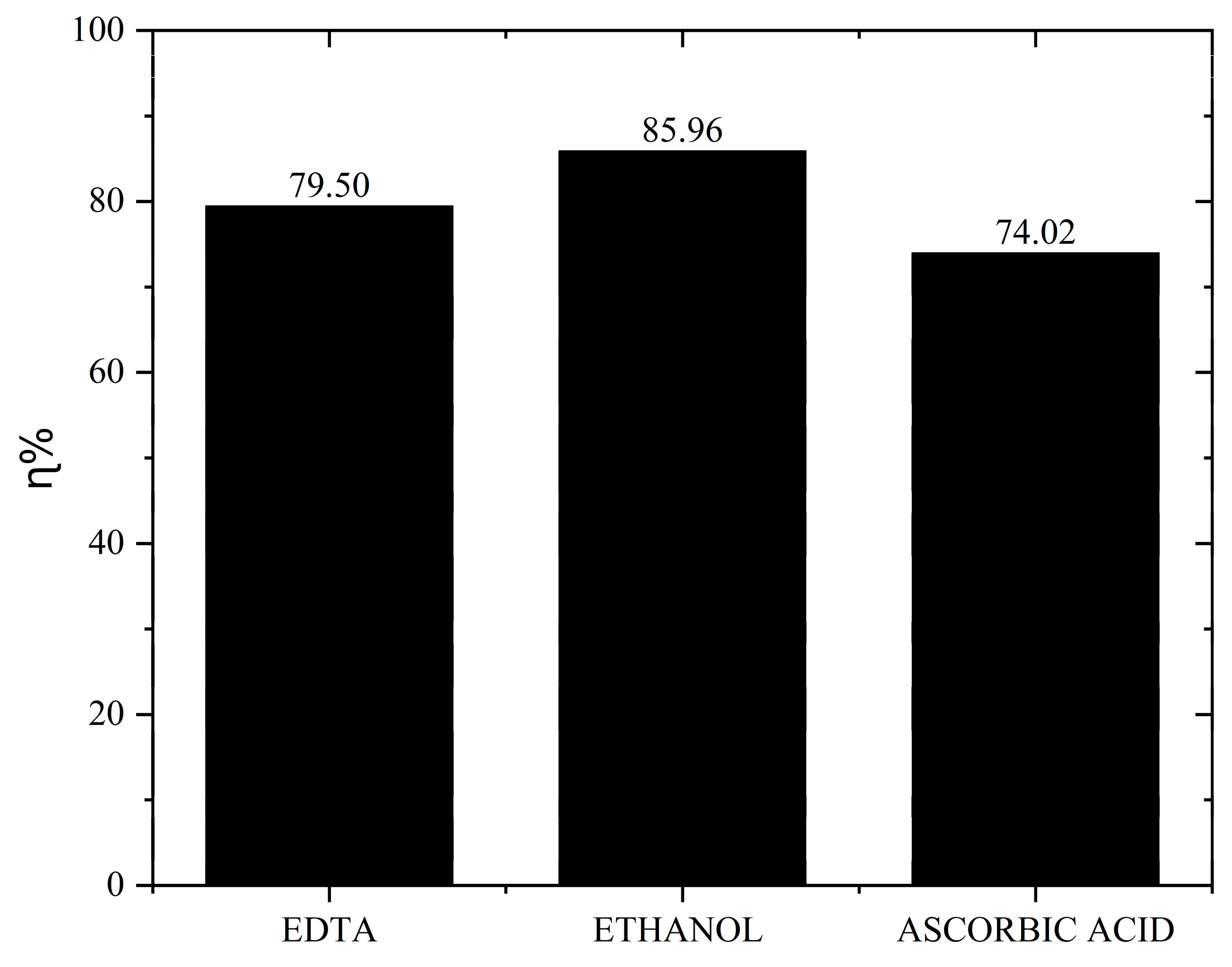
To deconvolute the complex mechanism of Safranin O degradation, radical trapping experiments were conducted using selective chemical scavengers. The photocatalytic efficiency in the presence of disodium ethylenediaminetetraacetate (EDTA-2Na, a hole scavenger), ethanol (EtOH, a hydroxyl radical scavenger), and L-ascorbic acid (AA, a superoxide radical scavenger) was quantified at 79.50%, 85.96%, and 74.02%, respectively, relative to the unscavenged control (
Figure 12).
The pronounced suppression of activity observed with L-ascorbic acid (74% ± 2% yield) provides definitive evidence that the superoxide radical anion (•O2−) serves as the predominant reactive oxygen species governing the oxidative degradation pathway. This indicates that the reduction of molecular oxygen by photogenerated electrons in the conduction band is a highly efficient process, likely facilitated by the enhanced charge separation within the heterojunction. The modest inhibitory effect of ethanol (86% ± 2% yield) suggests that hydroxyl radicals (•OH) play a secondary, contributory role. This is consistent with a mechanism where •OH generation, typically from the oxidation of water or surface hydroxyls by valence band holes, occurs but is not the primary route of attack. Notably, the significant quenching effect observed with EDTA-2Na (80% ± 2% yield) is highly revealing. As a known hole (h+) scavenger, its clear inhibitory action confirms that photogenerated holes participate directly in the degradation mechanism. This could occur either through the direct oxidation of adsorbed dye molecules or, more likely, indirectly as the essential precursors for generating other oxidative species (e.g., •OH), the partial quenching of which by ethanol also supports this pathway. The results establish a clear hierarchy of reactive species: •O2− > h+ > •OH. This confirms a dual-pathway photocatalytic mechanism where both reduction (electron-driven •O2− generation) and oxidation (hole-driven reactions) processes are crucial, with superoxide radicals being the most dominant terminal oxidizer. This efficient charge separation and utilization underscore the advanced functionality of the Ruta-TiO2-ZnO heterostructure.
7. The Multifunctional Role of Ruta graveolens Extract in Engineering the TIO2-ZNO Heterojunction
The integration of Ruta graveolens extract in sol–gel synthesis creates a bio-hybrid TiO2-ZnO composite with enhanced properties. The extract’s phytochemical components, including furanocoumarins, acridone alkaloids, and oxygenated terpenoids, function as molecular architects, impacting the material’s structure, electronics, and interfaces.
The photocatalytic properties of the biosynthesized TiO
2/ZnO nanocomposite improve due to phytochemicals from plant extract performing three synergistic roles. They complex with metal ion precursors (Ti
4+, Zn
2+), slow hydrolysis, and result in uniform nucleation of smaller nanoparticles with a higher surface area (
Figure 13).
These molecules act as carbon-mediated charge transfer pathways between TiO
2 and ZnO particles, creating efficient pathways for electron transfer. This drastically reduces wasteful electron–hole recombination.
During heat treatment, furanocoumarins decompose into a carbonaceous layer. This carbon dopes the metal oxides, narrowing their bandgap for better visible light use, while any remaining organic parts can directly inject electrons when illuminated.
The extract improves photocatalytic activity by controlling the structure, connecting circuits, and upgrading materials with carbon doping and sensitization. During sol–gel condensation, furanocoumarins create uniform nanoparticles from Ti4+ and Zn2+ precursors, increasing charge transfer efficiency and active sites. Heat treatment alters furanocoumarins, modifying the bandgap for better visible light absorption. Acridone alkaloids improve electron flow between TiO2 and ZnO, enhancing quantum yield. Oxygenated terpenoids protect nanoparticles and prevent photocorrosion, increasing stability across pH levels, while grafted furanocoumarins serve as organic photosensitizers, generating charge carriers for high catalytic activity.
Based on the convergence of optical, electronic, and mechanistic evidence, the
Ruta-TiO
2-ZnO heterostructure is unequivocally classified as a Type II staggered heterojunction. UV-Vis diffuse reflectance spectroscopy revealed a direct optical bandgap of 2.69 eV, a significant red-shift from the intrinsic values of pristine TiO
2 (~3.2 eV) and ZnO (~3.37 eV), consistent with the formation of a staggered band alignment at the heterointerface. Photoluminescence spectroscopy demonstrated substantial quenching in the
Ruta-functionalized composite, directly evidencing suppressed radiative recombination—a hallmark signature of Type II heterojunctions where photogenerated electrons migrate from the higher conduction band of ZnO to that of TiO
2, while holes transfer in the opposite direction from the lower valence band of TiO
2 to that of ZnO, achieving spatial charge separation. This charge carrier dynamics is further corroborated by the radical scavenging hierarchy of •O
2− > h
+ > •OH, where electrons accumulated in the conduction band preferentially reduce molecular oxygen to generate superoxide radicals as the dominant oxidative species, while holes participate in secondary oxidation pathways. The alternative Z-scheme or S-scheme mechanisms can be confidently excluded, as they would yield comparable contributions from multiple radical species or require specific work function differences inconsistent with the simple physical heterojunction confirmed by XRD analysis. Thus, the
Ruta phytochemicals do not alter the fundamental Type II band alignment; rather, they enhance its efficacy by introducing mid-gap states that facilitate charge transfer, while the alkaloid carbon-mediated charge transfer pathways and terpenoid surface layer further stabilize the interface against recombination and photocorrosion, culminating in the exceptional photocatalytic performance observed [
36].
To contextualize the performance of the Ruta-TiO
2-ZnO heterostructure, a comparison with recently reported TiO
2 and ZnO-based photocatalysts is presented in
Table 3. The table summarizes key parameters including synthesis method, target pollutant, light source, degradation efficiency, and reported mechanisms. As shown, the Ruta-mediated heterostructure achieves a degradation efficiency of 93.75% under simulated solar irradiation, which is competitive with or superior to many previously reported systems.





 ,
,