Review

Modification Strategies and Photocatalytic Applications of Bismuth Tungstate Photocatalysts

1
State Key Laboratory of Green Papermaking and Resource Recycling, Qilu University of Technology, Shandong Academy of Sciences, Jinan 250353, China
2
Key Laboratory of Pulp and Paper Science and Technology (Ministry of Education), Qilu University of Technology, Shandong Academy of Sciences, Jinan 250353, China
3
School of Civilaviation, Northwestern Polytechnical University, Xi’an 710129, China
*
Author to whom correspondence should be addressed.
Catalysts 2026, 16(6), 548; https://doi.org/10.3390/catal16060548 (registering DOI)
Submission received: 11 May 2026 / Revised: 7 June 2026 / Accepted: 9 June 2026 / Published: 13 June 2026

Abstract

Bismuth tungstate (Bi2WO6) is a typical bismuth-based visible-light-responsive semiconductor photocatalyst that has attracted significant attention in the fields of environment remediation and energy conversion. In this paper, to address the issues of high photogenerated carrier recombination rate and limited visible-light-response range of Bi2WO6, various modification strategies are highlighted, including morphology control, element doping, heterojunction construction, carbon material compositing, and coupling with functional materials such as metal–organic frameworks (MOFs), covalent organic frameworks (COFs), or conductive polymers. Furthermore, the structure–activity relationships are discussed. On this basis, the latest application progress of Bi2WO6-based photocatalysts in fields such as pollutant degradation, antibacterial activity, and energy conversion and storage is summarized. Finally, prospects are put forward regarding the existing shortcomings and future development directions in the application of Bi2WO6-based photocatalysts, aiming to provide a systematic theoretical reference for the design and application of high-performance Bi2WO6-based photocatalysts.

1. Introduction

The ability to directly utilize solar energy for driving chemical reactions makes photocatalytic technology a focal point of research. By leveraging the redox properties of materials activated under visible light, photocatalysis enables efficient solar-to-chemical energy conversion. This technology is uniquely positioned to advance both clean energy production and pollutant degradation, offering a promising pathway toward sustainable energy and environmental systems while addressing pressing issues such as energy shortages and environmental degradation. Among the many visible-light-responsive metal oxide semiconductors, Bi2WO6, a typical bismuth-based photocatalyst, exhibits considerable potential for applications in environmental remediation and energy conversion.
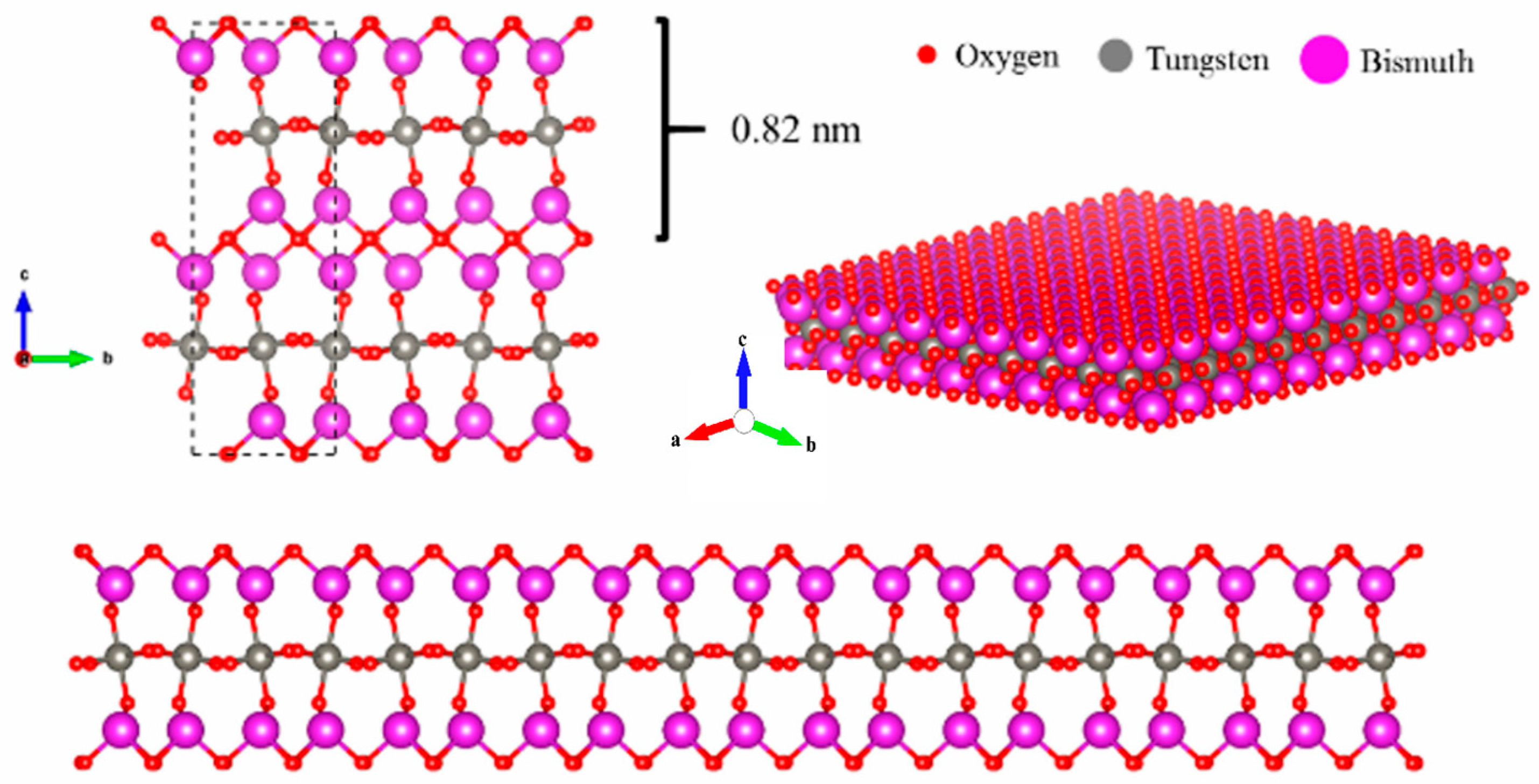
The crystal structure of Bi2WO6 consists of alternating layers of corner-sharing WO6 octahedral layers and [Bi2O2]2+ ion layers. Its conduction band is composed of W 5d orbitals, while the valence band is formed by the hybridization of and O 2p orbitals, as shown in Figure 1 [1]. This structural feature leads to an upward shift in the valence band potential of Bi2WO6, significantly reducing the bandgap of the semiconductor and endowing it with the ability to respond to visible light. Therefore, with unique layered structure, suitable bandgap width (approximately 2.7 eV), and excellent visible light responsiveness [2], Bi2WO6 exhibits outstanding visible-light-driven photocatalytic redox performance.
The preparation methods for Bi2WO6 are diverse, mainly including solid-phase methods [3], liquid-phase methods [4], template methods [5], and some emerging auxiliary methods [6]. However, Bi2WO6 photocatalysts obtained by traditional methods still suffer from several drawbacks that limit their application. For instance, its relatively narrow bandgap allows it to only respond to visible light with wavelengths below 450 nm, resulting in a limited photo-response range. Meanwhile, the high recombination rate of photogenerated electron–hole pairs leads to low solar spectrum utilization efficiency and diminished photocatalytic performance. Furthermore, these carriers are highly prone to recombination both in the bulk and on the surface of the material, significantly reducing quantum efficiency. Coupled with an insufficient number of active sites, this further restricts its catalytic capability.
To address these issues, researchers have developed various modification strategies in recent years; however, existing reviews have largely focused on summarizing individual modification methods, and systematic reviews of emerging areas-such as composites with carbon materials (e.g., graphene, carbon quantum dots, carbon nanotubes, and biochar), defect engineering, and the composites of Bi2WO6 with advanced materials such as MOFs, COFs, and conductive polymers. Furthermore, there is a lack of commentary on their progress in the field of energy conversion (e.g., CO2 reduction and photocatalytic nitrogen fixation). Therefore, this review distinguishes itself from previous work by systematically integrating, optimization strategies such as microstructural control, elemental doping, heterostructure construction, carbon material composites, defect engineering, and composites with advanced materials. It provides a comprehensive review of the application progress of Bi2WO6 in photocatalytic degradation (antibiotics, dyes, heavy metals), antimicrobial applications, as well as in energy conversion (water splitting for hydrogen production, CO2 reduction, nitrogen fixation, and photocatalytic electricity generation).

2. Modification of Bi2WO6 Photocatalyst Materials

In view of the problems of high photogenerated carrier recombination rate and limited visible light response range in Bi2WO6, this paper reviews the research progress on the modification and optimization of Bi2WO6 materials to improve their photocatalytic activity in recent years, as shown in Table 1.

2.1. Microstructure Regulation and Morphology Engineering

Pristine Bi2WO6 suffers from a limited photoresponse range and insufficient surface-active sites. To address these issues, microstructure regulation and morphology engineering can be employed to precisely control the size, dimension, and geometric morphology of the material by optimizing the synthesis methods and reaction conditions, thereby increasing the exposure of active sites, promoting charge carrier transport, and ultimately enhancing its photocatalytic performance. For example, Meng et al. [7] successfully prepared Bi2WO6 photocatalysts with three different morphologies, namely nanoplate, flower-like, and spiral-like-by adjusting the hydrothermal conditions. Photocatalytic degradation experiments of cyclohexanoic acid (CHA) demonstrated that the flower-like Bi2WO6 exhibited the best photocatalytic activity, achieving complete degradation of CHA with a rate constant of 0.0929 cm2/J. This is because the flower-like structure has the highest specific surface area (34.56 m2/g) and pore volume (0.134 cm3/g), resulting in the greatest exposure of active sites.
Similarly, Zhang et al. [8] synthesized Bi2WO6 with complex morphologies, including flower-like, tire-like, spiral-like, and plate-like structures, via a hydrothermal method by adjusting the pH of the precursor suspension. Using rhodamine B (RhB) as a model pollutant for degradation, it was found that a lower pH value of the precursor suspension led to higher photocatalytic activity of the Bi2WO6 samples. The flower-like Bi2WO6 structure, with the highest specific surface area (33.7 m2/g) and a network of mesopores, exposes the greatest number of active sites and achieves the highest adsorption rate (71%). Its photocatalytic degradation rate (84%) is 11% higher than that of the flake-like form (73%) and 5.25 times higher than that of the tire-like form (16%).
These studies indicate that the photocatalytic performance of Bi2WO6 is highly dependent on its morphology, size, and microstructure, and rational morphology engineering is an effective approach to enhance its photocatalytic activity.

2.2. Element Doping Method

Element doping method is an effective strategy for introducing foreign elements into the Bi2WO6 lattice to regulate its electronic structure, band structure, and defect states [9]. Depending on the type of doping elements, it can be divided into three types: metal element doping (including transition metals, rare earth metals, and main group metals), non-metal element doping, and co-doping. Zhu et al. [10] synthesized Bi2WO6 with varying Cu ion doping amounts (x% Cu-Bi2WO6) using a hydrothermal method and constructed a visible light (Vis)/piezoelectric (PE)/peroxymonosulfate (PDS) synergistic catalytic system for iohexol (IOH) degradation. The results indicated that 5% Cu-Bi2WO6 exhibited the highest catalytic activity in the Vis/PE/PDS ternary system, achieving complete degradation of IOH within 45 min. Shi et al. [11] synthesized Ni-doped monolayer Bi2WO6 nanosheets for the photocatalytic selective oxidation of toluene. The study found that at a Ni doping mass fraction of 1.8%, the 1.8 Ni/BWO catalyst achieved a toluene conversion rate as high as 4560 µmol/(g·h) with high selectivity toward benzaldehyde. The performance improvement was attributed to Ni doping-induced formation of cascade active units (CAUs), which provided channels for efficient photogenerated carrier transport, thereby promoting the participation of photoinduced active species in toluene oxidation. Zhang et al. [12] synthesized I-doped Bi2WO6 nanocomposites with different iodine contents via a one-step hydrothermal method and investigated their performance for Hg0 removal under visible light irradiation. The results showed that at an iodine doping level of 1.0 wt%, BiWO-I1.0 achieved a mercury removal efficiency of 87.6%, significantly higher than that of undoped Bi2WO6. The enhanced performance was mainly attributed to I doping broadening the visible light response range of Bi2WO6, lowering the conduction band position, and narrowing the bandgap, thereby improving the separation efficiency and migration rate of photogenerated carriers without sacrificing oxidation capacity. Furthermore, cycling experiments further confirmed the good chemical stability of I-doped Bi2WO6. Liu et al. [13] systematically synthesized halogen-doped Bi2WO6 materials (X-BWO, X = F, Cl, Br, I) using a one-step microwave-assisted solvothermal method. Under simulated solar light irradiation, all halogen-doped samples showed enhanced activity in photocatalytic hydrogen production and RhB photodegradation. This was attributed to halogen doping tailoring the band structure of Bi2WO6, narrowing the bandgap, and enhancing visible light absorption. Among them, I-BWO exhibited the most outstanding performance, achieving a photocatalytic hydrogen production rate of 82.53 µmol/(g·h) and a 99% degradation rate of RhB within 40 min. As can be seen, the element doping method, by introducing metal or non-metal ions, can effectively modulate the band structure of Bi2WO6, broaden its optical response range, and promote carrier separation and transport, thereby significantly enhancing its performance in photocatalytic systems.

2.3. Heterojunction Construction

A heterojunction refers to a composite structure formed by the close interface bonding between two or more different materials whose properties are collectively determined by the band structures of the components and their interfacial characteristics [14,15]. Constructing heterojunction structures is one of the most core and effective strategies for enhancing the performance of photocatalytic materials. Its advantages are mainly reflected in the ability to systematically overcome the drawbacks of traditional single photocatalysts through band engineering and interface engineering [16].
Lv et al. [17] successfully prepared a novel flower-like type-II SnS2/Bi2WO6 heterojunction via an ultrasonication-heat treatment method and systematically investigated its degradation performance of glyphosate under low-intensity visible light irradiation (5.3 mW/cm2, 44 W LED). The results showed that, under low visible light irradiation, the 2% SnS2/Bi2WO6 composite achieved a glyphosate degradation rate of 70.5%, with a degradation rate constant (0.0065 min−1) approximately 3.1 times that of pure Bi2WO6 (0.0021 min−1), while pure SnS2 exhibited almost no photocatalytic effect on glyphosate. Furthermore, the composite maintained 93% of its original photocatalytic activity after four cycles of use, demonstrating good stability. The enhanced photocatalytic activity of this heterojunction is mainly attributed to the formation of a type-II heterojunction, which significantly suppresses the recombination of photogenerated carriers and promotes interfacial charge separation.
Guan et al. [18] successfully constructed a ternary Z-scheme heterojunction photocatalyst composed of Bi2WO6 nanosheets, graphene oxide (GO), and silver bromide (AgBr) via a hydrothermal method combined with an in situ deposition technique. This composite catalyst exhibited excellent photocatalytic degradation performance for tetracycline (TC) under visible light irradiation, achieving a maximum degradation efficiency of 84%, which is 4.60 times that of AgBr and 3.16 times that of Bi2WO6, respectively. The enhanced performance can be attributed to two factors: on the one hand, the introduction of AgBr broadens the visible light absorption range of the composite, thereby exciting more photogenerated carriers; on the other hand, GO, serving as an excellent electron conductor, significantly accelerates interfacial charge separation and migration, effectively suppressing carrier recombination.

2.4. Introduction of Carbon Material Compositing

The performance of Bi2WO6 can be significantly enhanced by introducing carbon materials for compositing. The main advantages are reflected in the following aspects: (1) Optimized charge separation efficiency: Carbon materials can serve as excellent electron acceptors and transport channels, effectively suppressing the recombination of photogenerated carriers (electron–hole pairs); (2) Enhanced adsorption–photoadsorption synergy: The carbon skeleton, with its high specific surface area, not only helps enrich target pollutants but also broadens the visible light response range through band structure modulation; (3) Improved material stability: Carbon coating layers or carbon support skeletons can effectively inhibit the agglomeration of nanoparticles, enhancing the recyclability of the material. Commonly used carbon materials include graphene/reduced graphene oxide, carbon quantum dots, carbon nanotubes, and biochar/porous carbon (Table 2).

2.4.1. Graphene/Reduced Graphene Oxide (RGO)

Graphene and its derivative, reduced graphene oxide (RGO), are among the most widely studied and effective carbon materials to date [19]. As an ideal two-dimensional substrate material, graphene oxide (GO) possesses extremely high electron mobility, enabling it to rapidly capture and efficiently transport photogenerated electrons excited from Bi2WO6, which is one of the core mechanisms underlying its photocatalytic performance. Furthermore, the large specific surface area and abundant surface functional groups of graphene facilitate the adsorption and enrichment of target pollutants, effectively increasing the local reaction concentration and thereby enhancing reaction kinetics [20]. Its characteristic black color also broadens the light absorption range of the composite, improving the utilization efficiency of solar energy. Additionally, the flexible lamellar structure of graphene can effectively disperse and support Bi2WO6 nanosheets, preventing their agglomeration and ensuring full exposure of active sites, thus synergistically optimizing the photocatalytic performance of the material in conjunction with Bi2WO6.
Zhou et al. [21] prepared G-BWO composites by hybridizing graphene with Bi2WO6 photocatalysts. The experimental results showed that the photocatalytic activity of the composite was closely related to the graphene doping amount, with an optimal doping level of approximately 1.5 wt%. Within 2 h, the composite achieved a degradation rate of 88.1% for methylene blue (MB), approximately twice that of pure Bi2WO6. Further mechanistic studies revealed that the enhanced photocatalytic activity was mainly due to graphene improving the separation efficiency of photogenerated carriers and effectively suppressing the recombination of photoinduced electron–hole pairs. Ma et al. [22] synthesized a series of reduced graphene oxide-modified Bi2WO6 nanocomposites (BW-X-AL, where X represents the RGO dosage: 20, 30, and 50 mg, respectively) via a hydrothermal method with the assistance of sodium alginate (AL). The study found that the RGO content was a key factor influencing the photocatalytic activity of the composite. When the RGO dosage was 20 mg, the as-prepared BW-20-AL sample exhibited the optimal photocatalytic activity: a degradation rate of 98% for RhB within 40 min, approximately 4.9 times that of pure Bi2WO6; simultaneously, a phenol conversion rate of 87% within 80 min, significantly higher than those of BW-30-AL, BW-50-AL, and pure Bi2WO6. Moreover, under visible light irradiation, this sample showed a similar trend in the reduction of hexavalent chromium (Cr(VI)), achieving better removal efficiency within 120 min compared to other experimental groups. These results indicate that an appropriate amount of RGO modification significantly enhances the photocatalytic degradation performance of Bi2WO6 composites toward pollutants such as RhB, phenol, and Cr(VI).

2.4.2. Carbon Quantum Dots (CQDs)

CQDs are a class of zero-dimensional carbon nanomaterials with a size of less than 10 nm, possessing unique optoelectronic properties [23]. Their core advantage lies in their unique upconversion photoluminescence [24], which can “convert” low-energy, long-wavelength light that is difficult to utilize into high-energy light that can be effectively absorbed by Bi2WO6, thereby significantly broadening the spectral response range of the composite. Meanwhile, their excellent electron acceptor characteristics make them efficient electron “reservoirs” and transfer mediators, capable of receiving and transmitting photogenerated electrons and promoting the generation of reactive oxygen species (ROS). Furthermore, CQDs attached to the surface of Bi2WO6 can passivate defect sites on the material surface, synergistically enhancing the charge separation efficiency and utilization efficiency of the photocatalytic system. For example, Qian et al. [25] successfully prepared CQDs/Bi2WO6 nanocomposites by compositing carbon quantum dots with Bi2WO6 via a simple wet impregnation method. The experimental results showed that compared with unmodified pure Bi2WO6, the composite photocatalyst not only extended the light absorption range into the visible light region but also significantly improved the separation ability of photogenerated charges. Photocatalytic performance evaluation results indicated that under UV-visible and visible light irradiation, CQDs/Bi2WO6 exhibited excellent photocatalytic oxidation activity toward both acetone and toluene. Li et al. [26] used basic lignin as a precursor to synthesize fluorescent CQDs via the hydrothermal method and combined them with Bi2WO6 to prepare Bi2WO6/CQDs composites. Experimental results show that the Bi2WO6/CQDs composite exhibits excellent photocatalytic performance in degrading RhB under simulated sunlight, with a RhB degradation rate reaching 86.96% within 120 min.

2.4.3. Carbon Nanotubes (CNTs)

CNTs can be classified into single-walled and multi-walled types based on the number of tube walls, representing a typical class of one-dimensional tubular carbon materials. Their extremely high axial electrical conductivity enables directional and rapid export of photogenerated electrons from Bi2WO6, significantly promoting the spatial separation of photogenerated carriers. Meanwhile, CNTs can intertwine with Bi2WO6 nanostructures to construct a stable three-dimensional conductive network, which not only improves the overall charge migration efficiency but also enhances the mechanical stability and recyclability of the material. Sun et al. [27] successfully synthesized CNTs/Bi2WO6 heterojunctions via a hydrothermal method, achieving efficient ROS and selective photocatalytic oxidation of nitric oxide (NO). The study showed that the photocatalytic conversion efficiency of the composite for NO reached 40.3%, more than twice that of pure Bi2WO6. UV-Vis diffuse reflectance spectroscopy (UV-Vis DRS) results indicated that the formation of the heterojunction in CNTs/Bi2WO6 enhanced the absorption capacity for visible light and promoted the effective separation and transfer of photogenerated electron–hole pairs. Furthermore, the CNT surface facilitated the generation of ROS such as ·O2 and ·OH, thereby further enhancing the oxidation capability toward NO. Rhoomi et al. [28] successfully synthesized pure Bi2WO6 and Bi2WO6/MWCNTs nanocomposites via the hydrothermal method and tested their antibacterial and anticancer properties. Antibacterial testing indicated that, following the addition of MWCNTs, the composite exhibited superior antibacterial activity against Proteus mirabilis (P. mirabilis) and Streptococcus mutans (S. mutans) compared to pure Bi2WO6. Anticancer experiments demonstrated that both materials exhibited significant cytotoxicity against Hep-G2 liver cancer cells in vitro, inducing cell death through the generation of reactive oxygen species (ROS). Therefore, this composite holds promise for development as a nanotherapy for the treatment of bacterial infections and liver cancer.

2.4.4. Biochar

Biochar is a low-cost, sustainable carbon material prepared by pyrolysis and carbonization of biomass such as straw, sugarcane bagasse, and nut shells [29]. Owing to its well-developed porous structure, biochar can effectively adsorb and enrich target pollutants onto the catalyst surface [30], greatly increasing the local reactant concentration and apparent reaction rate. In addition, appropriately modified biochar possesses a certain electron conductivity, which can assist charge transfer in the composite structure and synergistically enhance photocatalytic performance. Kahkeci et al. [31] successfully prepared biochar/Bi2WO6 (BW/BC) composite photocatalysts by loading biochar onto the surface of Bi2WO6. Under simulated solar light irradiation for 8 h, the BW/BC photocatalyst achieved a degradation rate of 97.74% for 1,3-diphenylguanidine (DPG). The results indicated that the introduction of biochar effectively enhanced the photocatalytic activity of the material through multiple pathways, including increasing the specific surface area, modulating the bandgap structure, suppressing bandgap and carrier recombination, and influencing the crystal growth of Bi2WO6. Zhao et al. [32] prepared three-dimensional biochar aerogel (CA) using the hydrothermal method and loaded Bi2WO6 onto its surface to construct a CA/BWO composite adsorbent. The results showed that when the bed height of CA/BWO was 6 cm and the flow rate was 1 mL/min, the adsorption efficiency for 10 mg/L phenol (PE) reached 80%. During five cycles, the removal efficiency of CA/BWO for PE remained above 80%, whereas CA lost nearly all its adsorption capacity after three regenerations, indicating that CA/BWO possesses excellent regenerative capacity and stability.
Table 2. Effects of different carbon materials on the photocatalytic properties of Bi2WO6.
Carbon MaterialsSynthesis MethodOperating ConditionsPhotocatalytic PerformanceReferences
RO/GROTwo-step methodvisible light; MB88.1% degraded in 2 h[21]
One-step hydrothermal methodUV and visible light; RhB, phenol, and Cr(VI) solutions98% of RhB (UV) degraded in 40 min; 87% of phenol degraded in 80 min; Cr(VI) reduced in 120 min[22]
CQDsWet impregnation methodUV and visible light; acetone and tolueneCO2 production rate of approximately 47 ppm/h; significantly enhanced toluene mineralization[25]
Hydrothermal methodvisible light; RhB86.96% degraded in 120 min[26]
CNFsHydrothermal methodvisible light; NOConversion rate: 40.3%[27]
Hydrothermal methodAntibacterial (P. mirabilis, S. mutans) and anticancer (Hep-G2) activityThe antibacterial zone increased with concentration and was more potent against S. mutans; it induced apoptosis in Hep-G2 cells (79.5%)[28]
BiocharHydrothermal methodSimulate sunlight; DPG97.74% degraded in 8 h[31]
Hydrothermal methodDynamic adsorption; PEAdsorption efficiency: 80%; Adsorption retention: ~80% after 5 cycles[32]

2.5. Defect Engineering and Surface Modification

The primary strategy in defect engineering and surface modification is surface oxygen vacancy engineering. Surface oxygen vacancy engineering introduces oxygen vacancies on the material surface through methods such as hydrogenation treatment and NaBH4 reduction. These oxygen vacancies not only serve as active sites, effectively promoting molecular adsorption and activation, but also act as electron trapping centers, thereby extending carrier lifetimes while also expanding the material’s visible light absorption range [33]. Zhang et al. [34] successfully prepared Pt/Bi-BWO composites via an in situ NaBH4 reduction method. Compared with pure Bi2WO6, Pt/Bi-BWO exhibited significantly enhanced photocatalytic activity for the degradation of volatile organic compounds (VOCs) under visible light. Among them, 0.15% Pt/Bi-BWO achieved over 90% removal of gaseous toluene within 1 h, with more than 80% of toluene degraded, primarily into CO2 and H2O. The study indicated that the loaded Pt and Bi metals act as electron traps, effectively suppressing the recombination of photogenerated electron–hole pairs.

2.6. Compositing with Other Advanced Materials

Compositing Bi2WO6 with functional materials such as MOFs, COFs, and conductive polymers is currently a research hotspot in the field of photocatalysis.
MOFs possess high specific surface areas, abundant porous structures, and tunable active sites, demonstrating significant advantages in composite systems [35]. Compositing Bi2WO6 with MOFs not only provides more surface-active centers for photocatalytic reactions, promoting pollutant adsorption and diffusion, but also leverages the unique electronic structure characteristics of MOFs to effectively separate photogenerated electron–hole pairs and enhance the photocatalytic performance of Bi2WO6. For example, Li et al. [36] successfully synthesized Bi-MOF/Bi2WO6 microspheres using a template method. The results showed that the Bi-MOF/Bi2WO6 composite could remove most of the TC within 60 min, with a degradation rate exceeding 89.2%. Liu et al. [37] prepared a BWO/TiO2@C S-type heterojunction by attaching TiO2 particles supported on two-dimensional layered carbon derived from Ti3C2Mxene to Bi2WO6. Under visible light, this material achieved a degradation rate of 84.03% for TC within 120 min. As compared above, the introduction of the MOF component not only enhanced the adsorption of target pollutants on the composite surface but also significantly accelerated the migration efficiency of photogenerated electrons and suppressed the recombination of photogenerated carriers, thereby effectively improving the photocatalytic performance of the Bi2WO6 material.
COFs, as a class of crystalline porous materials formed by connecting organic units via covalent bonds, possess excellent chemical stability, high crystallinity, and tunable optoelectronic properties [38]. Compositing them with Bi2WO6 can broaden the light response range of Bi2WO6 and promote the separation and migration efficiency of photogenerated carriers, leveraging the excellent electron conductivity and light absorption capabilities of COFs. For example, Liu et al. [39] successfully synthesized Bi2WO6/COF heterojunctions via electrostatic self-assembly. The resulting composite exhibited excellent performance in photocatalytic H2O2 production, achieving a yield of 723 mmol/L. Wang et al. [40] constructed HBWO@Br COFs composites by in situ growth of Br COF on the surface of hydroxyl-modified Bi2WO6 (HBWO). This structure effectively promoted interfacial migration and spatial separation of photogenerated carriers, achieving a maximum CO yield of 19.9 µmol/(g·h) in photocatalytic CO2 reduction, significantly outperforming the individual components. Li et al. [41] synthesized a Bi2WO6/BCDs (Biomass-derived Carbon Dots) composite photocatalyst using hydrothermal and dialysis methods. In the CO2 reduction reaction, the CO yield of Bi2WO6/BCDs was approximately 18.2 µmol/g after 10 h. This indicates that the introduction of COFs effectively enhances photocatalytic efficiency.
Furthermore, conductive polymers such as polyaniline (PANI) and polypyrrole (PPy) are also widely used for surface modification of Bi2WO6. These materials not only possess good electrical conductivity, facilitating photogenerated electron transport, but their conjugated structures also help broaden the visible light absorption range. Song et al. [42] successfully synthesized PPy-modified Bi2WO6 composite photocatalysts (PPy/Bi2WO6). Under visible light irradiation, the removal rate of Cr(VI) (10 mg/L) reached 99.7% within 15 min, with a reduction rate constant of 0.221 min−1, approximately 19.2 times that of pure Bi2WO6. The study indicated that the introduction of PPy effectively narrowed the bandgap of Bi2WO6, broadened its light response range, and enhanced its visible light absorption capacity, thereby significantly improving the photocatalytic reduction performance.

3. Applications and Mechanisms of Bi2WO6-Based Photocatalysts

In recent years, Bi2WO6 has attracted widespread attention in the field of photocatalysis due to its unique layered structure and bandgap width suitable for visible light response. Researchers have conducted extensive studies on the applications of this material in environmental remediation and energy conversion. This section provides a systematic review of the application progress and underlying mechanisms of Bi2WO6-based photocatalysts, focusing on three main areas: photocatalytic degradation of water pollutants, photocatalytic antibacterial activity, and energy conversion and storage.

3.1. Photocatalytic Degradation of Pollutants in Water

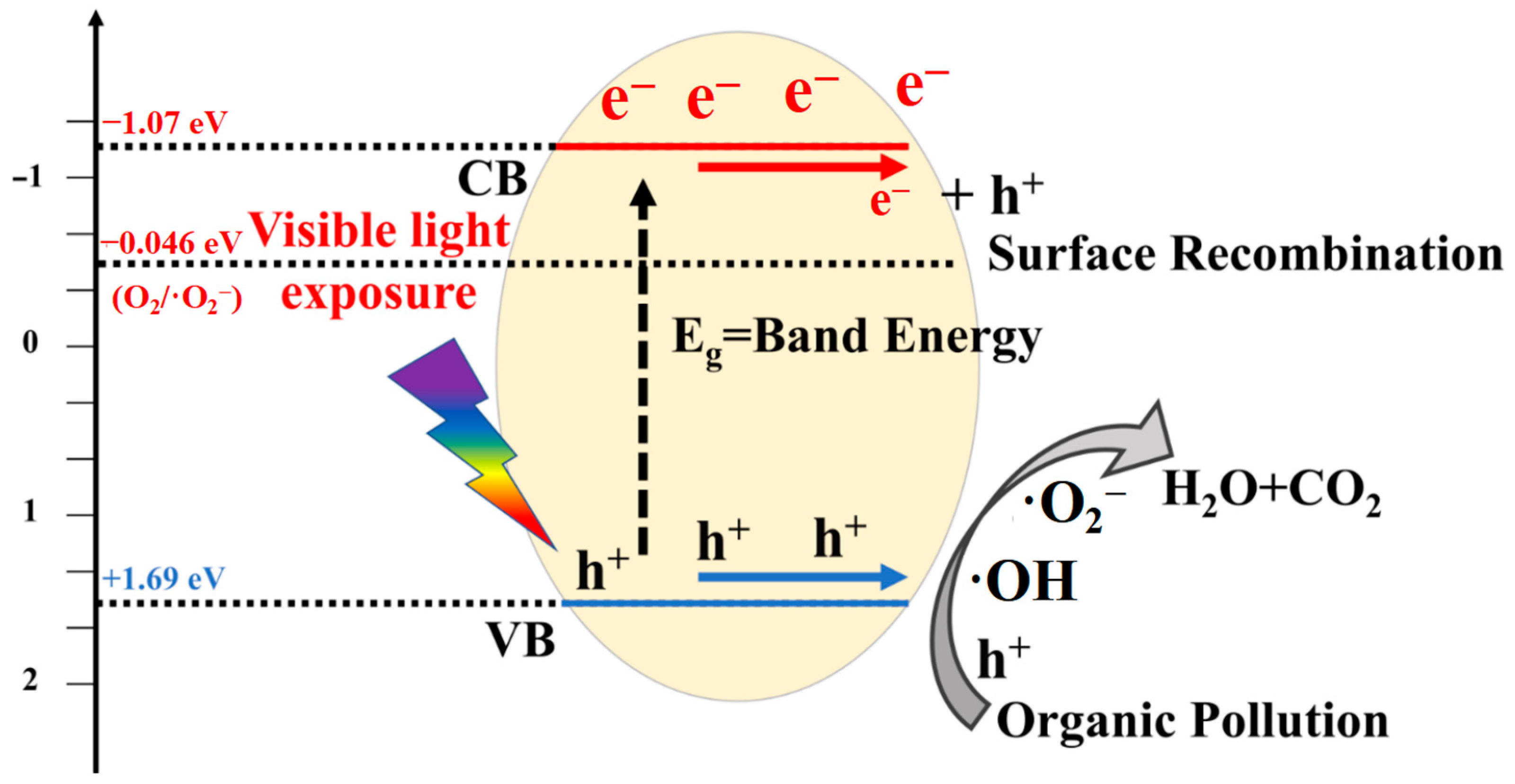
With the rapid advancement of industrialization and urbanization, organic pollutants in water bodies, including organic pollutants (such as antibiotics and dyes) and inorganic contaminants (such as metal ions), pose an increasing threat to the ecological environment and human health. Photocatalytic technology can utilize solar energy under ambient temperature and pressure to completely mineralize organic pollutants into carbon dioxide and water, and is therefore regarded as a green and efficient water treatment technology [43]. Figure 2 illustrates the schematic mechanism of photocatalytic degradation of pollutants [44]. Electrons in the semiconductor valence band (VB) can be excited by photons with energy greater than the semiconductor bandgap (Eγ > EBG). The band gap is the energy difference between the top of the filled VB and the bottom of the empty conduction band (CB). When light excites an electron, it jumps from the top of the VB to the bottom of the CB, leaving a positively charged hole in the VB. This movement of charge naturally generates a photovoltage, which is approximately equal to the semiconductor’s bandgap. Holes in the VB act as strong oxidizing agents, while electrons in the CB act as strong reducing agents, capable of undergoing redox reactions with water or pollutants.
Among numerous photocatalysts, Bi2WO6 exhibits great application potential due to its unique layered structure and suitable bandgap width, enabling it to respond to visible light.

3.1.1. Degradation of Antibiotics

Tetracyclines, fluoroquinolones, β-lactams, sulfonamides, and macrolides are the most widely studied categories of antibiotic pollutants in photocatalytic degradation research [45]. Currently, antibiotics enter aquatic environments primarily through medical wastewater discharge, livestock breeding wastewater, and aquaculture medications, posing serious threats to ecosystem stability and public health [46]. These pollutants exhibit high persistence in water bodies, not only disrupting the balance of aquatic microbial communities and inducing the generation and spread of drug-resistant bacterial strains but also potentially causing hazards to higher organisms through bioaccumulation along the food chain [47]. Furthermore, the inhibitory effects of antibiotics on aquatic organisms such as algae further weaken the self-purification capacity of water bodies. These pollutants can also migrate through the water cycle into soil and groundwater systems, leading to composite pollution and exacerbating environmental risks.
To address the above issues, Jiang et al. [48] synthesized composite photocatalysts of Bi2WO6 and carbon spheres (CSs) via a hydrothermal method. The study found that, at a CS loading of 2 wt%, the composite exhibited excellent photocatalytic degradation performance for tetracycline (TC) and good cyclic stability. Mechanistic analysis revealed that photogenerated electrons in Bi2WO6 migrate to the CS surface, significantly promoting the separation of photogenerated electron–hole (e/h+) pairs, thereby greatly enhancing the photocatalytic activity of the composite.
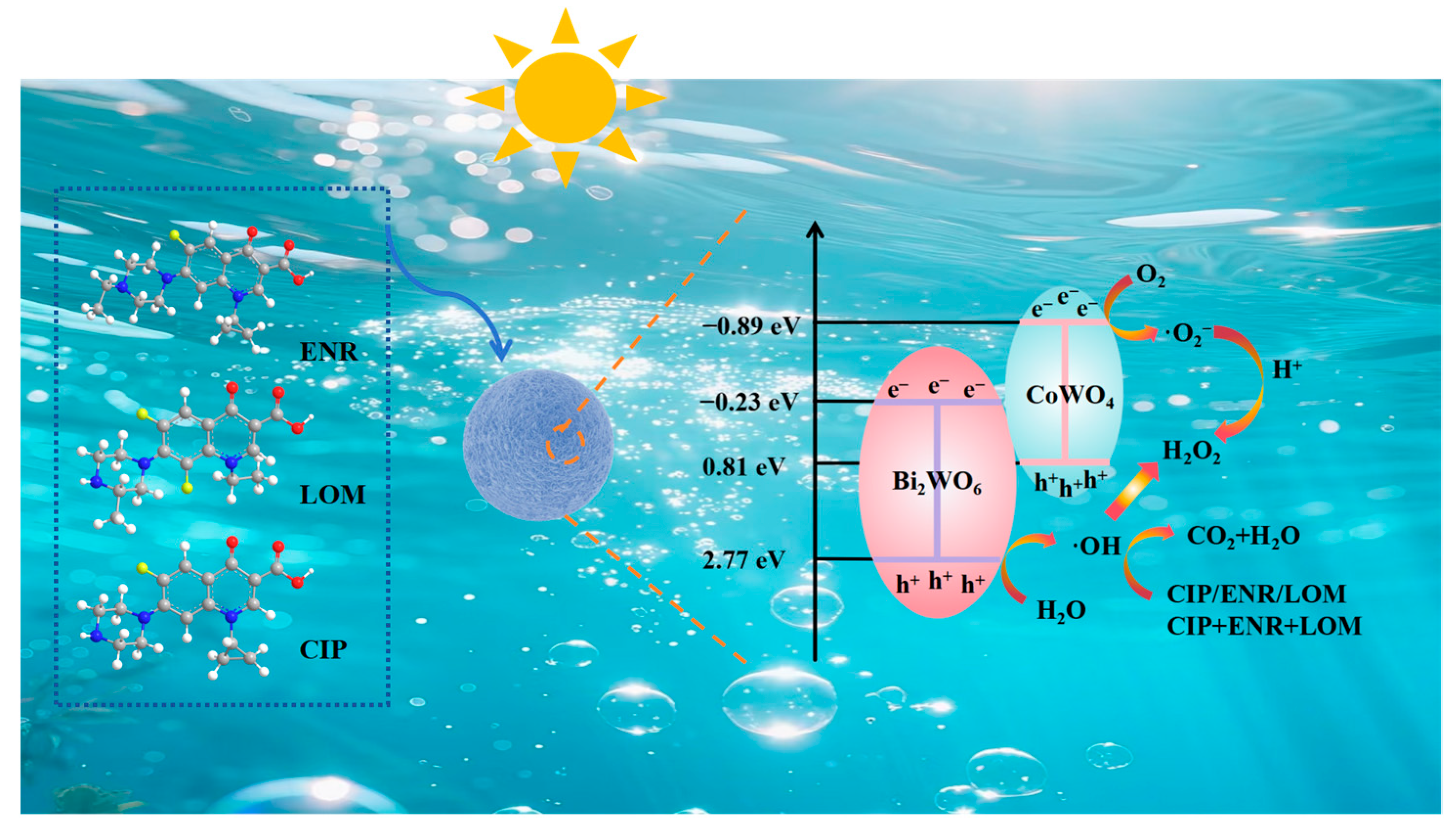
Chen et al. [49] successfully constructed an S-scheme heterojunction BPQDs/BWO photocatalyst by anchoring black phosphorus quantum dots (BPQDs) onto Bi2WO6 nanosheets, significantly achieving efficient visible-light degradation of various antibiotics including amoxicillin (AMX). Experimental results showed that the BPQDs/BWO composite achieved an AMX removal rate of 94.5% within 60 min. The hollow porous spherical structure of BWO enhances visible light absorption and reflection while also providing more active sites for the reaction; simultaneously, the S-scheme heterojunction formed between BPQDs and BWO effectively promotes the separation of photogenerated electron–hole pairs. The synergistic effect of both factors collectively achieves a significant enhancement in the photocatalytic performance of the composite. Tai et al. [50] successfully prepared Bi2WO6 nanoparticles rich in grain boundaries via a two-step solvothermal method. Compared with pristine Bi2WO6, the as-prepared nanoparticles exhibited significantly enhanced photocatalytic activity for the degradation of antibiotic pollutants under visible light irradiation. Within 60 min of visible light irradiation, the photocatalytic degradation efficiency of the material for ciprofloxacin increased dramatically from 62.51% to 98.27%. The study indicated that numerous structural defects (such as dislocations and vacancies) form near the grain boundaries. These defects not only increase the density of grain boundary sites but also effectively promote the separation and migration of photogenerated carriers, thereby significantly enhancing the adsorption and degradation capacity toward antibiotics. Wang [51] successfully synthesized a novel three-dimensional (3D) hierarchical flower-like CoWO4@Bi2WO6 Z-scheme heterojunction photocatalyst via a simple solvothermal method and systematically investigated its photocatalytic degradation performance toward single and ternary mixed antibiotics. As shown in Figure 3, the formation of a Z-scheme p-n heterojunction between Bi2WO6 and CoWO4 effectively promotes the separation of photoinduced electrons and holes, enhancing the photocatalytic capability. Meanwhile, the unique 3D flower-like hierarchical structure enhances visible light absorption capacity. The results showed that enrofloxacin (ENR), lomefloxacin (LOM), and ciprofloxacin hydrochloride (CIP) exhibited similar degradation trends within 180 min, with corresponding removal efficiencies reaching 84.6%, 83.6%, and 74.2%, respectively. Notably, the composite achieved a total degradation efficiency of 81.1% for the ENR-LOM-CIP mixed antibiotics, demonstrating its application potential in the treatment of complex antibiotic pollution systems.
Liu et al. [52] used the sol–gel method to immobilize Eu3+/Bi2WO6 composites on glass microspheres, thereby constructing a novel packed-bed photocatalytic microreactor (GPR) for the continuous degradation of TC. Under conditions of a flow rate of 70 µL/min and an initial concentration of 1 mg/L, the system achieved a TC degradation rate as high as 98%. It demonstrated excellent stability, maintaining over 96% of its initial activity during 12 h of continuous operation, and proved effective in complex environments. Additionally, the system achieved a removal efficiency of 96.67% in actual wastewater.
The above results indicate that Bi2WO6-based photocatalysts not only demonstrate high efficiency in pollutant degradation but also exhibit good operational stability and resistance to environmental interference, making them a viable option for the treatment of antibiotic-contaminated wastewater and the purification of natural water bodies.
Despite these advances, certain gaps remain. Most studies focus on single-antibiotic systems under idealized laboratory conditions, whereas real wastewater contains multiple antibiotics, organic matter, and inorganic ions that may inhibit performance. Additionally, long-term stability, leaching of metal ions (e.g., Bi, W, Co), and the toxicity of degradation by-products are not yet fully addressed.

3.1.2. Dye Degradation

The rapid development of industry, while driving economic growth, has also brought increasingly severe water pollution problems. As typical industrial pollutants, organic dyes are widely present in wastewater discharged from textile, printing, pharmaceutical, paint, and papermaking industries, exhibiting strong biotoxicity and potential carcinogenic risks. These pollutants have stable structures and are difficult to degrade naturally. Their long-term persistence in water bodies continuously increases their biological resistance. If they remain in domestic water supplies, they pose even more serious threats to ecosystems and human health.
Huang et al. [53] synthesized a flower-like catalyst with an Er3+ doping amount of 7 wt% (Er7–Bi2WO6) using a facile hydrothermal method. Under visible light irradiation (λ > 420 nm), Er7–Bi2WO6 achieved a RhB degradation efficiency of 92% within 80 min, significantly higher than that of pristine Bi2WO6. The study indicated that an appropriate amount of Er3+ doping not only optimized the band structure of Bi2WO6 and expanded its visible light response range but also effectively suppressed the recombination of photogenerated electron–hole pairs, thereby significantly enhancing the photocatalytic degradation performance of the material.
Zhu et al. [54] successfully prepared BiPO4/Bi2WO6 composite photocatalysts using an ultrasonication-calcination method. The material exhibited excellent photocatalytic degradation performance for various types of organic pollutants under simulated solar light irradiation. Experimental results showed that the apparent degradation rate constant of 5.0% BiPO4/Bi2WO6 for MB was 0.0305 min−1, which is 25.4 times and 3.2 times that of pure BiPO4 and Bi2WO6, respectively. During the photocatalytic process of the BiPO4/Bi2WO6 composite, Bi2WO6 absorbs visible light to generate photogenerated holes, which then transfer to the valence band of BiPO4; meanwhile, BiPO4 absorbs ultraviolet light to generate photogenerated electrons, which migrate to the conduction band of Bi2WO6. The synergistic interaction between BiPO4 and Bi2WO6 not only broadens the light absorption spectrum range but also effectively promotes the separation and migration of photogenerated charges, thereby significantly improving the photocatalytic performance.
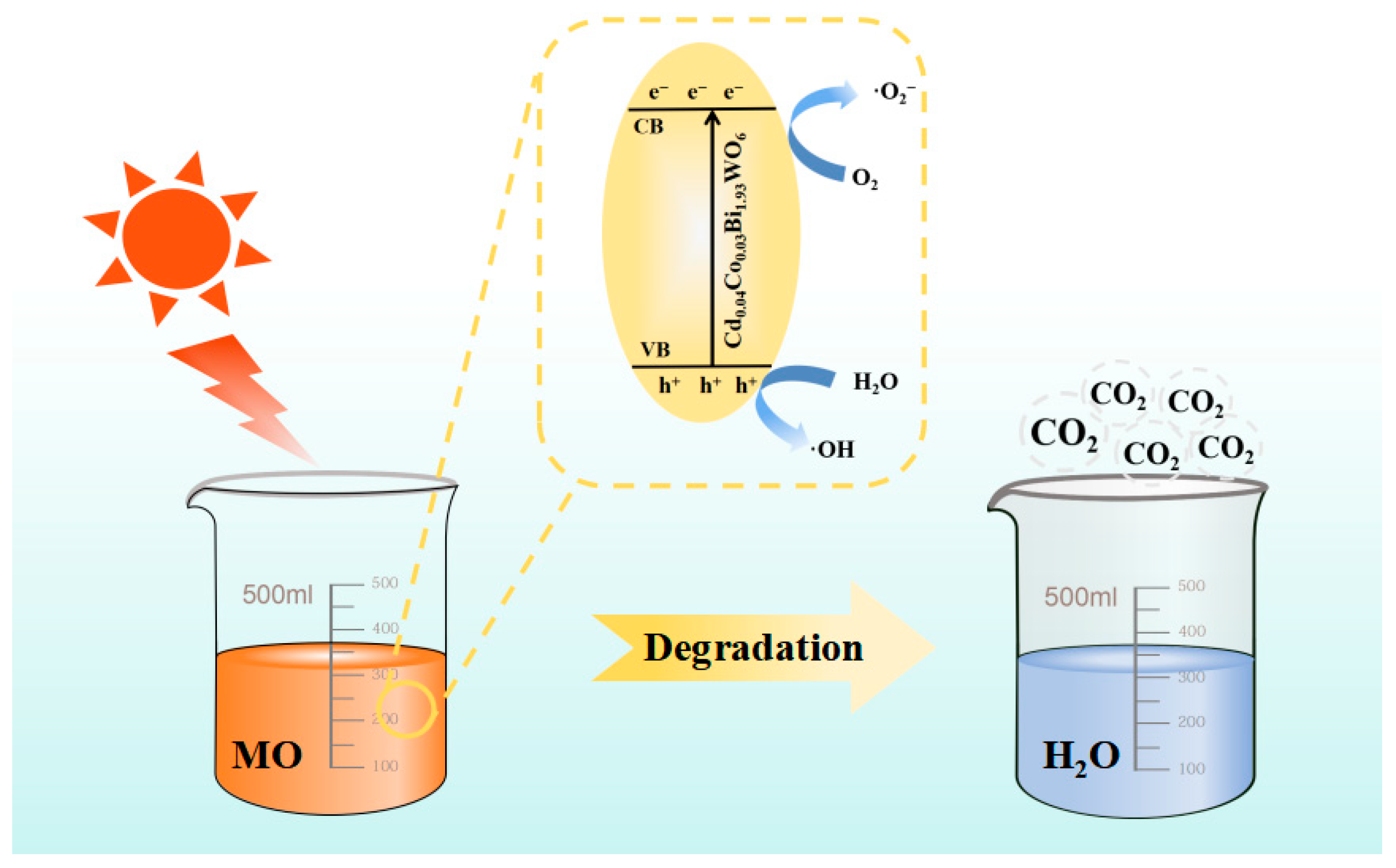
Qadeer et al. [55] successfully prepared Cd and Co co-doped Bi2WO6 nanostructures via a hydrothermal method, aiming to enhance their photocatalytic degradation capability for methyl orange (MO) dye. The study found that co-doping reduced the bandgap of the material from 2.75 eV to 1.57 eV, not only enhancing the visible light absorption range but also effectively suppressing the recombination of photogenerated electron–hole pairs, with the relevant mechanism illustrated in Figure 4. Experimental results showed that the optimized sample (Cd0.04Co0.03Bi1.97WO6) achieved a MO degradation efficiency as high as 98% within 64 min and maintained 92% catalytic activity after five consecutive cycles, demonstrating excellent stability.

3.1.3. Heavy Metal Pollution Treatment

Photocatalytic degradation technology is mainly applied to the removal of organic pollutants; however, the hazards of heavy metals in water cannot be ignored. Heavy metals (such as lead, mercury, cadmium, and chromium) are highly toxic, non-degradable, and tend to accumulate in the environment over long periods, making them difficult to eliminate through natural decomposition processes [56]. They progressively bioaccumulate through the food chain, posing sustained threats to ecosystems. Once entering the human body, heavy metals can strongly interact with proteins and enzymes, causing their deactivation, and may also accumulate in organs, leading to chronic poisoning, impairing nervous system, liver, and kidney functions, and even causing cancer or deformities [57].
Abdulaziz et al. [58] used a nonionic surfactant (Pluronic P65) to prepare mesoporous Bi2WO6 nanoparticles via a sol–gel method, and they were then modified with MoS2 to successfully synthesize MoS2/Bi2WO6 n-n heterojunction photocatalysts with different mass fractions. The study showed that the optimized 12% MoS2/Bi2WO6 photocatalyst achieved a photocatalytic reduction efficiency of 99% for Hg(II) within 50 min, with a reaction rate constant three times that of pure Bi2WO6. Both MoS2 and Bi2WO6 are n-type semiconductors with matched band structures, forming an S-scheme heterojunction. In this structure, photogenerated electrons migrate from Bi2WO6 to MoS2, while holes migrate in the opposite direction, significantly suppressing carrier recombination. The synergistic effects of enhanced visible light absorption, large specific surface area, and the built-in electric field at the heterojunction interface significantly improve the separation and migration efficiency of photogenerated carriers, thereby greatly enhancing the photocatalytic reduction performance.
Sun et al. [59] successfully achieved a synergistic photocatalytic process for Cr(VI) reduction and ciprofloxacin oxidation by constructing a dual-vacancy V-Bi2WO6 composite photocatalyst containing oxygen vacancies (OVs) and bismuth vacancies (BiVs). OVs act as shallow electron traps, rapidly capturing photogenerated electrons; meanwhile, BiVs serve as deep relaxation sites, transforming into hole stabilization sites under the electron quenching effect induced by Cr(VI), thereby significantly suppressing photogenerated carrier recombination. The results showed that the system achieved a ciprofloxacin degradation rate of 90.2% within 60 min. Simultaneously, the reduction amounSat of Cr(VI) reached 0.036 mmol/L, demonstrating excellent synergistic catalytic performance.
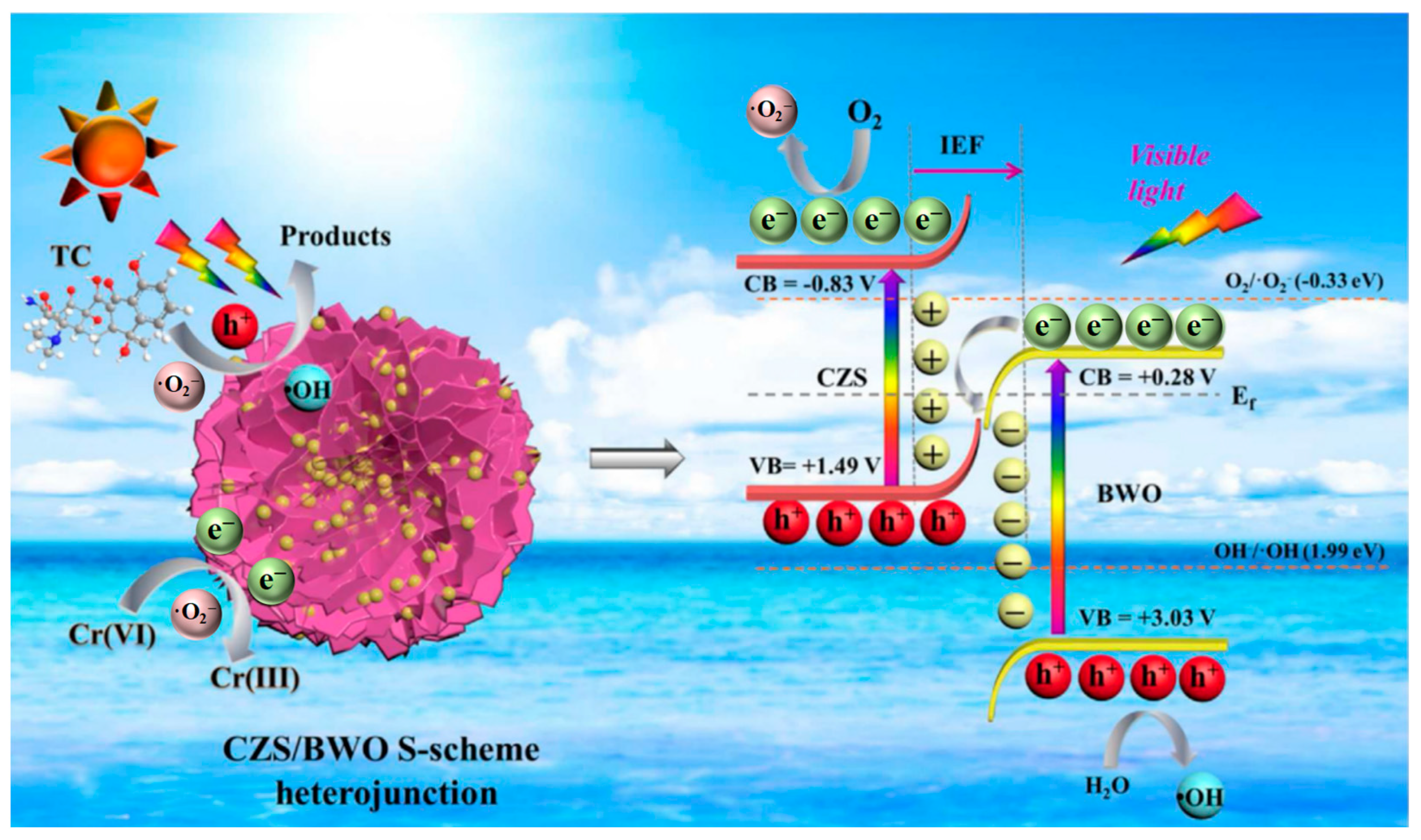
Saadati et al. [60] synthesized graphene oxide-bismuth tungstate nanocomposites (GO-Bi2WO6) via a coprecipitation method and used them as efficient, green photocatalysts for the removal of Pb2+ from water. The results showed that at pH 5.0, 20 mg of GO-Bi2WO6 composite achieved a Pb2+ removal efficiency of 94% within 20 min. Li et al. [61] constructed a Cd0.5Zn0.5S/Bi2WO6 S-scheme heterojunction via a two-step method, achieving efficient degradation of tetracycline and effective reduction of Cr(VI) under visible light irradiation. The successful construction of this S-scheme heterostructure expanded the light absorption range of the photocatalytic material, increased the specific surface area, promoted photogenerated carrier separation, and significantly enhanced redox capability. As shown in Figure 5, in this reaction system, photogenerated holes (h+) and superoxide radicals (·O2) are mainly involved in the efficient oxidation, mineralization, and detoxification of tetracycline, while superoxide radicals (·O2) and photogenerated electrons (e) are primarily responsible for the reduction of Cr(VI). The results showed that the optimized composite exhibited a tetracycline degradation rate of 0.0492 min−1 and a Cr(VI) reduction rate of 0.1593 min−1, which are 3.2 times and 33.6 times those of pure Bi2WO6, respectively, demonstrating exceptional bifunctional catalytic performance.
Fernández-Jonguitud et al. [62] synthesized BiVO4 and Bi2WO6 nanocomposites and their n-Bi2WO6/n-BiVO4 (BiW/BiV) heterojunction (Het) via a one-step hydrothermal method, which were subsequently modified with graphene (G). The experimental results show that BiW, BiV, and Het achieved 93–100% reduction of Cr(VI) within 30 min under illumination by a 50 W blue LED. In addition, G/BiV demonstrated excellent stability, maintaining a 98% Cr(VI) removal rate even after three cycles of reuse. G/BiV showed outstanding practical applicability in the reduction of Cr(VI) in real-world water samples, achieving nearly complete removal (99–100%) in both tap water and wastewater.
However, to date, there has been limited research on Bi2WO6-based photocatalysts in real wastewater, and simulated wastewater cannot fully reflect their actual photocatalytic degradation efficiency.

3.2. Photocatalytic Antibacterial Applications

Public health issues caused by microorganisms such as bacteria have always been a global focus. Traditional disinfection methods, such as chlorination and ultraviolet disinfection, are widely used but may have limitations such as the generation of disinfection byproducts or high energy consumption [63]. As a novel bactericidal approach, photocatalytic antibacterial technology utilizes reactive ROS generated by photocatalysts under light irradiation to destroy bacterial cell structures, offering advantages such as broad antibacterial spectrum, high bactericidal efficiency, and low risk of inducing microbial resistance [64]. Bi2WO6, with its good biocompatibility and visible light response characteristics, has attracted extensive attention in the field of photocatalytic antibacterial research. Currently, the antibacterial mechanism dominated by Bi2WO6 is primarily based on its characteristics as a visible light-responsive photocatalytic material. Specifically, under irradiation with light of specific wavelengths, Bi2WO6 absorbs photon energy and undergoes internal electronic transitions, generating photogenerated electrons (e) and photogenerated holes (h+) with strong redox capabilities. After these photogenerated carriers migrate to the material surface, they react with adsorbed water molecules (H2O) and oxygen (O2) to generate various ROS, mainly including hydroxyl radicals (·OH) and superoxide anion radicals (·O2) [65]. These ROS subsequently attack bacterial cell membranes, triggering lipid peroxidation and causing content leakage; oxidize intracellular proteins and enzymes, leading to their deactivation; and damage genetic material DNA through multiple pathways, ultimately resulting in bacterial death.
Li et al. [66] constructed a novel titanium-based infrared photocatalytic antibacterial system, specifically a gold (Au)-modified Au@Bi2WO6 nanosheet composite coating. The near-infrared-induced surface plasmon resonance (SPR) effect promotes partial photoinduced electron transfer between Au and Bi2WO6, accelerates charge transport, and reduces the electron–hole recombination rate. Consequently, electrons more readily react with water to generate a large amount of ROS, endowing the coating with high antibacterial capacity. The results showed that within 15 min, this antibacterial system achieved antibacterial rates of 99.96% against E. coli and 99.62% against S. aureus under 808 nm near-infrared irradiation, demonstrating excellent antibacterial performance.
Yu et al. [67] successfully constructed Bi5O7I/Bi2WO6 heterojunction nanocomposites via a coprecipitation-hydrothermal method and investigated their performance in the degradation of oxytetracycline (OTC) and antibacterial activity under visible light. The results showed that, under visible light irradiation for 90 min, the Bi5O7I/Bi2WO6 composite achieved an OTC degradation rate of 98.3% and simultaneously attained an inactivation rate of 100% against E. coli. The formation of the heterojunction promotes the separation and transport of photogenerated electron–hole pairs, generating more ROS. These reactive ROS can destroy bacterial cell membrane structures, leading to loss of membrane integrity, content leakage, and ultimately bacterial death. Zhang et al. [68] prepared Bi2WO6 with surface tungsten vacancies (WVs) and oxygen vacancies (OVs) using an alkali etching method. As discussed in this work, the co-introduction of WVs and OVs not only promotes the separation of photogenerated carriers but also significantly reduces charge transfer resistance, thereby greatly enhancing the degradation and antibacterial performance of the as-prepared material. The results showed that under simulated solar light irradiation, the modified Bi2WO6 achieved a degradation rate of 90% for bisphenol A (BPA) within 120 min; under visible light irradiation, it achieved an inactivation efficiency of 92% against E. coli within 90 min.
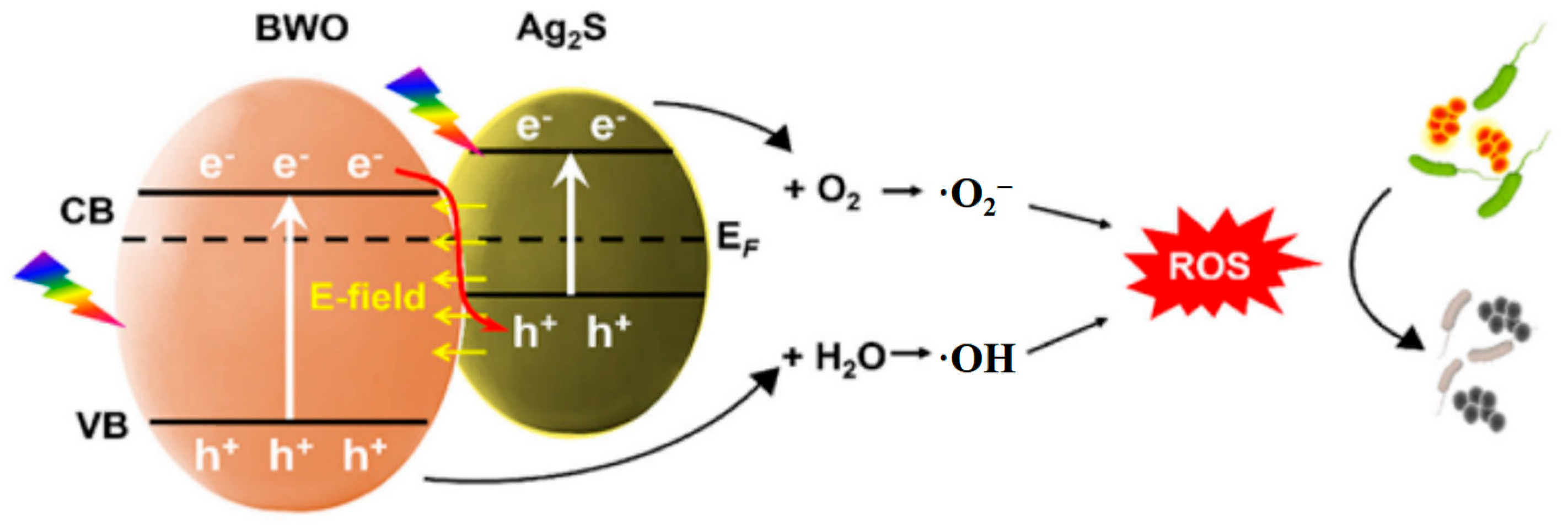
Wei et al. [69] prepared Bi2WO6-Ag2S Z-scheme heterojunction nanomaterials via a two-step hydrothermal method. As shown in Figure 6, this Z-scheme heterojunction effectively promotes the electron and hole separation capability of the composite material, where electrons and holes can react with water molecules and oxygen, respectively, to generate highly oxidizing ·OH and ·O2. These two ROS acts synergistically to significantly enhance bacterial oxidative damage and death. Antibacterial experimental results showed that the as-prepared composite achieved inhibition rates of 61.62% against E. coli and 73.40% against S. aureus, demonstrating good antibacterial performance.
Bi2WO6-based photocatalytic materials can generate abundant ROS through their visible-light responsiveness, effectively destroying bacterial structures and achieving excellent photocatalytic antibacterial effects. This makes them highly promising for applications in the field of public health antibacterial protection.

3.3. Energy Conversion and Storage

In addition to the above application scenarios, Bi2WO6 also demonstrates significant potential in the field of energy conversion and storage, particularly attracting considerable attention in research areas such as photocatalytic water splitting for hydrogen production, carbon dioxide reduction, and photocatalytic nitrogen fixation.
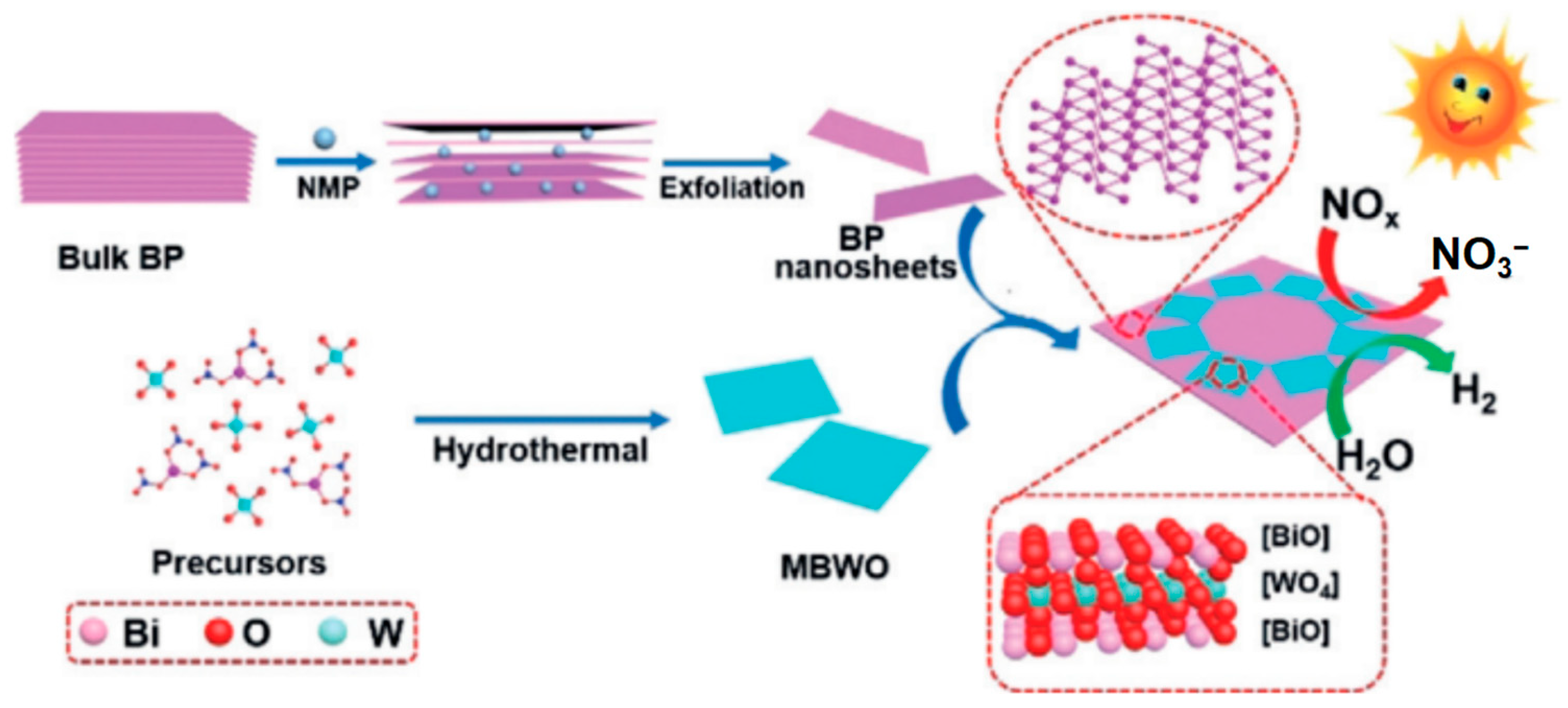
In the area of photocatalytic water splitting for hydrogen production, researchers typically modify Bi2WO6 using strategies such as heterojunction construction, element doping, or cocatalyst loading. These approaches can effectively broaden its light response range, promote the separation and migration of photogenerated electron–hole pairs, and thereby improve the efficiency and stability of the hydrogen evolution reaction. As shown in Figure 7, Hu et al. [70] successfully constructed a two-dimensional black phosphorus (BP)/monolayer Bi2WO6 (MBWO) Z-scheme heterojunction photocatalyst (BP/MBWO). The study showed that this composite material exhibited good performance in photocatalytic water splitting for hydrogen production, achieving a hydrogen evolution rate as high as 21,042 µmol/g, which is 9.15 times that of pure Bi2WO6.
In the field of photocatalytic carbon dioxide reduction, Bi2WO6-based photocatalysts can utilize solar energy to convert the greenhouse gas CO2 into high-value-added fuels or chemicals such as methane, methanol, and carbon monoxide, representing one of the important technological pathways for achieving carbon neutrality goals. Zhao et al. [71] successfully substituted Bi3+ with Ag+ in ultrathin Bi2WO6 via a liquid-phase cation exchange method, preparing Ag-BWO photocatalysts. The introduction of Ag+ not only enhanced the adsorption of CO2 and H2O molecules but also promoted the transfer of photogenerated carriers. The optimized Ag-BWO exhibited excellent photocatalytic CO2 reduction performance under sacrificial-agent-free conditions, achieving a total CO generation rate of 116.96 µmol/g with a selectivity of 95.7%, approximately 4.2 times that of pure Bi2WO6.
In the area of photocatalytic nitrogen fixation, the photogenerated electrons produced by Bi2WO6 under light irradiation can reduce inert N2 molecules in the air into nitrogen-containing compounds such as NH3, providing a green and sustainable alternative to the traditional energy-intensive Haber-Bosch process. Wang et al. [72] synthesized Bi2WO6 hollow microspheres containing oxygen vacancies (OVs-BWO) using a template-free method and evaluated their photocatalytic nitrogen fixation activity. The experimental results showed that OVs-BWO achieved an ammonia generation rate of 106.4 μmol/gcat after 2 h of reaction under simulated solar light irradiation, which is 18 times higher than the ammonia yield of pure Bi2WO6.
Furthermore, Bi2WO6-based photoelectric generation systems, such as dye-sensitized solar cells or photocatalytic fuel cells, have also attracted extensive attention in recent years. Alfaifi et al. [73] prepared Bi2WO6 electrodes with nanoplatelet and multilayer buckyball-like structures using aerosol-assisted chemical vapor deposition (AACVD). Electrochemical performance test results showed that the nanoplatelet Bi2WO6 electrode achieved a photocurrent density of 170 µA/cm2 at 0.23 V (vs. Ag/AgCl/3 M KCl) under AM 1.5 illumination. Under the same conditions, the multilayer buckyball-like structured electrode achieved a photocurrent density of 220 µA/cm2. These systems directly convert light energy into electrical energy through photocatalytic reactions, offering new approaches for the development of novel clean energy technologies.

4. Conclusions and Future Perspectives

The unique layered structure and suitable narrow bandgap endow Bi2WO6 with excellent photocatalytic performance. The enhanced modification strategies implemented by researchers have further demonstrated its significant application potential in the field of visible-light photocatalysis, making Bi2WO6-based photocatalysts a research hotspot.
This review systematically summarizes the modification strategies and research progress of Bi2WO6-based photocatalysts in environmental remediation, antibacterial applications, and energy conversion and storage. To overcome the inherent drawbacks of Bi2WO6, such as rapid photogenerated carrier recombination and limited visible light response, researchers have developed various modification strategies. As summarized in this paper, including microstructure regulation optimizes morphology and exposed crystal facets; element doping modulates the band structure; heterojunction construction (type II, Z-scheme, S-scheme) represents the most effective means for charge separation; carbon material compositing enhances electron conductivity and pollutant adsorption; surface modification introduces active sites; and compositing with MOFs/COFs/conductive polymers opens new directions for performance enhancement. In terms of applications, Bi2WO6-based photocatalysts demonstrate considerable potential in the degradation of water pollutants (including antibiotics, dyes, and heavy metals), antibacterial action, and energy conversion process such as hydrogen production, CO2 reduction and nitrogen fixation.
Despite these advances, several issues remain to be addressed. First, existing experimental methods and test results are predominantly limited to laboratory-scale studies, lacking low-cost, highly reproducible, and scalable synthesis methods. Second, Bi2WO6-based photocatalysts are obtained as powders or nanosheets, which may pose difficulties in separation and recovery, potential material loss, and risks of secondary contamination in practical applications. Moreover, the toxicity assessment of the degradation intermediates and byproducts remains insufficient, hindering the evaluation of long-term operational and economic feasibility. Finally, although various reported modification strategies have achieved varying degrees of success in improving carrier separation efficiency and overall photocatalytic performance, the underlying mechanistic governing multicomponent synergy and charge transfer kinetics in complex systems remain poorly understood and lack robust theoretical support, warranting further in-depth investigation. Future research should move beyond proof-of-concept studies toward real-world applicability, focusing on mixed pollutants, by-product safety, long-term stability, and scalable reactor design.

Author Contributions

Conceptualization, X.C. and Z.S.; Literature Search, X.C., Y.D. and R.S.; software, Y.C.; writing—original draft preparation, X.C.; writing—review and editing, Z.S.; supervision, Z.S.; funding acquisition, Z.S. All authors have read and agreed to the published version of the manuscript.

Funding

This research was funded by State Key Laboratory of Green Papermaking and Resource Recycling, Qilu University of Technology, Shandong Academy of Sciences, Major Scientific Research Project for the Construction of State Key Lab (No. 2025ZDGZ020), Natural Science Foundation of Shandong Province (Grant No. ZR2023ME046).

Data Availability Statement

The original contributions presented in this study are included in the article. Further inquiries can be directed to the corresponding author.

Acknowledgments

The authors would like to thank DeepSeek for its assistance in improving the English language of this manuscript. The authors have reviewed and edited the output and take full responsibility for the content of this publication.

Conflicts of Interest

The authors declare no conflicts of interest.

References

  1. Leandro, M.K.d.N.S.; Moura, J.V.B.; Freire, P.d.T.C.; Vega, M.L.; Lima, C.d.L.; Hidalgo, Á.A.; Araújo, A.C.J.d.; Freitas, P.R.; Paulo, C.L.R.; Sousa, A.K.d.; et al. Characterization and Evaluation of Layered Bi2WO6 Nanosheets as a New Antibacterial Agent. Antibiotics 2021, 10, 1068. [Google Scholar] [CrossRef]
  2. Hou, Z.L.; Zhao, P.G.; Xiao, Z.Y.; Lu, Y.J.; Sun, J.; Zhang, G.H. Research Progress on Preparation of Bismuth Tungstate-Based Photocatalysts and Their Degradation of Organic Pollutants in Water. Appl. Chem. Ind. 2023, 52, 2915–2919. [Google Scholar] [CrossRef]
  3. Vhangutte, P.P.; Kamble, A.J.; Shinde, D.S.; Bhange, P.D.; Madhale, R.M.; Patil, V.L.; Bhange, D.S. Influence of synthesis methods on physical and photocatalytic properties of Bi2WO6 for decomposition of organic dyes and Cr(VI) reduction. Bull. Mater. Sci. 2023, 46, 56. [Google Scholar] [CrossRef]
  4. Pang, B.; Liu, S.; Tu, Y.; Wang, X. Controllable Synthesis and Enhanced Photoactivity of Two-Dimensional Bi2WO6 Ultra-Thin Nanosheets. ChemistrySelect 2021, 6, 5381–5386. [Google Scholar] [CrossRef]
  5. Li, P.; Zhao, X.; Dai, J.; Han, Y.; Jiang, J.; Zhang, Y. Preparation of large-faced flower-like Bi2WO6 using carbon as a template to enhanced photocatalytic activity under visible light. J. Phys. Chem. Solids 2022, 171, 110968. [Google Scholar] [CrossRef]
  6. Karnan, M.; Lolupiman, K.; Okhawilai, M.; Pattananuwat, P.; Shetty, M.; Venkateshalu, S.; Chen, J.S.; Tan, P.; Qin, J. Nanoarchitechtonic Marvels: Pioneering One-Pot Synthesis of Bi2WO6 Nanostructures for Breakthrough in Symmetric Supercapacitor Innovation. ACS Appl. Energy Mater. 2024, 7, 5490–5500. [Google Scholar] [CrossRef]
  7. Meng, L.; How, Z.T.; Ganiyu, S.O.; Gamal El-Din, M. Solar photocatalytic treatment of model and real oil sands process water naphthenic acids by bismuth tungstate: Effect of catalyst morphology and cations on the degradation kinetics and pathways. J. Hazard. Mater. 2021, 413, 125396. [Google Scholar] [CrossRef]
  8. Zhang, L.; Wang, W.; Zhou, L.; Xu, H. Bi2WO6 Nano- and Microstructures: Shape Control and Associated Visible-Light-Driven Photocatalytic Activities. Small 2007, 3, 1618–1625. [Google Scholar] [CrossRef]
  9. Wang, L.; Wei, L.; Fan, Q.; Yu, C. Recent advances in the design and fabrication of ZnIn2S4-based photocatalysts for photocatalytic CO2 reduction into value-added chemicals. Sustain. Energy Fuels 2025, 9, 5791–5810. [Google Scholar] [CrossRef]
  10. Zhu, W.; Cao, Y.; Li, S.; Li, X. Degradation of iohexol by Cu ion-doped Bi2WO6 activated peroxydisulfate under synergistic visible-light photocatalysis/piezoelectric catalysis. Chem. Eng. J. 2026, 528, 172007. [Google Scholar] [CrossRef]
  11. Shi, Y.; Li, P.; Chen, H.; Wang, Z.; Song, Y.; Tang, Y.; Lin, S.; Yu, Z.; Wu, L.; Yu, J.C.; et al. Photocatalytic toluene oxidation with nickel-mediated cascaded active units over Ni/Bi2WO6 monolayers. Nat. Commun. 2024, 15, 4641. [Google Scholar] [CrossRef]
  12. Zhang, Y.; Zhao, Y.; Xiong, Z.; Gao, T.; Gong, B.; Liu, P.; Liu, J.; Zhang, J. Elemental mercury removal by I-doped Bi2WO6 with remarkable visible-light-driven photocatalytic oxidation. Appl. Catal. B Environ. 2021, 282, 119534. [Google Scholar] [CrossRef]
  13. Liu, W.; Qi, K.; Wang, Y.; Wen, F.; Wang, J. Halogen-induced polymorphic Bi2WO6-x halogen2x with highly photocatalytic performance and mechanism investigation. Appl. Surf. Sci. 2022, 600, 154160. [Google Scholar] [CrossRef]
  14. Han, Z.; Song, Y.; Jia, Y.; Wang, Y.; Shi, J.; Liu, X.; Yu, L.; Li, Z.; Cheng, Y.; Zhang, H.; et al. Classification and Characterization Methods for Heterojunctions. Adv. Mater. Interfaces 2025, 12, 2500191. [Google Scholar] [CrossRef]
  15. He, L.; Zhang, L.L.; Zhou, H.; Nie, Y.; Wang, H.; Tang, B.; Li, H.; Ma, T.; Zhang, H. Boosting Photocatalytic Upcycling of Liquid Biomass into Biodiesel via Microenvironment Modulation. Adv. Energy Mater. 2024, 15, 2403168. [Google Scholar] [CrossRef]
  16. Krishnan, A.; Bindu, M.; Archana, K.; Arsha, A.S. Multiple heterojunctions in photocatalysis. Adv. Colloid Interface Sci. 2026, 355, 103932. [Google Scholar] [CrossRef]
  17. Lv, Y.-R.; Wang, Z.-L.; Yang, Y.-X.; Luo, Y.; Yang, S.-Y.; Xu, Y.-H. Tin bisulfide nanoplates anchored onto flower-like bismuth tungstate nanosheets for enhancement in the photocatalytic degradation of organic pollutant. J. Hazard. Mater. 2022, 432, 128665. [Google Scholar] [CrossRef]
  18. Guan, Z.; Li, X.; Wu, Y.; Chen, Z.; Huang, X.; Wang, D.; Yang, Q.; Liu, J.; Tian, S.; Chen, X.; et al. AgBr nanoparticles decorated 2D/2D GO/Bi2WO6 photocatalyst with enhanced photocatalytic performance for the removal of tetracycline hydrochloride. Chem. Eng. J. 2021, 410, 128283. [Google Scholar] [CrossRef]
  19. Attari, K.; Shekarriz, S.; Montazer, M.; Shariatinia, Z.; Mokhtari, J. Applications of graphene, graphene oxide, and reduced graphene oxide on cotton fabric. Cellulose 2025, 32, 5795–5839. [Google Scholar] [CrossRef]
  20. Singh, R.; Samuel, M.S.; Ravikumar, M.; Ethiraj, S.; Kumar, M. Graphene materials in pollution trace detection and environmental improvement. Environ. Res. 2024, 243, 117830. [Google Scholar] [CrossRef]
  21. Zhou, F.; Zhu, Y. Significant photocatalytic enhancement in methylene blue degradation of Bi2WO6 photocatalysts via graphene hybridization. J. Adv. Ceram. 2012, 1, 72–78. [Google Scholar] [CrossRef][Green Version]
  22. Ma, H.; Shen, J.; Shi, M.; Lu, X.; Li, Z.; Long, Y.; Li, N.; Ye, M. Significant enhanced performance for Rhodamine B, phenol and Cr(VI) removal by Bi2WO6 nancomposites via reduced graphene oxide modification. Appl. Catal. B Environ. 2012, 121–122, 198–205. [Google Scholar] [CrossRef]
  23. Kong, J.; Wei, Y.; Zhou, F.; Shi, L.; Zhao, S.; Wan, M.; Zhang, X. Carbon Quantum Dots: Properties, Preparation, and Applications. Molecules 2024, 29, 2002. [Google Scholar] [CrossRef]
  24. Chen, T.; Jia, L.; Xu, S.; Shi, Y.; Jiang, J.; Ge, S.; Rezakazemi, M.; Huang, R. Lignin-derived carbon quantum dots: Advancing renewable nanomaterials for energy and photocatalysis. J. Energy Chem. 2025, 106, 271–290. [Google Scholar] [CrossRef]
  25. Qian, X.; Yue, D.; Tian, Z.; Reng, M.; Zhu, Y.; Kan, M.; Zhang, T.; Zhao, Y. Carbon quantum dots decorated Bi2WO6 nanocomposite with enhanced photocatalytic oxidation activity for VOCs. Appl. Catal. B Environ. 2016, 193, 16–21. [Google Scholar] [CrossRef]
  26. Li, Y.; Wang, S.; Zhu, X.; Yan, H.; Li, F. Photocatalytic degradation of Rh B in Bi2WO6 nanocomposites modified by lignin carbon quantum dots. Res. Chem. Intermed. 2024, 50, 1065–1080. [Google Scholar] [CrossRef]
  27. Sun, C.; Lu, J.; Rao, F.; Sun, Y.; Ye, J.; Gong, S.; Hassan, Q.-U.; Zubairu, S.M.; Zhu, L.; An, Y.; et al. Highly efficient and selective NO photocatalytic abatement by tuning charge separation in multi-walled carbon nanotubes and Bi2WO6 microsphere heterojunction. Surf. Interfaces 2024, 51, 104806. [Google Scholar] [CrossRef]
  28. Rhoomi, Z.R.; Ahmed, D.S.; Jabir, M.S.; Qadeer, A.; Ismael, A.B.; Swelum, A.A. Fabrication of pure Bi2WO6 and Bi2WO6/MWCNTs nanocomposite as potential antibacterial and anticancer agents. Sci. Rep. 2024, 14, 9545. [Google Scholar] [CrossRef] [PubMed]
  29. Cantarim Martins, A.C.; Jochem, L.F.; Sakata, R.D.; de Carvalho, K.Q.; Passig, F.H.; Stival Bittencourt, P.R.; Lied, E.B.; Bizinotto, M.B.; Casagrande, C.A. Evaluation of biochar in cementitious pastes properties. J. Build. Eng. 2026, 121, 115712. [Google Scholar] [CrossRef]
  30. Jing, M.; Ma, Z. Study on the adsorption of Cr(VI) and atrazine by biochar. Front. Earth Sci. 2026, 13, 1714988. [Google Scholar] [CrossRef]
  31. Kahkeci, J.; Aoudi, B.; Sánchez-Montes, I.; Gamal El-Din, M. Engineered biochar supported bismuth tungstate: Unveiling the influence of precursor concentrations and biochar dosage for the solar photocatalysis of 1,3-diphenylguanidine in secondary municipal effluent. Chem. Eng. J. 2024, 483, 149142. [Google Scholar] [CrossRef]
  32. Zhao, J.; Wang, G.; Dong, X.; Zhang, X. Adsorption and photocatalytic regeneration property of biochar-Bi2WO6 composite. J. Nanopart. Res. 2024, 26, 130. [Google Scholar] [CrossRef]
  33. Yao, X.; Wang, X.; Shan, A.; Liu, J. Tuning bulk and surface oxygen vacancies in TiO2 for lowered valence band maximum and enhanced charge separation toward efficient photocatalytic degradation of 4-fluorophenol. Mater. Lett. 2026, 412, 140398. [Google Scholar] [CrossRef]
  34. Zhang, S.; Pu, W.; Chen, A.; Xu, Y.; Wang, Y.; Yang, C.; Gong, J. Oxygen vacancies enhanced photocatalytic activity towards VOCs oxidation over Pt deposited Bi2WO6 under visible light. J. Hazard. Mater. 2020, 384, 121478. [Google Scholar] [CrossRef]
  35. Kamble, B.B.; De, A.; Jang, S.J.; Karmkar, A.; Vinothkumar, V.; Mujawar, N.; Kundu, S.; Kim, T.H. Structural Design of MOF-Based and MOF-Derived Composites for Oxygen Evolution Electrocatalysis: Materials Innovation for Energy and Environmental Sustainability. Energy Environ. Mater. 2026, 9, e70264. [Google Scholar] [CrossRef]
  36. Li, F.; Dai, X.; Zhang, L.; Zhang, Z.; Wu, H.; Li, J.; Guo, J. Convenient interface engineering of hierarchical flower spherical Bi-MOF/Bi2WO6 heterostructures for high-performance visible light photocatalytic degradation of tetracycline hydrochloride. J. Mater. Sci. Mater. Electron. 2024, 35, 463. [Google Scholar] [CrossRef]
  37. Liu, X.; Wu, K.; Tang, Y.; Qi, N.; Zhang, Y.; He, Y.; Fu, M.; Ao, Y. Ti3C2 MXene-derived TiO2@C attached on Bi2WO6 with oxygen vacancies to fabricate S-scheme heterojunction for photocatalytic antibiotics degradation and NO removal. Chin. Chem. Lett. 2025, 36, 110882. [Google Scholar] [CrossRef]
  38. Meng, Q.; Fang, X.; Pang, Z.; Hu, J.; Qu, J.; Li, J.; Cai, Y. Ultrathin COF membranes with polyethyleneimine synergy for efficient dye separation. Chem. Eng. J. 2026, 539, 177066. [Google Scholar] [CrossRef]
  39. Liu, H.; Zhang, J.; Xu, Q.; Tao, H.; Di, T.; Deng, Q.; Wang, S. Bi2WO6/COF S-scheme heterostructure photocatalyst for H2O2 production. J. Mater. Chem. A 2025, 13, 11433–11444. [Google Scholar] [CrossRef]
  40. Wang, Y.; Dai, Z.; Wang, J.; Zhang, D.; Zhou, F.; Li, J.; Huang, J. Scheme-II heterojunction of Bi2WO6@Br-COFs hybrid materials for CO2 photocatalytic reduction. Chem. Eng. J. 2023, 471, 144559. [Google Scholar] [CrossRef]
  41. Li, X.; Yu, Y.; Wang, Y.; Di, Y.; Liu, J.; Li, D.; Wang, Y.; Zhu, Z.; Liu, H.; Wei, M. Withered magnolia-derived BCDs onto 3D flower-like Bi2WO6 for efficient photocatalytic TC degradation and CO2 reduction. J. Alloys Compd. 2023, 965, 171520. [Google Scholar] [CrossRef]
  42. Song, N.; Zhang, S.; Zhong, S.; Su, X.; Ma, C. A direct Z-scheme polypyrrole/Bi2WO6 nanoparticles with boosted photogenerated charge separation for photocatalytic reduction of Cr(VI): Characteristics, performance, and mechanisms. J. Clean. Prod. 2022, 337, 130577. [Google Scholar] [CrossRef]
  43. Yang, J.; Chen, X.; Liu, C.; Li, Z.; Bian, Z.; Chen, C. Development and Application of Photocatalytic Technology in Energy and Environment. Sol. Energy 2024, 363, 50–61. [Google Scholar] [CrossRef]
  44. Li, M.; Yang, L.; Song, Y.; Hou, H.; Fang, Y.; Liu, Y.; Xie, L.; Lu, D. Research Progress on the Preparation, Modification, and Applications of g-C3N4 in Photocatalysis and Piezoelectric Photocatalysis. Inorganics 2025, 13, 300. [Google Scholar] [CrossRef]
  45. Li, M.; Zhou, H.; Ye, M.; Xu, X.; Pang, L.; Zhao, Z.; Xuan, Y. Interactions between typical antibiotics and Microcystis aeruginosa in aquatic environment. CLEAN Soil Air Water 2023, 51, 2200298. [Google Scholar] [CrossRef]
  46. Puri, B.; Vaishya, R.; Vaish, A. Antimicrobial resistance: Current challenges and future directions. Med. J. Armed Forces India 2025, 81, 247–258. [Google Scholar] [CrossRef]
  47. Sun, J.; Li, D.; Wu, T.; Yang, Z.; Ye, D.; Guo, K. Reclaiming the Microbial Battlefield: Adjuvant Strategies to Overcome Antibiotic Resistance. Microorganisms 2026, 14, 609. [Google Scholar] [CrossRef]
  48. Jiang, X.; Chen, S.; Zhang, X.; Qu, L.; Qi, H.; Wang, B.; Xu, B.; Huang, Z. Carbon-doped flower-like Bi2WO6 decorated carbon nanosphere nanocomposites with enhanced visible light photocatalytic degradation of tetracycline. Adv. Compos. Hybrid Mater. 2023, 6, 9. [Google Scholar] [CrossRef]
  49. Chen, L.; Wang, C.; Liu, G.; Su, G.; Ye, K.; He, W.; Li, H.; Wei, H.; Dang, L. Anchoring black phosphorous quantum dots on Bi2WO6 porous hollow spheres: A novel 0D/3D S-scheme photocatalyst for efficient degradation of amoxicillin under visible light. J. Hazard. Mater. 2023, 443, 130326. [Google Scholar] [CrossRef]
  50. Tai, R.; Gao, S.; Tang, Y.; Ma, X.; Ding, P.; Wu, R.; Li, P.; Song, X.; Chen, S.; Wang, Q. Defect Engineering of Bi2WO6 for Enhanced Photocatalytic Degradation of Antibiotic Pollutants. Small 2024, 20, e2310785. [Google Scholar] [CrossRef]
  51. Wang, J.; Yang, L.; Zhang, L. Constructed 3D hierarchical micro-flowers CoWO4@Bi2WO6 Z-scheme heterojunction catalyzer: Two-channel photocatalytic H2O2 production and antibiotics degradation. Chem. Eng. J. 2021, 420, 127639. [Google Scholar] [CrossRef]
  52. Liu, H.; Cheng, J.; Sun, X.; Zhao, Z.; Zhang, C. Glass bead-supported Eu3+/Bi2WO6 packed-bed reactor for efficient photocatalytic removal of tetracycline. J. Water Process Eng. 2025, 79, 109038. [Google Scholar] [CrossRef]
  53. Huang, S.; Wang, M.; Ni, X.; Liu, X.; Fang, Y.; Xiao, Q.; Zhang, Y. Design of oxygen vacancy-rich Er-Bi2WO6 flower-like nanoparticles for enhanced photocatalytic performance in dye degradation and sterilization applications. Adv. Compos. Hybrid Mater. 2025, 8, 134. [Google Scholar] [CrossRef]
  54. Zhu, Y.; Wang, Y.; Ling, Q.; Zhu, Y. Enhancement of full-spectrum photocatalytic activity over BiPO4/Bi2WO6 composites. Appl. Catal. B Environ. 2017, 200, 222–229. [Google Scholar] [CrossRef]
  55. Qadeer, M.A.; Ali, A.R.; Tanveer, M.; Yasmeen, S.; Nabi, G.; Tahir, M. Sun-light-driven photocatalytic annihilation of Methyl Orange degradation, Hydrogen production and stability assessment via conventional hydrothermal preparation of novel Cd and Co co-doped Bi2WO6. Int. J. Hydrogen Energy 2024, 90, 981–991. [Google Scholar] [CrossRef]
  56. Zhou, B.; Zhang, T.; Wang, F. Microbial-Based Heavy Metal Bioremediation: Toxicity and Eco-Friendly Approaches to Heavy Metal Decontamination. Appl. Sci. 2023, 13, 8439. [Google Scholar] [CrossRef]
  57. Chen, Y.; Wang, J.; Wang, C.; Zhu, D.; Niu, L.; Zhang, J. Chlorella-actinomycetes symbiotic system for heavy metal wastewater remediation: Influence of initial heavy metal concentration and remediation time. J. Water Process Eng. 2025, 76, 108183. [Google Scholar] [CrossRef]
  58. Al-Anazi, A.; Al-Hajji, L.A.; Ismail, A.A.; El-Toni, A.M.; Khan, A.; Arif, M. Enhanced Hg(II) reduction activity over two-dimensional n-n heterojunction MoS2/Bi2WO6 nanocomposites under visible light illumination. Opt. Mater. 2024, 157, 116327. [Google Scholar] [CrossRef]
  59. Sun, D.; Chu, D.; Xu, M.; Xing, C.; Ling, L. Defect-mediated electron/hole trapping in Bi2WO6 for concurrent Cr(VI) decontamination and ciprofloxacin mineralization. J. Hazard. Mater. 2025, 496, 139422. [Google Scholar] [CrossRef]
  60. Saadati, T.; Eftekhari, M.; Rezazadeh, N.; Nazarabad, M.K. Graphene oxide–bismuth tungstate (GO–Bi2WO6) nanocomposite as a green adsorbent for lead removal: Isotherm, kinetics and thermodynamic study. Int. J. Environ. Sci. Technol. 2022, 20, 1301–1314. [Google Scholar] [CrossRef]
  61. Li, S.; Cai, M.; Liu, Y.; Wang, C.; Yan, R.; Chen, X. Constructing Cd0.5Zn0.5S/Bi2WO6 S-scheme heterojunction for boosted photocatalytic antibiotic oxidation and Cr(VI) reduction. Adv. Powder Mater. 2023, 2, 100073. [Google Scholar] [CrossRef]
  62. Fernández-Jonguitud, Ó.E.; Leyva-Ramos, R.; Jiménez-López, B.A.; Galindo-Esquivel, I.R.; Aragón-Piña, A.; Mendoza-Mendoza, E. Highly efficient blue-LED-driven Cr(VI) reduction over bare and graphene-decorated Bi2WO6, BiVO4, and Bi2WO6/BiVO4 photocatalysts obtained by straightforward green methods. Appl. Surf. Sci. 2026, 723, 165620. [Google Scholar] [CrossRef]
  63. Chen, X.; Chen, Z.; Ngo, H.H.; Mao, Y.; Cao, K.; Shi, Q.; Lu, Y.; Hu, H.-Y. Comparison of inactivation characteristics between Gram-positive and Gram-negative bacteria in water by synergistic UV and chlorine disinfection. Environ. Pollut. 2023, 333, 122007. [Google Scholar] [CrossRef] [PubMed]
  64. Ran, B.; Ran, L.; Wang, Z.; Liao, J.; Li, D.; Chen, K.; Cai, W.; Hou, J.; Peng, X. Photocatalytic Antimicrobials: Principles, Design Strategies, and Applications. Chem. Rev. 2023, 123, 12371–12430. [Google Scholar] [CrossRef]
  65. Al-Hajji, L.A.; Ismail, A.A.; Nazeer, A.A.; Alsaidi, M. Heterojunctions based on metal layer double hydroxide with Bi2WO6 as efficient solar photocatalyst and antimicrobial agent. J. Phys. Chem. Solids 2025, 207, 112929. [Google Scholar] [CrossRef]
  66. Li, B.; Tan, L.; Liu, X.; Li, Z.; Cui, Z.; Liang, Y.; Zhu, S.; Yang, X.; Kwok Yeung, K.W.; Wu, S. Superimposed surface plasma resonance effect enhanced the near-infrared photocatalytic activity of Au@Bi2WO6 coating for rapid bacterial killing. J. Hazard. Mater. 2019, 380, 120818. [Google Scholar] [CrossRef]
  67. Yu, G.; Liao, X.; Wang, X.; Zhang, J.; Zheng, A.; Cheng, Y.; He, S. Dual-method construction of Bi5O7I/Bi2WO6 heterostructures for efficient photocatalytic degradation of oxytetracycline and bacterial inactivation. J. Alloys Compd. 2025, 1037, 182188. [Google Scholar] [CrossRef]
  68. Zhang, X.; Zhang, Y.; Li, H.; Wang, Y.; Xiang, M.; Yu, W.; Huang, H.; Ou, H. Surface cationic and anionic dual vacancies enhancing photocatalytic activity of Bi2WO6. Appl. Surf. Sci. 2022, 602, 154311. [Google Scholar] [CrossRef]
  69. Wei, L.; Chen, Y.; Yu, X.; Yan, Y.; Liu, H.; Cui, X.; Liu, X.; Yang, X.; Meng, J.; Yang, S.; et al. Bismuth Tungstate–Silver Sulfide Z-Scheme Heterostructure Nanoglue Promotes Wound Healing through Wound Sealing and Bacterial Inactivation. ACS Appl. Mater. Interfaces 2022, 14, 53491–53500. [Google Scholar] [CrossRef]
  70. Hu, J.; Chen, D.; Mo, Z.; Li, N.; Xu, Q.; Li, H.; He, J.; Xu, H.; Lu, J. Z-Scheme 2D/2D Heterojunction of Black Phosphorus/Monolayer Bi2WO6 Nanosheets with Enhanced Photocatalytic Activities. Angew. Chem. Int. Ed. 2019, 58, 2073–2077. [Google Scholar] [CrossRef]
  71. Zhao, L.; Hou, H.; Wang, L.; Bowen, C.R.; Wang, J.; Yan, R.; Zhan, X.; Yang, H.; Yang, M.; Yang, W. Atomic-level surface modification of ultrathin Bi2WO6 nanosheets for boosting photocatalytic CO2 reduction. Chem. Eng. J. 2024, 480, 148033. [Google Scholar] [CrossRef]
  72. Wang, T.; Feng, C.; Liu, J.; Wang, D.; Hu, H.; Hu, J.; Chen, Z.; Xue, G. Bi2WO6 hollow microspheres with high specific surface area and oxygen vacancies for efficient photocatalysis N2 fixation. Chem. Eng. J. 2021, 414, 128827. [Google Scholar] [CrossRef]
  73. Alfaifi, B.Y.; Bayahia, H.; Tahir, A.A. Highly Efficient Nanostructured Bi2WO6 Thin Film Electrodes for Photoelectrochemical and Environment Remediation. Nanomaterials 2019, 9, 755. [Google Scholar] [CrossRef] [PubMed]
Figure 1. Schematic diagram of the orthorhombic crystal structure of Bi2WO6.
Catalysts 16 00548 g001
Figure 2. Schematic diagram of the photocatalytic degradation mechanism.
Catalysts 16 00548 g002
Figure 3. Mechanism of photocatalytic degradation by CoWO4@Bi2WO6.
Catalysts 16 00548 g003
Figure 4. Schematic diagram of the mechanism by which Bi2WO6-based photocatalysts degrade dyes: photocatalytic degradation mechanism of Cd0.04Co0.03Bi1.97WO6.
Catalysts 16 00548 g004
Figure 5. Schematic diagram of the mechanism by which Bi2WO6-based photocatalysts reduce heavy metals: Photocatalytic degradation of antibiotics and reduction of Cr(VI) using Cd0.5Zn0.5S/Bi2WO6.
Catalysts 16 00548 g005
Figure 6. Schematic diagram of the antibacterial mechanism of Bi2WO6-Ag2S.
Catalysts 16 00548 g006
Figure 7. Schematic diagram of the mechanisms of Bi2WO6-based photocatalysts in energy conversion: mechanism of photocatalytic water splitting for hydrogen production at the BP/MBWO heterojunction.
Catalysts 16 00548 g007
Table 1. Modification methods and performance comparison of Bi2WO6 photocatalysts.
Modification CategoryPrimary Mechanism of ActionResultPhotocatalytic EffectReferences
Microstructural Control and Morphology EngineeringIncrease the specific surface area by adjusting the material’s size, dimensions, and geometric morphologyIncreases active site exposure and promotes carrier transport, facilitating recoveryCHA: 100%
RhB: 84%
[7,8]
Element dopingIntroducing foreign elements into the Bi2WO6 lattice to modulate its electronic structure, band structure, and defect statesExpand the light absorption range and suppress recombinationIOH: 100%
Toluene conversion rate: 4560 µmol/(g·h)
RhB: 99%
[9,10,11,12]
Heterostructure FabricationAchieving spatial separation of charges through band matchingSignificantly improve charge separation efficiency and synergistically enhanceGlyphosate: 70.5%
TC: 84%
[13,14]
Carbon-based compositesOptimize charge separation efficiency, enhance the synergy between adsorption and light absorption, and improve material stabilityPromote charge transfer and enhance stabilityMB: 88.1%
RhB: 98%
DPG: 97.74%
[15,16,17,18,19]
Defect Engineering and Surface ModificationIntroduction of oxygen vacanciesPromotes molecular adsorption and activation, acts as an electron trap, and extends carrier lifetimeToluene: 80%[20]
Combined with other advanced materialsEstablishing Efficient Charge Transport Pathways, Broad-Spectrum Light Absorption Coupling, and Structure-Directed SynergyEnhance surface adsorption, promote the separation and migration efficiency of photo-generated carriers, and broaden the visible light absorption rangeTC: 89.2%
CO yield: 19.9 µmol/(g·h)
Cr(VI): 99.7%
[21,22,23,24,25,26]
Disclaimer/Publisher’s Note: The statements, opinions and data contained in all publications are solely those of the individual author(s) and contributor(s) and not of MDPI and/or the editor(s). MDPI and/or the editor(s) disclaim responsibility for any injury to people or property resulting from any ideas, methods, instructions or products referred to in the content.