Article

Cobalt–Copper Bimetallic Mesoporous Carbon Catalyst Activated by Peroxymonosulfate for Efficient Degradation of Tetracycline


1
School of Environmental Science and Engineering, Nanjing Tech University, Nanjing 210009, China
2
College of Materials Science and Engineering, Nanjing Tech University, Nanjing 210009, China
*
Authors to whom correspondence should be addressed.
Catalysts 2026, 16(6), 544; https://doi.org/10.3390/catal16060544
Submission received: 6 May 2026 / Revised: 8 June 2026 / Accepted: 10 June 2026 / Published: 12 June 2026
(This article belongs to the Special Issue Green Catalytic Materials for Environmental Application)

Abstract

To efficiently degrade tetracycline (TC) antibiotic pollution, cobalt-based (Co-OMCs/F) and cobalt–copper bimetallic ((Co+Cu)-OMCs/F) monolithic mesoporous carbon catalysts were synthesized using resorcinol–formaldehyde resin as a carbon precursor, with hexamethylenetetramine (HMT) and formaldehyde (CH2O) as crosslinking agents, followed by high-temperature carbonization under N2. The materials were characterized by XRD, SEM-EDX, HRTEM, and EPR. Key factors-metal loading, PMS concentration, initial pH, and flow rate-were investigated for their effects on TC degradation. Degradation mechanisms and stability were assessed via radical quenching and continuous-flow cycling tests. Results show optimal performance at a cobalt loading of 0.6 g. Compared to CH2O, HMT favors a three-dimensional interconnected mesoporous carbon framework with uniform metal distribution and high crystallinity. Under conditions of 25 mg/L TC, 0.33 mmol/L PMS, pH 7, and 2 mL/min flow rate, the (Co+Cu)-OMCs/F (HMT) catalyst achieved ~93% TC degradation over 9 h of continuous operation, and 95% after three reuse cycles, significantly outperforming the single-metal Cu-OMCs/F catalyst. Radical quenching and EPR identified superoxide radicals (·O2) as the dominant active species (~78% contribution), with sulfate radicals (SO4·−), hydroxyl radicals (·OH), and singlet oxygen (1O2) playing synergistic roles. The synergistic Co-Cu bimetallic effect, combined with the confinement effect of the mesoporous carbon support and HMT-induced uniform nucleation, endows the catalyst with high activity and long-term stability. This work provides a theoretical basis for designing efficient, reusable, monolithic mesoporous carbon-based PMS activation catalysts for advanced antibiotic wastewater treatment.

Graphical Abstract

1. Introduction

In recent years, the overuse and discharge of antibiotics, a class of drugs widely used in human medicine and aquaculture, have led to increasingly severe water pollution problems [1,2,3]. Tetracycline (TC), a typical broad-spectrum antibiotic, is frequently detected in natural water bodies due to its stable chemical structure and resistance to biodegradation. Its long-term presence not only threatens the balance of ecosystems but also induces the emergence of drug-resistant strains, which are ultimately transmitted through the food chain and pose a threat to human health [4,5]. Therefore, the development of efficient and stable wastewater treatment technologies for tetracycline has become a research focus in the environmental field.
Conventional water treatment methods, such as adsorption, biodegradation, and membrane separation, face challenges when treating tetracycline pollutants, including secondary pollution after adsorption saturation, prolonged degradation cycles, and membrane fouling [6,7,8]. Sulfate radical-based advanced oxidation processes (SR-AOPs), due to their high redox potential (2.5–3.1 V) and adaptability to a wide pH range, have demonstrated significant advantages in degrading recalcitrant organic pollutants [9,10,11]. Peroxymonosulfate (PMS), as the primary source of sulfate radicals, requires external energy (such as heat or UV light) or a catalyst to generate radicals [12,13]. Among these methods, transition-metal-catalyzed heterogeneous activation has garnered significant attention due to its simplicity, low energy consumption, and the recyclability of the catalyst.
Cobalt-based catalysts are considered among the most effective materials for PMS activation; however, conventional cobalt-based nanoparticles are prone to agglomeration and exhibit high metal ion leaching rates, leading to reduced catalytic activity and potential risks of secondary pollution [14,15,16]. Confining cobalt species within mesoporous carbon materials, leveraging their high specific surface area, ordered pore structure, and abundant surface functional groups, can effectively improve the dispersion of active components and suppress metal leaching [17,18]. Furthermore, introducing a second metal to construct bimetallic catalysts and leveraging bimetallic synergy and defect engineering to regulate electronic structures and surface properties is expected to further enhance PMS activation efficiency and reduce the amount of precious metals used [19,20,21]. For example, in a Co-Cu bimetallic system, the reversible redox cycle between Co3+/Co2+ and Cu2+/Cu+ accelerates electron transfer while simultaneously forming active defects such as oxygen vacancies, thereby promoting the sustained generation of radicals [22].
Although previous studies have reported the use of cobalt-based or cobalt–copper bimetallic catalysts for the activation and degradation of organic pollutants via the PMS mechanism, there remains a lack of research on the optimization of preparation processes for monolithic mesoporous carbon supports (such as the selection of cross-linking agents), systematic elucidation of bimetallic synergy mechanisms, and comprehensive evaluation of long-term operational stability [23,24,25]. Furthermore, existing powdered catalysts face challenges in separation and recovery during practical water treatment, whereas monolithic catalysts, due to their macroscopic structural configuration, are more suitable for continuous-flow operations and large-scale applications [26,27,28]. Based on this, this study used resorcinolformaldehyde resin as the carbon precursor and employed two crosslinking agents, hexamethylenetetramine (HMT) and formaldehyde (CH2O), to prepare cobalt-based and cobalt–copper bimetallic-loaded mesoporous carbon monolithic catalysts via a high-temperature carbonization process under a nitrogen atmosphere. The effects of key parameters, including metal loading, PMS concentration, initial pH, and solution flow rate, on tetracycline degradation performance were systematically investigated. Combining various characterization techniques such as XRD, SEM, HRTEM, and EPR, the structure-activity relationship between the materials’ microstructure and catalytic activity was revealed, and the degradation mechanism was elucidated through radical-quenching experiments. Additionally, the stability and reusability of the catalysts were comprehensively evaluated through continuous-flow experiments lasting up to 9 h and three cycles of reuse. This study aims to provide a theoretical basis and technical support for the development of highly efficient, stable, and easily recoverable PMS-activated catalysts, thereby promoting the practical application of SR-AOPs in the treatment of antibiotic-contaminated wastewater.

2. Results and Discussion

2.1. Optimization of Preparation Parameters for Co-OMCs/F Catalysts

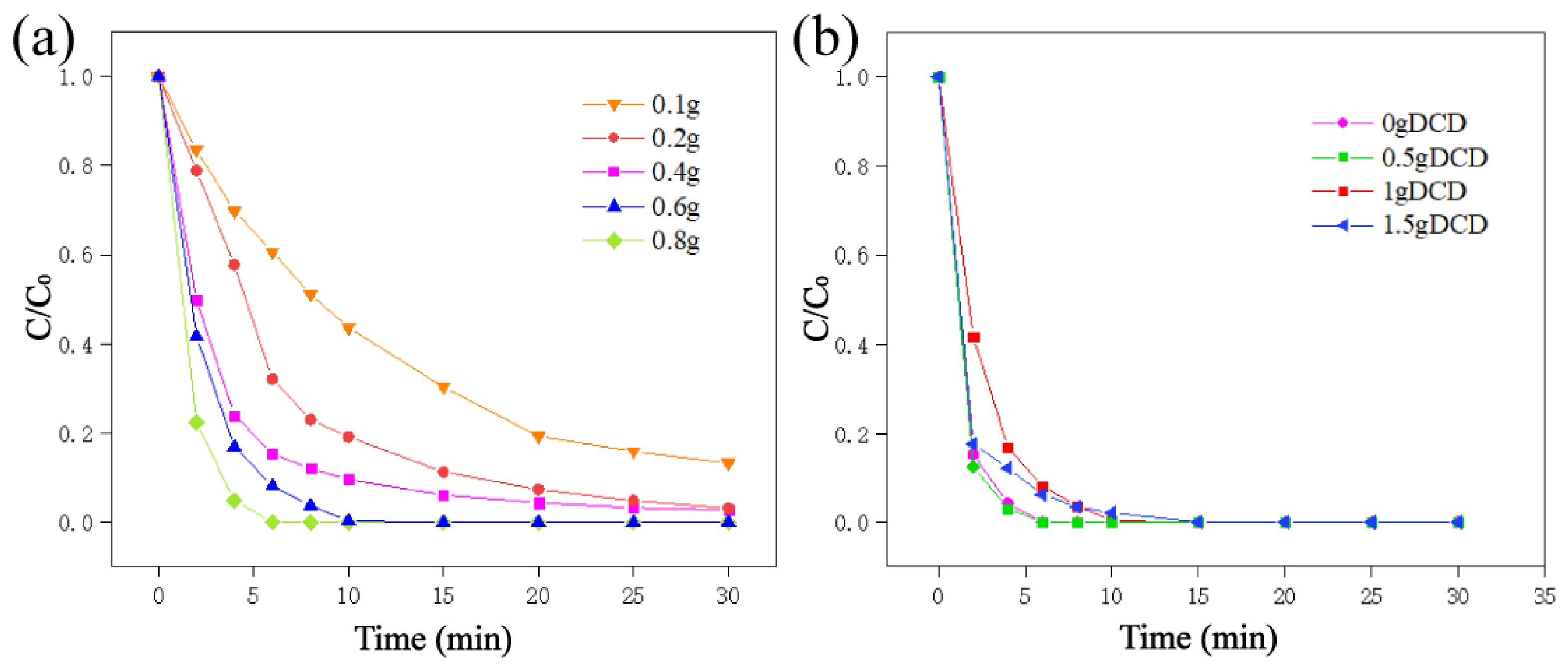
To investigate the influence of varying metal loading levels on the catalytic degradation performance, a series of continuously stirred degradation experiments was conducted under identical conditions: initial TC concentration of 25 mg/L, catalyst dosage of 50 mg, PMS concentration of 0.33 mmol/L, and reaction temperature of 25 °C. The degradation efficiency of TC was evaluated using Co-OMCs/F catalysts with Co loadings of 0.1, 0.2, 0.4, 0.6, and 0.8 g, respectively. As illustrated in Figure 1a, the degradation rate of TC increased with higher Co loading. At a Co loading of 0.1 g, the degradation rate reached approximately 78% at 30 min, representing the maximum within the tested period. When the Co loading was increased from 0.1 g to 0.8 g, complete degradation (100%) was achieved within 6 min, corresponding to a 22% enhancement compared to the lowest loading. Although higher metal loading leads to superior degradation performance, excessively high loading compromises the dispersion of cobalt species on the mesoporous carbon support, resulting in the aggregation of excess cobalt into Co3O4 nanoparticles. These aggregated nanoparticles can block pore channels and cover active sites, thereby reducing the number of available reactive sites, promoting metal ion leaching, and diminishing the long-term stability of the catalyst [29]. Therefore, to ensure high degradation efficiency while minimizing metal waste and maintaining catalyst stability and cost-effectiveness, a moderate Co loading of 0.6 g was selected as the optimal preparation condition in this study.
To investigate the effect of different nitrogen loading levels on the catalyst’s degradation performance, continuous stirred degradation experiments were conducted using Co-OMCs/F catalysts with nitrogen loadings of 0 g, 0.5 g, 1 g, and 1.5 g. As shown in Figure 1b, when the DCD loading was 0.5 g, the material’s degradation performance for TC was essentially the same as that of the non-nitrogen-doped sample, with no significant improvement; however, when the nitrogen loading was increased to 1 g and 1.5 g, the degradation performance actually decreased. This may be because Co is the primary active center for PMS activation in this system, and the doped nitrogen failed to form an effective Co-Nx coordination structure with Co. Furthermore, excess nitrogen may destroy the ordered structure of mesoporous carbon during high-temperature carbonization, reduce the specific surface area, and even induce side reactions that partially quench free radicals, resulting in no improvement or even a decline in catalytic performance [30]. Therefore, nitrogen doping was not performed on the catalyst in subsequent experiments.

2.2. Performance Comparison of Monolithic Catalysts and Optimization of Reaction Conditions

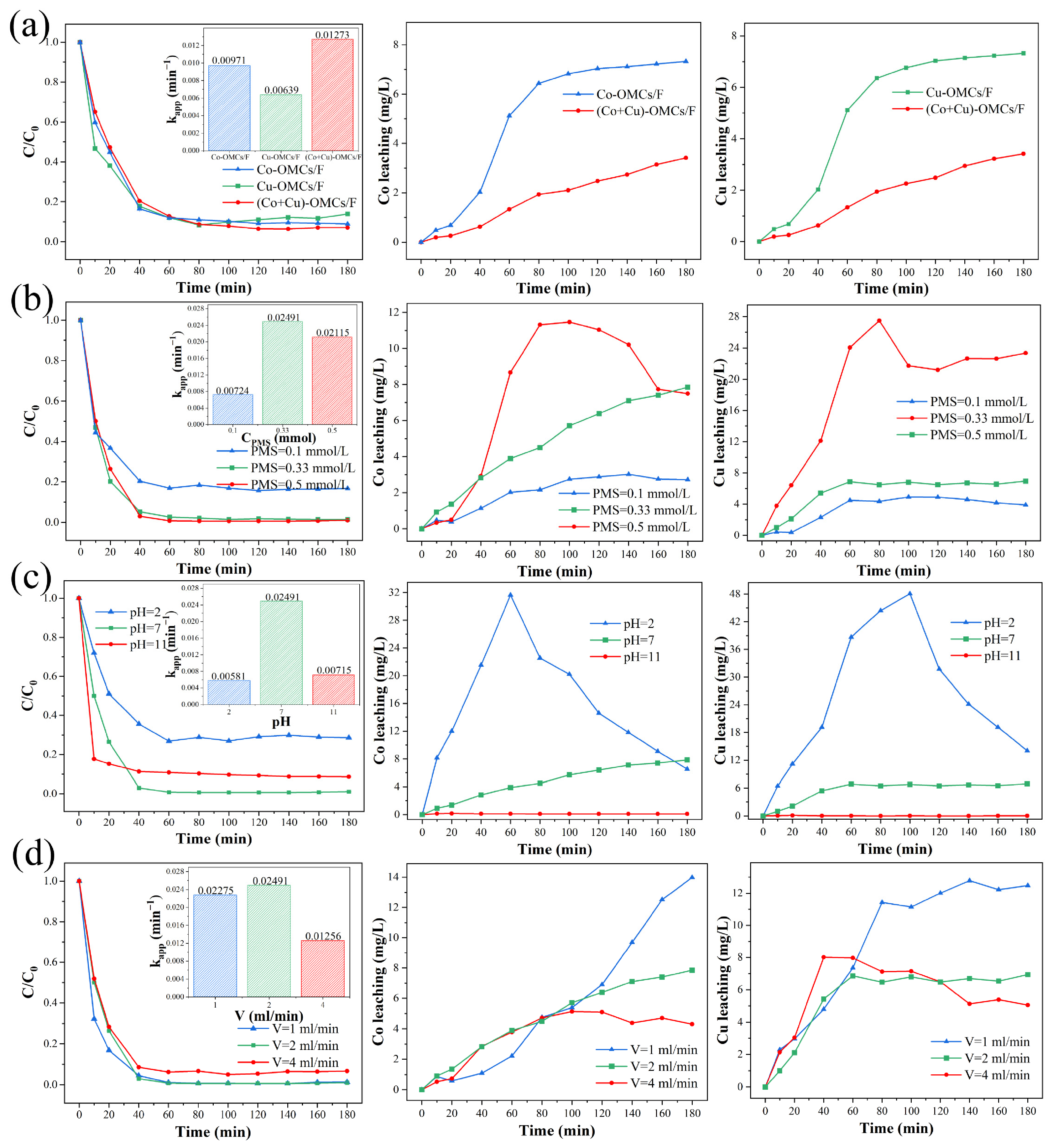
To investigate the comparative degradation performance of monometallic monolithic catalysts and bimetallic composite monolithic catalysts, continuous fixed-bed degradation experiments were conducted for 3 h on Co-OMCs/F, Cu-OMCs/F, and (Co+Cu)-OMCs/F materials under identical conditions: TC concentration = 25 mg/L, PMS = 0.33 mmol/L, and T = 25 °C. As shown in Figure 2a, compared with Co-OMCs/F and Cu-OMCs/F, the (Co+Cu)-OMCs/F material exhibited higher TC degradation rates and higher degradation efficiency, as well as better stability, with a TC degradation rate maintained at around 93%. At the same time, the metal leaching concentration of the (Co+Cu)-OMCs/F material was lower than that of the Co-OMCs/F and Cu-OMCs/F materials, and the amount of metal leaching was smaller. This may be attributed to the fact that during the preparation of the (Co+Cu)-OMCs/F material, the two metal ions form vacancy defects through their mutual interaction, modifying the intrinsic structure and effectively controlling its concentration. The defect effect between the two metals induces favorable changes in the structure and electronic properties of the catalyst material itself, thereby promoting an increase in the catalyst’s catalytic activity [31]. At the same time, the presence of vacancy defects leads to the formation of abundant oxygen vacancies on the catalyst surface; these oxygen vacancies can serve as active sites, increasing the density of active sites, enhancing their reactivity, promoting the activation of PMS to generate free radicals, and improving the resistance to oxidative cracking, thereby increasing degradation efficiency and reducing metal leaching [32]. Therefore, this study focuses on the (Co+Cu)-OMCs/F material to investigate the effects of various conditions on its degradation performance.
To investigate the effect of PMS dosage on the degradation of TC by (Co+Cu)-OMCs/F materials, experiments were conducted under identical conditions: an initial TC concentration of 25 mg/L, pH 7, flow rate of 2 mL/min, and temperature of 25, with PMS concentrations set at 0.1, 0.33, and 0.5 mmol/L, respectively. The results are shown in Figure 2b. When the PMS concentration was increased from 0.33 mmol/L to 0.5 mmol/L, the TC degradation rate decreased by approximately 10%. This indicates that an excess of PMS inhibits the degradation effect, which may be due to self-quenching reactions occurring between excess PMS molecules, resulting in a reduction in the generation of active radicals [33]. On the other hand, the limited number of active sites on the catalyst surface cannot effectively activate excess PMS, thereby leading to a decrease in degradation efficiency [34]. When the PMS concentration was reduced from 0.33 mmol/L to 0.1 mmol/L, the degradation efficiency decreased slightly, but the change was not significant; therefore, 0.33 mmol/L was determined to be a reasonable PMS dosage. The results of metal leaching measurements indicate that the leaching concentrations of cobalt and copper ions were highest at a PMS dosage of 0.5 mmol/L, followed by 0.33 mmol/L, and lowest at 0.1 mmol/L. Overall, the higher the PMS dosage, the higher the metal leaching concentration from the (Co+Cu)-OMCs/F material. This phenomenon can be attributed to the fact that high concentrations of PMS accelerate the oxidative leaching of metal sites on the catalyst surface. The leached homogeneous metal ions (such as Co3+ and Cu2+) can also efficiently activate PMS, further generating a large amount of highly oxidative free radicals. These free radicals, in turn, attack the catalyst support and surface metal species, causing more severe metal release and thereby forming a positive feedback loop [35,36].
To investigate the effect of initial pH on the degradation of TC by (Co+Cu)-OMCs/F-activated PMS, experiments were conducted at pH 2, 7, and 11 under conditions of TC = 25 mg/L, PMS = 0.33 mmol/L, flow rate = 2 mL/min, and T = 25 °C. The results are shown in Figure 2c. Under acidic conditions (pH = 2), the degradation rate was only about 70%, a decrease of approximately 30% compared to neutral conditions (pH = 7, degradation rate of about 93%); under alkaline conditions (pH = 11), the degradation rate was about 10% lower than under neutral conditions. This is primarily because the catalyst surface carries a positive charge under acidic conditions, which, although conducive to electrostatic attraction with HSO5, the presence of TC in its positively charged form hinders adsorption. Additionally, H+-induced acid dissolution accelerates metal leaching, thereby inhibiting catalytic activity [37]. Under alkaline conditions, the catalyst, PMS, and TC all carry negative charges, resulting in electrostatic repulsion. Furthermore, SO42− is converted into ·OH, which has slightly weaker oxidizing power; however, the Co-Cu synergistic effect still maintains a relatively high degradation rate [38]. Metal loss concentration is highest at pH = 2, second highest at pH = 7, and lowest at pH = 11; that is, the lower the pH, the higher the loss. This is attributed to the acid leaching of metals under acidic conditions, whereas under alkaline conditions, metal ions tend to form hydroxide precipitates or be retained by the pore channels [39]. Notably, at pH = 11, the degradation rate still reaches approximately 85% with minimal metal loss, indicating that this catalyst has good application potential in the treatment of alkaline wastewater.
To investigate the effect of solution flow rate on the degradation of TC by (Co+Cu)-OMCs/F-activated PMS, experiments were conducted at a TC concentration of 25 mg/L, pH 7, PMS concentration of 0.33 mmol/L, and a temperature of 25 °C, with flow rates set at 1, 2, and 4 mL/min, respectively. The results are shown in Figure 2d. When the flow rate was reduced from 2 mL/min to 1 mL/min, the degradation rate increased slightly from approximately 93% to 98%. This is because the lower flow rate extended the residence time of the reactants in the catalyst bed, allowing PMS to come into more thorough contact with the active sites on the catalyst surface, thereby improving activation efficiency and enhancing electron transfer, which in turn increased the degradation rate [40]. When the flow rate was increased from 2 mL/min to 4 mL/min, the degradation rate decreased to approximately 91%. This was due to the residence time being too short, preventing PMS from being fully activated and weakening the synergistic effect between the catalyst and PMS. Metal leaching concentration increases as the flow rate decreases. This is attributed to the longer contact time between the reactants and the catalyst at low flow rates, resulting in more prolonged attack by free radicals on the support and metal sites, which leads to the leaching of more metal ions [41]. At high flow rates, rapid liquid flushing may carry away some of the leached ions, while the short contact time results in relatively milder oxidation and corrosion. Taking both degradation efficiency and metal leaching into account, 2 mL/min is the most suitable flow rate.

2.3. The Effect of Cross-Linking Agent Type (HMT, CH2O) on Catalyst Performance

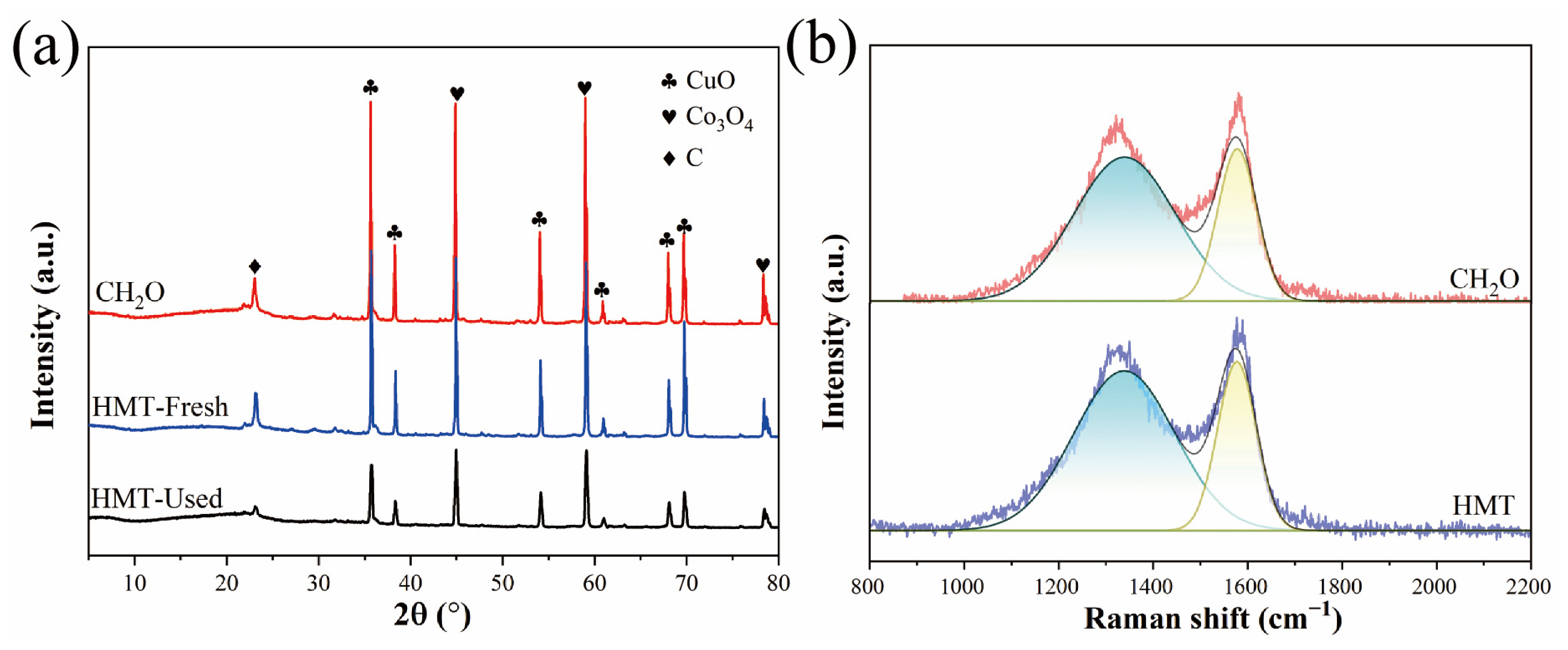
To investigate the effect of the precursors (HMT and CH2O) on the crystal structure of the catalyst, X-ray diffraction (XRD) was used to analyze the phase composition of the two samples, (Co+Cu)-OMCs/F (HMT) and (Co+Cu)-OMCs/F (CH2O). The results are shown in Figure 3a. The XRD patterns of both samples exhibit sharp and distinct diffraction peaks, indicating excellent crystallinity. Specifically, the characteristic peaks at 2θ = 36.8°, 44.8°, 59.3°, and 78.4° correspond to the (311), (400), (511), and (622) crystal planes of Co3O4 (JCPDS No. 42-1467). Meanwhile, the diffraction peaks at 2θ = 35.5°, 38.7°, 53.5°, 61.5°, 68.9°, and 88.1° are highly consistent with the (11-1), (111), (020), (11-3), (220), and (22-1) crystal planes of CuO (JCPDS No. 48-1548), indicating that copper is dispersed in the material as the CuO phase. In addition, a weak broad peak at 2θ ≈ 23.5° was observed, which is attributed to the (002) crystal plane of graphitic carbon (JCPDS No. 75-1621), indicating that the mesoporous carbon framework retained some ordered structure after high-temperature calcination. A comparison of the thesis conditions reveals that the diffraction peak positions of (Co+Cu)-OMCs/F (HMT) and (Co+Cu)-OMCs/F (CH2O) are essentially consistent, indicating that the phase synthetic compositions of the two are identical. However, the intensity of each diffraction peak in the former is slightly higher, and the half-width is narrower, suggesting that HMT, as a slow-release alkali source, is more conducive to the uniform nucleation and slow growth of metal precursors, thereby forming spinel oxides with higher crystallinity and larger grain sizes. In contrast, after substitution with CH2O, the intensities of the Co3O4 and CuO diffraction peaks in the sample decreased slightly, possibly due to local supersaturation caused by the relatively fast formaldehyde polymerization rate, which inhibited the complete growth of the crystals [42]. Nevertheless, no other impurity phases were detected in either sample, indicating that the prepared bimetallic composite catalyst possesses high phase purity. Good crystallinity facilitates the exposure of active sites and electron transfer, thereby enhancing the activation efficiency of peroxymonosulfate (PMS). To further evaluate the structural stability of the (Co+Cu)-OMCs/F(HMT) material during the reaction, XRD characterization was performed on the recovered catalyst after 9 h of continuous tetracycline degradation. The results showed that the positions of the diffraction peaks in the used sample were essentially consistent with those of the fresh sample, and no new impurity peaks appeared, indicating that no significant phase transformation or irreversible structural collapse occurred in the catalyst within the PMS oxidation system. However, the intensities of the diffraction peaks for each metal oxide were slightly reduced, which may be attributed to the leaching of trace metal ions from the surface and the formation of a small amount of amorphous surface layer during the prolonged reaction. The XRD patterns of both (Co+Cu)-OMCs/F samples exhibit a faint and broad diffraction peak at 2θ ≈ 23.5°, which is assigned to the (002) plane of graphitic carbon, indicating the presence of nanoscale graphitic domains with a turbostratic stacking structure. The Raman spectra shown in Figure 3b further support this assignment: the characteristic D band (~1340 cm−1) and G band (~1598 cm−1) of carbonaceous materials are clearly resolved. The intensity ratio Iᴅ/Iɢ was measured to be approximately 0.95 for both samples, suggesting a high degree of graphitization [43]. A combined analysis of XRD and Raman spectroscopy thus reveals that the carbon framework in (Co+Cu)-OMCs/F possesses a partially graphitized structure, which is a typical feature of ordered mesoporous carbons synthesized via the soft-templating method.
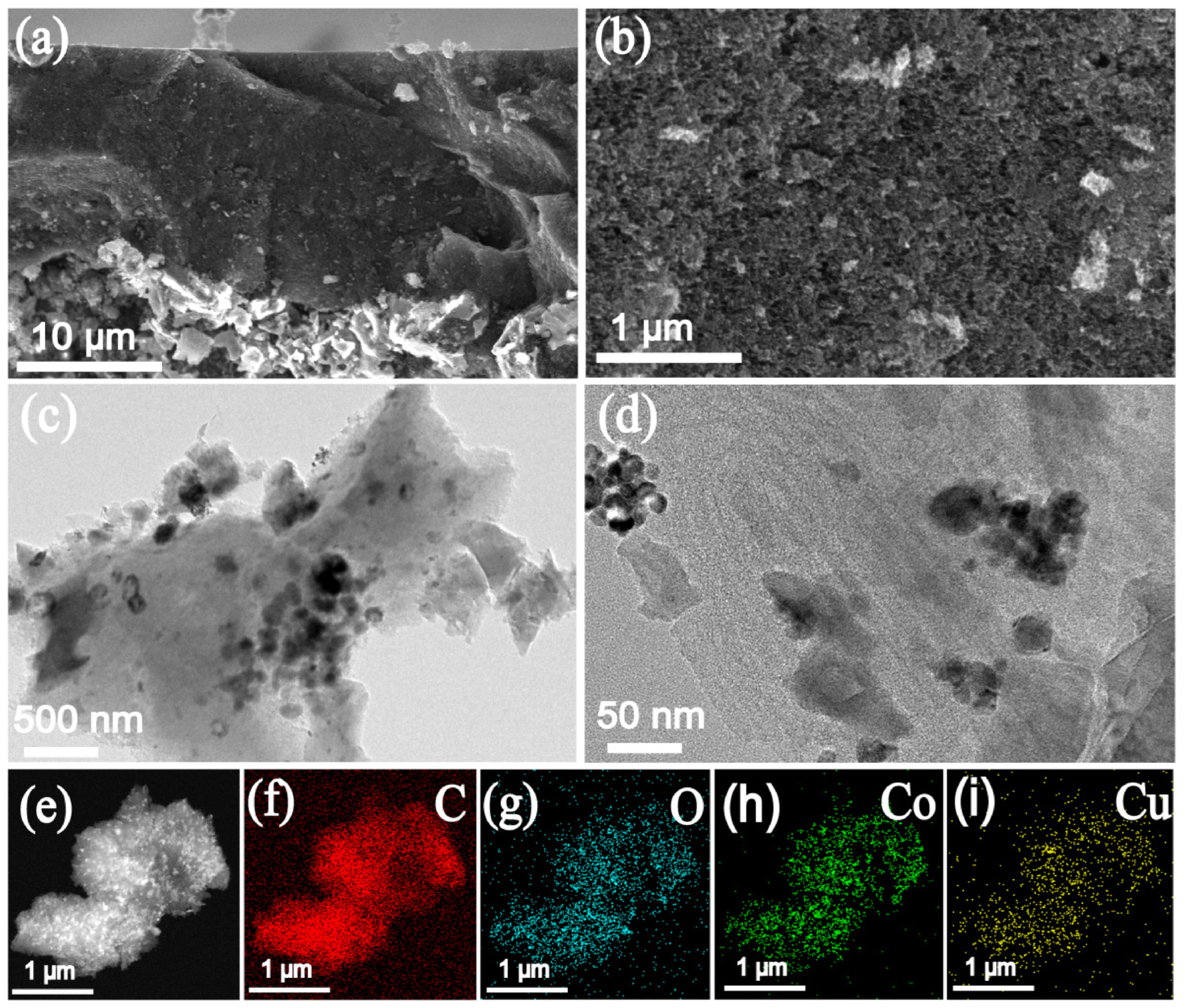
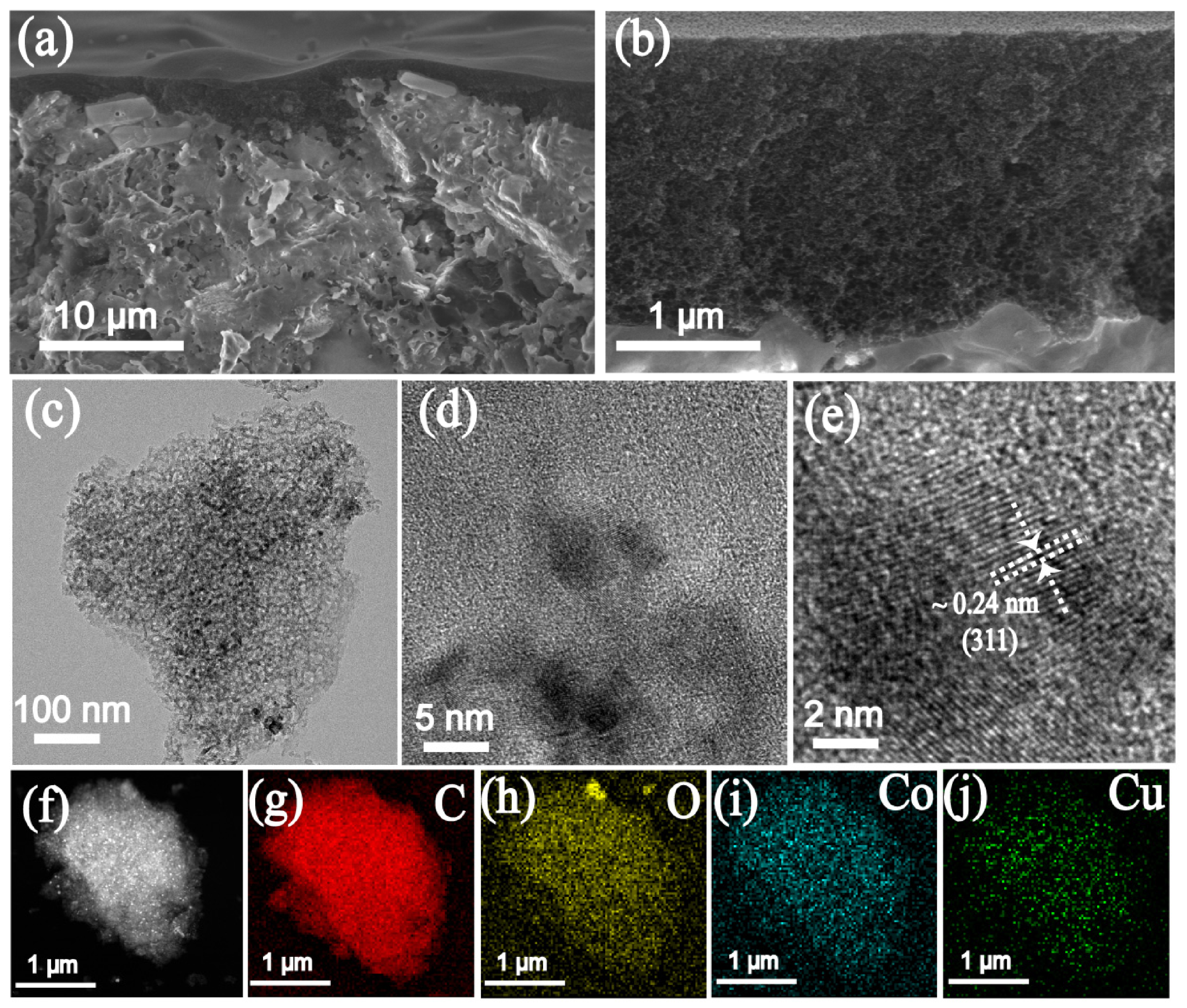
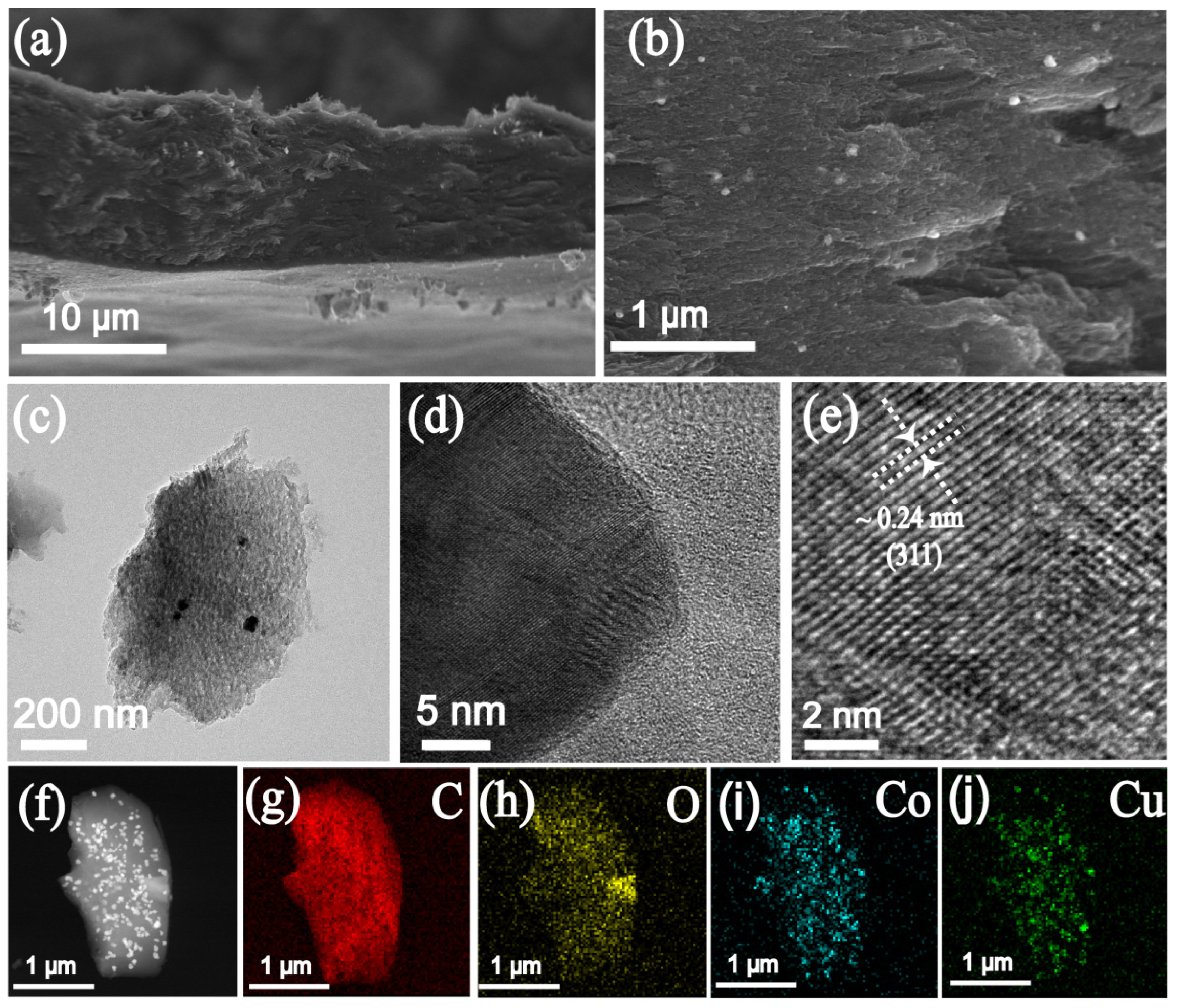
To elucidate the microstructure and crystal structure of the (Co+Cu)-OMCs/F(HMT) catalyst, it was characterized using scanning electron microscopy (SEM) and transmission electron microscopy (TEM). As shown in SEM analysis (Figure 4a,b), the catalyst exhibits a three-dimensionally interconnected porous carbon framework, uniformly loaded with nanoscale metal oxide particles on its surface. The particle size distribution ranges from 20 to 50 nm, with no obvious agglomeration. EDS mapping further confirms that Co and Cu elements are well distributed on the carbon matrix, providing a structural basis for synergistic catalysis between the two metals. TEM analysis (Figure 4c–e) further revealed the atomic-level structure of the metal oxides within the catalyst. In the (Co+Cu)-OMCs/F(HMT) sample, lattice fringes with a spacing of 0.24 nm were clearly observed, a value that corresponds exactly to the (311) crystal plane of the spinel phase Co3O4 [44]. Notably, although Cu elements are present in the sample, no independent lattice fringes corresponding to CuO or other copper compounds were observed; this may be because the Cu species exist in a highly dispersed amorphous state or as small clusters, or are encapsulated within the Co3O4 lattice. In addition, slight lattice distortion or localized disordered regions are visible at the edges of some particles, which may be related to lattice stress caused by the partial substitution of Co2+/Co3+ sites by Cu2+ [45,46]. This lattice distortion promotes the formation of active defects, such as oxygen vacancies, thereby enhancing the activation efficiency of peroxymonosulfate (PMS). As shown in the STEM-EDS elemental maps (Figure 4f–j), Co and Cu are uniformly and co-distributed in the carbon matrix, a structural feature that is conducive to the synergistic activation of PMS by the bimetallic sites.
To elucidate the microstructure and crystal structure of the (Co+Cu)-OMCs/F(CH2O) catalyst, it was characterized using scanning electron microscopy (SEM) and transmission electron microscopy (TEM). The (Co+Cu)-OMCs/F(CH2O) catalyst exhibits a lumpy, bulk-like morphology (Figure 5a,b), with a three-dimensionally interconnected porous carbon framework at its core, and metal oxide nanoparticles uniformly loaded on the pore surfaces. TEM (Figure 5c–e) clearly reveals lattice fringes with a spacing of 0.24 nm, corresponding to the (311) crystal plane of Co3O4; no independent CuO lattice fringes were observed, indicating that Cu exists in a highly dispersed or doped form [44]. EDS elemental mapping (Figure 5f–j) confirms the uniform co-distribution of Co and Cu within the carbon matrix, providing a solid structural foundation for the synergistic activation of PMS by the bimetallic system.
The SEM images of (Co+Cu)-OMCs/F(HMT-used) (Figure 6a,b) show that the material retains an irregular blocky morphology, but the surface texture of some particles has become blurred, and the edges have slightly rounded, suggesting that some degree of physical wear or surface deposition occurred during the reaction. TEM images (Figure 6c,d) indicate that the ordered mesoporous carbon framework is largely preserved, but the sharpness of some pore edges has decreased, suggesting that a small amount of reaction byproducts or carbon deposits may have adhered. Compared to the pre-use state, the previously distinct 0.24 nm lattice striations are difficult to resolve, and the contrast of the metal nanoparticles has diminished; this may be attributed to amorphization, oxidation, or coating of the metal surfaces by an amorphous carbon layer. The EDS elemental mapping (Figure 6e–i) shows that Co and Cu still maintain good co-localization, with no obvious segregation or leaching observed, indicating that the bimetallic structure remains stable overall. In summary, after use, the mesoporous framework and bimetallic distribution of this material remain well-preserved. Although the crystallinity of the metal nanoparticles has decreased and an amorphous layer may have formed on their surfaces, the structural integrity continues to support good catalytic durability.
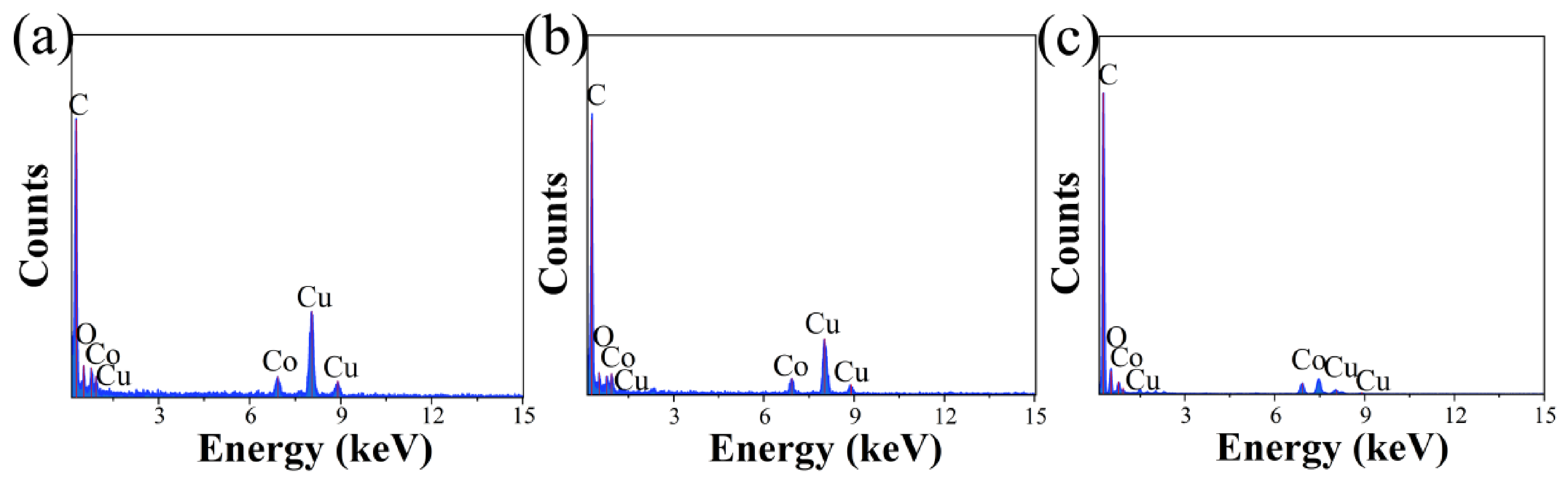
Based on the EDX elemental mapping results in Figure 7 and the corresponding peak positions and intensities, the Co-Cu co-distribution characteristics and differences among the three samples can be summarized as follows: In (Co+Cu)-OMCs/F(HMT-Fresh) (Figure 7a), Co and Cu exhibit highly uniform co-localization within the mesoporous carbon framework. The bimetallic sites are closely adjacent, with stable spectral peak shapes and no significant fluctuations in intensity, providing an ideal structural foundation for Co-Cu electronic synergy. In contrast, although (Co+Cu)-OMCs/F(CH2O) (Figure 7b) still maintains bimetallic co-distribution, its uniformity is significantly reduced, with noticeable fluctuations in the energy spectrum signals in localized regions. This is attributed to insufficient diffusion of the metal precursors during the rapid CH2O cross-linking process, leading to uneven site distribution. In contrast, (Co+Cu)-OMCs/F(HMT-Used) (Figure 7c), after 9 h of continuous degradation, still maintains a good colocalization relationship between Co and Cu, with only an extremely slight attenuation of the characteristic energy spectrum peaks. This indicates a strong anchoring effect between the bimetallic sites and the carbon support, demonstrating excellent long-term stability.
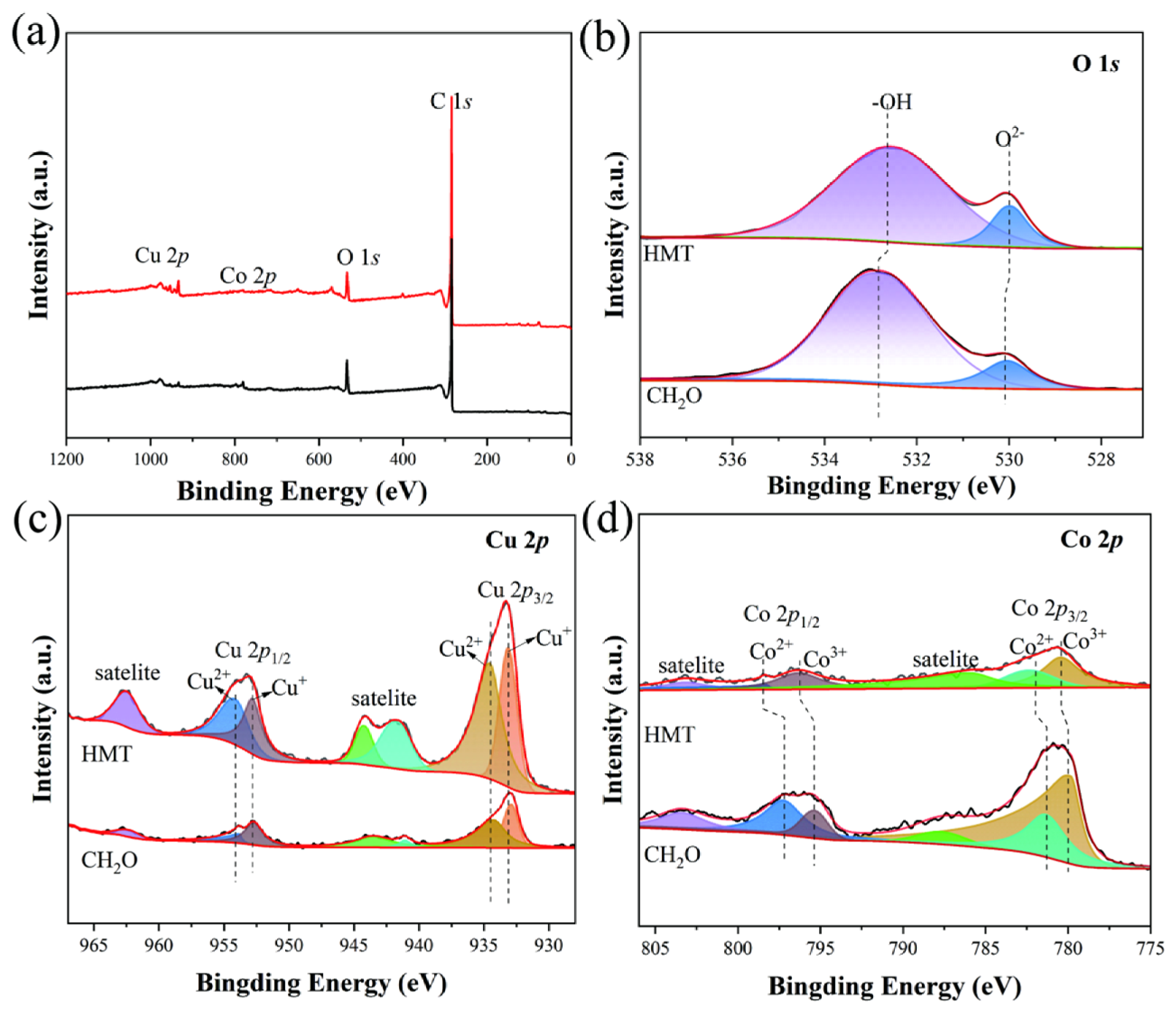
The chemical composition and surface elemental bonding configurations of the synthesized catalysts were characterized by X-ray photoelectron spectroscopy (XPS). As shown in Figure 8, the survey spectra (Figure 8a) of both (Co+Cu)-OMCs/F (HMT) and (Co+Cu)-OMCs/F (CH2O) exhibit characteristic peaks for Cu 2p, Co 2p, C 1s, and O 1s. Figure 8b displays the high-resolution O 1s XPS spectra of the two catalysts, which are nearly identical. Both spectra show a main peak at approximately 532.0 eV, attributed to surface hydroxyl groups (-OH), along with weak shoulders in the lower binding energy region (529.5–530.5 eV) corresponding to lattice oxygen (O2−) [47]. The high proportion of hydroxyl species indicates that the catalyst surface is rich in -OH groups, which promote the adsorption and activation of peroxymonosulfate (PMS) through hydrogen-bonding interactions. The weak lattice oxygen signal suggests that the metal oxides (Co3O4 and CuO) are highly dispersed or partially encapsulated by the carbon matrix, while the presence of defect-related oxygen signals supports the view that oxygen vacancies act as electron traps [48]. The observed oxygen vacancies and abundant surface hydroxyl groups provide direct experimental evidence for the proposed reversible Co3+/Co2+ and Cu2+/Cu+ redox cycle mechanism, as these structural features facilitate electron transfer and mediate the generation of reactive oxygen species.
Cu 2p XPS analysis of the two catalysts (Figure 8c) reveals that the HMT-prepared sample exhibits a clear Cu 2p1/2 and Cu 2p3/2 main peak along with a strong accompanying satellite peak, both of which are characteristic of surface Cu2+ species [49]. In contrast, the CH2O-prepared sample shows a markedly weakened satellite signal and a lower main peak intensity in the same region, indicating a relatively higher proportion of surface Cu+ species. Quantitative comparison (Table 1) shows that the atomic percentage of Cu2+ in the HMT sample is 0.1 at.%, significantly higher than that in the CH2O sample (0.04 at.%). This result demonstrates that the type of crosslinking agent can regulate the surface oxidation state distribution of copper species. Specifically, HMT promotes uniform nucleation of the metal precursor through slow hydrolysis, favoring the formation of a stable Cu2+-dominated surface, whereas the rapid, direct crosslinking with CH2O may lead to partial reduction of Cu2+ or the generation of more low-valent copper species. When combined with the oxygen-vacancy signals observed in the O 1s spectra and the catalytic activity data, the higher Cu2+ content in the HMT sample facilitates the formation of efficient Co3+/Co2+-Cu2+/Cu+ electron-transfer pairs, thereby enhancing PMS activation and promoting the generation of reactive oxygen species.
Co 2p XPS characterization of both catalysts (Figure 8d) shows that the Co 2p3/2 main peaks are located at approximately 780.5 eV and 781.8 eV, corresponding to Co3+ and Co2+ species, respectively. In addition, typical strong satellite peaks are observed at approximately 786.5 eV and 803.5 eV, which are characteristic of Co2+ [50]. Quantitative comparison (Table 1) indicates that the proportions of Co3+ in the HMT and CH2O samples are 66.7% and 54.3%, respectively, revealing that the crosslinking agent also influences the surface oxidation state distribution of cobalt. The higher Co3+ proportion in the HMT sample is beneficial for forming efficient bimetallic electron transfer pairs with Cu2+/Cu+, thereby improving PMS activation performance. This result is consistent with the catalytic activity data and the O 1s and Cu 2p analyses, providing direct evidence for the Co3+/Co2+_Cu2+/Cu+ reversible redox cycle mechanism.
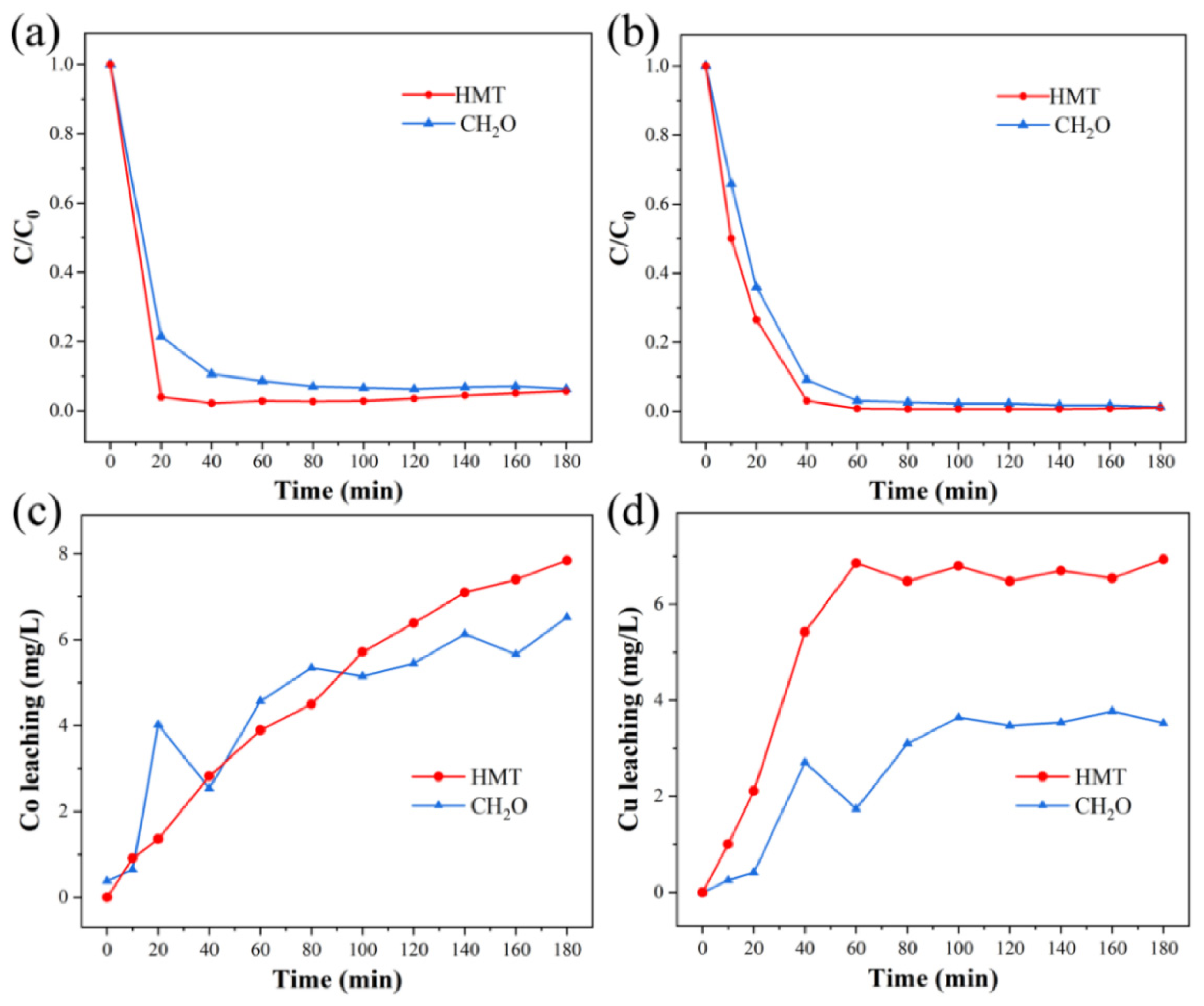
Under identical conditions (TC concentration = 25 mg/L, PMS = 0.33 mmol/L, T = 25 °C), continuous fixed-bed degradation experiments were conducted for 3 h using Co-OMCs/F (HMT), Co-OMCs/F (CH2O), (Co+Cu)-OMCs/F (HMT), and (Co+Cu)-OMCs/F (CH2O) materials. As shown in Figure 9a, compared with the Co-OMCs/F (CH2O) material, the Co-OMCs/F (HMT) material exhibited higher degradation efficiency and degradation rate for TC. As shown in Figure 9b, the degradation rates of TC for the (Co+Cu)-OMCs/F (HMT) and (Co+Cu)-OMCs/F (CH2O) materials were nearly identical, but the (Co+Cu)-OMCs/F (HMT) material exhibited higher degradation efficiency for TC. As shown in Figure 9c,d, the metal leaching concentrations of the Co-OMCs/F and (Co+Cu)-OMCs/F materials prepared using HMT are higher than those of the Co-OMCs/F and (Co+Cu)-OMCs/F materials prepared using CH2O.
Overall, the catalyst prepared using hexamethylenetetramine (HMT) as a cross-linking agent exhibited superior TC degradation performance compared to that prepared using formaldehyde (CH2O). This difference can be attributed to the distinct release behaviors of the two cross-linking agents during the synthesis process. In an acidic aqueous solution, HMT undergoes slow hydrolysis, releasing formaldehyde in a sustained and controlled manner while maintaining a relatively stable pH in the reaction system. As formaldehyde is gradually released, metal ions can be uniformly dispersed throughout the resorcinol–formaldehyde resin network, forming a highly homogeneous polymer precursor. Upon carbonization, this precursor yields a catalyst with uniform metal distribution and fully exposed active sites. In contrast, when CH2O is used directly, all the formaldehyde participates in the reaction instantaneously, leading to rapid polymer formation and cross-linking. Consequently, metal ions become encapsulated or aggregated in localized regions of the polymer before uniform dispersion can occur, resulting in uneven distribution of active components and a reduction in the number of effective reaction sites [51]. This mechanistic difference explains why HMT-derived catalysts exhibit higher catalytic activity, despite showing a slightly higher metal leaching concentration. The latter is likely due to the more uniformly exposed metal sites, which are more readily accessible to the oxidant during the initial stage of the reaction. Therefore, HMT is more suitable for constructing monolithic mesoporous carbon catalysts with a uniform structure and excellent catalytic performance.

2.4. Reusability and Stability of the Catalyst

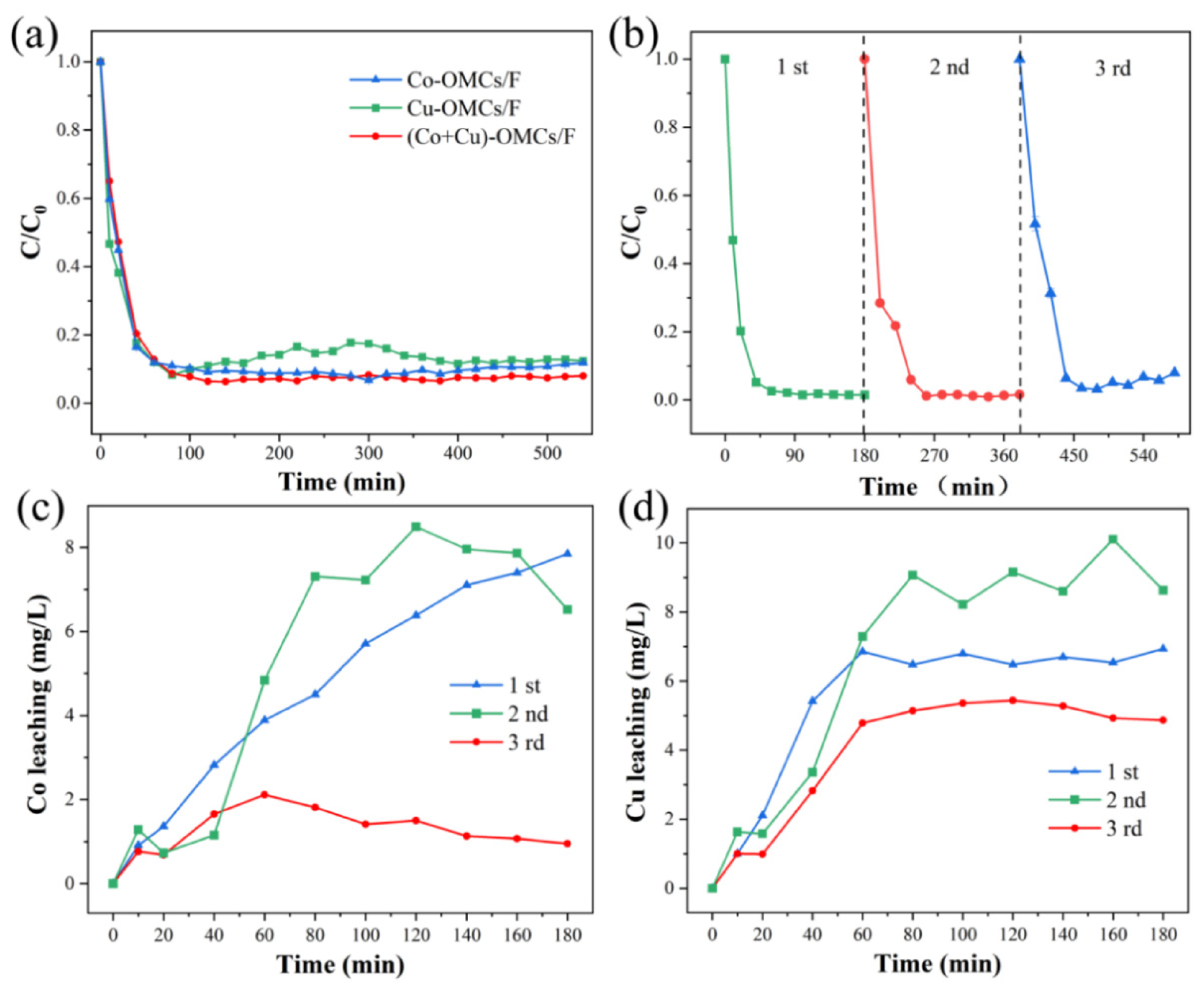
Catalyst stability is a key indicator for evaluating its potential for practical application. To investigate the stability and reusability of monolithic catalysts, Co-OMCs/F, Cu-OMCs/F, and (Co+Cu)-OMCs/F were tested under identical conditions: TC = 25 mg/L, pH = 7, PMS = 0.33 mmol/L, flow rate = 2 mL/min, and T = 25 °C. Continuous fixed-bed degradation experiments lasting up to 9 h were conducted on Co-OMCs/F, Cu-OMCs/F, and (Co+Cu)-OMCs/F, respectively, and three cycles of reuse experiments were performed on (Co+Cu)-OMCs/F. As shown in Figure 10a, the degradation rate of (Co+Cu)-OMCs/F remained stable at around 93% during 9 h of continuous operation, demonstrating the best stability. In contrast, the degradation rate of Co-OMCs/F began to decline slowly after 7 h of operation, while Cu-OMCs/F showed a significant decline as early as 3 h. This indicates that single-metal Cu catalysts have poor deactivation resistance, which may be related to their susceptibility to radical oxidation or rapid metal leaching rates [52]. The Co-Cu bimetallic synergy effectively suppressed the loss of active components and structural degradation. Figure 10b shows that after three cycles of use, the degradation rate of TC by (Co+Cu)-OMCs/F remained at approximately 95%, indicating good reusability. This is attributed to the confinement effect of the mesoporous carbon support and the strong interactions between the two metals, which allow the active sites to be stably anchored [53].
Figure 10c,d further illustrates the trends in metal leaching. The leaching concentrations of cobalt and copper ions peaked during the second cycle, followed by the first cycle, with the third cycle showing the lowest levels. This phenomenon can be explained as follows: during the initial reaction, metal species weakly bound to the catalyst surface or incompletely coated nanoparticles are preferentially leached; by the second cycle, the number of defects and oxygen vacancies on the surface—resulting from the previous reaction—increases, and combined with continuous radical attack, this leads to a peak in metal leaching; By the third cycle, the catalyst surface had stabilized, the easily leached metals had been largely depleted, and the remaining metals had bonded more firmly to the support, resulting in a decrease in metal leaching concentration. Nevertheless, the overall degradation rate remained high, indicating that the remaining active sites were still capable of effectively maintaining catalytic performance.

3. Materials and Methods

3.1. Chemicals

Tetracycline hydrochloride (C22H24N2O8·HCl, ≥98%), F127 (PEO-PPO-PEO, ≥99%), and urotropine (HMT, ≥99%) were purchased from Aladdin Reagent Co., Ltd., Shanghai, China. Cobalt nitrate hexahydrate (Co(NO3)2·6H2O, ≥98%), resorcinol (C6H6O2, ≥99.5%), sodium hydroxide (NaOH, ≥98%), hydrochloric acid (HCl, 37%), and p-benzoquinone (C6H4O2, ≥99%) were purchased from Shanghai Sinopharm Chemical Reagents Co., Ltd., Shanghai, China. Methanol (CH4O, ≥99.5%) and tert-butanol ((C4H10O, ≥99.5%) were purchased from Shanghai Lingfeng Chemical Reagents Co., Ltd., Shanghai, China. Copper acetate (C4H6CuO4, ≥98%) was purchased from Shanghai Bide Pharmaceutical Technology Co., Ltd., Shanghai, China. Formaldehyde (HCHO, 37%) was purchased from Shantou Xilong Science Co., Ltd., Shantou, China. Potassium persulfate (PMS, ≥47%) was purchased from Shanghai McLean Biochemical Technology Co., Ltd., Shanghai, China. Unless otherwise specified, all chemicals and reagents were of analytical grade and were not further purified prior to use. Deionized water was used throughout this study.

3.2. Preparation of Catalysts

3.2.1. Preparation of Co-Doped Mesoporous Carbon Materials

The material was prepared using a combined hydrothermal synthesis and high-temperature calcination technique. A measured amount of Co(NO3)3·6H2O and a measured amount of dicyandiamide were weighed into a 100 mL beaker, and 33 mL of pure water was added to dissolve them. followed by 1.1 g of resorcinol, 2.0 g of F127, and 0.7 g of HMT. The mixture was stirred thoroughly for 5 h in a 40 °C water bath. The stirred reaction mixture was dried at 80 °C, then calcined in a tube furnace at 800 °C for 3 h under a nitrogen atmosphere. The resulting carbon material was placed in a grinder and ground into fine particles, stored in self-sealing bags, and labeled with relevant information. The effects of different preparation conditions on the catalytic performance of the material were investigated by varying the Co loading (0.1 g, 0.2 g, 0.4 g, 0.6 g, 0.8 g) and nitrogen doping (0 g, 0.5 g, 1 g, 0.6 g, 1.5 g).

3.2.2. Preparation of Co-Cu Doped Mesoporous Carbon Materials

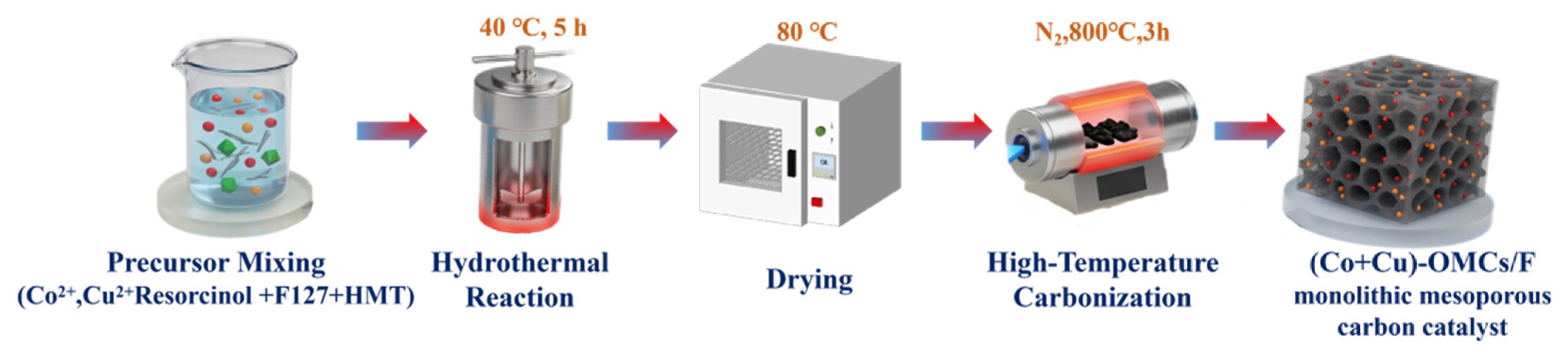
To prepare (Co+Cu)-OMCs/F materials, 0.3949 g of Co(NO3)3·6H2O and 0.2306 g of C4H6CuO4 were dissolved in 33 mL of ultrapure water; the remaining steps were identical to those for the preparation of Co-loaded mesoporous carbon materials. For the preparation of Co-OMCs/F materials, only Co(NO3)3·6H2O is added. For the preparation of Cu-OMCs/F materials, only C4H6CuO4 is added. The flowchart for the preparation of (Co+Cu)-OMCs/F is shown in Figure 11.

3.3. Characterization

The prepared catalysts were characterized by X-ray diffraction (XRD) using a D/max-2500 diffractometer (Rigaku Corporation, Tokyo, Japan) over a 2θ range of 5–80°. The forms of carbon were analyzed using Raman spectroscopy (LabRam HR Evolution, HORIBA, Palaiseau, France). The morphology of (Co+Cu)-OMCs/F was observed using a SU-8200 scanning electron microscope (SEM, Hitachi High-Technologies, Tokyo, Japan) at an operating voltage of 3 kV. Prior to measurement, the samples were sputter-coated with gold using an E-1010 ion sputtering system (Hitachi High-Technologies, Tokyo, Japan) to eliminate charging effects. The microstructure, morphological features, and lattice fringes of (Co+Cu)-OMCs/F were examined using a JEM-F200 transmission electron microscope (TEM, JEOL Ltd., Tokyo, Japan). Elemental distribution in the (Co+Cu)-OMCs/F catalyst was analyzed by energy-dispersive X-ray spectroscopy (EDX1800E, Skyray Instrument Inc., Kunshan, China). The leaching levels of cobalt and copper ions were determined by inductively coupled plasma mass spectrometry (ICP-MS, Agilent 7800, Agilent Technologies, Santa Clara, CA, USA). Electron paramagnetic resonance (EPR) signals of the CuCo/C catalyst were recorded on an A300 spectrometer (Bruker, Karlsruhe, Germany) using 5,5-dimethyl-1-pyrroline N-oxide (DMPO) and 2,2,6,6-tetramethylpiperidine (TEMP) as spin-trapping agents.

3.4. Evaluation of Catalytic Performance

The degradation experiment of tetracycline (TC) was conducted to evaluate the catalytic performance of the prepared catalyst toward peroxymonosulfate (PMS). To initiate the catalytic degradation test, 10 mg of catalyst was added to 150 mL of TC solution (25 mg/L) and uniformly dispersed. Subsequently, 0.33 mM of PMS was introduced, and the mixture was shaken in a water bath shaker at 25 °C and 250 rpm under dark conditions. At predetermined time intervals, the concentration of residual TC was determined by measuring the absorbance at 356 nm using a UV–visible spectrophotometer (HACH DR6000, Hach Company, Loveland, CO, USA), after the sample solution had been filtered through a 0.45 μm organic membrane filter. Methanol was selected as a quencher to terminate further reactions. The influence of key operational parameters on the degradation process, including metal loading, PMS dosage, initial pH, and peristaltic pump flow rate, was systematically investigated. The pH of the reaction system was adjusted using diluted HCl or NaOH. Following the catalytic degradation of TC, the catalyst was separated from the reaction solution, repeatedly washed with distilled water and ethanol, and subsequently dried in an oven at 60 °C. To elucidate the possible degradation mechanism, quenching experiments and corresponding electron paramagnetic resonance (EPR) measurements were performed. Specifically, quenching experiments were carried out under the aforementioned conditions with the addition of different scavengers, including MeOH, TBA, and PBQ. For the EPR analysis, spin-trapping agents, namely 2,2,6,6-tetramethyl-4-piperidine (TEMP) and 5,5-dimethyl-1-pyrrolidine N-oxide (DMPO), were added to the sample solutions.

3.5. Experiments on Material Stability and Reproducibility

To evaluate the stability of the material, a continuous fixed-bed reaction degradation test lasting up to 9 h was conducted on the prepared material. The stability of the material’s TC degradation data was compared with that of the catalyst material, and the material’s stability was assessed based on these results. To evaluate the material’s recyclability, continuous fixed-bed degradation experiments were conducted on the optimal material. After each degradation experiment, the material was removed, lightly rinsed, and allowed to drain. The degradation experiment was then repeated under the same reaction conditions. Experimental data from each run were recorded and compared to determine changes in the material’s catalytic performance, which was used as the basis for evaluating the material’s recyclability.

4. Reaction Mechanism Analysis

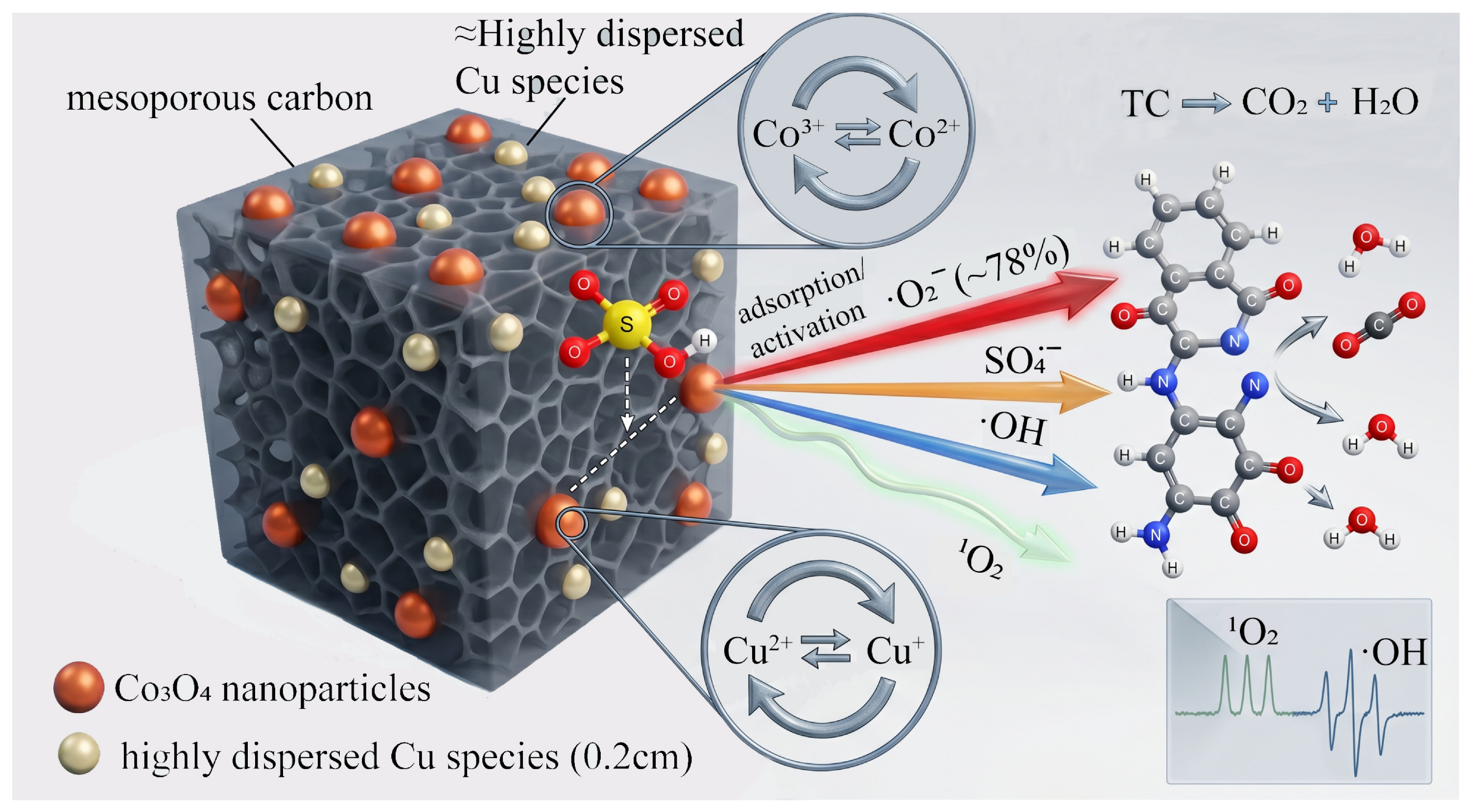
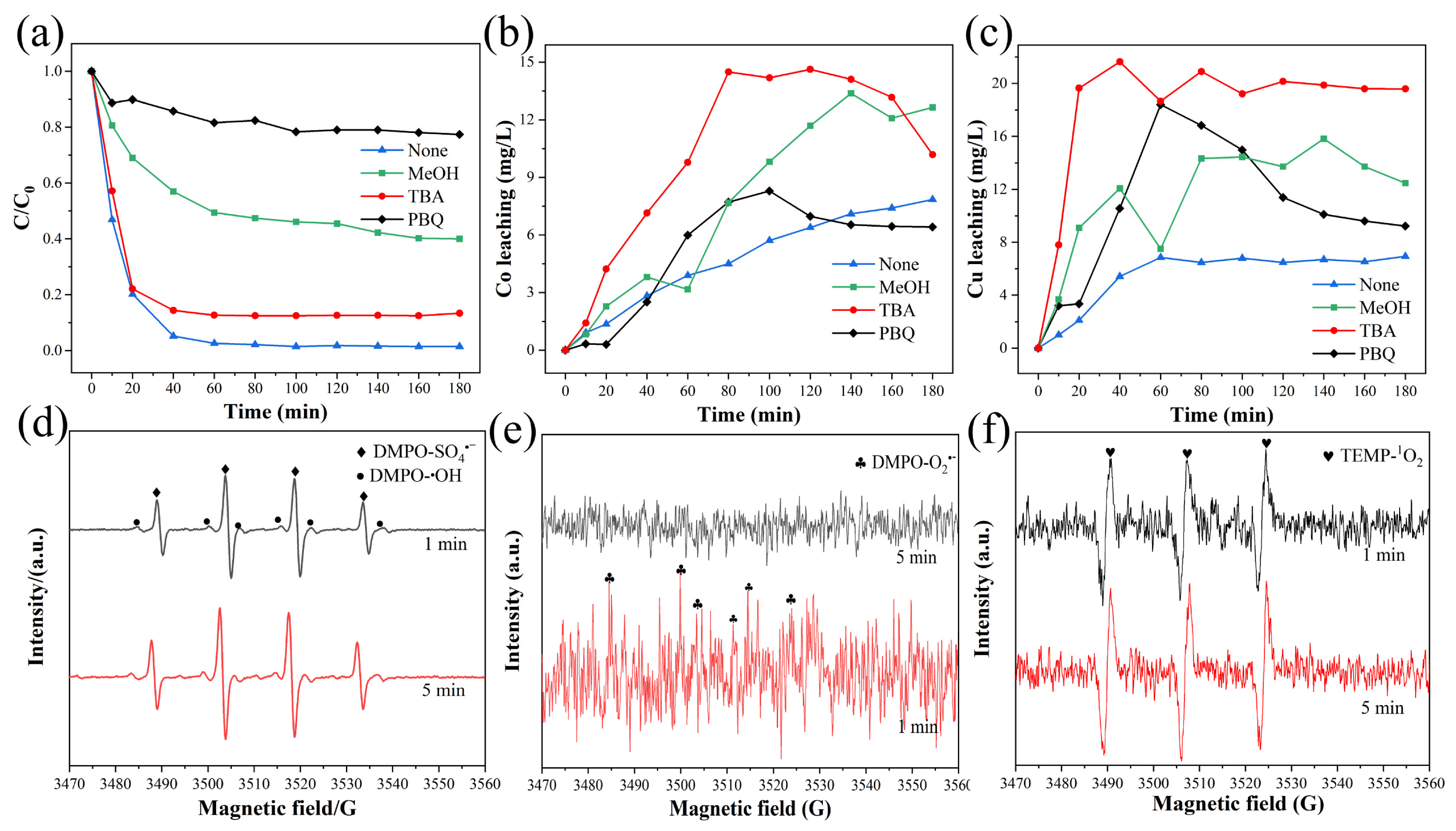
To elucidate the reaction mechanism underlying the degradation of tetracycline (TC) by the (Co+Cu)-OMCs/F/permethyl sulfonate (PMS) system, under identical experimental conditions (TC concentration = 25 mg/L, pH = 7, PMS = 0.33 mmol/L, flow rate = 2 mL/min, T = 25 °C), methanol, tert-butanol, and p-benzoquinone were added separately to conduct radical quenching experiments. Specifically, methanol (1 mol/L) simultaneously quenches sulfate radicals (SO4·−) and hydroxyl radicals (·OH); tert-butanol (1 mol/L) quenches ·OH; and p-benzoquinone (0.01 mol/L) quenches superoxide radicals (·O2) [54]. The results are shown in Figure 12: After adding methanol, the TC degradation rate decreased from 98% to approximately 60%, a drop of 38%; after adding tert-butanol, the degradation rate decreased by only about 10%; whereas after adding p-benzoquinone, the degradation rate plummeted to approximately 20%, a decrease of 78%. This indicates that ·O2 plays a dominant role in TC degradation, contributing approximately 78%, while SO4·− and ·OH contribute approximately 28% and 10%.
Electron paramagnetic resonance (EPR) analysis further confirmed the formation of various reactive oxygen species. As shown in Figure 12d,e, when 5,5-dimethyl-1-pyrrolidine N-oxide (DMPO) was used as a scavenger, in addition to a quadruplet peak with an intensity ratio of 1:2:2:1 attributed to the DMPO-·OH adduct, a typical six-fold hyperfine splitting signal was also observed, attributed to the DMPO-·O2 adduct, confirming the presence of the superoxide radical (·O2). Concurrently, a set of weak asymmetric signals was observed at higher gain, attributed to the DMPO-SO4·− adduct; however, since SO4·− rapidly converts to ·OH in aqueous solution, this signal was partially masked. The capture of the DMPO-·O2 signal further supports the conclusion that ·O2 dominates the degradation in the quenching experiment. When 2,2,6,6-tetramethyl-4-piperidone (TEMP) was used as the spin trapping agent, the spectrum exhibited a triple characteristic peak with an intensity ratio of 1:1:1, attributed to the TEMPO adduct formed by the reaction of TEMP with singlet oxygen (1O2). Furthermore, the signal intensity gradually increased with reaction time, indicating the continuous generation of 1O2 during the reaction [55].
As shown in Figure 12b,c, the extent of metal dissolution follows the order: TBA > MeOH > PBQ > None. Upon the addition of tert-butanol, hydroxyl radicals (·OH) are quenched, leading to a relative increase in the concentrations of the highly oxidative sulfate radicals (SO4·−) and superoxide radicals (·O2). This enhancement intensifies the attack on metal sites, resulting in the highest level of metal leaching. In the methanol system, both ·OH and SO4·− are scavenged, reducing the oxidative attack and thereby lowering metal leaching compared to the tert-butanol system. When p-benzoquinone is added to quench ·O2, the overall oxidative capacity of the system decreases significantly, yielding a relatively low metal leaching, though still higher than that in the absence of any quencher. In the system without a quencher, TC molecules act as substrate competitors, consuming radicals and thus diminishing the oxidative attack on the catalyst; consequently, this system exhibits the lowest metal leaching among all tested conditions.
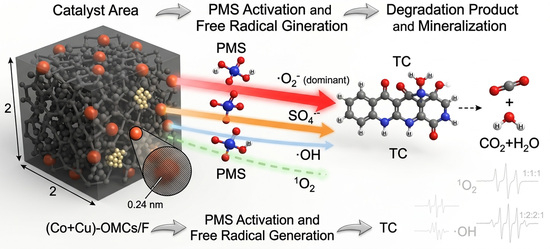
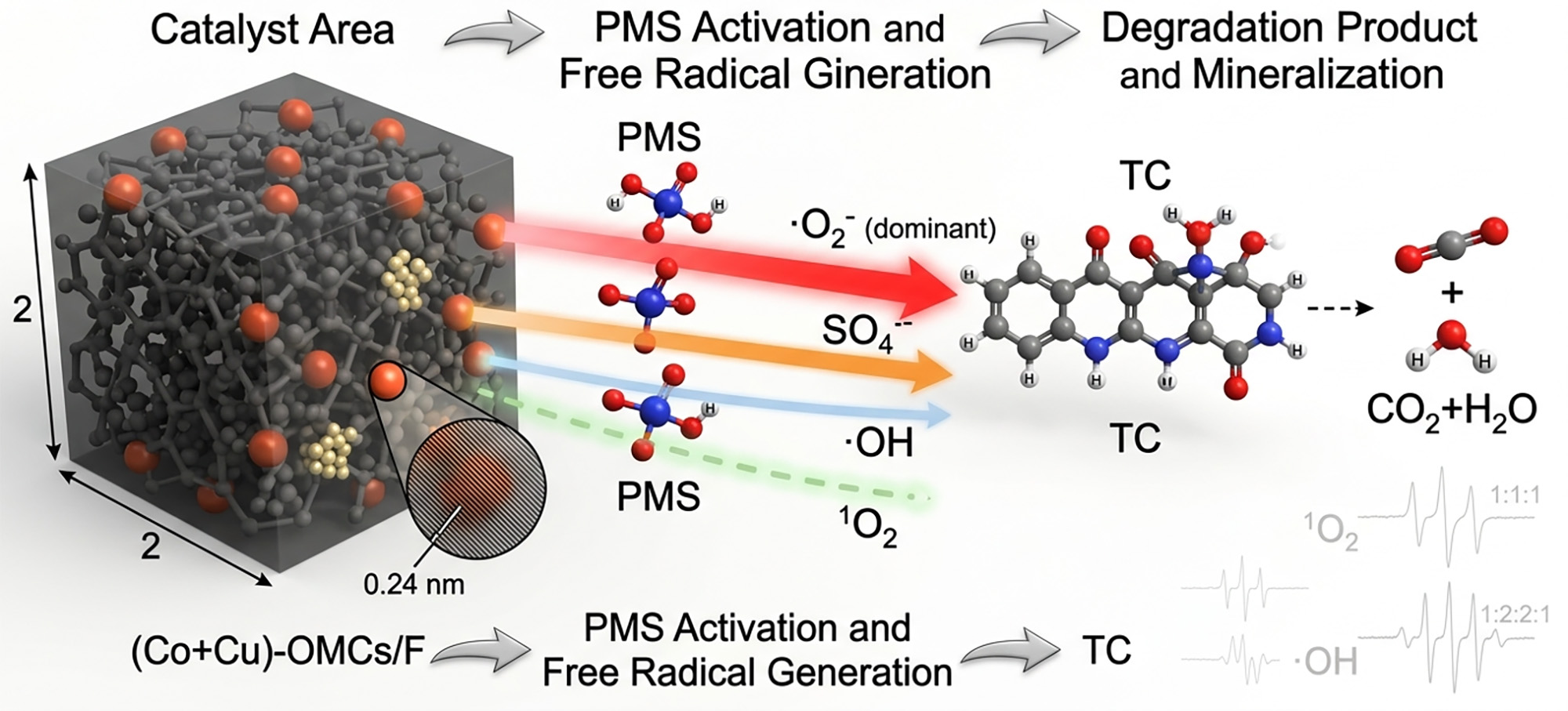
In summary, the mechanism by which the (Co+Cu)-OMCs/F/PMS system degrades TC is as follows: the bimetallic complex (Co, Cu) synergistically activates PMS, primarily generating superoxide radicals (·O2), while simultaneously producing sulfate radicals (SO4·−), hydroxyl radicals (·OH), and singlet oxygen (1O2). Among these, ·O2 is the primary active species responsible for TC degradation, while SO4·−, ·OH, and 1O2 play auxiliary roles. These reactive oxygen species collectively attack the unsaturated bonds and aromatic rings in TC molecules, causing ring opening, bond cleavage, and ultimately mineralization into CO2 and H2O. The mechanism diagram is shown in Figure 13.

5. Conclusions

In this study, HMT was used as a cross-linking agent to prepare a monolithic mesoporous carbon catalyst loaded with cobalt–copper bimetallic particles ((Co+Cu)-OMCs/F) via hydrothermal synthesis followed by high-temperature calcination. The controlled-release hydrolysis properties of HMT facilitate uniform nucleation of metal precursors, resulting in a three-dimensionally interconnected porous framework with high crystallinity and fully exposed active sites. This catalyst exhibits superior catalytic performance compared to samples prepared directly from formaldehyde. Under conditions of 0.6 g cobalt loading, 0.33 mmol/L peroxymonosulfate (PMS) concentration, initial pH = 7, and a flow rate of 2 mL/min, the catalyst exhibited optimal degradation of 25 mg/L tetracycline. During continuous operation for 9 h, the degradation rate remained stable at approximately 93%; after three cycles of use, the degradation rate could still be maintained at around 95%, demonstrating excellent stability and reusability. Radical quenching experiments and electron paramagnetic resonance (EPR) analysis indicate that the superoxide radical (·O2) is the primary active species in the degradation process, with sulfate radicals (SO4·−), hydroxyl radicals (·OH), and singlet oxygen (1O2) playing synergistic auxiliary roles. The cobalt–copper bimetallic system accelerates electron transfer through the redox cycle of Co3+/Co2+ and Cu2+/Cu+, and induces the formation of active defects such as oxygen vacancies, thereby efficiently activating peroxosulfates to generate reactive oxygen species. The cobalt–copper bimetallic monolithic mesoporous carbon catalyst combines high catalytic activity with excellent reusability, demonstrating broad application prospects in the treatment of antibiotics via sulfate radical-based advanced oxidation processes.

Author Contributions

Writing—original draft, Data curation, X.S.; Writing—review and editing, Formal analysis, W.Y.; Data curation, Formal analysis, J.L.; Conceptualization, Data curation, R.Z.; Supervision, Funding acquisition, Project administration, Q.J.; Resources, Conceptualization, L.C.; Visualization, Supervision, M.X.; Validation, Methodology, C.Z.; Funding acquisition, Project administration, Supervision, H.X. All authors have read and agreed to the published version of the manuscript.

Funding

This work was supported by the National Key Research and Development Program of China (2025YFE0116800), Science and Technology Plan of Suzhou (SYG2025030), Science and Technology Plan of Yangzhou (YZ2024283, YZ2025196), Science and Technology Plan of Nanjing (202512065), Jiangsu Young Science and Technology Talent Sponsorship Program (JSTJ-2025-190), Vice President of Science and Technology of Jiangsu Province (FZ20241633).

Data Availability Statement

The data presented in this study are available upon request from the corresponding author.

Conflicts of Interest

The authors declare that the research was conducted in the absence of any commercial or financial relationships that could be construed as a potential conflict of interest.

References

  1. Maier, L.; Goemans, C.V.; Wirbel, J.; Kuhn, M.; Eberl, C.; Pruteanu, M.; Müller, P.; Garcia-Santamarina, S.; Cacace, E.; Zhang, B.; et al. Unravelling the collateral damage of antibiotics on gut bacteria. Nature 2021, 599, 120–124. [Google Scholar] [CrossRef]
  2. Yang, J.M.; Tian, S.F.; Song, Z.; Hao, Y.G.; Lu, M.H. Recent advances in sorption-based photocatalytic materials for the degradation of antibiotics. Coord. Chem. Rev. 2025, 523, 216257. [Google Scholar] [CrossRef]
  3. Tell, J.; Caldwell, D.J.; Häner, A.; Hellstern, J.; Hoeger, B.; Journel, R.; Mastrocco, F.; Ryan, J.J.; Snape, J.; Straub, J.O.; et al. Science-based Targets for Antibiotics in Receiving Waters from Pharmaceutical Manufacturing Operations. Integr. Environ. Assess. Manag. 2019, 15, 312–319. [Google Scholar] [CrossRef]
  4. Liu, X.H.; Huang, D.L.; Lai, C.; Zeng, G.M.; Qin, L.; Zhang, C.; Yi, H.; Li, B.S.; Deng, R.; Liu, S.Y.; et al. Recent advances in sensors for tetracycline antibiotics and their applications. TrAC Trends Anal. Chem. 2018, 109, 260–274. [Google Scholar] [CrossRef]
  5. Daghrir, R.; Drogui, P. Tetracycline antibiotics in the environment: A review. Environ. Chem. Lett. 2013, 11, 209–227. [Google Scholar] [CrossRef]
  6. He, X.H.; Kai, T.H.; Ding, P. Heterojunction photocatalysts for degradation of the tetracycline antibiotic: A review. Environ. Chem. Lett. 2021, 19, 4563–4601. [Google Scholar] [CrossRef] [PubMed]
  7. Cai, J.Z.; Liu, S.H.; Man, Y.B.; Xu, X.X.; Yang, Z.B.; Xu, C.L.; Wang, G.Y.; Huang, C.Y.; Yang, G.; Lv, G.C.; et al. Sequential adsorption-oxidation pulses for alternating electrochemical advanced pretreatment of wastewater containing tetracyclines. Chem. Eng. J. 2025, 507, 160725. [Google Scholar] [CrossRef]
  8. Zhang, P.; Liu, K.H.; Guo, P.H.; Xu, K.; Liu, Y.; Niu, Y.T.; Li, Y.H.; Ren, G.H. Solid waste derived zeolitized ceramsite hierarchical structure for adsorption (Pb2+) and degradation (tetracycline) of co-polluted wastewater. Sep. Purif. Technol. 2026, 391, 136997. [Google Scholar] [CrossRef]
  9. Li, S.; Wu, Y.N.; Zheng, H.S.; Li, H.B.; Zheng, Y.J.; Nan, J.; Ma, J.; Nagarajan, D.; Chang, J.-S. Antibiotics degradation by advanced oxidation process (AOPs): Recent advances in ecotoxicity and antibiotic-resistance genes induction of degradation products. Chemosphere 2023, 311, 136977. [Google Scholar] [CrossRef] [PubMed]
  10. Wang, J.S.; Yi, X.H.; Xu, X.T.; Ji, H.D.; Alanazi, A.M.; Wang, C.C.; Zhao, C.; Kaneti, Y.V.; Wang, P.; Liu, W.; et al. Eliminating tetracycline antibiotics matrix via photoactivated sulfate radical-based advanced oxidation process over the immobilized MIL-88A: Batch and continuous experiments. Chem. Eng. J. 2022, 431, 133213. [Google Scholar] [CrossRef]
  11. Yan, B.J.; Li, X.Q.; Wang, X.Y.; Yang, P.; Lu, H.; Zhang, X.Y. Degradation Efficiency and Mechanism of Tetracycline in Water by Activated Persulfate Using Biochar-Loaded Nano Zero-Valent Iron. Molecules 2024, 29, 3875. [Google Scholar] [CrossRef] [PubMed]
  12. Liu, W.W.; Wei, C.Q.; Peng, R.F.; Chu, R.F.; Sun, H.; Zhang, X.M.; Xie, F. Persulfate assisted photocatalytic degradation of tetracycline by bismuth titanate under visible light irradiation. New J. Chem. 2022, 46, 10854–10862. [Google Scholar] [CrossRef]
  13. Wang, L.; Han, C.Q.; Kong, X.Y.; Ye, L.Q.; Huang, Y.P. Piezoelectric Activation of Peroxymonosulfate by CoMn2O4 for Highly Efficient Tetracycline Degradation. Langmuir 2024, 41, 755–764. [Google Scholar] [CrossRef]
  14. Qin, X.F.; Li, H.B.; Wang, K.X.; Liu, Y.; Song, L.Y.; Lin, Y.; Fan, F.H.; Li, S.; Ma, T. Ornidazole degradation by PMS activated by Co-Zr-TiO2 with abundant oxygen vacancies: Performance, mechanism and degradation pathway. Process Saf. Environ. Prot. 2024, 183, 163–177. [Google Scholar] [CrossRef]
  15. Shi, X.D.; Huang, Z.; Xu, J.L.; Lin, S.J.; Hong, Y.X.; Zhang, Q.; Xiao, J.F.; Hong, J.M. Co and N co-doped carbon nanotubes catalyst for PMS activation: Role of non-radicals. Sep. Purif. Technol. 2025, 353, 128528. [Google Scholar] [CrossRef]
  16. Han, D.X.; Song, Z.; Liu, B.X.; Zhang, X.Y.; Liu, J.L.; Huang, Y.Q.; Xing, C.H.; Zhang, J. Mn doping induces oxygen-rich vacancies to regulate Co2+ cyclic regeneration and synergistically promote PMS activation and pollutant degradation. J. Mol. Struct. 2026, 1349, 143895. [Google Scholar] [CrossRef]
  17. Zhang, H.Q.; Lee Smith, R.; Guo, H.X.; Qi, X.H. Cobalt cross-linked ordered mesoporous carbon as peroxymonosulfate activator for sulfamethoxazole degradation. Chem. Eng. J. 2023, 472, 145060. [Google Scholar] [CrossRef]
  18. Wang, Y.B.; Cao, D.; Zhao, X. Heterogeneous degradation of refractory pollutants by peroxymonosulfate activated by CoOx-doped ordered mesoporous carbon. Chem. Eng. J. 2017, 328, 1112–1121. [Google Scholar] [CrossRef]
  19. Pu, J.L.; Luo, Y.; Han, H.R.; Arslan Mushtaq, M.; Jia, Y.F. (Mn, Co, Cu)-Ce solid solution for efficient degradation of tetracycline via photo-fenton-like process. Mater. Lett. 2024, 372, 137063. [Google Scholar] [CrossRef]
  20. Meng, X.; Yan, L.; Wei, M.B.; Wang, T.; Xu, T.; Yan, Y.S.; Cheng, S.H. A novel Co(OH)2/Cu2O nanocomposite-activated peroxydisulfate for the enhanced degradation of tetracycline. New J. Chem. 2021, 45, 16705–16713. [Google Scholar] [CrossRef]
  21. Guo, L.J.; Zhao, L.M.; Tang, Y.L.; Zhou, J.F.; Shi, B. Peroxydisulfate activation using Fe, Co co-doped biochar and synergistic effects on tetracycline degradation. Chem. Eng. J. 2023, 452, 139381. [Google Scholar] [CrossRef]
  22. Mo, Q.Y.; Zheng, H.Y.; Sheng, G.S. A heterogeneously activated peroxymonosulfate with a Co and Cu codoped bimetallic metal-organic framework efficiently degrades tetracycline in water. Mol. Catal. 2024, 553, 113817. [Google Scholar] [CrossRef]
  23. Lin, B.F.; Tang, C.L.; Zheng, Z.J.; Zhang, M.F.; Huang, Y.P.; Yuan, X.; Liu, X.H.; Wu, Y.H. Efficient activation of peroxymonosulfate by Co/Cu co-substituted-ferrite and carbon composite for rapid degradation of tetracycline in aqueous phase: Performance evaluation and mechanisms. Chem. Eng. J. 2024, 488, 150858. [Google Scholar] [CrossRef]
  24. Li, H.R.; Liu, C.; Mou, Z.H.; Yu, P.; Wu, S.Q.; Wang, W.; Wang, Z.H.; Yuan, R.X. Enhancement of peroxymonosulfate activation with nickel foam-supported CuCo2O4 for tetracycline degradation: Performance and mechanism insights. J. Colloid Interface Sci. 2025, 678, 227–241. [Google Scholar] [CrossRef] [PubMed]
  25. Chen, R.Y.; Zhang, H.Y.; Dong, Y.M.; Shi, H.F. Dual metal ions/BNQDs boost PMS activation over copper tungstate photocatalyst for antibiotic removal: Intermediate, toxicity assessment and mechanism. J. Mater. Sci. Technol. 2024, 170, 11–24. [Google Scholar] [CrossRef]
  26. Yuan, W.N.; Yang, X.; Liu, C.; Xue, L.Y.; Niu, W.Z.; Yan, Q.S.; Zhu, Y.J.; Han, J.C.; Guo, W.; Zhang, B. High-Surface-Area Co-Cu-B Monolithic Self-Supported Catalyst for Efficient Sodium Borohydride Hydrolysis. Processes 2024, 12, 1384. [Google Scholar] [CrossRef]
  27. Zhu, Y.; Tang, Q.; Wu, K.; Zhang, Z.K.; Sun, Y.W.; Jiang, W.; Gao, Y.H. Promoting electron transfer and increasing oxygen vacancies on Cu-doped Co3O4 for enhanced peroxomonosulfate activation for tetracycline removal. J. Environ. Chem. Eng. 2025, 13, 120090. [Google Scholar] [CrossRef]
  28. Li, F.; Wei, J.H.; Wang, D.B.; Han, Y.; Han, D.D.; Gong, J.B. Ce-doped CuCoO2 delafossite with switchable PMS activation pathway for tetracycline degradation. Chem. Eng. J. 2024, 481, 148633. [Google Scholar] [CrossRef]
  29. Liu, H.; He, Z.L.; Li, J.H.; Zhao, S. Well-dispersed cobalt nanoparticles encapsulated on ZIF-8-derived N-doped porous carbon as an excellent peroxymonosulfate activator for sulfamethoxazole degradation. Chem. Eng. J. 2023, 451, 138597. [Google Scholar] [CrossRef]
  30. Yang, S.J.; Xu, S.S.; Tong, J.Y.; Ding, D.H.; Wang, G.; Chen, R.Z.; Jin, P.K.; Wang, X.C. Overlooked role of nitrogen dopant in carbon catalysts for peroxymonosulfate activation: Intrinsic defects or extrinsic defects. Appl. Catal. B Environ. 2021, 295, 120291. [Google Scholar] [CrossRef]
  31. Liu, L.; Han, C.J.; Ding, G.F.; Yu, M.Y.; Li, Y.F.; Liu, S.N.; Xie, Y.X.; Liu, J. Oxygen vacancies-enriched Cu/Co bimetallic oxides catalysts for high-efficiency peroxymonosulfate activation to degrade TC: Insight into the increase of Cu+ triggered by Co doping. Chem. Eng. J. 2022, 450, 138302. [Google Scholar] [CrossRef]
  32. Jia, X.N.; He, H.X.; Zhao, X.; Li, Y.B.; Wang, C.X.; Yang, Y.H.; Wu, J.W. Co3O4-CuO bimetallic catalyst activated PMS to degrade LEV in wastewater: The existence of dual degradation mechanisms. New J. Chem. 2024, 48, 14801–14812. [Google Scholar] [CrossRef]
  33. Poomipuen, K.; Sakulthaew, C.; Chokejaroenrat, C.; Angkaew, A.; Techauay, K.; Poompoung, T.; Teingtham, K.; Phansak, P.; Lueangjaroenkit, P.; Snow, D.D. Dual Activation of Peroxymonosulfate Using MnFe2O4/g-C3N4 and Visible Light for the Efficient Degradation of Steroid Hormones: Performance, Mechanisms, and Environmental Impacts. ACS Omega 2023, 8, 36136–36151. [Google Scholar] [CrossRef] [PubMed]
  34. Li, L.; Han, Q.; Wang, L.; Liu, B.; Wang, K.K.; Wang, Z.Y. Dual roles of MoS2 nanosheets in advanced oxidation Processes: Activating permonosulfate and quenching radicals. Chem. Eng. J. 2022, 440, 135866. [Google Scholar] [CrossRef]
  35. Zhong, X.; Liu, X.J.; Ji, M.H.; Jiang, F.B. Densely Stacked CoCu-MOFs Coated with CuAl/LDH Enhance Sulfamethoxazole Degradation in PMS-Activated Systems. Nanomaterials 2025, 15, 432. [Google Scholar] [CrossRef]
  36. Fu, M.J.; Yan, J.T.; Chai, B.; Fan, G.Z.; Ding, D.; Song, G.S. In situ synthesis of CoFe-LDH on biochar for peroxymonosulfate activation toward sulfamethoxazole degradation: Cooperation of radical and non-radical pathways. New J. Chem. 2023, 47, 4018–4032. [Google Scholar] [CrossRef]
  37. Pan, Y.K.; Cao, J.Z.; Xing, M.Y.; Zhang, Y.Y. Current Mechanism of Peroxymonosulfate Activation by Cobalt-Based Heterogeneous Catalysts in Degrading Organic Compounds. ACS ES&T Eng. 2023, 4, 19–46. [Google Scholar] [CrossRef]
  38. Guan, Y.H.; Ma, J.; Li, X.C.; Fang, J.Y.; Chen, L.W. Influence of pH on the Formation of Sulfate and Hydroxyl Radicals in the UV/Peroxymonosulfate System. Environ. Sci. Technol. 2011, 45, 9308–9314. [Google Scholar] [CrossRef] [PubMed]
  39. Cao, Y.; Cui, K.P.; Chen, Y.H.; Cui, M.S.; Li, G.H.; Li, D.; Yang, X.J. Efficient degradation of tetracycline by H2O2 catalyzed by FeOCl: A wide range of pH values from 3 to 7. Solid State Sci. 2021, 113, 106548. [Google Scholar] [CrossRef]
  40. Wang, J.L.; Wang, S.Z. Activation of persulfate (PS) and peroxymonosulfate (PMS) and application for the degradation of emerging contaminants. Chem. Eng. J. 2018, 334, 1502–1517. [Google Scholar] [CrossRef]
  41. Zhong, W.L.; Peng, Q.; Liu, K.; Zhang, Y.J.; Xing, J.J.; Tang, X.K. Kinetics of continuously catalyzed peroxymonosulfate in a fixed-bed reactor. J. Water Process Eng. 2024, 67, 106237. [Google Scholar]
  42. Li, H.C.; Qian, J.S.; Pan, B.C. N-coordinated Co containing porous carbon as catalyst with improved dispersity and stability to activate peroxymonosulfate for degradation of organic pollutants. Chem. Eng. J. 2021, 403, 126395. [Google Scholar] [CrossRef]
  43. Krishna Kumari, P.; Yogita; Srinivasa Rao, B.; Lingaiah, N. Selective transformation of carbohydrates to 5-ethoxymethylfurfural over tungstophosphoric acid supported on activated carbon derived from orange peel. J. Indian Chem. Soc. 2023, 100, 101007. [Google Scholar] [CrossRef]
  44. Dhanjai; Balla, P.; Sinha, A.; Wu, L.X.; Lu, X.B.; Tan, D.Q.; Chen, J.P. Co3O4 nanoparticles supported mesoporous carbon framework interface for glucose biosensing. Talanta 2019, 203, 112–121. [Google Scholar] [CrossRef]
  45. Sakthi Murugan, R.; Hajasharif, P.S.M.; Manoharan, C.; Dinesh, A.; Suthakaran, S.; Ayyar, M.; Hashem, M.; Fouad, H. Effect of Cu substitution on morphological optical and electrochemical properties of Co3O4 nanoparticles by co-precipitation method. Results Chem. 2024, 11, 101830. [Google Scholar] [CrossRef]
  46. Li, Y.; Niu, X.Y.; Zhu, Y.J. Effect of surface lattice Co-O bonds and interfacial interaction between CuO and Co3O4 in Cu-modified Co3O4 on catalytic complete oxidation of toluene and acetone. Sep. Purif. Technol. 2025, 371, 133316. [Google Scholar] [CrossRef]
  47. Chen, M.-M.; Niu, H.Y.; Niu, C.G.; Guo, H.; Liang, S.; Yang, Y.Y. Metal-organic framework-derived CuCo/carbon as an efficient magnetic heterogeneous catalyst for persulfate activation and ciprofloxacin degradation. J. Hazard. Mater. 2022, 424, 127196. [Google Scholar] [CrossRef]
  48. Yuan, C.W.; Li, G.F.; Ran, M.X.; Yang, W.; Shu, P.Y.; Long, X.Z.; Li, W. Fe(III) Alleviates pH Dependence of Iron-based Bimetallic/PMS System for Organic Pollutant Oxidation. Appl. Catal. B Environ. Energy 2025, 366, 125002. [Google Scholar] [CrossRef]
  49. Sun, Y.; Yang, M.F.; Li, F.L.; Lu, J.; Jin, Q.J.; Liu, R.T.; Liu, J.; Xu, W.J.; Xu, H.H. Elucidating Comprehensive Performance Differences of Chlorobenzene Catalytic Oxidation over Cu/W Catalysts: Promotion or Inhibition of Surface Acidity. Catalysts 2026, 16, 238. [Google Scholar] [CrossRef]
  50. Guo, R.N.; Li, Y.H.; Chen, Y.; Liu, Y.; Niu, B.H.; Gou, J.F.; Cheng, X.W. Efficient degradation of sulfamethoxazole by CoCu LDH composite membrane activating peroxymonosulfate with decreased metal ion leaching. Chem. Eng. J. 2021, 417, 127887. [Google Scholar] [CrossRef]
  51. Kim, J.H.; Bhattacharjya, D.; Yu, J.S. Synthesis of hollow TiO2@N-doped carbon with enhanced electrochemical capacitance by an in situ hydrothermal process using hexamethylenetetramine. J. Mater. Chem. A 2014, 2, 11472. [Google Scholar] [CrossRef]
  52. Yang, J.Q.; Gao, K.X.; Chai, Y.R.; Graham, N.J.D.; Hou, L.A.; Yang, Y. Bimetallic catalytic ceramic membrane for sustained water purification: Role of Cu in stabilizing reduced Co centers. Chem. Eng. J. 2026, 537, 176379. [Google Scholar] [CrossRef]
  53. Wang, N.; Zhao, Y.Y.; Wu, X.L.; Li, D.P.; Ma, R.G.; Chen, Z.G.; Wu, Z.Y. Synthesis of Cu Nanoparticles Incorporated Mesoporous C/SiO2 for Efficient Tetracycline Degradation. Nanomaterials 2023, 13, 2478. [Google Scholar] [CrossRef]
  54. Gao, Y.; Fang, Y.R.; Wang, W.W.; Nie, G.Z. Efficient Activation of Peroxymonosulfate to Produce Singlet Oxygen (1O2) for Degradation of Tetracycline over Cu-Co Nanocomposite Catalyst. Top. Catal. 2024, 69, 1655–1663. [Google Scholar] [CrossRef]
  55. Wang, L.Q.; Li, R.Y.; Zhang, Y.M.; Gao, Y.X.; Xiao, X.; Zhang, Z.W.; Chen, T.; Zhao, Y. Tetracycline degradation mechanism of peroxymonosulfate activated by oxygen-doped carbon nitride. RSC Adv. 2023, 13, 6368–6377. [Google Scholar] [CrossRef]
Figure 1. (a) Co loading, and (b) Comparison of degradation performance of Co-OMCs/F with different nitrogen doping levels.
Catalysts 16 00544 g001
Figure 2. (a) Comparison of TC degradation performance between monometallic and bimetallic monolithic catalysts; (b) effect of PMS concentration, (c) initial pH, and (d) solution flow rate on TC degradation efficiency and metal ion leaching. The system pH was adjusted using HCl and NaOH. (Experimental conditions: [TC] = 25 mg/L, [PMS] = 0.33 g/L, pH = 7, T = 25 °C).
Catalysts 16 00544 g002
Figure 3. (a) XRD patterns and (b) Raman spectra of different catalysts.
Catalysts 16 00544 g003
Figure 4. (a,b) SEM micrographs, (ce) TEM micrographs, and (fj) STEM images and corresponding EDS elemental maps of (Co+Cu)-OMCs/F(HMT-Fresh).
Catalysts 16 00544 g004
Figure 5. (a,b) SEM micrographs, (ce) TEM micrographs, and (fj) STEM images and corresponding EDS elemental maps of (Co+Cu)-OMCs/F(CH2O).
Catalysts 16 00544 g005
Figure 6. (a,b) SEM micrographs, (c,d) TEM micrographs, and (ei) STEM images and corresponding EDS elemental maps of (Co+Cu)-OMCs/F(HMT-Used).
Catalysts 16 00544 g006
Figure 7. EDX spectra of (a) (Co+Cu)-OMCs/F(HMT-Fresh), (b) (Co+Cu)-OMCs/F(CH2O), and (c) (Co+Cu)-OMCs/F(HMT-Used) catalysts.
Catalysts 16 00544 g007
Figure 8. (a) total spectrum, (b) O 1s, (c) W 4f, and (d) Cu 2p spectra of different catalysts.
Catalysts 16 00544 g008
Figure 9. (a) Co-OMCs/F(HMT-CH2O), (b) (Co+Cu)-OMCs/F(HMT-CH2O) for comparison, (c) Co leaching, and (d) Cu leaching profile of (Co+Cu)-OMCs/F.
Catalysts 16 00544 g009
Figure 10. (a) Long-term degradation stability of the monolithic catalyst, (b) cyclic degradation performance of (Co+Cu)-OMCs/F, (c) Co ion, and (d) Cu ion leaching profiles over repeated cycles.
Catalysts 16 00544 g010
Figure 11. Schematic diagram of the preparation of (Co+Cu)-OMCs/F.
Catalysts 16 00544 g011
Figure 12. (a) Effect of radical scavengers on TC removal, (b,c) Co and Cu metal leaching profiles of (Co+Cu)-OMCs/F under different radical scavenger conditions, (df) EPR spectra of DMPO and TEMP adducts in the (Co+Cu)-OMCs/F system. (Experimental conditions: TC = 25 mg/L; PMS = 0.33 mol/L; V = 2 mL/min; T = 25 °C).
Catalysts 16 00544 g012
Figure 13. The possible reaction mechanism in (Co+Cu)-OMCs/F/PMS system.
Catalysts 16 00544 g013
Table 1. Atomic distribution of different catalysts.
Sample-OH (at.%)Cu2+ (at.%)Co3+ (at.%)Co3+/(Co2++Co3+) (at.%)
(Co+Cu)-OMCs/F (HMT)1.130.10.0266.7
(Co+Cu)-OMCs/F (CH2O)1.50.040.0554.3
Disclaimer/Publisher’s Note: The statements, opinions and data contained in all publications are solely those of the individual author(s) and contributor(s) and not of MDPI and/or the editor(s). MDPI and/or the editor(s) disclaim responsibility for any injury to people or property resulting from any ideas, methods, instructions or products referred to in the content.