Article

Natural Zeolites Functionalized with Heteropolyacids and Organic Chelating Agents for Selective Production of Higher α-Olefins


by
Kairat Kadirbekov
1,
Nurdaulet Buzayev
1,2,*,
Almaz Kadirbekov
1,3,*,
Nurgul Shadin
4,
Yersin Tussupkaliyev
1 and
Asylbek Yespenbetov
1
1
Laboratory of Petroleum Chemistry and Petrochemical Synthesis, A.B. Bekturov Institute of Chemical Sciences, Almaty 050010, Kazakhstan
2
Department of Physical Chemistry, Catalysis and Petrochemistry, Al-Farabi Kazakh National University, Almaty 050040, Kazakhstan
3
School of Chemical Engineering, Kazakhstan-British Technical University, Almaty 050005, Kazakhstan
4
Department of Chemistry, Faculty of Natural Sciences and Geography, Abay Kazakh National Pedagogical University, Almaty 050010, Kazakhstan
*
Authors to whom correspondence should be addressed.
Catalysts 2026, 16(6), 539; https://doi.org/10.3390/catal16060539
Submission received: 10 April 2026 / Revised: 13 May 2026 / Accepted: 8 June 2026 / Published: 10 June 2026
(This article belongs to the Special Issue Catalysis on Zeolites and Zeolite-Like Materials, 4th Edition)

Abstract

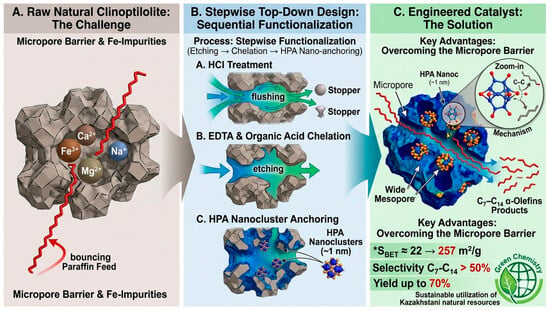
The selective conversion of high-molecular-weight paraffins (C20–C40) into linear alpha-olefins is often hindered by severe diffusion limitations and secondary over-cracking. This study addresses these challenges by transforming low-value natural minerals into sophisticated catalytic systems. We present a “top-down” engineering strategy for designing hierarchical catalysts based on natural Kazakhstani clinoptilolite. The multi-stage modification involves synergistic demineralization and precision chelation (EDTA, sulfosalicylic acid) to generate a tailored mesoporous architecture. This framework serves as a host for the sub-nanometric immobilization of Keggin-type heteropolyacids (PW12, PMo12), ensuring optimal active-phase dispersion. The innovative dual-step modification successfully bypassed the “micropore barrier”, creating a high-surface-area hierarchical network that facilitates the transport of bulky paraffinic molecules. Precise localization of heteropolyacid clusters within the created mesopores resulted in the formation of superstrong Lewis acid sites, as confirmed via temperature-programmed ammonia desorption. These sites triggered a highly efficient monomolecular beta-scission mechanism, suppressing undesirable hydrogen transfer reactions. The resulting catalysts achieved a breakthrough in technical paraffin cracking, delivering a 70% liquid product yield with an unprecedented >50% selectivity toward the C7–C14 α-olefin fraction. This work demonstrates a sustainable pathway for upgrading natural zeolites into high-performance, green catalysts that rival expensive analogs in precision and efficiency.

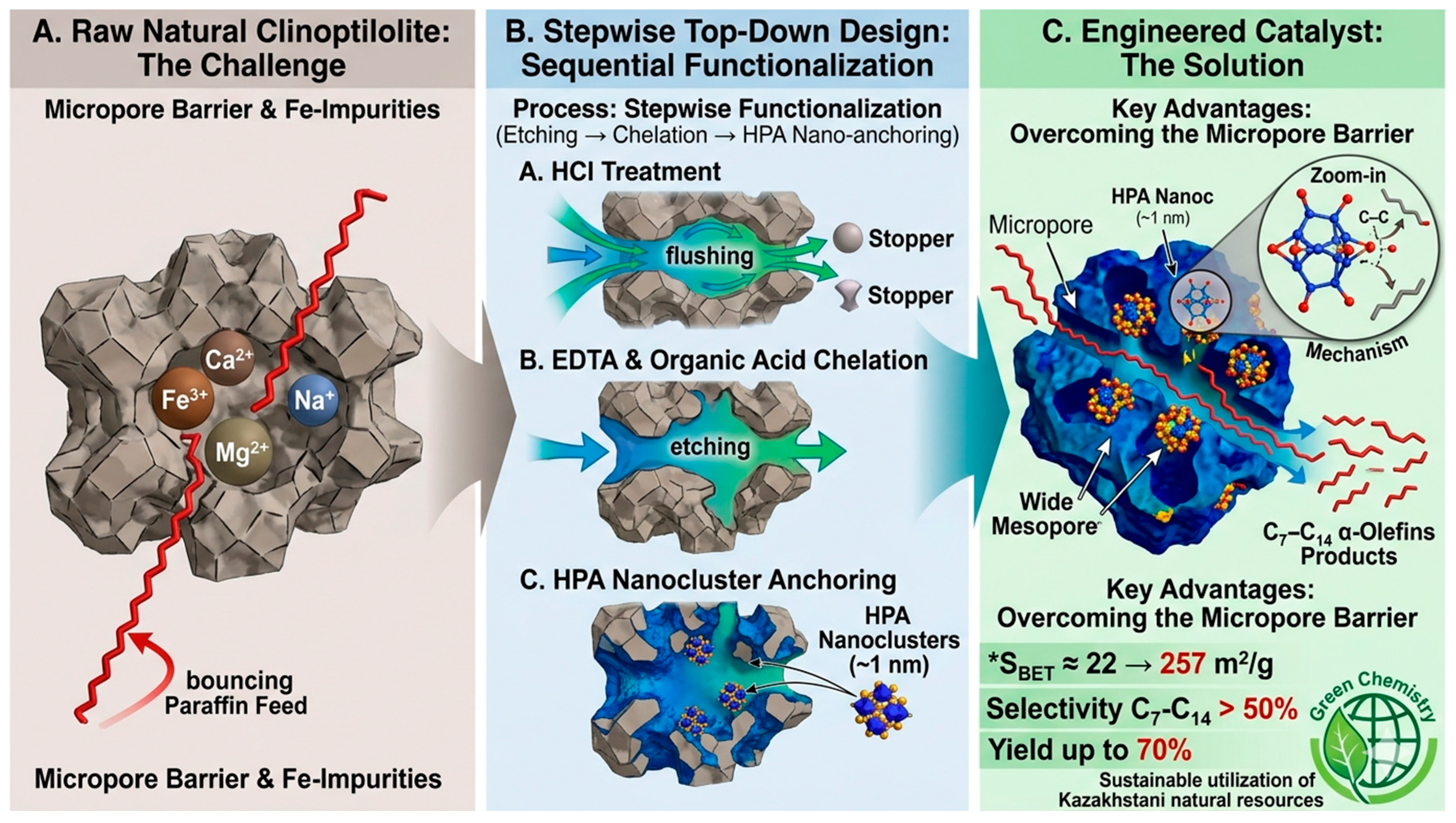
Graphical Abstract

1. Introduction

The transition to a circular bioeconomy paradigm necessitates the deep and selective processing of heavy petroleum fractions, in particular high-molecular-weight paraffins (C20–C40), into valuable petrochemical intermediates [1,2]. Higher α-olefins occupy a critically important niche in this chain, serving as the basic feedstock for the production of synthetic lubricants, biodegradable detergents and polymers with specific properties [3]. Despite its industrial significance, the catalytic conversion of long-chain alkanes remains fraught with a number of fundamental contradictions that limit selectivity towards terminal alkenes [4].

1.1. Overcoming the “Microporous Barrier” and Diffusion Limitations

Conventional microporous zeolites (ZSM-5, Y), due to their high acidity, exhibit significant steric hindrance when dealing with bulky paraffin molecules [5,6]. Narrow channels (less than 6 Å) limit the rate of substrate diffusion to the active sites, which triggers the phenomenon of over-cracking. As a result, primary olefins undergo extensive cracking into light gases (C1–C4), which significantly reduces the yield of liquid products. Current trends in catalyst design indicate that the formation of a hierarchical mesoporous structure is the only effective way to increase the process efficiency factor (η) [7,8,9]. In our textural studies using the BET method, the creation of a transport mesopore system allowed the specific surface area of the support to be increased from an initial 22.1 m2/g to 257.0 m2/g, which radically altered the molecular transport kinetics [10,11].

1.2. Acidity Control to Suppress Secondary Reactions

The second critical issue is “uncontrolled acidity”. The high density of Brønsted acid sites (BASs) on standard aluminosilicates triggers undesirable hydrogen redistribution and skeletal isomerization reactions. Instead of linear α-olefins, a mixture of branched alkanes and aromatic compounds is formed. The use of heteropolyacids (HPAs) with a Keggin structure as the active phase opens up possibilities for the precise tuning of the strength of the acid sites [12,13,14,15,16,17,18]. IR spectroscopy data with CO and TPD-NH3 adsorption confirm that the incorporation of HPAs into the zeolite framework contributes to the formation of a unique spectrum of ultra-strong Lewis centers, which direct the reaction towards a monomolecular β-cleavage pathway, preserving the linear structure of the carbon chain.

1.3. Natural Clinoptilolite as a Platform for Sustainable Catalysis

In the context of “green chemistry”, the use of natural aluminosilicates, such as clinoptilolite, is regarded as an environmentally and economically sound alternative to expensive synthetic mesostructures (MCM-41, SBA-15) [2,19,20,21]. However, natural minerals are characterized by high contents of extra-framework cations and iron impurities (Fe2O3 up to 10 wt.%), which block the pore space and initiate coking. A selective demineralization step is required to transform the raw mineral into a highly efficient support. Studies show that “mild” chemical etching effectively cleans the framework, increasing the silicate modulus (SiO2/Al2O3) from 6.7 to 39.0, which creates the necessary foundation for further functionalization [10,22].

1.4. The “Top-Down” Strategy and Nanodesign of Active Sites

One of the most challenging tasks remains to be achieving the atomic dispersion of the active phase [23,24]. HPAs are prone to thermal aggregation, which negates their catalytic advantages. This work proposes a concept for controlled surface design using a “top-down” approach, comprising (1) precision chelation—the use of organic agents (EDTA, sulfosalicylic acid (SSA)) for the selective removal of Fe3+ and the formation of mesopores with a volume of up to 0.24 cm3/g [11,22]—and (2) nanocluster stabilization—the creation of “anchor” sites on the zeolite surface to fix HPC anions in the form of sub-nanometer clusters (~1 nm), as confirmed via HR-SEM and XPS methods [11]. This strategy bridges the gap between the availability of natural materials and the efficiency of synthetic catalysts, delivering a record liquid α-olefin yield of up to 70% and opening up new horizons in the deep processing of paraffin-containing feedstocks from Kazakhstan.

2. Results and Discussion

2.1. Sequential Modification Strategy

2.1.1. Mineral Acid Activation and Decationization (HCl Treatment)

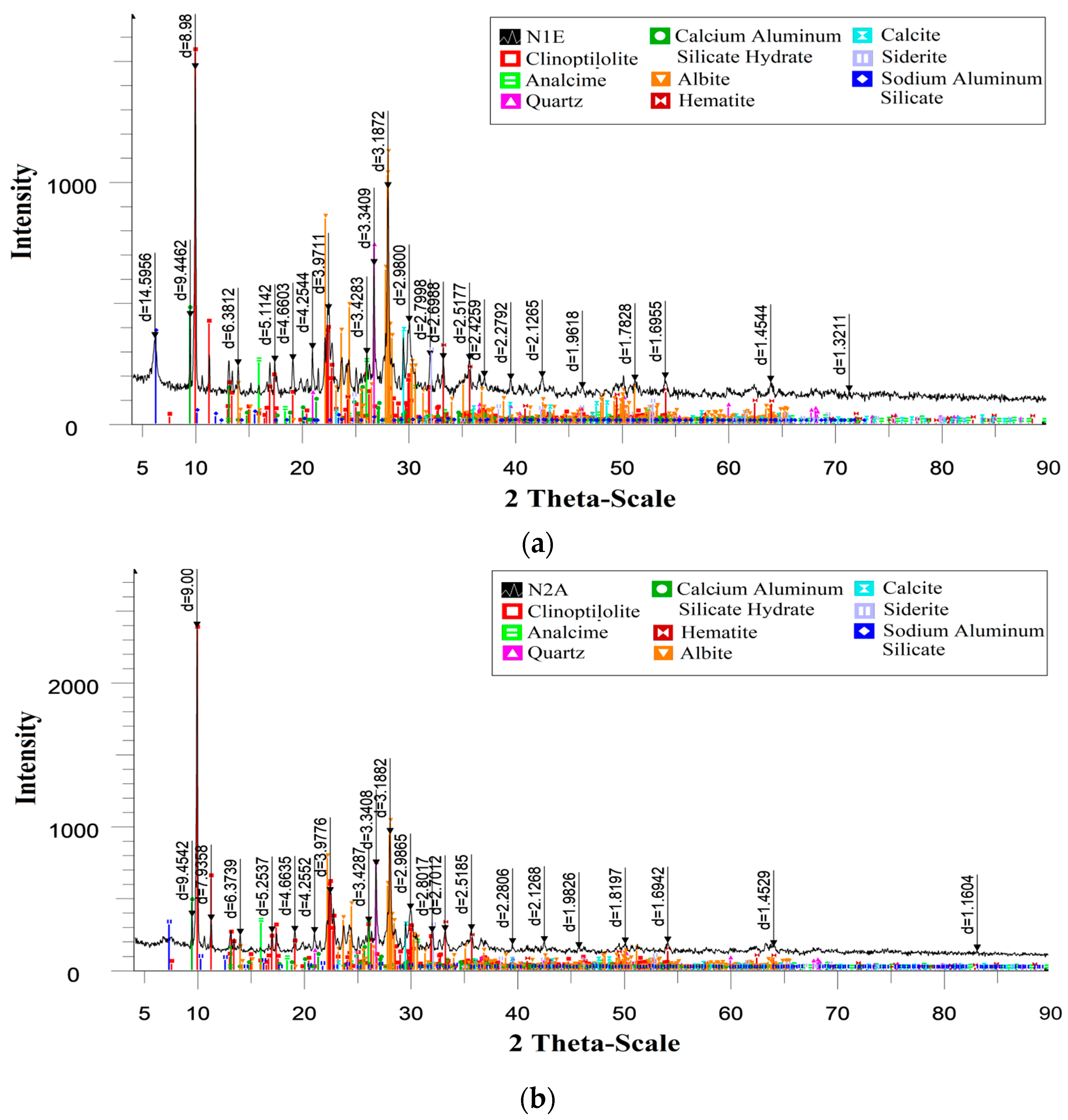
In the first stage of the catalytic design, natural clinoptilolite (Cpt) underwent thorough purification and protonation. The starting mineral was characterized by high mechanical strength (190–210 kg/cm3) and porosity (25–28%), but the high content of impure iron oxides (10.2 wt.%) and non-framework cations blocked the active sites and promoted coking. To convert the zeolite into the active H-form, treatment with a 1.75 N HCl solution was carried out in a Soxhlet apparatus. This method ensured the continuous extraction of impurities and cations (Na+, Ca2+, Mg2+, K+), which led to a reduction in the Fe2O3 content from 10.2% to 2.7 wt%. The increase in the silicate modulus (SiO2/Al2O3) from 6.7 to 37.0 indirectly indicates dealumination and the formation of a developed system of acid sites. The X-ray diffraction (XRD) patterns of the Cpt (the original natural) and HCpt-1 (obtained by treating natural zeolite with 1.75 N HCl) samples are presented in Figure 1. Table 1 presents the phase compositions of the studied natural zeolite samples.
A comparison of the X-ray diffraction patterns of the original and acid-activated samples indicates a change in the mineral’s structure during the acid activation process. The mineral structure remains unchanged after the acid treatment; however, compared with the diffractogram of the initial natural zeolite sample, there is a decrease in the intensity of one of the main reflections characteristic of the mineral (8.92 Å), which appears to be associated not only with the partial amorphization of the structure but also with a change in the cationic composition of the zeolite during acid activation. Treatment with 1.75 N hydrochloric acid altered a number of other reflections in the natural zeolite. In particular, there is an increase in the reflection in the 3.3 Å region, which indicates an increase in the content of the amorphous phase. However, no noticeable destruction of the natural zeolite structure is observed in the HCpt-1 diffractogram.
The X-ray diffraction pattern of the natural zeolite sample (Figure 1a) and the data in Table 1 indicate that the main mineral forming the solid framework of the zeolite is clinoptilolite with the formula Na8(Al6Si3O72)(H2O)9. The crystal chemical formula of the clinoptilolite is (Na,K)6[Al6Si3O72]·24H2O, and the clinoptilolite content in the natural zeolite sample is 40.0%. Alongside clinoptilolite, the following associated minerals are found: analcime (Na16.24Al16.00Si32.00O96·H2O)16) (chemical formula: Na[AlSi2O6]·H2O), quartz (SiO2) and feldspars. Feldspars are present as solid solutions of the ternary isomorphic series K[AlSi3O8]—Na[AlSi3O8]—Ca[Al2Si2O8] (or K-Na-, Ca-Na-feldspars), in particular in the form of albite (Na[AlSi3O8]). Among the other minerals, the widespread iron minerals hematite (Fe2O3) and siderite (FeCO3) can be identified, the total content of which in the natural zeolite reaches 11.7% (7.7% and 4.0%, respectively).
Acid treatment led to changes in the chemical composition of the natural zeolite sample during modification: under the action of acid, the contents of not only monovalent and divalent metal oxides but also associated minerals decreased. Thus, when sample Cpt was treated with HCl, quartz and feldspar dissolved, and their content decreased by 20–25%. Furthermore, in sample HCpt-1, the content of iron oxide-bearing mineral phases decreased under the action of mineral acid (Figure 1b, Table 1). As a result of the acid treatment, the content of the rock-forming mineral clinoptilolite increased. The clinoptilolite phase, under the action of HCl, rose from 40.0% in the Kl sample to 49.7% in the HCpt-1 sample, i.e., by 20%. Higher clinoptilolite-phase values could be achieved in the natural zeolite sample as the hydrochloric acid concentration increased (Figure 1b, Table 1).
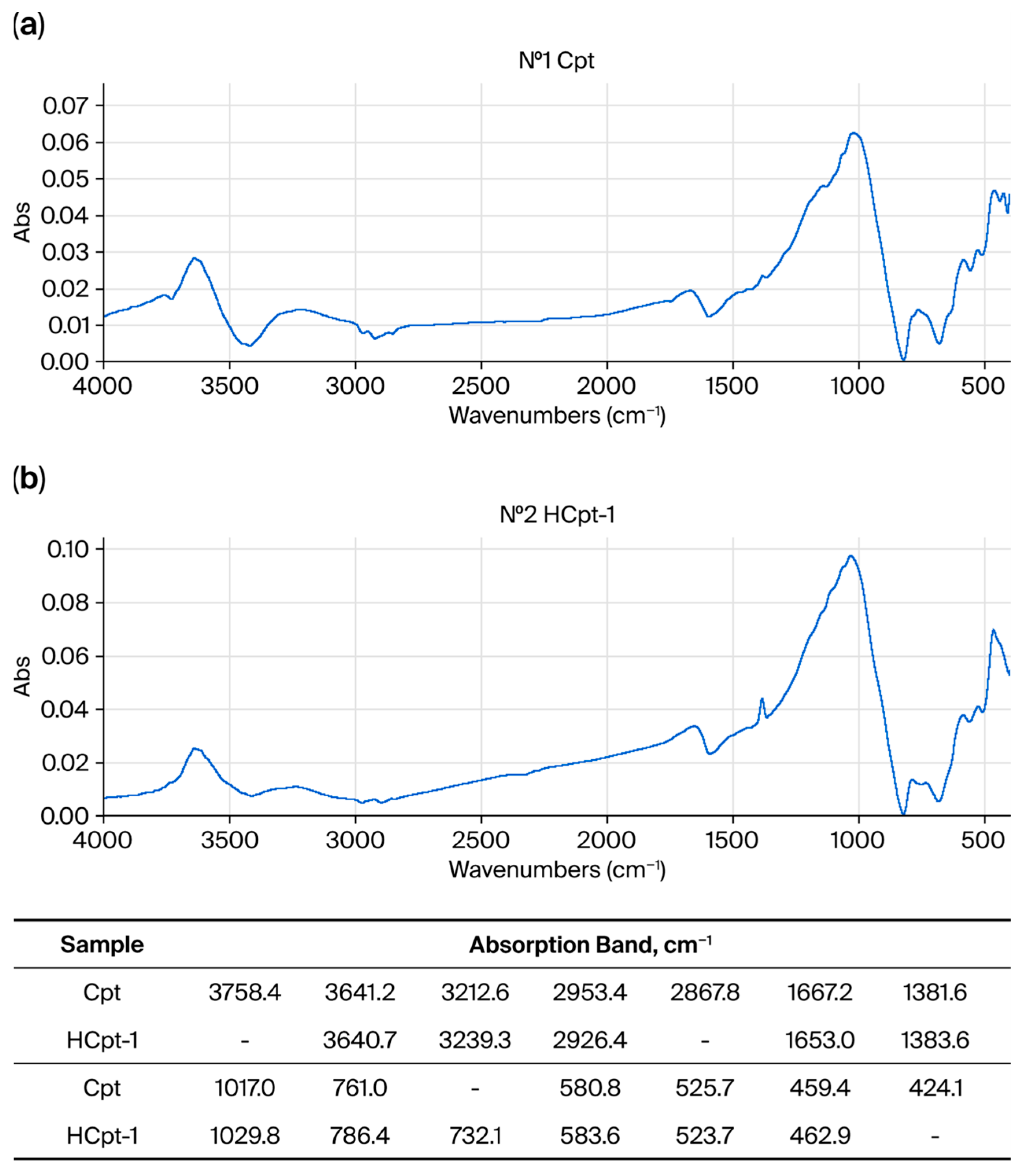
FTIR spectroscopy data (Figure 2) confirm that the treatment with a 1.75 N hydrochloric acid solution was “mild”: it induced controlled dealumination (evidenced by the shift in the 1017 cm−1 band to 1029 cm−1) while fully preserving the clinoptilolite crystal lattice. The retention of characteristic bands in the 580 cm−1 region (double five-membered rings) and 450–460 cm−1 region (tetrahedral units) proves the high acid resistance of the framework and its suitability for further functionalization with heteropolyacids.
Thus, when a relatively dilute acid is used to treat clinoptilolite, deionization occurs, resulting in the formation of the hydrogen form; dealumination takes place simultaneously with deionization, accompanied by the partial amorphization of the zeolite (Table 2).

2.1.2. Design of Hierarchical Porosity via Chelation (EDTA/SSA Treatment)

The second stage of modification was aimed at eliminating diffusion limitations and suppressing side reactions leading to compaction. Despite the effectiveness of HCl activation, the residual iron content in the natural framework initiated undesirable coking. For precise purification and the formation of a mesoporous structure, HCpt-1 samples were treated with a 10% solution of either the chelating agent ethylenediaminetetraacetic acid (EDTA) or sulfosalicylic acid.
The choice of these reagents was due to their ability to form stable, water-soluble intra-complex compounds with Fe3+ ions. Unlike harsh dealumination with mineral acids, the “gentle” action of organic chelates allows for the following:
-
The selective removal of iron that blocks access to active sites, thereby improving the operational stability of the catalyst.
-
The creation of a hierarchical pore system by locally removing aluminum from the tetrahedral sites of the framework without causing extensive surface amorphization.
Direct treatment of natural zeolite with organic chelates (EDTA/SSA) showed a negligible change in the silicate modulus and incomplete iron ion removal, confirming the need for preliminary mineral deionization to “unlock” the structure [12,13].
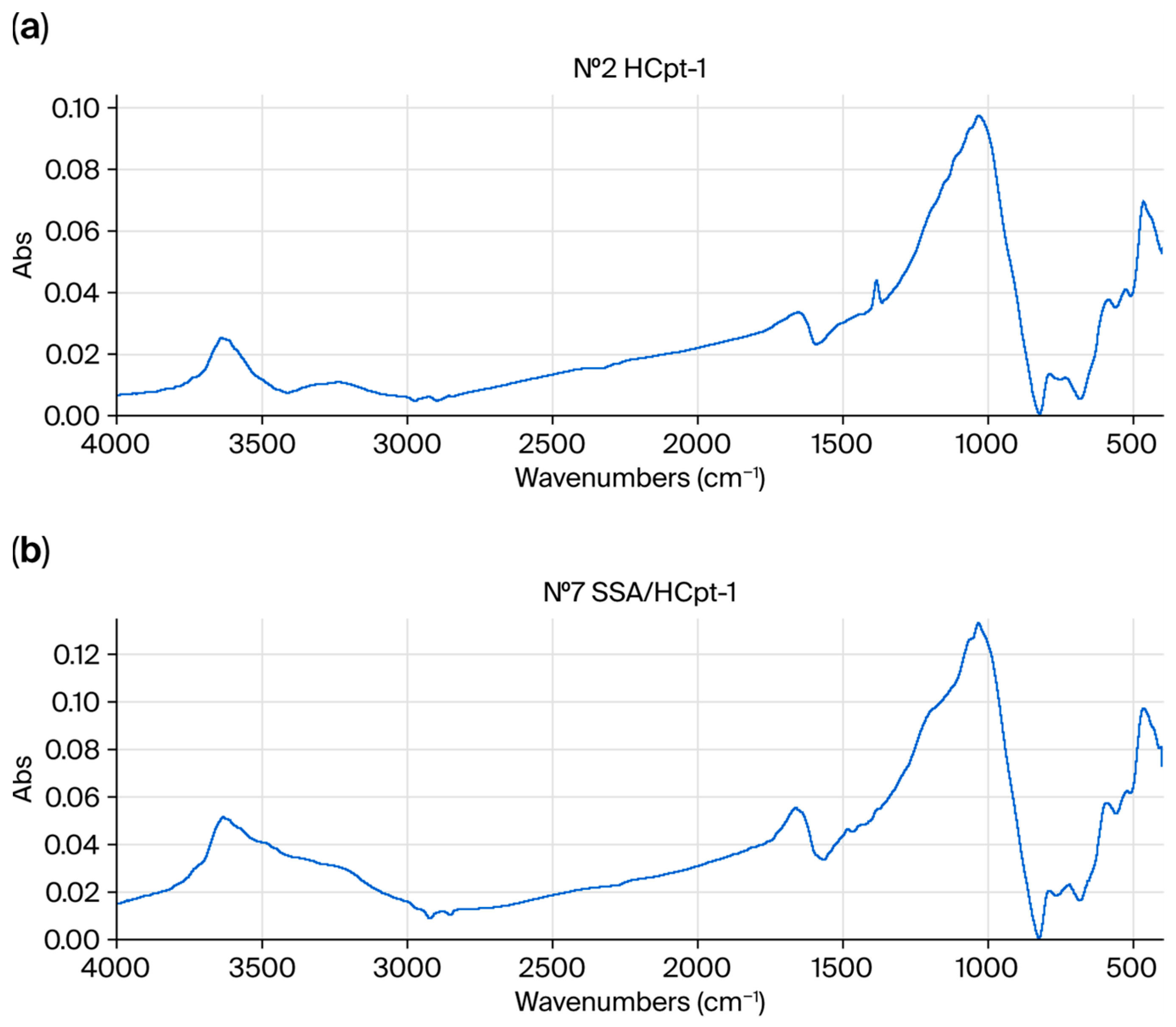
Comparative FTIR analysis confirms the structural stability of the clinoptilolite crystalline framework during the second modification stage (Figure 3). Specifically, chelation with a 10% sulfosalicylic acid solution induced the formation of a hierarchical pore system: the shift in absorption bands in the 590 and 719 cm−1 regions indicates a rearrangement of the aluminosilicate framework characteristic of secondary mesopore formation. The appearance of the 1482 cm−1 band points to the successful integration of chelating agent molecules, which serve as “anchoring sites” for stabilizing the active phase. Deep dehydration of the channels (evidenced by the disappearance of adsorbed water bands at 3239 cm−1), combined with the targeted modification of the hydroxyl groups, ensured unimpeded diffusion and optimal conditions for the selective cracking of high-molecular-weight paraffins.
Thus, the combination of HCl and chelating agents results in the creation of deionized and dealuminized catalytic systems with well-developed mesoporosities, optimized for the conversion of C12–C30 paraffin macromolecules (Table 3).

2.1.3. Functionalization of Zeolite with Nano-Sized Heteropolyacids (HPAs)

The final stage of the catalyst design involved the incorporation of the Keggin-type heteropolyacids (HPAs) tungstophosphoric acid (H3PW12O40) and molybdophosphoric acid (H3PMo12O40) into the pre-prepared hierarchical clinoptilolite structure. HPAs were selected as modifiers due to their adjustable acidity, high thermal stability and dispersion ability at the nanoscale [16,20].
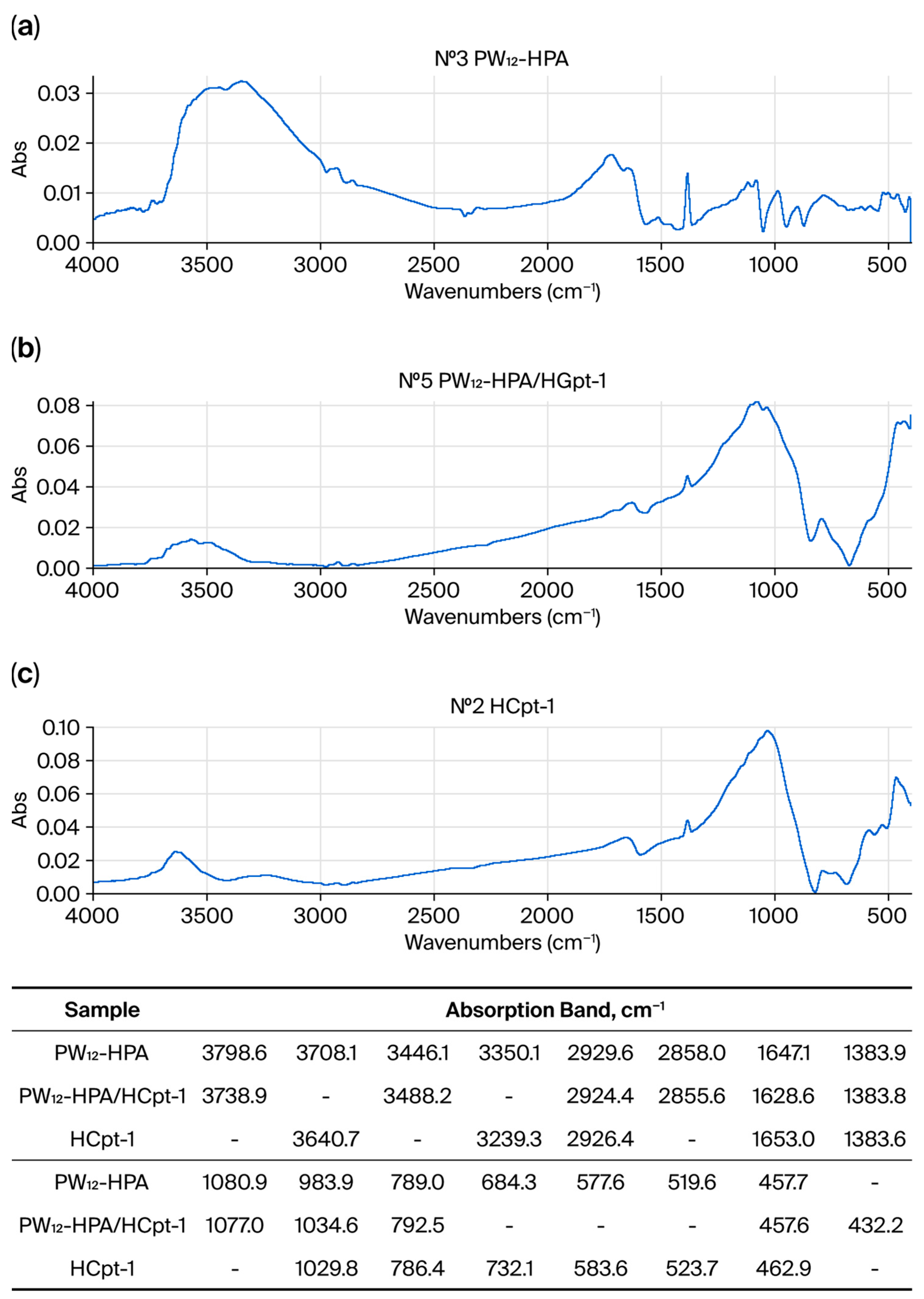
FTIR analysis of the sample after the incorporation of tungstophosphoric acid (PW12-HPA/HCpt-1), compared to the initial activated zeolite (HCpt-1), confirmed the successful immobilization of Keggin anions and their interaction with the framework. According to the FTIR data (Figure 4), the introduction of this HPA led to a hypsochromic shift in the main absorption band of the asymmetric framework vibrations from 1029.8 to 1034.6 cm−1. This shift, combined with the appearance of the characteristic Keggin anion band at 1077.0 cm−1 (W=Od), indicates an intensive interaction between the embedded HPA clusters and the active sites of the zeolite. The band shift from 786.4 to 792.5 cm−1 confirms the rearrangement of the Si–O–Si bond system during HPA localization within the pore space. Furthermore, the emergence of new bands in the 3738.9 and 3488.2 cm−1 regions indicates the formation of additional protonated sites, which ensure the high catalytic activity of the system in cracking reactions.
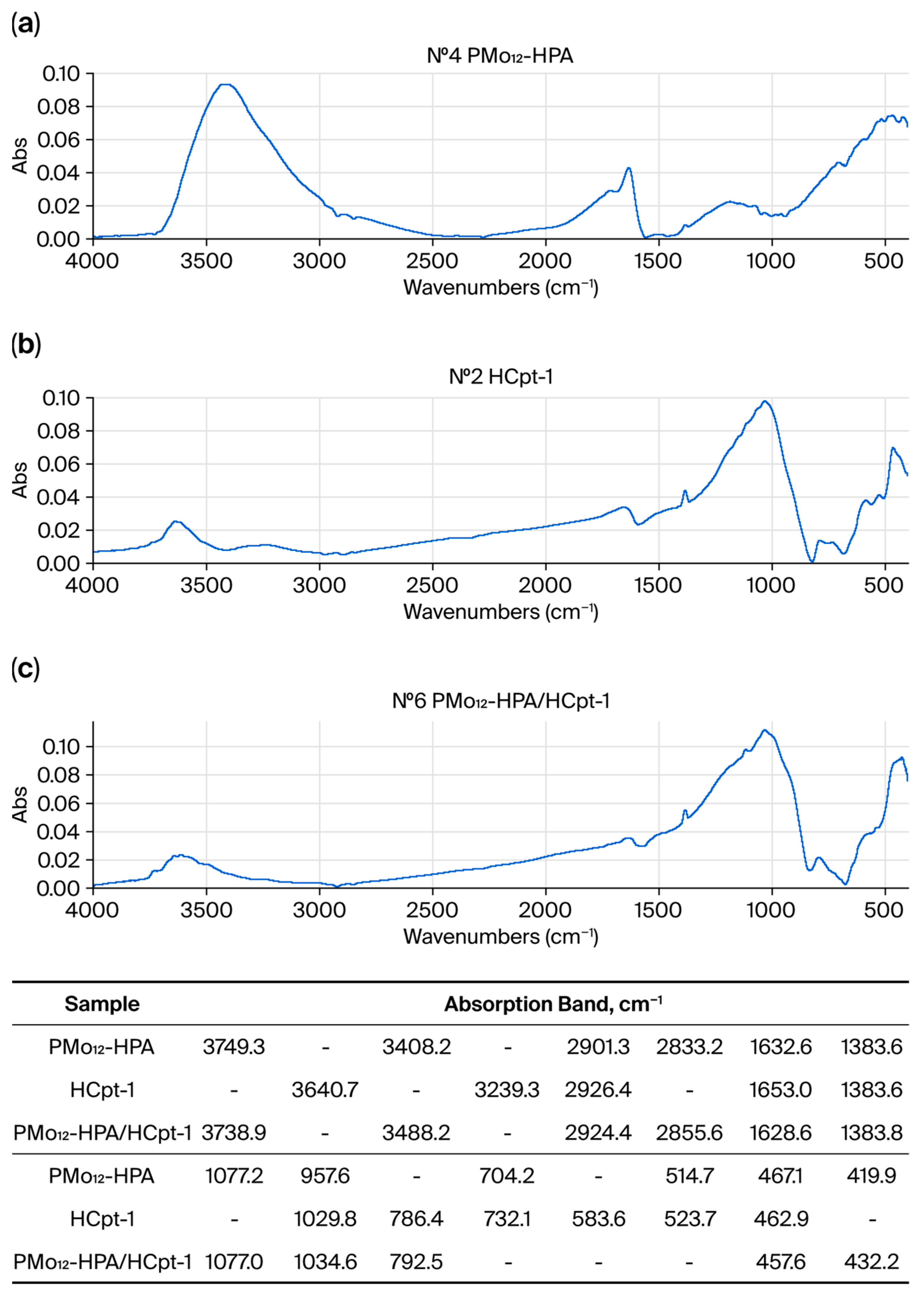
FTIR analysis of the PMo12-HPA/HCpt-1 sample in comparison with pure phosphomolybdic acid (PMo12-HPA) and the activated support (HCpt-1) confirms the successful incorporation of the Keggin structure into the zeolite pore space (Figure 5).
According to the FTIR data, the introduction of phosphomolybdic acid (PMo12-HPA) into the activated clinoptilolite structure led to changes similar to those observed in the tungsten-based system. The retention of the characteristic band at 1077.0 cm−1 confirms the stability of the Keggin anion during the modification process. The hypsochromic shift in the asymmetric framework vibration band from 1029.8 to 1034.6 cm−1 indicates the firm fixation of the active phase on the protonated sites of the support. The shift in the bands in the low-frequency region (from 462.9 to 457.6 cm−1) and the appearance of new signals at 432.2 cm−1 point to the deep embedding of HPA clusters into the hierarchical pore system, which correlates with the TGA data regarding the high thermal stability of the synthesized catalysts.
X-ray diffraction analysis reveals a decrease in the intensity of the main clinoptilolite reflections, which is associated with a partial change in the cationic composition and the filling of the mesopores with heavy tungsten or molybdenum atoms. This architecture, in which HPA nanoclusters (~1 nm) are embedded in transport mesopores, ensures the high accessibility of active sites for bulky paraffin molecules and the selective progression of primary cracking to α-olefins (Table 4).

2.1.4. Analysis of Synthesized Catalysts via Thermogravimetric Analysis and Differential Scanning Calorimetry

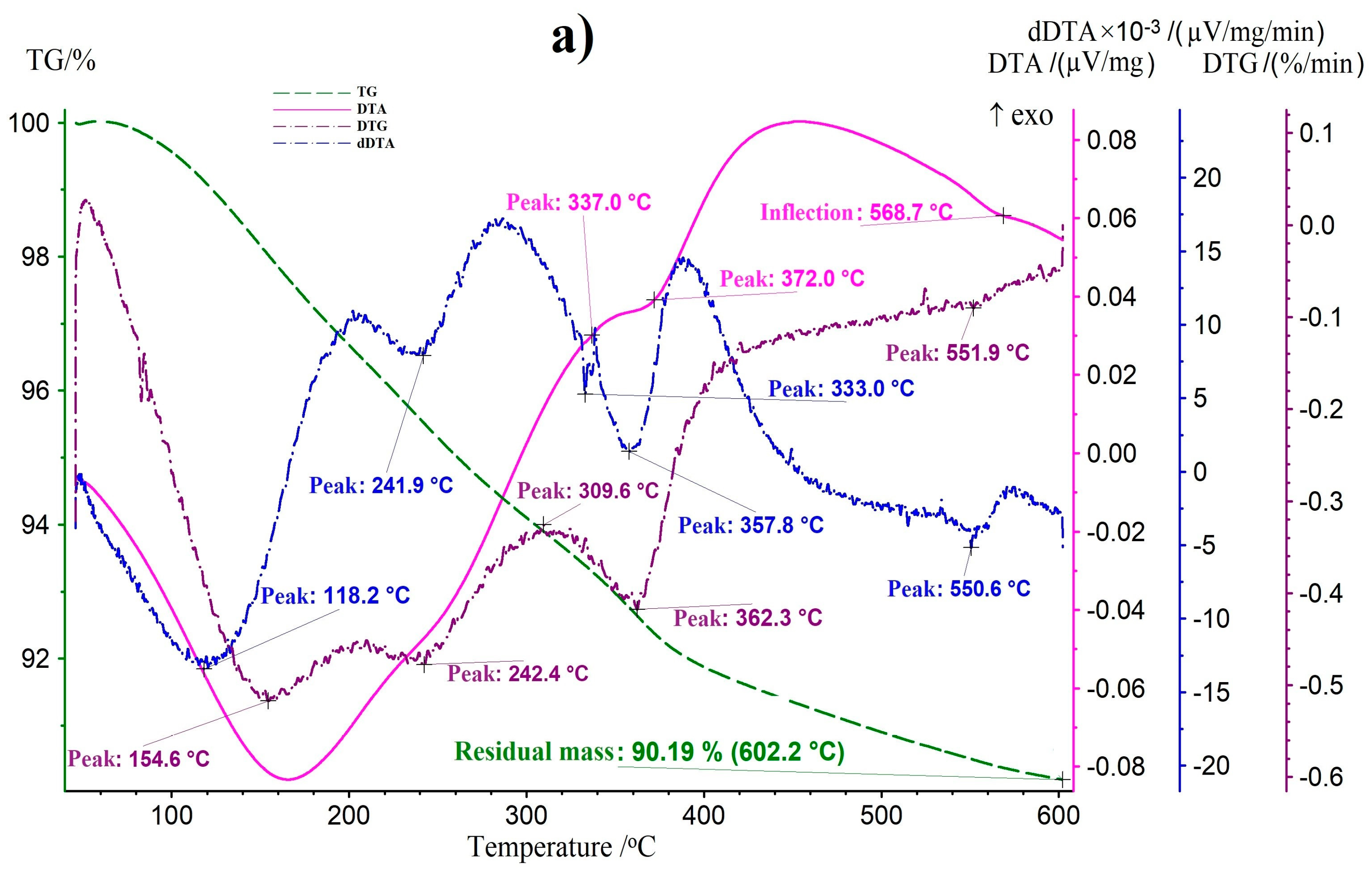
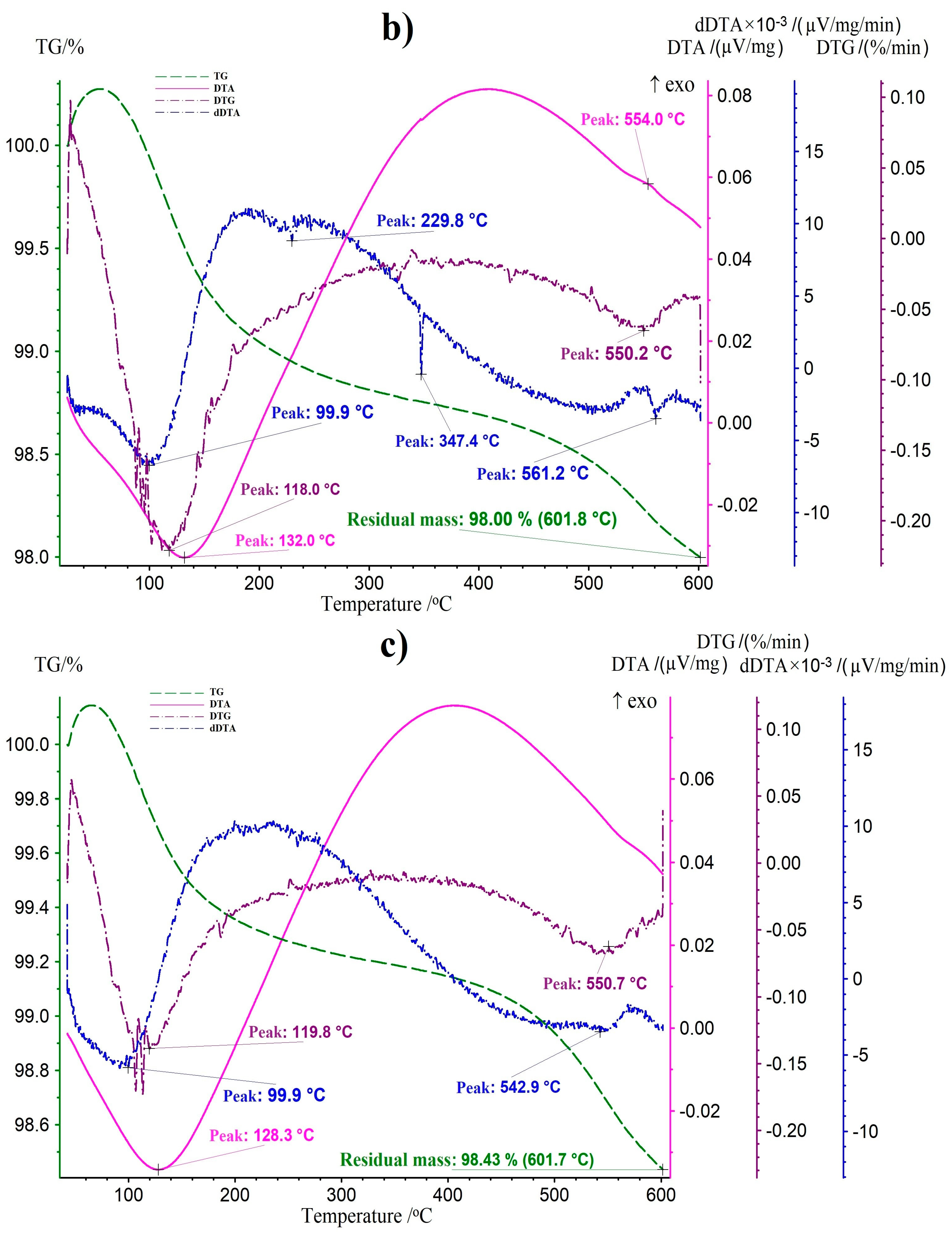
The thermal stability of the synthesized catalysts was further investigated using thermogravimetric analysis at temperatures up to 600 °C. For systems with 10% PW12-HPA/HCpt-1 and 10% PMo12-HPA/HCpt-1, the total mass losses were surprisingly low at 2% and 1.57%, respectively, compared with 9.81% for the initial modified carrier (Figure 6). The thermogravimetric analysis curves show a constant but slight decrease in mass, while the differential thermal analysis (DTA) signals mainly reflect dehydration processes at a temperature of about 130 °C. The absence of significant exothermic effects associated with the crystallization of WO3 or MoO3 oxides at temperatures below 500 °C confirms the data from the IR Fourier spectroscopy and indicates that the Keggin groups were thermally stable in the hierarchical porous system of the modified clinoptilolite.

2.2. Textural Characteristics of Modified Clinoptilolite Samples

The textural parameters of the catalytic systems underwent significant changes during the stepwise modification process, which determined the accessibility of active sites to bulky paraffin molecules. According to low-temperature nitrogen adsorption data (Table 5), the initial natural clinoptilolite had a low specific surface area (SBET ≈ 18–25 m2/g) and limited pore volume due to the blocking of channels by extra-framework cations and iron impurities.
Acid activation (1.75 N HCl) led to a sharp increase in the SBET to 110–135 m2/g and an increase in the free pore volume due to the removal of amorphous phases and decationization. Subsequent chelation with organic acids (EDTA, SSA) resulted in the formation of secondary mesoporosity: the average pore diameter decreased from 72.2 Å (in natural Cpt) to 21.2–27.7 Å, indicating the creation of a well-developed channel system optimal for the transport of C12+ hydrocarbons.
Particular attention should be paid to the anomalous increase in the specific surface area upon the application of 10% H3PW12O40·6H2O (up to 257.0 m2/g). The fact that this value exceeds the additive values for pure zeolite and HPA indicates a profound chemical interaction between the active phase and the hierarchical support. The pore distribution shifts towards micro- and mesopores, creating a highly dispersed environment where HPA nanoclusters are anchored in the accessible transport pathways of the framework.
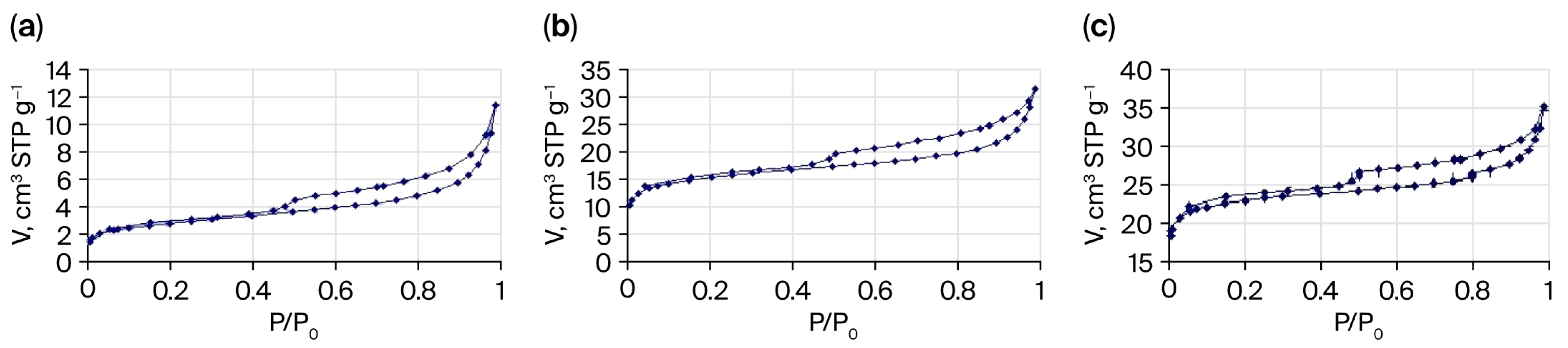
Figure 7 shows the adsorption and desorption isotherms for a natural sample of clinoptilolite and its modified forms, which are characterized by the presence of the S-type in all isotherms, indicating the formation of a hierarchical mesoporous structure in the studied zeolite samples.

2.3. Surface Acidity: TPD-NH3 and FT-IR (CO Adsorption) Studies

The surface acidity characteristics, which determine the activity of catalysts in cracking reactions, were investigated using thermally programmed ammonia desorption (TPD-NH3) and FT-IR spectroscopy of adsorbed CO. Stepwise modification of natural clinoptilolite led to a significant transformation of the acid center spectrum. The TPD-NH3 results for the studied catalytic systems are presented in Table 6.
It is generally accepted that ammonia desorbs from weak acid sites in the temperature range of 323–473 K (50–200 °C), from medium-strength acid centers in the range 473–573 K (200–300 °C) and from the strongest acid centers above 573 K (300 °C). On this basis, the TPR spectra of the prepared catalysts were conditionally divided into three temperature intervals, and the numbers and strengths of the acid centers were determined from these. The obtained results indicate that the HCpt-1 catalyst contained both weak and strong Lewis acid sites (LASs). A significant number of medium-strength acid sites appeared on the surface of the HSal/HCpt-1 catalytic system, and there was a marked increase in strong LASs. Deposition of PW12-HPA/HCpt-1 particles onto the surface of a deionized natural zeolite sample led to an increase in the content of only strong LASs, and impregnation of the deionized zeolite with a superacid increased the accessibility of its strong LASs to the interacting reaction components.
Lewis acid sites. According to the TPD-NH3 data, the transition from the natural zeolite to the H-form (HCpt-1) was accompanied by the appearance of strong acid sites, which correlated with an increase in the silicate modulus. The subsequent chelation (SSA/EDTA) and functionalization of the GPC (PW12/HCpt) led to a systematic increase in the concentration of strong LASs (Tpeak > 450 °C). A particularly high density of strong acid sites was demonstrated by the sample modified with a superacid (H-SA/HCpt), which was associated with the formation of additional active functional groups (-SO3H).
Brønsted acid sites. The presence of various types of OH groups was observed in the modified systems using IR spectroscopy of adsorbed CO (at 77 K). The main contribution to catalytic activity was made by bridging hydroxyl groups (Si–O(H)–Al). The incorporation of HPA into the hierarchical structure of the zeolite promoted the redistribution of the electron density and enhanced the proton-donating ability of the BASs, which is confirmed by the shift in the absorption bands of the OH groups towards the low-frequency region.
The strength of Brønsted sites centers can be determined from the shift in the valence vibrations of OH groups (ΔνOHCO) in the presence of adsorbed CO. The greater the shift, the stronger the acid centers. The concentration of Brønsted acid sites and their strengths, expressed in terms of the shift in p.p., are given in Table 7.
Three types of acid centers were observed on the catalysts, differing in their strengths and concentrations, which were determined via the magnitude and intensity of the shifts. During CO adsorption on the catalysts, the greater the shift in the valence vibrations of the OH group (∆γOH, cm−1), the stronger the acid centers. Strong acid centers were detected on 10% PW12-HPA/HCpt and HCpt; their concentration was four times lower on 10% NaSal/HCpt; and no shift was observed on 10% H4EDTA/HCpt, suggesting the absence of Brønsted acid centers on the surface.
Thus, the catalytic activity of modified forms of natural clinoptilolite depends on the formation of strong acid centers on their surfaces. In the HCpt < 10% HSal/HCpt < 10% PW12-HPA/HCpt series, there was a significant increase in the proportion of strong and very strong Brønsted acid sites.
The increases in the catalyst acidity and catalytic activity in the paraffin cracking reactions correlate with the high silicate modulus (SiO2/Al2O3) values of the zeolite samples. An increase in the SiO2/Al2O3 ratio led not only to a broadening of the spectrum of acid sites but also to an increase in the total surface areas of the catalysts.
Thus, the results of the IR Fourier spectrometry using sequential CO adsorption are consistent with the surface acidity data obtained via the NH3 TPD method.
The increase in the content of strong acid sites on the surfaces of catalytic systems in the HCpt-HSal/HCpt-PW12-HPA/HCpt-HPA/HCpt series contributed to an increase in their catalytic activity in the cracking of paraffinic hydrocarbons into higher olefins (Table 8).
The increase in catalytic activity in the HCpt-1 < HCpt-SSA < PW12-HPA/HCpt series correlates directly with the increase in the proportion of strong acid sites and the silicate modulus values. This surface configuration ensures the effective primary cracking of paraffins with high selectivity towards higher α-olefins, minimizing secondary isomerization reactions.

2.4. Surface Morphology and Nano-Imaging (SEM and HR-TEM)

The surface morphology and distribution of active phases within the catalyst structure were investigated using scanning electron microscopy (SEM) and high-resolution transmission electron microscopy (HR-TEM).
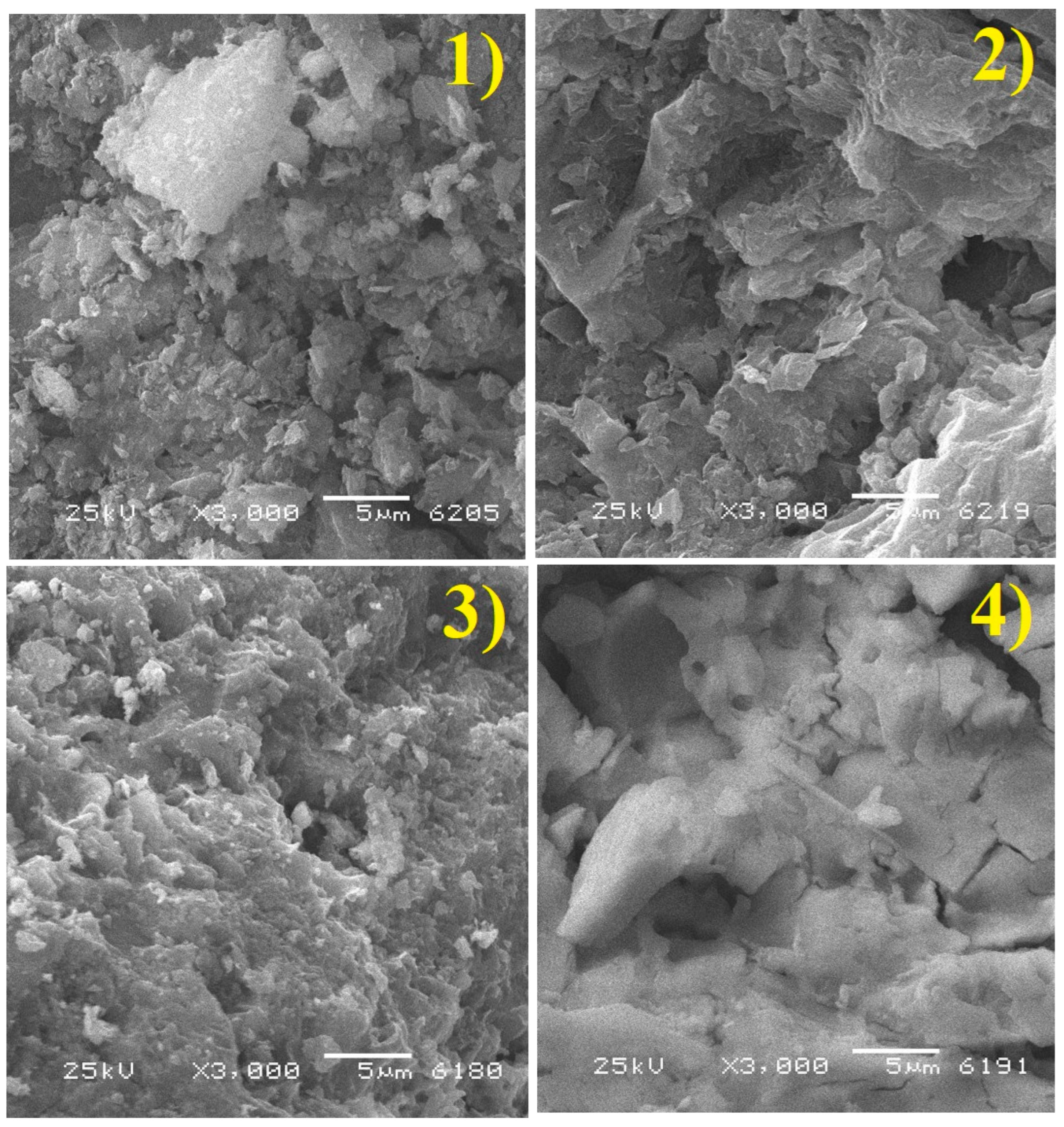
Microrelief and texture (SEM) (Figure 8): The initial natural clinoptilolite was characterized by a heterogeneous structure of irregularly shaped granules with pronounced cracks and micro-irregularities. Stepwise modification (HCl → CSC) led to surface cleaning and channel opening. Upon the subsequent application of HPA, uniform coverage of the zeolite’s layered structures with highly dispersed active-phase aggregates was observed. HPA particles bound firmly to the support surface, forming stable composites.
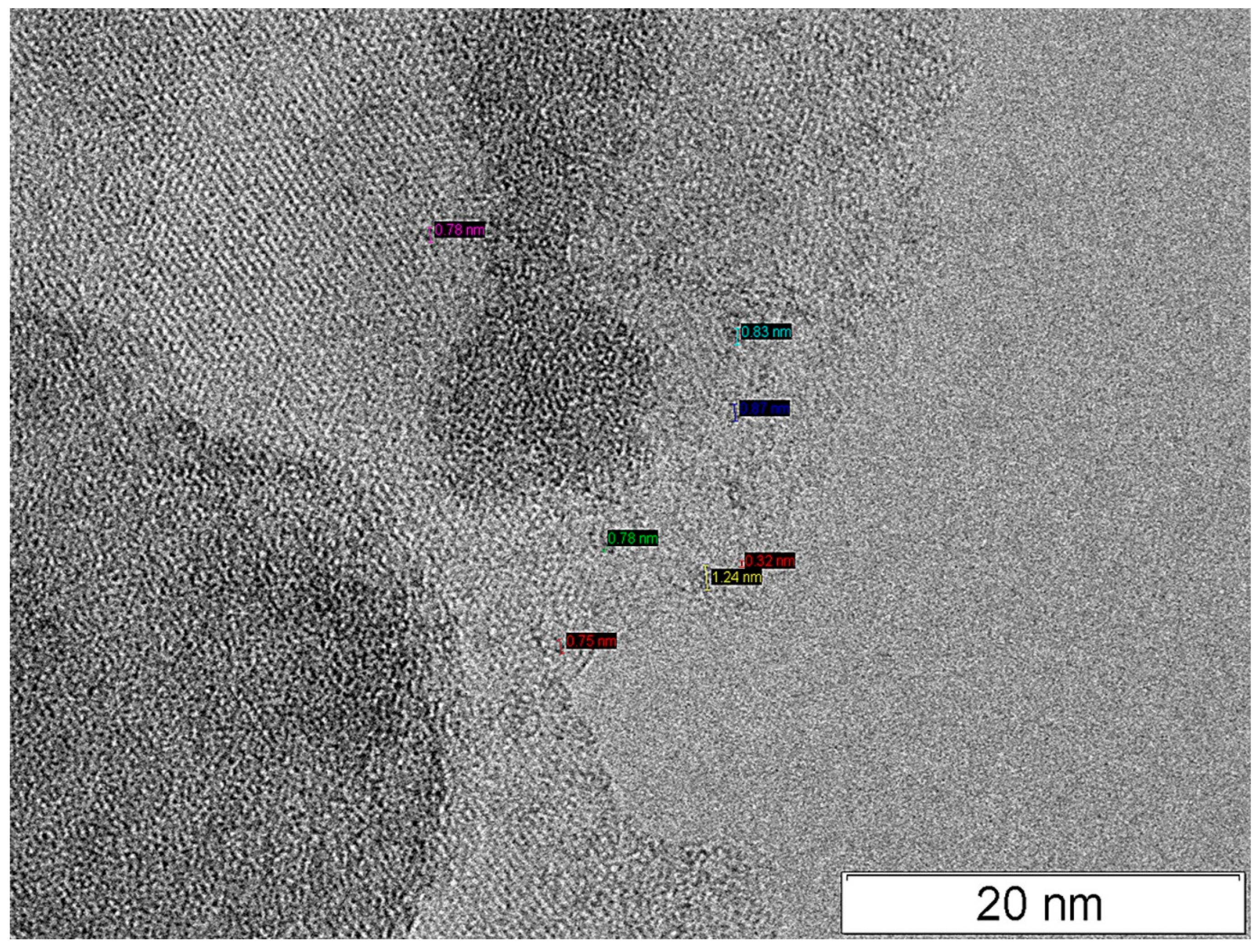
Nanostructural analysis (transmission electron microscopy) (Figure 9): Transmission electron microscopy revealed a profound interaction between the heteropolyacid and the hierarchical zeolite framework. The TEM images clearly show homogeneous GPC nanoclusters embedded directly within the mesopores of clinoptilolite. The size of these structures is approximately 1–2 nm, which correlates with BET data showing a sharp increase in the specific surface area (up to 257 m2/g) at a 10% loading of H3PW12O40.
The formation of such nanoscale active sites in the accessible transport pores ensures the high cracking activity of the system and a selective yield of liquid reaction products (up to 70%), consisting predominantly of α-olefins.

2.5. Surface Elemental Composition and Oxidation States (XPS Analysis)

X-ray photoelectron spectroscopy (XPS) was employed to investigate in detail the qualitative and quantitative compositions of the near-surface layer and to determine the valence state of the active sites.
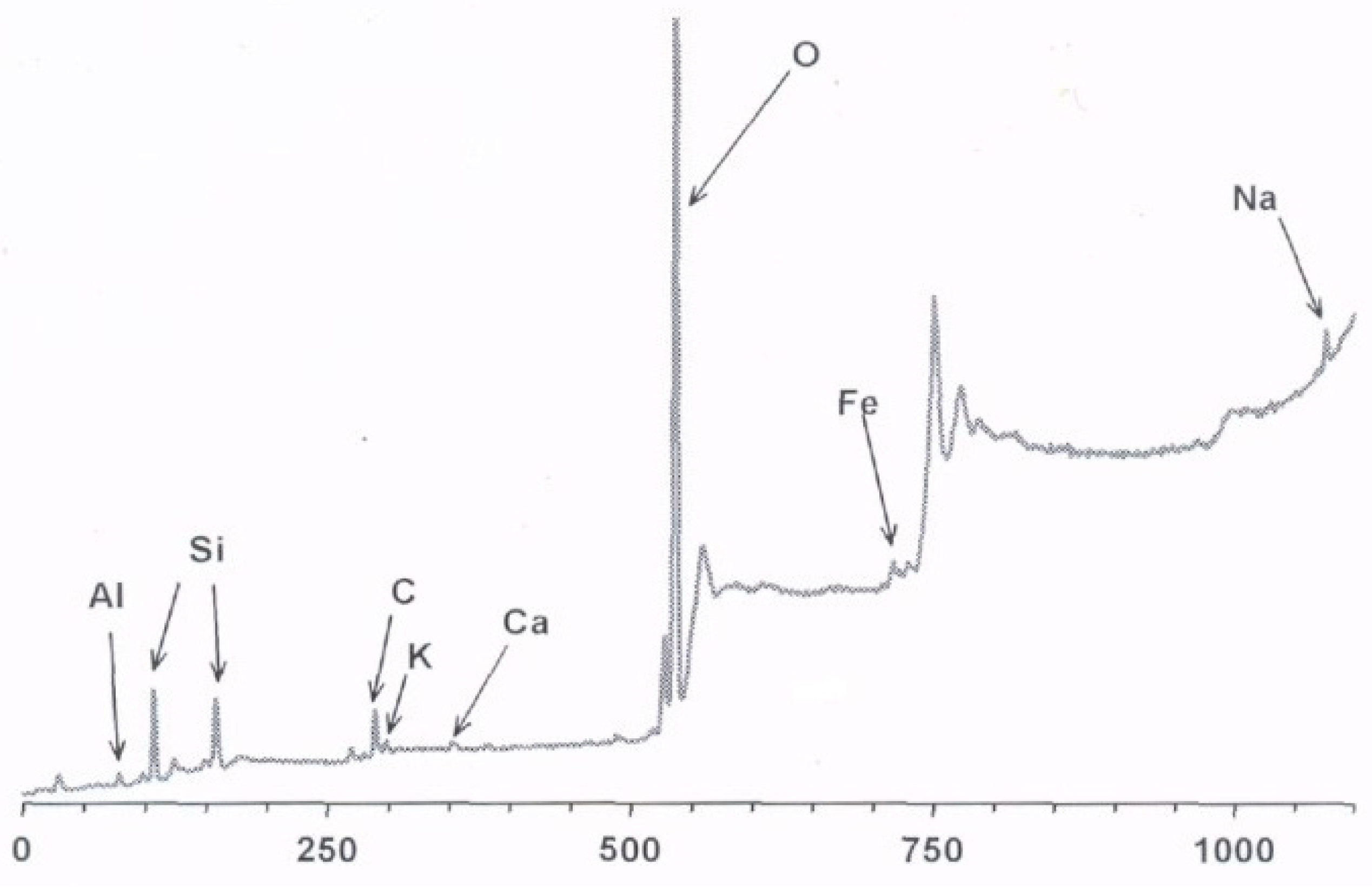
Analysis of the survey spectra confirms the presence of the main framework elements (Si, Al, O), as well as trace amounts of residual cations (K, Ca) and iron (Fe) (Figure 10). The survey spectrum of the 10% PW12-HPA/HCpt-1 sample demonstrates the purity of the surface following stepwise cleaning.
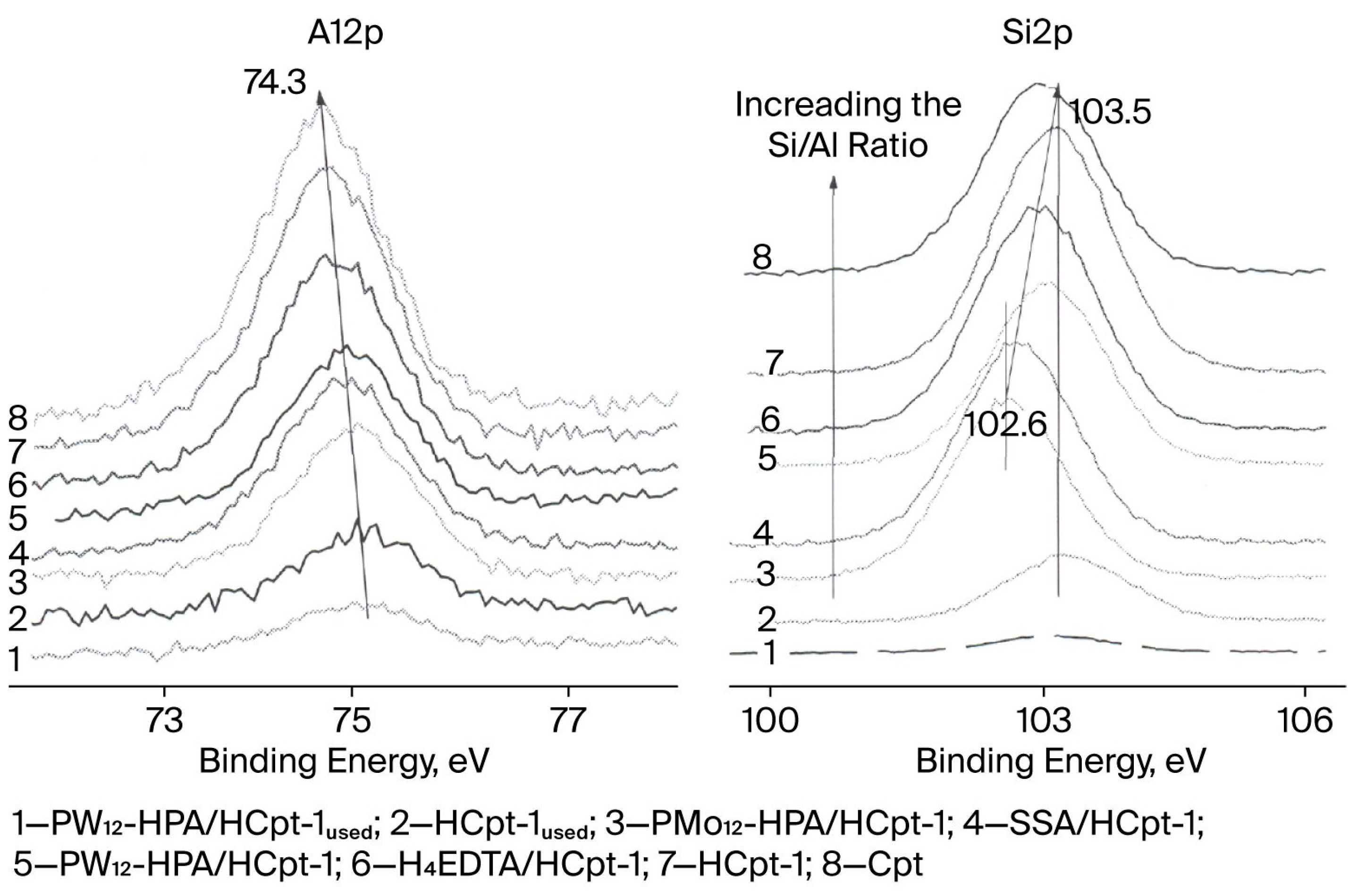
The binding energies of silicon (Si 2p) and aluminum (Al 2p) electrons are characteristic of aluminosilicate-type structures (Figure 11). The observed slight decrease in the Al 2p binding energy following modification indicates a partial rearrangement of the local environment of aluminum and its transition to states enriched relative to silicon, which is consistent with the IR and XRD analysis data on the dealumination of the framework.
Figure 11. Spectra of aluminum Al 2p and Si 2p. Chemical state of active phase: particular attention has been paid to the energy states of tungsten and molybdenum within the functionalized systems (Figure 12).
Catalysts 16 00539 g011
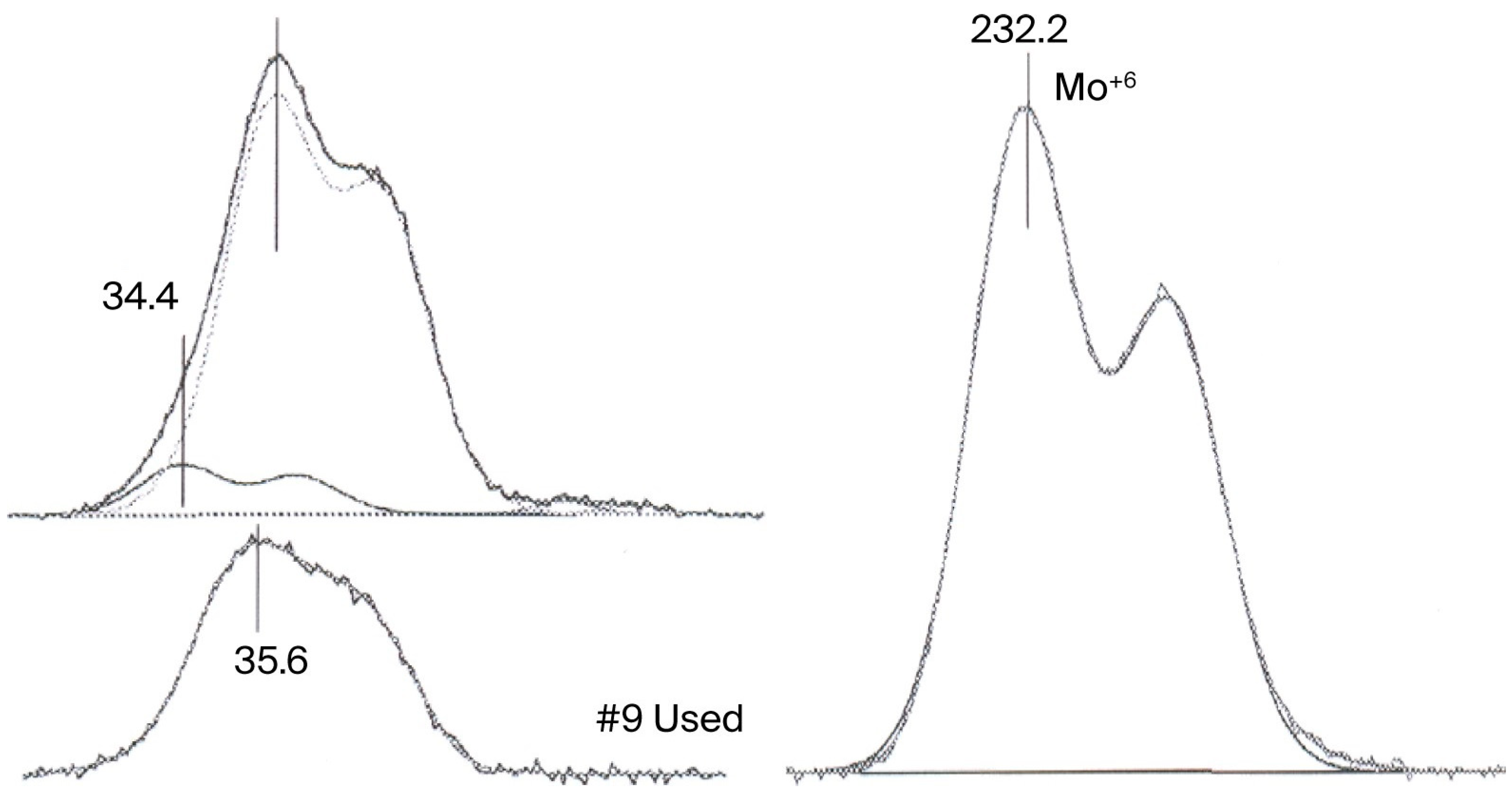
Figure 12. XPS of catalytic systems. High-resolution spectra of tungsten W 4f and molybdenum Mo 3d. Demonstration of characteristic doublets confirming W6+ and Mo6+ states.
Catalysts 16 00539 g012
The W 4f spectra are characterized by peaks with a binding energy corresponding to a tungsten oxidation state of +6. The Mo 3d spectra confirm that molybdenum is in the +6 charge state.
The preservation of high oxidation states of the metals indicates the stability of the heteropoly-like structure of the Keggin anions when they were immobilized on the zeolite surface. The mutual influence of the elements and the negligible change in the state of the main framework components confirm the deep chemical interaction between the Keggin-type nanoclusters and the hierarchical support, which is a key factor in the high catalytic stability in cracking processes [14,16,25,26].

3. Catalytic Cracking of Heavy Paraffins into Higher α-Olefins

The performances of the developed catalytic systems were evaluated during the cracking of technical paraffin (C20–C40, melting point = 52.7 °C). The main objective of the modification was to ensure a high liquid product yield whilst maximizing selectivity for higher α-olefins.

3.1. Cracking of Technical Paraffin on HCpt Catalyst

The effect of the number of acid treatment cycles. A single activation of natural zeolite with 1.75 N HCl (HCpt-1) is optimal. Increasing the number of acid treatments (up to three times) led to excessive dealumination, which, despite an increase in the silicate modulus, reduced the overall concentration of active sites and the total olefin content in the products (from 77.1% to 70.5%). This confirms the importance of retaining a certain amount of framework aluminum to maintain the acidity balance.
The results of the cracking of technical solid paraffin on the HCpt-1 catalyst at various temperatures are presented in Table 9.
The maximum yield of target fractions was achieved during the cracking of n-alkanes on the HCpt-1 catalyst at a temperature of 570 °C and amounted to 30.9% by mass, with a paraffin conversion of 96.8% by mass. The liquid cracking products obtained under these conditions contained no unconverted paraffins. However, the selectivity for target products was only 31.9% by mass, and the maximum selectivity for target products was observed at 530 °C and amounted to 46.9% by mass. The paraffin conversion was only 7.6% when unmodified natural zeolite samples were used in cracking.
Selectivity and fractional composition. The formation of C6–C10 (38.5%) and C11–C15 (31.9%) fractions was predominant in the presence of the HCpt-1 catalyst. The total content of higher olefins in the liquid distillate reached 77.1%, which significantly exceeds the figures for thermal cracking. High bromine numbers (up to 113 g Br2/100 g) confirm the high unsaturation of the obtained products.
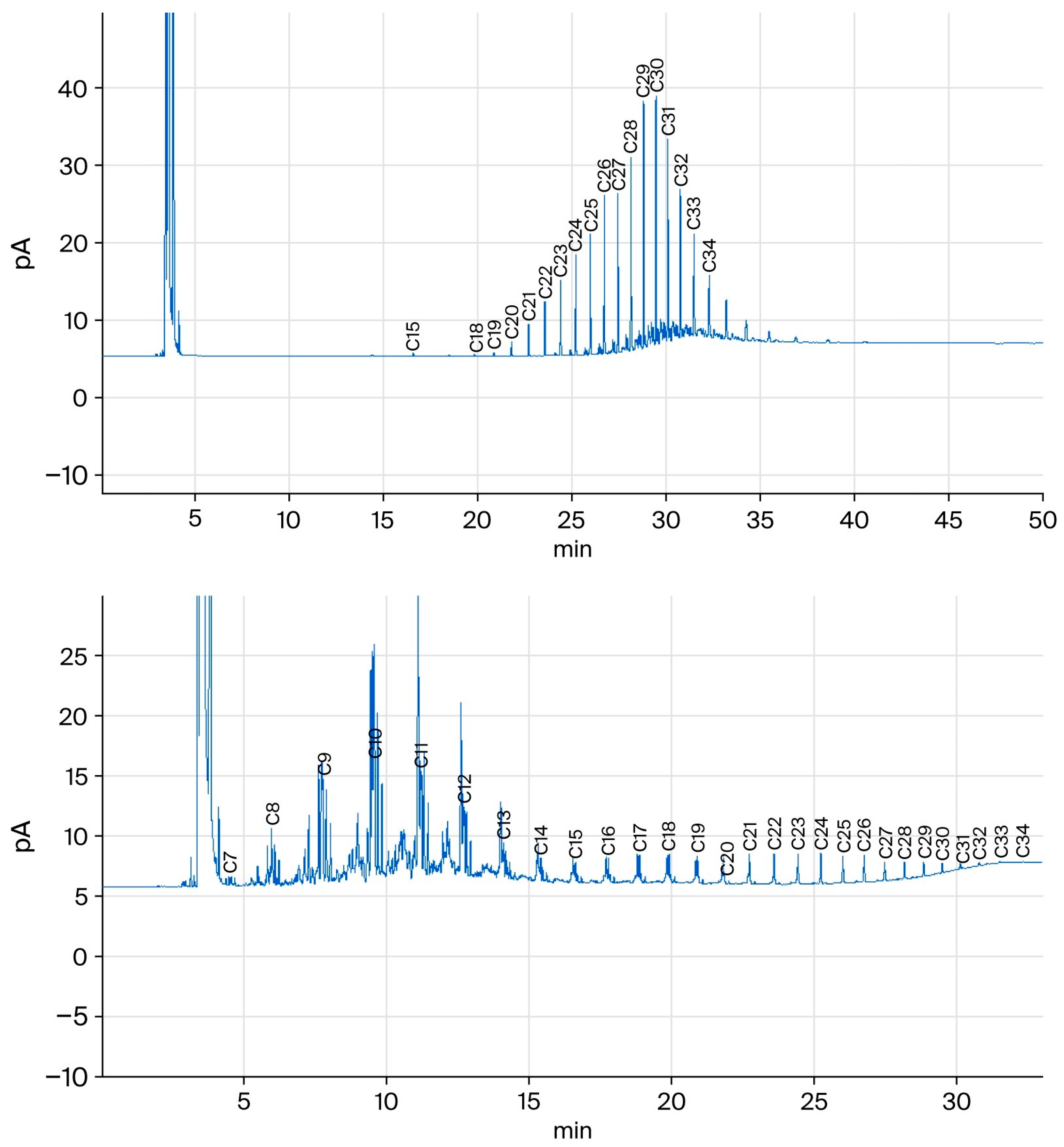
Figure 13 shows typical chromatograms of the feedstock technical paraffin and the product of its cracking on the developed catalyst based on natural zeolite at the optimum temperature.
The role of the hierarchical structure. A comparative analysis shows that the high activity of the modified forms is due to the synergy between the strong acid sites and well-developed mesoporosity. The resulting system of transport pores minimizes the residence time of primary products in the reaction zone, preventing their secondary conversion into gaseous hydrocarbons and coke. This enables the consistent production of target α-olefins, which are in demand in the manufacture of surfactants, lubricating oils and additives (Table 10).

3.2. Optimization of Chelation Conditions and Comparative Activity

To achieve maximum selectivity for α-olefins, various methods of introducing organic chelates were investigated, along with the effect of their concentration on the cracking parameters of technical paraffin.
Comparison of modification methods. Direct modification of natural zeolite with EDTA (using the Kerr method or direct method) does not provide high efficiency. At temperatures of 540–560 °C, the olefin yield does not exceed 17.5 wt.%, which is accompanied by intense gas formation (up to 76.8% at 580 °C). The low selectivity of direct methods is due to the incomplete removal of iron impurities and cations that block active sites, confirming the need for preliminary HCl activation.
Effect of chelating agent concentration. A study of systems based on HCpt-1, modified with sulfosalicylic acid (SSA), showed that a 10% concentration of the reagent is optimal. Increasing the SSA content to 20% leads to a decrease in catalytic activity (Table 11). This phenomenon is associated with the excessive dealumination and partial amorphization of the zeolite’s outer surface, which reduces the number of available Brønsted acid sites.
Temperature regime and conversion. Table 12 shows the results of the effect of the process conditions on the composition and yield of cracking products from technical paraffin on the 10% HSal/HCpt-1 catalyst.
For the 10% SSA/HCpt-1 sample, the optimum temperature range was 500–540 °C. Under these conditions, a balanced ratio was achieved between the liquid product yield (up to 22.9% by mass at this stage) and bromine number (81.4 g Br2/100 g). A further increase in temperature to 580 °C led to destructive cracking with a predominance of gaseous C1–C4 hydrocarbons.

3.3. Synergistic Effect of HPA Functionalization on Cracking Performance

The final stage of the study involved the evaluation of catalytic systems obtained by coating 12th-row heteropolyacids (tungsten PW12-HPO and molybdenum PMo12-HPO) onto pre-activated hierarchical clinoptilolite.
The results of the experiments on the cracking of technical paraffin on 10% PW12-HPA/HCpt at various temperatures are given in Table 13.
On this catalyst, the feed paraffin reacted completely at temperatures above 450 °C, as evidenced by the absence of unconverted paraffins (UPs) in the cracking products.
The maximum paraffin conversion of 88.6% was observed at 525 °C, with an olefin yield of 34.2%. A temperature change of 250 °C did not alter the olefin content. An increase in temperature from 550 to 575 °C led to an increase in the quantity of gaseous products, which reached 50–60%. As the temperature increased, the yield of gaseous products increased gradually whilst the degree of carbonization remained constant.
In the composition of cracking gases formed in the temperature range 500–550 °C, the olefin content, as determined by bromoform, was 8.2–9.3%, with propylene accounting for 61%, according to GC data.
Because the addition of tungsten-series HPA 12 to natural zeolite sharply increased the yield of target products, experiments were conducted by varying its amount from 1 to 10% (Table 14).
Table 15 shows the compositions of the liquid products from paraffin cracking. As a large number of individual compounds were formed, the substances are grouped by compound class.
The liquid cracking products consisted of liquid alkanes and isoalkanes, aromatic and naphthenic hydrocarbons as well as long-chain α-olefins. Higher α-olefins were the target products of the paraffin cracking, with linear α-olefins accounting for the majority of these. In addition to linear α-olefins, higher olefins with an internal double bond, branched α-olefins and dienes were also present, where one of the double bonds was located at the end of the carbon chain. The total content of higher olefins in the cracking reaction products was 67–69%, which was confirmed via the Kaufman bromine number determination. The discrepancy between certain bromine number values and the total olefin content can be attributed to the presence of diene compounds in the products.
For 10% PW12-HPA/HCpt at 525 °C, the amount of α-olefins released was 67.8%, of which 38.1% were linear α-olefins; the sum of isoolefins, including dienes, was 29.7%, whilst the bromine number of the liquid fraction was 64.9.
In the products, the presence of isoparaffins ranging from 2.8 to 8.7%, aromatic hydrocarbons ranging from 3.6 to 10.5% and naphthenic hydrocarbons ranging from 1.2 to 7.1% indicates that isomerization, aromatization and cyclization processes occurred in parallel with cracking (Table 15).
Table 16 shows the individual compositions of the paraffin cracking products obtained using the “HPA–natural zeolite” series of catalysts under optimal conditions. Among the higher α-olefins, C10–C15 olefins predominated, accounting for 48.0% of the total during cracking with 10% PW12-HPA/HCpt. Of these, 27.03% were linear α-olefins, whilst branched and isoolefins accounted for 20.95%.
The results of paraffin cracking using 10% PMo12-HPA/HCpt-1 (Table 17) show that the maximum yields of liquid products were obtained at higher temperatures (525–550 °C) and amounted to 27–29% by mass. The conversion of the feed paraffin was 78–83%, with the proportion of gaseous products reaching approximately 47–50%.
Optimum temperature and product yield. The incorporation of HPA significantly lowered the reaction temperature threshold. For the 10% PW12-HPA/HCpt-1 system, the optimum process temperature was 525 °C, which is lower than typical values for unmodified forms. Under these conditions, the maximum yield of liquid products was achieved—up to 64.6–70.0 wt.%—whilst the conversion of the feedstock remained consistently high.
Composition and selectivity for α-olefins (Table 18). The main component of the liquid phase was higher α-olefins (totaling about 70%).
Detailed analysis revealed the following unique distribution:
Linear α-olefins—~40%;
Isomerized α-olefins—~30%.
Among the linear products, C7–C14 fractions predominated (over 50% of the total olefins), confirming the catalyst’s high selectivity for bond cleavage in the middle and at the ends of the chains of heavy C20–C40 paraffin alkanes.
Explanation of activity. These high-performance figures are attributed to the unique configuration of the active sites. TPD-NH3 and IR-CO data confirm that the concentration of strong Brønsted and Lewis acid sites was the highest on the surface of 10% PW12-HPA/HCpt-1. HPA nanoclusters, localized in the mesopores of the zeolite, create sterically accessible zones for primary cracking, ensuring the rapid removal of products from the reaction zone and preventing their complete decomposition into gas.

4. Materials and Methods

4.1. Synthesis of Hierarchical Catalytic Systems

The synthesis of catalysts was based on a “controlled surface design” strategy aimed at transforming the framework of natural aluminosilicate into a multifunctional system with hierarchical porosity and precisely localized active sites [1,5].

4.1.1. Pre-Treatment and Deionization

Natural clinoptilolite (Cpt) from the Shankanai deposit (Kazakhstan), characterized by a high iron oxide content (up to 10 wt.%), was used as the precursor. The mineral was crushed and sieved to yield a 1.6–2.0 mm fraction, and the sample was treated with a 1.75 N HCl solution in a Soxhlet apparatus (T = 94–98 °C, 10 h, T:L ratio = 1:10) to remove extra-frame cations (Na+, Ca2+, Mg2+, K+) and impurity phases. This stage ensured the conversion of the zeolite to the H-form (HCpt-1) and the initial expansion of the pore volume due to demineralization.

4.1.2. Formation of Hierarchical Porosity via Chelation

A “mild” secondary dealumination stage was carried out to overcome diffusion limitations during the cracking of C12–C30 alkanes. HCpt-1 samples were treated with 10% solutions of the chelating agent ethylenediaminetetraacetic acid (EDTA) or sulfosalicylic acid (SSA). The chelation mechanism allowed for the selective extraction of aluminum from the framework and the removal of Fe3+ ions (responsible for undesirable coke formation) whilst maintaining the high crystallinity of the clinoptilolite structure.

4.1.3. Functionalization with Nanoscale Heteropolyacids (HPAs)

The active phases responsible for the selective cleavage of terminal bonds were introduced via impregnation with the Keggin-type heteropolyacids—tungstophosphoric acid (H3PW12O40) and molybdophosphoric acid (H3PW12O40). The HPO content was varied within the range of 1–10 wt%. The composites were dried at 120 °C (4 h) and calcined at 500 °C (4 h). The formation of HPA clusters with a size of ~1 nm within the created mesopores was confirmed via TEM.
Thermal analysis of the samples was carried out using the synchronous thermal analyzer STA 449 F3 Jupiter (NETZSCH-Gerätebau GmbH, Selb, Germany). Before heating, the furnace chamber was evacuated (to a level of ~92%) and flushed with an inert gas for 5 min. The samples were heated at a rate of 10 °C/min in a high-purity argon atmosphere. The total flow rate of the gas mixture was 80 mL/min. Data collection and processing were carried out using NETZSCH Proteus software (version 5.1.0 dated 24 November 2009).

4.2. Physicochemical Characterization

Structural and elemental analysis. Phase purity was monitored via XRD (Bruker D8 Advance, Billerica, MA, USA, CuKα, 40 kV, 40 mA) using EVA (V5.2) software and the PDF-2 database (ICDD, Newtown Square, PA, USA, 2012). The elemental composition was determined via ICP-AES (ICAP PRO XP Duo, Thermo Fisher Scientific, Waltham, MA, USA). Surface functional groups were investigated via Fourier transform infrared spectroscopy (Nicolet-2700, 400–4400 cm−1, Thermo Fisher Scientific) using a tablet compression method (60–100 mg/cm2) under vacuum (10−5 Torr).
Textural and morphological studies. The specific surface area (SBET) and pore size distribution were determined using low-temperature nitrogen adsorption (Gemini VII 2390a, Micromeritics, Norcross, GA, USA). The surface morphology was studied using SEM (JSM-6X80, JEOL, Akishima, Japan) and TEM (JEM-2010, JEOL, resolution 0.14 nm). Local element mapping was performed on a Philips CM-20 microscope (Eindhoven, the Netherlands) equipped with an energy-dispersive X-ray spectrometer (EDAX).
Acidity profiling. The concentrations and strengths of acidic sites were determined using the TPD-NH3 method (25–750 °C, linear heating). Ammonia adsorption was carried out at 100 °C following surface degassing at 350 °C (Ar flow: 70–75 mL/min). For comparison, a sample modified with trichloromethanesulfonic acid (H-SA/HCpt-1) was analyzed. The nature of the OH groups and their interaction with CO probe molecules was studied via Fourier transform infrared spectroscopy (Shimadzu FTIR-8300, Kyoto, Japan, 700–6000 cm−1, resolution: 4 cm−1) in a quartz cell with CaF2 windows following activation at 500 °C in vacuum (P < 10−6 bar) [26].

4.3. Catalytic Tests and Product Analysis

The cracking experiments were carried out in a stainless-steel flow reactor (internal diameter 10 mm) at atmospheric pressure. The reaction temperature was varied within the range of 450–600 °C, and the feed rate (LHSV) was 2–4 h−1. A precision syringe pump with a heating system was used to ensure a stable supply of molten paraffin.
Liquid products were condensed in a multi-stage system and separated by vacuum distillation. Gaseous products were collected over a saturated NaCl solution to prevent the dissolution of olefins. The compositions of both phases were analyzed via GC-MS (Agilent 6890N/5975C, Santa Clara, CA, USA).
Analytical methods. The total content of higher α-olefins in the liquid fractions was determined using the Kaufmann method (bromine number). The method involved the bromination of unsaturated bonds with a 0.1 N solution of Br2 in methyl alcohol saturated with NaBr (to minimize side oxidation), followed by back-titration with a 0.1 N solution of Na2S2O3. Gaseous olefins were quantified using a calibrated MHTI-8 gas analyzer (Himlaborpribor, Klin, Moscow Region, Russia) via reaction with bromine water.
Stability and regeneration. The catalyst stability was assessed in “reaction–regeneration” cycles. Regeneration was carried out by burning off the coke in a stream of air at T > 400 °C for 2 h whilst continuously monitoring the temperature front within the catalyst bed.

5. Conclusions

The developed step-by-step design of the natural clinoptilolite structure made it possible to create a highly efficient nanostructured catalytic system that solves key tasks of modern petrochemistry. In the context of global trends in the development of molecular sieve catalysis, where three-dimensional microporous systems (USY, Beta) are traditionally used to split heavy hydrocarbons, the creation of a hierarchical pore structure is considered a priority to overcome the limitations associated with mass transfer [2,5,6,23]. Our strategy of “controlled surface design” is based on the sequential formation of active centers (Table 19).
The scientific novelty of the approach lies in the combination of deep demineralization and precision chelation. While classical methods of acidity optimization are often limited to dealuminization or the introduction of phosphorus, the use of organic agents (SSA, EDTA) in this work not only increased the silicate module to 39.0 but also formed a secondary mesoporous structure. The development of mesoporous space up to 0.23–0.24 cm3/g was a key factor in overcoming the “micropore barrier” for bulky C20–C40 paraffin molecules. Subsequent immobilization of heteropolyacids (HPAs) resulted in the formation of nanoclusters (~1 nm) that were deeply integrated into the carrier structure.
The incorporated HPA nanoclusters acted as molecular tools with precise action. With their superacidic properties (NH3 desorption peaks up to 740 °C), they enabled the implementation of the monomolecular β-cleavage mechanism. This aligns with modern strategies for fine-tuning the collaboration of acid centers to control product distribution and suppress unwanted isomerization. As a result, the 10% PW12-HPA/HCpt-1 system demonstrates a record-breaking liquid product yield (70%) with a selectivity of more than 50% for the C7–C14 fraction (Table 20).
An important aspect is the high operational stability of the systems. Studies within five “reaction–regeneration” cycles confirmed the preservation of more than 95% of the activity. Innovative approaches to catalyst development, such as the creation of composite systems, are primarily aimed at improving resistance to coking and hydrothermal stability. The optimized regeneration mode (T > 400 °C) confirms that the hierarchical structure and thermostable HPAs ensure a long catalyst life.
The use of natural clinoptilolite in combination with HPAs fully complies with the principles of green chemistry. The development of such systems reduces dependence on precious metals and increases the economic feasibility of processes for producing high-quality motor fuel components. The created catalysts combine the availability of natural raw materials with the efficiency of high-tech synthetic matrices, opening up new prospects for environmentally friendly petrochemical synthesis.

Author Contributions

K.K.: writing—original draft preparation, investigation, project administration, funding acquisition, validation, conceptualization, and data curation. N.B.: writing—review and editing, visualization, investigation, supervision, validation, and data curation. A.K.: writing—review and editing, formal analysis, resources, methodology, and data curation. N.S.: methodology, visualization, supervision, resources. Y.T.: writing—review and editing, investigation, supervision, validation, and data curation. A.Y.: writing—review and editing, investigation, validation, and data curation. All authors have read and agreed to the published version of the manuscript.

Funding

This work was carried out at the A.B. Bekturov Institute of Chemical Sciences JSC as part of the program for the targeted funding of scientific research for 2024–2026, implemented by the Science Committee of the Ministry of Science and Higher Education of the Republic of Kazakhstan, within the frame of Project No. BR27101179.

Data Availability Statement

The original contributions presented in this study are included in the article. Further inquiries can be directed to the corresponding authors.

Acknowledgments

The authors express their deep gratitude to the staff of the Laboratory of Structural Studies of the Institute of Catalysis of the Siberian Branch of the Russian Academy of Sciences, Andrei Ivanovich Boronin and Aleksei Nikolayevich Salanov, for their invaluable assistance in analyzing the samples via XPS, TEM TOF and SEM.

Conflicts of Interest

The authors declare no conflicts of interest.

Abbreviations

The following abbreviations are used in this manuscript:
CptClinoptilolite
HPAHeteropolyacid
LASLewis acid site
BASBrønsted acid site
SSASulfosalicylic acid

References

  1. Ishihara, A. Preparation and reactivity of hierarchical catalysts in catalytic cracking. Fuel Process. Technol. 2019, 194, 106116. [Google Scholar] [CrossRef]
  2. Abdrassilova, A.; Vassilina, G.; Abdildina, K.; Briones, L.; Peral, A.; Escola, J. The notable features of mesoporous aluminosilicates as catalytic supports for hydroprocessing. Microporous Mesoporous Mater. 2025, 384, 113457. [Google Scholar] [CrossRef]
  3. Li, C.; Wang, G. Dehydrogenation of light alkanes to mono-olefins. Chem. Soc. Rev. 2021, 50, 4359–4381. [Google Scholar] [CrossRef] [PubMed]
  4. Wang, H.; Wang, L.; Xiao, F.S. Metal@Zeolite Hybrid Materials for Catalysis. ACS Cent. Sci. 2020, 6, 1685–1697. [Google Scholar] [CrossRef]
  5. Feng, X.; Lu, Y.; Guo, H.; Yang, J.; Yu, Q. Research Progress on the Impact of Zeolite Molecular Sieve Catalyst Structure on Sustainable Aviation Fuel Synthesis. Catalysts 2026, 16, 212. [Google Scholar] [CrossRef]
  6. Zhang, M.; Qin, B.; Zhang, W.; Zheng, J.; Ma, J.; Du, Y.; Li, R. Hydrocracking of Light Diesel Oil over Catalysts with Industrially Modified Y Zeolites. Catalysts 2020, 10, 815. [Google Scholar] [CrossRef]
  7. Pérez-Ramírez, J.; Christensen, C.H.; Egeblad, K.; Christensen, C.H.; Groen, J.C. Hierarchical zeolites: Enhanced utilisation of microporous crystals in catalysis by advances in materials design. Chem. Soc. Rev. 2008, 37, 2530. [Google Scholar] [CrossRef] [PubMed]
  8. Čejka, J.; Centi, G.; Perez-Pariente, J.; Roth, W.J. Zeolite-based materials for novel catalytic applications: Opportunities, perspectives and open problems. Catal. Today 2012, 179, 2–15. [Google Scholar] [CrossRef]
  9. del Campo, P.; Martínez, C.; Corma, A. Activation and conversion of alkanes in the confined space of zeolite-type materials. Chem. Soc. Rev. 2021, 50, 8511–8595. [Google Scholar] [CrossRef]
  10. Yossifova, M.; Dimitrova, D.; Ivanova, R.; Tzvetanova, Y.; Lyutov, G.; Sergeeva, I. Mineral and chemical composition of selected clinoptilolite tuffs and migration of elements in acidic aqueous media. Proc. Bulg. Acad. Sci. 2021, 74, 1012–1023. [Google Scholar] [CrossRef]
  11. Zhang, Q.; Gao, S.; Yu, J. Metal Sites in Zeolites: Synthesis, Characterization, and Catalysis. Chem. Rev. 2023, 123, 6039–6106. [Google Scholar] [CrossRef] [PubMed]
  12. Tashmukhambetova, Z.K.; Zhakirova, N.K.; Sassykova, L.R.; Kadirbekov, K.A.; Aubakirov, Y.A.; Zhumakanova, A.S.; Nalibayeva, A.M. Synthesis and Study of Catalysts of Cracking on the Basis of Heteropolyacids. Orient J. Chem. 2017, 33, 2803–2809. [Google Scholar] [CrossRef]
  13. Kadirbekov, K.A.; Zhambakin, D.K.; Kadirbekov, A.K.; Imanbekov, K.I.; Shakirova, A.K.; Bayakhmetova, Z.K. An influence 868 of modifying acids on clinoptilolite composition and structure. J. Chem. Techn. Metall. 2019, 54, 999–1008. [Google Scholar]
  14. Misono, M. Unique acid catalysis of heteropoly compounds (heteropolyoxometalates) in the solid state. Chem. Commun. 2001, 13, 1141–1152. [Google Scholar] [CrossRef]
  15. Kozhevnikov Ivan, V. Catalysis by Heteropoly Acids and Multicomponent Polyoxometalates in Liquid-Phase Reactions. Chem. Rev. 1998, 98, 171–198. [Google Scholar] [CrossRef] [PubMed]
  16. Gharib, A. Application of Heteropolyacids and Nano-Catalyst in Heterocycles Synthesis. Org. Med. Chem. Int. J. 2016, 1, 555554. [Google Scholar] [CrossRef]
  17. Wang, S.-S.; Yang, G.-Y. Recent Advances in Polyoxometalate-Catalyzed Reactions. Chem. Rev. 2015, 115, 4893–4962. [Google Scholar] [CrossRef]
  18. Dolbecq, A.; Dumas, E.; Mayer, C.R.; Mialane, P. Hybrid Organic−Inorganic Polyoxometalate Compounds: From Structural Diversity to Applications. Chem. Rev. 2010, 110, 6009–6048. [Google Scholar] [CrossRef]
  19. Aher, D.S.; Khillare, K.R.; Shankarwar, S.G. Incorporation of Keggin-based H3PW7Mo5O40 into bentonite: Synthesis, characterization and catalytic applications. RSC Adv. 2021, 11, 11244. [Google Scholar] [CrossRef]
  20. Rafiee, E.; Eavani, S. Heterogenization of heteropoly compounds: A review of their structure and synthesis. RSC Adv. 2016, 6, 46433–46466. [Google Scholar] [CrossRef]
  21. Amaya, J.; Moreno, S.; Molina, R. Heteropolyacids supported on clay minerals as bifunctional catalysts for the hydroconversion of decane. Appl. Catal. B Environ. 2021, 297, 120464. [Google Scholar] [CrossRef]
  22. Paiva, M.F.; de Freitas, E.F.; de França, J.O.C.; Valadares, D.d.S.; Dias, S.C.L.; Dias, J.A. Structural and acidity analysis of heteropolyacids supported on faujasite zeolite and its effect in the esterification of oleic acid and n-butanol. Mol. Catal. 2022, 532, 112737. [Google Scholar] [CrossRef]
  23. Kadirbekov, K.; Mirzaeian, M.; Buzayev, N.; Kadirbekov, A. Synergetic Effect of Tin and Potassium as Modifying Additives on Rhodium Catalysts in the Process of Selective Dehydrogenation of Associated Petroleum Gas. Catalysts 2025, 15, 688. [Google Scholar] [CrossRef]
  24. Kadirbekov, K.; Zhambakin, D.; Kadirbekov, A.; Imanbekov, K.M. Acid Activation of Natural Zeolite with High Content of Iron Oxides in Creation of Selective Sorbents and Catalysts. MATEC Web Conf. 2017, 96, 00002. [Google Scholar] [CrossRef][Green Version]
  25. Plana-Pallejà, J.; Abelló, S.; Berrueco, C.; Montané, D. Effect of zeolite acidity and mesoporosity on the activity of Fischer–Tropsch Fe/ZSM-5 bifunctional catalysts. Appl. Catal. A Gen. 2016, 515, 126–135. [Google Scholar] [CrossRef]
  26. Koohsaryan, E.; Anbia, M. Nanosized and hierarchical zeolites: A short review. Chin. J. Catal. 2016, 37, 447–467. [Google Scholar] [CrossRef]
Figure 1. XRD patterns of (a) natural zeolite (Cpt) and (b) sample modified with 1.75 N HCl (HCpt-1).
Catalysts 16 00539 g001
Figure 2. Infrared transmission spectra of samples: (a) Cpt; (b) HCpt-1.
Catalysts 16 00539 g002
Figure 3. Comparative FTIR spectra of samples after two-stage modification: (a) HCpt-1; (b) sample after chelation (10% SSA/NCl-1).
Catalysts 16 00539 g003
Figure 4. Comparative structural analysis (FTIR): (a) PW12-HPA (H3PW12O40·6H2O); (b) 10% PW12-HPA/HCpt-1; (c) HCpt-1.
Catalysts 16 00539 g004
Figure 5. Comparative structural analysis (FTIR): (a) PW12-HPA (H3PW12O40·6H2O); (b) HCpt-1; (c) 10% PW12-HPA/HCpt-1.
Catalysts 16 00539 g005
Figure 6. Comparative TGA and DSC curves of synthesized catalysts: (a) HCpt-1; (b) 10% PW12-HPA/HCpt-1; (c) 10% PMo12-HPA/HCpt-1.
Catalysts 16 00539 g006aCatalysts 16 00539 g006b
Figure 7. Adsorption and desorption isotherms of (a) natural clinoptilolite sample (Cpt) and its modified forms: (b) HCpt-1; (c) NSaI/HCpt-1.
Catalysts 16 00539 g007
Figure 8. Microscopic examination of catalytic systems. SEM images: comparison of surfaces of (1) natural zeolite (irregularities, blocked channels) and its modified samples (smooth surfaces with distributed agglomerates): (2) HCpt-1; (3) SSA/HCpt-1; (4) PW12-HPA/HCpt-1.
Catalysts 16 00539 g008
Figure 9. Microscopic examination of catalytic systems: HR-TEM image: visualization of HPA nanoclusters (dark dots ~1 nm in size) within the pore space of zeolite (sample PW12-HPA/HCpt-1).
Catalysts 16 00539 g009
Figure 10. XPS of catalytic systems. Overview spectrum of 10% PW12-HPA/HCpt-1 sample.
Catalysts 16 00539 g010
Figure 13. Typical chromatograms of the initial technical paraffin and the product of its catalytic cracking on the developed catalyst based on natural zeolite at the optimum temperature.
Catalysts 16 00539 g013
Table 1. Phase compositions of Cpt sample—a natural zeolite sample—and HCpt-1 sample—obtained by treating natural zeolite with 1.75 N HCl.
Compound NameFormulaS-Q, %
CptHCpt-1
ClinoptiloliteNa8(Al6Si30O72)(H2O)9.044049.7
AnalcimeNa16.24Al16.00Si32.00O96(H2O)1612.312.9
Quartz, synSiO210.58.5
Calcium Aluminum Silicate HydrateCa4(Al8Si16O48)(H2O)7.3410.48.4
HematiteFe2O37.76.2
Albite, lowNa(AlSi3O8)7.85.8
CalciteCa(CO3)5.83.7
SideriteFe(CO3)43.3
Sodium Aluminum SilicateNa88(Al88Si104O384)1.51.5
Table 2. Changes in chemical composition and physicochemical properties of clinoptilolite upon activation with HCl.
ParameterNatural CptActivated HCpt-1
Fe2O3 content, wt.%10.22.7
SiO2/Al2O3 molar ratio6.737.0
Cation exchange capacity, mg-eq/g0.70—(Transition to H-form)
Phase compositionClinoptilolite + impuritiesClinoptilolite (purified)
Fe2O3 content, wt.%10.22.7
Table 3. Effect of chelating agents on clinoptilolite composition and structure.
Catalyst SampleModifierSiO2/Al2O3 (molar)Fe2O3 Content,
wt.%
Note
HCpt-11.75 N HCl37.02.7Basic H-form
10% EDTA/HCpt-1EDTA38.51.1Fe removal, structure preservation
10% SSA/HCpt-1SSA38.21.2Mesopore formation
Table 4. Characteristics of GPC-modified catalytic systems (the data can be combined with Table 1 and Table 2 by adding series with 1%, 5% and 10% HPAs).
SampleHPA TypeContent,
wt.%
Main Reflection
(Intensity)
IR Band Shift,
cm−1
PW12/HCpt-SSAH3PW12O4010Reduced1108
PMo12/HCpt-SSAH3PMo12O4010Reduced1097
Table 5. Textural characteristics of natural zeolite samples.
SampleSBET,
m2/g
Vpore,
cm3/g
Average Pore Diameter,
Å
Natural Cpt22.10.0472.2
HCpt-1 (HCpt)128.00.1227.7
10% SSA/HCpt-1160.00.2221.2
10% PW12/HCpt-1257.00.1924.5
Table 6. Results of study of surface acidity of catalytic systems determined using thermally programmed NH3 desorption method and changes in ammonia desorption temperature maxima.
CatalystsMaximum Peak Temperature, °C ∑ Amount of Desorbed NH3,
10−4 mol/g Cat
T1T2T3T4T5T6
HCpt-1125----5458.21
HSal-1/HCpt-1150-290410-5607.41
PW12-HPA/HCpt-1150 6107405.84
H-Cpt/HCpt-1115-290375455-8.53
Table 7. Brønsted acid sites (BASs) and their concentrations on surfaces of paraffin cracking catalysts.
CatalystSiO2/Al2O3BAS IBAS IIBAS III
∆γOH,
cm−1
C,
µ-mol/g
∆γOH,
cm−1
C,
µ-mol/g
∆γOH,
cm−1
C,
µ-mol/g
10% PW12-HPA/HCpt 3404320622030
HCpt23.634042802022545
10% HSal/HCpt12.634013101523535
10% H4EDTA/HCpt19.4------
Table 8. Quantitative correlation between modification method and acid strengths in natural zeolite samples.
SampleModification TypeStrong LASs
(Tmax, °C)
BAC Presence (IR Data)Cat. Activity
(Cracking)
HCpt-11.75 N HCl380–420WeakMedium
HCpt-SSA10% SSA440–460ModerateHigh
PW12/HCpt10% HPA480–520StrongMaximum
H-SA/HCptSuper Acid550+Extra StrongHigh *
* Note: Extreme acidity can lead to excessive gas formation; thus, HPA forms are more balanced for the selective production of α-olefins.
Table 9. Results of cracking technical paraffin on HCpt-1 catalyst at 2 h−1 feed rate.
T,
°C
Reaction Product Composition, wt.%Bromine NumberConversion, %Selectivity, %
LiquidGasCarbonUP *
5005.78.11.584.765.015.341.0
53015.517.51.465.6113.034.446.9
54016.824.31.457.556.842.540.9
56022.643.71.732.052.868.033.4
57030.965.83.3-60.096.831.9
* UP—unconverted paraffin.
Table 10. Results of catalytic paraffin cracking on HCpt-1 clinoptilolite modified with hydrochloric acid (T = 500 °C).
IndicatorHCpt-1HCpt-2HCpt-3
Liquid product yield, wt.%68–726562
Total olefins in LP, %77.174.670.5
C6–C10 fraction, %38.528.84.7
C11–C15 fraction, %31.940.957.2
Bromine number, g Br2/100 g113.084.663.7
Table 11. Optimal conditions for cracking of technical paraffin using HCpt-1-based catalytic systems modified with organic acid.
Catalytic SystemT, °CLiquid Olefin Yield, wt.%Bromine NumberConversion, %
Direct EDTA/Cpt54017.568.544.7
10% SSA/HCpt-154022.981.446.4
20% SSA/HCpt-154014.562.334.1
Table 12. Cracking of technical paraffin on 10% HSal/HCl-1 catalyst at feed rate of 2 h−1.
T,
°C
Reaction Product Composition, wt.%Bromine NumberConversion, %.Selectivity, %
LiquidGasCarbonUP *
5006.74.61.687.187.612.959.3
53012.019.31.467.385.832.738.2
54031.925.01.541.678.658.456.0
56021.255.01.122.784.077.327.7
57041.655.43.0-101.396.942.8
* UP—unconverted paraffin.
Table 13. Cracking of technical paraffin on 10% PW12-HPA/NCl-1 catalytic system.
T,
°C
Reaction Product Composition, wt.%Conversion, %.Selectivity, %
Liquid FractionGasCokeUP *
High
Olefins
Other HCsOlefinsOther HCs
45024.544.85.221.02.91.655.344.8
50032.215.08.241.13.5-85.037.8
52534.211.48.542.33.6-88.738.5
55029.312.49.345.43.6-87.633.4
57529.25.8011.349.93.8-83.435.0
* UP—unconverted paraffin.
Table 14. Cracking of technical paraffin on PW12-HPA/HCpt-1 with varying HPA contents in flow system at atmospheric pressure and 2 h−1 feed rate.
Catalytic SystemT, °CReaction Product Composition, wt.%Bromine NumberConversion, %Selectivity, %
LiquidGasCokeUP *
1% PW12HPA/HCpt-152532.039.93.324.853.375.242.5
55031.540.63.424.580.075.541.7
3% PW12-HPA/HCpt-152530.434.43.232.057.568.044.7
55032.340.03.624.055.676.042.5
5% PW12-HPA/HCpt-152536.631.13.229.353.370.751.7
55035.236.53.624.456.775.646.5
1% PW12-HPA/HCpt-152534.250.83.612.364.988.738.5
55029.354.73.616.670.687.633.4
* UP—unconverted paraffin.
Table 15. Compositions of liquid paraffin cracking products on 10% PW12–HPA/HCpt in flow system at P = 1 atm and LHSV = 2 h−1.
Compositions of Liquid Cracking Products, wt.%
HydrocarbonsCatalyst:
10% PW12-HPA/HCpt
5% PW12-HPA/HCpt1% PW12-HPA/HCpt10% PMo12-HPA/HCpt
T, °C450500525550550550500
Alkanes11.631.724.829.620.515.117.2
Isoalkanes4.84.42.88.713.110.010.6
Aromatic compounds9.46.33.610.59.69.330.1
Naphthenic compounds4.71.41.27.19.76.15.4
∑ Olefins69.656.367.844.146.959.436.8
IncludingLinear α–olefins40.231.138.124.641.450.731.7
Isoolefins + dienes29.425.229.719.55.58.75.1
Bromine number105.069.064.970.656.753.347.5
Table 16. Individual compositions of higher olefins in liquid fractions of technical paraffin cracking products on HPA/HCpt series catalysts.
Higher OlefinsHigher Olefin Yields via GLC, %
Catalysts
10%
PW12-HPA/HCpt, 525 °C
5%
PW12-HPA/HCp, 550 °C
1%
PW12-HPA/HCpt, 550 °C
Heptenes0.72/0.40 *4.4911.45
Octenes1.86/1.483.763.82/0.57
Nonenes2.03/1.775.317.48/2.80
Decenes3.19/2.754.243.21/0.82
Undecenes2.02/0.974.592.83/0.00
Dodecenes5.64/4.913.961.72/0.66
Tridecenes7.37/6.182.64/1.701.62/0.47
Tetradecenes5.41/4.523.49/3.572.14/0.59
Pentadecenes3.37/1.600.450.35
Hexadecenes0.53/0.170.58/0.030.55/0.07
Heptadecenes1.47/1.100.75/0.090.32/0.25
Octadecenes0.60/0.600.30/0.060.24
Nonadecenes1.07/0.780.270.32
Eicosenes0.69/0.340.320.71/0.21
C21 olefins0.18/0.170.43/0.020.97/0.21
C22 olefins0.38/0.380.851.09/0.26
C23 olefins0.13/0.130.251.10/0.14
C24 olefins0.07/0.070.220.88/0.07
C25 olefins0.05/0.050.081.160
C26 olefins0.14/0.140.261.35/0.23
C27 olefins0.14/0.140.241.23/0.23
C28 olefins0.14/0.140.401.30/0.48
C29 olefins0.21/0.210.820.47/2.32
C30 olefins0.15/0.151.151.46/0.24
C31 olefins0.09/0.090.391.31/0.14
C32 olefins0.10/0.100.460.95/0.77
C33 olefins0.21/0.210.570.24/1.43
C34 olefins0.000.060.35/0.07
∑C7–C94.62/3.2513.5722.76/4.19
∑C10–C1527.02/20.9519.40/5.2711.53/2.56
∑C16–C204.38/3.012.24/0.392.16/0.76
21–C342.05/2.046.64/0.0213.91/6.65
* Linear α-olefins/isoolefins (including dienes).
Table 17. Cracking of technical paraffin on 10% PMo12-HPA/HCpt-1 catalyst at 2 h−1 feed rate.
T,
°C
Reaction Product Composition, wt.%Bromine NumberConversion, %Selectivity, %
LiquidGasCarbonUP *
45010.027.22.760.168.54025
50025.638.63.032.875.06738
52527.447.13.322.268.67835
55029.750.33.416.678.48336
57523.569.43.53.6030.49624
* UP—unconverted paraffin.
Table 18. Comparative cracking parameters for HPA-containing systems (T = 525 °C).
Catalytic SystemLiquid Product Yield, %Total
α-Olefins, %
C7–C14
Selectivity, %
HCpt-1 (Base)62.077.138.5
10% PW12-HPA/HCpt-170.070.0>50.0
10% PMo12-HPA/HCpt-158.465.242.0
Table 19. Summary of physicochemical characteristics of hierarchical zeolite systems.
Catalyst SampleModification MethodSiO2/
Al2O3 (mol.)
Fe2O3 (wt.%)SBET (m2/g)Vmeso (cm3/g)IR-Shift νas (cm−1)Active-Phase State (XPS)
Natural CptOriginal
mineral
6.710.222.10.041060
HCpt-11.75 N HCl37.02.7128.00.121095
HCpt-SSA10% SSA/HCpt-138.21.2160.00.221085
HCpt-EDTA10% EDTA/HCpt-138.51.1168.00.241082
10% PW12/HCpt-1HPA/HCpt-139.01.0257.00.191108W6+
10% PMo12-HPA/HCpt-1HPA/HCpt-138.81.1242.00.181097Mo6+
Table 20. Summary indicators of catalytic cracking of technical paraffin (C20–C40).
Catalytic SystemTopt, °CLiquid Product Yield, wt.%Total Olefins in Distillate, %Selectivity for
C7–C14
Fraction, %
Bromine Number, g
Br2/100 g
Gas
Formation, wt.%
Thermal Cracking55045–5040–4515.045.035.5
Direct EDTA/Cpt54017.555.218.568.576.8
HCpt-150068.277.138.5113.012.4
10% SSA/HCpt-154022.964.043.881.420.9
10%PW12-HPA/HCpt-152570.070.052.4105.015.2
10%PMo12-HPA/HCpt-152558.465.242.092.518.7
Disclaimer/Publisher’s Note: The statements, opinions and data contained in all publications are solely those of the individual author(s) and contributor(s) and not of MDPI and/or the editor(s). MDPI and/or the editor(s) disclaim responsibility for any injury to people or property resulting from any ideas, methods, instructions or products referred to in the content.