Review

Research Progress on the Impact of Zeolite Molecular Sieve Catalyst Structure on Sustainable Aviation Fuel Synthesis


1
State Key Laboratory of Deep Coal Safety Mining and Environmental Protection, Anhui University of Science and Technology, Huainan 232001, China
2
School of Earth and Environment, Anhui University of Science and Technology, Huainan 232001, China
3
School of Materials Science and Engineering, Anhui University of Science and Technology, Huainan 232001, China
*
Author to whom correspondence should be addressed.
Catalysts 2026, 16(3), 212; https://doi.org/10.3390/catal16030212
Submission received: 27 January 2026 / Revised: 19 February 2026 / Accepted: 25 February 2026 / Published: 27 February 2026
(This article belongs to the Special Issue Catalysis on Zeolites and Zeolite-Like Materials, 4th Edition)

Abstract

The development of Sustainable Aviation Fuel (SAF) is a crucial pathway to achieving carbon neutrality goals in the aviation industry. In the preparation process of SAF, the performance of catalysts is a core factor determining reaction efficiency, product distribution, and selectivity. Among these, zeolite molecular sieves play an irreplaceable key role in catalytic systems. This paper, through an in-depth survey and systematic analysis of over 70 core literature pieces in related fields, primarily elucidates the structural regulation mechanisms of zeolite catalysts in key reaction steps such as deoxygenation, hydrocracking, and isomerization. Research indicates that differences in pore size, pore channel configuration, and acidity distribution of zeolite molecular sieves with different topological structures (one-dimensional channels such as SAPO-11 and ZSM-22; three-dimensional intersecting channel micropores such as ZSM-5; three-dimensional twelve-membered ring micropores such as Y-type and Beta zeolites) directly affect the selectivity of catalytic reactions and product quality.

1. Introduction

Sustainable Aviation Fuel (SAF) is a key component of the decarbonization strategy for the aviation industry, and its efficient and economical preparation relies on the development of advanced catalysts [1,2,3,4]. Among various potential SAF synthesis routes, zeolite molecular sieves have become core catalytic materials in SAF production due to their unique structural characteristics and catalytic performance [2,5,6,7].
The fundamental reason why zeolite molecular sieves can play such a crucial role in SAF synthesis lies in their highly ordered, crystalline microporous structure [8,9]. This structure endows zeolite molecular sieves with powerful shape-selective catalytic capabilities and regioselectivity, enabling precise control over the adsorption, diffusion, and reaction processes of reactant molecules within the catalyst pores [10,11,12,13,14]. Their pore size, pore channel topological structure, pore channel configuration, and the type, strength, and distribution of internal acidic sites collectively determine the catalyst’s activity, selectivity, and stability [10,14,15,16,17].
Specifically, the pore characteristics of zeolites with different topological structures are crucial for SAF synthesis. One-dimensional pore zeolites (such as SAPO-11, ZSM-22), through “pore mouth catalysis” or “key–lock catalysis” mechanisms, can effectively control the isomerization of long-chain alkanes, precisely adjusting the carbon chain length of products, improving the low-temperature fluidity of SAF, avoiding excessive cracking, and significantly increasing jet fuel liquid yield [11,18,19,20,21]. Three-dimensional intersecting channel micropores (such as ZSM-5), with their three-dimensional intersecting pores and spatial confinement effects, effectively regulate carbon chain growth in alcohol-to-jet (ATJ) processes and can adjust fuel density through aromatization [6]. Three-dimensional twelve-membered ring micropores (such as Y-type, Beta zeolites), due to their wide reaction space, exhibit high activity in the hydrocracking and deep isomerization of heavy oils and long-chain alkanes [17,22,23].
Understanding and regulating these structural features are key to overcoming current challenges faced by SAF catalysts, such as mass transfer limitations, insufficient selectivity, and easy deactivation. Therefore, in-depth and systematic research on the structure of zeolite molecular sieves and their role in SAF synthesis is crucial for developing next-generation efficient, economical, and sustainable aviation fuel catalysts. This paper aims to review research progress on the influence of zeolite molecular sieve catalyst structure on SAF synthesis in recent years, focusing on how different structural features regulate key reaction steps, thereby affecting SAF yield, quality, and catalyst stability, providing a scientific basis for efficient catalyst design and process optimization.
This review summarizes recent progress on how zeolite catalyst structures influence Sustainable Aviation Fuel (SAF) synthesis. Literature was selected based on: relevance (SAF synthesis, catalyst structure, acid/metal sites in deoxygenation, hydrocracking, isomerization); impact (high-impact journals, highly cited works); timeliness (past 5–10 years, with foundational studies); representativeness (1D/3D micropore zeolites, structural regulation strategies); and data sources (Web of Science, Scopus, Google Scholar; keywords: “Sustainable Aviation Fuel,” “zeolite,” “hydroisomerization,” etc.). Analyzing >70 key publications, this review elucidates how zeolite architecture governs critical reactions, impacting SAF yield, quality, and catalyst stability—guiding rational catalyst design and process optimization.

2. One-Dimensional Pore Zeolites

One-dimensional pore zeolites, due to their narrow and directional pore structures, exhibit significant shape-selective catalytic advantages in long-chain alkane hydroisomerization reactions, enabling effective control over the carbon chain length and branching degree of products, thereby improving the low-temperature fluidity of sustainable aviation fuels.

2.1. SAPO-11

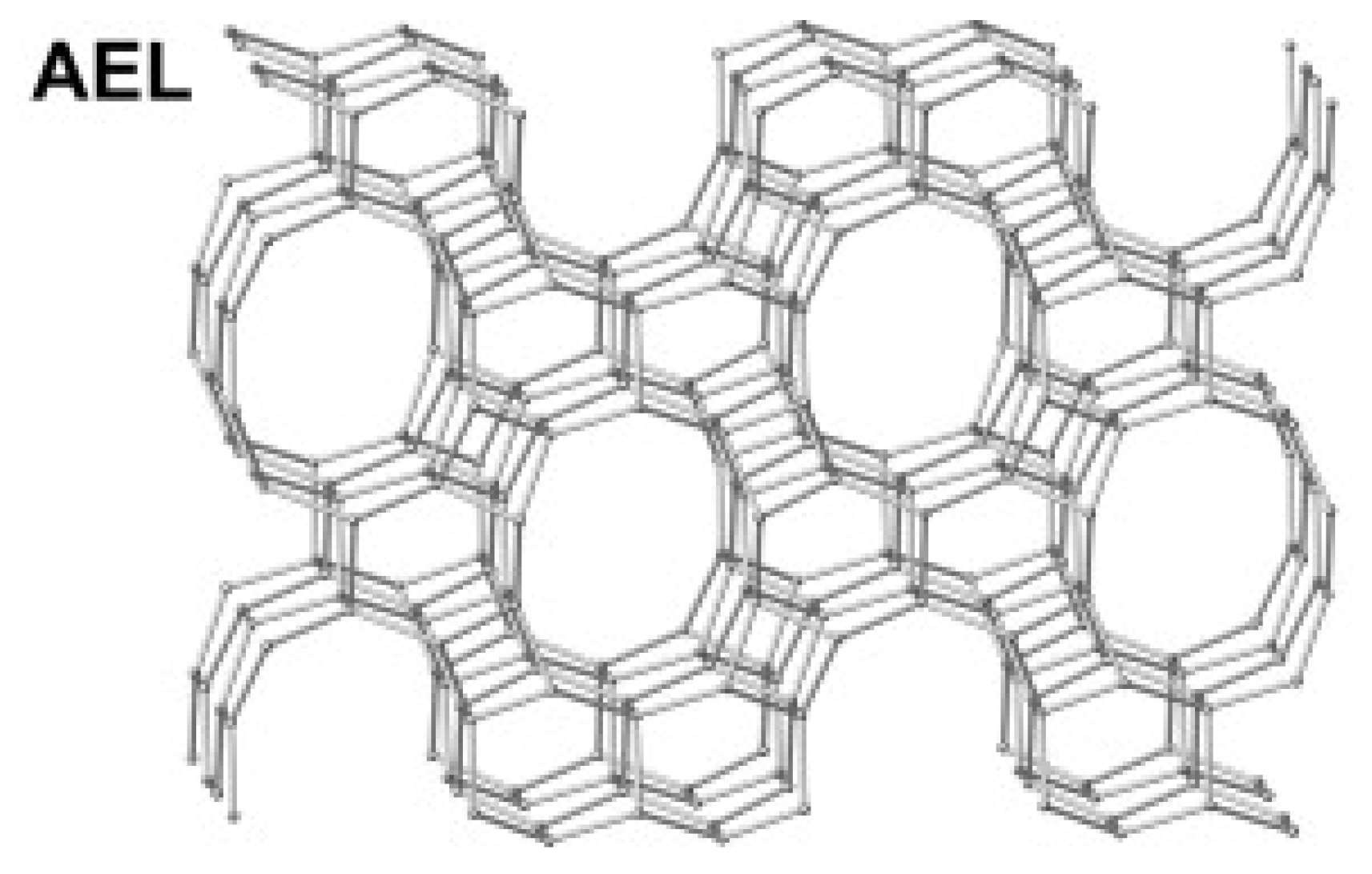
SAPO-11 molecular sieve, as a typical representative of silicoaluminophosphate molecular sieves, due to its unique one-dimensional ten-membered ring straight pore channels (0.39 nm × 0.63 nm) structure, shows excellent performance in the hydroisomerization of long-chain n-alkanes (C15–C18) for bio-jet fuel (HEFA) production, which is a key step in determining the final fuel’s low-temperature fluidity [24,25]. The AEL topological structure of SAPO-11, as shown in Figure 1, is recognized as the most ideal support for hydroisomerization catalysts.
The ‘mouthpiece catalysis’ theory proposed by Martens et al. [27] well explains the excellent performance of SAPO-11. Due to the narrow channels, long-chain alkanes (such as C16) have difficulty fully entering the pores to reach the cracking transition state required for β-scission. The reaction mainly occurs at the pore mouth, where one end of the molecule inserts into the pore to contact the acidic sites, undergoes methyl rearrangement to form single-branched isomers, and then quickly desorbs [27]. This mechanism kinetically suppresses the formation of double-branched isomers (due to slow diffusion) and cracking reactions, thereby ensuring a high aviation kerosene liquid yield (>85%) [27].
The catalytic performance of SAPO-11 is highly dependent on its acidity distribution. Yang et al. [28] studied a Pt/SAPO-11 bifunctional catalyst prepared by hydrothermal synthesis of SAPO-11 molecular sieve and impregnation with 0.5 wt% Pt, for the hydroisomerization of n-hexadecane. Under reaction conditions of 340 °C, 1.5 MPa, 1.0 h−1 space velocity, and a hydrogen to n-hexadecane volume ratio of 1000:1, the catalyst exhibited 81.8% n-hexadecane conversion and 86.5% iso-hexadecane selectivity, effectively improving the low-temperature fluidity of bio-jet fuel, and the catalyst maintained stable activity after 60 h of continuous operation. Nevertheless, Pt/SAPO-11 catalysts still have limitations. When the reaction temperature exceeds 340 °C, the isomerization selectivity significantly decreases, and an increase in space velocity leads to a sharp drop in conversion, indicating its limited high-temperature tolerance and high-space velocity adaptability [28]. In addition, the Pt loading needs to be precisely controlled at approximately 0.8 wt%; excessive loading may lead to pore blockage and acid site coverage, increasing preparation costs and control difficulty [28]. At high temperatures, cracking reactions intensify, and the proportion of multi-branched isomers in the product increases, which may affect the low-temperature fluidity and yield of the target product [28].
These performance limitations prompted researchers to return to the essence of catalysis, starting from the principle of bifunctional catalysis, to seek breakthroughs by optimizing the synergistic relationship between metal sites and acidic sites [29,30]. Efficient catalysts follow the “bifunctional catalysis” principle, where metal sites are responsible for hydrogenation/dehydrogenation functions, and acidic sites are responsible for isomerization and cracking functions [28]. Bifunctional catalysts improve reaction efficiency through two different active sites working synergistically (in series or cooperatively). Optimal catalyst design requires balancing the proportion of catalytic sites according to reaction rates and ensuring sufficient proximity between sites to minimize diffusion limitations.
Lyu et al. [2,31] developed a Ni/SAPO-11 bifunctional catalyst using a “solvent-free grinding crystallization” one-step method, where nickel nitrate and SAPO-11 precursor were directly mixed and ground, followed by hydrothermal crystallization at 200 °C. The catalyst had an average nickel particle size of approximately 8 nm, and nickel enhanced acidity and strength by replacing framework Al3+ to form NiP–OH structures. Under reaction conditions of 613 K, 2.0 MPa, 1.0 h−1 space velocity, and an H2/n-C6 molar ratio of 4.0, the catalyst achieved 71.2% conversion and 66.7% iso-hexane yield in n-hexane hydroisomerization, comparable to traditional Pt/SAPO-11 catalysts. The highly dispersed nickel species (2–4 nm) in this catalyst, with some nickel entering the molecular sieve framework to enhance acidity, achieved tight synergy and good balance between metal and acid sites, providing a promising candidate material for replacing noble metal hydroisomerization catalysts.
S. Said [32] and Magdy T. Zaky [32] studied the effects of different platinum loading methods on the structure and performance of Pt/SAPO-11 catalysts under the conditions of ethylene glycol reduction (EG) and incipient wetness impregnation (IM) methods, respectively. Under the conditions of 300 °C, atmospheric pressure, and a H2/n-C16 molar ratio of 44, the 5 wt% Pt(EG)/SAPO-11 catalyst exhibited the best isomerization performance, with an n-hexadecane conversion of 35% and nearly 100% selectivity for iso-hexadecane. It also showed high activity at relatively low temperatures, demonstrating that platinum on the external surface (EG method) is more favorable for metal–acid synergistic effects than platinum located in micropore entrances (IM method).
Yang et al. [28] investigated Pt/SAPO-11 bifunctional catalysts, where a loading of 0.5 wt% Pt is critical for catalytic performance. Pt, as the metal site, is responsible for the dehydrogenation of long-chain alkanes and the hydrogenation of isomerized products. Studies indicate that the dispersion and particle size of Pt, as well as its distribution at the zeolite pore mouth or on the external surface, directly influence the metal–acid synergy. For instance, research by Said and Zaky [32] showed that Pt on the external surface (EG method) is more conducive to metal–acid synergy than Pt located at the micropore entrances (IM method). The Ni/SAPO-11 bifunctional catalyst developed by Lyu et al. [2,31] was prepared via a one-step ‘solvent-free grinding crystallization’ method, with an average nickel particle size of approximately 8 nm. Nickel enhances acidity by substituting for Al3+ in the framework to form a NiPOH structure. The highly dispersed nickel species (2–4 nm) in this catalyst, some of which enter the zeolite framework to enhance acidity, achieve close synergy and a good balance between metal and acid sites, providing a promising candidate material to replace noble metal hydrocracking/isomerization catalysts.
Acidity provides good shape selectivity for the hydroisomerization of long-chain n-alkanes and effectively suppresses excessive cracking [25]. The catalytic performance of SAPO-11 is highly dependent on its acidity distribution. Studies have shown that the strength, concentration, and spatial distribution of its Brønsted acid sites are crucial for the isomerization selectivity of long-chain alkanes. For example, moderate acid strength helps suppress excessive cracking, while enrichment of acid sites in the pore mouth region promotes the ‘constrained-site catalysis’ mechanism, thereby increasing the yield of isomerization products and improving low-cloud-point properties. By adjusting the silicon content or using mixed templates, the acidity distribution can be precisely controlled, optimizing isomerization selectivity and reducing cracking by-products [25]. Its mature bifunctional catalytic system can achieve high activity and high selectivity under mild conditions by loading Pt [28], or reduce costs by optimizing metal–acid balance, improving metal dispersion, and using non-precious metals such as Ni and NiW [24,25,31]. In addition, the introduction of multi-level pore structures can effectively improve diffusion efficiency and coking resistance [33,34].

2.2. ZSM-22 Zeolite

ZSM-22 zeolite, as a high-silica zeolite with a one-dimensional ten-membered ring (TON structure), has a pore size of approximately 0.45 nm × 0.55 nm [35]. This unique structure endows it with excellent initial reaction activity and good straight-chain molecule shape selectivity in long-chain alkane hydroisomerization reactions [35,36,37,38].
The Brønsted acidity of ZSM-22 is the main source of its catalytic activity, and the acidity strength can be adjusted by regulating the silicon-to-aluminum ratio (Si/Al) [38]. Studies have shown that ZSM-22 generally has stronger Brønsted acidity than SAPO-11, allowing its reaction temperature to be 20–30 °C lower than that of SAPO-11 [39,40,41,42]. However, strong acid sites in one-dimensional long channels can easily trigger deep cracking side reactions, leading to a cascade of cracking [38]. In addition, the adsorption heat of long-chain alkanes in narrow channels is linearly related to their chain length, prolonging the residence time of molecules within the channels. While this is favorable for the reaction, it also increases the risk of excessive cracking [35]. To avoid thermal cracking side reactions, the application of ZSM-22 often emphasizes low-temperature operation, utilizing its strong acidity to drive isomerization at relatively low temperatures [43]. Therefore, the use of ZSM-22 generally focuses on low-temperature processes, taking advantage of its strong acidity to promote isomerization while avoiding thermal cracking side reactions.
The unique needle-like crystal morphology of ZSM-22 leads to extremely long pore channels; if not nanostructured, molecules’ diffusion paths within the pores are too long, easily leading to serial cracking [20,44,45]. To overcome the diffusion limitations of one-dimensional pores, researchers have optimized the morphology and diffusion paths of ZSM-22 through various methods. For example, Zhang’s team [46] studied a ZSM-22 zeolite (HZSM-22-NA) composed of c-axis-oriented nanocrystals, prepared by dynamic crystallization in a 50 L autoclave using a copolymer containing quaternary ammonium groups (COPQA) as an inhibitor, and prepared a Pt catalyst (Pt/HZSM-22-NA) using it as a support. This catalyst exhibited significantly improved catalytic performance in long-chain n-alkane (e.g., n-dodecane) hydroisomerization reactions, including: 90.3% n-dodecane conversion at 280 °C, 93.5% C12 isomer selectivity, and only 6.5% cracking selectivity, with reaction activity nearly double that of traditional Pt/HZSM-22 catalysts. Simultaneously, by controlling crystallization kinetics through hydrothermal methods or using nanorod synthesis techniques, molecular diffusion paths can be shortened while maintaining high crystallinity. Zang’s team [47] studied a nanofiber bundle ZSM-22 zeolite (NB-ZSM-22) using a static hydrothermal method without any additives, by adjusting the DAH/SiO2 ratio in the synthesis gel, and prepared a non-precious nickel catalyst (Ni/NB-HZSM-22) using it as a support. This catalyst exhibited excellent catalytic performance in long-chain n-alkane (n-dodecane) hydroisomerization reactions, including: intrinsic catalytic activity (TOF = 0.077 s−1) significantly higher than traditional needle-like ZSM-22 supported nickel catalysts (0.026 s−1); at 290 °C, it achieved 87.6% n-dodecane conversion and 74.8% isomer yield, outperforming traditional nickel catalysts and comparable to noble metal platinum catalysts supported on the same support.
In recent years, acidic modification of ZSM-22 through post-treatment dealumination or introduction of metal oxides (such as MgO, La2O3) can effectively suppress serial cracking and improve C8-C16 fraction selectivity [42,48,49].
In summary, ZSM-22, as an important shape-selective catalyst, has a broad application prospect in fields such as long-chain alkane isomerization due to its unique one-dimensional pore structure and tunable acidity. However, effectively suppressing excessive cracking, enhancing isomer selectivity and catalyst life, as well as achieving precise synthesis and large-scale production of ZSM-22, remain key focuses and challenges in current research [21,50].

2.3. Industrial Relevance Supplement

  • SAPO-11 Industrial Relevance:
In terms of scalability, the synthesis method for SAPO-11 is relatively mature, but precisely controlling crystal size and acid site distribution during large-scale production to maintain catalytic performance consistency remains a challenge. Regarding stability under realistic conditions, its sensitivity to high temperatures and high space velocities limits its operating window in industrial units, necessitating further improvements in thermal stability and deactivation resistance. Concerning cost considerations, although optimizing the metal–acid balance, improving metal dispersion, and using non-noble metals (such as Ni) can reduce the usage of precious metals like Pt, the catalyst preparation costs and regeneration cycle capabilities still require evaluation. In terms of integration into existing SAF production routes, SAPO-11 is primarily applied in the hydroisomerization step of biomass-based SAF production. Its performance optimization directly impacts SAF yield and quality, but efficient integration with upstream biomass pretreatment and downstream product separation and purification processes is necessary.
  • ZSM-22 Industrial Relevance:
In terms of scalability, the nanostructuring and morphological control synthesis methods for ZSM-22 are still at the laboratory stage, with high process complexity and cost for large-scale industrial production. Regarding stability under realistic conditions, excessive cracking and coking caused by strong acidity are the main challenges, requiring the development of more effective anti-coking strategies and regeneration technologies to extend catalyst lifespan. Concerning cost considerations, although non-noble metal loading can reduce costs, its complex synthesis process and potential deactivation issues may increase operational costs. In terms of integration into existing SAF production routes, ZSM-22 exhibits excellent performance in long-chain alkane isomerization, but its stability and selectivity under complex feedstock systems still require further validation to ensure effective integration into existing SAF production processes.

2.4. Comparative Discussion

SAPO-11 and ZSM-22, as 1D pore zeolites, both exhibit excellent shape selectivity in the hydroisomerization of long-chain alkanes, which is crucial for improving the low-temperature fluidity of Sustainable Aviation Fuel.
The uniqueness of SAPO-11 lies in its “pore mouth catalysis” and “key–lock catalysis” mechanisms, which effectively control the isomerization direction and inhibit excessive cracking, thereby ensuring a high liquid yield of aviation kerosene. Its catalytic performance is highly dependent on the acid site distribution. Efficient catalysis can be achieved through precise control of Pt loading or the use of non-noble metals (e.g., Ni). However, the limitation of SAPO-11 is its limited high-temperature tolerance; when the reaction temperature exceeds 340 °C, the isomerization selectivity decreases significantly. Conversion rates also drop sharply under high space velocity. Furthermore, Pt loading requires precise control, as excessive loading may lead to pore blockage and coverage of acid sites, increasing costs and difficulty in control.
ZSM-22, on the other hand, is known for its stronger Brønsted acidity, typically allowing reactions to occur at temperatures 20–30 °C lower than those required for SAPO-11. This gives it an advantage in low-temperature operations, where its strong acidity can promote isomerization while avoiding thermal cracking side reactions. However, the strong acidity of ZSM-22 within its long channels can easily induce deep cracking, leading to cascade cracking. Its unique needle-like crystal morphology can also result in overly long diffusion paths for molecules within the channels, exacerbating cascade cracking. To overcome these diffusion limitations, researchers have employed nanostructuring and morphological optimization to shorten molecular diffusion paths.
In summary, SAPO-11 exhibits high activity and selectivity under mild conditions but is sensitive to operating conditions. ZSM-22 possesses stronger acidity, making it suitable for low-temperature isomerization, but it requires more precise structural regulation to suppress excessive cracking. Both materials require further optimization for industrial applications to improve catalyst lifespan and achieve large-scale production.

3. Three-Dimensional Intersecting Channel Microporous Zeolite

3.1. ZSM-5

Three-dimensional intersecting channel microporous zeolite ZSM-5 (MFI topological structure), due to its unique structure and acidity, plays a core role in various catalytic processes, especially in alcohol-to-jet (ATJ) and Fischer–Tropsch synthesis. The MFI topological structure consists of interconnected straight and sinusoidal channels, with a pore size of approximately 0.55 nm [51]. This unique pore channel structure endows ZSM-5 with shape selectivity, enabling precise control over small molecule conversion and chain growth, thus offering unique advantages in ATJ, Fischer–Tropsch upgrading, and methanol-to-olefins (MTO) routes [51,52,53,54].
ZSM-5, as a crystalline silicoaluminate, derives its catalytic ability from Brønsted acid sites generated by aluminum substitution in the framework and its regular microporous structure. By precisely controlling the silicon-to-aluminum ratio (Si/Al), its acid strength and quantity can be adjusted. A low Si/Al ratio means a higher concentration of Brønsted acid sites, suitable for reactions requiring a large amount of acidic catalysis. Its pore channel structure is similar to a “molecular sieve,” capable of screening molecules based on their size and shape, achieving precise control over chemical reactions, which is known as shape-selective catalysis.
In the ATJ process, bioethanol or butanol is first dehydrated to ethylene or butene, and then oligomerized to C8–C16 hydrocarbons via acid catalysis. ZSM-5 is the core catalyst for this step [51].
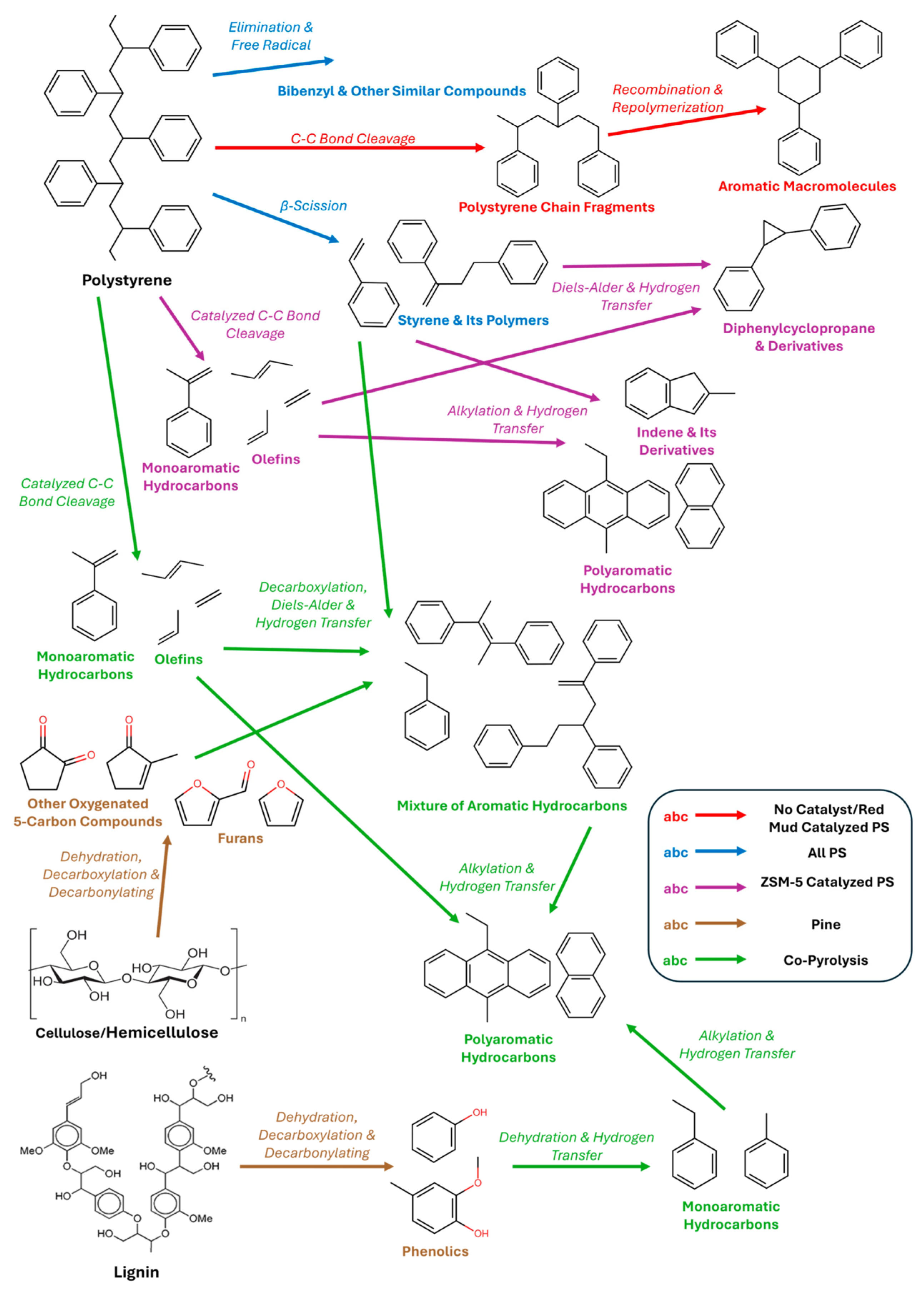
Kemp et al. [6] showed that at 550 °C, co-pyrolysis of polystyrene and pine wood can produce significant synergistic effects, with aviation fuel hydrocarbon yield 17% higher than theoretical values, reaching a maximum of 266 mg/g feedstock. Pyrolysis of polystyrene alone with a ZSM-5 catalyst yielded the highest aviation fuel hydrocarbon production, up to 620 mg/g feedstock (62% conversion), with products rich in ideal components like toluene and ethylbenzene, but with an increase in polycyclic aromatic hydrocarbon (PAH) content. This study provides two effective pathways for producing aromatic additives required for sustainable aviation fuels: synergistic co-pyrolysis (more environmentally friendly) or efficient catalytic pyrolysis (higher yield) [6]. As shown in Figure 2.
To promote aromatization, ZSM-5 is modified by introducing metal species such as Ga and Zn, which can facilitate dehydrogenation-cyclization reactions, thereby generating an appropriate amount of aromatics in situ in ATJ products and achieving ‘self-regulation’ of fuel density [55,56,57]. The oxidation state of these metal species and their distribution within the zeolite channels are crucial for their catalytic dehydrogenation activity. Research by Lazaridis et al. [50] indicates that nanosized and mesoporous ZSM-5 significantly increases the selectivity for alkylphenols. In Fischer–Tropsch synthesis, researchers have designed core-shell ‘capsule catalysts’ [58], encapsulating Co/SiO2 particles within an H-ZSM-5 or H-Beta zeolite membrane. Synthesis gas generates long-chain hydrocarbons at the core cobalt (Co) sites, which must diffuse through the outer zeolite layer for release. During this process, these hydrocarbons undergo in situ cracking and isomerization on the acid sites of the zeolite. Zhu et al. [58] successfully prepared a novel bifunctional catalyst by coating a ZSM-5 zeolite film with a hierarchical pore structure onto the surface of a bulk Co/Al2O3 catalyst. Under Fischer–Tropsch synthesis conditions of 230 °C and 12 bar, this catalyst achieved a CO conversion of 89% and a gasoline-range hydrocarbon selectivity of 72%, with the produced gasoline exhibiting a high octane number. The study shows that the introduction of the mesoporous ZSM-5 layer effectively alleviates mass transfer limitations between reactants and products, thereby enhancing catalytic performance. Furthermore, the zeolite shell layer can also act as a microscopic ‘heat sink,’ effectively dissipating the heat generated at the core cobalt sites and avoiding hot spots, representing an important direction for the future design of efficient jet fuel catalysts.
However, the strong acidity of ZSM-5 easily catalyzes hydrogen transfer reactions to form aromatics, leading to catalyst coking. To address this, Rutkowska et al. [59] developed a new mesopore-template-free method, successfully by acidifying the zeolite precursor with hydrochloric acid and controlling the hydrothermal aging time (optimized conditions: 48 h before acidification, 120 h after acidification). Successfully synthesized ZSM-5 zeolite with a hierarchical micro-mesoporous structure, and slightly reduced the pore opening size, thereby significantly enhancing the catalyst’s hydrothermal stability while improving the selectivity of olefin oligomerization. In addition, recent studies have shown that through a “desilication–alumination” post-treatment strategy, a rich and uniform mesoporous system can be constructed in ZSM-5, significantly improving the diffusion efficiency of large molecules and achieving over 80% selectivity for jet fuel fractions in the ethanol-to-jet fuel reaction [60,61,62].
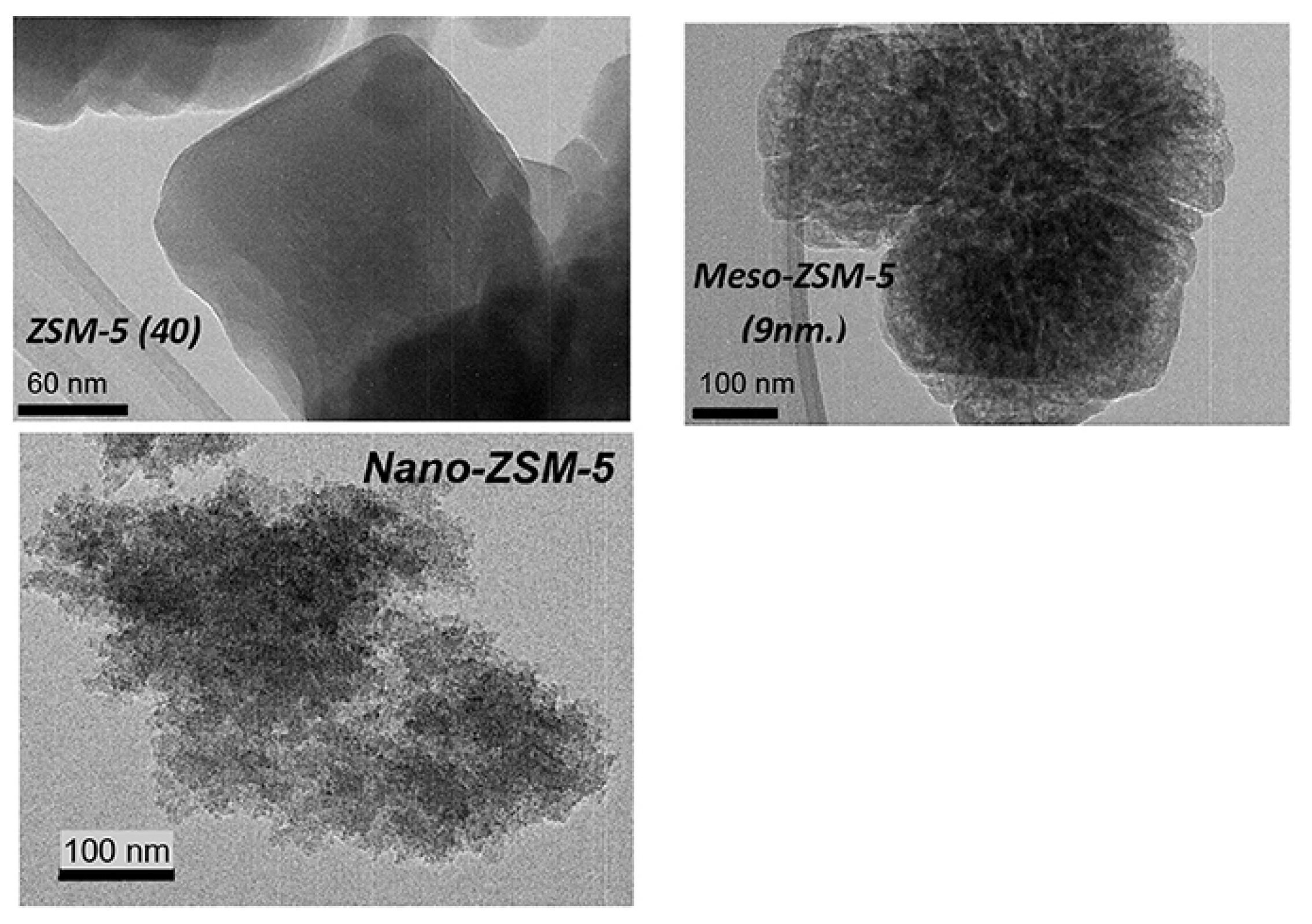
In addition to oligomerization, ZSM-5 plays another critical role in the ATJ process—aromatization. Since the density of pure isoalkanes is generally low (usually <760 kg/m3), it is difficult to meet the lower density limit requirements for jet fuel, necessitating the introduction of a certain amount of aromatics. The unique pore channel structure of ZSM-5 is very suitable for the formation of benzene, toluene, and xylene (BTX) [55,63,64]. By introducing metal species such as Ga and Zn to modify ZSM-5, dehydrogenation-cyclization reactions can be promoted, thereby in situ generating an appropriate amount of aromatics in ATJ products, achieving “self-regulation” of fuel density without the need for external high-density components [55,56,57]. Lazaridis et al. [52] showed that conventional microporous ZSM-5 is most selective for monocyclic aromatics (such as BTX), while nano-sized and mesoporous ZSM-5 significantly increased the selectivity for alkylphenols, and mesoporous ZSM-5 can also reduce coke formation to some extent. Transmission electron microscopy (TEM) images of traditional microporous ZSM5 (40) zeolite, nano-sized ZSM-5, and alkaline-treated mesoporous ZSM-5 zeolite as show in Figure 3.
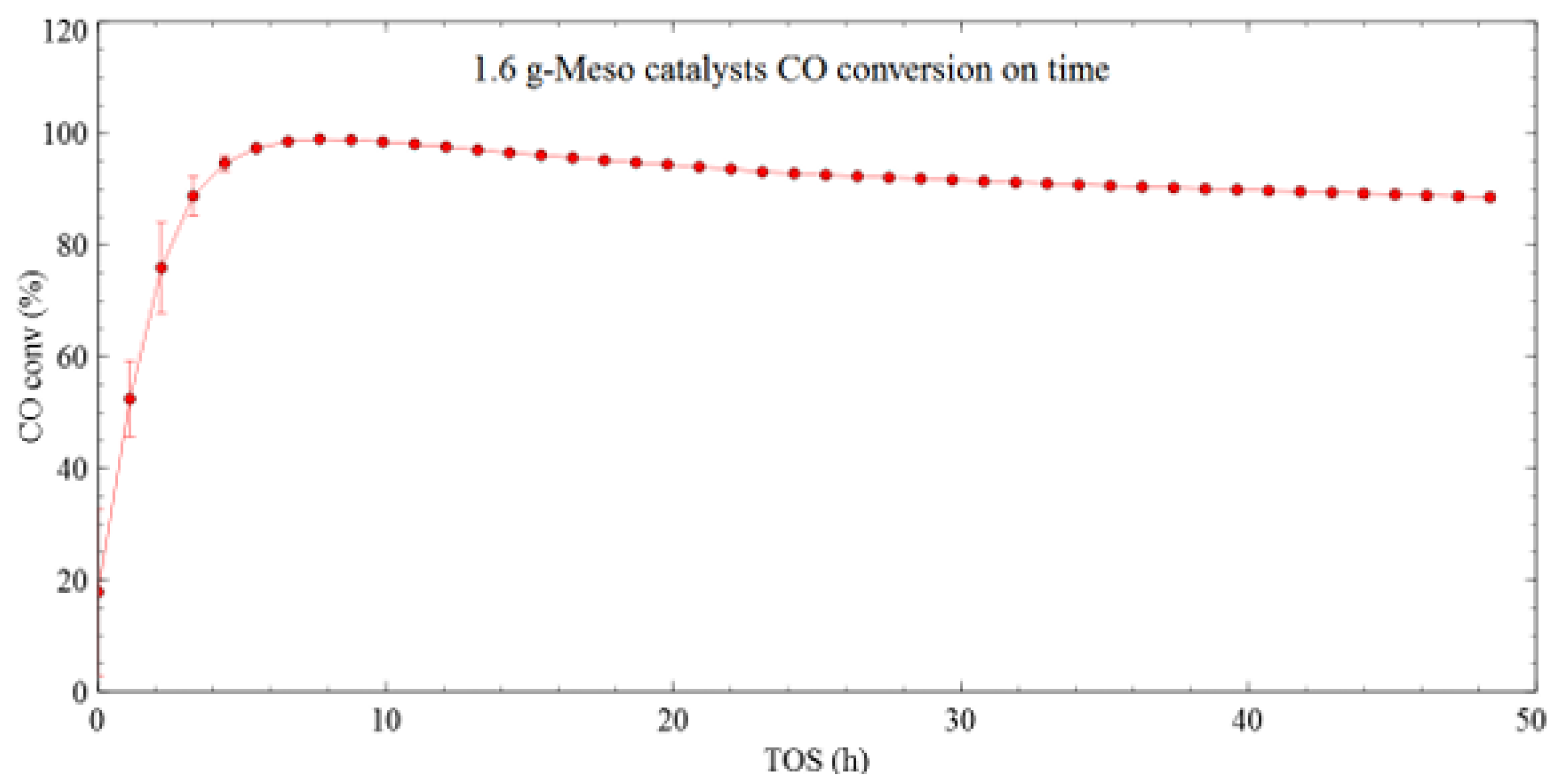
To break the Anderson–Schulz–Flory (ASF) limitations of traditional Fischer–Tropsch synthesis product distribution, researchers innovatively designed core–shell “capsule catalysts” [58]. This design encapsulates Co/SiO2 particles within H-ZSM-5 or H-Beta zeolite membranes [58]. Synthesis gas produces long-chain hydrocarbons at the core cobalt (Co) sites, which must diffuse through the outer zeolite layer to be released. During passage through the pores, these hydrocarbons undergo in situ cracking and isomerization [58]. Zhu et al. [58] successfully prepared a novel bifunctional catalyst by coating a Co/alumina (Co/Al2O3) bulk catalyst surface with a ZSM-5 zeolite thin film possessing a hierarchical pore structure. Under Fischer–Tropsch synthesis conditions of 230 °C and 12 bar, this catalyst exhibited a CO conversion of up to 89% and a selectivity for gasoline-range hydrocarbons of 72%, with the produced gasoline showing a high octane number [58]. The conversion profile as show in Figure 4. Studies indicate that the introduction of a mesoporous ZSM-5 layer effectively alleviates mass transfer limitations between reactants and products, thereby enhancing catalytic performance. Although long-chain saturated hydrocarbons can cause zeolite pore blockage leading to catalyst deactivation, in situ regeneration can fully restore its activity, maintaining good stability during tests lasting up to 250 h [58]. This work provides a promising catalyst design strategy for developing efficient, highly selective modular processes for converting natural gas into liquid fuels.
Another significant advantage of this core–shell capsule catalyst structure is thermal management. Fischer–Tropsch synthesis is a strongly exothermic reaction, and localized overheating is a major cause of catalyst coking deactivation and increased methane selectivity. The zeolite shell not only acts as a shape-selective membrane but also serves as a microscopic “heat dispersant,” effectively transferring the heat generated at the core cobalt sites, avoiding hot spots. This dual coupling of physical structure and chemical function represents an important direction for the design of future efficient jet fuel catalysts [58].
Ni et al. [65] prepared La/Zn-modified HZSM-5 catalysts using the co-impregnation method and studied the methanol aromatization reaction at 437 °C, 0.1 MPa, with a methanol weight hourly space velocity (WHSV) of 0.8 h−1. The catalyst exhibited excellent aromatization performance, with an aromatic hydrocarbon selectivity of 64.0%, among which BTX (benzene, toluene, xylene) selectivity reached 56.6%. The study showed that the introduction of La significantly enhanced the selectivity for aromatic hydrocarbons and suppressed coke formation, thereby prolonging the catalyst’s lifespan. In addition, a moderate amount of water (<15%) in the feed was beneficial to the reaction, and H2 pretreatment promoted the diffusion of La species into the zeolite channels, further improving catalytic performance. The La/Zn/HZSM-5 catalyst thus demonstrates both high selectivity and good stability in the methanol-to-aromatics (MTA) reaction.
Karthikeyan K. et al. [66] studied a highly mesoporous nano-sized hierarchical HZSM-5 zeolite catalyst for the conversion of ethanol to hydrocarbons at 360 °C, 300 psig, and a weight hourly space velocity (WHSV) of 7.9 h−1. Compared to conventional HZSM-5 zeolite, this catalyst exhibited significantly extended catalytic life (approximately 2 times at low Si/Al ratio, approximately 5 times at high Si/Al ratio). Although the amount of coke was higher, its hierarchical pore structure promoted product diffusion and coke migration, thereby slowing down the deactivation process.
Despite the great potential of ZSM-5 in jet fuel production, it also faces challenges. Its strong acid sites can easily lead to excessive aromatization and coking [53,62]. In addition, its performance highly depends on precise modification strategies and complex pore engineering, making synthesis and scale-up difficult [59,67]. Under harsh reaction conditions, product selectivity and yield are prone to decay, limiting its industrial operating window. Future research needs to further explore more efficient and stable ZSM-5-based catalysts to meet the growing demand for sustainable aviation fuels. The performance comparison of SAPO-11, ZSM-22, and ZSM-5 is shown in Table 1 below.

3.2. Industrial Relevance Supplement

  • ZSM-5 Industrial Relevance:
In terms of scalability, the synthesis process for ZSM-5 is relatively mature, but preparing nanoscale or hierarchical ZSM-5 with precise pore size and acid site distribution still faces scaling challenges. Regarding stability under realistic conditions, ZSM-5 is prone to coking in reactions such as ATJ and Fischer–Tropsch synthesis, leading to catalyst deactivation. Although in situ regeneration can restore activity, frequent regeneration increases operational costs and complexity. Developing more coke-resistant ZSM-5 modification strategies is critical. Concerning cost considerations, ZSM-5 itself has a low cost, but its modification processes (such as introducing precious metals or complex pore engineering) may increase preparation costs. In terms of integration into existing SAF production routes, ZSM-5 plays an important role in ATJ and Fischer–Tropsch post-treatment processes. Its performance optimization directly impacts SAF yield and quality. However, issues regarding its stability and selectivity in complex reaction systems need to be addressed to achieve seamless integration with existing industrial processes.
  • ZSM-5 Limitations:
The main limitations of ZSM-5 lie in its strong acidity, which readily leads to excessive aromatization and coking, thereby affecting catalyst stability and lifespan. Its performance is highly dependent on precise modification strategies and complex pore engineering, posing challenges for synthesis and large-scale production. Under harsh reaction conditions, product selectivity and yield tend to decline, limiting its industrial operating window.

3.3. Comparative Discussion

ZSM-5, as a 3D mesoporous zeolite, plays a central role in catalytic processes such as Alcohol-to-Jet (ATJ) and Fischer–Tropsch synthesis. Its unique structure and acidity grant it significant advantages in carbon chain pruning and density regulation.
The advantage of ZSM-5 lies in the shape selectivity provided by its MFI topology, enabling precise control over small molecule conversion and carbon chain growth. In the ATJ process, it effectively converts bio-ethanol or butanol into C8–C16 hydrocarbons and regulates fuel density through aromatization. Modification by introducing metal species such as Ga and Zn can promote dehydrogenation-cyclization reactions, achieving “self-regulation” of fuel density. Additionally, the design of core–shell “capsule catalysts” utilizing ZSM-5 as the outer layer not only provides shape selectivity but also acts as a microscopic “heat sink,” effectively managing the exothermic reactions of Fischer–Tropsch synthesis and avoiding hot spots. Hierarchical pore structures (e.g., through desilication/dealumination treatments) can significantly improve the diffusion efficiency of large molecules and enhance coking resistance, extending catalyst lifespan.
The limitations of ZSM-5 primarily stem from its strong acidity, which readily leads to excessive aromatization and coking, thereby affecting catalyst stability and lifespan. Its performance is highly dependent on precise modification strategies and complex pore engineering, posing challenges for its synthesis and large-scale production. Under harsh reaction conditions, product selectivity and yield tend to decline, limiting its industrial operating window.
Therefore, future research needs to further explore more efficient and stable ZSM-5-based catalysts to overcome their inherent limitations and meet the growing demand for Sustainable Aviation Fuel.

4. Three-Dimensional Twelve-Membered Ring Microporous Zeolite

Y-type zeolite (USY) and Beta zeolite, as 3D large-pore zeolites, exhibit irreplaceable activity in heavy oil cracking and deep isomerization, but they differ significantly in pore structure and catalytic properties. Asgar Pour et al. [8] synthesized binder-free Beta zeolite beads via a hard-templating method and systematically compared their catalytic performance with those of ZSM-5 and Y-type zeolite in the anisole acylation reaction, confirming that hierarchical porosity and binder-free shaping enhance diffusion and activity, providing important insights for understanding the structure–performance relationship of zeolites with different topologies.

4.1. Y-Type Zeolite

Y-type zeolite belongs to the FAU topological structure, whose crystal framework is formed by sodalite cages connected by hexagonal prism cages, forming a three-dimensional intersecting twelve-membered ring pore channel system (pore size approximately 0.74 nm), and forming “supercages” with a diameter of 1.2 nm at the intersection of the channels [68]. This huge internal cavity volume makes it an ideal container for processing large hydrocarbon molecules [68].
Raw synthesized NaY zeolite has low activity and poor hydrothermal stability and must be modified to ultra-stable Y zeolite (USY) [69,70]. This process usually includes ammonium exchange and high-temperature hydrothermal treatment. Under the action of high-temperature water vapor, aluminum atoms in the framework hydrolyze and detach, forming extra-framework aluminum (EFAL) and vacancies; subsequently, framework silicon atoms migrate to fill the vacancies, completing the “dealumination and silicon replenishment” process [71]. This not only increases the framework’s silicon-to-aluminum ratio (SAR), enhances acid strength and hydrothermal stability, but also creates a secondary mesoporous system within the crystal, significantly improving the diffusion performance of macromolecules [70,71,72].
In the preparation of aviation kerosene, USY usually carries Ni-Mo, Ni-W, or noble metals (Pt, Pd) to construct bifunctional catalysts [73,74]. The reaction follows the classical bifunctional mechanism: long-chain alkanes are first dehydrogenated at the metal sites to produce olefins; the olefins diffuse to the B acid sites and are protonated to form carbocations; the carbocations undergo beta-scission within the supercage to produce smaller olefins and new carbocations; finally, the products are hydrogenated to saturation [75].
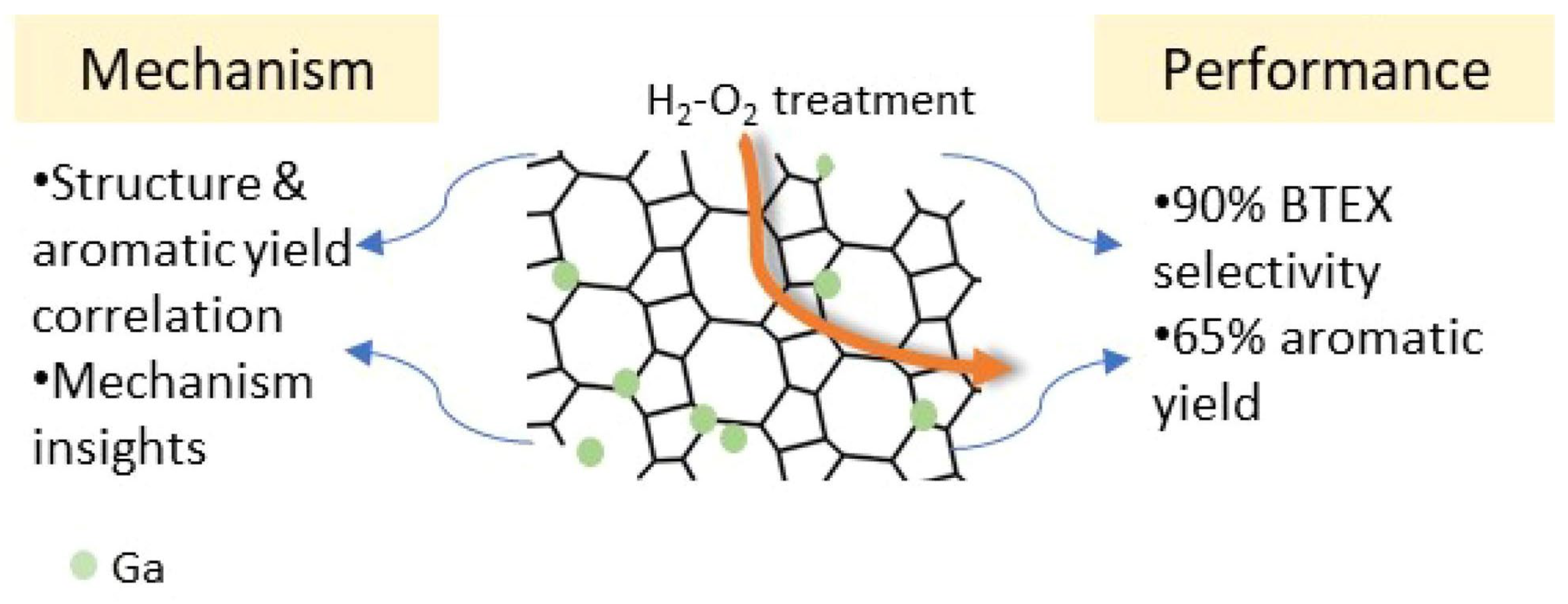
Although this classic bifunctional mechanism endows USY with extremely high reaction activity, in practical applications, how to balance its high activity with the selectivity of target products has become a focus of researchers. To further improve the stability of USY under harsh industrial conditions, the introduction of rare earth elements (such as La, Ce, Y) is a common modification method [72,76]. Rare earth ions located in sodalite cages or hexagonal prism cages can inhibit the removal of framework aluminum, thereby significantly improving the hydrothermal stability of the catalyst while maintaining high acid density [72]. However, excessive introduction of rare earths will occupy supercage space and increase diffusion resistance. Qian et al. [77] studied the catalytic pyrolysis aromatization process of HDPE and PP over Ga catalysts with different pretreatment conditions and pore sizes (HZSM-5, hierarchical HZSM-5, HY, Hβ, and USY), finding that Ga-HZSM-5, after reduction-oxidation pretreatment, can significantly increase the aromatic hydrocarbon (especially BTEX) yield of HDPE to 65% (liquid product selectivity 90%), while Ga-hierarchical HZSM-5 performed best in the aromatization of PP; at the same time, Ga(1)/Hβ-Redox exhibited excellent selectivity for olefins (ethylene and propylene) in gaseous products. Gallium/zeolite-catalyzed polyolefin aromatization is shown in Figure 5.
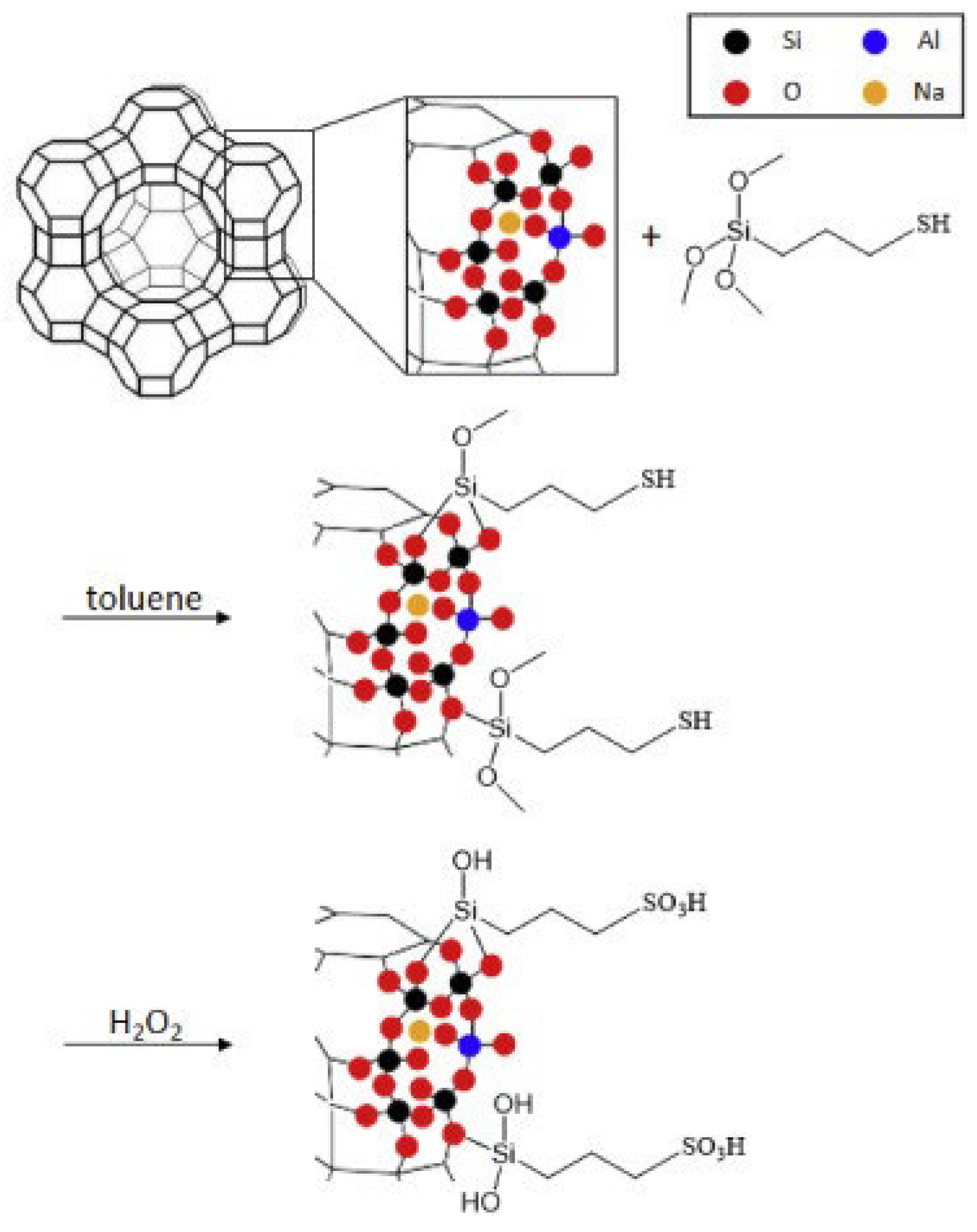
However, the drawback of USY lies in its excessively large “pockets”, which provide weak spatial constraints for intermediates, making multiple cracking prone to occur and often causing the selectivity of aviation kerosene to be difficult to exceed the 50–60% bottleneck [72]. To overcome this performance bottleneck caused by insufficient spatial constraints, researchers have started to explore introducing mesoporous structures through pore engineering to improve the diffusion and reaction pathways of large molecules [78,79]. For example, Cheng et al. [74] under specific conditions, successfully prepared an efficient catalyst by sulfonating mesoporous Y-zeolite with 3-mercaptopropyltrimethoxysilane (MPTS) and loading nickel. This catalyst, under 275 °C and 2 MPa hydrogen pressure, could increase the conversion rate of microalgae biodiesel from 82.1% to 99.7%, and raise the selectivity of jet-fuel-range alkanes from 31.2% to 52.3%, with the resulting product meeting aviation fuel standards. The schematic diagram of the preparation of sulfonated mesoporous Y-type zeolite catalyst is shown in Figure 6.

4.2. Beta Zeolite

Beta zeolite has a unique three-dimensional twelve-membered ring intersecting pore channel (pore size approximately 0.66 nm × 0.67 nm). Although it is also a macroporous zeolite, its pore size is slightly smaller than Y zeolite and it does not have a supercage structure [80,81]. A significant feature of Beta zeolite is that stacking faults are extremely prone to occur during its crystal growth, and this defective structure microscopically induces the formation of rich intra-crystalline mesopores, making it naturally possess multi-level pore characteristics, which is beneficial for the rapid diffusion of reactants and products [73].
When processing F-T wax to prepare jet fuel, Beta zeolite has shown isomerization performance superior to USY. The moderate pore size of Beta zeolite allows long-chain alkanes to enter while imposing a certain spatial constraint on intermediates, inhibiting terminal cracking and favoring mid-chain cleavage [82]. More importantly, the combination of strong acid sites with open channels in Beta zeolite enables deep isomerization during hydrocracking. It is noteworthy that commercial Beta zeolite is usually a symbiotic form of Polymorph A and Polymorph B. This unique crystallographic feature results in a highly twisted and connected pore system, which, compared to zeolites with one-dimensional straight channels, more readily accommodates the volumetric expansion required for isomerization. This structural characteristic underlies its excellent performance in cycloalkane ring-opening and long-chain alkane isomerization reactions. Studies have shown that using high-silica Beta zeolite or moderately dealuminating it can further suppress secondary cracking reactions, raising the yield of jet fuel fractions to over 70%, with products exhibiting extremely low freezing points.
Although Beta zeolite shows excellent isomerization potential in a single-component system, when dealing with complex heavy feedstocks, a single pore size often struggles to balance the pre-cracking of large molecules with the selective regulation of intermediate fractions, which has prompted researchers to turn to the development of composite molecular sieve systems [83,84]. For example, Ding et al. [85] designed a Beta-Y composite molecular sieve catalyst, aiming to combine the macroporous cracking ability of Y zeolite and the isomerization ability of Beta zeolite. The results showed that a Beta/Y catalyst with a mechanical mixing ratio of 1:1 exhibited the best synergistic effect in vacuum gas oil (VGO) hydrocracking. At 70% conversion, the selectivity of the jet fuel fraction (150–280 °C) reached 42%, significantly higher than pure Beta (30%) or pure Y (28%). This composite system effectively balanced “cracking depth” and “isomerization degree,” and the product freezing point dropped to −55 °C.

4.3. Industrial Relevance Supplement

  • USY Industrial Relevance:
In terms of scalability, USY synthesis and modification technologies are relatively mature, with large-scale production already achieved, demonstrating good industrial scalability. Regarding stability under realistic conditions, USY faces coking and hydrothermal stability challenges during heavy oil processing such as hydrocracking. Although rare earth modification can improve stability, further optimization is needed to adapt to long-term operation. Concerning cost considerations, USY itself has a moderate cost, but loading precious metals significantly increases catalyst costs. Developing efficient non-noble metal USY catalysts is key to cost reduction. In terms of integration into existing SAF production routes, USY has wide applications in heavy oil hydrocracking and biomass oil upgrading. In SAF production, it is mainly used for pretreatment and conversion of heavy feedstocks, requiring effective integration with subsequent isomerization and refining processes to improve SAF yield and quality.
  • Beta Zeolite Industrial Relevance:
In terms of scalability, Beta zeolite synthesis is also relatively mature, but precisely controlling its hierarchical pore structure and crystal morphology to optimize catalytic performance still requires improvement. Regarding stability under realistic conditions, Beta zeolite also faces coking challenges during heavy feedstock processing, but its hierarchical pore structure helps promote product diffusion and coke migration, thereby slowing deactivation. Further improving its anti-coking ability and regeneration efficiency is key for industrial applications. Concerning cost considerations, Beta zeolite cost is similar to USY. Non-noble metal loading and efficient regeneration technologies are important approaches to reduce operational costs. In terms of integration into existing SAF production routes, Beta zeolite exhibits significant advantages in F-T wax isomerization and biomass oil upgrading. In SAF production, it can serve as a key isomerization catalyst, closely integrated with upstream F-T synthesis or biomass liquefaction processes to produce high-quality SAF.

4.4. Comparative Discussion

Y-type zeolite (USY) and Beta zeolite, as 3D large-pore zeolites, exhibit irreplaceable activity in heavy oil cracking and deep isomerization, but they differ significantly in pore structure and catalytic properties.
Y-type zeolite (USY) possesses an FAU topology, forming “supercages” with a diameter of 1.2 nm, providing a vast internal cavity for processing large hydrocarbon molecules. Through ammonium exchange and high-temperature steam treatment, USY can achieve dealumination and silicon reinsertion, increasing the framework Si/Al ratio, enhancing acid strength and hydrothermal stability, and forming secondary mesopore systems that improve the diffusion of large molecules. USY is typically loaded with Ni-Mo, Ni-W, or noble metals (Pt, Pd) to form bifunctional catalysts, exhibiting extremely high activity in hydrocracking and isomerization. However, the drawback of USY is that its overly large “pockets” provide weak spatial constraints on intermediates, making them prone to multiple cracking events. This makes it difficult to break the 50–60% selectivity bottleneck for aviation kerosene. Excessive introduction of rare earth elements, while improving hydrothermal stability, may occupy supercage space and increase diffusion resistance.
Beta zeolite features a unique three-dimensional intersecting 12-ring channel system, with pore sizes slightly smaller than Y-type zeolite and lacking supercages. Its crystal growth process readily generates stacking faults, which induce the formation of abundant intracrystalline mesopores, inherently providing hierarchical pore characteristics that facilitate the rapid diffusion of reactants and products. When processing Fischer–Tropsch wax for jet fuel production, Beta zeolite exhibits superior isomerization performance compared to USY. Its moderate pore size allows long-chain alkanes to enter while imposing spatial constraints on intermediates, inhibiting terminal cracking and favoring mid-chain cleavage. The combination of strong acidity and open channels in Beta zeolite enables deep isomerization during hydrocracking. Commercial Beta zeolite is typically an intergrowth of polymorphs A and B; this unique crystallographic feature results in a highly tortuous and interconnected channel system, more readily accommodating the volume expansion required for isomerization.
In summary, while USY possesses high activity, its selectivity is limited. Beta zeolite demonstrates superior potential in isomerization; its hierarchical pore structure and moderate pore size give it an advantage in processing complex heavy feedstocks. To balance cracking depth and isomerization degree, researchers have also begun exploring Beta-Y composite zeolite systems to combine the advantages of both.

5. Conclusions and Outlook

One-dimensional channel zeolites (SAPO-11, ZSM-22): With their unique pore mouth catalysis and lock-and-key effect, they are key to improving the low-temperature fluidity of aviation fuel, enabling precise control of isomerization direction while maintaining high liquid yield.
Three-dimensional intersecting channel micropores (ZSM-5): Play a central role in carbon chain trimming and density adjustment in the alcohol-to-jet fuel process.
Three-dimensional twelve-membered ring micropores (USY, Beta): With their spacious reaction environment and strong acidity, they show irreplaceable activity in cracking large heavy oil molecules and deep isomerization.
To further increase conversion rates and selectivity toward target products, future research should focus on the hierarchical pore engineering and finely tuned cooperative regulation of acid sites. Introducing mesoporous systems to alleviate mass transfer limitations, along with methods such as phosphorus or rare earth incorporation or acid leaching of aluminum to optimize acid strength and acid site distribution, are key directions for enhancing catalyst performance.
The innovations presented in this paper are concentrated in the construction of core–shell capsule catalysts, nano-scale crystal morphology control, and the development of composite molecular sieve systems. The advantages of these innovative strategies lie in their ability to break the limitations of product distribution, achieve integrated multi-step reactions, and significantly enhance the catalyst’s coking resistance and hydrothermal stability. The fundamental purpose of adopting these improved strategies is to meet the stringent requirements of aviation fuels for performance indicators such as freezing point and density, while reducing reliance on precious metals and improving the economic viability of industrial applications.

Author Contributions

Conceptualization, X.F.; methodology, X.F. and Y.L.; software, Y.L., H.G. and J.Y.; validation, Y.L., X.F., Q.Y. and H.G.; formal analysis, H.G., Y.L., Q.Y. and X.F.; investigation, X.F., J.Y., H.G. and X.F.; resources, X.F.; data curation, H.G., Y.L. and X.F.; writing—original draft preparation, H.G., Y.L. and J.Y.; writing—review and editing, X.F. and Q.Y.; visualization, H.G., Y.L. and J.Y.; supervision, X.F.; project administration, X.F.; funding acquisition, X.F. All authors have read and agreed to the published version of the manuscript.

Funding

This research was funded by Anhui Provincial Science and Technology Innovation Tackling Plan grant number 202523n10050013.

Data Availability Statement

No new data were created or analyzed in this study. Data sharing is not applicable to this article.

Conflicts of Interest

The authors declare no conflict of interest.

References

  1. Mitchell, S.; Pérez-Ramírez, J. Advancing catalysis for sustainable biofuels. One Earth 2025, 8, 101385. [Google Scholar] [CrossRef]
  2. Mongelli, C.; Umenweke, G.; St Clair, T.; Caboche, G.; Heintz, O.; Pace, R.; Santillan-Jimenez, E. One-Pot Synthesis of Sustainable Aviation Fuel from Brown Grease Using Multifunctional Zeolite-Supported Catalysts. Catalysts 2025, 15, 873. [Google Scholar] [CrossRef]
  3. Ramos-Fernandez, E.V.; Santos, J.L.; Alsaadi, D.K.; Bavykina, A.; Gallo, J.M.R.; Gascon, J. Potential pathways for CO2 utilization in sustainable aviation fuel synthesis. Chem. Sci. 2025, 16, 530–551. [Google Scholar] [CrossRef]
  4. Wang, F.; Rijal, D. Sustainable Aviation Fuels for Clean Skies: Exploring the Potential and Perspectives of Strained Hydrocarbons. Energy Fuels 2024, 38, 4904–4920. [Google Scholar] [CrossRef]
  5. Ferreira, K.K.; Magalhães, B.F.O.; Ribeiro, L.S.; Ribeiro Pereira, M.F. Co–Mo Catalysts Supported on CNT/H-ZSM-5 Composites for Selective Production of Sustainable Aviation Fuel-Range Alkanes. Energy Fuels 2025, 39, 14615–14626. [Google Scholar] [CrossRef]
  6. Kemp, A.; Rahman, T.; Jahromi, H.; Adhikari, S. Production of Aviation Fuel-Range Hydrocarbons Through Catalytic Co-Pyrolysis of Polystyrene and Southern Pine. Catalysts 2024, 14, 806. [Google Scholar] [CrossRef]
  7. Yu, S.; He, H.; Summers, S.; Yang, Z.; Si, B.; Gao, R.; Song, A.; Heyne, J.; Zhang, Y.; Yang, H. Upgrading biocrude oil into sustainable aviation fuel using zeolite-supported iron-molybdenum carbide nanocatalysts. Sci. Adv. 2025, 11, eadu5777. [Google Scholar] [CrossRef]
  8. Asgar Pour, Z.; Koelewijn, R.; El Hariri El Nokab, M.; van der Wel, P.C.A.; Sebakhy, K.O.; Pescarmona, P.P. Binder-free Zeolite Beta Beads with Hierarchical Porosity: Synthesis and Application as Heterogeneous Catalysts for Anisole Acylation. ChemCatChem 2022, 14, e202200518. [Google Scholar] [CrossRef]
  9. Tian, Z.; Li, G.; Tang, W.; Zhu, Q.; Li, X.; Du, C.; Li, C.; Li, J.; Zhao, C.; Zhang, L. Role of Sedum alfredii and soil microbes in the remediation of ultra-high content heavy metals contaminated soil. Agric. Ecosyst. Environ. 2022, 339, 108090. [Google Scholar] [CrossRef]
  10. Dong, Q.; Li, R.; Jiao, H. Zeolite Catalysts for Selective Hydrocracking of Polycyclic Aromatic Hydrocarbons—Structures and Mechanisms. ChemCatChem 2024, 16, e202400117. [Google Scholar] [CrossRef]
  11. Mu, C.; Sun, J.; Xie, C.; Bao, J.; Guo, X.; Zhang, H.; Zhao, Y.; Wang, S.; Ma, X. Shape Selectivity of AEL Channels for Anomalously Facilitating Biojet Fuel Production from Long-Chain n-Alkane Hydrocracking. ACS Catal. 2024, 14, 1394–1404. [Google Scholar] [CrossRef]
  12. Pan, Q.; Lei, Z.; Zhao, Y.; Zhang, W. Microenvironment effect of covalent organic frameworks on chemical catalysis. EnergyChem 2023, 5, 100107. [Google Scholar] [CrossRef]
  13. Vercammen, J.; Bocus, M.; Neale, S.; Bugaev, A.; Tomkins, P.; Hajek, J.; Van Minnebruggen, S.; Soldatov, A.; Krajnc, A.; Mali, G.; et al. Shape-selective C–H activation of aromatics to biarylic compounds using molecular palladium in zeolites. Nat. Catal. 2020, 3, 1002–1009. [Google Scholar] [CrossRef]
  14. Yang, Z.; Yu, Q.; Wang, H.; Ge, Q.; Zhu, X. Ketonization of propionic acid over TS-1 and Ti-Beta zeolites: Mechanism and effects of topology and hydrophobicity. J. Catal. 2024, 429, 115247. [Google Scholar] [CrossRef]
  15. Asgar Pour, Z.; Alassmy, Y.A.; Sebakhy, K.O. A Survey on Zeolite Synthesis and the Crystallization Process: Mechanism of Nucleation and Growth Steps. Crystals 2023, 13, 959. [Google Scholar] [CrossRef]
  16. Schmidt, J.E.; Smit, B.; Chen, C.-Y.; Xie, D.; Maesen, T.L.M. Toward Superior Hydroisomerization Catalysts through Thermodynamic Optimization. ACS Catal. 2023, 13, 6710–6720. [Google Scholar] [CrossRef]
  17. Yakovenko, R.E.; Bakun, V.G.; Agliullin, M.R.; Sulima, S.I.; Zubkov, I.N.; Pyatikonova, V.V.; Bozhenko, E.A.; Savost’yanov, A.P. Effects of Zeolite Type on Integrated Fischer–Tropsch Synthesis and Hydroprocessing. Pet. Chem. 2022, 62, 950–961. [Google Scholar] [CrossRef]
  18. Serebrennikov, D.V.; Zabirov, A.R.; Saliev, A.N.; Yakovenko, R.E.; Prosochkina, T.R.; Fayzullina, Z.R.; Guskov, V.Y.; Kutepov, B.I.; Agliullin, M.R. Synthesis and Application of SAPO-11 Molecular Sieves Prepared from Reaction Gels with Various Templates in the Hydroisomerization of Hexadecane. Gels 2024, 10, 792. [Google Scholar] [CrossRef] [PubMed]
  19. Song, J.; Luo, C.; Tang, L.; Luo, J.; Liu, S.; Fang, Y. Tuning ZSM-22 zeolite through NH4F etching enables enhanced performance and tailored product distribution in n-alkane isomerization for sustainable aviation fuels. Fuel 2025, 381, 133235. [Google Scholar] [CrossRef]
  20. Tan, J. Morphology Controlled Synthesis of ZSM-22 Molecular Sieves and Their Catalytic Performance on Long-chain Bioalkane to Aviation Kerosene. Chem. J. Chin. Univ.-Chin. 2023, 44, 20230208. [Google Scholar] [CrossRef]
  21. Wang, X.-M.; Wen, C.-L.; Fan, Y. Synthesis of ZSM-22/SAPO-11 composite molecular sieve-based catalysts with small crystallites and superior n-alkane hydroisomerization performance. Pet. Sci. 2023, 20, 2585–2595. [Google Scholar] [CrossRef]
  22. Emberru, R.E.; Patel, R.; Mujtaba, I.M.; John, Y.M. A Review of Catalyst Modification and Process Factors in the Production of Light Olefins from Direct Crude Oil Catalytic Cracking. Sci 2024, 6, 11. [Google Scholar] [CrossRef]
  23. Shamanaev, I.V.; Vlasova, E.N.; Tsaplin, D.E.; Danilova, I.G.; Pakharukova, V.P.; Gerasimov, E.Y.; Yakovlev, I.V.; Fedorov, A.Y.; Maximov, A.L.; Bukhtiyarova, G.A. Ni phosphide catalysts on Al2O3-zeolite prepared by phosphidation for methyl palmitate hydroconversion. J. Chem. Technol. Biotechnol. 2024, 100, 215–230. [Google Scholar] [CrossRef]
  24. Lyu, Y.; Zhan, W.; Yu, Z.; Liu, X.; Yang, Y.; Wang, X.; Song, C.; Yan, Z. One-pot synthesis of the highly efficient bifunctional Ni-SAPO-11 catalyst. J. Mater. Sci. Technol. 2021, 76, 86–94. [Google Scholar] [CrossRef]
  25. Wen, C.-L.; Xu, J.-D.; Wang, X.-M.; Fan, Y. n-Nonane hydroisomerization over hierarchical SAPO-11-based catalysts with sodium dodecylbenzene sulfonate as a dispersant. Pet. Sci. 2021, 18, 654–666. [Google Scholar] [CrossRef]
  26. Krivovichev, S.V. Structural and topological complexity of zeolites: An information-theoretic analysis. Microporous Mesoporous Mater. 2013, 171, 223–229. [Google Scholar] [CrossRef]
  27. Martens, J.A.; Vanbutsele, G.; Jacobs, P.A.; Denayer, J.; Ocakoglu, R.; Baron, G.; Muñoz Arroyo, J.A.; Thybaut, J.; Marin, G.B. Evidences for pore mouth and key–lock catalysis in hydroisomerization of long n-alkanes over 10-ring tubular pore bifunctional zeolites. Catal. Today 2001, 65, 111–116. [Google Scholar] [CrossRef]
  28. Yang, S.; Liu, X.; Zhang, X.; Sun, W.; Ma, Q.; Song, N.; Lu, M.; Hu, J. Isomerization Properties of Pt/SAPO-11 Catalysts for the Production of Bio-Aviation Kerosene. Catalysts 2023, 13, 1100. [Google Scholar] [CrossRef]
  29. Du, Y.; Yao, H.; Hu, W.; Tan, Y.; Xu, Y.; Fu, W.; Yuan, L.; Li, J. Design of Pt/SAPO-11 bifunctional catalyst with superior metal–acid balance constructed via a novel one-step pre-loading strategy for enhancing n-dodecane hydroisomerization performance. Catal. Sci. Technol. 2020, 10, 5953–5963. [Google Scholar] [CrossRef]
  30. Lyu, Y.; Yu, Z.; Yang, Y.; Wang, X.; Zhao, X.; Liu, X.; Yan, Z. Metal-acid balance in the in-situ solid synthesized Ni/SAPO-11 catalyst for n-hexane hydroisomerization. Fuel 2019, 243, 398–405. [Google Scholar] [CrossRef]
  31. Lyu, Y.; Yu, Z.; Yang, Y.; Liu, Y.; Zhao, X.; Liu, X.; Mintova, S.; Yan, Z.; Zhao, G. Metal and acid sites instantaneously prepared over Ni/SAPO-11 bifunctional catalyst. J. Catal. 2019, 374, 208–216. [Google Scholar] [CrossRef]
  32. Said, S.; Zaky, M.T. Pt/SAPO-11 Catalysts: Effect of Platinum Loading Method on the Hydroisomerization of n-Hexadecane. Catal. Lett. 2019, 149, 2119–2131. [Google Scholar] [CrossRef]
  33. Chen, Z.; Liu, L.; Shi, F.; Zhou, W.; Yang, Z.; Zhou, A. Hydroisomerization of 1-octene utilizing hierarchical SAPO-11-supported Ni catalysts: Effect of the alkyl chain length of the mesoporogen. New J. Chem. 2022, 46, 3901–3908. [Google Scholar] [CrossRef]
  34. Wang, C.; Liu, H.; Xue, J.; Sun, R.; Song, X.; Zhang, X.; Zhang, L. Synthesizing hierarchically porous SAPO-11 with polyvinyl alcohol phosphates as mesopore template: Effects of phosphorus content and concentration of templates. J. Porous Mater. 2024, 31, 1945–1954. [Google Scholar] [CrossRef]
  35. Zhang, M.; Chen, Y.; Wang, L.; Zhang, Q.; Tsang, C.-W.; Liang, C. Shape Selectivity in Hydroisomerization of Hexadecane over Pt Supported on 10-Ring Zeolites: ZSM-22, ZSM-23, ZSM-35, and ZSM-48. Ind. Eng. Chem. Res. 2016, 55, 6069–6078. [Google Scholar] [CrossRef]
  36. Gao, S.-B.; Zhao, Z.; Lu, X.-F.; Chi, K.-B.; Duan, A.-J.; Liu, Y.-F.; Meng, X.-B.; Tan, M.-W.; Yu, H.-Y.; Shen, Y.-G.; et al. Hydrocracking diversity in n-dodecane isomerization on Pt/ZSM-22 and Pt/ZSM-23 catalysts and their catalytic performance for hydrodewaxing of lube base oil. Pet. Sci. 2020, 17, 1752–1763. [Google Scholar] [CrossRef]
  37. Martens, J.A.; Verrelst, W.H.; Mathys, G.M.; Brown, S.H.; Jacobs, P.A. Tailored Catalytic Propene Trimerization over Acidic Zeolites with Tubular Pores. Angew. Chem. Int. Ed. 2005, 44, 5687–5690. [Google Scholar] [CrossRef]
  38. Parmar, S.; Pant, K.K.; John, M.; Kumar, K.; Pai, S.M.; Newalkar, B.L. Hydroisomerization of Long Chain n-Paraffins over Pt/ZSM-22: Influence of Si/Al Ratio. Energy Fuels 2015, 29, 1066–1075. [Google Scholar] [CrossRef]
  39. Feng, Z.; Wang, W.; Wang, Y.; Bai, X.; Su, X.; Yang, L.; Wu, W. Hydroisomerization of n-decane over the Pd/ZSM-22 bifunctional catalysts: The effects of dynamic and static crystallization to the zeolite. Microporous Mesoporous Mater. 2019, 274, 1–8. [Google Scholar] [CrossRef]
  40. Li, T.; Wang, W.; Feng, Z.; Bai, X.; Su, X.; Yang, L.; Jia, G.; Guo, C.; Wu, W. The hydroisomerization of n-hexane over highly selective Pd/ZSM-22 bifunctional catalysts: The improvements of metal-acid balance by room temperature electron reduction method. Fuel 2020, 272, 117717. [Google Scholar] [CrossRef]
  41. Wang, X.; Zhang, X.; Wang, Q. N-dodecane hydroisomerization over Pt/ZSM-22: Controllable microporous Brönsted acidity distribution and shape-selectivity. Appl. Catal. A Gen. 2020, 590, 117335. [Google Scholar] [CrossRef]
  42. Wang, Y.; Liu, W.; Zhang, W.; Sun, J.; Li, S.; Zheng, J.; Fan, B.; Li, R. Comparison of n-Dodecane Hydroisomerization Performance Over Pt Supported ZSM-48 and ZSM-22. Catal. Lett. 2021, 151, 3492–3500. [Google Scholar] [CrossRef]
  43. Shanbin, G.A.O.; Mengchen, L.I.; Hongyue, Y.U.; Yuge, S.; Liang, Q.; Kebin, C.H.I.; Dejun, S.H.I. In-situ acid regulation and hydroisomerization performance of Pt/ZSM-22 catalyst. CIESC J. 2023, 74, 4164–4172. [Google Scholar] [CrossRef]
  44. Chen, L.; Lu, P.; Yuan, Y.; Xu, L.; Zhang, X.; Xu, L. Hydrothermal synthesis of nanosized ZSM-22 and their use in the catalytic conversion of methanol. Chin. J. Catal. 2016, 37, 1381–1388. [Google Scholar] [CrossRef]
  45. Xiong, S.; Sun, J.; Li, H.; Wang, W.; Wu, W. The synthesis of hierarchical ZSM-22 zeolite with only the PHMB template for hydroisomerization of n-hexadecane. Microporous Mesoporous Mater. 2024, 365, 112895. [Google Scholar] [CrossRef]
  46. Zhang, L.; Fu, W.; He, L.; Cai, G.; Chen, Q.; Tang, T. Design and synthesis of Pt catalyst supported on ZSM-22 nanocrystals with increased accessible 10-MR pore mouths and acidic sites for long-chain n-alkane hydroisomerization. Microporous Mesoporous Mater. 2021, 313, 110834. [Google Scholar] [CrossRef]
  47. Zhang, L.; Gao, Y.; Bai, X.; He, L.; Fu, W.; Tang, T. Ni catalyst on ZSM-22 nanofibers bundles with good catalytic performance in the hydroisomerization of n-dodecane. Fuel 2024, 357, 129885. [Google Scholar] [CrossRef]
  48. Jamil, A.K.; Muraza, O.; Ahmed, M.H.; Zainalabdeen, A.; Muramoto, K.; Nakasaka, Y.; Yamani, Z.H.; Yoshikawa, T.; Masuda, T. Hydrothermally stable acid-modified ZSM-22 zeolite for selective propylene production via steam-assisted catalytic cracking of n-hexane. Microporous Mesoporous Mater. 2018, 260, 30–39. [Google Scholar] [CrossRef]
  49. Parmar, S.; Pant, K.K.; John, M.; Kumar, K.; Pai, S.M.; Newalkar, B.L. Hydroisomerization of n-hexadecane over Pt/ZSM-22 framework: Effect of divalent cation exchange. J. Mol. Catal. A Chem. 2015, 404–405, 47–56. [Google Scholar] [CrossRef]
  50. Martens, J.A.; Verboekend, D.; Thomas, K.; Vanbutsele, G.; Gilson, J.P.; Pérez-Ramírez, J. Hydroisomerization of Emerging Renewable Hydrocarbons using Hierarchical Pt/H-ZSM-22 Catalyst. ChemSusChem 2013, 6, 421–425. [Google Scholar] [CrossRef]
  51. Wang, Z.; Zhu, C.; Zhao, B.; Deng, C.; Liu, F.; Gao, P.-X. ZSM-5-Based Catalyst Structure Design and Selectivity Control for Liquid Hydrocarbon Formation: A Mini Review. Int. J. High Speed Electron. Syst. 2024, 33, 2440054. [Google Scholar] [CrossRef]
  52. Lazaridis, P.A.; Fotopoulos, A.P.; Karakoulia, S.A.; Triantafyllidis, K.S. Catalytic Fast Pyrolysis of Kraft Lignin with Conventional, Mesoporous and Nanosized ZSM-5 Zeolite for the Production of Alkyl-Phenols and Aromatics. Front. Chem. 2018, 6, 295. [Google Scholar] [CrossRef] [PubMed]
  53. Nishu; Liu, R.; Rahman, M.M.; Sarker, M.; Chai, M.; Li, C.; Cai, J. A review on the catalytic pyrolysis of biomass for the bio-oil production with ZSM-5: Focus on structure. Fuel Process. Technol. 2020, 199, 106301. [Google Scholar] [CrossRef]
  54. Yao, Y.; Lyu, J.; Yu, S.; Liu, Z.; Li, Y.; Li, X.; Su, B.; Chen, L. Preparation of Hierarchical Microporous-mesoporous Fe2O3/ZSM-5 Hollow Molecular Sieve Catalytic Materials and Their Catalytic Properties for Benzylation. Chem. J. Chin. Univ. 2022, 43, 20220090. [Google Scholar] [CrossRef]
  55. Arslan, M.T.; Qureshi, B.A.; Gilani, S.Z.A.; Cai, D.; Ma, Y.; Usman, M.; Chen, X.; Wang, Y.; Wei, F. Single-Step Conversion of H2-Deficient Syngas into High Yield of Tetramethylbenzene. ACS Catal. 2019, 9, 2203–2212. [Google Scholar] [CrossRef]
  56. Oseke, G.G.; Atta, A.Y.; Mukhtar, B.; Jibril, B.Y.; Aderemi, B.O. Highly selective and stable Zn–Fe/ZSM-5 catalyst for aromatization of propane. Appl. Petrochem. Res. 2020, 10, 55–65. [Google Scholar] [CrossRef]
  57. Xu, X.; Zhang, Y.; Xia, X.; Liang, F.; Jiang, H. Mesoporous HZSM-5 Supported Zn Catalyst for Improved Ethane Aromatization. Catal. Lett. 2020, 150, 3495–3504. [Google Scholar] [CrossRef]
  58. Zhu, C.; Gamliel, D.P.; Valla, J.A.; Bollas, G.M. Fischer-tropsch synthesis in monolith catalysts coated with hierarchical ZSM-5. Appl. Catal. B Environ. 2021, 284, 119719. [Google Scholar] [CrossRef]
  59. Rutkowska, M.; Macina, D.; Piwowarska, Z.; Gajewska, M.; Díaz, U.; Chmielarz, L. Hierarchically structured ZSM-5 obtained by optimized mesotemplate-free method as active catalyst for methanol to DME conversion. Catal. Sci. Technol. 2016, 6, 4849–4862. [Google Scholar] [CrossRef]
  60. Qian, M.; Zhao, Y.; Huo, E.; Wang, C.; Zhang, X.; Lin, X.; Wang, L.; Kong, X.; Ruan, R.; Lei, H. Improving catalytic production of aromatic hydrocarbons with a mesoporous ZSM-5 modified with nanocellulose as a green template. J. Anal. Appl. Pyrolysis 2022, 166, 105624. [Google Scholar] [CrossRef]
  61. Qiao, K.; Shi, X.; Zhou, F.; Chen, H.; Fu, J.; Ma, H.; Huang, H. Catalytic fast pyrolysis of cellulose in a microreactor system using hierarchical zsm-5 zeolites treated with various alkalis. Appl. Catal. A Gen. 2017, 547, 274–282. [Google Scholar] [CrossRef]
  62. Wang, Y.-l.; An, H.-h.; Ma, H.; Zhang, X.-c.; Kang, G.-j.; Cao, J.-p. Catalytic properties and deactivation behavior of modified H-ZSM-5 in the conversion of methanol-to-aromatics. Adv. Powder Technol. 2021, 32, 1869–1880. [Google Scholar] [CrossRef]
  63. Chang, Z.; Qu, Y.; Gu, Z.; Zhou, L.; Li, R.; Sun, Z.; Xu, M.; Chu, M. Production of aromatic hydrocarbons from catalytic pyrolysis of Huadian oil shale using ZSM-5 zeolites as catalyst. J. Anal. Appl. Pyrolysis 2021, 159, 104990. [Google Scholar] [CrossRef]
  64. Wang, Y.-l.; Yu, J.-p.; An, H.-h.; Jin, W.-y.; Qiao, J.-r.; Sun, Y.; Cao, J.-p. Catalytic upgrading of coal tar coupling with methanol using model compound over hierarchal ZSM-5 for increasing light aromatic production under atmosphere pressure. Fuel Process. Technol. 2021, 211, 106600. [Google Scholar] [CrossRef]
  65. Ni, Y.; Sun, A.; Wu, X.; Hu, J.; Li, T.; Li, G. Aromatization of Methanol over La/Zn/HZSM-5 Catalysts. Chin. J. Chem. Eng. 2011, 19, 439–445. [Google Scholar] [CrossRef]
  66. Ramasamy, K.K.; Zhang, H.; Sun, J.; Wang, Y. Conversion of ethanol to hydrocarbons on hierarchical HZSM-5 zeolites. Catal. Today 2014, 238, 103–110. [Google Scholar] [CrossRef]
  67. Sadeghpour, P.; Haghighi, M. High-temperature and short-time hydrothermal fabrication of nanostructured ZSM-5 catalyst with suitable pore geometry and strong intrinsic acidity used in methanol to light olefins conversion. Adv. Powder Technol. 2018, 29, 1175–1188. [Google Scholar] [CrossRef]
  68. Kim, C.; Talapaneni, S.N.; Dai, L. Porous carbon materials for CO2 capture, storage and electrochemical conversion. Mater. Rep. Energy 2023, 3, 100199. [Google Scholar] [CrossRef]
  69. Meng, B.; Ren, S.; Li, Z.; Song, W.; Guo, Q.; Shen, B. Formation of USY at lower steam temperature by embedding of Ga3+ into framework of NaY and its catalytic cracking performance. Inorg. Chem. Commun. 2022, 145, 109998. [Google Scholar] [CrossRef]
  70. Zang, J.; Yu, H.; Liu, G.; Hong, M.; Liu, J.; Chen, T. Research Progress on Modifications of Zeolite Y for Improved Catalytic Properties. Inorganics 2023, 11, 22. [Google Scholar] [CrossRef]
  71. Zhu, Z.; Ma, H.; Liao, W.; Tang, P.; Yang, K.; Su, T.; Ren, W.; Lü, H. Insight into tri-coordinated aluminum dependent catalytic properties of dealuminated Y zeolites in oxidative desulfurization. Appl. Catal. B Environ. 2021, 288, 120022. [Google Scholar] [CrossRef]
  72. Martínez, C.; Verboekend, D.; Pérez-Ramírez, J.; Corma, A. Stabilized hierarchical USY zeolite catalysts for simultaneous increase in diesel and LPG olefinicity during catalytic cracking. Catal. Sci. Technol. 2013, 3, 972. [Google Scholar] [CrossRef]
  73. Aghabozorg, H.R. Effect of Acidity and Physical Properties of Nanozeolite Catalyst on Hydrocracking of Vacuum Gas Oil. Iran. J. Catal. 2020, 10, 111–117. [Google Scholar]
  74. Cheng, J.; Zhang, Z.; Zhang, X.; Liu, J.; Zhou, J.; Cen, K. Sulfonated mesoporous Y zeolite with nickel to catalyze hydrocracking of microalgae biodiesel into jet fuel range hydrocarbons. Int. J. Hydrogen Energy 2019, 44, 1650–1658. [Google Scholar] [CrossRef]
  75. Brito, L.; Pirngruber, G.D.; Perez-Pellitero, J.; Guillon, E.; Albrieux, F.; Martens, J.A. Shape selectivity effects in the hydroconversion of perhydrophenanthrene over bifunctional catalysts. Catal. Sci. Technol. 2021, 11, 7667–7682. [Google Scholar] [CrossRef]
  76. Barakov, R.; Shcherban, N.; Petrov, O.; Rainer, D.N.; Kubů, M.; Čejka, J.; Shamzhy, M.; Opanasenko, M. Optimization of Zr-Al-USY and Zr-Al-Beta zeolites catalysts for a one-pot cascade transformation of furfural to γ-valerolactone. Catal. Today 2024, 426, 114406. [Google Scholar] [CrossRef]
  77. Qian, K.; Tian, W.; Yan, S.; Li, W.; Yin, L.; Guo, D.; Yang, Z.; Chen, D.; Feng, Y. Aromatization of HDPE and PP over Ga-promoted zeolite: Effects of pretreatment and zeolite type. Fuel 2024, 357, 129781. [Google Scholar] [CrossRef]
  78. Sartipi, S.; Parashar, K.; Valero-Romero, M.J.; Santos, V.P.; van der Linden, B.; Makkee, M.; Kapteijn, F.; Gascon, J. Hierarchical H-ZSM-5-supported cobalt for the direct synthesis of gasoline-range hydrocarbons from syngas: Advantages, limitations, and mechanistic insight. J. Catal. 2013, 305, 179–190. [Google Scholar] [CrossRef]
  79. Zhang, T.; Li, B.; Zhang, X.; Qiu, J.; Han, W.; Yeung, K.L. Pd nanoparticles immobilized in a microporous/mesoporous composite ZIF-8/MSS: A multifunctional catalyst for the hydrogenation of alkenes. Microporous Mesoporous Mater. 2014, 197, 324–330. [Google Scholar] [CrossRef]
  80. Arias, K.S.; Climent, M.J.; Corma, A.; Iborra, S. Synthesis of high quality alkyl naphthenic kerosene by reacting an oil refinery with a biomass refinery stream. Energy Environ. Sci. 2015, 8, 317–331. [Google Scholar] [CrossRef]
  81. Zhang, J.; Bo, S.; Liao, W.; Yang, K.; Su, T.; Lü, H.; Zhu, Z. Pore-engineering-dependence and hydrophobicity-dependence on stannosilicate zeolite catalyst for efficient Baeyer-Villiger oxidation. Fuel 2024, 357, 129662. [Google Scholar] [CrossRef]
  82. Voelker, S.; Groll, N.; Bachmann, M.; Mueller, L.; Neumann, M.; Kossioris, T.; Muthyala, P.; Lehrheuer, B.; Hofmeister, M.; Vorholt, A.; et al. Towards carbon-neutral and clean propulsion in heavy-duty transportation with hydroformylated Fischer–Tropsch fuels. Nat. Energy 2024, 9, 1220–1229. [Google Scholar] [CrossRef]
  83. Munir, D.; Usman, M.R. Catalytic hydropyrolysis of a model municipal waste plastic mixture over composite USY/SBA-16 catalysts. J. Anal. Appl. Pyrolysis 2018, 135, 44–53. [Google Scholar] [CrossRef]
  84. Suganuma, S.; Katada, N. Innovation of catalytic technology for upgrading of crude oil in petroleum refinery. Fuel Process. Technol. 2020, 208, 106518. [Google Scholar] [CrossRef]
  85. Ding, L.; Sitepu, H.; Al-Bogami, S.A.; Yami, D.; Tamimi, M.; Shaik, K.; Sayed, E. Effect of Zeolite-Y Modification on Crude-Oil Direct Hydrocracking. ACS Omega 2021, 6, 28654–28662. [Google Scholar] [CrossRef]
Figure 1. Schematic diagram of AEL topological structure [26].
Catalysts 16 00212 g001
Figure 2. Pyrolysis reaction pathways of pine wood and polystyrene and their co-pyrolysis [6].
Catalysts 16 00212 g002
Figure 3. Transmission electron microscopy (TEM) images of traditional microporous ZSM5 (40) zeolite, nano-sized ZSM-5, and alkaline-treated mesoporous ZSM-5 zeolite [52].
Catalysts 16 00212 g003
Figure 4. 1.6 g-Meso-ZSM-5 CO conversion profile. Reaction condition: T: 230 °C; Pressure: 12 bar; Syngas flowrate: 35 mL/min; Time on stream: 48 h [58].
Catalysts 16 00212 g004
Figure 5. Gallium/zeolite-catalyzed polyolefin aromatization [77].
Catalysts 16 00212 g005
Figure 6. Schematic diagram of the preparation of sulfonated mesoporous Y zeolite catalyst [74].
Catalysts 16 00212 g006
Table 1. Comparison of Properties of SAPO-11, ZSM-22, and ZSM-5.
Feature/PropertySAPO-11ZSM-22ZSM-5
TopologyAELTONMFI
Channel Dimensionality1D1D3D (intersecting)
Pore Size0.39 nm × 0.63 nm0.45 nm × 0.55 nm~0.55 nm
AcidityAdjustable via silicon content or mixed templates; exhibits good shape selectivity.Brønsted acidity is the main source; typically stronger than SAPO-11; adjustable via Si/Al ratio.Brønsted acidity generated by framework aluminum substitution; precisely controllable via Si/Al ratio.
Morphology/StructureStraight channels.Needle-like crystals with very long channels; can be nanostructured to shorten diffusion paths.Composed of interconnected straight channels and sinusoidal channels.
Catalytic Effect (SAF)Isomerization of long-chain n-alkanes (C15-C18), improving the low-temperature fluidity of bio-jet fuel and inhibiting excessive cracking.Hydroisomerization of long-chain alkanes, exhibiting excellent initial reactivity and shape selectivity for linear molecules.Carbon chain pruning and density regulation during the Alcohol-to-Jet (ATJ) process; aromatization.
Main MechanismPore mouth catalysis, key–lock catalysis.Shape selectivity.Shape selectivity, spatial confinement effects.
AdvantagesHigh isomerization selectivity, high liquid yield, high activity under mild conditions.Strong acidity allows isomerization at lower temperatures; high initial activity.Suitable for small molecule conversion and chain growth; adjustable fuel density; applicable for aromatization.
LimitationsIsomerization selectivity decreases at high temperatures; conversion rate drops sharply under high space velocity; Pt loading requires precise control.Strong acidity can easily lead to deep cracking; long channels are prone to causing cascade cracking; diffusion limitations.Strong acidity can easily lead to excessive aromatization and coking; performance depends on precise modification; complex pore engineering makes synthesis and scale-up difficult.
Industrial RelevanceOptimize metal–acid balance, improve metal dispersion, and use non-precious metals to reduce costs.Need to effectively suppress excessive cracking, improve isomer selectivity and catalyst lifespan, and achieve precise synthesis for large-scale production.Explore more efficient and stable ZSM-5-based catalysts to meet the growing demand for SAF.
Disclaimer/Publisher’s Note: The statements, opinions and data contained in all publications are solely those of the individual author(s) and contributor(s) and not of MDPI and/or the editor(s). MDPI and/or the editor(s) disclaim responsibility for any injury to people or property resulting from any ideas, methods, instructions or products referred to in the content.