Article

Surprising Tribocatalytic Production of H2 from H2O by Silicon Single Crystals via Low-Speed Magnetic Stirring


1
Hubei Key Laboratory of Photoelectric Materials and Devices, School of Materials Science and Engineering, Hubei Normal University, Huangshi 435002, China
2
School of Physics and Technology, Wuhan University, Wuhan 430072, China
3
Jiangxi Provincial Key Laboratory of Photodetectors, Jiangxi Engineering Laboratory for Advanced Functional Thin Films, School of Physics and Materials Science, Nanchang University, Nanchang 330031, China
*
Authors to whom correspondence should be addressed.
Catalysts 2026, 16(6), 523; https://doi.org/10.3390/catal16060523 (registering DOI)
Submission received: 3 March 2026 / Revised: 23 May 2026 / Accepted: 26 May 2026 / Published: 5 June 2026

Abstract

A surprising tribocatalytic capability has been discovered for Si single crystals to convert mechanical energy into chemical energy for organic dye degradation recently. In this study, their tribocatalytic capability has been explored for converting mechanical energy into chemical energy of water splitting. In glass reactors with Si single crystals coated on the bottoms and with H2O and N2 enclosed, Al2O3 nanoparticles, TiO2 nanoparticles, and NiO particles were stimulated through magnetic stirring using home-made PTFE magnetic rotary disks separately. For Al2O3 nanoparticles, as much as 14,330 and 41,964 ppm H2 were produced after 1 and 3 h of 400 rpm magnetic stirring, respectively, much higher than those obtained for TiO2 and NiO, and for Al2O3 nanoparticles in glass-bottomed reactors as well. The tribocatalytic production of H2 was further explored with respect to NaCl addition to H2O and p/n doping in Si, with negative effects observed for them all. Photoluminescence spectroscopy revealed continuous generation of hydroxyl radicals in the course of magnetic stirring, which supports a tribocatalytic mechanism based on the excitation of electron–hole pairs in Si single crystals through mechanical energy absorbed through friction. These findings suggest a great potential for narrow-band semiconductors to utilize mechanical energy through friction to carry out important chemical reactions.

1. Introduction

Hydrogen is widely regarded as a cornerstone for decarbonizing the global energy system owing to its high gravimetric energy density [1,2], clean combustion product (water) [3,4], and compatibility with a range of end-use applications spanning transportation [5], power generation [6,7], and chemical manufacturing [8]. However, the current hydrogen economy is still dominated by fossil-fuel–derived routes (e.g., steam methane reforming), which are carbon-intensive and vulnerable to feedstock price volatility [9,10]. To achieve net-zero goals, it is imperative to develop green hydrogen production pathways that can leverage abundant, renewable resources—ideally water and ubiquitous ambient energy inputs—while minimizing lifecycle emissions, cost, and infrastructure complexity.
Some catalytic technologies have enabled several green routes to hydrogen production, notably photocatalysis [11,12], electrocatalysis [13,14], and piezocatalysis [15,16]. Photocatalysis harnesses solar photons to drive water splitting but typically suffers from limited solar-to-hydrogen efficiencies due to fast charge recombination, narrow light-absorption windows, and mass-transfer constraints; in addition, scaling requires large-area light management and optical balance [17,18,19,20]. Electrocatalysis delivers higher partial current densities and tunable selectivity but entails external electrical power and precious-metal catalysts in many cases [21,22]. Piezocatalysis converts mechanical deformation into polarization voltages that promote redox reactions, yet performance can be sensitive to material fatigue, strain gradients, and the need for cyclic stress [23]. Across these modalities, persistent challenges include catalyst stability and the need for systems that operate efficiently under mild, infrastructure-light conditions. Tribocatalysis has emerged as a mechanically driven catalysis with surprising adaptability. By harvesting ubiquitous mechanical stimuli (stirring, vibration, flow, abrasion), tribocatalytic systems can operate without external bias or illumination, potentially reducing complexity and enhancing deployability [24]. Tribocatalysis has already been applied to pollutant degradation [25,26], carbon dioxide reduction [27,28], hydrogen production [29,30], sterilization [31], and nitrogen fixation [32,33].
Silicon ranks among the most abundant elements in Earth’s crust and is prized for its low cost, appropriate band gap, and superb manufacturability. Owing to its ability to form electron–hole pairs upon excitation, silicon effectively converts sunlight into electrical power and thus dominates photovoltaic technologies. A tribocatalytic mechanism based on excitation of electron–hole pairs by mechanical energy absorbed through friction has been proposed for semiconductor materials [24]. According to this mechanism, mechanical inputs can excite charge carriers; the yield of electrons and holes is largely governed by a material’s electronic band structure. Consequently, silicon is emerging as a compelling catalyst candidate for harvesting mechanical energy and converting it into chemical energy. As a matter of fact, rubbed by Al2O3 nanoparticles, silicon bulk single crystals have been found to surprisingly induce tribocatalytic degradation of 30 mg/L MO solutions in 120 min [34]. In contrast to mostly nanomaterials as catalysts in photocatalysis, silicon bulk single crystals as catalysts in tribocatalytic degradation of organic dyes have greatly upgraded our understanding of tribocatalysis. Presently, silicon bulk single crystals have been further investigated as bulk solid catalysts for tribocatalytic production of hydrogen. Flat-bottom reactors with single-crystal Si coatings enable efficient friction-induced hydrogen generation in water under mild conditions. The tribocatalytic performance of silicon has been comprehensively evaluated across multiple systems, including comparison among different types of silicon and interaction with representative semiconductors through friction, thereby highlighting the mechanical process for tribocatalytic production of hydrogen. We hope that the results obtained in this study will also contribute to establishing a comprehensive understanding of mechanochemical water splitting.

2. Results and Discussion

2.1. Gases Production

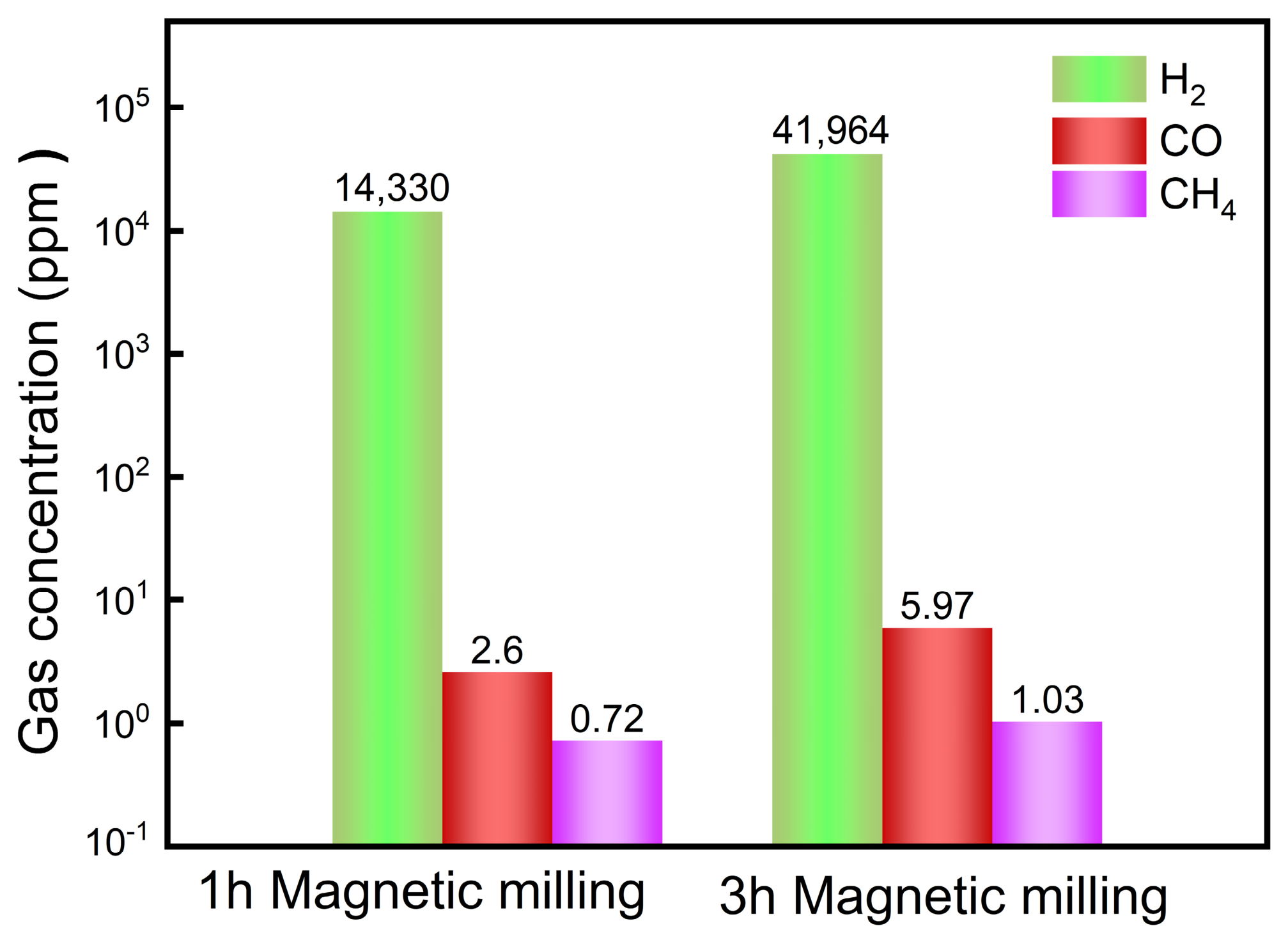
It is worthy to note that the friction between Al2O3 nanoparticles and Si single crystals resulted in a rapid de-coloration of 30 mg/L MO solutions in a previous paper [34]. While in this study, the friction between these two kinds of materials was explored in another way, namely, Al2O3 nanoparticles were driven to rub against Si single crystals in reactors enclosed with H2O and N2, through which H2 was the dominant flammable gas produced, as shown in Figure 1. As N2 had been bubbled through the water inside the reactors for 30 min, only very small amounts of CO and CH4 were detected. Obviously, a little amount of CO2 dissolved in water must not have been removed through N2 bubbling and it had been converted into CO and CH4 simultaneously. For reference, in some previous studies, H2O and CO2 enclosed in reactors have been converted into flammable gases like H2, CO, and CH4 through magnetic stirring using polytetrafluoroethylene (PTFE), Cu, and Ni magnetic rotary disks [35,36,37,38]. It is surprising that such large amounts of H2, 14,330 ppm and 41,964 ppm were produced after 1 h and 3 h of magnetic stirring, respectively. This result confirms the exceptional capability of Si single crystals to absorb mechanical energy through friction and convert it into chemical energy. It should be pointed out that the production of H2 did not increase in strict proportion to magnetic stirring time, which suggests that the raised concentration of H2 inside the reactor showed a little suppression on the further production of H2 [28].
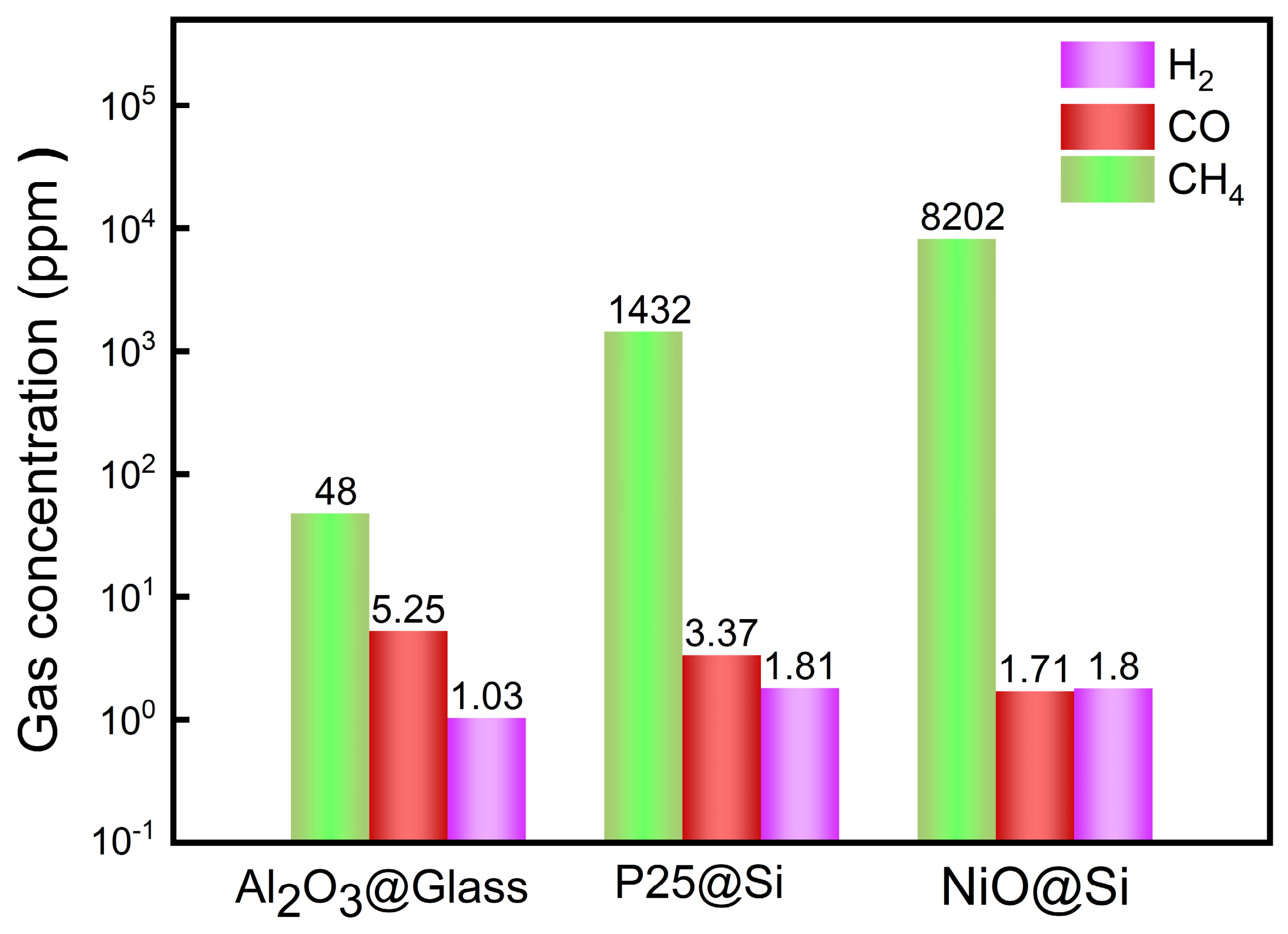
To comprehensively understand the tribocatalytic production of H2 by the friction pair of Si single crystals and Al2O3 nanoparticles, some more experiments were conducted for further comparison. In one experiment, Al2O3 nanoparticles were magnetically stimulated in deionized water in an as-received reactor with a glass bottom while all the other conditions were identical. Without the presence of a Si single crystal on the reactor bottom, only a trace amount of hydrogen (48 ppm) was produced after 3 h of magnetic stirring, as shown in Figure 2. It was smaller than that in the presence of a Si single crystal by almost three orders of magnitude, which highlights a huge difference in tribocatalytic production of H2 between Si single crystals and glass. As a matter of fact, a sharp contrast was also observed between Si single crystals and glass for the tribocatalytic degradation of MO, in which a rapid de-coloration of MO occurred when Al2O3 nanoparticles rubbed against Si single crystals in MO while its color remained unchanged when Al2O3 nanoparticles rubbed against glass. Obviously, a clear advantage has been confirmed for semiconductors over insulators with regard to tribocatalysis.
TiO2 nanoparticles (P25) and NiO particles have been explored for tribocatalytic production of flammable gases in glass-bottomed reactors in some previous studies [27,35,39]. The microstructure of P25 and NiO particles has been clearly presented in Refs. [39] and [35], respectively. In this study, these two kinds of materials have replaced Al2O3 nanoparticles to form dynamic friction with a Si single crystal for the production of H2 and the results are also shown in Figure 2. On one hand, the production of H2 is much higher than that obtained for a glass bottom for P25 [35], and the difference in the production of H2 between P25 and NiO, 1432 ppm versus 8202 ppm for 3 h of magnetic stirring, is much smaller than that for a glass bottom, 40 ppm versus 12,800 ppm for 24 h of magnetic stirring [35]. On the other hand, with Si single crystals coated on reactor bottoms, the production of H2 is much smaller for both P25 and NiO than that for Al2O3 nanoparticles, namely 41,964 ppm, as shown in Figure 1. It suggests that for all the friction pairs, the Si single crystal has dominated the tribocatalytic production of H2, while the other material must have influenced the production of H2 in terms of its hardness rather than its band gap. In this way, the highest production has been observed for Al2O3 nanoparticles due to their highest hardness among these three kinds of materials. As a matter of fact, a similarly high production of H2 had also been obtained when cubic BN particles, another hard material, were used to replace Al2O3 nanoparticles while other conditions remained unchanged.
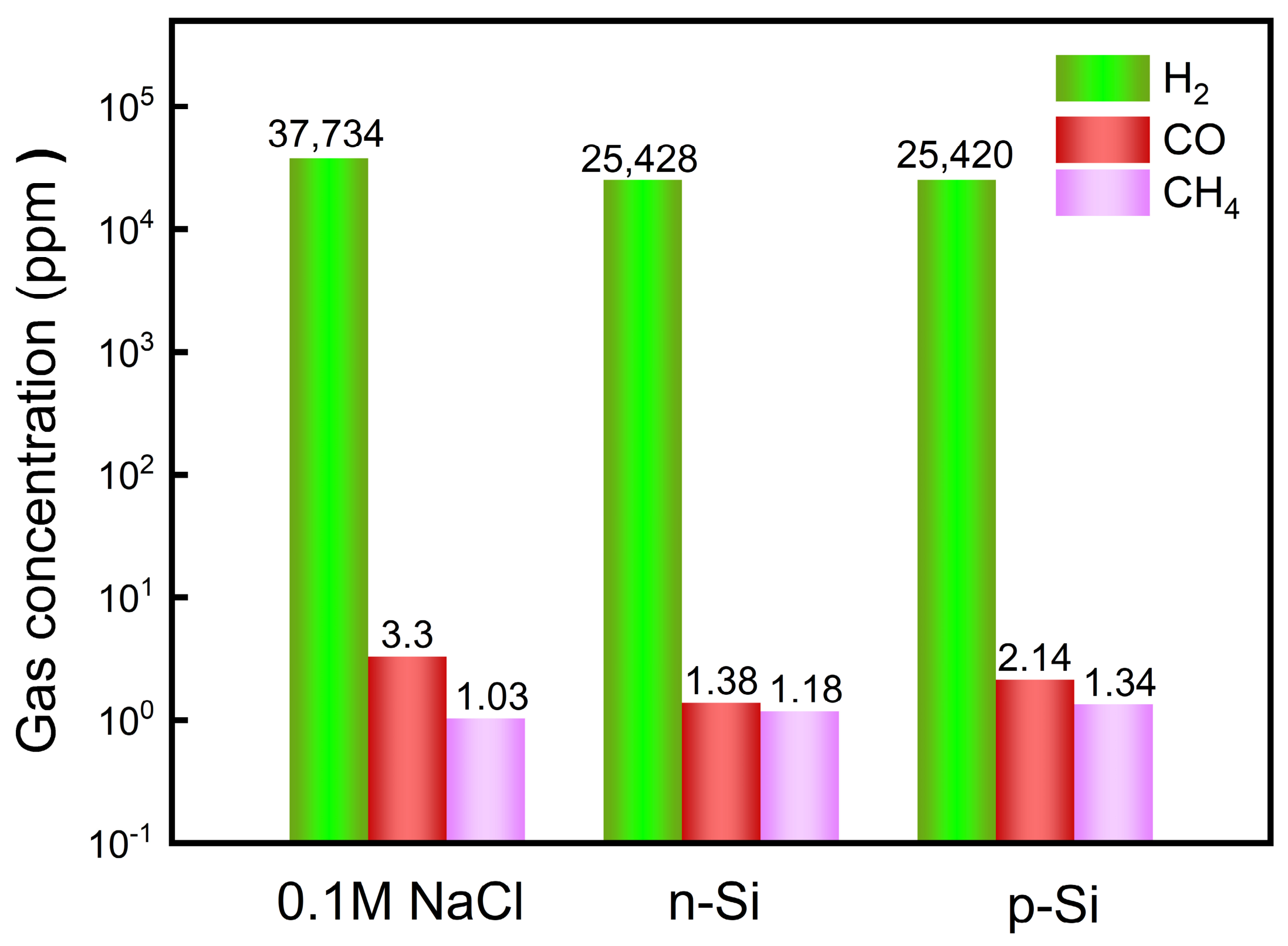
To acquire more information for the tribocatalytic production of flammable gases from H2O and CO2, some electrolytes were added to the water in which the tribocatalytic process happened in some previous studies [28,37,38,40]. Similarly, in this study, an experiment was conducted by replacing deionized water with a 0.1 M NaCl solution in a reactor while all the other conditions remained unchanged. The temporal trend in hydrogen evolution remained stable, but the rate decreased modestly, yielding 37,734 ppm H2 after 3 h of magnetic stirring, as shown in Figure 3. This attenuation is consistent with the findings by Domen and co-workers on mechano-catalytic splitting of water by NiO [39], wherein the production of H2 was decreased by a factor of 5 when water was replaced with 0.01 M NaCl, and also with the findings on tribocatalytic conversion of H2O and CO2 by Co3O4 [28], wherein the production of H2 was decreased by a factor of 2 when water was replaced with 0.1 M NaCl. Nevertheless, it is worthy to note that compared with decreases in these previous studies, the decrease associated with 0.1 M NaCl was much smaller in this study, suggesting a high resistance to environmental changes for Si single crystals in their capability to produce hydrogen. This should be related to their extremely small specific surface area as bulk single crystals.
Another experiment was conducted to compare H2 production between intrinsic, p-type, and n-type Si single crystals under the same conditions, and the results obtained for the latter two are also shown in Figure 3. After 3 h of magnetic stirring, 25,428 ppm and 25,420 ppm H2 were produced for n-type and p-type Si, respectively, which were about 60% of that obtained for intrinsic Si under the same conditions. It suggests that the charge carriers in Si single crystals have a modest effect on their tribocatalytic performance.
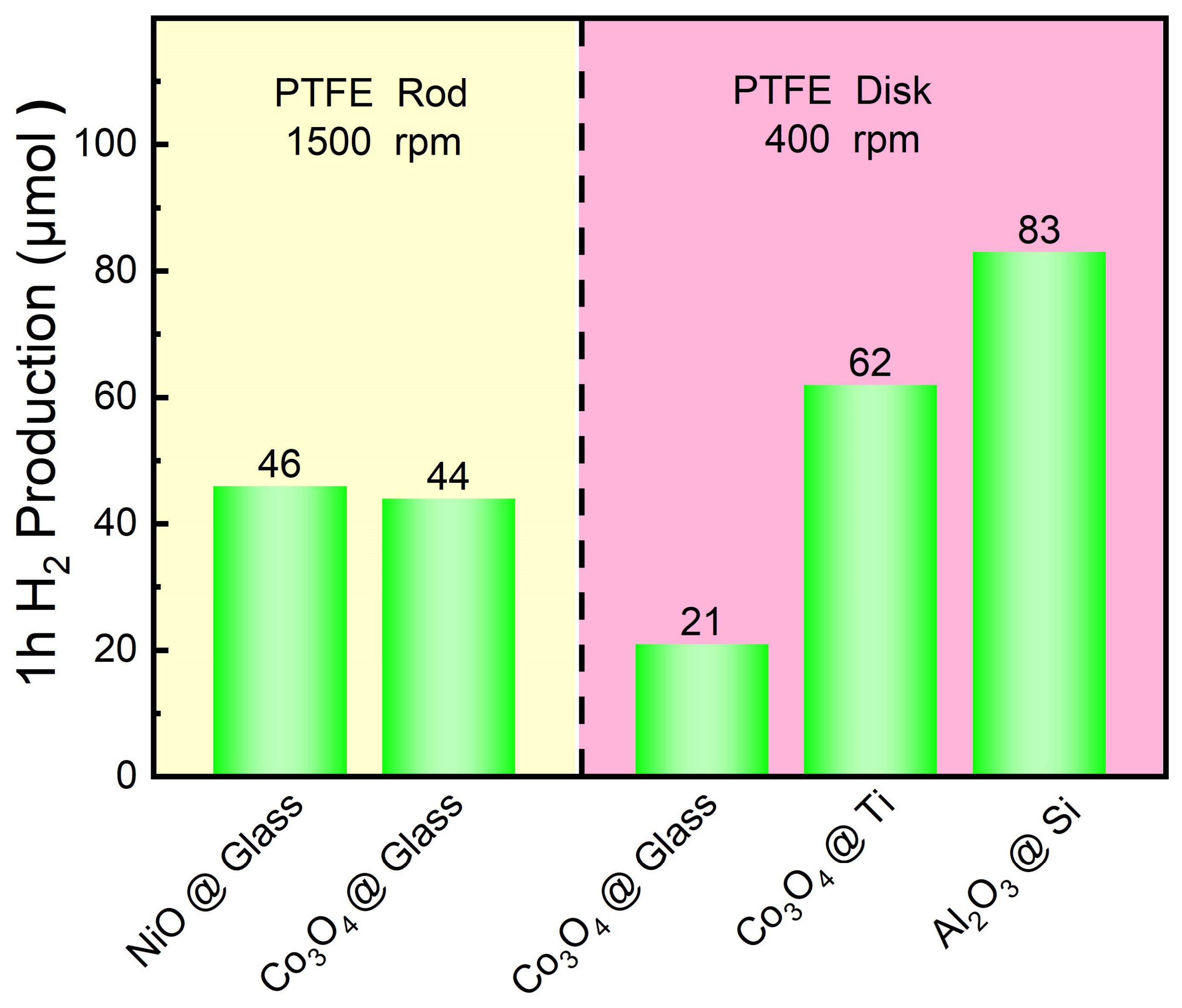
In 1999, NiO and Co3O4 were found to produce 46 and 44 μmol H2 from H2O after 1 h of magnetic stirring [40], respectively, as shown in Figure 4, in which a magnetic triangular prism-type stirring rod (8 × 8 × 8 × 34 mm4) sealed by PTFE was driven to rotate at 1500 rpm. As a matter of fact, in that study [40], dozens of other metal oxides had been subjected to magnetic stirring under the same conditions and their productions of H2, if detectable, were lower than those of NiO and Co3O4 by orders of magnitude. As 1500 rpm was too high a rotating speed for magnetic stirring, the mechano-catalytic splitting of water proposed by Domen et al. had been doubted sometimes due to friction-induced heating [41].
Particularly for tribocatalytic investigations, magnetic stirring has been modified through replacing magnetic stirring rods with home-made magnetic rotary disks that were 35 mm in diameter with a cross-shaped groove [35], and relatively small rotating speeds, typically 400 rpm, have been adopted [42]. Co3O4 has been stimulated through such modified magnetic stirring in a glass reactor and 21 μmol H2 was produced after 1 h of magnetic stirring [28], as shown in Figure 4. Given the difference between 1500 and 400 rpm, such H2 production not only confirmed the outstanding capability of Co3O4 to produce H2 through magnetic stirring but also basically excluded the interference from friction-induced heating. More interestingly, the production was increased to 62 μmol when a Ti disk had been coated on the reactor bottom, which suggests an appealing potential for tribocatalytic production of H2 by Co3O4. To make a clearer comparison, the production of H2 in this study was calculated to be 83 μmol after 1 h of magnetic stirring, as shown in Figure 4. It can be clearly seen that silicon single crystals are comparable to the most outstanding metal oxides in the tribocatalytic production of H2. It is worthy to note that as the power of magnetic stirring with a PTFE magnetic rotary disk rotating at 400 rpm in this setup was below 10 W [25], the production of H2 especially highlights a great potential for tribocatalysis in utilizing mechanical energy.

2.2. Mechanism Analysis

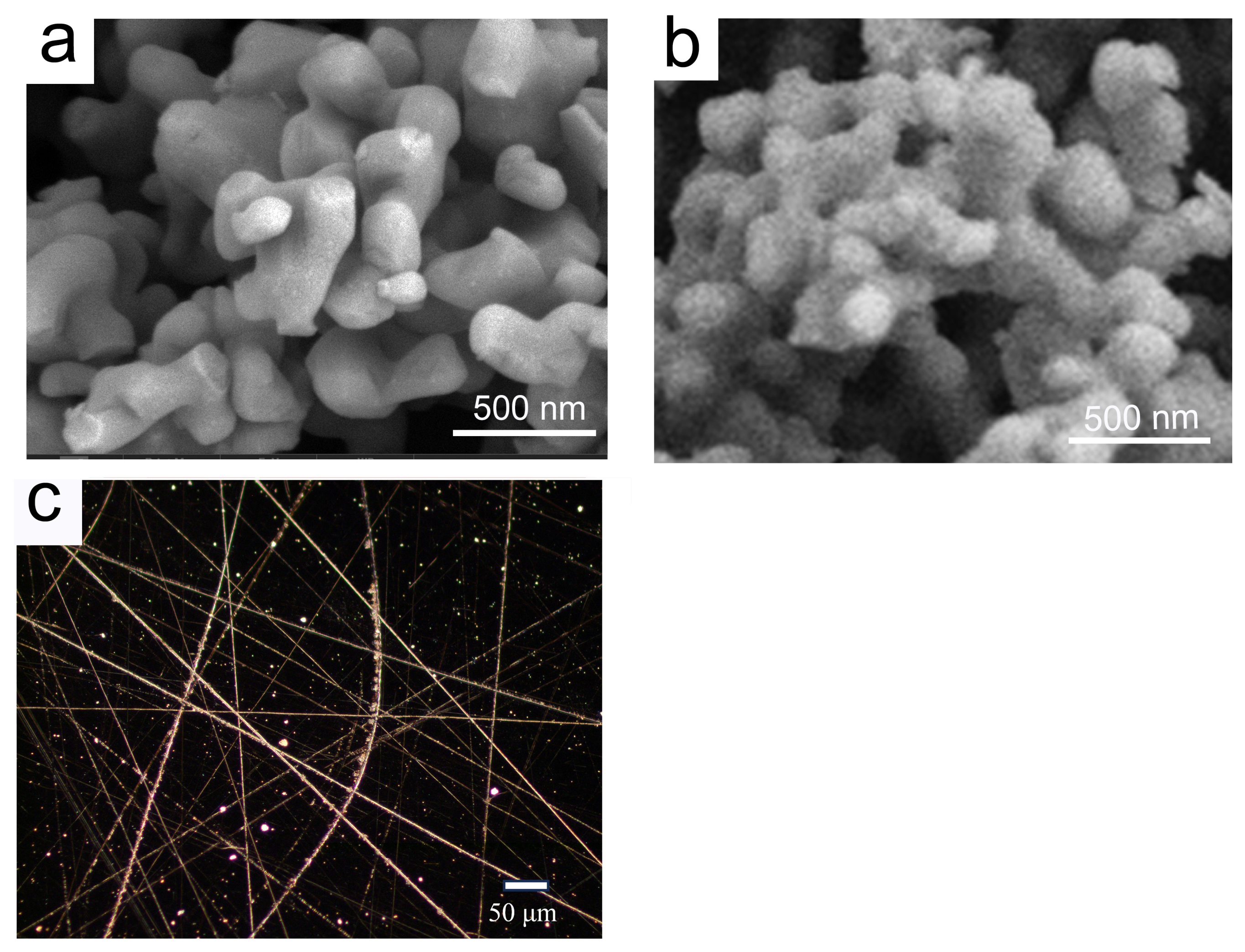
As two kinds of highly stable materials, it is not surprising that no detectable changes were observed in the crystal structure of the Al2O3 powder or the Si single crystals through XRD analysis after prolonged periods of magnetic stirring. On the other hand, magnetic stirring-induced changes in morphology can be clearly seen for both materials, as shown in Figure 5. The as-received Al2O3 powder comprised irregular, polyhedral particles with lengths in the range of 200–500 nm, as shown in Figure 5a. After 5 h of magnetic stirring, the surface of the particles became not so smooth while their size and overall morphology remained essentially unchanged, as shown in Figure 5b. Much more dramatic changes occurred to the polished surface of a Si single crystal after 10 h of friction with Al2O3 nanoparticles in water driven through magnetic stirring, as shown by an optical photo in Figure 5c, in which scratches approximately 1–2 μm wide can be clearly observed. In spite of these superficial damages, it is worthy to note that hydrogen production was found to increase almost proportionally with magnetic stirring time, as shown in Figure 1. This result actually demonstrates an important advantage of tribocatalysis, namely, while wear and tear cannot be totally avoided for catalysts or coatings/bottoms, the tribocatalytic performance derived from them can be kept almost constant throughout the lifespan of the catalysts. It is well known that for both photocatalysis and electrocatalysis, their catalysts are mostly various kinds of nano-structured materials and their long-term stability has been a great challenge for their large-scale applications.
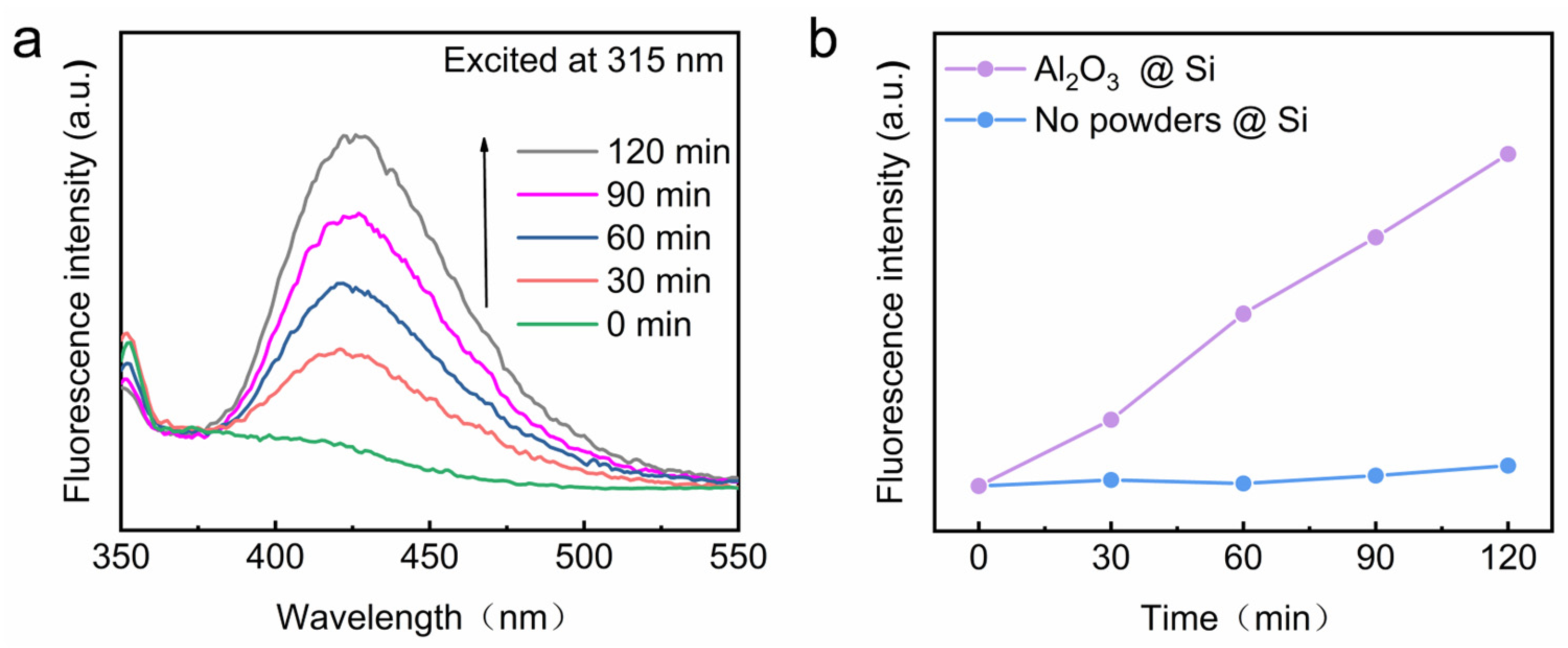
In a previous investigation, both hydroxyl and superoxide anion radicals had been detected through EPR analysis when Al2O3 nanoparticles were driven to rub against Si single crystals in water through magnetic stirring [34]. In this study, we have used photoluminescence (PL) spectroscopy to reveal the continuous generation of hydroxyl radicals in the course of magnetic stirring. For Al2O3 nanoparticles suspended in TA solution in a glass beaker covered with a single-crystal silicon on the bottom, the fluorescence emission at 425 nm progressively intensifies with increasing stirring time, indicating continuous formation of PTA-OH when Al2O3 particles rubbed against the single-crystal Si, as shown in Figure 6a. An approximately linear increase in PTA-OH with stirring time was further shown in Figure 6b, demonstrating a steady rise in ·OH production in the course of magnetic stirring. For reference, a control experiment had been conducted in which no Al2O3 particles were added to the TA solution. Without Al2O3 particles, no PTA-OH was detected in the course of magnetic stirring, as shown in Figure 6b.
Given the great difference in band gap between Si and Al2O3, it has been proposed that their friction results in excitation of electron–hole pairs in Si, which subsequently leads to the formation of radicals like hydroxyl and superoxide radicals in the following way [34]:
Si   Friction   Si   +   h +   +   e -
O H + h + O H
O 2 + e O 2
As reported in many studies [24,25,26,34,42], these radicals are responsible for tribocatalytic degradation of a series of organic dyes. It is well-known that in photocatalysis, electron–hole pairs excited in semiconductor catalysts are not only able to result in the formation of radicals like hydroxyl and superoxide radicals for the degradation of organic pollutants but also able to take part in other chemical reactions like water splitting. Specifically, in a previous investigation, a rapid degradation of MO solutions had been ascribed to hydroxyl and superoxide radicals formed from electron–hole pairs in Si excited through the friction between Si and Al2O3 [34]. While in this study, as there were no organic dye molecules in water, electron–hole pairs excited in Si should have resulted in the observed production of H2 from H2O. It is reasonable to assume that in both photocatalysis and tribocatalysis, electron–hole pairs excited in semiconductors are also able to split H2O into H2 and O2 in the same way:
2   H 2 O + 4   h + O 2 + 4   H +
2   H 2 O + 2   e H 2 + 2   O H
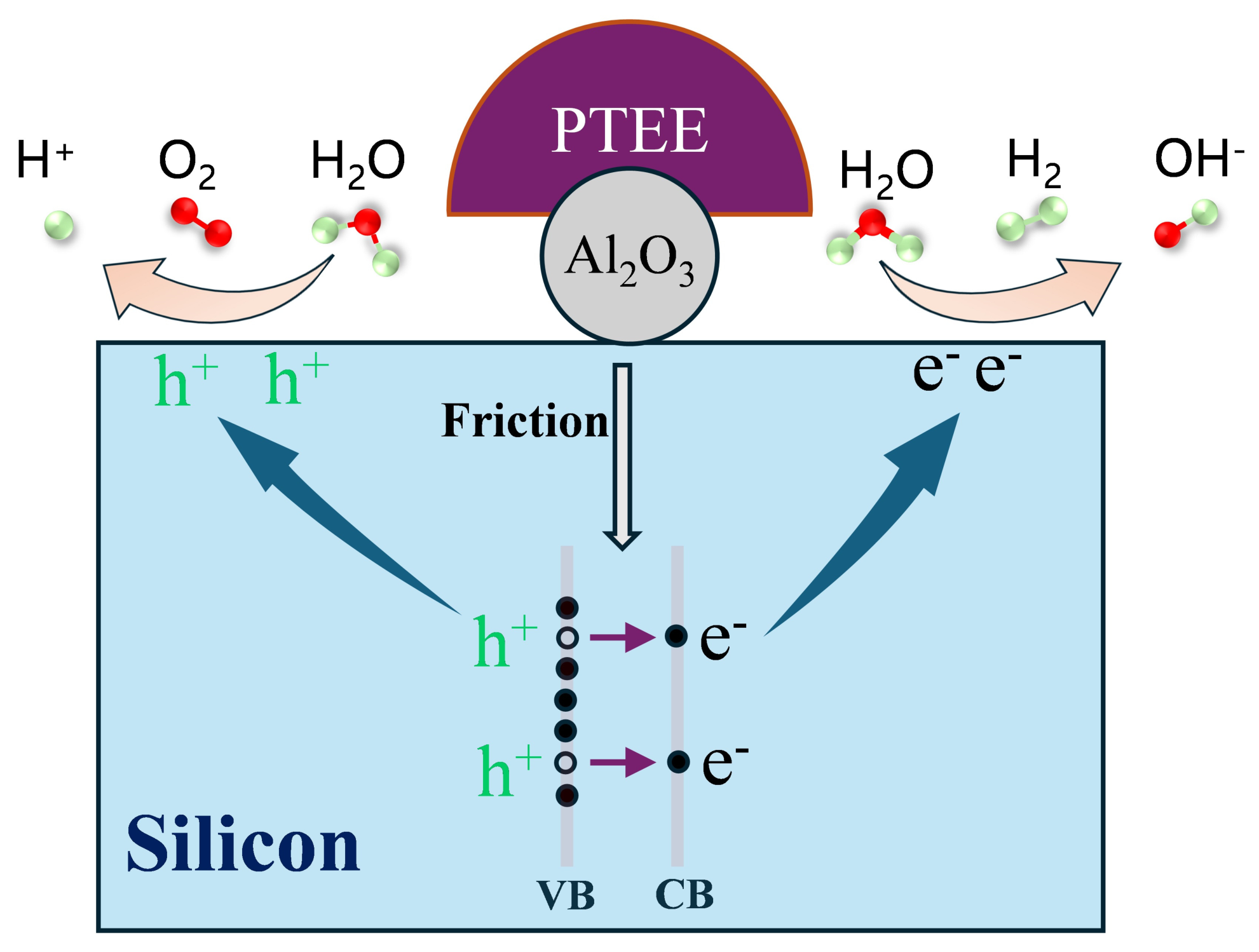
Figure 7 schematically shows the tribocatalytic production of H2 from H2O by silicon single crystals through friction with Al2O3 nanoparticles in this study. With a modest rotating speed of 400 rpm of the magnetic rotary disk in magnetic stirring, no detectable temperature rise was observed in the wall of the reactors detected through an infrared thermometer in the course of magnetic stirring. The friction energy absorbed by Si single crystals should mostly excite electron–hole pairs rather than phonons.
It is worthy to note that for the friction between Si single crystals and Al2O3 nanoparticles in aqueous media through magnetic stirring, both the degradation of MO in a previous investigation [34] and the production of H2 in this study are highly outstanding when compared with results obtained for many other materials under similar conditions. This should be related to the relatively narrow band gap of silicon. Obviously, the results obtained in this study provide strong support for the tribocatalytic mechanism based on the excitation of electron–hole pairs in semiconductors by mechanical energy absorbed through friction [43] and suggest an appealing potential for many narrow-band semiconductors in tribocatalysis as well.

3. Materials and Methods

3.1. Materials Information

Single crystals of 4-inch intrinsic silicon (undoped, >1000 Ω·cm), 4 cm p-type Si (B-doped, (1–10) × 10−3 Ω·cm) and 4 cm n-type Si (P-doped, (1–5) × 10−3 Ω·cm) were purchased from Hangzhou Jingxin Electronic Technology Co., Hangzhou, China [34]. The intrinsic silicon was laser-cut into 4 cm-diameter circular pieces to match the diameter of the as-received p-type and n-type wafers. The intrinsic silicon, p-type silicon and n-type silicon single crystals all have a (110) crystal orientation and polished surfaces, with thicknesses of 0.5 mm, 1 mm, and 0.5 mm, respectively.
High-purity Al2O3 nanoparticles (99.9 wt%, average particle size: 150–500 nm) were obtained from XFNANO Materials Tech. Co., Ltd., Jiangsu, China [34]. NiO particles with a purity of 99.0% were obtained from Sinopharm Chemical Reagent Co., Ltd. (Shanghai, China) [35]. A commercial photocatalyst known as Degussa P25, which was TiO2 nanoparticles around 30 nm [40,42], was also purchased and investigated in this study.

3.2. Modifying Glass Reactors with Different Silicon Disks on Their Bottoms

Commercial flat-bottom glass reactors (5 cm in diameter, 7.5 cm in height) were modified through coating disks of intrinsic, p-type, or n-type single-crystal silicon wafers using 502 cyanoacrylate adhesive on their bottoms separately. This procedure yielded individual flat-bottom glass reactors featuring glass bottoms overlaid with silicon single crystals of distinct electronic types for subsequent experiments. The volume of the entire glass reactor, including the rubber hose, was measured to be 180 mL using the water filling method.

3.3. Gases Production Through Tribocatalysis

In a typical experiment, 50 mL of deionized water, 0.3 g of Al2O3 nanoparticles or P25 or NiO particles, and a home-made Teflon magnetic rotary disk, which was 35 mm in diameter with a cross-shaped groove [35], were first added to a reactor and then the reactor was covered. N2 gas (99.999%) was bubbled through the water inside the reactor for 30 min to remove air and subsequently the reactor became gas-tight. The reactor was placed on a magnetic mixer, which drove the Teflon magnetic rotary disk inside the reactor to rotate at 400 rpm. After a predetermined reaction time, 1 mL of headspace gas was withdrawn by syringe, transferred to a gas-sampling bag for storage, and subsequently re-sampled and injected into a gas chromatograph for quantification of H2 and carbonaceous reduction products. Gas-phase analysis was performed offline using a gas chromatograph equipped with a thermal conductivity detector (TCD) and a flame ionization detector (FID), allowing detection of hydrogen- and carbon-containing gas products by syringe injection of headspace samples. Every experiment was repeated at least three times with at least three sets of data obtained through gas chromatograph measurement. According to a comparison among these sets of data, one set of data was determined as representative for the experiment and was adopted.

3.4. Detection for Hydroxyl Radicals

The generation of hydroxyl radicals (•OH) during the production of gases was monitored by photoluminescence (PL) spectroscopy using terephthalic acid (TA) as the •OH probe. •OH reacts with TA to form 2-hydroxyterephthalic acid, which exhibits a characteristic emission peak at 425 nm under 315 nm excitation. For the measurements, Al2O3 was suspended in 30 mL of a TA solution (0.5 mM) containing 2 mM NaOH and placed in a flat-bottom glass beaker (45 mm in diameter, 60 mm in height) whose bottom was covered with single-crystal silicon. The suspension was magnetically stirred at 25 °C in the dark at 400 rpm using a Teflon magnetic rotary disk. At 30-min intervals, a 3 mL aliquot was withdrawn and centrifuged at 8000 rpm for 5 min to remove particulates. The supernatant was then analyzed on a fluorescence spectrometer (FL, Hitachi F-4600, Tokyo, Japan) to record the emission spectra.

4. Conclusions

In glass reactors enclosed with H2O and N2, Al2O3 nanoparticles, TiO2 nanoparticles, and NiO particles were dispersed and stimulated through magnetic stirring using PTFE magnetic rotary disks to form dynamic friction with Si single crystals coated on reactor bottoms in water separately. As much as 14,330 and 41,964 ppm H2 were obtained after 1 h and 3 h of 400 rpm magnetic stirring, respectively, for Al2O3 nanoparticles, much higher than those for TiO2 and NiO, and for Al2O3 nanoparticles in a glass-bottomed reactor as well. NaCl addition to H2O and p/n doping in Si all decreased H2 production for friction between Al2O3 and Si, while the hydrogen production efficiency remained largely unaffected by scratches on the Si single crystal surface. Fluorescence spectroscopy revealed the presence of hydroxyl groups when Si was rubbed by Al2O3 through magnetic stirring, supporting a tribocatalytic process for the production of hydrogen from water. These findings clearly elucidate how Si single crystals harvest mechanical energy via friction to drive water splitting and much attention should be paid to narrow-band semiconductors to utilize mechanical energy for important chemical reactions.

Author Contributions

Conceptualization, L.Y. and W.C.; methodology, J.Z. (Jianqing Zhou), X.C., J.Z. (Jie Zhang) and S.K.; formal analysis, L.F.; investigation, J.Z. (Jianqing Zhou), X.C., J.Z. (Jie Zhang) and S.K.; data curation, L.F. and L.Y.; writing—original draft preparation, J.Z. (Jianqing Zhou) and X.C.; writing—review and editing, J.Z. (Jianqing Zhou) and W.C.; visualization, X.C. and W.C.; supervision, W.C.; project administration, W.C.; funding acquisition, J.Z. (Jianqing Zhou), L.Y. and W.C. All authors have read and agreed to the published version of the manuscript.

Funding

This research was partially supported by the National Natural Science Foundation of China (No. 52301272), the Key Project of Hubei Provincial Natural Science Foundation of China (Grant No. 2025AFD002), the National Innovation and Entrepreneurship Training Program for Undergraduates (Grant No. 202610513018) and the Jiangsu Engineering Research Center of New Materials for Adsorptive Separation in Chemical Industry and Environmental Treatment, Suzhou, 215123, China (Grant No. SDGC2424), the Research Program of HBNU (2026X083).

Data Availability Statement

Data are contained within the article.

Conflicts of Interest

The authors declare no conflicts of interest.

References

  1. Simanullang, M.; Prost, L. Nanomaterials for on-board solid-state hydrogen storage applications. Int. J. Hydrogen Energy 2022, 47, 29808–29846. [Google Scholar] [CrossRef]
  2. Tashie-Lewis, B.C.; Nnabuife, S.G. Hydrogen production, distribution, storage and power conversion in a hydrogen economy-a technology review. Chem. Eng. J. Adv. 2021, 8, 100172. [Google Scholar] [CrossRef]
  3. Nguyen-Thi, T.X.; Nguyen, P.Q.P.; Tran, V.D.; Ağbulut, Ü.; Nguyen, L.H.; Balasubramanian, D.; Tarelko, W.; Bandh, S.A.; Pham, N.D.K. Recent advances in hydrogen production from biomass waste with a focus on pyrolysis and gasification. Int. J. Hydrogen Energy 2024, 54, 127–160. [Google Scholar] [CrossRef]
  4. Reda, B.; Elzamar, A.A.; AlFazzani, S.; Ezzat, S.M. Green hydrogen as a source of renewable energy: A step towards sustainability, an overview. Environ. Dev. Sustain. 2024, 27, 29213–29233. [Google Scholar] [CrossRef]
  5. Faye, O.; Szpunar, J.; Eduok, U. A critical review on the current technologies for the generation, storage, and transportation of hydrogen. Int. J. Hydrogen Energy 2022, 47, 13771–13802. [Google Scholar] [CrossRef]
  6. Li, Z.; Guo, P.; Han, R.; Sun, H. Current status and development trend of wind power generation-based hydrogen production technology. Energy Explor. Exploit. 2019, 37, 5–25. [Google Scholar] [CrossRef]
  7. Tsujimura, T.; Suzuki, Y. Development of a large-sized direct injection hydrogen engine for a stationary power generator. Int. J. Hydrogen Energy 2019, 44, 11355–11369. [Google Scholar] [CrossRef]
  8. Rambhujun, N.; Salman, M.S.; Wang, T.; Pratthana, C.; Sapkota, P.; Costalin, M.; Lai, Q.; Aguey-Zinsou, K.-F. Renewable hydrogen for the chemical industry. MRS Energy Sustain. 2020, 7, E33. [Google Scholar] [CrossRef]
  9. Ganguli, A.; Bhatt, V. Hydrogen production using advanced reactors by steam methane reforming: A review. Front. Therm. Eng. 2023, 3, 1143987. [Google Scholar] [CrossRef]
  10. Szablowski, L.; Wojcik, M.; Dybinski, O. Review of steam methane reforming as a method of hydrogen production. Energy 2025, 316, 134540. [Google Scholar] [CrossRef]
  11. Nishiyama, H.; Yamada, T.; Nakabayashi, M.; Maehara, Y.; Yamaguchi, M.; Kuromiya, Y.; Nagatsuma, Y.; Tokudome, H.; Akiyama, S.; Watanabe, T. Photocatalytic solar hydrogen production from water on a 100-m2 scale. Nature 2021, 598, 304–307. [Google Scholar] [CrossRef]
  12. Esswein, A.J.; Nocera, D.G. Hydrogen production by molecular photocatalysis. Chem. Rev. 2007, 107, 4022–4047. [Google Scholar] [CrossRef]
  13. Zhu, J.; Hu, L.; Zhao, P.; Lee, L.Y.S.; Wong, K.-Y. Recent advances in electrocatalytic hydrogen evolution using nanoparticles. Chem. Rev. 2019, 120, 851–918. [Google Scholar] [CrossRef]
  14. Wang, M.; Yang, H.; Shi, J.; Chen, Y.; Zhou, Y.; Wang, L.; Di, S.; Zhao, X.; Zhong, J.; Cheng, T. Alloying nickel with molybdenum significantly accelerates alkaline hydrogen electrocatalysis. Angew. Chem. 2021, 133, 5835–5841. [Google Scholar] [CrossRef]
  15. Yang, G.; Chen, Q.; Wang, W.; Wu, S.; Gao, B.; Xu, Y.; Chen, Z.; Zhong, S.; Chen, J.; Bai, S. Cocatalyst engineering in piezocatalysis: A promising strategy for boosting hydrogen evolution. ACS Appl. Mater. Interfaces 2021, 13, 15305–15314. [Google Scholar] [CrossRef]
  16. Liu, W.; Zhu, S.; Ran, M.; Fu, Z.; Zhang, M.; Zhang, Y.; Wang, H.; Xing, M.; Fu, P. Hydroenergy inspiring large-scale piezoelectric catalysis for seawater hydrogen evolution. Angew. Chem. Int. Ed. 2025, 64, e202504749. [Google Scholar] [CrossRef] [PubMed]
  17. Amin, A.; Kim, R.N.; Kim, J.; Kim, W.D. Recent breakthroughs in overcoming the efficiency limits of photocatalysis for hydrogen generation. Catalysts 2025, 15, 1067. [Google Scholar] [CrossRef]
  18. Ng, B.-J.; Putri, L.K.; Chong, W.-K.; Chai, S.-P. Breaking boundaries of soft photocatalysis: Overcoming limitations of carbon nitride as single-light absorber for overall water splitting. J. Mater. Chem. A 2024, 12, 23971–24004. [Google Scholar] [CrossRef]
  19. Rahman, M.; Tian, H.; Edvinsson, T. Revisiting the limiting factors for overall water-splitting on organic photocatalysts. Angew. Chem. 2020, 132, 16418–16433. [Google Scholar] [CrossRef]
  20. Rahman, M.Z.; Kibria, M.G.; Mullins, C.B. Metal-free photocatalysts for hydrogen evolution. Chem. Soc. Rev. 2020, 49, 1887–1931. [Google Scholar] [CrossRef]
  21. Li, R.; Wu, D.; Rao, P.; Deng, P.; Li, J.; Luo, J.; Huang, W.; Chen, Q.; Kang, Z.; Shen, Y. General approach for atomically dispersed precious metal catalysts toward hydrogen reaction. Carbon Energy 2023, 5, e294. [Google Scholar] [CrossRef]
  22. Pu, Z.; Liu, T.; Zhao, W.; Shi, X.; Liu, Y.; Zhang, G.; Hu, W.; Sun, S.; Liao, S. Versatile route to fabricate precious-metal phosphide electrocatalyst for acid-stable hydrogen oxidation and evolution reactions. ACS Appl. Mater. Interfaces 2020, 12, 11737–11744. [Google Scholar] [CrossRef] [PubMed]
  23. Wang, J.; Hu, C.; Zhang, Y.; Huang, H. Engineering piezoelectricity and strain sensitivity in cds to promote piezocatalytic hydrogen evolution. Chin. J. Catal. 2022, 43, 1277–1285. [Google Scholar] [CrossRef]
  24. Li, P.; Wu, J.; Wu, Z.; Jia, Y.; Ma, J.; Chen, W.; Zhang, L.; Yang, J.; Liu, Y. Strong tribocatalytic dye decomposition through utilizing triboelectric energy of barium strontium titanate nanoparticles. Nano Energy 2019, 63, 103832. [Google Scholar] [CrossRef]
  25. Zhou, Z.; Chen, R.; Zhu, H.; Hu, Y.; Li, N.; Chen, W. Tribocatalytic activation of peroxymonosulfate by TiO2 nanoparticles for powerful degradation of organic pollutants. J. Adv. Ceram. 2026, 15, 9221237. [Google Scholar] [CrossRef]
  26. Mao, C.; Zhang, Y.-C.; Lei, H.; Jia, X.; Chen, F.; Yao, W.; Liu, P.; Chen, W. Boosting tribo-catalytic degradation of organic pollutants by BaTiO3 nanoparticles through metallic coatings. Appl. Surf. Sci. 2024, 663, 160172. [Google Scholar] [CrossRef]
  27. Li, P.; Tang, C.; Chen, L.; Hu, Y.; Xiao, X.; Chen, W. Reduction of CO2 by TiO2 nanoparticles through friction in water. Acta Phys. Sin. 2021, 70, 214601. (In Chinese) [Google Scholar] [CrossRef]
  28. Jia, X.; Wang, H.; Lei, H.; Mao, C.; Cui, X.; Liu, Y.; Jia, Y.; Yao, W.; Chen, W. Boosting tribo-catalytic conversion of H2O and CO2 by Co3O4 nanoparticles through metallic coatings in reactors. J. Adv. Ceram. 2023, 12, 1833–1843. [Google Scholar] [CrossRef]
  29. Zhang, S.; Yang, H.; Song, L. Study on the performance and mechanism of tribocatalysis-based multifunctional TiB2 without sacrificial agent for highly selective hydrogen evolution from pure water splitting. Int. J. Hydrogen Energy 2025, 106, 129–137. [Google Scholar] [CrossRef]
  30. Zhu, Z.; Jin, Z.; Jiang, C.; Wu, S.; Hu, C.; Liu, L.; Fang, L.; Cheng, Z. Ferroelectric field enhanced tribocatalytic hydrogen production and RhB dye degradation by tungsten bronze ferroelectrics. Nanoscale 2024, 16, 10597–10606. [Google Scholar] [CrossRef]
  31. Jin, Z.; Zheng, X.; Zhu, Z.; Jiang, C.; Wu, S.; Hu, C.; Liu, L.; Fang, L.; Cheng, Z. Tribocatalytic sterilization of BN2/CN z-type heterojunctions. Nano Energy 2024, 122, 109284. [Google Scholar] [CrossRef]
  32. Chen, B.; Cheng, C.; Xu, T.; Yi, H.; Huang, P.; Li, Q.; Zhu, G.; Jia, Y. High tribocatalytic nitrogen fixation on friction interface of SrTiO3 non-piezoelectric nanosheets and PTFE. Surf. Interfaces 2025, 65, 106461. [Google Scholar] [CrossRef]
  33. Wu, Z.; Xu, T.; Ruan, L.; Guan, J.; Huang, S.; Dong, X.; Li, H.; Jia, Y. Strong tribocatalytic nitrogen fixation of graphite carbon nitride g-C3N4 through harvesting friction energy. Nanomaterials 2022, 12, 1981. [Google Scholar] [CrossRef]
  34. Cui, X.; Guo, Z.; Lei, H.; Jia, X.; Mao, C.; Ruan, L.; Zhou, X.; Wang, Z.; Chen, F.; Chen, W. Tribo-catalytic degradation of methyl orange solutions enhanced by silicon single crystals. Coatings 2023, 13, 1804. [Google Scholar] [CrossRef]
  35. Lei, H.; Jia, X.; Wang, H.; Cui, X.; Jia, Y.; Fei, L.; Chen, W. Tribo-catalytic conversions of H2O and CO2 by NiO particles in reactors with plastic and metallic coatings. Coatings 2023, 13, 396. [Google Scholar] [CrossRef]
  36. He, Y.; Jin, Z.; Wu, S.; Jiang, C.; Hu, C.; Liu, L. Enhanced tribocatalytic CO2 reduction by TiO2 nanoparticles. ACS Omega 2025, 10, 32339–32347. [Google Scholar] [CrossRef]
  37. Cui, X.; Wang, H.; Lei, H.; Jia, X.; Jiang, Y.; Fei, L.; Jia, Y.; Chen, W. Surprising tribo-catalytic conversion of H2O and CO2 into flammable gases utilizing frictions of copper in water. ChemistrySelect 2023, 8, e202204146. [Google Scholar] [CrossRef]
  38. Lei, H.; Wu, Z.; Wang, H.; Mao, C.; Guo, Z.; Fei, L.; Chen, W. Converting H2O and CO2 into chemical fuels by nickel via friction. Surf. Interfaces 2024, 46, 104203. [Google Scholar] [CrossRef]
  39. Li, P.; Tang, C.; Xiao, X.; Jia, Y.; Chen, W. Flammable gases produced by TiO2 nanoparticles under magnetic stirring in water. Friction 2022, 10, 1127–1133. [Google Scholar] [CrossRef]
  40. Ikeda, S.; Takata, T.; Komoda, M.; Hara, M.; Kondo, J.N.; Domen, K.; Tanaka, A.; Hosono, H.; Kawazoe, H. Mechano-catalysis—A novel method for overall water splitting. Phys. Chem. Chem. Phys. 1999, 1, 4485–4491. [Google Scholar] [CrossRef]
  41. Ross, D.S. Comment on “a study of mechano-catalysis for overall water splitting”. J. Phys. Chem. B 2004, 108, 19076–19077. [Google Scholar] [CrossRef]
  42. Cui, X.; Li, P.; Lei, H.; Tu, C.; Wang, D.; Wang, Z.; Chen, W. Greatly enhanced tribocatalytic degradation of organic pollutants by TiO2 nanoparticles through efficiently harvesting mechanical energy. Sep. Purif. Technol. 2022, 289, 120814. [Google Scholar] [CrossRef]
  43. Park, J.Y.; Salmeron, M. Fundamental aspects of energy dissipation in friction. Chem. Rev. 2014, 114, 677–711. [Google Scholar] [CrossRef] [PubMed]
Figure 1. Gases produced after a silicon single crystal disk was rubbed by Al2O3 nanoparticles through magnetic stirring in a reactor enclosed with H2O and N2.
Catalysts 16 00523 g001
Figure 2. Comparison of gas evolution yields for three different pairs in water: Al2O3 nanoparticles against a glass bottom, P25 (TiO2) against a silicon single crystal, and NiO against a silicon single crystal after 3 h of magnetic stirring.
Catalysts 16 00523 g002
Figure 3. Comparison of tribocatalytic gas evolution for intrinsic silicon in 0.1 M NaCl solution and n-type and p-type silicon in deionized water after 3 h of friction with Al2O3 nanoparticles driven through magnetic stirring.
Catalysts 16 00523 g003
Figure 4. Comparison among several important magnetic stirring-stimulated H2 production studies in the literature: H2 production by friction pairs of NiO@glass and Co3O4@glass stimulated through a PTFE magnetic rod rotating at 1500 rpm [40], H2 production by friction pairs of Co3O4@glass and Co3O4@Ti stimulated through a PTFE magnetic disk rotating at 400 rpm [28], and H2 production by friction pair of Al2O3@Si stimulated through a PTFE magnetic disk rotating at 400 rpm in this study.
Catalysts 16 00523 g004
Figure 5. Morphological changes in Al2O3 particles and silicon single crystals after the former was driven to rub against the latter in water through magnetic stirring: (a) as-received Al2O3 particles; (b) Al2O3 particles after 5 h of friction in water with Si single crystal through magnetic stirring; (c) a photo image of a silicon single crystal after 10 h of friction with Al2O3 nanoparticles in water through magnetic stirring.
Catalysts 16 00523 g005
Figure 6. Detection of hydroxyl radicals (•OH) generated from the friction between Al2O3 nanoparticles and a silicon single crystal through magnetic stirring: (a) fluorescence spectra of TA solution suspended with Al2O3 particles after a series of magnetic stirring times; (b) fluorescence intensity versus magnetic stirring time for TA solutions with and without Al2O3 nanoparticles.
Catalysts 16 00523 g006
Figure 7. Mechanism diagram for the production of H2 and O2 from H2O by electron–hole pairs excited in silicon single crystals through the friction with Al2O3 nanoparticles in magnetic stirring.
Catalysts 16 00523 g007
Disclaimer/Publisher’s Note: The statements, opinions and data contained in all publications are solely those of the individual author(s) and contributor(s) and not of MDPI and/or the editor(s). MDPI and/or the editor(s) disclaim responsibility for any injury to people or property resulting from any ideas, methods, instructions or products referred to in the content.