
Article

Application of Simultaneous Chemical and Electrochemical Oxidation Treatment (O3–EO) in River Water and Its Pollutant and Phytotoxicity Evaluation

by
Ariana de la Cruz-Hernández
1,
Gabriela Roa-Morales
1,*,
Carlos Eduardo Barrera-Díaz
1,*,
Lilia Tapia-López
2,
Cinthya Pamela Del Río Galván
3 and
Manuel Eduardo Palomar-Pardavé
4
1
Centro Conjunto de Investigación en Química Sustentable UAEM-UNAM, Toluca 50200, Mexico
2
Centro de Investigación en Biotecnología Aplicada, Instituto Politécnico Nacional, Tlaxcala 90700, Mexico
3
Unidad Profesional Interdisciplinaria de Ingeniería Campus Zacatecas, Instituto Politécnico Nacional, Unidad Zacatecas, Zacatecas 98160, Mexico
4
Departamento de Materiales, Universidad Autónoma Metropolitana Unidad Azcapotzalco, Mexico City 02200, Mexico
*
Authors to whom correspondence should be addressed.
Catalysts 2026, 16(5), 486; https://doi.org/10.3390/catal16050486
Submission received: 28 March 2026 / Revised: 6 May 2026 / Accepted: 13 May 2026 / Published: 21 May 2026
(This article belongs to the Special Issue Photocatalysis and Electrocatalysis for Water Remediation)

Abstract

Continuous discharges from diverse industrial activities have severely degraded the water quality of the Lerma River, turning it into a major environmental, social, and public health concern. Conventional wastewater treatment processes are often insufficient for eliminating persistent and refractory organic pollutants; therefore, the implementation of advanced oxidation processes (AOPs) is increasingly required to restore water quality. In this context, the present study systematically evaluated the individual and combined effects of ozonation and electrochemical oxidation using boron-doped diamond (BDD) electrodes for the treatment of contaminated river water. Ozonation alone achieved an 89% reduction in turbidity and a 19% decrease in total organic carbon (TOC), while electrochemical oxidation reduced turbidity by 82% and TOC by 57%. Remarkably, the simultaneous application of both treatments resulted in a 98% reduction in turbidity and an 80% decrease in TOC, clearly demonstrating a strong synergistic effect. Regarding true color at 436 nm, associated with yellow chromophore compounds, removal efficiencies of 98.9%, 94.7%, and 67.3% were obtained for the combined process, electrochemical oxidation, and ozonation, respectively. Phytotoxicity tests with Lactuca sativa seeds showed no statistically significant difference in toxicity in water treated with the O3–EO System compared to raw water. These results highlight, for the first time under real river water conditions, the superior performance of the integrated O3–EO system as an effective strategy for the intensified degradation and partial mineralization of persistent organic contaminants, thereby underscoring its strong potential for advanced remediation of heavily polluted surface waters.

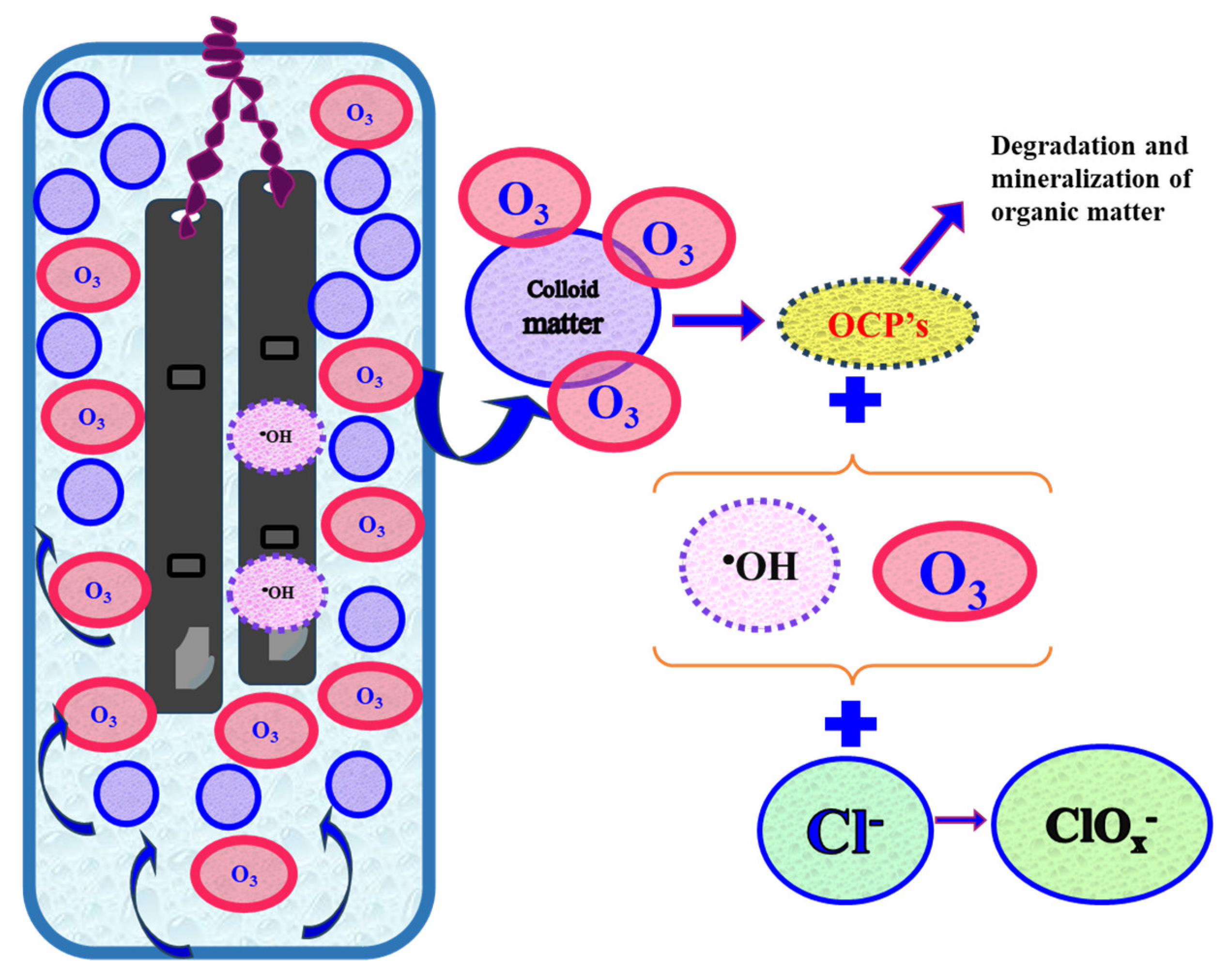
Graphical Abstract

1. Introduction

The Lerma River is one of the most important and longest rivers in Mexico. It originates in the State of Mexico and flows through Querétaro, Guanajuato, Michoacán, and Jalisco before discharging into Lake Chapala, extending approximately 708 km [1]. Owing to intense industrial and urban activity along its course, this river has experienced progressive deterioration in water quality. The Reciclagua wastewater treatment plant, located in Lerma, State of Mexico, forms part of the sanitation infrastructure of the Upper Lerma Basin and treats effluents originating from the Lerma River and its surrounding hydrological catchment [2]. This facility has a treatment capacity of approximately 400 L·s−1, operates continuously throughout the year, and provides service to more than 180 industries within the Toluca–Lerma industrial corridor, contributing to the partial improvement of river water quality [3].
Chemical oxidation using ozone (O3) has been widely applied for wastewater treatment due to its strong ability to degrade a wide range of organic contaminants. Ozone can react through two main pathways: direct molecular oxidation and indirect oxidation via the formation of highly reactive hydroxyl radicals (OH) [4]. Recent studies have shown that photocatalytic ozonation enhances both mineralization and toxicity reduction in complex wastewaters [5]. Dai et al. (2024) demonstrated that ozonation efficiency is strongly affected by pH, water matrix composition, and reactor design [6], while Liu et al. (2020) reported that microbubble ozonation significantly enhances pollutant degradation due to increased gas–liquid interfacial area and intensified radical generation [7]. Furthermore, the catalytic role of nanomaterials in ozonation has been shown to improve the degradation of recalcitrant compounds, indicating the strong potential of this approach for sustainable wastewater treatment [8].
Electrochemical oxidation (EO) using boron-doped diamond (BDD) electrodes has emerged as a powerful advanced oxidation process for wastewater treatment, owing to its ability to generate surface-bound hydroxyl radicals with minimal parasitic side reactions and to promote near-complete mineralization of pollutants into CO2 and H2O [9]. Under optimized conditions, more than 70% TOC removal has been reported for dye-containing wastewaters [10], while the mineralization of persistent compounds such as glyphosate has been successfully demonstrated in pre-pilot-scale BDD systems [11]. Additional studies have reported the simultaneous removal of manganese and electro-generation of permanganate [12], as well as the complete decomposition of urea with ammonium ion formation through BDD-mediated oxidation, further highlighting the environmental versatility and technological relevance of this process [13].
Hybrid O3–EO systems have recently attracted increasing interest due to their synergistic enhancement of oxidative performance. Complete removal of pharmaceutical contaminants such as carbamazepine and lorazepam has been achieved from hospital effluents under acidic pH and moderate current densities [14]. In other approaches, the integration of ozone with electro-generated hydrogen peroxide significantly reduced TOC and mitigated bromate formation in industrial wastewater [15]. The combination of ozone nanobubbles with EO in textile wastewater also achieved 81.1% COD and 42% total suspended solids (TSS) removal under neutral pH and low-voltage conditions [16].
Recent studies indicate that hydroxyl radical generation in micro- and nano-bubble ozone systems coupled with EO is a critical factor for maximizing oxidative efficiency and is strongly influenced by reactor configuration, pH, and current density [17,18].
Furthermore, it is essential to evaluate the toxicity of water treated by advanced oxidation processes through phytotoxicity tests due to its potential risk to the environment and human health, as reported by Wang and Wang (2021) [19], and to assess its potential for reuse.
Despite recent advances, the application of combined O3–EO systems to real river water under environmentally relevant conditions has not been sufficiently investigated. In this study, we evaluate the synergistic performance of a hybrid O3–EO process for the enhanced removal of organic contaminants, color, and turbidity from contaminated water collected from the Lerma River. This work provides practical insights into the potential of this technology for large-scale surface water remediation.

2. Results

The results presented below correspond to two contaminated water samples: the first was collected from the influent of a wastewater treatment plant, and the second was obtained from the Lerma River.

2.1. Results from Inlet of Wastewater

Figure 1 illustrates the evolution of chemical oxygen demand (COD) as a function of treatment time. As observed, the most pronounced degradation was achieved under the combined ozonation–electrochemical oxidation (O3–EO) regime, where COD was reduced by approximately 96%. This enhanced performance is attributed to the synergistic action of two concurrent oxidation pathways: ozone oxidation occurring in the bulk aqueous phase and electrochemical oxidation taking place at the BDD electrode surface, which together promote intensified hydroxyl radical generation and accelerated organic matter degradation.
Regarding turbidity, a substantial decrease was observed for all three treatments; however, ozonation exhibited a lower removal efficiency compared to electrochemical oxidation and the combined O3–EO process, as shown in Figure 2. This result highlights the greater effectiveness of electrochemically assisted radical formation in destabilizing and removing suspended and colloidal particles.
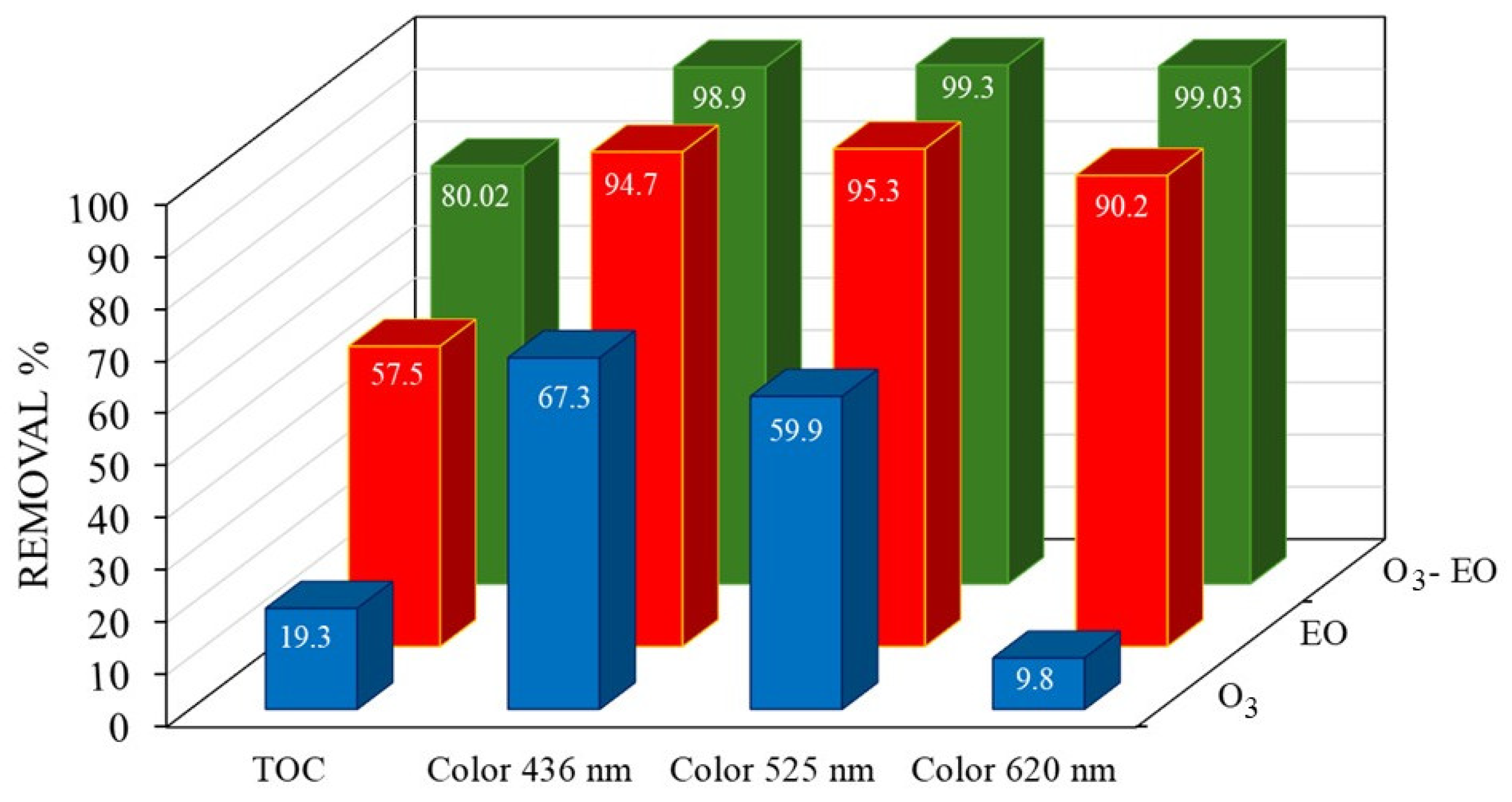
Figure 3 summarizes the total organic carbon (TOC) and true color removal in river water samples after 120 min of treatment. Ozonation alone produced a modest TOC reduction of 19%, whereas electrochemical oxidation (EO) achieved a significantly higher removal of 57%. Notably, the combined O3–EO treatment resulted in an 80% TOC reduction, clearly confirming the synergistic effect of the hybrid process in promoting the mineralization of organic matter.
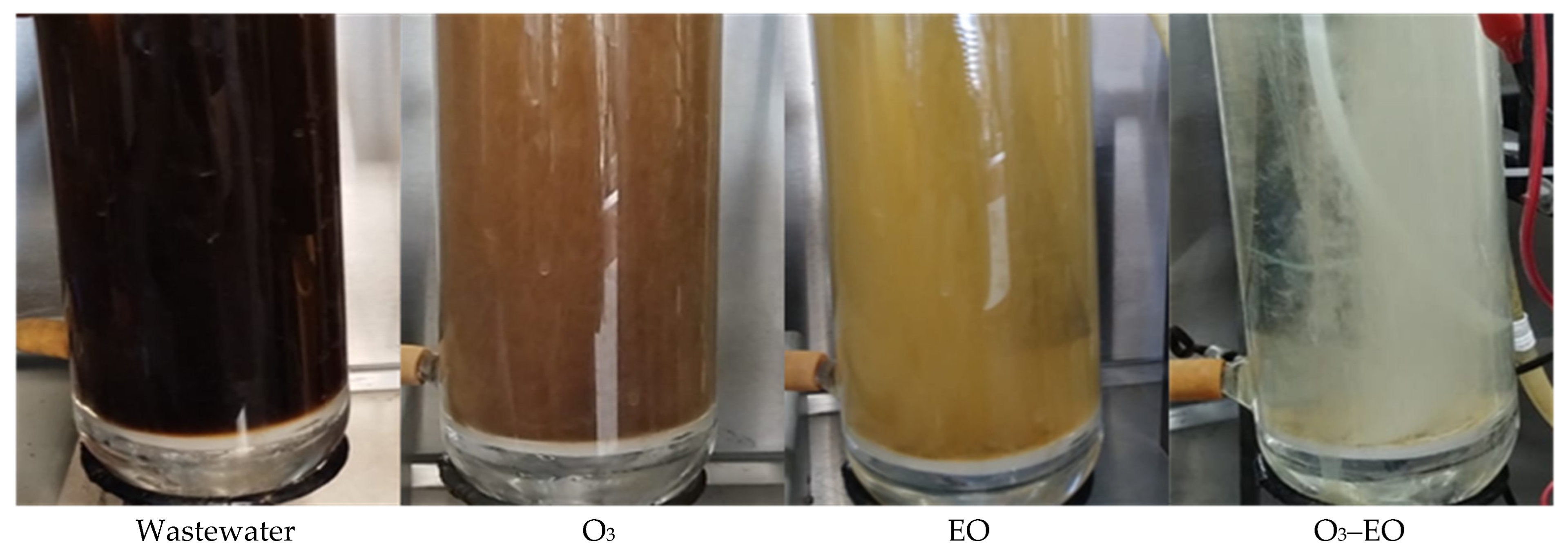
Color removal is visually evidenced in Figure 4, which presents representative photographs of the untreated river water and the samples after application of the different treatments. The initial river water exhibited an intense reddish black coloration, indicative of high contaminant loading, likely associated with suspended solids, dis-solved organic matter, and possibly industrial dyes or humic substances. After treatment, a marked improvement in optical clarity is observed particularly for the combined O3–EO process, corroborating the spectrophotometric color removal results.

2.2. Treatment of the Lerma River

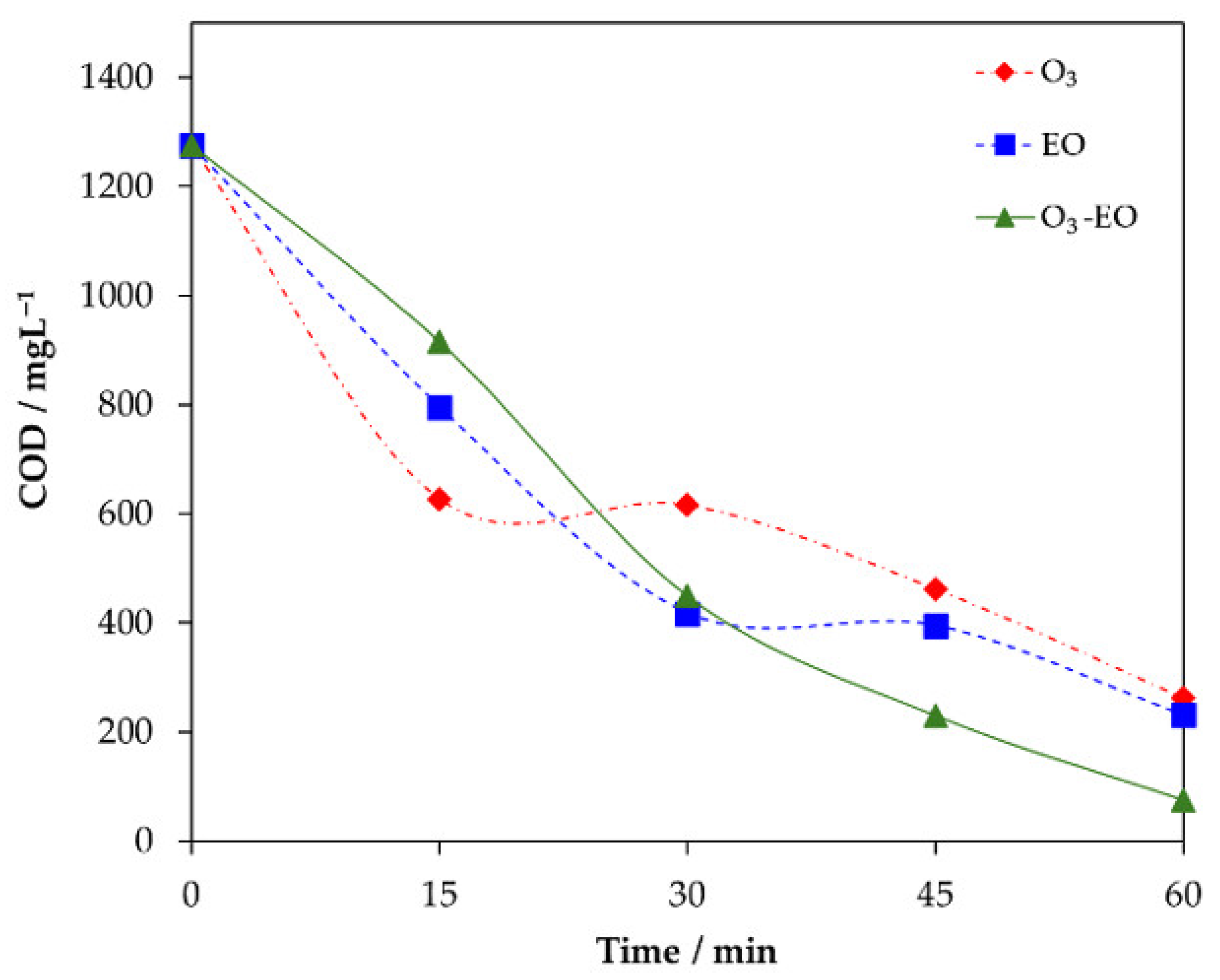
Figure 5 presents the kinetics of chemical oxygen demand (COD) removal. A clear decline in COD is observed for all three treatments starting at 15 min, followed by a gradual reduction over time. At the initial stage, ozonation (O3) exhibited the highest removal efficiency (50%), followed by electrochemical oxidation (EO) at 37% and the combined O3–EO process at 28%. At longer treatment times, the removal efficiency in-creased significantly, with O3 achieving nearly 80% COD removal, EO reaching 81.8%, and the combined O3–EO process achieving 94%, which represents the highest performance. This enhanced efficiency is attributed to the synergistic interaction between electrochemical oxidation and ozone microbubble generation, which promotes intensified hydroxyl radical production and improved oxidation kinetics.
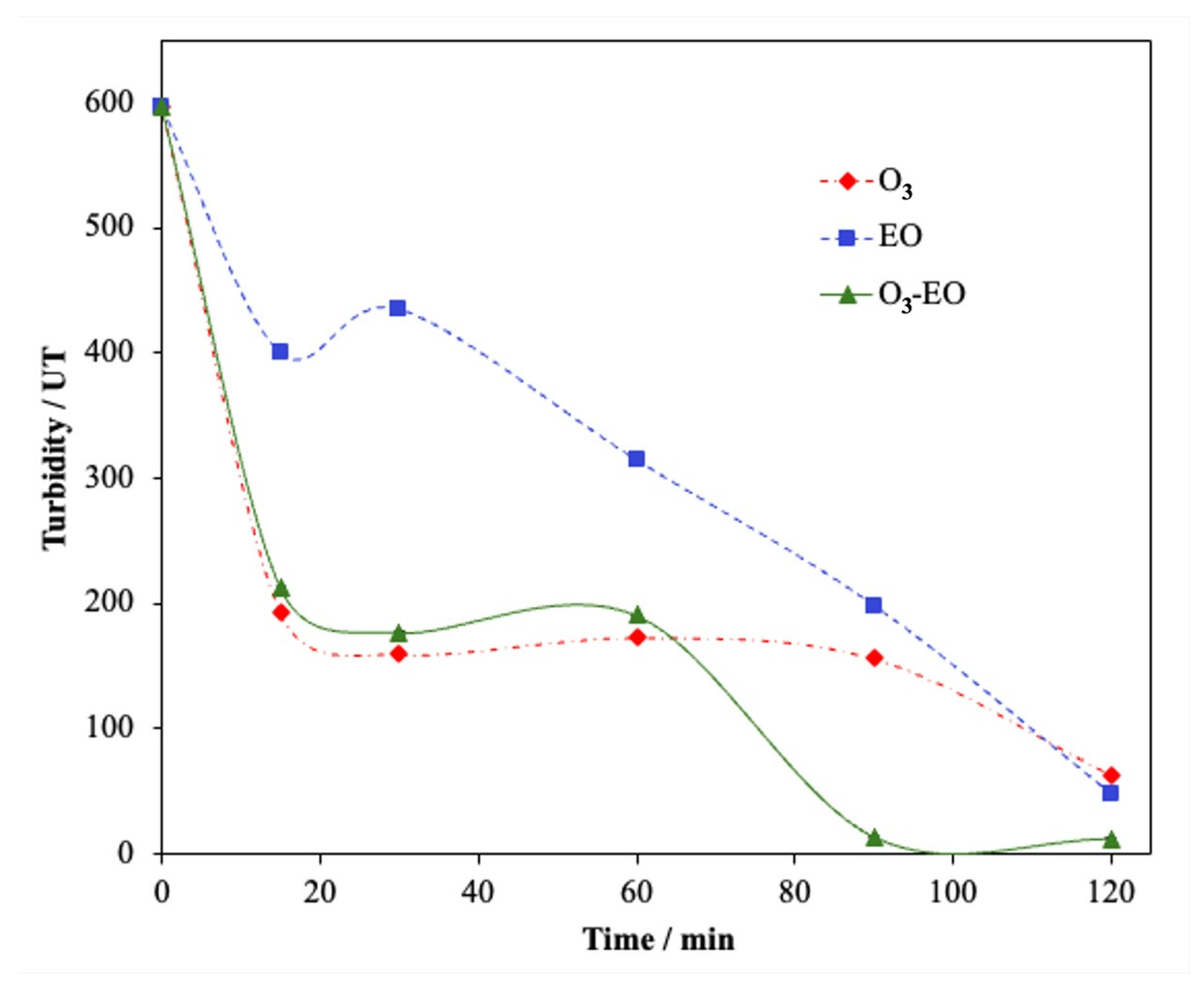
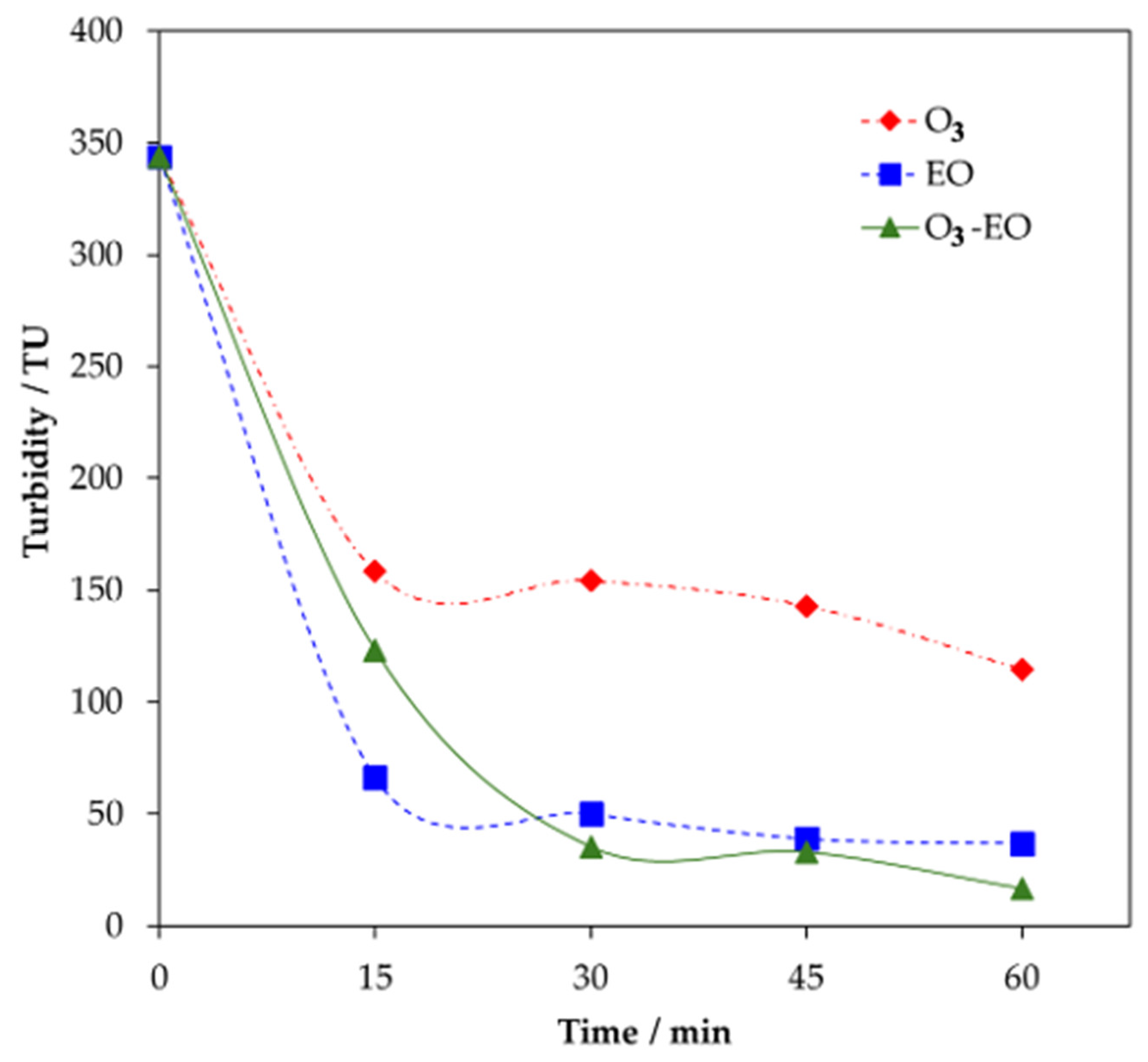
Figure 6 presents the turbidity removal profiles for the three applied treatments. At the initial stage of the process, electrochemical oxidation (EO) exhibited the highest removal efficiency (80%), followed by the combined O3–EO treatment (64%) and ozonation (O3) alone (53.9%). Ozonation showed only a moderate increase over time, reaching a maximum turbidity removal of 66.6%. In contrast, EO achieved a maximum removal efficiency of 89%, while the combined O3–EO process proved to be the most effective, attaining a turbidity removal of 95%. This superior performance further confirms the strong synergistic interaction between ozonation and electrochemical oxidation, which enhances particle destabilization and oxidative degradation.
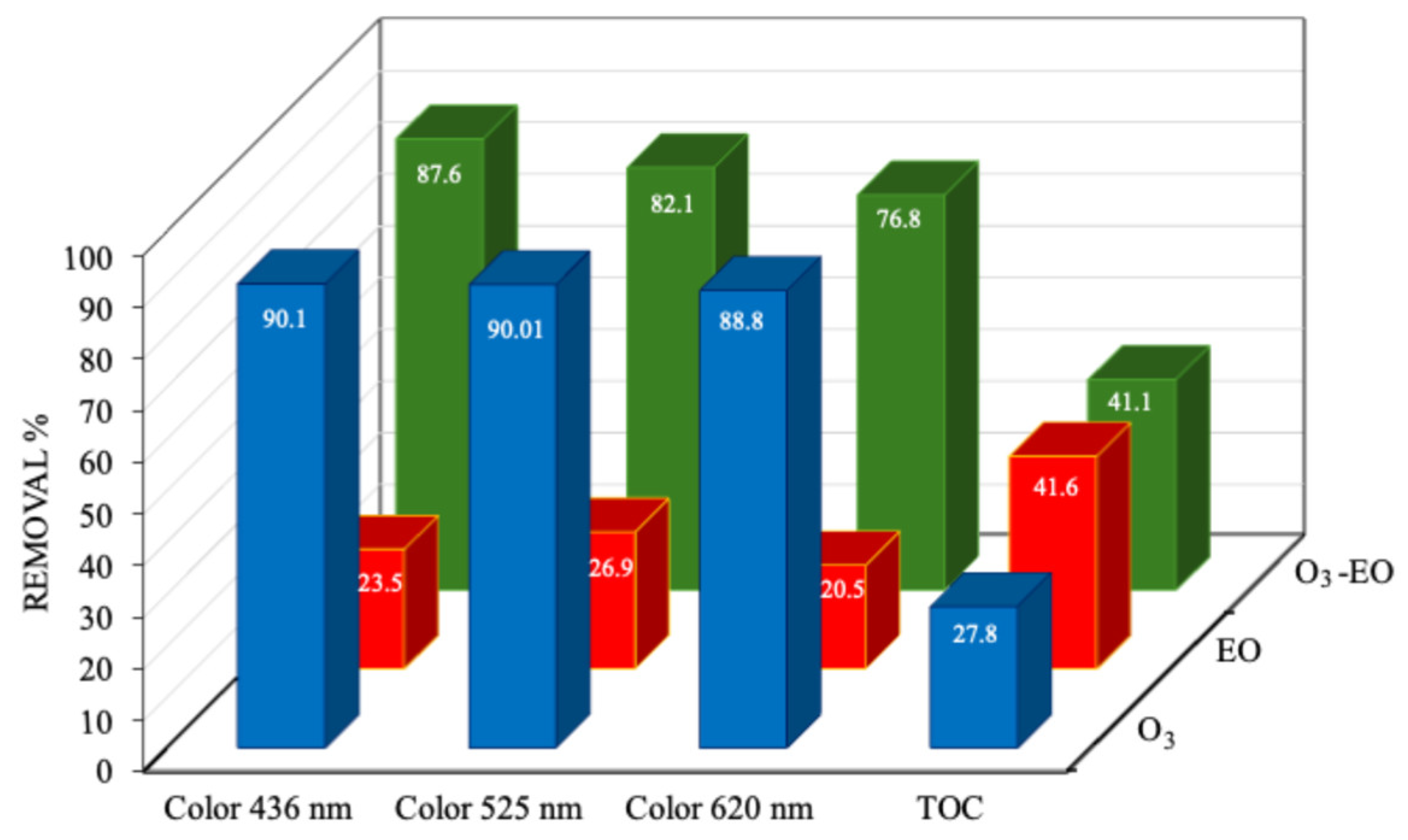
Figure 7 shows that the highest total organic carbon (TOC) removal was achieved by electrochemical oxidation (EO), with no significant difference relative to the combined O3–EO treatment, reaching 41.6% and 41.1%, respectively. In contrast, ozonation (O3) exhibited the lowest TOC removal efficiency. Despite its limited mineralization capacity, ozonation produced a substantial decrease in true color of approximately 90% at 436 and 525 nm, corresponding to yellow chromophoric compounds evaluated on the platinum–cobalt scale. The combined O3–EO process represented the second most effective treatment for color removal, achieving reductions greater than 70%. Conversely, EO showed the lowest true color removal, with values ranging from 20.5% to 26.9%, indicating that while EO favors organic carbon mineralization, ozonation is more effective for chromophore destruction.
Cultures of Lactuca sativa were exposed to two types of water: raw water from the Lerma River and water from the Lerma River treated with the O3–EO process in order to evaluate its phytotoxicity. The results obtained are presented in the following section.

2.3. Analysis of Phytotoxicity Test

Raw wastewater reduced the relative germination percentage (GR%) of Lactuca sativa seeds by 47%. In contrast, water treated by O3–EO showed significantly lower inhibition, reducing GR% by only 20%. However, no significant differences were detected in relative radicle growth (RRG%) or the germination index (GI%), suggesting that radicle-related phytotoxic effects were not fully mitigated by the O3–EO treatment (Table 1).

3. Discussion

3.1. Parameters

In industrial wastewater, a gradual decrease in COD was observed during the initial stages of ozonation; however, a pronounced decline became evident after approximately 90 min, ultimately resulting in a 62% reduction in chemical oxygen demand. In contrast, turbidity exhibited a rapid decrease within the first 15 min, reaching 68% removal, and continued to decline gradually, achieving a final turbidity reduction of 90% after 120 min of treatment. These results indicate that, although ozonation requires longer contact times to effectively eliminate the dissolved organic load contributing to COD, it is highly efficient for the rapid destabilization and removal of suspended particulate matter responsible for turbidity [18]. This behavior is consistent with the strong oxidative capacity of ozone toward surface-active and colloidal species during the early stages of treatment.
Regarding true color, evaluated through absorbance at 436, 525, and 620 nm, a consistent removal trend was observed across all wavelengths (Figure 3 and Figure 7). While ozonation and electrochemical oxidation (EO) applied individually led to partial decolorization, the combined system demonstrated markedly superior performance, achieving near-complete reduction of absorbance in the visible range. This outcome confirms not only the breakdown of chromophoric functional groups but also the efficient degradation of intermediate aromatic structures responsible for residual color in the treated water. The enhanced decolorization observed in the hybrid process is attributed to the intensified generation of hydroxyl radicals (OH), which exhibit non-selective and highly reactive oxidation behavior toward aromatic and conjugated systems.
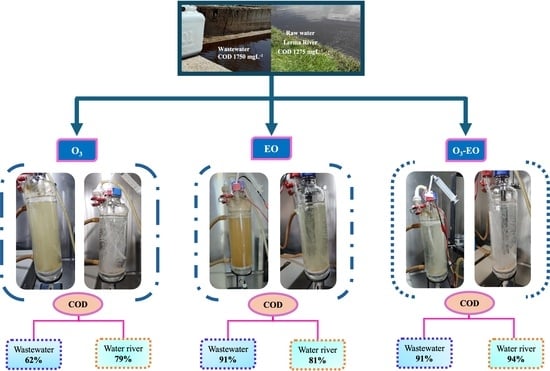
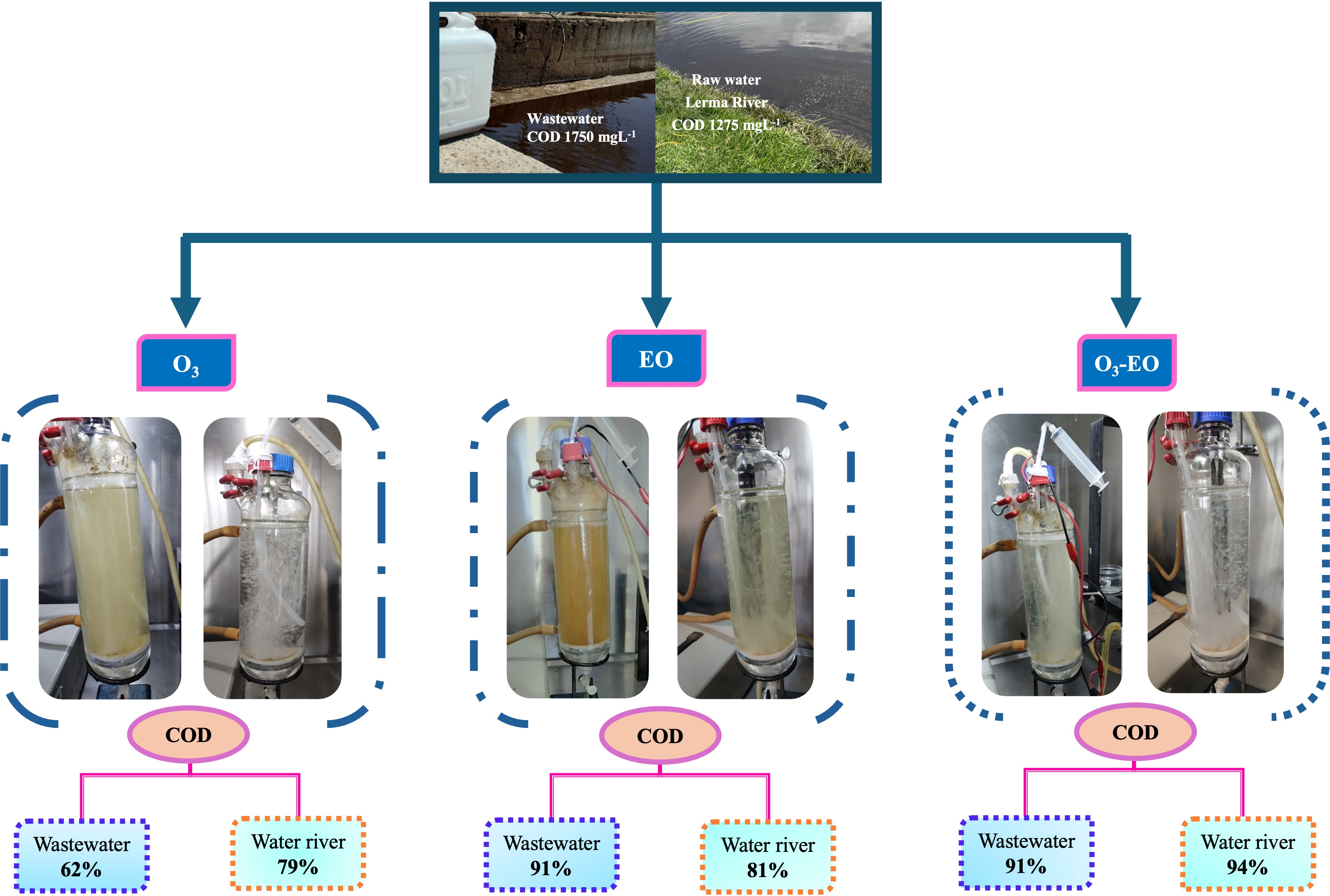
After ozonation alone, the treated water exhibited an orange coloration with visibly reduced intensity, indicating partial oxidation and incomplete destruction of chromophoric species. In contrast, electrochemical oxidation produced a light-yellow effluent, suggesting more advanced degradation of chromophore-containing compounds. Notably, the combined ozone–electrooxidation (O3–EO) process yielded a colorless and transparent effluent, visually confirming the extensive removal of turbidity and dissolved organic pollutants. These visual changes are consistent with the progressive oxidation sequence from chromophore disruption to aromatic ring cleavage and partial mineralization.
Overall, these visual observations are in excellent agreement with the quantitative results obtained from COD, TOC, turbidity, and true color measurements. Together, they provide strong evidence of the superior oxidative efficiency and catalytic synergy of the hybrid O3–EO system, which significantly enhances pollutant degradation pathways compared to the individual processes. The simultaneous operation of bulk-phase ozonation and electrode-surface electrochemical oxidation intensifies radical-mediated reactions, thereby accelerating both the fragmentation and partial mineralization of persistent organic contaminants.

3.2. Mechanism of Ozonation

In aqueous media, ozone can decompose to yield hydroxyl radicals (OH), which are highly reactive and non-selective oxidants (E° ≈ 2.8 V). The radical formation sequence may be represented by:
Key reactions:
Initiation:
O3 + OH → HO2 + O2
HO2O2 + H+
Propagation:
O3 + O2O3 + O2
O3+ H+ → HO3OH + O2
Overall radical formation:
O3 + OHOH + O2 + O2 + other radicals
Attack on pollutants:
OH + R–H → H2O + R → degraded fragments → CO2 + H2O
This radical cascade facilitates rapid mineralization of diverse organic contaminants including dyes, pharmaceuticals, and endocrine disruptors.

3.3. Mechanism of Electrooxidation

Boron-doped diamond (BDD) electrodes are among the most advanced materials employed in electrochemical advanced oxidation processes (EAOPs) due to their high overpotential for oxygen evolution, chemical inertness, and ability to generate powerful oxidants. The primary reaction occurring at the BDD anode surface is the electrochemical generation of hydroxyl radicals (OH), which act as highly reactive species for the non-selective oxidation of organic pollutants. These radicals are formed via water oxidation directly on the BDD surface:
H2O → OH + H+ + e (BDD surface)
Unlike other anodes, BDD allows OH to remain physiosorbed on the electrode surface (OH_ads), rather than being immediately consumed by oxygen evolution, thereby enhancing the oxidative degradation of pollutants. The subsequent reactions involve the oxidation of organics (R) via:
R + OH_ads → degradation products → CO2 + H2O
Additionally, BDD electrodes can promote the oxidation of inorganic species like chloride (Cl) to active chlorine (Cl2, HOCl), especially in chloride-containing waters, contributing to indirect oxidation mechanisms:
2Cl → Cl2 + 2e
Cl2 + H2O ⇌ HOCl + H+ + Cl
As shown in Figure 1, the electrooxidation treatment follows first-order kinetics with respect to COD removal, as described by Equation (11):
ln(CODo − CODt) = kt
where
CODo is the initial chemical oxygen demand of the river water,
CODt is the COD at a given treatment time t,
k is the apparent rate constant (min−1), and
t is the electrolysis time in minutes.
By fitting the experimental data to this model, a rate constant of k = 0.02009 min−1 was obtained, indicating efficient degradation kinetics under the selected operational conditions.
This behavior is fully consistent with the well-established oxidation mechanisms occurring at BDD electrodes, which involve both direct electron transfer at the electrode surface and indirect oxidation mediated by electrogenerated hydroxyl radicals (OH). The simultaneous contribution of these two pathways produces a strong synergistic effect that substantially enhances the oxidative degradation of recalcitrant organic compounds.
Owing to its wide potential window, exceptional chemical inertness, high oxygen evolution overpotential, and the efficient generation of weakly adsorbed OH species, BDD is widely regarded as a benchmark anode material for the mineralization of a broad spectrum of pollutants, including azo dyes, pharmaceuticals, and endocrine-disrupting compounds. Furthermore, its long operational lifetime, outstanding chemical stability, and low background current further reinforce its suitability for advanced wastewater treatment applications [20,21,22,23,24].

3.4. Mechanism of Combined O3–EO

In the combined ozone–electrooxidation (O3–EO) treatment, multiple advanced oxidation mechanisms are simultaneously activated. In particular, hydroxyl radicals (OH) and secondary oxidants—such as oxychlorine species including chlorine radicals (Cl), hypochlorite (ClO), and chlorate (ClO3)—play a significant role in the degradation of persistent organic pollutants (Figure 8). These highly reactive species markedly enhance the overall oxidation potential of the system and accelerate pollutant mineralization kinetics, especially in chloride-containing matrices [25]. The concurrent generation of these radical and non-radical oxidants explains the superior performance of the hybrid O3–EO process compared to the individual ozonation and electrochemical oxidation treatments.
Equations (12)–(14) illustrate key reactions involving the generation of oxychlorine species in aqueous media under the influence of ozone and electrochemical activation (Figure 8):
C l + C l C l 2 k = 8 × 10 9   M 1 · s 1
H O + C l C l + H O k = ( 3.0 4.3 ) × 10 9   M 1 · s 1
C l + C l C l 2 ( g ) k = ( 2.1 8 ) × 10 9   M 1 · s 1
The combined ozone–electrooxidation (O3–EO) treatment exhibited the highest efficiency among all evaluated processes. Under optimal conditions, COD and turbidity reductions of 94% and 98%, respectively, were achieved within 120 min of treatment. Similarly, for the 60 min treatment, COD and turbidity removals of 94% and 95%, respectively, were obtained. The degradation kinetics of COD followed a pseudo-first-order reaction model, as described by Equation (11). The calculated apparent rate constants for the combined process were 0.0233 min−1 for wastewater treatment plant effluent and 0.047 min−1 for river water, indicating a significantly faster degradation rate compared to ozonation or electrooxidation applied individually in both water matrices. This enhanced performance is attributed to the synergistic interaction between electrochemically generated oxidants (e.g., hydroxyl radicals and oxychlorine species) and ozone-derived reactive radicals, which together intensify the oxidative environment and promote accelerated mineralization of organic matter.
When polluted water is subjected to the combined O3–EO treatment, a pronounced and time-dependent reduction in turbidity is observed, clearly demonstrating a strong synergistic effect between both processes (Figure 3 and Figure 7). During the initial stages, ozone preferentially attacks chromophoric groups—particularly those associated with dyes and aromatic organic matter—by cleaving double bonds and aromatic rings. Simultaneously, electrooxidation at the anode surface promotes the continuous generation of hydroxyl radicals and auxiliary oxidants, which further degrade organic molecules and destabilize colloidal particles responsible for turbidity. As the treatment progresses, turbidity decreases steadily. In wastewater treatment plant effluent, after 60 min of treatment, color removal efficiencies exceed 90–95%, while turbidity decreases by more than 80%, and after 120 min, color removal reaches 98–99% and turbidity removal reaches 98%. This dual oxidation mechanism—bulk-phase ozone oxidation coupled with surface-mediated electrochemical degradation—ensures the transformation of complex organic pollutants into simpler and more biodegradable intermediates, thereby significantly improving water clarity and overall quality [25,26,27,28,29]. The synergistic interaction between ozonation and electrochemical oxidation in the combined process was further enhanced by the alkaline pH conditions of the treated samples. The initial pH values were 8.63 for industrial wastewater and 7.64 for Lerma River water. Under non-acidic conditions, the reactivity of ozone is markedly increased, favoring the fragmentation of organic matter and the generation of hydroxyl radicals (OH) through reactions with hydroxide ions. In addition, alkaline conditions promote the rapid decomposition of dissolved ozone, further intensifying radical-mediated oxidation pathways. In advanced oxidation processes, pretreatments are frequently applied to increase alkalinity in order to promote the formation of hydroxylated surface layers on electrodes, which enhance current efficiency and accelerate contaminant degradation. This mechanistic framework strongly supports the superior performance observed for the combined O3–EO system in the present study [30,31,32].

3.5. Phytotoxicity Test

The results described above explain the observed differences in seed germination among the evaluated water samples. Raw water from the River Lerma exhibited a germination percentage of 53%, which can be attributed to its high content of refractory and toxic contaminants that inhibit seed development. In contrast, water treated by advanced oxidation processes showed a markedly higher germination percentage (80%), as the treatment effectively degraded organic matter, increased the bioavailability of nutrients, and reduced overall toxicity.
The decrease in TOC, COD and color of the Lerma River water after treatment with the O3–EO system suggests the oxidation of water contaminants; however, phytotoxicity tests show the presence of phytotoxic compounds, so it is inferred that the mineralization of the contaminants did not take place and therefore that intermediate products are present.
Several authors have documented higher toxicity in water treated by Advanced Oxidation Processes (ozonation and electro-oxidation in combination with other variants) compared to the original samples [19,33,34,35], which contained various contaminants such as antibiotics, metals and pesticides, among others. As mentioned in other sections, the water of the Lerma River contains a complex combination of contaminants, which would explain the formation of more toxic intermediate compounds during treatment with the O3–EO system.

3.6. Analysis of Operational Cost

The operational costs obtained in this study (5.3–11.1 USD m−3) are higher than those typically reported for full-scale or optimized systems but remain consistent with values observed in laboratory-scale advanced oxidation processes. For example, electrochemical oxidation using boron-doped diamond (BDD) electrodes has been reported to require energy consumption in the range of 20–80 kWh m−3, depending on current density and matrix complexity, corresponding to operational costs between 2 and 6 USD m−3 [36,37]. Similarly, ozonation processes have been reported with energy demands ranging from 10 to 100 kWh m−3, particularly in complex wastewaters, resulting in costs of approximately 1–8 USD m−3 [38,39]. Combined processes such as O3–EO often exhibit higher energy consumption due to the simultaneous operation of multiple systems, although they can significantly enhance pollutant degradation efficiency [23]. The relatively higher costs observed in the present study can be attributed to laboratory-scale conditions, lack of process optimization, and the inherently high energy demand of BDD electrodes and ozone generation systems. It is well established that scale-up and process optimization can significantly reduce operational costs through improved mass transfer, reduced energy losses, and optimized reactor design [37,38,39]. Therefore, the values reported here should be interpreted as preliminary estimates, and further optimization studies are required to evaluate their feasibility under real operating conditions.

4. Materials and Methods

4.1. Sample Collection

During the dry season, two composite samples of contaminated water were collected in accordance with the Mexican standard NMX-AA-003-1980 (Wastewater—Sampling) [40]. The first sample corresponded to industrial wastewater collected at the inlet of a wastewater treatment plant located near the Mexico City–Toluca highway (19.186386° N, 99.522069° W). The second sample was collected from the Lerma River at a point located downstream of the same treatment plant, in order to assess the impact of treated effluent on river water quality.
All samples were preserved under refrigeration immediately after collection and transported to the laboratory for physicochemical characterization and subsequent treatment. Each sample was independently subjected to three treatment configurations: ozonation (O3), electrochemical oxidation (EO), and the combined ozonation–electrooxidation process (O3–EO).

4.2. Water Quality Analysis

The quality of both raw and treated water samples was evaluated through the determination of pH, electrical conductivity, color, turbidity, chemical oxygen demand (COD), and total organic carbon (TOC).

4.2.1. pH Measurement

The pH of the water samples was measured using a glass electrode coupled to a Radiometer Analytical PHM210 Standard pH Meter (MeterLab, LabWrench, Midland, ON, Canada), following the Standard Methods for the Examination of Water and Wastewater APHA [41] and the Mexican regulatory standard NMX-AA-008-SCFI-2016 [42].

4.2.2. Electrical Conductivity

Electrical conductivity was determined by immersing a conductivity-specific glass electrode (CDC-866T, Radiometer Analytical, MeterLab, LabWrench, Midland, ON, Canada) directly into the water sample, following standardized instrumental procedures.

4.2.3. Turbidity

Turbidity was measured using a HACH DR 4000U spectrophotometer, in accordance with the procedures outlined in the Mexican standard NMX-AA-038-SCFI-2001 [43]. All measurements were performed in triplicate, and average values are reported to ensure statistical reliability.

4.2.4. Color

Apparent color was quantified using spectral absorption coefficients (SACs) measured at three characteristic wavelengths (436, 525, and 620 nm), following the procedures established in the Mexican standard NMX-AA-017-SCFI-2021 [44]. Analyses were conducted using a PerkinElmer Lambda UV–Vis spectrophotometer (Waltham, MA, USA), equipped with a 1 mm quartz cuvette, to ensure high-resolution absorbance measurements and minimize optical path length artifacts.

4.2.5. Chemical Oxygen Demand (COD)

COD was determined using HACH standard digestion vials, in accordance with the guideline NMX-AA-030/2-SCFI-2011 [45]. For each analysis, 2 mL of sample were introduced into the digestion vial and subjected to thermal digestion at 150 °C for 2 h. After cooling, COD values were measured at 620 nm using a HACH DR 4000U spectrophotometer (HACH, Melbourne, Australia). All analyses were performed in triplicate to ensure reproducibility.

4.2.6. Total Organic Carbon (TOC)

TOC was determined using a Shimadzu TOC-5050 analyzer (Shimadzu, Kyoto, Japan), operating under catalytic combustion at 680 °C followed by non-dispersive infrared (NDIR) detection. This method allows for the quantification of both dissolved and particulate organic carbon and complies with international standards for high-sensitivity TOC determination in environmental samples.

4.3. Ozonation

Due to the substantial differences observed in the initial physicochemical parameters of the industrial wastewater and the Lerma River water (Table 2 and Table 3), ozonation treatment times of 120 min and 60 min were selected for the industrial and river water samples, respectively, in order to account for their differing contaminant loads.
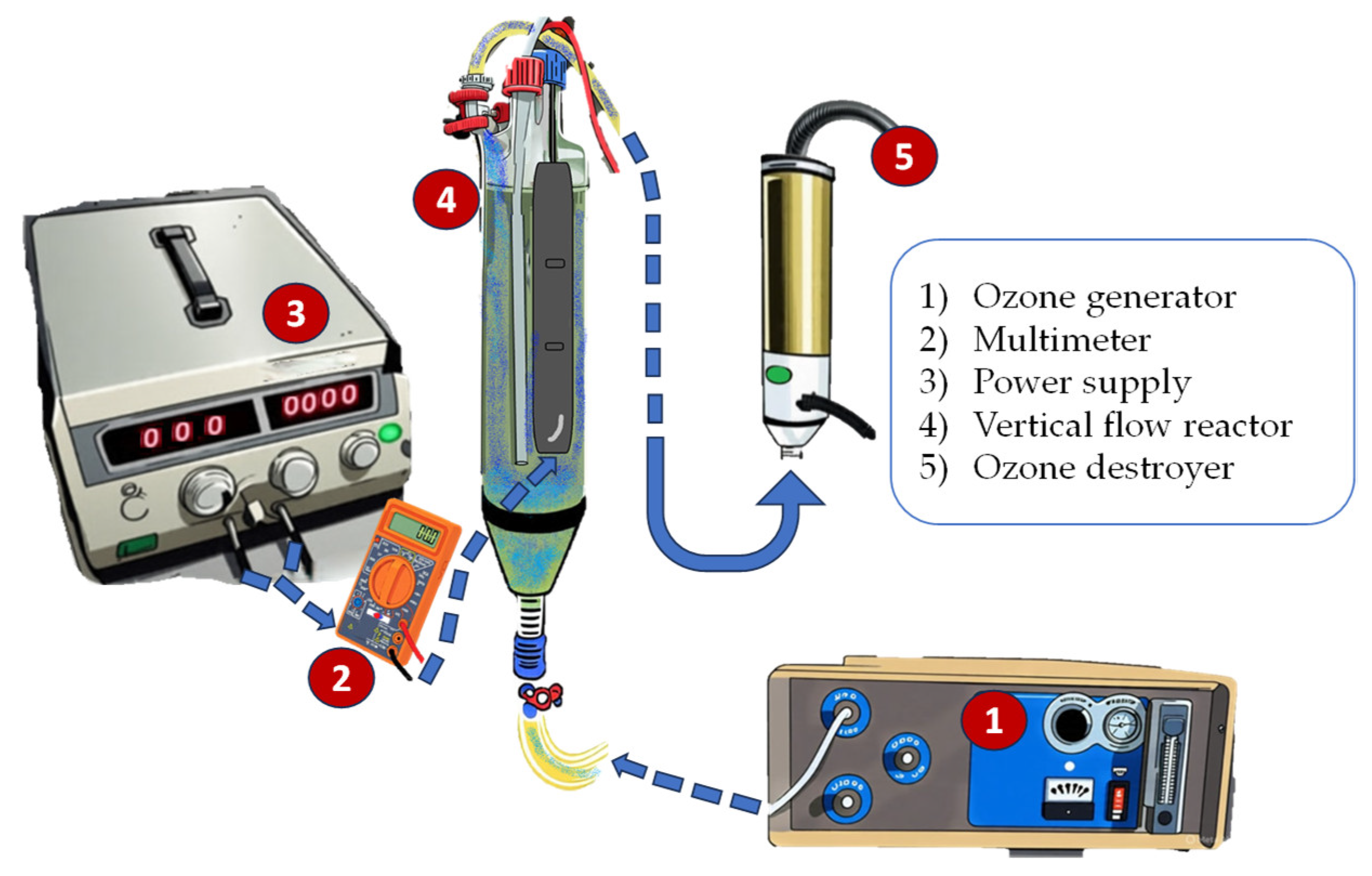
All ozonation experiments were carried out in an ascending-flow glass reactor, as schematically illustrated in Figure 9.
All experiments were conducted using a working volume of 1 L and a constant ozone gas flow rate of 30 mL·min−1. Based on the initial contaminant load, the treatment time was set to 120 min for industrial wastewater and 60 min for river water. These operational conditions were consistently applied to ensure reliable performance comparison.
All ozonation experiments were carried out in an ascending-flow glass reactor, as depicted in Figure 9. Each experiment was performed in triplicate, and mean values are reported in the corresponding figures.
Ozone was generated using a Pacific Ozone Technology generator (Model LAB212, Pacific Ozone Technology, Seattle, WA, USA). Residual ozone exiting the reactor was directed to an ozone destruction unit (Model D41202, Pacific Ozone Technology) to ensure safe and environmentally compliant operation.
The ozonation experiments were conducted using only ozone gas flow, without the application of electric current.

4.4. Electrooxidation

Electrochemical oxidation was applied for 120 min to the industrial wastewater and for 60 min to the Lerma River water, based on differences in their initial contaminant concentrations.
The electrochemical experiments were conducted using air flow only, avoiding the presence of ozone. Boron-doped diamond (BDD) electrodes (Condias GmbH, Itzehoe, Germany) with dimensions of 22 × 2 × 0.3 cm were employed. A regulated power supply delivered a constant current of 3 A for wastewater and 0.5 A for river water, selected according to the differences in their initial physicochemical parameters (Table 2 and Table 3).
The applied current density was 33.14 A·m−2 for industrial wastewater and 5.52 A·m−2 for river water, in agreement with their respective initial electrical conductivities. Due to the sufficiently high inherent conductivity of both matrices, the addition of supporting electrolytes was not required, allowing the electrochemical treatments to be performed under electrolyte-free conditions.

4.5. Combinated Treatment

Under identical operational conditions of working volume, treatment time, ozone flow rate, and applied current, a combined ozonation–electrochemical oxidation (O3–EO) process was implemented for each water matrix. Both treatments were applied simultaneously. This configuration allowed for a direct and unbiased comparison of the individual processes and their synergistic interaction, enabling an accurate evaluation of their relative efficiencies in contaminant removal.

4.6. Phytotoxicity Test

Phytotoxicity was evaluated using the supernatant obtained from raw water from the Lerma River and O3–EO treated water. A 5 mL aliquot of water was centrifuged for 15 min at 12,000 rpm and 4 °C (Eppendorf 5810R, Eppendorf, Sydney, Australia). Subsequently, 4 mL of the supernatant was transferred to a sterile 50 mL conical tube containing a cotton support. Six lettuce seeds (Lactuca sativa L.) were placed in each tube. Sterile distilled water was used as the control.
All tubes were incubated at 25 °C in the dark for seven days. Seed germination was considered successful when a root protrusion of at least 2 mm was observed. The number of germinated seeds and root length were recorded for both samples and controls. The relative germination percentage (GR), relative radicle growth (RRG), and germination index (GI) were calculated following the methodology described by Tsytlishvili [34].

4.7. Operational Cost

The operational cost of each treatment was estimated based on the electrical energy consumption of the system components, including the electrochemical cell, ozone generator, and air compressor. The electricity cost was assumed to be 1.3 MXN kWh−1 [46], corresponding to approximately 0.075 USD kWh−1.
The energy consumption of the electrochemical process was calculated using:
P o w e r   c o s t   K W h L 1 = E c e l l I t 1000   V s  
where Ecell = voltage (V), I = applied current (A), t = reaction time (h), and Vs = the sample volume (L) [47].
The total costs for each treatment were calculated using the following equations:
O3
T o t a l   c o s t = A i r   c o m p r e s s o r + O z o n e   g e n e r a t o r V o l u m e   o f   s a m p l e   ( L )  
EO
T o t a l   c o s t = P o w e r   c o s t + A i r   c o m p r e s s o r V o l u m e   o f   s a m p l e   ( L )  
O3–EO
T o t a l   c o s t = P o w e r   c o s t + A i r   c o m p r e s s o r + O z o n e   g e n e r a t o r V o l u m e   o f   s a m p l e   ( L )  
The total energy consumption for each treatment was obtained by summing the contributions of each component and subsequently converted to kWh m−3. The operational cost (USD m−3) was then calculated by multiplying the total energy consumption by the electricity price.
The estimated operational costs for industrial wastewater ranged from 5.3 USD m−3 for electrochemical oxidation (EO) to 11.1 USD m−3 for the combined O3–EO process. For river water, slightly lower costs were observed in EO-based treatments due to reduced current requirements.
It should be noted that these values correspond to laboratory-scale conditions and include only energy consumption.

5. Conclusions

The applied treatments induced significant modifications in the fundamental quality parameters of contaminated water. When evaluated individually, both ozonation and electrochemical oxidation demonstrated an overall capacity to remove key pollutants from wastewater, including COD, TOC, color, and turbidity, leading to a marked reduction in true color. This removal efficiency was substantially enhanced when both processes were combined into a single treatment, resulting in more effective elimination of contaminants. The coupled system promotes increased generation of hydroxyl radicals (OH), which efficiently degrade refractory organic molecules—commonly associated with toxic effects—thereby improving overall water quality. In industrial wastewater, this combined treatment achieved reductions exceeding 80% for TOC, over 90% for COD, and up to 98% for turbidity. In river water, which exhibits a different composition and lower contaminant concentrations, the combined process led to TOC, COD, and turbidity reductions of 41%, 94%, and 95%, respectively.
Given that the Lerma River is one of the most important and simultaneously one of the most heavily polluted rivers in Mexico, the successful scaling and in situ implementation of this technology at critical discharge points—such as industrial outfalls and wastewater treatment plant effluents—could substantially improve environmental and public health conditions. Moreover, this strategy could be replicated in other impacted water bodies and is proposed as a technologically sound and environmentally relevant sanitation measure for industries discharging effluents into surface waters. However, this is a future perspective, since this experiment was carried out at a laboratory scale and, to apply it, a specific design would have to be developed for each site in terms of equipment and the implementation of sustainable technologies to reduce the costs of prolonged operation.

Supplementary Materials

The following supporting information can be downloaded at: https://www.mdpi.com/article/10.3390/catal16050486/s1, Table S1: Results obtained for COD in wastewater treated with ozonation for 120 min; Table S2: Results obtained for COD in wastewater treated with electro-oxidation 120 min; Table S3: Results obtained for COD in wastewater treated with a combined 120 min; Table S4: Results obtained for turbidity in wastewater treated with ozonation 120 min; Table S5: Results obtained for turbidity in wastewater treated with electro-oxidation 120 min; Table S6: Results obtained for turbidity in wastewater treated with combined 120 min; Table S7: Results obtained for COD in water from the Lerma River treated with ozonation 60 min; Table S8: Results obtained for COD in water from the Lerma River treated with electro-oxidation 60 min; Table S9: Results obtained for COD in water from the Lerma River treated with combined 60 min; Table S10: Results obtained for turbidity in water from the Lerma River treated with ozonation 60 min; Table S11: Results obtained for turbidity in water from the Lerma River treated with electrooxidation 60 min; Table S12: Results obtained for turbidity in water from the Lerma River treated with combined 60 min; Table S13: Porcentaje de remoción de color y TOC en agua residual proveniente de una planta tratadora después de aplicar diferentes tratamientos; Table S14: Porcentaje de remoción de color y TOC en agua residual proveniente de una planta tratadora después de aplicar diferentes tratamientos.

Author Contributions

Conceptualization, C.E.B.-D., G.R.-M. and L.T.-L. Methodology, A.d.l.C.-H., M.E.P.-P., G.R.-M. and L.T.-L. Investigation, A.d.l.C.-H., C.P.D.R.G., L.T.-L. and G.R.-M. Writing—review and editing, A.d.l.C.-H., C.E.B.-D., M.E.P.-P., C.P.D.R.G., L.T.-L. and G.R.-M. All authors have read and agreed to the published version of the manuscript.

Funding

UAEMéx (Project No. 7158/2024ECON) and IPN (Project SIP-CA-007-2024).

Data Availability Statement

The original contributions presented in this study are included in the article/Supplementary Materials. Further inquiries can be directed to the corresponding authors.

Acknowledgments

The authors gratefully acknowledge the support provided by the Joint Center for Research in Sustainable Chemistry (Centro Conjunto de Investigación en Química Sustentable, UAEM–UNAM) during the development of this study. Ariana de la Cruz Hernández thanks the postgraduate scholarship awarded by CONAHCYT (1075425) and to TICS L. I. A. María Citlalit Martínez Soto for the support related to ICTs.

Conflicts of Interest

The authors declare no conflicts of interest.

Abbreviations

The following abbreviations are used in this manuscript:
O3Ozonation
EOElectrooxidation
O3–EOCombinated treatment
CODChemical Oxygen Demand
TOCTotal Organic Compounds

References

  1. Ríos, L. Supervisan Plantas de Tratamiento de Agua de la Cuenca del Alto Lerma. Autoridades del Gobierno Federal y del Estado de México Recorren las Tres Plantas Más Importantes de Este Afluente: Reciclagua, Toluca Oriente y Toluca Norte. El Heraldo de México. 2024. Available online: http://edomexinforma.com.mx/supervisan-gobiernos-de-mexico-y-edomex-plantas-de-tratamiento-de-agua-de-la-cuenca-del-alto-lerma/ (accessed on 1 October 2025).
  2. Comisión Nacional del Agua. Se llevó a Cabo el Primer Recorrido de Trabajo para la Restauración y Saneamiento del río Lerma. Se Plantea la Reingeniería de las Plantas de Tratamiento de Aguas Residuales para Incrementar su Eficiencia. 2024. Available online: https://www.gob.mx/conagua/prensa/se-llevo-a-cabo-el-primer-recorrido-de-trabajo-para-la-restauracion-y-saneamiento-del-rio-lerma?idiom=es (accessed on 1 October 2025).
  3. Gobierno del Estado de México. Instalaciones y Equipos Reciclagua. 2025. Available online: https://reciclagua.edomex.gob.mx/instalaciones_y_equipos (accessed on 1 October 2025).
  4. Mathon, B.; Coquery, M.; Liu, Z.; Penru, Y.; Guillon, A.; Esperanza, M.; Miège, C.; Choubert, M. Ozonation of 47 organic micropollutants in secondary treated municipal effluents: Direct and indirect kinetic reaction rates and modelling. Chemosphere 2021, 262, 127969. [Google Scholar] [CrossRef]
  5. Mecha, A.C.; Chollom, M.N. Photocatalytic ozonation of wastewater: A review. Environ. Chem. Lett. 2020, 18, 1491–1507. [Google Scholar] [CrossRef]
  6. Dai, M.; Niu, Q.; Wu, S.; Lin, Y.; Biswas, J.K.; Yang, C. Hydroxyl radicals in ozone-based advanced oxidation of organic contaminants: A review. Environ. Chem. Lett. 2024, 22, 3059–3106. [Google Scholar] [CrossRef]
  7. Liu, Y.; Wang, S.; Shi, L.; Lu, W.; Li, P. Enhanced degradation of atrazine by microbubble ozonation. Environ. Sci. Water Res. Technol. 2020, 6, 1681–1687. [Google Scholar] [CrossRef]
  8. Dang, T.; Do, V.M.; Trinh, V.T. Nano-catalysts in ozone-based advanced oxidation processes for wastewater treatment. Curr. Pollut. Rep. 2020, 6, 217–229. [Google Scholar] [CrossRef]
  9. Brosler, P.; Girão, A.V.; Silva, R.F.; Tedim, J.; Oliveira, F.J. Electrochemical advanced oxidation processes using diamond technology: A critical review. Environments 2023, 10, 15. [Google Scholar] [CrossRef]
  10. Tang, Y.; He, D.; Guo, Y.; Qu, W.; Shang, J.; Zhou, L.; Pan, R.; Dong, W. Electrochemical oxidative degradation of X-6G dye by boron-doped diamond anodes: Effect of operating parameters. Chemosphere 2020, 258, 127368. [Google Scholar] [CrossRef] [PubMed]
  11. Cisneros-León, D.G.; Espinoza-Montero, P.J.; Bolaños-Méndez, D.; Álvarez-Paguay, J.; Fernández, L.; Saavedra-Alulema, P.F.; López, K.; Astorga, D.; Piñeiros, J.L. Electrochemical degradation of surfactants in domestic wastewater using a DiaClean® cell equipped with a boron-doped diamond electrode. Front. Chem. 2023, 11, 900670. [Google Scholar] [CrossRef]
  12. McBeath, S.T.; Wilkinson, D.P.; Graham, N.J.D. Advanced electrochemical oxidation for the simultaneous removal of manganese and generation of permanganate oxidant. Environ. Sci. Water Res. Technol. 2020, 6, 2405–2415. [Google Scholar] [CrossRef]
  13. Suzuki, N.; Okazaki, A.; Kuriyama, H.; Serizawa, I.; Hirami, Y.; Hara, A.; Hirano, Y.; Nakabayashi, Y.; Roy, N.; Terashima, C.; et al. Synergetic effect in water treatment with mesoporous TiO2/BDD hybrid electrode. RSC Adv. 2020, 10, 1793–1798. [Google Scholar] [CrossRef]
  14. Audino, C.; Arboleda, J.; Petrović, M.; Cudinach, R.G.; Pérez, S.S. Pharmaceuticals removal by ozone and electro-oxidation in combination with biological treatment. Water 2023, 15, 3180. [Google Scholar] [CrossRef]
  15. Shokri, A.; Sanavi Fard, M. Employing electro-peroxone process for industrial wastewater treatment: A critical review. Chem. Pap. 2022, 76, 5341–5367. [Google Scholar] [CrossRef]
  16. Hutagalung, S.S.; Rafryanto, A.F.; Sun, W.; Juliasih, N.; Aditia, S.; Jiang, J.; Arramel; Dipojono, H.K.; Suhardi, S.H.; Rochman, N.T.; et al. Combination of ozone-based advanced oxidation process and nanobubbles generation toward textile wastewater recovery. Front. Environ. Sci. 2023, 11, 1154739. [Google Scholar] [CrossRef]
  17. van Leeuwen, J.H.; Barnard, J.L.; Koziel, J.A.; Ellis, T.G. Reflection on ozonation within a wastewater biotreatment process for synthetics degradation. Front. Environ. Chem. 2025, 6, 1534405. [Google Scholar] [CrossRef]
  18. Mahmoodi, M.; Pishbin, E. Ozone-based advanced oxidation processes in water treatment: Recent advances, challenges, and perspective. Environ. Sci. Pollut. Res. 2025, 32, 3531–3570. [Google Scholar] [CrossRef] [PubMed]
  19. Wang, J.; Wang, S. Toxicity changes of wastewater during various advanced oxidation processes treatment: An overview. J. Clean. Prod. 2021, 315, 128202. [Google Scholar] [CrossRef]
  20. Amado-Piña, D.; Roa-Morales, G.; Molina-Mendieta, M.; Balderas-Hernández, P.; Romero, R.; Barrera-Díaz, C.E.; Natividad, R. E-peroxone process of a chlorinated compound: Oxidant species, degradation pathway and phytotoxicity. J. Environ. Chem. Eng. 2022, 10, 108148. [Google Scholar] [CrossRef]
  21. Martínez-Huitle, C.A.; Panizza, M. Electrochemical oxidation of organic pollutants for wastewater treatment. Curr. Opin. Electrochem. 2018, 11, 62–71. [Google Scholar] [CrossRef]
  22. Ganiyu, S.O.; Martínez-Huitle, C.; Oturan, M.A. Electrochemical advanced oxidation processes for wastewater treatment: Advances in formation and detection of reactive species and mechanisms. Curr. Opin. Electrochem. 2021, 27, 100678. [Google Scholar] [CrossRef]
  23. Moreira, F.C.; Boaventura, R.A.R.; Brillas, E.; Vilar, V.J.P. Electrochemical advanced oxidation processes: A review on their application to synthetic and real wastewaters. Appl. Catal. B Environ. 2017, 202, 217–261. [Google Scholar] [CrossRef]
  24. Audino, F.; Toro, S.J.M.; Del Valle, M.L.; Graells, M.; Pérez-Moya, M. Removal of Paracetamol Using Effective Advanced Oxidation Processes. Int. J. Environ. Res. Public Health 2019, 16, 505. [Google Scholar] [CrossRef]
  25. Bensalah, N.; Abdel-Wahab, A. Electrochemical treatment of synthetic and actual dyeing wastewaters using BDD anodes. Air Soil Water Res. 2010, 3, ASWR.S3639. [Google Scholar] [CrossRef]
  26. Zhang, H.; Li, S.; Zhang, C.; Ren, X.; Zhou, M. A critical review of ozone-based electrochemical advanced oxidation processes for water treatment: Fundamentals, stability evaluation, and application. Chemosphere 2024, 365, 143330. [Google Scholar] [CrossRef]
  27. Maharaja, P.; Athithyan, I.; Karthiyayini, C.; Kameswari, K.S.B. Evaluation of ozonation and electro-oxidation treatment for the removal of organics and salt recovery from RO reject from leather industries: Sustainable approach for the management of contaminated salt in CETPs. Appl. Catal. O Open 2025, 200, 207028. [Google Scholar] [CrossRef]
  28. Mousazadeh, M.; Khademi, N.; Kabdaşlı, İ.; Rezaei, S.A.; Hajalifard, Z.; Moosakhani, Z.; Hashim, K. Domestic greywater treatment using electrocoagulation–electrooxidation process: Optimization and experimental approaches. Sci. Rep. 2023, 13, 15852. [Google Scholar] [CrossRef]
  29. Das, A.K.; Chen, L. A review on electrochemical advanced oxidation treatment of dairy wastewater. Environments 2024, 11, 124. [Google Scholar] [CrossRef]
  30. Karwowska, B.; Sperczyńska, E. Coagulation enhanced with adsorption and ozonation processes in surface water treatment. Sustainability 2023, 15, 16956. [Google Scholar] [CrossRef]
  31. Calvo, C.P.; Lopez, K.V.V.; Valencia, R.N.A.; Cortés, K.P.; Campo, C.E. Reducción de la concentración de DQO y COT en aguas residuales de la industria farmacéutica empleando ozono catalizado por Fe2+: Estudio de caso a escala real. Rev. Mutis 2021, 11, 56–63. [Google Scholar] [CrossRef]
  32. Ribeiro, A.R.; Nunes, O.C.; Pereira, M.F.R.; Silva, A.M.T. An overview on the advanced oxidation processes applied for the treatment of water pollutants defined in the recently launched Directive 2013/39/EU. Environ. Int. 2015, 75, 33–51. [Google Scholar] [CrossRef] [PubMed]
  33. Babu, D.S.; Srivastava, V.; Nidheesh, P.V.; Kumar, M.S. Detoxification of water and wastewater by advanced oxidation processes. Sci. Total Environ. 2019, 696, 133961. [Google Scholar] [CrossRef]
  34. Phillips, R.B.; James, R.R.; Magnuson, M.L. Functional categories of microbial toxicity resulting from three advanced oxidation process treatments during management and disposal of contaminated water. Chemosphere 2020, 238, 124550. [Google Scholar] [CrossRef]
  35. Tsytlishvili, K. Performing acute phytotoxicity of widely used drugs on germination and root elongation of Lactuca sativa L. J. Ecol. Eng. 2025, 26, 170–178. [Google Scholar] [CrossRef]
  36. Martínez-Huitle, C.A.; Brillas, E. Decontamination of wastewaters containing synthetic organic dyes by electrochemical methods: A general review. Appl. Catal. B Environ. 2009, 87, 105–145. [Google Scholar] [CrossRef]
  37. Panizza, M.; Cerisola, G. Direct and mediated anodic oxidation of organic pollutants. Chem. Rev. 2009, 109, 6541–6569. [Google Scholar] [CrossRef] [PubMed]
  38. von Gunten, U. Ozonation of drinking water: Part I. Oxidation kinetics and product formation. Water Res. 2003, 37, 1443–1467. [Google Scholar] [CrossRef] [PubMed]
  39. Rice, R.G.; Netzer, A. Handbook of Ozone Technology and Applications; Ann Arbor Science: Ann Arbor, MI, USA, 1982; p. 378. [Google Scholar]
  40. Mexican Standard NMX-AA-003-1980; Wastewater—Sampling. Dirección General de Normas: Mexico City, Mexico, 1980. Available online: https://www.gob.mx/cms/uploads/attachment/file/166762/NMX-AA-003-1980.pdf (accessed on 1 April 2025).
  41. APHA. Standard Methods for the Examination of Water and Wastewater. 23rd APHA. 2017. Available online: https://yabesh.ir/wp-content/uploads/2018/02/Standard-Methods-23rd-Perv.pdf (accessed on 22 January 2024).
  42. Mexican Standard NMX-AA-008; Water Analysis—pH Measurement in Natural, Wastewater, and Treated Wastewater. Dirección General de Normas: Mexico City, Mexico, 2016. Available online: https://www.gob.mx/cms/uploads/attachment/file/166767/NMX-AA-008-SCFI-2016.pdf (accessed on 17 April 2024).
  43. Mexican Standard NMX-AA-0382001; Water Analysis—Turbidity Determination in Natural, Wastewater, and Treated Wastewater. Dirección General de Normas: Mexico City, Mexico, 2001. Available online: https://www.gob.mx/cms/uploads/attachment/file/166777/NMX-AA-038-SCFI-2001.pdf (accessed on 17 April 2024).
  44. Mexican Standard NMX-AA-017-SCFI; Water Analysis—True Color Measurement in Natural, Wastewater, Treated Wastewater, and Marine Waters—Using Spectral Absorption Coefficients. Dirección General de Normas: Mexico City, Mexico, 2021. Available online: https://biblioteca.semarnat.gob.mx/janium/Documentos/Ciga/agenda/DOFsr/nNMX-AA-017-SCFI-2021.pdf (accessed on 17 April 2024).
  45. Mexican Standard NMX-AA-030/2-SCFI; Water Analysis—Determination of Chemical Oxygen Demand in Natural, Wastewater, and Treated Wastewater. Dirección General de Normas: Mexico City, Mexico, 2011. Available online: https://www.gob.mx/cms/uploads/attachment/file/166775/NMX-AA-030-2-SCFI-2011.pdf (accessed on 17 April 2024).
  46. Federal Electricity Commission. 2026. Available online: https://www.cfe.gob.mx/Pages/default.aspx (accessed on 21 April 2026).
  47. Álvarez Hernández, V.; Roa-Morales, G.; Balderas-Hernández, P.; Olvera-Vargas, H. Treatment of real confectionery wastewater by electrocoagulation and electrochemical peroxidation: A comparative assessment. Electrochim. Acta 2026, 553, 148291. [Google Scholar] [CrossRef]
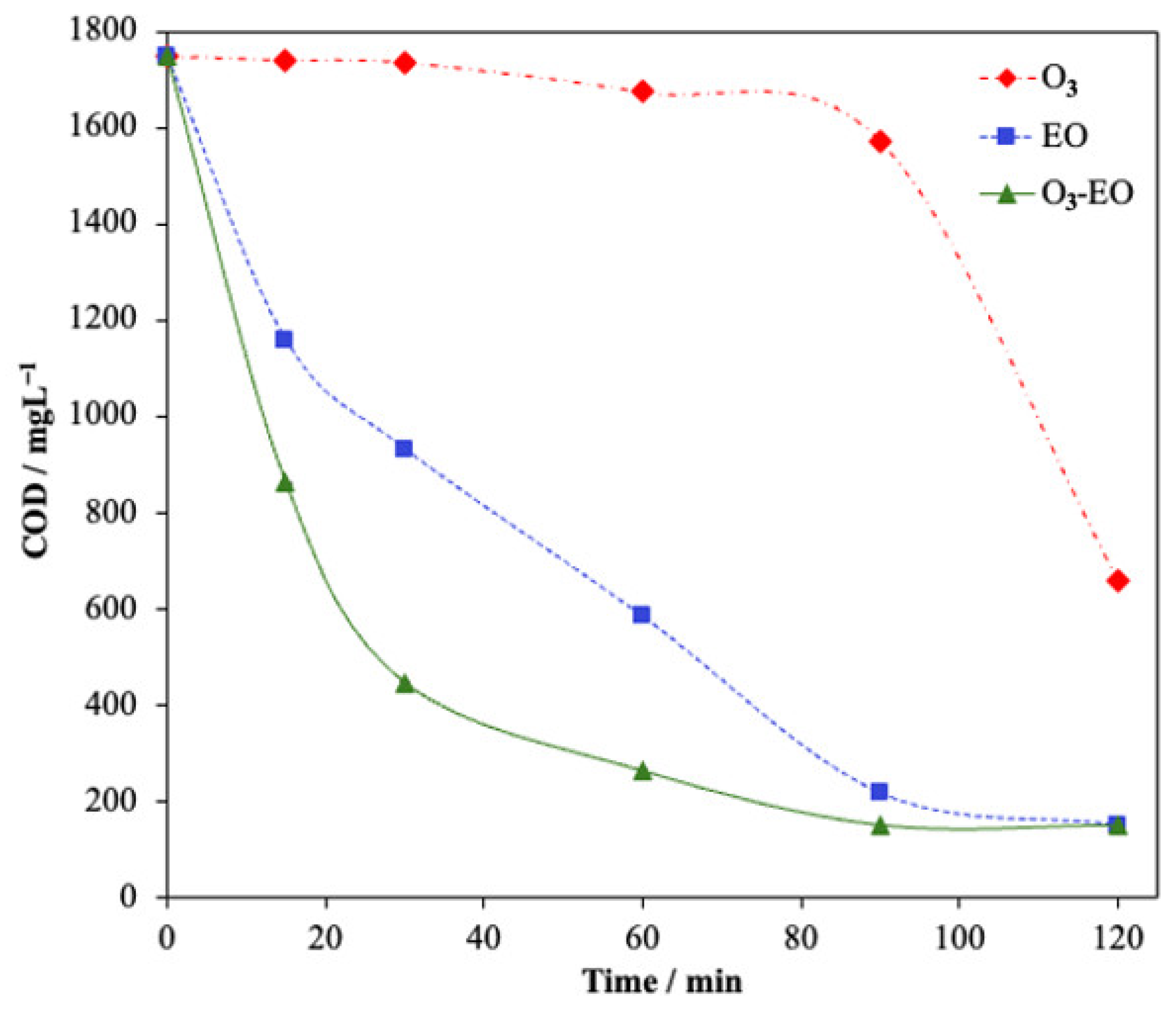
Figure 1. COD removal over treatment time for 120 min with (◊) O3, (■) EO and (▲) O3–EO.
Catalysts 16 00486 g001
Figure 2. Turbidity removal over treatment time for 120 min with (◊) O3, (■) EO and (▲) O3–EO.
Catalysts 16 00486 g002
Figure 3. Percentage of removal of TOC and true color with the different treatments to 120 min.
Catalysts 16 00486 g003
Figure 4. Industrial wastewater subjected to different treatment processes after a treatment time of 120 min.
Catalysts 16 00486 g004
Figure 5. COD removal over treatment time for 60 min with (◊) O3, (■) EO and (▲) O3–EO.
Catalysts 16 00486 g005
Figure 6. Turbidity removal over treatment time for 60 min with (◊) O3, (■) EO and (▲) O3–EO.
Catalysts 16 00486 g006
Figure 7. Percentage of removal of TOC and true color with the different treatments after 60 min.
Catalysts 16 00486 g007
Figure 8. Process of the reaction between ozone and the BDD surface in contact with contaminants.
Catalysts 16 00486 g008
Figure 9. Reactor used in the polluted water treatment.
Catalysts 16 00486 g009
Table 1. Relative germination percentage, relative radicle growth and the germination index considering distilled water as the control.
GR (%)RRG (%)GI (%)
Raw water from the Lerma River53 ± 12 b42 ± 6 a22 ± 6 a
Water treated by O3–EO80 ± 1 a51 ± 10 a41 ± 8 a
Control: Distilled water (100%). The different superscript letters indicate a significant difference between treatments according to a t-test (p ≤ 0.05).
Table 2. Initial parameters of wastewater.
pHConductivityTurbidityCODTOCColor 436 nm
pHmS/cmTUmg/Lm−1
8.639.265971750992.3428.42
Table 3. Initial parameters of water of the Lerma River.
pHConductivityTurbidityCODTOCColor 436 nm
pHmS/cmTUmg/Lm−1
7.640.77343.61275283.212.11
Disclaimer/Publisher’s Note: The statements, opinions and data contained in all publications are solely those of the individual author(s) and contributor(s) and not of MDPI and/or the editor(s). MDPI and/or the editor(s) disclaim responsibility for any injury to people or property resulting from any ideas, methods, instructions or products referred to in the content.