Article

Catalytic Pyrolysis of Açaí (Euterpe oleracea Mart.) Seeds: Circular Economy for Agro-Industrial Waste-to-Energy in the Amazon

by
Douglas Alberto Rocha de Castro
1,2,
Haroldo Jorge da Silva Ribeiro
1,
Lauro Henrique Hamoy Guerreiro
3,
Fernanda Paula da Costa Assunção
3,
Lucas Pinto Bernar
4,
Nilton Pereira da Silva
5,
Daniela Muniz D’Antona Guimarães
6,
Marta Chagas Monteiro
7,
Luiz Eduardo Pizarro Borges
8,
Kerstin Kuchta
9,
Nélio Teixeira Machado
1,3,4,* and
Sergio Duvoisin, Jr.
10
1
Graduate Program of Natural Resources Engineering of Amazon, Professional Campus—UFPA, Federal University of Pará, Rua Augusto Corrêa N° 1, Belém 66075-110, PA, Brazil
2
Department of Chemical Engineering, Federal University of Amazonas, Av. Gal. Rodrigo Octávio Jordão Ramos, 3000, North Sector, Coroado I, Manaus 69077-000, AM, Brazil
3
Graduate Program in Civil Engineering, Professional Campus—UFPA, Federal University of Pará, Rua Augusto Corrêa N° 1, Belém 66075-110, PA, Brazil
4
Faculty of Sanitary and Environmental Engineering, Professional Campus—UFPA, Federal University of Pará, Rua Augusto Corrêa N° 1, Belém 66075-900, PA, Brazil
5
Department of Mechanical Engineering, Federal University of Amazonas—UFAM, Av. General Rodrigo Octavio Jordão Ramos, 1200—Coroado I, Manaus 69067-005, AM, Brazil
6
Department of Civil Engineering, Federal University of Amazonas—UFAM, Av. General Rodrigo Octavio Jordão Ramos, 1200—Coroado I, Manaus 69067-005, AM, Brazil
7
Graduate Program of Pharmaceutical Sciences, Campus Profissional—UFPA, University of Pará, Rua Corrêa N° 1, Belém 66075-900, PA, Brazil
8
Laboratory of Catalyst Preparation and Catalytic Cracking, Chemical Engineering Section, Military Institute of Engineering (IME), Praça General Tibúrcio N° 80, Rio de Janeiro 22290-270, RJ, Brazil
9
Institut für Circular Resource Engineering and Management, Technische Universität Hamburg, Blohmstraße 15, 21079 Hamburg, Germany
10
Department of Chemistry, Coordination of Chemical Engineering, Amazonas State University (UEA), Avenida Darcy Vargas No. 1200, Manaus 69050-020, AM, Brazil
*
Author to whom correspondence should be addressed.
Catalysts 2026, 16(5), 485; https://doi.org/10.3390/catal16050485
Submission received: 23 March 2026 / Revised: 23 April 2026 / Accepted: 29 April 2026 / Published: 21 May 2026
(This article belongs to the Special Issue Advances in Heterogeneous Catalysis for Biomass Valorization)

Abstract

This study aims to systematically investigate the combined effect of chemical activation of açaí seeds (Euterpe oleracea Mart.), with an aqueous sodium hydroxide (NaOH) solution at 2 mol·L−1, and process temperature by pyrolysis of alkaline activated açaí seeds on the yield of reaction products (bio-oil, gas, H2O, and biochar), physicochemical properties (acid value, density, and kinematic viscosity) and chemical composition (hydrocarbons and oxygenates) of bio-oil. Catalytic pyrolysis was carried out in a 143 L reactor at temperatures of 350 °C, 400 °C, and 450 °C, 1.0 atmosphere, operating in batch mode. The NaOH activation played a crucial role in modifying the thermal degradation pathway of the biomass, promoting the formation of specific chemical structures and altering the product yields. NaOH acted as a catalyst, enhancing the deoxygenation of the biomass and stimulating the formation of hydrocarbons. As a result, the yields of bio-oil, water, biochar, and gas varied from 5.77 to 7.20% (by mass), 14.90 to 19.77% (by mass), 41 to 54% (by mass), and 25.33 to 32.03%, respectively, influenced by the increase in temperature. FT-IR analyses indicated the presence of characteristic chemical functions of hydrocarbons (alkanes, alkenes, and aromatics) and oxygenated compounds (phenols, cresols, ketones, esters, carboxylic acids, aldehydes, and furans), with an intensification of hydrocarbon signals at higher temperatures. GC-MS analysis identified hydrocarbons and oxygenated compounds as the main chemical classes in the bio-oil, showing a strong dependence on pyrolysis temperature. It was observed that hydrocarbon concentration in bio-oil increased from 49.7% to 57.88% (area) with increasing temperature, while the concentration of oxygenated compounds decreased from 13.88% to 6.69% (area), demonstrating that NaOH activation, combined with temperature elevation, favors the formation of hydrocarbons and the reduction of oxygenated compounds, thereby improving the quality of the produced bio-oil.

Graphical Abstract

1. Introduction

Açaí (Euterpe oleracea Mart.) is a native palm species naturally found in tropical regions of Central and South America [1], thriving in floodplains, swamps, and upland areas [2]. This palm produces dark-purple, berry-like fruits that grow in clusters [2]. Traditionally, fresh fruits are processed by maceration or extraction of the pulp and skin using warm water, resulting in a thick, purple-colored beverage or paste [3,4]. Over time, açaí has become one of the most significant export commodities from the Amazon River estuary, both to other regions of Brazil [5] and internationally [6], accounting for 93.77% of total fruit, juice, and pulp exports between 2010 and 2016 [6].
The state of Pará is the largest national producer of açaí (Euterpe oleracea Mart.), with an annual production of 1,485,113 tons of fruit in the 2023 harvest year [6]. Of this total, approximately 83% to 85% by weight corresponds to processing residues, primarily açaí seeds [7,8], resulting in an estimated 1,232,643 to 1,262,346 tons/year of waste material. The metropolitan region of Belém, capital of the state of Pará (Brazil), comprises approximately 4000 açaí-selling establishments [9], each processing, on average, between 4 and 10 boxes (14 kg per box) of fresh fruit daily, depending on the harvest season—August to January (crop season) and February to July (off-season) [10]. This results in the daily generation of approximately 190.4 tons of açaí seed residue during the off-season and 476.0 tons during the harvest season. Such volumes pose a significant solid waste management challenge for the metropolitan area of Belém and the surrounding municipalities.
The açaí (Euterpe oleracea Mart.) fruit is a small, dark purple, nearly spherical drupe, weighing between 2.6 and 3.0 g [11], with a diameter ranging from 10.0 to 20.0 mm [11]. It contains a large central seed, which accounts for approximately 85% of the fruit’s total volume (vol./vol.) [3]. A fibrous layer is present between the seed (mesocarp) and the pericarp [11]. The seed itself is oily and fibrous, characterized by a high lignocellulosic content. Anatomically, the fruit is composed of an embryo, endocarp, scar, pulp, pericarp with tegument, and mesocarp [12].
The centesimal composition of açaí (Euterpe oleracea Mart.) fruit reveals a variable range of components, including lipids (1.65–3.56% wt.), total fiber (29.69–62.75% wt.), hemicellulose (9.01–14.19% wt.), cellulose (39.83–40.29% wt.), lignin (4.00–8.93% wt.), ash (0.15–1.68% wt.), moisture (10.15–39.39% wt.), and protein (5.02–7.85% wt.). Additionally, the fruit contains approximately 0.83% (wt.) fixed carbon and 7.82% (wt.) volatile matter [12,13,14,15].
In a global context where modern industrial society seeks to mitigate climate change, reduce CO2 emissions, improve energy efficiency, and decrease dependence on fossil fuels, the adoption of renewable energy sources becomes imperative [16]. Within this framework, processes that reduce industrial and agro-industrial waste through reuse or recycling are essential, as they offer both environmental and energetic benefits to society [17]. Moreover, the recycling of such residues allows for the use of low-cost raw materials, thereby enhancing the economic feasibility of biofuel production [17].
Among the various renewable energy sources, biomass stands out as a promising alternative to conventional fossil fuels [18]. Its systematic use contributes to the mitigation of global warming when compared to fossil-based energy systems [19]. The carbon dioxide (CO2) absorbed by plants during growth is subsequently released during combustion or decomposition of the biomass [18,19]. However, by replanting these crops, the newly growing vegetation can reabsorb the CO2 emitted during processes such as carbonization (e.g., pyrolysis), thereby contributing to the closure of the carbon cycle, as noted by Kelli et al. [20].
A process that makes it possible the use of Açaí (Euterpe oleracea Mart.) seeds, a fiber residue, rich in lignin-cellulosic based material of low quality, for producing liquid bio-oils and gaseous fuels, and a solid phase adsorbent-like materials is pyrolysis, and the literature reports in recent years some studies on the pyrolysis of Açaí (Euterpe oleracea Mart.) seeds focusing on biofuels [15,21,22,23,24,25,26,27,28,29], including bio-oils physical-chemical properties [15,21,22,23,24,25,26,27,28], bio-oils chemical composition [15,21,22,23,25,26,27,28], distillation fractions physical-chemical properties [15,21,22], distillation fractions chemical composition [15,22], aqueous phase physical-chemical properties and chemical composition [25,26,27,28], as well as separation and/or purification processes to improve bio-oils quality [15,21,22].
Despite a few studies on the pyrolysis of Açaí (Euterpe oleracea Mart.) seeds focusing on biofuels using alkalis (KOH, NaOH) as catalysts [25,26,28], until the moment no study has been reported in the literature in real process systems, that is, in pilot scale, in order to investigated the influence of process temperature combined with chemical activation on the yields of pyrolysis products (bio-oil, gas, biochar, and aqueous phase), physicochemical properties and chemical composition of the produced bio-oils, as well as on the biochar properties. In this context, this study aims to investigate the influence of temperature combined with chemical activation (NaOH) on the yields of pyrolysis products, physicochemical properties and chemical composition of bio-oils, as well as on the morphological and mineralogical characteristics of biochar, at 350, 400, and 450 °C, 1.0 atmospheric, in a pilot-scale system. The aim was to evaluate the real yield of pyrolysis products and to characterize the physicochemical properties and chemical composition of the produced bio-oil.

2. Results and Discussions

2.1. Physical Characterization of Açaí Seeds in Natura (Euterpe oleracea Mart.)

Table 1 shows the results obtained for the physical characterization of açaí seeds in natura in terms of moisture content, volatile matter, ash content, fixed carbon, and higher heating value, after the drying process at 105 °C.
Based on the results presented in Table 1, a good agreement is observed between the values obtained in this study and those reported in the literature for the physical characterization of açaí seeds. The moisture content (12.45%) was close to that reported by [31], although higher than the values reported by [30,32], which may be attributed to differences in species, origin, or storage conditions of the biomass. The volatile matter content (85.98%) falls within the typical range for lignocellulosic biomass, indicating suitable behavior for thermochemical processes. The low ash content (0.42%) is considered favorable, since high inorganic contents may negatively affect pyrolysis and combustion processes. The fixed carbon content (13.60%) was lower than the values reported in the literature, which can be explained by the high volatile matter content and low ash content, as these parameters directly influence this value. The higher heating value (18.21 MJ/kg) was consistent with values reported for lignocellulosic biomass, indicating good energy potential. Overall, although the relatively high moisture content may represent an initial limitation for the pyrolysis process, the other parameters indicate that açaí seeds present favorable characteristics for thermochemical conversion, highlighting their potential for the production of biochar, bio-oil, and gases, as well as their viability as an alternative to fossil fuels.

2.2. Thermal Characterization of Açaí (Euterpe oleracea Mart.) Seeds in Natura and NaOH-Activated by Thermogravimetric Analysis (TG/DTG/DTA) and Differential Scanning Calorimetry (DSC)

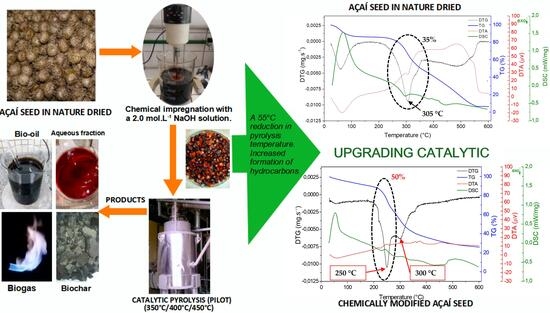
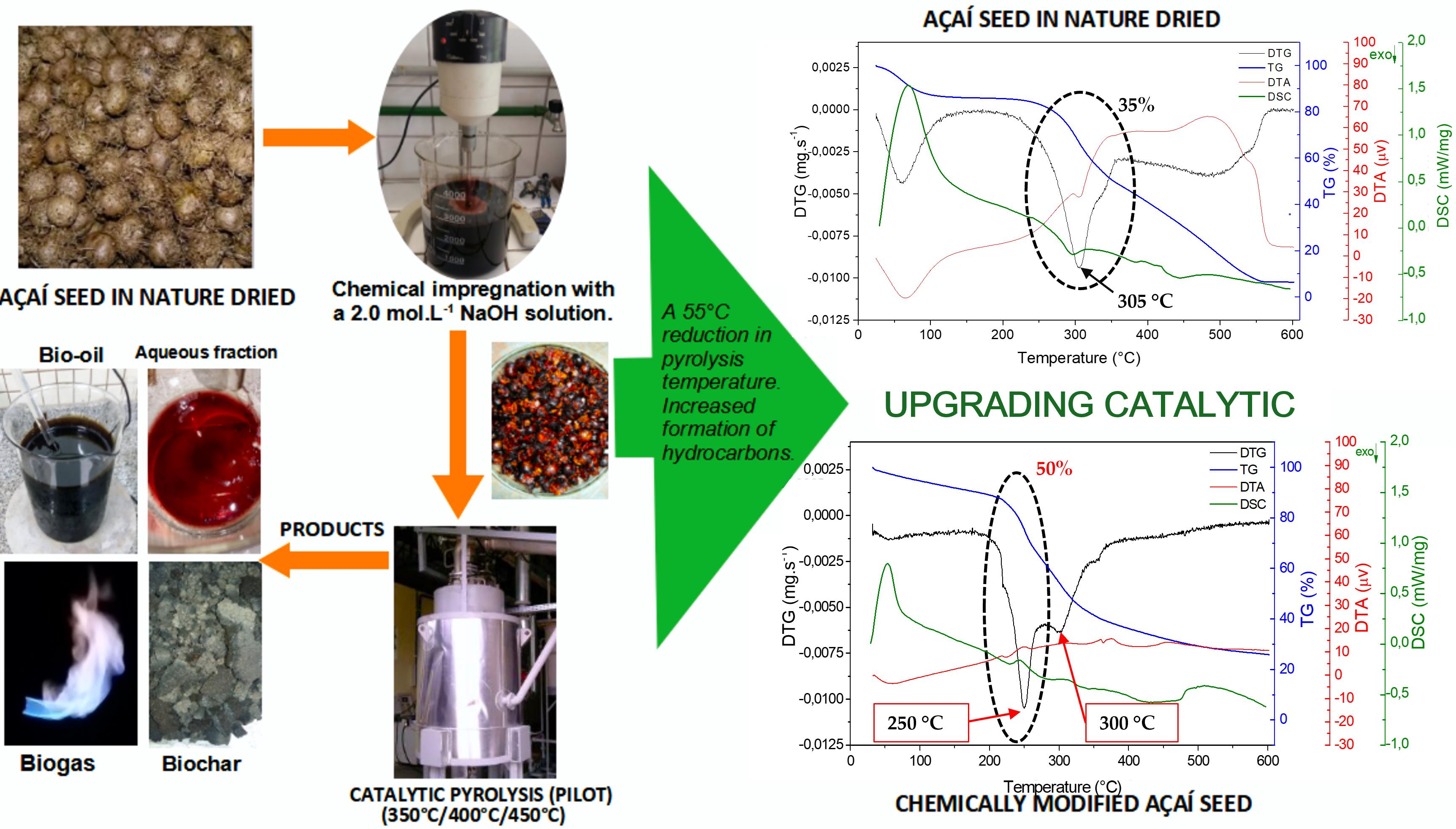
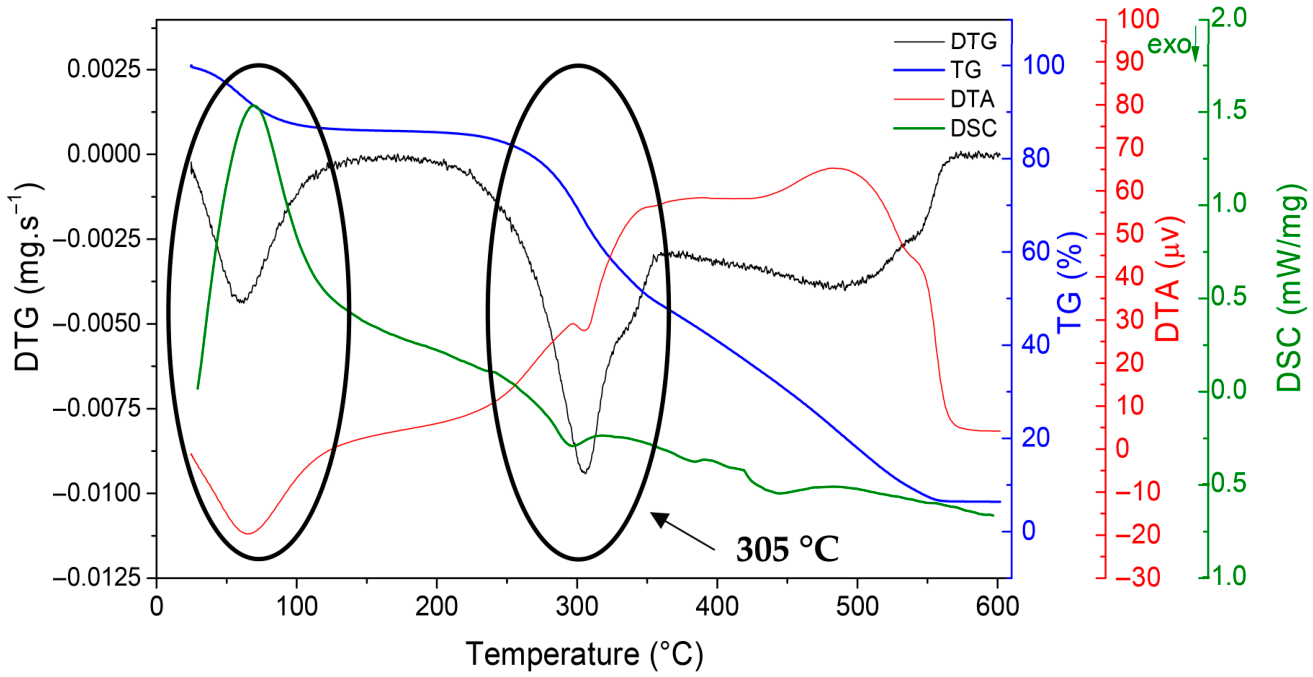
Thermal analyses of açaí seeds were carried out to evaluate the thermal degradation behavior of the material, from room temperature (25 °C) up to 600 °C, a value slightly higher than the maximum pyrolysis temperature investigated (450 °C). Based on the obtained results, it was possible to analyze the influence of temperature increase on the evolution of the pyrolysis process, allowing the identification and interpretation of the main thermal events involved. Figure 1 and Figure 2 present, respectively, the thermogravimetric analysis (TG), derivative thermogravimetric (DTG), differential thermal analysis (DTA), and differential scanning calorimetry (DSC) curves for the in natura seeds (SAIN) and NaOH-activated seeds (SANAOH).
The thermogravimetric analysis (TG) of in natura açaí seeds shows four main stages of thermal degradation. The first occurs between 25 and 110 °C, with a mass loss of approximately 14%, attributed to moisture removal. The second stage, between 200 and 315 °C, presents a loss of about 35%, associated with the decomposition of hemicellulose, the most reactive component of the biomass [33]. The third event, between 315 and 400 °C, corresponds to a loss of approximately 20%, related to cellulose degradation. Finally, above 400 °C, a continuous and slower mass loss is observed, attributed to lignin decomposition, in agreement with typical ranges reported in the literature [33].
The DTG curve indicates a single main degradation peak, with greater intensity between 215 and 350 °C and a maximum temperature around 305 °C, highlighting the range of the highest mass loss rate.
The DTA and DSC analyses show an endothermic event below 150 °C, associated with biomass dehydration, and a predominantly exothermic region between 150 and 500 °C, related to the degradation of organic matter [34]. Notably, between 240 and 305 °C, a more intense exothermic peak is observed, mainly attributed to the decomposition of hemicellulose and cellulose [35], with an energy of 12.98 J/g. In the range of 350 to 550 °C, an exothermic region without well-defined peaks is observed, associated with the gradual degradation of lignin [34]. Thermogravimetric Analysis (TG) and Derivative Thermogravimetry (DTG) of açaí seeds activated with a 2 mol·L−1 aqueous NaOH solution, described in Figure 2, revealed three main thermal events. The first event, occurring between 30 and 215 °C, corresponds to a continuous mass loss; up to 150 °C, there is an approximate 8% reduction, attributed to moisture evaporation and the release of volatile compounds. This behavior is consistent with Bufalino et al. [36], who reported losses of up to 12% around 120 °C for in natura açaí seeds, and is further supported by Sait et al. [37], who associate this initial range with the removal of free and physically adsorbed water.
The second thermal event was subdivided into two intervals, 215–280 °C and 280–370 °C, totaling approximately 50% mass loss and attributed to the thermal degradation of hemicellulose and cellulose. The peaks observed in the DTG curve, particularly the more intense ones around 250 °C and another near 300 °C, indicate simultaneous and secondary reactions, which align with the degradation ranges reported by Manara et al. [38], although their study presents single peaks for each component. The presence of two distinct peaks in the present work suggests structural alterations promoted by alkaline activation, possibly related to the cleavage of ester and ether linkages between lignin and carbohydrates, increasing the complexity of the thermal reactions.
The third event, observed between 370 and 600 °C, is associated with the degradation of lignin, the most recalcitrant fraction of the biomass. Unlike the behavior generally reported for açaí residues, where prominent peaks in this range are uncommon [38], the present study showed a more defined thermal event, indicating that the alkaline pretreatment may have modified the lignocellulosic structure and increased lignin susceptibility to thermal decomposition.
Complementary thermal analyses, Differential Thermal Analysis (DTA) and Differential Scanning Calorimetry (DSC) support these interpretations. An endothermic event is observed below 100 °C, consistent with moisture removal. Between 190 and 600 °C, alternating endothermic and exothermic events occur, reflecting simultaneous degradation reactions of the organic matter and the inorganic fraction derived from the impregnated NaOH. Notably, there is an exothermic event between 190 and 225 °C and a significant endothermic peak between 225 and 280 °C, with an associated energy of 18.91 J·g−1 calculated by integrating the DSC curve.
In Castro’s study [15], using in natura açaí seeds, typical thermal profiles of lignocellulosic biomasses are observed, with well-defined degradation temperatures for hemicellulose, cellulose, and lignin. When comparing these results with those of NaOH-impregnated seeds, a marked change in thermal kinetics is evident. The temperature associated with the highest mass-loss rate shifted from 305 °C to 250 °C, showing that the alkaline treatment reduced the thermal stability of the hemicellulosic fractions and anticipated the release of volatiles. This behavior suggests a catalytic effect, reflected in the reduction in characteristic temperatures normally observed in the pyrolysis of in natura lignocellulosic biomasses, implying greater formation of condensable and non-condensable gases at lower temperature ranges.
Thus, although the general degradation patterns (moisture, hemicellulose, cellulose, and lignin) remain consistent with the literature, the results demonstrate that alkaline impregnation with NaOH significantly altered the lignocellulosic structure of açaí seeds. This modification promoted the appearance of new peaks, greater overlap of thermal events, and a shift in characteristic degradation temperatures, reinforcing the potential of alkaline pretreatment to enhance biomass reactivity and justifying further studies aimed at its application in thermochemical processes for biofuel production.

2.3. Scanning Electron Microscopy and Energy Dispersive Spectroscopy (SEM/EDS) of Raw and Activated Açaí Seeds

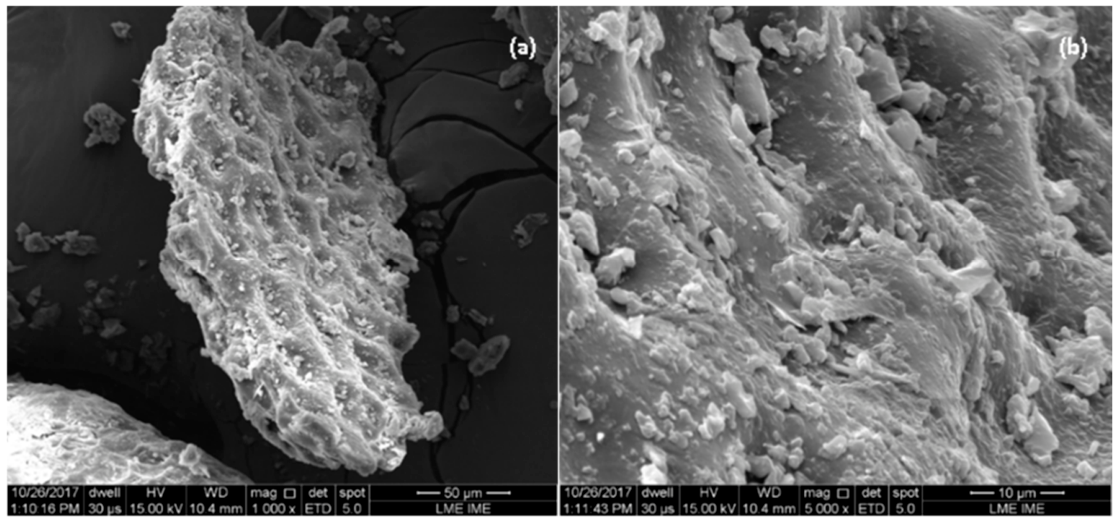
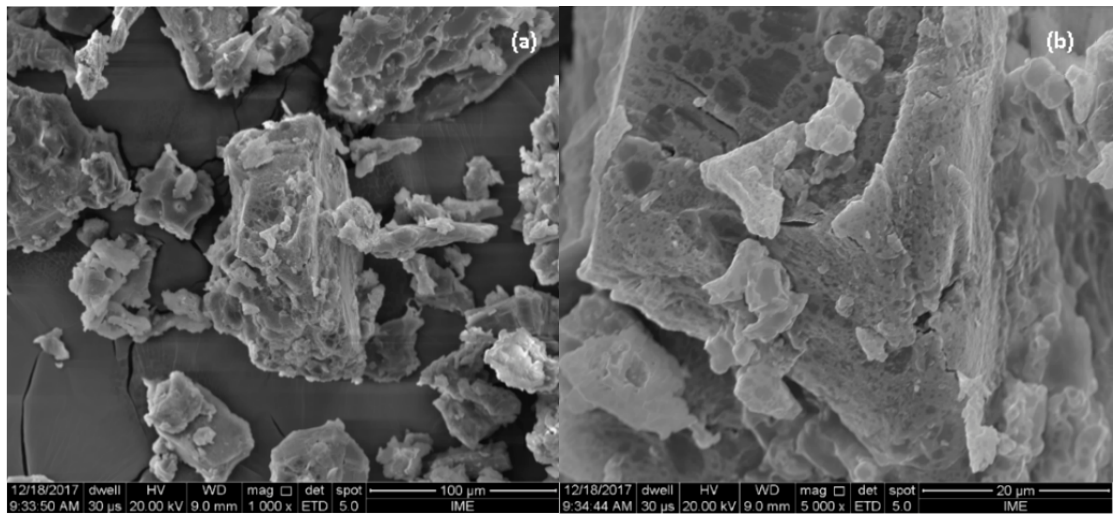
The Scanning Electron Microscopy (SEM) analysis of the in natura and NaOH-activated seeds was performed to evaluate their surface morphology, as well as to investigate the influence of the chemical impregnation process on structural modifications of the samples, and the results are presented in Figure 3 and Figure 4, respectively.
Analyzing the SEM images of the in natura seeds, a naturally aggregated, amorphous, and homogeneous structure with irregular shapes can be observed, showing the presence of closed cells (concave cavities). This differs from the findings of [12], who reported an open structure with void spaces, pits, and fibers bound by hemicellulose and lignin, as well as the presence of silica crystals. This discrepancy in SEM analyses may be attributed to the sampling method employed, since that author analyzed a micrograph of the transverse section of the açaí seed, whereas the present study evaluated a dried and comminuted seed sample.
The analysis of the micrographs of the impregnated açaí seeds reveals significant changes in the surface morphology of the particles. A tendency toward more regular shapes is observed, characterized by a reduction in the presence of closed cells and a partially more compact surface. These findings are consistent with the results reported by [21,25,26], with such structural modifications attributed to the NaOH treatment, which contributes to the reduction in hemicellulose and lignin in the morphological structure of the açaí seeds. EDS analyses were performed to identify the main chemical elements present in the samples. Table 2 presents the semi-quantitative results, expressed in terms of mass percentage and atomic percentage, for the in natura and NaOH-activated açaí seeds.
The results presented in Table 2 highlight the percentage variation in the chemical elements present in the samples, showing agreement with the values reported by [12] for the surface composition of in natura açaí seeds, particularly with respect to carbon and oxygen contents. When evaluating the influence of the chemical impregnation process, an inverse behavior between these elements is observed: the carbon content decreased by 23.61% in mass terms and 19.55% in atomic terms, while the oxygen content increased by 14.58% (mass) and 14.15% (atomic). Additionally, a significant presence of sodium is observed, indicating its incorporation into the surface structure of the açaí seeds and demonstrating the effectiveness of the applied chemical impregnation process.

2.4. Pyrolysis Process Parameters of Activated Açaí (Euterpe oleracea Mart.) Seeds

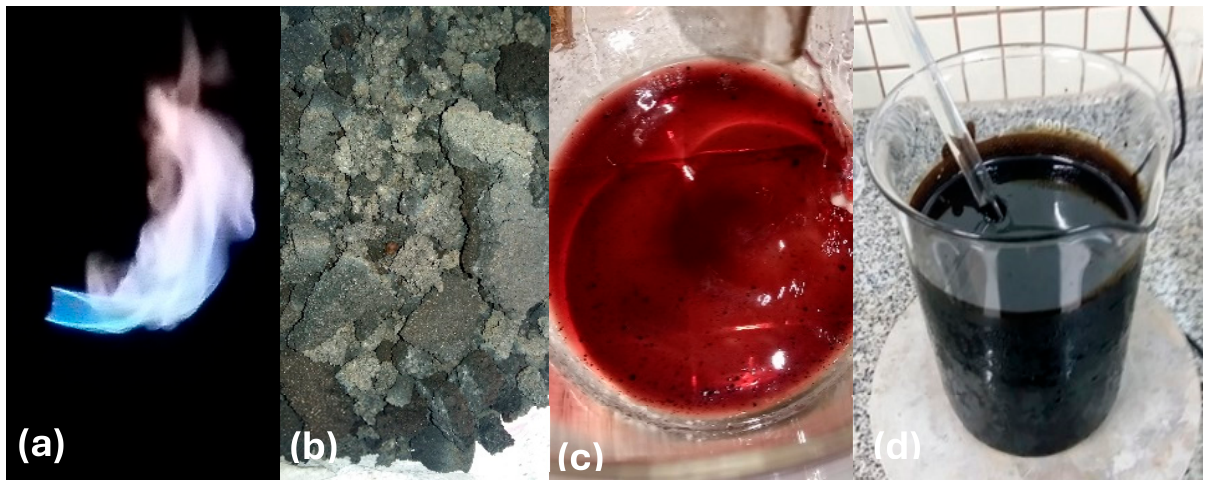
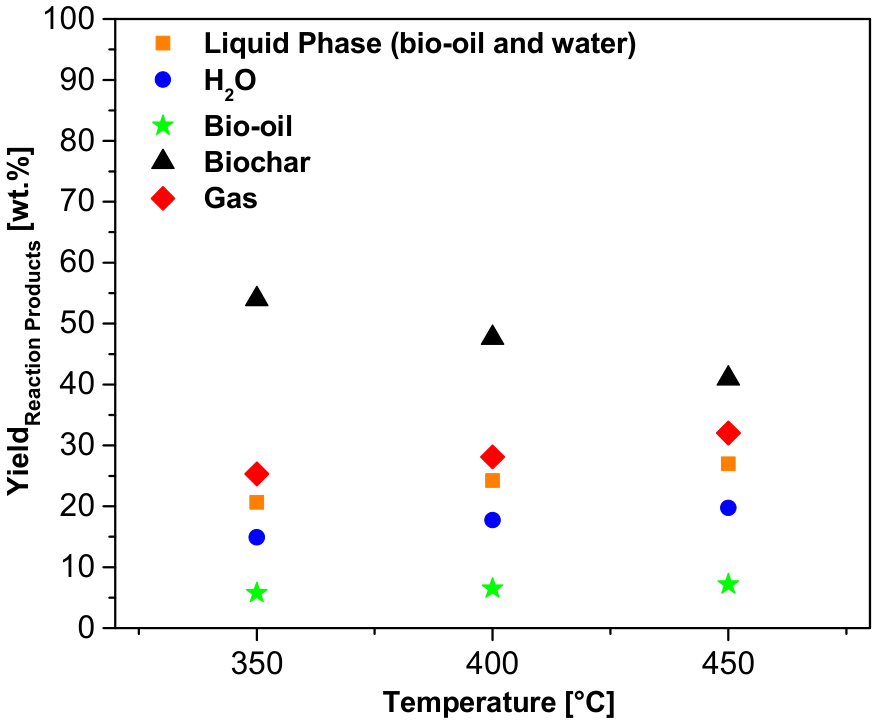
The pyrolysis reaction products (gas, biochar, H2O and bio-oil) are depicted in Figure 5. Pyrolysis process parameters and mass balances by slow pyrolysis of NaOH-activated açaí seeds (Euterpe oleracea Mart.), carried out at 350, 400, and 450 °C (Table 3 and Figure 6), highlight the thermochemical behavior of the chemically activated biomass. Alkaline (NaOH) activation promotes the rupture of intermolecular bonds in the hemicellulose and cellulose chains and facilitates the cleavage of phenolic linkages in lignin, favoring thermal conversion and altering product yields.
Bio-oil yield decreases with a reduction in temperature (from 7.20% to 5.77%) due to the lower rate of thermal cracking and depolymerization, which limits the formation of condensable compounds. NaOH acts as a catalyst but also stimulates secondary reactions of recondensation and carbonization, reducing bio-oil yield. The aqueous fraction follows a similar trend (from 19.77% to 14.90%), consisting of reaction water and light oxygenated compounds, whose formation is intensified at higher temperatures due to thermal dehydration and condensation reactions.
The increase in biochar yield (from 41% to 54%) at lower temperatures agrees with the literature, as slow pyrolysis favors fixed-carbon retention and limits volatilization. The presence of NaOH contributes to the formation of more stable and porous carbonaceous structures, which are desirable for energetic or adsorption applications. The gaseous fraction (from 32.03% to 25.33%) increases with temperature, reflecting the intensification of cleavage reactions of C–C and C–O bonds in cellulose, hemicellulose, and lignin, resulting in the release of CO, CO2, H2, and CH4.
These results are consistent with Valdez et al. [25], who observed, in the pyrolysis of açaí seeds activated with 2.0 M KOH at 350–450 °C, bio-oil yields ranging from 3.19 to 6.79%, aqueous fractions from 20.34 to 25.57%, biochar from 33.40 to 43.37%, and gases from 31.85 to 34.45%. They are also compatible with the findings of Serrão et al. [24] and Castro et al. [22], who reported bio-oil yields between 2.0 and 13.09% in different experimental scales. Similarly, the biochar yields obtained (27–72.5%) fall within the ranges described in other studies involving in natura and chemically activated açaí seeds [39,40,41,42,43].
Overall, the results corroborate the literature [44,45], which indicates that bio-oil yield tends to increase with temperature up to approximately 450 °C, reflecting the typical behavior of lignocellulosic biomass pyrolysis.

2.5. Results of the Morphological, Crystallographic and Textural Characterization of the Biochars Produced

Scanning Electron Microscopy and Energy Dispersive Spectroscopy

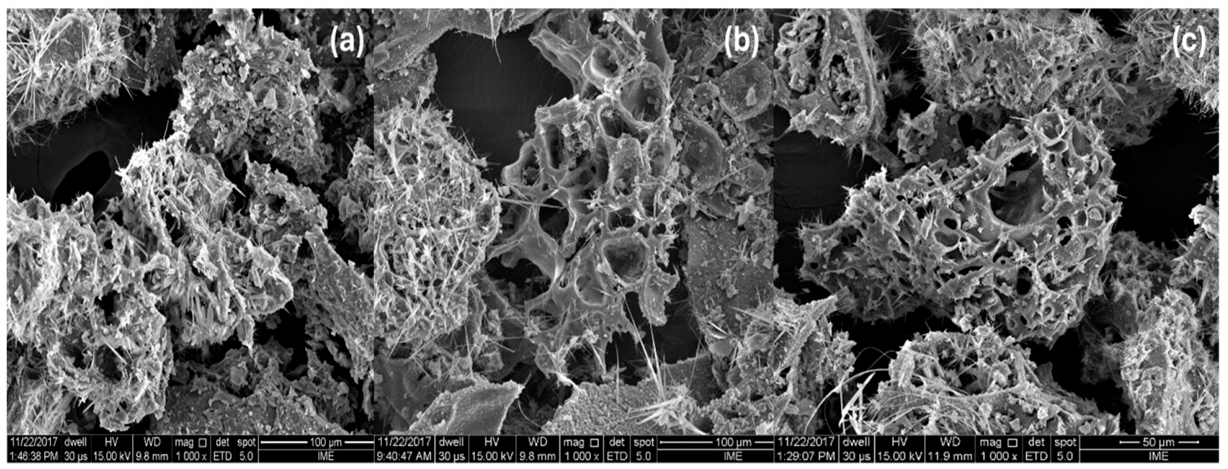
The morphological analysis of the biochar produced from açaí seeds activated with NaOH (Figure 7) reveals structural transformations directly influenced by pyrolysis temperature and alkaline activation. This behavior can be compared to the observations of Costa et al. [44], Lima et al. [45], Mesquita et al. [46], and Miranda et al. [47], who investigated lignocellulosic materials under various processing conditions, highlighting changes induced by cutting, grinding, or chemical treatments. In the study by Costa et al. [44], the surface of ground lignocellulosic particles (8 and 14 Tyler) shows irregularities associated with the mechanical comminution process and particle friction. Although the origin of these irregularities is mechanical rather than thermochemical, there is a parallel with the biochar produced at 350 °C (Figure 7a), whose surface still preserves features of the original plant matrix, exhibiting irregular cavities and limited pore opening. As observed for the ground particles, these initial irregularities do not necessarily indicate high functional porosity but rather represent an early stage of structural modification.
Lima et al. [45] and Mesquita et al. [46] reported the presence of silica-rich protrusions on the surface of plant fibers, which provide greater mechanical rigidity and structural integrity. This contrasts with the behavior observed in the biochars produced at 400 °C and 450 °C (Figure 7b,c), in which alkaline activation promoted intense removal of organic matter and collapse of cell walls, resulting in more fragile, fragmented, and highly porous structures. Unlike the silica-enriched fibers, where silica reinforces the matrix, the NaOH impregnation induces selective degradation of hemicelluloses and cellulose, reducing structural strength and expanding the pore network.
Comparison with the chemical treatments described by Miranda et al. [47] reinforces this interpretation. These authors demonstrated that chemical agents capable of removing silica or other inorganic fractions can increase surface roughness and structural accessibility, provided they are applied with adequate intensity to avoid excessive defibrillation. Similarly, in the present study, increasing the pyrolysis temperature intensified the alkaline attack of NaOH, expanding pores and surface roughness. However, when the temperature reached 450 °C, degradation became more pronounced, producing a biochar with a highly open and fragmented morphology, characteristic of materials subjected to strong chemical activation.
Thus, whereas the works of Costa et al. [44] and Lima et al. [45] describe structural irregularities mainly resulting from mechanical processes or silica presence, the present study identifies that the combination of pyrolysis and alkaline impregnation leads to deeper modifications driven by thermochemical reactions. Likewise, studies such as the one by Miranda et al. [47] indicate that chemical modification can enhance roughness and improve functional characteristics, an effect which was also observed here, but with greater intensity due to the synergism between NaOH and temperature.
Overall, the results obtained for the NaOH-impregnated açaí seed biochars support the literature consensus that chemical activation and increasing temperature are key factors in the development of porosity and morphological heterogeneity. However, they differ from studies on non-carbonized plant fibers by showing that pyrolysis exponentially intensifies these effects, producing materials suitable for adsorption, catalysis, and energy applications.
Table 4 presents the EDS analysis results for the biochars produced at 350, 400, and 450 °C after activation with 2.0 M NaOH solution, allowing evaluation of how the elemental composition is modified by the temperature increase and the activating action of sodium hydroxide.
The data reveals clear trends associated with progressive carbonization and the chemical evolution of the carbonaceous matrix. The carbon content (C) increases significantly with rising temperature, from 43.73 wt% in the biochar produced at 350 °C to 50.50 wt% at 400 °C, reaching 64.14 wt% at 450 °C. This behavior is typical of pyrolytic processes, in which volatile and oxygenated compounds are progressively removed, resulting in a matrix enriched in carbon. The increase in the relative atomic percentage of carbon, which reaches 74.58% at the highest temperature, indicates advancements in the degree of aromatization and carbonization features desirable for materials intended for adsorption, electrochemical applications, and energy systems.
Conversely, the oxygen (O) content decreases steadily with increasing temperature, from 31.59 wt% at 350 °C to 28.82 wt% at 400 °C and 17.64 wt% at 450 °C. This decline is associated with the removal of oxygen-containing functional groups through dehydration, decarboxylation, and decarbonylation, reactions characteristic of the pyrolysis process. The reduction in the atomic fraction of oxygen reinforces the formation of more stable and less polarized carbonaceous structures, directly influencing properties such as hydrophobicity and electrical conductivity.
The inorganic elements originating from alkaline impregnation show distinct behaviors. Sodium (Na), derived from NaOH, appears in high concentrations in all samples but decreases with increasing temperature, from 21.70 wt% to 19.29 wt% and then to 13.94 wt%. This trend suggests that part of the sodium is mobilized or volatilized at higher temperatures or becomes less superficially detectable due to carbon matrix reorganization. Nevertheless, the presence of Na in all samples confirms its strong interaction with the matrix and its role as an activating agent and mineral catalyst.
Potassium (K), although present at lower concentrations, exhibits a different trend: it decreases from 2.80 wt% to 1.39 wt% when the temperature increases from 350 to 400 °C, but rises to 4.28 wt% at 450 °C. This behavior may reflect both the heterogeneity of mineral distribution in the biomass and the greater exposure of mineral sites at elevated temperatures, when structural collapse releases elements previously encapsulated in the lignocellulosic matrix. The atomic fraction of K follows this variation, suggesting that potassium may become concentrated as volatile organic mass is removed at higher temperatures.
The residual presence of magnesium (Mg), only in the 350 °C sample, indicates that this mineral, likely to originate from the raw biomass, is either removed or becomes undetectable at higher temperatures, possibly due to incorporation into phases less detectable by EDS or volatilization of its compounds.
Overall, the observed elemental evolution confirms the combined effect of pyrolysis and alkaline activation, with an increase in carbon content, gradual reduction of oxygen, and rearrangement of impregnated minerals. These patterns reinforce the enhanced degree of carbonization and suggest that the biochar produced at 450 °C exhibits more favorable chemical properties for applications requiring higher thermal stability, greater fixed carbon content, and higher carbon purity.
When comparing these results with the study by Cordeiro [12] on raw açaí seeds, a striking contrast is evident. Cordeiro describes a highly oxygenated surface, typical of untreated lignocellulosic materials, with low fixed carbon content and a strong presence of polar functional groups. In contrast, the biochar produced in this study displays carbon enrichment and a marked reduction in oxygen, revealing a significant transformation of the original biomass into a more aromatic, hydrophobic, and stable matrix. Thus, the comparison shows that alkaline treatment combined with pyrolysis intensifies the degree of carbonization relative to raw seeds, resulting in a material with properties more suitable for advanced applications such as adsorption, electrochemistry, and energy production.

2.6. X-Ray Diffractometry for Impregnated Biochars

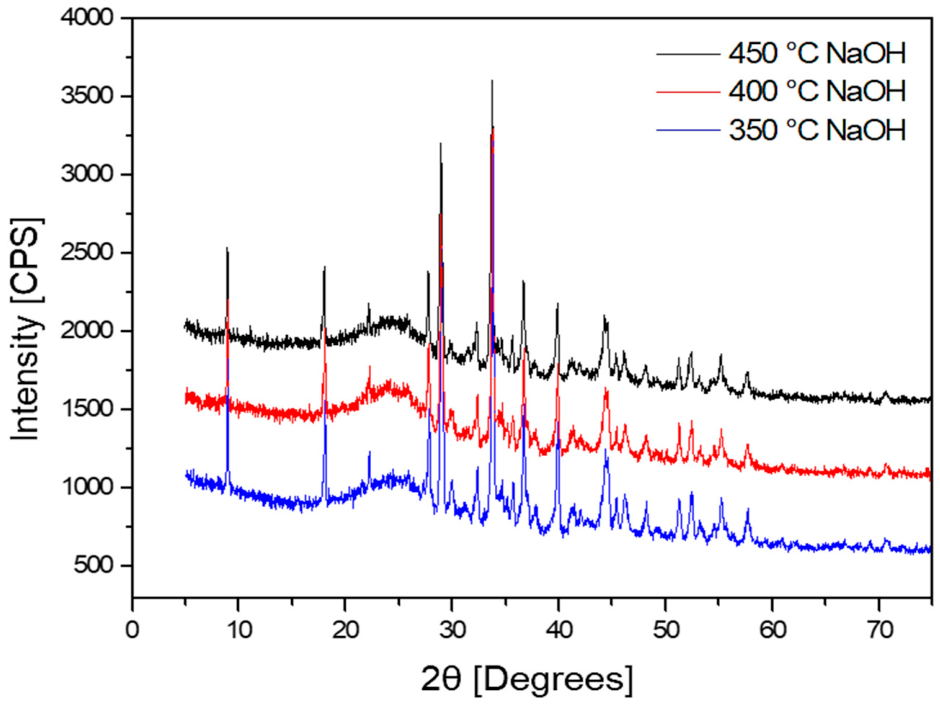
The XRD analysis (Figure 8) of the biochar activated with 2.0 M NaOH and produced by pyrolysis at 350, 400, and 450 °C reveals important structural differences directly associated with the effect of alkaline impregnation and increasing pyrolysis temperature. The set of diffractograms confirms the presence of a predominantly amorphous matrix, a typical characteristic of biochar, but with significant crystalline contributions resulting from the action of NaOH and the concentration of inorganic minerals.
The XRD analysis of the biochars activated with 2 M NaOH and produced at 350, 400, and 450 °C shows a predominantly amorphous matrix, typical of lignocellulosic biochars, but with a marked presence of crystalline phases associated with the action of the alkaline activating agent and the pyrolysis temperature. The broad diffuse halo between 20 and 30° (2θ), related to turbostratic carbon structures, becomes more intense and defined as the temperature increases, particularly at 450 °C, indicating a higher degree of organization of graphitic domains and the onset of aromatization, a trend consistent with the increase in carbon content observed by EDS.
In addition to the amorphous fraction, the diffractograms reveal crystalline peaks whose intensity increases significantly in the samples treated at 400 and 450 °C, suggesting greater formation and stabilization of crystallized inorganic salts, including sodium and potassium carbonates and oxides. This behavior aligns with the findings of Prakongkep et al. [48], who identified Kalicinite (KHCO3) as a dominant phase in chemically activated biochars, and Han Lee et al. [49], who reported similar patterns in materials modified with K-containing compounds. Complementarily, Díaz-Terán et al. [50] demonstrated that activation with KOH generates crystalline phases such as KHCO3 and K2CO3, whose diffraction peaks increase in intensity with rising temperature, a phenomenon also observed in the samples of this study, particularly in those produced at 450 °C.
Thus, the results confirm that increasing the pyrolysis temperature intensifies both the structural organization of carbon and the crystallization of inorganic phases. The biochar produced at 450 °C exhibits the most defined diffractometric profile, indicating a higher degree of mineral reorganization and thermal maturation of the carbon matrix, consistent with patterns reported in the literature for chemically activated biochars. These findings reinforce that the combination of alkaline impregnation and elevated temperatures enhances the structuring of the biochar, increasing its thermal stability and its potential for applications that depend on higher crystallinity and greater availability of mineral active sites.

2.7. Physicochemical and Compositional Characterization of Bio-Oil

2.7.1. Density, Viscosity and Acid Value of Bio-Oil

The results obtained for the density of bio-oils generated by pyrolysis of açaí seeds impregnated with 2 mol/L NaOH at temperatures of 450 °C, 400 °C and 350 °C (Table 5) were, respectively, 1.02, 1.01 and 1.01 g/cm3. These values show little variation between them, indicating that the effect of temperature on density was not very significant within the range analyzed. However, it is possible to observe a slight tendency for density to increase with increasing temperature, which is in accordance with the literature, which reports that higher temperatures promote greater thermal degradation of biomass, favoring the formation of heavier compounds with lower oxygen content, which may contribute to an increase in bio-oil density.
Another relevant factor is the alkaline impregnation with NaOH, which can significantly influence the thermal degradation route of lignocellulosic biomass. NaOH acts by promoting saponification reactions and the removal of acid and phenolic groups from lignin and hemicellulose, which can reduce the formation of oxygenated compounds and contribute to the production of more homogeneous liquid fractions with lower relative density.
When compared with bio-oils obtained from other biomasses in the literature, the values observed (1.01–1.02 g/cm3) are within a range considered common for bio-oils from chemically treated lignocellulosic residues and are lower than those reported for raw agricultural residues such as rice or corn husks, which frequently have densities above 1.10 g/cm3. This difference can be attributed both to the chemical composition of the açaí seeds and to the action of NaOH, which can result in bio-oils with higher hydrocarbon content and lower oxygen and moisture content, characteristics that tend to reduce density. Therefore, the values obtained reflect a product with characteristics closer to light liquid fractions, which may be advantageous for certain energy applications, such as alternative liquid fuel, in addition to facilitating subsequent separation and refining processes.
The results obtained are close to the density of 1.06 g/mL (at 20 °C) for bio-oil from softwood bark residues, as reported by Boucher et al. [51], and the density of 1.03 g/mL (at 20 °C) for bio-oil from empty palm fruit bunches, as reported by Abnisa et al. [52]. However, they are lower than the density of 1.25 g/mL (at 20 °C) for corn straw bio-oil reported by Yu et al. [53], and the density of 1.140 g/mL (at 30 °C) for rice husk bio-oil according to Qiang et al. [33], at the density of 1.190 g/mL (at 20 °C) for rice husk bio-oil according to Zheng and Wei [54], at the density of 1.1581 g/mL (at 20 °C) for rice husk bio-oil according to Cai et al. [55], and at the density of 1.200 g/mL (at 20 °C) for loblolly pine wood chip bio-oil reported by Tanneru et al. [56].
The viscosity results of the bio-oils obtained by pyrolysis of açaí seeds impregnated with 2.0 molar NaOH indicate values of 56.55 mm2/s at 450 °C, 48.68 mm2/s at 400 °C and 45.47 mm2/s at 350 °C. It is observed that the viscosity of bio-oils increased with increasing pyrolysis temperature, which is consistent with the formation of more complex and heavier organic compounds at higher temperatures. This behavior can be explained by the greater occurrence of secondary repolymerization and condensation reactions at higher temperatures, promoting the formation of heavier and more viscous fractions, such as polyaromatic phenols and high molecular weight compounds. Furthermore, the presence of NaOH may have catalyzed reactions that favor the formation of more complex and less volatile chemical structures. Comparing with the literature, the viscosity values obtained are within the range observed for bio-oils derived from lignocellulosic biomass, which generally vary between 20 and 100 mm2/s, depending on the type of raw material, pyrolysis conditions and residual water content. The lower viscosity observed at 350 °C indicates a lighter bio-oil, with a higher proportion of volatile compounds, which may favor its application as a fuel or raw material for chemical refining. On the other hand, the higher viscosity at 450 °C may require additional refining or dilution processes to enable its use in combustion or chemical processing systems.
These values are lower than the kinematic viscosity of 148 mm2/s at 60 °C for corn stover bio-oil reported by Yu et al. [53], but higher than the viscosity of 38.0 mm2/s for softwood bark residues reported by Boucher et al. [51], 13.2 mm2/s for rice husk reported by Qiang et al. [33], 40.0 mm2/s (60 °C) also for rice husk according to Zheng and Wei [54], values between 5.0 and 13.0 mm2/s (40 °C) for rice husk reported by Cai et al. [55], and 12.0 mm2/s (40 °C) for loblolly pine chips according to Tanneru et al. [56]. The kinematic viscosity results presented in Table 3 are in accordance with similar data found in the literature [50,53,54,55,56,57], which indicate that the kinematic viscosity of wood-derived bio-oils varies between 40 and 150 mm2/s, depending on the raw material, analysis temperature and pyrolysis conditions.
The results for the acidity index obtained for the bio-oils produced were 20.71 mg KOH/g, 19.91 mg KOH/g and 19.44 mg KOH/g, for the temperatures of 450 °C, 400 °C and 350 °C, respectively. These results indicate a tendency for the acidity index to increase with the increase in the pyrolysis temperature, which may be associated with the greater thermal degradation of hemicellulose and cellulose, forming a greater amount of volatile organic acids in the bio-oil, especially acetic acid and substituted phenols, commonly present in pyrolysis products of lignocellulosic biomass.
Although the observed values are not as high as those reported for some biomasses that exceed 30 mg KOH/g, acidity values above 10 mg KOH/g still indicate high acidity, which may be problematic for storage, transportation and direct applications of bio-oil, especially as fuel, due to its corrosive potential and chemical instability. The impregnation with NaOH may have partially contributed to the neutralization of some acids formed, but the predominant effect of temperature seems to override this neutralization, since the increase in temperature favors cleavage reactions of C–O and C–C bonds in the biomass chains, generating more acidic oxygenated compounds.

2.7.2. Fourier Transform Infrared Spectrum

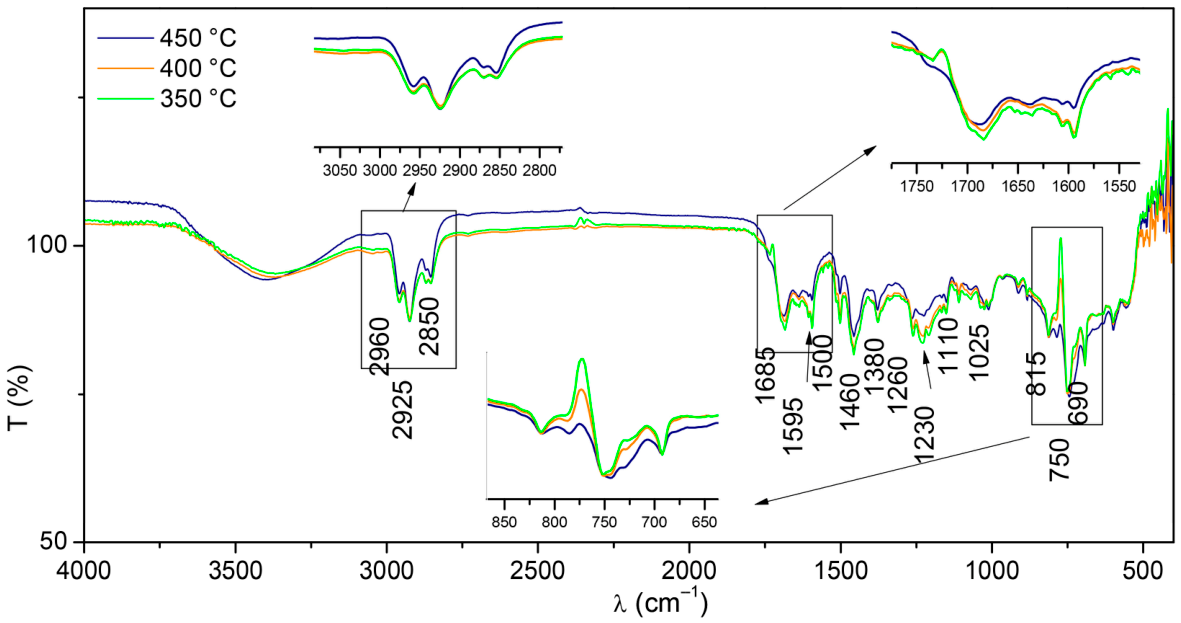
The infrared spectra (Figure 9) of the bio-oils obtained from the impregnated açaí seeds at pilot scale again show similarities in the identification of vibration bands (Table 6) with respect to the final temperatures investigated in the process. Small variations in the intensity (transmittance) of the main identified bands were also observed, with emphasis on the characteristic peaks of hydrocarbons (2960–2855 cm−1), free amides (1685 cm−1), and aromatic compounds (815–690 cm−1). The FT-IR spectroscopy results highlight a variety of functional groups present in the bio-oil produced from the pyrolysis of açaí seeds.
The absorption at 3360 cm−1, associated with hydroxyl (–OH) groups, indicates the presence of compounds such as phenols and alcohols, suggesting that pyrolysis did not completely remove the oxygenated groups from the biomass. In addition, the peaks at 2960–2855 cm−1 and 1460 cm−1, characteristic of aliphatic hydrocarbons (alkanes) and methylene groups (–CH2–), indicate the formation of saturated aliphatic compounds such as alkanes during the pyrolysis process. These compounds are important for applications such as fuels.
The presence of oxygenated compounds is evidenced by the peaks at 1685 cm−1 (free amides), 1275–1020 cm−1 (esters, ethers, alcohols, and phenols), and 1110 cm−1 (secondary alcohol). These results suggest that, despite pyrolysis, there is significant formation of oxygenated compounds such as alcohols, esters, and phenols, derived from the degradation of lignocellulose. The peak at 1685 cm−1 also indicates the formation of amides, which may originate from proteins or nitrogen-containing compounds present in the biomass. Thus, the pyrolysis of açaí seeds produces a complex bio-oil containing aliphatic and aromatic hydrocarbons, as well as oxygenated compounds. The observed behavior, characterized by a complex mixture of hydrocarbons, aromatic compounds, and oxygenated species, is consistent with results reported in previous studies [21,22,23,25,26,27,28,33,57,58,59,60,61], confirming that the bio-oil from açaí seeds has a composition similar to other bio-oils produced by slow or fast pyrolysis.
Accordingly, the FT-IR analysis confirms that, although pyrolysis promotes the generation of hydrocarbon fractions with potential for energy applications, the high concentration of oxygenated compounds indicates the need for additional upgrading steps, such as hydrotreatment, deoxygenation, or catalytic cracking, if the goal is to obtain fuels with greater stability, lower acidity, and improved operational performance.
Finally, the peaks between 1595 and 1500 cm−1 and 815–690 cm−1, associated with aromatic compounds, confirm the formation of aromatic rings such as benzene and its derivatives, which are typical products of lignocellulosic biomass pyrolysis. The presence of these aromatic compounds makes the bio-oil relevant for industrial applications, such as chemical intermediates and fuels.

2.7.3. Gas Chromatography Coupled to Mass Spectrometry of Bio-Oils

The quantification of chemical compounds identified by GC-MS of bio-oils produced by pyrolysis of impregnated açaí (Euterpe oleracea Mart.) seeds at 450 °C, 400 °C, and 350 °C, 1.0 atmosphere, in pilot scale, is summarized in Table 7. The GC-MS of bio-oils produced by pyrolysis of activated açaí seeds with 2.0 mol·L−1 NaOH, at 450, 400, and 350 °C, 1.0 atmosphere, on a pilot scale, are shown in Supplementary Tables S1, S2, and S3, respectively. The bio-oils produced by pyrolysis of açaí seeds impregnated with NaOH indicate a predominance of hydrocarbons, with average values exceeding 20% for aromatic compounds and above 30% for aliphatic compounds, while nitrogenated and chlorinated species range between 3 and 15 (C10H8) was the main compound identified under most conditions (≈11%), except at 450 °C, where Undecane (C11H24) became the major product (7.2%). The distribution of products varied with temperature: aromatics reached their maximum yield at 350 °C (32.6%) and subsequently decreased; aliphatics increased significantly from 400 °C onward (≈38–40%); and oxygenated compounds, initially low (≈6.7%), increased under more severe conditions, reaching up to 14%, indicating the secondary release of phenols, ketones, and related derivatives.
A comparison with alkaline pyrolysis using KOH as described elsewhere [26] reveals distinct trends. While NaOH maximizes aromatic formation at moderate temperatures, KOH promotes a continuous increase in these compounds with rising temperature, indicating a greater catalytic ability for aromatization under higher thermal regimes. Moreover, oxygenated compounds decrease exponentially in biomasses treated with KOH, a behavior described by first-order decay kinetic models (r2 = 1.00), demonstrating the higher deoxygenation efficiency of potassium compared to sodium [26].
Sousa et al. [23] further corroborate this trend by showing that KOH markedly enhances the formation of alkanes, alkenes, and heterocyclic hydrocarbons, displaying an excellent exponential correlation (r2 = 1.00). The authors also report a consistent decline in oxygenated compounds, which are preferentially transformed into hydrocarbons and light gases (CO, CO2, and H2O). According to their findings, KOH behaves as a highly reactive catalyst toward C–O and C–C bond cleavage, thereby intensifying aromatization and deoxygenation with increasing temperature.
Accordingly, the comparative analysis indicates that, although both NaOH and KOH promote hydrocarbon formation, NaOH tends to favor pathways marked by the predominance of aliphatic species and the re-emergence of oxygenated compounds under more severe conditions. In contrast, KOH as also demonstrated elsewhere [24], drives progressive aromatization, deeper deoxygenation, and a more efficient conversion of oxygenates into hydrocarbons. These distinctions underscore the specific catalytic role of each activating agent in steering the reaction pathway and in shaping the quality, stability, and energy potential of the resulting bio-oil.

3. Materials and Methods

3.1. Materials

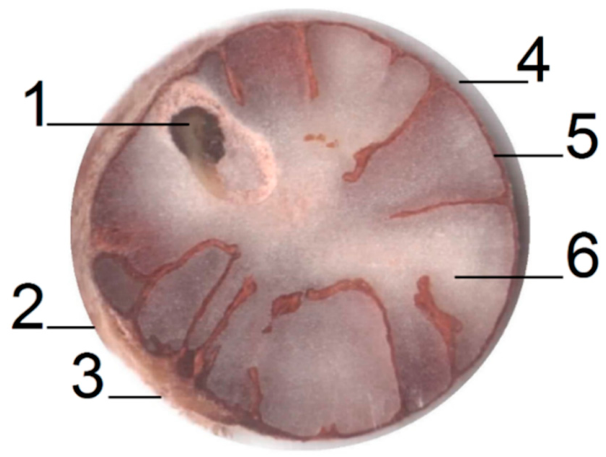
The açaí seeds (Euterpe oleracea Mart.) were naturally collected from a small commercial establishment selling açaí, located in the District of Guamá, Belém, Pará, Brazil. Figure 10 illustrates the anatomy of the açaí fruit in cross-section, highlighting the following structures: (1) embryo, (2) endocarp, (3) scar, (4) pulp, (5) pericarp with tegument, and (6) mesocarp [12].

3.2. Pre-Treatment and Physical Characterization of in Natura Açaí (Euterpe oleracea Mart.), Seeds

The açaí seeds were dried at 105 °C in a pilot-scale oven with air recirculation (SOC. FABBE Ltd.a., São Carlos, SP, Brazil, model 170) for a period of 24 h. Subsequently, the dried seeds were ground using a laboratory knife mill (TRAPP, Jaraguá do Sul, SC, Brazil, model: TRF 600) and then sieved through an 18-mesh sieve to remove excess fibrous material. A total of 14 batches of in natura açaí seeds (Euterpe oleracea Mart.), each weighing approximately 10.0 kg, were subjected to the drying process. After the pre-treatment, the in natura açaí seeds were subjected to the following physicochemical characterizations: moisture content, volatile matter, ash content, fixed carbon, and higher heating value according to official AOCS and ASTM methods.

3.3. Chemical Activation Process of Açaí (Euterpe oleracea Mart.), Seeds

The pre-treated charges of açaí seeds (32 kg) were activated with 64 L of 2.0 mol·L−1 aqueous NaOH solution (1:2 m/v ratio), using commercial caustic soda (UNIPAR CARBOCLORO, 95.5% purity). The process was carried out at the THERMITEK laboratory (UFPA) using a 110 L mechanical stirrer with a marine type impeller and driven by an eletric motor (WEG, Jaraguá do Sul, Brazil), under ambient temperature, 1.0 atm, and 1000 RPM. After the activation period, the phases were separated by simple filtration using qualitative filter paper (Ø = 24 cm, 14 μm pore size). The solid phase was then dried at 100 ± 5 °C for 24 h, preparing it for the slow pyrolysis process.

3.4. Characterization of Açaí Seeds Impregnated with Aqueous Sodium Hydroxide Solution

Thermogravimetric (TG/DTG) Analysis of Activated Açaí (Euterpe oleracea Mart.) Seeds

The thermal decomposition behavior of the activated açaí seeds was evaluated by thermogravimetric analysis (TG/DTG) using a Shimadzu thermal analyzer (Kyoto, Japan, model DTG-60Hn). Approximately 5.0 mg of the sample was placed in a platinum crucible and subjected to a controlled heating program from 25 °C to 600 °C, at a constant heating rate of 10 °C min−1, under a nitrogen atmosphere with a flow rate of 50 mL min−1.

3.5. Pyrolysis Process of Impregnated Açaí Seeds on a Pilot Scale

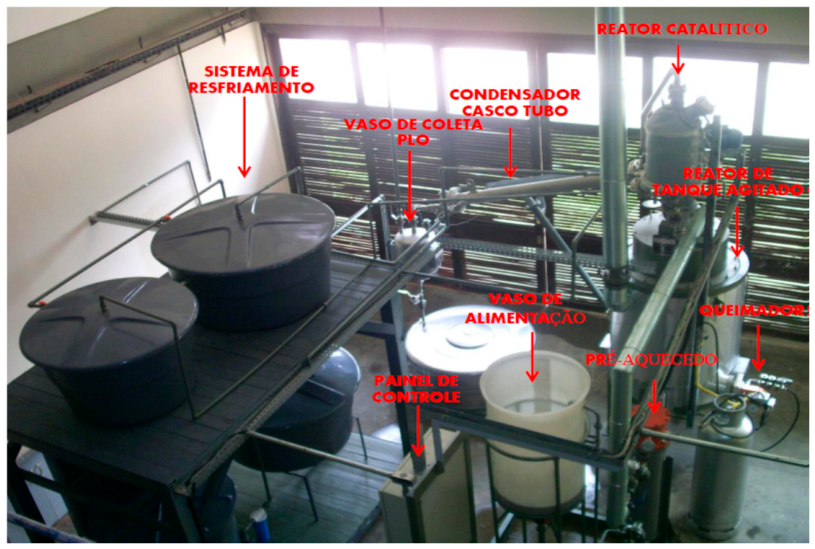
The pyrolysis of activated açaí (Euterpe oleracea Mart.) seeds were carried out using an experimental apparatus like those described in detail elsewhere [21,29], as shown in Figure 11. Liquid reaction products were collected every 20 min, recorded, and weighed. Subsequently, the samples underwent a decantation pretreatment to separate the aqueous and organic phases. The organic phase was then filtered to remove small solid particles.

3.6. Scanning Electron Microscopy and Energy Dispersive Spectroscopy (SEM/EDS)

Samples for SEM/EDS analysis were prepared by platinum (Pt) coating, forming a conductive film of 17.62 nm at a deposition rate of 0.09 nm/s under vacuum, using the Leica EM ACE600 high-vacuum coater (Leica Microsystems GmbH, Wetzlar, Germany). After metallization, samples were imaged using the FEI Quanta FEG250 SEM (FEI Company, Hillsboro, OR, USA), at magnifications from 1000× to 5000×, with accelerating voltages of 15 kV and 20 kV, and image scales ranging from 100 μm to 20 μm. EDS analysis was performed using the QUANTAX EDS (ESPRIT 2) software and a BRUKER solid-state detector (EBSD) (Bruker Nano GmbH, Berlin, Germany)for elemental quantification.

3.7. X-Ray Powder Diffractometry (XRD)

The XRD characterization of the biochars was determined using an X-ray Diffractometer, model X’PERT PRO MPD (PW 3040/60; Malvern Panalytical B.V., Almelo, The Netherlands) from PANalytical with the following specifications: CuKα radiation, Ni filter, operating at 40 kV, 30 mA and wavelength λ = 0.154 nm and with X’Pert Data Collector software (version 2.1a). The scanning interval was for 2θ values ranging from 5° to 75°. The scanning speed was 1° min−1, and the reading step was 0.01°. Thus, the influence of the activation process of açaí seeds on the crystalline structure of biochars produced by pyrolysis was determined.

3.8. Physicochemical and Chemical Composition of Bio-Oils

3.8.1. Physicochemical Analysis of Bio-Oils and Distillation Fractions

The bio-oils were physically and chemically characterized for acid value (AOCS Cd 3d-63), density (ASTM D4052) at 25 °C, kinematic viscosity (ASTM D445/D446) at 40 °C, and refractive index (AOCS Cc 7–25), as described in the literature [21,29,62]. The qualitative analysis of chemical functions (carboxylic acids, aliphatic and aromatic hydrocarbons, ketones, phenols, aldehydes, furans, esters, etc.) present in the bio-oil was performed by FT-IR spectroscopy according to the literature [21,29,63].

3.8.2. GC-MS of Bio-Oil

The separation and identification of all the compounds present in bio-oils were performed by CG-MS using a gas chromatograph (Agilent Technologies Inc., Santa Clara, CA, USA, Model: CG-7890B), coupled to MS-5977A (Agilent Technologies Inc., Santa Clara, CA, USA) Mass Spectrometer, with a SLBTM-5 ms (30 m × 0.25 mm × 0.25 mm) fused silica capillary column (Supelco/Sigma-Aldrich, Bellefonte, PA, USA). The temperature conditions used were injector temperature, 250 °C; split, 1:50; detector temperature, 230 °C; and quadrupole, 150 °C; injection volume, 1.0 mL; and oven, 60 °C/1 min, 3 °C/min, 200 °C/2 min, 20 °C/min, and 230 °C/10 min. The intensity, retention time, and compound identification were recorded for each peak analyzed according to the NIST (Standard Reference Database 1A, V14) mass spectra library, which is part of the software. The identification is based on the similarity of the mass spectrum peak obtained with the spectra within the library database, included in the software [21]. Then, all identified oxygenates and hydrocarbons present in each bio-oil sample were separated, and the chemical composition was determined.

3.8.3. Fourier Transform Infrared Spectroscopy (FT-IR)

The infrared spectroscopy analysis was performed using a Shimadzu FTIR spectrophotometer (Kyoto, Japan), model IRAffinity-1S, equipped with an ATR8000 accessory. The spectra were obtained via horizontal attenuated total reflectance (ATR) using a ZnSe prism, with 64 scans and a resolution of 16.0 cm−1. The spectra obtained from the biochar samples were compared with reference spectra from the substance database (library) available in the LabSolution Manager software, (v 2.13, Shimadzu Corporation, Kyoto, Japan, 2017). For the analysis, microparticles of the samples were applied to the infrared beam cavity of the ATR accessory, and the readings were performed using the LabSolutions IR software, (v 2.13, Shimadzu Corporation, Kyoto, Japan, 2017). The scanning range was from 400 to 4000 cm−1.

4. Conclusions

In summary, the thermal analysis of NaOH-impregnated açaí seeds revealed moisture removal, sequential degradation of hemicellulose, cellulose, and lignin, as well as complex thermal events associated with the interaction of organic compounds and inorganic residues. The presence of multiple peaks in the DTG curve and the simultaneous exothermic and endothermic behavior highlight the influence of chemical treatment on modifying the thermal stability of the biomass.
The slow pyrolysis of NaOH-impregnated açaí seeds revealed that alkaline treatment strongly influences the distribution and yield of the resulting products. Higher temperatures promoted the formation of bio-oil and aqueous fractions due to the intensified thermal degradation and condensation of volatile compounds. At lower temperatures, a higher biochar yield was observed, associated with the preservation of fixed carbon and the development of porous and stable structures. The gas fraction increased with temperature, reflecting enhanced fragmentation of lignocellulosic chains. These findings highlight the role of NaOH as both a structural modifier and a catalyst in the thermochemical reactions of pyrolysis.
Overall, the chemical impregnation with NaOH markedly modified the morphology of the biochars, characterized by well-distributed porosity and the formation of sodium-based crystalline structures. The consistent elemental composition across the samples indicates that the chemical treatment conferred structural and compositional stability, regardless of the pyrolysis temperature.
Thus, it can be concluded that chemical impregnation with NaOH plays a decisive role in inducing crystallinity in the biochars by promoting the reorganization of the carbonaceous matrix at the nanometric scale. X-ray diffraction analysis confirms that the chemical treatment is primarily responsible for the formation of crystalline domains, while variations in pyrolysis temperature within the studied range (350–450 °C) have no significant impact on the final structure of the material. These findings highlight the importance of chemical pretreatment in engineering biochars with tailored structural properties for advanced applications.
The results demonstrate that alkaline impregnation with NaOH and pyrolysis temperature significantly influence the physicochemical properties of the bio-oils produced from açaí seeds. The density of the bio-oils remained practically constant, with a slight increasing trend at higher temperatures, indicating greater formation of heavier compounds. Viscosity increased proportionally with temperature, reflecting the generation of more complex and polymeric fractions at 450 °C. The acidity index also increased with temperature, suggesting higher production of volatile organic acids. Despite the observed variations, the values of density, viscosity, and acidity remained within the ranges reported for chemically treated lignocellulosic biomass bio-oils, highlighting the viability of the obtained bio-oil for energy applications, with potential additional treatments needed to reduce acidity and viscosity.
The analysis of the results from the pyrolysis of açaí seeds impregnated with 2 M NaOH reveals that temperature and alkaline impregnation significantly influence the formation of different compound groups in the bio-oil. The highest formation of aromatic hydrocarbons at 350 °C, followed by a decrease at higher temperatures, suggests that the alkaline environment promotes lignin depolymerization and the production of aromatic compounds under moderate thermal conditions. On the other hand, the formation of aliphatic hydrocarbons increased with temperature, especially from 400 °C onwards, indicating that NaOH plays a catalytic role in biomass cracking. The increasing production of oxygenated compounds, despite NaOH’s deoxygenating action, reflects the release of such compounds as thermal degradation intensifies at higher temperatures. These results highlight the impact of temperature and NaOH treatment on the profile of compounds generated by pyrolysis, emphasizing the importance of controlling these variables to optimize the production of bio-oil with desirable characteristics for various applications.

Supplementary Materials

The following supporting information can be downloaded at: https://www.mdpi.com/article/10.3390/catal16050485/s1, Table S1: Classes of compounds, summation of peak areas, CAS numbers, and retention times of chemical compounds identified by GC-MS in bio-oil obtained from the pyrolysis of NaOH-activated açaí seeds at 450 °C, 1.0 atm, in pilot scale. Table S2: Classes of compounds, summation of peak areas, CAS numbers, and retention times of chemical compounds identified by GC-MS in bio-oil obtained from the pyrolysis of NaOH-activated açaí seeds at 400 °C, 1.0 atm, in pilot scale. Table S3: Classes of compounds, summation of peak areas, CAS numbers, and retention times of chemical compounds identified by GC-MS in bio-oil obtained from the pyrolysis of NaOH-activated açaí seeds at 350 °C, 1.0 atm, in pilot scale.

Author Contributions

The individual contributions of all the co-authors are provided as follows: D.A.R.d.C. contributed with formal analysis and writing—original draft preparation, investigation and methodology, H.J.d.S.R. contributed with formal analysis, investigation and methodology, L.H.H.G. contributed with investigation and methodology, F.P.d.C.A. contributed with investigation and methodology, L.P.B. contributed with investigation and methodology, N.P.d.S. contributed with resources and chemical analysis, D.M.D.G. contributed with resources and chemical analysis, M.C.M. contributed with resources and chemical analysis, L.E.P.B. contributed with investigation, methodology and resources, K.K. contributed with process analysis, N.T.M. contributed with draft preparation, investigation and supervision, S.D.J. contributed with chemical analysis and resources. All authors have read and agreed to the published version of the manuscript.

Funding

CAPES and FAPEAM This work was also supported by the project “Determination of a Water Quality Index (WQI) Characteristic for Blackwater Rivers” (Process N°. 01.02.016301.01899/2024-05), funded under Notice No. 018/2023—PROCLIMA AMAZON/FAPEAM. Additional funding was provided by the Fundação de Amparo à Pesquisa do Estado do Amazonas (FAPEAM) through the project “Sustainable Technologies for the Production of Biofuels and Green Hydrogen (H2V) from Amazonian Biomass Residues” (Process N°. 01.02.016301.02434/2025-44), under Notice N°. 020/2024—FAPEAM Productivity Program in Science, Technology and Innovation (CT&I—2024 Edition). This study was supported by the Conselho Nacional de Desenvolvimento Científico e Tecnológico (CNPq), Process N°. 141430/2015-0.

Institutional Review Board Statement

Not applicable.

Informed Consent Statement

Not applicable.

Data Availability Statement

The original contributions presented in this study are included in the article/Supplementary Material. Further inquiries can be directed to the corresponding author.

Acknowledgments

I thank the Amazonas Research Foundation (FAPEAM) for the financial support provided, which was essential for the development of this project.

Conflicts of Interest

The authors declare no conflicts of interest.

References

  1. Scherwinski-Pereira, J.E.; Guedes, R.d.S.; da Silva, R.A.; Fermino, P.C.P., Jr.; Luis, Z.G.; Freitas, E.d.O. Somatic embryogenesis and plant regeneration in açaí palm (Euterpe oleracea). Plant Cell Tissue Organ Cult. 2012, 109, 501–508. [Google Scholar] [CrossRef]
  2. Schauss, A.G.; Wu, X.; Prior, R.L.; Ou, B.; Patel, D.; Huang, D.; Kababick, J.P. Phytochemical and Nutrient Composition of the Freeze-Dried Amazonian Palm Berry, Euterpe oleracea Mart. (Acai). J. Agric. Food Chem. 2006, 54, 8598–8603. [Google Scholar] [CrossRef]
  3. Sabbe, S.; Verbeke, W.; Deliza, R.; Matta, V.; Van Damme, P. Effect of a health claim and personal characteristics on consumer acceptance of fruit juices with different concentrations of açaí (Euterpe oleracea Mart.). Appetite 2009, 53, 84–92. [Google Scholar] [CrossRef]
  4. Pacheco-Palencia, L.A.; Duncan, C.E.; Talcott, S.T. Phytochemical composition and thermal stability of two commercial açai species, Euterpe oleracea and Euterpe precatoria. Food Chem. 2009, 115, 1199–1205. [Google Scholar] [CrossRef]
  5. Brondízio, E.S.; Safar, C.A.; Siqueira, A.D. The urban market of Açaí fruit (Euterpe oleracea Mart.) and rural land use change: Ethnographic insights into the role of price and land tenure constraining agricultural choices in the Amazon estuary. Urban Ecosyst. 2002, 6, 67–97. [Google Scholar] [CrossRef]
  6. Corrêa, V.L.S.; Ribeiro, H.J.D.S.; Valois, F.P.; Nascimento, M.Z.C.D.; Silva, R.M.P.; Martins, G.A.D.C.; Ferreira, R.B.P.; Brandão, I.W.D.S.; Mendonça, N.M.; Machado, N.T. Statistical Analysis of Açaí Commercialization and Quantification of Waste Generated (Açaí Seeds) in the City of Belém/Pa. Preprints 2025. [Google Scholar] [CrossRef]
  7. Almeida, A.V.d.C.; Melo, I.M.; Pinheiro, I.S.; Freitas, J.F.; Melo, A.C.S. Revalorização do caroço de açaí em uma beneficiadora de polpas do município de Ananindeua/PA: Proposta de estruturação de um canal reverso orientado pela PNRS e logística reversa. Rev. Gest. Prod. Oper. Sist. 2017, 12, 59–83. [Google Scholar] [CrossRef]
  8. Townsend, C.R.; de Lucena Costa, N.; de Araújo Pereira, R.G.; Senger, C.C.D. Características químico-bromatológica do caroço de açaí. Comun. Téc. Embr. 2001, 193, 1–5. Available online: https://ainfo.cnptia.embrapa.br/digital/bitstream/item/100242/1/Cot193-acai.pdf (accessed on 1 March 2026).
  9. Fioravanti, C. Açaí: Do pé para o lanche. Rev. Pesqui. Fapesp 2013, 203, 64–68. Available online: https://revistapesquisa.fapesp.br/2013/01/11/folheie-a-edicao-203/ (accessed on 1 March 2026).
  10. de Santana, A.C.; de Santana, Á.L.; dos Santos, M.A.S.; de Oliveira, C.M. Análise Discriminante Múltipla do Mercado Varejista de Açaí em Belém do Pará. Rev. Bras. Frutic. 2014, 36, 532–541. [Google Scholar] [CrossRef]
  11. Pessoa, J.D.C.; da Silva e Silva, P.V. Effect of temperature and storage on açaí (Euterpe oleracea) fruit water uptake: Simulation of fruit transportation and pre-processing. Fruits 2007, 62, 295–302. [Google Scholar] [CrossRef]
  12. Cordeiro, M.A. Estudo da Hidrólise Enzimática do Caroço de Açaí (Euterpe oleracea Mart.) para a Produção de Etanol. Master’s Dissertation, Universidade Federal do Pará, Belém, Brazil, 2016. [Google Scholar]
  13. da Fonseca, T.R.B.; de Amorim Silva, T.; Alecrim, M.M.; da Cruz Filho, R.F.; Teixeira, M.F.S. Cultivation and nutritional studies of an edible mushroom from North Brazil. Afr. J. Microbiol. Res. 2015, 9, 1814–1822. [Google Scholar] [CrossRef][Green Version]
  14. Kababacknik, A.; Roger, H. Determinação do poder calorífico do caroço do açaí em três distintas umidades. In Proceedings of the 38th Congresso Brasileiro de Química, São Luiz, MA, Brazil, 21–25 September 1998. [Google Scholar]
  15. de Castro, D.A.R. Processo de Produção de Bio-Óleo e Bio-Adsorventes via Pirólise das Sementes de Açaí (Euterpe oleracea Mart.). Ph.D. Thesis, Universidade Federal do Pará, Belém, Brazil, 2019. [Google Scholar]
  16. Stöcker, M. Biofuels and Biomass-To-Liquid Fuels in the Biorefinery: Catalytic Conversion of Lignocellulosic Biomass using Porous Materials. Angew. Chem. Int. Ed. 2008, 47, 9200–9211. [Google Scholar] [CrossRef] [PubMed]
  17. Santos, A.L.F.; Martins, D.U.; Iha, O.K.; Ribeiro, R.A.M.; Quirino, R.L.; Suarez, P.A.Z. Agro-industrial residues as low-price feedstock for diesel-like fuel production by thermal cracking. Bioresour. Technol. 2010, 101, 6157–6162. [Google Scholar] [CrossRef] [PubMed]
  18. Özçimen, D.; Ersoy-Meriçboyu, A. Characterization of biochar and bio-oil samples obtained from carbonization of various biomass materials. Renew. Energy 2010, 35, 1319–1324. [Google Scholar] [CrossRef]
  19. Nelson, D.L.; Cox, M.M. Leininger Principles of Biochemistry, 5th ed.; Freeman: New York, NY, USA, 2008. [Google Scholar]
  20. Roberts, K.G.; Gloy, B.A.; Joseph, S.; Scott, N.R.; Lehmann, J. Life Cycle Assessment of Biochar Systems: Estimating the Energetic, Economic, and Climate Change Potential. Environ. Sci. Technol. 2010, 44, 827–833. [Google Scholar] [CrossRef] [PubMed]
  21. de Castro, D.A.R.; da Silva Ribeiro, H.J.; Ferreira, C.C.; Guerreiroa, L.H.H.; de Andrade Cordeiro, M.; Pereira, A.M.; dos Santos, W.G.; de Carvalho, F.B.; Silva, J.O.C., Jr.; Lopes e Oliveira, R.; et al. Fractional Distillation of Bio-Oil Produced by Pyrolysis of Açaí (Euterpe oleracea) Seeds. In Fractionation; Ibrahim, H.A.-H., Ed.; Intechopen: London, UK, 2019. [Google Scholar] [CrossRef]
  22. de Castro, D.R.; Ribeiro, H.D.S.; Guerreiro, L.H.; Bernar, L.P.; Bremer, S.J.; Santo, M.C.; Almeida, H.D.S.; Duvoisin, S.; Borges, L.P.; Machado, N.T. Production of Fuel-Like Fractions by Fractional Distillation of Bio-Oil from Açaí (Euterpe oleracea Mart.) Seeds Pyrolysis. Energies 2021, 14, 3713. [Google Scholar] [CrossRef]
  23. de Sousa, J.L.; Guerreiro, L.H.H.; Bernar, L.P.; Ribeiro, H.J.D.S.; e Oliveira, R.L.; Santos, M.C.; Almeida, H.D.S.; Junior, S.D.; Borges, L.E.P.; Castro, D.A.R.; et al. Chemical Analysis of Bio-Oil Produced by Pyrolysis of Açaí (Euterpe oleracea Mart.) Seeds. Braz. J. Dev. 2021, 7, 15549–15565. [Google Scholar] [CrossRef]
  24. Serrão, A.C.M.; Silva, C.M.S.; Assunção, F.P.D.C.; Ribeiro, H.J.D.S.; Santos, M.C.; Almeida, H.D.S.; Junior, S.D.; Borges, L.E.P.; de Castro, D.A.R.; Machado, N.T. Process analysis of pyrolysis of Açaí (Euterpe oleracea Mart.) seeds: Influence of temperature on the yield of reaction products and physico-chemical properties of Bio-Oil. Braz. J. Dev. 2021, 7, 18200–18220. [Google Scholar] [CrossRef]
  25. Daniel Valdez, G.; Valois, F.P.; Bremer, S.J.; Bezerra, K.C.A.; Hamoy Guerreiro, L.H.; Santos, M.C.; Bernar, L.P.; Feio, W.P.; Moreira, L.G.S.; Mendonça, N.M.; et al. Improving the Bio-Oil Quality of Residual Biomass Pyrolysis by Chemical Activation: Effect of Alkalis and Acid Pre-Treatment. Energies 2023, 16, 3162. [Google Scholar] [CrossRef]
  26. Valois, F.P.; Bezerra, K.C.A.; Assunção, F.P.d.C.; Bernar, L.P.; daPaz, S.P.A.; Santos, M.C.; Feio, W.P.; Silva, R.M.P.; Mendonça, N.M.; de Castro, D.A.R.; et al. Improving the Antioxidant Activity, Yield, and Hydrocarbon Content of Bio-Oil from the Pyrolysis of Açaí Seeds by Chemical Activation: Effect of Temperature and Molarity. Catalysts 2024, 14, 44. [Google Scholar] [CrossRef]
  27. Silva, I.C.d.; Seabra, P.S.d.S.; Lima, K.C.N.; Filho, R.B.B.; Santos, A.L.P.d.; Monteiro, A.C.d.S.; Pamplona, G.Q.; da Silva Dias, A.G.; Pereira, R.C.d.S.; Costa, L.A.; et al. Effect of Temperature and Molarity on the Evaluation of Antimicrobial, Cytotoxic, and Antioxidant Activities of the Bio-Oil from Açaí Seed (Euterpe oleracea Mart.). Int. J. Mol. Sci. 2025, 26, 8251. [Google Scholar] [CrossRef]
  28. de Sousa, E.M.; Bezerra, K.C.A.; Silva, R.M.P.; Martins, G.A.d.C.; de Assis, G.X.; Ferreira, R.B.P.; Bernar, L.P.; Mendonça, N.M.; Tavares Dias, C.G.B.; Castro, D.A.R.d.; et al. Characterization of the Aqueous Phase from Pyrolysis of Açaí Seeds and Fibers (Euterpe oleracea Mart.). Energies 2025, 18, 3820. [Google Scholar] [CrossRef]
  29. da Mota, S.A.P.; Mâncio, A.A.; Lhamas, D.E.L.; de Abreu, D.H.; da Silva, M.S.; dos Santos, W.G.; de Castro, D.A.R.; de Oliveira, R.M.; Araújo, M.E.; Borges, L.E.P.; et al. Production of green diesel by thermal catalytic cracking of crude palm oil (Elaeis guineensis Jacq) in a pilot plant. J. Anal. Appl. Pyrolysis 2014, 110, 1–11. [Google Scholar] [CrossRef]
  30. Paiva, L.A. Investigation of the Pyrolysis Process of Açaí Seeds (Euterpe precatoria) for Biofuel Production. Bachelor’s Thesis, Federal University of Amazonas (UFAM), Manaus, Brazil, 2019. [Google Scholar]
  31. Rambo, M.K.D. Characterization of Lignocellulosic Residues by NIR Spectroscopy Coupled with Chemometrics to Produce Chemical Inputs. Ph.D. Thesis, UNICAMP Universidade Estadual de Campinas, São Paulo, Brazil, 2013. [Google Scholar]
  32. Seye, O.; Souza, R.C.R.; Bacellar, A.A.; Morais, M.R. Characterization of açaí seeds as a feedstock for electricity generation via gasification. In Proceedings of the VII AGRENER, Fortaleza, CE, Brazil, 23–26 September 2008. [Google Scholar]
  33. Lu, Q.; Yang, X.; Zhu, X. Analysis on chemical and physical properties of bio-oil pyrolyzed from rice husk. J. Anal. Appl. Pyrolysis 2008, 82, 191–198. [Google Scholar] [CrossRef]
  34. Braz, C.E.M. Caracterização de Biomassa Lignocelulósica para Uso em Processos Térmicos de Geração de Energia. Master’s Dissertation, Universidade Estadual Paulista, Araraquara, Brazil, 2014. [Google Scholar]
  35. Fernandes, E.R.K.; Marangoni, C.; Souza, O.; Sellin, N. Thermochemical characterization of banana leaves as a potential energy. Energy Convers. Manag. 2013, 75, 603–608. [Google Scholar] [CrossRef]
  36. Bufalino, L.; de Paula Protásio, T.; Couto, A.M.; Nassur, O.A.C.; de Sá, V.A.; Trugilho, P.F.; Mendes, L.M. Chemical and energetic characterization for utilization of thinning and slab wood from Australian red cedar. Braz. J. For. Res. 2012, 32, 129–137. [Google Scholar] [CrossRef]
  37. Sait, H.H.; Hussain, A.; Salema, A.A.; Ani, F.N. Pyrolysis and combustion kinetics of date palm biomass using thermogravimetric analysis. Bioresour. Technol. 2012, 118, 382–389. [Google Scholar] [CrossRef]
  38. Manara, P.; Zabaniotou, A.; Vanderghem, C.; Richel, A. Lignin extraction from Mediterranean agro-wastes: Impact of pretreatment conditions on lignin chemical structure and thermal degradation behavior. Catal. Today 2014, 223, 25–34. [Google Scholar] [CrossRef]
  39. Guerreiro, L.H.H.; Baia, A.C.F.; Assunção, F.P.D.C.; Rodrigues, G.D.O.; e Oliveira, R.L.; Junior, S.D.; Pereira, A.M.; de Sousa, E.M.P.; Machado, N.T.; de Castro, D.A.R.; et al. Investigation of the Adsorption Process of Biochar Açaí (Euterpea olerácea Mart.) Seeds Produced by Pyrolysis. Energies 2022, 15, 6234. [Google Scholar] [CrossRef]
  40. Sato, M.K.; de Lima, H.V.; Costa, A.N.; Rodrigues, S.; Mooney, S.J.; Clarke, M.; Pedroso, A.J.; de Freitas Maia, C.M. Biochar as a sustainable alternative to açaí waste disposal in Amazon, Brazil. Process. Saf. Environ. Prot. 2020, 139, 36–46. [Google Scholar] [CrossRef]
  41. Zavarize, D.G. Insights on preparation and characteristics of KOH-doped carbons derived from an abundant agroindustrial waste in Brazil: Amazon açaí berry seeds. Bioresour. Technol. Rep. 2020, 13, 100611. [Google Scholar] [CrossRef]
  42. Das, P.; Ganesh, A. Bio-oil from pyrolysis of cashew nutshell—A near fuel. Biomass Bioenergy 2003, 25, 113–117. [Google Scholar] [CrossRef]
  43. Varma, A.K.; Mondal, P. Pyrolysis of sugarcane bagasse in semi batch reactor: Effects of process parameters on product yields and characterization of products. Ind. Crop. Prod. 2017, 95, 704–717. [Google Scholar] [CrossRef]
  44. Costa, R.G.; Andreola, K.; Mattietto, R.A.; de Faria, L.J.G.; Taranto, O.P. Effect of operating conditions on the yield and quality of açaí (Euterpe oleracea Mart.) powder produced in spouted bed. LWT-Food Sci. Technol. 2015, 64, 1196–1203. [Google Scholar] [CrossRef]
  45. de Lima, A.M.; Christoforo, A.L.; Faria, L.J.G.; Panzera, T.H.; Barrero, N.G. Influence of alkaline mercerization of treatment in the tensile strength of Açaí fiber. In Non-Conventional Building Materials Based on Agro-Industrial Wastes; Tiliform: Bauru, SP, Brazil, 2015; pp. 125–142. [Google Scholar]
  46. Mesquita, A.d.L. Estudos de Processos de Extração e Caracterização de Fibras do Fruto do Açaí (Euterpe oleracea Mart.) da Amazônia para Produção de Ecopainel de Partículas Homogêneas de Média Densidade. Ph.D. Thesis, Universidade Federal do Pará UFPA, Belém, PA, Brazil, 2013. [Google Scholar]
  47. Miranda, C.S.; Fiuza, R.P.; Carvalho, R.F.; José, N.M. Efeito dos tratamentos superficiais nas propriedades do bagaço da fibra de piaçava (Attalea funifera Martius). Quím. Nova 2015, 38, 161–165. [Google Scholar]
  48. Prakongkep, N.; Gilkes, R.J.; Wiriyakitnateekul, W. Agronomic benefits of durian shell biochar. J. Met. Mater. Miner. 2014, 24, 7–11. [Google Scholar]
  49. Lee, J.H.; Cha, Y.L.; Kang, Y.-M.; Roh, K.C. Study on the reaction mechanism of the potassium bicarbonate alkali activation process in black liquor. APL Mater. 2022, 10, 101105. [Google Scholar] [CrossRef]
  50. Díaz-Terán, J.; Nevskaia, D.; Fierro, J.; López-Peinado, A.; Jerez, A. Study of chemical activation process of a lignocellulosic material with KOH by XPS and XRD. Microporous Mesoporous Mater. 2003, 60, 173–181. [Google Scholar] [CrossRef]
  51. Boucher, M.E.; Chaala, A.; Roy, C. Bio-oils obtained by vacuum pyrolysis of softwood bark as a liquid fuel for gas turbines. Part I: Properties of bio-oil and its blends with methanol and a pyrolytic aqueous phase. Biomass Bioenergy 2000, 19, 337–350. [Google Scholar] [CrossRef]
  52. Abnisa, F.; Arami-Niya, A.; Wan Daud, W.M.A.; Sahu, J.N. Characterization of bio-oil and bio-char from pyrolysis of palm oil wastes. BioEnergy Res. 2013, 6, 830–840. [Google Scholar] [CrossRef]
  53. Yu, F.; Deng, S.; Chen, P.; Liu, Y.; Wan, Y.; Olson, A.; Kittelson, D.; Ruan, R. Physical and Chemical Properties of Bio-Oils from Microwave Pyrolysis of Corn Stover. Appl. Biochem. Biotechnol. 2007, 136–140, 957–970. [Google Scholar] [CrossRef] [PubMed]
  54. Zheng, J.-L.; Wei, Q. Improving the quality of fast pyrolysis bio-oil by reduced pressure distillation. Biomass Bioenergy 2011, 35, 1804–1810. [Google Scholar] [CrossRef]
  55. Cai, W.; Liu, R.; He, Y.; Chai, M.; Cai, J. Bio-oil production from fast pyrolysis of rice husk in a commercial-scale plant with a downdraft circulating fluidized bed reactor. Fuel Process. Technol. 2018, 171, 308–317. [Google Scholar] [CrossRef]
  56. Tanneru, S.K.; Parapati, D.R.; Steele, P.H. Pretreatment of bio-oil followed by upgrading via esterification to boiler fuel. Energy 2014, 73, 214–220. [Google Scholar] [CrossRef]
  57. Boateng, A.A.; Mullen, C.A.; Goldberg, N.; Hicks, K.B. Production of bio-oil from alfalfa stems by fluidized-bed fast pyrolysis. Ind. Eng. Chem. Res. 2008, 47, 4115–4122. [Google Scholar] [CrossRef]
  58. Xu, J.; Jiang, J.; Sun, Y.; Lu, Y. Bio-Oil Upgrading by means of Ethyl Ester Production in Reactive Distillation to Remove Water to Improve Storage and Fuel Characteristics. Biomass Bioenergy 2008, 32, 1056–1061. [Google Scholar]
  59. Tsaia, W.T.; Lee, M.K.; Chang, Y.M. Fast pyrolysis of rice husk: Product yields and compositions. Bioresour. Technol. 2007, 98, 22–28. [Google Scholar] [CrossRef]
  60. Elkasabi, Y.; Mullen, C.A.; Boateng, A.A. Distillation and isolation of commodity chemicals from bio-oil made by tail-gas reactive pyrolysis. Sustain. Chem. Eng. 2014, 2, 2042–2052. [Google Scholar] [CrossRef]
  61. Garg, R.; Anand, N.; Kumar, D. Pyrolysis of babool seeds (Acacia nilotica) in a fixed bed reactor and bio-oil characterization. Renew. Energy 2016, 96, 167–171. [Google Scholar] [CrossRef]
  62. Ferreira, C.C.; Costa, E.C.; de Castro, D.A.R.; Pereira, M.S.; Mâncio, A.A.; Santos, M.C.; Lhamas, D.E.L.; da Mota, S.A.P.; Leão, A.C.; Duvoisin, S., Jr.; et al. Deacidification of organic liquid products by fractional distillation in laboratory and pilot scales. J. Anal. Appl. Pyrolysis 2017, 127, 468–489. [Google Scholar] [CrossRef]
  63. Seshadri, K.S.; Cronauer, D.C. Characterization of coal-derived liquids by 13C N.M.R. and FT-IR Spectroscopy. Fuel 1983, 62, 1436–1444. [Google Scholar] [CrossRef]
Figure 1. TG/DTG/DSC of in natura açaí (Euterpe oleracea Mart.) seeds.
Catalysts 16 00485 g001
Figure 2. TG/DTG/DSC of NaOH-activated açaí (Euterpe oleracea Mart.) seeds.
Catalysts 16 00485 g002
Figure 3. Micrographs of in natura açaí seeds (a) 1000× and (b) 5000×.
Catalysts 16 00485 g003
Figure 4. Micrographs of NaOH-activated açaí seeds (a) 1000× and (b) 5000×.
Catalysts 16 00485 g004
Figure 5. Pyrolysis reaction products including gas (a), biochar (b), H2O (c), and bio-oil (d) by pyrolysis of NaOH-activated açaí seeds (Euterpe oleracea Mart.) at 350, 400, and 450 °C at 350, 400, and 450 °C, 1.0 atmosphere, on the pilot scale.
Catalysts 16 00485 g005
Figure 6. Yield of reaction products (bio-oil, H2O, biochar, and gas) obtained by pyrolysis of NaOH-activated açaí (Euterpe oleracea Mart.) seeds at 350, 400, and 450 °C, 1.0 atmosphere, in a pilot-scale.
Catalysts 16 00485 g006
Figure 7. Micrographs of biochars impregnated with 2 M NaOH, produced by pyrolysis at 350 °C (a), 400 °C (b), and 450 °C (c), 1.0 atmosphere, in pilot scale.
Catalysts 16 00485 g007
Figure 8. Micrographs and X-ray diffractograms of NaOH-activated açaí seed biochars, produced by pyrolysis at 350, 400, and 450 °C, 1.0 atmosphere, in pilot scale, showing the formation of nanometric crystalline structures.
Catalysts 16 00485 g008
Figure 9. Infrared spectra of bio-oils produced by pyrolysis of impregnated açaí (Euterpe oleracea Mart.) seeds at 450 °C, 400 °C, and 350 °C, 1.0 atmosphere, in pilot scale.
Catalysts 16 00485 g009
Figure 10. Anatomy of Açaí (Euterpe oleracea Mart.) fruit in nature (cross section): (1) embryo, (2) endocarp, (3) scar, (4) pulp, (5) pericarp + tegument, and (6) mesocarp.
Catalysts 16 00485 g010
Figure 11. Pyrolysis process plant on a pilot scale.
Catalysts 16 00485 g011
Table 1. Physicochemical properties of açaí seeds in natura (Euterpe oleracea Mart.) compared to literature data [30,31,32].
ParameterAçaí Seeds
in Natura
[30][31][32]
Moisture (%)12.458.1113.276.13
Volatile Matter (%)85.9881.5080.7780.35
Ash Content (%)0.421.290.691.15
Fixed Carbon (%)13.6017.2118.5018.50
Higher Heating Value (MJ/kg)18.2118.7818.6016.36
Table 2. EDS analysis results of in natura and NaOH-activated açaí seeds.
Chemical ElementsIn Natura Açaí SeedsNaOH-Activated Açaí Seeds
Mass
[wt%]
Atomic Mass [wt%]Mass
[wt%]
Atomic Mass [wt%]
C79.2883.6455.6764.05
O20.7116.3635.2930.51
Na------9.045.44
Total [%]100.00100.00100.00100.00
Table 3. Process parameters and mass balances of the pyrolysis of NaOH-activated açaí (Euterpe oleracea Mart.) seeds at 350, 400, and 450 °C, 1.0 atmosphere, in pilot scale.
Process ParametersTemperature
[°C]
450400350
Mass of Açaí (kg)303030
Mass of GLP (kg)10.708.804.00
Cracking Time (min)13510585
Time to reach Cracking Temperature (min)1057555
Burning Time of the Gas Produced (min)14011060
Initial Cracking Temperature (°C)919687
Mas of Aqueous Phase (Bio-oil and H2O) (kg)8.097.276.20
Mass of Biochar (kg)12.3014.3016.20
Mass of Bio-oil (kg)2.161.951.73
Mass of H2O (kg)5.935.324.47
Mass of Gas (kg)9.618.437.60
Yield of Bio-oil (%)7.206.505.77
Yield of Biochar (%)41.047.6754.0
Yield of H2O (%)19.7717.7314.90
Yield of Gas (%)32.0328.1025.33
Table 4. EDS analysis for NaOH-activated açaí seed biochars, produced by pyrolysis at 350, 400, and 450 °C, 1.0 atmosphere, in a pilot scale.
Chemical
Elements
Biochar 350 °CBiochar 400 °CBiochar 450 °C
Mass
[wt.%]
Atomic
Mass [%]
Mass
[wt.%]
Atomic
Mass [%]
Mass
[wt.%]
Atomic
Mass [%]
C43.7354.8650.5061.1264.1474.58
O31.5929.7528.8226.1717.6415.42
Na21.7014.2219.2912.1913.948.48
K2.801.071.390.524.281.52
Mg0.180.10----
Total100100100100100100
Table 5. Physicochemical characterization of bio-oil obtained by pyrolysis of activated açaí (Euterpe oleracea Mart.) seeds at 450 °C, 400 °C, and 350 °C, 1.0 atmosphere, in pilot scale.
Physicochemical Properties450 °C400 °C350 °CANP N° 65
Bio-OilBio-OilBio-Oil
ρ [g/cm3], 30 °C1.021.011.010.82–0.85
I.A [(mg NaOH/g)]19.4419.9120.71-
I.R [-]NDNDND-
ν [mm2/s], 40 °C, 60 °C56.5548.6845.472.0–4.5
I.A = Acid Value; I.R = Refractive Index; ANP: Brazilian National Petroleum Agency, Resolution N° 65 (Specification of Diesel S10); ND = Not Determined.
Table 6. Functional Groups identified in bio-oils produced by pyrolysis of impregnated açaí (Euterpe oleracea Mart.) seeds at 450 °C, 400 °C, and 350 °C, 1.0 atmosphere, in pilot scale.
Wavelength (cm−1)Functional GroupsBio-Oil
350 °C400 °C450 °C
3360O—H hydroxyl (Polymeric association)XXX
2960–2855Aliphatic C-H (Alkanes)XXX
1685C=O (Free amides)XXX
1595–1500C=C (Aromatics)XXX
1460-CH2- angular deformation (Methylene groups)XXX
1380CH3 angular deformation (Dimethyl groups)XXX
1275–1020C-O (Esters, Ethers, Alcohols and Phenols)XXX
1110C-O (Secondary alcohol)XXX
815–690C=C (Aromatic rings 3H adj.)XXX
Table 7. Quantification of chemical compounds by GC-MS of bio-oils produced by pyrolysis of activated açaí (Euterpe oleracea Mart.) seeds at 450 °C, 400 °C, and 350 °C, 1.0 atmosphere, in pilot scale.
Organic Groups(%. Area)
350 [°C]400 [°C]450 [°C]
Aromatic Hydrocarbons32.61116.99819.804
Aliphatic Hydrocarbons17.09639.80538.081
Ketones9.264-3.618
Alcohol4.9245.95511.738
Esters1.4522.2781.441
Ethers10.6931.5071.27
Aldehydes9.4253.4625.582
Carboxylic Acid1.4532.0972.019
Other Oxygenated6.69212.23413.885
(Nitrogenated and Chlorinated)6.38715.6652.563
Disclaimer/Publisher’s Note: The statements, opinions and data contained in all publications are solely those of the individual author(s) and contributor(s) and not of MDPI and/or the editor(s). MDPI and/or the editor(s) disclaim responsibility for any injury to people or property resulting from any ideas, methods, instructions or products referred to in the content.