Review

Recent Advances in Cellular Synthesis of Structured Triacylglycerols

College of Life Science and Technology, Beijing University of Chemical Technology, Beijing 100029, China
*
Author to whom correspondence should be addressed.
Catalysts 2026, 16(5), 471; https://doi.org/10.3390/catal16050471
Submission received: 14 April 2026 / Revised: 7 May 2026 / Accepted: 18 May 2026 / Published: 19 May 2026
(This article belongs to the Section Biocatalysis)

Abstract

Triacylglycerols (TAGs) are essential energy reservoirs and industrial raw materials, while structured TAGs (STAGs) with tailored fatty acid distributions possess unique nutritional and functional values but low natural abundance. Enzymatic synthesis is strictly limited by feedstock and cost, making microbial de novo synthesis via metabolic engineering a promising alternative. This review summarizes advances in the fatty acid biosynthesis pathway and its regulation, key enzymes in TAG synthesis (GPAT, LPAAT, and DGAT), and microbial production of major STAGs (OPO, MLM, CBEs, and PUFA-rich STAGs). Current challenges and future perspectives are also discussed, promoting the shift toward rational design of functional STAGs.

1. Introduction

As the most ubiquitous class of lipids in nature, triacylglycerols (TAGs) constitute the primary energy reservoir in living organisms and serve as indispensable raw materials for the food, cosmetics, and bioenergy industries [1]. The physicochemical properties and nutritional bioactivities of TAGs are determined by the saturation degree, carbon chain length, and regiospecific distribution of their fatty acid moieties. Structured TAGs (STAGs) are functionally tailored TAGs with regioselectively esterified fatty acids at defined positions of the glycerol backbone, which exert regulatory effects on human nutrient assimilation, metabolic homeostasis, and immune function. Specifically, 1, 3-dioleoyl-2-palmitoyl triacylglycerols (OPO-STAGs) have been used as nutritional fortifiers in infant formula [2]; 1, 3-medium chain-2-long chain triacylglycerols (MLM-TAGs) are regarded as ideal dietary foods and clinical nutrients [3]; cocoa butter equivalents (CBEs), characterized by exclusive sn-2 acylation with oleic acid and sn-1,3 acylation with stearic/palmitic acid, exhibit a refined organoleptic profile and exceptional processing stability conferred by their symmetric “S-U-S” structure [4]; and STAGs rich in polyunsaturated fatty acids (PUFAs) such as DHA and EPA display significant efficacy in regulating blood lipids, protecting nerves, and enhancing immunity [5].
Unfortunately, the natural abundance of these STAGs in lipids is extremely low. Recent advances in enzyme engineering have enabled enzymatic catalysis to improve STAGs production to a certain extent. However, the enzymatic synthesis methods require specific lipid feedstocks, fatty acid donors, substrate pretreatment and product purification, while also being limited by the cost and operational stability of immobilized lipases [6,7]. Due to technological limitations, the microbial synthesis of STAGs is difficult to achieved. With the advancement of metabolic engineering and synthetic biology, remarkable progress has recently been achieved in the de novo synthesis of STAGs via microbial cell factories. Conducting timely reviews on STAG cell synthesis contributes to driving progress in this research area. We summarize the state-of-the-art advances in the biosynthesis, regulation, and fermentative production of fatty acids and STAGs in this review.

2. Biosynthetic Pathway of Fatty Acids

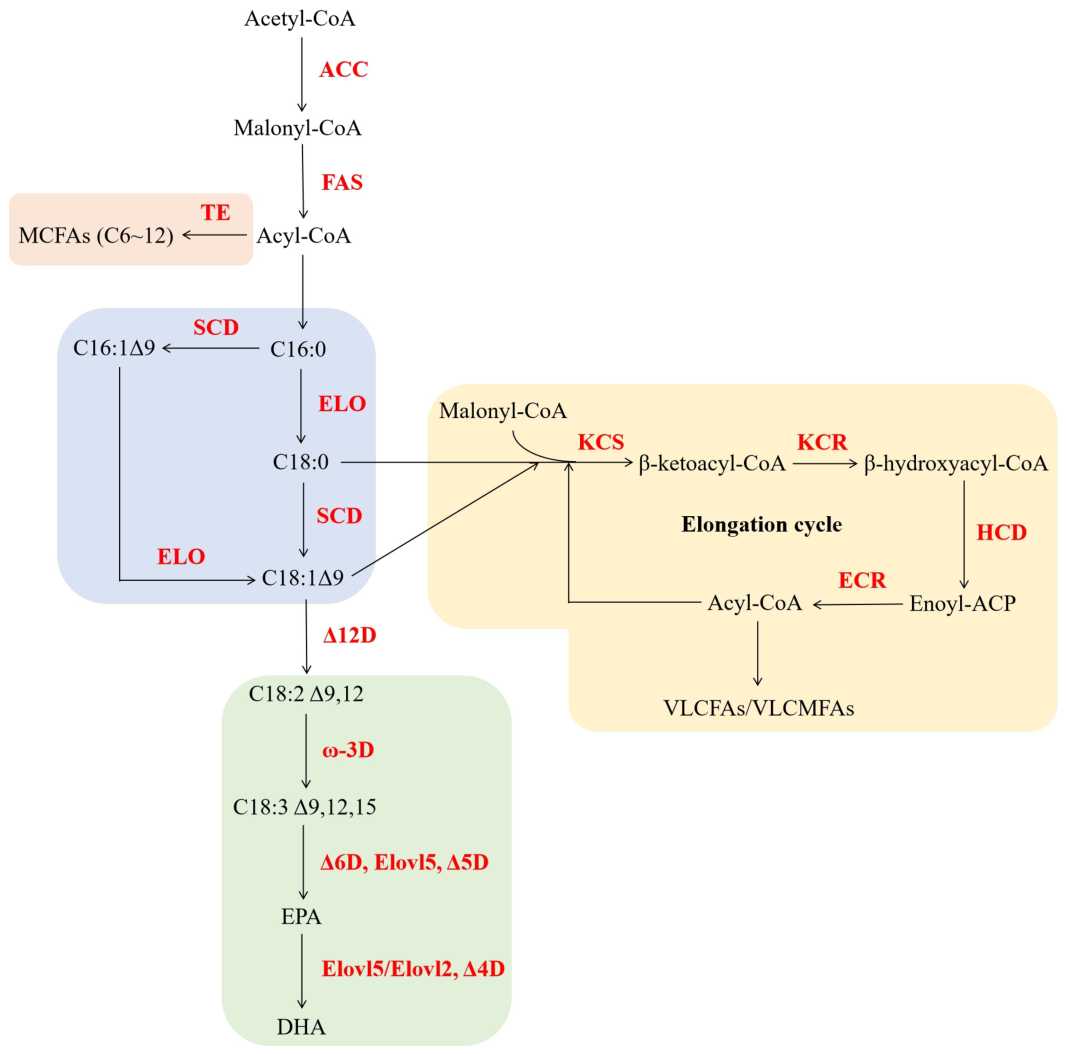
As substrates for STAGs synthesis, fatty acids are biosynthesized via an ordered multi-enzyme cascade reaction in microorganisms and plants (Figure 1). Acetyl-CoA carboxylase (ACC) catalyzes the conversion of acetyl-CoA to malonyl-CoA, providing the essential two-carbon unit for fatty acid chain elongation. This step is considered the rate-limiting step of the entire pathway. Subsequently, using acetyl-CoA as the primer and malonyl-CoA as the two-carbon donor, fatty acid synthase (FAS) catalyzes seven rounds of elongation cycles (condensation, reduction, dehydration, and reduction) to synthesize C16:0. Finally, the modification of fatty acid chain length and saturation degree is accomplished by various fatty acid elongases (FAEs) and fatty acid desaturases (FADs).
Specifically, when the fatty acid chain is elongated to a specific length, medium-chain acyl-CoA thioesterase catalyzes the release of medium-chain fatty acids (MCFAs) from the FAS complex [8]. Since type II FAS in bacteria and plants is a dissociable enzyme system composed of monofunctional enzymes, heterologous expression of substrate-specific thioesterases enables high-level production of MCFAs [9]. In contrast, type I FAS in other eukaryotes is an integrated multi-domain complex that only permits access to thioesterases with relatively small molecular weights, resulting in lower MCFA yields [10]. C16:0 synthesized by the FAS complex is further elongated by fatty acid elongase SCD to generate C18:0. Saturated C16:0 and C18:0 are converted to C16:1 and C18:1 by fatty acid Δ9 desaturase (Δ9D), respectively. As long-chain fatty acids (LCFAs), C16 and C18 fatty acids are the predominant fatty acid species in most organisms. When LCFAs are overproduced, they are stored in intracellular lipid droplets as neutral TAGs [11]. C18:0 and C18:1 undergo further elongation on the endoplasmic reticulum (ER) membrane via cycles of condensation, reduction, dehydration, and re-reduction, ultimately generating very-long-chain fatty acids (VLCFAs) and very-long-chain monounsaturated fatty acids (VLCMFAs). This elongation cycle is catalyzed by four enzymes: 3-ketoacyl-CoA synthase (KCS), 3-ketoacyl-CoA reductase (KCR), 3-hydroxyacyl-CoA dehydrase (HCD), and enoyl-CoA reductase (ECR). Among these, KCS is the key rate-limiting enzyme of the elongation cycle, with strict substrate specificity that determines the carbon chain length of the final product. As mammalian homologs of KCS, the ELOVL family shares identical functions and characteristics [12]. For instance, ELOVL1 catalyzes the elongation of C18–C20 fatty acids; ELOVL2 is responsible for C20–C22 fatty acid elongation; and ELOVL4 preferentially elongates C24–C36 fatty acids. VLCFAs are rarely used as an energy storage material; instead, they are primarily involved in cell structure construction (synthesis of membrane lipid components such as sphingolipids and phospholipids) and specialized physiological processes [13]. The polyunsaturated modification of VLCFAs starts with C18:2 as a precursor, which is first converted to C18:3 by ω-3 desaturase, then catalyzed by Δ6 desaturase (Δ6D), ELOVL5, and Δ5 desaturase (Δ5D) to generate EPA, and finally converted to DHA by ELOVL5/2 and Δ4 desaturase (Δ4D) [14]. EPA and DHA are both ω-3 PUFAs that play critical physiological roles in anti-inflammation, brain development, and cardiovascular protection.

3. Regulation of Fatty Acid Biosynthesis

The regulation of fatty acid chain length essentially relies on the precise control of chain elongation and termination timing during fatty acid synthesis, as well as the impact of degradation pathways on the chain length of synthesized fatty acids [15]. Current strategies for modulating fatty acid chain length and saturation mainly focus on the FAS complex, thioesterases, and the β-oxidation pathway.

3.1. Orthogonal FAS System

An orthogonal FAS system refers to introducing into a host a FAS from a different source, whose substrate specificity or regulatory mechanism does not interfere with the native fatty acid synthesis, thereby enabling precise control over the fatty acid synthesis pathway. Recently, constructing orthogonal FAS systems has become a research hotspot in fatty acid synthesis and regulation. Dawn et al. successfully constructed an orthogonal FAS system in Saccharomyces cerevisiae by heterologously expressing FAS1 from Brevibacterium ammoniagenes, leading to a 6.3-fold increase in fatty acid ethyl ester production [16]. Replacing FAS1 and FAS2 in S. cerevisiae with 9 genes from E. coli and 3 genes from Arabidopsis thaliana (MOD1, FATA1, and FATB) not only enhances the final biomass but also increases the proportion of C16:1 to 74.1% of total lipids [17] (Table 1).

3.2. Other Modification of FAS

In most fungi, FAS consists of two multidomain polypeptides: the α and β chains [18]. In the yeast FAS system, the expression levels of FAS1 and FAS2 are generally coordinated, although their regulatory mechanisms differ. Studies have shown that overexpression of FAS1 or FAS2 in wild-type S. cerevisiae decreases total fatty acid production but increases the proportion of C16 in total fatty acids [19]. In faa1Δ and faa1Δ faa4Δ strains, replacing the native promoters of FAS1, FAS2, and ACC1 in S. cerevisiae BY4742 with the strong constitutive TEF1 promoter results in 1.35-fold and 1.94-fold increases in free fatty acid content, respectively [20]. Further replacement of the native DGA1 promoter with TEF1 promoter elevates the free fatty acid titer to 171.5 mg L−1. Thus, overexpression of FAS is an effective strategy for improving fatty acid yield. Additionally, significant progress has been made in regulating fatty acid chain length via integrating the ketosynthase domain and thioreductase domain in FAS. A C10/C12 fatty acids titer of 674 mg L−1 is achieved by replacing the native thioesterase domain of Ogataea polymorpha with E. coli thioesterase TesA and heterologously expressing a metazoan FAS mutant carrying 3 mutation sites [21]. Therefore, fine-tuning the interaction between fatty acid extension and fatty acid hydrolysis release can effectively enhance the production of MCFAs.

3.3. Specific Thioesterase

Thioesterases catalyze the hydrolysis of the thioester bond in acyl-ACP, thereby releasing free fatty acids. Thioesterases exhibit substrate specificity and determine the chain length of the produced fatty acids. Co-expression of thioesterase FatB from Umbellularia californica (UcFatB) and acyl-CoA synthetase ACSM4 from Rattus norvegicus (RnACSM4) in E.coli yields an MCFA titer of 201 mg L−1 [22]. In an E. coli strain with a blocked β-oxidation pathway, expression of the TesARD−2 variant results in 2.7 g L−1 of C8:0 and 7.9 g L−1 of total free fatty acids [23]. In the integrated fungal FAS, the MPT (malonyl/palmitoyl transferase) tunnel-like domain of FAS1 only allows a 16-carbon palmitoyl group to interact with the transferase domain, and any acyl-ACP with a chain length shorter than 16 carbons is trapped within the tunnel. Consequently, only relatively small thioesterases can diffuse into the FAS cavity and hydrolyze acyl-ACP to release MCFAs [24]. A short-chain thioesterase (AcTesA) from Acinetobacter baylyi was used to replace the redundant ACP domains in the FAS of Rhodosporidium toruloides and Aplanochytrium kerguelense. The embedded AcTesA led to C6:0 and C8:0 titers of 0.67 mg L−1 and 0.72 mg L−1, respectively, approximately 20-fold higher than the control [10]. Expression of four distinct medium-chain acyl-preferring thioesterases in the engineered Trichoderma reesei strain M65 resulted in MCFAs production ranging from 1.14 to 2.77 g L−1 [25].

3.4. Reverse β-Oxidation Pathway (rBOX)

β-Oxidation is the primary pathway for fatty acid degradation in living organisms and one of the main routes for cellular energy acquisition. Recent studies have demonstrated that the β-oxidation pathway can be reversed: enzymes involved in fatty acid degradation are also active in fatty acid synthesis, enabling the production of fatty acids and their derivatives [26]. Reverse β-oxidation initiates with a non-decarboxylative Claisen condensation catalyzed by thiolase, where acetyl-CoA donates two carbon atoms to an acyl-CoA to generate β-ketoacyl-CoA. Subsequently, β-ketoacyl-CoA is reduced to 3-hydroxyacyl-CoA by β-hydroxyacyl-CoA dehydrogenase. 3-Hydroxyacyl-CoA is dehydrated by enoyl-CoA hydratase to form enoyl-CoA. Finally, enoyl-CoA is reduced by a trans-enoyl-CoA reductase to produce acyl-CoA. This acyl-CoA can undergo another round of fatty acid elongation or be utilized by termination enzymes or other pathways to generate diverse products. Fernando et al. increased C6:0 and C8:0 production to 75 mg L−1 and 60 mg L−1, respectively, by knocking out GPD2 in brewing yeast and constructing a rBOX [27]. By engineering a cytoplasmic rBOX in S. cerevisiae CEN.PK2-1C, C8:0 production was increased by 3.2-fold compared to the parental strain [28].

3.5. Synergistic Action of FAEs

Fatty acid elongase (FAE) is a multi-enzyme complex that catalyzes VLCFA synthesis, comprising KCS, KCR, HCD, and ECR. KCS acts as the rate-limiting enzyme and the determinant of substrate specificity in the FAE complex. KCS is predominantly found in plants, while the ELOVL family serves as the functionally equivalent enzyme family in animals. Fatty acid length is determined by a lysine near the ER luminal end of an elongase transmembrane helix [29]. The synergistic action of KCS and ELOVLs significantly enhances the synthesis of LCFAs and VLCFAs. Expression of ELOVL1 in S. cerevisiae using an estradiol-inducible expression system, combined with deletion of the intrinsic elongase elo2, markedly promotes nervonic acid (C24:1Δ15) biosynthesis [30]. Co-expression of ChFAE1 and MoKCS, along with elo2 deletion, increased nervonic acid production to 57 mg L−1 [31]. Similarly, overexpression of a truncated MGA2 together with CgKCS and deletion of elo2 in S. cerevisiae results in a C16:1 titer of 928 mg L−1 in shake-flask cultures and a maximum C16:1 titer of 6.56 g L−1 in a 5 L bioreactor using corn stover hydrolysate as the carbon source [32,33].
In a word, the strategies described above have enhanced the biosynthesis of target fatty acids to varying extents (Table 1). However, these engineering approaches are not universally applicable across different hosts, as their intrinsic fatty acid synthesis capacities and regulatory mechanisms differ substantially. Based on current findings, engineering modifications of FAS domains represent a reliable and promising strategy for enhancing the production of tailored fatty acids.
Table 1. High fatty acid-producing strains.
StrainApproachTiter/ContentReference
S. cerevisiaeReplacing FAS1 and FAS2 with acpP, acpS, fab -A, -B, -D, -F, -G, -H, -Z, MOD1, FATA1 and FATB74.1 mol% C16:1[17]
S. cerevisiae BY4742Overexpressing FAS1, FAS2, ACC1 and DGA1171.5 mg L−1 total fatty acids [20]
S. Cerevisiae (XMCFA69)Replacing intrinsic TE with TesA, introducing KS mutant674 mg L−1 C10:0 and C12:0[21]
S. cerevisiae BY4742Overexpressing ACC1, FAS1, and FAS2400 mg L−1 free fatty acids[20]
S. cerevisiae YJZ03Expressing MvFAS0166 mg L−1 MCFA[34]
S. cerevisiaeOverexpressing phosphopantetheine transferase111 mg L−1 SCFA[35]
S. cerevisiaeOverexpressing RPL40B87 mg L−1 C8:0[36]
S. cerevisiaeIntroducing FAS mutant 464.4 mg L−1 SCFA[37]
Y. lipolytica (JHYL-R146)Overexpressing CpFAH12, CDS1, PSD1, CHO2, OPI3, MaC16E, deleting MEF1, PEX10, FAD2, PAH1, APP1, DGA1, blocking β-oxidation pathway2.061 g L−1 free fatty acids[38]
Y. lipolytica (CJ0415)Deleting MHY1, OPI3, CDS1, and CEX1, overexpressing TAG synthetic genes, disrupting fatty acid degradation54.6 g L−1 total fatty acids [39]
R. toruloides (ATCC204091)Expressing PgFADX and PgFAD2451.6 mg L−1 punicic acid [40]
S. cerevisiae PWY12Replacing ACP domain with sTE0.72 mg L−1 C8:0[10]
E. coliExpressing UcFatB and RnACSM4201 mg L−1 MCFA[22]
E. coliOverexpressing TesA mutant7.9 g L−1 free fatty acids, 2.7 g L−1 C8:0[23]
M. circinelloides (M65)Overexpressing TE2.77 g L−1 C8:0-C10:0 C10:0, and C12:0[25]
S. cerevisiae (adh1-5)Deleting GPD2, expressing BktB and Ter75 mg L−1 C6:0, 60 mg L−1 C8:0[27]
E. coli MG1655Constructing the reverse β-oxidation cycle0.8 g L−1 C6:0-C10:0[41]
E. coliConstructing the reverse β-oxidation cycle3.8 g L−1 MCFA[42]
S. cerevisiae YS58Overexpressing ChFAE1 and LaKCS, deleting elo257 mg L−1 C24:1[30]
S. cerevisiae YS58Deleting elo2, expressing CgKCS, ChFAE1, and tMga2928 mg L−1 C16:1[31]
S. cerevisiae YS10Using corn stover hydrolysate as carbon source6.56 g L−1 C16:1[32]
Y. lipolytica (AJD)Deleting EYD1 and overexpressing Dga13.95 g L−1 total fatty acids[43]

4. Key Enzymes Involved in TAG Synthesis

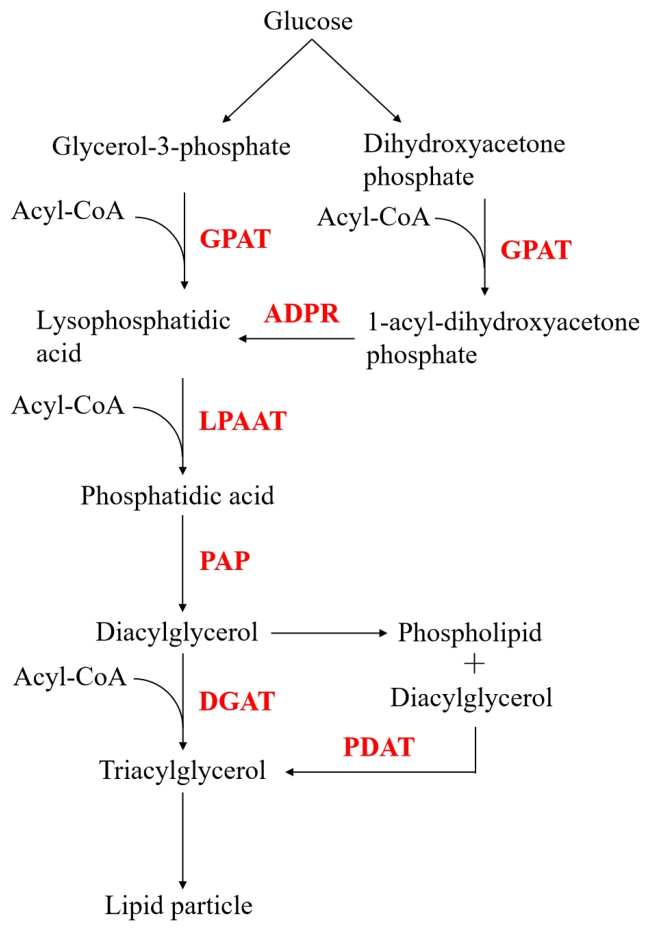
TAG biosynthesis can be divided into three major steps: the acylation of G-3-P or DHAP, the formation of phosphatidic acid (PA), and the subsequent synthesis of TAG [44]. Key enzymes involved in TAG synthesis are illustrated in Figure 2.

4.1. Glycerol-3-Phosphate Acyltransferase (GPAT)

The first step of TAG synthesis is the acylation at the sn-1 position of the glycerol backbone, and GPAT acylates G-3-P or DHAP through a mechanism of the ‘Asp-His’ dyad thioester [45]. In S. cerevisiae, this reaction is catalyzed by two ER-localized GPATs, Gat1 (Gpt2) and Gat2 (Sct1) [46]. This step is considered the committed step of glycerolipid biosynthesis, as the transfer of a fatty acyl to the glycerol backbone irreversibly channels the intermediate into the glycerolipid metabolic network.
Gat1 functions as the principal sn-1 acyltransferase in S. cerevisiae, utilizing both G-3-P and DHAP as substrates. In the gat1Δ mutant, intracellular GPAT activity is reduced to approximately 10–15% of wild-type levels, accompanied by a marked decrease in the proportion of PA within total phospholipids [47]. Upon supplementation with exogenous C18:1, gat1Δ cells fail to efficiently channel fatty acids into the TAG biosynthetic pathway, and approximately 50% of cells lose viability within 24 h due to fatty acid toxicity [48]. These observations indicate that Gat1 plays an indispensable role in sn-1 acylation and in buffering excess unsaturated fatty acids. In contrast, the gat2Δ single mutant exhibits only minor effects on overall PA synthesis, and its survival under oleic acid supplementation is comparable to that of the wild type [47,48], suggesting that Gat2 plays a subsidiary role. However, the gat1Δgat2Δ double mutant is synthetically lethal, indicating functional redundancy between the two enzymes and demonstrating that they collectively constitute an essential sn-1 acylation system in S. cerevisiae.
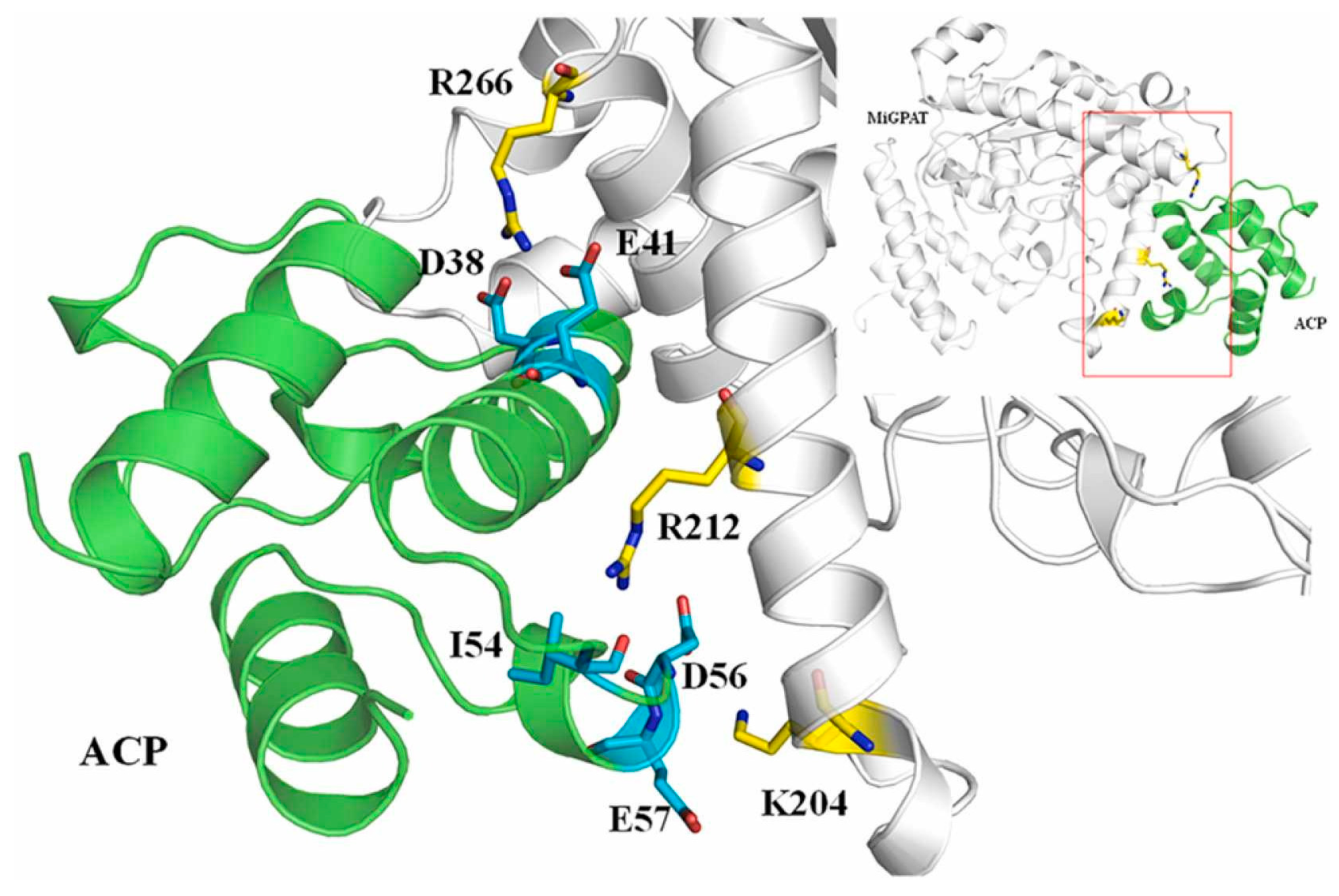
The substrate selectivity of the plastidial GPAT is dependent on the interaction between the fatty acyls and GPAT [Figure 3]. In brewing yeast, Gat1 displays broad acyl-CoA selectivity, efficiently utilizing C16:0-, C16:1-, C18:0- and C18:1-CoA, and plays a dominant role under conditions enriched in unsaturated fatty acids, particularly C18:1. By contrast, Gat2 shows a pronounced preference for C16:0-CoA, and its overexpression increases membrane lipid saturation and perturbs cellular growth [47,48]. These findings indicate that, at the earliest stage of TAG biosynthesis, cells initiate the selection of acyl chain length and saturation through the functional specialization of distinct GPAT isoforms.

4.2. Lysophosphatidic Acid Acyltransferase (LPAAT)

After completing the sn-1 acylation of the glycerol skeleton to generate lysophosphatidic acid (LPA), TAG synthesis proceeds to the second key step: acylation at the sn-2 position catalyzed by LPAAT (also known as AGPAT). His and Asp residues within the conserved motif NHQSxxD and the Glu and Gly residues within the conserved motif PEGTR are essential for catalytic functions of the E. coli LPAAT [50]. Unfortunately, the unresolved crystal structure of LPAAT limits the study of its catalytic mechanism. LPAAT catalyzes the conversion of LPA to PA. As a central metabolic hub in glycerolipid metabolism, PA can either be dephosphorylated to generate diacylglycerol (DAG) for entry into the TAG pathway, or serve as a precursor for phospholipid synthesis [51]. Thus, both the rate of PA production and its subcellular localization are critical determinants of carbon flux partitioning between membrane lipid synthesis and storage lipid accumulation.
PA metabolism is highly dependent on the physiological state of the cell. During rapid cell growth, approximately 70–80% of PA/DAG flux is preferentially directed toward membrane lipid synthesis, whereas under nutrient-limited or fatty acid-enriched conditions, the proportion of TAG in total lipids increases from below 10% to over 30–40% [44,46]. Notably, this metabolic shift does not occur primarily at the terminal steps of TAG synthesis but instead depends largely on the rate of early PA production and its spatial regulation.
In budding yeast, Slc1 and Ale1 are responsible for PA synthesis. Slc1 is the first identified LPAAT localized in the ER membrane and is capable of efficiently utilizing C18:1-, C14:0-, C12:0- and C10:0-CoA as acyl donors to generate PA [51]. Ale1 was initially identified as a lysophosphatidylethanolamine acyltransferase (LPEAT) and is enriched in the mitochondria-associated membrane region. It is capable of efficiently integrating LPA from the DHAP pathway, membrane lipid remodeling, and mitochondria-associated metabolism, and rapidly converting it into PA [52]. Either the slc1Δ or ale1Δ mutant is viable, although intracellular PA levels are significantly reduced. However, the slc1Δale1Δ double mutant is synthetically lethal. These findings indicate that the two enzymes possess partial functional redundancy and jointly maintain the minimal intracellular PA supply required for cell viability [46,53].

4.3. Diacylglycerol Acyltransferase (DGAT)

The generated PA undergoes dephosphorylation to form diacylglycerol (DAG), which is subsequently acylated to form TAG. This sequential process determines the overall metabolic flux toward TAG synthesis and represents a central branch point between membrane lipid production and neutral lipid accumulation at the regulatory level [54]. The conversion of PA to DAG is catalyzed by phosphatidic acid phosphatase (PAP), which is primarily mediated by Pah1 in brewing yeast. Pah1 represents a rate-limiting node in TAG biosynthesis, as the pah1Δ mutant exhibits a marked reduction in TAG content [55]. The activity of Pah1, together with its dynamic localization between cytoplasm and ER membrane, determines whether PA is directed into the TAG biosynthetic pathway, thereby functioning as a metabolic “switch” within the lipid network.
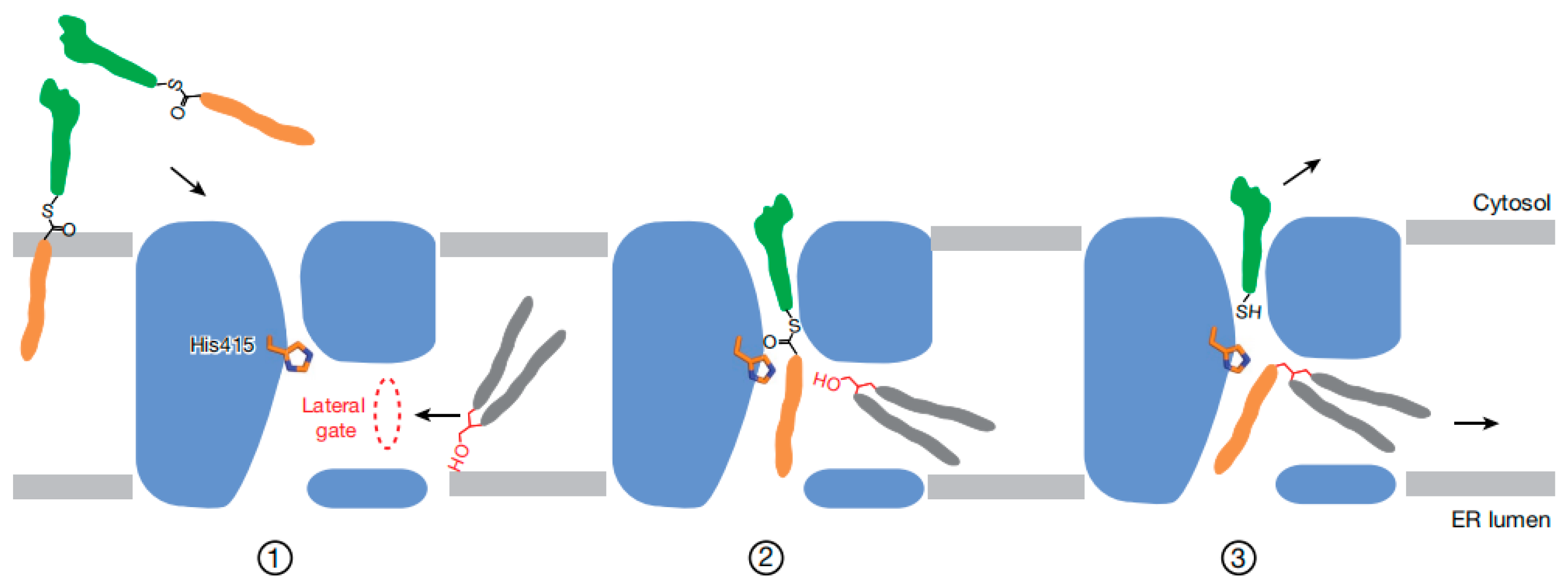
DGAT catalyzes the final conversion of DAG into TAG [56]. This process is initiated by the binding of acyl donors and acceptors to the membrane-embedded active sites. The acyl transfer reaction is mediated by the conserved residue His415. Following catalysis, the reaction product free CoA-SH is released into the cytosol, whereas the hydrophobic TAGs diffuse into the lipid bilayer [Figure 4]. In yeast, Dga1 is the sole member of acyl-CoA: diacylglycerol acyltransferase, whereas phospholipid: diacylglycerol acyltransferase Lro1 catalyzes an acyl-CoA-independent pathway for TAG formation [57]. Dga1 localizes to the ER and lipid particle–associated membranes, and its activity is directly regulated by the availability of fatty acyl-CoA. It also interacts with the fatty acid desaturase Ole1, forming membrane-associated multienzyme complexes that facilitate lipid synthesis [58]. Moreover, Dga1 exhibits high catalytic efficiency toward unsaturated acyl-CoA, making it particularly important for the incorporation of monounsaturated fatty acids produced by Δ9D [59]. By contrast, Lro1 catalyzes TAG synthesis by transferring the sn-2 acyl group from phospholipids, mainly phosphatidylcholine, to DAG, thereby generating TAG [44]. This reaction directly couples the membrane lipid remodeling with TAG synthesis, and provide an alternative route for TAG formation when acyl-CoA supply is limited. Although the single mutants dga1Δ and lro1Δ are both viable, TAG content decreases by approximately 50–70% and 20–30%, respectively. In the dga1Δlro1Δ double mutant, TAG content is reduced by more than 95%, indicating severe disruption of lipid homeostasis [44]. Therefore, Dga1 serves as the dominant enzyme for TAG synthesis in yeast, whereas Lro1 plays a complementary yet physiologically important role in maintaining metabolic robustness and adapting to specific cellular conditions.
Owing to the relatively broad substrate specificity of the aforementioned acyltransferases involved in TAG biosynthesis, naturally occurring TAGs inherently exist as a mixture of molecular species that differ either in fatty acid composition or in the positional distribution of identical fatty acyls. Accordingly, rational engineering of the fatty acid and TAG biosynthetic pathways is imperative to achieve high-level accumulation of STAGs.

5. Cellular Synthesis of STAGs

5.1. OPO

OPO refers to structured TAGs in which palmitic acid (C16:0) is enriched at the sn-2 position, whereas oleic acid (C18:1) predominates at the sn-1 and sn-3 positions [61]. The central challenge in OPO biosynthesis lies not simply in achieving the desired fatty acid composition, but in directing C16:0 specifically to the sn-2 position during TAG assembly. In microbial systems, this is primarily accomplished by engineering the substrate specificity of LPAAT. Peng et al. systematically characterized and exploited the substrate preference of endogenous acyltransferases to construct a de novo OPO synthetic pathway in S. cerevisiae [2]. By introducing the ACC1** mutation, modulating fatty acid profiles, engineering specific LPAAT activity, and deleting DGA1 and TGL3/4/5, the proportion of OPO in total TAGs was increased from 1.6 mol% to 45.4 mol%. Under optimized conditions, the OPO titer reached 32.1 mg L−1 in a 5 L bioreactor. In addition to budding yeast, the oleaginous yeast Yarrowia lipolytica has also been employed for the production of OPO. The introduction of heterologous sn-2-specific LPATs with palmitoyl-CoA preference (e.g., from algae or mammals) markedly increased the proportion of C16:0 at the sn-2 position to over 60% in TAGs, while total lipid content reached 60–70% of dry cell weight (DCW), thereby more closely mimicking the structural and compositional features of human milk fat [62]. Similarly, OPO has been produced in algae and plants through modulation of sn-2 acylation. In Prototheca moriformis, enhancing C16:0 supply and expressing an sn-2-preferential LPAAT increased the proportion of C16:0 at the sn-2 position to 73%, elevated OPO content in TAG to 38.3%, and enabled a large-scale oil production of 150 g L−1 [63]. In A. thaliana seeds, reprogramming LPAT activity increased C16:0 occupancy at the sn-2 position from approximately 3% in the wild type to over 70% [64]. Furthermore, expression of human AGPAT1, combined with suppression of LPAAT2 and PDCT, directed more than 80% of C16:0 specifically to the sn-2 position of TAG, enabling in planta biosynthesis of OPO-TAGs [65]. Collectively, these studies demonstrate that sn-2 acylation is the most critical and engineerable regulatory node in OPO biosynthesis.

5.2. MLM

MLM refers to structured TAGs in which MCFAs are esterified at the sn-1 and sn-3 positions, while an LCFA is incorporated at the sn-2 position [66]. This class of TAGs offers the advantages of rapid energy release and efficient absorption in the human body, and its biosynthesis critically depends on both sufficient MCFA supply and precise positional selectivity during TAG assembly.
Since microorganisms naturally produce only limited amounts of MCFAs, E. coli has been employed as a model host for de novo MLM biosynthesis through metabolic engineering. Xu et al. first introduced a medium-chain-specific thioesterase (e.g., RcFatB) together with a heterologous DGAT into E. coli to achieve the accumulation of MCFA-containing TAGs, resulting in an MCFA content of 43.8% and a TAG titer of 399 mg L−1, thereby laying the foundation for microbial MLM production [67]. Building on this work, Chen et al. co-expressed UcFatB and RnACSM4 in E. coli to enhance MCFA-CoA supply, and concurrently introduced heterologous GPAT, LPAAT, and DGAT to reconstruct the TAG assembly pathway, thereby facilitating the selective incorporation of MCFA-CoA at the sn-1 and sn-3 positions. In a 5 L fermenter, the proportion of MLM in total TAGs reached 20.31 wt%, representing an 88-fold increase compared with the parental strain [22].
Efforts have also been made to extend MLM-TAG biosynthesis to eukaryotic microorganisms such as S. cerevisiae and microalgae. In S. cerevisiae, deletion of GAT2 and LRO1, together with introduction of RnACSM4, enabled the recombinant strain to produce MLM at a level of 4.2 mol% when supplemented with 0.2 mM sodium laurate. Under optimized conditions, MLM content and yield reached 34.4 mol% and 18.5 mg g−1 DCW, respectively [68]. In microalga Nannochloropsis oceanica, overexpression of DGAT from Arabidopsis increased total TAG content by 57.7% and elevated the proportions of C16:0 and C16:1 in TAGs while decreasing C18 fatty acids [69]. Although MCFA and MLM production in yeast can be enhanced by overexpressing the mutated fas1R1834K allele and through additional metabolic engineering strategies, achieving high-yield MLM production via de novo biosynthesis remains challenging due to active efflux and passive diffusion of free MCFAs into the extracellular space [68]. Collectively, manipulation of the TAG assembly process can effectively reshape acyl distribution on the glycerol backbone, providing a feasible engineering strategy for the production of MLM with defined chain-length and structural characteristics.

5.3. CBEs

CBEs are primarily composed of three major TAG species (POP, POS and SOS), with SOS playing a pivotal role in determining the melting behavior and sensory properties of cocoa butter [70]. Unlike OPO and MLM, the functionality of CBEs does not primarily depend on the acyl group at the sn-2 position, but rather on the overall TAG composition and the relative proportions of these characteristic molecular species.
Current research on CBEs biosynthesis mainly follows two strategies: (i) direct synthesis of cocoa butter-like TAGs by introducing plant-derived TAG assembly enzymes; and (ii) modulation of fatty acid chain length and saturation to optimize precursor supply, thereby enabling endogenous acyltransferases to generate the desired TAG species. By expressing and regulating GPAT, LPAT, and DGAT from Theobroma cacao in S. cerevisiae, the content of CBE-related TAGs was increased by 2.25-fold, while total CBE production was elevated by 6.7-fold [71,72]. Among these, SOS content increased by 3.5–4.8-fold, demonstrating the feasibility of using plant-derived TAG assembly enzymes for microbial CBE biosynthesis. Bergenholm et al. focused on optimizing fatty acid supply by coordinately regulating ACC1**, OLE1 and ELO1, which significantly increased C18:0 and C18:1 levels [73]. As a result, CBE-type TAGs (TAG 50:1, 52:1 and 54:1) accounted for 22% of total TAGs, with SOS content increasing to 9.8%. Building upon this strategy, Konzock et al. engineered the oleaginous yeast Y. lipolytica by replacing the endogenous OLE1 with a Δ9 desaturase from R. toruloides and modulating the expression of the Δ12 desaturase FAD2 [74]. This approach nearly eliminated C16:1, which is absent from cocoa butter, and reduced C18:2 levels, resulting in a TAG fatty acid profile closely resembling that of cocoa butter (C16:0 26%, C18:0 24%, C18:1 40%), while maintaining high lipid accumulation (45% g g−1 CDW). In addition to biosynthetic engineering, post-processing strategies have also been explored. Ghazani et al. proposed a TAG fractionation approach in which algal fractions enriched in POP/POS and algal stearin enriched in SOS were obtained through multi-step acetone extraction and subsequently blended at a ratio of 90:10 (w/w) to generate a CBE analog containing 15.8% POP, 32.0% POS, and 24.6% SOS [75]. Overall, TAG assembly engineering, fatty acid precursor optimization, and post-processing fractionation have advanced CBE development from three complementary perspectives: structural construction, precursor supply optimization, and system-level compositional regulation.

5.4. PUFA-Rich STAGs

STAGs enriched in PUFA, particularly EPA-TAGs and DHA-TAGs, have significant applications in cardiovascular health, neurodevelopment and anti-inflammatory therapy [76]. Compared with free fatty acids or phospholipid forms, the TAG structure not only affects the digestive and absorptive efficiency of PUFA in vivo, but also directly influences their storage stability and metabolic fate in biological system. Therefore, the accumulation of PUFA-rich TAGs depends on the coordinated regulation of PUFA biosynthesis and TAG storage stability.
In oleaginous yeast and microalgae, PUFA accumulation is generally achieved by enhancing precursor supply for fatty acid synthesis, increasing reducing power generation and suppressing β-oxidation. For example, introduction of a plant-derived Δ15 desaturase into Lipomyces starkeyi effectively enabled the conversion of endogenously accumulated ω-6 fatty acids into ω-3 fatty acids, thereby markedly altering fatty acid composition. As a result, DHA production reached 1080 mg L−1, accounting for 17.4% of total fatty acids [77]. In the marine microalgae Schizochytrium sp., a multi-level metabolic engineering strategy was employed to coordinately regulate both fatty acid synthesis and degradation pathways. The engineered strain achieved a lipid content of 82.2% of DCW and a DHA production level of 7.04 g L−1 [78]. Xie et al. engineered Y. lipolytica by constructing an EPA biosynthetic pathway, implementing multi-copy gene integration, and inhibiting β-oxidation, resulting in an EPA content of approximately 25% of DCW and a total lipid content exceeding 50% of DCW, thereby enabling successful large-scale production [79]. Further research has shown that by inhibition of TAG degradation can further enhance PUFA-TAG accumulation. For instance, knockout of TGL4 significantly reduced intracellular free fatty acid accumulation when waste edible oil was used as the substrate, improved the stable storage capacity of EPA-TAG, and increased EPA production to 4.4 g L−1 [80]. Together, efficient production of PUFA-rich TAGs depends on the synergistic optimization of unsaturated fatty acid biosynthesis, TAG assembly, and intracellular lipid storage stability.

6. Conclusions and Perspectives

STAGs represent a class of functional lipids that integrate both nutritional and physicochemical properties. This review summarizes the latest advances in the biosynthesis and regulation of fatty acids, as well as the cellular synthesis of STAGs. Fatty acid biosynthesis is precisely regulated by multiple effective strategies, including orthogonal FAS systems, specific thioesterases, reverse β-oxidation and FAEs synergism, which effectively tailor fatty acid chain length and saturation. Key enzymes including GPAT, LPAAT and DGAT determine TAG assembly and positional acyl distribution. For major types of STAGs, engineering sn-2 acylation specificity of LPAAT promotes OPO production, optimizing MCFA supply and TAG assembly enables MLM synthesis, while CBEs and PUFA-rich STAGs benefit from precursor optimization and multi-pathway synergism. Although different classes of STAGs require distinct engineering strategies, they generally follow a common regulatory logic involving fatty acid precursor supply, positional selectivity of acyltransferases, and intracellular TAG storage stability. Therefore, metabolic engineering strategies should be rationally designed according to the target STAGs.
Despite significant progress, several challenges remain, such as the host-specific applicability of engineering strategies and the relatively low titer of target STAGs. In addition, the ambiguous synergistic regulatory mechanisms between glycerides and phospholipids, together with the degradation and re-synthesis of TAGs during dynamic lipid turnover, may exert a significant impact on the long-term stability of STAGs accumulation. Future research should focus on fine-tuning the substrate specificity of key enzymes, optimizing intracellular metabolic flux, and developing high-efficiency microbial cell factories, so as to promote the production of STAGs. Overall, the biosynthesis of STAGs will evolve from empirical metabolic engineering toward a predictive and design-oriented system engineering paradigm, thereby laying the foundation for the sustainable production of STAGs or beyond.

Author Contributions

Investigation and Writing—original draft, J.Y. and S.L. Conceptualization and draft revision, J.L. All authors have read and agreed to the published version of the manuscript.

Funding

This research was financially supported by grants from the National Nature Science Foundation of China (Grant No. 22078013).

Data Availability Statement

The data presented in this study are available upon request from the corresponding author.

Acknowledgments

The authors are grateful for the support of the National Nature Science Foundation of China. We thank the reviewers and editors for their careful review of this manuscript.

Conflicts of Interest

The authors declare that they have no known competing financial interests or personal relationships that could have appeared to influence the work reported in this paper.

Abbreviations

TAG(s), triacylglycerol(s); STAG(s), structured triacylglycerol(s); OPO, 1,3-dioleoyl-2-palmitoyl triacylglycerol; CBEs, cocoa butter equivalents; PUFA(s), polyunsaturated fatty acid(s); MLM, medium-chain–long-chain–medium-chain triacylglycerols; GPAT, glycerol-3-phosphate acyltransferase; LPAAT, lysophosphatidic acid acyltransferase; DGAT, diacylglycerol acyltransferase; FAS, fatty acid synthase; FAE(s), fatty acid elongase(s); FAD, fatty acid desaturase; MCFA(s), medium-chain fatty acid(s); LCFA(s), long-chain fatty acid(s); VLCFA(s), very long-chain fatty acid(s); ACC, acetyl-CoA carboxylase; ACP, acyl carrier protein; DHAP, dihydroxyacetone phosphate; PA, phosphatidic acid; PAP, phosphatidic acid phosphatase; DAG, diacylglycerol; ER, endoplasmic reticulum; DCW, dry cell weight; KCS, 3-ketoacyl-CoA synthase; KCR, 3-ketoacyl-CoA reductase; HCD, 3-hydroxyacyl-CoA dehydrase; ECR, enoyl-CoA reductase; POP, 1,3-palmitoyl-2-oleoyl glycerol; POS, 1-palmitoyl-2-oleoyl-3-stearoyl glycerol; SOS, 1,3-stearoyl-2-oleoyl glycerol.

References

  1. Coleman, R.A.; Lee, D.P. Enzymes of triacylglycerol synthesis and their regulation. Prog. Lipid Res. 2004, 43, 134–176. [Google Scholar] [CrossRef]
  2. Peng, Z.; Kuang, X.; Li, S.; Yang, C.; Nie, K.; Deng, L.; Wang, F.; Liu, J. Construction of a yeast platform for efficient synthesis of structured triacylglycerols by harnessing the substrate preference of endogenous acyltransferases. Food Biosci. 2025, 73, 107748. [Google Scholar] [CrossRef]
  3. He, Y.; Qiu, C.; Guo, Z.; Huang, J.; Wang, M.; Chen, B. Production of new human milk fat substitutes by enzymatic acidolysis of microalgae oils from Nannochloropsis oculata and Isochrysis galbana. Bioresour. Technol. 2017, 238, 129–138. [Google Scholar] [CrossRef]
  4. Macridachis, J.; Bayés-García, L.; Calvet, T. Mixing phase behavior of trilaurin and monounsaturated triacylglycerols based on palmitic and oleic fatty acids. J. Therm. Anal. Calorim. 2023, 148, 12987–13001. [Google Scholar] [CrossRef]
  5. Li, N.; Jia, M.; Deng, Q.; Wang, Z.; Huang, F.; Hou, H.; Xu, T. Effect of low-ratio n-6/n-3 PUFA on blood lipid level: A meta-analysis. Horm.-Int. J. Endocrinol. Metab. 2021, 20, 697–706. [Google Scholar] [CrossRef]
  6. Morales-Medina, R.; Munio, M.; Guadix, A.; Guadix, E.M. Development of an up-grading process to produce MLM structured lipids from sardine discards. Food Chem. 2017, 228, 634–642. [Google Scholar] [CrossRef] [PubMed]
  7. Bohorquez-Pena, M.J.; Vargas-Suaza, B.; Garzon-Alonso, K.E.; Rendon-Londono, J.C.; Franco-Tobon, Y.N.; Gomez-Herrera, C.L.; Mesa, M.; Martínez-Galan, J.P. Production of MLM-type structured lipids from avocado oil catalyzed by immobilized lipase on corn cob powder: Assessment of antiproliferative potential on Hep-G2 cell line. Food Biosci. 2025, 69, 107000. [Google Scholar] [CrossRef]
  8. Tehlivets, O.; Scheuringer, K.; Kohlwein, S.D. Fatty acid synthesis and elongation in yeast. Biochim. Biophys. Acta Mol. Cell Biol. Lipids 2007, 1771, 255–270. [Google Scholar] [CrossRef]
  9. Beld, J.; Lee, D.J.; Burkart, M.D. Fatty acid biosynthesis revisited: Structure elucidation and metabolic engineering. Mol. Biosyst. 2015, 11, 38–59. [Google Scholar] [CrossRef] [PubMed]
  10. Zhu, Z.; Zhou, Y.J.; Krivoruchko, A.; Grininger, M.; Zhao, Z.K.; Nielsen, J. Expanding the product portfolio of fungal type I fatty acid synthases. Nat. Chem. Biol. 2017, 13, 360–362. [Google Scholar] [CrossRef] [PubMed]
  11. Toncan, F.; Raj, R.R.; Lee, M.J. Dynamics of fatty acid composition in lipids and their distinct roles in cardiometabolic health. Biomolecules 2025, 15, 696. [Google Scholar] [CrossRef]
  12. Tian, D.; Wang, S.; Wang, L.; Wang, J.; Li, F. The biosynthesis and metabolic engineering of very long-chain monounsaturated fatty acid. Biotechnol. Bull. 2015, 31, 42–49. [Google Scholar]
  13. Sassa, T.; Kihara, A. Metabolism of very long-chain fatty acids: Genes and pathophysiology. Biomol. Ther. 2014, 22, 83–92. [Google Scholar] [CrossRef] [PubMed]
  14. Song, C.; Wade, A.; Rainier, J.D. A gram-scale synthesis of very-long chain polyunsaturated fatty acids (VLC-PUFAs). Org. Biomol. Chem. 2024, 22, 3951–3954. [Google Scholar] [CrossRef]
  15. Heil, C.S.; Wehrheim, S.S.; Paithankar, K.S.; Grininger, M. Fatty acid biosynthesis: Chain-length regulation and control. ChemBioChem 2019, 20, 2298–2311. [Google Scholar] [CrossRef] [PubMed]
  16. Eriksen, D.T.; HamediRad, M.; Yuan, Y.; Zhao, H. Orthogonal fatty acid biosynthetic pathway improves fatty acid ethyl ester production in Saccharomyces cerevisiae. ACS Synth. Biol. 2015, 4, 808–814. [Google Scholar] [CrossRef] [PubMed]
  17. Pozdniakova, T.A.; Cruz, J.P.; Silva, P.C.; Azevedo, F.; Domingues, M.R.; Carlquist, M.; Johansson, B. Optimization of a hybrid bacterial/Arabidopsis thaliana fatty acid synthase system II in Saccharomyces cerevisiae. Metab. Eng. Commun. 2023, 17, e00224. [Google Scholar] [CrossRef]
  18. Wernig, F.; Born, S.; Boles, E.; Grininger, M.; Oreb, M. Fusing α and β subunits of the fungal fatty acid synthase leads to improved production of fatty acids. Sci. Rep. 2020, 10, 9780. [Google Scholar] [CrossRef]
  19. Fernandez-Moya, R.; Da Silva, N.A. Engineering Saccharomyces cerevisiae for high-level synthesis of fatty acids and derived products. FEMS Yeast Res. 2017, 17, fox070. [Google Scholar] [CrossRef]
  20. Runguphan, W.; Keasling, J.D. Metabolic engineering of Saccharomyces cerevisiae for production of fatty acid-derived biofuels and chemicals. Metab. Eng. 2014, 21, 103–113. [Google Scholar] [CrossRef]
  21. Ludig, D.L.; Zhai, X.; Rittner, A.; Gusenda, C.; Heinz, M.; Berlage, S.; Gao, N.; Jervis, A.J.; Zhou, Y.J.; Grininger, M. Engineering metazoan fatty acid synthase to control chain length applied in yeast. Nat. Chem. Biol. 2026, 22. [Google Scholar] [CrossRef] [PubMed]
  22. Chen, M.; Yang, C.; Deng, L.; Wang, F.; Liu, J. Production of 1,3-mediumchain-2-long chain (MLM) triacylglycerols by metabolically engineered Escherichia coli. Biochem. Eng. J. 2022, 184, 108498. [Google Scholar] [CrossRef]
  23. Deng, X.; Chen, L.; Hei, M.; Liu, T.; Feng, Y.; Yang, G.-Y. Structure-guided reshaping of the acyl-binding pocket of ‘TesA thioesterase enhancesoctanoic acid production in Escherichia coli. Metab. Eng. 2020, 61, 24–32. [Google Scholar] [CrossRef]
  24. Xu, P.; Qiao, K.; Ahn, W.S.; Stephanopoulos, G. Engineering Yarrowia lipolytica as a platform for synthesis of drop-in transportation fuels and oleochemicals. Proc. Natl. Acad. Sci. USA 2016, 113, 10848–10853. [Google Scholar] [CrossRef] [PubMed]
  25. Hussain, S.A.; Hameed, A.; Khan, M.A.K.; Zhang, Y.; Zhang, H.; Garre, V.; Song, Y. Engineering of fatty acid synthases (FASs) to boost the production of medium-chain fatty acids (MCFAs) in Mucor circinelloides. Int. J. Mol. Sci. 2019, 20, 786. [Google Scholar] [CrossRef]
  26. Clomburg, J.M.; Vick, J.E.; Blankschien, M.D.; Rodriguez-Moya, M.; Gonzalez, R. A synthetic biology approach to engineer a functional reversal of the β-oxidation cycle. ACS Synth. Biol. 2012, 1, 541–554. [Google Scholar] [CrossRef]
  27. Garces Daza, F.; Haitz, F.; Born, A.; Boles, E. An optimized reverse β-oxidation pathway to produce selected medium-chain fatty acids in Saccharomyces cerevisiae. Biotechnol. Biofuels Bioprod. 2023, 16, 71. [Google Scholar] [CrossRef]
  28. Lian, J.; Zhao, H. Reversal of the β-oxidation cycle in Saccharomyces cerevisiae for production of fuels and chemicals. ACS Synth. Biol. 2014, 4, 332–341. [Google Scholar] [CrossRef]
  29. Denic, V.; Weissman, J.S. A molecular caliper mechanism for determining very long-chain fatty acid length. Cell 2007, 130, 663–677. [Google Scholar] [CrossRef] [PubMed]
  30. Liu, J.; Wang, T.; Jiang, Y.; Liu, Z.; Tian, P.; Wang, F.; Deng, L. Harnessing β-estradiol inducible expression system to overproduce nervonicacid in Saccharomyces cerevisiae. Process Biochem. 2020, 32, 37–42. [Google Scholar] [CrossRef]
  31. Zhang, Y.; Yang, C.; Xia, J.; Deng, L.; Wang, F.; Liu, J. Overproducing nervonic acid by synergism of fatty acid elongases in engineered Saccharomyces cerevisiae. Process Biochem. 2022, 122, 341–346. [Google Scholar] [CrossRef]
  32. Zhang, Y.; Pang, J.; Liu, S.; Nie, K.; Deng, L.; Wang, F.; Liu, J. Harnessing transcription factor Mga2 and fatty acid elongases to overproduce palmitoleic acid in Saccharomyces cerevisiae. Biochem. Eng. J. 2022, 181, 108402. [Google Scholar] [CrossRef]
  33. Li, S.; Su, C.; Fang, M.; Cai, D.; Deng, L.; Wang, F.; Liu, J. Overproduction of palmitoleic acid from corn stover hydrolysate by engineered Saccharomyces cerevisiae. Bioresour. Technol. 2023, 382, 129211. [Google Scholar] [CrossRef]
  34. Zhu, Z.; Hu, Y.; Teixeira, P.G.; Pereira, R.; Chen, Y.; Siewers, V.; Nielsen, J. Multidimensional engineering of Saccharomyces cerevisiae for efficient synthesis of medium-chain fatty acids. Nat. Catal. 2020, 3, 64–74. [Google Scholar] [CrossRef]
  35. Leber, C.; Da Silva, N.A. Engineering of Saccharomyces cerevisiae for the synthesis of short-chain fatty acids. Biotechnol. Bioeng. 2014, 111, 347–358. [Google Scholar] [CrossRef] [PubMed]
  36. Baumann, L.; Doughty, T.; Siewers, V.; Nielsen, J.; Boles, E.; Oreb, M. Transcriptomic response of Saccharomyces cerevisiae to octanoic acid production. FEMS Yeast Res. 2021, 21, foab011. [Google Scholar] [CrossRef] [PubMed]
  37. Gajewski, J.; Pavlovic, R.; Fischer, M.; Boles, E.; Grininger, M. Engineering fungal de novo fatty acid synthesis for short-chain fatty acid production. Nat. Commun. 2017, 8, 14650. [Google Scholar] [CrossRef]
  38. Park, K.; Hahn, J.-S. Engineering Yarrowia lipolytica for sustainable ricinoleic acid production: A pathway to free fatty acid synthesis. Metab. Eng. 2024, 81, 197–209. [Google Scholar] [CrossRef]
  39. Lee, D.; Park, H.; Kim, J.-E.; Kim, Y.; Park, J.H.; Lee, H.; Yoon, B.H.; Han, B.; Jung, J.Y.; Cha, S.; et al. Engineering Yarrowia lipolytica for enhanced lipid productivity in nutrient-rich conditions: A scalable approach to microbial lipid production. Metab. Eng. 2025, 91, 302–312. [Google Scholar] [CrossRef]
  40. Wang, J.; Haddis, D.Z.; Xiao, Q.; Bressler, D.C.; Chen, G. Engineering Rhodosporidium toruloides for sustainable production of value-added punicic acid from glucose and wood residues. Bioresour. Technol. 2024, 412, 131422. [Google Scholar] [CrossRef]
  41. Clomburg, J.M.; Blankschien, M.D.; Vick, J.E.; Chou, A.; Kim, S.; Gonzalez, R. Integrated engineering of β-oxidation reversal and ω-oxidationpathways for the synthesis of medium-chain ω-functionalized carboxylic acids. Metab. Eng. 2015, 28, 202–212. [Google Scholar] [CrossRef]
  42. Wang, J.; Zhang, X.; Xia, X.; Dong, M. A systematic optimization of medium-chain fatty acid biosynthesis via the reverse β-oxidation cycle in Escherichia coli. Metab. Eng. 2017, 44, 115–124. [Google Scholar]
  43. Szczepańczyk, M.; Rzechonek, D.A.; Dobrowolski, A.; Mironczuk, A.M. Engineered yeast Yarrowia lipolytica as a chassis for biosynthesis of fatty acids from mannitol and macroalgal biomass extracts. Microb. Cell Fact. 2025, 24, 72. [Google Scholar] [CrossRef]
  44. Henry, S.A.; Kohlwein, S.D.; Carman, G.M. Metabolism and regulation of glycerolipids in the yeast Saccharomyces cerevisiae. Genetics 2012, 190, 317–349. [Google Scholar] [CrossRef]
  45. Johnson, Z.L.; Ammirati, M.; Wasilko, D.J.; Chang, J.S.; Noell, S.; Foley, T.L.; Yoon, H.; Smith, K.; Asano, S.; Hales, K.; et al. acyl-transfer mechanism of human GPAT1. Nat. Struct. Mol. Biol. 2023, 30, 22–30. [Google Scholar] [CrossRef]
  46. Athenstaedt, K. Phosphatidic acid biosynthesis in the model organism yeast Saccharomyces cerevisiae—A survey. Biochim. Biophys. Acta Mol. Cell Biol. Lipids 2021, 1866, 158907. [Google Scholar] [CrossRef] [PubMed]
  47. Zheng, Z.; Zou, J. The initial step of the glycerolipid pathway: Identification of glycerol 3-phosphate/dihydroxyacetone phosphate dual substrate acyltransferases in Saccharomyces cerevisiae. J. Biol. Chem. 2001, 276, 41710–41716. [Google Scholar] [CrossRef]
  48. Marr, N.; Foglia, J.; Terebiznik, M.; Athenstaedt, K.; Zaremberg, V. Controlling lipid fluxes at glycerol-3-phosphate acyltransferase step in yeast:unique contribution of Gat1p to oleic acid-induced lipid particle formation. J. Biol. Chem. 2012, 287, 10251–10264. [Google Scholar] [CrossRef] [PubMed]
  49. Li, X.; Yang, M.; Sun, D.; Shi, J.; Yang, M.; Feng, Y.; Xue, S. Unique recognition of the microalgal plastidial glycerol-3-phosphate acyltransferase for acyl-ACP. Plant Sci. 2023, 332, 111725. [Google Scholar] [CrossRef] [PubMed]
  50. Leung, D.W. The structure and functions of human lysophosphatidic acid acyltransferases. Front. Biosci. 2001, 6, D944–D953. [Google Scholar] [CrossRef]
  51. Shui, G.; Guan, X.L.; Gopalakrishnan, P.; Xue, Y.; Goh, J.S.; Yang, H.; Wenk, M.R. Characterization of substrate preference for Slc1p and Cst26p in Saccharomyces cerevisiae using lipidomic approaches and an LPAAT activity assay. PLoS ONE 2010, 5, e11956. [Google Scholar] [CrossRef]
  52. Pagac, M.; de la Mora, H.V.; Duperrex, C.; Roubaty, C.; Vionnet, C.; Conzelmann, A. Topology of 1-acyl-sn-glycerol-3-phosphate acyltransferases SLC1 and ALE1 and related membrane-bound O-acyltransferases (MBOATs) of Saccharomyces cerevisiae. J. Biol. Chem. 2011, 286, 36438–36447. [Google Scholar] [CrossRef]
  53. Riekhof, W.R.; Wu, J.; Jones, J.L.; Voelker, D.R. Identification and characterization of the major lysophosphatidylethanolamine acyltransferase in Saccharomyces cerevisiae. J. Biol. Chem. 2007, 282, 28344–28352. [Google Scholar] [CrossRef] [PubMed]
  54. Mak, H.Y.; Ouyang, Q.; Tumanov, S.; Xu, J.; Rong, P.; Dong, F.; Lam, S.M.; Wang, X.; Lukmantara, I.; Du, X.; et al. AGPAT2 interaction with CDP-diacylglycerol synthases promotes the flux of fatty acids through the CDP-diacylglycerol pathway. Nat. Commun. 2021, 12, 6877. [Google Scholar] [CrossRef]
  55. Han, G.S.; Kwiatek, J.M.; Hu, K.S.; Carman, G.M. Catalytic core functionof yeast Pah1 phosphatidate phosphatase reveals structural insight into its membrane localization and activity control. J. Biol. Chem. 2024, 300, 105560. [Google Scholar] [CrossRef]
  56. Mondal, S.; Pal, B.; Sankaranarayanan, R. Diacylglycerol metabolism and homeostasis in fungal physiology. FEMS Yeast Res. 2024, 24, foae036. [Google Scholar] [CrossRef]
  57. Ranganathan, P.R.; Nawada, N.; Narayanan, A.K.; Rao, D.K.V. Triglyceridedeficiency and diacylglycerol kinase1 activitylead to the upregulation of mevalonate pathway in yeast: A study for the development of potential yeast platform for improved production of triterpenoid. Biochim. Biophys. Acta Mol. Cell Biol. Lipids 2020, 1865, 158661. [Google Scholar] [CrossRef]
  58. Greenwood, B.; Stuart, D. Evidence for a novel interaction between key enzymes in the lipid biosynthesis pathway in S. cerevisiae. FASEB J. 2020, 34, 1. [Google Scholar] [CrossRef]
  59. Meesapyodsuk, D.; Qiu, X. Structure determinants for the substrate specificity of acyl-CoA Δ9 desaturases from a marine copepod. ACS Chem. Biol. 2014, 9, 922–934. [Google Scholar] [CrossRef] [PubMed]
  60. Sui, X.; Wang, K.; Gluchowski, N.L.; Elliott, S.D.; Liao, M.; Walther, T.C.; Farese, R.V., Jr. Structure and catalytic mechanism of a human triacylglycerol-synthesis enzyme. Nature 2020, 581, 323–328. [Google Scholar] [CrossRef] [PubMed]
  61. Huang, Y.; Wang, N.; Zhao, H. In vivo activities of the structured lipids-1,3-dioleicacid-2-palmitic acid triglyceride (OPO) in high-fat diet mice. Food Biosci. 2022, 47, 101667. [Google Scholar] [CrossRef]
  62. Bhutada, G.; Menard, G.; Bhunia, R.K.; Hapeta, P.P.; Ledesma-Amaro, R.; Eastmond, P.J. Production of human milk fat substitute by engineered strains of Yarrowia lipolytica. Metab. Eng. Commun. 2022, 14, e00192. [Google Scholar] [CrossRef]
  63. Zhou, X.; Zhao, X.; Parker, L.; Derkach, P.; Correa, M.; Benites, V.; Miller, R.; Athanasiadis, D.; Doherty, B.; Alnozaili, G.; et al. Development and large-scale production of human milk fat analog by fermentation of microalgae. Front. Nutr. 2024, 11, 1341527. [Google Scholar] [CrossRef]
  64. van Erp, H.; Bryant, F.M.; Martin-Moreno, J.; Michaelson, L.V.; Bhutada, G.; Eastmond, P.J. Engineering the stereoisomeric structure of seed oil to mimic human milk fat. Proc. Natl. Acad. Sci. USA 2019, 116, 20947–20952. [Google Scholar] [CrossRef]
  65. van Erp, H.; Bryant, F.M.; Martin-Moreno, J.; Michaelson, L.V.; Eastmond, P.J. Production of the infant formula ingredient 1,3-olein-2-palmitin in Arabidopsis thaliana seeds. Metab. Eng. 2021, 67, 67–74. [Google Scholar] [CrossRef]
  66. Cao, X.; Qiao, M.; Zuo, D.; Lei, S.; Yuan, Y. Lipase-catalyzed synthesis and characterization of medium-long-medium (MLM) type structured triacylglycerols from peony seed oil. LWT 2024, 205, 116566. [Google Scholar] [CrossRef]
  67. Xu, L.; Wang, L.; Zhou, X.R.; Chen, W.C.; Singh, S.; Hu, Z.; Huang, F.H.; Wan, X. Stepwise metabolic engineering of Escherichia coli to produce triacylglycerol rich in medium-chain fatty acids. Biotechnol. Biofuels 2018, 11, 177. [Google Scholar] [CrossRef]
  68. Peng, Z.; Zhang, Z.; Gao, R.; Deng, L.; Wang, F.; Liu, J. Enhanced synthesis of 1,3-medium chain-2-long chain triacylglycerols by engineered Saccharomyces cerevisiae. Bioresour. Bioprocess. 2026, 13, 26. [Google Scholar] [CrossRef] [PubMed]
  69. Zhang, L.; Wang, S.; Han, J.C.; Yang, G.P.; Pan, K.H.; Xu, J.L. Manipulation of triacylglycerol biosynthesis in Nannochloropsis oceanica by overexpressing an Arabidopsis thaliana diacylglycerol acyltransferase gene. Algal Res. 2022, 61, 102590. [Google Scholar] [CrossRef]
  70. Hwang, J.; Jun, H.; Roh, S.; Lee, S.J.; Mun, J.M.; Kim, S.W.; Chung, M.Y.; Kim, I.H.; Kim, B.H. Preparation of low-diacylglycerol cocoa butter equivalents by hexane fractionation of palm stearin and shea butter. Molecules 2021, 26, 3231. [Google Scholar] [CrossRef] [PubMed]
  71. Wei, Y.; Bergenholm, D.; Gossing, M.; Siewers, V.; Nielsen, J. Expression of cocoa genes in Saccharomyces cerevisiae improves cocoa butter production. Microb. Cell Fact. 2018, 17, 11. [Google Scholar] [CrossRef]
  72. Wei, Y.; Gossing, M.; Bergenholm, D.; Siewers, V.; Nielsen, J. Increasing cocoa butter-like lipid production of Saccharomyces cerevisiae by expression of selected cocoa genes. AMB Express 2017, 7, 34. [Google Scholar] [CrossRef]
  73. Bergenholm, D.; Gossing, M.; Wei, Y.; Siewers, V.; Nielsen, J. Modulationof saturation and chain length of fatty acids in Saccharomyces cerevisiae for production of cocoa butter-like lipids. Biotechnol. Bioeng. 2018, 115, 932–942. [Google Scholar] [CrossRef]
  74. Konzock, O.; Matsushita, Y.; Zaghen, S.; Sako, A.; Norbeck, J. Altering the fatty acid profile of Yarrowia lipolytica to mimic cocoa butter by genetic engineering of desaturases. Microb. Cell Fact. 2022, 21, 25. [Google Scholar] [CrossRef]
  75. Ghazani, M.S.; Marangoni, G.A. Novel cocoa butter equivalent from microalgal butters. J. Am. Oil Chem. Soc. 2020, 97, 1095–1104. [Google Scholar] [CrossRef]
  76. Zhou, J.; Lee, Y.Y.; Mao, Y.; Wang, Y.; Zhang, Z. Future of structured lipids: Enzymatic synthesis and their new applications in food systems. Foods 2022, 11, 2400. [Google Scholar] [CrossRef]
  77. Salunke, D.; Manglekar, R.; Gadre, R.; Nene, S.; Harsulkar, A.M. Production of polyunsaturated fatty acids in recombinant Lipomyces starkeyi through submerged fermentation. Bioprocess Biosyst. Eng. 2015, 38, 1407–1414. [Google Scholar] [CrossRef] [PubMed]
  78. Qin, J.; Liu, N.; Abid, U.; Coleman, S.M.; Wang, Y.; Fu, Q.; Yoon, S.; Alper, H.S.; Xie, D. Metabolic engineering of Yarrowia lipolytica for conversion of waste cooking oil into omega-3 eicosapentaenoic acid. ACS Eng. Au 2025, 5, 128–139. [Google Scholar] [CrossRef]
  79. Xue, Z.; Sharpe, P.L.; Hong, S.P.; Yadav, N.S.; Xie, D.; Short, D.R.; Damude, H.G.; Rupert, R.A.; Seip, J.E.; Wang, J.; et al. Production of omega-3 eicosapentaenoic acid by metabolic engineering of Yarrowia lipolytica. Nat. Biotechnol. 2013, 31, 734–740. [Google Scholar] [CrossRef]
  80. Xiao, H.; Yan, L.; Yining, Y.; Zhi, C. Metabolic engineering of Schizochytrium sp. for superior docosahexaenoic acid production. Algal Res. 2024, 77, 103355. [Google Scholar]
Figure 1. Biosynthesis pathway of various fatty acids in microorganisms and plants. ACC, acetyl-CoA carboxylase; FAS, fatty acid synthase; TE, thioesterase; SCD, stearoyl-CoA desaturase; ELO, fatty acidelongase; Δ12D, Δ12 fatty acid desaturase; ω-3D, ω-3 fatty acid desaturase; Δ6/5/4D, Δ6/5/4 fatty acid desaturase; Elovl5/2, fatty acid desaturase 5/2; EPA, eicosapentaenoic acid; DHA, docosahexaenoic acid; KCS, 3-ketoacyl-CoA synthase; KCR, 3-ketoacyl-CoA reductase; HCD, 3-hydroxyacyl-CoA dehydrase; ECR, enoyl-CoA reductase; VLCFAs, very long-chain fatty acids; VLCMFAs, very long-chain monounsaturated fatty acids.
Catalysts 16 00471 g001
Figure 2. Biosynthetic pathway of TAG. GPAT, glycerol-3-phosphate acyltransferase; ADPR, acyl-dihydroxyacetone phosphate reductase; LPAAT, lyso-phosphatidic acid acyltransferase; PAP, phosphatidic acid phosphatase; DGAT, diacylglycerol acyltransferase; PDAT, phospholipid: diacylglycerol acyl transferase.
Catalysts 16 00471 g002
Figure 3. The potential interaction surface of MiGPAT1 (from Myrmecia. incisa) and ACP. MiGPAT1 is shown in white and ACP is shown in green. This figure is cited from reference [49].
Catalysts 16 00471 g003
Figure 4. Hypothetical model for DGAT1-catalysed triacylglycerol formation. The reaction is initiated by binding of acyl-donor (via the cytosolic channel) and acyl-acceptor (via the lateral gate) substrates to the active centre within the membrane (step 1). The acyl-transfer reaction is catalysed by the conserved His415 residue (step 2). The reaction product of free CoA-SH is released into the cytosol, and the hydrophobic triacylglycerol molecule diffuses into the lipid bilayer (step 3). This figure is cited from reference [60].
Catalysts 16 00471 g004
Disclaimer/Publisher’s Note: The statements, opinions and data contained in all publications are solely those of the individual author(s) and contributor(s) and not of MDPI and/or the editor(s). MDPI and/or the editor(s) disclaim responsibility for any injury to people or property resulting from any ideas, methods, instructions or products referred to in the content.