


Abstract
Per- and polyfluoroalkyl substances (PFASs) in fluorinated firefighting wastewater (FFW), which are difficult to remediate using conventional technologies, represent a critical environmental hazard due to the extreme persistence and bioaccumulation potential of soil–groundwater systems. Niobium-supported boron-doped diamond (BDD) anodes were synthesized by microwave plasma chemical vapor deposition, and their performance in the electrochemical advanced oxidation processes (EAOPs) of FFW were systematically investigated. Under optimized conditions (100 mM Na2SO4 electrolyte with 100 mM peroxymonosulfate (PMS), current density of 33.3 mA/cm2, pH = 6), the BDD anode achieved near-complete mineralization, with 92.5% total organic carbon (TOC) removal and significant defluorination (77.5% F− release) within 240 min in simulated FFW-contaminated groundwater. For FFW-contaminated soil remediation, 90.2% TOC removal and 41.6% defluorination were achieved after 720 min under optimal treatment (water-to-soil ratio of 20:1). Quenching experiments and electron paramagnetic resonance (EPR) tests revealed that hydroxyl radicals (·OH) and singlet oxygen (1O2) were the predominant reactive species. Liquid chromatography–mass spectrometry/mass spectrometry (LC-MS/MS) analysis indicated that PFASs were removed by shortened carbon chains, ultimately mineralizing to CO2 and F−. Toxicity assessment using Vibrio fischeri luminescence demonstrated a reduction in toxicity (from 99.8% to 20.9%), confirming the effective detoxification of BDD-based EAOPs. This work establishes BDD-based EAOPs as a promising technology for eliminating PFASs in groundwater and soil, offering theoretical insights into EAOPs and engineering solutions for PFAS remediation.
1. Introduction
Fluorinated firefighting wastewater (FFW) primarily originates from the use of aqueous film-forming foam extinguishing agents. Aqueous film-forming foam are mixtures of fluorosurfactants, hydrocarbon surfactants, organic solvents, and water, which have been used to extinguish fires caused by water-soluble liquid fuels since the 1960s [1]. Fluorosurfactants, also known as per- and polyfluoroalkyl substances (PFASs), which can notably reduce the surface tension of water, serve as critical film-forming agents and foaming components in aqueous film-forming foam [2]. In addition to aqueous film-forming foam, FFW also contains a large amount of unburned hydrocarbons, alcohols, aromatic compounds, and flame retardants [3,4,5]. Due to the unpredictability of fire incidents, effective treatment of FFW presents significant operational challenges. Untreated discharge of FWW into soil–groundwater systems may cause irreversible ecological damage [1]. Aqueous film-forming foam commonly contains diverse PFASs, and the kinds of PFASs change over time from long-chain to short-chain to polymerization/precursor. From the 1960s to 1990s, aqueous film-forming foam mainly used the electrochemical fluorination process, typically C8-based perfluorooctane sulfonic acid (PFOS), perfluorooctanoic acid (PFOA), and its derivatives [6]. From 2000 to 2010, with the discontinuation of PFOS and PFOA, aqueous film-forming foam formulations shifted towards C6-based short chains, such as perfluorohexane sulfonic acid (PFHxS), perfluorohexanoic acid (PFHxA), and 6:2 fluorosulfonate (6:2 FTSA). After 2010, aqueous film-forming foam adopted a telomer route, and a large number of new polymerization and precursors emerged, such as 6:2 fluorosulfonamide betaine (6:2 FTAB), 6:2 fluorosulfonamide amine oxide (6:2 FTSAO), and polyfluoropolyethers [7]. This shift is attributable to increasingly stringent restrictions on the production and use of PFOS and related compounds since 2002.
Upon releasing into the environment, PFASs severely contaminate surrounding soil-groundwater systems. Numerous epidemiological studies have established relationships between PFAS exposure and health damage, including cancer risk, thyroid hormone disruption, developmental defects in children, and immunosuppression [8,9]. The remediation of PFASs in soil–groundwater systems remains challenging, as conventional technologies in groundwater have proven ineffective or inefficient. Biological treatment lacks necessary microbial strains capable of cleaving the recalcitrant carbon–fluorine (C–F) bond [10]. Similarly, physicochemical methods, such as adsorption [11], stabilization [12], and thermal treatment [13], merely transfer PFASs to another phase without achieving degradation.
Recently, BDD-based EAOPs have been demonstrated to effectively eliminate PFOA and PFOS [14,15], achieving high mineralization and defluorination efficiencies. BDD anodes exhibit exceptional PFAS degradation performance, owing to their superior electron-transfer capability and sustained generation of hydroxyl radicals (·OH) [16]. BDD-based EAOPs have successfully treated diverse PFAS-impacted matrices, including ultrapure water, groundwater, wastewater, and landfill leachate [17,18]. In addition to ·OH, sulfate radicals (SO4·−) are also recognized as an effective reactive species for PFASs due to their stability and oxidative capacity [19]. Peroxymonosulfate (PMS) can be readily activated to generate SO4·− in BDD-based EAOPs [20]. However, research on the electrochemical activation of PMS using BDD anodes remain limited. FFW-contaminated groundwater contains various PFASs, cations, anions, surfactants, stabilizers, and other co-contaminants. The effect of these co-contaminants on PFAS degradation kinetics and mechanisms requires further systematic investigation.
In this study, a BDD anode was synthesized via microwave plasma chemical vapor deposition. A BDD-based EAOP system with PMS was configured for the degradation of PFASs in simulated FFW-contaminated groundwater. System parameters, including electrolyte composition (type, concentration, and pH), current density, and initial PFAS concentration, were rigorously optimized. The optimized system was employed to investigate the degradation and defluorination of PFASs and to evaluate the remediation of PFASs in soil–groundwater systems. This work establishes an electrochemical strategy for PFAS degradation, providing promising technology for eliminating PFASs in soil-groundwater systems, offering theoretical insights into EAOPs, and engineering solutions for PFAS remediation.
2. Results and Discussion
2.1. Characterization of BDD
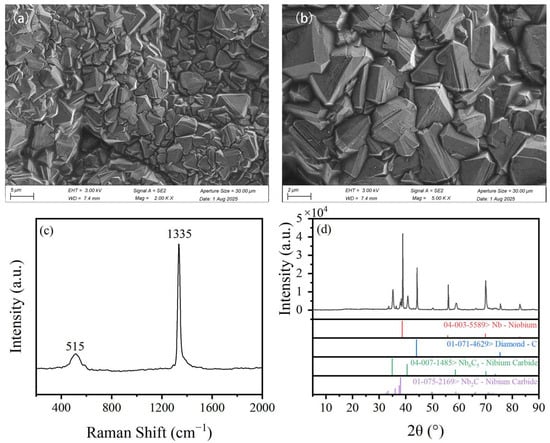
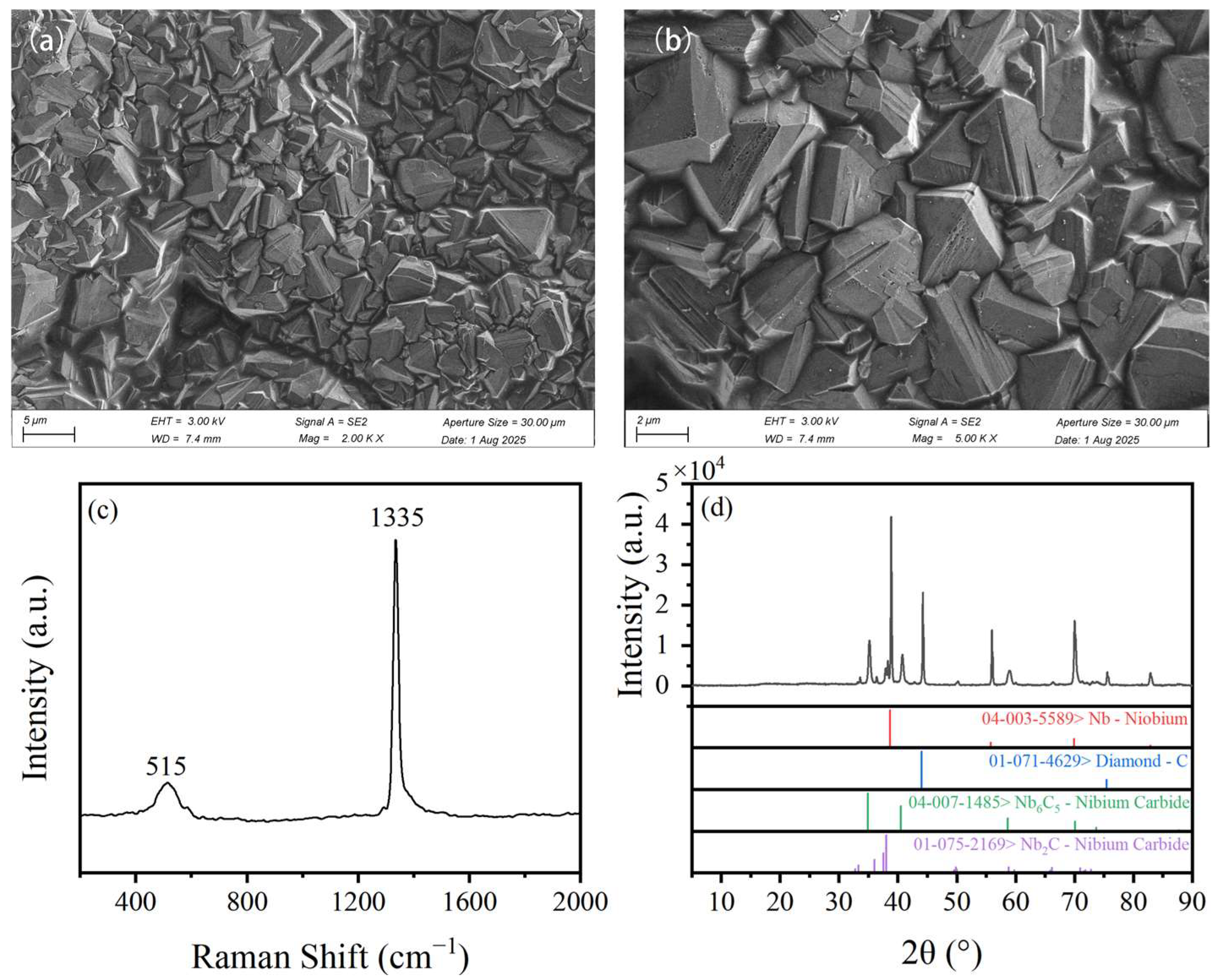
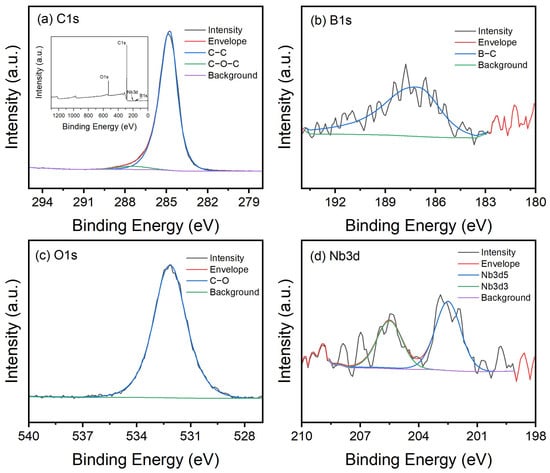
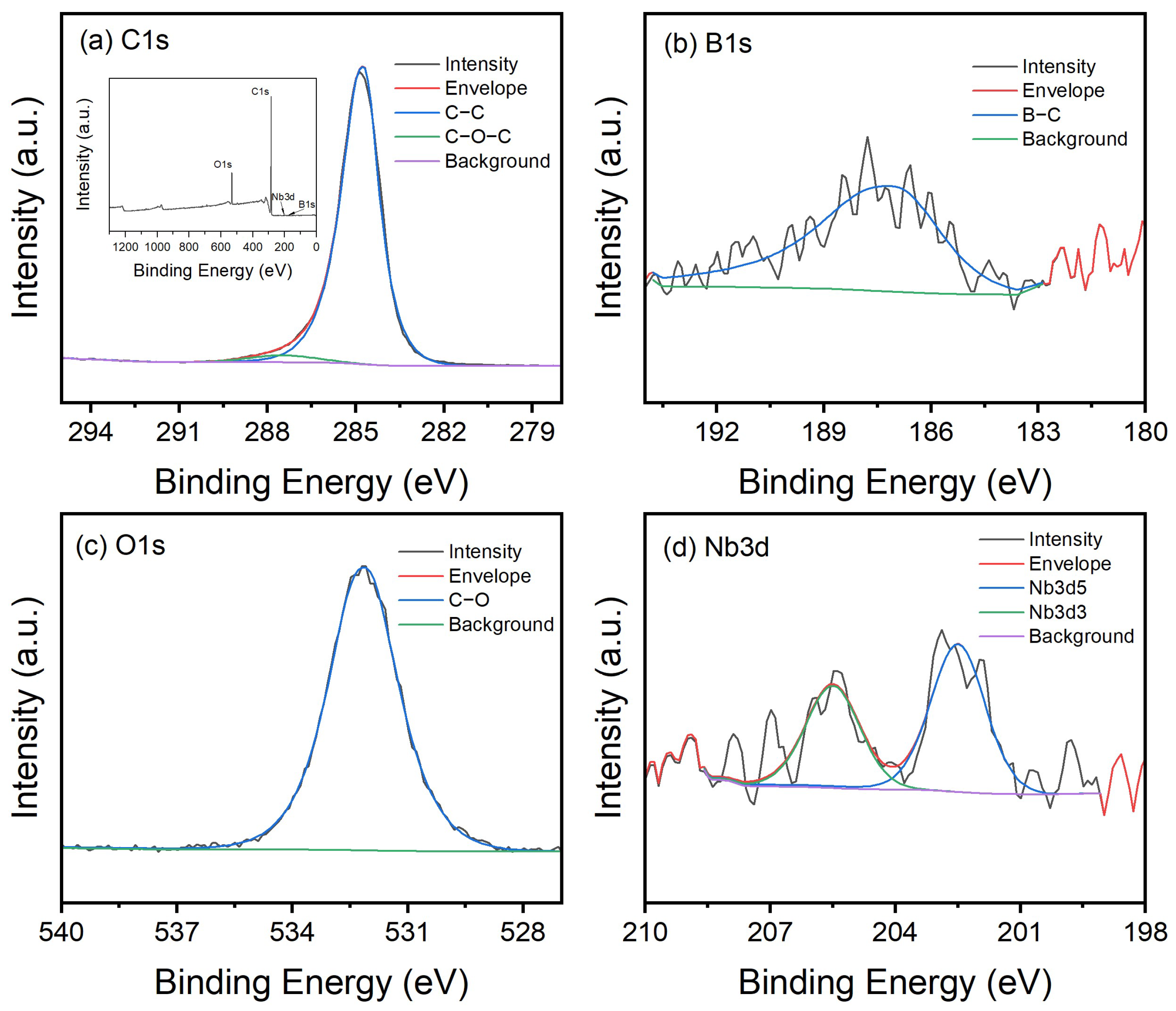
SEM revealed the microstructure of BDD (Figure 1a,b). The surface of BDD exhibited typical microcrystalline diamond structures densely covering the Nb supporting. Raman and XRD spectra of BDD are presented in Figure 1c,d. The Raman spectrum displayed characteristic peaks at 515 and 1335 cm−1. The broad peak at 515 cm−1 represents local vibrations and phonon scattering induced by boron atoms incorporated into the diamond lattice, confirming successful formation of boron-doped diamond films [21]. The sharp peak at 1335 cm−1 corresponds to the characteristic diamond peak, and the high-intensity and narrow shape of the peak indicated excellent crystallinity of the microcrystalline diamond, despite boron doping [22]. XRD patterns showed diffraction peaks at 2θ values of 43.6° and 75.0°, corresponding to the (111) and (220) planes of diamond (PDF#01-071-4629), respectively. The (111) plane exhibited higher intensity, indicating that the (111) plane was the predominant exposed crystal face. Additionally, diffraction peaks at 38.7°, 55.8°, 70.0°, and 82.9° were assigned to the (110), (200), (211), and (220) planes of Nb (PDF#04-003-5589), respectively. Peaks at 34.9°, 40.5°, 58.7°, 70.1°, and 73.7° corresponded to the (−131), (131), (−331), (331), and (−262) planes of Nb6C5 (PDF#04-007-1485). Peaks at 32.8°, 33.3°, 36.1°, 37.6°, 38.0°, 49.9°, 58.8°, 66.1°, and 71.0° were attributed to the (400), (201), (020), (410), (211), (221), (601), (231), and (621) planes of Nb2C (PDF#01-075-2169). The formation of niobium carbide primarily resulted from reactions between the Nb-supporting and carbon atoms from the vapor phase during chemical vapor deposition. These niobium carbides formed an interfacial buffer layer between the BDD and the Nb supporting, enhancing adhesion strength [23,24]. The elemental composition and valence state of the BDD electrode were characterized by X-ray photoelectron spectroscopy (XPS). As shown in the inset of Figure 2a, BDD contained C, B, O, and Nb, with their respective contents being 87.13%, 0.24%, 12.61%, and 0.02%. A small amount of Nb may originate from the surface of the Nb supporting. As shown in Figure 2a, peaks with binding energies of 284.7 eV and 287.5 eV appeared in the high-resolution C1s XPS spectra, corresponding to the sp3 C−C and C−O−C bonds of the diamond phase. The C1s peak exhibited a full width at half maximum of 0.99 eV and poor symmetry, which may be attributed to B doping. Figure 2b displays the B1s spectra in BDD, where the peak at 187.1 eV belonged to the B−C bond [25]. As shown in Figure 2c, the O element in BDD primarily existed in the form of C−O bonds (532.1 eV). In the high-resolution Nb3d XPS spectra, the signal of the Nb metal (202.5 eV) can be observed. The above results indicate that the anodes synthesized using the microwave plasma chemical vapor deposition were the typical BDD.
Figure 1.
(a,b) SEM, (c) Raman, and (d) XRD spectra of BDD.
Figure 2.
XPS spectra (inset) of BDD and high-resolution XPS spectra of (a) C1s, (b) B1s, (c) O1s, and (d) Nb3d of BDD.
2.2. Electrochemical Performance of BDD Anode
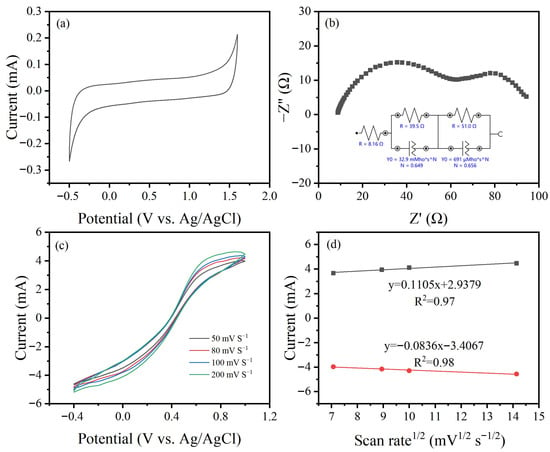
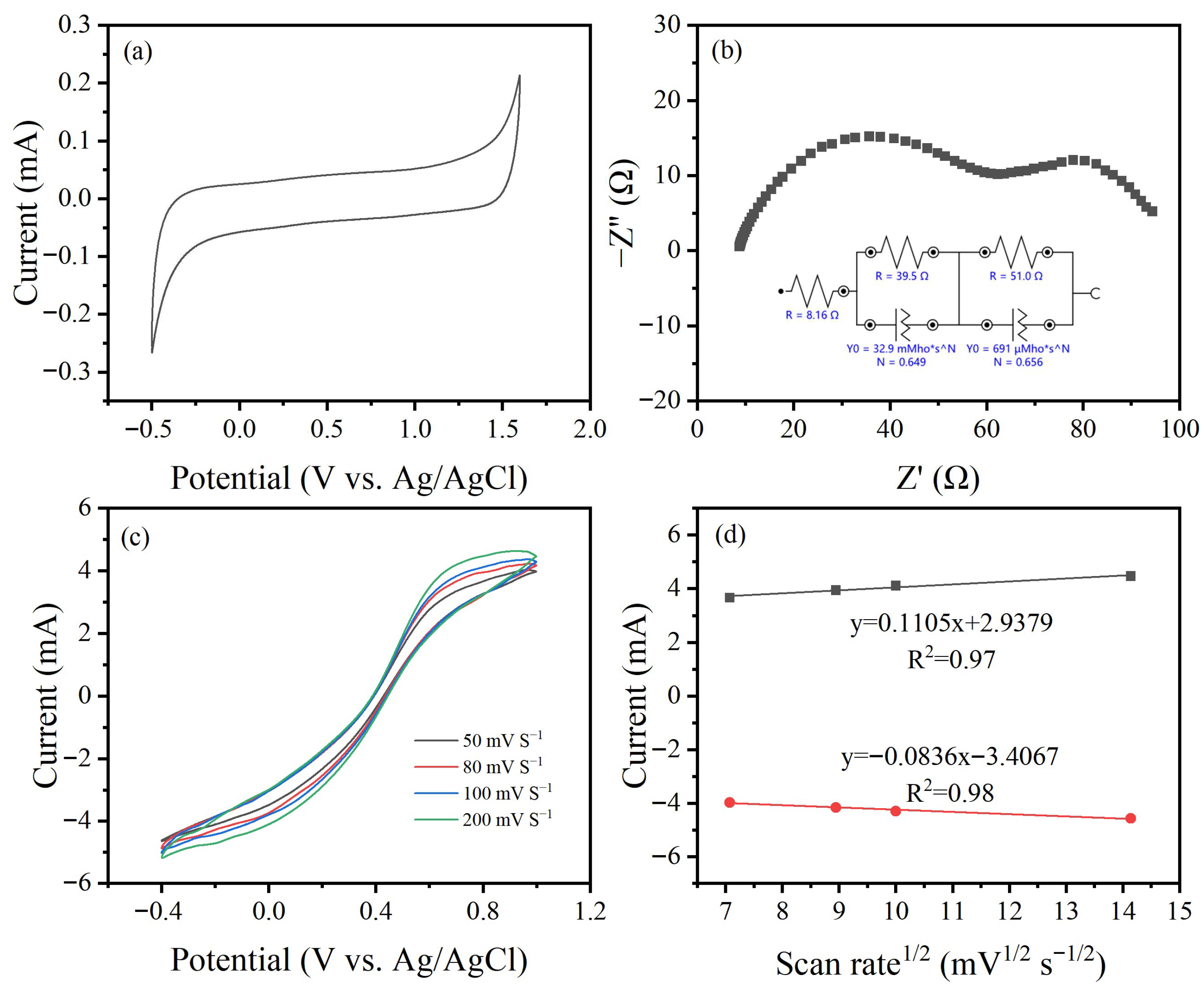
CV was employed to characterize the oxygen evolution potential of BDD anodes. As shown in Figure 3a, the oxygen evolution potential of BDD was 1.52 V (vs. Ag/AgCl), consistent with previous reports [26]. The high oxygen evolution potential can effectively suppress oxygen evolution side reactions and promote organic pollutant degradation. To evaluate electron transfer capabilities, EIS was performed in 10 mM K4[Fe(CN)6]/K3[Fe(CN)6] and 0.1 M KCl solutions. As shown in Figure 3b, the Nyquist plot of BDD electrodes exhibited two semicircles in both medium-high and low-frequency regions. Equivalent circuit fitting revealed an internal resistance of 8.16 Ω and a charge transfer resistance at the electrode–solution interface of 39.5 Ω (inset of Figure 3b), indicating rapid electron transfer kinetics that enhance electrochemical reaction rates [27]. Figure 3c displays CV curves at different scan rates, where the symmetrical oxidation and reduction peaks indicate that the redox reaction is reversible on the BDD electrode. Linear fitting of peak potentials versus the square root of scan rates (Figure 3d) revealed excellent linearity, indicating diffusion-controlled reactions without significant side reactions [28]. These results collectively confirm the excellent electrochemical oxidation performance of BDD electrodes.
Figure 3.
(a) CV, (b) EIS, and (c) CV curves at different scan speeds of BDD. (d) The relationship between the peak current and the square root of the scan rate.
2.3. Degradation Performance of BDD Anode
2.3.1. Effect of Electrolyte Composition
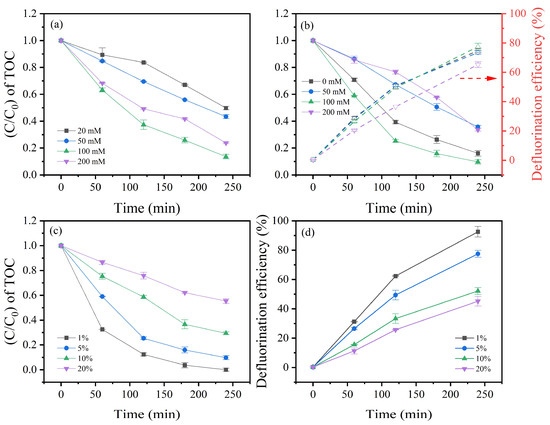
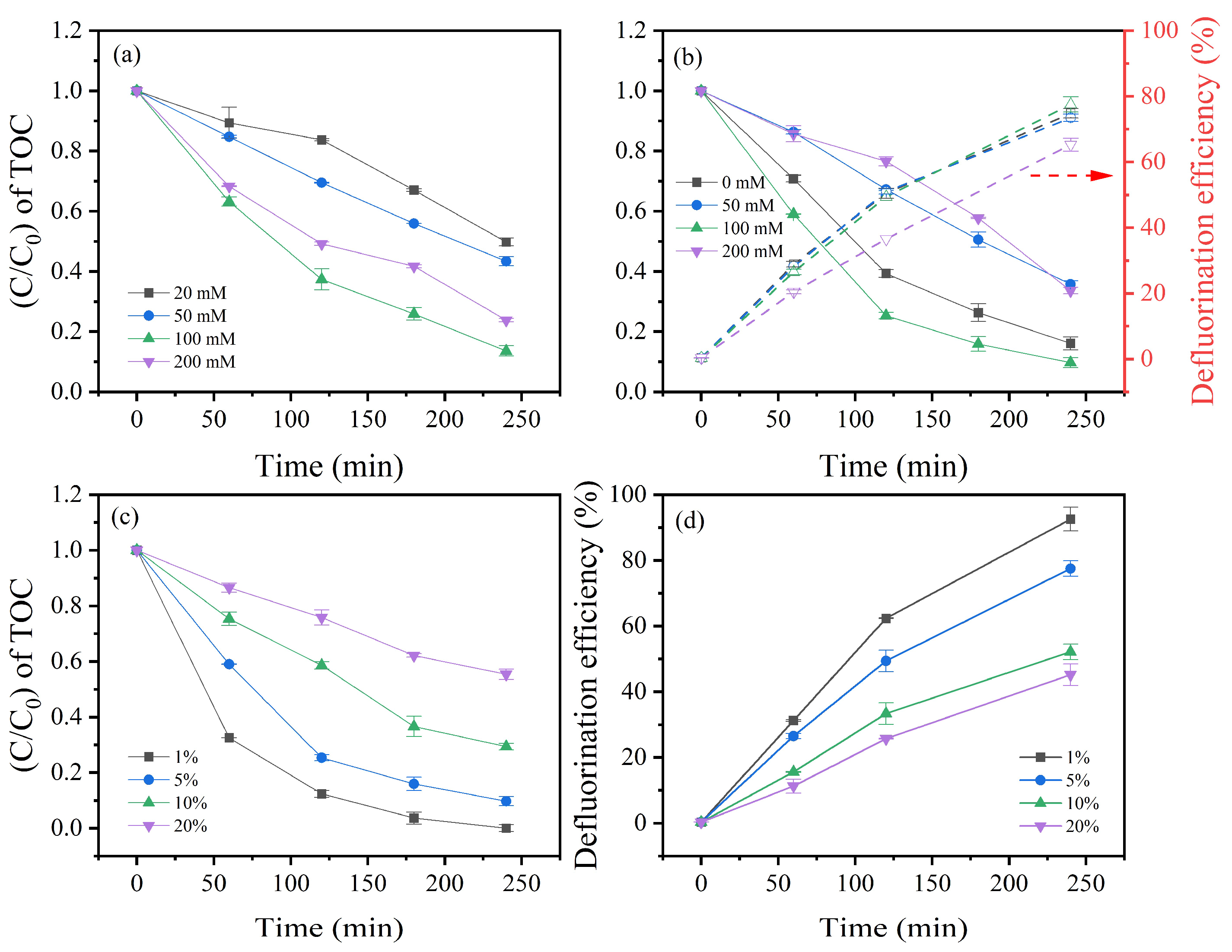
The type and concentration of the electrolyte represent critical factors influencing the efficiency of BDD-based EAOPs. Different electrolytes generate distinct reactive species, affecting reaction efficiency and products. In chloride-containing solutions, Cl– ions can be oxidized to reactive chlorine species (such as chlorine radicals and perchlorate) [29], whereas Na2SO4 electrolytes produce fewer reactive species, facilitating the evaluation of the intrinsic electrochemical capabilities of the electrode. The concentration of electrolytes significantly impacts reaction rates. Higher concentrations of electrolytes generally enhance reaction rates, but excessively high concentrations may also accelerate side reactions. Figure 4a shows the effect of the Na2SO4 concentration on the TOC removal of groundwater. As the Na2SO4 concentration gradually increased from 20 to 100 mM, TOC removal efficiency increased from 50.2% to a maximum of 86.4%. However, when the Na2SO4 concentration was further increased to 200 mM, the TOC removal efficiency decreased to 76.2%. This decline likely resulted from intensified oxygen evolution side reactions at higher electrolyte concentrations, inhibiting simulated groundwater degradation [30]. The effect of adding PMS to a 100 mM Na2SO4 electrolyte on TOC removal and defluorination efficiency (F− released relative to total fluorine) was investigated (Figure 4b). Results indicated that adding 100 mM PMS increased TOC removal to 90.3%, while the addition of 50 mM or 200 mM PMS exhibited inhibitory effects. However, defluorination efficiency displayed different behavior (dotted line in Figure 4b). The addition of 50 mM or 100 mM PMS showed no significant impact on defluorination efficiency, whereas 200 mM PMS slightly inhibited defluorination. This suggested that PMS addition has a greater effect on TOC removal than defluorination, which can degrade non-fluorinated organic pollutants in simulated FFW-contaminated groundwater [31]. Consequently, subsequent experiments employed 100 mM Na2SO4 and 100 mM PMS as the electrolyte solutions.
Figure 4.
Effect of (a) Na2SO4 and (b) PMS concentrations on degradation in simulated FFW-contaminated groundwater. (c) TOC removal and (d) defluorination efficiency of different initial PFAS concentrations in BDD systems.
2.3.2. Effect of PFAS Concentrations
The TOC removal and defluorination efficiency at different initial PFAS concentrations (1–20%) are presented in Figure 3c,d. The TOC removal and defluorination efficiency decreased with increasing PFAS concentrations. TOC was completely removed at 1% of initial PFAS concentrations, while 44.6% of TOC was removed at a PFAS concentration of 20%. The defluorination efficiency reached 92.6% at an initial PFAS concentration of 1% but dropped to 45.2% when the initial PFAS concentration increased to 20%. After normalizing the TOC removal and defluorination efficiency, the mineralization and defluorination efficiency of the BDD system for PFASs gradually increased with increasing PFAS concentrations. This was attributed to more PFAS molecules being more likely to reach the BDD electrode surface at high concentrations, leading to greater PFAS mineralization. The intermediates generated during PFAS decomposition could consume reactive species, reducing mineralization efficiency [32]. However, the BDD electrodes prepared in this study exhibited excellent electrochemical performance, enabling the effective mineralization of PFASs.
2.3.3. Effect of Current Density
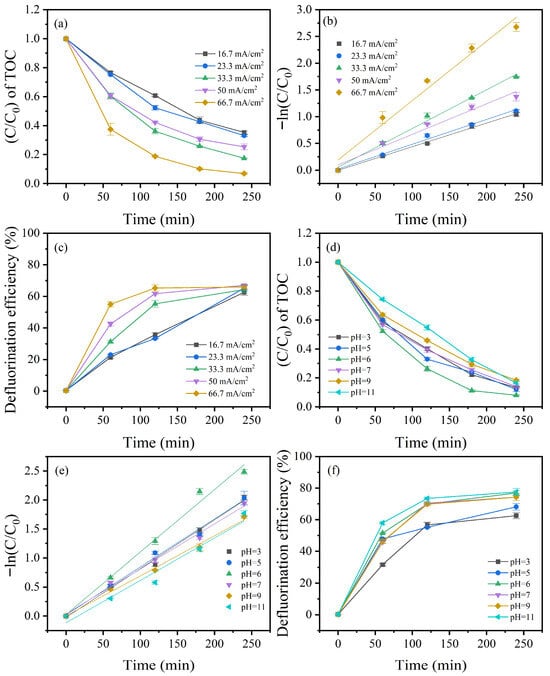
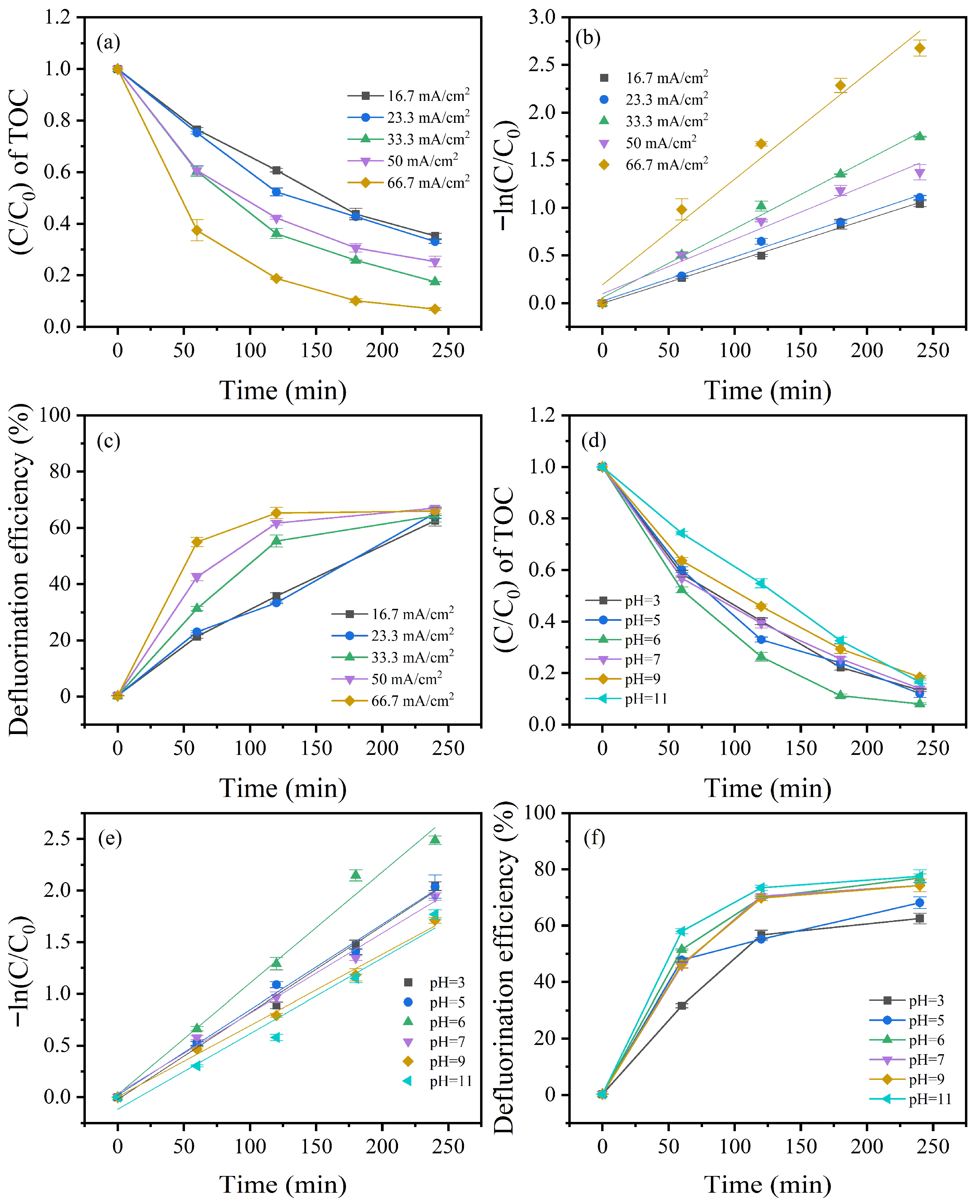
Current density influences electron transfer rates and radical generation rates in EAOP systems. Low current density could reduce the transfer rate of organic pollutant molecules toward the anode, while high current density could intensify oxygen evolution side reactions [33]. The formation of excessive oxygen bubbles on the anode surface reduced active sites and increased energy consumption. Figure 5a shows the effect of different current densities. As current density increased from 16.7 to 66.7 mA/cm2, the degradation efficiency of TOC rose from 64.8% to 93.1%. Higher current densities promoted the greater production of reactive species, enhancing pollutant mineralization. The degradation kinetics of TOC followed pseudo-first-order kinetics (Figure 5b), with the apparent rate constant (kobs) increasing from 0.0044 to 0.0111 min−1 as the current density rose from 16.7 to 66.7 mA/cm2. Defluorination rates increased with increasing current density, but final defluorination efficiency (at 240 min) remained at approximately 65%, regardless of current density (Figure 5c), suggesting that residual PFASs in simulated FFW-contaminated groundwater could not be further defluorinated. Zeidabadi et al. [34] found that the electrochemical oxidation system exhibited poor removal efficiency for ultrashort-chain PFASs. Since high-current-density operation leads to excessive energy consumption, 33.3 mA/cm2 was selected as the optimal current density for subsequent experiments.
Figure 5.
Effect of (a,c) current density and (d,f) electrolyte pH on TOC removal efficiency and defluorination efficiency in simulated FFW-contaminated groundwater. Effect of (b) current density and (e) electrolyte pH on TOC removal rate and defluorination rate in simulated FFW-contaminated groundwater.
2.3.4. Effect of pH
Solution pH influences the pollutant speciation, reaction pathways, and generation efficiency of active species. Under acidic conditions, EAOPs primarily proceed via direct oxidation, where pollutants directly lose electrons at the anode surface [35], though acidic conditions can accelerate electrode corrosion. Under alkaline conditions, EAOPs predominantly involve indirect oxidation, with ·OH as the primary reactive species [36], though alkaline conditions can promote oxygen evolution side reactions. As shown in Figure 5d, the removal efficiency of TOC remained stable across different pH conditions after 240 min: 86.6% (pH = 3), 88.0% (pH = 4), 91.9% (pH = 6), 86.0% (pH = 7), 81.5% (pH = 9), and 83.5% (pH = 11). However, TOC removal rates (kobs) exhibited significant variations (Figure 5e). The highest kobs occurred at pH = 6 (0.0107 min−1), while the lowest was observed at pH = 11 (0.007 min−1). The decline in the TOC removal rate under alkaline conditions may be attributable to the enhancement of oxygen evolution side reactions. In the presence of an alkaline environment, the oxygen evolution reaction shifted to more negative potentials [37]. This shift promoted the generation of O2 and concomitantly reduced the Faradaic efficiency of ·OH production [38]. As shown in Figure 5f, defluorination efficiency exhibited pH dependence. Defluorination rates were lower under acidic conditions (pH = 3–5: 62.5–68.1%) but increased significantly at a neutral-to-alkaline pH (pH = 7–9: 74.3–77.5%). This trend is attributable to enhanced ·OH production at an elevated pH. Under alkaline conditions, the BDD electrode activated more PMS, generating additional SO4·− [39], which rapidly reacted with water under alkaline conditions to produce ·OH [40], resulting in the enhancement of defluorination rates. The degradation efficiencies of BDD on PFASs were reported in different studies (Table 1). Both the degradation efficiency and desorption efficiency in this study were at the top level, and the current density, electrolyte concentration, and pH value were all at a medium level. Therefore, the BDD prepared in this study has good practicality.
Table 1.
Degradation efficiency of BDD on PFASs reported in different studies.
2.4. Identification of Primary Reactive Species
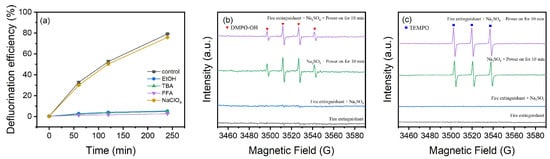
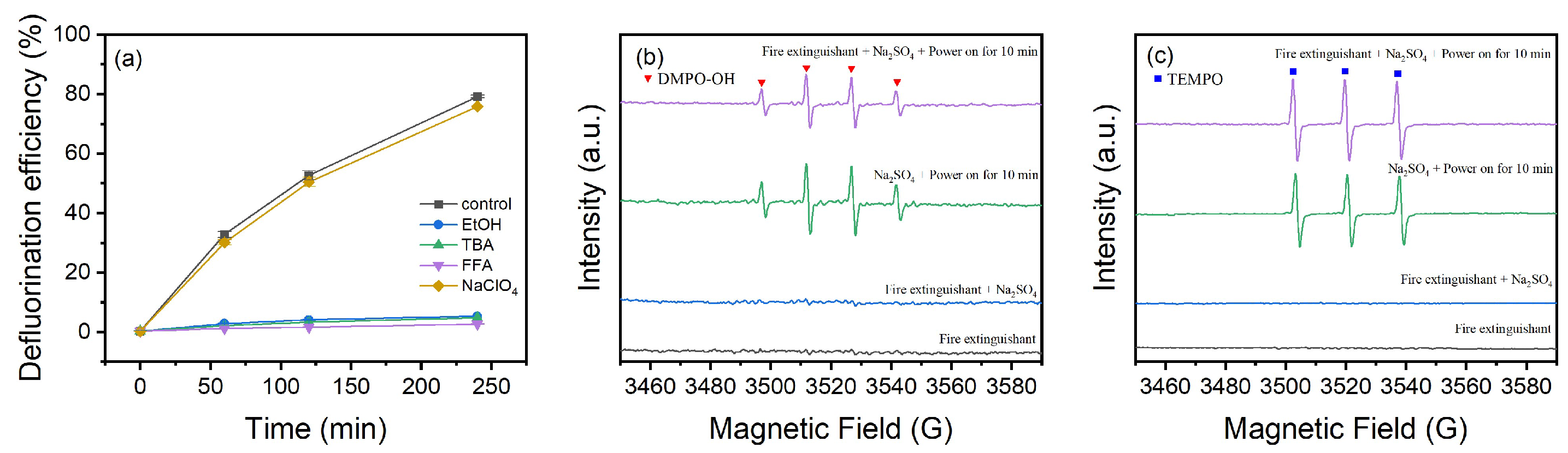
Quenching experiments and EPR tests were conducted to identify reactive species in the system. TBA selectively quenched ·OH [k(TBA,·OH) = 3.8 × 10⁸ M−1s−1, k(TBA,SO4·−) = 9.1 × 10⁵ M−1s−1] [44,45]. EtOH effectively quenched both ·OH [k(EtOH,·OH) = 2.8 × 10⁹ M−1s−1] and SO4·− [k(EtOH,SO4·−) = 7.8 × 10⁷ M−1s−1] [44,45]. FFA served as a quenching agent for 1O2 [46], and NaClO4 could effectively inhibit the direct electron oxidation [47]. As shown in Figure 6a, the addition of NaClO4 did not significantly affect defluorination efficiency, indicating that direct electron oxidation does not dominate the defluorination process. The additions of EtOH, TBA, and FFA reduced defluorination rates from 79.2% to 5.2%, 4.9%, and 2.7%, respectively, demonstrating that radicals and 1O2 represent the primary reactive species. Figure 6b,c displays typical DMPO-OH and TEMPO signals in EPR spectra, confirming the presence of ·OH and 1O2. Therefore, PFAS removal from FFW primarily involves ·OH and 1O2 [48,49].
Figure 6.
(a) Effects of different quenchers on the defluorination efficiency in simulated groundwater. EPR spectra of (b) DMPO and (c) TEMP as capture agents.
2.5. Degradation Pathways of PFASs
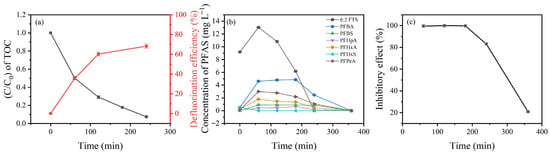
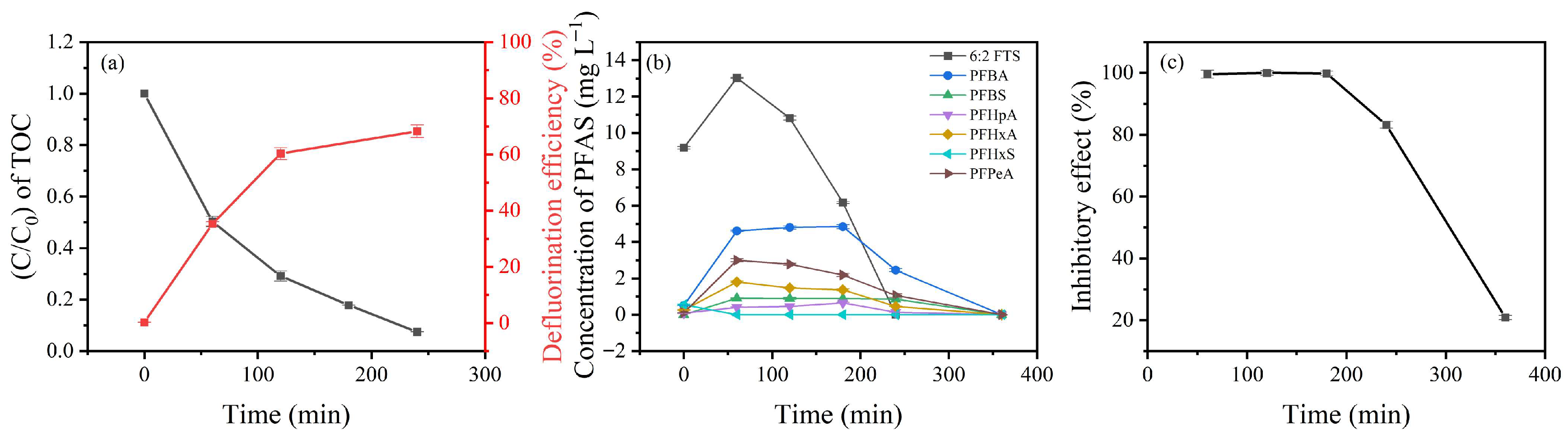
LC-MS/MS was employed to monitor PFAS concentration changes during degradation. Under optimized conditions (100 mM Na2SO4 electrolyte with 100 mM PMS, current density of 33.3 mA/cm2, pH = 6), the BDD anode achieved near-complete mineralization, with 92.5% TOC removal and significant defluorination (68.3%) within 240 min (Figure 7a). Based on EPA Method 1633, six PFAS compounds (PFBA, PFPeA, PFHxA, PFHpA, PFHxS, and 6:2 FTS) were detected in the initial wastewater. Notably, perfluorobutane sulfonate (PFBS) was detected after electrification. As shown in Figure 7b, PFHxS was completely removed within 60 min, while concentrations of other PFASs initially increased before decreasing to complete removal. The concentrations of PFPeA, PFHxA, PFHpA, and 6:2 FTS gradually decreased from 60 to 360 min, reaching complete removal. The PFBA concentration reached its maximum at 180 min, after which it underwent a gradual decline until it was fully removed at 360 min. These results indicated that PFAS degradation via the EAOP system proceeded through stepwise carbon chain cleavage, leading to mineralization, consistent with previous research on PFOA electrochemical oxidation degradation pathways [50]. As presented in Figure 7c, the inhibition rate of luminescent bacteria exhibited a consistently high level (>95%) from the initiation of the reaction until 180 min. The inhibition rate exhibited a decline from 99.8% to 20.9% within the range of 180 to 360 min. This finding suggests that, during the initial degradation phase, long-chain PFASs underwent decomposition into shorter-chain PFASs, which possess a higher degree of toxicity [51,52]. As the EAOP system persisted, part of the short-chain and ultrashort-chain PFASs underwent additional degradation, resulting in a decline in the inhibition rate of the luminescent bacteria. This demonstrates the effective mineralization capability of this EO system for FFW.
Figure 7.
(a) TOC removal efficiency, defluorination efficiency, (b) PFAS concentrations, and (c) inhibitory effects of luminescent bacteria in simulated groundwater.
2.6. Practical Application of BDD-Based EAOPs in FFW-Contaminated Soil–Water System
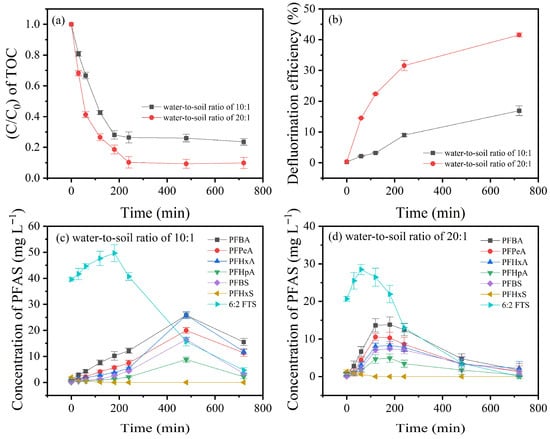
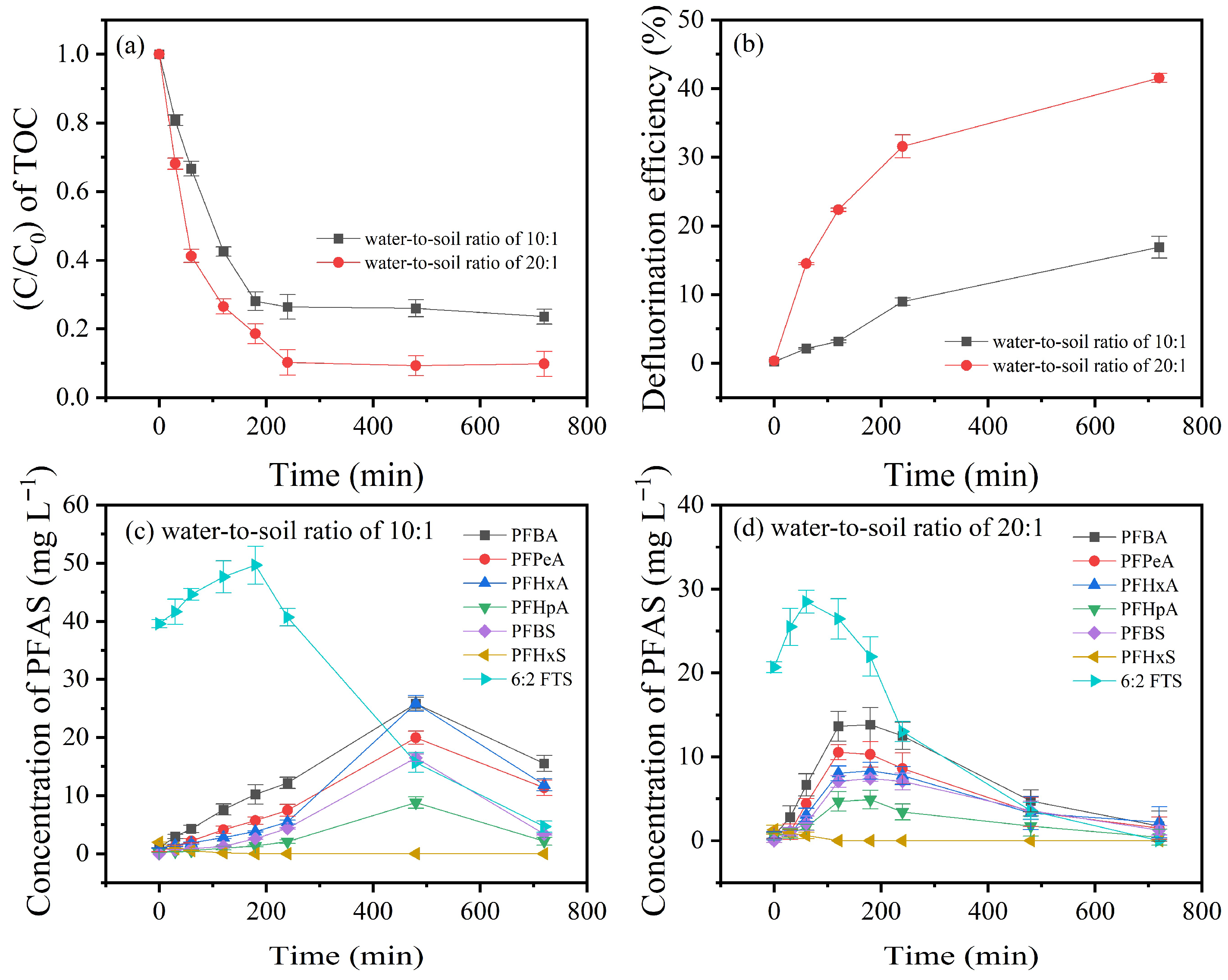
The electrochemical oxidation of PFASs in the FFW-contaminated soil–water system was evaluated under different water-to-soil ratios (10:1 and 20:1), with the results presented in Figure 8. The TOC decreased over time in both ratio systems (Figure 8a), and the TOC removal efficiency in the 20:1 system, achieving 90.2% after 720 min, was higher than that in the 10:1 system (76.4%). This trend indicates that a higher water-to-soil ratio could enhance the accessibility of organic matter to the electrochemical interface, improving mass transfer of organic matter to the BDD surface. As shown in Figure 8b, the increased water-to-soil ratio enhanced defluorination efficiency. As the water-to-soil ratio increased from 10:1 to 20:1, defluorination efficiency rose from 16.9% to 41.6%. The correlation between TOC reduction and defluorination efficiency enhancement confirmed that the EAOPs effectively mineralized PFASs in soil. Figure 8c,d further shows the dynamics of PFBA, PFPeA, PFHxA, PFHpA, PFBS, PFHxS, and 6:2 FTS, revealing an initial increase, followed by a decline. The initial rise may reflect the desorption of PFASs from soil particles into the aqueous phase, a prerequisite for electrochemical degradation. Notably, the highest PFAS concentration in the 20:1 system was reached earlier than in the 10:1 system, indicating that a higher moisture content promotes PFAS desorption from soil. The subsequent degradation phase showed that the degradation rates of PFASs in the 20:1 system were faster than those in the 10:1 system, consistent with the mineralization and defluorination phenomena observed in Figure 8a,b. These results highlight the critical importance of the water-to-soil ratio in determining the efficiency of PFAS removal. Higher ratios have been shown to facilitate a balance between desorption kinetics and oxidative degradation, ensuring sufficient reactant availability at the electrode and minimizing inhibition from soil organic matter.
Figure 8.
(a) TOC removal efficiency, (b) defluorination efficiency, and (c,d) PFAS concentrations in EO systems under different water-to-soil ratios.
3. Materials and Methods
3.1. Reagents
All solutions were prepared using ultrapure water (18.2 MΩ·cm) from a Milli-Q EQ 7000 system (Milli-Q, Wuxi, China). Potassium peroxomonosulfate (PMS, H3K5O18S4, ≥42.80%), sodium sulfate (Na2SO4, AR), sodium carbonate (Na2CO3, GR), potassium ferrocyanide [K4Fe(CN)6, AR], potassium ferricyanide [K3Fe(CN)6, AR], potassium chloride (KCl, GR), sulfuric acid (H2SO4), sodium hydroxide (NaOH, AR), methanol (MeOH, HPLC), ethanol (EtOH, HPLC), tert-butanol (TBA, GR), furfuryl alcohol (FFA, AR), sodium perchlorate (NaClO4, AR), 5,5-dimethyl-1-pyrroline N-oxide (DMPO, ≥97%), and 2,2,6,6-tetramethylpiperidine (TEMP, ≥98%) were purchased from Shanghai Aladdin Biochemical Technology Co., Ltd, Shanghai, China.
3.2. Simulated FFW-Contaminated Groundwater
FFW-contaminated groundwater was simulated by diluting commercial fire extinguisher fluid (containing 3% AFFF) to 5% with actual groundwater collected from a water well in Xuhui District, Shanghai (121°27′17.53″ E, 31°12′20.78″ N). A medium-sized fire may consume anywhere from tens to hundreds of liters of AFFF extinguishing agents. If AFFF seeps into groundwater, it could cause contamination. In our preliminary investigation, the total PFAS concentration in groundwater at a certain fire scene ranged from 35 to 6000 μg/L. The simulated FFW-contaminated groundwater exhibited the following characteristics: TOC concentration was 25.4 mg/L, total fluorine concentration was 24.6 mg/L, pH was 8.59, chemical oxygen demand was 24.6 mg/L, sulfate concentration was 39.89 mg/L, nitrate concentration was 7.12 mg/L, carbonate concentration was 43.39 mg/L, and chloride concentration was 33.16 mg/L. According to EPA Method 1633 (Analysis of Per- and Polyfluoroalkyl Substances (PFASs) in Aqueous, Solid, Biosolids, and Tissue Samples by LC-MS/MS), six PFAS compounds were detected in simulated FFW-contaminated groundwater: perfluorobutanoic acid (PFBA, 0.51 mg/L), perfluoropentanoic acid (PFPeA, 0.11 mg/L), perfluorohexanoic acid (PFHxA, 0.26 mg/L), perfluoroheptanoic acid (PFHpA, 0.09 mg/L), perfluorohexane sulfonate (PFHxS, 0.55 mg/L), and 6:2 fluorotelomer sulfonate (6:2 FTS, 9.2 mg/L).
3.3. Soil Properties and Contamination Process
Soil samples (0–20 cm depth) were collected from a park in Xuhui District, Shanghai. These soil samples exhibited the following physicochemical properties: pH was 7.11, organic matter content was 20.15 g/kg, electrical conductivity was 0.07 mS/cm, cation exchange capacity was 10.84 cmol/kg, total iron content was 34.15 g/kg, and total manganese content was 0.22 g/kg. PFAS compounds listed in EPA Method 1633 were not detected in the pristine soil samples. To prepare contaminated soil, 500 mL of commercial fire extinguisher fluid (containing 3% AFFF) was mixed with 200 g of soil sample under continuous stirring for 30 min. The mixture was then wrapped in aluminum foil (with venting holes) and stored in a cool, dark place for 8 weeks of aging to ensure complete evaporation of liquids. PFAS concentrations of the contaminated soil were as follows: PFBA (22.51 mg/kg), PFPeA (5.47 mg/kg), PFHxA (12.81 mg/kg), PFHpA (3.78 mg/kg), PFHxS (26.57 mg/kg), and 6:2 FTS (446.51 mg/kg).
3.4. Synthesis of Boron-Doped Diamond Anodes
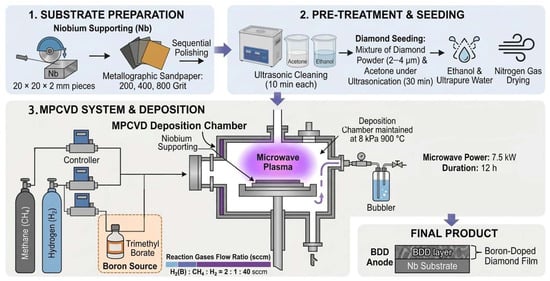
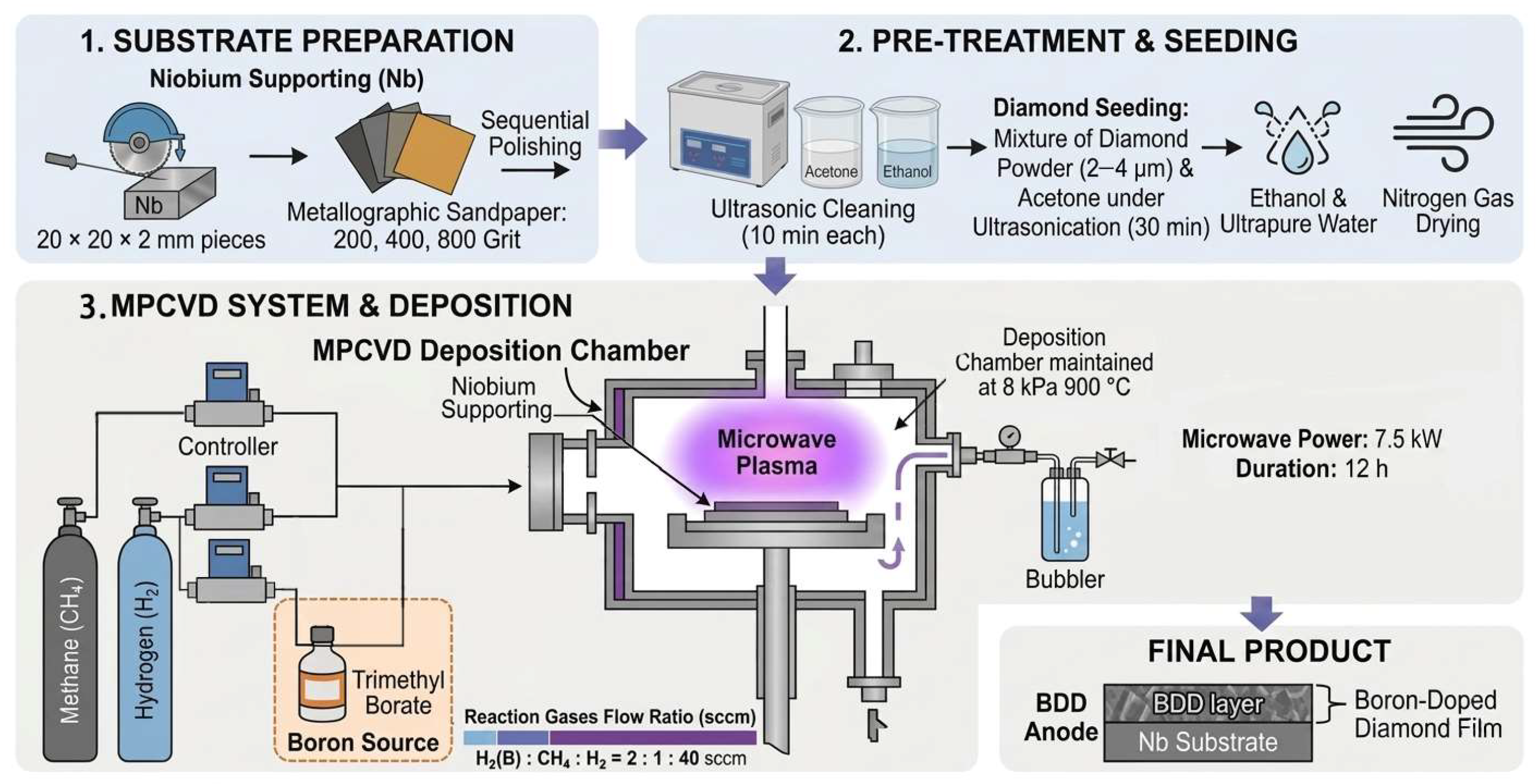
BDD anodes were synthesized via microwave plasma chemical vapor deposition. Niobium supportings were cut into 20 × 20 × 2 mm pieces using a diamond wire saw and sequentially polished with 200-, 400-, and 800-grit metallographic sandpaper. The polished supportings were ultrasonically cleaned in acetone and ethanol for 10 min each, followed by immersion in a mixture of diamond powder (2–4 μm) and acetone under ultrasonication for 30 min. After rinsing with ethanol and ultrapure water, the supportings were dried with nitrogen gas and placed in the deposition chamber. The reaction gases consisted of methane and hydrogen, with trimethyl borate serving as the boron source introduced via hydrogen bubbling. The gas flow ratio was H2(B): CH4: H2 = 2: 1: 40 sccm. The microwave power was 7.5 kW. The deposition chamber was maintained at 8 kPa and 900 °C for 12 h (Figure 9).
Figure 9.
Schematic diagram of the synthesis of boron-doped diamond anodes.
3.5. Experimental Procedures
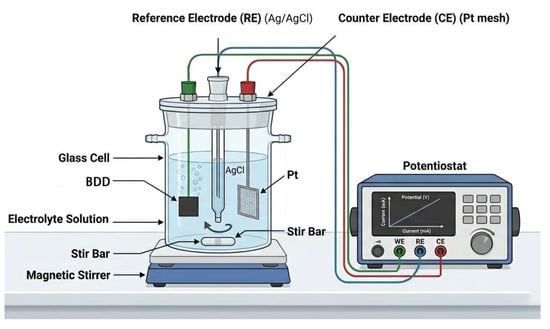
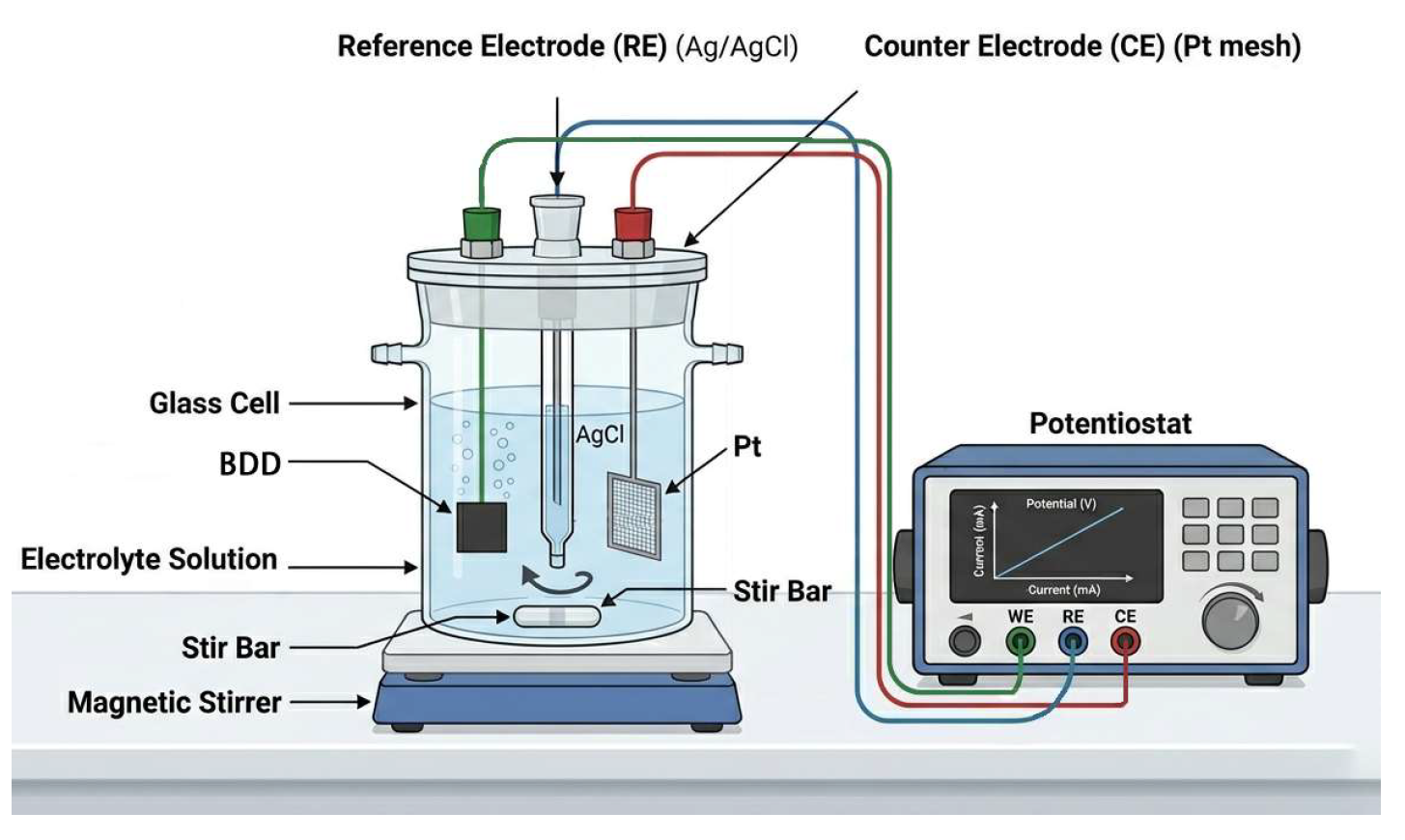
The experiments of EAOPs were conducted in a single electrolytic cell (Figure 10). The synthesized BDD (20 × 20 × 2 mm) served as the anode, while a platinum plate (20 × 20 × 1 mm) served as the cathode. The electrode gap was set to 10 mm, and the effective area was 3 cm2. A DC power supply (GWINSTEK SPE-3206) provided a constant current. The effects of electrolyte concentrations (20–200 mM), PFAS concentrations (1–20%), PMS concentrations (0–200 mM), current densities (16.7–66.7 mA/cm2), and pH values (3–11) on degradation efficiency were investigated. EtOH, TBA, FFA, and NaClO4 were employed as quenching agents to identify reactive species within the system. After the reaction, the BDD anode was soaked in a methanol solution for 24 h and then taken out and repeatedly cleaned with methanol and ultrapure water three times. The cleaned BDD anode will be reused in the electrochemical oxidation experiments.
Figure 10.
Schematic diagram of the EAOP device.
FFW-contaminated soil was added to 100 mL of electrolyte solution (100 mM Na2SO4 and 100 mM PMS, pH = 6) at water-to-soil ratios of 10:1 and 20:1. BDD-based EAOPs were performed at a current density of 33.3 mA/cm2 for 720 min. Water–soil mixtures were collected at 0, 30, 60, 120, 180, 240, 480, and 720 min, filtered through 0.22 μm membranes. The filtrate was analyzed for PFAS concentrations.
3.6. Analytical Methods
The electrochemical properties of the BDD anode, including cyclic voltammetry (CV) and electrochemical impedance spectroscopy (EIS), were characterized using a CHI660E electrochemical workstation (CH Instruments, Beijing, China). Measurements were performed in a three-electrode cell with BDD as the working electrode, Ag/AgCl as the reference electrode, and a platinum plate as the counter electrode. All potentials were reported versus the Ag/AgCl reference. The microstructure of BDD was characterized by scanning electron microscopy (SEM, Sigma 360, ZEISS, Suzhou, China). X-ray diffraction (XRD, SmartLab SE, Rigaku, Nanjing, China), and Raman spectroscopy (LabRAM HR Evolution, Horiba, Nanjing, China) were employed to analyze the crystal structure and defects of BDD. For the surface elemental analysis of BDD, X-ray photoelectron spectroscopy (XPS) was performed by Thermo Scientific ESCALAB 250Xi (Nanjing, China) with monochromatic Al Kα radiation, and all the binding energies were referenced to the C 1 s peak at 284.8 eV. TOC was measured using a Shimadzu TOC-V CPH. The concentration of fluoride ion was determined using a fluoride ion-selective electrode (DX219-F Fluoride, Mettler Toledo, Nanjing, China). Electron paramagnetic resonance (EPR, EMX-8/2.7, Bruker, Nanjing, China) measurements utilized DMPO and TEMP as trapping agents for radicals and singlet oxygen (1O2), respectively. Liquid chromatography–mass spectrometry/mass spectrometry (LC-MS/MS, AB4500, SCIEX, Nanjing, China) was employed to quantify PFASs in FFW according to EPA Method 1633.
3.7. Toxicity Assessment
A toxicity assessment was conducted according to ISO Standard 21338:2010 (Water quality—Kinetic determination of the inhibitory effects of sediment, other solids, and colored samples on the light emission of Vibrio fischeri) [53]. A bioluminescence detector (LumiPro, MicroDigital, Nanjing, China) measured light intensity, with the inhibition rate calculated as: Inhibition rate = 100% − relative luminescence intensity.
4. Conclusions
This study successfully fabricated BDDs and systematically evaluated their degradation performance and mechanisms for FFW-contaminated soil–groundwater systems. The synthesized BDD exhibited excellent electrochemical activity, achieving 91.9% TOC removal and 77.5% defluorination under optimized conditions (100 mM Na2SO4 + 100 mM PMS, current density of 33.3 mA/cm2, pH = 6). For contaminated soil remediation, water-to-soil ratio proved critical, with the 20:1 system achieving superior performance (90.2% TOC removal and 41.6% defluorination after 720 min), compared to the 10:1 system (76.4% TOC removal and 16.9% defluorination). Quenching experiments and EPR analysis revealed that ·OH and 1O2 served as the primary reactive species during degradation. LC-MS/MS analysis elucidated that the degradation of PFASs followed a stepwise carbon chain cleavage mechanism. Notably, a toxicity assessment revealed an initial increase in toxicity during the early degradation phase (attributable to the formation of short-chain intermediates), followed by substantial detoxification as mineralization progressed. This work establishes a foundation for the application of BDD-based EAOPs in remediating FFW-contaminated soil-groundwater systems, with both theoretical significance and practical relevance.
Author Contributions
Q.W.: conceptualization, formal analysis, methodology, supervision, validation, visualization, writing—original draft, and writing—review and editing. G.H.: resources, software, and writing—review and editing. A.G.: funding acquisition, resources, and software. J.Z.: conceptualization, resources, software, and writing—review and editing. K.L.: conceptualization, resources, software, and writing—review and editing. All authors have read and agreed to the published version of the manuscript.
Funding
This study was supported by the Science and Technology Program of State Administration for Market Regulation (No. 2024MK043) and Science and Technology Program of Jiangsu Provincial Administration for Market Regulation (Nos. KJ2026012 and KJ2024003).
Data Availability Statement
All data generated or analyzed during this study are included in this published article.
Conflicts of Interest
The authors declare no conflicts of interest.
Abbreviations
The following abbreviations are used in this manuscript:
| PFASs | Per- and polyfluoroalkyl substances |
| FFW | fluorinated firefighting wastewater |
| BDD | boron-doped diamond |
| EAOPs | electrochemical advanced oxidation processes |
| PMS | peroxymonosulfate |
| TOC | total organic carbon |
| 1O2 | singlet oxygen |
| LC-MS/MS | Liquid chromatography–mass spectrometry/mass spectrometry |
| PFOS | perfluorooctane sulfonic acid |
| PFOA | perfluorooctanoic acid |
| PFHxS | perfluorohexane sulfonic acid |
| PFHxA | perfluorohexanoic acid |
| 6:2 FTSA | 6:2 fluorosulfonate |
| 6:2 FTAB | 6:2 fluorosulfonamide betaine |
| 6:2 FTSAO | 6:2 fluorosulfonamide amine oxide |
| kobs | apparent rate constant |
References
- Malik, P.; Nandini, D.; Tripathi, B.P. Firefighting aqueous film forming foam composition, properties and toxicity: A review. Environ. Chem. Lett. 2024, 22, 2013–2033. [Google Scholar] [CrossRef] [Scilit]
- Zhang, W.; Liang, Y. The wide presence of fluorinated compounds in common chemical products and the environment: A review. Environ. Sci. Pollut. Res. 2023, 30, 108393–108410. [Google Scholar] [CrossRef] [Scilit]
- Gefenienė, A.; Zubrytė, E.; Kaušpėdienė, D.; Ramanauskas, R.; Ragauskas, R. Firefighting wastewater from a tire recycling plant: Chemical characterization and simultaneous removal of multiple pollutants. J. Environ. Chem. Eng. 2024, 12, 112148. [Google Scholar] [CrossRef] [Scilit]
- Courtens, E.N.P.; Meerburg, F.; Mausen, V.; Vlaeminck, S.E. When the smoke disappears: Dealing with extinguishing chemicals in firefighting wastewater. Water Sci. Technol. 2014, 69, 1720–1727. [Google Scholar] [CrossRef] [Scilit]
- Dauchy, X.; Boiteux, V.; Colin, A.; Bach, C.; Rosin, C.; Munoz, J.-F. Poly- and Perfluoroalkyl Substances in Runoff Water and Wastewater Sampled at a Firefighter Training Area. Arch. Environ. Contam. Toxicol. 2018, 76, 206–215. [Google Scholar] [CrossRef] [Scilit]
- Darwin, R. Estimated Quantities of Aqueous Film Forming Foam (AFFF) in the United States. 2004. Available online: https://chm.pops.int/Portals/0/download.aspx?d=UNEP-POPS-POPRC13FU-SUBM-PFOA-FFFC-2-20180112.En.pdf (accessed on 2 March 2025).
- Place, B.J.; Field, J.A. Identification of Novel Fluorochemicals in Aqueous Film-Forming Foams Used by the US Military. Environ. Sci. Technol. 2012, 46, 7120–7127. [Google Scholar] [CrossRef] [Scilit] [PubMed]
- Podder, A.; Sadmani, A.A.; Reinhart, D.; Chang, N.-B.; Goel, R. Per and poly-fluoroalkyl substances (PFAS) as a contaminant of emerging concern in surface water: A transboundary review of their occurrences and toxicity effects. J. Hazard. Mater. 2021, 419, 126361. [Google Scholar] [CrossRef] [Scilit] [PubMed]
- Fischer, F.C.; Ludtke, S.; Thackray, C.; Pickard, H.M.; Haque, F.; Dassuncao, C.; Endo, S.; Schaider, L.; Sunderland, E.M. Binding of Per- and Polyfluoroalkyl Substances (PFAS) to Serum Proteins: Implications for Toxicokinetics in Humans. Environ. Sci. Technol. 2024, 58, 1055–1063. [Google Scholar] [CrossRef] [Scilit]
- Medha, S.; Romisher, Z.; Van Bramer, S.; Weyrich, J.; Khan, S.; Saha, D. Enhanced adsorption of perfluorooctanesulfonic acid (PFOS) in fluorine doped mesoporous carbon: Experiment and simulation. Carbon 2024, 218, 118745. [Google Scholar] [CrossRef] [Scilit]
- Gagliano, E.; Sgroi, M.; Falciglia, P.P.; Vagliasindi, F.G.A.; Roccaro, P. Removal of poly- and perfluoroalkyl substances (PFAS) from water by adsorption: Role of PFAS chain length, effect of organic matter and challenges in adsorbent regeneration. Water Res. 2020, 171, 115381. [Google Scholar] [CrossRef] [Scilit]
- Sørmo, E.; Silvani, L.; Bjerkli, N.; Hagemann, N.; Zimmerman, A.R.; Hale, S.E.; Hansen, C.B.; Hartnik, T.; Cornelissen, G. Stabilization of PFAS-contaminated soil with activated biochar. Sci. Total Environ. 2021, 763, 144034. [Google Scholar] [CrossRef] [Scilit]
- Zhang, J.; Gao, L.; Bergmann, D.; Bulatovic, T.; Surapaneni, A.; Gray, S. Review of influence of critical operation conditions on by-product/intermediate formation during thermal destruction of PFAS in solid/biosolids. Sci. Total Environ. 2023, 854, 158796. [Google Scholar] [CrossRef] [Scilit] [PubMed]
- Carter, K.E.; Farrell, J. Oxidative Destruction of Perfluorooctane Sulfonate Using Boron-Doped Diamond Film Electrodes. Environ. Sci. Technol. 2008, 42, 6111–6115. [Google Scholar] [CrossRef] [Scilit]
- Ochiai, T.; Iizuka, Y.; Nakata, K.; Murakami, T.; Tryk, D.A.; Fujishima, A.; Koide, Y.; Morito, Y. Efficient electrochemical decomposition of perfluorocarboxylic acids by the use of a boron-doped diamond electrode. Diam. Relat. Mater. 2011, 20, 64–67. [Google Scholar] [CrossRef] [Scilit]
- Zhuo, Q.; Wang, J.; Niu, J.; Yang, B.; Yang, Y. Electrochemical oxidation of perfluorooctane sulfonate (PFOS) substitute by modified boron doped diamond (BDD) anodes. Chem. Eng. J. 2020, 379, 122280. [Google Scholar] [CrossRef] [Scilit]
- Karatas, O.; Khataee, A.; Kobya, M.; Yoon, Y. Electrochemical oxidation of perfluorooctanesulfonate (PFOS) from simulated soil leachate and landfill leachate concentrate. J. Water Process Eng. 2023, 56, 104292. [Google Scholar] [CrossRef] [Scilit]
- Pierpaoli, M.; Szopińska, M.; Wilk, B.K.; Sobaszek, M.; Łuczkiewicz, A.; Bogdanowicz, R.; Fudala-Książek, S. Electrochemical oxidation of PFOA and PFOS in landfill leachates at low and highly boron-doped diamond electrodes. J. Hazard. Mater. 2021, 403, 123606. [Google Scholar] [CrossRef] [Scilit]
- Khalili, M.; Behnami, A.; Benis, K.Z.; Ali, H.J.; Aghayani, E.; Abdolahnejad, A.; Pourakbar, M.; Dehghanzadeh, R. Systematic review of various activation methods of sulfate radical precursor for the degradation of PFAS in aquatic environments. J. Environ. Manag. 2025, 383, 125409. [Google Scholar] [CrossRef] [Scilit]
- Yao, J.; Zhang, Y.; Dong, Z. Enhanced degradation of contaminants of emerging concern by electrochemically activated peroxymonosulfate: Performance, mechanism, and influencing factors. Chem. Eng. J. 2021, 415, 128938. [Google Scholar] [CrossRef] [Scilit]
- Liu, Z.; Baluchová, S.; Sartori, A.F.; Li, Z.; Gonzalez-Garcia, Y.; Schreck, M.; Buijnsters, J.G. Heavily boron-doped diamond grown on scalable heteroepitaxial quasi-substrates: A promising single crystal material for electrochemical sensing applications. Carbon 2023, 201, 1229–1240. [Google Scholar] [CrossRef] [Scilit]
- Zhang, K.; Wang, H.; Zhao, Y.; Xi, Y.; Liu, B.; Xi, J.; Shao, G.; Fan, B.; Lu, H.; Xu, H.; et al. Preparation and electrochemical properties of boron-doped polycrystalline diamond film with five-fold twin structure. Appl. Surf. Sci. 2021, 568, 150977. [Google Scholar] [CrossRef] [Scilit]
- Zhang, X.; Wang, Y.; Gai, Z.; Zhang, M.; Liu, S.; Guo, F.; Yang, N.; Jiang, X. Synthesis of graphene interlayer diamond films for enhanced electrochemical performance. Carbon 2022, 196, 602–611. [Google Scholar] [CrossRef] [Scilit]
- Sharma, D.K.; Girão, A.V.; Chapon, P.; Neto, M.A.; Oliveira, F.J.; Silva, R.F. Advances in RF Glow Discharge Optical Emission Spectrometry Characterization of Intrinsic and Boron-Doped Diamond Coatings. ACS Appl. Mater. Interfaces 2022, 14, 7405–7416. [Google Scholar] [CrossRef] [Scilit]
- Liu, Z.; Li, H.; Li, M.; Li, C.; Qian, L.; Su, L.; Yang, B. Preparation of polycrystalline BDD/Ta electrodes for electrochemical oxidation of organic matter. Electrochim. Acta 2018, 290, 109–117. [Google Scholar] [CrossRef] [Scilit]
- Nidheesh, P.V.; Divyapriya, G.; Oturan, N.; Trellu, C.; Oturan, M.A. Environmental Applications of Boron-Doped Diamond Electrodes: 1. Applications in Water and Wastewater Treatment. ChemElectroChem 2019, 6, 2124–2142. [Google Scholar] [CrossRef] [Scilit]
- Gong, Y.; Jia, W.; Zhou, B.; Zheng, K.; Gao, J.; Wu, Y.; Yu, S.; Xue, Y.; Wu, Y. Novel graphite-based boron-doped diamond coated electrodes with refractory metal interlayer for high-efficient electrochemical oxidation degradation of phenol. Sep. Purif. Technol. 2025, 355, 129550. [Google Scholar] [CrossRef] [Scilit]
- Hong, S.; Choi, G.; Phan, N.T.Y.; Shin, H.; Lim, J. Efficient and durable iridium-doped SnO2 anode for reactive chlorine species-mediated urine wastewater treatment. Chem. Eng. J. 2024, 493, 152698. [Google Scholar] [CrossRef] [Scilit]
- Wu, T.; Hu, Z.; Yang, J.; Jia, Y.; Dong, Z.; Tang, Y.; Zhang, Y. Insight into the roles of Cl− for the degradation of Acid Red 14 in an electrochemical advanced oxidation system: Mechanisms and DFT studies. Chem. Eng. J. 2025, 503, 158079. [Google Scholar] [CrossRef] [Scilit]
- Hu, X.; Huang, L.; Sun, T.; Gao, Z.; Qu, Z. TiO2-loading modification on graphene aerogel particle electrode for electrochemical oxidation of TCH wastewater with low electrolyte concentration: Performance and mechanism. J. Electroanal. Chem. 2024, 962, 118268. [Google Scholar] [CrossRef] [Scilit]
- Samuel, M.S.; Kadarkarai, G.; Ryan, D.R.; McBeath, S.T.; Mayer, B.K.; McNamara, P.J. Enhanced perfluorooctanoic acid (PFOA) degradation by electrochemical activation of peroxydisulfate (PDS) during electrooxidation for water treatment. Sci. Total Environ. 2024, 942, 173736. [Google Scholar] [CrossRef] [Scilit]
- Wang, X.; Chen, Z.; Wang, Y.; Sun, W. A review on degradation of perfluorinated compounds based on ultraviolet advanced oxidation. Environ. Pollut. 2021, 291, 118014. [Google Scholar] [CrossRef] [Scilit]
- Cai, J.; Zhou, M.; Pan, Y.; Du, X.; Lu, X. Extremely efficient electrochemical degradation of organic pollutants with co-generation of hydroxyl and sulfate radicals on Blue-TiO2 nanotubes anode. Appl. Catal. B Environ. 2019, 257, 117902. [Google Scholar] [CrossRef] [Scilit]
- Asadi Zeidabadi, F.; Esfahani, E.B.; Moreira, R.; McBeath, S.T.; Foster, J.; Mohseni, M. Structural dependence of PFAS oxidation in a boron doped diamond-electrochemical system. Environ. Res. 2024, 246, 118103. [Google Scholar] [CrossRef] [Scilit] [PubMed]
- De Luna, Y.; Bensalah, N. Review on the electrochemical oxidation of endocrine-disrupting chemicals using BDD anodes. Curr. Opin. Electrochem. 2022, 32, 100900. [Google Scholar] [CrossRef] [Scilit]
- Mehrkhah, R.; Hadavifar, M.; Mehrkhah, M.; Baghayeri, M.; Lee, B.H. Recent advances in titanium-based boron-doped diamond electrodes for enhanced electrochemical oxidation in industrial wastewater treatment: A review. Sep. Purif. Technol. 2025, 358, 130218. [Google Scholar] [CrossRef] [Scilit]
- Lebik-Elhadi, H.; Frontistis, Z.; Ait-Amar, H.; Amrani, S.; Mantzavinos, D. Electrochemical oxidation of pesticide thiamethoxam on boron doped diamond anode: Role of operating parameters and matrix effect. Process Saf. Environ. Prot. 2018, 116, 535–541. [Google Scholar] [CrossRef] [Scilit]
- Fornaciari, J.C.; Weng, L.-C.; Alia, S.M.; Zhan, C.; Pham, T.A.; Bell, A.T.; Ogitsu, T.; Danilovic, N.; Weber, A.Z. Mechanistic understanding of pH effects on the oxygen evolution reaction. Electrochim. Acta 2022, 405, 139810. [Google Scholar] [CrossRef] [Scilit]
- Welter, J.B.; da Silva, S.W.; Schneider, D.E.; Rodrigues, M.A.S.; Ferreira, J.Z. Performance of Nb/BDD material for the electrochemical advanced oxidation of prednisone in different water matrix. Chemosphere 2020, 248, 126062. [Google Scholar] [CrossRef] [Scilit]
- Boczkaj, G.; Fernandes, A. Wastewater treatment by means of advanced oxidation processes at basic pH conditions: A review. Chem. Eng. J. 2017, 320, 608–633. [Google Scholar] [CrossRef] [Scilit]
- Zhao, L.; Pu, R.; Deng, S.; Lin, L.; Mantzavinos, D.; Naidu, R.; Fang, C.; Lei, Y. Enhanced electrochemical degradation of per- and polyfluoroalkyl substances (PFAS) by activating persulfate on boron-doped diamond (BDD) anode. Sep. Purif. Technol. 2025, 359, 130459. [Google Scholar] [CrossRef] [Scilit]
- Uwayezu, J.N.; Carabante, I.; Lejon, T.; van Hees, P.; Karlsson, P.; Hollman, P.; Kumpiene, J. Electrochemical degradation of per- and poly-fluoroalkyl substances using boron-doped diamond electrodes. J. Environ. Manag. 2021, 290, 112573. [Google Scholar] [CrossRef] [Scilit] [PubMed]
- Schaefer, C.E.; Andaya, C.; Burant, A.; Condee, C.W.; Urtiaga, A.; Strathmann, T.J.; Higgins, C.P. Electrochemical treatment of perfluorooctanoic acid and perfluorooctane sulfonate: Insights into mechanisms and application to groundwater treatment. Chem. Eng. J. 2017, 317, 424–432. [Google Scholar] [CrossRef] [Scilit]
- Buxton, G.V.; Greenstock, C.L.; Helman, W.P.; Ross, A.B. Critical Review of rate constants for reactions of hydrated electrons, hydrogen atoms and hydroxyl radicals (·OH/·O− in Aqueous Solution. J. Phys. Chem. Ref. Data 1988, 17, 513–886. [Google Scholar] [CrossRef] [Scilit]
- Neta, P.; Huie, R.E.; Ross, A.B. Rate Constants for Reactions of Inorganic Radicals in Aqueous Solution. J. Phys. Chem. Ref. Data 1988, 17, 1027–1284. [Google Scholar] [CrossRef] [Scilit]
- Cai, L.; Yao, Q.; Du, X.; Zhong, J.; Lu, H.; Tao, X.; Zhou, J.; Dang, Z.; Lu, G. Validation of quenching effectiveness and pollutant degradation ability of singlet oxygen through model reaction system. J. Hazard. Mater. 2023, 460, 132488. [Google Scholar] [CrossRef] [Scilit]
- Bergmann, M.E.H.; Rollin, J.; Iourtchouk, T. The occurrence of perchlorate during drinking water electrolysis using BDD anodes. Electrochim. Acta 2009, 54, 2102–2107. [Google Scholar] [CrossRef] [Scilit]
- Duinslaeger, N.; Radjenovic, J. Electrochemical degradation of per- and polyfluoroalkyl substances (PFAS) using low-cost graphene sponge electrodes. Water Res. 2022, 213, 118148. [Google Scholar] [CrossRef] [Scilit]
- Schaefer, C.E.; Andaya, C.; Urtiaga, A.; McKenzie, E.R.; Higgins, C.P. Electrochemical treatment of perfluorooctanoic acid (PFOA) and perfluorooctane sulfonic acid (PFOS) in groundwater impacted by aqueous film forming foams (AFFFs). J. Hazard. Mater. 2015, 295, 170–175. [Google Scholar] [CrossRef] [Scilit]
- Xu, X.; Li, Y.; Vo, P.H.N.; Shukla, P.; Ge, L.; Zhao, C.-X. Electrochemical advanced oxidation of per- and polyfluoroalkyl substances (PFASs): Development, challenges and perspectives. Chem. Eng. J. 2024, 500, 157222. [Google Scholar] [CrossRef] [Scilit]
- Palazzolo, S.; Caligiuri, I.; Sfriso, A.A.; Mauceri, M.; Rotondo, R.; Campagnol, D.; Canzonieri, V.; Rizzolio, F. Early Warnings by Liver Organoids on Short- and Long-Chain PFAS Toxicity. Toxics 2022, 10, 91. [Google Scholar] [CrossRef] [Scilit] [PubMed]
- Zheng, G.; Eick, S.M.; Salamova, A. Elevated Levels of Ultrashort- and Short-Chain Perfluoroalkyl Acids in US Homes and People. Environ. Sci. Technol. 2023, 57, 15782–15793. [Google Scholar] [CrossRef] [Scilit] [PubMed]
- ISO 21338: 2010 (E); Water quality–Kinetic determination of the inhibitory effects of sediment, other solids and coloured samples on the light emission of Vibrio fischeri (kinetic luminescent bacteria test). International Standard. International Organization for Standardization: Geneva, Switzerland, 2010.

Disclaimer/Publisher’s Note: The statements, opinions and data contained in all publications are solely those of the individual author(s) and contributor(s) and not of MDPI and/or the editor(s). MDPI and/or the editor(s) disclaim responsibility for any injury to people or property resulting from any ideas, methods, instructions or products referred to in the content. |
© 2026 by the authors. Licensee MDPI, Basel, Switzerland. This article is an open access article distributed under the terms and conditions of the Creative Commons Attribution (CC BY) license.