Article

Tuning Methanol Transformation Pathways for Sustainable Steam Reforming: Na-Promotion Effects on Ag/m-ZrO2 Catalysts

1
Department of Biomedical Engineering and Chemical Engineering, University of Texas at San Antonio, 1 UTSA Circle, San Antonio, TX 78249, USA
2
Center for Applied Energy Research, University of Kentucky, 2540 Research Park Dr., Lexington, KY 40511, USA
3
Argonne National Laboratory, Argonne, IL 60439, USA
4
Department of Mechanical Engineering, University of Texas at San Antonio, One UTSA Circle, San Antonio, TX 78249, USA
*
Author to whom correspondence should be addressed.
Catalysts 2026, 16(4), 314; https://doi.org/10.3390/catal16040314
Submission received: 8 March 2026 / Revised: 27 March 2026 / Accepted: 30 March 2026 / Published: 1 April 2026

Abstract

This work investigates the influence of sodium promotion on Ag/m-ZrO2 catalysts for methanol steam reforming (MSR), focusing on activity, selectivity, surface chemistry, and mechanistic pathways. Temperature programmed reduction (TPR), XANES/EXAFS, CO2 TPD, DRIFTS, and temperature programmed surface reaction methods were combined with fixed bed MSR testing to develop an integrated structure–function understanding of Na-modified Ag-ZrO2 interfaces. Na addition systematically increases surface basicity, stabilizes strongly basic O2− sites, and weakens the ν(CH) vibrational mode of surface formate, thereby facilitating C–H bond scission and accelerating decarboxylation to CO2. At moderate promoter levels (0.5–1.0 wt.% Na), the catalysts show significantly enhanced CO2 selectivity and increased conversion relative to unpromoted Ag/m-ZrO2, while CH4 formation remains negligible. Excessive Na (≥1.8 wt.%) leads to slower formate decomposition, greater carbonate stabilization, and suppressed conversion, revealing a narrow optimum around 1 wt.% Na. Short-term stability testing demonstrates steady conversion and product selectivity for both unpromoted and Na-promoted catalysts, with the latter maintaining markedly higher CO2 selectivity. Although Pt/YSZ retains far superior intrinsic activity at ~10× higher space velocity, Ag offers a cost-advantaged alternative where lower cost metals are desirable. Collectively, these findings show that Na promotion enables tunable MSR selectivity on Ag/m-ZrO2 by directing formate decomposition toward the CO2-forming pathway.

1. Introduction

The growing interest in low-carbon hydrogen production has renewed attention on methanol steam reforming (MSR) as a compact and comparatively low-temperature route for distributed H2 generation [1,2]. Methanol is a flexible liquid energy carrier that can be synthesized from diverse feedstocks, including natural gas, biomass-derived syngas, industrial CO2 streams, and CO2 hydrogenation with renewable (“green”) H2—enabling both low-carbon and closed-carbon production cycles [1,2]. The ability to store intermittent renewable electricity as green H2, convert it with captured CO2 into methanol, and reform that methanol on demand strengthens the role of MSR within emerging carbon-neutral fuel and hydrogen supply chains. Achieving high CO2 selectivity is central to these sustainability advantages because it reduces purification requirements and improves the overall energy efficiency of H2 production.
Despite the high intrinsic activity of platinum-group metals (PGMs) for MSR, their cost motivates the exploration of non-PGM catalysts. Although Ag is not an earth-abundant metal, it remains substantially more affordable and accessible than Pt and Pd and exhibits tunable metal–support interactions with ZrO2 that influence oxygenate chemistry [3,4]. Understanding how promoter elements such as Na modify surface basicity, formate stability, and C–H bond activation therefore provides a promising pathway toward more sustainable and more selective Ag-based MSR catalysts [5].
MSR (CH3OH + H2O → CO2 + 3H2) is widely discussed as an attractive route for distributed, on-demand hydrogen because it operates at comparatively low temperatures and integrates well with liquid-phase feed logistics [6,7]. Recent reviews emphasize that catalyst performance depends strongly on metal oxide interfacial chemistry and support defect density, which govern adsorption/activation, the formation and evolution of methoxy/formate intermediates, and the associated C–H/O–H bond activation steps [6,7]. Cu-based catalysts remain the dominant class investigated for MSR, with noble-metal systems also studied alongside advances in reactor design [6,7].
Silver has recently been shown to enhance copper dispersion in Cu-based methanol steam reforming (MSR) catalysts, improving reforming performance through modified metal–support interactions [8]. Despite this benefit, most MSR research continues to focus on Cu, Pt, Pd, Ni, Ru, and Au systems rather than Ag [9]. Only a few studies have examined Ag as an active MSR phase, demonstrating high H2 selectivity in Ag–Au/CeO2 systems and high methanol conversion with low CO formation on Ag/ZnO one-dimensional catalysts [10,11]. Recent work also demonstrates that Ag can act as a promoter in Cu-based MSR systems. For example, Zhang et al. reported enhanced low-temperature methanol steam reforming activity over Ag-promoted CuO/ZnO/Al2O3 catalysts, with improved hydrogen productivity under mild conditions [12] suggesting Ag plays a tunable role. Methanol steam reforming has also been extensively investigated in membrane reactor configurations employing Pd-based or Pd–Ag alloy membranes, which enable simultaneous hydrogen production and separation, improved equilibrium conversion, and delivery of CO-free hydrogen suitable for fuel cell applications [13].
Among oxide supports, zirconia’s crystalline phase and defect structure influence acid–base character and the stability/reactivity of oxygenate intermediates important to MSR [13]. Phase-controlled studies on Cu/ZrO2–Al2O3 show that monoclinic ZrO2 provides higher oxygen vacancy density and better reducibility, correlating with higher methanol conversion and hydrogen production at ~275 °C [14]. Complementary inverse systems demonstrate that ZrO2/Cu boundaries accelerate CO2 activation and that formate on Cu converts rapidly to methoxy, clarifying how boundary hydroxyls and vacancies drive fast oxygenate chemistry at the interface [15]. For MSR specifically, inverse ZrO2/Cu catalysts show that tuning interfacial vs. surface hydroxyl groups shifts the dominant pathway between formate and methyl formate routes, highlighting the decisive role of boundary hydroxyls in water participating steps [16].
Alkali promotion (Li, Na, K, Rb, Cs) can weaken the C–H bond in surface formate/methoxy species and accelerate dehydrogenation/decarboxylation, but higher loadings can over stabilize carbonates or CO2-derived intermediates and suppress turnover; these effects are documented for Pt/CeO2 and Pt/ZrO2 catalysts using DRIFTS, temperature programmed desorption, X-ray methods, and reactor testing [17,18,19]. Thin alkali salt films on Pt/Al2O3 (solid catalyst with ionic liquid layer-SCILL-approach) create hygroscopic, basic environments that enhance low-temperature MSR rates and alter surface intermediate distributions, as demonstrated by DRIFTS, TPD, and kinetic analysis [20,21].
Within this framework, Martinelli et al. [22,23] showed that alkali facilitates C–H bond scission over Pt/YSZ across three oxygenate-chemistry contexts—low-temperature water–gas shift, steam-assisted formic acid decomposition, and methanol steam reforming—and that, in MSR at 300 °C, Na promotion drives CO2 selectivity above 90%, albeit with some activity penalty at the loadings used [22]. Subsequent work from the same team in related oxygenate steam reforming systems further corroborates the mechanism. In ethanol steam reforming (ESR) on Na-Pt/ZrO2, increased basicity favors forward acetate/formate decomposition and decarboxylation over decarbonylation [24], while in formaldehyde steam reforming (FSR) on Na-Pt/m-ZrO2, in situ DRIFTS and CO2-TPD show Na raises basicity, strengthens –OOC binding, red-shifts ν(CH) in formate, and promotes dehydrogenation/decarboxylation, consistent with the MSR trend [25].
Outside of MSR, studies show monoclinic ZrO2 can host Zr3+–Ov sites which, together with Ag (capable of hydrogen spillover), form interfacial co-catalytic sites that promote C–O bond hydrogenation with high selectivity, including ethyl glycolate yields approaching 96% [26]. Additional Ag–ZrO2 reports highlight low-temperature oxidation activity and plasmon-assisted photocatalytic/antimicrobial behavior, consistent with tunable interfacial redox and acid–base properties but not directly tied to MSR performance [27,28].
In the current contribution, Na-promoted Ag/m-ZrO2 catalysts were investigated to determine the effect of substituting Pt for a less expensive metal, Ag, and determine how Na loading, and in turn, basicity, influences the MSR conversion and degree of shift in selectivity from decarbonylation (CO) to decarboxylation (CO2 + H2).

2. Results and Discussion

Table 1 shows the BET surface area, pore volume and average pore diameter for the calcined catalysts. If the assumption is made that silver and sodium (present as Ag2O and Na2CO3 in the calcined catalyst) contribute to the mass but not the surface area of the catalyst (i.e., with m-ZrO2 providing the surface area), then the expected BET surface areas can be calculated and are reported in Table 1. However, increasing Na loading progressively decreased the surface area, more so than the expected value, suggesting that some pore blocking occurred, and this effect was exacerbated by higher Na loadings. Pore volume also decreased while pore diameter remained relatively constant up to 1.8%Na, with some increases at the highest Na loadings, suggesting perhaps preferential pore filling of narrower pores at 2.5% and 5%Na doping levels.
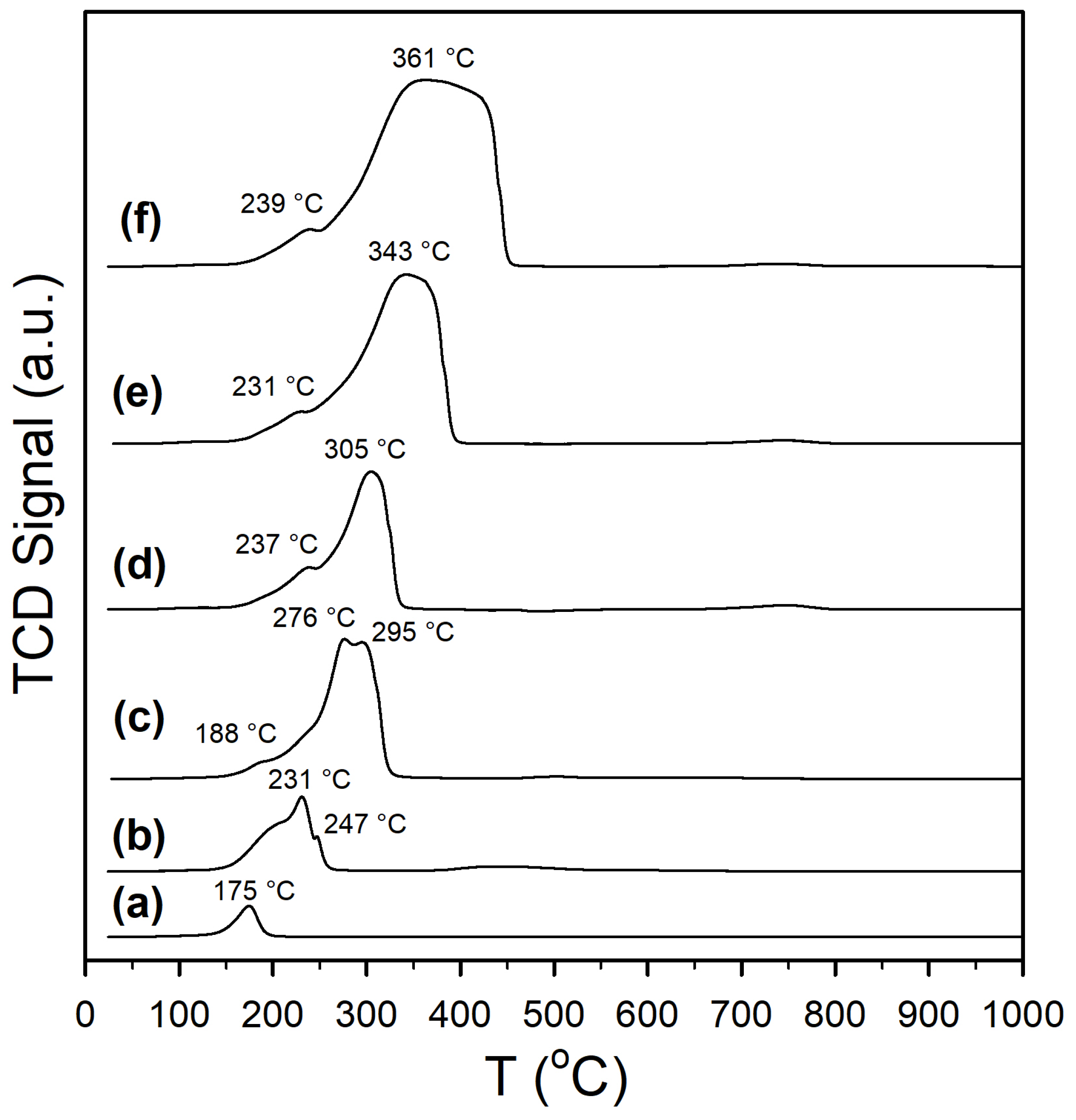
Figure 1 reports catalyst H-TPR profiles. The unpromoted catalyst (profile a) displays a reduction peak in the range of 150–180 °C corresponding to reduction of silver oxide species. Reagent grade AgO has been shown to reduce readily under hydrogen, with a characteristic Tmax near ~120 °C, yielding metallic Ag and water, consistent with the onset of the first peak [29]. Once reduced to Ag0, the surface becomes active for H2 dissociation, a widely established behavior for supported metals, where dissociative adsorption produces atomic hydrogen capable of migrating onto oxide surfaces [30]. Hydrogen spillover from Ag to ZrO2 drives additional H2 consumption beyond AgOX stoichiometry. Similar spillover-driven partial reduction of zirconia has been demonstrated for Pt/ZrO2 systems, where H spilling from Pt is consumed in ZrO2 reduction [31]. In the present Ag/m-ZrO2 catalyst, the extended tail above 300 °C is attributed to decomposition of surface carbonates, formation of OH groups, and partial reduction of Zr4+ to Zr3+ via spillover hydrogen. Na addition significantly alters the reduction behavior of Ag/m-ZrO2. In the 1.8 wt.% Na sample (profile b), the primary AgOX reduction peak shifts to higher temperature and decreases in intensity. Alkali-metal promotion is known to modify surface basicity and strengthen the metal–support interaction, often stabilizing oxidized metal species and suppressing reducibility [32,33]. Additionally, Na-induced basicity can inhibit H2 activation by neutralizing acidic surface sites, decreasing the extent of hydrogen spillover [34].
The 2.5 wt.% Na sample (profile c) exhibits these phenomena to a greater degree. The main reduction peak shifts further upward, and the broad hydrogen spillover-associated feature diminishes. Studies of alkali-promoted Pt/m-ZrO2 and Ag/m-ZrO2 systems show that Na suppresses both carbonate decomposition and support reduction, consistent with weakened spillover pathways [22,23,24,25,32]. Increased Na coverage likely blocks or disrupts hydrogen migration routes and modifies the electronic structure of Ag, decreasing the ability of Ag0 to dissociate H2.
TPR MS profiles in Figure S1 show that Na-doped Ag/m-ZrO2 catalysts exhibit much larger H2 consumption signals than the unpromoted sample, directly reflecting the greater quantity of surface carbonates formed upon Na addition, which require more H2 for reductive removal. As Na loading increases, the H2 consumption envelope shifts to higher temperature, indicating that Na inhibits Ag-catalyzed reduction pathways, forcing carbonate decomposition, OH group formation, and ZrO2 vacancy generation to occur only at higher temperatures. The stronger and higher temperature H2 uptake signals therefore arise from both increased carbonate content and delayed reduction, fully consistent with Na-induced enhancement of surface basicity and stabilization of carbonates.
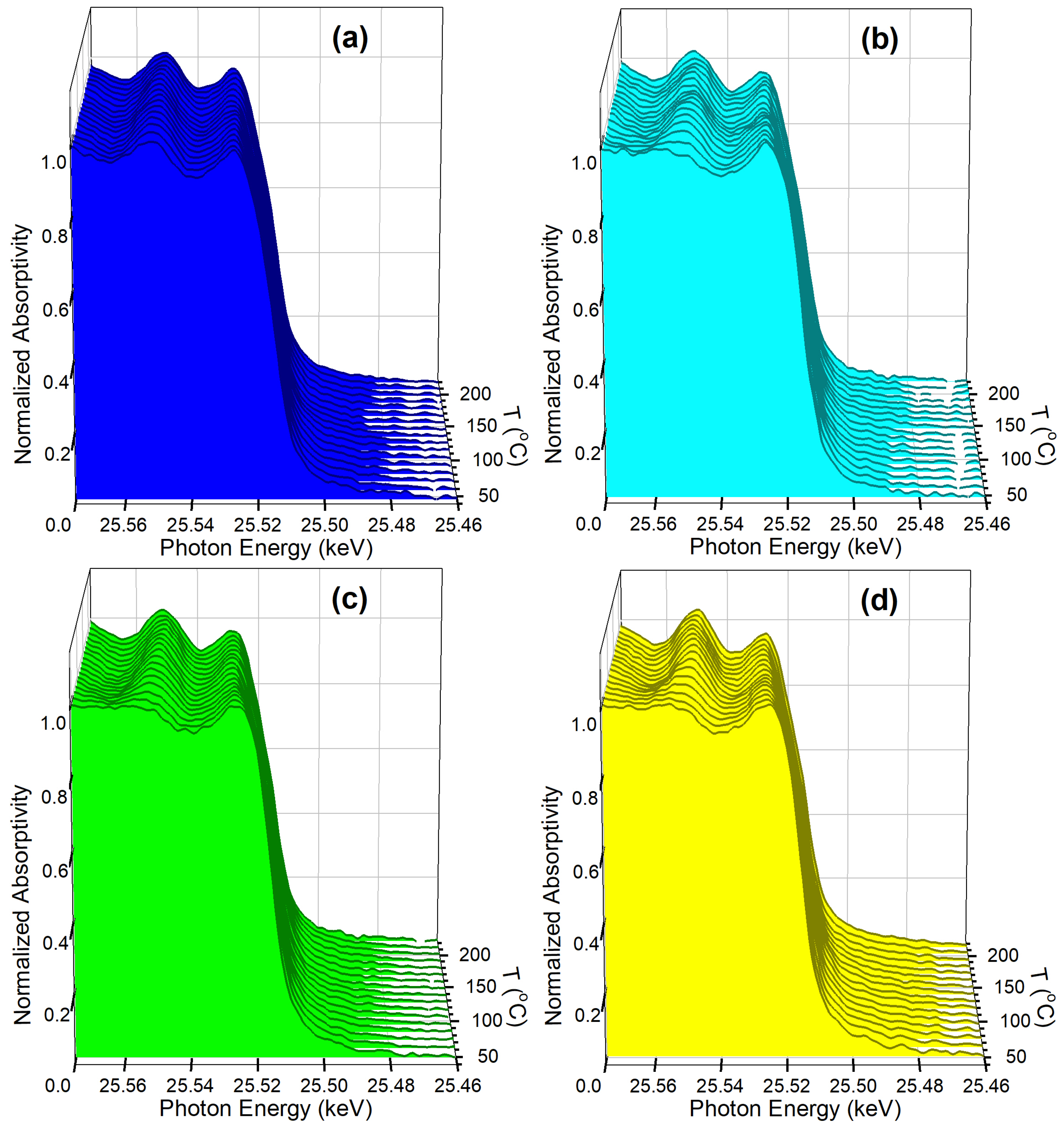
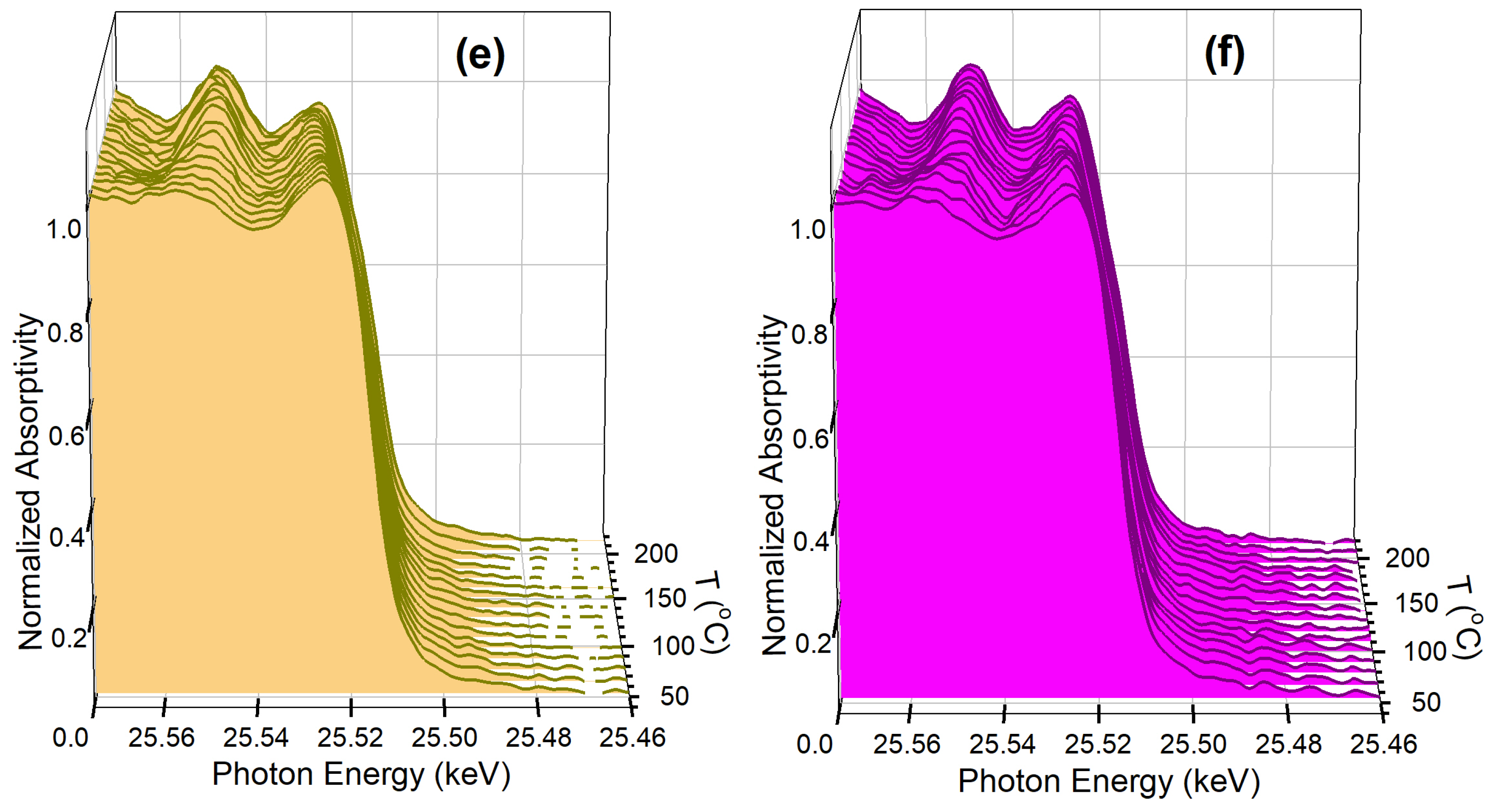
Figure 2 presents the normalized H2 TPR XANES spectra for 1 wt.% Ag/m-ZrO2 and Na-modified catalysts containing 0.5–5.0 wt.% Na. Across all samples, the spectra collected at increasing temperature converge to nearly identical final line shapes by approximately 150 °C, indicating that Ag reaches the same reduced electronic state in every catalyst. The final Ag K edge line shape, characterized by reduced white line intensity and consistent edge position, is typical of metallic Ag and matches known XANES signatures of fully reduced noble metal catalysts under H2 exposure [35,36].
The XANES data indicate that Ag is initially present in an oxidized, Ag+-like state, as evidenced by the elevated white-line intensity at low temperature. Upon heating, all catalysts ultimately converge to the same metallic Ag line shape, confirming complete reduction by ~150 °C. However, the rate at which this reduced state is reached depends strongly on Na loading. In the unpromoted catalyst, the spectra evolve toward the metallic Ag signature more rapidly with increasing temperature, demonstrating faster reduction. Introducing Na progressively slows these temperature-dependent spectral changes, indicating that Na retards the overall reduction kinetics without altering the final metallic state. This behavior is consistent with known alkali-metal effects, in which Na inhibits hydrogen activation and spillover on metal oxide surfaces [35], thereby slowing the reduction process while leaving the thermodynamically favored fully reduced Ag state unchanged.
This behavior contrasts with alkali-modified reducible oxide systems such as ceria, where alkali ions can significantly hinder or shift the extent of metal reducibility [35]. In the Ag/m-ZrO2 system, however, Na affects only the kinetics of reduction rather than the thermodynamics: once sufficient temperature is reached, each sample converges to the same metallic Ag line shape under TPR-XANES conditions. The convergence of the spectra across all Na loadings is consistent with established XANES observations showing that fully reduced noble metals exhibit indistinguishable K-edge signatures, reflecting a common metallic environment. Thus, Na slows the reduction process but does not prevent or alter the final formation of metallic Ag by ~150 °C.
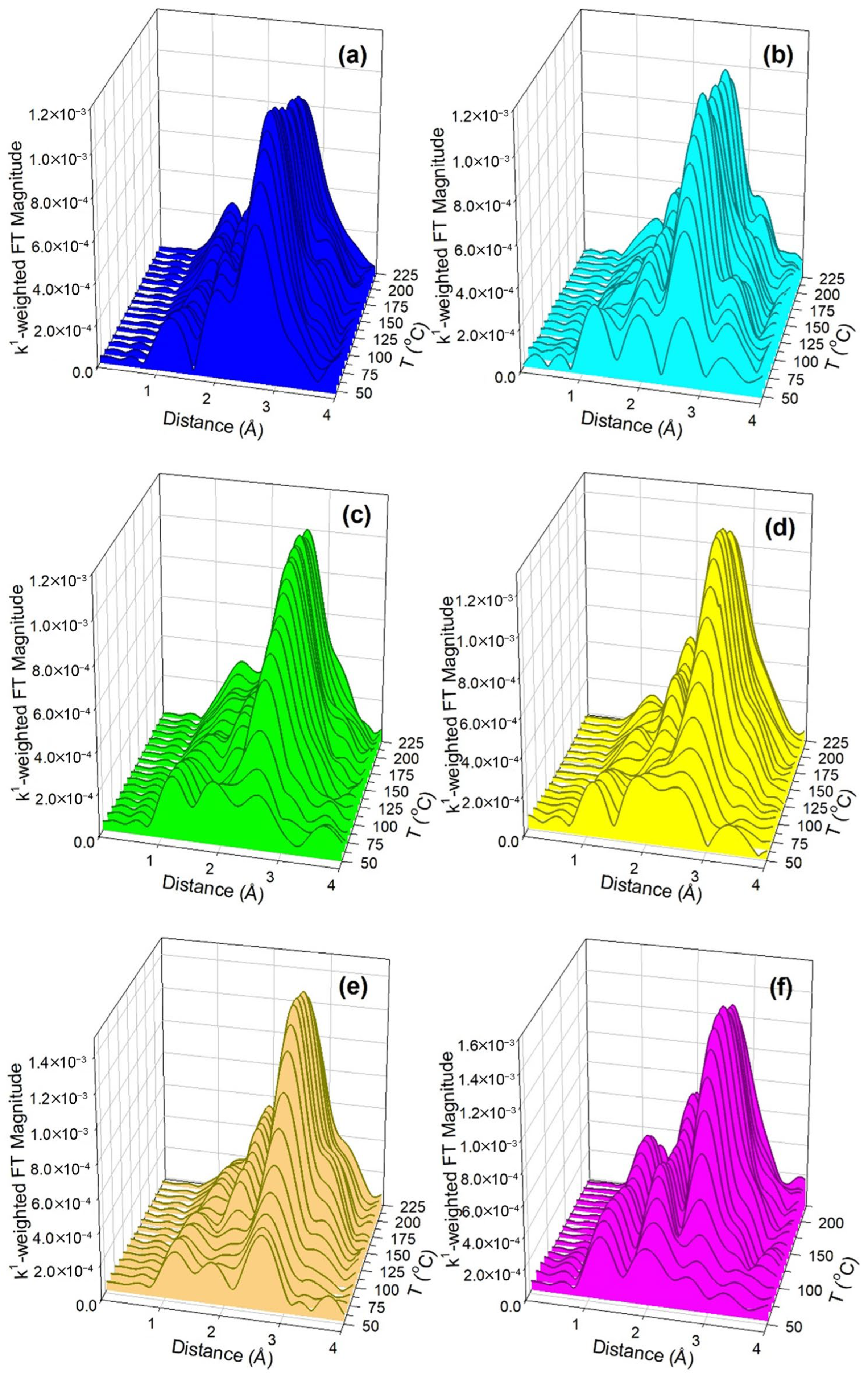
Figure 3 shows the k1-weighted H2 TPR EXAFS Fourier transform (FT) magnitude spectra for Ag/m-ZrO2 and Na-modified catalysts (0–5 wt.% Na). The primary FT peak observed near ~2.3–2.5 Å (phase uncorrected) corresponds to Ag–Ag coordination. As temperature increases, the magnitude of this peak increases, indicating the progressive formation of metallic Ag domains during reduction. This interpretation agrees with established EXAFS behavior for noble metal catalysts, where the increases in metal–metal coordination reflect the reduction of oxidized species under H2 atmosphere [36]. The key trend visible in the data is that adding Na shifts the onset of Ag–Ag peak growth to higher temperatures, demonstrating that Na delays Ag reduction. In the Na free catalyst, Ag–Ag contributions begin to intensify at lower temperatures, while Na-containing samples require progressively higher temperatures before significant Ag–Ag coordination appears. This behavior is consistent with the known effects of alkali metals, which can hinder or shift reduction processes by modifying the electronic environment of supported metal species [35]. Despite the delay in reduction, all catalysts eventually reach similar high temperature FT spectral shapes, indicating that Na does not alter the final reduced Ag local structure, albeit Ag-Ag coordination numbers vary (to be discussed). The fully reduced Ag–Ag coordination shell features are comparable across all Na loadings, which aligns with XANES and EXAFS observations that, once Ag becomes metallic, its final structure is largely independent of promoter elements [36].
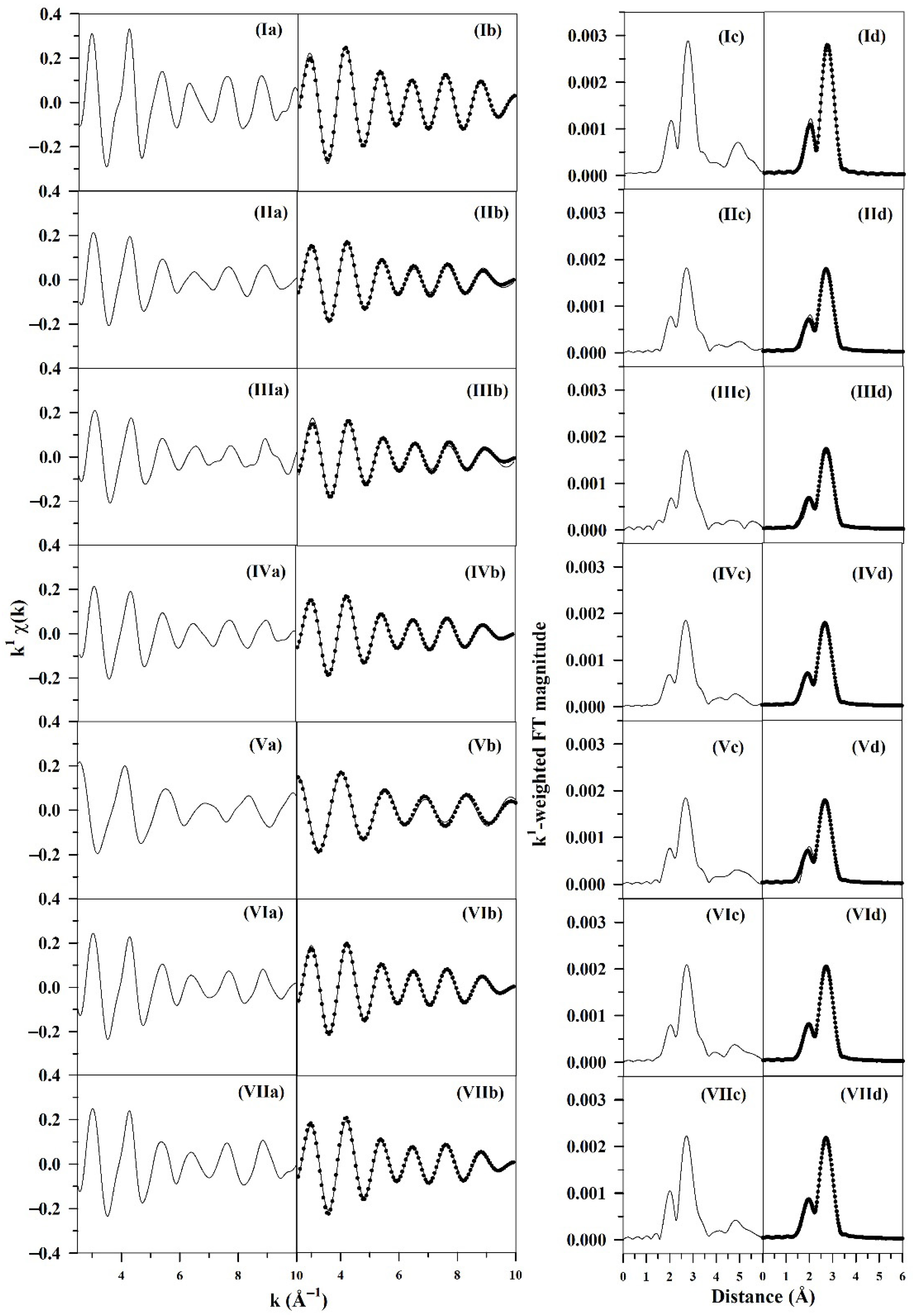
EXAFS fitting of the Ag K edge spectra following reduction at 350 °C (Figure 4, Table 2) shows that all catalysts develop a metallic Ag local structure, with first shell Ag–Ag bond distances (R ≈ 2.82–2.85 Å) matching the Ag foil reference (2.861 Å). These values, along with the excellent agreement between fitted and experimental χ(k) and FT magnitude spectra, confirm complete reduction of Ag in all samples and the formation of metallic Ag clusters, consistent with established EXAFS signatures of reduced Ag systems [36]. A key structural trend emerges in the Ag–Ag coordination numbers (N). The unpromoted catalyst exhibits N ≈ 9.1, but this value increases systematically with Na loading, reaching N ≈ 11.3 for the 5 wt.% Na sample. The corresponding estimated Ag particle diameters increase from approximately 3 nm to over 15 nm. Thus, after reduction, higher Na loadings yield larger Ag nanoparticles. This growth in particle size is supported by verified literature describing the influence of alkali metals on silver surfaces. A study by van de Ven et al. shows explicitly that alkali promoters, including Na, modify the strength of oxygen adsorption onto silver surfaces, altering how oxygen interacts with Ag sites [37]. Because surface oxygen can help stabilize small silver clusters, changes to oxygen silver interactions weaken that stabilization. As reported in the same study, alkali metals exert their effects directly on Ag surface sites, not on the support, demonstrating that adsorbed alkali species alter the surface environment of silver rather than ZrO2 [37]. Taken together, these verified observations provide a literature-supported rationale for the EXAFS-derived particle size trend. By altering the strength and character of oxygen adsorption on the silver surface, Na reduces the ability of surface oxygen to stabilize highly dispersed Ag species. During reduction, this leads to enhanced Ag atom mobility and coalescence, producing the larger Ag nanoparticles observed here. Thus, while Na does not change the final metallic Ag structure (bond lengths and FT line shapes are nearly identical across samples), it does influence the structural pathway by modifying oxygen–silver interactions in a way that favors larger Ag particles following reduction.
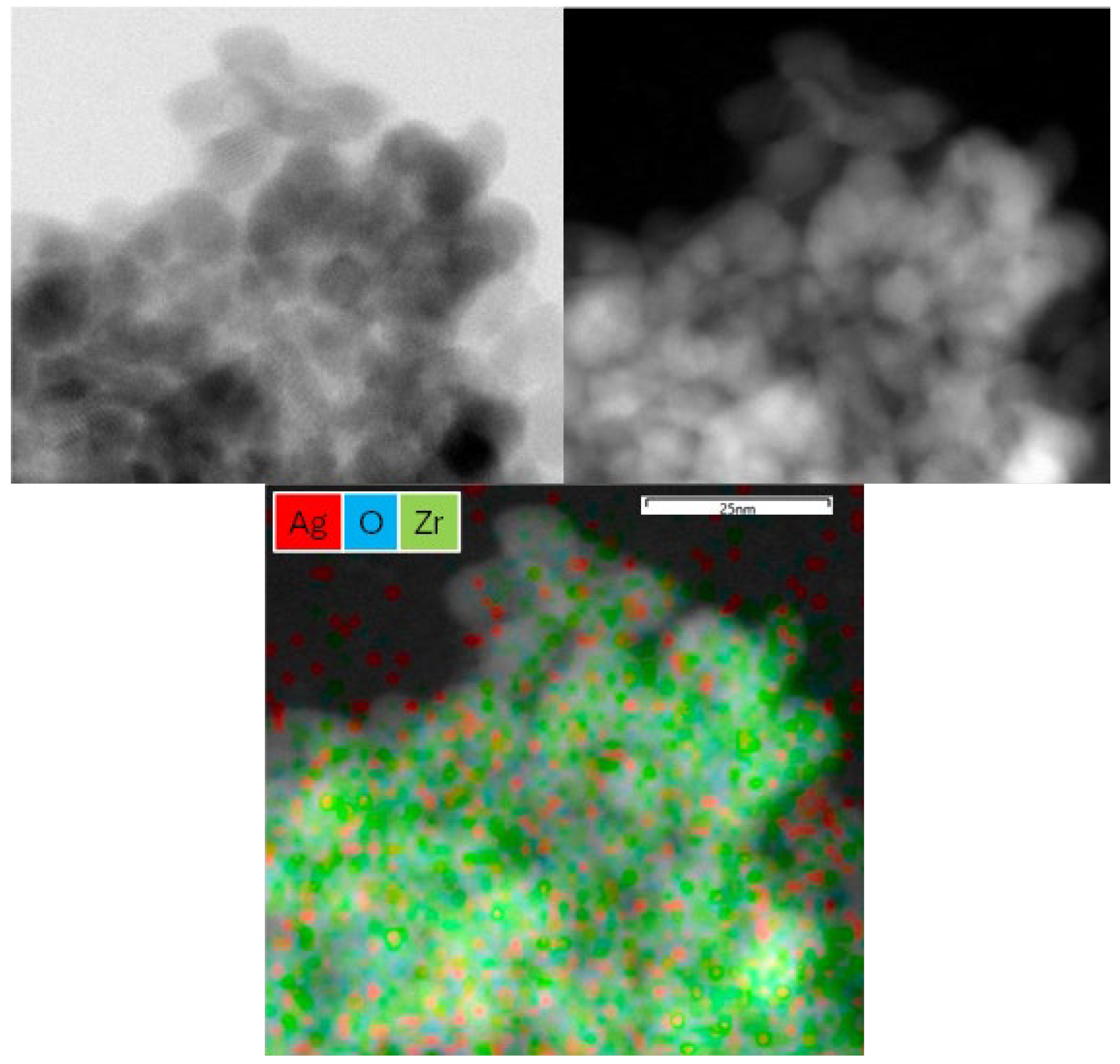
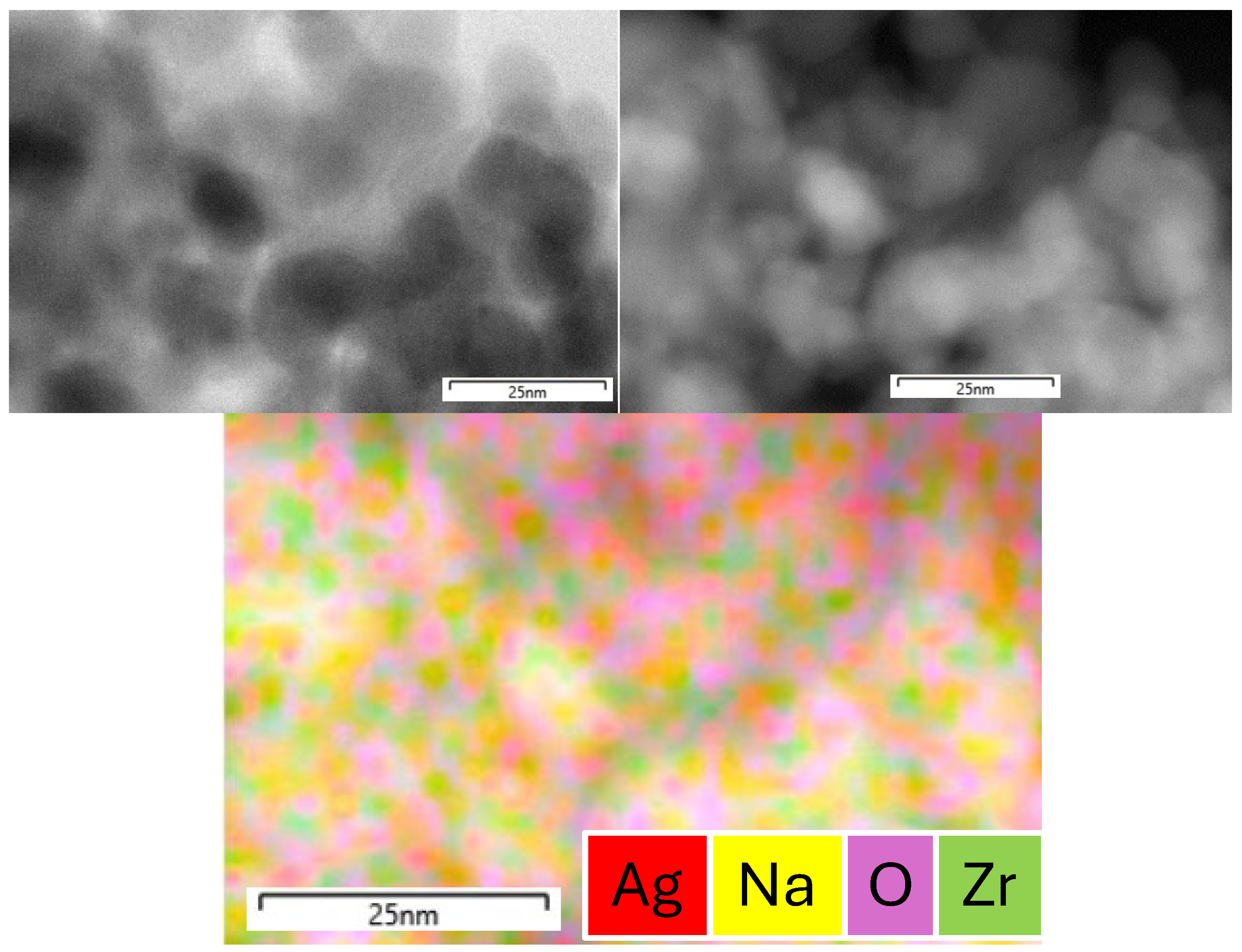
Figure 5 depicts (left) bright-field, (center) HAADF, and (right) EDX mapping of pertinent elements. Elemental mapping images of the (top) unpromoted Ag/m-ZrO2 catalyst show that the Ag-rich features (red) appear as numerous, very small and uniformly scattered spots across the zirconia support. The majority of Ag particles fall within the 1–3 nm size range, with a fraction approaching ~3–4 nm. This high degree of dispersion is consistent with the strong adsorption affinity and stabilization of small metal clusters on monoclinic ZrO2 surfaces, as previously demonstrated in combined theoretical and experimental studies of metal–ZrO2 interfaces. A few isolated larger particles were observed in the range of 5 to 10 nm. TEM/EDS imaging and EXAFS fitting converge to the conclusion that the unpromoted catalyst contains a highly dispersed Ag population dominated by 1–3 nm particles, with a minor fraction of somewhat larger particles that shift the EXAFS-derived average slightly upward.
For the 1%Na-doped sample (bottom), in the bright-field (left) and dark-field (center) TEM images, no individual Ag nanoparticles can be directly resolved. This is expected when the metal particles are either extremely small (below ~2 nm), partially embedded in the support, or lacking sufficient Z contrast relative to the zirconia support. Thus, TEM alone cannot visually distinguish Ag from the underlying ZrO2. The composite EDX elemental map (right) provides spatial evidence of the metal distribution. In this map, Ag appears as numerous, faint, red-colored signals, scattered uniformly across the zirconia crystallites, indicating high dispersion of Ag similar to that of the unpromoted catalyst. The Na signal (yellow) appears even more broadly distributed and more diffuse than the Ag signal.
Instead of localized spots, Na occurs as a cloud-like distribution, suggesting that Na is not present as nanoparticles but rather as surface species dispersed across the catalyst surface. Importantly, the EDX map of the representative image shows no evidence of large Ag aggregates, while Na appears as a more widespread, diffuse surface distribution. However, in other images, a few larger particles were observed, with the largest being 14 nm. In summary, these results are consistent with the small Ag-Ag coordination number observed in EXAFS. That is, considering mostly smaller Ag clusters less than 2 nm, but averaging in a few larger clusters, is fully consistent with an overall average domain size from EXAFS of a few nanometers.
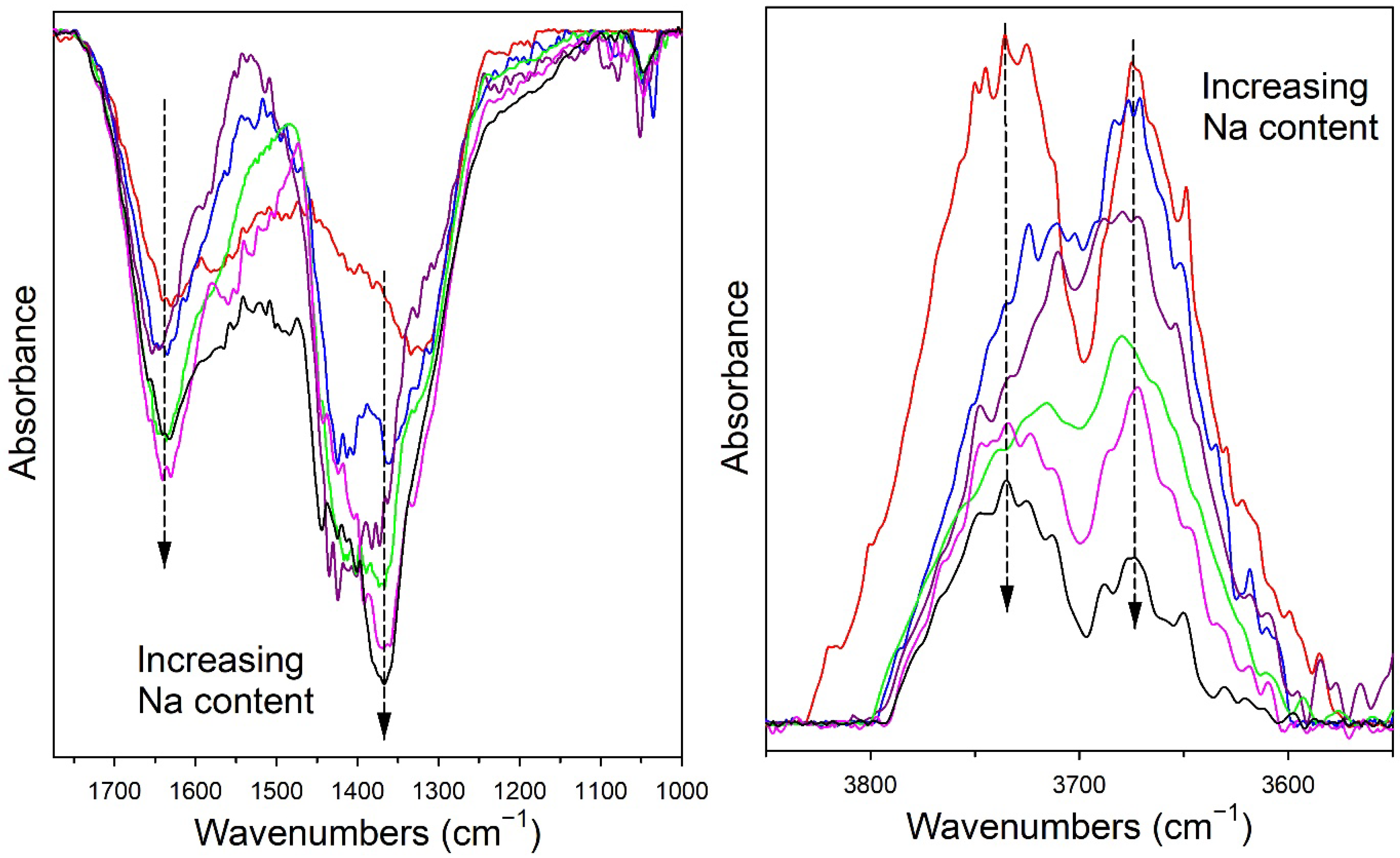
The IR spectra in Figure 6 show that Na promotion increases the initial coverage of surface carbonates on m-ZrO2, leading to (left) a larger amount of carbonate removed during H2 reduction. Meanwhile, the bridging OH region shows progressively weaker bands with increasing Na, matching observations that Na increases the basicity of m-ZrO2 and alters surface adsorption such that fewer Zr–OH groups form during carbonate decomposition [33,38].
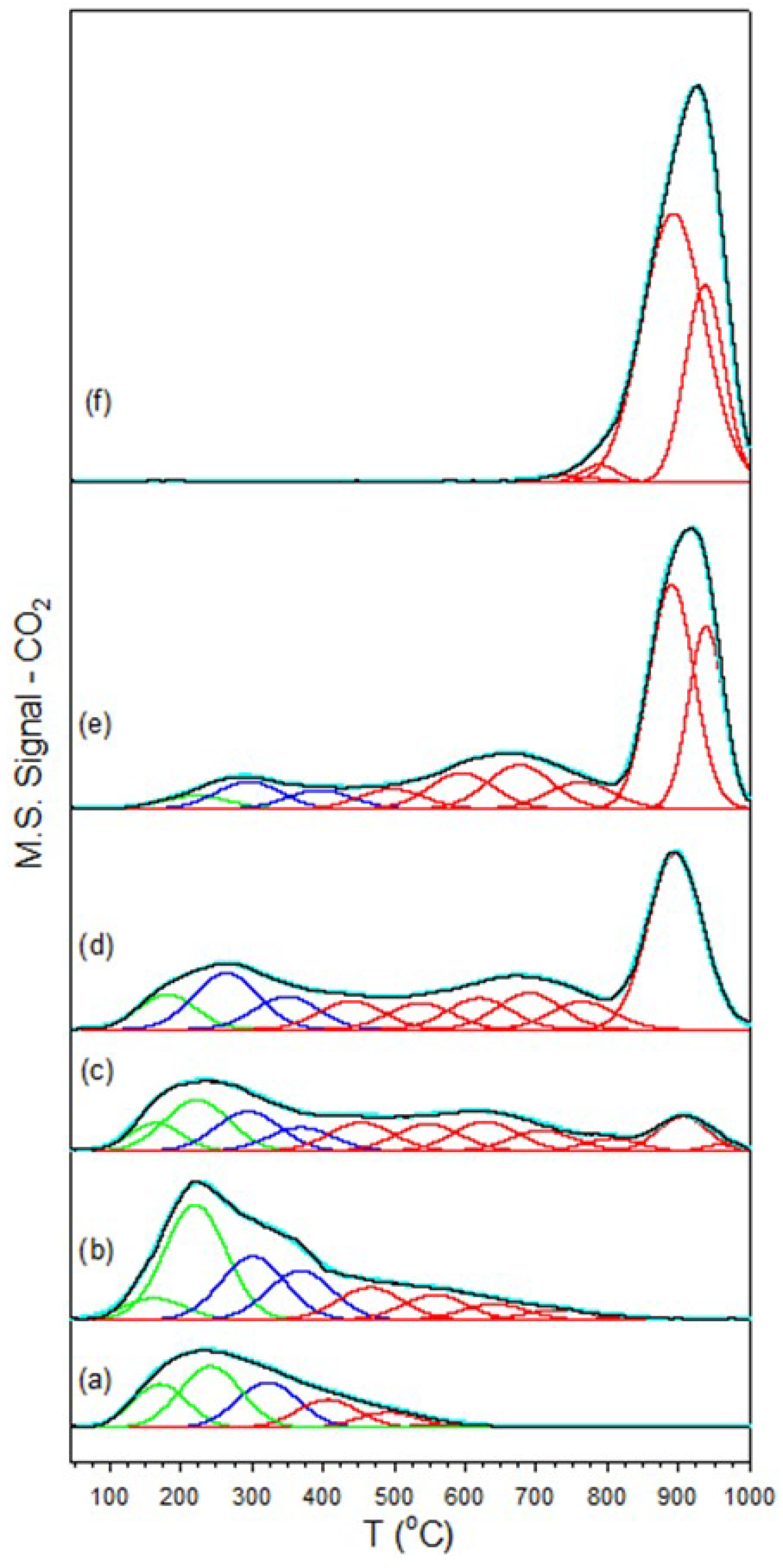
CO2 temperature programmed desorption (CO2 TPD) was employed to examine the surface basicity of Ag/m-ZrO2 and its Na-modified derivatives. Because CO2 is an acidic adsorbate, the temperature at which it desorbs reflects the strength of basic sites on the catalyst surface.
Weak sites desorb CO2 below ~250 °C, medium strength sites between 250 and 400 °C, and strong basic sites require temperatures above 400 °C. This interpretation is consistent with prior studies establishing that CO2 interacts preferentially with basic surface oxygen species and that increased basicity enhances CO2 activation and retention on catalyst surfaces [5,39,40]. Figure 7 displays the CO2 TPD spectra, and Table 3 summarizes the distribution of desorption peak areas. A clear trend emerges: increasing Na loading progressively shifts CO2 desorption toward higher temperatures, indicating strengthening of the catalyst surface basicity. The Na-free sample shows CO2 desorption primarily at low temperatures (<250 °C, 51.9%), characteristic of weak basic sites typical of zirconia-based supports. Only 24.6% of desorption occurs above 400 °C, consistent with a limited population of strong basic sites—aligned with the known mild basicity of monoclinic ZrO2 [5,39]. Introducing small amounts of Na already alters the basic-site distribution. Adding 0.5 wt.% Na reduces weak site desorption to 40.1% and maintains a moderate fraction (25.7%) above 400 °C, while doping 1.0 wt.% Na produces a dramatic shift: strong basic site desorption rises to 51.6%, more than double that of the unpromoted sample. This enhancement in strong basicity is consistent with alkali promoter literature, where Na donates electron density and stabilizes surface O2− species, enhancing CO2 adsorption strength [39,40]. Higher Na loading continues this trend. At 1.8 wt.% Na loading, strong site contribution increases to 71.4%, and weak sites drop to 7.4%, while at 2.5 wt.% Na, strong sites dominate (86.8%), indicating near complete transformation of the surface into strongly basic regions. Such progressive strengthening of basicity with alkali addition is widely observed for oxide catalysts where promoters such as Na or Sr generate more robust basic centers capable of stronger CO2 chemisorption [40]. At 5 wt.% Na, all detectable CO2 desorbs above 400 °C. The absence of low- and medium-temperature peaks suggests a surface composed exclusively of strong basic sites. A single dominant high-temperature peak in Figure 7 confirms this transformation. High alkali loadings can result in the formation of surface Na—O ensembles that are strongly basic and highly effective for CO2 adsorption, as supported by comparative studies on alkali-modified metal oxide catalysts [39,40,41].
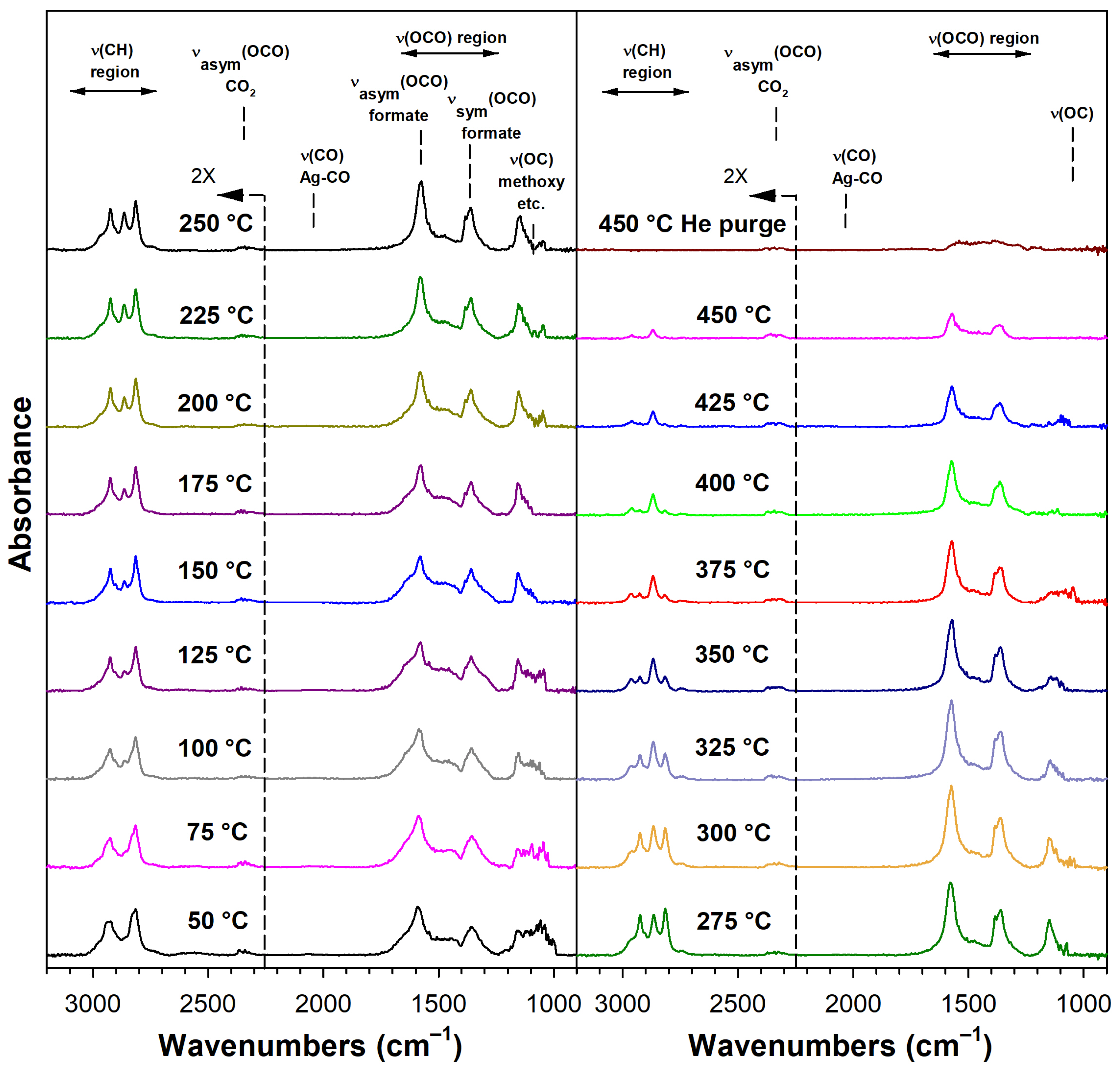
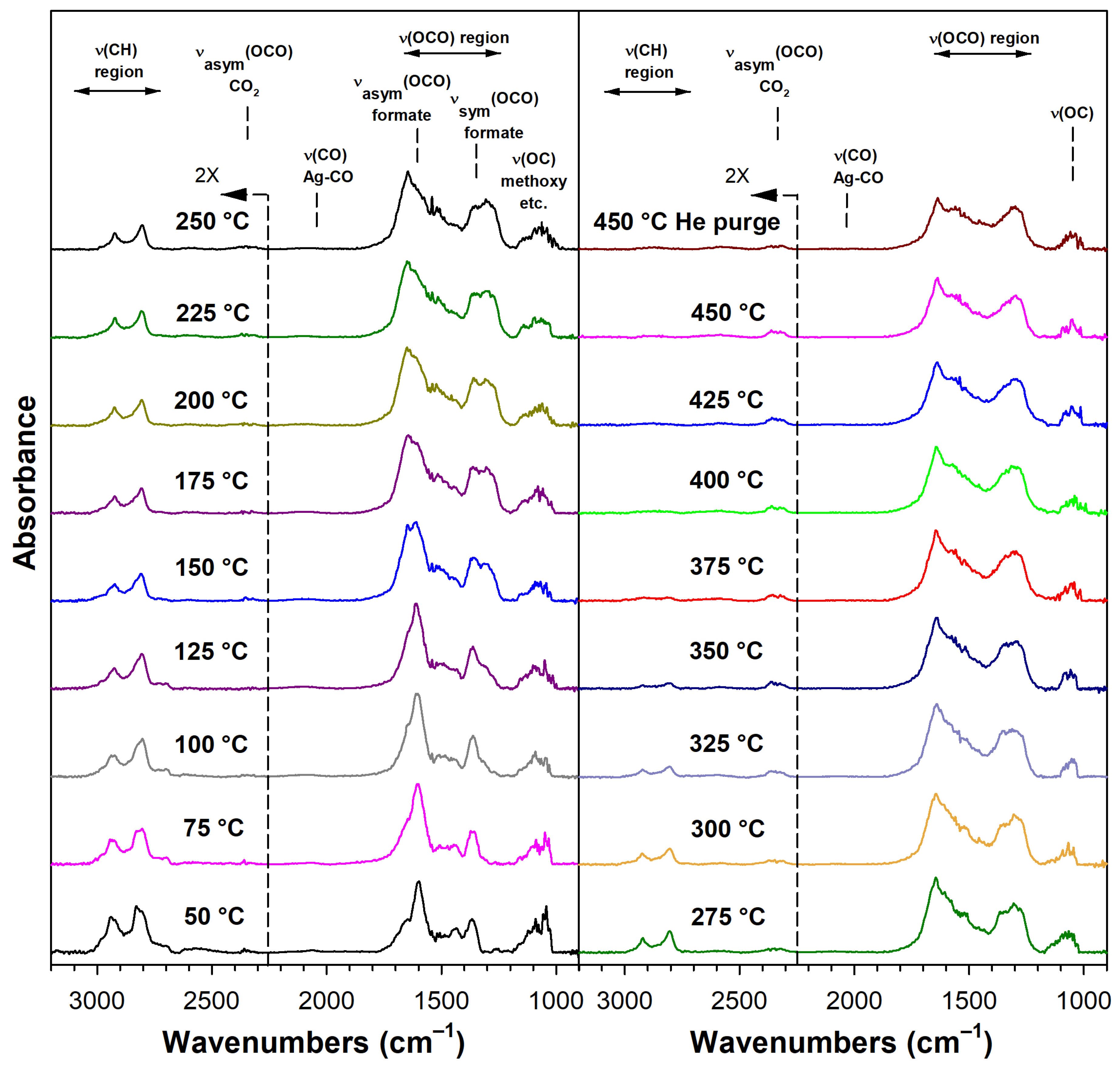
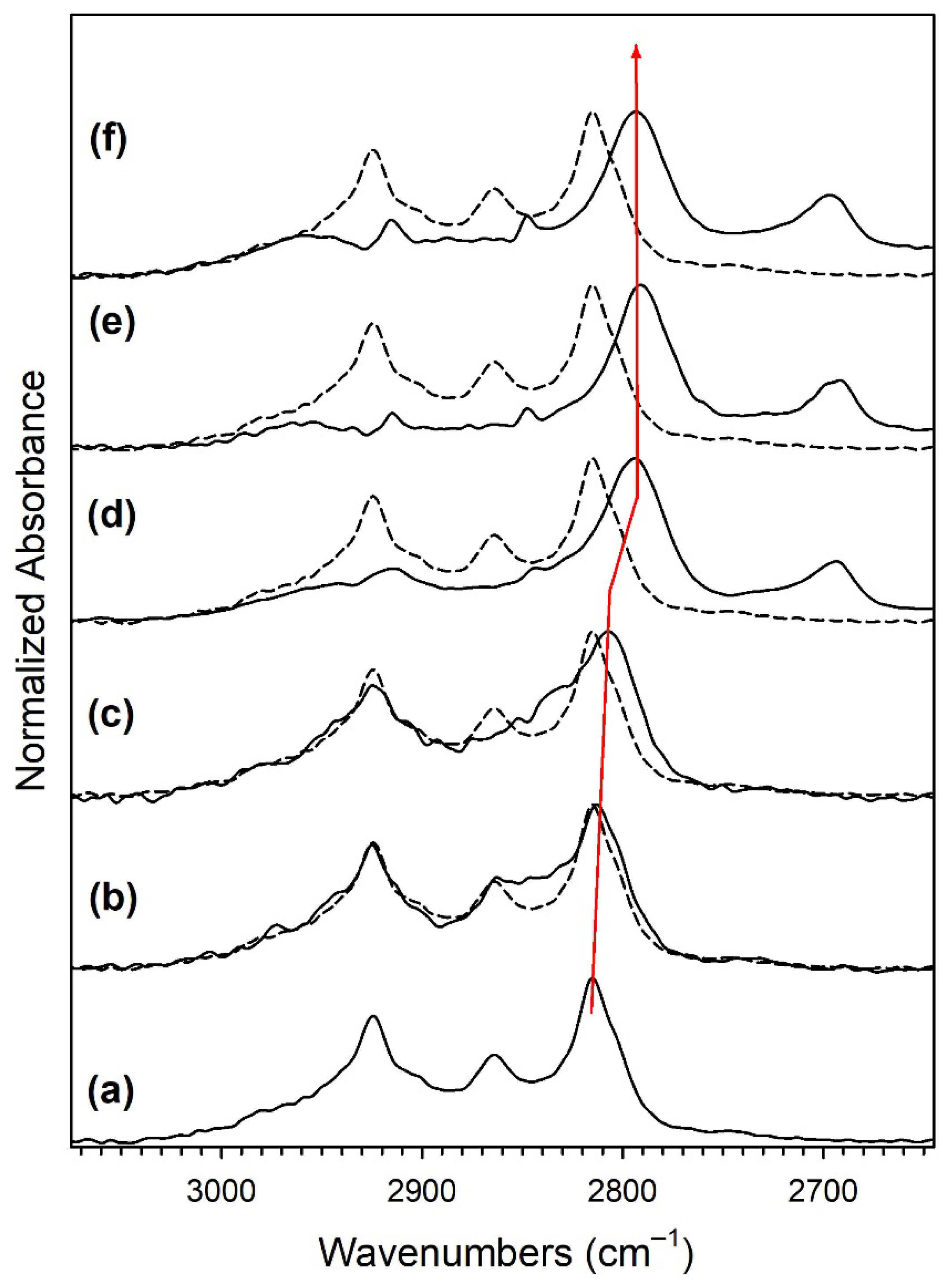
Examining Figure 8, Figure 9 and Figures S2–S5, DRIFTS of in situ methanol steam reforming provides insight into the surface catalytic mechanism. At 50 °C, the spectrum is dominated by adsorbed methoxy species. That is, methanol dissociates at reduced defects on the surface of m-ZrO2 to form methoxy species. The ν(OC) and ν(CH) bands for methoxy are observed in the ranges of 1000–1200 cm−1 and 2800–3000 cm−1, respectively. Even at 50 °C, a significant fraction of methoxy species has already been converted into formate species, as νasym(OCO) and νsym(OCO) bands are present in the ranges of 1500–1650 cm−1 and 1300–1400 cm−1, respectively. Increasing temperature, the remaining methoxy species convert to formate, and the formate signal increases. The formate signal is also distinguished by ν(CH) bands. The formate ν(CH) band positions are provided in Figure 10 and Table 4; the ν(OCO) band positions are also in Table 4. By adding Na and increasing the Na loading, the formate ν(CH) band moves to lower wavenumbers. This is likely due to the increase in catalyst basicity. As the -OOC portion of the formate species is held more tightly to the catalyst surface, this strains the C-H bond of the formate molecule, weakening it and causing the band to move to lower wavenumbers (i.e., frequencies). The increased splitting of the ν(OCO) bands (i.e., asymmetric minus symmetric) with adding Na and increasing Na content provides another confirmation of increased basicity. At higher temperatures (e.g., above 300 °C), the formate converts to carbonate species, the precursor for CO2 evolution. Note that the catalysts containing Na (Figure 9 and Figures S2–S5) exhibited faster formate decomposition rates relative to the unpromoted catalyst (Figure 8) due to C-H bond weakening (Figure 10), with the optimum loading being 1 wt.% Na. Above 1 wt.%, Na doping continued to weaken the C-H bond further. However, these higher levels of Na resulted in a gradual slowing of the formate decomposition to carbonate (Figures S3–S5), as excessive Na on Ag tended to inhibit H-transfer pathways. Na addition also tended to increase carbonate stability on all catalysts (Figure 9 and Figures S2–S5). Although Na had a beneficial effect on promoting the formate decarboxylation pathway, CO2 product inhibition was observed through carbonate stabilization.
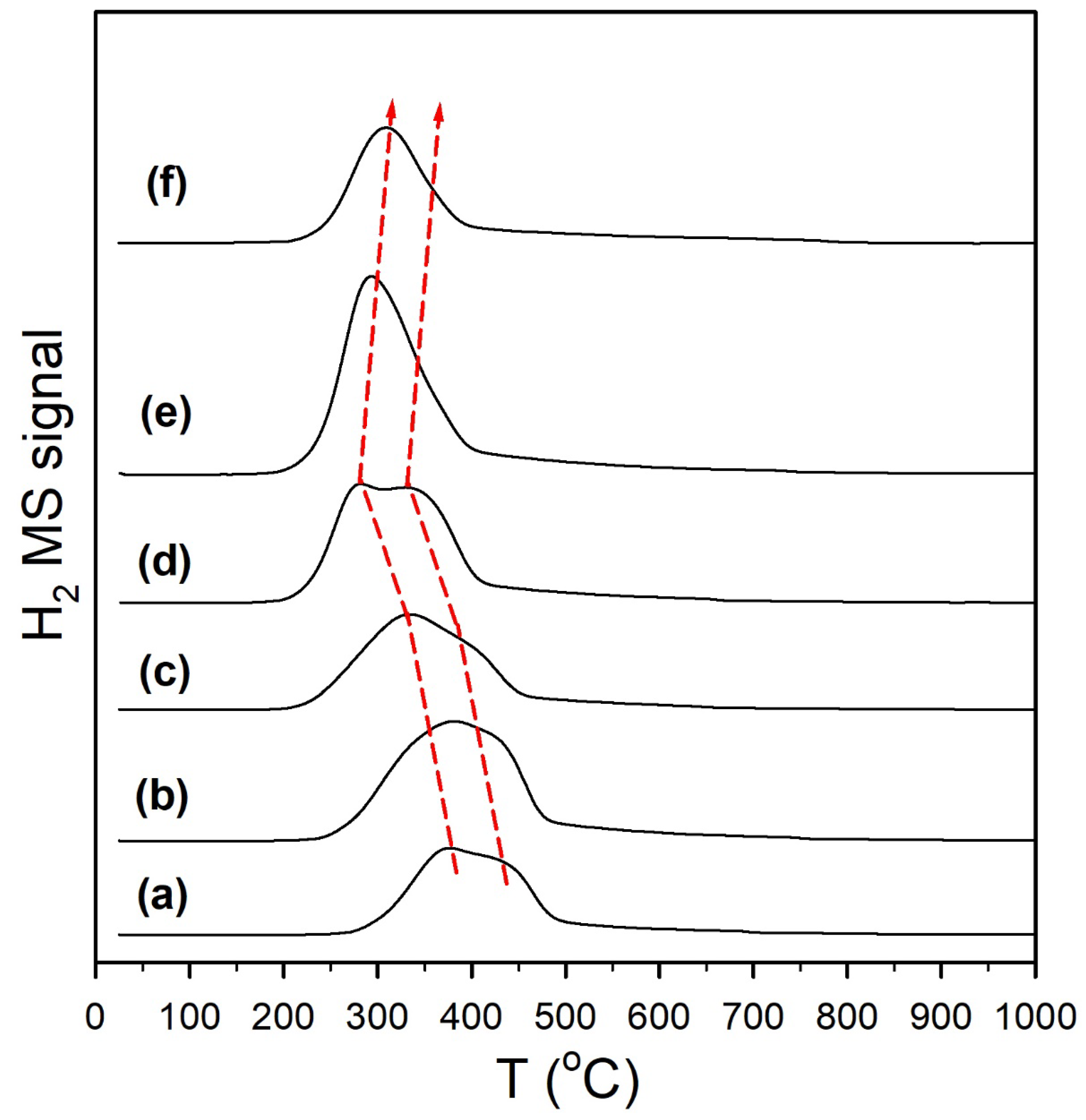
Figure 11 shows the results of temperature programmed MSR following adsorption of methanol and H2O onto the activated catalyst surface. All Na-doped catalysts displayed more rapid H2 evolution, consistent with the results of DRIFTS, with the best catalysts being in the range of (c) 1% to (e) 2.5%Na. The minimum temperature was observed to be (d) 1.8 wt.% Na, and above that level excessive Na tended to hinder H-transfer. This is because Na addition changes the decomposition selectivity of formate away from decarbonylation/dehydration (i.e., -H + -OOCH → H2O + CO) and towards decarboxylation/dehydrogenation (i.e., -H + -OOCH → H2 + CO2). This is important for providing additional H2 from when methanol is used as a liquid chemical carrier of hydrogen (e.g., for PEM fuel cell applications).
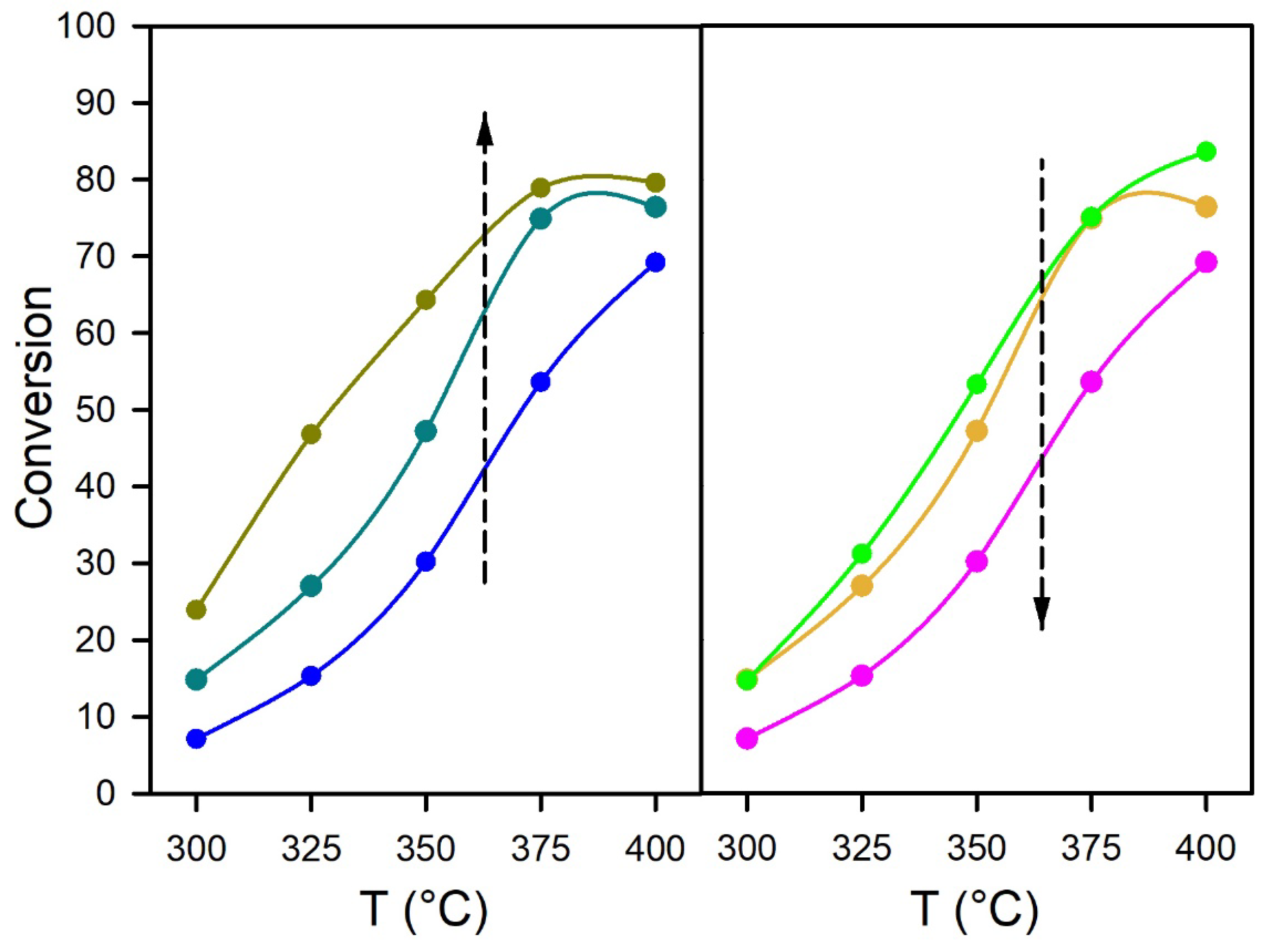
Figure 12 illustrates the temperature-dependent conversion behavior of Na-promoted Ag/m-ZrO2 catalysts at identical space velocity and a 1:1 CH3OH:H2O feed. Consistent with the conversion values in Table 5, the unpromoted 1.1 wt.% Ag/m-ZrO2 catalyst exhibits a monotonic increase in conversion with temperature, approaching ~70% conversion at 400 °C. In contrast, 0.5–1 wt.% Na-promoted Ag/m-ZrO2 shows markedly higher conversion across the full temperature range, with the dark cyan (0.5 wt.% Na) and dark yellow (1 wt.% Na) curves in Figure 12 (left) consistently lying above the unpromoted blue curve. These observations correspond directly to the tabulated values at 375–400 °C, where 0.5–1.0 wt.% Na produces 73–79% conversion, substantially exceeding the Ag-only catalyst under identical conditions. At higher Na loadings (≥2.5 wt.%), the conversion plateau shifts downward (Figure 12, right), reflecting diminished activity at excessive promoter coverage.
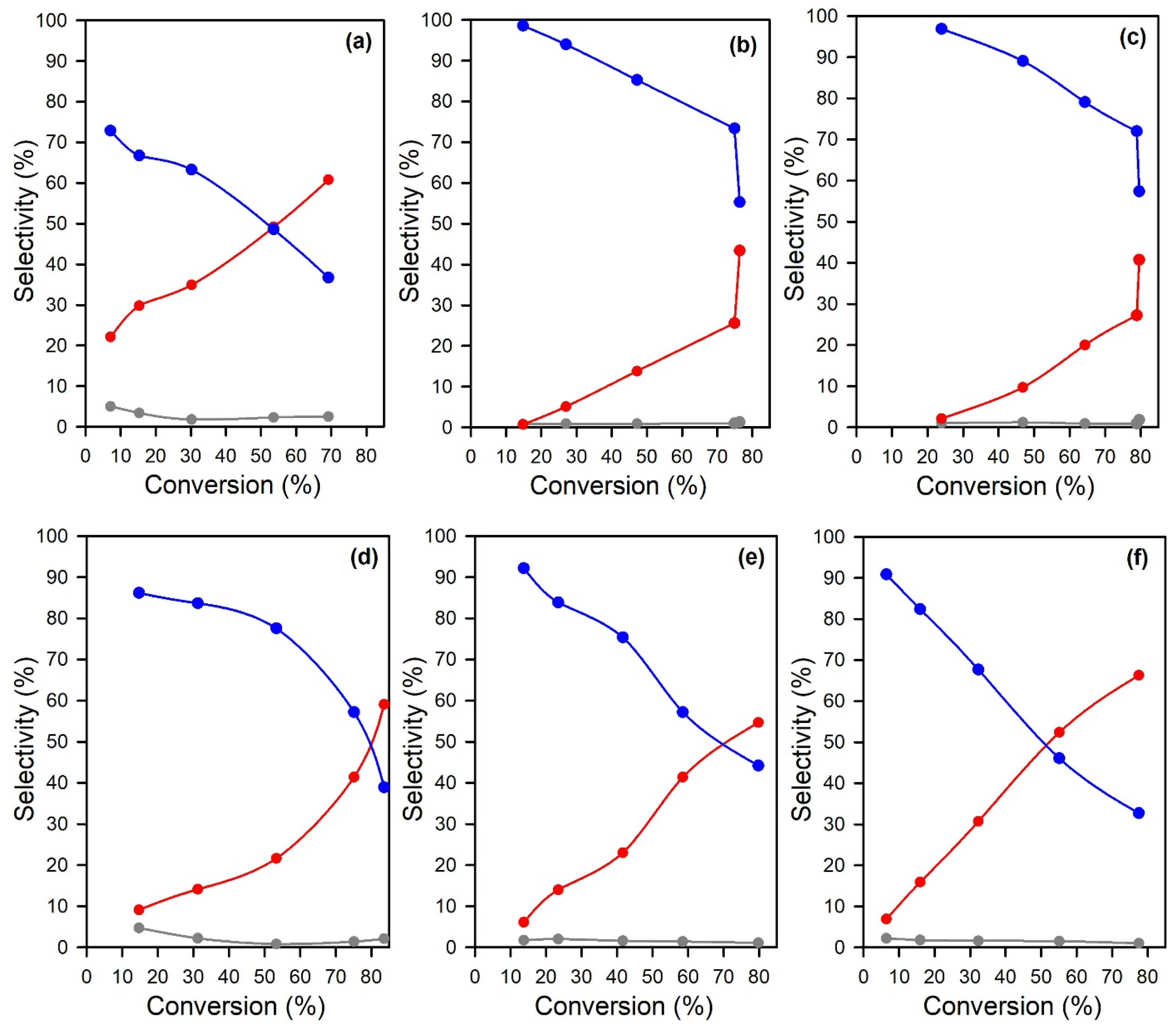
The selectivity–conversion relationships in Figure 13 provide mechanistic clarity regarding these Na-dependent trends. Across panels a–f, the CO2 selectivity (blue) rises with conversion, whereas CO selectivity (red) decreases for the catalysts containing 0.5–1.8 wt.% Na. The exceptionally low CH4 selectivity (gray) across all samples indicates that Na promotion mainly modulates the CO/CO2 balance rather than triggering methanation. These graphical trends align with the corresponding values in Table 5, wherein the 0.5–1.0 wt.% Na catalysts consistently display the highest CO2 selectivity (≥70% at 375 °C) and lowest CO selectivity, outperforming the unpromoted material by a wide margin. At ≥2.5 wt.% Na, Figure 13 shows a weakening of this advantage: CO2 selectivity continues to increase with conversion but does not reach the high selectivity regime achieved by the optimally promoted catalysts, matching the decline in performance noted at higher Na levels in Table 5. The shaded rows show a comparison at similar conversion (i.e., at 325 °C comparing unpromoted with 1 wt.% Na). This, along with the trends observed in Figure 13, confirm that a real selectivity effect occurs in the absence of conversion effects on selectivity.
These findings confirm that moderate Na promotion (0.5–1.0 wt.%) enhances the formate dehydrogenation and WGS-assisted CO2-forming pathway, thereby shifting MSR selectivity away from CO. This is in agreement with prior alkali promotion studies on ZrO2-supported noble metal catalysts, where moderate alkali loadings increase surface basicity and weaken the C–H bond of adsorbed formate, accelerating its decomposition to CO2 and H2. However, excessive alkali coverage blocks metal sites, stabilizes carbonates, and suppresses overall MSR activity, as reflected in both the downward shifted conversion curves of Figure 12 and the deteriorated CO2 selectivity trends of Figure 13 at ≥2.5 wt.% Na.
These behaviors mirror established mechanistic interpretations for alkali-modified MSR and WGS catalysts found in the literature [17,18,19,22,23]. Altogether, the combined results from Table 5, Figure 12 and Figure 13 demonstrate that Na promotion provides the means to tune the reaction network on Ag/m-ZrO2. Specifically, 0.5–1.0 wt.% Na constitutes the optimal loading range that simultaneously maximizes methanol conversion, suppresses CO formation, and enhances CO2 selectivity—features that are fully consistent with the alkali-driven formate pathway modification documented in prior MSR mechanistic investigations [17,18,19,22,23].
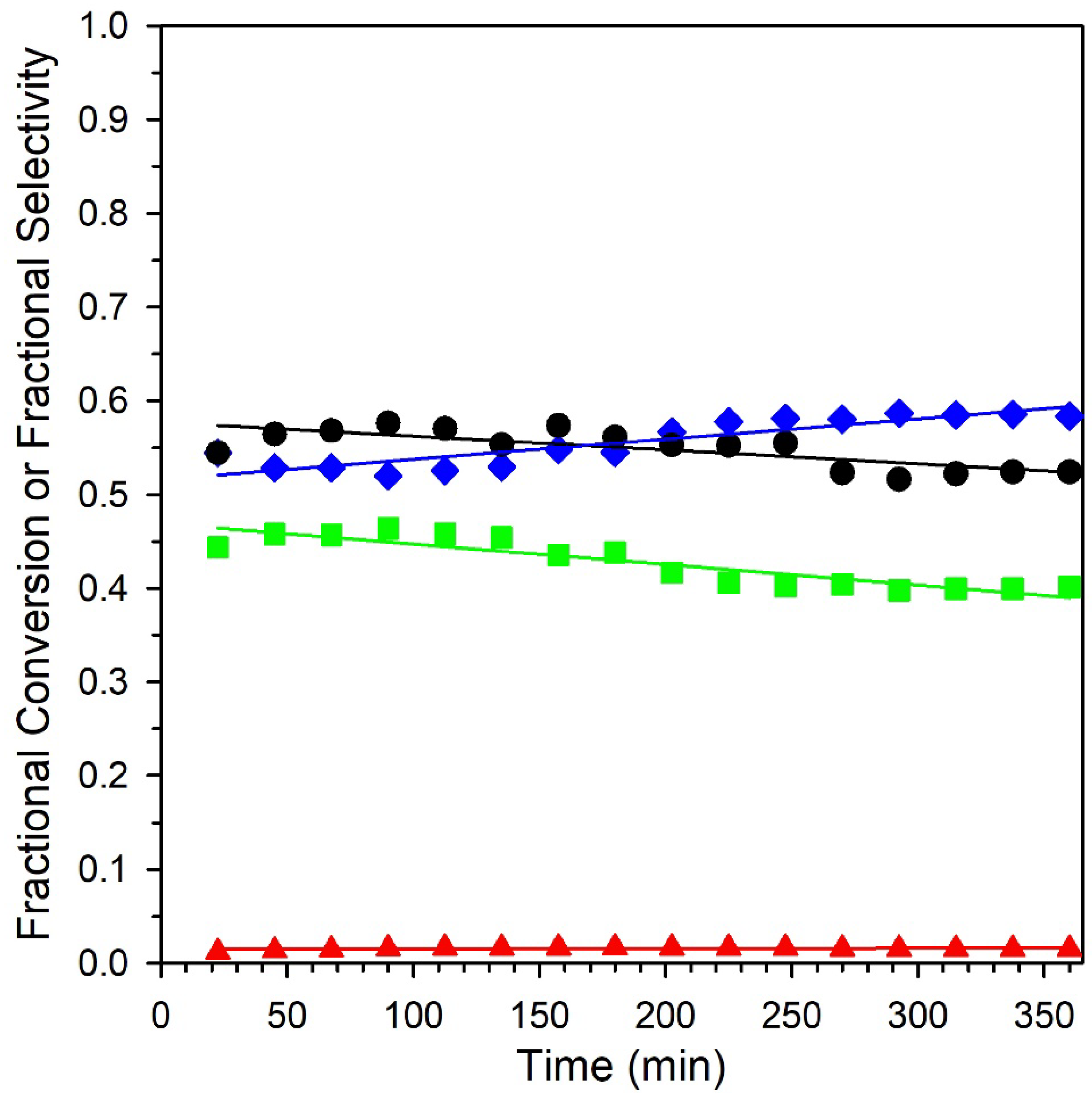
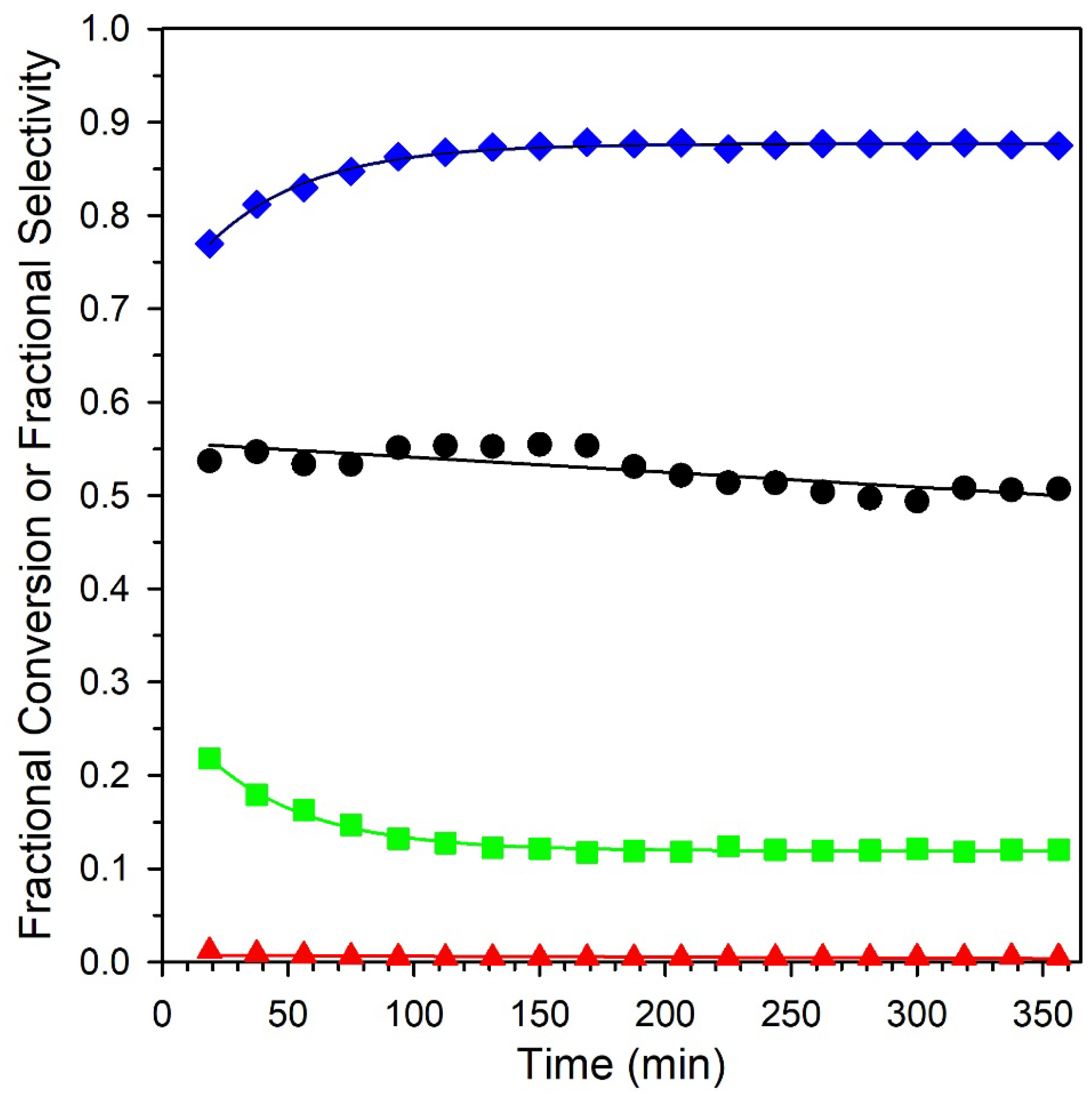
Short-term stability testing at 345 °C (Figure 14 and Figure 15) shows that both 0%Na–1.1% Ag/m-ZrO2 and 1%Na–1.1% Ag/m-ZrO2 maintain stable methanol conversion and product distributions over the 360 min test period, indicating good operational robustness under MSR conditions. In both cases, conversion remains nearly constant and CH4 formation stays negligible. However, the Na-promoted catalyst exhibits a substantially higher CO2 selectivity throughout the test, consistent with its enhanced performance under steady state MSR conditions. Overall, both catalysts display good stability over this short timeframe, with Na promotion notably elevating the CO2-forming pathway.
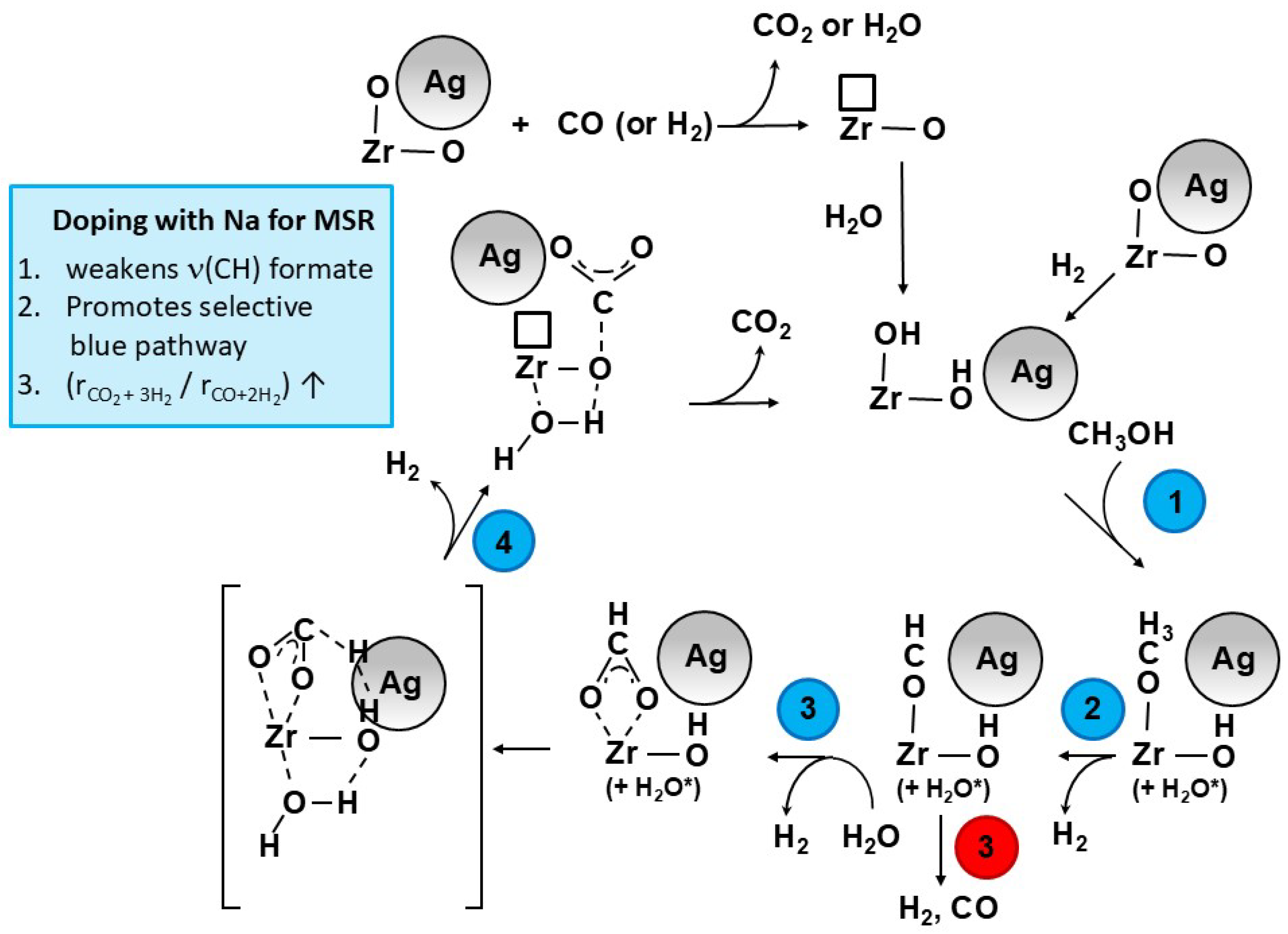
The proposed MSR mechanism depicted in Figure 16 over Ag/m-ZrO2 involves methanol activation at interfacial Ag–O–Zr sites, forming methoxy species that subsequently undergo stepwise dehydrogenation to surface formate. Two competing pathways emerge from this intermediate: a CO-forming route (red pathway), in which formate decomposes to CO and H2, and a CO2-forming route (blue pathway), in which formate is further hydroxylated and decomposes to CO2 and H2. Sodium addition selectively enhances the CO2-forming branch by weakening the ν(CH) mode of surface formate, facilitating its dehydrogenation and increasing the rate ratio r C O 2 + 3 H 2 / r C O + 2 H 2 . As a result, Na doping shifts the reaction network toward the blue pathway, suppressing CO formation while maintaining efficient H2 release. It should be noted that the Pt/YSZ catalysts reported by Martinelli et al. [22,23] were tested at an exceptionally high GHSV of 381,000 h−1, yet still reached ~75–88% methanol conversion at 350 °C depending on Na loading, demonstrating very high intrinsic MSR activity. In contrast, the Ag/m-ZrO2 catalysts in the present work were operated at ~19,000–50,800 h−1 (roughly an order of magnitude lower space velocity), yet required similar or higher temperatures to reach comparable conversions. This difference clearly indicates that Pt is substantially more active than Ag on a per contact time basis. Furthermore, just as Na improves CO2 selectivity in Ag systems, Na promotion in Pt/YSZ also shifts the product slate toward CO2, though the Pt catalysts remain inherently far more active overall. Nevertheless, another consideration is that Ag is far less expensive than Pt, making Ag-based catalysts more attractive in applications where material costs rather than volume/weight restrictions are key considerations.


3. Materials and Methods

3.1. Catalyst Preparation

A batch of 1.1%Ag/m-ZrO2 (atomically equivalent to 2%Pt used in prior work) was prepared by loading monoclinic ZrO2 (1/8” pellets, Thermo Scientific (Waltham, MA, USA) (certificates of analysis [41]), crushed and sieved to 63–106 μm) with an aqueous solution of silver nitrate (Alfa Aesar, Haverhill, MA, USA) to the point of incipient wetness. The catalyst was dried and calcined in air at 350 °C for 4 h using a muffle furnace (Thermolyne, Thermo Scientific, Waltham, MA, USA). This mother batch was divided into several batches for adding different weight %Na loadings (0.50%, 1.0%, 1.8%, 2.5%, and 5.0%) with Na(NO3) (Alfa Aesar, Haverhill, MA, USA) as the precursor. Aqueous incipient wetness impregnation was also used to add the sodium nitrate, with drying and calcination at 350 °C for 4 h (muffle furnace).
3.2. Nitrogen Physisorption

BET surface area and porosity measurements were obtained using N2 physisorption with a Micromeritics 3-Flex Instrument (Norcross, GA, USA). The catalysts were degassed at 160 °C below 6.7 Pa for 12 h prior to acquiring the adsorption and desorption branches of the isotherm.

3.3. HR-TEM with EDX

High-resolution transmission electron microscopy (HR-TEM) and scanning transmission electron microscopy (STEM) analyses were performed using a JEOL JEM-2010F (Peabody, MA, USA) field-emission transmission electron microscope. The microscope is equipped with a field-emission electron gun and operated at accelerating voltages of 120 kV or 200 kV, enabling high-resolution lattice imaging with a point-to-point resolution of approximately 1.9 Å. Samples were activated at 350 °C for 1 h in 30 cm3/min of 33% H2 (balance helium), purged and cooled under flowing helium (30 cm3/min) and passivated in 1%O2/He (30 ccm) for 10 h. Samples were ground and the powdered catalyst was dispersed in ethanol under brief sonication (10 min), followed by drop-casting onto lacey carbon-coated copper TEM grids. After solvent evaporation, specimens were loaded into a holder for imaging.
HR-TEM images, bright-field (BF) TEM, and annular dark-field (ADF) STEM images were collected using a TVIPS CMOS camera, and elemental analysis was performed using a SiLi EDS detector (EDAX Genesis). Data acquisition and processing were conducted using TVIPS EMMenu (Version 4.0) and EDAX Genesis software packages (Version 5.2). The instrument supports atomic lattice imaging (HRTEM), BF/DF imaging, selected-area electron diffraction (SAED), nano-beam diffraction (NBD), convergent-beam diffraction (CBD), and X-ray energy-dispersive spectroscopy (EDS).

3.4. TPR-EXAFS/TPR-XANES/EXAFS

In situ H2-TPR-EXAFS/XANES experiments were carried out at the MR-CAT beamline located at the Advanced Photon Source, Argonne National Laboratory. A Si (111) monochromator paired with a Rhodium-coated mirror was used to select incident beam energies and eliminate non-fundamental harmonics. The experimental configuration closely followed a method described by Jacoby [42]. Six samples were simultaneously analyzed during TPR using a stainless-steel multi-sample holder with 3 mm inner diameter channels. Each channel contained a self-supporting wafer prepared from 28 mg of a 67%/33% mixture of catalyst/SiO2, an amount optimized for Ag K-edge measurements on ZrO2-supported samples. The holder was placed within a clamshell furnace attached to a precision positioning stage. A quartz reaction tube, equipped with Kapton windows and ports for gas flow and temperature measurement, was used to house the samples, which were aligned to the beam with ~20 μm precision. Following sample alignment, the tube was flushed with helium (100 mL/min) for a minimum of 5 min before switching to 25%H2 (balance He) at the same flow rate. The temperature was ramped at 1.0 °C/min to 350 °C. Ag K-edge X-ray absorption spectra were collected in transmission mode using a Ag0 foil for energy calibration. Data processing of the EXAFS spectra was performed with WinXAS (v2.0, Thorsten Ressler, Berlin, Germany) [43]. Structural fitting utilized the Atoms software (version 2.46b) [44] and the FEFF/FEFFIT (version 2.54) suite [45], focusing on spectra obtained after the thermal ramp and cooling in H2 flow. Fits were conducted within the ranges of 2.75–10 Å−1 in k-space and 1.5–3.0 Å in R-space.

3.5. H2-Temperature Programmed Reduction (TPR)

An Altamira AMI-300R unit (Altamira Instruments, Twin Lakes, WI, USA) equipped with a thermal conductivity detector (TCD) was used to record temperature programmed reduction (TPR) profiles of the catalysts. 10% H2 in Ar (UHP, Airgas) was flowed at 30 cm3/min, and the temperature was increased from 30 to 1000 °C at 10 °C/min. The thermocouple was located inside the catalyst bed, with approximately 150 mg of sample being used. Off-gases were analyzed using a quadrupole mass spectrometer (Hiden Analytical, Warrington, UK). All gases were supplied by Airgas (San Antonio, TX, USA).

3.6. CO2 Temperature Programmed Desorption with Mass Spectrometry

CO2 temperature programmed desorption (CO2-TPD) was investigated using an Altamira AMI-300R instrument (Altamira Instruments, Twin Lakes, WI, USA) connected to a Hiden Mass Spectrometer (Hiden Analytical, Warrington, UK). Firstly, the catalyst was reduced at 350 °C using 10 cm3/min H2 and 20 cm3/min argon for 1 h. The sample was purged in 30 cm3/min of Ar for 20 min and cooled to 50 °C. Then, the sample was saturated with CO2 using 25 cm3/min of 4% CO2 (balance helium) for 15 min, and finally the temperature was increased to 1000 °C (10 °C/min) in 30 cm3/min helium while the MS signal (m/z of 44) of CO2 was followed. All gases were supplied by Airgas (San Antonio, TX, USA).

3.7. DRIFTS of Steam Reforming of Methanol

A Nicolet iS-10 Fourier Transform infrared spectrometer (Thermo Scientific, Waltham, MA, USA) coupled with an in situ Harrick Scientific Praying Mantis accessory was used to conduct temperature-stepped methanol steam reforming reaction experiments. First, 512 scans were taken of the calcined catalyst in 100 cm3/min of flowing helium at ambient temperature. The catalyst was reduced at 350 °C using a 1:1 mixture of H2:He at 200 cm3/min for 1 h and a background of 512 scans were taken. The catalyst was purged in 100 cm3/min of helium at 350 °C, and then cooled to 50 °C in the flowing He and another background of 512 scans was taken. Helium was used to bubble methanol (75 cm3/min) for ~15 min. Then, 100 cm3/min of helium was used to remove the gas phase and weakly adsorbed methanol species and a spectrum of 512 scans was taken. Helium was bubbled at 30 cm3/min through a saturator (located in a 31 °C water bath) containing deionized H2O, resulting in an H2O concentration of 4.4% with a flow rate of 25 cm3/min. This resulted in a reaction between adsorbed H2O and methoxy species, converting them to formate, followed by decarbonylation/ decarboxylation of formate. The Na content was varied from 0% to 5.0% and the temperature was stepped in 25 °C increments from 50 °C to 450 °C. The cell was purged in 100 cm3/min of helium at 450 °C and a final scan was recorded. All gases were supplied by Airgas (San Antonio, TX, USA).

3.8. Temperature Programmed Surface Reaction of Methanol Steam Reforming

Catalysts were activated by (1) flowing 30 cm3/min of 33%H2 (balance argon) at 350 °C, purging in Ar for 20 min, and cooling to 50 °C. The catalyst surface was saturated by injecting 100 microliters of methanol and then purging in 30 cm3/min of argon for 15 min to remove weakly bound species. The H2O saturator was purged in Ar. Ar was bubbled at 30 cm3/min through the H2O saturator for 10 min and then the catalyst was purged in 30 cm3/min Ar for 15 min. The catalyst was then heated at 10 °C/min to 1000 °C and the MS signal of H2 was followed to explore the effect of Na promoter loading on H2 evolution. All gases were supplied by Airgas (San Antonio, TX, USA).

3.9. Catalytic Testing with a Fixed Bed Reactor

Catalytic activity was assessed using a steady-state stainless-steel tubular microreactor with an internal diameter of 0.42 inches and a fixed catalyst bed. In a typical experiment, 400 mg of catalyst particles (sized 60–90 µm) were blended with 800 mg of similarly sized SiO2 beads. This mixture was initially activated under a 50% hydrogen in helium stream flowing at 150 cm3/min at 350 °C for 30 min, with the temperature ramping at a rate of 3 °C/min. Following activation, the feed was replaced by a gas mixture composed of 2.9% methanol, 10.8% nitrogen, 2.9% water vapor, and 83.4% helium. The reaction was conducted at atmospheric pressure, within a temperature range of 300–400 °C, and at a gas hourly space velocity (GHSV) of 38,100 h−1. Reaction products passed through a cold trap maintained at 0 °C to collect condensable species, while the non-condensable gas phase was analyzed online using an SRI 8610 gas chromatograph (SRI Instruments, Torrance, CA, USA). This GC was equipped with both a 3.658 m silica gel-packed column and a 1.829 m molecular sieve-packed column, as well as flame ionization (FID) and thermal conductivity (TCD) detectors. Additionally, a built-in methanizer (from SRI, Torrance, CA, USA) was used to enhance the FID’s detection sensitivity for carbon monoxide and carbon dioxide. Short stability tests (6 h) were conducted at 345 °C and a GHSV to obtain a starting conversion of ~55%.

4. Conclusions

This study demonstrates that sodium promotion provides a powerful means of tuning the MSR reaction network over Ag/m-ZrO2 catalysts by modifying surface basicity, electronic structure, and formate stability. Moderate Na loadings (0.5–1.0 wt.%) enhance methanol conversion, strongly increase CO2 selectivity, and drastically suppress CO formation by weakening the ν(CH) mode of surface formate and accelerating its decarboxylation. DRIFTS and CO2-TPD results confirm that Na enriches strong basic sites and reshapes the formate-to-carbonate transformation pathway, while XANES/EXAFS measurements show that Na affects reduction kinetics without altering the fully reduced Ag state. These effects coherently explain the optimal performance at ~1 wt.% Na, and the loss of activity at higher loadings due to carbonate stabilization and inhibited H-transfer.
Short-term stability experiments reveal that both unpromoted and Na-promoted Ag/m-ZrO2 catalysts maintain steady conversion and product selectivity, with Na-doped materials sustaining significantly higher CO2 selectivity throughout operation. Although Pt/YSZ catalysts remain far more intrinsically active—achieving high conversion at ~10× higher space velocity—the substantially lower cost of Ag makes Na-promoted Ag/m-ZrO2 attractive for applications where material cost outweighs volumetric reactor constraints. The mechanistic insights established here provide a foundation for designing next-generation, alkali-modified Ag catalysts with improved activity–selectivity balance for distributed hydrogen production.

Supplementary Materials

The following supporting information can be downloaded at: https://www.mdpi.com/article/10.3390/catal16040314/s1, Table S1: Continuation of Table 5, lower temperature reaction testing results; Figure S1: H2-TPR/TPR-MS profiles; Figure S2: DRIFTS of MSR for 0.5%Na-1.1%Ag/m-ZrO2; Figure S3: DRIFTS of MSR for 1.8%Na-1.1%Ag/m-ZrO2; Figure S4: DRIFTS of MSR for 2.5%Na-1.1%Ag/m-ZrO2; Figure S5: DRIFTS of MSR for 5%Na-1.1%Ag/m-ZrO2.

Author Contributions

Investigation, validation, formal analysis, C.W.E. and S.R.A. Investigation, validation, formal analysis, resources, writing—original draft preparation, review and editing, M.M. Methodology, investigation, validation, resources, D.C.C. Methodology, investigation, resources, supervision, data curation, A.J.K. Conceptualization, methodology, investigation, validation, formal analysis, resources, writing—original draft preparation, review and editing, visualization, supervision, G.J. All authors have read and agreed to the published version of the manuscript.

Funding

Use of the Advanced Photon Source is supported by the U.S. Department of Energy, Office of Science, and Office of the Basic Energy Sciences, under Contract No. DEAC02-06CH11357. MRCAT operations are supported by the Department of Energy and the MRCAT member institutions. A.J.K. was supported by the U.S. Department of Energy (DOE), Office of Basic Energy Sciences, Division of Chemical Sciences, Geosciences, and Biosciences, Catalysis Science Program under Contract No. DE-AC-02-06CH11357.

Data Availability Statement

Data is unavailable due to privacy restrictions.

Acknowledgments

The authors would like to thank the State of Texas and the Commonwealth of Kentucky for their support. The authors would also like to acknowledge Esmeralda Gonzalez for assistance with reactor testing and EXAFS/XANES analysis.

Conflicts of Interest

The authors declare no conflicts of interest.

References

  1. Navarro, R.M.; Sánchez-Sánchez, M.C.; Alvarez-Galvan, M.C.; del Valle, F.; Fierro, J.L.G. Hydrogen production from renewable sources: Biomass and photocatalytic opportunities. Energy Environ. Sci. 2009, 2, 35–54. [Google Scholar] [CrossRef]
  2. Hai, T.; Rasheed, R.H.; Sharma, A.; Dhawan, A.; Sharma, P.; Rajab, H.; Becheikh, H.; Aich, W.; Kolsi, L.; Singh, N.S.S. Multi-objective optimization evaluation of renewable and clean methanol synthesis. Int. J. Low-Carbon Technol. 2025, 20, 443–452. [Google Scholar] [CrossRef]
  3. Duan, R.; Qin, W.; Xiao, X.; Ma, B.; Zheng, Z. Influence of Ag Metal Dispersion on the Catalyzed Reduction of CO2 into Chemical Fuels over Ag–ZrO2 Catalysts. ACS Omega 2022, 7, 34213–34221. [Google Scholar] [CrossRef]
  4. Pagliaro, M.; Della Pina, C.; Mauriello, F.; Ciriminna, R. Catalysis with Silver: From Complexes and Nanoparticles to MORALs and Single-Atom Catalysts. Catalysts 2020, 10, 1343. [Google Scholar] [CrossRef]
  5. Gao, X.; Cai, P.; Wang, Z.; Lv, X.; Kawi, S. Surface Acidity/Basicity and Oxygen Defects of Metal Oxide: Impacts on Catalytic Performances of CO2 Reforming and Hydrogenation Reactions. Top. Catal. 2023, 66, 299–325. [Google Scholar] [CrossRef]
  6. Rostami, M.; Farajollahi, A.H.; Amirkhani, R.; Ebrahimi Farshchi, M. A Review Study on Methanol Steam Reforming Catalysts: Evaluation of the Catalytic Performance, Characterizations, and Operational Parameters. AIP Adv. 2023, 13, 030701. [Google Scholar] [CrossRef]
  7. Harkou, E.; Wang, H.; Manos, G.; Constantinou, A.; Tang, J. Advances in Catalyst and Reactor Design for Methanol Steam Reforming and PEMFC Applications. Chem. Sci. 2025, 16, 3810–3831. [Google Scholar] [CrossRef]
  8. Llorca, J.; Homs, N.; Sales, J.; de la Piscina, P.R. Efficient Production of Hydrogen from Methanol by Steam Reforming over Cu/ZnO/Al2O3 and CeO2-Supported Catalysts. J. Catal. 2002, 209, 306–317. [Google Scholar] [CrossRef]
  9. Ranjekar, A.M.; Yadav, G.D. Steam Reforming of Methanol for Hydrogen Production: A Critical Analysis of Catalysis, Processes, and Scope. Ind. Eng. Chem. Res. 2021, 60, 89–113. [Google Scholar] [CrossRef]
  10. Pérez-Hernández, R.; Gutiérrez-Martínez, A.; Gutiérrez-Wing, C. Hydrogen Production by Steam Reforming of Methanol over New Ag-Au(1-D)-CeO2 Catalyst. MRS Online Proc. Libr. Arch. 2011, 1279, 47. [Google Scholar] [CrossRef]
  11. Pérez-Hernández, R.; Gutiérrez-Martínez, A.; Mayoral, A.; Leonard Deepak, F.; Fernández-García, M.E.; Mondragón-Galicia, G.; Miki, M.; Jose-Yacaman, M. Hydrogen Production by Steam Reforming of Methanol over a Ag/ZnO One-Dimensional Catalyst. Adv. Mater. Res. 2010, 132, 205–219. [Google Scholar] [CrossRef]
  12. Zhang, S.; Qu, X.; Lv, H.; Mao, J.; Zhou, J. Hydrogen production from low-temperature methanol steam reforming over silver-promoted CuO/ZnO/Ag/Al2O3 Catalyst. Int. J. Hydrogen Energy 2024, 77, 1317–1326. [Google Scholar] [CrossRef]
  13. Lytkina, A.A.; Orekhova, N.V.; Yaroslavtsev, A.B. Methanol Steam Reforming in Membrane Reactors. Petrol. Chem. 2018, 58, 911–922. [Google Scholar] [CrossRef]
  14. Song, M.; Li, L.; Wu, X.; Cai, H.; Li, G.; Hu, C. The Influence of the ZrO2 Crystal Phase on Cu/ZrO2–Al2O3 Catalysts in Methanol Steam Reforming. Catalysts 2024, 14, 480. [Google Scholar] [CrossRef]
  15. Wu, C.; Lin, L.; Liu, J.; Zhang, J.; Zhang, F.; Zhou, T.; Rui, N.; Yao, S.; Deng, Y.; Yang, F.; et al. Inverse ZrO2/Cu as a Highly Efficient Methanol Synthesis Catalyst from CO2 Hydrogenation. Nat. Commun. 2020, 11, 5767. [Google Scholar] [CrossRef]
  16. Feng, J.; Zhang, T.; Zhao, G.; Li, C.; Wu, X.; Sun, J.; Wang, Y.; Liu, K.; Zhao, G. Mechanism of Methanol Steam Reforming with Inverse ZrO2/Cu Catalyst. RSC Adv. 2025, 15, 49301–49306. [Google Scholar] [CrossRef] [PubMed]
  17. Evin, H.N.; Jacobs, G.; Ruiz-Martinez, J.; Graham, U.M.; Dozier, A.; Thomas, G.; Davis, B.H. Low Temperature Water–Gas Shift/Methanol Steam Reforming: Alkali Doping to Facilitate the Scission of Formate and Methoxy C–H Bonds over Pt/Ceria Catalyst. Catal. Lett. 2008, 122, 9–19. [Google Scholar] [CrossRef]
  18. Megafu, D.; Martinelli, M.; Qian, D.; Hocaoğlu, Y.; Jacobs, G. Steam Reforming of Methanol over Li-Doped Pt/m-ZrO2. Appl. Catal. A Gen. 2025, 707, 120532. [Google Scholar] [CrossRef]
  19. McFee, B.; Martinelli, M.; Qian, D.; Macfarlane, P.; Marin, F.P.; Jacobs, G. Impact of K on the Basicity and Selectivity of Pt/m-ZrO2 Catalysts for Methanol Steam Reforming with Co-Fed H2. Catalysts 2025, 15, 435. [Google Scholar] [CrossRef]
  20. Kusche, M.; Enzenberger, F.; Bajus, S.; Niedermeyer, H.; Bösmann, A.; Kaftan, A.; Laurin, M.; Libuda, J.; Wasserscheid, P. Enhanced Activity and Selectivity in Catalytic Methanol Steam Reforming by Basic Alkali Metal Salt Coatings. Angew. Chem. Int. Ed. 2013, 52, 5028–5032. [Google Scholar] [CrossRef]
  21. Kusche, M.; Agel, F.; Ní Bhriain, N.; Kaftan, A.; Laurin, M.; Libuda, J.; Wasserscheid, P. Methanol Steam Reforming Promoted by Molten Salt-Modified Platinum on Alumina Catalysts. ChemSusChem 2014, 7, 2516–2526. [Google Scholar] [CrossRef] [PubMed]
  22. Martinelli, M.; Jacobs, G.; Graham, U.M.; Davis, B.H. Methanol Steam Reforming: Na Doping of Pt/YSZ Provides Fine Tuning of Selectivity. Catalysts 2017, 7, 148. [Google Scholar] [CrossRef]
  23. Martinelli, M.; Jacobs, G.; Shafer, W.D.; Davis, B.H. Effect of Alkali on C–H Bond Scission over Pt/YSZ Catalyst during Water-Gas Shift, Steam-Assisted Formic Acid Decomposition and Methanol Steam Reforming. Catal. Today 2017, 291, 29–35. [Google Scholar] [CrossRef]
  24. Martinelli, M.; Castro, J.D.; Alhraki, N.; Matamoros, M.E.; Kropf, A.J.; Cronauer, D.C.; Jacobs, G. Effect of Sodium Loading on Pt/ZrO2 during Ethanol Steam Reforming. Appl. Catal. A Gen. 2021, 610, 117947. [Google Scholar] [CrossRef]
  25. Martinelli, M.; Watson, C.D.; Jacobs, G. Na Promotion of Pt/m-ZrO2 Catalysts for the Steam Reforming of Formaldehyde. Catalysts 2022, 12, 1294. [Google Scholar] [CrossRef]
  26. Guo, M.; Shang, X.; Li, J.; Yang, C.; Ding, J.; Zhong, Q.; Chen, Y. Crystalline Phase Effects of Zirconia in Ag/ZrO2 Catalysts: Oxygen Vacancy-Mediated New Pathways to Promote Carbon–Oxygen Bond Hydrogenation. J. Mater. Chem. A 2024, 12, 26000–26012. [Google Scholar] [CrossRef]
  27. Ismail, R.; Arfaoui, J.; Ksibi, Z.; Ghorbel, A.; Delahay, G. Ag/ZrO2 and Ag/Fe–ZrO2 Catalysts for the Low-Temperature Total Oxidation of Toluene in the Presence of Water Vapor. Transit. Met. Chem. 2020, 45, 501–509. [Google Scholar] [CrossRef]
  28. Nova, C.V.; Reis, K.A.; Pinheiro, A.L.; Dalmaschio, C.J.; Chiquito, A.J.; Teodoro, M.D.; Rodrigues, A.D.; Longo, E.; Pontes, F.M. Synthesis, Characterization, Photocatalytic, and Antimicrobial Activity of ZrO2 Nanoparticles and Ag@ZrO2 Nanocomposite. J. Sol-Gel Sci. Technol. 2021, 98, 113–126. [Google Scholar] [CrossRef]
  29. Micromeritics Instrument Corp. Temperature-Programmed Reduction Using the AutoChem. Available online: https://www.micromeritics.com (accessed on 28 January 2026).
  30. Lee, J.; Tieu, P.; Finzel, J.; Zang, W.; Yan, X.; Graham, G.; Pan, X.; Christopher, P. How Pt Influences H2 Reactions on High-Surface-Area Pt/CeO2 Powder Catalyst Surfaces. JACS Au 2023, 3, 2299–2313. [Google Scholar] [CrossRef]
  31. Hoang, D.L.; Berndt, H.; Lieske, H. Hydrogen Spillover Phenomena on Pt/ZrO2. Catal. Lett. 1995, 31, 165–172. [Google Scholar] [CrossRef]
  32. Németh, M.; Srankó, D.; Károlyi, J.; Somodi, F.; Schay, Z.; Sáfrán, G.; Sajó, I.; Horváth, A. Na-Promoted Ni/ZrO2 Dry Reforming Catalyst with High Efficiency: Details of Na2O–ZrO2–Ni Interaction Controlling Activity and Coke Formation. Catal. Sci. Technol. 2017, 7, 5386–5401. [Google Scholar] [CrossRef]
  33. Seuser, G.; Staffel, R.; Hocaoglu, Y.; Upton, G.F.; Garcia, E.S.; Cronauer, D.C.; Kropf, A.J.; Martinelli, M.; Jacobs, G. CO2 Hydrogenation: Na Doping Promotes CO and Hydrocarbon Formation over Ru/m-ZrO2 at Elevated Pressures in Gas Phase Media. Nanomaterials 2023, 13, 1155. [Google Scholar] [CrossRef] [PubMed]
  34. Martinelli, M.; Watson, C.D.; Jacobs, G. Sodium Doping of Pt/m-ZrO2 Promotes C–C Scission and Decarboxylation during Ethanol Steam Reforming. Int. J. Hydrogen Energy 2020, 45, 18490–18501. [Google Scholar] [CrossRef]
  35. Iwanek, E.M.; Liotta, L.F.; Williams, S.; Hu, L.; Ju, H.; Pantaleo, G.; Kaszkur, Z.; Kirk, D.W.; Patkowski, W.; Gliński, M. Reducibility Studies of Ceria, Ce0.85Zr0.15O2 (CZ) and Au/CZ Catalysts after Alkali Ion Doping: Impact on Activity in Oxidation of NO and CO. Catalysts 2022, 12, 524. [Google Scholar] [CrossRef]
  36. Huang, D.C.; Chang, K.H.; Pong, W.F.; Tseng, P.K.; Hung, K.J.; Huang, W.F. Effect of Ag-Promotion on Pd Catalysts by XANES. Catal. Lett. 1998, 53, 155–159. [Google Scholar] [CrossRef]
  37. Keijzer, C.J.; van de Ven, N.M.T.; Dalebout, R.; Lohr, T.L.; Lockemeyer, J.R.; van den Brink, P.; de Jongh, P.E. Influence of alkali and chloride promoters on silver catalysts in ethylene epoxidation. J. Catal. 2025, 450, 116206. [Google Scholar] [CrossRef]
  38. Scafuri, N.; Iachella, M.; Bleu, Y.; Berthomieu, D.; Petitjean, H. Carbon Dioxide Adsorption on Monoclinic Zirconia: DFT Calculations Support the Role of Polycoordinated Carbonates in IR Spectroscopy. ChemCatChem 2024, 17, e202401857. [Google Scholar] [CrossRef]
  39. Aziz, M.A.A.; Jalil, A.A.; Wongsakulphasatch, S.; Vo, D.-V.N. Understanding the Role of Surface Basic Sites of Catalysts in CO2 Activation in Dry Reforming of Methane: A Short Review. Catal. Sci. Technol. 2020, 10, 35–45. [Google Scholar] [CrossRef]
  40. Al-Fatesh, A.S.; Kaydouh, M.-N.; Ahmed, H.; Ibrahim, A.A.; Alotibi, M.F.; Osman, A.I.; El Hassan, N. Sr-Promoted Ni/W–Zr Catalysts for Highly Efficient CO2 Methanation: Unveiling the Role of Surface Basicity. Langmuir 2023, 39, 17723–17732. [Google Scholar] [CrossRef]
  41. Weblink for Certificates of Analysis. Available online: https://www.fishersci.com/shop/products/zirconium-oxide-catalyst-support-monoclinic-phase-thermo-scientific/AA4381522 (accessed on 1 August 2025).
  42. Jacoby, M. X-ray Absorption Spectroscopy. Chem. Eng. News Arch. 2001, 79, 33–38. [Google Scholar] [CrossRef]
  43. Ressler, T. WinXAS: A Program for X-ray Absorption Spectroscopy Data Analysis under MS-Windows. J. Synchrotron Rad. 1998, 5, 118–122. [Google Scholar] [CrossRef] [PubMed]
  44. Ravel, B. ATOMS: Crystallography for the X-ray Absorption Spectroscopist. J. Synchrotron Rad. 2001, 8, 314–316. [Google Scholar] [CrossRef] [PubMed]
  45. Rehr, J.J.; Albers, R.C. Theoretical Approaches to X-ray Absorption Fine Structure. Rev. Mod. Phys. 2000, 72, 621–654. [Google Scholar] [CrossRef]
Figure 1. H2-TPR profiles (TCD signal) of (a) unpromoted 1.1%Ag/m-ZrO2 and the same doped with (b) 0.5%Na, (c) 1.0%Na, (d) 1.8%Na, (e) 2.5%Na, and (f) 5.0%Na loading. Peak maxima are shown.
Catalysts 16 00314 g001
Figure 2. Normalized H2-TPR-XANES spectra of (a) 1.1%Ag/m-ZrO2 catalyst, and the same with (b) 0.5%Na, (c) 1.0%Na, (d) 1.8%Na, (e) 2.5%Na, and (f) 5.0%Na loading.
Catalysts 16 00314 g002aCatalysts 16 00314 g002b
Figure 3. k1-weighted H2-TPR-EXAFS Fourier transform magnitude spectra of (a) 1.1%Ag/m-ZrO2 catalyst, and the same with (b) 0.5%Na, (c) 1.0%Na, (d) 1.8%Na, (e) 2.5%Na, and (f) 5.0%Na.
Catalysts 16 00314 g003
Figure 4. EXAFS fittings of the first Ag-Ag metal coordination shell of Ag K-edge spectra, including (a) raw k1-weighted χ(k) versus k spectra, (b) filtered k1-weighted χ(k) versus k spectra of (solid line) data and (filled circles) fitting, (c) raw k1-weighted Fourier transform magnitude spectra, and (d) filtered k1-weighted Fourier transform magnitude spectra of (solid line) data and (filled circles) fitting, including (I) Ag0 foil, (II) 1.1%Ag/m-ZrO2 catalyst, and the same with (III) 0.5%Na, (IV) 1%Na, (V) 1.8%Na, (VI) 2.5%Na, and (VII) 5%Na. Δk = 2.5–10 Å−1 and ΔR = 1.5–3.2 Å.
Catalysts 16 00314 g004
Figure 5. (top left) Bright- and (top right) dark-field TEM images, and (bottom) EDX mapping for (above) 1.1%Ag/m-ZrO2 and (below) 1%Na-1.1%Ag/m-ZrO2.
Catalysts 16 00314 g005
Figure 6. (left) Carbonate removal and (right) bridging OH group formation from H2-reduction of (red) unpromoted 1.1%Ag/m-ZrO2 and the same with (blue) 0.5%Na, (purple) 1%Na, (green) 1.8%Na, (pink) 2.5%Na, and (black) 5%Na.
Catalysts 16 00314 g006aCatalysts 16 00314 g006b
Figure 7. CO2-TPD profiles (CO2 MS signal) of (a) unpromoted 1.1%Ag/m-ZrO2 and the same catalyst doped with (b) 0.5%Na, (c) 1%Na, (d) 1.8%Na, (e) 2.5%Na, and (f) 5%Na, including (solid black lines) data and (cyan) result of the fitting with Gaussian peaks with maxima (green) below 250 °C, (dark blue) between 250 °C and 400 °C, and (red) greater than 400 °C.
Catalysts 16 00314 g007
Figure 8. DRIFTS spectra during temperature-stepped MSR flowing steam over pre-adsorbed methanol in 30 cm3/min of 4.4%H2O (balance He) for unpromoted 1.1%Ag/m-ZrO2 from 50 °C to 450 °C, including a helium purge at 450 °C to show residual surface carbonates adsorbed on m-ZrO2.
Catalysts 16 00314 g008
Figure 9. DRIFTS spectra during temperature-stepped MSR flowing steam over pre-adsorbed methanol in 30 cm3/min of 4.4%H2O (balance He) for 1%Na-1.1%Ag/m-ZrO2 from 50 °C to 450 °C, including a helium purge at 450 °C to show residual surface carbonates adsorbed on m-ZrO2.
Catalysts 16 00314 g009
Figure 10. DRIFTS of main ν(CH) band of formate at 175 °C for ((a) and dash-lined spectra) unpromoted 1.1%Ag/m-ZrO2 and the same catalyst doped with (b) 0.5%Na, (c) 1.0%Na, (d) 1.8%Na, (e) 2.5%Na, and (f) 5.0%Na. Red arrow shows direction of shift in main formate ν(CH) band.
Catalysts 16 00314 g010
Figure 11. H2 evolution in temperature programmed MSR using pre-adsorbed methanol and H2O for (a) unpromoted 1.1%Ag/m-ZrO2 and the same catalyst doped with (b) 0.5%Na, (c) 1%Na, (d) 1.8%Na, (e) 2.5%Na, and (f) 5%Na. Red arrows show shift in contributions to H2 evolution signals.
Catalysts 16 00314 g011
Figure 12. Conversions during MSR at the same space velocity at various temperatures using a 1:1 CH3OH:H2O ratio for (left): (blue) 1.1%Ag/m-ZrO2, (dark cyan) 0.5%Na-1.1%Ag/m-ZrO2, and (dark yellow) 1%Na-1.1%Ag/m-ZrO2; and (right): (green) 1.8%Na-1.1%Ag/m-ZrO2, (orange) 2.5%Na-1.1%Ag/m-ZrO2, and (pink) 5%Na-1.1%Ag/m-ZrO2. Process conditions: P = 1 atm; GHSV = 38,100 h−1 for the Ag catalysts; 2.9% CH3OH: 10.8% N2: 2.9% H2O: 83.4% He. Black arrows show directions of conversion trends as a function of increasing Na dopant loading.
Catalysts 16 00314 g012
Figure 13. (blue) CO2, (red) CO, and (gray) CH4 selectivities during MSR at the same space velocity at various temperatures without co-fed H2 and using a 1:1 CH3OH:H2O ratio for (a) 1.1%Ag/m-ZrO2, (b) 0.5%Na-1.1%Ag/m-ZrO2, (c) 1%Na-1.1%Ag/m-ZrO2, (d) 1.8%Na-1.1%Ag/m-ZrO2, (e) 2.5%Na-1.1%Ag/m-ZrO2, and (f) 5%Na-1.1%Ag/m-ZrO2. Process conditions: P = 1 atm; GHSV = 38,100 h−1 for the Ag catalysts; 2.9% CH3OH: 10.8% N2: 2.9% H2O: 83.4% He. All selectivities are on a % C basis.
Catalysts 16 00314 g013
Figure 14. Initial stability test for 1.1%Ag/m-ZrO2. Process conditions: T = 345 °C; P = 1 atm; GHSV = 19,050 h−1; 2.9% CH3OH: 10.8% N2: 2.9% H2O: 83.4% He. (Black circles) Fractional conversion of CH3OH; (Green squares) CO selectivity; (Blue diamonds) CO2 selectivity; (Red triangles) CH4 selectivity. All selectivities are on a % C basis.
Catalysts 16 00314 g014
Figure 15. Initial stability test for 1%Na-1.1%Ag/m-ZrO2. Process conditions: T = 345 °C; P = 1 atm; GHSV = 50,800 h−1; 2.9% CH3OH: 10.8% N2: 2.9% H2O: 83.4% He. (Black circles) Fractional conversion of CH3OH; (Green squares) CO selectivity; (Blue diamonds) CO2 selectivity; (Red triangles) CH4 selectivity. All selectivities are on a % C basis.
Catalysts 16 00314 g015
Figure 16. Proposed mechanistic effect of Na during MSR over Na-Ag/m-ZrO2 catalyst. Note that molecules having an asterisk (e.g., H2O*) denote adsorption on the catalyst surface. (blue sequence) preferred H2-selective route involving decarboyxlation; (red sequence) undesired route involving decarbonylation and lower H2 selectivity.
Catalysts 16 00314 g016
Table 1. BET surface area, porosity and average pore diameter for the prepared catalysts. Uncertainty ranges are: BET Surface Area: ±0.5–1.0 m2/g; BJH Pore Volume: ±0.01 cm3/g; and BJH Pore Diameter: ±1–2 Å.
Sample IDExpected As (BET)
(m2/g)
As (BET)
(m2/g)
Vp (BJH Des)
(cm3/g)
Dp (BJH Des)
(Å)
m-ZrO2-95.40.2995.0
1.1%Ag/m-ZrO294.393.70.2895.1
0.5%Na-1.1%Ag/m-ZrO293.289.50.2795.5
1%Na-1.1%Ag/m-ZrO292.181.20.2591.9
1.8%Na-1.1%Ag/m-ZrO290.575.30.2594.4
2.5%Na-1.1%Ag/m-ZrO289.165.80.2398.3
5%Na-1.1%Ag/m-ZrO284.546.60.17110.9
Table 2. EXAFS fittings for Ag K-edge data for catalysts following reduction in flowing H2 at 350 °C and cooling. Ranges: Δk = 2.5–10 Å−1; ΔR = 1.5–3.2 Å. S02 was fixed at 0.90.
Sample DescriptionN
Ag-Ag
Metal
R
Ag-Ag (Å)
Metal
e0
(eV)
σ2
2)
r-FactorEstimated Average Diameter (nm)
Ag0 foil12
(fixed)
2.861
(0.0059)
−0.514
(0.4112)
0.00949
(0.000490)
0.0079-
1.1%Ag/m-ZrO29.1
(0.35)
2.833
(0.0038)
0.654
(0.315)
0.0124
(0.00076)
0.0183.7
0.5%Na-1.1%Ag/m-ZrO28.7
(0.43)
2.819
(0.0049)
3.3
1%Na-1.1%Ag/m-ZrO29.1
(0.37)
2.828
(0.0041)
3.7
1.8%Na-1.1%Ag/m-ZrO29.1
(0.47)
2.833
(0.0051)
3.7
2.5%Na-1.1%Ag/m-ZrO210.5
(0.71)
2.842
(0.0071)
7.2
5%Na-1.1%Ag/m-ZrO211.3
(0.68)
2.851
(0.0064)
15.4
Table 3. Results of fitting CO2 TPD profiles with Gaussian peaks. Gaussian peak area percentages with maxima within various temperature ranges are shown.
Catalyst%
T < 250 °C
%
250 °C < T < 400 °C
%
T > 400 °C
1.1%Ag/m-ZrO251.923.524.6
0.5%Na-1.1%Ag/m-ZrO240.134.325.7
1.0%Na-1.1%Ag/m-ZrO226.122.351.6
1.8%Na-1.1%Ag/m-ZrO27.421.271.4
2.5%Na-1.1%Ag/m-ZrO22.910.386.8
5%Na-1.1%Ag/m-ZrO2BDLBDL100.0
Table 4. Formate ν(CH) and ν(OCO) bands positions from DRIFTS observed at 175 °C. Main ν(CH) bands of formate shown in boldfaced type.
CatalystMain Formate ν(CH) Band Measured at 300 °CMain νasym(OCO) and νsym(OCO) Bands Measured at 100 °CΔ of Main Formate νasym(OCO) Minus Main νsym(OCO) of Formate at 100 °C
1.1%Ag/m-ZrO22815, 28651585, 1364221
w/0.5%Na2813 (sh 2850)1618, 1340278
w/1.0%Na2807 (sh 2835)1630, 1327303
w/1.8%Na27951608, 1360248
w/2.5%Na27921610, 1362248
w/5.0%Na27941612, 1364248
Table 5. Selectivities during MSR at the same space velocity at various temperatures without co-fed H2 and using a 1:1 CH3OH:H2O ratio. Process conditions: P = 1 atm; GHSV = 38,100 h−1 for the Ag catalysts; 2.9% CH3OH: 10.8% N2: 2.9% H2O: 83.4% He. All selectivities are on a % C basis. Additional results are found in Table S1. Shaded rows compare selectivity at similar conversion.
Catalyst
Description
% CH3OH Conv.% CH4 Sel.% CO Sel.% CO2 Sel.
400 °C
1.1%Ag/m-ZrO269.22.560.836.7
w/0.5%Na76.41.343.455.3
w/1.0%Na79.61.840.757.4
w/1.8%Na83.62.159.138.9
w/2.5%Na79.81.154.744.2
w/5.0%Na77.51.066.332.7
375 °C
1.1%Ag/m-ZrO253.62.349.248.6
w/0.5%Na74.91.025.673.4
w/1.0%Na78.90.927.272.0
w/1.8%Na75.11.441.457.2
w/2.5%Na58.51.441.457.2
w/5.0%Na55.11.552.446.1
350 °C
1.1%Ag/m-ZrO230.21.834.963.3
w/0.5%Na47.20.913.885.3
w/1.0%Na64.30.920.079.1
w/1.8%Na53.30.821.677.6
w/2.5%Na41.61.623.075.4
w/5.0%Na32.31.630.767.7
325 °C
1.1%Ag/m-ZrO215.33.429.866.8
1.1%Ag/m-ZrO235.11.231.267.6
w/0.5%Na27.00.95.194.0
w/1.0%Na46.81.29.789.1
w/1.0%Na36.30.57.791.9
w/1.8%Na31.22.214.183.7
w/2.5%Na23.42.014.083.9
w/5.0%Na15.91.815.982.4
Disclaimer/Publisher’s Note: The statements, opinions and data contained in all publications are solely those of the individual author(s) and contributor(s) and not of MDPI and/or the editor(s). MDPI and/or the editor(s) disclaim responsibility for any injury to people or property resulting from any ideas, methods, instructions or products referred to in the content.