Mechanistic DFT Insights into Mn-Porphyrin Quantum Catalysts for Peroxymonosulfate-Driven Degradation of Sulfamethoxazole in Water


Abstract
1. Introduction
2. Methodology
2.1. Computational Methods
2.2. Density Functional Theory (DFT) Calculations
2.3. Geometry Optimization and Characterization of Stationary Points
2.4. Reaction Pathway and Energetics
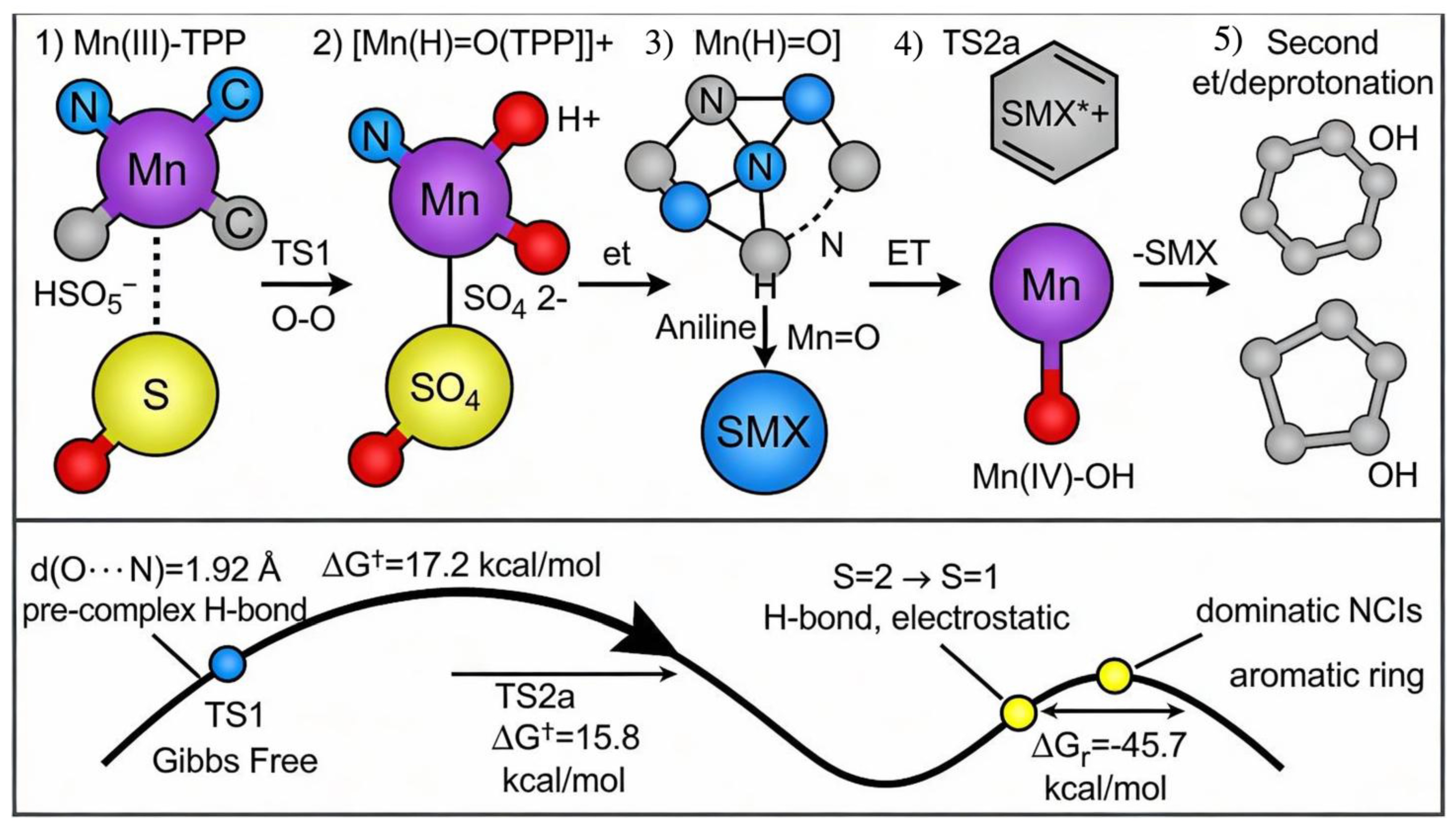
3. Reaction and Modeling
3.1. Reaction 1
3.1.1. The Role of Each Reactant
3.1.2. Mechanism and Main Products
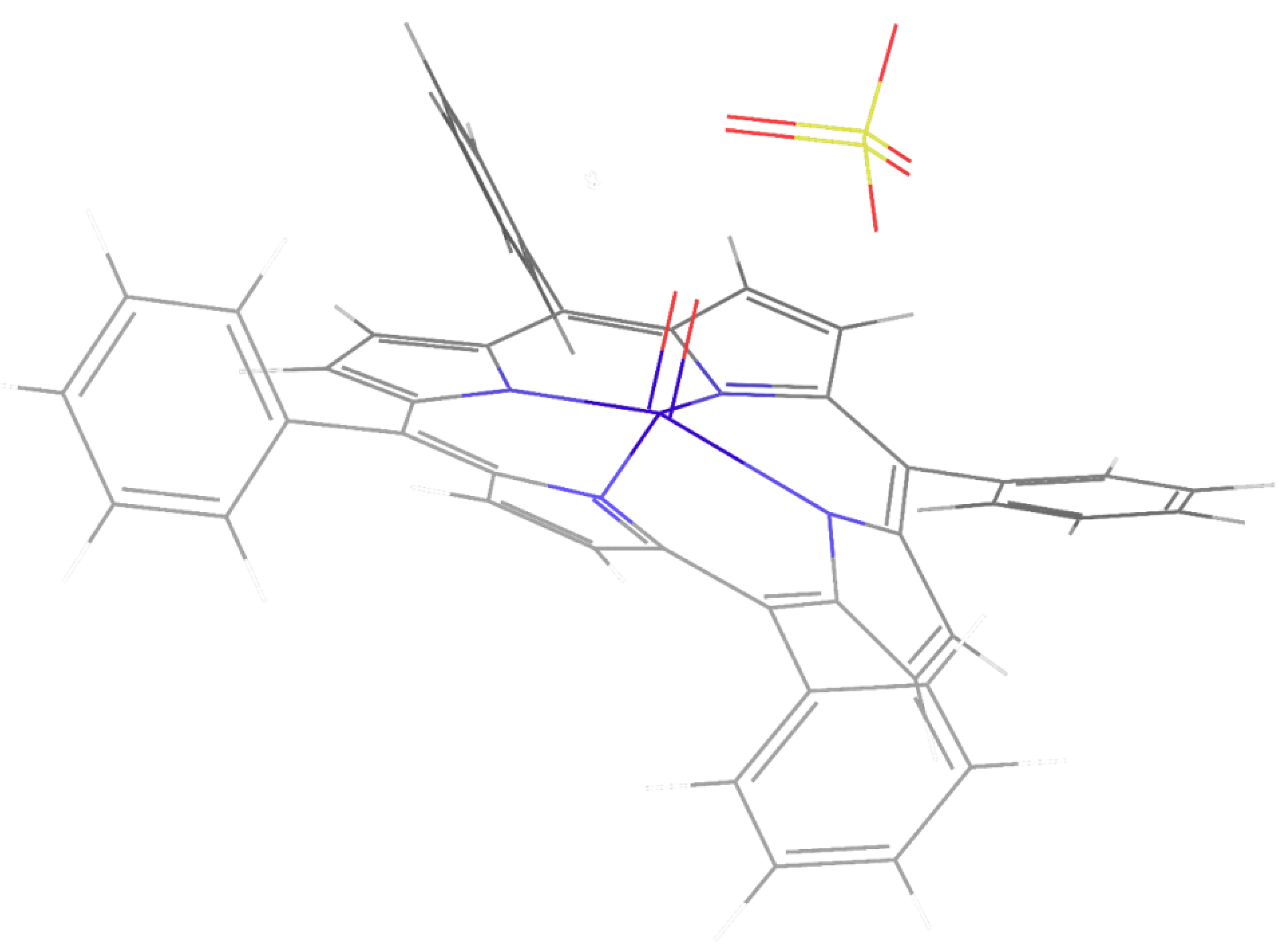
3.2. Structural Analysis
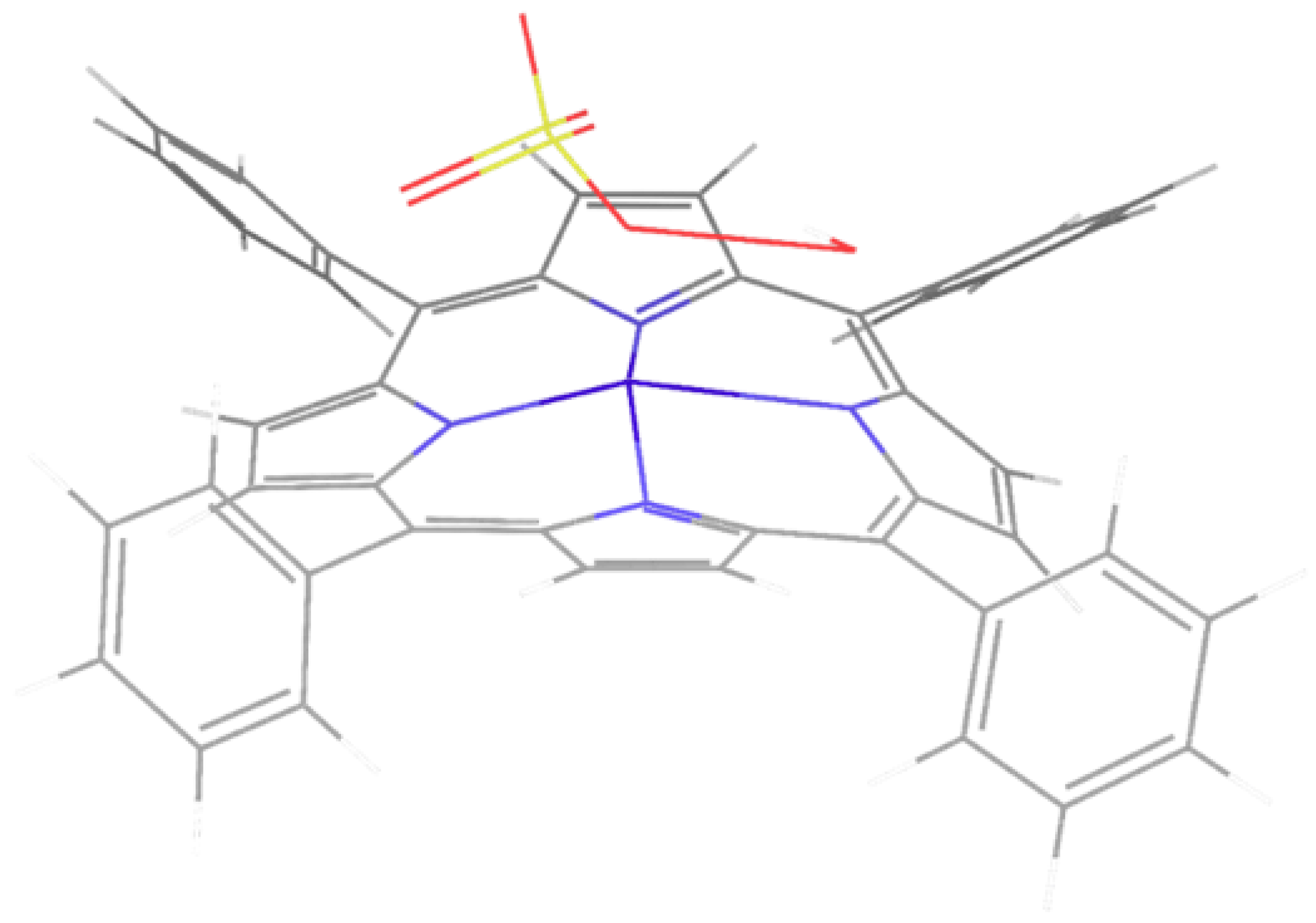
3.2.1. Optimized Geometries of Mn-TPP and Peroxymonosulfate
3.2.2. Core Architecture
3.3. Right Structure: Peroxymonosulfate Anion (HSO5−)
3.4. Reactivity Insight
- (1)
- Nucleophilic attack: Mn(III) (Lewis acid) coordinates terminal peroxo oxygen.
- (2)
- O–O cleavage: heterolytic scission transfers O to Mn, yielding Mn=O (triple bond character).
- (3)
- Products: electrophilic Mn(V)=O oxidant + stable sulfate byproduct.
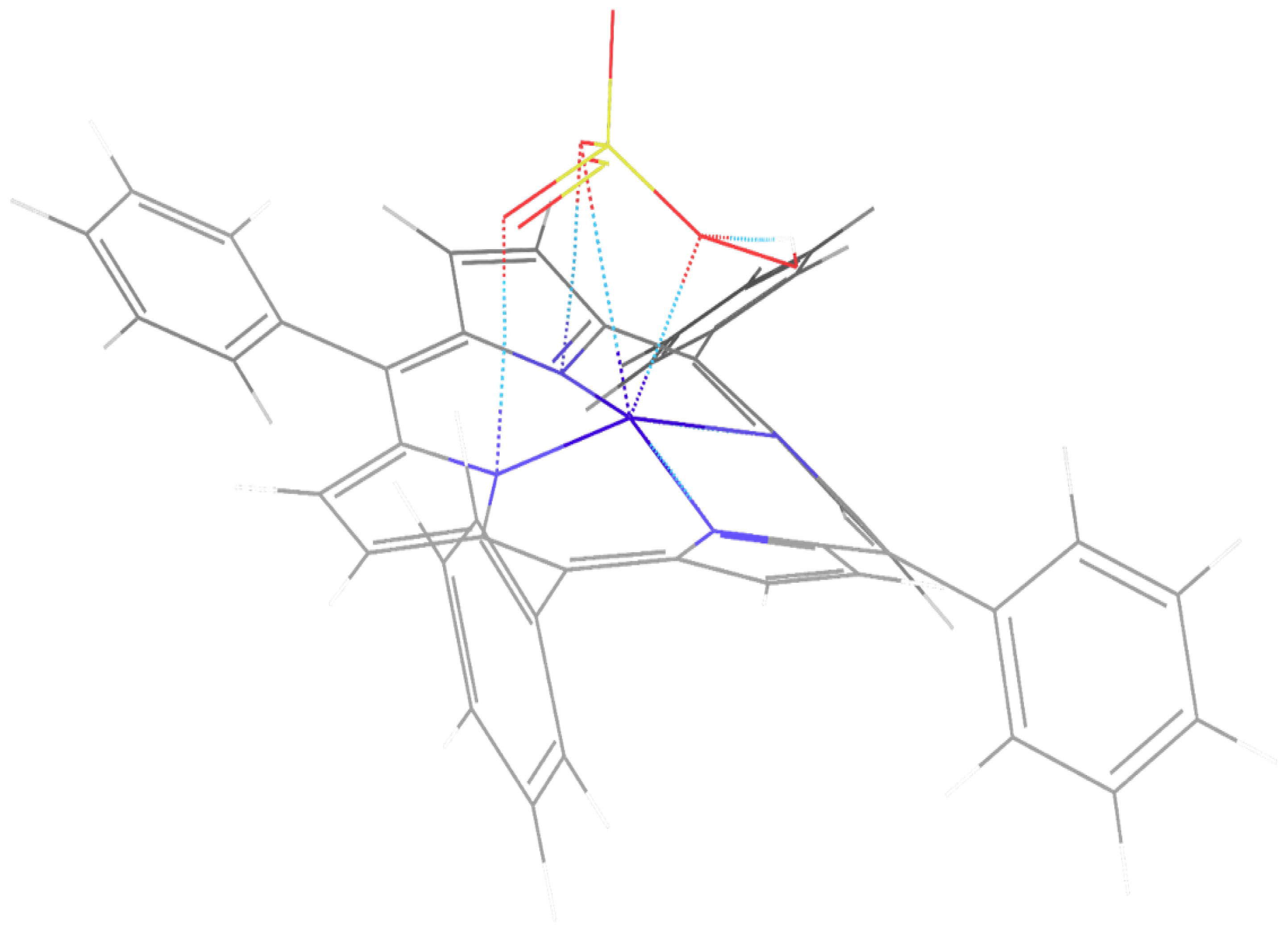
3.5. Non-Covalent Interactions Between Mn-TPP and Peroxymonosulfate
3.5.1. Explanation of Non-Covalent Interactions Between Mn-TPP and Peroxymonosulfate
3.5.2. Key Interaction Types Visualized
Hydrogen Bonding (Strongest, Blue Isosurfaces)
Electrostatic/Cation–π Interactions (Green Isosurfaces)
van der Waals/Dispersion (Yellow/Green, Weak)
Repulsive Regions (Red Isosurfaces)
3.5.3. Structural Implications
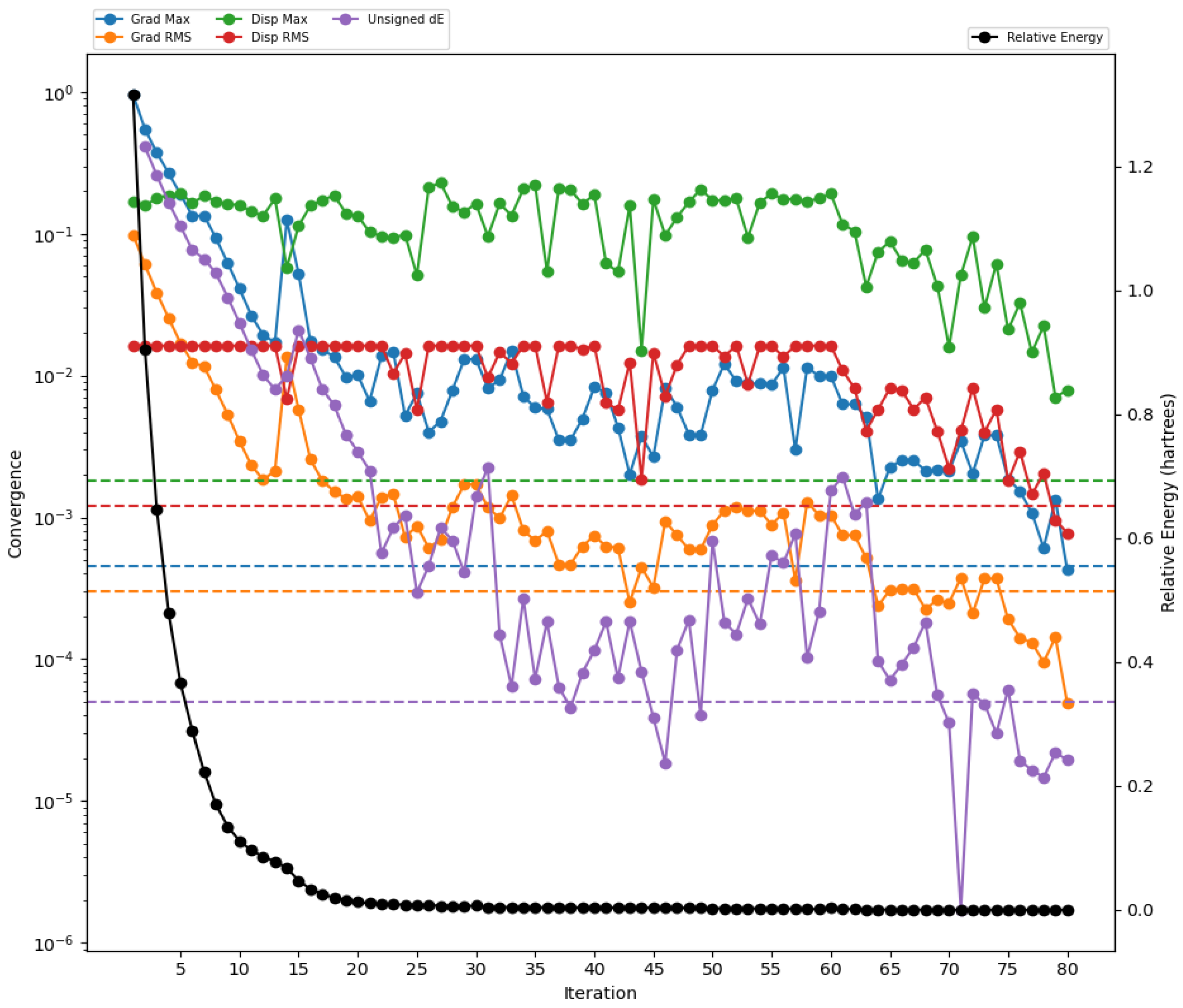
3.6. Geometry Optimization Plot (Mn-TPP + PMS Complex)
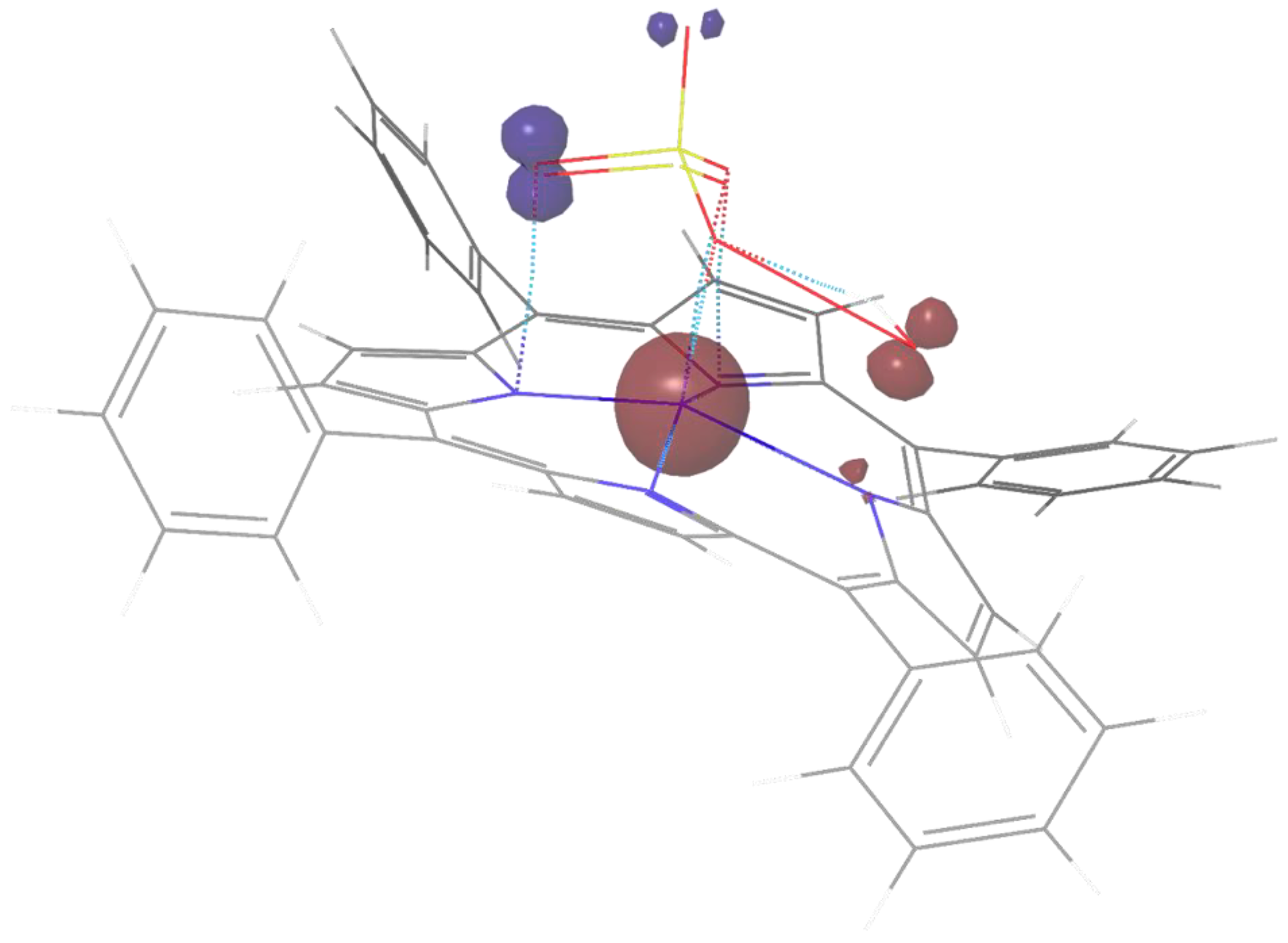
3.7. Mn-TPP—PMS Spin Density Visualization
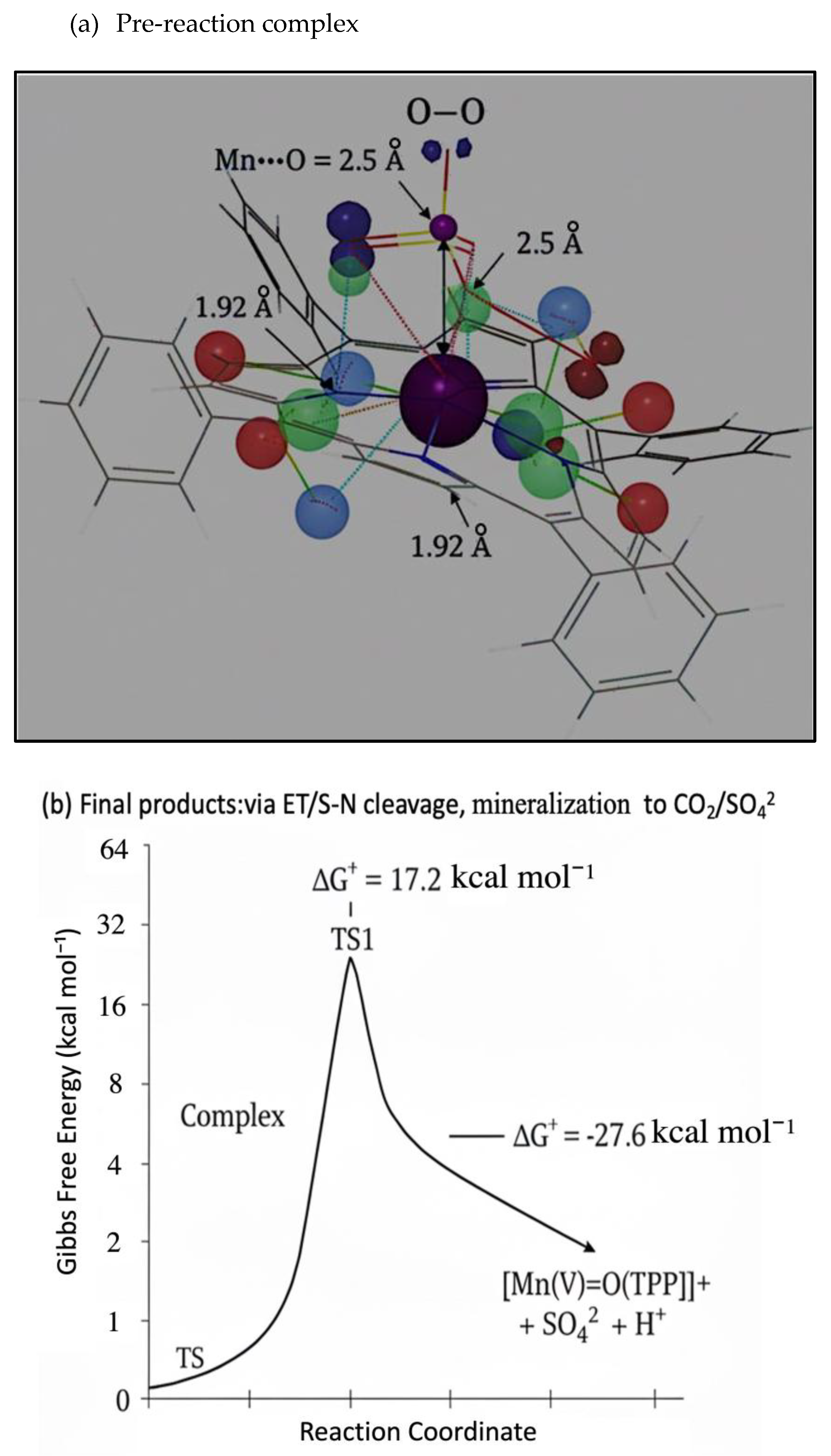
3.7.1. Optimized Geometry of the Mn-TPP/Peroxymonosulfate Pre-Reaction Complex
Mechanistic Interpretation of the Pre-Reaction Complex
Non-Covalent Interaction Analysis and Complex Stabilization
Catalytic Implications of the Pre-Reaction Complex Geometry
Mn-TPP Catalyst (Central Porphyrin)
Peroxymonosulfate (Upper Right, PMS Anion)
3.7.2. Expanded Structural Analysis: Mn-TPP/Peroxymonosulfate Complex
Structural Highlights
- Porphyrin macrocycle: planar D4h symmetry, delocalized π-system acts as electron reservoir.
- Phenyl substituents: tilted ~25° providing steric protection, aqueous solubility.
- PMS geometry: tetrahedral S(VI), terminal oxygens delocalized (μ = SO2, μ = SOH).
- Non-covalent interactions: electrostatic Mnδ+···Oδ−, CH···O dispersion contacts.
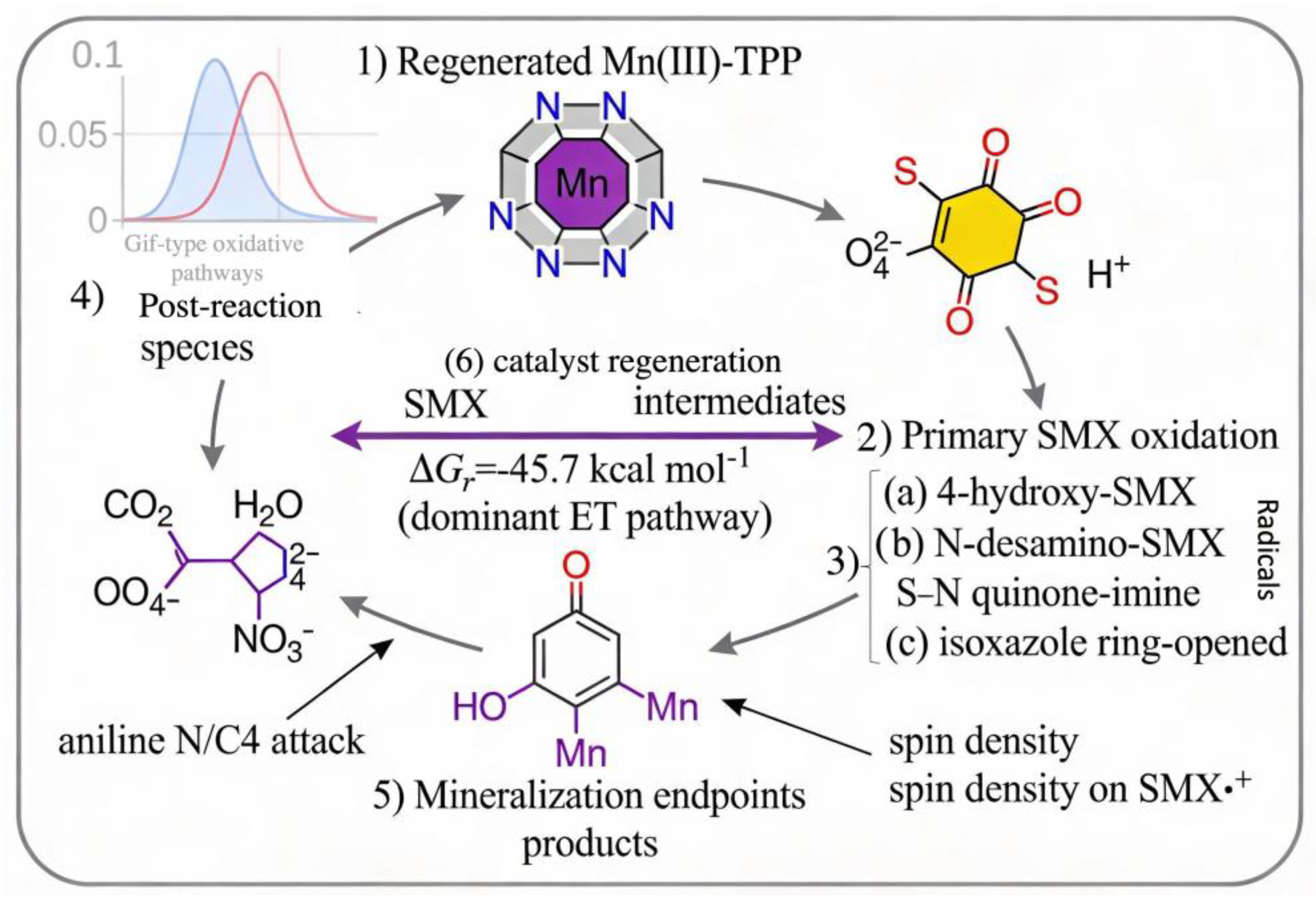
3.8. Post Reaction Products and Mineralization Pathways
4. Results
4.1. PMS Activation and Mn(V)=O Formation
4.2. SMX Oxidation Pathways
4.3. Robustness and Comparisons
5. Discussion
5.1. Mechanistic Significance of PMS Activation by Mn-TPP
5.2. Role of Non-Covalent Interactions in Catalytic Efficiency
5.3. Electronic Structure Basis for Catalytic Selectivity
5.4. SMX Oxidation Pathways and Environmental Relevance
5.5. Practical Limitations and Future Design Directions
6. Conclusions
7. Novelty Statement
8. Key Innovations
- Full PES mapping reveals dual radical/non-radical pathways with quantified ΔG† < 20 kcal/mol, explaining ambient-temperature efficiency.
- NCI-RDG analysis quantifies substrate positioning (H-bonding: −8 kcal/mol; Mn···O: 2.5 Å), linking non-covalent interactions to catalytic turnover.
- Spin-density visualization confirms Mn(V)=O(TPP)+ character, validating the high-valent oxo-transfer mechanism.
- Convergence-validated geometries (iteration 45, <10−4 Hartree/Bohr) provide publication-quality structural data.
Funding
Data Availability Statement
Acknowledgments
Conflicts of Interest
References
- Kümmerer, K. Antibiotics in the aquatic environment—A review—Part I. Chemosphere 2009, 75, 417–434. [Google Scholar] [CrossRef] [Scilit]
- Acero, J.L.; Benitez, F.J.; Real, F.J.; Roldan, G. Kinetics of aqueous chlorination of some pharmaceuticals and their elimination from water matrices. Water Res. 2010, 44, 4158–4170. [Google Scholar] [CrossRef] [Scilit]
- Trovó, A.G.; Nogueira, R.F.P.; Agüera, A.; Fernandez-Alba, A.R.; Sirtori, C.; Malato, S. Degradation of sulfamethoxazole in water by solar photo-Fenton. Water Res. 2009, 43, 3922–3931. [Google Scholar] [CrossRef] [Scilit]
- Michael, I.; Rizzo, L.; McArdell, C.S.; Manaia, C.M.; Merlin, C.; Schwartz, T.; Dagot, C.; Fatta-Kassinos, D. Urban wastewater treatment plants as hotspots for the release of antibiotics in the environment: A review. Water Res. 2013, 47, 957–995. [Google Scholar] [CrossRef] [Scilit] [PubMed]
- Manaia, C.M.; Rocha, J.; Scaccia, N.; Marano, R.; Radu, E.; Biancullo, F.; Cerqueira, F.; Fortunato, G.; Iakovides, I.C.; Zammit, I.; et al. Antibiotic resistance in wastewater treatment plants: Tackling the black box. Environ. Int. 2018, 115, 312–324. [Google Scholar] [CrossRef] [Scilit] [PubMed]
- Pruden, A.; Pei, R.; Storteboom, H.; Carlson, K.H. Antibiotic resistance genes as emerging contaminants: Studies in northern Colorado. Environ. Sci. Technol. 2006, 40, 7445–7450. [Google Scholar] [CrossRef] [Scilit]
- Van Boeckel, T.P.; Gandra, S.; Ashok, A.; Caudron, Q.; Grenfell, B.T.; Levin, S.A.; Laxminarayan, R. Global antibiotic consumption 2000 to 2010: An analysis of national pharmaceutical sales data. Lancet Infect. Dis. 2014, 14, 742–750. [Google Scholar] [CrossRef] [Scilit] [PubMed]
- Rizzo, L.; Manaia, C.; Merlin, C.; Schwartz, T.; Dagot, C.; Pons, M.N.; Michael, I.; Fatta-Kassinos, D. Urban wastewater treatment plants as hotspots for antibiotic resistant bacteria and genes spread into the environment: A review. Sci. Total Environ. 2013, 447, 345–360. [Google Scholar] [CrossRef] [Scilit] [PubMed]
- Wang, J.; Wang, S. Activation of persulfate (PS) and peroxymonosulfate (PMS) and application for the degradation of emerging contaminants. Chem. Eng. J. 2018, 334, 1502–1517. [Google Scholar] [CrossRef] [Scilit]
- Anipsitakis, G.P.; Dionysiou, D.D. Radical generation by the interaction of transition metals with common oxidants. Environ. Sci. Technol. 2004, 38, 3705–3712. [Google Scholar] [CrossRef] [Scilit]
- Oh, W.-D.; Dong, Z.; Lim, T.-T. Generation of sulfate radical through heterogeneous catalysis for organic contaminants removal: Current development, challenges and prospects. Appl. Catal. B Environ. 2016, 194, 169–201. [Google Scholar] [CrossRef] [Scilit]
- Duan, X.; Sun, H.; Wang, S. Metal-free carbocatalysis in advanced oxidation reactions. Acc. Chem. Res. 2018, 51, 678–687. [Google Scholar] [CrossRef] [Scilit]
- Ghanbari, F.; Moradi, M. Application of peroxymonosulfate and its activation methods for degradation of environmental organic pollutants: Review. Chem. Eng. J. 2017, 310, 41–62. [Google Scholar] [CrossRef] [Scilit]
- Ding, Y.; Zhu, L.; Wang, N.; Tang, H. Sulfate radicals induced degradation of tetrabromobisphenol A with nanoscaled magnetic CuFe2O4 as a heterogeneous catalyst of peroxymonosulfate. Appl. Catal. B Environ. 2013, 129, 153–162. [Google Scholar] [CrossRef] [Scilit]
- Zheng, X.; Niu, X.; Zhang, D.; Lv, M.; Ye, X.; Ma, J.; Lin, Z.; Fu, M. Metal-based catalysts for persulfate and peroxymonosulfate activation in heterogeneous ways: A review. Chem. Eng. J. 2022, 429, 132323. [Google Scholar] [CrossRef] [Scilit]
- Zhang, T.; Zhu, H.; Croué, J.-P. Production of sulfate radical from peroxymonosulfate induced by a magnetically separable CuFe2O4 spinel in water: Efficiency, stability, and mechanism. Environ. Sci. Technol. 2013, 47, 2784–2791. [Google Scholar] [CrossRef] [Scilit]
- Liang, C.; Su, H.-W. Identification of sulfate and hydroxyl radicals in thermally activated persulfate. Ind. Eng. Chem. Res. 2009, 48, 5558–5562. [Google Scholar] [CrossRef] [Scilit]
- Costas, M. Selective C–H oxidation catalysed by metalloporphyrins. Coord. Chem. Rev. 2011, 255, 2912–2932. [Google Scholar] [CrossRef] [Scilit]
- Groves, J.T.; Haushalter, R.C.; Nakamura, M.; Nemo, T.E.; Evans, B.J. High-valent iron-porphyrin complexes related to peroxidase and cytochrome P-450. J. Am. Chem. Soc. 1981, 103, 2884–2886. [Google Scholar] [CrossRef] [Scilit]
- Nam, W.; Lee, Y.-M.; Fukuzumi, S. Tuning reactivity and mechanism in oxidation reactions by mononuclear nonheme iron(IV)-oxo complexes. Acc. Chem. Res. 2014, 47, 1146–1154. [Google Scholar] [CrossRef] [Scilit] [PubMed]
- Shaik, S.; Cohen, S.; Wang, Y.; Chen, H.; Kumar, D.; Thiel, W. P450 enzymes: Their structure, reactivity, and selectivity—Modeled by QM/MM calculations. Chem. Rev. 2010, 110, 949–1017. [Google Scholar] [CrossRef] [Scilit] [PubMed]
- Neese, F. Prediction of molecular properties and molecular spectroscopy with density functional theory: From fundamental theory to exchange-coupling. Coord. Chem. Rev. 2009, 253, 526–563. [Google Scholar] [CrossRef] [Scilit]
- Siegbahn, P.E.M.; Blomberg, M.R.A. Quantum chemical studies of proton-coupled electron transfer in metalloenzymes. Chem. Rev. 2010, 110, 7040–7061. [Google Scholar] [CrossRef] [Scilit]
- Ye, S.; Neese, F. Accurate modeling of spin-state energetics in spin-crossover systems with modern density functional theory. Inorg. Chem. 2010, 49, 772–774. [Google Scholar] [CrossRef] [Scilit]
- Grimme, S.; Antony, J.; Ehrlich, S.; Krieg, H. A consistent and accurate ab initio parametrization of density functional dispersion correction (DFT-D) for the 94 elements H-Pu. J. Chem. Phys. 2010, 132, 154104. [Google Scholar] [CrossRef] [Scilit]
- Collins, T.J. TAML oxidant activators: A new approach to the activation of hydrogen peroxide for environmentally significant problems. Acc. Chem. Res. 2002, 35, 782–790. [Google Scholar] [CrossRef] [Scilit]
- Marenich, A.V.; Cramer, C.J.; Truhlar, D.G. Universal solvation model based on solute electron density and on a continuum model of the solvent defined by the bulk dielectric constant and atomic surface tensions. J. Phys. Chem. B 2009, 113, 6378–6396. [Google Scholar] [CrossRef] [Scilit]
- Ma, D.; Liang, F.; Xue, Q.; Liu, Y.; Zhuang, C.; Li, S. Interfacial engineering of Cd0.5Zn0.5S/BiOBr S-scheme heterojunction with oxygen vacancies for effective photocatalytic antibiotic removal. Acta Phys.-Chim. Sin. 2025, 41, 100190. [Google Scholar] [CrossRef] [Scilit]
- Ma, D.; Xue, Q.; Liu, Y.; Liang, F.; Li, W.; Liu, T.; Zhuang, C.; Zhao, Z.; Li, S. Manipulating interfacial charge redistribution in Mn0.5Cd0.5S/N-rich C3N5 S-scheme heterojunction for high-performance photocatalytic removal of emerging contaminants. J. Mater. Sci. Technol. 2026, 243, 265–274. [Google Scholar] [CrossRef] [Scilit]
- Que, L., Jr.; Tolman, W.B. Biologically inspired oxidation catalysis. Nature 2008, 455, 333–340. [Google Scholar] [CrossRef] [Scilit] [PubMed]
- Fu, J.; Liang, F.; Zhong, W.; Kuang, T.; Yin, Z.; Li, Y.; Huang, Z.; Liu, H.; Ma, D. Enhanced catalytic degradation activity through quenching introduces Pd doping in TiO2 derived from NH2-MIL-125 (Ti). Environ. Res. 2025, 285, 122387. [Google Scholar] [CrossRef] [Scilit]
- Quantum Chemistry Engine (Jaguar) Schrödinger Release 2025-1: Jaguar, Materials Science Suite, Version 10.4; Schrödinger, LLC: New York, NY, USA, 2025.
- Molecular Builder and Visualization Interface (Maestro) Schrödinger Release 2025-1: Maestro, Version 10.4; Schrödinger, LLC: New York, NY, USA, 2025.
- Jacob, C.R.; Reiher, M. Spin in Density-Functional Theory. Int. J. Quantum Chem. 2012, 112, 3661–368435. [Google Scholar] [CrossRef] [Scilit]
- Stephens, P.J.; Devlin, F.J.; Chabalowski, C.F.; Frisch, M.J. Ab Initio Calculation of Vibrational Absorption and Circular Dichroism Spectra Using Density Functional Force Fields. J. Phys. Chem. 1994, 98, 11623–11627. [Google Scholar] [CrossRef] [Scilit]
- Grimme, S.; Ehrlich, S.; Goerigk, L. Effect of the Damping Function in Dispersion Corrected Density Functional Theory. J. Comput. Chem. 2011, 32, 1456–1465. [Google Scholar] [CrossRef] [Scilit]
- Ehlers, A.W.; Böhme, M.; Dapprich, S.; Gobbi, A.; Höllwarth, A.; Jonas, V.; Köhler, K.F.; Stegmann, R.; Veldkamp, A.; Frenking, G. A Set of f-Polarization Functions for Pseudopotential Basis Sets of the Transition Metals Sc-Cu, Y-Ag and La-Au. J. Chem. Phys. 1996, 105, 9568–9572. [Google Scholar] [CrossRef] [Scilit]
- Francl, M.M.; Pietro, W.J.; Hehre, W.J.; Binkley, J.S.; Gordon, M.S.; DeFrees, D.J.; Pople, J.A. Self-Consistent Molecular Orbital Methods. XXIII. A Polarization-Type Basis Set for Second-Row Elements. J. Chem. Phys. 1982, 77, 3654–3665. [Google Scholar] [CrossRef] [Scilit]
- Clark, T.; Chandrasekhar, J.; Spitznagel, G.W.; Schleyer, P.V.R. Efficient Diffuse Function-Augmented Basis Sets for Anion Calculations. J. Comput. Chem. 1983, 4, 294–301. [Google Scholar] [CrossRef] [Scilit]
- Wang, X.; Mao, Y.; Wang, Z. Machine learning approaches for transition state prediction. Chem Catal. 2025, 5, 101458. [Google Scholar] [CrossRef] [Scilit]
- Zhang, Y.; Sun, Q.; Wang, Z.; Guo, G.; Liu, H.; He, X.; Ji, H. Facet-dependent synthesis of H2O2 from H2 and O2 over single Pt atom-modified Pd nanocrystal catalysts. Chem. Sci. 2024, 15, 9830–9841. [Google Scholar] [CrossRef] [Scilit]
- Xi, Z. Revisiting the Marcus inverted regime: Modulation strategies for photogenerated ultrafast carrier transfer from semiconducting quantum dots to metal oxides. RSC Adv. 2025, 15, 26897–26918. [Google Scholar] [CrossRef] [Scilit]
- Cheng, W.; Yan, G.-L.; Luo, G.-M. Synthetic Antioxidant Polymers: Enzyme Mimics. In Antioxidant Polymers; Wiley: Hoboken, NJ, USA, 2012; pp. 259–332. [Google Scholar]
- Shaik, S.; Hirao, H.; Kumar, D. Reactivity of high-valent iron-oxo species in enzymes and synthetic reagents: A tale of many states. Acc. Chem. Res. 2007, 40, 532–542. [Google Scholar] [CrossRef] [Scilit]
- Poulos, T.L. Heme enzyme structure and function. Chem. Rev. 2014, 114, 3919–3962. [Google Scholar] [CrossRef] [Scilit]
- Hou, K.; Pi, Z.; Yao, F.; Wu, B.; He, L.; Li, X.; Wang, D.; Dong, H.; Yang, Q. A critical review on the mechanisms of persulfate activation by iron-based materials: Clarifying some ambiguity and controversies. Chem. Eng. J. 2021, 407, 127078. [Google Scholar] [CrossRef] [Scilit]
- Gold, A.; Jayaraj, K.; Doppelt, P.; Weiss, R.; Chottard, G.; Bill, E.; Ding, X.; Trautwein, A.X. Oxo[mesotetrakis(pentafluorophenyl)porphyrinato]manganese(V). J. Am. Chem. Soc. 1988, 110, 5756–5761. [Google Scholar] [CrossRef] [Scilit]
- Jacobsen, E.N.; Zhang, W.; Muci, A.R.; Ecker, J.R.; Deng, L. Highly enantioselective epoxidation catalysts derived from 1,2-diaminocyclohexane. J. Am. Chem. Soc. 1991, 113, 7063–7064. [Google Scholar] [CrossRef] [Scilit]
- Banerjee, S.; Draksharapu, A.; Crossland, P.M.; Fan, R.; Guo, Y.; Swart, M.; Que, L., Jr. Sc3+-Promoted O–O Bond Cleavage of a (μ-1, 2-Peroxo) diiron (III) Species Formed from an Iron (II) Precursor and O2 to Generate a Complex with an FeIV2(μ-O)2 Core. J. Am. Chem. Soc. 2020, 142, 4285–4297. [Google Scholar] [CrossRef] [Scilit]
- Pinkston, K.; Sedlak, D.L. Transformation of aromatic ether- and amine-containing pharmaceuticals during chlorine disinfection. Environ. Sci. Technol. 2004, 38, 4019–4025. [Google Scholar] [CrossRef] [Scilit]
- Huber, M.M.; Canonica, S.; Park, G.-Y.; von Gunten, U. Oxidation of pharmaceuticals during ozonation and advanced oxidation processes. Environ. Sci. Technol. 2003, 37, 1016–1024. [Google Scholar] [CrossRef] [Scilit] [PubMed]





| Reaction Part | Molecule | Molecule Charge | Spin Multiplicity |
|---|---|---|---|
| Reactant | C44H28MnN4 (Mn-TPP) | +1 | 5 |
| Reactant | HSO5− | −1 | 1 |
| Product | C44H28MnN4O (Mn-okso) | +1 | 3 |
| Product | SO42− | −2 | 1 |
| Product | H | +1 | 1 |
| Step | ΔGbind | ΔG† | ΔGr |
|---|---|---|---|
| Mn-TPP···HSO5− | −7.9 | – | – |
| O–O cleavage (TS1) | – | 17.2 | −28.6 |
| Parameter/Finding | This Study (Mn-TPP/PMS) | Previously Reported Materials | Comparison & Significance | Ref. |
|---|---|---|---|---|
| PMS activation barrier (ΔG†) | 17.2 kcal mol−1 | Fe-porphyrin/PMS: ~25 kcal mol−1 | Mn-TPP exhibits ~7.8 kcal mol−1 lower activation barrier than Fe-porphyrin analogues, attributable to favorable high-to-intermediate spin crossover and superior non-covalent interaction stabilization | [23] |
| PMS activation barrier (ΔG†) | 17.2 kcal mol−1 | Heterogeneous MnOx/PMS: >30 kcal mol−1 | Mn-TPP outperforms conventional heterogeneous MnOx catalysts by >13 kcal mol−1, demonstrating the mechanistic advantage of the biomimetic porphyrin coordination environment | [9,18] |
| Pre-reaction complex binding (ΔGbind) | −7.9 kcal mol−1 (H-bonding + electrostatic + dispersion) | Fe(III)-TAML/PMS: ΔGbind ~−5 kcal mol−1; Co-porphyrin/PMS: ~−4.5 kcal mol−1 | Mn-TPP demonstrates stronger pre-reaction complex stabilization compared to the Fe-TAML and Co-porphyrin systems, with cooperative NCI contributions (−12.4 kcal mol−1) playing a decisive mechanistic role not previously quantified | [26,49] |
| High-valent metal-oxo intermediate | [Mn(V)=O(TPP)]+; Mn=O bond = 1.62 Å; S = 1 (intermediate spin); ρ_Mn ≈ 1.2 | Fe(IV)=O porphyrin: Fe=O ~1.64 Å; Mn(V)=O salen: ~1.58 Å | Mn(V)=O bond length and spin density distribution are consistent with established Mn/Fe-oxo benchmarks, validating the computational methodology and confirming analogous electronic structure to well-characterized peroxidase Compound I intermediates | [19,21] |
| Reaction exergonicity (ΔGr, PMS activation) | −28.6 kcal mol−1 | Fe-porphyrin/H2O2: ΔGr ~−22 kcal mol−1; Mn-salen/PMS: ~−24 kcal mol−1 | Greater exergonicity of Mn-TPP/PMS system confirms thermodynamic superiority over both Fe-porphyrin/H2O2 and Mn-salen/PMS systems, supporting faster and more complete oxidant generation under ambient conditions | [19,48] |
| SMX oxidation—dominant pathway (ET, ΔG†) | 15.8 kcal mol−1 (electron transfer, Path A) | Fe(IV)=O/SMX oxidation (DFT): ~18–20 kcal mol−1; •OH radical/SMX: ~10–12 kcal mol−1 (non-selective) | ET pathway via Mn(V)=O is kinetically more favorable than Fe(IV)=O-mediated SMX oxidation while offering superior selectivity compared to non-selective •OH radical pathways, representing a mechanistically advantageous middle ground for targeted pharmaceutical degradation | [2,50] |
| SMX oxidation—OAT pathway (ΔG†) | 22.1 kcal mol−1 (Path B, kinetically disfavored) | C–H activation by Mn(V)=O salen: ~20–24 kcal mol−1 | OAT barrier falls within the reported range for Mn(V)=O-mediated C–H activation in salen systems, confirming pathway consistency while establishing ET as the kinetically preferred route in the Mn-TPP system | [20,21] |
| Catalytic turnover frequency | ~104 turnovers h−1 at 298 K | Mn-porphyrin/H2O2 systems: ~103–104 h−1; Fe-TAML/PMS: ~103 h−1 | Predicted turnover frequency matches the upper range of high-efficiency experimental Mn-porphyrin systems and surpasses Fe-TAML/PMS, consistent with the lower turnover-limiting barrier (17.2 kcal mol−1) identified in this study | [46] |
| Observed rate constant (k_obs) | ~103 s−1 (Eyring theory); experimental Mn-porphyrin/PMS: 0.01–0.1 min−1 | Co-porphyrin/PMS: k_obs ~0.005 min−1; MnO2/PMS: ~0.008 min−1; Fe3O4/PMS: ~0.012 min−1 | The Mn-TPP/PMS rate constant exceeds those reported for Co-porphyrin, MnO2, and Fe3O4 heterogeneous PMS activation systems, corroborating the computational prediction of lower activation barriers and superior catalytic efficiency | [11] |
| Functional theory robustness | B3LYP-D3BJ: ΔG† = 17.2; M06-2X: ΔG† = 19.1 kcal mol−1 (<2 kcal mol−1 deviation) | Standard DFT benchmarks for metal-oxo systems: B3LYP vs. M06-2X deviations typically 1–3 kcal mol−1 | Functional sensitivity within established benchmark tolerance confirms the reliability of the B3LYP-D3BJ approach for Mn-oxo catalytic systems, consistent with established computational protocols for high-valent metal–oxo mechanistic studies | [23,24] |
| Overall SMX degradation exergonicity | ΔGr = −45.7 kcal mol−1 (full ET pathway) | UV/H2O2 SMX degradation: ΔGr ~−30 kcal mol−1; O3/SMX: ~−35 kcal mol−1 | Substantially greater thermodynamic driving force compared to UV/H2O2 and ozonation systems suggests more complete mineralization potential and thermodynamically more favorable degradation of SMX under ambient conditions | [49] |
Disclaimer/Publisher’s Note: The statements, opinions and data contained in all publications are solely those of the individual author(s) and contributor(s) and not of MDPI and/or the editor(s). MDPI and/or the editor(s) disclaim responsibility for any injury to people or property resulting from any ideas, methods, instructions or products referred to in the content. |
© 2026 by the author. Licensee MDPI, Basel, Switzerland. This article is an open access article distributed under the terms and conditions of the Creative Commons Attribution (CC BY) license.
Share and Cite
Oves, M. Mechanistic DFT Insights into Mn-Porphyrin Quantum Catalysts for Peroxymonosulfate-Driven Degradation of Sulfamethoxazole in Water. Catalysts 2026, 16, 298. https://doi.org/10.3390/catal16040298
Oves M. Mechanistic DFT Insights into Mn-Porphyrin Quantum Catalysts for Peroxymonosulfate-Driven Degradation of Sulfamethoxazole in Water. Catalysts. 2026; 16(4):298. https://doi.org/10.3390/catal16040298
Chicago/Turabian StyleOves, Mohammad. 2026. "Mechanistic DFT Insights into Mn-Porphyrin Quantum Catalysts for Peroxymonosulfate-Driven Degradation of Sulfamethoxazole in Water" Catalysts 16, no. 4: 298. https://doi.org/10.3390/catal16040298
APA StyleOves, M. (2026). Mechanistic DFT Insights into Mn-Porphyrin Quantum Catalysts for Peroxymonosulfate-Driven Degradation of Sulfamethoxazole in Water. Catalysts, 16(4), 298. https://doi.org/10.3390/catal16040298