Article

Analysis of Selected Biotransformation Processes Considering Enzyme Deactivation

by
Justyna Miłek
1,*,
Joanna Liszkowska
2 and
Marcin Wróblewski
3
1
Department of Chemical and Biochemical Engineering, Faculty of Chemical Technology and Engineering, Bydgoszcz University of Science and Technology, 3 Seminaryjna St., 85-326 Bydgoszcz, Poland
2
Department of Chemistry and Technology of Polyurethanes, Faculty of Materials Engineering, Kaziemierz Wielki University in Bydgoszcz, 30 J.K. Chodkiewicza St., 85-064 Bydgoszcz, Poland
3
Department of Medical Biology and Biochemistry, Faculty of Medicine, Ludwik Rydygier Collegium Medicum in Bydgoszcz, Nicolas Copernicus University in Toruń, 24 Karłowicza St., 85-092 Bydgoszcz, Poland
*
Author to whom correspondence should be addressed.
Catalysts 2026, 16(3), 281; https://doi.org/10.3390/catal16030281
Submission received: 13 February 2026 / Revised: 17 March 2026 / Accepted: 18 March 2026 / Published: 20 March 2026

Abstract

Agro-industrial waste impacts populations worldwide. Food waste, in turn, is a major source of complex lipids, carbohydrates, and other substances. Therefore, it is crucial to convert food waste into products that reduce environmental problems. Enzymatic hydrolysis has advantages over chemical hydrolysis. Examples include the enzymatic hydrolysis of starch by α-amylase and the hydrolysis of inulin by inulinase, which occur under milder environmental and temperature conditions than acid hydrolysis of starch or inulin. Despite these milder temperature conditions, during substate hydrolysis, enzyme deactivation occurs under exposure to temperature. As temperature increases above T o p t (which maximizes catalytic activity), enzyme deactivation becomes more pronounced, leading to a decrease in enzyme activity. Therefore, determining the rate constant of deactivation k d , during biotransformation is an important aspect in understanding enzyme kinetics. Most experimental studies focus on changes in enzyme activity with time and temperature. However, enzyme deactivation also occurs during enzymatic reactions conducted at different temperatures, and this process is characterized by specific deactivation parameters. The study is to present the rate constants of deactivation k d , for selected biotransformation processes. The selected biotransformation processes are hydrolysis of olive oil by lipase, hydrolysis of inulin by inulinase, and hydrolysis of starch by α-amylase. Given the widespread use of enzymes in industry, the information on enzyme deactivation presented in this study can be used by engineers involved in modeling and optimizing enzymatic processes. This knowledge is also essential for the effective and sustainable use of enzymes in industrial applications. It is important to emphasize that the deactivation parameters discussed in this study also carry significant economic, social, and environmental implications.

1. Introduction

Enzymes are proteins produced by living cells and are found in animals, plants, and microorganisms. The role in biotechnological processes has become increasingly important, offering more economical, sustainable, and selective methods of production. One key advantage of enzymatic processes is their positive environmental impact, due to their ecological nature. In recent years, to increase the efficiency of enzymes, they have been produced using genetic engineering, improved screening methods, and microbiological cultivation [1]. The high specificity of enzymes enables the production of high-quality, efficient results across various biotechnological applications. As a result, the demand for enzymes is steadily increasing across many industries [2].
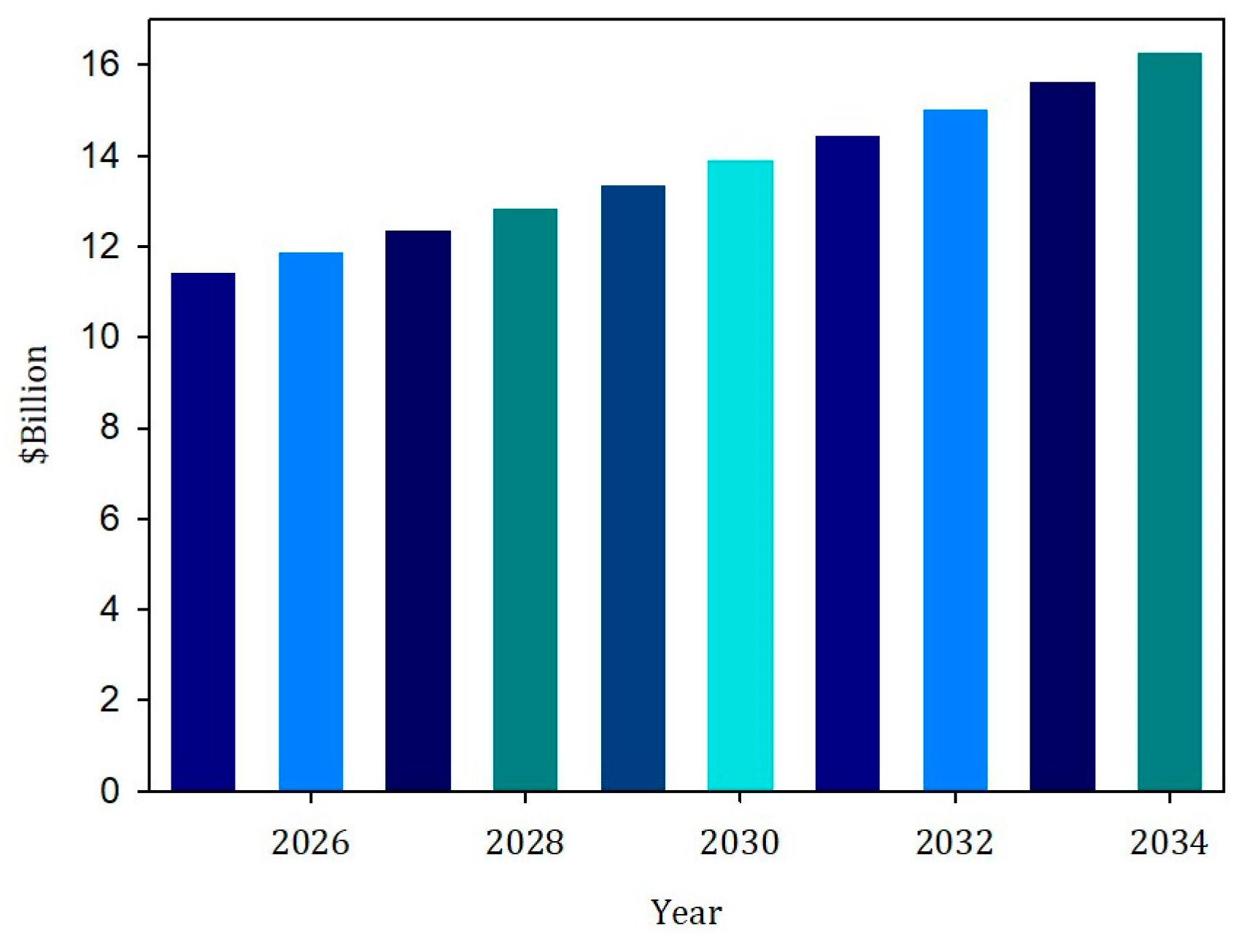
According to a report by Precedence Research [3] published in May 2025, the global enzyme market was valued at $10.98 billion in 2024 and is projected to exceed $16.26 billion by 2034. The market is projected to grow at a compound annual growth rate (CAGR) of approximately 4% during the forecast period 2025–2034 (Figure 1).
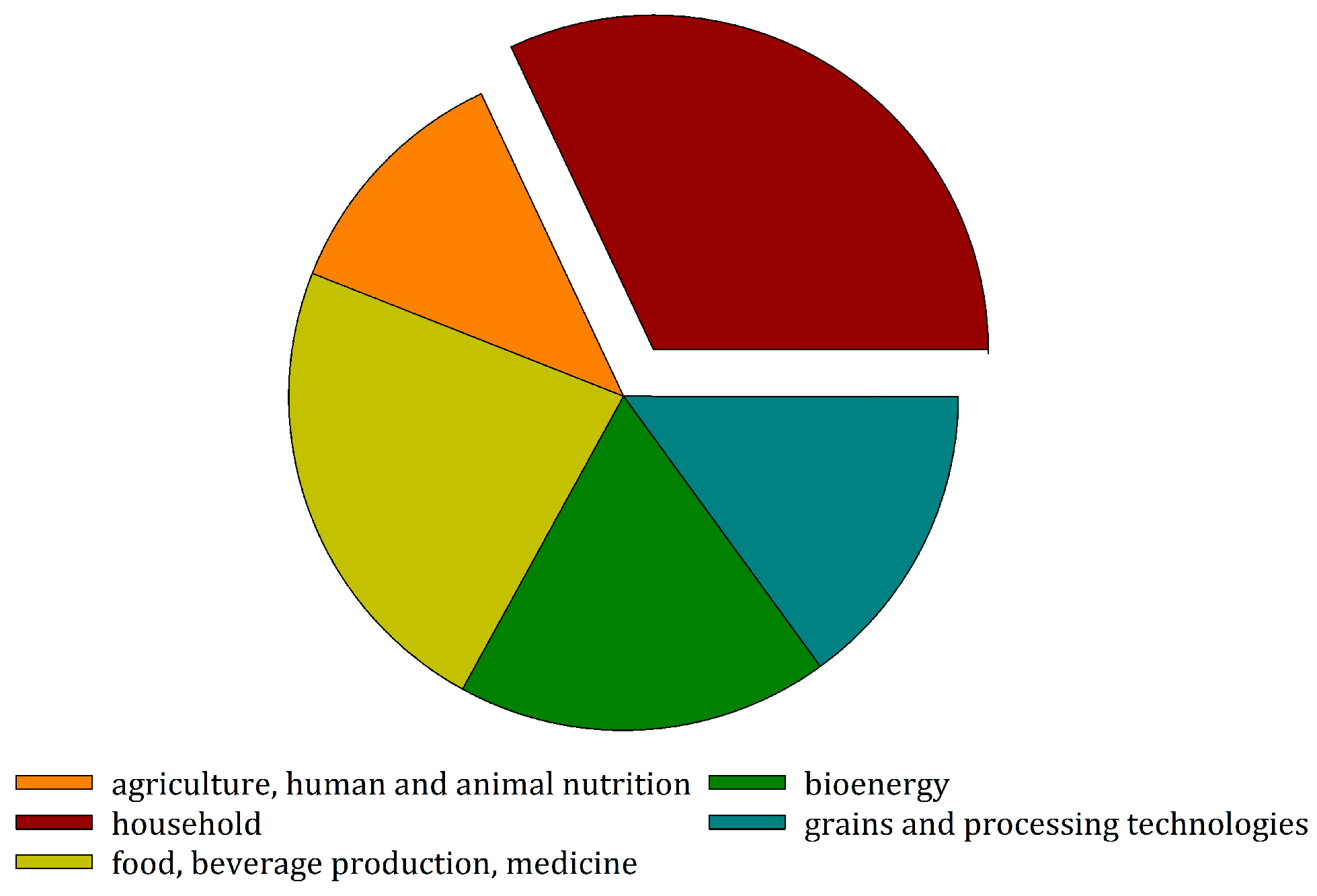
Enzymes are utilized across a wide range of industries. According to data provided by the leading enzyme supplier Novozymes [4], Figure 2 illustrates the percentage distribution of enzyme use across different business sectors.
Enzymes, like proteins, are easily deactivated and lose their activity under unfavorable environmental conditions. For both economic reasons and their widespread applications, understanding the enzyme deactivation process and optimizing their use are crucial. Enzyme activity can be limited or completely inhibited by various factors, most commonly temperature or the substrate used in the biotransformation process.
Since the 1980s, the use of enzymes in technological processes, including food production, agriculture, chemical production, and medicine, has driven growing research interest in enzyme deactivation. Henley and Sadana [5] argued that first-order deactivation is a complex process. Nevertheless, obtaining these deactivation parameters is essential for optimizing real biotransformation processes using native enzymes.
The review focuses on the mechanism of simple enzyme deactivation in a bioreactor, where the biotransformation process takes place in parallel with the thermal deactivation of the enzyme [6,7,8,9,10,11,12,13,14,15,16,17]. Table 1 summarizes the conditions under which the activity of enzymes used in selected biotransformation processes was measured [6,7,8,9,10,11,12,13,14,15,16,17].
Most experimental studies on enzyme deactivation focus on changes in enzyme activity with time and temperature [18,19]. The use of the Arrhenius method to determine the deactivation energy E d is often considered insufficient [9]. To address this issue, specifying parameters such as the optimum temperature T o p t , activation energy E a , and deactivation energy E d helps to correct for potential errors that may arise from the direct application of the Arrhenius equation. This article presents selected bioprocesses analyzed in previous studies [6,7,8,9,10,11,12,13,14,15,16,17], in which the parameters T o p t , E a , and E d were determined based on a complex analytical equation. These parameters enabled the calculation of deactivation rate constants k d for the selected bioprocesses.
In this study, kinetic deactivation parameters were determined for α-amylases, inulinases, and lipases. Additionally, based on the total enzyme market in 2025, valued at $11.42 billion, Table 2 presents sales data for α-amylases, inulinases, and lipases for the years 2025–2035 (Persistence Market Research [20], Future Market Insights, Inc. [21,22]). It should be noted that sales data for these enzymes are provided without distinguishing between sources.
The dynamics of α-amylase demand in the bakery industry can be cited as an example of the changing sales volume of the analyzed enzymes. According to Future Marketing Insights, Inc., based in the United States, the market for α-amylases used in bakery applications was valued at $376 million in 2025, representing 17.5% of the total spending on all α-amylases. This market grew by 48%, reaching a value of $723 million in 2035 [23].
The data presented in Table 2 indicate that the percentage share of α-amylases, inulinases, and lipases in global sales is approximately 17.2%, 9.7% and 9.1%, respectively. The global market for these enzymes is estimated at $4.4 billion in 2025, representing approximately 38% of the total enzyme market, which is projected to reach $7.69 billion by 2035. In comparison, the inorganic catalysts market value will increase from USD 27.6 billion in 2025 to USD 35.06 billion in 2030 at a compound annual growth rate (CAGR) of 4.8% [24]. The percentage of inorganic catalysts used in hydro processing in global sales is approximately 8.26%, and their value in 2025 was USD 2.28 billion [25].
Given the substantial market share of α-amylases, inulinases and lipases, Table 3 summarizes their applications across various industries. Inulinases are classified as endoinulinases and exoinulinases, depending on the type of reactions they catalyze. The enzymes presented in Table 3 have a wide range of industrial applications in various biotransformation processes. The enzymes presented in Table 3 also play a role in environmental remediation and protection. Lipases used in bioremediation accelerate the degradation of lipid pollutants in soils and aquatic environments more efficiently and under milder conditions than traditional chemical methods [26].
In wastewater treatment, they aid in the degradation of fats, oils, and greases in industrial wastewater, improving biological treatment efficiency and reducing clogging and oxygen depletion in aquatic systems [27]. The use of lipolytic enzymes as environmentally friendly catalysts is associated with lower energy requirements and less chemical waste compared to physicochemical processes [28]. Inulin-rich agricultural residues can be enzymatically processed with inulinase instead of being landfilled or incinerated, reducing waste and emissions [29]. Sugars released by inulinase and starch can be fermented into bioethanol and other biofuels, supporting renewable energy sources [30,31].
α-Amylase helps to break down starchy waste from the food industry, reducing biochemical oxygen demand (BOD) and organic pollution [32]. Hydrolyzed starch derivatives are used in biodegradable plastics and composites, contributing to a reduced reliance on petroleum-based plastics [33]. The kinetic deactivation parameters determined for these enzymes can be effectively applied in the design, modeling, and optimization of many real-world biotransformation processes.
Table 3. Applications of α-amylases, endoinulinases, exoinulinases and lipases across various industries.
EnzymeApplicationsRef.
lipase
(EC 3.1.1.3)
food industry (production of edible fats, Cheddar cheese)
baking industry and wine production
chemical industry (production of laundry powders)
textile, paper, leather industry
soil bioremediation assessment
production of biodiesel, biofuels
production of pharmaceuticals and biosensors
fatty acid ester and structured lipids
[34,35,36,37]
endoinulinase
(EC 3.2.1.7)
production of fructose-glucose syrups
production of ethanol
[38,39]
exoinulinase
(EC 3.2.1.80)
production of high-fructose syrups (prebiotics)
production of ethanol, 2,3-butanediol
[38,39]
α-amylases
(EC 3.2.1.1)
starch industry (starch syrups, maltose syrups)
starch liquefaction (production of clear fruit and vegetable juices, fructose-glucose syrups)
bakery
alcohol production
brewing industry
medicine—pancreatic enzyme replacement therapy
chemical industry (production of laundry detergents)
textile industry
paper industry
animal nutrition
[40,41,42]
bioethanol production from sugar hydrolysis and lignocellulosic biomass[43]

2. Analyzed Biotransformation Processes Involving Lipases, Inulinases, and α-Amylases

This review summarizes publications [6,7,8,9,10,11,12,13,14,15,16,17], which examine changes in enzyme activity as a function of temperature during actual biotransformation processes, especially the hydrolysis of olive oil by lipase, inulin by inulinase and starch by α-amylase.

2.1. Lipases

Lipase (EC 3.1.1.3) is a hydrolase that catalyzes the hydrolysis of triglycerides to glycerol and free fatty acids. Due to its affordability, porcine pancreatic lipases are among the most used lipases in biotransformation reactions. Lipases can be obtained from microorganisms, plants, and animals. In humans and other animals, they regulate lipid and lipoprotein metabolism, while in plants, they participate in the metabolism of oil reserves during seed germination [1]. Several studies in scientific literature have investigated the thermal deactivation of lipases, reporting specific deactivation parameters, such as k d and E d for enzymes like lipase from Bacillus gibsonii [44] and lipase from Candida rugosa [45] immobilized on polymeric support. However, there is a lack of data on the parameters of the k d and E d of the deactivation process with simultaneous biotransformation. The literature reports examples of lipase deactivation rate constants k d and stability trends under specific solvents, pH conditions or biodiesel synthesis environments, based on experimental studies that provide quantitative deactivation data. Maintaining lipase activity in a non-aqueous environment is possible by regulating the pH of the environment in which the enzyme operates. Lipases are less active in anhydrous solvents than in water due to limited conformational flexibility. Increasing the amount of water in an enzyme solution in anhydrous solvents can significantly increase enzymatic activity [46].
However, a literature review shows that data on kinetic parameters describing its deactivation during triglyceride hydrolysis are limited. To fill this gap, the publication [6] determined the optimum temperature T o p t , activation energy E a , and deactivation energy E d for the hydrolysis of olive oil by porcine pancreatic lipase at pH 8.9, considering simultaneous lipase deactivation. Changes in lipase activity as a function of temperature were analyzed using SigmaPlot 15.0. The obtained values for T o p t , E a , and E d were 306.78 ± 0.54 K, 86.75 ± 11.47 kJ/mol and 122.12 ± 7.26 kJ/mol, respectively. These results are also summarized in Table 4. The obtained T o p t values were compared with previous studies, which reported an optimum temperature of 303 K by Zhu et al. [47] and 308 K by Li et al. [48] for porcine pancreatic lipase. The activation energy E a and deactivation energy E d values for olive oil hydrolysis by porcine pancreatic lipase were first reported in the publication [6].
Porcine lipase shows optimal activity in slightly alkaline environments, especially around pH 9, with an effective range of 7.5 to 8.5 [48]. The key contribution of the publication [9] is the determination of the values of T o p t , E a and E d for the oil hydrolysis by porcine pancreatic lipase at pH from 6.0 to 7.5. Lipase activity was measured using alkalimetric methods that determine the number of fatty acids produced during hydrolysis [49]. The values T o p t obtained for olive oil hydrolysis ranged from 305.46 ± 1.26 K to 313.23 ± 1.18 K, with the highest T o p t observed at pH 6.9 after 30 min of reaction. Both the activation energy E a and the deactivation energy E d increased across the entire pH range studied. More specifically, E a ranged from 31.37 ± 5.38 kJ/mol to 61.60 ± 11.46 kJ/mol, while E d ranged from 65.18 ± 3.19 kJ/mol to 109.27 ± 6.79 kJ/mol (Table 4). In the publication [6], it was additionally noted that Dong et al. [50] determined E a from the Arrhenius equation, obtaining a value approximately 20% lower than that calculated using a method that accounts for lipase deactivation.
There are many sources of lipases, and these enzymes can hydrolyze a wide range of substrates [51]. Considering this diversity into account, publication [10] investigated the hydrolysis of p-nitrophenyl palmitate using two different enzymes: a fungal lipase from Rhizopus oryzae 3562 and a bacterial lipase from Enterobacter aerogenes (now classified as Klebsiella aerogenes [52]). In this study, the values of T o p t   E a and E d for these enzymes were determined. The T o p t values for both R. oryzae 3562 and E. aerogenes lipases were more than 7 K lower than those reported for porcine pancreatic lipases. The E a value for the fungal lipase was 1.5 times lower than that of the bacterial lipase, suggesting that the fungal lipase may exhibit higher catalytic activity. Furthermore, the energy deactivation E d indicates that the porcine pancreas lipase is deactivated much faster than bacterial lipase (Table 4). Together with the studies reported in publications [6,9], these works make a significant contribution to the development and modeling of hydrolysis processes for substrates such as olive oil and p-nitrophenyl palmitate using lipases from various biological sources.

2.2. Inulinases

Inulinases catalyze the hydrolysis of inulin, a polysaccharide found in various plants, particularly in the roots of chicory, artichokes, Jerusalem artichokes, garlic, onions, barley, medicinal dandelions and burdock. Depending on the type of reaction they catalyze, inulinases are classified into two categories: exoinulinases (EC 3.2.1.80) and endoinulinases (EC 3.2.1.7).
Exoinulinases act on the non-reducing end of inulin, releasing fructose and glucose, whereas endoinulinases cleave internal bonds within the polymer, generating fructooligosaccharides with prebiotic properties [29]. Despite numerous studies on both enzyme types, a review of the literature revealed that no previous work by other researchers has analyzed inulin hydrolysis with consideration of inulinase deactivation. To fill this gap, publication [12] determined the optimum temperature values T o p t , activation energy E a and deactivation energy E d for inulin hydrolysis by exoinulinases from Aspergillus niger. The experimental conditions under which the activity of these enzymes was measured are discussed in [12] and summarized in Table 1. The enzyme source was A. niger, and the pH range used for measurements was 4.5–5.5, with hydrolysis times ranging from 8 min to 60 min. Using computational analyses, the values of T o p t , E a and E d were determined. The difference between T o p t values obtained under different measurement conditions was approximately 12 K (Table 4), with shorter measurement times yielding a higher optimum temperature. A difference of about 35 kJ/mol was observed between the E a values, while the E d values differed by approximately 190 kJ/mol. These results provide deeper insight into the kinetic parameters governing inulin hydrolysis by exoinulinases and contribute to the optimization of inulinase-based biotransformation processes. The significant variation in E d for A. niger exoinulinase can be attributed to differences in the origins of the A. niger strains. Additionally, higher pH values were observed to correlate with increased E d at the same hydrolysis time.
Since 2015, much of the literature on exoinulinases has focused on recombinant variants, prompting further analysis of biotransformation processes, as presented in publication [13]. The key contributions of [13] include the determination of T o p t , E a and E d values for recombinant exoinulinases from Aspergillus niger, A. awamori, Kluyveromyces marxianus and K. cicerisporus. According to the literature, fungi from the Aspergillus and Kluyveromyces species are widely used for inulinase production due to their high activity and thermal stability. To enhance pH tolerance and thermal stability, some exoinulinase genes have been expressed in cells such as Escherichia coli [53], Saccharomyces cerevisiae, Yarrowia lipolytica [54], Pichia pastoris [55] and Penicillium canescens [56]. Consequently, publication [13] analyzed changes in the activities of recombinant exoinulinases from Aspergillus niger, A. awamori, Kluyveromyces marxianus and K. cicerisporus as a function of temperature. In both studies [12,13], the conditions for determining exoinulinase activity were analyzed in detail. Table 1 summarizes the activity conditions, including pH and biotransformation duration, for four sources of exoinulinase out of the seven analyzed in [12]. Notably, the largest difference in E d values, approximately 270 kJ/mol (Table 4), was observed between recombinant exoinulinase from A. niger (Megazyme, Wicklow, Ireland), which had an E d of 83.93 ± 4.82 kJ/mol. Recombinant exoinulinase from K. marxianus [54], which had an E d of 352.44 ± 4.26 kJ/mol. The analysis also showed that non-recombinant exoinulinases generally exhibited lower T o p t values [12,13] compared to recombinant exoinulinases. Furthermore, recombinant exoinulinases tended to have lower E d values, indicating that they are less thermally stable than non-recombinant exoinulinases from A. niger. While articles [12,13] focused on exoinulinases, article [7] investigated inulin hydrolysis by endoinulinases from Aspergillus niger. This study is the first to report the T o p t , E a and E d values for A. niger endoinulinase. However, study [7] found a 7 K difference in T o p t between endoinulinases and exoinulinases from A. niger (Table 4). Moreover, the Ea value reported by Karimi et al. [57], calculated using the Arrhenius method, was approximately 45% lower than the E a determined in [7]. Endoinulinases from A. niger exhibited lower E d values, highlighting differences in their thermal stability compared to exoinulinases. These results are crucial for the development and optimization of inulin hydrolysis processes using A. niger endoinulinases.
Publication [14] reports the T o p t , E a and E d values for inulin hydrolysis catalyzed by recombinant endoinulinases from A. niger, Penicillium sp., and the bacteria Pseudomonas mucidolens and Arthrobacter sp. These recombinant endoinulinases demonstrated high thermal stability [58]. The genes encoding these enzymes have been expressed in fungi such as Penicillium canescens [55], yeasts like Pichia pastoris [59], Saccharomyces cerevisiae [60], and Yarrowia lipolytica [61]; as well as bacteria like Escherichia coli [62], producing commercial preparations with enhanced activity and greater resistance to industrial conditions. The activity of recombinant endoinulinases was analyzed under variable temperature conditions, with most studies focusing on enzymes derived from A. niger. Remarkably, the results indicated that gene recombination improved thermal stability, as evidenced by higher T o p t and E d values [14]. Table 4 presents the determined T o p t , E a and E d values for recombinant endoinulinases from A. niger, with T o p t ranging from 328.91 ± 1.32 K to 335.94 ± 1.22 K. The highest thermal stability was observed for recombinant endoinulinases from Bacillus macerans CFC1 expressed in A. niger F4, showing elevated values for both T o p t and E d . These findings have important implications for industrial inulin hydrolysis using recombinant endoinulinases. Collectively, the results from publications [7,12,13,14] contribute to the development, modeling, and optimization of inulin hydrolysis processes catalyzed by exoinulinases, recombinant exoinulinases, endoinulinases, and recombinant endoinulinases from A. niger. Such insights are valuable for enhancing both the efficiency and stability of inulin hydrolysis in industrial applications.

2.3. α-Amylases

α-Amylase (EC 3.2.1.1) was first introduced by Kuhn in the 1920s; however, the enzymatic hydrolysis of starch remains a subject of ongoing research [63]. The complex and multidimensional structure of starch makes its enzymatic hydrolysis challenging to fully understand. Factors such as crystallinity, granule morphology, amylose content, chain length distribution, and gelatinization properties have been studied. However, these processes alone cannot fully explain the hydrolysis process. To gain a more comprehensive understanding, kinetic models are often used to interpret starch hydrolysis data [32,64]. Furthermore, several studies have analyzed changes in starch hydrolysis and α-amylase activity at different temperatures [8,11,15,16,17].
Publication [8] makes a novel contribution by determining the optimum temperature T o p t , activation energy E a , and deactivation energy E d for starch hydrolysis catalyzed by α-amylase from Bacillus licheniformis EMS–6. Industrial α-amylases are typically produced via genetic modification of bacteria or fungi. Among these, bacterial α-amylases, particularly from the Bacillus family, exhibit higher thermostability than their fungal counterparts. The study in [8] focused on an α-amylase derived from a mutant strain of Bacillus licheniformis EMS–6, developed at the Institute of Industrial Biotechnology, University of Lahore, Pakistan. This research uniquely analyzed starch hydrolysis in combination with the deactivation of α-amylase from Bacillus licheniformis EMS–6, providing valuable insights into the enzyme’s thermal stability and activity changes under varying temperature conditions. The T o p t , E a and E d values for α-amylase from Bacillus licheniformis EMS–6 are presented in Table 4. Analysis indicates that the optimum temperature T o p t for this enzyme is 339.76 ± 0.95 K. It is worth noting that the activation energy E a and the deactivation energy E d calculated by the Arrhenius method were approximately 40% and 17% lower, respectively, compared to the commercial preparation of α-amylase from Bacillus licheniformis (Termamyl 300L, Novozymes, Bagsværd, Denmark) [65]. These results, described in the article [8], are important for industrial starch hydrolysis, for the design, modeling, and optimization of the hydrolysis process using α-amylase from Bacillus licheniformis EMS–6.
Given the widespread industrial use of α-amylases from the Bacillus spp., the subsequent study was extended to analyze starch hydrolysis and α-amylase deactivation from other Bacillus species. The results of these analyses are presented in [17] and fill the gap in the literature. The deactivation energy E d values were determined for starch hydrolysis by vourious types of αamylase, including those from Bacillus sp., B. subtilis, B. amyloliquifaciens, and B. licheniformis. The optimum temperature T o p t , activation energy E a and deactivation energy E d values are summarized in Table 4. The analysis showed that the optimum temperature of αamylases increased depending on their source in the following order: B. subtilis, B. amyloliquifaciens, and B. licheniformis. The deactivation energy E d values for starch hydrolysis by α-amylases from Bacillus spp. ranged from 79.76 ± 8.77 kJ/mol to 162.85 ± 32.23 kJ/mol, which highlights the differences in thermal stability of these enzymes.

3. Values of the Deactivation Rate Constant k d

The temperature dependence of the deactivation rate constant k d for the hydrolysis of starch by α-amylase was reported only in publications [15,17]. Continuing these considerations, the temperature dependence of the deactivation rate constant k d was determined for biotransformation processes involving lipases, inulinases (exo and edoinulinases), and α-amylases obtained from various sources, for which k d values have not been previously reported.

3.1. Values of the Deactivation Rate Constant k d for Lipases

To determine the k d values, it is necessary to know the deactivation energy E d . For the analysis of lipases, lipase from the fungus Rhizopus oryzae 3562, lipase from the bacterium Enterobacter aerogenes, and lipase from porcine pancreas were selected. The deactivation energies E d were determined for these lipases. The values of E d for the fungal lipase from Rhizopus oryzae 3562 and the bacterial lipase from Enterobacter aerogenes were similar, reaching almost 60 kJ/mol, while the E d value of porcine pancreatic lipase was approximately twice as high (Table 4). Therefore, it can be concluded that porcine lipase will be deactivated more slowly than bacterial or fungal lipase. The value of T o p t for porcine pancreatic lipases was approximately 10 K higher compared to the values of T o p t for fungal and bacterial lipases. This indicates that porcine pancreatic lipase is significantly more thermally stable compared to the other two lipases.
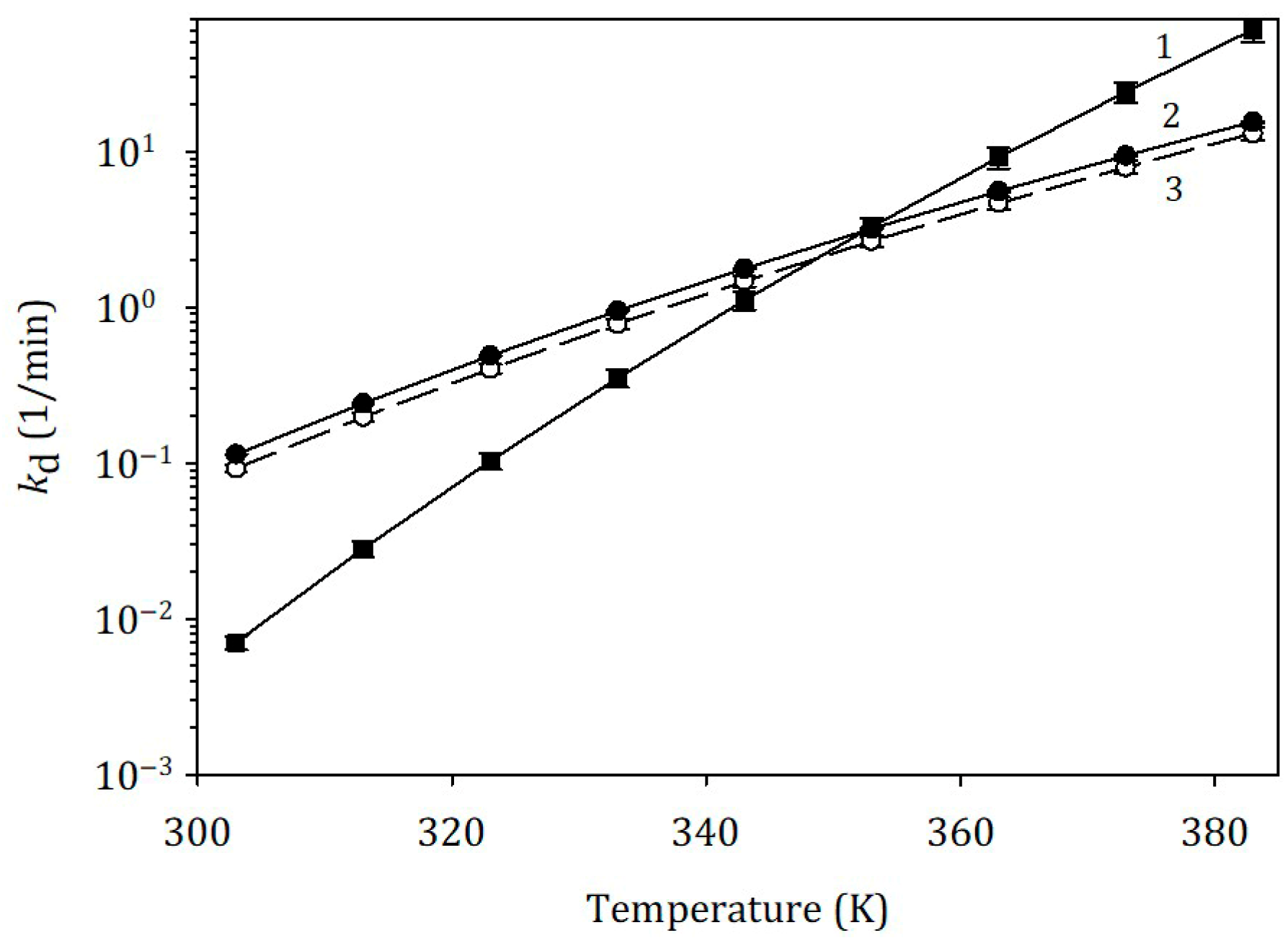
Figure 3 shows a comparison of the deactivation rate constants k d for all three lipases over a temperature range from 300 K to 385 K. At temperatures below 340 K, porcine pancreatic lipase exhibits lower k d values compared to bacterial and fungal lipases, which decreased significantly.
This indicates that porcine pancreatic lipase will hydrolyze fats more efficiently in these temperature ranges. After reaching a temperature of 353 K, the k d values for bacterial and fungal lipases.

3.2. Values of the Deactivation Rate Constant k d for Exoinulinases from Aspergillus niger

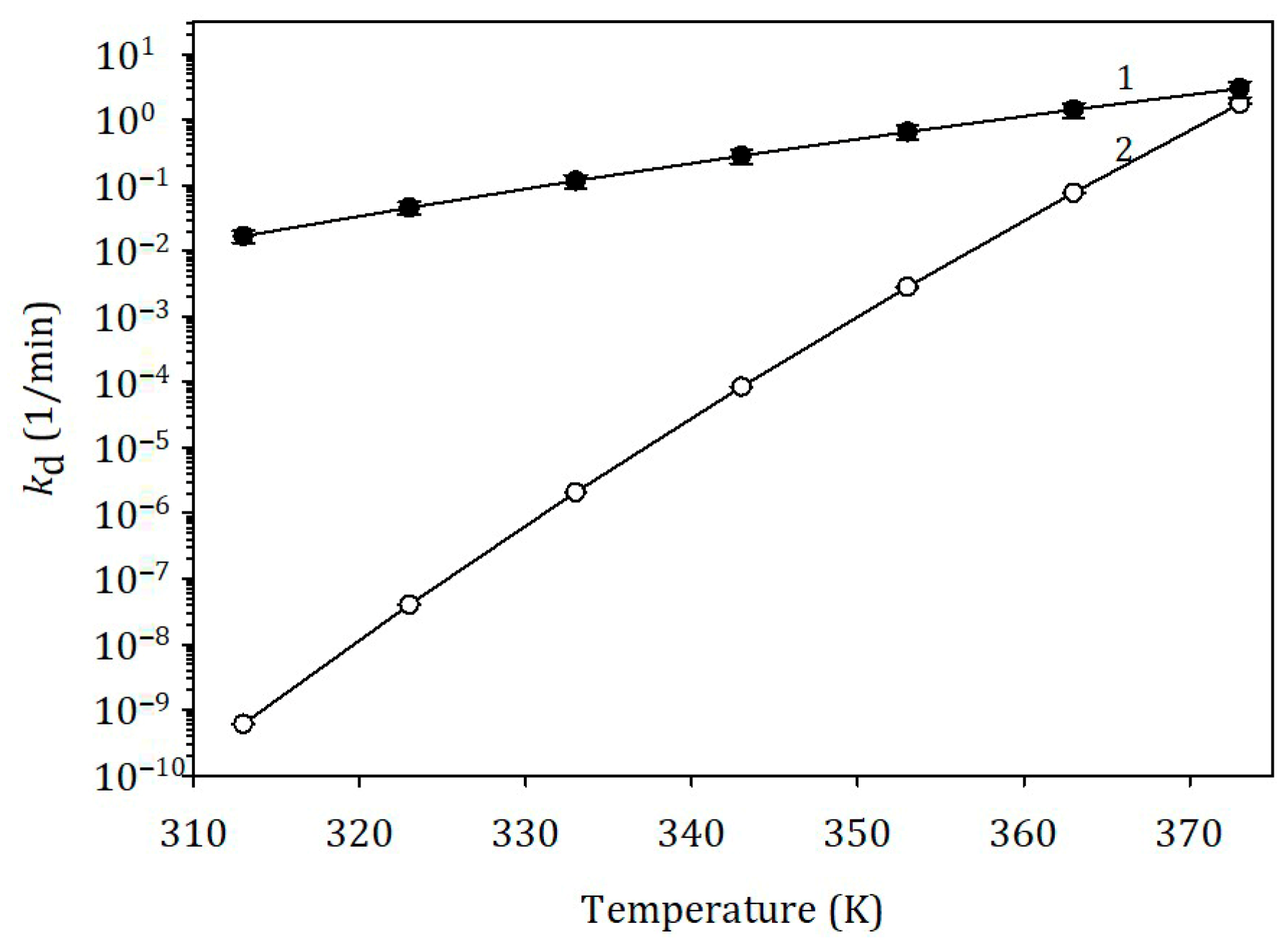
To determine the k d values for Aspergillus niger exoinulinases, two enzymes were analyzed: exoinulinases from A. niger 20 OSM, with an inulin hydrolysis time of 8 min, and exoinulinase from Aspergillus niger PTCC 5012, with a hydrolysis time of 60 min. The optimum temperature T o p t differed by 12 K between the two enzymes, with a higher T o p t value observed for the enzyme with the shorter hydrolysis times.
The deactivation energy E d for the enzyme with shorter hydrolysis times was twice as high as that for the enzyme with longer hydrolysis times. Consequently, the higher T o p t and E d values after 8 min resulted in lower k d values in the temperature range of 313–343 K compared to the exoinulinase from PTCC 5012.
Figure 4 illustrates the change in the deactivation constants k d with temperature for previously mentioned exoinulinases. At temperatures below 345 K, the A. niger PTCC 5012 enzyme exhibited lower k d values. Exoinulinase from Aspergillus niger PTCC 5012 was obtained by Arjomand et al. [53] at the National Institute of Genetic Engineering and Biotechnology in Tehran, Iran.
However, at temperatures above 345 K, the Aspergillus niger 20 OSM exoinulinase showed lower k d values, indicating greater thermal stability at higher temperatures. Exoinulinase from Aspergillus niger 20 OSM was obtained by Trytek et al. 2015 [66] from the Institute of Microbiology and Biotechnology, Maria Curie–Skłodowska University in Lublin, Poland.

3.3. Values of the Deactivation Rate Constant k d for Recombinant Exoinulinases

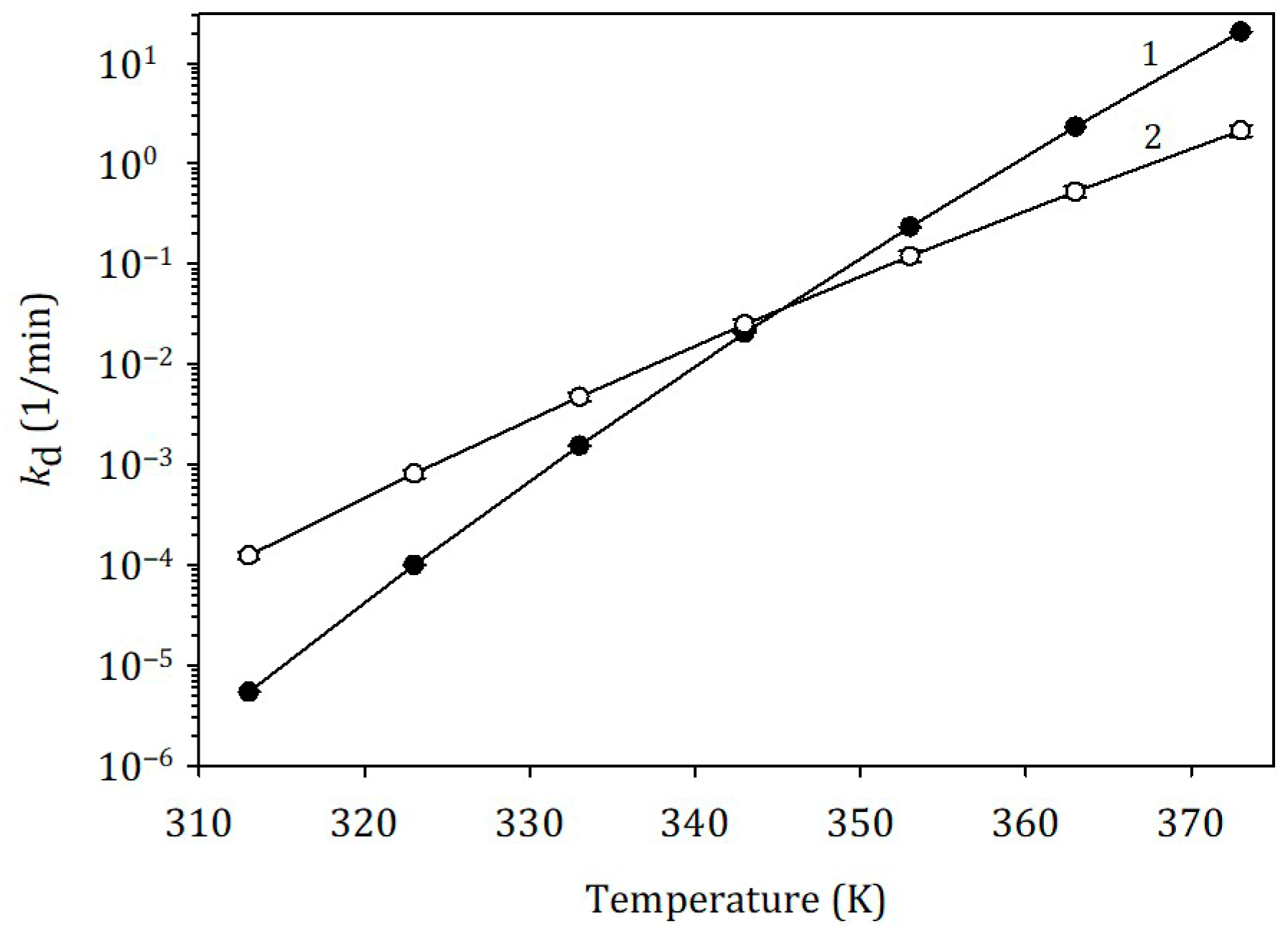
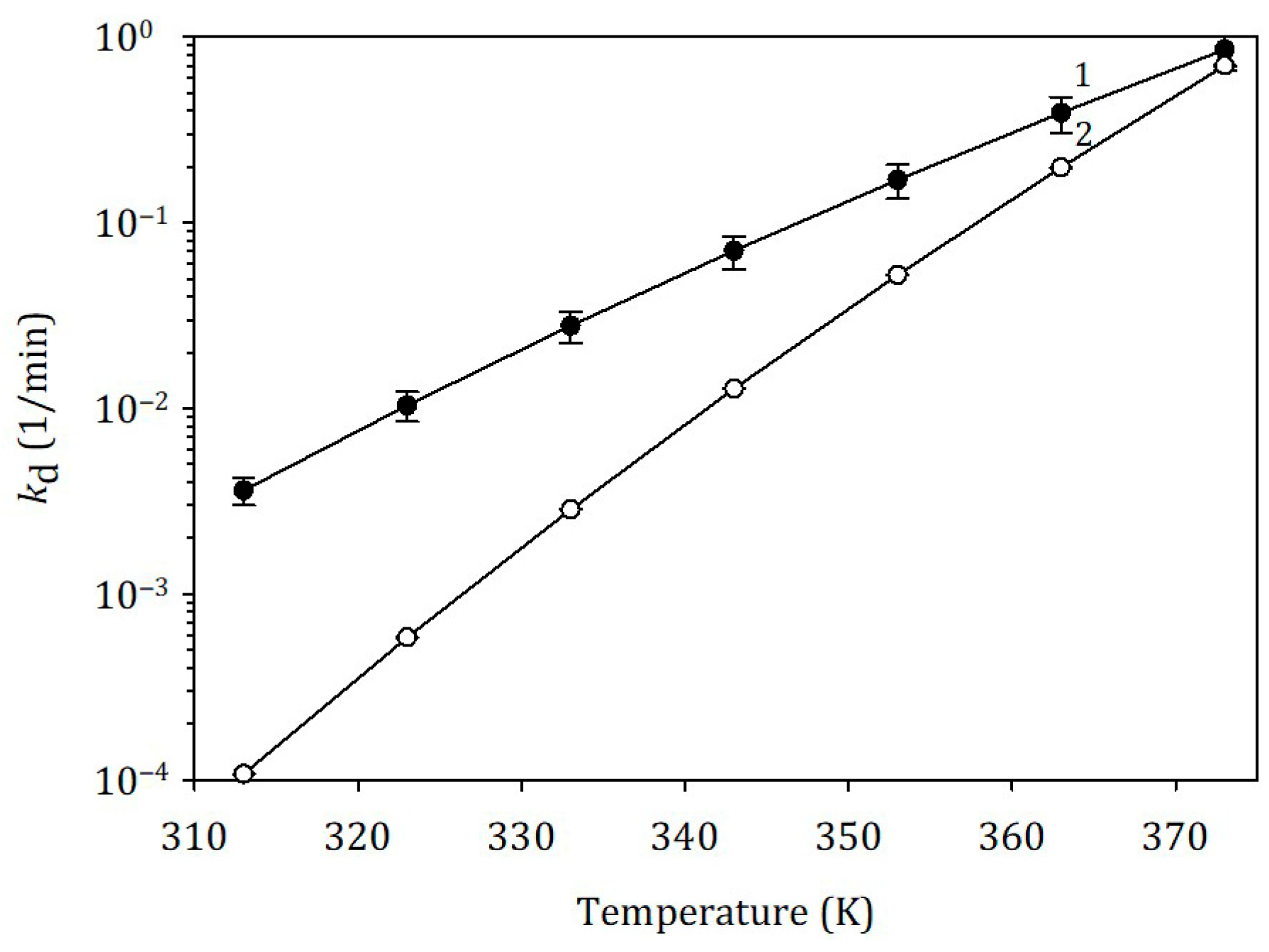
To determine the k d values for inulin hydrolysis by recombinant exoinulinases, two enzymes were analyzed: A. niger exoinulinase (Megazyme) and exoinulinase from Kluyveromyces marxianus KM–0 expressed in Yarrowia lipolytica Po1h. Among the tested recombinant exoinulinases, these enzymes showed the lowest and the highest deactivation energies E d , respectively (Table 4). Therefore, recombinant enzymes with higher E d values showed greater thermal stability and long-term activity, which is consistent with the results of other researchers [67]. Figure 5 shows that the deactivation rate constants k d are lower for recombinant exoinulinases from recombinant K. marxianus KM–0 expressed in Y. lipolytica Po1h.
The k d values were observed to be more than 107-fold lower at 310 K and about two-fold lower at 373 K compared to the values of k d for A. niger exoinulinase (Megazyme, Wicklow, Ireland). These results demonstrate that recombinant expression can lead to the production of enzymes with significantly increased kinetic stability and thermal efficiency.

3.4. Values of the Deactivation Rate Constant k d for Endoinulinases

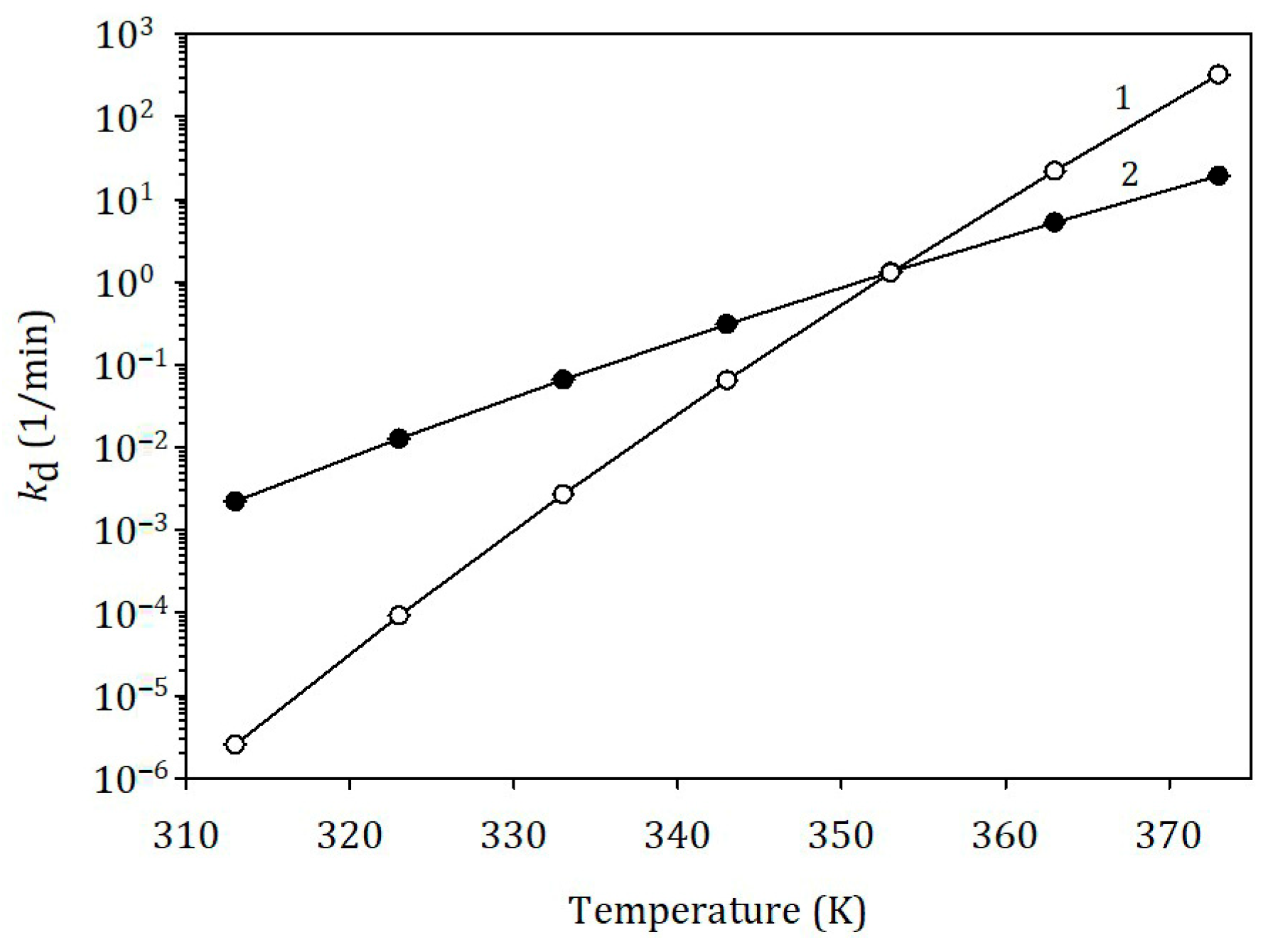
To determine the k d values for inulin hydrolysis by endoinulinases, two enzymes were analyzed: Aspergillus niger endoinulinase (Sigma-Aldrich, St. Louis, MO, USA) and A. niger endoinulinase (Megazyme, Wicklow, Irleand). Among the endoinulinases studied, these enzymes exhibited the lowest and highest deactivation energy E d values, respectively [13]. The deactivation rate constants k d for endoinulinases are presented in Figure 6.
In the temperature range of 313 K to 373 K, the deactivation rate constants k d for A. niger endoinulinase from Megazyme (Wicklow, Ireland) were lower than that constats k d for endoinulinase obtained from Sigma-Aldrich.

3.5. Values of the Deactivation Rate Constant k d for Recombinant Endoinulinases

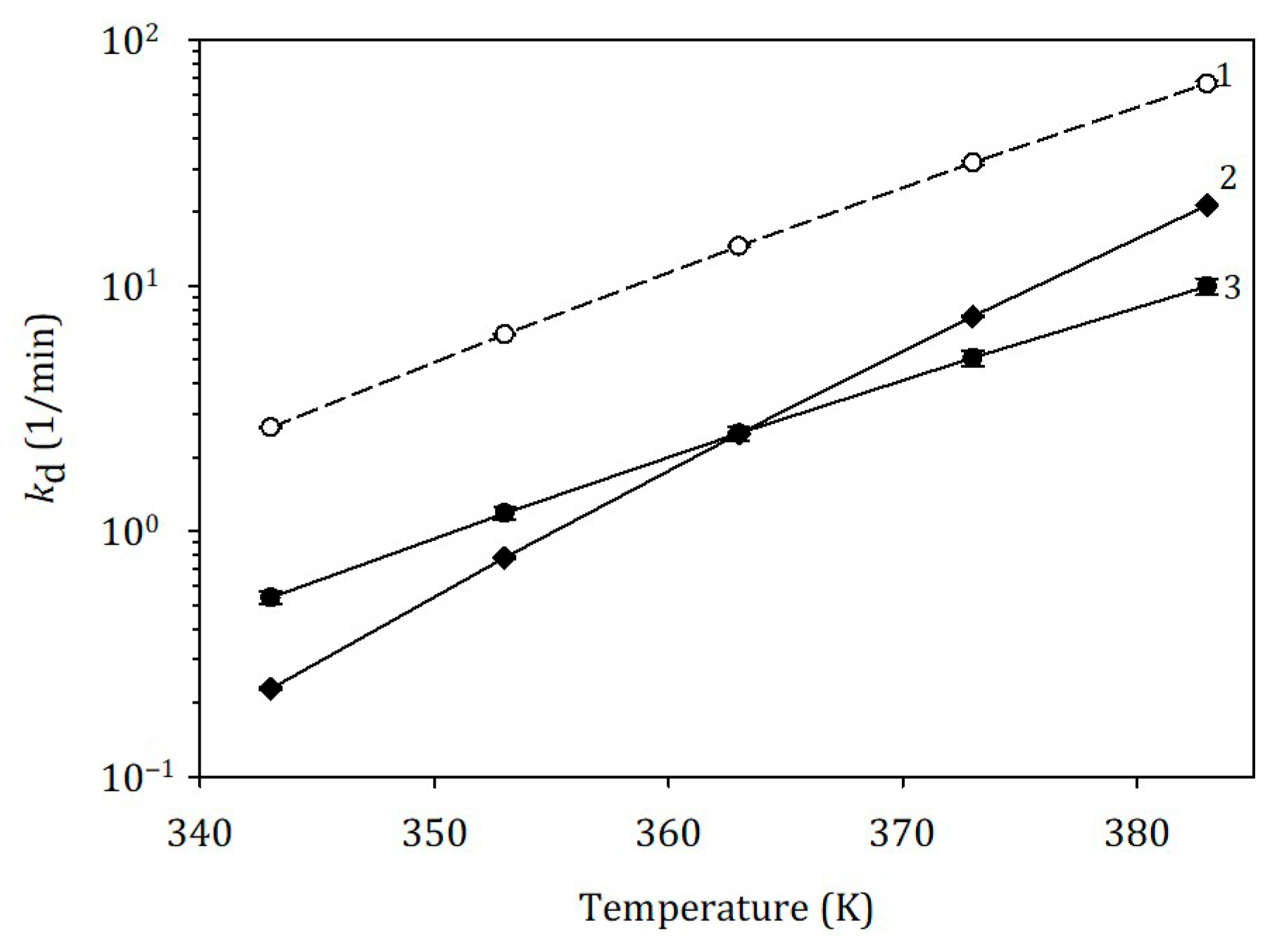
To determine the k d values for inulin hydrolysis by recombinant endoinulinases, the E d and T o p t parameters for these enzymes, presented in Table 4, were used. The k d deactivation constants for recombinant endoinulinase from Aspergillus niger, presented in Figure 7, show that at temperatures below 353 K, lower k d values were observed for the enzyme expressed in Penicillium canescens A3.
However, at temperatures above 353 K, the lowest k d values were observed for the recombinant endoinulinase from Bacillus macerans CFC1 expressed in A. niger F4. These results indicate that the bacterial recombinant endoinulinase expressed in A. niger exhibits greater thermal stability at higher temperatures than the fungal recombinant endoinulinase.

3.6. Values of the Deactivation Rate Constant k d for α-Amylases

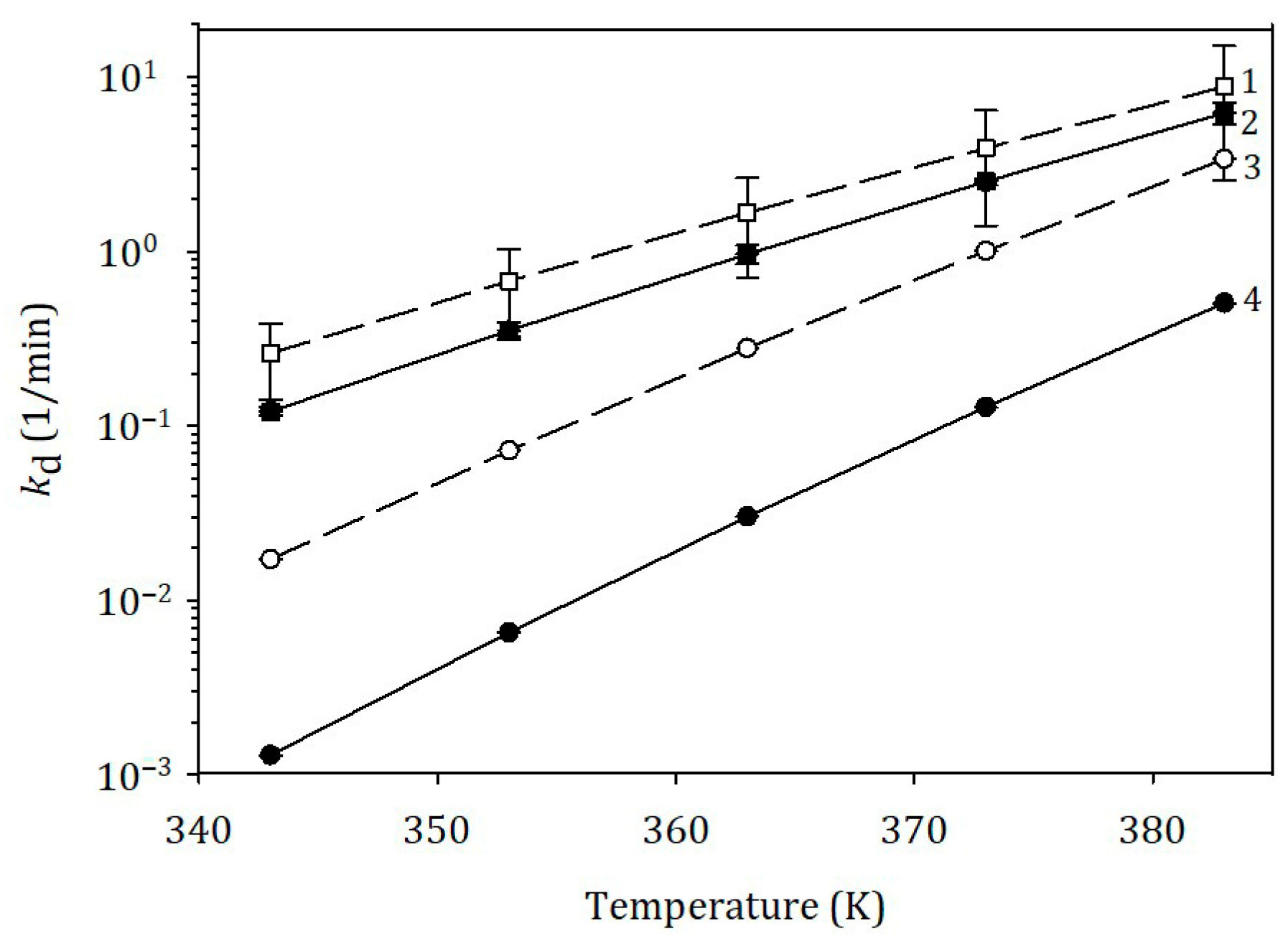
Figure 8 and Figure 9 show the calculated k d values on a semi-logarithmic scale as a function of temperature (343–383 K) for α–amylases from Bacillus spp. Starch hydrolysis was analyzed using α-amylase from Bacillus sp. B–10 and Bacillus sp. 12B. α–amylase from Bacillus sp. B–10 was isolated from soil samples collected in agricultural fields in Bijnor, India [68], while α–amylase from Bacillus sp. 12B came from wild strains isolated in Serbia [69]. The determined optimum temperatures T o p t were 323.67 ± 1.48 K and 354.00 ± 2.27 K, respectively (Table 4 and Figure 8, line 2; Figure 9, line 4). Among α-amylases analyzed, this enzyme also exhibited the highest T o p t value. Furthermore, both α–amylases hydrolyzed starch within 30 min. The lowest k d values observed for the α-amylase from Bacillus sp. 12B, shown in Figure 9 as line 4. Additionally, for starch hydrolysis by α–amylase from Bacillus sp. 12B, the lowest energy activation value E a equal to 18.01 ± 7.22 kJ/mol was achieved while simultaneously achieving the highest optimal temperature. These results are particularly significant because achieving the highest optimum temperature T o p t did not require a shorter reaction time. The hydrolysis time remained the same (30 min) for α-amylases.
Starch hydrolysis was also studied using α–amylase from Bacillus amyloliquifaciens, specifically strains BH072 and TSWK1. Although these enzymes exhibited different reaction times (3 min for BH072 and 20 min for TSWK1), they exhibited similar T o p t values. The Ed value was threefold higher for TSWK1 compared to BH072; their k d values were comparable in the temperature range 343–383 K (Figure 9, lines 1 and 2). A similar trend was observed for α-amylase from B. licheniformis SKB4 (Figure 8, line 3) and starch hydrolysis by B. licheniformis AI20 (Figure 9, line 3). Despite the different hydrolysis times (5 min for SKB4 and 10 min for AI20), the E a value for SKB4 was nearly twice as high, the E a value for AI20 was almost twice as low, and comparable k d values were obtained.
Among the Bacillus α-amylases analyzed, the highest k d were observed for the enzyme from Bacillus subtilis (Figure 8, line 1). Importantly, these increased k d values corresponded to the shortest starch hydrolysis time (3 min), the lowest E d , and the highest T o p t among the Bacillus α-amylases analyzed. In summary, the k d values determined for Bacillus α-amylases confirm that the applied method, which considers enzyme deactivation during biotransformation, is suitable for reliably determining both kinetic and deactivation parameters.
In conclusion, it should be emphasized that the k d parameters for α–amylases from Bacillus spp., presented in Figure 8 and Figure 9, significantly enrich the existing literature.
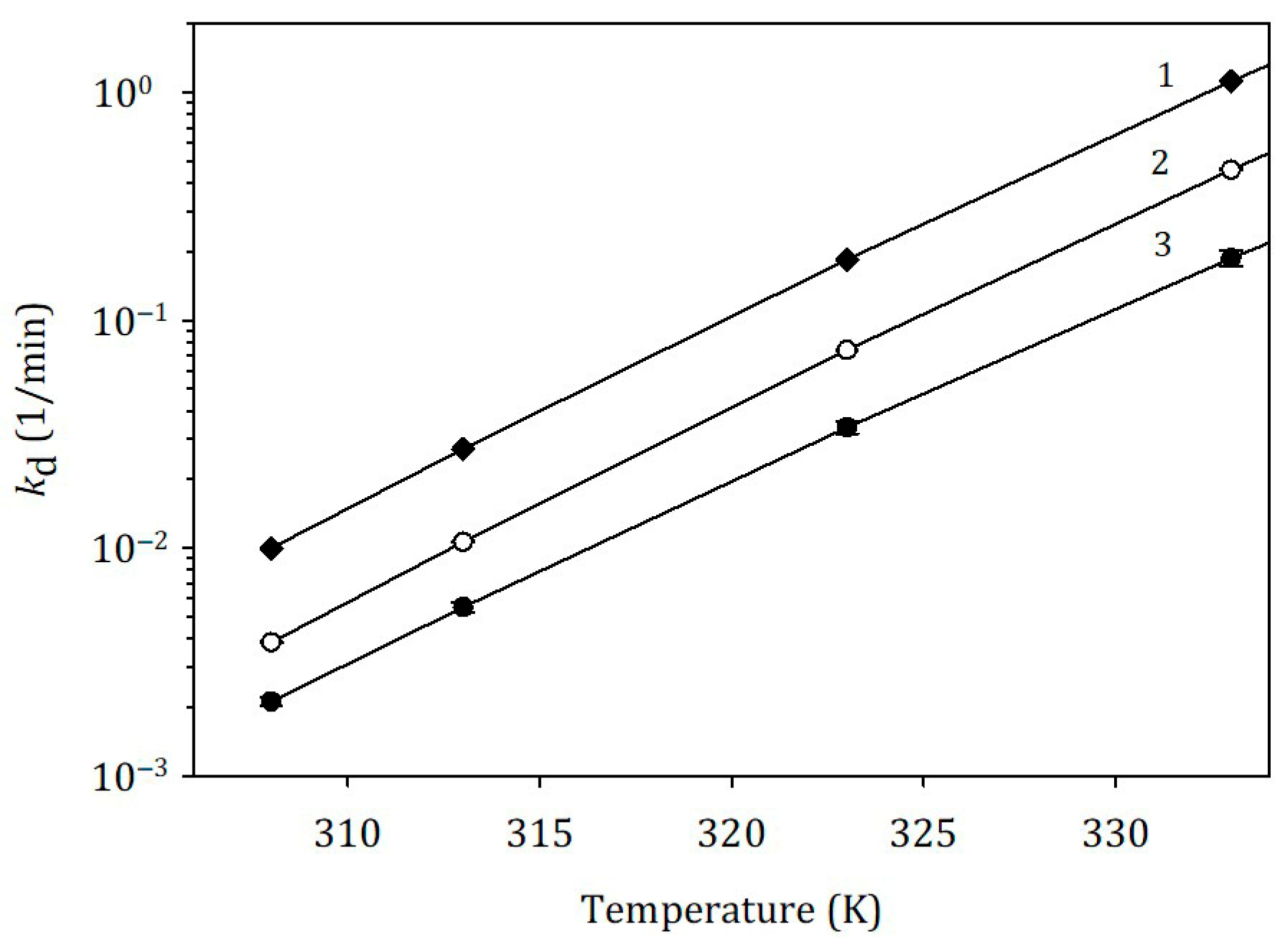
These results can be applied in the design, modeling, and optimization of industrial starch hydrolysis processes using α–amylases from Bacillus spp. From a sustainable perspective, these enzymes also have the potential to produce bioethanol from starch or lignocellulosic biomass. Continuing the issue of starch hydrolysis by α-amylases, pancreatic α-amylases were analyzed, which show great similarity to human α–amylase and are therefore widely used as active ingredients in pharmaceutical products and dietary supplements [69]. The publication [11] fills an important gap in the literature by providing values of deactivation energy E d activation energy E a and optimum temperatures T o p t for starch hydrolysis by pancreatic α-amylase. Analysis showed that the determined E d values differed by approximately 85 kJ/mol (Table 4). Notably, porcine pancreatic α-amylase from Biological Technology Co., Ltd. (Shanghai, China) had the lowest E d value and the lowest E a for a starch hydrolysis time of 30 min. These differences in E a and E d are due to differences between porcine pancreatic α-amylase suppliers. Therefore, information regarding the E d values for porcine pancreatic α-amylase from various suppliers, including Sigma-Aldrich, Merck AG (Darmstadt, Germany), and Biological Technology Co., Ltd. (Shanghai, China), was supplemented, further expanding the current knowledge on the deactivation of porcine pancreatic α-amylase during starch hydrolysis. Figure 10 shows the calculated k d values on a semi-logarithmic scale as a function of temperature for porcine pancreatic α-amylase in the range from 308 K to 333 K. The lowest k d values were observed for the porcine pancreatic α-amylase, as shown in curve (3) in Figure 10. The k d values were obtained using the T o p t and E d parameters determined for the more thermostable isoform I of porcine pancreatic α-amylase from Sigma Chemical Company (St. Louis, MO, USA) [11,70]. The presented k d values for porcine pancreatic α–amylase indicate the highest thermal stability during starch hydrolysis. In contrast, the highest k d values during starch hydrolysis were associated with the T o p t and E d values of porcine pancreatic α–amylase corresponding to curve (1), as reported in [16,71].
In industrial applications, commercial α-amylases from the Bacillus family are widely used for starch hydrolysis. Publication [15] fills an important gap in the literature by providing values of activation energy E a , deactivation energy E d , and optimum temperatures T o p t for starch hydrolysis catalyzed by commercial α-amylase from Bacillus family. Analysis showed that the E d values differed by approximately 40 kJ/mol (Table 4), with higher E d observed for the shorter hydrolysis time of 10 min. These results extend the current knowledge of deactivation behavior not only for commercial Bacillus α–amylase but also in the broader context of previously described porcine pancreatic α–amylase.
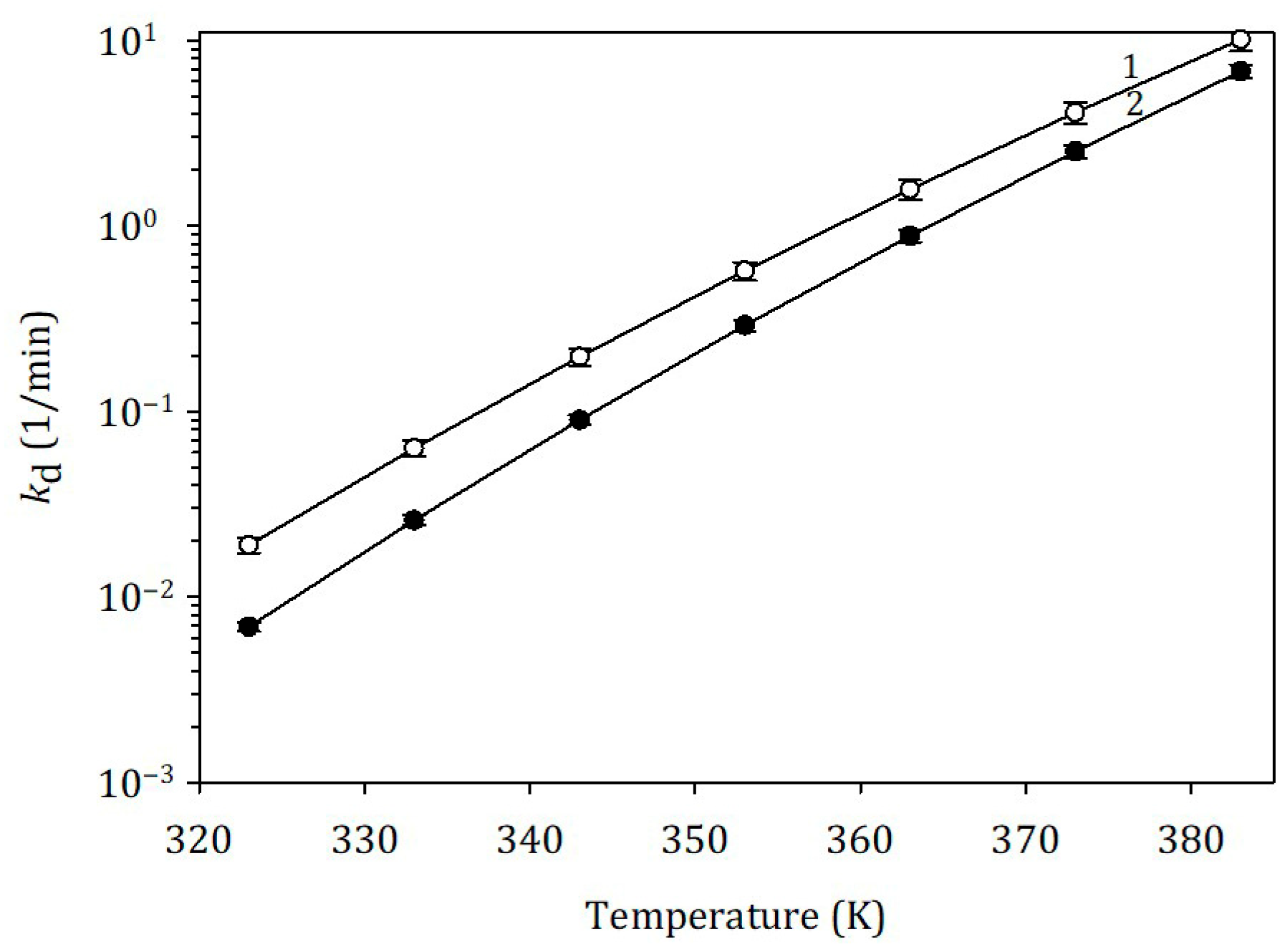
The study by [15] also focused on modeling starch hydrolysis using commercial α-amylases. The lowest k d values were observed in the temperature range from 322 K to 383 K (Figure 11). The lowest k d values were found to be the highest E d value (among the α–amylases analyzed in this study), which, combined with the high T o p t and the longest starch hydrolysis time, resulted in increased thermal stability.
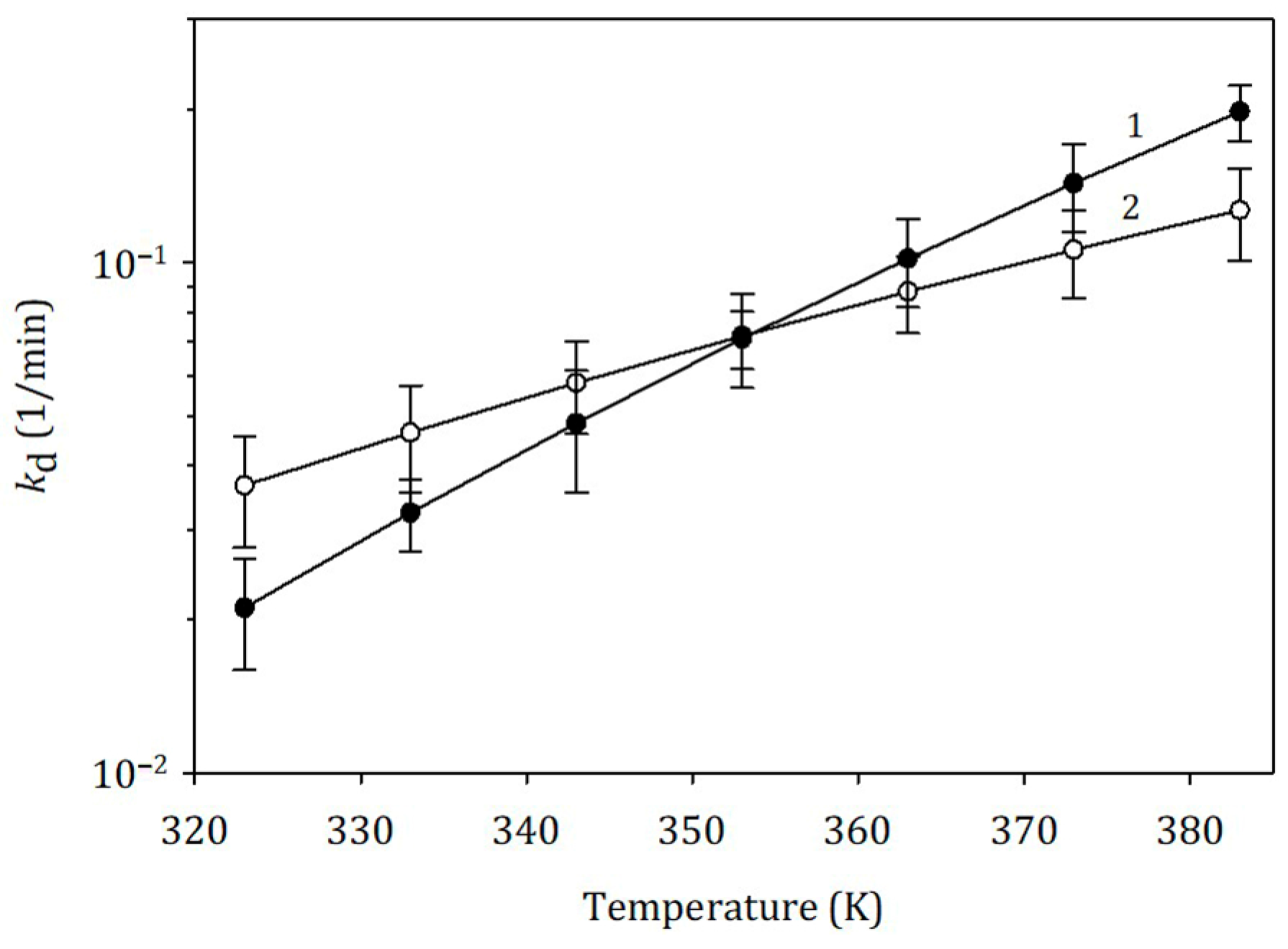
The deactivation constants k d for recombinant commercial α-amylases from Bacillus licheniformis presented in Figure 12 show that lower k d values were obtained for Termamyl® at temperatures below 353 K. However, lower k d values were observed for Termamyl®2X (Bagsvaerd, Novozymes) at temperatures above 353 K. These results indicate that Termamyl®2X (Bagsvaerd, Novozymes) exhibits greater thermal stability at higher temperatures than Termamyl® α-amylase.

4. Discussion

Table 4 presents the activation energy E a and deactivation energy E d for selected biotransformation processes. To the best of our knowledge, this work fills a significant gap in existing literature, providing valuable information on enzyme deactivation as well as biotransformation processes. Based on the selected values of the optimum temperature T o p t , activation energy E a , and deactivation energy E d from Table 4, as well as the corresponding measurement times of the biotransformation reactions [6,7,8,9,10,11,12,13,14,15,16,17,53,65], the deactivation rate constants k d were determined in the given temperature ranges. Detailed work on biotransformation processes resulted in the publication of articles on this topic.
The deactivation rate constants k d were evaluated over different temperature ranges depending on the enzyme studied. For lipases, the range was 300–380 K (Figure 4). For exoinulinases, endoinulinases, and their recombinant forms, the temperature range was 310–370 K (Figure 4, Figure 5, Figure 6 and Figure 7). For α-amylase, k d values were determined in the range 343–383 K (Figure 8 and Figure 9), while for commercial α–amylase, the range extended from 303 to 383 K (Figure 10, Figure 11 and Figure 12). In total, the theoretical analysis included four groups of enzymes: lipases, α–amylase, exoinulinase, endoinulinase, and their recombinant variants.
The advantage of the presented method lies in its ability to predict the deactivation rate constant k d value at a given temperature for a given biotransformation process. Lower k d constants are predicted when the deactivation energy E d values are higher for some enzymes, as evidenced by the k d values for lipases in Figure 3 and for recombinant exoinulinases in Figure 5. Another advantage is the ability to determine k d even when the measured E d values are similar, but the dimensionless activities exhibit different T o p t values and depend on measurement temperature and time, as in the case of Aspergillus niger exoinulinases (Figure 4). This method also allows for direct comparison of k d values between nonrecombinant and recombinant enzymes. For example, the k d values of non-recombinant and recombinant A. niger exoinulinase at temperatures ranging from 310 to 370 K range from 10−6 to 101 and 10−10 to 100, respectively (Figure 4 and Figure 5). Similarly, for nonrecombinant and recombinant endoinulase from A. niger, k d values ranging from 10−4 to 100 and 10−6 to 100, respectively, were determined over the same temperature range (Figure 6 and Figure 7). An additional advantage of this method is the ability to compare k d values obtained for exo and endotypic enzymes. Analyses indicate that both non-recombinant and recombinant A. niger endoinulinase exhibit lower k d values compared to their corresponding exoinulinases. The presented values of k d indicate that recombinant A. niger endoinulinase is characterized by higher thermostability than nonrecombinant.
The kd values for α–amylases from the family Bacillus spp. are presented in Figure 8 and Figure 9. The lowest k d values observed in the temperature range from 343 K to 383 K can be attributed to the highest Ed value, which, combined with the high T o p t and the longest starch hydrolysis time, translated into increased thermal stability. As reported in [17], shorter starch hydrolysis time for α–amylases were associated with lower E d values. However, analysis across the entire temperature range revealed that the most favorable (lowest) k d parameters were obtained for enzymes operating with longer starch hydrolysis time.
The kd values for commercial α–amylases from Bacillus spp. are presented in Figure 10, Figure 11 and Figure 12. The obtained deactivation constants confirm the high thermal stability of these commercial α-amylases. The main assumptions of the presented method include the necessity of calculating the deactivation parameter k d from previously determined parameters ( T o p t , E a , and E d ) based on the dimensionless activity vs. time curve, knowing the process duration (min). The presented data can be applied to bioprocesses involving the discussed enzymes. However, if researchers or industrial users encounter difficulties in determining T o p t , E a , E d , and the methods described in [6,7,8,9,10,11,12,13,14,15,16,17], an alternative approach is to select the enzyme based on the activity values provided by the manufacturer and accompanying technical guidelines. Comparing the price of a commercial enzyme from the same source, showing a similar level of activity, is also a solution to the problem. The obtained k d values can be used in process design, modeling, and optimization. Furthermore, they facilitate the selection of enzymes with the lowest k d at a given temperature, which is crucial for achieving maximum biotransformation efficiency.
The k d values determined for inulin hydrolysis by non-recombinant exoinulinase and recombinant exoinulinases from Aspergillus niger indicate that the non-recombinant forms exhibit greater thermal stability. These results are consistent with previous observations based on comparisons of the optimum temperatures T o p t of recombinant and non-recombinant exoinulinases.

5. Model of Biotransformation Processes Considering Enzyme Deactivation

In most cases, the activation energy E a and deactivation energy E d can be determined using the transformed Arrhenius equation. However, previous studies have noted that the values of E a and E d obtained from the Arrhenius relationship may be subject to error [15]. The kinetics of the selected bioprocesses were analyzed using the Michaelis–Menten kinetic model. In these analyses, it was assumed that the substrate concentration CS is significantly higher than the Michaelis–Menten constant K M . Under this assumption, the change in substrate concentration over time t, as well as the dimensionless activity a, can be described by the following equations:
d C S dt = k C E ,
d a dt = k d a ,
where k and k d are kinetic constants (1/min) for enzymatic and deactivation processes, respectively, and C E is the concentration of active enzyme (M). The kinetic constants k and k d are dependent on temperature T and can be described in the Arrhenius equations:
k = k 0 exp E a R T ,
k d = k d 0 exp E d R T ,
where k 0 is a pre-exponential factor of the kinetic constant (1/min), k d 0 is a pre-exponential factor of the kinetic constant (1/min) for the deactivation process, E a is activation energy (kJ/mol), E d is activation energy (kJ/mol) for the deactivation process, and R is the gas constant 8.315 J/(mol·K).

6. Conclusions

In summary, the series of thematically related studies presented here addresses important fills significant gaps in the literature regarding enzyme deactivation parameters for selected biotransformation processes. The results and analyses obtained allow us to draw the following conclusions: (1) Hydrolysis of olive oil by porcine pancreatic lipase: at temperatures below 340 K, porcine pancreatic lipase exhibits lower k d values compared to bacterial and fungal lipases. (2) Thermal stability of exoinulinases: Nonrecombinant exoinulinases exhibit higher thermal stability compared to recombinant exoinulinases, as evidenced by higher T o p t and lower k d deactivation rate constants. (3) In the hydrolysis of inulin by endoinulinase, the k d values suggest that the gene recombination techniques enhanced the thermal stability of these enzymes. (4) Starch hydrolysis by α-amylases from Bacillus spp. Among the α-amylases analyzed, α–amylase from Bacillus sp. 12B isolated in Serbia was found to be the most thermally stable enzyme compared to other α-amylases. (5) Deactivation rate constants k d were calculated for various biotransformation processes, providing key data for process optimization. Analysis of these real biotransformation processes, with particular emphasis on enzyme deactivation, provides previously missing information, particularly regarding k d values. These parameters can be used to model and optimize biotransformation processes. Furthermore, deactivation constants can be used to predict enzyme stability in practical applications such as biosensors and medical diagnostics.

Author Contributions

Conceptualization, J.M.; methodology, J.M.; software, J.M.; writing—original draft preparation, J.M., J.L. and M.W.; writing—review and editing, J.M.; visualization, J.M.; supervision, J.M. All authors have read and agreed to the published version of the manuscript.

Funding

This research received no external funding.

Data Availability Statement

All research data are available in the manuscript.

Conflicts of Interest

The authors declare no conflicts of interest.

References

  1. Farhan, M.; Hasani, I.W.; Khafaga, D.S.R.; Ragab, W.M.; Ahmed Kazi, R.N.; Aatif, M.; Muteeb, G.; Fahim, Y.A. Enzymes as catalysts in industrial biocatalysis: Advances in engineering, applications, and sustainable integration. Catalysts 2025, 15, 891. [Google Scholar] [CrossRef]
  2. Grigorakis, K.; Ferousi, C.; Topakas, E. Protein engineering for industrial biocatalysis: Principles, approaches, and lessons from engineered PETases. Catalysts 2025, 15, 147. [Google Scholar] [CrossRef]
  3. Global Industrial Enzyme Market Report. Available online: https://www.precedenceresearch.com/enzymes-market (accessed on 9 June 2025).
  4. The Novozymes Report 2021. Available online: https://report2021.novozymes.com (accessed on 11 February 2026).
  5. Henley, J.P.; Sadana, A. Deactivation theory. Biotechnol. Bioeng. 1986, 28, 1277–1285. [Google Scholar] [CrossRef] [PubMed]
  6. Miłek, J. Calculation of temperature optimum as well as activation and deactivation energy for the olive oil hydrolysis with porcine pancreas lipase. Przem. Chem. 2020, 99, 446–448. [Google Scholar] [CrossRef]
  7. Miłek, J. Determination of the optimum temperature and activation energies for the hydrolysis of inulin by endo–inulinase Aspergillus niger. Chem. Proc. Eng. 2020, 41, 229–236. [Google Scholar] [CrossRef]
  8. Miłek, J. Determination of the optimum temperature and activation energies for the hydrolysis of starch by α–amylase Bacillus licheniformis. Przem. Chem. 2020, 99, 880–881. [Google Scholar] [CrossRef]
  9. Miłek, J. The effect of pH on determination of the optimum temperatures and activation energies of hydrolysis of olive oil by lipase from porcine pancreas. Acta Bioeng. Biomech. 2021, 23, 25–31. [Google Scholar] [CrossRef]
  10. Miłek, J. Determination of the optimum temperature and activation energies for the hydrolysis of p–nitrophenyl palmitate catalyzed by lipases. Przem. Chem. 2021, 100, 103–104. [Google Scholar] [CrossRef]
  11. Miłek, J. Determination of activation energies and the optimum temperatures of hydrolysis of starch by α–amylase from porcine pancreas. Molecules 2021, 26, 4117. [Google Scholar] [CrossRef]
  12. Miłek, J. Application of the new method to determine the activation energies and optimum temperatures of inulin hydrolysis by exo–inulinases Aspergillus niger. J. Therm. Anal. Calorim. 2022, 147, 1371–1377. [Google Scholar] [CrossRef]
  13. Miłek, J. The inulin hydrolysis by recombinant exo–inulinases: Determination of the optimum temperatures and activation energies. J. Therm. Anal. Calorim. 2022, 147, 8061–8067. [Google Scholar] [CrossRef]
  14. Miłek, J. Recombinant endo–inulinases: Determination of the activation, deactivation energies and optimum temperatures in inulin hydrolysis. J. Therm. Anal. Calorim. 2023, 148, 859–866. [Google Scholar] [CrossRef]
  15. Miłek, J.; Ciaciuch, A. Modeling of starch hydrolysis by commercial α–amylases with enzyme deactivation. J. Therm. Anal. Calorim. 2025, 150, 15183–151941. [Google Scholar] [CrossRef]
  16. Miłek, J.; Grubecki, I.; Tomczak, W. A study of starch hydrolysis by α–amylase from porcine pancreas with deactivation of enzyme. Chem. Proc. Eng. 2024, 44, e57. [Google Scholar] [CrossRef]
  17. Miłek, J.; Lamkiewicz, J. The starch hydrolysis by α–amylase Bacillus spp.: An estimation of the optimum temperatures, the activation and deactivation energies. J. Therm. Anal. Calorim. 2022, 147, 14459–14466. [Google Scholar] [CrossRef]
  18. dos Santos, K.P.; Duarte, M.S.; Rios, N.S.; Brígida, A.I.S.; Gonçalves, L.R.B. A new multi–active heterogeneous biocatalyst prepared through a layer–by–layer co–immobilization strategy of lipase and laccase on nanocellulose–based materials. Catalysts 2025, 15, 99. [Google Scholar] [CrossRef]
  19. Vičević, R.; Karačić, Z.; Milunić, M.; Šalić, A.; Tušek, A.J.; Zelić, B. Application of recombinant [NiFe]–hydrogenase for sustainable coenzyme regeneration. Catalysts 2026, 16, 10. [Google Scholar] [CrossRef]
  20. Alfa Amylase Market. Available online: https://www.persistencemarketresearch.com/market-research/alpha-amylase-market.asp (accessed on 11 February 2026).
  21. Inulinase Market, Inulinase Market Growth & Demand Forecast 2024–2034. Available online: https://www.futuremarketinsights.com/reports/inulinase-market (accessed on 12 February 2026).
  22. Lipase Market, Lipase Market Analysis by Source, End–Use, Form and Region Through 2035. Available online: https://www.futuremarketinsights.com/reports/lipase-market (accessed on 4 May 2025).
  23. Alpha–Amylase Baking Enzyme Market. Growing Demand and Advancements in the Alpha Amylase Enzyme Market: Trends, Opportunities, and Future Outlook. Available online: https://www.futuremarketinsights.com/reports/alpha-amylase-baking-enzyme-market (accessed on 11 February 2026).
  24. Inorganic Catalyst Market Report 2026. Available online: https://www.researchandmarkets.com/reports/5790579/inorganic-catalyst-market-report?utm_source=chatgpt.com (accessed on 3 March 2026).
  25. Hydro-Processing Catalysts Market Forecast and Outlook 2026 to 2036. Available online: https://www.futuremarketinsights.com/reports/global-hydro-processing-catalysts-market?utm_source=chatgpt.com (accessed on 3 March 2026).
  26. Sharma, N.; Ahlawat, Y.K.; Stalin, N.; Mehmood, S.; Morya, S.; Malik, A.H.M.; Nellore, J.; Bhanot, D. Microbial enzymes in industrial biotechnology: Sources, production, and significant applications of lipases. J. Ind. Microbiol. Biotechnol. 2024, 52, kuaf010. [Google Scholar] [CrossRef]
  27. Nimkande, V.D.; Bafana, A. A review on the utility of microbial lipases in wastewater treatment. J. Water Process Eng. 2022, 46, 102591. [Google Scholar] [CrossRef]
  28. Kumar, A.; Gudiukaite, R.; Gricajeva, A.; Sadauskas, M.; Malunavicius, V.; Kamyab, H.; Sharma, S.; Sharma, T.; Pant, D. Microbial lipolytic enzymes – promising energy–efficient biocatalysts in bioremediation. Energy 2020, 192, 116674. [Google Scholar] [CrossRef]
  29. de Carvalho Cardoso, E.S.; Martins, N.Q.; Azevedo, R.A.; Palmeira, L.S.; Quintanilha–Peixoto, G.; Andrade, B.; Santos, M.P.F.; Uetanabaro, A.P.T.; da Silva, E.G.P.; Góes–Neto, A.; et al. Production and application of inulinase by new isolates of Aspergillus welwitschiae from fermented peach–palm waste for the production of fructooligosaccharides. Food Chem 2025, 465, 141978. [Google Scholar] [CrossRef]
  30. Tsigoriyna, L.; Stefanov, S.; Armenova, N.; Petrova, P.; Petrov, K. Microbial conversion of inulin to valuable products: The biorefinery concept. Fermentation 2024, 10, 640. [Google Scholar] [CrossRef]
  31. Sahu, P.K.; Singh, R.; Shrivastava, M.; Darjee, S.; Mageshwaran, V.; Phurailtpam, L.; Rohatgi, B. Microbial production of α–amylase from agro–waste: An approach towards biorefinery and bio–economy. Energy Nexus 2024, 14, 100293. [Google Scholar] [CrossRef]
  32. Naik, B.; Kumar, V.; Rizwanuddin, S.; Chauhan, M.; Gupta, A.K.; Rustagi, S.; Kumar, V.; Gupta, S. Agro–industrial waste: A cost–effective and eco–friendly substrate to produce amylase. Food Prod. Process. Nutr. 2023, 5, 30. [Google Scholar] [CrossRef]
  33. Karimi, M.; Biria, D. The promiscuous activity of alpha–amylase in biodegradation of low–density polyethylene in a polymer–starch blend. Sci. Rep. 2019, 9, 2612. [Google Scholar] [CrossRef]
  34. Okpara, M. Microbial enzymes and their applications in food industry: A mini–review. Adv. Enz. Res. 2022, 10, 23–47. [Google Scholar] [CrossRef]
  35. Filho, D.G.; Silva, A.G.; Guidini, C.Z. Lipases: Sources, immobilization methods, and industrial applications. Appl. Microbiol. Biotechnol. 2019, 103, 7399–7423. [Google Scholar] [CrossRef]
  36. Milovanović, J.; Banjanac, K.; Nikolić, J.; Nikodinović-Runić, J.; Prlainović, N.Ž. The organic–functionalized silica nanoparticles as lipase carriers for biocatalytic application: Future perspective in biodegradation. Catalysts 2025, 15, 54. [Google Scholar] [CrossRef]
  37. Reyes–Reyes, A.L.; Valero Barranco, F.; Sandoval, G. Recent advances in lipases and their applications in the food and nutraceutical industry. Catalysts 2022, 12, 960. [Google Scholar] [CrossRef]
  38. Mohan, A.; Flora, B.; Girdhar, M. Inulinase: An important microbial enzyme in food industry. In Microbial Bioprospecting for Sustainable Development; Singh, J., Sharma, D., Kumar, G., Sharma, N., Eds.; Springer: Berlin/Heidelberg, Germany, 2018. [Google Scholar] [CrossRef]
  39. Qiu, Y.; Lei, P.; Zhang, Y.; Sha, Y.; Zhan, Y.; Xu, Z.; Li, S.; Xu, H.; Ouyang, P. Recent advances in bio–based multi–products of agricultural Jerusalem artichoke resources. Biotechnol. Biofuels 2018, 11, 151. [Google Scholar] [CrossRef] [PubMed]
  40. Farooq, M.A.; Ali, S.; Hassan, A.; Tahir, H.M.; Mumtaz, S. Biosynthesis and industrial applications of α–amylase: A review. Arch. Microbiol. 2021, 203, 1281–1292. [Google Scholar] [CrossRef] [PubMed]
  41. Gupta, N.; Beliya, E.; Paul, J.S.; Tiwari, S.; Kunjam, S.; Jadhav, S.K. Molecular strategies to enhance stability and catalysis of extremophile–derived α–amylase using computational biology. Extremophiles 2021, 25, 221–233. [Google Scholar] [CrossRef] [PubMed]
  42. Jaiswal, N.; Jaiswal, P. Thermostable α–Amylases and laccases: Paving the way for sustainable industrial applications. Processes 2024, 12, 1341. [Google Scholar] [CrossRef]
  43. Vasić, K.; Knez, Ž.; Leitgeb, M. Bioethanol production by enzymatic hydrolysis from different lignocellulosic sources. Molecules 2021, 26, 753. [Google Scholar] [CrossRef]
  44. Sonkar, K.; Singh, D.P. Kinetic and thermodynamic characterization of novel alkaline lipase from halotolerant Bacillus gibsonii. Arch. Microbiol. 2021, 203, 2199–2209. [Google Scholar] [CrossRef] [PubMed]
  45. Badgujar, K.C.; Bhanage, B.M. Investigation of deactivation thermodynamics of lipase immobilized on polymeric carrier. Bioprocess. Biosyst. Eng. 2017, 40, 741–757. [Google Scholar] [CrossRef]
  46. Kumar, A.; Dhar, K.; Kanwar, S.S.; Arora, P.K. Lipase catalysis in organic solvents: Advantages and applications. Biol. Proced. 2016, 18, 2. [Google Scholar] [CrossRef]
  47. Zhu, Y.-T.; Ren, X.-Y.; Liu, Y.-M.; Wei, Y.; Qing, L.-S.; Liao, X. Covalent immobilization of porcine pancreatic lipase on carboxyl–activated magnetic nanoparticles: Characterization and application for enzymatic inhibition assays. Mat. Sci. Eng. C 2014, 38, 278–285. [Google Scholar] [CrossRef]
  48. Li, Y.; Jing, T.; Xu, G.; Tian, J.; Dong, M.; Shao, Q.; Wang, B.; Wang, Z.; Zheng, Y.; Yang, C.; et al. 3–D magnetic graphene oxide–magnetite poly(vinyl alcohol) nanocomposite substrates for immobilizing enzyme. Polymer 2018, 49, 13–22. [Google Scholar] [CrossRef]
  49. Yann, D.C.; Deprez–Beauclair, P.; Silva, N.; Infantes, L.; Kerfelec, B. Modification of pancreatic lipase properties by directed molecular evolution. Protein Eng. Des. Sel. 2010, 23, 365–373. [Google Scholar] [CrossRef]
  50. Dong, H.; Li, J.; Li, Y.; Hu, L.; Luo, D. Improvement of catalytic activity and stability of lipase by immobilization on organobentonite. Chem. Eng. J. 2012, 181–182, 590–596. [Google Scholar] [CrossRef]
  51. Stoytcheva, M.; Montero, G.; Zlatev, R.; Leon, J.A.; Gochev, V. Analytical methods for lipases activity determination: A review. Curr. Anal. Chem. 2012, 8, 400–407. [Google Scholar] [CrossRef]
  52. Wesevich, A.; Sutton, G.; Ruffin, F.; Park, L.P.; Fouts, D.E.; Fowler, V.G., Jr.; Thaden, J.T. Newly named Klebsiella aerogenes (formerly Enterobacter aerogenes) is associated with poor clinical outcomes relative to other Enterobacter species in patients with bloodstream infection. J. Clin. Microbiol. 2020, 58, e00582-20. [Google Scholar] [CrossRef]
  53. Arjomand, M.R.; Habibi–Rezaei, M.; Ahmadian, G.; Hassanzadeh, M.; Karkhane, A.A.; Asadifar, M.; Amanlou, M. Deletion of loop fragment adjacent to active site diminishes the stability and activity of exo–inulinase. Int. J. Biol. Macromol. 2016, 92, 1234–1241. [Google Scholar] [CrossRef]
  54. Liu, Y.; Zhou, S.-H.; Cheng, Y.-R.; Chi, Z.; Chi, Z.-M.; Liu, G.-L. Synergistic effect between the recombinant exo–inulinase and endo–inulinase on inulin hydrolysis. J. Mol. Catal. B Enzym. 2016, 128, 27–38. [Google Scholar] [CrossRef]
  55. Ma, J.-Y.; Cao, H.-L.; Tan, H.-D.; Hu, X.-J.; Liu, W.-J.; Du, Y.-G.; Yin, H. Cloning, expression, characterization, and mutagenesis of a thermostable exoinulinase from Kluyveromyces cicerisporus. Appl. Biochem. Biotechnol. 2016, 178, 144–158. [Google Scholar] [CrossRef] [PubMed]
  56. Volkov, P.V.; Sinitsyna, O.A.; Fedorova, E.A.; Rojkova, A.M.; Satrutdinov, A.D.; Zorov, I.N.; Okunev, O.N.; Gusakov, A.V.; Sinitsyn, A.P. Isolation and properties of recombinant inulinases from Aspergillus sp. Biochemistry 2012, 77, 492–501. [Google Scholar] [CrossRef] [PubMed]
  57. Karimi, M.; Chaudhury, I.; Jianjun, C.; Safari, M.; Sadeghi, R.; Habibi-Rezaei, M.; Kokini, J. Immobilization of endo–inulinase on non–porous aminofunctionalized silica nanoparticles. J. Mol. Catal. B Enzym. 2014, 104, 48–55. [Google Scholar] [CrossRef]
  58. Singh, R.S.; Chauhan, K. Production, purification, characterization and applications of fungal inulinases. Current Biotechnol. 2018, 7, 242–260. [Google Scholar] [CrossRef]
  59. He, M.; Wu, D.; Wu, J.; Chen, J. Enhanced expression of endoinulinase from Aspergillus niger by codon optimization in Pichia pastoris and its application in inulooligosaccharide production. J. Ind. Microbiol. Biotechnol. 2014, 41, 105–114. [Google Scholar] [CrossRef]
  60. Kim, H.-C.; Kim, H.-J.; Choi, W.-B.; Nam, S.-W. Inulooligosaccharide production from inulin by Saccharomyces cerevisiae strain displaying cell–surface endoinulinase. J. Microbiol. Biotechnol. 2006, 16, 360–367. Available online: https://www.jmb.or.kr/journal/view.html?uid=1846&vmd=Full (accessed on 4 May 2025).
  61. Li, Y.; Liu, G.-L.; Wang, K.; Chi, Z.-M.; Madzak, C. Overexpression of the endoinulinase gene from Arthrobacter sp. S37 in Yarrowia lipolytica and characterization of the recombinant endo inulinase. J. Mol. Catal. B Enzym. 2012, 74, 109–115. [Google Scholar] [CrossRef]
  62. EP 1 205 554 B1; Enzyme or Cell Preparation with Inulinase Activity. European Patent Office: Munich, Germany, 2007. Available online: https://patents.google.com/patent/EP1205554B1/en (accessed on 4 May 2025).
  63. Wang, Y.; Ral, J.-P.; Saulnier, L.; Kansou, K. How does starch structure impact amylolysis? Review of current strategies for starch digestibility study. Foods 2022, 11, 1223. [Google Scholar] [CrossRef] [PubMed]
  64. Singh, R.N.; Bahuguna, A.; Chauhan, P.; Sharma, V.K.; Kaur, S.; Singh, S.K.; Khan, A. Production, purification and characterization of thermostable α–amylase from soil isolate Bacillus sp. strain B–10. J. BioSci. Biotechnol. 2016, 5, 37–43. [Google Scholar] [CrossRef]
  65. Rodríguez, V.B.; Alameda, E.J.; Gallegos, J.F.M.; Requena, A.R.; López, A.I.G. Enzymatic hydrolysis of soluble starch with an α–amylase from Bacillus licheniformis. Biotechnol. Progress. 2006, 22, 718–722. [Google Scholar] [CrossRef]
  66. Trytek, M.; Fiedurek, J.; Podkościelna, B.; Gawdzik, B.; Skowronek, M. An efficient method for the immobilization of inulinase using new types of polymers containing epoxy groups. J. Ind. Microbiol. Biotechnol. 2015, 42, 985–996. [Google Scholar] [CrossRef]
  67. Wang, X.C.; You, S.P.; Zhang, J.X.; Dai, Y.M.; Zhang, C.Y.; Qi, W.; Dou, T.Y.; Su, R.X.; He, Z.M. Rational design of a thermophilic β–mannanase from Bacillus subtilis TJ–102 to improve its thermostability. Enzym. Microb. Tech. 2018, 118, 50–56. [Google Scholar] [CrossRef]
  68. Singh, R.; Kumar, M.; Mittal, A.; Mehta, P.K. Microbial enzymes: Industrial progress in 21st century. 3 Biotech 2016, 6, 174. [Google Scholar] [CrossRef]
  69. Božič, N.; Slavić, M.Š.; Gavrilović, A.; Vujčic, Z. Production of raw–starch–digesting α–amylase isoform from Bacillus sp. under solid–state fermentation and biochemical characterization. Bioprocess. Biosyst. Eng. 2014, 37, 1353–1360. [Google Scholar] [CrossRef]
  70. Gopal, B.A.; Muralikrishna, G. Porcine pancreatic α–amylase and its isoforms: Purification and kinetic studies. Int. J. Food Prop. 2009, 12, 571–586. [Google Scholar] [CrossRef]
  71. Louati, H.; Zouari, N.; Fendri, A.; Gargouri, Y. Digestive amylase of a primitive animal, the scorpion: Purification and bio-chemical characterization. J. Chromatogr. B 2010, 878, 853–860. [Google Scholar] [CrossRef] [PubMed]
Figure 1. Global enzyme market forecast (2025–2034).
Catalysts 16 00281 g001
Figure 2. Enzyme sales by industry sectors.
Catalysts 16 00281 g002
Figure 3. Effect of temperature on the deactivation rate constants k d of lipases: (1) porcine pancreas; (2) Rhizopus oryzae 3562; (3) Enterobacter aerogenes.
Catalysts 16 00281 g003
Figure 4. Effect of temperature on the deactivation rate constants k d of exoinulinases from Aspergillus niger: (1) PTCC 5012; (2) 20 OSM.
Catalysts 16 00281 g004
Figure 5. Effect of temperature on the deactivation rate constants k d of recombinant exoinulinases (1) Aspergillus niger (Megazyme); (2) Kluyveromyces marxianus KM–0 in Yarrowia lipolytica Po1h.
Catalysts 16 00281 g005
Figure 6. Effect of temperature on the deactivation rate constants k d of endoinulinases from Aspergillus niger: (1) Sigma-Aldrich; (2) Megazyme.
Catalysts 16 00281 g006
Figure 7. Effect of temperature on the deactivation rate constants k d of recombinant endoinulinases from Aspergillus niger: (1) expressed in Penicillium canescens A3; (2) recombinant endoinulinase from Bacillus macerans CFC1 expressed in A. niger F4.
Catalysts 16 00281 g007
Figure 8. Effect of temperature on the deactivation rate constants k d of α-amylases from Bacillus spp. during starch hydrolysis: (1) B. subtilis; (2) Bacillus sp. B-10; (3) B. licheniformis SKB4.
Catalysts 16 00281 g008
Figure 9. Effect of temperature on the deactivation rate constants k d of α-amylases from Bacillus spp. during starch hydrolysis: (1) B. amyloliquifaciens BH072; (2) B. amyloliquifaciens TSWK1; (3) B. licheniformis AI20; (4) Bacillus sp. 12B.
Catalysts 16 00281 g009
Figure 10. Effect of temperature on the deactivation rate constants k d of commercial α-amylases from porcine pancreas during starch hydrolysis: (1) Sigma-Aldrich; (2) Sigma; (3) Sigma Chemical Company—isoform I.
Catalysts 16 00281 g010
Figure 11. Effect of temperature on the deactivation rate constants k d of commercial α-amylases from Bacillus subtilis during starch hydrolysis: (1) Sigma-Aldrich; (2) Megazyme Ireland.
Catalysts 16 00281 g011
Figure 12. Effect of temperature on the deactivation rate constants k d of commercial α-amylases from Bacillus licheniformis during starch hydrolysis: (1) Termamyl®; (2) Termamyl®2X (Bagsvaerd, Novozymes).
Catalysts 16 00281 g012
Table 1. Conditions for measuring the activity of enzymes used in selected biotransformation processes.
Source of Enzymet (min)pHRef.
lipase (EC 3.1.1.3)
porcine pancreas108.9[6]
porcine pancreas15–306.0–7.5[9]
Rhizopus oryzae 3562108.0[10]
Enterobacter aerogenes108.0[10]
inulinase
exoinulinase (EC 3.2.1.80)
Aspergillus niger8–604.5–5.5[12]
recombinant exoinulinase (EC 3.2.1.80)
Aspergillus niger CBS 513.8 in P. pastoris55.5[13]
Aspergillus niger 5012 in E. coli DH584.5
Kluyveromyces marxianus CBS 6556 in P. pastoris54.6
K. marxianus KM–0 in Yarrowia lipolytica Po1h104.5
endoinulinase (EC 3.2.1.7)
Aspergillus niger10–304.5–5.5[7]
recombinant endoinulinase (EC 3.2.1.7)
Aspergillus niger in Penicillium canescens A355.0[14]
Bacillus macerans CFC1 in A. niger F4104.5
α-amylase (EC 3.2.1.1)
Bacillus licheniformis EMS-6107.0[8]
Bacillus sp.10–306.5–7.2[17]
Bacillus subtilis37.0
Bacillus amyloliquifaciens3–207.0
Bacillus licheniformis5–106.5–7.2
porcine pancreas3–606.9–7.0[11,16]
commercial α-amylase (EC 3.2.1.1)
Bacillus subtilis
Sigma-Aldrich, Darmstadt, Germany306.9[15]
Megazyme Wicklow, Ireland105.0
Bacillus licheniformis
Novo, Bagsvaerd, Denmark157.0
Sigma Chemical Co. (Type XII-A)308.2
Termamyl®, Bagsvaerd, Denmark205.6
Termamyl®2XNovozymes, Bagsvaerd, Denmark205.6
Table 2. Sales market for α-amylases, inulinases, and lipases for 2023–2032.
EnzymeSales Market ($ Mn)
20252035Ref.
α-amylases2227.63374.2[20]
inulinases1032.51665.9[21]
lipases1128.62652.3[22]
Table 4. Characteristics of enzymes used in selected biotransformation processes.
Source of Enzyme T o p t * (K) E a (kJ/mol) E d (kJ/mol)Ref.
Lipase (EC 3.1.1.3)
porcine pancreas306.78 *86.75 *121.12 *[6]
porcine pancreas305.46–312.2331.37–61.6065.18–109.27[9]
Rhizopus oryzae 3562298.0232.8659.74[10]
Enterobacter aerogenes295.0045.3759.28
exoinulinase (EC 3.2.1.80)
Aspergillus niger325.25–337.3525.97–60.9580.86–268.66[12]
recombinant exoinulinase (EC 3.2.1.80)
Aspergillus niger CBS 513.8 in P. pastoris318.9135.53120.87[13]
A. niger (Megazyme, Wicklow, Irleand)324.4337.5983.93
Kluyveromyces marxianus CBS 6556 in P. pastoris328.3942.03176.91
K. marxianus KM–0 in Yarrowia lipolytica Po1h328.7643.83352.44
endoinulinase (EC 3.2.1.7)
Aspergillus niger317.12–332.5523.53–50.6688.42–142.87[7]
recombinant endoinulinase (EC 3.2.1.7)
Aspergillus niger in Penicillium canescens A3328.9142.00146.80[14]
Bacillus macerans CFC1 in A. niger F4335.9422.08301.95
α-amylase (EC 3.2.1.1)
Bacillus licheniformis EMS-6339.7627.16143.54[8]
Bacillus sp.323.67–354.0018.01–56.02123.91–162.85[17]
Bacillus subtilis335.85102.8588.11
Bacillus amyloliquifaciens336.53–339.5718.35–65.4196.04–107.62
Bacillus licheniformis348.02–349.4829.41–73.8579.76–144.20
porcine pancreas311.06–326.5219.82–128.80123.57–209.37[11]
porcine pancreas31866161[16]
commercial α-amylase (EC 3.2.1.1)
Bacillus subtilis
Sigma–Aldrich, Darmstadt, Germany321.9546.4974.69[15]
Megazyme, Wicklow, Ireland335.670.35118.19
Bacillus licheniformis
Novo, Bagsvaerd, Denmark349.7262.90121.92[15]
Sigma Chemical Co. St. Louis, MO, (Type XII–A)354.5138.0267.43
Termamyl® Novozymes, Bagsvaerd, Denmark368.3434.0940.46
Termamyl®2X Novozymes, Bagsvaerd, Denmark376.4922.0821.30
* This table presents the estimated values obtained [6,7,8,9,10,11,12,13,14,15,16,17], excluding estimation uncertainties.
Disclaimer/Publisher’s Note: The statements, opinions and data contained in all publications are solely those of the individual author(s) and contributor(s) and not of MDPI and/or the editor(s). MDPI and/or the editor(s) disclaim responsibility for any injury to people or property resulting from any ideas, methods, instructions or products referred to in the content.