Article

Cerium-Based Metal–Organic Frameworks (MOFs) for Catalytic Hydroxylation of Organic Molecules

by
Muath Alharbi
,
Mostafa E. Salem
and
Hani Nasser Abdelhamid
*
Department of Chemistry, College of Science, Imam Mohammad Ibn Saud Islamic University (IMSIU), Riyadh 11623, Saudi Arabia
*
Author to whom correspondence should be addressed.
Catalysts 2026, 16(3), 271; https://doi.org/10.3390/catal16030271
Submission received: 4 February 2026 / Revised: 1 March 2026 / Accepted: 5 March 2026 / Published: 17 March 2026
(This article belongs to the Section Catalytic Materials)

Abstract

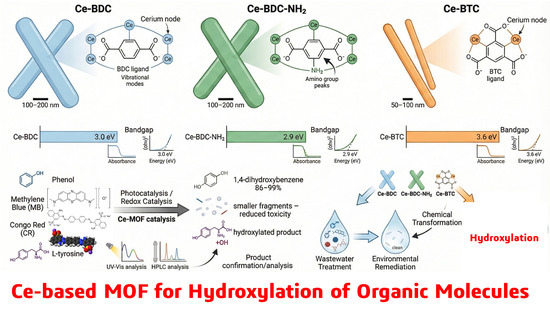
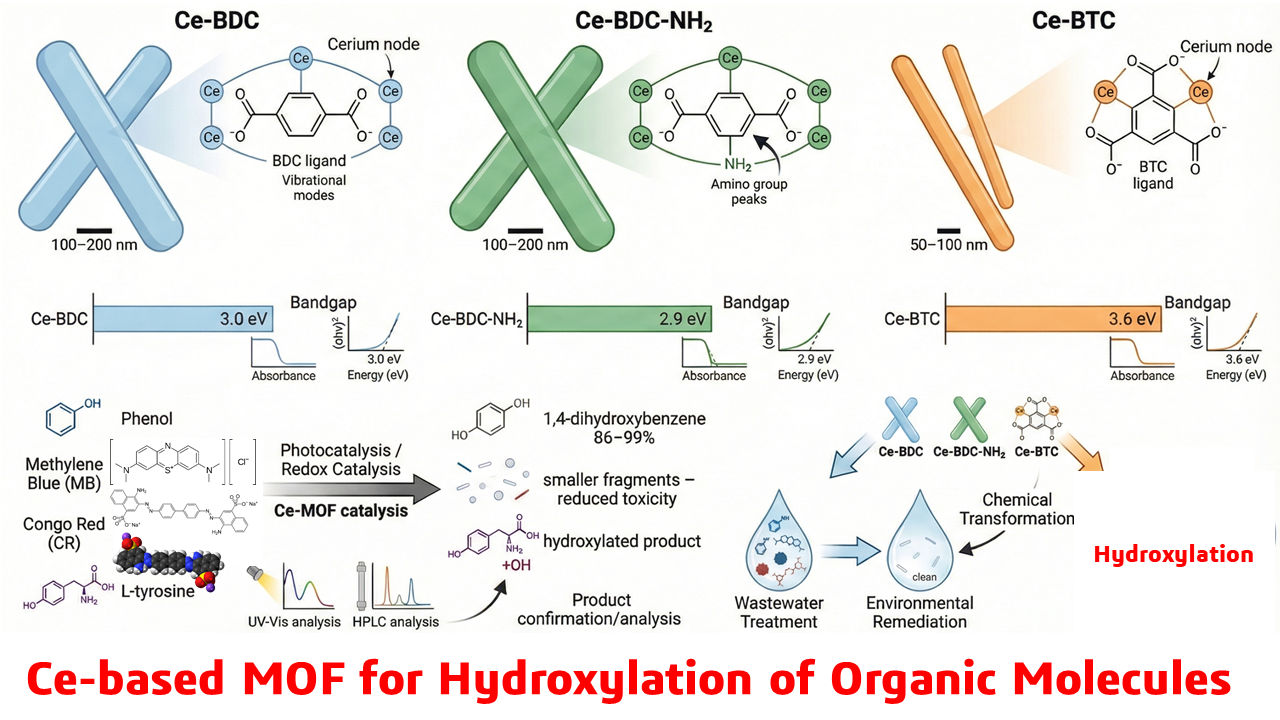
Three cerium-based metal–organic frameworks (MOFs), Ce-BDC, Ce-BDC-NH2, and Ce-BTC, were used as catalysts for the hydroxylation of several organic compounds, including those not relevant to environmental or biological systems. Structural characteristics were validated by FT-IR spectroscopy, while SEM imaging demonstrated rod-like morphologies of 100–200 nm in width for Ce-BDC-NH2 and 50–100 nm for Ce-BTC. The optical properties, ascertained using diffuse reflectance spectra and Tauc analysis, revealed bandgaps of 3.0 eV, 2.9 eV, and 3.6 eV for Ce-BDC, Ce-BDC-NH2, and Ce-BTC, respectively. Catalytic investigations revealed that Ce-MOFs effectively convert phenol into 1,4-dihydroxybenzene with an efficiency of 86–99%, as confirmed by UV–Vis spectroscopy and HPLC analysis using an authentic hydroquinone (1,4-dihydroxybenzene) standard. The Ce-MOFs efficiently oxidize the dyes methylene blue (MB) and Congo red (CR) and also promote the hydroxylation of L-tyrosine, indicating their relevance to biologically significant substrates. The high catalytic performance of Ce-MOF highlights the potential of Ce-based materials for environmental remediation, chemical transformation, and sustainable wastewater treatment.

Graphical Abstract

1. Introduction

In 2025, the metal–organic frameworks (MOFs) topic won the Nobel Prize in Chemistry for opening new avenues and advancing various fields, including environmental science, biomedical research, and the energy sector [1,2,3,4,5,6]. Lanthanide elements, including cerium (Ce)-based MOFs (Ce-MOFs), have been widely developed due to their accessible Ce(III)/Ce(IV) redox states, high surface areas, high chemical stability, and structural tunability [7,8]. They have been applied in electrochemical sensing, photocatalysis, oxygen-vacancy engineering, and improved conductivity through composite formation with carbon nanotubes (CNTs) [9] or MXenes [10]. They demonstrate strong electrocatalytic performance, including N2-to-NH3 conversion on Ce-MOF/Cu mesh [11], enhanced urea oxidation reaction (UOR) following controlled pyrolysis [12], and high activity for CO2 reduction when modified with Ru(bpy)22+ photosensitizers [13]. Their versatility enables sensitive detection of biomolecules such as rutin [10], visible-light-driven dye degradation [11], and advanced photocatalytic systems, such as yolk-shell Ce-MOF heterojunctions [14]. Additional applications include multi-mode aptasensing [15], polymer flame retardancy [16,17], high-capacity supercapacitors [18], and catalytic reduction of nitro compounds using metal nanoparticle-decorated Ce-MOFs [19]. Ce-MOFs also serve as platforms for environmental remediation, including Cr(VI) removal [20], CO2 photoreduction with heterostructures [21], and antibacterial or antifouling systems via oxidized Ce-MOF nanozymes [22]. They support high-efficiency catalytic transformations, such as C–C coupling [13], sequential hydrolysis-oxidation nanozyme activity [23], visible-light degradation of pollutants [24,25], selective adsorption of dyes [26], and enhanced hydrogenation through defect engineering [27]. Ce-MOF-derived CeO2 materials excel in volatile organic compounds (VOCs) oxidation [28], CO2 methanation with Ru catalysts [29], and selective hydrogenation using single-atom Cu(I) sites [30]. Additional reports highlight their potential for biomedical wound healing [31], NaBH4-based hydrogen generation [32], and Fenton-like oxidation of organic substrates [33], underscoring Ce-MOFs as highly adaptable materials across catalytic, environmental, and sensing applications [34].
Catalytic hydroxylation is a pivotal reaction in organic synthesis, significantly impacting pharmaceuticals, environmental remediation, and the production of high-value chemicals [35,36]. For example, hydroxylation of benzene into phenol using conventional methods, such as the cumene process, is energy-intensive and generates substantial waste, necessitating the development of more sustainable catalytic systems. MOFs have arisen as exceptionally efficient alternatives owing to their adjustable porosity, isolation of active sites, and structural adaptability. Significant advancements encompass Fe-Co-MOFs/montmorillonite (MMT) heterojunctions exhibiting a yield of 30.06% and selectivity of 85.73% [37], Fe-MOF/MMT attaining a yield of 30.3% and selectivity of 96.5% under visible light [38], and hydroxylated UiO-66, which improves molecular mobility and improves pentane-isomer separation selectivity to α ≈ 76—sixfold greater than the dehydroxylated variant [39]. Supplementary systems, including Cu/Mn-MOF@C (20.35% phenol yield, remarkable cycling stability) [40], room-temperature Fe-benzene-1,3,5-tricarboxylic acid (BTC) MOF for dihydroxybenzene synthesis with minimal Fe leaching [41], and shape-selective bipyridine (bpy)-UiO-Fe(OH)2 attaining 99% phenol selectivity [42], exemplify the adaptability of MOF architectures. Heterojunctions such as Fe-MOF/V–C3N4 enhance charge separation (18.75% yield, 96% selectivity) [43], whilst economical iron oxide systems like Fe2O3–Fe3O4/SBA-15 demonstrate scalable promise with 88% conversion and magnetic recoverability [44]. Notwithstanding these advancements, challenges endure, including dependence on H2O2, the risks of overoxidation, catalyst deactivation, and limited visible-light efficiency, underscoring the need for next-generation photocatalysts that feature enhanced durability, sustainable oxidants, and more effective charge-management strategies.
Herein, three cerium-based MOFs were investigated for the hydroxylation reaction of various substrates. Organic linkers of different functional groups, benzene-1,4-dicarboxylic acid (BDC), 2-amino-benzene-1,4-dicarboxylic acid (BDC-NH2), and BTC, were investigated for the synthesis of cerium-based MOFs via the solvothermal method. The MOF materials were characterized by Fourier transform infrared (FT-IR), X-ray diffraction (XRD), diffuse reflectance spectroscopy (DRS), Tauc plots, and scanning electron microscopy (SEM). They were applied for the hydroxylation of several substrates, such as phenols, organic dyes (e.g., methylene blue (MB), and Congo red (CR)), and amino acids (L-tyrosine). They exhibit high catalytic performance in aqueous solutions, offering potential for organic synthesis and water treatment by removing these pollutants.

2. Results and Discussion

2.1. Materials Synthesis and Characterization

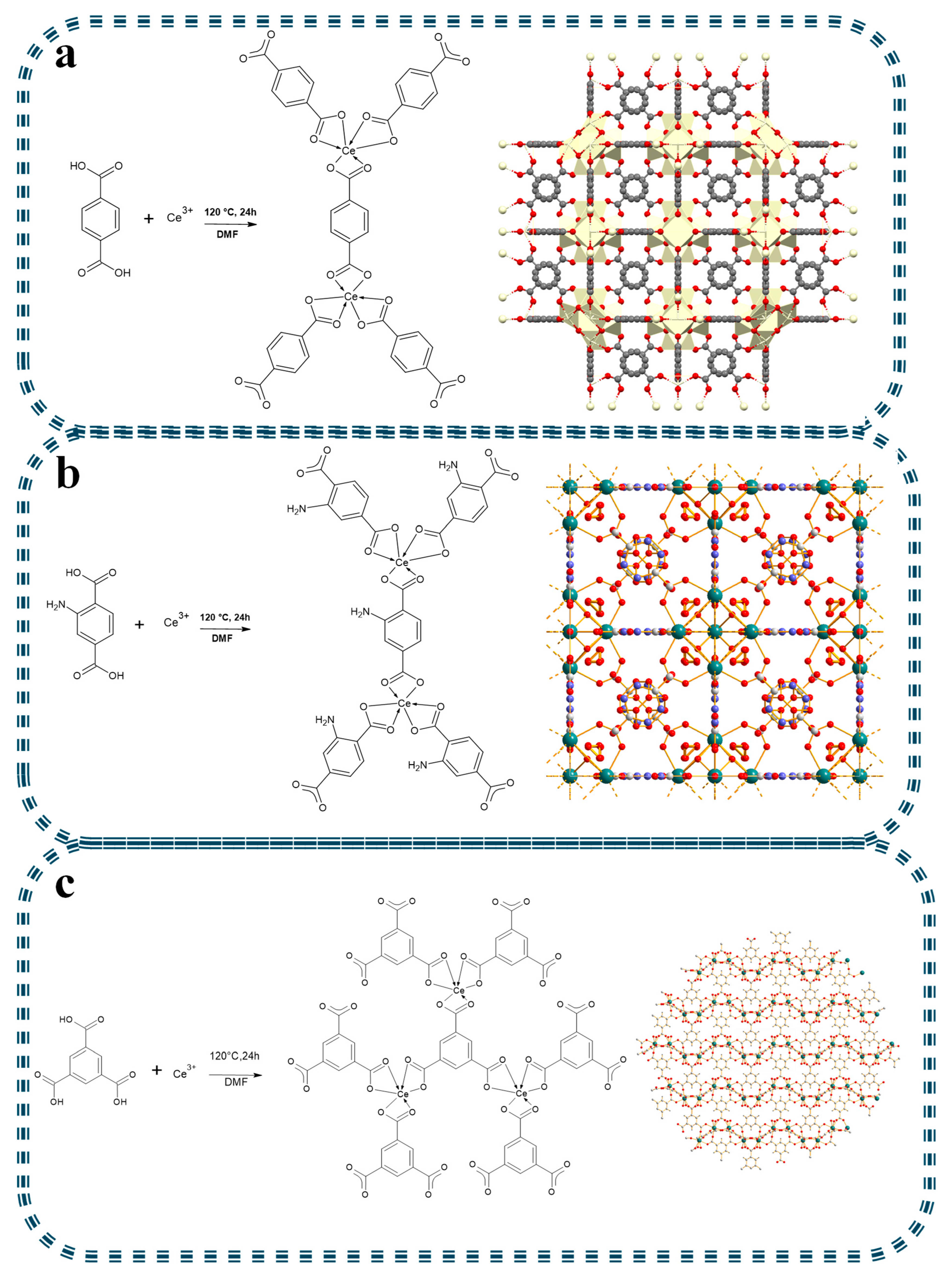
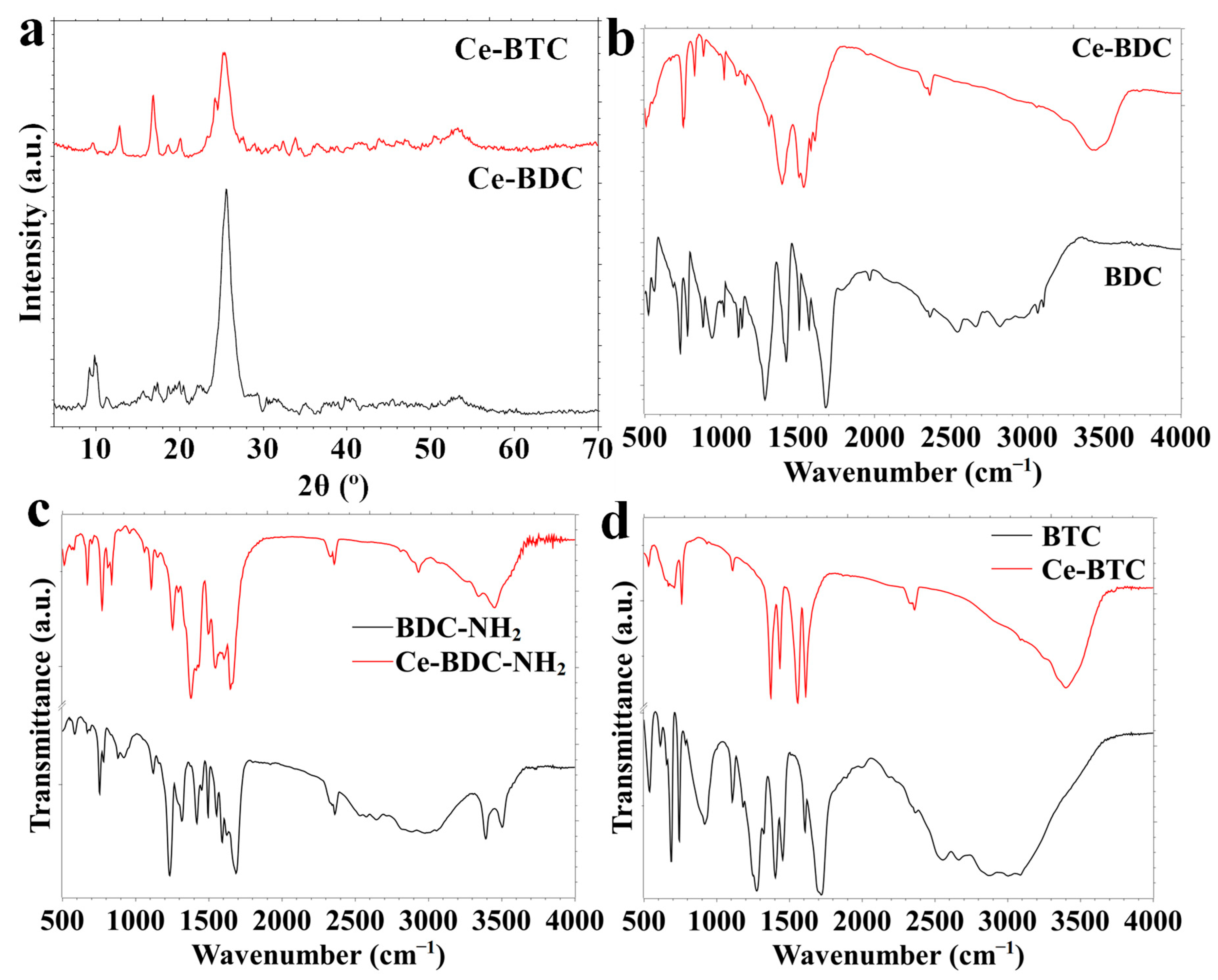
Figure 1 illustrates the solvothermal synthesis of cerium-based MOFs; e.g., Ce-BDC, Ce-BDC-NH2, and Ce-BTC, all synthesized via a solvothermal method that entails the dissolution of equimolar Ce(NO3)3·6H2O and the respective organic linker (BDC (Figure 1a), amino-BDC (Figure 1b), or BTC (Figure 1c)) in DMF, succeeded by sonication at 80 °C for 30 min to facilitate uniform nucleation and optimal metal–ligand interactions. The mixtures were further heated to 120 °C for 10 h, during which ligand deprotonation enabled the synthesis of Ce-carboxylate frameworks. After cooling, the products were separated by filtration, purified by successive washes to remove unreacted species, and then dried at 70 °C. The visual changes depicted in Figure S1, wherein the initially clear solution transforms into a suspension with a solid precipitate, validating the synthesis of the MOF under these conditions. The materials were characterized using XRD (Figure 2a), FT-IR spectra (Figure 2b–d), DRS spectra (Figure 3a–c), Tauc plots (Figure 3d), and SEM images (Figure 4).
The phase purity and crystal structure were evaluated using XRD (Figure 2a). Structural evidence supports the formation of well-defined crystalline phases: Ce-BDC corresponds to the CCDC entry 1036904 (BUPVIT), crystallizing in the cubic space group Fm-3m (a = 21.4727 Å) [45]. On the other hand, Ce-BTC exhibits distinct XRD reflections, confirming its high crystallinity. The variations in the synthesized materials demonstrate the impact of linker functionality and topology: BDC-NH2 facilitates additional coordination and hydrogen-bonding interactions, whereas BTC enhances framework connectivity. The synthesis procedure illustrated in Figure 1 provides an efficient an d reproducible method for generating crystalline Ce-MOFs, yielding phase-pure materials suitable for subsequent structural and functional assessment.
The connectivity and bonds within the crystal were characterized using FT-IR spectra (Figure 2b–d), for Ce-BDC (Figure 2b), Ce-BDC-NH2 (Figure 2c), and Ce-BTC (Figure 2d), revealing substantial differences between the free organic linkers and their associated coordinated frameworks. The BDC linker exhibits distinctive vibrations at 520, 735, 780, 940, 1280, 1420, and 1680 cm−1, which are associated with aromatic C–H bending, out-of-plane ring vibrations, and asymmetric/symmetric COO stretches. The coordination with Ce3+ results in significant spectral shifts in Ce-BDC, with peaks observed at 500, 750, and 820 cm−1, alongside pronounced carboxylate bands at 1410 and 1535 cm−1, indicating metal–carboxylate coordination; the broad signal at 3440 cm−1 indicates the presence of adsorbed water or hydroxyl groups in the framework (Figure 2b). The amino-functionalized linker BDC-NH2 exhibits supplementary N–H stretching bands at 3390 and 3510 cm−1, in addition to aromatic and carboxylate-related peaks ranging from 580 to 1685 cm−1 (Figure 2c). In Ce-BDC-NH2, coordination-induced shifts are observable, with COO vibrations manifesting at 1380 and 1540 cm−1, while the N–H stretching area merges into a broad band near 3450 cm−1, thereby affirming the integration of the amino functionality within the Ce-MOF structure (Figure 2c). BTC displays distinct peaks at 540–1715 cm−1 linked to aromatic modes and carboxylate stretching, and a C–H stretching feature at 3010 cm−1 (Figure 2d). Upon metal coordination, Ce-BTC exhibits shifts and broadening, notably the extension of the 685 cm−1 band, with carboxylate vibrations at 1370, 1430, and 1555 cm−1, as well as an O–H/N–H-related broad band around 3400 cm−1, all suggestive of Ce-carboxylate bonding and framework formation (Figure 2d). The FT-IR analysis proves the coordination of all linkers to cerium and substantiates the formation of the MOF structures.
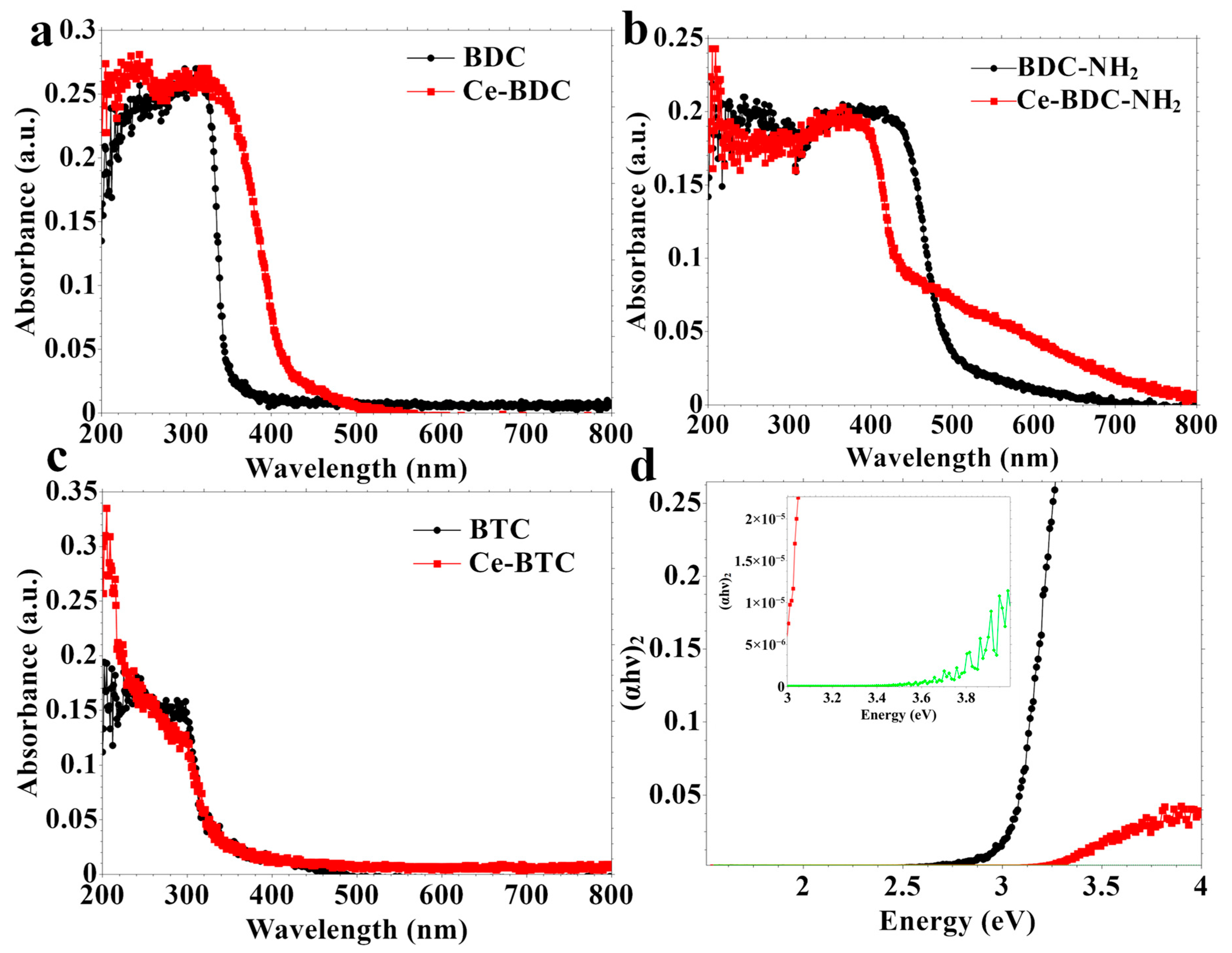
Optical properties of the materials were characterized using DRS (Figure 3a–c) and Tauc plots (Figure 3d). The free BDC linker has an absorption spectrum spanning 200–340 nm, whereas its cerium-coordinated counterpart, Ce-BDC, exhibits a markedly broader absorption range of 200–500 nm, indicative of ligand-to-metal charge-transfer (LMCT) interactions (Figure 3a). BDC-NH2 has an absorption spectrum in the wavelength range of 200–508 nm, resulting from π–π* and n–π* transitions linked to the amino-functionalized aromatic ring (Figure 3b). After coordination with cerium, Ce-BDC-NH2 exhibits a broad absorption band from 200 to 430 nm, accompanied by a notable shoulder between 450 and 800 nm, indicative of additional electronic transitions arising from the -NH2 groups and their interactions with cerium centers (Figure 3b). Conversely, both BTC and Ce-BTC exhibit similar absorption characteristics, with significant absorbance between 200 and 330 nm, suggesting negligible linker-induced changes upon metal coordination. The Tauc plot analysis was investigated to determine the optical band gaps of the materials, yielding values of around 3.0 eV for Ce-BDC, 2.9 eV for Ce-BDC-NH2, and 3.6 eV for Ce-BTC (Figure 3d). The results validate that linker functionalization and metal–linker electrical interactions substantially affect the optical response of Ce-MOFs, especially in amino-modified frameworks.
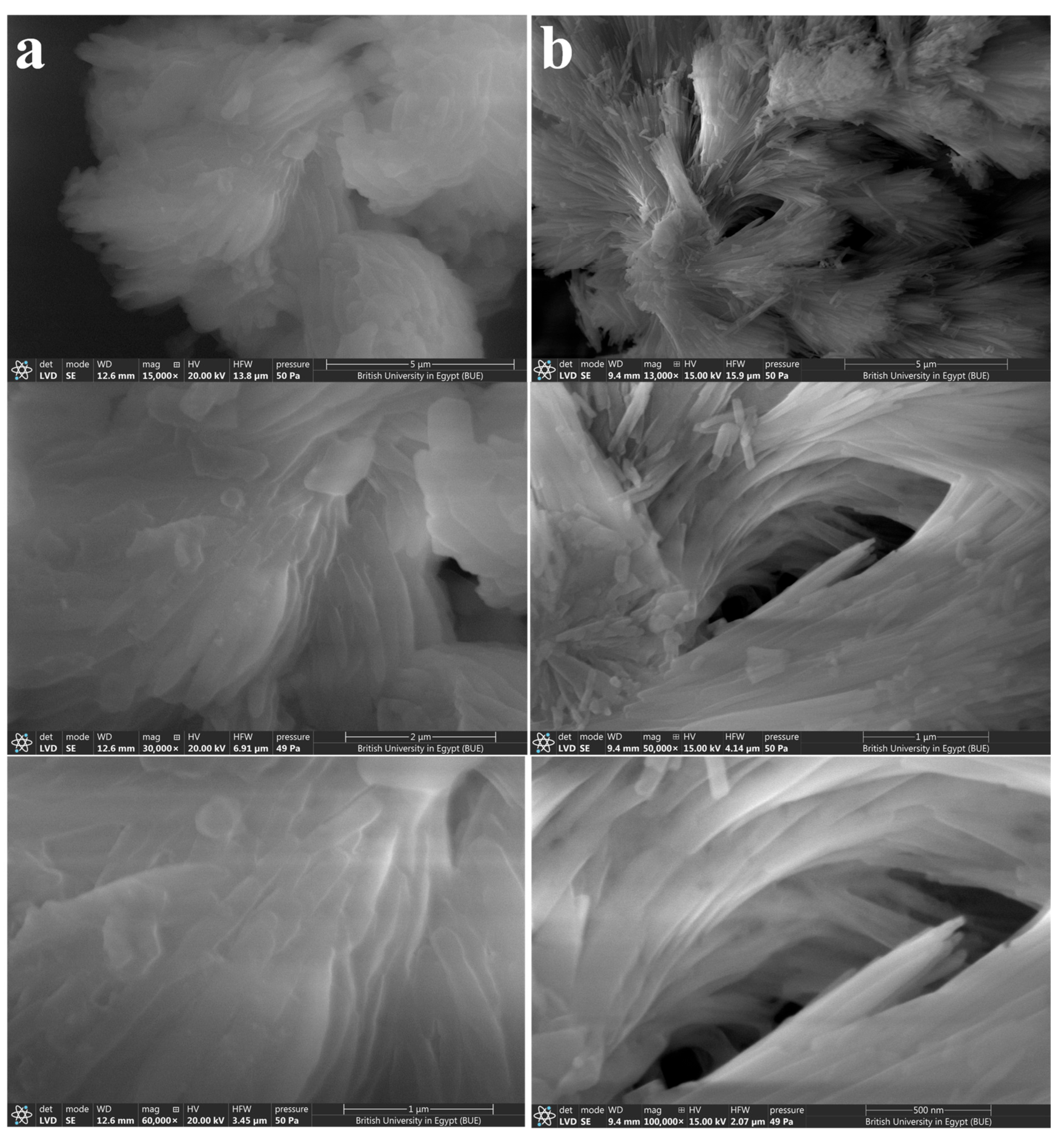
Figure 4 displays SEM images of the synthesized Ce-BDC-NH2 and Ce-BTC MOFs at various magnifications, elucidating their morphological characteristics and crystal development patterns. Both materials exhibit similar overall morphologies, consisting primarily of rod-like or elongated prismatic crystals, suggesting that cerium coordination facilitates anisotropic crystal growth irrespective of the linker employed. Significant variations in rod diameters indicate the impact of linker structure and functional groups on nucleation and growth kinetics. The Ce-BDC-NH2 MOF exhibits rod-shaped crystals with widths of roughly 100–200 nm and lengths reaching the micrometer scale (Figure 4a). The thicker crystals indicate enhanced lateral growth, perhaps aided by the presence of –NH2 groups on the BDC linker. Amino groups can augment coordination, hydrogen-bonding, and intermolecular packing, thereby stabilizing broader crystal facets and facilitating the formation of more substantial rods. Conversely, Ce-BTC exhibits thinner, rod-like crystals measuring 50–100 nm in width (Figure 4b). The BTC linker, with three carboxylate groups in a trigonal configuration, facilitates stronger directional coordination while providing less lateral stabilization than the amino-functionalized BDC linker. Consequently, Ce-BTC crystals exhibit constrained lateral growth, resulting in elongated rods with high aspect ratios. The consistency of these thinner crystals indicates regulated nucleation and development throughout the solvothermal process. The SEM images reveal that whereas Ce-BDC-NH2 and Ce-BTC exhibit analogous rod-like morphologies, the variations in rod thickness highlight the crucial influence of linker structure and functional groups on crystal shape and size distribution in cerium-based MOFs (Figure 4).

2.2. Catalytic Hydroxylation over Cerium-Based MOFs

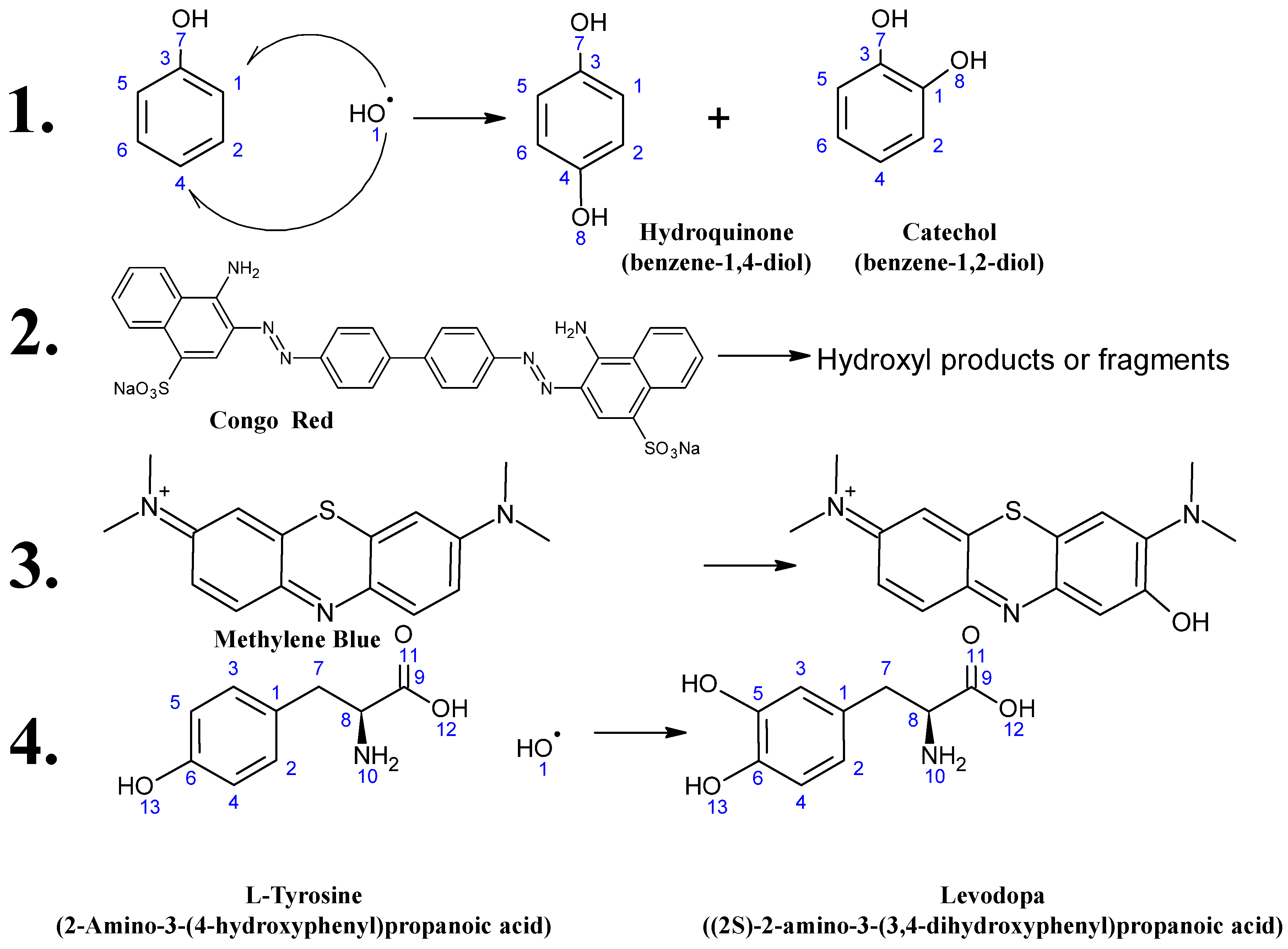
The catalytic performance of Ce-based MOFs was evaluated using four different substrates: phenol, dyes (CR and MB), and L-tyrosine (Figure 5). The first three compounds are considered water pollutants. Figure 5 depicts the catalytic efficacy of the synthesized Ce-based MOFs for four representative substrates, highlighting the versatility and extensive applicability of these materials in environmental and chemical transformation processes. The catalytic hydroxylation of three compounds (phenol, CR, and MB) provides considerable environmental and health hazards owing to their toxicity, persistence, and resistance to natural degradation. Consequently, their elimination or conversion via effective catalytic processes is promising for wastewater treatment applications. Phenol, a priority pollutant, is extensively generated in the petrochemical, pharmaceutical, resin, and dye sectors. The catalytic process generally produces dihydroxy benzene isomers, namely catechol (1,2-dihydroxybenzene) and hydroquinone (1,4-dihydroxybenzene) (Figure 5). The generation of these value-added compounds illustrates both the pollutant-degrading capacity of the MOFs and their use in selective oxidation reactions pertinent to fine chemical synthesis. The catalytic breakdown of CR and MB dyes underscores the environmental significance of Ce-based MOFs. The textile and plastic industries frequently discharge both dyes, and their persistence in aquatic environments obstructs light penetration and disturbs aquatic ecosystems. Hydroxylation or degradation of these organic molecules may help mitigate their toxicity or environmental concerns.
The Ce-based MOFs were evaluated using L-tyrosine, an amino acid substrate, to investigate their broader chemical reactivity and potential biocatalytic applications. The catalytic conversion of L-tyrosine serves as a model reaction for the synthesis of the valuable pharmaceutical compound, i.e., levodopa. The resultant products demonstrate that Ce-MOFs can facilitate oxidative transformations beyond pollutant elimination, so broadening their applicability to biochemical catalysis and perhaps the manufacture of medicinal intermediates. The catalytic performance illustrated in Figure 5 exemplifies the multifunctionality of Ce-based MOFs. The conversion of different substrates was evaluated using a UV-Vis spectrophotometer and HPLC for phenol (Figure 6, Figure 7 and Figure S2), dyes (Figure 8, Figure 9 and Figure S3), and L-tyrosine (Figure S4).
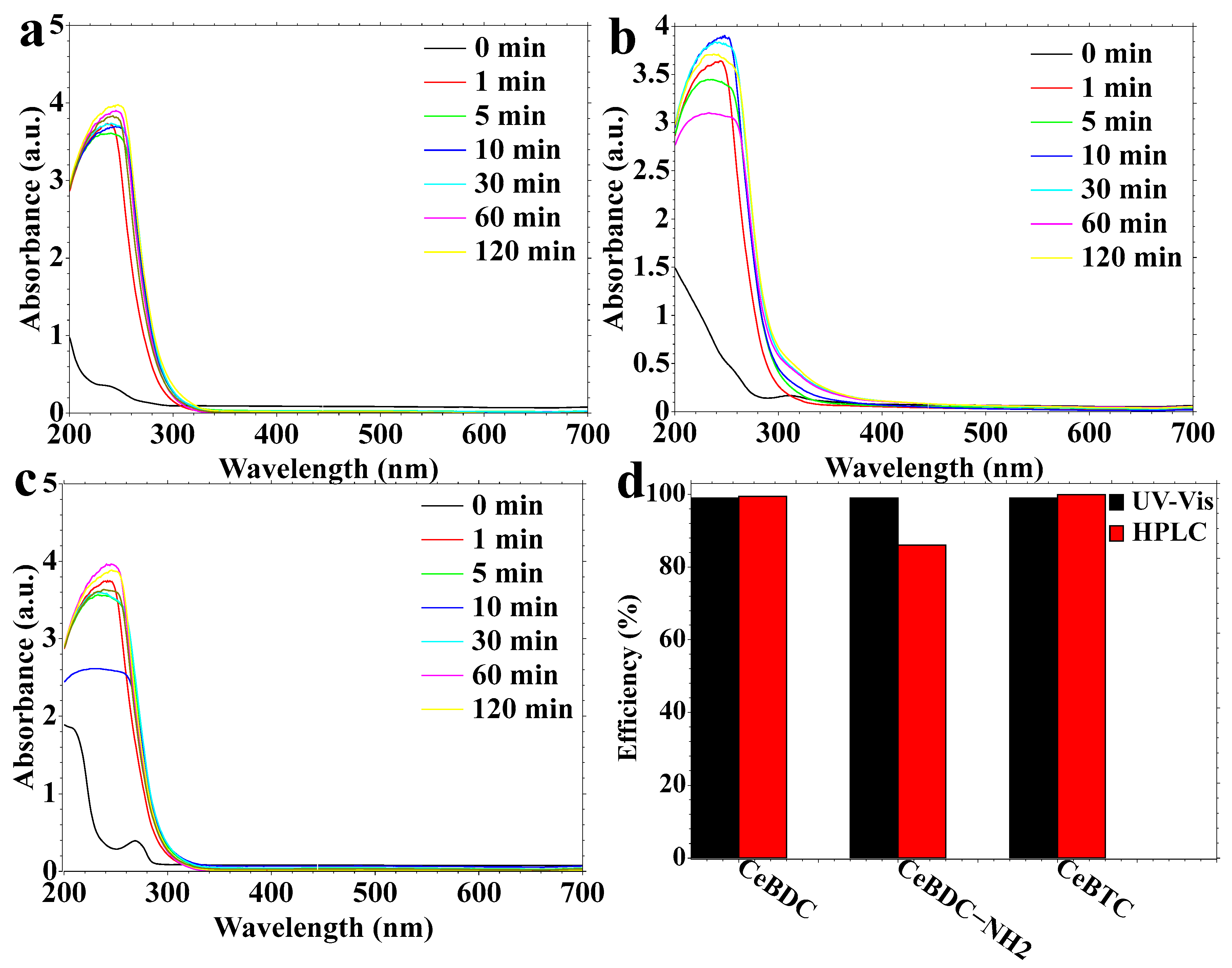
The kinetic evaluation of phenol hydroxylation on Ce-based MOFs was performed using UV-Vis spectra (Figure 6). The UV–Vis spectra of phenol exhibit absorption features indicative of variations in its electronic configuration and benzene-ring substitution patterns. Phenol exhibits two primary absorption regions: a prominent band in the 200–210 nm range, indicative of the π→π* transition of the aromatic ring, and a less intense band near 270–275 nm, resulting from the n→π* transition linked to the non-bonding electrons on the hydroxyl oxygen (Figure 6a–c). The last band is indicative of phenolic substances and serves as a valuable analytical wavelength for measuring phenol in solution. Upon catalytic hydroxylation, the UV-Vis spectrum of phenol disappears, and a broad absorption band appears. Spectra show red-shifted absorption peaks attributable to additional hydroxyl groups formed after the reaction, thereby enhancing electron donation to the aromatic system (Figure 6a–c). The new compounds exhibit a π→π* transition in the range of 230–240 nm, generally more intense than that of phenol, alongside a more prominent n→π* band in the 285–290 nm region (Figure 6a–c). The redshift and increased intensity of these bands result from the increased conjugation and resonance stabilization afforded by the two –OH groups, which lower the energy of the electronic transitions. Phenol has simpler absorption characteristics, while hydroxylated compounds, e.g., hydroquinone (HQ, or 1,4-dihydroxy benzene) or catechol, display more intense, slightly red-shifted bands attributable to enhanced conjugation and high electron density on the aromatic ring. Based on the spectral changes, the phenol undergoes complete conversion, indicating the high catalytic performance of Ce-based MOFs (Figure 6d). Additional verification of the reaction products was achieved via HPLC analysis, which yielded definitive chromatographic proof of phenol transformation (Figure 7).
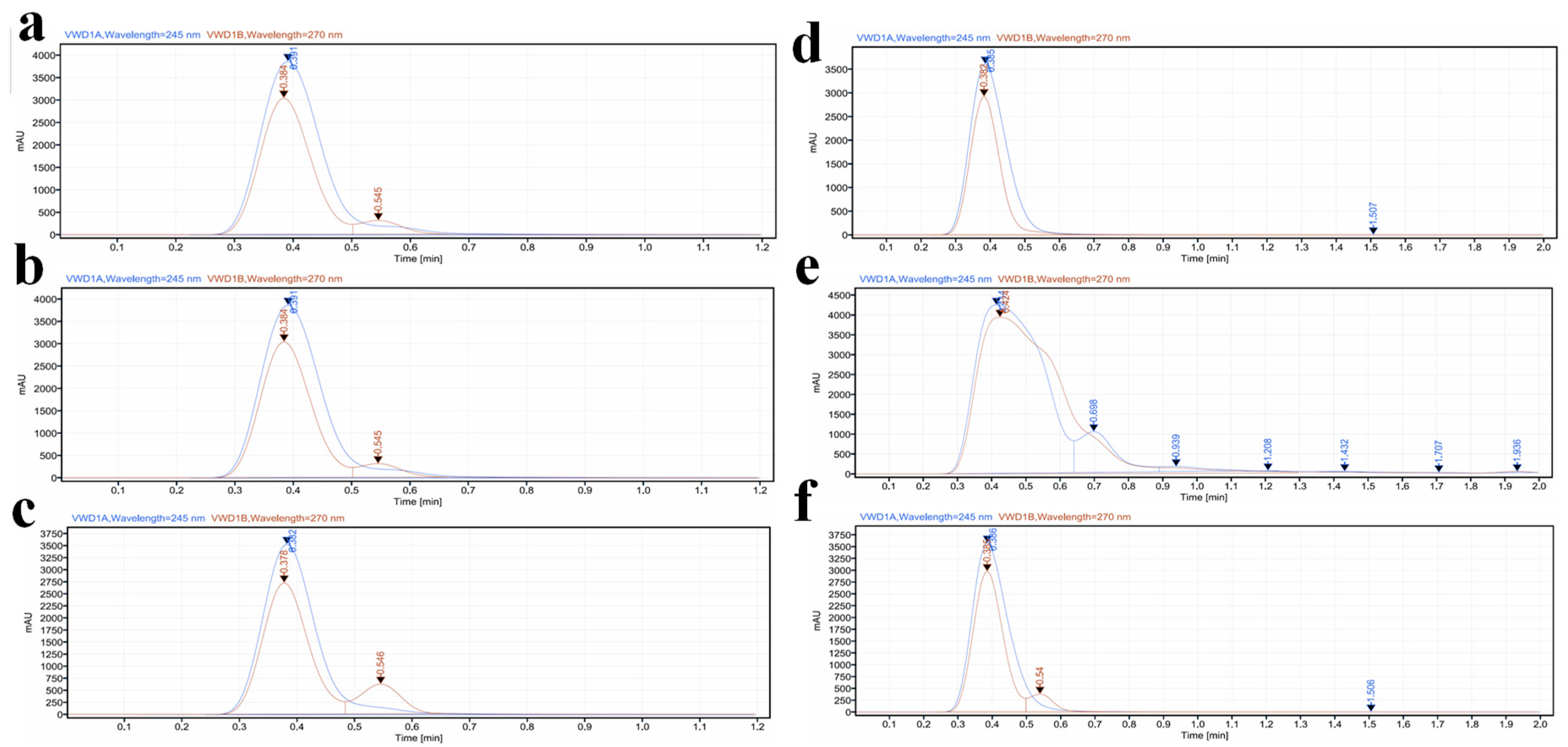
The HPLC chromatograms showed no phenol signal, indicating complete substrate consumption under catalytic conditions. A predominant product peak was observed at the retention time corresponding to 1,4-dihydroxybenzene (hydroquinone, HQ). A spiking experiment was conducted by adding a known HQ standard to the sample to verify the product’s authenticity. The standard and product peaks coincided precisely, with no additional peaks or shifts in retention time, confirming that the reaction selectively yielded HQ with high purity (Figure 7). This chromatographic validation corroborates the UV–Vis findings and illustrates that the Ce-based MOF catalyst effectively hydroxylates phenol, producing 1,4-dihydroxybenzene as the exclusive detectable product. Based on quantitative UV-Vis spectroscopy and HPLC analyses, the hydroxylation efficiency for phenol is 86–99% (Figure 6d).
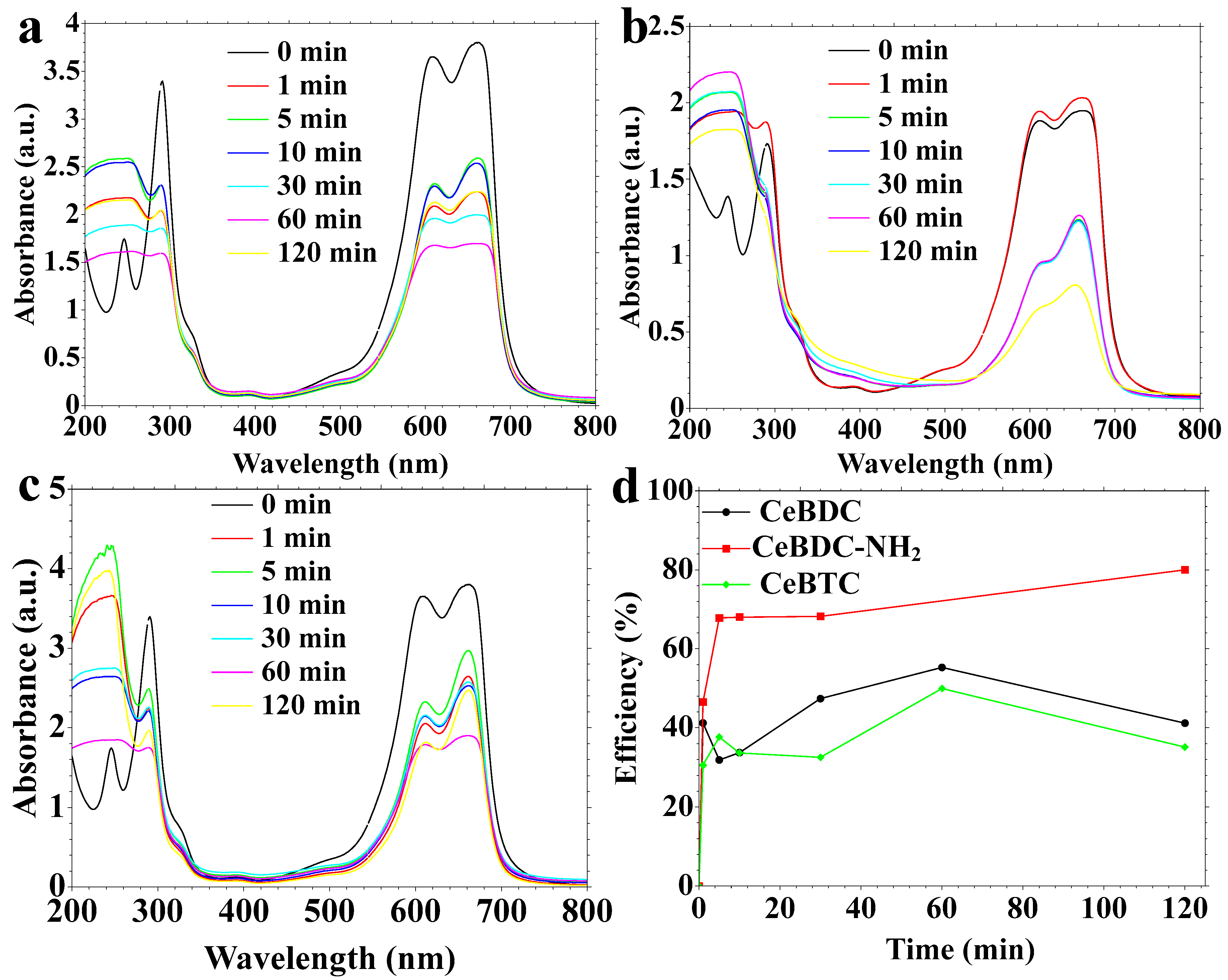
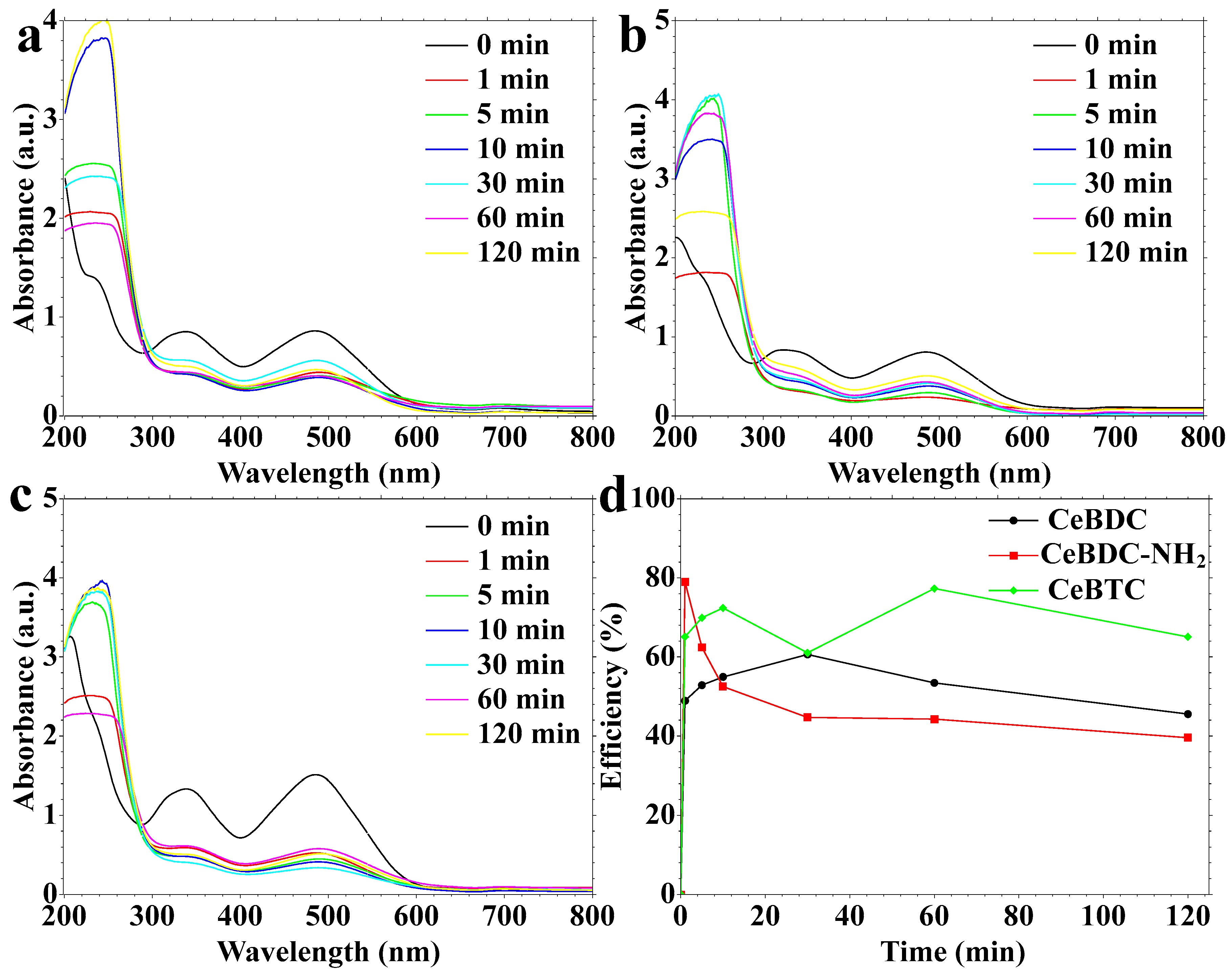
The catalytic hydroxylation of organic dyes was investigated for MB (Figure 8) and CR (Figure 9) using the three cerium-based MOFs: Ce-BDC, Ce-BDC-NH2, and Ce-BTC (Figure 8a–c and Figure 9a–c). The UV–Vis spectra monitor the degradation of each dye by observing changes in their characteristic absorption bands, while Figure 8d and Figure 9d summarize the respective catalytic efficiencies. The significant absorption peak of MB at approximately 660 nm decreases progressively throughout the reaction, indicating dye degradation through hydroxylation and oxidative mechanisms. Ce-BDC demonstrates a mild decrease in absorbance, while Ce-BDC-NH2 displays the most accelerated degradation, owing to its superior electron-transfer efficiency and advantageous interaction with the cationic MB molecules. Ce-BTC also facilitates MB deterioration, but at a relatively reduced pace. The efficiencies depicted in Figure 8d illustrate that Ce-BDC, Ce-BDC-NH2, and Ce-BTC attain MB removal efficiencies of 42%, 80%, and 35%, respectively. The enhanced performance of Ce-BDC-NH2 is likely due to amine functionalization, which facilitates charge separation and promotes the efficient production of hydroxyl radicals. The central absorption peak of CR at around 485 nm decreases over time, signifying the degradation of the azo dye structure. Ce-BDC and Ce-BDC-NH2 both promote CR degradation; however, Ce-BTC has significantly greater efficacy towards this anionic dye. These variations are associated with the structural and electrical properties of the BTC ligand, which may enhance the adsorption and activation of CR. Figure 9d indicates that the CR removal efficiencies are 45%, 39%, and 65% for Ce-BDC, Ce-BDC-NH2, and Ce-BTC, respectively. The exceptional efficacy of Ce-BTC in this instance underscores the importance of ligand types or functional groups in catalyzing the reduction of complex azo dyes. The UV–Vis analyses, along with efficiency data, indicate that all three Ce-MOFs function as active catalysts, with selectivity varying according to the dye structure. Ce-BDC-NH2 demonstrates superior efficacy for MB, while Ce-BTC is optimal for CR degradation, highlighting the significance of linker functionalization and framework topology in customizing catalytic performance.
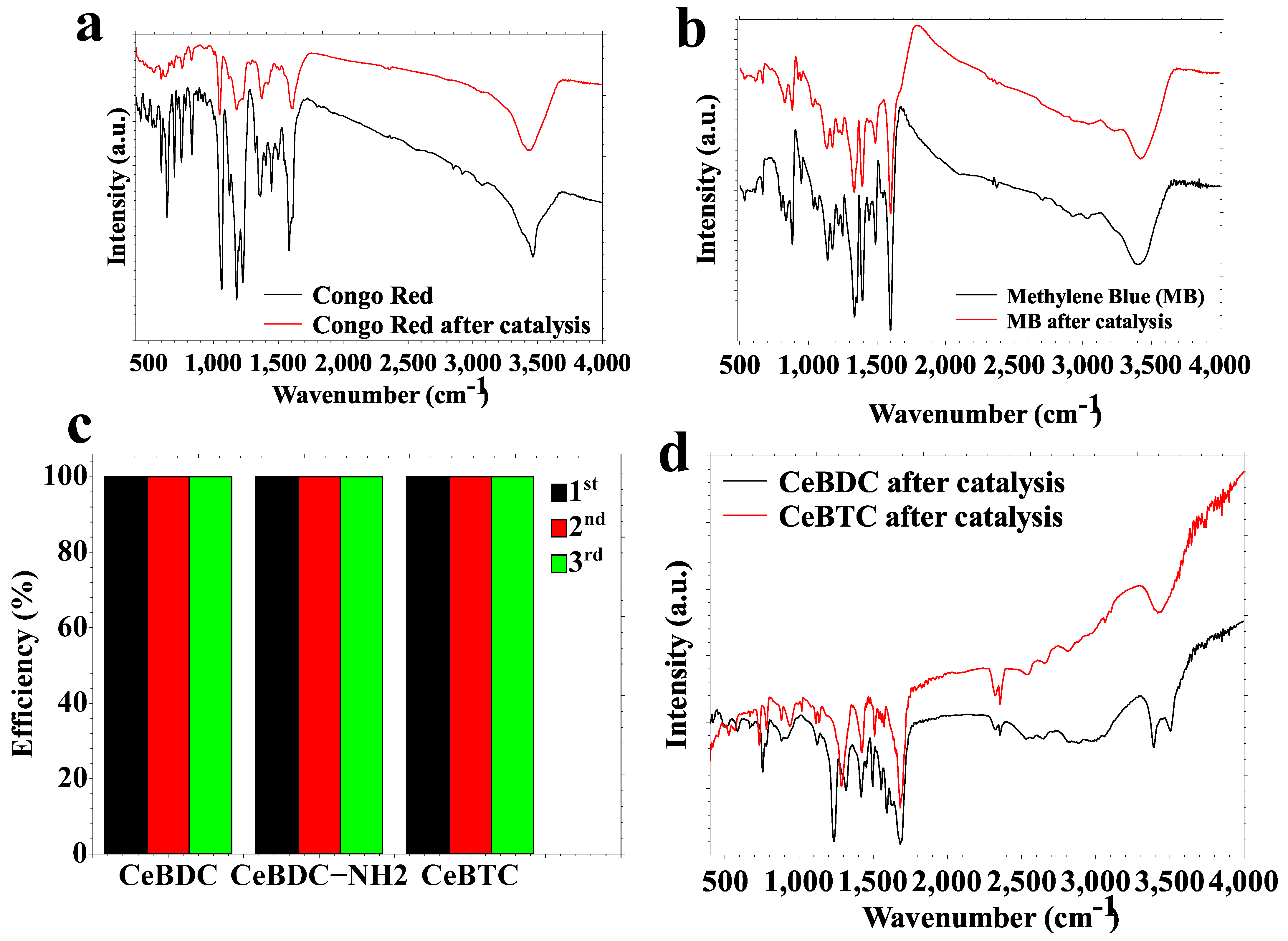
The hydroxylation reaction of organic dyes can be evaluated by the naked eye, as shown in Figure S3. Further analysis was conducted using FT-IR spectra for organic dyes after reaction (Figure 10a,b). The FT-IR spectra of the dyes after post-catalytic hydroxylation corroborates the presence of structural changes during the process. The post-reaction spectra of MB retain the primary characteristic bands of the original dye; however, new absorption features appear at approximately 799 cm−1 and 1430 cm−1, indicative of the formation of hydroxylated aromatic products with a ring-substitution pattern. The supplementary vibrational bands signify the incorporation of hydroxyl groups and partial ring rearrangement throughout the catalytic phase. The FT-IR spectra of CR post-catalysis exhibits the same distinctive bands as the original dye, albeit with decreased intensities and evident band broadening and crowding. The reduction in peak strength indicates the deterioration or modification of the azo chromophore and aromatic components, whilst the spectrum congestion implies the generation of several oxygenated byproducts with overlapping vibrational modes. The FT-IR observations collectively indicate that both dyes undergo chemical changes rather than mere physical adsorption, consistent with catalytic hydroxylation and partial oxidative degradation promoted by the Ce-based MOFs. Several observations also supported the chemical changes. The color changes in the dye were observed, as shown in Figure S3, indicating chemical structural changes. The third observation is supported by changes in the UV-Vis region of the spectra (Figure 8 and Figure 9).
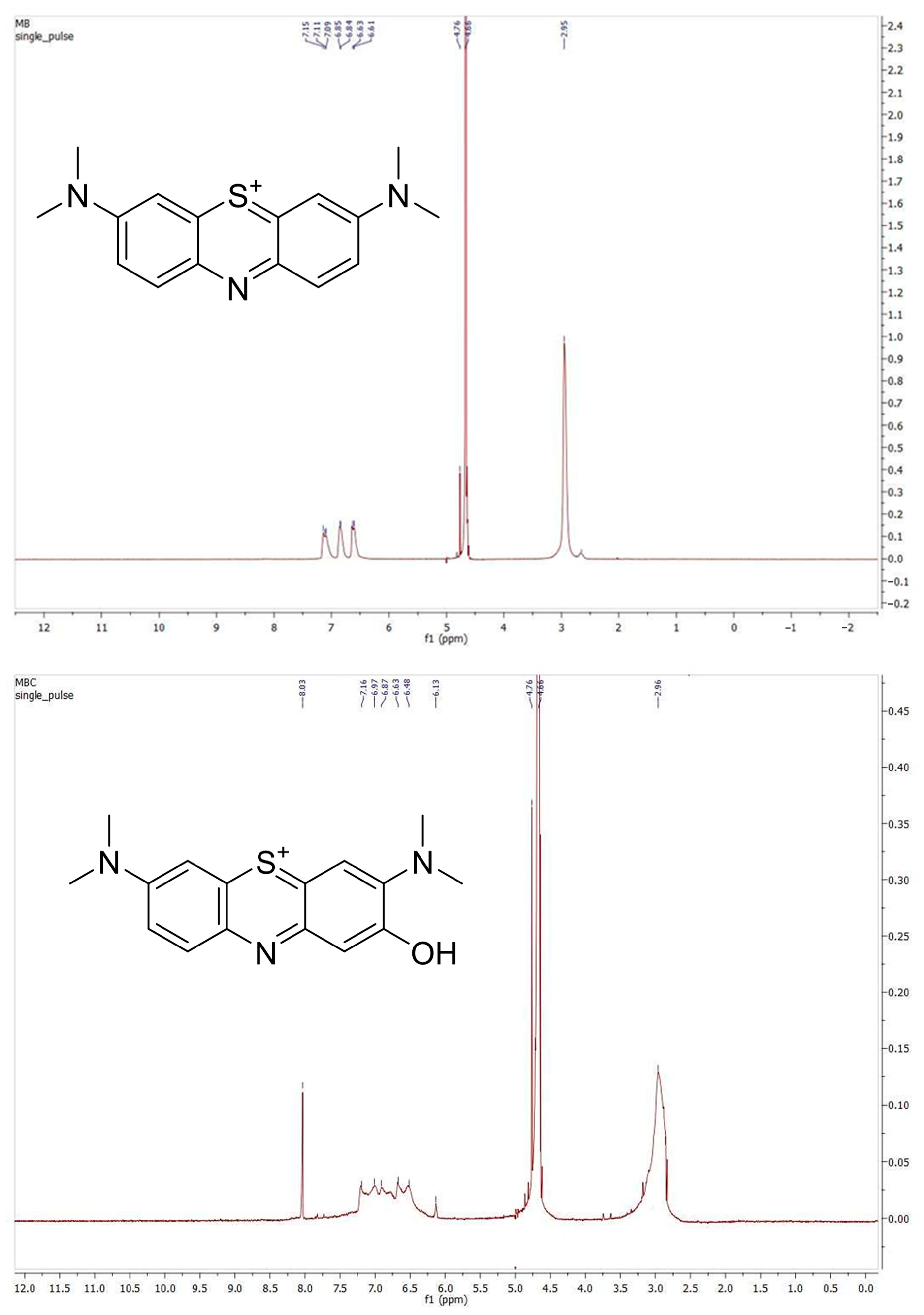
The material can be recycled for phenol hydroxylation without a significant decrease in its performance. This observation indicates that the materials can be recycled (Figure 10c). Finally, the MOF catalyst retains its structure after the reaction, indicating no change in the framework and opening the door to recycling (Figure 10d). The proton NMR spectra of the organic dye MB were obtained before and after the reaction, as illustrated in Figure 11. A thorough analysis of the aromatic region (chemical shifts > 6 ppm) indicates the emergence of additional resonance peak’s post-reaction, attributable to hydroxylated products generated during the oxidative process. Before catalysis, 1H NMR shows peaks at chemical shifts (δ) of 2.95 (s, 12H, 2N(CH3)2), 4.64–7.15 (m, 6H, olefinic and Ar Hs). After catalysis, 1H NMR spectrum shows peaks at 2.96 (s, 12H, 2N(CH3)2), 4.66–7.16 (m, 5H, olefinic and Ar Hs), 8.03 (s, 1H, OH). Notwithstanding these alterations, the principal proton signals of the parent dye structures remain detectable, signifying that the core aromatic framework is predominantly retained. Comprehensive spectral analysis indicates that the reaction primarily proceeds via oxidative addition, perhaps involving the hydroxylation of aromatic rings rather than complete structural disintegration.

2.3. Mechanism of Catalytic Hydroxylation

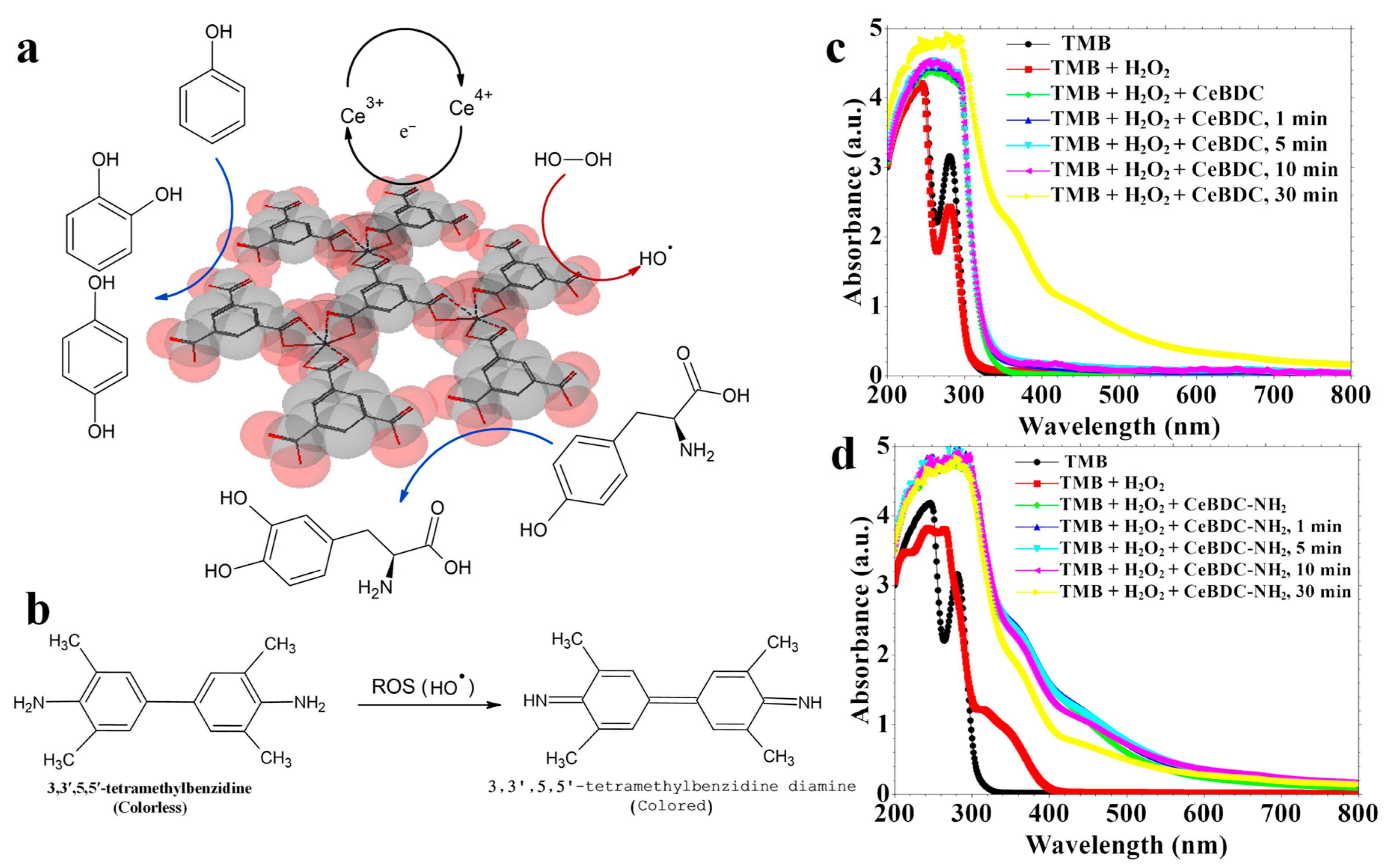
The mechanism of catalytic hydroxylation is shown in Figure 12a. It was supported by several experiments, including enzymatic measurement using TMB as a probe (Figure 12b–d and Figure S5). The capacity of Ce-MOFs to activate oxidants is intricately linked to the Ce3+/Ce4+ redox cycle, which provides active sites capable of generating radicals and activating substrates. This observation can be supported by the enzymatic oxidation of TMB (Figure 12b) using different catalysts, i.e., Ce-BDC (Figure 12c), Ce-BDC-NH2 (Figure 12c), and Ce-BTC (Figure S5). Color changes in Ce-based MOFs can also support the redox properties, except for Ce-BTC (Figure S6). The color of Ce-based MOFs (white materials) tuned to yellow after interaction with H2O2 (Figure S6). The published articles can also support these observations. The generation of hydroxyl radicals was also observed in several studies for Ce-MOF/CeO2 [46], UiO-66(Ce) [47], and Ce-4,4′,4″-nitrilotribenzoate MOF [33]. Abdelhamid et al. also reported the enzymatic catalytic properties of Ce-based MOFs [48]. They noted that a Ce-based MOF exhibited catalase and peroxidase activity, enabling the creation and decomposition of H2O2 [48]. These observations support the catalytic performance of Ce-based MOFs.
Table 1 shows that Ce-based MOFs have been extensively used for dye removal via membrane rejection, adsorption, photocatalysis, and advanced oxidation processes [7,26,33,49,50,51,52]. The integration of Ce-UiO-66 into a polysulfone (PSf) matrix enhanced membrane hydrophilicity and surface charge, resulting in an increased pure water flux of 39.21 L m−2 h−1 and high rejection efficiencies of approximately 98% for methylene blue (MB) and alcian blue (AB), and around 99% for Eriochrome Black T (EBT), facilitating size-selective separation of diverse dyes irrespective of charge interactions [26]. A negatively charged Ce-MOF synthesized from H3L (2,4,6-tris(4-carboxyphenyl)-1,3,5-triazine) exhibited selective adsorption of cationic dyes, including MB, crystal violet (CV), and rhodamine B (RhB) [26]. A different Ce-UiO-66 adsorbent demonstrated swift elimination (98% in 10 min) of TB dye, exhibiting a maximum adsorption capacity of 469.5 mg/g, sustained efficacy in the presence of interfering ions, and preserved 75% efficiency after three regeneration cycles, affirming its practical usefulness [50]. A series of Ce-MOFs synthesized through an environmentally friendly, room-temperature method demonstrated adjustable properties contingent upon solvent exchange; samples treated with ethanol exhibited the highest surface area (843 m2/g), whereas acetone-activated Ce-MOF-4 displayed enhanced adsorption capacities for both CR (270.27 mg/g) and Malachite Green (227.27 mg/g) [52]. This performance is attributed to hydrogen bonding, π–π stacking, coordination, pore filling, and electrostatic interactions, as well as robust structural stability under acidic and neutral conditions [52]. In addition to adsorption, a hydrothermally synthesized Ce-MOF with Ce3+ Lewis acid sites shows Fenton-like catalytic activity for the oxidative degradation of dyes, including RhB, methyl blue (MeB), CR, and direct blue (DB), by the generation of OH radicals, maintaining recyclability during five cycles [33]. Nano-sized Ce-MOFs exhibiting mixed Ce(III)/Ce(IV) oxidation states displayed significant thermal stability (up to 320 °C) and facilitated both electrochemical detection and visible-light photocatalytic destruction of MB [7]. Functionalized Ce-UiO-66-X (X = NH2, OH, H, NO2, COOH) materials demonstrated fast photocatalytic degradation of cationic and anionic dyes under UV and visible light, exhibiting exceptional photostability and recyclability across multiple cycles without loss of crystallinity [52]. The documented synthesis methods avoid the use of potent oxidizing cerium salts, such as cerium (IV) ammonium nitrate (CAN), while achieving similar efficiencies, as illustrated in Table 1.

3. Experimental Section

3.1. Materials and Methods

Cerium nitrate hexahydrate (Ce(NO3)3•6H2O), BDC, BDC-NH2, BTC, and dimethylformamide (DMF) were purchased from Sigma Aldrich (Taufkirchen, Germany). 3,3′,5,5′-Tetramethylbenzidine (TMB, 98%) was bought from Alfa Aesar (Ward Hill, MA, USA). Hydrogen peroxide (30%) was purchased from CARLO ERBA (Cornaredo, Italy). Phenol and 1,4-dihydroxybenzene (hydroquinone) were purchased from PharamChem (New Delhi, India). Stock solutions of the organic substrates, e.g., phenol, CR, MB, and L-tyrosine, were prepared by dissolving each chemical in Milli-Q-filtered water to a final concentration of 1 mg/mL. High-purity Milli-Q water was used to eliminate interfering ions and contaminants, ensuring consistent solubility and reliable analytical performance in all future studies.

3.2. Synthesis of Ce-MOF

Cerium-based MOFs were prepared via solvothermal methods. Equimolar amounts of Ce(NO3)3•6H2O, BDC, BDC-NH2, or BTC were dissolved in DMF (50 mL). The solution was sonicated for 30 min at 80 °C. The reaction vessels were heated at 120 °C for 10 h. After cooling, the materials were separated via filtration. The precipitates were washed several times with DMF, acetone, and acetone (3 × 10 mL). They were dried in an oven at 70 °C.

3.3. Characterization Instruments

XRD patterns were acquired utilizing a Philips 1700 diffractometer (Amsterdam, The Netherlands) with Cu Kα radiation (λ = 1.5418 Å, 30 mA, 40 kV). FT-IR spectra were obtained utilizing a PerkinElmer spectrophotometer (Waltham, MA, USA) within the 4000–400 cm−1 range. SEM images were collected using QUANTA FEG250 (Holland, The Netherlands). DRS spectra were obtained using a Shimadzu spectrophotometer (Nakagyo-ku, Japan). Liquid ultraviolet–visible (UV–Vis) spectra were acquired using the Shimadzu spectrophotometer (Japan).

3.4. Catalytic Hydroxylation

The catalytic hydroxylation of organic substrates such as phenol, CR, MB, or tyrosine was performed in a fixed-bed reactor using a total catalyst mass of approximately 2–5 mg. A feed mixture containing substrates (5 mg/mL) and 5 mL of 30 wt.% H2O2 was added to the reactor. The conversion of organic substrates and the selectivity toward the principal products were calculated as percentages based on the concentration changes between the initial state and the reaction time (t). The concentration changes were evaluated using a UV-Vis spectrophotometer (UV-2600I, SHIMAZU, Nakagyo-ku, Japan).
Liquid phenol samples were periodically collected from the reactor and analyzed using high-performance liquid chromatography (HPLC, Agilent, Santa Clara, CA, USA) equipped with a C18 reversed-phase column (150 × 4.6 mm, 5 µm) operated under isocratic conditions with methanol +0.1% formic acid. Analytes were detected using a diode-array detector at 270 and 245 nm with a flow rate of 1.0 mL·min−1, a temperature of 30 °C, and an injection volume of 10 µL. These optimized conditions enable reliable quantification of phenol and its hydroxylation products, facilitating accurate evaluation of catalytic performance. The analysis was also performed after the addition of a standard of 1,4-dihydroxybenzene (5 µL, 1 µg/mL) to identify the product.
Recyclability was evaluated for phenol hydroxylation. After the first cycle, the cuvette was recharged with dye (100 µL) and H2O2 (100 µL). UV-Vis spectra were recorded for each cycle. The catalysts after recycling were separated via filtration and characterized using FT-IR spectroscopy (IRTracer-100, SHIMAZU, Japan).
The dye molecules after catalytic hydroxylation were analyzed by FT-IR spectroscopy and 1H Nuclear magnetic resonance (1H NMR; JOEL, Akishima, Japan). The dyes after catalysis were collected and filtered to remove the catalysts. Then, the filtrates were crystallized via slow evaporation in air. The dyes were dissolved in deuterated water (D2O) for NMR analysis.
The catalytic mechanisms of Ce-based MOFs were evaluated by measuring reactive oxygen species (ROS) using a TMB probe. Typically, the organic substrates were replaced with a TMB solution (1 mg/mL) containing H2O2. The reaction conditions are like those observed for organic substrates. The color changes were kinetically measured using a UV-Vis spectrophotometer.

4. Conclusions

Ce-BDC, Ce-BDC-NH2, and Ce-BTC, were synthesized and demonstrated distinctive structural, optical, and catalytic features pertinent to environmental remediation. Their rod-shaped nanostructures, verified crystallinity, and tunable band gaps enabled efficient interaction with organic substrates. Ce-based MOFs have shown significant efficacy across many substrates, particularly Ce-BDC-NH2, owing to enhanced light absorption and amine-assisted charge separation. All MOFs demonstrated significant catalytic efficacy in phenol hydroxylation, attaining full conversion (85–99%) to 1,4-dihydroxybenzene, as validated by UV-Vis spectroscopy and HPLC analysis. The post-reaction FT-IR and 1H NMR analyses of the dyes revealed the emergence of hydroxylation-specific vibrational bands and a decrease in the intensities of the original chromophore signals, thereby confirming the validity of the catalytic chemical change. The combined structural, spectroscopic, and catalytic evidence demonstrates that Ce-MOFs function as effective and selective catalysts for the hydroxylation or oxidation of phenols, aromatic dyes, and related pollutants. These findings offer substantial insights into the systematic design of cerium-based MOF catalysts and underscore their promise for practical wastewater treatment applications.

Supplementary Materials

The following supporting information can be downloaded at: https://www.mdpi.com/article/10.3390/catal16030271/s1, Figure S1 reaction vessels (a) before and (b) after reaction. Figure S2 HPLC report for hydroxyquinol standard sample. Figure S3 Camera image for dye solution over time, red for CR and blue for MB. Figure S4 UV-Vis spectra for L-tyrosine over time. Figure S5 UV-Vis spectra for TMB using Ce-BTC. Figure S6 Camera image for (1) CeBDC, (2) CeBDC-H2O2, (3) Ce-BDC-NH2/H2O2, and (4) CeBTC/H2O2.

Author Contributions

Conceptualization, H.N.A.; methodology, H.N.A.; software, H.N.A.; validation, H.N.A. and M.E.S.; formal analysis, H.N.A. and M.A.; investigation, H.N.A. and M.A.; resources, H.N.A. and M.A.; data curation, H.N.A.; writing—original draft preparation, H.N.A.; writing—review and editing, H.N.A. and M.E.S.; visualization, H.N.A. and M.E.S.; supervision, H.N.A. and M.E.S.; project administration, H.N.A. All authors have read and agreed to the published version of the manuscript.

Funding

This research received no external funding.

Data Availability Statement

All data were included in the main text and Supplementary File. Raw data can be sent upon request from the corresponding author.

Conflicts of Interest

The authors declare no conflicts of interest.

References

  1. Zhou, H.-C.; Long, J.R.; Yaghi, O.M. Introduction to Metal–Organic Frameworks. Chem. Rev. 2012, 112, 673–674. [Google Scholar] [CrossRef]
  2. Yaghi, O.M.; Kalmutzki, M.J.; Diercks, C.S. Introduction to Reticular Chemistry; Wiley: Hoboken, NJ, USA, 2019. [Google Scholar] [CrossRef]
  3. Zhou, H.-C.; Kitagawa, S. Metal–Organic Frameworks (MOFs). Chem. Soc. Rev. 2014, 43, 5415–5418. [Google Scholar] [CrossRef]
  4. Kassem, A.A.; Abdelhamid, H.N.; Fouad, D.M.; Ibrahim, S.A. Hydrogenation Reduction of Dyes Using Metal-Organic Framework-Derived CuO@C. Microporous Mesoporous Mater. 2020, 305, 110340. [Google Scholar] [CrossRef]
  5. Nasser Abdelhamid, H.; Sultan, S.; Mathew, A.P. Binder-Free Three-Dimensional (3D) Printing of Cellulose-ZIF8 (CelloZIF-8) for Water Treatment and Carbon Dioxide (CO2) Adsorption. Chem. Eng. J. 2023, 468, 143567. [Google Scholar] [CrossRef]
  6. Abdelhamid, H.N. Dye Encapsulated Hierarchical Porous Zeolitic Imidazolate Frameworks for Carbon Dioxide Adsorption. J. Environ. Chem. Eng. 2020, 8, 104008. [Google Scholar] [CrossRef]
  7. Sangeetha, S.; Krishnamurthy, G. Electrochemical and Photocatalytic Applications of Ce-MOF. Bull. Mater. Sci. 2020, 43, 269. [Google Scholar] [CrossRef]
  8. Abdelhamid, H.N.; Wilk-Kozubek, M.; El-Zohry, A.M.; Bermejo Gómez, A.; Valiente, A.; Martín-Matute, B.; Mudring, A.-V.; Zou, X. Luminescence Properties of a Family of Lanthanide Metal-Organic Frameworks. Microporous Mesoporous Mater. 2019, 279, 400–406. [Google Scholar] [CrossRef]
  9. Huang, H.; Chen, Y.; Chen, Z.; Chen, J.; Hu, Y.; Zhu, J.-J. Electrochemical Sensor Based on Ce-MOF/Carbon Nanotube Composite for the Simultaneous Discrimination of Hydroquinone and Catechol. J. Hazard. Mater. 2021, 416, 125895. [Google Scholar] [CrossRef] [PubMed]
  10. Li, S.; Chai, H.; Zhang, L.; Xu, Y.; Jiao, Y.; Chen, J. Constructing Oxygen Vacancy-Rich MXene @Ce-MOF Composites for Enhanced Energy Storage and Conversion. J. Colloid Interface Sci. 2023, 642, 235–245. [Google Scholar] [CrossRef] [PubMed]
  11. Liu, P.; Jing, P.; Xu, X.; Liu, B.; Zhang, J. Structural Reconstruction of Ce-MOF with Active Sites for Efficient Electrocatalytic N2 Reduction. ACS Appl. Energy Mater. 2021, 4, 12128–12136. [Google Scholar] [CrossRef]
  12. Cheng, Y.; Xiao, X.; Guo, X.; Yao, H.; Pang, H. Synthesis of “Quasi-Ce-MOF” Electrocatalysts for Enhanced Urea Oxidation Reaction Performance. ACS Sustain. Chem. Eng. 2020, 8, 8675–8680. [Google Scholar] [CrossRef]
  13. Karmakar, S.; Barman, S.; Rahimi, F.A.; Biswas, S.; Nath, S.; Maji, T.K. Developing Post-Modified Ce-MOF as a Photocatalyst: A Detail Mechanistic Insight into CO2 Reduction toward Selective C2 Product Formation. Energy Environ. Sci. 2023, 16, 2187–2198. [Google Scholar] [CrossRef]
  14. Hu, T.; Feng, P.; Chu, H.; Wang, X.; Liu, F.; Zhou, W. Regulation of the Built-In Electric Fields of MIL-125(Ti)@Ti-Ce-MOF Yolk-Shell Z-Scheme Heterojunctions via Ligand Defects Toward Optimized Photocatalytic Performances. Adv. Funct. Mater. 2025, 35, 2416556. [Google Scholar] [CrossRef]
  15. Ye, M.; Su, T.; Li, J.; Chen, X.; Ying, D.; Wu, S.; Wang, Z.; Duan, N. Multifunctional Ce-MOF@PdNPs with Colorimetric Fluorescent Electrochemical Activity for Ultrasensitive and Accurate Detection of Diethylstilbestrol. Nano Res. 2024, 17, 9990–9998. [Google Scholar] [CrossRef]
  16. Bi, X.; Song, K.; Li, Q.; Lin, T.; Pan, Y.-T.; Wang, W.; He, J.; Yang, R. Restriction of Ce-MOF Growth within ZSM Zeolite for Robust Three-Proofing Thermoplastic Polyurethane. J. Mater. Chem. A 2024, 12, 32030–32044. [Google Scholar] [CrossRef]
  17. Yu, X.; Sun, P.; Jia, P.; Wang, W.; Dai, K.; Wang, B.; Song, L. Unlocking Epoxy Thermal Management Capability via Hierarchical Ce-MOF@MoS2 Hybrid Constructed by in-Situ Growth Method. J. Colloid Interface Sci. 2025, 678, 959–967. [Google Scholar] [CrossRef] [PubMed]
  18. Baweja, R.; Verma, M.; Gautam, S.; Upreti, S.; Goyal, N. Enhanced Electrochemical Performance of Ce-MOF/h-CeO2 Composites for High-Capacitance Energy Storage Applications. RSC Adv. 2024, 14, 17855–17865. [Google Scholar] [CrossRef]
  19. Hassan, H.M.A.; Alruwaili, H.A.; Alhumaimess, M.S.; Alanazi, A.H.; El-Aassar, M.R.; Alshammari, M.S.; Hussein, M.F.; Alsohaimi, I.H. Sustainable Nitrophenol Reduction Using Ce-Mof-808-Supported Bimetallic Nanoparticles Optimized by Response Surface Methodology. Environ. Res. 2025, 264, 120340. [Google Scholar] [CrossRef] [PubMed]
  20. Khosroshahi, N.; Ardakan, N.G.; Azaddehghan, P.; Safarifard, V. Synergy in Action: MOF-Derived CoFeO3/Ce-MOF Nanocomposites as Piezo-Photocatalysts for Sustainable Chromium Reduction and Nitrogen Fixation. J. Environ. Chem. Eng. 2024, 12, 114277. [Google Scholar] [CrossRef]
  21. Ren, J.; Ma, Q.; Sun, X.; Wang, S.; Liu, G.; Yang, H. Interface-Engineering Enhanced Photocatalytic Conversion of CO2 into Solar Fuels over S-Type Co-Bi2WO6@Ce-MOF Heterostructured Photocatalysts. J. Colloid Interface Sci. 2025, 691, 137452. [Google Scholar] [CrossRef]
  22. Zhao, J.; Du, W.; Su, D.; He, X.; Bai, X. Morphology and Chemical State Tuning of Ce-MOF with Enhanced Haloperoxidase-like Activity for Antibacterial and Antifouling Performances. Mater. Today Chem. 2025, 45, 102630. [Google Scholar] [CrossRef]
  23. Liu, S.; He, Y.; Zhang, W.; Fu, T.; Wang, L.; Zhang, Y.; Xu, Y.; Sun, H.; Zhao, H. Self-Cascade Ce-MOF-818 Nanozyme for Sequential Hydrolysis and Oxidation. Small 2024, 20, e2306522. [Google Scholar] [CrossRef]
  24. Zhang, S.; Han, D.; Wang, Z.; Gu, F. Bi-Doped and Bi Nanoparticles Loaded CeO2 Derived from Ce-MOF for Photocatalytic Degradation of Formaldehyde Gas and Tetracycline Hydrochloride. Small 2024, 20, e2309656. [Google Scholar] [CrossRef]
  25. Khan, S.S.; Steffy, J.P.; Syed, A.; Elgorban, A.M.; Abid, I.; Wong, L.S. Strategies to Harmonize Two-Dimensional Ce-MOF as Self-Template Interfacial Ensemble-Induced Catalysis towards the Degradation of Organic Pollutants. Colloids Surfaces A Physicochem. Eng. Asp. 2025, 712, 136423. [Google Scholar] [CrossRef]
  26. Sun, Y.-X.; Liu, L.-P.; Luo, A.-P.; Li, Q.-S.; Sun, Y.; Deng, Z.-P.; Sun, W.-H.; Guo, G. Anionically Engineered Ce-MOF for Ultra-Selective Capture and Separation of Cationic Dyes: Mechanistic Insights and Environmental Remediation Potential Using Methylene Blue as a Paradigm. Mater. Today Commun. 2025, 48, 113516. [Google Scholar] [CrossRef]
  27. Zhao, D.; Hu, F.; Li, R.; Xu, X.; Wang, Z.; Xi, Z.; Tong, J.; Huang, X.; Wang, G. Reverse Modulation of Defect Density of Ce-MOF-808 by Solvent-Assisted Ligand Exchange for Dicyclopentadiene Hydrogenation. Sci. China Chem. 2025, 68, 2744–2756. [Google Scholar] [CrossRef]
  28. Chen, X.; Chen, X.; Yu, E.; Cai, S.; Jia, H.; Chen, J.; Liang, P. In Situ Pyrolysis of Ce-MOF to Prepare CeO2 Catalyst with Obviously Improved Catalytic Performance for Toluene Combustion. Chem. Eng. J. 2018, 344, 469–479. [Google Scholar] [CrossRef]
  29. He, Y.; Zheng, X.; Mao, D.; Meng, T.; Mao, H.; Yu, J. Promoting Catalytic CO2 Methanation Using Ru Catalyst Supported on Ce-MOF-Derived CeO2. Renew. Energy 2025, 245, 122834. [Google Scholar] [CrossRef]
  30. Chen, J.; Wang, L.; Gao, H.; Li, R.; Liu, Z.; Ban, T.; Zhao, S.; Yang, J.; Wang, G. Atomically Dispersed Noble Metal-Free Cu(I) Sites in Ce-MOF-808 with Enhanced Catalytic Hydrogenation Performance. J. Catal. 2025, 450, 116246. [Google Scholar] [CrossRef]
  31. Abd El-Aziz, F.E.A.; Abdelhamid, H.N. Cerium-based Metal–Organic Frameworks (MOFs) as a Sustainable Approach to Mitigating Environmental Stress-induced Intestinal Ulcers in Earthworms. Appl. Organomet. Chem. 2024, 38, e7520. [Google Scholar] [CrossRef]
  32. Hashem, Z.; Abdel-Rahman, L.; Gómez-Ruiz, S.; Abdelhamid, H. NaBH4 Hydrolysis for Hydrogen Generation over Metal-Organic Frameworks (Cu-BTC). Sohag J. Sci. 2023, 8, 377–383. [Google Scholar] [CrossRef]
  33. Sharmoukh, W.; Abdelhamid, H.N. Fenton-like Cerium Metal–Organic Frameworks (Ce-MOFs) for Catalytic Oxidation of Olefins, Alcohol, and Dyes Degradation. J. Clust. Sci. 2023, 34, 2509–2519. [Google Scholar] [CrossRef]
  34. Li, W.; Xie, C.; Zhang, P.; Zhang, Z.; Xue, M.; Yin, Z.; Luo, Y.; Hong, Z. Constructing Dual-Ligand Ce-MOF on Graphene Oxide Modified with Polydopamine Endowing Polyurethane Coating with Long-Term Smart Anti-Corrosion and Mechanical Robustness. J. Colloid Interface Sci. 2025, 680, 173–190. [Google Scholar] [CrossRef]
  35. Wan, Y.; Li, X.; Ma, J.; Zhang, G. Recent Advances in the Hydroxylation of Boronic Acids. Eur. J. Org. Chem. 2025, 28, e202401152. [Google Scholar] [CrossRef]
  36. Naranov, E.; Ramazanov, D.; Agliullin, M.; Sinyashin, O.; Maximov, A. Recent Advances in Aromatic Hydroxylation to Phenol and Hydroquinone Using H2O2. Catalysts 2024, 14, 930. [Google Scholar] [CrossRef]
  37. Jia, X.; Zhang, J.; Qiao, J.; Song, Z.; Xu, X.; Zhang, L.; Wang, X.; Zhu, G.; Jiao, S. Montmorillonite-Mediated Cobalt-Doped Fe-MOF Composites: A Route to Efficient Photo-Driven Benzene Hydroxylation. J. Catal. 2025, 450, 116297. [Google Scholar] [CrossRef]
  38. Xu, X.; Jia, X.; Liu, C.; Qiao, J.; Wang, F.; Zhang, L.; Yang, D.; Zhang, Y.; Wang, X. Highly Active and Selective Fe-MOF/2D-Montmorillonite Photocatalyst via In-situ Preparation for Hydroxylation of Benzene to Phenol. ChemNanoMat 2024, 10, e202400240. [Google Scholar] [CrossRef]
  39. Khudozhitkov, A.E.; Arzumanov, S.S.; Kolokolov, D.I.; Stepanov, A.G. Impact of the Material Hydroxylation on the Possibility of Pentane Isomers Separation by UiO-66 (Zr) MOF: A Combined 2H NMR and MD Study. Microporous Mesoporous Mater. 2024, 379, 113283. [Google Scholar] [CrossRef]
  40. Jia, X.; Zhang, J.; Qiao, J.; Song, Z.; Zhang, L.; Wang, X.; Jiao, S.; Yu, G.; Dai, K. Highly Efficient Photocatalytic Hydroxylation of Benzene by a Novel Fenton-like System: Cu/Mn Bimetallic MOF Derived Carbon-Supported Materials. Chem. Phys. 2026, 601, 112924. [Google Scholar] [CrossRef]
  41. Salazar-Aguilar, A.D.; Vega, G.; Casas, J.A.; Vega-Díaz, S.M.; Tristan, F.; Meneses-Rodríguez, D.; Belmonte, M.; Quintanilla, A. Direct Hydroxylation of Phenol to Dihydroxybenzenes by H2O2 and Fe-Based Metal-Organic Framework Catalyst at Room Temperature. Catalysts 2020, 10, 172. [Google Scholar] [CrossRef]
  42. Gupta, P.; Akhtar, N.; Begum, W.; Rana, B.; Kalita, R.; Chauhan, M.; Thadhani, C.; Manna, K. Metal–Organic Framework-Supported Mono Bipyridyl–Iron Hydroxyl Catalyst for Selective Benzene Hydroxylation into Phenol. Inorg. Chem. 2024, 63, 11907–11916. [Google Scholar] [CrossRef]
  43. Jia, X.; Qiao, J.; Xu, X.; Liu, C.; Zhang, L.; Liu, M.; Zhang, H.; Li, W.; Jiao, S.; Wang, X. In Situ Preparation of Highly Active and Selective Fe-MOF/V–C3N4 for Photocatalytic Hydroxylation of Benzene to Phenol. ChemNanoMat 2025, 11, e202400484. [Google Scholar] [CrossRef]
  44. Kulawong, S.; Kidkhunthod, P.; Chanlek, N.; Wittayakun, J.; Osakoo, N. Iron Hematite-Magnetite Composite Supported on Mesoporous SBA-15 Synthesized by Using Silica from Cogon Grass as a Solid Catalyst in Phenol Hydroxylation. Mater. Chem. Phys. 2025, 329, 130057. [Google Scholar] [CrossRef]
  45. Lammert, M.; Wharmby, M.T.; Smolders, S.; Bueken, B.; Lieb, A.; Lomachenko, K.A.; De Vos, D.; Stock, N. Cerium-Based Metal Organic Frameworks with UiO-66 Architecture: Synthesis, Properties and Redox Catalytic Activity. Chem. Commun. 2015, 51, 12578–12581. [Google Scholar] [CrossRef]
  46. Yuan, J.; Wang, B.-Y.; Zong, Y.-C.; Zhang, F.-Q. Ce-MOF Modified Ceria-Based Photocatalyst for Enhancing the Photocatalytic Performance. Inorg. Chem. Commun. 2023, 153, 110799. [Google Scholar] [CrossRef]
  47. Zhang, Y.; Zeng, X.; Jiang, X.; Chen, H.; Long, Z. Ce-Based UiO-66 Metal-Organic Frameworks as a New Redox Catalyst for Atomic Spectrometric Determination of Se(VI) and Colorimetric Sensing of Hg(II). Microchem. J. 2019, 149, 103967. [Google Scholar] [CrossRef]
  48. Abdelhamid, H.N.; Mahmoud, G.A.-E.; Sharmouk, W. A Cerium-Based MOFzyme with Multi-Enzyme-like Activity for the Disruption and Inhibition of Fungal Recolonization. J. Mater. Chem. B 2020, 8, 7548–7556. [Google Scholar] [CrossRef]
  49. Nellur, U.; Naik, N.S.; Rego, R.M.; Kigga, M.; Arthanareeswaran, G.; Padaki, M. Ce-MOF Infused Membranes with Enhanced Molecular Sieving in the Application of Dye Rejection. Environ. Sci. Water Res. Technol. 2023, 9, 1216–1230. [Google Scholar] [CrossRef]
  50. Hegde, V.; Uthappa, U.T.; Suneetha, M.; Altalhi, T.; Soo Han, S.; Kurkuri, M.D. Functional Porous Ce-UiO-66 MOF@Keratin Composites for the Efficient Adsorption of Trypan Blue Dye from Wastewater: A Step towards Practical Implementations. Chem. Eng. J. 2023, 461, 142103. [Google Scholar] [CrossRef]
  51. Ghadim, E.E.; Walker, M.; Walton, R.I. Rapid Synthesis of Cerium-UiO-66 MOF Nanoparticles for Photocatalytic Dye Degradation. Dalt. Trans. 2023, 52, 11143–11157. [Google Scholar] [CrossRef]
  52. Molavi, H.; Salimi, M.S. Investigation the Effect of Exchange Solvents on the Adsorption Performances of Ce-MOFs towards Organic Dyes. Sci. Rep. 2025, 15, 7074. [Google Scholar] [CrossRef] [PubMed]
Figure 1. Synthesis procedure for (a) Ce-BDC, (b) Ce-BDC-NH2, (c) Ce-BTC.
Catalysts 16 00271 g001
Figure 2. Characterization of Ce-based MOFs using (a) XRD and (bd) FT-IR.
Catalysts 16 00271 g002
Figure 3. (ac) DRS and (d) Tauc plot for Ce-based MOFs; the inset figure shows a zoom-in of the plots that represent green and red lines.
Catalysts 16 00271 g003
Figure 4. SEM images of (a) Ce-BDC-NH2 MOF and (b) Ce-BTC MOFs with different magnifications.
Catalysts 16 00271 g004
Figure 5. The chemical structures of various substrates are used for catalytic hydroxylation.
Catalysts 16 00271 g005
Figure 6. (ac) UV-Vis spectra and (d) conversion efficiency for phenol hydroxylation.
Catalysts 16 00271 g006
Figure 7. HPLC chromatograms for (ac) reaction analysis and (df) after HQ addition, for (a,d) Ce-BDC, (b,e) Ce-BDC-NH2, and (c,f) Ce-BTC.
Catalysts 16 00271 g007
Figure 8. (ac) UV-Vis spectra for MB hydroxylation using (a) Ce-BDC, (b) Ce-BDC-NH2, (c) Ce-BTC, and (d) catalytic efficiency.
Catalysts 16 00271 g008
Figure 9. (ac) UV-Vis spectra for CR hydroxylation using (a) Ce-BDC, (b) Ce-BDC-NH2, (c) Ce-BTC, and (d) catalytic efficiency.
Catalysts 16 00271 g009
Figure 10. (a,b) FT-IR spectra for (a) CR, (b) MB, (c) recyclability for phenol hydroxylation, and (d) FT-IR spectra for the catalysts after reaction.
Catalysts 16 00271 g010
Figure 11. NMR analysis for MB before (upper part) and after catalysis (down part).
Catalysts 16 00271 g011
Figure 12. (a) Mechanism of hydroxylation over Ce-based MOF, (b) ROS generation over TMB, (c,d) UV-Vis spectroscopy for TMB for (c) Ce-BDC, and (d) Ce-BDC-NH2.
Catalysts 16 00271 g012
Table 1. A comparison of different materials used for dye removal.
MaterialsCompositionsSynthesisDyeRemoval MethodEfficiency (%)TimeRef.
Ce-MOFCe
benzene dicarboxylic acid (bdc)
Stirring in water bath (50 °C for 3 h)MBPhotocatalysis96%40 min[7]
Ce-MOFCe
4,6-tris(4-carboxyphenyl)-1,3,5-triazine)
Solvothermal (170 °C for 48 h)MBAdsorption99%40 min[26]
Ce-MOFCe
4,4′,4″-nitrilotribenzoic acid
Ultrasonic
Solvothermal (85 °C for 16 h)
Rh6G, MeB, CR, DBOxidation30%, 90%, 80%, 70%180 min[33]
Ce-UiO-66 MOFCe
H2BDC
Stirring and heating at 100 °C for 15 minTBAdsorption98%10 min[50]
UiO-66Ce
H2BDC
Ultrasonication
Water bath (53–55 °C)
MB,
RhB,
CR,
AR
Adsorption
30–100%
30–60 min[51]
UiO-66(NH2)
Ce
BDC-NH2
UiO-66(OH)2
Ce
BDC-(OH)2
UiO-66(SH)2
Ce
BDC-(SH)2
Photocatalysis100%
UiO-66(Br)
Ce
BDC-Br

UiO-66(NH2)
Ce
BDC-(NH2)2
Ce-MOFCAN
BDC
Stirring at ambient conditions for 6 hCR MG Adsorption 270
227 mg/g
120 min[52]
Ce-BDCCe
BDC
Ultrasonication (80 °C, 30 min)
Solvothermal (120 °C for 10 h)
MBCatalytic hydroxylation42%
80%
35%,
20 minThis study
Ce-BDC-NH2Ce
BDC-NH2
CR45%
39%
65%
Ce-BTC Ce
BTC
Phenol86–99%<5 min
Disclaimer/Publisher’s Note: The statements, opinions and data contained in all publications are solely those of the individual author(s) and contributor(s) and not of MDPI and/or the editor(s). MDPI and/or the editor(s) disclaim responsibility for any injury to people or property resulting from any ideas, methods, instructions or products referred to in the content.