

Process Optimization for the Adsorption of Inhibitors in Corn Stover Prehydrolysate by Cow Manure Biochar for Lactic Acid Fermentation
 , , and
Abstract
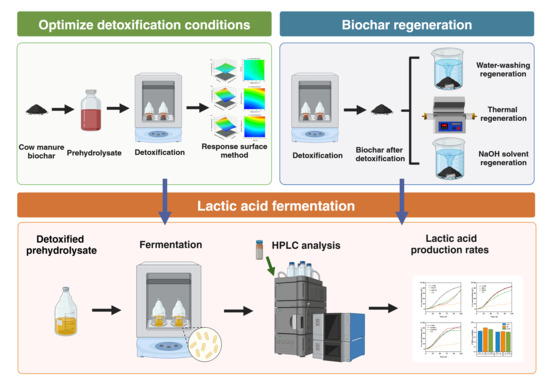
1. Introduction
2. Results and Discussion
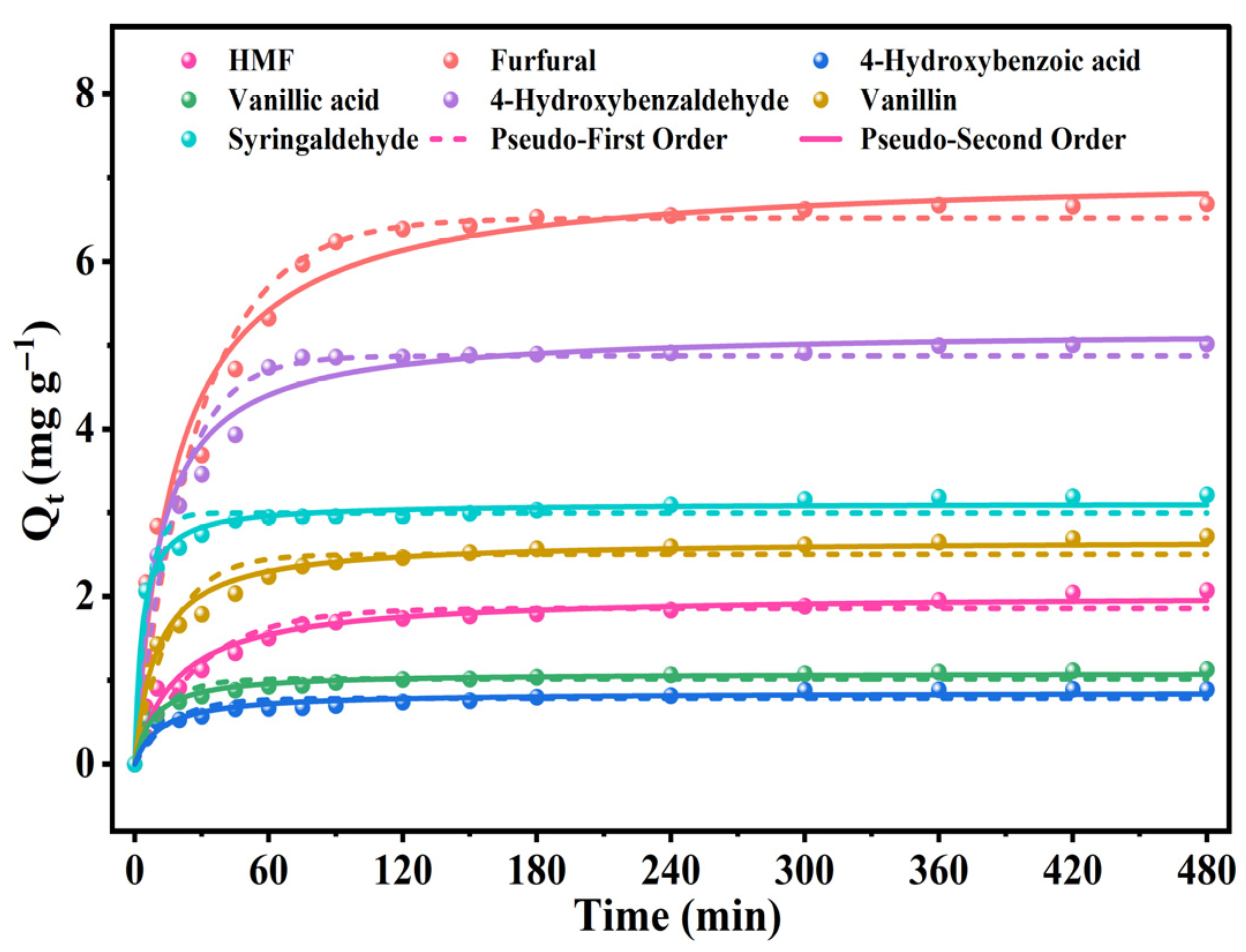
2.1. Adsorption Kinetics
2.2. Optimization by RSM
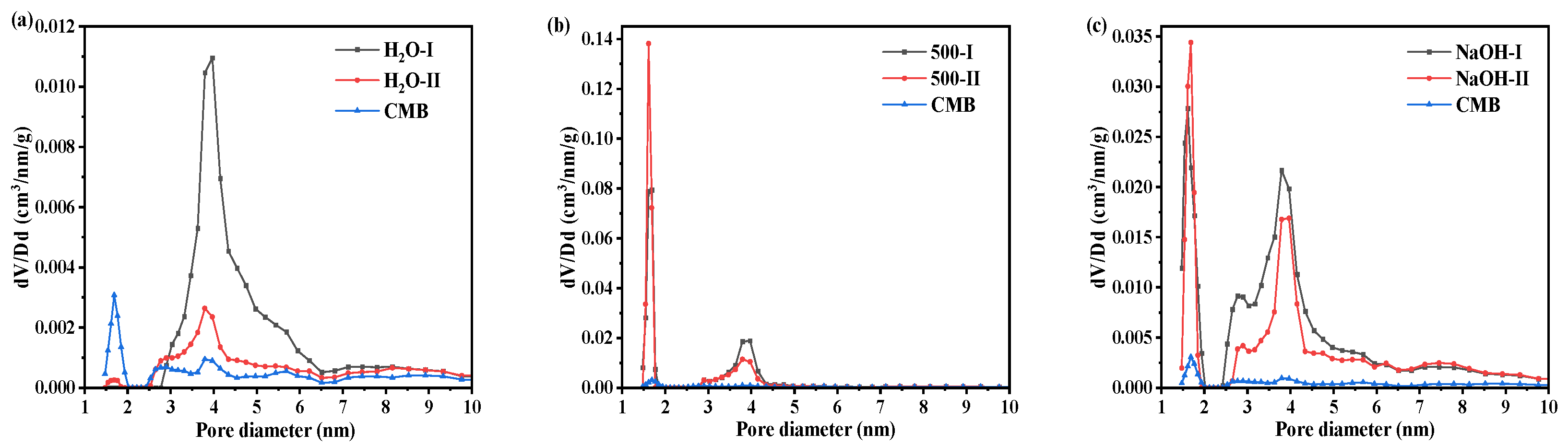
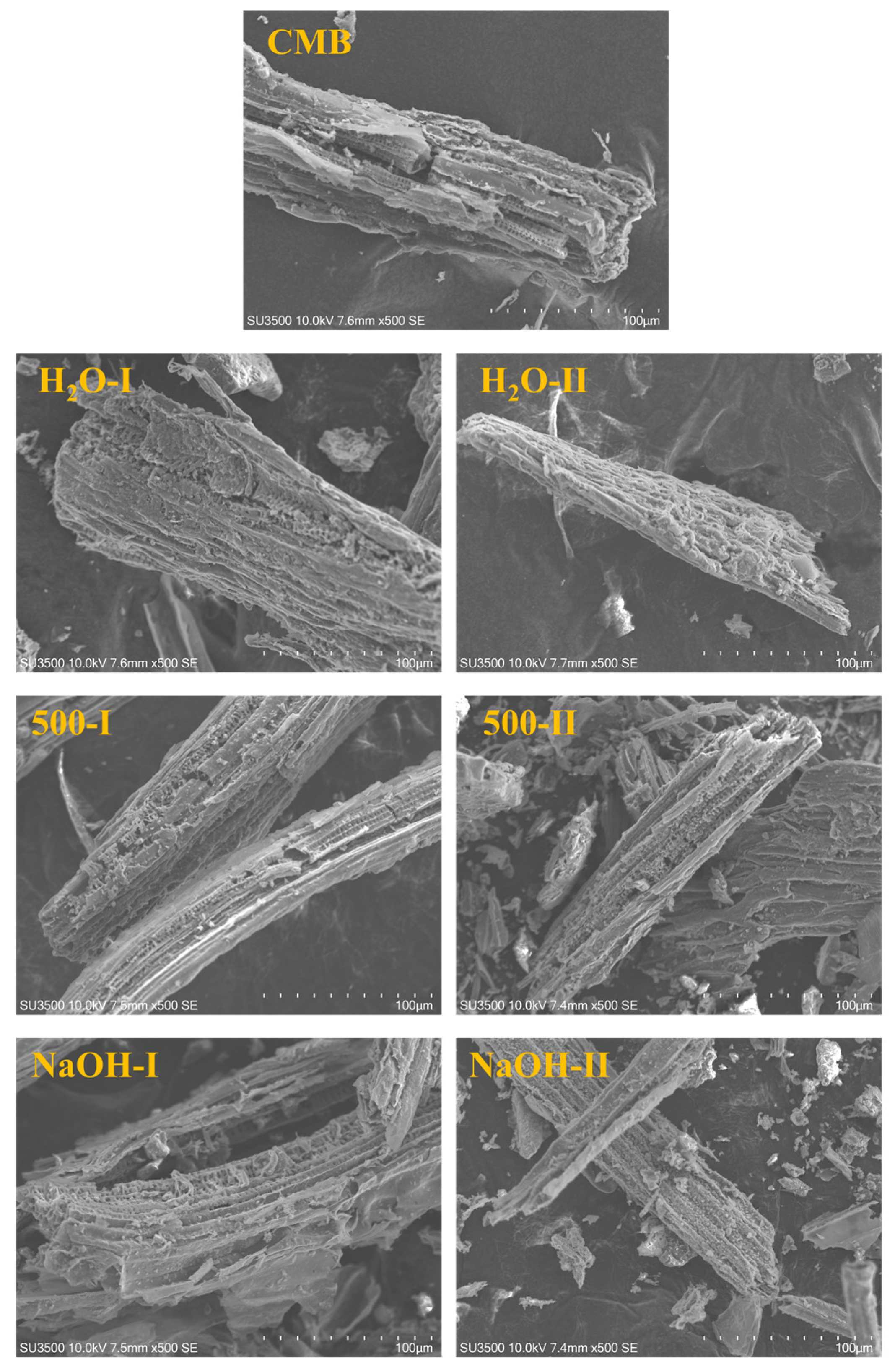
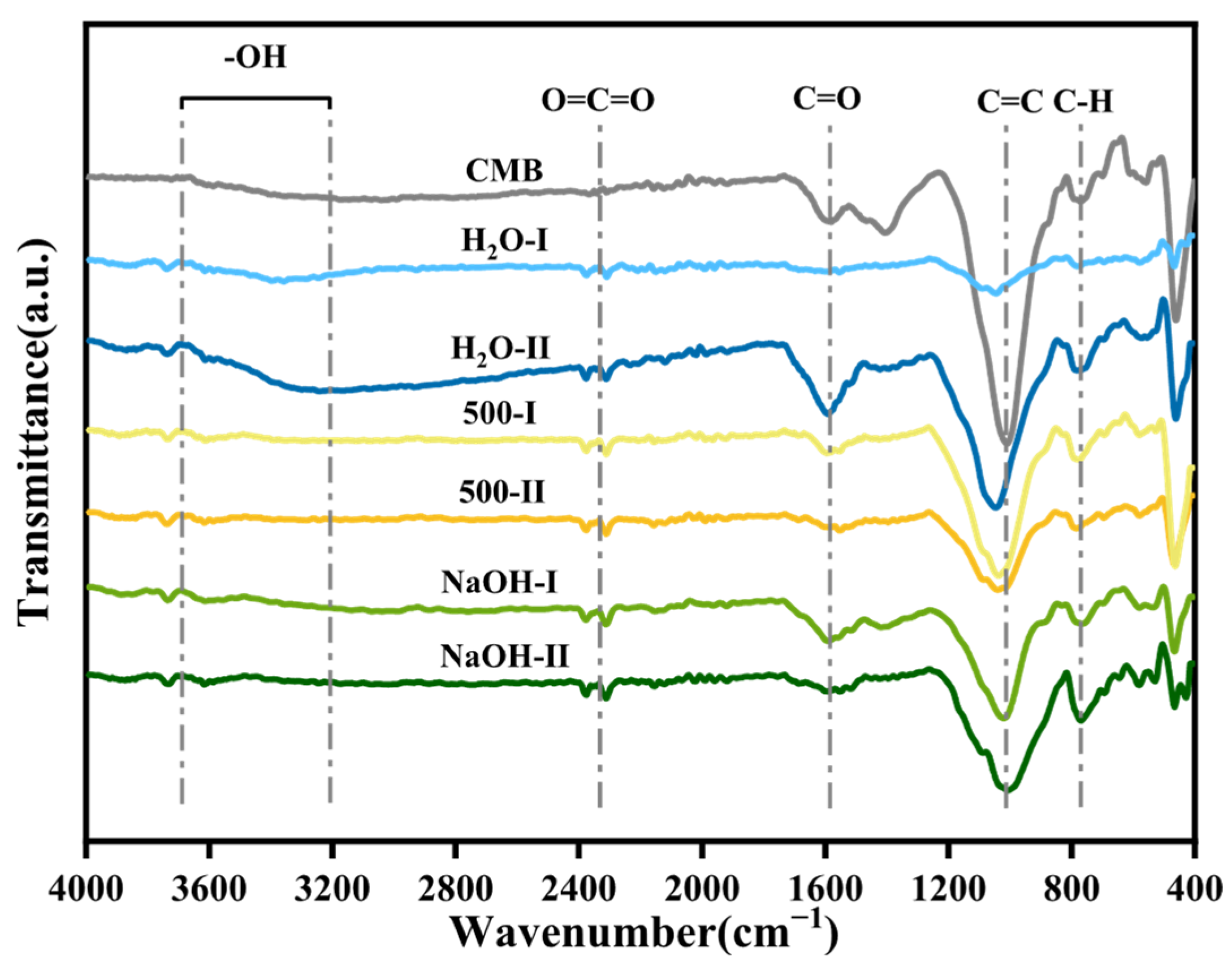
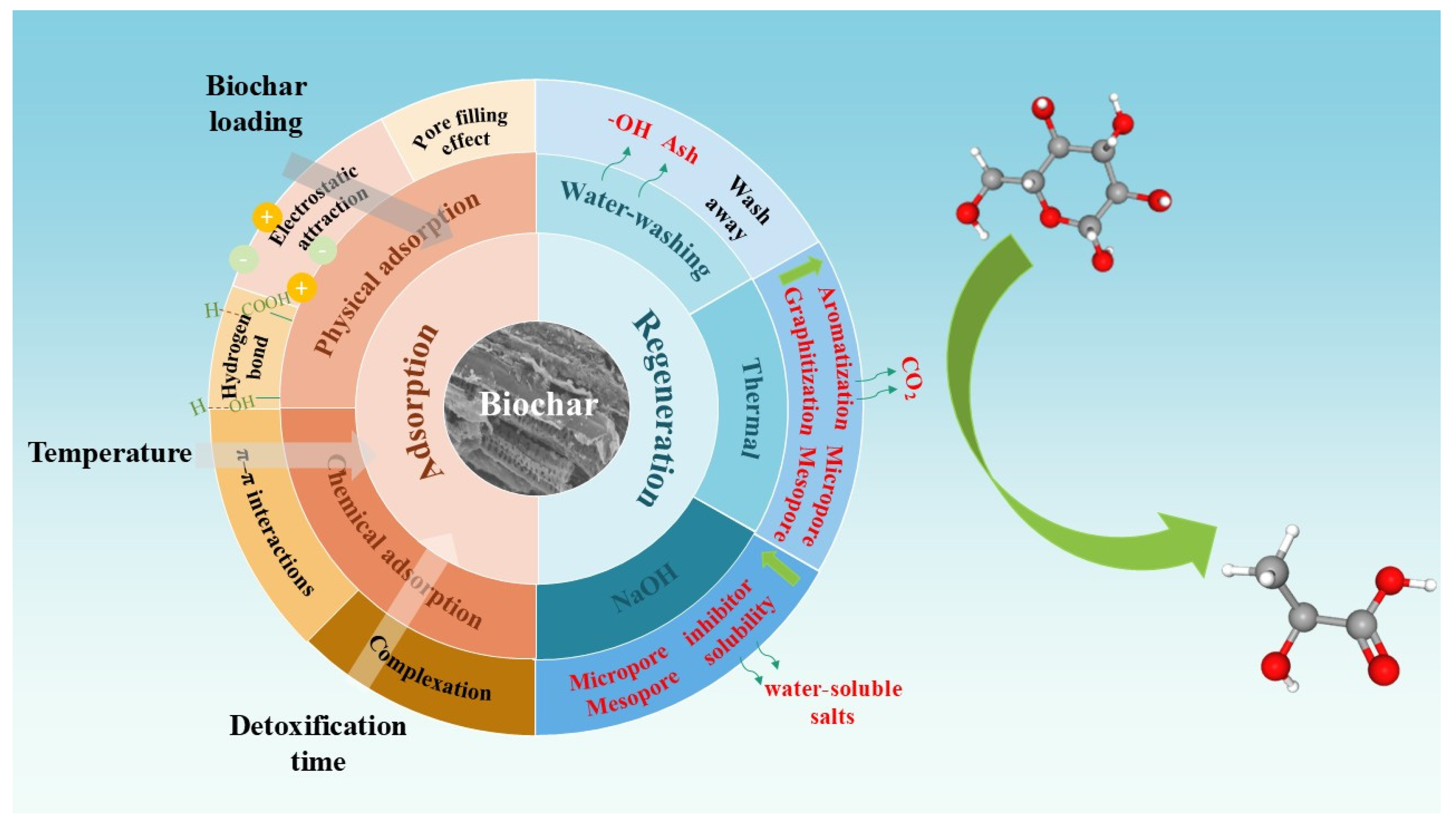
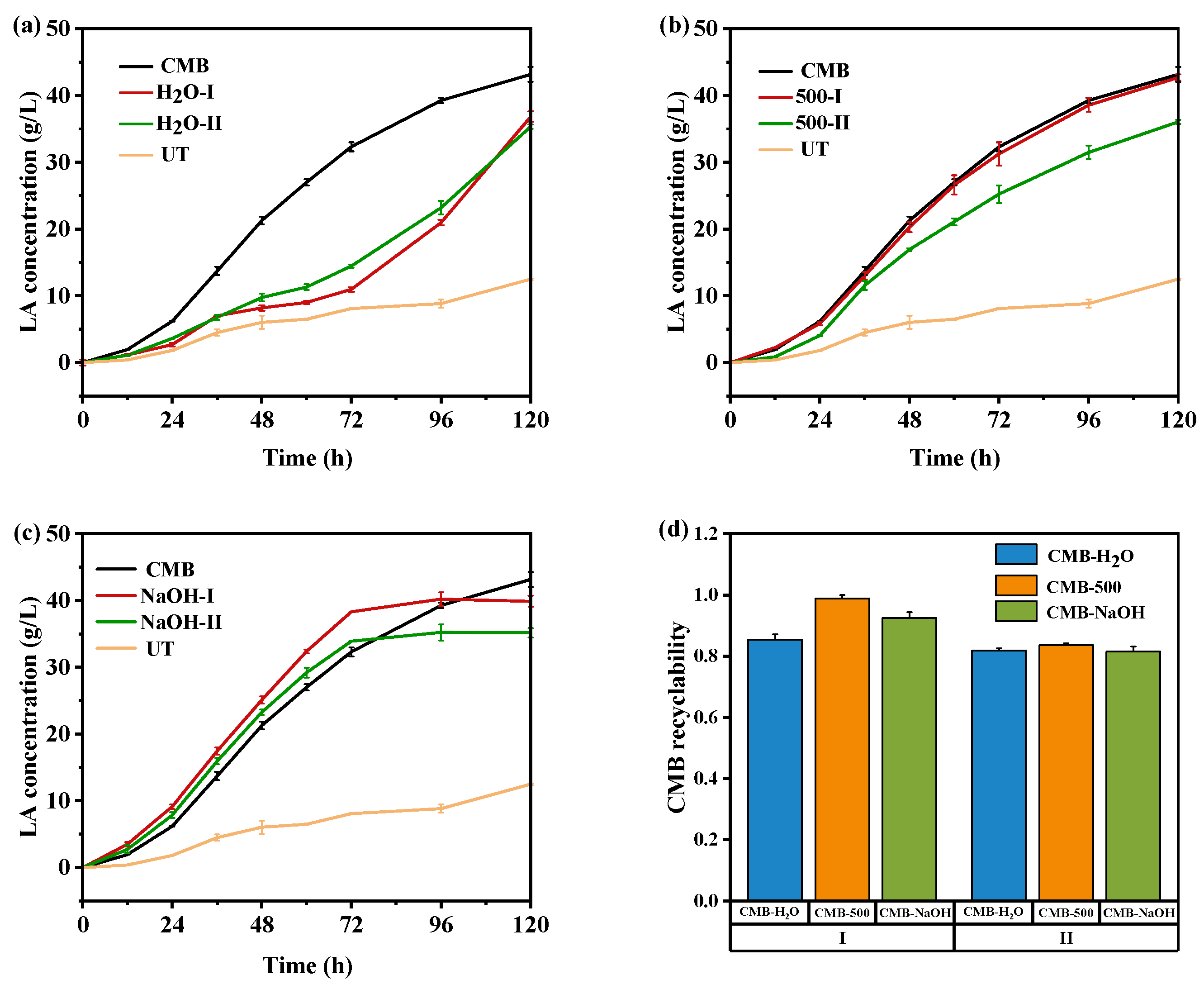
2.3. Biochar Regeneration
3. Materials and Methods
3.1. Chemicals and Microorganisms
3.2. Preparation of Biochar from Cow Manure
3.3. Preparation of Prehydrolysate from Dilute Acid Pretreatment of Corn Stover
3.4. Adsorption Kinetic Study of Inhibitors onto CMB
3.5. The Detoxification of Prehydrolysate by Biochar
3.6. Lactic Acid Fermentation
3.7. Biochar Regeneration
3.8. Characterization of Biochars
3.9. HPLC Analysis
4. Conclusions
Supplementary Materials
Author Contributions
Funding
Data Availability Statement
Conflicts of Interest
References
- Xu, L.; Liaqat, F.; Sun, J.; Khazi, M.I.; Xie, R.; Zhu, D. Advances in the vanillin synthesis and biotransformation: A review. Renew. Sustain. Energy Rev. 2024, 189, 113905. [Google Scholar] [CrossRef]
- Wang, Y.z.; Yang, J.; Wei, H.; Hou, R.; Shi, J.; Jin, Z.; Yang, F.; Hu, J.; Gao, M.-T. Reduction of fermentation-associated stresses by straw-based soluble saccharides for enhancing ethanol production. J. Agric. Food Chem. 2020, 68, 5863–5872. [Google Scholar] [CrossRef] [PubMed]
- Bustamante, D.; Tortajada, M.; Ramón, D.; Rojas, A. Production of D-lactic acid by the fermentation of orange peel waste hydrolysate by lactic acid bacteria. Fermentation 2019, 6, 1. [Google Scholar] [CrossRef]
- Wu, S.; Shi, S.; Liu, R.; Wang, C.; Li, J.; Han, L. The transformations of cellulose after concentrated sulfuric acid treatment and its impact on the enzymatic saccharification. Biotechnol. Biofuels Bioprod. 2023, 16, 36. [Google Scholar] [CrossRef]
- Han, X.; Li, L.; Wei, C.; Zhang, J.; Bao, J. Facilitation of L-lactic acid fermentation by lignocellulose biomass rich in vitamin B compounds. J. Agric. Food Chem. 2019, 67, 7082–7086. [Google Scholar] [CrossRef] [PubMed]
- Ingram, L.O.; Aldrich, H.C.; Borges, A.C.; Causey, T.B.; Martinez, A.; Morales, F.; Saleh, A.; Underwood, S.A.; Yomano, L.P.; York, S.W.; et al. Enteric bacterial catalysts for fuel ethanol production. Biotechnol. Prog. 1999, 15, 855–866. [Google Scholar] [CrossRef]
- Zdarta, J.; Thygesen, A.; Holm, M.S.; Meyer, A.S.; Pinelo, M. Direct separation of acetate and furfural from xylose by nanofiltration of birch pretreated liquor: Effect of process conditions and separation mechanism. Sep. Purif. Technol. 2020, 239, 116546. [Google Scholar] [CrossRef]
- Tan, X.; Wu, X.; Wang, X.; Tao, Y.; Li, Y.; Tang, S.; Zhang, Q.; Sheng, Y. Chitosan-assisted dilute acid pretreatment with enhanced prehydrolysate fermentability and enzyme digestibility of pretreated substrates. Int. J. Biol. Macromol. 2025, 310, 143231. [Google Scholar] [CrossRef]
- Alam, M.; Dhillon, S.K.; Ismail, S.; Dhar, B.R. Biochar and granular activated carbon mitigate polystyrene nanoplastics inhibition in dark biohydrogen fermentation of sludge. ACS EST Eng. 2024, 5, 487–499. [Google Scholar] [CrossRef]
- Godlewska, P.; Schmidt, H.P.; Ok, Y.S.; Oleszczuk, P. Biochar for composting improvement and contaminants reduction. A review. Bioresour. Technol. 2017, 246, 193–202. [Google Scholar] [CrossRef] [PubMed]
- Biederman, L.A.; Harpole, W.S. Biochar and its effects on plant productivity and nutrient cycling: A meta-analysis. GCB Bioenergy 2012, 5, 202–214. [Google Scholar] [CrossRef]
- Zhang, P.; Li, Y.; Cao, Y.; Han, L. Characteristics of tetracycline adsorption by cow manure biochar prepared at different pyrolysis temperatures. Bioresour. Technol. 2019, 285, 121348. [Google Scholar] [CrossRef]
- Chen, G.; Wang, C.; Tian, J.; Liu, J.; Ma, Q.; Liu, B.; Li, X. Investigation on cadmium ions removal from water by different raw materials-derived biochars. J. Water Process Eng. 2020, 35, 101223. [Google Scholar] [CrossRef]
- Do Nascimento, B.F.; De Araujo, C.M.B.; Do Nascimento, A.C.; Da Silva, F.L.H.; De Melo, D.J.N.; Jaguaribe, E.F.; Lima Cavalcanti, J.V.F.; Da Motta Sobrinho, M.A. Detoxification of sisal bagasse hydrolysate using activated carbon produced from the gasification of açaí waste. J. Hazard. Mater. 2021, 409, 124494. [Google Scholar] [CrossRef] [PubMed]
- Monlau, F.; Sambusiti, C.; Antoniou, N.; Zabaniotou, A.; Solhy, A.; Barakat, A. Pyrochars from bioenergy residue as novel bio-adsorbents for lignocellulosic hydrolysate detoxification. Bioresour. Technol. 2015, 187, 379–386. [Google Scholar] [CrossRef] [PubMed]
- Shen, Y.; Luo, L.; Chong, K.; Yang, Y.; Blersch, D.; Balasundram, V.; Shi, S.; Han, L. The targeted removal of aromatic inhibitors in dilute acid prehydrolysate of corn stover by KOH-modified biochar for the efficient production of lactic acid. J. Environ. Manag. 2025, 395, 127902. [Google Scholar] [CrossRef]
- Arminda, M.; Josúe, C.; Cristina, D.; Fabiana, S.; Yolanda, M. Use of activated carbons for detoxification of a lignocellulosic hydrolysate: Statistical optimisation. J. Environ. Manag. 2021, 296, 113320. [Google Scholar] [CrossRef] [PubMed]
- Sarawan, C.; Suinyuy, T.N.; Sewsynker-Sukai, Y.; Gueguim Kana, E.B. Optimized activated charcoal detoxification of acid-pretreated lignocellulosic substrate and assessment for bioethanol production. Bioresour. Technol. 2019, 286, 121403. [Google Scholar] [CrossRef]
- Deng, F.; Cheong, D.-Y.; Aita, G.M. Optimization of activated carbon detoxification of dilute ammonia pretreated energy cane bagasse enzymatic hydrolysate by response surface methodology. Ind. Crops Prod. 2018, 115, 166–173. [Google Scholar] [CrossRef]
- Li, H.; Dong, X.; da Silva, E.B.; de Oliveira, L.M.; Chen, Y.; Ma, L.Q. Mechanisms of metal sorption by biochars: Biochar characteristics and modifications. Chemosphere 2017, 178, 466–478. [Google Scholar] [CrossRef]
- Guan, Y.; Ma, C.; Zhou, J.; Wang, H.; Yang, H. Enhancing sulfonamide removal from water using wood biochar: Adsorption mechanisms and regeneration potential. J. Taiwan Inst. Chem. Eng. 2025, 167, 105910. [Google Scholar] [CrossRef]
- Zeng, S.; Kan, E. Adsorption and regeneration on iron-activated biochar for removal of microcystin-LR. Chemosphere 2021, 273, 129649. [Google Scholar] [CrossRef]
- Salvador, F.; Martin-Sanchez, N.; Sanchez-Hernandez, R.; Sanchez-Montero, M.J.; Izquierdo, C. Regeneration of carbonaceous adsorbents. Part II: Chemical, Microbiological and Vacuum Regeneration. Microporous Mesoporous Mater. 2015, 202, 277–296. [Google Scholar] [CrossRef]
- Ledesma, B.; Román, S.; Álvarez-Murillo, A.; Sabio, E.; González-García, C.M. Fundamental study on the thermal regeneration stages of exhausted activated carbons: Kinetics. J. Therm. Anal. Calorim. 2013, 115, 537–543. [Google Scholar] [CrossRef]
- Jiang, S.; Yan, L.; Wang, R.; Li, G.; Rao, P.; Ju, M.; Jian, L.; Guo, X.; Che, L. Recyclable nitrogen-doped biochar via low-temperature pyrolysis for enhanced lead(II) removal. Chemosphere 2022, 286, 131666. [Google Scholar] [CrossRef]
- Yin, P.; Wang, Z.; Qu, R.; Liu, X.; Zhang, J.; Xu, Q. Biosorption of heavy metal Ions onto agricultural residues buckwheat hulls functionalized with 1-hydroxylethylidenediphosphonic acid. J. Agric. Food Chem. 2012, 60, 11664–11674. [Google Scholar] [CrossRef] [PubMed]
- Simões dos Reis, G.; Bergna, D.; Tuomikoski, S.; Grimm, A.; Lima, E.C.; Thyrel, M.; Skoglund, N.; Lassi, U.; Larsson, S.H. Preparation and characterization of pulp and paper mill sludge-activated biochars using alkaline activation: A Box-Behnken design approach. ACS Omega 2022, 7, 32620–32630. [Google Scholar] [CrossRef] [PubMed]
- Xu, S.; Lan, K.; Li, J.; He, T.; Hu, C. Separation of lactic acid from synthetic solutions and the mixture directly derived from corn stover by aqueous two phase extraction. Sep. Purif. Technol. 2018, 204, 281–289. [Google Scholar] [CrossRef]
- Rahimi, M.S.; Esfahanian, M. Modeling and optimization of adsorption behavior of lactic acid onto zirconium-based metal-organic framework: Response surface methodology (RSM). Sep. Sci. Technol. 2024, 60, 49–65. [Google Scholar] [CrossRef]
- Coleman, B.S.L.; Easton, Z.M.; Bock, E.M. Biochar fails to enhance nutrient removal in woodchip bioreactor columns following saturation. J. Environ. Manag. 2019, 232, 490–498. [Google Scholar] [CrossRef]
- Hylton, J.; Hugen, A.; Rowland, S.M.; Griffin, M.; Tunstall, L.E. Relevant biochar characteristics influencing compressive strength of biochar-cement mortars. Biochar 2024, 6, 87. [Google Scholar] [CrossRef]
- Lee, S.C.; Park, S. Removal of furan and phenolic compounds from simulated biomass hydrolysates by batch adsorption and continuous fixed-bed column adsorption methods. Bioresour. Technol. 2016, 216, 661–668. [Google Scholar] [CrossRef]
- Fan, S.; Wang, Y.; Wang, Z.; Tang, J.; Tang, J.; Li, X. Removal of methylene blue from aqueous solution by sewage sludge-derived biochar: Adsorption kinetics, equilibrium, thermodynamics and mechanism. J. Environ. Chem. Eng. 2017, 5, 601–611. [Google Scholar] [CrossRef]
- Xia, W.; Zhu, N.; Mei, J.; Peng, Y.; Song, F.; Ding, S.; Li, F.; Zhou, X. Biocatalytic detoxification of ochratoxins A/B by a fungal dye-decolorizing peroxidase: Mechanistic insights and toxicity assessment. Toxins 2025, 17, 438. [Google Scholar] [CrossRef] [PubMed]
- Günther, A.; Kulawik, M.; Sip, S.; Zalewski, P.; Jarmołowska-Jurczyszyn, D.; Stawicki, P.; Bednarczyk-Cwynar, B. Targeting oxidative stress in carcinogenesis: Oleanolic acid and its molecular pathways. Antioxidants 2026, 15, 67. [Google Scholar] [CrossRef] [PubMed]
- Jilani, S.B.; Olson, D.G. Mechanism of furfural toxicity and metabolic strategies to engineer tolerance in microbial strains. Microb. Cell Factories 2023, 22, 221. [Google Scholar] [CrossRef] [PubMed]
- Verma, N.; Devi, N.L. Removal of atmospheric pollutants using biochar: Preparation, application, regeneration and its future research. Air Qual. Atmos. Health 2025, 18, 1205–1224. [Google Scholar] [CrossRef]
- Niu, Y.; Tan, H.; Hui, S.e. Ash-related issues during biomass combustion: Alkali-induced slagging, silicate melt-induced slagging (ash fusion), agglomeration, corrosion, ash utilization, and related countermeasures. Prog. Energy Combust. 2016, 52, 1–61. [Google Scholar] [CrossRef]
- Zhang, M.; Shu, L.; Shen, X.; Guo, X.; Tao, S.; Xing, B.; Wang, X. Characterization of nitrogen-rich biomaterial-derived biochars and their sorption for aromatic compounds. Environ. Pollut. 2014, 195, 84–90. [Google Scholar] [CrossRef]
- Liu, X.; Huang, P.; Ma, W.; Jin, F.; Tai, L. Unveiling adsorption mechanisms and regeneration challenges of durian peel biochar for ciprofloxacin removal: Batch experiments and DFT study. J. Water Process Eng. 2025, 75, 107991. [Google Scholar] [CrossRef]
- Liu, C.; Qiu, T.; Cao, W.; Liu, H.; Zhao, W.; Mostafa, E.; Zhang, Y. Water-washing treatment can change biochar microstructure: Microwave pyrolysis of biomass. Energy Sources Part A 2024, 46, 2132–2146. [Google Scholar] [CrossRef]
- Alsawy, T.; Rashad, E.; El-Qelish, M.; Mohammed, R.H. A comprehensive review on the chemical regeneration of biochar adsorbent for sustainable wastewater treatment. npj Clean Water 2022, 5, 29. [Google Scholar] [CrossRef]
- Muzyka, R.; Misztal, E.; Hrabak, J.; Banks, S.W.; Sajdak, M. Various biomass pyrolysis conditions influence the porosity and pore size distribution of biochar. Energy 2023, 263, 126128. [Google Scholar] [CrossRef]
- Da Silva, M.C.F.; Schnorr, C.; Lütke, S.F.; Knani, S.; Nascimento, V.X.; Lima, É.C.; Thue, P.S.; Vieillard, J.; Silva, L.F.O.; Dotto, G.L. KOH activated carbons from Brazil nut shell: Preparation, characterization, and their application in phenol adsorption. Chem. Eng. Res. Des. 2022, 187, 387–396. [Google Scholar] [CrossRef]
- Chen, Y.; Zhang, X.; Chen, W.; Yang, H.; Chen, H. The structure evolution of biochar from biomass pyrolysis and its correlation with gas pollutant adsorption performance. Bioresour. Technol. 2017, 246, 101–109. [Google Scholar] [CrossRef]
- Brunauer, S.; Emmett, P.H.; Teller, E. Adsorption of Gases in Multimolecular Layers. J. Am. Chem. Soc. 1938, 60, 309–319. [Google Scholar] [CrossRef]
- Thommes, M.; Kaneko, K.; Neimark, A.V.; Olivier, J.P.; Rodriguez-Reinoso, F.; Rouquerol, J.; Sing, K.S.W. Physisorption of gases, with special reference to the evaluation of surface area and pore size distribution (IUPAC Technical Report). Pure Appl. Chem. 2015, 87, 1051–1069. [Google Scholar] [CrossRef]
- Li, Y.; Shao, J.; Wang, X.; Deng, Y.; Yang, H.; Chen, H. Characterization of modified biochars derived from bamboo pyrolysis and their utilization for target component (furfural) adsorption. Energy Fuels 2014, 28, 5119–5127. [Google Scholar] [CrossRef]
- Mukhopadhyay, S.; Masto, R.E.; Sarkar, P.; Bari, S. Biochar washing to improve the fuel quality of agro-industrial waste biomass. J. Energy Inst. 2022, 102, 60–69. [Google Scholar] [CrossRef]
- Liu, Z.; Hoekman, S.K.; Balasubramanian, R.; Zhang, F.-S. Improvement of fuel qualities of solid fuel biochars by washing treatment. Fuel Process. Technol. 2015, 134, 130–135. [Google Scholar] [CrossRef]
- Chen, X.; Guo, Y.; Zhang, H.; Cheng, F.; Jiao, Z. Coke powder improving the performance of desulfurized activated carbon from the cyclic thermal regeneration. Chem. Eng. J. 2022, 448, 137459. [Google Scholar] [CrossRef]
- Li, Y.; Jin, H.; Liu, W.; Su, H.; Lu, Y.; Li, J. Study on regeneration of waste powder activated carbon through pyrolysis and its adsorption capacity of phosphorus. Sci. Rep. 2018, 8, 778. [Google Scholar] [CrossRef]
- Singh, M.; Ahsan, M.; Pandey, V.; Singh, A.; Mishra, D.; Tiwari, N.; Singh, P.; Karak, T.; Khare, P. Comparative assessment for removal of anionic dye from water by different waste-derived biochar vis a vis reusability of generated sludge. Biochar 2022, 4, 13. [Google Scholar] [CrossRef]
- Chen, B.; Yuan, M.; Liu, H. Removal of polycyclic aromatic hydrocarbons from aqueous solution using plant residue materials as a biosorbent. J. Hazard. Mater. 2011, 188, 436–442. [Google Scholar] [CrossRef] [PubMed]
- Mohd Faizal, A.N.; Putra, N.R.; Abdul Aziz, A.H.; Agi, A.; Ahmad Zaini, M.A. Giant mud crab shell biochar: A promising adsorbent for methyl violet removal in wastewater treatment. J. Clean. Prod. 2024, 447, 141637. [Google Scholar] [CrossRef]
- Gallego-Ramírez, C.; Chica, E.; Rubio-Clemente, A. A study of the feasibility of pinus patula biochar: The regeneration of the indigo carmine-loaded biochar and its efficiency for real textile wastewater treatment. Processes 2024, 12, 939. [Google Scholar] [CrossRef]
- Bardestani, R.; Patience, G.S.; Kaliaguine, S. Experimental methods in chemical engineering: Specific surface area and pore size distribution measurements—BET, BJH, and DFT. Can. J. Chem. Eng. 2019, 97, 2781–2791. [Google Scholar] [CrossRef]




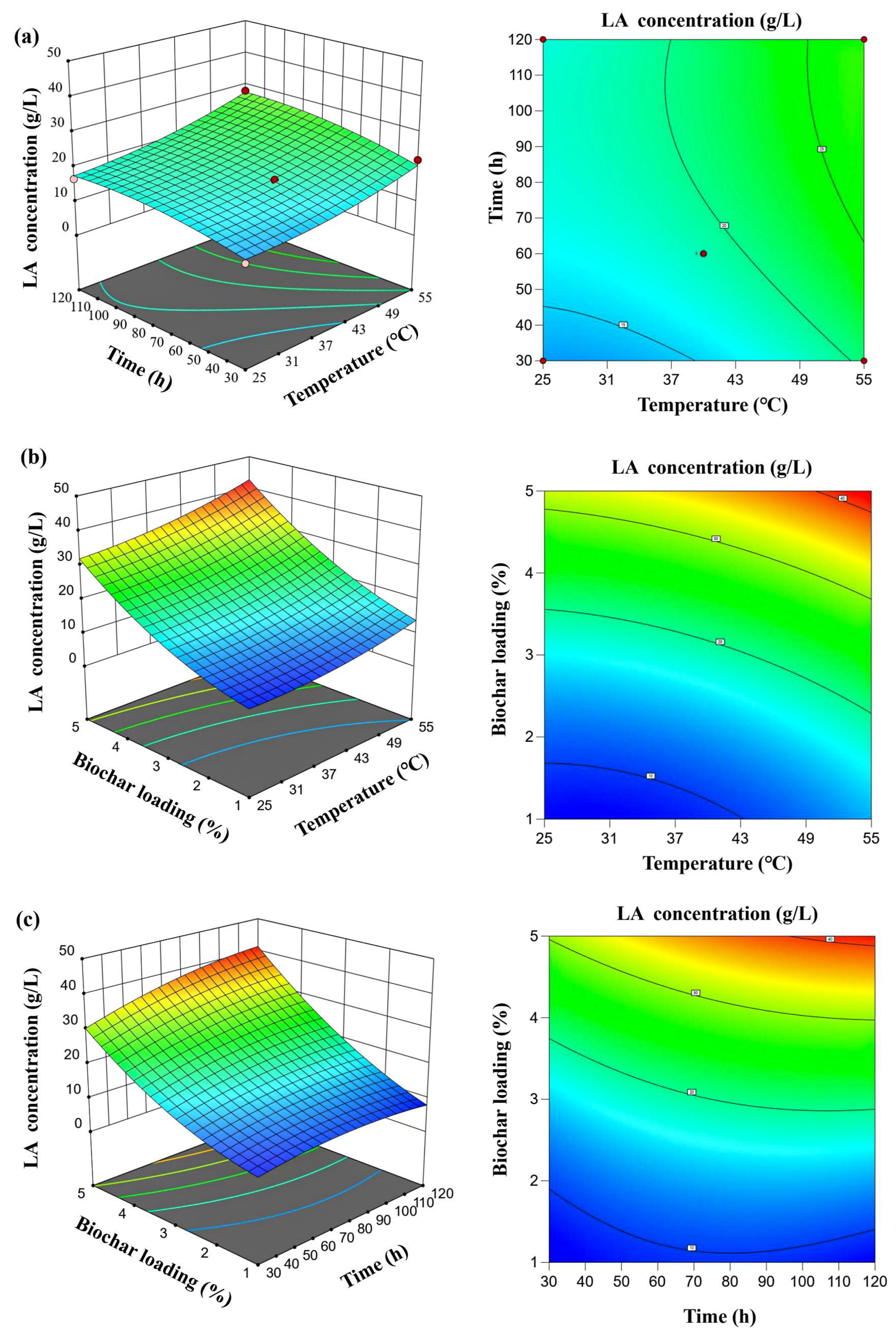
| Run | Temperature (°C) | Detoxification Time (min) | Biochar Loading (% w/v) | 72 h LA Concentration (g/L) | Predicted LA Concentration (g/L) |
|---|---|---|---|---|---|
| 1 | 55 | 60 | 5 | 42.25 | 42.75 |
| 2 | 25 | 60 | 5 | 33.57 | 32.08 |
| 3 | 55 | 30 | 3 | 22.16 | 20.57 |
| 4 | 40 | 60 | 3 | 18.71 | 18.81 |
| 5 | 40 | 120 | 5 | 41.32 | 41.39 |
| 6 | 40 | 30 | 1 | 7.78 | 7.39 |
| 7 | 40 | 60 | 3 | 19.35 | 18.81 |
| 8 | 25 | 120 | 3 | 16.64 | 17.57 |
| 9 | 40 | 60 | 3 | 19.18 | 18.81 |
| 10 | 25 | 60 | 1 | 8.47 | 7.97 |
| 11 | 55 | 120 | 3 | 28.16 | 27.76 |
| 12 | 55 | 60 | 1 | 12.45 | 13.94 |
| 13 | 40 | 30 | 5 | 29.43 | 30.35 |
| 14 | 40 | 60 | 3 | 19.25 | 18.81 |
| 15 | 25 | 30 | 3 | 12.12 | 13.18 |
| 16 | 40 | 120 | 1 | 8.51 | 7.92 |
| 17 | 40 | 60 | 3 | 17.55 | 18.81 |
| Sample | C % | H % | N % | S % | O % |
|---|---|---|---|---|---|
| CMB-before | 38.89 ± 0.20 | 1.76 ± 0.12 | 1.82 ± 0.13 | 0.58 ± 0.002 | 10.49 ± 0.10 |
| CMB-after | 55.21 ± 0.24 | 2.87 ± 0.20 | 2.88 ± 0.22 | 0.56 ± 0.012 | 12.54 ± 0.22 |
| CMB-H2O-I | 47.94 ± 0.17 | 2.25 ± 0.24 | 2.32 ± 0.10 | 0.48 ± 0.008 | 10.49 ± 0.06 |
| CMB-H2O-II | 53.10 ± 0.21 | 2.61 ± 0.09 | 2.69 ± 0.19 | 0.56 ± 0.010 | 11.37 ± 0.20 |
| CMB-500-I | 46.67 ± 0.10 | 1.92 ± 0.13 | 2.30 ± 0.18 | 0.49 ± 0.012 | 9.68 ± 0.11 |
| CMB-500-II | 47.19 ± 0.12 | 1.83 ± 0.18 | 2.28 ± 0.26 | 0.50 ± 0.006 | 8.09 ± 0.14 |
| CMB-NaOH-I | 43.39 ± 0.09 | 1.20 ± 0.06 | 1.33 ± 0.26 | 0.44 ± 0.011 | 8.61 ± 0.17 |
| CMB-NaOH-II | 45.49 ± 0.11 | 2.25 ± 0.26 | 2.47 ± 0.07 | 0.47 ± 0.013 | 7.92 ± 0.23 |
| Sample | SBET (m2/g) | Average Pore Diameter (nm) | Average Pore Volume (cm3/g) |
|---|---|---|---|
| CMB-before | 4.11 ± 0.21 | 3.212 ± 0.15 | 0.016 ± 0.001 |
| CMB-after | 1.82 ± 0.11 | 1.190 ± 0.02 | 0.011 ± 0.002 |
| CMB-H2O-I | 6.50 ± 0.19 | 3.442 ± 0.11 | 0.025 ± 0.003 |
| CMB-H2O-II | 4.28 ± 0.17 | 1.171 ± 0.09 | 0.019 ± 0.001 |
| CMB-500-I | 50.63 ± 0.41 | 1.193 ± 0.07 | 0.047 ± 0.006 |
| CMB-500-II | 35.52 ± 0.24 | 1.157 ± 0.07 | 0.046 ± 0.009 |
| CMB-NaOH-I | 54.30 ± 0.44 | 1.200 ± 0.03 | 0.074 ± 0.008 |
| CMB-NaOH-II | 28.12 ± 0.29 | 1.166 ± 0.06 | 0.049 ± 0.001 |
| Adsorbent | Preparation Conditions | Regeneration Methods | Regeneration Rounds | Regeneration Performance | Reference |
|---|---|---|---|---|---|
| Wood biochar | The wood chips were heated to 650 °C within 60 min and pyrolyzed for 100 min | Water-washing regeneration | 2 cycles | The recyclability for sulfonamide removal after the second cycles is 58.6% | [21] |
| Durian peel biochar | Durian peel powder and KOH pellets were mixed at a 1:1 w/w ratio and pyrolyzed at 700 °C for 2 h under a nitrogen atmosphere at a heating rate of 10 °C/min | Thermal, alkali, hydrothermal regeneration | 3 cycles | The recyclability for ciprofloxacin removal after the third cycles are 33%, 23%, and 13%, respectively | [40] |
| Giant mud crab shell biochar | Crab shells were heated to 500 °C and pyrolyzed for 2 h | Hot water-washing regeneration | 9 cycles | >90% methyl violet removal for 6th regeneration cycles | [55] |
| Pinus patula biochar | The biochar was prepared via gasification in a reverse downdraft reactor at atmospheric pressure with an air flow rate of 146 ± 4.35 L/min (0.12 ± 3.58 × 10⁻³ kg/m2/s) | Thermal solvent regeneration with 75% C2H6O | 7 cycles | The recyclability of Indigo Carmine after seven cycles are 55% | [56] |
| Cow manure biochar | Cow manure was pyrolyzed at 500 °C for 1 h under a nitrogen atmosphere at a heating rate of 10 °C/min | Water-washing, thermal, NaOH solvent regeneration | 2 cycles | The recyclability for inhibitor removal after second cycles are 81.86%, 81.50%, and 83.51%, respectively | this study |
Disclaimer/Publisher’s Note: The statements, opinions and data contained in all publications are solely those of the individual author(s) and contributor(s) and not of MDPI and/or the editor(s). MDPI and/or the editor(s) disclaim responsibility for any injury to people or property resulting from any ideas, methods, instructions or products referred to in the content. |
© 2026 by the authors. Licensee MDPI, Basel, Switzerland. This article is an open access article distributed under the terms and conditions of the Creative Commons Attribution (CC BY) license.
Share and Cite
Shen, Y.; Huang, X.; Zeng, H.; Wang, C.; Blersch, D.; Shi, S.; Han, L. Process Optimization for the Adsorption of Inhibitors in Corn Stover Prehydrolysate by Cow Manure Biochar for Lactic Acid Fermentation. Catalysts 2026, 16, 242. https://doi.org/10.3390/catal16030242
Shen Y, Huang X, Zeng H, Wang C, Blersch D, Shi S, Han L. Process Optimization for the Adsorption of Inhibitors in Corn Stover Prehydrolysate by Cow Manure Biochar for Lactic Acid Fermentation. Catalysts. 2026; 16(3):242. https://doi.org/10.3390/catal16030242
Chicago/Turabian StyleShen, Yuli, Xinyan Huang, Haowen Zeng, Chun Wang, David Blersch, Suan Shi, and Lujia Han. 2026. "Process Optimization for the Adsorption of Inhibitors in Corn Stover Prehydrolysate by Cow Manure Biochar for Lactic Acid Fermentation" Catalysts 16, no. 3: 242. https://doi.org/10.3390/catal16030242
APA StyleShen, Y., Huang, X., Zeng, H., Wang, C., Blersch, D., Shi, S., & Han, L. (2026). Process Optimization for the Adsorption of Inhibitors in Corn Stover Prehydrolysate by Cow Manure Biochar for Lactic Acid Fermentation. Catalysts, 16(3), 242. https://doi.org/10.3390/catal16030242