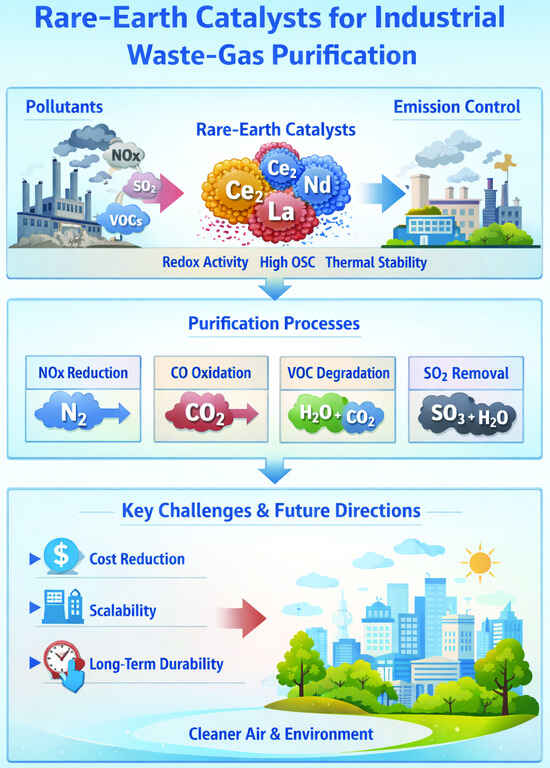
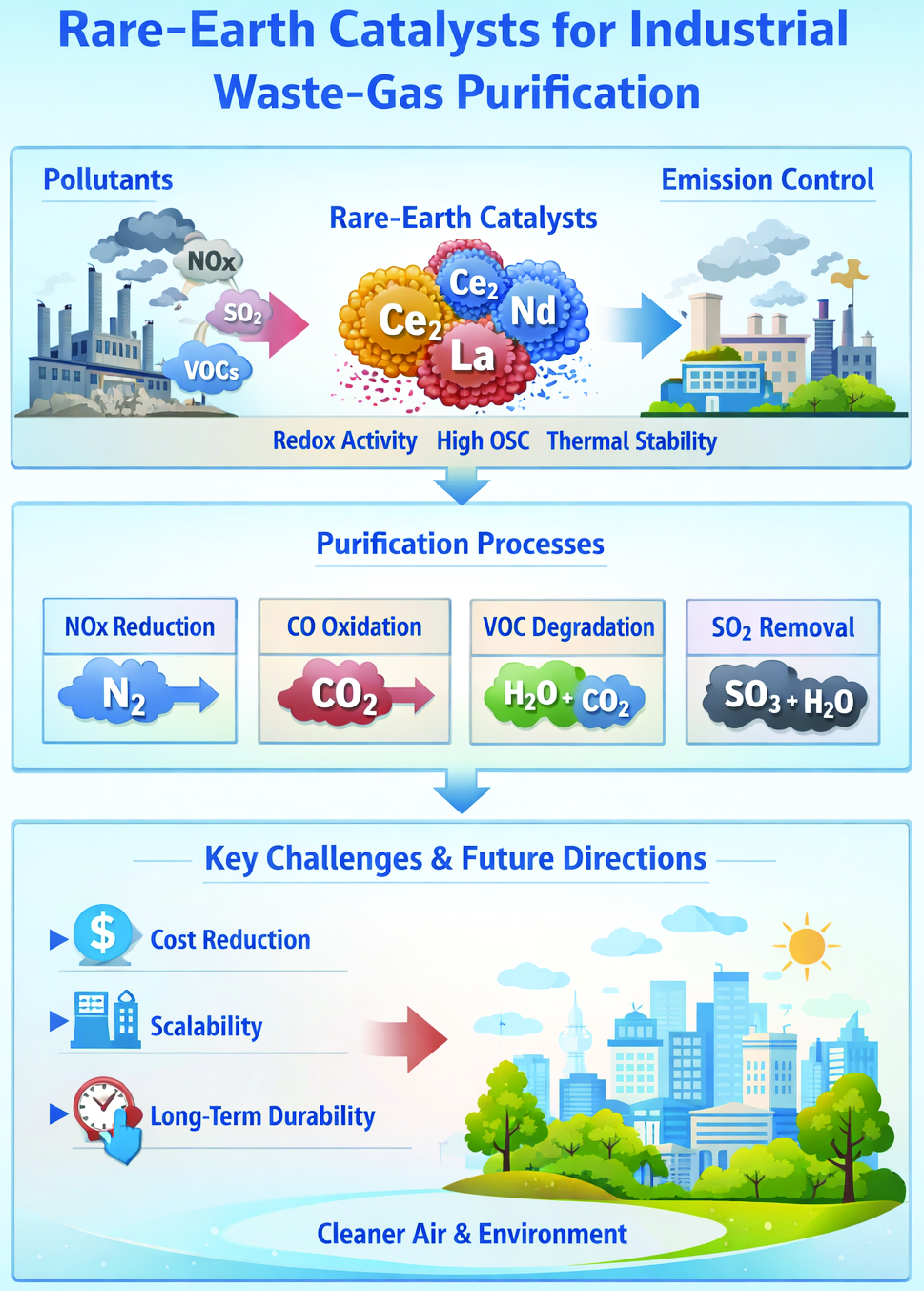
1. Introduction
The continuous growth of industrial sectors, including power generation, petrochemical processing, metallurgy, and transportation, leads to the persistent release of toxic waste gases. Major pollutants, including NO
x, CO, SO
2, and VOCs, are responsible for severe environmental issues such as acid rain, atmospheric haze, photochemical smog, and ozone depletion [
1,
2,
3,
4]. Furthermore, these pollutants pose a significant health risk, contributing to the development of respiratory and cardiovascular diseases. Consequently, the development of highly efficient and environmentally sustainable technologies for large-scale waste-gas purification has become a paramount goal in environmental engineering and catalysis [
4,
5,
6].
Heterogeneous catalysis stands out as a preeminent abatement technology due to its high efficiency, operational flexibility, and amenability to industrial processes [
7,
8,
9,
10,
11]. Traditional catalytic materials, often based on noble metals or transition-metal oxides, are frequently susceptible to deactivation, operate within limited temperature ranges, and are highly sensitive to sulfur and water vapor. In this context, rare-earth (RE) elements have emerged as crucial components in advanced environmental catalysts [
5,
6,
7,
8].
RE elements are a chemically similar group of metals characterized by semi-filled 4f orbitals. This unique electronic configuration confers distinct physicochemical characteristics, including high oxygen affinity, variable oxidation states (Ce
4+/Ce
3+), and high lattice stability [
12,
13,
14]. Among them, Cerium oxide CeO
2 has been extensively studied due to its exceptional oxygen storage–release capacity (OSC) and rapid oxygen mobility. These properties enable RE catalysts to promote redox reactions, stabilize active metal sites, and inhibit the sintering of the catalyst structure [
12,
13,
14].
RE elements fulfill multiple roles in industrial waste-gas purification, acting as the primary active substance, structural stabilizer, electronic promoter, or catalyst support [
3,
4,
5,
6]. Their integration has been demonstrated to significantly enhance low-temperature activity, broaden operating windows, and increase resistance to deactivation by moisture and sulfur compounds. RE-promoted catalysts are now widely utilized in automotive exhaust treatment, stationary power plants, and chemical manufacturing [
13,
14,
15,
16,
17].
Despite extensive development, the rational design of optimal RE catalytic materials remains a challenge, primarily due to the complex interactions among RE oxides, transition metals, and reaction intermediates [
14,
15,
16,
17,
18,
19]. A deeper understanding of structure–activity relationships and mechanistic pathways is required for further optimization. This paper aims to comprehensively review recent studies on RE catalytic materials for industrial waste-gas purification, discussing catalyst design principles, performance characteristics, and future trends. While numerous reviews have summarized the catalytic activity of rare-earth-based materials for individual reactions, fewer studies have systematically addressed their long-term durability and deactivation behavior under realistic industrial conditions [
14,
15,
16,
17]. In practice, industrial waste gases are multicomponent, highly fluctuating, and rich in catalyst poisons, including sulfur compounds, water vapor, chlorine species, alkali metals, and particulates. These factors often dominate catalyst lifetime and determine commercial viability. Distinct from prior reviews, this work emphasizes catalyst deactivation mechanisms, industrial gas complexity, and durability-oriented design principles, providing a translational framework linking laboratory-scale catalyst performance with real industrial deployment. Special attention is devoted to identifying deactivation pathways and mitigation strategies enabled by rare-earth elements, as well as emerging directions for robust catalyst design.
2. Economic Considerations for Rare-Earth Catalysts
While rare-earth elements, particularly cerium, exhibit excellent catalytic properties, their high cost and limited natural reserves remain significant challenges in their widespread use. Cerium, although abundant compared to other rare-earth elements, is still expensive relative to traditional catalytic materials such as transition metals. However, the unique properties of cerium, such as its high oxygen storage capacity, thermal stability, and resistance to catalyst poisoning by sulfur and water, make it an attractive choice for industrial waste-gas purification [
18,
19]. Additionally, research has demonstrated that cerium-based catalysts have longer lifetimes and higher resistance to deactivation under harsh operating conditions compared to conventional catalysts. This means that, despite the high initial cost, cerium catalysts can offer significant cost savings over the long term by reducing the need for frequent replacements and maintaining consistent performance. Moreover, the use of cerium in combination with other rare-earth elements or transition metals can reduce the overall amount of cerium required, making catalyst systems more cost-effective. Ultimately, the economic feasibility of using rare-earth-based catalysts hinges on optimizing their efficiency and lifetime to offset the high material costs. The performance comparison of rare-earth catalysts and conventional catalysts in industrial waste-gas purification is detailed in
Table 1.
3. Complexity of Industrial Waste Gases and Catalyst Deactivation Risks
Unlike idealized laboratory feed compositions, real industrial waste gases exhibit highly complex and variable chemical environments. In addition to primary pollutants such as NO
x, CO, VOCs, and SO
2, industrial exhaust streams often contain excess oxygen, high concentrations of water vapor, chlorine-containing species, alkali metals, particulate matter, and trace heavy metals. These co-existing components frequently interact with catalysts in unintended ways, inducing rapid or gradual deactivation. Catalyst deactivation mechanisms can be broadly categorized into: (i) sulfur poisoning, involving sulfate formation on active sites; (ii) hydrothermal degradation, leading to sintering and oxygen-vacancy annihilation; (iii) halogen poisoning, particularly by HCl and chlorinated VOCs; (iv) alkali metal neutralization of surface acidity; and (v) carbon deposition, which blocks active sites and restricts mass transfer. Importantly, catalysts optimized for a single pollutant often experience severe performance degradation when exposed to multicomponent gas mixtures. Therefore, understanding the interaction between rare-earth catalytic materials and complex industrial exhaust compositions is essential for developing catalysts with genuine industrial durability.
Table 2 summarizes representative industrial emission characteristics and the corresponding catalyst design requirements.
4. Rare-Earth Catalysts for NOx Removal
Nitrogen oxides (NO
x) and NO
2 are major air pollutants from industrial emissions, contributing significantly to acid rain and photochemical smog. RE catalysts exhibit exceptional performance in NO
x removal, particularly in Selective Catalytic Reduction SCR with NH
3 and the reduction of NO using CO or hydrocarbons [
20,
21,
22,
23]. Their superior performance is attributed to distinct redox properties, high oxygen vacancy concentration, and intense interaction with transition metals.
Cerium-based catalysts are the most explored for NO
x control. The facile reversible redox cycle between Ce
4+ and Ce
3+ promotes the oxidation of NO to NO
2, which facilitates the fast-SCR pathway at lower temperatures. Furthermore, RE dopants like La and Pr can increase surface acidity and stabilize active metal sites, thereby enhancing NH
3 adsorption and activation, properties essential for high catalytic efficiency in the presence of industrial oxygen [
24,
25,
26,
27,
28].
Table 3 summarizes the performance of RE-modified catalysts compared to conventional systems, often showing an edge in the following aspects: NO
1 to NO
8 conversion, thermal stability, and sulfur resistance. For example, Cu-CeO
2 and Fe-CeO
2 systems have demonstrated NO conversions exceeding 90% over broad temperature ranges, with enhanced tolerance to SO
2 and H
2O [
5,
6,
7,
8,
9]. The RE oxides also actively inhibit the sintering of active metals, a frequent cause of catalyst deactivation during long-term operation.
Cerium-based catalysts exhibit excellent performance for NOx removal, especially in selective catalytic reduction (SCR) reactions. Their superior redox properties, facilitated by the Ce4+/Ce3+ redox cycle, enhance NO oxidation and reduction under low-temperature conditions. Studies have shown that cerium-doped catalysts, such as Cu-CeO2 and Fe-CeO2, maintain high efficiency in NOx conversion, even in the presence of industrial poisons like SO2 and H2O. These catalysts are particularly valuable in applications such as automotive exhaust treatment, where their ability to withstand water vapor and sulfur contamination is crucial for long-term operation.
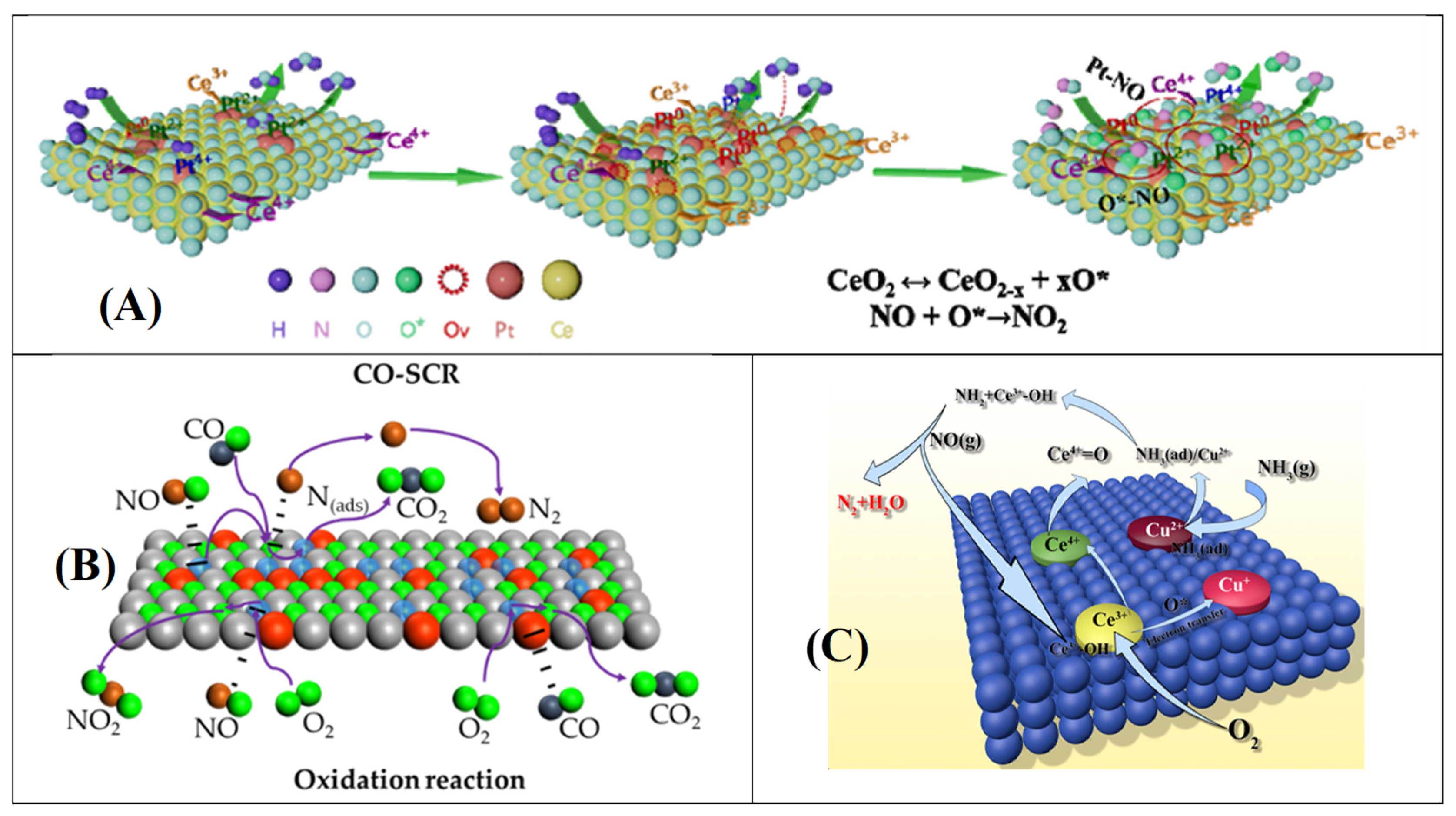
Oxygen vacancies and lattice oxygen mobility play a central role in Ce-based catalytic NO
X conversions. Mechanistic investigations consistently demonstrate that oxygen vacancies and lattice oxygen mobility play a central role in rare-earth-based NO
x conversion pathways. In Pt/CeO
2 systems, NO oxidation follows a vacancy-mediated mechanism in which lattice oxygen directly participates in NO activation, accompanied by continuous formation and replenishment of oxygen vacancies through the Ce
4+/Ce
3+ recyclable [
20]. Similarly, in Co–CeO
x catalysts, oxygen vacancies serve as preferential adsorption and activation sites that govern the CO-assisted selective catalytic reduction (CO-SCR) of NO
x under oxygen-rich conditions, facilitating efficient electron transfer and intermediate transformation [
21]. For Cu-modified CeO
2/TiO
2 catalysts, the synergistic interaction between Cu species and inheritances surface acidity and stabilizes retroactive Ce
3+ sites, enabling vacancy-driven NO
x adsorption and accelerated SCR reaction pathways [
22]. Collectively, these studies highlight that defect engineering and the synergy between rare-earth and transition metals are decisive factors in optimizing NO
x abatement performance across diverse catalytic systems [
22]. This vacancy-mediated process is schematically summarized in
Figure 1. Despite their excellent intrinsic activity, rare-earth-based NO
x catalysts are vulnerable to deactivation under industrial conditions. Sulfur dioxide readily reacts with surface Ce
3+ species to form thermodynamic stable cerium sulfates, which suppress oxygen-vacancy regeneration and inhibit the Ce
4+/Ce
3+ redox cycle essential for NO oxidation. Additionally, prolonged exposure to high water vapor concentrations accelerates hydrothermal sintering, leading to the collapse of surface defect structures. Rare-earth modification provides effective mitigation pathways. La and Pr dopants dilute highly reactive Ce sites and reduce sulfate binding strength, while Ce–Zr solid solutions promote reversible sulfation behavior. These features enable partial recovery of catalytic activity during regeneration and significantly extend catalyst lifetime in sulfur-rich flue gases.
Mechanistic studies indicate that oxygen vacancies and lattice oxygen mobility are central to Ce-based catalytic NO conversion [
23,
24,
25,
26,
27,
28]. The strong metal–support interactions between RE oxides and transition metals facilitate electron transfer, accelerating the rate of redox cycles. Rational defect engineering and compositional tuning of RE catalysts are promising strategies for developing next-generation NO-abatement technologies [
25,
26,
27,
28,
29].
5. Rare-Earth Catalysts for Carbon Monoxide Oxidation
Carbon monoxide CO is a hazardous product of incomplete combustion in many industrial processes. The catalytic oxidation of CO to CO
2 is a critical air purification reaction, where RE catalytic materials have demonstrated exceptional efficacy [
30,
31,
32,
33]. The primary mechanisms for CO oxidation on RE oxides involve the rapid activation of oxygen and high oxygen turnover at the catalyst surface.
Cerium oxide-based catalysts are widely used due to their powerful OSC, mediated by the Ce
4+/Ce
3+ redox couple. The reaction often proceeds via the Mars–van Krevelen (MvK) mechanism, where lattice oxygen directly participates in CO oxidation to CO
2, creating an oxygen vacancy [
29,
30,
31,
32,
33,
34]. This vacancy is then quickly refilled by gaseous oxygen, maintaining a continuous catalytic cycle.
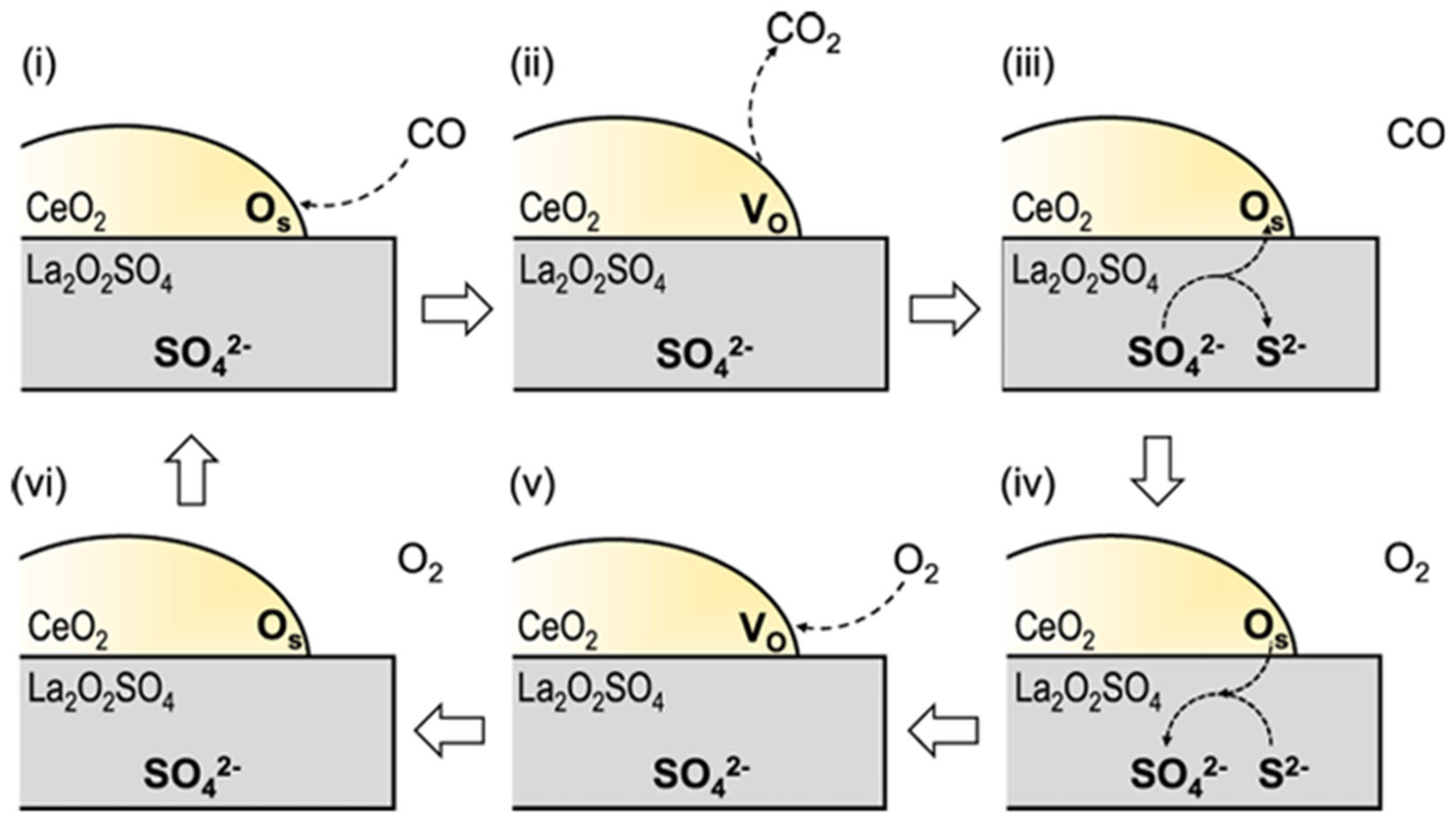
In composite ceria-based systems, catalytic CO oxidation is governed by an interfacial oxygen-transfer mechanism involving dynamic redox coupling between adjacent phases. At the CeO
2–La
2O
2SO
4 interface, lattice oxygen from ceria directly participates in CO oxidation to CO
2, resulting in the formation of oxygen vacancies. These vacancies are rapidly replenished through interfacial oxygen migration from the neighboring oxygen-storage phase, thereby sustaining continuous redox cycling and maintaining high oxidation efficiency under reaction conditions [
31]. This oxygen-gateway effect highlights the significance of engineered phase boundaries in promoting oxygen mobility and enhancing catalytic activity (
Figure 2).
Table 4 highlights that RE-promoted catalysts achieve significantly lower CO light-off temperatures (T
50, the temperature at which 50% conversion occurs) and exhibit superior long-term stability compared to traditional metal oxide catalysts. While noble metal systems, such as Au/CeO
2 and Pt/CeO
2, offer excellent low-temperature activity, non-noble options, such as CuO-CeO
2, provide a competitive, lower-cost alternative [
32,
33,
34,
35,
36]. The strong metal–support interactions (SMSI) between RE oxides and supported metals modify electronic properties, which enhance the adsorption of reactants. This not only boosts catalytic activity but also increases resistance to deactivation by moisture and sulfur—standard components in industrial exhaust streams [
13,
14,
15,
16].
In industrial exhaust streams, CO oxidation catalysts are frequently exposed to sulfur compounds and moisture, both of which compete with CO for active oxygen sites. Sulfur adsorption can inhibit lattice oxygen mobility, while water vapor may block metal–support inter-facial sites critical for the Mars–van Krevelen mechanism. Rare-earth oxides mitigate these effects by stabilizing surface oxygen species and preferentially adsorbing sulfur away from active metal centers, thereby preserving redox functionality under harsh conditions.
6. Rare-Earth Catalysts in the Oxidation of VOCs
Volatile Organic Compounds (VOCs) are precursors to atmospheric ozone and secondary organic aerosols. Catalytic oxidation is the most efficient technique for VOC removal, and RE-based catalysts are extensively investigated due to their superior oxidation capabilities [
33,
34,
35,
36,
37]. RE oxides enhance VOC oxidation by promoting oxygen mobility, increasing surface acidity, and improving the adsorption of organic molecules.
CeO
2-based catalysts are highly active against various VOCs, including toluene, benzene, and formaldehyde. The presence of oxygen vacancies facilitates the effective activation of CH and C–C bonds, leading to complete oxidation at relatively low temperatures. When combined with transition metal oxides (e.g., Mn, Co, Cu), RE oxides form highly active mixed-oxide systems with synergistic redox cycles [
32,
33,
34,
35,
36,
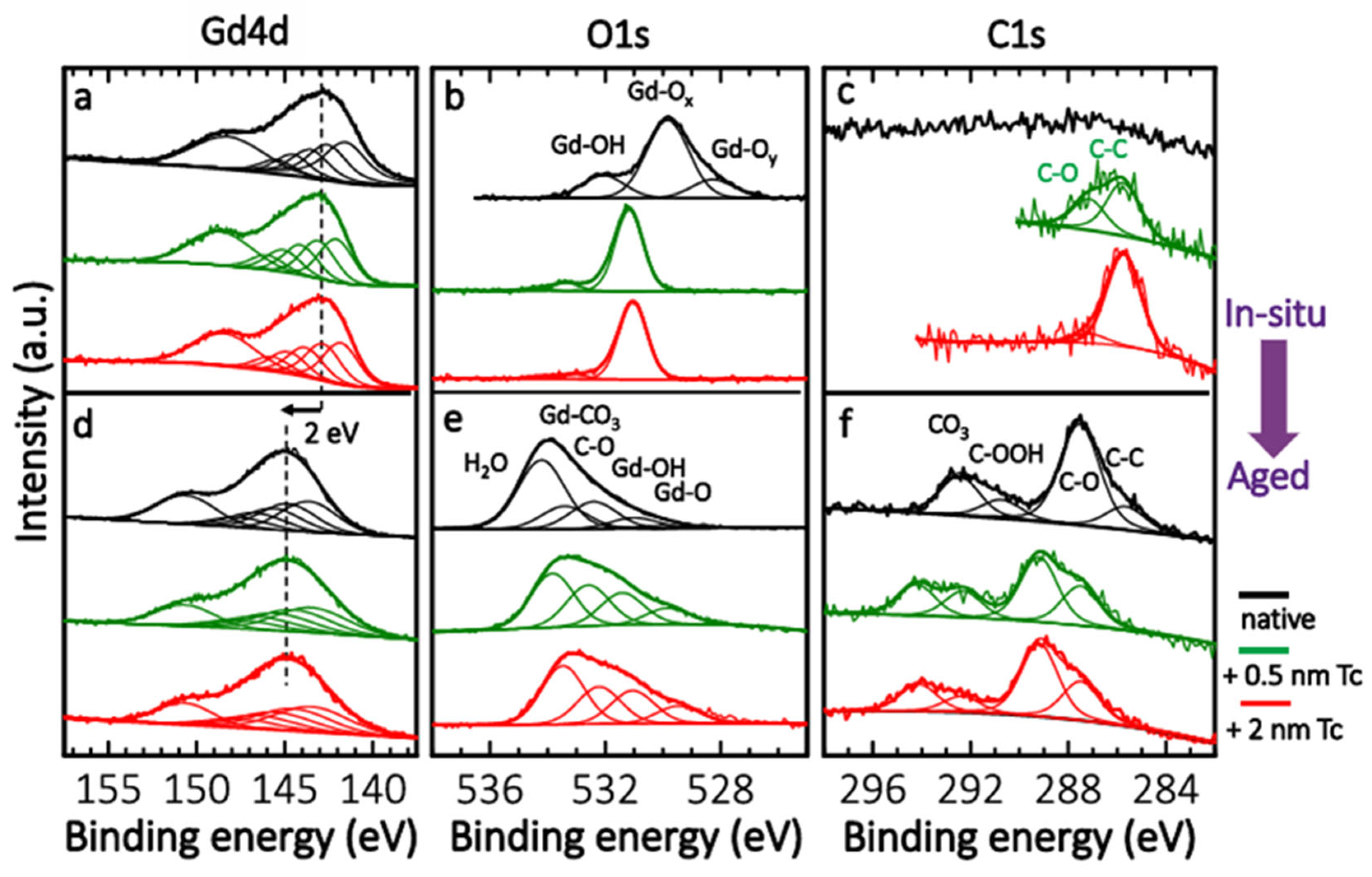
37]. Surface-sensitive spectroscopic studies reveal that rare-earth oxides actively participate in the oxidation of poly-cyclic aromatic hydrocarbons through dynamic redox processes. In Gd
2O
3-based systems, XPS analyses indicate a pronounced surface chemical evolution during hydrocarbon oxidation, which evidences the direct involvement of lattice oxygen and surface hydroxide species in bond activation and oxidative decomposition pathways [
38], as illustrated in
Figure 3. These findings confirm that rare-earth oxide surfaces are not merely inert supports but function as redox-active participants capable of sustaining hydrocarbon activation under oxidative environments.
Table 5 details current RE-based catalysts for VOC oxidation, highlighting the target VOCs and the thermal efficiency (T90, the temperature at which 90% conversion is achieved). The data confirms that RE modification lowers the temperature required for complete oxidation and improves catalyst stability under high space velocity conditions [
39,
40,
41,
42]. Crucially, RE oxides enhance resistance to chlorine and sulfur poisoning, which is vital for treating industrial exhaust streams containing halogenated VOCs [
40,
43,
44,
45]. Mechanistic studies demonstrate that RE elements stabilize surface oxygen species and facilitate rapid electron transfer during VOC oxidation, thereby ensuring an uninterrupted supply of reactive oxygen and promoting the efficient decomposition of complex organics [
42,
43,
44].
Industrial VOC streams often contain chlorine-bearing compounds and aromatics that induce catalyst poisoning and carbon deposition. Chlorine species can irreversibly block active sites, while polyaromatic intermediates promote coke formation. Rare-earth oxides enhance resistance to these effects by stabilizing surface oxygen vacancies, facilitating complete oxidation pathways, and suppressing carbon accumulation through enhanced oxygen mobility.
7. Surface Defects and Compositional Tuning
While surface defects and compositional tuning are often cited as promising strategies for optimizing catalytic activity, their practical implementation is still limited. Recent studies on defect engineering have highlighted the role of oxygen vacancies and lattice oxygen mobility in cerium-based catalysts. However, these processes are challenging to characterize and manipulate effectively due to the complexity of catalyst surfaces and the lack of non-invasive characterization methods that can directly probe surface defects without affecting them [
15,
16,
17,
18,
19,
20]. As such, while the potential for defect engineering exists, current methodologies are limited by the need for more advanced tools and techniques. Consequently, “compositional tuning” refers to the careful selection and combination of rare-earth elements and transition metals to achieve a balance between activity, stability, and resistance to deactivation under industrial conditions.
8. Sulfur-Containing Gas Removal and Poisoning Resistance
Sulfur-containing gases, particularly SO
2, are among the most problematic components of industrial waste gases due to their corrosiveness and high potential for catalyst poisoning. In stationary catalytic systems, SO
2 readily adsorbs onto active sites, forming stable sulfates that lead to irreversible deactivation [
46,
47,
48]. RE catalytic materials, however, have demonstrated superior resistance to sulfur poisoning and enhanced regeneration capacity, making them highly attractive for industrial waste-gas purification [
49,
50,
51].
RE oxides (CeO
2, La
2O
3, etc.) possess a high affinity for sulfur-based species. This allows sulfur adsorption to occur preferentially on the RE phase rather than on the transition metals that constitute the main active sites. This sacrificial adsorption helps maintain catalytic activity. Furthermore, some RE sulfates are less thermally stable than their counterparts and can decompose under regeneration conditions, restoring catalyst activity [
50,
51,
52]. As shown in
Table 6, RE-modified catalysts exhibit markedly greater sulfur tolerance than traditional catalysts. The CeO2-ZrO
2 solid solution, for example, shows superior reversible sulfation behavior, and La-doped SCR catalysts maintain greater structural stability in the presence of SO
2 and H
2O. These characteristics are vital for long-duration operation in demanding environments such as coal-fired power plants and smelting facilities [
40,
43,
44,
45].
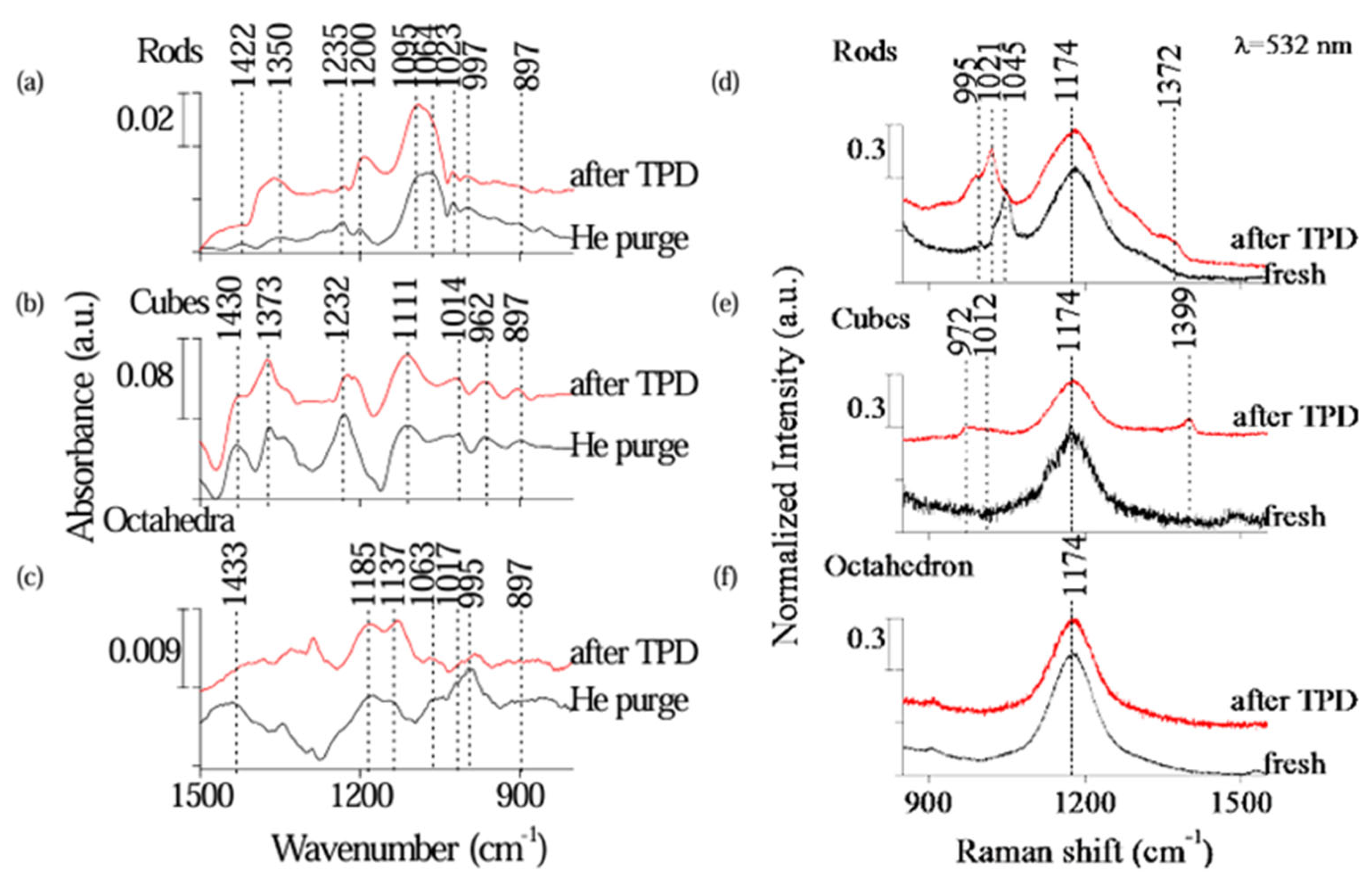
Figure 4 presents in situ IR/DRIFTS evidence showing that SO
2 adsorption on CeO
2 is highly dependent on surface structure, leading to the morphology-specific formation of sulfite and sulfate species. These findings provide direct support for the proposed adsorption–transformation mechanisms and help explain the enhanced sulfur tolerance observed in engineered ceria surfaces within catalytic systems [
53].
Mechanistic studies suggest that RE oxides modify the sulfur adsorption energetic, minimizing the formation of firmly bound metal sulfates. Additionally, vacancies of oxygen in Ce-based systems allow the oxidation of SO
2 to surface sulfate radicals, which are easier to decompose [
22,
23,
24,
25,
26]. These findings highlight the importance of rationality in selecting rare-earth elements and architecture in catalysts to minimize deactivation caused by sulfur. Generally, rare-earth catalytic materials can be considered a strong option for utilizing sulfur-containing waste gas as an alternative method of purifying the waste gas, offering high catalytic activity and a long working life [
33,
34,
35,
36,
37,
54].
9. Reaction Mechanisms and Structure–Activity Relationships
The rational design of high-performance RE catalytic materials hinges on a clear understanding of structure–activity relationships [
52,
55,
56,
57]. The catalytic performance of RE-based systems is determined by key structural parameters, including crystal phase, oxygen vacancy concentration, surface acidity, and the strength of metal–support interaction (MSI).
The facile Ce
4+/Ce
3+ redox transition enables RE oxides, particularly CeO
2, to maintain a high concentration of oxygen vacancies. These defects serve as active sites for oxygen activation and the adsorption of pollutants [
56,
57,
58,
59]. The incorporation of transition metals further modifies the electronic structure, enhancing charge transfer processes and lowering the activation barriers for oxidation and reduction reactions.
As summarized in
Table 7, catalysts that exhibit superior oxygen mobility and stronger metal–support interactions consistently demonstrate excellent catalytic activity in NO
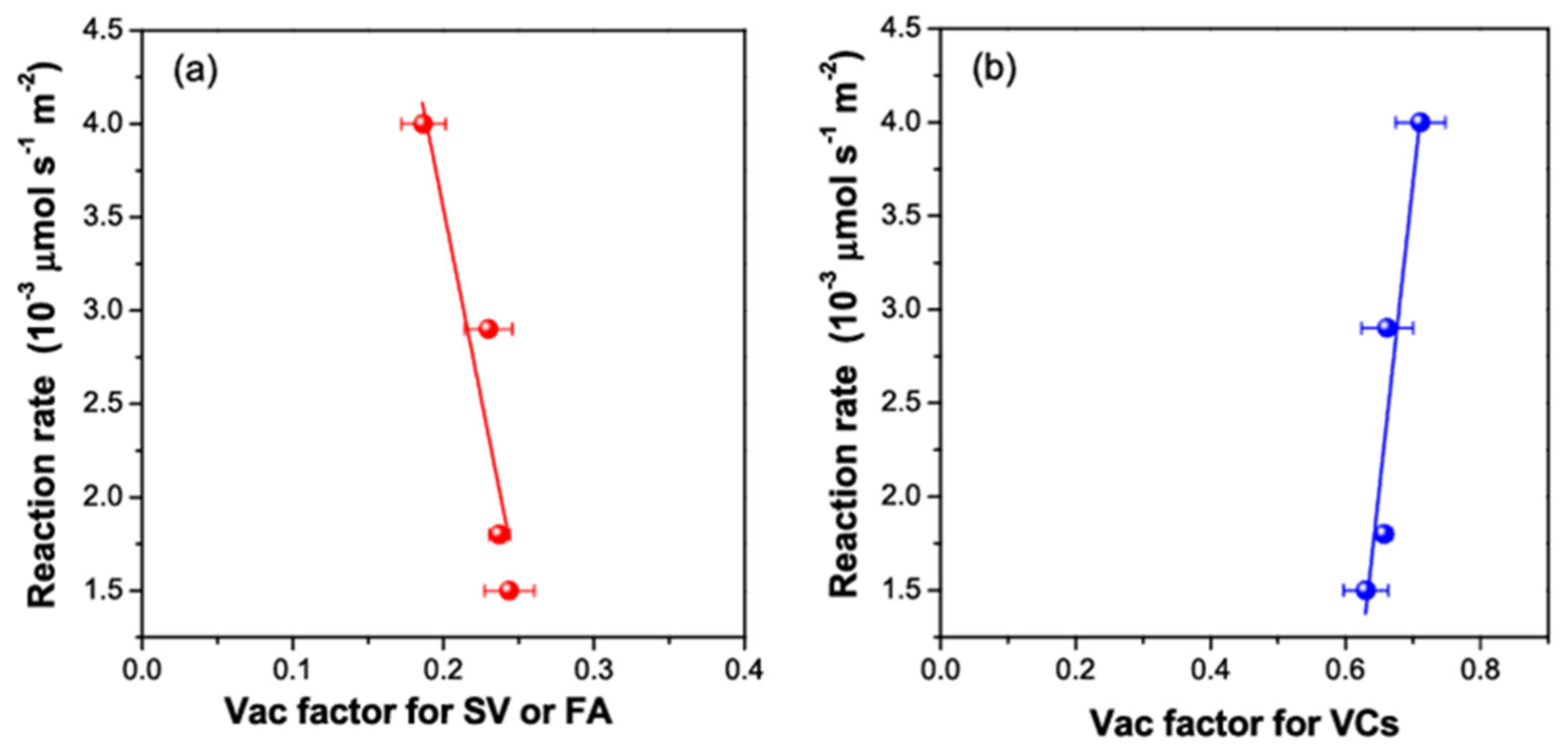
x reduction, CO oxidation, and VOC degradation. Dopants like La and Pr are used to enhance lattice stability and surface acidity, while Zr incorporation improves thermal resistance and oxygen diffusion. As demonstrated in
Figure 5, the formation and surface distribution of oxygen-vacancy clusters on CeO
2 nanocubes directly influence catalytic performance, exhibiting a pronounced linear correlation between the vacancy-cluster factor and the o-xylene oxidation rate [
57].
Reaction mechanisms over RE catalysts frequently involve Marsvanckel pathways for oxidation reactions and redox-assisted adsorption–desertion cycles for reduction reactions. In SCR systems, RE oxides co-facilitate the adsorption of NH
3 and NO
X, with oxygen vacancies accelerating the transformation of intermediates [
58,
59,
60,
61]. Spectroscopic analysis confirms that RE elements modulate intermediate stability, minimizing undesirable side reactions. Knowledge of these relationships enables the selective optimization of catalysts through defect engineering, compositional control, and control of nano-structure. Such techniques have become increasingly significant in creating catalysts that can operate effectively in the face of industrial variability [
62,
63,
64,
65].
10. Catalyst Deactivation Mechanisms
Catalytic degradation remains a major challenge in the industrial application of rare-earth catalysts. Common deactivation mechanisms include:
Sulfur Poisoning: SO2 reacts with cerium oxide (CeO2) to form thermodynamically stable cerium sulfates. This inhibits the redox cycles of Ce4+/Ce3+, reducing the catalyst’s oxygen storage capacity and overall performance. The formation of sulfate species can also block active sites, causing irreversible deactivation.
Hydrothermal Degradation: Prolonged exposure to water vapor leads to the sintering of CeO2 particles, which reduces the surface area and oxygen vacancy concentration. The thermal stability of the catalyst is compromised, leading to diminished catalytic activity.
Coking: In VOC oxidation reactions, carbon deposition can occur, especially in the presence of aromatic compounds. The carbonaceous deposits block active sites and hinder mass transfer, decreasing the catalyst’s efficiency. However, rare-earth catalysts are often more resistant to coking compared to traditional catalysts due to their ability to stabilize oxygen vacancies and enhance surface mobility.
11. Challenges and Future Development Directions
Despite promising laboratory and pilot-scale results, several challenges must be addressed for the widespread industrial implementation of RE catalytic materials [
40,
43,
44,
45,
53]. A primary concern is the potential supply shortage and escalating cost of certain RE elements, particularly Ce and La, which could restrict large-scale adoption. Catalyst deactivation remains a critical industrial issue; the complex composition of industrial waste gases (including SO
2, H
2O, particulates, and hydrogenated compounds) can gradually diminish catalyst activity over extended periods, even with RE modification [
64,
65,
66,
67]. Furthermore, maintaining consistent catalyst quality during large-scale synthesis is non-trivial and requires rigorous control over structure and composition.
Table 8 summarizes key industrial challenges and outlines active research strategies to mitigate these limitations. Future research should focus on “low loading” designs through enhanced RE dispersion, the exploration of mixed RE systems, and the investigation of viable non-critical RE substitutes. Advanced preparation techniques, such as atomic-layer deposition and scalable sol–gel synthesis, can offer paths toward enhanced catalyst uniformity [
65,
66,
67,
68,
69]. Future catalyst development must prioritize long-term durability tests under realistic industrial conditions, life cycle assessment, and economic viability. The integration of computational modeling and machine learning is poised to accelerate the discovery of optimized RE catalysts while minimizing material usage. Future development of rare-earth catalytic materials must shift from activity-centered optimization toward durability-by-design strategies. One critical research frontier involves coupling oxygen-vacancy engineering with poison adsorption energetic to selectively trap deactivating species without compromising redox functionality. Multi-rare-earth solid solutions, such as Ce–La–Pr–Zr systems, offer promising routes to simultaneously enhance sulfur resistance, hydrothermal stability, and oxygen mobility. Another emerging direction is the integration of data-driven approaches. Machine learning models trained on structural descriptors, defect densities, and aging datasets can accelerate the discovery of robust catalyst formulations tailored for complex gas environments. In parallel, standardized industrial aging protocols incorporating sulfur, water vapor, chlorine, and thermal cycling must be adopted to bridge the gap between laboratory performance and field durability. Ultimately, the commercial success of rare-earth catalysts will depend not on peak activity but on sustained performance under realistic operating conditions over extended service lifetimes.
12. Conclusions
Rare-earth catalytic materials represent one of the most significant developments in industrial waste-gas purification technology. Their unique electronic properties, potent redox activity, high oxygen transport capability, and excellent thermal stability enable superior performance across a wide range of pollution abatement reactions, including NOx elimination, CO oxidation, VOC degradation, and the removal of sulfur-containing gases.
This systematic review has demonstrated that RE elements function not only as active phases but also as critical promoters and structural stabilizers. Comparative data consistently show that RE-modified catalysts surpass conventional systems in terms of activity, selectivity, and durability, often exhibiting enhanced conversion efficiency, a broader operating temperature window, and improved resistance to sulfur and water poisoning.
Despite these clear advantages, persistent challenges related to RE material cost, resource availability, and long-term industrial durability must be overcome. Addressing these issues will require interdisciplinary approaches spanning catalyst engineering, materials science, and process optimization. The most promising future directions involve minimizing RE usage through better dispersion, designing novel mixed RE oxides, and implementing advanced, scalable synthesis techniques.
In summary, RE catalytic materials are pivotal to the future of industrial air pollution control. Continued research, focused on deepening mechanistic understanding and developing scalable design principles, will accelerate the transition of these high-performance materials from the laboratory to widespread industrial applications. By explicitly addressing catalyst deactivation mechanisms and the complexity of industry-specific emissions, this review provides practical guidance for translating rare-earth catalytic materials from laboratory research to industrial implementation. The insights summarized herein aim to support the rational design of next-generation catalysts capable of long-term operation in real waste-gas environments.
Author Contributions
Y.W., C.W. and Y.G.; software, W.S., Z.M., Y.W., C.W. and Y.G.; validation, W.S., Z.M., Y.W., C.W. and Y.G.; formal analysis, W.S., Z.M., Y.W., C.W. and Y.G.; investigation, W.S., Z.M., Y.W., C.W. and Y.G.; resources, W.S., Z.M., Y.W., C.W. and Y.G.; data curation, W.S., Z.M., Y.W., C.W. and Y.G.; writing—original draft preparation, W.S., Z.M., Y.W., C.W. and Y.G.; writing, review and editing, W.S., Z.M., Y.W., C.W. and Y.G.; visualization, W.S., Z.M., Y.W., C.W. and Y.G.; supervision, W.S.; project administration, W.S. and Z.M.; funding acquisition, W.S. All authors have read and agreed to the published version of the manuscript.
Funding
This research is financially supported by the National Natural Science Foundation of China (No. 22402094), the Natural Science Foundation of Inner Mongolia (No. 2023QN02009), and Metallurgical Engineering First-Class Discipline Scientific Research Special Project of the Department of Education of Inner Mongolia Autonomous Region (YLXKZX-NKD-047).
Data Availability Statement
No new data were created or analyzed in this study. Data sharing is not applicable to this article.
Acknowledgments
The authors gratefully acknowledge the opportunity to present this article.
Conflicts of Interest
The authors declare that they have no conflicts of interest.
References
- Quevedo-Amador, R.A.; Escalera-Velasco, B.P.; Arias, A.M.R.; Reynel-Ávila, H.E.; Moreno-Piraján, J.C.; Giraldo, L.; Bonilla-Petriciolet, A. Application of waste biomass for the production of biofuels and catalysts: A review. Clean Technol. Environ. Policy 2024, 26, 943–997. [Google Scholar] [CrossRef]
- Ribeiro, A.P.D.O.; Lobo, W.V.; de Carvalho, T.A.F.; de Matos, J.M.E.; de Freitas, F.A.; Ruiz, Y.L.; Matos, R.S.; Ţălu, Ş.; da Fonseca Filho, H.D.; Domínguez, L.A.; et al. Copper Molybdate-Catalyzed Esterification of Levulinic Acid: A Heterogeneous Approach for Biofuel Synthesis. Catalysts 2025, 15, 357. [Google Scholar] [CrossRef]
- Sušjenka, M.; Prašnikar, F.; Jakovljević Kovač, M.; Molnar, M.; Fernandes, L.; Nunes, A.V.M.; Duarte, A.R.C.; Zakrzewska, M.E. A Green Chemistry Approach to Catalytic Synthesis of Ethyl Levulinate. Catalysts 2024, 14, 842. [Google Scholar] [CrossRef]
- Kong, X.; Zhang, X.; Han, C.; Li, C.; Yu, L.; Liu, J. Ethanolysis of biomass-based furfuryl alcohol to ethyl levulinate over Fe-modified USY catalyst. Mol. Catal. 2017, 443, 186–192. [Google Scholar] [CrossRef]
- He, J.; Li, H.; Lu, Y.M.; Liu, Y.X.; Wu, Z.B.; Hu, D.Y.; Yang, S. Cascade catalytic transfer hydrogenation–cyclization of ethyl levulinate to γ-valerolactone with Al–Zr mixed oxides. Appl. Catal. A Gen. 2016, 510, 11–19. [Google Scholar] [CrossRef]
- Rodríguez, V.I.; Mendow, G.; Sánchez, B.S.; García, J.R.; Pujro, R.A.; de Miguel, S.R.; Veizaga, N.S. Ruthenium Catalysts Supported on Hydrothermally Treated Carbon from Rice Husk: The Effect of Reduction Temperature on the Hydrogenation Reaction of Levulinic Acid to γ-Valerolactone. Processes 2023, 11, 1421. [Google Scholar] [CrossRef]
- Li, F.; France, L.J.; Cai, Z.; Li, Y.; Liu, S.; Lou, H.; Long, J.; Li, X. Catalytic transfer hydrogenation of butyl levulinate to γ-valerolactone over zirconium phosphates with adjustable Lewis and Brønsted acid sites. Appl. Catal. B Environ. 2017, 214, 67–77. [Google Scholar] [CrossRef]
- Li, H.; Yang, T.; Fang, Z. Biomass-derived mesoporous Hf-containing hybrid for efficient Meerwein–Ponndorf–Verley reduction at low temperatures. Appl. Catal. B Environ. 2018, 227, 79–89. [Google Scholar] [CrossRef]
- Yue, Y.; Zhu, G.; Liu, M.; Zhu, Y.; Ji, W.; Si, X.; Lu, T. Catalytic Conversion of Ethyl Levulinate to γ-Valerolactone Under Mild Conditions over Zr-Beta Acidic Zeolite Prepared by Hydrothermal Method. Catalysts 2024, 14, 924. [Google Scholar] [CrossRef]
- Negahdar, L.; Al-Shaal, M.G.; Holzhäuser, F.J.; Palkovits, R. Kinetic analysis of the catalytic hydrogenation of alkyl levulinates to γ-valerolactone. Chem. Eng. Sci. 2017, 158, 545–551. [Google Scholar] [CrossRef]
- Li, C.; Xu, G.; Zhai, Y.; Liu, X.; Ma, Y.; Zhang, Y. Hydrogenation of biomass-derived ethyl levulinate into γ-valerolactone by activated-carbon-supported bimetallic Ni–Fe catalysts. Fuel 2017, 203, 23–31. [Google Scholar] [CrossRef]
- Li, Z.; Zuo, M.; Jiang, Y.; Tang, X.; Zeng, X.; Sun, Y.; Lei, T.; Lin, L. Stable and efficient Cu–Cr catalyst for the solvent-free hydrogenation of biomass-derived ethyl levulinate to γ-valerolactone as a potential biofuel candidate. Fuel 2016, 175, 232–239. [Google Scholar] [CrossRef]
- Zhang, L.; Zhou, B.; Hong, Y.; Wu, Q.; Qiu, J.; Chen, J.; Zeng, X. Efficient transformation of levulinic acid/esters to γ-valerolactone via a durable catalyst with simply tunable acid-base sites. Renew. Energy 2024, 236, 121453. [Google Scholar] [CrossRef]
- Sun, M.; Xia, J.; Wang, H.; Liu, X.; Xia, Q.; Wang, Y. An efficient NixZrᵧO catalyst for hydrogenation of bio-derived methyl levulinate to γ-valerolactone in water under low hydrogen pressure. Appl. Catal. B Environ. 2018, 227, 488–498. [Google Scholar] [CrossRef]
- Carltonbird, M.; Eaimsumang, S.; Pongstabodee, S.; Boonyuen, S.; Smith, S.M.; Luengnaruemitchai, A. Effect of the exposed ceria morphology on the catalytic activity of gold/ceria catalysts for the preferential oxidation of carbon monoxide. Chem. Eng. J. 2018, 344, 545–555. [Google Scholar] [CrossRef]
- Sakpal, T.; Lefferts, L. Structure-dependent activity of CeO2-supported Ru catalysts for CO2 methanation. J. Catal. 2018, 367, 171–180. [Google Scholar] [CrossRef]
- Ma, Z.; Zhao, S.; Pei, X.; Xiong, X.; Hu, B. New insights into the support morphology-dependent ammonia synthesis activity of Ru/CeO2 catalysts. Catal. Sci. Technol. 2017, 7, 191–199. [Google Scholar] [CrossRef]
- Gao, J.; Guo, M.; Yang, G.; Cui, S.; Zhao, Y.; Liu, B.; Xiao, M.; Niu, K.; Zhou, S. Effect of preferential CeOx loading on monolithic WO3/CeO2-TiO2 catalysts for NH3-SCR of NOx removal. J. Rare Earths 2025, in press.
- Zhang, T.T.; Yan, L.M. Enhanced low-temperature NH3-SCR performance of Ce/TiO2 modified by Ho catalyst. Rayal Soc. Open Sci. 2019, 6, 182120. [Google Scholar] [CrossRef]
- Li, X.; Li, S.; Cheng, Y.; Zheng, L.; Song, L.; Zi, X.; Dai, H. The Activation of Oxygen Species on the Pt/CeO2 Catalyst by H2 for NO Oxidation. Catalysts 2024, 14, 778. [Google Scholar] [CrossRef]
- Zhou, Y.; Gao, F.; Yi, L.; Wang, J.; Yi, H.; Tang, X. CoCeOx-PVP Catalyst for Effective CO-SCR in the Presence of O2. Molecules 2025, 30, 1133. [Google Scholar] [CrossRef] [PubMed]
- Xu, W.; Tian, R.; Gao, C.; Wang, C.; Chen, Y.; Wang, R.; Peng, J.; An, S.; Li, P. Improved surface acidity of CeO2/TiO2 catalyst by Cu doping to enhance the SCR catalytic activity. Sci. Rep. 2024, 14, 23604. [Google Scholar] [CrossRef] [PubMed]
- Cai, J.; Wei, L.; Wang, J.; Lin, N.; Li, Y.; Li, F.; Zha, X.; Li, W. Application of Catalysts in the Conversion of Biomass and Its Derivatives. Catalysts 2024, 14, 499. [Google Scholar] [CrossRef]
- Nocito, F.; Daraselia, D.; Dibenedetto, A. Catalytic Biomass Conversion into Fuels and Materials: Sustainable Technologies and Applications. Catalysts 2025, 15, 948. [Google Scholar] [CrossRef]
- de Vries, J.G. Industrial implementation of chemical biomass conversion. Curr. Opin. Green Sustain. Chem. 2023, 39, 100715. [Google Scholar] [CrossRef]
- Bozell, J.J.; Petersen, G.R. Technology development for the production of biobased products from biorefinery carbohydrates The U.S. Department of Energy’s “Top 10” revisited. Green Chem. 2010, 12, 539–554. [Google Scholar] [CrossRef]
- Bond, J.Q.; Alonso, D.M.; Wang, D.; West, R.M.; Dumesic, J.A. Integrated catalytic conversion of γ-valerolactone to liquid alkenes for transportation fuels. Science 2010, 327, 1110–1114. [Google Scholar] [CrossRef]
- Luterbacher, J.S.; Rand, J.M.; Alonso, D.M.; Han, J.; Youngquist, J.T.; Maravelias, C.T.; Pfleger, B.F.; Dumesic, J.A. Nonenzymatic sugar production from biomass using biomass-derived γ-valerolactone. Science 2014, 343, 277–280. [Google Scholar] [CrossRef]
- Lin, Z.; Cai, X.; Fu, Y.; Zhu, W.; Zhang, F. Cascade catalytic hydrogenation–cyclization of methyl levulinate to γ-valerolactone over Ru nanoparticles supported on sulfonic-acid-functionalized UiO-66. RSC Adv. 2017, 7, 44082–44088. [Google Scholar] [CrossRef]
- Gürbüz, E.I.; Alonso, D.M.; Bond, J.Q.; Dumesic, J.A. Reactive extraction of levulinate esters and conversion to γ-valerolactone for production of liquid fuels. ChemSusChem 2011, 4, 357–361. [Google Scholar] [CrossRef]
- Zhang, D.; Kawada, T.; Yoshioka, F.; Machida, M. Oxygen Gateway Effect of CeO2/La2O2SO4 Composite Oxygen Storage Materials. ACS Omega 2016, 1, 789–798. [Google Scholar] [CrossRef]
- Valekar, A.H.; Cho, K.H.; Chitale, S.K.; Hong, D.Y.; Cha, G.Y.; Lee, U.H.; Hwang, D.W.; Serre, C.; Chang, J.S.; Hwang, Y.K. Catalytic transfer hydrogenation of ethyl levulinate to γ-valerolactone over zirconium-based metal–organic frameworks. Green Chem. 2016, 18, 4542–4552. [Google Scholar] [CrossRef]
- Deng, Z.; Wang, S.; Chen, C.; Xia, X.; Xu, Q.; Yin, D.; Liu, X. Enhanced transfer hydrogenation of bio-derived Ethyl levulinate to γ-valerolactone over Zr-based catalysts through a formic acid modification strategy. Mol. Catal. 2024, 564, 114346. [Google Scholar] [CrossRef]
- Saravanamurugan, S.; Nguyen Van Buu, O.; Riisager, A. Conversion of mono- and disaccharides to ethyl levulinate and ethyl pyranoside with sulfonic-acid-functionalized ionic liquids. ChemSusChem 2011, 4, 423–426. [Google Scholar] [CrossRef]
- Yu, F.; Zhong, R.; Chong, H.; Smet, M.; Dehaen, W.; Sels, B.F. Fast catalytic conversion of recalcitrant cellulose into alkyl levulinates and levulinic acid in the presence of soluble and recoverable sulfonated hyperbranched poly(arylene oxindole)s. Green Chem. 2017, 19, 153–163. [Google Scholar] [CrossRef]
- Le Van Mao, R.; Zhao, Q.; Dima, G.; Petraccone, D. New process for the acid-catalyzed conversion of cellulosic biomass into alkyl levulinates using a one-pot system of reaction and product extraction. Catal. Lett. 2011, 141, 271–276. [Google Scholar] [CrossRef]
- Alonso, D.M.; Bond, J.Q.; Dumesic, J.A. Catalytic conversion of biomass to biofuels. Green Chem. 2010, 12, 1493–1513. [Google Scholar] [CrossRef]
- Külah, E.; Marot, L.; Steiner, R.; Romanyuk, A.; Jung, T.A.; Wäckerlin, A.; Meyer, E. Surface chemistry of rare-earth oxide surfaces at ambient conditions: Reactions with water and hydrocarbons. Sci. Rep. 2017, 7, 43369. [Google Scholar] [CrossRef]
- Werpy, T.; Holladay, J.; White, J. Top Value Added Chemicals from Biomass; U.S. DOE: Washington, DC, USA, 2004. [Google Scholar]
- Boddula, R.; Shanmugam, P.; Srivatsava, R.K.; Tabassum, N.; Pothu, R.; Naik, R.; Saran, A.; Viswanadham, B.; Radwan, A.B.; Al-Qahtani, N. Catalytic valorisation of biomass-derived levulinic acid to biofuel additive γ-Valerolactone: Influence of copper loading on silica support. Reactions 2023, 4, 465–477. [Google Scholar] [CrossRef]
- Maumela, M.; Marx, S.; Meijboom, R. Heterogeneous Ru catalysts as the emerging potential superior catalysts in the selective hydrogenation of bio-derived levulinic acid to γ-valerolactone: Effect of particle size, solvent, and support on activity, stability, and selectivity. Catalysts 2021, 11, 292. [Google Scholar] [CrossRef]
- Chia, M.; Dumesic, J.A. Liquid-phase catalytic transfer hydrogenation and cyclization of levulinic acid and its esters to γ-valerolactone. Chem. Commun. 2011, 47, 12233–12235. [Google Scholar] [CrossRef]
- Zhang, Z.H.; Sun, Z.; Yuan, T.Q. Recent Advances in the Catalytic Upgrading of Biomass Platform Chemicals via Hydrotalcite-Derived Metal Catalysts. Trans. Tianjin Univ. 2022, 28, 89–111. [Google Scholar] [CrossRef]
- Rossetti, I.; Tripodi, A. Catalytic Production of Renewable Hydrogen for Use in Fuel Cells: A Review Study. Top. Catal. 2024, 67, 1286–1305. [Google Scholar] [CrossRef]
- Bai, J.; Cheng, C.; Liu, Y.; Wang, C.; Liao, Y.; Chen, L.; Ma, L. Selective hydrogenation of levulinic acid to γ-valerolactone on Ni-based catalysts. Molecular Catalysis 2021, 516, 112000. [Google Scholar] [CrossRef]
- Zhang, X.; You, R.; Li, D.; Cao, T.; Huang, W. Reaction sensitivity of ceria morphology effect on Ni/CeO2 catalysis in propane oxidation reactions. ACS Appl. Mater. Interfaces 2017, 9, 35897–35907. [Google Scholar] [CrossRef]
- Lakhani, P.; Bhanderi, D.; Modi, C.K. Support materials impact on green synthesis and sustainable processing via heterogeneous catalysis. Discov. Catal. 2024, 1, 2. [Google Scholar] [CrossRef]
- Chung, C.H.; Tu, F.Y.; Chiu, T.A.; Wu, T.T.; Yu, W.Y. Critical roles of surface oxygen vacancy in heterogeneous catalysis over ceria-based materials: A selected review. Chem. Lett. 2021, 50, 856–865. [Google Scholar] [CrossRef]
- Wu, Z.; Mann, A.K.; Li, M.; Overbury, S.H. Spectroscopic investigation of surface-dependent acid–base property of ceria nanoshapes. J. Phys. Chem. C 2015, 119, 7340–7350. [Google Scholar] [CrossRef]
- Wang, X.; Wang, J.; Sun, Y.; Li, K.; Shang, T.; Wan, Y. Recent advances and perspectives of CeO2-based catalysts: Electronic properties and applications for energy storage and conversion. Front. Chem. 2022, 10, 1089708. [Google Scholar] [CrossRef]
- Trovarelli, A. Catalysis by Ceria and Related Materials, 2nd ed.; Imperial College Press: London, UK, 2013. [Google Scholar]
- Fu, Q.; Li, W.X.; Yao, Y.; Liu, H.; Su, H.Y.; Ma, D.; Gu, X.K.; Chen, L.; Wang, Z.; Zhang, H.; et al. Interface-confined ferrous centers for catalytic oxidation. Science 2010, 328, 1141–1144. [Google Scholar] [CrossRef]
- Tumuluri, U.; Li, M.; Cook, B.G.; Sumpter, B.; Dai, S.; Wu, Z. Surface structure dependence of SO2 interaction with ceria nanocrystals with well-defined surface facets. J. Phys. Chem. C 2015, 119, 28895–28905. [Google Scholar] [CrossRef]
- Di Bucchianico, D.D.M.; Wang, Y.; Buvat, J.C.; Pan, Y.; Moreno, V.C.; Leveneur, S. Production of levulinic acid and alkyl levulinates: A process insight. Green Chem. 2022, 24, 614–646. [Google Scholar] [CrossRef]
- Flytzani-Stephanopoulos, M. Gold atoms stabilized on various supports catalyze the water–gas shift reaction. Acc. Chem. Res. 2014, 47, 783–792. [Google Scholar] [CrossRef]
- Rao, F.; Zhu, G.; Zhang, W.; Xu, Y.; Cao, B.; Shi, X.; Gao, J.; Huang, Y.; Huang, Y.; Hojamberdiev, M. Maximizing the formation of reactive oxygen species for deep oxidation of NO via manipulating the oxygen-vacancy defect position on (BiO) 2CO3. Acs Catal. 2021, 11, 7735–7749. [Google Scholar] [CrossRef]
- Wang, L.; Yu, Y.; He, H.; Zhang, Y.; Qin, X.; Wang, B. Oxygen vacancy clusters essential for the catalytic activity of CeO2 nanocubes for o-xylene oxidation. Sci. Rep. 2017, 7, 12845. [Google Scholar] [CrossRef]
- Li, Q.; Yan, X.; Shi, M.; Wang, Q.; Liu, H.; Lin, Z.; Huang, X. Recent advances in metal/ceria catalysts for air pollution control: Mechanism insight and application. Environ. Sci. Nano 2021, 8, 2760–2779. [Google Scholar] [CrossRef]
- Abdelgaid, M.; Mpourmpakis, G. Structure–activity relationships in Lewis acid–base heterogeneous catalysis. ACS Catalysis 2022, 12, 4268–4289. [Google Scholar] [CrossRef]
- Rincón-Catalán, N.I.; Cruz-Salomón, A.; Sebastian, P.J.; Pérez-Fabiel, S.; Hernández-Cruz, M.D.C.; Sánchez-Albores, R.M.; Hernández-Méndez, J.M.E.; Domínguez-Espinosa, M.E.; Esquinca-Avilés, H.A.; Ríos-Valdovinos, E.I.; et al. Banana waste-to-energy valorization by microbial fuel cell coupled with anaerobic digestion. Processes 2022, 10, 1552. [Google Scholar] [CrossRef]
- Tanksale, A.; Beltramini, J.N.; Lu, G.M. A review of catalytic hydrogen production processes. Renew. Sustain. Energy Rev. 2010, 14, 166–182. [Google Scholar] [CrossRef]
- Shi, H. Valorization of biomass-derived small oxygenates: Kinetics, mechanisms and site requirements of H2-involved hydrogenation and deoxygenation pathways over heterogeneous catalysts. ChemCatChem 2019, 11, 1824–1877. [Google Scholar] [CrossRef]
- Guo, Y.; Mei, S.; Yuan, K.; Wang, D.J.; Liu, H.C.; Yan, C.H.; Zhang, Y.W. Low-temperature CO2 methanation over CeO2-supported Ru single atoms, nanoclusters, and nanoparticles competitively tuned by strong metal–support interactions and H-spillover effect. Acs Catal. 2018, 8, 6203–6215. [Google Scholar] [CrossRef]
- Konsolakis, M.; Ioakimidis, Z.; Kraia, T.; Marnellos, G.E. Hydrogen production by ethanol steam reforming (ESR) over CeO2 supported transition metal (Fe, Co, Ni, Cu) catalysts: Insight into the structure-activity relationship. Catalysts 2016, 6, 39. [Google Scholar] [CrossRef]
- Sánchez-López, P.; Kotolevich, Y.; Yocupicio-Gaxiola, R.I.; Antúnez-García, J.; Chowdari, R.K.; Petranovskii, V.; Fuentes-Moyado, S. Recent Advances in Catalysis Based on Transition Metals Supported on Zeolites. Front. Chem. 2021, 9, 716745. [Google Scholar] [CrossRef]
- Gaálová, J.; Topka, P. Gold and Ceria as Catalysts for VOC Abatement: A Review. Catalysts 2021, 11, 789. [Google Scholar] [CrossRef]
- Zhuang, X.; Wang, H.; Jiang, S.; Hu, X.; Su, T.; Zhang, X.; Ma, L. A review on the chemo-catalytic conversion of cellulose to bio-ethanol. Green Chem. Eng. 2024, 5, 276–289. [Google Scholar] [CrossRef]
- Li, F.; Wang, N.; He, X.; Deng, M.; Yuan, X.; Zhang, H.; Nzihou, A.; Tsang, D.C.; Wang, C.H.; Ok, Y.S. Biochar-based catalytic upgrading of plastic waste into liquid fuels towards sustainability. Commun. Earth Environ. 2025, 6, 329. [Google Scholar] [CrossRef]
- Fattahi, N.; Triantafyllidis, K.; Luque, R.; Ramazani, A. Zeolite-based catalysts: A valuable approach toward ester bond formation. Catalysts 2019, 9, 758. [Google Scholar] [CrossRef]
| Disclaimer/Publisher’s Note: The statements, opinions and data contained in all publications are solely those of the individual author(s) and contributor(s) and not of MDPI and/or the editor(s). MDPI and/or the editor(s) disclaim responsibility for any injury to people or property resulting from any ideas, methods, instructions or products referred to in the content. |