Article

Straightforward Chemo-Multi-Enzymatic Cascade Systems for the Stereo-Controlled Synthesis of 5-Amino-6-nitrocyclitols

1
Chemical Engineering Department, College of Engineering, King Saud University, P.O. Box 800, Riyadh 11421, Saudi Arabia
2
Institut de Chimie de Clermont-Ferrand, Université Clermont Auvergne, CNRS, Clermont-Auvergne INP, 63000 Clermont-Ferrand, France
*
Author to whom correspondence should be addressed.
Catalysts 2026, 16(2), 144; https://doi.org/10.3390/catal16020144
Submission received: 6 January 2026 / Revised: 27 January 2026 / Accepted: 29 January 2026 / Published: 2 February 2026
(This article belongs to the Special Issue Enzymatic and Chemoenzymatic Cascade Reactions)

Abstract

New aminonitrocyclitols were directly synthesized through stereoselective, one-pot, multistep cascade reactions. The aminonitrocyclitol moiety was constructed by the sequential action of two enzymes followed by a spontaneous intramolecular Henry reaction. To construct the carbocycle, two C–C bonds were stereoselectively cleaved, one by aldolase and the other by the intramolecular nitroaldol reaction. The aldolase acceptor substrates were generated by adding an amino group to 4-nitrobutanal. As expected, only the (R,R)- or d-erythroaldol configuration was obtained with l-fuculose-1-phosphate aldolase (F1PA). In the case of l-rhamnulose-1-phosphate aldolase (R1PA), both the aldol (R,S)- or l-threo and erythroaldol (R,R)- or d-erythroaldol configurations were obtained in very close ratios. The presence of a ketone and a terminal nitro group in the aldol formed led to a stereoselective intramolecular Henry reaction. The various aminonitrocyclitols were obtained in amide form with an average overall yield of 60%. Deprotection of the amine function was achieved by hydrolysis of the amide group by the action of papain without epimerization at the ring carbon stereochemistries defined in the previous steps. All these reactions led to the preparation of new aminonitrocyclitols with high stereoselectivity.

1. Introduction

Aminocyclitols are cycloalkanes with a hydroxy group on each of three or more ring atoms and at least one free or substituted amino group [1]. These families display a range of biological activities, including roles in cell recognition, signal transduction, and selective inhibition of glycosidases [2]. As a result, they are used as antiviral agents and artificial receptors [3,4]. With the rise in antibiotic resistance and the therapeutic potential of glycosidase inhibitors, developing aminocyclitol-type structures with enhanced biological properties has become a significant area of current research [5]. Two main strategies have been described in the literature for accessing aminocyclitols by chemical synthesis [6,7]. Regardless of the strategy, most syntheses use chiral starting materials to obtain optically pure end products.
The first strategy involves modifying an already formed carbocycle. Control of the stereochemistry of the resulting molecules is often achieved through a key reaction such as reductive amination [8,9], the use of homochiral precursors [10] or ring opening of epoxides [11]. In general, these syntheses are relatively lengthy and require many protection/deprotection steps for the hydroxyl groups, resulting in a low overall yield.
The second strategy, the decisive step, is the development of the hydroxylated carbocycle. D-glucose is often used as the starting reagent, and the carbocycle is formed by intramolecular cyclization of linear synthons. Cyclization can be achieved by a Ring-closing metathesis [12,13], Diels–Alder cycloadditions [14], or Ferrier carbocyclization [15].
The use of enzymes in organic synthesis aligns with the principles of green chemistry, as enzymes are biodegradable, can be reused through immobilization technology, and function under mild reaction conditions, saving energy and avoiding toxic organic solvents compared to conventional chemical methods.
Aldolases are among the most important groups of enzymes that catalyze the formation of asymmetric C–C bonds [16,17,18]. However, only a few examples of chemoenzymatic methods for the formation of aminocyclitols are found in the literature.
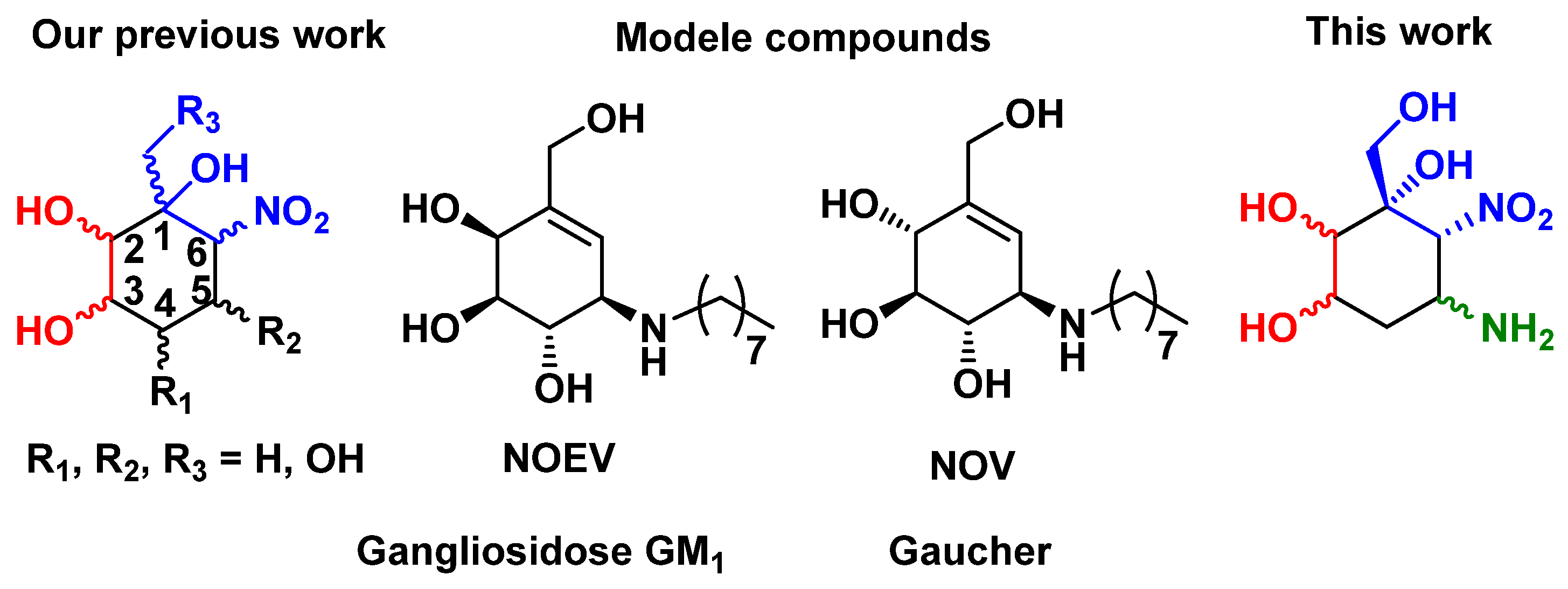
Recently, a novel strategy has been developed to access various nitrocyclitols, which are precursors of aminocyclitols. This synthesis is based on a process involving two enzymes and three reactions in one pot: an aldolization catalyzed by an aldolase, an intramolecular stereoselective nitroaldolization, responsible for cyclization, and a dephosphorylation catalyzed by a phosphatase. During this process, two C–C bonds are formed in a highly stereoselective manner. The stereochemistry of the C2–C3 bond is controlled by the aldolase used. By modifying the ketone donor and the acceptor aldehyde, about fifty nitrocyclitols with well-controlled stereochemistry were obtained (Figure 1) [19,20,21,22].
Here we report an extension of this highly stereoselective enzymatic process using new enzyme substrates. The target systems are aminocyclitols with an amino group at position 5, which are analogs of N-octyl-4-epi-β-valienamine (NOEV) and N-octyl-β-valienamine (NOV), for the design and synthesis of new molecules with potential activity as lysosomal glycosidase inhibitors. These two compounds are potent glycosidase inhibitors that have demonstrated efficacy as chaperone molecules at the lysosome level.
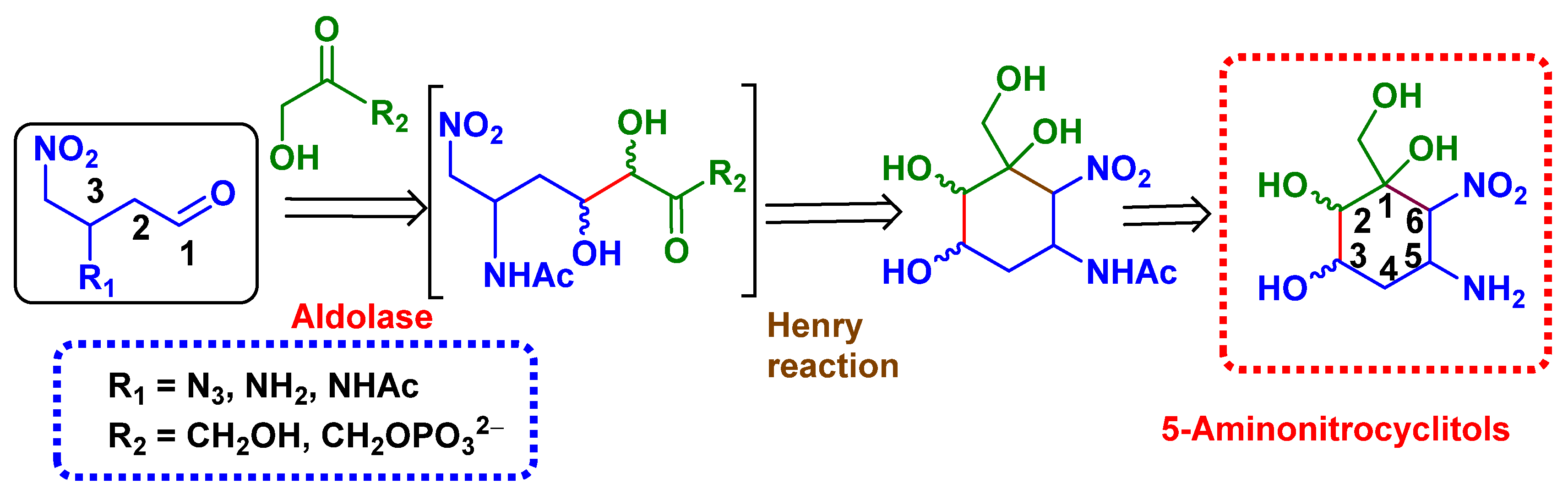
As shown in Figure 2, this strategy requires preparing aldehyde acceptors and ketone donors. To investigate the enzymes’ tolerance to new substrates, an amino group was introduced into the nitroaldehyde in various forms. The donors were prepared by enzymatic processes. Three DHAP-dependent aldolases, described in the literature as highly stereoselective for synthesis, were selected to obtain different C2–C3 stereochemistries [23,24,25].

2. Results

2.1. Synthesis of Aldehydes

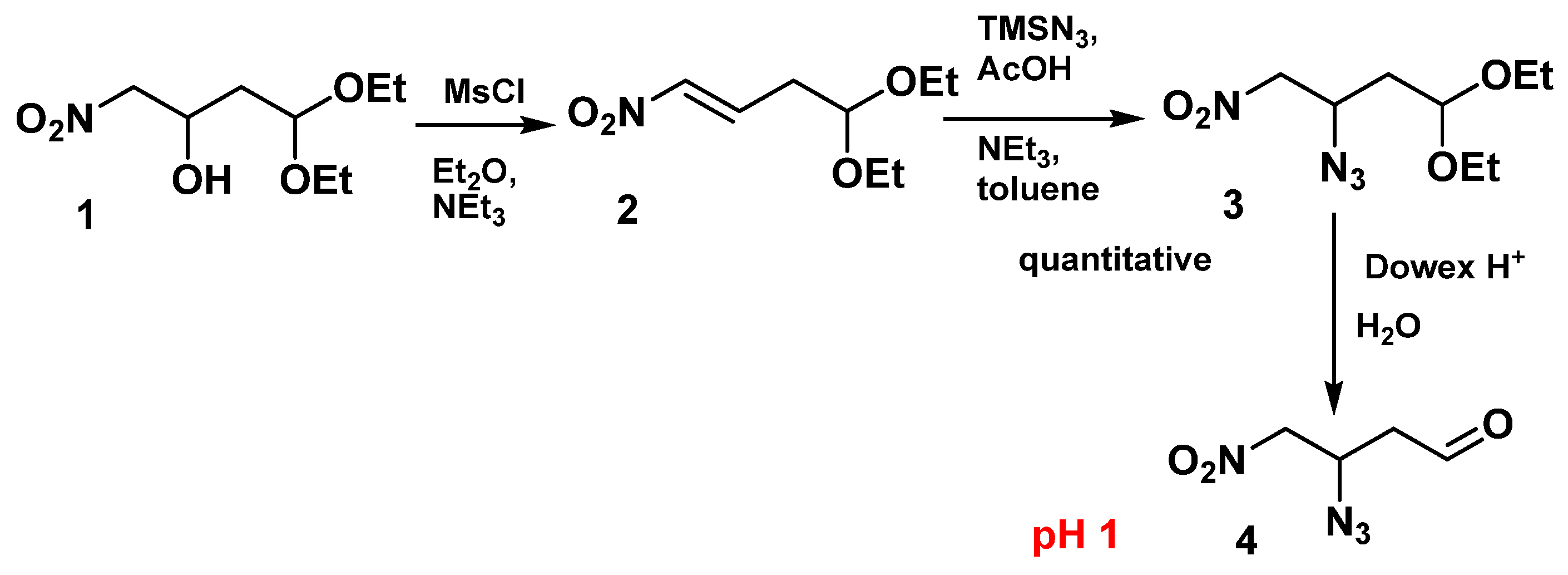
Starting from nitroalcohol 1, which was prepared in our previous work, a mesylate group was introduced to facilitate removal of the hydrogen at the α-position of the nitro group by reacting the alcohol function of compound 1 with mesyl chloride. Alkene 2 was obtained in quantitative yield (Scheme 1).
An azido group was introduced by adding HN3 in the presence of triethylamine, which was generated in situ by mixing trimethylsilylazide and acetic acid [26]. The acetal 3 was deprotected with Dowex H+ resin. The desired aldehyde was identified by NMR of the crude reaction product at acidic pH. For enzymatic coupling, the pH of the solution must be adjusted to 7, which is essential for aldolases. Unfortunately, cleavage of HN3 occurred during this process.
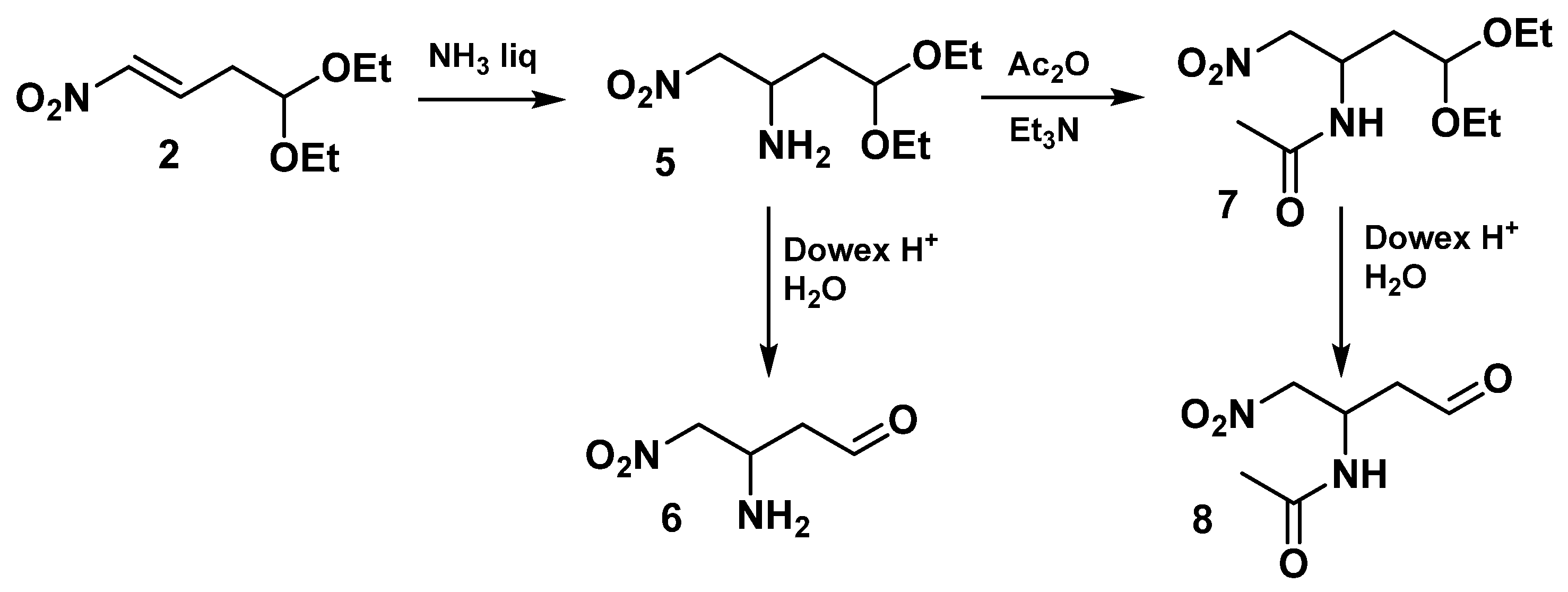
To prepare aldehyde precursors containing amino or amido groups, the first step was to add the amine function to the double bond of alkene 2. For this purpose, liquid ammonia was introduced by cold-injection into a solution of the alkene in methanol. The crude reaction mixture was purified by acid washing (Scheme 2).
From this intermediate, two reaction pathways were pursued. First, the acetal was deprotected to obtain the corresponding aldehyde 6, which can be tested as a substrate for aldolases. Alternatively, the amine can be protected as an acetamide before deprotection of the acetal. The acetamide was formed by reacting the amine with acetic anhydride in the presence of triethylamine.

2.2. Enzymatic Couplings

Aldehydes 6 and 8 were tested with four enzymes: fructose 6-phosphate aldolase (FSA) [27], fructose-1,6-bisphosphate aldolase (FBA) [28], rhamnulose-1-phosphate aldolase (R1PA) [29], and fuculose-1-phosphate aldolase (F1PA) [30] using the corresponding donors. Before the enzymatic coupling reactions, kinetic parameters were determined using these enzymes and substrates. The results showed that aldehydes 6 and 8 were very poor substrates for the silenced FSA and FBA, and it was not possible to determine the kinetic parameters. Nevertheless, enzymatic coupling methods were attempted.
Because R1PA and F1PA are largely tolerant to the acceptor substrate, kinetic measurements were performed with these two enzymes and acetamide 9 (Figures S1 and S2). The Km values obtained were relatively high, indicating a low affinity of the enzymes for this substrate. Nevertheless, the coupling reactions could be completed in a reasonable time by increasing the amount of enzyme in the reaction medium.
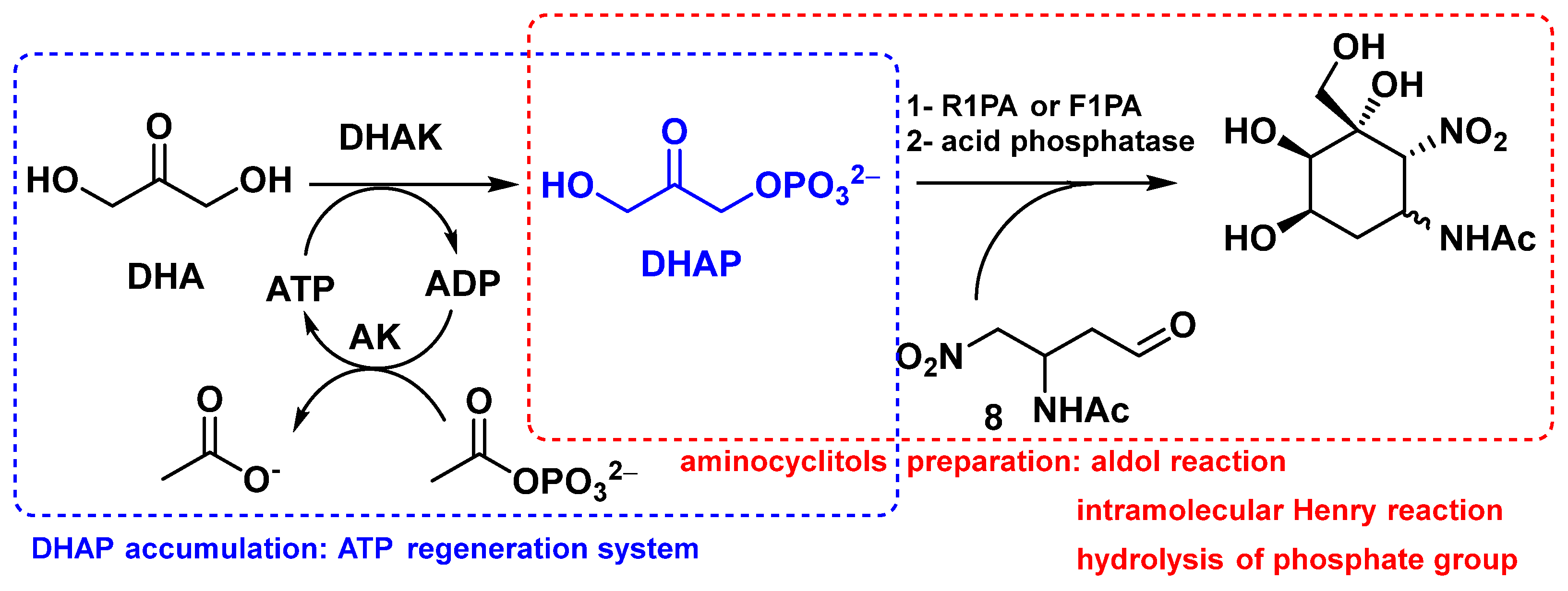
The results of the one-pot multienzyme system are shown in Scheme 3.
The results of the aldolization catalyzed by these enzymes are presented in Table 1.
The first coupling was initiated with amine 6 using mutant FSA and dihydroxyacetone (DHA) as the donor. Only degradation of the starting material was observed by TLC analysis. Purification did not yield a specific nitrocyclitol; therefore, the reaction was considered unsuccessful. The use of amine 6 as a substrate was rejected due to its instability. Subsequently, the enzymatic reaction was tested with acetamide 8. After 24 h of stirring, the crude reaction mixture was purified on silica gel. The resulting sample was a mixture of diastereoisomers; thus, acetamide 8 is also not a suitable substrate for the enzyme. The use of commercial fructose-1,6-bisphosphate aldolase (FBA) did not yield better results.
Two coupling reactions between DHAP and aldehyde 8 were initiated: one catalyzed by R1PA and the other by F1PA. The methodology was the same as in our previous work with hydroxylated model substrates [25]. The donor was introduced in slight deficiency (0.8 eq.) compared to the acceptor (1 eq.). The reaction takes place in 60 mM phosphate buffer at pH 6.9. At the end of the reaction (monitored by enzymatic assay), the addition of methanol causes the enzymes to precipitate, and they are removed by centrifugation. Evaporation of the solvents yields the crude reaction product.
Since compound 8 is present in racemic form, two diastereoisomers were formed as expected. Experiments show that the formation of the two aminocyclitols, whether with R1PA or F1PA, occurs mainly via stereoselective aldol and cyclization reactions.
In the case of R1PA, the 2R,3S and 2R,3R stereochemistries were obtained, with the hydroxyl groups 2 and 3 in the axial position and the other substituents (CH2OH, NO2 and NHAc) in the equatorial position, forming the “unfavorable” type stereoisomer for compound 9. However, both diastereomers were obtained in similar proportions, suggesting that the two compounds have comparable stability and that their chair conformations would present the same number of axial hydroxyl groups.
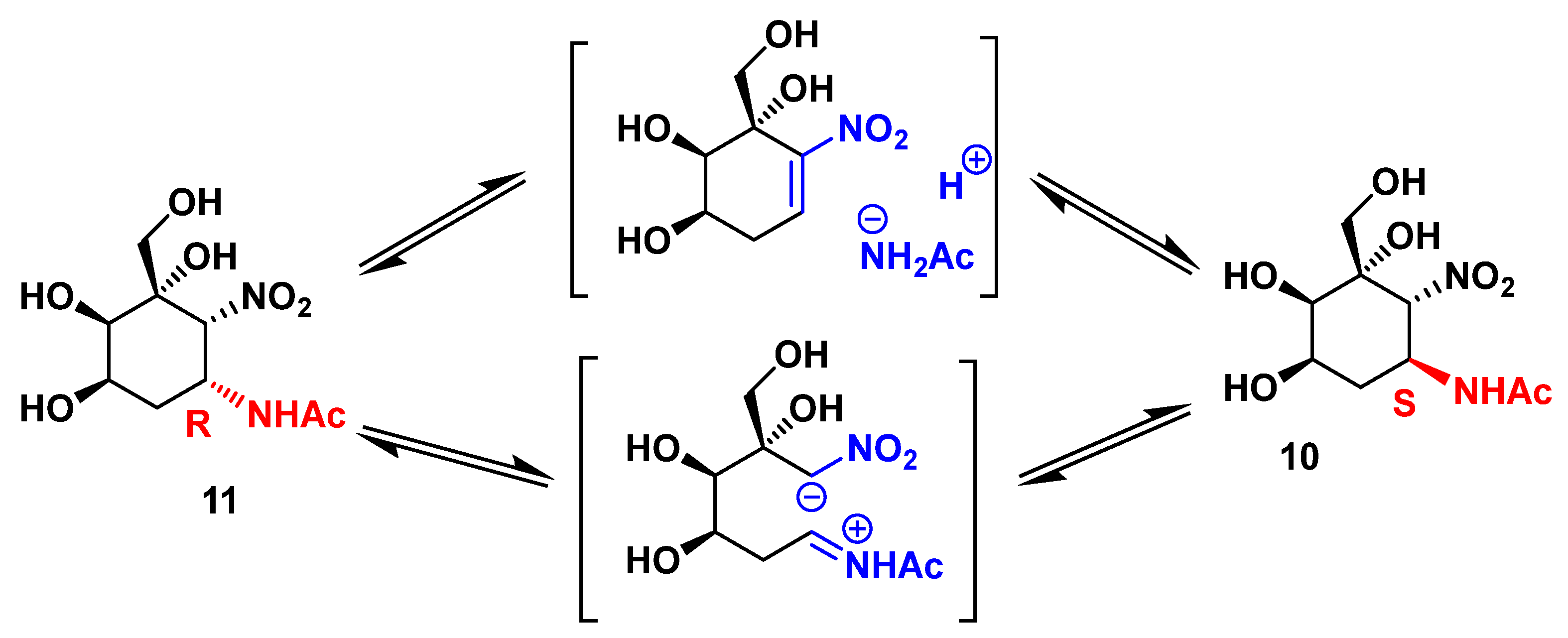
In the case of F1PA, the presence of NHAc does not affect the favorable behavior of the aldolase, which stereoselectively forms products with the R,R configuration. In the NMR spectra of the crude reaction mixture, two products, 10 and 11, were initially observed in a 56:44 ratio. However, after evaporating the water in the medium at 30 °C and separating the two diastereoisomers on silica gel, this ratio changed. Compound 10 was predominantly obtained with a yield of 53%, while compound 11 was isolated with a yield of only 6%. We concluded that a rearrangement had occurred, with two possible explanations. First, the initial axial position of NHAc, as well as the nature of this group, could suggest an α-elimination at the NO2 position, followed by reintroduction of the amide in the equatorial position at C5 of the cycle. This would correspond to a retro-Michaël reaction. Another possibility is opening of the cycle at the C5–C6 bond, proceeding through an imine-like intermediate. In this case, it would be a “retroaza-Henry” reaction (Figure 3). To confirm our hypothesis of cyclitol reopening, compound 11 was dissolved in water at 50 °C overnight. This procedure allowed us to obtain compound 10, which is more stable, quantitatively.
Remarkably, this is the first time an equatorial CH2OH at C1, an equatorial NO2 at C6, and an axial NHAc at C5 have been observed. In all nitrocyclitols hydroxylated at C5 that were obtained, all these groups were in the equatorial position. Therefore, diastereoisomer 11 has a very unfavorable configuration at C5, since the NHAc group is in the axial position. In the presence of the hydroxyl group, we have found that ring closure by the intramolecular Henry reaction depends on the configuration of the hydroxyl group at C5. Now, we can add that it also depends on the nature of the substituent carried by the ring at C5.
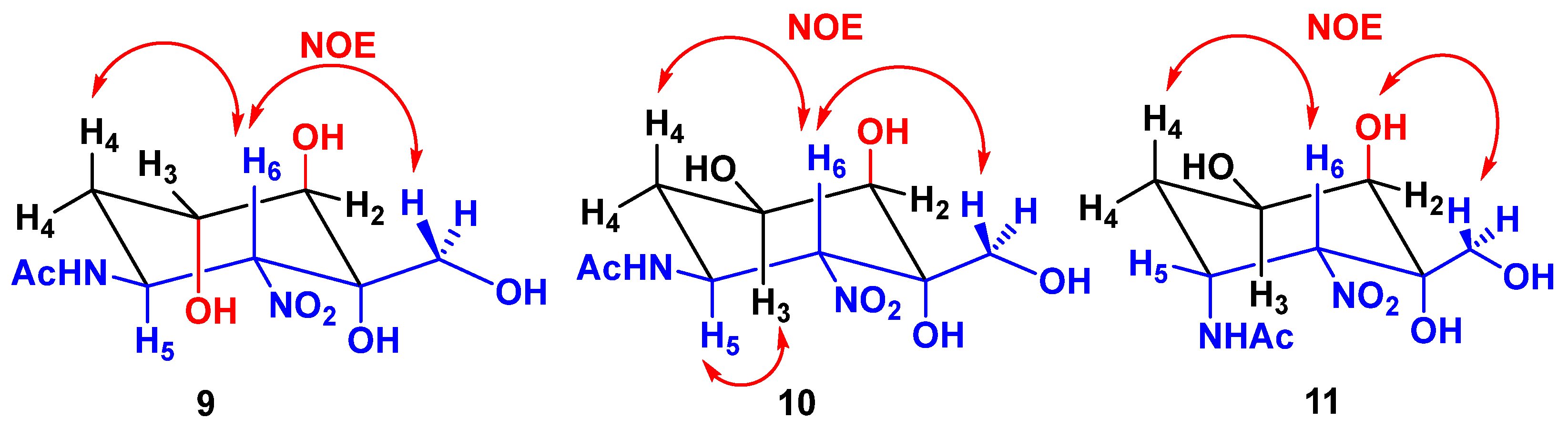
The structural determination was supported by 1H, 13C, HSQC, and NOESY NMR spectra, based on the established stereoselectivity of aldolases at the C2 position (C3 for the aldols). Based on the coupling constants and NOESY experiments, we propose the following stereochemistries and conformations:
The NOESY (Nuclear Overhauser Effect Spectroscopy) experiment is essential here for the structural elucidation of the molecules, particularly regarding the quaternary carbon (C1) of the nitrocyclitol, which lacks a proton. This technique highlights interactions between the magnetic spins of two protons that are close in space. For better illustration, the chair conformations of compounds 9, 10, and 11 are shown in Figure 4. The unfavorable axial groupings are marked in red, and the relative configuration of the C1–C6–C5 chain is highlighted in blue.
This reaction is very interesting because a single or two diazotized nitrocyclitols with a defined configuration for five carbons of the cycle can be obtained from a racemic substrate.

2.3. Preparation of Aminocyclitols

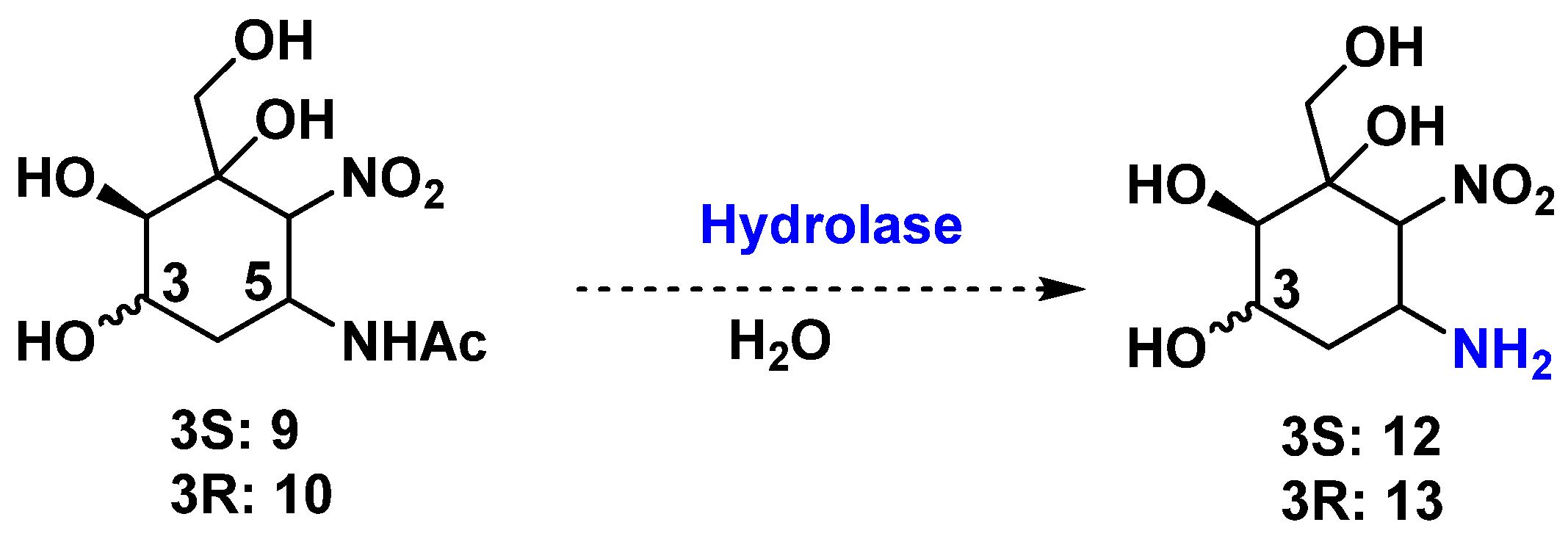
We have searched for a suitable deacylation method for these cyclitols. It is particularly important that this deacylation occurs without epimerization at the carbons of the cycle whose stereochemistry was defined in previous steps. An enzymatic reaction appears to be the most suitable method (Figure 5).
We conducted tests with five different enzymes. It was important to test the reactions on both amide compounds, even though they are isomers, as their different stereochemistry could influence hydrolysis.
Each of these enzymes reaches its optimal activity under specific temperature and pH conditions, as listed in Table 2. The tests were conducted with a fixed substrate concentration of 50 mM, in a phosphate buffer of the same concentration, and in the presence of 1 U/μmol catalyst. The results are shown in Table 2.
According to these results, the two substrates tested exhibit the same behavior with respect to these enzymes. For acylase, our compounds were not accepted as substrates, and therefore no reaction was detected when it was used as a catalyst.
For the other four enzymes, their use enables the formation of a primary amine, although this occurs after varying reaction times. For example, papain is very effective in the deacylation of compounds 9 and 10, and the presence of a primary amine in the medium is detected after only two hours of reaction. The reactions are stirred for 48 h, after which the deprotection of the amine by papain is complete. We have therefore selected this enzyme for our hydrolysis reactions of the amide at position 5.
The hydrolysis of compounds 9 and 10 was then carried out on a larger scale to allow for all the analyses required for the characterization of the products formed.
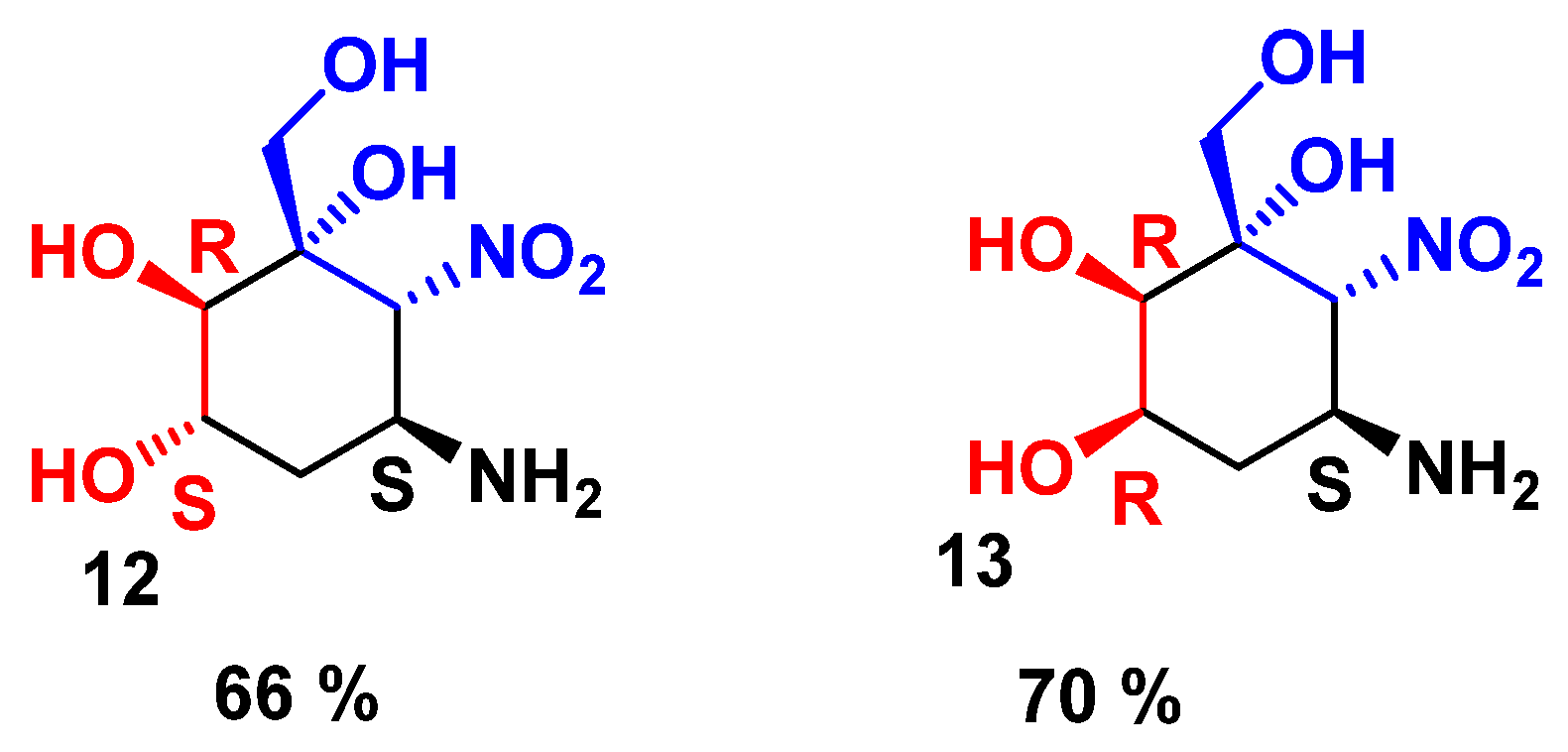
After complete conversion of the acylated nitrocyclitols, adding methanol to the medium precipitates the enzyme, which is then removed by centrifugation. After the solvent is evaporated, the reaction crude is purified on amino-grafted silica gel. A single reaction product is isolated for each type of hydrolyzed substrate (Figure 6).

3. Materials and Methods

Mesyl chloride, azidotrimethylsilane, Dowex 50W X8 ion exchange resin, liquid ammonia, 1,3-dihydroxyacetone dimer, the enzymes α-GPDH, TPI, AK, D-fructose-6-phosphate disodium salt hydrate, glycolaldehyde dimer, 1,3-dihydroxyacetone dimer, D,L-glucose 3-phosphate diethyl acetal barium salt, D-(+)-glyceraldehyde, D-ribose-5-phosphate disodium salt hydrate, D-glucose-6-phosphate dipotassium salt hydrate, β-nicotinamide adenine dinucleotide reduced disodium salt hydrate, β-nicotinamide adenine dinucleotide phosphate sodium salt, glycylglycine, HEPES, triethanolamine, sodium phosphate monobasic dihydrate, and Trizma hydrochloride, as well as α-glycerophosphate dehydrogenase/triosephosphate isomerase from rabbit muscle, glucose-6-phosphate dehydrogenase and phosphoglucose isomerase, were purchased from Sigma–Aldrich (Saint Louis, MO, USA). Hydroxyacetone was purchased from Fluka (Buchs, Switzerland) and purified by silica gel chromatography.
Formaldehyde, benzaldehyde, and D-glucose were purchased from Avocado (Lancashire, UK). Valeraldehyde was purchased from Acros (Geel, Belgium). D-erythrose was purchased from Alfa Aesar (Ward Hill, MA, USA). 2-deoxy-D-ribose was purchased from Lancaster Synthesis (Morecambe, UK). D-arabinose-5-phosphate and D-deoxyfructose-6-phosphate were synthesized in the laboratory as previously described [22]. The synthetic gene was produced by Genewiz (South Plainfield, NJ, USA). Oligonucleotides were obtained from Sigma-Genosys (The Woodlands, TX, USA). Nuclear Magnetic Resonance (NMR) spectra were recorded on a BRUKER (Billerica, MA, USA) AVANCE 400 spectrometer (1H: 400 MHz; 13C: 100.6 MHz) or a BRUKER AVANCE 500 (for NOESY spectra) and the temperature was 25 °C. 13C spectra were acquired using a J-modulated spin-echo sequence (JMOD) for easier interpretation. Chemical shifts (δ) are reported in parts per million (ppm) relative to the deuterated solvent used, which is specified for each compound. In the case of D2O, 13C spectra were automatically calibrated relative to the spectral window. 1H NMR spectra were used to determine the diastereomeric ratios of the resulting mixtures. High-resolution mass spectra were recorded using a Waters (Milford, MA, USA) QTOF micro high-resolution spectrometer in electrospray ionization (ESI), liquid secondary ion mass spectrometry (LSIMS), or chemical ionization (CI) in positive mode (+). Optical rotations were measured on a JASCO (Tokyo, Japan) DIP-370 polarimeter using the sodium D-line (589 nm) at 25 °C. The analysis solvent and compound concentration (given in g/100 mL) are specified for each case.
  • 4,4-Diethoxy-1-nitrobut-1-ene (2)
To a solution of nitroalcohol (1.5 mmol) in anhydrous ether (10 mL), triethylamine (625 μL, 3 eq.) was added under argon. After cooling the mixture to 0 °C, mesyl chloride (345 μL, 3 eq.) was added dropwise. After 15 min at 0 °C, water (10 mL) was added, and the reaction mixture was extracted with dichloromethane. The organic layers were washed with saturated aqueous NaCl and evaporated under reduced pressure. The compound was purified by chromatography on silica gel to remove excess MsCl. The alkene was isolated in 97% yield.
1H NMR (400 MHz, CDCl3): δ (ppm) 7.26 (m, 1H, H2), 6.99 (d, J = 14 Hz, 1H, H1), 4.29 (t, 2H, J = 5.3 Hz, H4), 3.64–3.43 (m, 4H, H5), 2.51 (dd, 2H, J = 5.3 Hz, J = 5.4, H3), 1.12 (t, 6H, J = 7.2 Hz, H6).
13C NMR (100 MHz, CDCl3): 142.0 (C1), 137.5 (C2), 100.2 (C4), 61.6 (C5), 33.4 (C3), 15.3 (C6).
  • 3-Azido-1,1-diethoxy-4-nitrobutane (3)
TMSN3 (500 μL, 4 mmol, 4 eq.) and AcOH (220 μL, 4 mmol, 4 eq.) were diluted, under argon, in 7 mL of anhydrous toluene. After 15 min of stirring at 25 °C, triethylamine (26 μL, 0.2 mmol, 0.2 eq.) was added, followed by alkene 2 (1 mmol, 1 eq.), previously diluted in 3 mL of toluene. After 16 h of stirring at 25 °C, the reaction was stopped by adding 10 mL of water. The mixture was extracted with dichloromethane, and the organic phases were washed with saturated NaCl solution. After drying over MgSO4, the solution was filtered and concentrated under reduced pressure. The yield was quantitative.
1H NMR (400 MHz, CDCl3): δ (ppm) 4.61–4.45 (m, 4H, H1, H4, H5), 3.67–3.45 (m, 4H, H5), 1.97 (m, 2H, H3), 1.12 (t, 6H, J = 7.2 Hz, H6).
13C NMR (100 MHz, CDCl3): 101.1 (C4), 78.5 (C1), 65.7 (C5), 45.3 (C3), 38.7 (C2), 15.3 (C6).
  • 4,4-Diethoxy-1-nitrobutan-2-amine (5)
A solution of crude alkene 2 (8.94 g, 47 mmol) in 160 mL of methanol at 4 °C was bubbled with liquid ammonia for approximately 1 h. The ammonia flow was stopped (monitored by TLC), and the solvent was evaporated. The resulting product was a red, pasty oil.
1H NMR (400 MHz, CDCl3): δ (ppm) 5.8 (m, 1H, H4), 5.31–5.11 (d, 2H, J = 7.3 Hz, H1), 3.98 (m, 1H, H2), 3.69–3.44 (m, 4H, H5), 2.07 (m, 2H, NH2), 1.82 (m, 2H, H3), 1.13 (t, 6H, J = 7.2 Hz, H6).
13C NMR (100 MHz, CDCl3): 101.2 (C4), 78.4 (C1), 64.9 (C5), 43.2 (C3), 38.7 (C2), 15.1 (C6).
  • N-(4,4-Diethoxy-1-nitrobutan-2-yl)acetamide (7)
Amine 5 was dissolved in 100 mL of dichloromethane, followed by the addition of pyridine (21 mL, 7 eq.) and acetic anhydride (25 mL, 7 eq.). The reaction was stirred overnight at 4 °C. The mixture was washed with saturated aqueous CuSO4 solution and extracted with dichloromethane. The organic phase was dried over MgSO4, filtered, and concentrated under reduced pressure. A brown oil (7.2 g) was obtained, corresponding to a 61% crude yield from 2.
The acetamide 7 was purified by silica gel chromatography (dichloromethane/MeOH 96/4). Purified yield: 51%.
1H NMR (400 MHz, CDCl3): δ (ppm) 4.9 (m, 1H, H4), 4.36 (m, 1H, H2), 3.67–3.44 (m, 4H, H5), 3.02 (d, 2H, J = 7.4 Hz, H1), 2.24–2.09 (m, 2H, H3), 2.04 (s, 3H, H8), 1,13 (t, 6H, J = 7.3 Hz, H6).
13C NMR (100 MHz, CDCl3): 169.1 (C7), 100.2 (C4), 76.9 (C1), 63.6–62.8 (C5), 43.9 (C3), 33.9 (C2), 20.1 (C8), 14.5 (C6).
HR-MS ES+: m/z calculated [C10H20N2O5 + Na]+ 271.2700; found 271.1270.
General procedure for the deprotection of ketals by acid resin: Ketal 3, 5 or 7 (1 mmol, 1.2 equivalents) was suspended in water (2 mL) and then a cation-exchange resin (Dowex H+ form, 1 g) was added. The suspension was stirred at 45 °C for 2.5 h (reaction monitored quantitatively by TLC). The resin was filtered off and rinsed with water.
3-Azido-4-nitrobutanal (4): Aldehyde 4 was obtained from ketal 3, following the general deprotection procedure.
3-Amino-4-nitrobutanal (6): Aldehyde 6 was obtained from ketal 5 following the general deprotection procedure.
N-(1-Nitro-4-oxobutan-2-yl)acetamide (8): Compound 8 was obtained from ketal 7 following the general deprotection procedure.
The 1H NMR spectra no longer show the characteristic peaks of the ketal. Aldehydes 4, 6 and 8 were obtained in solution (H2O) and used directly in enzymatic coupling.
Preparation of Dihydroxyacetone phosphate (DHAP) [31]:
Solutions of DHA (300 µL, 1 M, 0.600 µmol, 1 eq.), MgSO4 (300 µL, 0.5 M, 0.15 mmol), acetylphosphate (2.4 mL, 0.5 M, 1.2 mmol, 2 eq.) and phosphate buffer (3 mL, 60 mM, pH 7) were added successively to water (5.4 mL). The pH was adjusted to 7.5, and solutions of DHAK (320 µL, 36 U/mL, 12 U), AK (200 µL, 170 U/mL, 36 U), and ATP (80 µL, 0.5 M, 19.6 µmol) were added. Total phosphorylation of DHA was measured spectrophotometrically by enzymatic GPDH quantification of DHAP. This spectrophotometric assay was performed at room temperature for 10 min in a final volume of 1 mL, containing Tris–HCl 50 mM pH 8 (975 µL), NADH (20 µL), an aliquot of the reaction (2.5–5.0 µL), and a mixture of GPDH/TPI (2 µL).
General procedure for the preparation of nitrocyclitols: To the freshly prepared DHAP solution, aldehyde (900 µmol, 1.5 eq.) was added along with a solution of ZnCl2 (20 µL, 10 mM) and 1800 µL water. The reaction was initiated by adding aldolase (F1PA or R1PA, 400 µL, 43 U/mL = 17 U), and the mixture was shaken until complete disappearance of DHAP as verified by DHAP spectrophotometric assay. The pH was then lowered to 4.8, and the solution was centrifuged (20,000 rpm, 40 min, 5 °C) to collect the supernatant. Phosphatase acid from wheat germ (36 mg, 60 U) was added to this solution, and the mixture was shaken for 24 h. The solution was centrifuged again (20,000 rpm, 40 min, 5 °C) and the supernatant was concentrated under reduced pressure at 30 °C. The residue was purified by flash chromatography (CH2Cl2/MeOH 9:1) to yield the desired nitrocyclitols.
R1PA: total yield (62%): nitrocyclitol 9 (30 mg, 28%) and 10 (36 mg, 34%).
F1PA: total yield (59%): nitrocyclitol 10 (56 mg, 90%) and 11 (6 mg, 10%).
N-((1S,2R,3S,4R,5S)-3,4,5-Trihydroxy-3-(hydroxymethyl)-2-nitrocyclohexyl)acetamide 9:
1H NMR (400 MHz, CD3OD): δ (ppm) 5.04 (m, 1H, H2), 4.16 (m, 1H, H1), 4.11 (m, 1H, H5), 3.85 (m, 1H, H5), 3.82 (d, J(H7a-H7b) = 11.3 Hz, 1H, H7a), 3.66 (m, 1H, H4), 3.18 (d, J(H7b-H7a) = 11.3 Hz, 1H, H7b), 2.17 (m, 1H, H6b), 1.91 (s, 3H, H9), 1.71 (ddd, J(H4a-H4b = 11.5, J(H6a-H1) ≈ 0, J(H6a-H5) = 11.4 Hz, H6a).
13C NMR (100 MHz, CD3OD): δ (ppm) 172.9 (C8), 90.1 (C2), 76.3 (C3), 73.4 (C1), 68.6 (C5), 61.6 (C7), 47.1 (C4), 35.9 (C6), 22.8 (C9).
HR-MS ES+: m/z calculated [C9H16N2O7 + Na]+ 287.0855; found 287.0859.
[ α   ] D 25 = +22 (c = 2.2, CH3OH).
N-((1S,2R,3S,4R,5R)-3,4,5-Trihydroxy-3-(hydroxymethyl)-2-nitrocyclohexyl)acetamide 10:
1H NMR (400 MHz, CD3OD): δ (ppm) 5.01 (m, 1H, H2), 4.80 (m, 1H, H1), 4.15 (m, 1H, H5), 3.82 (m, 1H, H4), 3.54 (d, J(H7a-H7b) = 11.4 Hz, 1H, H7a), 3.19 (d, J(H7b-H7a) = 11.4 Hz, 1H, H7b), 2.10 (m, 1H, H6b), 1.99 (s, 3H, H9), 1.71 (ddd, J(H4a-H4b) = 11.5, J(H6a-H1) ≈ 0, J(H6a-H5) = 11.4 Hz, H6a).
13C NMR (100 MHz, MeOD): δ (ppm) 172.8 (C8), 90.2 (C2), 74.0 (C3), 71.5 (C1), 70.1 (C5), 66.8 (C7), 44.3 (C4), 34.2 (C6), 22.8 (C9).
HRMS (ES+): calculated for C9H16N2O7 [M + Na+]: 287.0855; found: 245.0853.
[ α   ] D 25 = +27 (c = 2.9, CH3OH).
N-((1S,2R,3S,4R,5R)-3,4,5-Trihydroxy-3-(hydroxymethyl)-2-nitrocyclohexyl)acetamide 11:
1H NMR (400 MHz, CD3OD): δ (ppm) 4.79 (m, 1H, H1), 4.79 (d, J(H1-H2) = 3.8 Hz, 1H, H2), 4.11 (m, 1H, H5), 3.86 (d, J(H4-H5) = 1.3 Hz, 1H, H4), 3.79 (d, J(H7a-H7b) = 11.3 Hz, 1H, H7a), 3.53 (d, J(H7b-H7a) = 11.3 Hz, 1H, H7b), 1.93 (m, 1H, H6b), 1.80 (ddd, J(H6a-H6b = 11.5, J(H6a-H1) ≈ 0, J(H6a-H5) = 11.3 Hz, H6a), 1.88 (s, 3H, H9).
13C NMR (100 MHz, CD3OD): δ (ppm) 172.8 (C8), 89.9 (C2), 78.9 (C3), 71.6 (C1), 66.9 (C5), 65.8 (C7), 44.2 (C4), 33.8 (C6), 22.7 (C9).
HR-MS ES+: m/z calculated [C9H16N2O7 + Na]+ 287.0855; found 287.0851.
[ α   ] D 25 = +16 (c = 1.3, CH3OH).
General procedure for deprotection of amine: To a solution of acetamide 9 or 10 (40 μmol) in 0.8 mL phosphate buffer (20 mM, pH 6.2), 60 mg (80 U) of papain was added. The mixture was stirred for 12 h at 25 °C. Methanol (0.8 mL) was added, the mixture was centrifuged, and the supernatant was concentrated under reduced pressure (30 °C). The crude reaction mixture was purified on amino-grafted silica (dichloromethane/methanol 9/1). Compounds 12 and 13 were obtained as white solids.
(1S,2R,3S,5S,6R)-5-Amino-1-(hydroxymethyl)-6-nitrocyclohexane-1,2,3-triol 12: Compound 12 was isolated with a yield of 66% following the general procedure for amine deprotection of nitrocyclitols.
1H NMR (400 MHz, CD3OD): δ (ppm) 4.94 (m, 1H, H6), 4.56 (m, 1H, H5), 4.45 (m, 1H, H3), 4.07 (m, 1H, H2), 3.82 (d, J(H7a-H7b) = 12.2 Hz, 1H, H7a), 3.53 (d, J(H7b-H7a) = 11.4 Hz, 1H, H7b), 2.00 (m, 1H, H4b), 1.85 (t, J(H4a-4b) ≈ J(H4a-H5) = 12.1 Hz, J(H4a-H3) ≈ 0, 1H, H4a).
13C NMR (100 MHz, CD3OD): δ (ppm) 93.1 (C6), 76.4 (C1), 73.4 (C5), 66.9 (C2, C3), 65.8 (C7), 38.1 (C5), 36.4 (C4).
HRMS (ES+): calculated for C7H14N2O6 [M + Na+]: 245.0750; found: 245.0754.
[ α   ] D 25 = +14 (c = 1, CH3OH).
(1S,2R,3R,5S,6R)-5-Amino-1-(hydroxymethyl)-6-nitrocyclohexane-1,2,3-triol 13: Compound 13 was isolated with a yield of 70% following the general procedure for amine deprotection of nitrocyclitols.
1H NMR (400 MHz, CD3OD): δ (ppm) 4.64 (d, J(H6-H5) = 10.4 Hz, 1H, H6), 4.38 (m, 1H, H5), 4.35 (m, 1H, H3), 3.99 (m, 1H, H2), 3.58 (d, J(H7a-H7b) = 11.2 Hz, 1H, H7a), 3.33 (d, J(H7b-H7a) = 11.2 Hz, 1H, H7b), 2.26 (m, 1H, H4b), 1.96 (dd, J(H4a-H4b) ≈ J(H4a-H5) ≈ J(H4a-H3) = 11.9 Hz, 1H, H4a).
13C NMR (100 MHz, CD3OD): δ (ppm) 93.4 (C6), 76.7 (C1), 74.8 (C2), 66.8 (C3), 62.0 (C7), 39.8 (C5), 39.2 (C4).
HRMS (ES+): calculated for C7H14N2O6 [M + Na+]: 245.0750; found: 245.0648.
[ α   ] D 25 = +17 (c = 1.1, CH3OH).

4. Conclusions

We have prepared new aminocyclitols, which are analogs of N-octyl-4-epi-β-valienamine (NOEV) and N-octyl-β-valienamine (NOV). Two kinases, an aldolase, and a phosphatase were involved in the cascade process. We have shown that the aldolases F1PA and R1PA accept 4-nitrobutanal with an acetamido group at position 2 as an acceptor substrate. Using this aldehyde in aldol addition directly yielded aminocyclitols with an amino group at position 5, which are analogs of NOV and NOEV.
This approach demonstrates the combination of chemical and enzymatic reactions in a four-step, one-pot process to produce new aminocyclitols with high stereochemical control.
With R1PA, 2R,3S and 2R,3R stereochemistries were obtained in similar proportions for the individual diastereoisomers 9 and 10. With F1PA, nitrocyclitol 10 is predominantly obtained by a rearrangement from 11 to 10. Two hypotheses were proposed: an α-elimination at the NO2 position followed by a retro-Michaël reaction, or a “retro-Aza-Henry” reaction.
Five stereocenters were formed during the process, three of which were controlled by the highly stereoselective intramolecular Henry reaction. These one-pot cascade processes provided access to polyhydroxylated aminocyclitols with controlled stereochemistry, without the protection–deprotection steps required for the preparation of this family of compounds.

Supplementary Materials

The following supporting information can be downloaded at: https://www.mdpi.com/article/10.3390/catal16020144/s1, Figure S1: Determination of the Km of compound 8 with R1PA. Figure S2: Determination of the Km of compound 8 with F1PA. Spectra of Products.

Author Contributions

Conceptualization, L.E.B. and M.L.; methodology, L.E.B., M.L. and M.M.A.; software, M.E.-H. and I.W.; validation, L.E.B., M.M.A. and M.E.-H.; formal analysis, L.E.B. and I.W.; investigation, L.E.B. and M.M.A.; resources, L.E.B. and M.E.-H.; data curation, L.E.B. and M.M.A.; writing—original draft preparation, L.E.B. and I.W.; writing—review and editing, M.M.A., M.L. and M.E.-H.; visualization, L.E.B. and I.W.; supervision, L.E.B.; project administration, L.E.B.; funding acquisition, L.E.B., M.M.A. and M.E.-H. All authors have read and agreed to the published version of the manuscript.

Funding

This research was funded by the National Plan for Science, Technology and Innovation (NPSTI, KACST) of Saudi Arabia, which supported this work through project number 13-MED1022-02.

Data Availability Statement

The data presented in this study are available in Supplementary Materials.

Conflicts of Interest

The authors declare no conflicts of interest.

References

  1. Diaz, L.; Delgado, A. Medicinal chemistry of aminocyclitols. Curr. Med. Chem. 2010, 17, 2393–2418. [Google Scholar] [CrossRef]
  2. Duchek, J.; Adams, D.R.; Hudlicky, T. Chemoenzymatic synthesis of inositols, conduritols, and cyclitol analogues. Chem. Rev. 2011, 111, 4223–4258. [Google Scholar] [CrossRef]
  3. Kılbaş, B.; Balci, M. Recent advances in inositol chemistry: Synthesis and applications. Tetrahedron 2011, 67, 2355–2389. [Google Scholar] [CrossRef]
  4. Boutaghane, N.; Voutquenne-Nazabadioko, L.; Simon, A.; Harakat, D.; Benlabed, K.; Kabouche, Z. A new triterpenic diester from the aerial parts of Chrysanthemum macrocarpum. Phytochem. Lett. 2013, 6, 519–525. [Google Scholar] [CrossRef]
  5. Mohanrao, R.; Asokan, A.; Sureshan, K.M. Bio-inspired synthesis of rare and unnatural carbohydrates and cyclitols through strain driven epimerization. Chem. Commun. 2014, 50, 6707–6710. [Google Scholar] [CrossRef]
  6. Salamci, E. Recent developments concerned with the synthesis of aminocyclitols. Tetrahedron Lett. 2020, 61, 151728. [Google Scholar] [CrossRef]
  7. Donaldson, W.A. Recent progress in the synthesis of six-membered aminocyclitols (2008–2017). Arkivoc 2018, 2018, 231–256. [Google Scholar] [CrossRef]
  8. Jiang, C.; Liu, Q.; Liu, J.; Liu, K.; Tian, L.; Duan, M.; Wang, Y.; Shen, Z.; Xu, Y. Selective synthesis of 3-deoxy-5-hydroxy-1-amino-carbasugars as potential α-glucosidase inhibitors. Org. Biomol. Chem. 2019, 17, 5381–5391. [Google Scholar] [CrossRef]
  9. Tang, R.; Jiang, C.; Li, H.; Li, W.; Xu, Y. Facile Synthesis of N-Substituted 4-Amino-6-methyl Resorcinols from Polysubstituted Cyclohexanone. Synlett 2017, 28, 1807–1810. [Google Scholar] [CrossRef]
  10. Bingham, T.W.; Hernandez, L.W.; Olson, D.G.; Svec, R.L.; Hergenrother, P.J.; Sarlah, D. Enantioselective synthesis of isocarbostyril alkaloids and analogs using catalytic dearomative functionalization of benzene. J. Am. Chem. Soc. 2018, 141, 657–670. [Google Scholar] [CrossRef]
  11. Trapero, A.; Egido-Gabas, M.; Bujons, J.; Llebaria, A. Synthesis and evaluation of hydroxymethylaminocyclitols as glycosidase inhibitors. J. Org. Chem. 2015, 80, 3512–3529. [Google Scholar] [CrossRef]
  12. Schalli, M.; Wolfsgruber, A.; Santana, A.G.; Tysoe, C.; Fischer, R.; Stütz, A.E.; Thonhofer, M.; Withers, S.G. C-5a-substituted validamine type glycosidase inhibitors. Carbohydr. Res. 2017, 440, 1–9. [Google Scholar] [CrossRef]
  13. Prasad, K.R.; Rangari, V.A. Efficient enantiospecific synthesis of ent-conduramine F-1. Tetrahedron 2018, 74, 6689–6693. [Google Scholar] [CrossRef]
  14. Harada, S.; Li, K.; Kino, R.; Takeda, T.; Wu, C.-H.; Hiraoka, S.; Nishida, A. Construction of Optically Active Isotwistanes and Aminocyclitols Using Chiral Cyclohexadiene as a Common Intermediate. Chem. Pharm. Bull. 2016, 64, 1474–1483. [Google Scholar] [CrossRef]
  15. Sieber, S.; Carlier, A.; Neuburger, M.; Grabenweger, G.; Eberl, L.; Gademann, K. Isolation and total synthesis of kirkamide, an aminocyclitol from an obligate leaf nodule symbiont. Angew. Chem. 2015, 127, 8079–8081. [Google Scholar] [CrossRef]
  16. Schmidt, N.G.; Eger, E.; Kroutil, W. Building bridges: Biocatalytic C–C-bond formation toward multifunctional products. ACS Catal. 2016, 6, 4286–4311. [Google Scholar] [CrossRef] [PubMed]
  17. Lee, S.-H.; Yeom, S.-J.; Kim, S.-E.; Oh, D.-K. Development of aldolase-based catalysts for the synthesis of organic chemicals. Trends Biotechnol. 2022, 40, 306–319. [Google Scholar] [CrossRef] [PubMed]
  18. Clapés, P. Recent Advances in Enzyme-Catalyzed Aldol Addition Reactions. In Green Biocatalysis; John Wiley & Sons, Inc.: Hoboken, NJ, USA, 2016; pp. 267–306. [Google Scholar]
  19. Castillo, J.A.; Guérard-Hélaine, C.; Gutiérrez, M.; Garrabou, X.; Sancelme, M.; Schürmann, M.; Inoue, T.; Hélaine, V.; Charmantray, F.; Gefflaut, T. A mutant D-fructose-6-phosphate aldolase (Ala129Ser) with improved affinity towards dihydroxyacetone for the synthesis of polyhydroxylated compounds. Adv. Synth. Catal. 2010, 352, 1039–1046. [Google Scholar] [CrossRef]
  20. El Blidi, L.; Assaf, Z.; Camps Bres, F.; Veschambre, H.; Théry, V.; Bolte, J.; Lemaire, M. Fructose-1, 6-bisphosphate aldolase-mediated synthesis of aminocyclitols (analogues of valiolamine) and their evaluation as glycosidase inhibitors. ChemCatChem 2009, 1, 463–471. [Google Scholar] [CrossRef]
  21. El Blidi, L.; Crestia, D.; Gallienne, E.; Demuynck, C.; Bolte, J.; Lemaire, M. A straightforward synthesis of an aminocyclitol based on an enzymatic aldol reaction and a highly stereoselective intramolecular Henry reaction. Tetrahedron Asymmetry 2004, 15, 2951–2954. [Google Scholar] [CrossRef]
  22. El Blidi, L.; Ahbala, M.; Bolte, J.; Lemaire, M. Straightforward chemo-enzymatic synthesis of new aminocyclitols, analogues of valiolamine and their evaluation as glycosidase inhibitors. Tetrahedron Asymmetry 2006, 17, 2684–2688. [Google Scholar] [CrossRef]
  23. Calveras, J.; Egido-Gabás, M.; Gómez, L.; Casas, J.; Parella, T.; Joglar, J.; Bujons, J.; Clapés, P. Dihydroxyacetone phosphate aldolase catalyzed synthesis of structurally diverse polyhydroxylated pyrrolidine derivatives and evaluation of their glycosidase inhibitory properties. Chem.-Eur. J. 2009, 15, 7310–7328. [Google Scholar] [CrossRef]
  24. Phung, A.N.; Zannetti, M.T.; Whited, G.; Fessner, W.D. Stereospecific biocatalytic synthesis of pancratistatin analogues. Angew. Chem. Int. Ed. 2003, 42, 4821–4824. [Google Scholar] [CrossRef]
  25. Bres, F.C.; Guérard-Hélaine, C.; Hélaine, V.; Fernandes, C.; Sánchez-Moreno, I.; Traïkia, M.; García-Junceda, E.; Lemaire, M. L-Rhamnulose-1-phosphate and L-fuculose-1-phosphate aldolase mediated multi-enzyme cascade systems for nitrocyclitol synthesis. J. Mol. Catal. B Enzym. 2015, 114, 50–57. [Google Scholar] [CrossRef]
  26. Nielsen, M.; Zhuang, W.; Jørgensen, K.A. Asymmetric conjugate addition of azide to α, β-unsaturated nitro compounds catalyzed by cinchona alkaloids. Tetrahedron 2007, 63, 5849–5854. [Google Scholar] [CrossRef]
  27. Clapés, P.; Fessner, W.-D.; Sprenger, G.A.; Samland, A.K. Recent progress in stereoselective synthesis with aldolases. Curr. Opin. Chem. Biol. 2010, 14, 154–167. [Google Scholar] [CrossRef] [PubMed]
  28. Schoevaart, R.; Van Rantwijk, F.; Sheldon, R.A. Facile enzymatic aldol reactions with dihydroxyacetone in the presence of arsenate. J. Org. Chem. 2001, 66, 4559–4562. [Google Scholar] [CrossRef]
  29. Calveras, J.; Casas, J.; Parella, T.; Joglar, J.; Clapés, P. Chemoenzymatic synthesis and inhibitory activities of hyacinthacines A1 and A2 stereoisomers. Adv. Synth. Catal. 2007, 349, 1661–1666. [Google Scholar] [CrossRef]
  30. Gijsen, H.J.; Qiao, L.; Fitz, W.; Wong, C.-H. Recent advances in the chemoenzymatic synthesis of carbohydrates and carbohydrate mimetics. Chem. Rev. 1996, 96, 443–474. [Google Scholar] [CrossRef]
  31. Sánchez-Moreno, I.; García-García, J.F.; Bastida, A.; García-Junceda, E. Multienzyme system for dihydroxyacetone phosphate-dependent aldolase catalyzed C–C bond formation from dihydroxyacetone. Chem. Commun. 2004, 14, 1634–1635. [Google Scholar] [CrossRef]
Figure 1. Aminocyclitols active on lysosomal glycosidases (inhibitors), analogues already developed and this work: red color: aldolization catalyzed by an aldolase, blue color: intramolecular stereoselective nitroaldolization and green color: amino group in position 5 of aminonitrocyclitols.
Catalysts 16 00144 g001
Figure 2. Proposed methodology for the introduction of an amine in C5 on the cyclitol.
Catalysts 16 00144 g002
Scheme 1. Synthesis of aldehyde 4: this aldehyde is detected only at pH1.
Catalysts 16 00144 sch001
Scheme 2. Access to nitrogenous aldehydes 6 and 8.
Catalysts 16 00144 sch002
Scheme 3. One-pot multistep reaction for the preparation of aminocyclitols from acetamide 8: DHAP regeneration (blue color), aminocyclitols cascade synthesis (red color).
Catalysts 16 00144 sch003
Figure 3. Possibilities of transition from compound 11 to 10.
Catalysts 16 00144 g003
Figure 4. Spatial representation of compounds 9, 10 and 11 with observed NOE (Nuclear Overhauser Effect).
Catalysts 16 00144 g004
Figure 5. Hydrolysis of the amide function considered at position 5 of the cycle.
Catalysts 16 00144 g005
Figure 6. Hydrolysis results of compounds 12 and 13.
Catalysts 16 00144 g006
Table 1. Enzyme biocatalysed preparation of aminocyclitols.
EnzymeDonorSubstrate (Aldehyde)Results
Yield (%)Aminocyclitols Ratio
Muted FSADHA6NR
8Traces
FBADHAP6NR
8Traces
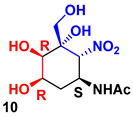
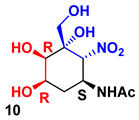
R1PADHAP862%Catalysts 16 00144 i001
45
Catalysts 16 00144 i002
55
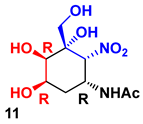
F1PADHAP859%Catalysts 16 00144 i003
90
Catalysts 16 00144 i004
10
Muted FSA: Muted Fructose-6-phosphate aldolase, FBA: Fructose-1, 6-Bisphophate Aldolase, R1PA: L-Rhamnulose-1-phosphate Aldolase, F1PA: L-Fuculose-1-phosphate Aldolase, DHA: dihydroxyacetone, DHAP: dihydroxyacetone phosphate, NR: no reaction.
Table 2. Results of the enzymatic deacylation tests.
EnzymeTemperature
°C
pHSubstrateResults
2 h18 h48 h
Penicillin
amidase
377.69NR 1LRLR
10
Acylase I257.09NRNRNR
10
Hydantoinase409.09NRLRLR
10
Papain256.29LR 2SR 3TR 4
10
Chymopapain256.29NRLRLR
10
1 No reaction, 2 low reaction, 3 strong reaction, 4 total reaction.
Disclaimer/Publisher’s Note: The statements, opinions and data contained in all publications are solely those of the individual author(s) and contributor(s) and not of MDPI and/or the editor(s). MDPI and/or the editor(s) disclaim responsibility for any injury to people or property resulting from any ideas, methods, instructions or products referred to in the content.