
Article

Nb-MOG as a High-Performance Photocatalyst for Cr(VI) Remediation: Optimization and Reuse Cycles

1
Department of Chemical Engineering, State University of Maringá, Avenida Colombo, 5790, Maringá 87020-900, PR, Brazil
2
Postgraduate Program in Chemical and Biochemical Process Technology, Federal University of Technology-Paraná, Via Do Conhecimento, S/N-Km 01, Pato Branco 85503-390, PR, Brazil
3
Department of Chemical Engineering, Federal University of Technology-Paraná, R. Doutor Washington Subtil Chueire, 330, Ponta Grossa 84016-210, PR, Brazil
4
São Carlos Institute of Chemistry, University of São Paulo (USP), São Carlos CEP 13566-590, SP, Brazil
*
Author to whom correspondence should be addressed.
Catalysts 2026, 16(1), 60; https://doi.org/10.3390/catal16010060
Submission received: 4 December 2025 / Revised: 27 December 2025 / Accepted: 1 January 2026 / Published: 4 January 2026
(This article belongs to the Special Issue Advanced Semiconductor Photocatalysts)

Abstract

This study describes the removal of Cr(VI) using Nb-MOG (Niobium Metal–Organic Gel) as a photocatalyst. The characterization was performed using various techniques: Scanning Electron Microscopy–Energy Dispersive X-ray Spectroscopy (SEM–EDS), Point charge zero charge (PZC) determination, Fourier Transform Infrared Spectroscopy (FTIR), X-ray diffraction (XRD) and thermogravimetric analysis (TG). The characterization results indicated an amorphous structure with predominance of Nb on the catalytic surface. Photoreduction tests were performed under different experimental conditions, following a two-factor central composite design with 11 experiments—including triplicates of the central point—to evaluate the influence of catalyst concentration (0.146 to 0.854 g L−1) and pH (1.46 to 8.54) on the Cr(VI) removal efficiency after 60 min of photocatalytic treatment. Experimentally, complete Cr(VI) removal was achieved at pH 5.00 using 0.854 g·L−1 of Nb-MOG, and the response surface analysis indicated optimal performance at higher catalyst concentrations and pH values around 5.00. In contrast, lower efficiencies were observed at extreme pH values, particularly at higher pH and lower catalyst concentrations. These results suggest that the photocatalytic performance of Nb-MOG for Cr(VI) removal is very susceptible to operating conditions, underscoring the importance of optimizing pH and catalyst concentration for effective treatment.

1. Introduction

Hexavalent chromium (Cr(VI)) is a highly toxic form of chromium primarily produced through industrial activities such as electroplating, pigment production, leather tanning, coal processing, and the manufacturing of paints and anti-corrosives [1,2]. Its high solubility in water and strong oxidative properties enable Cr(VI) to be highly mobile and persistent in the environment, posing significant risks to soil and groundwater contamination. This contaminant is frequently present in industrial effluents due to its extensive use in processes that require corrosion resistance and durability [1,3].
Cr(VI) is notably more toxic than its trivalent counterpart, chromium (III) (Cr (III)), which is an essential nutrient for humans. Exposure to Cr(VI) has been linked to various health issues, including lung cancer, kidney failure, liver diseases, cardiac damage, and respiratory problems [4]. The toxicity mechanisms of Cr(VI) involve the generation of reactive oxygen species (ROS), leading to oxidative damage to DNA and cell membranes. Recognizing these health risks, organizations like the World Health Organization (WHO) and the U.S. Environmental Protection Agency (EPA) have established stringent limits for Cr(VI) concentrations in drinking water, typically around 0.05 mg/L, to safeguard human health, especially in areas near industries utilizing this toxic metal [4,5].
Several methods are available for Cr(VI) removal, including adsorption [6], precipitation [7], electrochemical treatment [8], membrane filtration and electrocoagulation [9], ion exchange [10], and photocatalysis [11]. Photocatalysis has already proven efficient [11]. However, photocatalytic removal of heavy metals is generally limited by low light transmittance due to scattering phenomena that reduce photocatalytic efficiency. Therefore, combining photocatalysis with the adsorption process has been considered an efficient approach to increase catalytic activity [12].
Heterogeneous photocatalysis is a promising process for reducing heavy metals, such as Cr(VI), in aqueous solutions. This method involves the excitation of a semiconductor by light radiation, resulting in the generation of electron–hole pairs that trigger redox reactions [13,14]. Through the formation of reactive oxygen species, heterogeneous photocatalysis can promote the reduction in toxic metals to less harmful forms. The efficiency of this process depends on several factors, including the type of photocatalyst used, the pH of the medium, and the intensity of the radiation. It is widely studied in environmental applications for the treatment of wastewater contaminated with heavy metals, making a significant contribution to water decontamination [14,15].
Metal–organic frameworks (MOFs) are highly porous materials formed by metal ions or clusters coordinated to organic ligands [16,17]. Their unique structural characteristics, such as high surface area and selective adsorption capacity, make MOFs excellent candidates for catalytic applications. In particular, they have been explored in catalytic processes, CO2 reduction [18], and oxidation reactions due to their versatility and the possibility of fine-tuning their properties through ligand and metal center modification. MOFs containing transition metals such as copper and zirconium are commonly used in catalysis due to their ability to facilitate chemical reactions under mild environmental conditions [9,11,16,19].
On the other hand, MOFs, due to their rigid structure, have greater fragility under mechanical or thermal stress [20]. Thus, these materials face several limitations, such as low dispersion in polymeric matrices and limited stability under severe conditions [21,22,23]. A new class of materials has been reported as a promising alternative to MOFs, metal–organic gels (MOGs). They exhibit a more flexible gel matrix and unique properties, such as self-healing capacity, porosity, ease of processing, and better compatibility with polymeric matrices [23,24].
The literature reports few studies using MOGs applied to photocatalysis for contaminant degradation. Gu et al. prepared a metal–organic gel, cobalt-doped iron-based metal–organic gel (CFM) based on ferrous doped with cobalt, using a photocatalyst to remove norfloxacin (NOR). The Vis/50%-CFM/PMS system allows a NOR removal rate of 96.8% in 60 min. Also, we demonstrate antibacterial effects against E. coli and S. aureus [25]. Tang et al. produced a metal–organic gel of Fe-doped TiO2 (F/T-MOG) using the hydrothermal method applied to tetracycline degradation. They observed that the addition of Fe to TiO2-MOG resulted in an expansion of the catalyst’s specific surface area and also led to a reduction in the band gap, as well as an increase in visible light absorption [26].
In this context, this study describes the synthesis and characterization of a niobium-based catalyst (Nb-MOG—Niobium Metal–organic gel) applied to the reduction of chromium (VI).

2. Results and Discussion

2.1. Catalysts Characterization

2.1.1. X-Ray Diffraction (XRD)

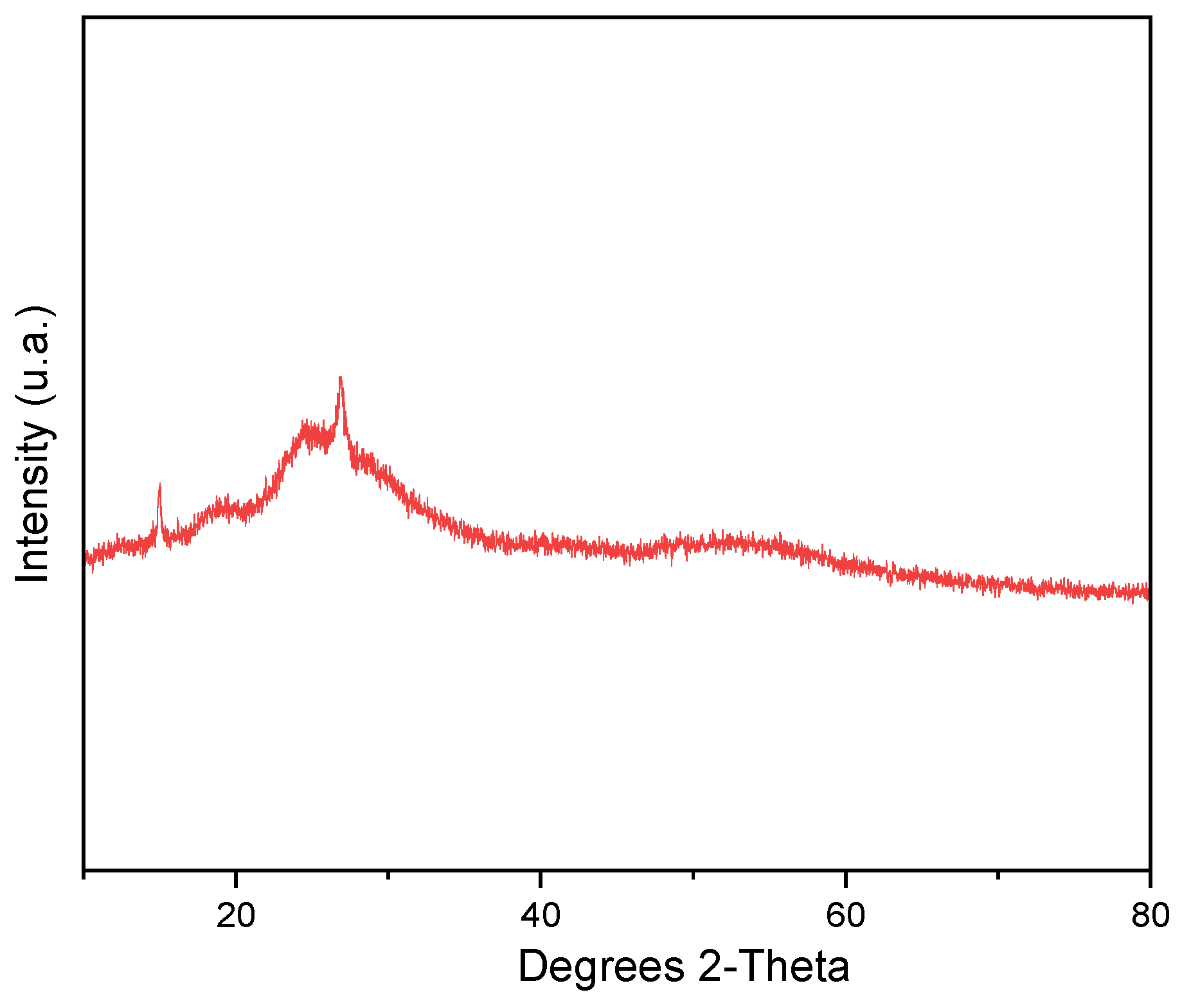
The results of the XRD analysis for the Nb-MOG sample are shown in Figure 1. The diffractogram indicates that the sample has amorphous characteristics. Other studies using FeTiO2 catalysts (for the degradation of Triclosan and 2,8-Dichlorodibenzene-p-dioxin [27] and Nb2O5 (for the reduction of Chromium VI) [28] indicated that amorphous (non-crystalline) structures favor both photocatalytic reactions in organic and inorganic pollutants. Jin et al. (2024) studied MOG-Al, MOG-Fe, and MOG-Fe/Al materials; the XRD spectra indicated the amorphous nature of the gels [29]. Zhang et al. (2021) used transition metals (Fe, Co, Ni, Cu, Zn, Mn) to synthesize MOGs. They observed only one wide-angle diffraction peak at 2θ = 24.5° in the XRD spectrum, which means that there is no long-range ordered crystalline structure, i.e., the gel has an amorphous structure [30].

2.1.2. Scanning Electron Microscopy–Energy Dispersive X-Ray Spectroscopy (SEM–EDS)

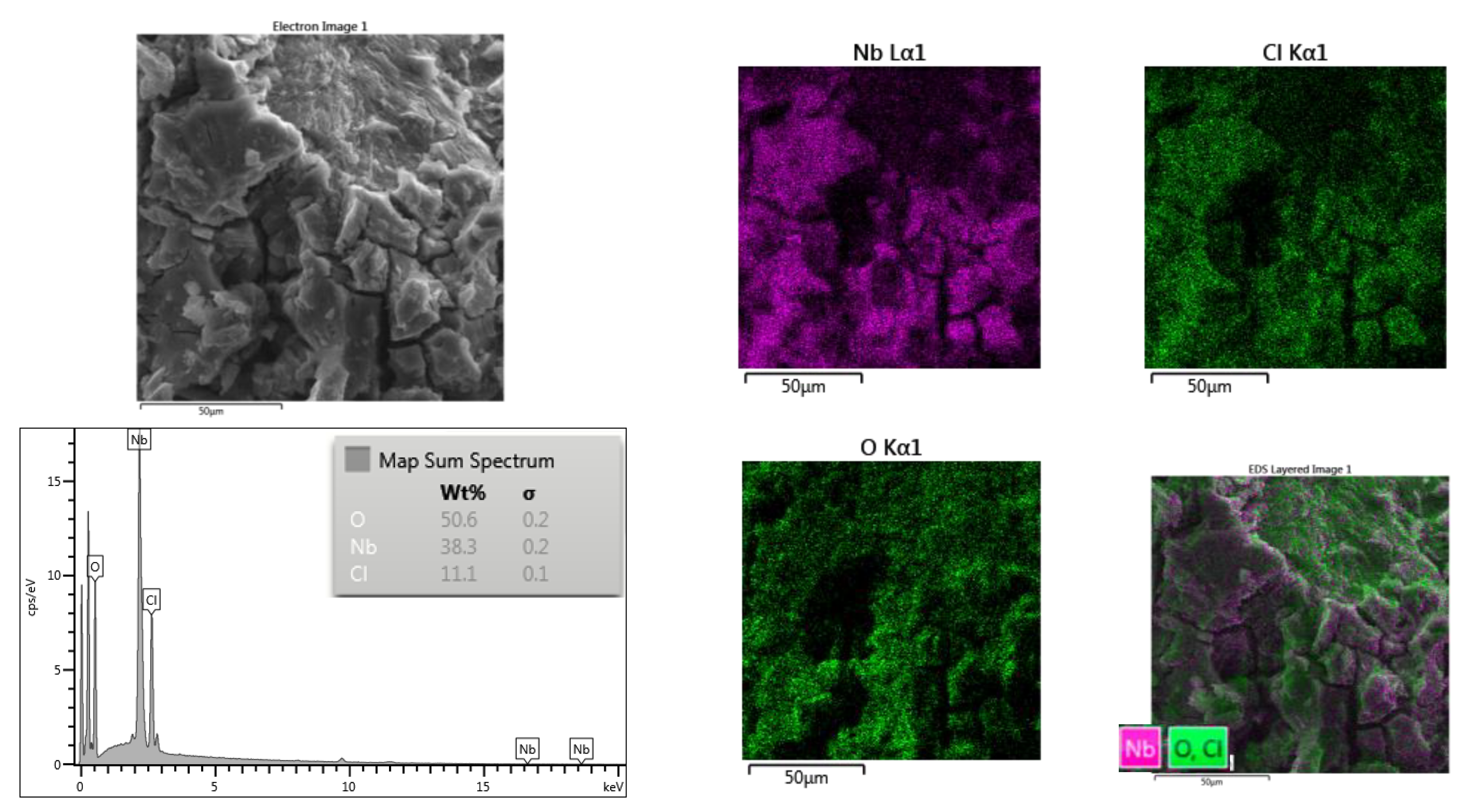
The results of the catalyst characterization using SEM/EDS are presented in Figure 2. EDS is a semi-quantitative analysis that estimates the concentrations of elements on the catalyst surface, allowing for a better understanding of the possible causes of the results obtained in photocatalytic tests. The SEM images revealed a morphology characterized by a wrinkled, yet non-porous, surface. This surface is typically observed in other works in the literature, in catalysts prepared by the sol–gel method, both non-calcined and calcined at low temperatures [31]. This result is similar to another study that indicated MOG samples in blocks, which confirmed phase purity. The blocks exhibited heterogeneous shapes, and their surfaces presented dense, scale-like textures [29].
The EDS indicated a significant amount of surface niobium, as expected. Additionally, a small fraction of Cl was also observed, possibly resulting from the Nb precursor used in the synthesis step.

2.1.3. Photoacoustic Spectroscopy (PAS) and Ponto De Carga Zero (PCZ)

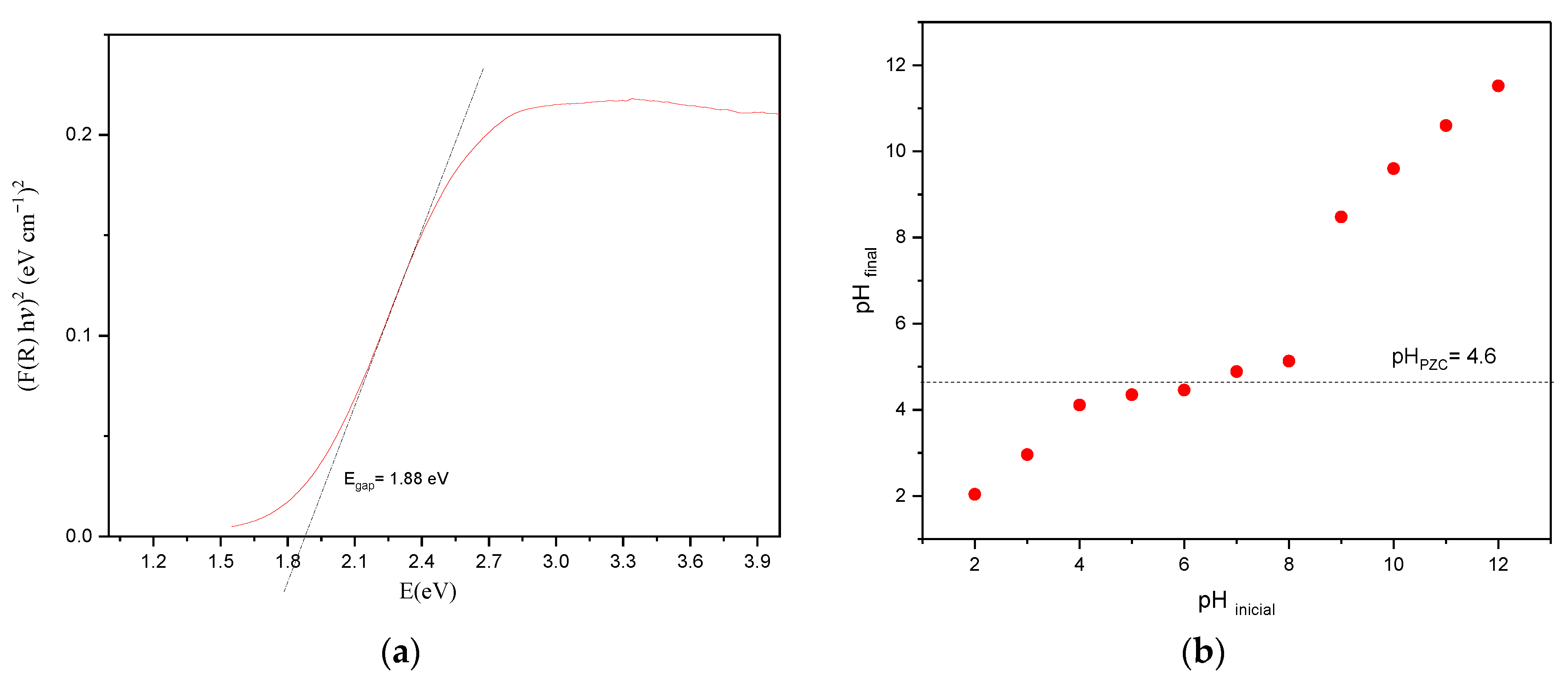
The band-gap energy and point of zero charge results for the Nb-MOF are shown in Figure 3a and Figure 3b, respectively.
In the literature, band gap energies of 3.70 and 3.71 eV were found for non-calcined Nb2O5 samples [32]. Abreu et al. (2021) analyzed the band gap values for the non-calcined Nb2O5 catalyst, finding a value around 3.10 eV. On the other hand, they observed that the energy gap decreased with increasing temperature, corroborating the theories of interatomic spacing, which increases as atomic vibrations intensify, leading to a decrease in the potential observed for electrons in the material and, consequently, reducing the size of the energy gap [33]. The band-gap energy of the Nb-MOG was estimated to be 1.88 eV using the photoacoustic spectroscopy technique. The preparation method directly influences the band gap of the material. The band gap of TiO2 catalysts prepared by the impregnation method is larger than that obtained by the sol–gel method, as described by Lenzi et al. (2010). It was also observed that the surface area of the catalysts obtained by the chemical mixture (sol–gel) method is significantly larger than that obtained by the impregnation method [31].
The point of zero charge (PZC) for the Nb-MOG catalyst was estimated using a batch equilibration methodology [34]. The results (Figure 3b) indicated a PZC of approximately 4.6, meaning that at pH values higher than this, the catalyst surface is negatively charged. In contrast, at pH values more acidic than 4.6, the catalyst surface is positively charged. The estimated value was lower than the PZC of uncalcined Nb2O5 found in the literature (6.60) [33]. Considering the relevance of electrostatic interactions for the adsorption of species on the catalyst surface, and consequently, for the efficiency of the photocatalyst process, PZC results contribute to elucidating the pH influence previously described and observed in the surface plot. Simulations using Visual MINTEQ allowed the estimation of chromium speciation. For Cr(VI), the most abundant species in the range of pH studied were C r O 4 2 and H C r O 4 , the first being dominant at pH levels higher than 7.0 and H C r O 4 being dominant at pH levels under 6.0. Both species are negatively charged, so their adsorption on the catalyst surface is unfavored at highly alkaline pH. Cr(III), in turn, at pHs lower than 6.0, is predominantly found as C r O H + 2 and C r + 3 . The positively charged catalyst surface electrostatically repels these positively charged species at pH levels lower than the PZC (4.6). For these reasons, at moderate pH values around 4.6, both Cr(VI) and Cr(III) species can interact moderately with the neutral or mildly negatively charged surface of the catalyst.

2.1.4. Fourier Transform Infrared Spectroscopy (FTIR)

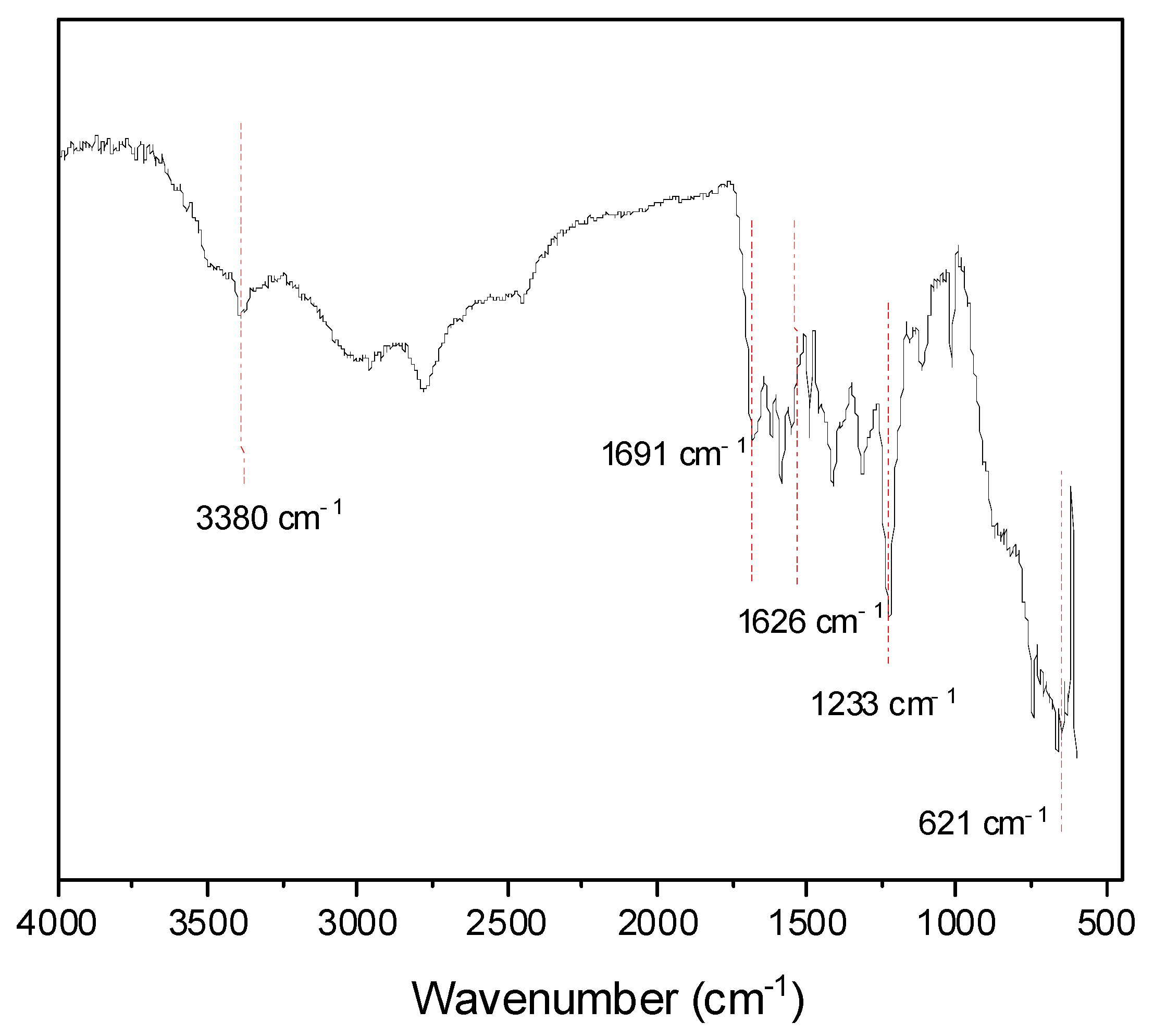
Figure 4 shows the infrared spectrum indicating characteristic bands of amorphous niobium oxide. According to Cantão et al. (2010), the amorphous material is characterized, in particular, by bands centered at 621 cm−1. Furthermore, bands around 850 cm−1 can be associated with the symmetric stretching of Nb-O bonds. Vibrations relating to surface OH groups and adsorbed H2O are shown at 1626 and 3380 cm−1 [35]. Karabaca et al. (2010) studied the FTIR spectrum of 2-aminoterephthalic acid theoretically and experimentally. In this study, they indicated that the C–NH2 stretching mode obtained at 1233 cm−1 is a result of this compound, along with the ring modes [36].

2.1.5. Thermogravimetric Analysis (TG)

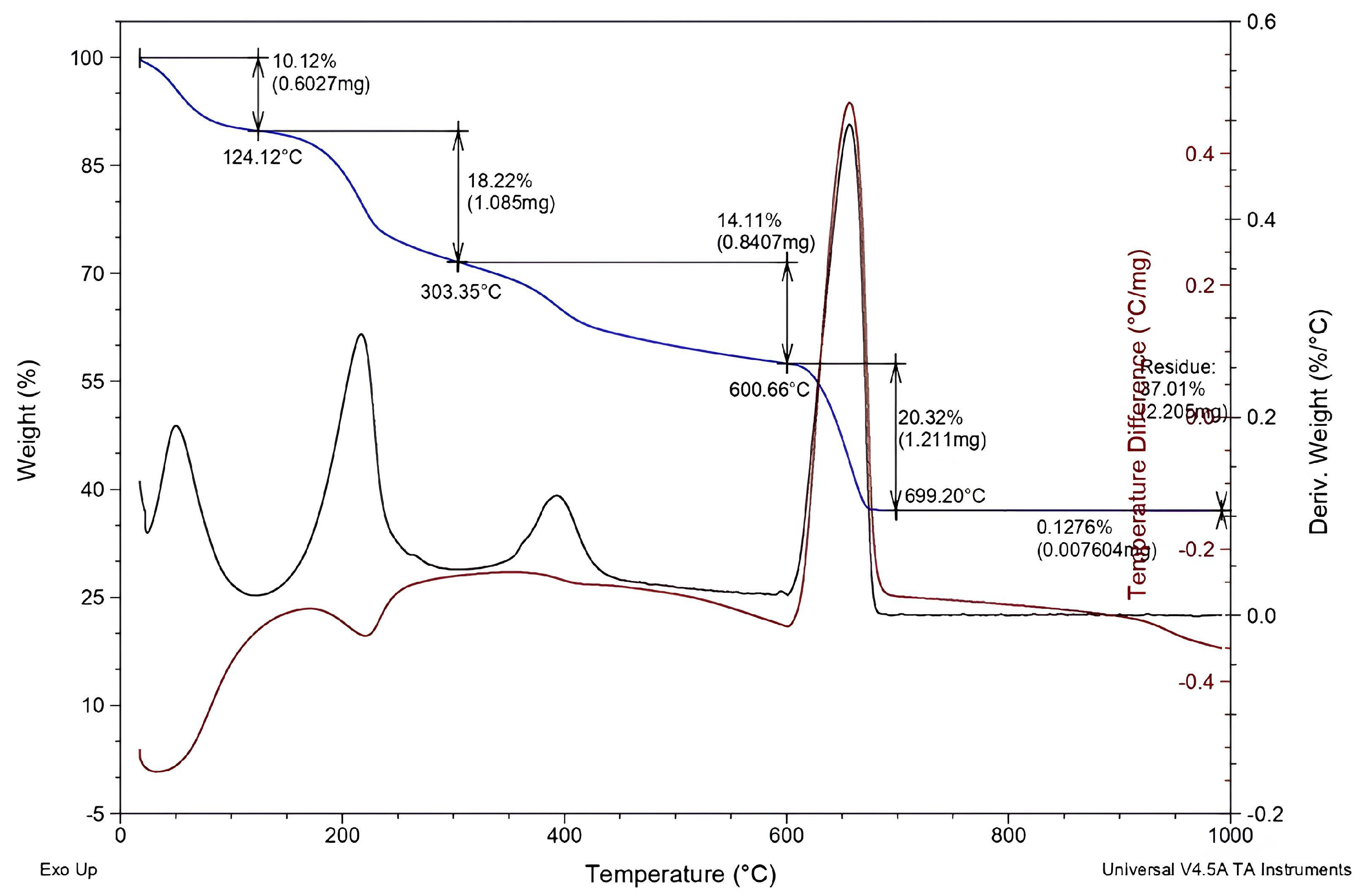
The results of TGA and DTGA results of Nb-MOF are presented in Figure 5. Thermogravimetric analysis revealed a multistep weight loss profile characteristic of metal–organic gels. An initial mass loss of 10.12% below 124 °C was attributed to the removal of physically adsorbed water and solvent molecules trapped within the gel network. A significant weight loss of 18.22% between 124 and 303 °C was associated with the release of strongly retained solvent and partial decomposition of the organic components. The gradual mass loss observed from 303 to 600 °C (14.11%) indicates progressive decomposition of the organic ligands and disruption of metal–ligand interactions. Finally, a substantial weight loss of 20.32% between 600 and 700 °C corresponds to the combustion of residual carbonaceous species and the formation of the metal oxide. This broad and distributed thermal decomposition behavior, together with the X-ray diffraction results showing the absence of well-defined diffraction peaks, confirms the amorphous nature of the material. The combined TG and XRD analyses indicate a disordered metal–organic gel (MOG) structure rather than a crystalline metal–organic framework (MOF).

2.2. Catalytic and Adsorption Tests

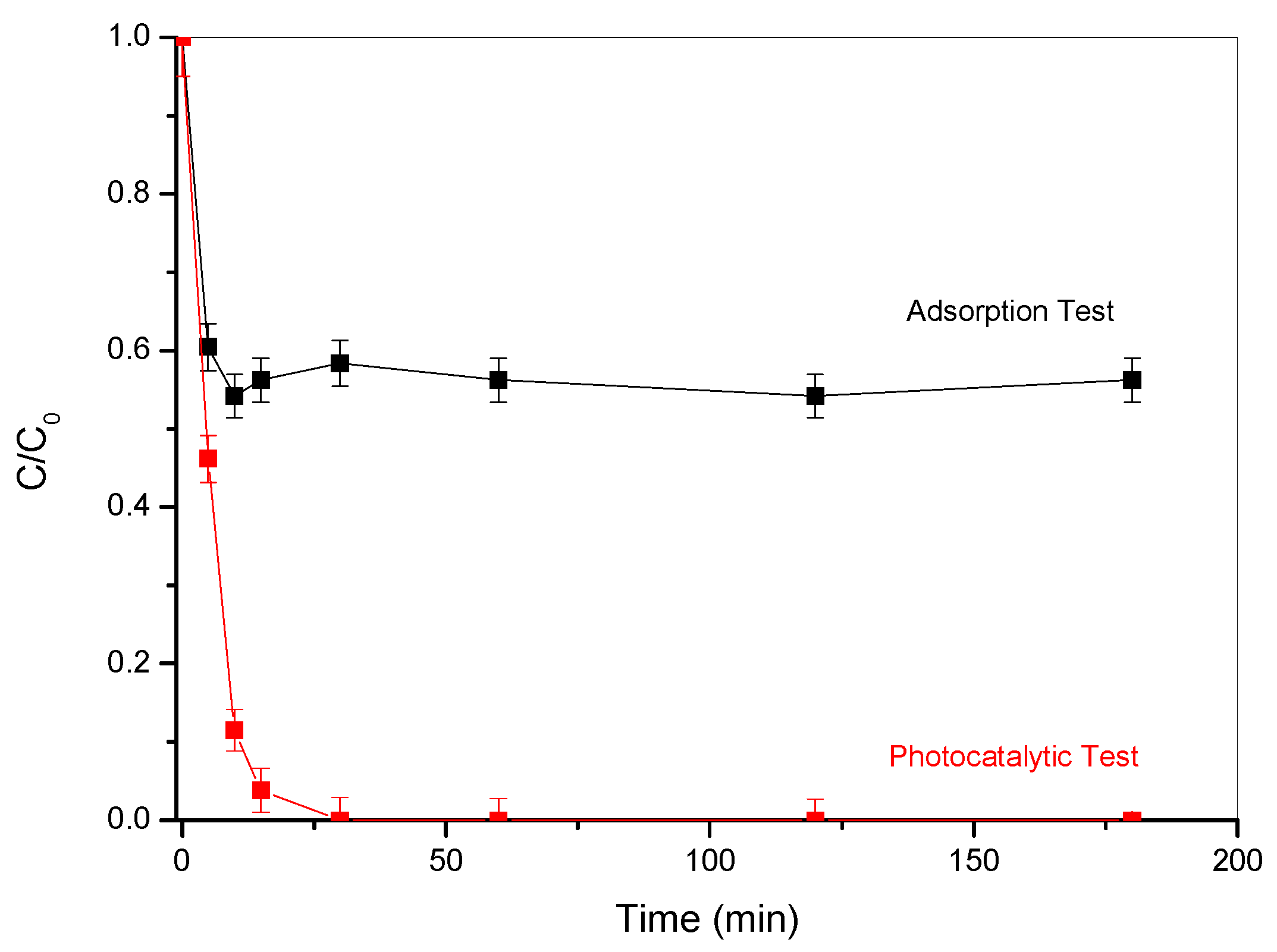
Figure 5 presents the results of the adsorption test (180 min) in triplicate. For the long-term test, the catalyst concentration and pH were the same as the central point of the experimental design (0.5 g·L−1 and 5, respectively). On average, the removal was around 48%. However, it can be observed that the most significant adsorption of Cr(VI) occurred within the first 25 min of the process. After this period, only minor variations occurred.
Comparing the adsorption and photoreduction processes under the same conditions, the relevance of photocatalysis for total chromium removal becomes apparent (Figure 6). While adsorption allows for the removal of only a portion of the chromium present in the solution, photocatalysis enables the complete removal of the metal from the aqueous medium.

2.3. Experimental Design Results

A central composite design (CDC) was performed with 11 experiments, including three replicates of the central point. Two factors were studied: catalyst concentration, ranging from 0.146 to 0.854 g·L−1, and solution pH, ranging from 1.46 to 8.54. The response variable was the total chromium removal (%) at the end of 60 min of photocatalytic testing. Table 1 presents the results obtained in all experiments.
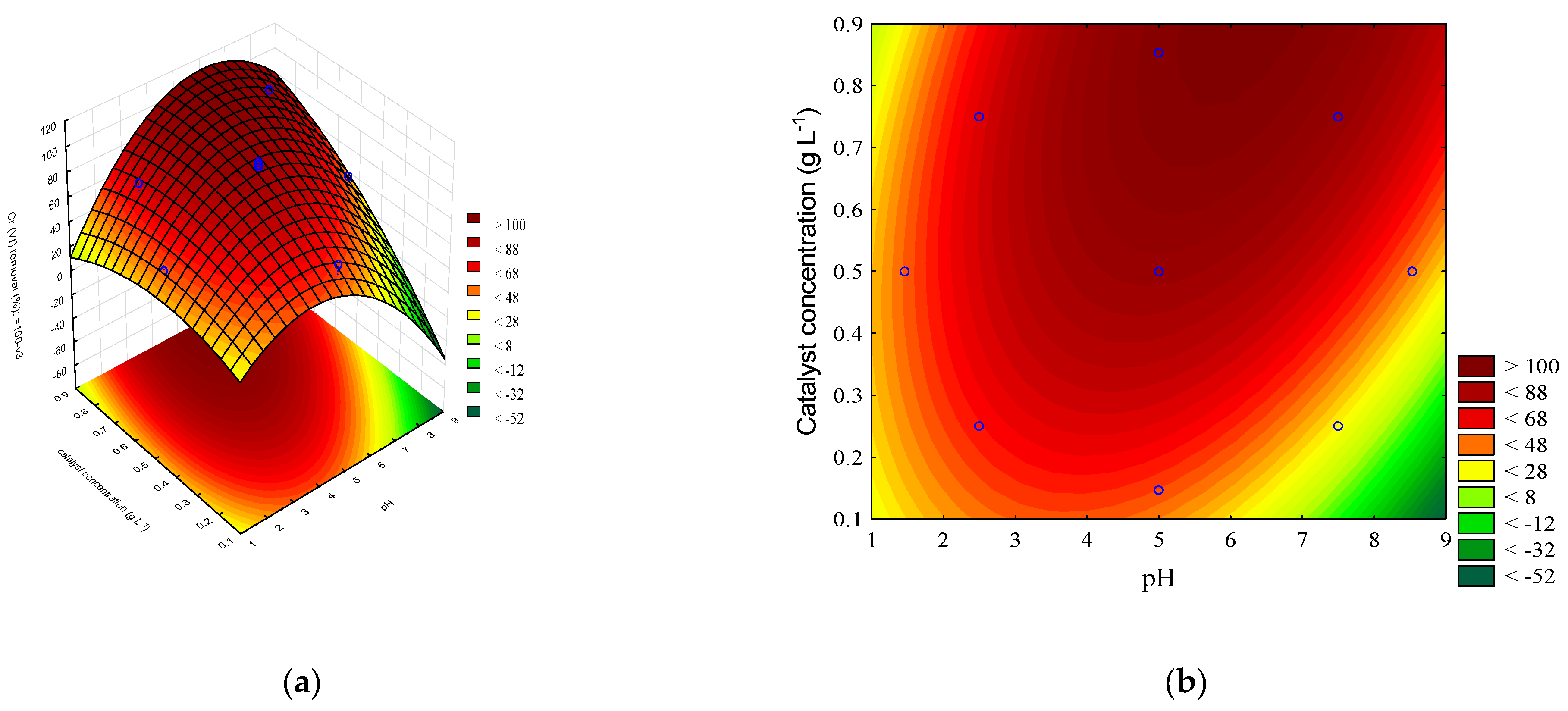
The results obtained (Table 1) indicate a relevant variation in Cr(VI) removal (ranging from 18.75% to 100.00%) depending on the parameters studied, with both catalyst concentration and pH having a considerable influence on the process’s efficiency. In general, it was observed that increasing the catalyst concentration was favorable for the removal of total chromium. For pH, better results were obtained in intermediate pH ranges, around pH 5. The best removal efficiency (100%) was observed at moderately acidic pH values (around 5.00) and higher catalyst concentrations (0.854 g/L), as seen in Run 8.
The response surface model obtained from the data was statistically significant, as indicated by the ANOVA table (Table 2), and graphically represented the behavior previously described.
The significant effects were the quadratic effect of pH, the linear effect of catalyst concentration, and the interaction between the linear effects of the factors, as indicated in Table 3. The quadratic effect of pH presented a negative value, in agreement with the existence of an optimal value within the studied pH range. The positive linear effect of the catalyst concentration confirms that increasing the factor enhances total chromium removal. All these effects can be observed in the response surface plot (Figure 7).
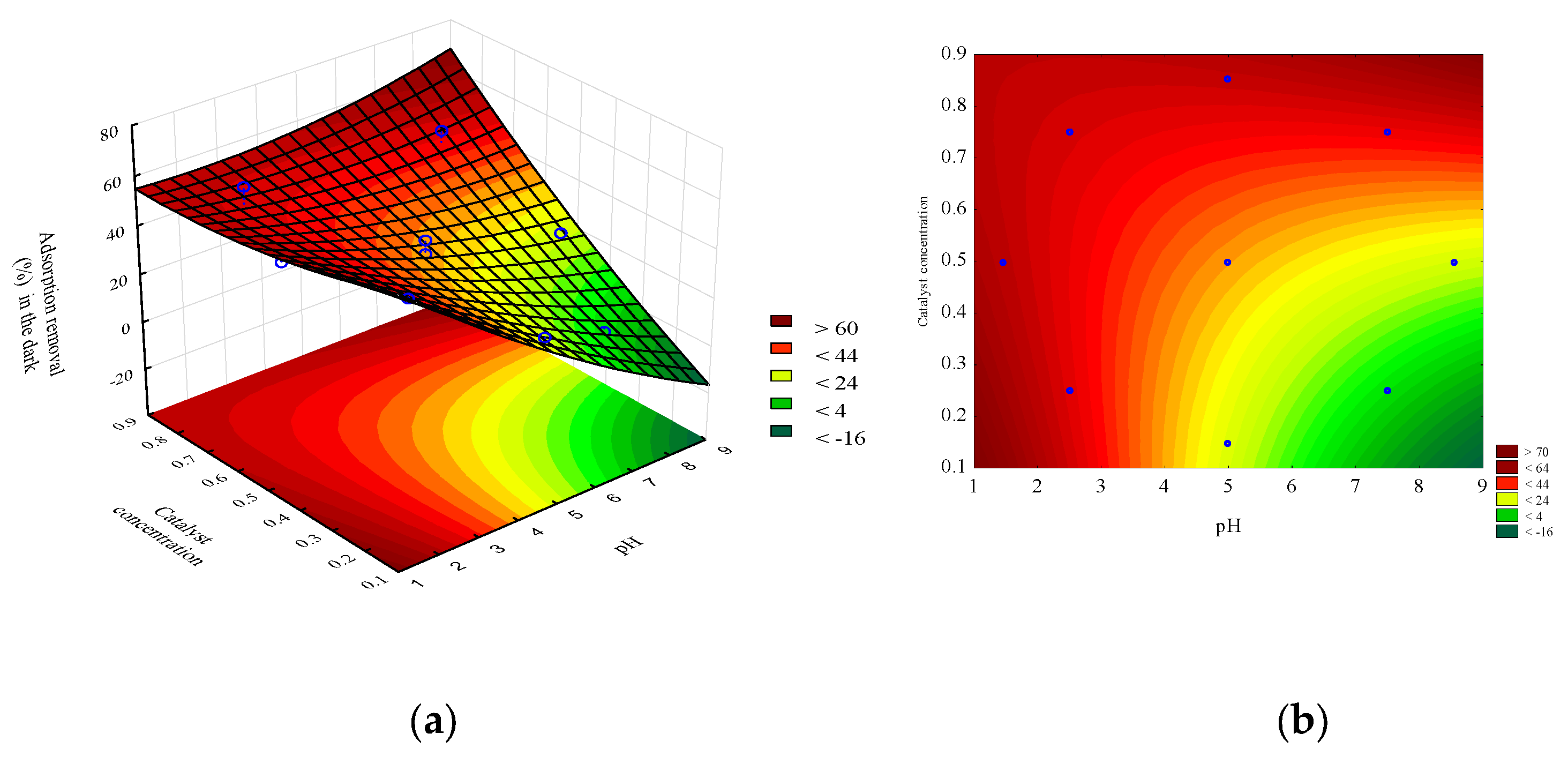
Before each photocatalysis test, a 30 min dark adsorption step was performed to ensure that the adsorption equilibrium was achieved. The conditions for each test followed the conditions described in Table 1. The Cr(VI) removal results obtained in these tests were also analyzed for a better understanding of the process. The ANOVA table (Table 4) obtained for these data showed that the model is significant, as well as the linear effects of pH and catalyst concentration, and the interaction between them. Under none of the conditions studied did removal by adsorption exceed the removal obtained through photocatalysis, proving the importance of photoreduction for the removal of total chromium.
The response surface (Figure 8) shows that Cr(VI) adsorption is favored at lower pH values, notably below the point of zero charge of the catalyst. Furthermore, increasing the catalyst concentration also favored Cr(VI) adsorption. The effect of pH on adsorption is as expected. Thermodynamic estimates were performed using the Visual MINTEQ model and suggested that at pH between 2 and 5, HCrO4 is the dominant specie, while for pH higher than 7, CrO42− is more abundant, in agreement with the description presented in [37]. Therefore, at acidic pH, the electrostatic interactions between the negatively charged hexavalent chromium species and the positively charged surface of the catalyst are favorable.
Comparing the response surfaces (Figure 7 and Figure 8), it is evident that the optimal condition for total chromium removal by photocatalysis does not coincide with the optimal condition for Cr6+ removal. This suggests that the direct transfer of electrons from the catalyst to the adsorbed chromium ions is not the only mechanism involved in the reduction process.
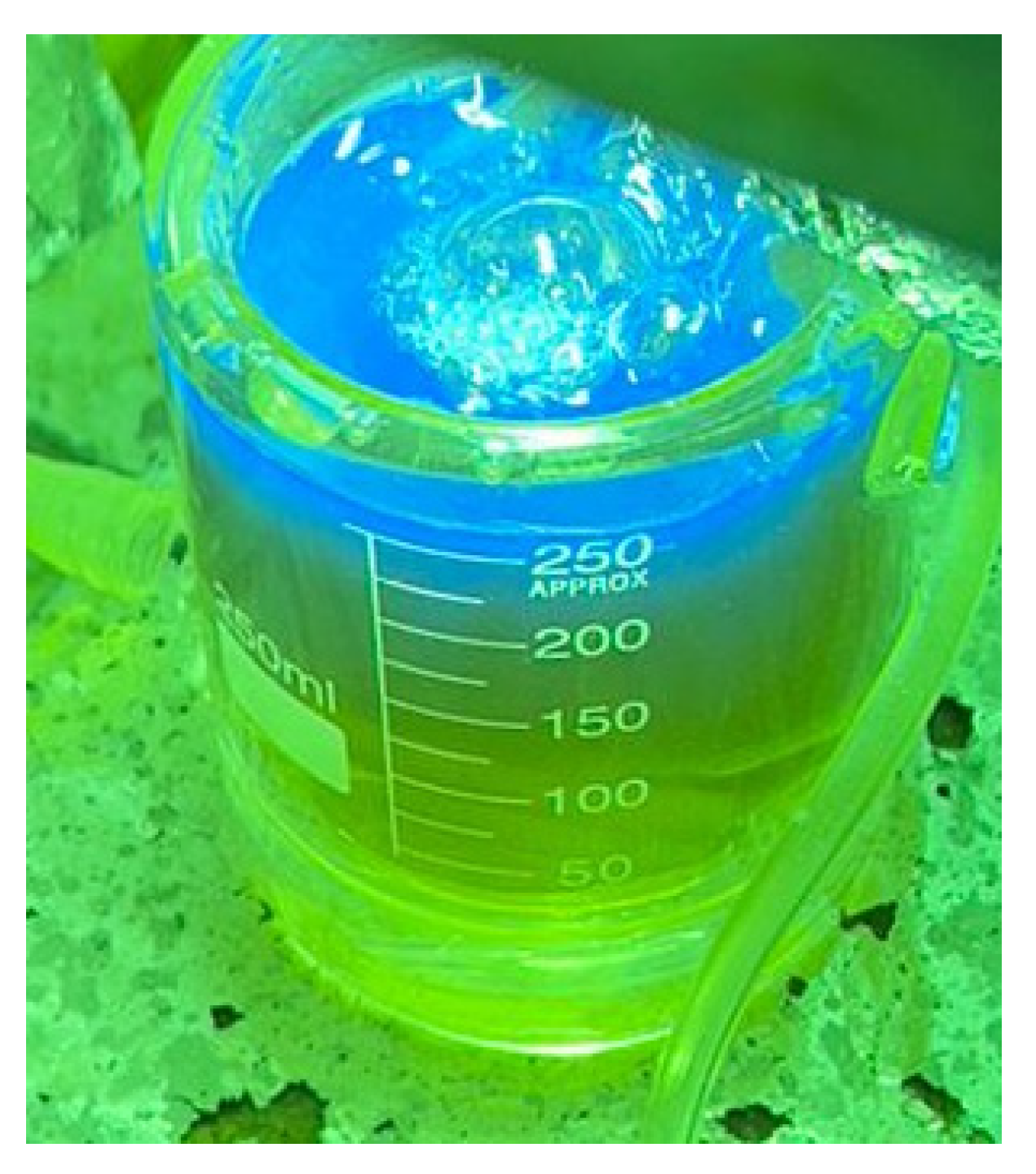
The solution containing chromate ions (Cr6+) is yellow in an alkaline medium and orange in an acidic medium. During the photocatalytic process, Cr(VI) is reduced to Cr(III), a species with a characteristic color. This redox transition could be visually observed, as the color of the reaction medium changed to shades of green/violet, indicating the partial or total conversion of Cr(VI) to Cr(III) (Figure 9). Equation (1) represents the reduction process of hexavalent chromium:
C r V I C r I I I C r ( 0 )

2.4. Reuse Test

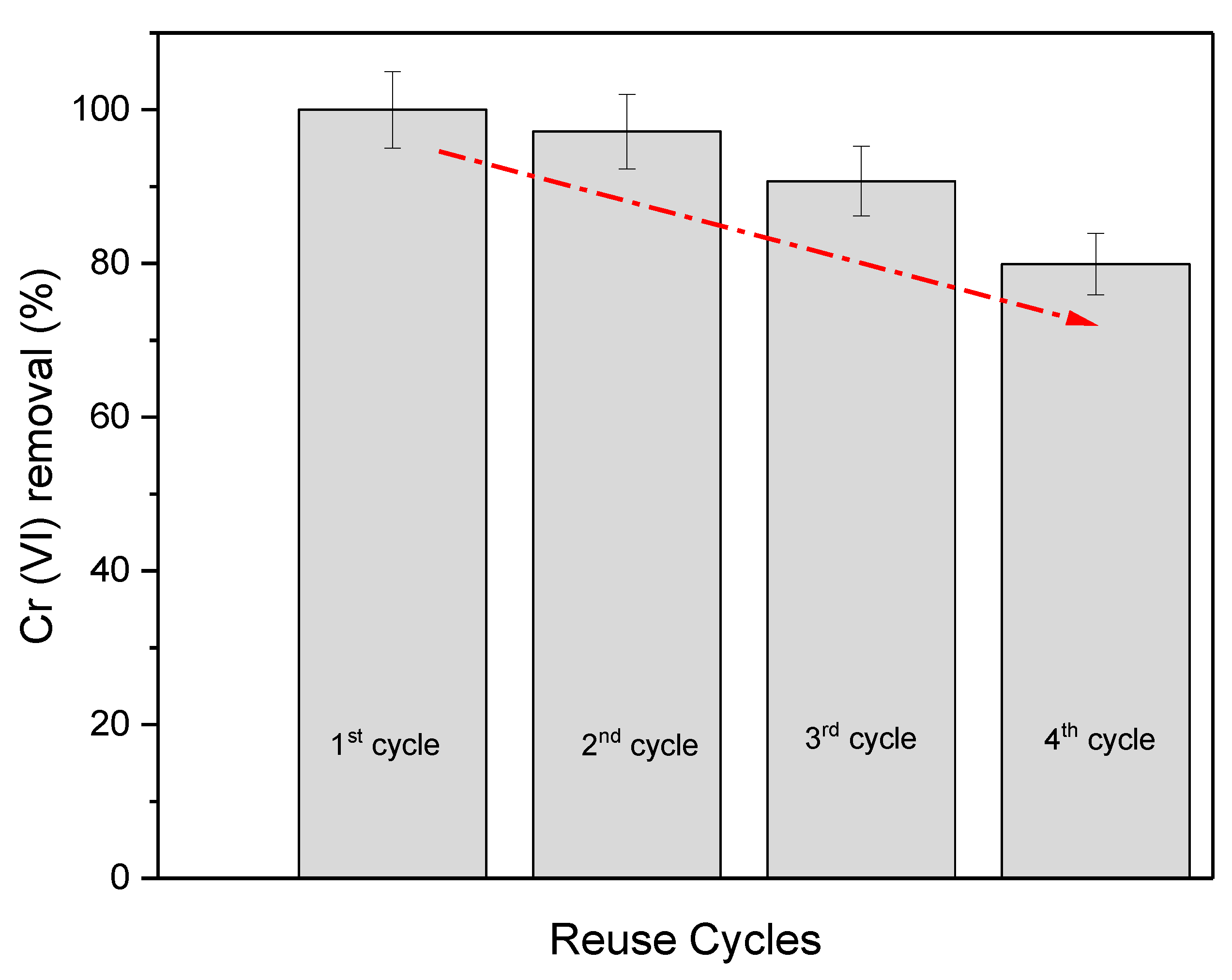
The photostability test (Figure 10) was performed using a 250 W lamp, a concentration of 0.854 g·L−1 and a solution pH of 5. After four successive cycles, the catalysts continued to remove chromium. Although the last cycle did not perform as well as the first, the result obtained was very satisfactory. At the end of the first cycle, 100% of the chromium was removed, and at the end of the fourth cycle, approximately 80% remained.

3. Materials and Methods

3.1. Chemicals

The reagents used in this work are: NbCl5 supplied by Companhia Brasileira de Metalurgia e Mineração (CBMM, Araxá, Brazil), isopropyl alcohol P.A. ACS 99.5% (Synth, São Paulo, Brazil), methanol (Synth, São Paulo, Brazil), Dimethylformanide (DMF) (Synth, São Paulo, Brazil), 2-aminoterephthalic acid (Sigma Aldrich, Darmstadt, Germany), Sodium hydroxide (Neon, São Paulo, Brazil) and hydrochloric acid (Synth, São Paulo Brazil) for pH control in the different experimental tests.

3.2. Catalyst Synthesis

For the synthesis of the MOG with niobium pentoxide as the metal center, the methodology used by Hendon et al. [38] will be adopted when preparing MIL-125-NH2, a MOF with a titanium metal center. Thus, niobium isopropoxide (C15H35NbO5) will be used instead of titanium isopropoxide. Thus, the synthesis basically consisted of a mixture containing 0.35 mmol of titanium isopropoxide reacting with 0.98 mmol of 2-aminoterephthalic acid in a solution of 8 mL of DMF and 2 mL of methanol. This mixture was heated under solvothermal conditions at 150 °C for 3 days. The solid obtained was washed with 20 mL of DMF and 10 mL of methanol, followed by drying at 70 °C. In turn, niobium isopropoxide can be obtained from the methodology of Castro and collaborators [39] in which NbCl5 is dissolved in isopropyl alcohol under an inert argon atmosphere, since NbCl5 presents high reactivity in the presence of oxygen gas, generating NbOCl3, in a molar ratio of 1:5 for 60 min under constant stirring, to ensure complete dissolution of the salt.

3.3. Catalyst Characterization

Each technique used for characterization enables the understanding of the expected behavior of each material. Thus, the catalysts used in this work will be characterized by photoacoustic spectroscopy (determination of band gap energy), X-ray diffraction, scanning electron microscopy (SEM) associated with energy-dispersive spectroscopy (EDS), Fourier transform infrared spectroscopy (FTIR), point of zero charge (PZC) and Thermogravimetric Analysis (TG).

3.4. Cr(VI) Removal Tests

The tests were conducted in a 250 mL batch reactor within a photocatalytic chamber. A 250 W Hg vapor lamp was used as the radiation source. A synthetic solution containing 20 ppm of Cr(VI) was synthesized from the dissolution of K2Cr2O7. The tests were performed using a central composite design with three replicates of the central point, resulting in a total of 11 experiments. During the tests, variations in the catalyst concentration and pH of the solution were studied to determine the optimal conditions for Cr(VI) removal. The tests were performed with 30 min of adsorption in the dark, and then the lamp was turned on, exposing the solution to radiation for 1 h. At predetermined intervals, samples were withdrawn and then quantified using an atomic absorption spectrophotometer with a Cr hollow cathode lamp. The flame was generated with an air-acetylene mixture.

4. Conclusions

This study successfully demonstrated the application of Nb-MOG as a photocatalyst for the removal of Cr(VI) from aqueous solutions, with the process efficiency being significantly influenced by both catalyst concentration and pH. The experimental results revealed that optimal Cr(VI) removal (100%) was achieved at a moderately acidic pH (5.00) and a higher catalyst concentration (0.854 g L−1). In contrast, extreme pH values (both low and high) and intermediate catalyst concentrations led to lower removal efficiencies. The findings highlight the complexity of the photocatalytic process, where not only the presence of an efficient photocatalyst but also the fine-tuning of experimental conditions play crucial roles in maximizing contaminant removal. It was also observed that catalyst reuse is feasible, maintaining a Cr(VI) removal efficiency of 80% in the fourth cycle.

Author Contributions

Conceptualization, E.A., G.G.L. and M.E.K.F.; methodology and investigation E.A., M.E.K.F. and G.G.L.; validation M.E.K.F., G.G.L., O.A.A.d.S. and M.Z.F.; writing—review and editing E.A., A.M.T., A.J.M. and G.G.L. All authors have read and agreed to the published version of the manuscript.

Funding

This research received no external funding.

Data Availability Statement

The data used to support the findings of this study are included within the article.

Acknowledgments

The authors thank the Capes, Fundação Araucaria, and CNPq agencies (PQ Processo: 304068/2022-5), analyzes performed at the laboratories LabMult C2MMa-UTFPR-Ponta Grossa and LabMult CA-UTFPR-Pato Branco. This work was supported by Programa Ibero Americano de Ciencia y Tecnologia para el Desarrolo (CYTED) (thought red CATPROH2).

Conflicts of Interest

The authors declare no conflicts of interest.

References

  1. Hossini, H.; Shafie, B.; Niri, A.D.; Nazari, M.; Esfahlan, A.J.; Ahmadpour, M.; Nazmara, Z.; Ahmadimanesh, M.; Makhdoumi, P.; Mirzaei, N.; et al. A comprehensive review on human health effects of chromium: Insights on induced toxicity. Environ. Sci. Pollut. Res. 2022, 29, 70686–70705. [Google Scholar] [CrossRef]
  2. Layek, M.; Khatun, N.; Karmakar, P.; Kundu, S.; Mitra, M.; Karmakar, K.; Mondal, S.; Bhattarai, A.; Saha, B. Toxicity of Hexavalent Chromium: Review. In Chromium in Plants and Environment; Springer Nature: Cham, Switzerland, 2023; pp. 191–215. [Google Scholar]
  3. Tripathi, M.; Pathak, S.; Singh, R.; Singh, P.; Singh, P.K.; Shukla, A.K.; Maurya, S.; Kaur, S.; Thakur, B. A Comprehensive Review of Lab-Scale Studies on Removing Hexavalent Chromium from Aqueous Solutions by Using Unmodified and Modified Waste Biomass as Adsorbents. Toxics 2024, 12, 657. [Google Scholar] [CrossRef]
  4. Sazakli, E. Human Health Effects of Oral Exposure to Chromium: A Systematic Review of the Epidemiological Evidence. Int. J. Environ. Res. Public Health 2024, 21, 406. [Google Scholar] [CrossRef] [PubMed]
  5. Singh, V.; Singh, N.; Verma, M.; Kamal, R.; Tiwari, R.; Sanjay Chivate, M.; Rai, S.N.; Kumar, A.; Singh, A.; Singh, M.P.; et al. Hexavalent-Chromium-Induced Oxidative Stress and the Protective Role of Antioxidants against Cellular Toxicity. Antioxidants 2022, 11, 2375. [Google Scholar] [CrossRef]
  6. Assefa, H.; Singh, S.; Olu, F.E.; Dhanjal, D.S.; Mani, D.; Khan, N.A.; Singh, J.; Ramamurthy, P.C. Advances in adsorption technologies for hexavalent chromium removal: Mechanisms, materials, and optimization strategies. Desalination Water Treat. 2024, 319, 100576. [Google Scholar] [CrossRef]
  7. Husain, A.; Ayub, S.; Khan, A.H.; Alam, S.S.; Hasan, M.A. Pilot scale recovery, and removal of chromium from tannery wastewater by chemical precipitation: Life cycle assessment and cost analysis. J. Environ. Manag. 2025, 391, 126502. [Google Scholar] [CrossRef] [PubMed]
  8. Wan, J.; Yu, M.; Bi, W.; Sun, Y.; Wang, W.; Hou, Y.; Xie, S.; Li, T.; Fan, Y. Research on chromium removal mechanism by electrochemical method from wastewater. J. Water Process Eng. 2024, 68, 106447. [Google Scholar] [CrossRef]
  9. Li, B.; Wang, Y. A Comparative Review of Removing Chromium (VI) from Electroplating Industry Wastewater Using Electrocoagulation and Membrane Filtration. Sci. Technol. Eng. Chem. Environ. Prot. 2025, 3, 13. [Google Scholar]
  10. Thiripelu, P.; Manjunathan, J.; Revathi, M.; Ramasamy, P. Removal of hexavalent chromium from electroplating wastewater by ion-exchange in presence of Ni(II) and Zn(II) ions. J. Water Process Eng. 2024, 58, 104815. [Google Scholar] [CrossRef]
  11. Fuziki, M.E.K.; Tusset, A.M.; Ribas, L.S.; de Paula, E.T.; Brackmann, R.; Alves, O.C.; dos Santos, O.A.A.; Lenzi, G.G. CoFe2O4/TiO2-Nb2O5 magnetic catalysts synthesized by chemical and physical mixture applied in the reduction of Cr(VI). Environ. Sci. Pollut. Res. 2025, 1–19. [Google Scholar] [CrossRef]
  12. Samajdar, S.; Golda, A.S.; Lakhera, S.K.; Ghosh, S. Recent progress in chromium removal from wastewater using covalent organic frameworks—A review. Chemosphere 2024, 350, 141028. [Google Scholar] [CrossRef] [PubMed]
  13. Fidelis, M.Z.; Abreu, E.; Josué, T.G.; de Almeida, L.N.B.; Lenzi, G.G.; Santos, O.A.A.D. Continuous process applied to degradation of triclosan and 2.8-dichlorodibenzene-p-dioxin. Environ. Sci. Pollut. Res. 2021, 28, 23675–23683. [Google Scholar] [CrossRef]
  14. Castro, L.E.N.; Meira, A.H.; Almeida, L.N.B.; Gonçalves Lenzi, G.; Colpini, L.M.S. Experimental design and optimization of textile dye photodiscoloration using Zn/TiO2 catalysts. Desalination Water Treat. 2022, 266, 173–185. [Google Scholar] [CrossRef]
  15. Maurino, V.; Minella, M.; Sordello, F.; Minero, C. A proof of the direct hole transfer in photocatalysis: The case of melamine. Appl. Catal. A Gen. 2016, 521, 57–67. [Google Scholar] [CrossRef]
  16. Wang, Q.; Gao, Q.; Al-Enizi, A.M.; Nafady, A.; Ma, S. Recent advances in MOF-based photocatalysis: Environmental remediation under visible light. Inorg. Chem. Front. 2020, 7, 300–339. [Google Scholar] [CrossRef]
  17. Li, L.L.; Feng, X.Q.; Han, R.P.; Zang, S.Q.; Yang, G. Cr(VI) removal via anion exchange on a silver-triazolate MOF. J. Hazard. Mater. 2017, 321, 622–628. [Google Scholar] [CrossRef]
  18. Huang, S.; Shen, J.; Wu, Y.; Li, X.; Ma, Y.; Xie, Y.; Yu, C.; Zhang, Y.; Zhang, J. Bi2O2CO3 co-catalyst modification BiOBr driving efficient photoreduction CO2. Colloids Surf. A Physicochem. Eng. Asp. 2025, 725, 137731. [Google Scholar] [CrossRef]
  19. Öhrström, L. Let’s Talk about MOFs—Topology and Terminology of Metal-Organic Frameworks and Why We Need Them. Crystals 2015, 5, 154–162. [Google Scholar] [CrossRef]
  20. Xavier, J.R. Novel multifunctional epoxy based graphitic carbon nitride/silanized TiO2 nanocomposite as protective coatings for steel surface against corrosion and flame in the shipping industry. J. Cent. South. Univ. 2024, 31, 3394–3422. [Google Scholar] [CrossRef]
  21. Ulaeto, S.B.; Ravi, R.P.; Udoh, I.I.; Mathew, G.M.; Rajan, T.P.D. Polymer-Based Coating for Steel Protection, Highlighting Metal–Organic Framework as Functional Actives: A Review. Corros. Mater. Degrad. 2023, 4, 284–316. [Google Scholar] [CrossRef]
  22. Yusuf, V.F.; Malek, N.I.; Kailasa, S.K. Review on Metal–Organic Framework Classification, Synthetic Approaches, and Influencing Factors: Applications in Energy, Drug Delivery, and Wastewater Treatment. ACS Omega 2022, 7, 44507–44531. [Google Scholar] [CrossRef]
  23. Oroujzadeh, A.R.; Nematollahzadeh, A.; Dabaleh, A.; Seifzadeh, D.; Shojaei, A. Fabrication of metal-organic gel (MOG) nanoparticles-enhanced epoxy coating as a pH-sensitive corrosion inhibitor under diverse environmental conditions. Prog. Org. Coat. 2025, 209, 109621. [Google Scholar] [CrossRef]
  24. Cao, W.; Lin, Z.; Zheng, D.; Zhang, J.; Heng, W.; Wei, Y.; Gao, Y.; Qian, S. Metal–organic gels: Recent advances in their classification, characterization, and application in the pharmaceutical field. J. Mater. Chem. B 2023, 11, 10566–10594. [Google Scholar] [CrossRef]
  25. Gu, D.; Liu, Y.; Zhu, H.; Hao, J. Cobalt-doped iron-based metal–organic gels as efficient visible-light-driven peroxymonosulfate activators for the efficient degradation of norfloxacin with simultaneous antibacterial activity. Chem. Eng. J. 2024, 486, 149892. [Google Scholar] [CrossRef]
  26. Tang, Y.; Deng, T.; Yin, K.; Tian, J.; Chen, H.; Peng, H.; Du, J. Iron-doped titanium dioxide metal-organic gel for degradation of tetracycline hydrochloride with persulfate: Synergistic visible light photocatalysis and sulphate radical oxidation process. J. Mol. Struct. 2025, 1341, 142455. [Google Scholar] [CrossRef]
  27. Fidelis, M.Z.; Abreu, E.; Dos Santos, O.A.A.; Chaves, E.S.; Brackmann, R.; Dias, D.T.; Lenzi, G.G. Experimental Design and Optimization of Triclosan and 2.8-Diclorodibenzeno-p-dioxina Degradation by the Fe/Nb2O5/UV System. Catalysts 2019, 9, 343. [Google Scholar] [CrossRef]
  28. Josué, T.G.; Almeida, L.N.B.; Lopes, M.F.; Santos, O.A.A.; Lenzi, G.G. Cr(VI) reduction by photocatalyic process: Nb2O5 an alternative catalyst. J. Environ. Manag. 2020, 268, 110711. [Google Scholar] [CrossRef] [PubMed]
  29. Jin, H.; Xu, X.; Yu, X.; Yu, S.; Wang, S.; Qu, X. Bimetallic Organic Gel for Effective Methyl Orange Dye Adsorption. Gels 2024, 10, 208. [Google Scholar] [CrossRef]
  30. Zhang, X.; Zhao, H.; Li, C.; Li, S.; Liu, K.; Wang, L. Facile coordination driven synthesis of metal-organic gels toward efficiently electrocatalytic overall water splitting. Appl. Catal. B 2021, 299, 120641. [Google Scholar] [CrossRef]
  31. Lenzi, G.G.; Fávero, C.V.B.; Colpini, L.M.S.; Bernabe, H.; Baesso, M.L.; Specchia, S.; Santos, O. Photocatalytic reduction of Hg(II) on TiO2 and Ag/TiO2 prepared by the sol–gel and impregnation methods. Desalination 2011, 270, 241–247. [Google Scholar] [CrossRef]
  32. Weibin, Z.; Weidong, W.; Xueming, W.; Xinlu, C.; Dawei, Y.; Changle, S.; Liping, P.; Yuying, W.; Li, B. The investigation of NbO2 and Nb2O5 electronic structure by XPS, UPS and first principles methods. Surf. Interface Anal. 2013, 45, 1206–1210. [Google Scholar] [CrossRef]
  33. Abreu, E.; Fidelis, M.Z.; Fuziki, M.E.; Malikoski, R.M.; Mastsubara, M.C.; Imada, R.E.; de Tuesta, J.L.D.; Gomes, H.T.; Anziliero, M.D.; Baldykowski, B.; et al. Degradation of emerging contaminants: Effect of thermal treatment on Nb2O5 as photocatalyst. J. Photochem. Photobiol. A Chem. 2021, 419, 113484. [Google Scholar] [CrossRef]
  34. Bakatula, E.N.; Richard, D.; Neculita, C.M.; Zagury, G.J. Determination of point of zero charge of natural organic materials. Environ. Sci. Pollut. Res. 2018, 25, 7823–7833. [Google Scholar] [CrossRef]
  35. Cantão, F.d.O.; Melo, W.d.C.; Oliveira, L.C.A.; Passos, A.R.; Silva, A.C.d. Utilization of Sn/Nb2O5 composite for the removal of methylene blue. Quim. Nova 2010, 33, 528–531. [Google Scholar] [CrossRef]
  36. Karabacak, M.; Cinar, M.; Unal, Z.; Kurt, M. FT-IR, UV spectroscopic and DFT quantum chemical study on the molecular conformation, vibrational and electronic transitions of 2-aminoterephthalic acid. J. Mol. Struct. 2010, 982, 22–27. [Google Scholar] [CrossRef]
  37. Thakur, R.S.; Chaudhary, R.; Singh, C. Influence of pH on photocatalytic reduction, adsorption, and deposition of metal ions: Speciation modeling. Desalination Water Treat. 2015, 56, 1335–1363. [Google Scholar] [CrossRef]
  38. Hendon, C.H.; Tiana, D.; Fontecave, M.; Sanchez, C.; D’arras, L.; Sassoye, C.; Rozes, L.; Mellot-Draznieks, C.; Walsh, A. Engineering the Optical Response of the Titanium-MIL-125 Metal–Organic Framework through Ligand Functionalization. J. Am. Chem. Soc. 2013, 135, 10942–10945. [Google Scholar] [CrossRef]
  39. Castro, D.C.; Cavalcante, R.P.; Jorge, J.; Martines, M.A.U.; Oliveira, L.C.S.; Casagrande, G.A.; Machulek, A., Jr. Synthesis and Characterization of Mesoporous Nb2O5 and Its Application for Photocatalytic Degradation of the Herbicide Methylviologen. J. Braz. Chem. Soc. 2015, 27, 303–313. [Google Scholar]
Figure 1. XRD spectrum of the Nb-MOG sample.
Catalysts 16 00060 g001
Figure 2. MEV-EDS results of Nb-MOG catalyst.
Catalysts 16 00060 g002
Figure 3. Characterization results (a) band gap and (b) PCZ.
Catalysts 16 00060 g003
Figure 4. Infrared Spectra of Nb-MOG.
Catalysts 16 00060 g004
Figure 5. Profile TGA/DTGA analysis for Nb-MOG samples (blue line representing mass loss as a function of temperature).
Catalysts 16 00060 g005
Figure 6. Results for long dark adsorption and photocatalytic tests [pH 5; Catalyst Conc. = 0.5 g L−1].
Catalysts 16 00060 g006
Figure 7. (a) Response surface and (b) contour plots, for the total chromium removal. Blue points represent the experimental data.
Catalysts 16 00060 g007
Figure 8. (a) Response surface and (b) Surface contour for Cr(VI) adsorption under different conditions. Blue points represent the experimental data.
Catalysts 16 00060 g008
Figure 9. Visual observation of the transition from Cr(VI) to Cr(III).
Catalysts 16 00060 g009
Figure 10. Photocatalytic reduction in Cr in reuse cycles - the red line represents the Cr removal trend.
Catalysts 16 00060 g010
Table 1. Results from the experimental design.
RunpHCatalyst Conc. (g·L−1)Total Chromium Removal (%)
12.500.25053.06
22.500.75074.47
37.500.25018.75
47.500.75097.92
51.460.50048.89
68.540.50047.92
75.000.14661.70
85.000.854100.00
95.000.50091.84
105.000.50095.83
115.000.50093.88
Table 2. ANOVA Table—Photocatalytic tests.
SSdfMSFp
Model7304.43351460.88723.254160.001793
(1) pH (L)18.702118.7020.297700.608779
pH (Q)3149.68513149.68550.136200.000870
(2) catalyst concentration (g·L−1) (L)2993.22812993.22847.645730.000978
catalyst concentration (g·L−1) (Q)308.7631308.7634.914840.077425
1 L by 2L834.0541834.05413.276350.014846
Residual314.113562.823
Total SS7311.02510
Table 3. Effects estimates—Photocatalytic tests.
EffectStd. Err.t(5)p−95% Cnf. Limt+95% Cnf. Limt
Mean/Interaction93.85004.57611920.508650.00000582.0867105.6133
(1) pH (L)−3.05795.604578−0.545620.608779−17.465011.3491
pH (Q)−47.23386.670782−7.080690.000870−64.3815−30.0860
(2) Catalyst concentration (L)38.68615.6045786.902590.00097824.279153.0931
Catalyst concentration (Q)−14.78886.670782−2.216940.077425−31.93652.3590
(1L) by (2L)28.88007.9260703.643670.0148468.505449.2546
Table 4. ANOVA Table—Adsorption in the dark tests.
SSdfMSFp
Model2420.6355484.127113.160640.006662
(1) pH (L)1081.02411081.02429.386840.002893
pH (Q)24.346124.3460.661820.452901
(2) Catalyst concentration (L)905.1331905.13324.605370.004247
Catalyst concentration (Q)21.069121.0690.572730.483290
1L by 2L389.0651389.06510.576440.022642
Residuals183.930536.786
Total SS2594.28210
Disclaimer/Publisher’s Note: The statements, opinions and data contained in all publications are solely those of the individual author(s) and contributor(s) and not of MDPI and/or the editor(s). MDPI and/or the editor(s) disclaim responsibility for any injury to people or property resulting from any ideas, methods, instructions or products referred to in the content.