Article

Morphology Dependence of Catalytic Properties of CeO2 Nanocatalysts for One-Step CO2 Conversion to Diethyl Carbonate


1
Jiangsu Key Laboratory of Advanced Manufacturing for High-End Chemicals, Advanced Catalysis and Green Manufacturing Collaborative Innovation Center, School of Petrochemical and Engineering, Changzhou University, Changzhou 213164, China
2
Yangzhou Polytechnic Institute, Yangzhou 225127, China
*
Authors to whom correspondence should be addressed.
Catalysts 2026, 16(1), 58; https://doi.org/10.3390/catal16010058
Submission received: 27 November 2025 / Revised: 30 December 2025 / Accepted: 1 January 2026 / Published: 4 January 2026

Abstract

The conversion of CO2 into value-added chemicals exemplifies an innovative and eco-friendly approach to addressing carbon emissions. In this study, shape-specific CeO2 nanocrystals (nanorods, nanocubes, and nanoparticles) were successfully synthesized and employed as catalysts to study the structure-dependent behavior and reaction mechanism for one-step CO2 conversion to diethyl carbonate (DEC). Among the three catalysts, CeO2 nanorods (Ce-NR) exhibited the best catalytic activity in the synthesis of DEC from CO2 compared with CeO2 nanocubes (Ce-NC) and nanoparticles (Ce-NP), which achieved the DEC production of 1.32 mmolDEC/gcat at 423 K and 5 MPa for 4 h. Comprehensive characterization further confirmed the enhanced activity of Ce-NR originated from the morphology effect, particularly the promotion of oxygen vacancies and Ce3+ species, which promoted reaction activity. Furthermore, the Ce-NR catalyst almost retained 1.32 mmolDEC/gcat DEC production of its initial activity after four cycles, underscoring its exceptional stability and promising industrial scalability. These findings provide fundamental insights to guide the rational design of efficient catalysts for CO2 activation and other critical transformations.

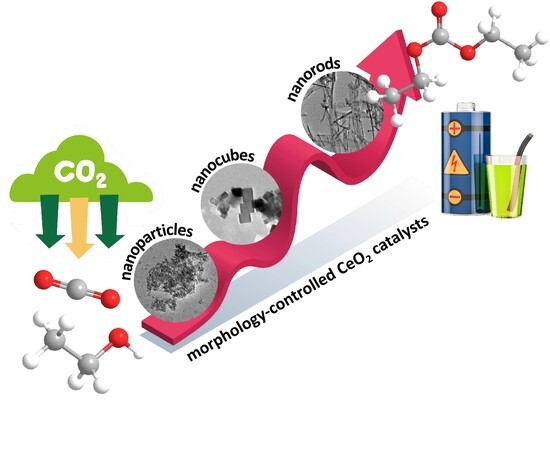
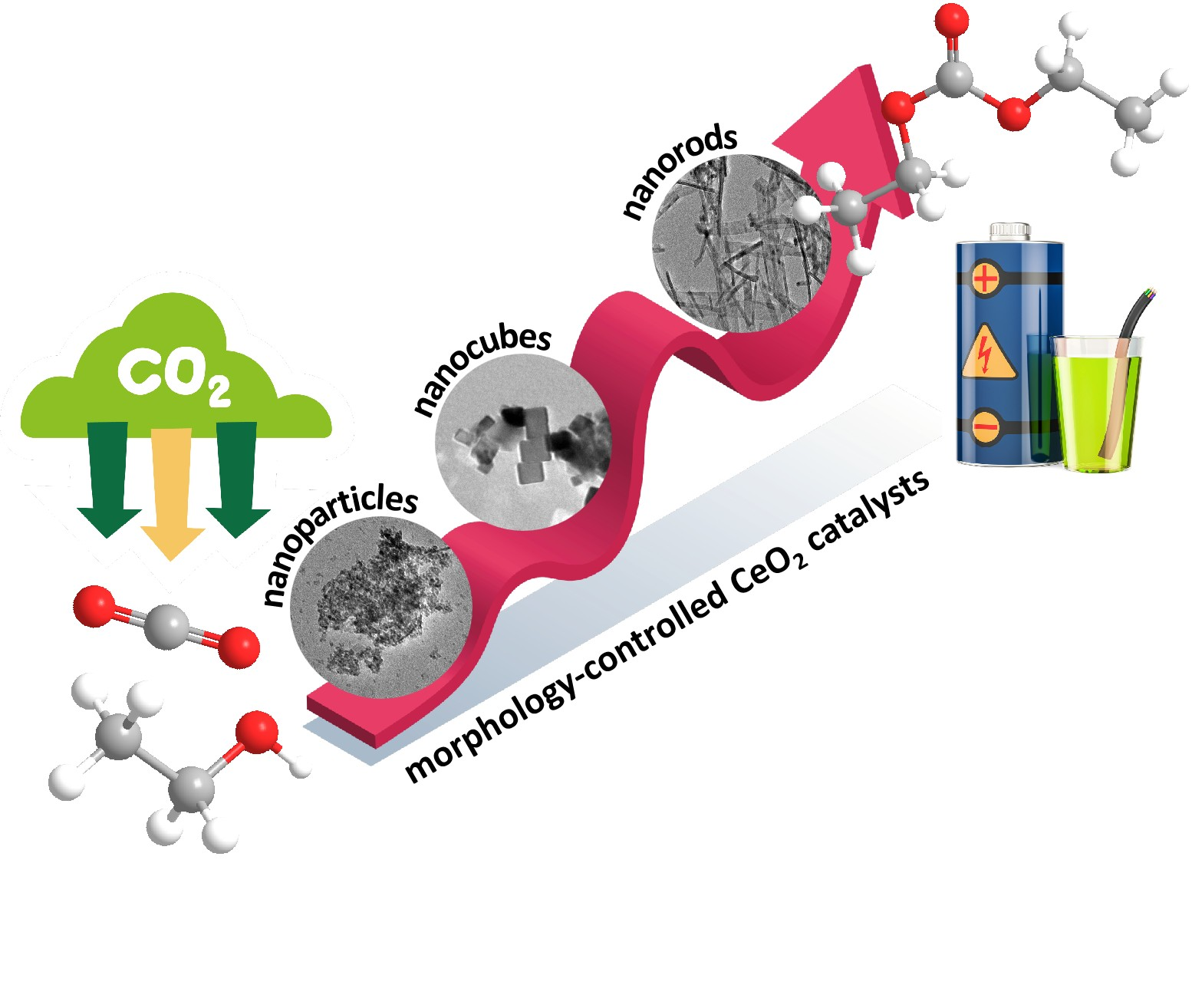
Graphical Abstract

1. Introduction

Escalating levels of atmospheric CO2, largely a consequence of fossil fuel combustion, pose a significant threat through their contribution to global warming and climate change [1,2,3]. In response, chemical conversion of CO2 has emerged as a key mitigation strategy, which can be fundamentally classified into reductive and non-reductive pathways. Reductive conversion, often requiring substantial energy input, generates products like CO [4], methanol [5], ethanol [6], and hydrocarbons [7]. Conversely, non-reductive conversion leverages CO2 as a carbonyl source in reactions with nucleophiles like alcohols and amines to synthesize carbonates [8], carbamates [9], and ureas [10]. Given the thermodynamic stability of CO2, the non-reductive approach is particularly attractive for its relatively lower energy demands and its potential to replace hazardous reagents such as phosgene in sustainable chemical synthesis, making it a promising direction for green industrial applications.
The direct synthesis of dialkyl carbonates (DAC) from CO2 and alcohols represents a pivotal green chemistry pathway for carbon valorization, transforming a potent greenhouse gas into valuable compounds like dimethyl carbonate (DMC) and diethyl carbonate (DEC), which are essential for electrolytes, polymers, and green solvents [11,12,13]. However, the inherent stability of the C–O bond in CO2 renders it chemically inert and challenging to activate [14]. Therefore, the central research focus has shifted to designing efficient catalysts capable of activating CO2 molecules. Various efficient catalysts have been investigated to modulate the active sites on the surface of the catalyst to address the issue of CO2 activation, such as ZrO2 [15], CeO2 [16], molecular sieve [17], ionic liquids [18], metal–organic framework [19], and so on.
Many metal oxide nanomaterials have been explored as efficient heterogeneous catalysts for the direct synthesis of DAC from CO2 and alcohol [20]. In particular, CeO2 stands out as an effective catalyst for this transformation owing to its unique surface properties. The coexistence of acid–base sites and redox properties, linked to the switchable Ce4+/Ce3+ oxidation states, facilitates the adsorption and activation of methanol and CO2 [21]. Research efforts have focused on finding efficient strategies to modify the strength of the acid–base sites and the redox properties to improve the catalytic activity, specifically targeting higher alcohol conversion and DAC production [22]. For example, Hou et al. [23] introduced abundant electron-enriched lattice oxygen species into CeO2 catalyst by constructing the point defects and crystal-terminated phases in the crystal reconstruction process. Benefiting from the acid–base properties modulated by the electron-enriched lattice oxygen, the optimized CeO2 catalyst exhibited a much higher DMC production of 22.2 mmol g−1, surpassing most reported metal-oxide-based catalysts under comparable conditions. Indeed, catalyst morphology and exposed crystal planes are critical determinants of performance in redox reactions, as they dictate surface energy, atomic arrangement, and synergistic interactions [24]. In the case of CeO2, varied morphologies lead to different densities of acid–base sites and oxygen vacancies, which in turn dictate activity. Wang et al. [25] reported that spindle-like CeO2 yielded the most DMC, followed by nanorods, nanocubes, and nano-octahedra. Furthermore, Zhang et al. [26] synthesized CeO2 hollow spheres with controlled sizes and shell numbers, finding a positive correlation between activity and the density of active sites within the cavity volume. Recently, Yang et al. [27] also showed that CeO2 with high surface area and oxygen vacancy concentration served as efficient sites for CO2 adsorption/activation, yielding high activity. Thus, ceria morphology is intimately connected to its surface defects and catalytic function, profoundly influencing reactant adsorption and activation [28]. Although prior work has demonstrated the efficacy of morphologically tuned, doped ceria catalysts (e.g., Zr-doped CeO2) for DEC synthesis [29], a dedicated study on the intrinsic morphology–activity relationship of undoped CeO2 nanocrystals—specifically, how morphology tailors oxygen vacancy/Ce3+ abundance and thereby controls the kinetics of the critical C–O bond formation step—remains an open area of investigation.
Therefore, this study presents the template-free hydrothermal synthesis of ceria catalysts with distinct surface morphologies and evaluates their catalytic performance in the direct synthesis of DEC from CO2 and ethanol. A combination of characterization techniques, including X-ray diffraction (XRD), Fourier-transform infrared spectra (FTIR), temperature-programmed desorption of ammonia and carbon dioxide (NH3-TPD and CO2-TPD), X-ray photoelectron spectroscopy (XPS), and transmission electron microscopy (TEM), was employed to elucidate the morphology and structural properties of the synthesized ceria materials. The findings uncover a fundamental correlation between the morphology of ceria, its acid–base site distribution, surface oxygen species, and the resulting catalytic activity.

2. Results

2.1. Catalysts Characterization

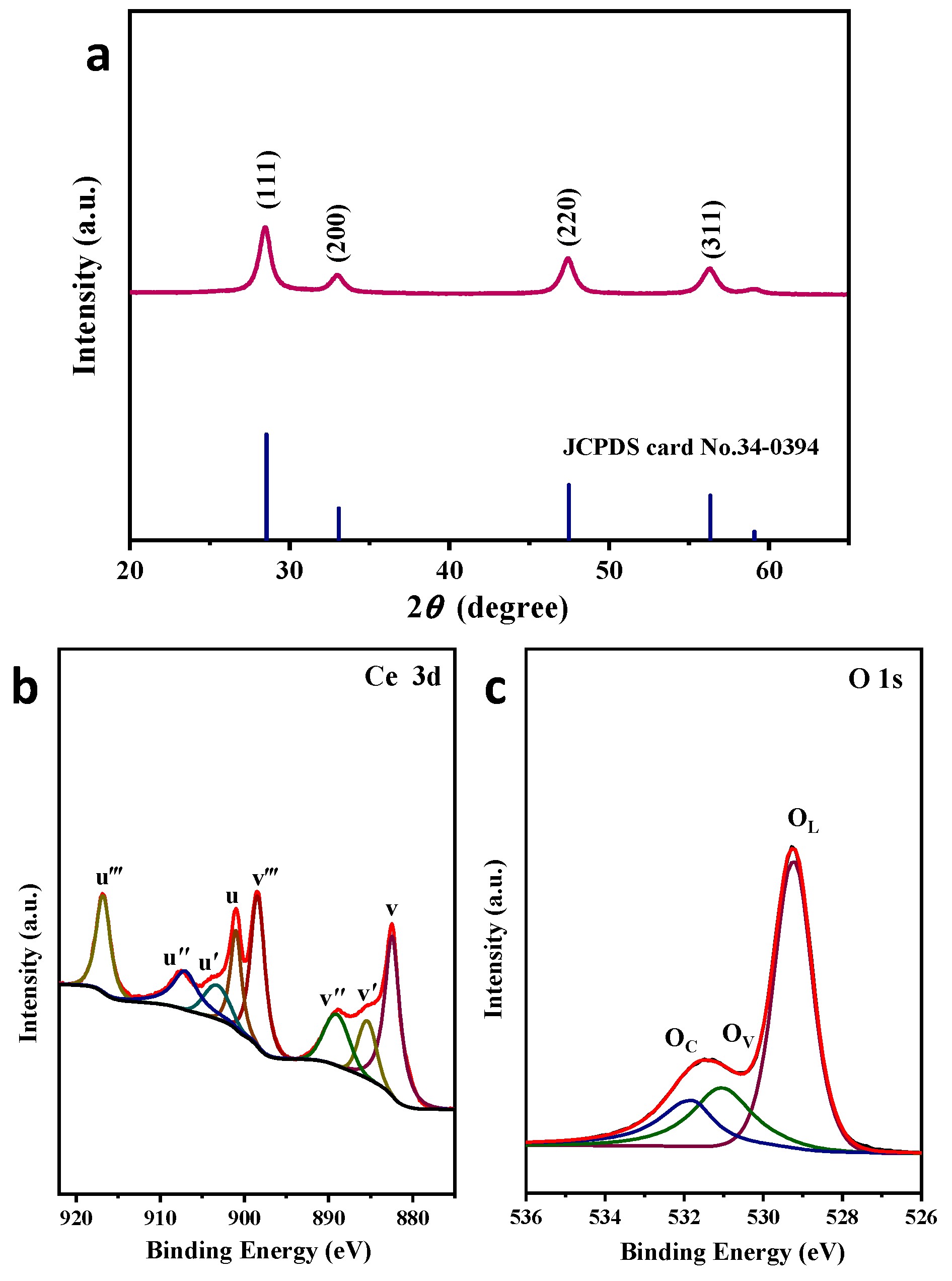
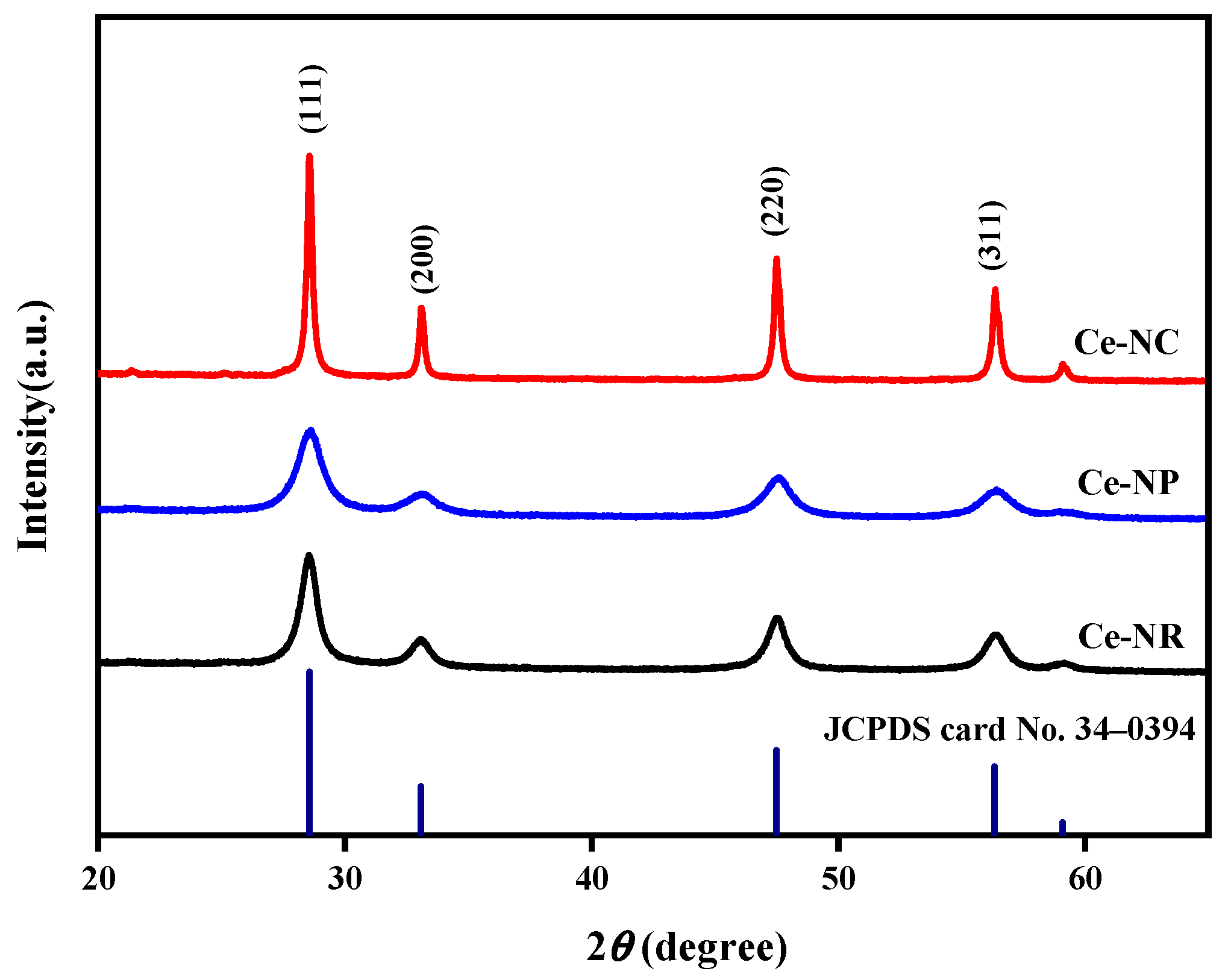
Figure 1 displayed the X-ray diffraction (XRD) patterns of the three CeO2 morphologies. The diffraction peaks observed at 2 θ = 28.6°, 33.2°, 47.5°, 56.3°, 59.4°, 69.5°, 76.7°, 79.8°, and 88.3° corresponded, respectively, to the (111), (200), (220), (311), (222), (400), (331), and (420) crystal planes of the fluorite cubic structure of CeO2 (JCPDS No. 34-0394) [30]. No impurity-related diffraction peaks were detected, confirming the high phase purity of the as-synthesized CeO2 catalysts. The average crystallite sizes of Ce-NR, Ce-NP, and Ce-NC, calculated using the Scherrer–Debye equation, were 8.46 nm, 5.92 nm, and 25.44 nm, respectively (Table 1). Notably, the three CeO2 morphologies exhibited distinct differences in peak intensity and full width at half maximum (FWHM), primarily reflecting variations in their crystallite size and crystallinity. The broad and weak diffraction peaks of the Ce-NP catalyst were consistent with its smallest crystallite size (5.92 nm), which led to significant peak broadening according to the Scherrer–Debye equation. In contrast, the sharp and intense peaks of the Ce-NC catalyst correspond to its substantially larger crystallite size (25.44 nm), indicating superior crystallinity. These crystallite-size-dependent effects were the main contributors to the observed differences in the XRD line profiles.
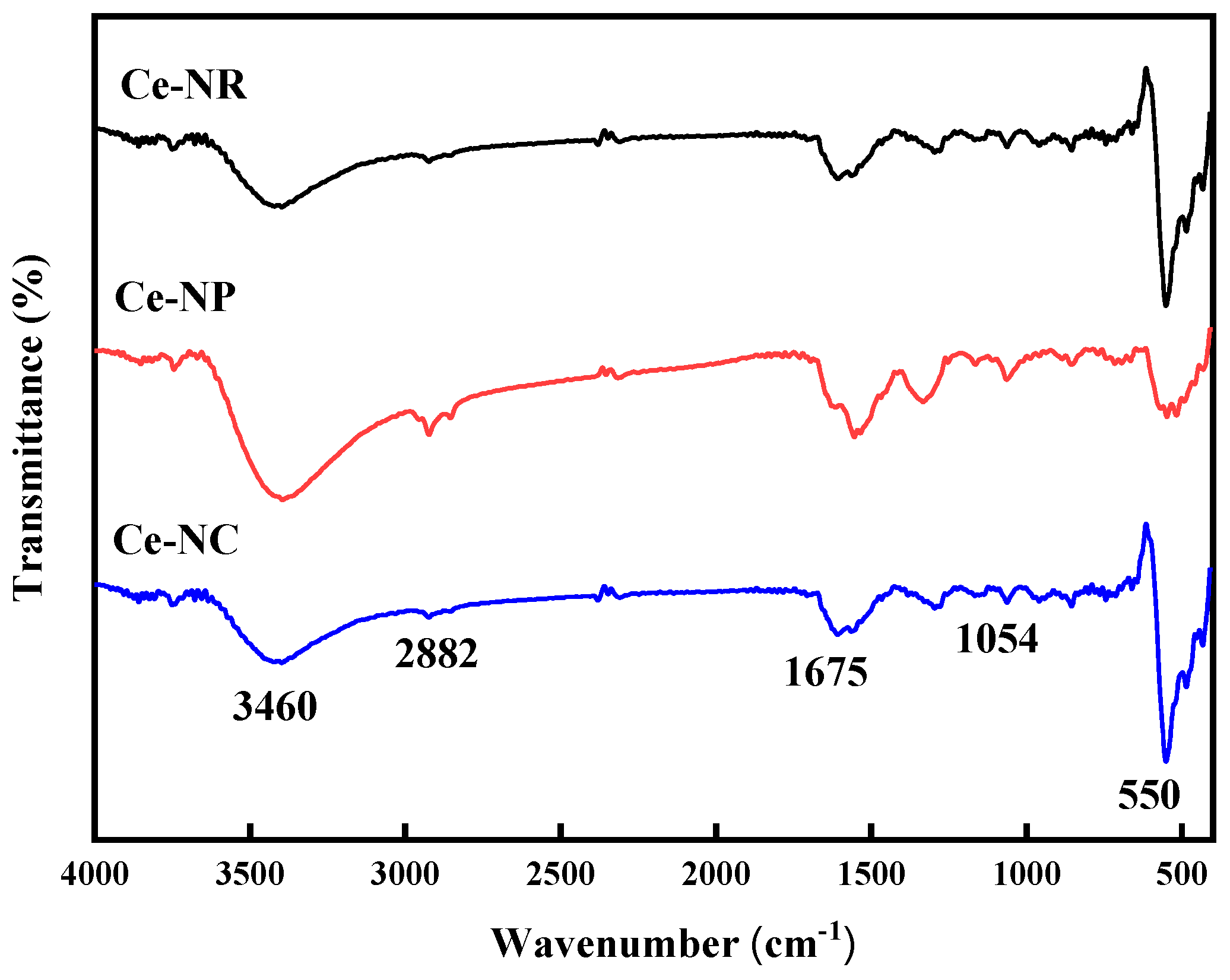
Figure 2 shows the Fourier-transform infrared (FTIR) spectra of the three CeO2 catalysts with distinct morphologies. A broad absorption band observed around 3460 cm−1 corresponded to the O–H stretching and bending vibrations of water molecules adsorbed on the catalyst surface or surface hydroxyl groups [31]. The peak near 1675 cm−1 was attributed to the bending vibration of adsorbed water (H–O–H), while the weak feature at approximately 2882 cm−1 was likely associated with C–H stretching vibrations from residual organic species or environmental adsorption. An additional band at about 1054 cm−1 could be assigned to C–O stretching vibrations. In the region below 1000 cm−1, the characteristic absorption peak located at 550 cm−1 represented the stretching vibration of the Ce–O bond, confirming the formation of the CeO2 fluorite structure [32]. The formation of CeO2 was facilitated by the alkaline conditions provided by NaOH, which promoted the generation of OH groups around Ce3+ ions, leading to precipitation and subsequent formation of Ce–O bonds [33]. Notably, the strength of the surface Ce-O bond was influenced by the catalyst’s crystallite size and lattice strain. Enhanced Ce-O bond strength often correlated with a decreased lattice constant and increased crystallite size [34]. Catalysts with larger crystalline sizes and lower surface areas, such as Ce-NC, tended to undergo compressive strain, which strengthened the surface Ce–O bonding. In contrast, smaller crystallites, such as Ce-NP, accumulated point defects that induced tensile strain, thereby weakening the Ce–O bonds on the surface. The absence of additional peaks in the spectra confirmed the high phase purity of the synthesized CeO2 materials, indicating no significant surface contamination or functionalization.
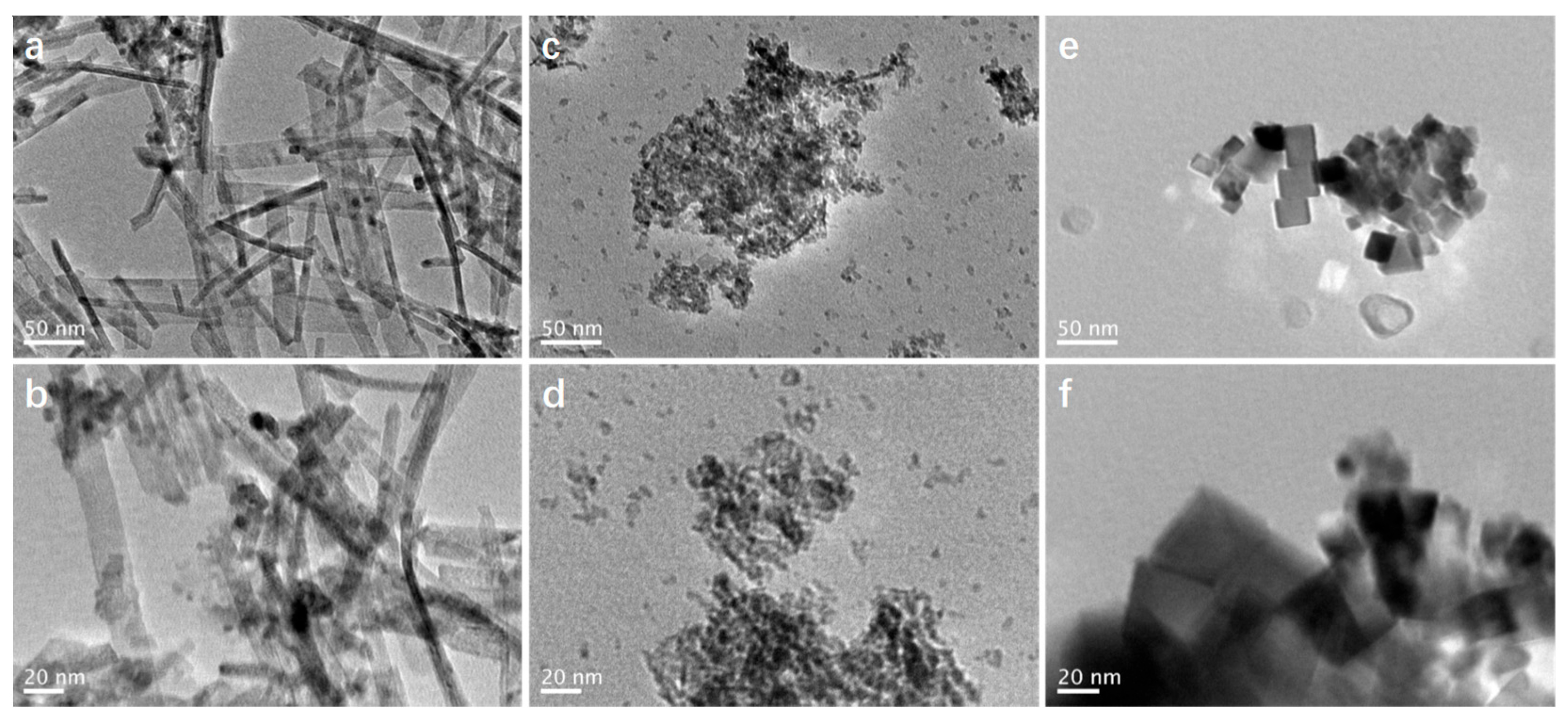
Figure 3 presents transmission electron microscopy (TEM) images of the as-synthesized CeO2 nanomaterials, illustrating distinct morphologies including nanorods (Ce-NR), nanoparticles (Ce-NP), and nanocubes (Ce-NC) achieved by precisely controlling key synthesis parameters such as alkali concentration, reaction temperature, and hydrothermal conditions. As shown in Figure 3a,b, Ce-NR samples consisted of uniform nanorods with lengths ranging from 50 to 120 nm and diameters of 8–10 nm. These structures were obtained via hydrothermal processing at 453 K with a high NaOH concentration (6 mol/L), which promoted anisotropic growth along specific crystallographic directions. In contrast, Ce-NP (Figure 3c,d) exhibited irregular polyhedral nanoparticles with an average size of approximately 10 nm. These were synthesized through room-temperature precipitation using a lower NaOH concentration (2 mol/L), which favored rapid nucleation and isotropic growth without pronounced directional crystallization. Meanwhile, Ce-NC (Figure 3e,f) displayed well-defined cubic morphology with edge lengths of 30–50 nm. This morphology was achieved by employing the same high alkalinity as Ce-NR but at a lower hydrothermal temperature of 373 K, thereby altering the relative growth rates of crystal facets. These results demonstrate that precise manipulation of synthetic parameters, particularly alkali strength and thermal conditions, directly governs nucleation kinetics and crystal growth habits, enabling the tailored synthesis of CeO2 nanostructures with specific morphologies for structure-dependent applications.
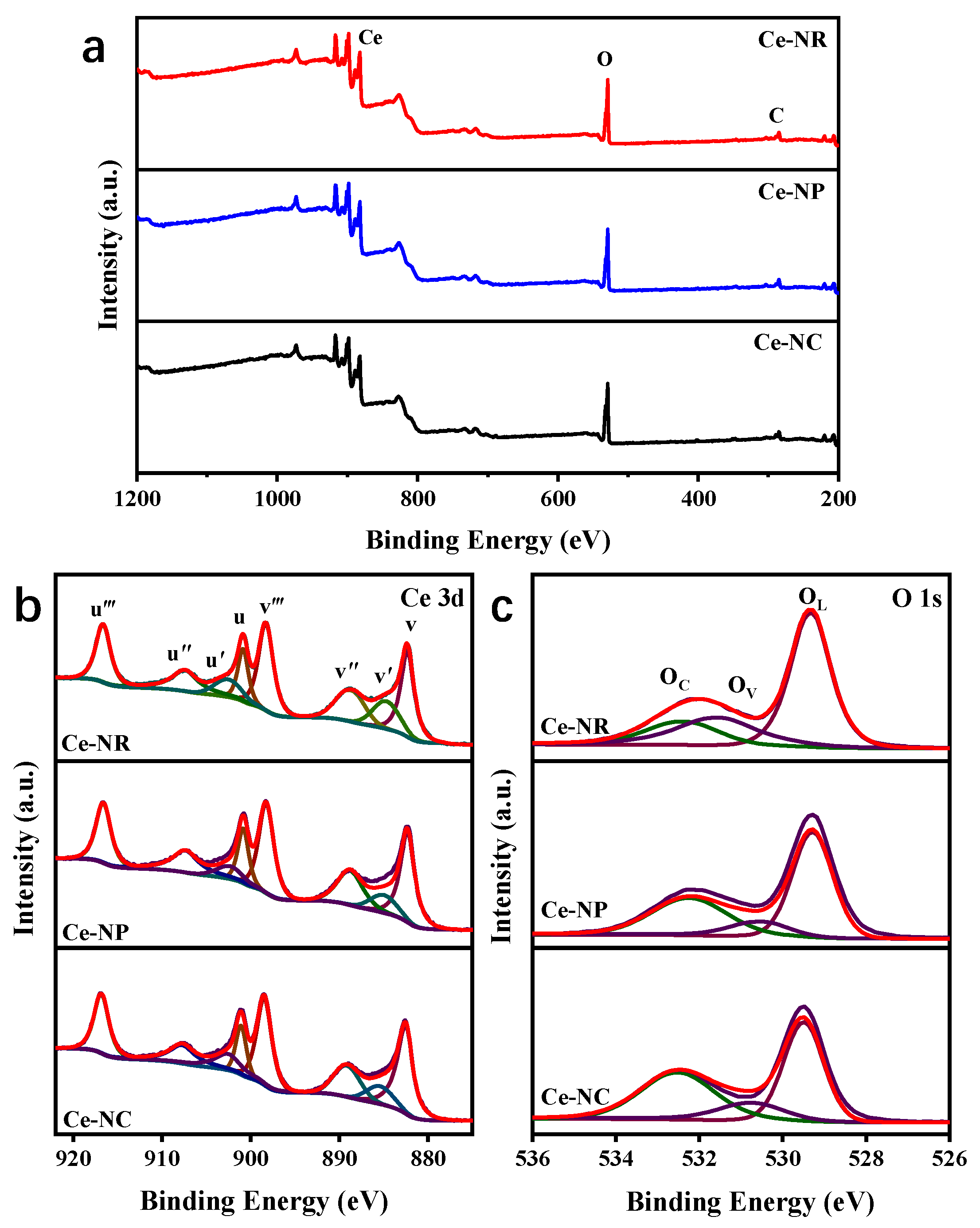
The surface chemical composition of the as-synthesized CeO2 catalysts with different morphologies was examined by X-ray photoelectron spectroscopy (XPS). The survey spectra (Figure 4a) confirmed the presence of Ce and O elements, indicating high purity of the prepared materials. The only other element detected was carbon (C), observed as the C 1s peak. This is a common and expected feature attributed to adventitious carbon from the environment, which is routinely used for binding energy calibration (typically referenced to 284.8 eV). Its presence does not indicate sample impurity. Figure 4b displays the high-resolution Ce 3d spectra, which were deconvoluted into eight characteristic peaks corresponding to two spin–orbit doublets: Ce 3d5/2 (denoted as u) and Ce 3d3/2 (denoted as v). This spectral feature confirmed the co-existence of both Ce4+ and Ce3+ oxidation states on the catalyst surfaces. The peaks labeled u‴ (917.5 eV), u″ (907.2 eV), u (901.1 eV), v‴ (897.7 eV), v″ (888.6 eV), and v (882.3 eV) were attributed to Ce4+, while the peaks u′ (902.5 eV) and v′ (884.9 eV) were assigned to Ce3+ [35]. The presence of Ce3+ was closely associated with the formation of oxygen vacancies, as the reduction of Ce4+ to Ce3+ is accompanied by the loss of lattice oxygen, and it generates defective sites [36]. The concentration of Ce3+, calculated from the peak area ratio Ce3+/(Ce4+ + Ce3+), followed the order: Ce-NR (21.1%) > Ce-NC (15.9%) > Ce-NP (14.6%) (Table 2). This trend suggested that Ce-NR possesses the highest oxygen vacancy density among the three morphologies. The O 1s spectra (Figure 4c) were fitted into three components: lattice oxygen (OL) at 528.7 eV, oxygen vacancies (OV) at 530.9 eV, and chemisorbed oxygen (OC) at 532.8 eV [37]. The relative concentration of OV, determined as OV/(OL + OV + OC), decreased in the sequence Ce-NR (24.2%) > Ce-NC (20.5%) > Ce-NP (19.8%), consistent with the Ce3+ content derived from Ce 3d analysis. These results clearly demonstrated that the OV and Ce3+ concentrations were strongly influenced by the morphology of CeO2, with rod-like CeO2 exhibiting the highest density of defect sites, which is beneficial for gas-phase CO2 adsorption and activation in catalytic reactions.
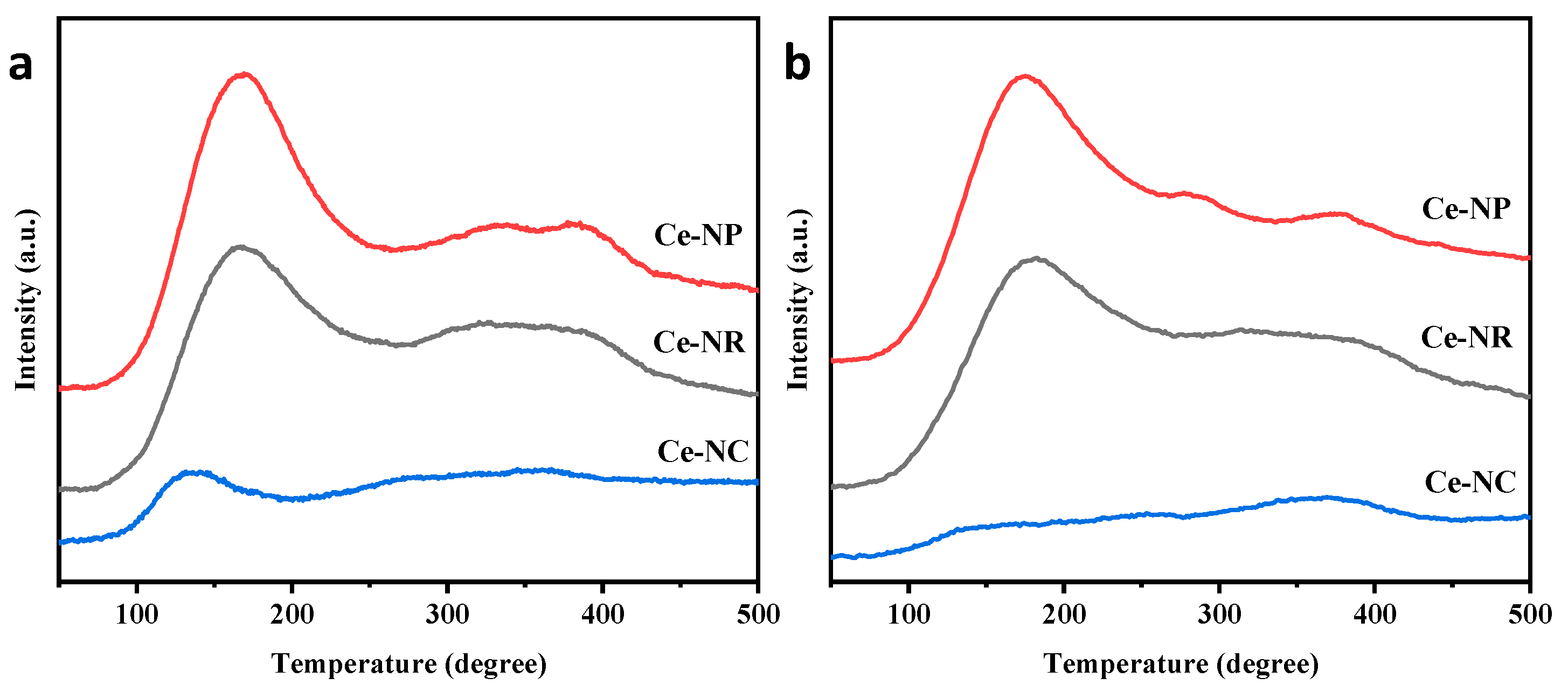
The acidic and basic properties of the three CeO2 catalysts, which played critical roles in activating ethanol and CO2, respectively [38], were probed by CO2- and NH3-temperature-programmed desorption (TPD). As depicted in Figure 5a,b, the TPD profiles were deconvoluted to identify weak (<473 K), moderate (473–673 K), and strong (>673 K) acid/base sites based on the desorption peak areas [39]. Notably, all samples lacked strong acid–base sites characterized by desorption peaks around 723 K. The quantitative amounts of different acidic and basic sites, summarized in Table 3, revealed that the total concentration of acid–base sites followed the order Ce-NP > Ce-NR > Ce-NC. Specifically, Ce-NR exhibited the highest concentrations of acid (0.82 mmol/g) and basic sites (0.87 mmol/g). According to previous literature [40,41], strong acid sites promote the formation of diethyl ether or dimethyl ether (DEE/DME), which, along with co-produced H2O, inhibits the synthesis of diethyl carbonate (DEC). Among the three catalysts, Ce-NC and Ce-NP possessed the lowest and highest concentrations of acid–base sites, respectively. In contrast, Ce-NR exhibited an intermediate acid–base site density between that of Ce-NC and Ce-NP. A few studies had previously mentioned that too high a concentration of acidic or basic sites was unfavorable for the DAC synthesis, possibly due to the difficult desorption of the product or the occurrence of side reactions [42]. Therefore, the reaction involved acid–base synergistic catalysis, and a proper balance of acid–base sites was crucial for the synthesis of DAC from CO2 and alcohol, as it affects the generation of the key intermediates [43].

2.2. Catalytic Performance

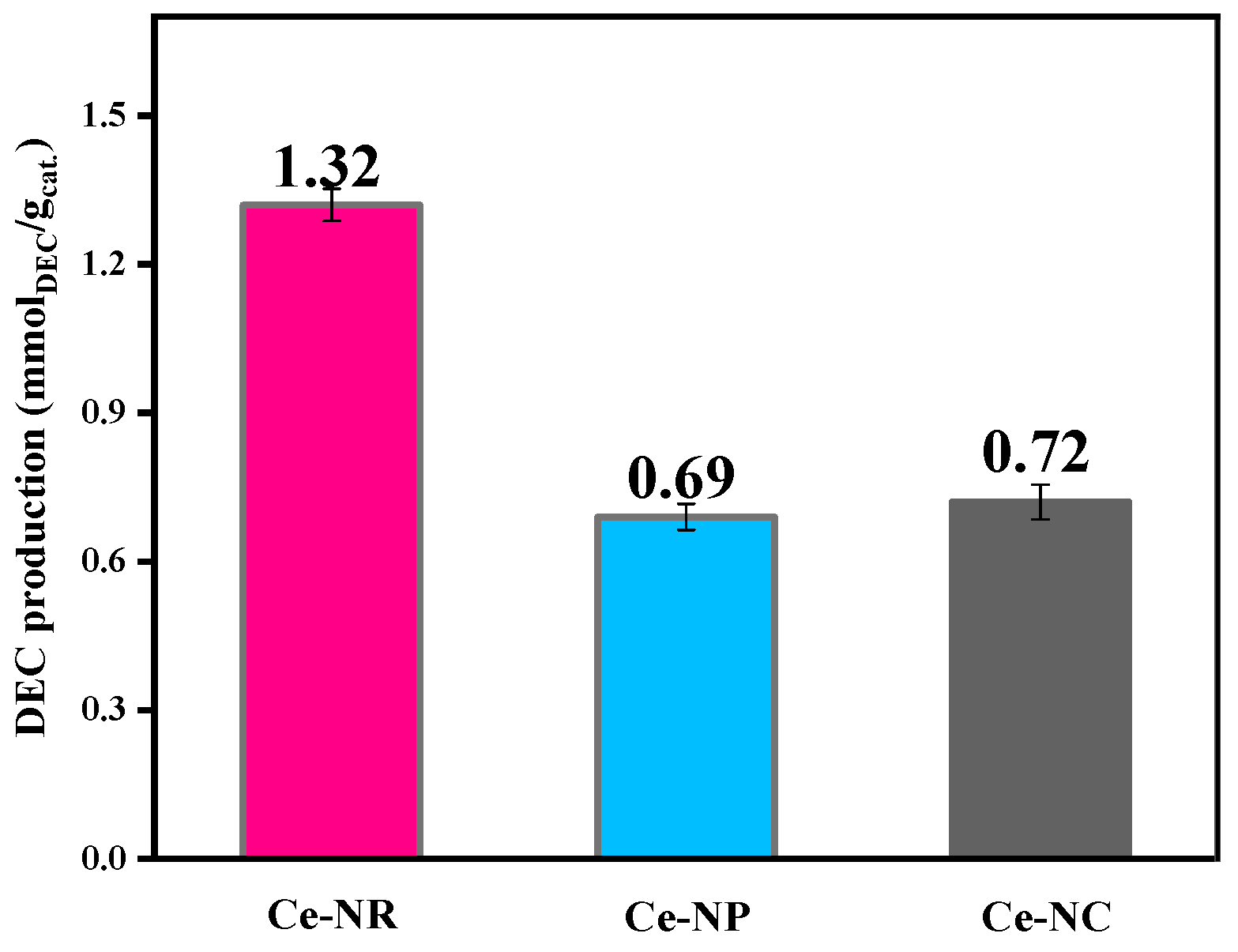
The catalytic performance of CeO2 with different morphologies (Ce-NR, Ce-NP, and Ce-NC) for the synthesis of diethyl carbonate (DEC) from CO2 and ethanol was evaluated under fixed conditions: temperature of 423 K, CO2 pressure 5 MPa, reaction time 4 h, and catalyst mass 0.17 g. As summarized in Figure 6, the Ce-NR catalyst yielded the highest DEC production (1.32 mmolDEC/gcat), outperforming both Ce-NP (0.69 mmolDEC/gcat) and Ce-NC (0.72 mmolDEC/gcat). This superior activity could be attributed to the higher concentration of surface oxygen vacancies in Ce-NR, which promoted CO2 adsorption and facilitated the formation of a bidentate carbonate intermediate—a key step in the DEC formation pathway. In addition, Ce-NR possessed an optimal acidity/basicity ratio, contributing to a balanced distribution of acid–base sites that further enhanced catalytic efficiency. Crucially, control experiments conducted without a catalyst, with inert SiO2, and with the uncalcined CeO2 precursor resulted in no detectable DEC production, confirming that the reaction is genuinely catalytic and hinges on the specific surface structure of the shaped CeO2 nanocrystals.
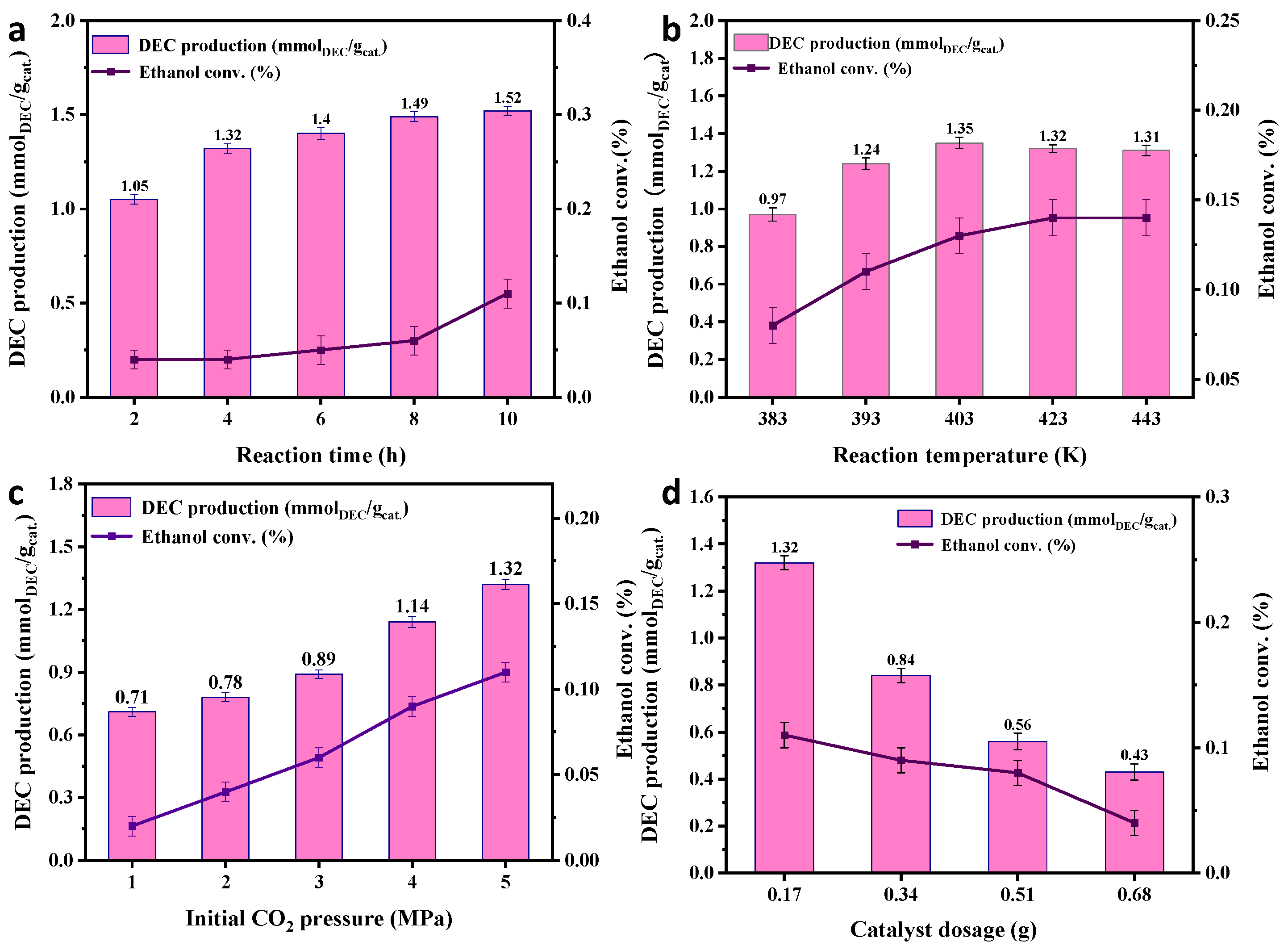
The influence of reaction parameters on the synthesis of DEC from CO2 and ethanol over the Ce-NR catalyst is summarized in Figure 7. First, to determine the optimal reaction time for DEC production from CO2 with ethanol in the presence of a Ce-NR catalyst, the reaction time varied between 2 and 10 h, keeping other parameters constant: catalyst amount (0.17 g), temperature (423 K), and CO2 pressure (5 MPa) (Figure 7a). The experimental findings indicated that the production of DEC increased from 1.05 to 1.49 mmolDEC/gcat as the reaction duration increased from 2 to 8 h. However, there was no significant alteration in DEC production when the reaction time was extended beyond 10 h. This was most likely because the catalyst was deactivated by adsorbed water at this point. Meanwhile, reaction temperature also played a critical role by affecting both substrate activation and thermodynamic constraints. As depicted in Figure 7b, the temperature varied between 383 K and 443 K in the presence of the Ce-NR catalyst at a constant catalyst amount (0.17 g) and constant CO2 pressure (5 MPa). It was found that the DEC production increased from 0.97 to 1.35 mmolDEC/gcat when the temperature was increased from 383 K to 403 K. However, a further increase in temperature to 443 K led to a slight decrease in production to 1.31 mmolDEC/gcat. This decline could be attributed to the fundamental thermodynamics of physical absorption. The solubility of CO2 in ethanol, as in many physical solvents, exhibited an inverse relationship with temperature due to the exothermic nature of dissolution. At elevated temperatures (>403 K), the equilibrium concentration of dissolved CO2 in the ethanol solvent decreased significantly. Since the dissolved CO2 was the primary reactant, its reduced availability at the catalyst surface likely became the rate-limiting step, overshadowing the positive effect of temperature on reaction kinetics and leading to the observed decrease in DEC production. Generally, for reactions involving gaseous feedstocks, especially for those in which the total number of molecules is reduced, the increase in reaction pressure can effectively promote the reaction. Therefore, as shown in Figure 7c, increasing the initial CO2 pressure from 1 g to 5 MPa resulted in a rise in DEC production from 0.71 to 1.32 mmolDEC/gcat. Increasing the initial pressure of CO2 in the reaction system can improve the DEC production from CO2 and ethanol by strengthening the interaction between CO2 and acid–base pairs of Ce-NR, which can effectively activate more CO2. Finally, the effect of catalyst amount on the formation of DEC was shown in Figure 7d. The increase in catalyst dosage, on one hand, provided more catalytically active sites, while limiting the mixing and mass transfer of systems on the other hand. With the increase in catalyst dosage from 0.1 to 0.4 g, the DEC production decreased gradually from 1.56 to 0.43 mmolDEC/gcat. This may be attributed to the excessive catalytic active sites that enhanced the side reactions, resulting in a remarkable decrease in the selectivity of the target product DEC.
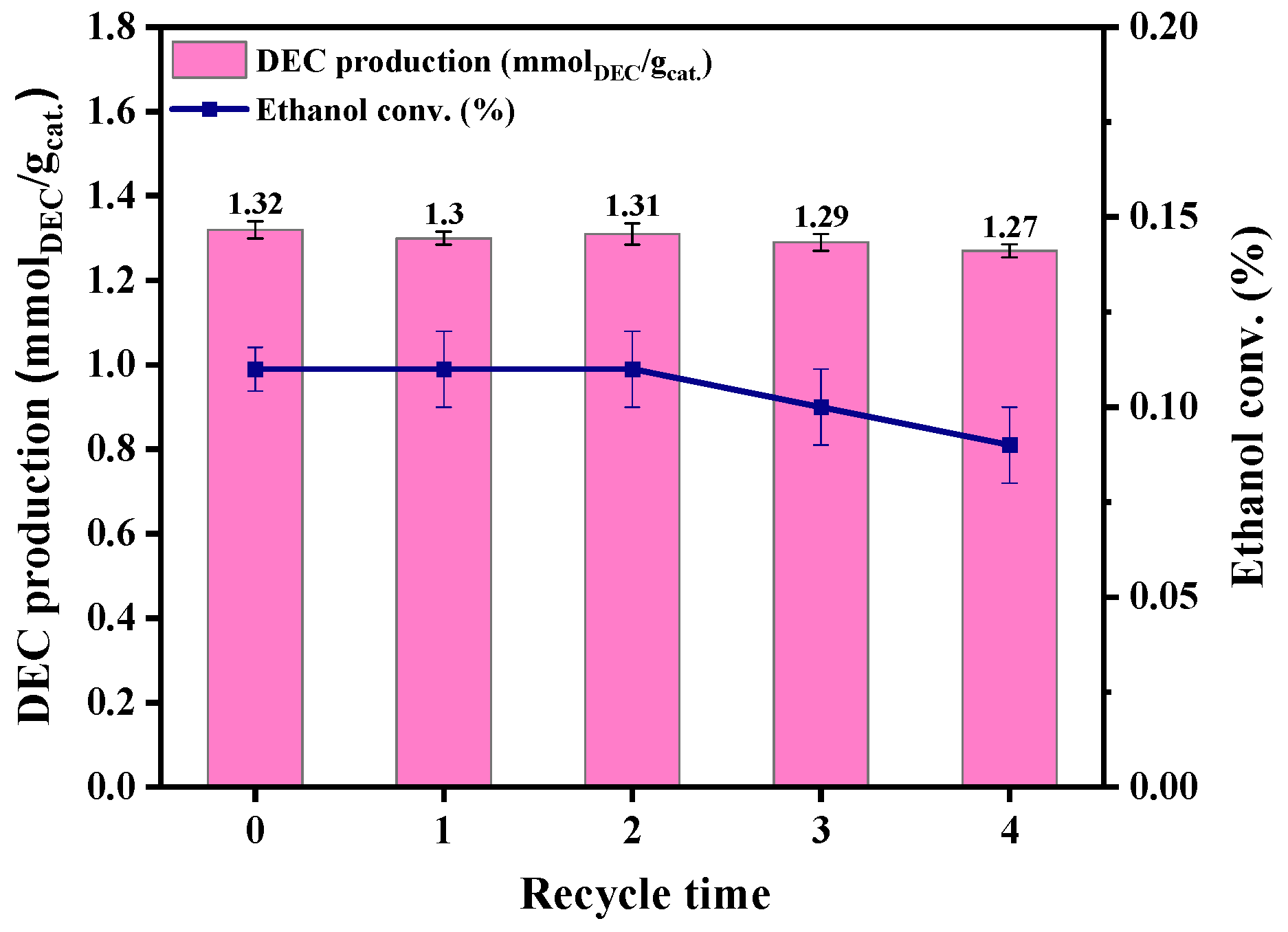
The reusability of the Ce-NR catalyst, a critical parameter for practical application, was evaluated under the optimized reaction conditions (423 K, 5 MPa CO2, 4 h, 0.17 g catalyst). After each run, the catalyst was recovered by centrifugation, washed thoroughly with absolute ethanol, and directly reused in the next cycle. As illustrated in Figure 8, the DEC production remained almost unchanged over four consecutive reaction runs, demonstrating the outstanding catalytic stability of the Ce-NR catalyst. To examine the stability of the catalyst after recycling, the used catalyst was characterized by XRD and XPS techniques. As shown in Figure 9a, XRD results confirmed that the fluorite structure of CeO2 was intact and no new crystal phase had appeared, suggesting that the structure of the catalyst did not change. XPS analysis (Figure 9b,c) also showed that the relative concentrations of Ce3+ species and Ov remained largely unchanged compared to the fresh catalyst. This indicated the preservation of active surface chemistry, corroborating the consistent catalytic performance. This high stability supports its potential for future industrial implementation by maintaining consistent performance across multiple uses without significant deactivation.
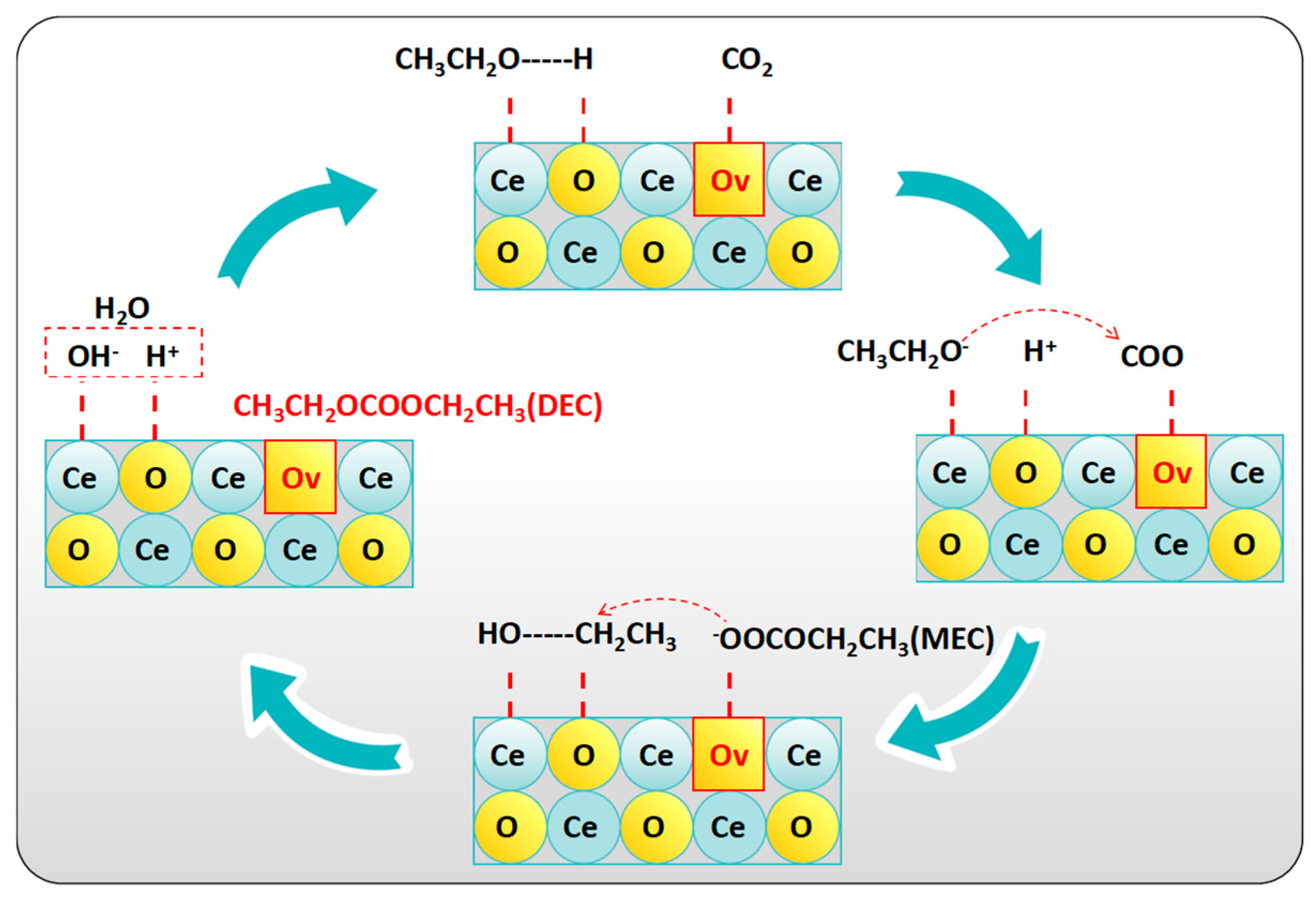
The reaction pathway detailed below was proposed as a plausible mechanism based on the above experimental observations (e.g., the critical role of oxygen vacancies and Ce3+ sites) and consistent with established literature on CeO2-catalyzed reactions [44,45,46]. A schematic diagram illustrating this proposed pathway is included in Scheme 1. The process was hypothesized to commence with the adsorption of CO2 molecules onto the Ce-NR catalyst surface. This step was likely facilitated by Lewis acid–base interactions, wherein the oxygen vacancies (acting as Lewis acid sites) interacted with the nonbonding electrons of the oxygen atoms in the linear CO2 molecule. This interaction potentially led to the activation of CO2 and the formation of carbonate-like adsorbed intermediates, such as bidentate carbonate. Concurrently, ethanol molecules were probably adsorbed on adjacent Ce3+ Lewis acid sites. At these sites, the hydroxyl group of ethanol might interact with neighboring basic low-coordinated surface oxygen anions (O2−), resulting in the deprotonation of ethanol and the formation of ethoxyl ions (CH3CH2O) and protons (H+). Subsequently, the nucleophilic oxygen atom of the adsorbed ethoxyl species attacked the electrophilic carbon atom of the activated CO2 intermediate, leading to the formation of a monodentate ethyl carbonate (MEC) species (CH3CH2OCOO). Almost simultaneously, another ethanol molecule might be activated on a proximal Lewis acid site, facilitating the generation of an ethyl cation (CH3CH2+) and a hydroxyl anion (OH). The critical C–O bond formation step culminating in DEC production was then proposed to proceed via the reaction between the nucleophilic MEC intermediate (CH3CH2OCOO) and the electrophilic ethyl cation (CH3CH2+), yielding DEC (CO(OCH2CH3)2). The proton (H+) generated from the first ethanol molecule then combined with the OH- anion to produce water as a by-product. Finally, the active sites, including the oxygen vacancies, were regenerated on the catalyst surface, completing the proposed catalytic cycle. This proposed mechanism highlighted the vital synergy between the acidic sites (Ce3+, oxygen vacancies) and basic sites (O2−) on the CeO2 surface for the simultaneous adsorption and activation of both CO2 and ethanol. A crucial aspect of this synergy was the postulated role of Ce3+ sites adjacent to oxygen vacancies in creating moderate-strength basic sites. These sites were inferred to be optimal for stabilizing key reaction intermediates like monodentate ethyl carbonate, thereby avoiding the pitfalls of either ineffective weak adsorption or catalyst-poisoning strong adsorption. The rod-like morphology (Ce-NR) was concluded to be crucial as it uniquely optimized the surface crystal structure and acid–base properties, providing the highest concentration of oxygen vacancies and a balanced distribution of acid–base pairs. As electron-rich centers, these oxygen vacancies were reasoned to significantly enhance CO2 adsorption and activation. Thus, the enhancement of surface functionality induced by morphology control, including the increased density of active sites and optimized acid–base properties, was proposed as the fundamental reason for the promoted DEC formation.

3. Materials and Methods

3.1. Materials

Cerium(III) nitrate hexahydrate (Ce(NO3)3·6H2O) and sodium hydroxide (NaOH) were purchased from Aladdin Chemical Technology Co., Ltd. (Shanghai, China). Ethanol (C2H6O, AR) was purchased from Sinopharm Chemical Reagent Co., Ltd. (Shanghai, China). All the reagents were analytical grade and used without further purification.

3.2. Preparation of CeO2 Catalysts

CeO2 nanorods: 5.2 g of Ce(NO3)3·6H2O was dissolved in 30 mL of deionized water to form a cerium nitrate solution. The 210 mL of 6 mol/L NaOH solution was slowly added dropwise to the cerium nitrate solution under stirring. After the addition was complete, the mixture was stirred for an additional 15 min. The resulting mixture was transferred into a hydrothermal autoclave and subjected to a hydrothermal reaction at 453 K for 24 h. After the reaction, the product was collected, washed with deionized water until the pH of the filtrate reached 7, and then washed 2–3 times with ethanol. The product was dried at 353 K for 8–10 h, ground, and finally calcined in a muffle furnace. The furnace temperature was raised from 293 K to 773 K at a heating rate of 2 K/min and held at 773 K for 4 h to obtain CeO2 nanorods, denoted as Ce-NR.
CeO2 nanoparticles: 5.2 g of Ce(NO3)3·6H2O was dissolved in 30 mL of deionized water to form a solution. The 30 mL of 2 mol/L NaOH solution was slowly added dropwise to the cerium nitrate solution under stirring. After complete addition, the mixture was stirred for another 15 min. The precipitate was collected, washed with deionized water until neutral (pH = 7), and then washed 2–3 times with ethanol. The product was dried at 353 K for 8–10 h. The dried material was calcined in a muffle furnace, with the temperature programmed to increase from 293 K to 773 K at a rate of 2 K/min and maintained at 773 K for 4 h, yielding CeO2 nanoparticles, denoted as Ce-NP.
CeO2 nanocubes: CeO2 nanocubes were synthesized using a similar initial procedure to the nanorods: 5.2 g of Ce(NO3)3·6H2O was dissolved in 30 mL of deionized water. Then, 210 mL of 6 mol/L NaOH solution was added dropwise to the cerium nitrate solution with stirring, followed by 15 min of additional stirring after the addition. The mixture was then transferred to a hydrothermal autoclave for a hydrothermal reaction at 373 K for 24 h. After the reaction, the product was collected, washed with deionized water to pH = 7, followed by 2–3 washes with ethanol, and dried at 353 K for 8–10 h. The dried product was ground and calcined in a muffle furnace using the same temperature program as for the nanorods (heating from 293 K to 773 K at 2 K/min and holding for 4 h) to obtain CeO2 nanocubes, denoted as Ce-NC.

3.3. Characterization

A D/MAX2500/PC powder diffractometer (Rigaku) with a Cu Kα radiation source was operated at 40 kV and 200 mA to record the X-ray Diffraction (XRD) patterns in reflection geometry to identify the crystalline structure of samples (Rigaku Corporation, Tokyo, Japan). Fourier transform infrared (FT-IR) spectra were tested by a Tensor 27 (Bruker, Billerica, MA, USA) spectrometer in the transmission mode with a resolution of 4 cm−1. Each spectrum was based on 32 scans (4000–400 cm−1). The transmission electron microscopy (TEM) images of samples were recorded on a JEOL JEM-2100 (JEOL, Tokyo, Japan) with a 200 kV field emission gun. Samples for TEM analyses were prepared by dispersing the powder products as a slurry in ethanol and then depositing them on a carbon film coated on a copper grid. X-ray photoelectron spectroscopy (XPS) was conducted on a Thermo ESCALAB 250 system (Thermo Fisher Scientific, Waltham, MA, USA), employing AlKα radiation, operating at 150 W with an energy pass of 20 eV. The binding energies of various surface elements were calibrated using the C 1s peak at 284.8 eV. Surface acidity and basicity of the obtained samples were obtained by temperature-programmed desorption of CO2 and NH3 experiments (CO2-TPD and NH3-TPD) (Autochem 2920, Micromeritics, Norcross, GA, USA) with a TCD detector. For the CO2-TPD or NH3-TPD, a 50 mg sample was pretreated under Ar at 473 K for 30 min to remove surface physically adsorbed H2O and CO2. CO2 or NH3 adsorption was carried out at room temperature by switching Ar flow to a stream of 10 vol% CO2/Ar or 10% NH3/Ar (30 mL·min−1) for 1 h. Then the sample was purged with He (50 mL·min−1) for 1 h in order to remove the physically adsorbed CO2 or NH3 species. The final TPD profile was recorded under He (30 mL·min−1) in temperatures ranging from room temperature to 1073 K at a heating rate of 10 K·min−1. The concentration of CO2 or NH3 was measured by a TCD detector.

3.4. Catalytic Performance Test

The catalytic reaction was carried out in a 25 mL stainless-steel autoclave equipped with a magnetic stirrer. In a typical procedure, 0.17 g of catalyst was added to 0.1 mol of ethanol in the reactor. The air in the reactor was then purged by pressurizing and venting with CO2 several times, after which the reactor was charged with CO2 to the desired initial pressure (5 MPa). The reaction mixture was heated to the target temperature (423 K) and maintained for 4 h under constant stirring. After the reaction, the reactor was cooled to room temperature. The liquid products were qualitatively analyzed using a gas chromatograph (Haixin GC-950) equipped with a flame ionization detector (FID) and an HP-5 capillary column. The quantification of DEC and ethanol was performed by gas chromatography (GC) using an internal standard method (n-propanol). A calibration curve was established with known concentrations of authentic DEC and ethanol standard prior to analyzing the reaction mixtures to ensure accurate quantification of the DEC and ethanol amount. Ethanol conversion and diethyl carbonate (DEC) production were calculated based on the chromatographic data.
DEC   production = n DEC ( mmol ) m catalyst ( g )
Ethanol   conversion = n in n out n in × 100 %
nDEC represents the molar amount of DEC produced; mcatalyst represents catalyst dosage; nin represents the molar amount of ethanol fed into the reactor; and nout represents the molar amount of unreacted ethanol remaining after the reaction.
The solid catalyst was separated from the post-reaction mixture by centrifugation, thoroughly washed with ethanol, and dried under vacuum at 373 K overnight for recycling tests. Following the initial reaction, a sample of the reaction mixture was extracted with a pipette for GC analysis. The remaining mixture was centrifuged to separate the catalyst from the liquid phase. The recovered catalyst was washed five times with ethanol and then dried overnight under vacuum at 373 K. The recycled catalyst was directly used in the next reaction cycle. The amounts of the substrate and the Ce-NR catalyst were adjusted proportionally to the amount of recovered catalyst in each reuse experiment.
The catalytic reactions were performed in triplicate, and the values reported represent the mean. The error bars in the figures and the uncertainties in the table correspond to the standard deviation from these independent measurements.

4. Conclusions

In summary, three distinct CeO2 morphologies, including nanorods (Ce-NR), nanocubes (Ce-NC), and nanoparticles (Ce-NP), were successfully prepared via hydrothermal methods. Crucially, it was found that the catalytic performance for the direct synthesis of diethyl carbonate (DEC) from CO2 and ethanol was decisively influenced by the surface structure, which was intrinsically linked to the catalyst morphology. Thereby, a definitive correlation was established connecting the morphology with the abundance of oxygen species, the acid–base properties, and ultimately the catalytic activity. Among the three synthesized catalysts, CeO2 nanorods (Ce-NR) exhibited the superior catalytic performance, achieving a DEC production of 1.32 mmolDEC/gcat, leading to the performance order: Ce-NR > Ce-NC > Ce-NP. This superior activity was attributed to the synergistic effect of a higher concentration of surface Ce3+ species, a greater density of oxygen vacancies, and an optimal balance of acid–base sites on the nanorod morphology. These features collectively promoted the adsorption and activation of CO2 and ethanol, facilitating the formation of DEC. In addition, the Ce-NR catalyst also demonstrated outstanding catalytic stability. Consequently, this study highlights morphology engineering as a critical tool for tailoring the surface properties of CeO2 catalysts. The strategy of designing catalysts with specific morphologies to expose defect-rich surfaces possessing suitable acid–base characteristics proves effective for advancing CO2 utilization. The insights from this work provide a valuable framework for the rational design of next-generation catalytic systems aimed at sustainable synthesis.

Author Contributions

Conceptualization, S.C. and Y.C.; methodology, S.C. and Y.C.; software, Y.C.; validation, J.Y., G.D., and F.W.; formal analysis, S.C. and Y.C.; investigation, S.C. and J.Y.; resources, J.X., F.W., and J.Y.; data curation, J.Y. and F.W.; writing—original draft preparation, S.C. and F.W.; writing—review and editing, S.C. and F.W.; visualization, S.C., J.X., and F.W.; supervision, B.X. and F.W.; project administration, B.X. and F.W.; funding acquisition, B.X. and F.W. All authors have read and agreed to the published version of the manuscript.

Funding

This research was funded by the National Natural Science Foundation of China (No. 22478040), Jiangsu Key Laboratory of Advanced Manufacturing for High-end Chemicals (No. KF2107), and the Advanced Catalysis and Green Manufacturing Collaborative Innovation Center (No. ACGM2022-10-07).

Data Availability Statement

Dataset available on request from the authors.

Acknowledgments

F.W. thanks Scientific Compass (www.shiyanjia.com) for the XPS test accessed on 1 September 2025.

Conflicts of Interest

The authors declare no conflicts of interest.

References

  1. Vega, L.F.; Bahamon, D.; Alkhatib, I.I. Perspectives on advancing sustainable CO2 conversion processes: Trinomial technology, environment, and economy. ACS Sustain. Chem. Eng. 2024, 12, 5357–5382. [Google Scholar] [CrossRef]
  2. Nwabueze, Q.A.; Leggett, S. Advancements in the application of CO2 capture and utilization technologies—A comprehensive review. Fuels 2024, 5, 508–532. [Google Scholar] [CrossRef]
  3. Shi, Y.; Su, W.; Xing, Y.; Cui, Y.; Liu, X.; Guo, W.; Che, Z. Research progress and future prospects of chemical utilization of CO2. Chem. Eng. J. 2025, 510, 161579. [Google Scholar] [CrossRef]
  4. Chen, C.; Wu, M.; Xu, Y.; Ma, C.; Song, M.; Jiang, G. Efficient photoreduction of CO2 to CO with 100% selectivity by slowing down electron transport. J. Am. Chem. Soc. 2024, 146, 9163–9171. [Google Scholar] [CrossRef] [PubMed]
  5. Onishi, N.; Himeda, Y. Toward methanol production by CO2 hydrogenation beyond formic acid formation. Acc. Chem. Res. 2024, 57, 2816–2825. [Google Scholar] [CrossRef]
  6. Salami, R.; Zeng, Y.; Han, X.; Rohani, S.; Zheng, Y. Exploring catalyst developments in heterogeneous CO2 hydrogenation to methanol and ethanol: A journey through reaction pathways. J. Energy Chem. 2025, 101, 345–384. [Google Scholar] [CrossRef]
  7. Ou, Y.; Liu, L.; Seemakurthi, R.R.; You, F.; Ma, H.; Pérez-Ramírez, J.; López, N.; Yeo, B.S. Controlling hydrocarbon chain growth and degree of branching in CO2 electroreduction on fluorine-doped nickel catalysts. Nat. Catal. 2025, 8, 714–727. [Google Scholar] [CrossRef]
  8. Liu, H.; Chang, X.L.; Yan, T.; Pan, W.G. Research progress in catalytic conversion of CO2 and epoxides based on ionic liquids to cyclic carbonates. Nano Energy 2025, 135, 110596. [Google Scholar] [CrossRef]
  9. Goswami, A.; Verma, M.; Thakur, A.; Bharti, R.; Sharma, R. Visible Light Mediated CO2 Fixation Reactions to Produce Carbamates and Carbonates: A Comprehensive Review. J. Heterocycl. Chem. 2024, 61, 2050–2069. [Google Scholar] [CrossRef]
  10. Yabushita, M.; Fujii, R.; Nakagawa, Y.; Tomishige, K. Thermodynamic and Catalytic Insights into Non-Reductive Transformation of CO2 with Amines into Organic Urea Derivatives. ChemCatChem 2024, 16, e202301342. [Google Scholar] [CrossRef]
  11. Koizumi, H.; Nagae, H.; Takeuchi, K.; Matsumoto, K.; Fukaya, N.; Inoue, Y.; Hamura, S.; Masuda, T.; Choi, J.C. Dialkyl Carbonate Synthesis Using Atmospheric Pressure of CO2. ACS Omega 2024, 9, 25879–25886. [Google Scholar] [CrossRef] [PubMed]
  12. Takeuchi, K.; Koizumi, H.; Nagae, H.; Matsumoto, K.; Fukaya, N.; Sato, K.; Choi, J.C. Direct use of low-concentration CO2 in the synthesis of dialkyl carbonates, carbamate acid esters, and urea derivatives. J. CO2 Util. 2024, 83, 102814. [Google Scholar] [CrossRef]
  13. Yang, G.; Wang, Q.; Li, L.; Lyu, D.; Lin, H.; Han, D. Exploring dialkyl carbonate as a low-carbon fuel for combustion engines: An overview. Fuel 2025, 386, 134221. [Google Scholar] [CrossRef]
  14. Ye, X.; Ruan, J.; Chen, L.; Qi, Z. Structure effects of imidazolium ionic liquids on integrated CO2 absorption and transformation to dimethyl carbonate. J. Environ. Chem. Eng. 2024, 12, 112790. [Google Scholar] [CrossRef]
  15. Akune, T.; Morita, Y.; Shirakawa, S.; Katagiri, K.; Inumaru, K. ZrO2 nanocrystals as catalyst for synthesis of dimethylcarbonate from methanol and carbon dioxide: Catalytic activity and elucidation of active sites. Langmuir 2018, 34, 23–29. [Google Scholar] [CrossRef]
  16. Tomishige, K.; Gu, Y.; Nakagawa, Y.; Tamura, M. Reaction of CO2 with alcohols to linear-, cyclic-, and poly-carbonates using CeO2-based catalysts. Front. Energy Res. 2020, 8, 117. [Google Scholar] [CrossRef]
  17. Zhang, X.; Jia, D.; Zhang, J.; Sun, Y. Direct synthesis of diethyl carbonate from CO2 and ethanol catalyzed by ZrO2/molecular sieve. Catal. Lett. 2014, 144, 2144–2150. [Google Scholar] [CrossRef]
  18. Norouzi, F.; Abdolmaleki, A. CO2 conversion into carbonate using pyridinium-based ionic liquids under mild conditions. Fuel 2023, 334, 126641. [Google Scholar] [CrossRef]
  19. Gao, Z.; Liang, L.; Zhang, X.; Xu, P.; Sun, J. Facile one-pot synthesis of Zn/Mg-MOF-74 with unsaturated coordination metal centers for efficient CO2 adsorption and conversion to cyclic carbonates. ACS Appl. Mater. Interf. 2021, 13, 61334–61345. [Google Scholar] [CrossRef]
  20. Saini, N.; Malik, A.; Jain, S.L. Light driven chemical fixation and conversion of CO2 into cyclic carbonates using transition metals: A review on recent advancements. Coord. Chem. Rev. 2024, 502, 215636. [Google Scholar] [CrossRef]
  21. Jin, S.; Guan, X.; Zhang, X.; Zhang, C.; Liu, J.; Wang, Y.; Wang, Y.; Li, R.; Li, Z.; Fan, C. CeO2 nanorods with bifunctional oxygen vacancies for promoting low-pressure photothermocatalytic CO2 conversion with CH3OH to dimethyl carbonate. J. Environ. Chem. Eng. 2023, 11, 111374. [Google Scholar] [CrossRef]
  22. Guan, X.; Jin, Y.; Yang, Z.; Wang, X.; Zhang, X.; Zhang, C.; Guan, G.; Li, Z. Boosting photothermal CO2 conversion to dimethyl carbonate through Ce3+-Ov-Ce3+ active centers on CeO2-(110) nanotube. Chem. Eng. J. 2025, 514, 163317. [Google Scholar] [CrossRef]
  23. Hou, G.; Wang, Q.; Xu, D.; Fan, H.; Liu, K.; Li, Y.; Gu, X.K.; Ding, M. Dimethyl carbonate synthesis from CO2 over CeO2 with electron-enriched lattice oxygen species. Angew. Chem. Int. Ed. 2024, 63, e202402053. [Google Scholar] [CrossRef] [PubMed]
  24. Huang, W.; Gao, Y. Morphology-dependent surface chemistry and catalysis of CeO2 nanocrystals. Catal. Sci. Technol. 2014, 4, 3772–3784. [Google Scholar] [CrossRef]
  25. Wang, S.; Zhao, L.; Wang, W.; Zhao, Y.; Zhang, G.; Ma, X.; Gong, J. Morphology control of ceria nanocrystals for catalytic conversion of CO2 with methanol. Nanoscale 2013, 5, 5582–5588. [Google Scholar] [CrossRef]
  26. Zhang, J.; Huang, S.; Zhao, Y.; Ma, X.; Wang, S. CeO2 hollow nanosphere for catalytic synthesis of dimethyl carbonate from CO2 and methanol: The effect of cavity effect on catalytic performance. Asia-Pac. J. Chem. Eng. 2021, 16, e2554. [Google Scholar] [CrossRef]
  27. Yang, G.; Jia, A.; Li, J.; Li, F.; Wang, Y. Investigation of synthesis parameters to fabricate CeO2 with a large surface and high oxygen vacancies for dramatically enhanced performance of direct DMC synthesis from CO2 and methanol. Mol. Catal. 2022, 528, 112471. [Google Scholar] [CrossRef]
  28. Bai, Z.L.; Huang, T.T.; Qi, L.X.; Cai, L.Z.; Lin, S.J.; Sun, J.; Xu, Z.N.; Guo, G.C. (311) High-Index Facet of CeO2 Effectively Promotes the Synthesis of Dimethyl Carbonate from CO2 and Methanol. ACS Appl. Mater. Interf. 2025, 17, 36784–36795. [Google Scholar] [CrossRef]
  29. Arduino, M.; Sartoretti, E.; Calì, E.; Bensaid, S.; Deorsola, F.A. Understanding the Role of Morphology in the Direct Synthesis of Diethyl Carbonate Over Ceria-Based Catalysts: An In Situ Infrared and High-Resolution TEM Study. ChemCatChem 2025, 17, e00140. [Google Scholar] [CrossRef]
  30. He, Z.H.; Sun, Y.C.; Wei, Y.Y.; Wang, K.; Wang, W.; Chen, Z.; Wang, Z.Y.; Tian, Y.; Liu, Z.T. Synthesis of dimethyl carbonate from CO2 and methanol over CeO2 nanoparticles/Co3O4 nanosheets. Fuel 2022, 325, 124945. [Google Scholar] [CrossRef]
  31. Nagaraju, G.; Prashanth, S.A.; Shivaraj, M.; Yathish, K.V.; Anupama, C.; Rangappa, D. Electrochemical heavy metal detection, photocatalytic, photoluminescence, biodiesel production and antibacterial activities of Ag–ZnO nanomaterial. Mater. Res Bull. 2017, 94, 54–63. [Google Scholar] [CrossRef]
  32. Lv, Z.; Zhou, H.; Liu, H.; Liu, B.; Liang, M.; Guo, H. Controlled assemble of oxygen vacant CeO2@Bi2WO6 hollow magnetic microcapsule heterostructures for visiblelight photocatalytic activity. Chem. Eng. J. 2017, 330, 1297–1305. [Google Scholar] [CrossRef]
  33. Bezkrovnyi, O.S.; Lisiecki, R.; Kepinski, L. Relationship between morphology and structure of shape-controlled CeO2 nanocrystals synthesized by microwave assisted hydrothermal method. Cryst. Res. Technol. 2016, 51, 554–560. [Google Scholar] [CrossRef]
  34. Kimmel, G.; Sahartov, A.; Sadia, Y.; Porat, Z.; Zabicky, J.; Dvir, E. Non-monotonic lattice parameters variation with crystal size in nanocrystalline CeO2. J. Mater. Res. Technol. 2021, 12, 87–99. [Google Scholar] [CrossRef]
  35. Wu, H.; Zhao, X.L.; Li, J.; Bharti, B.; Tan, Y.L.; Long, H.Y.; Zhao, J.H.; Tian, G.; Wang, F. Investigation into the impact of CeO2 morphology regulation on the oxidation process of dichloromethane. RSC Adv. 2024, 14, 12265–12277. [Google Scholar] [CrossRef]
  36. Sun, W.; Gong, B.; Pan, J.; Wang, Y.; Xia, H.; Zhang, H.; Dai, Q.; Wang, L.; Wang, X. Catalytic combustion of CVOCs over CrxTi1−x oxide catalysts. J. Catal. 2020, 391, 132–144. [Google Scholar] [CrossRef]
  37. Liu, B.; Li, C.; Zhang, G.; Yao, X.; Chuang, S.S.C.; Li, Z. Oxygen vacancy promoting dimethyl carbonate synthesis from CO2 and methanol over Zr-doped CeO2 nanorods. ACS Catal. 2018, 8, 10446–10456. [Google Scholar] [CrossRef]
  38. Tomishige, K.; Ikeda, Y.; Sakaihori, T.; Fujimoto, K. Catalytic properties and structure of zirconia catalysts for direct synthesis of dimethyl carbonate from methanol and carbon dioxide. J. Catal. 2000, 192, 355–362. [Google Scholar] [CrossRef]
  39. Xu, W.; Yao, W.X.; Yuan, L.Y.; Yang, J.; Gao, L.J.; Wu, G.D.; Hong, X.; Hu, L.H. Catalytic Synthesis of Dimethyl Carbonate from CO2 and Methanol with Rare Earth metals doped CeO2 nano-flowers. J. Taiwan Inst. Chem. Eng. 2025, 175, 106293. [Google Scholar] [CrossRef]
  40. Tomishige, K.; Kunimori, K. Catalytic and direct synthesis of dimethyl carbonate starting from carbon dioxide using CeO2-ZrO2 solid solution heterogeneous catalyst: Effect of H2O removal from the reaction system. Appl. Catal. A 2002, 237, 103. [Google Scholar] [CrossRef]
  41. Prymak, I.; Kalevaru, V.N.; Wohlrab, S.; Martin, A. Continuous synthesis of diethyl carbonate from ethanol and CO2 over Ce–Zr–O catalysts. Catal. Sci. Technol. 2015, 5, 2322–2331. [Google Scholar] [CrossRef]
  42. Liu, B.; Li, C.M.; Zhang, G.Q.; Yan, L.F.; Li, Z. Direct synthesis of dimethyl carbonate from CO2 and methanol over CaO-CeO2 catalysts: The role of acid-base properties and surface oxygen vacancies. New J. Chem. 2017, 41, 12231–12240. [Google Scholar] [CrossRef]
  43. Huang, T.T.; Xu, Y.P.; Bai, Z.L.; Wang, M.S.; Liu, B.W.; Xu, Z.N.; Guo, G.C. Boosting the catalytic activity via an acid–base synergistic effect for direct conversion of CO2 and methanol to dimethyl carbonate. New J. Chem. 2024, 48, 14727–14735. [Google Scholar] [CrossRef]
  44. Putro, W.S.; Munakata, Y.; Ijima, S.; Shigeyasu, S.; Hamura, S.; Matsumoto, S.; Mishima, T.; Tomishige, K.; Choi, J.C.; Fukaya, N. Synthesis of diethyl carbonate from CO2 and orthoester promoted by a CeO2 catalyst and ethanol. J. CO2 Util. 2022, 55, 101818. [Google Scholar] [CrossRef]
  45. Giram, G.G.; Bokade, V.V.; Darbha, S. Direct synthesis of diethyl carbonate from ethanol and carbon dioxide over ceria catalysts. New J. Chem. 2018, 42, 17546–17552. [Google Scholar] [CrossRef]
  46. Buchmann, M.; Lucas, M.; Rose, M. Catalytic CO2 esterification with ethanol for the production of diethyl carbonate using optimized CeO2 as catalyst. Catal. Sci. Technol. 2021, 11, 1940–1948. [Google Scholar] [CrossRef]
Figure 1. XRD patterns of the three CeO2 catalysts with different morphologies.
Catalysts 16 00058 g001
Figure 2. FTIR spectra of the three CeO2 catalysts with different morphologies.
Catalysts 16 00058 g002
Figure 3. TEM images of the Ce-NR (a,b), Ce-NP (c,d), and Ce-NC catalysts (e,f).
Catalysts 16 00058 g003
Figure 4. XPS spectra of different CeO2 morphologies: (a) survey spectrum, (b) Ce 3d, and (c) O 1s.
Catalysts 16 00058 g004
Figure 5. (a) CO2-TPD and (b) NH3-TPD profiles of different CeO2 morphologies.
Catalysts 16 00058 g005
Figure 6. Plots of DEC production over Ce-NR, Ce-NP, and Ce-NC catalysts in the synthesis of DEC from CO2 and ethanol. Reaction conditions: 0.17 g catalyst, 0.1 mol ethanol, PCO2 = 5 MPa, T = 423 K, t = 4 h.
Catalysts 16 00058 g006
Figure 7. Effects of reaction parameters, including (a) reaction time, (b) reaction temperature, (c) the initial CO2 pressure, and (d) catalyst dosage, on the catalytic performances via the Ce-NR catalyst. Reaction conditions: (a) 0.17 g catalyst, 0.1 mol ethanol, PCO2 = 5 MPa, T = 423 K; (b) 0.17 g catalyst, 0.1 mol ethanol, PCO2 = 5 MPa, t = 4 h; (c) 0.17 g catalyst, 0.1 mol ethanol, T = 423 K, t = 4 h; (d) 0.1 mol ethanol, PCO2 = 5 MPa, T = 423 K, t = 4 h, respectively.
Catalysts 16 00058 g007
Figure 8. Reusability of the Ce-NR catalyst in the synthesis of DEC from CO2 and ethanol. Reaction conditions: 0.17 g catalyst, 0.1 mol ethanol, PCO2 = 5 MPa, T = 423 K, t = 4 h.
Catalysts 16 00058 g008
Figure 9. The XRD pattern (a), Ce 3d (b), and O 1s (c) XPS spectra of the used Ce-NR catalyst after four runs.
Catalysts 16 00058 g009
Scheme 1. A plausible mechanism for DEC synthesis from CO2 on a Ce-NR catalyst.
Catalysts 16 00058 sch001
Table 1. The crystallite size of different CeO2 morphologies.
CatalystPeak Position (2 θ)FWHMCrystallite Size D (nm)Lattice Constant (A)
Ce-NR28.5400.6598.465.412
Ce-NP28.5811.3695.925.425
Ce-NC28.5560.31825.445.411
Table 2. XPS results of CeO2 catalysts with different morphologies (values are the average of three measurements ± standard deviation).
CatalystCe3+/(Ce3+ + Ce4+) (%)OV/(OL + OC + OV) (%)
Ce-NR21.1 ± 0.624.2 ± 0.2
Ce-NC15.9 ± 0.220.5 ± 0.4
Ce-NP14.6 ± 0.319.8 ± 0.3
Table 3. Acidic and basic values of as-prepared CeO2 catalysts with different morphologies determined from NH3 and CO2-TPD measurements.
CatalystAcidity (mmol/g)Basicity (mmol/g)
WeakModerateTotalWeakModerateTotal
Ce-NR0.320.310.620.290.270.56
Ce-NP0.440.380.820.450.420.87
Ce-NC0.060.050.110.090.080.17
Disclaimer/Publisher’s Note: The statements, opinions and data contained in all publications are solely those of the individual author(s) and contributor(s) and not of MDPI and/or the editor(s). MDPI and/or the editor(s) disclaim responsibility for any injury to people or property resulting from any ideas, methods, instructions or products referred to in the content.