Article

Magnetic Polyoxometalate@Biochar Catalysts for Selective Acetalization of Glycerol into Fuel Additive


1
Département des Matériaux, École Polytechnique, Universitaire de Lille, Av. Paul Langevin, 59655 Villeneuve d’Ascq, France
2
LAQV/REQUIMTE—Laboratório Associado para a Química Verde, Departamento de Química e Bioquímica, Faculdade de Ciências, Universidade do Porto, 4169-007 Porto, Portugal
3
CICECO—Aveiro Institute of Materials, Department of Chemistry, University of Aveiro, 3810-193 Aveiro, Portugal
4
CICECO—Aveiro Institute of Materials, Department of Physics, University of Aveiro, 3810-193 Aveiro, Portugal
5
Department of Research and Development (R&D), Ibero Massa Florestal, S.A., 3720-584 Oliveira de Azeméis, Portugal
*
Authors to whom correspondence should be addressed.
Catalysts 2026, 16(1), 52; https://doi.org/10.3390/catal16010052
Submission received: 12 November 2025 / Revised: 12 December 2025 / Accepted: 17 December 2025 / Published: 2 January 2026
(This article belongs to the Special Issue Catalysis: The Key to Valorizing Crude Glycerol)

Abstract

The development of sustainable catalysts from renewable resources is a key challenge for reducing the cost of industrial catalytic processes and waste valorization. In this work, low-cost heterogeneous active catalysts were prepared based on pyrolyzed forest residues, forming valuable porous support materials (Biochar) able to efficiently accommodate the highly active heteropolyacid HPW12. Further, magnetic functionality was incorporated in the novel catalytic materials by the impregnation of NiFe2O4. The resulting magnetic composites were characterized by FTIR-ATR, SEM-EDS, ICP-OES, BET, XRD, potentiometric titration and magnetometry. The novel HPW12@NiFe2O4@Biochar composites were able to valorize the glycerol to produce the fuel additive solketal with high conversion and high selectivity after only 3 h of reaction via acetalization reaction with acetone. The biochar catalytic composite prepared from cork presented higher pore size than the same prepared from forest biomass. This property was crucial to achieve the best conversion (89%) and the highest solketal selectivity (96%). Additionally, reusability capacity was verified, supporting the potential of the cork-pyrolyzed-based composites as potential low-cost catalytic material to produce fuel additives, such as solketal, under sustainable conditions. This may contribute one step further toward a future with greener energy, increasing the viability of biodiesel industry waste.

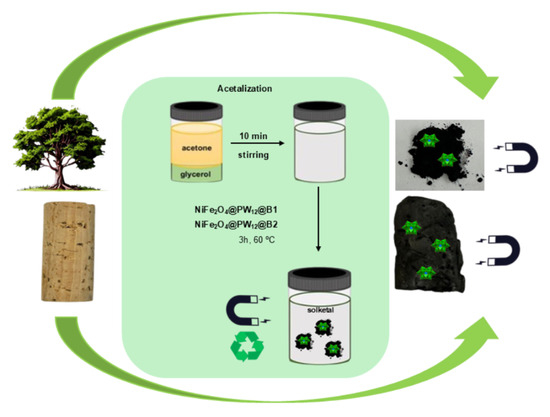
Graphical Abstract

1. Introduction

The increasing demand for sustainable energy sources and the global shift toward a circular economy has intensified interest in the valorization of biomass-derived by-products. Glycerol, a major by-product of biodiesel production, represents around 10% of total output by weight. Its overproduction has led to a saturated market, as crude glycerol—typically with 50–55% purity—cannot be directly applied in high-value industries without undergoing costly purification processes [1]. To overcome this challenge, several strategies have been explored to transform glycerol into value-added compounds [2,3,4,5,6]. Among them, the acetalization reaction with carbonyl compound reactants, particularly acetone, stands out for producing solketal, a promising oxygenated fuel additive [7,8,9,10]. Solketal improves fuel properties, such as octane number and cold flow performance, and can serve as a bio-based substitute of methyl tert-butyl ether (MTBE), a common petroleum-derived additive banned in many countries due to environmental concerns. The reaction is typically catalyzed by Brønsted or Lewis acids and more recently by heterogeneous acid catalysts due to their advantages in terms of recovery and reuse [11,12,13]. Molybdenum- or tungsten-based heteropoly acids (HPAs) of the Keggin series were used as catalysts for acetalization reactions [14,15,16]. HPAs exhibit high catalytic efficiency in this type of reaction; however, they present important limitations associated with their high solubility in polar reaction media, compromising the catalyst recyclability and removal from reaction media [17]. A widely adopted strategy to overcome this issue involves the heterogenization of HPAs by anchoring them onto solid supports such as mesoporous silicas [10,18,19,20,21], metal–organic frameworks (MOFs) [22,23], ion-exchange resins [24,25], polymeric membranes [26,27], inorganic–organic hybrid catalysts [28] and activated carbon [29]. Of these, the last one has gained the attention of the research community due to unique properties that make it extremely useful in a large spectrum of applications (soil amendment, waste management, carbon removal, water purification and land restoration). Biochar is a type of charcoal produced from inexpensive biomass feedstock, such as forest and agriculture residues, through a process of low pyrolysis.
Consequently, the development of efficient catalytic systems requires the application of recycling materials able to catalyze reactions with high efficiency and selectivity while simultaneously facilitating easy separation and catalysts reuse. In this context, magnetic nanoparticles appear to be a suitable choice for recyclable solid catalytic systems. One of the most promising strategies involves the preparation of magnetic biochar composites, which enables their easy separation from reaction systems and uses natural waste bioresources as support, conciliating low-cost and industrial relevance.
In this context, the present work explores the preparation of NiFe2O4 magnetic nanoparticles impregnated with phosphotungstic acid, both supported into two distinct bioresource materials: wood-derived biochar obtained from invasive plant species (e.g., Acacia) and cork stoppers. The resulting composites were further tested as heterogeneous catalysts for the valorization of glycerol into solketal under mild conditions, contributing to a clean and cost-effective way to valorize industrial biodiesel by-products.
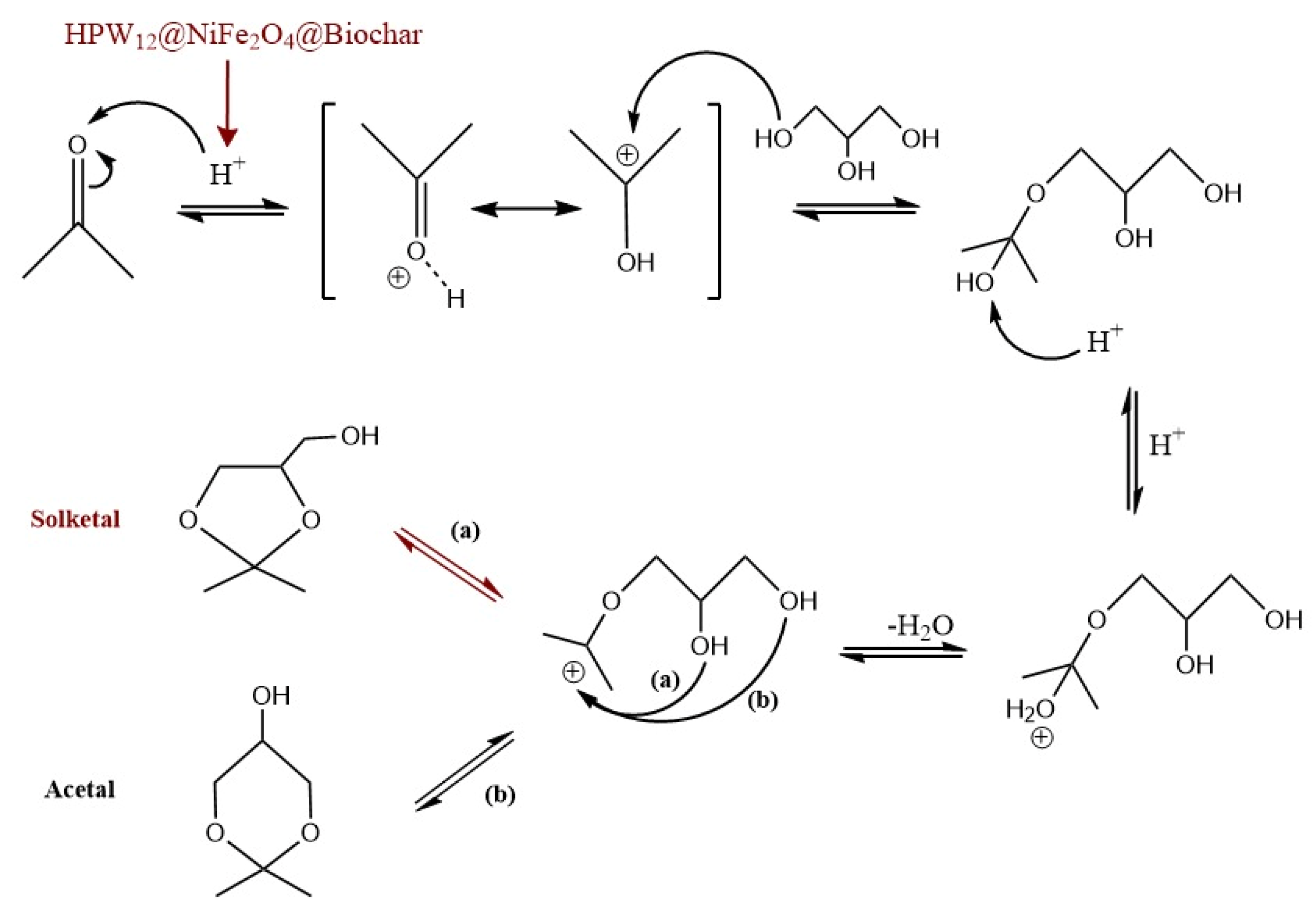
The acetalization reaction provides two cyclic products (Figure 1), i.e., the five-membered solketal (1) and the six-membered acetal (2). The mechanism of solketal formation from glycerol acetalization is well documented [19,30,31]. It proceeds through the formation of a glycerol–acetone adduct, which is dehydrated at the Brønsted acid sites of HPW12@NiFe2O4@Biochar to generate a carbocation. Subsequent nucleophilic attack by glycerol hydroxyl groups produces five- and six-membered cyclic acetals. Defective linkers in the HPW12@NiFe2O4@Biochar structure may also influence the reaction pathway, facilitating side processes such as decarbonylation or hydrodeoxygenation [32].

2. Results and Discussion

2.1. Characterization of Magnetic Biochar Catalysts

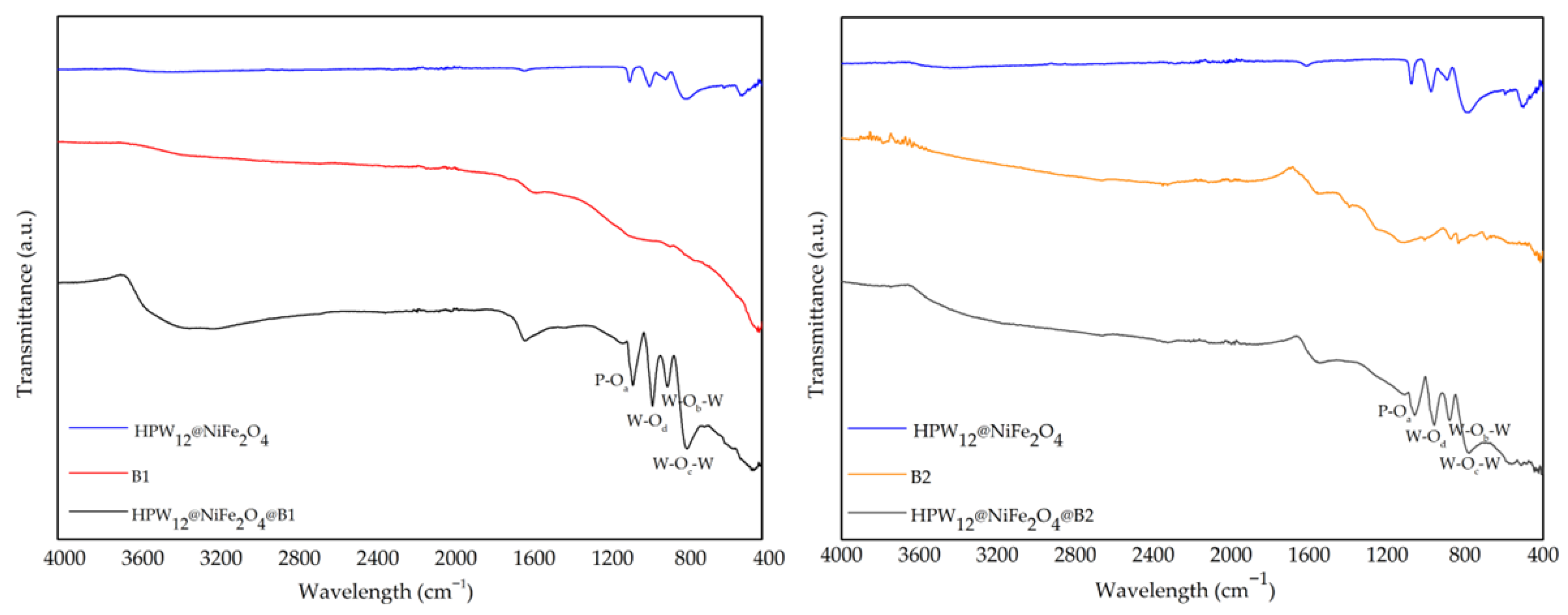
All the materials prepared in this work, from the non-magnetic HPW12@B1 and HPW12@B2 to the magnetic HPW12@NiFe2O4@B1 and HPW12@NiFe2O4@B2, were characterized by different techniques. Pure HPW12 exhibited typically four characteristic infrared bands, highlighting the vas(P-Oa) = 1079, vas(W-Od) = 979, vas(W-Ob-W) = 895 and vas(W-Oc-W) = 802 cm−1, attributed to absorption bands characteristics of the Keggin structure [33]. The NiFe2O4 nanoparticles presented a stretching band for the metal-oxide Fe–O groups in the octahedral position and another band to the Ni–O groups in the tetrahedral position at 434 cm−1 and 567 cm−1, respectively [34]. The FTIR-ATR spectrum of HPW12@NiFe2O4 presented less intense bands, with some corresponding to the characteristic bands of HPW12, while the bands that can be attributed to the nanoparticles were difficult to observe (Figure S3). The prepared composites were also characterized by FTIR-ATR spectroscopy, and the corresponding spectra are shown in Figure 2. No well-defined bands associated with the functional groups could be identified for the pristine B1 and B2 biochar, namely the -OH near 3400 cm−1, C-H around 2900 cm−1, among others, mainly due to their highly carbonized structure and the predominance of amorphous carbon domains [35,36,37]. Upon incorporation of the HPW12@NiFe2O4 phase, distinct spectral changes were observed. For the HPW12@NiFe2O4@B1 composite, the characteristic vibrational bands of HPW12 became more pronounced compared to the HPW12@NiFe2O4@B2 composite, suggesting stronger interactions or a higher degree of dispersion of the HPW12@NiFe2O4 species within the B1 support. These differences highlighted the influence of the biochar textural properties on the accessibility and stabilization of the HPW12 active phase within the composite structure.
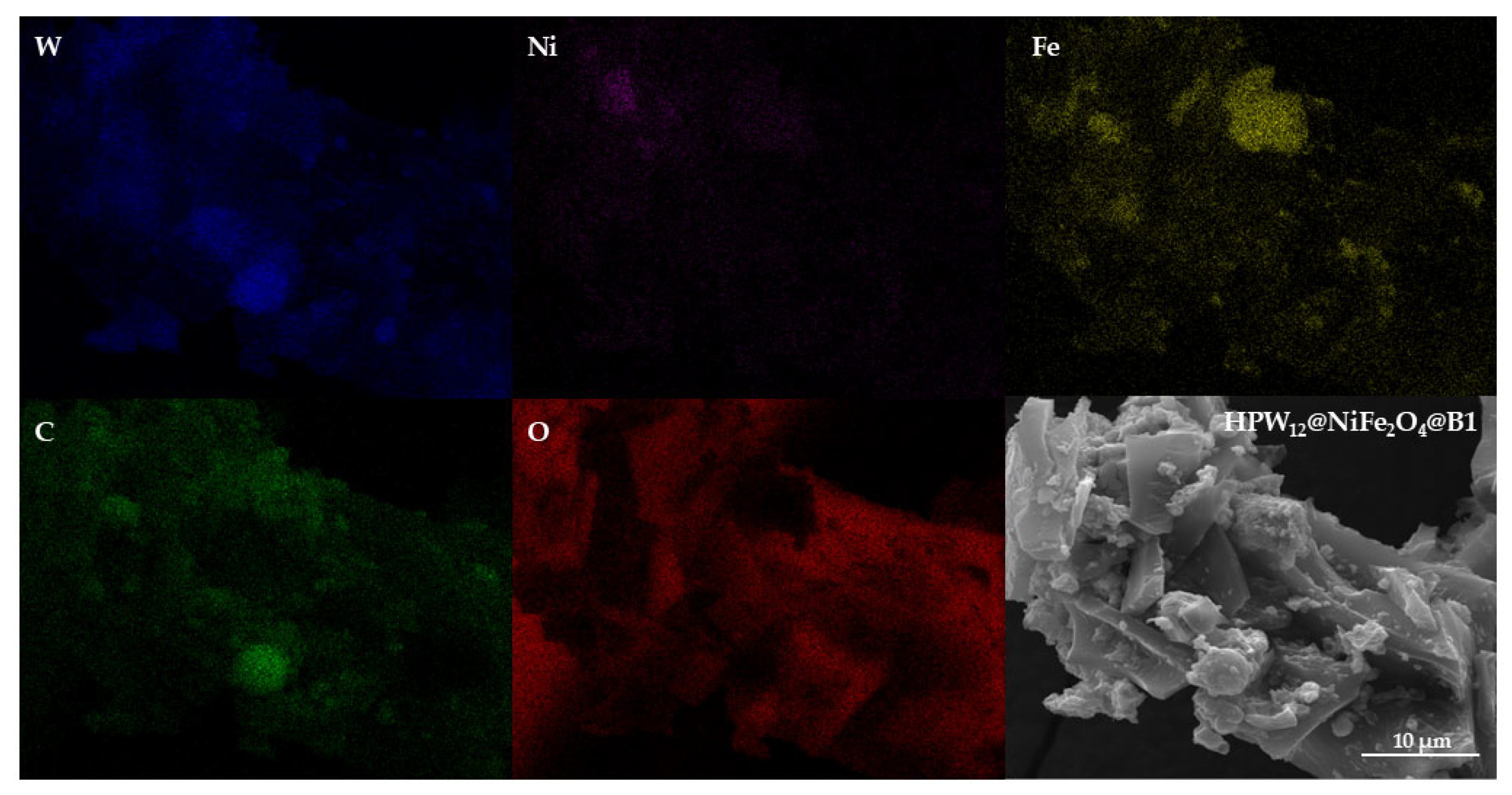
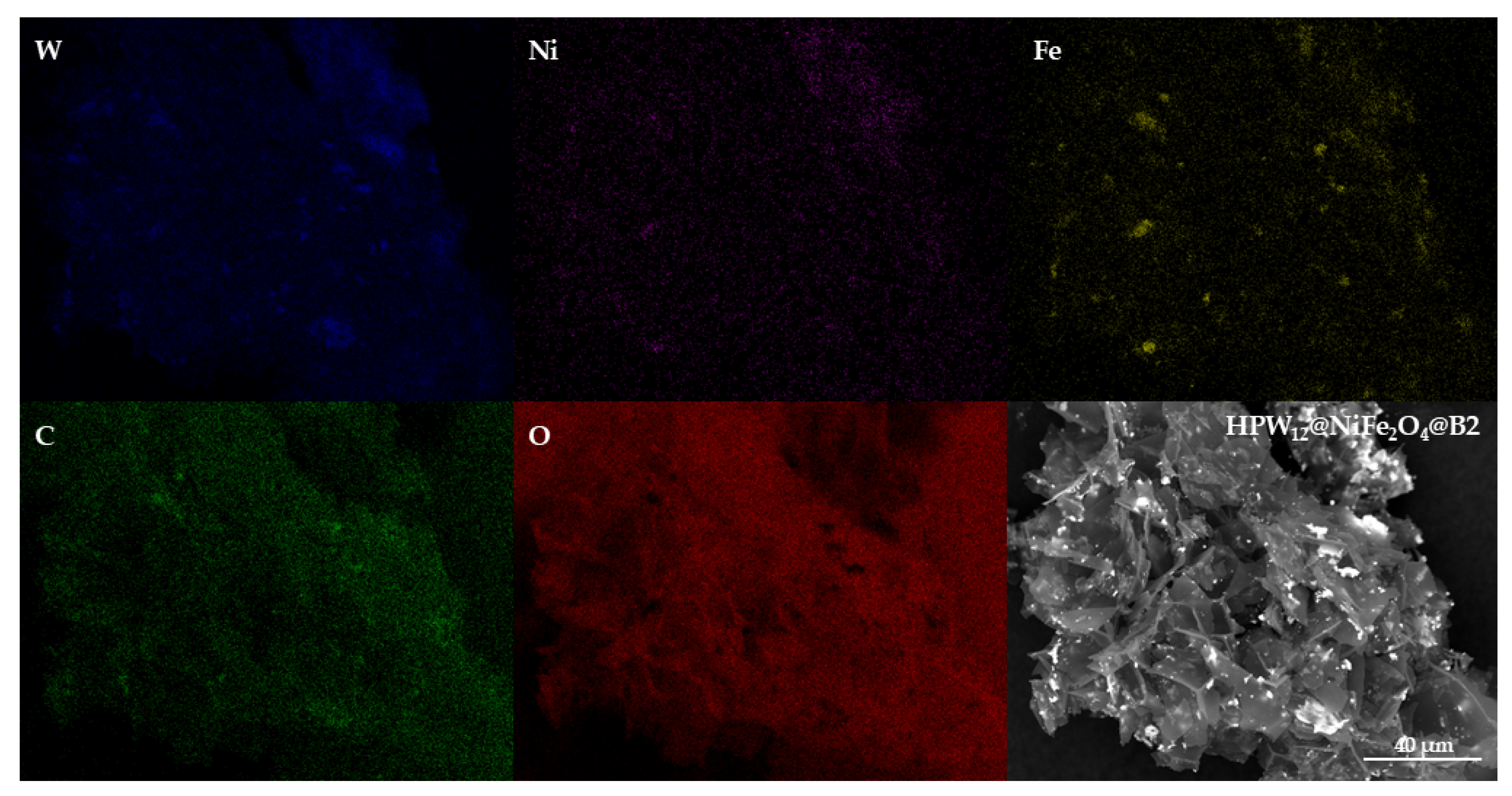
The morphology and composition of the magnetic biochar composites and the biochar support (B1 and B2) were evaluated using SEM-EDS analysis. Pyrolyzed stopper cork B2 exhibited a highly porous cellular structure predominantly composed of carbon. While support B1 (biochar from pyrolyzed plants) displayed a lamellar structure and also contained other elements such as Si, Al and Ca (Figure S4) [38]. The nickel ferrite nanoparticles exhibited spherical morphology with a relatively uniform particle size and with low scatter, a behavior typically observed in magnetic nanoparticles due to dipole–dipole interactions (Figure S5) [34]. EDS analysis exposed in Figure S5 shows the presence of Fe and Ni components from NiFe2O4 nanoparticles. In Figure 3, the HPW12@NiFe2O4@B1 and HPW12@NiFe2O4@B2 magnetic composites exhibit a highly heterogeneous structure. The particles display irregular shapes and elongated features. Some block metals deposited carbon particles from the support, while others consist of carbon with different deposited metals. Through EDS it was confirmed that the distribution of the metals Ni, Fe and W were not uniform on the surface of the support, mainly for the HPW12@NiFe2O4@B1 composite, where some regions with higher amount of Fe and W can be observed.
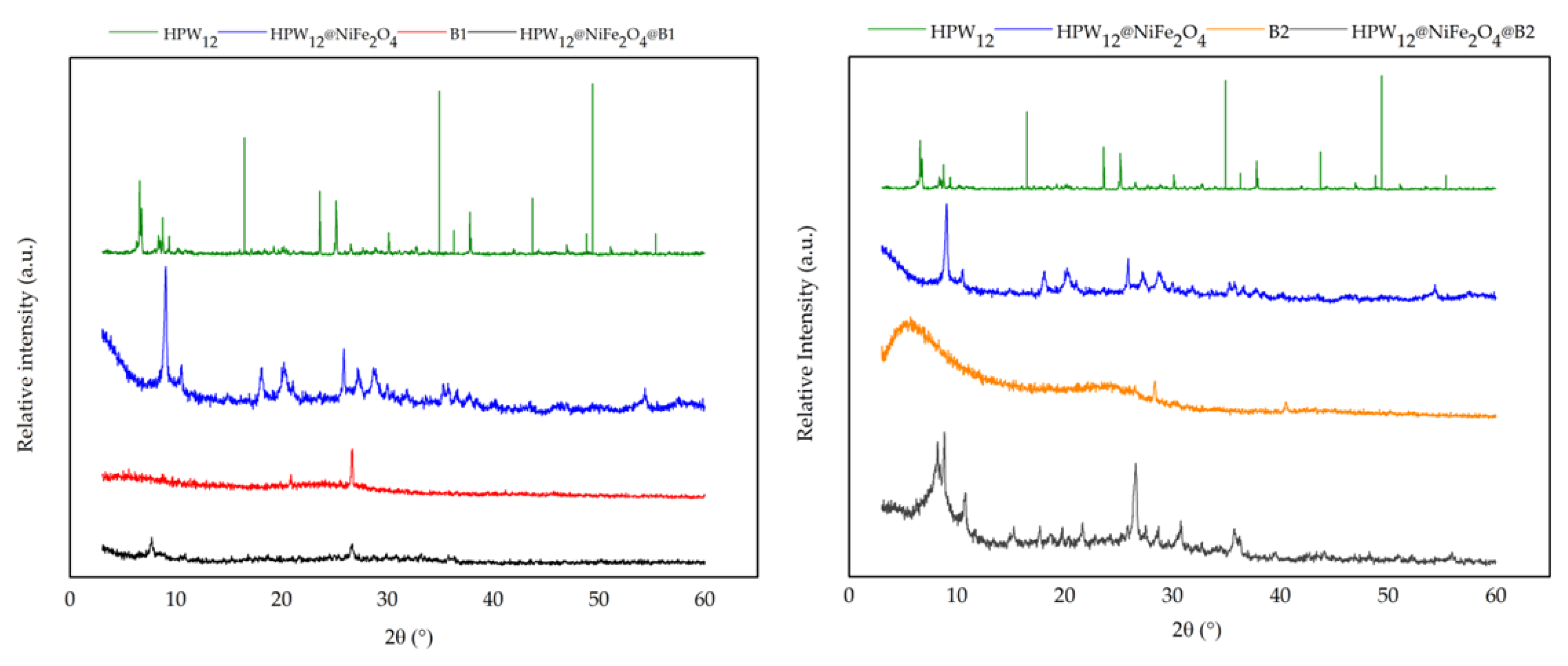
The crystalline structure of the prepared materials was evaluated by powder X-ray diffraction (XRD, Figure 4). The solid HPW12 has a crystalline structure that is distinct from the XRD obtained for HPW12@NiFe2O4. This indicates that the crystallinity of HPW12 in the presence of NiFe2O4 nanoparticles is distinct from its pristine form. The XRD of HPW12@NiFe2O4@B1 displayed two main bands corresponding to HPW12@NiFe2O4 and a small band attributed to the B1 support, near 8° and 28°, respectively. These results confirmed the presence of the functionalized magnetic nanoparticles incorporated in the B1 support. In contrast, the HPW12@NiFe2O4@B2 composite showed to be more crystalline than the composite prepared with biochar B1. Various diffraction bands can be observed in the XRD of the B2-derived composite, assigned to HPW12@NiFe2O4 and B2 support, confirming the presence of magnetic nanoparticles in the B2 structure.
The quantification of HPW12 incorporated into each material was evaluated by ICP-OES through the analysis of tungsten (W) content. For the HPW12@NiFe2O4@B1 composite 0.10 mmol of HPW12 per gram of composite was obtained and 0.11 mmol/g was obtained for HPW12@NiFe2O4@B2. The nickel (Ni) content analysis revealed 0.33 mmol of NiFe2O4 per gram of HPW12@NiFe2O4@B1 and 0.37 mmol/g for HPW12@NiFe2O4@B2. Therefore, the magnetic composites showed similar HPW12 and NiFe2O4 loadings even when using different morphological B1 and B2 magnetic composites.
The textural properties of both biochar supports, the non-magnetic composites HPW12@B1 and HPW12@B2 and the magnetic composites HPW12@NiFe2O4@B1 and HPW12@NiFe2O4@B2, were studied and the results are summarized in Table 1. The B1 support, obtained from pyrolyzing invasive plant species, exhibited a higher pore volume and a larger total surface area than the biochar B2 obtained from cork. Upon the impregnation of HPW12 and the incorporation of functionalized magnetic nanoparticles HPW12@NiFe2O4, the surface area and the pore volume of the non-magnetic and magnetic composites decreased, with the exception of the pore volume for the composite HPW12@NiFe2O4@B2. Probably, in this case, the magnetic nanoparticles were not incorporated inside the pores of the B2 support, and the opposite may have occurred for the composite-based B1. On the other hand, the pristine HPW12 seems to be incorporated in the pores of B2 to prepare the non-magnetic HPW12@B2 composite.
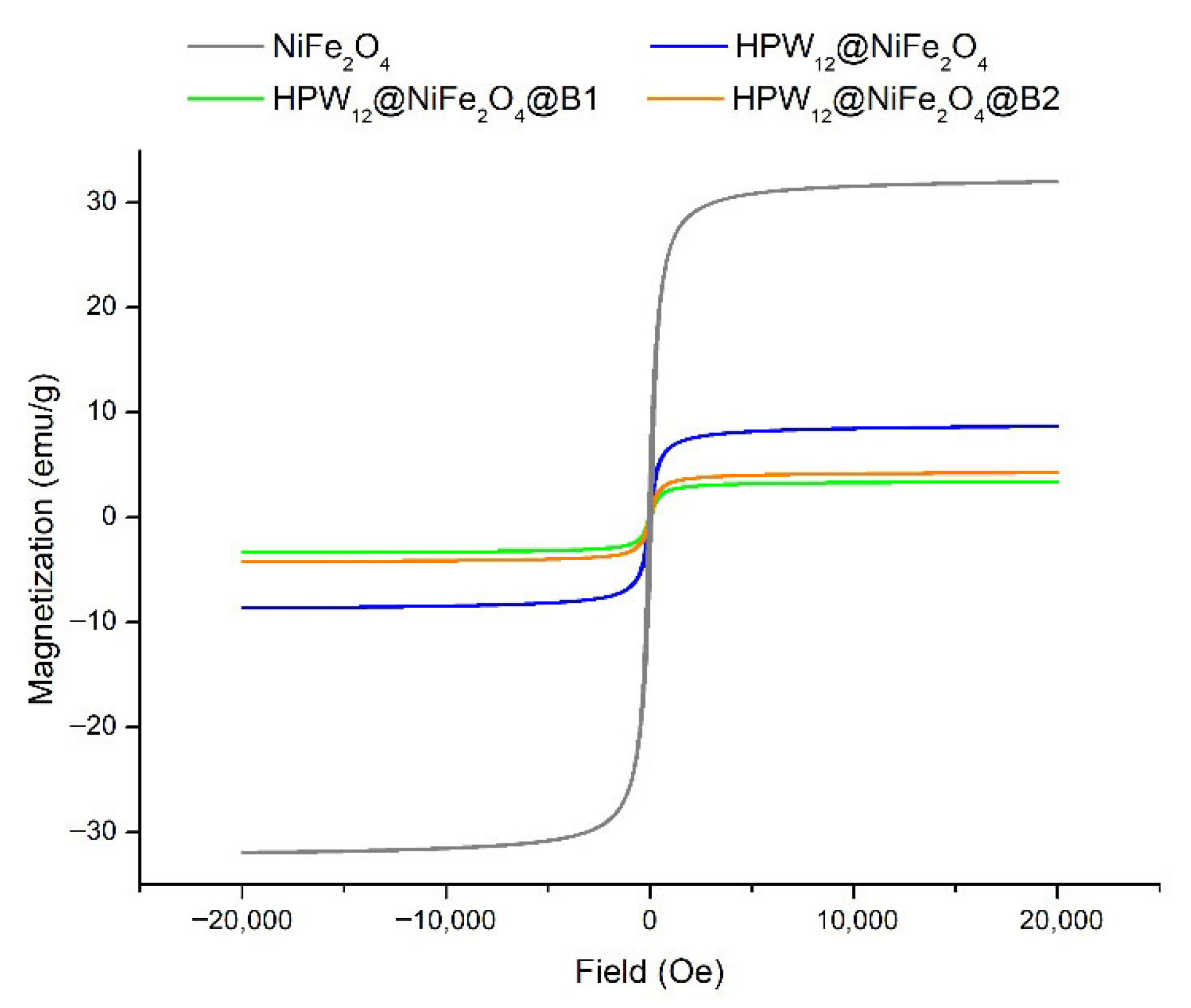
Magnetization curves of sample NiFe2O4 showed saturation magnetization values of the order of those found in Ni-ferrite nanoparticles and a low coercivity, typical of soft/superparamagnetic nanoparticles (Figure 5) [39,40]. The saturation magnetization of HPW12@NiFe2O4, HPW12@NiFe2O4@B2 and HPW12@NiFe2O4@B1 decreases successively, showing a decrease in the relative amount of NiFe2O4 nanoparticles in the samples.
Potentiometric titration was employed to determine the acidity of the four composites and the corresponding materials impregnated in the two different supports. A known amount of each composite was stirred in a 2 M NaCl solution, with NaCl acting as the exchange cation. The resulting solution was then titrated using NaOH (0.025 M) as the titrant. The results obtained are presented in Table 2. On a per-gram basis, HPW12@NiFe2O4 exhibited higher acidity than its corresponding magnetic biochar-based composites. The decrease in acidity for the composites was observed when HPW12 was impregnated in magnetic nanoparticles, as the protons of the heteropoly acid became less accessible. This effect was even more pronounced when the materials were further impregnated in the biochar supports.

2.2. Acetalization Studies

In previous studies conducted by our group, the influence of experimental conditions on the acetalization of glycerol with acetone using homogeneous heteropoly acids as catalysts was investigated [10,14,32,41]. To confirm the catalytic efficiency of HPW12, also when impregnated into NiFe2O4 magnetic nanoparticles, glycerol acetalization reactions were performed with a molar ratio of 1:15 to glycerol-to-acetone, employing 3 wt% of heteropoly acid HPW12 (relative to glycerol weight) at 60 °C. Figure S6 displays the kinetic profiles of the acetalization reaction of the catalyzed homogeneous active center HPW12, the pristine NiFe2O4 and the functionalized magnetic nanoparticles HPW12@NiFe2O4. It is possible to observe that the pristine magnetic NiFe2O4 nanoparticles did not present any catalytic activity, and HPW12@NiFe2O4 displayed a slightly higher catalytic efficiency than the homogeneous HPW12. The slightly higher catalytic efficiency observed for HPW12@NiFe2O4 compared to homogeneous HPW12 may be attributed to improvements in the structural integrity of the heteropoly acid over the magnetic surface. Additionally, interfacial interactions between HPW12 and NiFe2O4 may generate a synergistic effect that enhanced catalytic activity.
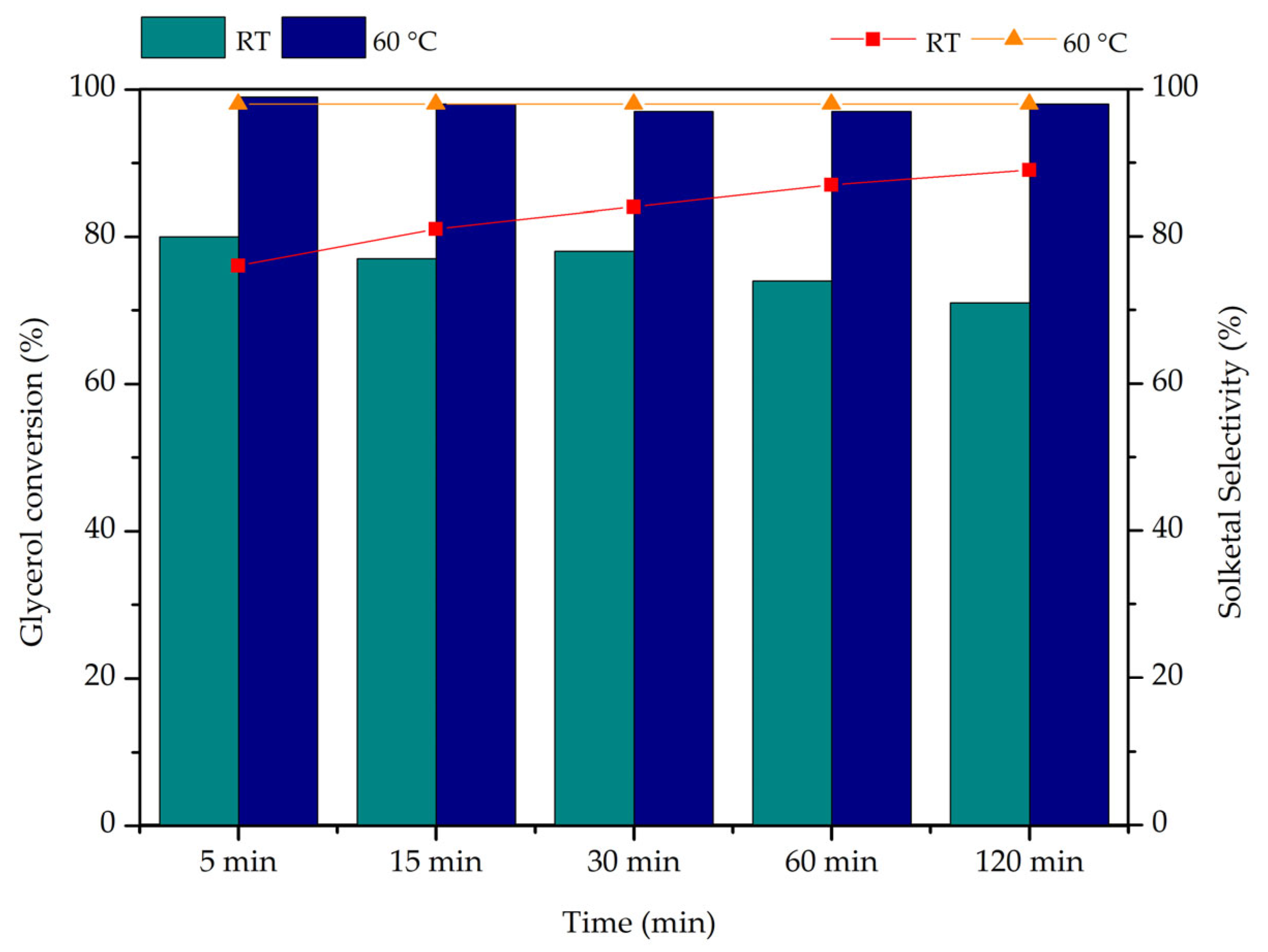
An optimization study was performed using the HPW12@NiFe2O4 magnetic nanoparticles as the catalyst. Two different parameters were optimized: the effect of temperature, varied between room temperature (RT) and 60 °C, and the amount of catalyst, varying between 3 and 6 mg. The results obtained for the different acetalization reaction temperatures are presented in Figure 6. The increase in the reaction temperature from RT to 60 °C led to an improvement in the glycerol conversion observed from the first 5 min of the reaction. When performing the reaction at 60 °C, a conversion of 98% was practically maintained during 2 h, and the same was observed for solketal selectivity which remained at 98% from the first 5 min.
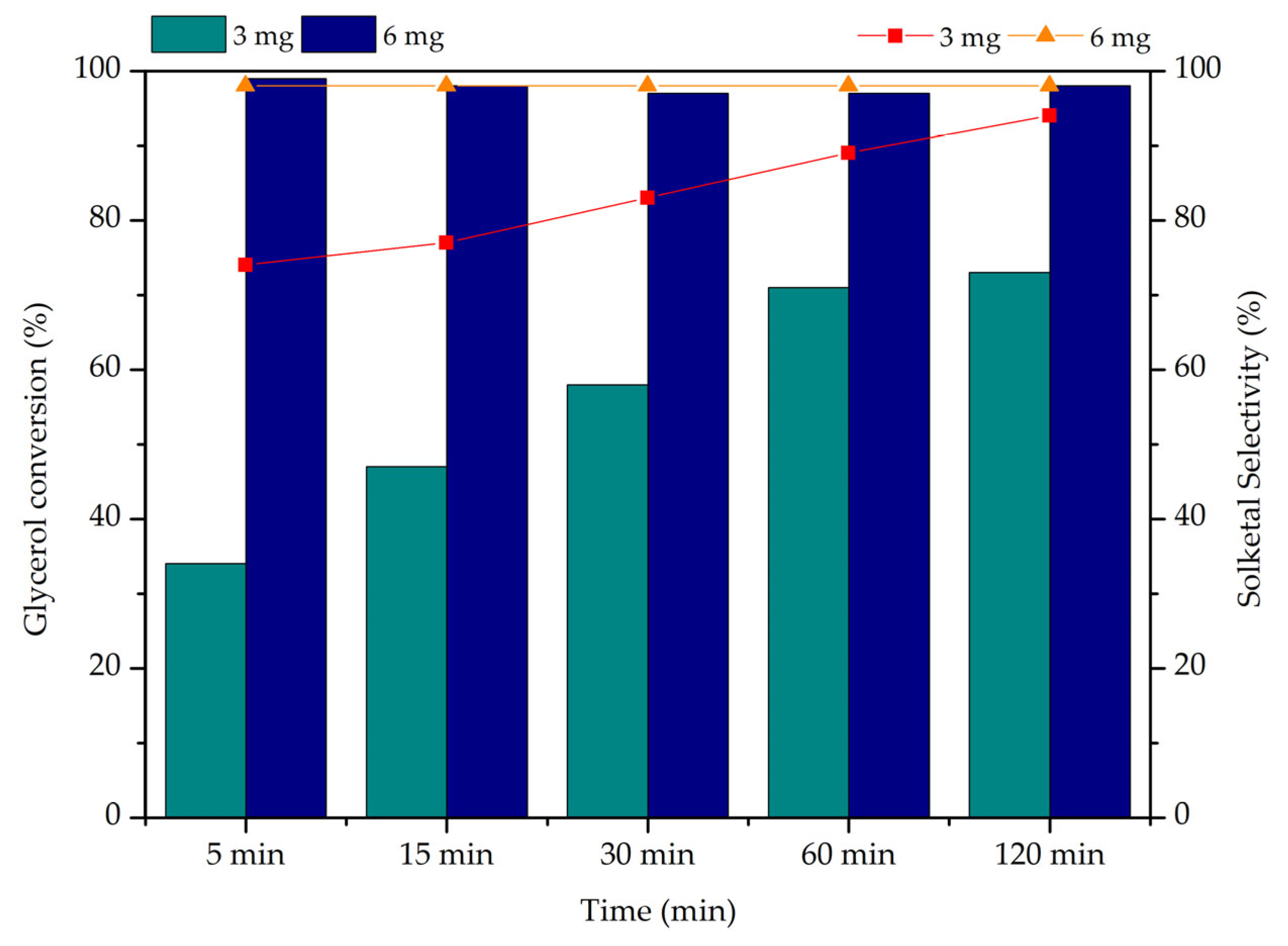
The effect of catalyst amount on the glycerol acetalization reaction was analyzed using 3 and 6 mg of HPW12@NiFe2O4, and the results are presented in Figure 7. When 6 mg of HPW12@NiFe2O4 was used, an almost complete conversion was obtained (98%) with high selectivity to solketal (98%), from the first 5 min of the reaction. However, when the catalyst amount was reduced by half (3 mg), the conversion decreased drastically mainly during the first minutes of the reaction. As for the selectivity, only 72% was obtained after 2 h of reaction. This suggests that an insufficient number of active sites were available to sustain high catalytic activity.
Under the optimized conditions, i.e., while using 6 mg of HPW12@NiFe2O4 catalyst and running the reaction at 60 °C, it was possible to achieve 98% yield of solketal after only 5 min of reaction. However, the reutilization of this catalyst was not possible to perform since partial leaching of active center HPW12 was confirmed by analyzing the reactional solution by 31P NMR. The presence of heteropoly acid in the solution was confirmed by the appearance of a peak at −13.7 ppm, attributed to the Keggin structure of HPW12 (Figure S7) [10]. To overcome this limitation, and aiming to reduce active center leaching, the material was impregnated in two different porous biochar B1 and B2 supports, improving catalyst stability and recycling capacity.

2.3. Catalytic Performance of Biochar Composites

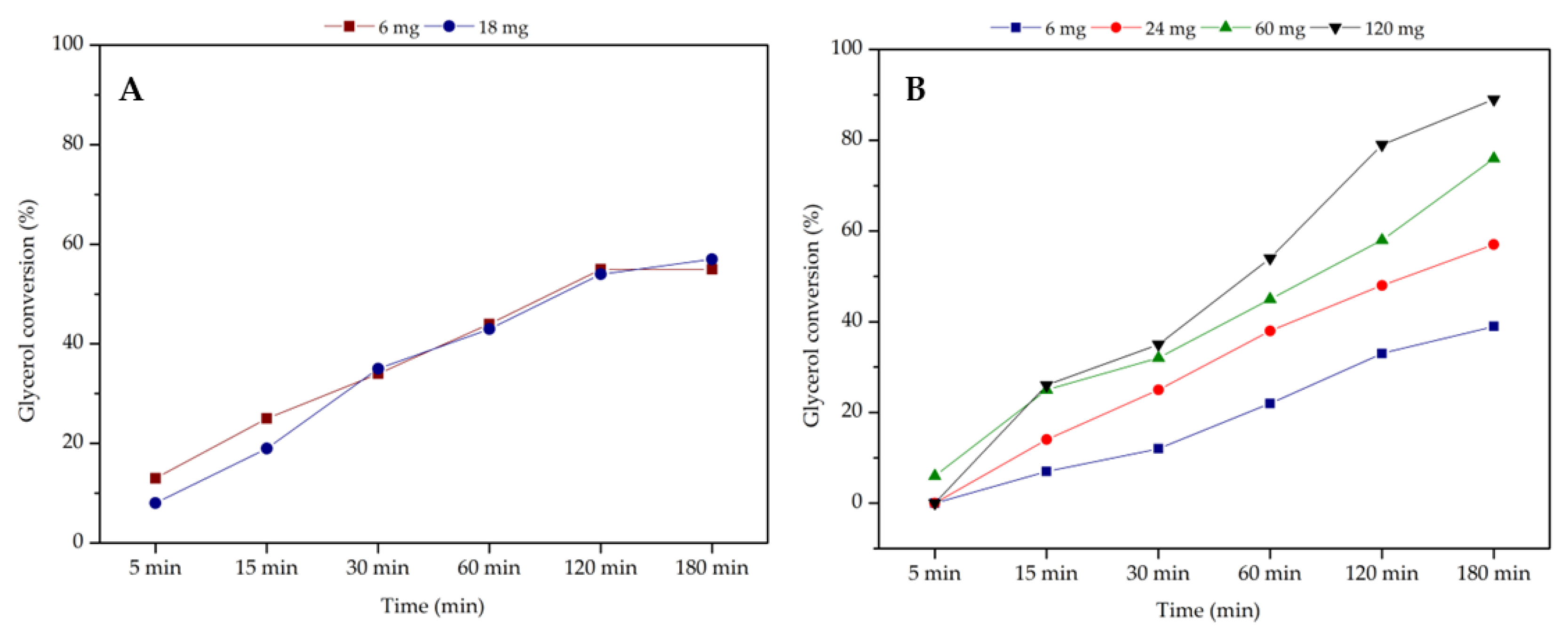
The magnetic nickel composites were applied in the acetalization of glycerol with acetone, using 6 mg of catalyst, a 1:15 glycerol/acetone ratio and 60 °C. Figure 8A shows that HPW12@NiFe2O4@B1 presented higher percentage of glycerol conversion after 3 h (55%). This was expected due to the higher acidity of HPW12@NiFe2O4@B1 compared to HPW12@NiFe2O4@B2. When 6 mg of each catalyst was used, an acidity of 1.329 and 0.407 mmol H+/g was present in the reaction for composite B1 and B2, respectively. By increasing the amount of the magnetic catalysts, it was observed that for HPW12@NiFe2O4@B1 the glycerol conversion remained unchanged, although the catalyst amount was increased threefold (18 mg) and the acidity reached 3.986 mmol H+/g. This must be due to the saturation of active catalytic centers available and accessible inside the porous materials for the reaction. A correlation between the number of acid active centers and their accessibility may have a strong influence in the acid heterogeneous catalyst performance. The location and the lower accessibility of the active sites of HPW12 located within the porous structure may not contribute to the activity of the catalyst. On the other hand, an increased amount of HPW12@NiFe2O4@B2 resulted in an appreciable increment of glycerol conversion (Figure 8B). The best glycerol conversion using HPW12@NiFe2O4@B2 catalyst was achieved with 120 mg of this composite and after 3 h, reaching 89% glycerol conversion and 96% of selectivity for solketal. The strong influence of the amount of magnetic catalyst B2 is related to the higher accessibility of active centers and the higher interaction with the reactants. This correlates with the pore volume of each composite present in Table 1, where the size of pore volume of composite B2 is 20 times higher than that of the B1 composite.
Reported studies involving heteropolyacid (HPA)-based catalysts for glycerol acetalization with acetone are summarized in Table 3, all of which achieve solketal as the major product. Two main groups of powdered heterogeneous catalysts were reported, using silica and ordered mesoporous silica as support materials (KIT-6 and amine-functionalized SBA-15) [10,19,42]. More recently, one-piece catalytic membranes were also used in solketal production [27]. Comparable glycerol conversions and solketal yields could be obtained when H3PW12-based catalysts were used; between these, the membrane-based systems offer a significant advantage in recyclability, enabling multiple consecutive reaction cycles without catalyst loss. In the present work, biochar-supported catalysts demonstrated a performance highly dependent on the support’s textural properties, with cork-derived biochar exhibiting high conversion, excellent selectivity to solketal and the additional benefit of magnetic recoverability.

2.4. Catalyst Reutilization

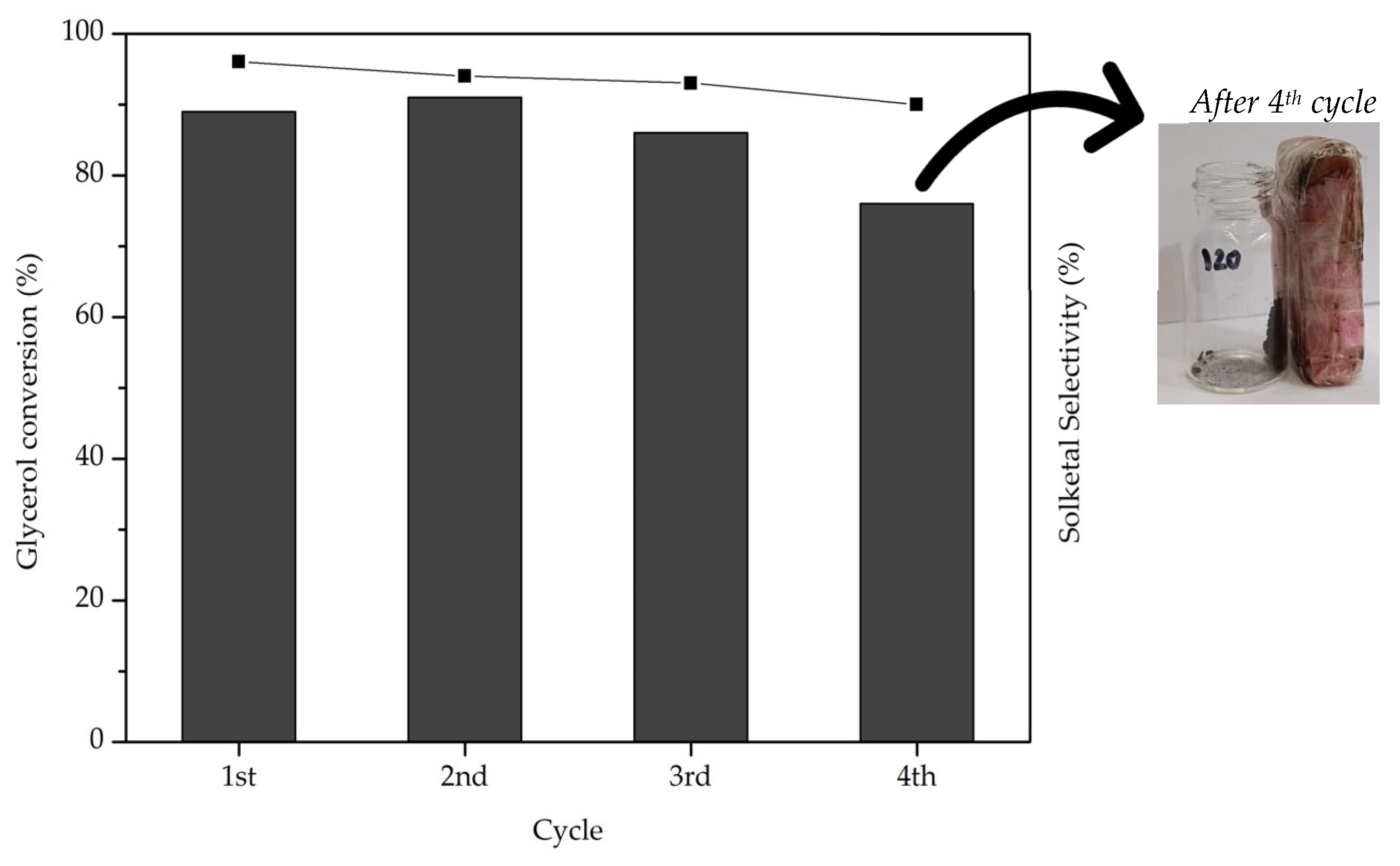
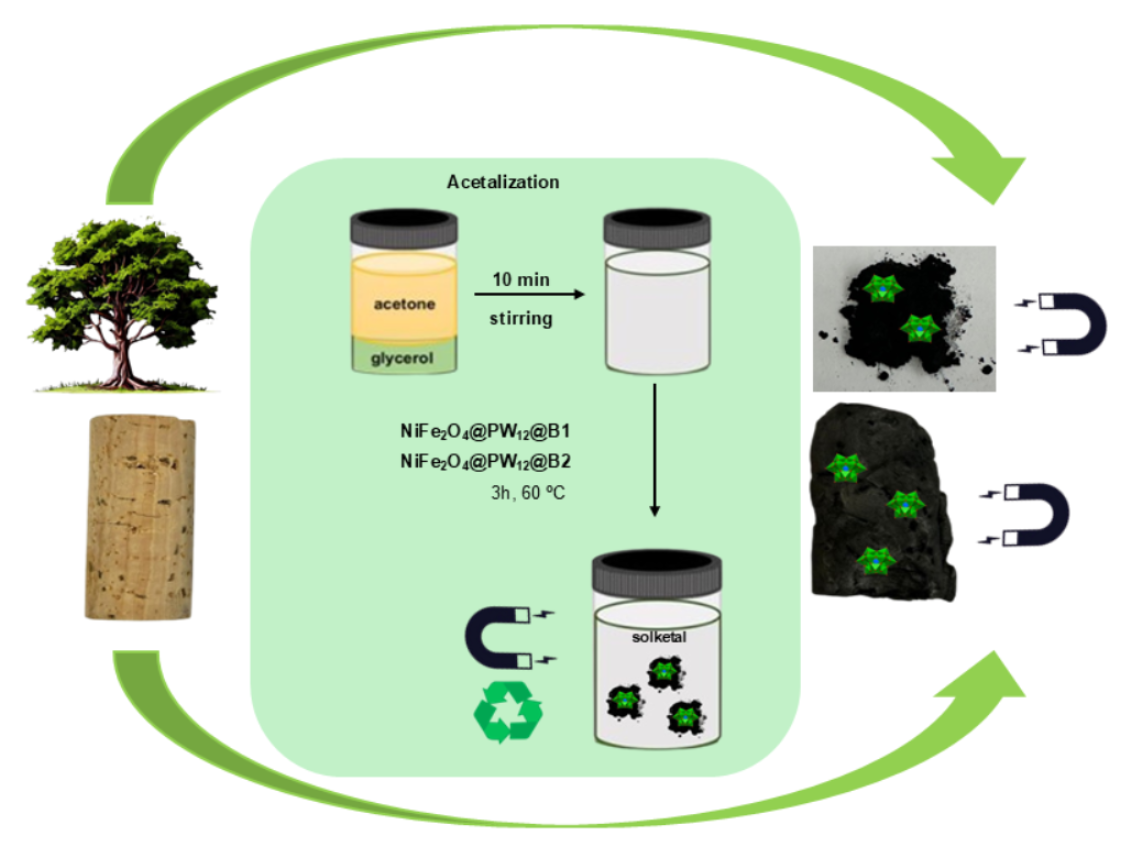
The most active magnetic composite catalyst was the material derived from the cork HPW12@NiFe2O4@B2. Therefore, the reusing capacity of this heterogeneous catalyst was investigated by performing the glycerol acetalization reaction under identical experimental conditions across multiple reaction cycles: 120 mg of catalyst and a glycerol/acetone molar ratio of 1:15, at 60 °C. Four consecutive cycles were carried out, where after each run the resultant solution, containing vestigial unreacted glycerol, acetone and products, was removed and replaced with fresh reactants, i.e., glycerol and acetone, for a new catalytic cycle. The catalyst was reused directly without any intermediate treatment. The reusability performance of HPW12@NiFe2O4@B2 is presented in Figure 9. Catalyst activity remained stable throughout the first three cycles; however, a small loss of catalyst efficiency was observed in the fourth cycle, with glycerol conversion decreasing by 13% and solketal selectivity dropping slightly from 96% (third cycle) to 90% (fourth cycle). This loss of performance may be attributed to partial leaching of active sites HPW12, pore blocking by reaction by-products, or surface fouling, which could limit the accessibility of catalytic sites. The catalyst maintained its magnetic behavior after the fourth cycle. This was confirmed by using a magnetic bar to remove the solid biochar catalyst after the fourth cycle (Figure 9).

2.5. Catalyst Characterization After Use

During the reusing tests, the catalyst was easily separated from the liquid reaction medium by the application of an external magnetic field, which decreased mass loss between consecutive cycles.
To clarify the origin of the small catalyst deactivation observed after the third reaction cycle, the solid catalyst was washed after the fourth reusing cycle with ethanol, dried and characterized by different techniques, such as FTIR-ATR, SEM and EDS mapping, and the solution medium was analyzed by 31P NMR to investigate leaching occurrence.
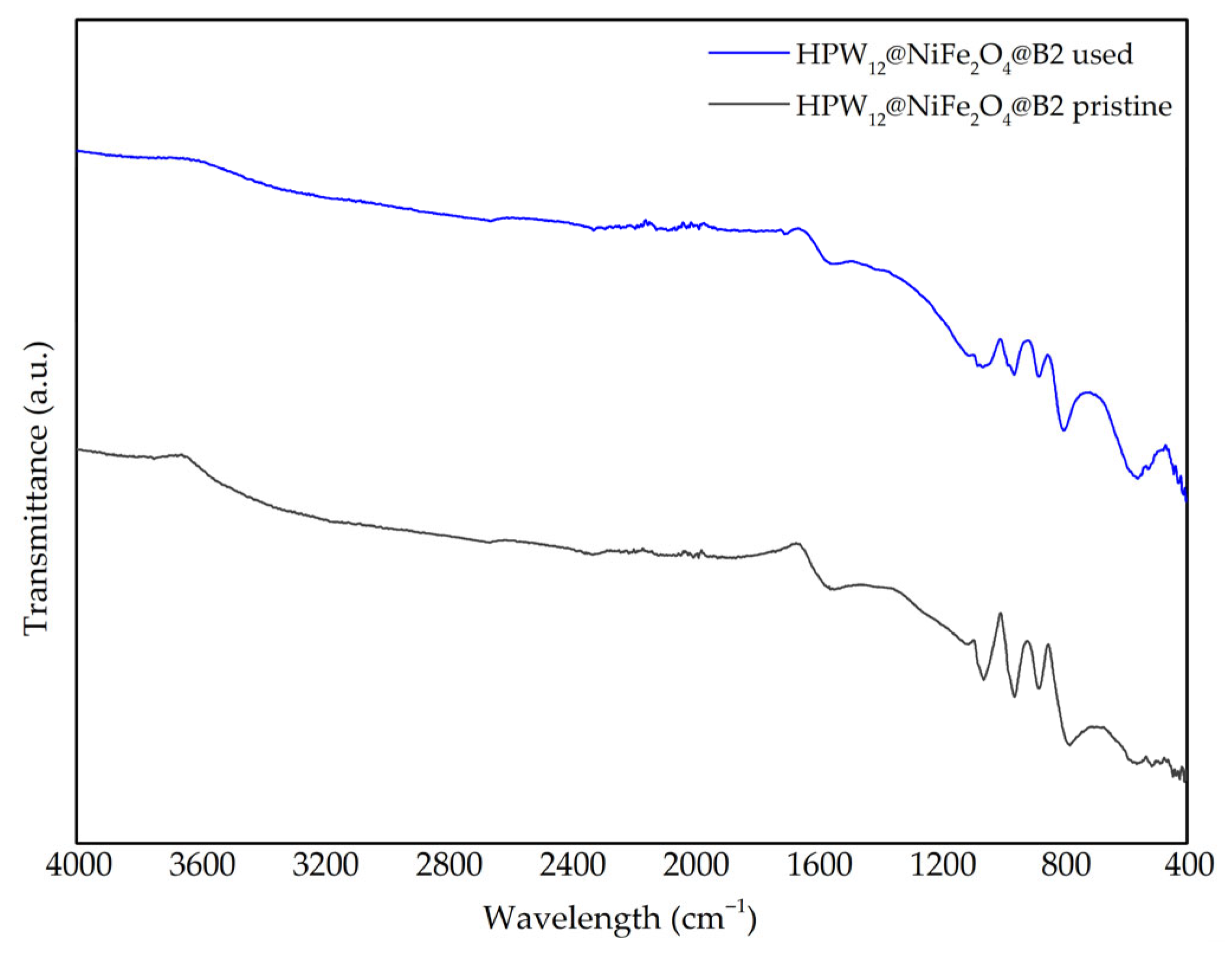
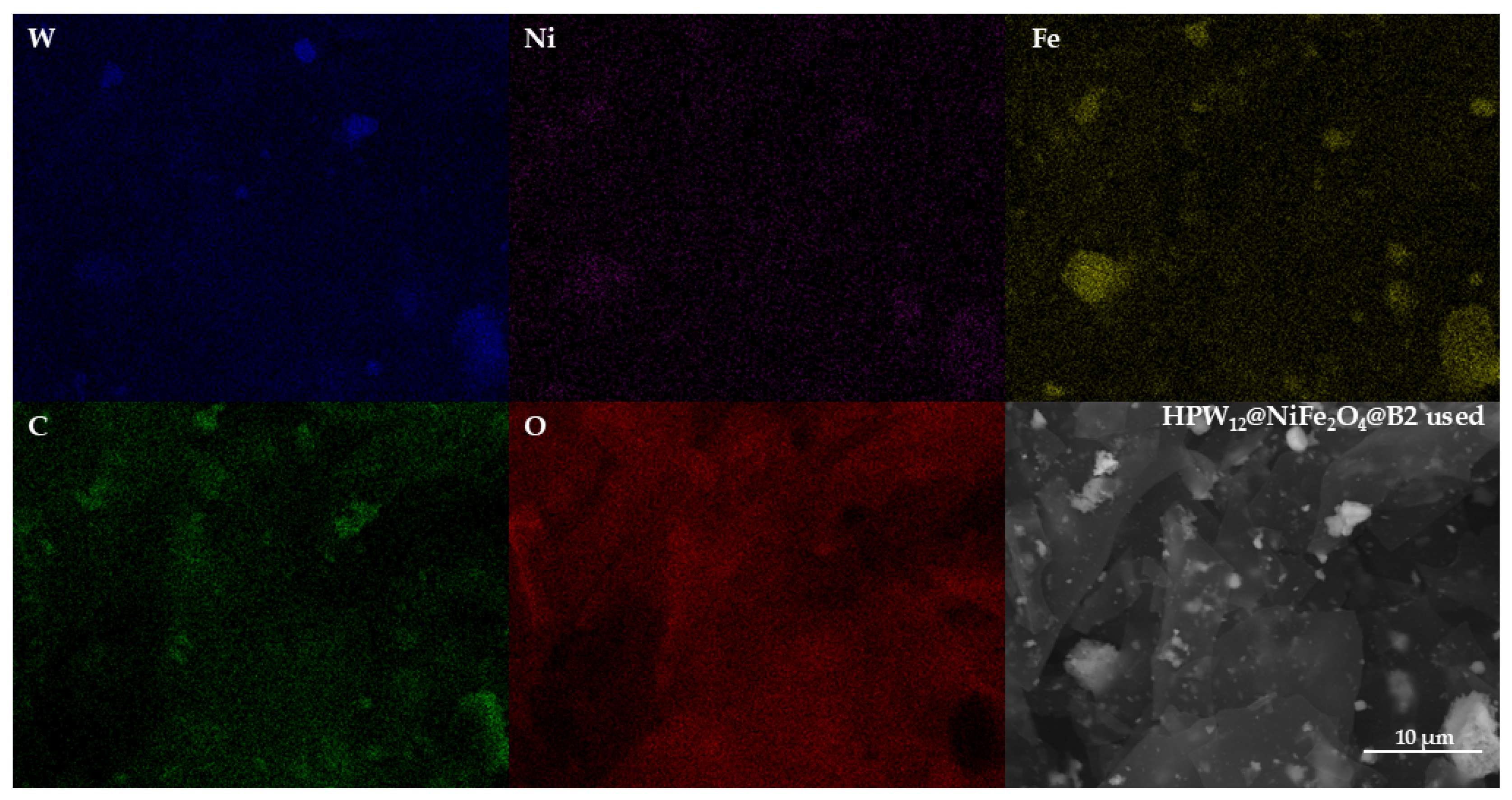
Figure 10 presents the FTIR-ATR spectra of HPW12@NiFe2O4@B2 before and after the acetalization reaction, showing no significant differences. The characteristic bands of the Keggin HPW12: vas(P-Oa), vas(W-Od), vas(W-Ob-W) and vas(W-Oc-W), observed between 1080 and 800 cm−1, can be easily identified [33]. As well, the bands corresponding to the NiFe2O4 nanoparticles from the metal-oxide Fe–O groups in the octahedral position and another band from the Ni–O groups in the tetrahedral position, near 430 cm−1 and 570 cm−1, were also present [34]. However, some structural modifications of the cork-based biochar can be assigned by SEM analysis (Figure 11). SEM images of the HPW12@NiFe2O4@B2 catalyst after four catalytic cycles revealed a partial disruption of the cellular structure of the cork-pyrolyzed support and a less heterogeneous dispersion of the active centers, identified by SEM mapping (Figure 11).
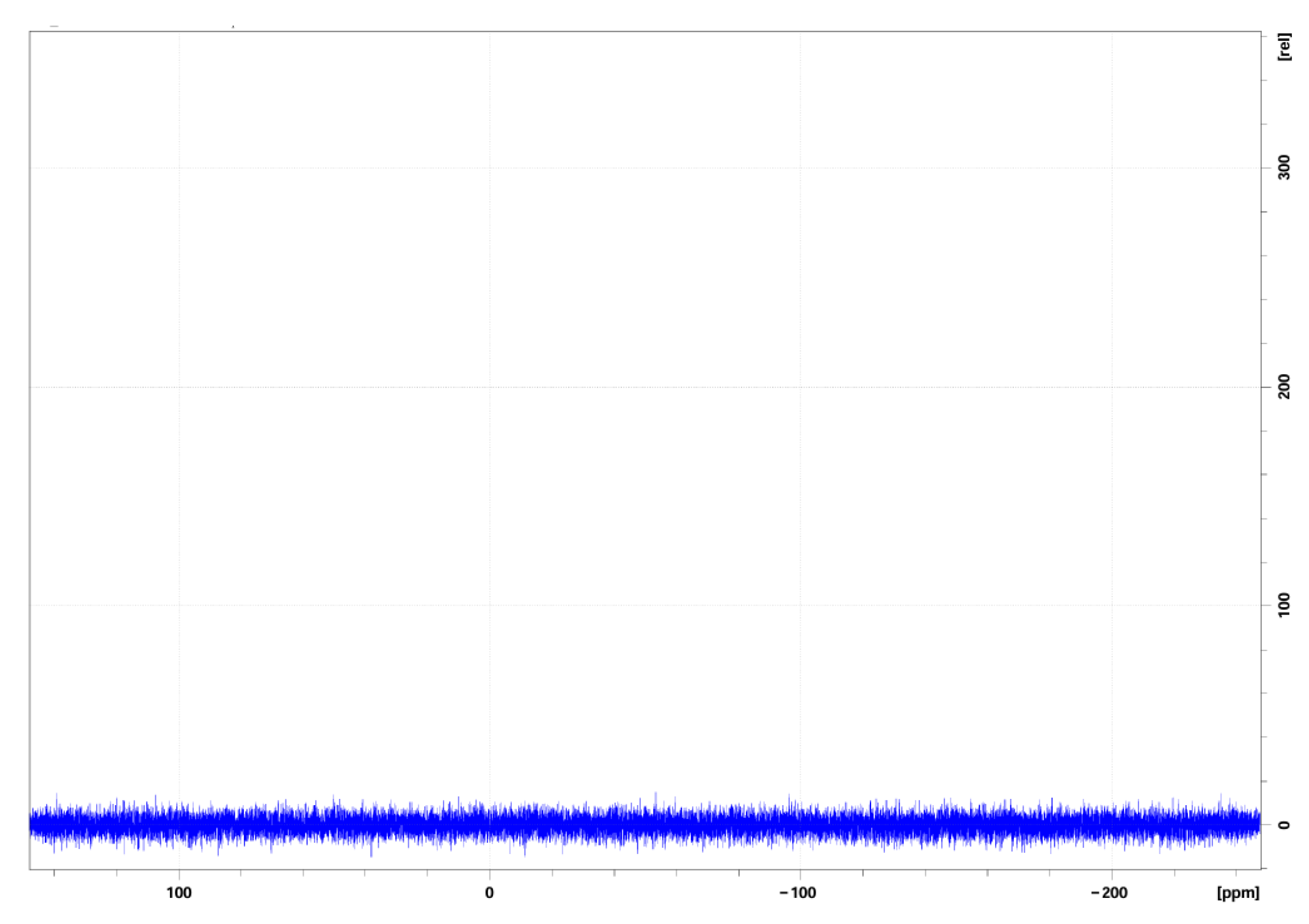
Moreover, the liquid solution that was separated from the solid catalyst after the 4th cycle was analyzed by 31P NMR. However, no peaks were observed, confirming the absence of leaching of the HPW12 species from the HPW12@NiFe2O4@B2 magnetic composite (Figure 12). Therefore, the slight decrease in catalyst performance observed after the third cycle should not be attributed to the loss of active centers, but probably due to the structural modification of the support causing some loss of accessibility to the active centers. The catalyst HPW12@NiFe2O4@B2 was demonstrated to be catalytically active, magnetically recoverable and reusable for glycerol valorization via acetalization with acetone, selectively producing the fuel additive solketal.

3. Materials and Methods

All materials, reagents and solvents used in this work were commercially purchased and used as received, without further purification. The solid supports and composite materials were prepared using ethanol (Honeywell, 99.8%, Morris Plains, NJ, USA), phosphotungstic acid (HPW12, Sigma-Aldrich, London, UK), sodium hydroxide (NaOH, Alfa Aesar, New York, NY, USA), potassium hydroxide (KOH, Sigma-Aldrich, St. Louis, MO, USA), ammonium iron(II) sulfate hexahydrate (FeSO4·6H2O, Sigma-Aldrich) and nickel(II) nitrate hexahydrate (Ni(NO3)2·6H2O, 98.5%, Sigma-Aldrich). Acetalization reactions were performed using acetone (Honeywell, 99.5%), glycerol (VWR Chemicals, Lisbon, Portugal) and methanol (Fisher Chemical, 99.9%, Waltham, MA, USA).
The prepared materials were characterized using several analytical techniques. Fourier-transform infrared (FTIR) spectra were recorded in attenuated total reflectance (ATR) mode over the range of 350–4000 cm−1, with a resolution of 2 cm−1 and 64 scans, using a PerkinElmer Spectrum BX FT-IR spectrometer (Waltham, MA, USA). These analyses were carried out at FCUP|DQB—Lab&Services.
The presence and stability of HPW12 during the acetalization reactions were evaluated by 31P nuclear magnetic resonance (NMR) spectroscopy. The 31P NMR spectra were acquired on a Bruker AVANCE III 400 MHz (9.4 T) spectrometer (Bruker, Billerica, MA, USA). These measurements were conducted at CEMUP—Centro de Materiais da Universidade do Porto.
Scanning electron microscopy (SEM) and energy-dispersive X-ray spectroscopy (EDS) analyses were performed using an FEI Quanta 400 FEG ESEM microscope (FEI Company, Hillsboro, OR, USA) equipped with an EDAX Genesis X4M EDS detector (AMETEK Inc., Mahwah, NJ, USA), operating at an accelerating voltage of 15 kV. Samples were dispersed onto carbon tape and coated with a thin Au/Pd layer by sputtering prior to analysis, at CEMUP.
Powder X-ray diffraction (XRD) patterns were collected at room temperature using a Malvern Panalytical Empyrean diffractometer (Malvern Panalytical, EA Almelo, The Netherlands) equipped with a PIXcel 1D detector and a spinning flat sample holder, operating in Bragg–Brentano geometry (45 kV, 40 mA). Data were acquired using the step-counting method with a step size of 0.026° and a counting time of 50 s per step, over the 3° ≤ 2θ ≤ 60° range. XRD analyses were performed at CICECO, University of Aveiro.
DC magnetization measurements were conducted at room temperature using a Lake Shore 8600 vibrating sample magnetometer (VSM) (Lake Shore Cryotronics, Inc., Westerville, OH, USA), under applied magnetic fields up to 20 kOe, at CICECO.
The HPW12 loading in the composite materials was determined by inductively coupled plasma optical emission spectroscopy (ICP-OES) using a Varian 820-MS spectrometer (Varian, Santa Clara, CA, USA), through quantification of tungsten (W), nickel (Ni) and iron (Fe) contents. These analyses were performed at the University of Santiago de Compostela (Spain).
The acid strength of the materials was assessed by potentiometric titration using a TitraLab AT1000 Series instrument (Hach Company, Ames, IA, USA), employing NaOH (0.025 M) as the titrant. The samples were dispersed in NaCl solution at a 1:1 material-to-solution ratio (w/v) and stirred at room temperature for 24 h prior to analysis.
Nitrogen adsorption–desorption isotherms were used to determine textural properties. The specific surface area (As) was calculated using the BET method in the relative pressure (P/P0) range of 0.05–0.30. The total pore volume (Vp) was estimated from the amount of nitrogen adsorbed at a relative pressure of approximately 0.95. Pore size distributions were derived from the adsorption branch of the isotherms using the BJH method, applying the modified Kelvin equation with correction for the statistical thickness of the adsorbed film.

3.1. Synthesis and Preparation of Materials

3.1.1. NiFe2O4 by Co-Precipitation

Nanoparticles NiFe2O4 were prepared according to a previously reported procedure [34]. Firstly, an iron solution was prepared by dissolving FeSO4·6H2O in 10 mL of distilled water, and this solution was added dropwise to a Ni(NO3)2·6H2O solution. The mixture was stirred before adding a solution of NaOH (2 M) to obtain a final pH = 10. The general solution was stirred for 60 min at 70 °C. The obtained solid, NiFe2O4 nanoparticles, were recovered using an external magnet, washed several times and dried overnight at 90 °C.

3.1.2. HPW12@NiFe2O4 by Impregnation

The nanoparticles of nickel, NiFe2O4 were placed in a porcelain container with phosphotungstic acid (HPW12) at a ratio of 1:3. A few drops of ethanol were added regularly to dissolve the acid and obtain a homogeneous paste. The paste was then dried at 80 °C for 1 h and calcined at 300 °C to remove volatile components and impurities, enabling further processing. This material was be designated as HPW12@NiFe2O4.

3.1.3. Supports

Ibero Massa Florestal (IMF) company (Oliveira de Azeméis, Portugal) supplied a type 1 biochar (B1, Figure S1 in Supplementary Information), which has European Biochar Certification (EBC, 2025) under the categories of Basic Materials and AgroOrganic. This biochar was produced from invasive and territorially dominant plants, namely Acacia melanoxylon (Australian Blackwood) and Acacia dealbata (Mimosa), through a slow pyrolysis process, and after this no additional treatment was performed. The pyrolysis method was carried out without the emission of smoke or toxic gases into the environment, resulting in a clean, natural and eco-friendly product.
Biochar of type 2 (B2, Figure S1) was obtained from industrial waste from the cork industry. The cork stoppers produced by CEVAQOE Company (Paços Brandão, Portugal) do not comply with quality standards and are considered waste from this industry. Giving a second life to these defective corks is crucial, and a clever option of doing so is pyrolysis due to its conversion into valuable porous biochar. This process was performed under a sustainable pyrolyzed method in IMF company (Oliveira de Azeméis, Portugal), consisting of a slow process occurring in three stages: dehydration of the cork at 267 °C for 3 h and 15 min; onset of decomposition/combustion at 309 °C for 2 h; and pyrolysis at 467 °C for 11 h and 30 min. The powder of pyrolyzed cork stoppers was used without any further treatment.

3.1.4. Magnetic Composites

The HPW12@NiFe2O4 functionalized magnetic nanoparticles were incorporated in the two different biochar B1 and B2 supports, using a 2:1 ratio (w/w), and 10 mL of deionized water was added. The mixture was immersed in an ultrasonic bath to improve dispersion and contact. Then the mixture underwent calcination at 300 °C for 1 h. The two obtained composites were denoted as HPW12@NiFe2O4@B1 and HPW12@NiFe2O4@B2 (Figure S2).
Finally, still following the same steps, the HPW12 was also impregnated into each of the biochar B1 and B2 supports, forming the HPW12@B1 and HPW12@B2.

3.2. Catalytic Experiments

Glycerol acetalization reactions proceeded in catalytic reactors immersed in paraffin baths, with constant stirring and temperature. The reactor was filled with the appropriate glycerol/acetone ratio (1:15) and left under agitation at the chosen temperature (room temperature or 60 °C) for 10 min to ensure homogeneity [10]. The magnetic heterogeneous catalyst was added, and glycerol conversion was evaluated. The reaction evolution and product analysis were controlled by GC-FID analysis in a Varian CP-3380 gas chromatograph (Varian, CA, USA), with a Suprawax-280 capillary column (30 m length, 0.25 mm internal diameter and 0.25 µm film thickness). Hydrogen was used as the carrier gas, with a flow rate of 55 cm3·s−1. At least three repeated reactions were performed, and the error obtained was equal or inferior to 5% of the conversion of glycerol.

4. Conclusions

Biochar (B) magnetic composites containing HPW12 as the active catalytic center and nickel-based NiFe2O4 nanoparticles, contributing to the magnetic response, HPW12@NiFe2O4@B, were successfully prepared and used as heterogeneous catalysts for the acetalization of glycerol with acetone under sustainable conditions. Two types of biochar were prepared by the pyrolysis of natural materials (B1—forest biomass of invasive species and B2—cork stopper) and used as porous support materials to increase low-cost efficiency in novel heterogeneous catalysts, incorporating well-known homogeneous active heteropolyacids. Both biochar-based composites presented similar HPW12 loadings and similar magnetic properties; however, different levels of acidity and pore volume were verified. These differences were caused by the different textural properties of the biochar. The cork-based biochar presented higher catalytic efficiency than the biochar based in Florestal plants. HPW12@NiFe2O4@B2 presented higher pore volume, hence higher catalytic performance was observed in the composite presenting higher pore volume, HPW12@NiFe2O4@B2. In this composite, a higher diffusion of reactants and higher accessibility of catalytic active centers must have been provided. A conversion of 89% with a selectivity of 96% was achieved after 3 h of reaction (using a 1:15 glycerol/acetone ratio, 120 mg of catalyst and 60 °C). Further, the catalyst was able to be reused for four cycles with a slight loss of activity during the fourth reaction cycle. The stability of the catalytic magnetic biochar derived from cork was investigated by different characterization techniques and some structural modification of the support, without the occurrence of active center HPW12 loss, was observed. Importantly, the catalyst preserved its magnetic properties, allowing straightforward separation and reuse. Overall, the results obtained highlight the potential of HPW12@NiFe2O4@B2 as an efficient, stable and magnetically recoverable heterogeneous catalyst for glycerol valorization into solketal. The approach provides a sustainable pathway for converting a biodiesel by-product into a valuable fuel additive, contributing to greener and more circular chemical processes.

Supplementary Materials

The following supporting information can be downloaded at: https://www.mdpi.com/article/10.3390/catal16010052/s1, Figure S1: Left: biochar obtained from pyrolyzed plants. Right: cork stoppers before and after pyrolysis and the resulting black powder; Figure S2: Illustration of magnetic property of powdered biochars prepared in this work: HPW12@NiFe2O4@B1 (derived from Florestal biomass) and HPW12@NiFe2O4@B2 (derived from cork); Figure S3: FTIR-ATR spectra of HPW12; NiFe2O4 and HPW12@NiFe2O4; Figure S4: SEM images and EDS spectrum of support materials: B1, derived from Florestal biomass (A) and B2, derived from cork (B); Figure S5: SEM images and EDS spectrum of the nanoparticles NiFe2O4; Figure S6: Kinetic profiles of glycerol acetalization reaction with acetone catalyzed by HPW12, NiFe2O4 and HPW12@NiFe2O4, using 6 mg of each catalyst and 1:15 glycerol/acetone ratio, at 60 °C; Figure S7: 31P NMR spectra obtained from the reactional solution at the end of glycerol acetalization reaction catalysed by HPW12@NiFe2O4.

Author Contributions

Conceptualization, S.S.B. and F.M.; validation, S.S.B. and F.M.; investigation, Ó.P. and C.N.D.; resources, L.D., S.M.B., N.J.O.S. and B.G.; writing—original draft preparation, F.M.; writing—review and editing, F.M. and S.S.B.; supervision, S.S.B. and F.M.; project administration, S.S.B.; funding acquisition, S.S.B. and F.M. All authors have read and agreed to the published version of the manuscript.

Funding

This work received financial support from the PT national funds (FCT/MECI, Fundação para a Ciência e Tecnologia and Ministério da Educação, Ciência e Inovação) through the project UID/50006/2025—Laboratório Associado para a Química Verde—Tecnologias e Processos Limpos and from CICECO-Aveiro Institute of Materials (UIDB/50011/2020 (DOI: 10.54499/UIDB/50011/2020), UIDP/50011/2020 (DOI: 10.54499/UIDP/50011/2020) and LA/P/0006/2020 (DOI: 10.54499/LA/P/0006/2020)).

Data Availability Statement

The original contributions presented in this study are included in the article/Supplementary Material. Further inquiries can be directed to the corresponding author(s).

Acknowledgments

The authors thank FCT/MCTES for funding through the Individual Call to Scientific Employment Stimulus CEECIND/09076/2023 (FM) and CEECIND/03877/2018 (SB); CND thanks FCT/MCTES for her PhD fellowship (2024.02045.BD) and ÓP thanks the Erasmus+ Program of the European Union. Authors acknowledge the work of the group of Luiz Alves from the company CEVAQOE-Laboratório, Investigaçao e Desenvolvimento, for supplying the non-commercial cork.

Conflicts of Interest

The authors declare no conflicts of interest.

References

  1. Corrêa, I.; Faria, R.P.V.; Rodrigues, A.E. Continuous Valorization of Glycerol into Solketal: Recent Advances on Catalysts, Processes, and Industrial Perspectives. Sustain. Chem. 2021, 2, 286–324. [Google Scholar] [CrossRef]
  2. Asopa, R.P.; Bhoi, R.; Saharan, V.K. Valorization of glycerol into value-added products: A comprehensive review on biochemical route. Bioresour. Technol. Rep. 2022, 20, 101290. [Google Scholar] [CrossRef]
  3. Checa, M.; Nogales-Delgado, S.; Montes, V.; Encinar, J.M. Recent Advances in Glycerol Catalytic Valorization: A Review. Catalysts 2020, 10, 1279. [Google Scholar] [CrossRef]
  4. Chilakamarry, C.R.; Sakinah, A.M.M.; Zularisam, A.W. Opportunities of biodiesel industry waste conversion into value-added products. Mater. Today Proc. 2022, 57, 1014–1020. [Google Scholar] [CrossRef]
  5. Estahbanati, M.R.K.; Feilizadeh, M.; Attar, F.; Iliuta, M.C. Current Developments and Future Trends in Photocatalytic Glycerol Valorization: Photocatalyst Development. Ind. Eng. Chem. Res. 2020, 59, 22330–22352. [Google Scholar] [CrossRef]
  6. Zhao, M.; Wang, Y.A.; Zhou, W.T.; Zhou, W.; Gong, Z.W. Co-valorization of crude glycerol and low-cost substrates via oleaginous yeasts to micro-biodiesel: Status and outlook. Renew. Sustain. Energy Rev. 2023, 180, 113303. [Google Scholar] [CrossRef]
  7. Cornejo, A.; Barrio, I.; Campoy, M.; Lázaro, J.; Navarrete, B. Oxygenated fuel additives from glycerol valorization. Main production pathways and effects on fuel properties and engine performance: A critical review. Renew. Sustain. Energy Rev. 2017, 79, 1400–1413. [Google Scholar] [CrossRef]
  8. He, J.; Qiang, Q.; Bai, L.; Su, W.; Yu, H.; Liu, S.; Li, C. Acetalization strategy in biomass valorization: A review. Ind. Chem. Mater. 2024, 2, 30–56. [Google Scholar] [CrossRef]
  9. Zahid, I.; Ayoub, M.; Abdullah, B.B.; Nazir, M.H.; Ameen, M.; Zulqarnain; Mohd Yusoff, M.H.; Inayat, A.; Danish, M. Production of Fuel Additive Solketal via Catalytic Conversion of Biodiesel-Derived Glycerol. Ind. Eng. Chem. Res. 2020, 59, 20961–20978. [Google Scholar] [CrossRef]
  10. Dias, C.N.; Santos-Vieira, I.C.M.S.; Gomes, C.R.; Mirante, F.; Balula, S.S. Heteropolyacids@Silica Heterogeneous Catalysts to Produce Solketal from Glycerol Acetalization. Nanomaterials 2024, 14, 733. [Google Scholar] [CrossRef]
  11. Smirnov, A.A.; Selishcheva, S.A.; Yakovlev, V.A. Acetalization Catalysts for Synthesis of Valuable Oxygenated Fuel Additives from Glycerol. Catalysts 2018, 8, 595. [Google Scholar] [CrossRef]
  12. Fatimah, I.; Sahroni, I.; Fadillah, G.; Musawwa, M.M.; Mahlia, T.M.; Muraza, O. Glycerol to Solketal for Fuel Additive: Recent Progress in Heterogeneous Catalysts. Energies 2019, 12, 2872. [Google Scholar] [CrossRef]
  13. Timofeeva, M.N. Acid catalysis by heteropoly acids. Appl. Catal. A Gen. 2003, 256, 19–35. [Google Scholar] [CrossRef]
  14. Julião, D.; Mirante, F.; Balula, S.S. Easy and Fast Production of Solketal from Glycerol Acetalization via Heteropolyacids. Molecules 2022, 27, 6573. [Google Scholar] [CrossRef]
  15. da Silva, M.J.; Julio, A.A.; Dorigetto, F.C.S. Solvent-free heteropolyacid-catalyzed glycerol ketalization at room temperature. RSC Adv. 2015, 5, 44499–44506. [Google Scholar] [CrossRef]
  16. Katsoulis, D.E. A Survey of Applications of Polyoxometalates. Chem. Rev. 1998, 98, 359–388. [Google Scholar] [CrossRef]
  17. Kozhevnikov, I.V. Catalysis by Heteropoly Acids and Multicomponent Polyoxometalates in Liquid-Phase Reactions. Chem. Rev. 1998, 98, 171–198. [Google Scholar] [CrossRef]
  18. Ribeiro, S.O.; Granadeiro, C.M.; Almeida, P.L.; Pires, J.; Capel-Sanchez, M.C.; Campos-Martin, J.M.; Gago, S.; de Castro, B.; Balula, S.S. Oxidative desulfurization strategies using Keggin-type polyoxometalate catalysts: Biphasic versus solvent-free systems. Catal. Today 2019, 333, 226–236. [Google Scholar]
  19. Chen, L.; Nohair, B.; Zhao, D.; Kaliaguine, S. Highly Efficient Glycerol Acetalization over Supported Heteropoly Acid Catalysts. ChemCatChem 2018, 10, 1918–1925. [Google Scholar] [CrossRef]
  20. Castanheiro, J. Acetalization of Glycerol with Citral over Heteropolyacids Immobilized on KIT-6. Catalysts 2022, 12, 81. [Google Scholar] [CrossRef]
  21. Morales, M.D.; Infantes-Molina, A.; Lázaro-Martínez, J.M.; Romanelli, G.P.; Pizzio, L.R.; Rodríguez-Castellón, E. Heterogeneous acid catalysts prepared by immobilization of H3PW12O40 on silica through impregnation and inclusion, applied to the synthesis of 3H-1,5-benzodiazepines. Mol. Catal. 2020, 485, 110842. [Google Scholar] [CrossRef]
  22. Li, J.; Yang, Z.; Hu, G.; Zhao, J. Heteropolyacid supported MOF fibers for oxidative desulfurization of fuel. Chem. Eng. J. 2020, 388, 124325. [Google Scholar] [CrossRef]
  23. Xue, Y.; Xia, H.; Li, J.; Su, J.; Ge, F.; Yang, X.; Jiang, J.; Zhou, M. Heteropolyacids promoted MOF-derived high-performance Co(H4)@C-HPW0.25 catalysts for catalytic transfer hydrogenation of vanillin in mild condition. Chem. Eng. J. 2023, 478, 147456. [Google Scholar] [CrossRef]
  24. Castanheiro, J.E.; Vital, J.; Fonseca, I.M.; Ramos, A.M. Glycerol conversion into biofuel additives by acetalization with pentanal over heteropolyacids immobilized on zeolites. Catal. Today 2020, 346, 76–80. [Google Scholar] [CrossRef]
  25. Ali, A.A.Q.; Siddiqui, Z.N. Heteropoly Ionic Liquid Functionalized MOF-Fe: Synthesis, Characterization, and Catalytic Application in Selective Acetalization of Glycerol to Solketal as a Fuel Additive at Room Temperature, Solvent-Free Conditions. Precis. Chem. 2023, 1, 485–496. [Google Scholar] [CrossRef]
  26. Qing, W.; Chen, J.; Shi, X.; Wu, J.; Hu, J.; Zhang, W. Conversion enhancement for acetalization using a catalytically active membrane in a pervaporation membrane reactor. Chem. Eng. J. 2017, 313, 1396–1405. [Google Scholar] [CrossRef]
  27. Dias, C.N.; Bruno, S.M.; Mirante, F.; Balula, S.S. Catalytic HPA@PVA membranes for clean fuel additive production. Mol. Catal. 2026, 589, 115569. [Google Scholar] [CrossRef]
  28. Li, J.; Du, P.; Liu, Y.-Y.; Ma, J.-F. Assembly of polyoxometalate-thiacalix[4]arene-based inorganic–organic hybrids as efficient catalytic oxidation desulfurization catalysts. Dalton Trans. 2021, 50, 1349–1356. [Google Scholar] [CrossRef]
  29. Ferreira, P.; Fonseca, I.M.; Ramos, A.M.; Vital, J.; Castanheiro, J.E. Acetylation of glycerol over heteropolyacids supported on activated carbon. Catal. Commun. 2011, 12, 573–576. [Google Scholar] [CrossRef]
  30. Da Silva, M.J.; Rodrigues, A.A.; Teixeira, M.G. Iron (III) Silicotungstate: An Efficient and Recyclable Catalyst for Converting Glycerol to Solketal. Energy Fuels 2020, 34, 9664–9673. [Google Scholar] [CrossRef]
  31. da Silva, M.J.; Teixeira, M.G.; Chaves, D.M.; Siqueira, L. An efficient process to synthesize solketal from glycerol over tin (II) silicotungstate catalyst. Fuel 2020, 281, 118724. [Google Scholar] [CrossRef]
  32. Mirante, F.; Leo, P.; Dias, C.N.; Cunha-Silva, L.; Balula, S.S. MOF-808 as an Efficient Catalyst for Valorization of Biodiesel Waste Production: Glycerol Acetalization. Materials 2023, 16, 7023. [Google Scholar] [CrossRef] [PubMed]
  33. Aouissi, A.; Al-Othman, Z.A.; Al-Anezi, H. Reactivity of heteropolymolybdates and heteropolytungstates in the cationic polymerization of styrene. Molecules 2010, 15, 3319–3328. [Google Scholar] [CrossRef] [PubMed]
  34. Bernaoui, C.R.; Bendraoua, A.; Zaoui, F.; Gallardo, J.J.; Navas, J.; Boudia, R.A.; Djediai, H.; Goual, N.e.H.; Adjdir, M. Synthesis and characterization of NiFe2O4 nanoparticles as reusable magnetic nanocatalyst for organic dyes catalytic reduction: Study of the counter anion effect. Mater. Chem. Phys. 2022, 292, 126793. [Google Scholar] [CrossRef]
  35. Pasumarthi, R.; Sawargaonkar, G.; Kale, S.; Kumar, N.V.; Choudhari, P.L.; Singh, R.; Davala, M.S.; Rani, C.S.; Mutnuri, S.; Jat, M.L. Innovative bio-pyrolytic method for efficient biochar production from maize and pigeonpea stalks and their characterization. J. Clean. Prod. 2024, 448, 141573. [Google Scholar] [CrossRef]
  36. Yakandawala, S.A.; Gunatilake, S.R.; Nardelli, M.B.; Gunawardena, S.H.; Liyanage, L.S.I. Modelling an amorphous biochar structure using classical molecular dynamics simulations. Pure Appl. Chem. 2025, 97, 1831–1840. [Google Scholar] [CrossRef]
  37. Różyło, K.; Jędruchniewicz, K.; Krasucka, P.; Biszczak, W.; Oleszczuk, P. Physicochemical Characteristics of Biochar from Waste Cricket Chitin (Acheta domesticus). Molecules 2022, 27, 8071. [Google Scholar] [CrossRef]
  38. Zhang, X.; Lv, D.; Liu, Z.; Xu, D.; Yang, F.; Wang, X.; Tan, Z.; Gao, W.; Liu, R.; Su, C. Removal of polystyrene microplastic from aqueous solutions with London Plane bark biochar: Pyrolysis temperature, performance and mechanism. Colloids Surf. A Physicochem. Eng. Asp. 2024, 694, 134159. [Google Scholar] [CrossRef]
  39. Tiwari, R.; De, M.; Tewari, H.S.; Ghoshal, S.K. Structural and magnetic properties of tailored NiFe2O4 nanostructures synthesized using auto-combustion method. Results Phys. 2020, 16, 102916. [Google Scholar] [CrossRef]
  40. Simon, C.; Zakaria, M.B.; Kurz, H.; Tetzlaff, D.; Blösser, A.; Weiss, M.; Timm, J.; Weber, B.; Apfel, U.-P.; Marschall, R. Magnetic NiFe2O4 Nanoparticles Prepared via Non-Aqueous Microwave-Assisted Synthesis for Application in Electrocatalytic Water Oxidation. Chem.—A Eur. J. 2021, 27, 16990–17001. [Google Scholar] [CrossRef]
  41. Dias, C.N.; Viana, A.M.; Cunha-Silva, L.; Balula, S.S. The Role of the Heterogeneous Catalyst to Produce Solketal from Biodiesel Waste: The Key to Achieve Efficiency. Nanomaterials 2024, 14, 828. [Google Scholar] [CrossRef]
  42. Ferreira, P.; Fonseca, I.M.; Ramos, A.M.; Vital, J.; Castanheiro, J.E. Valorisation of glycerol by condensation with acetone over silica-included heteropolyacids. Appl. Catal. B Environ. 2010, 98, 94–99. [Google Scholar] [CrossRef]
Figure 1. Proposed glycerol acetalization mechanism catalyzed by heteropoly acids, producing (a) 2,2-dimethyl-1,3-dioxolan-4-methanol (solketal) and (b) 1,3-dioxane-5-methanol (acetal).
Catalysts 16 00052 g001
Figure 2. FTIR-ATR spectra obtained for magnetic HPW12@NiFe2O4@B1 and HPW12@NiFe2O4@B2 composites, magnetic precursor HPW12@NiFe2O4 and support biochar B1 and B2, in a wavenumber range between 400 and 4000 cm−1.
Catalysts 16 00052 g002
Figure 3. SEM and EDS mapping obtained for HPW12@NiFe2O4@B1 and HPW12@NiFe2O4@B2 magnetic composites.
Catalysts 16 00052 g003aCatalysts 16 00052 g003b
Figure 4. Powder X-ray diffraction pattern obtained for both supports (B1 and B2), the polyanion HPW12, the magnetic nanoparticles HPW12@NiFe2O4 and the composites HPW12@NiFe2O4@B1 and HPW12@NiFe2O4@B2.
Catalysts 16 00052 g004
Figure 5. Field dependence of the magnetization obtained at room temperature for the magnetic nanoparticles, the HPW12@NiFe2O4 sample, and the composites HPW12@NiFe2O4@B1 and HPW12@NiFe2O4@B2.
Catalysts 16 00052 g005
Figure 6. Conversion data of glycerol acetalization with acetone obtained at different temperatures (RT and 60 °C), using 6 mg of catalyst HPW12@NiFe2O4 and a 1:15 glycerol/acetone ratio. Bars represent the conversion data and dots identify selectivity results obtained for solketal.
Catalysts 16 00052 g006
Figure 7. Conversion and selectivity data for the glycerol acetalization with acetone, catalyzed by HPW12@NiFe2O4, using 1:15 glycerol/acetone ratio and a temperature of 60 °C. Bars represent the conversion data and dots identify selectivity results obtained for solketal.
Catalysts 16 00052 g007
Figure 8. Kinetic profile of glycerol acetalization reaction obtained for each catalyst: (A) HPW12@NiFe2O4@B1 and (B) HPW12@NiFe2O4@B2, using 1:15 glycerol/acetone ratio and 60 °C.
Catalysts 16 00052 g008
Figure 9. Glycerol conversion results and selectivity data for solketal obtained after 3 h of glycerol acetalization with acetone, using HPW12@NiFe2O4@B2 composite catalyst, during four consecutive reutilization cycles. Reactions were performed using a ratio of 1:15 glycerol/acetone, 120 mg of catalyst and 60 °C. On the right, an image of the solid catalyst after four consecutive cycles, maintaining its magnetic behavior.
Catalysts 16 00052 g009
Figure 10. FTIR-ATR spectra obtained for HPW12@NiFe2O4@B2 before and after the glycerol acetalization reaction, in a wavenumber range between 400 and 4000 cm−1.
Catalysts 16 00052 g010
Figure 11. SEM and EDS mapping obtained for HPW12@NiFe2O4@B2 after four cycles of reutilization.
Catalysts 16 00052 g011
Figure 12. 31P NMR spectra obtained from the reactional solution at the end of the glycerol acetalization reaction catalyzed by HPW12@NiFe2O4@B2 after several consecutive cycles.
Catalysts 16 00052 g012
Table 1. Textural properties of synthesized catalysts.
CatalystAS (m2·g−1) aVp b (cm3·g−1)
B123.250.028
HPW12@NiFe2O4@B12.240.00048
HPW12@B10.460.00011
B219.340.01017
HPW12@NiFe2O4@B25.260.011
HPW12@B26.400.00067
a Total surface area calculated by the BET method from the adsorption branch of the corresponding argon isotherm. b Total pore volume recorded at P/Po = 0.95.
Table 2. Potentiometric measurements obtained for the four composites, followed by calculated acidity.
MaterialpHAcidity
(mmol H+/g)
HPW122.230.848
HPW12@NiFe2O42.910.192
HPW12@NiFe2O4@B13.55.536
HPW12@NiFe2O4@B24.11.696
Table 3. Heteropolyacid-based catalysts used as catalysts in the acetalization of glycerol with acetone.
CatalystRatio Glycerol/AcetoneT (°C)Time (h)Conversion (%)Selectivity to Solketal (%)Ref.
H3PW12O401:15RT0.089997[14]
H3PMo12O401:15RT0.089194[14]
Cs2.5H0.5PW12O401:6RT19498[19]
Cs2.5H0.5PW12O40@KIT-61:6RT0.259598[19]
H3PW12@SiO21:67049797[42]
H3PW12@AptesSBA-151:15RT
60
0.0883
91
97
97
[10]
H3PMo12@AptesSBA-151:15RT
60
0.0831
40
69
76
[10]
H3PW12@PVA1:15600.58798[27]
H3PMo12@PVA1:156029597[27]
HPW12@NiFe2O4@B11:156035514This work
HPW12@NiFe2O4@B21:156038996This work
Disclaimer/Publisher’s Note: The statements, opinions and data contained in all publications are solely those of the individual author(s) and contributor(s) and not of MDPI and/or the editor(s). MDPI and/or the editor(s) disclaim responsibility for any injury to people or property resulting from any ideas, methods, instructions or products referred to in the content.