Article

Highly Uniform and Thermal Stable Paper-Structured Catalyst by Using Glass/Mullite Hybrid Fibers as a Matrix for Efficient Soot Combustion

1
School of Resource & Environment and Safety Engineering, Hunan University of Science and Technology, Xiangtan 411201, China
2
CCTEG Shenyang Research Institute, Fushun 113122, China
3
State Key Laboratory of Coal Mine Safety Technology, Fushun 113122, China
4
School of Materials Science and Engineering, Shijiazhuang Tiedao University, Shijiazhuang 050043, China
*
Author to whom correspondence should be addressed.
Catalysts 2026, 16(1), 103; https://doi.org/10.3390/catal16010103
Submission received: 18 December 2025 / Revised: 16 January 2026 / Accepted: 19 January 2026 / Published: 21 January 2026
(This article belongs to the Section Catalytic Materials)

Abstract

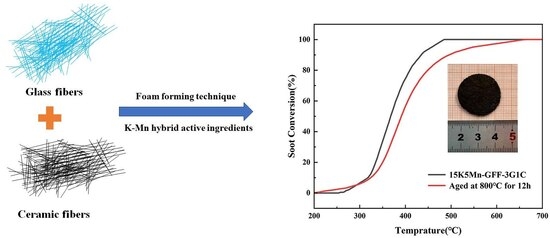
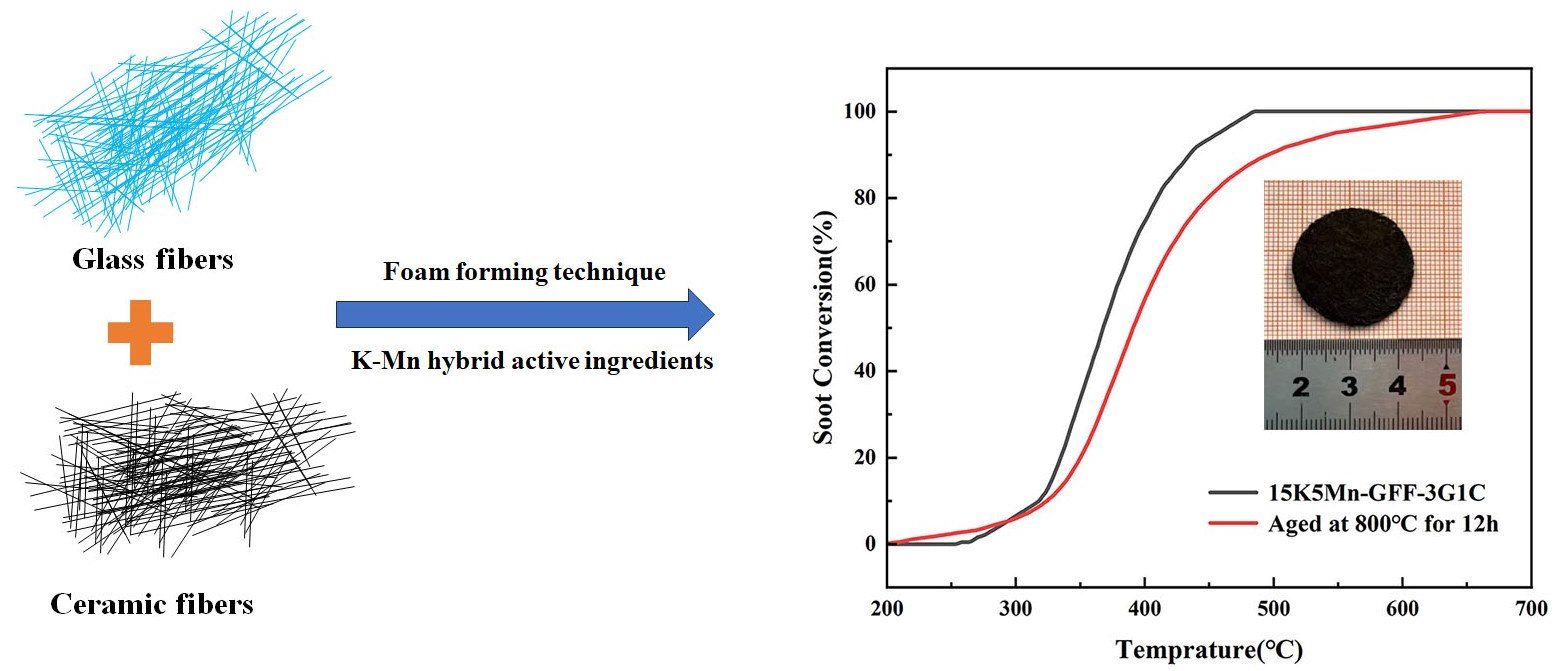
In the present study, glass/ceramic hybrid fibers were chosen as a paper matrix, which effectively balance toughness and high-temperature resistance for soot combustion applications. In order to address the issue of unevenness in the performance of paper-type catalysts caused by the differences in the dispersion behavior of glass fibers and ceramic fibers in water, a facile foam-forming technology was proposed. The obtained glass fiber/mullite composite paper with various mass ratios (1:1, 2:1, 3:1, 4:1, and 5:1) exhibit high evenness, and better high-temperature resistance than the pure glass fibers. After impregnating K-Mn active ingredients, 15K5Mn-GFF-3G1C (GF/CF = 3:1) demonstrates high tensile strength, excellent catalytic activity (T50 = 388 °C), reusability (five cycles), and high-temperature stability (800 °C, 12 h).

Graphical Abstract

1. Introduction

In the past few decades, the substantial quantities of soot particulates emitted by diesel engines have brought significant risks to both human health and the environment [1]. Consequently, governments all over the world have implemented progressively stringent emission regulations. To ensure that pollutant emissions from internal combustion engines comply with these standards, the installation of a catalytic diesel particulate filter (DPF) represents an effective technological solution [2].
Due to their high thermal stability, chemical stability, and mechanical strength, honeycomb ceramic catalysts have been widely used as catalytic diesel particulate filters (DPFs) [3]. However, the relatively low efficiency of lateral mass transfer and thermal diffusion can lead to pore channel blockage and increase the pressure drop, which may adversely impact the normal operation of diesel engines, particularly under conditions of high flow rates [4]. In recent years, fiber-structured catalysts characterized by short diffusion lengths, large geometric surface areas, and high contact efficiencies have garnered significant attention in processes [5,6]. It is well established that ceramic fibers (such as mullite and ZrO2), when utilized as catalyst supports, can enhance the high-temperature resistance as well as gas/thermal diffusion performance and corrosion resistance of DPFs [5,6,7,8,9]. Nevertheless, their inherent brittleness poses limitations on their long-term practical applications. As a cost-effective fibrous support alternative, glass fibers demonstrate superior toughness compared to ceramic fibers, which are often chosen as catalyst supports for applications such as NOx reduction and VOC combustion [10,11,12]. However, a primary limitation of glass fibers is their relatively low melting point, which restricts their use in high-temperature regions.
Glass/ceramic hybrid fibers, as a matrix, can effectively balance the toughness and high-temperature resistance of fiber-structured catalysts, rendering them highly suitable for soot combustion applications. However, achieving high uniformity in non-woven glass/ceramic hybrid paper using the traditional wet forming method is challenging due to their intrinsic differences in water dispersion. Previous studies have demonstrated that foam forming is an effective approach for mitigating fiber flocculation and enhancing paper uniformity [13,14,15,16,17]. Zhang et al. found that when the fiber length is increased to 48 mm, foam-formed quartz fiber paper maintains excellent uniformity [18]. In that case, the optimization of fiber lapping behavior and the regulation of three-dimensional network structures can be effectively facilitated, provided there are no geometric scale constraints on the fibers. The contact efficiency between foam forming paper catalysts and soot particles can be substantially improved, thereby promoting the efficient removal of soot particles. Nevertheless, the interwoven behavior of glass fibers and ceramic fibers with distinct properties in the foam-forming environment, as well as the synergistic effect among various active components, remain insufficiently elucidated. These aspects have become critical challenges in the development of high-performance glass/ceramic hybrid paper catalysts.
In the present study, we successfully developed a highly uniform and thermally stable paper-structured catalyst by employing glass/mullite hybrid fibers as the matrix for effective soot combustion through foam forming technology. Considering the synergic effects of various active ingredients on the catalytic activity and stability towards soot oxidation [19,20], the K-Mn binary active components were effectively dispersed within the paper matrix utilizing the traditional impregnating method. The network of fibers interconnected through hierarchical pore structures provides an exceptionally favorable environment for the capture and combustion of soot. In this K-Mn binary catalytic system, the “synergistic effect” refers specifically to the interaction between potassium (K) species and manganese (Mn) oxides. This effect may be manifested as follows: K species promote the activation and migration of manganese oxide lattice oxygen, regulate the redox cycle of Mn (such as stabilizing Mn3+), and increase the concentration of surface alkaline and reactive oxygen species. The manganese oxide framework helps stabilize K species and prevent them from volatilizing at high temperatures. Together, these interactions result in better overall catalytic performance (e.g., lower ignition temperature T50 and higher stability) than any single-component (K-only or Mn-only) catalyst. The effects of tunable proportions of glass and mullite fibers on the physical, mechanical, and catalytic performance of the paper-structured catalysts were investigated extensively.

2. Results and Discussion

2.1. Characterization of the Glass/Mullite Hybrid Paper Catalyst

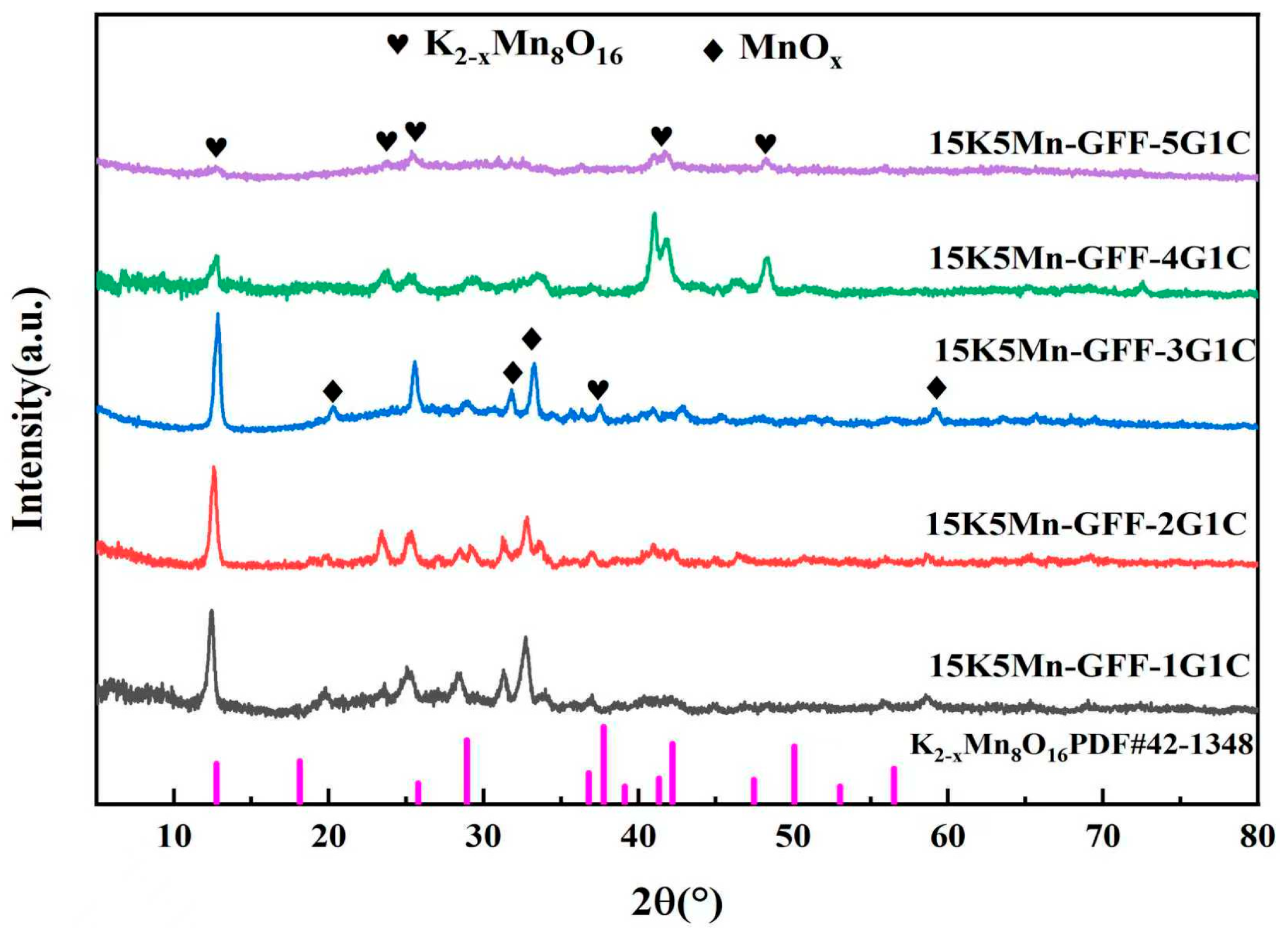
Figure 1 presents the XRD patterns of the catalysts with varying glass fiber to mullite mass ratios. The diffraction peaks at 2θ of 12.8°, 18.2°, 28.6°, 37.4°, 50.2°, and 60.2° are in good agreement with potassium manganate (K2−xMn8O16) (JCPDS Card No. 42-1348). The peaks at 2θ of 23.1°, 32.9°, 38.2°, 45.2°, 49.4°, 55.1°, and 65.8° correspond to Mn2O3 (JCPDS Card No. 65-1798) [21]. It was also observed that all the peaks were gradually intensified with increasing mass ratios of mullite fibers to glass fibers.
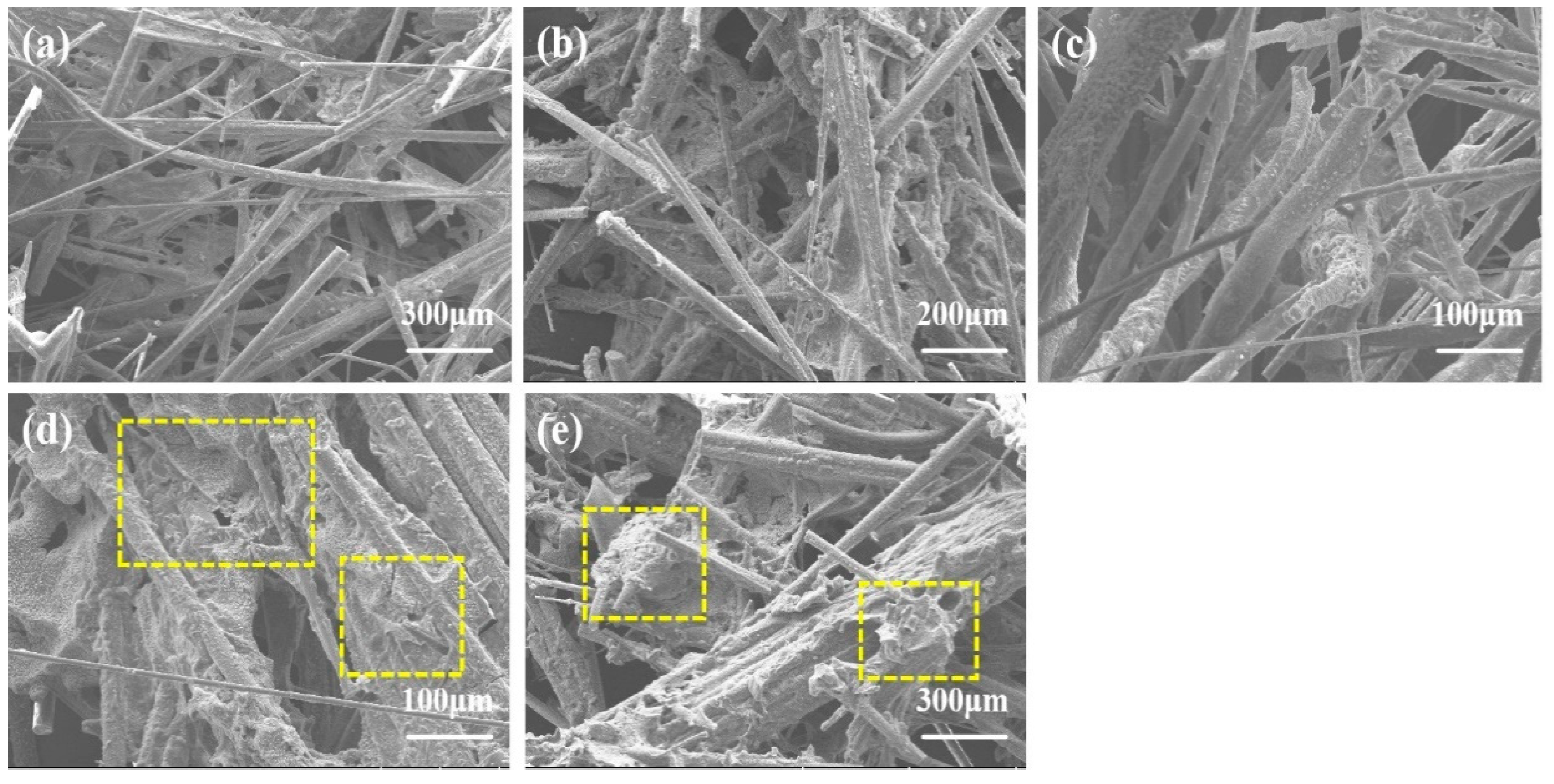
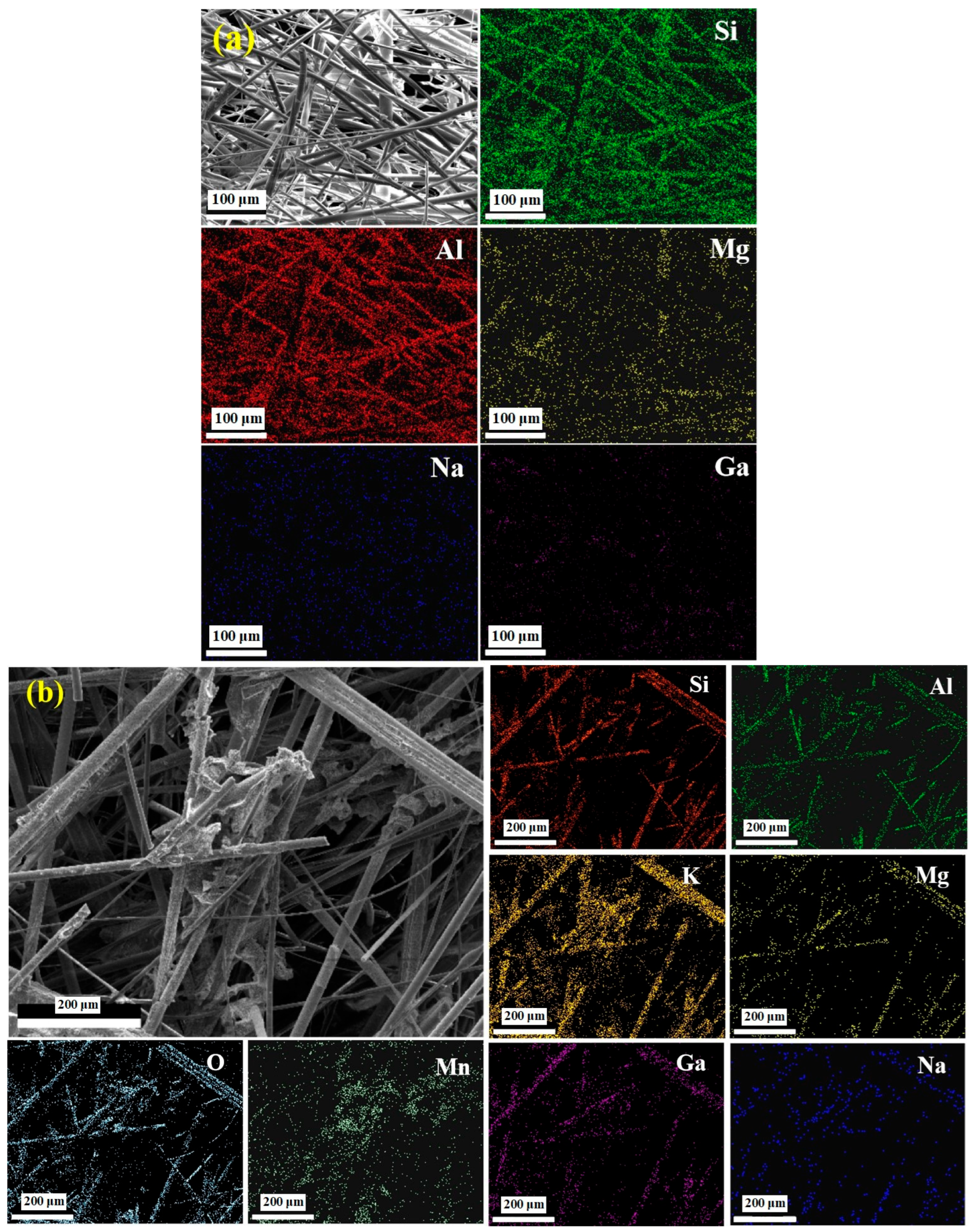
Figure 2 displays the SEM images of composite paper-type catalysts with different fiber ratios. It can be observed that as the fibers are more evenly dispersed, a small amount of agglomeration occurs when the ratio of glass fibers to mullite fibers is higher than 3 (Figure 2d,e, yellow dotted boxes). The distribution of potassium (K) and manganese (Mn) elements in the glass fiber composite paper was investigated by EDS elemental mapping analysis (Figure 3). The K element predominantly deposits on the surface of the glass fibers, whereas the Mn element interacts with the ceramic fibers and preferentially grows within the interstitial regions between the glass fibers. Thus, the incorporation of ceramic fibers could facilitate the formation of the potassium manganate phase by enabling Mn to immobilize free K species, thereby enhancing the structural and chemical stability of the catalyst.

2.2. Redox Properties of the Glass/Mullite Hybrid Paper Catalyst

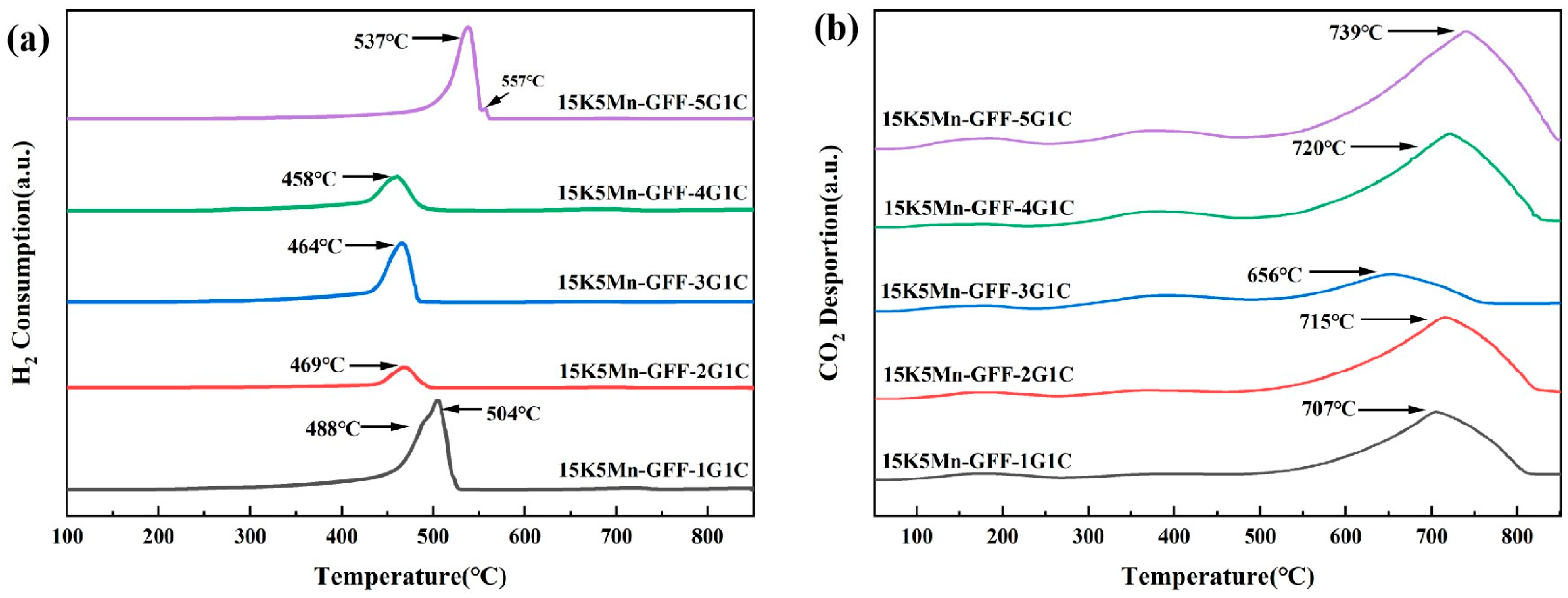
Figure 4a illustrates the H2-TPR curves of the glass/mullite hybrid paper catalyst with various ratios of glass to mullite fibers. As the mass fraction of glass fibers increases, the reduction peaks gradually shift toward lower-temperature regions, which can be attributed to a decrease in surface-active oxygen, indicating an enhanced redox capability of the catalysts. However, when the mass ratio reaches 5:1, the reduction peak temperature increases again, indicating a decrease in surface-active oxygen species. This observation can be attributed to the interaction between the potassium and glass fibers, whereby free potassium ions are incorporated into the lattice structure, resulting in a significant reduction in their mobility, which was consistence with the XRD results.
Figure 4b presents the CO2-TPD curves of the glass fiber composite paper catalysts with different fiber ratios. All samples exhibit a broad desorption peak in the 500–800 °C range, corresponding to strong basic sites, which is due to the decomposition of carbonates [22]. The desorption peak temperature of CO2 first decreases and then increases with the reduction in ceramic fibers, which may be attributed to the synergistic interaction between potassium and manganese.
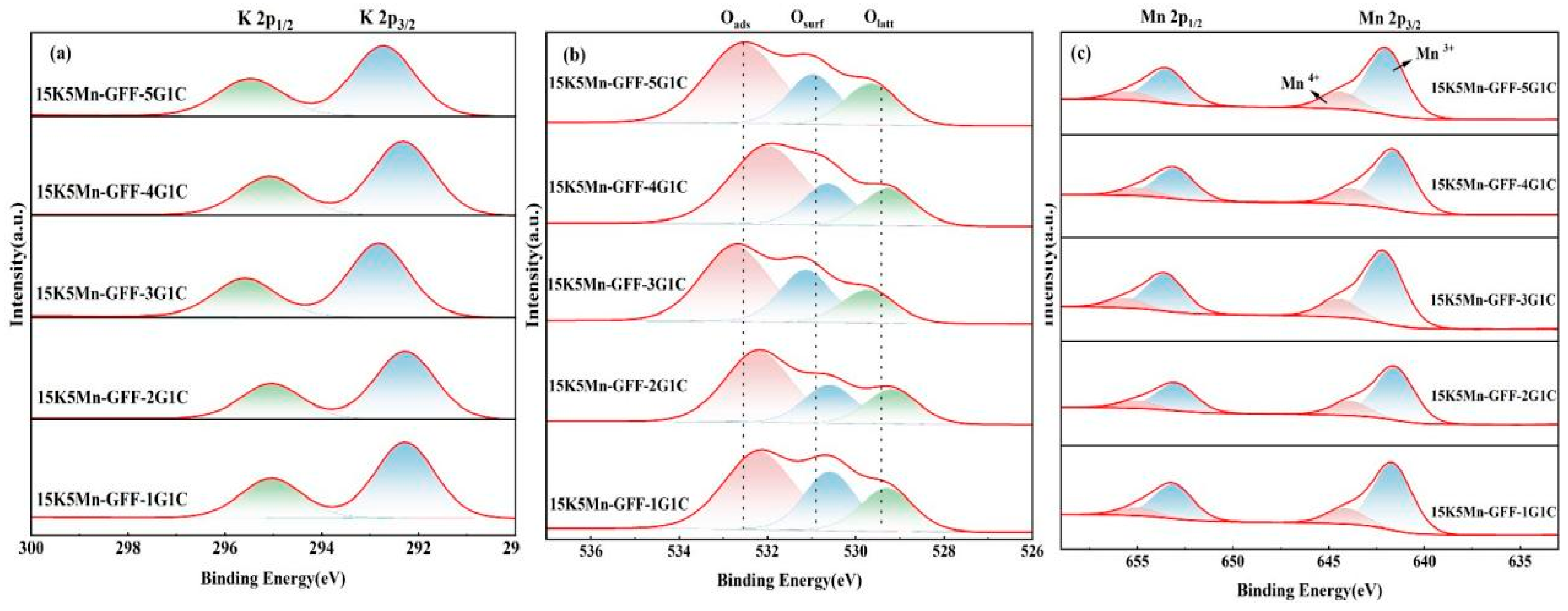
The valence states of K, O, and Mn were analyzed by X-ray photoelectron spectroscopy (XPS), and the results are presented in Figure 5. The relative abundances of the three oxygen species in the O 1s spectra, along with the corresponding Kf/Kc atomic ratios derived from the K 2p spectra for catalysts with varying glass fiber ratios, are summarized in Table 1. In Figure 5a, the characteristic peaks of K 2p3/2 and K 2p1/2 are observed at binding energies of 292.3–292.8 eV and 295.1–295.5 eV, respectively. As shown in the table, the catalysts 15K5Mn-GFF-2G1C and 15K5Mn-GFF-3G1C exhibit relatively high Kf/Kc ratios of 1.92 and 1.90, respectively. This suggests that these specific fiber ratios promote a higher concentration of free K species in the catalysts, which are critical for enhancing catalytic activity [23].
Figure 5b presents the O 1s XPS spectrum of the 15K5Mn-GFF-xG1C catalyst. The peak area percentages corresponding to the three oxygen species are summarized in Table 1. The characteristic peaks associated with adsorbed oxygen (O ads), surface oxygen (O surf), and lattice oxygen (O latt) are located at 532 eV, 530 eV, and 529 eV, respectively [24]. As shown in Table 1, the sample 15K5Mn-GFF-3G1C exhibits the highest content of active oxygen, which facilitates the formation of a significant number of oxygen vacancies. Furthermore, this sample contains a high concentration of free potassium species, promoting enhanced synergistic interaction between potassium and manganese.
Figure 5c displays the Mn 2p X-ray photoelectron spectroscopy (XPS) spectra of the 15K5Mn-GFF-xG1C catalyst. The spectra reveal the characteristic Mn 2p peaks, with the binding energies for Mn 2p3/2 and Mn 2p1/2 observed at 641.9–642.1 eV and 653.0–653.5 eV, respectively. The asymmetry of these peaks indicates the coexistence of manganese ions in multiple oxidation states. Specifically, the characteristic peaks attributed to Mn3+ are located at 642 eV and 653 eV, whereas those corresponding to Mn4+ appear at 644 eV and 655 eV [25,26]. Among all samples, 15K5Mn-GFF-3G1C exhibits the highest Mn3+/Mn4+ ratio, which is consistent with the results from hydrogen temperature-programmed reduction (H2-TPR) and carbon dioxide temperature-programmed desorption (CO2-TPD). This observation suggests that the sample possesses an enhanced redox capability and a higher concentration of oxygen vacancies, both of which contribute to improved catalytic activity and stability.

2.3. Catalytic Performance for Soot Oxidation

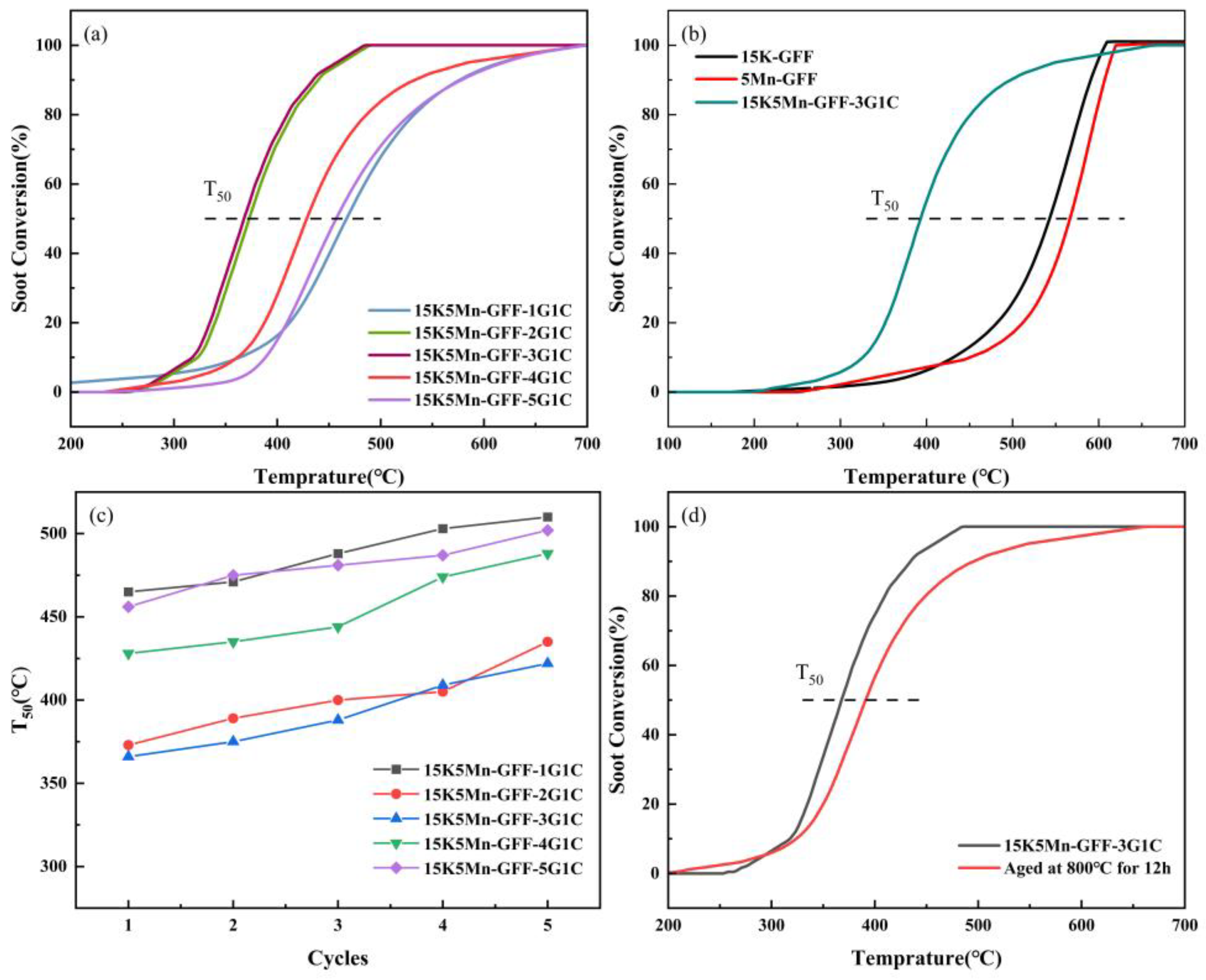
The catalytic soot conversion performance of 15K5Mn-loaded glass fiber/mullite composite paper catalysts with varying fiber ratios was studied. Figure 6a presents the soot conversion profiles of the composite paper catalysts with different fiber ratios, and Table 2 summarizes the T10, T50, and T90 values for these catalysts. As shown in the figure, the sample 15K5Mn-GFF-3G1C exhibits the lowest T50 value (366 °C), which is attributed to the presence of K2−xMn8O16 on the catalyst surface, resulting in an increased number of basic sites. Combined with EDS analysis, it is observed that in the composite paper catalyst with a glass fiber to ceramic fiber mass ratio of 3:1, the K and Mn elements are uniformly distributed, indicating a favorable interaction between the support and the active components. From the control experiments with only potassium or only manganese shown in Figure 6b, it can be well explained that the combination of potassium and manganese significantly enhances the catalytic activity of the catalyst, achieving the desired synergistic effect between potassium and manganese.
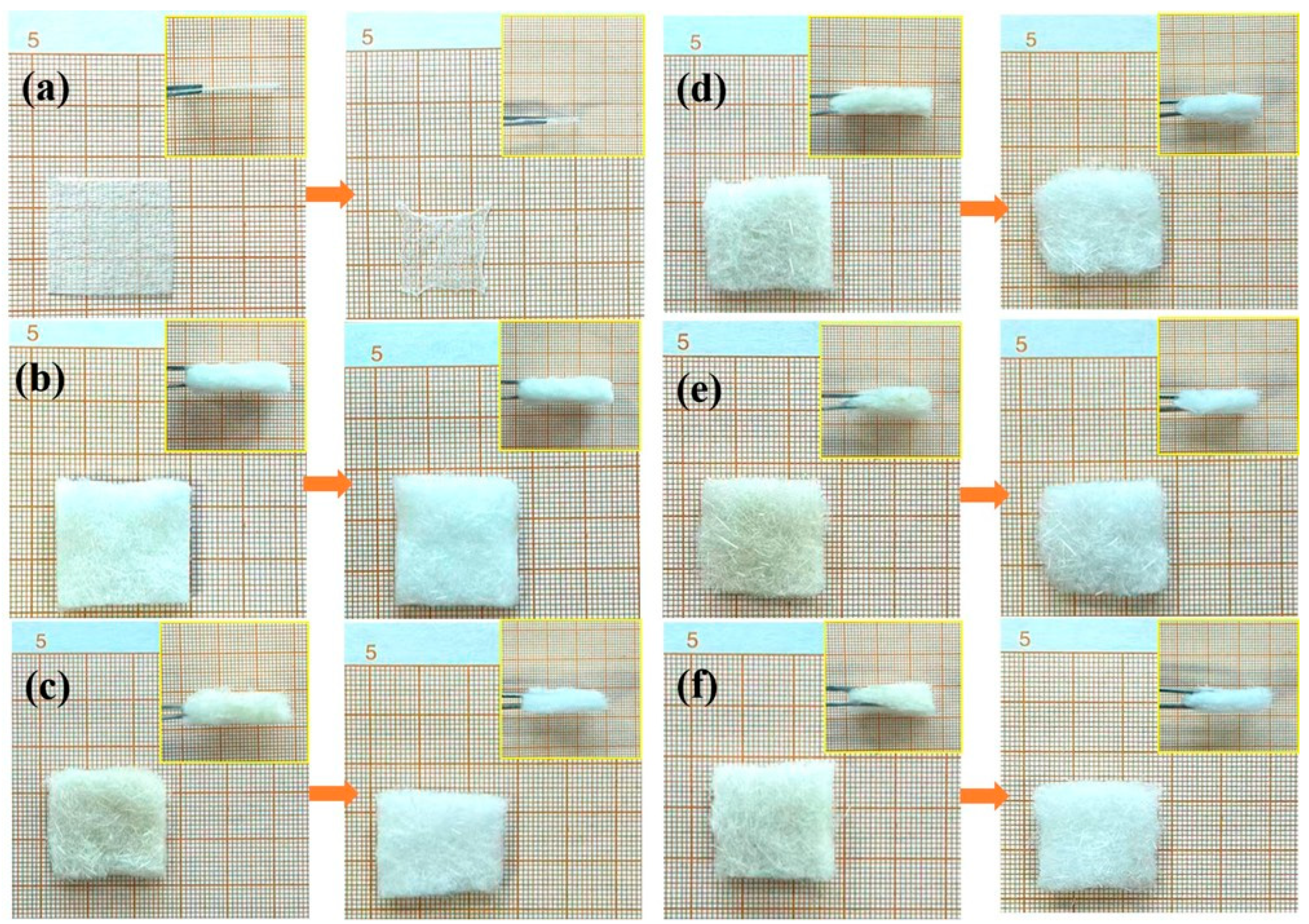
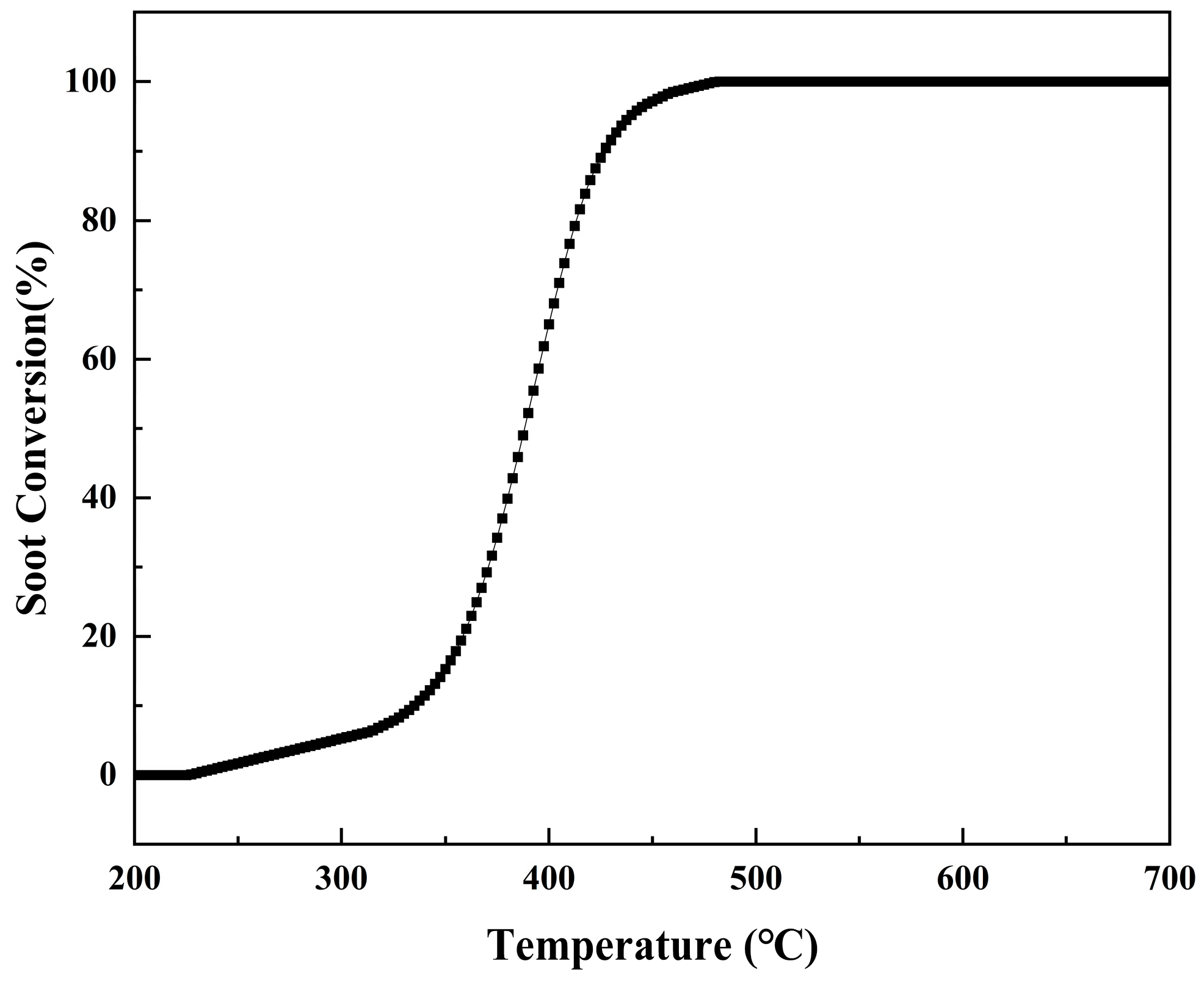
The cyclic testing of 15K5Mn-loaded glass fiber/mullite composite paper catalysts with varying fiber ratios was conducted through five consecutive cycles of catalytic oxidation under identical conditions. As shown in Figure 6c, the 15K5Mn-GFF-3G1C exhibits the lowest T50 temperature (422 °C) among all the samples, and maintains high catalytic activity and stability throughout multiple reaction cycles. After aging at 800 °C for 12 h, the ΔT50 of 15K5Mn-GFF-3G1C and the active species (e.g., K and Mn) in 15K5Mn-GFF were almost identical, indicating that the active species were more effectively retained during repeated use, which contributes to superior structural integrity and long-term stability. Among all samples, 15K5Mn-GFF-3G1C demonstrates the highest catalytic activity (T50 = 366 °C), along with excellent reusability and thermal stability. In contrast, the glass/mullite hybrid paper catalysts with varying GF/MF ratios exhibit enhanced reusability (Figure 6d) and improved high-temperature resistance (Figure 7). Furthermore, 15K5Mn-GFF-3G1C exhibits a relatively low T50 value of 388 °C after aging at 800 °C for 12 h, indicating excellent thermal stability.
Combined with the practical application conditions, we deeply investigated the effect of the presence of NO in the reaction gas on the catalytic performance of 15K5Mn-GFF-3G1C in terms of the oxidation of soot. Figure 8 shows the soot conversion curve for 15K5Mn-GFF-3G1C in the presence of NO. It has been found that the T10 of all curves corresponding to 15K5Mn-GFF-3G1C moves towards lower temperatures, which may be the result of the reaction of NO and O2 to produce NO2, which induces the production of reactive oxygen species. Conversely, the transition of T90 to higher temperatures may be attributed to the decomposition of KNO3, which leads to the formation of reactive alkaline O2− groups that strongly adsorb NOx substances The mobility of (free K) in potassium acetate can increase soot/catalyst contact and provide a favorable redox environment for soot oxidation. In addition, the formation of15K5Mn-GFF-3G1C favors the regeneration of NOx.
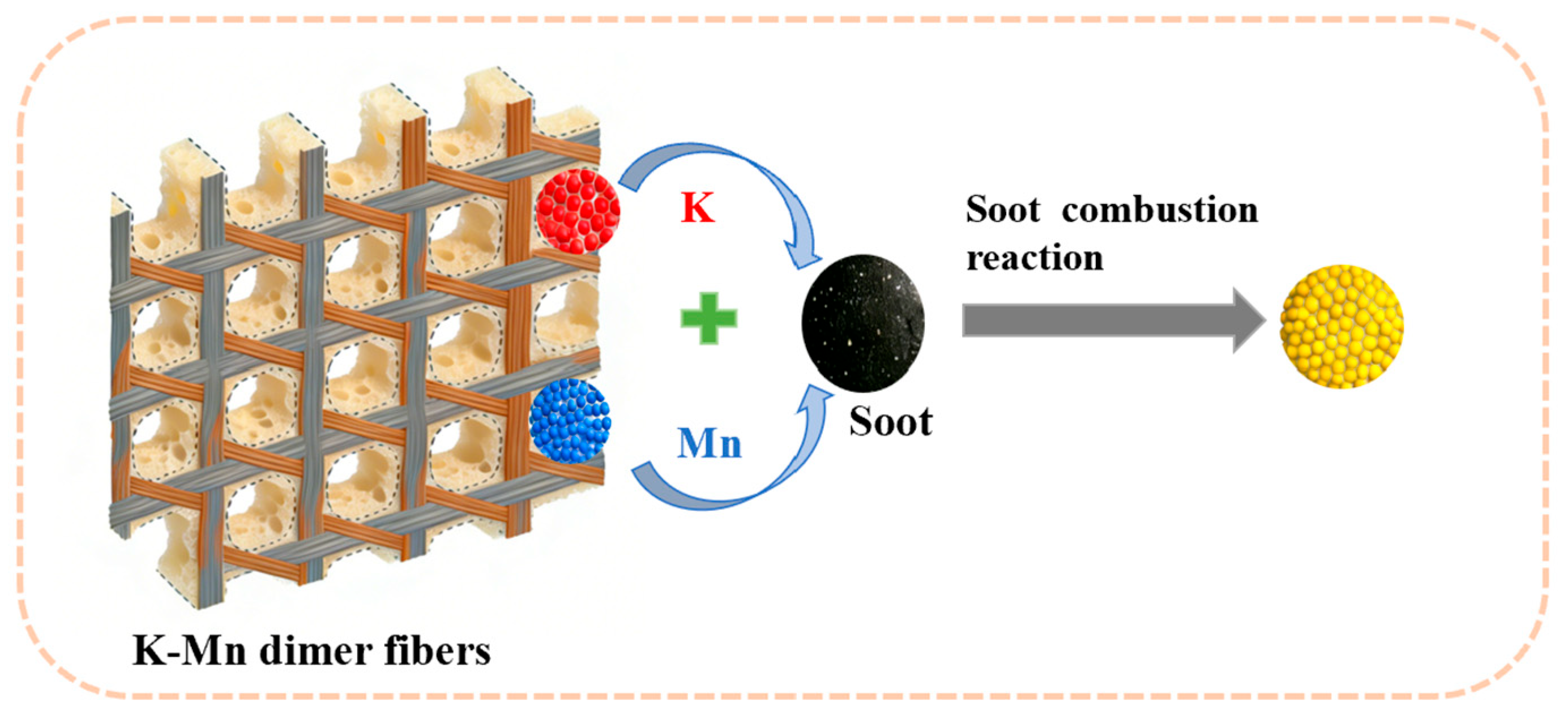
The foam forming process plays a pivotal role in regulating the architecture of the fiber network, which further dominates the contact efficiency with soot particles, as illustrated in Figure 9. During foam expansion, the fibers are stretched and aligned along the bubble interfaces, forming a preliminary framework supported by the gas phase. With the rupture of unstable foam bubbles, the fibers aggregate at the interface to form interwoven nodes, resulting in a porous interconnected network with tunable porosity and pore size. This structural reconstruction directly affects the soot contact behavior through three synergistic mechanisms: (1) the matched pore size between the fiber network and soot particles promotes the diffusion and trapping of soot; (2) moderate fiber entanglement enhances physical interception without pore blockage; and (3) the foam-induced micro-roughness on the fiber surface increases the specific surface area, thus strengthening the interfacial interaction with soot particles. In contrast, the original fiber network without foam modification exhibits a randomly stacked structure with uneven pores, leading to limited soot contact sites and low capture efficiency.

3. Materials and Methods

3.1. Materials

The glass short fibers (6 mm) were procured from Taishan Fiber Glass Group Co., Ltd. (Tai’an, China). The mullite (3Al2O3·2SiO2) short fiber cotton was obtained from Lu yang Energy-Saving Materials Co., Ltd. (Zibo, China). The glass fibers were calcined at 200 °C for 2 h, followed by immersion in a concentrated hydrochloric acid solution under ultrasonic stirring for 1 h. Subsequently, the surface-modified glass fibers were filtered and dried in an oven at 80 °C for 12 h.
The sodium silicate, potassium nitrate, manganese acetate, hydrochloric acid (36–38%), dodecyl dimethyl ammonium oxide (OB-2), polyvinyl alcohol (PVA), polyethylene oxide (PEO), and polyacrylamide (PAM) used in this work were purchased from Aladdin Reagents Co., Ltd. (Shanghai, China), and were all of analytical reagent grade.

3.2. The Fabrication of Glass/Mullite Hybrid Paper-Structured Catalysts

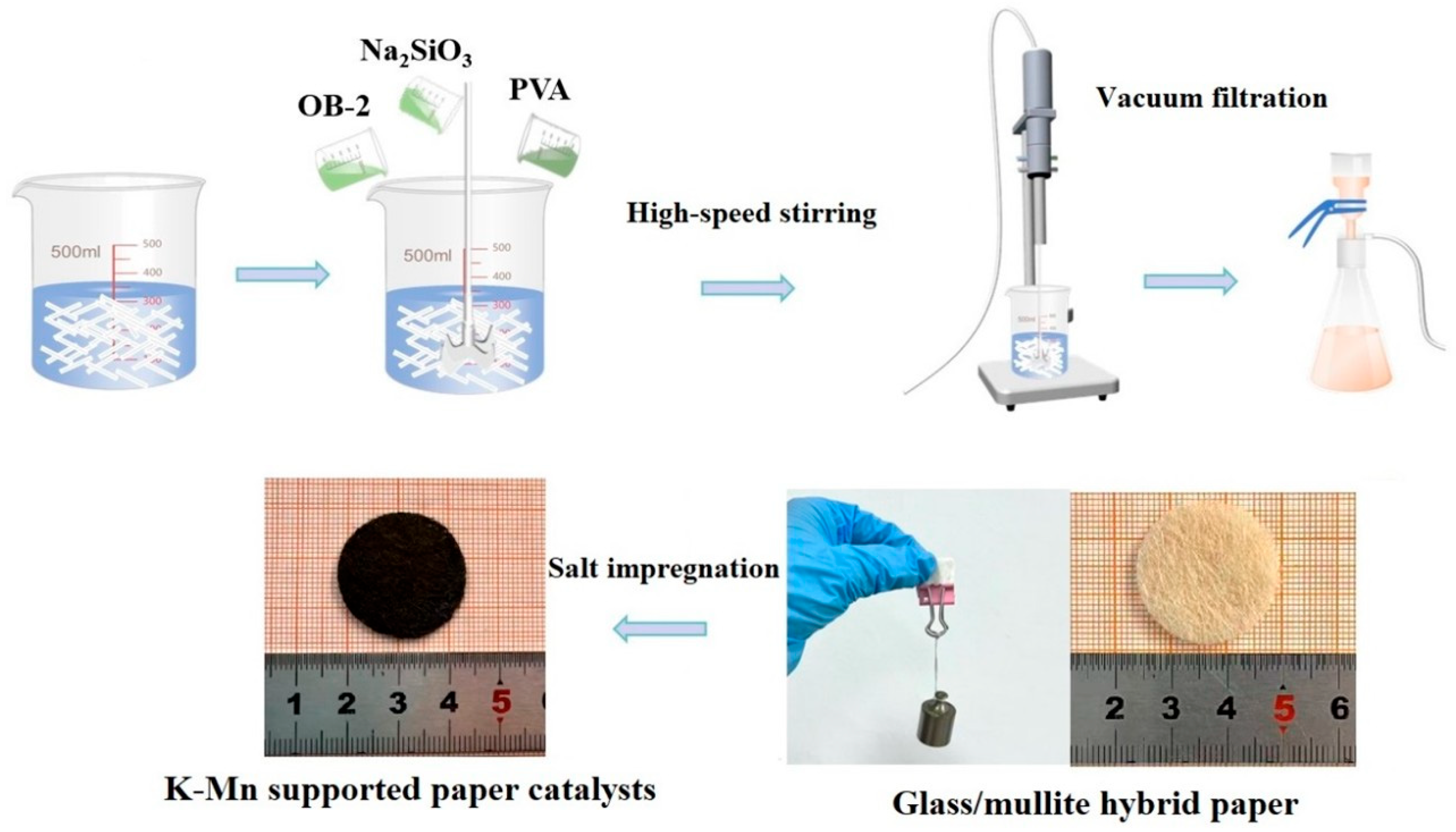
The schematic diagram of the experimental procedure is presented in Figure 10. Dodecyl dimethyl ammonium oxide (OB-2) was selected as the foaming agent, polyvinyl alcohol (PVA) as the organic binder, and sodium silicate as the inorganic binder. The foam forming process is schematically illustrated in Figure 8. A specific proportion of glass fibers and ceramic fibers was dispersed in an aqueous solution containing polyvinyl alcohol (PVA, 10 mL, 5 wt.%), sodium silicate (10 mL, 34 wt.%), and dodecyl dimethyl ammonium oxide (OB-2, 2 mL, 25 wt.%). The slurry concentration was maintained at 0.4%. Subsequently, the mixture was vigorously stirred at a speed of 2500 r/min for 10 min, poured into a funnel, and immediately subjected to vacuum filtration. Finally, the glass/mullite hybrid paper was fabricated by drying the wet paper at 90 °C and sintering it at 200 °C for 2 h in air.
The equivalent volume impregnation method was employed to prepare the binary K-Mn supported paper catalysts. Aqueous solutions of potassium nitrate (KNO3) and manganese acetate (Mn(CH3COO)2), with a nominal mass ratio of active components to paper support (mactive/msupport), were used as metal salt precursors, corresponding to 15 wt.% K2O and 5 wt.% MnO. The samples were designated as K-Mn/GFF-xG1C, where x (=1, 2, 3, 4, 5) denotes the relative mass ration of glass fiber with respect to mullite in the paper-based matrix. The impregnated ceramic paper was subsequently dried at room temperature and calcined at 600 °C for 1 h to ensure complete removal of organic constituents.

3.3. Characterization

The crystalline phase analysis was performed using powder X-ray diffraction (XRD) on a Bruker AXS D8 Advance X-ray diffractometer (Billerica, MA, USA) operated at 40 kV and 40 mA. The morphology of the K-Mn supported paper catalysts was characterized using a Hitachi FE-SEM SU8000 instrument (Tokyo, Japan) at an accelerating voltage of 5 kV. Elemental mapping was conducted via energy-dispersive X-ray spectroscopy (EDS) using an EDAX E1506-C2B system (Mahwah, NJ, USA). The surfaces’ chemical states were analyzed by X-ray photoelectron spectroscopy (XPS) with a VG Scientific spectrometer (West Sussex, UK) employing Al Kα radiation (1486.6 eV) as the X-ray source, operated at 12 kV and 10 mA. The powder specimen was introduced into the pretreatment chamber of the XPS instrument and subsequently heated to 300 °C for one hour under a continuous flow of pure O2 (20 mL/min) to eliminate adventitious carbonates, hydroxyl groups, and other adsorbed species, thereby stabilizing the surface under oxidizing conditions.
The uniform distribution revealed by EDS (Figure 3) provides the structural foundation for the abundant surface-active sites detected by XPS (Table 1). Meanwhile, the higher surface-active oxygen content and Mn3+/Mn4+ ratio measured by XPS explain why the sample 15K5Mn-GFF-3G1C exhibits the optimal catalytic activity among the macroscopically uniformly dispersed samples. It is precisely the synergy between uniform bulk-phase dispersion and favorable surface chemical states that jointly contributes to its high performance.
Temperature-programmed reduction (H2-TPR) experiments were carried out on a PCA1200 apparatus (Beijing Builder Optics Company, Beijing, China), equipped with a thermal conductivity detector (TCD). A sample (50 mg) was pretreated in an argon atmosphere (30 mL min−1) at 200 °C for 1 h, then cooled to ambient temperature. Subsequently, a 5% H2/Ar mixture (30 mL min−1) was introduced, and the temperature was increased linearly at a rate of 10 °C min−1. CO2 temperature-programmed desorption (CO2-TPD) measurements were also performed on the same PCA1200 apparatus with a TCD. A sample (100 mg) was pretreated in a helium atmosphere at 200 °C for 1 h, then cooled to 150 °C, followed by saturation with CO2. Desorption was subsequently initiated under a helium flow (50 mL min−1) at a heating rate of 10 °C min−1.

3.4. Catalytic Performance

The catalytic activities for soot oxidation were evaluated using the temperature-programmed oxidation (TPO) method in a lab-made tubular quartz reactor. Printex U soot, purchased from Degussa (Düsseldorf, Germany), was employed as a model soot. The mixture of soot and catalyst, with a soot-to-catalyst weight ratio of 1:20, was dispersed in n-hexane via ultrasonic treatment. The resulting suspension was then added dropwise onto the catalyst matrix to ensure complete impregnation and subsequently dried at room temperature. Prior to the reaction, the catalyst–soot mixture was pretreated under a N2 atmosphere at 200 °C for 1 h to remove moisture, residual n-hexane, and adsorbed CO2, followed by heating from 200 °C to 700 °C at a ramp rate of 5 °C min−1 in a gas stream consisting of 21% O2 in N2 with a total flow rate of 400 mL min−1. The concentrations of CO and CO2 in the outlet gas were monitored using non-dispersive infrared (NDIR) gas analyzers (Hubei Ruiyi Automatic Control System Co., Ltd., Wuhan, China). Each experiment was repeated for 3–5 cycles using the same sample, and no appreciable change in soot oxidation efficiency was observed. Catalytic performance was assessed based on T10, T50, and T90, defined as the temperatures at which 10%, 50%, and 90% soot conversion were achieved, respectively.
The reusability tests were conducted on the sample exhibiting the highest catalytic activity over five consecutive catalytic oxidation cycles under identical conditions. The samples were sintered at 800 °C for 12 h (heating rate: 5 °C/min in static air, followed by furnace cooling) to evaluate their thermal stability. To assess the influence of NO on soot oxidation activity and stability, a gas mixture containing 500 ppm NO was introduced into the soot–TPO test using the sample with the highest catalytic performance.

4. Conclusions

K-Mn supported glass/mullite hybrid paper catalysts, varying the mass ratios of glass fibers to ceramic fibers, were fabricated through a facile foam-forming route. The effects of tunable proportions of glass and mullite fibers on the physical, mechanical, and catalytic performance of the paper-structured catalysts were evaluated extensively. At a glass fiber to ceramic fiber mass ratio of 3:1, the foam exhibited the most uniform size distribution, with the lowest standard deviation and an average bubble diameter of 52 μm indicating excellent foam stability and processability. The resulting foam-formed composite paper demonstrated superior formability, favorable mechanical strength, and thermal stability up to 800 °C. Among all catalyst samples, 15K5Mn-GFF-3G1C exhibited the highest catalytic activity, achieving a T50 value of 366 °C, along with excellent reusability and thermal durability.

Author Contributions

Writing—original draft preparation, investigation, H.T.; data curation, J.H. and Q.Y. Writing—review and editing, supervision, funding acquisition, G.Y. All authors have read and agreed to the published version of the manuscript.

Funding

The authors gratefully appreciate the financial support from National Natural Science Foundation (51602208) and Hebei Provincial Natural Science Foundation (E2017210065, E2022210067).

Data Availability Statement

All relevant data are available upon request of readers.

Conflicts of Interest

Author Hui Tang was employed by the CCTEG Shenyang Research Institute. The remaining authors declare that the research was conducted in the absence of any commercial or financial relationships that could be construed as a potential conflict of interest.

Abbreviations

The following abbreviations are used in this manuscript:
XRDX-ray Diffraction
BETBrunauer–Emmett–Teller
TG-DSCThermogravimetry–Differential Scanning Calorimetry
SEMScanning Electron Microscope
UV-Vis DRSUV-Vis Diffuse Reflection Spectroscopy
CO2-TPDCarbon Dioxide Temperature-Programmed Desorption
TPOTemperature-Programmed Oxidation

References

  1. Duan, X.R.; Lv, Y.J.; Hong, J.X.; Wu, J.Z.; Zhang, J.; Yue, Y.; Qian, G.R. A multifunctional tube reactor for catalytic oxidization of dioxins and its pilot-scale application. Process Saf. Environ. 2024, 181, 334–342. [Google Scholar]
  2. Shi, Q.; Liu, T.; Li, Q.; Xin, Y.; Lu, X.; Tang, W.; Zhang, Z.; Gao, P.-X.; Anderson, J.A. Multiple strategies to decrease ignition temperature for soot combustion on ultrathin MnO2−x nanosheet array. Appl. Catal. B Environ. 2019, 246, 312–321. [Google Scholar] [CrossRef]
  3. Orihuela, M.P.; Gomez-Martin, A.; Miceli, P.; Becerra, J.A.; Chacartegui, R.; Fino, D. Experimental measurement of the filtration efficiency and pressure drop of wall-flow diesel particulate filters (DPF) made of biomorphic Silicon Carbide using laboratory generated particles. Appl. Therm. Eng. 2018, 131, 41–53. [Google Scholar] [CrossRef]
  4. Zhao, G.; Moulijn, J.A.A.; Kapteijn, F.; Dautzenberg, F.M.; Xu, B.; Lu, Y. Monolithic fiber/foam-structured catalysts: Beyond honeycombs and micro-channels. Catal. Rev. 2023, 66, 1870–1950. [Google Scholar] [CrossRef]
  5. Leonardi, S.A.; Zanuttini, M.A.; Miró, E.E.; Milt, V.G. Catalytic paper made from ceramic fibres and natural ulexite. Application to diesel particulate removal. Chem. Eng. J. 2017, 317, 394–403. [Google Scholar] [CrossRef]
  6. Yang, G.; Li, M.; Wu, G.; Wu, X.; Wan, J.; Liu, S. Macroporous fiber-like Co3O4-CeO2 catalysts for diesel soot combustion: A nitrate-assisted reaction pathway governed by catalyst-soot contact condition. Chem. Eng. J. 2025, 518, 164667. [Google Scholar] [CrossRef]
  7. Yang, L.N.; Hu, X.X.; Liu, Q.Z.; Liu, J.C.; Li, L.Y.; Xie, D.N.; Du, H.Y. Three-dimensional mullite fiber network with controllable hierarchical structure for effective soot combustion. J. Eur. Ceram. Soc. 2017, 37, 2655–2679. [Google Scholar] [CrossRef]
  8. Sacco, N.A.; Bortolozzi, J.P.; Milt, V.G.; Miró, E.E.; Banús, E.D. Ce-Mn oxides synthesized with citric acid on ceramic papers used as diesel particulate filters. Catal. Today 2022, 383, 277–286. [Google Scholar] [CrossRef]
  9. Tuler, F.E.; Banús, E.D.; Zanuttini, M.A.; Miró, E.E.; Milt, V.G. Ceramic papers as flexible structures for the development of novel diesel soot combustion catalysts. Chem. Eng. J. 2014, 246, 287–298. [Google Scholar] [CrossRef]
  10. Cheng, J.; Li, W.; Wang, X.; Liu, H.; Chen, Y. Vanadium-based catalytic fibers for selective reduction of NO by NH3 and their potential use on co-processing of dust and NOx. Chem. Eng. J. 2022, 431, 133694. [Google Scholar] [CrossRef]
  11. Golyashova, K.; Glazov, N.; Lopatin, S.; Zagoruiko, A. Glass-fiber catalysts for selective catalytic reduction of nitrogen oxides by CO and hydrocarbons. Catal. Commun. 2023, 183, 106765. [Google Scholar] [CrossRef]
  12. Kovalyov, E.V.; Sadovskaya, E.M.; Bal, B.S. Kinetic features of the deep oxidation of propane over a Pt/fiberglass catalyst. Chem. Eng. J. 2018, 349, 547–553. [Google Scholar] [CrossRef]
  13. Hjelt, T.; Ketoja, J.A.; Kiiskinen, H.; Koponen, A.I.; Pääkkönen, E. Foam forming of fiber products: A review. J. Dispers. Sci. Technol. 2022, 43, 1462–1497. [Google Scholar] [CrossRef]
  14. Cucharero, J.; Ceccherini, S.; Maloney, T.; Lokki, T.; Hnninen, T. Sound absorption properties of wood-based pulp fibre foams. Cellulose 2021, 28, 4267–4279. [Google Scholar] [CrossRef]
  15. Ketola, A.E.; Xiang, W.; Hjelt, T.; Pajari, H.; Tammelin, T.; Rojas, O.J.; Ketoja, J.A. Bubble attachment to cellulose and silica surfaces of varied surface energies: Wetting transition and implications in foam forming. Langmuir 2020, 36, 7296–7308. [Google Scholar] [CrossRef]
  16. Wagner, M.; Biegler, V.; Wurm, S.; Baumann, G.; Nypelo, T.; Bismarck, A.; Feist, F. Pulp fibre foams: Morphology and mechanical performance. Compos. Part A Appl. Sci. Manuf. 2025, 188, 108515. [Google Scholar] [CrossRef]
  17. Hou, F.Q.; Huang, M.L.; Ding, N.X.; Yang, H.K.; Zhang, C.H. Interaction mechanisms between fibers and bubbles during foam forming. Colloids Surf. A Physicochem. Eng. Aspects 2024, 698, 134432. [Google Scholar] [CrossRef]
  18. Hou, F.; Ding, N.; Yang, H.; Zhang, C. Aqueous foam forming of quartz paper. Cellulose 2023, 30, 495–508. [Google Scholar] [CrossRef]
  19. Yu, G.; Wang, J.; Ma, H.; Liu, X.; Qin, S.; Yang, Z.; Zhang, G.; Li, Y.; Zhu, L. Exploring abundantly synergic effects of K-Cu supported paper catalysts using TiO2-ZrO2 mesoporous fibers as matrix towards soot efficient oxidation. Chem. Eng. J. 2021, 417, 128111. [Google Scholar] [CrossRef]
  20. Yu, D.; Yu, X.; Zhang, C.; Wang, L.; Fan, X.; Zhao, Z.; Wei, Y.; Liu, J.; Gryboś, J.; Leszczyński, B.; et al. Layered Na2Mn3O7 decorated by Cerium as the robust catalysts for efficient low temperature soot combustion. Appl. Catal. B Environ. 2023, 338, 123022. [Google Scholar] [CrossRef]
  21. Zhuang, G.Z.; Gao, J.; Chen, H.; Zhang, Z. A new one-step method for physical purification and organic modification of sepiolite. Appl. Clay Sci. 2018, 153, 1–8. [Google Scholar] [CrossRef]
  22. Yu, G.; Li, H.Z.; Yang, W.S.; Hu, J.T.; Niu, M.J.; Qin, S.J.; Yang, Z. Promoting Effects of Acid Treatment on Catalytic Performance of K-Sepiolite Clay Fibers for Soot Oxidation. Catalysts 2025, 15, 994. [Google Scholar] [CrossRef]
  23. Yu, G.; Cheng, X.; Hu, J.; Yang, Q.; Wu, H.Y.; Yang, Z.G.; Qin, S.J.; Zhang, G. Synergic Effects Between Doped Transitional Metals and CeO2Catalysts with 3D Multi-tubular Interconnected Structure Towards Efficient Soot Oxidation. Catal. Lett. 2025, 155, 270. [Google Scholar] [CrossRef]
  24. Ren, Y.; Yu, X.H.; Fan, X.Q.; Wang, L.Y.; Wang, R.D.; Zhao, Z.; Cheng, K.; Chen, Y.S.; Sojka, Z.; Kotarba, A.; et al. Facile synthesis of birnessite-type K2Mn4O8 and cryptomelane-type K2 xMn8O16 catalysts and their excellent catalytic performance for soot combustion with high resistance to H2O and SO2. Appl. Catal. B Environ. 2021, 285, 119779. [Google Scholar]
  25. Yang, Z.; Zhang, N.; Xu, H.; Li, Y.; Ren, L.; Liao, Y.; Chen, Y. Boosting diesel soot catalytic combustion via enhancement of solid(catalyst)-solid(soot) contact by tailoring micrometer scaled sheet-type agglomerations of CeO2-ZrO2 catalyst. Combust. Flame 2022, 235, 111700. [Google Scholar] [CrossRef]
  26. Zhang, C.L.; Gao, S.; Zhou, S.R.; Yu, D.; Wang, L. New method for the preparation of hierarchical nanotube K0.3xMnxCe1-xOδ catalysts and their excellent catalytic performance for soot combustion. Appl. Catal. B Environ. Energy 2024, 355, 124169. [Google Scholar] [CrossRef]
Figure 1. XRD patterns of K-Mn supported glass/mullite hybrid paper catalysts.
Catalysts 16 00103 g001
Figure 2. SEM images of K-Mn supported glass/mullite hybrid paper catalysts: (a) 15K5Mn-GFF-1G1C; (b) 15K5Mn-GFF-2G1C; (c) 15K5Mn-GFF-3G1C; (d) 15K5Mn-GFF-4G1C; and (e) 15K5Mn-GFF-5G1C.
Catalysts 16 00103 g002
Figure 3. EDS-mapping of GFF-3G1C (a) and 15K5Mn-GFF-3G1C (b).
Catalysts 16 00103 g003
Figure 4. H2-TPR (a) and CO2-TPD (b) profiles of the 15K5Mn-GFF-xG1C.
Catalysts 16 00103 g004
Figure 5. XPS spectra of 15K5Mn-GFF-xG1C: (a) K2p-C 1s, (b) O 1s, and (c) Mn 2p.
Catalysts 16 00103 g005
Figure 6. Soot–TPO patterns of T50 values in the cyclic testing of 15KxMn-GFF (a); controlled experiment with potassium only and manganese only (b); T50 values in the cyclic testing of 15K5Mn-GFF-xG1C (c); and thermal stability profile of 15K5Mn-GFF-xG1C (d).
Catalysts 16 00103 g006
Figure 7. High-temperature resistance (800 °C for 12 h) of commercial glass paper (a) and 15K5Mn-GFF-xG1C; (b) glass fiber: ceramic fiber = 1:1; (c) glass fiber: ceramic fiber = 2:1; (d) glass fiber: ceramic fiber = 3:1; (e) glass fiber: ceramic fiber = 4:1; and (f) glass fiber: ceramic fiber = 5:1.
Catalysts 16 00103 g007
Figure 8. Carbon soot–TPO map of15K5Mn-GFF-3G1C catalyst under NO atmosphere.
Catalysts 16 00103 g008
Figure 9. The illustration of the synergistic mechanisms between active components and matrix fibers.
Catalysts 16 00103 g009
Figure 10. Schematic diagram of the experimental procedure.
Catalysts 16 00103 g010
Table 1. Atomic ratios calculated by O 1s and K 2p and Mn 2p.
CatalystsO/(at. %)Kf/KcMn3+/Mn4+
O adsO surfO latt
15K5Mn-GFF-1G1C34.0319.0214.451.883.91
15K5Mn-GFF-2G1C38.4616.1515.011.923.71
15K5Mn-GFF-3G1C37.4420.0313.441.904.19
15K5Mn-GFF-4G1C41.2314.2614.171.893.88
15K5Mn-GFF-5G1C37.7916.3014.551.863.75
Table 2. Catalytic performance of the paper catalysts using various kinds of active ingredients and matrix fibers.
CatalystsSoot Oxidation/°C
T10T50T90
GF441557616
15K5Mn-GFF-1G1C364465570
15K5Mn-GFF-2G1C322373439
15K5Mn-GFF-3G1C317366433
15K5Mn-GFF-4G1C360428531
15K5Mn-GFF-5G1C387456573
Disclaimer/Publisher’s Note: The statements, opinions and data contained in all publications are solely those of the individual author(s) and contributor(s) and not of MDPI and/or the editor(s). MDPI and/or the editor(s) disclaim responsibility for any injury to people or property resulting from any ideas, methods, instructions or products referred to in the content.