Article

Comparative Kinetic Study of Phenol Degradation Using Free and Alginate-Gel-Entrapped Extract Containing Tyrosinase from Agaricus bisporus


1
Research Center in Industrial Technologies CRTI, Cheraga, P.O. Box 64, Algiers 16014, Algeria
2
Laboratory of Biological and Agronomic Sciences, Department of Biology, Faculty of Sciences, Amar Telidji University, Ghardaïa Road, P.O. Box 37G, Laghouat 03000, Algeria
*
Author to whom correspondence should be addressed.
Catalysts 2026, 16(1), 102; https://doi.org/10.3390/catal16010102
Submission received: 23 December 2025 / Revised: 11 January 2026 / Accepted: 16 January 2026 / Published: 20 January 2026

Abstract

The aim of this study was to investigate the biochemical properties of free and immobilized mushroom tyrosinase (EC 1.14.18.1) entrapped in calcium alginate beads for phenol oxidation in a batch system. Tyrosinase activity was determined spectrophotometrically at 400 nm under optimal conditions. The effects of key operational parameters on phenol oxidation kinetics were evaluated for both enzyme systems. The Michaelis–Menten constant (KM) of the immobilized enzyme (0.94 ± 0.2 mM) was approximately twice that of the free enzyme (0.56 ± 0.04 mM), while its maximum reaction velocity (VMax = 101.4 ± 2.2 µmol L−1 min−1) decreased by nearly 30-fold (VMax(App) = 3.63 ± 0.3 µmol L−1 min−1). Immobilization also shifted the optimal pH of the enzyme to pH 6.0. The optimum temperature and activation energy for phenol oxidation were determined as 55 °C and 52.48 kJ/mol for immobilized tyrosinase, whereas they were 45 °C and 39.58 kJ/mol for the free enzyme. The highest level of activity was obtained with alginate beads of 2.6 mm diameter, and the immobilized preparation exhibited enhanced operational stability, completely retaining its initial activity after five reuse cycles. Overall, these findings suggest that mushroom tyrosinase immobilized in alginate beads is a promising system for phenol removal from wastewater.

1. Introduction

Aromatic compounds, including phenol, are among the most common organic pollutants in effluents from the paper, plastic, petroleum, dye, resin, and wood industries [1,2]. Phenol is considered a toxic and mutagenic compound, requiring the development of effective technology to remove it from wastewater [3,4]. Various removal methods have been developed, such as solvent extraction, microbial degradation, adsorption on activated carbon, and chemical oxidation [5]. Extraction methods are incomplete and expensive, while adsorption and oxidation treatments are extremely expensive for low effluent concentrations [6,7].
Wastewater treatment with enzymes is an alternative to traditional methods. The application of enzymes such as peroxidases, laccase, and tyrosinase for the removal of phenol from wastewater has a number of advantages over conventional biological treatments, including the ability to treat a wide range of contaminant concentrations, pH values, and temperatures; high reaction rates; and the high specificity of enzymes for their substrates [2,8,9]. Tyrosinase, a copper metalloenzyme widely distributed in nature [10], is commonly used for the elimination of phenol. In the present study, tyrosinase was obtained from button mushroom (Agaricus bisporus), which is considered to be the major natural source of this enzyme [11]. Tyrosinase catalyzes two very distinct reactions—the hydroxylation of monophenols to o-diphenols, called cresolase activity, and the oxidation of o-diphenols to o-quinones, called catecholase activity—with the consumption of molecular oxygen [12,13]. Tyrosinase is most often immobilized in a support for reuse and due to its greater thermal stability in this state as compared to its free form [14]. Calcium alginate is one of the most commonly used matrices for enzyme immobilization due to its advantages such as good biocompatibility, non-toxicity, cost-effectiveness, low cost, availability, and simplicity of preparation [15,16].
Therefore, the present study investigated for the first time the kinetics of phenol oxidation in a batch system using crude Agaricus bisporus tyrosinase extract immobilized in calcium alginate beads and compared the immobilized extract’s performance with that of the free enzyme. The effects of the phenol concentration, temperature, pH, and calcium alginate bead diameter were systematically examined in order to determine the optimal physicochemical conditions for the oxidation of phenol. The thermodynamic behavior of both immobilized and soluble enzymes was also investigated.

2. Results and Discussion

2.1. Extraction of Tyrosinase from Agaricus bisporus

The method developed by Gouzi [17], which is simple, rapid, and results in high enzymatic activity, was slightly modified for the extraction of tyrosinase from Agaricus bisporus. The extraction procedure involved the preparation of acetone powder to remove water, endogenous phenols, and pigments. The crude extract exhibited significant activity towards phenol as a substrate, with a catalytic activity of 140 EU/mL(pH 6.0; 35 °C). Based on these findings, it can be concluded that this enzyme can be classified as a monophenol monooxygenase, commonly known as tyrosinase [18].

2.2. Effect of pH

The effect of pH on the activity of free and immobilized tyrosinase was examined in the pH range of 4.0–12.0 at 35 °C (Figure 1). The optimum pH values were 7.6 and 6.0 for free and immobilized tyrosinase, respectively. This behavior is mainly attributed to secondary enzyme–support interactions, including ionic and polar interactions and hydrogen bonding within the alginate matrix [19]. At alkaline pH values, electrostatic repulsion between the negatively charged alginate and phenolate ions limits substrate diffusion toward the active sites. In contrast, under acidic conditions, phenol carries a partial positive charge, which enhances its attraction to the negatively charged support and improves catalytic efficiency [20]. In addition, Keerti et al. [21] suggested that immobilization in Ca-alginate provides a protective microenvironment for enzymes against the acidity or alkalinity of the reaction medium. Yahşi et al. [19] found that the optimum pH values for free commercial mushroom tyrosinase and the same enzyme encapsulated in Ca-alginate were 7.0 and 5.0, respectively, when L-tyrosine was used as the substrate. Similar acidic shifts in the optimum pH upon tyrosinase immobilization have been reported in previous studies [19,21,22].

2.3. Effect of Temperature

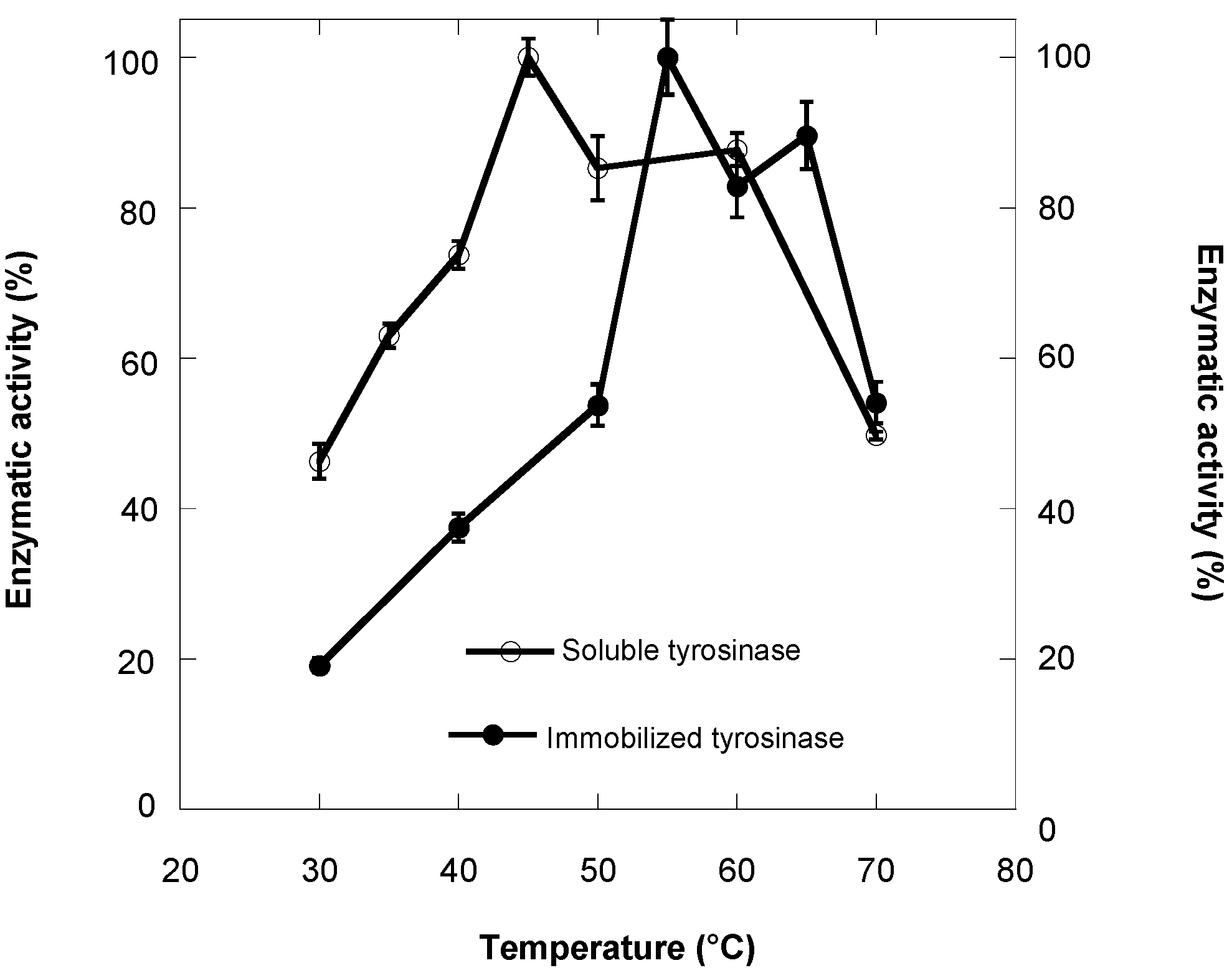
Temperature is one of the most important factors affecting enzyme activity. The activities obtained in a temperature range of 30–70 °C were determined as percentages of the maximum activity. As shown in Figure 2, the optimum temperature was found to be 45 °C for the free enzyme. The optimum reaction temperature for tyrosinase immobilized on Ca-alginate was determined to be 55 °C.
This shift could be explained by multi-point ionic interaction between the enzyme and polymeric matrix due to the activation energy of the enzyme to reorganize the optimum conformation for binding to its substrate. One of the main reasons for the high thermal resistance of immobilized enzyme is its stability under various deactivating forces due to the restricted conformational mobility of the molecules following immobilization. Generally, a high temperature is preferable and essential for most enzyme activity since high temperatures improve conversion rates. Moreover, a high temperature increases substrate solubility and reduces microbial contamination.
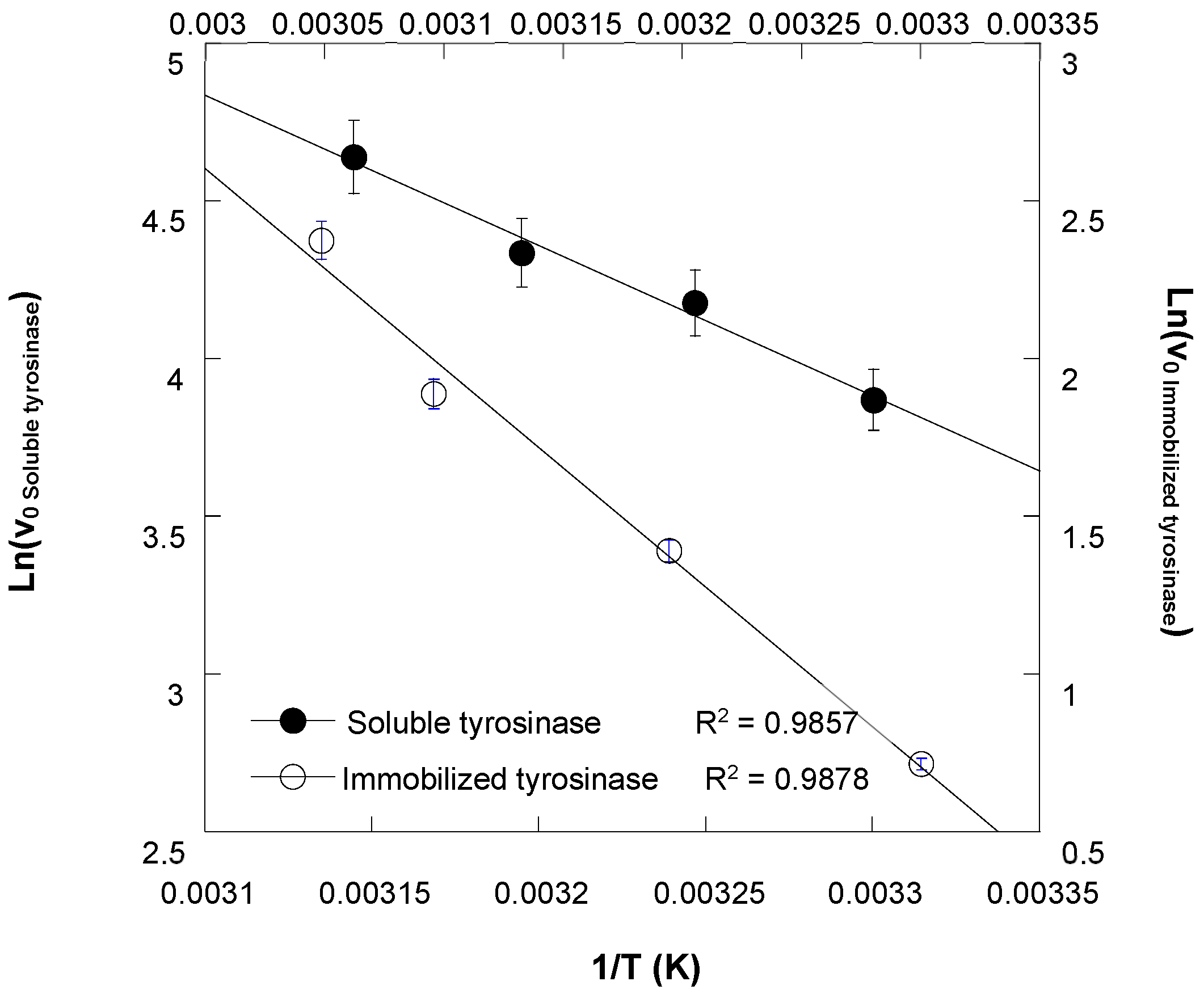
Arrhenius plots were constructed using the initial reaction rates obtained from the previous experiments, as shown in Figure 3, for both the free and cross-linked tyrosinases. From the slopes of the Arrhenius plots, the activation energies for phenol oxidation by the free and immobilized tyrosinases were determined to be 39.58 (±1.98) kJ/mol and 52.48 (±2.62) kJ/mol, respectively. This result was consistent with expectations, as immobilization typically reduces the conformational stability of an enzyme. As a result, higher activation energy is required to achieve the correct enzyme conformation for effective substrate binding [20,23].

2.4. Kinetic Parameters

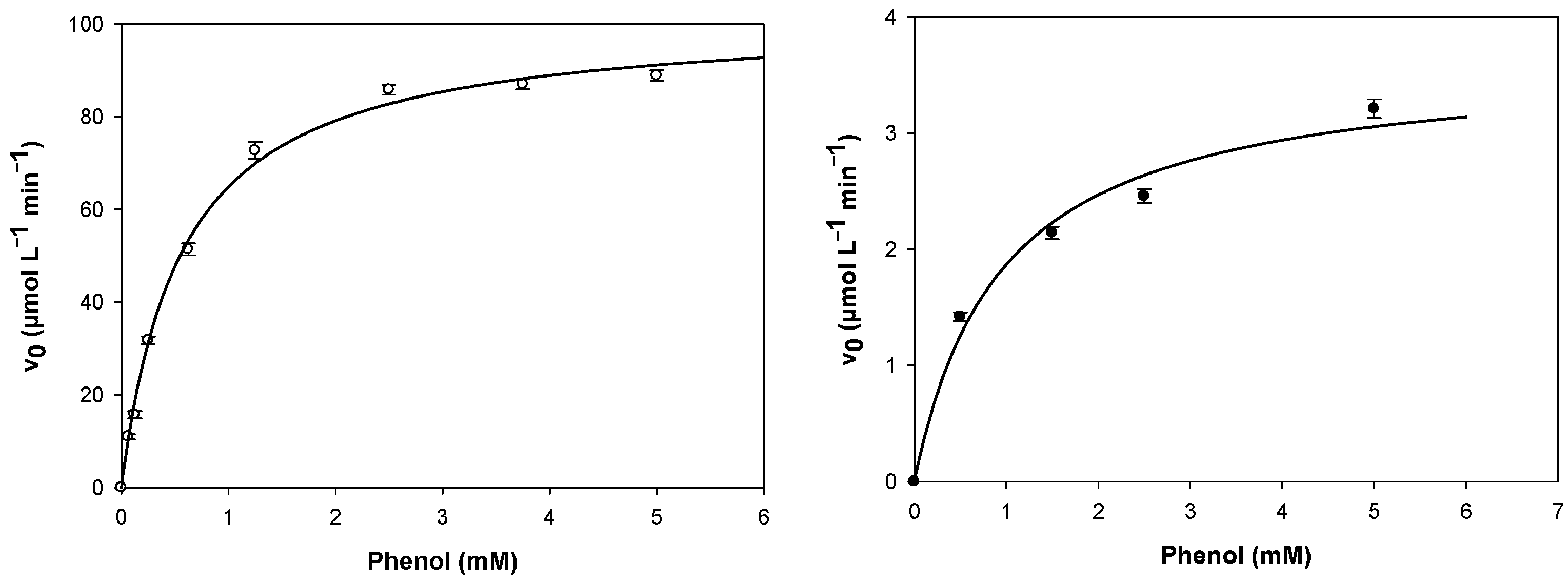
The Michaelis constant (KM) and maximal velocity (VMax) values for both the free and immobilized enzymes were determined by varying the phenol concentration at constant temperature and pH. Figure 4 presents the relationship between the initial rate and phenol concentration for the free and immobilized tyrosinase.
Using the Michaelis–Menten method (Figure 4), the KM and VMax values of the free tyrosinase were determined to be 0.56 mM and 101.47 µmol L−1 min−1, respectively. In contrast, for the enzyme immobilized on Ca-alginate, the apparent KM(App) and VMax(App) values were 0.94 mM and 3.63 µmol L−1 min−1, respectively (Table 1). The increase in KM for the immobilized enzyme may be attributed to the conformational changes in its structure or to the lower accessibility of its active site with the increased diffusion limitations [1,15,24,25]. In addition, there is a partitioning of substrate between the solution and support; hence, the substrate concentration in the neighborhood of the enzyme may be significantly different from that in the bulk solution [20]. The decrease in the VMax value, indicating a lower reaction velocity, might be due to changes in the conformation of the enzyme following immobilization or diffusional limitations of the substrate to the enzyme’s active site, as reported in the literature [21,22].
Furthermore, the immobilized enzyme is surrounded by a different environment compared to the free enzyme, which can significantly impact its kinetic parameters. Additionally, there is lower transport of the substrate and products into and out the gel beads [13,26]. The decrease in the efficiency factor, the VMax(App)/VMax ratio, shows that the enzymatic oxidation of phenol by immobilized tyrosinase is controlled by mass transfer limitations; i.e., the availability of the substrate to the enzyme’s active site is somewhat affected by enzyme immobilization in Ca-alginate beads [27].

2.5. Effect of Ca-Alginate Bead Size

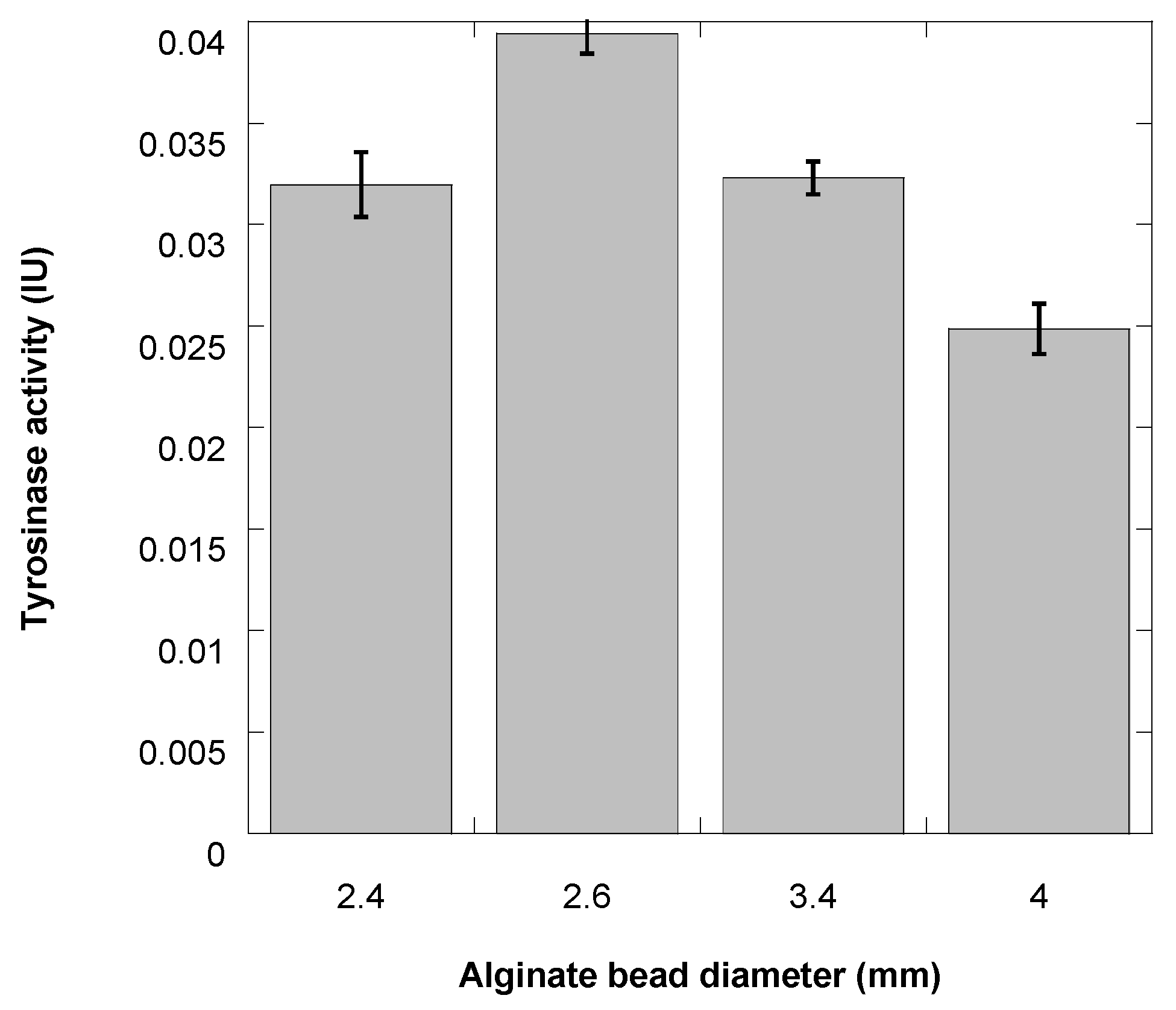
The results depicted in Figure 5 show that the activity of the immobilized enzyme varies with the bead diameter. The activity of immobilized tyrosinase is maximal at a diameter of 2.6 mm, with a decrease of approximately 20% on either side of this diameter. In the immobilized tyrosinase system, phenol must diffuse to enable the oxidation reaction, so the final size of the immobilization support significantly impacts enzyme activity. Previous studies have demonstrated that enzyme activity increases as the bead size decreases, due to a reduction in mass transfer resistance [25,28]. Additionally, decreasing the diameter of the alginate beads may reduce enzyme leakage [25,29]. These results can be explained by diffusional limitations that lead to the establishment of a concentration gradient of phenol within each bead. Berset [30] reported that increasing the rate of mass transfer can be achieved by more vigorously agitating the reaction medium or by reducing the diameter of the support particles, which decreases the thickness of the boundary layer.

2.6. Reuse Numbers

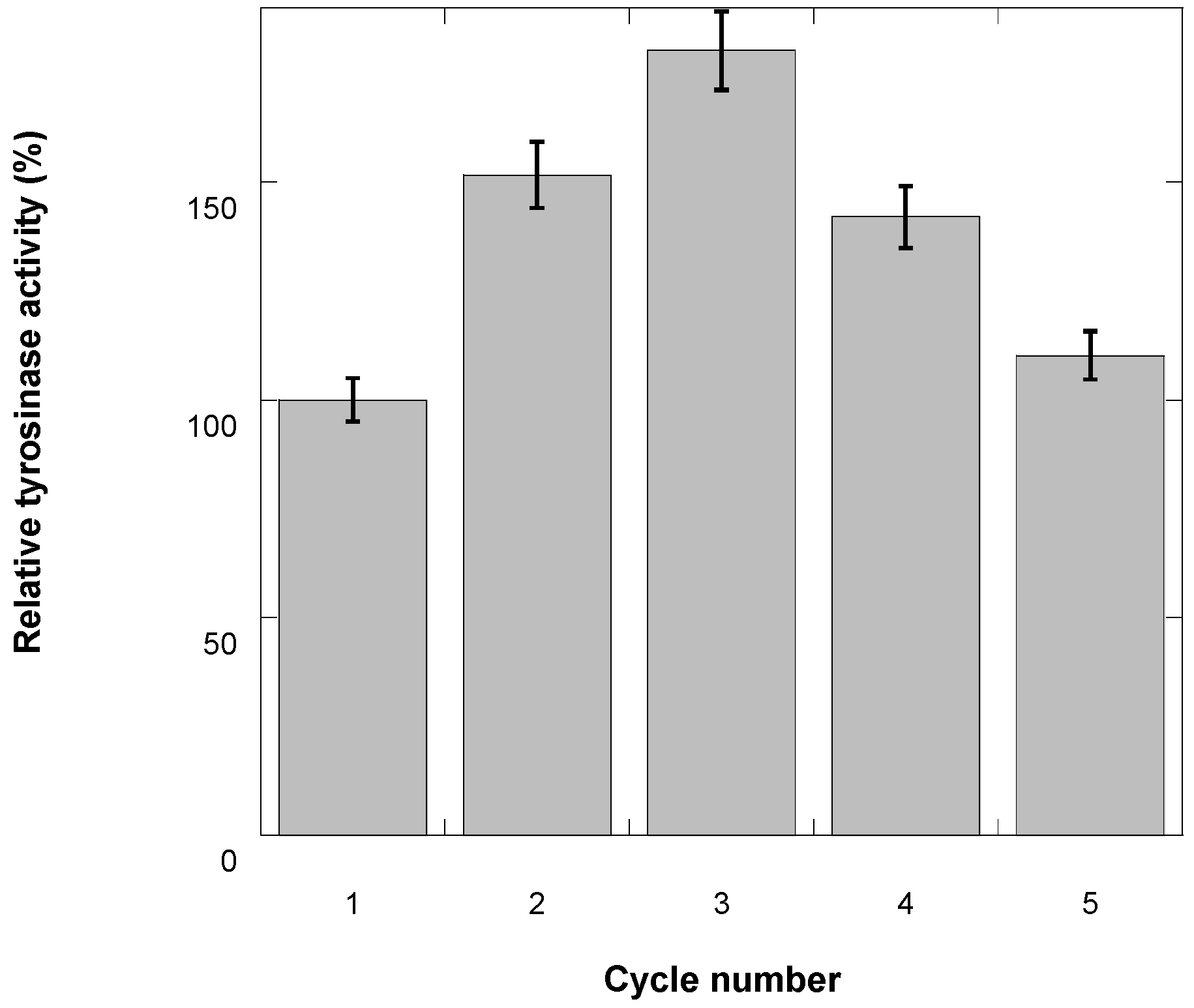
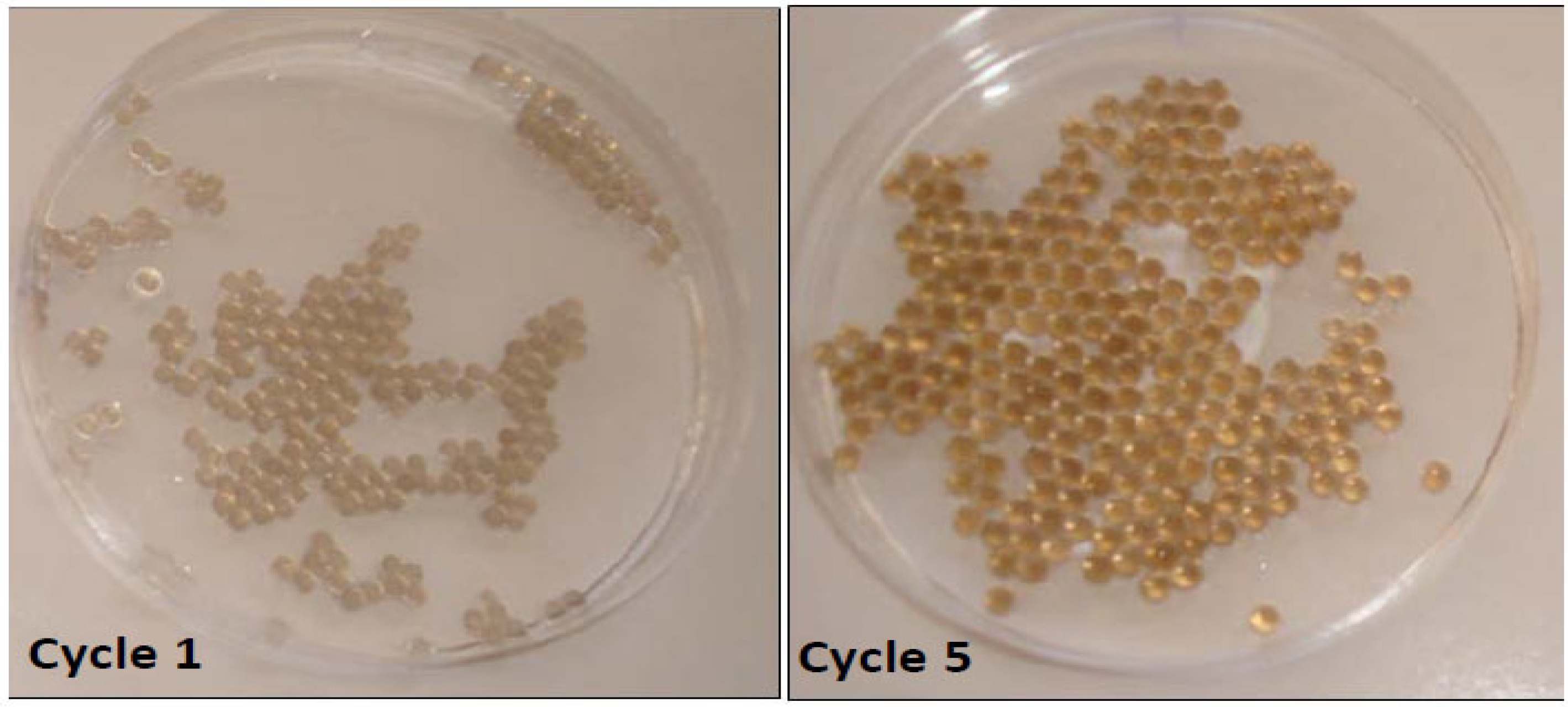
The reusability of immobilized tyrosinase was evaluated due to its importance for repeated applications in a batch reactor. Immobilization was performed using Ca-alginate, and the enzyme was reused up to five times. The residual activity of the enzyme immobilized on Ca-alginate gel beads during repeated use is shown in Figure 6. The enzyme activity varied depending on the number of reuse cycles. Notably, it increased almost two-fold after the second cycle, but after the fifth cycle, the activity returned to its initial value. After two reuse cycles, an increase in the diameter of the alginate beads was observed (Figure 7), which can be attributed to swelling of the gel, facilitating internal diffusion of the substrate and enhancing its accessibility to the enzyme. The increase in tyrosinase activity may also be due to enzymatic leakage into the buffer solution from the alginate beads [31]. In addition, the observed decrease in enzymatic oxidation yield can be attributed to the prolonged exposure of the enzyme to phenol degradation products [4].

3. Materials and Methods

3.1. Materials

Fresh white button mushrooms (Agaricus bisporus) purchased from the local market were used as a source of tyrosinase. Phenol (Prolabo, Tokyo, Japan) was used as a substrate. The other chemical reagents were of analytical grade.

3.2. Methods

3.2.1. Preparation of Tyrosinase Crude Extract

Tyrosinase was prepared according to the method described by Gouzi [17]. Briefly, 260 g of button mushrooms, previously washed with distilled water, air-dried, and cooled to −15 °C, was crushed for 2 min in a blender containing 430 mL of acetone (99.5%) pre-chilled at −15 °C to remove water and phenolic compounds. The resulting homogenate was filtered and manually pressed through three layers of cheesecloth until a dry residue (acetone powder) was obtained. The acetone powder (23 g) was cooled by placing it in contact with ice for at least 4 h. The cold pulp was then suspended in 235 mL of distilled water using a blender and left overnight at approximately 5 °C. The suspension was filtered through three layers of cheesecloth, and the filtrate was subsequently centrifuged at 4000 rpm for 15 min to remove residual particles. The resulting supernatant (140 mL) constituted the crude tyrosinase extract, which was aliquoted into 1.5 mL Eppendorf tubes and stored at −15 °C until use.

3.2.2. Immobilization of Tyrosinase in Ca-Alginate Beads

For the preparation of calcium alginate beads, sodium alginate (0.25 g) was dissolved in warm 0.05 M phosphate buffer (pH 6.0), followed by the addition of tyrosinase solution (140 EU/mL) to a final volume of 10 mL. The solutions were thoroughly mixed using a magnetic stirrer until a transparent gel formed. The resulting mixtures were then extruded dropwise into a cold, stirred 0.2 M CaCl2 solution using a syringe fitted with a needle to obtain uniformly sized calcium alginate beads containing entrapped tyrosinase [20]. The beads were allowed to harden overnight in the CaCl2 solution, after which they were collected via filtration and washed with distilled water.
The Ca-alginate beads were stored at 4 °C until further use. The immobilization efficiency was evaluated in terms of the efficiency factor (ηenz), which was calculated from the maximum reaction rates of the immobilized tyrosinase in relation to that of the free tyrosinase [32].

3.2.3. Determination of Tyrosinase Activity

The kinetics of phenol oxidation were determined in a 250 mL Erlenmeyer (“batch” reactor) immersed in a water bath set at 35 °C and stirred continuously at 150 rpm. The reaction-volume medium contained 29 mL of phenol as the substrate at a saturating and non-inhibitory concentration (2.5 mM) [24,33] prepared in phosphate buffer (pH 6.0–0.05 M) and 1 mL of crude tyrosinase extract or 220 alginate beads containing immobilized tyrosinase. A volume of 1 mL of the reaction mixture was sampled every minute to monitor, using a UV–Visible spectrophotometer (SHIMADZU UV MIN-1240, Kyoto, Japan), the increase in absorbance at 400 nm due to the formation of o-benzoquinone [7]. Direct spectrophotometric quantification of residual phenol was limited by the instability of this product, which undergoes nonenzymatic polymerization to form water-insoluble oligomers [13,33]. Therefore, the initial reaction rate was estimated from the short linear portion of the absorbance-versus-time curve [17]. One international unit (IU) of tyrosinase was taken as the amount that produced 1 µmol of o-benzoquinone per min using an extinction coefficient of 1370 M−1 cm−1 [34].

3.2.4. Kinetic Studies of Phenol Removal

The kinetic behavior of phenol oxidation was investigated in a batch reactor by measuring the initial reaction rates under standard operating conditions. Experiments were conducted at an initial phenol concentration of 2.5 mM. Samples consisting of 1 mL of free tyrosinase or 220 Ca-alginate beads containing immobilized tyrosinase were incubated in 29 mL of phenol solution with concentrations ranging from 0.0625 to 5 mM. The reactions were carried out in 0.05 mM sodium phosphate buffer at pH 6.0 and a temperature of 35 °C. The kinetic parameters, the Michaelis–Menten constant (KM) and the maximum reaction velocity (VMax), were determined using non-linear regression with the Michaelis–Menten equation [35].

3.2.5. Effect of Temperature on Soluble and Immobilized Tyrosinase

The effect of temperature on the activity of free and immobilized tyrosinase was evaluated by measuring the initial rate of phenol oxidation at temperatures ranging from 30 to 70 °C under standard assay conditions.
Arrhenius’s law is commonly used to describe the temperature dependence of initial rate values. It is expressed algebraically as follows [36]:
ln ( v 0 ) = ln ( k 0 ) E a R · T
where k0 is the Arrhenius constant, Ea is the activation energy (kJ/mol), R is the universal gas constant (8.314 J/mol·K), and T is the absolute temperature. The activation energy can be estimated from the slope of a linear regression analysis of the natural logarithm of the initial rate (v0) versus the reciprocal of the absolute temperature, within a temperature range that does not induce enzyme denaturation.

3.2.6. Effect of pH

Phenol degradation (2.5 mM) was investigated at 35 °C over a pH range of 4.0–8.0 using free and immobilized tyrosinase, with acetate buffer (0.05 M, pH 4.0–5.6) and phosphate buffer (0.05 M, pH 6.0–8.0) used for pH adjustment. The effect of temperature on enzymatic degradation was also evaluated by varying the reaction temperature from 30 to 70 °C, with phenol solutions prepared in 0.05 M phosphate buffer (pH 6.0) and treated with either free or immobilized tyrosinase.

3.2.7. Effect of Tyrosinase Ca-Alginate Bead Size

The effect of the Ca-alginate bead size on the initial rate of phenol oxidation (2.5 mM) catalyzed by immobilized tyrosinase was investigated. Beads with four different diameters (2.4, 2.6, 3.4, and 4.0 mm) were prepared from 10 mL of a 2.5% (w/v) sodium alginate solution containing 1 mL of crude enzyme extract. The beads were transferred to an Erlenmeyer flask containing 29 mL of phenol solution (2.5 mM), and the reaction was carried out at 35 °C and pH 6.0 in 0.05 M phosphate buffer.

3.2.8. Reusability of Immobilized Beads

One of the advantages of using immobilized enzyme is that it can be used repeatedly. Therefore, the reusability of beads containing immobilized tyrosinase was assessed by performing five consecutive phenol degradation cycles with the same beads. After each cycle, the beads were washed with 0.05 M phosphate buffer (pH 6.0), and their residual activity was measured at pH 6.0 and 35 °C using a UV–Vis spectrophotometer. The initial activity was defined as 100%, and activities in subsequent cycles were expressed as percentages of this value.

3.2.9. Data Analysis

All data analyses were performed using linear and non-linear regression fittings with the software programs KaleidaGraph Version 4.0 (Copyright 1986–2005, Synergy Software) and SigmaPlot Version 14.5 (Copyright © 2020, Systat Software, Inc.) for Windows. All activity analyses conducted in this study were carried out in triplicate, and the average values of the data were considered.

4. Conclusions

Tyrosinase was successfully extracted from Agaricus bisporus using a simple and efficient method that yielded high phenolase activity. The free enzyme demonstrated a strong affinity for phenol as a substrate, as compared to the enzyme immobilized in alginate beads, which exhibited lower affinity. Furthermore, immobilization enhanced the enzyme’s thermal stability and shifted the optimal pH towards more acidic conditions.
Thermodynamic analysis using the Arrhenius plot revealed that immobilization resulted in a decrease in the enzyme’s conformational stability, as evidenced by an increase in the activation energy for phenol oxidation. These findings underscore the potential of mushroom tyrosinase as an effective biocatalyst for phenol oxidation in wastewater treatment applications.

Author Contributions

Experiments and Data Analysis: S.L. and H.G.; Methodology and Writing: H.G. All authors have read and agreed to the published version of the manuscript.

Funding

This research received no external funding.

Data Availability Statement

Data is contained within the article.

Acknowledgments

We warmly thank Hicham GOUZI for his contribution to the work presented here. We also thank the reviewers for their constructive comments.

Conflicts of Interest

The authors declare that there are no conflicts of interest in this work.

References

  1. Cadena, P.G.; Wiggers, F.N.; Silva, R.A.; Lima Filho, J.L.; Pimentel, M.C. Kinetics and bioreactor studies of immobilized invertase on polyurethane rigid adhesive foam. Bioresour. Technol. 2011, 102, 513–518. [Google Scholar] [CrossRef] [PubMed]
  2. El-Shora, H.M.; Elazab, N.T.; Al-Anazi, A.; El-Sayyad, G.S.; Ibrahim, M.E.; Alfakharany, M.W. Fungal tyrosinase immobilized on chitosan, calcium alginate, and silica gel for phenol elimination and dye decolorization. Enzym. Microb. Technol. 2025, 189, 110655. [Google Scholar] [CrossRef] [PubMed]
  3. Seetharam, G.B.; Saville, B.A. Degradation of phenol using tyrosinase immobilized on siliceous supports. Water Res. 2003, 37, 436–440. [Google Scholar] [CrossRef] [PubMed]
  4. de Mello, A.C.C.; da Silva, F.P.; Gripa, E.; Salgado, A.M.; da Fonseca, F.V. Phenol Removal from Wastewater Using Tyrosinase Enzyme Immobilized in Granular Activated Carbon and Activated Chitosan Beads. Water 2023, 15, 3778. [Google Scholar] [CrossRef]
  5. Gandía-Herrero, F.; Jiménez-Atiénzar, M.; Cabanes, J.; Garcia-Carmona, F.; Escribano, J. Evidence for a common regulation in the activation of a polyphenol oxidase by trypsin and sodium dodecyl sulfate. Biol. Chem. 2005, 386, 601–607. [Google Scholar] [CrossRef]
  6. Gianfreda, L.; Sannino, F.; Rao, M.A.; Bollag, J.-M. Oxidative transformation of phenols in aqueous mixtures. Water Res. 2003, 37, 3205–3215. [Google Scholar] [CrossRef]
  7. Shao, J.; Huang, L.L.; Yang, Y.M. Immobilization of polyphenol oxidase on alginate—SiO2 hybrid gel: Stability and preliminary applications in the removal of aqueous phenol. J. Chem. Technol. Biotechnol. 2008, 10, 2086–2089. [Google Scholar] [CrossRef]
  8. Karam, J.; Nicell, J.A. Potential Applications of Enzymes in Waste Treatment. J. Chem. Technol. Biotechnol. 1997, 69, 141–153. [Google Scholar] [CrossRef]
  9. de Faria, R.O.; Rotuno Moure, V.; de Almeida Amazonas, M.A.L.; Krieger, N.; Mitchell, D.A. The biotechnological potential of mushroom tyrosinases. Food Technol. Biotechnol. 2007, 45, 287–294. [Google Scholar]
  10. Steffens, J.C.; Harel, E.; Hunt, M.D.; Thipyapong, P. Polyphenol oxidase. In Polyphenols 96; Vercauteren, J., Chèze, C., Triaud, J., Eds.; Les Colloques, n°87; INRA: Paris, France, 1998; pp. 223–250. [Google Scholar]
  11. Jolivet, S.; Arpin, N.; Wichers, H.J.; Pellon, G. Agaricus bisporus browning: A review. Mycol. Res. 1998, 102, 1459–1483. [Google Scholar] [CrossRef]
  12. Burton, S.G. Biocatalysis with polyphenol oxidase: A review. Catal. Today 1994, 22, 459–487. [Google Scholar] [CrossRef]
  13. Fenoll, L.G.; Rodriguez-Lopez, J.N.; Garcia-Molina, F.; Garcia-Canivas, F.; Tudela, J. Michaelis constants of mushroom tyrosinase with respect to oxygen in the presence of monophenols and diphenols. Int. J. Biochem. Cell Biol. 2002, 34, 332–336. [Google Scholar] [CrossRef] [PubMed]
  14. Orenes-Pinero, E.; Garcia-Carmona, F.; Sanchez-Ferrer, A. Kinetic characterization of activity of Streptomyces antibioticus tyrosinase. Enzym. Microb. Technol. 2006, 39, 158–163. [Google Scholar] [CrossRef]
  15. Ndlovu, T.; Ba, S.; Malinga, S.P. Overview of recent advances in immobilisation techniques for phenol oxidases in solution. Catalysts 2020, 10, 467. [Google Scholar] [CrossRef]
  16. Weng, Y.; Yang, G.; Li, Y.; Xu, L.; Chen, X.; Song, H.; Zhao, C.X. Alginate-based materials for enzyme encapsulation. Adv. Colloid Interface Sci. 2023, 318, 102957. [Google Scholar] [CrossRef]
  17. Gouzi, H.; Benmansour, A. Partial purification and characterization of polyphenol oxidase extracted from Agaricus bisporus (J.E.Lange) Imbach. Int. J. Chem. React. Eng. 2007, 5, 1–11. [Google Scholar]
  18. Zhang, J.; Kjonaas, R.; Flurkey, W.H. Does N-hydroxyglycine inhibit plant and fungal laccases? Phytochemistry 1999, 52, 775–783. [Google Scholar] [CrossRef]
  19. Yahşi, A.; Şahin, F.; Demirel, G.; Tümtürk, H. Binary immobilization of tyrosinase by using alginate gel beads and poly (acrylamide-co-acrylic acid) hydrogels. Int. J. Biol. Macromol. 2005, 36, 253–258. [Google Scholar] [CrossRef]
  20. Munjal, N.; Sawhney, S.K. Stability and properties of mushroom tyrosinase entrapped in alginate, polyacrylamide and gelatine gels. Enzym. Microb. Technol. 2002, 30, 613–619. [Google Scholar] [CrossRef]
  21. Keerti; Gupta, A.; Kumar, V.; Dubey, A.; Verma, A.K. Kinetic characterization and effect of immobilized thermostable β-glucosidase in alginate gel beads on sugarcane juice. Int. Sch. Res. Not. 2014, 2014, 178498. [Google Scholar]
  22. Malhotra, I.; Basir, S.F. Immobilization of invertase in calcium alginate and calcium alginate-kappa-carrageenan beads and its application in bioethanol production. Prep. Biochem. Biotechnol. 2020, 50, 494–503. [Google Scholar] [CrossRef] [PubMed]
  23. Wahab, W.A.A.; Karam, E.A.; Hassan, M.E.; Kansoh, A.L.; Esawy, M.A.; Awad, G.E. Optimization of pectinase immobilization on grafted alginate-agar gel beads by 24 full factorial CCD and thermodynamic profiling for evaluating of operational covalent immobilization. Int. J. Biol. Macromol. 2018, 113, 159–170. [Google Scholar] [CrossRef] [PubMed]
  24. Wu, Q.; Xu, Z.; Duan, Y.; Zhu, Y.; Ou, M.; Xu, X. Immobilization of tyrosinase on polyacrylonitrile beads: Biodegradation of phenol from aqueous solution and the relevant cytotoxicity assessment. RSC Adv. 2017, 7, 28114–28123. [Google Scholar] [CrossRef]
  25. Dey, G.; Singh, B.; Banerjee, R. Immobilization of α-Amylase Product by Bacillus circulans GRS 313. Braz. Arch. Biol. Technol. 2003, 46, 167–176. [Google Scholar] [CrossRef]
  26. Singh, N.; Singh, R.; Kaur, K.; Singh, H. Studies of the physico-chemical properties and polyphenoloxidase activity in seeds from hybrid sunflower (Helianthus annuus) varieties grown in India. Food Chem. 1999, 66, 241–247. [Google Scholar] [CrossRef]
  27. Norouzian, D.; Akbarzadeh, A.; Atyabi, S.M.; Farhangi, A. Kinetic Characteristics of Immobilized Tyrosinase of Edible Mushroom in Synthesizing L-3, 4-Dihydroxyphenylalanine (L-Dopa). Dyn. Biochem. Process Biotechnol. Mol. Biol. 2008, 2, 26–29. [Google Scholar]
  28. Won, K.; Kim, S.; Kim, K.J.; Park, H.W.; Moon, S.J. Optimisation of lipase entrapment in Ca-alginate gel beads. Process Biochem. 2005, 40, 2149–2154. [Google Scholar]
  29. Ahmed, S.A. Invertase production by Bacillus macerans immobilized on calcium alginate beads. J. Appl. Sci. Res. 2008, 4, 1777–1781. [Google Scholar]
  30. Berset, C. Enzymes immobilisées. In Biotechnologie, 4th ed.; Scriban, R., Ed.; Tec et Doc-Lavoisier: Paris, France, 1993; pp. 365–392. [Google Scholar]
  31. Al-Mayah, A.M. Simulation of enzyme catalysis in calcium alginate beads. Enzym. Res. 2012, 2012, 459190. [Google Scholar] [CrossRef]
  32. David, A.E.; Wang, N.S.; Yang, V.C.; Yang, A.J. Chemically surface modified gel (CSMG): An excellent enzyme-immobilization matrix for industrial processes. J. Biotechnol. 2006, 125, 395–407. [Google Scholar] [CrossRef]
  33. Abdollahi, K.; Yazdani, F.; Panahi, R.; Mokhtarani, B. Biotransformation of phenol in synthetic wastewater using the functionalized magnetic nano-biocatalyst particles carrying tyrosinase. 3 Biotech 2018, 8, 419. [Google Scholar] [CrossRef]
  34. Albarran, G.; Boggess, W.; Rassolov, V.; Schuler, R.H. Absorption spectrum, mass spectrometric properties, and electronic structure of 1,2-benzoquinone. J. Phys. Chem. A 2010, 114, 7470–7478. [Google Scholar] [CrossRef]
  35. Lineweaver, H.; Burk, D. The Determination of Enzyme Dissociation Constants. J. Am. Chem. Soc. 1934, 56, 658–666. [Google Scholar] [CrossRef]
  36. Gouzi, H.; Depagne, C.; Coradin, T. Kinetics and thermodynamics of the thermal inactivation of polyphenol oxidase in an aqueous extract from Agaricus bisporus. J. Agric. Food Chem. 2012, 60, 500–506. [Google Scholar] [CrossRef]
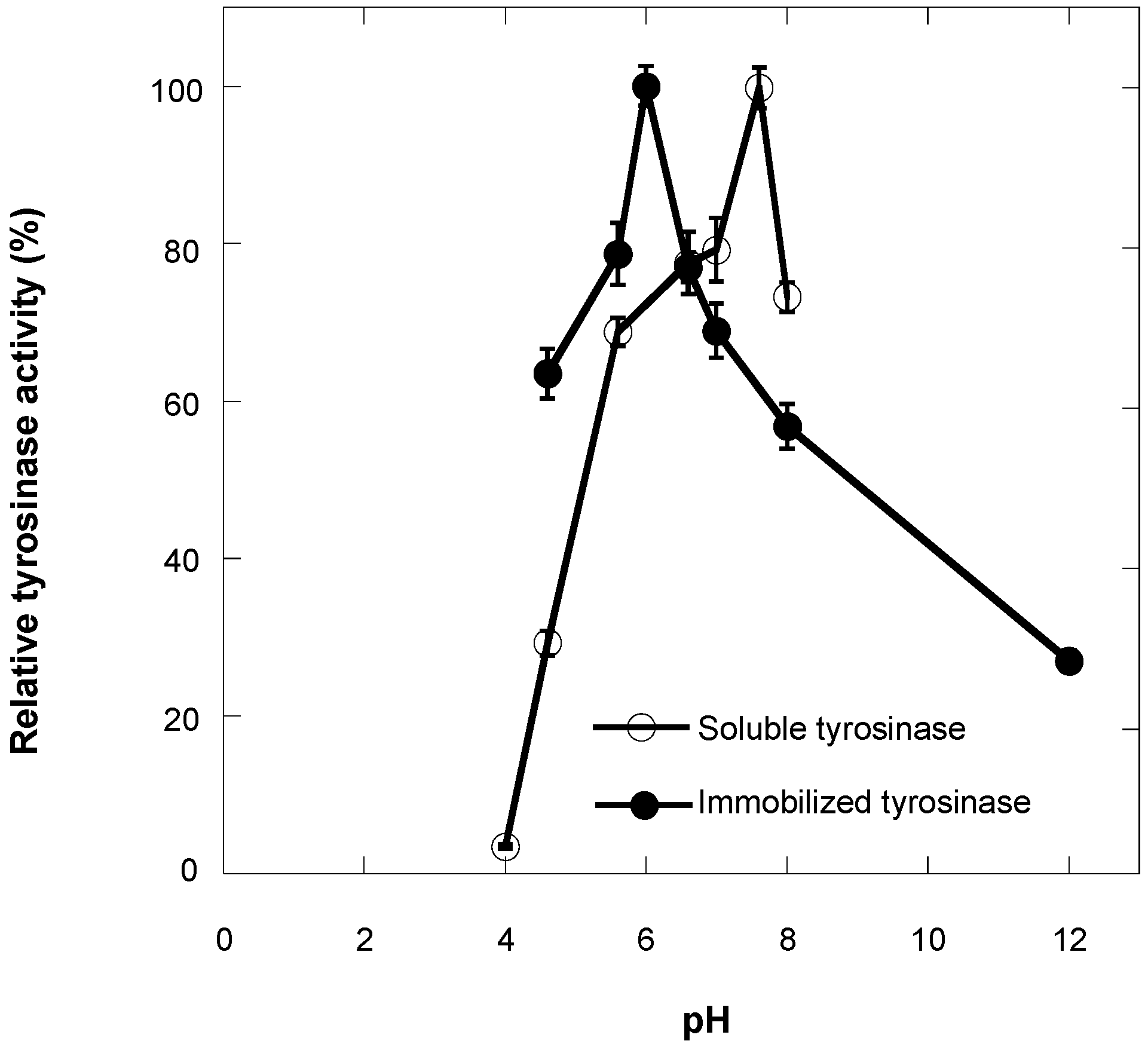
Figure 1. Optimum pH profiles of free (○) and immobilized (●) tyrosinase in alginate gel.
Catalysts 16 00102 g001
Figure 2. Optimum temperature profiles of free (○) and immobilized (●) tyrosinase in alginate gel.
Catalysts 16 00102 g002
Figure 3. Arrhenius plot for calculating activation energy (Ea) of free and immobilized tyrosinase.
Catalysts 16 00102 g003
Figure 4. Michaelis–Menten plots of free (○) and immobilized (●) tyrosinase in alginate gel.
Catalysts 16 00102 g004
Figure 5. Effect of alginate bead size on tyrosinase activity.
Catalysts 16 00102 g005
Figure 6. Reusability of immobilized tyrosinase.
Catalysts 16 00102 g006
Figure 7. Photos of alginate beads containing tyrosinase during repeated use.
Catalysts 16 00102 g007
Table 1. Kinetic parameters for free and immobilized tyrosinase (batch reactor) at pH 6.0 (phosphate buffer 0.05 M) and 35 °C.
KM
(mM)
VMax
(µmol L−1 min−1)
Catalytic Efficiency VMax/KMR2
Free tyrosinase0.56 ± 0.04 a101.47 ± 2.2 c181.20.9982
Immobilized tyrosinase0.94 ± 0.2 b3.63 ± 0.3 d3.860.9923
a–d Mean values from three replicates. Averages with different letters found to differ statistically via Tukey test (p < 0.05).
Disclaimer/Publisher’s Note: The statements, opinions and data contained in all publications are solely those of the individual author(s) and contributor(s) and not of MDPI and/or the editor(s). MDPI and/or the editor(s) disclaim responsibility for any injury to people or property resulting from any ideas, methods, instructions or products referred to in the content.