2.2. Scavenger-Probed Radical Pathways
Eight pathway-selective scavengers were applied to identify the dominant oxidant species within the US/PAA system: ascorbic acid (AA), tert-butanol (t-BuOH), 2-propanol (2-PrOH), nitrobenzene (NB), benzoic acid (BA), sodium azide (NaN3), phenol (Ph), and 2,2,6,6-Tetramethyl-1-piperidinyloxy (TEMPO).
In all quenching tests, t-BuOH and 2-PrOH are used as •OH scavengers (near-diffusion-controlled with •OH). NB and BA also react rapidly with •OH and serve as diagnostic •OH probes. Ph quenches •OH. NaN3 is used as a physical quencher of singlet oxygen (1O2) and also as a fast •OH scavenger. AA acts as a broad one-electron reductant, rapidly reducing •OH and reacting with peroxyl radicals. TEMPO selectively traps carbon-centered, alkoxyl (RO•), and peroxyl (ROO•) radicals formed during PAA activation under ultrasonication.
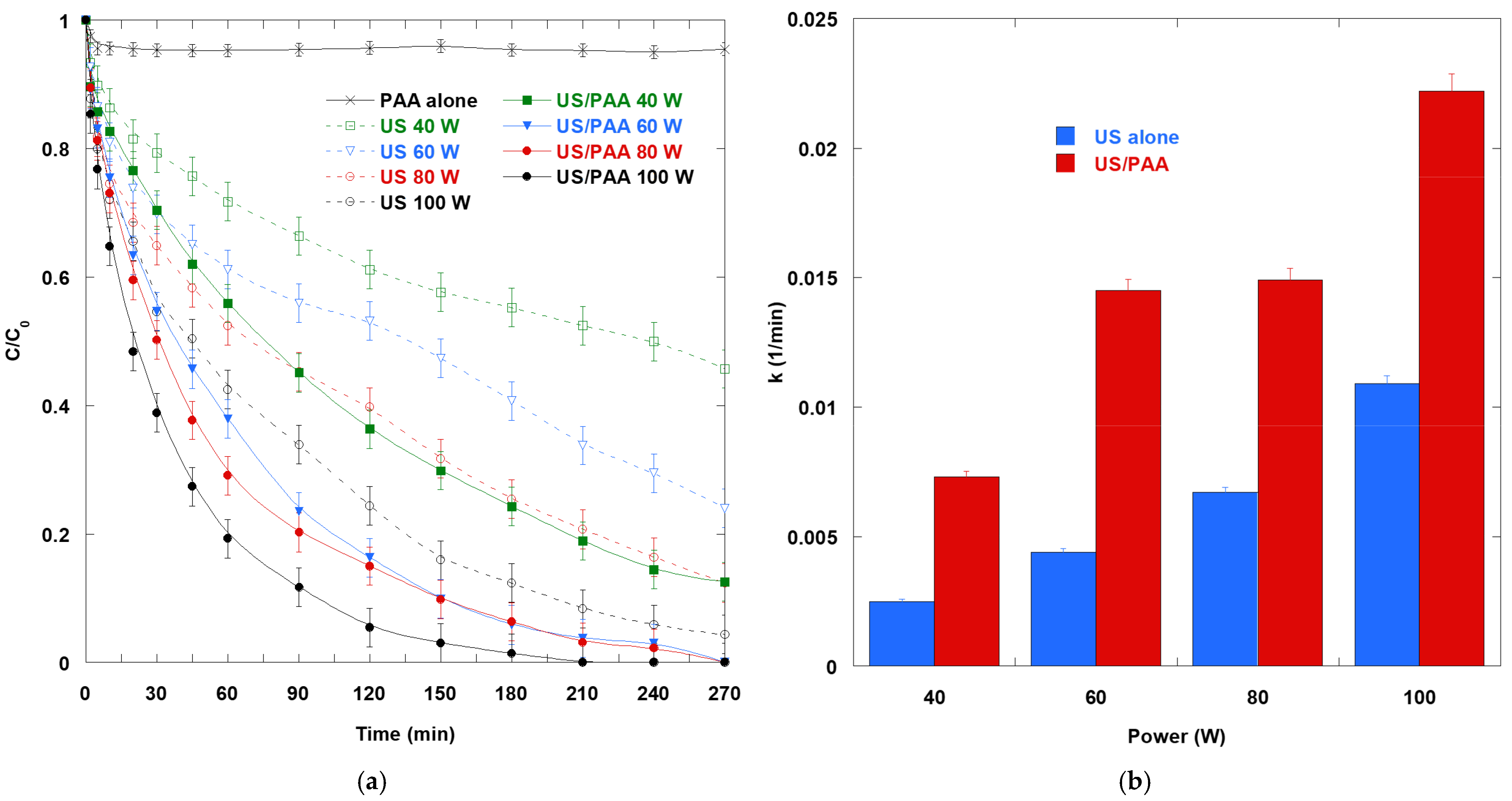
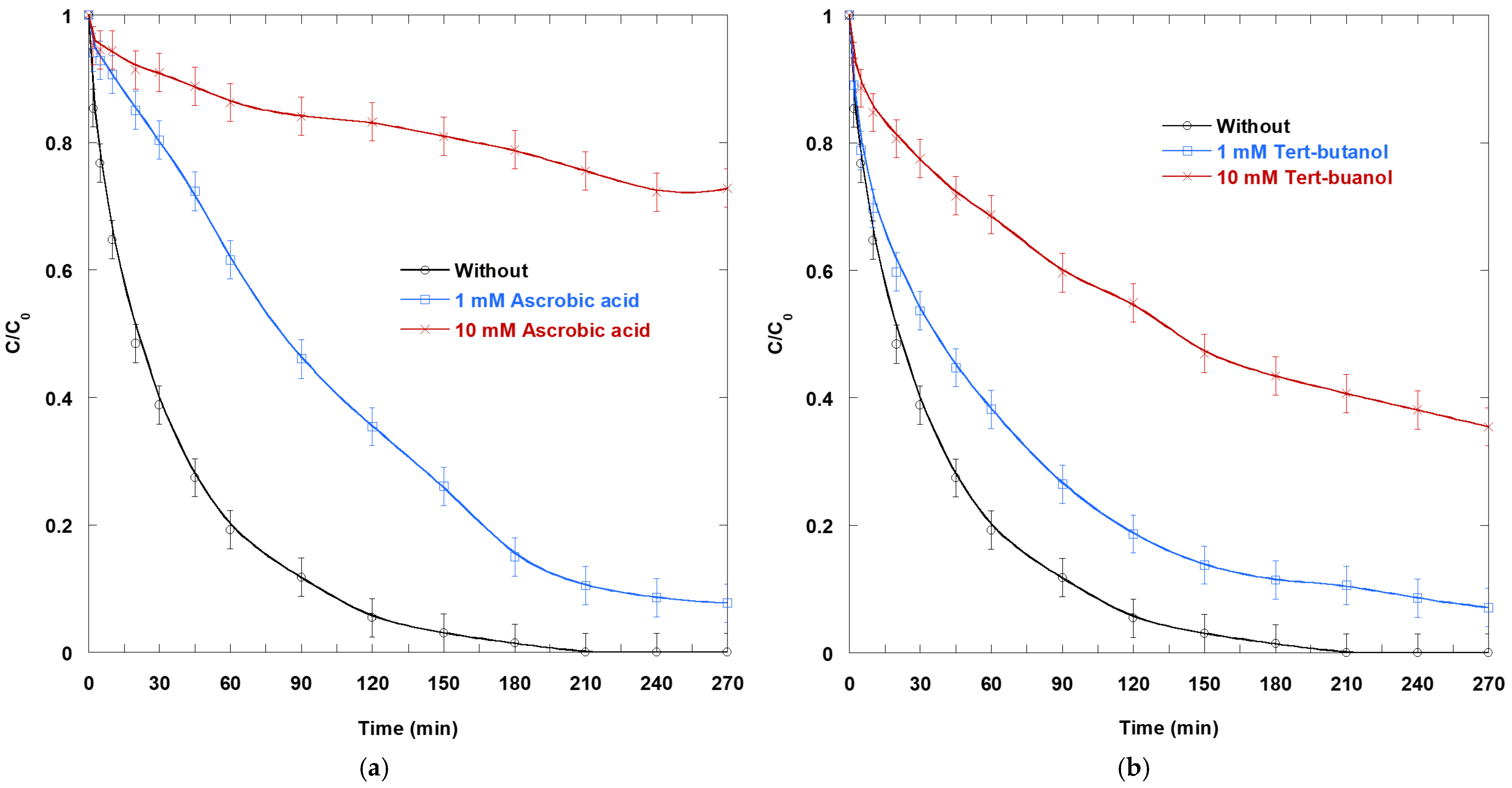
Figure 3a illustrates the impact of AA on the degradation of SSY via the US/PAA process at 425 kHz and 100 W (pH 3.3). The time courses demonstrate strong, dose-dependent inhibition of SSY removal when AA is added to the US/PAA system. Without AA, SSY decays rapidly. Adding 1 mM AA markedly slows the decay, and adding 10 mM AA nearly suppresses it over the full reaction window. This behavior suggests that the process is governed by short-lived radicals that AA efficiently intercepts, rather than by direct, two-electron oxidation by intact PAA. In control tests with 5 mM PAA at pH 3.3, SSY removal was negligible with an initial dye concentration of 5 mg/L (
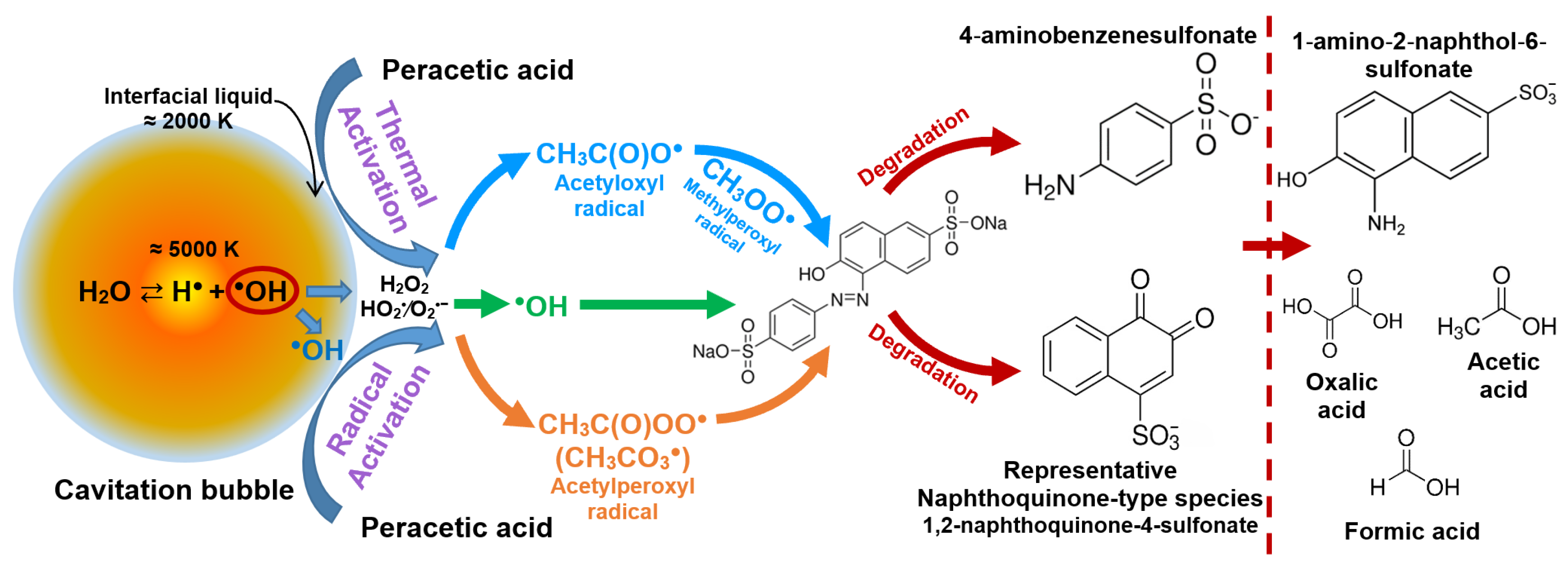
Figure 2a). These results suggest that inactivated PAA is an ineffective two-electron oxidant for this dye and must be activated to be effective. At high ultrasonic frequency (425 kHz), the cavitation chemical pathway is maximized. Bubble collapse generates
•OH/H
2O
2 from water sonolysis, creating a hot interfacial zone where solutes react. At the same time, PAA undergoes homolysis/pyrolysis in or near the bubbles, yielding acyloxy (CH
3C(O)O
•) and acetylperoxyl (CH
3C(O)OO
•) radicals, as well as some
•OH. This provides a mixed radical field that explains the rapid baseline removal without a scavenger.
AA is a broad-spectrum radical scavenger. It reacts with the hydroxyl radical at the diffusion limit (k ≈ 1 × 10
10 M
−1·s
−1 [
13]) and rapidly converts oxidants into the resonance-stabilized ascorbyl radical. AA also reduces alkyl and acetyl peroxyl radicals in water, with k-values ranging from 10
5 to 10
6 M
−1·s
−1 [
14]. Thus, mM AA effectively competes with SSY for both
•OH and peroxyl-type species, accounting for the progressive flattening of the SSY decay as AA concentration increases. At pH 3.3, PAA (pKa = 8.2) is largely undissociated, favoring its uptake into or near cavitation bubbles and the production of radicals during collapse. Meanwhile, AA (pKa
1 ≈ 4.1–4.2) is predominantly in its protonated form. However, it still scavenges
•OH as quickly as its anion. Together, these speciation effects explain the strong sensitivity to AA observed here.
Overall,
Figure 3a clearly shows that SSY abatement in US/PAA at 425 kHz and pH 3.3 predominantly occurs via radical pathways. The strong quenching by AA, which reacts with
•OH at k ≈ 1 × 10
10 M
−1·s
−1 [
13] and with peroxyl-type radicals at k ≈ 10
5–10
6 M
−1·s
−1 [
14] in a concentration-dependent manner, coupled with the high radical productivity of high-frequency cavitation and the homolysis of PAA into acyl/peroxyl species coherently explains the observed kinetics.
Figure 3b shows how
t-BuOH affects the degradation of SSY via the US/PAA process under conditions identical to those for AA. Adding
t-BuOH slows SSY decay in a concentration-dependent manner. The 1 mM trace exhibits a notable reduction in degradation rate, while the 10 mM trace further decreases the rate, achieving substantial conversion within 270 min. Since
t-BuOH reacts rapidly with hydroxyl radicals (k = 10
8–10
9 M
−1·s
−1 [
13]) and slowly with other radicals, the graded inhibition is consistent with a system in which
•OH significantly contributes to pollutant loss yet is not the sole oxidant. The persistence of degradation at high concentrations of
t-BuOH indicates an additional oxidant pool that
t-BuOH does not efficiently quench. Under 425 kHz ultrasonication, PAA undergoes homolysis/pyrolysis to form acyloxy and acetyl-peroxyl species. Therefore, SSY’s resilience in the presence of
t-BuOH is consistent with a mixed-radical regime involving
•OH and PAA-derived organic radicals, which is characteristic of US-activated PAA. An additional nuance is that
t-BuOH is not an inert sink. When the hydroxyl radical is scavenged, the
tert-butyl radical is formed. This radical quickly combines with oxygen (O
2) to form the
tert-butyl peroxyl radical (
t-BuOO
•) [
15]. This secondary peroxyl radical is far less reactive than the hydroxyl radical. However, it is longer-lived and can engage in redox chemistry. This helps explain why suppression is incomplete, even at 10 mM
t-BuOH. Taken together, these findings suggest that SSY degradation in US/PAA occurs through two parallel pathways: one dominated by
t-BuOH-sensitive
•OH chemistry and one dominated by PAA-derived acyl/peroxyl radicals. The monotonic decrease in destruction rate with
t-BuOH supports the contribution of
•OH. Meanwhile, the non-zero rates at 10 mM imply that organic radicals carry a significant share of the oxidation under 425 kHz ultrasonication.
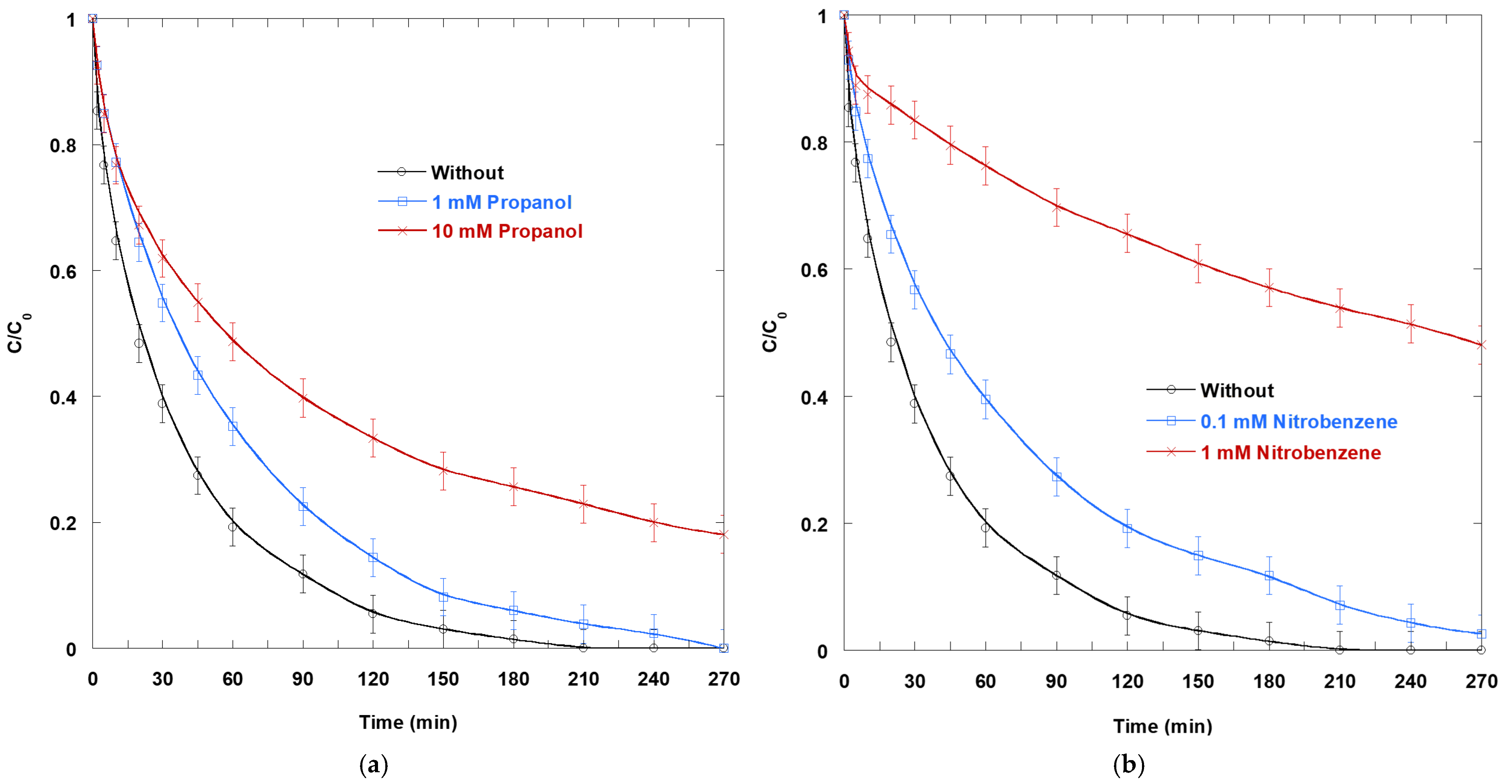
Figure 4a illustrates that adding 2-PrOH suppresses SSY degradation in the US/PAA system in a dose-dependent manner. Compared to the scavenger-free run, 1 mM of 2-PrOH decreases the degradation rate, and 10 mM produces a significant additional slowdown. However, removal is not abolished over 270 min. This kinetic profile is consistent with competition for
•OH radicals at near-diffusion-controlled rates (k
•OH+2-PrOH = 2–3 × 10
9 M
−1·s
−1 [
13]). The chemistry of the 2-PrOH probe further substantiates the
•OH pathway. The reaction of
•OH with 2-PrOH predominantly occurs via hydrogen abstraction from the α-C–H bond, yielding the α-hydroxyisopropyl radical. In aerated aqueous media, this radical readily converts to acetone. Yet complete quenching is not observed at 10 mM, reinforcing the presence of non-
•OH oxidants. Within the US/PAA matrix, those oxidants are plausibly PAA-derived acyl/peroxyl species formed at cavitation interfaces, which are less susceptible to interception by simple alcohols than
•OH.
Figure 4b shows that the addition of NB inhibits the abatement of SSY by the US/PAA system in a clear, concentration-dependent way. 0.1 mM NB significantly decreases the destruction rate, and 1 mM NB further decreases the removal rate though it does not stop it entirely over 270 min. NB is a well-established
•OH probe because it reacts with
•OH at k
•OH+NB = 3.9 × 10
9 M
−1·s
−1 [
13] to form hydroxycyclohexadienyl adducts that rapidly add O
2. The comparatively stronger inhibition of NB, evident at concentrations as low as 0.1 mM, can be explained by spatial effects in sonochemistry. Due to its low solubility and moderate hydrophobicity (log K
ow = 1.85–1.9, with a solubility of 1.9 g/L at 20 °C), NB accumulates at the bubble-liquid interface. This interface is the primary zone of radical formation at high frequency. Together with NB’s high k
•OH+NB value, this interfacial enrichment explains why relatively low NB concentration captures a large fraction of the radical flux. Importantly, even at 1 mM, NB does not abolish SSY degradation, implying that oxidants other than
•OH significantly contribute to US/PAA degradation. This residual activity is consistent with growing evidence that PAA activation yields organic acyl/peroxyl species that NB intercepts less efficiently than classic
•OH scavengers/reductants. However, these species remain reactive toward many aromatics via hydrogen-atom transfer or addition.
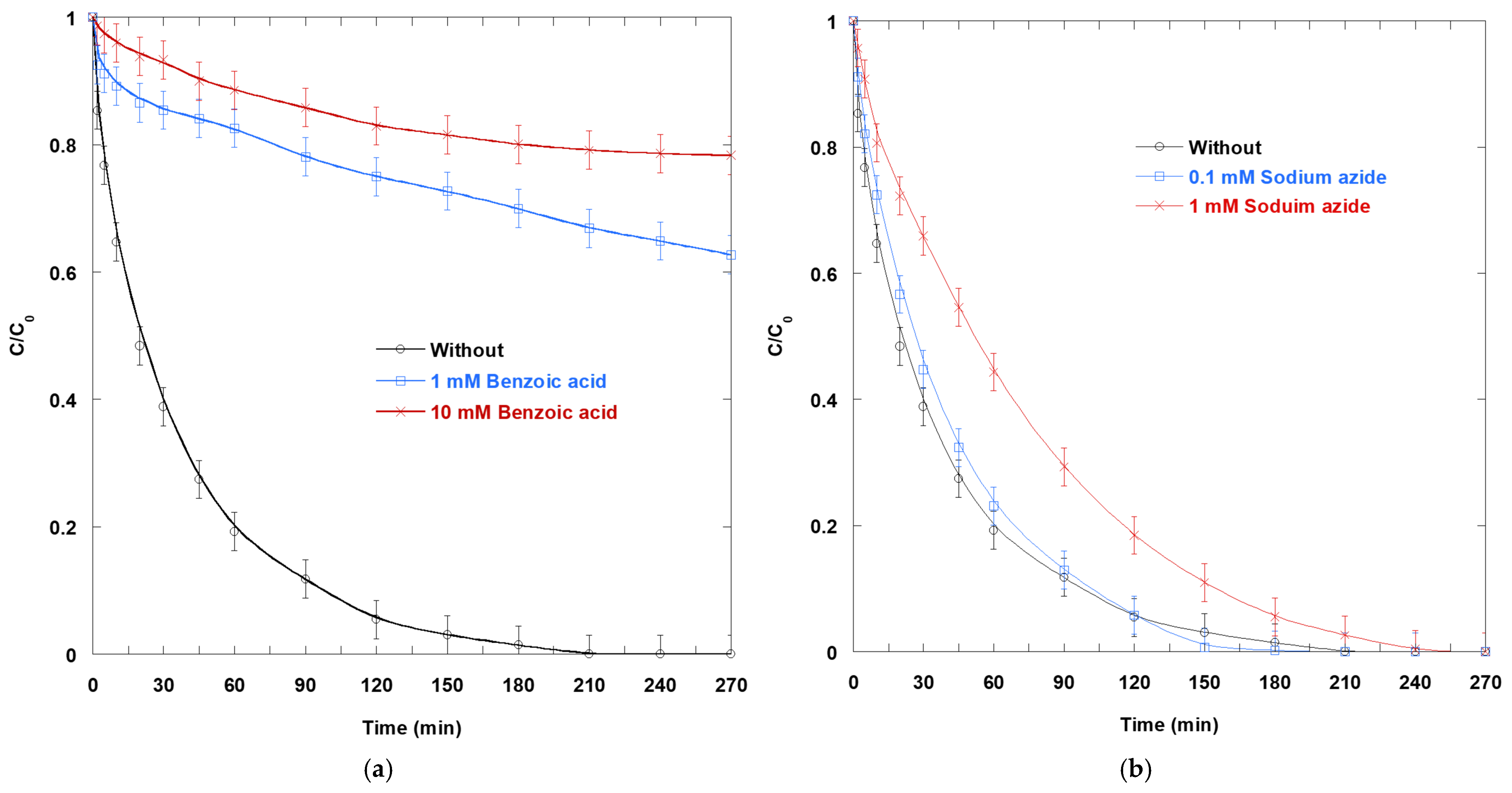
Adding BA to the US/PAA system impedes SSY removal in a clear, dose-dependent fashion (
Figure 5a). 1 mM of BA substantially reduces the degradation rate, and 10 mM of BA depresses the rate further. However, degradation persists for over 270 min. BA is a canonical
•OH probe because
•OH adds to the aromatic ring at near-diffusion-controlled rates (k
•OH+BA = 1.8 × 10
9 M
−1·s
−1 [
13]) to yield hydroxybenzoic acids. The graded inhibition in
Figure 5a indicates a significant contribution of
•OH to SSY abatement under these conditions. At pH 3.3, BA (pKa = 4.20) is predominantly protonated (90%), and the neutral form exhibits moderate hydrophobicity (log K
ow = 1.9). These features favor enrichment at the bubble–liquid interface, increasing the likelihood that BA will intercept interfacial
•OH before it can diffuse into the bulk solution. Even so, SSY degradation does not vanish at 10 mM BA, signaling BA-resistant oxidants, again consistent with acyl/peroxyl radicals from PAA activation under ultrasonication.
As shown in
Figure 5b, the presence of NaN
3 impedes the ability of the US/PAA system to remove SSY. Compared to the scavenger-free run, 0.1 mM azide slightly reduces the decay rate, while 1 mM azide significantly slows it down. Nevertheless, SSY substantially decays over the full reaction window. Azide is a potent physical quencher of singlet oxygen (
1O
2) with k
1O2+N3− ≈ 10
8–10
9 M
−1 s
−1 [
16] and reacts extremely rapidly with hydroxyl radicals, converting
•OH to the azidyl radical (N
3•) with k
•OH+N3− = 10
10 M
−1·s
−1 [
13]. Thus, the observed suppression incorporates contributions from both
1O
2 quenching and
•OH scavenging. Two mechanistic factors explain the incomplete quenching. First, PAA-derived organic radicals, such as CH
3C(O)O
• and CH
3C(O)OO
•. However, azide does not efficiently intercept these radicals. Consequently, these radicals continue to oxidize SSY when
•OH/
1O
2 are partially suppressed. Second, the azidyl radical (N
3•), a one-electron oxidant that can oxidize aromatic substrates. The formation of N
3• provides a compensatory pathway that sustains a slower yet non-zero SSY conversion rate in azide runs. At pH 3.3, azide mainly exists as the neutral hydrazoic acid (HN
3) (pKa = 4.65). HN
3 more readily partitions into hydrophobic interfacial regions of cavitation bubbles. This favors the efficient interception of short-lived species and helps explain the inhibition at 1 mM.
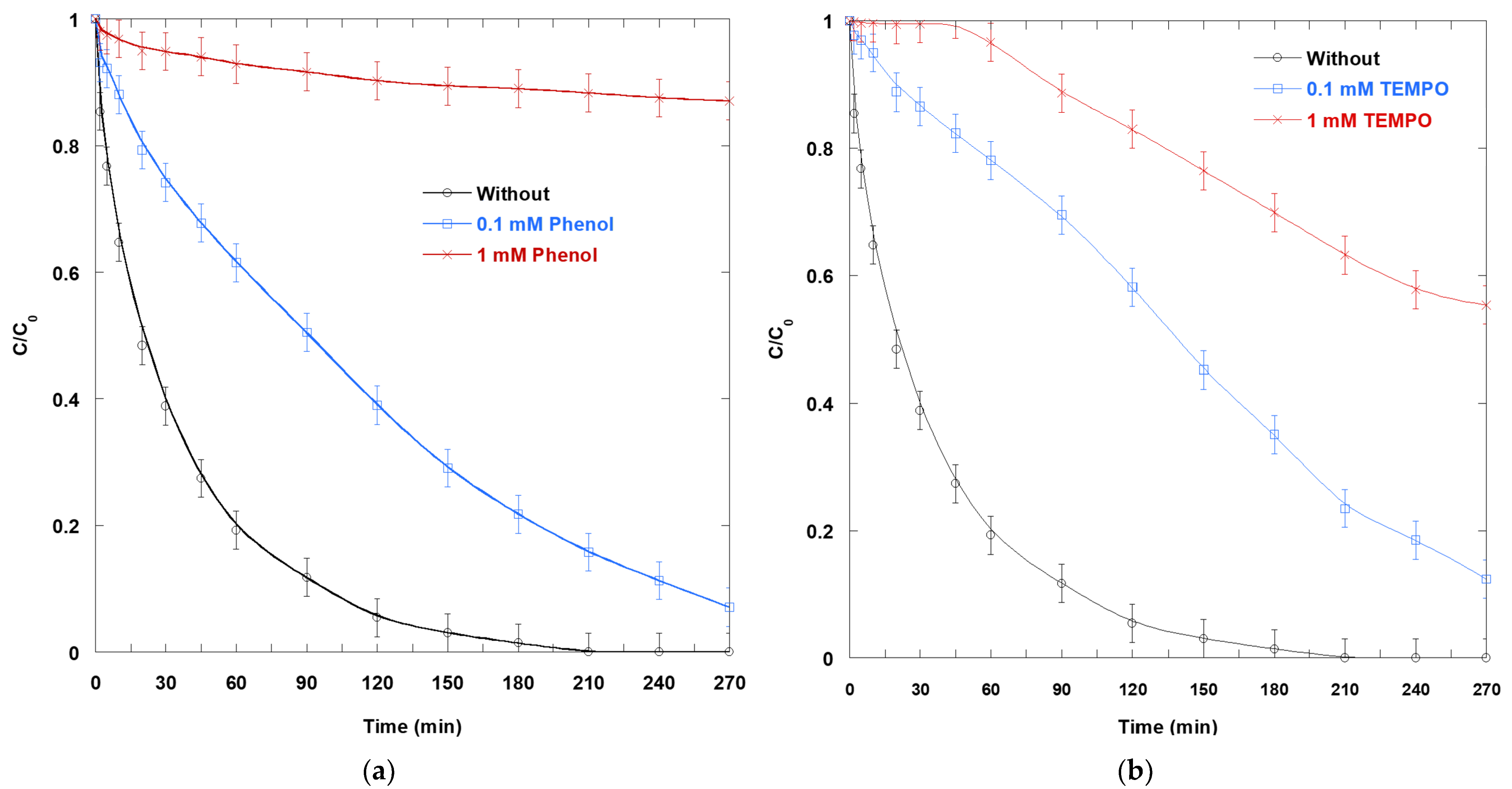
Ph (0.1–1 mM) markedly slows SSY decay via US/PAA technique (
Figure 6a). This is expected because
•OH adds electrophilically to Ph at near-diffusion-controlled rates (k
•OH+Ph = 10
9 M
−1·s
−1 [
13]), forming dihydroxycyclohexadienyl intermediates. At pH 3.3, Ph (pKa = 9.95) exists almost entirely as the neutral molecule and exhibits moderate hydrophobicity (log K
ow = 1.5), so it preferentially resides at the bubble–liquid interface and efficiently intercepts interfacial
•OH under 425 kHz ultrasonication. The non-zero removal at 1 mM again indicates an additional, Ph-resistant oxidant pool consistent with PAA-derived acyl/peroxyl radicals under ultrasonication activation.
Adding the persistent nitroxide TEMPO suppressed SSY decay in a concentration-responsive behavior (
Figure 6b). Complete decolorization was observed in the absence of TEMPO. Meanwhile, 0.1 mM of TEMPO substantially slowed the process, and 1 mM limited the decline to a modest decrease over 270 min. This behavior is expected because TEMPO efficiently scavenges organic radicals, particularly carbon-centered and peroxyl/alkoxyl species. This forms stable oxoammonium or oxoalkoxyamine products [
17]. Alkyl radicals are scavenged by TEMPO at diffusion-limited rates, with rate constants around 1–3 × 10
10 M
−1·s
−1 [
17]. This diverts the mixed-radical flux that drives US/PAA. The pronounced suppression observed in the presence of TEMPO provides independent evidence that ultrasonic activation of PAA yields organic acyl and peroxyl radicals (e.g., CH
3C(O)O
•, CH
3C(O)OO
•) in addition to
•OH. Thus, the pronounced sensitivity to TEMPO, which far exceeds that expected from
•OH quenching alone, suggests that PAA-derived organic radicals substantially contribute to the system. Two ancillary interactions further rationalize the trends. First, TEMPO reacts rapidly with oxygen-centered radicals, including
•OH, RO
•, and ROO
•. Thus, part of the kinetic penalty reflects the increased demand for
•OH beyond what is measured with alcohol probes. Second, peracids, such as PAA, can oxidize TEMPO to its oxoammonium form, forming the basis of Anelli/TEMPO and related oxidations. This side reaction consumes oxidant and competes with radical pathways. This is consistent with stronger inhibition at 1 mM TEMPO. Together, these mechanisms explain the steep, monotonic decrease in degradation rate as TEMPO concentration increases.
The slowdowns and incomplete quenching observed across all probes are dose-dependent and converge on a mixed-radical regime in US/PAA at 425 kHz. This regime features a prominent interfacial •OH pathway, as revealed by AA, t-BuOH, 2-PrOH, BA, NB, and Ph. This pathway operates alongside a PAA-derived acyl/peroxyl pathway. The acyl/peroxyl pathway remains active in the presence of classic hydroxyl traps as confirmed by TEMPO. High-frequency cavitation provides interfacial hot zones and •OH radicals. At pH 3.3, PAA remains largely undissociated and migrates to these zones, where it breaks down into acyloxy and acetyl-peroxyl radicals.
2.4. Salts Impact
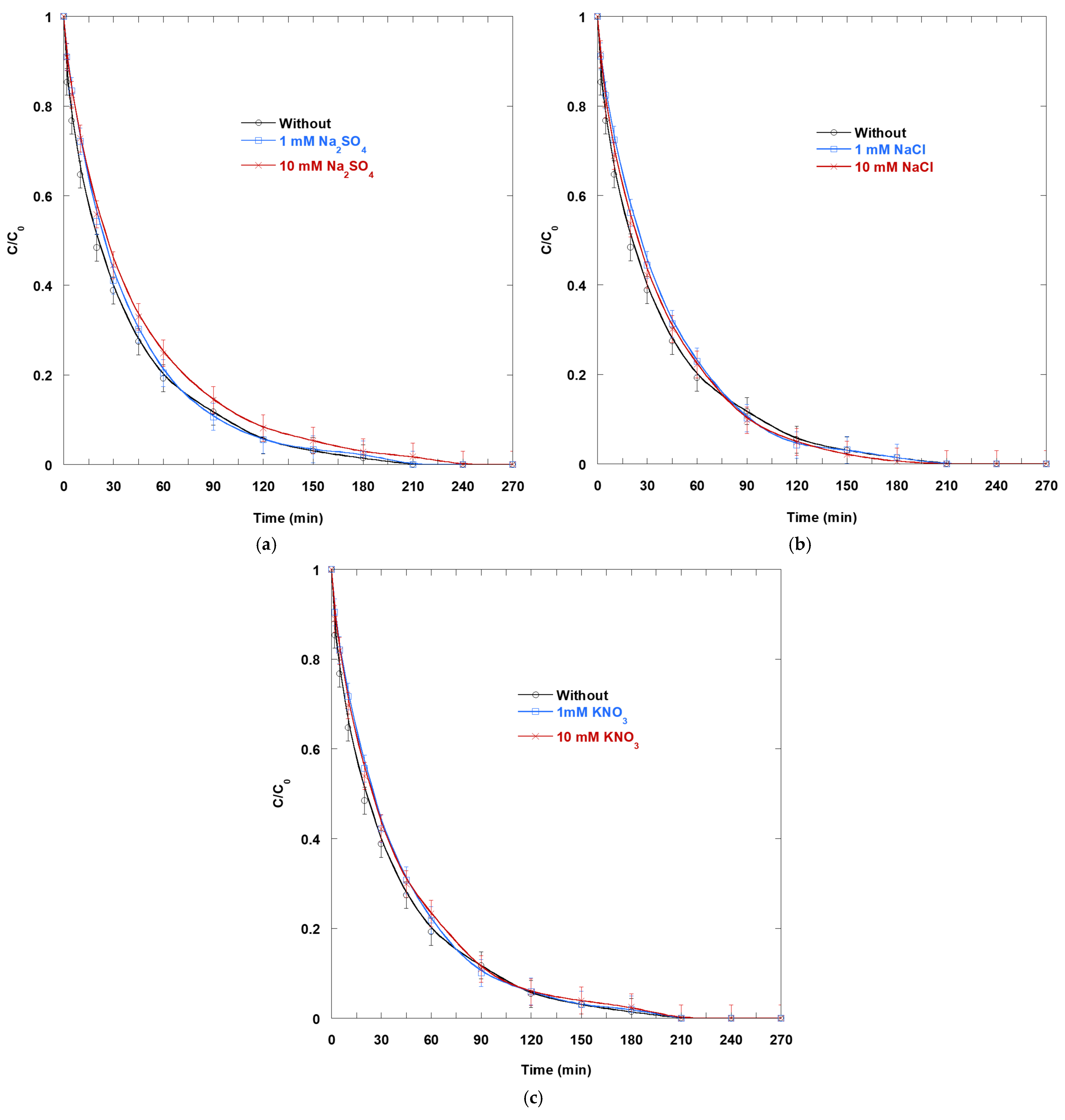
Figure 8a–c show how incorporating Na
2SO
4, NaCl, and KNO
3 affects SSY degradation using the US/PAA treatment. Across all three panels, adding 1–10 mM of each salt had minimal effects on SSY removal rates. The decay curves largely overlapped with the salt-free control, showing only a slight slowdown at early times with 10 mM sulfate. These results suggest that the physical and chemical effects of salts do not significantly reduce the oxidant flux that governs SSY reduction at these ionic strengths. Ultrasonication at 425 kHz produces abundant
•OH radicals at the bubble–liquid interface. PAA fragmentation also supplies acyl/acetyl-peroxyl radicals. Together, these sources appear robust in the presence of 1–10 mM background ions.
Chloride can intercept
•OH to form reactive chlorine species (RCS) via the well-established reaction
•OH + Cl
− → ClOH
•− (k
•OH+Cl− = 4 × 10
9 M
−1 s
−1 [
13]). This reaction is followed by conversion to Cl
2•− in the presence of excess Cl
−. Nevertheless, Cl
2•− remains a competent oxidant toward many organics (typical k = 10
7–10
9 M
−1 s
−1). Therefore, diverting part of the
•OH flux into RCSs does not significantly reduce the decay of pollutants at low chloride concentrations. This is consistent with the nearly identical NaCl traces. Additionally, US/PAA generates organic radicals from PAA that chloride does not efficiently quench, further stabilizing performance.
Nitrate is a much weaker
•OH sink than chloride (k
•OH+NO3− = 10
7 M
−1 s
−1 [
13]), and it does not readily form highly reactive secondary radicals under these conditions. At 1–10 mM, its competition with organics for
•OH is modest. This explains why the kinetics with KNO
3 remain practically unchanged.
Sulfate/bisulfate reacts with
•OH at a rate of 10
7–10
8 M
−1·s
−1 to yield SO
4•− [
13], a selective one-electron oxidant. However, two countervailing effects likely minimize the net impact. First, at these concentrations, the scavenging by SO
42−/HSO
4− only modestly competes with the sinks of pollutants. Second, the formed SO
4•− still oxidizes organics, partially compensating for any loss of
•OH. The slightly larger slowdown with Na
2SO
4 (10 mM) compared to NaCl/KNO
3 is reasonable because Na
2SO
4 increases ionic strength by about threefold (I = 0.03 M at 10 mM), which can alter cavitation dynamics and interfacial chemistry subtly at 425 kHz.
Electrolytes can influence sonochemistry by salting out (enhancing the interfacial concentrations of hydrophobes) and by altering cavitation (e.g., gas solubility, surface tension, and bubble stability). Nevertheless, low-to-moderate concentration levels generally produce minor, pollutant-dependent effects. Enhancements or inhibitions mainly emerge at much higher salinities or when specific ions introduce new reactive pathways. The small differences among the three salts align with this broader picture.
The near-insensitivity of US/PAA to 1–10 mM sulfate, chloride, or nitrate suggests a mixed-radical regime dominated by interfacial •OH from high-frequency cavitation and PAA-derived organic radicals (acetyl/peroxyl) that are comparatively resistant to anion scavenging.
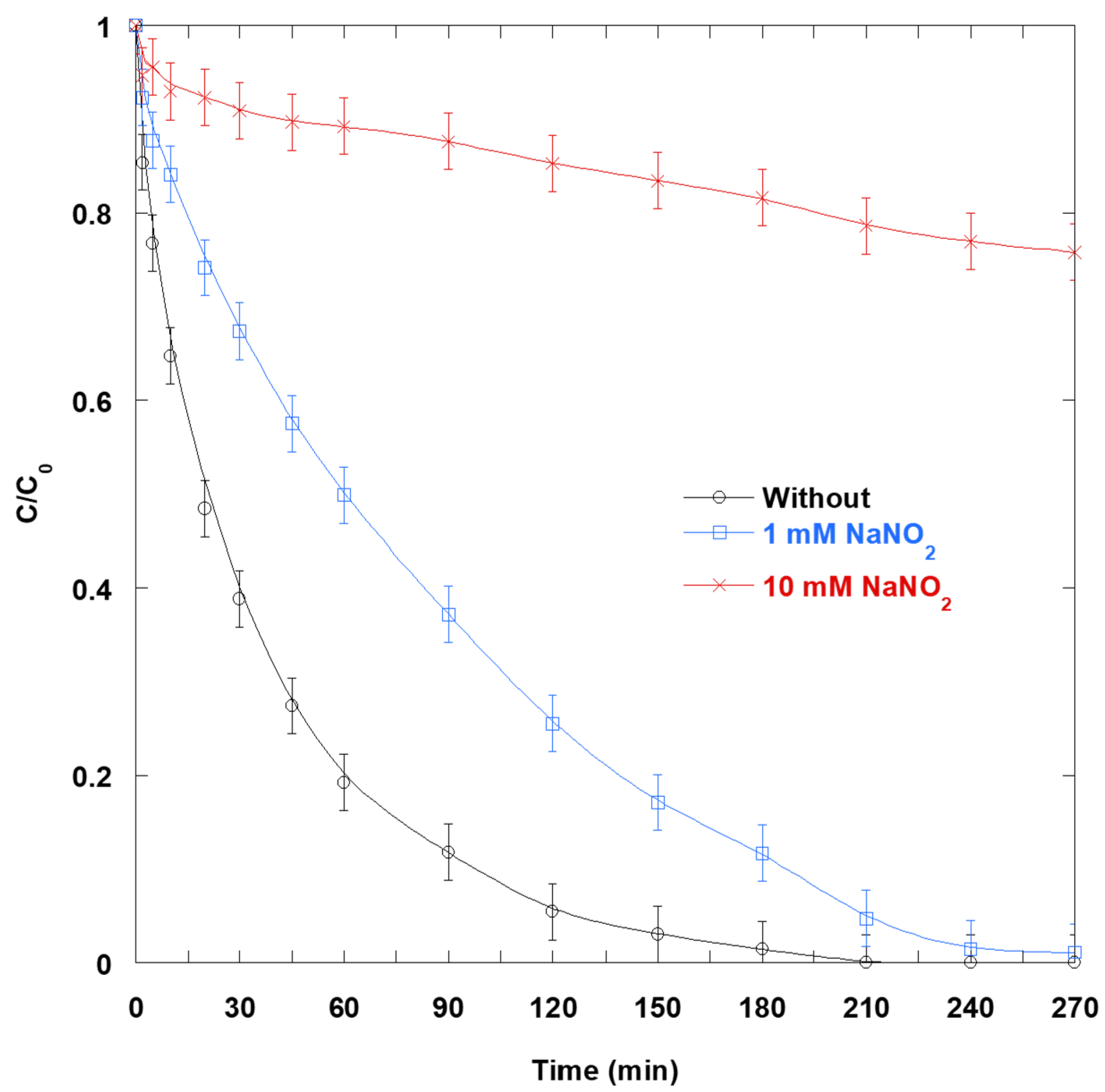
Figure 9 illustrates the effect of NaNO
2 on SSY removal via the US/PAA process. The nitrite exhibits strong, concentration-dependent inhibition of SSY degradation. In the additive-free control, C/C
0 rapidly approaches zero by the end of ultrasonication. However, adding 1 mM NaNO
2 markedly slows the decay, and adding 10 mM NaNO
2 nearly stops it entirely. After 270 min, C/C
0 reaches ≥0.75. This behavior is consistent with nitrite being an exceptionally fast
•OH radical scavenger, with a rate constant of k
•OH+NO2− = 1.0 × 10
10 M
−1·s
−1 [
13]. The pH of 3.3 is close to the pKa of nitrous acid (HNO
2). Therefore, NO
2− and HNO
2 coexist and efficiently intercept
•OH to produce NO
2•. NO
2• is a much less reactive and more selective oxidant than
•OH. Together, these kinetic and speciation factors explain the pronounced inhibition at higher nitrite concentrations. PAA generates additional acetylperoxyl radicals (CH
3CO
3•) through ultrasonication. Thus, the strong nitrite effect suggests that SSY decay predominantly occurs through an
•OH-mediated route in US/PAA. Once
•OH is scavenged, the remaining PAA-derived radicals are insufficient to sustain rapid removal.
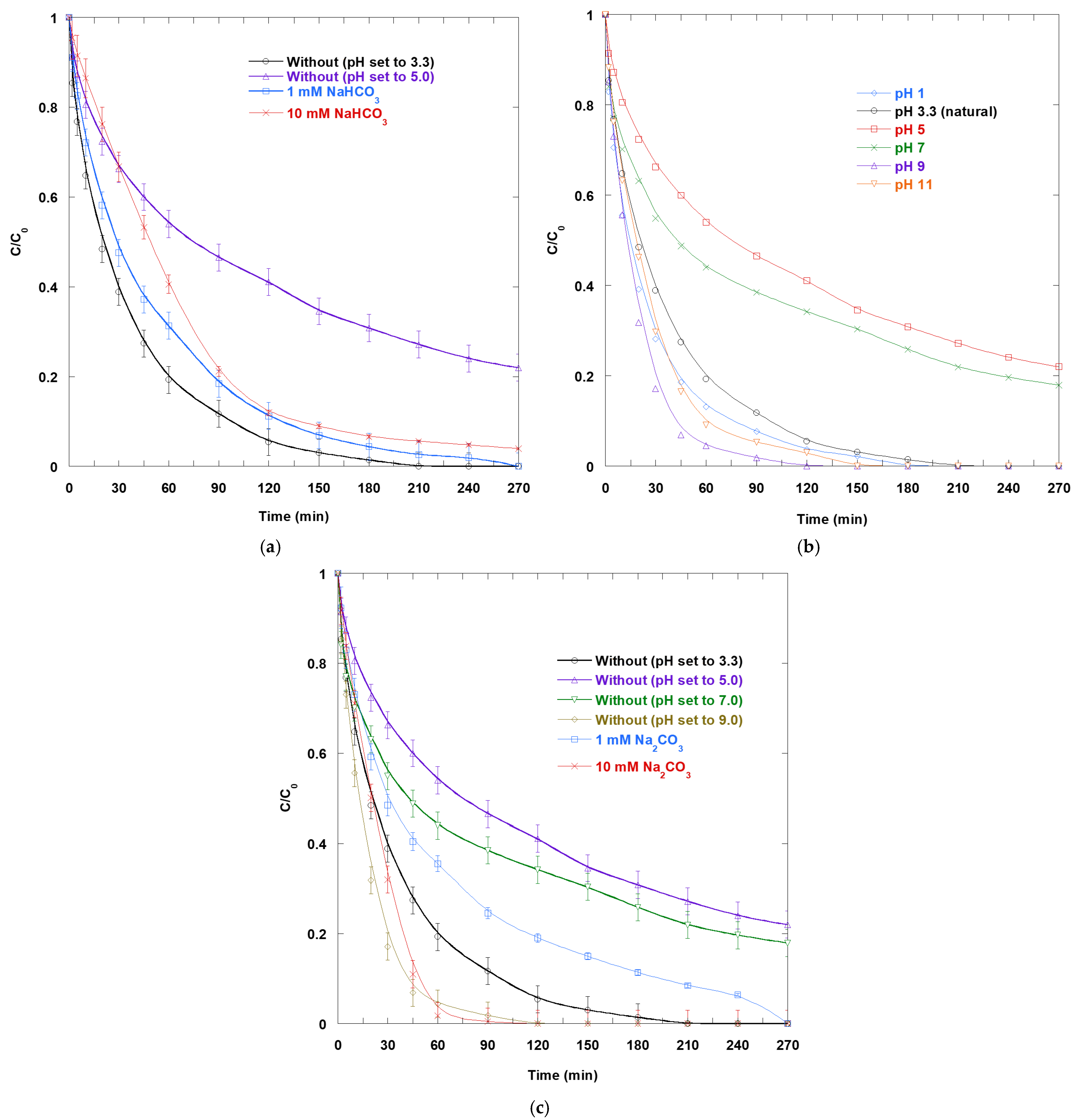
Figure 10a shows that introducing NaHCO
3 slows the degradation of SSY in proportion to the dosage. Note that the experiment with 1 mM NaHCO
3 starts at pH 3.8 and ends at pH 3.2, while the experiment with 10 mM NaHCO
3 starts at pH 5.7 and ends at pH 5.2. Under these acidic conditions, the speciation of the carbonate system is dominated by dissolved CO
2(aq)/H
2CO
3 (pKa
1 = 6.35; pKa
2 = 10.33). A simple calculation shows that the effective HCO
3− concentration available to scavenge radicals is only ~0.3–0.07% of dissolved inorganic carbon (DIC) for the 1 mM case (2.8–0.7 mM). However, this value is much larger, ranging from 18% to 6.6% for the 10 mM case (1.8 to 0.66 µM). CO
32− is negligible at pH 5–6. Consequently, the dominant inhibition pathway is the interception of
•OH by HCO
3− to form the CO
3•− radical. The rate constant for this reaction is k
•OH+HCO3− = 8.5 × 10
6 M
−1·s
−1 [
13]. The resulting CO
3•− is an oxidant, albeit weaker and more selective (E° = 1.6–1.8 V vs. NHE). Thus, channeling flux through CO
3•− lowers the SSY decay rate. The stronger, sustained inhibition at 10 mM NaHCO
3 aligns with this speciation-kinetics picture. Additionally, even small sinks measurably reduce steady-state levels of
•OH in sonochemical microenvironments where it is locally generated and has a short lifespan. At low pH, added DIC shifts towards dissolved CO
2, and CO
2-rich bubble atmospheres lower the collapse temperature/pressure, thereby reducing radical production. This explains the modest but consistent slowdown, even at 1 mM NaHCO
3.
SSY removal exhibits a pronounced optimum around pH 9 (
Figure 10b). This is consistent with PAA speciation (pKa = 8.2). Near and slightly above this pH level, significant amounts of the peracetate anion (CH
3C(O)OO
−) are present, making them more easily activated into acetyl/peracetyl radicals with energy input, while cavitation supplies
•OH. Together, these pathways maximize the mixed-radical flux. At pH 11, removal remains rapid, though slower than at pH 9, which is consistent with base-catalyzed PAA decomposition shortening the oxidant’s lifetime at higher pH. At the acidic end, both pH 1 and 3.3 demonstrate fast kinetics (much faster than at pH 5–7). Two effects rationalize this phenomenon. First, greater PAA stability at low pH levels sustains its availability for ultrasound activation. Second, the protonation of azo dyes at strongly acidic pH levels increases the azo/auxochromic system’s susceptibility to one-electron oxidation and subsequent bond cleavage. This synergizes with cavitation,
•OH, and PAA-derived radicals. In contrast, pH 5 is the slowest condition because the solution is well below the PAA pKa, as expected. Thus, peracetate-driven activation is minimal and slower than at pH 9 and 7. However, it is not acidic enough to benefit from azo-group protonation or PAA’s higher intrinsic stability. This yields the lowest effective radical budget. At pH 7, the rate improves relative to pH 5 as peracetate begins to contribute. Nevertheless, it lags behind the pH 9 optimum. The overall ordering reflects the competition between PAA speciation/activation, pH-dependent PAA stability, and the effects of substrate (SSY) protonation under high-frequency ultrasound. The ordering is as follows: pH 9 > 1 > 11 > 3.3 > 7 > 5.
Both bicarbonate series were modestly acidified (1 mM pH 3.8–3.2 and 10 mM pH 5.7–5.2). This is consistent with PAA hydrolysis/decomposition yielding acetic acid (and H2O2/O2), which gradually lowers the pH of open, dilute systems. This slow acidification shifts the carbonate equilibrium further toward CO2/H2CO3 during the run. This decreases HCO3− concentration and partially mitigates scavenging, most notably in the 10 mM case, where HCO3− drops from 1.8 to 0.66 mM. In short, carbonate alkalinity diverts •OH to CO3•−, and at higher DIC, it damps cavitation.
Figure 10c illustrates how Na
2CO
3 affects SSY removal via US/PAA system. Note that the 1 mM Na
2CO
3 test begins at pH 4.4 and ends at pH 4.2. Under these acidic conditions, the carbonate system consists primarily of CO
2(aq)/H
2CO
3, with only trace amounts of HCO
3− and negligible amounts of CO
32− (pKa
1 = 6.35; pKa
2 = 10.33). Therefore, direct
•OH scavenging by bicarbonate is limited. However, the rate is reduced by two factors: operating far from the identified pH optimum, and the gas effect of dissolved CO
2, which reduces cavitation intensity and lowers radical yields. The observed slowdown relative to pH-matched controls (
Figure 10b) is consistent with established sonochemical behavior.
When using 10 mM Na
2CO
3, the run begins at pH 7.2 and ends at pH 7.8. In this case, the solution is buffered near a neutral to mildly alkaline pH. This shifts the system toward the zone of the highest intrinsic US/PAA activity on the pH scale (
Figure 10b). The slight increase in pH to 7.8 over 270 min is consistent with CO
2 stripping during ultrasonication. This shifts the carbonate equilibrium and raises the pH. Despite the fact that carbonate is a classical
•OH scavenger (
•OH + HCO
3−, k = 8.5 × 10
6 M
−1·s
−1 [
13];
•OH + CO
32−, k = 3.9 × 10
8 M
−1·s
−1 [
13]), the net kinetics improve for two reasons. First, proximity to the optimum pH (i.e., 9) strengthens the generation of radicals from PAA and cavitation. Second, the carbonate-centered radical (CO
3•−), formed by
•OH capture, remains an oxidant that can react efficiently, albeit more selectively, with azo/aromatic sites in SSY (E° = 1.6–1.8 V vs. NHE). The data trend, rapid decay at 10 mM Na
2CO
3 approaching the pH 9 control, accords with this balance between pH promotion and selective radical channeling.
In the US/PAA system, cavitation provides •OH and PAA produces organic radicals, which are maximized at pH 9. Carbonate alters both the radical budget and the pH. At low dose in acidic media (1 mM Na2CO3 or NaHCO3), CO2-rich bubbles suppresses cavitation, so the system remains far from its pH optimum. This results in slower removal. With a higher dose (10 mM Na2CO3), the solution buffers into the favorable pH range and gradually becomes more alkaline via CO2 degassing. This more than compensates for the diversion of •OH to CO3•−, which provides a parallel, more selective oxidant pathway. These carbonate trends align overall with PAA speciation and stability, carbonate equilibria, gas-dependent cavitation, and the well-characterized kinetics and redox properties of •OH, HCO3−, CO32−, and CO3•−.
In summary, the US/PAA process for SSY removal is highly resilient to common background electrolytes at concentrations ranging from 1 to 10 mM. Na2SO4, NaCl, and KNO3 only cause minor kinetic changes, consistent with a mixed-radical regime. In this regime, interfacial •OH radicals and PAA-derived acyl/acetyl peroxyl radicals sustain the oxidant flux, even when •OH are partially diverted (e.g., to RCS or SO4•−). Conversely, nitrite exerts strong, concentration-dependent inhibition, reflecting its near-diffusion-controlled scavenging of •OH to the less reactive NO2•, sharply depressing the steady-state radical level. Carbonate alkalinity shows dual, pH-coupled effects. First, it redirects •OH to CO3•−, yielding a more selective oxidant that slows apparent SSY decay. Second, at acidic pH (as when PAA addition lowers pH into 3.7–5.7), added DIC shifts to dissolved CO2, and CO2-rich bubble atmospheres dampen cavitation, suppressing •OH yields; this explains performance losses at low DIC and low pH. However, when carbonate buffers toward mildly alkaline pH (8–9), the intrinsic US/PAA optimum governed by PAA speciation, the pH promotion outweighs •OH diversion, so net performance improves despite CO3•− formation.
Overall, these outcomes suggest that the US/PAA process maintains high reactivity in the presence of modest chloride, nitrate, or sulfate concentrations. However, the process is sensitive to nitrite and inorganic carbon speciation. These findings provide clear guidance for treatment in real waters.
2.5. Water Matrices Impact
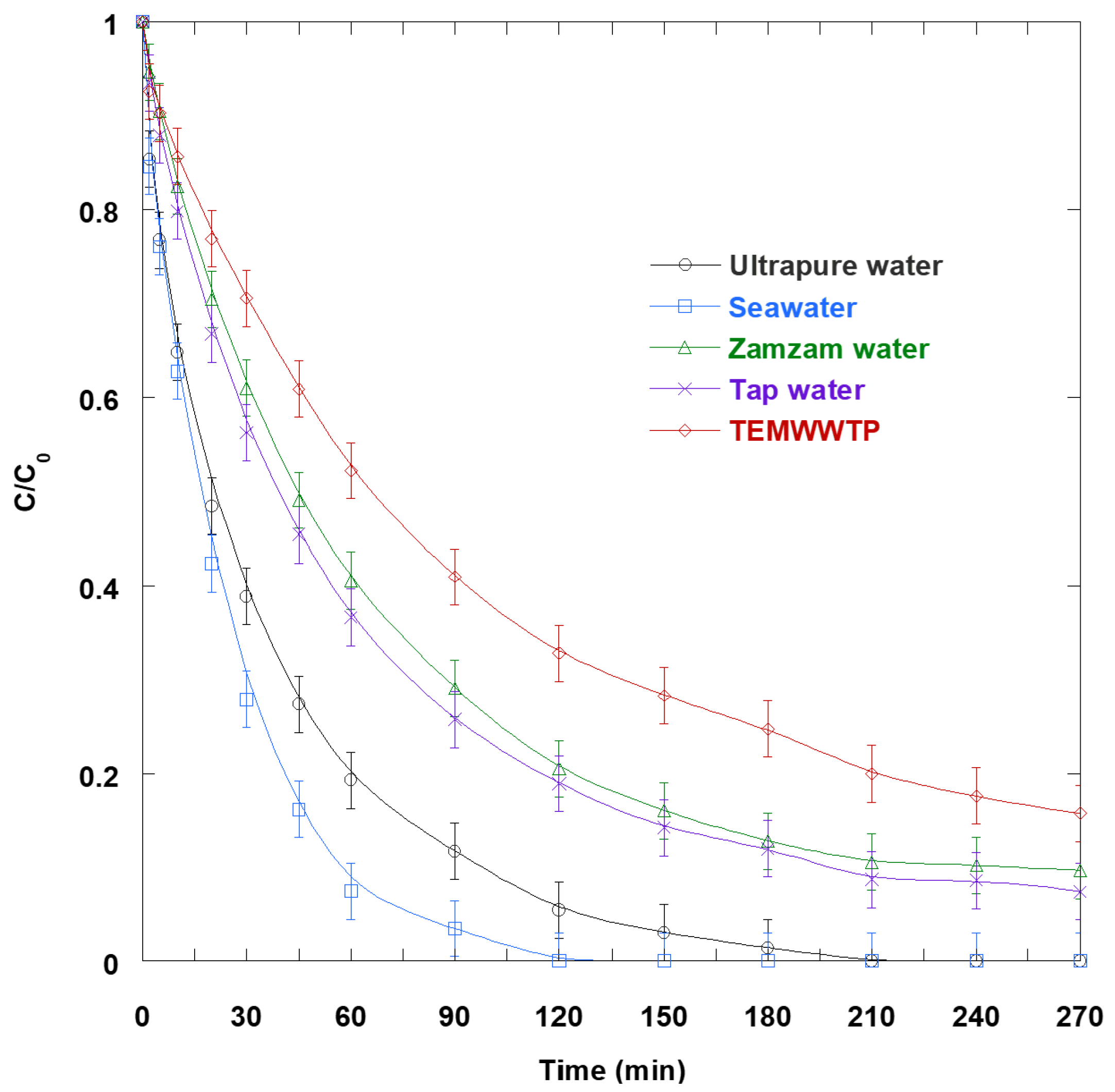
In benchmark tests of the US/PAA process in environmental water matrices, SSY dissolved in several real waters, including Zamzam water, tap water, seawater, and tertiary effluent from a municipal wastewater treatment plant (TEMWWTP) prior to chlorination, and compared with run carried out using ultrapure water. The results are shown in
Figure 11. The physicochemical parameters of the water samples are summarized in
Table 1.
Zamzam water was included in the study because of its unique composition, which is characterized by high alkalinity, elevated total dissolved solids, and a distinctive ionic profile. These features provided a natural matrix with strong buffering capacity and high mineral content, which allowed the process sensitivity to carbonate alkalinity and ionic strength to be probed under conditions different from those of conventional tap water. The inclusion of Zamzam water was intended as a mechanistic probe rather than as a direct application case, complementing the more representative matrices of seawater, tap water, and tertiary municipal effluent.
Note that the addition of 5 mM PAA to the various water matrices decreased the pH to the range of 3.7–4.4. SSY decay exhibits a distinct matrix hierarchy: seawater > ultrapure water > tap water ≈ Zamzam water > TEMWWTP (
Figure 11). Since the pH was nearly similar across the matrices, the differences can be attributed to three factors: production and partitioning of radicals by abundant inorganic ions (especially halides and carbonate species), cavitation physics in high-ionic-strength media, and scavenging of radicals and oxidants by organic matter in the tertiary effluent.
The high concentrations of Cl− and Br− in seawater (24.09 g/L and 83 mg/L, respectively) enable the rapid capture of •OH formed at cavitation interfaces. This generates reactive chlorine/bromine species (RCS/RBS) via sequences such as •OH + Cl− (+ H+) → Cl• → Cl2•− and •OH + Br− → BrOH•− → Br•/Br2•−. These halogen radicals are potent, selective oxidants that react quickly with aromatic and azo moieties. This provides parallel oxidative pathways to •OH and explains why seawater outperforms ultrapure water. Ultrasonication is also known to favor RCS formation in chloride media. High salinity can alter cavitation, producing smaller, more stable bubbles and reducing coalescence. This often enhances net sonochemical yields.
In ultrapure water, there are no strong inorganic or organic scavengers; therefore, dye oxidation primarily proceeds through cavitation-generated •OH together with PAA-derived organic radicals. Owing to the acid–base behavior of PAA (pKa = 8.2), differences in speciation among matrices are negligible once PAA sets the pH. The modestly slower kinetics observed in ultrapure water, corresponding to 61.2% and 88.2% removal at 30 and 90 min, respectively, compared with 72.1% and 96.5% in seawater, are therefore more consistent with the absence of halogen-radical channels than with a pH-related effect.
Both tap water and Zamzam water contain moderate amounts of halides and are highly alkaline. Their HCO3− concentrations are 98 and 172 mg/L, respectively. They are also both hard, with high concentrations of Ca2+ and Mg2+. Under acidic conditions imposed by PAA, most inorganic carbon is present as dissolved CO2/H2CO3. This limits direct •OH → CO3•− conversion. However, CO2 in solution and in cavitation bubbles can reduce hotspot temperatures and suppress •OH yields. Due to its higher alkalinity, Zamzam introduces more CO2 into the cavitation field at the experimental pH level. This directly suppresses the generation of •OH. Its higher TDS contributes to increased ultrasound attenuation and unfavorable bubble dynamics. These inhibitory effects readily explain the modest yet consistent difference between Zamzam and tap waters under otherwise identical US/PAA conditions, corresponding to 39.0% and 70.9% removal at 30 and 90 min, respectively, in Zamzam water, and 43.8% and 74.2% in tap water.
Despite having a comparable inorganic profile (bicarbonate, chloride, and hardness) to other freshwaters, the effluent from the MWWTP shows the weakest SSY removal. At 30 and 90 min, the removal efficiencies were 29.5% and 59.0%, respectively, in the MWWTP effluent, compared with 39.0–43.8% and 70.9–74.2% in Zamzam and tap waters. Even at low COD/BOD ratios, the dissolved organic matter in the effluent efficiently scavenges both •OH and halogen radicals. This lowers their steady-state levels and competes with the target compound. The dissolved organic matter in the effluent often dominates as the •OH sink, strongly attenuating removal kinetics.
In practice, US/PAA is highly effective in saline and coastal environments, where halogen-radical pathways are prevalent. Despite some inhibition, results indicate that US/PAA remains viable in various water matrices.
Although this work focused on mechanistic and kinetic aspects, the economic feasibility of US/PAA is an essential consideration for future application. The main cost drivers are ultrasonication energy input, PAA dosage, and water matrix composition. For example, higher ultrasonication power improves removal efficiency but increases energy demand, while elevated alkalinity or organic matter content reduces efficiency and thus raises the effective treatment cost. A full techno-economic analysis, including energy consumption per unit volume treated and oxidant cost per unit pollutant removed, is needed to benchmark US/PAA against established AOPs.





 ,
,