Article

Effect of NaOH Concentration on Rapidly Quenched Cu–Al Alloy-Derived Cu Catalyst for CO2 Hydrogenation to CH3OH


1
Shanghai Key Laboratory of Molecular Catalysis and Innovative Materials, Department of Chemistry, Fudan University, Shanghai 200438, China
2
State Key Laboratory of Catalytic Materials and Reaction Engineering, Research Institute of Petroleum Processing, SINOPEC, Beijing 100083, China
*
Authors to whom correspondence should be addressed.
Catalysts 2024, 14(6), 391; https://doi.org/10.3390/catal14060391
Submission received: 10 May 2024 / Revised: 12 June 2024 / Accepted: 17 June 2024 / Published: 19 June 2024
(This article belongs to the Special Issue Exclusive Papers in Green Photocatalysis from China)

Abstract

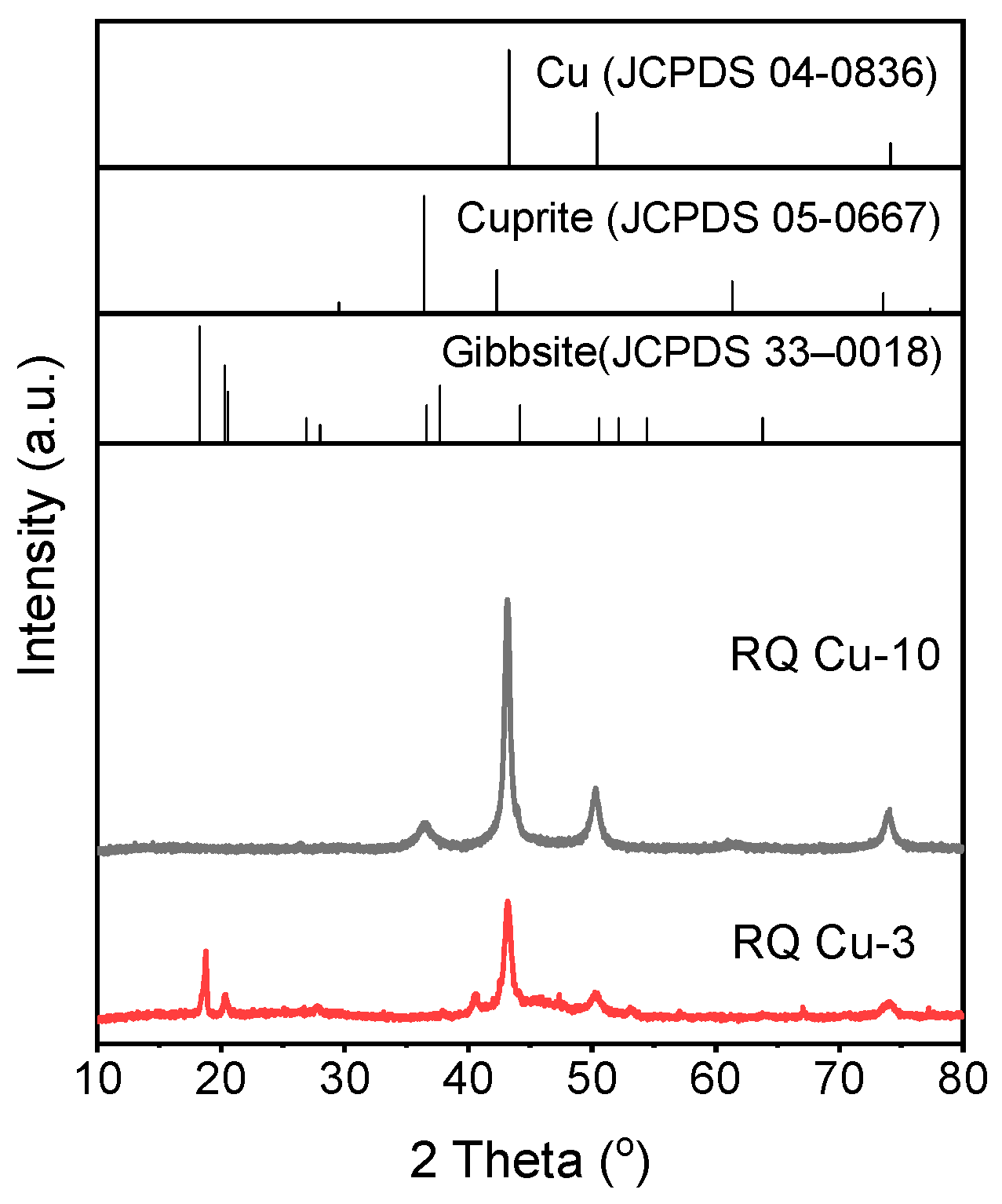
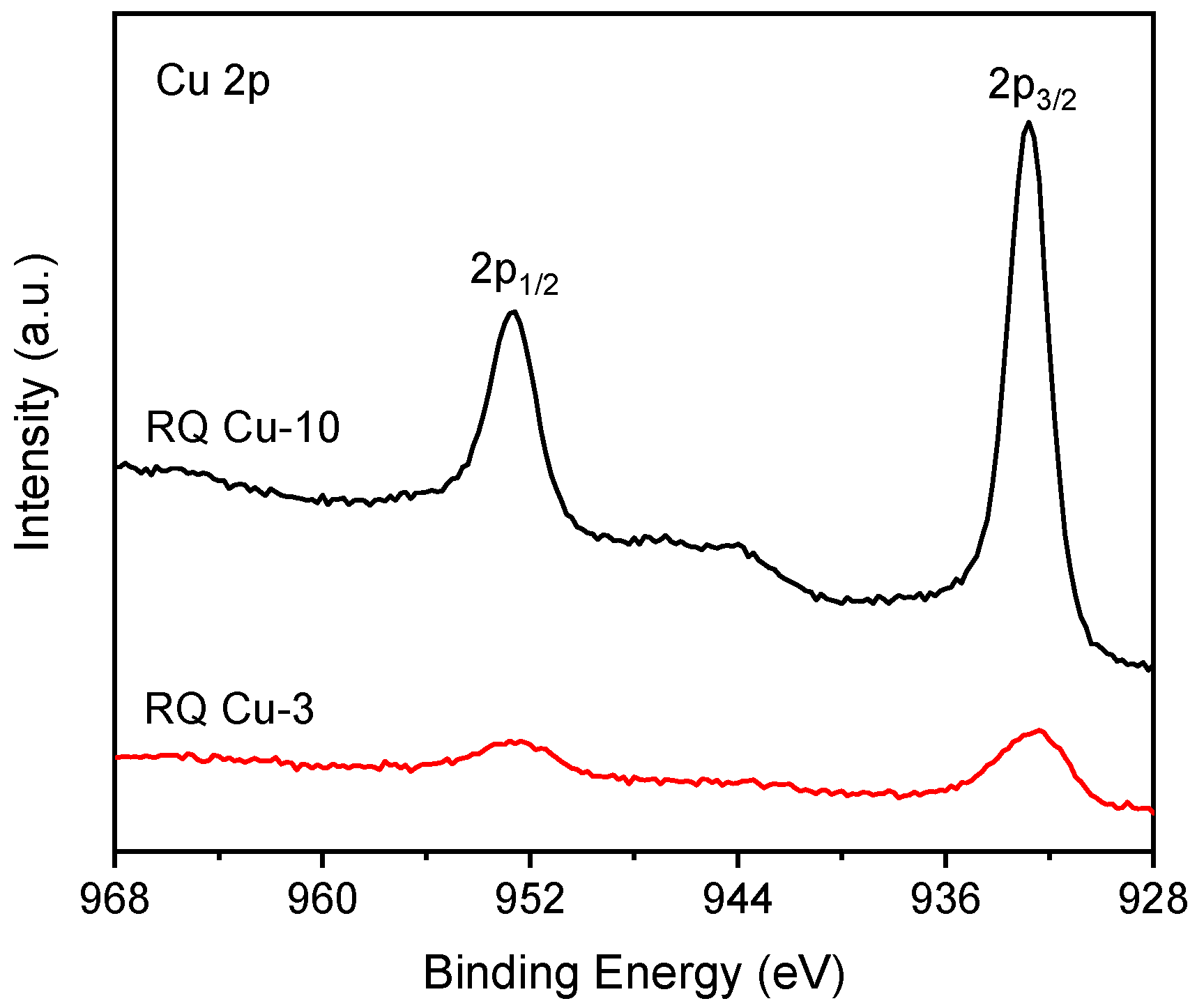
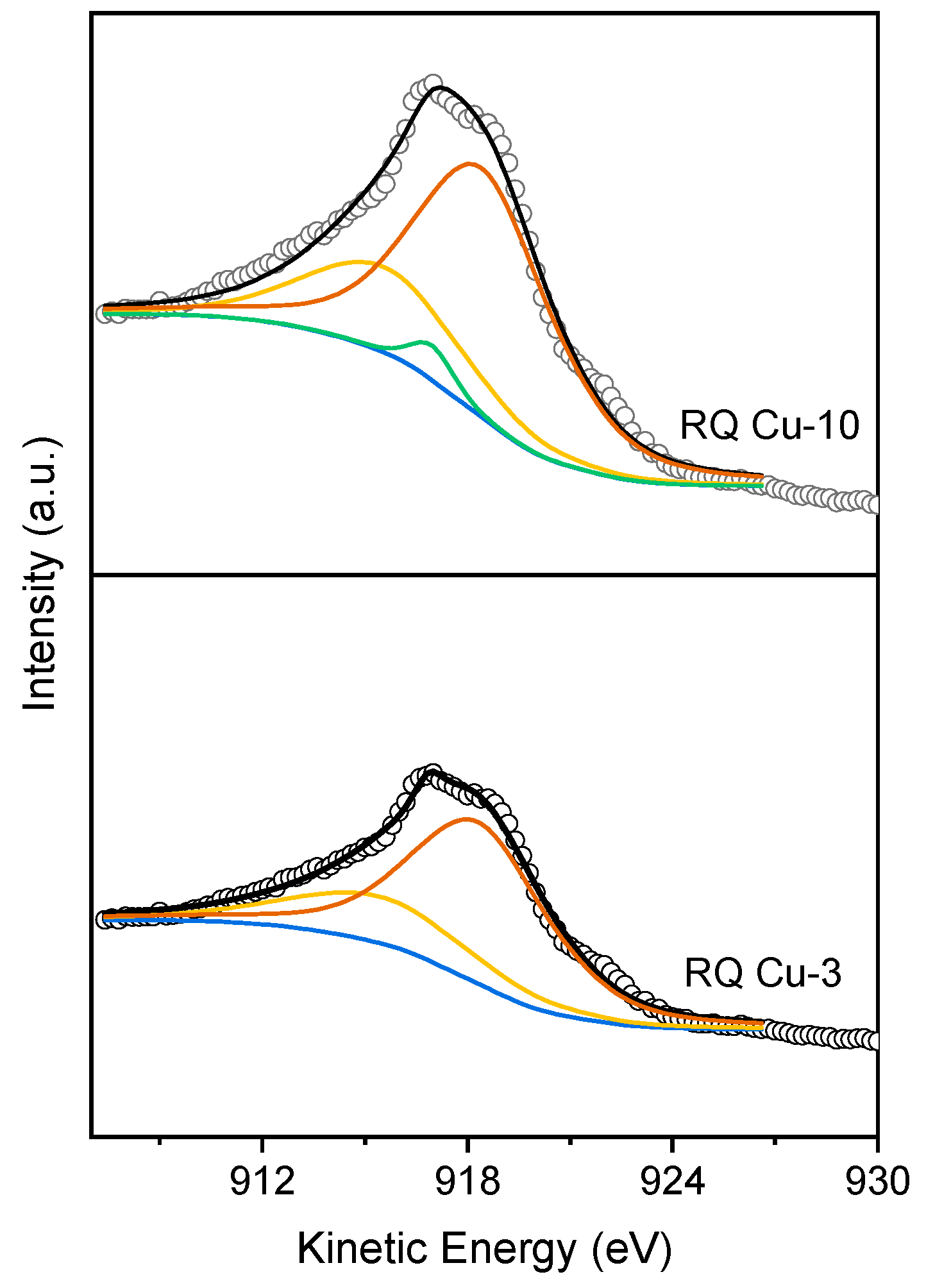
By utilizing greenhouse gas CO2 and renewable energy-sourced H2 to produce methanol, the “methanol economy” can replace fossil fuels and H2 as the energy storage medium, which not only reduces CO2 emissions, but also mitigates the energy shortage issue. However, the traditional Cu-based catalysts for CO2-to-methanol conversion suffer from low activity at low temperature and high vulnerability to sintering and deactivation. In this contribution, rapidly quenched skeletal Cu catalysts (RQ Cu) are prepared by leaching the RQ Cu–Al alloy with NaOH aqueous solutions of different concentrations. It is found that high NaOH concentration of 10 wt% favors the preparation of the RQ Cu-10 catalyst with higher porosity, lower residual Al content, and larger active Cu surface area (SCu) than the RQ Cu-3 catalyst leached with 3 wt% of NaOH solution. However, in aqueous-phase CO2 hydrogenation at 473 K and 4.0 MPa, the CO2 conversion over the RQ Cu-3 catalyst is more than two times greater than that over the RQ Cu-10 catalyst, and the selectivity and productivity of methanol are 1.20 and 2.69 times of the corresponding values over the RQ Cu-10 catalyst. At 5.0 MPa, the selectivity and productivity of methanol are further boosted to 97.9% and 1.329 mmol gCu–1 h–1 on the RQ Cu-3 catalyst. It is identified that the SCu of the RQ Cu-3 catalyst is well preserved after reaction, while dramatic growth of the Cu crystallites occurs for the RQ Cu-10 catalyst. The better catalytic performance and stability of the RQ Cu-3 catalyst are tentatively attributed to the presence of more residual Al species by using NaOH solution with lower concentration for Al leaching, which acts as the dispersant for the Cu crystallites during the reaction.
Keywords: skeletal Cu; CO2 hydrogenation; methanol; NaOH concentration; rapid quenching skeletal Cu; CO2 hydrogenation; methanol; NaOH concentration; rapid quenching