Abstract
The Pd/C-catalyzed reactions, including reduction reactions and cross-coupling reactions, play an irreplaceable role in modern organic synthesis. Compared to the homogeneous palladium catalyst system, the heterogeneous Pd/C catalyst system offers an alternative protocol that has particular advantages and applications. Herein, a review on Pd/C-catalyzed reactions is presented. Both the advances in Pd/C-catalyzed methodologies and the application of Pd/C-catalysis in total synthesis are covered in this review.
1. Introduction
Palladium-catalyzed organic reactions are a fundamental tool of modern organic synthesis. Among all the known palladium-based catalysts, palladium on carbon (Pd/C) has attracted much attention due to its excellent catalytic activity in a variety of different organic reactions [1]. The application of Pd/C catalysis dates back to 1972, when Heck and co-workers first used the Pd/C catalyst system for the Heck coupling reaction [2]. Since then, Pd/C has proven to be very beneficial in cross-coupling reactions.
Palladium tightly bound to nanoparticle activated carbon has a large surface area and, thus, high catalytic efficiency. Repeated filtration processes are possible due to their high stability, so the Pd/C can be easily recycled and reused with little loss of activity. Their high tolerance to strong acids or bases, air, and moisture makes Pd/C catalysts suitable for a variety of reactions under moderate or harsh conditions [3,4]. Due to these advantages, Pd/C catalysts have not only attracted much attention in recent laboratory research, but are also becoming increasingly popular in industrial production.
Numerous works on ligand-free Pd/C-catalyzed reactions have been reported [5,6,7,8,9,10]. Ligand-free catalytic systems avoid the use of hazardous reagents, making the protocols much cleaner and environmentally friendly. However, in certain cases, ligands still play an important role; for example, in the presence of a ligand, the reaction rate and activity are much higher than in ligandless catalytic systems [11,12,13,14,15,16].
Although several reviews on Pd/C-catalyzed reactions have already been published in the last fifteen years [3,4,8,10], in this review, we examined recent advances in the chemistry of Pd/C-catalyzed reactions, such as reduction reactions and cross-coupling reactions, because these reactions are widely used for organic synthesis, and they also provide a guiding principle for designing the route to be used by organic chemists.
2. Catalyst
The abbreviation “Pd/C” stands for palladium metal on carbon support, an effective heterogeneous palladium catalyst. The carbon supported catalyst system has interesting features with respect to its application. Recovery, refining and recycling processes can be simplified with these heterogeneous Pd/C catalysts. Many properties of Pd/C, such as palladium’s distribution, the oxidation state of palladium, its water content, etc., significantly affect the efficiency of the Pd/C catalyst.
Generally, three types of Pd/C, namely “egg-shell”, “thick-shell”, and “uniform”, are found on charcoal with respect to palladium distribution [3]. Different depths of impregnation of palladium are found in the three catalyst types [17,18]. In the egg-shell catalyst, the palladium is densely distributed on the surface within 20–150 nm. In the uniform catalyst, the palladium is distributed uniformly. In the thick-shell catalyst, the palladium is distributed 200–500 nm away from the surface.
Pd/C catalysts are in the form of nanoparticles, since the catalytically active crystallite size should be between 2 nm and 20 nm [14,17]. Generally, commercially available Pd/C consists of both Pd(II) and Pd(0), the ratio depending on the method of preparation. Pure Pd(0) or Pd(II) is difficult to obtain, because Pd(0) is prepared through the reduction of Pd(II) and, inevitably, traces of Pd(II) remain in the catalytic system, while pure Pd(II) necessarily undergoes an intrinsic reduction process to produce Pd(0).
Charcoal can absorb a large amount of water, up to 55–60% by weight. For safety reasons, Pd/C containing a certain amount of water is necessary and useful, especially for large-scale industrial applications. For many Pd/C-catalyzed reactions, only commercially available Pd/C catalysts are needed, while, for certain reactions, a special production approach for the preparation of Pd/C is required. Methods for the preparation of Pd/C vary, resulting in different catalytic activities for different Pd/C catalysts in certain reactions. This also explains the poor reproducibility when some of the reported Pd/C-catalyzed reactions were carried out repeatedly [10].
Ligandless Pd/C-catalyzed reactions have been of great interest in recent years. A ligand-free synthetic system is considered clean, environmentally friendly and convenient and has been used for a variety of reactions, including reductions and cross-coupling reactions, while Pd/C with certain ligands, such as PPh3, 1,1′-bis(diphenylphosphino)ferrocene (dppf), is still more effective in certain cases compared to ligand-free catalytic systems [8].
The standardized Pd/C catalyst should be denoted as X% Pd/C (Y mol%), where X is X wt% palladium on carbon and Y is the molar loading for a certain reaction.
3. Reactions Catalyzed by Pd/C
3.1. Reductions
It has already been established that a wide range of reducible functional groups, including carbon-carbon multiple bonds, carbon-oxygen double bonds, nitriles, and so forth, can be hydrogenated and reduced in the presence of a heterogeneous Pd/C catalyst. Currently, new Pd/C reduction methods are attracting the attention of chemists, and several relevant publications have already appeared [3]. The Pd/C-catalyzed reductions have also been shown to be effective in certain steps of total organic synthesis. In this section, we will discuss in detail the recent reduction reactions using Pd/C catalysis.
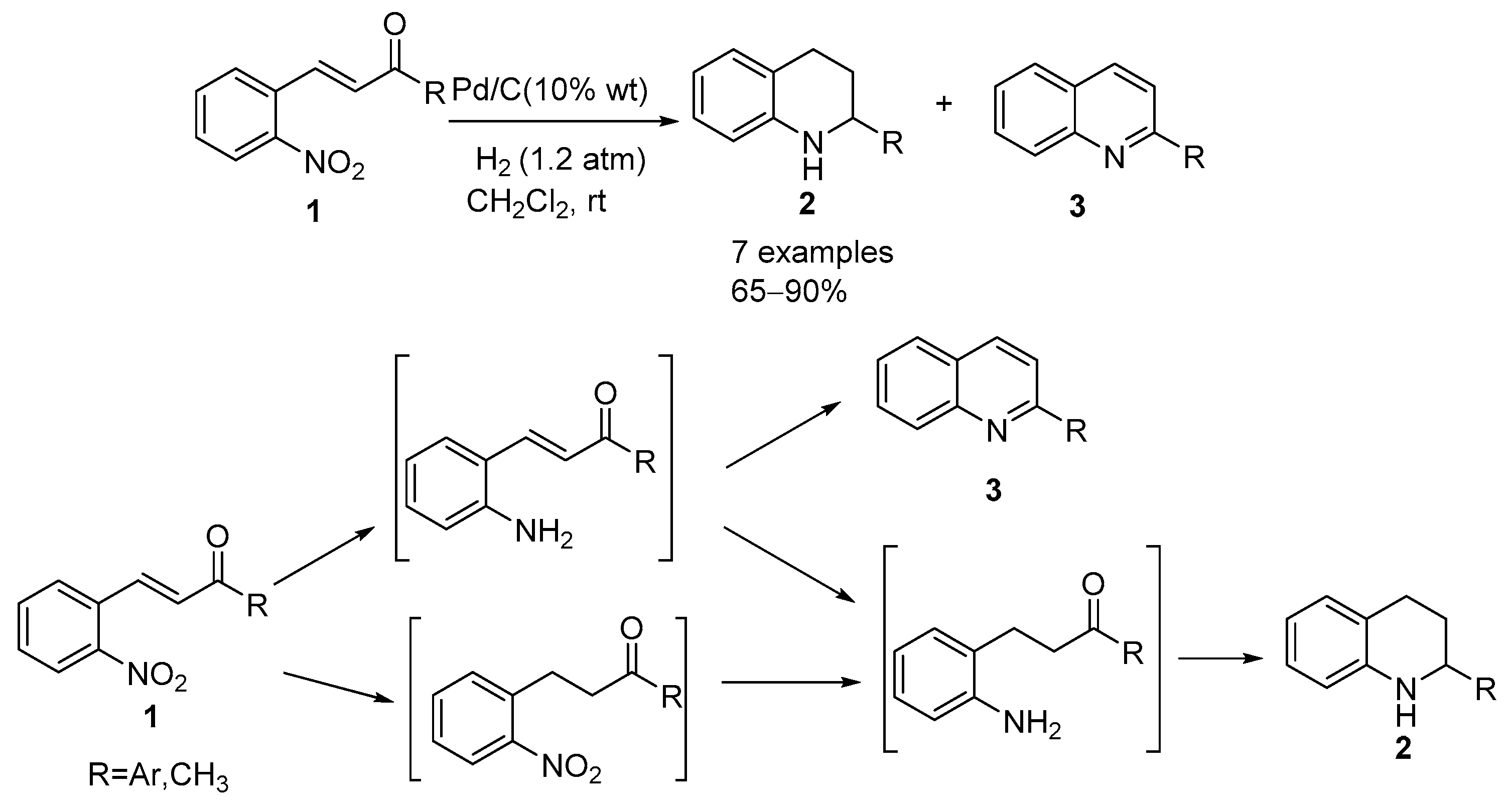
Patti and co-workers first investigated a Pd/C-catalyzed chemoselective hydrogenation of the nitrogen rings in quinoline derivatives to afford tetrahydroquinolines 2 [19]. Tetrahydroquinolines derivatives constitute a group of heterocycles that largely occur in natural products, whose main importance resides in their potential biological activities. The reaction proceeded well and the corresponding product was obtained at high yield (r = Ph, 88%) and high ratio (r = Ph, 95/5). As shown in Scheme 1, nitrogen cyclization was an important step. The hydrogenation process also involved the reduction of the nitryl group.
Scheme 1.
Pd/C-catalyzed synthesis of tetrahydroquinolines.
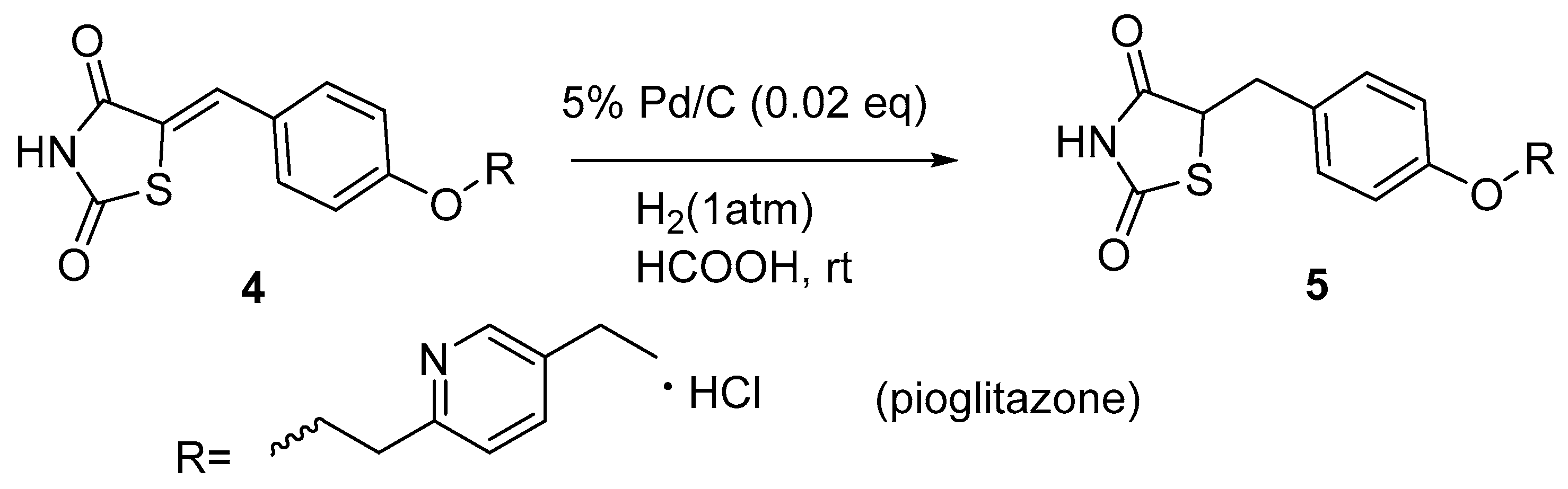
In 2013, Sugimura’s group developed a synthetic protocol for the preparation of pioglitazone 5 from 5-alkylidene-2,4-thiazolidione 4 using heterogeneous Pd/C catalyst (Scheme 2) [20], which is a PPARγ agonist used in the treatment of individuals with type 2 diabetes. It was found that a lower amount of catalyst (5% Pd/C, 0.02 eq) than previously reported was effective [21]. Optimized conditions were successfully established and studies on kinetics were also reported in this literature.
Scheme 2.
Pd/C-catalyzed synthesis of pioglitazone.
Selective hydrogenation of multiple double-bonds is a major challenge in synthetic studies because there are several ways to reduce double bonds. Many factors such as the type of metal, the size of metal particles, the morphology, the addition of other metals and ligands, etc., affect this selectivity.
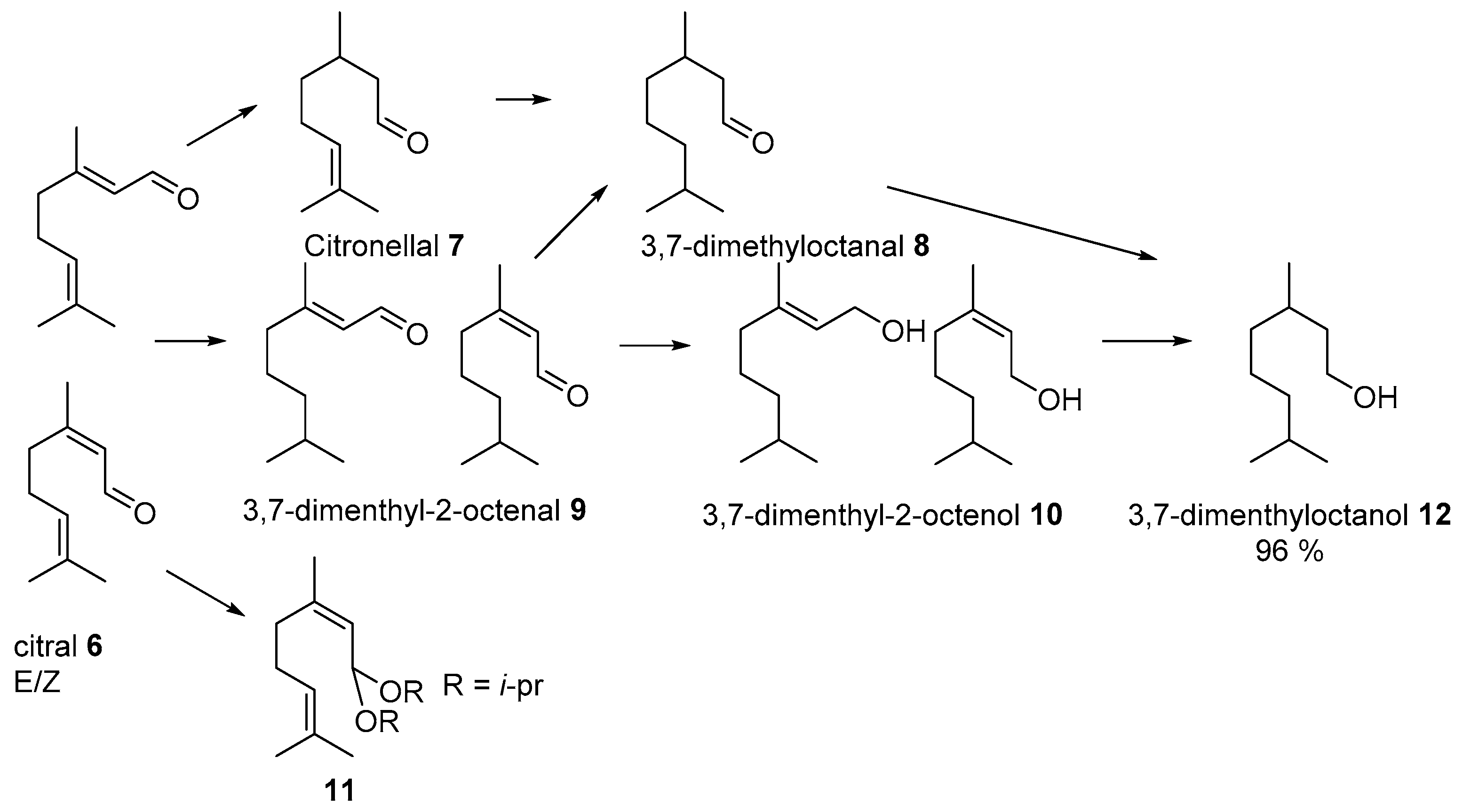
Su and colleagues reported the selective hydrogenation of citral 6 [22], which contains an isolated double bond and conjugated C=C, C=O bonds. All potential hydrogenation products are shown in Scheme 3. 3,7-Dimethyloctanal 9 was selected as the main target product in this work. The reaction was carried out in the presence of 1 wt% Pd/C in isopropanol at 303 K under hydrogen atmosphere and gave an excellent citral conversion of 100% and a high yield, of 96 %, of the desired product 12.
Scheme 3.
Pd/C-catalyzed synthesis of 3,7-dimethyloctanal.
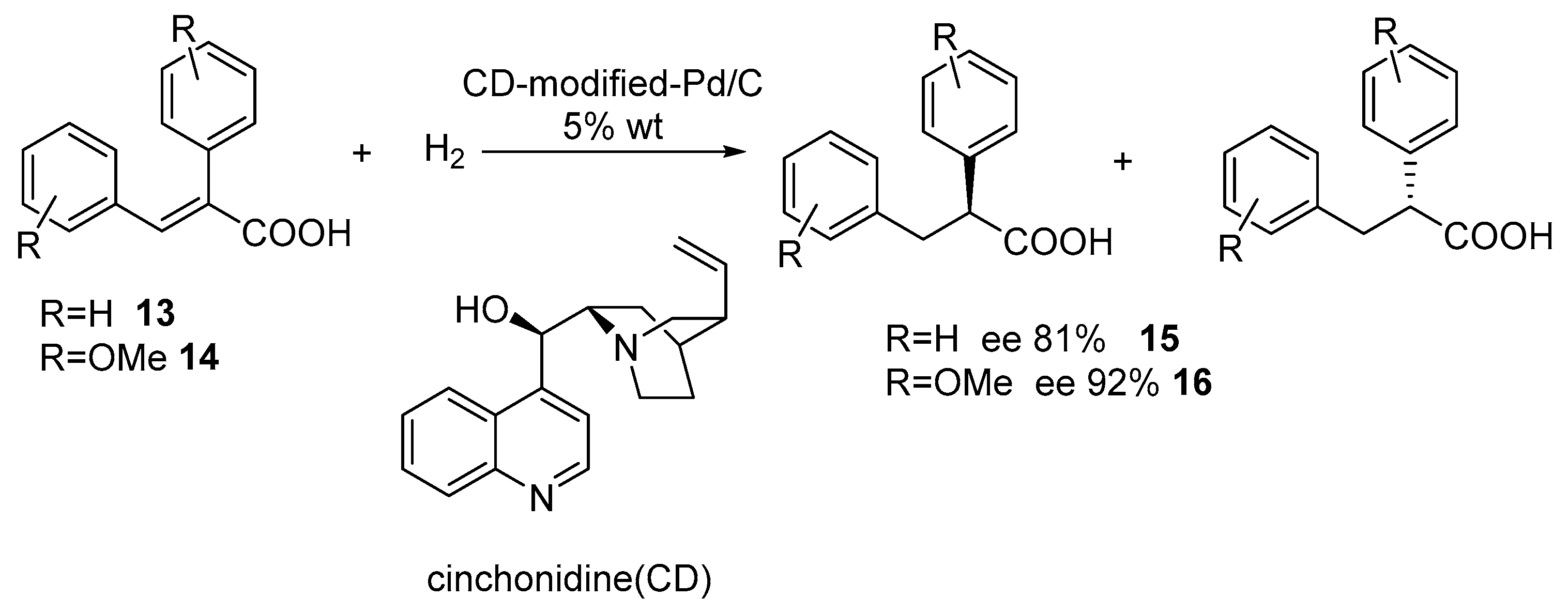
The asymmetrical hydrogenation of prochiral compounds using modified Pd/C catalysts remains a challenging topic [23,24,25,26]. Inspired by the work of Izumi [27], the enantioselectivity of cinchona-modified palladium catalysts has been gradually discovered and explored. Nitta et al. made an important contribution to the enantioselective hydrogenation of α-phenylcinnamic acid (15, 16) (PCA) on cinchonidine-modified palladium catalysts, and several publications on the asymmetric catalysis of this α,β-unsaturated carboxylic acid (Scheme 4), which is also a kind of chiral compound with wide applications, were published [28,29,30,31].
Scheme 4.
Synthesis of α-phenylcinnamic acid via Pd/C catalysis.
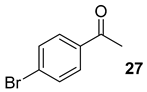
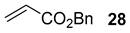
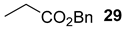
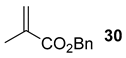
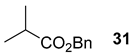
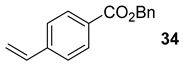
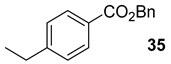
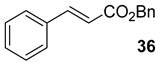
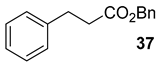
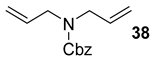
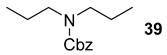
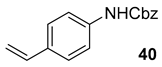
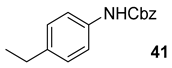
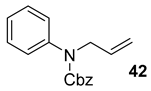
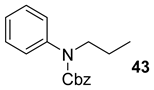
Sajiki and co-workers discovered chemoselective hydrogenation of olefins in the presence of diphenyl sulphide (Ph2S) [32,33,34]. The high catalytic activity of Pd/C resulted in poor selectivity of hydrogenation. Moreover, catalyst poison was introduced into the reaction. Diphenyl sulphide (Ph2S) was selected as a new type of catalyst poison to support Pd/C. Olefins were treated with hydrogen in MeOH at room temperature and gave chemoselective products in good to excellent yields (up to 100%) (Table 1 and Table 2).
Table 1.
Application to Aromatic Halogen.
Table 2.
Application to Benzyl Ester and N-Cbz Protective Group.
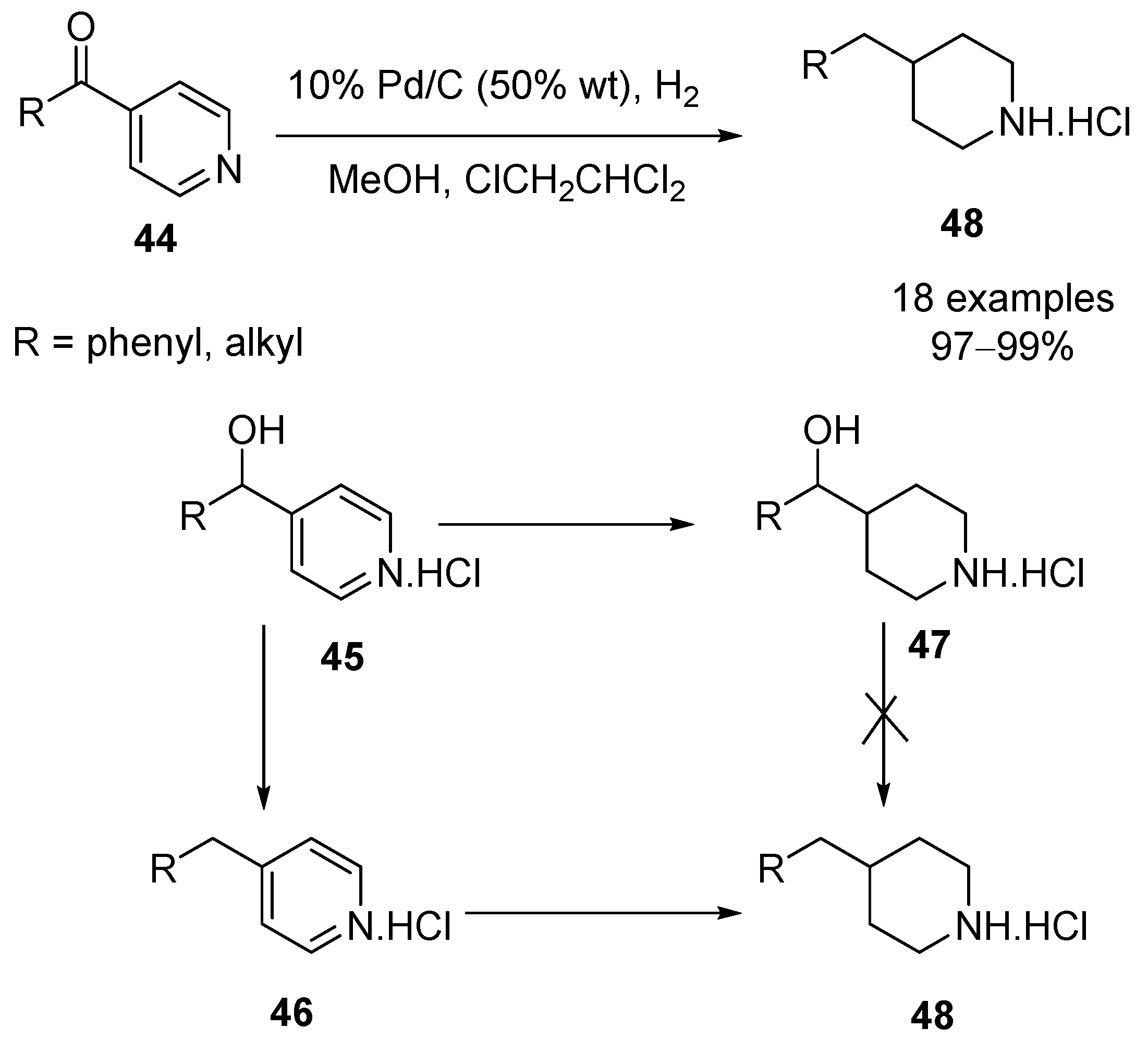
Wang and Hu demonstrated a Pd/C-catalyzed hydrogenation to produce 4-benzylpiperidine hydrochlorides and α-alkyl-4-piperidinemethanol hydrochlorides 48 (Scheme 5) [35], which is an important intermediate in drug discovery. The reaction processes involved the reduction of the ketone, the hydrogenolysis of the C-O bond and the hydrogenation of the pyridine ring. It was assumed that the nitrogen atom in the pyridine ring coordinates with the Pd/C catalyst and deactivates the hydrogenation of pyridine ring, while the conversion to the corresponding pyridine salts solves this problem. ClCH2CHCl2 was finally selected as an additive to promote the reaction. Further studies found 4-pyridinemethanol hydrochloride derivatives 45 to be the key intermediate instead of the corresponding 4-alkylpiperidinol 47; it was also found that 47 will never be converted into 48 because it is not a benzyl alcohol, and that its hydroxyl group could not be hydrogenolyzed under mild conditions.
Scheme 5.
Synthesis of 4-benzylpiperidine hydrochlorides and α-alkyl-4-piperidinemethanol hydrochlorides via Pd/C catalysis.
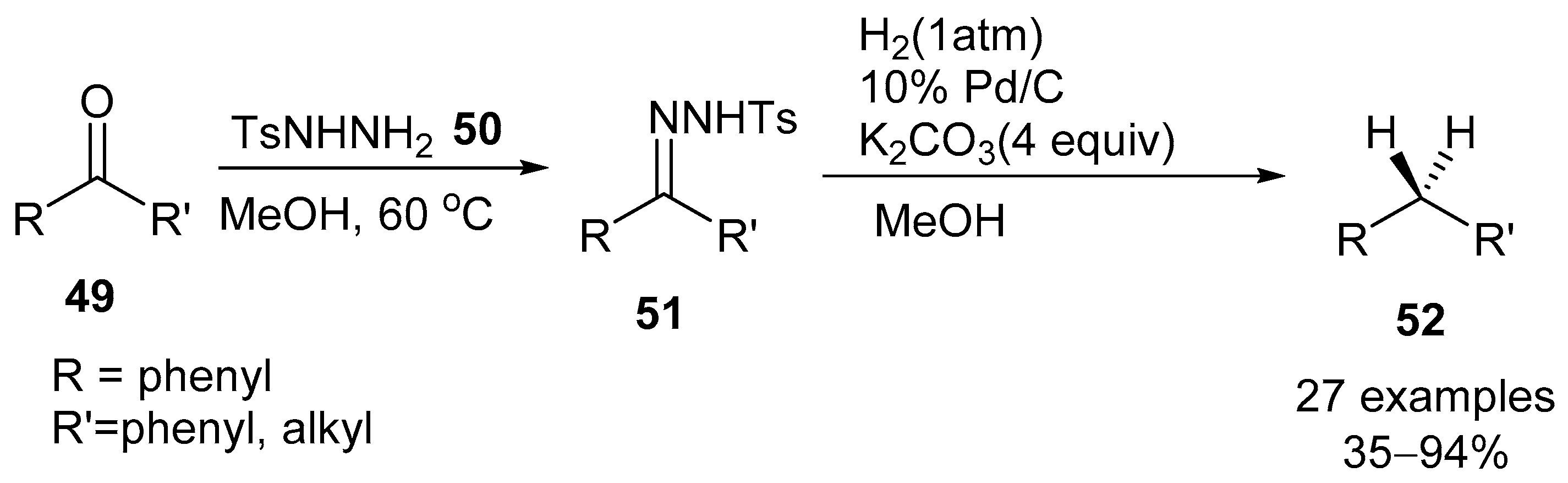
Zhou and Wang developed a two-step Pd/C-catalyzed one-pot hydrogenation of carbonyl groups to produce methyl or methylene derivatives 52 (Scheme 6) [36]. N-tosylhydrazone 51 was an important intermediate in this process, which was replaced by N-tosylhydrazine 50 in the presence of MeOH at 60 °C. Optimization of the reduction of N-tosylhydrazone 51 was explored and the reaction proceeded with moderate to high yield in the presence of K2CO3.
Scheme 6.
Reduction of N-tosylhydrazone by Pd/C catalysis.
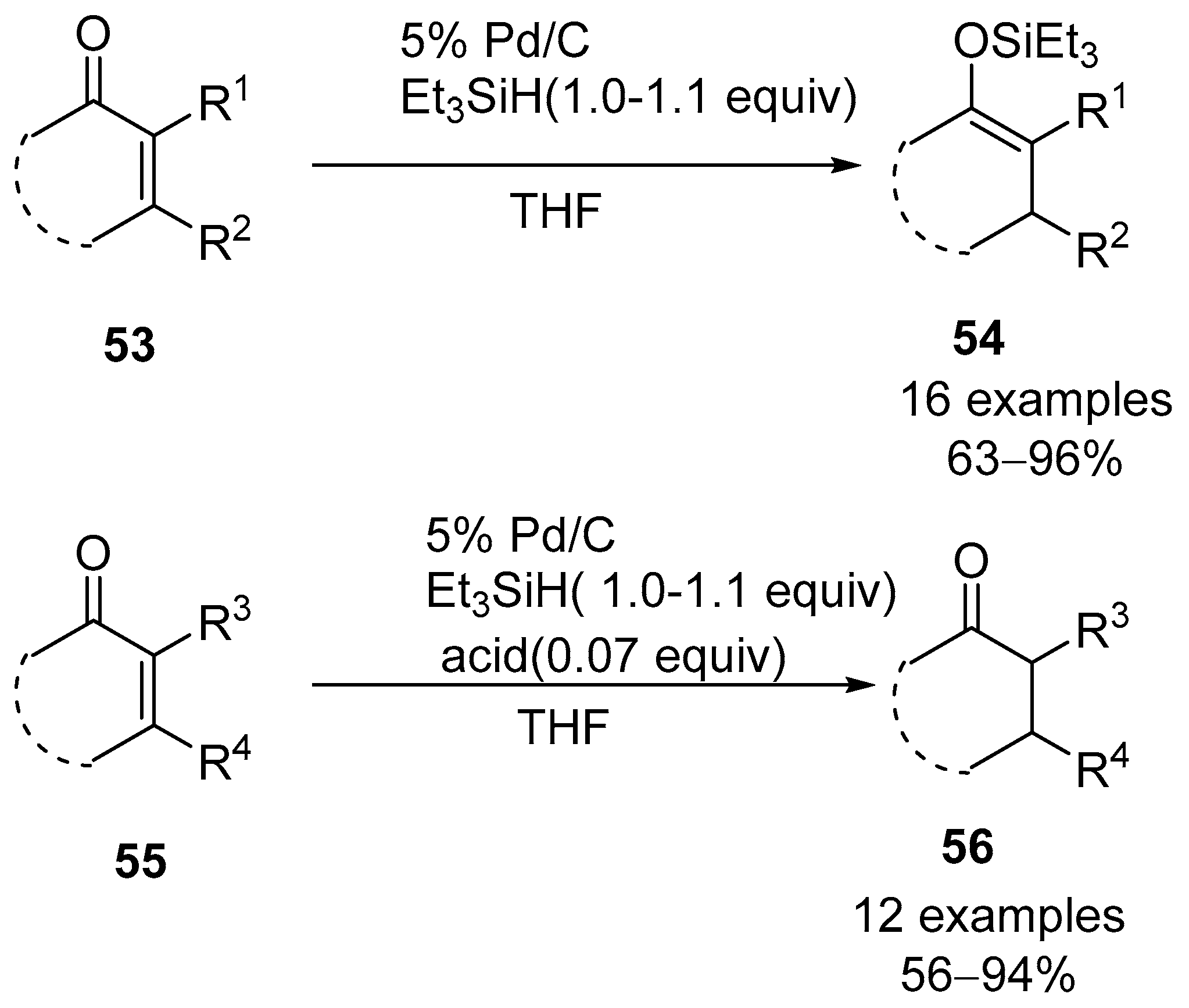
Pihko’s group reported a protocol for the preparation of enolsilane 54 using a Pd/C catalyst (Scheme 7) [37]. Treatment of α,β-unsaturated aldehydes or ketones 53 with Et3SiH in THF gave the corresponding enolsilane 54 at high yield and stereoselectivity. For α-substituted enals, the major products were Z-enolsilanes. β-substituted enals were converted to the corresponding E-enols. Several α,β-unsaturated cyclic ketones were employed and still gave the desired product in good yields. Further studies included the chemoselective hydrogenation of α,β-unsaturated carbonyl compounds 55 to produce aldehydes or ketones 56 over a similar Pd/C-Et3SiH catalyst system using inorganic acids.
Scheme 7.
Reduction of α,β-unsaturated aldehydes or ketones by Pd/C catalysis.
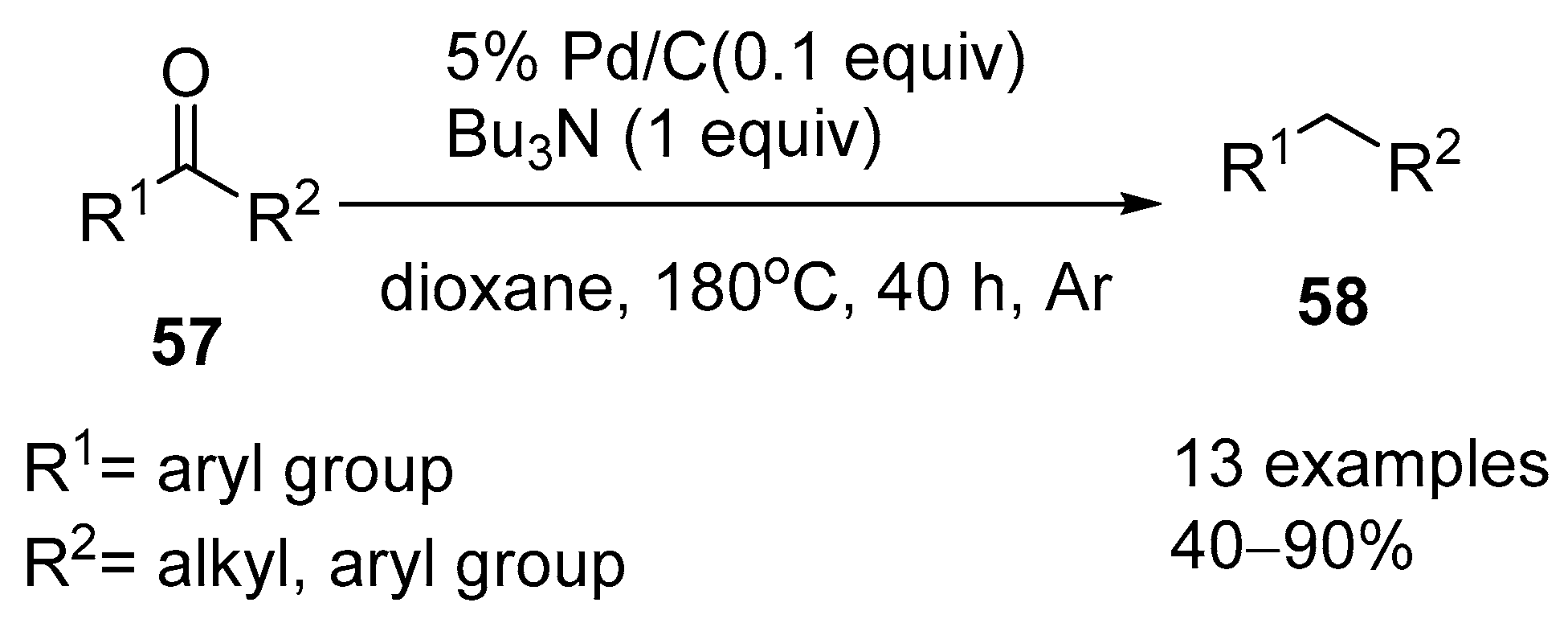
Kim and co-workers developed a tributylamine-assisted hydrogenation of ketones 57 to produce the corresponding alkanes 58 using a Pd/C catalyst (Scheme 8) [38], another alternative approach to deoxyenative hydrogenation. Treatment of ketones 57 with Bu3N and Pd/C in the presence of 4 Å MS in dioxane at 180 °C under argon atmosphere afforded alkane derivatives 58 in moderate to high yields (up to 90%).
Scheme 8.
Reduction of ketones via Pd/C catalysis.
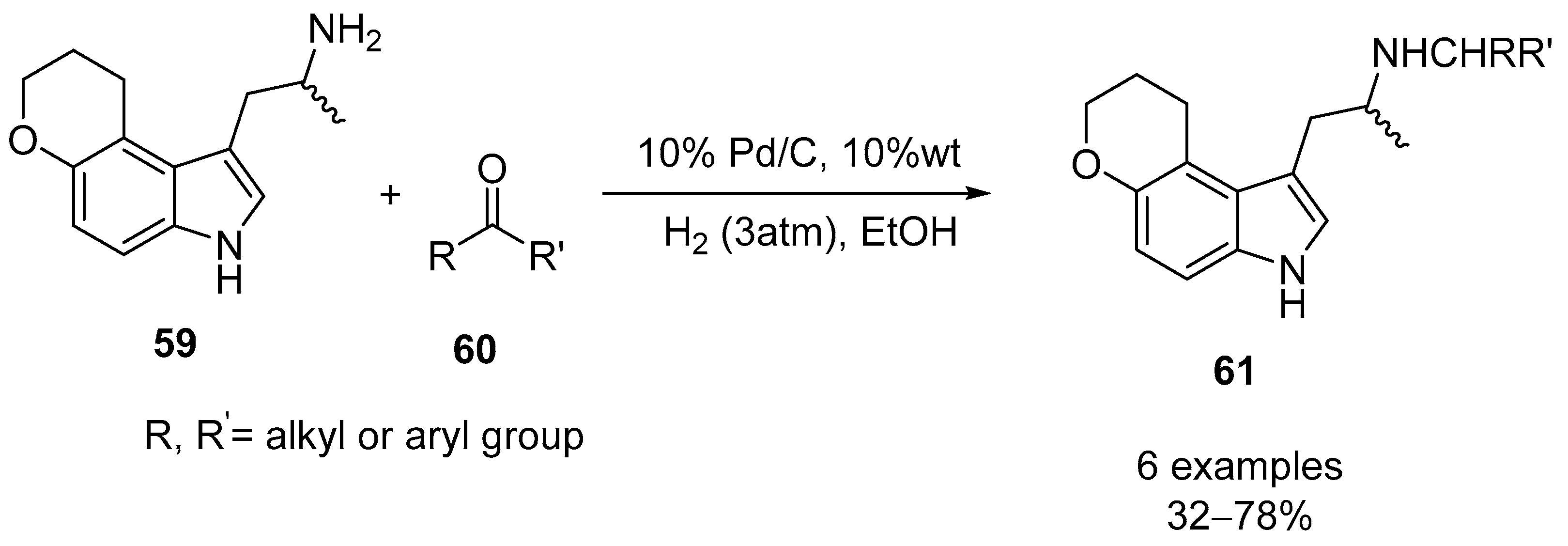
Macor’s group found a Pd/C-catalyzed alkylation of α-methyltryptamines 61 that produced N-alkylated products at high yield (Scheme 9) [39]. Tryptamines 59 were treated with ketones or aldehydes to form the corresponding imines and then hydrogenated in the presence of hydrogen in EtOH to give N-alkylated amines. The application of this protocol was extended to other primary and secondary amines.
Scheme 9.
Synthesis of N-alkylated tryptamines via Pd/C catalysis.
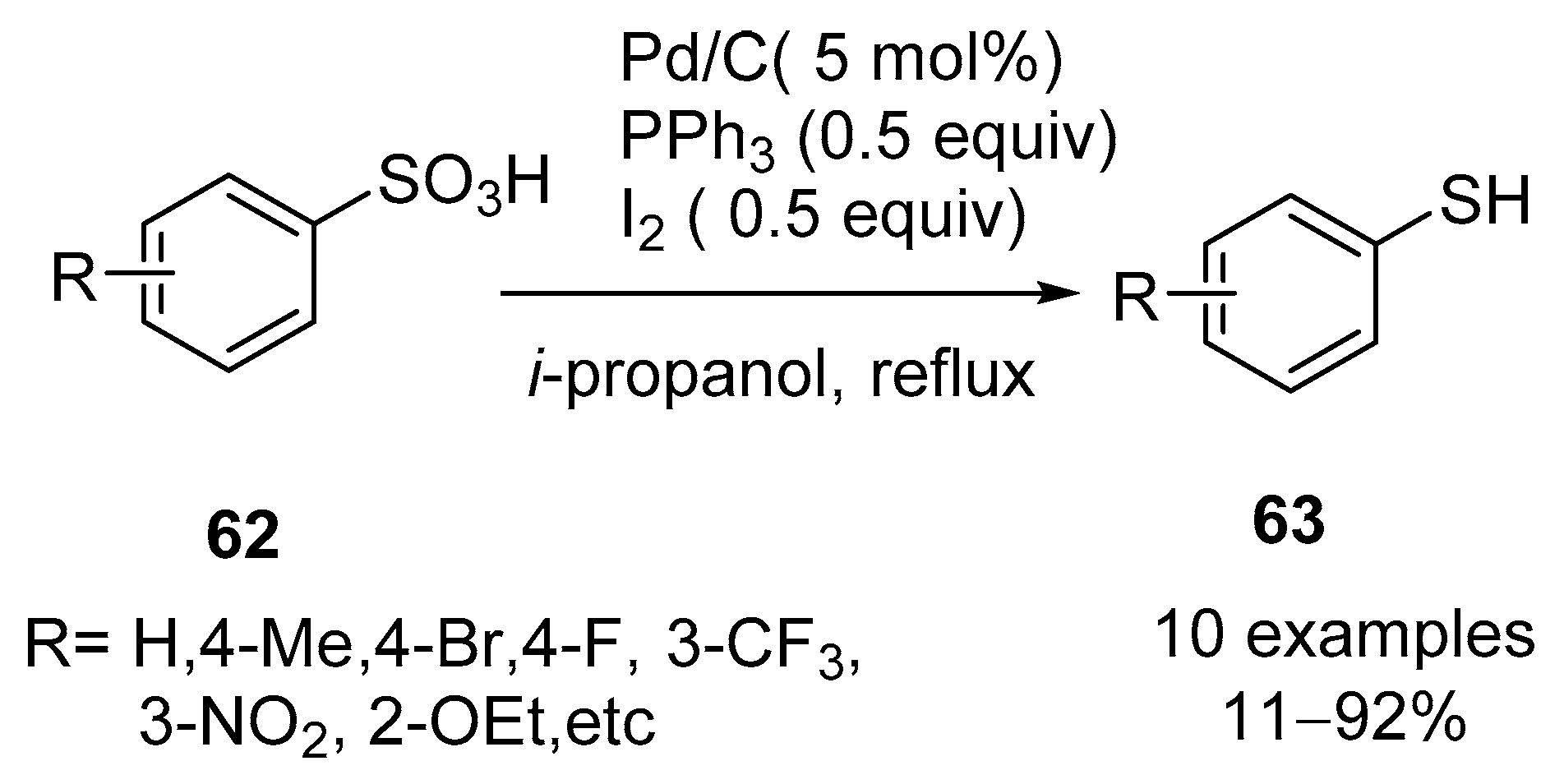
Pd/C has also been recognized as a clean and economical catalyst for the reduction of arylsulfonyl compounds to produce thiophenol derivatives 63 by Chen and co-workers (Scheme 10) [40]. 2-Propanol was added as a hydrogen sources and solvent. The introduction of PPh3 into the reaction system was found to be necessary as a ligand. Iodine was found to promote the reduction of arylsulfonic acid 62 by forming iodotriphenylphosphonium iodide, which improved the subsequent substitution process.
Scheme 10.
Synthesis of thiophenol derivatives via Pd/C catalysis.
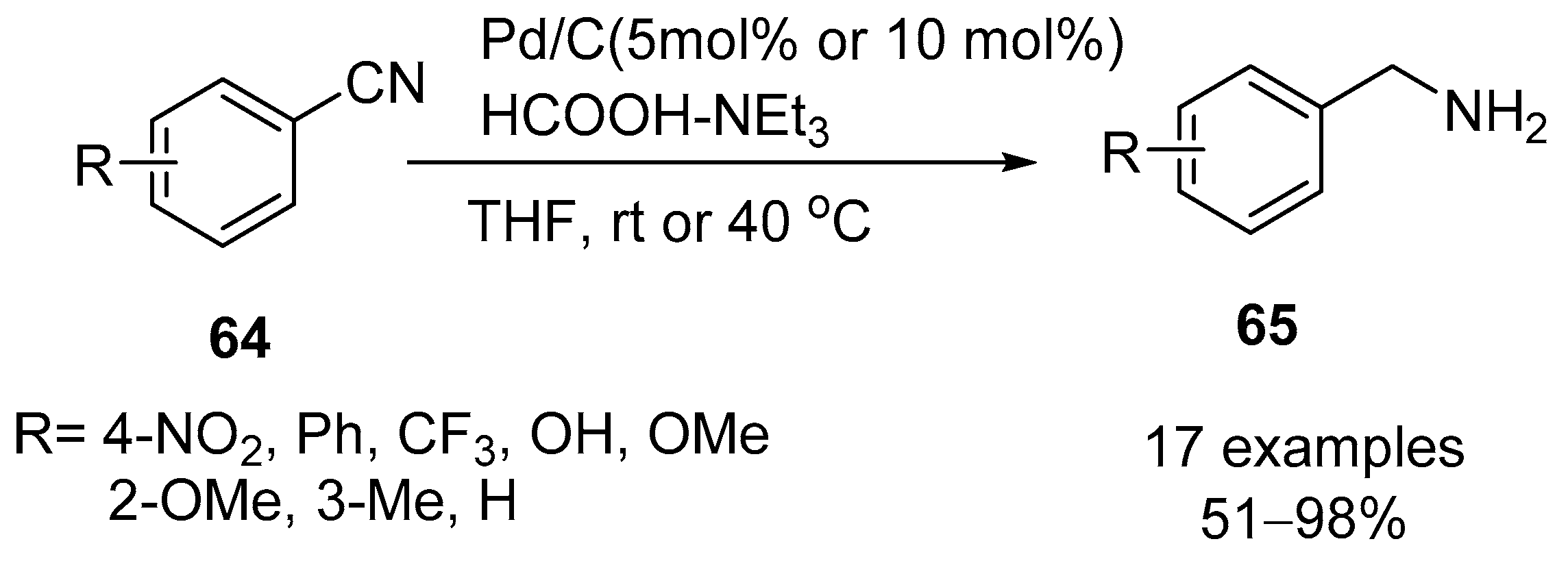
Beller et al. discovered a new hydrogenation strategy of aryl nitriles for the synthesis of primary amines 65 with Pd/C (Scheme 11) [41]. In this new approach, no toxic or hazardous reagents were used in the reaction system. The reaction proceeded well in the presence of HCOOH-NEt3 (molar ratio 18.5:1) as hydrogen source/base in THF at room temperature or 40 °C. It was also evident that related functional groups such as amides and esters were not affected under the optimized conditions and the strategy was widely applicable to various aryl nitrile substrates 64.
Scheme 11.
Reduction of aryl nitriles via Pd/C catalysis.
3.2. Coupling Reactions
3.2.1. Suzuki–Miyaura Coupling Reaction
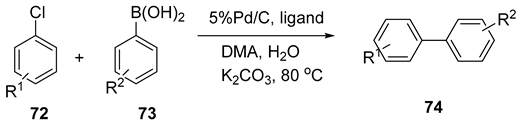
The Pd/C catalyst was first used by Buchecker and co-workers for the catalysis of Suzuki–Miyaura coupling reactions [42]. Treatment of aryl bromides or iodides with boronic acid in the presence of Pd/C and sodium carbonate at 80 °C gave the desired coupling products at high yield. It was not until a decade later that Sun and co-workers reported the coupling between aryl chlorides and aryl boronic acids [43]. The amount of literature on Pd/C-catalyzed Suzuki–Miyaura coupling reactions has increased significantly. Detailed studies on the mechanism and modifications of Pd/C-catalyzed Suzuki couplings were collected and reported by Felpin [44,45].
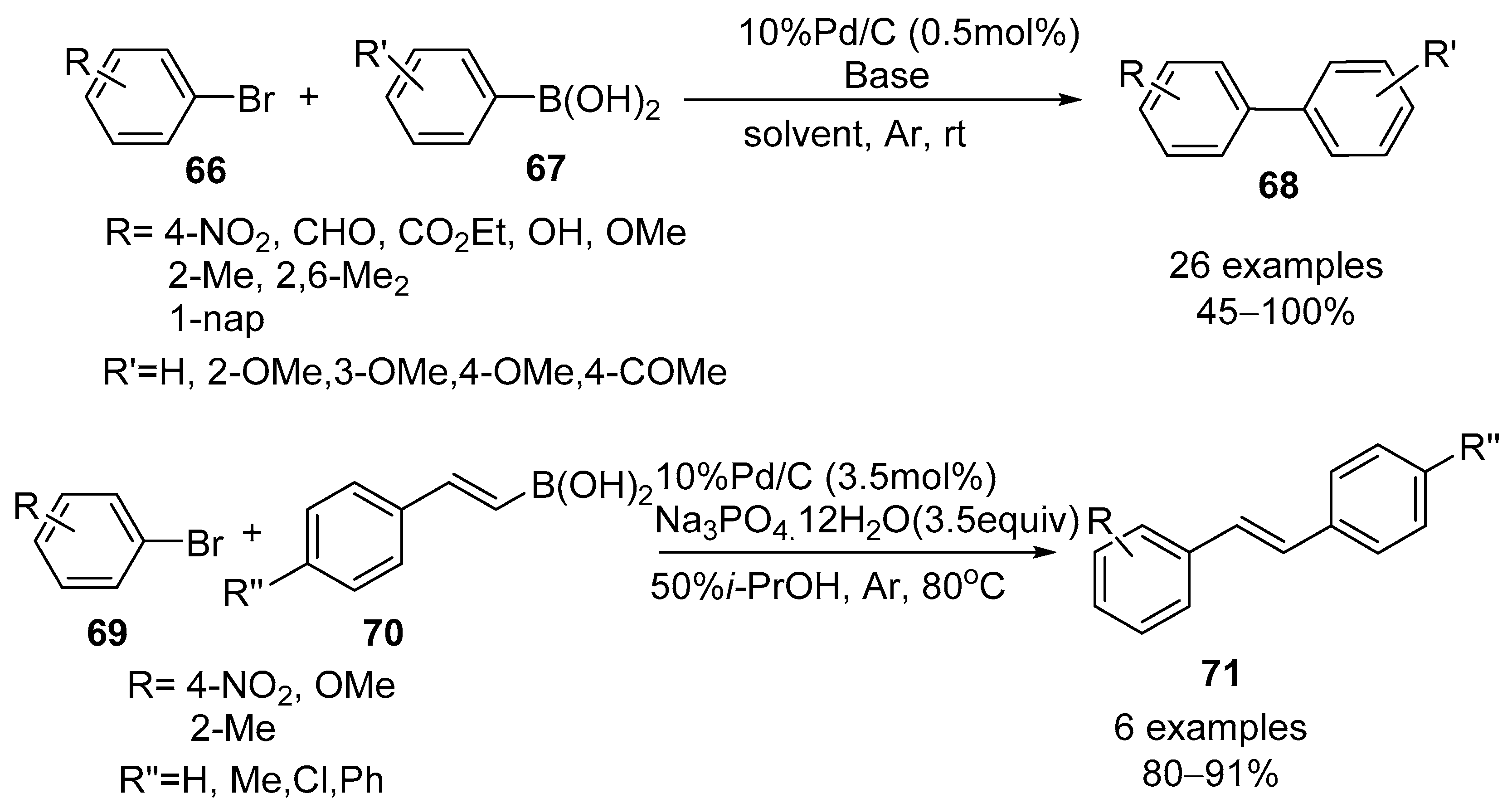
Sajiki’s group developed a ligand-free Pd/C-catalyzed Suzuki–Miyaura coupling reaction under mild conditions (Scheme 12) [46]. This environmentally friendly reaction was carried out at room temperature in aqueous media under argon. The tested vinyl boronic acids 70 gave the desired coupling product, while few reports were published on the Suzuki–Miyaura coupling of substrates other than aryl boronic acids [47]. The reaction proceeded smoothly, even, in certain cases, under aerobic conditions.
Scheme 12.
Pd/C-catalyzed Suzuki–Miyaura coupling reactions of various aryl and vinyl boronic acids.
The other Suzuki coupling reaction of aryl chloride and boronic acid via Pd/C catalyst assisted with appropriate ligands was developed by Simeone and co-workers [16]. 2-Dicyclohexylphosphino-2′-methylbiphenyl phosphines (MePhos) and 2-dicyclohexylphosphino- 2′,4′,6′-trisopropylbiphenyl phosphines (XPhos) were selected as efficient ligands in the reaction system. The Pd/C-ligand catalytic system is not environmentally friendly, but the results of catalyst recycling experiments indicated that the Pd/C could be reused multiple times; this catalytic system also gave a much higher yield compared to the ligand-free catalytic system (Table 3).
Table 3.
Ligand-free versus XPhos-assisted Pd/C-catalyzed Suzuki–Miyuara cross-couplings of aryl chlorides [a].
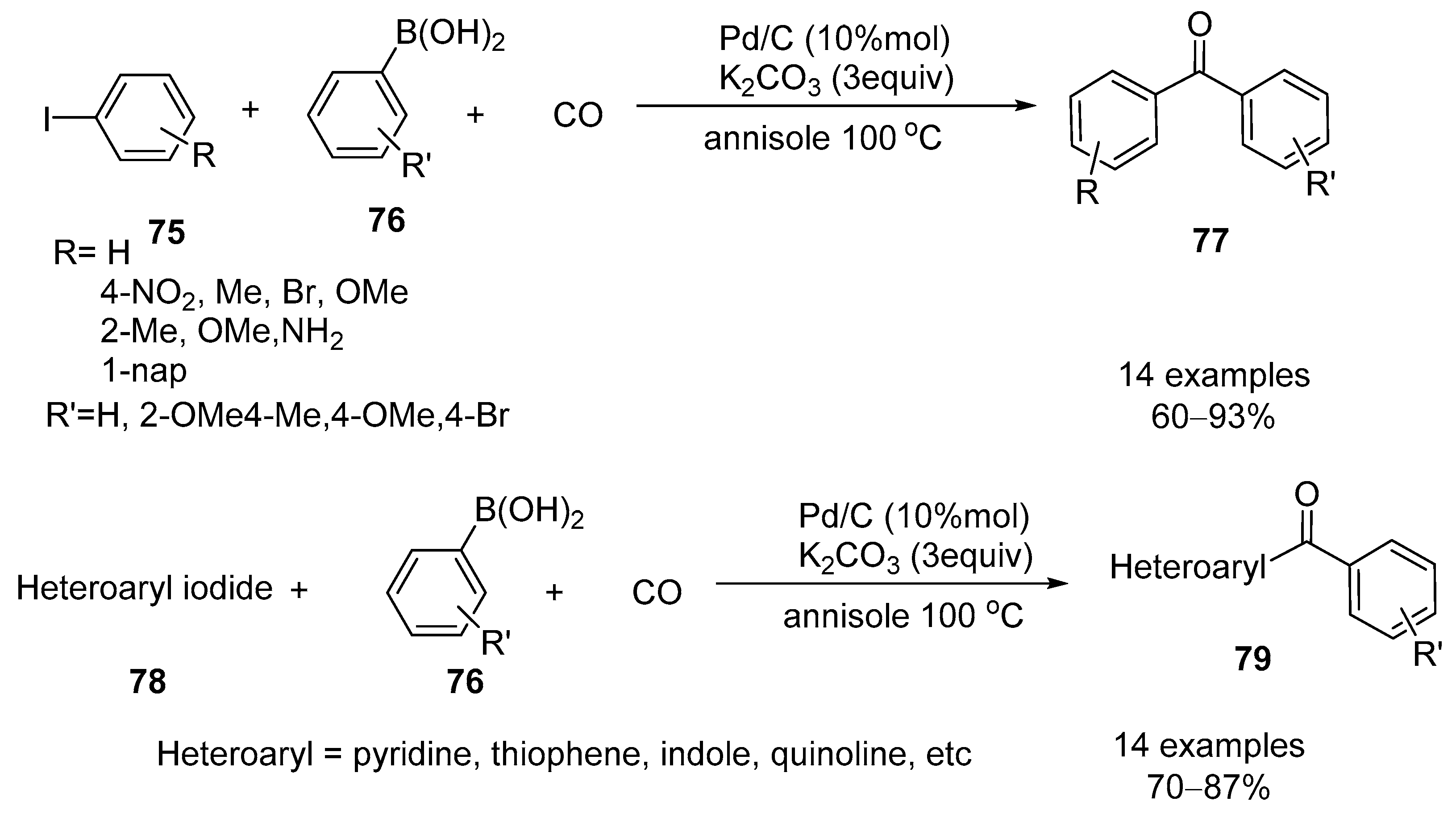
In 2010, Bhanage’s group reported a ligand-free Pd/C-catalyzed Suzuki–Miyaura coupling strategy that provided biaryl and heteroaryl carbonyl compounds (77, 79) (Scheme 13) [48]. In this coupling reaction, three-components, such as heteroaryl/non-heteroaryl iodide (75, 78), carbon monoxide and boronic acids 76, were involved. Notably, the treatment of these substrates in the presence of Pd/C at 100 °C afforded the corresponding coupling products in fair to excellent yield.
Scheme 13.
Pd/C-catalyzed synthesis of biaryl and heteroaryl carbonyl compounds.
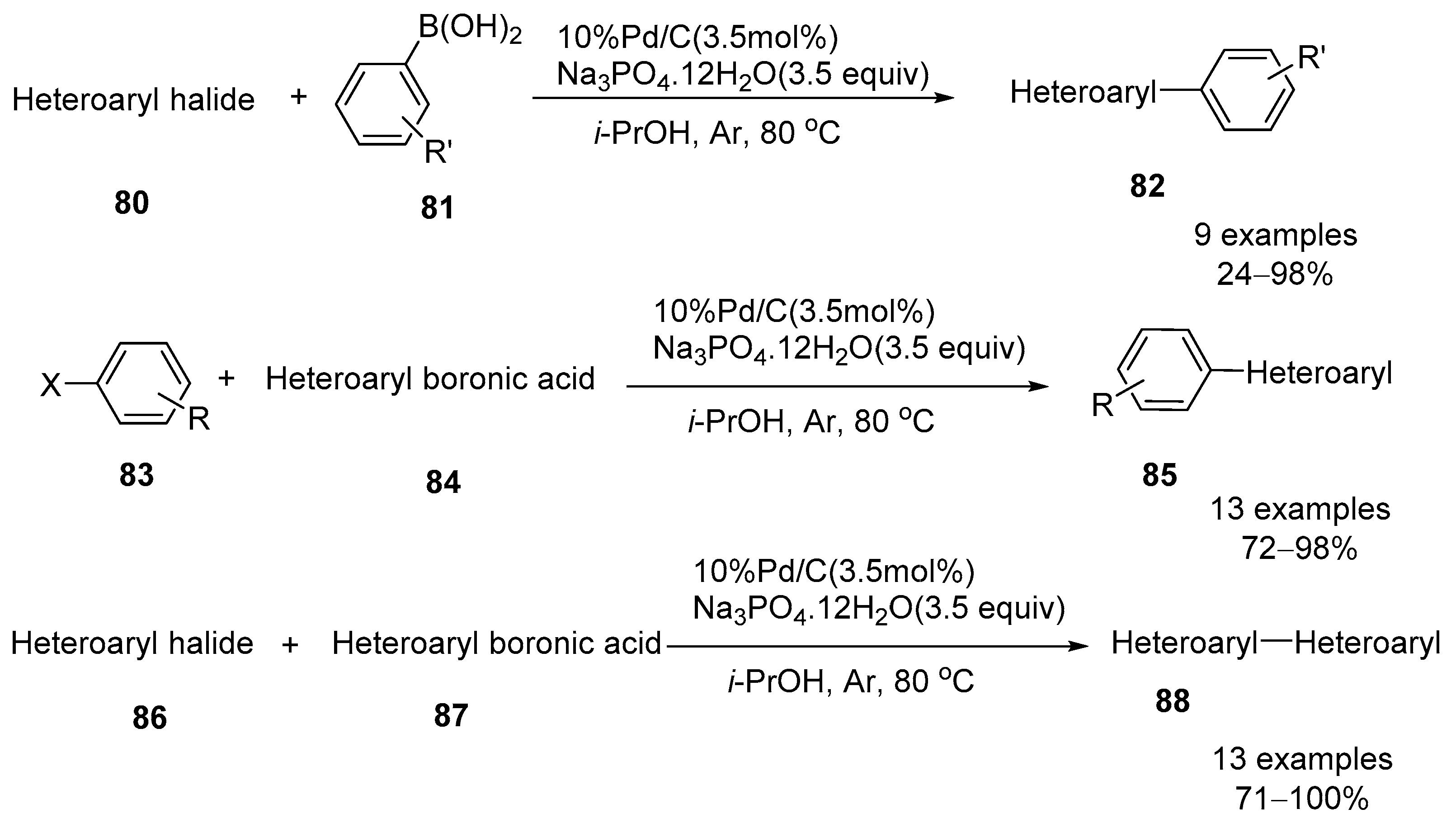
Sajiki and co-workers reported the hetero-Suzuki–Miyaura coupling reactions catalyzed by ligand-free Pd/C to afford both heterocyclic-alicyclic (82, 85) and heterocyclic-heterocyclic biaryl derivatives 88 (Scheme 14) [7]. The reaction between heteroaryl/non-heteroaryl halide and heteroaryl boronic acids were all accommodated in the reaction and gave moderate to excellent yields in the presence of trisodium phosphate as base. The aryl halides involved in this work are mostly aryl bromides.
Scheme 14.
Hetero-Suzuki–Miyaura couplings catalyzed ligand-free via Pd/C reduction.
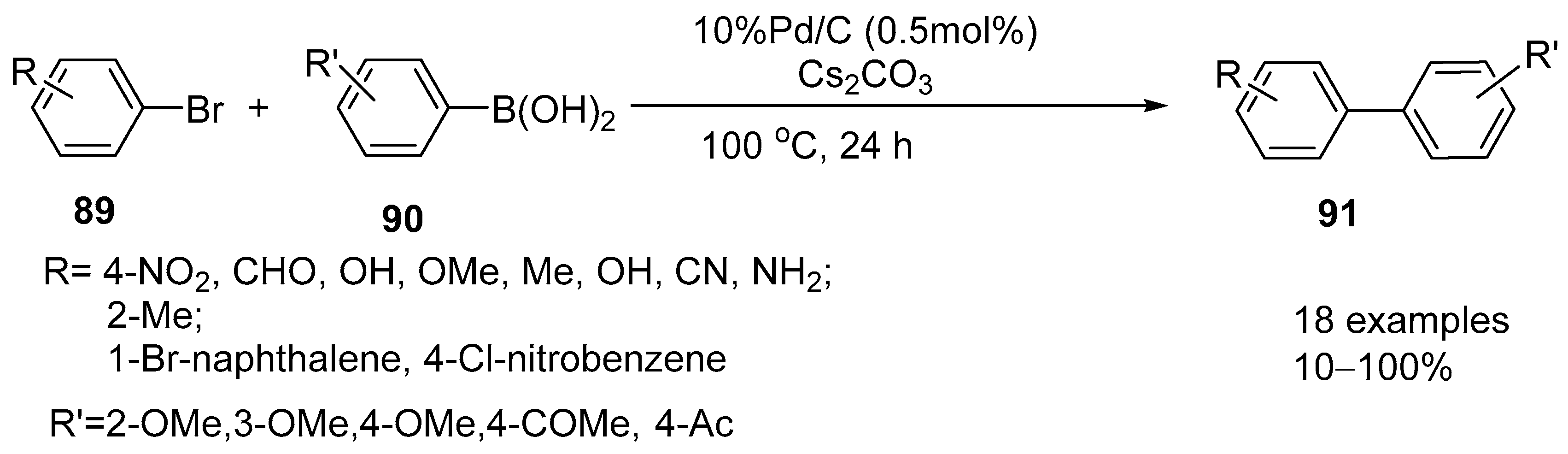
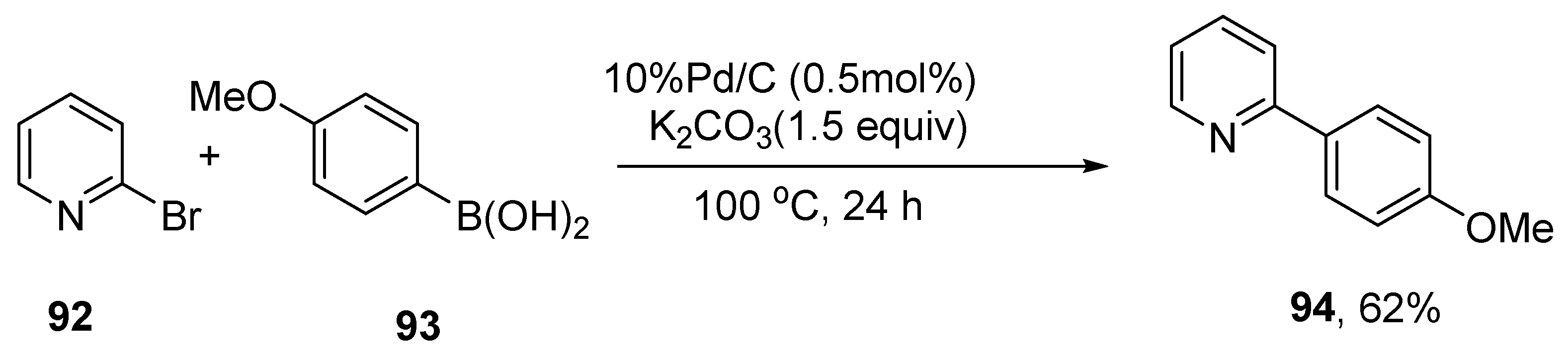
In their follow up studies, Sajiki’s group further disclosed solvent-free Suzuki coupling reactions via Pd/C catalyst [49]. The coupling reactions were taken place between solid aryl halides 89 and solid arylboronic acids 90, in the presence of solid 10% Pd/C and Cs2CO3 or K2CO3, under absolute solid-phase conditions, and afforded moderate to excellent yield for most substrates (Scheme 15). Moreover, solvent free synthesis in the solid state is a valid approach to obtain biologically active heterocycle rings in ecofriendly way [50]. In addition, this group studied a solvent-free Pd/C-catalyzed heteroaryl coupling reaction between 2-bromopyridine 92 and p-methoxyphenylboronic acid 93 (Scheme 16).
Scheme 15.
Solvent-free Pd/C-catalyzed synthesis of biphenyls.
Scheme 16.
Solvent-free Pd/C-catalyzed synthesis of 2-arylpyridine.
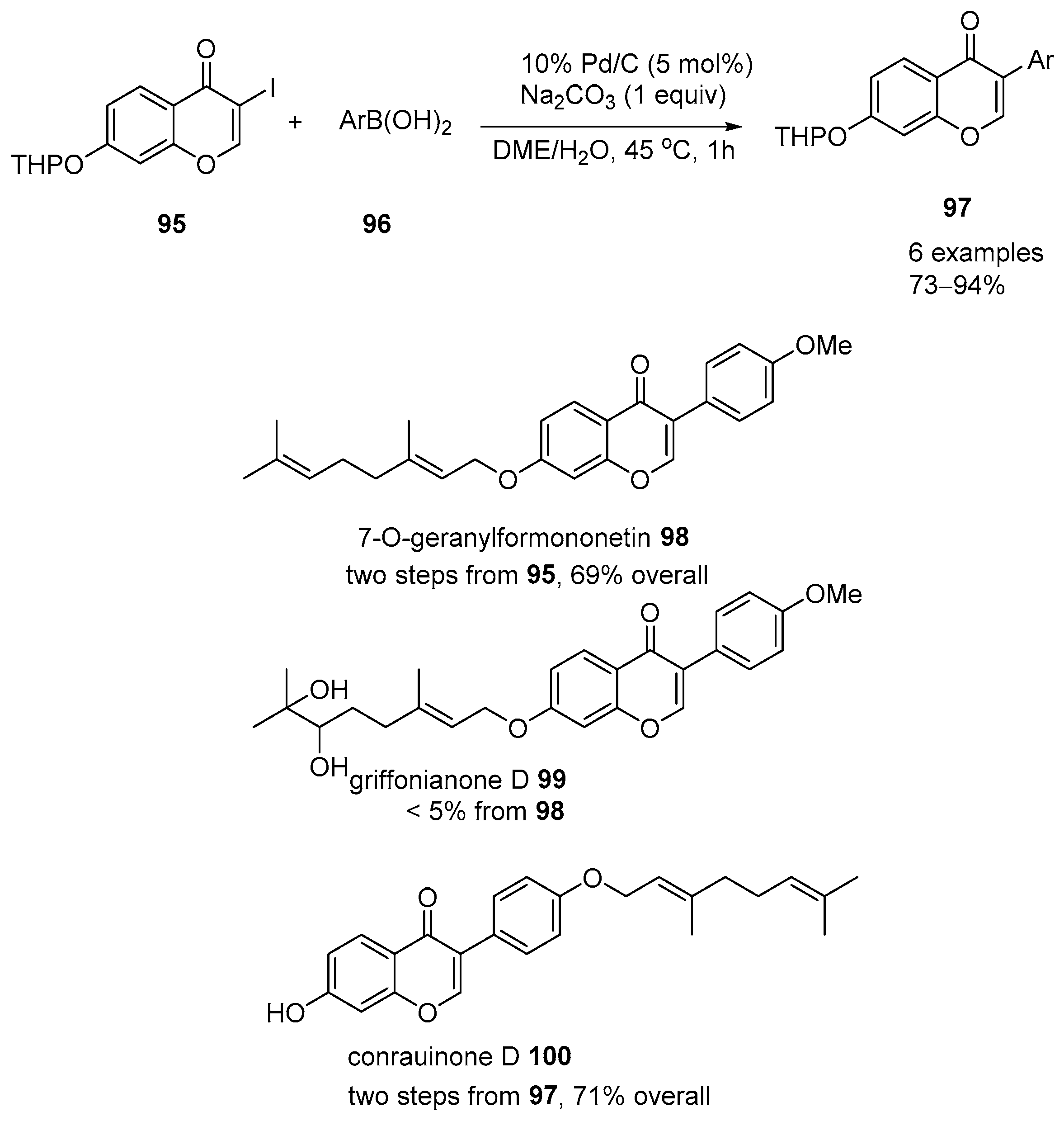
A ligand-free Pd/C-catalyzed Suzuki–Miyaura reaction protocol for the coupling cyclic 2-iodo enones 95 with boronic acids 96 was developed by Felpin’s group in 2005 [51]. This method was soon used for the synthesis of isoflavones. Tetrahydropyran (THP)-protected idochromanone was treated with arylboronic acid in aqueous dimethyl ether at 45 °C, giving the corresponding product at 73–94% yield. Further studies included the total synthesis of several isoflavones, such as 7-O-geranylformononetin 98, Griffonianon D 99 and Conrauinon D 100, via this coupling reaction (Scheme 17) [52].
Scheme 17.
Synthesis of various isoflavones.
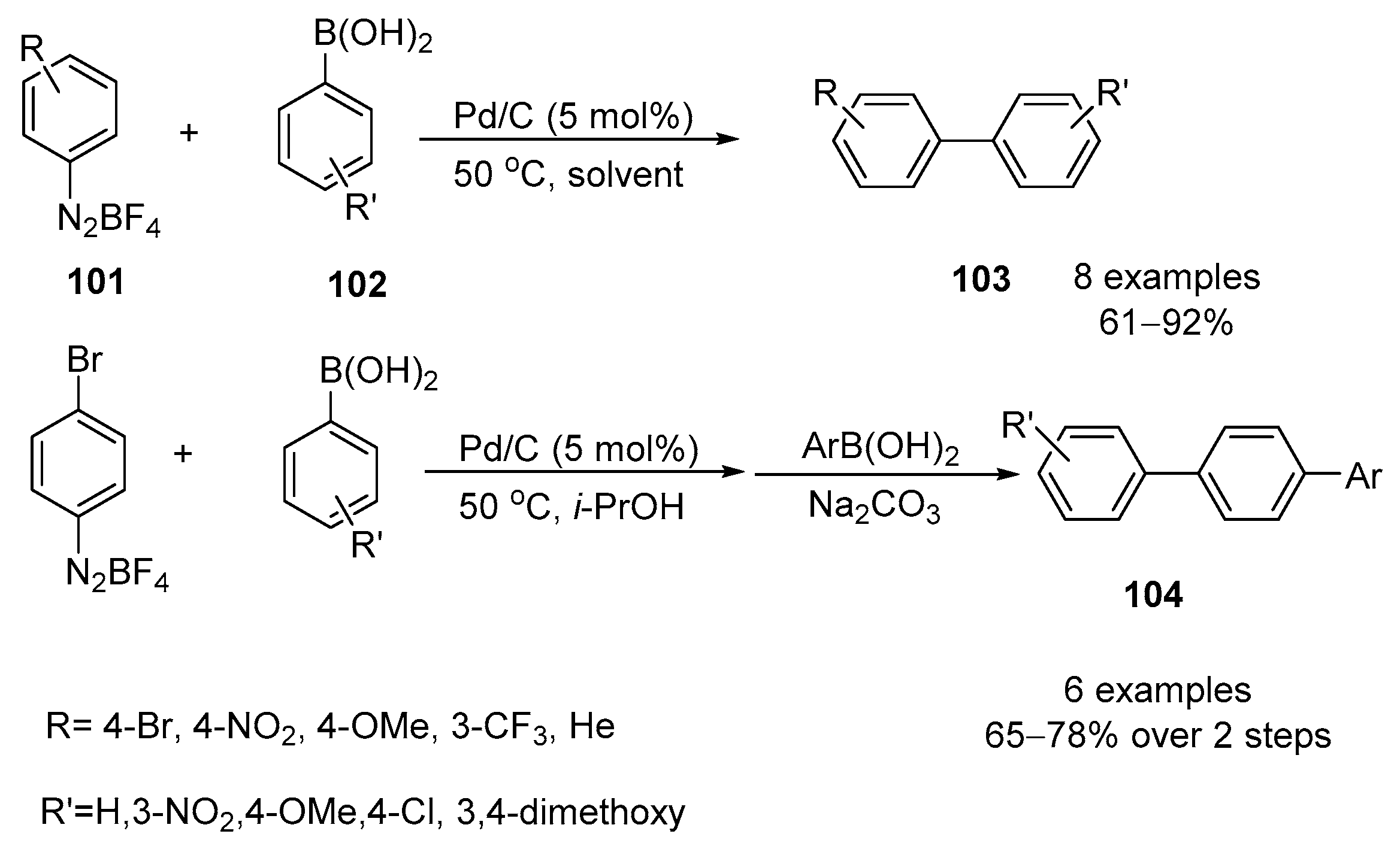
In the meantime, Felpin et al. developed a Pd/C-catalyzed Suzuki coupling of arenediazonium tetrafluoroborate salts 101 with boronic acids 102 to synthesize biphenyls 103 and terphenyl derivatives 104 (Scheme 18) [53]. The reaction underwent smoothly within several minutes even in the absence of any bases and ligands. Coupling products of halide-substituted arenediazonium salts could also be applicable to the subsequent Suzuki coupling reaction to construct terphenyls 104. In addition, a one-pot protocol to synthesize terphenyls, which started with arenediazonium salts, was also developed.
Scheme 18.
Synthesis of biphenyl and terphenyl derivatives via Pd/C catalysis.
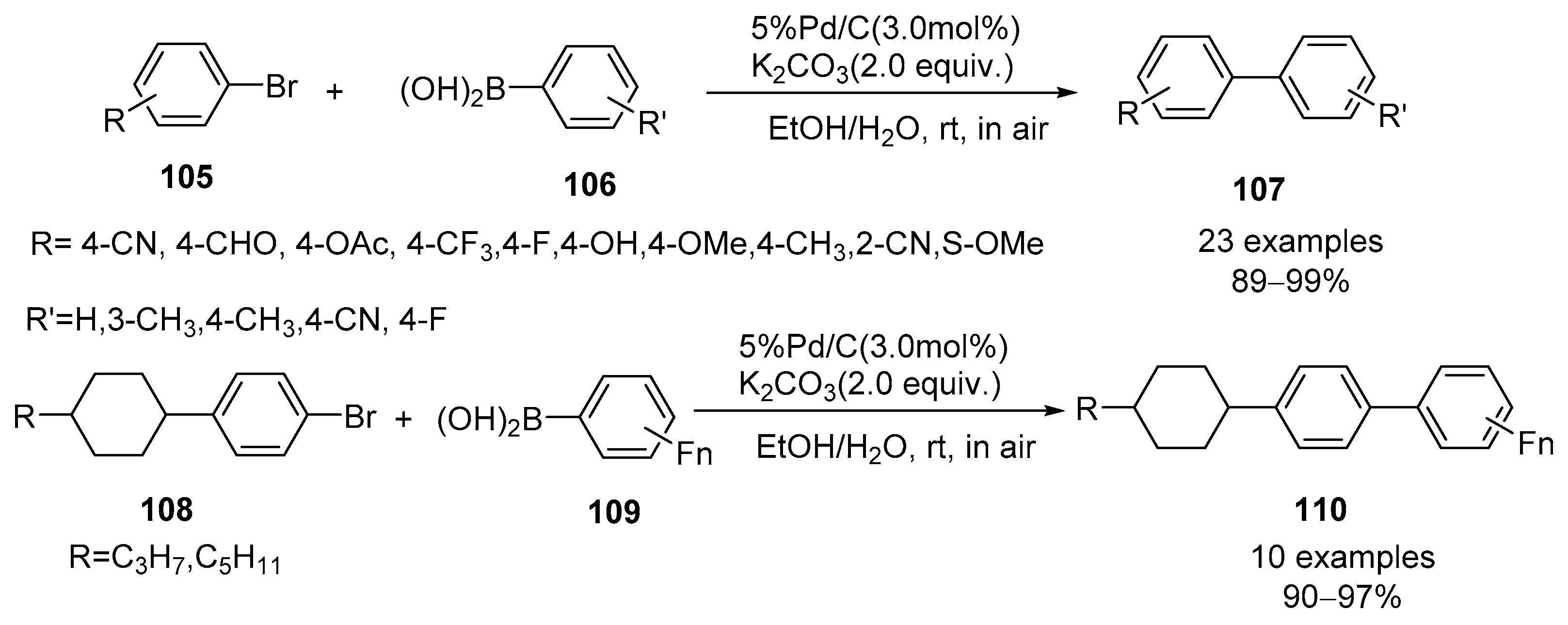
Liu’s group succeeded in realizing an aerobic Pd/C-catalyzed ligand-free Suzuki coupling reaction under mild conditions (Scheme 19) [54]. The authors identified that the reaction was much quicker under air or oxygen than under nitrogen atmosphere. The protocol was applied to synthesize fluorinated liquid-crystalline compounds 110 under mild reaction conditions.
Scheme 19.
Pd/C-catalyzed ligand-free Suzuki reaction.
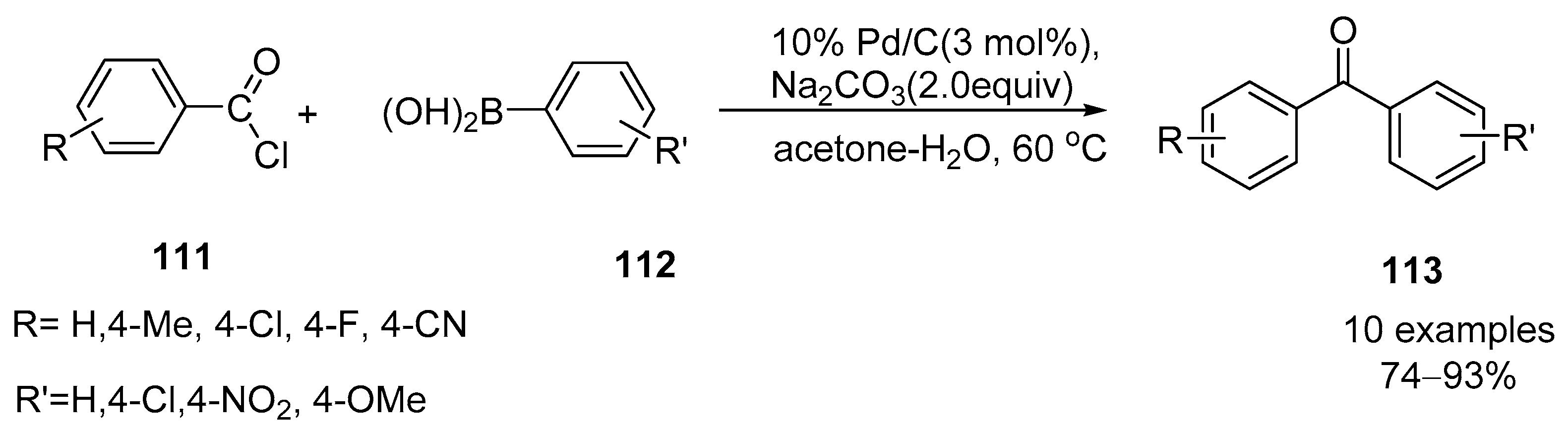
Bora’s group studied the Suzuki–Miyaura coupling of benzoyl chlorides 111 with arylboronic acids 112 for the synthesis of biaryl ketones 113 over heterogeneous Pd/C catalysts (Scheme 20) [55]. The reaction proceeded smoothly in the presence of sodium carbonate at 60 °C. The development of the carbon monoxide-free protocol for the synthesis of biaryl ketone derivatives contributed to the introduction of benzoyl chlorides as substrates.
Scheme 20.
Synthesis of biaryl ketones from benzoyl chlorides via Pd/C catalysis.
3.2.2. Sonogashira Coupling Reaction
Guzman and co-workers presented the first Pd/C-catalyzed Sonogashira coupling reaction in 1990 [56]. By treating aryl bromide with phenylaceylene in the presence of Pd/C, phosphine, copper(I) iodide and triethylamine, the coupling product was obtained at high yield (53–88%). The tetrakistriphenylphosphinepalladium (0) [Pd(PPh3)4], a homogeneous palladium catalyst, was detected in the reaction mixture.
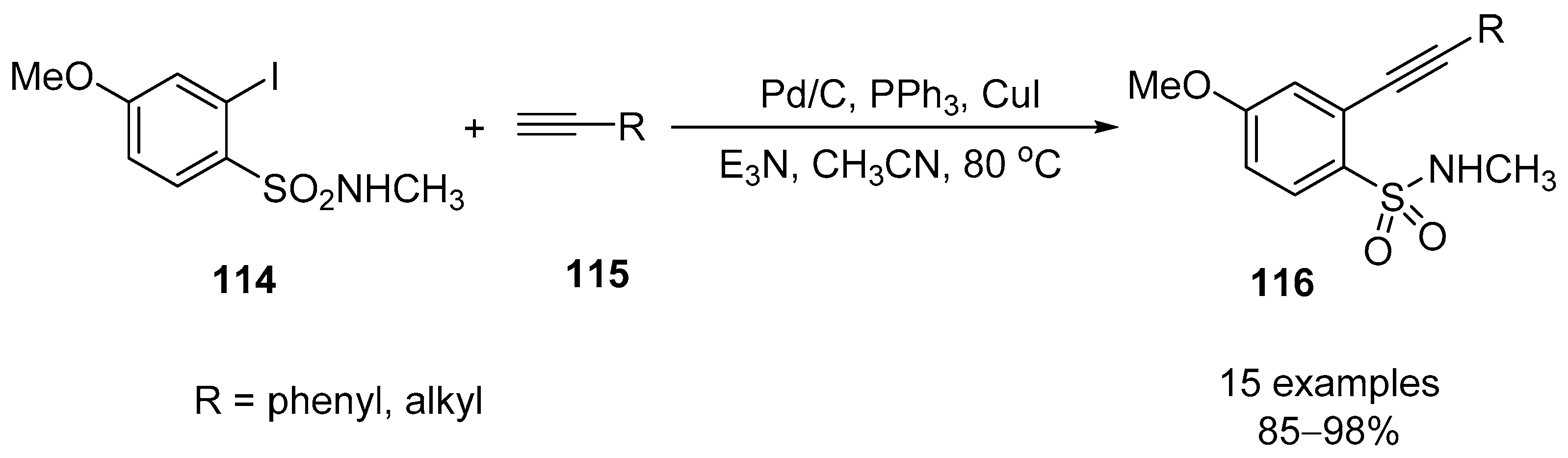
Pal’s group found Terminal alkynes 115 were treated with o-halobenzenesulfonamide 114 to afford the target products for iodocyclization (Scheme 21) [57]. The coupling process proceeded smoothly when acetonitrile was chosen as the solvent in the presence of Et3N, 10% Pd/C, PPh3, and CuI (a ratio of 1:4:2) at 80 °C. Further studies showed that the Et3N-Pd/C-PPh3-CuI catalytic system was efficient in Sonogashira reactions.
Scheme 21.
Pd/C-catalyzed Sonogashira coupling reaction.
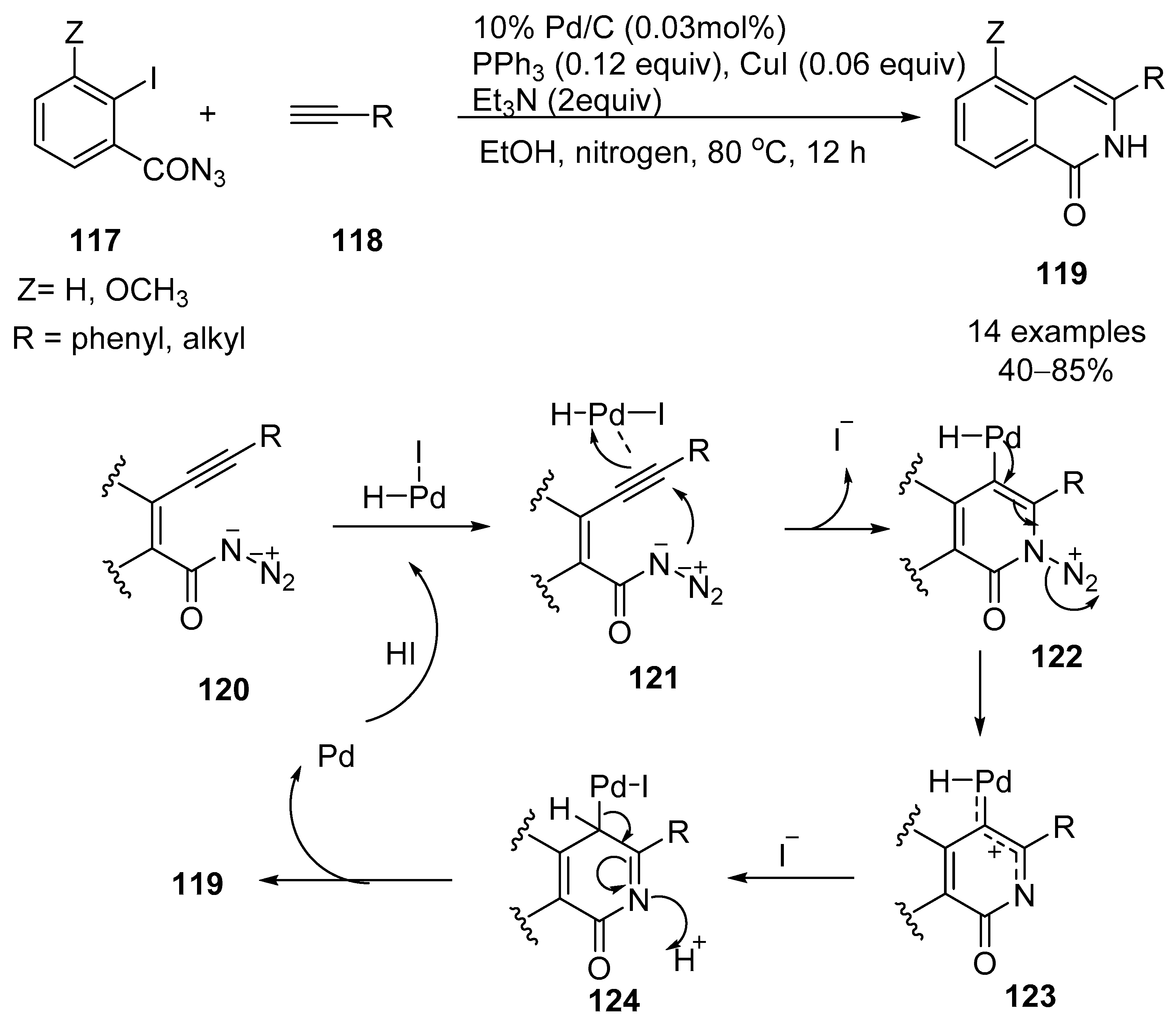
Pal and co-workers applied the Sonogashira coupling protocol to the synthesis of isoquinolones 119 (Scheme 22) [58]. The coupling reaction between 2-iodobenzoylazides 117 and terminal alkynes 118, followed by an intramolecular Schmidt reaction, afforded corresponding target products in moderate to excellent yields. The use of EtOH was key for the stereoselective formation of isoquinolones 119 instead of five-membered isoindolones. The Pd/C-CuI-PPh3 catalytic system was still significant for this new methodology in both the Sonogashira coupling and Schmidt cyclizing processes. A possible mechanism involves the in situ generation of o-alkynyl azido benzene 120 via Pd/C-mediated Sonogashira coupling, wherein Pd (II) generated 121 from Pd (0) activates the C-C triple bond, which undergoes nucleophilic addition by the proximal nitrogen of the azide. The subsequent loss of dinitrogen produces the cationic intermediate 123, which, as a result of the hydride shift followed by the regeneration of Pd (0), finally affords the isoquinolone 119.
Scheme 22.
Synthesis of isoquinolin-1(2H)-one via Pd/C catalysis.
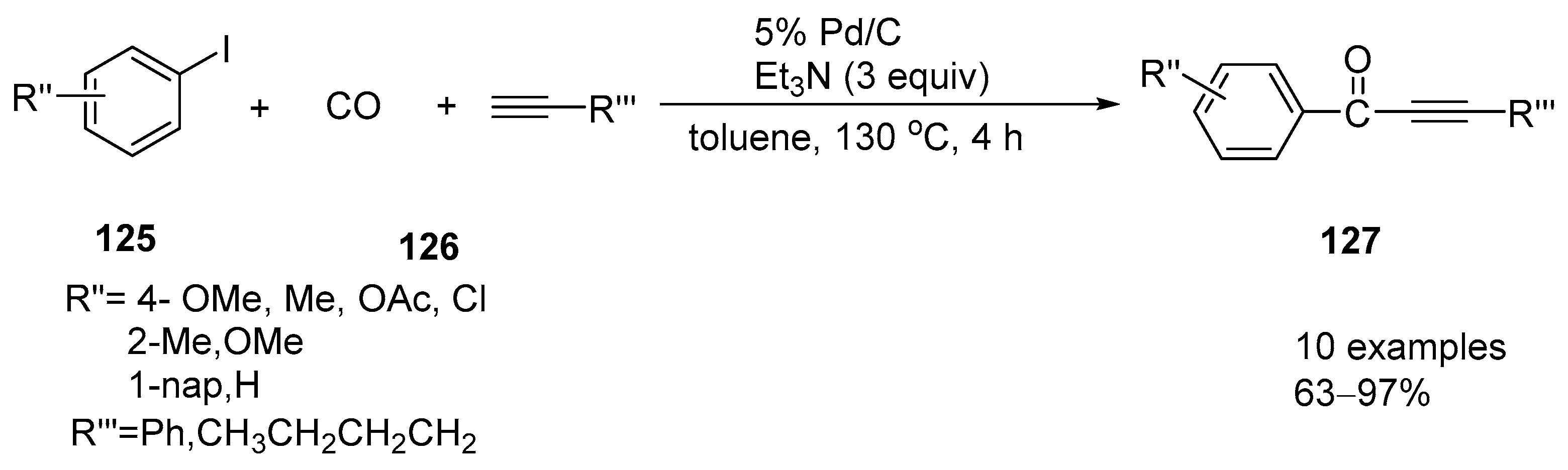
Liu and co-workers disclosed a phosphine-free Pd/C-catalyzed carbonylative Sonogashira coupling reaction (Scheme 23) [59]. This research was the first report on carbonylative Sonogashira coupling reactions achieved by heterogeneous catalysts. The three-component reactions were found to go smoothly in the presence of triethylamine in toluene at 130 °C. Only aryl iodides 125 showed reactivity in this investigation.
Scheme 23.
Phosphine-free Pd/C-catalyzed Sonogashira coupling reaction.
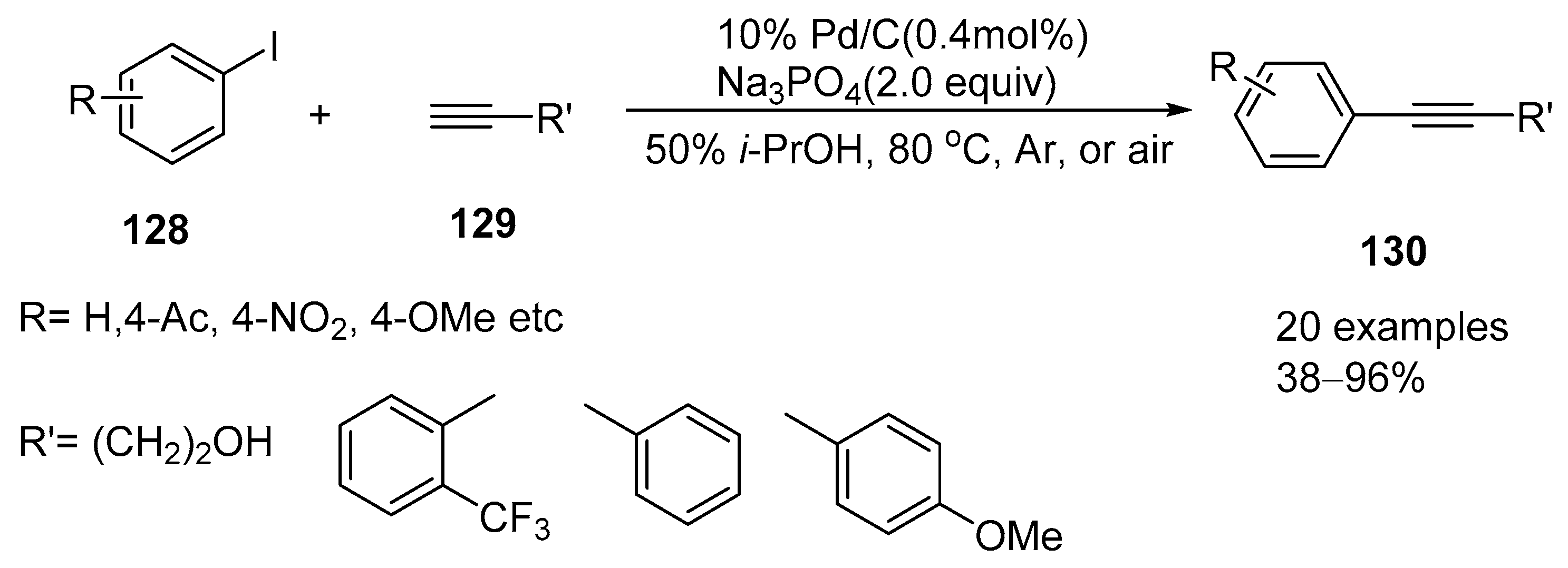
Sajiki’s group reported a ligand-, copper-, and amine-free Pd/C-catalyzed Sonogashira coupling reaction (Scheme 24) [60], and this was found to be applied to broader aryl iodide substrates as compared to Zhang’s work, which was mentioned previously [9]. The reaction was conducted by only a small (0.4 mol%) amount of 10% Pd/C catalysts in the presence of Na3PO4 at 80 °C. In this study, 50% i-PrOH was found to dissolve Na3PO4 well, and Na3PO4 was believed its pKa value is nearly the same as amines universally used for the traditional Sonogashira coupling reaction, such as triethylamine or diethylamine. The protocol could also be applicable in an aerobic atmosphere in certain cases.
Scheme 24.
Synthesis of phenylalkyne derivatives via Pd/C reduction.
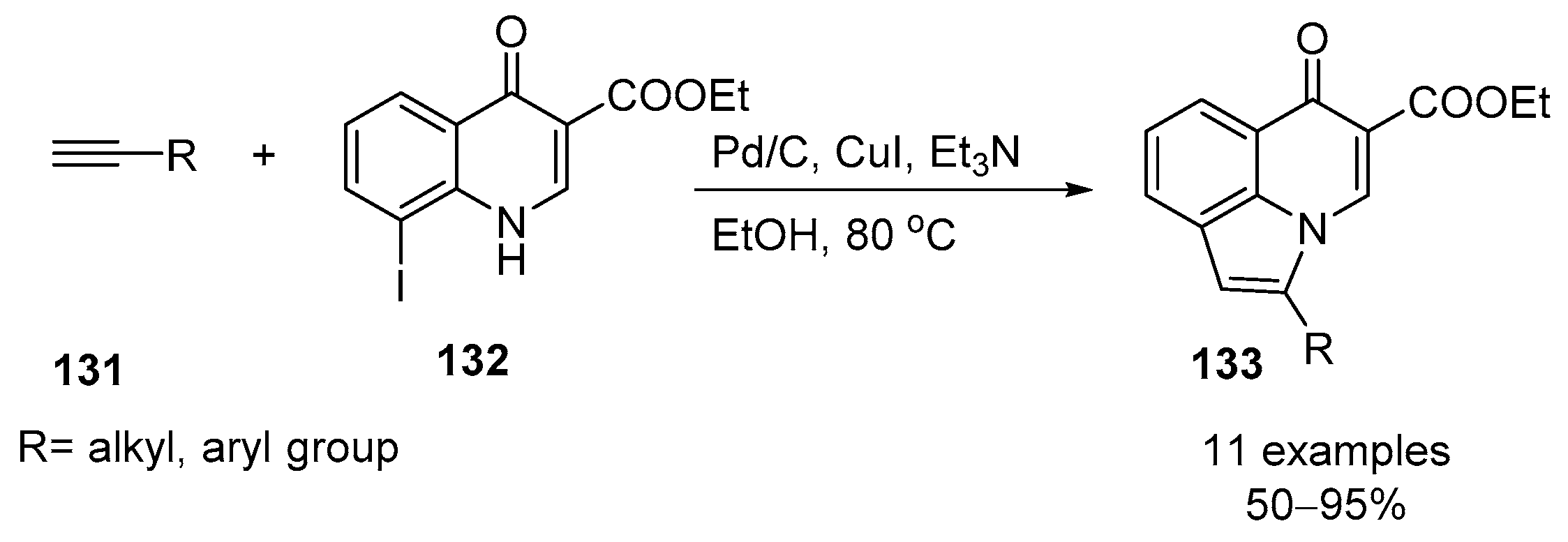
Pal’s group disclosed another Sonogashira coupling process to prepare 6-oxopyrroloquinolines 133 from quinoline derivatives 132 and terminal alkynes 131 (Scheme 25) [61,62]. The Pd/C, PPh3, and CuI (a ratio of 1:4:10) catalyst system was again proved efficiently in this Sonogashira reaction in refluxing ethanol. The reaction proceeded well with various substrates. An easy and inexpensive strategy was developed to access target products.
Scheme 25.
Synthesis of 6-oxopyrroloquinolines via Pd/C reduction.
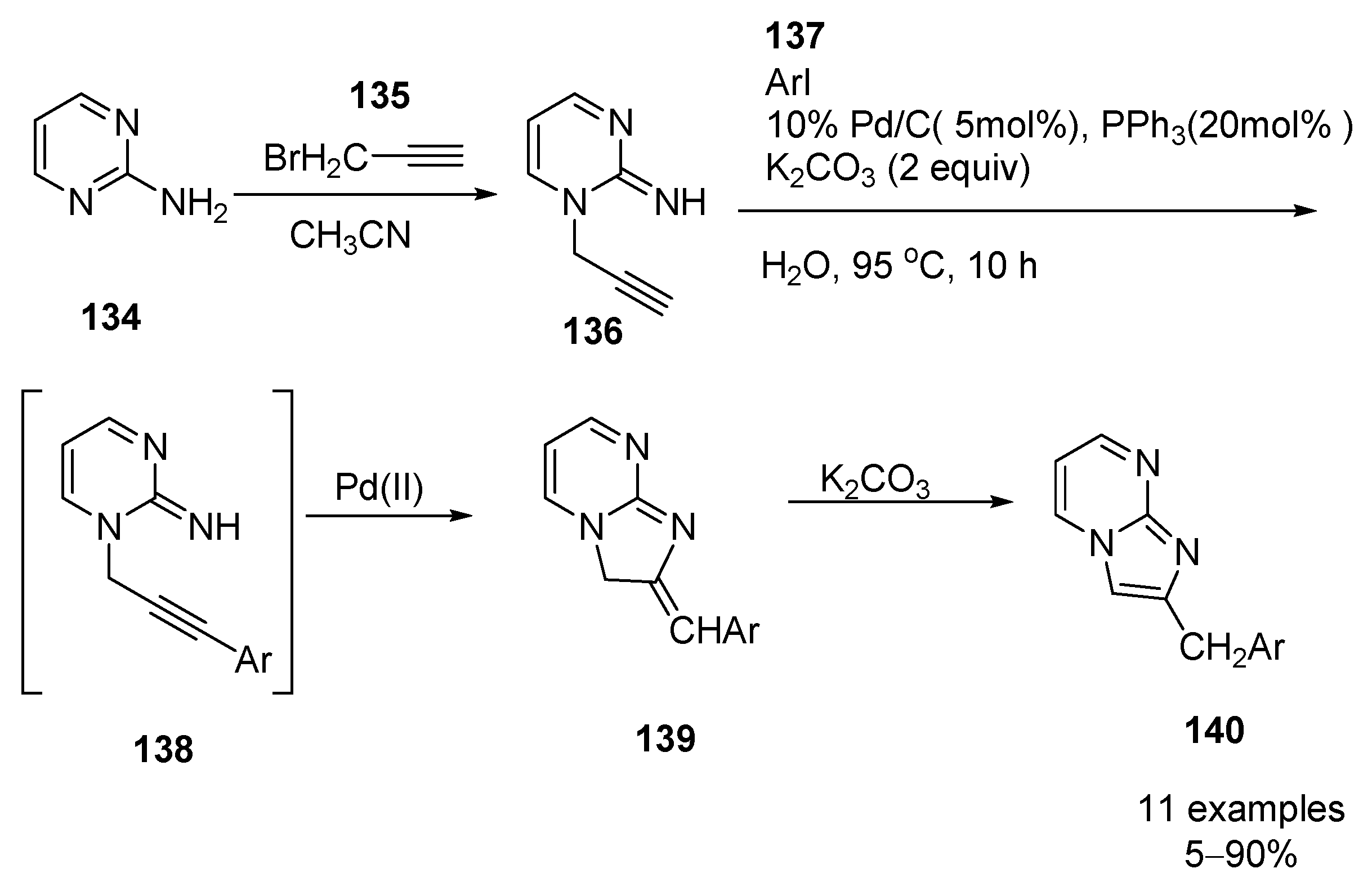
Bakherad and co-workers studied the synthesis of 2-benzylimidazo[1,2-α]pyrimidines 140 in which Pd/C-catalyzed Sonogashira coupling reaction played an important role (Scheme 26) [63]. Substrates were prepared by treating 2-aminopyrimidine 134 with propargyl bromide 135 in refluxing acetonitrile. The best results were obtained when the reactions were carried out with 5 mol % of Pd/C and 20 mol % of PPh3 at 95 °C in the presence of K2CO3 as a base. The new protocol does not employ hazardous copper iodide and still provided corresponding products in moderate to high yields.
Scheme 26.
Synthesis of 2-2benzylimidazo[1,2-α]pyrimidines via Pd/C reduction.
3.2.3. Hiyama Coupling Reaction
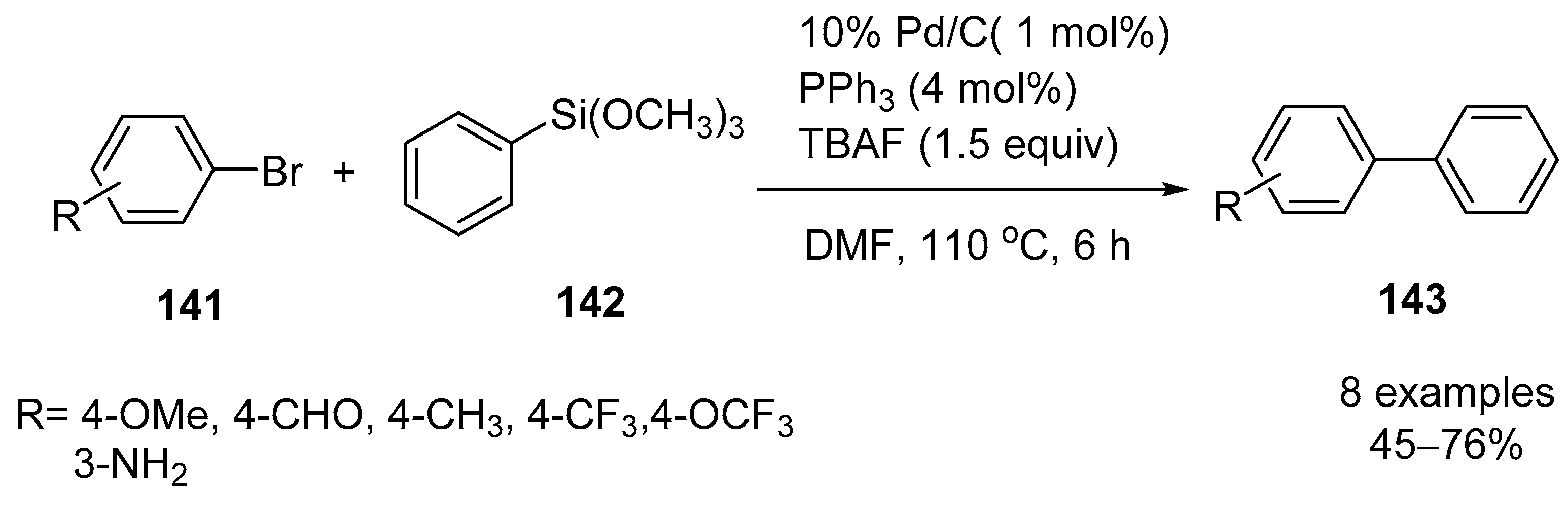
In 1988, Hiyama and Hatanaka discovered the coupling of organosilanes with organic halides in the presence of tris(diethy1amino)sulfonium difluorotrimethylsilicate (TASF) and allylpalladium chloride dimer to synthetically form C-C bonds with chemo- and regio-selectivity [64]. The heterogeneous Pd/C catalyst was first reported to be introduced into the Hiyama coupling reaction by Novak et al. in 2010 (Scheme 27) [65]. The coupling protocol required the assistance of 4 mol% PPh3 as a ligand and tetrabutylammonium fluoride (TBAF) as a fluoride source in the catalytic system. Moderate to good yields (45–76%) of desired products were obtained after condition optimization and substrate extension work.
Scheme 27.
Synthesis of biphenyl derivatives via Pd/C reduction.
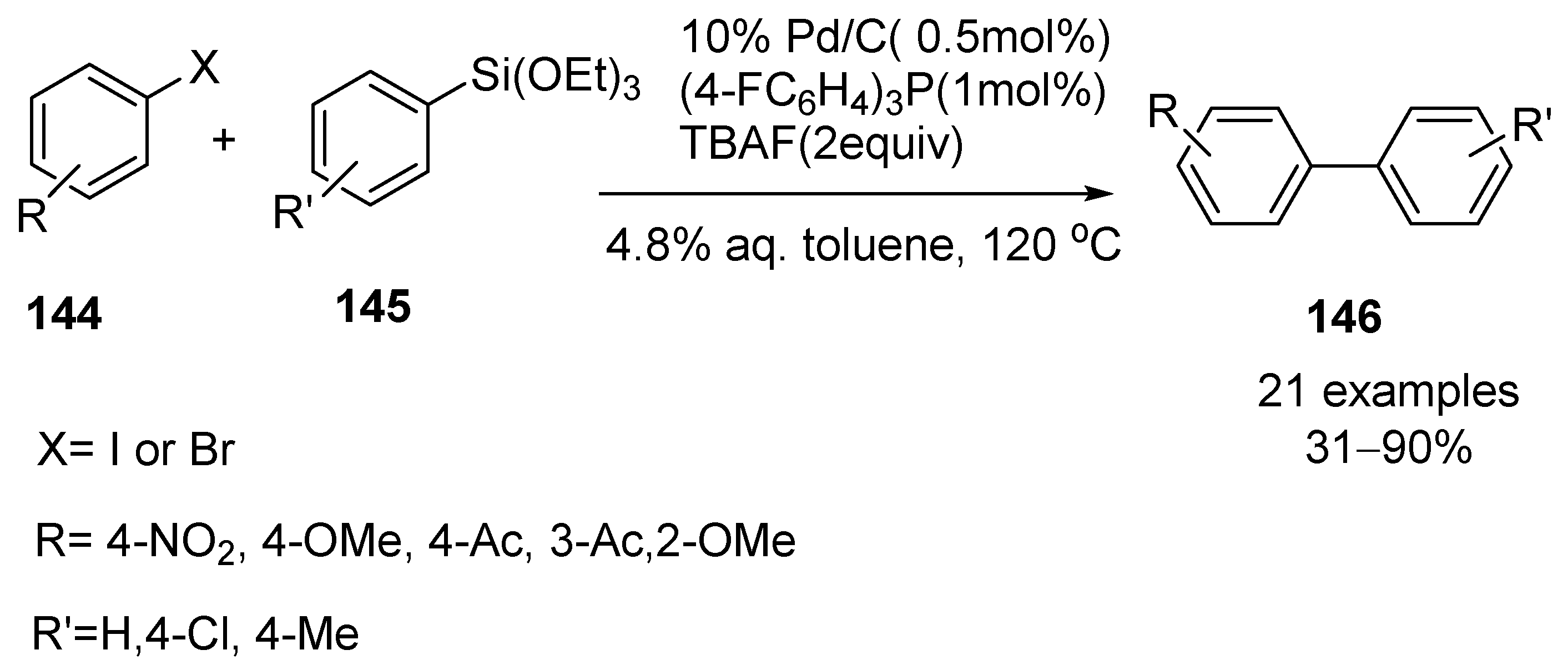
Sajiki and co-workers reported the Pd/C-catalyzed Hiyama coupling reaction of various aryl iodides or aryl bromides 144 with substituted aryltriethoxysilanes 145 (Scheme 28) [66,67,68]. The protocol required only a small amount of 10% Pd/C (0.5 mol%) assisted by 1 mol% tris(4-fluorophenyl)phosphine as ligand in the presence of TBAF in toluene at 120 °C. The addition of small amount of water in the reaction system was found to enhance the reaction efficiency. The hydrolysis of aryltriethoxysilane was promoted by water to give corresponding arylsilanol mixtures, leading to a decrease in electrophilicity in silicon atom centers, which promoted the subsequent formation of a silicate complex.
Scheme 28.
Synthesis of biphenyl derivatives via Pd/C reduction.
3.2.4. Other C-C Coupling Reaction
The Heck coupling reaction, known as the first heterogeneous Pd/C coupling reaction, has been fully developed since its discovery in 1972 [2]. In Heck coupling, aryl halides were used with vinyl derivatives to obtain coupling products, but they were not as efficient as those carried out with homogenous catalysts. The protocol was further developed and the mechanism was explored. Hallberg’s group optimized the reaction conditions and studied the regio- and stereoselectivity of the coupling process [69]. Arai and co-workers also focused on optimization work and contributed much to the elucidation of the mechanism of the Heck coupling procedure [70,71,72,73]. Köhler and coworkers first developed styrene by means of a Heck coupling reaction [74,75,76]. Several recent studies on the Heck coupling reaction are listed as follows.
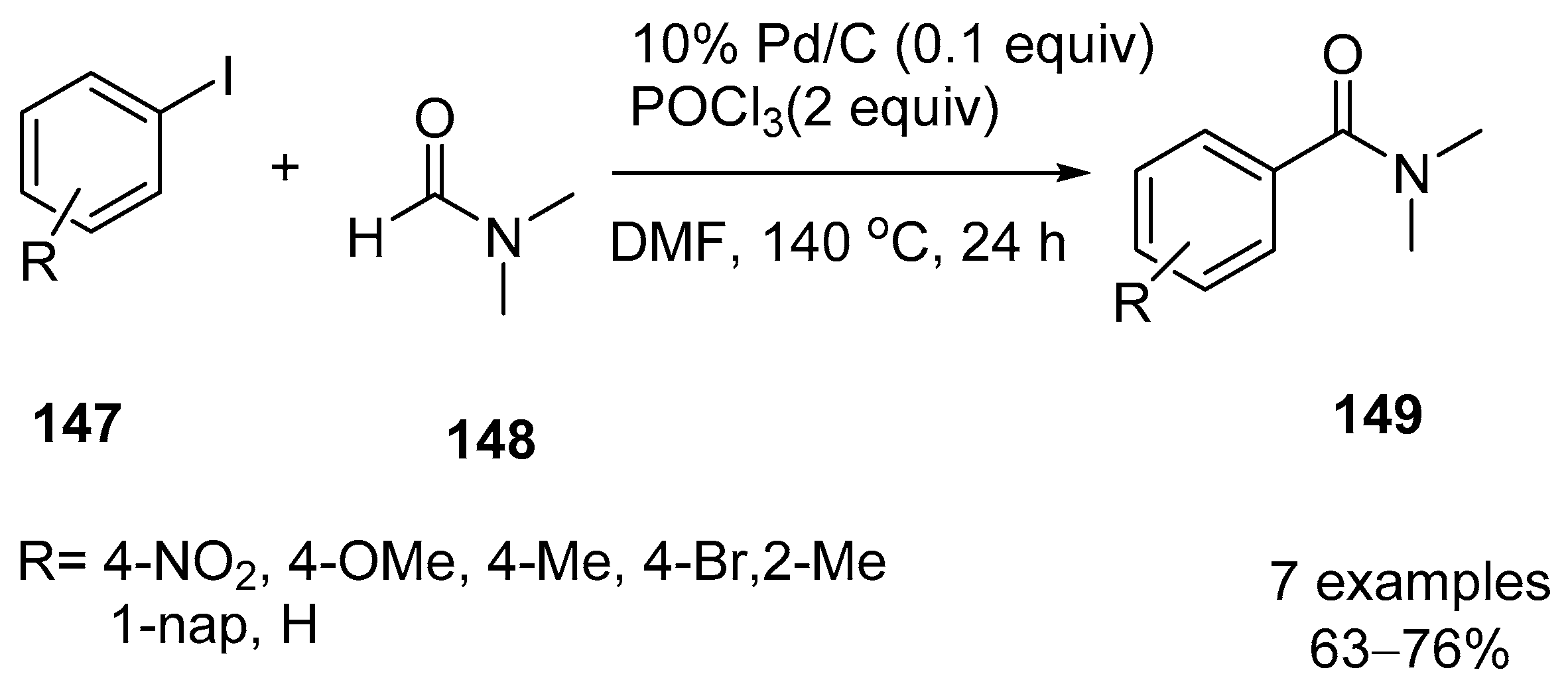
The Heck coupling strategy was applied to the aminocarbonylation of aryl iodides by Bhanage’s group in 2008 (Scheme 29) [77]. In the coupling process, N,N-dimethylformamide 148 (DMF) was treated with aryl iodides to avoid the use of carbon monoxide as a source of carbonyl groups. POCl3 was included in the reaction system to assist in the preparation of imminium salt from DMF, which underwent nucleophilic addition with aryl palladium iodide.
Scheme 29.
Synthesis of N,N-dimethylbenzamide derivatives via Pd/C reduction.
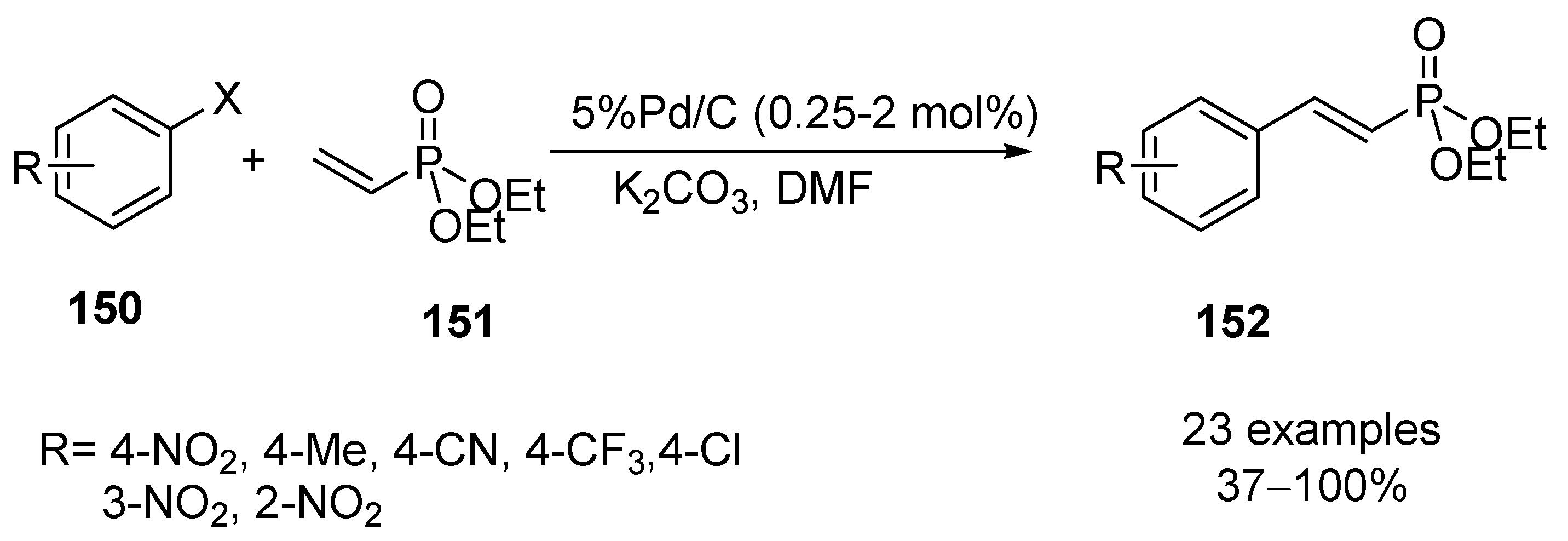
Djakovitch’s group investigated the synthesis of diethyl 2-(aryl)vinylphosphonate via a Pd/C-catalyzed direct Heck coupling reaction (Scheme 30) [78]. Diethyl vinyl phosphonate 151 was coupled with various aryl halides (Br or I) or heteroaryl halides 150 in DMF at 100–140 °C. The reactants were all commercially available and high conversions were observed. In the cases of aryl iodides or safely activated aryl bromides, only 0.25 mol% palladium was required in the reaction system.
Scheme 30.
Synthesis of styrylphosphonate derivatives via Pd/C reduction.
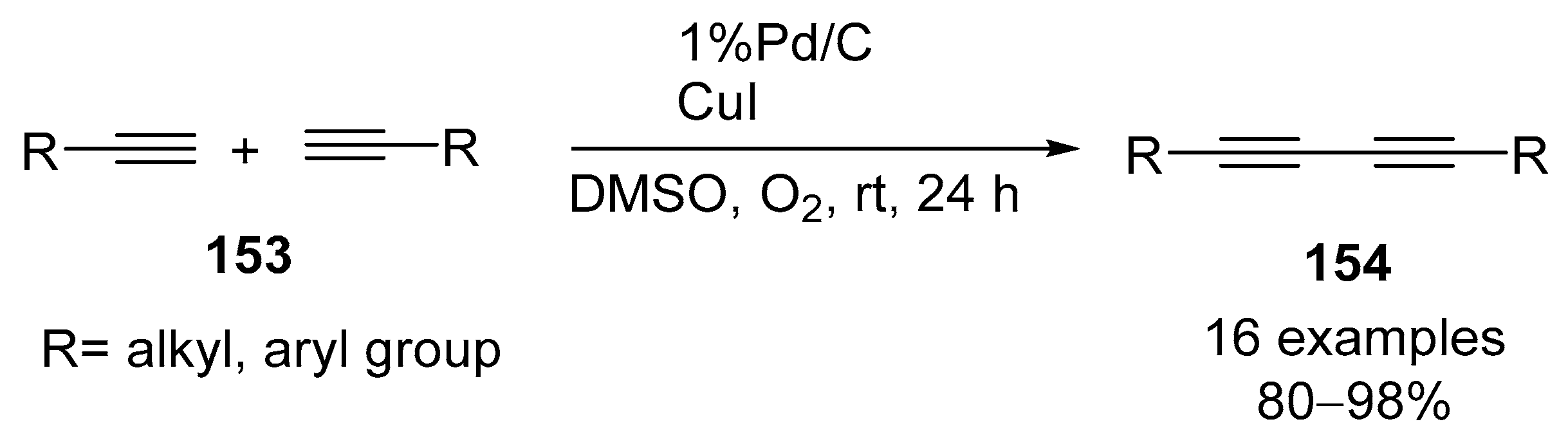
Sajiki’s group studied the Pd/C-catalyzed homocoupling of terminal alkynes 153 to produce 1,2-diynes 154, which is known as the Glaser coupling reaction (Scheme 31) [79]. Previous researchers studied the effect of copper catalysts and homogeneous palladium-copper catalysts on the homocoupling process [62]. Sajiki and co-workers worked on heterogeneous Pd/C-catalyzed protocol. Subsequent optimization work showed that only 0.01 mol% of 1%Pd/C was required with the support of 3 mol% CuI in DMSO as a solvent. Using this strategy, a variety of diyne derivatives 154 could be prepared in good to excellent yields.
Scheme 31.
Synthesis of diyne derivatives via Pd/C catalysis.
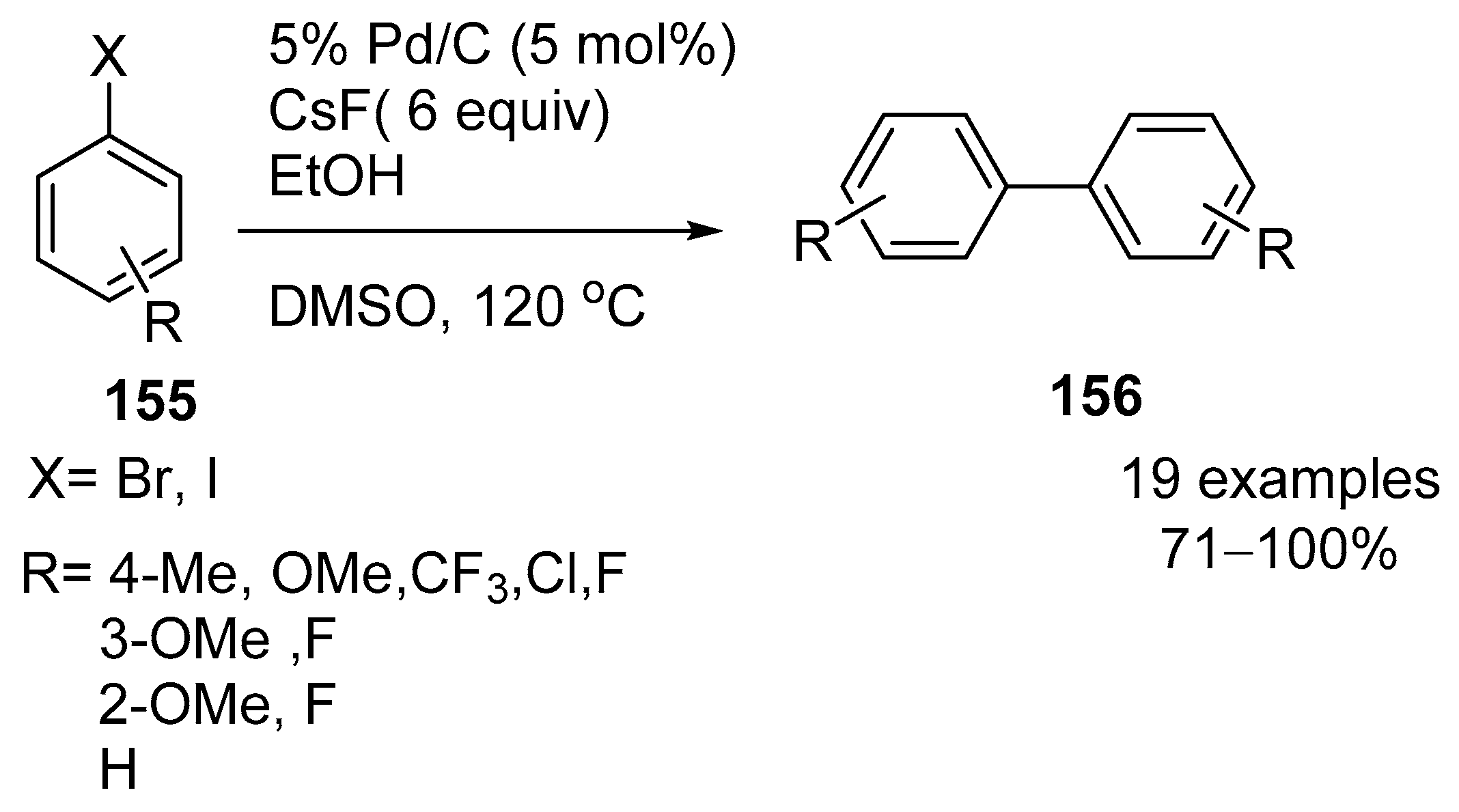
Qi’s group disclosed a Pd/C-catalyzed ethanol-promoted Ullmann-type homocoupling of aryl halides to provide biaryls (Scheme 32) [80]. An increasing aryl halides and biaryls conversion was observed with the increasing of the amount of ethanol, while the excess ethanol-induced self-reduction product suppressed the production of biaryls. Cesium fluoride was selected as efficient base in the optimization process and the reaction went smoothly in DMSO at 120 °C. The amount of ethanol varied from 0.86eq. to 8.56eq. as different aryl halides were selected as reactants.
Scheme 32.
Synthesis of biphenyl derivatives via Pd/C reduction.
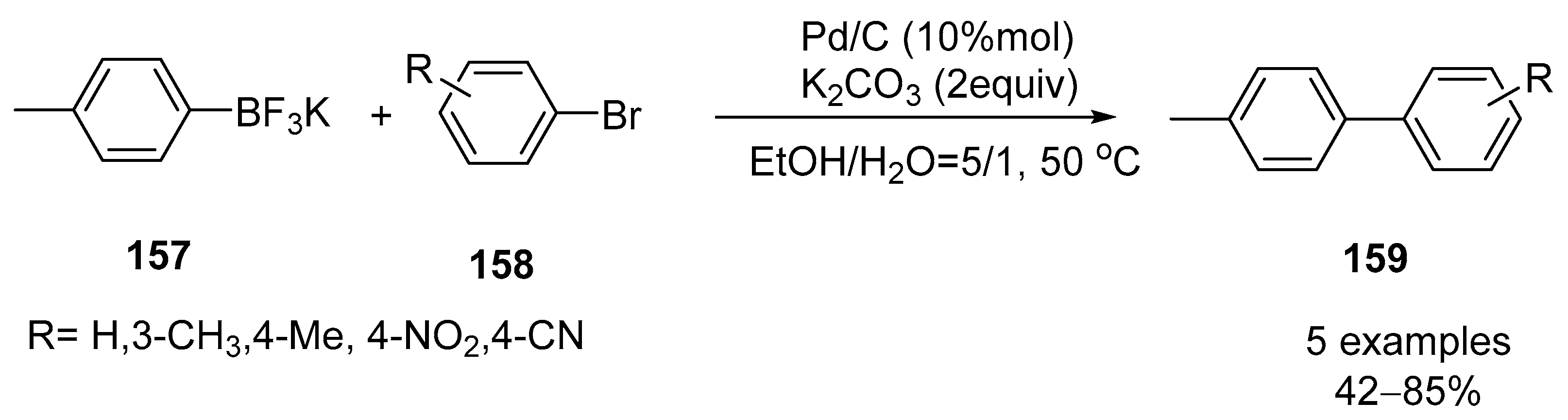
Leblond and co-workers discovered the couplings that involved the use of potassium p-tolyltrifluoroborate 157 instead of boronic acid and boronic esters (Scheme 33) [81]. The protocol could only be applied to aryl bromides and iodides, while a green, easily prepared and stable salt was introduced as a substrate. The reaction proceeded well under mild conditions (ethanol/water = 5:1, Pd/C 10 mol% and K2CO3 at 50 °C) and the corresponding products were obtained in moderate to good yield (42–85%).
Scheme 33.
Synthesis of biphenyl derivatives via Pd/C reduction.
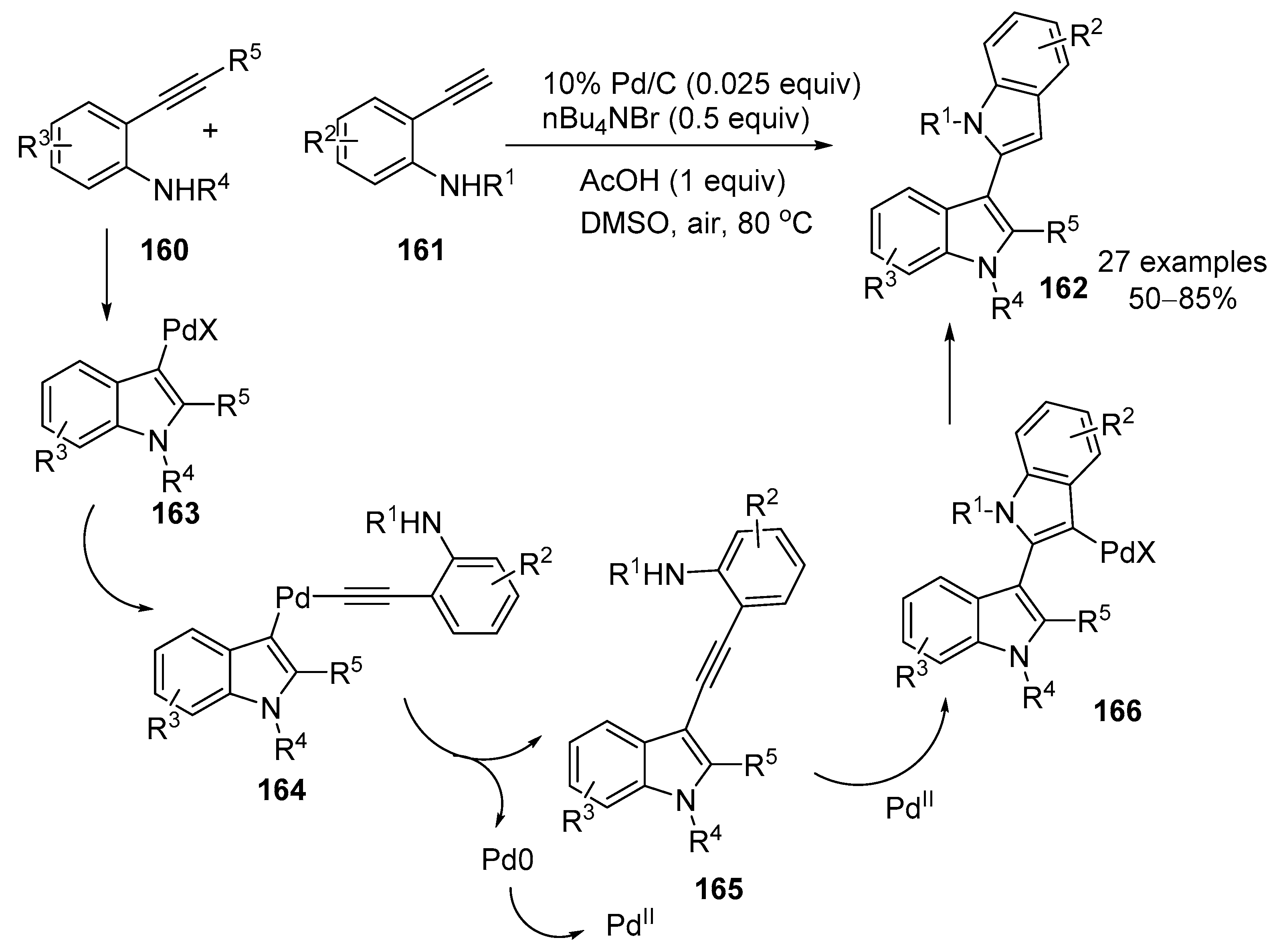
Zhu’s group developed a cyclization coupling to obtain 2,3′-bisindoles 162 (Scheme 34) [82]. The strategy involved cross-coupling of two o-alkynylanilines (160, 161) and was conducted in the presence of nBu4NBr and acetic acid. The possible mechanism for the formation of bisindole is shown as follows. Selective aminopalladation of 160 would afford the s-indolylpalladium (II) intermediate 163 that, upon ligand exchange, would provide 164. Reductive elimination, followed by N-demethylation, would then provide 3-alkynylindole 165 and Pd0. Oxidation of Pd0 to PdII followed by a second aminopalladation would afford 166 that, upon demetallation, was expected to produce the bisindole 162.
Scheme 34.
Pd/C-catalyzed synthesis of indole derivatives.
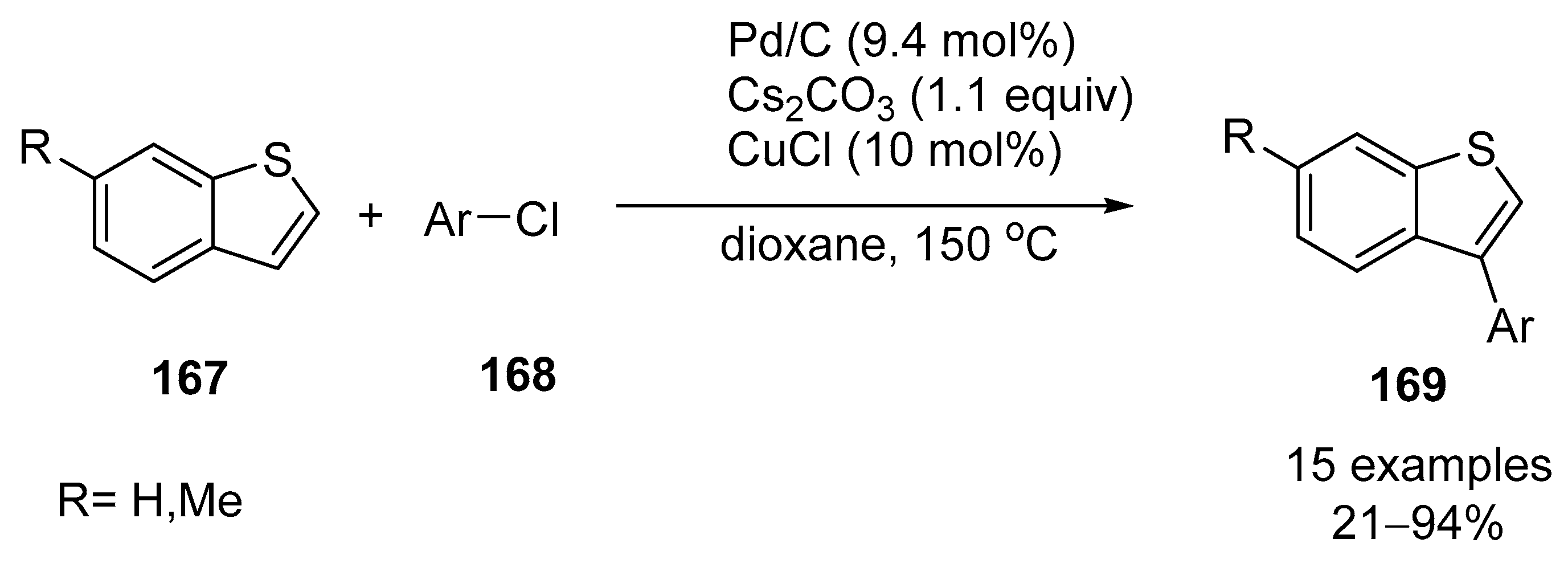
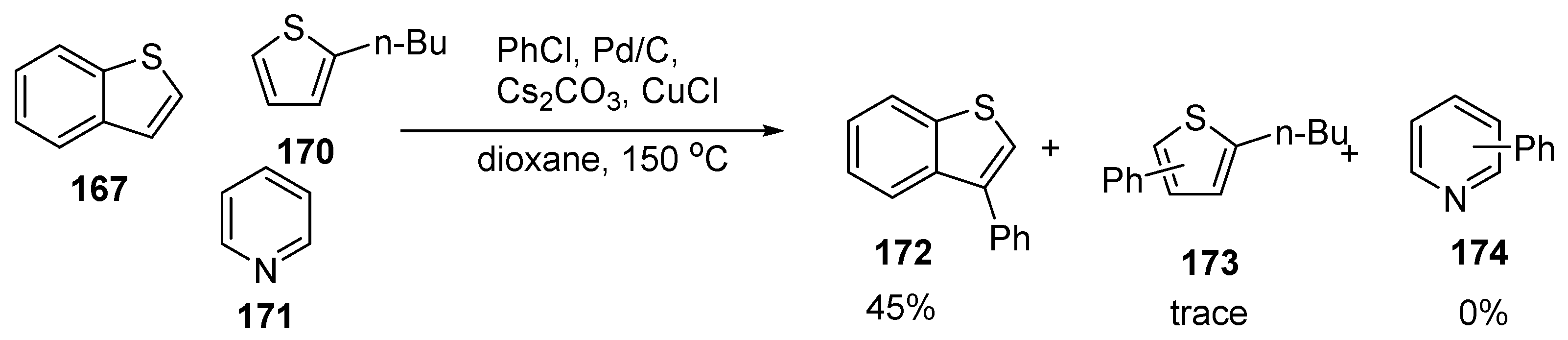
Glorius and co-workers developed an efficient protocol for the arylation of benzo[b]thiophene 167 catalyzed by heterogeneous Pd/C catalyst (Scheme 35) [83]. Treatment of benzo[b]thiophene 167 with chlorobenzene 168 in the presence of Pd/C catalysts at 150 °C was found to provide corresponding 3-arylbenzo[b]thiophene 169 with high C3/C2 selectivity. The yield reached 60% after standard optimization of the reaction conditions. To further improve the yield of the reaction, CuCl was found to enhance reactivity by activating the Lewis acid of benzo[b]thiophene 167. Further study suggested a high selectivity in an intermolecular competition with pyridine 171 and butylthiophene 170 when treated with chlorobenzene under standard optimized reaction conditions (Scheme 36).
Scheme 35.
Synthesis of benzo[b]thiophene derivatives via Pd/C reduction.
Scheme 36.
Intermolecular competition experiment.
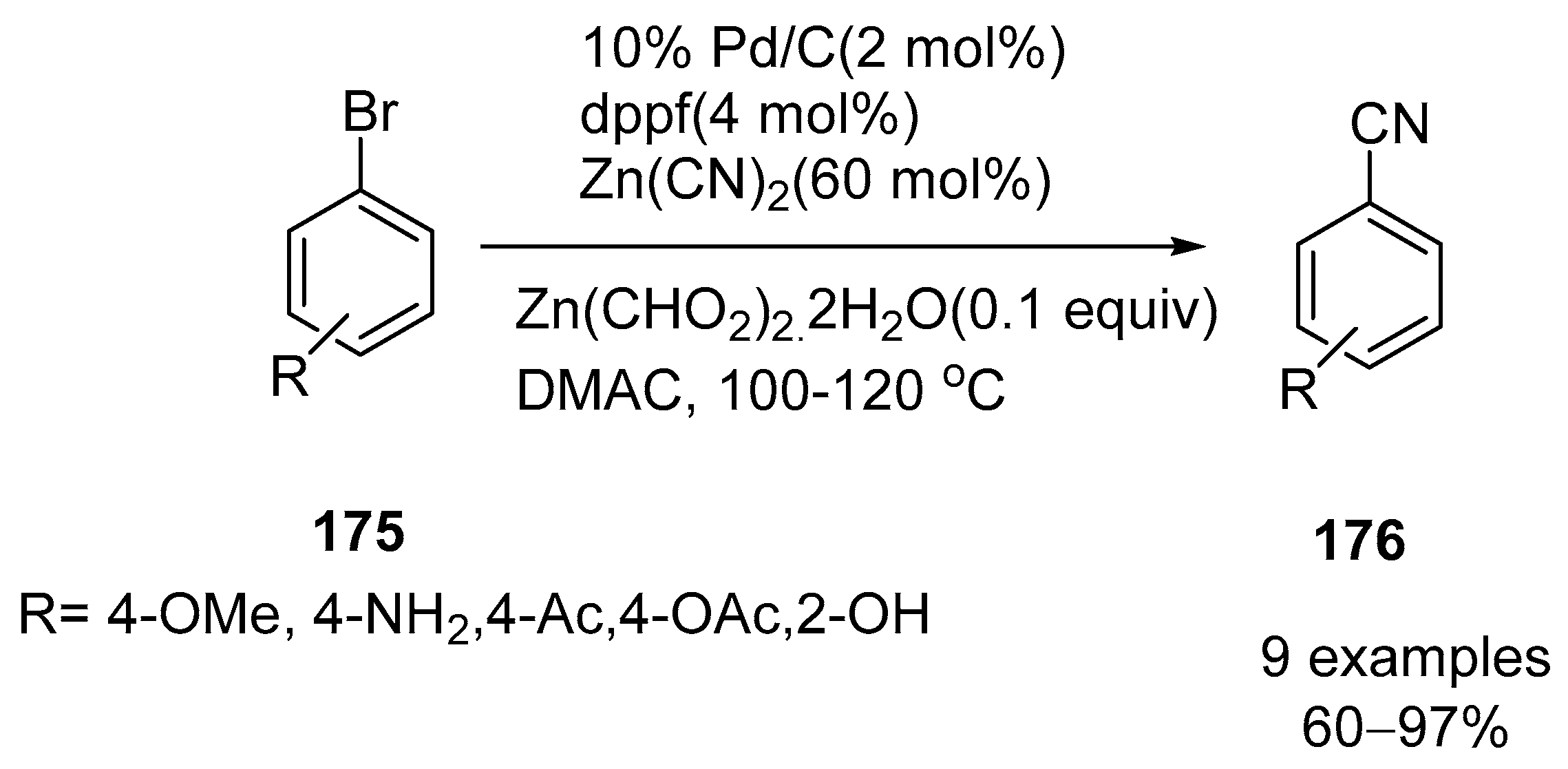
In 2005, Seki et al. reported a Pd/C-catalyzed cyanation of aryl halides via zinc reagents [84]. Based on the cyanation work of Seki’s group, Yu et al. explored a Pd/C cyanation method to produce aryl cyanide 176 from aryl halides 175 and extended the substrates (Scheme 37). The fact that cyanide ion could easily interact with palladium caused the deactivation of the Pd/C catalyst. Weakly ionizable M-CN bonds, such as zinc cyanide, were selected as cyanide ion sources assisted by Zn (CHO)2.2H2O. 1,1′-bis(diphenylphosphino)ferrocene (dppf) was selected as an efficient ligand. The reaction was processed in dimethylacetamide at 100–120 °C. The protocol could be applied to various aryl bromides and active aryl chlorides. The Pd/C-catalyzed cyanation of heteroaryl halides was also explored and corresponding cyanation products were obtained in moderate to good yields.
Scheme 37.
Synthesis of benzonitrile derivatives via Pd/C reduction.
3.2.5. Other C-X Coupling Reaction
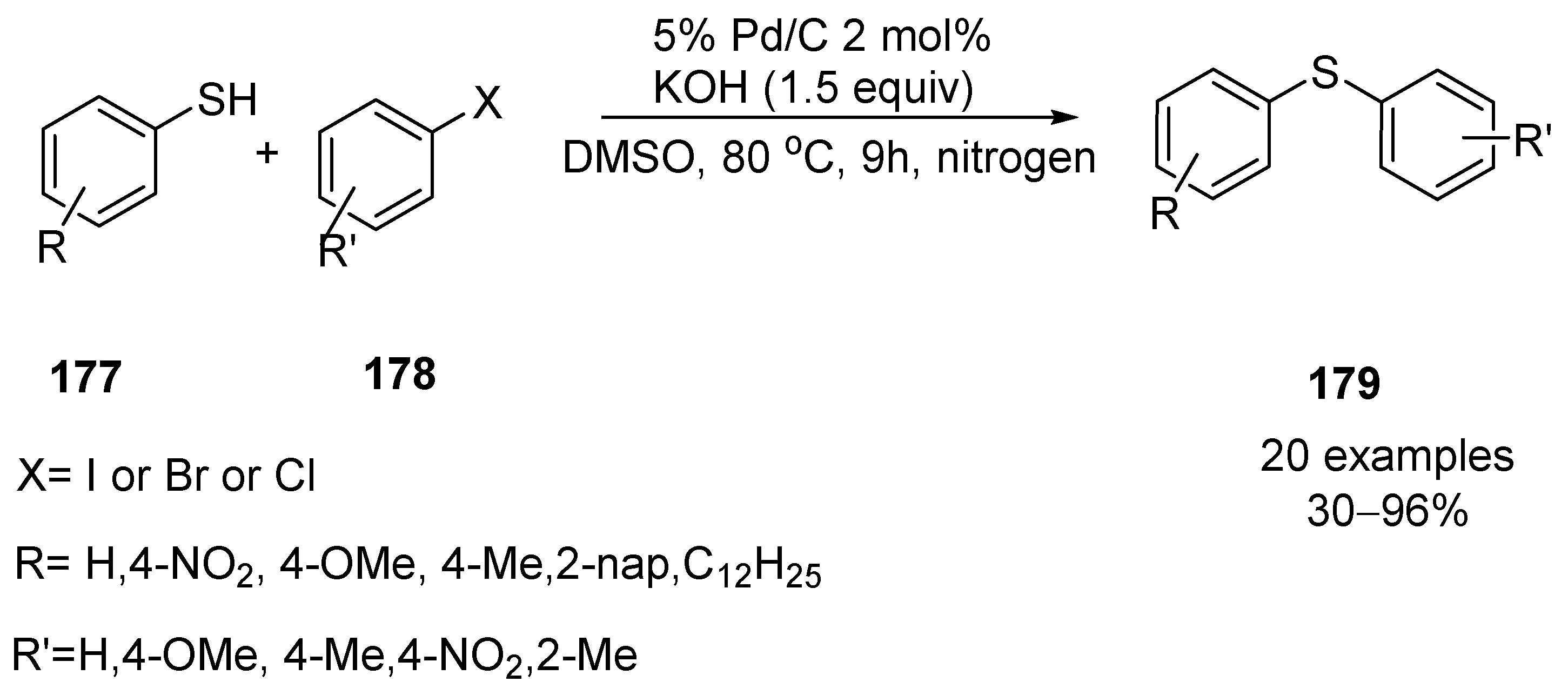
Our group discovered an environmentally friendly Pd/C-catalyzed coupling for formation of C-S bond to produce aryl sulfides 179 without any hazardous ligands (Scheme 38) [85]. Various homogeneous Pd catalytic systems with different ligands as well as other metal-based catalysts were reported to successfully realize the coupling reaction since Migita et al. first found Pd-catalyzed C-S coupling between aryl iodides and thiols [86]. Optimization work indicated that coupling reaction went smoothly in the presence of KOH in DMSO under nitrogen at 110 °C. Further investigation also found that diaryl sulfides were obtained in moderate yield using aryl bromides or aryl chlorides bearing the electron-withdrawing groups. Recycled Pd/C did not show a marked loss of catalytic activity within the fifth reuse of the filtered catalyst.
Scheme 38.
Synthesis of aryl sulfides via Pd/C reduction.
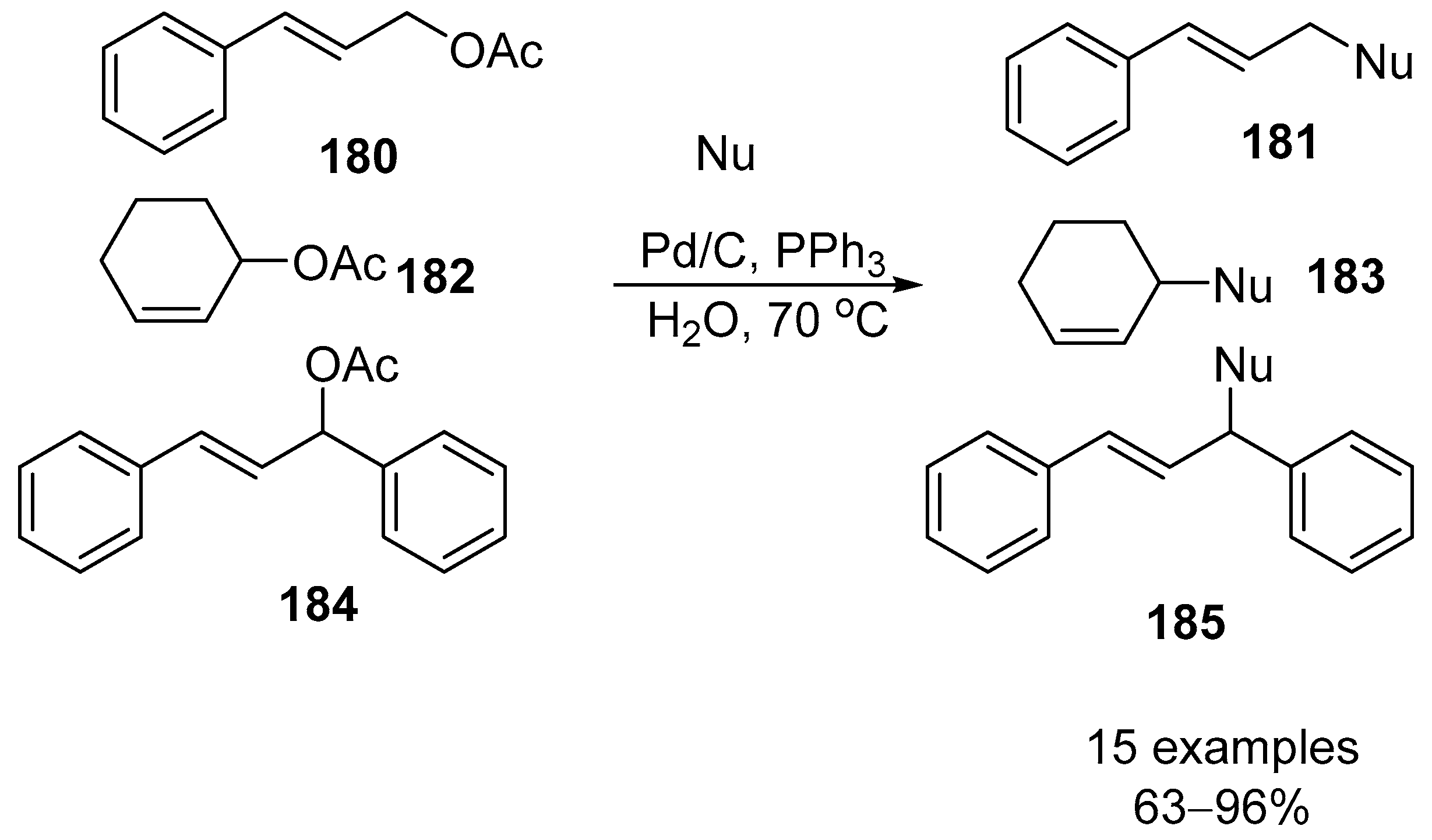
A clean and inexpensive Pd/C-catalyzed allylic substitution protocol to form various C-N, C-O or C-S bonds in an aqueous system was explored by Felpin’s group [87]. Allylic acetates (180, 182, 184) were selected as substrates and were treated with heteroatom-contained nucleophiles in the presence of PPh3 and Pd/C in water, and corresponding substituted products (181, 183, 185) were obtained in moderate to high yields (Scheme 39). The base was also required in certain cases. A comparison of two catalysts between homogeneous Pd (PPh3)4 and heterogeneous Pd/C was studied and Pd/C showed great advantages; in addition to higher efficiency being observed following catalysis by Pd/C, an excellent chemoselective preference to obtain our desired product was also detected.
Scheme 39.
Allylic substitution via Pd/C reduction.
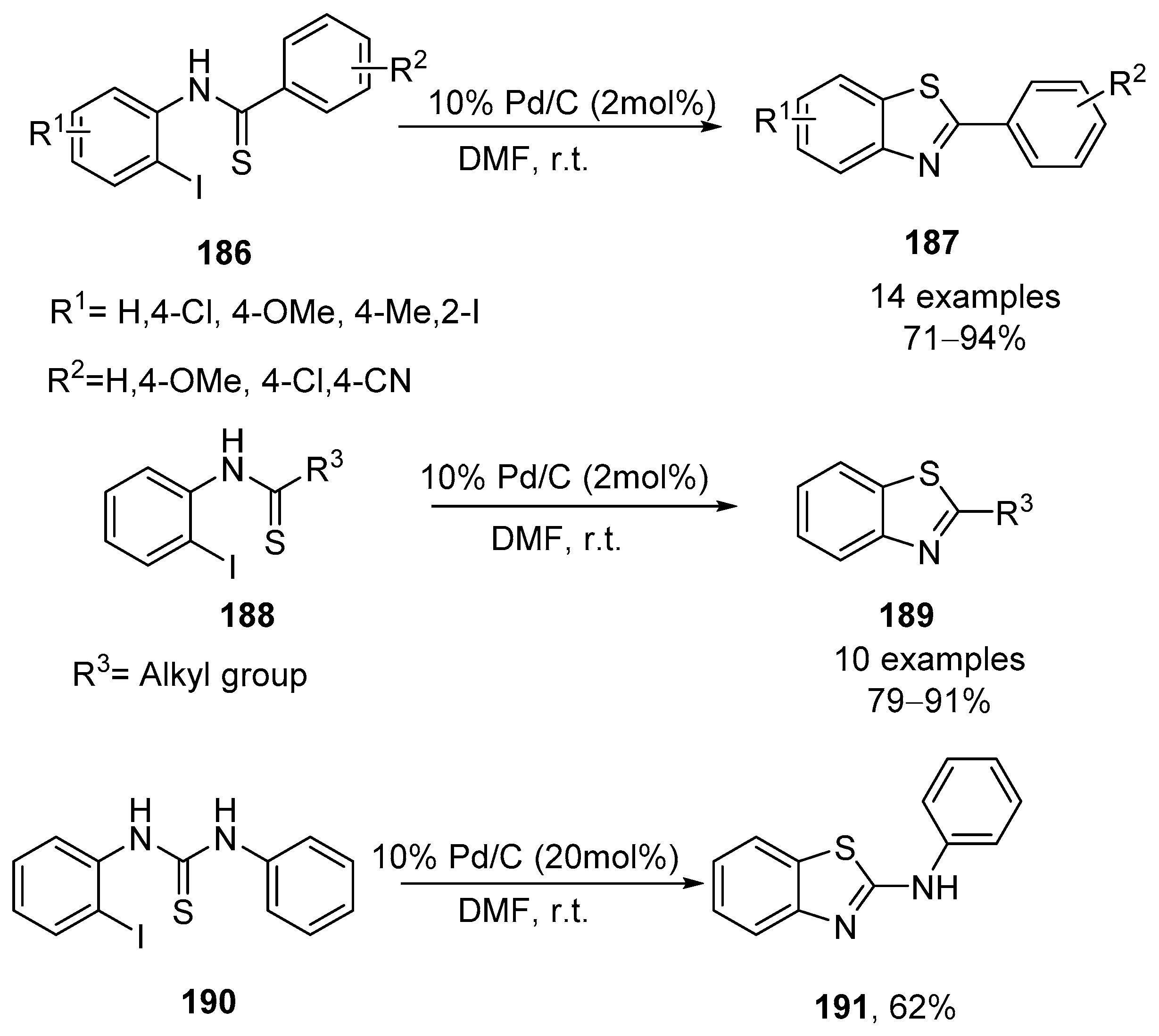
Li’s group developed a protocol for the formation of intramolecular C-S bond to provide 2-substituted benzothiazoles 187 from o-iodothiobenzanilide 186 (Scheme 40) [88]. The reaction was conducted in the presence of 2 mol% Pd/C at room temperature in DMF and did not require any ligands and other additives. The reaction condition could be applied to a wide range of substrates with different substitutions on the phenyl ring. The model reaction was further extended to the synthesis of 2-alkyl and 2-aminobenzothiazoles (189, 191) besides 2-arylbenzothiazoles.
Scheme 40.
Synthesis of 2-substituted benzothiazoles via Pd/C reduction.
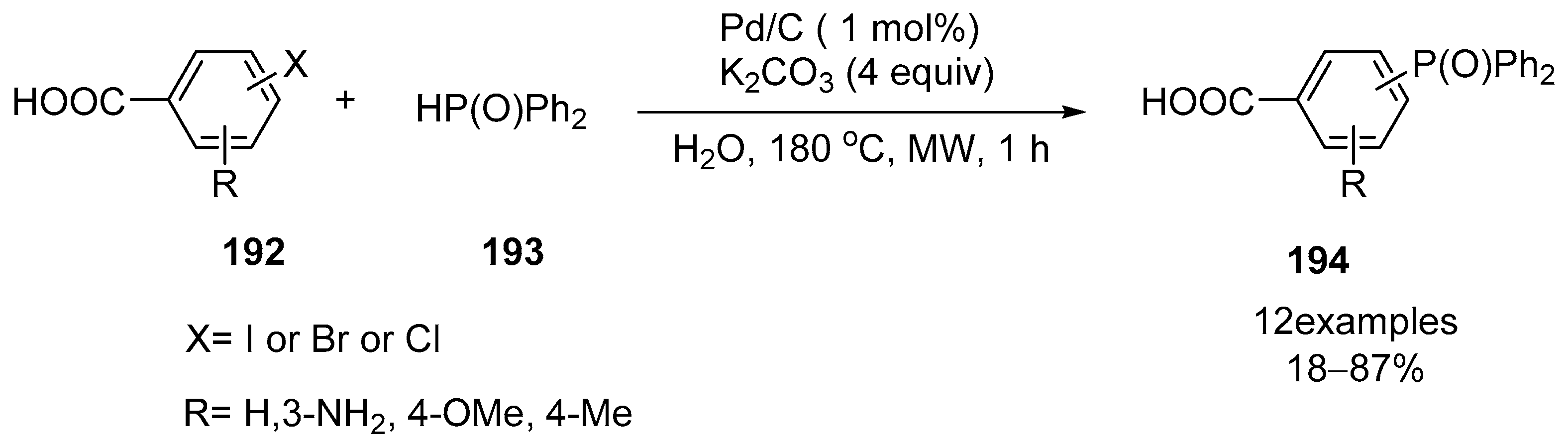
Rummelt and Ranocchiari disclosed the formation of P-C bonds via the Pd/C-catalyzed coupling process to produce tertiary phosphine oxides (Scheme 41) [89]. Treatment of 4-iodobenzoic acid 192 with diphenylphosphine oxide 193 in the presence of K2CO3 in water afforded the desired product 194 in a high yield. The green and economic protocol did not involve organic solvent, ligands, and other hazardous metals in the reaction system. Further investigation indicated that the use of microwave heating, instead of conventional heating, promoted the corresponding reactions. For some simple halogenated benzoic acids, such as 3- and 4-bromobenzoic acid and 3- and 4-iodobenzoic acid, iodo derivatives were found to yield fewer products due to their easier tendency to dehalogenation under reaction conditions. For 2-halogen benzoic acids, only traces of corresponding products were obtained due to steric hindrance.
Scheme 41.
Synthesis of tertiary phosphine oxides via Pd/C reduction.
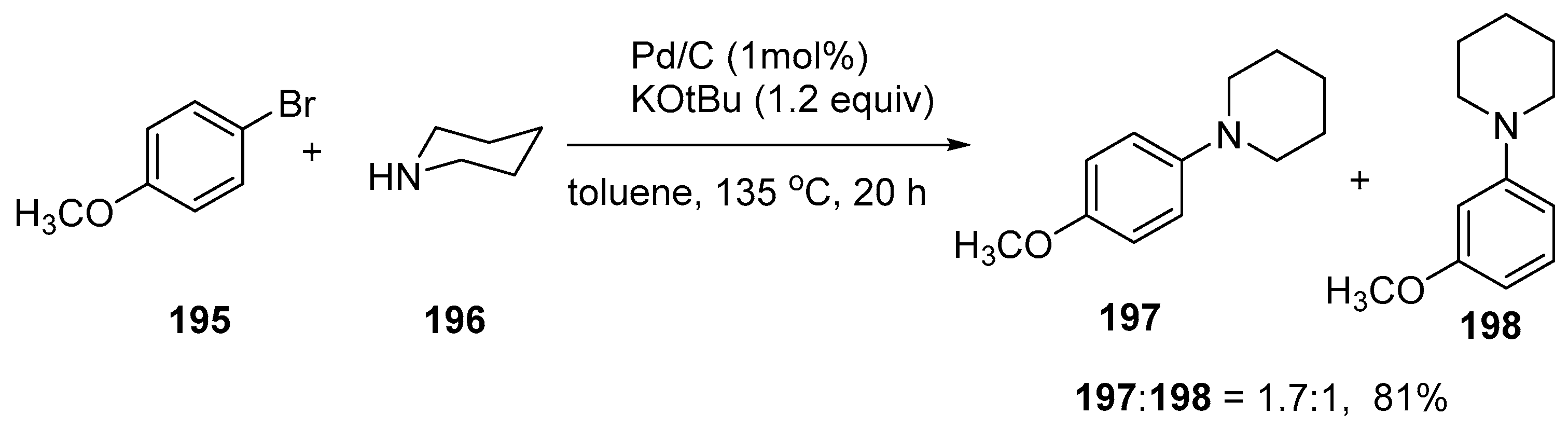
Among all the carbon-heteroatom coupling processes, C-N bond formation attracted much attention and several kinds of studies on this issue have been published since Buchwald and Hartwig first independently developed a palladium-catalyzed aromatic amination protocol in 1995 [90,91]. It was Djakovitch’s group that first disclosed the application of heterogeneous Pd/C catalysts in the preparation of arylamines(197, 198) (Scheme 42) [92]. Treatment of bromoanisole 195 with piperidine 196 in the presence of t-BuONa produced both para- and meta-adducts. The involvement of benzyne intermediates during the reaction process led to this poor regioselectivity.
Scheme 42.
Aromatic amination via Pd/C reduction.
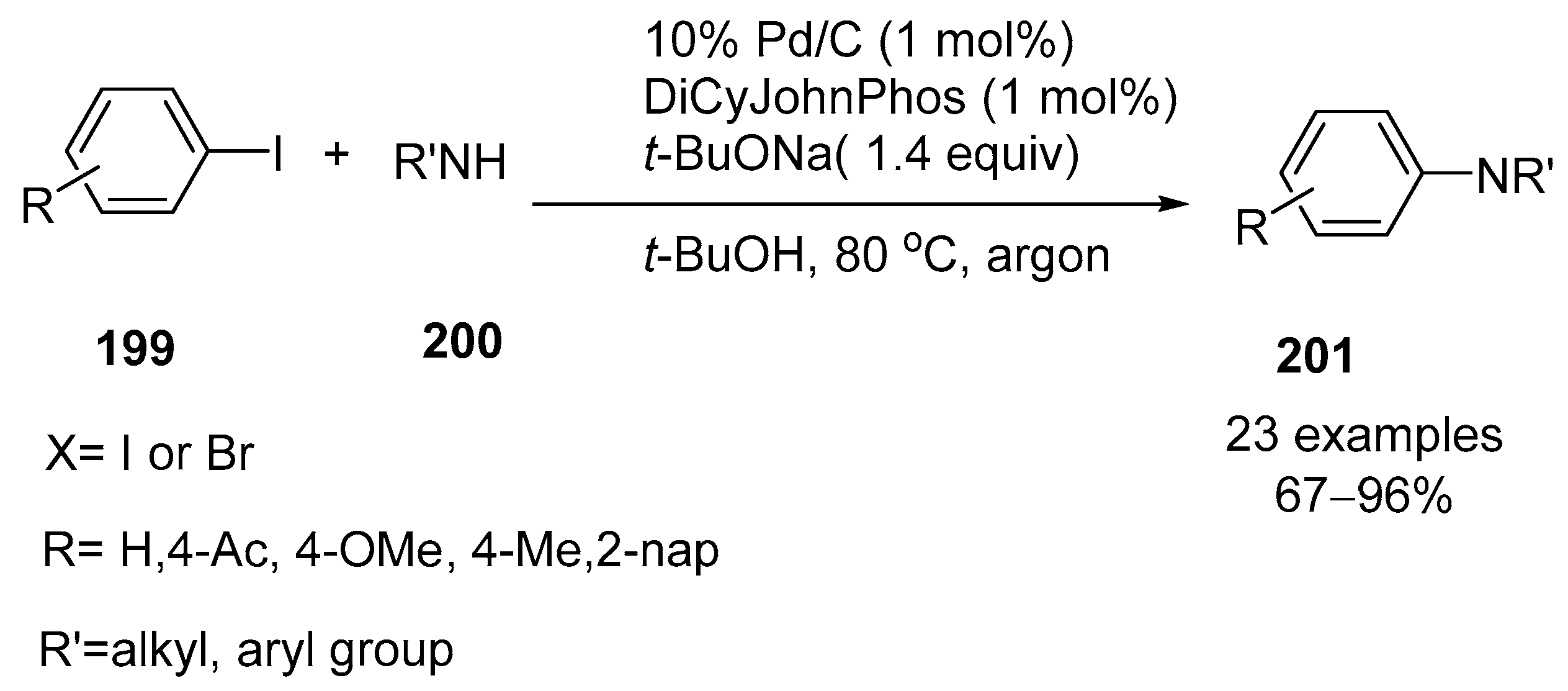
Novak’s group polished the Buchwald–Hartwig amination process and employed aryl iodides 199 [93], which were not generally used before and were the least successful aromatic sources in this amination (Scheme 43). Optimization work showed that the reaction of aryl iodide 199 and amine 200 went smoothly when 1 mol% 10% Pd/C Selcat Q6 and 1 mol% (2-biphenyl)dicyclohexylphosphine (DiCyJohnPhos) were added as catalyst and ligand in the presence of t-BuONa in t-BuOH at 80 °C under argon. Recycled Pd/C catalyst was also tested and only a small degree of activity was lost.
Scheme 43.
Synthesis of secondary amine derivative via Pd/C reduction.
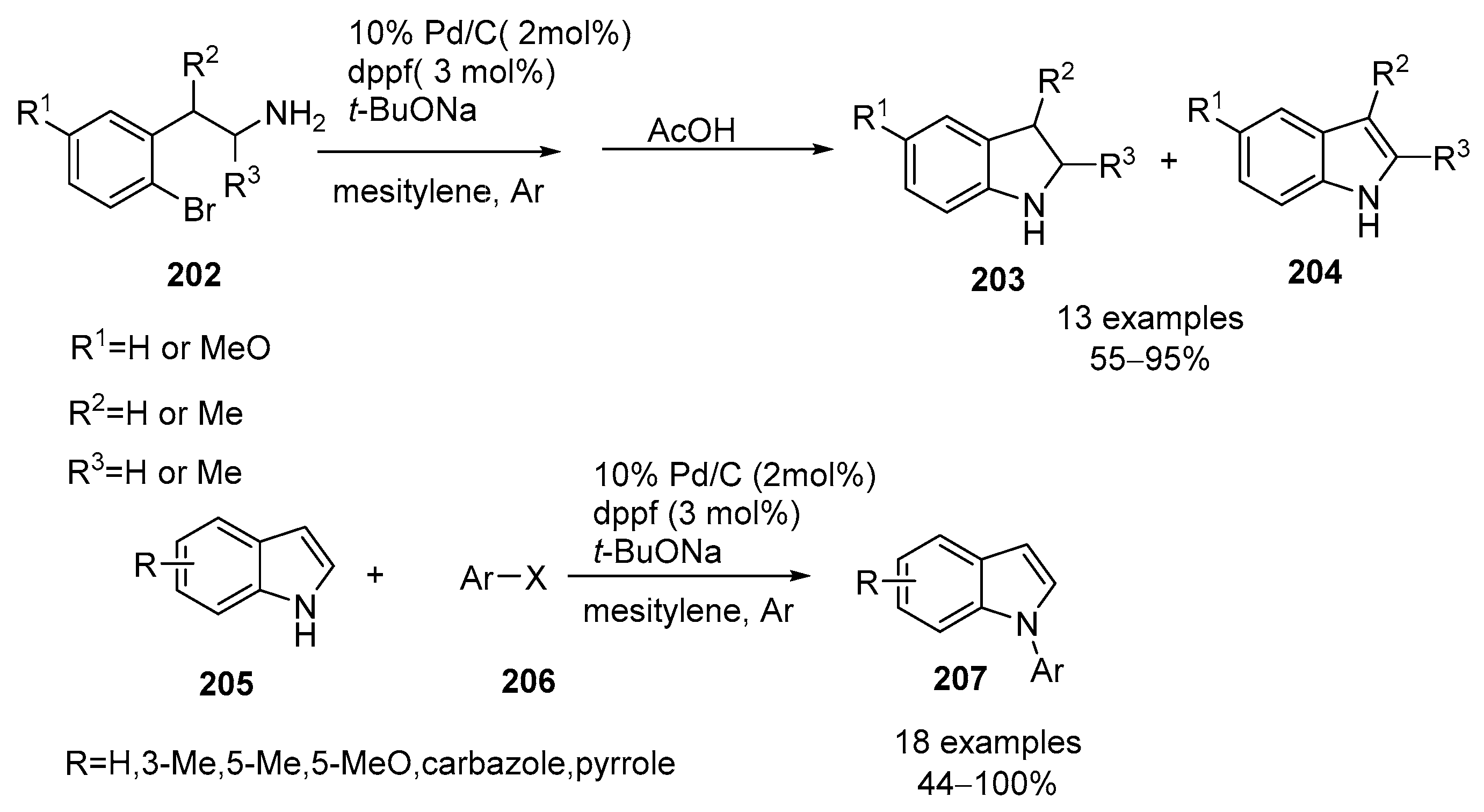
In 2013, Sajiki’s group disclosed the synthesis of indoles 204 via an intramolecular amination by applying the Buchwald–Hartwig amination strategy (Scheme 44) [94]. The reaction employed 2-bromophenethylamines 202 treated with a 10% Pd/C- dppf- t-BuONa catalytic system. The neutralization by acetic acid after cyclization was found to promote the aromatization process. Pd/C-catalyzed coupling between indoles 205 and aryl halides 206 to provide N-arylindoles 207, as well as a one-pot protocol to produce N-arylindoles directly from 2-bromophenethylamine, was also developed.
Scheme 44.
Synthesis of indoles via Pd/C reduction.
4. Conclusions
In this review, we summarized the advances in Pd/C-catalyzed reactions, mainly reduction reactions and cross-coupling reactions. Due to its catalytic efficiency, easy recyclability, and diverse catalytic modes, the Pd/C catalyst has found, and will continue to find, valuable applications in the catalysis of organic reactions. It is worth pointing out that there is wide variability in the efficiency of commercial sources of Pd/C, resulting in significant differences in selectivity, reaction times, and yields [95]. On the other hand, it is still a significant challenge to explore the solution for the Pd/C catalyst’s progressive deactivation upon successive reuses when, due to palladium leaching, the catalyst is hard recycled after a few times, and thus, it becomes inactive or much less active. Therefore, far more efforts are needed to develop sustainable chemistry and more efficient catalytic reagents, to understand their catalytic mechanism, and to discover new reactions that can be efficiently catalyzed by such heterogeneous catalysts.
Author Contributions
Conceptualization, Z.M., X.L.; formal analysis, H.G.; writing—original draft preparation, Z.M.; writing—review and editing, H.G.; visualization, Z.M., H.G., X.L.; supervision, X.L.; funding acquisition, X.L. All authors have read and agreed to the published version of the manuscript.
Funding
Financial support from Leading Talents of Special Support Program of Zhejiang Province High-level Talents (2020R52008) and Center of Chemistry for Frontier Technologies of Zhejiang University is gratefully acknowledged.
Data Availability Statement
Not applicable.
Conflicts of Interest
The authors declare no conflict of interest.
References
- Nishimura, S. Handbook of Heterogeneous Catalytic Hydrogenation for Organic Synthesis; John Wiley and Sons, Inc.: Hoboken, NJ, USA, 2001; pp. 1–38. [Google Scholar]
- Heck, R.F.; Nolley, J.P. Palladium-catalyzed vinylic hydrogen substitution reactions with aryl, benzyl, and styryl halides. J. Org. Chem. 1972, 37, 2320–2322. [Google Scholar] [CrossRef]
- Seki, M. Recent Advances in Pd/C-Catalyzed Coupling Reactions. Synthesis 2006, 18, 2975–2992. [Google Scholar] [CrossRef]
- Yin, L.; Liebscher, J. Carbon–carbon coupling reactions catalyzed by heterogeneous palladium catalysts. Chem. Rev. 2007, 107, 133–173. [Google Scholar] [CrossRef] [PubMed]
- Kitamura, Y.; Sakurai, A.; Udzu, T.; Maegawa, T.; Monguchi, Y.; Sjiki, H. Heterogeneous Pd/C-catalyzed ligand-free Suzuki-Miyaura coupling reaction using aryl boronic esters. Tetrahedron 2007, 63, 10596–10602. [Google Scholar] [CrossRef]
- Chen, J.S.; Krogh-Jespersen, K.; Khinast, J.G. Base- and ligand-free heterogeneously catalyzed homocoupling of arylboronic acids. J. Mol. Catal. A Chem. 2008, 285, 14–19. [Google Scholar] [CrossRef]
- Kitamura, Y.; Sako, S.; Tsutsui, A.; Monguchi, Y.; Maegawa, T.; Kitade, Y.; Sajiki, H. Ligand-free and heterogeneous palladium on carbon-catalyzed hetero-Suzuki-Miyaura cross-coupling. Adv. Synth. Catal. 2010, 352, 718–730. [Google Scholar] [CrossRef]
- Felpin, F.-X. Ten Years of Adventures with Pd/C Catalysts: From Reductive Processes to Coupling Reactions. Synlett 2014, 25, 1055–1067. [Google Scholar] [CrossRef]
- Zhang, G. Easy copper-, ligand- and amine-free Sonogashira coupling reaction catalyzed by palladium on carbon at low catalyst loading and by exposure to air. Synlett 2005, 4, 619–622. [Google Scholar] [CrossRef]
- Liu, X.; Astruc, D. Development of the Applications of Palladium on Charcoal in Organic Synthesis. Adv. Synth. Catal. 2018, 360, 3426–3459. [Google Scholar] [CrossRef]
- Hafeez, S.; Sanchez, F.; Al-Salem, S.M.; Villa, A.; Manos, G.; Dimitratos, N.; Constantinou, A. Decomposition of Additive-Free Formic Acid Using a Pd/C Catalyst in Flow: Experimental and CFD Modelling Studies. Catalysts 2021, 11, 341. [Google Scholar] [CrossRef]
- Mameda, T.; Nakai, K.; Misaki, T.; Okamoto, Y. Substrate dependent ligand acceleration in enantioselective hydrogenation of (E)-2,3-diarylpropenoic acid on cinchonidine-modified Pd/C. Catal. Today 2015, 245, 129–133. [Google Scholar] [CrossRef]
- Yongwoo, K.; Seung-hoon, K.; Hyung Chul, H.; Do Heui, K. Mechanistic insights on aqueous formic acid dehydrogenation over Pd/C. J. Catal. 2020, 389, 506–516. [Google Scholar]
- Yongwoo, K.; Do Heui, K. Understanding the effect of Pd size on formic acid dehydrogenation via size-controlled Pd/C catalysts prepared by NaBH4 treatment. Appl. Catal. B 2019, 244, 684–693. [Google Scholar]
- Di, L.; Zhang, J.; Craven, M.; Wang, Y.; Wang, H.; Zhang, X.; Tu, X. Dehydrogenation of formic acid over Pd/C catalysts: Insight into the cold plasma treatment. Catal. Sci. Technol. 2020, 10, 6151–6160. [Google Scholar] [CrossRef]
- Simeone, J.P.; Sowa, J. R Palladium on carbon as a precatalyst for the Suzuki-Miyaura cross-coupling of aryl chlorides. Tetrahedron 2007, 63, 12646–12654. [Google Scholar] [CrossRef]
- Cameron, D.S.; Cooper, S.J.; Dodgson, I.L.; Harrison, B.; Jenkins, J.W. Carbons as supports for precious metal catalysts. Catal. Today 1990, 7, 113–137. [Google Scholar] [CrossRef]
- Auer, E.; Freund, A.; Pietsch, J.; Tacke, T. Carbons as supports for industrial precious metal catalysts. Appl. Catal. A Gen. 1998, 173, 259–271. [Google Scholar] [CrossRef]
- Patti, A.; Pedotti, S. Hydrogenation of ortho-nitrochalcones over Pd/C as a simple access to 2-substituted 1,2,3,4-tetrahydroquinolines. Tetrahedron 2010, 66, 5607–5611. [Google Scholar] [CrossRef]
- Sugimura, T.; Oie, K.; Misaki, T.; Okamoto, Y.; Yanaka, K.; Mori, H. Hydrogenation of 5-Alkylidene-2,4-Thiazolidiones on Pd/C Catalysts Under Mild Conditions: An Alternative Synthesis Route to Pioglitazone. Catal. Lett. 2013, 143, 495–500. [Google Scholar] [CrossRef]
- Yang, K.; Dai, L.; Chen, Y. New Synthetic Method of Pioglitazone Hydrochloride. Chin. J. Org. Chem. 2004, 24, 890–892. [Google Scholar]
- Liu, X.; Zhang, Z.; Yang, Y.; Yin, D.; Su, S.; Lei, D.; Yang, J. Selective hydrogenation of citral to 3,7-dimethyloctanal over activated carbon supported nano-palladium under atmospheric pressure. Chem. Eng. J. 2015, 263, 290–298. [Google Scholar] [CrossRef]
- Perez, J.R.G.; Malthete, J.; Jacques, J. Asymmetric hydrogenation of prochiral cinnamic acids in the presence of palladium on activated carbon and of chiral bases. Acad. Sci. Paris II 1985, 30, 169–172. [Google Scholar]
- Sugimura, T.; Watanabe, J.; Uchida, T.; Mitta, Y.; Okuyama, T. Highly enantioselective hydrogenation of α-alkyl-β-arylpropenoic acids over cinchonidine-modified palladium catalyst. Catal. Lett. 2006, 112, 27–30. [Google Scholar] [CrossRef]
- Sugimura, T.; Uchida, T.; Watanabe, J.; Kubota, T.; Okamoto, Y.; Misaki, T.; Okumaya, T. Structural requirements for substrate in highly enantioselective hydrogenation over the cinchonidine-modified Pd/C. J. Catal. 2009, 262, 57–64. [Google Scholar] [CrossRef]
- Sugimura, T.; Kim, T.Y. Enantioselective hydrogenation in water over chiral modified heterogeneous catalyst admixed with organic solvent. Catal. Lett. 2009, 130, 564–567. [Google Scholar] [CrossRef]
- Izumi, Y. Methods of asymmetric synthesis. Enantioselective catalytic hydrogenation. Angew. Chem. Int. Ed. 1971, 10, 871–881. [Google Scholar] [CrossRef]
- Nitta, Y.; Kobiro, K. Enantioselective hydrogenation of (E)-α-phenylcinnamic acid over cinchonidine-modified palladium catalysts. Chem. Lett. 1994, 6, 1095–1098. [Google Scholar] [CrossRef]
- Nitta, Y.; Shibata, A. Enantioselective hydrogenation of (E)-α-phenylcinnamic acid on Pd/TiO2 catalyst modified by cinchona alkaloids: Effect of modifier structure. Chem. Lett. 1998, 2, 161–162. [Google Scholar] [CrossRef]
- Nitta, Y. Importance of product desorption in enantioselective hydrogenation of (E)-α-phenylcinnamic acid with a cinchonidine-modified Pd/TiO2 catalyst: Effect of additives. Chem. Lett. 1999, 7, 635–636. [Google Scholar] [CrossRef]
- Nitta, Y.; Watanabe, J.; Okuyama, T.; Sugimura, T. Activation-temperature dependence in enantioselective hydrogenation of unsaturated carboxylic acids over cinchonidine-modified Pd/C catalysts. J. Catal. 2005, 236, 164–167. [Google Scholar] [CrossRef]
- Mori, A.; Mayakawa, Y.; Ohashi, E.; Haga, T.; Maegawa, T.; Sajiki, H. Pd/C-Catalyzed Chemoselective Hydrogenation in the Presence of Diphenylsulfide. Org. Lett. 2006, 8, 3279–3281. [Google Scholar] [CrossRef] [PubMed]
- Mori, A.; Mizusaki, T.; Miyakawa, Y.; Ohashi, E.; Haga, T.; Maegawa, T.; Monguchi, Y.; Sajiki, H. Chemoselective hydrogenation method catalyzed by Pd/C using diphenylsulfide as a reasonable catalyst poison. Tetrahedron 2006, 62, 11925–11932. [Google Scholar] [CrossRef]
- Sajiki, H.; Monguchi, Y. Development of Palladium Catalysts for Chemoselective Hydrogenation. In Pharmaceutical Process Chemistry; Wiley-VCH Verlag: Weinheim, Germany, 5 October 2010; Chapter 4. [Google Scholar]
- Cheng, C.; Wang, C.; Liu, N.; Chen, W.; Wang, X.; Hu, Y. Controlling chemoselective transformations of 4-acylpyridines via a Pd-C catalytic hydrodechlorination-hydrogenation. Tetrahedron 2014, 70, 930–935. [Google Scholar] [CrossRef]
- Zhou, L.; Liu, Z.; Liu, Y.; Wang, Y.J. N-Tosylhydrazine-mediated deoxygenative hydrogenation of aldehydes and ketones catalyzed by Pd/C. Tetrahedron 2013, 69, 6083–6087. [Google Scholar] [CrossRef]
- Tuokko, S.; Pihko, P.M. Palladium on Charcoal as a Catalyst for Stoichiometric Chemo- and Stereoselective Hydrosilylations and Hydrogenations with Triethylsilane. Org. Process Res. Dev. 2014, 18, 1740–1751. [Google Scholar] [CrossRef]
- Kim, T.G.; Cho, C.S.; Kim, Y. Transfer hydrogenation of ketones to alkanes using tributylamine under heterogeneous Pd/C catalysis. Appl. Organomet. Chem. 2014, 28, 797–799. [Google Scholar] [CrossRef]
- Karageorge, G.N.; Macor, J.E. Synthesis of novel serotonergics and other N-alkylamines using simple reductive amination using catalytic hydrogenation with Pd/C. Tetrahedron Lett. 2011, 52, 5117–5119. [Google Scholar] [CrossRef]
- Chen, X.; Zhou, S.; Qian, C. Catalytic transfer hydrogenation of aryl sulfo compounds. J. Sulfur Chem. 2012, 33, 179–185. [Google Scholar] [CrossRef]
- Vilches-Herrera, M.; Werkmerster, S.; Junge, K.; Borner, A.; Beller, M. Selective catalytic transfer hydrogenation of nitriles to primary amines using Pd/C. Catal. Sci. Technol. 2014, 4, 629–632. [Google Scholar] [CrossRef]
- Marck, G.; Villiger, A.; Buchecker, R. Aryl couplings with heterogeneous palladium catalysts. Tetrahedron Lett. 1994, 35, 3277–3280. [Google Scholar] [CrossRef]
- LeBlond, C.R.; Andrews, A.T.; Sun, Y.; Sowa, J.R. Activation of Aryl Chlorides for Suzuki Cross-Coupling by Ligandless, Heterogeneous Palladium. Org. Lett. 2001, 3, 1555–1557. [Google Scholar] [CrossRef]
- Felpin, F.X.; Ayad, T.; Mitra, S. Pd/C: An old catalyst for new applications -its use for the Suzuki-Miyaura reaction. Eur. J. Org. Chem. 2006, 2679–2690. [Google Scholar] [CrossRef]
- Felpin, F.X.; Lory, C.; Sow, H.; Acherar, S. Practical and efficient entry to isoflavones by Pd(0)/C-mediated Suzuki-Miyaura reaction. Total synthesis of geranylated isoflavones. Tetrahedron 2007, 63, 3010–3016. [Google Scholar] [CrossRef]
- Maegawa, T.; Kitamura, Y.; Sako, S.; Sajiki, H. Heterogeneous Pd/C-catalyzed ligand-free, room-temperature Suzuki-Miyaura coupling reactions in aqueous media. Chem. Eur. J. 2007, 13, 5937–5943. [Google Scholar] [CrossRef]
- Miyaura, N.; Suzuki, A. Palladium-Catalyzed Cross-Coupling Reactions of Organoboron Compounds. Chem. Rev. 1995, 95, 2457–2483. [Google Scholar] [CrossRef]
- Khedkar, M.V.; Tambade, P.J.; Qureshi, Z.S.; Bhanage, B.M. Pd/C: An Efficient, Heterogeneous and Reusable Catalyst for Phosphane-Free Carbonylative Suzuki Coupling Reactions of Aryl and Heteroaryl Iodides. Eur. J. Org. Chem. 2010, 6981–6986. [Google Scholar] [CrossRef]
- Monguchi, Y.; Fujita, Y.; Hashimoto, S.; Ina, M.; Takahashi, T.; Ito, R.; Nozaki, K.; Maegawa, T.; Sajiki, H. Palladium on carbon-catalyzed solvent-free and solid-phase hydrogenation and Suzuki-Miyaura reaction. Tetrahedron 2011, 67, 8628–8634. [Google Scholar] [CrossRef]
- Maiuolo, L.; Algieri, V.; Russo, B.; Tallarida, M.; Nardi, M.; Di Gioia, M.; Merchant, Z.; Merino, P.; Delso, I.; De Nino, A. Synthesis, Biological and In Silico Evaluation of Pure Nucleobase-Containing Spiro (Indane-Isoxazolidine) Derivatives as Potential Inhibitors of MDM2–p53 Interaction. Molecules 2019, 24, 2909. [Google Scholar] [CrossRef] [PubMed]
- Felpin, F.X. Practical and Efficient Suzuki-Miyaura Cross-Coupling of 2-Iodocycloenones with Arylboronic Acids Catalyzed by Recyclable Pd(0)/C. J. Org. Chem. 2005, 70, 8575–8578. [Google Scholar] [CrossRef]
- Lamblin, M.; Bares, H.; Dessolin, J.; Marty, C.; Pourgougnon, N.; Felpin, F.X. Practical Pd/C-Catalysed Suzuki-Miyaura Reactions for the Preparation of 3-Aryl-4-oxypyridin-2(1H)-ones, 3-Aryl-2,4-oxypyridines and 3-Aryl-2,4-oxyquinolines as Useful Intermediates for the Synthesis of Biologically Active Compounds. Eur. J. Org. Chem. 2012, 5525–5533. [Google Scholar] [CrossRef]
- Talor, R.H.; Felpin, F.X. Suzuki-Miyaura Reactions of Arenediazonium Salts Catalyzed by Pd(0)/C. One-Pot Chemoselective Double Cross-Coupling Reactions. Org. Lett. 2007, 9, 2911–2914. [Google Scholar] [CrossRef] [PubMed]
- Liu, C.; Rao, X.; Zhang, Y.; Li, X.; Qiu, J.; Jin, Z. An Aerobic and Very Fast Pd/C-Catalyzed Ligand-Free and Aqueous Suzuki Reaction Under Mild Conditions. Eur. J. Org. Chem. 2013, 4345–4350. [Google Scholar] [CrossRef]
- Mondal, M.; Bora, U. Ligandless heterogeneous palladium. An efficient and recyclable catalyst for Suzuki-type cross-coupling reaction. Appl. Organomet. Chem. 2014, 28, 354–358. [Google Scholar] [CrossRef]
- De la Rosa, M.; Martha, A.; Velarde, E.; Guzman, A. Cross-Coupling Reactions of Monosubstituted Acetylenes and Aryl Halides Catalyzed by Palladium on Charcoal. Synth. Commun. 1990, 20, 2059–2064. [Google Scholar] [CrossRef]
- Barange, D.K.; Batchu, V.R.; Gorja, D.; Pattabiraman, V.R.; Tatini, L.K.; Babu, J.M.; Pal, M. Regioselective construction of six-membered fused heterocyclic rings via Pd/C-mediated C-C coupling followed by iodocyclization strategy: A new entry to 2H-1,2-benzothiazine-1,1-dioxides. Tetrahedron 2007, 63, 1775–1789. [Google Scholar] [CrossRef]
- Batchu, V.R.; Barange, D.K.; Kumar, D.; Sreekanth, B.R.; Vyas, K.; Reddy, E.A.; Pal, M. Tandem C-C coupling-intramolecular acetylenic Schmidt reaction under Pd/C-Cu catalysis. Chem. Commun. 2007, 1966–1968. [Google Scholar] [CrossRef] [PubMed]
- Liu, J.; Chen, J.; Xia, C. A simple and efficient recyclable phosphine-free catalytic system for alkoxycarbonylation and carbonylative Sonogashira coupling reactions of aryl iodides. J. Catal. 2008, 1, 50–56. [Google Scholar] [CrossRef]
- Mori, S.; Yanase, T.; Aoyagi, S.; Monguchi, Y.; Maegawa, T.; Sajiki, H. Ligand-free Sonogashira coupling reactions with heterogeneous Pd/C as the catalyst. Chem. Eur. J. 2008, 14, 6994–6999. [Google Scholar] [CrossRef]
- Reddy, E.A.; Barange, D.K.; Islam, A.; Mukkanti, K.; Pal, M. Synthesis of 2-alkynylquinolines from 2-chloro and 2,4-dichloroquinoline via Pd/C-catalyzed coupling reaction in water. Tetrahedron 2008, 64, 7143–7150. [Google Scholar] [CrossRef]
- Layek, M.; Gajare, V.; Kalita, D.; Islam, A.; Mukkanti, K.; Pal, M. Pd/C-Cu in coupling-cyclization process: A general synthesis of 2-substituted 6-oxopyrrolo[3,2,1-ij]quinoline derivatives. Tetrahedron Lett. 2009, 50, 3867–3871. [Google Scholar] [CrossRef]
- Bakherad, M.; Keivanloo, A.; Kalantar, Z.; Jajarmi, S. Pd/C-catalyzed heterocyclization during copper-free Sonogashira coupling: Synthesis of 2-benzylimidazo[1,2-a]pyrimidines in water. Tetrahedron Lett. 2011, 52, 228–230. [Google Scholar] [CrossRef]
- Hatanaka, Y.; Hiyama, T. Cross-coupling of organosilanes with organic halides mediated by a palladium catalyst and tris(diethylamino)sulfonium difluorotrimethylsilicate. J. Org. Chem. 1988, 53, 918–920. [Google Scholar] [CrossRef]
- Komaromi, A.; Szabo, F.; Novak, Z. Activity of palladium on charcoal catalysts in cross-coupling reactions. Tetrahedron Lett. 2010, 51, 5411–5414. [Google Scholar] [CrossRef]
- Yanase, T.; Mori, S.; Monguchi, Y.; Sajiki, H. Pd/C-catalyzed and water-mediated Hiyama cross-coupling reaction using an electron-deficient phosphine ligand. Chem. Lett. 2011, 40, 910–912. [Google Scholar] [CrossRef]
- Monguchi, Y.; Yanase, T.; Mori, S.; Sajiki, H. A practical protocol for the Hiyama cross-coupling reaction catalyzed by palladium on carbon. Synthesis 2013, 45, 40–44. [Google Scholar] [CrossRef][Green Version]
- Yanase, T.; Monguchi, Y.; Sajiki, H. Ligand-free Hiyama cross-coupling reaction catalyzed by palladium on carbon. RSC Adv. 2012, 2, 590–594. [Google Scholar] [CrossRef]
- Andersson, C.M.; Hallberg, A. Regiochemistry of palladium-catalyzed arylation reactions of enol ethers. Electronic control of selection for α- or β-arylation. J. Org. Chem. 1987, 52, 3529–5336. [Google Scholar] [CrossRef]
- Bhanage, B.M.; Shirai, M.; Arai, M. Heterogeneous catalyst system for Heck reaction using supported ethylene glycol phase Pd/TPPTS catalyst with inorganic base. J. Mol. Catal. A Chem. 1999, 145, 69–74. [Google Scholar] [CrossRef]
- Zhao, F.; Shirai, M.; Arai, M. Palladium-catalyzed homogeneous and heterogeneous Heck reactions in NMP and water-mixed solvents using organic, inorganic and mixed bases. J. Mol. Catal. A Chem. 2000, 154, 39–44. [Google Scholar] [CrossRef]
- Zhao, F.; Bhanage, B.M.; Shirai, M.; Arai, M. Heck reactions of iodobenzene and methyl acrylate with conventional supported palladium catalysts in the presence of organic and/or inorganic bases without ligands. Chem. Eur. J. 2000, 6, 843–848. [Google Scholar] [CrossRef]
- Zhao, F.; Murakami, K.; Shirai, M.; Arai, M. Recyclable Homogeneous/Heterogeneous Catalytic Systems for Heck Reaction through Reversible Transfer of Palladium Species between Solvent and Support. J. Catal. 2000, 194, 479–483. [Google Scholar] [CrossRef]
- Heidenreich, R.G.; Köhler, K.; Krauter, J.G.E.; Pietsch, J. Pd/C as a highly active catalyst for Heck, Suzuki and Sonogashira reactions. Synlett 2002, 7, 1118–1122. [Google Scholar] [CrossRef]
- Köhler, K.; Heidenreich, R.G.; Krauter, J.G.E.; Pietsch, J. Highly active palladium/activated carbon catalysts for heck reactions: Correlation of activity, catalyst properties, and Pd leaching. Chem. Eur. J. 2002, 8, 622–631. [Google Scholar] [CrossRef]
- Heidenreich, R.G.; Krauter, J.G.E.; Pietsch, J.; Köhler, K. Control of Pd leaching in Heck reactions of bromoarenes catalyzed by Pd supported on activated carbon. J. Mol. Catal. A Chem. 2002, 182–183, 499–509. [Google Scholar] [CrossRef]
- Tambade, P.J.; Patil, Y.P.; Bhanushali, M.J.; Bhanage, B.M. Pd/C: An efficient, heterogeneous and reusable catalyst for carbon monoxide-free aminocarbonylation of aryl iodides. Tetrahedron Lett. 2008, 49, 2221–2224. [Google Scholar] [CrossRef]
- Tarabay, J.; Al-Maksoud, W.; Jaber, F.; Pinel, C.; Prakash, S.; Djakovitch, L. Synthesis of diethyl 2-(aryl)vinylphosphonate by the Heck reaction catalyzed by supported palladium catalysts. Appl. Catal. A Gen. 2010, 388, 124–133. [Google Scholar] [CrossRef]
- Kurita, T.; Abe, M.; Maegawa, T.; Monguchi, Y.; Sajiki, H. Ligand- and base-free synthesis of 1,3-diynes catalyzed by low loading of heterogeneous Pd/C and CuI. Synlett 2007, 16, 2521–2524. [Google Scholar] [CrossRef]
- Shao, L.; Du, Y.; Zeng, M.; Li, X.; Shen, W.; Zuo, S.; Lu, Y.; Zhang, X.; Qi, C. Ethanol-promoted reductive homocoupling reactions of aryl halides catalyzed by palladium on carbon (Pd/C). Appl. Organomet. Chem. 2010, 24, 421–425. [Google Scholar]
- Leblond, C.R.; Butler, K.M.; Ferrington, M.W.; Browe, M.A. Palladium on carbon-catalyzed cross-coupling of aryl halides with potassium p-tolyltrifluoroborate in air. Synth. Commun. 2009, 39, 636–640. [Google Scholar] [CrossRef]
- Yao, C.; Wang, Q.; Zhu, J. Pd/C-Catalyzed Cyclizative Cross-Coupling of Two ortho-Alkynylanilines under Aerobic Conditions: Synthesis of 2,3′-Bisindoles. Chem. Eur. J. 2015, 21, 7413–7416. [Google Scholar] [CrossRef] [PubMed]
- Tang, D.T.D.; Collins, K.D.; Glorius, F. Completely Regioselective Direct C-H Functionalization of Benzo[b]thiophenes Using a Simple Heterogeneous Catalyst. J. Am. Chem. Soc. 2013, 135, 7450–7453. [Google Scholar] [CrossRef] [PubMed]
- Hatsuda, M.; Seki, M. A practical synthesis of highly functionalized aryl nitriles through cyanation of aryl bromides employing heterogeneous Pd/C. Tetrahedron Lett. 2005, 46, 1849–1853. [Google Scholar] [CrossRef]
- Jiang, Z.; She, J.; Lin, X. Palladium on Charcoal as a Recyclable Catalyst for C-S Cross-Coupling of Thiols with Aryl Halides under Ligand-Free Conditions. Adv. Synth. Catal. 2009, 351, 2558–2562. [Google Scholar] [CrossRef]
- Migita, T.; Shimizu, T.; Asami, Y.; Shiobara, J.; Kato, Y.; Kosugi, M. The palladium catalyzed nucleophilic substitution of aryl halides by thiolate anions. Bull. Chem. Soc. Jpn. 1980, 53, 1385–1389. [Google Scholar] [CrossRef]
- Felpin, F.X.; Landais, Y. Practical Pd/C-Mediated Allylic Substitution in Water. J. Org. Chem. 2005, 70, 6441–6446. [Google Scholar] [CrossRef] [PubMed]
- Cheng, Y.; Peng, Q.; Fan, W.; Li, P. Room-Temperature Ligand-Free Pd/C-Catalyzed C-S Bond Formation: Synthesis of 2-Substituted Benzothiazoles. J. Org. Chem. 2014, 79, 5812–5819. [Google Scholar] [CrossRef] [PubMed]
- Rummelt, S.M.; Ranocchiari, M.; van Bokhoven, J.A. Synthesis of Water-Soluble Phosphine Oxides by Pd/C-Catalyzed P-C Coupling in Water. Org. Lett. 2012, 14, 2188–2190. [Google Scholar] [CrossRef]
- Guram, A.S.; Rennels, R.A.; Buchwald, S.L. A simple catalytic method for the conversion of aryl bromides to arylamines. Angew. Chem. Int. Ed. Engl. 1995, 34, 1348–1350. [Google Scholar] [CrossRef]
- Louie, J.; Hartwig, J.F. Palladium-catalyzed synthesis of arylamines from aryl halides. Mechanistic studies lead to coupling in the absence of tin reagents. Tetrahedron Lett. 1995, 36, 3609–3612. [Google Scholar] [CrossRef]
- Djakovitch, L.; Wagner, M.; Kohler, K. Amination of aryl bromides catalyzed by supported palladium. J. Organomet. Chem. 1999, 592, 225–234. [Google Scholar] [CrossRef]
- Komaromi, A.; Novak, Z. Examination of the Aromatic Amination Catalyzed by Palladium on Charcoal. Adv. Synth. Catal. 2010, 352, 1523–1532. [Google Scholar] [CrossRef]
- Monguchi, Y.; Marumoto, T.; Takamatsu, H.; Sawama, Y.; Sajiki, H. Palladium on carbon-catalyzed one-pot N-arylindole synthesis: Intramolecular aromatic amination, aromatization, and intermolecular aromatic amination. Adv. Synth. Catal. 2014, 356, 1866–1872. [Google Scholar] [CrossRef]
- Crawford, C.J.; Qiao, Y.; Liu, Y.; Huang, D.; Yankee, W.; Seeberger, P.H.; Oscarson, S.; Chen, S. Defining the Qualities of High-Quality Palladium on Carbon Catalysts for Hydrogenolysis. Org. Process Res. Dev. 2021, 25, 1573–1578. [Google Scholar] [CrossRef]
Publisher’s Note: MDPI stays neutral with regard to jurisdictional claims in published maps and institutional affiliations. |
© 2021 by the authors. Licensee MDPI, Basel, Switzerland. This article is an open access article distributed under the terms and conditions of the Creative Commons Attribution (CC BY) license (https://creativecommons.org/licenses/by/4.0/).