
Bibliometric Analysis on the Papers Dedicated to Microplastics in Wastewater Treatments




Abstract
1. Introduction
2. Data and Methods
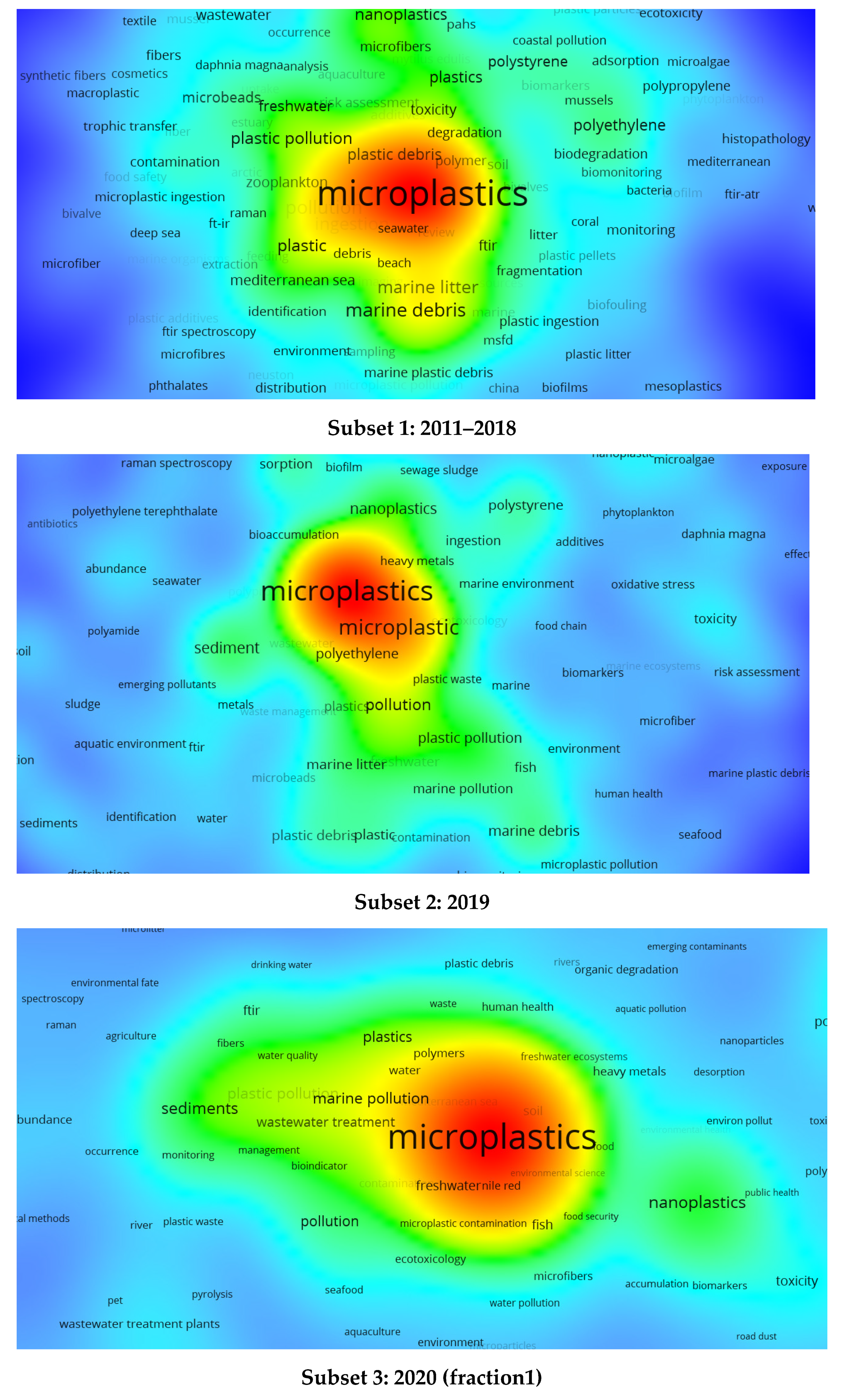
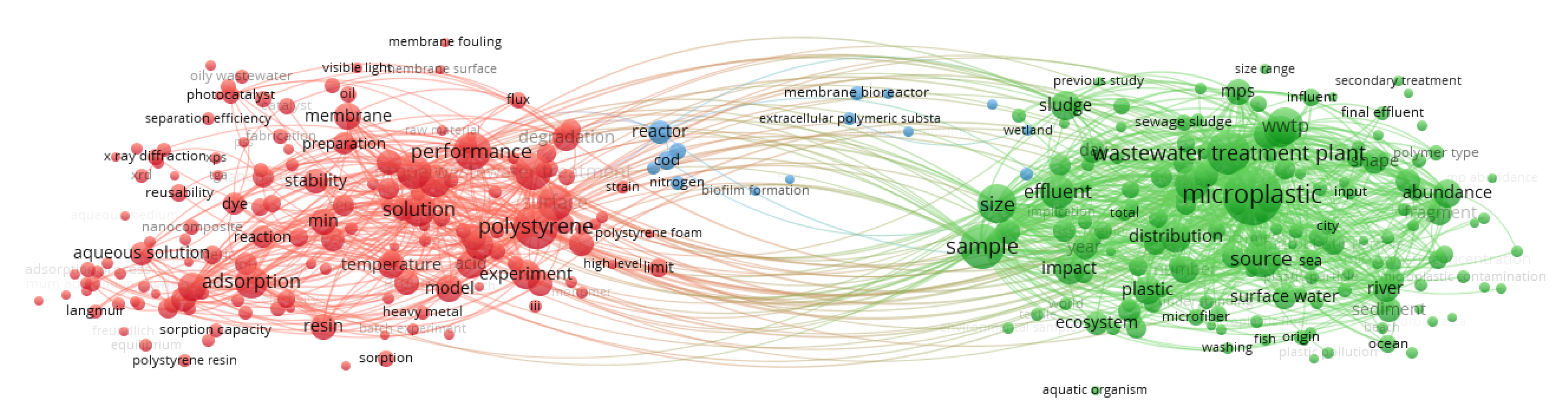
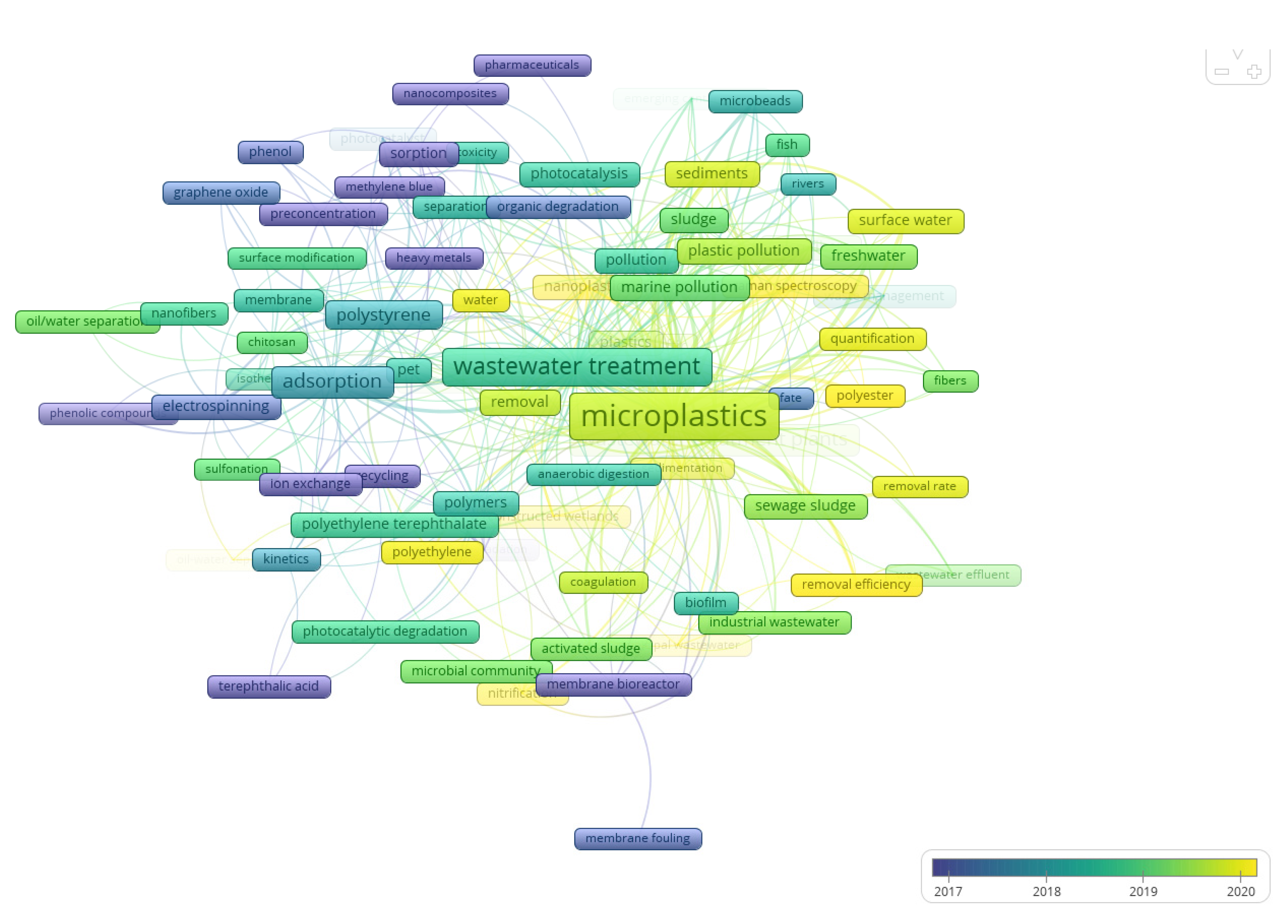
- Co-occurrence analysis—It is based on the number of times that the keywords (KWs) are repeated in the various articles. The analysis can specifically involve the KWs indicated by the authors of the articles, or the generic KWs indexed in the specific topics. The higher the KW occurrence, the larger the size of the related node in the maps. Two KWs that have been indicated together in an article, are joined by a link in the map. The thickness of the link is an indication of the total link strength (TLS), i.e., the total number of times the two words have been jointly considered as KWs in the various articles.
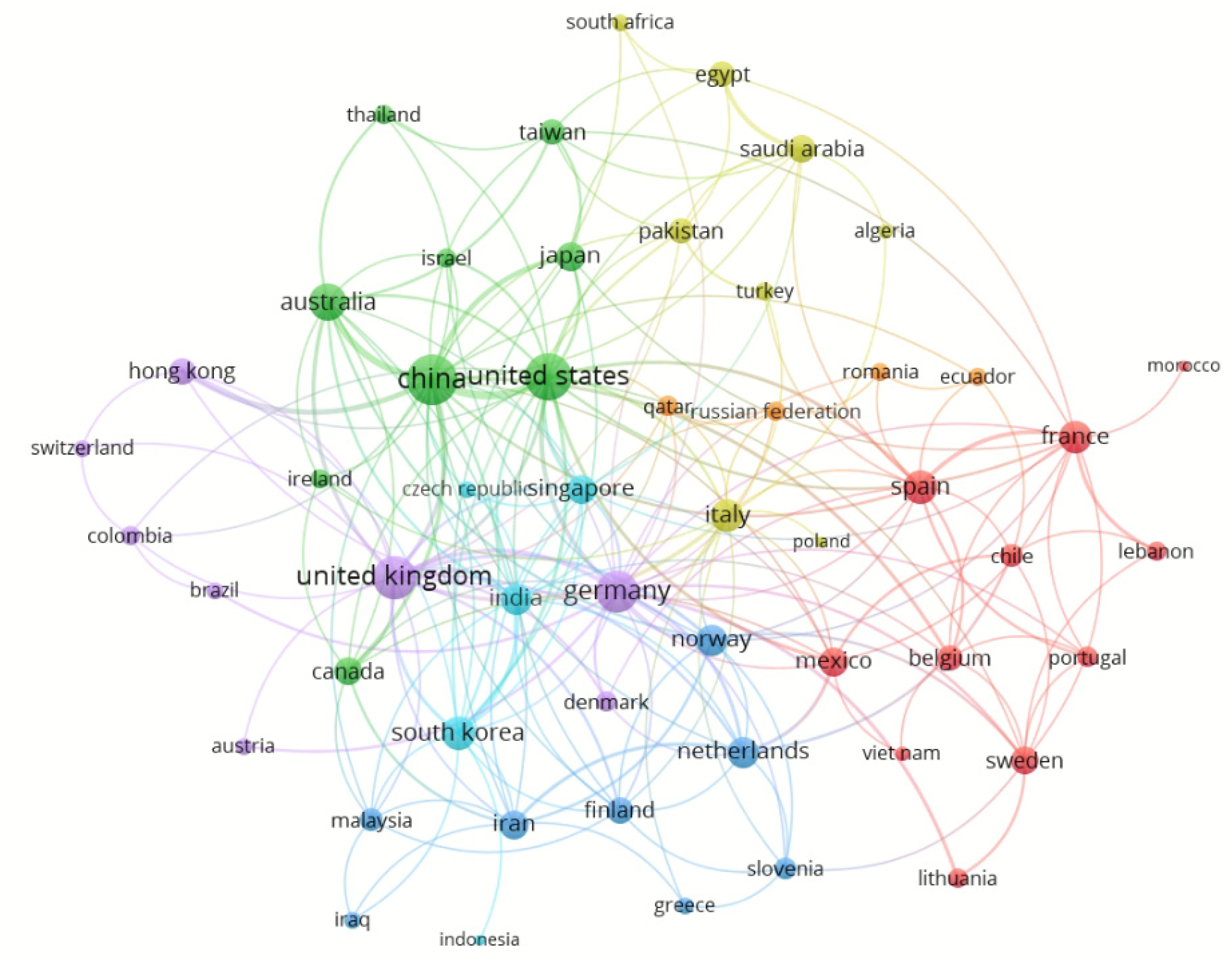
- Co-authorship analysis—In this case, the nodes in the map may be representative of the name of the authors of the articles, or of the country or the institution to which they belong. The relatedness of the items is determined by the number of articles co-authored by each couple of authors, or countries or institutions. A different visualization of the network in the map may also be obtained in which the size of the item is weighted with respect to the number of citations related to the linked couple of items.
Analysis of the Knowledge
- (1)
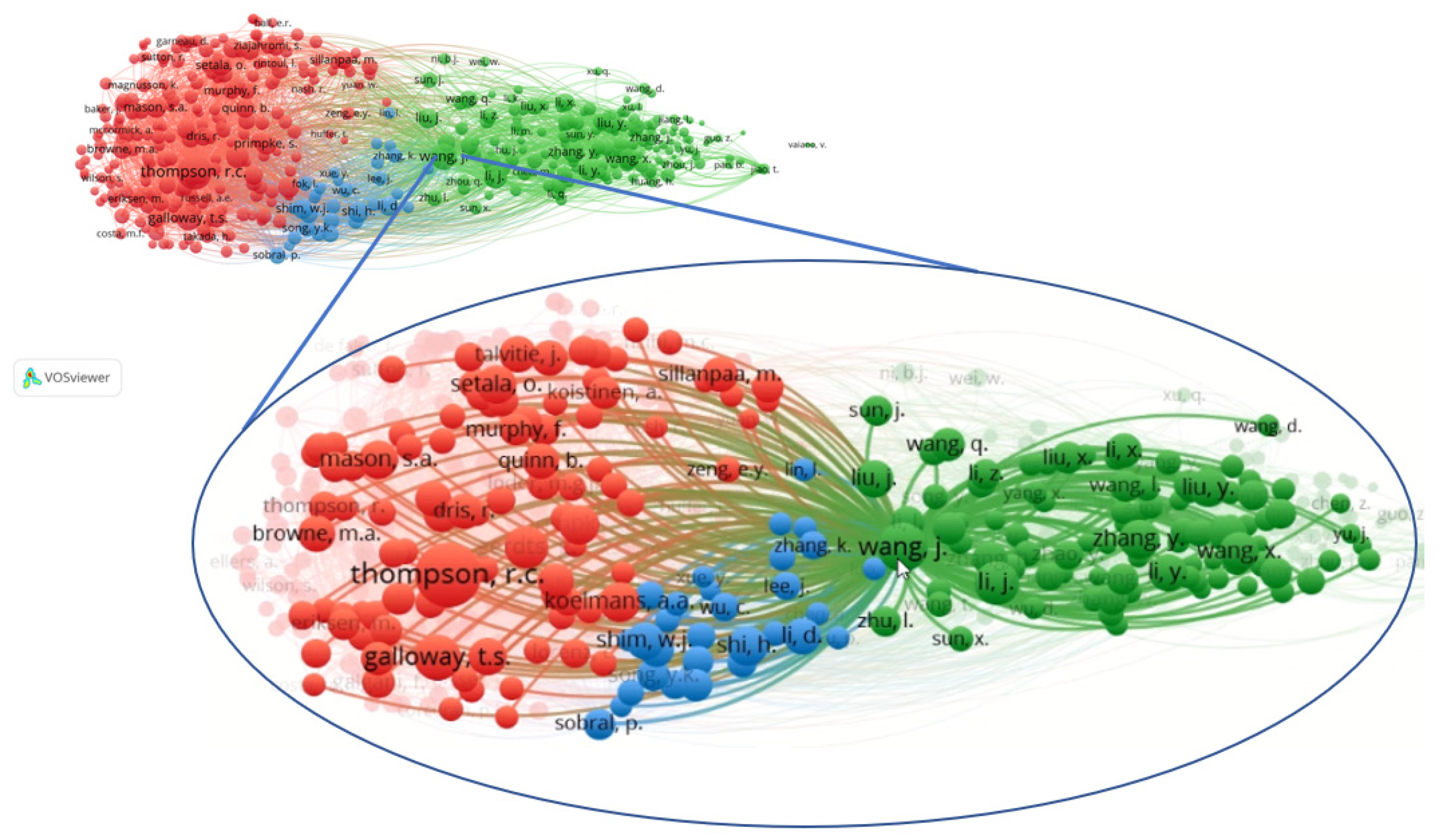
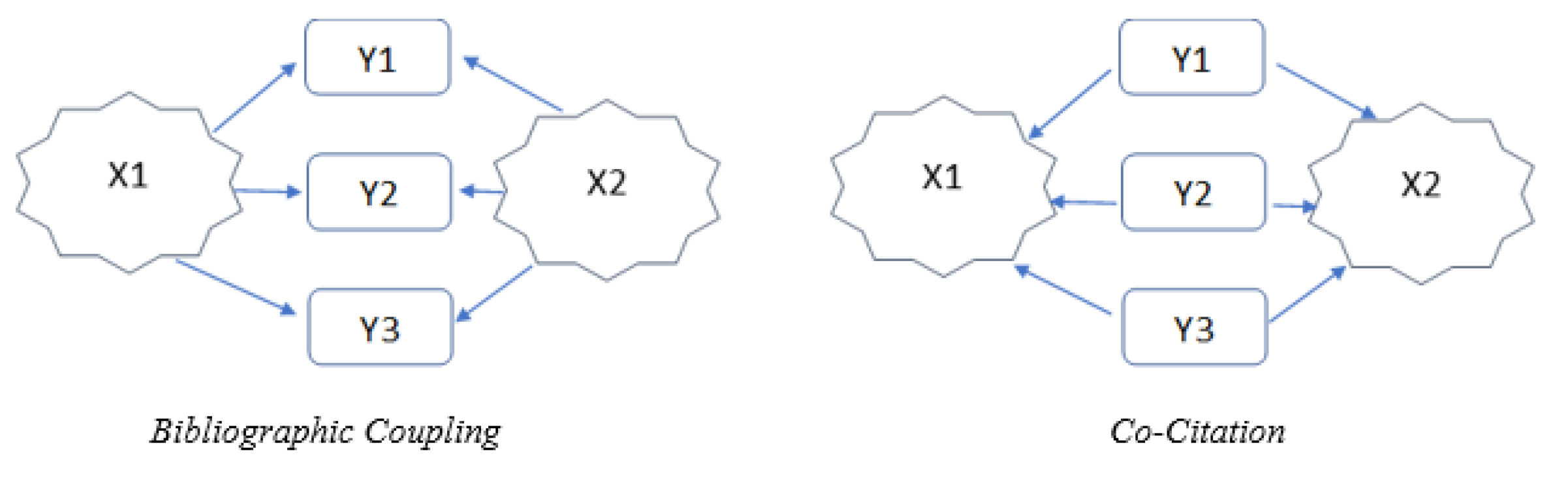
- the cited analysis which accounts for the authors that cite the papers selected in the specific survey (who cites them?): this represents the knowledge output, connected to the importance of a paper for other authors.
- (2)
- the citing analysis which describes the citing behavior of the authors of the selected papers (who is cited by them?): this may indicate the knowledge input, because it gives an indication of the possible information used by the authors to make their work.
3. Data Analysis
3.1. Analysis of the Data Related to the WWT and MPs
3.2. Term Co-Occurrence Analysis
3.3. Co-Occurrence Analysis
3.4. Co-Authorship Analysis
3.5. Co-Citation Analysis
4. Conclusions
Author Contributions
Funding
Data Availability Statement
Conflicts of Interest
References
- More Plastic than Fish in the Sea by 2050, Says Ellen MacArthur | Davos 2016 | The Guardian. Available online: https://www.theguardian.com/business/2016/jan/19/more-plastic-than-fish-in-the-sea-by-2050-warns-ellen-macarthur (accessed on 2 July 2021).
- Do the Oceans Have More Plastic Than Fish Because of Pollution? Available online: https://www.businessinsider.com/plastic-in-ocean-outweighs-fish-evidence-report-2017-1?r=US&IR=T (accessed on 2 July 2021).
- Thomson, W.; Kelvin, L. White Paper Using Bibliometrics in Evaluating Research; Thomson Reuters: Philadelphia, PA, USA, 2008. [Google Scholar]
- Zou, X.; Yue, W.L.; Vu, H. Le Visualization and analysis of mapping knowledge domain of road safety studies. Accid. Anal. Prev. 2018, 118, 131–145. [Google Scholar] [CrossRef] [Scilit]
- Pauna, V.H.; Buonocore, E.; Renzi, M.; Russo, G.F.; Franzese, P.P. The issue of microplastics in marine ecosystems: A bibliometric network analysis. Mar. Pollut. Bull. 2019, 149, 110612. [Google Scholar] [CrossRef] [Scilit]
- Chen, D.; Liu, Z.; Luo, Z.; Webber, M.; Chen, J. Bibliometric and visualized analysis of emergy research. Ecol. Eng. 2016, 90, 285–293. [Google Scholar] [CrossRef] [Scilit]
- Van Eck, N.J.; Waltman, L. Software survey: VOSviewer, a computer program for bibliometric mapping. Scientometrics 2010, 84, 523–538. [Google Scholar] [CrossRef] [Scilit]
- Van Eck, N.J.; Waltman, L. Visualizing Bibliometric Networks. In Measuring Scholarly Impact; Springer International Publishing: Cham, Switzerland, 2014; pp. 285–320. [Google Scholar]
- Palmas, S.; Mais, L.; Mascia, M.; Vacca, A. Trend in using TiO2 nanotubes as photoelectrodes in PEC processes for wastewater treatment. Curr. Opin. Electrochem. 2021, 28, 100699. [Google Scholar] [CrossRef] [Scilit]
- Li, J.; Hale, A. Identification of, and knowledge communication among core safety science journals. Saf. Sci. 2015, 74, 70–78. [Google Scholar] [CrossRef] [Scilit]
- Vital-Grappin, A.D.; Ariza-Tarazona, M.C.; Luna-Hernández, V.M.; Villarreal-Chiu, J.F.; Hernández-López, J.M.; Siligardi, C.; Cedillo-González, E.I. The role of the reactive species involved in the photocatalytic degradation of hdpe microplastics using c,n-tio2 powders. Polymers 2021, 13, 999. [Google Scholar] [CrossRef] [Scilit]
- Uheida, A.; Mejía, H.G.; Abdel-Rehim, M.; Hamd, W.; Dutta, J. Visible light photocatalytic degradation of polypropylene microplastics in a continuous water flow system. J. Hazard. Mater. 2021, 406, 124299. [Google Scholar] [CrossRef] [Scilit]
- Miao, F.; Liu, Y.; Gao, M.; Yu, X.; Xiao, P.; Wang, M.; Wang, S.; Wang, X. Degradation of polyvinyl chloride microplastics via an electro-Fenton-like system with a TiO2/graphite cathode. J. Hazard. Mater. 2020, 399, 123023. [Google Scholar] [CrossRef] [Scilit] [PubMed]
- Lin, J.; Yan, D.; Fu, J.; Chen, Y.; Ou, H. Ultraviolet-C and vacuum ultraviolet inducing surface degradation of microplastics. Water Res. 2020, 186, 116360. [Google Scholar] [CrossRef] [Scilit]
- Cao, G.; Li, Q.; Wang, R.; Wang, C.; Duan, X.; Ho, S.H. Simultaneous separation of multiphase emulsion mixture and catalytic degradation of BPA via microalgae residue membranes. Chem. Eng. J. 2020, 393, 124750. [Google Scholar] [CrossRef] [Scilit]
- Kang, J.; Zhou, L.; Duan, X.; Sun, H.; Ao, Z.; Wang, S. Degradation of Cosmetic Microplastics via Functionalized Carbon Nanosprings. Matter 2019, 1, 745–758. [Google Scholar] [CrossRef] [Scilit]
- Xue, J.; Kannan, K. Mass flows and removal of eight bisphenol analogs, bisphenol A diglycidyl ether and its derivatives in two wastewater treatment plants in New York State, USA. Sci. Total Environ. 2019, 648, 442–449. [Google Scholar] [CrossRef] [Scilit] [PubMed]
- Murphy, F.; Ewins, C.; Carbonnier, F.; Quinn, B. Wastewater Treatment Works (WwTW) as a Source of Microplastics in the Aquatic Environment. Environ. Sci. Technol. 2016, 50, 5800–5808. [Google Scholar] [CrossRef] [Scilit]
- Carr, S.A.; Liu, J.; Tesoro, A.G. Transport and fate of microplastic particles in wastewater treatment plants. Water Res. 2016, 91, 174–182. [Google Scholar] [CrossRef] [Scilit]
- Mason, S.A.; Garneau, D.; Sutton, R.; Chu, Y.; Ehmann, K.; Barnes, J.; Fink, P.; Papazissimos, D.; Rogers, D.L. Microplastic pollution is widely detected in US municipal wastewater treatment plant effluent. Environ. Pollut. 2016, 218, 1045–1054. [Google Scholar] [CrossRef] [Scilit] [PubMed]
- Lares, M.; Ncibi, M.C.; Sillanpää, M.; Sillanpää, M. Occurrence, identification and removal of microplastic particles and fibers in conventional activated sludge process and advanced MBR technology. Water Res. 2018, 133, 236–246. [Google Scholar] [CrossRef] [Scilit] [PubMed]
- Wright, S.L.; Thompson, R.C.; Galloway, T.S. The physical impacts of microplastics on marine organisms: A review. Environ. Pollut. (Barking Essex 1987) 2013, 178, 483–492. [Google Scholar] [CrossRef] [Scilit]
- Andrady, A.L. Microplastics in the marine environment. Mar. Pollut. Bull. 2011, 62, 1596–1605. [Google Scholar] [CrossRef] [Scilit]
- Eerkes-Medrano, D.; Thompson, R.C.; Aldridge, D.C. Microplastics in freshwater systems: A review of the emerging threats, identification of knowledge gaps and prioritisation of research needs. Water Res. 2015, 75, 63–82. [Google Scholar] [CrossRef] [Scilit]
- Hidalgo-Ruz, V.; Gutow, L.; Thompson, R.C.; Thiel, M. Microplastics in the marine environment: A review of the methods used for identification and quantification. Environ. Sci. Technol. 2012, 46, 3060–3075. [Google Scholar] [CrossRef] [Scilit]
- Mintenig, S.M.; Int-Veen, I.; Löder, M.G.J.; Primpke, S.; Gerdts, G. Identification of microplastic in effluents of waste water treatment plants using focal plane array-based micro-Fourier-transform infrared imaging. Water Res. 2017, 108, 365–372. [Google Scholar] [CrossRef] [Scilit] [PubMed]
- Ziajahromi, S.; Neale, P.A.; Rintoul, L.; Leusch, F.D.L. Wastewater treatment plants as a pathway for microplastics: Development of a new approach to sample wastewater-based microplastics. Water Res. 2017, 112, 93–99. [Google Scholar] [CrossRef] [Scilit]
- Barnes, D.K.A.; Galgani, F.; Thompson, R.C.; Barlaz, M. Accumulation and fragmentation of plastic debris in global environments. Philos. Trans. R. Soc. B Biol. Sci. 2009, 364, 1985–1998. [Google Scholar] [CrossRef] [Scilit] [PubMed]
- Kanhai, L.D.K.; Gardfeldt, K.; Krumpen, T.; Thompson, R.C.; O’Connor, I. Microplastics in sea ice and seawater beneath ice floes from the Arctic Ocean. Sci. Rep. 2020, 10, 1–11. [Google Scholar] [CrossRef] [Scilit]
- Napper, I.E.; Davies, B.F.R.; Clifford, H.; Elvin, S.; Koldewey, H.J.; Mayewski, P.A.; Miner, K.R.; Potocki, M.; Elmore, A.C.; Gajurel, A.P.; et al. Reaching New Heights in Plastic Pollution—Preliminary Findings of Microplastics on Mount Everest. One Earth 2020, 3, 621–630. [Google Scholar] [CrossRef] [Scilit]
- Napper, I.E.; Baroth, A.; Barrett, A.C.; Bhola, S.; Chowdhury, G.W.; Davies, B.F.R.; Duncan, E.M.; Kumar, S.; Nelms, S.E.; Hasan Niloy, M.N.; et al. The abundance and characteristics of microplastics in surface water in the transboundary Ganges River. Environ. Pollut. 2021, 274, 116348. [Google Scholar] [CrossRef] [Scilit] [PubMed]
- Wang, W.; Ndungu, A.W.; Li, Z.; Wang, J. Microplastics pollution in inland freshwaters of China: A case study in urban surface waters of Wuhan, China. Sci. Total Environ. 2017, 575, 1369–1374. [Google Scholar] [CrossRef] [Scilit] [PubMed]

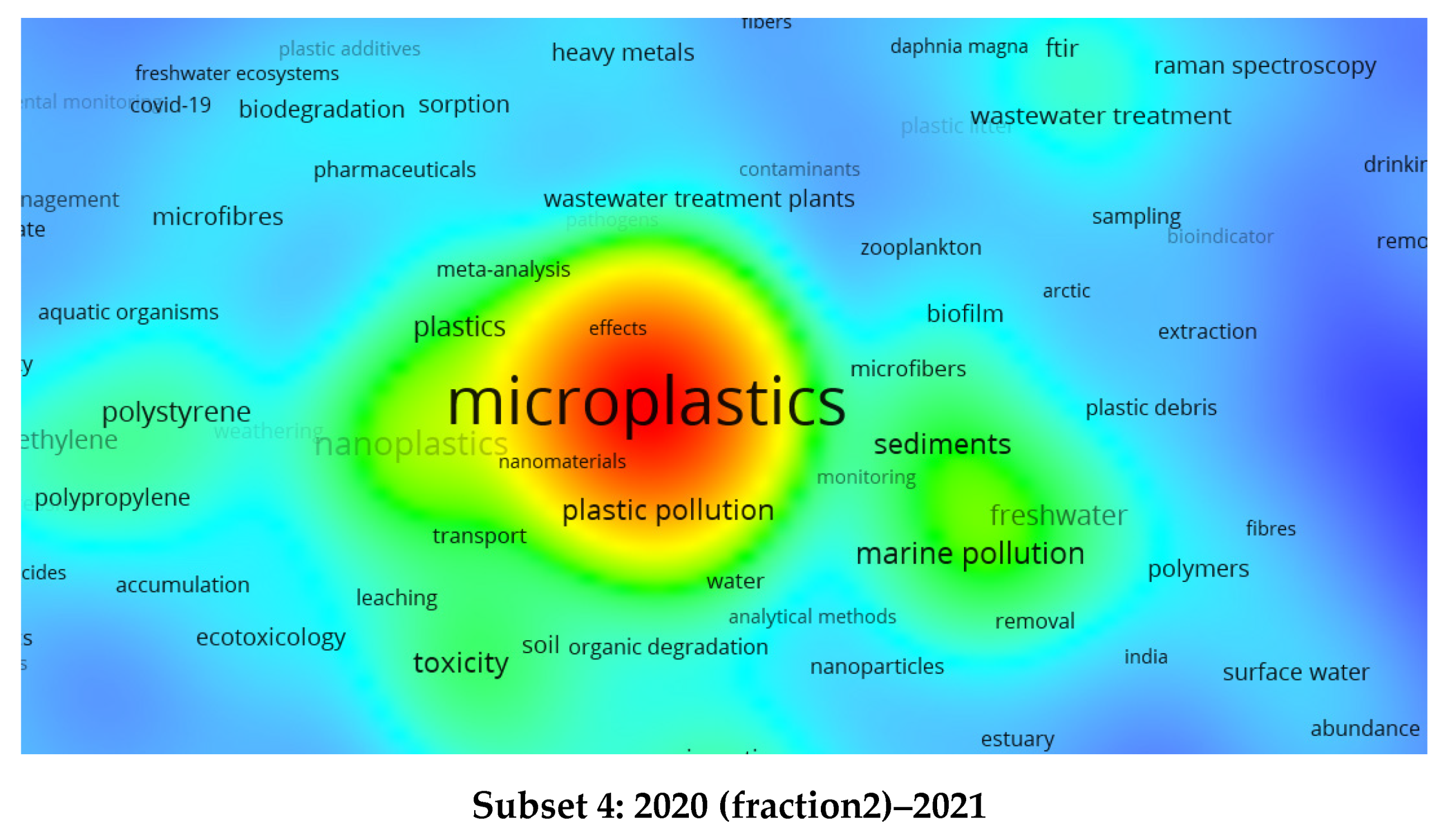


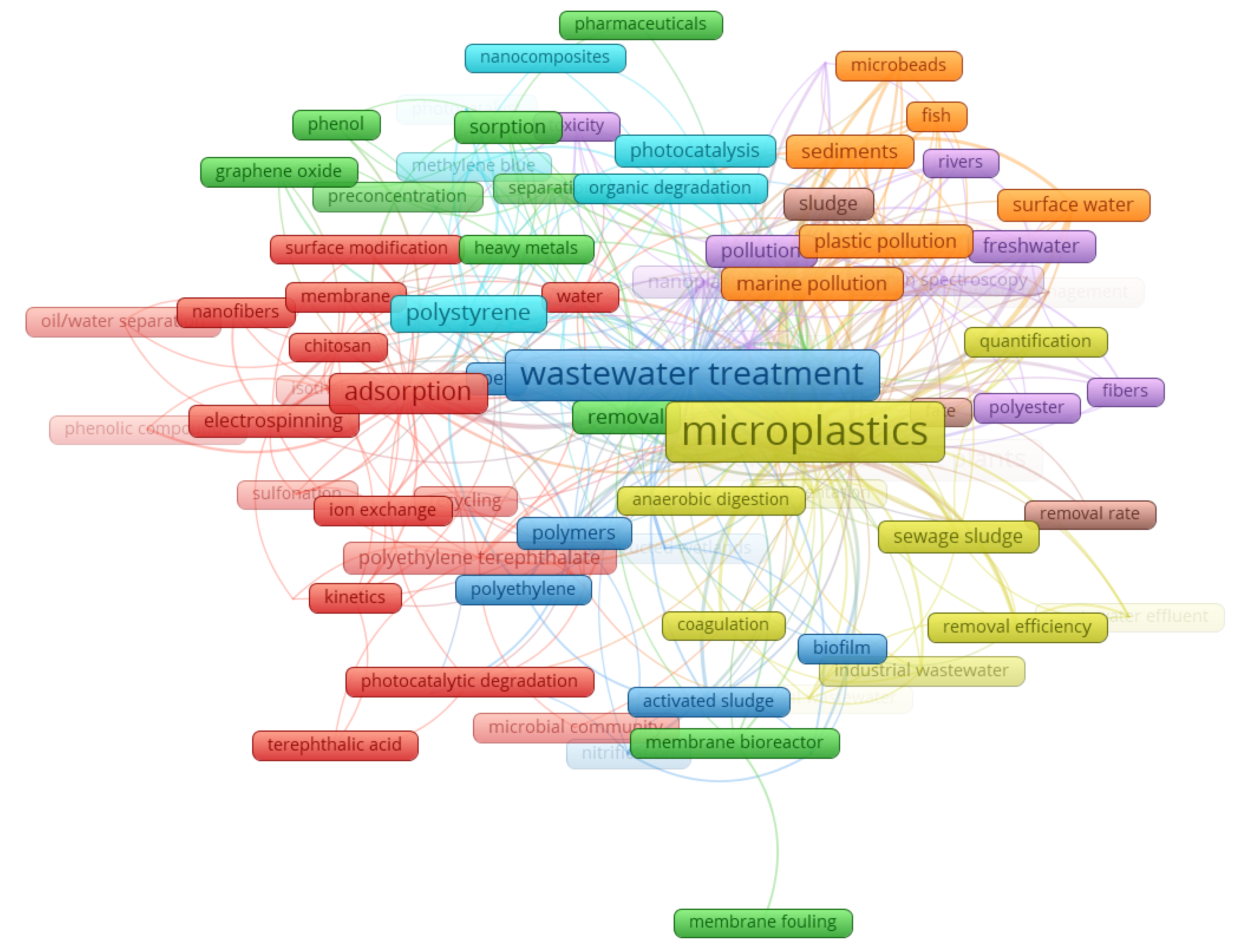



| Title | Source | Query | |
|---|---|---|---|
| - The role of the reactive species involved in the photocatalytic degradation of hdpe microplastics using C,N-TiO2 powders [11] | 2021 | Polymers | Q4 |
| - Visible light photocatalytic degradation of polypropylene microplastics in a continuous water flow system [12] | 2021 | J. of Hazardous Materials | Q4 |
| - Degradation of polyvinyl chloride microplastics via an electro-Fenton-like system with a TiO2/graphite cathode [13] | 2020 | J. of Hazardous Materials | Q4 |
| - Ultraviolet-C and vacuum ultraviolet inducing surface degradation of microplastics [14] | 2020 | Water Research | Q4 |
| - Simultaneous separation of multiphase emulsion mixture and catalytic degradation of BPA via microalgae residue membranes [15] | 2020 | Chemical Engineering J. | Q4 |
| - Degradation of cosmetic microplastics via functionalized carbon nanosprings [16] | 2019 | Matter | Q4 |
| - Mass flows and removal of eight bisphenol analogs, bisphenol -A diglycidyl ether and its derivatives in two wastewater treatment plants in New York State, USA [17] | 2019 | Science of the Total | Q4 |
| - Oxidation of microplastics by O3 and O3/H2O2: surface modification and adsorption capacity [18] | 2021 | J. of Water Process Engineering | Q5 |
| - Microplastics in the environment: occurrence, perils, and eradication [19] | 2021 | Chemical Engineering Journal | Q5 |
| - Fate of COVID-19 occurrences in wastewater systems: emerging detection and treatment technologies—a review [20] | 2020 | Water | Q5 |
| Authors | Title | Citations | TLS |
|---|---|---|---|
| F. Murphy, C. Ewins, F. Carbonnier, and B. Quinn | Wastewater treatment works (WwTW) as a source of microplastics in the aquatic environment [18] | 112 | 6623 |
| S. A.Carr, J. Liu, A. G.Tesoro | Transport and fate of microplastic particles in wastewater treatment plants [19] | 99 | 6221 |
| S. A.Mason, D. Garneau, R. Sutton, Y. Chu, K. Ehmann, J. Barnes, P. Fink, D. Papazissimos, D. L. Rogers | Microplastic pollution is widely detected in US municipal wastewater treatment plant effluent [20] | 62 | 3746 |
| M. Lares, M. Chaker Ncibi, M. Sillanpää, M. Sillanpää | Occurrence, identification and removal of microplastic particles and fibers in conventional activated sludge process and advanced MBR technology [21] | 56 | 3446 |
| S. L. Wright, R. C. Thompson, T. S. Galloway | The physical impacts of microplastics on marine organisms: a review [22] | 49 | 3218 |
| A. L. Andrady | Microplastics in the marine environment [23] | 50 | 3136 |
| D. Eerkes-Medrano, R. C. Thompson, D. C. Aldridge | Microplastics in freshwater systems: a review of the emerging threats, identification of knowledge gaps and prioritization of research needs [24] | 49 | 3078 |
| V. Hidalgo-Ruz, L. Gutow, R. C. Thompson, M. Thiel | Microplastics in the marine environment: a review of the methods used for identification and quantification [25] | 47 | 2753 |
| S. M. Mintenig, I. Int-Veen, M. G. J. Löder, S. Primpke, G. Gerdts | Identification of microplastic in effluents of waste water treatment plants using focal plane array-based micro-Fourier-transform infrared imaging [26] | 44 | 2734 |
| S. Ziajahromi, P. A. Neale, L. Rintoul, F. D.L. Leusch | Wastewater treatment plants as a pathway for microplastics: Development of a new approach to sample wastewater-based microplastics [27] | 42 | 2697 |
Publisher’s Note: MDPI stays neutral with regard to jurisdictional claims in published maps and institutional affiliations. |
© 2021 by the authors. Licensee MDPI, Basel, Switzerland. This article is an open access article distributed under the terms and conditions of the Creative Commons Attribution (CC BY) license (https://creativecommons.org/licenses/by/4.0/).
Share and Cite
Palmas, S.; Vacca, A.; Mais, L. Bibliometric Analysis on the Papers Dedicated to Microplastics in Wastewater Treatments. Catalysts 2021, 11, 913. https://doi.org/10.3390/catal11080913
Palmas S, Vacca A, Mais L. Bibliometric Analysis on the Papers Dedicated to Microplastics in Wastewater Treatments. Catalysts. 2021; 11(8):913. https://doi.org/10.3390/catal11080913
Chicago/Turabian StylePalmas, Simonetta, Annalisa Vacca, and Laura Mais. 2021. "Bibliometric Analysis on the Papers Dedicated to Microplastics in Wastewater Treatments" Catalysts 11, no. 8: 913. https://doi.org/10.3390/catal11080913
APA StylePalmas, S., Vacca, A., & Mais, L. (2021). Bibliometric Analysis on the Papers Dedicated to Microplastics in Wastewater Treatments. Catalysts, 11(8), 913. https://doi.org/10.3390/catal11080913