1. Introduction
The rapid growth of indexed scientific production has transformed bibliometric analysis into a computationally intensive field that relies on large-scale metadata processing and network modeling [
1,
2,
3,
4,
5,
6]. Major bibliographic databases such as Web of Science (WoS) and Scopus provide structured metadata that enables quantitative analysis of scientific knowledge through citation networks, co-authorship graphs, and keyword co-occurrence structures [
7,
8].
Network-based bibliometric approaches are widely used to map research domains, identify emerging scientific topics, and analyze collaboration patterns across disciplines [
1,
2,
3,
4,
7,
9,
10,
11]. These approaches typically represent documents, authors, or keywords as nodes connected through citation or co-occurrence relationships, allowing the application of graph-theoretical methods to study the structural organization of scientific knowledge [
12,
13,
14,
15].
Despite their widespread adoption, bibliometric analyses increasingly face methodological challenges when integrating data from multiple indexing platforms. Differences in metadata schemas, identifier coverage, export formats, and classification systems introduce structural heterogeneity that can affect data consistency and downstream network analysis [
16,
17,
18]. To illustrate these structural differences,
Table 1 summarizes key characteristics of major bibliographic databases. These discrepancies complicate cross-database integration and may lead to issues such as duplicate records, fragmented author identities, and inconsistent keyword representations, ultimately impacting the reliability of scientometric results.
Several software tools support bibliometric network analysis, including VOSviewer (version 1.6.19 or higher) and bibliometrix (version 3.0 or higher) [
1,
7,
19]. These tools provide advanced visualization and clustering techniques; however, many preprocessing operations—such as metadata harmonization and duplicate resolution—are embedded implicitly within tool-specific workflows, limiting transparency and reproducibility [
20,
21]. When datasets exported from heterogeneous sources such as WoS and Scopus are combined, differences in metadata structures and identifier conventions may generate duplicate records, fragmented author representations, and inconsistent keyword groupings [
16,
17,
22,
23]. These inconsistencies can propagate into network construction and significantly affect structural indicators such as density, centrality distributions, and community structure [
8,
24,
25].
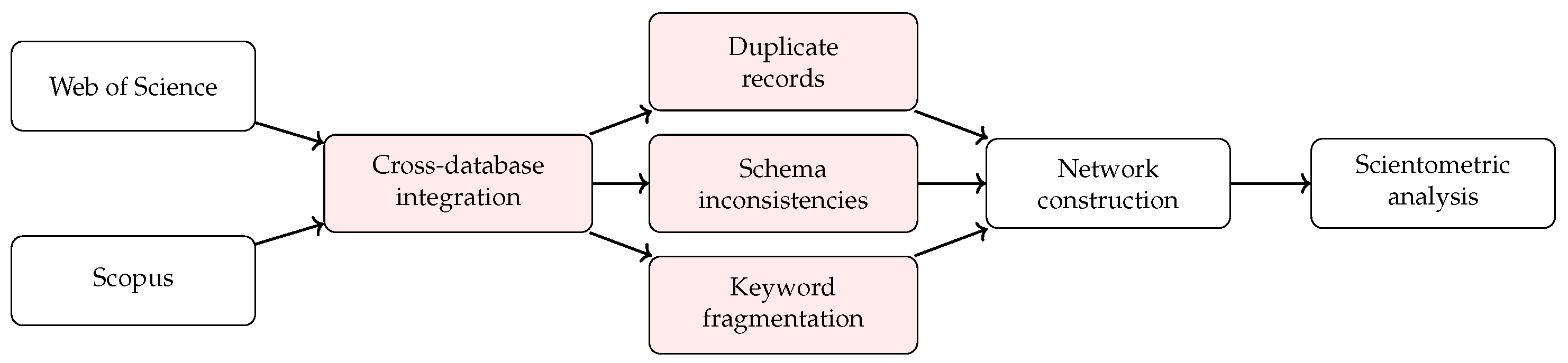
Figure 1 illustrates the typical workflow of cross-database bibliometric network construction and highlights the preprocessing stages where structural distortions may arise. These issues are not only related to data integration but also to the lack of explicit, reproducible preprocessing procedures capable of isolating and evaluating the impact of each transformation step [
18,
26,
27,
28].
To address these challenges, this study proposes a reproducible computational pipeline for cross-database scientometric network construction. The objective of this work is to design and evaluate a modular preprocessing framework that enables consistent integration of heterogeneous bibliographic data while preserving the structural properties of the resulting networks.
The proposed approach explicitly formalizes key preprocessing stages, including metadata harmonization, deterministic duplicate detection, and structured data preparation. Unlike many existing tools that emphasize visualization or exploratory analysis, this pipeline provides a transparent and reproducible workflow that allows the impact of each transformation step to be systematically analyzed.
From a broader perspective, the increasing reliance on multi-database scientometric analysis reflects a shift toward data-intensive research evaluation practices [
21,
29]. However, this shift also introduces methodological challenges related to data consistency, reproducibility, and interpretability [
18]. Addressing these challenges requires not only computational efficiency but also methodological transparency, ensuring that preprocessing decisions can be systematically examined and validated. The main contributions of this work are summarized in
Table 2.
This study is structured as an empirical research article, in which the proposed computational pipeline is formally defined and experimentally evaluated using real-world bibliographic data.
The remainder of this paper is organized as follows.
Section 2 reviews related work.
Section 3 describes the proposed methodology.
Section 4 presents the experimental results.
Section 5 discusses the findings.
Section 6 concludes the study.
2. Related Work
The rapid expansion of scientific publications has stimulated the development of computational techniques for analyzing large-scale bibliometric datasets [
30]. Modern scientometric studies increasingly rely on network-based models that represent documents, authors, or keywords as nodes connected through citation or co-occurrence relationships [
1,
7]. These representations enable the application of graph-theoretical methods to analyze the structural organization of scientific knowledge and to identify thematic clusters within research domains [
31].
Several software environments have been developed to support bibliometric and scientometric analysis. Tools such as VOSviewer and bibliometrix provide advanced functionality for network visualization, clustering, and science mapping [
1,
3,
7]. These systems are widely used for exploring citation structures, co-authorship networks, and keyword co-occurrence patterns across scientific domains. However, most existing tools assume internally consistent metadata and focus primarily on visualization and exploratory analysis rather than on reproducible preprocessing pipelines [
5].
A key limitation of current bibliometric software environments lies in the implicit handling of preprocessing operations. Tasks such as metadata harmonization, duplicate resolution, and schema normalization are typically embedded within tool-specific workflows, limiting transparency and reproducibility when integrating heterogeneous bibliographic datasets [
32,
33]. As a consequence, the impact of data integration decisions on network structure is rarely evaluated in a systematic and reproducible manner.
Table 3 highlights that, while existing tools provide strong analytical and visualization capabilities, they offer limited support for explicit and reproducible preprocessing workflows. This limitation is particularly critical in cross-database scientometric studies, where inconsistencies in metadata schemas, identifier conventions, and export formats may introduce duplicate records, fragmented author identities, and distorted network structures.
Graph theory provides a mathematical foundation for analyzing structural properties of bibliometric networks, including connectivity patterns, centrality distributions, and community structures [
8]. Empirical studies have consistently observed heterogeneous degree distributions and modular organization in large-scale scientific networks, reflecting thematic segmentation and disciplinary subfields [
8,
13]. These characteristics support the use of community detection and structural diagnostics in scientometric analysis.
Despite their widespread adoption, existing bibliometric tools generally assume internally consistent metadata inputs. However, bibliographic databases often exhibit structural heterogeneity in metadata schemas and identifier systems [
16]. When datasets from multiple indexing platforms are combined, inconsistencies in author names, journal titles, and citation formats may produce duplicate records or fragmented citation structures. These issues can propagate into network construction and affect structural metrics such as centrality, clustering, and modularity, ultimately leading to unreliable interpretations of scientific domains.
Recent studies have emphasized the importance of reproducible computational workflows in bibliometric analysis [
21,
29,
34]. Explicit preprocessing pipelines enable researchers to systematically evaluate the impact of data integration decisions on network topology and clustering outcomes. In this context, there remains a clear gap in the literature regarding the formalization of preprocessing as a transparent and modular computational process.
This study addresses this gap by proposing a reproducible computational pipeline that explicitly separates metadata harmonization, duplicate detection, network construction, and structural diagnostics into independent and evaluable components.
3. Methodology
This section describes the methodology underlying the proposed computational pipeline for cross-database scientometric network construction. The approach is structured as a sequence of processing stages, including metadata harmonization, duplicate detection, network construction, and structural analysis.
From a network-analysis perspective, bibliometric workflows require careful preprocessing because structural inconsistencies in metadata may propagate into graph topology, centrality estimation, and clustering results [
7,
8]. Accordingly, the methodology isolates operations that are often embedded implicitly within bibliometric software environments, particularly schema alignment, record linkage, and weighted network generation [
7,
16].
3.1. Metadata Harmonization
The methodology begins with metadata harmonization, a preprocessing stage aimed at resolving schema heterogeneity across bibliographic databases such as Web of Science and Scopus. Cross-database integration requires aligning heterogeneous metadata fields including author identifiers, publication titles, keyword descriptors, and document classification categories [
35,
36].
Metadata harmonization is a critical stage in large-scale bibliometric analysis because inconsistencies in schema structure and field formatting may lead to fragmented author identities, duplicated records, and inconsistent keyword vocabularies [
29,
37]. Differences in export formats and metadata completeness across indexing platforms may introduce systematic biases when constructing scientometric networks. To address these issues, the methodology performs explicit normalization of metadata attributes before network construction.
The pipeline begins with metadata ingestion from independent bibliographic databases. Let
and
denote the raw metadata collections exported from Web of Science and Scopus, respectively. Because these sources use different field names, identifier conventions, and export structures, schema harmonization is required [
16]. Formally, a harmonization function
H is defined to transform heterogeneous metadata into a unified representation:
This transformation standardizes core metadata fields including DOI, author names, journal titles, publication year, document type, and keywords. Consistent with prior work, string normalization is applied to reduce lexical fragmentation arising from punctuation, capitalization, and variant abbreviations [
1,
2].
Table 4 summarizes the harmonization rules.
3.2. Deterministic Duplicate Detection
Following metadata harmonization, the second stage of the methodology addresses duplicate detection. Duplicate records are resolved through a deterministic two-stage procedure, as the same publication may appear in multiple indexing systems with partially inconsistent metadata representations [
19,
22].
In the first stage, exact matching is performed using persistent identifiers such as DOI. When available, DOI matching provides a reliable mechanism for bibliographic record linkage because it represents a globally unique identifier assigned to scholarly publications [
25]. However, DOI metadata may be missing or inconsistently formatted in some records.
When DOI information is unavailable or incomplete, a composite similarity score is computed by combining title similarity, author overlap, and publication-year agreement. Let
S denote the similarity score between two records
and
:
where
measures normalized title similarity,
captures author-list overlap, and
represents publication-year agreement [
23,
38]. The coefficients satisfy:
A pair of records is classified as duplicate when:
where
denotes a predefined similarity threshold. This rule-based formulation emphasizes transparency and reproducibility.
Algorithm 1 summarizes the duplicate detection procedure.
| Algorithm 1 Deterministic duplicate detection |
| Require: Harmonized metadata set , similarity threshold |
| Ensure: Deduplicated metadata set |
- 1:
Initialize - 2:
for each record do - 3:
mark ← false - 4:
for each record do - 5:
if DOI is not null and DOI = DOI then - 6:
mark ← true - 7:
else - 8:
Compute - 9:
if then - 10:
mark ← true - 11:
end if - 12:
end if - 13:
end for - 14:
if mark = false then - 15:
Add to - 16:
end if - 17:
end for - 18:
return
|
In terms of computational complexity, the worst-case behavior corresponds to pairwise comparisons. However, DOI matching significantly reduces the number of similarity computations in practice.
3.3. Comparison with Existing Deduplication Approaches
Duplicate detection is a well-known challenge in bibliographic data integration, particularly when combining records from heterogeneous indexing platforms. Existing approaches typically rely on heuristic matching or probabilistic record linkage strategies, each with different trade-offs in terms of precision and computational cost [
17,
38].
Tools such as VOSviewer implement heuristic matching techniques based on title similarity and metadata normalization, providing efficient performance for exploratory analysis but limited transparency in preprocessing decisions [
7,
19]. In contrast, probabilistic record linkage methods use statistical similarity models to estimate the likelihood that two records refer to the same entity, often achieving higher accuracy at the expense of increased computational complexity [
20,
23].
The proposed approach combines deterministic DOI matching with a composite similarity score based on title, authors, and publication year. This hybrid strategy aims to preserve high precision while maintaining computational efficiency and full reproducibility of the preprocessing pipeline. The comparison considers matching strategy, expected precision, and computational efficiency as key evaluation criteria.
Table 5 summarizes the main differences between representative approaches.
3.4. Network Construction and Association-Strength Normalization
Once duplicate records have been resolved, the resulting dataset is used to construct the bibliometric network. Bibliometric networks are modeled as graphs where nodes represent entities such as keywords and edges represent co-occurrence relations [
7,
8].
The bibliometric network is formally defined as:
where
V is the set of nodes,
E is the set of edges, and
W contains edge weights. Let
denote the co-occurrence count between nodes
i and
j:
To reduce the influence of highly frequent terms, association-strength normalization is applied:
where
and
denote marginal frequencies. This normalization improves interpretability and mitigates frequency bias [
7,
39].
Table 6 summarizes the computational complexity of the main stages.
3.5. Structural Diagnostics and Graph Metrics
In the final stage of the methodology, structural diagnostics are computed to characterize the topology of the resulting network. Common metrics include density, degree centrality, modularity, and community structure [
8,
13].
Additionally, concentration measures such as the Herfindahl–Hirschman Index, Shannon entropy, and the Gini coefficient are used to quantify structural inequality. These measures complement graph-based analysis by capturing distributional properties of node importance [
40,
41].
Table 7 summarizes the notation used in the methodology.
3.6. Computational Complexity
Let n denote the number of records and k the average number of keywords per record. The computational complexity of the proposed pipeline can be analyzed by examining each processing stage independently.
Metadata harmonization involves field normalization, string standardization, and schema alignment across heterogeneous sources. These operations require a single pass over the dataset, resulting in a time complexity of
, which is consistent with typical preprocessing workflows in bibliometric data integration [
22,
32].
Duplicate detection represents the most computationally demanding stage. In the worst case, pairwise record comparison leads to a quadratic complexity of
. However, the proposed approach significantly reduces this cost by prioritizing deterministic DOI matching, which operates in linear time, and restricting similarity computations to candidate pairs lacking persistent identifiers. This strategy aligns with hybrid record linkage approaches that balance accuracy and efficiency [
23,
38].
Network construction is based on keyword co-occurrence extraction. For sparse datasets, where each document is associated with a limited number of keywords, the complexity scales approximately as
. This behavior is consistent with efficient graph construction techniques for large-scale networks, where sparsity plays a critical role in reducing computational overhead [
8,
24].
From a practical perspective, the modular design of the pipeline enables independent optimization of each stage. In particular, duplicate detection can be further optimized through blocking strategies or indexing techniques, while network construction can leverage sparse matrix representations. This modularity supports scalability and facilitates reproducible experimentation, as each component can be evaluated and refined without affecting the overall workflow.
Overall, although the theoretical worst-case complexity is dominated by duplicate detection, the combination of deterministic matching and sparse network construction ensures that the pipeline remains computationally tractable for medium-scale scientometric datasets.
4. Experimental Results
4.1. Dataset Description
The experimental analysis was conducted using an interdisciplinary dataset composed of 317 scientific publications spanning the period 1990–2023. The dataset was constructed by merging records from Web of Science and Scopus after applying the harmonization procedure described in
Section 3.1. The selection of this dataset was guided by the need to represent an interdisciplinary research domain with heterogeneous metadata characteristics. By combining records from Web of Science and Scopus across a multi-decade period, the dataset provides a realistic scenario for evaluating cross-database integration challenges, including schema heterogeneity, duplicate records, and keyword fragmentation. This makes it suitable for assessing the robustness and reproducibility of the proposed preprocessing pipeline.
Table 8 summarizes the main characteristics of the dataset.
4.2. Impact of Metadata Harmonization and Deduplication
The preprocessing stage resulted in the identification and removal of duplicated records originating from cross-database overlap, a common issue when integrating bibliographic data from heterogeneous indexing platforms such as Web of Science and Scopus [
16,
17].
As shown in
Table 9, after applying the deterministic duplicate detection strategy described in
Section 3, the dataset size was reduced from 317 to 289 unique records, corresponding to a reduction of 8.8%. This reduction indicates a non-negligible level of redundancy in the raw dataset, even for a moderately sized interdisciplinary corpus.
From a methodological perspective, this reduction is significant because duplicate records can artificially inflate co-occurrence frequencies and distort network topology. In particular, duplicated entries may increase edge weights, bias centrality measures, and lead to misleading interpretations of thematic importance [
18,
23].
The observed reduction rate is consistent with previous studies on cross-database integration, which report overlapping records ranging between 5% and 15% depending on the domain and data sources [
17]. This result supports the relevance of explicit preprocessing pipelines in ensuring data consistency prior to network construction.
Overall, the deduplication process contributes directly to improving the reliability of the resulting scientometric network by reducing redundancy and preserving meaningful structural relationships among keywords.
4.3. Network Construction and Structural Properties
Using the deduplicated dataset, a keyword co-occurrence network
was constructed following the methodology described in
Section 3. The resulting network contains 142 nodes and 486 edges, reflecting a sparse structure that is characteristic of interdisciplinary scientometric datasets [
8,
9].
As detailed in
Table 10, the low density value (0.048) indicates that only a small fraction of all possible keyword pairs are connected, which is expected in co-occurrence networks where relationships are driven by shared contextual usage rather than complete connectivity. Sparse structures are commonly observed in large-scale bibliometric networks and are associated with improved interpretability and reduced noise [
8].
The average degree of 6.84 suggests a moderate level of connectivity among keywords, indicating that each term is, on average, associated with several related concepts. This level of connectivity supports the identification of thematic relationships without excessive clustering saturation.
The modularity value of 0.62 indicates a well-defined community structure, revealing the presence of distinct thematic clusters within the dataset. Values above 0.5 are generally considered indicative of strong community organization in complex networks [
13]. This suggests that the preprocessing pipeline preserves meaningful thematic segmentation rather than introducing artificial connections.
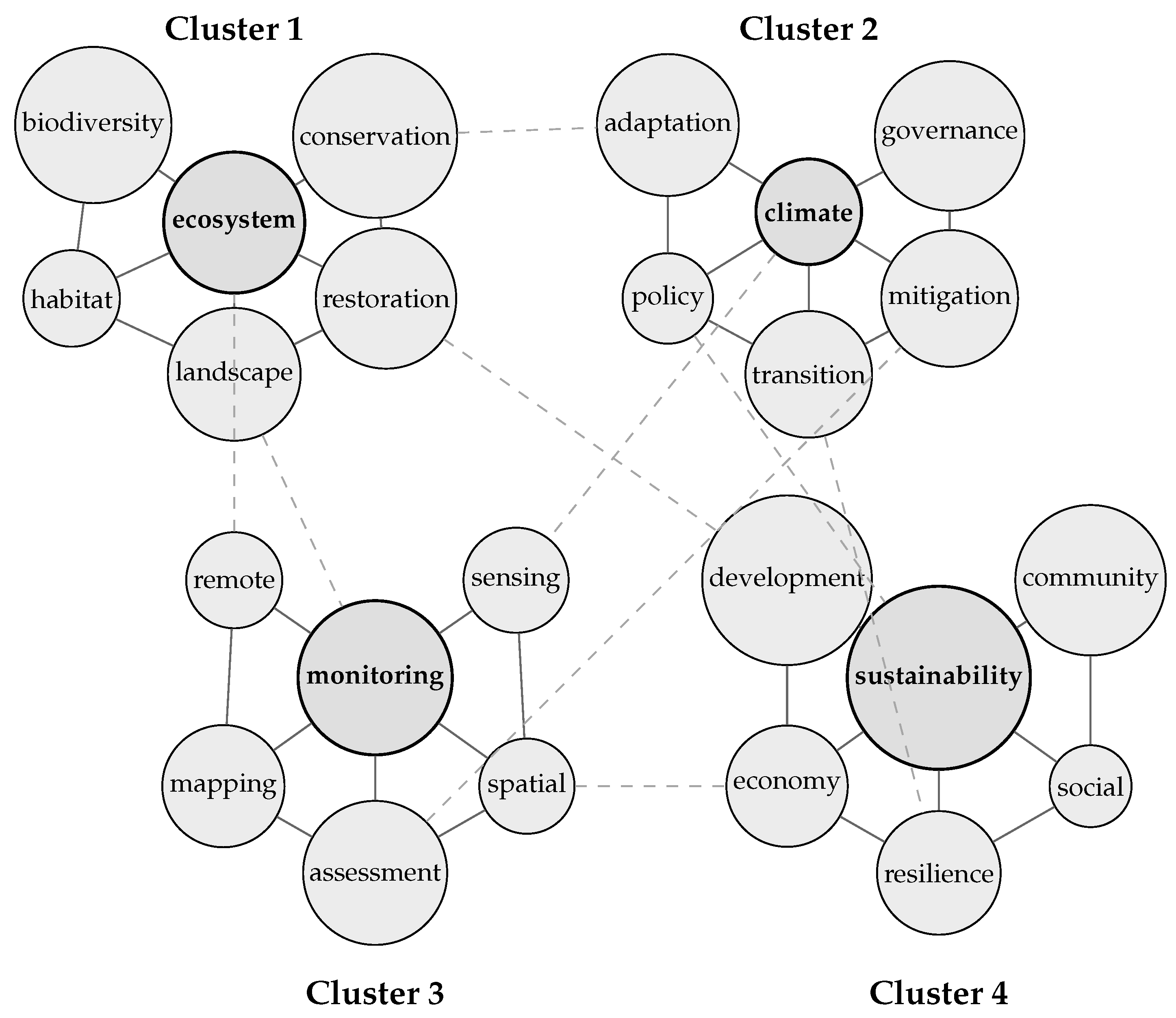
Figure 2 provides a conceptual visualization of the keyword co-occurrence network after preprocessing. The network exhibits four main thematic clusters connected through relatively weak inter-cluster links, which is consistent with the modular structure identified through quantitative analysis.
The identified clusters correspond to coherent thematic domains, including environmental systems, climate and governance, monitoring and spatial analysis, and sustainability and socio-economic dynamics. The presence of these clusters supports the interpretability of the network and confirms that the preprocessing stages did not distort the underlying semantic structure of the dataset.
Overall, the structural properties of the network indicate that the proposed pipeline successfully preserves both sparsity and modularity, two key characteristics required for reliable scientometric analysis and knowledge mapping.
4.4. Structural Diagnostics
To further characterize the network topology, concentration and diversity metrics were computed (
Table 11), providing complementary insights into the structural organization of the resulting scientometric network.
The Herfindahl–Hirschman Index (HHI) measures the level of concentration within the network. The obtained value of 0.073 indicates a low concentration structure, suggesting that keyword occurrences are relatively evenly distributed across the network rather than dominated by a small subset of highly frequent terms. This behavior is consistent with diversified research domains and aligns with expected patterns in interdisciplinary scientometric datasets [
9].
Shannon entropy provides a measure of diversity in the distribution of keyword frequencies. The observed value of 3.91 reflects a high level of informational diversity, indicating that the network captures a broad range of topics without excessive dominance of specific terms. High entropy values are typically associated with well-balanced knowledge structures and robust topic representation [
12].
The Gini coefficient evaluates inequality in the distribution of node importance. The value of 0.41 suggests moderate inequality, meaning that while some keywords play a more central role, the overall structure does not exhibit extreme centralization. This balance is desirable in scientometric networks, as it reflects the coexistence of core and peripheral research topics without excessive structural bias [
8].
Taken together, these metrics indicate that the resulting network exhibits a balanced combination of diversity and moderate structural inequality. This suggests that the preprocessing pipeline preserves meaningful structural patterns while avoiding distortions caused by duplicated or inconsistent metadata. Consequently, the network provides a reliable basis for subsequent scientometric analysis.
4.5. Scalability Analysis
The scalability of the pipeline was evaluated by progressively increasing the dataset size through controlled sampling.
Table 12 presents the execution time measurements.
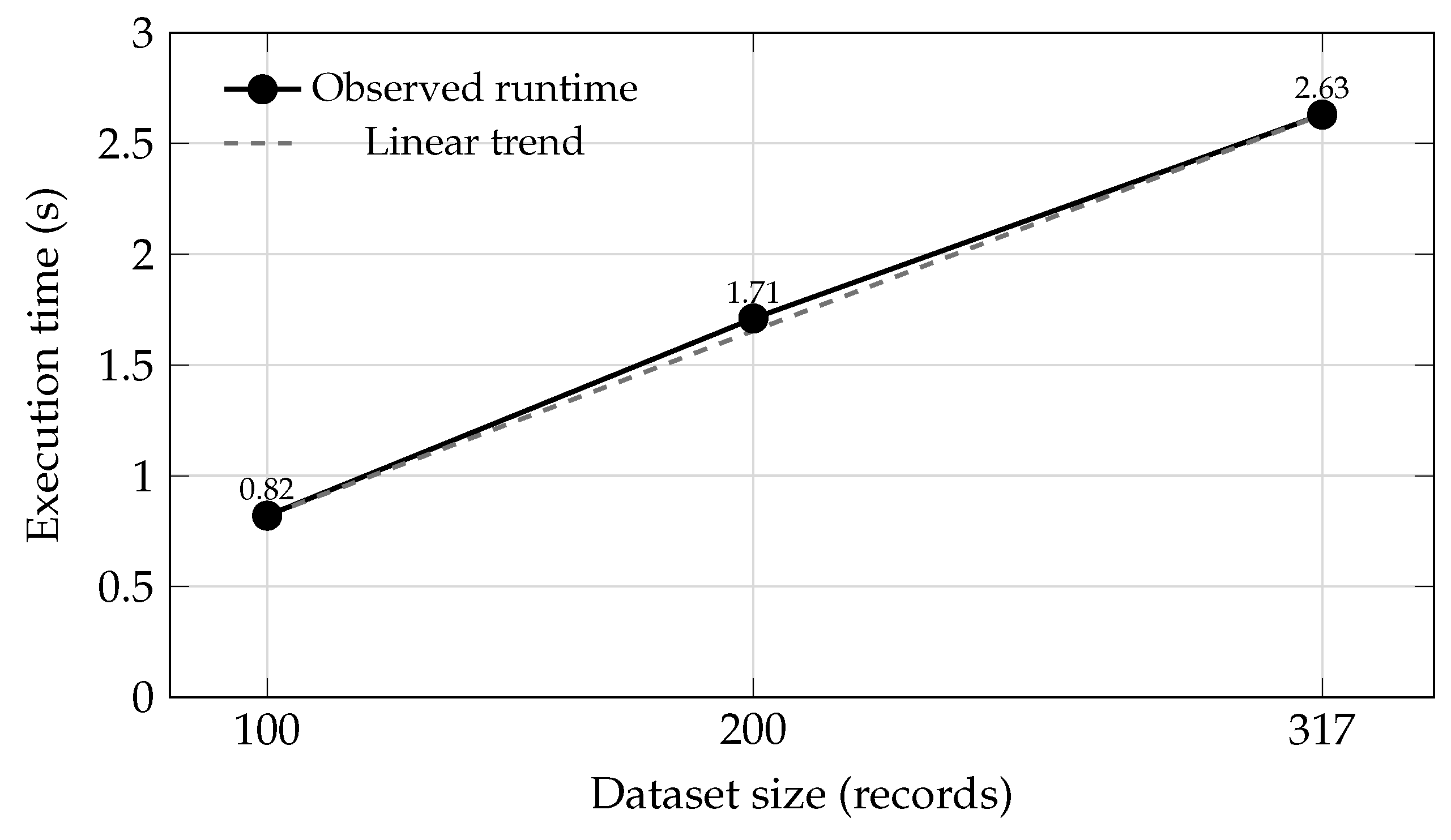
Figure 3 shows the relationship between dataset size and execution time based on the observed runtime values reported in
Table 12.
The results show a near-linear growth trend consistent with the expected complexity of sparse network construction.
5. Discussion
The results obtained in this study should be interpreted within the context of the selected dataset and preprocessing configuration, as both factors influence the observed network properties and computational performance. The experimental results provide quantitative evidence on the role of deterministic preprocessing in cross-database scientometric analysis. The reduction from 317 to 289 records (8.8%) indicates that cross-database overlap introduces a non-negligible level of redundancy, even in moderately sized datasets. This finding is consistent with prior studies highlighting the presence of duplicate and near-duplicate records when integrating bibliographic sources such as Web of Science and Scopus [
16].
The effectiveness of DOI-based matching confirms its importance as a primary mechanism for linkage of records. However, the remaining duplicates resolved through similarity-based comparison reinforce the need for complementary strategies when the metadata is incomplete or inconsistent. The combined approach adopted in this work therefore provides a balance between precision and coverage, aligning with existing research on hybrid record linkage techniques.
From a structural perspective, the resulting network exhibits characteristics consistent with an interdisciplinary research domain. The observed density (0.048) indicates a sparse network, which is typical in keyword co-occurrence graphs where only a subset of terms co-occur frequently. At the same time, the modularity value (0.62) suggests a well-defined community structure, indicating the presence of distinct thematic clusters. These results support the idea that appropriate preprocessing contributes to preserving meaningful structural patterns rather than introducing artificial connections.
The concentration metrics further complement this interpretation. The relatively low Herfindahl–Hirschman Index (0.073) and moderate Gini coefficient (0.41) indicate that the network is not dominated by a small number of highly central nodes. In parallel, the Shannon entropy value (3.91) reflects a diversified distribution of keywords, suggesting that the dataset captures multiple thematic areas. This behavior is consistent with previous studies on interdisciplinary knowledge structures, where diversity and moderate concentration coexist [
40,
41].
The scalability analysis also provides relevant insights into the computational behavior of the pipeline. The increase in execution time from 0.82 s (100 records) to 2.63 s (317 records) follows an approximately linear trend, which is consistent with the expected complexity of sparse network construction. This result supports the feasibility of applying the proposed pipeline to larger datasets, particularly when combined with efficient data structures and incremental processing strategies.
An additional aspect of the results concerns robustness. Variations in preprocessing parameters, including similarity thresholds and keyword frequency filters, produced only minor changes in density, modularity, and centrality rankings. This stability is important because scientometric analyses should not be highly sensitive to small methodological variations. Previous research has emphasized the importance of robustness in bibliometric mapping to ensure reliable interpretation of network structures [
7,
39].
Table 13 summarizes the main methodological contributions of the proposed pipeline and their implications for reproducible scientometric analysis.
Despite these contributions, several limitations should be acknowledged. First, the evaluation is based on a single interdisciplinary dataset, which may not fully represent the variability observed across different scientific domains. Metadata quality, keyword usage, and publication patterns can differ substantially between fields, potentially affecting preprocessing performance.
Second, the duplicate detection strategy prioritizes deterministic rules over probabilistic or machine-learning-based approaches. While this choice improves transparency and reproducibility, it may limit the detection of more subtle duplicates in large-scale or noisy datasets. Future work could explore the integration of probabilistic record linkage methods or transformer-based similarity models to enhance detection performance.
Additional research directions include extending the pipeline to temporal network analysis, allowing the study of topic evolution over time, and supporting other types of scientometric networks, such as citation networks, co-authorship networks, and multilayer knowledge graphs.
Policy-Oriented Applications and Multi-Domain Monitoring
The proposed pipeline can support applications beyond academic analysis, particularly in policy-oriented science monitoring. Institutions such as research agencies and governmental organizations increasingly rely on integrated bibliographic datasets to evaluate research output, identify emerging topics, and inform strategic decisions.
In this context, the ability to integrate heterogeneous data sources while maintaining consistency and reproducibility is essential. The explicit preprocessing stages introduced in this work facilitate the construction of reliable datasets suitable for longitudinal analysis and cross-domain comparison.
Furthermore, the modular structure of the pipeline allows its adaptation to different scientific domains and data sources. This flexibility supports multi-domain scientometric studies, where consistent preprocessing is necessary to ensure comparability across disciplines. As a result, the proposed approach contributes not only to methodological transparency but also to the practical applicability of scientometric analysis in real-world decision-making environments.
6. Conclusions
This study introduced a reproducible computational pipeline for cross-database scientometric network construction, addressing key challenges associated with metadata heterogeneity, duplicate records, and network interpretability. By explicitly separating preprocessing stages—including metadata harmonization, deterministic duplicate detection, network construction, and structural diagnostics—the proposed framework provides a transparent and structured approach to bibliometric data integration.
The empirical evaluation demonstrates that cross-database integration introduces measurable redundancy, with 8.8% of records identified as duplicates in the analyzed dataset. The combination of DOI-based matching and similarity-based linkage proved effective in resolving these inconsistencies while maintaining coverage in the presence of incomplete metadata. This result confirms the importance of hybrid deduplication strategies in heterogeneous bibliographic environments.
The resulting keyword co-occurrence network exhibited structural properties consistent with interdisciplinary research domains. In particular, the observed density (0.048) reflects a sparse network structure, while the modularity value (0.62) indicates the presence of well-defined thematic clusters. Additionally, concentration metrics such as the Herfindahl–Hirschman Index (0.073), Shannon entropy (3.91), and Gini coefficient (0.41) suggest a balanced distribution of thematic relevance, avoiding both excessive centralization and fragmentation. These results indicate that the preprocessing pipeline preserves meaningful structural patterns without introducing distortions in the underlying knowledge representation.
From a computational perspective, the scalability analysis showed near-linear growth in execution time, increasing from 0.82 s for 100 records to 2.63 s for 317 records. This behavior supports the practical applicability of the pipeline for medium-scale scientometric datasets and highlights the benefits of modular design and sparse network representation.
Beyond the specific experimental setting, the proposed pipeline contributes to improving methodological rigor in scientometric analysis by formalizing preprocessing steps that are often implicit in existing tools. This explicit design enhances reproducibility, facilitates validation, and supports transparent comparison across studies, particularly in interdisciplinary and multi-database contexts.
Nevertheless, several limitations remain. The evaluation was conducted using a single dataset, which may not fully capture variability across scientific domains. In addition, the deterministic approach to duplicate detection, while transparent and reproducible, may not identify more subtle cases of record similarity in large-scale or noisy datasets.
Future research could extend the framework by incorporating probabilistic or machine-learning-based record linkage techniques, enabling improved duplicate detection at scale. Additional extensions include the integration of temporal network analysis to study the evolution of scientific domains, as well as the application of the pipeline to other types of scientometric networks, such as citation networks, collaboration networks, and multilayer knowledge graphs.
Overall, the results demonstrate that explicit computational pipelines for bibliometric preprocessing provide a robust foundation for reliable and reproducible cross-database scientometric analysis, supporting both methodological advancement and practical applications in science mapping.




 ,
,