Next Article in Journal
A New AI Framework to Support Social-Emotional Skills and Emotion Awareness in Children with Autism Spectrum Disorder
Previous Article in Journal
A Forecasting Method for COVID-19 Epidemic Trends Using VMD and TSMixer-BiKSA Network
 
 
Correction published on 2 September 2026, see Computers 2026, 15(9), 575.
Article

A Lightweight Intrusion Detection System for IoT and UAV Using Deep Neural Networks with Knowledge Distillation


by
Treepop Wisanwanichthan
and
Mason Thammawichai
*
Navaminda Kasatriyadhiraj Royal Air Force Academy, Saraburi 18180, Thailand
*
Author to whom correspondence should be addressed.
Computers 2025, 14(7), 291; https://doi.org/10.3390/computers14070291

Submission received: 15 June 2025 / Revised: 15 July 2025 / Accepted: 15 July 2025 / Published: 19 July 2025 / Corrected: 2 September 2026
(This article belongs to the Section ICT Infrastructures for Cybersecurity)

Abstract

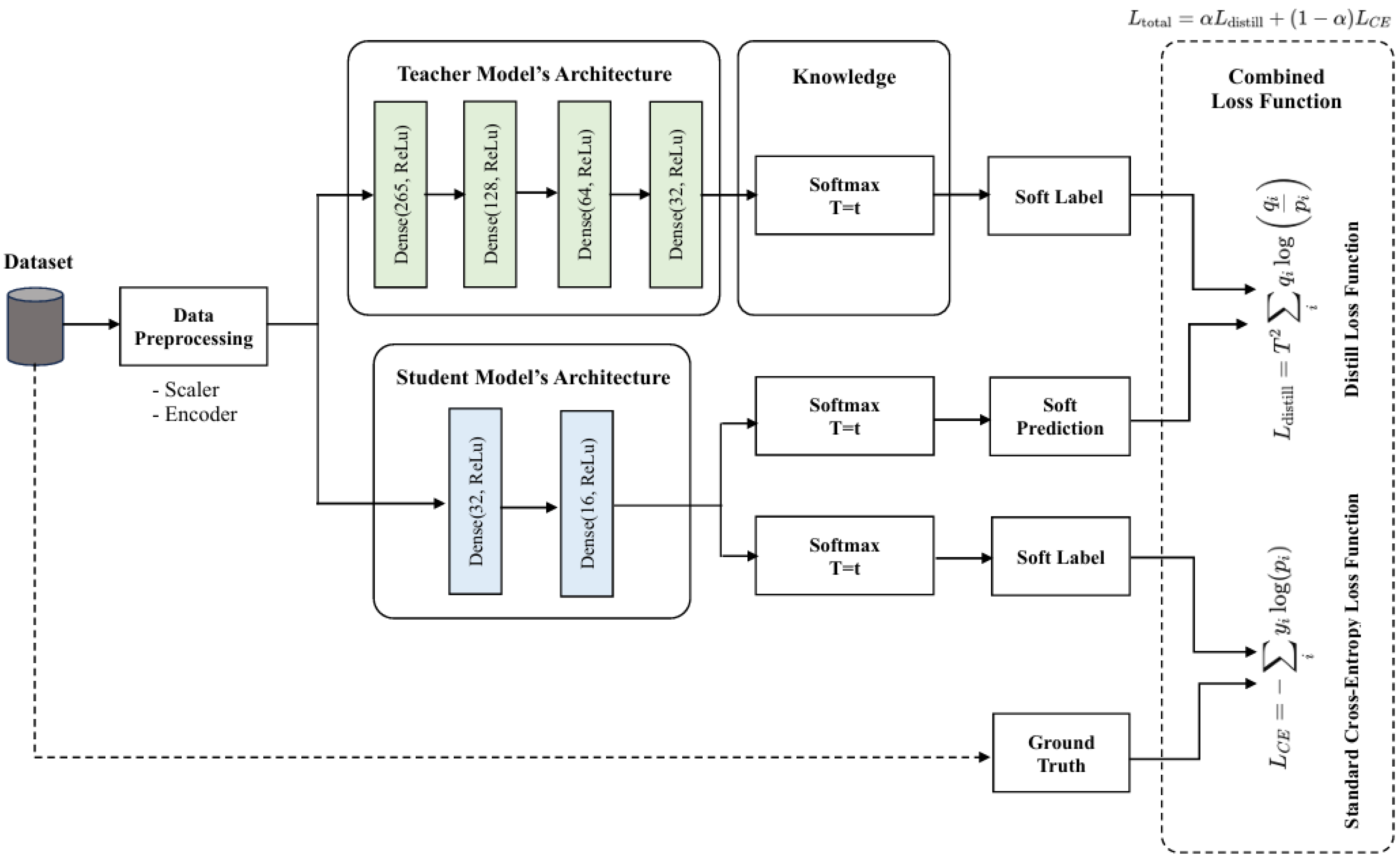
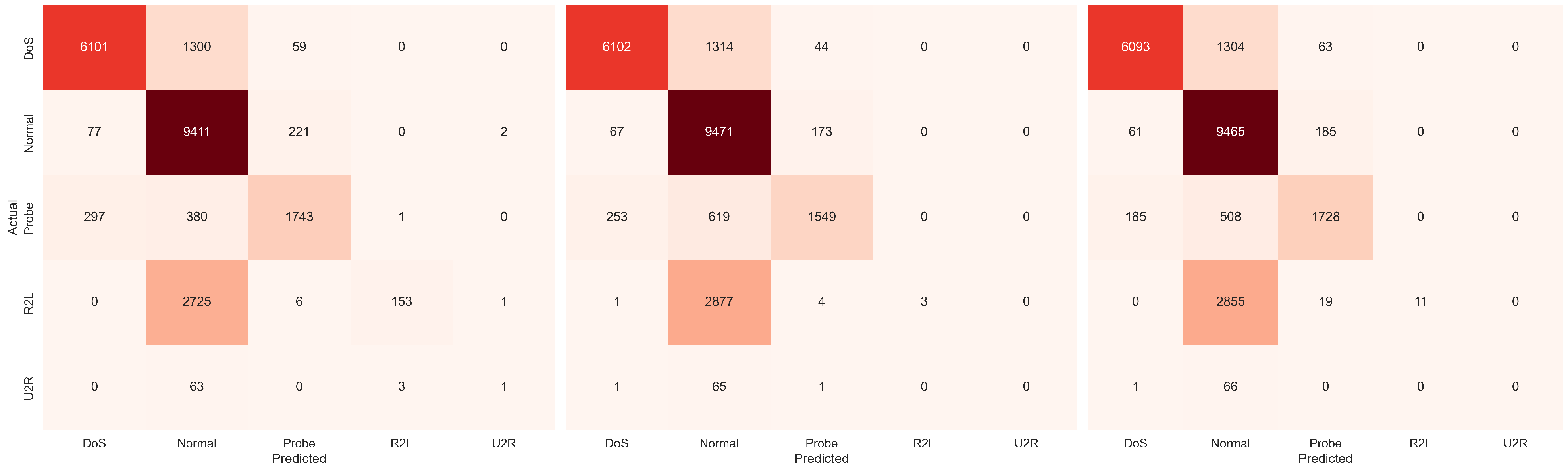
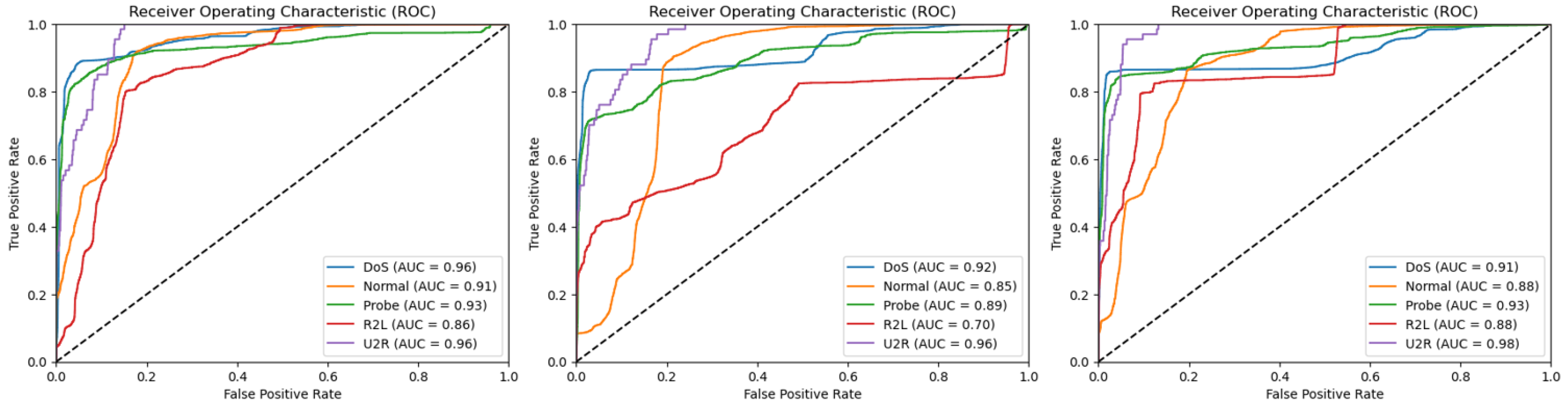
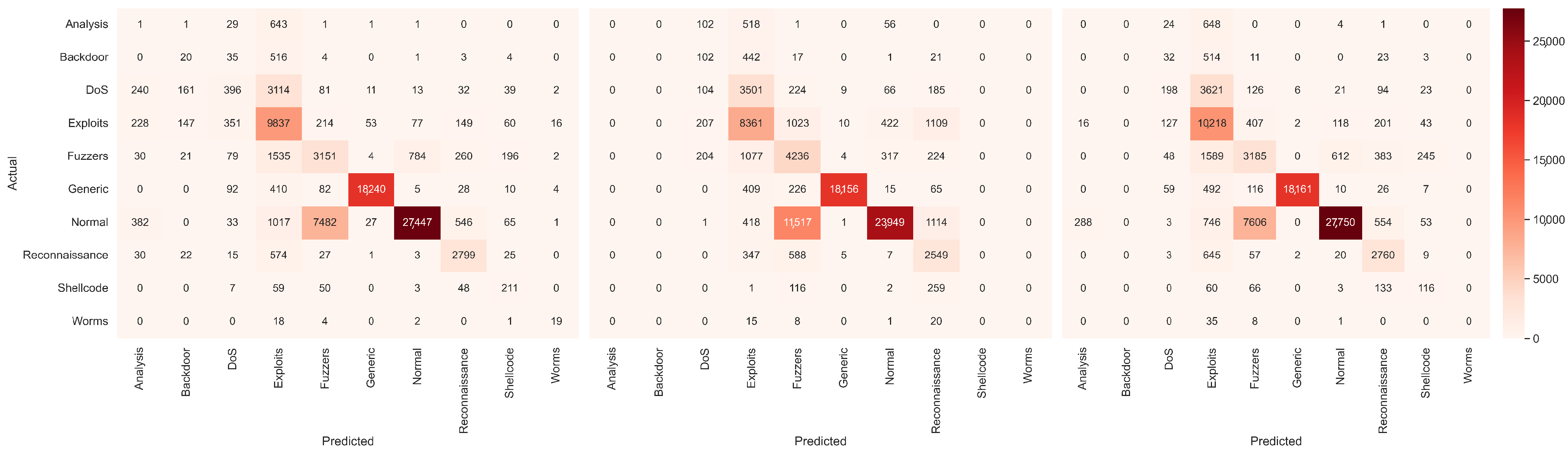
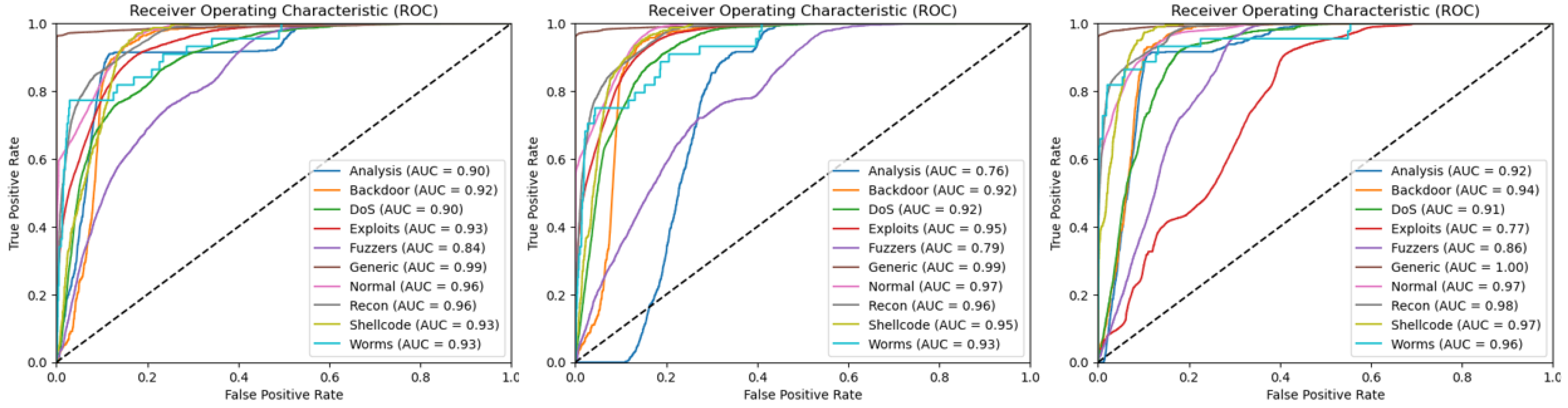
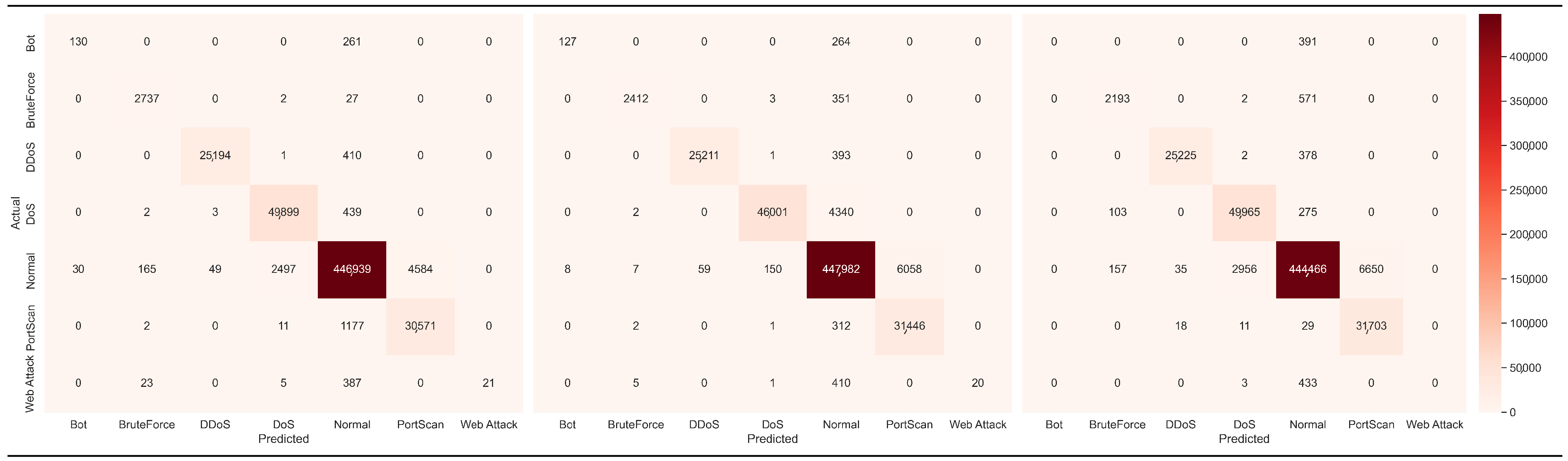
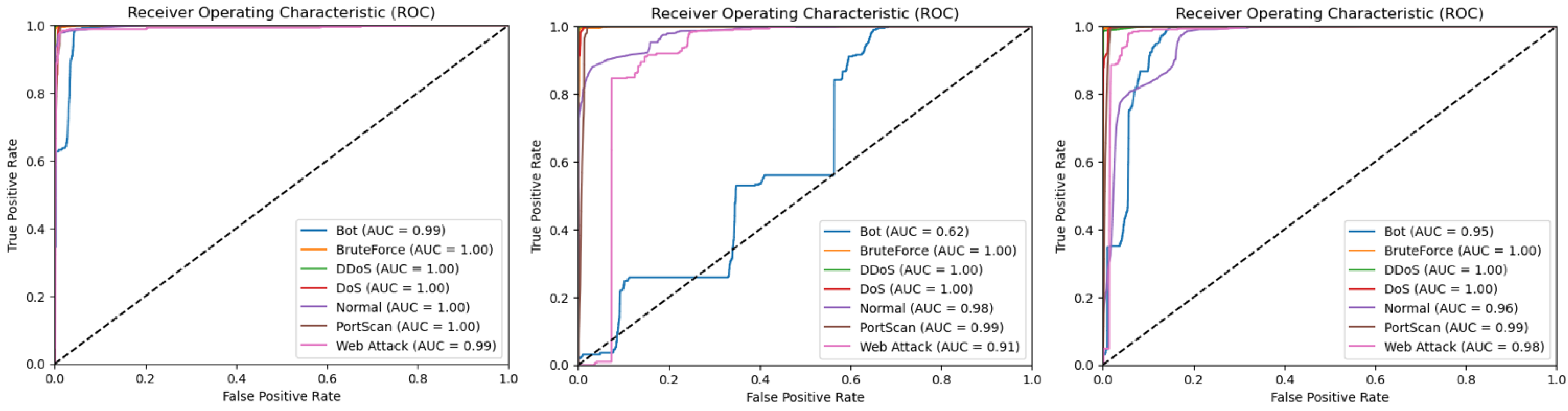
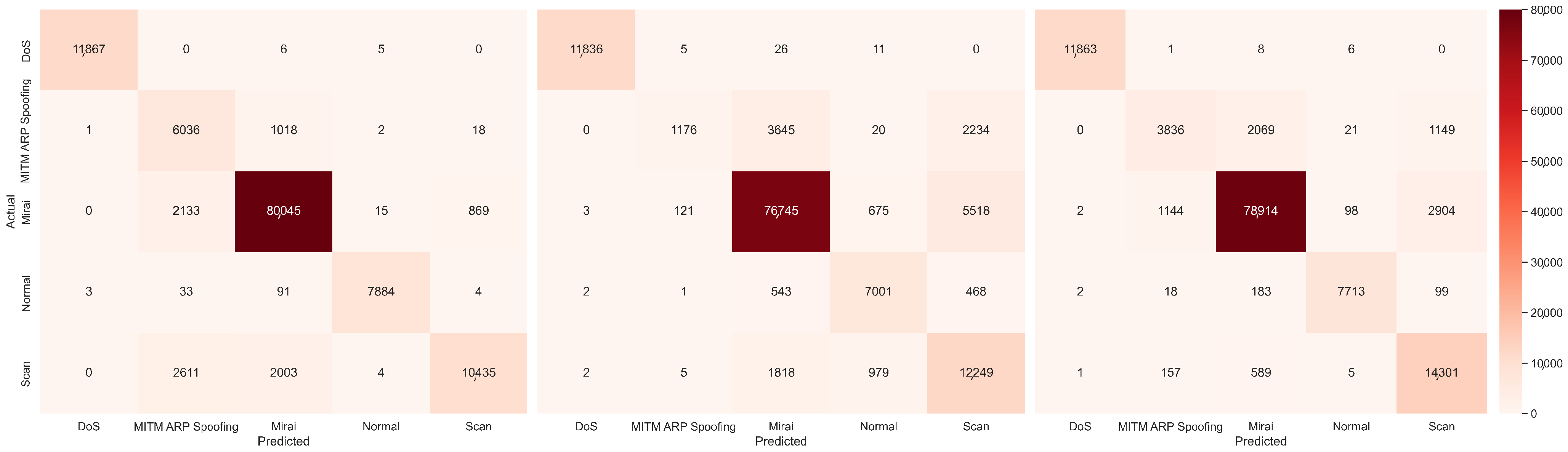
Deep neural networks (DNNs) are highly effective for intrusion detection systems (IDS) due to their ability to learn complex patterns and detect potential anomalies within the systems. However, their high resource consumption requirements including memory and computation make them difficult to deploy on low-powered platforms. This study explores the possibility of using knowledge distillation (KD) to reduce constraints such as power and hardware consumption and improve real-time inference speed but maintain high detection accuracy in IDS across all attack types. The technique utilizes the transfer of knowledge from DNNs (teacher) models to more lightweight shallow neural network (student) models. KD has been proven to achieve significant parameter reduction (92–95%) and faster inference speed (7–11%) while improving overall detection performance (up to 6.12%). Experimental results on datasets such as NSL-KDD, UNSW-NB15, CIC-IDS2017, IoTID20, and UAV IDS demonstrate DNN with KD’s effectiveness in achieving high accuracy, precision, F1 score, and area under the curve (AUC) metrics. These findings confirm KD’s ability as a potential edge computing strategy for IoT and UAV devices, which are suitable for resource-constrained environments and lead to real-time anomaly detection for next-generation distributed systems.
Keywords: anomaly detection; deep neural network; information security; internet of things; intrusion detection system; knowledge distillation; network security; lightweight model; unmanned aerial vehicle anomaly detection; deep neural network; information security; internet of things; intrusion detection system; knowledge distillation; network security; lightweight model; unmanned aerial vehicle