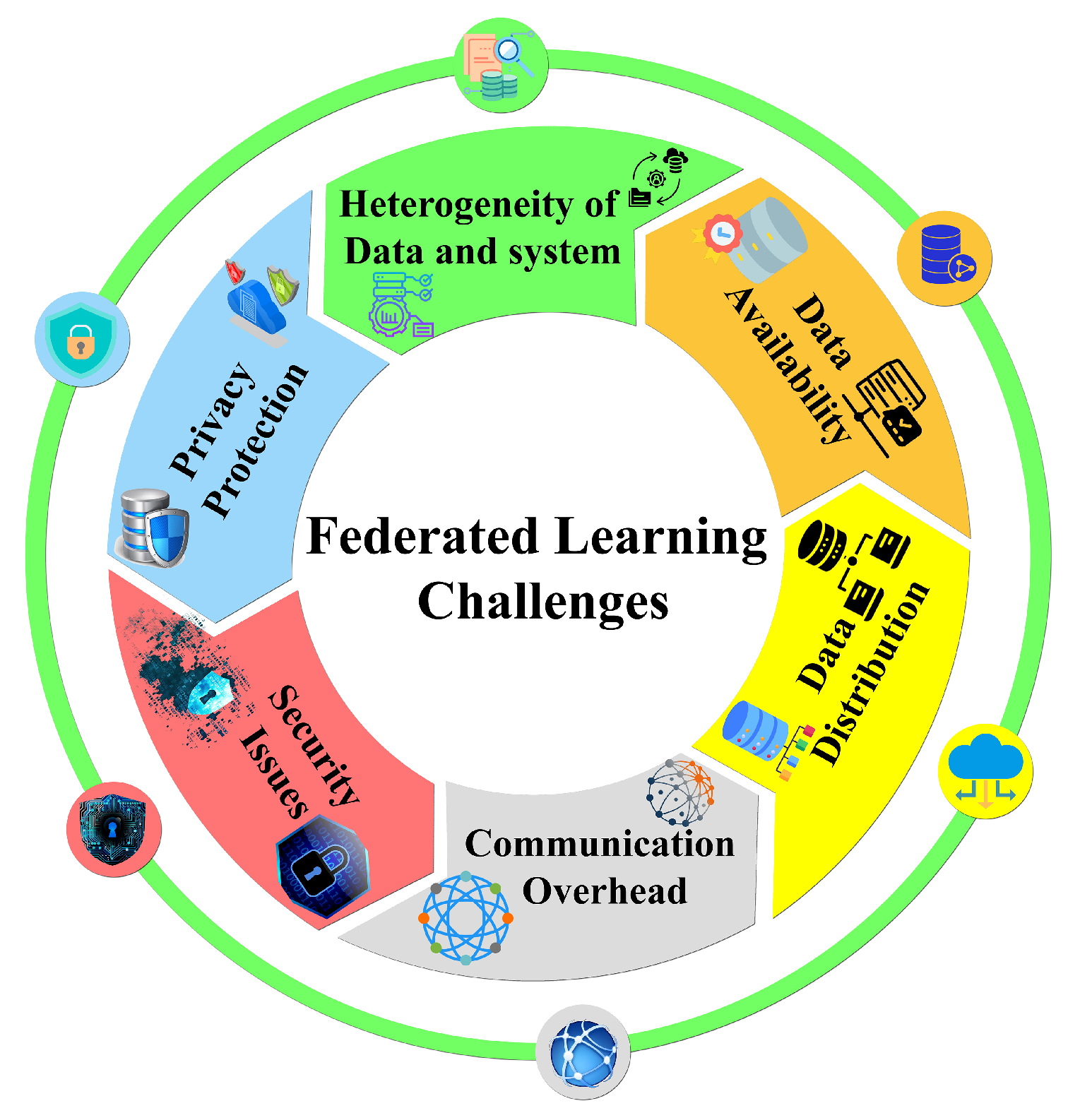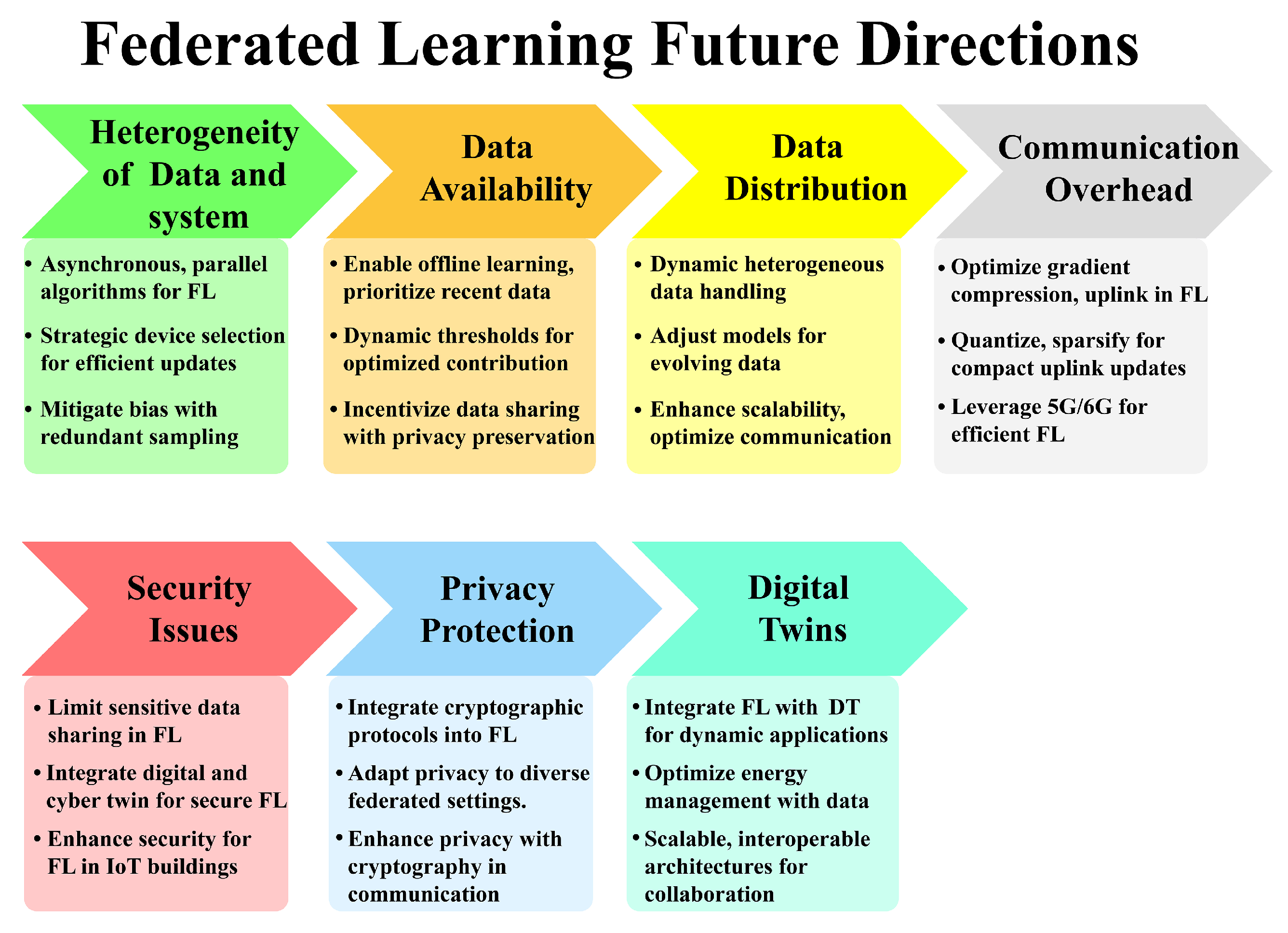

Advances in Federated Learning: Applications and Challenges in Smart Building Environments and Beyond

 , , , and
 Abstract
Share and Cite
Berkani, M.R.A.; Chouchane, A.; Himeur, Y.; Ouamane, A.; Miniaoui, S.; Atalla, S.; Mansoor, W.; Al-Ahmad, H. Advances in Federated Learning: Applications and Challenges in Smart Building Environments and Beyond. Computers 2025, 14, 124. https://doi.org/10.3390/computers14040124
Berkani MRA, Chouchane A, Himeur Y, Ouamane A, Miniaoui S, Atalla S, Mansoor W, Al-Ahmad H. Advances in Federated Learning: Applications and Challenges in Smart Building Environments and Beyond. Computers. 2025; 14(4):124. https://doi.org/10.3390/computers14040124
Chicago/Turabian StyleBerkani, Mohamed Rafik Aymene, Ammar Chouchane, Yassine Himeur, Abdelmalik Ouamane, Sami Miniaoui, Shadi Atalla, Wathiq Mansoor, and Hussain Al-Ahmad. 2025. "Advances in Federated Learning: Applications and Challenges in Smart Building Environments and Beyond" Computers 14, no. 4: 124. https://doi.org/10.3390/computers14040124
APA StyleBerkani, M. R. A., Chouchane, A., Himeur, Y., Ouamane, A., Miniaoui, S., Atalla, S., Mansoor, W., & Al-Ahmad, H. (2025). Advances in Federated Learning: Applications and Challenges in Smart Building Environments and Beyond. Computers, 14(4), 124. https://doi.org/10.3390/computers14040124