Article

Learning Analytics to Guide Serious Game Development: A Case Study Using Articoding

by
Antonio Calvo-Morata
*,
Cristina Alonso-Fernández
,
Julio Santilario-Berthilier
,
Iván Martínez-Ortiz
and
Baltasar Fernández-Manjón
*
Department of Software Engineering and Artificial Intelligence, Complutense University of Madrid, 28040 Madrid, Spain
*
Authors to whom correspondence should be addressed.
Computers 2025, 14(4), 122; https://doi.org/10.3390/computers14040122

Submission received: 14 February 2025 / Revised: 18 March 2025 / Accepted: 20 March 2025 / Published: 27 March 2025
(This article belongs to the Special Issue Smart Learning Environments)

Abstract

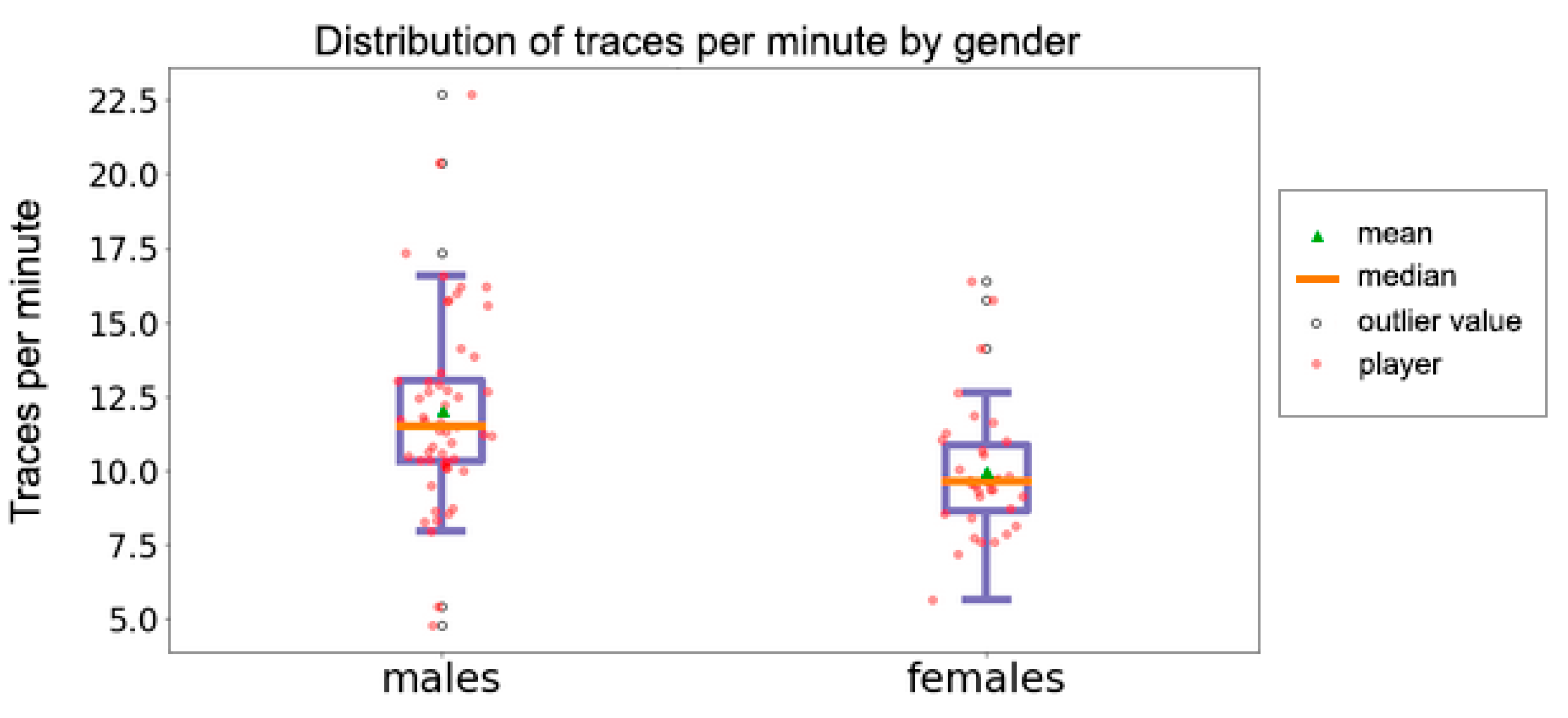
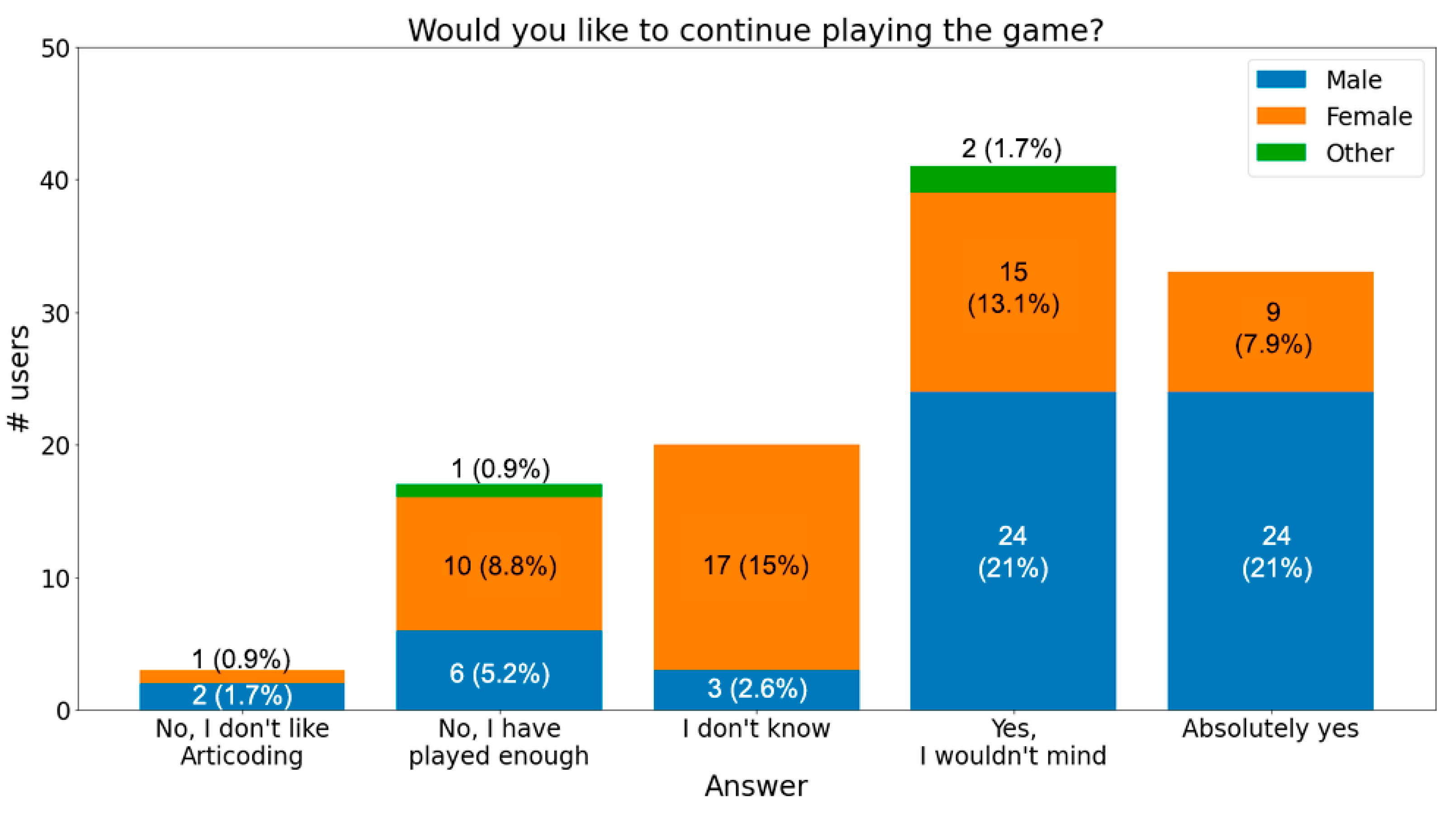
Serious games are powerful interactive environments that provide more authentic experiences for learning or training different skills. However, developing effective serious games is complex, and a more systematic approach is needed to create better evidence-based games. Learning analytics—based on the analysis of collected in-game user interactions—can support game development and the players’ learning process, providing assessment information to teachers, students, and other stakeholders. However, empirical studies applying and demonstrating the use of learning analytics in the context of serious games in real environments remain scarce. In this paper, we study the application of learning analytics throughout the whole lifecycle of a serious game, in order to assess the game’s design and players’ learning using a serious game that introduces basic programming concepts through a visual programming language. The game was played by N = 134 high school students in two 50-min sessions. During the game sessions, all player interactions were collected, including the time spent solving levels, their programming solutions, and the number of replays. We analyzed these interaction traces to gain insights that can facilitate teachers’ use of serious games in their lessons and assessments, as well as guide developers in making possible improvements to the game. Among these insights, knowing which tasks students struggle with is critical for both teachers and game developers, and can also reveal game design issues. Among the results obtained through analysis of the interaction data, we found differences between boys and girls when playing. Girls play in a more reflexive way and, in terms of acceptance of the game, a higher percentage of girls had neutral opinions. We also found the most repeated errors, the level each player reached, and how long it took them to reach those levels. These data will help to make further improvements to the game’s design, resulting in a more effective educational tool in the future. The process and results of this study can guide other researchers when applying learning analytics to evaluate and improve the educational design of serious games, as well as supporting teachers—both during and after the game activity—in applying an evidence-based assessment of the players based on the collected learning analytics.
Keywords: computational thinking; learning analytics; programming learning; serious games; visual programming computational thinking; learning analytics; programming learning; serious games; visual programming
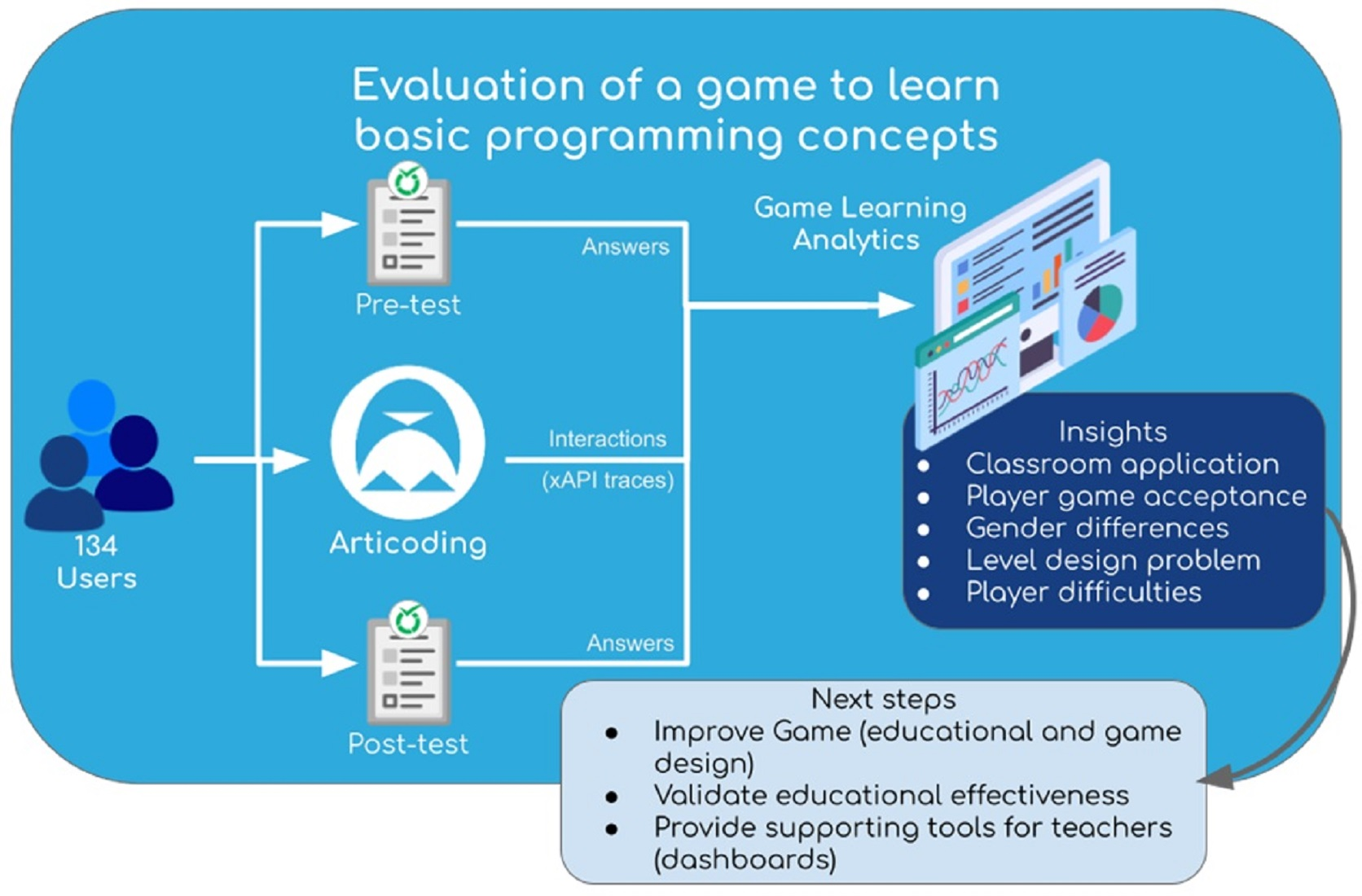
Graphical Abstract