
Article

Using Augmented Reality to Improve Touristic Efficacy
by
Miguel Cabeleira
1 and
Carlos Vaz de Carvalho
2,*
1
Departamento de Engenharia Informática, Instituto Superior de Engenharia do Porto, 4249-015 Porto, Portugal
2
GILT R&D, Instituto Superior de Engenharia do Porto, 4249-015 Porto, Portugal
*
Author to whom correspondence should be addressed.
Computers 2025, 14(2), 75; https://doi.org/10.3390/computers14020075

Submission received: 7 January 2025 / Revised: 9 February 2025 / Accepted: 14 February 2025 / Published: 18 February 2025
(This article belongs to the Special Issue Extended or Mixed Reality (AR + VR): Technology and Applications)

Abstract

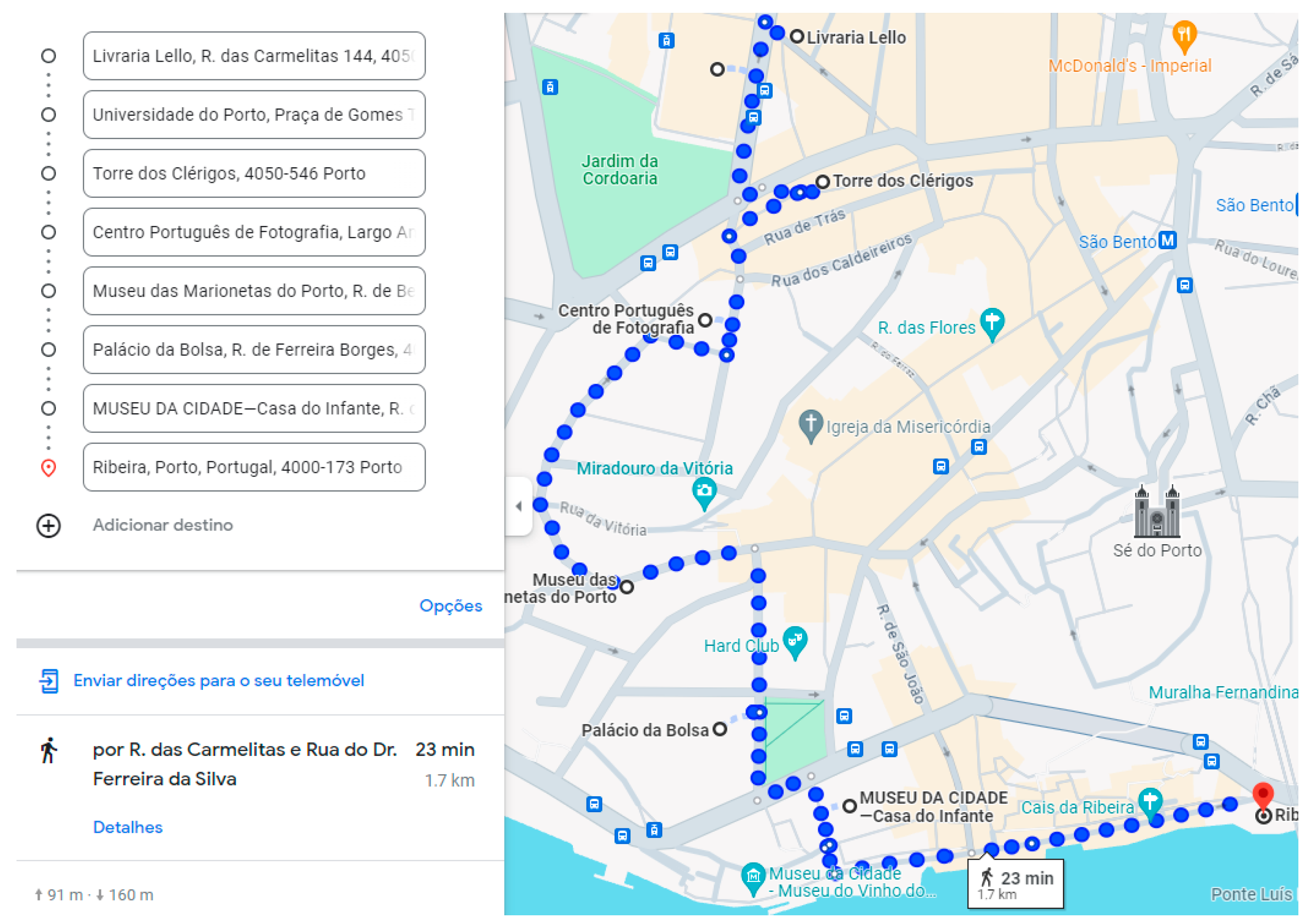
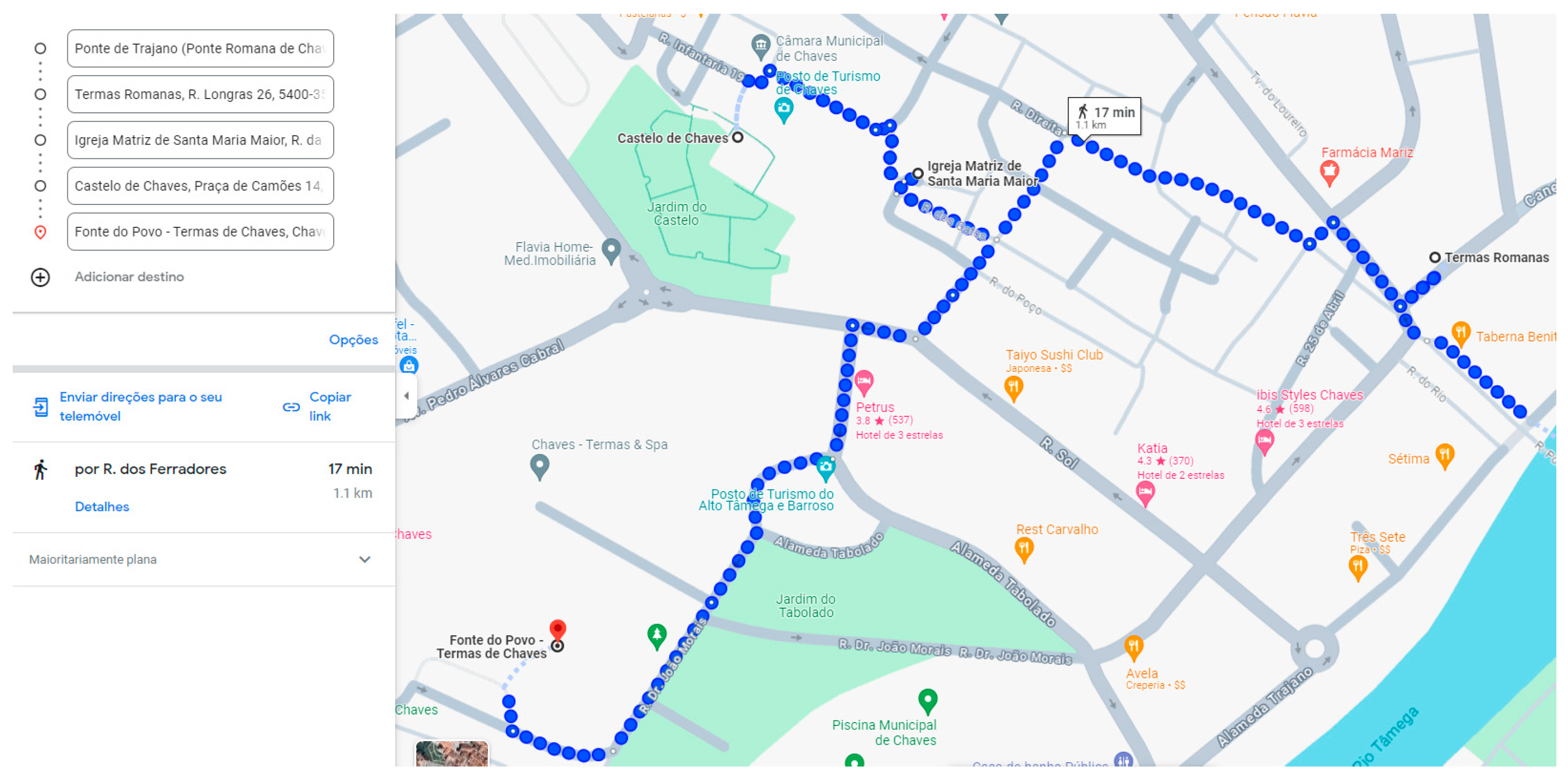
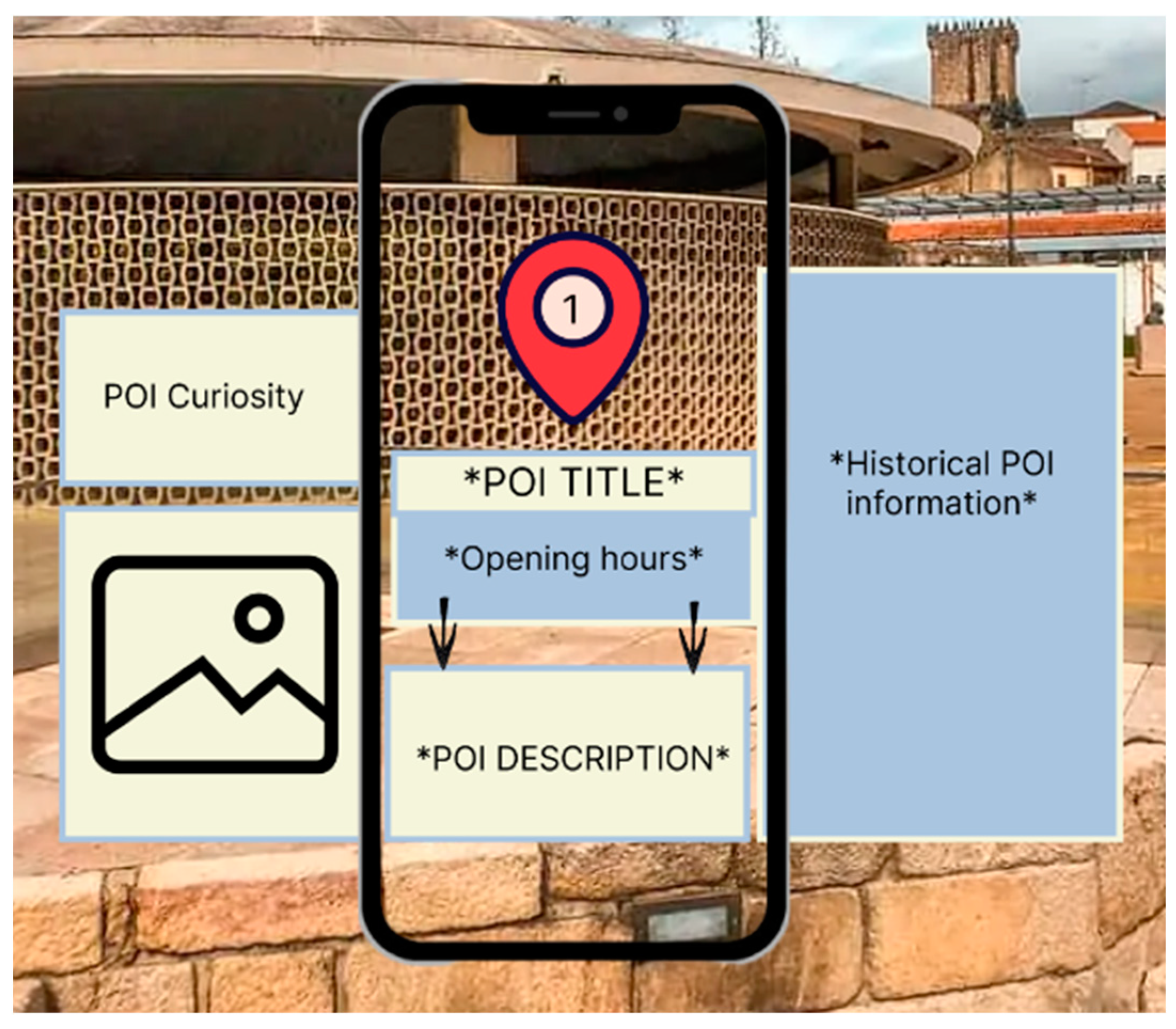
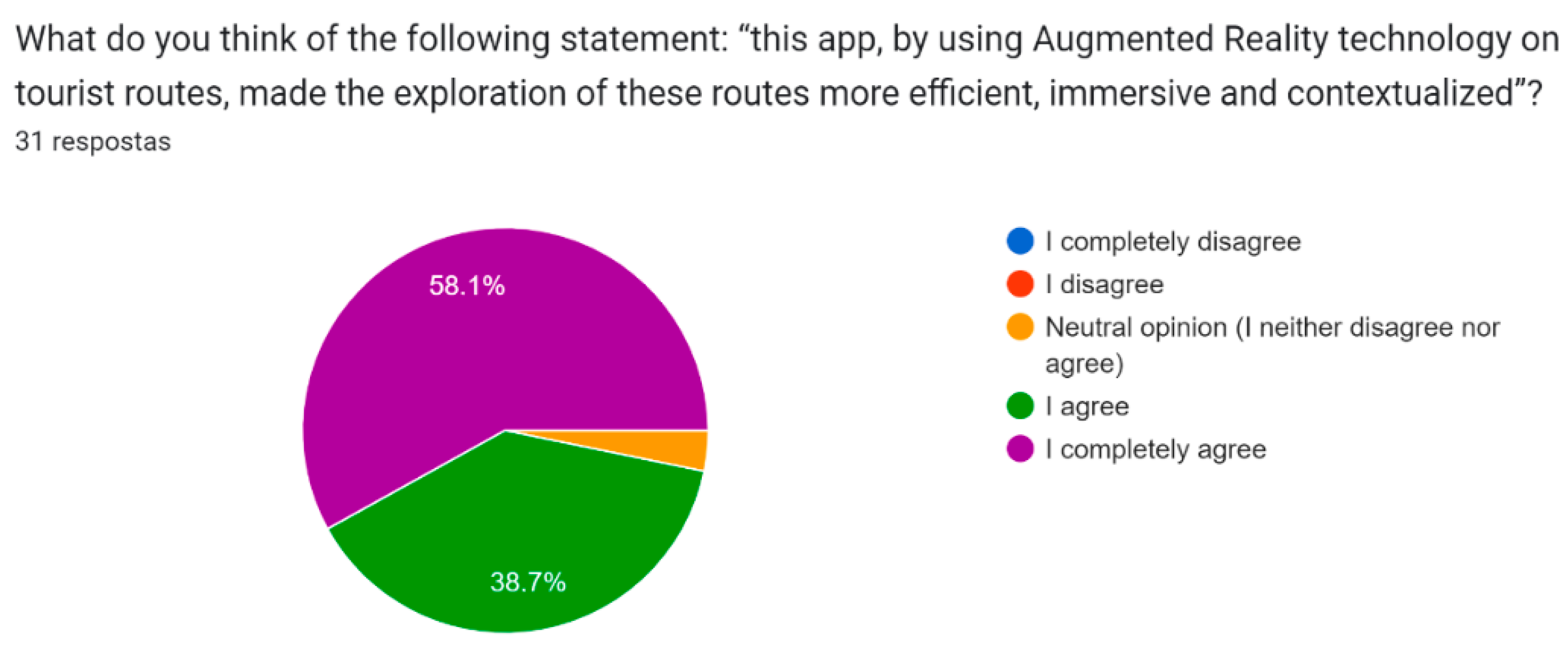
The tourism sector, a major economic contributor, seeks innovative approaches to enhance the user experience. In this evolving landscape of global tourism, using augmented reality (AR) technology can be a way to increase the engagement of tourists, but current AR applications often overwhelm (and bore) the users with excessive information. This study addresses the challenge of designing an AR solution that increases the efficiency of exploring and navigating tourist routes, while minimizing information overload by only offering contextualized information about those itineraries. The AR application delivers personalized details about historical monuments, points of interest (POIs), and cultural landmarks, enriching educational experiences and promoting local tourism. The solution was tested on two historic routes, one in Porto and the other in Chaves (both in Portugal), chosen for their cultural richness. The study’s conclusions, derived from experimentation and statistical analysis, confirm the AR technology’s effectiveness in enhancing the efficiency, immersion, and contextualization of tourist routes.
Keywords: augmented reality; tourism; tourist routes; tourism innovation; tourist exploration augmented reality; tourism; tourist routes; tourism innovation; tourist exploration