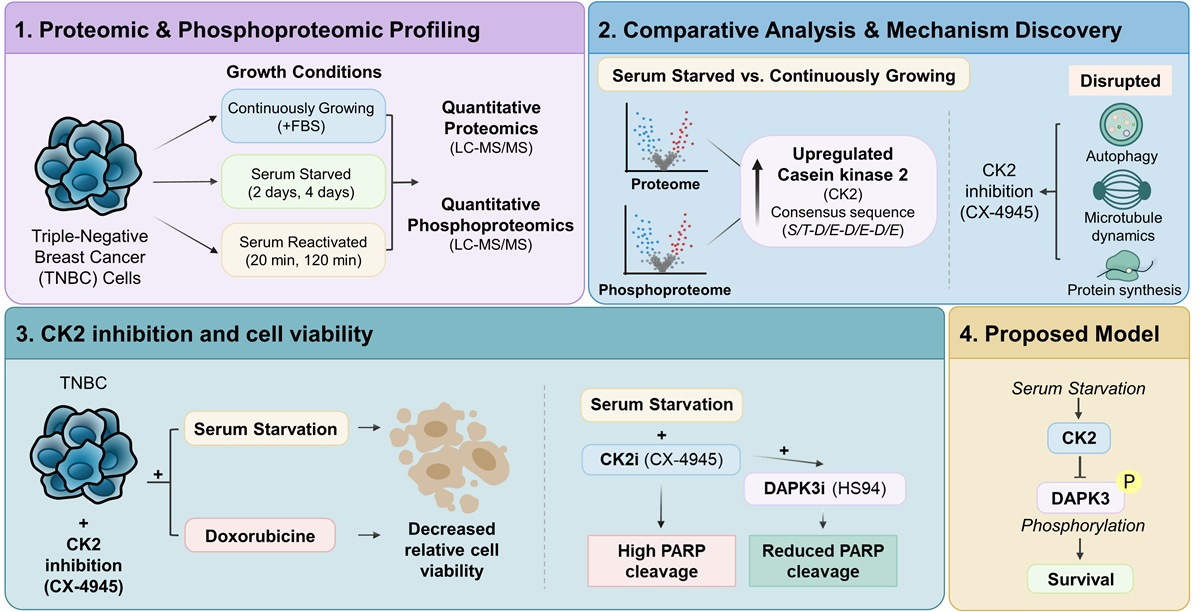
Dynamic Phosphoproteomic Profiling Identifies Casein Kinase 2 as a Critical Survival Kinase in Quiescent Breast Cancer Cells and a Potential Therapeutic Target for Minimal Residual Disease


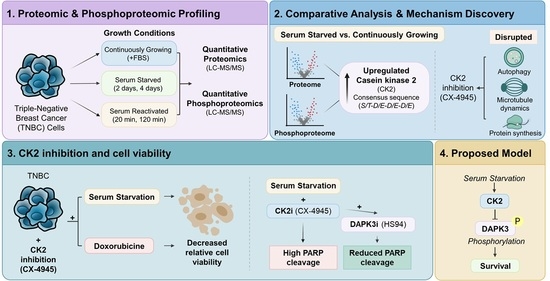
Simple Summary
Abstract
1. Introduction
2. Materials and Methods
2.1. Cell Lines and Cultivation
2.2. Experimental Design and Sample Collection
2.3. Cell Viability Assay
2.4. Colony Formation Assay
2.5. Immunoblotting
2.6. De Novo Proteosynthesis Assay
2.7. Immunoprecipitation
2.8. Cell Cycle Analysis
2.9. LysoTracker Staining
2.10. Microtubule Regrowth Assay
2.11. Mass Spectrometry
2.11.1. Protein Digestion
2.11.2. nLC-MS 2 Analysis
2.11.3. Data Analysis
2.12. Dataset Analysis
2.13. Data Visualizations
2.14. Statistical Analysis
3. Results
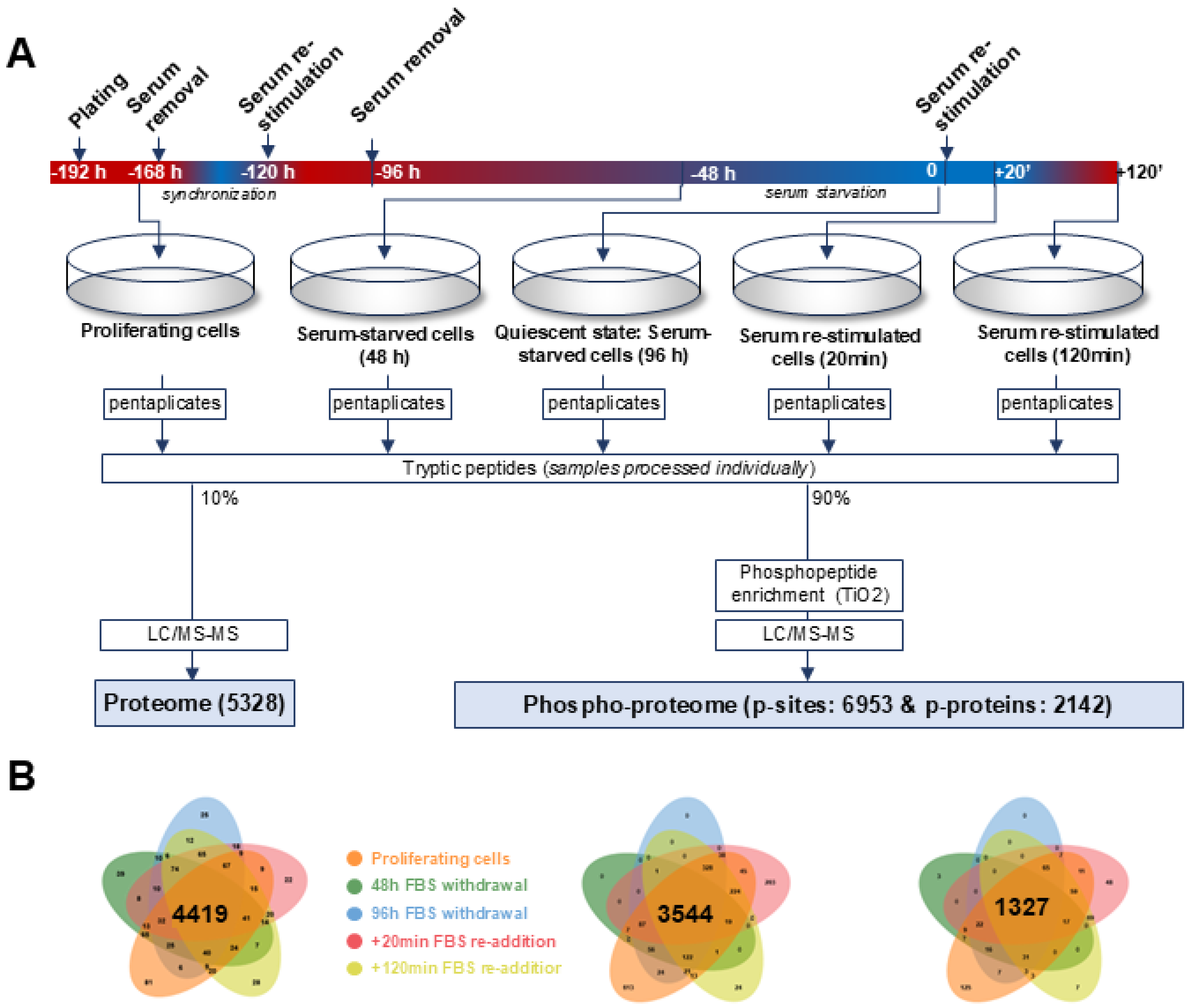
3.1. Phosphoproteomic Analysis of Serum Removal-Mediated Quiescence Induction and Re-Entry into Proliferation
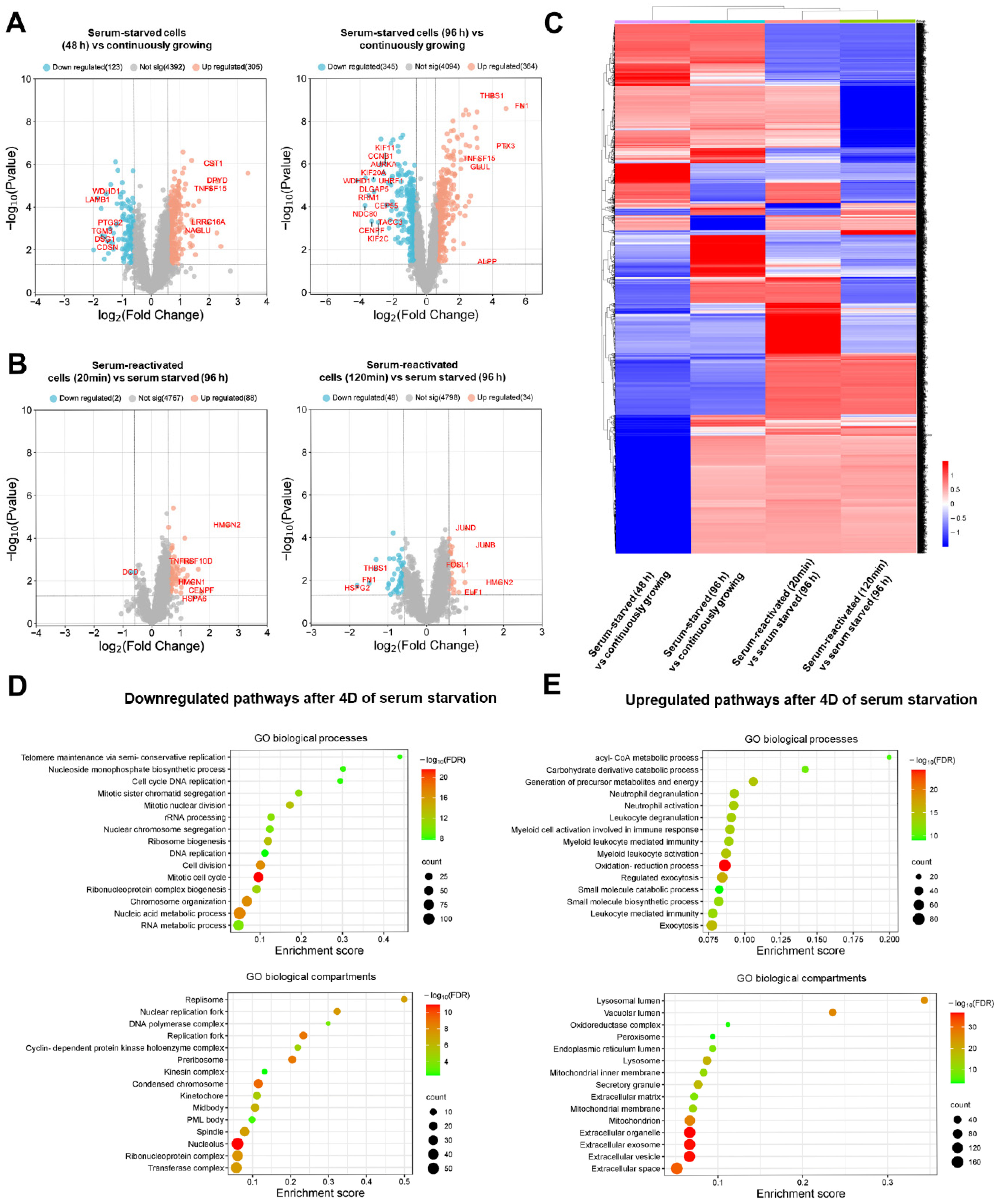
3.2. Global Cellular Proteome Is Significantly Remodeled at the Exit of Cells from the Quiescent State
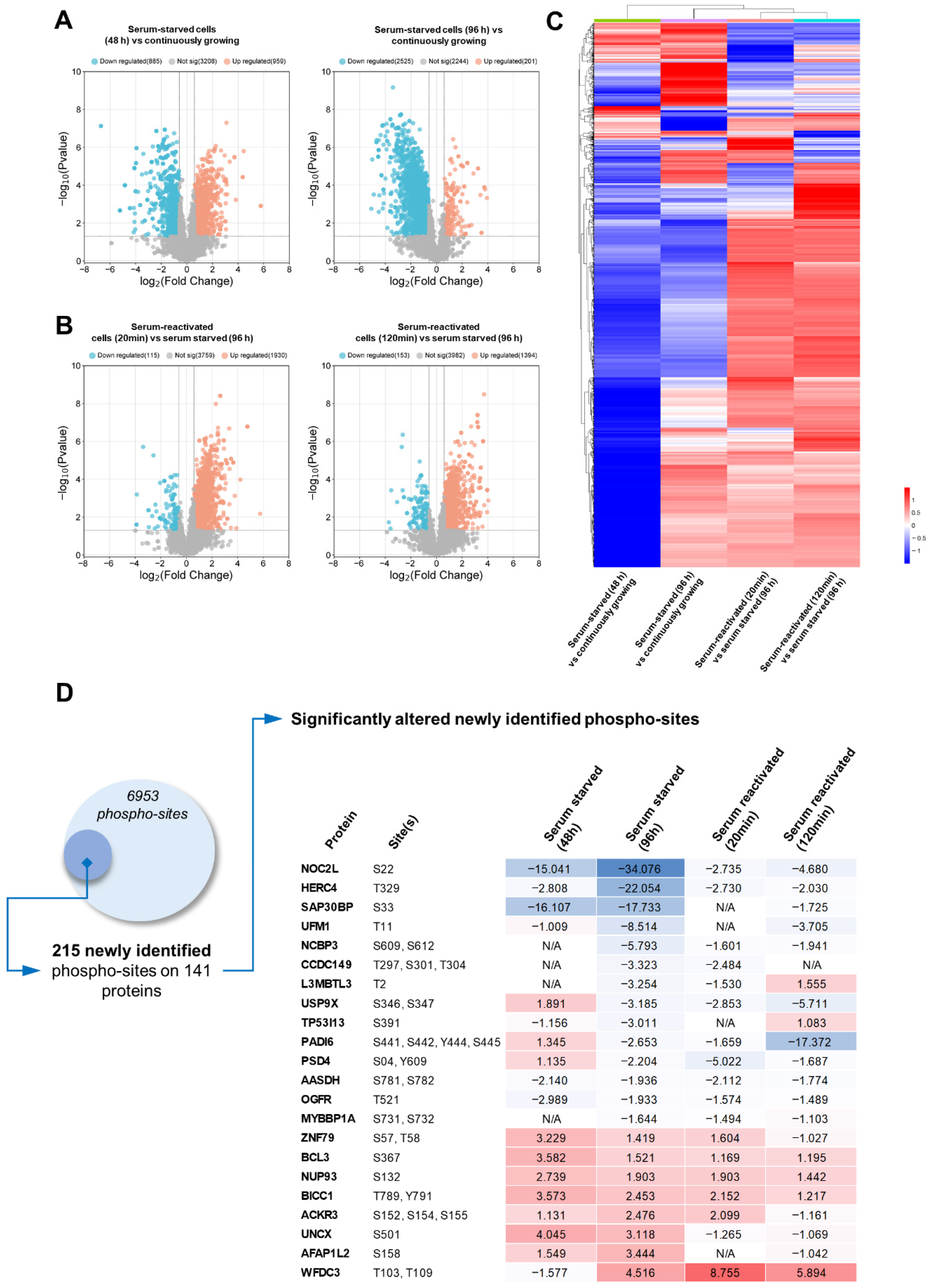
3.3. Protein Phosphorylation Network Regulates Cellular Behavior at the Transition Points Between Quiescence and Proliferation
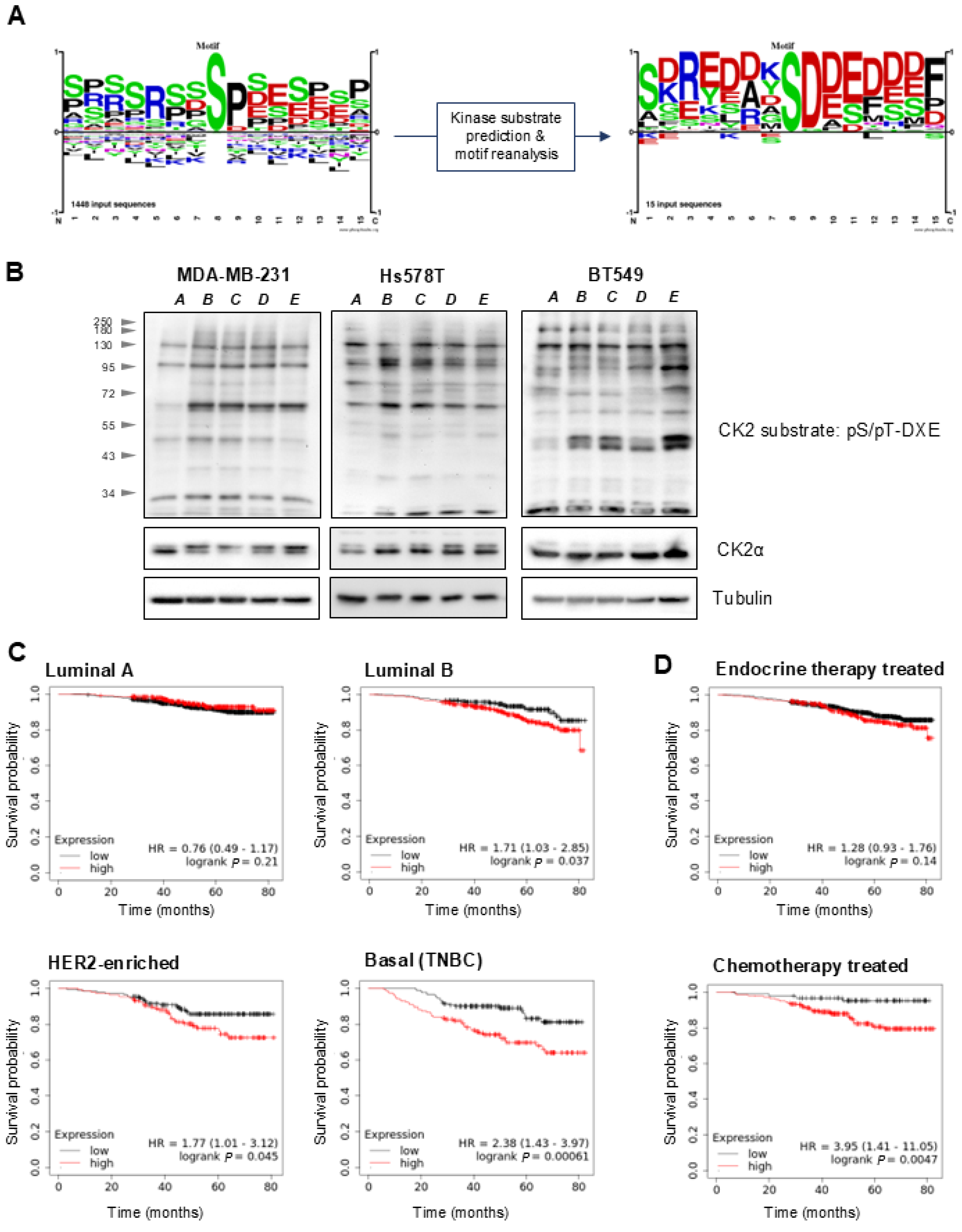
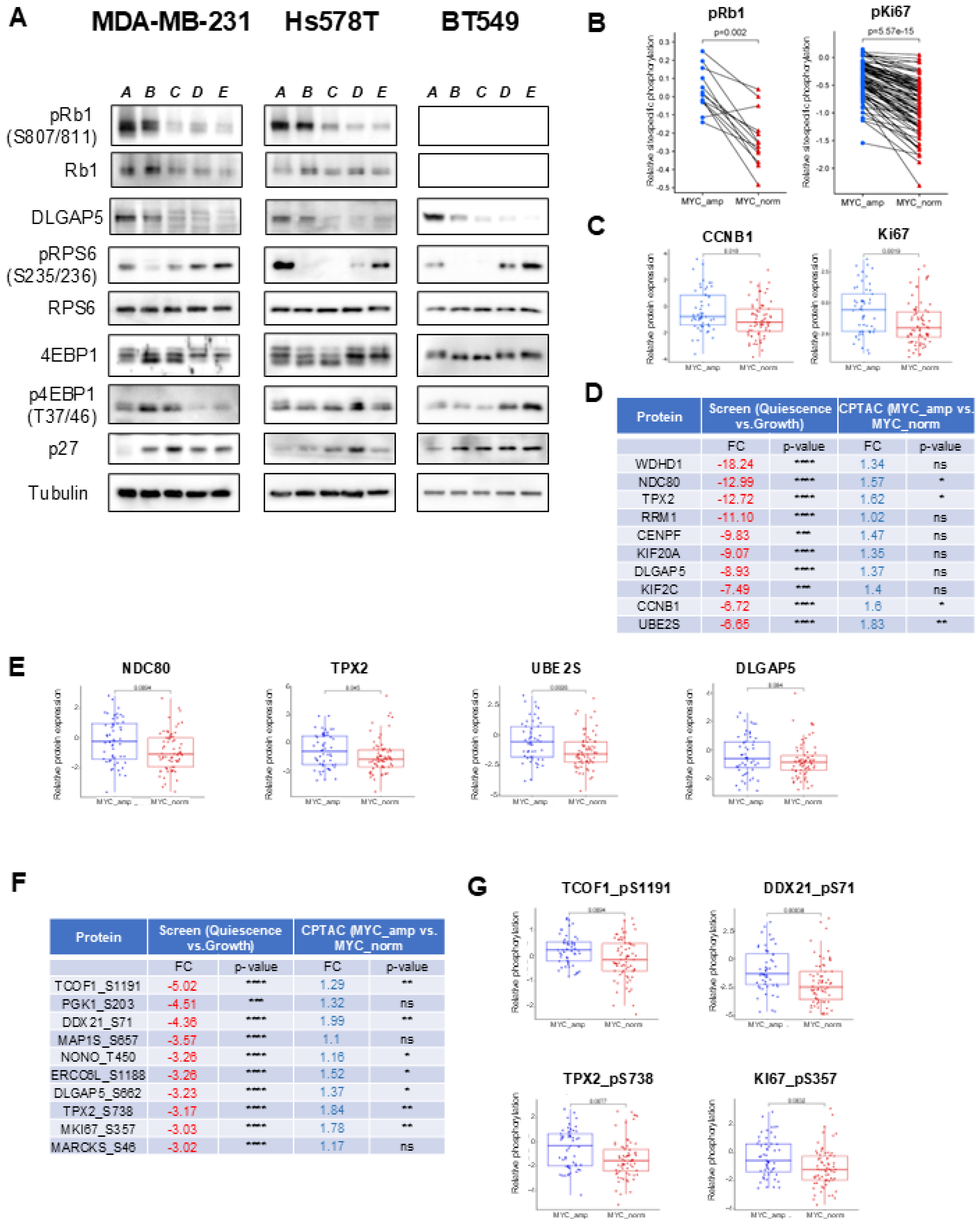
3.4. Identified Proteomic and Phosphoproteomic Alterations Were Validated In Vitro as Well as in In Silico Patient Datasets
3.5. CK2 Kinase Substrates Are Upregulated in Response to Nutrient Stress
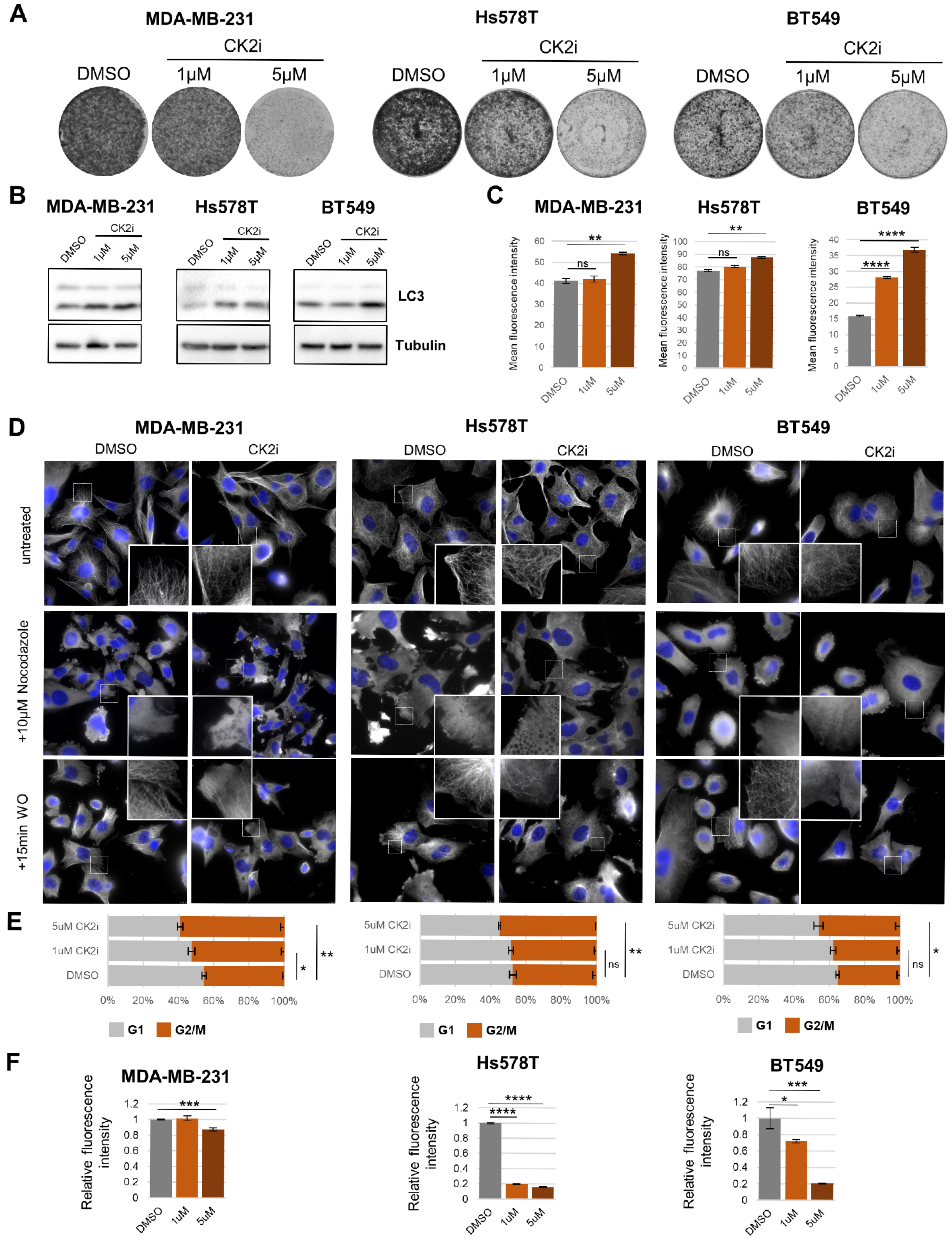
3.6. Inhibition of CK2 Has Noticeable Effects on Various Cellular Pathways
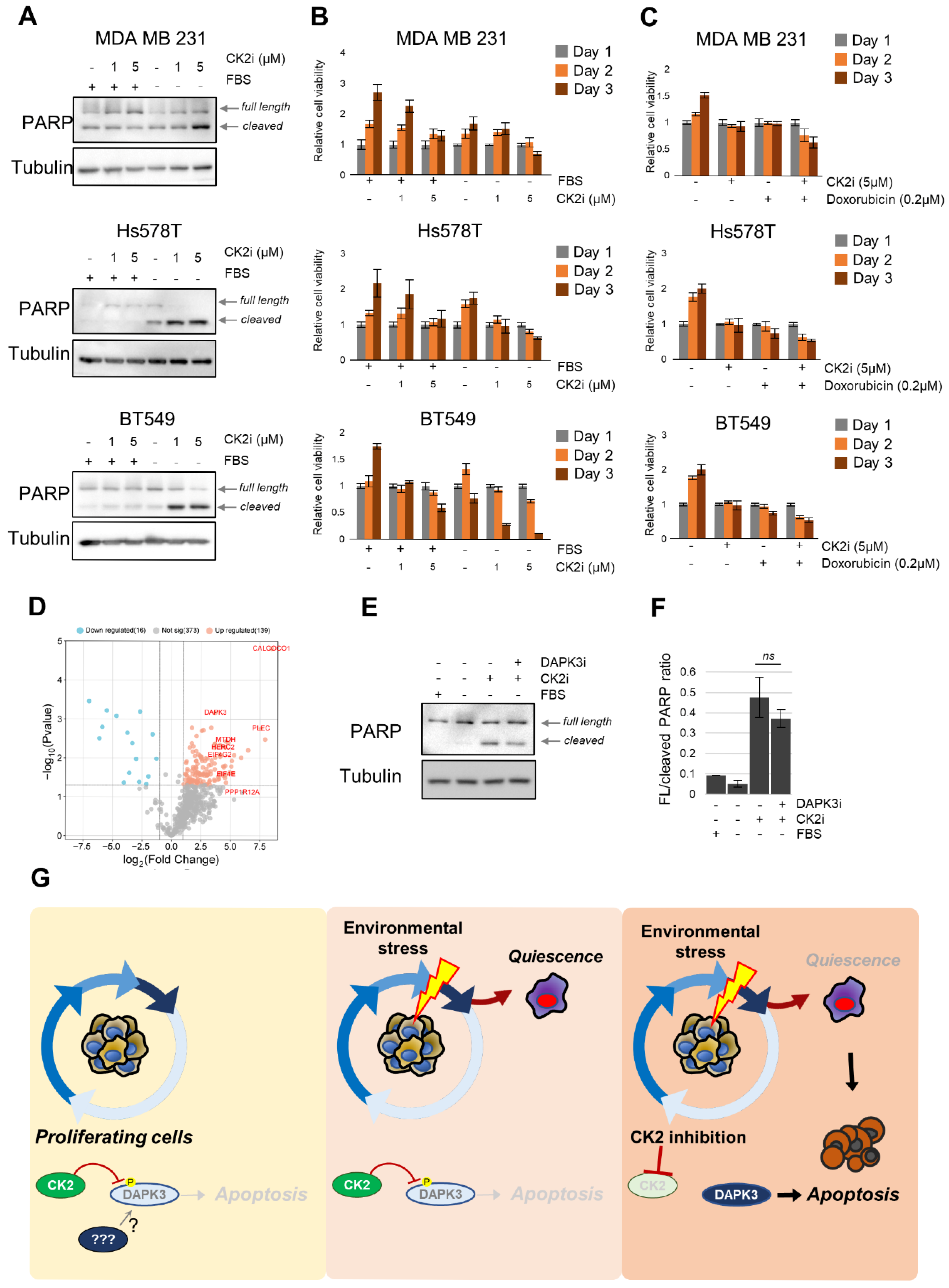
3.7. CK2 Supports Stress Survival by Suppressing DAPK3-Mediated Apoptosis in TNBC Cells
4. Discussion
5. Conclusions
Supplementary Materials
Author Contributions
Funding
Institutional Review Board Statement
Informed Consent Statement
Data Availability Statement
Acknowledgments
Conflicts of Interest
References
- Stanton, R.A.; Gernert, K.M.; Nettles, J.H.; Aneja, R. Drugs That Target Dynamic Microtubules: A New Molecular Perspective. Med. Res. Rev. 2011, 31, 443–481. [Google Scholar] [CrossRef] [PubMed]
- Reuvers, T.G.A.; Kanaar, R.; Nonnekens, J. DNA Damage-Inducing Anticancer Therapies: From Global to Precision Damage. Cancers 2020, 12, 2098. [Google Scholar] [CrossRef]
- Wang, J.-S.; Wang, H.-J.; Qian, H.-L. Biological Effects of Radiation on Cancer Cells. Mil. Med. Res. 2018, 5, 20. [Google Scholar] [CrossRef] [PubMed]
- Endo, H.; Inoue, M. Dormancy in Cancer. Cancer Sci. 2019, 110, 474–480. [Google Scholar] [CrossRef]
- Lindell, E.; Zhong, L.; Zhang, X. Quiescent Cancer Cells-A Potential Therapeutic Target to Overcome Tumor Resistance and Relapse. Int. J. Mol. Sci. 2023, 24, 3762. [Google Scholar] [CrossRef]
- Haraguchi, N.; Ishii, H.; Mimori, K.; Tanaka, F.; Ohkuma, M.; Kim, H.M.; Akita, H.; Takiuchi, D.; Hatano, H.; Nagano, H.; et al. CD13 Is a Therapeutic Target in Human Liver Cancer Stem Cells. J. Clin. Investig. 2010, 120, 3326–3339. [Google Scholar] [CrossRef]
- Pece, S.; Tosoni, D.; Confalonieri, S.; Mazzarol, G.; Vecchi, M.; Ronzoni, S.; Bernard, L.; Viale, G.; Pelicci, P.G.; Di Fiore, P.P. Biological and Molecular Heterogeneity of Breast Cancers Correlates with Their Cancer Stem Cell Content. Cell 2010, 140, 62–73. [Google Scholar] [CrossRef] [PubMed]
- Dembinski, J.L.; Krauss, S. Characterization and Functional Analysis of a Slow Cycling Stem Cell-like Subpopulation in Pancreas Adenocarcinoma. Clin. Exp. Metastasis 2009, 26, 611–623. [Google Scholar] [CrossRef]
- Chen, J.; Li, Y.; Yu, T.-S.; McKay, R.M.; Burns, D.K.; Kernie, S.G.; Parada, L.F. A Restricted Cell Population Propagates Glioblastoma Growth after Chemotherapy. Nature 2012, 488, 522–526. [Google Scholar] [CrossRef]
- Sharma, S.V.; Lee, D.Y.; Li, B.; Quinlan, M.P.; Takahashi, F.; Maheswaran, S.; McDermott, U.; Azizian, N.; Zou, L.; Fischbach, M.A.; et al. A Chromatin-Mediated Reversible Drug-Tolerant State in Cancer Cell Subpopulations. Cell 2010, 141, 69–80. [Google Scholar] [CrossRef]
- Francescangeli, F.; Contavalli, P.; De Angelis, M.L.; Careccia, S.; Signore, M.; Haas, T.L.; Salaris, F.; Baiocchi, M.; Boe, A.; Giuliani, A.; et al. A Pre-Existing Population of ZEB2+ Quiescent Cells with Stemness and Mesenchymal Features Dictate Chemoresistance in Colorectal Cancer. J. Exp. Clin. Cancer Res. 2020, 39, 2. [Google Scholar] [CrossRef] [PubMed]
- Malladi, S.; Macalinao, D.G.; Jin, X.; He, L.; Basnet, H.; Zou, Y.; de Stanchina, E.; Massagué, J. Metastatic Latency and Immune Evasion through Autocrine Inhibition of WNT. Cell 2016, 165, 45–60. [Google Scholar] [CrossRef]
- Kabraji, S.; Solé, X.; Huang, Y.; Bango, C.; Bowden, M.; Bardia, A.; Sgroi, D.; Loda, M.; Ramaswamy, S. AKT1low Quiescent Cancer Cells Persist after Neoadjuvant Chemotherapy in Triple Negative Breast Cancer. Breast Cancer Res. 2017, 19, 88. [Google Scholar] [CrossRef]
- Weston, W.A.; Barr, A.R. A Cell Cycle Centric View of Tumour Dormancy. Br. J. Cancer 2023, 129, 1535–1545. [Google Scholar] [CrossRef]
- Pack, L.R.; Daigh, L.H.; Meyer, T. Putting the Brakes on the Cell Cycle: Mechanisms of Cellular Growth Arrest. Curr. Opin. Cell Biol. 2019, 60, 106–113. [Google Scholar] [CrossRef] [PubMed]
- Sobecki, M.; Mrouj, K.; Colinge, J.; Gerbe, F.; Jay, P.; Krasinska, L.; Dulic, V.; Fisher, D. Cell-Cycle Regulation Accounts for Variability in Ki-67 Expression Levels. Cancer Res. 2017, 77, 2722–2734. [Google Scholar] [CrossRef]
- La, T.; Chen, S.; Guo, T.; Zhao, X.H.; Teng, L.; Li, D.; Carnell, M.; Zhang, Y.Y.; Feng, Y.C.; Cole, N.; et al. Visualization of Endogenous P27 and Ki67 Reveals the Importance of a C-Myc-Driven Metabolic Switch in Promoting Survival of Quiescent Cancer Cells. Theranostics 2021, 11, 9605–9622. [Google Scholar] [CrossRef]
- Sosa, M.S.; Avivar-Valderas, A.; Bragado, P.; Wen, H.-C.; Aguirre-Ghiso, J.A. ERK1/2 and P38α/β Signaling in Tumor Cell Quiescence: Opportunities to Control Dormant Residual Disease. Clin. Cancer Res. 2011, 17, 5850–5857. [Google Scholar] [CrossRef]
- Sosa, M.S.; Parikh, F.; Maia, A.G.; Estrada, Y.; Bosch, A.; Bragado, P.; Ekpin, E.; George, A.; Zheng, Y.; Lam, H.-M.; et al. NR2F1 Controls Tumour Cell Dormancy via SOX9- and RARβ-Driven Quiescence Programmes. Nat. Commun. 2015, 6, 6170. [Google Scholar] [CrossRef]
- Litovchick, L.; Florens, L.A.; Swanson, S.K.; Washburn, M.P.; DeCaprio, J.A. DYRK1A Protein Kinase Promotes Quiescence and Senescence through DREAM Complex Assembly. Genes Dev. 2011, 25, 801–813. [Google Scholar] [CrossRef] [PubMed]
- Min, M.; Spencer, S.L. Spontaneously Slow-Cycling Subpopulations of Human Cells Originate from Activation of Stress-Response Pathways. PLoS Biol. 2019, 17, e3000178. [Google Scholar] [CrossRef]
- Ghani, M.U.; Shi, J.; Du, Y.; Zhong, L.; Cui, H. A Comprehensive Review on the Dynamics of Protein Kinase CK2 in Cancer Development and Optimizing Therapeutic Strategies. Int. J. Biol. Macromol. 2024, 280, 135814. [Google Scholar] [CrossRef]
- Borgo, C.; D’Amore, C.; Sarno, S.; Salvi, M.; Ruzzene, M. Protein Kinase CK2: A Potential Therapeutic Target for Diverse Human Diseases. Signal Transduct. Target. Ther. 2021, 6, 183. [Google Scholar] [CrossRef] [PubMed]
- Schneider, C.C.; Ampofo, E.; Montenarh, M. CK2 Regulates ATF4 and CHOP Transcription within the Cellular Stress Response Signalling Pathway. Cell. Signal. 2012, 24, 1797–1802. [Google Scholar] [CrossRef]
- Jang, D.E.; Song, J.; Park, J.-W.; Yoon, S.-H.; Bae, Y.-S. Protein Kinase CK2 Activates Nrf2 via Autophagic Degradation of Keap1 and Activation of AMPK in Human Cancer Cells. BMB Rep. 2020, 53, 272–277. [Google Scholar] [CrossRef]
- Lu, H.; Yan, C.; Quan, X.X.; Yang, X.; Zhang, J.; Bian, Y.; Chen, Z.; Van Waes, C. CK2 Phosphorylates and Inhibits TAp73 Tumor Suppressor Function to Promote Expression of Cancer Stem Cell Genes and Phenotype in Head and Neck Cancer. Neoplasia 2014, 16, 789–800. [Google Scholar] [CrossRef]
- Liu, J.; Cao, X.-C.; Xiao, Q.; Quan, M.-F. Apigenin Inhibits HeLa Sphere-Forming Cells through Inactivation of Casein Kinase 2α. Mol. Med. Rep. 2015, 11, 665–669. [Google Scholar] [CrossRef] [PubMed]
- Mosmann, T. Rapid Colorimetric Assay for Cellular Growth and Survival: Application to Proliferation and Cytotoxicity Assays. J. Immunol. Methods 1983, 65, 55–63. [Google Scholar] [CrossRef] [PubMed]
- van Meerloo, J.; Kaspers, G.J.L.; Cloos, J. Cell Sensitivity Assays: The MTT Assay. In Cancer Cell Culture: Methods and Protocols; Humana Press: Totowa, NJ, USA, 2011; pp. 237–245. [Google Scholar]
- Franken, N.A.P.; Rodermond, H.M.; Stap, J.; Haveman, J.; van Bree, C. Clonogenic Assay of Cells In Vitro. Nat. Protoc. 2006, 1, 2315–2319. [Google Scholar] [CrossRef]
- Schneider, C.; Rasband, W.; Eliceiri, K. NIH Image to ImageJ: 25 years of image analysis. Nat. Methods 2012, 9, 671–675. [Google Scholar] [CrossRef] [PubMed]
- Dunham, W.H.; Mullin, M.; Gingras, A. Affinity-purification Coupled to Mass Spectrometry: Basic Principles and Strategies. Proteomics 2012, 12, 1576–1590. [Google Scholar] [CrossRef]
- Humphrey, S.J.; Karayel, O.; James, D.E.; Mann, M. High-Throughput and High-Sensitivity Phosphoproteomics with the EasyPhos Platform. Nat. Protoc. 2018, 13, 1897–1916. [Google Scholar] [CrossRef]
- Rappsilber, J.; Mann, M.; Ishihama, Y. Protocol for Micro-Purification, Enrichment, Pre-Fractionation and Storage of Peptides for Proteomics Using StageTips. Nat. Protoc. 2007, 2, 1896–1906. [Google Scholar] [CrossRef]
- Cox, J.; Mann, M. MaxQuant Enables High Peptide Identification Rates, Individualized p.p.b.-Range Mass Accuracies and Proteome-Wide Protein Quantification. Nat. Biotechnol. 2008, 26, 1367–1372. [Google Scholar] [CrossRef]
- Sharma, K.; D’Souza, R.C.J.; Tyanova, S.; Schaab, C.; Wiśniewski, J.R.; Cox, J.; Mann, M. Ultradeep Human Phosphoproteome Reveals a Distinct Regulatory Nature of Tyr and Ser/Thr-Based Signaling. Cell Rep. 2014, 8, 1583–1594. [Google Scholar] [CrossRef]
- Tyanova, S.; Temu, T.; Sinitcyn, P.; Carlson, A.; Hein, M.Y.; Geiger, T.; Mann, M.; Cox, J. The Perseus Computational Platform for Comprehensive Analysis of (Prote)Omics Data. Nat. Methods 2016, 13, 731–740. [Google Scholar] [CrossRef] [PubMed]
- Posta, M.; Győrffy, B. Pathway-level Mutational Signatures Predict Breast Cancer Outcomes and Reveal Therapeutic Targets. Br. J. Pharmacol. 2025, 182, 5734–5747. [Google Scholar] [CrossRef]
- Tang, D.; Chen, M.; Huang, X.; Zhang, G.; Zeng, L.; Zhang, G.; Wu, S.; Wang, Y. SRplot: A Free Online Platform for Data Visualization and Graphing. PLoS ONE 2023, 18, e0294236. [Google Scholar] [CrossRef] [PubMed]
- Győrffy, B. Integrated Analysis of Public Datasets for the Discovery and Validation of Survival-Associated Genes in Solid Tumors. Innovation 2024, 5, 100625. [Google Scholar] [CrossRef] [PubMed]
- Hornbeck, P.V.; Zhang, B.; Murray, B.; Kornhauser, J.M.; Latham, V.; Skrzypek, E. PhosphoSitePlus, 2014: Mutations, PTMs and Recalibrations. Nucleic Acids Res. 2015, 43, D512–D520. [Google Scholar] [CrossRef]
- Zhu, B.; He, Q.; Xiang, J.; Qi, F.; Cai, H.; Mao, J.; Zhang, C.; Zhang, Q.; Li, H.; Lu, L.; et al. Quantitative Phosphoproteomic Analysis Reveals Key Mechanisms of Cellular Proliferation in Liver Cancer Cells. Sci. Rep. 2017, 7, 10908. [Google Scholar] [CrossRef]
- Lee, H.-J.; Jedrychowski, M.P.; Vinayagam, A.; Wu, N.; Shyh-Chang, N.; Hu, Y.; Min-Wen, C.; Moore, J.K.; Asara, J.M.; Lyssiotis, C.A.; et al. Proteomic and Metabolomic Characterization of a Mammalian Cellular Transition from Quiescence to Proliferation. Cell Rep. 2017, 20, 721–736. [Google Scholar] [CrossRef]
- Mulvey, C.; Tudzarova, S.; Crawford, M.; Williams, G.H.; Stoeber, K.; Godovac-Zimmermann, J. Quantitative Proteomics Reveals a “Poised Quiescence” Cellular State after Triggering the DNA Replication Origin Activation Checkpoint. J. Proteome Res. 2010, 9, 5445–5460. [Google Scholar] [CrossRef][Green Version]
- Al Tarrass, M.; Belmudes, L.; Koça, D.; Azemard, V.; Liu, H.; Al Tabosh, T.; Ciais, D.; Desroches-Castan, A.; Battail, C.; Couté, Y.; et al. Large-Scale Phosphoproteomics Reveals Activation of the MAPK/GADD45β/P38 Axis and Cell Cycle Inhibition in Response to BMP9 and BMP10 Stimulation in Endothelial Cells. Cell Commun. Signal. 2024, 22, 158. [Google Scholar] [CrossRef]
- Rega, C.; Tsitsa, I.; Roumeliotis, T.I.; Krystkowiak, I.; Portillo, M.; Yu, L.; Vorhauser, J.; Pines, J.; Mansfeld, J.; Choudhary, J.; et al. High Resolution Profiling of Cell Cycle-Dependent Protein and Phosphorylation Abundance Changes in Non-Transformed Cells. Nat. Commun. 2025, 16, 2579. [Google Scholar] [CrossRef]
- American Cancer Society. Triple-Negative Breast Cancer. 2025. Available online: https://www.cancer.org/cancer/types/breast-cancer/about/types-of-breast-cancer/triple-negative.html (accessed on 15 September 2025).
- Zhou, J.; Chen, Q.; Zou, Y.; Chen, H.; Qi, L.; Chen, Y. Stem Cells and Cellular Origins of Breast Cancer: Updates in the Rationale, Controversies, and Therapeutic Implications. Front. Oncol. 2019, 9, 820. [Google Scholar] [CrossRef] [PubMed]
- Barney, L.E.; Hall, C.L.; Schwartz, A.D.; Parks, A.N.; Sparages, C.; Galarza, S.; Platt, M.O.; Mercurio, A.M.; Peyton, S.R. Tumor Cell–Organized Fibronectin Maintenance of a Dormant Breast Cancer Population. Sci. Adv. 2020, 6, eaaz4157. [Google Scholar] [CrossRef] [PubMed]
- Oki, T.; Nishimura, K.; Kitaura, J.; Togami, K.; Maehara, A.; Izawa, K.; Sakaue-Sawano, A.; Niida, A.; Miyano, S.; Aburatani, H.; et al. A Novel Cell-Cycle-Indicator, MVenus-P27K−, Identifies Quiescent Cells and Visualizes G0–G1 Transition. Sci. Rep. 2014, 4, 4012. [Google Scholar] [CrossRef]
- Ye, L.; Guo, L.; He, Z.; Wang, X.; Lin, C.; Zhang, X.; Wu, S.; Bao, Y.; Yang, Q.; Song, L.; et al. Upregulation of E2F8 Promotes Cell Proliferation and Tumorigenicity in Breast Cancer by Modulating G1/S Phase Transition. Oncotarget 2016, 7, 23757–23771. [Google Scholar] [CrossRef]
- Wiecek, A.J.; Cutty, S.J.; Kornai, D.; Parreno-Centeno, M.; Gourmet, L.E.; Tagliazucchi, G.M.; Jacobson, D.H.; Zhang, P.; Xiong, L.; Bond, G.L.; et al. Genomic Hallmarks and Therapeutic Implications of G0 Cell Cycle Arrest in Cancer. Genome Biol. 2023, 24, 128. [Google Scholar] [CrossRef] [PubMed]
- Rochman, M.; Taher, L.; Kurahashi, T.; Cherukuri, S.; Uversky, V.N.; Landsman, D.; Ovcharenko, I.; Bustin, M. Effects of HMGN Variants on the Cellular Transcription Profile. Nucleic Acids Res. 2011, 39, 4076–4087. [Google Scholar] [CrossRef]
- Janostiak, R.; Torres-Sanchez, A.; Posas, F.; de Nadal, E. Understanding Retinoblastoma Post-Translational Regulation for the Design of Targeted Cancer Therapies. Cancers 2022, 14, 1265. [Google Scholar] [CrossRef]
- Larrea, M.D.; Liang, J.; Da Silva, T.; Hong, F.; Shao, S.H.; Han, K.; Dumont, D.; Slingerland, J.M. Phosphorylation of P27 Kip1 Regulates Assembly and Activation of Cyclin D1-Cdk4. Mol. Cell. Biol. 2008, 28, 6462–6472. [Google Scholar] [CrossRef]
- Krug, K.; Jaehnig, E.J.; Satpathy, S.; Blumenberg, L.; Karpova, A.; Anurag, M.; Miles, G.; Mertins, P.; Geffen, Y.; Tang, L.C.; et al. Proteogenomic Landscape of Breast Cancer Tumorigenesis and Targeted Therapy. Cell 2020, 183, 1436–1456.e31. [Google Scholar] [CrossRef]
- Schaafsma, E.; Zhao, Y.; Zhang, L.; Li, Y.; Cheng, C. MYC Activity Inference Captures Diverse Mechanisms of Aberrant MYC Pathway Activation in Human Cancers. Mol. Cancer Res. 2021, 19, 414–428. [Google Scholar] [CrossRef] [PubMed]
- Yersal, O.; Barutca, S. Biological Subtypes of Breast Cancer: Prognostic and Therapeutic Implications. World J. Clin. Oncol. 2014, 5, 412–424. [Google Scholar] [CrossRef] [PubMed]
- D’Amore, C.; Borgo, C.; Sarno, S.; Salvi, M. Role of CK2 Inhibitor CX-4945 in Anti-Cancer Combination Therapy-Potential Clinical Relevance. Cell. Oncol. 2020, 43, 1003–1016. [Google Scholar] [CrossRef]
- So, K.S.; Rho, J.K.; Choi, Y.J.; Kim, S.Y.; Choi, C.M.; Chun, Y.J.; Lee, J.C. AKT/MTOR down-Regulation by CX-4945, a CK2 Inhibitor, Promotes Apoptosis in Chemorefractory Non-Small Cell Lung Cancer Cells. Anticancer Res. 2015, 35, 1537–1542. [Google Scholar]
- Gray, G.K.; McFarland, B.C.; Rowse, A.L.; Gibson, S.A.; Benveniste, E.N. Therapeutic CK2 Inhibition Attenuates Diverse Prosurvival Signaling Cascades and Decreases Cell Viability in Human Breast Cancer Cells. Oncotarget 2014, 5, 6484–6496. [Google Scholar] [CrossRef]
- Di Lorenzo, G.; Iavarone, F.; Maddaluno, M.; Plata-Gómez, A.B.; Aureli, S.; Quezada Meza, C.P.; Cinque, L.; Palma, A.; Reggio, A.; Cirillo, C.; et al. Phosphorylation of FAM134C by CK2 Controls Starvation-Induced ER-Phagy. Sci. Adv. 2022, 8, eabo1215. [Google Scholar] [CrossRef]
- Park, J.-W.; Jeong, J.; Bae, Y.-S. Protein Kinase CK2 Is Upregulated by Calorie Restriction and Induces Autophagy. Mol. Cells 2022, 45, 112–121. [Google Scholar] [CrossRef] [PubMed]
- Warnes, G. Flow Cytometric Assays for the Study of Autophagy. Methods 2015, 82, 21–28. [Google Scholar] [CrossRef]
- Lim, A.C.B.; Tiu, S.-Y.; Li, Q.; Qi, R.Z. Direct Regulation of Microtubule Dynamics by Protein Kinase CK2. J. Biol. Chem. 2004, 279, 4433–4439. [Google Scholar] [CrossRef] [PubMed]
- Avila, J.; Ulloa, L.; González, J.; Moreno, F.; Díaz-Nido, J. Phosphorylation of Microtubule-Associated Proteins by Protein Kinase CK2 in Neuritogenesis. Cell. Mol. Biol. Res. 1994, 40, 573–579. [Google Scholar] [PubMed]
- Zeng, W.; Luo, Y.; Gan, D.; Zhang, Y.; Deng, H.; Liu, G. Advances in Doxorubicin-Based Nano-Drug Delivery System in Triple Negative Breast Cancer. Front. Bioeng. Biotechnol. 2023, 11, 1271420. [Google Scholar] [CrossRef]
- Meggio, F.; Pinna, L.A. One-thousand-and-one Substrates of Protein Kinase CK2? FASEB J. 2003, 17, 349–368. [Google Scholar] [CrossRef]
- Bian, Y.; Ye, M.; Wang, C.; Cheng, K.; Song, C.; Dong, M.; Pan, Y.; Qin, H.; Zou, H. Global Screening of CK2 Kinase Substrates by an Integrated Phosphoproteomics Workflow. Sci. Rep. 2013, 3, 3460. [Google Scholar] [CrossRef]
- Das, T.P.; Suman, S.; Papu John, A.M.S.; Pal, D.; Edwards, A.; Alatassi, H.; Ankem, M.K.; Damodaran, C. Activation of AKT Negatively Regulates the Pro-Apoptotic Function of Death-Associated Protein Kinase 3 (DAPK3) in Prostate Cancer. Cancer Lett. 2016, 377, 134–139. [Google Scholar] [CrossRef]
- Tan, J.; Jiang, X.; Yin, G.; He, L.; Liu, J.; Long, Z.; Jiang, Z.; Yao, K. Anacardic Acid Induces Cell Apoptosis of Prostatic Cancer through Autophagy by ER Stress/DAPK3/Akt Signaling Pathway. Oncol. Rep. 2017, 38, 1373–1382. [Google Scholar] [CrossRef]
- Murata-Hori, M.; Suizu, F.; Iwasaki, T.; Kikuchi, A.; Hosoya, H. ZIP Kinase Identified as a Novel Myosin Regulatory Light Chain Kinase in HeLa Cells. FEBS Lett. 1999, 451, 81–84. [Google Scholar] [CrossRef]
- Brognard, J.; Zhang, Y.-W.; Puto, L.A.; Hunter, T. Cancer-Associated Loss-of-Function Mutations Implicate DAPK3 as a Tumor-Suppressing Kinase. Cancer Res. 2011, 71, 3152–3161. [Google Scholar] [CrossRef]
- Csergeová, L.; Krbušek, D.; Janoštiak, R. CIP/KIP and INK4 Families as Hostages of Oncogenic Signaling. Cell Div. 2024, 19, 11. [Google Scholar] [CrossRef] [PubMed]
- Brown, J.A.; Yonekubo, Y.; Hanson, N.; Sastre-Perona, A.; Basin, A.; Rytlewski, J.A.; Dolgalev, I.; Meehan, S.; Tsirigos, A.; Beronja, S.; et al. TGF-β-Induced Quiescence Mediates Chemoresistance of Tumor-Propagating Cells in Squamous Cell Carcinoma. Cell Stem Cell 2017, 21, 650–664.e8. [Google Scholar] [CrossRef] [PubMed]
- Zhang, T.; Wolfe, C.; Pierle, A.; Welle, K.A.; Hryhorenko, J.R.; Ghaemmaghami, S. Proteome-Wide Modulation of Degradation Dynamics in Response to Growth Arrest. Proc. Natl. Acad. Sci. USA 2017, 114, E10329–E10338. [Google Scholar] [CrossRef] [PubMed]
- Capulli, M.; Hristova, D.; Valbret, Z.; Carys, K.; Arjan, R.; Maurizi, A.; Masedu, F.; Cappariello, A.; Rucci, N.; Teti, A. Notch2 Pathway Mediates Breast Cancer Cellular Dormancy and Mobilisation in Bone and Contributes to Haematopoietic Stem Cell Mimicry. Br. J. Cancer 2019, 121, 157–171. [Google Scholar] [CrossRef]
- Aoudjit, F.; Vuori, K. Integrin Signaling in Cancer Cell Survival and Chemoresistance. Chemother. Res. Pract. 2012, 2012, 283181. [Google Scholar] [CrossRef]
- He, Y.; Liu, T.; Dai, S.; Xu, Z.; Wang, L.; Luo, F. Tumor-Associated Extracellular Matrix: How to Be a Potential Aide to Anti-Tumor Immunotherapy? Front. Cell Dev. Biol. 2021, 9, 739161. [Google Scholar] [CrossRef]
- Yuan, Z.; Li, Y.; Zhang, S.; Wang, X.; Dou, H.; Yu, X.; Zhang, Z.; Yang, S.; Xiao, M. Extracellular Matrix Remodeling in Tumor Progression and Immune Escape: From Mechanisms to Treatments. Mol. Cancer 2023, 22, 48. [Google Scholar] [CrossRef]
- Garza-Manero, S.; Sindi, A.A.A.; Mohan, G.; Rehbini, O.; Jeantet, V.H.M.; Bailo, M.; Latif, F.A.; West, M.P.; Gurden, R.; Finlayson, L.; et al. Maintenance of Active Chromatin States by HMGN2 Is Required for Stem Cell Identity in a Pluripotent Stem Cell Model. Epigenetics Chromatin 2019, 12, 73. [Google Scholar] [CrossRef]
- Plaks, V.; Kong, N.; Werb, Z. The Cancer Stem Cell Niche: How Essential Is the Niche in Regulating Stemness of Tumor Cells? Cell Stem Cell 2015, 16, 225–238. [Google Scholar] [CrossRef]
- Zhong, J.; Shi, S.; Peng, W.; Cui, H.; Sun, X. HMGN2 Accelerates the Proliferation and Cell Cycle Progression of Glioblastoma by Regulating CDC20 Expression. Genes Dis. 2025, 12, 101433. [Google Scholar] [CrossRef]
- Bustin, M.; Soares, N.; Landsman, D.; Srikantha, T.; Collins, J.M. Cell Cycle Regulated Synthesis of an Abundant Transcript for Human Chromosomal Protein HMG-17. Nucleic Acids Res. 1987, 15, 3549–3561. [Google Scholar] [CrossRef] [PubMed][Green Version]
- Litchfield, D.W. Protein Kinase CK2: Structure, Regulation and Role in Cellular Decisions of Life and Death. Biochem. J. 2003, 369, 1–15. [Google Scholar] [CrossRef] [PubMed]
- Engeland, K. Cell Cycle Regulation: P53-P21-RB Signaling. Cell Death Differ. 2022, 29, 946–960. [Google Scholar] [CrossRef] [PubMed]
- Lin, S.-P.; Chiu, F.-Y.; Wang, Y.; Yen, M.-L.; Kao, S.-Y.; Hung, S.-C. RB Maintains Quiescence and Prevents Premature Senescence through Upregulation of DNMT1 in Mesenchymal Stromal Cells. Stem Cell Rep. 2014, 3, 975–986. [Google Scholar] [CrossRef]
- Sayed, M.; Kim, S.O.; Salh, B.S.; Issinger, O.-G.; Pelech, S.L. Stress-Induced Activation of Protein Kinase CK2 by Direct Interaction with P38 Mitogen-Activated Protein Kinase. J. Biol. Chem. 2000, 275, 16569–16573. [Google Scholar] [CrossRef]
- Kim, S.W.; Hasanuzzaman, M.; Cho, M.; Heo, Y.R.; Ryu, M.-J.; Ha, N.-Y.; Park, H.J.; Park, H.-Y.; Shin, J.-G. Casein Kinase 2 (CK2)-Mediated Phosphorylation of Hsp90β as a Novel Mechanism of Rifampin-Induced MDR1 Expression. J. Biol. Chem. 2015, 290, 17029–17040. [Google Scholar] [CrossRef]
- Fleming, Y.; Armstrong, C.G.; Morrice, N.; Paterson, A.; Goedert, M.; Cohen, P. Synergistic Activation of Stress-Activated Protein Kinase 1/c-Jun N-Terminal Kinase (SAPK1/JNK) Isoforms by Mitogen-Activated Protein Kinase Kinase 4 (MKK4) and MKK7. Biochem. J. 2000, 352, 145–154. [Google Scholar] [CrossRef]
- Li, G.-M.; Li, L.; Li, M.-Q.; Chen, X.; Su, Q.; Deng, Z.-J.; Liu, H.-B.; Li, B.; Zhang, W.-H.; Jia, Y.-X.; et al. DAPK3 Inhibits Gastric Cancer Progression via Activation of ULK1-Dependent Autophagy. Cell Death Differ. 2021, 28, 952–967. [Google Scholar] [CrossRef]
- St-Denis, N.; Gabriel, M.; Turowec, J.P.; Gloor, G.B.; Li, S.S.-C.; Gingras, A.-C.; Litchfield, D.W. Systematic Investigation of Hierarchical Phosphorylation by Protein Kinase CK2. J. Proteom. 2015, 118, 49–62. [Google Scholar] [CrossRef]
- Shani, G.; Marash, L.; Gozuacik, D.; Bialik, S.; Teitelbaum, L.; Shohat, G.; Kimchi, A. Death-Associated Protein Kinase Phosphorylates ZIP Kinase, Forming a Unique Kinase Hierarchy To Activate Its Cell Death Functions. Mol. Cell. Biol. 2004, 24, 8611–8626. [Google Scholar] [CrossRef]
- Kawai, T.; Matsumoto, M.; Takeda, K.; Sanjo, H.; Akira, S. ZIP Kinase, a Novel Serine/Threonine Kinase Which Mediates Apoptosis. Mol. Cell. Biol. 1998, 18, 1642–1651. [Google Scholar] [CrossRef]
- Perez-Riverol, Y.; Bandla, C.; Kundu, D.J.; Kamatchinathan, S.; Bai, J.; Hewapathirana, S.; John, N.S.; Prakash, A.; Walzer, M.; Wang, S.; et al. The PRIDE Database at 20 Years: 2025 Update. Nucleic Acids Res. 2025, 53, D543–D553. [Google Scholar] [CrossRef]




Disclaimer/Publisher’s Note: The statements, opinions and data contained in all publications are solely those of the individual author(s) and contributor(s) and not of MDPI and/or the editor(s). MDPI and/or the editor(s) disclaim responsibility for any injury to people or property resulting from any ideas, methods, instructions or products referred to in the content. |
© 2026 by the authors. Licensee MDPI, Basel, Switzerland. This article is an open access article distributed under the terms and conditions of the Creative Commons Attribution (CC BY) license.
Share and Cite
Csergeová, L.; Janoštiak, R. Dynamic Phosphoproteomic Profiling Identifies Casein Kinase 2 as a Critical Survival Kinase in Quiescent Breast Cancer Cells and a Potential Therapeutic Target for Minimal Residual Disease. Cancers 2026, 18, 1449. https://doi.org/10.3390/cancers18091449
Csergeová L, Janoštiak R. Dynamic Phosphoproteomic Profiling Identifies Casein Kinase 2 as a Critical Survival Kinase in Quiescent Breast Cancer Cells and a Potential Therapeutic Target for Minimal Residual Disease. Cancers. 2026; 18(9):1449. https://doi.org/10.3390/cancers18091449
Chicago/Turabian StyleCsergeová, Lucia, and Radoslav Janoštiak. 2026. "Dynamic Phosphoproteomic Profiling Identifies Casein Kinase 2 as a Critical Survival Kinase in Quiescent Breast Cancer Cells and a Potential Therapeutic Target for Minimal Residual Disease" Cancers 18, no. 9: 1449. https://doi.org/10.3390/cancers18091449
APA StyleCsergeová, L., & Janoštiak, R. (2026). Dynamic Phosphoproteomic Profiling Identifies Casein Kinase 2 as a Critical Survival Kinase in Quiescent Breast Cancer Cells and a Potential Therapeutic Target for Minimal Residual Disease. Cancers, 18(9), 1449. https://doi.org/10.3390/cancers18091449