1. Introduction
The current classification for meningioma highlights the ongoing progress in molecular grading of tumor entities. The WHO 2021 Classification of Tumors of the Central Nervous System introduced for the first time molecular markers into meningioma diagnostics, i.e., homozygous deletion of
CDKN2A and/or
CDKN2B deletion, as well as
TERT promoter mutation [
1,
2]. Histopathology still plays a central role in the diagnosis of grade 1 and 2 meningioma, but the most malignant grade 3 can be diagnosed by either histopathology or the two above-described molecular features [
1,
2].
In addition to these diagnosis-relevant features, research in recent years has shown that, in addition to smaller mutations, gross chromosomal alterations like losses of heterozygosity (LOHs) play a particularly important role [
1,
3,
4]. Based on this, Ketter et al. (2007) found LOH 22q and 1p to be the most important factors for meningioma recurrence in their genetic progression score [
4]. In a recent study (
n = 527) frequent chromosomal losses of heterozygosity include 22q (61%), 1p (36%), 6q (21%), 14q/18q (both 19%), and 18p (17%), while the most important factors for meningioma recurrence were: 1p-, 6q-, 10q-, 18q-, 19p- or
CDKN2A/B-loss [
5].
Not only the location but also the chronological order of losses seems to be highly conserved during the progress of meningioma formation starting from arachnoid cells [
4,
6]. Ketter et al. (2007) proposed an oncogenetic tree mixture model, where the primary loss of heterozygosity on chromosome 22 is followed by LOH 1p and one out of two possible pathways ends up with LOH on chromosome 6 [
4]. Further research showed deletion of 1p36 to be an independent marker of meningioma recurrence and progression [
7]. Recent investigations indicated that a specific region of 1p36 is strongly associated with malignant tumorigenesis in meningioma, which encodes the
ARID1A (
AT-rich interactive domain-containing protein 1A) gene, located on chromosome 1p36.11 [
8,
9].
ARID1A is part of the
SWI/SNF (switch/sucrose non-fermentable) chromatin-remodeling complex, which is encoded by a total of 29 genes and contains up to 15 subunits when assembled [
10]. Its role is to facilitate transcription regulators to access chromatin by moving and ejecting nucleosomes by combining various subunits with different functions [
11]. In terms of classification, the mammalian SWI/SNF family can be further divided into three subtypes: BAF (BRG1-associated factor complex), PBAF (polybromo BRG1-associated factor complex) and ncBAF (non-canonical BAF complex) [
10,
11]. The
ARID1A gene is alternatively spliced into three isoforms, the longest of which is considered the canonical form with 2285 amino acids (aa.) [
12]. The ‘nucleocytoplasmatic’ protein ARID1A [
13] (242 kDa) contains two important domains: highly conserved AT-rich interacting domain (ARID; aa. 1017 to 1108; DNA binding properties [
14]) and a C-terminal region that has been recently described in PFAM as BAF250_C (PF12031; aa. 1976 to 2231; protein–protein interactions [
10]) [
15,
16,
17]. ARID1B has more than 60% sequence identity with ARID1A and can be considered a paralog of ARID1A [
18]. Its gene
ARID1B is located on chromosome 6q25.3 [
8]. Functionally, BAF complexes consist either of ARID1A or of ARID1B, like SMARCA2 and SMARCA4 [
18]. Since these two proteins are alternative, mutually exclusive subunits in the BAF complexes, further studies have shown that the presence of either subunit determines the function of the entire BAF complex [
19]. Both ARID1A and ARID1B connect the core and the ATPase module [
10].
Subunits of the
SWI/SNF complex are responsible for about 20% of all mutations in various tumor entities and
ARID1A has the highest frequency [
20,
21]. The majority of cancer-associated mutations in
ARID1A are inactivating [
22], so considering LOH is of great interest. Kadoch et al. (2013) found multiple
SWI/SNF subunits affected in a single tumor [
21], and Wang et al. (2020) were able to show synergistic effects for
ARID1A and
ARID1B double loss in endometrial carcinoma cells, MFE-296 [
23]. To our knowledge, there are no detailed investigations analyzing whether loss of heterozygosity on chromosomes 1p and 6q affects ARID1A protein expression. In meningioma,
ARID1A can be termed a tumor suppressor gene, as case reports [
24,
25] and large studies by Williams et al. (2020) (
n = 850) [
26] and Gill et al. (2021) (
n = 255) indicate the importance of a correct ARID1A dose and function [
27,
28]. Investigations on
ARID1B in meningiomas are rare; only Harmancy et al. (2017) found
ARID1B deletions to be enriched in atypical
NF2 meningioma (30% versus 10%) in their analyses of primary atypical meningioma (
n = 208) [
29].
Since there are many indications that LOH 1p is relevant in meningioma, we decided to test our recently published enzyme-linked immunosorbent assay (ELISA) to quantify ARID1A in meningioma and to assess whether ARID1A impairment is a significant factor in tumorigenesis [
30]. In comparison to immunohistochemistry, the ELISA ensures objective, precise and accurate measurement of ARID1A. To determine the LOH 1p status of our meningioma sample set, we used a PCR-based microsatellite analysis as previously published by our group [
9], which we extended further to 6q, where
ARID1B is located. As the localization of meningioma, e.g., skull-base, convexity, or spinal, may be caused by different genetic patterns [
31], we also analyzed ARID1A expression with regard to location. Additionally, the presence of recurrent and multifocal meningioma was considered with regard to a possible impact.
2. Materials and Methods
2.1. Sample Details and Preparation
Sixty-one human meningioma samples (
Supplementary Data) from neurosurgery acquired between 2018 and 2021 were diagnosed according to the WHO classification of the tumors of the central nervous system. For all WHO grade 2 and 3 meningioma and WHO grade 1 tumors harboring LOH 1p,
TERT promoter mutation and
CDKN2A/B loss analysis was performed [
1]. The inclusion criteria of our retrospective study were the following: patient age > 18 years, informed consent of patients, confirmed diagnosis of meningioma by two independent neuropathologists, and sufficient tumor material (>100 mg of fresh frozen tumor tissue). In addition, the study should include a high proportion of tumors with LOH 1p alongside tumors without LOH 1p as a control group, in order to provide meaningful results, but not necessarily reflecting the expected distribution of the different grades. A minimum of 26 patients for each group was determined by power analysis (see
Section 2.5). We also recorded data for patients with recurrent meningioma in our outpatient follow-up regimen, based on a personalized treatment plan.
Ethical approval was granted by the Ethics Committee of the Saarland Medical Council (no. 51/22). Fresh meningioma tissue was frozen in liquid nitrogen and stored at −80 °C. We processed samples prior to the analysis to obtain subcellular fractions using the ‘Subcellular Protein Fractionation Kit for Tissues’ (87790, Thermo Fisher Scientific, Waltham, MA, USA, RRID:SCR_008452) according to manufacturer’s instructions. This allows the analysis of subcellular fractions enriched in cytosolic, membrane-bound, free nuclear or chromatin-bound proteins. As previously described [
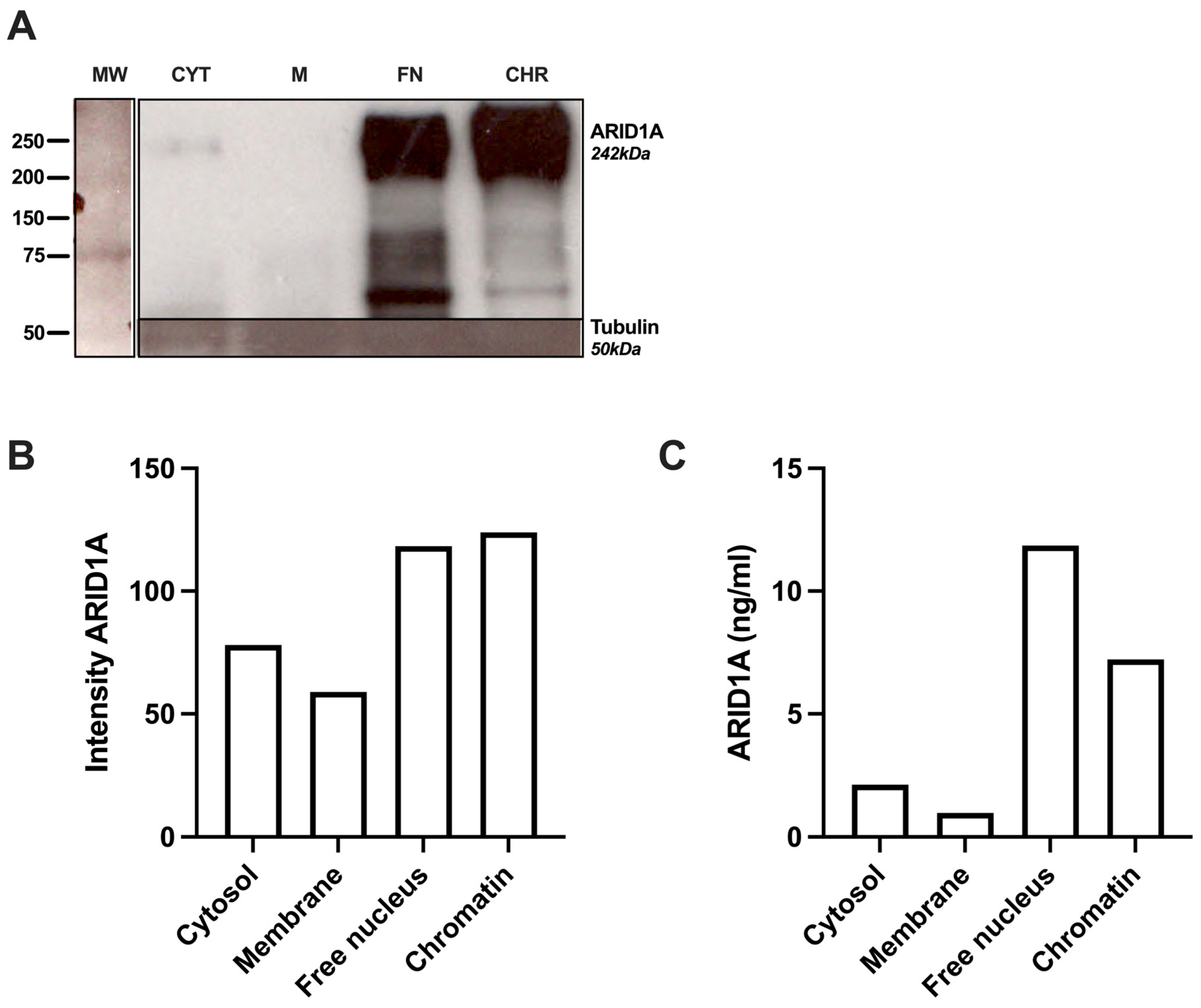
30], ARID1A is predominantly observed in both free nucleus and chromatin, and to a minor extent in the cytosolic but not in the membrane fraction, which is in line with previous results by Guan et al. (2012) who reported a ‘nucleocytoplasmatic’ phenotype [
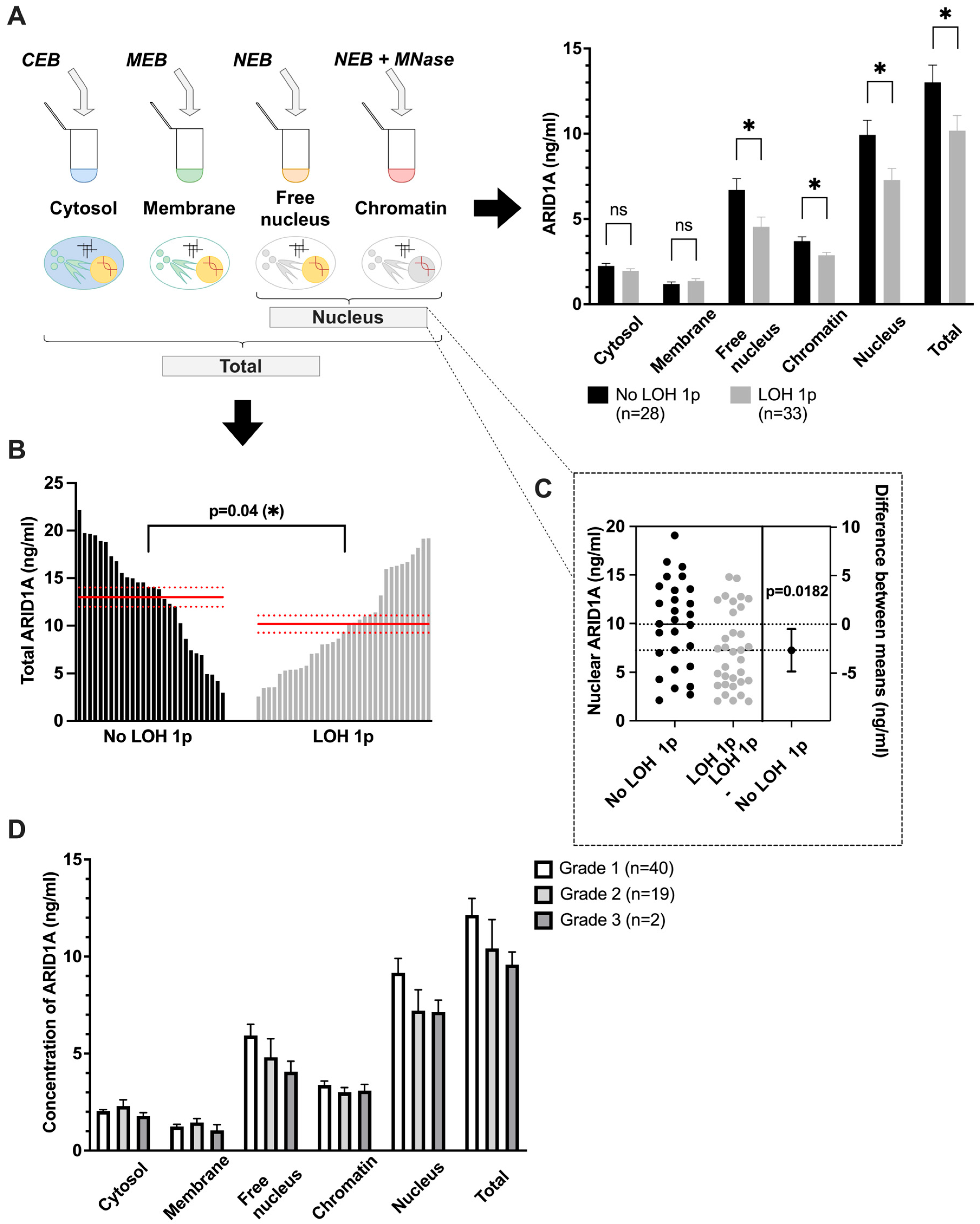
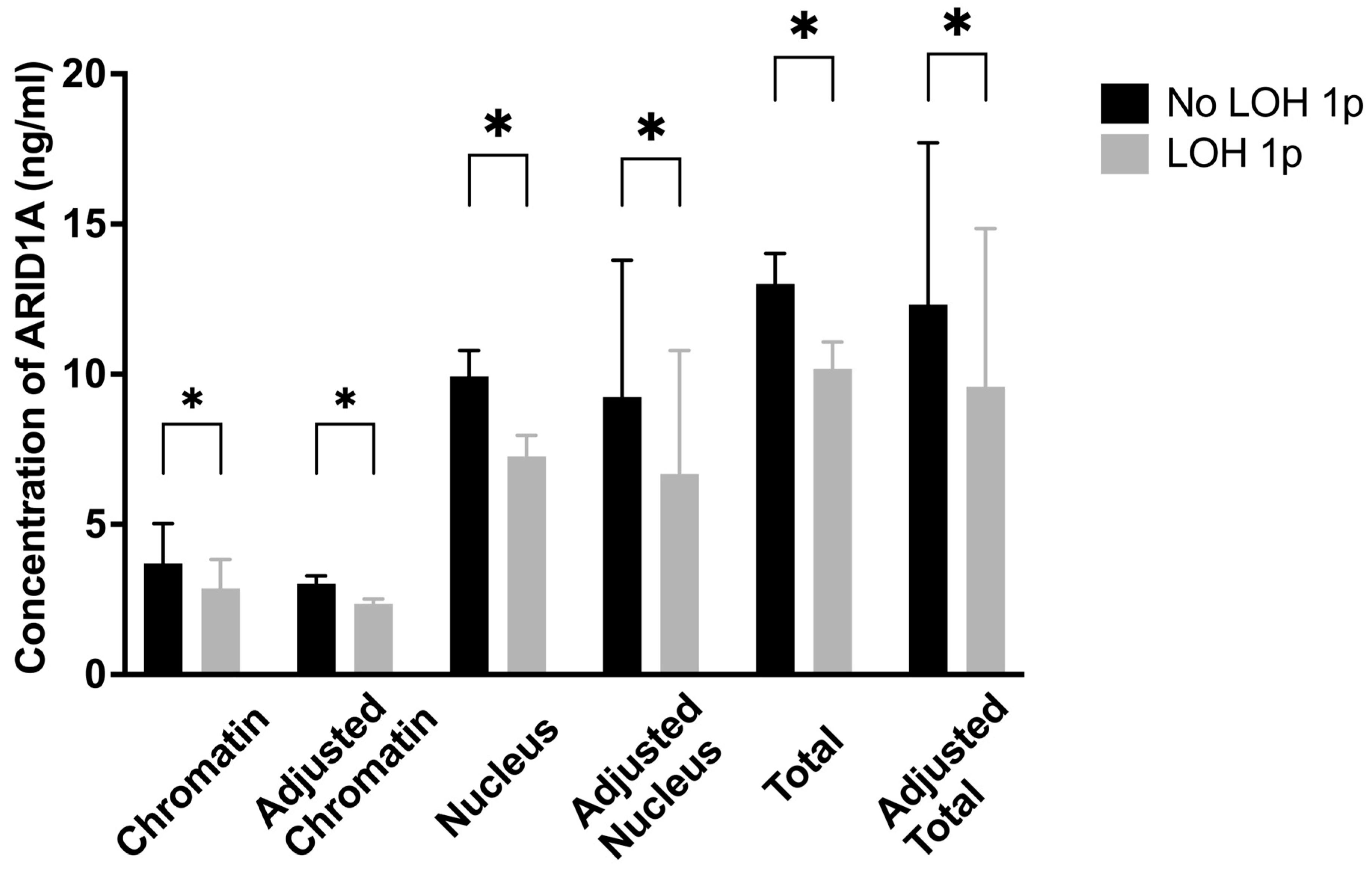
13]. This supports the functionality of the fractionation kit in both tissue lysates and cell culture pellets. However, carry-over from one fraction to another cannot fully be excluded. The two subcellular compartments, free nuclear and chromatin-bound, were, as indicated for some analyses, combined into ‘nucleus’, and cytosol, membrane, free nucleus, and chromatin were summed up and termed ‘total’ for illustrative purposes (see Figure 1A). Localization of the tumors was noted, as by Maiuri et al. (2019) [
32].
2.2. DNA Extraction
DNA was isolated from native tumor tissue, formalin-fixed paraffin-embedded tumor tissue and EDTA blood using the QIAamp DNA Micro Kit according to the manufacturer’s instructions (56403, Qiagen, Hilden, Germany, RRID:SCR_008539).
2.3. Microsatellite Analysis
For polymerase chain reaction (PCR)-based LOH analysis, primer pairs binding at various microsatellite loci were obtained from Eurofins Genomics (Ebersberg, Germany). Genomic positions for all primers binding on chromosomes 1p [
9] and 6q are listed in
Table A1.
Based on a protocol by Hartmann et al. (2005) routinely used in the neuropathology laboratory, we made minor modifications for our primers [
33]. For each sample, 1 µL primer mix (forward and reverse primer, each 20 pmol/µL, Eurofins Genomic, Ebersberg, Germany) of the corresponding microsatellite was pipetted into 12.5 µL HotStarTaq Master Mix Kit (203445, Qiagen, Hilden, Germany) and 10.2 µL water, as well as 1.3 µL DNA (tumor and blood DNA in separate reactions). PCR cycling conditions were 94 °C for 15 min followed by 42 cycles at 94 °C for 30 s, 53 °C or 56 °C (see
Table A1) for 40 s, and 72 °C for 40 s, followed by a final elongation step of 5 min at 72 °C in the Eppendorf Mastercycler nexus PCR Thermal Cycler (Eppendorf, Hamburg, Germany, RRID:SCR_023266).
PCR products were confirmed on a FlashGel
TM System using FlashGel
TM DNA Cassettes, 2.2% (57032, Lonza, Basel, Switzerland, RRID:SCR_00037). Subsequently, 1.5 µL PCR products were separated on a Spreadex
TM EL 800 Wide Mini (3446, AL-Labortechnik & Diagnostik GmbH, Zeillern—Amstetten, Austria) in 1× Tris-acetate-EDTA buffer (42548.01, TAE buffer (40×), Serva, Heidelberg, Germany, RRID:SCR_001063) at 120 V and 54 °C for 100 min in a horizontal gel electrophoresis system (Origins by Elchrom
TM Scientific, AL-Labortechnik & Diagnostik GmbH, Zeillern—Amstetten, Austria). Gels were stained with SYBR-Gold [0.8× TAE, 0.8× Destaining solution (3037.01, Serva, Heidelberg, Germany), 2× SYBR Gold, (S11494, Thermo Fisher Scientific, Waltham, MA, USA)] for 30 min. Images were acquired under UV light using the ‘EOS Utility’ program (Canon, Tokyo, Japan). If PCR products from tumor and blood had similar relative intensities of the two allelic bands, the allele was considered heterozygous. Loss of one band, as indicated by a lower signal intensity of one band in the tumor, was considered LOH. Stained gels were evaluated by two individual specialists in a double-blinded manner; if either or both expressed uncertainty, a third specialist was consulted. If a clear consensus could be reached, probes were classified as LOH or non-LOH. In any case of uncertainty, the sample was classified as non-evaluable (see
Table A1).
2.4. Enzyme-Linked Immunosorbent Assay
Levels of ARID1A in meningioma tissue were determined by enzyme-linked immunosorbent assay (ELISA) as previously described [
30]. Since the present study was designed simultaneously with the validation of our previously published enzyme-linked immunosorbent assay (ELISA) for ARID1A [
30], sensitivity and specificity analyses had already been performed, including Western blot analyses for
ARID1A-wildtype/-knockout and tumor lysates (
Figure A3). However, it was not within the scope of this paper to fully re-validate the ELISA and Western blot results on a high sample number or cross-validate in another laboratory setting; therefore, interpretation of the results should be made carefully. In summary, qualitative controls included a standard curve consisting of 8 calibrators (inter-assay accuracy: 90.26%; inter-assay precision: 4.53%; and intra-assay precision: 4.05%) and six recurring tissue lysates as quality controls with low, medium, and high ARID1A expression on each plate (inter-assay precision: 10.61%).
Briefly, protein-binding plates were coated with tumor lysates, blanks, and standards of ARID1A fragment and incubated at 4 °C overnight. After blocking with casein, primary antibody directed against ARID1A (ab182560, Abcam, Cambridge, UK, RRID:AB_3096240) was added and incubated at room temperature for 2 h. HRP-conjugated detection antibody (K4003, Agilent Dako, Santa Clara, CA, USA, RRID:AB_2630375) was added. Absorbance at 490 nm was determined on the FLUOstar Omega Microplate Reader (BMG Labtech, Ortenberg, Germany, RRID:SCR_025024) after the addition of substrate and sulfuric acid and absorbances were analyzed with the MARS software V4.01 (BMG Labtech, Offenburg, Germany, RRID:SCR_021015). Day-to-day control samples and negative controls were included to control the variability of the assay.
2.5. Immunohistochemistry
Fresh samples were formalin-fixed, dehydrated and embedded in paraffin. One to three µm tissue sections were cut and applied to glass slides. After deparaffinization, antigen retrieval was performed in a steamer with Dako Target Retrieval Solution (pH 9, S2368, Agilent Dako, Santa Clara, CA, USA, RRID:SCR_013530). In the following stages, samples were incubated for 30 min with an anti-ARID1A antibody (diluted 1:1000, host species rabbit, ab182560, Abcam, Cambridge, UK, RRID:AB_3096240) in DAKO REAL antibody diluent (22022, Agilent Dako, Santa Clara, CA, USA, RRID:SCR_013530) according to the standard protocol for the EnVision+ System-HRP Rabbit/Mouse K5007 Kit (K5007, Agilent Dako, Santa Clara, CA, USA, RRID:AB_2888627), which was then applied to visualize the antibody reaction with 3, 3′-diaminobenzidine (DAB). Finally, images were acquired using the program ‘Leica Application Suite Version 3.8′ (Leica Microsystems GmbH, Wetzlar, Germany, RRID:SCR_016555).
2.6. Statistics
Data analysis was performed using GraphPad Prism (version 10.2.0 for Mac, GraphPad Software, San Diego, CA, USA, RRID:SCR_002798). The D’Agostino & Pearson test was used for normal distribution, with a p-value > 0.05 indicating normal distribution. Unpaired parametric t-tests were performed on Gaussian-distributed groups, while the Mann–Whitney test was used as a non-parametric test. Concordance between biomarkers (LOH of 1p and 6q) in tumor tissue and serum was assessed by Fisher’s exact test using contingency tables. When comparing values in more than two groups ANOVA (Analysis of Variance) was applied if those were Gaussian-distributed. If not, Kruskal–Wallis test was used. To assess the most important variables and adjust for confounders multiple linear regression was used. A p-value less than 0.05 was considered significant.
A priori power analysis was performed using an unpaired two-tailed t-test (α = 0.05, target power = 0.8, standardized effect size = 0.8), indicating a required sample size of at least 26 samples per group (52 in total). This corresponds to an achieved power of 0.807 using Prism. Post hoc analysis of 61 included patients revealed a strong power of 0.866.
4. Discussion
In this work, we analyzed ARID1A expression in 61 meningioma tissues using our newly developed indirect enzyme-linked immunosorbent assay (ELISA). Since we have demonstrated objective, precise, and accurate measurements on a small and defined subset of tumor samples as well as cell culture pellets and we have met the good-laboratory-practice guidelines (see
Section 2) [
30], our current focus lies on the transfer and applicability to human tumor tissue.
Holleczek et al. (2019) presented data from meningiomas of 992 patients from the federal state of Saarland, where our patient cohort of 61 samples also underwent surgery [
35]. Epidemiological data suggest that our cohort appears to have a more aggressive course in comparison, as first, the recurrence in our cohort is 23% (compared to 6.1% by Holleczek et al. (2019)), second, the overall female-to-male ratio is 1.65:1 (2.53:1), and third, the proportion of multifocal meningioma is higher with 13% (
n = 8) [
35]. We see comparable values in age, WHO grade distribution [
35] and localization [
32]. Nevertheless, the high frequency of LOH 1p, with 54% compared to 36% by Driver et al. (2022) [
5], reflects a shift towards malignancy in our cohort selection, as LOH 1p is an independent marker of meningioma recurrence and progression [
7]. However, we primarily aimed to exceed the sample sizes for both LOH 1p- and No-LOH 1p-meningioma according to our power analysis and not necessarily only to match other epidemiological data.
The comparison of 33 tumors with LOH 1p—thus also an allelic loss of the
ARID1A gene located at 1p36.11 [
8]—and 28 tumors without such a chromosomal loss shows that meningiomas with LOH 1p seem to contain significantly less ARID1A (compare
Figure 1A–C and
Table A2). As ARID1A is a ‘nucleocytoplasmatic’ partially DNA-bound protein [
11,
13], we suggest focusing on the free nucleus and chromatin fractions, because not all groups show significant changes (compare
Table A2). Previous results strongly support our assumption; however, extensive validation of subcellular protein fractions in a large cohort remains to be done. Summing up to the two groups ‘nucleus’ (free nucleus + chromatin) and ‘total’ (cytosol + membrane + free nucleus + chromatin) should generally be considered the most interesting (
Figure 1B,C) [
30]. Therefore, significant decreases in the four groups, free nucleus, chromatin, nucleus, and total, do outweigh insignificant differences in cytosol and membrane fractions since the latter harbor generally lower ARID1A levels (compare
Figure 1A). When considering the method for an adjusted model in chromatin fractions by mathematically reducing the threshold as described in [
30], no changes occur (see
Figure A1 and
Table A4). Our data support the finding that
ARID1A should be considered a driver gene [
24,
25,
26,
27,
28], as the expression of ARID1A seems to be significantly reduced when LOH 1p is present, a state which is intimately linked with recurrence frequency and high grade [
7].
Since Ketter et al. (2007) found LOH 1p to be highly relevant [
4] in recurrent meningioma our study is the first to link this chromosomal loss to a specific protein, thereby supporting already existing data on its gene
ARID1A [
7,
9]. Loss of heterozygosity is a common way of inactivation in tumor suppressor genes [
36]; therefore, we argue that haploinsufficiency appears to be a major underlying cause of lower ARID1A expression, as has also been shown in pancreatic cancer [
37].
ARID1A mutation frequencies range from 5.4% [
26] to 17.3% [
27] in meningioma, but their influence on ARID1A expression has not been investigated. In addition, it is possible that hypermethylation of the
ARID1A promoter via H3K27Me3 [
38] influences ARID1A expression. Both mechanisms could add information about outlier values of meningioma without LOH 1p that have low nuclear ARID1A levels or tumors with LOH 1p having still high ARID1A expression (see
Figure 1C), which seems to be a great opportunity for future investigations, as this manuscript does not provide this possible explanation for outliers. However, the 26.8% (CI: 4.7–48.8%) decrease in ARID1A nuclear protein level meningioma with LOH 1p (compare
Table A2) indicates a functional relevance in our series of 61 meningiomas and underlines the haploinsufficiency (compare
Figure 1A–C,
Table A2). Especially when considering the loss of the
ARID1A microsatellite as one part out of four investigated chromosome 1p microsatellites, we are able to support the above-described statements: loss of the
ARID1A-microsatellite [
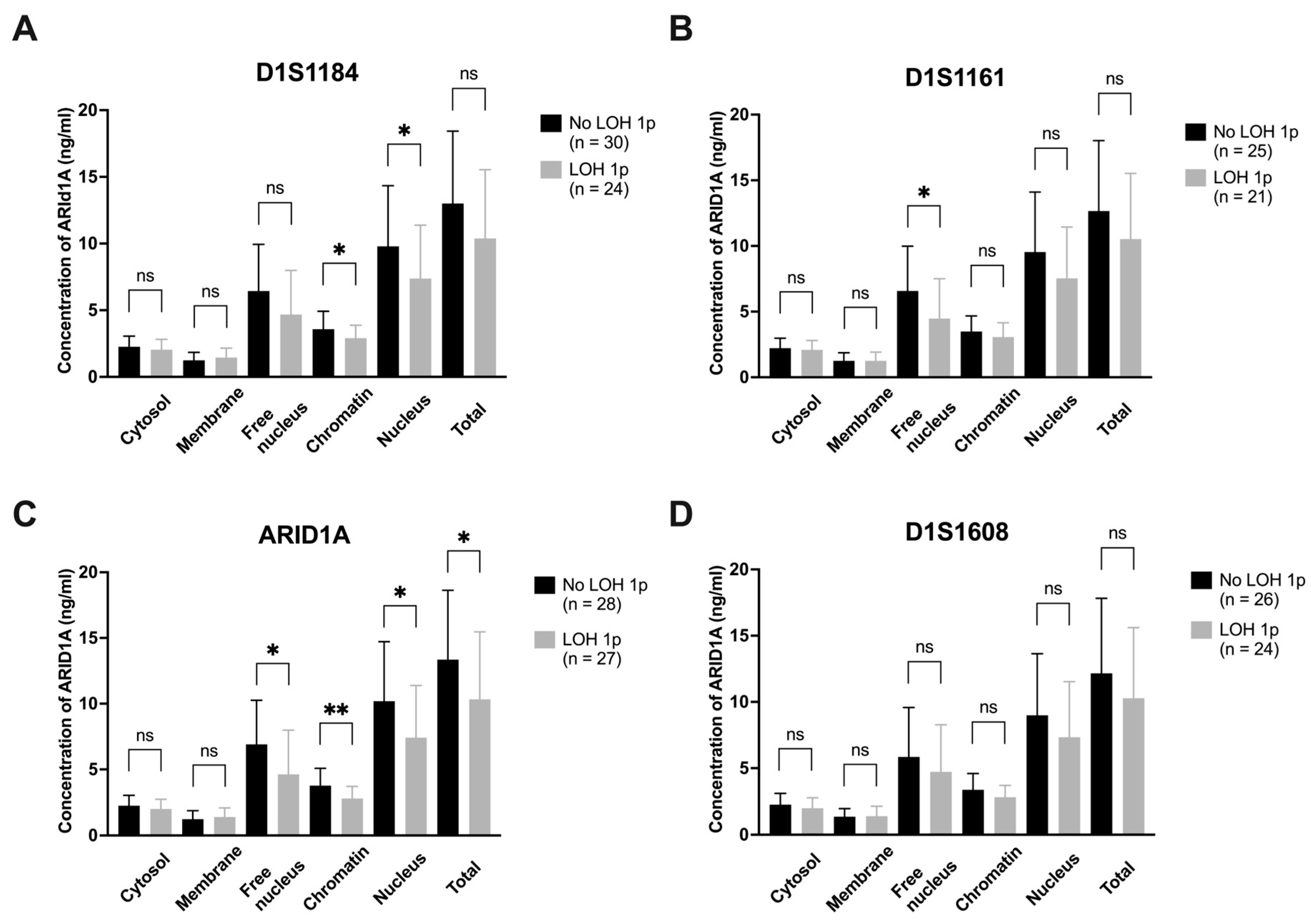
9] seems to be tightly linked to a reduction in ARID1A expression as measured by our ELISA (see
Figure A2C). In addition, our data suggest that neither LOH of microsatellite D1S1608 (located on 1p36.32) nor LOH of D1S1161 (1p35.2) leads to significant changes in ARID1A expression levels in any fraction (
p > 0.05), a fact that is quite interesting and raises the possibility of
ARID1A being mainly responsible in cases of LOH 1p (See
Figure A2A, B, D).
Furthermore, the analyses of multifocal, recurrent meningioma indicate the reduction in ARID1A to be of great importance in patients’ outcomes (see
Table 2 and
Table 3). Our ELISA reveals that multifocal tumors have 55.8% (CI: 11.9–80.6%) less ARID1A in total compared to singular ones, which is not only statistically significant (
p < 0.05) but should also be of functional relevance (see
Table 2). In our series, ‘multifocal meningioma’ includes 63% recurrences (see
Supplementary Data), which is different compared to the literature, where ‘multiple meningioma’ primarily addresses meningioma with multifocal locations [
39]. In the data provided, these tumors express very low ARID1A levels and therefore seem to be of great interest in understanding the role of
ARID1A in meningioma. Since the total group of recurrent meningioma harbors 34.5% (CI: 1–58%) less ARID1A compared to non-recurrent meningioma (
p < 0.05), the ARID1A decrease should be of great importance to the patients’ outcomes, strengthening recent research about
ARID1A mutations [
24,
25,
26,
27,
28] and LOH 1p [
3,
4,
5,
7,
40,
41]. We argue that this effect of both multifocal and recurrent meningioma is mostly confounded by LOH 1p. However, when testing the influence of LOH 1p on ARID1A expression while adjusting for gender and WHO grade (both not significant in univariate analysis), as well as recurrence and localization (both significant in univariate analysis) in a multivariate analysis, we detect no significant trend (
p > 0.05) in any of the parameters (compare
Table A5).
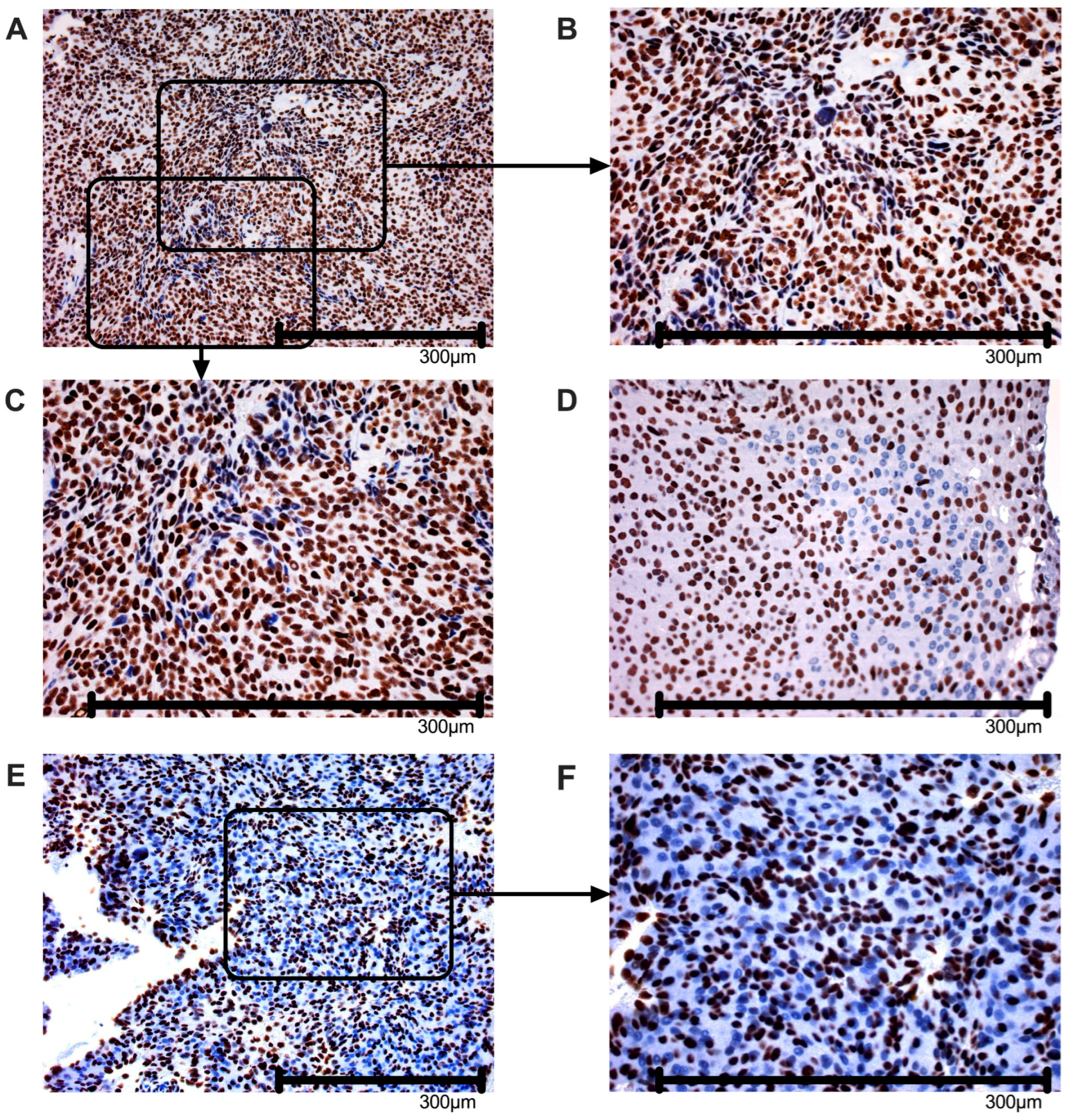
Immunohistochemical staining (IHC) of ARID1A reveals minor as well as major mosaic-like ARID1A loss in 54.5% of meningioma cells with LOH 1p. While these patterns may represent the heterogeneity of ARID1A expression [
6], neither is significantly associated with reduced ARID1A levels in ELISA (see
Section 3.4). In line with other studies, we did not detect a total loss of ARID1A expression in any meningioma [
24,
25]. However, a cross-validation in a second independent cohort would further strengthen our results and possibly explain discrepancies in IHC and ELISA. Detailed analysis of our series shows that neither meningioma of WHO grade 2 or 3 nor recurrent or multifocal localized meningioma is significantly more frequent in tumors with or without mosaic-like ARID1A expression losses in IHC (Fisher’s exact test;
p > 0.05). Therefore, we argue that ELISA should be considered as the method of choice to detect ARID1A levels in meningioma, as the limitations of a semiquantitative analysis in IHC outweigh the benefits of this method [
30,
42,
43]. This is highly supported by our previous study confirming precise and accurate quantification of our ELISA using several Western blot assays [
30], for example, in a representative meningioma lysate (see
Figure A3).
ARID1A is a member of the SWI/SNF complex and Kadoch et al. (2013) were able to show that multiple subunits can be affected in a single tumor, a combination that can affect up to 50% of cases with SWI/SNF subunit alteration in a tumor entity [
21]. In our analysis, we hypothesized that LOH 1p, which is often followed by LOH 6q [
4], may lead to the loss of an allele of another subunit of the SWI/SNF complex, namely
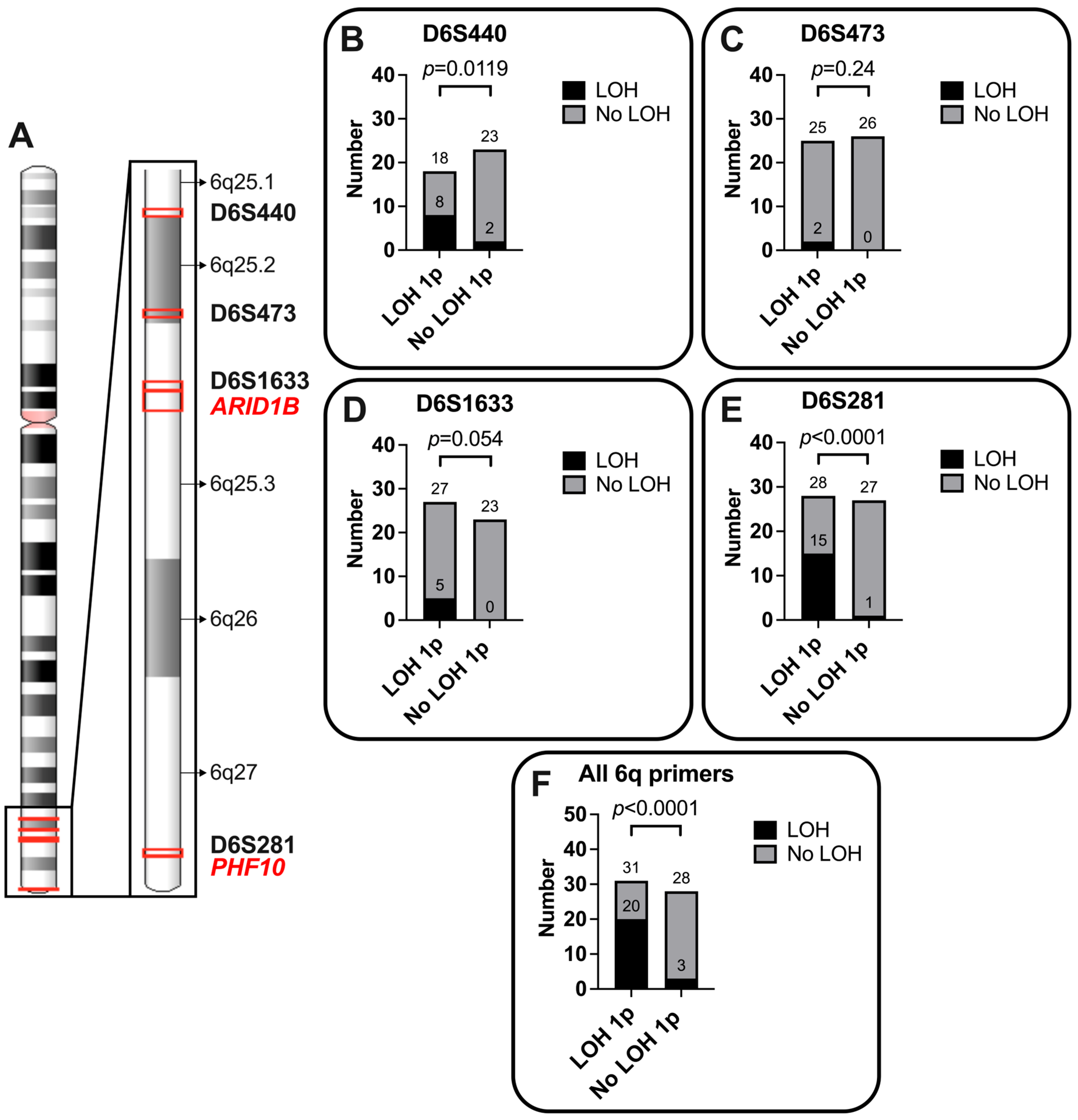
ARID1B. When considering the loss of any of the four chromosome 6q microsatellites (D6S281, D6S440, D6S473, and D6S1633), Fisher’s exact test shows that this loss is highly correlated with LOH 1p (
p < 0.0001,
Figure 3F). The single loss of polymerase chain reaction (PCR) probes D6S440 or D6S281 is shown to be significantly enriched in meningioma with LOH 1p (see
Figure 3B,E). The latter is located very close to the
PHF10 gene—a tumor suppressor gene and another subunit of the SWI/SNF complex (compare
Figure 3A) [
44]. Since microsatellites within the
ARID1B gene failed in our PCR, we used D6S1633 in the closest proximity to all markers to
ARID1B for our analysis. Assuming LOH 6q reflects
ARID1B impairment, interestingly, this probe very closely fails to meet significance with a
p-value of 0.054 when analyzing the accumulation of LOH D6S1633 with LOH 1p (Fisher’s exact test;
Figure 3E). Nevertheless, a bigger cohort might make this observation significant. Since there are strong indications of the malignant potential in tumorigenesis related to the double knockout of
ARID1A and
ARID1B, we propose to include multiple SWI/SNF members in mutational analyses in the future to better evaluate chromatin remodeling dysfunction in meningioma [
19,
20,
21,
23]. As Pérez-Magán et al. (2010) found most of the differentially expressed genes in their series were located at chromosomes 1p, 6q, and 14q and were under-expressed in recurrences (
n = 104) [
41]; the link of LOH, as well as mutation of
ARID1A and/or
ARID1B and additional members of the SWI/SNF complex (i.e.,
PHF10 on 6q,
DPF3 on 14q), has the potential to expand the current understanding of meningioma development [
45].
In order to consider potential influencing factors, we would like to address a few specific aspects. Since the data set presented was derived from real-world neurosurgical care practice over a period of more than three years, we considered its robustness and high statistical power of 0.866 to be major advantages. At the same time, its retrospective, single-center design limits generalizability [
46]. Sociodemographic items, national peculiarities, selection bias and inter-observer reliability could have an influence on the study results. To limit these and other methodological biases, STROBE guidelines were followed closely, including careful definition of study variables, transparent reporting of inclusion and exclusion criteria, standardized data collection procedures, and comprehensive documentation of statistical methods to ensure reproducibility and minimize reporting bias [
47]. As mentioned earlier, the influence of potential mutations or promoter methylation of the
ARID1A gene is an additional factor that, alongside LOH 1p, could have a functional impact on ARID1A expression. We are aware that the current study does not address all questions; however, this was not the objective of a proof-of-principle study. Given these considerations, meningioma cell culture studies are desirable to confirm the impact of LOH 1p on protein expression. In addition, either native tumor tissue or cell culture assays using exome sequencing, quantitative PCR, methylation profiling and/or proteomics could help distinguish pathway-specific aspects.
Since ARID1A is involved in other signaling pathways such as AKT, DNA repair, TERT, HDAC, PD-L1, and cell cycle [
48], it would be interesting to see whether there are interactions with impaired ARID1A signaling in meningioma and how they affect tumor growth, especially in high-grade tumors. As both
TERT promotor mutation and homozygous deletion of
CDKN2A/B have been included in the meningioma classification [
1], and members of the SWI/SNF complex are subject to high mutation frequencies in some meningioma subtypes, such as
SMARCA4 (WHO grade 2 intraventricular meningioma [
40]),
SMARCE1 (clear cell subtype [
1]),
SMARCB1 (
NF2-mutant meningioma [
45]),
BAP1 (rhabdoid subtype [
1]), and
PBRM1 (papillary subtype [
1]), we argue that LOH 1p including the
ARID1A gene and/or
ARID1A inactivating mutation [
22] with potentially decreased ARID1A levels should be the focus of further research and may be involved in meningioma grading. Consequently, we emphasize the necessity of prospective evaluation of LOH 1p meningioma and clinical outcomes or new treatment strategies such as
PARP-inhibition [
49] or
ATR-inhibition [
50], highlighting just a few promising ideas for future projects.




 ,
,