Review

Myosteatosis and Sarcopenic Obesity in Men Receiving Androgen Deprivation Therapy for Prostate Cancer: Rationale for Mechanism-Driven Multimodal Intervention


1
Cancer Epidemiology Program, Moffitt Cancer Center and Research Institute, Tampa, FL 33612, USA
2
Genitourinary Oncology Program, Moffitt Cancer Center and Research Institute, Tampa, FL 33612, USA
3
Health Outcomes and Behavior Program, Moffitt Cancer Center and Research Institute, Tampa, FL 33612, USA
4
Biostatistics and Bioinformatics Program, Moffitt Cancer Center and Research Institute, Tampa, FL 33612, USA
*
Author to whom correspondence should be addressed.
Cancers 2026, 18(8), 1276; https://doi.org/10.3390/cancers18081276

Submission received: 17 March 2026 / Revised: 14 April 2026 / Accepted: 14 April 2026 / Published: 17 April 2026
(This article belongs to the Section Cancer Survivorship and Quality of Life)

Simple Summary

Androgen deprivation therapy (ADT) is a cornerstone of prostate cancer treatment but is associated with significant adverse effects on body composition and metabolic health. These include loss of skeletal muscle, increased fat mass, and development of sarcopenic obesity, a condition linked to functional decline, metabolic syndrome, and potentially adverse oncologic outcomes. An important and underrecognized component of this phenotype is myosteatosis, defined as the fatty infiltration of skeletal muscle, which reflects impaired muscle quality and underlying metabolic dysfunction. This structured narrative review synthesizes current evidence on interventions aimed at mitigating sarcopenic obesity in men receiving ADT. While exercise and nutrition-based strategies have shown benefits in improving muscle strength and body composition, most studies are limited by small sample sizes, short durations, and the lack of assessment of muscle quality. Notably, myosteatosis-specific endpoints remain rarely incorporated in clinical trials of men receiving ADT. We propose a mechanism-driven framework in which ADT-induced metabolic and inflammatory changes promote myosteatosis, which in turn, contributes to sarcopenic obesity and associated clinical outcomes. Future interventions should incorporate multimodal strategies and include imaging-based measures of muscle quality to better guide clinical management and improve survivorship outcomes.

Abstract

Background: Androgen deprivation therapy (ADT) is widely used in the management of prostate cancer (PCa) and remains a cornerstone of treatment across multiple disease settings. Although ADT contributes substantially to disease control, it also induces significant adverse metabolic and body composition changes. These alterations include loss of lean mass, increased fat mass, and deterioration in muscle quality, together contributing to a clinical phenotype consistent with sarcopenic obesity (SO). Importantly, ADT-induced SO is characterized not only by reductions in skeletal muscle mass but also by impaired muscle quality, particularly the fatty infiltration of skeletal muscle, or myosteatosis, an underrecognized but defining feature of this syndrome. Methods: This narrative review examines current evidence regarding interventions aimed at mitigating sarcopenic obesity in men treated with ADT for prostate cancer, identifies key gaps in the literature, and proposes a mechanism-driven path forward for intervention development. Results: Several exercise- and nutrition-based interventions have been evaluated in men receiving ADT and demonstrate improvements in selected outcomes such as muscle strength, body composition, and metabolic parameters. However, most studies have been limited by small sample sizes, short intervention durations, and a focus on isolated intervention components. Importantly, muscle quality and intramuscular fat infiltration (myosteatosis), a central component of sarcopenic obesity, have rarely been incorporated as biomarkers or endpoints in intervention trials targeting men receiving ADT. Conclusions: Future interventions designed to mitigate SO and its associated metabolic abnormalities should evaluate comprehensive, bundled strategies initiated early during ADT and sustained long enough to capture clinically meaningful changes. Outcomes should include biomarkers of muscle mass, strength, and quality, including imaging-based measures of myosteatosis, along with metabolic syndrome markers, inflammatory mediators, functional outcomes, adherence, and quality of life. These changes should evaluate the correlation with underlying biological mechanisms such as NF-κB signaling and pro-inflammatory cytokines. Such data may inform future phase III trials and ultimately support clinical strategies to mitigate ADT-related sarcopenic obesity and its downstream cardiometabolic and oncologic consequences.

1. Introduction

In 2026, an estimated 333,830 new cases of prostate cancer will be diagnosed in the United States, and 36,320 men will die from the disease [1]. Because prostate cancer is androgen dependent [2], androgen deprivation therapy (ADT) has become a mainstay of treatment for men with metastatic disease [3] and is also used in conjunction with radiotherapy for selected patients with localized or locally advanced disease [4]. It is estimated that more than 45% of men with prostate cancer receive ADT during the course of treatment [3].
ADT includes several classes of agents, including luteinizing hormone-releasing hormone agonists and antagonists such as leuprolide, goserelin, and degarelix; antiandrogens such as bicalutamide and flutamide; androgen synthesis inhibitors such as abiraterone; and other agents such as ketoconazole. The duration of treatment varies by disease risk group, treatment intent, and concomitant therapies, ranging from 4 to 6 months to several years. Men with high-risk disease may receive long-term ADT for 18–36 months, whereas those with intermediate-risk disease may receive shorter courses of 4–6 months. Men with metastatic disease may remain on ADT indefinitely [5].
Although ADT has improved disease control and survival, treatment-related adverse effects continue to compromise long-term health and quality of survival. The hormonal shifts associated with ADT induce substantial changes in body composition and metabolism, including increased fat mass, reduced lean body mass, altered lipid profiles, hyperglycemia, decreased insulin sensitivity, osteoporosis, and metabolic syndrome [5,6,7,8,9,10]. These changes may culminate in a clinical phenotype consistent with sarcopenic obesity (SO), characterized by the coexistence of sarcopenia and excess adiposity [6,7,11,12,13]. ADT-induced testosterone depletion contributes to reduced muscle protein synthesis and increased muscle catabolism, while also promoting visceral adiposity and metabolic dysfunction [5,7,8,9].
Beyond reductions in muscle mass alone, a defining and increasingly recognized feature of sarcopenic obesity is impaired muscle quality, particularly the accumulation of fat within skeletal muscle, termed myosteatosis [11,12,14,15]. Sarcopenia is defined by reduced skeletal muscle mass and/or function; myosteatosis reflects impaired muscle quality characterized by fatty infiltration and reduced radiodensity; and sarcopenic obesity represents the coexistence of excess adiposity with diminished muscle mass and/or quality. These related but distinct phenotypes are quantified using imaging-based metrics such as skeletal muscle index (SMI), skeletal muscle radiodensity (SMD), and measures of inter- or intramuscular adipose tissue (IMAT). Myosteatosis, on the other hand, reflects ectopic lipid deposition within and between muscle fibers and is associated with reduced muscle strength, impaired metabolic function, insulin resistance, and systemic inflammation [14,16,17]. Emerging evidence suggests that myosteatosis may represent one of the most clinically informative manifestations of sarcopenic obesity because it captures deterioration in muscle quality rather than quantity alone [11,12,14] (Table 1). Although myosteatosis has been increasingly associated with adverse clinical outcomes, including reduced survival, increased treatment toxicity, and poorer functional status across multiple cancer populations, prospective and ADT-specific data remain limited [7,11,12].
The adverse effects of SO in men receiving ADT extend beyond body composition alone. Compared with sarcopenia in isolation, SO appears to exacerbate metabolic dysregulation and has been associated with cardiovascular disease, insulin resistance, and diabetes mellitus [6,11,16,18,19,20,21]. These metabolic derangements may also adversely influence cancer outcomes, including biochemical recurrence, development of castration-resistant disease, metastatic progression, and prostate-cancer-specific as well as all-cause mortality [8,20,22,23]. These risks may be compounded by age-related declines in muscle mass, bone mineral density, and metabolic resilience [13].
Consensus groups have emphasized that heterogeneity in definitions continues to limit comparability across studies and slow clinical translation [12]. Importantly, reliance on body mass index alone is inadequate, as it does not capture body composition, muscle function, or muscle quality, all of which are central to SO [12,13]. Recent work has highlighted myosteatosis as an emerging biomarker of cancer prognosis across multiple malignancies. In men receiving androgen deprivation therapy, this phenotype may represent a central manifestation of treatment-related metabolic toxicity. We therefore propose that myosteatosis should be considered a key biomarker of ADT-induced sarcopenic obesity [15], linking metabolic dysfunction, inflammation, and skeletal muscle deterioration in this population. Despite growing recognition of myosteatosis as a clinically relevant muscle phenotype, substantial gaps remain, including the lack of standardized definitions and imaging thresholds, limited mechanistic studies in human cancer populations, and a predominance of retrospective data. Importantly, myosteatosis remains largely unaddressed as a therapeutic target in oncology trials. Given its potential reversibility and early emergence in the disease and treatment trajectory, there is a critical need to establish myosteatosis as a measurable and actionable biomarker to guide intervention strategies. This narrative review synthesizes current evidence on myosteatosis in oncology, with a focus on its definition, biological underpinnings, clinical relevance, and translational potential as an early and modifiable biomarker of prostate cancer prognosis.

2. Materials and Methods

This manuscript was developed as a structured narrative review aimed at integrating current clinical, imaging, and mechanistic evidence related to androgen deprivation therapy (ADT), myosteatosis, and sarcopenic obesity. Relevant literature was identified through targeted searches of PubMed/MEDLINE, Embase, Scopus, and Web of Science, supplemented by citation tracking and manual screening of reference lists from key articles. The search covered studies published from January 2000 through December 2025, reflecting the period during which imaging-based characterization of muscle quality and myosteatosis emerged in oncology research. Search terms included combinations of Medical Subject Headings (MeSH) and keywords related to “androgen deprivation therapy,” “sarcopenia,” “obesity,” “myosteatosis,” “muscle quality,” AND “prostate cancer,” “cancer”, “oncology,” “survival,” “treatment toxicity,” “metabolic abnormalities,” and “body composition.”
Studies were included if they: (i) involved adult cancer populations, particularly prostate cancer patients receiving ADT; (ii) evaluated body composition, muscle quality (e.g., myosteatosis, skeletal muscle radiodensity, or intramuscular adipose tissue), or related metabolic outcomes; and/or (iii) provided clinical, translational, or mechanistic insights relevant to sarcopenic obesity or myosteatosis. Eligible study designs included observational cohort studies, retrospective imaging analyses, interventional studies, and mechanistic investigations.
Studies were excluded if they: (i) were conducted exclusively in non-cancer populations without clear mechanistic relevance; (ii) evaluated sarcopenia without assessment of muscle quality or fat infiltration; (iii) were conference abstracts lacking sufficient methodological detail; or (iv) were non-English publications.
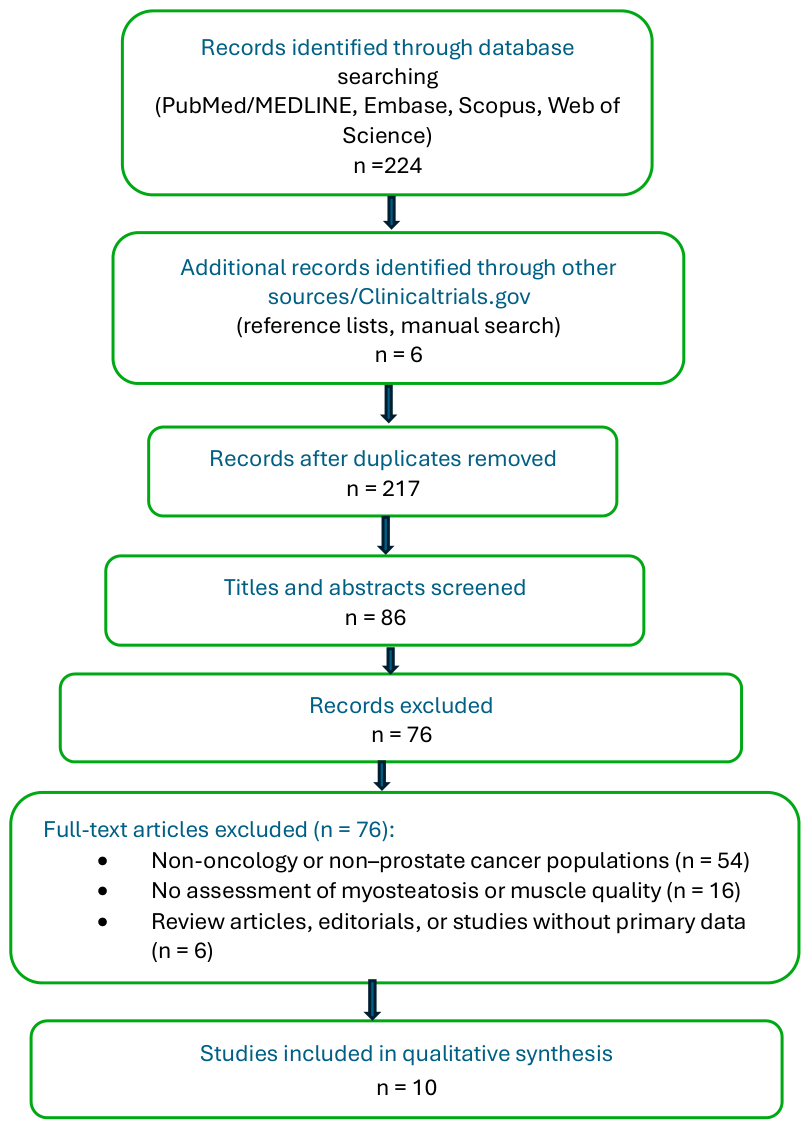
Titles and abstracts were screened for relevance, followed by full-text reviews of eligible articles. A flow diagram summarizing the identification, screening, eligibility, and inclusion of studies is provided to enhance transparency of the study selection process.
Evidence was synthesized qualitatively using a structured narrative approach, with findings grouped by cancer type, imaging modality, and outcome domain (clinical, metabolic, and functional). Given substantial heterogeneity in study design, definitions of myosteatosis, and outcome reporting, formal meta-analysis was not performed.
As this review was narrative in nature, formal risk-of-bias scoring was not conducted. However, interpretation of findings considered study design, sample size, methodological rigor, imaging standardization, adjustment for confounding variables, and consistency across independent cohorts.
This approach was selected to allow integration of heterogeneous evidence spanning epidemiologic, imaging, and mechanistic domains, which are not readily amenable to quantitative synthesis, while still maintaining transparency in study identification and selection.
A flow diagram summarizing the identification, screening, eligibility assessment, and inclusion of studies in this structured narrative review (Figure 1). Records were identified through targeted database searches (PubMed/MEDLINE, Embase, Scopus, and Web of Science) and supplemented by manual review of reference lists. After duplicate removal, titles and abstracts were screened for relevance, followed by full-text reviews based on predefined inclusion and exclusion criteria. Reasons for exclusion at the full-text stage are provided. Studies meeting eligibility criteria were included in the qualitative synthesis to inform the conceptual framework and evidence synthesis presented. A subset of studies specifically evaluating intervention strategies in men receiving ADT is summarized separately (Table 2), reflecting the limited number of trials incorporating comprehensive muscle quality endpoints.

3. Results

3.1. Skeletal Muscle-Specific Mechanisms Underlying Myosteatosis

The biological mechanisms underlying sarcopenic obesity (SO) in men receiving chronic androgen deprivation therapy (ADT) are thought to involve a complex interplay of inflammatory and metabolic signaling pathways that converge at the level of skeletal muscle. Experimental evidence suggests that activation of the ubiquitin–proteasome pathway, mediated in part through the upregulation of NF-κB, is associated with and likely contributes to skeletal muscle degradation and is stimulated by pro-inflammatory cytokines, including TNF-α and IL-6 [28,29,30,31,32,33]. These pathways, long implicated in muscle wasting and cachexia, are also implicated in the development of impaired muscle quality in the context of ADT.
Myosteatosis is increasingly recognized as a distinct pathological alteration in skeletal muscle characterized by ectopic lipid accumulation within muscle tissue, rather than solely a body composition phenotype. At the cellular level, increased deposition of intramyocellular and intermuscular adipose tissue contributes to reduced skeletal muscle radiodensity and disruption of contractile architecture. These changes have been associated with mitochondrial dysfunction, including reduced oxidative capacity and impaired lipid oxidation, which may further promote lipid accumulation within muscle fibers [34,35].
In parallel, local pro-inflammatory signaling within skeletal muscle—particularly NF-κB activation—drives increased expression of cytokines such as IL-6 and TNF-α, contributing to anabolic resistance and impaired muscle protein synthesis. Activation of proteolytic systems, including the ubiquitin–proteasome pathway, further accelerates muscle protein degradation. Additionally, fibro-adipogenic progenitor (FAP) cells may undergo lineage shifts favoring adipogenesis and fibrosis, reinforcing fat infiltration and structural remodeling of skeletal muscle [36].
Emerging evidence also highlights the role of the transforming growth factor-β (TGF-β) superfamily in regulating skeletal muscle homeostasis. Key ligands within this pathway, including myostatin and activins, function as important negative regulators of muscle mass through activation of activin receptor type II (ActRII) signaling, leading to SMAD2/3 phosphorylation and suppression of myogenic differentiation [37,38,39]. Upregulation of this pathway has been implicated in cancer-associated muscle wasting and may contribute to the development of myosteatosis through inhibition of muscle regeneration and promotion of fibro-adipogenic progenitor activity.
Importantly, crosstalk between inflammatory cytokines (e.g., IL-6, TNF-α) and TGF-β signaling pathways may amplify catabolic signaling, further promoting muscle protein degradation via ubiquitin–proteasome and autophagy–lysosome pathways. These integrated signaling networks suggest that myosteatosis reflects not only lipid infiltration but also impaired regenerative capacity and persistent catabolic activation within skeletal muscles.
Studies have demonstrated that selective exposure of the liver to orally administered testosterone reduced protein oxidation to the same extent as systemic (transdermal) testosterone administration [40,41]. On Inversely, suppression of testosterone to castrate levels during ADT has been shown to impact the hepatic urea cycle, resulting in greater nitrogen losses contributing to muscle catabolism [42]. Thus, increased hepatic urea production and whole-body protein oxidation have been identified as contributors to net protein loss in ADT-treated patients, including implications for nitrogen balance and interpretation of protein metabolism endpoints.
Collectively, these muscle-specific alterations support the characterization of myosteatosis as a distinct phenotype of impaired muscle quality, characterized by lipid accumulation, reduced radiodensity, and compromised metabolic and functional capacity.

3.2. Systemic Endocrine and Inflammatory Drivers of Myosteatosis in ADT

Beyond muscle-intrinsic mechanisms, androgen deprivation therapy (ADT) induces systemic endocrine and metabolic alterations that may further drive the development of myosteatosis. ADT-associated hypogonadism is associated with increased adiposity, particularly visceral fat accumulation, along with insulin resistance, dyslipidemia, and chronic low-grade inflammation [9,13,43]. These alterations may favor ectopic lipid deposition in peripheral tissues, including skeletal muscles.
Insulin resistance is associated with impaired glucose uptake and substrate utilization in the skeletal muscle, while elevated circulating free fatty acids may enhance lipid delivery and storage within muscle fibers. Concurrently, systemic inflammation—characterized by increased levels of IL-6 and TNF-α—may further exacerbate muscle catabolism and metabolic dysfunction. Hormonal alterations, including reduced testosterone and dysregulation of adipokines such as leptin and adiponectin, disrupt muscle–adipose crosstalk and promote anabolic resistance.
Androgen receptor (AR) signaling plays an important role in maintaining skeletal muscle homeostasis by promoting myogenic differentiation and suppressing adipogenic lineage commitment [17,44]. In the setting of androgen deprivation therapy, loss of AR signaling may disrupt mesenchymal stem cell fate decisions, shifting differentiation from myogenic toward adipogenic pathways. This lineage reprogramming is mediated, in part, through altered regulation of key transcription factors, including decreased MyoD and myogenin expression and increased activation of adipogenic regulators such as PPARγ and C/EBPα [17,44]. These processes provide a plausible mechanistic basis for the concurrent development of muscle loss and intramuscular fat accumulation observed in men receiving ADT.
In parallel, fibro-adipogenic progenitors (FAPs), which expand in response to injury and inflammation, may preferentially differentiate into adipocytes under conditions of hormonal deprivation and metabolic stress, further contributing to intramuscular fat deposition [45]. These findings suggest that myosteatosis may reflect active remodeling of muscle tissue rather than being a purely passive process.
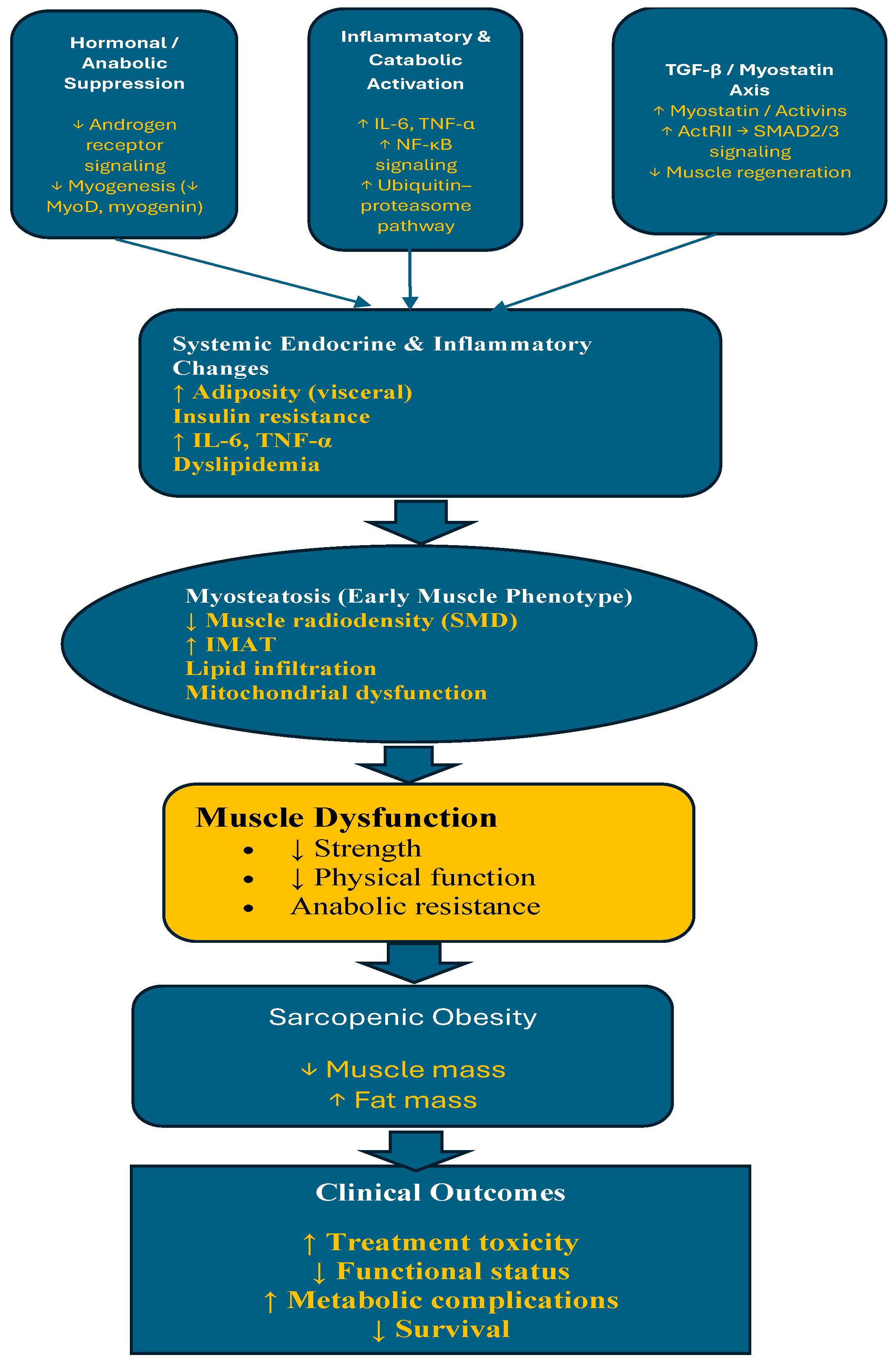
Together, these systemic perturbations are proposed to converge on skeletal muscle to promote lipid infiltration, reduced muscle radiodensity, and functional decline. The integration of these processes contributes to the development of sarcopenic obesity, linking systemic endocrine and inflammatory dysregulation with muscle-specific deterioration. These interconnected pathways provide the biological basis for the conceptual framework presented in Figure 2.
This conceptual framework generates several testable hypotheses. First, initiation of ADT will be associated with early declines in skeletal muscle radiodensity (SMD), reflecting increased intramuscular lipid infiltration and preceding measurable reductions in muscle mass. Second, changes in myosteatosis will correlate more strongly with metabolic dysregulation (e.g., insulin resistance and inflammatory cytokines) and clinical outcomes than changes in muscle mass alone. Third, multimodal interventions targeting inflammation, metabolic dysfunction, and muscle remodeling will preferentially improve muscle quality (SMD, IMAT) prior to detectable gains in lean mass. Finally, integrating imaging-based measures of myosteatosis with circulating biomarkers may enhance early risk stratification and identify patients most likely to benefit from targeted interventions. Collectively, this framework positions myosteatosis as both a clinically relevant biomarker and a potential therapeutic target in the prevention of ADT-related metabolic toxicity.

3.3. Current Strategies to Manage Sarcopenia, Obesity, and Other Metabolic Consequences of ADT

Although SO is well characterized in aging populations, it remains insufficiently defined in men with prostate cancer receiving ADT [7,12,13]. By contrast, several individual adverse effects of ADT, including obesity, sarcopenia, loss of bone mineral density, and vasomotor symptoms, are well documented [36,46,47,48,49,50]. Standard supportive therapies are therefore commonly used to manage selected toxicities. ADT has been shown to reduce bone mineral density measured by dual-energy X-ray absorptiometry. Bone mineral density has been reported to decline by approximately 2.4% in the first year and 7.6% over two years, with a reported range of 2.5–17.0% [46], and by as much as 17% within 2 years [47,48]. Bone protection agents, including bisphosphonates, monoclonal antibodies, and selective estrogen receptor modulators, are often used in conjunction with calcium and vitamin D supplementation, although calcium and vitamin D alone appear insufficient to halt ADT-related bone loss [36,46,47,48,49,50]. Vasomotor symptoms are commonly managed using hormonal therapies and non-hormonal agents [49].
In contrast, there are currently no standardized interventions specifically designed to prevent or reverse sarcopenia, obesity, SO, or the broader metabolic toxicities associated with ADT. Nonetheless, existing studies (Table 2) suggest that supervised exercise, including resistance training and nutritional counseling, can reduce fat mass and improve muscle mass and function in men treated with ADT [8,25,26,45,51,52,53,54,55,56]. In the IDEA-P trial, 32 PCa subjects on ADT were randomized to group-mediated exercise and nutritional intervention for a period of 12 weeks, resulting in improved muscle strength and mobility [24,25]. In a pilot trial (NCT04870515), researchers are evaluating diet and physical activity administered for 6 months, targeting PCa patients treated with ADT and radiation therapy, on changes in anthropometrics, metabolic abnormalities, and treatment outcomes. A trial (NCT03880422) evaluated the effectiveness of a nutrition and exercise intervention for 6 months to reduce ADT-induced obesity and frailty in PCa survivors. In 60 PCa patients, resistance exercise training for 20 weeks was observed to mitigate effects of ADT on body composition, muscle mass, strength, and aerobic capacity, with no additional benefits of protein supplementation [26]. An additional study is currently evaluating remotely monitored exercise interventions for 12 weeks in PCa patients on ADT (NCT06429813, unpublished). Similarly, a 12-week feasibility trial is evaluating behavioral exercise training for men undergoing ADT for PCa (NCT06250751, unpublished). A 6-month intervention combining aerobic and resistance exercise programs for 60 men on ADT demonstrated a significant and favorable effect on cardiorespiratory capacity, resting fat oxidation, glucose, and body composition [27]. A trial utilizing a 12-month internet-based lifestyle intervention (weight loss and resistance training) to eradicate obese frailty in PCa survivors (NCT06011499) is ongoing. Currently other early studies evaluating exercise regimens targeting other cancer patient populations have reported feasibility and promising results [57,58,59,60,61]. These efforts underscore growing recognition that exercise and nutrition interventions are both feasible and clinically relevant in this population.
However, most intervention trials in men receiving ADT have been limited by small sample sizes, short intervention durations, and limited assessment of muscle quality or metabolic biomarkers [8,25,26,27,45,51,52,53,54,55,56]. Many studies have lasted only 12–16 weeks, even though clinically meaningful adverse changes in body composition and metabolism often evolve over 6–12 months after ADT initiation [5,7,8,9,52]. Additionally, with the occurrence of multiple/related adverse effects with SO in PCa patients on ADT, it may be relevant to integrate multiple evidence-based interventions in parallel by blending and bundling evidence-based strategies [27] administered simultaneously to overcome the limitations of siloed interventions. Although the prevalence of obesity and sarcopenia have been reported, to date, inter-muscle fat infiltration, which is a cardinal feature of SO in PCa patients on ADT, has not been used as a biomarker nor as an outcome marker of an intervention. Importantly, there is a paucity of interventions that target the underlying mechanisms to mitigate the impact of ADT-induced SO and its effects on metabolic abnormalities, PCa, and all-cause mortality in this patient population. Most studies focus on body weight, lean mass, or strength, while largely overlooking muscle quality and myosteatosis. Yet, fatty infiltration of skeletal muscle may represent one of the most biologically and clinically informative features of ADT-induced sarcopenic obesity [11,14]. As a result, the true impact of ADT on skeletal muscle quality, and the potential reversibility of these changes through intervention, remains poorly understood.

3.4. Promising Approaches to Ameliorate SO and Other Metabolic Consequences of ADT

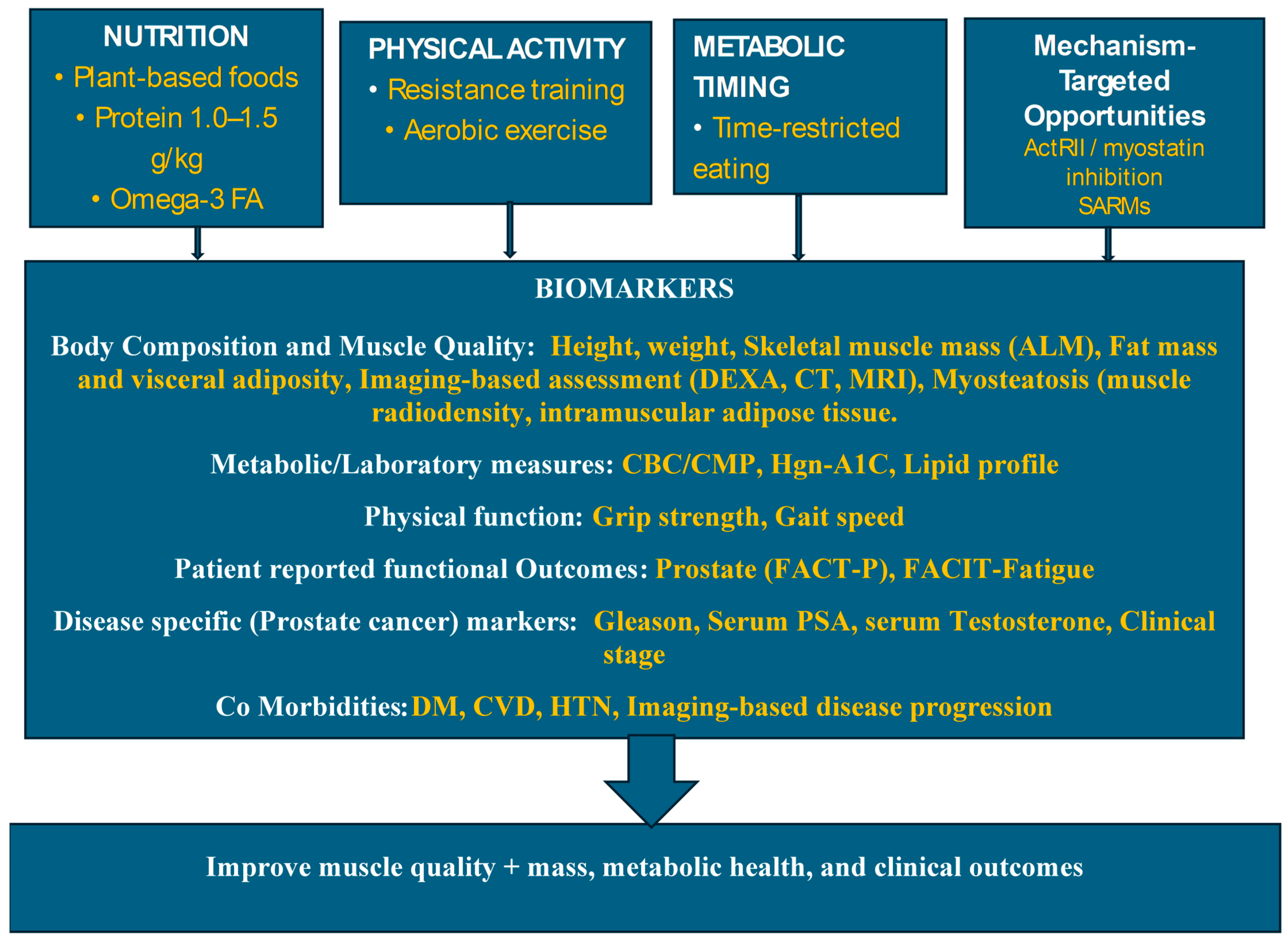
A stronger intervention framework for men receiving ADT should be grounded in the biology of SO and myosteatosis. These observations suggest that interventions targeting inflammatory and muscle proteolysis pathways may be important [13,14,17,28,29,30,31,32,33,38,39,43,44,62,63,64,65,66,67,68,69,70,71,72] (Figure 3).

3.4.1. Exercise

Exercise remains the most evidence-based cornerstone of intervention. Resistance training is particularly important for preserving or restoring muscle mass and strength, while aerobic exercise improves cardiorespiratory fitness, insulin sensitivity, and fat oxidation [16,41,42,43,44,45,46,47,48,49]. Systematic reviews and network meta-analyses support the benefit of exercise-based strategies for improving body composition in men with prostate cancer [54,55]. Given the multidimensional metabolic effects associated with ADT, combining resistance and aerobic exercise appears especially relevant.

3.4.2. Protein and Micronutrient Support

Increased dietary protein intake in the range of 1.0–1.5 g/kg of body weight has been shown to stimulate muscle protein synthesis, and distribution of protein intake across meals may further enhance the anabolic response [73,74,75,76,77]. High-protein diets combined with resistance training may help preserve appendicular lean mass during weight loss [77]. Furthermore, combining high-protein, essential amino-acid-rich diets with increased fiber intake can foster a healthy, balanced gut microbiome (eubiosis) by promoting the production of beneficial short-chain and branched-chain fatty acids. Recent studies have explored consuming high levels of fiber and protein to increase specific gut bacteria that boost metabolic health, improve satiety, and support protein synthesis [78,79]. This strategy could serve as a novel dietary approach to manage sarcopenic obesity. Nonetheless, additional human studies employing advanced metabolomic techniques are necessary to thoroughly understand how macronutrients, particularly protein, interact with the microbiome. On the other hand, others have shown that higher protein intake, specifically from animal food sources, is protective against sarcopenia but is also linked to a higher obesity risk [80]. Thus, future human studies evaluating leaner protein sources in this target population with increased fiber intake should be evaluated.
Androgen deprivation therapy (ADT) significantly increases the risk of bone fractures in addition to loss of muscle in men, though it remains unclear if different types of ADT or varying schedules (continuous vs. intermittent) offer different risks for osteoporosis. ADT has also been shown to significantly increase osteoporosis-related fracture risk in prostate cancer patients. Besides direct treatment-induced bone loss, this risk is heightened by pre-existing factors such as older age, low bone mineral density (BMD) and increased falling, driven by muscle weakness, poor balance, and postural hypotension [81,82]. Vitamin D and calcium supplementation may also support muscle function and skeletal health, particularly in the setting of concomitant ADT-related bone loss [36,46,47,48,49,50,83]. Improving bone mineral density (BMD), decreasing the fracture rate, and improving muscle loss in these patients has not been explored in conjunction with interventions such as exercise, smoking abstinence, adequate calcium, protein, and vitamin D intake, along with the use of bisphosphonates or calcitonin.

3.4.3. Omega-3 Fatty Acids

Dietary omega-3 fatty acids represent a promising strategy because of their anti-inflammatory and potential anti-catabolic effects. Experimental evidence has demonstrated that the ubiquitin–proteasome pathway, as indicated by upregulation of NF-kB, accounts for the majority of skeletal muscle degradation, stimulated by several proinflammatory cytokines including TNFα and Il-6 [62]. Pro-inflammatory cytokines (Il-6 and TNF) are upregulated by leptin and associated with truncal obesity, which has been shown to exacerbate sarcopenia [13,28,43,63]. Obesity has been shown to induce leptin resistance, promoting reduced muscle fatty oxidation and ectopic fat deposition impacting muscle quality, a unique feature of SO [11,67].
The deleterious effects of inflammatory cytokine-induced myogenesis was inhibited by ω-3 fatty acids-rich diets [84,85]. Oral administration of fish oil-derived ω-3-FA, EPA, and/or DHA have been shown to attenuate tumor growth, weight loss, and/or muscle wasting in animal models of cancer [86,87]. In a cell culture model of myogenesis, EPA suppresses increases in the activities of NF-κB, caspase 8, and proteasome in differentiating C2C12 myotubes induced by PIF or TNFα, thereby suppressing apoptosis and necrosis [88,89]. The deleterious effects of inflammatory cytokines on myogenesis have also been shown to be inhibited by EPA [53,89]. Several recent laboratory studies indicate that EPA may attenuate protein degradation by preventing NF-κB translocation to the nucleus [51,52]. In a recent meta-analysis (2024), supplementation of ω-3 FA had a favorable effect on improving lipid levels, reducing pro-inflammatory cytokines among patients with metabolic syndrome and cardio vascular disease [90], as well as improved clinical outcomes in cancer patients undergoing chemotherapy [91]. ω-3 FA has been shown to reduce proinflammatory cytokines even in cancer patient populations [92,93,94]. In a preliminary clinical trial [64] using ω-3 FA supplement-4 g Lovaza® plus MA and nutritional supplements administered for 6 weeks to thirty-six (36) stage II-IV cancer patients, we observed stable anthropometrics, significant increase in serum albumin, and functional status with no toxicity. Proteasome activity was inhibited in nine out of 14 patients (64%) post treatment. Serum cytokines showed that both TNFα and IL-6 declined or remained stable with ω-3 FA. Our observations are provocative in that this improvement/stabilization of skeletal and visceral proteins and proinflammatory cytokines and improvement in functional status occurred after initial weight loss, diagnosis of cancer, and while on active cytotoxic therapies [64]. In our preliminary study, ω-3 fatty acid intake of all men diagnosed with PCa was significantly lower (75% lower) than the recommendations of the USRDA for optimal ω-3 fatty acids (11.2 g per week) [95]. Although direct trials with men receiving ADT are needed, omega-3 fatty acids may represent a feasible adjunctive intervention targeting inflammation and muscle catabolism for this population.

3.4.4. Plant-Rich, Phytochemical-Based Dietary Strategies

We and others have shown that plant-based phytochemicals are promiscuous in their targeting and have been shown to target several critical hallmarks of carcinogenesis, without toxicities and intolerances at these doses [96,97,98,99,100,101]. Flavonoids are polyphenolic phytochemical compounds found in several plant foods including fruit, vegetables, and grains. Several in vitro, preclinical, and a few early randomized clinical trials have demonstrated that the effects of flavonoids are mediated by inhibiting the NF-κB pathway [102]. Genes regulated by the transcription factor NF-κB have been shown to modulate inflammation, cellular transformation, tumor cell survival, proliferation, invasion, angiogenesis, and metastasis. Phytochemicals containing flavonoids can suppress the proinflammatory cell signaling pathways [103]. Flavonoids such as quercetin, genistein, curcumin, indole-3 carbinol, sulforaphane, resveratrol, anthocyanins, and epigallocatechin 3-gallate regulate the gene expressions of several pro-inflammatory molecules such as NF-κB, and modulate the expression and activation of proinflammatory cytokines tumor necrosis factor-alpha (TNF-α), interleukin-6 (IL-6), and interleukin-8 (IL-8) [104,105,106,107,108]. Our team reported that EGCG potently and selectively inhibits the proteasome activity in intact human cells, leading to the accumulation of IkB-α and p27 proteins, resulting in growth arrest [109,110]. Our findings in preclinical models and early trials provide additional evidence for the safety and chemopreventive effect of GTC in preventing the progression of PCa with EGCG [111,112]. Phytochemicals found in pomegranate extract has been shown to target multiple signaling pathways specific to PCa, including STAT3 phosphorylation, NF-κB activation, inhibition of IGF-1/AKT/mTOR signaling [113], androgen biosynthesis enzymes such as 5α-reductase type I and 3β-hydroxysteroid dehydrogenase type II,. [114,115,116], YP1B enzyme activity/expression, and decreasing of serum PSA levels [117,118,119]. Other botanicals including Indole-3-carbinol [120,121], curcumin [122,123], and sulforaphane [117,124] target NF-κB. With the promising data evolving from laboratory and early clinical trials, the recommendation to increase plant foods rich in phytochemicals to prevent cancer and other metabolic disorders has been consistent worldwide. Although these studies have targeted men with or at high risk for prostate cancer, currently, there are no trials targeting men receiving ADT.

3.4.5. Time-Restricted Eating and Fasting-Based Approaches

Periodic fasting (PF), intermittent fasting (IF), and time-restricted eating (TRE) have been used to refer to periods of fasting or fasting mimicking diets (FMD) that encompass eating patterns with little or no energy intake restriction over an extended period of time in a day. Studies of IF (e.g., 60% energy restriction on 2 days per week or every other day), PF (e.g., a 5 day diet providing 750–1100 kcal), and time-restricted feeding (TRF; limiting the daily period of food intake to 8–12 h or less/day) in normal, overweight subjects, and cancer patients have shown efficacy for weight loss and improvements in multiple health indicators including body composition, insulin resistance, and reductions in risk factors for cardiovascular disease [118,119]. Preclinical studies have consistently shown that FMD can significantly reduces markers of inflammation and obesity such as blood glucose, IGF-1, leptin, insulin levels, increases ketone bodies and IGFBP-1 levels, and ultimately reducing neoplasia incidence by 45%, which are [119,125]. Metabolic changes have been observed to remain even post-ending FMD and refeeding. Similar to animal models, subjects on fasting mimicking diets (FMD) have reported a 11.3% decrease in blood glucose level and a 24% reduction in circulating IGF-1 [125,126]. FMD reduced systolic BP, reduced body weight, waist circumference, total body fat, and trunk fat by 3%, and increased lean body mass. Studies in humans report a reduction in inflammatory markers with FMD [125,126]. Based on the concept of circadian rhythms, TRE is a daily eating pattern in which all nutritional intake occurs within a few hours (12 h or more) each day with no restriction of nutritional composition [119]. Time-restricted eating in humans for 2–6 months or more has demonstrated reduction in fat and improvement in markers of metabolic syndrome, cancer, cardiovascular, insulin-resistance, and diabetes [118]. Fasting periods in TRE and other fasting-based approaches have been shown to enable organisms to enter an alternate metabolic phase, which relies less on glucose and more on ketone body-like carbon sources [63]. TRE has been shown to be feasible and adoptable in adult populations, including in cancer patients, with no adverse effects [125,126,127,128,129]. TRE is especially appealing because it is pragmatic and may be more sustainable than prolonged fasting. However, in men receiving ADT, these strategies must be carefully evaluated to ensure that weight loss does not exacerbate muscle loss or worsen frailty.

3.4.6. Emerging Pharmacologic Strategies

Beyond exercise and nutritional interventions, emerging pharmacologic strategies targeting muscle metabolism and anabolic signaling pathways are under active investigation. Inhibition of the activin receptor type II (ActRII) pathway [130,131] has shown promise in preclinical and early clinical studies, with agents such as bimagrumab [132] demonstrating the potential to increase lean mass and reduce fat mass. Similarly, selective androgen receptor modulators (SARMs) [133] are being explored as a means to preserve anabolic signaling in muscle while minimizing androgenic effects in prostate tissue.
Additional approaches include metabolic-targeting agents aimed at improving insulin sensitivity and mitochondrial function, as well as nutritional strategies incorporating high-protein supplementation, omega-3 fatty acids, and anti-inflammatory dietary patterns [134,135]. However, despite these advances, few interventions have specifically targeted muscle quality or incorporated imaging-based endpoints such as skeletal muscle radiodensity or intramuscular adipose tissue. The level of supporting evidence for each promising strategy discussed above is summarized in Table 3. This highlights a critical gap and underscores the need for mechanism-driven, multimodal interventions designed to address muscle mass and quality.
Collectively, these mechanisms support the concept that myosteatosis represents an active, biologically regulated phenotype driven by convergent endocrine, inflammatory, and metabolic pathways, rather than being a passive consequence of muscle loss alone.

4. Conclusions

ADT remains essential in the management of prostate cancer, but its benefits are accompanied by substantial adverse effects on body composition, metabolic health, physical function, and quality of life [5,6,7,8,9,10,52]. Among these, sarcopenic obesity represents a particularly important and underrecognized phenotype. Importantly, myosteatosis may be considered more than a body composition phenotype; rather, it represents a pathological alteration in skeletal muscle quality that integrates metabolic dysfunction, inflammatory signaling, and ectopic lipid deposition [11,12,14].
Although exercise- and nutrition-based interventions and emerging pharmacologic strategies have shown promise, the existing intervention literature is limited by short duration, modest sample size, and insufficient attention to biologic mechanisms and muscle quality [8,25,26,27,45,51,52,53,54,55,56]. Current approaches have also tended to be siloed rather than pragmatic and integrated, despite the fact that ADT produces multiple interconnected adverse effects. A more comprehensive strategy that combines evidence-based interventions in parallel may therefore be needed to address the complexity of ADT-induced sarcopenic obesity.
Recognizing myosteatosis as a central biomarker of sarcopenic obesity may help guide both risk stratification and targeted intervention strategies for men receiving androgen deprivation therapy.

5. Future Directions

Based on current evidence, future interventions designed to mitigate SO and associated metabolic abnormalities in men receiving ADT should evaluate comprehensive, bundled, evidence-based strategies initiated early in the course of treatment, ideally within 3 months of starting ADT. These bundled interventions should include: (a) a nutrition plan emphasizing low-glycemic, minimally processed foods, high intake of plant-based phytochemical-rich foods, and adequate protein intake; (b) omega-3 fatty acid supplementation and appropriate micronutrient support, including vitamin D and calcium when indicated; (c) structured aerobic exercise; (d) progressive resistance training; and (e) carefully monitored time-restricted eating or related metabolic timing strategies when feasible and safe. Future clinical trials should incorporate objective measures of muscle quality, including imaging-based assessment of myosteatosis using CT or MRI, as core biomarkers of intervention efficacy. Because myosteatosis reflects both metabolic dysfunction and inflammatory signaling within skeletal muscle, it may provide a more clinically meaningful endpoint than lean mass alone. Clinical trials should ideally extend for at least 12 months, reflecting the timeframe over which metabolic and body composition changes become most pronounced [5,7,8,9,52]. Key endpoints should include changes in muscle mass, muscle strength, muscle quality, fat mass, metabolic syndrome biomarkers, inflammatory mediators, functional performance, symptom burden, adherence, acceptability, and quality of life. Mechanistic endpoints evaluating NF-κB signaling and pro-inflammatory cytokines may clarify the biological pathways through which these interventions exert their effects. If validated in future trials, mechanism-driven multimodal interventions may provide an effective strategy to mitigate ADT-related sarcopenic obesity, improve metabolic health and functional outcomes, and ultimately enhance survivorship in men with prostate cancer.

Author Contributions

Conceptualization: N.B.K. Methodology: N.B.K., N.P., J.Z. Writing—original draft: N.B.K. Writing—review and editing: all authors. Statistical input: M.J.S. Supervision: N.B.K. All authors have read and agreed to the published version of the manuscript.

Funding

Funding for this manuscript was provided by the Moffitt Cancer Center Institutional Innovation Award 02-40000-26-23 to Dr. Nagi Kumar.

Institutional Review Board Statement

Not applicable.

Informed Consent Statement

Not applicable.

Data Availability Statement

No new data were created or analyzed in this study. Data sharing is not applicable to this article.

Conflicts of Interest

Patent pending: Kumar, N.B. Systems and Methods for Diagnosing, Predicting, and Monitoring Clinical Cancer Outcomes Using Composite Myosteatosis-Based Indices Derived from Multimodal imaging and Biomarker Profiles. United States Patent and Trademark Office (USPTO); 12 September 2025. File number 25MB060PR. The remaining authors declare no conflicts of interest.

Abbreviations

The following abbreviations are used in this manuscript:
SOSarcopenic obesity
MYOMyosteatosis
CCCancer cachexia
BMDBone mineral density
PCaProstate cancer
IGF-1Insulin-like Growth Factor 1
IGFBP-1Insulin-like growth factor-binding protein 1
MTORMammalian target of rapamycin
EGCGEpigallocatechin gallate
PIFProteolytic inducing factor
TRETime-restricted eating
FMDFasting mimicking diet
TRFTime-restricted feeding
KcalKilocalories
BPBlood pressure
EPAEicosapentaenoic acid
DHADocosahexaenoic acid
NF-κBNuclear factor kappa-light-chain-enhancer of activated B cells
TNFαTumor necrosis factor-alpha
IlInterleukins
CTComputer tomography
L3Lumbar vertebrae 3
SMISkeletal muscle index (SMI)
SMDSkeletal muscle radiodensity
ADTAndrogen deprivation therapy
SARMSSelective androgen receptor modulators
GDF1growth differentiation factor 11
ActRIIActivin receptor type II
FAPFibro-adipogenic progenitor

References

  1. American Cancer Society. Cancer Facts & Figures 2026; American Cancer Society: Atlanta, GA, USA, 2025. [Google Scholar]
  2. Huggins, C.; Hodges, C.V. Studies on Prostatic Cancer I. The Effect of Castration, of Estrogen and of Androgen Injection on Serum Phosphatases in Metastatic Carcinoma of the Prostate. Cancer Res. 1941, 1, 293–297. [Google Scholar]
  3. Gilbert, S.M.; Kuo, Y.F.; Shahinian, V.B. Prevalent and incident use of androgen deprivation therapy among men with prostate cancer in the United States. Urol. Oncol. 2011, 29, 647–653. [Google Scholar] [CrossRef] [PubMed]
  4. Payne, H.; Mason, M. Androgen deprivation therapy as adjuvant/neoadjuvant to radiotherapy for high-risk localised and locally advanced prostate cancer: Recent developments. Br. J. Cancer 2011, 105, 1628–1634. [Google Scholar] [CrossRef] [PubMed]
  5. Kovač, M.B.; Pavlin, T.; Čavka, L.; Ribnikar, D.; Spazzapan, S.; Templeton, A.J.; Šeruga, B. The trajectory of sarcopenia following diagnosis of prostate cancer: A systematic review and meta-analysis. J. Geriatr. Oncol. 2023, 14, 101594. [Google Scholar] [CrossRef] [PubMed]
  6. Stangl-Kremser, J.; Mari, A.; Lai, L.Y.; Lee, C.T.; Vince, R.; Zaslavsky, A.; Salami, S.S.; Fajkovic, H.; Shariat, S.F.; Palapattu, G.S. Sarcopenic Obesity and its Prognostic Impact on Urological Cancers: A Systematic Review. J. Urol. 2021, 206, 854–865. [Google Scholar] [CrossRef] [PubMed]
  7. Stelmach-Mardas, M.; Warchoł, W.; Garczyk, A.; Warchoł, E.; Korczak, J.; Litwiniuk, M.; Brajer-Luftmann, B.; Mardas, M. Influence of Androgen Deprivation Therapy on the Development of Sarcopenia in Patients with Prostate Cancer: A Systematic Review. Nutrients 2024, 16, 656. [Google Scholar] [CrossRef] [PubMed] [PubMed Central]
  8. Wilson, R.L.; Taaffe, D.R.; Newton, R.U.; Hart, N.H.; Lyons-Wall, P.; Galvão, D.A. Using Exercise and Nutrition to Alter Fat and Lean Mass in Men with Prostate Cancer Receiving Androgen Deprivation Therapy: A Narrative Review. Nutrients 2021, 13, 1664. [Google Scholar] [CrossRef] [PubMed] [PubMed Central]
  9. Mitsuzuka, K.; Arai, Y. Metabolic changes in patients with prostate cancer during androgen deprivation therapy. Int. J. Urol. 2018, 25, 45–53. [Google Scholar] [CrossRef] [PubMed]
  10. Lifshitz, K.; Ber, Y.; Margel, D. Role of Metabolic Syndrome in Prostate Cancer Development. Eur. Urol. Focus. 2021, 7, 508–512. [Google Scholar] [CrossRef] [PubMed]
  11. Kimura, Y.; Yamada, M.; Ohji, S.; Ishiyama, D.; Nishio, N.; Otobe, Y.; Koyama, S.; Suzuki, M.; Ichikawa, T.; Ito, D.; et al. Presence of sarcopenic obesity and evaluation of the associated muscle quality in Japanese older men with prostate cancer undergoing androgen deprivation therapy. J. Geriatr. Oncol. 2019, 10, 835–838. [Google Scholar] [CrossRef] [PubMed]
  12. Donini, L.M.; Busetto, L.; Bischoff, S.C.; Cederholm, T.; Ballesteros-Pomar, M.D.; Batsis, J.A.; Bauer, J.M.; Boirie, Y.; Cruz-Jentoft, A.J.; Dicker, D.; et al. Definition and Diagnostic Criteria for Sarcopenic Obesity: ESPEN and EASO Consensus Statement. Obes. Facts 2022, 15, 321–335. [Google Scholar] [CrossRef] [PubMed] [PubMed Central]
  13. Batsis, J.A.; Villareal, D.T. Sarcopenic obesity in older adults: Aetiology, epidemiology and treatment strategies. Nat. Rev. Endocrinol. 2018, 14, 513–537. [Google Scholar] [CrossRef] [PubMed] [PubMed Central]
  14. Jiang, Z.; Marriott, K.; Maly, M.R. Impact of Inter- and Intramuscular Fat on Muscle Architecture and Capacity. Crit. Rev. Biomed. Eng. 2019, 47, 515–533. [Google Scholar] [CrossRef] [PubMed]
  15. Kumar, N.B. Myosteatosis: A Distinct, Early and Targetable Novel Biomarker of Cancer Prognosis. Cancers 2026, 18, 974. [Google Scholar] [CrossRef] [PubMed] [PubMed Central]
  16. Dolan, R.D.; Almasaudi, A.S.; Dieu, L.B.; Horgan, P.G.; McSorley, S.T.; McMillan, D.C. The relationship between computed tomography-derived body composition, systemic inflammatory response, and survival in patients undergoing surgery for colorectal cancer. J. Cachexia Sarcopenia Muscle 2019, 10, 111–122. [Google Scholar] [CrossRef]
  17. Singh, R.; Artaza, J.N.; Taylor, W.E.; Gonzalez-Cadavid, N.F.; Bhasin, S. Androgens stimulate myogenic differentiation and inhibit adipogenesis in C3H 10T1/2 pluripotent cells through an androgen receptor-mediated pathway. Endocrinology 2003, 144, 5081–5088. [Google Scholar] [CrossRef] [PubMed]
  18. Zhao, T.; Mao, W.; Hu, M.; Yu, Q.; Peng, X.; Ji, J.; Qiu, J.; Wu, J. Advances in sarcopenia and urologic disorders. Front. Nutr. 2024, 11, 1475977. [Google Scholar] [CrossRef] [PubMed]
  19. Derweesh, I.H.; Diblasio, C.J.; Kincade, M.C.; Malcolm, J.B.; Lamar, K.D.; Patterson, A.L.; Kitabchi, A.E.; Wake, R.W. Risk of new-onset diabetes mellitus and worsening glycaemic variables for established diabetes in men undergoing androgen-deprivation therapy for prostate cancer. BJU Int. 2007, 100, 1060–1065. [Google Scholar] [CrossRef] [PubMed]
  20. Harborg, S.; Kjærgaard, K.A.; Thomsen, R.W.; Borgquist, S.; Cronin-Fenton, D.; Hjorth, C.F. New Horizons: Epidemiology of Obesity, Diabetes Mellitus, and Cancer Prognosis. J. Clin. Endocrinol. Metab. 2024, 109, 924–935. [Google Scholar] [CrossRef] [PubMed]
  21. Zhu, D.; Toker, M.; Shyr, W.; Fram, E.; Watts, K.L.; Agalliu, I. Association of Obesity and Diabetes With Prostate Cancer Risk Groups in a Multiethnic Population. Clin. Genitourin. Cancer 2022, 20, 299.e10. [Google Scholar] [CrossRef] [PubMed]
  22. Rivera-Izquierdo, M.; Pérez de Rojas, J.; Martínez-Ruiz, V.; Arrabal-Polo, M.Á.; Pérez-Gómez, B.; Jiménez-Moleón, J.J. Obesity and biochemical recurrence in clinically localised prostate cancer: A systematic review and meta-analysis of 86,490 patients. Prostate Cancer Prostatic Dis. 2022, 25, 411–421. [Google Scholar] [CrossRef] [PubMed]
  23. Troeschel, A.N.; Hartman, T.J.; Jacobs, E.J.; Stevens, V.L.; Gansler, T.; Flanders, W.D.; McCullough, L.E.; Wang, Y. Postdiagnosis Body Mass Index, Weight Change, and Mortality From Prostate Cancer, Cardiovascular Disease, and All Causes Among Survivors of Nonmetastatic Prostate Cancer. J. Clin. Oncol. 2020, 38, 2018–2027. [Google Scholar] [CrossRef] [PubMed] [PubMed Central]
  24. Focht, B.C.; Lucas, A.R.; Grainger, E.; Simpson, C.; Thomas-Ahner, J.M.; Clinton, S.K. The Individualized Diet and Exercise Adherence Pilot Trial (IDEA-P) in prostate cancer patients undergoing androgen deprivation therapy: Study protocol for a randomized controlled trial. Trials 2014, 15, 354. [Google Scholar] [CrossRef]
  25. Focht, B.C.; Lucas, A.R.; Grainger, E.; Simpson, C.; Fairman, C.M.; Thomas-Ahner, J.M.; Buell, J.; Monk, J.P.; Mortazavi, A.; Clinton, S.K. Effects of a Group-Mediated Exercise and Dietary Intervention in the Treatment of Prostate Cancer Patients Undergoing Androgen Deprivation Therapy: Results From the IDEA-P Trial. Ann. Behav. Med. 2018, 52, 412–428. [Google Scholar] [CrossRef] [PubMed] [PubMed Central]
  26. Houben, L.H.P.; Overkamp, M.; Van Kraaij, P.; Trommelen, J.; Van Roermund, J.G.H.; De Vries, P.; De Laet, K.; Van Der Meer, S.; Mikkelsen, U.R.; Verdijk, L.B.; et al. Resistance Exercise Training Increases Muscle Mass and Strength in Prostate Cancer Patients on Androgen Deprivation Therapy. Med. Sci. Sports Exerc. 2023, 55, 614–624. [Google Scholar] [CrossRef] [PubMed] [PubMed Central]
  27. Villalobos, A.; Chambers, D.A. Advancing the science of integrating multiple interventions by blending and bundling. JNCI Cancer Spectr. 2023, 7, pkad070. [Google Scholar] [CrossRef]
  28. Kim, J.W.; Kim, R.; Choi, H.; Lee, S.J.; Bae, G.U. Understanding of sarcopenia: From definition to therapeutic strategies. Arch. Pharm. Res. 2021, 44, 876–889. [Google Scholar] [CrossRef] [PubMed]
  29. Whitehouse, A.S.; Tisdale, M.J. Increased expression of the ubiquitin-proteasome pathway in murine myotubes by proteolysis-inducing factor (PIF) is associated with activation of the transcription factor NF-kappaB. Br. J. Cancer 2003, 89, 1116–1122. [Google Scholar] [PubMed]
  30. Melstrom, L.G.; Melstrom, K.A., Jr.; Ding, X.Z.; Adrian, T.E. Mechanisms of skeletal muscle degradation and its therapy in cancer cachexia. Histol. Histopathol. 2007, 22, 805–814. [Google Scholar]
  31. Mitch, W.E.; Price, S.R. Transcription factors and muscle cachexia: Is there a therapeutic target? Lancet 2001, 357, 734–735. [Google Scholar] [CrossRef] [PubMed]
  32. Ciechanover, A.; Orian, A.; Schwartz, A.L. The ubiquitin-mediated proteolytic pathway: Mode of action and clinical implications. J. Cell Biochem. Suppl. 2000, 34, 40–51. [Google Scholar] [CrossRef] [PubMed]
  33. Li, C.W.; Yu, K.; Shyh-Chang, N.; Jiang, Z.; Liu, T.; Ma, S.; Luo, L.; Guang, L.; Liang, K.; Ma, W.; et al. Pathogenesis of sarcopenia and the relationship with fat mass: Descriptive review. J. Cachexia Sarcopenia Muscle 2022, 13, 781–794. [Google Scholar] [CrossRef] [PubMed] [PubMed Central]
  34. Gumucio, J.P.; Qasawa, A.H.; Ferrara, P.J.; Malik, A.N.; Funai, K.; McDonagh, B.; Mendias, C.L. Reduced mitochondrial lipid oxidation leads to fat accumulation in myosteatosis. FASEB J. 2019, 33, 7863–7881. [Google Scholar] [CrossRef] [PubMed] [PubMed Central]
  35. Henin, G.; Loumaye, A.; Leclercq, I.A.; Lanthier, N. Myosteatosis: Diagnosis, pathophysiology and consequences in metabolic dysfunction-associated steatotic liver disease. JHEP Rep. 2023, 6, 100963. [Google Scholar] [CrossRef] [PubMed] [PubMed Central]
  36. Uezumi, A.; Fukada, S.; Yamamoto, N.; Takeda, S.; Tsuchida, K. Mesenchymal progenitors distinct from satellite cells contribute to ectopic fat cell formation in skeletal muscle. Nat. Cell Biol. 2010, 12, 143–152. [Google Scholar] [CrossRef] [PubMed]
  37. McPherron, A.C.; Lawler, A.M.; Lee, S.J. Regulation of skeletal muscle mass in mice by a new TGF-beta superfamily member. Nature 1997, 387, 83–90. [Google Scholar] [CrossRef] [PubMed]
  38. Zhou, X.; Wang, J.L.; Lu, J.; Song, Y.; Kwak, K.S.; Jiao, Q.; Rosenfeld, R.; Chen, Q.; Boone, T.; Simonet, W.S.; et al. Reversal of cancer cachexia and muscle wasting by ActRIIB antagonism leads to prolonged survival. Cell 2010, 142, 531–543. [Google Scholar] [CrossRef]
  39. Sartori, R.; Schirwis, E.; Blaauw, B.; Bortolanza, S.; Zhao, J.; Enzo, E.; Stantzou, A.; Mouisel, E.; Toniolo, L.; Ferry, A.; et al. BMP signaling controls muscle mass. Nat. Genet. 2013, 45, 1309–1318. [Google Scholar] [CrossRef] [PubMed]
  40. Lam, T.; Poljak, A.; McLean, M.; Bahl, N.; Ho, K.K.Y.; Birzniece, V. Testosterone prevents protein loss via the hepatic urea cycle in human. Eur. J. Endocrinol. 2017, 176, 489–496. [Google Scholar] [CrossRef] [PubMed]
  41. Birzniece, V.; Meinhardt, U.J.; Umpleby, M.A.; Handelsman, D.J.; Ho, K.K. Interaction between testosterone and growth hormone on whole-body protein anabolism occurs in the liver. J. Clin. Endocrinol. Metab. 2011, 96, 1060–1067. [Google Scholar] [CrossRef]
  42. Lam, T.; McLean, M.; Hayden, A.; Poljak, A.; Cheema, B.; Gurney, H.; Stone, G.; Bahl, N.; Reddy, N.; Shahidipour, H.; et al. A potent liver-mediated mechanism for loss of muscle mass during androgen deprivation therapy. Endocr. Connect. 2019, 8, 605–615. [Google Scholar] [CrossRef] [PubMed]
  43. Paris, M.T.; Bell, K.E.; Mourtzakis, M. Myokines and adipokines in sarcopenia: Understanding cross-talk between skeletal muscle and adipose tissue and the role of exercise. Curr. Opin. Pharmacol. 2020, 52, 61–66. [Google Scholar] [CrossRef] [PubMed]
  44. Dubois, V.; Laurent, M.; Boonen, S.; Vanderschueren, D.; Claessens, F. Androgens and skeletal muscle: Cellular and molecular action mechanisms underlying the anabolic actions. Cell Mol. Life Sci. 2012, 69, 1651–1667. [Google Scholar] [CrossRef] [PubMed] [PubMed Central]
  45. Flores-Opazo, M.; Kopinke, D.; Helmbacher, F.; Fernández-Verdejo, R.; Tuñón-Suárez, M.; Lynch, G.S.; Contreras, O. Fibro-adipogenic progenitors in physiological adipogenesis and intermuscular adipose tissue remodeling. Mol. Aspects Med. 2024, 97, 101277. [Google Scholar] [CrossRef] [PubMed] [PubMed Central]
  46. Daniell, H.W.; Dunn, S.R.; Ferguson, D.W.; Lomas, G.; Niazi, Z.; Stratte, P.T. Progressive osteoporosis during androgen deprivation therapy for prostate cancer. J. Urol. 2000, 163, 181–186. [Google Scholar] [CrossRef]
  47. Smith, M.R.; McGovern, F.J.; Zietman, A.L.; Fallon, M.A.; Hayden, D.L.; Schoenfeld, D.A.; Finkelstein, J.S. Pamidronate to prevent bone loss during androgen-deprivation therapy for prostate cancer. N. Engl. J. Med. 2001, 345, 948–955. [Google Scholar] [CrossRef]
  48. Gudenkauf, L.M.; Gray, S.; Gonzalez, B.D.; Sachdeva, A.; Autio, K. Balancing Hormone Therapy: Mitigating Adverse Effects of Androgen-Deprivation Therapy and Exploring Alternatives in Prostate Cancer Management. Am. Soc. Clin. Oncol. Educ. Book 2024, 44, e433126. [Google Scholar] [CrossRef] [PubMed]
  49. Lin, K.L.; Talmor, B.; Crumbaker, M.; Joshua, A. A Review of Hot Flash Management in Patients with Prostate Cancer. J. Clin. Endocrinol. Metab. 2025, 21, dgaf302. [Google Scholar] [CrossRef] [PubMed]
  50. Datta, M.; Schwartz, G.G. Calcium and vitamin D supplementation during androgen deprivation therapy for prostate cancer: A critical review. Oncologist 2012, 17, 1171–1179. [Google Scholar] [CrossRef] [PubMed]
  51. Galvão, D.A.; Newton, R.U.; Taaffe, D.R.; Spry, N. Can exercise ameliorate the increased risk of cardiovascular disease and diabetes associated with ADT? Nat. Clin. Pract. Urol. 2008, 5, 306–307. [Google Scholar] [CrossRef] [PubMed]
  52. Galvão, D.A.; Taaffe, D.R.; Newton, R.U. Body weight, fat mass and metabolic complications during androgen deprivation therapy: Should urologists recommend exercise and diet to help patients overcome toxicities? Prostate Cancer Prostatic Dis. 2021, 24, 591–593. [Google Scholar] [CrossRef] [PubMed]
  53. Lopez, P.; Radaelli, R.; Taaffe, D.R.; Newton, R.U.; Galvão, D.A.; Trajano, G.S.; Teodoro, J.L.; Kraemer, W.J.; Häkkinen, K.; Pinto, R.S. Resistance Training Load Effects on Muscle Hypertrophy and Strength Gain: Systematic Review and Network Meta-analysis. Med. Sci. Sports Exerc. 2021, 53, 1206–1216, Erratum in Med. Sci. Sports Exerc. 2022, 54, 370. https://doi.org/10.1249/MSS.0000000000002838. [Google Scholar] [CrossRef] [PubMed] [PubMed Central]
  54. Lopez, P.; Newton, R.U.; Taaffe, D.R.; Singh, F.; Buffart, L.M.; Spry, N.; Tang, C.; Saad, F.; Galvão, D.A. Associations of fat and muscle mass with overall survival in men with prostate cancer: A systematic review with meta-analysis. Prostate Cancer Prostatic Dis. 2022, 25, 615–626. [Google Scholar] [CrossRef] [PubMed] [PubMed Central]
  55. Lopez, P.; Newton, R.U.; Taaffe, D.R.; Singh, F.; Lyons-Wall, P.; Buffart, L.M.; Tang, C.; Hayne, D.; Galvão, D.A. Interventions for Improving Body Composition in Men with Prostate Cancer: A Systematic Review and Network Meta-analysis. Med. Sci. Sports Exerc. 2022, 54, 728–740. [Google Scholar] [CrossRef] [PubMed]
  56. Wall, B.A.; GALVãODA.; Fatehee, N.; Taaffe, D.R.; Spry, N.; Joseph, D.; Hebert, J.J.; Newton, R.U. Exercise Improves V˙O2max and Body Composition in Androgen Deprivation Therapy-treated Prostate Cancer Patients. Med. Sci. Sports Exerc. 2017, 49, 1503–1510. [Google Scholar] [CrossRef] [PubMed]
  57. Rejeski, K.; Cordas Dos Santos, D.M.; Parker, N.H.; Bücklein, V.L.; Winkelmann, M.; Jhaveri, K.S.; Liu, L.; Trinkner, P.; Günther, S.; Karschnia, P.; et al. Influence of Adipose Tissue Distribution, Sarcopenia, and Nutritional Status on Clinical Outcomes After CD19 CAR T-cell Therapy. Cancer Immunol. Res. 2023, 11, 707–719. [Google Scholar] [CrossRef] [PubMed] [PubMed Central]
  58. Parker, N.; Bean, M.; De Vera, M.T.; Carmella, R.; McCoy, J.; Corallo, S.; Delgado, L.C.; Menges, M.; Castaneda, O.; Julio, C.; et al. Exercise Prehabilitation for Older Adults Undergoing CAR-T: Feasibility and Preliminary Outcomes from a Single-Arm Pilot Study. Blood 2024, 144, 7224. [Google Scholar] [CrossRef]
  59. Ngo-Huang, A.T.; Parker, N.H.; Xiao, L.; Schadler, K.L.; Petzel, M.Q.B.; Prakash, L.R.; Kim, M.P.; Tzeng, C.D.; Lee, J.E.; Ikoma, N.; et al. Effects of a Pragmatic Home-based Exercise Program Concurrent With Neoadjuvant Therapy on Physical Function of Patients With Pancreatic Cancer: The PancFit Randomized Clinical Trial. Ann. Surg. 2023, 278, 22–30. [Google Scholar] [CrossRef] [PubMed] [PubMed Central]
  60. Kurz, E.; Hirsch, C.A.; Dalton, T.; Shadaloey, S.A.; Khodadadi-Jamayran, A.; Miller, G.; Pareek, S.; Rajaei, H.; Mohindroo, C.; Baydogan, S.; et al. Exercise-induced engagement of the IL-15/IL-15Rα axis promotes anti-tumor immunity in pancreatic cancer. Cancer Cell 2022, 40, 720–737.e5. [Google Scholar] [CrossRef] [PubMed] [PubMed Central]
  61. Parker, N.H.; Arlinghaus, K.R.; Johnston, C.A. Integrating Physical Activity Into Clinical Cancer Care. Am. J. Lifestyle Med. 2018, 12, 220–223. [Google Scholar] [CrossRef] [PubMed] [PubMed Central]
  62. Zamboni, M.; Mazzali, G.; Fantin, F.; Rossi, A.; Di Francesco, V. Sarcopenic obesity: A new category of obesity in the elderly. Nutr. Metab. Cardiovasc. Dis. 2008, 18, 388–395. [Google Scholar] [CrossRef] [PubMed]
  63. Veen, J.; Montiel-Rojas, D.; Nilsson, A.; Kadi, F. Engagement in Muscle-Strengthening Activities Lowers Sarcopenia Risk in Older Adults Already Adhering to the Aerobic Physical Activity Guidelines. Int. J. Environ. Res. Public Health 2021, 18, 989. [Google Scholar] [CrossRef] [PubMed] [PubMed Central]
  64. Kumar, N.B.; Kazi, A.; Smith, T.; Crocker, T.; Yu, D.; Reich, R.R.; Reddy, K.; Hastings, S.; Exterman, M.; Balducci, L.; et al. Cancer cachexia: Traditional therapies and novel molecular mechanism-based approaches to treatment. Curr. Treat. Options Oncol. 2010, 11, 107–117. [Google Scholar] [CrossRef] [PubMed] [PubMed Central]
  65. Voges, D.; Zwickl, P.; Baumeister, W. The 26S proteasome: A molecular machine designed for controlled proteolysis. Annu. Rev. Biochem. 1999, 68, 1015–1068. [Google Scholar] [CrossRef] [PubMed]
  66. Ghosh, S.; Karin, M. Missing pieces in the NF-kappaB puzzle. Cell 2002, 109, S81–S96. [Google Scholar] [CrossRef] [PubMed]
  67. Cartwright, M.J.; Tchkonia, T.; Kirkland, J.L. Aging in adipocytes: Potential impact of inherent, depot-specific mechanisms. Exp. Gerontol. 2007, 42, 463–471. [Google Scholar] [CrossRef] [PubMed] [PubMed Central]
  68. Kalinkovich, A.; Livshits, G. Sarcopenic obesity or obese sarcopenia: A cross talk between age-associated adipose tissue and skeletal muscle inflammation as a main mechanism of pathogenesis. Ageing Res. Rev. 2017, 35, 200–221. [Google Scholar] [CrossRef] [PubMed]
  69. Sharma, B.; Dabur, R. Role of Pro-inflammatory Cytokines in Regulation of Skeletal Muscle Metabolism: A Systematic Review. Curr. Med. Chem. 2020, 27, 2161–2188. [Google Scholar] [CrossRef] [PubMed]
  70. Liang, Z.; Zhang, T.; Liu, H.; Li, Z.; Peng, L.; Wang, C.; Wang, T. Inflammaging: The ground for sarcopenia? Exp. Gerontol. 2022, 168, 111931. [Google Scholar] [CrossRef] [PubMed]
  71. Zhang, N.; Zhai, L.; Wong, R.M.Y.; Cui, C.; Law, S.W.; Chow, S.K.; Goodman, S.B.; Cheung, W.H. Harnessing immunomodulation to combat sarcopenia: Current insights and possible approaches. Immun. Ageing 2024, 21, 55. [Google Scholar] [CrossRef] [PubMed] [PubMed Central]
  72. Sears, B. Anti-inflammatory Diets. J. Am. Coll. Nutr. 2015, 34, 14–21. [Google Scholar] [CrossRef] [PubMed]
  73. Bauer, J.; Biolo, G.; Cederholm, T.; Cesari, M.; Cruz-Jentoft, A.J.; Morley, J.E.; Boirie, Y. Evidence-based recommendations for optimal dietary protein intake in older people: A position paper from the PROT-AGE Study Group. J. Am. Med. Dir. Assoc. 2013, 14, 542–559. [Google Scholar] [CrossRef]
  74. Wolfe, R.R.; Miller, S.L.; Miller, K.B. Optimal protein intake in the elderly. Clin. Nutr. 2008, 27, 675–684. [Google Scholar] [CrossRef]
  75. Deutz, N.E.; Bauer, J.M.; Barazzoni, R.; Biolo, G.; Boirie, Y.; Bosy-Westphal, A.; Calder, P.C. Protein intake and exercise for optimal muscle function with aging: Recommendations from the ESPEN Expert Group. Clin. Nutr. 2014, 33, 929–936. [Google Scholar] [CrossRef]
  76. Bouillanne, O.; Curis, E.; Hamon-Vilcot, B.; Nicolis, I.; Chrétien, P.; Schauer, N.; Aussel, C. Impact of protein pulse feeding on lean mass in malnourished and at-risk hospitalized elderly patients: A randomized controlled trial. Clin. Nutr. 2013, 32, 186–192. [Google Scholar] [CrossRef]
  77. Verreijen, A.M.; Engberink, M.F.; Memelink, R.G.; van der Plas, S.E.; Visser, M.; Weijs, P.J. Effect of a high protein diet and/or resistance exercise on the preservation of fat free mass during weight loss in overweight and obese older adults: A randomized controlled trial. Nutr. J. 2017, 16, 10. [Google Scholar] [CrossRef] [PubMed]
  78. Prokopidis, K.; Cervo, M.M.; Gandham, A.; Scott, D. Impact of Protein Intake in Older Adults with Sarcopenia and Obesity: A Gut Microbiota Perspective. Nutrients 2020, 12, 2285. [Google Scholar] [CrossRef] [PubMed] [PubMed Central]
  79. Wang, M.; Ren, F.; Zhou, Y.; He, Y.; Du, T.; Tan, Y. Age-related sarcopenia and altered gut microbiota: A systematic review. Microb. Pathog. 2024, 195, 106850. [Google Scholar] [CrossRef] [PubMed]
  80. Wu, Y.; de Crom, T.O.E.; Chen, Z.; Benz, E.; van der Schaft, N.; Pinel, A.; Boirie, Y.; Eglseer, D.; Topinkova, E.; Schoufour, J.D.; et al. Dietary protein intake and body composition, sarcopenia and sarcopenic obesity: A prospective population-based study. Clin. Nutr. 2025, 53, 26–34. [Google Scholar] [CrossRef] [PubMed]
  81. Daniell, H.W. Osteoporosis due to androgen deprivation therapy in men with prostate cancer. Urology 2001, 58, 101–107. [Google Scholar] [CrossRef] [PubMed]
  82. Jones, J.M.; Tsang, D.S.; Zheng, S.; Yeheskel, A.; Catton, C.N.; Cheung, A.M.; Hamilton, R.; Alibhai, S.M.H. Implementing and Evaluating the Impact of BoneRx: A Healthy Bone Prescription for Men with Prostate Cancer Initiating Androgen Deprivation Therapy. J. Clin. Med. 2022, 11, 2703. [Google Scholar] [CrossRef] [PubMed] [PubMed Central]
  83. Hassan-Smith, Z.K.; Jenkinson, C.; Smith, D.J.; Hernandez, I.; Morgan, S.A.; Crabtree, N.J.; Hewison, M. 25-hydroxyvitamin D3 and 1,25-dihydroxyvitamin D3 exert distinct effects on human skeletal muscle function and gene expression. PLoS ONE 2017, 12, e0170665. [Google Scholar] [CrossRef] [PubMed]
  84. Jeromson, S.; Gallagher, I.J.; Galloway, S.D.; Hamilton, D.L. Omega-3 Fatty Acids and Skeletal Muscle Health. Mar. Drugs 2015, 13, 6977–7004. [Google Scholar] [CrossRef] [PubMed] [PubMed Central]
  85. Lee, J.H.; Jeon, J.H.; Lee, M.J. Docosahexaenoic Acid, a Potential Treatment for Sarcopenia, Modulates the Ubiquitin-Proteasome and the Autophagy-Lysosome Systems. Nutrients 2020, 12, 2597. [Google Scholar] [CrossRef] [PubMed] [PubMed Central]
  86. Taheri, M.; Chilibeck, P.D.; Cornish, S.M. A Brief Narrative Review of the Underlying Mechanisms Whereby Omega-3 Fatty Acids May Influence Skeletal Muscle: From Cell Culture to Human Interventions. Nutrients 2023, 15, 2926. [Google Scholar] [CrossRef] [PubMed] [PubMed Central]
  87. Kamolrat, T.; Gray, S.R. The effect of eicosapentaenoic and docosahexaenoic acid on protein synthesis and breakdown in murine C2C12 myotubes. Biochem. Biophys. Res. Commun. 2013, 432, 593–598. [Google Scholar] [CrossRef]
  88. Dewey, A.; Baughan, C.; Dean, T.P.; Higgins, B.; Johnson, I. Eicosapentaenoic acid (EPA, an omega-3 fatty acid from fish oils) for the treatment of cancer cachexia. Cochrane Database Syst. Rev. 2007, 24, CD004597. [Google Scholar] [CrossRef]
  89. Hamerman, D. Molecular-based therapeutic approaches in treatment of anorexia of aging and cancer cachexia. J. Gerontol. A Biol. Sci. Med. Sci. 2002, 57, M511–M518. [Google Scholar] [CrossRef]
  90. Wang, Y.; Wang, Y.; Shehzad, Q.; Su, Y.; Xu, L.; Yu, L.; Zeng, W.; Fang, Z.; Wu, G.; Wei, W.; et al. Does omega-3 PUFAs supplementation improve metabolic syndrome and related cardiovascular diseases? A systematic review and meta-analysis of randomized controlled trials. Crit. Rev. Food Sci. Nutr. 2024, 64, 9455–9482. [Google Scholar] [CrossRef] [PubMed]
  91. Wang, Y.; Liu, R.; Chang, M.; Wei, W.; Guo, Y.; Jin, Q.; Wang, X. Does omega-3 PUFA-enriched oral nutritional intervention benefit cancer patients receiving chemo (radio) therapy? A systematic review and meta-analysis of randomized controlled trials. Crit. Rev. Food Sci. Nutr. 2023, 63, 3081–3096. [Google Scholar] [CrossRef] [PubMed]
  92. Zhao, Y.; Wang, C. Effect of ω-3 polyunsaturated fatty acid-supplemented parenteral nutrition on inflammatory and immune function in postoperative patients with gastrointestinal malignancy: A meta-analysis of randomized control trials in China. Medicine 2018, 97, e0472. [Google Scholar] [CrossRef] [PubMed] [PubMed Central]
  93. Guo, Y.; Ma, B.; Li, X.; Hui, H.; Zhou, Y.; Li, N.; Xie, X. n-3 PUFA can reduce IL-6 and TNF levels in patients with cancer. Br. J. Nutr. 2023, 129, 54–65. [Google Scholar] [CrossRef] [PubMed]
  94. Wei, Y.; Meng, Y.; Li, N.; Wang, Q.; Chen, L. The effects of low-ratio n-6/n-3 PUFA on biomarkers of inflammation: A systematic review and meta-analysis. Food Funct. 2021, 12, 30–40. [Google Scholar] [CrossRef] [PubMed]
  95. Kumar, N.B.; Bahl, S.; Lemay, D.; Dhillon, J.; Poch, M.; Manley, B.; Li, R.; Pow-Sang, J.; Yu, A.; Whiting, J.; et al. Nutritional intake of ω-3 fatty acid intake and clinical grade of prostate cancer. Cancer Epidemiol. 2025, 99, 102959. [Google Scholar] [CrossRef] [PubMed]
  96. Block, K.I.; Gyllenhaal, C.; Lowe, L.; Amedei, A.; Amin, A.R.; Amin, A.; Aquilano, K.; Arbiser, J.; Arreola, A.; Arzumanyan, A.; et al. Designing a broad-spectrum integrative approach for cancer prevention and treatment. Semin. Cancer Biol. 2015, 35, S276–S304. [Google Scholar] [CrossRef] [PubMed] [PubMed Central]
  97. Mohammad, R.M.; Muqbil, I.; Lowe, L.; Yedjou, C.; Hsu, H.Y.; Lin, L.T.; Siegelin, M.D.; Fimognari, C.; Kumar, N.B.; Dou, Q.P.; et al. Broad targeting of resistance to apoptosis in cancer. Semin. Cancer Biol. 2015, 35, S78–S103. [Google Scholar] [CrossRef] [PubMed] [PubMed Central]
  98. Kumar, N.B. Contemporary Strategies for Clinical Chemoprevention of Localized Prostate Cancer. Cancer Control 2024. epub ahead of print. [Google Scholar] [CrossRef]
  99. Kumar, N.B.; Pow-Sang, J.; Spiess, P.; Dickinson, S.; Schell, M.J. A phase II randomized clinical trial using aglycone isoflavones to treat patients with localized prostate cancer in the pre-surgical period prior to radical prostatectomy. Oncotarget 2020, 11, 1218–1234. [Google Scholar] [CrossRef] [PubMed]
  100. Leone, A.; Diorio, G.; Sexton, W.; Schell, M.; Alexandrow, M.; Fahey, J.W.; Kumar, N.B. Sulforaphane for the chemoprevention of bladder cancer: Molecular mechanism targeted approach. Oncotarget 2017, 8, 35412–35424. [Google Scholar] [CrossRef] [PubMed] [PubMed Central]
  101. Kumar, N.B. The Promise of Nutrient-Derived Bioactive Compounds and Dietary Components to Ameliorate Symptoms of Chemotherapy-Related Cognitive Impairment in Breast Cancer Survivors. Curr. Treat. Options Oncol. 2021, 22, 67. [Google Scholar] [CrossRef] [PubMed]
  102. Barreca, M.M.; Alessandro, R.; Corrado, C. Effects of Flavonoids on Cancer, Cardiovascular and Neurodegenerative Diseases: Role of NF-κB Signaling Pathway. Int. J. Mol. Sci. 2023, 24, 9236. [Google Scholar] [CrossRef] [PubMed] [PubMed Central]
  103. Prasad, S.; Phromnoi, K.; Yadav, V.R.; Chaturvedi, M.M.; Aggarwal, B.B. Targeting inflammatory pathways by flavonoids for prevention and treatment of cancer. Planta Med. 2010, 76, 1044–1063. [Google Scholar] [CrossRef] [PubMed]
  104. Al-Khayri, J.M.; Sahana, G.R.; Nagella, P.; Joseph, B.V.; Alessa, F.M.; Al-Mssallem, M.Q. Flavonoids as Potential Anti-Inflammatory Molecules: A Review. Molecules 2022, 27, 2901. [Google Scholar] [CrossRef] [PubMed] [PubMed Central]
  105. Serafini, M.; Peluso, I.; Raguzzini, A. Flavonoids as anti-inflammatory agents. Proc. Nutr. Soc. 2010, 69, 273–278. [Google Scholar] [CrossRef] [PubMed]
  106. Ullah, A.; Munir, S.; Badshah, S.L.; Khan, N.; Ghani, L.; Poulson, B.G.; Emwas, A.H.; Jaremko, M. Important Flavonoids and Their Role as a Therapeutic Agent. Molecules 2020, 25, 5243. [Google Scholar] [CrossRef] [PubMed] [PubMed Central]
  107. Saleh, H.A.; Yousef, M.H.; Abdelnaser, A. The Anti-Inflammatory Properties of Phytochemicals and Their Effects on Epigenetic Mechanisms Involved in TLR4/NF-κB-Mediated Inflammation. Front. Immunol. 2021, 12, 606069. [Google Scholar] [CrossRef] [PubMed] [PubMed Central]
  108. Laurindo, L.F.; Santos, A.R.O.D.; Carvalho, A.C.A.; Bechara, M.D.; Guiguer, E.L.; Goulart, R.A.; Vargas Sinatora, R.; Araújo, A.C.; Barbalho, S.M. Phytochemicals and Regulation of NF-kB in Inflammatory Bowel Diseases: An Overview of In Vitro and In Vivo Effects. Metabolites 2023, 13, 96. [Google Scholar] [CrossRef] [PubMed] [PubMed Central]
  109. Connors, S.K.; Chornokur, G.; Kumar, N.B. New insights into the mechanisms of green tea catechins in the chemoprevention of prostate cancer. Nutr. Cancer 2012, 64, 4–22. [Google Scholar] [CrossRef] [PubMed] [PubMed Central]
  110. Kumar, N.B.; Pow-Sang, J.; Egan, K.M.; Spiess, P.E.; Dickinson, S.; Salup, R.; Helal, M.; McLarty, J.; Williams, C.R.; Schreiber, F.; et al. Randomized, Placebo-Controlled Trial of Green Tea Catechins for Prostate Cancer Prevention. Cancer Prev. Res. 2015, 8, 879–887. [Google Scholar] [CrossRef] [PubMed] [PubMed Central]
  111. Kim, S.J.; Amankwah, E.; Connors, S.; Park, H.Y.; Rincon, M.; Cornnell, H.; Chornokur, G.; Hashim, A.I.; Choi, J.; Tsai, Y.Y.; et al. Safety and chemopreventive effect of Polyphenon E in preventing early and metastatic progression of prostate cancer in TRAMP mice. Cancer Prev. Res. 2014, 7, 435–444. [Google Scholar] [CrossRef]
  112. Kumar, N.B.; Pow-Sang, J.; Spiess, P.E.; Park, J.; Salup, R.; Williams, C.R.; Parnes, H.; Schell, M.J. Randomized, placebo-controlled trial evaluating the safety of one-year administration of green tea catechins. Oncotarget 2016, 7, 70794–70802. [Google Scholar] [CrossRef] [PubMed] [PubMed Central]
  113. Trendelenburg, A.U.; Meyer, A.; Rohner, D.; Boyle, J.; Hatakeyama, S.; Glass, D.J. Myostatin reduces Akt/TORC1/p70S6K signaling, inhibiting myoblast differentiation and myotube size. Am. J. Physiol. Cell Physiol. 2009, 296, C1258–C1270. [Google Scholar] [CrossRef] [PubMed]
  114. Maphetu, N.; Unuofin, J.O.; Masuku, N.P.; Olisah, C.; Lebelo, S.L. Medicinal uses, pharmacological activities, phytochemistry, and the molecular mechanisms of Punica granatum L. (pomegranate) plant extracts: A review. Biomed. Pharmacother. 2022, 153, 113256. [Google Scholar] [CrossRef] [PubMed]
  115. Cordiano, R.; Gammeri, L.; Di Salvo, E.; Gangemi, S.; Minciullo, P.L. Pomegranate (Punica granatum L.) Extract Effects on Inflammaging. Molecules 2024, 29, 4174. [Google Scholar] [CrossRef] [PubMed] [PubMed Central]
  116. Hong, M.Y.; Seeram, N.P.; Heber, D. Pomegranate polyphenols down-regulate expression of androgen-synthesizing genes in human prostate cancer cells overexpressing the androgen receptor. J. Nutr. Biochem. 2008, 19, 848–855. [Google Scholar] [CrossRef]
  117. Livingstone, T.L.; Saha, S.; Bernuzzi, F.; Savva, G.M.; Troncoso-Rey, P.; Traka, M.H.; Mills, R.D.; Ball, R.Y.; Mithen, R.F. Accumulation of Sulforaphane and Alliin in Human Prostate Tissue. Nutrients 2022, 14, 3263. [Google Scholar] [CrossRef] [PubMed] [PubMed Central]
  118. Mattson, M.P.; Longo, V.D.; Harvie, M. Impact of intermittent fasting on health and disease processes. Ageing Res. Rev. 2017, 39, 46–58. [Google Scholar] [CrossRef] [PubMed] [PubMed Central]
  119. Longo, V.D.; Panda, S. Fasting, Circadian Rhythms, and Time-Restricted Feeding in Healthy Lifespan. Cell Metab. 2016, 23, 1048–1059. [Google Scholar] [CrossRef] [PubMed] [PubMed Central]
  120. Sarkar, F.H.; Li, Y. Indole-3-carbinol and prostate cancer. J. Nutr. 2004, 134, 3493S–3498S. [Google Scholar] [CrossRef] [PubMed]
  121. Soundararajan, P.; Kim, J.S. Anti-Carcinogenic Glucosinolates in Cruciferous Vegetables and Their Antagonistic Effects on Prevention of Cancers. Molecules 2018, 23, 2983. [Google Scholar] [CrossRef] [PubMed] [PubMed Central]
  122. Joshi, P.; Verma, K.; Kumar Semwal, D.; Dwivedi, J.; Sharma, S. Mechanism insights of curcumin and its analogues in cancer: An update. Phytother. Res. 2023, 37, 5435–5463. [Google Scholar] [CrossRef] [PubMed]
  123. Kunnumakkara, A.B.; Bordoloi, D.; Harsha, C.; Banik, K.; Gupta, S.C.; Aggarwal, B.B. Curcumin mediates anticancer effects by modulating multiple cell signaling pathways. Clin. Sci. 2017, 131, 1781–1799. [Google Scholar] [CrossRef] [PubMed]
  124. Ferreira, P.M.P.; Rodrigues, L.A.R.L.; de Alencar Carnib, L.P.; de Lima Sousa, P.V.; Nolasco Lugo, L.M.; Nunes, N.M.F.; do Nascimento Silva, J.; da Silva Araûjo, L.; de Macêdo Gonçalves Frota, K. Cruciferous Vegetables as Antioxidative, Chemopreventive and Antineoplasic Functional Foods: Preclinical and Clinical Evidences of Sulforaphane Against Prostate Cancers. Curr. Pharm. Des. 2018, 24, 4779–4793. [Google Scholar] [CrossRef] [PubMed]
  125. Brandhorst, S.; Choi, I.Y.; Wei, M.; Cheng, C.W.; Sedrakyan, S.; Navarrete, G.; Dubeau, L.; Yap, L.P.; Park, R.; Vinciguerra, M.; et al. APeriodic Diet that Mimics Fasting Promotes Multi-System Regeneration, Enhanced Cognitive Performance, and Healthspan. Cell Metab. 2015, 22, 86–99. [Google Scholar] [CrossRef]
  126. Wei, M.; Brandhorst, S.; Shelehchi, M.; Mirzaei, H.; Cheng, C.W.; Budniak, J.; Groshen, S.; Mack, W.J.; Guen, E.; Di Biase, S.; et al. Fasting-mimicking diet and markers/risk factors for aging, diabetes, cancer, and cardiovascular disease. Sci. Transl. Med. 2017, 9, eaai8700. [Google Scholar] [PubMed]
  127. Gill, S.; Panda, S. A Smartphone App Reveals Erratic Diurnal Eating Patterns in Humans that Can Be Modulated for Health Benefits. Cell Metab. 2015, 22, 789–798. [Google Scholar] [CrossRef] [PubMed] [PubMed Central]
  128. Marinac, C.R.; Nelson, S.H.; Breen, C.I.; Hartman, S.J.; Natarajan, L.; Pierce, J.P.; Flatt, S.W.; Sears, D.D.; Patterson, R.E. Prolonged Nightly Fasting and Breast Cancer Prognosis. JAMA Oncol. 2016, 2, 1049–1055. [Google Scholar] [CrossRef]
  129. Caffa, I.; Spagnolo, V.; Vernieri, C.; Valdemarin, F.; Becherini, P.; Wei, M.; Brandhorst, S.; Zucal, C.; Driehuis, E.; Ferrando, L.; et al. Fasting-mimicking diet and hormone therapy induce breast cancer regression. Nature 2020, 583, 620–624, Erratum in Nature 2020, 588, E33. https://doi.org/10.1038/s41586-020-2957-6. [Google Scholar] [CrossRef] [PubMed] [PubMed Central]
  130. Han, H.Q.; Zhou, X.; Mitch, W.E.; Goldberg, A.L. Myostatin/activin pathway antagonism: Molecular basis and therapeutic potential. Int. J. Biochem. Cell Biol. 2013, 45, 2333–2347. [Google Scholar] [CrossRef] [PubMed]
  131. Rooks, D.S.; Laurent, D.; Praestgaard, J.; Rasmussen, S.; Bartlett, M.; Tankó, L.B. Effect of bimagrumab on thigh muscle volume and composition in men with casting-induced atrophy. J. Cachexia Sarcopenia Muscle 2017, 8, 727–734. [Google Scholar] [CrossRef] [PubMed] [PubMed Central]
  132. Amato, A.A.; Sivakumar, K.; Goyal, N.; David, W.S.; Salajegheh, M.; Praestgaard, J.; Lach-Trifilieff, E.; Trendelenburg, A.U.; Laurent, D.; Glass, D.J.; et al. Treatment of sporadic inclusion body myositis with bimagrumab. Neurology 2014, 83, 2239–2246. [Google Scholar] [CrossRef] [PubMed] [PubMed Central]
  133. Dalton, J.T.; Taylor, R.P.; Mohler, M.L.; Steiner, M.S. Selective androgen receptor modulators for the prevention and treatment of muscle wasting associated with cancer. Curr. Opin. Support. Palliat. Care 2013, 7, 345–351. [Google Scholar] [CrossRef] [PubMed]
  134. Nguyen, P.L.; Alibhai, S.M.; Basaria, S.; D’Amico, A.V.; Kantoff, P.W.; Keating, N.L.; Penson, D.F.; Rosario, D.J.; Tombal, B.; Smith, M.R. Adverse effects of androgen deprivation therapy and strategies to mitigate them. Eur. Urol. 2015, 67, 825–836. [Google Scholar] [CrossRef] [PubMed]
  135. Marusic, U.; Narici, M.; Simunic, B.; Pisot, R.; Ritzmann, R. Nonuniform loss of muscle strength and atrophy during bed rest: A systematic review. J. Appl. Physiol. 2021, 131, 194–206. [Google Scholar] [CrossRef] [PubMed]
Figure 1. Study selection flow diagram. Flow diagram summarizing the identification, screening, eligibility assessment, and inclusion of studies in this structured narrative review. Records were identified through targeted database searches (PubMed/MEDLINE, Embase, Scopus, and Web of Science) and supplemented by manual review of reference lists. After duplicate removal, titles and abstracts were screened for relevance, followed by full-text reviews based on predefined inclusion and exclusion criteria. Reasons for exclusion at the full-text stage are provided. Studies meeting eligibility criteria were included in the qualitative synthesis to inform the conceptual framework and evidence synthesis presented.
Cancers 18 01276 g001
Figure 2. Conceptual framework linking androgen deprivation therapy (ADT) to myosteatosis, sarcopenic obesity, and potential intervention targets. ADT-induced hypogonadism promotes systemic endocrine and inflammatory alterations, including increased adiposity, insulin resistance, and chronic low-grade inflammation. These changes drive ectopic lipid deposition in skeletal muscle, resulting in myosteatosis characterized by reduced muscle radiodensity and impaired muscle function. Declines in muscle radiodensity may represent an early alteration preceding overt muscle loss. Progression of these processes contributes to sarcopenic obesity and adverse clinical outcomes. Multimodal interventions may target these pathways to improve muscle quality and metabolic health.
Cancers 18 01276 g002
Figure 3. Proposed multimodal intervention framework targeting myosteatosis in men receiving androgen deprivation therapy (ADT). A multimodal intervention integrating resistance and aerobic exercise, dietary modification (including adequate protein intake and reduced intake of refined carbohydrates), omega-3 fatty acid supplementation, and metabolic timing strategies (e.g., time-restricted eating) is proposed to address key pathways underlying ADT-associated metabolic toxicity. These approaches collectively target systemic inflammation, insulin resistance, and dysregulated muscle remodeling, including pathways involved in lipid infiltration and impaired muscle regeneration. By acting on these interconnected mechanisms, such strategies may produce improvements in biomarkers of muscle quality, reduce intramuscular adipose accumulation, and mitigate the development of sarcopenic obesity in men receiving ADT, potentially leading to improved clinical outcomes.
Cancers 18 01276 g003
Table 1. Distinguishing myosteatosis, sarcopenia, and sarcopenic obesity in oncology.
FeatureMyosteatosisSarcopeniaSarcopenic Obesity
Primary definitionImpaired muscle quality with increased intramuscular fat (lipid infiltration)Loss of skeletal muscle mass and strength/functionCoexistence of reduced muscle mass/function with excess adiposity
Key characteristicReduced muscle radiodensity (CT) or increased intramuscular adipose tissue (IMAT)Reduced skeletal muscle index (SMI) and/or strength (e.g., grip strength)Low muscle mass/function in the setting of elevated fat mass or BMI
Underlying biologyEctopic lipid accumulation, impaired muscle regeneration, inflammatory and metabolic dysregulationMuscle protein breakdown, reduced anabolic signaling, aging or disease-related catabolismCombined effects of muscle loss and adipose-driven metabolic dysfunction (e.g., insulin resistance, inflammation)
Measurement approachesCT-based skeletal muscle radiodensity (Hounsfield Units), IMAT (CT/MRI)CT or DEXA-derived muscle mass (SMI, ALM); functional measures (grip strength, gait speed)Combination of body composition (DEXA/CT) and functional measures
Clinical relevanceMay represent an early and distinct phenotype; associated with metabolic dysfunction, treatment toxicity, and survival outcomesAssociated with frailty, reduced physical function, increased morbidity and mortalityAssociated with worse metabolic profile, functional decline, and adverse oncologic outcomes
Temporal patternMay precede measurable loss of muscle massOften develops progressively with aging, cancer, or treatmentMay develop concurrently with or following sarcopenia in the setting of weight gain or adiposity
Reversibility/targetsPotentially modifiable through metabolic and anti-inflammatory interventions, exercise, and nutritional strategiesTargeted through resistance exercise, protein intake, and anabolic supportRequires multimodal strategies targeting both muscle and adiposity
Relevance in ADTHighly relevant; reflects metabolic and inflammatory effects of ADT on muscle qualityCommon in ADT; reflects loss of lean mass under hypogonadal conditionsFrequently observed in ADT; driven by concurrent fat gain and muscle loss
Table 2. Intervention trials targeting body composition and metabolic outcomes in men receiving androgen deprivation therapy (ADT).
Study/TrialSample SizeDurationIntervention ComponentsOutcomes MeasuredMuscle Quality Assessment
IDEA-P Trial [24,25]3212 weeksGroup-mediated exercise + nutritional counselingMuscle strength, mobilityNot assessed
Resistance Training Trial [26]6020 weeksResistance exercise ± protein supplementationMuscle mass, strength, aerobic capacity, body compositionNot assessed
Combined Exercise Trial [27]606 monthsAerobic + resistance exerciseCardiorespiratory fitness, fat oxidation, glucose metabolism, body compositionNot assessed
NCT04870515Ongoing6 monthsDiet + physical activity (with RT context)Anthropometrics, metabolic markers, treatment outcomesNot specified
NCT03880422Ongoing6 monthsNutrition + exercise interventionObese frailty, body compositionNot specified
NCT06429813Ongoing12 weeksRemotely monitored exercise programFeasibility, physical functionNot specified
NCT06250751Ongoing12 weeksBehavioral exercise interventionFeasibility, adherence, functional outcomesNot specified
NCT06011499Ongoing12 monthsInternet-based lifestyle intervention (weight loss + resistance training)Body composition, frailtyNot specified
“Not assessed” indicates that muscle quality measures (e.g., skeletal muscle radiodensity or intramuscular adipose tissue) were not included as study endpoints. “Not specified” indicates that available trial descriptions did not report whether muscle quality metrics were assessed. Most interventions focused on body composition, physical function, or metabolic outcomes, with limited incorporation of combining imaging-based muscle quality measures and metabolic outcomes.
Table 3. Strength of current interventions.
ExerciseStrong
Protein intakeModerate
Omega-3Emerging
PhytochemicalsPreliminary
TREExperimental
Metabolic-targeting agentsEmerging
SARMSEmerging
Modulation of ActRIIPreliminary
Disclaimer/Publisher’s Note: The statements, opinions and data contained in all publications are solely those of the individual author(s) and contributor(s) and not of MDPI and/or the editor(s). MDPI and/or the editor(s) disclaim responsibility for any injury to people or property resulting from any ideas, methods, instructions or products referred to in the content.