Gut Microbiota Metabolic Reprogramming Drives Endocrine and Immune Resistance in Hormone-Dependent Cancers


Simple Summary
Abstract
1. Introduction
2. Underlying Biochemical Mechanisms of Microbial Intervention in Host Sex Hormone Metabolism
2.1. Expansion of Sex Hormone Modification Pathways via Microbial Deconjugation and Structural Transformation
- (1)
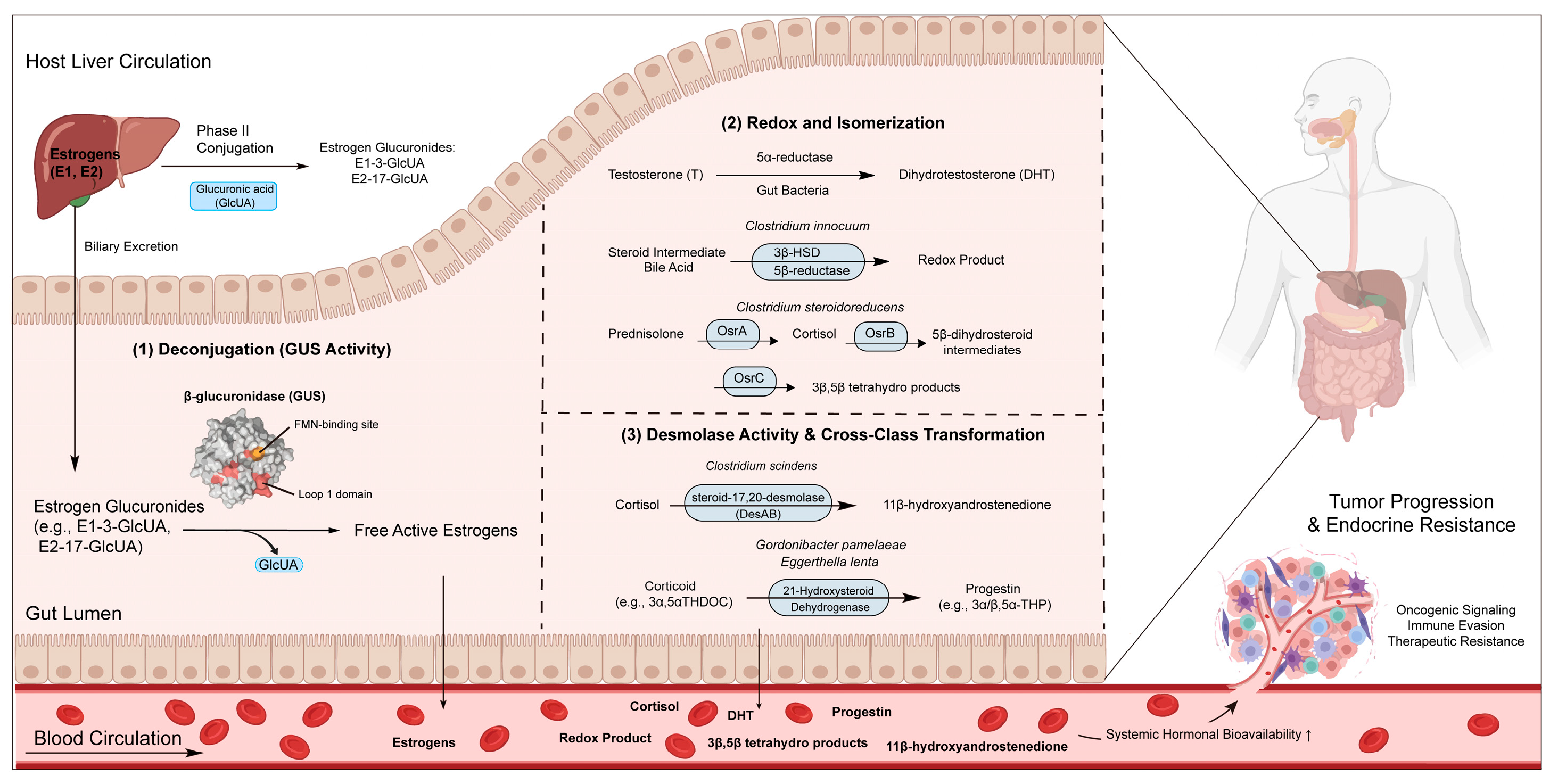
- Deconjugation-mediated hormone liberation: During hepatic metabolism, estrogens are conjugated with glucuronic acid to enhance solubility. Gut microbial β-glucuronidases (GUSs) selectively hydrolyze these conjugates back into free estrogens [16,17]. This process is driven by enzymes from diverse human gut microbes, particularly those harboring specialized structural motifs such as Loop 1, mini-Loop 1, and FMN-binding domains, which dictate the deconjugation efficiency of estrone-3-glucuronide (E1-3-G) and estradiol-17-glucuronide (E2-17-G). Consequently, microbial GUS activity serves as a primary biochemical switch that dictates the equilibrium between conjugated and free steroids within the intestinal lumen.
- (2)
- Redox and isomerization of the steroid scaffold: In addition to hydrolysis, the gut microbiota extensively participates in the direct modification of the steroid nucleus. Certain intestinal taxa express 5α-reductases, which facilitate the stereospecific reduction of the Δ4 double bond in the steroid A-ring, thereby converting testosterone into its more potent metabolite, dihydrotestosterone (DHT) [18]. Furthermore, specific strains such as Clostridium innocuum harbor genes for 3β-hydroxysteroid dehydrogenase (3β-HSD) and 5β-reductase, which are involved in the redox reactions of bile acids and steroid intermediates [19]. Under conditions of acute immune stress, the gut microbiota can also modulate local intestinal corticosterone production and influence the levels of its 3α/3β- and 5α-reduced metabolites [20]. Recent studies have identified various bacteria, such as C. steroidoreducens, that directly reduce cortisol via the OsrABC multi-enzyme complex, further diversifying the microbial redox landscape [21,22].
- (3)
- Cross-class transformation via carbon-chain cleavage: The gut microbiota not only modifies individual hormones but also mediates the inter-conversion between different hormonal classes. Biochemical characterizations reveal that commensal species, such as C. scindens, express a steroid-17,20-desmolase (DesAB) [23]. This enzyme directly cleaves the side chains of glucocorticoids, including cortisol and prednisolone, converting them into 11-oxy-androgens such as 1,4-androstadiene-3,11,17-trione [23,24]. Simultaneously, taxa like Gordonibacter pamelaeae and Eggerthella lenta utilize 21-dehydroxylases to shunt glucocorticoids into progestins [25,26]. Collectively, these microbe-driven structural modifications and cross-class conversions transform the gut into a metabolic reactor. As illustrated in Figure 1, the resulting active steroids are reabsorbed into the blood circulation, significantly increasing systemic hormonal bioavailability. This systemic influx subsequently infiltrates the tumor microenvironment (TME), providing the essential fuel to drive oncogenic signaling, immune evasion, and adaptive endocrine resistance.
2.2. Specific Microbial Metabolic Networks Constitute the Enzymatic Basis for Sex Hormone Transformation
2.3. Microbially Mediated Enterohepatic Circulation Directly Dictates the Systemic Bioavailability of Targeted Hormones
3. Co-Regulation of the Hormone-Dependent Tumor Microenvironment by the Gut Microbiota and the Endocrine Axis
3.1. Mechanisms of Systemic Immune Suppression Mediated by Hormonal Signaling Pathways
3.2. Metabolic Characteristics of Local Microbiota Dictate the Pathological Evolution of Specific Cancer Types
4. The Gut Microbial Network Influences Clinical Responses to Endocrine and Immune-Targeted Therapies
4.1. Specific Microbial Enzymatic Systems Modulate the Pharmacokinetics and Adverse Effects of Endocrine Drugs
4.2. Endocrine Therapeutic Pressure Induces Gut Microbial Alterations and Promotes Adaptive Resistance
4.3. Microbial-Derived Metabolites Influence the Efficacy of Immune Checkpoint Inhibitors via Antagonism of Endogenous Receptors
5. Clinical Strategies for Targeting the Gut Microbiota in Hormone-Dependent Malignancies
5.1. Precision Nutritional Interventions Targeting Microbial Fermentation to Regulate Systemic Metabolism
5.2. Traditional Chinese Medicine Formulae Regulate the Microbiota via Multitargeted Network Mechanisms
5.3. Host Genetic Background Modulates the Regulatory Effects of Exercise Interventions on Endocrine and Microbial Systems
5.4. Live Biotherapeutics Facilitate Clinical Translation of Microbial Interventions via Active Colonization Pathways
6. Discussion
7. Conclusions and Future Directions
Author Contributions
Funding
Institutional Review Board Statement
Informed Consent Statement
Data Availability Statement
Conflicts of Interest
References
- Lasagna, A.; De Amici, M.; Rossi, C.; Zuccaro, V.; Corbella, M.; Petazzoni, G.; Comandatore, F.; Sacchi, L.; Testa, G.; Ferraris, E.; et al. The Bio-Diversity and the Role of Gut Microbiota in Postmenopausal Women with Luminal Breast Cancer Treated with Aromatase Inhibitors: An Observational Cohort Study. Pathogens 2022, 11, 1421. [Google Scholar] [CrossRef] [PubMed]
- Alam, Y.; Hakopian, S.; Ortiz de Ora, L.; Tamburini, I.; Avelar-Barragan, J.; Jung, S.; Long, Z.; Chao, A.; Whiteson, K.; Jang, C.; et al. Variation in human gut microbiota impacts tamoxifen pharmacokinetics. mBio 2025, 16, e0167924. [Google Scholar] [CrossRef] [PubMed]
- Pai, A.A.; Bhatt, A.P. Improving breast cancer treatments using pharmacomicrobiomics. mBio 2025, 16, e0342224. [Google Scholar] [CrossRef]
- Tahri, A.; Amedei, A. Unraveling the links between estrogen and gut microbiota in sex-hormone driven cancers. World J. Clin. Oncol. 2025, 16, 108819. [Google Scholar] [CrossRef] [PubMed]
- Kovacs, T.; Miko, E.; Ujlaki, G.; Sari, Z.; Bai, P. The Microbiome as a Component of the Tumor Microenvironment. Adv. Exp. Med. Biol. 2020, 1225, 137–153. [Google Scholar] [CrossRef]
- Alpuim Costa, D.; Nobre, J.G.; Batista, M.V.; Ribeiro, C.; Calle, C.; Cortes, A.; Marhold, M.; Negreiros, I.; Borralho, P.; Brito, M.; et al. Human Microbiota and Breast Cancer-Is There Any Relevant Link?—A Literature Review and New Horizons Toward Personalised Medicine. Front. Microbiol. 2021, 12, 584332. [Google Scholar] [CrossRef]
- Xia, B.; Wang, J.; Zhang, D.; Hu, X. The human microbiome links to prostate cancer risk and treatment (Review). Oncol. Rep. 2023, 49, 123. [Google Scholar] [CrossRef]
- Wu, Y.; Zhang, Y.; Zhang, W.; Huang, Y.; Lu, X.; Shang, L.; Zhou, Z.; Chen, X.; Li, S.; Cheng, S.; et al. The tremendous clinical potential of the microbiota in the treatment of breast cancer: The next frontier. J. Cancer Res. Clin. Oncol. 2023, 149, 12513–12534. [Google Scholar] [CrossRef]
- Matsushita, M.; Fujita, K.; Hatano, K.; De Velasco, M.A.; Tsujimura, A.; Uemura, H.; Nonomura, N. Emerging Relationship between the Gut Microbiome and Prostate Cancer. World J. Men’s Health 2023, 41, 759–768. [Google Scholar] [CrossRef]
- Wang, C.; Dong, T.; Rong, X.; Yang, Y.; Mou, J.; Li, J.; Ge, J.; Mu, X.; Jiang, J. Microbiome in prostate cancer: Pathogenic mechanisms, multi-omics diagnostics, and synergistic therapies. J. Cancer Res. Clin. Oncol. 2025, 151, 178. [Google Scholar] [CrossRef]
- Sha, S.; Ni, L.; Stefil, M.; Dixon, M.; Mouraviev, V. The human gastrointestinal microbiota and prostate cancer development and treatment. Investig. Clin. Urol. 2020, 61, S43–S50. [Google Scholar] [CrossRef] [PubMed]
- Jin, W.B.; Xiao, L.; Jeong, M.; Han, S.J.; Zhang, W.; Yano, H.; Shi, H.; Arifuzzaman, M.; Lyu, M.; Wang, D.; et al. Microbiota-derived bile acids antagonize the host androgen receptor and drive anti-tumor immunity. Cell 2025, 188, 2336–2353.e2338. [Google Scholar] [CrossRef] [PubMed]
- Guan, X.; Polesso, F.; Wang, C.; Sehrawat, A.; Hawkins, R.M.; Murray, S.E.; Thomas, G.V.; Caruso, B.; Thompson, R.F.; Wood, M.A.; et al. Androgen receptor activity in T cells limits checkpoint blockade efficacy. Nature 2022, 606, 791–796. [Google Scholar] [CrossRef]
- Pernigoni, N.; Zagato, E.; Calcinotto, A.; Troiani, M.; Mestre, R.P.; Calì, B.; Attanasio, G.; Troisi, J.; Minini, M.; Mosole, S.; et al. Commensal bacteria promote endocrine resistance in prostate cancer through androgen biosynthesis. Science 2021, 374, 216–224. [Google Scholar] [CrossRef]
- Hakimjavadi, H.; George, S.H.; Taub, M.; Dodds, L.V.; Sanchez-Covarrubias, A.P.; Huang, M.; Pearson, J.M.; Slomovitz, B.M.; Kobetz, E.N.; Gharaibeh, R.; et al. The vaginal microbiome is associated with endometrial cancer grade and histology. Cancer Res. Commun. 2022, 2, 447–455. [Google Scholar] [CrossRef]
- Sui, Y.; Wu, J.; Chen, J. The Role of Gut Microbial β-Glucuronidase in Estrogen Reactivation and Breast Cancer. Front. Cell Dev. Biol. 2021, 9, 631552. [Google Scholar] [CrossRef]
- Ervin, S.M.; Li, H.; Lim, L.; Roberts, L.R.; Liang, X.; Mani, S.; Redinbo, M.R. Gut microbial β-glucuronidases reactivate estrogens as components of the estrobolome that reactivate estrogens. J. Biol. Chem. 2019, 294, 18586–18599. [Google Scholar] [CrossRef]
- Ohlsson, C.; Li, L.; Horkeby, K.; Lawenius, L.; Collden, H.; Sjogren, K.; Baldanzi, G.; Engstrom, G.; Arnlov, J.; Orho-Melander, M.; et al. The circulating dihydrotestosterone/testosterone ratio is increased by gut microbial 5α-reductase activity in females. EBioMedicine 2025, 121, 105978. [Google Scholar] [CrossRef]
- Xiao, F.; Gao, X.; Hu, H.; Le, J.; Chen, Y.; Shu, X.; Liang, Z.; Xu, Y.; Wang, Y.; Zhang, T. Exclusive Enteral Nutrition Exerts Anti-Inflammatory Effects through Modulating Microbiota, Bile Acid Metabolism, and Immune Activities. Nutrients 2022, 14, 4463. [Google Scholar] [CrossRef] [PubMed]
- Vagnerova, K.; Gazarkova, T.; Vodicka, M.; Ergang, P.; Klusonova, P.; Hudcovic, T.; Srutkova, D.; Petr Hermanova, P.; Novakova, L.; Pacha, J. Microbiota modulates the steroid response to acute immune stress in male mice. Front. Immunol. 2024, 15, 1330094. [Google Scholar] [CrossRef]
- Arp, G.; Jiang, A.K.; Dufault-Thompson, K.; Levy, S.; Zhong, A.; Wassan, J.T.; Grant, M.R.; Li, Y.; Hall, B.; Jiang, X. Identification of gut bacteria reductases that biotransform steroid hormones. Nat. Commun. 2025, 16, 6285. [Google Scholar] [CrossRef]
- Jacoby, C.; Scorza, K.; Ecker, L.; Bernardino, P.N.; Little, A.S.; McMillin, M.; Ramaswamy, R.; Sundararajan, A.; Sidebottom, A.M.; Lin, H.; et al. Gut Bacteria Metabolize Natural and Synthetic Steroid Hormones via the Reductive OsrABC Pathway. Cell Host Microbe 2025, 33, 1873–1885. [Google Scholar] [CrossRef]
- Ly, L.K.; Rowles, J.L., 3rd; Paul, H.M.; Alves, J.M.P.; Yemm, C.; Wolf, P.M.; Devendran, S.; Hudson, M.E.; Morris, D.J.; Erdman, J.W., Jr.; et al. Bacterial steroid-17,20-desmolase is a taxonomically rare enzymatic pathway that converts prednisone to 1,4-androstanediene-3,11,17-trione, a metabolite that causes proliferation of prostate cancer cells. J. Steroid Biochem. Mol. Biol. 2020, 199, 105567. [Google Scholar] [CrossRef]
- Ly, L.K.; Doden, H.L.; Ridlon, J.M. Gut feelings about bacterial steroid-17,20-desmolase. Mol. Cell Endocrinol. 2021, 525, 111174. [Google Scholar] [CrossRef]
- Wang, T.; Ahmad, S.; Cruz-Lebron, A.; Ernst, S.E.; Olivos Caicedo, K.Y.; Jeong, Y.; Binion, B.; Mbuvi, P.; Dutta, D.; Fernandez-Materan, F.V.; et al. An expanded metabolic pathway for androgen production by commensal bacteria. Nat. Microbiol. 2025, 10, 1084–1098. [Google Scholar] [CrossRef]
- McCurry, M.D.; D’Agostino, G.D.; Walsh, J.T.; Bisanz, J.E.; Zalosnik, I.; Dong, X.; Morris, D.J.; Korzenik, J.R.; Edlow, A.G.; Balskus, E.P.; et al. Gut bacteria convert glucocorticoids into progestins in the presence of hydrogen gas. Cell 2024, 187, 2952–2968.e2913. [Google Scholar] [CrossRef]
- D’Angelo, A.; Zenoniani, A.; Masci, M.; Aceto, G.M.; Piattelli, A.; Curia, M.C. Exploring the Microbiome in Breast Cancer: The Role of Fusobacterium nucleatum as an Onco-Immune Modulator. Microorganisms 2025, 13, 1995. [Google Scholar] [CrossRef]
- Fernandez-Murga, M.L.; Gil-Ortiz, F.; Serrano-Garcia, L.; Llombart-Cussac, A. A New Paradigm in the Relationship between Gut Microbiota and Breast Cancer: β-glucuronidase Enzyme Identified as Potential Therapeutic Target. Pathogens 2023, 12, 1086. [Google Scholar] [CrossRef]
- Wang, S.; Yang, Y.; Lei, L.; Wan, R.; Su, Z.; Liu, Y.; Tang, H.; Hu, G.; Li, C.; Li, C.; et al. SSTDhunter: A curated gene database for investigating androgen producing potential in microbiota species. Front. Cell Infect. Microbiol. 2026, 16, 1754671. [Google Scholar] [CrossRef]
- Tao, J.; Dai, W.; Lyu, Y.; Liu, H.; Le, J.; Sun, T.; Yao, Q.; Zhao, Z.; Jiang, X.; Li, Y. Role of intestinal testosterone-degrading bacteria and 3/17β-HSD in the pathogenesis of testosterone deficiency-induced hyperlipidemia in males. NPJ Biofilms Microbiomes 2024, 10, 123. [Google Scholar] [CrossRef]
- Hsiao, T.H.; Chou, C.H.; Chen, Y.L.; Wang, P.H.; Brandon-Mong, G.J.; Lee, T.H.; Wu, T.Y.; Li, P.T.; Li, C.W.; Lai, Y.L.; et al. Circulating androgen regulation by androgen-catabolizing gut bacteria in male mouse gut. Gut Microbes 2023, 15, 2183685. [Google Scholar] [CrossRef]
- Doden, H.; Sallam, L.A.; Devendran, S.; Ly, L.; Doden, G.; Daniel, S.L.; Alves, J.M.P.; Ridlon, J.M. Metabolism of Oxo-Bile Acids and Characterization of Recombinant 12α-Hydroxysteroid Dehydrogenases from Bile Acid 7α-Dehydroxylating Human Gut Bacteria. Appl. Environ. Microbiol. 2018, 84, e00235-18. [Google Scholar] [CrossRef]
- Wang, L.; Tang, L.; Zhai, D.; Song, M.; Li, W.; Xu, S.; Jiang, S.; Meng, H.; Liang, J.; Wang, Y.; et al. The role of the sex hormone-gut microbiome axis in tumor immunotherapy. Gut Microbes 2023, 15, 2185035. [Google Scholar] [CrossRef]
- Lattanzi, G.; Perillo, F.; Diaz-Basabe, A.; Caridi, B.; Amoroso, C.; Baeri, A.; Cirrincione, E.; Ghidini, M.; Galassi, B.; Cassinotti, E.; et al. Estrogen-related differences in antitumor immunity and gut microbiome contribute to sexual dimorphism of colorectal cancer. Oncoimmunology 2024, 13, 2425125. [Google Scholar] [CrossRef]
- Wu, Z.; Sun, Y.; Huang, W.; Jin, Z.; You, F.; Li, X.; Xiao, C. Direct and indirect effects of estrogens, androgens and intestinal microbiota on colorectal cancer. Front. Cell. Infect. Microbiol. 2024, 14, 1458033. [Google Scholar] [CrossRef]
- Lu, Q.; Wu, J.; Yu, X.; Qian, J.; Song, Z. Unveiling the interplay between microbiota and PD1/PD-L1 axis in tumor immunity and immunotherapy. Front. Immunol. 2025, 16, 1690374. [Google Scholar] [CrossRef]
- Bachem, A.; Clarke, M.; Kong, G.; Tarasova, I.; Dryburgh, L.; Kosack, L.; Lee, A.R.; Newland, L.D.; Wagner, T.; Bawden, E.; et al. Microbiota-derived butyrate promotes a FOXO1-induced stemness program and preserves CD8(+) T cell immunity against melanoma. Immunity 2025, 58, 2799–2813 e2798. [Google Scholar] [CrossRef]
- Mehmood, M.S.; Danaf, N. Microbial metabolites regulating PD-L1 and checkpoint pathways: Translational implications. Ann. Med. Surg 2026, 88, 953–954. [Google Scholar] [CrossRef]
- Peters, B.A.; Lin, J.; Qi, Q.; Usyk, M.; Isasi, C.R.; Mossavar-Rahmani, Y.; Derby, C.A.; Santoro, N.; Perreira, K.M.; Daviglus, M.L.; et al. Menopause Is Associated with an Altered Gut Microbiome and Estrobolome, with Implications for Adverse Cardiometabolic Risk in the Hispanic Community Health Study/Study of Latinos. mSystems 2022, 7, e0027322. [Google Scholar] [CrossRef]
- Bhatt, A.P.; Redinbo, M.R.; Bultman, S.J. The role of the microbiome in cancer development and therapy. CA Cancer J. Clin. 2017, 67, 326–344. [Google Scholar] [CrossRef]
- Shuai, C.; Yang, X.; Pan, H.; Han, W. Estrogen Receptor Downregulates Expression of PD-1/PD-L1 and Infiltration of CD8(+) T Cells by Inhibiting IL-17 Signaling Transduction in Breast Cancer. Front. Oncol. 2020, 10, 582863. [Google Scholar] [CrossRef]
- Qi, X.; Yun, C.; Sun, L.; Xia, J.; Wu, Q.; Wang, Y.; Wang, L.; Zhang, Y.; Liang, X.; Wang, L.; et al. Gut microbiota-bile acid-interleukin-22 axis orchestrates polycystic ovary syndrome. Nat. Med. 2019, 25, 1225–1233. [Google Scholar] [CrossRef]
- Zhu, X.; Farsh, T.; Vis, D.; Yu, I.; Li, H.; Liu, T.; Sjostrom, M.; Shrestha, R.; Kneppers, J.; Severson, T.; et al. Genomic and transcriptomic features of androgen receptor signaling inhibitor resistance in metastatic castration-resistant prostate cancer. J. Clin. Investig. 2024, 134, e178604. [Google Scholar] [CrossRef]
- Krautkramer, K.A.; Fan, J.; Backhed, F. Gut microbial metabolites as multi-kingdom intermediates. Nat. Rev. Microbiol. 2021, 19, 77–94. [Google Scholar] [CrossRef]
- Fan, Y.; Pedersen, O. Gut microbiota in human metabolic health and disease. Nat. Rev. Microbiol. 2021, 19, 55–71. [Google Scholar] [CrossRef]
- Sanna, S.; van Zuydam, N.R.; Mahajan, A.; Kurilshikov, A.; Vich Vila, A.; Vosa, U.; Mujagic, Z.; Masclee, A.A.M.; Jonkers, D.; Oosting, M.; et al. Causal relationships among the gut microbiome, short-chain fatty acids and metabolic diseases. Nat. Genet. 2019, 51, 600–605. [Google Scholar] [CrossRef]
- Gressel, G.M.; Usyk, M.; Frimer, M.; Kuo, D.Y.S.; Burk, R.D. Characterization of the endometrial, cervicovaginal and anorectal microbiota in post-menopausal women with endometrioid and serous endometrial cancers. PLoS ONE 2021, 16, e0259188. [Google Scholar] [CrossRef]
- Zhang, B.; Mohd Sahardi, N.F.N.; Di, W.; Long, X.; Shafiee, M.N. The Gut-Endometrium Axis: Exploring the Role of Microbiome in the Pathogenesis and Treatment of Endometrial Cancer-A Narrative Review. Cancers 2025, 17, 1044. [Google Scholar] [CrossRef]
- Terrisse, S.; Derosa, L.; Iebba, V.; Ghiringhelli, F.; Vaz-Luis, I.; Kroemer, G.; Fidelle, M.; Christodoulidis, S.; Segata, N.; Thomas, A.M.; et al. Intestinal microbiota influences clinical outcome and side effects of early breast cancer treatment. Cell Death Differ. 2021, 28, 2778–2796. [Google Scholar] [CrossRef]
- Guo, H. Interactions between the tumor microbiota and breast cancer. Front. Cell Infect. Microbiol. 2024, 14, 1499203. [Google Scholar] [CrossRef]
- Li, Y.; Liu, G.; Gong, R.; Xi, Y. Gut Microbiome Dysbiosis in Patients with Endometrial Cancer vs. Healthy Controls Based on 16S rRNA Gene Sequencing. Curr. Microbiol. 2023, 80, 239. [Google Scholar] [CrossRef]
- Schreurs, M.P.H.; de Vos van Steenwijk, P.J.; Romano, A.; Dieleman, S.; Werner, H.M.J. How the Gut Microbiome Links to Menopause and Obesity, with Possible Implications for Endometrial Cancer Development. J. Clin. Med. 2021, 10, 2916. [Google Scholar] [CrossRef]
- Burkett, W.C.; Clontz, A.D.; Keku, T.O.; Bae-Jump, V. The interplay of obesity, microbiome dynamics, and innovative anti-obesity strategies in the context of endometrial cancer progression and therapeutic approaches. Biochim. Biophys. Acta Rev. Cancer 2023, 1878, 189000. [Google Scholar] [CrossRef]
- Jimenez, N.R.; Herman, C.R.; Laniewski, P.; Cope, E.; Lee, K.; Mahnert, N.D.; Chase, D.M.; Caporaso, J.G.; Herbst-Kralovetz, M.M. Navigating complexities of polymorphic microbiomes in endometrial cancer. NPJ Biofilms Microbiomes 2025, 11, 85. [Google Scholar] [CrossRef] [PubMed]
- Lin, H.; Zeng, Z.; Zhang, H.; Jia, Y.; Pang, J.; Chen, J.; Zhang, H. Gut-Vaginal Microbiome Crosstalk in Ovarian Cancer: Implications for Early Diagnosis. Pathogens 2025, 14, 635. [Google Scholar] [CrossRef]
- Blanco, J.R.; Del Campo, R.; Avendano-Ortiz, J.; Laguna-Olmos, M.; Carnero, A. The Role of Microbiota in Ovarian Cancer: Implications for Treatment Response and Therapeutic Strategies. Cells 2025, 14, 1813. [Google Scholar] [CrossRef]
- Dong, W.; Guo, X.; Lu, H.; Liu, Z.; Xie, L.; Liu, Y.; Wan, Q.; Chen, R.; Liu, S. Therapeutic mechanisms of Zi Chong granules against hydroxyurea-induced diminished ovarian reserve based on integrated multi-omics analyses. J. Ovarian Res. 2025, 18, 295. [Google Scholar] [CrossRef] [PubMed]
- Yu, Y.; Li, L.; Yang, Q.; Xue, J.; Wang, B.; Xie, M.; Shangguan, W.; Zhu, Z.; Wu, P. Akkermansia muciniphila Metabolite Inosine Inhibits Castration Resistance in Prostate Cancer. Microorganisms 2024, 12, 1653. [Google Scholar] [CrossRef]
- Daisley, B.A.; Chanyi, R.M.; Abdur-Rashid, K.; Al, K.F.; Gibbons, S.; Chmiel, J.A.; Wilcox, H.; Reid, G.; Anderson, A.; Dewar, M.; et al. Abiraterone acetate preferentially enriches for the gut commensal Akkermansia muciniphila in castrate-resistant prostate cancer patients. Nat. Commun. 2020, 11, 4822. [Google Scholar] [CrossRef]
- Hillege, L.E.; Barnett, D.J.M.; Ziemons, J.; Aarnoutse, R.; de Vos-Geelen, J.; van Geel, R.; de Boer, M.; van Riet, Y.E.A.; Vincent, J.; Penders, J.; et al. The gut microbiota during tamoxifen therapy in patients with breast cancer. Sci. Rep. 2025, 15, 7874. [Google Scholar] [CrossRef]
- Chen, Y.; Du, H.; Zhou, W.; Qin, M.; Li, M.; Jin, Y.; Xu, Y.; Ma, C.; Xia, J.; Mo, Y.; et al. Tamoxifen induced hepatotoxicity via gut microbiota-mediated hyodeoxycholic acid depletion and Farnesoid X receptor signaling disruption. Gut Microbes 2026, 18, 2610077. [Google Scholar] [CrossRef]
- Hou, M.F.; Li, C.L.; Moi, S.H.; Chen, F.M.; Chen, J.Y.; Shih, S.L.; Kan, J.Y.; Yang, S.F.; Chiang, C.P. Longitudinal multiomics analysis of endocrine therapy effects and gut microbiota in breast cancer recurrence. Commun. Med. 2026, 6, 117. [Google Scholar] [CrossRef] [PubMed]
- Sheikh, T.M.M.; Yao, F.; Liu, Z.; Shafiq, M.; Wu, J.; Khalid, A.; Xie, Q.; Jiao, X.; Shen, W. Integrated insights into gut microbiota and metabolomic landscape in breast cancer patients undergoing adjuvant endocrine therapy. mSystems 2025, 10, e0087925. [Google Scholar] [CrossRef]
- Mager, L.F.; Burkhard, R.; Pett, N.; Cooke, N.C.A.; Brown, K.; Ramay, H.; Paik, S.; Stagg, J.; Groves, R.A.; Gallo, M.; et al. Microbiome-derived inosine modulates response to checkpoint inhibitor immunotherapy. Science 2020, 369, 1481–1489. [Google Scholar] [CrossRef] [PubMed]
- Terrisse, S.; Zitvogel, L.; Kroemer, G. Effects of the intestinal microbiota on prostate cancer treatment by androgen deprivation therapy. Microb. Cell 2022, 9, 202–206. [Google Scholar] [CrossRef]
- Zhou, Y.; Lv, J.; Jin, S.; Fu, C.; Liu, B.; Shen, Y.; Li, M.; Zhang, Y.; Feng, N. Gut microbiota derived metabolite trimethylamine N-oxide influences prostate cancer progression via the p38/HMOX1 pathway. Front. Pharmacol. 2024, 15, 1526051. [Google Scholar] [CrossRef]
- Magashi Ali, M.A.; Abdulkadir, S.A. Modulating Prostate Cancer Therapy Through the Gut Microbiome: A Comprehensive Review. Cancers 2025, 17, 3842. [Google Scholar] [CrossRef]
- Charalambous, H.; Brown, C.; Vogazianos, P.; Katsaounou, K.; Nikolaou, E.; Stylianou, I.; Papageorgiou, E.; Vraxnos, D.; Aristodimou, A.; Chi, J.; et al. Dysbiosis in the Gut Microbiome of Pembrolizumab-Treated Non-Small Lung Cancer Patients Compared to Healthy Controls Characterized Through Opportunistic Sampling. Thorac. Cancer 2025, 16, e70075. [Google Scholar] [CrossRef]
- Preissner, S.; Heiland, M.; Preissner, R.; Wirth, M.; Wollenberg, B. Antibiotics Significantly Decrease the Survival of Head and Neck Carcinoma Patients with Immunotherapy: A Real-World Analysis of More Than 3000 Cases. Cancers 2023, 15, 2342. [Google Scholar] [CrossRef]
- Jing, N.; Wang, L.; Zhuang, H.; Ai, C.; Jiang, G.; Liu, Z. Sex-Biased Immune Responses to Antibiotics during Anti-PD-L1 Treatment in Mice with Colon Cancer. J. Immunol. Res. 2022, 2022, 9202491. [Google Scholar] [CrossRef] [PubMed]
- Lin, Y.Y.; Ding, J.L.; Shen, H.T.; Lin, Y.M.; Adhidjaja, E.C.; Chang, S.C. PD-1/PD-L1 Cancer Immunotherapeutics Reshape Tumor Microenvironment—Clinical Evidence and Molecular Mechanisms for AI-based Precision Medicine. Clin. Rev. Allergy Immunol. 2025, 68, 91. [Google Scholar] [CrossRef]
- Farhadi Rad, H.; Tahmasebi, H.; Javani, S.; Hemati, M.; Zakerhamidi, D.; Hosseini, M.; Alibabaei, F.; Banihashemian, S.Z.; Oksenych, V.; Eslami, M. Microbiota and Cytokine Modulation: Innovations in Enhancing Anticancer Immunity and Personalized Cancer Therapies. Biomedicines 2024, 12, 2776. [Google Scholar] [CrossRef]
- Luu, M.; Riester, Z.; Baldrich, A.; Reichardt, N.; Yuille, S.; Busetti, A.; Klein, M.; Wempe, A.; Leister, H.; Raifer, H.; et al. Microbial short-chain fatty acids modulate CD8(+) T cell responses and improve adoptive immunotherapy for cancer. Nat. Commun. 2021, 12, 4077. [Google Scholar] [CrossRef]
- Chapadgaonkar, S.S.; Bajpai, S.S.; Godbole, M.S. Gut microbiome influences incidence and outcomes of breast cancer by regulating levels and activity of steroid hormones in women. Cancer Rep. 2023, 6, e1847. [Google Scholar] [CrossRef]
- Arnone, A.A.; Tsai, Y.T.; Cline, J.M.; Wilson, A.S.; Westwood, B.; Seger, M.E.; Chiba, A.; Howard-McNatt, M.; Levine, E.A.; Thomas, A.; et al. Endocrine-targeting therapies shift the breast microbiome to reduce estrogen receptor-α breast cancer risk. Cell Rep. Med. 2025, 6, 101880. [Google Scholar] [CrossRef]
- Ahmet, R.A.M.; Nascu, A.G.; Camen, G.C.; Obleaga, C.V.; Popa, D.G.; Mirea, C.S. Unveiling the Microbiota: A New Frontier in Breast Cancer Pathogenesis-A Single-Center Preliminary Study. Diagnostics 2025, 15, 2147. [Google Scholar] [CrossRef]
- Zhao, S.; Lu, Z.; Zhao, F.; Tang, S.; Zhang, L.; Feng, C. Assessing the impact of probiotics on immunotherapy effectiveness and antibiotic-mediated resistance in cancer: A systematic review and meta-analysis. Front. Immunol. 2025, 16, 1538969. [Google Scholar] [CrossRef]
- Zhang, C.; Sui, C.; Ma, X.; Ma, C.; Sun, X.; Zhai, C.; Cao, P.; Zhang, Y.; Cheng, J.; Li, T.; et al. Therapeutic potential of Xihuang Pill in colorectal cancer: Metabolomic and microbiome-driven approaches. Front. Pharmacol. 2024, 15, 1402448. [Google Scholar] [CrossRef] [PubMed]
- Wang, M.; Zhu, Y. Gut microbiome versus thyroid cancer: Association and clinical implications (Review). Oncol. Lett. 2025, 30, 368. [Google Scholar] [CrossRef] [PubMed]
- Chen, J.; Zhang, Z.; Ma, M.; Huang, Q.; Ling, Z.; Liu, Y.; Gao, Z.; Wang, S.; Zhu, Y.; Zhang, L.; et al. Firmicutes in gut microbiota: Hormonal influence on breast cancer in obese individuals. Discov. Oncol. 2025, 16, 1750. [Google Scholar] [CrossRef] [PubMed]
- Peng, C.; Li, X.; Li, Y.; Xu, X.; Ouyang, Y.; Li, N.; Lu, N.; Zhu, Y.; He, C. Sex-specific effects of gastrointestinal microbiome disruptions on Helicobacter pylori-induced gastric carcinogenesis in INS-GAS mice. Biol. Sex Differ. 2025, 16, 15. [Google Scholar] [CrossRef]
- Dekkers, K.F.; Pertiwi, K.; Baldanzi, G.; Lundmark, P.; Hammar, U.; Moksnes, M.R.; Coward, E.; Nethander, M.; Salih, G.A.; Miari, M.; et al. Genome-wide association analyses highlight the role of the intestinal molecular environment in human gut microbiota variation. Nat. Genet. 2026, 58, 540–549. [Google Scholar] [CrossRef]
- Raber, J.; O’Niel, A.; Kasschau, K.D.; Pederson, A.; Robinson, N.; Guidarelli, C.; Chalmers, C.; Winters-Stone, K.; Sharpton, T.J. Exercise, APOE Genotype, and Testosterone Modulate Gut Microbiome-Cognition Associations in Prostate Cancer Survivors. Genes 2025, 16, 1507. [Google Scholar] [CrossRef] [PubMed]
- Shaikh, F.Y.; Gills, J.J.; Mohammad, F.; White, J.R.; Stevens, C.M.; Ding, H.; Fu, J.; Tam, A.; Blosser, R.L.; Domingue, J.C.; et al. Murine fecal microbiota transfer models selectively colonize human microbes and reveal transcriptional programs associated with response to neoadjuvant checkpoint inhibitors. Cancer Immunol. Immunother. 2022, 71, 2405–2420. [Google Scholar] [CrossRef]
- Miko, E.; Kovacs, T.; Sebo, E.; Toth, J.; Csonka, T.; Ujlaki, G.; Sipos, A.; Szabo, J.; Mehes, G.; Bai, P. Microbiome-Microbial Metabolome-Cancer Cell Interactions in Breast Cancer-Familiar, but Unexplored. Cells 2019, 8, 293. [Google Scholar] [CrossRef]
- Laborda-Illanes, A.; Sanchez-Alcoholado, L.; Dominguez-Recio, M.E.; Jimenez-Rodriguez, B.; Lavado, R.; Comino-Mendez, I.; Alba, E.; Queipo-Ortuno, M.I. Breast and Gut Microbiota Action Mechanisms in Breast Cancer Pathogenesis and Treatment. Cancers 2020, 12, 2465. [Google Scholar] [CrossRef]
- Abdalla, W.; Ibrahim, W.N.; Abdallah, A.M.; Al-Asmakh, M.A.; Said, S.S. The role of the microbiome in endometrial carcinoma: Pathogenesis, biomarkers, and therapeutic prospects. J. Obstet. Gynaecol. Res. 2025, 51, e70070. [Google Scholar] [CrossRef] [PubMed]
- Muccee, F.; Ghazanfar, S.; Ajmal, W.; Al-Zahrani, M. In-Silico Characterization of Estrogen Reactivating β-Glucuronidase Enzyme in GIT Associated Microbiota of Normal Human and Breast Cancer Patients. Genes 2022, 13, 1545. [Google Scholar] [CrossRef] [PubMed]
- Wei, Z.; Yang, B.; Tang, T.; Xiao, Z.; Ye, F.; Li, X.; Wu, S.; Huang, J.G.; Jiang, S. Gut microbiota and risk of five common cancers: A univariable and multivariable Mendelian randomization study. Cancer Med. 2023, 12, 10393–10405. [Google Scholar] [CrossRef]
- Wang, X.; Gao, H.; Zeng, Y.; Chen, J. Exploring the relationship between gut microbiota and breast diseases using Mendelian randomization analysis. Front. Med. 2024, 11, 1450298. [Google Scholar] [CrossRef]
- Ye, G.C.; Peng, H.; Xiang, J.C.; Miao, L.T.; Liu, C.Z.; Wang, S.G.; Xia, Q.D. Comprehensive analysis of the interaction microbiome and prostate cancer: An initial exploration from multi-cohort metagenome and GWAS studies. J. Transl. Med. 2025, 23, 130. [Google Scholar] [CrossRef]
- Matson, V.; Fessler, J.L.; Shapiro, J.; Tonea, R.; Gajewski, T.F. 1139 The gut microbiota shapes the homeostatic programming of myeloid cells systemically to impact PD-1/PD-L1 blockade therapy. J. Immunother. Cancer 2025, 13. [Google Scholar] [CrossRef]
- Xie, M.; Yuan, K.; Zhang, Y.; Zhang, Y.; Zhang, R.; Gao, J.; Wei, W.; Jiang, L.; Li, T.; Ding, Y.; et al. Tumor-resident probiotic Clostridium butyricum improves aPD-1 efficacy in colorectal cancer models by inhibiting IL-6-mediated immunosuppression. Cancer Cell 2025, 43, 1885–1901.e1810. [Google Scholar] [CrossRef]
- Porcari, S.; Ciccarese, C.; Heidrich, V.; Rondinella, D.; Quaranta, G.; Severino, A.; Arduini, D.; Buti, S.; Fornarini, G.; Primi, F.; et al. Fecal microbiota transplantation plus pembrolizumab and axitinib in metastatic renal cell carcinoma: The randomized phase 2 TACITO trial. Nat. Med. 2026, 1–9. [Google Scholar] [CrossRef]
- Duttagupta, S.; Messaoudene, M.; Hunter, S.; Desilets, A.; Jamal, R.; Mihalcioiu, C.; Belkaid, W.; Marcoux, N.; Fidelle, M.; Suissa, D.; et al. Fecal microbiota transplantation plus immunotherapy in non-small cell lung cancer and melanoma: The phase 2 FMT-LUMINate trial. Nat. Med. 2026, 1–14. [Google Scholar] [CrossRef]
- Yates, T.; Went, M.; Mills, C.; Law, P.; Houlston, R. Relationship between the microbiome and obesity-associated cancer risk using Mendelian randomisation. Int. J. Obes 2026, 1–7. [Google Scholar] [CrossRef]
- Chetta, P.; Sriram, R.; Zadra, G. Lactate as Key Metabolite in Prostate Cancer Progression: What Are the Clinical Implications? Cancers 2023, 15, 3473. [Google Scholar] [CrossRef] [PubMed]
- Shen, X.; Jain, A.; Aladelokun, O.; Yan, H.; Gilbride, A.; Ferrucci, L.M.; Lu, L.; Khan, S.A.; Johnson, C.H. Asparagine, colorectal cancer, and the role of sex, genes, microbes, and diet: A narrative review. Front. Mol. Biosci. 2022, 9, 958666. [Google Scholar] [CrossRef] [PubMed]
- Mao, X.Y.; Perez-Losada, J.; Abad, M.; Rodriguez-Gonzalez, M.; Rodriguez, C.A.; Mao, J.H.; Chang, H. iCEMIGE: Integration of CEll-morphometrics, MIcrobiome, and GEne biomarker signatures for risk stratification in breast cancers. World J. Clin. Oncol. 2022, 13, 616–629. [Google Scholar] [CrossRef]
- Cui, W.; Guo, M.; Liu, D.; Xiao, P.; Yang, C.; Huang, H.; Liang, C.; Yang, Y.; Fu, X.; Zhang, Y.; et al. Gut microbial metabolite facilitates colorectal cancer development via ferroptosis inhibition. Nat. Cell Biol. 2024, 26, 124–137. [Google Scholar] [CrossRef]
- Tsvetkov, P.; Coy, S.; Petrova, B.; Dreishpoon, M.; Verma, A.; Abdusamad, M.; Rossen, J.; Joesch-Cohen, L.; Humeidi, R.; Spangler, R.D.; et al. Copper induces cell death by targeting lipoylated TCA cycle proteins. Science 2022, 375, 1254–1261. [Google Scholar] [CrossRef]
- Cross, T.L.; Simpson, A.M.R.; Lin, C.Y.; Hottmann, N.M.; Bhatt, A.P.; Pellock, S.J.; Nelson, E.R.; Loman, B.R.; Wallig, M.A.; Vivas, E.I.; et al. Gut microbiome responds to alteration in female sex hormone status and exacerbates metabolic dysfunction. Gut Microbes 2024, 16, 2295429. [Google Scholar] [CrossRef]
- Yu, X.; Yu, Z.; Chen, X.; Liu, M.; Yang, F.; Cheung, K.C.P. Research Progress on the Relationship Between Artificial Sweeteners and Breast Cancer. Biomedicines 2024, 12, 2871. [Google Scholar] [CrossRef]
- Laborda-Illanes, A.; Sanchez-Alcoholado, L.; Boutriq, S.; Plaza-Andrades, I.; Peralta-Linero, J.; Alba, E.; Gonzalez-Gonzalez, A.; Queipo-Ortuno, M.I. A New Paradigm in the Relationship between Melatonin and Breast Cancer: Gut Microbiota Identified as a Potential Regulatory Agent. Cancers 2021, 13, 3141. [Google Scholar] [CrossRef]
- Zengul, A.G.; Demark-Wahnefried, W.; Barnes, S.; Morrow, C.D.; Bertrand, B.; Berryhill, T.F.; Fruge, A.D. Associations between Dietary Fiber, the Fecal Microbiota and Estrogen Metabolism in Postmenopausal Women with Breast Cancer. Nutr. Cancer 2021, 73, 1108–1117. [Google Scholar] [CrossRef]
- Frasinariu, O.E.; Vintila, T.C.; Vasiliu, I.; Streanga, V.; Rugina, A.; Temneanu, O.R.; Iancu, I.D.; Iatentiuc, A.; Jechel, E.; Florescu, A. Puberty Starts in the Gut: Intestinal Clues to Early Puberty-Rethinking Biomarkers in Pediatric Endocrinology. Pharmaceuticals 2025, 19, 49. [Google Scholar] [CrossRef] [PubMed]
- Escorcia Mora, P.; Valbuena, D.; Diez-Juan, A. The Role of the Gut Microbiota in Female Reproductive and Gynecological Health: Insights into Endometrial Signaling Pathways. Life 2025, 15, 762. [Google Scholar] [CrossRef] [PubMed]
- Luo, X.; Guo, Y.; Xu, L. Microbial harmony in female reproductive health: Exploring the impact of intestinal flora on ovarian function and disease pathogenesis. Am. J. Transl. Res. 2024, 16, 6274–6288. [Google Scholar] [CrossRef]
- Elkafas, H.; Walls, M.; Al-Hendy, A.; Ismail, N. Gut and genital tract microbiomes: Dysbiosis and link to gynecological disorders. Front. Cell Infect. Microbiol. 2022, 12, 1059825. [Google Scholar] [CrossRef]
- Raber, J.; O’Niel, A.; Kasschau, K.D.; Pederson, A.; Robinson, N.; Guidarelli, C.; Chalmers, C.; Winters-Stone, K.; Sharpton, T.J. Diet-Microbiome Relationships in Prostate-Cancer Survivors with Prior Androgen Deprivation-Therapy Exposure and Previous Exercise Intervention Enrollment. Microorganisms 2026, 14, 251. [Google Scholar] [CrossRef] [PubMed]
- Soheilipour, M.; Noursina, A.; Nekookhoo, M.; Malekpour, E.; Mirzaei, S.A.; Shafieyoun, M.H.; Rouzbahani, H.; Chitsazi, M.R.; Safari, F. The pathobiont role of Akkermansia muciniphila in colorectal cancer: A systematic review. BMC Gastroenterol. 2025, 25, 702. [Google Scholar] [CrossRef] [PubMed]
- Meng, J.; Abu, Y.F.; Zhang, Y.; Zhou, Y.; Xie, Y.; Yan, Y.; Tao, J.; Ramakrishnan, S.; Chen, C.; Roy, S. Opioid-induced microbial dysbiosis disrupts irinotecan (CPT-11) metabolism and increases gastrointestinal toxicity in a murine model. Br. J. Pharmacol. 2023, 180, 1362–1378. [Google Scholar] [CrossRef] [PubMed]
- Li, J.; Gao, F.; Li, R.; Chen, Z.; Chen, G.; Fan, P.; Du, G. Endoscopic surgery affects the gut microbiota and its metabolism in breast cancer patients. Front. Microbiol. 2024, 15, 1481582. [Google Scholar] [CrossRef] [PubMed]
- Kalinen, S.; Kallonen, T.; Gunell, M.; Ettala, O.; Jambor, I.; Knaapila, J.; Syvanen, K.T.; Taimen, P.; Poutanen, M.; Aronen, H.J.; et al. Differences in Gut Microbiota Profiles and Microbiota Steroid Hormone Biosynthesis in Men with and Without Prostate Cancer. Eur. Urol. Open Sci. 2024, 62, 140–150. [Google Scholar] [CrossRef]
- Pan, S.Y.; Chen, W.C.; Huang, C.P.; Hsu, C.Y.; Chang, Y.H. The Association of Prostate Cancer and Urinary Tract Infections: A New Perspective of Prostate Cancer Pathogenesis. Medicina 2023, 59, 483. [Google Scholar] [CrossRef]
- Terrisse, S.; Goubet, A.G.; Ueda, K.; Thomas, A.M.; Quiniou, V.; Thelemaque, C.; Dunsmore, G.; Clave, E.; Gamat-Huber, M.; Yonekura, S.; et al. Immune system and intestinal microbiota determine efficacy of androgen deprivation therapy against prostate cancer. J. Immunother. Cancer 2022, 10, e004191. [Google Scholar] [CrossRef]
- Guerrieri-Gonzaga, A.; Serrano, D.; Gnagnarella, P.; Johansson, H.; Zovato, S.; Nardi, M.; Pensabene, M.; Buccolo, S.; DeCensi, A.; Briata, I.M.; et al. Low dose TamOxifen and LifestylE changes for bReast cANcer prevention (TOLERANT study): Study protocol of a randomized phase II biomarker trial in women at increased risk for breast cancer. PLoS ONE 2024, 19, e0309511. [Google Scholar] [CrossRef]
- Lundell, C.; Stergiopoulos, N.; Blomberg, L.; Ujvari, D.; Schuppe-Koistinen, I.; Kopp-Kallner, H.; Iliadis, S.I.; Skalkidou, A.; Hirschberg, A.L. Breast and endometrial safety of micronised progesterone versus norethisterone acetate in menopausal hormone therapy (PROBES): Study protocol of a double-blind randomised controlled trial. BMJ Open 2024, 14, e082749. [Google Scholar] [CrossRef]
- Miceli, R.; Eriksson, H.; Lo Russo, G.; Alfieri, S.; Moksnes Bjaanaes, M.; Pietrantonio, F.; De Cecco, L.; Prelaj, A.; Proto, C.; Franzen, J.; et al. Gender Difference in sidE eFfects of ImmuNotherapy: A possible clue to optimize cancEr tReatment (G-DEFINER): Study protocol of an observational prospective multicenter study. Acta Oncol. 2024, 63, 213–219. [Google Scholar] [CrossRef]
- Diaz-Garrido, N.; Badia, J.; Baldoma, L. Microbiota-derived extracellular vesicles in interkingdom communication in the gut. J. Extracell. Vesicles 2021, 10, e12161. [Google Scholar] [CrossRef]
- Zhang, X.; Wang, Y.E.Q.; Naveed, M.; Wang, X.; Liu, Y.; Li, M. The biological activity and potential of probiotics-derived extracellular vesicles as postbiotics in modulating microbiota-host communication. J. Nanobiotechnology 2025, 23, 349. [Google Scholar] [CrossRef] [PubMed]



| Functional Compartment | Substrate | Core Product | Key Enzyme(s) | Representative Bacteria | Biological Significance & Clinical Phenotypes | References |
|---|---|---|---|---|---|---|
| Estrobolome | Conjugated estrogens (E1-3-G, E2-17-G) | Free estrogens (E1, E2) | GUS isoforms (with Loop 1/FMN motifs) | Various prevalent gut commensals | Deconjugation & Reabsorption: Determines the set point of EHC efficiency and systemic active estrogen exposure. | [3,16,17,27,28] |
| Androbolome | Glucocorticoids (Cortisol, Prednisolone) | 11-oxyandrogens (e.g., 1,4-androstadiene-3,11,17-trione) | Steroid-17,20-desmolase (DesAB) | Clostridium scindens (e.g., ATCC 35704) | Cross-Class Synthesis: Bypasses host endocrine axis to provide alternative androgenic stimulation; contributes to CRPC evolution. | [23,24,29] |
| Androbolome | Testosterone & circulating precursors | Dihydrotestosterone (DHT) & degraded metabolites | 5α-reductase, Steroid dehydrogenases | O. splanchnicus, P. nitroreducens, Thauera sp. | Bidirectional Regulation & Degradation: Alters DHT/T ratio in females; or executes catabolic degradation/EHC interruption to deplete the androgen pool. | [18,30,31] |
| Progesta/Corticobolome | Glucocorticoids (Corticosterone, Cortisol) | Reduced metabolites (e.g., 5α-DHF) | Oxidoreductases, OsrABC complex | C. scindens, C. steroidoreducens and other gut commensals | Stress Network Crosstalk: Remodels host HPA axis outputs under acute immune stress, regulating systemic immune and stress homeostasis. | [20,21,22,24] |
| Progesta/Corticobolome | Glucocorticoids/Progestins | Progestins/Epipregnanolone (inactivated) | 21-dehydroxylase, apmAB reductase | Clostridium innocuum, G. pamelaea, E. lenta and others | Bypass Transformation & Inactivation: Mediates cross-class conversion into progestins; or directly inactivates progestins into low-activity neurosteroids. | [25,26] |
| Redox Networks | Primary bile acids & steroid intermediates | Secondary bile acids (e.g., DCA) & reduced backbones | 7α-HSDH, 3β/5β-reductase | C. innocuum, H. hathewayi | Basal Detoxification Hub: Links host lipid metabolism with local inflammation, maintaining systemic endocrine defense. | [19,32] |
| Cancer Type | Core Mechanism | Key Molecules/Biological Events | Clinical & Translational Significance | References |
|---|---|---|---|---|
| Breast Cancer | Estrobolome activation & immune remodeling | GUS enzymes reactivate circulating estrogens, driving ERα proliferation; high estrogen induces CD8+ T cell exhaustion and Tregs recruitment; Veillonella mediates aromatase inhibitor resistance. Validated by germ-free (GF) models. | Predicts long-term efficacy of endocrine drugs; Linkage between postmenopausal estrobolome shifts and malignancy; offers novel pathways to intervene in “cold tumor” microenvironments. | [1,3,27,28,39,40,49,50] |
| Prostate Cancer | Androgen bypass synthesis; Inter-kingdom crosstalk (e.g., PCOS-like excess) | Specific taxa (e.g., C. scindens) bypass ADT via de novo 11-oxyandrogen synthesis; alternative androgens induce M2 macrophage polarization (CD206+, IL-10 secretion); bile acid-mediated AR antagonism; validated by FMT from CRPC patients into gnotobiotic models. | Uncovers gut-derived drivers of castration resistance (CRPC); provides predictive biomarkers for macrophage reprogramming and immune checkpoint blockade. | [13,14,23,29,42,43] |
| Endometrial Cancer | Metabolic-endocrine-epigenetic axis (Obesity context) | Obesity-induced SCFA depletion; altered histone acetylation; LPS-driven PI3K/AKT oncogenic pathways; high free-estrogen synergy. | Supports genetic causal inference (Mendelian Randomization) for SCFA-mediated protection; clarifies synergy between hyperestrogenism and multi-site co-dysbiosis. | [15,44,45,46,47,48,51,52,53,54] |
| Ovarian Cancer | Gut-vaginal axis & TME remodeling | Microbial-derived metabolites (e.g., LPS, SCFAs) regulate oncogenic pathways, interfering with epithelial–mesenchymal transition (EMT) and mediating immune escape of the epithelial barrier. | Provides integrated multi-omics biomarkers for early screening and microbiota intervention in ovarian cancer. | [55,56,57] |
| Systemic Tumors (e.g., CRC) | Sex hormone-mediated immune dimorphism | Estrogen enhances anti-tumor T cell responses and reduces gut inflammation. Secondary bile acids act as active inter-kingdom messengers (competitive AR antagonism), relieving androgen-mediated systemic immunosuppression. | Perfectly explains sex disparities in immunotherapy response; offers novel targets for overcoming immune resistance via metabolites. | [12,34,35] |
| Therapeutic Agent | Target Cancer Type | Key Microbial & Metabolic Events | Pharmacodynamic & Clinical Consequences | References |
|---|---|---|---|---|
| Tamoxifen | Breast Cancer | Microbial GUS mediates prodrug deconjugation; drug induces gut dysbiosis (e.g., Blautia enrichment). | Causes inter-individual variability in active metabolite exposure; HDCA depletion interrupts hepatic FXR signaling, inducing hepatotoxicity. | [2,3,60,61] |
| Aromatase Inhibitors (AIs/AET) | Breast Cancer | Prolonged drug pressure decreases α-diversity; specific taxa (e.g., Veillonella) are enriched in resistant patients. | Specific microbial reshaping strongly correlates with increased recurrence risk and shortened progression-free survival (PFS). | [1,62,63] |
| Enzalutamide/Abiraterone | Prostate Cancer | Microbial reductive inactivation (for Enzalutamide); enrichment of Akkermansia muciniphila and 3β-HSD-mediated transformation (for Abiraterone). | Decreases systemic AUC; accompanied by upregulated serum inosine, or provides alternative androgenic fuel to promote resistance. | [14,58,59] |
| Androgen Deprivation Therapy (ADT/ARSI) | Prostate Cancer | Microbial desmolases bypass synthesis of 11-oxyandrogens; TMAO activates the p38/HMOX1 signaling pathway. | Provides non-gonadal hormone fuel to tumor cells, driving the onset and progression of castration-resistant prostate cancer (CRPC). | [14,65,66,67] |
| Immune Checkpoint Inhibitors (Anti-PD-(L)1) | Pan-cancer/Colorectal Cancer | SCFA-mediated (Butyrate/Pentanoate) epigenetic and UPS regulation; microbial BAs competitively antagonize host AR signaling. | Modulates PD-L1 stability via UPS degradation; relieves AR-mediated immunosuppression, enhancing anti-tumor T cell responses. | [12,13,71,72,73] |
| Intervention Dimension | Specific Strategy/Agent | Core Microbiota Mechanisms Supported by Evidence | Clinical Outcomes & Disease Targets | References |
|---|---|---|---|---|
| Precision Nutrition | Soy Isoflavones | Relies on specific taxa (e.g., Slackia sp.) to ferment precursors into active equol. | Equol acts as a SERM, competitively blocking potent estrogen oncogenic signals (in subsets with metabolic capacity). | [74,75] |
| Precision Nutrition | Pinto Beans | Specifically restores the niche of SCFA-producing bacteria, reducing systemic pro-inflammatory cytokines. | Blocks the metabolic-inflammatory loop, attenuating proliferative signals in endometrial and breast epithelia. | [53,76] |
| TCM & Natural Products | Xihuang Pill | Reconstructs microbiota metabolic networks and intervenes in steroid synthesis pathways. | Reverses pathobiont enrichment, restores Treg/Th17 homeostasis in blood and TME, and inhibits tumor invasion. | [78,79,80] |
| TCM & Natural Products | Aster tataricus extract | Intervenes in primary/secondary metabolite pools, regulating host lipid transport and energy metabolism. | Weakens the high-estrogen oncogenic environment derived from central obesity (e.g., in endometrial cancer). | [48,81] |
| Exercise & Host Genetics | Genotype-targeted Exercise Prescription (FUT2, APOE) | Host genetics shape the intestinal molecular landscape (e.g., via mucins and bile acids) to pre-define microbial response thresholds; exercise-induced trajectories are constrained by specific alleles. | Modulates α-diversity and upregulates SHBG to reduce systemic testosterone and associated cognitive indices (e.g., in prostate cancer patients). | [82,83] |
| Live Biotherapeutics | Fecal Microbiota Transplantation (FMT) | Comprehensively reconstructs collapsed niches due to chemo/antibiotics, restoring the metabolic-immune axis. | Reverses immunosuppression, overcoming immune checkpoint blockade (ICB) resistance in metastatic cancers (e.g., CRC). | [84] |
| Live Biotherapeutics | Engineered/Purified Bacteria | Target-specific blockage or supplementation of metabolic pathways (e.g., GUS-KO strains, purified A. muciniphila). | Eliminates tamoxifen-induced hepatotoxicity; reshapes the substrate pool to overcome endocrine therapy resistance. | [59,61] |
Disclaimer/Publisher’s Note: The statements, opinions and data contained in all publications are solely those of the individual author(s) and contributor(s) and not of MDPI and/or the editor(s). MDPI and/or the editor(s) disclaim responsibility for any injury to people or property resulting from any ideas, methods, instructions or products referred to in the content. |
© 2026 by the authors. Licensee MDPI, Basel, Switzerland. This article is an open access article distributed under the terms and conditions of the Creative Commons Attribution (CC BY) license.
Share and Cite
Zhu, Z.; Yang, Y.; Pan, L.; Ma, L.; Fang, L. Gut Microbiota Metabolic Reprogramming Drives Endocrine and Immune Resistance in Hormone-Dependent Cancers. Cancers 2026, 18, 1218. https://doi.org/10.3390/cancers18081218
Zhu Z, Yang Y, Pan L, Ma L, Fang L. Gut Microbiota Metabolic Reprogramming Drives Endocrine and Immune Resistance in Hormone-Dependent Cancers. Cancers. 2026; 18(8):1218. https://doi.org/10.3390/cancers18081218
Chicago/Turabian StyleZhu, Zhengqin, Yiting Yang, Libin Pan, Liefeng Ma, and Luo Fang. 2026. "Gut Microbiota Metabolic Reprogramming Drives Endocrine and Immune Resistance in Hormone-Dependent Cancers" Cancers 18, no. 8: 1218. https://doi.org/10.3390/cancers18081218
APA StyleZhu, Z., Yang, Y., Pan, L., Ma, L., & Fang, L. (2026). Gut Microbiota Metabolic Reprogramming Drives Endocrine and Immune Resistance in Hormone-Dependent Cancers. Cancers, 18(8), 1218. https://doi.org/10.3390/cancers18081218