Role of Spatial Heterogeneity in Muscle-Invasive Bladder Cancer on Overall Survival and Immunotherapy Response

 , , and
Simple Summary
Abstract
1. Introduction
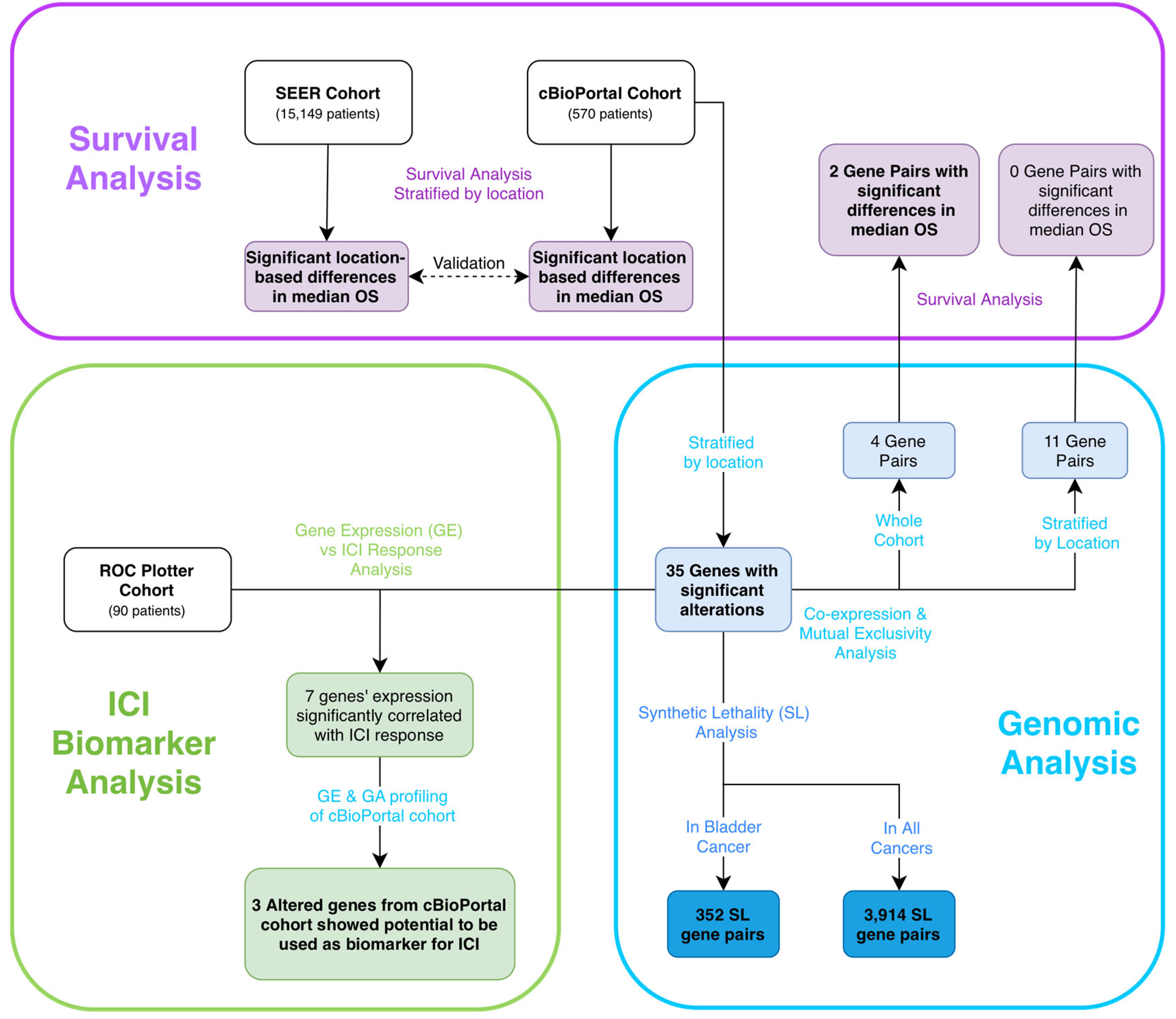
2. Methods
2.1. Survival Analysis
2.2. Genomic Analysis
2.3. Response to Immune Checkpoint Inhibitors
3. Results
3.1. Demographics
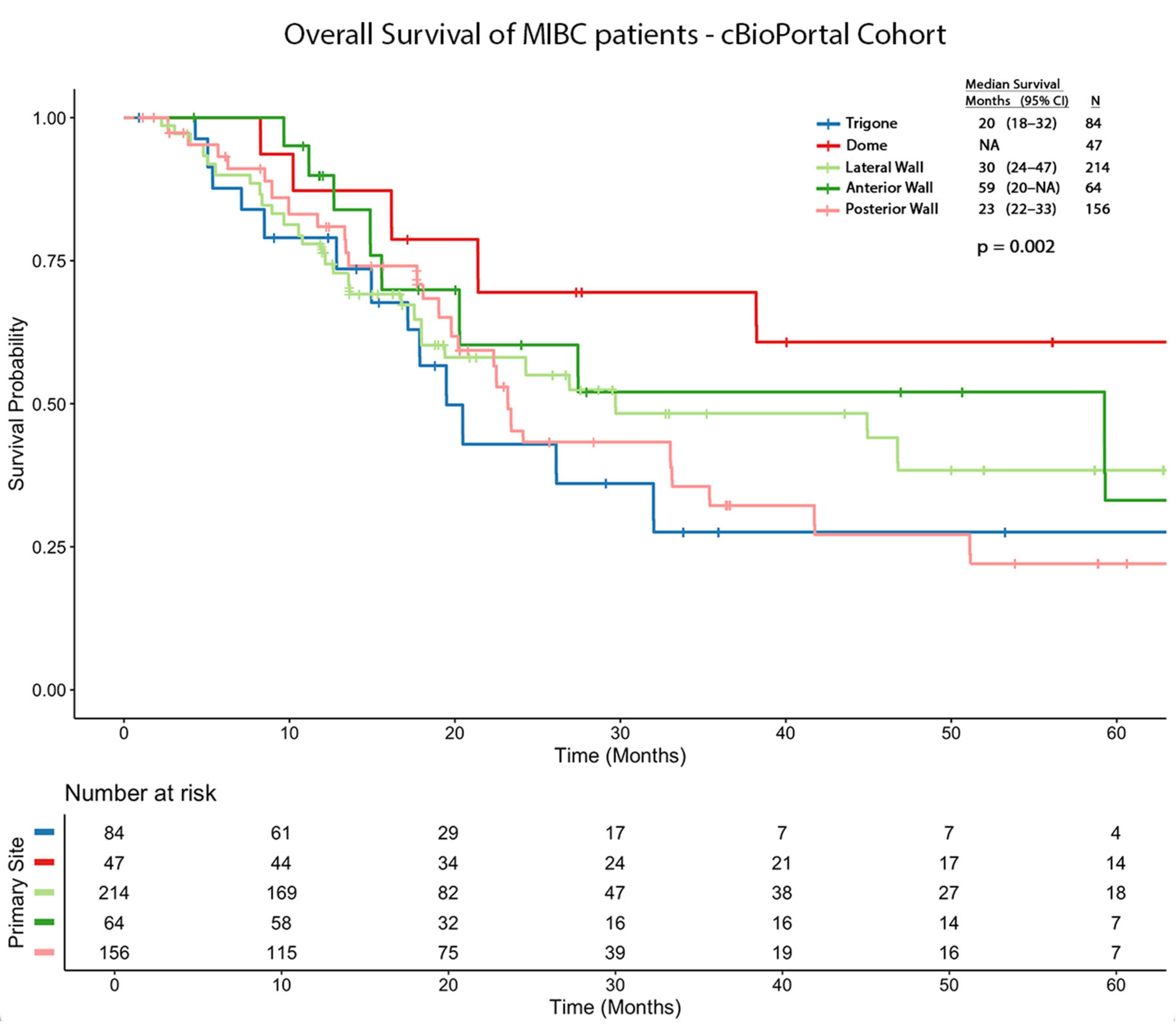
3.2. Survival Analysis of SEER and cBioPortal
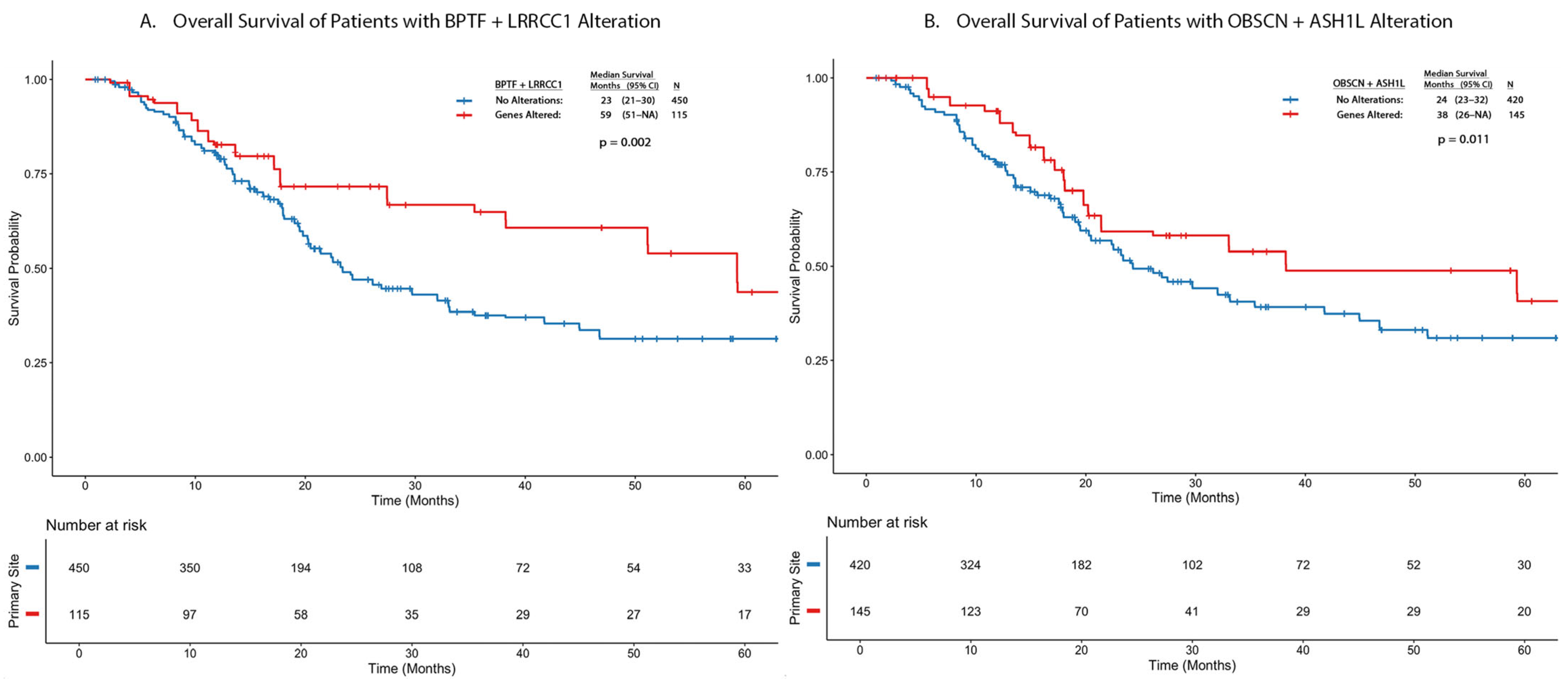
3.3. CBP Genomic Analysis
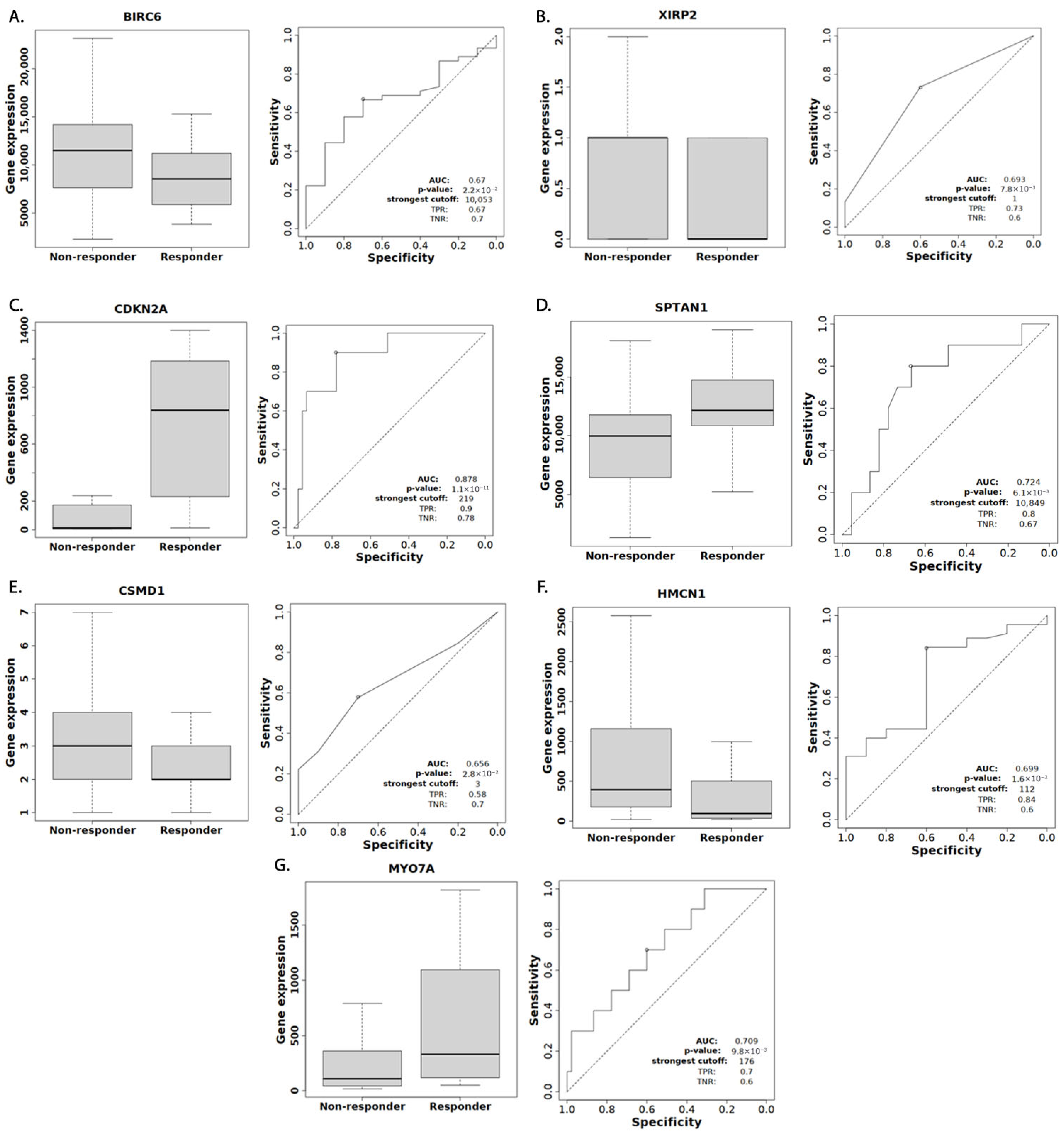
3.4. Response to Immune Checkpoint Inhibitors
4. Discussion
5. Conclusions
Supplementary Materials
Author Contributions
Funding
Institutional Review Board Statement
Informed Consent Statement
Data Availability Statement
Acknowledgments
Conflicts of Interest
References
- Weiner, A.B.; Desai, A.S.; Meeks, J.J. Tumor Location May Predict Adverse Pathology and Survival Following Definitive Treatment for Bladder Cancer: A National Cohort Study. Eur. Urol. Oncol. 2019, 2, 304–310. [Google Scholar] [CrossRef]
- Dutta, R.; Abdelhalim, A.; Martin, J.W.; Vernez, S.L.; Faltas, B.; Lotan, Y.; Youssef, R.F. Effect of Tumor Location on Survival in Urinary Bladder Adenocarcinoma: A Population-Based Analysis. Urol. Oncol. Semin. Orig. Investig. 2016, 34, 531.e1–531.e6. [Google Scholar] [CrossRef]
- Viana, R.; Batourina, E.; Huang, H.; Dressler, G.R.; Kobayashi, A.; Behringer, R.R.; Shapiro, E.; Hensle, T.; Lambert, S.; Mendelsohn, C. The Development of the Bladder Trigone, the Center of the Anti-Reflux Mechanism. Development 2007, 134, 3763–3769. [Google Scholar] [CrossRef]
- Tanaka, S.T.; Ishii, K.; Demarco, R.T.; Pope, J.C.; Brock, J.W.; Hayward, S.W. Endodermal Origin of Bladder Trigone Inferred From Mesenchymal-Epithelial Interaction. J. Urol. 2010, 183, 386–391. [Google Scholar] [CrossRef]
- Liaw, A.; Cunha, G.R.; Shen, J.; Cao, M.; Liu, G.; Sinclair, A.; Baskin, L. Development of the Human Bladder and Ureterovesical Junction. Differentiation 2018, 103, 66–73. [Google Scholar] [CrossRef] [PubMed]
- Flaig, T.W.; Spiess, P.E.; Abern, M.; Agarwal, N.; Bangs, R.; Buyyounouski, M.K.; Chan, K.; Chang, S.S.; Chang, P.; Friedlander, T.; et al. NCCN Guidelines® Insights: Bladder Cancer, Version 3.2024. J. Natl. Compr. Cancer Netw. JNCCN 2024, 22, 216–225. [Google Scholar] [CrossRef]
- Pfaltzgraff, E.R.; Bader, D.M. Heterogeneity in Vascular Smooth Muscle Cell Embryonic Origin in Relation to Adult Structure, Physiology, and Disease. Dev. Dyn. 2015, 244, 410–416. [Google Scholar] [CrossRef] [PubMed]
- Yan, Y.H.; Chen, S.X.; Cheng, L.Y.; Rodriguez, A.Y.; Tang, R.; Cabrera, K.; Zhang, D.Y. Confirming Putative Variants at ≤5% Allele Frequency Using Allele Enrichment and Sanger Sequencing. Sci. Rep. 2021, 11, 11640. [Google Scholar] [CrossRef] [PubMed]
- Guo, L.; Dou, Y.; Xia, D.; Yin, Z.; Xiang, Y.; Luo, L.; Zhang, Y.; Wang, J.; Liang, T. SLOAD: A Comprehensive Database of Cancer-Specific Synthetic Lethal Interactions for Precision Cancer Therapy via Multi-Omics Analysis. Database 2022, 2022, baac075. [Google Scholar] [CrossRef]
- Kovács, S.A.; Fekete, J.T.; Győrffy, B. Predictive Biomarkers of Immunotherapy Response with Pharmacological Applications in Solid Tumors. Acta Pharmacol. Sin. 2023, 44, 1879–1889. [Google Scholar] [CrossRef]
- Carter, J.V.; Pan, J.; Rai, S.N.; Galandiuk, S. ROC-Ing along: Evaluation and Interpretation of Receiver Operating Characteristic Curves. Surgery 2016, 159, 1638–1645. [Google Scholar] [CrossRef]
- Tordai, H.; Torres, O.; Csepi, M.; Padányi, R.; Lukács, G.L.; Hegedűs, T. Analysis of AlphaMissense Data in Different Protein Groups and Structural Context. Sci. Data 2024, 11, 495. [Google Scholar] [CrossRef]
- Montanucci, L.; Brünger, T.; Boßelmann, C.M.; Ivaniuk, A.; Pérez-Palma, E.; Lhatoo, S.; Leu, C.; Lal, D. Evaluating Novel in Silico Tools for Accurate Pathogenicity Classification in Epilepsy-associated Genetic Missense Variants. Epilepsia 2024, 65, 3655–3663. [Google Scholar] [CrossRef] [PubMed]
- Andhika, N.S.; Biswas, S.; Hardcastle, C.; Green, D.J.; Ramsden, S.C.; Birney, E.; Black, G.C.; Sergouniotis, P.I. Using Computational Approaches to Enhance the Interpretation of Missense Variants in the PAX6 Gene. Eur. J. Hum. Genet. 2024, 32, 1005–1013. [Google Scholar] [CrossRef]
- Tissot, W.D.; Diokno, A.C.; Peters, K.M. A Referral center’s experience with transitional cell carcinoma misdiagnosed as interstitial cystitis. J. Urol. 2004, 172, 478–480. [Google Scholar] [CrossRef]
- Sánchez Freire, V.; Burkhard, F.C.; Schmitz, A.; Kessler, T.M.; Monastyrskaya, K. Structural Differences between the Bladder Dome and Trigone Revealed by mRNA Expression Analysis of Cold-cut Biopsies. BJU Int. 2011, 108, E126–E135. [Google Scholar] [CrossRef]
- Yu, Y.-L.; He, Q.; Li, G.-H.; Chen, S. The Dome Wall of Bladder Acts as a Pacemaker Site in Detrusor Instability in Rats. Med. Sci. Monit. 2017, 23, 2400–2407. [Google Scholar] [CrossRef][Green Version]
- Pires-Luis, A.S.; Martinek, P.; Alaghehbandan, R.; Trpkov, K.; Comperat, E.M.; Perez Montiel, D.M.; Bulimbasic, S.; Lobo, J.; Henrique, R.; Vanecek, T.; et al. Molecular Genetic Features of Primary Nonurachal Enteric-Type Adenocarcinoma, Urachal Adenocarcinoma, Mucinous Adenocarcinoma, and Intestinal Metaplasia/Adenoma: Review of the Literature and Next-Generation Sequencing Study. Adv. Anat. Pathol. 2020, 27, 303–310. [Google Scholar] [CrossRef]
- Korossis, S.; Bolland, F.; Southgate, J.; Ingham, E.; Fisher, J. Regional Biomechanical and Histological Characterisation of the Passive Porcine Urinary Bladder: Implications for Augmentation and Tissue Engineering Strategies. Biomaterials 2009, 30, 266–275. [Google Scholar] [CrossRef] [PubMed]
- Fritz, N.; Morel, J.-L.; Jeyakumar, L.H.; Fleischer, S.; Allen, P.D.; Mironneau, J.; Macrez, N. RyR1-Specific Requirement for Depolarization-Induced Ca2+ Sparks in Urinary Bladder Smooth Muscle. J. Cell Sci. 2007, 120, 3784–3791. [Google Scholar] [CrossRef] [PubMed]
- Wang, F.; Yu, J.; Lin, P.; Sigalas, C.; Zhang, S.; Gong, Y.; Sitsapesan, R.; Song, L. The Ryanodine Receptor Mutational Characteristics and Its Indication for Cancer Prognosis. Sci. Rep. 2022, 12, 16113. [Google Scholar] [CrossRef] [PubMed]
- Tuntithavornwat, S.; Shea, D.J.; Wong, B.S.; Guardia, T.; Lee, S.J.; Yankaskas, C.L.; Zheng, L.; Kontrogianni-Konstantopoulos, A.; Konstantopoulos, K. Giant Obscurin Regulates Migration and Metastasis via RhoA-Dependent Cytoskeletal Remodeling in Pancreatic Cancer. Cancer Lett. 2022, 526, 155–167. [Google Scholar] [CrossRef] [PubMed]
- Shriver, M.; Stroka, K.M.; Vitolo, M.I.; Martin, S.; Huso, D.L.; Konstantopoulos, K.; Kontrogianni-Konstantopoulos, A. Loss of Giant Obscurins from Breast Epithelium Promotes Epithelial-to-Mesenchymal Transition, Tumorigenicity and Metastasis. Oncogene 2015, 34, 4248–4259. [Google Scholar] [CrossRef]
- Bi, J.; Liu, H.; Cai, Z.; Dong, W.; Jiang, N.; Yang, M.; Huang, J.; Lin, T. Circ-BPTF Promotes Bladder Cancer Progression and Recurrence through the miR-31-5p/RAB27A Axis. Aging 2018, 10, 1964–1976. [Google Scholar] [CrossRef]
- Teng, W.; Ling, Y.; Liu, Z.; Jiang, L.; Fu, G.; Zhou, X.; Long, N.; Liu, J.; Chu, L. Advances in the Antitumor Mechanisms of Tripartite Motif-Containing Protein 3. J. Cancer Res. Clin. Oncol. 2024, 150, 105. [Google Scholar] [CrossRef]
- Tooley, J.G.; Catlin, J.P.; Tooley, C.E.S. METTLing in Stem Cell and Cancer Biology. Stem Cell Rev. Rep. 2023, 19, 76–91. [Google Scholar] [CrossRef] [PubMed]
- Liu, L.; Wang, X.; Li, Y.; Ma, C.; Shi, Y.; Li, X.; Chen, J. The NDUFV2 Gene Silencing Inhibits the Proliferation of Two Drug-Resistant Cancer Cell Lines. J. Genet. Eng. Biotechnol. 2022, 20, 64. [Google Scholar] [CrossRef]
- Zahid, H.; Buchholz, C.R.; Singh, M.; Ciccone, M.F.; Chan, A.; Nithianantham, S.; Shi, K.; Aihara, H.; Fischer, M.; Schönbrunn, E.; et al. New Design Rules for Developing Potent Cell-Active Inhibitors of the Nucleosome Remodeling Factor (NURF) via BPTF Bromodomain Inhibition. J. Med. Chem. 2021, 64, 13902–13917. [Google Scholar] [CrossRef]
- Chakravarty, D.; Johnson, A.; Sklar, J.; Lindeman, N.I.; Moore, K.; Ganesan, S.; Lovly, C.M.; Perlmutter, J.; Gray, S.W.; Hwang, J.; et al. Somatic Genomic Testing in Patients With Metastatic or Advanced Cancer: ASCO Provisional Clinical Opinion. J. Clin. Oncol. 2022, 40, 1231–1258. [Google Scholar] [CrossRef]
- Sun, S.; Liu, L.; Zhang, J.; Sun, L.; Shu, W.; Yang, Z.; Yao, H.; Zhang, Z. The Role of Neoantigens and Tumor Mutational Burden in Cancer Immunotherapy: Advances, Mechanisms, and Perspectives. J. Hematol. Oncol. 2025, 18, 84. [Google Scholar] [CrossRef]
- Worst, T.S.; Weis, C.-A.; Stöhr, R.; Bertz, S.; Eckstein, M.; Otto, W.; Breyer, J.; Hartmann, A.; Bolenz, C.; Wirtz, R.M.; et al. CDKN2A as Transcriptomic Marker for Muscle-Invasive Bladder Cancer Risk Stratification and Therapy Decision-Making. Sci. Rep. 2018, 8, 14383. [Google Scholar] [CrossRef] [PubMed]
- Hayashi, Y.; Fujita, K.; Sakai, K.; Adomi, S.; Banno, E.; Nojima, S.; Tomiyama, E.; Matsushita, M.; Kato, T.; Hatano, K.; et al. Targeted-Sequence of Normal Urothelium and Tumor of Patients with Non-Muscle Invasive Bladder Cancer. Sci. Rep. 2022, 12, 16642. [Google Scholar] [CrossRef]
- Gutiontov, S.I.; Turchan, W.T.; Spurr, L.F.; Rouhani, S.J.; Chervin, C.S.; Steinhardt, G.; Lager, A.M.; Wanjari, P.; Malik, R.; Connell, P.P.; et al. CDKN2A Loss-of-Function Predicts Immunotherapy Resistance in Non-Small Cell Lung Cancer. Sci. Rep. 2021, 11, 20059. [Google Scholar] [CrossRef] [PubMed]
- Li, Y.; Liu, Y.; Kang, Z.; Guo, J.; Liu, N. Tumor Microenvironment Heterogeneity in Bladder Cancer Identifies Biologically Distinct Subtypes Predicting Prognosis and Anti-PD-L1 Responses. Sci. Rep. 2023, 13, 19563. [Google Scholar] [CrossRef]
- Dong, Y.; Zheng, M.; Wang, X.; Yu, C.; Qin, T.; Shen, X. High Expression of CDKN2A Is Associated with Poor Prognosis in Colorectal Cancer and May Guide PD-1-Mediated Immunotherapy. BMC Cancer 2023, 23, 1097. [Google Scholar] [CrossRef]
- Cheng, T.; Wu, Y.; Liu, Z.; Yu, Y.; Sun, S.; Guo, M.; Sun, B.; Huang, C. CDKN2A-Mediated Molecular Subtypes Characterize the Hallmarks of Tumor Microenvironment and Guide Precision Medicine in Triple-Negative Breast Cancer. Front. Immunol. 2022, 13, 970950. [Google Scholar] [CrossRef]
- Schrecker, C.; Behrens, S.; Schönherr, R.; Ackermann, A.; Pauli, D.; Plotz, G.; Zeuzem, S.; Brieger, A. SPTAN1 Expression Predicts Treatment and Survival Outcomes in Colorectal Cancer. Cancers 2021, 13, 3638. [Google Scholar] [CrossRef]
- Wu, S.; Zang, Q.; Xing, Z.; Li, X.; Leng, J.; Liu, Y.; Wang, X.; Yang, J. A Pan-Cancer Analysis of the BIRC Gene Family and Its Association with Prognosis, Tumor Microenvironment, and Therapeutic Targets. Crit. Rev. Eukaryot. Gene Expr. 2021, 31, 35–48. [Google Scholar] [CrossRef] [PubMed]

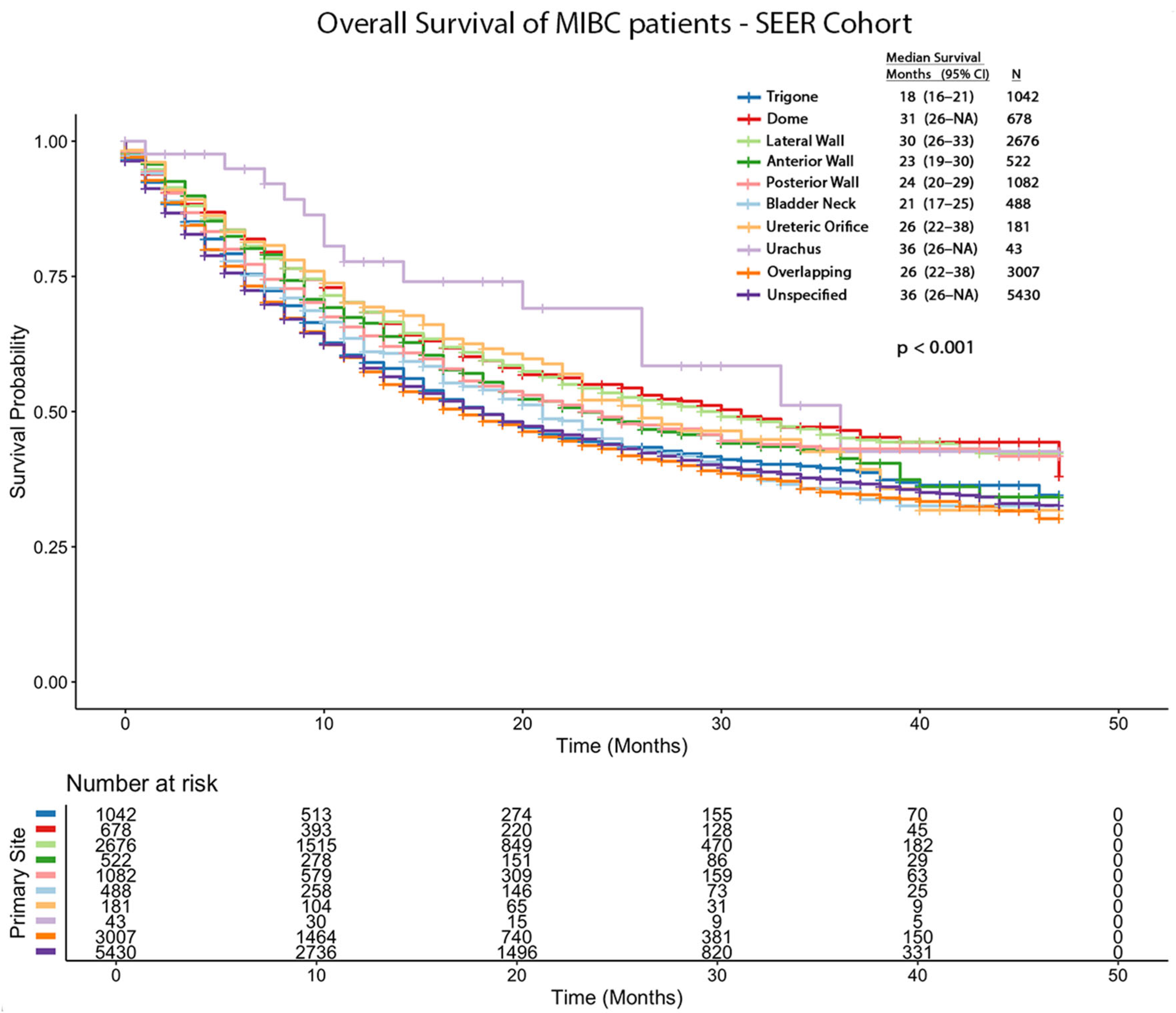


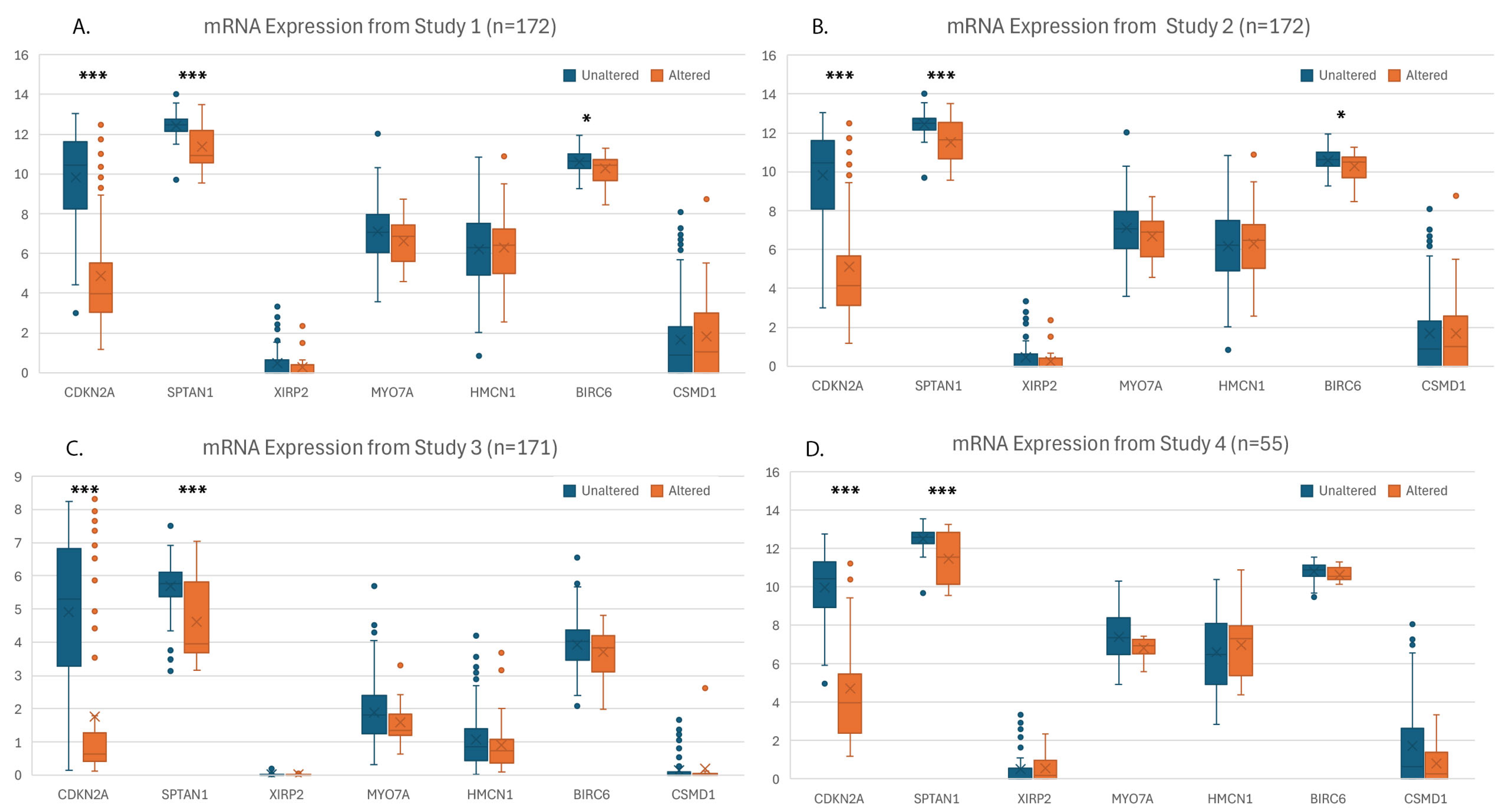

| Variable | Trigone | Dome | Lateral Wall | Anterior Wall | Posterior Wall | Bladder Neck | Ureteric Orifice | Urachus | Overlapping Sites | Unspecified Sites | p-Value | |
|---|---|---|---|---|---|---|---|---|---|---|---|---|
| SEER Cohort | ||||||||||||
| Total,n (%) | 1042 (6.88) | 678 (4.48) | 2676 (17.66) | 522 (3.45) | 1082 (7.14) | 488 (3.22) | 181 (1.19) | 43 (0.28) | 3007 (19.85) | 5430 (35.84) | ||
| T-Stage | <0.001 | |||||||||||
| T2 | 763 (73.2) | 468 (69.0) | 2050 (76.6) | 372 (71.3) | 797 (73.7) | 332 (68.0) | 147 (81.2) | 10 (23.3) | 1892 (62.9) | 3687 (67.9) | ||
| T3+ | 279 (26.8) | 210 (31.0) | 626 (23.4) | 150 (28.7) | 285 (26.3) | 156 (32.0) | 34 (18.8) | 33 (76.7) | 1115 (37.1) | 1743 (32.1) | ||
| N-Stage | <0.001 | |||||||||||
| N0 | 812 (77.9) | 543 (80.1) | 2194 (82.0) | 412 (78.9) | 844 (78.0) | 382 (78.3) | 140 (77.3) | 31 (72.1) | 2235 (74.3) | 4010 (73.8) | ||
| N1+ | 178 (17.1) | 102 (15.0) | 398 (14.9) | 91 (17.4) | 210 (19.4) | 78 (16.0) | 34 (18.8) | 7 (16.3) | 678 (22.5) | 1088 (20.0) | ||
| NX | 52 (5.0) | 33 (4.9) | 84 (3.1) | 19 (3.6) | 28 (2.6) | 28 (5.7) | 7 (3.9) | 5 (11.6) | 94 (3.1) | 332 (6.1) | ||
| M-Stage | <0.001 | |||||||||||
| M0 | 887 (85.1) | 599 (88.3) | 2385 (89.1) | 463 (88.7) | 947 (87.5) | 428 (87.7) | 157 (86.7) | 30 (69.8) | 2611 (86.8) | 4587 (84.5) | ||
| M1 | 155 (14.9) | 79 (11.7) | 291 (10.9) | 59 (11.3) | 135 (12.5) | 60 (12.3) | 24 (13.3) | 13 (30.2) | 396 (13.2) | 843 (15.5) | ||
| Age Group; median | 75–79 yrs | 75–79 yrs | 70–74 yrs | 70–74 yrs | 70–74 yrs | 75–79 yrs | 75–79 yrs | 55–59 yrs | 70–74 yrs | 70–74 yrs | ||
| Sex; n (%) | <0.001 | |||||||||||
| Male | 742 (71.2) | 477 (70.4) | 2003 (74.9) | 389 (74.5) | 795 (73.5) | 404 (82.8) | 133 (73.5) | 27 (62.8) | 2139 (71.1) | 4061 (74.8) | ||
| Female | 300 (28.8) | 201 (29.6) | 673 (25.1) | 133 (25.5) | 287 (26.5) | 84 (17.2) | 48 (26.5) | 16 (37.2) | 868 (28.9) | 1369 (25.2) | ||
| Race; n (%) | <0.001 | |||||||||||
| White | 915 (87.81) | 572 (84.37) | 2376 (88.79) | 437 (83.72) | 960 (88.72) | 422 (86.48) | 157 (86.74) | 24 (55.81) | 2558 (85.1) | 4621 (85.1) | ||
| Black | 67 (6.43) | 58 (8.55) | 162 (6.05) | 47 (9.00) | 68 (6.28) | 35 (7.17) | 8 (4.42) | 7 (16.28) | 273 (9.08) | 409 (7.53) | ||
| Asian | 45 (4.32) | 41 (6.05) | 115 (4.30) | 32 (6.13) | 42 (3.88) | 28 (5.74) | 11 (6.08) | 11 (25.58) | 148 (4.92) | 347 (6.39) | ||
| American Indian | 8 (0.77) | 4 (0.59) | 14 (0.52) | 1 (0.19) | 5 (0.46) | 3 (0.61) | 3 (1.66) | 1 (2.33) | 11 (0.36) | 18 (0.33) | ||
| Unknown | 7 (0.67) | 3 (0.44) | 9 (0.34) | 5 (0.96) | 7 (0.65) | NA | 2 (1.10) | NA | 17 (0.57) | 35 (0.64) | ||
| cBioPortal Cohort | ||||||||||||
| Total, n (%) | 84 (14.7) | 47 (8.2) | 214 (37.5) | 64 (11.2) | 161 (28.2) | |||||||
| Age; median (IQR) | 73 (66–78) | 70 (56–74) | 67 (60–73) | 69 (63–79) | 70 (61–76) | - | - | - | - | - | <0.001 | |
| Sex; n (%) | 0.006 | |||||||||||
| Male | 57 (67.9) | 29 (61.7) | 172 (80.37) | 55 (85.9) | 121 (75.2) | - | - | - | - | - | ||
| Female | 27 (32.1) | 18 (38.3) | 42 (19.6) | 9 (14.1) | 40 (24.8%) | - | - | - | - | - | ||
| Race; n (%) | 0.068 | |||||||||||
| White | 77 (91.7) | 35 (74.5) | 183 (85.5) | 58 (90.6) | 147 (91.3) | - | - | - | - | - | ||
| Black | 3 (3.8) | 6 (12.8) | 16 (7.5) | 3 (4.7) | 14 (8.7) | - | - | - | - | - | ||
| Asian | 0 (0) | 3 (6.4) | 9 (4.2) | 3 (4.7) | 0 (0) | - | - | - | - | - | ||
| Unknown | 4 (4.8) | 3 (6.4) | 6 (2.8) | 0 (0) | 0 (0) | - | - | - | - | - | ||
| Mutation Frequency | |||||||
|---|---|---|---|---|---|---|---|
| Gene | Trigone | Dome | Lateral Wall | Anterior Wall | Posterior Wall | Highest Mutation Frequency | p-Value |
| BPTF | 12% | 12% | 5% | 34% | 9% | Anterior Wall | 0.001 |
| MYO7A | 13% | 9% | 5% | 20% | 6% | Anterior Wall | 0.001 |
| SPTAN1 | 12% | 17% | 13% | 25% | 6% | Anterior Wall | 0.002 |
| CDKN2A | 33% | 32% | 35% | 53% | 50% | Anterior Wall | 0.002 |
| LRRCC1 | 17% | 17% | 9% | 22% | 6% | Anterior Wall | 0.003 |
| IGSF10 | 6% | 7% | 7% | 19% | 17% | Anterior Wall | 0.004 |
| AKAP9 | 6% | 14% | 12% | 27% | 12% | Anterior Wall | 0.006 |
| LAMA3 | 17% | 7% | 7% | 20% | 15% | Anterior Wall | 0.008 |
| ASH1L | 13% | 7% | 14% | 30% | 14% | Anterior Wall | 0.009 |
| PTPRT | 6% | 21% | 12% | 22% | 7% | Anterior Wall | 0.01 |
| KMT2A | 25% | 30% | 8% | 5% | 14% | Dome | 0.001 |
| OBSCN | 11% | 38% | 10% | 15% | 21% | Dome | 0.001 |
| TP53 | 60% | 77% | 53% | 30% | 54% | Dome | 0.001 |
| DNAH11 | 29% | 34% | 16% | 5% | 14% | Dome | 0.001 |
| SYNE1 | 24% | 38% | 18% | 31% | 12% | Dome | 0.001 |
| FCGBP | 15% | 26% | 8% | 5% | 6% | Dome | 0.001 |
| BIRC6 | 23% | 26% | 13% | 5% | 7% | Dome | 0.001 |
| XIRP2 | 19% | 28% | 11% | 5% | 10% | Dome | 0.001 |
| RYR1 | 17% | 38% | 14% | 17% | 14% | Dome | 0.002 |
| HMCN1 | 26% | 45% | 20% | 34% | 22% | Dome | 0.002 |
| KMT2B | 18% | 24% | 7% | 19% | 12% | Dome | 0.003 |
| EP300 | 15% | 34% | 23% | 11% | 14% | Dome | 0.004 |
| DNAH5 | 32% | 43% | 21% | 15% | 24% | Dome | 0.004 |
| MCM3AP | 13% | 21% | 7% | 5% | 6% | Dome | 0.007 |
| F5 | 11% | 19% | 9% | 17% | 24% | Posterior Wall | 0.001 |
| SI | 7% | 19% | 7% | 13% | 19% | Posterior Wall | 0.002 |
| SYNE2 | 17% | 19% | 8% | 10% | 20% | Posterior Wall | 0.009 |
| PIK3CA | 25% | 21% | 19% | 20% | 35% | Posterior Wall | 0.01 |
| CSMD1 | 27% | 15% | 7% | 13% | 21% | Trigone | 0.001 |
| RELN | 23% | 14% | 6% | 18% | 9% | Trigone | 0.001 |
| ADCY2 | 32% | 15% | 17% | 7% | 17% | Trigone | 0.002 |
| CEP350 | 20% | 17% | 6% | 9% | 14% | Trigone | 0.005 |
| NF1 | 20% | 19% | 8% | 16% | 8% | Trigone | 0.006 |
| ANK3 | 20% | 11% | 6% | 11% | 11% | Trigone | 0.007 |
| TENM3 | 20% | 19% | 10% | 5% | 7% | Trigone | 0.01 |
Disclaimer/Publisher’s Note: The statements, opinions and data contained in all publications are solely those of the individual author(s) and contributor(s) and not of MDPI and/or the editor(s). MDPI and/or the editor(s) disclaim responsibility for any injury to people or property resulting from any ideas, methods, instructions or products referred to in the content. |
© 2026 by the authors. Licensee MDPI, Basel, Switzerland. This article is an open access article distributed under the terms and conditions of the Creative Commons Attribution (CC BY) license.
Share and Cite
Venkatesh, A.; Rodriguez Rosales, R.D.; Kanumuambidi, J.-P.; Ishiyama, Y.; Al-Toubat, M.; Sceats, H.; Metzner, T.D.; Sparks, S.; Murray, N.; Bandyk, M.; et al. Role of Spatial Heterogeneity in Muscle-Invasive Bladder Cancer on Overall Survival and Immunotherapy Response. Cancers 2026, 18, 875. https://doi.org/10.3390/cancers18050875
Venkatesh A, Rodriguez Rosales RD, Kanumuambidi J-P, Ishiyama Y, Al-Toubat M, Sceats H, Metzner TD, Sparks S, Murray N, Bandyk M, et al. Role of Spatial Heterogeneity in Muscle-Invasive Bladder Cancer on Overall Survival and Immunotherapy Response. Cancers. 2026; 18(5):875. https://doi.org/10.3390/cancers18050875
Chicago/Turabian StyleVenkatesh, Arjun, Reynier D. Rodriguez Rosales, Jean-Pierre Kanumuambidi, Yudai Ishiyama, Mohammed Al-Toubat, Hunter Sceats, Thomas D. Metzner, Shelby Sparks, Nicole Murray, Mark Bandyk, and et al. 2026. "Role of Spatial Heterogeneity in Muscle-Invasive Bladder Cancer on Overall Survival and Immunotherapy Response" Cancers 18, no. 5: 875. https://doi.org/10.3390/cancers18050875
APA StyleVenkatesh, A., Rodriguez Rosales, R. D., Kanumuambidi, J.-P., Ishiyama, Y., Al-Toubat, M., Sceats, H., Metzner, T. D., Sparks, S., Murray, N., Bandyk, M., & Balaji, K. C. (2026). Role of Spatial Heterogeneity in Muscle-Invasive Bladder Cancer on Overall Survival and Immunotherapy Response. Cancers, 18(5), 875. https://doi.org/10.3390/cancers18050875