Metal Ion-Mediated Regulation of Cell Fate: A Novel Strategy for Synergy with Radiotherapy and Immunotherapy


Simple Summary
Abstract
1. Introduction
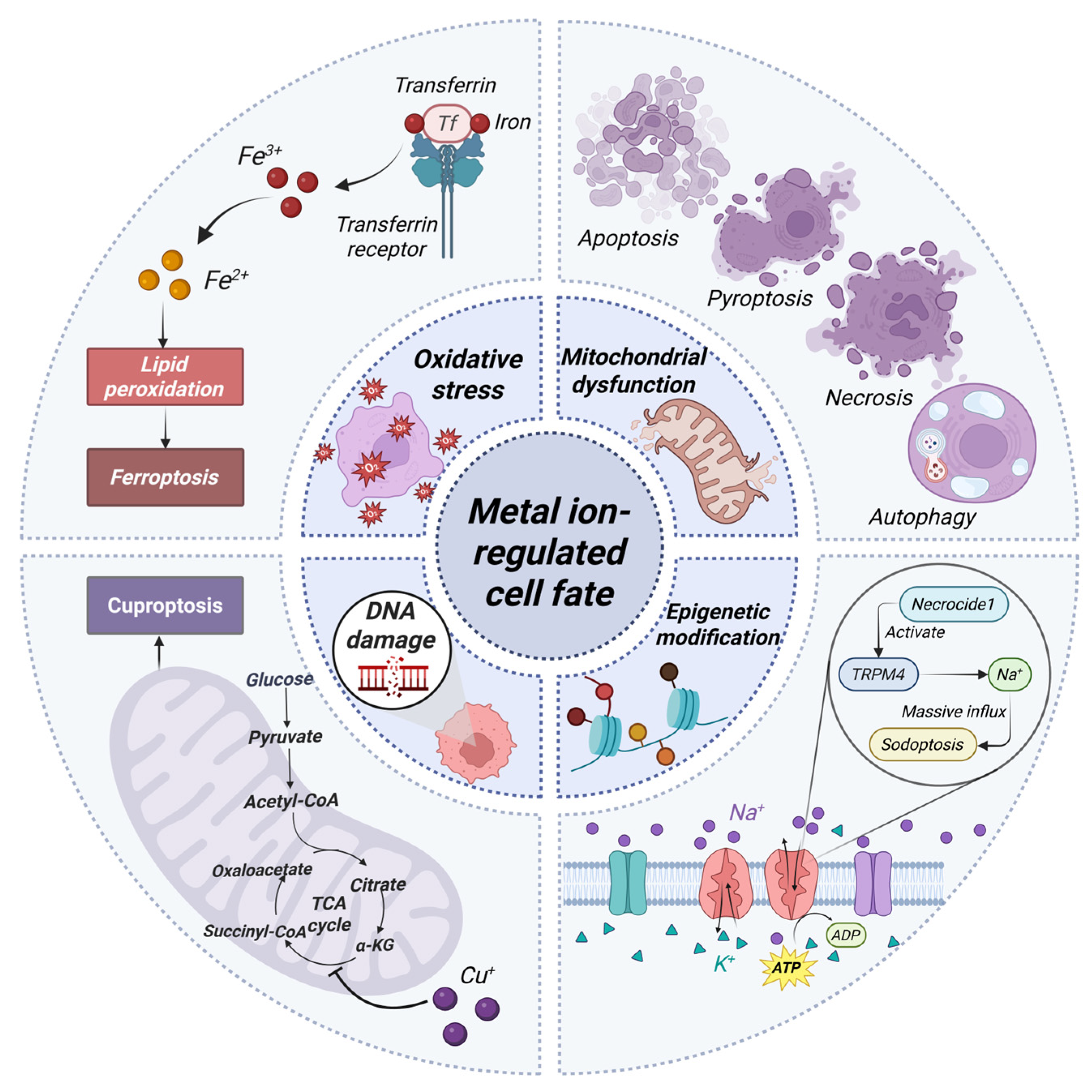
2. Mechanism of Ion-Induced Cell Death
2.1. Oxidative Stress
2.2. Mitochondrial Dysfunction
2.3. DNA Damage
2.4. Epigenetic Modification
3. Different Cell Fates Induced by Metal Ions
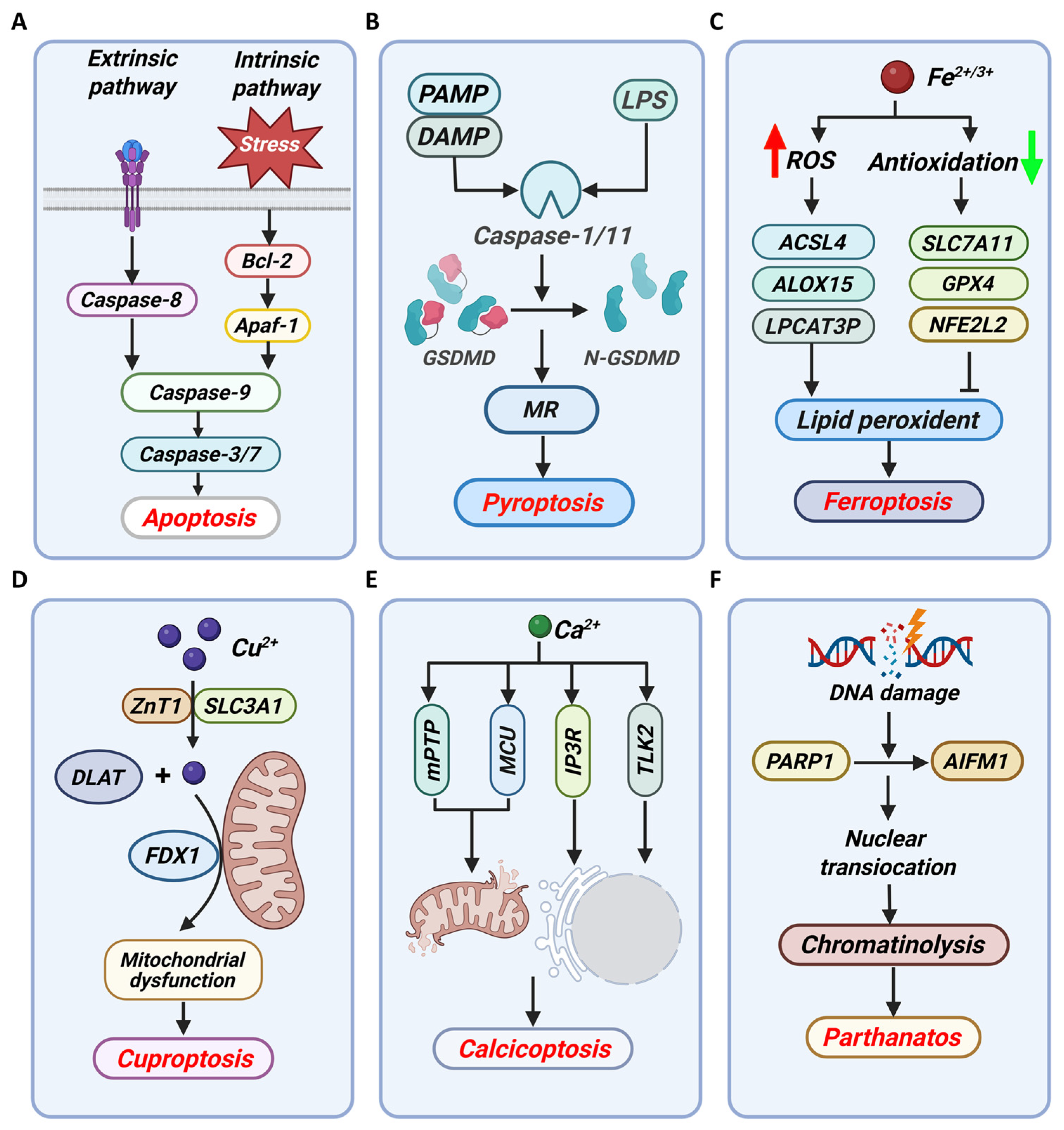
3.1. Programmed Cell Death (PCD)
3.1.1. Apoptosis
3.1.2. Pyroptosis
3.1.3. Ferroptosis
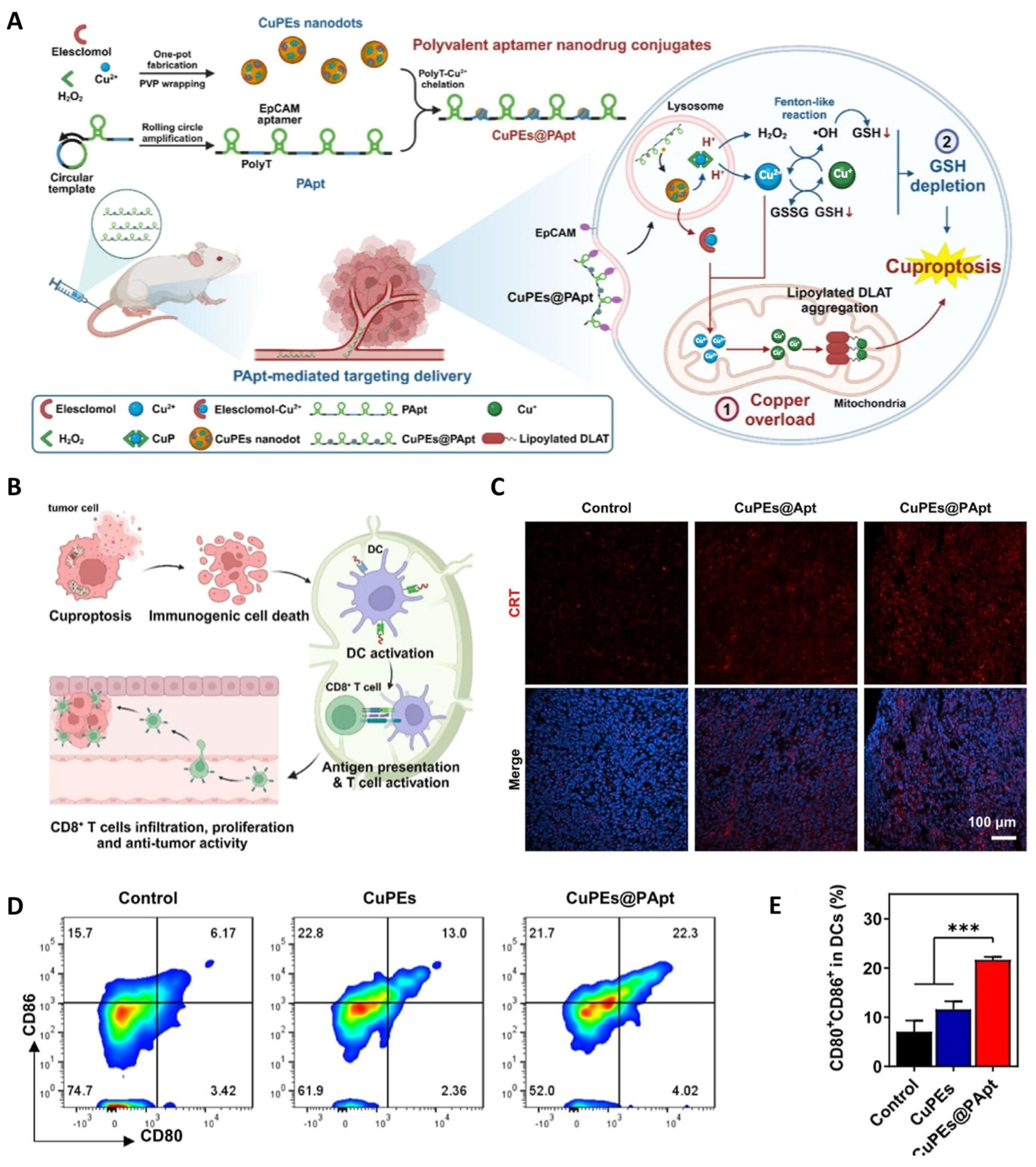
3.1.4. Cuproptosis
3.1.5. Calcicoptosis
3.1.6. Parthanatos
3.2. Non-Programmed Cell Death (Non-PCD)
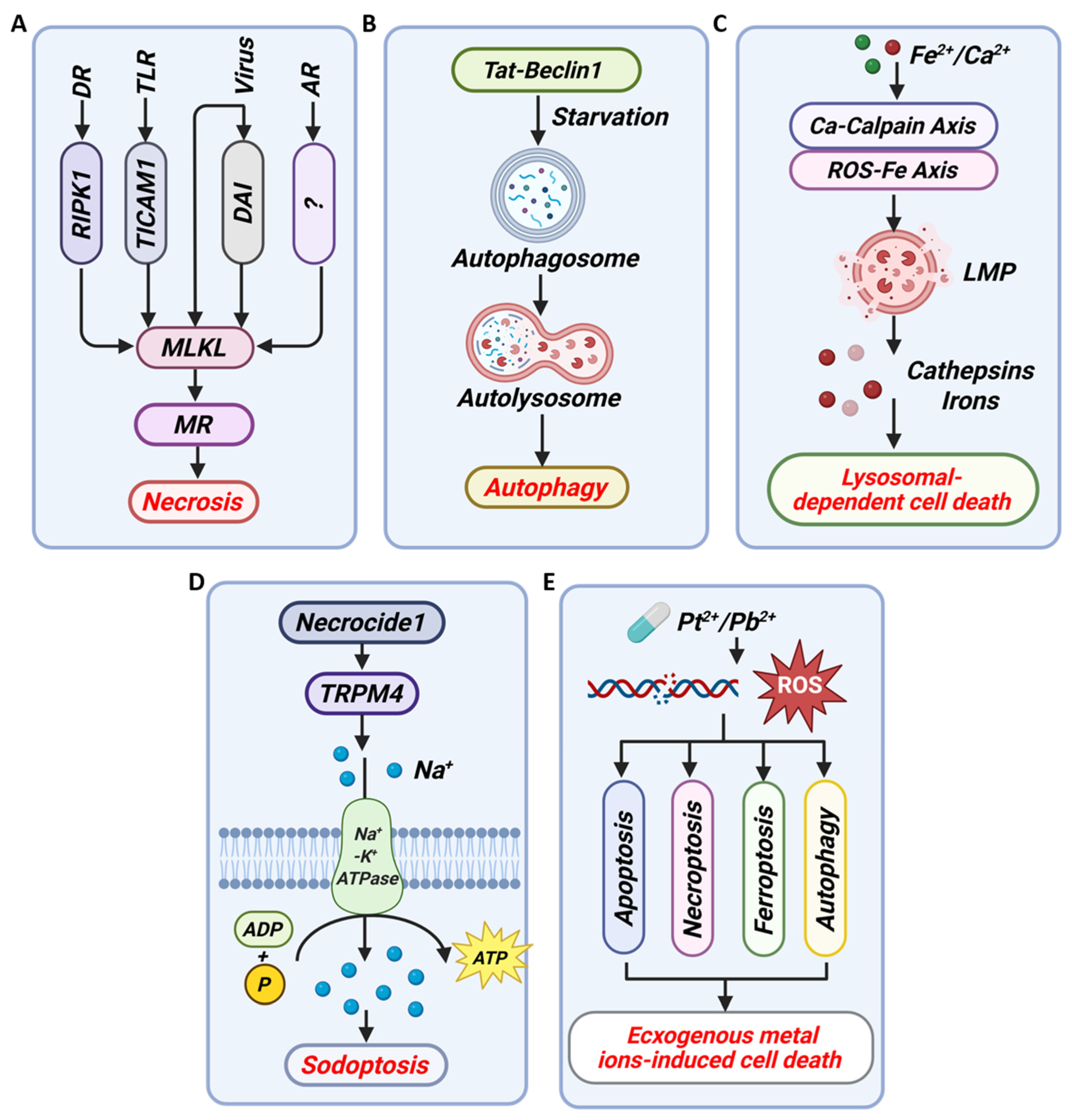
3.2.1. Necrosis
3.2.2. Autophagic-Dependent Death
3.2.3. Lysosomal-Dependent Cell Death (LDCD)
3.2.4. Sodoptosis
3.3. Exogenous Metal Ion-Induced Cell Death
3.3.1. Leadoptosis
3.3.2. Platinum-Induced Cell Death
4. Application of Metal Ions in Cancer Therapies
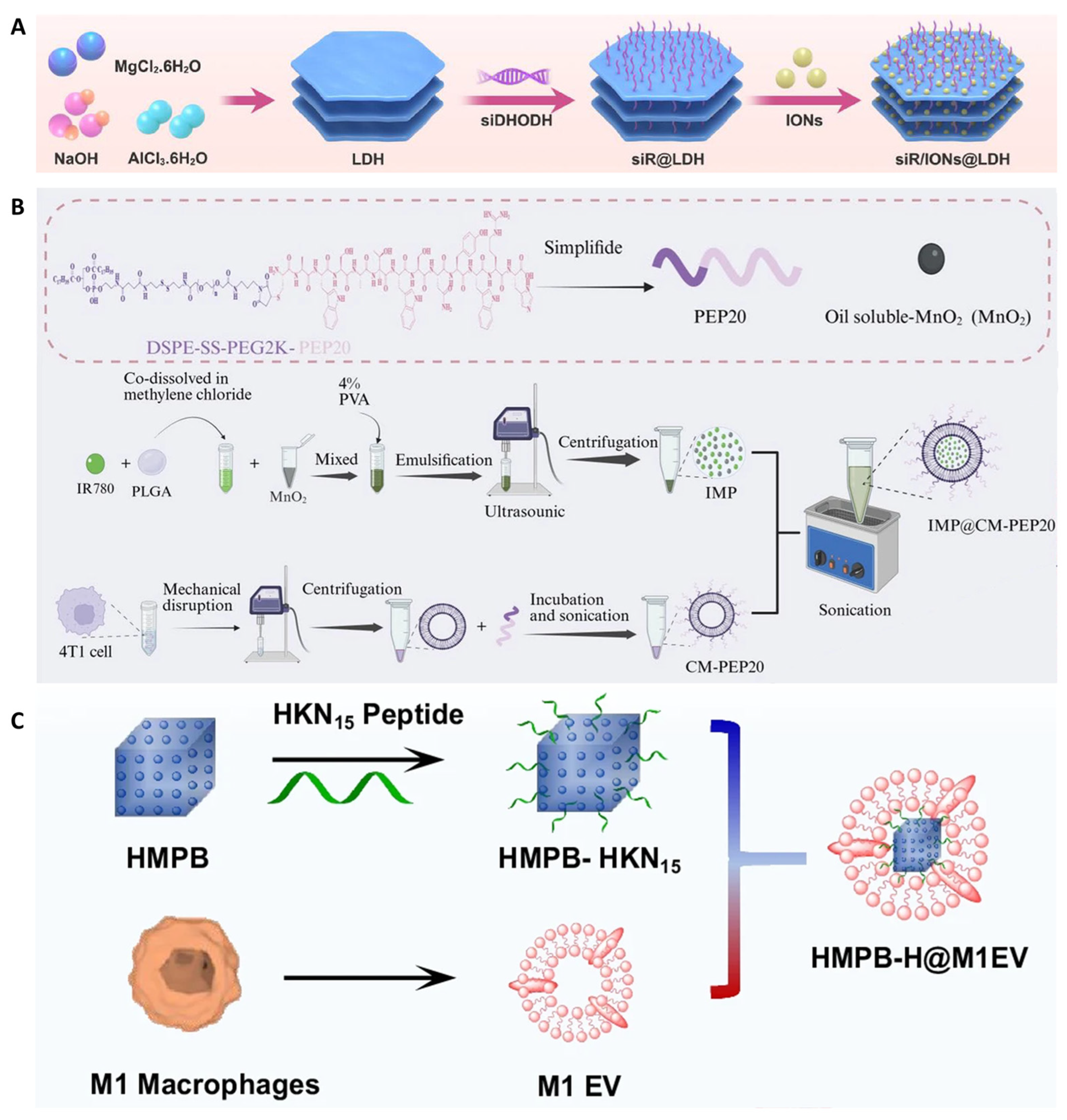
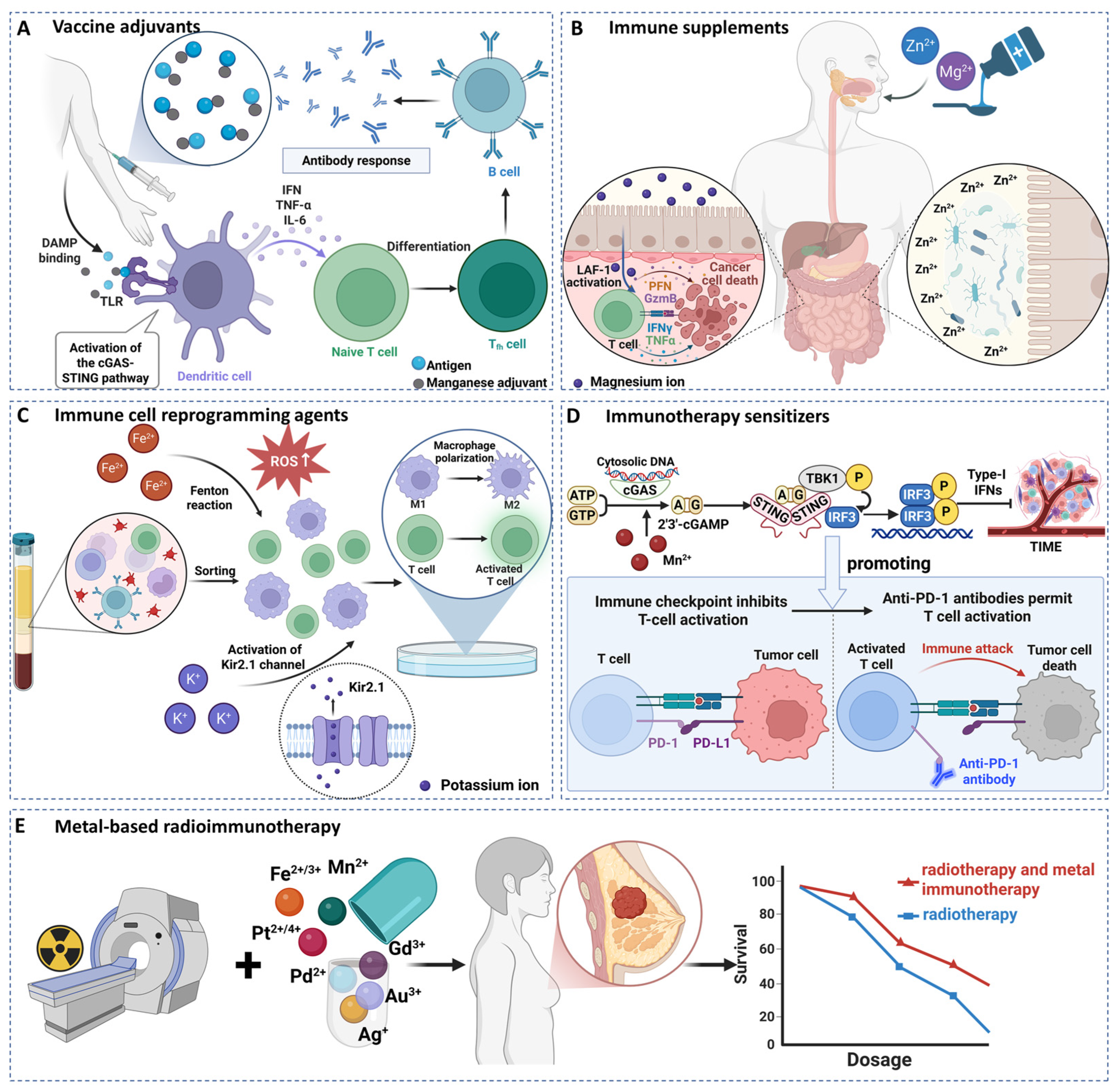
4.1. Metal-Based Vaccine Adjuvants
4.2. Metal-Based Immune Supplements
4.3. Metal Ion-Based Immune Cell Reprogramming Agents
4.4. Metal Ion-Based Immunotherapy Sensitizers
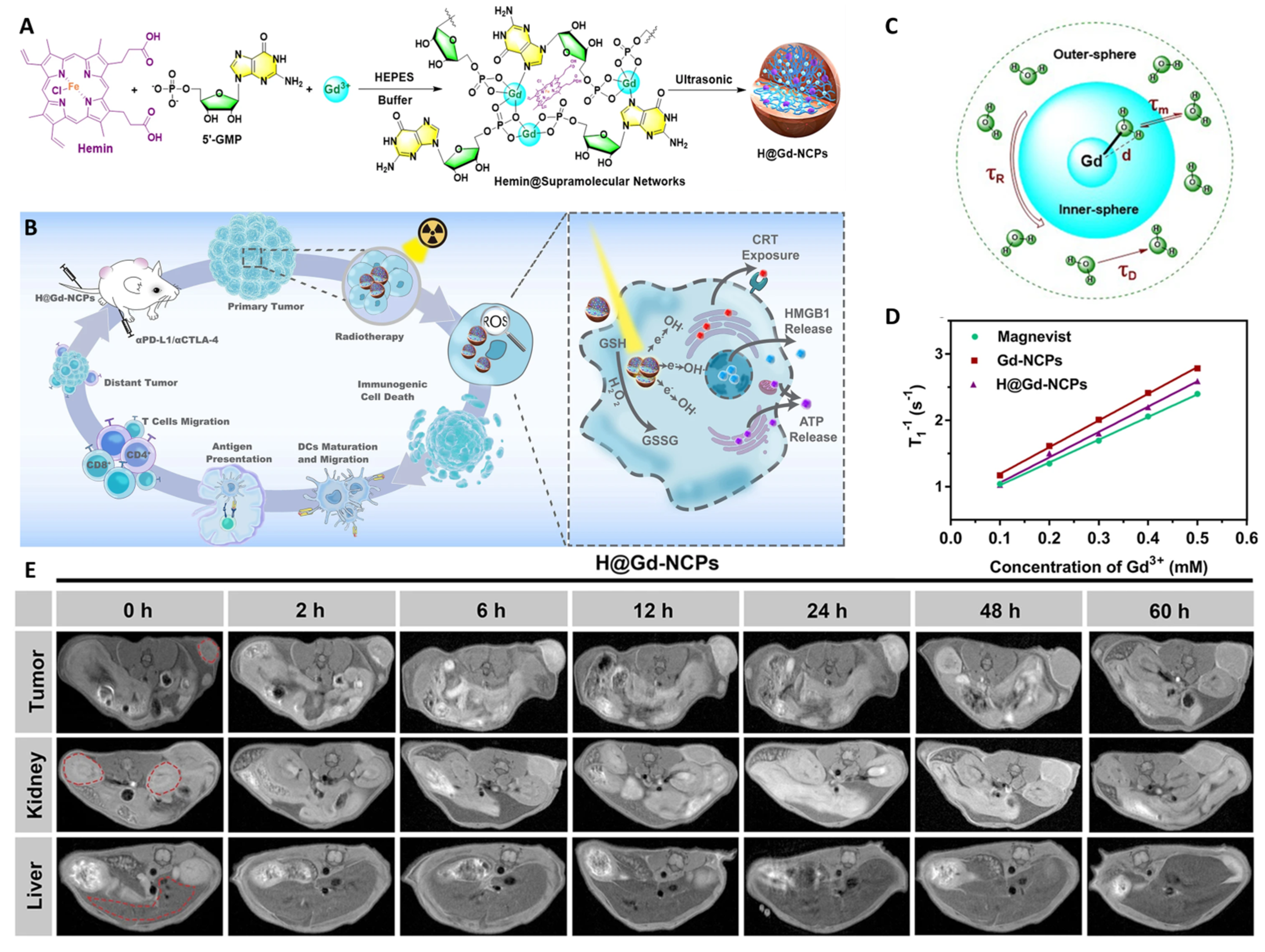
4.5. The Synergistic Effect of Radiotherapy and Metal Immunotherapy
5. Conclusions and Prospects
Author Contributions
Funding
Data Availability Statement
Acknowledgments
Conflicts of Interest
Abbreviations
| Cd | cadmium |
| Pb | lead |
| Hg | mercury |
| As | arsenic |
| Fe | iron |
| Cu | copper |
| Zn | zinc |
| Ni | nickel |
| Al | aluminum |
| K | potassium |
| S | sulfur |
| Si | silicon |
| Pt | platinum |
| Na | sodium |
| Se | selenium |
| Mn | manganese |
| Mg | magnesium |
| Co | Cobalt |
| Au | gold |
| Bi | bismuth |
| Ir | iridium |
| Ga | gallium |
| Te | tellurium |
| Gd | gadolinium |
| DAMP | damage-associated molecular pattern |
| cGAS | cyclic GMP-AMP synthase |
| STING | stimulator of interferon genes |
| NLRP3 | NOD-like receptor thermal protein domain-associated protein 3 |
| TAM | tumor-associated macrophage |
| TME | tumor microenvironment |
| DSB | DNA double-strand break |
| ROS | reactive oxygen species |
| mtROS | mitochondrial ROS |
| ICD | immunogenic cell death |
| GSH | glutathione |
| Nrf2 | nuclear factor erythroid 2-related factor 2 |
| Hmox1 | heme oxygenase 1 |
| Gsta3 | glutathione S-transferase alpha 3 |
| SOD | superoxide dismutase |
| GPX4 | glutathione peroxidase 4 |
| •OH | hydroxyl radical |
| ETC | electron transport chain |
| mtHsp70 | mitochondrial heat shock protein 70 |
| SCO1 | synthesis of cytochrome C oxidase 1 |
| SCO2 | synthesis of cytochrome C oxidase 2 |
| MQC | mitochondrial quality control |
| COX | cyclooxygenase |
| mtDNA | mitochondrial DNA |
| DDR | DNA damage response |
| NF-κB | nuclear factor-kappa B |
| PI3K | phosphoinositide 3-kinase |
| Akt | protein Kinase B |
| mTOR | mechanistic target of rapamycin |
| BER | base excision repair |
| HR | homologous recombination |
| NHEJ | non-homologous end joining |
| NER | nucleotide excision repair |
| OGG1 | 8-oxoguanine DNA glyco-sylase |
| MTH1 | MutT homolog 1 |
| PARP | poly(ADP-ribose) polymerase 1 |
| XRCC1 | X-ray repair cross complementing 1 |
| ERCC1-XPF | ERCC1-XPF nuclease |
| ERCC1 | ERCC excision repair 1, en-donuclease non-catalytic subunit |
| XPR | ERCC excision repair 4 (ERCC4), endonuclease catalytic subunit |
| BECN1 | Beclin-1 |
| ATG4A | autophagy-related 4A cysteine peptidase |
| DNMT | DNA methyltransferase |
| HDAC | histone deacetylase |
| HMT | histone methyltransferase |
| miRNA | microRNA |
| lncRNA | long non-coding RNA |
| BAX | BCL2 associated X |
| BAK | BCL2 antagonist/killer 1 |
| PCD | programmed cell death |
| Apaf-1 | apoptotic protease-activating factor 1 |
| NEK7 | NIMA related kinase 7 |
| LOX | lipoxygenase |
| PUFA | polyunsaturated fatty acid |
| TCA | tricarboxylic acid |
| MCU | mitochondrial calcium uniporter |
| mPTP | mitochondrial permeability transition pore |
| NAD+ | nicotinamide adenine dinucleotid |
| ATP | adenosine triphosphate |
| PARP1 | poly ADP-ribose polymerase 1 |
| AIF | apoptosis-inducing factor |
| RIPK | receptor-interacting protein kinase |
| MLKL | mixed lineage kinase domain like pseudokinase |
| ATG | autophagy-related gene |
| MASLD | metabolic dysfunction-associated steatotic liver disease |
| LDCD | lysosome-dependent cell death |
| LMP | lysosomal membrane permeabilization |
| NC1 | Necrocide 1 |
| TRPM4 | transient receptor potential melastatin 4 |
| NECSO | necrosis driven by sodium overload |
| SIRT1 | sirtuin 1 |
| MAPK | mitogen-activated protein kinase |
| APC | antigen-presenting cell |
| DC | dendritic cell |
| SARS-CoV-2 | severe acute respiratory syndrome coronavirus 2 |
| GALT | gut-associated lymphoid tissue |
| Teff | effector T cell |
| Treg | immunosuppressive regulatory T cell |
| ZO-1 | zonula occludens-1 |
| ICI | immune checkpoint inhibitors |
| MDSC | myeloid-derived suppressor cell |
| sIgA | secretory immunoglobulin A |
| HIF-1α | hypoxia-inducible factor-1α |
| HMGB1 | high-mobility group protein B1 |
| CRT | calreticulin |
| TNBC | triple-negative breast cancer |
| DNA-PK | DNA-dependent protein kinase |
| CTL | cytotoxic T lymphocytes |
| OXA | Oxaliplatin |
| PS | phosphatidylserine |
| LPS | lipopolysaccharide |
| ACSL4 | acyl-CoA synthetase long-chain family member 4 |
| SLC7A11 | solute carrier family 7 member 11 |
| ALOX15 | arachidonate 15-lipoxygenase |
| LPCAT3 | lysophosphatidylcholine acyltransferase 3 |
| NFE2L2 | nuclear factor erythroid 2-related factor 2 |
| GSDMD | gasdermin D |
| N-GSDMD | N-terminal fragment of GSDMD |
| BCL-2 | B-cell lymphoma 2 |
| SLC3A1 | solute carrier family 3 member 1 |
| DLAT | dihydrolipoamide S-acetyltransferase |
| FDX1 | ferredoxin 1 |
| IP3R | inositol trisphosphate receptor |
| AIFM1 | apoptosis-inducing factor mitochondria associated 1 |
| MR | membrane rupture |
| AR | androgen receptor |
| DR | death receptor |
| TLR | Toll-like receptor |
| TICAM1 | TIR domain-containing adaptor molecule 1 |
| DAI | DNA-dependent activator of IFN-regulatory factors |
| ATM | Ataxia Telangiectasia Mutated |
| ATR | ATM and Rad3-related |
References
- Li, J.; Zheng, P.; Zhao, J.; Chen, P.R.; Guo, Z. Metal-Mediated Immune Regulations and Interventions: Prospects of the Emerging Field of Metalloimmunology. Sci. Sin. Chim. 2019, 49, 1037–1046. [Google Scholar] [CrossRef]
- Wang, X.; Liu, Z.; Lin, C. Metal Ions-Induced Programmed Cell Death: How Does Oxidative Stress Regulate Cell Death? Life Sci. 2025, 374, 123688. [Google Scholar] [CrossRef]
- Branca, J.J.V.; Pacini, A.; Gulisano, M.; Taddei, N.; Fiorillo, C.; Becatti, M. Cadmium-Induced Cytotoxicity: Effects on Mitochondrial Electron Transport Chain. Front. Cell Dev. Biol. 2020, 8, 604377. [Google Scholar] [CrossRef]
- Wandt, V.K.; Winkelbeiner, N.; Bornhorst, J.; Witt, B.; Raschke, S.; Simon, L.; Ebert, F.; Kipp, A.P.; Schwerdtle, T. A Matter of Concern—Trace Element Dyshomeostasis and Genomic Stability in Neurons. Redox Biol. 2021, 41, 101877. [Google Scholar] [CrossRef]
- Wang, Z.; Yang, C. Metal Carcinogen Exposure Induces Cancer Stem Cell-like Property through Epigenetic Reprograming: A Novel Mechanism of Metal Carcinogenesis. Semin. Cancer Biol. 2019, 57, 95–104. [Google Scholar] [CrossRef]
- Tang, D.; Chen, X.; Kang, R.; Kroemer, G. Ferroptosis: Molecular Mechanisms and Health Implications. Cell Res. 2021, 31, 107–125. [Google Scholar] [CrossRef]
- Gao, L.; Zhang, A. Copper-Instigated Modulatory Cell Mortality Mechanisms and Progress in Oncological Treatment Investigations. Front. Immunol. 2023, 14, 1236063. [Google Scholar] [CrossRef]
- Sun, X.; Zhou, X.; Shi, X.; Abed, O.A.; An, X.; Lei, Y.L.; Moon, J.J. Strategies for the Development of Metalloimmunotherapies. Nat. Biomed. Eng. 2024, 8, 1073–1091. [Google Scholar] [CrossRef] [PubMed]
- Tian, X.; Ai, J.; Tian, X.; Wei, X. cGAS-STING Pathway Agonists Are Promising Vaccine Adjuvants. Med. Res. Rev. 2024, 44, 1768–1799. [Google Scholar] [CrossRef] [PubMed]
- Henedak, N.T.; El-Abhar, H.S.; Soubh, A.A.; Abdallah, D.M. NLRP3 Inflammasome: A Central Player in Renal Pathologies and Nephropathy. Life Sci. 2024, 351, 122813. [Google Scholar] [CrossRef] [PubMed]
- Liu, Y.; Zhao, Y.; Song, H.; Li, Y.; Liu, Z.; Ye, Z.; Zhao, J.; Wu, Y.; Tang, J.; Yao, M. Metabolic Reprogramming in Tumor Immune Microenvironment: Impact on Immune Cell Function and Therapeutic Implications. Cancer Lett. 2024, 597, 217076. [Google Scholar] [CrossRef]
- Sinani, G.; Şenel, S. Advances in Vaccine Adjuvant Development and Future Perspectives. Drug Deliv. 2025, 32, 2517137. [Google Scholar] [CrossRef]
- Ding, X.; Zhang, J.; Wan, S.; Wang, X.; Wang, Z.; Pu, K.; Wang, M.; Cao, Y.; Weng, L.; Zhu, H.; et al. Non-Discriminating Engineered Masking of Immuno-Evasive Ligands on Tumour-Derived Extracellular Vesicles Enhances Tumour Vaccination Outcomes. Nat. Nanotechnol. 2025, 20, 156–166. [Google Scholar] [CrossRef] [PubMed]
- Cai, C.; Zheng, Y.; Sun, B.; Wang, G.; Li, P.; Geng, H.; Li, R.; Zhu, M.; Zhu, Y.; Feng, D.; et al. Zinc Alleviates Gut Barrier Dysfunction by Promoting the Methylation of AKT. Adv. Sci. 2025, 12, e08280. [Google Scholar] [CrossRef]
- Huang, R.-X.; Zhou, P.-K. DNA Damage Response Signaling Pathways and Targets for Radiotherapy Sensitization in Cancer. Signal Transduct. Target. Ther. 2020, 5, 60. [Google Scholar] [CrossRef] [PubMed]
- Lei, G.; Mao, C.; Yan, Y.; Zhuang, L.; Gan, B. Ferroptosis, Radiotherapy, and Combination Therapeutic Strategies. Protein Cell 2021, 12, 836–857. [Google Scholar] [CrossRef]
- Yang, S.; Li, Y.; Zhang, J.; Shen, A.; Hu, B.; Yan, J. The Interplay between DNA Damage Response and Mitochondrial Dysfunction in Radiotherapy. Front. Oncol. 2025, 15, 1642100. [Google Scholar] [CrossRef]
- Gao, J.; Wang, W.; Pei, Q.; Lord, M.S.; Yu, H. Engineering Nanomedicines through Boosting Immunogenic Cell Death for Improved Cancer Immunotherapy. Acta Pharmacol. Sin. 2020, 41, 986–994. [Google Scholar] [CrossRef]
- Koyama, H.; Kamogashira, T.; Yamasoba, T. Heavy Metal Exposure: Molecular Pathways, Clinical Implications, and Protective Strategies. Antioxidants 2024, 13, 76. [Google Scholar] [CrossRef]
- Paithankar, J.G.; Saini, S.; Dwivedi, S.; Sharma, A.; Chowdhuri, D.K. Heavy Metal Associated Health Hazards: An Interplay of Oxidative Stress and Signal Transduction. Chemosphere 2021, 262, 128350. [Google Scholar] [CrossRef] [PubMed]
- Mei, Z.; Yang, J.; Zhao, Y.; Li, W.; Li, R.; Liu, D.; Lu, H.; He, Z.; Gu, S. Comparative Neurotoxic Effects and Mechanism of Cadmium Chloride and Cadmium Sulfate in Neuronal Cells. Environ. Int. 2025, 203, 109749. [Google Scholar] [CrossRef] [PubMed]
- Moyano, P.; Ruiz, M.; García, J.M.; Frejo, M.T.; Anadon Baselga, M.J.; Lobo, M.; García, J.; Del Pino, J. Oxidative Stress and Cell Death Induction by Amitraz and Its Metabolite BTS-27271 Mediated through Cytochrome P450 and NRF2 Pathway Alteration in Primary Hippocampal Cell. Food Chem. Toxicol. 2019, 129, 87–96. [Google Scholar] [CrossRef]
- Jomova, K.; Valko, M. Advances in Metal-Induced Oxidative Stress and Human Disease. Toxicology 2011, 283, 65–87. [Google Scholar] [CrossRef]
- Lai, Y.; Gao, F.F.; Ge, R.T.; Liu, R.; Ma, S.; Liu, X. Metal Ions Overloading and Cell Death. Cell Biol. Toxicol. 2024, 40, 72. [Google Scholar] [CrossRef]
- Wang, X.; An, P.; Gu, Z.; Luo, Y.; Luo, J. Mitochondrial Metal Ion Transport in Cell Metabolism and Disease. Int. J. Mol. Sci. 2021, 22, 7525. [Google Scholar] [CrossRef]
- Nam, E.; Han, J.; Suh, J.-M.; Yi, Y.; Lim, M.H. Link of Impaired Metal Ion Homeostasis to Mitochondrial Dysfunction in Neurons. Curr. Opin. Chem. Biol. 2018, 43, 8–14. [Google Scholar] [CrossRef]
- Tian, Z.; Jiang, S.; Zhou, J.; Zhang, W. Copper Homeostasis and Cuproptosis in Mitochondria. Life Sci. 2023, 334, 122223. [Google Scholar] [CrossRef]
- Li, Y.; Zhang, H.; Yu, C.; Dong, X.; Yang, F.; Wang, M.; Wen, Z.; Su, M.; Li, B.; Yang, L. New Insights into Mitochondria in Health and Diseases. Int. J. Mol. Sci. 2024, 25, 9975. [Google Scholar] [CrossRef]
- Yan, S.; Sorrell, M.; Berman, Z. Functional Interplay between ATM/ATR-Mediated DNA Damage Response and DNA Repair Pathways in Oxidative Stress. Cell. Mol. Life Sci. 2014, 71, 3951–3967. [Google Scholar] [CrossRef] [PubMed]
- Maliszewska-Olejniczak, K.; Bednarczyk, P. Novel Insights into the Role of Ion Channels in Cellular DNA Damage Response. Mutat. Res. Rev. Mutat. Res. 2024, 793, 108488. [Google Scholar] [CrossRef] [PubMed]
- Wu, X.; Zhou, X.; Wang, S.; Mao, G. DNA Damage Response(DDR): A Link between Cellular Senescence and Human Cytomegalovirus. Virol. J. 2023, 20, 250. [Google Scholar] [CrossRef] [PubMed]
- Huff, L.A.; Yan, S.; Clemens, M.G. Mechanisms of Ataxia Telangiectasia Mutated (ATM) Control in the DNA Damage Response to Oxidative Stress, Epigenetic Regulation, and Persistent Innate Immune Suppression Following Sepsis. Antioxidants 2021, 10, 1146. [Google Scholar] [CrossRef] [PubMed]
- Tan, H.W.; Liang, Z.-L.; Yao, Y.; Wu, D.-D.; Mo, H.-Y.; Gu, J.; Chiu, J.-F.; Xu, Y.-M.; Lau, A.T.Y. Lasting DNA Damage and Aberrant DNA Repair Gene Expression Profile Are Associated with Post-Chronic Cadmium Exposure in Human Bronchial Epithelial Cells. Cells 2019, 8, 842. [Google Scholar] [CrossRef]
- Eddershaw, A.; Rudolfová, N.; Dawson, H.; Benítez-Buelga, C.; Michel, M. Modulation of OGG1 Enzymatic Activity by the Cellular Machinery—Have All the Boxes Been Ticked? DNA Repair 2025, 155, 103904. [Google Scholar] [CrossRef]
- Guo, H.; Liu, H.; Wu, H.; Cui, H.; Fang, J.; Zuo, Z.; Deng, J.; Li, Y.; Wang, X.; Zhao, L. Nickel Carcinogenesis Mechanism: DNA Damage. Int. J. Mol. Sci. 2019, 20, 4690. [Google Scholar] [CrossRef]
- Wieringa, H.W.; van der Zee, A.G.J.; de Vries, E.G.E.; van Vugt, M.A.T.M. Breaking the DNA Damage Response to Improve Cervical Cancer Treatment. Cancer Treat. Rev. 2016, 42, 30–40. [Google Scholar] [CrossRef]
- Fleming, A.M.; Dingman, J.C.; Burrows, C.J. CO2 Protects Cells from Iron-Fenton Oxidative DNA Damage in Escherichia Coli and Humans. Proc. Natl. Acad. Sci. USA 2024, 121, e2419175121. [Google Scholar] [CrossRef]
- Lin, Y.-J.; Feng, Y.-X.; Zhang, Q.; Yu, X.-Z. Proline-Mediated Modulation on DNA Repair Pathway in Rice Seedlings under Chromium Stress by Integrating Gene Chip and Co-Expression Network Analysis. Ecotoxicology 2022, 31, 1266–1275. [Google Scholar] [CrossRef]
- Li, R.-Y.; Yang, D.; He, Y.-J.; Zhou, Y.; Li, C.-C.; Li, L.-B.; Liao, M.-X.; Deng, Z.-L.; Zhao, L.-T.; Zhang, T.-F.; et al. Heavy Metal Ions Exchange Driven Protein Phosphorylation Cascade Functions in Genomic Instability in Spermatocytes and Male Infertility. Nucleic Acids Res. 2023, 51, 3150–3165. [Google Scholar] [CrossRef]
- Kurosawa, A.; Saito, S.; Sakurai, M.; Shinozuka, M.; Someya, Y.; Adachi, N. Arsenic Affects Homologous Recombination and Single-Strand Annealing but Not End-Joining Pathways during DNA Double-Strand Break Repair. FEBS J. 2023, 290, 5313–5321. [Google Scholar] [CrossRef] [PubMed]
- Acklin, S.; Xia, F. The Role of Nucleotide Excision Repair in Cisplatin-Induced Peripheral Neuropathy: Mechanism, Prevention, and Treatment. Int. J. Mol. Sci. 2021, 22, 1975. [Google Scholar] [CrossRef] [PubMed]
- Kang, Y.; Zhang, Q.; Feng, Y.-X.; Yang, L.; Yu, X.-Z. Exogenous Proline Activated an Integrated Response of NER and HR Pathways to Reduce DNA Damage in Rice Seedlings under Chromium Stress. Environ. Sci. Pollut. Res. Int. 2023, 30, 51792–51803. [Google Scholar] [CrossRef] [PubMed]
- Zhou, S.; Liu, J.; Wan, A.; Zhang, Y.; Qi, X. Epigenetic Regulation of Diverse Cell Death Modalities in Cancer: A Focus on Pyroptosis, Ferroptosis, Cuproptosis, and Disulfidptosis. J. Hematol. Oncol. 2024, 17, 22. [Google Scholar] [CrossRef]
- Izadi, M.; Sadri, N.; Abdi, A.; Serajian, S.; Jalalei, D.; Tahmasebi, S. Epigenetic Biomarkers in Aging and Longevity: Current and Future Application. Life Sci. 2024, 351, 122842. [Google Scholar] [CrossRef]
- Ryu, H.-W.; Lee, D.H.; Won, H.-R.; Kim, K.H.; Seong, Y.J.; Kwon, S.H. Influence of Toxicologically Relevant Metals on Human Epigenetic Regulation. Toxicol. Res. 2015, 31, 1–9. [Google Scholar] [CrossRef]
- Brocato, J.; Costa, M. Basic Mechanics of DNA Methylation and the Unique Landscape of the DNA Methylome in Metal-Induced Carcinogenesis. Crit. Rev. Toxicol. 2013, 43, 493–514. [Google Scholar] [CrossRef]
- Guo, B.; Li, T.; Wang, L.; Liu, F.; Chen, B. Long Non-Coding RNAs Regulate Heavy Metal-Induced Apoptosis in Embryo-Derived Cells. Environ. Pollut. 2023, 333, 121956. [Google Scholar] [CrossRef]
- Liao, Z.; Liu, W.; Wang, L.; Xie, W.; Yao, C.; Huang, Q.; Jiang, X.; Ren, C. The Role of Non-Coding RNA Regulates Stem Cell Programmed Death in Disease Therapy. Non-Coding RNA Res. 2025, 13, 57–70. [Google Scholar] [CrossRef] [PubMed]
- Taheriazam, A.; Abad, G.G.Y.; Hajimazdarany, S.; Imani, M.H.; Ziaolhagh, S.; Zandieh, M.A.; Bayanzadeh, S.D.; Mirzaei, S.; Hamblin, M.R.; Entezari, M.; et al. Graphene Oxide Nanoarchitectures in Cancer Biology: Nano-Modulators of Autophagy and Apoptosis. J. Control. Release 2023, 354, 503–522. [Google Scholar] [CrossRef]
- Dho, S.H.; Cho, M.; Woo, W.; Jeong, S.; Kim, L.K. Caspases as Master Regulators of Programmed Cell Death: Apoptosis, Pyroptosis and Beyond. Exp. Mol. Med. 2025, 57, 1121–1132. [Google Scholar] [CrossRef]
- Mustafa, M.; Ahmad, R.; Tantry, I.Q.; Ahmad, W.; Siddiqui, S.; Alam, M.; Abbas, K.; Moinuddin; Hassan, M.I.; Habib, S.; et al. Apoptosis: A Comprehensive Overview of Signaling Pathways, Morphological Changes, and Physiological Significance and Therapeutic Implications. Cells 2024, 13, 1838. [Google Scholar] [CrossRef]
- Ketelut-Carneiro, N.; Fitzgerald, K.A. Apoptosis, Pyroptosis, and Necroptosis—Oh My! The Many Ways a Cell Can Die. J. Mol. Biol. 2022, 434, 167378. [Google Scholar] [CrossRef] [PubMed]
- Ma, G.; Du, S.; Li, X.; Yu, D.; Chao, M.; Tang, R.; Jing, C.; Li, J.; Liu, Y.; Su, T.; et al. pH-Responsive Neutrophil Membrane Camouflage Ga–Mn Bimetallic Nanodecoy Triggers Apoptosis-Immunity-Metastasis Suppression for Tumor Therapy. Biomaterials 2026, 327, 123794. [Google Scholar] [CrossRef]
- Li, Z.; Mo, F.; Wang, Y.; Li, W.; Chen, Y.; Liu, J.; Chen-Mayfield, T.-J.; Hu, Q. Enhancing Gasdermin-Induced Tumor Pyroptosis through Preventing ESCRT-Dependent Cell Membrane Repair Augments Antitumor Immune Response. Nat. Commun. 2022, 13, 6321. [Google Scholar] [CrossRef]
- Yin, H.; Chen, T.; Hu, X.; Zhu, W.; Li, Y.; Sun, W.; Li, L.; Zhang, H.; Wang, Q. Pyroptosis-Inducing Biomaterials Pave the Way for Transformative Antitumor Immunotherapy. Adv. Sci. 2024, 11, 2410336. [Google Scholar] [CrossRef] [PubMed]
- Chu, D.; Hu, T.; Cui, H.; Yang, L.; Li, Z.; Tan, C.; Li, J. Publisher Correction: Amorphous Layered Double Hydroxide-Based Nano-Enzyme Eye Drops against Dry Eye Disease by Inhibiting Mitochondrial Damage and Pyroptosis. J. Nanobiotechnol. 2025, 23, 742. [Google Scholar] [CrossRef]
- Li, H.; Yang, T.; Zhang, J.; Xue, K.; Ma, X.; Yu, B.; Jin, X. Pyroptotic Cell Death: An Emerging Therapeutic Opportunity for Radiotherapy. Cell Death Discov. 2024, 10, 32. [Google Scholar] [CrossRef]
- Ploetz, E.; Zimpel, A.; Cauda, V.; Bauer, D.; Lamb, D.C.; Haisch, C.; Zahler, S.; Vollmar, A.M.; Wuttke, S.; Engelke, H. Metal–Organic Framework Nanoparticles Induce Pyroptosis in Cells Controlled by the Extracellular pH. Adv. Mater. 2020, 32, 1907267. [Google Scholar] [CrossRef] [PubMed]
- Shen, G.; Liu, J.; Wang, Y.; Deng, Z.; Deng, F. Ferroptosis in Cancer and Inflammatory Diseases: Mechanisms and Therapeutic Implications. MedComm 2025, 6, e70349. [Google Scholar] [CrossRef]
- Chang, S.; Zhang, M.; Liu, C.; Li, M.; Lou, Y.; Tan, H. Redox Mechanism of Glycerophospholipids and Relevant Targeted Therapy in Ferroptosis. Cell Death Discov. 2025, 11, 358. [Google Scholar] [CrossRef]
- Ru, Q.; Li, Y.; Chen, L.; Wu, Y.; Min, J.; Wang, F. Iron Homeostasis and Ferroptosis in Human Diseases: Mechanisms and Therapeutic Prospects. Signal Transduct. Target. Ther. 2024, 9, 271. [Google Scholar] [CrossRef] [PubMed]
- Yin, J.; Xu, X.; Guo, Y.; Sun, C.; Yang, Y.; Liu, H.; Yu, P.; Wu, T.; Song, X. Repair and Regeneration: Ferroptosis in the Process of Remodeling and Fibrosis in Impaired Organs. Cell Death Discov. 2024, 10, 424. [Google Scholar] [CrossRef]
- Chen, S.; Yang, J.; Liang, Z.; Li, Z.; Xiong, W.; Fan, Q.; Shen, Z.; Liu, J.; Xu, Y. Synergistic Functional Nanomedicine Enhances Ferroptosis Therapy for Breast Tumors by a Blocking Defensive Redox System. ACS Appl. Mater. Interfaces 2023, 15, 2705–2713. [Google Scholar] [CrossRef]
- Liao, H.; Chen, M.; Liao, Z.; Luo, Y.; Chen, S.; Tan, W.; Wang, L.; Niu, C. Sonodynamic Therapy-Boosted Biomimetic Nanoplatform Targets Ferroptosis and CD47 as Vulnerabilities for Cancer Immunotherapy. J. Nanobiotechnol. 2025, 23, 432. [Google Scholar] [CrossRef]
- Sheng, S.; Zhang, Y.; Jin, L.; Sun, W.; Zhu, D.; Mei, L.; Dong, X.; Lv, F. A Ferritin-Targeted Biohybrid Triggering Ferroptosis Immunotherapy via Activating Endogenous Iron and Replenishing Exogenous Iron Simultaneously. Nat. Commun. 2025, 16, 6045. [Google Scholar] [CrossRef]
- Wei, S.; Han, C.; Mo, S.; Huang, H.; Luo, X. Advancements in Programmed Cell Death Research in Antitumor Therapy: A Comprehensive Overview. Apoptosis 2025, 30, 401–421. [Google Scholar] [CrossRef]
- Li, Y.; Han, L.; Hu, H. Research Progress on Cuproptosis and Copper Related Anti-Tumor Therapy. Discov. Oncol. 2025, 16, 584. [Google Scholar] [CrossRef] [PubMed]
- Du, C.; Guo, X.; Qiu, X.; Jiang, W.; Wang, X.; An, H.; Wang, J.; Luo, Y.; Du, Q.; Wang, R.; et al. Self-Reinforced Bimetallic Mito-Jammer for Ca2+ Overload-Mediated Cascade Mitochondrial Damage for Cancer Cuproptosis Sensitization. Adv. Sci. 2024, 11, 2306031. [Google Scholar] [CrossRef] [PubMed]
- Ma, Y.; Pu, Y.; Chen, H.; Zhou, L.; Yang, B.; Huang, X.; Zhang, J. The Pathogenesis of Liver Fibrosis in Wilson’s Disease: Hepatocyte Injury and Regulation Mediated by Copper Metabolism Dysregulation. BioMetals 2026, 39, 1–23. [Google Scholar] [CrossRef]
- Zhao, R.; Sukocheva, O.; Tse, E.; Neganova, M.; Aleksandrova, Y.; Zheng, Y.; Gu, H.; Zhao, D.; Madhunapantula, S.V.; Zhu, X.; et al. Cuproptosis, the Novel Type of Oxidation-Induced Cell Death in Thoracic Cancers: Can It Enhance the Success of Immunotherapy? Cell Commun. Signal. 2024, 22, 379. [Google Scholar] [CrossRef]
- Li, Y.; Ma, J.; Wang, R.; Luo, Y.; Zheng, S.; Wang, X. Zinc Transporter 1 Functions in Copper Uptake and Cuproptosis. Cell Metab. 2024, 36, 2118–2129.e6. [Google Scholar] [CrossRef]
- Ge, E.J.; Bush, A.I.; Casini, A.; Cobine, P.A.; Cross, J.R.; DeNicola, G.M.; Dou, Q.P.; Franz, K.J.; Gohil, V.M.; Gupta, S.; et al. Connecting Copper and Cancer: From Transition Metal Signalling to Metalloplasia. Nat. Rev. Cancer 2022, 22, 102–113. [Google Scholar] [CrossRef]
- Wang, S.; Liu, X.; Wei, D.; Zhou, H.; Zhu, J.; Yu, Q.; Luo, L.; Dai, X.; Jiang, Y.; Yu, L.; et al. Polyvalent Aptamer Nanodrug Conjugates Enable Efficient Tumor Cuproptosis Therapy Through Copper Overload and Glutathione Depletion. J. Am. Chem. Soc. 2024, 146, 30033–30045. [Google Scholar] [CrossRef]
- Perez-Rivera, E.; Plasencia, C.; Ros, U. The Multifaceted Role of Calcium Signaling in Regulated Necrosis. Biomolecules 2025, 15, 854. [Google Scholar] [CrossRef]
- Gielecińska, A.; Kciuk, M.; Kontek, R. The Impact of Calcium Overload on Cellular Processes: Exploring Calcicoptosis and Its Therapeutic Potential in Cancer. Int. J. Mol. Sci. 2024, 25, 13727. [Google Scholar] [CrossRef]
- Quarato, G.; Llambi, F.; Guy, C.S.; Min, J.; Actis, M.; Sun, H.; Narina, S.; Pruett-Miller, S.M.; Peng, J.; Rankovic, Z.; et al. Ca2+-Mediated Mitochondrial Inner Membrane Permeabilization Induces Cell Death Independently of Bax and Bak. Cell Death Differ. 2022, 29, 1318–1334. [Google Scholar] [CrossRef]
- Song, M.; Qiang, Y.; Zhao, X.; Song, F. Cyclin-Dependent Kinase 5 and Neurodegenerative Diseases. Mol. Neurobiol. 2024, 61, 7287–7302. [Google Scholar] [CrossRef]
- Li, S.; Fan, R.; Wang, Y.; He, K.; Xu, J.; Li, H. Application of Calcium Overload-Based Ion Interference Therapy in Tumor Treatment: Strategies, Outcomes, and Prospects. Front. Pharmacol. 2024, 15, 1352377. [Google Scholar] [CrossRef] [PubMed]
- Zhang, M.; Song, R.; Liu, Y.; Yi, Z.; Meng, X.; Zhang, J.; Tang, Z.; Yao, Z.; Liu, Y.; Liu, X.; et al. Calcium-Overload-Mediated Tumor Therapy by Calcium Peroxide Nanoparticles. Chem 2019, 5, 2171–2182. [Google Scholar] [CrossRef]
- Zheng, P.; Ding, B.; Jiang, Z.; Xu, W.; Li, G.; Ding, J.; Chen, X. Ultrasound-Augmented Mitochondrial Calcium Ion Overload by Calcium Nanomodulator to Induce Immunogenic Cell Death. Nano Lett. 2021, 21, 2088–2093. [Google Scholar] [CrossRef] [PubMed]
- Peng, F.; Liao, M.; Qin, R.; Zhu, S.; Peng, C.; Fu, L.; Chen, Y.; Han, B. Regulated Cell Death (RCD) in Cancer: Key Pathways and Targeted Therapies. Signal Transduct. Target. Ther. 2022, 7, 286. [Google Scholar] [CrossRef]
- Tang, D.; Kang, R.; Berghe, T.V.; Vandenabeele, P.; Kroemer, G. The Molecular Machinery of Regulated Cell Death. Cell Res. 2019, 29, 347–364. [Google Scholar] [CrossRef]
- Meng, Y.; Chen, Q.; Zhou, Z.; Li, M. Regulated Cell Death in Cancer: Mechanisms, Crosstalk, and Opportunities for Therapy. Cancer Lett. 2025, 635, 218077. [Google Scholar] [CrossRef]
- Ma, K.; Tian, T.; Li, X.; Pang, H.; Ning, X.; Li, M.; Li, J.; Luo, Z.; Liu, T.; Liu, M.; et al. Silica Nanoparticles Induce SH-SY5Y Cells Death Via PARP and Caspase Signaling Pathways. Mol. Neurobiol. 2025, 62, 7506–7524. [Google Scholar] [CrossRef]
- Zhou, M.; Boulos, J.C.; Omer, E.A.; Rudbari, H.A.; Schirmeister, T.; Micale, N.; Efferth, T. Two Palladium (II) Complexes Derived from Halogen-Substituted Schiff Bases and 2-Picolylamine Induce Parthanatos-Type Cell Death in Sensitive and Multi-Drug Resistant CCRF-CEM Leukemia Cells. Eur. J. Pharmacol. 2023, 956, 175980. [Google Scholar] [CrossRef] [PubMed]
- Jiang, D.; Yang, X.; Ge, M.; Hu, H.; Xu, C.; Wen, S.; Deng, H.; Mei, X. Zinc Defends against Parthanatos and Promotes Functional Recovery after Spinal Cord Injury through SIRT3-Mediated Antioxidative Stress and Mitophagy. CNS Neurosci. Ther. 2023, 29, 2857–2872. [Google Scholar] [CrossRef]
- Liu, C.; Lai, F.; Zhang, T.; Mao, K.; Wan, H.; He, Y. Roles and Therapeutic Potential of PARP-1 in Neurodegenerative Diseases. Biochem. Pharmacol. 2025, 242, 117373. [Google Scholar] [CrossRef]
- Pan, Q.; Xu, H.; Xiao, Z.; Liu, G.; Zhang, H.; Li, Y. Calcium Homeostasis Modulator 2 Aggravates α-Synuclein-Induced Neurotoxicity in Parkinson’s Disease by Activating PARP-1 Depended Parthanatos. Hum. Mol. Genet. 2025, 34, 1419–1431. [Google Scholar] [CrossRef]
- Dhuriya, Y.K.; Sharma, D. Necroptosis: A Regulated Inflammatory Mode of Cell Death. J. Neuroinflamm. 2018, 15, 199. [Google Scholar] [CrossRef] [PubMed]
- Hsieh, M.; Hsu, S.-K.; Liu, T.-Y.; Wu, C.-Y.; Chiu, C.-C. Melanoma Biology and Treatment: A Review of Novel Regulated Cell Death-Based Approaches. Cancer Cell Int. 2024, 24, 63. [Google Scholar] [CrossRef] [PubMed]
- Suntharalingam, K.; Awuah, S.G.; Bruno, P.M.; Johnstone, T.C.; Wang, F.; Lin, W.; Zheng, Y.-R.; Page, J.E.; Hemann, M.T.; Lippard, S.J. Necroptosis-Inducing Rhenium(V) Oxo Complexes. J. Am. Chem. Soc. 2015, 137, 2967–2974. [Google Scholar] [CrossRef]
- Chen, J.; Kos, R.; Garssen, J.; Redegeld, F. Molecular Insights into the Mechanism of Necroptosis: The Necrosome as a Potential Therapeutic Target. Cells 2019, 8, 1486. [Google Scholar] [CrossRef]
- Shen, J.; Yang, D.; Zhou, X.; Wang, Y.; Tang, S.; Yin, H.; Wang, J.; Chen, R.; Chen, J. Role of Autophagy in Zinc Oxide Nanoparticles-Induced Apoptosis of Mouse LEYDIG Cells. Int. J. Mol. Sci. 2019, 20, 4042. [Google Scholar] [CrossRef]
- Li, J.; Deng, P.; Fan, T.; Qu, Y.; Tan, M.; Liang, Y.; Gao, P.; Peng, Y.; Qin, M.; Jie, S.; et al. 5′-Methylthioadenosine Metabolic Reprogramming Drives H3K79 Monomethylation-Mediated PAK2 Upregulation to Promote Cadmium-Induced Breast Cancer Progression by Impairing Autophagic Flux. Adv. Sci. 2025, 12, e00941. [Google Scholar] [CrossRef] [PubMed]
- Wang, Y.; Wu, S.; Zhang, X.; Zheng, W.; Wang, Z.; Zhang, J.; Chen, J.; Wang, H. cGAS-STING and Autophagy: Crosstalk, Molecular Mechanisms, and Targeted Therapy. Arch. Toxicol. 2026, 100, 145–172. [Google Scholar] [CrossRef]
- Hu, Y.-X.; Han, X.-S.; Jing, Q. Ca2+ Ion and Autophagy. In Autophagy: Biology and Diseases; Qin, Z.-H., Ed.; Advances in Experimental Medicine and Biology; Springer: Singapore, 2019; Volume 1206, pp. 151–166. [Google Scholar]
- Wu, Y.; Lu, Y.; Zhang, H.; Dong, S.; Zhang, Z.; Wang, S.; Li, F.; Yin, S. Piezo1 Regulates Autophagy in HT22 Hippocampal Neurons through the Ca2+/Calpain and Calcineurin/TFEB Signaling Pathways. PLoS ONE 2025, 20, e0330282. [Google Scholar] [CrossRef]
- Tang, H.; Zang, S.; Hong, X.; Jiang, R.; Huang, H.; Hu, S.; Wu, M.; Li, Q.; Wang, J.; Sun, L.; et al. Autophagy and Glycolysis Synergistically Mediate Cd2+ Transport to Enhance Cd Tolerance in Arabidopsis. J. Hazard. Mater. 2025, 497, 139639. [Google Scholar] [CrossRef] [PubMed]
- Xie, W.; Zhang, Y.; Sun, F.; Luo, W.; Yan, Y.; Zhou, J. Corrigendum to “CuSO4 Protects Hepatocytes from Lipotoxicity by Promoting Autophagic Degradation of Lipid Droplets to Attenuate Oxidative Stress” [Ecotoxicol. Environ. Saf. 303 (2025) 118848]. Ecotoxicol. Environ. Saf. 2026, 309, 119574. [Google Scholar] [CrossRef] [PubMed]
- Gemingnuer, A.; Yin, R.; Liu, Y.; Tian, Y.; Meng, X. Lysosome-Dependent Cell Death: Disease Implications and Potential Therapeutic Targets. Mol. Biol. Rep. 2025, 52, 881. [Google Scholar] [CrossRef]
- Li, Y.; Lv, C.; Li, Z.; Chen, C.; Cheng, Y. Magnetic Modulation of Lysosomes for Cancer Therapy. WIREs Nanomed. Nanobiotechnol. 2024, 16, e1947. [Google Scholar] [CrossRef]
- Gómez-Sintes, R.; Ledesma, M.D.; Boya, P. Lysosomal Cell Death Mechanisms in Aging. Ageing Res. Rev. 2016, 32, 150–168. [Google Scholar] [CrossRef]
- Li, Y.; Chen, M.; Xu, Y.; Yu, X.; Xiong, T.; Du, M.; Sun, J.; Liu, L.; Tang, Y.; Yao, P. Iron-Mediated Lysosomal Membrane Permeabilization in Ethanol-Induced Hepatic Oxidative Damage and Apoptosis: Protective Effects of Quercetin. Oxid. Med. Cell. Longev. 2016, 2016, 4147610. [Google Scholar] [CrossRef]
- Feng, J.; Wang, Z.-X.; Bin, J.-L.; Chen, Y.-X.; Ma, J.; Deng, J.-H.; Huang, X.-W.; Zhou, J.; Lu, G.-D. Pharmacological Approaches for Targeting Lysosomes to Induce Ferroptotic Cell Death in Cancer. Cancer Lett. 2024, 587, 216728. [Google Scholar] [CrossRef]
- Johansson, A.-C.; Appelqvist, H.; Nilsson, C.; Kågedal, K.; Roberg, K.; Öllinger, K. Regulation of Apoptosis-Associated Lysosomal Membrane Permeabilization. Apoptosis 2010, 15, 527–540. [Google Scholar] [CrossRef] [PubMed]
- Aits, S.; Jäättelä, M. Lysosomal Cell Death at a Glance. J. Cell Sci. 2013, 126, 1905–1912. [Google Scholar] [CrossRef]
- Fu, W.; Wang, J.; Li, T.; Qiao, Y.; Zhang, Z.; Zhang, X.; He, M.; Su, Y.; Zhao, Z.; Li, C.; et al. Persistent Activation of TRPM4 Triggers Necrotic Cell Death Characterized by Sodium Overload. Nat. Chem. Biol. 2025, 21, 1238–1249. [Google Scholar] [CrossRef]
- Yin, Z.; Li, G.; Zhong, Q.; Zhang, X.; Ou, R.; Shen, H.; Huang, J.; Mahati, S.; Liu, Z.; Zhu, Y.; et al. Cinobufagin Overcomes Bortezomib Resistance in Multiple Myeloma Strains by Targeting SEC62/TRPM4-Mediated NECSO. Phytomedicine 2025, 147, 157171. [Google Scholar] [CrossRef]
- Dai, Y.; Wang, H.; Wang, W.; Zhuang, X. Multidimensional Pan Cancer Analysis of the Sodium Induced Cell Death Gene TRPM4. Sci. Rep. 2025, 15, 29768. [Google Scholar] [CrossRef]
- Gąssowska, M.; Baranowska-Bosiacka, I.; Moczydłowska, J.; Tarnowski, M.; Pilutin, A.; Gutowska, I.; Strużyńska, L.; Chlubek, D.; Adamczyk, A. Perinatal Exposure to Lead (Pb) Promotes Tau Phosphorylation in the Rat Brain in a GSK-3β and CDK5 Dependent Manner: Relevance to Neurological Disorders. Toxicology 2016, 347–349, 17–28. [Google Scholar] [CrossRef] [PubMed]
- Lokesh, M.; Bandaru, L.J.M.; Rajanna, A.; Dhayal, V.S.; Challa, S. Microglial Dysfunction Mediated by Pb and Amyloid Beta Peptides as a Possible Mechanism of Neurotoxicity. J. Appl. Toxicol. 2025, 45, 2265–2277. [Google Scholar] [CrossRef] [PubMed]
- Mailafiya, M.M.; Abubakar, K.; Chiroma, S.M.; Danmaigoro, A.; Zyoud, T.Y.T.; Rahim, E.B.A.; Moklas, M.A.M.; Zakaria, Z.A.B. Curcumin-loaded Cockle Shell-derived Calcium Carbonate Nanoparticles Ameliorates Lead-induced Neurotoxicity in Rats via Attenuation of Oxidative Stress. Food Sci. Nutr. 2023, 11, 2211–2231. [Google Scholar] [CrossRef]
- Mallamaci, R.; Barbarossa, A.; Carocci, A.; Meleleo, D. Evaluation of the Potential Protective Effect of Ellagic Acid against Heavy Metal (Cadmium, Mercury, and Lead) Toxicity in SH-SY5Y Neuroblastoma Cells. Foods 2024, 13, 419. [Google Scholar] [CrossRef]
- Han, Q.; Zhang, W.; Guo, J.; Zhu, Q.; Chen, H.; Xia, Y.; Zhu, G. Mitochondrion: A Sensitive Target for Pb Exposure. J. Toxicol. Sci. 2021, 46, 345–358. [Google Scholar] [CrossRef] [PubMed]
- Hamdan, M.; Widjiati, W.; Nugraha, P.; Swatan, J. Effect of Ginkgo Biloba Administration to Apoptosis in Rat (Rattus Novergicus) Brain Cells Exposed to Plumbum. Open Vet. J. 2024, 14, 2049. [Google Scholar] [CrossRef]
- Zhu, Z.; Wang, J.; Cheng, H.; Zhao, H.; Liu, C.; Zhou, X.; Yang, J. Combined Toxicity Assessment of Deoxynivalenol and Pb2+ on HK-2 Cells Involved in Excessive ROS-Induced Ferroptosis. J. Agric. Food Chem. 2025, 73, 2573–2584. [Google Scholar] [CrossRef]
- Yi, X.; Wei, R.; Huang, S.; Wei, P.; Li, H.; Li, Z.; Aschner, M.; Jiang, Y.; Ou, S.; Li, S. The Effect of Resveratrol on Lead-Induced Oxidative Damage and Apoptosis in HT-22 Cells. Food Chem. Toxicol. 2025, 197, 115274. [Google Scholar] [CrossRef] [PubMed]
- Li, Z.; Wang, L.; Zhao, Y.; Peng, D.; Chen, J.; Jiang, S.; Zhao, L.; Aschner, M.; Li, S.; Jiang, Y. Sodium Para-Aminosalicylic Acid Ameliorates Lead-Induced Hippocampal Neuronal Apoptosis by Suppressing the Activation of the IP3R-Ca2+-ASK1-P38 Signaling Pathway. Ecotoxicol. Environ. Saf. 2022, 241, 113829. [Google Scholar] [CrossRef]
- Zhang, J.; Hao, X.; Xu, S. Selenium Prevents Lead-Induced Necroptosis by Restoring Antioxidant Functions and Blocking MAPK/NF-κB Pathway in Chicken Lymphocytes. Biol. Trace Elem. Res. 2020, 198, 644–653. [Google Scholar] [CrossRef] [PubMed]
- Kobylińska, A.; Bernat, P.; Posmyk, M.M. Melatonin Mitigates Lead-Induced Oxidative Stress and Modifies Phospholipid Profile in Tobacco BY-2 Suspension Cells. Int. J. Mol. Sci. 2024, 25, 5064. [Google Scholar] [CrossRef]
- Li, H.; Xia, X.; Cheng, S.; Zang, J.; Wang, Z.; Du, M. Oyster (Crassostrea gigas) Ferritin Relieves Lead-Induced Liver Oxidative Damage via Regulating the Mitophagy. Int. J. Biol. Macromol. 2023, 253, 126965. [Google Scholar] [CrossRef]
- Li, C.; Tu, L.; Xu, Y.; Li, M.; Du, J.; Stang, P.J.; Sun, Y.; Sun, Y. A NIR-Light-Activated and Lysosomal-Targeted Pt(II) Metallacycle for Highly Potent Evoking of Immunogenic Cell Death That Potentiates Cancer Immunotherapy of Deep-Seated Tumors. Angew. Chem. Int. Ed. 2024, 63, e202406392. [Google Scholar] [CrossRef] [PubMed]
- Englinger, B.; Pirker, C.; Heffeter, P.; Terenzi, A.; Kowol, C.R.; Keppler, B.K.; Berger, W. Metal Drugs and the Anticancer Immune Response. Chem. Rev. 2019, 119, 1519–1624. [Google Scholar] [CrossRef]
- Tang, L.; Chang, X.; Shi, J.; Wen, Z.; Bi, C.; Liu, W. More than Just DNA Damage: Pt(ΙΙ)-NHC Complexes Derived from 4,5-Diarylimidazoles Augment Immunogenic Cell Death. Eur. J. Med. Chem. 2025, 282, 117014. [Google Scholar] [CrossRef]
- Boeckman, H.J.; Trego, K.S.; Turchi, J.J. Cisplatin Sensitizes Cancer Cells to Ionizing Radiation via Inhibition of Nonhomologous End Joining. Mol. Cancer Res. 2005, 3, 277–285. [Google Scholar] [CrossRef]
- Chen, F.; Ruan, F.; Xie, X.; Lu, J.; Sun, W.; Shao, D.; Chen, M. Gold Nanocluster: A Photoelectric Converter for X-Ray-Activated Chemotherapy. Adv. Mater. 2024, 36, e2402966. [Google Scholar] [CrossRef]
- Wang, Y.; Wang, L.; Li, T.; Ouyang, M.; Xiong, H.; Zhou, D. Bimetallic Nanoparticles as Cascade Sensitizing Amplifiers for Low-Dose and Robust Cancer Radio-Immunotherapy. Acta Pharm. Sin. B 2024, 14, 1787–1800. [Google Scholar] [CrossRef] [PubMed]
- Zhang, X.; Ning, S.; Fang, F.; Zhou, C.; Yang, Z.; Cao, L.; Wang, K.; Feng, Z.; Li, B.; Luo, D.; et al. Leveraging Cisplatin-Derived Prodrugs as Helper Lipids in LNPs to Boost the Efficacy of Cancer Chemoimmunotherapy. ACS Nano 2026, 20, 1448–1461. [Google Scholar] [CrossRef]
- Li, W.; Yan, J.; Tian, H.; Li, B.; Wang, G.; Sang, W.; Zhang, Z.; Zhang, X.; Dai, Y. A Platinum@polymer-Catechol Nanobraker Enables Radio-Immunotherapy for Crippling Melanoma Tumorigenesis, Angiogenesis, and Radioresistance. Bioact. Mater. 2022, 22, 34–46. [Google Scholar] [CrossRef] [PubMed]
- He, J.; Liu, Z.; Jiang, W.; Zhu, T.; Wusiman, A.; Gu, P.; Liu, J.; Wang, D. Immune-Adjuvant Activity of Lentinan-Modified Calcium Carbonate Microparticles on a H5N1 Vaccine. Int. J. Biol. Macromol. 2020, 163, 1384–1392. [Google Scholar] [CrossRef]
- Stillman, Z.S.; Decker, G.E.; Dworzak, M.R.; Bloch, E.D.; Fromen, C.A. Aluminum-Based Metal–Organic Framework Nanoparticles as Pulmonary Vaccine Adjuvants. J. Nanobiotechnol. 2023, 21, 39. [Google Scholar] [CrossRef]
- Luo, Z.; Lin, Y.; Meng, Y.; Li, M.; Ren, H.; Shi, H.; Cheng, Q.; Wei, T. Spleen-Targeted mRNA Vaccine Doped with Manganese Adjuvant for Robust Anticancer Immunity In Vivo. ACS Nano 2024, 18, 30701–30715. [Google Scholar] [CrossRef] [PubMed]
- Lötscher, J.; Líndez, A.-A.M.; Kirchhammer, N.; Cribioli, E.; GiordanoAttianese, G.M.P.; Trefny, M.P.; Lenz, M.; Rothschild, S.I.; Strati, P.; Künzli, M.; et al. Magnesium Sensing via LFA-1 Regulates CD8+ T Cell Effector Function. Cell 2022, 185, 585–602. [Google Scholar] [CrossRef]
- Kido, T.; Yanagisawa, H.; Suka, M. Zinc Deficiency Reduces Intestinal Secretory Immunoglobulin A and Induces Inflammatory Responses via the Gut-Liver Axis. Immunology 2025, 174, 363–373. [Google Scholar] [CrossRef]
- Xia, F.; Lu, Y.; Gong, Z.; Tu, Q.; Liang, S.; Wang, C.; Yao, H.; Zhong, L.; Fu, Y.; Guo, P.; et al. Cancer Immunotherapy Based on the Bidirectional Reprogramming of the Tumor Microenvironment by a “Brakes Off/ Step on the Accelerator” Core-Shell Manganese Phosphate/siPD-L1 Modulator. Exploration 2025, 5, 270009. [Google Scholar] [CrossRef]
- Chen, S.; Cui, W.; Chi, Z.; Xiao, Q.; Hu, T.; Ye, Q.; Zhu, K.; Yu, W.; Wang, Z.; Yu, C.; et al. Tumor-Associated Macrophages Are Shaped by Intratumoral High Potassium via Kir2.1. Cell Metab. 2022, 34, 1843–1859. [Google Scholar] [CrossRef]
- Francis, W.R.; Liu, Z.; Owens, S.E.; Wang, X.; Xue, H.; Lord, A.; Kanamarlapudi, V.; Xia, Z. Role of Hypoxia Inducible Factor 1α in Cobalt Nanoparticle Induced Cytotoxicity of Human THP-1 Macrophages. Biomater. Transl. 2021, 2, 143–150. [Google Scholar] [CrossRef]
- Liang, X.; Wang, D.; Zhao, Y.; Wang, X.; Yao, S.; Huang, W.; Yang, Y.; Dong, X.; Zhang, L.; Yang, J. Tumor Microenvironment-Responsive Manganese-Based Nano-Modulator Activate the cGAS-STING Pathway to Enhance Innate Immune System Response. J. Nanobiotechnol. 2024, 22, 535. [Google Scholar] [CrossRef]
- Zhao, T.; Cai, Y.; Jiang, Y.; He, X.; Wei, Y.; Yu, Y.; Tian, X. Vaccine Adjuvants: Mechanisms and Platforms. Signal Transduct. Target. Ther. 2023, 8, 283. [Google Scholar] [CrossRef]
- Yang, W.; Cao, J.; Di, S.; Chen, W.; Cheng, H.; Ren, H.; Xie, Y.; Chen, L.; Yu, M.; Chen, Y.; et al. Immunogenic Material Vaccine for Cancer Immunotherapy by Structure-Dependent Immune Cell Trafficking and Modulation. Adv. Mater. 2024, 36, 2402580. [Google Scholar] [CrossRef] [PubMed]
- Sun, X.; Huang, X.; Park, K.S.; Zhou, X.; Kennedy, A.A.; Pretto, C.D.; Wu, Q.; Wan, Z.; Xu, Y.; Gong, W.; et al. Self-Assembled STING-Activating Coordination Nanoparticles for Cancer Immunotherapy and Vaccine Applications. ACS Nano 2024, 18, 10439–10453. [Google Scholar] [CrossRef] [PubMed]
- Pecora, F.; Persico, F.; Argentiero, A.; Neglia, C.; Esposito, S. The Role of Micronutrients in Support of the Immune Response against Viral Infections. Nutrients 2020, 12, 3198. [Google Scholar] [CrossRef]
- Barbagallo, M.; Veronese, N.; Dominguez, L.J. Magnesium—An Ion with Multiple Invaluable Actions, Often Insufficiently Supplied: From In Vitro to Clinical Research. Nutrients 2023, 15, 3135. [Google Scholar] [CrossRef]
- Chen, B.; Yu, P.; Chan, W.N.; Xie, F.; Zhang, Y.; Liang, L.; Leung, K.T.; Lo, K.W.; Yu, J.; Tse, G.M.K.; et al. Cellular Zinc Metabolism and Zinc Signaling: From Biological Functions to Diseases and Therapeutic Targets. Signal Transduct. Target. Ther. 2024, 9, 6. [Google Scholar] [CrossRef] [PubMed]
- Costa, M.I.; Sarmento-Ribeiro, A.B.; Gonçalves, A.C. Zinc: From Biological Functions to Therapeutic Potential. Int. J. Mol. Sci. 2023, 24, 4822. [Google Scholar] [CrossRef] [PubMed]
- Shao, Y.; Wolf, P.G.; Guo, S.; Guo, Y.; Gaskins, H.R.; Zhang, B. Zinc Enhances Intestinal Epithelial Barrier Function through the PI3K/AKT/mTOR Signaling Pathway in Caco-2 Cells. J. Nutr. Biochem. 2017, 43, 18–26. [Google Scholar] [CrossRef] [PubMed]
- Shao, Y.-X.; Lei, Z.; Wolf, P.G.; Gao, Y.; Guo, Y.-M.; Zhang, B.-K. Zinc Supplementation, via GPR39, Upregulates PKCζ to Protect Intestinal Barrier Integrity in Caco-2 Cells Challenged by Salmonella Enterica Serovar Typhimurium. J. Nutr. 2017, 147, 1282–1289. [Google Scholar] [CrossRef]
- Wan, Y.; Zhang, B. The Impact of Zinc and Zinc Homeostasis on the Intestinal Mucosal Barrier and Intestinal Diseases. Biomolecules 2022, 12, 900. [Google Scholar] [CrossRef]
- Chen, L.; Wang, Z.; Wang, P.; Yu, X.; Ding, H.; Wang, Z.; Feng, J. Effect of Long-Term and Short-Term Imbalanced Zn Manipulation on Gut Microbiota and Screening for Microbial Markers Sensitive to Zinc Status. Microbiol. Spectr. 2021, 9, e00483-21. [Google Scholar] [CrossRef]
- Lv, Y.; Li, Z.; Liu, S.; Zhou, Z.; Song, J.; Ba, Y.; Weng, S.; Zuo, A.; Xu, H.; Luo, P.; et al. Metabolic Checkpoints in Immune Cell Reprogramming: Rewiring Immunometabolism for Cancer Therapy. Mol. Cancer 2025, 24, 210. [Google Scholar] [CrossRef]
- Xia, L.; Oyang, L.; Lin, J.; Tan, S.; Han, Y.; Wu, N.; Yi, P.; Tang, L.; Pan, Q.; Rao, S.; et al. The Cancer Metabolic Reprogramming and Immune Response. Mol. Cancer 2021, 20, 28. [Google Scholar] [CrossRef]
- Wang, J.; Lu, Y.; Zhang, R.; Cai, Z.; Fan, Z.; Xu, Y.; Liu, Z.; Zhang, Z. Modulating and Imaging Macrophage Reprogramming for Cancer Immunotherapy. Phenomics 2024, 4, 401–414. [Google Scholar] [CrossRef]
- Wei, J.; Li, W.; Zhang, P.; Guo, F.; Liu, M. Current Trends in Sensitizing Immune Checkpoint Inhibitors for Cancer Treatment. Mol. Cancer 2024, 23, 279. [Google Scholar] [CrossRef]
- Li, Y.; Zhu, Z.; Hua, S.; Wan, Y.; Chen, Q.; Gao, G.; Zhang, H.; Duan, W.; Zheng, W.; Guo, Y.; et al. Metal-Based Nanoparticles Promote the Activation of cGAS-STING Pathway for Enhanced Cancer Immunotherapy. Nano Today 2024, 58, 102445. [Google Scholar] [CrossRef]
- Li, X.; Xu, S.; Su, Z.; Shao, Z.; Huang, X. Unleashing the Potential of Metal Ions in cGAS-STING Activation: Advancing Nanomaterial-Based Tumor Immunotherapy. ACS Omega 2025, 10, 11723–11742. [Google Scholar] [CrossRef] [PubMed]
- Zhao, X.; Li, J.; Wang, Q.; Zhang, Z.; Liu, J.; Zhang, C.; Shi, J. Recent Progress on High-Z Metal-Based Nanomaterials for Cancer Radiosensitization. Chin. J. Chem. 2023, 41, 2545–2556. [Google Scholar] [CrossRef]
- Yang, S.; Han, G.; Chen, Q.; Yu, L.; Wang, P.; Zhang, Q.; Dong, J.; Zhang, W.; Huang, J. Au-Pt Nanoparticle Formulation as a Radiosensitizer for Radiotherapy with Dual Effects. Int. J. Nanomed. 2021, 16, 239–248. [Google Scholar] [CrossRef]
- Huang, Z.; Wang, Y.; Yao, D.; Wu, J.; Hu, Y.; Yuan, A. Nanoscale Coordination Polymers Induce Immunogenic Cell Death by Amplifying Radiation Therapy Mediated Oxidative Stress. Nat. Commun. 2021, 12, 145. [Google Scholar] [CrossRef] [PubMed]
- Wang, X.; Yang, Y.; Wang, P.; Li, Q.; Gao, W.; Sun, Y.; Tian, G.; Zhang, G.; Xiao, J. Oxygen Self-Supplying Nanoradiosensitizer Activates cGAS-STING Pathway to Enhance Radioimmunotherapy of Triple Negative Breast Cancer. J. Control. Release 2024, 376, 794–805. [Google Scholar] [CrossRef] [PubMed]
- Wang, Y.; Ding, Y.; Yao, D.; Dong, H.; Ji, C.; Wu, J.; Hu, Y.; Yuan, A. Copper-Based Nanoscale Coordination Polymers Augmented Tumor Radioimmunotherapy for Immunogenic Cell Death Induction and T-Cell Infiltration. Small 2021, 17, 2006231. [Google Scholar] [CrossRef]
- Xu, Y.; Reheman, A.; Feng, W. Recent Research Progress on Metal Ions and Metal-Based Nanomaterials in Tumor Therapy. Front. Bioeng. Biotechnol. 2025, 13, 1550089. [Google Scholar] [CrossRef]
- Deumel, S.; VanBreemen, A.; Gelinck, G.; Peeters, B.; Maas, J.; Verbeek, R.; Shanmugam, S.; Akkerman, H.; Meulenkamp, E.; Huerdler, J.E.; et al. High-Sensitivity High-Resolution X-Ray Imaging with Soft-Sintered Metal Halide Perovskites. Nat. Electron. 2021, 4, 681–688. [Google Scholar] [CrossRef]
- Luo, Y.; He, X.; Du, Q.; Xu, L.; Xu, J.; Wang, J.; Zhang, W.; Zhong, Y.; Guo, D.; Liu, Y.; et al. Metal-based Smart Nanosystems in Cancer Immunotherapy. Exploration 2024, 4, 20230134. [Google Scholar] [CrossRef] [PubMed]



| Metal Ions | The Main Sources of ROS | Specific Injury Marker | Type of Inducing Cell Death | Ref. |
|---|---|---|---|---|
| Fe2+ | Fenton reaction | Lipid peroxidation | Ferroptosis | [23,24] |
| Apoptosis | ||||
| Necroptosis | ||||
| Autophagy | ||||
| Cu2+ | Mitochondrial electron transport chain | Protein aggregation | Cuproptosis | [23,24] |
| Autophagy | ||||
| Zn2+ | NADPH oxidase | Lysosomal membrane permeabilization | Lysosomal-dependent cell death | [24] |
| Autophagy | ||||
| Ca2+ | Mitochondrial electron transport chain Endoplasmic reticulum stress | Lipid | Calcicoptosis | [24] |
| Protein | Apoptosis | |||
| Nucleic acid peroxidation | Autophagy | |||
| Cd2+ | NADPH oxidase | DNA damage | Ferroptosis | [19,23] |
| Autophagy | ||||
| Apoptosis | ||||
| Necroptosis | ||||
| Pb2+ | Mitochondrial superoxide | Neurotoxicity | Ferroptosis | [19] |
| Apoptosis | ||||
| Necroptosis | ||||
| As3+ | Nitric oxide synthase | Chromosomal aberration | Ferroptosis | [19,23] |
| Types of DNA Damage | Major Induced Metal | Characteristic Repair Pathway | Metal Specific Effects | Ref. |
|---|---|---|---|---|
| Oxidative base damage | Fe | BER | Inhibition of OGG1 and MTH1 | [37] |
| Cu | ||||
| Strand break | Cr | HR NHEJ | Inhibition of PARP1 and XRCC1 | [35,38,39,40] |
| As | ||||
| Cd | ||||
| Intra-chain/inter-chain cross-links | Pt | NER | Inhibition of ERCC1-XPF | [35,41,42] |
| Cr |
| Strategies | Representative Metal | Main Mechanism | Advantages of Treatment | Clinical Progress | Reference |
|---|---|---|---|---|---|
| Vaccine adjuvants | Mn | Activating cGAS-STING Enhancing APC function | Improving the vaccine titer Inducing long-lasting immunity | Preclinical Early clinical | [9,130,131,132] |
| Zn | |||||
| Ca | |||||
| Al | |||||
| Immune supplements | Mg | Optimizing the function of immune cells Improving metabolism | Reducing immune senescence Enhancing treatment tolerance | Multiple clinical studies | [133,134] |
| Zn | |||||
| Immune cell reprogramming agents | K | Regulating cell metabolism and differentiation Enhancing effector functions | Improving the efficacy of adoptive cell therapy | Preclinical Studies | [13,135,136] |
| Mn | |||||
| Fe | |||||
| Immune sensitizers | Mn | Activating innate immunity Reversing immunosuppression | Expanding the population benefiting from immunotherapy | Preclinical Early clinical trials | [137,138] |
| Co |
Disclaimer/Publisher’s Note: The statements, opinions and data contained in all publications are solely those of the individual author(s) and contributor(s) and not of MDPI and/or the editor(s). MDPI and/or the editor(s) disclaim responsibility for any injury to people or property resulting from any ideas, methods, instructions or products referred to in the content. |
© 2026 by the authors. Licensee MDPI, Basel, Switzerland. This article is an open access article distributed under the terms and conditions of the Creative Commons Attribution (CC BY) license.
Share and Cite
Xu, H.; Wang, X.; Wang, H.; Hua, R.; Chen, S.; Xu, J.; Cheng, X. Metal Ion-Mediated Regulation of Cell Fate: A Novel Strategy for Synergy with Radiotherapy and Immunotherapy. Cancers 2026, 18, 796. https://doi.org/10.3390/cancers18050796
Xu H, Wang X, Wang H, Hua R, Chen S, Xu J, Cheng X. Metal Ion-Mediated Regulation of Cell Fate: A Novel Strategy for Synergy with Radiotherapy and Immunotherapy. Cancers. 2026; 18(5):796. https://doi.org/10.3390/cancers18050796
Chicago/Turabian StyleXu, Hanye, Xilin Wang, Hongyi Wang, Runjia Hua, Sihan Chen, Jingwei Xu, and Xiaju Cheng. 2026. "Metal Ion-Mediated Regulation of Cell Fate: A Novel Strategy for Synergy with Radiotherapy and Immunotherapy" Cancers 18, no. 5: 796. https://doi.org/10.3390/cancers18050796
APA StyleXu, H., Wang, X., Wang, H., Hua, R., Chen, S., Xu, J., & Cheng, X. (2026). Metal Ion-Mediated Regulation of Cell Fate: A Novel Strategy for Synergy with Radiotherapy and Immunotherapy. Cancers, 18(5), 796. https://doi.org/10.3390/cancers18050796