Acylcarnitines in Cancer Metabolism: Mechanistic Insights and Stratification Potential

 , , and
Simple Summary
Abstract
1. Introduction
2. Biochemical Pathways of ACs
2.1. Synthesis and Diversity of ACs
2.2. Enzymes and Transporters
2.3. AC-Mediated Fatty Acid β-Oxidation
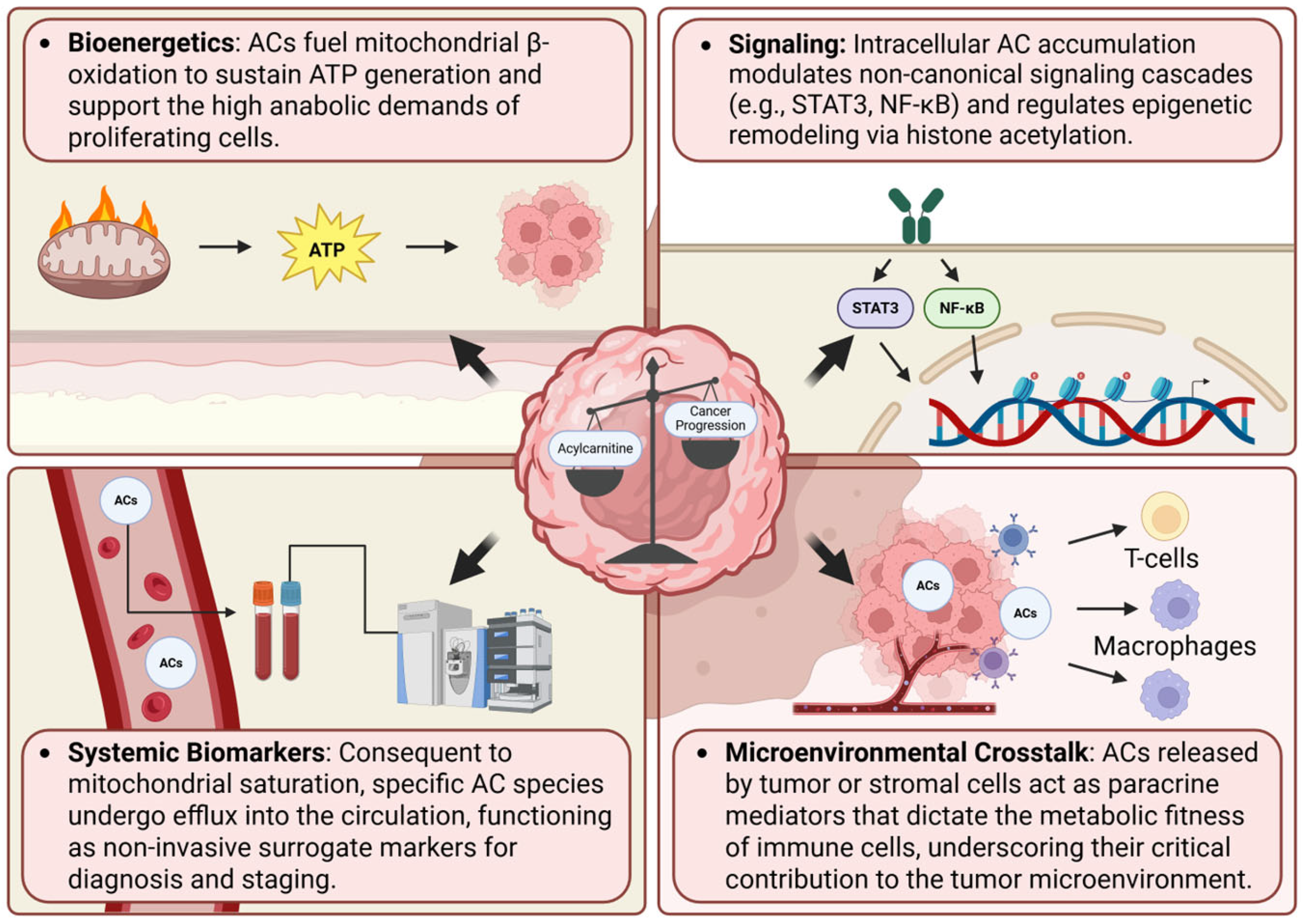
3. Role of AC in Cancer Metabolism
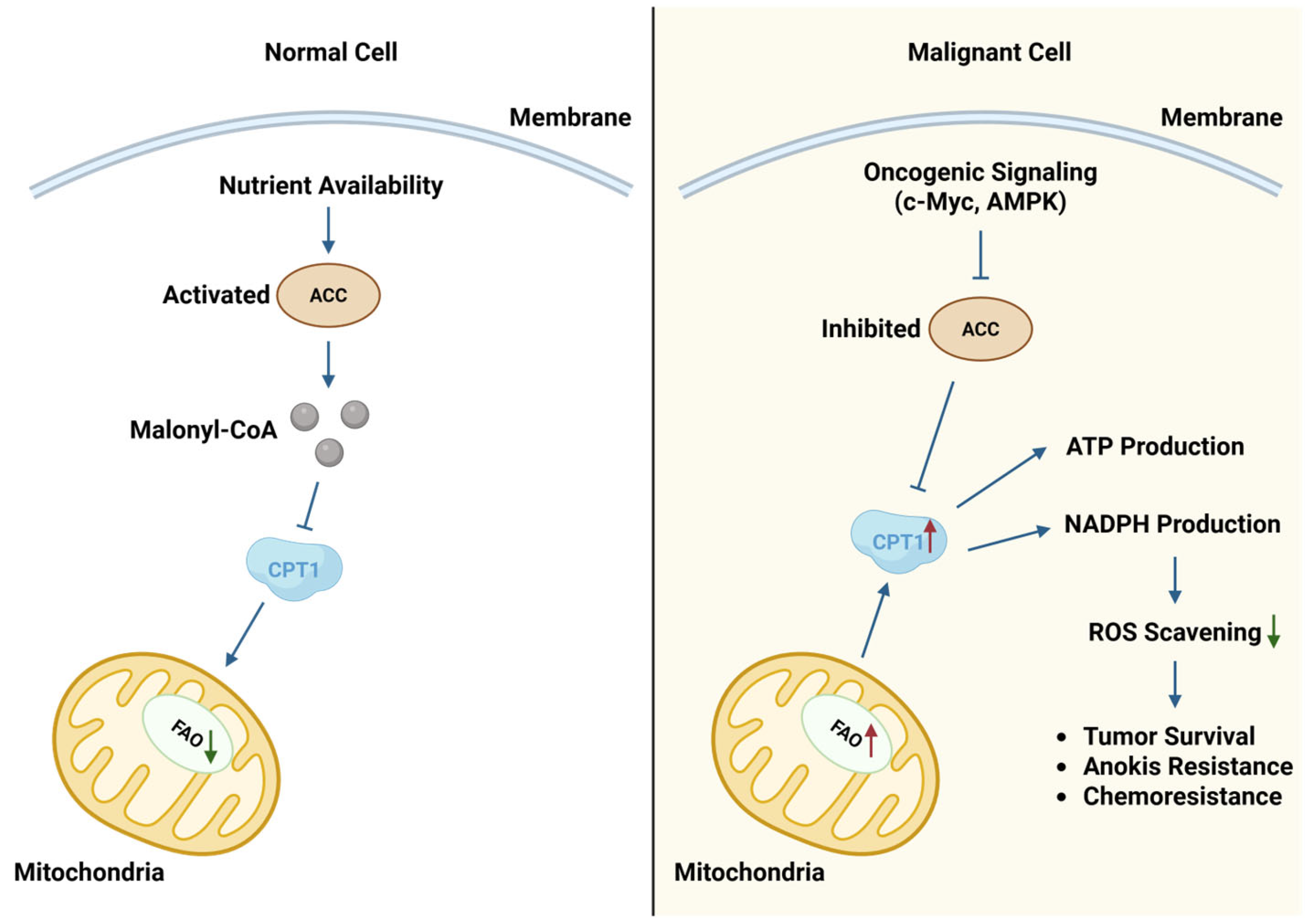
3.1. Distinct Features of Fatty Acid β-Oxidation and AC Dynamics in Malignant Cells
3.2. Role in Energy Metabolism
3.3. Redox Balance and Reactive Oxygen Species (ROS) Regulation
3.4. Contribution to Therapy Resistance
3.5. ACs in Regulation of Cell Death: Apoptosis and Ferroptosis
4. Mechanistic Landscapes and Clinical Utility of AC Profiles Across Cancer Types
4.1. Glandular and Reproductive Malignancies: ACs as Mediators of Hormone-Driven Proliferation
4.1.1. Ovarian Cancer
4.1.2. Breast Cancer
4.1.3. Prostate Cancer
4.2. Digestive and Hepatobiliary Cancers: Biomarkers of Metabolic Bottlenecks and Mitochondrial Overload
4.2.1. Hepatocellular Carcinoma
4.2.2. Colorectal Cancer
4.2.3. Pancreatic Cancer
4.2.4. Gastric Cancer
4.3. Respiratory and Aerodigestive Cancers: Signatures Driven by Environmental Stress and Metabolic Flux
4.3.1. Lung Cancer
4.3.2. Nasopharyngeal Carcinoma (NPC)
4.4. Specialized AC Signaling: Orchestrating Metastasis and Microenvironment Crosstalk
4.4.1. Biliary Tract Cancer and Gallbladder Cancer
4.4.2. Melanoma
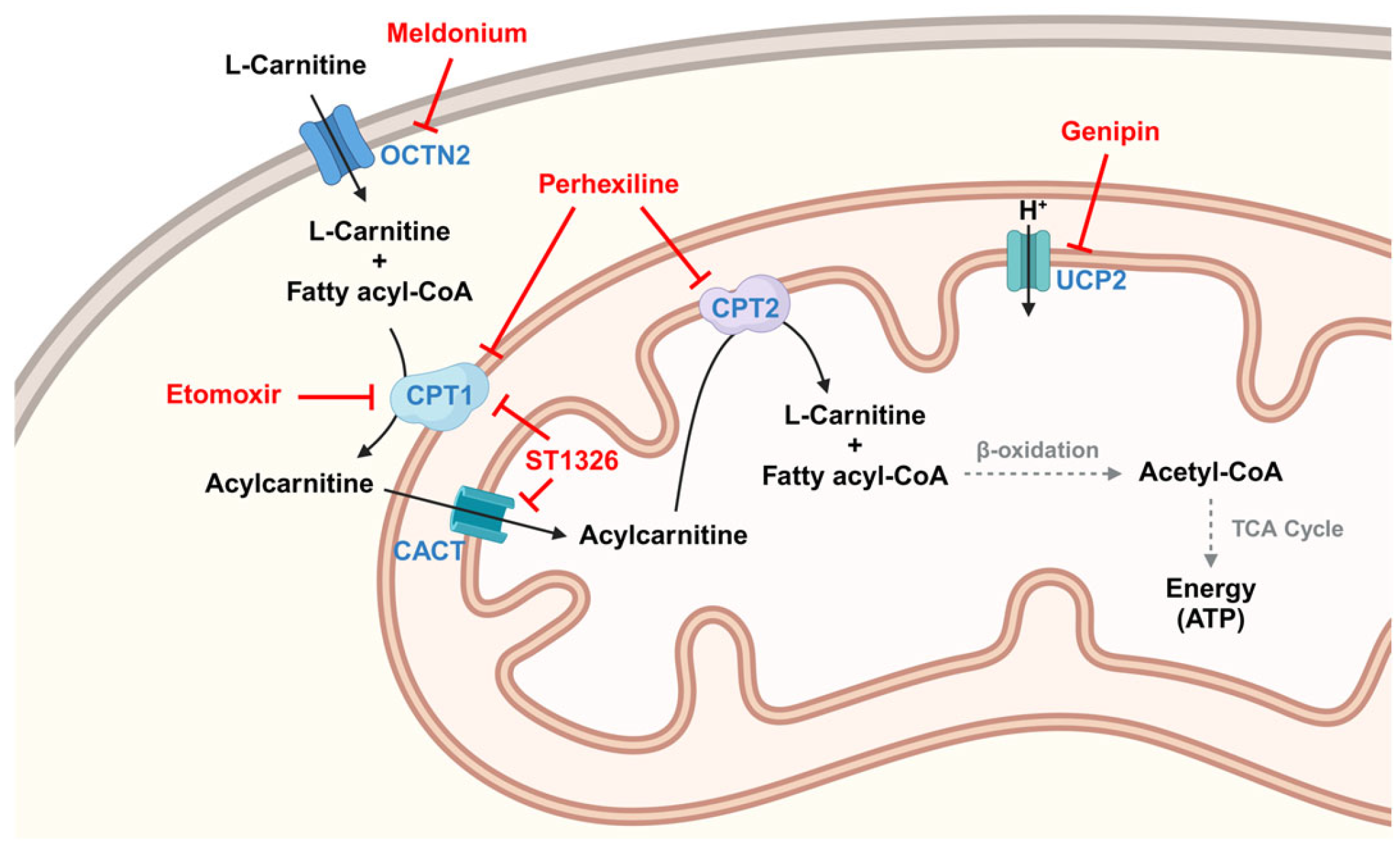
5. Alteration in AC Metabolism and Therapeutic Targets
5.1. CPT System
5.2. Uncoupling Protein 2 (UCP2)
5.3. OCTN2
5.4. CACT
6. Challenges and Future Directions
6.1. From Static Pool Sizes to Functional Flux
6.2. Addressing Systemic Confounders and Standardization
6.3. Defining Therapeutic Windows and Mitigating Systemic Toxicity
6.4. Spatial Metabolomics and Intratumoral Heterogeneity
6.5. Dynamic Tracking and Spatial Multi-Omics
6.6. High-Dimensional Data Analytics and Patient Stratification
6.7. Roadmap for Clinical Translation
6.8. Translational Limitation of AC-Based Biomarkers and Therapies
7. Conclusions
Author Contributions
Funding
Data Availability Statement
Acknowledgments
Conflicts of Interest
Abbreviations
| AC | Acylcarnitine |
| ACC | Acetyl-CoA Carboxylase |
| AFP | Alpha-Fetoprotein |
| AMPK | AMP-activated protein kinase |
| ATP | Adenosine Triphosphate |
| AUC | Area Under the Curve |
| BBOX1 | Gamma-Butyrobetaine Hydroxylase 1 |
| C0 | Free Carnitine |
| C2 | Acetylcarnitine |
| C3 | Propionylcarnitine |
| C3-DC | Malonylcarnitine |
| C4 | Butyrylcarnitine |
| C4-DC | Methylmalonylcarnitine; Succinylcarnitine |
| C4-OH | Hydroxybutyrylcarnitine |
| C5 | Isovalerylcarnitine; 2-Methylglutarylcarnitine |
| C5-DC | Glutarylcarnitine |
| C5-M-DC | 3-Methylglutarylcarnitine |
| C5-OH | Hydroxyisovalerylcarnitine |
| C5:1 | Isopentenoylcarnitine; Tiglylcarnitine |
| C5:1-DC | Glutaconylcarnitine |
| C6 | Hexanoylcarnitine |
| C6-DC | Adipoylcarnitine |
| C7-DC | Pimelylcarnitine |
| C8 | Octanoylcarnitine |
| C8-DC | Suberylcarnitine |
| C8:1 | Octenoylcarnitine |
| C10 | Decanoylcarnitine |
| C10:1 | Cis-4-Decenoylcarnitine; Decenoylcarnitine |
| C10:2 | Decadienoylcarnitine |
| C11 | O-(4,8-Dimethylnonyl)carnitine |
| C12 | Dodecanoylcarnitine |
| C14 | Myristoylcarnitine; Tetradecanoylcarnitine |
| C14-OH | Hydroxytetradecanoylcarnitine |
| C14:1 | Tetradecenoylcarnitine |
| C14:2 | Tetradecadienoylcarnitine |
| C16 | Palmitoylcarnitine |
| C16-OH | Hydroxyhexadecanoylcarnitine; Hydroxypalmitoylcarnitine |
| C16:1 | Palmitoleoylcarnitine |
| C18 | Stearoylcarnitine |
| C18-OH | Hydroxyoctadecanoylcarnitine |
| C18:1 | Octadecenoylcarnitine; Oleoylcarnitine |
| C18:1-OH | Hydroxyoctadecenoylcarnitine |
| C18:2 | Linoleoylcarnitine; Octadecadienoylcarnitine |
| C20 | Eicosylcarnitine |
| C22 | Behenoylcarnitine |
| C26 | Hexacosanoylcarnitine |
| CACT | Carnitine–Acylcarnitine Translocase (SLC25A20) |
| c-Myc | MYC Proto-Oncogene |
| CoA | Coenzyme A |
| CPT | Carnitine Palmitoyltransferase |
| CPT1 | Carnitine Palmitoyltransferase 1 |
| CPT1A | Carnitine Palmitoyltransferase 1A |
| CPT2 | Carnitine Palmitoyltransferase 2 |
| CRAT | Carnitine O-Acetyltransferase |
| DBS | Dried Blood Spot |
| ER+ | Estrogen Receptor-Positive |
| ETO | Etomoxir |
| FADH2 | Flavin Adenine Dinucleotide |
| FAO | Fatty Acid Oxidation |
| GBM | Glioblastoma |
| HER2 | Human Epidermal Growth Factor Receptor 2 |
| IC50 | Half Maximal Inhibitory Concentration |
| JNK | c-Jun N-terminal Kinase |
| MALDI | Matrix-Assisted Laser Desorption/Ionization |
| MSI | Mass Spectrometry Imaging |
| NADH | Nicotinamide Adenine Dinucleotide |
| NADPH | Nicotinamide Adenine Dinucleotide Phosphate |
| NF-κB | Nuclear Factor Kappa B |
| NPC | Nasopharyngeal Carcinoma |
| NRF2 | Nuclear Factor Erythroid 2–Related Factor 2 |
| NSCLC | Non-Small Cell Lung Cancer |
| OCTN2 | Organic Cation/Carnitine Transporter 2 (SLC22A5) |
| PDAC | Pancreatic Ductal Adenocarcinoma |
| PDO | Patient-Derived Organoid |
| PNET | Pancreatic Neuroendocrine Tumor |
| ROS | Reactive Oxygen Species |
| ST1326 | Teglicar |
| STAT3 | Signal Transducer and Activator of Transcription 3 |
| TCA | Tricarboxylic Acid Cycle |
| TMAO | Trimethylamine-N-oxide |
| TME | Tumor Microenvironment |
| TMZ | Temozolomide |
| TNM | Tumor–Node–Metastasis |
| UCP2 | Uncoupling Protein 2 |
References
- Thorsson, V.; Gibbs, D.L.; Brown, S.D.; Wolf, D.; Bortone, D.S.; Yang, T.-H.O.; Porta-Pardo, E.; Gao, G.F.; Plaisier, C.L.; Eddy, J.A. The immune landscape of cancer. Immunity 2018, 48, 812–830.e814. [Google Scholar] [CrossRef] [PubMed]
- Arner, E.N.; Rathmell, J.C. Metabolic programming and immune suppression in the tumor microenvironment. Cancer Cell 2023, 41, 421–433. [Google Scholar] [CrossRef] [PubMed]
- Hwang, J.H.; Park, S.Y.; Kang, J.-H.; Jung, H.J.; Park, J.; Maeng, H.-J.; Choi, M.-K.; Song, H.S.; Song, I.-S.; Oh, S.H. Compound K-enriched Korean red ginseng prevents lung cancer progression by targeting cancer cells and fibroblasts. J. Ginseng Res. 2025, 49, 438–450. [Google Scholar] [CrossRef] [PubMed]
- Ohshima, K. The Landscape of Cancer Metabolism as a Therapeutic Target. Pathol. Int. 2025, 75, 387–402. [Google Scholar] [CrossRef]
- Vander Heiden, M.G.; Cantley, L.C.; Thompson, C.B. Understanding the Warburg effect: The metabolic requirements of cell proliferation. science 2009, 324, 1029–1033. [Google Scholar] [CrossRef]
- Dambrova, M.; Makrecka-Kuka, M.; Kuka, J.; Vilskersts, R.; Nordberg, D.; Attwood, M.M.; Smesny, S.; Sen, Z.D.; Guo, A.C.; Oler, E. Acylcarnitines: Nomenclature, biomarkers, therapeutic potential, drug targets, and clinical trials. Pharmacol. Rev. 2022, 74, 506–551. [Google Scholar] [CrossRef]
- Mal, M. Noninvasive metabolic profiling for painless diagnosis of human diseases and disorders. Future Sci. OA 2016, 2, FSO106. [Google Scholar] [CrossRef]
- Marquis, N.R.; Francesconi, R.P.; Villee, C.A. A role for carnitine and long chain acylcarnitine in the regulation of lipogenesis. Adv. Enzym. Regul. 1968, 6, 31–55. [Google Scholar] [CrossRef]
- Stephens, F.B.; Constantin-Teodosiu, D.; Greenhaff, P.L. New insights concerning the role of carnitine in the regulation of fuel metabolism in skeletal muscle. J. Physiol. 2007, 581, 431–444. [Google Scholar] [CrossRef]
- McCoin, C.S.; Knotts, T.A.; Adams, S.H. Acylcarnitines—Old actors auditioning for new roles in metabolic physiology. Nat. Rev. Endocrinol. 2015, 11, 617–625. [Google Scholar] [CrossRef]
- Melone, M.A.B.; Valentino, A.; Margarucci, S.; Galderisi, U.; Giordano, A.; Peluso, G. The carnitine system and cancer metabolic plasticity. Cell Death Dis. 2018, 9, 228. [Google Scholar] [CrossRef] [PubMed]
- Bernhardt, G.V.; Bernhardt, K.L.; Pinto, J.R.; Vashe, A. Metabolomics in cancer detection: A review of techniques, biomarkers, and clinical utility. BioMedicine 2025, 15, 1. [Google Scholar] [CrossRef] [PubMed]
- Gupta, A.; Siddiqui, Z.; Sagar, G.; Rao, K.V.; Saquib, N. A non-invasive method for concurrent detection of multiple early-stage cancers in women. Sci. Rep. 2023, 13, 19083. [Google Scholar] [CrossRef] [PubMed]
- Malarvannan, M.; Naik, S.B.T.; Soni, N.; Mandar, C.M.; Paul, D. Exploring lipidomics in biomarker discovery. Clin. Chim. Acta 2025, 579, 120698. [Google Scholar] [CrossRef]
- Ho, P.T.; Rini, I.A.; Hoang, P.T.; Lee, T.K.; Lee, S. Exploring the potential of ginseng-derived compounds in treating cancer cachexia. J. Ginseng Res. 2025, 49, 631–639. [Google Scholar] [CrossRef]
- Yu, D.; Zhou, L.; Xuan, Q.; Wang, L.; Zhao, X.; Lu, X.; Xu, G. Strategy for comprehensive identification of acylcarnitines based on liquid chromatography–high-resolution mass spectrometry. Anal. Chem. 2018, 90, 5712–5718. [Google Scholar] [CrossRef]
- Ahmed, A.T.; MahmoudianDehkordi, S.; Bhattacharyya, S.; Arnold, M.; Liu, D.; Neavin, D.; Moseley, M.A.; Thompson, J.W.; Williams, L.S.J.; Louie, G. Acylcarnitine metabolomic profiles inform clinically-defined major depressive phenotypes. J. Affect. Disord. 2020, 264, 90–97. [Google Scholar] [CrossRef]
- Hoppel, C. The role of carnitine in normal and altered fatty acid metabolism. Am. J. Kidney Dis. 2003, 41, S4–S12. [Google Scholar] [CrossRef]
- Violante, S.; IJlst, L.; Brinke, H.T.; de Almeida, I.T.; Wanders, R.J.; Ventura, F.V.; Houten, S.M. Carnitine palmitoyltransferase 2 and carnitine/acylcarnitine translocase are involved in the mitochondrial synthesis and export of acylcarnitines. FASEB J. 2013, 27, 2039–2044. [Google Scholar] [CrossRef]
- McGarry, J.D.; Brown, N.F. The mitochondrial carnitine palmitoyltransferase system—From concept to molecular analysis. Eur. J. Biochem. 1997, 244, 1–14. [Google Scholar] [CrossRef]
- Tamai, I. Pharmacological and pathophysiological roles of carnitine/organic cation transporters (OCTNs: SLC22A4, SLC22A5 and Slc22a21). Biopharm. Drug Dispos. 2013, 34, 29–44. [Google Scholar] [CrossRef]
- Zhang, L.; Gui, T.; Console, L.; Scalise, M.; Indiveri, C.; Hausler, S.; Kullak-Ublick, G.A.; Gai, Z.; Visentin, M. Cholesterol stimulates the cellular uptake of L-carnitine by the carnitine/organic cation transporter novel 2 (OCTN2). J. Biol. Chem. 2021, 296, 100204. [Google Scholar] [CrossRef] [PubMed]
- Makrecka, M.; Kuka, J.; Volska, K.; Antone, U.; Sevostjanovs, E.; Cirule, H.; Grinberga, S.; Pugovics, O.; Dambrova, M.; Liepinsh, E. Long-chain acylcarnitine content determines the pattern of energy metabolism in cardiac mitochondria. Mol. Cell. Biochem. 2014, 395, 1–10. [Google Scholar] [CrossRef] [PubMed]
- Houten, S.M.; Wanders, R.J. A general introduction to the biochemistry of mitochondrial fatty acid β-oxidation. J. Inherit. Metab. Dis. 2010, 33, 469–477. [Google Scholar] [CrossRef] [PubMed]
- Koves, T.R.; Ussher, J.R.; Noland, R.C.; Slentz, D.; Mosedale, M.; Ilkayeva, O.; Bain, J.; Stevens, R.; Dyck, J.R.; Newgard, C.B. Mitochondrial overload and incomplete fatty acid oxidation contribute to skeletal muscle insulin resistance. Cell Metab. 2008, 7, 45–56. [Google Scholar] [CrossRef]
- Patti, G.J.; Yanes, O.; Siuzdak, G. Metabolomics: The apogee of the omics trilogy. Nat. Rev. Mol. Cell Biol. 2012, 13, 263–269. [Google Scholar] [CrossRef]
- Umpleby, A.M. Tracing lipid metabolism: The value of stable isotopes. J. Endocrinol. 2015, 226, G1–G10. [Google Scholar] [CrossRef]
- Carracedo, A.; Cantley, L.C.; Pandolfi, P.P. Cancer metabolism: Fatty acid oxidation in the limelight. Nat. Rev. Cancer 2013, 13, 227–232. [Google Scholar] [CrossRef]
- Schlaepfer, I.R.; Rider, L.; Rodrigues, L.U.; Gijón, M.A.; Pac, C.T.; Romero, L.; Cimic, A.; Sirintrapun, S.J.; Glodé, L.M.; Eckel, R.H. Lipid catabolism via CPT1 as a therapeutic target for prostate cancer. Mol. Cancer Ther. 2014, 13, 2361–2371. [Google Scholar] [CrossRef]
- Su, P.; Wang, Q.; Bi, E.; Ma, X.; Liu, L.; Yang, M.; Qian, J.; Yi, Q. Enhanced lipid accumulation and metabolism are required for the differentiation and activation of tumor-associated macrophages. Cancer Res. 2020, 80, 1438–1450. [Google Scholar] [CrossRef]
- Pavlova, N.N.; Thompson, C.B. The emerging hallmarks of cancer metabolism. Cell Metab. 2016, 23, 27–47. [Google Scholar] [CrossRef]
- Warburg, O. On the origin of cancer cells. Science 1956, 123, 309–314. [Google Scholar] [CrossRef] [PubMed]
- Wang, J.; Xiang, H.; Lu, Y.; Wu, T.; Ji, G. The role and therapeutic implication of CPTs in fatty acid oxidation and cancers progression. Am. J. Cancer Res. 2021, 11, 2477. [Google Scholar] [PubMed]
- Lei, Y.; Cai, S.; Zhang, J.-K.; Ding, S.-Q.; Zhang, Z.-H.; Zhang, C.-D.; Dai, D.-Q.; Li, Y.-S. The role and mechanism of fatty acid oxidation in cancer drug resistance. Cell Death Discov. 2025, 11, 277. [Google Scholar] [CrossRef] [PubMed]
- Wu, L.; Ye, C.; Yao, Q.; Li, Q.; Zhang, C.; Li, Y. The role of serum acylcarnitine profiling for the detection of multiple solid tumors in humans. Heliyon 2024, 10, e23867. [Google Scholar] [CrossRef]
- Yaligar, J.; Teoh, W.W.; Othman, R.; Verma, S.K.; Phang, B.H.; Lee, S.S.; Wang, W.W.; Toh, H.C.; Gopalan, V.; Sabapathy, K. Longitudinal metabolic imaging of hepatocellular carcinoma in transgenic mouse models identifies acylcarnitine as a potential biomarker for early detection. Sci. Rep. 2016, 6, 20299. [Google Scholar] [CrossRef]
- Console, L.; Scalise, M.; Mazza, T.; Pochini, L.; Galluccio, M.; Giangregorio, N.; Tonazzi, A.; Indiveri, C. Carnitine traffic in cells. Link with cancer. Front. Cell Dev. Biol. 2020, 8, 583850. [Google Scholar] [CrossRef]
- Nakamura, H.; Takada, K. Reactive oxygen species in cancer: Current findings and future directions. Cancer Sci. 2021, 112, 3945–3952. [Google Scholar] [CrossRef]
- Kim, J.; Kim, J.; Bae, J.-S. ROS homeostasis and metabolism: A critical liaison for cancer therapy. Exp. Mol. Med. 2016, 48, e269. [Google Scholar] [CrossRef]
- Costa, A.; Scholer-Dahirel, A.; Mechta-Grigoriou, F. The role of reactive oxygen species and metabolism on cancer cells and their microenvironment. In Seminars in Cancer Biology; Academic Press: Cambridge, MA, USA, 2014; pp. 23–32. [Google Scholar]
- Bekhet, O.H.; Eid, M.E. The interplay between reactive oxygen species and antioxidants in cancer progression and therapy: A narrative review. Transl. Cancer Res. 2021, 10, 4196. [Google Scholar] [CrossRef]
- Sutopo, N.C.; Qomaladewi, N.P.; Lee, H.W.; Lee, M.S.; Kim, J.H.; Cho, J.Y. Comprehensive understanding and underlying molecular mechanisms of the adaptogenic effects of Panax ginseng. J. Ginseng Res. 2025, 49, 356–365. [Google Scholar] [CrossRef]
- Shen, T.; Wang, Y.; Cheng, L.; Bode, A.M.; Gao, Y.; Zhang, S.; Chen, X.; Luo, X. Oxidative complexity: The role of ROS in the tumor environment and therapeutic implications. Bioorganic Med. Chem. 2025, 127, 118241. [Google Scholar] [CrossRef] [PubMed]
- Giangregorio, N.; Palmieri, F.; Indiveri, C. Glutathione controls the redox state of the mitochondrial carnitine/acylcarnitine carrier Cys residues by glutathionylation. Biochim. Biophys. Acta (BBA)-Gen. Subj. 2013, 1830, 5299–5304. [Google Scholar] [CrossRef] [PubMed]
- Berezhnov, A.V.; Fedotova, E.I.; Nenov, M.N.; Kasymov, V.A.; Pimenov, O.Y.; Dynnik, V.V. Dissecting cellular mechanisms of long-chain acylcarnitines-driven cardiotoxicity: Disturbance of calcium homeostasis, activation of Ca2+-dependent phospholipases, and mitochondrial energetics collapse. Int. J. Mol. Sci. 2020, 21, 7461. [Google Scholar] [CrossRef] [PubMed]
- Zhao, R.Z.; Jiang, S.; Zhang, L.; Yu, Z.B. Mitochondrial electron transport chain, ROS generation and uncoupling. Int. J. Mol. Med. 2019, 44, 3–15. [Google Scholar] [CrossRef]
- Ma, L.; Chen, C.; Zhao, C.; Li, T.; Ma, L.; Jiang, J.; Duan, Z.; Si, Q.; Chuang, T.-H.; Xiang, R. Targeting carnitine palmitoyl transferase 1A (CPT1A) induces ferroptosis and synergizes with immunotherapy in lung cancer. Signal Transduct. Target. Ther. 2024, 9, 64. [Google Scholar] [CrossRef]
- Qu, Q.; Zeng, F.; Liu, X.; Wang, Q.; Deng, F. Fatty acid oxidation and carnitine palmitoyltransferase I: Emerging therapeutic targets in cancer. Cell Death Dis. 2016, 7, e2226. [Google Scholar] [CrossRef]
- Falcone, I.G.; Rushing, B.R. Untargeted Metabolomics Reveals Acylcarnitines as Major Metabolic Targets of Resveratrol in Breast Cancer Cells. Metabolites 2025, 15, 250. [Google Scholar] [CrossRef]
- Wong, T.L.; Kong, Y.; Ma, S. Lipid metabolism in cancer cells: Its role in hepatocellular carcinoma progression and therapeutic resistance. Hepatol. Commun. 2025, 9, e0837. [Google Scholar] [CrossRef]
- Villela-Castrejon, J.; Levine, H.; Kaipparettu, B.A.; Onuchic, J.N.; George, J.T.; Jia, D. Computational modeling of cancer cell metabolism along the catabolic-anabolic axes. npj Syst. Biol. Appl. 2025, 11, 46. [Google Scholar] [CrossRef]
- Zhang, Y.; Li, T.; Pan, M.; Wang, W.; Huang, W.; Yuan, Y.; Xie, Z.; Chen, Y.; Peng, J.; Li, X. SIRT1 prevents cigarette smoking-induced lung fibroblasts activation by regulating mitochondrial oxidative stress and lipid metabolism. J. Transl. Med. 2022, 20, 222. [Google Scholar] [CrossRef] [PubMed]
- De Conti, G.; Dias, M.H.; Bernards, R. Fighting drug resistance through the targeting of drug-tolerant persister cells. Cancers 2021, 13, 1118. [Google Scholar] [CrossRef] [PubMed]
- Zhou, Z.; Hua, Y.; Ma, J.; Cong, W.; Zhan, R.; Kang, K.; Wang, L.; Wei, H. Inhibition of RACGAP1 sensitizes triple-negative breast cancer cells to ferroptosis by regulating CPT1A-dependent fatty acid metabolism. J. Exp. Clin. Cancer Res. 2025, 44, 323. [Google Scholar] [CrossRef] [PubMed]
- Huang, Y.; Lin, W.; Zheng, X. Causal association between 637 human metabolites and ovarian cancer: A mendelian randomization study. BMC Genom. 2024, 25, 97. [Google Scholar] [CrossRef]
- Zeleznik, O.A.; Eliassen, A.H.; Kraft, P.; Poole, E.M.; Rosner, B.A.; Jeanfavre, S.; Deik, A.A.; Bullock, K.; Hitchcock, D.S.; Avila-Pacheco, J. A prospective analysis of circulating plasma metabolites associated with ovarian cancer risk. Cancer Res. 2020, 80, 1357–1367. [Google Scholar] [CrossRef]
- Fong, M.Y.; McDunn, J.; Kakar, S.S. Identification of metabolites in the normal ovary and their transformation in primary and metastatic ovarian cancer. PLoS ONE 2011, 6, e19963. [Google Scholar] [CrossRef]
- Tang, R.; Zhu, Y.; Chen, L.; Tong, J.; Ma, X.; Sun, F.; Zheng, L.; Yu, H.; Yang, J. Lipid metabolites abnormally expressed in pelvic fluid as potential biomarkers for ovarian cancer: A case-control study. J. Proteom. 2024, 307, 105261. [Google Scholar] [CrossRef]
- His, M.; Viallon, V.; Dossus, L.; Gicquiau, A.; Achaintre, D.; Scalbert, A.; Ferrari, P.; Romieu, I.; Onland-Moret, N.C.; Weiderpass, E. Prospective analysis of circulating metabolites and breast cancer in EPIC. BMC Med. 2019, 17, 178. [Google Scholar] [CrossRef]
- Zhang, J.; Wu, G.; Zhu, H.; Yang, F.; Yang, S.; Vuong, A.M.; Li, J.; Zhu, D.; Sun, Y.; Tao, W. Circulating carnitine levels and breast cancer: A matched retrospective case-control study. Front. Oncol. 2022, 12, 891619. [Google Scholar] [CrossRef]
- Moore, S.C.; Playdon, M.C.; Sampson, J.N.; Hoover, R.N.; Trabert, B.; Matthews, C.E.; Ziegler, R.G. A metabolomics analysis of body mass index and postmenopausal breast cancer risk. JNCI J. Natl. Cancer Inst. 2018, 110, 588–597. [Google Scholar] [CrossRef]
- Kozar, N.; Kruusmaa, K.; Bitenc, M.; Argamasilla, R.; Adsuar, A.; Takač, I.; Arko, D. Identification of novel diagnostic biomarkers in breast cancer using targeted metabolomic profiling. Clin. Breast Cancer 2021, 21, e204–e211. [Google Scholar] [CrossRef] [PubMed]
- Wang, Y.; Jacobs, E.J.; Carter, B.D.; Gapstur, S.M.; Stevens, V.L. Plasma metabolomic profiles and risk of advanced and fatal prostate cancer. Eur. Urol. Oncol. 2021, 4, 56–65. [Google Scholar] [CrossRef] [PubMed]
- Al-Bakheit, A.A.; Traka, M.; Saha, S.; Mithen, R.; Melchini, A. Accumulation of palmitoylcarnitine and its effect on pro-inflammatory pathways and calcium influx in prostate cancer. Prostate 2016, 76, 1326–1337. [Google Scholar] [CrossRef] [PubMed]
- Zoni, E.; Minoli, M.; Bovet, C.; Wehrhan, A.; Piscuoglio, S.; Ng, C.K.; Gray, P.C.; Spahn, M.; Thalmann, G.N.; Kruithof-de Julio, M. Preoperative plasma fatty acid metabolites inform risk of prostate cancer progression and may be used for personalized patient stratification. BMC Cancer 2019, 19, 1216. [Google Scholar] [CrossRef]
- Chen, S.; Kong, H.; Lu, X.; Li, Y.; Yin, P.; Zeng, Z.; Xu, G. Pseudotargeted metabolomics method and its application in serum biomarker discovery for hepatocellular carcinoma based on ultra high-performance liquid chromatography/triple quadrupole mass spectrometry. Anal. Chem. 2013, 85, 8326–8333. [Google Scholar] [CrossRef]
- Lu, Y.; Li, N.; Gao, L.; Xu, Y.-J.; Huang, C.; Yu, K.; Ling, Q.; Cheng, Q.; Chen, S.; Zhu, M. Acetylcarnitine is a candidate diagnostic and prognostic biomarker of hepatocellular carcinoma. Cancer Res. 2016, 76, 2912–2920. [Google Scholar] [CrossRef]
- Shen, E.Y.-L.; Abelloa., U.; Taylor-Robinson, S.; Thursz, M.; Holmes, E.; Nicholson, J. Discovery and validation of plasma acylcarnitines for the early diagnosis of hepatocellular carcinoma. Cancer Res. 2019, 79, 5269. [Google Scholar] [CrossRef]
- Enooku, K.; Nakagawa, H.; Fujiwara, N.; Kondo, M.; Minami, T.; Hoshida, Y.; Shibahara, J.; Tateishi, R.; Koike, K. Altered serum acylcarnitine profile is associated with the status of nonalcoholic fatty liver disease (NAFLD) and NAFLD-related hepatocellular carcinoma. Sci. Rep. 2019, 9, 10663. [Google Scholar] [CrossRef]
- Takaya, H.; Namisaki, T.; Kitade, M.; Shimozato, N.; Kaji, K.; Tsuji, Y.; Nakanishi, K.; Noguchi, R.; Fujinaga, Y.; Sawada, Y. Acylcarnitine: Useful biomarker for early diagnosis of hepatocellular carcinoma in non-steatohepatitis patients. World J. Gastrointest. Oncol. 2019, 11, 887. [Google Scholar] [CrossRef]
- Avram, L.; Crișan, D.; Moldovan, R.-C.; Bogos, L.-G.; Iuga, C.-A.; Andraș, D.; Crișan, S.; Bodolea, C.; Nemeş, A.; Donca, V. Metabolomic Exploration of Colorectal Cancer Through Amino Acids and Acylcarnitines Profiling of Serum Samples. Cancers 2025, 17, 427. [Google Scholar] [CrossRef]
- Zhu, Y.; Zhou, H.; Chen, H.; Zhang, J.; Liang, Y.; Yang, S.; Wang, X.; Chen, G.; Zhang, Q. Global serum metabolomic and lipidomic analyses reveal lipid perturbations and potential biomarkers of the colorectal cancer by adenoma-carcinoma sequence. Chin. J. Anal. Chem. 2023, 51, 100270. [Google Scholar] [CrossRef]
- Kibi, M.; Nishiumi, S.; Kobayashi, T.; Kodama, Y.; Yoshida, M. GC/MS and LC/MS-based tissue metabolomic analysis detected increased levels of antioxidant metabolites in colorectal cancer. Kobe J. Med. Sci. 2019, 65, E19. [Google Scholar] [PubMed]
- Skubisz, K.; Dąbkowski, K.; Samborowska, E.; Starzyńska, T.; Deskur, A.; Ambrozkiewicz, F.; Karczmarski, J.; Radkiewicz, M.; Kusnierz, K.; Kos-Kudła, B. Serum metabolite biomarkers for pancreatic tumors: Neuroendocrine and pancreatic ductal adenocarcinomas—A preliminary study. Cancers 2023, 15, 3242. [Google Scholar] [CrossRef] [PubMed]
- Gunchick, V.; Brown, E.; Liu, J.; Locasale, J.W.; Philip, P.A.; Wang, S.C.; Su, G.L.; Sahai, V. Morphomics, Survival, and Metabolites in Patients With Metastatic Pancreatic Cancer. JAMA Netw. Open 2024, 7, e2440047. [Google Scholar] [CrossRef] [PubMed]
- Shi, J.; Yi, Z.; Jin, L.; Zhao, L.; Raskind, A.; Yeomans, L.; Nwosu, Z.C.; Simeone, D.M.; Lyssiotis, C.A.; Stringer, K.A. Cyst fluid metabolites distinguish malignant from benign pancreatic cysts. Neoplasia 2021, 23, 1078–1088. [Google Scholar] [CrossRef]
- Li, D.; Lu, Y.; Zhao, F.; Yan, L.; Yang, X.; Wei, L.; Yang, X.; Yuan, X.; Yang, K. Targeted metabolomic profiles of serum amino acids and acylcarnitines related to gastric cancer. PeerJ 2022, 10, e14115. [Google Scholar] [CrossRef]
- Wu, X.; Ao, H.; Gao, H.; Zhu, Z. Metabolite biomarker discovery for human gastric cancer using dried blood spot mass spectrometry metabolomic approach. Sci. Rep. 2022, 12, 14632. [Google Scholar] [CrossRef]
- Ni, J.; Xu, L.; Li, W.; Wu, L. Simultaneous determination of thirteen kinds of amino acid and eight kinds of acylcarnitine in human serum by LC–MS/MS and its application to measure the serum concentration of lung cancer patients. Biomed. Chromatogr. 2016, 30, 1796–1806. [Google Scholar] [CrossRef]
- Qi, S.-A.; Wu, Q.; Chen, Z.; Zhang, W.; Zhou, Y.; Mao, K.; Li, J.; Li, Y.; Chen, J.; Huang, Y. High-resolution metabolomic biomarkers for lung cancer diagnosis and prognosis. Sci. Rep. 2021, 11, 11805. [Google Scholar] [CrossRef]
- Zhang, J.; Zang, X.; Jiao, P.; Wu, J.; Meng, W.; Zhao, L.; Lv, Z. Alterations of Ceramides, Acylcarnitines, GlyceroLPLs, and Amines in NSCLC Tissues. J. Proteome Res. 2024, 23, 4343–4358. [Google Scholar] [CrossRef]
- Zhang, X.; Wang, C.; Li, C.; Zhao, H. Development and internal validation of nomograms based on plasma metabolites to predict non-small cell lung cancer risk in smoking and nonsmoking populations. Thorac. Cancer 2023, 14, 1719–1731. [Google Scholar] [CrossRef] [PubMed]
- Liu, Z.; Wang, L.; Du, M.; Liang, Y.; Liang, M.; Li, Z.; Gao, Y. Plasm metabolomics study in pulmonary metastatic carcinoma. J. Oncol. 2022, 2022, 9460019. [Google Scholar] [CrossRef] [PubMed]
- Guan, X.; Du, Y.; Ma, R.; Teng, N.; Ou, S.; Zhao, H.; Li, X. Construction of the XGBoost model for early lung cancer prediction based on metabolic indices. BMC Med. Inform. Decis. Mak. 2023, 23, 107. [Google Scholar] [CrossRef] [PubMed]
- Liao, Z.; Zhao, L.; Zhong, F.; Zhou, Y.; Lu, T.; Liu, L.; Gong, X.; Li, J.; Rao, J. Serum and urine metabolomics analyses reveal metabolic pathways and biomarkers in relation to nasopharyngeal carcinoma. Rapid Commun. Mass Spectrom. 2023, 37, e9469. [Google Scholar] [CrossRef]
- Macias, R.I.; Munoz-Bellvis, L.; Sanchez-Martin, A.; Arretxe, E.; Martinez-Arranz, I.; Lapitz, A.; Gutiérrez, M.L.; La Casta, A.; Alonso, C.; González, L.M. A novel serum metabolomic profile for the differential diagnosis of distal cholangiocarcinoma and pancreatic ductal adenocarcinoma. Cancers 2020, 12, 1433. [Google Scholar] [CrossRef]
- Yang, Y.; Li, H.; Liu, K.; Zou, L.; Xiang, S.; Geng, Y.; Li, X.; Qiu, S.; Yang, J.; Cui, X. Acylcarnitines promote gallbladder cancer metastasis through lncBCL2L11-THOC5-JNK axis. J. Transl. Med. 2024, 22, 299. [Google Scholar] [CrossRef]
- Alves Costa Silva, C.; Piccinno, G.; Suissa, D.; Bourgin, M.; Schreibelt, G.; Durand, S.; Birebent, R.; Fidelle, M.; Sow, C.; Aprahamian, F. Influence of microbiota-associated metabolic reprogramming on clinical outcome in patients with melanoma from the randomized adjuvant dendritic cell-based MIND-DC trial. Nat. Commun. 2024, 15, 1633. [Google Scholar] [CrossRef]
- Bayci, A.; Baker, D.; Somerset, A.; Turkoglu, O.; Hothem, Z.; Callahan, R.; Mandal, R.; Han, B.; Bjorndahl, T.; Wishart, D. Metabolomic identification of diagnostic serum-based biomarkers for advanced stage melanoma. Metabolomics 2018, 14, 105. [Google Scholar] [CrossRef]
- Yao, S.; Mao, Z.; Marron, M.M.; Simonsick, E.M.; Murthy, V.L.; Shah, R.V.; Newman, A.B. Metabolic Markers Demonstrate the Heterogeneity of Walking Ability in Non-Disabled Community-Dwelling Older Adults. Metabolites 2025, 15, 334. [Google Scholar] [CrossRef]
- Schooneman, M.G.; Vaz, F.M.; Houten, S.M.; Soeters, M.R. Acylcarnitines: Reflecting or inflicting insulin resistance? Diabetes 2013, 62, 1–8. [Google Scholar] [CrossRef]
- Li, S.; Gao, D.; Jiang, Y. Function, detection and alteration of acylcarnitine metabolism in hepatocellular carcinoma. Metabolites 2019, 9, 36. [Google Scholar] [CrossRef] [PubMed]
- Tan, Z.; Xiao, L.; Tang, M.; Bai, F.; Li, J.; Li, L.; Shi, F.; Li, N.; Li, Y.; Du, Q. Targeting CPT1A-mediated fatty acid oxidation sensitizes nasopharyngeal carcinoma to radiation therapy. Theranostics 2018, 8, 2329. [Google Scholar] [CrossRef]
- Lee, J.-S.; Lee, H.-Y. Ginseng-derived compounds as potential anticancer agents targeting cancer stem cells. J. Ginseng Res. 2024, 48, 266–275. [Google Scholar] [CrossRef] [PubMed]
- Shim, J.-K.; Choi, S.; Yoon, S.-J.; Choi, R.J.; Park, J.; Lee, E.H.; Cho, H.J.; Lee, S.; Teo, W.-Y.; Moon, J.H. Etomoxir, a carnitine palmitoyltransferase 1 inhibitor, combined with temozolomide reduces stemness and invasiveness in patient-derived glioblastoma tumorspheres. Cancer Cell Int. 2022, 22, 309. [Google Scholar] [CrossRef] [PubMed]
- Divakaruni, A.S.; Hsieh, W.Y.; Minarrieta, L.; Duong, T.N.; Kim, K.K.; Desousa, B.R.; Andreyev, A.Y.; Bowman, C.E.; Caradonna, K.; Dranka, B.P. Etomoxir inhibits macrophage polarization by disrupting CoA homeostasis. Cell Metab. 2018, 28, 490–503. [Google Scholar] [CrossRef]
- Cacciola, N.A.; Sepe, F.; Fioriniello, S.; Petillo, O.; Margarucci, S.; Scivicco, M.; Peluso, G.; Balestrieri, A.; Bifulco, G.; Restucci, B. The carnitine palmitoyltransferase 1A inhibitor teglicar shows promising antitumour activity against canine mammary cancer cells by inducing apoptosis. Pharmaceuticals 2023, 16, 987. [Google Scholar] [CrossRef]
- Zhu, J.; Wu, G.; Song, L.; Cao, L.; Tan, Z.; Tang, M.; Li, Z.; Shi, D.; Zhang, S.; Li, J. NKX2-8 deletion-induced reprogramming of fatty acid metabolism confers chemoresistance in epithelial ovarian cancer. eBioMedicine 2019, 43, 238–252. [Google Scholar] [CrossRef]
- Huang, D.; Chowdhury, S.; Wang, H.; Savage, S.R.; Ivey, R.G.; Kennedy, J.J.; Whiteaker, J.R.; Lin, C.; Hou, X.; Oberg, A.L. Multiomic analysis identifies CPT1A as a potential therapeutic target in platinum-refractory, high-grade serous ovarian cancer. Cell Rep. Med. 2021, 2, 100471. [Google Scholar] [CrossRef]
- Du, Q.; Tan, Z.; Shi, F.; Tang, M.; Xie, L.; Zhao, L.; Li, Y.; Hu, J.; Zhou, M.; Bode, A. PGC1α/CEBPB/CPT1A axis promotes radiation resistance of nasopharyngeal carcinoma through activating fatty acid oxidation. Cancer Sci. 2019, 110, 2050–2062. [Google Scholar] [CrossRef]
- Hua, J.; Zhang, Z.; Zhang, L.; Sun, Y.; Yuan, Y. UCP-2 inhibitor enhanced the efficacy of trastuzumab against HER2 positive breast cancer cells. Cancer Chemother. Pharmacol. 2021, 88, 633–642. [Google Scholar] [CrossRef]
- Yu, J.; Shi, L.; Lin, W.; Lu, B.; Zhao, Y. UCP2 promotes proliferation and chemoresistance through regulating the NF-κB/β-catenin axis and mitochondrial ROS in gallbladder cancer. Biochem. Pharmacol. 2020, 172, 113745. [Google Scholar] [CrossRef]
- Luby, A.; Alves-Guerra, M.-C. UCP2 as a cancer target through energy metabolism and oxidative stress control. Int. J. Mol. Sci. 2022, 23, 15077. [Google Scholar] [CrossRef]
- Lee, J.H.; Cho, Y.S.; Jung, K.-H.; Park, J.W.; Lee, K.-H. Genipin enhances the antitumor effect of elesclomol in A549 lung cancer cells by blocking uncoupling protein-2 and stimulating reactive oxygen species production. Oncol. Lett. 2020, 20, 374. [Google Scholar] [CrossRef]
- Vallejo, F.A.; Vanni, S.; Graham, R.M. UCP2 as a potential biomarker for adjunctive metabolic therapies in tumor management. Front. Oncol. 2021, 11, 640720. [Google Scholar] [CrossRef] [PubMed]
- Vozza, A.; Parisi, G.; De Leonardis, F.; Lasorsa, F.M.; Castegna, A.; Amorese, D.; Marmo, R.; Calcagnile, V.M.; Palmieri, L.; Ricquier, D. UCP2 transports C4 metabolites out of mitochondria, regulating glucose and glutamine oxidation. Proc. Natl. Acad. Sci. USA 2014, 111, 960–965. [Google Scholar] [CrossRef] [PubMed]
- Segalés, J.; Sánchez-Martín, C.; Pujol-Morcillo, A.; Martín-Ruiz, M.; De los Santos, P.; Lobato-Alonso, D.; Oliver, E.; Rial, E. Role of UCP2 in the energy metabolism of the cancer cell line A549. Int. J. Mol. Sci. 2023, 24, 8123. [Google Scholar] [CrossRef] [PubMed]
- Fink, M.A.; Paland, H.; Herzog, S.; Grube, M.; Vogelgesang, S.; Weitmann, K.; Bialke, A.; Hoffmann, W.; Rauch, B.H.; Schroeder, H.W. L-carnitine–mediated tumor cell protection and poor patient survival associated with OCTN2 overexpression in glioblastoma multiforme. Clin. Cancer Res. 2019, 25, 2874–2886. [Google Scholar] [CrossRef]
- Bien-Möller, S.; Weidemeier, M.E.; Radke, J.; Baldauf, J.; Engeli, S.; Tzvetkov, M.V.; Schroeder, H.W. Case report of three patients with end-stage recurrent glioblastoma treated with meldonium. BJC Rep. 2025, 3, 29. [Google Scholar] [CrossRef]
- Pacilli, A.; Calienni, M.; Margarucci, S.; D’Apolito, M.; Petillo, O.; Rocchi, L.; Pasquinelli, G.; Nicolai, R.; Koverech, A.; Calvani, M. Carnitine-acyltransferase system inhibition, cancer cell death, and prevention of myc-induced lymphomagenesis. J. Natl. Cancer Inst. 2013, 105, 489–498. [Google Scholar] [CrossRef]
- Yuan, P.; Mu, J.; Wang, Z.; Ma, S.; Da, X.; Song, J.; Zhang, H.; Yang, L.; Li, J.; Yang, J. Down-regulation of SLC25A20 promotes hepatocellular carcinoma growth and metastasis through suppression of fatty-acid oxidation. Cell Death Dis. 2021, 12, 361. [Google Scholar] [CrossRef]
- Woo, S.M.; Lee, H.; Kang, J.H.; Kang, M.; Choi, W.; Sim, S.H.; Chun, J.W.; Han, N.; Kim, K.-H.; Ham, W. Loss of SLC25A20 in Pancreatic Adenocarcinoma Reversed the Tumor-Promoting Effects of a High-Fat Diet. Theranostics 2025, 15, 6516. [Google Scholar] [CrossRef] [PubMed]
- Zhou, Y.; Tao, L.; Qiu, J.; Xu, J.; Yang, X.; Zhang, Y.; Tian, X.; Guan, X.; Cen, X.; Zhao, Y. Tumor biomarkers for diagnosis, prognosis and targeted therapy. Signal Transduct. Target. Ther. 2024, 9, 132. [Google Scholar] [CrossRef] [PubMed]
- Moreno-Torres, M.; García-Llorens, G.; Moro, E.; Méndez, R.; Quintás, G.; Castell, J.V. Factors that influence the quality of metabolomics data in in vitro cell toxicity studies: A systematic survey. Sci. Rep. 2021, 11, 22119. [Google Scholar] [CrossRef] [PubMed]
- Silvério, R.; Laviano, A.; Rossi Fanelli, F.; Seelaender, M. L-carnitine and cancer cachexia: Clinical and experimental aspects. J. Cachexia Sarcopenia Muscle 2011, 2, 37–44. [Google Scholar] [CrossRef]
- Koeth, R.A.; Wang, Z.; Levison, B.S.; Buffa, J.A.; Org, E.; Sheehy, B.T.; Britt, E.B.; Fu, X.; Wu, Y.; Li, L. Intestinal microbiota metabolism of L-carnitine, a nutrient in red meat, promotes atherosclerosis. Nat. Med. 2013, 19, 576–585. [Google Scholar] [CrossRef]
- Kirwan, J.A.; Brennan, L.; Broadhurst, D.; Fiehn, O.; Cascante, M.; Dunn, W.B.; Schmidt, M.A.; Velagapudi, V. Preanalytical processing and biobanking procedures of biological samples for metabolomics research: A white paper, community perspective (for “Precision medicine and pharmacometabolomics task group”—The metabolomics society initiative). Clin. Chem. 2018, 64, 1158–1182. [Google Scholar] [CrossRef]
- Ang, J.E.; Revell, V.; Mann, A.; Mäntele, S.; Otway, D.T.; Johnston, J.D.; Thumser, A.E.; Skene, D.J.; Raynaud, F. Identification of human plasma metabolites exhibiting time-of-day variation using an untargeted liquid chromatography–mass spectrometry metabolomic approach. Chronobiol. Int. 2012, 29, 868–881. [Google Scholar] [CrossRef]
- Longo, N.; Frigeni, M.; Pasquali, M. Carnitine transport and fatty acid oxidation. Biochim. Biophys. Acta (BBA)-Mol. Cell Res. 2016, 1863, 2422–2435. [Google Scholar] [CrossRef]
- O’Sullivan, D.; van der Windt, G.J.; Huang, S.C.-C.; Curtis, J.D.; Chang, C.-H.; Buck, M.D.; Qiu, J.; Smith, A.M.; Lam, W.Y.; DiPlato, L.M. Memory CD8+ T cells use cell-intrinsic lipolysis to support the metabolic programming necessary for development. Immunity 2014, 41, 75–88. [Google Scholar] [CrossRef]
- Muller, P.Y.; Dieterle, F. Tissue-specific, non-invasive toxicity biomarkers: Translation from preclinical safety assessment to clinical safety monitoring. Expert Opin. Drug Metab. Toxicol. 2009, 5, 1023–1038. [Google Scholar] [CrossRef]
- Planque, M.; Igelmann, S.; Campos, A.M.F.; Fendt, S.-M. Spatial metabolomics principles and application to cancer research. Curr. Opin. Chem. Biol. 2023, 76, 102362. [Google Scholar] [CrossRef] [PubMed]
- Ma, X.; Fernández, F.M. Advances in mass spectrometry imaging for spatial cancer metabolomics. Mass Spectrom. Rev. 2024, 43, 235–268. [Google Scholar] [CrossRef] [PubMed]
- Sun, C.; Wang, F.; Zhang, Y.; Yu, J.; Wang, X. Mass spectrometry imaging-based metabolomics to visualize the spatially resolved reprogramming of carnitine metabolism in breast cancer. Theranostics 2020, 10, 7070. [Google Scholar] [CrossRef] [PubMed]
- Wang, J.; Kunzke, T.; Prade, V.M.; Shen, J.; Buck, A.; Feuchtinger, A.; Haffner, I.; Luber, B.; Liu, D.H.; Langer, R. Spatial metabolomics identifies distinct tumor-specific subtypes in gastric cancer patients. Clin. Cancer Res. 2022, 28, 2865–2877. [Google Scholar] [CrossRef]
- Sun, R.; Fei, F.; Wang, M.; Jiang, J.; Yang, G.; Yang, N.; Jin, D.; Xu, Z.; Cao, B.; Li, J. Integration of metabolomics and machine learning revealed tryptophan metabolites are sensitive biomarkers of pemetrexed efficacy in non-small cell lung cancer. Cancer Med. 2023, 12, 19245–19259. [Google Scholar] [CrossRef]
- Buglakova, E.; Ekelöf, M.; Schwaiger-Haber, M.; Schlicker, L.; Molenaar, M.R.; Shahraz, M.; Stuart, L.; Eisenbarth, A.; Hilsenstein, V.; Patti, G.J. Spatial single-cell isotope tracing reveals heterogeneity of de novo fatty acid synthesis in cancer. Nat. Metab. 2024, 6, 1695–1711. [Google Scholar] [CrossRef]
- Alves, E.; Bannimath, G.; Prabhakaran, P. Advancements in Mass Spectrometry Imaging for Cancer Research: From Tumor Profiling to Personalized Medicine. Curr. Anal. Chem. 2025, in press. [Google Scholar] [CrossRef]
- Chen, Y.; Wang, B.; Zhao, Y.; Shao, X.; Wang, M.; Ma, F.; Yang, L.; Nie, M.; Jin, P.; Yao, K. Metabolomic machine learning predictor for diagnosis and prognosis of gastric cancer. Nat. Commun. 2024, 15, 1657. [Google Scholar] [CrossRef]
- Yang, C.; Cai, H.; Liu, W.; Wang, J.; You, X.; Jin, Y.; Tang, M.; Liu, D.; Wu, Z.; Gao, P. Cerebrospinal Fluid Metabolomics and Machine Learning Identify Novel Biomarkers for Lung Cancer Leptomeningeal Metastasis. Neuro-Oncol. 2025, in press. [Google Scholar] [CrossRef]
- Nambo-Venegas, R.; Enríquez-Cárcamo, V.I.; Vela-Amieva, M.; Ibarra-González, I.; Lopez-Castro, L.; Cabrera-Nieto, S.A.; Bargalló-Rocha, J.E.; Villarreal-Garza, C.M.; Mohar, A.; Palacios-González, B. A predictive model for neoadjuvant therapy response in breast cancer. Metabolomics 2025, 21, 28. [Google Scholar] [CrossRef]
- Miao, Z.; Humphreys, B.D.; McMahon, A.P.; Kim, J. Multi-omics integration in the age of million single-cell data. Nat. Rev. Nephrol. 2021, 17, 710–724. [Google Scholar] [CrossRef]
- Chang, T.-G.; Park, S.; Schäffer, A.A.; Jiang, P.; Ruppin, E. Hallmarks of artificial intelligence contributions to precision oncology. Nat. Cancer 2025, 6, 417–431. [Google Scholar] [CrossRef]
- Gunti, S.; Hoke, A.T.; Vu, K.P.; London, N.R., Jr. Organoid and spheroid tumor models: Techniques and applications. Cancers 2021, 13, 874. [Google Scholar] [CrossRef]
- Ni, J.; Xu, L.; Li, W.; Zheng, C.; Wu, L. Targeted metabolomics for serum amino acids and acylcarnitines in patients with lung cancer. Exp. Ther. Med. 2019, 18, 188–198. [Google Scholar] [CrossRef]
- McCann, M.R.; George De la Rosa, M.V.; Rosania, G.R.; Stringer, K.A. L-carnitine and acylcarnitines: Mitochondrial biomarkers for precision medicine. Metabolites 2021, 11, 51. [Google Scholar] [CrossRef]
- Duan, Y.; Liu, J.; Li, A.; Liu, C.; Shu, G.; Yin, G. The Role of the CPT Family in Cancer: Searching for New Therapeutic Strategies. Biology 2024, 13, 892. [Google Scholar] [CrossRef]
- Wang, Y.; Zhang, M.; Liu, J.; Li, C.; Sun, N.; Wu, X.; Wang, C.; Tan, X.; Yang, Y.; Qi, X. Novel therapeutic strategies for targeting fatty acid oxidation in cancer. Biomarker Res. 2025, 13, 145. [Google Scholar] [CrossRef]
- Vickers, A.E. Characterization of hepatic mitochondrial injury induced by fatty acid oxidation inhibitors. Toxicol. Pathol. 2009, 37, 78–88. [Google Scholar] [CrossRef]



| Metabolic Category | Cancer Type | Sample Type | Increased ACs | Decreased ACs | Clinical Application | Ref. |
|---|---|---|---|---|---|---|
| Glandular and Reproductive | Ovarian cancer | Non-invasive (Plasma) | C2, C3 | C8, C10:1 | Diagnosis, Disease risk, Advanced clinical stage, Staging, Tumor progression | [55,56] |
| Invasive (Tissue) | C2, C4 | - | Preliminary cancer diagnosis and metastatic disease progression | [57] | ||
| Breast cancer | Non-invasive (Plasma/ Serum/DBS) | C2, C4, C5, C5-M-DC | C3-DC, C10:1, C10:2 | Risk assessment, Early diagnosis, Subtypes (ER-positive risk), Screening | [59,60,61] | |
| Prostate cancer | Non-invasive (Plasma) | C4, medium-chain ACs (C6-C12) | Long-chain ACs (C14-C16) | Pathological staging, Prognostic evaluation, Disease advancement, Metastasis progression | [63,65] | |
| Invasive (Tissue) | C16 | - | Prognostic evaluation | [64] | ||
| Digestive and Hepatobiliary | Hepato cellular carcinoma | Non-invasive (Plasma/ Serum) | C2 *, C4-DC, C6 *, C14:1 *, C18:1, C18:2 | C2 *, C5, C6 *, C8, C8:1, C10, C10:1, C12, C14:1 *, C18 | Early diagnosis, Progression tracking, Etiology-specific diagnosis | [66,67,68,69,70] |
| Colorectal cancer | Non-invasive (Serum) | C2, C14, C14:1, C14:2, C16:1, C6-DC, C8-DC, C4-OH, C14-OH, C16-OH, C18-OH, C18:1-OH | C11 | Diagnosis, Staging assessment, Progression stages, Distinguishing adenoma from carcinoma | [71,72] | |
| Invasive (Tissue) | C4, C14, C16, C18, C18:1 | - | Diagnosis | [73] | ||
| Pancreatic cancer | Non-invasive (Serum) | - | C2, C14:1, C14:2 | Progression, Subtyping (PDAC vs. PNET), Prognostic insights, Metastasis correlation | [74,75] | |
| Invasive (Cyst) | (Iso)butyrylcarnitine | - | Early detection | [76] | ||
| Gastric cancer | Non-invasive (Serum, DBS) | C0, C3-DC, C4-OH, C6, C6-DC, C16-OH, C18:1 | C10:2 | Diagnosis, Distinguishing cancer from gastritis | [77,78] | |
| Respiratory and Aerodigestive | Lung cancer | Non-invasive (Plasma/ Serum) | C3 *, C4, C5, C12, C14, C16 | C3 *, C5:1, C4-OH, C26 | Diagnosis, Risk assessment, Smoking status-specific risk, Early-stage disease indicators | [79,82] |
| Invasive (Tissue) | C20, C22 | C2-C16 | Subtype distinction (Adeno/Squamous), Progression (Metastatic vs. Primary) | [81] | ||
| Naso pharyngeal carcinoma | Non-invasive (Serum, Urine) | C8, C10 | - | Diagnosis, Monitoring | [85,93] | |
| Specialized AC Signaling | Melanoma | Non-invasive (Serum) | C7-DC, C14:2, C18:1 | C0, C3, C4, C5-M-DC, C5-OH, C5:1, C5:1-DC | Diagnosis, Predicting cancer outcomes, Risk stratification, Prognostic assessment, Identifying advanced cases | [88,89] |
| Target | Anticancer Agent | Mechanism (Action Summary) | Cancer Type | Key Findings (Clinical/Biological Benefit) | Ref. |
|---|---|---|---|---|---|
| CPT1/2 | ETO + TMZ | Inhibits CPT1/2; Blocks FAO; Suppresses TCA/ATP | GBM | Reduced viability/ATP; Reduced stemness/invasiveness; Prolonged survival | [95,96] |
| CPT1A + CPT2 | Perhexiline + Cisplatin | Inhibits CPT1A/CPT2; Blocks FAO | High-grade serous ovarian cancer | Restored cisplatin sensitivity; Increased chemo efficacy | [98,99] |
| CPT1 | ETO | Blocks CPT1; Disrupts FAO | NPC | Radiotherapy sensitization | [93,100] |
| UCP2 | Genipin + Trastuzumab | Inhibits UCP2; Enhances HER2 efficacy; Suppresses oxidative stress | HER2-positive breast cancer (BT474 cell line) | Increased apoptosis; IC50 lowered tenfold | [101] |
| UCP2 | Genipin | Inhibits UCP2 | Pancreatic, Gallbladder, NSCLC | Suppressed proliferation; Improved drug sensitivity | [104,105] |
| OCTN2 | Meldonium | Inhibits OCTN2/BBOX1; Depletes Carnitine; Impairs FAO | GBM | Substantial tumor growth inhibition; Prolonged survival | [109] |
| CACT | ST1326 | Inhibits CPT1A/CACT; Blocks FAO; Impairs AC transport | Burkitt lymphoma (c-Myc-overexpressing) | Selective survival suppression; Reduced viability via lipid accumulation | [110] |
Disclaimer/Publisher’s Note: The statements, opinions and data contained in all publications are solely those of the individual author(s) and contributor(s) and not of MDPI and/or the editor(s). MDPI and/or the editor(s) disclaim responsibility for any injury to people or property resulting from any ideas, methods, instructions or products referred to in the content. |
© 2026 by the authors. Licensee MDPI, Basel, Switzerland. This article is an open access article distributed under the terms and conditions of the Creative Commons Attribution (CC BY) license.
Share and Cite
Lee, H.P.; Oh, J.; Lee, N.; Jung, Y.; Yum, J.; Kim, M.; Yoo, M.; Park, J.G.; Cho, J.Y. Acylcarnitines in Cancer Metabolism: Mechanistic Insights and Stratification Potential. Cancers 2026, 18, 713. https://doi.org/10.3390/cancers18040713
Lee HP, Oh J, Lee N, Jung Y, Yum J, Kim M, Yoo M, Park JG, Cho JY. Acylcarnitines in Cancer Metabolism: Mechanistic Insights and Stratification Potential. Cancers. 2026; 18(4):713. https://doi.org/10.3390/cancers18040713
Chicago/Turabian StyleLee, Hwa Pyoung, Jieun Oh, Nury Lee, Yujin Jung, Jisu Yum, Minsu Kim, Maro Yoo, Jae Gwang Park, and Jae Youl Cho. 2026. "Acylcarnitines in Cancer Metabolism: Mechanistic Insights and Stratification Potential" Cancers 18, no. 4: 713. https://doi.org/10.3390/cancers18040713
APA StyleLee, H. P., Oh, J., Lee, N., Jung, Y., Yum, J., Kim, M., Yoo, M., Park, J. G., & Cho, J. Y. (2026). Acylcarnitines in Cancer Metabolism: Mechanistic Insights and Stratification Potential. Cancers, 18(4), 713. https://doi.org/10.3390/cancers18040713