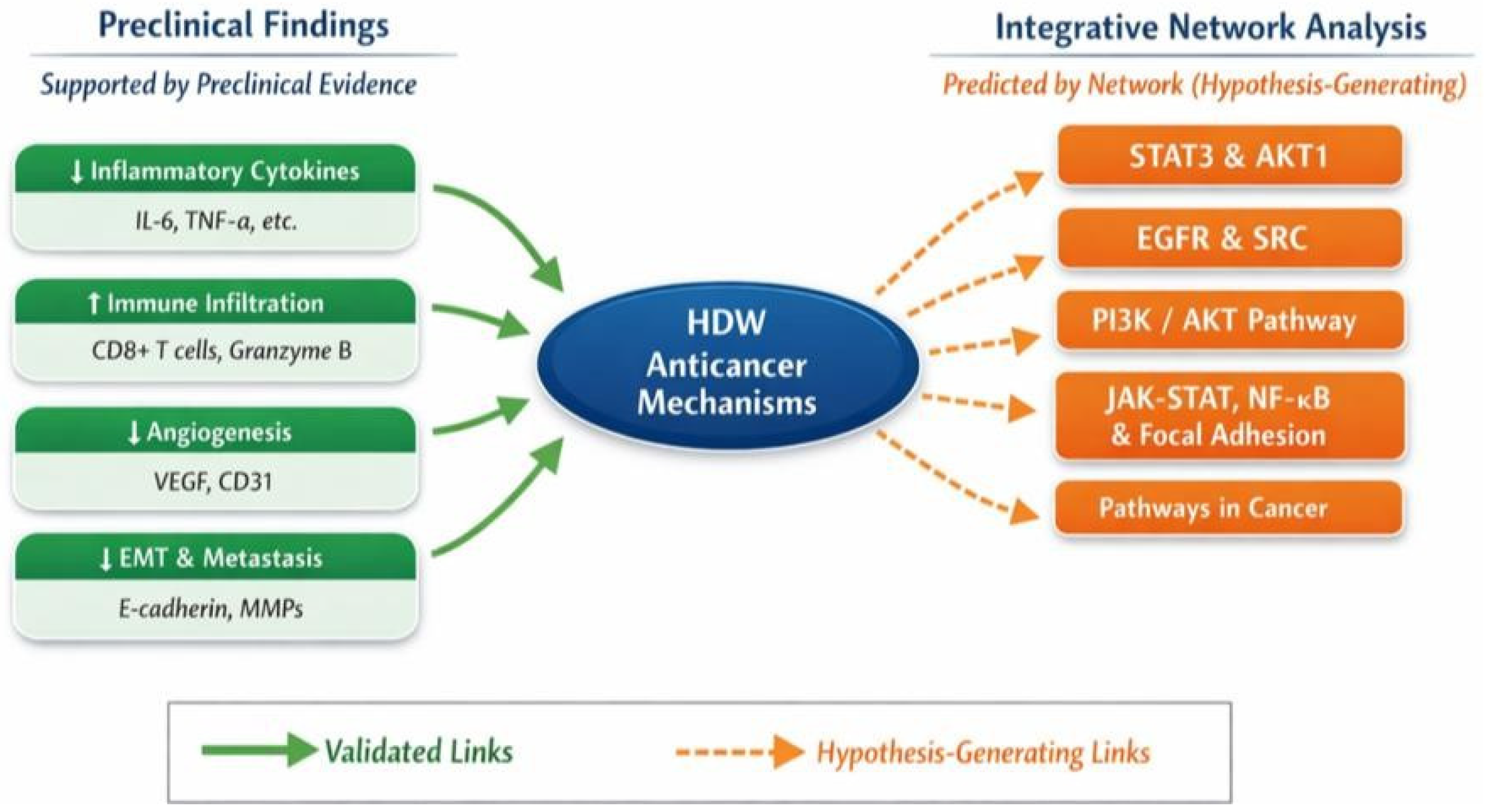
Immune and Tumor Microenvironment Mechanisms of Hedyotis diffusa Willd: A Scoping Review and Network Pharmacology Analysis

 ,
, 
 ,
,
Simple Summary
Abstract
1. Introduction
2. Methods
2.1. Study Design
2.2. Scoping Review
2.2.1. Search Strategy
2.2.2. Eligibility Criteria
2.2.3. Study Selection Process
2.2.4. Data Extraction and Synthesis
2.3. Network Pharmacology Analysis
2.3.1. Identification of Candidate Active Compounds
2.3.2. Target Prediction for Active Compounds
2.3.3. Collection of Immune and TME-Related Gene Sets
2.3.4. Identification of Intersecting Targets and PPI Network Construction
2.3.5. Network Visualization and Identification of Key Targets
2.3.6. Functional Enrichment Analysis
3. Results
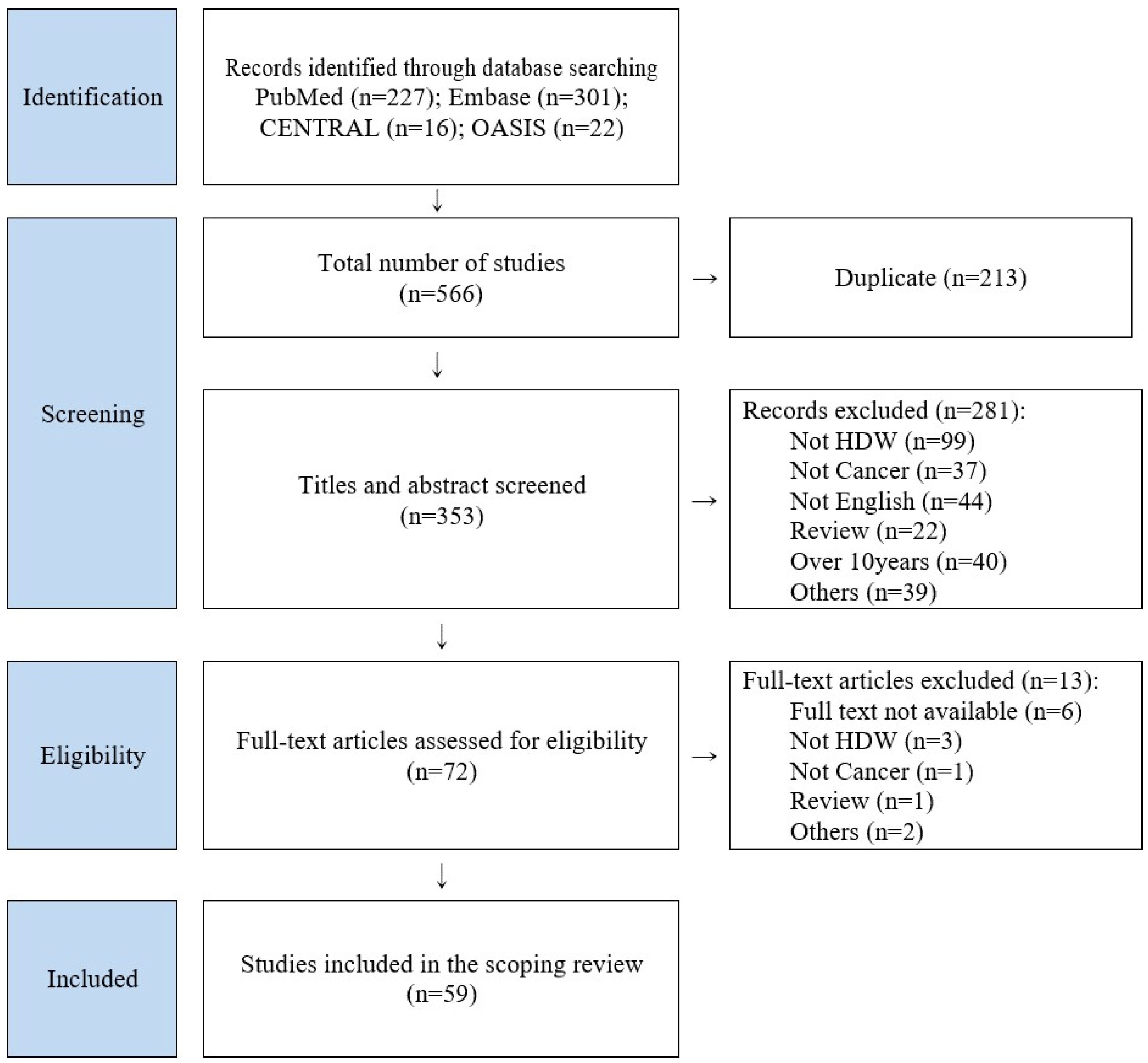
3.1. Study Selection
3.2. Characteristics of Included Studies
3.3. Antitumor Activity and Growth Inhibition
3.3.1. Inhibition of Cancer Cell Proliferation and Cell Cycle Arrest
3.3.2. Induction of Apoptosis and Other Regulated Cell Death Pathways
3.3.3. Suppression of Tumor Growth and Systemic Safety in Animal Models
3.3.4. Inhibition of Metastasis, Invasion, and Angiogenesis
3.3.5. Enhanced Sensitivity to Anticancer Therapies
3.4. Immune and TME Effects
3.4.1. Immune Activation and Cytotoxic Enhancement
3.4.2. Regulation of Inflammatory Signaling and Immunosuppressive Pathways
3.4.3. TME Remodeling and Metastatic Control
3.5. Network Pharmacology Analysis Results
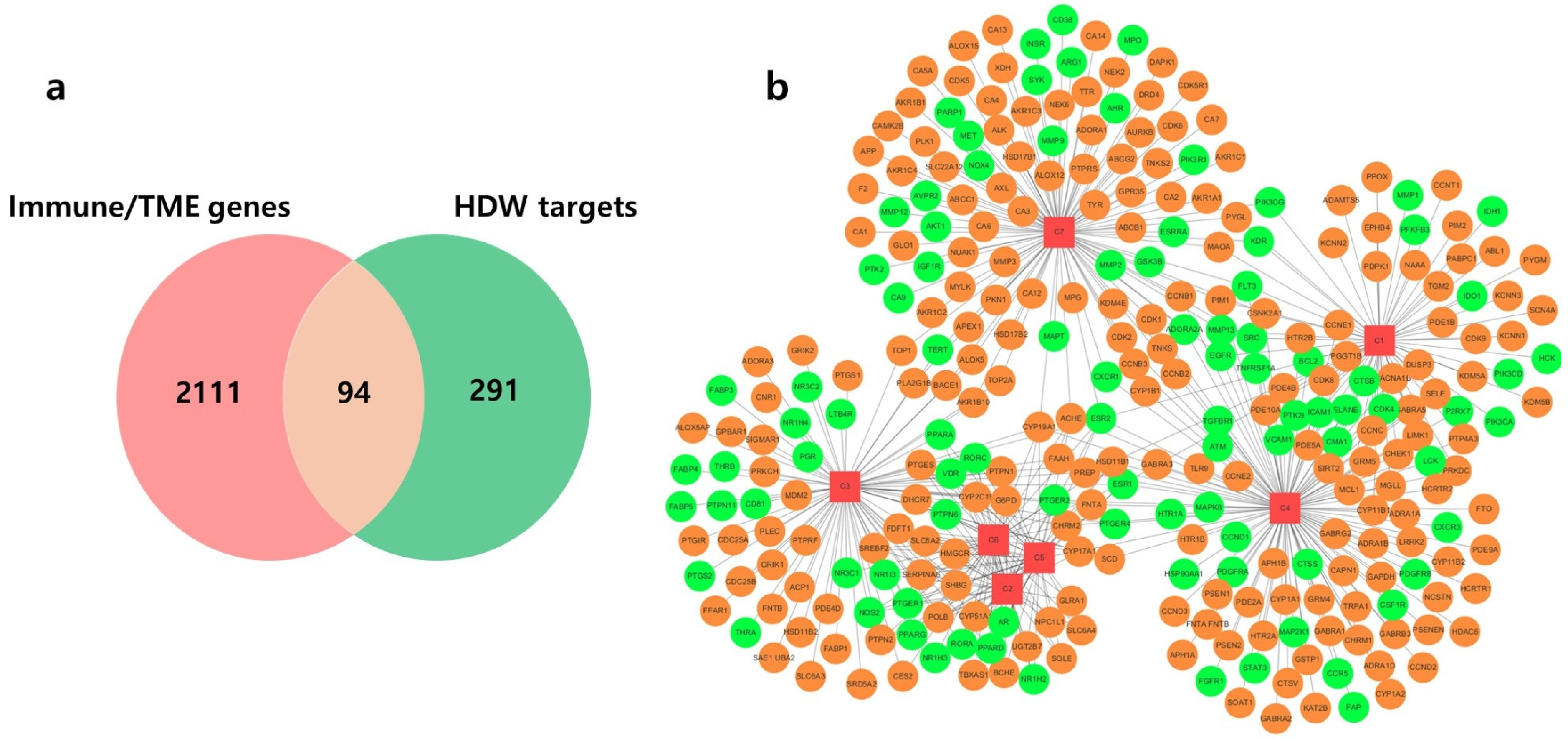
3.5.1. Related Targets of HDW in the Immune and TME Gene Sets
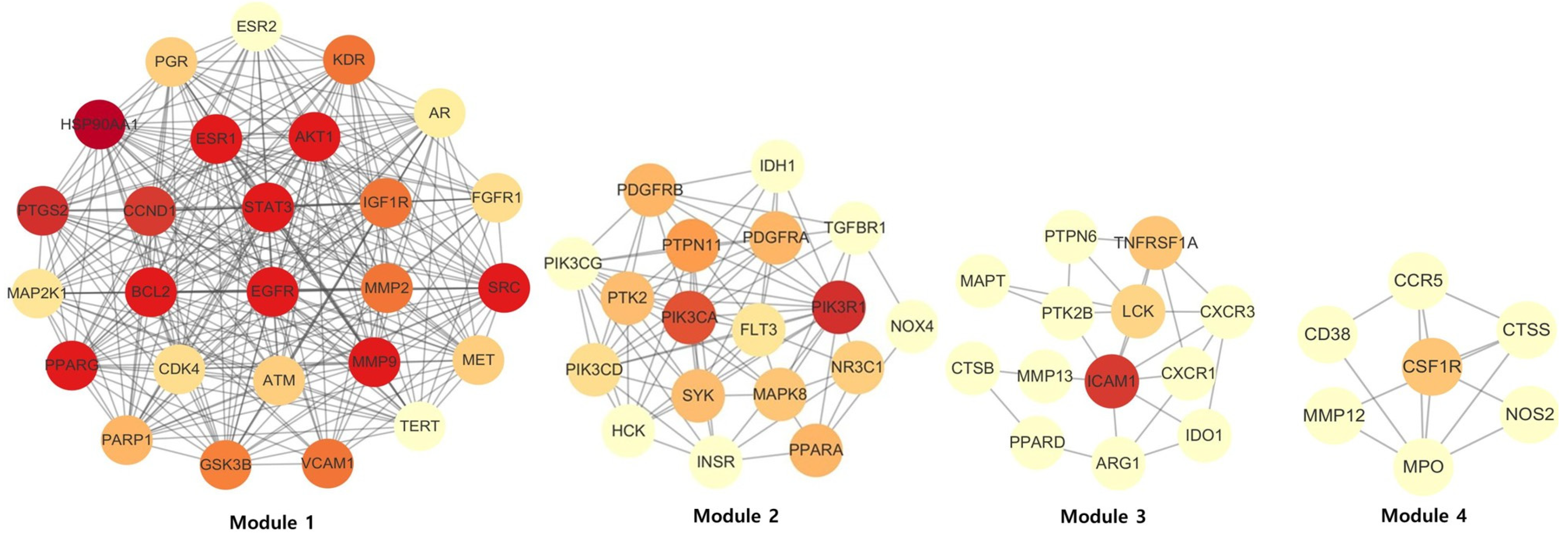
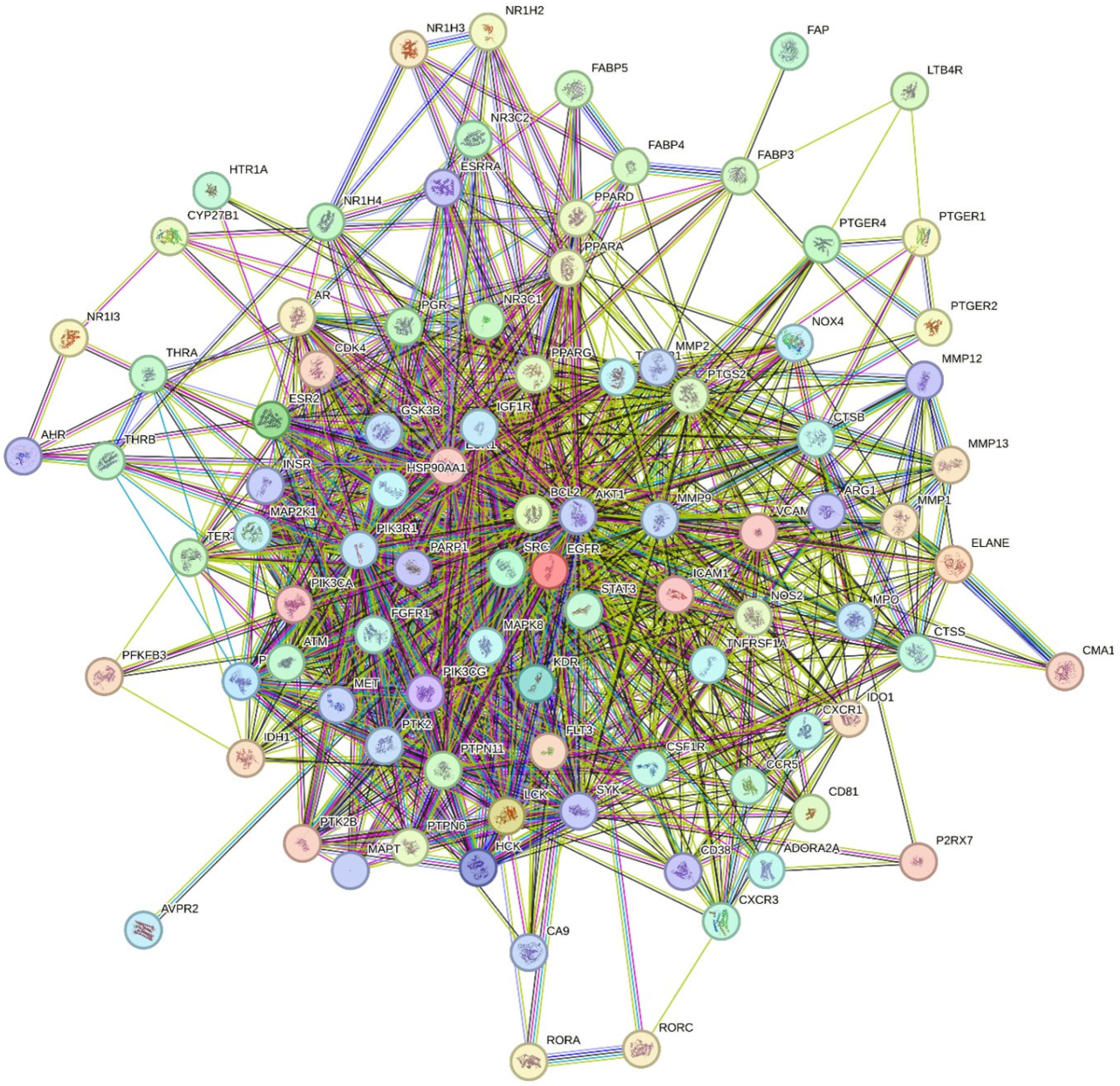
3.5.2. PPI Network Construction and Topological Analysis
3.5.3. Module Detection
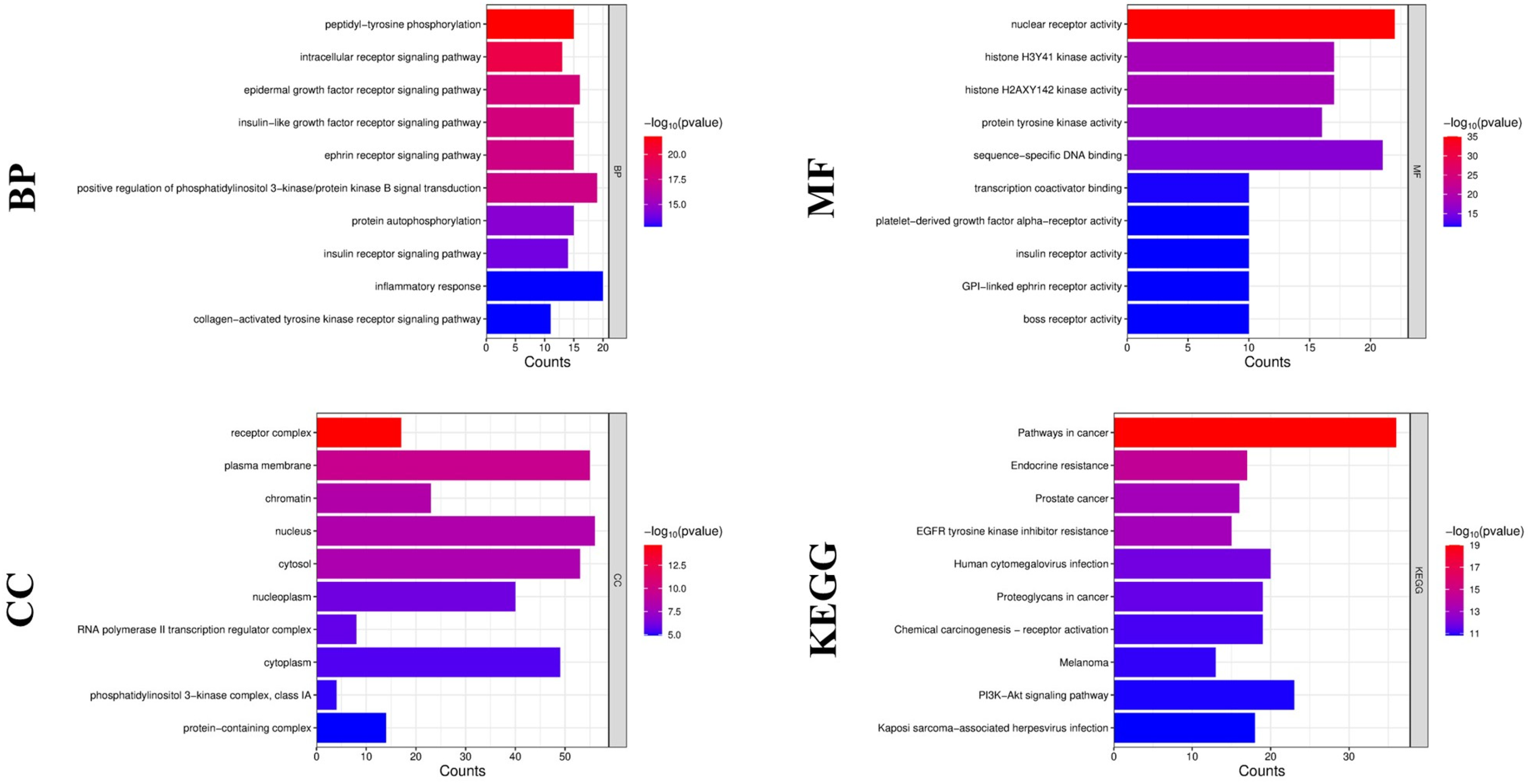
3.5.4. Functional Enrichment Analysis of Intersecting Targets
4. Discussion
5. Conclusions
Supplementary Materials
Author Contributions
Funding
Data Availability Statement
Conflicts of Interest
References
- Baghban, R.; Roshangar, L.; Jahanban-Esfahlan, R.; Seidi, K.; Ebrahimi-Kalan, A.; Jaymand, M.; Kolahian, S.; Javaheri, T.; Zare, P. Tumor microenvironment complexity and therapeutic implications at a glance. Cell Commun. Signal. 2020, 18, 59. [Google Scholar] [CrossRef]
- Zhong, H.; Zhou, S.; Yin, S.; Qiu, Y.; Liu, B.; Yu, H. Tumor microenvironment as niche constructed by cancer stem cells: Breaking the ecosystem to combat cancer. J. Adv. Res. 2025, 71, 279–296. [Google Scholar] [CrossRef] [PubMed]
- Nishida, A.; Andoh, A. The Role of Inflammation in Cancer: Mechanisms of Tumor Initiation, Progression, and Metastasis. Cells 2025, 14, 488. [Google Scholar] [CrossRef] [PubMed]
- Tufail, M.; Jiang, C.-H.; Li, N. Immune evasion in cancer: Mechanisms and cutting-edge therapeutic approaches. Signal Transduct. Target. Ther. 2025, 10, 227. [Google Scholar] [CrossRef] [PubMed]
- Yu, H.; Li, J.; Peng, S.; Liu, Q.; Chen, D.; He, Z.; Xiang, J.; Wang, B. Tumor microenvironment: Nurturing cancer cells for immunoevasion and druggable vulnerabilities for cancer immunotherapy. Cancer Lett. 2025, 611, 217385. [Google Scholar] [CrossRef]
- Yang, Y.; Yu, Q.; Zhang, H.; Liu, Y.; Wang, H.; Yang, N.; Shi, Y.; Zhang, W.; Wu, Z.; Huang, S.; et al. Restoring tumor antigenicity activates the “bystander” T cell immune cycle. J. Control. Release 2025, 380, 256–268. [Google Scholar] [CrossRef]
- Wei, G.; Li, B.; Huang, M.; Lv, M.; Liang, Z.; Zhu, C.; Ge, L.; Chen, J. Polarization of Tumor Cells and Tumor-Associated Macrophages: Molecular Mechanisms and Therapeutic Targets. MedComm 2025, 6, e70372. [Google Scholar] [CrossRef]
- Shafqat, A.; Omer, M.H.; Ahmed, E.N.; Mushtaq, A.; Ijaz, E.; Ahmed, Z.; Alkattan, K.; Yaqinuddin, A. Reprogramming the immunosuppressive tumor microenvironment: Exploiting angiogenesis and thrombosis to enhance immunotherapy. Front. Immunol. 2023, 14, 1200941. [Google Scholar] [CrossRef]
- Newman, D.J.; Cragg, G.M. Natural Products as Sources of New Drugs over the Nearly Four Decades from 01/1981 to 09/2019. J. Nat. Prod. 2020, 83, 770–803. [Google Scholar] [CrossRef]
- Atanasov, A.G.; Zotchev, S.B.; Dirsch, V.M.; Orhan, I.E.; Banach, M.; Rollinger, J.M.; Barreca, D.; Weckwerth, W.; Bauer, R.; Bayer, E.A.; et al. Natural products in drug discovery: Advances and opportunities. Nat. Rev. Drug Discov. 2021, 20, 200–216. [Google Scholar] [CrossRef]
- Feng, R.; Li, Z.; Jia, Y.; Ji, Y.; Guo, M.; Wang, X. Total Flavonoids of Hedyotis diffusa Willd Suppresses Prostate Cancer Progression by Promoting AR Ubiquitination and Degradation via the PIAS4/STAT3 Pathway. Cell Biol. Int. 2025, 49, 1475–1492. [Google Scholar] [CrossRef] [PubMed]
- Yang, S.; Zeng, L.; Deng, C.; Tian, X.; Sun, W.; Ji, C.; Zhang, Q. Anti-tumor Effects of Hedyotis diffusa Willd on Cervical Cancer: Inhibition of Proliferation, Migration, and Induction of Apoptosis. Iran. J. Pharm. Res. 2025, 24, e159390. [Google Scholar] [CrossRef] [PubMed]
- Cheng, Q.; Zhang, D.; Zhao, X.; Zhu, L.; Tao, J.; Xiao, J.; Wang, R.; Leng, J. Composition analysis of extracellular vesicle-like particles derived from Hedyotis diffusa Willd and their effects on apoptosis in hepatocellular carcinoma Huh-7 cells. Int. J. Biol. Macromol. 2025, 321, 146395. [Google Scholar] [CrossRef] [PubMed]
- Chen, R.; He, J.; Tong, X.; Tang, L.; Liu, M. The Hedyotis diffusa Willd. (Rubiaceae): A Review on Phytochemistry, Pharmacology, Quality Control and Pharmacokinetics. Molecules 2016, 21, 710. [Google Scholar] [CrossRef]
- Han, X.; Zhang, X.; Wang, Q.; Wang, L.; Yu, S. Antitumor potential of Hedyotis diffusa Willd: A systematic review of bioactive constituents and underlying molecular mechanisms. Biomed. Pharmacother. 2020, 130, 110735. [Google Scholar] [CrossRef]
- Lin, J.; Li, Q.; Chen, H.; Lin, H.; Lai, Z.; Peng, J. Hedyotis diffusa Willd. extract suppresses proliferation and induces apoptosis via IL-6-inducible STAT3 pathway inactivation in human colorectal cancer cells. Oncol. Lett. 2015, 9, 1962–1970. [Google Scholar] [CrossRef]
- Zheng, Q.; Wu, X.; Peng, S. The immunotherapy mechanism of Hedyotis diffusae Herba in treating liver cancer: A study based on network pharmacology, bioinformatics, and experimental validation. Naunyn Schmiedebergs Arch. Pharmacol. 2025, 398, 951–965. [Google Scholar] [CrossRef]
- Yi, J.; Ye, Z.; Xu, H.; Zhang, H.; Cao, H.; Li, X.; Wang, T.; Dong, C.; Du, Y.; Dong, S.; et al. EGCG targeting STAT3 transcriptionally represses PLXNC1 to inhibit M2 polarization mediated by gastric cancer cell-derived exosomal miR-92b-5p. Phytomedicine 2024, 135, 156137. [Google Scholar] [CrossRef]
- Huang, F.; Pang, J.; Xu, L.; Niu, W.; Zhang, Y.; Li, S.; Li, X. Hedyotis diffusa injection induces ferroptosis via the Bax/Bcl2/VDAC2/3 axis in lung adenocarcinoma. Phytomedicine 2022, 104, 154319. [Google Scholar] [CrossRef]
- Ye, C.; Zhang, B.; Tang, Z.; Zheng, C.; Wang, Q.; Tong, X. Synergistic action of Hedyotis diffusa Willd and Andrographis paniculata in Nasopharyngeal Carcinoma: Downregulating AKT1 and upregulating VEGFA to curb tumorigenesis. Int. Immunopharmacol. 2024, 132, 111866. [Google Scholar] [CrossRef]
- Xu, M.; Chen, L.; Wu, J.; Liu, L.; Shi, M.; Zhou, H.; Zhang, G. Mechanism of Hedyotis diffusa-Scutellaria barbata D. Don for treatment of primary liver cancer: Analysis with network pharmacology, molecular docking and in vitro validation. Nan Fang. Yi Ke Da Xue Xue Bao 2025, 45, 80–89. [Google Scholar] [CrossRef] [PubMed]
- Wang, S.; Yin, N.; Li, Y.; Ma, Z.; Lin, W.; Zhang, L.; Cui, Y.; Xia, J.; Geng, L. Molecular mechanism of the treatment of lung adenocarcinoma by Hedyotis diffusa: An integrative study with real-world clinical data and experimental validation. Front. Pharmacol. 2024, 15, 1355531. [Google Scholar] [CrossRef] [PubMed]
- Liu, X.; Wu, J.; Zhang, D.; Wang, K.; Duan, X.; Zhang, X. A Network Pharmacology Approach to Uncover the Multiple Mechanisms of Hedyotis diffusa Willd. on Colorectal Cancer. Evid. Based Complement. Altern. Med. 2018, 2018, 6517034. [Google Scholar] [CrossRef] [PubMed]
- Song, Y.; Wang, H.; Pan, Y.; Liu, T. Investigating the Multi-Target Pharmacological Mechanism of Hedyotis diffusa Willd Acting on Prostate Cancer: A Network Pharmacology Approach. Biomolecules 2019, 9, 591. [Google Scholar] [CrossRef]
- Chen, Y.; Lin, Y.; Li, Y.; Li, C. Total flavonoids of Hedyotis diffusa Willd inhibit inflammatory responses in LPS-activated macrophages via suppression of the NF-κB and MAPK signaling pathways. Exp. Ther. Med. 2016, 11, 1116–1122. [Google Scholar] [CrossRef]
- Wu, K.; Wu, X.; Liang, Y.; Wang, T.; Wu, D.; Li, L.; Wang, Z. Inhibitory effects of total triterpenoids isolated from the Hedyotis diffusa willd on H1975 cells. Front. Pharmacol. 2022, 13, 922477. [Google Scholar] [CrossRef]
- Bai, L.; Liu, X.; Yuan, Z.; Xu, G.; Li, X.; Wan, Z.; Zhu, M.; Liang, X.; Li, P.; Lan, Q.; et al. Activation of IL-2/IL-2R pathway by Hedyotis diffusa polysaccharide improves immunotherapy in colorectal cancer. Int. J. Biol. Macromol. 2025, 306, 141013. [Google Scholar] [CrossRef]
- Arksey, H.; O’Malley, L. Scoping studies: Towards a methodological framework. Int. J. Social Res. Methodol. 2005, 8, 19–32. [Google Scholar] [CrossRef]
- Tricco, A.C.; Lillie, E.; Zarin, W.; O’Brien, K.K.; Colquhoun, H.; Levac, D.; Moher, D.; Peters, M.D.J.; Horsley, T.; Weeks, L.; et al. PRISMA Extension for Scoping Reviews (PRISMA-ScR): Checklist and Explanation. Ann. Intern. Med. 2018, 169, 467–473. [Google Scholar] [CrossRef]
- Peters, M.D.J.; Marnie, C.; Tricco, A.C.; Pollock, D.; Munn, Z.; Alexander, L.; McInerney, P.; Godfrey, C.M.; Khalil, H. 706 Updated methodological guidance for the conduct of scoping reviews. JBI Evid. Synth. 2020, 18, 2119–2126. [Google Scholar] [CrossRef]
- Hopkins, A.L. Network pharmacology: The next paradigm in drug discovery. Nat. Chem. Biol. 2008, 4, 682–690. [Google Scholar] [CrossRef] [PubMed]
- Li, S.; Zhang, B. Traditional Chinese medicine network pharmacology: Theory, methodology and application. Chin. J. Nat. Med. 2013, 11, 110–120. [Google Scholar] [CrossRef] [PubMed]
- Ru, J.; Li, P.; Wang, J.; Zhou, W.; Li, B.; Huang, C.; Li, P.; Guo, Z.; Tao, W.; Yang, Y.; et al. TCMSP: A database of systems pharmacology for drug discovery from herbal medicines. J. Cheminformatics 2014, 6, 13. [Google Scholar] [CrossRef] [PubMed]
- Gfeller, D.; Michielin, O.; Zoete, V. Shaping the interaction landscape of bioactive molecules. Bioinformatics 2013, 29, 3073–3079. [Google Scholar] [CrossRef]
- Bhattacharya, S.; Andorf, S.; Gomes, L.; Dunn, P.; Schaefer, H.; Pontius, J.; Berger, P.; Desborough, V.; Smith, T.; Campbell, J.; et al. ImmPort: Disseminating data to the public for the future of immunology. Immunol. Res. 2014, 58, 234–239. [Google Scholar] [CrossRef]
- Stelzer, G.; Rosen, N.; Plaschkes, I.; Zimmerman, S.; Twik, M.; Fishilevich, S.; Stein, T.I.; Nudel, R.; Lieder, I.; Mazor, Y.; et al. The GeneCards Suite: From Gene Data Mining to Disease Genome Sequence Analyses. Curr. Protoc. Bioinform. 2016, 54, 1.30.1–1.30.33. [Google Scholar] [CrossRef]
- Szklarczyk, D.; Gable, A.L.; Lyon, D.; Junge, A.; Wyder, S.; Huerta-Cepas, J.; Simonovic, M.; Doncheva, N.T.; Morris, J.H.; Bork, P.; et al. STRING v11: Protein-protein association networks with increased coverage, supporting functional discovery in genome-wide experimental datasets. Nucleic Acids Res. 2019, 47, D607–D613. [Google Scholar] [CrossRef]
- Shannon, P.; Markiel, A.; Ozier, O.; Baliga, N.S.; Wang, J.T.; Ramage, D.; Amin, N.; Schwikowski, B.; Ideker, T. Cytoscape: A software environment for integrated models of biomolecular interaction networks. Genome Res. 2003, 13, 2498–2504. [Google Scholar] [CrossRef]
- Bader, G.D.; Hogue, C.W. An automated method for finding molecular complexes in large protein interaction networks. BMC Bioinform. 2003, 4, 2. [Google Scholar] [CrossRef]
- Kanehisa, M.; Furumichi, M.; Tanabe, M.; Sato, Y.; Morishima, K. KEGG: New perspectives on genomes, pathways, diseases and drugs. Nucleic Acids Res. 2017, 45, D353–D361. [Google Scholar] [CrossRef]
- Ashburner, M.; Ball, C.A.; Blake, J.A.; Botstein, D.; Butler, H.; Cherry, J.M.; Davis, A.P.; Dolinski, K.; Dwight, S.S.; Eppig, J.T.; et al. Gene ontology: Tool for the unification of biology. The Gene Ontology Consortium. Nat. Genet. 2000, 25, 25–29. [Google Scholar] [CrossRef] [PubMed]
- Bai, K.; Long, Y.; Yuan, F.; Huang, X.; Liu, P.; Hou, Y.; Zou, X.; Jiang, T.; Sun, J. Hedyotis diffusa injection modulates the ferroptosis in bladder cancer via CAV1/JUN/VEGFA. Int. Immunopharmacol. 2025, 147, 113925. [Google Scholar] [CrossRef] [PubMed]
- Chen, W.; Jin, Y.; Yang, H.; Wei, L.; Lin, J. Hedyotis diffusa Willd reduces migration and invasion through inhibition of TGF-β-induced EMT in colorectal cancer cells. Eur. J. Integr. Med. 2018, 23, 57–63. [Google Scholar] [CrossRef]
- Chen, H.; Shang, X.; Yuan, H.; Niu, Q.; Chen, J.; Luo, S.; Li, W.; Li, X. Total flavonoids of Oldenlandia diffusa (Willd.) Roxb. suppresses the growth of hepatocellular carcinoma through endoplasmic reticulum stress-mediated autophagy and apoptosis. Front. Pharmacol. 2022, 13, 1019670. [Google Scholar] [CrossRef]
- Chen, Q.; Xu, Y.; Ma, J.; Zhang, G.; Yin, Z.; Zhang, D.; Luo, D.; Liu, Z. Network Pharmacology Integrated Experimental Validation Uncover Quercetin as the Key Ingredient of Hedyotis diffusa Anti-BRCA. Chem. Biol. Drug Des. 2025, 105, e70112. [Google Scholar] [CrossRef]
- Cheng, Y.Y.; Tuzo, E.T.; Dalley, J.W.; Tsai, T.H. Dose-dependent effects of Hedyotis diffusa extract on the pharmacokinetics of tamoxifen, 4-hydroxytamoxifen, and N-desmethyltamoxifen. Biomed. Pharmacother. 2022, 145, 112466. [Google Scholar] [CrossRef]
- Chung, T.W.; Choi, H.; Lee, J.M.; Ha, S.H.; Kwak, C.H.; Abekura, F.; Park, J.Y.; Chang, Y.C.; Ha, K.T.; Cho, S.H.; et al. Oldenlandia diffusa suppresses metastatic potential through inhibiting matrix metalloproteinase-9 and intercellular adhesion molecule-1 expression via p38 and ERK1/2 MAPK pathways and induces apoptosis in human breast cancer MCF-7 cells. J. Ethnopharmacol. 2017, 195, 309–317. [Google Scholar] [CrossRef]
- Feng, J.; Jin, Y.; Peng, J.; Wei, L.; Cai, Q.; Yan, Z.; Lai, Z.; Lin, J. Hedyotis diffusa willd extract suppresses colorectal cancer growth through multiple cellular pathways. Oncol. Lett. 2017, 14, 8197–8205. [Google Scholar] [CrossRef]
- Han, C.H.; Ma, J.Y.; Zou, W.; Qu, J.L.; Du, Y.; Li, N.; Liu, Y.; Jin, G.; Leng, A.J.; Liu, J. 3D Microfluidic System for Evaluating Inhibitory Effect of Chinese Herbal Medicine Oldenlandia diffusa on Human Malignant Glioma Invasion Combined with Network Pharmacology Analysis. Chin. J. Integr. Med. 2023, 29, 52–60. [Google Scholar] [CrossRef]
- Ho, K.L.; Lew, A.P.; Ong, Y.C.; Lew, Y.Q.; Wong, Z.H. Antiproliferative, antimigratory, and anticlonogenic effects of Hedyotis diffusa, Panax ginseng, and their combination on colorectal cancer cell lines. J. Herbs Spices Med. Plants 2018, 24, 185–198. [Google Scholar] [CrossRef]
- Huang, L.; Xu, H.; Wu, T.; Li, G. Hedyotis diffusa Willd. Suppresses Hepatocellular Carcinoma via Downregulating AKT/mTOR Pathways. Evid. Based Complement. Altern. Med. 2021, 2021, 5210152. [Google Scholar] [CrossRef]
- Jiang, J.; Wang, B.; Li, J.; Ye, B.; Lin, S.; Qian, W.; Shan, L.; Efferth, T. Total coumarins of Hedyotis diffusa induces apoptosis of myelodysplastic syndrome SKM-1 cells by activation of caspases and inhibition of PI3K/Akt pathway proteins. J. Ethnopharmacol. 2017, 196, 253–260. [Google Scholar] [CrossRef] [PubMed]
- Jin, H.; Cui, M. Recognition of potential therapeutic role of 2-hydroxy-3-methylanthraquinones in the treatment of gallbladder carcinoma: A proteomics analysis. Fundam. Clin. Pharmacol. 2022, 36, 350–362. [Google Scholar] [CrossRef]
- Jing, D.; Chen, X.; Zhang, Z.; Chen, F.; Huang, F.; Zhang, Z.; Wu, W.; Shao, Z.; Pu, F. 2-Hydroxy-3-methylanthraquinone inhibits homologous recombination repair in osteosarcoma through the MYC-CHK1-RAD51 axis. Mol. Med. 2023, 29, 15. [Google Scholar] [CrossRef]
- Kim, K.; Shin, E.A.; Jung, J.H.; Park, J.E.; Kim, D.S.; Shim, B.S.; Kim, S.H. Ursolic Acid Induces Apoptosis in Colorectal Cancer Cells Partially via Upregulation of MicroRNA-4500 and Inhibition of JAK2/STAT3 Phosphorylation. Int. J. Mol. Sci. 2018, 20, 114. [Google Scholar] [CrossRef] [PubMed]
- Kuo, Y.J.; Liu, Y.J.; Way, T.D.; Chiang, S.Y.; Lin, J.G.; Chung, J.G. Synergistic inhibition of leukemia WEHI-3 cell growth by arsenic trioxide and Hedyotis diffusa willd extract in vitro and in vivo. Exp. Ther. Med. 2017, 13, 3388–3396. [Google Scholar] [CrossRef] [PubMed]
- Lai, Z.; Yan, Z.; Chen, W.; Peng, J.; Feng, J.; Li, Q.; Jin, Y.; Lin, J. Hedyotis diffusa Willd suppresses metastasis in 5-fluorouracil-resistant colorectal cancer cells by regulating the TGF-β signaling pathway. Mol. Med. Rep. 2017, 16, 7752–7758. [Google Scholar] [CrossRef]
- Lee, S.; Shim, J.H.; Gim, H.; Park, H.S.; Kim, B.J. Ethanol Extract of Oldenlandia diffusa—An Effective Chemotherapeutic for the Treatment of Colorectal Cancer in Humans: -Anti-Cancer Effects of Oldenlandia diffusa. J. Pharmacopunct. 2016, 19, 51–58. [Google Scholar] [CrossRef]
- Lee, Y.K.; Lim, J.; Yoon, S.Y.; Joo, J.C.; Park, S.J.; Park, Y.J. Promotion of Cell Death in Cisplatin-Resistant Ovarian Cancer Cells through KDM1B-DCLRE1B Modulation. Int. J. Mol. Sci. 2019, 20, 2443. [Google Scholar] [CrossRef]
- Li, Y.L.; Zhang, J.; Min, D.; Hongyan, Z.; Lin, N.; Li, Q.S. Anticancer Effects of 1,3-Dihydroxy-2-Methylanthraquinone and the Ethyl Acetate Fraction of Hedyotis diffusa Willd against HepG2 Carcinoma Cells Mediated via Apoptosis. PLoS ONE 2016, 11, e0151502. [Google Scholar] [CrossRef]
- Li, P.; Li, J.; Liu, Y.; Guo, Y.; Liu, Y.; Ren, Y. Quantitative and qualitative determination of gallic acid in Hedyotis diffusa willd. Extract and its anti-lung cancer NCI-H460 cell activity. Biomed. Res. 2017, 28, 5280–5284. [Google Scholar]
- Li, Q.; Lai, Z.; Yan, Z.; Peng, J.; Jin, Y.; Wei, L.; Lin, J. Hedyotis diffusa Willd inhibits proliferation and induces apoptosis of 5-FU resistant colorectal cancer cells by regulating the PI3K/AKT signaling pathway. Mol. Med. Rep. 2018, 17, 358–365. [Google Scholar] [CrossRef] [PubMed]
- Li, H.; Lai, Z.; Yang, H.; Peng, J.; Chen, Y.; Lin, J. Hedyotis diffusa Willd. inhibits VEGF-C-mediated lymphangiogenesis in colorectal cancer via multiple signaling pathways. Oncol. Rep. 2019, 42, 1225–1236. [Google Scholar] [CrossRef] [PubMed]
- Lin, L.; Cheng, K.; He, Z.; Lin, Q.; Huang, Y.; Chen, C.; Xie, Z.; Chen, L.; Liang, Z. A polysaccharide from Hedyotis diffusa interrupts metastatic potential of lung adenocarcinoma A549 cells by inhibiting EMT via EGFR/Akt/ERK signaling pathways. Int. J. Biol. Macromol. 2019, 129, 706–714. [Google Scholar] [CrossRef] [PubMed]
- Lin, L.; Cheng, K.; Xie, Z.; Chen, C.; Chen, L.; Huang, Y.; Liang, Z. Purification and characterization a polysaccharide from Hedyotis diffusa and its apoptosis inducing activity toward human lung cancer cell line A549. Int. J. Biol. Macromol. 2019, 122, 64–71. [Google Scholar] [CrossRef]
- Ling, J.Y.; Wang, Q.L.; Liang, H.N.; Liu, Q.B.; Yin, D.H.; Lin, L. Flavonoid-Rich Extract of Oldenlandia diffusa (Willd.) Roxb. Inhibits Gastric Cancer by Activation of Caspase-Dependent Mitochondrial Apoptosis. Chin. J. Integr. Med. 2023, 29, 213–223. [Google Scholar] [CrossRef]
- Lu, P.H.; Chen, M.B.; Ji, C.; Li, W.T.; Wei, M.X.; Wu, M.H. Aqueous Oldenlandia diffusa extracts inhibits colorectal cancer cells via activating AMP-activated protein kinase signalings. Oncotarget 2016, 7, 45889–45900. [Google Scholar] [CrossRef]
- Lv, Y.; Wang, Y. Chemical constituents from Oldenlandia diffusa and their cytotoxic effects on human cancer cell lines. Nat. Prod. Res. 2021, 37, 397–403. [Google Scholar] [CrossRef]
- Lv, X.; Zhou, L.; Xu, L. Synergistic Effect of Co(II) Coordination Polymers with Hedyotis diffusa on Lung Cancer through Regulating the Expression of EMT Protein. Lat. Am. J. Pharm. 2023, 42, 356–362. [Google Scholar]
- Ma, C.; Wei, Y.; Liu, Q.; Xin, Y.; Cao, G.; Wang, X.; Yang, P. Polysaccharides from Hedyotis diffusa enhance the antitumor activities of cytokine-induced killer cells. Biomed. Pharmacother. 2019, 117, 109167. [Google Scholar] [CrossRef]
- Ma, W.L.; Chang, N.; Yu, Y.; Su, Y.T.; Chen, G.Y.; Cheng, W.C.; Wu, Y.C.; Li, C.C.; Chang, W.C.; Yang, J.C. Ursolic acid silences CYP19A1/aromatase to suppress gastric cancer growth. Cancer Med. 2022, 11, 2824–2835. [Google Scholar] [CrossRef] [PubMed]
- Ning, W.; Xu, N.; Zhou, C.; Zou, L.; Quan, J.; Yang, H.; Lu, Z.; Cao, H.; Liu, J. Ethyl Acetate Fraction of Hedyotis diffusa Willd Induces Apoptosis via JNK/Nur77 Pathway in Hepatocellular Carcinoma Cells. Evid. Based Complement. Altern. Med. 2022, 2022, 1932777. [Google Scholar] [CrossRef] [PubMed]
- Ou, L.; Li, M.; Hou, Y. Network pharmacology, bioinformatics, and experimental validation to identify the role of Hedyotis diffusa willd against gastric cancer through the activation of the endoplasmic reticulum stress. Heliyon 2024, 10, e28833. [Google Scholar] [CrossRef]
- Pu, F.; Chen, F.; Lin, S.; Chen, S.; Zhang, Z.; Wang, B.; Shao, Z. The synergistic anticancer effect of cisplatin combined with Oldenlandia diffusa in osteosarcoma MG-63 cell line in vitro. Onco Targets Ther. 2016, 9, 255–263. [Google Scholar] [CrossRef] [PubMed]
- Sun, G.; Wei, L.; Feng, J.; Lin, J.; Peng, J. Inhibitory effects of Hedyotis diffusa Willd. on colorectal cancer stem cells. Oncol. Lett. 2016, 11, 3875–3881. [Google Scholar] [CrossRef]
- Trang, V.M.; Son, N.T.; Luyen, N.D.; Pham, T.V.; Giang, P.M.; Duong, P.A.; Huong, D.T.V. Hedyotis diffusa Aerial Parts: Essential Oil Composition, Biological Activity, and In Silico Approach. Chem. Biodivers. 2025, 22, e00010. [Google Scholar] [CrossRef]
- Wang, C.; Zhou, X.; Wang, Y.; Wei, D.; Deng, C.; Xu, X.; Xin, P.; Sun, S. The Antitumor Constituents from Hedyotis diffusa Willd. Molecules 2017, 22, 2101. [Google Scholar] [CrossRef]
- Wang, C.; Xin, P.; Wang, Y.; Zhou, X.; Wei, D.; Deng, C.; Sun, S. Iridoids and sfingolipids from Hedyotis diffusa. Fitoterapia 2018, 124, 152–159. [Google Scholar] [CrossRef]
- Wang, Z.; Gao, K.; Xu, C.; Gao, J.; Yan, Y.; Wang, Y.; Li, Z.; Chen, J. Metabolic effects of Hedyotis diffusa on rats bearing Walker 256 tumor revealed by NMR-based metabolomics. Magn. Reson. Chem. 2018, 56, 5–17. [Google Scholar] [CrossRef]
- Wang, B.; Jiang, J.; Zhang, Y.; Shen, Y.; Wu, L.; Tang, S.; Lin, S. Combination of HDE and BIIB021 efficiently inhibits cell proliferation and induces apoptosis via downregulating hTERT in myelodysplastic syndromes. Exp. Ther. Med. 2021, 21, 503. [Google Scholar] [CrossRef]
- Wang, S.; Chang, X.; Zhang, J.; Li, J.; Wang, N.; Yang, B.; Pan, B.; Zheng, Y.; Wang, X.; Ou, H.; et al. Ursolic Acid Inhibits Breast Cancer Metastasis by Suppressing Glycolytic Metabolism via Activating SP1/Caveolin-1 Signaling. Front. Oncol. 2021, 11, 745584. [Google Scholar] [CrossRef] [PubMed]
- Wang, R.; Deng, Z.; Zhu, Z.; Wang, J.; Yang, X.; Xu, M.; Wang, X.; Tang, Q.; Zhou, Q.; Wan, X.; et al. Kaempferol promotes non-small cell lung cancer cell autophagy via restricting Met pathway. Phytomedicine 2023, 121, 155090. [Google Scholar] [CrossRef] [PubMed]
- Wu, C.; Luo, H.; Ma, W.; Ren, X.; Lu, C.; Li, N.; Wang, Z. Polysaccharides isolated from Hedyotis diffusa inhibits the aggressive phenotypes of laryngeal squamous carcinoma cells via inhibition of Bcl-2, MMP-2, and μPA. Gene 2017, 637, 124–129. [Google Scholar] [CrossRef] [PubMed]
- Wu, H.; Zhang, L.; Wang, C.; Li, F.; Qi, L.; Xiao, L.; Zhang, M.; Zhang, H.; Zhang, G.; Qin, Y. Network Pharmacology Analysis and Experimental Verification on Antiangiogenesis Mechanism of Hedyotis diffusa Willd in Liver Cancer. Evid. Based Complement. Altern. Med. 2023, 2023, 1416841. [Google Scholar] [CrossRef]
- Yan, Z.; Feng, J.; Peng, J.; Lai, Z.; Zhang, L.; Jin, Y.; Yang, H.; Chen, W.; Lin, J. Chloroform extract of Hedyotis diffusa Willd inhibits viability of human colorectal cancer cells via suppression of AKT and ERK signaling pathways. Oncol. Lett. 2017, 14, 7923–7930. [Google Scholar] [CrossRef]
- Yang, B.; Wang, N.; Wang, S.; Li, X.; Zheng, Y.; Li, M.; Song, J.; Zhang, F.; Mei, W.; Lin, Y.; et al. Network -pharmacology-based identification of caveolin-1 as a key target of Oldenlandia diffusa to suppress breast cancer metastasis. Biomed. Pharmacother. 2019, 112, 108607. [Google Scholar] [CrossRef]
- Yao, H.; Wang, D.; Ye, J.; Cong, H.; Yu, B. Investigation on the antitumor effects of fisetin extracted from Hedyotis diffusea willd based on network pharmacology and experimental validation. J. Ethnopharmacol. 2025, 353, 120288. [Google Scholar] [CrossRef]
- Yuan, X.; Huang, H.; Yu, C.; Tang, Z.; Li, Y. Network pharmacology and experimental verification study on the mechanism of Hedyotis diffusa Willd in treating colorectal cancer. Naunyn Schmiedebergs Arch. Pharmacol. 2024, 397, 6507–6521. [Google Scholar] [CrossRef]
- Zhang, L.; Zhang, J.; Qi, B.; Jiang, G.; Liu, J.; Zhang, P.; Ma, Y.; Li, W. The anti-tumor effect and bioactive phytochemicals of Hedyotis diffusa willd on ovarian cancer cells. J. Ethnopharmacol. 2016, 192, 132–139. [Google Scholar] [CrossRef]
- Zhou, S.; Dong, Q.; Li, X.; Jiao, Y.; Deng, X.; Guo, Z.; Hao, H.; Han, S. Hedyotis diffusa Willd. Inhibits Pulmonary Metastasis of Cancer Through Suppression Of Src/Fak Signaling. Phytomedicine 2025, 150, 157673. [Google Scholar] [CrossRef]
- Zhu, H.; Zheng, Z.; Zhang, J.; Liu, X.; Liu, Y.; Yang, W.; Liu, Y.; Zhang, T.; Zhao, Y.; Liu, Y.; et al. Anticancer effect of 2,7-dihydroxy-3-methylanthraquinone on human gastric cancer SGC-7901 cells in vitro and in vivo. Pharm. Biol. 2016, 54, 285–292. [Google Scholar] [CrossRef]
- Zhu, L.M.; Shi, H.X.; Xu, Z.Y.; Deng, H.B. TMT-based proteomics analysis identifies RPLP1 as a key protein target in ursolic acid Inhibition of colorectal cancer. Discov. Oncol. 2025, 16, 1665. [Google Scholar] [CrossRef]
- Li, Z.; Li, J.; Bai, X.; Huang, X.; Wang, Q. Tumor microenvironment as a complex milieu driving cancer progression: A mini review. Clin. Transl. Oncol. 2025, 27, 1943–1952. [Google Scholar] [CrossRef]





| Study ID | Study Design | Cancer Type | Experimental Model | Sample Size | Measured Outcomes |
|---|---|---|---|---|---|
| Bai 2025a (China) [42] | In vitro + In vivo | Bladder cancer | Human BLCA cells + nude mice xenograft | In vitro: NR/ In vivo: n = 6 per group | 1. qPCR: GPX4, SLC7A11, FTH1, COX2, TFRC, HMOX1 mRNA; 2. Western blot: GPX4, FTH1, TFRC; 3. Tumor volume & tumor weight; 4. Ki67 immuno-fluorescence; 5. mRNA/protein levels of CAV1, JUN, VEGFA |
| Bai 2025b (China) [27] | In vivo | Colorectal cancer | C57BL/6 mice (MC38 model) and BALB/c mice (CT26 model) | MC38: 4 groups (n = 8 each); CT26: 4 groups (n = 8 each) | 1. Tumor volume and tumor weight; 2. CD4+ and CD8+ T-cell infiltration (IHC); 3. Cytotoxic T-cell effectors (GZMB, TNFα, IFN-γ); 4. Flow cytometry: CD8+, GZMB+, TNFα+, IFN-γ+ cells; 5. Immune profiling (Treg, B cells, NK cells, DCs, macrophages) |
| Chen 2018 (China) [43] | In vitro | Colorectal cancer | Human colorectal cancer HCT-8 cells | NR | 1. Cell viability (MTT); 2. Cell density (microscopy); 3. Migration (Transwell); 4. Invasion (Transwell-Matrigel); 5. EMT proteins (E-cadherin, N-cadherin, Vmentin); 6. TGF-β/Smad proteins (TGF-β, p-Smad2/3, Smad4) |
| Chen 2022 (China) [44] | In vitro + In vivo | Hepatocellular carcinoma | HCC cell lines (HepG2, Hep3B, HCCLM3, H22) + BALB/c nude mice xenograft | In vitro: NR; In vivo: Control n = 6, Model n = 4, FOD n = 5 | 1. Cell viability (CCK-8); 2. Ki67 expression; 3. Cell cycle (PI-FACS); 4. Apoptosis (Annexin V/PI); 5. Cleaved caspase-3 (FACS/WB); 6. Autophagy markers LC3B-II, P62; 7. Autophagic flux (MDC, LysoTracker, mCherry-GFP-LC3B); 8. ER stress markers p-PERK, p-EIF2α, ATF4, CHOP; 9. ROS levels; 10. Tumor volume/weight; 11. Serum IL-6, TNF-α; 12. ALT, AST, UREA, CREA |
| Chen 2025 (China) [45] | in vitro | Breast cancer | Human breast cancer cell lines (MCF-7, MDA-MB-231) | NR | 1. Cell viability (MTT); 2. BIRC5 mRNA; 3. CDK1 mRNA; 4. FOS mRNA; 5. HSP90AA1 mRNA; 6. BIRC5 protein; 7. CDK1 protein; 8. HSP90α protein |
| Cheng 2022 (China) [46] | In vitro + In vivo | Hepatocellular carcinoma | Male C57BL/6 mice on high-fat diet (HFD) + hepatocarcinogenesis model; AML12 hepatocytes | In vitro: n = 3; In vivo: n = 8/group | 1. Serum ALT/AST; 2. Liver triglycerides (TG); 3. Histology (HE, Oil Red O); 4. Tumor number & size; 5. Inflammatory cytokines (TNF-α, IL-6); 6. Oxidative stress (ROS, MDA); 7. SIRT1, p53, NF-κB p65 protein expression; 8. Ki67 and α-SMA (IHC) |
| Cheng 2025 (China) [13] | In vitro | Hepatocellular carcinoma | Human HCC cells (Huh- 7) + normal liver cells (WRL68) | In vitro: n = 3 per experiment (reported); no animal model used | 1. Cellular uptake (PKH26); 2. Cell viability (CCK-8); 3. Proliferation (cell counting); 4. Morphological changes; 5. Apoptosis (Annexin V/PI); 6. Cell cycle distribution; 7. RNA-seq transcriptomics; 8. qRT-PCR (PI3K, AKT, mTOR, Bcl- 2, p53, Bax, Caspase-3/8/9); 9. Western blot (p53, Caspase-3/8/9) |
| Chung 2017 (Republic of Korea) [47] | In vitro + In vivo | Colorectal cancer | Human CRC HT-29 cells + BALB/c nude mice xenograft | In vitro: n = 3; In vivo: n = 6/group | 1. Cell viability (MTT); 2. Apoptosis (Annexin V/PI); 3. ROS generation (DCFDA); 4. Mitochondrial membrane potential (JC-1); 5. Western blot (Bax, Bcl-2, caspase-3, caspase-9, cytochrome c); 6. Tumor volume & weight; 7. Histology (H&E) |
| Feng 2017 (China) [48] | In vitro + In vivo | Colorectal cancer | Human CRC cell lines; BALB/c nude mice (HT-29 xenograft) | In vitro: NR; In vivo: n = 10/group | 1. Cell viability (MTS); 2. Tumor volume/weight; 3. Ki-67; 4. TUNEL; 5. Western blot (cytochrome c, caspase-3, caspase-9, PARP); 6. IHC (Pim-1, Bcl-2, Bax, COX-2, iNOS, eNOS, HIF-1α); 7. Serum cytokines (IL-1β, IL-6, TNF-α, IL-4, IL-10); 8. Phosphoproteins (p-AKT, p-Erk1/2, p-JNK, p-p38, p-p70S6K, p-STAT3, p-p53) |
| Feng 2025 (China) [11] | In vitro + In vivo | Prostate cancer | Human prostate cancer cell lines (RM1, LNCaP); BALB/c nude mice xenograft | In vitro: NR; In vivo: n = 6/group | 1. Cell viability (MTT, CCK-8); 2. Colony formation; 3. Apoptosis (flow cytom- etry); 4. TUNEL; 5. Migration/invasion (Transwell); 6. Western blot (PIAS4, STAT3, p-STAT3, DDB2, AR); 7. STAT3 activity assay; 8. ChIP (STAT3-DDB2 promoter binding); 9. Co-IP (AR ubiquitination); 10. IHC (PIAS4, AR, Ki67) |
| Han 2023 (China) [49] | In vitro | Malignant glioma | Human malignant glioma cell lines; U87 3D spheroids in microfluidic chip | NR | 1. Cell viability (MTT); 2. Apoptosis (Annexin V/PI); 3. Scratch migration assay; 4. Transwell migration; 5. Transwell invasion; 6. 3D microfluidic invasion (vimentin fluorescence); 7. Network pharmacology (MAPK, Wnt, cytoskeleton pathways) |
| Ho 2018 (Malaysia) [50] | In vitro | Colorectal cancer | Human CRC cell lines (HCC2998, KM12) | NR | 1. Cell viability (MTT); 2. Migration (wound healing); 3. Colony number; 4. Colony area |
| Huang 2021 (China) [51] | In vitro + In vivo | Hepatocellular carcinoma | Human SMMC-7721, SK- hep1, HepG2 cell lines + nude mouse xenograft | In vitro: NR; In vivo: n = 12 (6/group) | 1. Cell viability (MTT, CCK-8); 2. Colony formation; 3. Migration (Transwell); 4. WB: p-AKT, p-mTOR, p-ERK, p-4EBP1; 5. WB: Bcl-2, Bax; 6. Tumor volume & tumor weight; 7. Body weight; 8. IHC: Ki67; 9. Organ histology (H&E liver/kidney) |
| Huang 2022 (China) [19] | In vitro + In vivo | Lung cancer | A549 and H1975 human lung adenocarcinoma cell lines + BALB/c nude mouse xenograft | In vitro: NR; In vivo: n = 15 | 1. Cell viability (CCK-8); 2. Colony formation; 3. Migration & invasion (Transwell, wound healing); 4. TEM mitochondrial morphology; 5. Lipid ROS (BODIPY-C11); 6. Fe2+ staining; 7. MDA level; 8. Western blot: GPX4, VDAC2/3, Bax, Bcl-2, HMOX1, TFR; 9. Ferroptosis blocking (OE-GPX4, zileuton, si-VDAC2/3); 10. Tumor volume & weight; 11. Organ histology (H&E); 12. IHC: Bax, Bcl-2, VDAC2/3, 4-HNE, TFR, HMOX1 |
| Jiang 2017 (China) [52] | In vitro | Myelodysplastic syndrome | SKM-1 human MDS leukemia cells | NR | 1. Cell viability (MTT); 2. Morphological apoptosis (Hoechst 33258); 3. Apoptosis (Annexin V/PI); 4. Western blot: caspase-3/8/9, PARP; 5. Western blot: PI3K, Akt, p-Akt, p-P65 |
| Jin 2022 (China) [53] | In vitro | Gallbladder carcinoma | GBC-SD murine gallbladder carcinoma cell line | NR | 1. Apoptosis (flow cytometry); 2. Migration (wound healing); 3. Invasion (Transwell); 4. Differentially expressed proteins (proteomics); 5. Pathway regulation (PI3K-Akt; Wnt; HIF-1; focal adhesion; microRNAs in cancer); 6. TME- related cytokines (IL-8) and ECM/motility proteins |
| Jing 2023 (China) [54] | In vitro + In vivo | Osteosarcoma | Human MNNG/HOS and U-2 OS cell lines + nude mouse xenograft | NR | 1. Cell viability (CCK-8); 2. Colony formation; 3. Apoptosis (Annexin V/PI, WB); 4. Migration and invasion (Transwell); 5. Tumor volume and tumor weight (xenograft); 6. Ki-67 IHC; 7. RNA-seq DEGs; 8. MYC mRNA & protein levels; 9. CHK1 and RAD51/p-RAD51 levels; 10. γ-H2A.X nuclear localization; 11. IC50 of DDR inhibitors (olaparib, NU7441, RI-1, AZD7762, MK2206); 12. Rescue assays (MYC overexpression/si-MYC, SC79, MK2206) |
| Kim 2018 (Republic of Korea) [55] | In vitro | Colorectal cancer | Human HCT116 and HT29 cell lines | NR | 1. Cell viability (MTT); 2. Apoptosis (TUNEL); 3. Sub-G1 population (flow cytometry); 4. PARP and caspase-3 cleavage (WB); 5. JAK2/STAT3 phosphorylation (WB); 6. STAT3 nuclear translocation (IF); 7. miR-4500 expression (qRT-PCR); 8. Effects of miR-4500 inhibitor on cytotoxicity, colony formation, apoptosis, and p-STAT3 |
| Kuo 2017 (Taiwan) [56] | In vitro + In vivo | Acute promyelocytic leukemia | WEHI-3 murine leukemia cells + BALB/c leukemia mouse model | In vitro: NR; In vivo: 9 groups × n = 6 each | 1. Cell viability (Prestoblue assay); 2. Apoptosis (caspase cascade, PARP cleavage); 3. DR4/DR5 protein expression; 4. Bcl-2 family protein levels (Bcl-2, Bcl-xL, survivin, Bak, Bid/t-Bid); 5. Spleen and liver weight (leukemic mice); 6. Survival rate of tumor-bearing mice |
| Lai 2017 (China) [57] | In vitro | Colorectal cancer | HCT-8/5-FU multidrug-resistant CRC cell line | NR | 1. Cell viability (MTT); 2. Migration (wound healing); 3. Migration & invasion (Transwell); 4. Adhesion assay; 5. mRNA levels of TGF-β, SMAD4, E-cadherin, N-cadherin (RT-sqPCR); 6. Protein expression of TGF-β, SMAD4, E-cadherin, N-cadherin (Western blot) |
| Lee 2016 (Republic of Korea) [58] | In vitro | Colorectal cancer | Human HT-29 cell line | NR | 1. Cell viability; 2. Sub-G1 apoptotic population; 3. Mitochondrial membrane depolarization; 4. Caspase-3/-9 activity; 5. Intracellular ROS generation; 6. Chemosensitivity to paclitaxel/5-FU/cisplatin/etoposide/doxorubicin/docetaxel |
| Lee 2019 (Republic of Korea) [59] | In vitro + In vivo | Colorectal cancer | HCT116 and SW480 human CRC cell lines + BALB/c nude mice xenograft | NR | 1. Cell viability; 2. Migration (wound healing); 3. Invasion (Transwell); 4. EMT marker expression (E-cadherin, N-cadherin, vimentin); 5. AMPK phosphorylation; 6. Lung metastasis in vivo |
| Li 2016 (China) [60] | In vitro | Hepatocellular carcinoma | Human HepG2 cell line | NR | 1. Cell viability (SRB); 2. Apoptosis (AO/EB, Annexin V/PI, DNA ladder); 3. Caspase-3/8/9 activities; 4. Mitochondrial membrane potential; 5. ROS levels; 6. Protein expression (p53, Bax, Bcl-2, cytochrome C, Fas, FasL, p21, cyclin E, CDK2); 7. mRNA expression (p53, Bax, Bcl-2); 8. Cell cycle distribution |
| Li 2017 (China) [61] | In vitro | Lung cancer | NCI-H460 human lung cancer cell line | NR | 1. Apoptotic morphology (Hoechst33342/PI staining); 2. Apoptosis rate (flow cytometry); 3. Survivin protein expression (Western blot); 4. Livin protein expression (Western blot) |
| Li 2018 (China) [62] | In vitro | Colorectal cancer | HCT-8/5-FU human CRC cells | NR | 1. Cell viability (MTT); 2. Colony formation; 3. Apoptosis (Annexin V/PI, DAPI morphology); 4. mRNA of Bcl-2, Bax, Cyclin D1, CDK4, p21; 5. Protein of Bcl-2, Bax, Cyclin D1, CDK4, p21; 6. PI3K/AKT pathway proteins (PTEN, PI3K, AKT, p-AKT) |
| Li 2019 (China) [63] | In vitro | Colorectal cancer | HCT116 andHCT-8 CRC cells + VEGF-C-stimulated HLECs | NR | 1. CRC cell viability (MTT); 2. CRC colony formation; 3. CRC migration (wound healing, Transwell); 4. VEGF-C expression & secretion (WB, ELISA); 5. HLEC viability; 6. HLEC colony formation; 7. HLEC cell cycle; 8. HLEC apoptosis; 9. HLEC migration (Transwell); 10. HLEC tube formation; 11. MMP2, MMP9, cyclin D1, CDK4 (WB); 12. Signaling: VEGFR3, PI3K/p-PI3K, AKT/p-AKT, ERK/p-ERK, STAT3/p-STAT3 |
| Lin 2019a (China) [64] | In vitro | Lung cancer | Human A549 NSCLC cell line | NR | 1. Adhesion assay; 2. Migration (Transwell); 3. Invasion (Transwell + Matrigel); 4. MMP-2 & MMP-9 activities (zymography); 5. MMP-2 & MMP-9 protein expression; 6. TIMP-1 & TIMP-2 activities (reverse zymography); 7. TIMP-1 & TIMP-2 protein expression; 8. EMT markers (E-cadherin, N-cadherin, vimentin); 9. COX-2 expression; 10. EGFR/p-EGFR; 11. PI3K/Akt signaling (Akt, p-Akt); 12. MAPK signaling (ERK1/2, p-ERK1/2, JNK, p-JNK, p38, p-p38) |
| Lin 2019b (China) [65] | In vitro + In vivo | Lung cancer | Human A549 cell line + BALB/c nude mouse xenograft | In vitro: NR; In vivo: n = 40 (10/group) | 1. Cell viability (MTT) in A549 and WI38; 2. Colony formation; 3. Apoptosis (Annexin V/PI); 4. Caspase-9 and caspase-3 activity; 5. Cytochrome c cytosolic release; 6. Bax and Bcl-2 protein expression; 7. Bax/Bcl-2 ratio; 8. Tumor volume (days 0, 5, 10, 15); 9. Tumor weight and inhibitory rate in xenograft model |
| Ling 2023 (China) [66] | In vitro + In vivo | Gastric cancer | MKN-45 and AGS human gastric cell lines + BALB/c nude mouse xenograft | In vitro: n = 3 per assay; In vivo: n = 6 per group | 1. Cell viability (MTT); 2. Apoptosis (Hoechst 33342, Annexin V/PI); 3. Cell cycle (G1/S) distribution; 4. ROS production (DCFH-DA); 5. Mitochondrial membrane potential (JC-1); 6. Protein levels of Bax, Bcl-2, Apaf-1, Pro-caspase-9, Cleaved-caspase-3, Cytochrome C; 7. Tumor volume/weight in xenograft; 8. PCNA and Ki-67 expression (IHC); 9. Serum CA72-4 |
| Lu 2016 (China) [67] | In vitro + In vivo | Colorectal cancer | HCT-116, DLD-1, HT-29, Lovo cell lines + primary CRC cells + HCT-116 SCID xenograft | In vitro n = 5 per assay; In vivo n = 10 per group | 1. Cell viability (MTT); 2. Colony formation; 3. BrdU incorporation; 4. Cell death (Trypan blue); 5. Apoptosis (caspase-3 activity, histone-DNA ELISA, Annexin V/PI, TUNEL); 6. Cleaved PARP and cleaved caspase-3 (WB); 7. AMPK pathway (p-AMPK, p-ACC); 8. mTORC1 pathway (p-S6K1, Bcl-2, HIF-1α); 9. AMPK-p53 complex (Co-IP) and p53 activation (p-Ser15); 10. Genetic inhibition of AMPK or p53 (shRNA, dn-AMPK) effects on ODE response; 11. Tumor volume, tumor weight, tumor daily growth; 12. Tumor p-AMPK, p-ACC, p-p53, p-S6K1 in xenografts |
| Lv 2021 (China) [68] | In vitro | Multiple cancers | Human MCF-7, HepG2, A549, A2780 cell lines | NR | 1. Cytotoxicity (MTT assay) and IC50 values in MCF-7, HepG2, A549, A2780 |
| Lv 2023 (China) [69] | In vitro | Lung cancer | A549 human lung cancer cell line | NR | 1. Migration (Transwell); 2. Invasion (Transwell); 3. EMT-related gene expression (E-cadherin, N-cadherin, vimentin) by RT-PCR |
| Ma 2019 (China) [70] | In vitro + In vivo | Hepatocellular carcinoma | Human PBMC-derived CIK cells + tumors (A549, MCF-7, HCT116 cell lines) + nude mouse xenograft | In vitro: n = 3; In vivo: n = 5/group | 1. CD3 + CD56+ CIK proportion; 2. TNF-α+ and IFN-γ+ CIK cells; 3. CIK apoptosis; 4. Cytotoxicity vs. Hep3B/A549/MCF-7/HCT116; 5. CR3 expression & blocking assay; 6. Tumor volume/weight in vivo |
| Ma 2022 (Taiwan) [71] | In vitro + In vivo | Gastric cancer | AGS, SCM1, MKN45 human gastric cell lines + BALB/c xenograft | In vitro: NR; In vivo: TG: UA n = 7/CG: placebo n = 6/5- FU n = 5 | 1. Cell viability; 2. Colony formation; 3. CYP19A1 (aromatase) mRNA; 4. Ar protein; 5. UA + 5-FU synergy (CI); 6. Tumor volume (in vivo); 7. Tumor weight (in vivo) |
| Ning 2022 (China) [72] | In vitro + In vivo | Pancreatic cancer | PANC-1 and SW1990 human pancreatic cancer cell lines + BALB/c nude mouse xenograft | In vitro: NR; In vivo: n = 6/group | 1. Cell viability (CCK-8); 2. Colony formation; 3. Apoptosis (Annexin V/PI); 4. Cell cycle (flow cytometry); 5. Migration (wound healing); 6. Invasion (Transwell); 7. ROS levels; 8. Mitochondrial membrane potential (JC-1); 9. Western blot: Bcl-2, Bax, cleaved caspase-3, PARP, p-Akt, Akt, p-ERK, ERK; 10. Tumor volume & weight (in vivo); 11. Ki-67 IHC; 12. TUNEL apoptosis in tumors |
| Ou 2024 (China) [73] | In vitro + In vivo | Lung cancer | A549 and H1975 human NSCLC cells + BALB/c nude mouse xenograft | In vitro: NR; In vivo: n = 6/group | 1. Cell viability (CCK-8); 2. Colony formation; 3. Apoptosis (Annexin V/PI); 4. ROS levels; 5. Mitochondrial membrane potential (JC-1); 6. Migration (wound healing); 7. Invasion (Transwell); 8. Western blot: Bax, Bcl-2, cleaved caspase- 3, PARP, p-Akt/Akt, p-ERK/ERK; 9. Tumor volume & weight; 10. Ki-67 IHC; 11. TUNEL apoptosis in tumor tissue |
| Pu 2016 (China) [74] | In vitro | Osteosarcoma | MG-63 human osteosarcoma cells | NR | 1. Cell viability (MTT); 2. Cell cycle distribution (flow cytometry); 3. Apoptosis (Annexin V/PI); 4. Migration (scratch assay); 5. Invasion (Transwell); 6. Western blot: Bax, Bad, Bcl-xl, Bcl-2, caspase-3, caspase-8, PARP |
| Sun 2016 (China) [75] | In vitro | Colorectal cancer | HT-29 CSC side population cells | NR | 1. SP proportion (FACS); 2. Lgr5 protein expression (WB); 3. Sphere formation; 4. Cell viability (WST-1); 5. Morphological changes (phase contrast); 6. mRNA levels of ABCB1, β-catenin, c-Myc, PCNA, survivin (RT-PCR) |
| Trang 2025 (Vi- etnam) [76] | In vitro | Multiple cancers | MCF-7, SK-LU-1, HepG2 human cancer cell lines | NR | 1. Cell viability (IC50 values); 2. DPPH antioxidant activity; 3. NO inhibition (RAW264.7); 4. α-glucosidase inhibition; 5. Antimicrobial MIC (B. subtilis, S. aureus, E. coli, fungi) |
| Wang 2017 (China) [77] | In vitro | Multiple cancers | HL-60, HeLa, HCT15, A549, HepG2, PC-3, CNE- 2, BGC-823 cell lines | NR | 1. IC50 values for 10 isolated compounds across 8 tumor cell lines |
| Wang 2018a (China) [78] | In vitro | Multiple cancers | HeLa, HL-60, A549, HepG2, BGC-823, CNE-2, HCT15, PC-3 cell lines | NR | 1. IC50 values against HeLa; 2. IC50 against HL-60; 3. IC50 against A549; 4. IC50 against HepG2; 5. IC50 against BGC-823; 6. IC50 against CNE-2; 7. IC50 against HCT15; 8. IC50 against PC-3 |
| Wang 2018b (China) [79] | In vivo | Walker carcino- sarcoma | Walker-256 tumor in Wistar rats | n = 6 per group | 1. Urine metabolomic biomarkers (NMR); 2. Plasma metabolomic biomarkers (NMR); 3. Tumor weight and metabolic pathway disturbances |
| Wang 2021a (China) [80] | In vitro | Myelodysplastic syndrome | SKM-1 human MDS cell line | NR | 1. Cell proliferation (CCK-8 IC50); 2. Telomerase activity (TRAP-ELISA); 3. HSP90 mRNA expression (RT-qPCR); 4. Apoptosis rate (Annexin V/PI flow cytometry); 5. Apoptosis-related proteins (hTERT, cleaved caspase-3, cleaved caspase-8, cleaved PARP) |
| Wang 2021b (China) [81] | In vitro + In vivo | Breast cancer | MCF-7, MDA-MB-231, 4T1, 4T1-Luc cell lines + BALB/c mouse xenograft | In vitro: NR; In vivo: NR | 1. Cell viability; 2. Breast cancer cell migration/invasion; 3. Glycolysis markers (glucose uptake, lactate production); 4. Protein expression (Cav-1, SP1); 5. siRNA knockdown (CAV1, SP1); 6. Tumor growth and metastasis in vivo |
| Wang 2023 (China) [82] | In vitro + In vivo | Lung cancer | A549 and H1299 NSCLC cell lines + A549-Luc nude mouse xenograft | In vitro: NR; In vivo: 3 groups (Control, 20 mg/kg, 60 mg/kg), n = NR | 1. Cell viability (CCK-8, colony formation); 2. EdU proliferation; 3. Apoptosis (Annexin V-FITC flow cytometry); 4. Autophagic flux (mCherry-EGFP-LC3); 5. TEM autophagosome count; 6. WB: LC3B, Beclin-1, p62; 7. WB/qPCR: MET, p-MET; 8. WB: PI3K/p-PI3K, AKT/p-AKT, mTOR/p-mTOR; 9. Autophagy inhibition assays (3-MA, autophinib, si-Beclin1); 10. Xenograft tumor weight Volume, bioluminescence; 11. Tumor IHC (LC3B, Beclin-1, MET, p-PI3K, p-AKT, p-mTOR) |
| Wang 2024 (China) [22] | In vitro | Lung cancer | A549 human LUAD cell line | NR | 1. Cell viability (CCK-8); 2. Apoptosis (Annexin V-FITC/PI); 3. CTNNB1 protein expression (Western blot); 4. CTNNB1 mRNA expression (qPCR) |
| Wu 2017 (China) [83] | In vitro | Laryngeal squamous cell carcinoma | Hep2 human LSCC cell line | NR | 1. Cell viability (MTT); 2. Cell cycle distribution (PI-FACS); 3. Apoptosis (Annexin V-FITC/PI); 4. Caspase-3/8/9 protein levels (WB); 5. Bcl-2 protein (WB); 6. Cell invasion (Transwell); 7. MMP-2 and uPA protein expression (WB) |
| Wu 2022 (China) [26] | In vitro | Lung cancer | H1975 human NSCLC cells | NR | 1. Cell viability (MTT); 2. Cell cycle distribution (PI-FACS); 3. Ki67 immuno-fluorescence; 4. Apoptosis (Annexin V/PI); 5. Bax, Bcl-2, Caspase-3/cleaved Caspase-3 (WB); 6. Migration (scratch); 7. MMP-2, MMP-9, TIMP-2 (WB) |
| Wu 2023 (China) [84] | In vivo | Hepatocellular carcinoma | Orthotopic Hepa1-6 liver cancer mouse model | n = 6 per group | 1. Tumor burden (liver tumor area/photographs); 2. Angiogenesis markers CD31 and α-SMA (IF); 3. Liver index; 4. Serum inflammatory cytokines IL-6, IL-1β, IL-17, TNF-α (ELISA); 5. p-Akt1/Akt1, p-mTOR/mTOR, p-STAT3/STAT3, HIF-1α (WB); 6. HIF-1α (IHC) |
| Yan 2017 (China) [85] | In vitro | Colorectal cancer | SW620, HT-29, HCT116, HCT-8 human CRC cell lines | NR | 1. Cell viability (MTT); 2. Colony formation; 3. Proliferation (CFDA-SE); 4. Apoptosis (Annexin V/PI FACS); 5. mRNA/protein of Survivin, PCNA, Cyclin D1, CDK4, Bcl-2, Bax; 6. Phosphorylation of AKT and ERK (Western blot) |
| Yang 2019 (China) [86] | In vitro + In vivo | Breast cancer | MDA-MB-231 and MDA- MB-453 TNBC cell lines + zebrafish xenograft | NR | 1. Cell viability; 2. Colony formation; 3. Apoptosis (Hoechst, Annexin-V/PI); 4. Migration (wound healing assay); 5. Invasion (Transwell); 6. Protein levels: MMP2, MMP9, N-cadherin, Vimentin, CAV1; 7. In vivo metastasis in zebrafish |
| Yang 2025 (China) [12] | In vitro + In vivo | Cervical cancer | SiHa and CaSki human cervical cancer cell lines + BALB/c xenograft | In vitro: NR; In vivo: n = 5 per group | 1. Cell viability (CCK-8); 2. Colony formation; 3. Migration (wound healing); 4. Apoptosis (Annexin V/PI); 5. Cell cycle (flow cytometry); 6. Western blot: BAX, BCL2, caspase-3, cleaved-caspase-3, CDK2, cyclin A, IL-17A, p-NF-κB p65; 7. Tumor volume & weight (xenograft); 8. Body weight toxicity assessment |
| Yao 2025 (China) [87] | In vitro | Lung cancer | H1299 human lung cancer cells + L929, A549, HepG2 for toxicity comparison | NR | 1. Cell viability (MTT assay); 2. Live/dead staining (Calcein-AM/PI); 3. Confocal uptake imaging; 4. Western blot: PI3K, MTOR, HIF1A, VEGFA, PTEN; 5. qPCR: HIF1A, VEGFA, PTEN; 6. Hemolysis assay |
| Yuan 2024 (China) [88] | In vitro | Colorectal cancer | SW620 colorectal cancer cells + NCM460 normal colon cells | NR | 1. Cell viability (MTS assay); 2. Colony formation assay; 3. Apoptosis assay (Annexin V/PI flow cytometry) |
| Zhang 2016 (China) [89] | In vitro | Ovarian cancer | A2780 ovarian cancer cells + IOSE80 normal ovarian epithelial cells | NR | 1. Cell viability (MTT assay); 2. Apoptosis (DAPI staining; Annexin V/PI FACS); 3. Apoptosis-associated proteins (Western blot: cleaved caspase-3/9, Bcl-2); 4. Migration (wound healing assay; Transwell assay); 5. MMP expression (Western blot: MMP-2, MMP-9) |
| Zheng 2025 (China) [17] | In vitro | Hepatocellular carcinoma | Hepatocellular carcinoma cells | NR | 1. Cell viability (MTT assay); 2. Apoptosis (flow cytometry Annexin V/PI); 3. IL6 and TNF mRNA expression (RT-qPCR); 4. IL6 and TNF protein expression (Western blot); 5. AGE-RAGE pathway protein expression (Western blot) |
| Zhou 2025 (China) [90] | In vitro + In vivo | Multiple cancers | A549, SGC7901, HCT116, PANC1, MDA-MB-231, CTC-TJH-01 cells + LLC hematogenous lung metastasis mouse model | In vitro: n = 3–12; In vivo: n = 4–9 per group | 1. Cell viability (CCK-8, pre-adhesion vs. adhesion); 2. Tumor cell adhesion to ECM, ECs, platelets; 3. CTC proliferation and adhesion; 4. Phosphorylation of FAK (Tyr397) and Src (Tyr416); 5. In vivo lung metastatic nodules and foci; 6. In vivo TC-platelet and TC-EC interactions; 7. Body weight/toxicity |
| Zhu 2016 (China) [91] | In vitro + In vivo | Gastric cancer | SGC-7901 human gastric cancer cells + BALB/c nude mouse xenograft | In vitro: NR; In vivo: n = 10 per group | 1. Cell viability (MTT assay); 2. Apoptosis (Annexin V-FITC/PI flow cytome- try); 3. Western blot: Mcl-1, Bcl-xl, Bcl-2, Bax, Bak, Bad, cytochrome c, caspase-3, caspase-9; 4. Tumor volume and mouse body weight (xenograft); 5. Apoptosis-related protein expression in tumor tissue (Western blot) |
| Zhu 2025 (China) [92] | In vitro | Colorectal cancer | Human colorectal cancer cell lines SW480 and HCT116 | NR | 1. Cell viability (CCK-8); 2. Colony formation; 3. EdU proliferation assay; 4. Apoptosis (flow cytometry); 5. Wound healing migration; 6. Transwell invasion; 7. RPLP1 mRNA expression (qPCR); 8. Proteomic profiling (TMT analysis). |
Disclaimer/Publisher’s Note: The statements, opinions and data contained in all publications are solely those of the individual author(s) and contributor(s) and not of MDPI and/or the editor(s). MDPI and/or the editor(s) disclaim responsibility for any injury to people or property resulting from any ideas, methods, instructions or products referred to in the content. |
© 2026 by the authors. Licensee MDPI, Basel, Switzerland. This article is an open access article distributed under the terms and conditions of the Creative Commons Attribution (CC BY) license.
Share and Cite
Kim, S.-D.; Park, E.S.; Park, J.H.; Yeo, T.-K.; Kim, D.-H.; Park, S.-J.; Yoo, H.-S. Immune and Tumor Microenvironment Mechanisms of Hedyotis diffusa Willd: A Scoping Review and Network Pharmacology Analysis. Cancers 2026, 18, 672. https://doi.org/10.3390/cancers18040672
Kim S-D, Park ES, Park JH, Yeo T-K, Kim D-H, Park S-J, Yoo H-S. Immune and Tumor Microenvironment Mechanisms of Hedyotis diffusa Willd: A Scoping Review and Network Pharmacology Analysis. Cancers. 2026; 18(4):672. https://doi.org/10.3390/cancers18040672
Chicago/Turabian StyleKim, Soo-Dam, Eun Soo Park, Jung Hyang Park, Tae-Kyung Yeo, Dong-Hyeon Kim, So-Jung Park, and Hwa-Seung Yoo. 2026. "Immune and Tumor Microenvironment Mechanisms of Hedyotis diffusa Willd: A Scoping Review and Network Pharmacology Analysis" Cancers 18, no. 4: 672. https://doi.org/10.3390/cancers18040672
APA StyleKim, S.-D., Park, E. S., Park, J. H., Yeo, T.-K., Kim, D.-H., Park, S.-J., & Yoo, H.-S. (2026). Immune and Tumor Microenvironment Mechanisms of Hedyotis diffusa Willd: A Scoping Review and Network Pharmacology Analysis. Cancers, 18(4), 672. https://doi.org/10.3390/cancers18040672