Radiation Dose to Swallowing Muscles and Post-Radiotherapy Laryngeal Penetration or Aspiration in Head and Neck Squamous Cell Carcinoma
by
 , , and
Thong Chotchutipan
1,
Peesit Leelasawatsuk
2,
Tiraya Phuengtrakul
2,
Jinnatham Aphichato
1,
Kemmapon Chumchuen
3 and
Jidapa Bridhikitti
1,* 1
Department of Radiology, Faculty of Medicine, Prince of Songkla University, Songkhla 90110, Thailand
2
Department of Otolaryngology, Faculty of Medicine, Prince of Songkla University, Songkhla 90110, Thailand
3
Department of Clinical Research and Medical Data Sciences, Faculty of Medicine, Prince of Songkla University, Songkhla 90110, Thailand
*
Author to whom correspondence should be addressed.
Cancers 2026, 18(4), 543; https://doi.org/10.3390/cancers18040543
Submission received: 6 January 2026
/
Revised: 4 February 2026
/
Accepted: 5 February 2026
/
Published: 7 February 2026
(This article belongs to the Special Issue Radiotherapy for Head and Neck Squamous Cell Carcinoma (2nd Edition))
Simple Summary
Radiation-induced dysphagia is a common adverse effect of radiotherapy in patients with head and neck cancer and may lead to life-threatening complications, including aspiration pneumonia. This case–control study aimed to identify swallowing muscles whose radiation-related injury is associated with the development of radiation-induced dysphagia. In our cohort of 44 patients, the percentage of genioglossus muscle volume receiving a radiation dose ≥ 70 Gy (GGS V70) emerged as the dosimetric parameter predictive of radiation-induced dysphagia.
Abstract
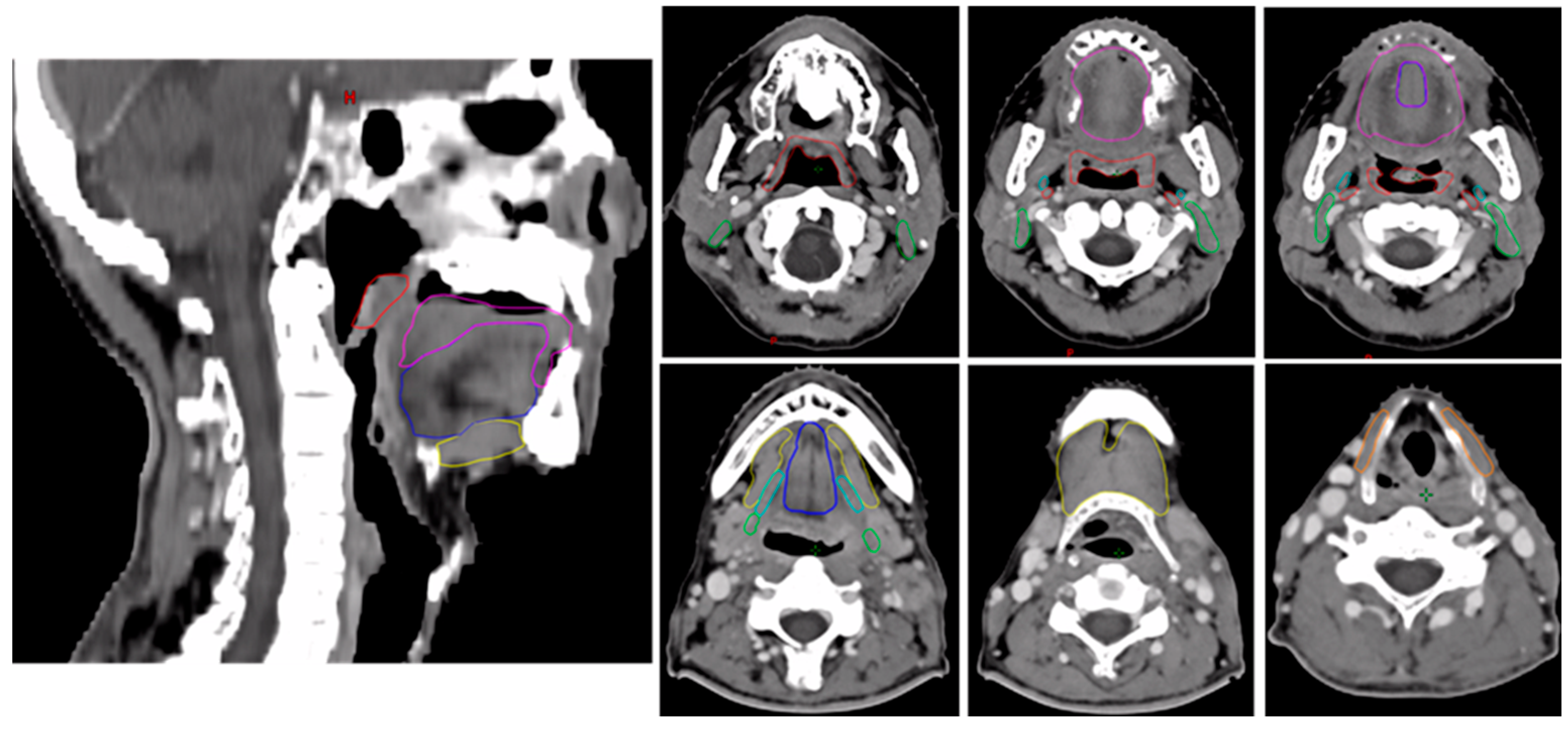
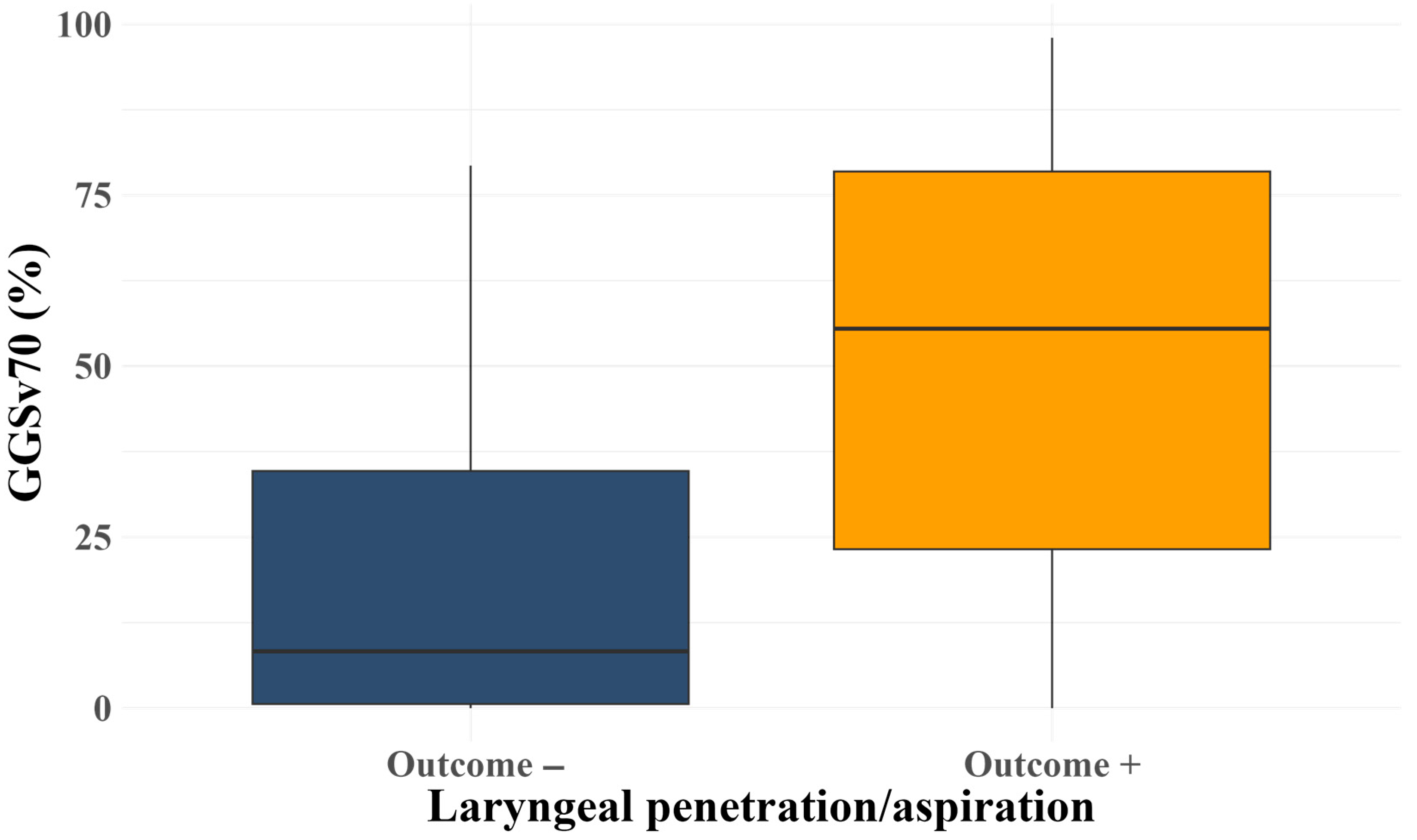
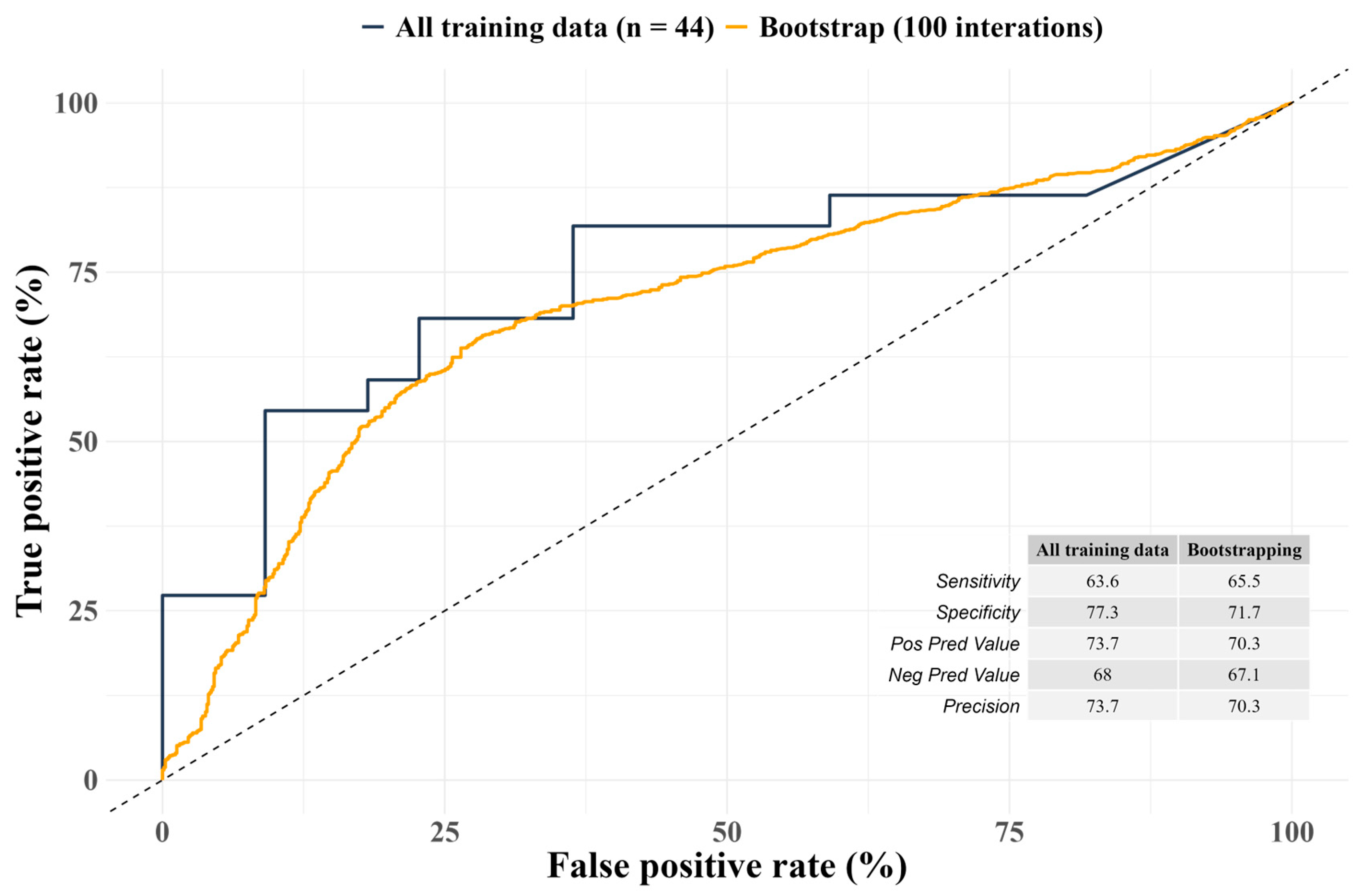
Background/Objectives: Radiation-induced dysphagia can cause life-threatening complications including aspiration pneumonia. Consequently, studies have attempted to limit the radiation dose to the swallowing muscles to prevent radiation-induced dysphagia. However, data identifying the specific swallowing muscles associated with post-radiation dysphagia are lacking. Therefore, this case–control study aimed to identify the swallowing muscles whose radiotherapy-related damage is likely to cause radiation-induced dysphagia. Methods: This retrospective study included 53 patients with head and neck cancer who received definitive radiotherapy and underwent post-radiotherapy swallowing function evaluation using videofluoroscopy or fiberoptic endoscopic evaluation of swallowing at least 3 months post-radiotherapy. Twenty-two patients with a Penetration-Aspiration Scale score ≥ 3 were defined as having laryngeal penetration or aspiration. Twenty-two controls matched for age and tumor site were selected using propensity score matching. The primary exposure variable was radiation dose to the swallowing muscles, including the floor of the mouth, thyrohyoid, posterior digastric/stylohyoid, longitudinal pharynx, hyoglossus, styloglossus, genioglossus, and intrinsic tongue muscles. A LASSO regression model was used to select the most predictive dosimetric parameter. Results: The percentage of genioglossus muscle receiving a radiation dose ≥70 Gy (GGS V70) was the only dosimetric variable predictive of radiation-induced dysphagia. After adjusting for the clinical variables, GGS V70 demonstrated a significant association with post-radiotherapy laryngeal penetration or aspiration (p = 0.003), with an adjusted odds ratio of 1.06 for each increasing radiation dose unit of GGS V70. Conclusions: The genioglossus muscle might be associated with radiation-induced dysphagia and, therefore, should be further investigated in prospective studies.
Keywords:
swallowing; dysphagia; radiotherapy; head and neck cancer