A TP53-Pathway-Based Prognostic Signature for Radiotherapy and Functional Validation of TP53I3 in Non-Small-Cell Lung Cancer

 , ,
, ,
Simple Summary
Abstract
1. Introduction
2. Materials and Methods
2.1. Data Acquirement
2.2. Screening of Radiosensitivity-Related Genes and Enrichment Analysis of Differential Pathways
2.3. Construction and Validation of Prognostic Models
2.4. Functional Enrichment Analysis (GSEA)
2.5. Transcriptome Sequencing of NSCLC Tissue Samples
2.6. Cell Culture and Irradiation Treatment
2.7. Establishment of NSCLC Cell Line with Stable Knockdown of TP53I3 Gene
2.8. Western Blot
2.9. Real-Time PCR
- TP53I3 Forward: 5′-CTGGAGCTATTCCTCTGGTCAC-3′;
- TP53I3 Reverse: 5′-GTTCTTCTCCCAGTAGGATCCG-3′;
- β-actin Forward: 5′-CATGTACGTTGCTATCCAGGC-3′;
- β-actin Reverse: 5′-CTCCTTAATGTCACGCACGAT-3′.
2.10. Colony Formation and Cell Viability Assays
2.11. Cell Cycle and Apoptosis Assay
2.12. Comet Assay
2.13. Immunofluorescent Staining
2.14. Xenograft Tumor Experiment
2.15. Statistical Analysis
3. Results
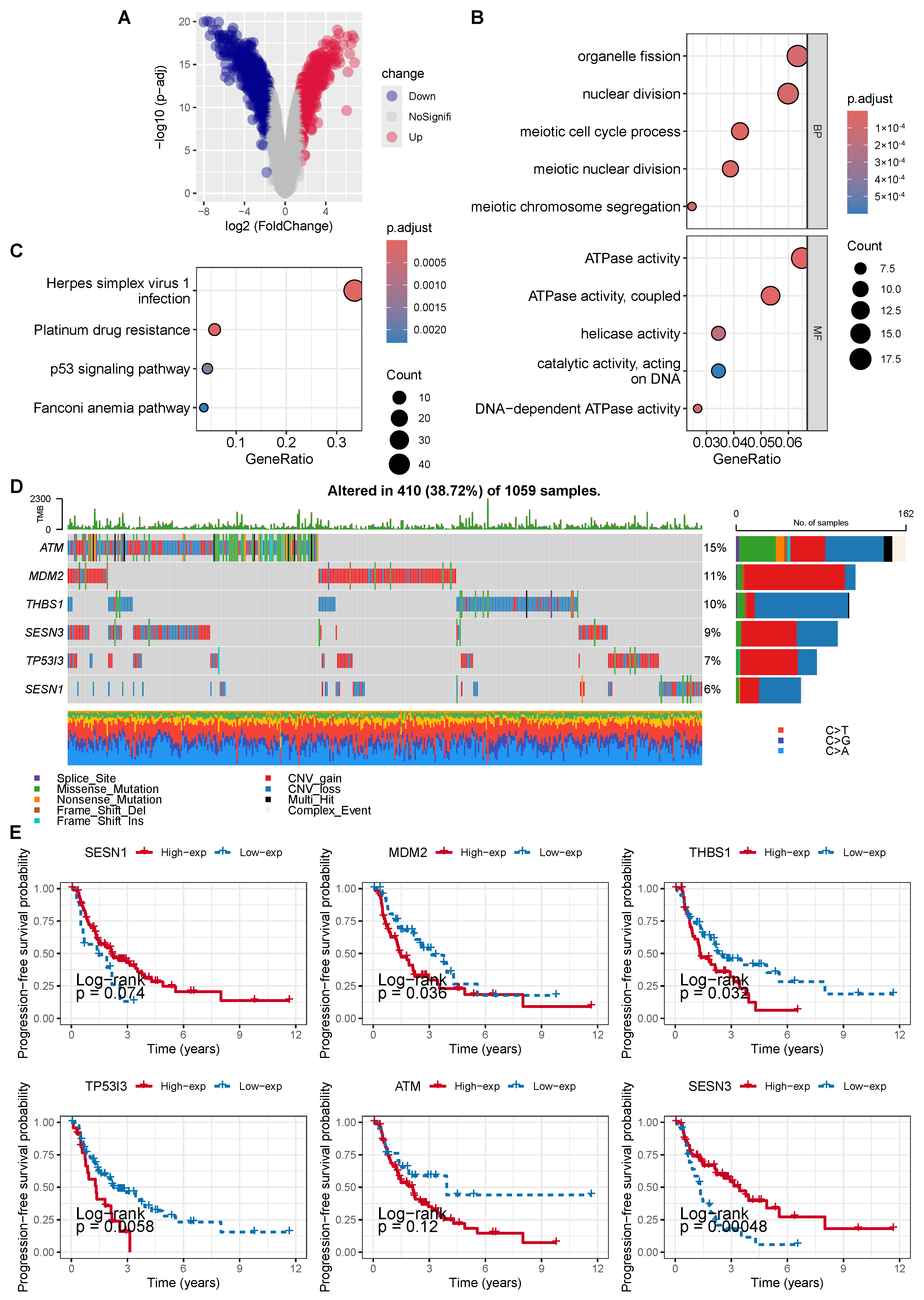
3.1. Analysis of Radiosensitivity-Related Genes in NSCLC
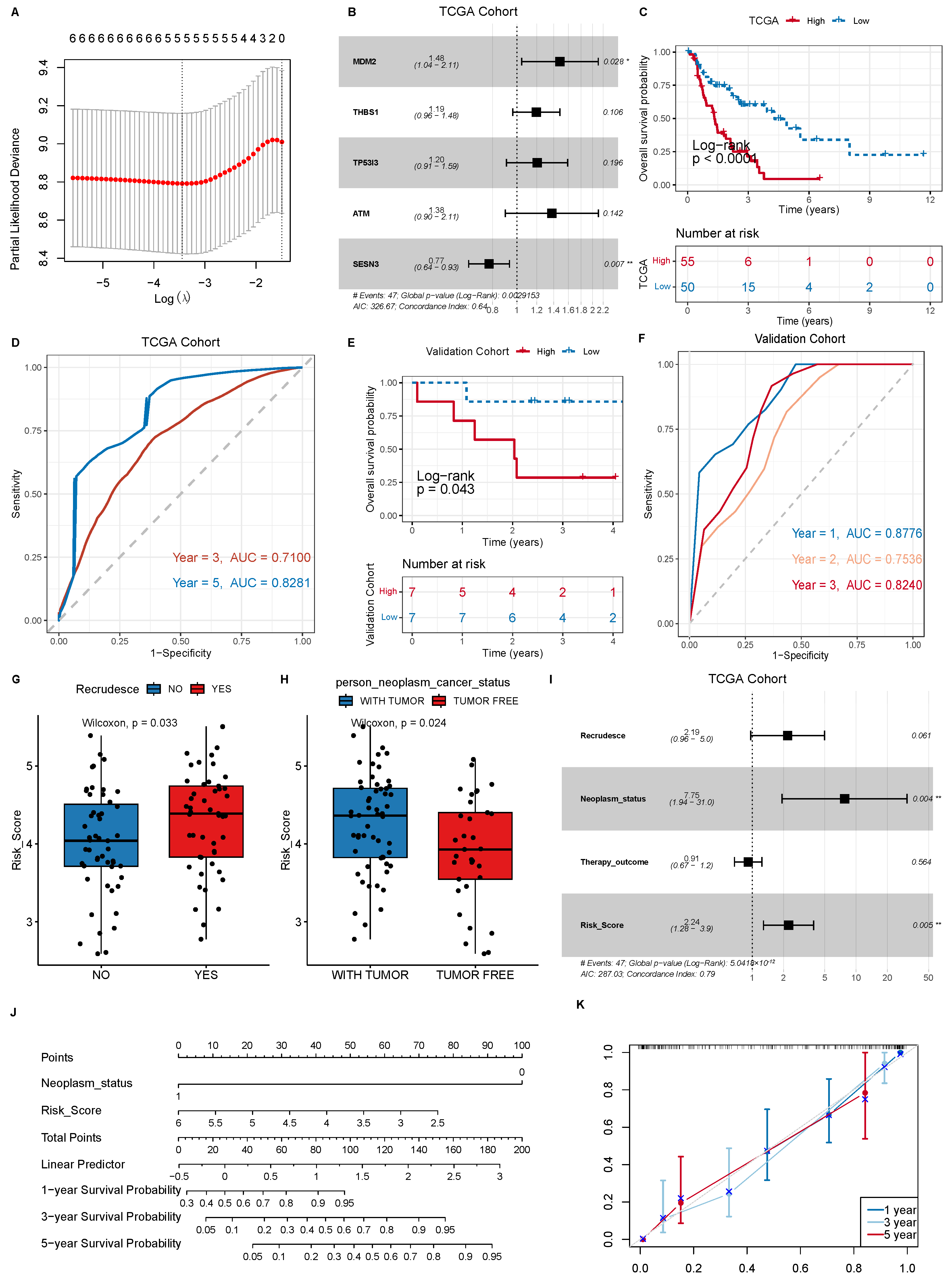
3.2. Construction and Validation of a Prognostic Model Based on Radiosensitivity-Related Genes
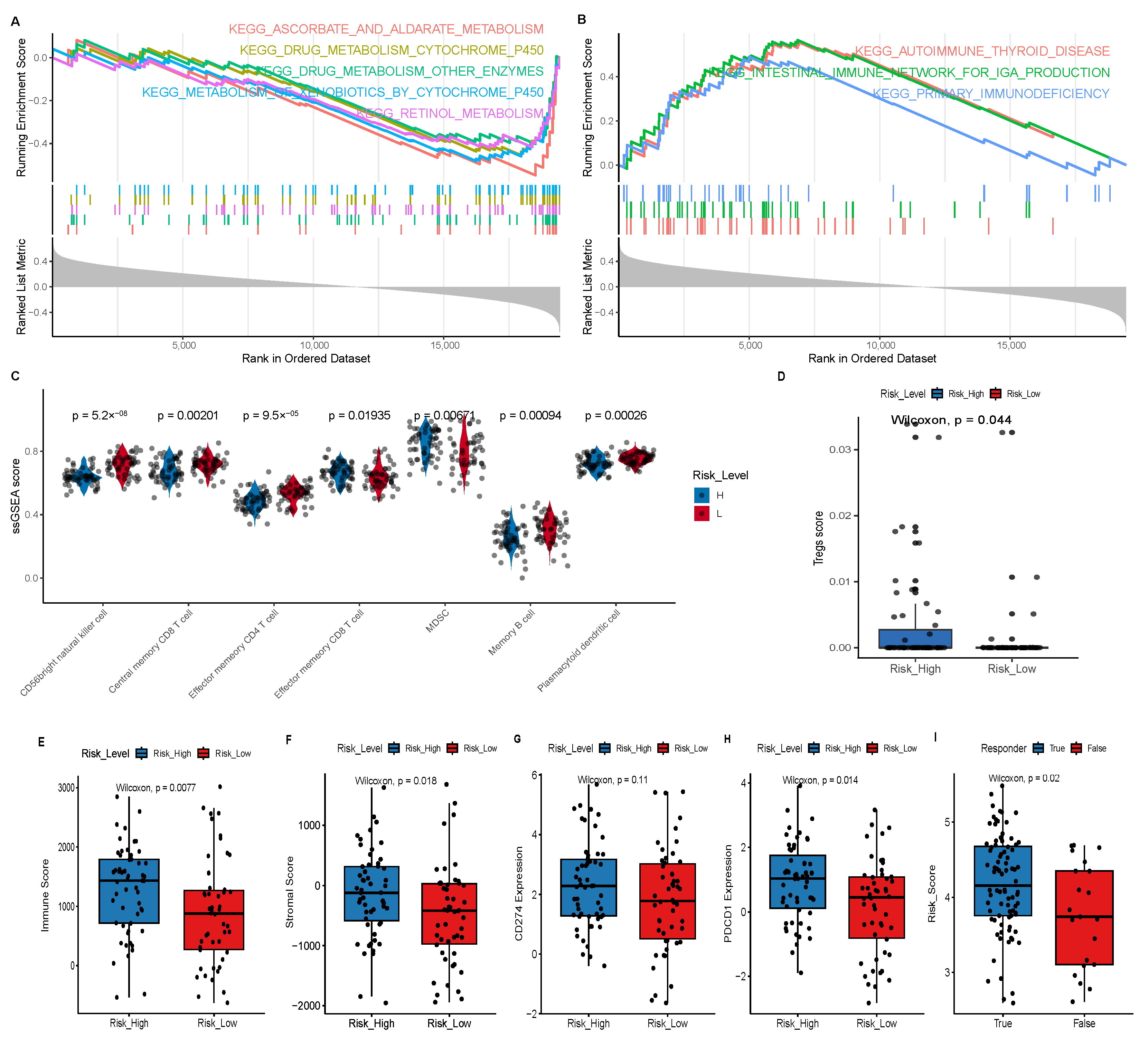
3.3. Clinical and Biological Significance of the Prognostic Model
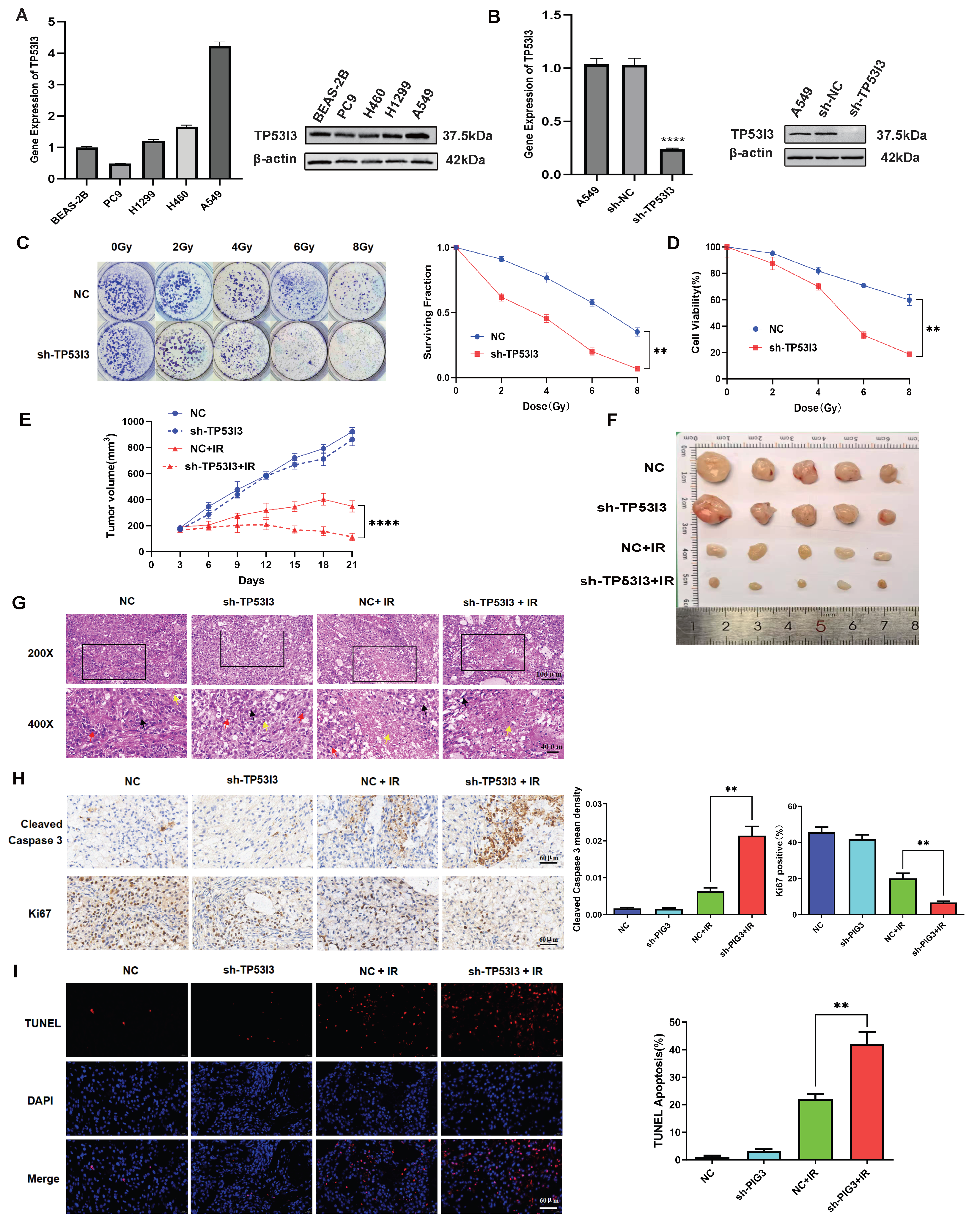
3.4. Knockdown of TP53I3 Enhances the Sensitivity of NSCLC Cells to Irradiation
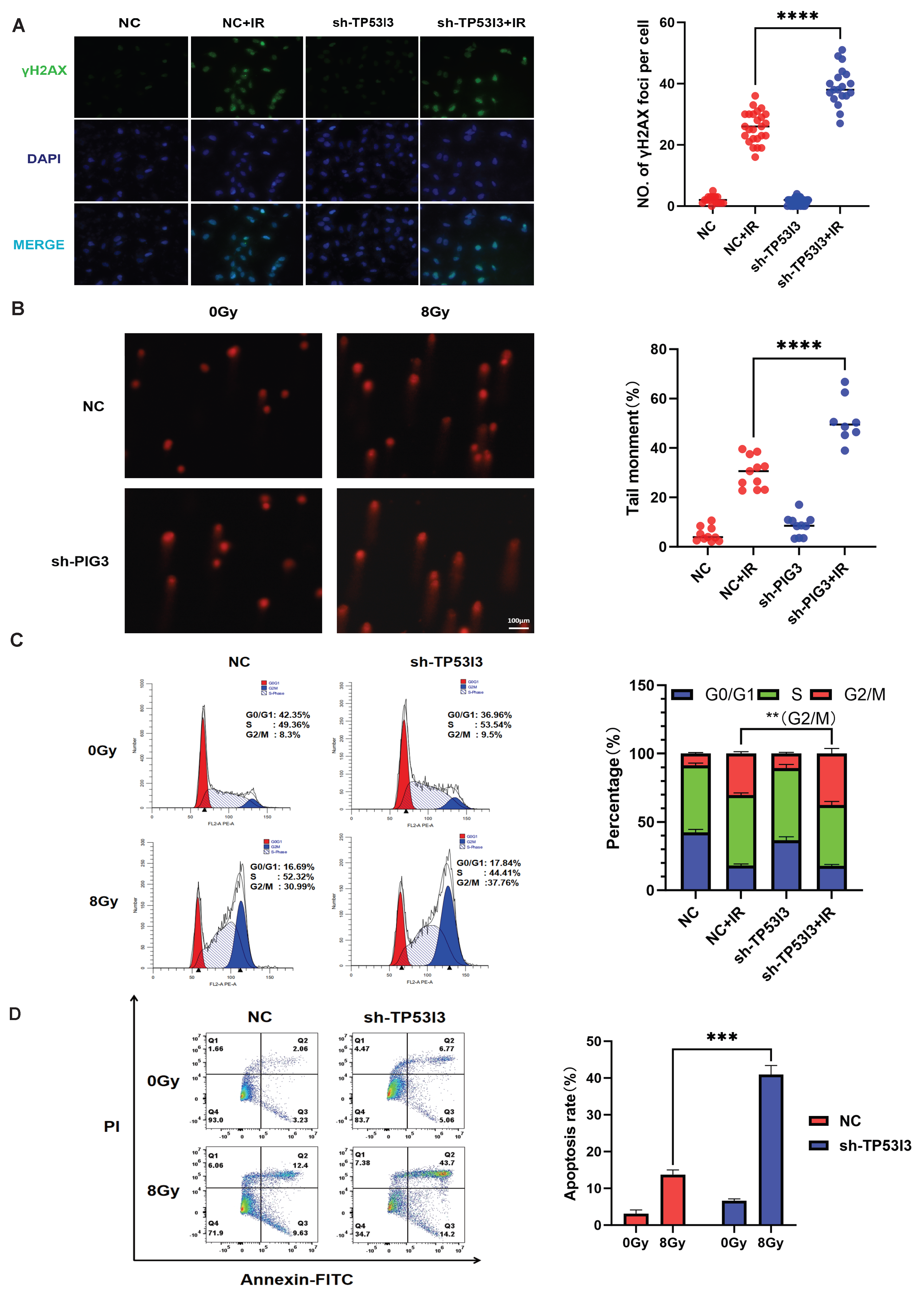
3.5. Knockdown of TP53I3 Enhances Radiation-Induced DNA Damage, Cell Cycle Arrest and Apoptosis in NSCLC Cells
4. Discussion
5. Conclusions
Supplementary Materials
Author Contributions
Funding
Institutional Review Board Statement
Informed Consent Statement
Data Availability Statement
Acknowledgments
Conflicts of Interest
Abbreviations
| NSCLC | Non-small cell lung cancer |
| DEGs | Differentially expressed genes |
| AUC | Area under the curve |
| GSEA | Gene set enrichment analysis |
| TIDE | Tumor Immune Dysfunction and Exclusion |
| TPM | Transcripts per million |
| SSD | Source–skin distance |
| FBS | Fetal bovine serum |
| PBS | Phosphate-buffered saline |
| GO | Gene Ontology |
| KEGG | Kyoto Encyclopedia of Genes and Genomes |
| CNV | Copy number variation |
| HRs | Hazard ratios |
| DDR | DNA damage response |
| ROS | Reactive oxygen species |
| NHEJ | Non-homologous end joining |
| HR | Homologous recombination |
| TP53I3 | Tumor Protein P53 Inducible Protein 3 |
References
- Siegel, R.L.; Kratzer, T.B.; Giaquinto, A.N.; Sung, H.; Jemal, A. Cancer statistics, 2025. CA Cancer J. Clin. 2025, 75, 10. [Google Scholar] [CrossRef]
- Howlader, N.; Forjaz, G.; Mooradian, M.J.; Meza, R.; Kong, C.Y.; Cronin, K.A.; Mariotto, A.B.; Lowy, D.R.; Feuer, E.J. The effect of advances in lung-cancer treatment on population mortality. N. Engl. J. Med. 2020, 383, 640–649. [Google Scholar] [CrossRef] [PubMed]
- Chen, P.; Liu, Y.; Wen, Y.; Zhou, C. Non-small cell lung cancer in China. Cancer Commun. 2022, 42, 937–970. [Google Scholar] [CrossRef] [PubMed]
- Riely, G.J.; Wood, D.E.; Ettinger, D.S.; Aisner, D.L.; Akerley, W.; Bauman, J.R.; Bharat, A.; Bruno, D.S.; Chang, J.Y.; Chirieac, L.R.; et al. Non-small cell lung cancer, version 4.2024, NCCN clinical practice guidelines in oncology. J. Natl. Compr. Cancer Netw. 2024, 22, 249–274. [Google Scholar] [CrossRef] [PubMed]
- Liu, Y.; Jiang, S.; Lin, Y.; Yu, H.; Yu, L.; Zhang, X. Research landscape and trends of lung cancer radiotherapy: A bibliometric analysis. Front. Oncol. 2022, 12, 1066557. [Google Scholar] [CrossRef]
- Pitroda, S.P.; Chmura, S.J.; Weichselbaum, R.R. Integration of radiotherapy and immunotherapy for treatment of oligometastases. Lancet Oncol. 2019, 20, e434–e442. [Google Scholar] [CrossRef]
- Wang, M.; Herbst, R.S.; Boshoff, C. Toward personalized treatment approaches for non-small-cell lung cancer. Nat. Med. 2021, 27, 1345–1356. [Google Scholar] [CrossRef]
- Ma, Q.; Geng, K.; Xiao, P.; Zeng, L. Identification and Prognostic Value Exploration of Radiotherapy Sensitivity-Associated Genes in Non-Small-Cell Lung Cancer. BioMed Res. Int. 2021, 2021, 5963868. [Google Scholar] [CrossRef]
- Levine, A.J. p53: 800 million years of evolution and 40 years of discovery. Nat. Rev. Cancer 2020, 20, 471–480. [Google Scholar] [CrossRef]
- Fischer, M. Census and evaluation of p53 target genes. Oncogene 2017, 36, 3943–3956. [Google Scholar] [CrossRef]
- Jung, I.L.; Kang, H.J.; Kim, K.C.; Kim, I.G. PTEN/pAkt/p53 signaling pathway correlates with the radioresponse of non-small cell lung cancer. Int. J. Mol. Med. 2010, 25, 517–523. [Google Scholar]
- Mogi, A.; Kuwano, H. TP53 mutations in nonsmall cell lung cancer. BioMed Res. Int. 2011, 2011, 583929. [Google Scholar] [CrossRef] [PubMed]
- Fan, Z.; Zhang, Q.; Feng, L.; Wang, L.; Zhou, X.; Han, J.; Li, D.; Liu, J.; Zhang, X.; Zuo, J.; et al. Genomic landscape and prognosis of patients with TP53-mutated non-small cell lung cancer. Ann. Transl. Med. 2022, 10, 188. [Google Scholar] [CrossRef]
- Kotsinas, A.; Aggarwal, V.; Tan, E.J.; Levy, B.; Gorgoulis, V.G. PIG3: A novel link between oxidative stress and DNA damage response in cancer. Cancer Lett. 2012, 327, 97–102. [Google Scholar] [CrossRef]
- Chen, X.; Zhang, T.; Su, W.; Dou, Z.; Zhao, D.; Jin, X.; Lei, H.; Wang, J.; Xie, X.; Cheng, B.; et al. Mutant p53 in cancer: From molecular mechanism to therapeutic modulation. Cell Death Dis. 2022, 13, 974. [Google Scholar] [CrossRef] [PubMed]
- Wu, Y.; Song, Y.; Wang, R.; Wang, T. Molecular mechanisms of tumor resistance to radiotherapy. Mol. Cancer 2023, 22, 96. [Google Scholar] [CrossRef]
- Castaño, B.A.; Schorer, S.; Guo, Y.; Calzetta, N.L.; Gottifredi, V.; Wiesmüller, L.; Biber, S. The levels of p53 govern the hierarchy of DNA damage tolerance pathway usage. Nucleic Acids Res. 2024, 52, 3740–3760. [Google Scholar] [CrossRef]
- Zhou, T.; Zhang, L.Y.; He, J.Z.; Miao, Z.-M.; Li, Y.-Y.; Zhang, Y.-M.; Liu, Z.-W.; Zhang, S.-Z.; Chen, Y.; Zhou, G.-C.; et al. Mechanisms and perspective treatment of radioresistance in non-small cell lung cancer. Front. Immunol. 2023, 14, 1133899. [Google Scholar] [CrossRef]
- Césaire, M.; Montanari, J.; Curcio, H.; Lerouge, D.; Gervais, R.; Demontrond, P.; Balosso, J.; Chevalier, F. Radioresistance of non-small cell lung cancers and therapeutic perspectives. Cancers 2022, 14, 2829. [Google Scholar] [CrossRef]
- Huang, Y.; Che, X.; Wang, P.W.; Qu, X. p53/MDM2 signaling pathway in aging, senescence and tumorigenesis. Semin. Cancer Biol. 2024, 101, 44–57. [Google Scholar] [CrossRef] [PubMed]
- Wang, W.; Albadari, N.; Du, Y.; Fowler, J.F.; Sang, H.T.; Xian, W.; McKeon, F.; Li, W.; Zhou, J.; Zhang, R. MDM2 inhibitors for cancer therapy: The past, present, and future. Pharmacol. Rev. 2024, 76, 414–453. [Google Scholar] [CrossRef]
- Hou, H.; Sun, D.; Zhang, X. The role of MDM2 amplification and overexpression in therapeutic resistance of malignant tumors. Cancer Cell Int. 2019, 19, 216. [Google Scholar] [CrossRef] [PubMed]
- Kaur, S.; Bronson, S.M.; Pal-Nath, D.; Miller, T.W.; Soto-Pantoja, D.R.; Roberts, D.D. Functions of thrombospondin-1 in the tumor microenvironment. Int. J. Mol. Sci. 2021, 22, 4570. [Google Scholar] [CrossRef]
- Petrik, J.; Lauks, S.; Garlisi, B.; Lawler, J. Thrombospondins in the tumor microenvironment. Semin. Cell Dev. Biol. 2024, 155, 3–11. [Google Scholar] [CrossRef]
- Bian, L.; Meng, Y.; Zhang, M.; Guo, Z.; Liu, F.; Zhang, W.; Ke, X.; Su, Y.; Wang, M.; Yao, Y.; et al. ATM expression is elevated in established radiation-resistant breast cancer cells and improves DNA repair efficiency. Int. J. Biol. Sci. 2020, 16, 1096. [Google Scholar] [CrossRef]
- Lee, H.J.; Lan, L.; Peng, G.; Chang, W.-C.; Hsu, M.-C.; Wang, Y.-N.; Cheng, C.-C.; Wei, L.; Nakajima, S.; Chang, S.-S.; et al. Tyrosine 370 phosphorylation of ATM positively regulates DNA damage response. Cell Res. 2015, 25, 225–236. [Google Scholar] [CrossRef]
- Golding, S.E.; Rosenberg, E.; Neill, S.; Dent, P.; Povirk, L.F.; Valerie, K. Extracellular signal-related kinase positively regulates ataxia telangiectasia mutated, homologous recombination repair, and the DNA damage response. Cancer Res. 2007, 67, 1046–1053. [Google Scholar] [CrossRef] [PubMed]
- Sánchez-Álvarez, M.; Strippoli, R.; Donadelli, M.; Bazhin, A.V.; Cordani, M. Sestrins as a Therapeutic Bridge between ROS and Autophagy in Cancer. Cancers 2019, 11, 1415. [Google Scholar] [CrossRef] [PubMed]
- Ro, S.H.; Fay, J.; Cyuzuzo, C.I.; Jang, Y.; Lee, N.; Song, H.-S.; Harris, E.N. SESTRINs: Emerging dynamic stress-sensors in metabolic and environmental health. Front. Cell Dev. Biol. 2020, 8, 603421. [Google Scholar] [CrossRef]
- Li, M.; Li, S.; Liu, B.; Gu, M.-M.; Zou, S.; Xiao, B.-B.; Yu, L.; Ding, W.-Q.; Zhou, P.-K.; Zhou, J.; et al. PIG3 promotes NSCLC cell mitotic progression and is associated with poor prognosis of NSCLC patients. J. Exp. Clin. Cancer Res. 2017, 36, 39. [Google Scholar] [CrossRef] [PubMed]
- Srinivas, G.; Kusumakumary, P.; Nair, M.K.; Panicker, K.R.; Pillai, M.R. Mutant p53 protein, Bcl-2/Bax ratios and apoptosis in paediatric acute lymphoblastic leukaemia. J. Cancer Res. Clin. Oncol. 2000, 126, 62–67. [Google Scholar] [CrossRef]
- Chaudhry, S.R.; Lopes, J.; Levin, N.K.; Kalpage, H.; Tainsky, M.A. Germline mutations in apoptosis pathway genes in ovarian cancer; the functional role of a TP53I3 (PIG3) variant in ROS production and DNA repair. Cell Death Discov. 2021, 7, 62. [Google Scholar] [CrossRef]
- Roos, W.P.; Thomas, A.D.; Kaina, B. DNA damage and the balance between survival and death in cancer biology. Nat. Rev. Cancer 2016, 16, 20–33. [Google Scholar] [CrossRef] [PubMed]
- Zhou, H.; Tang, L.; Shang, Z.; Zhou, P.-K.; Li, M. PIG3 downregulation enhances the radio sensitivity of NSCLC cells by promoting G2/M cell cycle arrest and apoptosis. Radiat. Med. Prot. 2023, 4, 19–25. [Google Scholar] [CrossRef]
- Lee, J.H.; Kang, Y.; Khare, V.; Jin, Z.-Y.; Kang, M.-Y.; Yoon, Y.; Hyun, J.-W.; Chung, M.-H.; Cho, S.-I.; Jun, J.Y.; et al. The p53-inducible gene 3 (PIG3) contributes to early cellular response to DNA damage. Oncogene 2010, 29, 1431–1450. [Google Scholar] [CrossRef]
- Chen, X.; Zhang, W.; Xu, X. Cyanidin-3-glucoside suppresses the progression of lung adenocarcinoma by downregulating TP53I3 and inhibiting PI3K/AKT/mTOR pathway. World J. Surg. Oncol. 2021, 19, 232. [Google Scholar] [CrossRef] [PubMed]
- Wherry, E.J.; Kurachi, M. Molecular and cellular insights into T cell exhaustion. Nat. Rev. Immunol. 2015, 15, 486–499. [Google Scholar] [CrossRef]
- Sharma, P.; Hu-Lieskovan, S.; Wargo, J.A.; Ribas, A. Primary, adaptive, and acquired resistance to cancer immunotherapy. Cell 2017, 168, 707–723. [Google Scholar] [CrossRef]
- Weichselbaum, R.R.; Liang, H.; Deng, L.; Fu, Y.-X. Radiotherapy and immunotherapy: A beneficial liaison? Nat. Rev. Clin. Oncol. 2017, 14, 365–379. [Google Scholar] [CrossRef]



| Characteristic | TCGA (n = 105) | In-House (n = 14) |
|---|---|---|
| Age (Mean, SD) | 63.6 (10.4) | 60.5 (7.8) |
| Gender | ||
| Female | 46 (44%) | 2 (14%) |
| Male | 59 (56%) | 12 (86%) |
| Clinical stage | ||
| Stage I | 24 (23%) | 0 |
| Stage II | 27 (26%) | 4 (29%) |
| Stage III | 45 (43%) | 9 (64%) |
| Stage IV | 6 (6%) | 1 (7%) |
| Missing data | 3 (3%) | 0 |
| Subtype | ||
| Adenocarcinoma | 58 (55%) | 5 (36%) |
| Squamous cell carcinoma | 47 (45%) | 9 (64%) |
| Smoking history | ||
| Lifelong non-smoker | 9 (9%) | 1 (7%) |
| Current smoker | 18 (17%) | 2 (14%) |
| Current reformed smoker for >15 years | 20 (19%) | 4 (29%) |
| Current reformed smoker for <15 years | 50 (48%) | 7 (50%) |
| Missing data | 8 (8%) | 0 |
Disclaimer/Publisher’s Note: The statements, opinions and data contained in all publications are solely those of the individual author(s) and contributor(s) and not of MDPI and/or the editor(s). MDPI and/or the editor(s) disclaim responsibility for any injury to people or property resulting from any ideas, methods, instructions or products referred to in the content. |
© 2026 by the authors. Licensee MDPI, Basel, Switzerland. This article is an open access article distributed under the terms and conditions of the Creative Commons Attribution (CC BY) license.
Share and Cite
Huang, X.; Jiao, L.; Cheng, X.; Fang, Y.; Qi, J.; Hu, Z.; Hong, B.; Nie, J.; Wang, H. A TP53-Pathway-Based Prognostic Signature for Radiotherapy and Functional Validation of TP53I3 in Non-Small-Cell Lung Cancer. Cancers 2026, 18, 457. https://doi.org/10.3390/cancers18030457
Huang X, Jiao L, Cheng X, Fang Y, Qi J, Hu Z, Hong B, Nie J, Wang H. A TP53-Pathway-Based Prognostic Signature for Radiotherapy and Functional Validation of TP53I3 in Non-Small-Cell Lung Cancer. Cancers. 2026; 18(3):457. https://doi.org/10.3390/cancers18030457
Chicago/Turabian StyleHuang, Xiang, Li Jiao, Xu Cheng, Yue Fang, Jian Qi, Zongtao Hu, Bo Hong, Jinfu Nie, and Hongzhi Wang. 2026. "A TP53-Pathway-Based Prognostic Signature for Radiotherapy and Functional Validation of TP53I3 in Non-Small-Cell Lung Cancer" Cancers 18, no. 3: 457. https://doi.org/10.3390/cancers18030457
APA StyleHuang, X., Jiao, L., Cheng, X., Fang, Y., Qi, J., Hu, Z., Hong, B., Nie, J., & Wang, H. (2026). A TP53-Pathway-Based Prognostic Signature for Radiotherapy and Functional Validation of TP53I3 in Non-Small-Cell Lung Cancer. Cancers, 18(3), 457. https://doi.org/10.3390/cancers18030457