CT Body Composition Changes Predict Survival in Immunotherapy-Treated Cancer Patients: A Retrospective Cohort Study

 , , , , ,
Simple Summary
Abstract
1. Introduction
2. Materials and Methods
2.1. Study Population
2.2. Data Collection
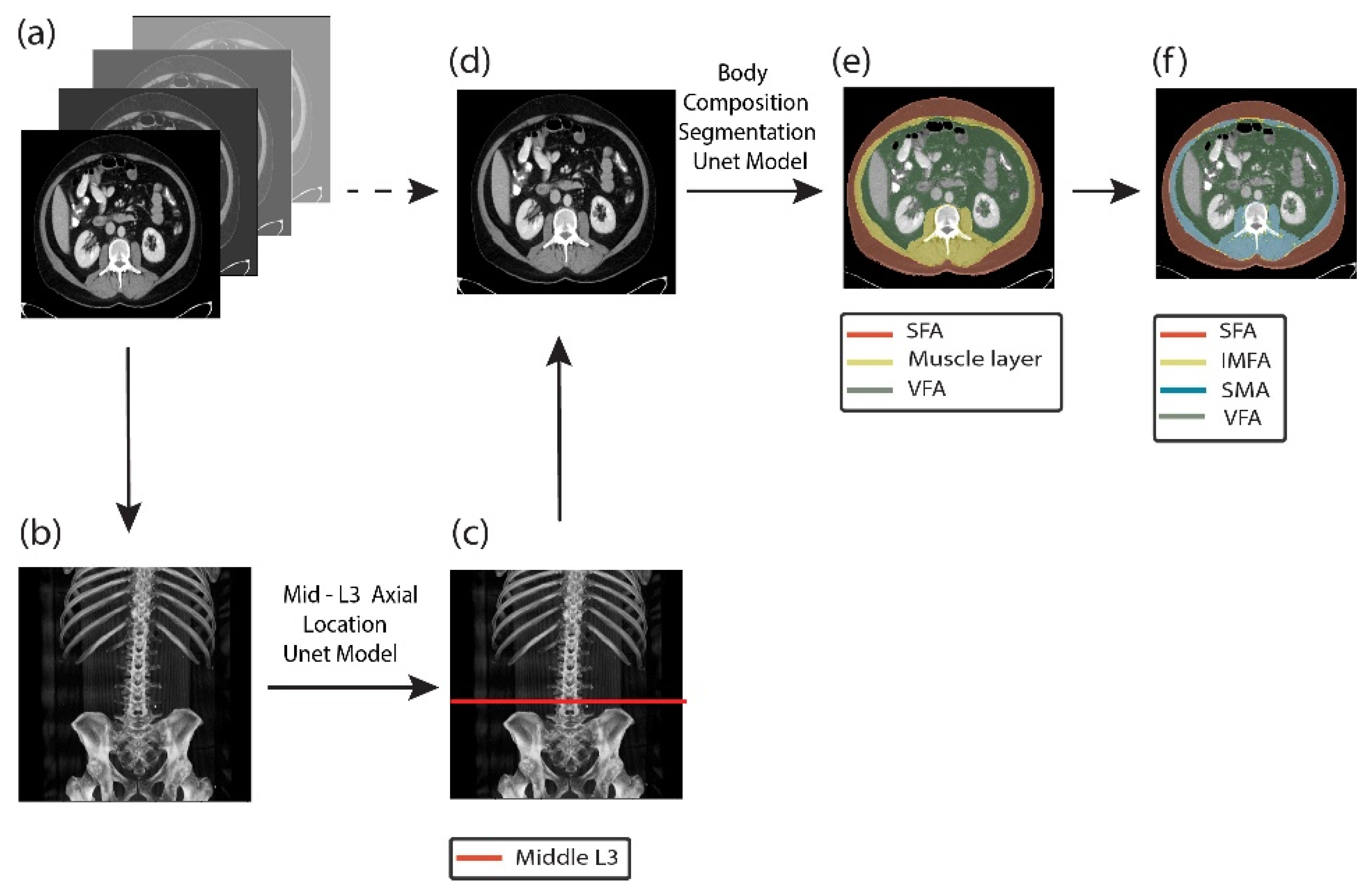
2.3. Body Composition Measurement
2.4. Statistical Analysis
2.5. Ethics Statement
3. Results
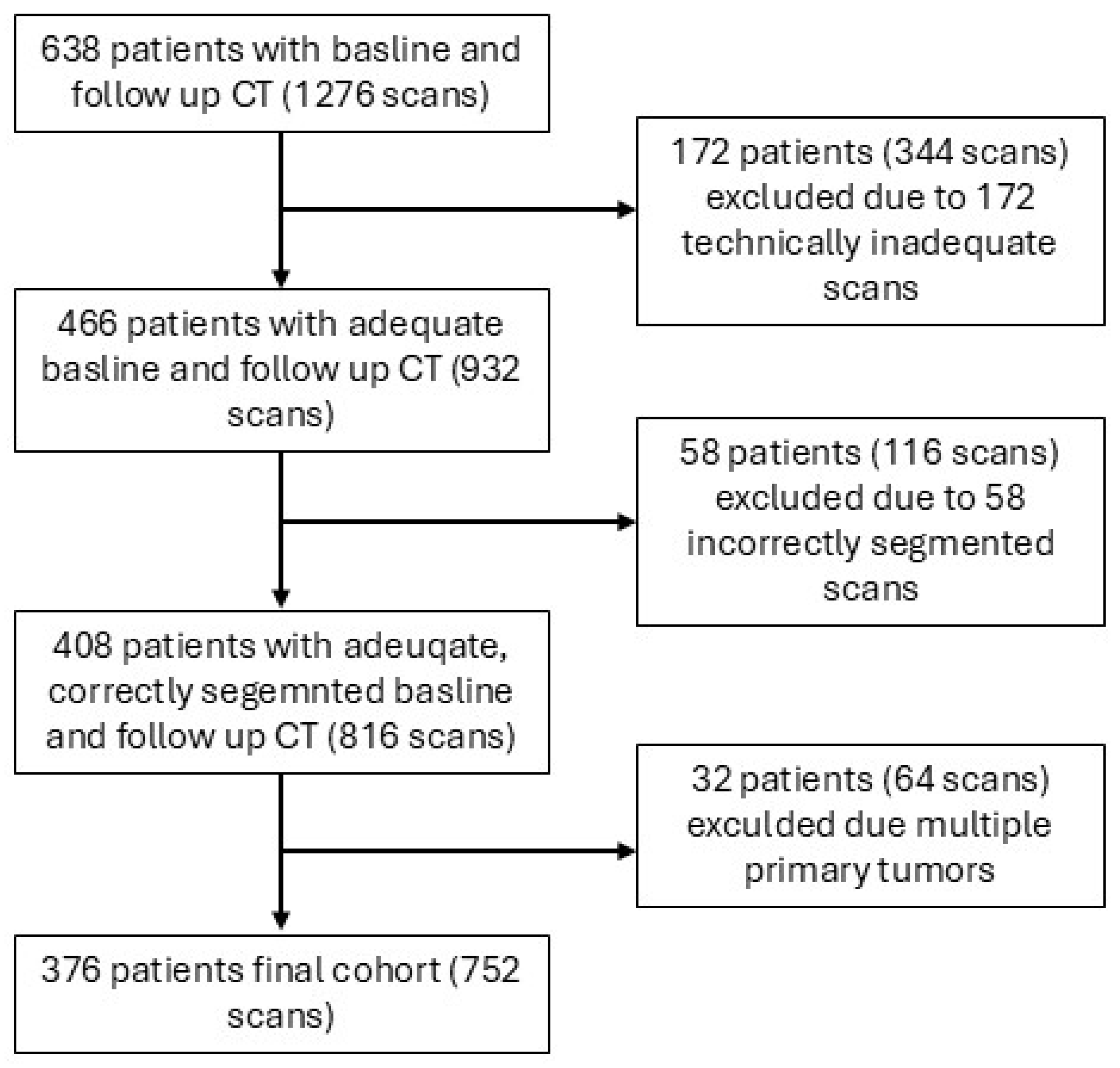
3.1. Study Patients
3.2. CT-Derived Body Composition Parameters
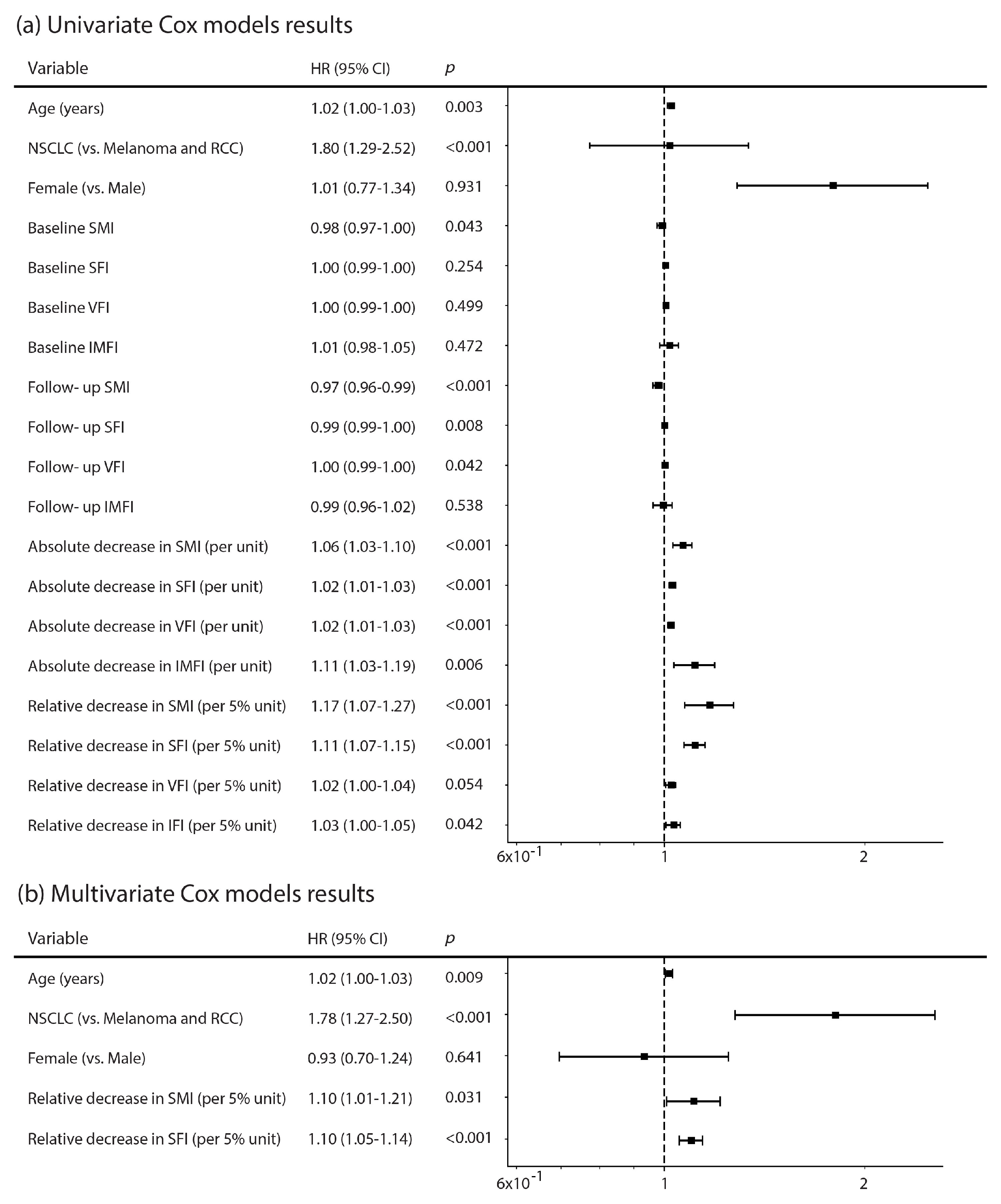
3.3. CT-Derived Body Composition Parameters and Correlation with Mortality
3.4. Sensitivity Analyses
4. Discussion
5. Conclusions
Supplementary Materials
Author Contributions
Funding
Institutional Review Board Statement
Informed Consent Statement
Data Availability Statement
Acknowledgments
Conflicts of Interest
References
- Takenaka, Y.; Oya, R.; Takemoto, N.; Inohara, H. Predictive impact of sarcopenia in solid cancers treated with immune checkpoint inhibitors: A meta-analysis. J. Cachex Sarcopenia Muscle 2021, 12, 1122–1135. [Google Scholar] [CrossRef] [Scilit] [PubMed]
- Chaunzwa, T.L.; Qian, J.M.; Li, Q.; Ricciuti, B.; Nuernberg, L.; Johnson, J.W.; Weiss, J.; Zhang, Z.; MacKay, J.; Kagiampakis, I.; et al. Body Composition in Advanced Non-Small Cell Lung Cancer Treated with Immunotherapy. JAMA Oncol. 2024, 10, 773–783. [Google Scholar] [CrossRef] [Scilit]
- Park, J.E.; Jo, J.; Youk, J.; Kim, M.; Yoon, S.H.; Keam, B.; Kim, T.M.; Kim, D.-W. Prognostic utility of body composition parameters based on computed tomography analysis of advanced non-small cell lung cancer treated with immune checkpoint inhibitors. Insights Imag. 2023, 14, 182. [Google Scholar] [CrossRef] [Scilit] [PubMed]
- Coletta, A.M.; Lee, H.; Puri, S.; Culleton, S.; Covington, M.F.; Yap, J.T.; Maslana, K.E.; Haaland, B.; Akerley, W. The Association Between Body Composition, Overall Survival, Treatment Decisions, and Patient-Reported Outcomes in Metastatic Non-Small-Cell Lung Cancer. Cancer Med. 2025, 14, e70534. [Google Scholar] [CrossRef] [Scilit]
- Kuang, T.; Zhang, L.; Qiu, Z.; Zhang, Y.; Wang, W. Prognostic value of body composition on survival outcomes in melanoma patients receiving immunotherapy. Front. Immunol. 2023, 14, 1261202. [Google Scholar] [CrossRef] [Scilit]
- Faron, A.; Opheys, N.S.; Nowak, S.; Sprinkart, A.M.; Isaak, A.; Theis, M.; Mesropyan, N.; Endler, C.; Sirokay, J.; Pieper, C.C.; et al. Deep Learning-Based Body Composition Analysis Predicts Outcome in Melanoma Patients Treated with Immune Checkpoint Inhibitors. Diagnostics 2021, 11, 2314. [Google Scholar] [CrossRef] [Scilit]
- Youn, S.; Jogiat, U.; Baracos, V.E.; McCall, M.; Eurich, D.T.; Sawyer, M.B. CT-based assessment of body composition and skeletal muscle in melanoma: A systematic review. Clin. Nutr. ESPEN 2021, 45, 127–133. [Google Scholar] [CrossRef] [Scilit]
- Ma, W.; Shi, Q.; Zhang, L.; Qiu, Z.; Kuang, T.; Zhao, K.; Wang, W. Impact of baseline body composition on prognostic outcomes in urological malignancies treated with immunotherapy: A pooled analysis of 10 retrospective studies. BMC Cancer 2024, 24, 830. [Google Scholar] [CrossRef] [Scilit]
- Lee, S.; Kim, J.-H.; Song, W.; Sung, H.H.; Jeon, H.G.; Jeong, B.C.; Seo, S.I.; Jeon, S.S.; Park, S.H.; Lee, J.H.; et al. Prognostic Role of Pre-Treatment Body Composition Parameters in Patients Undergoing First-Line Immunotherapy for Metastatic Renal Cell Carcinoma. Cancer Manag. Res. 2024, 16, 1091–1101. [Google Scholar] [CrossRef] [Scilit] [PubMed]
- Willemsen, A.C.H.; De Moor, N.; Van Dessel, J.; Baijens, L.W.J.; Bila, M.; Hauben, E.; Hout, M.F.C.M.v.D.; Poorten, V.V.; Hoeben, A.; Clement, P.M.; et al. The predictive and prognostic value of weight loss and body composition prior to and during immune checkpoint inhibition in recurrent or metastatic head and neck cancer patients. Cancer Med. 2022, 12, 7699–7712. [Google Scholar] [CrossRef] [Scilit]
- Degens, J.H.; Dingemans, A.C.; Willemsen, A.C.; Gietema, H.A.; Hurkmans, D.P.; Aerts, J.G.; Hendriks, L.E.; Schols, A.M. The prognostic value of weight and body composition changes in patients with non-small-cell lung cancer treated with nivolumab. J. Cachex Sarcopenia Muscle 2021, 12, 657–664. [Google Scholar] [CrossRef] [Scilit]
- Crombé, A.; Kind, M.; Toulmonde, M.; Italiano, A.; Cousin, S. Impact of CT-based body composition parameters at baseline, their early changes and response in metastatic cancer patients treated with immune checkpoint inhibitors. Eur. J. Radiol. 2020, 133, 109340. [Google Scholar] [CrossRef] [Scilit] [PubMed]
- Gu, W.; Wu, J.; Liu, X.; Zhang, H.; Shi, G.; Zhu, Y.; Ye, D. Early skeletal muscle loss during target therapy is a prognostic biomarker in metastatic renal cell carcinoma patients. Sci. Rep. 2017, 7, 7587. [Google Scholar] [CrossRef] [Scilit]
- Jung, M.; Diallo, T.D.; Scheef, T.; Reisert, M.; Rau, A.; Russe, M.F.; Bamberg, F.; Fichtner-Feigl, S.; Quante, M.; Weiss, J. Association Between Body Composition and Survival in Patients with Gastroesophageal Adenocarcinoma: An Automated Deep Learning Approach. JCO Clin. Cancer Informat. 2024, 8, e2300231. [Google Scholar] [CrossRef] [Scilit] [PubMed]
- Xu, B.; Liu, J.; Zhang, Y.; Luo, T.; Xiong, J.; Wang, H.; Shi, G.; Fu, M. Impact of skeletal muscle loss and sarcopenia on outcomes of neoadjuvant immunochemotherapy in esophageal squamous cell carcinoma. Front. Nutr. 2025, 12, 1650337. [Google Scholar] [CrossRef] [Scilit] [PubMed]
- Jin, Z.; Zhou, J.; Chen, J.; Ding, R.; Scheiner, B.; Wang, S.; Li, H.; Shen, Q.; Lu, Q.; Liu, Y.; et al. Longitudinal Body Composition Identifies Hepatocellular Carcinoma with Cachexia Following Combined Immunotherapy and Target Therapy (CHANCE2213). J. Cachex- Sarcopenia Muscle 2024, 15, 2705–2716. [Google Scholar] [CrossRef] [Scilit]
- Loosen, S.H.; Bosch, V.v.D.; Gorgulho, J.; Schulze-Hagen, M.; Kandler, J.; Jördens, M.S.; Tacke, F.; Loberg, C.; Antoch, G.; Brümmendorf, T.; et al. Progressive Sarcopenia Correlates with Poor Response and Outcome to Immune Checkpoint Inhibitor Therapy. J. Clin. Med. 2021, 10, 1361. [Google Scholar] [CrossRef] [Scilit]
- Klassen, P.N.; Mazurak, V.C.; Thorlakson, J.; Servais, S. Call for standardization in assessment and reporting of muscle and adipose change using computed tomography analysis in oncology: A scoping review. J. Cachex Sarcopenia Muscle 2023, 14, 1918–1931. [Google Scholar] [CrossRef] [Scilit]
- Bates, D.D.B.; Pickhardt, P.J. CT-Derived Body Composition Assessment as a Prognostic Tool in Oncologic Patients: From Opportunistic Research to Artificial Intelligence–Based Clinical Implementation. Am. J. Roentgenol. 2022, 219, 671–680. [Google Scholar] [CrossRef] [Scilit]
- Potter, I.Y.; Velasquez-Hammerle, M.V.; Nazarian, A.; Vaziri, A. Deep Learning-Based Body Composition Analysis for Cancer Patients Using Computed Tomographic Imaging. J. Imaging Informatics Med. 2024, 38, 2281–2293. [Google Scholar] [CrossRef] [Scilit]
- Ramos-Bossini, A.J.L.; Martínez, A.G.; Gómez, D.L.; Valverde-López, F.; Gil, A.J.M.; Flores, E.G.; Ruiz, Á.S.; Gutiérrez, P.M.J.; Melguizo, C.; Prados, J. Computed Tomography-Based Sarcopenia and Pancreatic Cancer Survival—A Comprehensive Meta-Analysis Exploring the Influence of Definition Criteria, Prevalence, and Treatment Intention. Cancers 2025, 17, 607. [Google Scholar] [CrossRef] [Scilit]
- van Dijk, D.P.J.; Volmer, L.F.; Brecheisen, R.; Martens, B.; Dolan, R.D.; Bryce, A.S.; Chang, D.K.; McMillan, D.C.; Stoot, J.H.M.B.; A West, M.; et al. External validation of a deep learning model for automatic segmentation of skeletal muscle and adipose tissue on abdominal CT images. Br. J. Radiol. 2024, 97, 2015–2023. [Google Scholar] [CrossRef] [Scilit]
- Ha, J.; Park, T.; Kim, H.-K.; Shin, Y.; Ko, Y.; Kim, D.W.; Sung, Y.S.; Lee, J.; Ham, S.J.; Khang, S.; et al. Development of a fully automatic deep learning system for L3 selection and body composition assessment on computed tomography. Sci. Rep. 2021, 11, 21656. [Google Scholar] [CrossRef] [Scilit] [PubMed]
- Delrieu, L.; Blanc, D.; Bouhamama, A.; Reyal, F.; Pilleul, F.; Racine, V.; Hamy, A.S.; Crochet, H.; Marchal, T.; Heudel, P.E.; et al. Automatic deep learning method for third lumbar selection and body composition evaluation on CT scans of cancer patients. Front. Nucl. Med. 2024, 3, 1292676. [Google Scholar] [CrossRef] [Scilit] [PubMed]
- Urooj, B.; Ko, Y.; Na, S.; Kim, I.-O.; Lee, E.-H.; Cho, S.; Jeong, H.; Khang, S.; Lee, J.; Kim, K.W. Implementation of Fully Automated AI-Integrated System for Body Composition Assessment on Computed Tomography for Opportunistic Sarcopenia Screening: Multicenter Prospective Study. JMIR Form. Res. 2025, 9, e69940. [Google Scholar] [CrossRef] [Scilit]
- Nowak, S.M.; Faron, A.; Luetkens, J.A.; Geißler, H.L.; Praktiknjo, M.; Block, W.; Thomas, D.; Sprinkart, A.M. Fully Automated Segmentation of Connective Tissue Compartments for CT-Based Body Composition Analysis. Investig. Radiol. 2020, 55, 357–366. [Google Scholar] [CrossRef] [Scilit]
- Santhanam, P.; Dinparastisaleh, R.; Popuri, K.; Beg, M.F.; Cardenas, S.M.C.; Hamrahian, A. Fully-automated CT derived body composition analysis reveals sarcopenia in functioning adrenocortical carcinomas. Sci. Rep. 2024, 14, 12193. [Google Scholar] [CrossRef] [Scilit]
- Vogelsang, J.; Pucher, G.; Hörst, F.; Hosch, R.; Haubold, J.; Keyl, P.; Sauer, C.M.; Albers, D.; Markus, P.; Neuhaus, J.P.; et al. Automated CT-based sarcopenia assessment for risk stratification of patients undergoing colorectal cancer resection. Clin. Surg. Oncol. 2025, 4, 100105. [Google Scholar] [CrossRef] [Scilit]
- Mattavelli, E.; Agustoni, F.; Tartara, A.; De Simeis, F.; Perrone, L.; Caccialanza, R.; Pedrazzoli, P.; Da Prat, V. Nutritional status, immunonutrition, and gut microbiome: A coming of age for immunotherapy? Front. Immunol. 2025, 16, 1612567. [Google Scholar] [CrossRef] [Scilit]
- Thakir, T.M.; Wang, A.R.; Decker-Farrell, A.R.; Ferrer, M.; Guin, R.N.; Kleeman, S.; Levett, L.; Zhao, X.; Janowitz, T. Cancer therapy and cachexia. J. Clin. Investig. 2025, 135, e191934. [Google Scholar] [CrossRef] [Scilit]



| Overall | NSCLC | RCC | Melanoma | p Value * | |
|---|---|---|---|---|---|
| N | 376 | 273 (72.6%) | 55 (14.6%) | 48 (12.8%) | |
| Age, mean (SD), years | 66.4 (11.4) | 67.1 (10.4) | 63.3 (12.1) | 65.6 (15.1) | 0.074 |
| Male, n (%) | 253 (67.3%) | 187 (68.5%) | 40 (72.7%) | 26 (54.2%) | 0.097 |
| Treatment regimen, n (%) | |||||
| Pembrolizumab | 220 (58.5%) | 199 (72.9%) | 13 (23.6%) | 8 (16.7%) | <0.001 |
| Nivolumab | 35 (9.3%) | 16 (5.9%) | 11 (20%) | 8 (16.7%) | |
| Atezolizumab | 13 (3.5%) | 13 (4.8%) | 0 | 0 | |
| Durvalumab | 1 (0.3%) | 1 (0.4%) | 0 | 0 | |
| Ipilimumab + nivolumab | 76 (20.2%) | 26 (9.5%) | 25 (45.5%) | 25 (52.1%) | |
| Pembrolizumab + nivolumab | 8 (2.1%) | 4 (1.5%) | 2 (3.6%) | 2 (4.2%) | |
| Nivolumab + durvalumab | 1 (0.3%) | 1 (0.4%) | 0 | 0 | |
| Ipilimumab + pembrolizumab | 2 (0.5%) | 0 | 0 | 2 (4.2%) | |
| Pembrolizumab + atezolizumab | 4 (1.1%) | 4 (1.5%) | 0 | 0 | |
| Ipilimumab + pembrolizumab + nivolumab | 12 (3.2%) | 5 (1.8%) | 4 (7.3%) | 3 (6.3%) | |
| Ipilimumab + durvalumab + nivolumab | 1 (0.3%) | 1 (0.4%) | 0 | 0 | |
| Ipilimumab + pembrolizumab + atezolizumab | 1 (0.3%) | 1 (0.4%) | 0 | 0 | |
| Ipilimumab + atezolizumab + nivolumab | 1 (0.3%) | 1 (0.4%) | 0 | 0 | |
| Ipilimumab + pembrolizumab + atezolizumab + nivolumab | 1 (0.3%) | 1 (0.4%) | 0 | 0 | |
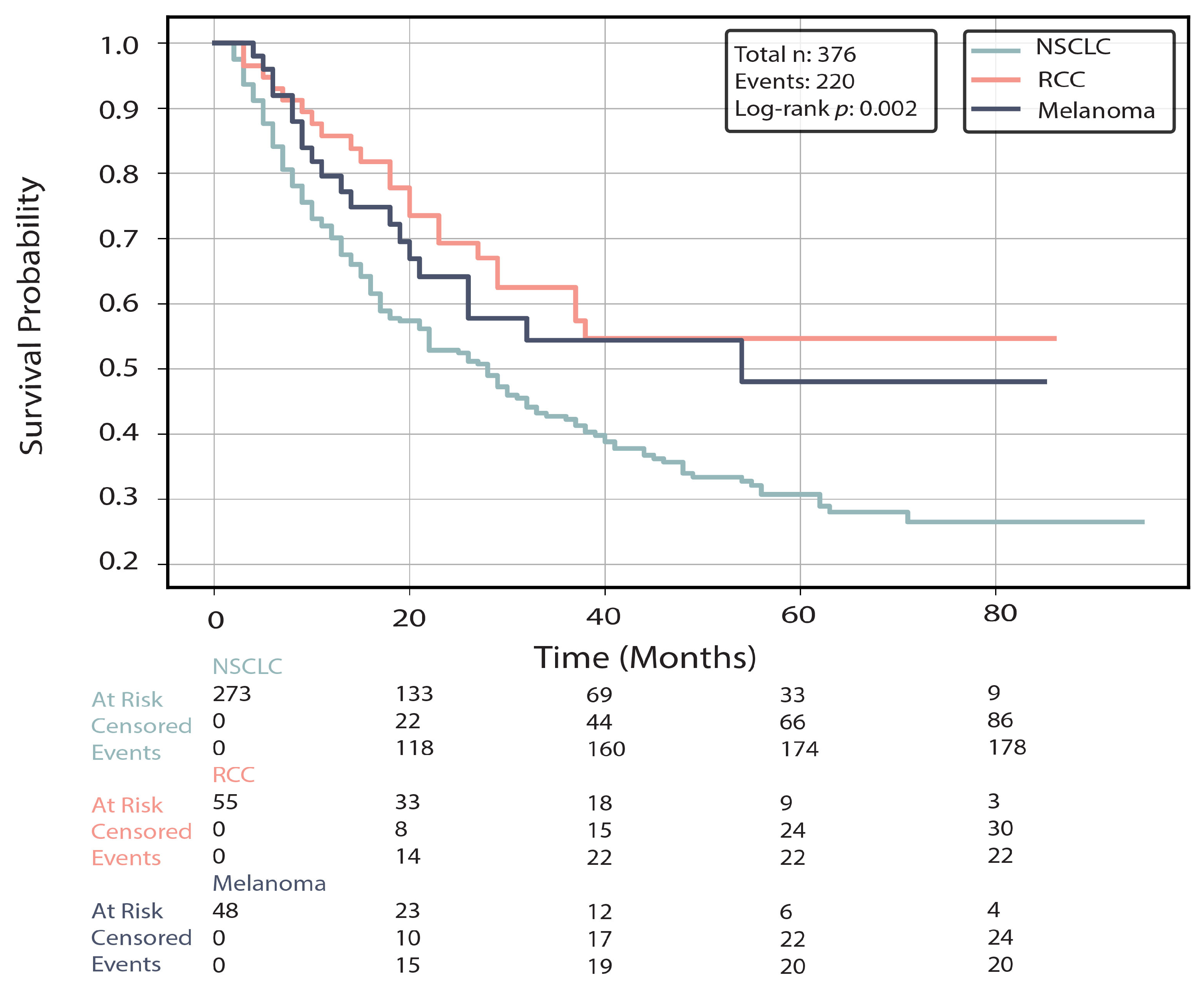
| Mortality during the study period, n (%) | 220 (58.5%) | 178 (65.2%) | 22 (40.0%) | 20 (41.7%) | <0.001 |
| Follow-up time, median (min–max), months | 21(2–95) | 20 (2–95) | 29 (3–86) | 20 (4–85) | 0.097 |
| Interval between CT scans, median (min–max), days | 100 (40–199) | 98 (40–191) | 104 (62–171) | 108 (61–199) | 0.021 |
| HR | 95% CI | p Value | |
|---|---|---|---|
| Model 1 | |||
| Age (per year) | 1.02 | 1–1.03 | 0.011 |
| Sex (female vs. male) | 1.06 | 0.80–1.41 | 0.697 |
| Tumor type (NSCLC vs. melanoma and RCC) | 1.66 | 1.18–2.33 | 0.003 |
| Concordance | 0.58 | ||
| Model 2 | |||
| Age (per year) | 1.02 | 1–1.03 | 0.009 |
| Sex (female vs. male) | 0.93 | 0.70–1.24 | 0.641 |
| Tumor type (NSCLC vs. melanoma and RCC) | 1.78 | 1.27–2.5 | <0.001 |
| SFI relative decrease (5% units) | 1.10 | 1.05–1.14 | <0.001 |
| SMI relative decrease (5% units) | 1.10 | 1.01–1.21 | 0.031 |
| Concordance | 0.65 | ||
Disclaimer/Publisher’s Note: The statements, opinions and data contained in all publications are solely those of the individual author(s) and contributor(s) and not of MDPI and/or the editor(s). MDPI and/or the editor(s) disclaim responsibility for any injury to people or property resulting from any ideas, methods, instructions or products referred to in the content. |
© 2026 by the authors. Licensee MDPI, Basel, Switzerland. This article is an open access article distributed under the terms and conditions of the Creative Commons Attribution (CC BY) license.
Share and Cite
Tamir, S.; Behar, H.V.; Tal, R.; Jasper, R.T.; Armoni, M.; Aloni, H.P.; Orad, R.I.; Voet, H.; Atar, E.; Grubstein, A.; et al. CT Body Composition Changes Predict Survival in Immunotherapy-Treated Cancer Patients: A Retrospective Cohort Study. Cancers 2026, 18, 341. https://doi.org/10.3390/cancers18020341
Tamir S, Behar HV, Tal R, Jasper RT, Armoni M, Aloni HP, Orad RI, Voet H, Atar E, Grubstein A, et al. CT Body Composition Changes Predict Survival in Immunotherapy-Treated Cancer Patients: A Retrospective Cohort Study. Cancers. 2026; 18(2):341. https://doi.org/10.3390/cancers18020341
Chicago/Turabian StyleTamir, Shlomit, Hilla Vardi Behar, Ronen Tal, Ruthy Tal Jasper, Mor Armoni, Hadar Pratt Aloni, Rotem Iris Orad, Hillary Voet, Eli Atar, Ahuva Grubstein, and et al. 2026. "CT Body Composition Changes Predict Survival in Immunotherapy-Treated Cancer Patients: A Retrospective Cohort Study" Cancers 18, no. 2: 341. https://doi.org/10.3390/cancers18020341
APA StyleTamir, S., Behar, H. V., Tal, R., Jasper, R. T., Armoni, M., Aloni, H. P., Orad, R. I., Voet, H., Atar, E., Grubstein, A., Stemmer, S. M., & Markel, G. (2026). CT Body Composition Changes Predict Survival in Immunotherapy-Treated Cancer Patients: A Retrospective Cohort Study. Cancers, 18(2), 341. https://doi.org/10.3390/cancers18020341